Becotarug + osimertinib in post-platinum EGFR exon 20 insertion NSCLC — Shanghai JMT-Bio (CSPC group)
Discover KOL Sentiment on BECOME →Design - Phase 2 trial of becotarug (JMT101, anti-EGFR monoclonal antibody) + osimertinib (Tagrisso) in platinum-pretreated EGFR exon 20 insertion-mutated NSCLC (NCT05132777; Shanghai JMT-Bio (CSPC group)).
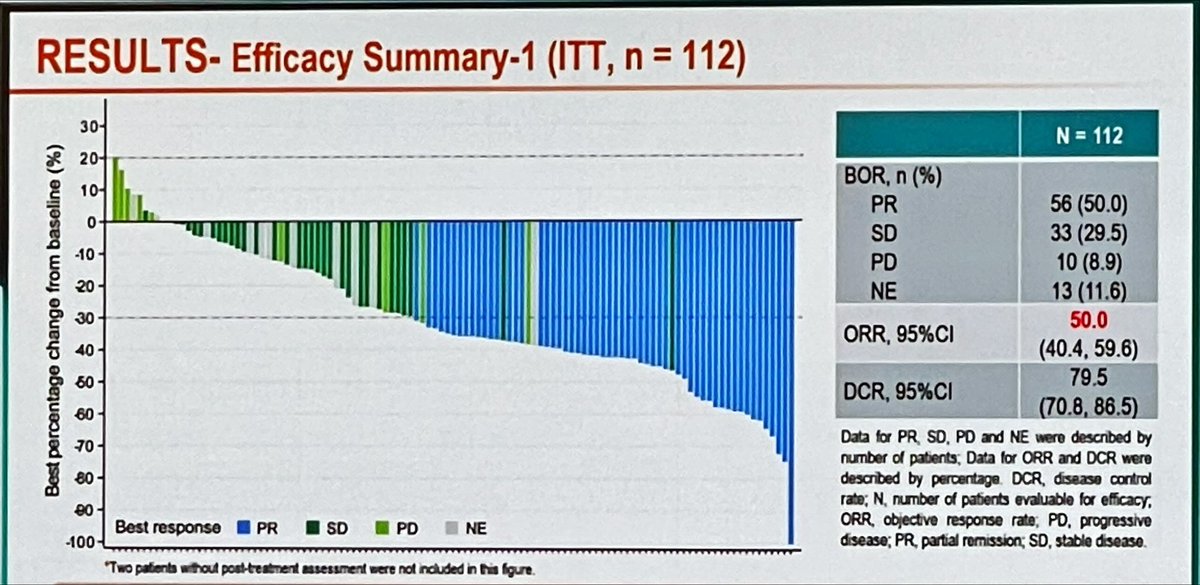
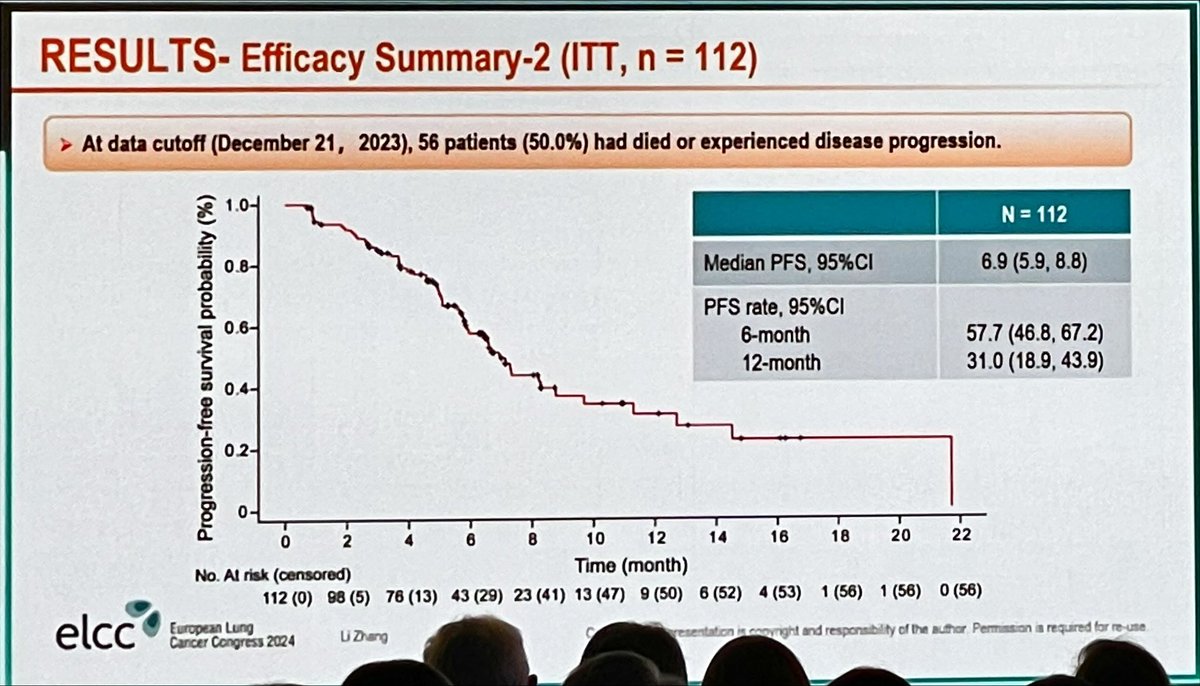
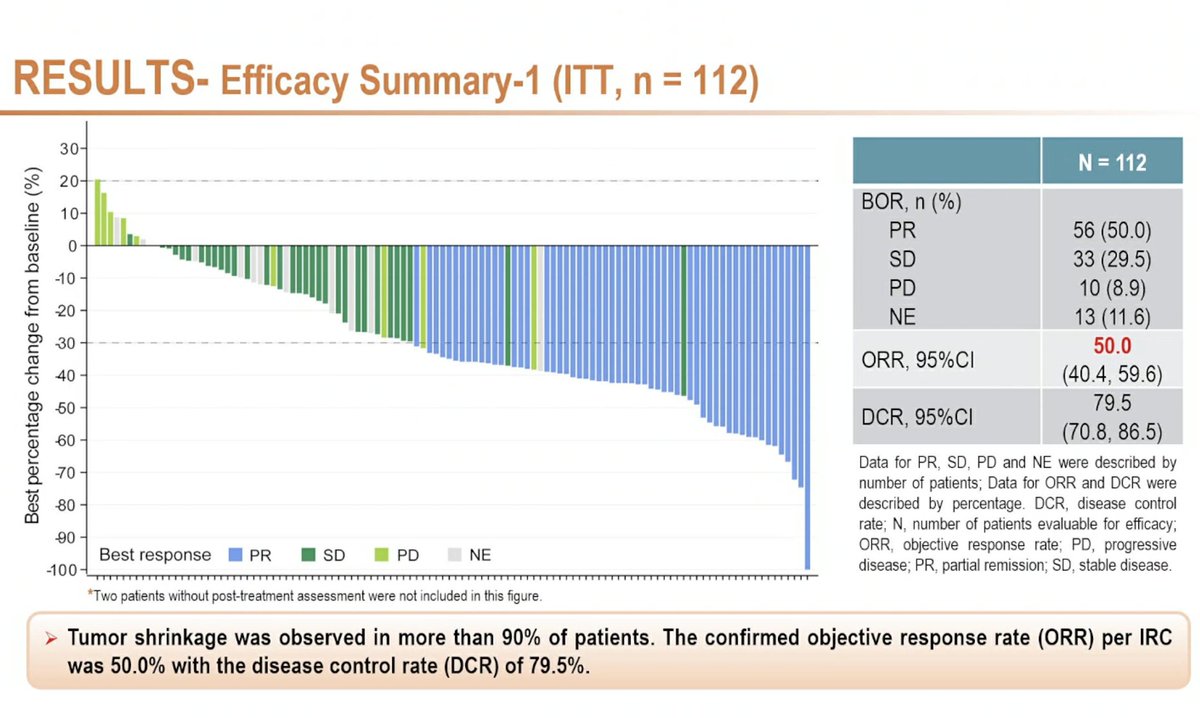
Efficacy - Confirmed ORR 50%, disease control rate 80%, intracranial ORR 42%; median PFS 6.9 months.
Overall survival - Median OS 18.0 months (95% CI 13.4-22.5) at median follow-up 26.7 months (65.2% event maturity).
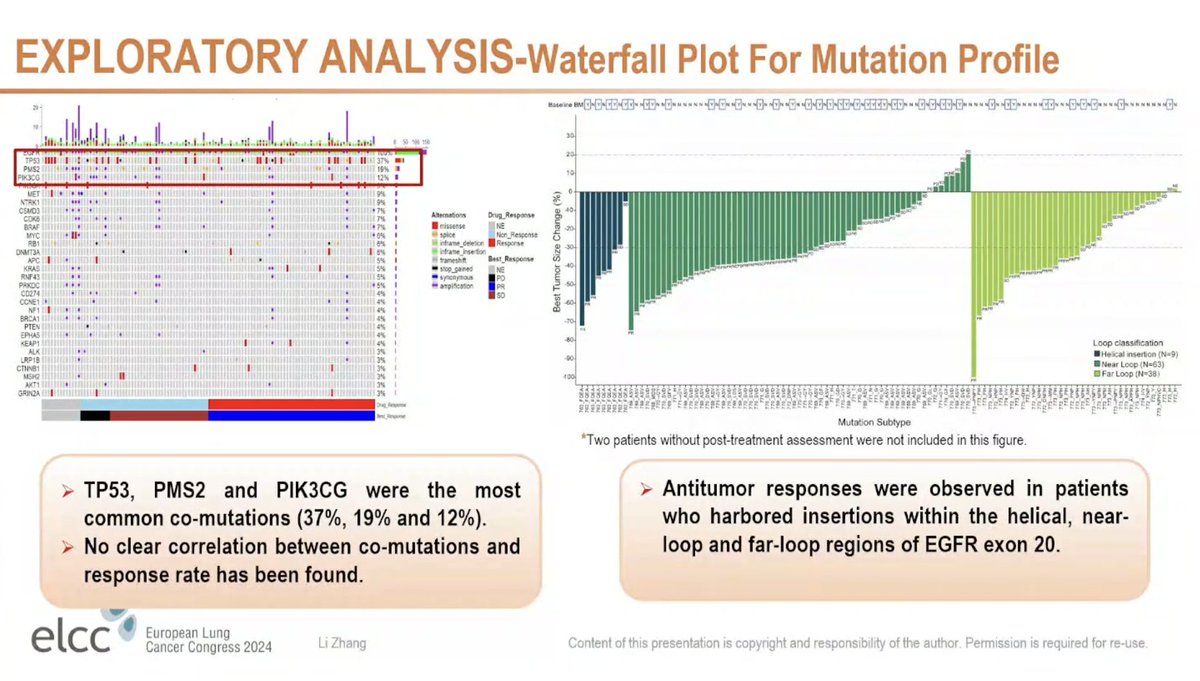
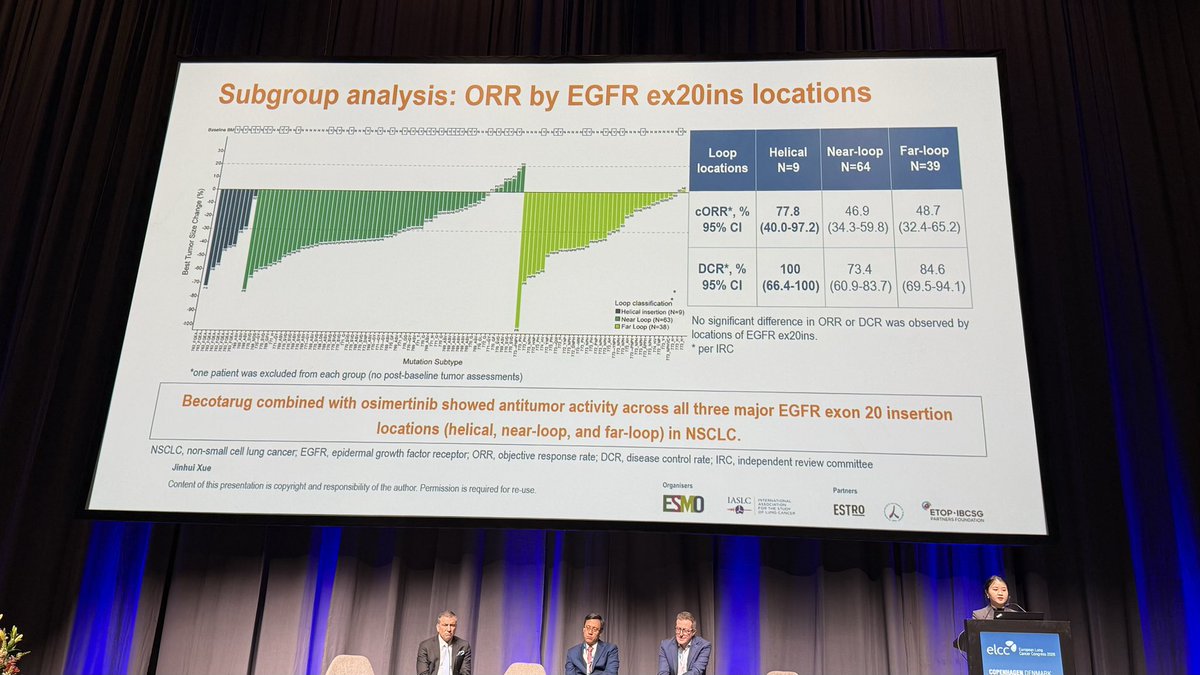
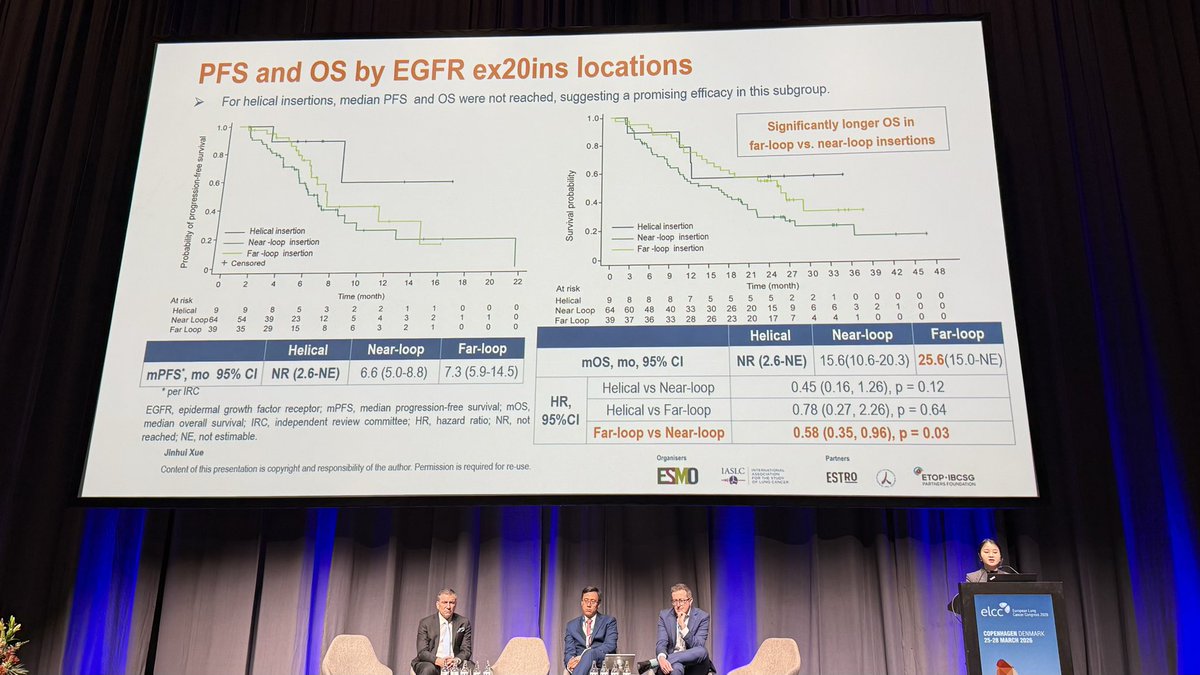
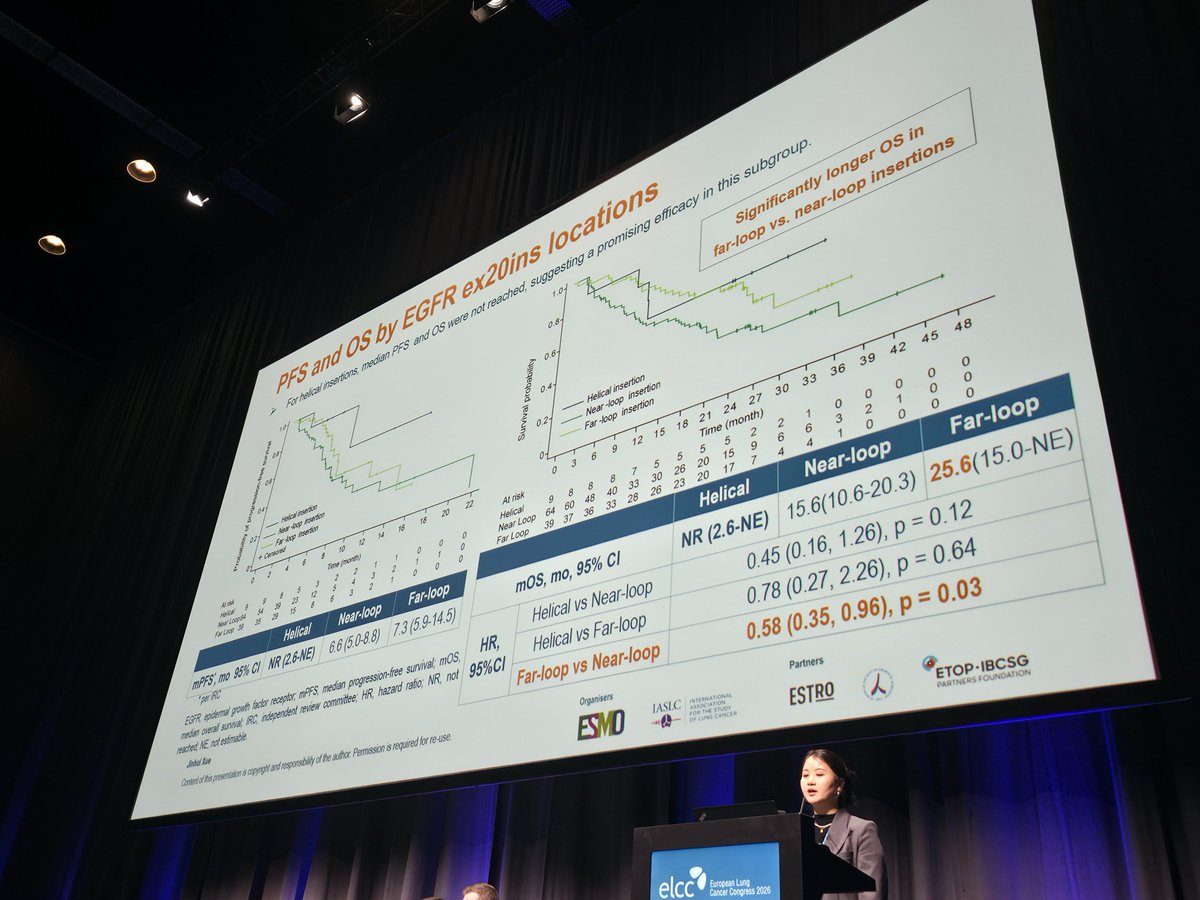
Subgroups - Activity across insertion locations: helical median PFS not reached; near-loop 6.6 months; far-loop 7.3 months. Far-loop vs near-loop showed significantly longer OS (HR 0.58).
Safety - Predominantly EGFR-related toxicities - rash (80%), diarrhoea (68%), mucositis (65%); consistent with an anti-EGFR antibody plus osimertinib.
Regulatory / sponsor - Investigational; not FDA approved. A Phase 3 (treatment-naive, NCT06380348) is ongoing. Shanghai JMT-Bio (CSPC group); becotarug + osimertinib.
Compiled and reviewed by the KOL Pulse research team, led by Brian Shields, Founder, KOL Pulse. Last updated July 21, 2026.








Top 10 by impressions — click to view on X
Phase Il study of becotarug (anti-EGFR MoAb) combined with osimertinib in pts with metastatic NSCLC harboring EGFR ex20ins mutations (BECOME study): ORR 50%, DCR 80%, icORR 42%, mPFS 6.9months. Most...
Dr. Li Zhang presents the BECOME study at #ELCC24 of Becotarug (JMT101, an EGFR antibody) and osimertinib in #EGFR exon 20 NSCLC. RR 50%, DCR 80% and mPFS 6.9m....
🆙 #ELCC26 @myESMO @IASLC 🇩🇰 🔥Mini Oral session 1 ☑️BECOME: Becotarug + Osimertinib in EGFR ex20ins 🎯Helical ins: ORR 77.8% 🎯Near/Far loop ins: ORR 46.9%/48.7% 🎙️Dr....
#ELCC24 Mostly #EGFR related toxicities seen here. Activity seen in helical, near loop, and far loop mutations. Encouraging activity here....
@myESMO #ELCC26: Top Trials from Day 2 ADEPPT | BeamionLung-1 | ASTEROID | NORTHSTAR | BECOME | KANDLELIT-001 | NCT02941458 #ELCC...
Can BECOME be becoming? Flashback to EGFR mAb in NSCLC-FLEX, SQUIRE, INSPIRE..😴Can JMT101 + osi make us learn the new nomenclature for EGFR mAb in EGFRex20ins. Phase 3 trial on-going but need a...
@Tony_Calles Really interesting data. Wonder if cetuximab osi might be much the same but less rash?

#ELCC26 The Phase II BECOME study led by Prof. Li Zhang was presented. Prof. Jinhui Xue reported the final OS and subgroup analyses, highlighting Becotarug (JMT101) plus osimertinib...

Don't miss out on Dr @JoRaskinMD's latest updates: LEAD trial unveils enhanced immune response with RT, savolitinib's...

🔬 Becotarug + Osimertinib Shows Survival Benefit in EGFR Exon 20 Insertion NSCLC At #ELCC2026, the BECOME study highlights a promising strategy for EGFR exon 20 insertion NSCLC, a...
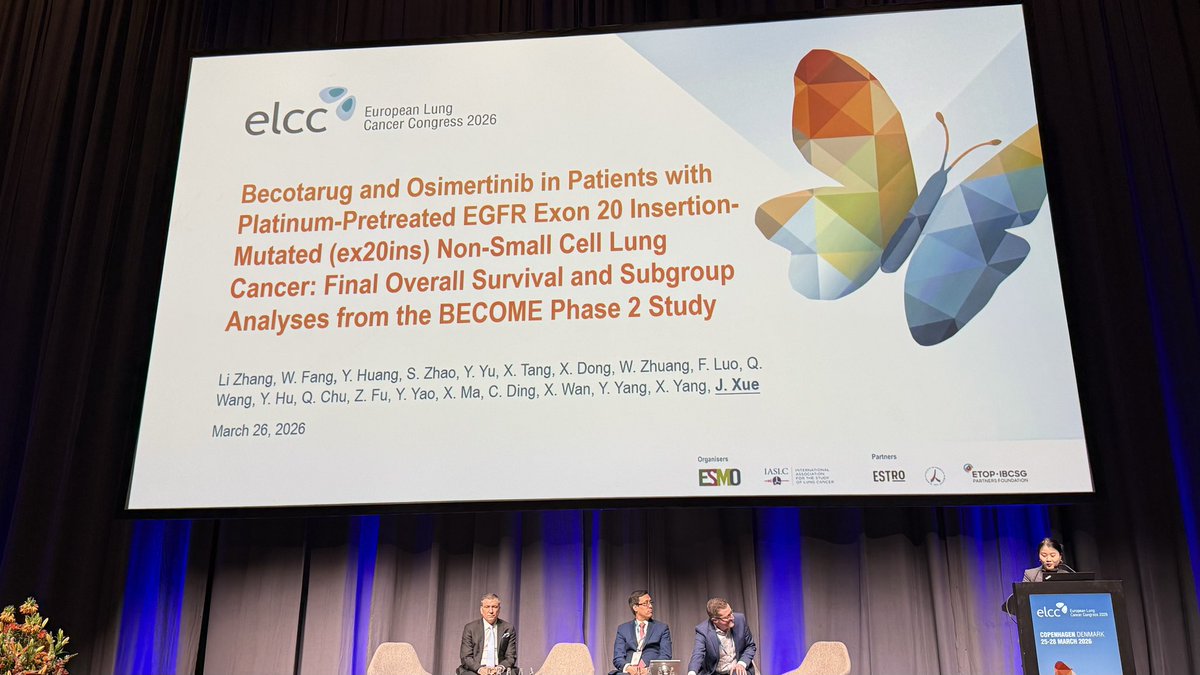
The BECOME study (NCT05132777) is an open-label, single-arm, multi-center, prospective Phase II trial evaluating becotarug (JMT101, an anti-EGFR monoclonal antibody) combined with osimertinib in patients with locally advanced or metastatic NSCLC harboring EGFR exon 20 insertions who failed platinum-based chemotherapy. Led by Prof. Li Zhang at the Lung Cancer Research Centre of SYSU, the study enrolled 126 patients. Final OS analyses and subgroup efficacy results by insertion location were presented at ELCC 2026 by Prof. Jinhui Xue.
Open-label, single-arm, multi-center, prospective Phase II study. Patients received JMT101 6 mg/kg Q2W plus osimertinib 160 mg QD in 4-week cycles until progressive disease, intolerable toxicity, or withdrawal.
Patients aged 18 or older with Stage IIIB-IV NSCLC harboring EGFR exon 20 insertions who had failed platinum-based chemotherapy. Efficacy was assessed in the ITT population (N=112; at least 1 dose, centrally confirmed EGFR ex20ins).
Becotarug (JMT101) 6 mg/kg intravenously every 2 weeks combined with osimertinib 160 mg orally once daily, administered in 4-week cycles.
Primary endpoint: IRC-assessed confirmed ORR. Secondary endpoints included investigator-assessed ORR, DOR, DCR, PFS, OS, and safety.
The confirmed ORR was 50% with a DCR of 80% and an intracranial ORR (icORR) of 42%. Median PFS was 6.9 months. Subgroup analysis by insertion location showed: helical insertions mPFS not reached (NR, 95% CI 2.6-NE), near-loop mPFS 6.6 months (95% CI 5.0-8.8), and far-loop mPFS 7.3 months (95% CI 5.9-14.5).
With a median follow-up of 26.7 months, the median OS was 18.0 months (95% CI 13.4-22.5). Event maturity was 65.2% (73/112 events). By insertion location: helical mOS NR (2.6-NE), near-loop mOS 15.6 months (10.6-20.3), far-loop mOS 25.6 months (15.0-NE). Far-loop vs. near-loop showed significantly longer OS (HR 0.58, 95% CI 0.35-0.96, p=0.03).
The most common adverse events were EGFR-related toxicities including rash (80%), diarrhoea (68%), and mucositis (65%). Activity was observed across helical, near-loop, and far-loop mutation subtypes. The safety profile was consistent with the mechanism of action of an anti-EGFR antibody plus osimertinib combination.
The BECOME study demonstrates that becotarug plus osimertinib is a promising combination for pretreated EGFR exon 20 insertion NSCLC, a subgroup with limited effective options. The subgroup analysis showing activity across all three major insertion locations (helical, near-loop, far-loop) is encouraging. A Phase 3 trial is ongoing. This combination remains investigational and is not FDA-approved.
BECOME (NCT05132777) is a Phase 2, Shanghai JMT-Bio (CSPC group)-sponsored trial testing becotarug (JMT101), an anti-EGFR monoclonal antibody, combined with osimertinib (Tagrisso) in patients with platinum-pretreated EGFR exon 20 insertion-mutated locally advanced or metastatic non-small cell lung cancer - a subgroup with limited effective options.
Becotarug plus osimertinib produced a confirmed objective response rate of 50% with a disease control rate of 80% and an intracranial ORR of 42%. Median progression-free survival was 6.9 months and median overall survival was 18.0 months at a median follow-up of 26.7 months. Activity was seen across helical, near-loop and far-loop insertion subtypes.
No. The becotarug-plus-osimertinib combination is investigational and not FDA-approved. Becotarug (JMT101) is an investigational anti-EGFR antibody, and osimertinib (Tagrisso) is approved in other EGFR-mutant NSCLC settings but not for EGFR exon 20 insertion disease. A Phase 3 trial in treatment-naive EGFR exon 20 insertion NSCLC (NCT06380348) is ongoing.
The most common adverse events were EGFR-related toxicities, including rash (80%), diarrhoea (68%) and mucositis (65%). The safety profile was consistent with the mechanism of an anti-EGFR antibody combined with osimertinib, and no unexpected signals beyond expected EGFR-pathway toxicities were highlighted.
EGFR exon 20 insertion NSCLC responds poorly to standard EGFR tyrosine kinase inhibitors and has few effective options after platinum chemotherapy. BECOME suggests that adding an anti-EGFR antibody (becotarug) to osimertinib can produce meaningful responses across insertion subtypes, supporting further Phase 3 development in this hard-to-treat population.