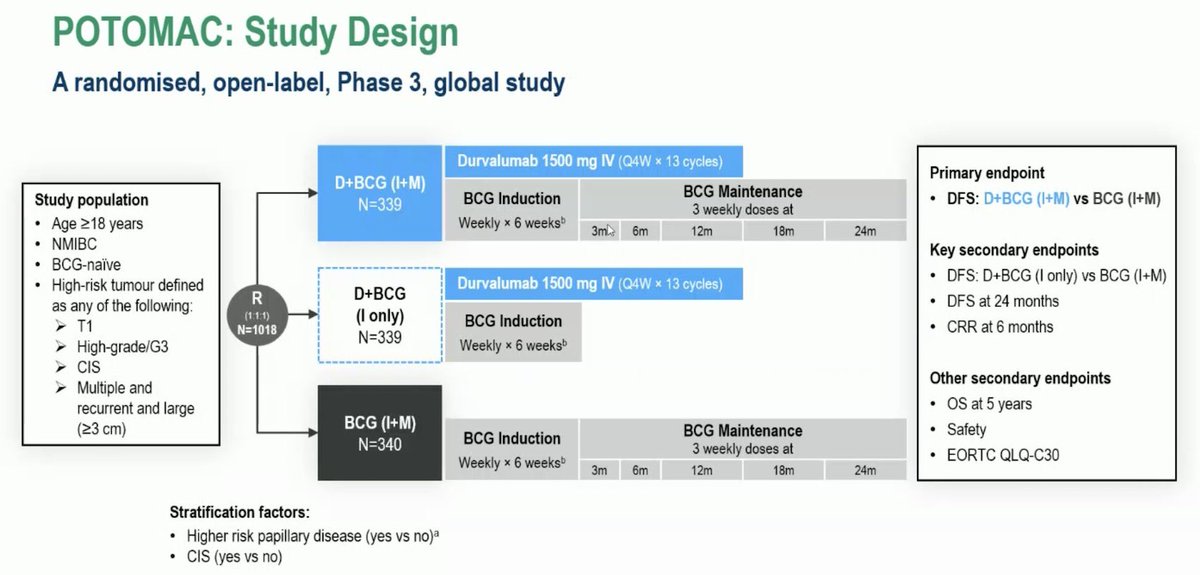
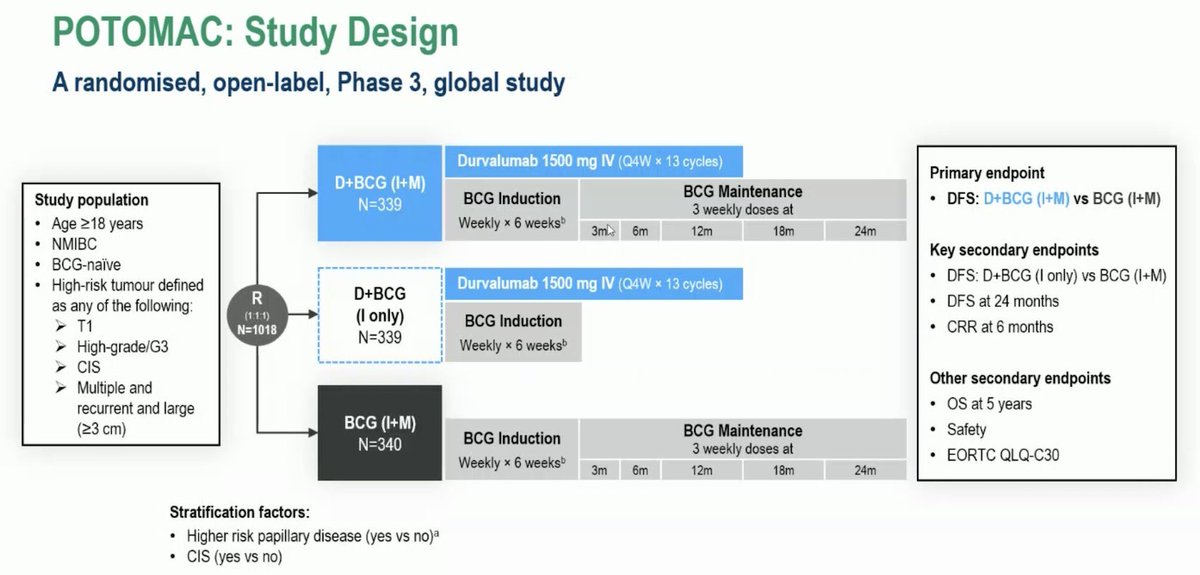
Phase 3 POTOMAC: durvalumab (Imfinzi) added to BCG induction and maintenance vs BCG alone in BCG-naïve, high-risk non-muscle-invasive bladder cancer (NMIBC). FDA-approved May 28, 2026 — the first new therapy for BCG-naïve high-risk NMIBC in over 30 years.
FDA Approved 2026-05-28 · DFS HR 0.68BCG-naïve High-Risk NMIBCPhase 3 · NCT03528694Durvalumab + BCG vs BCG Alone · AstraZenecaFDA Approved May 28, 2026
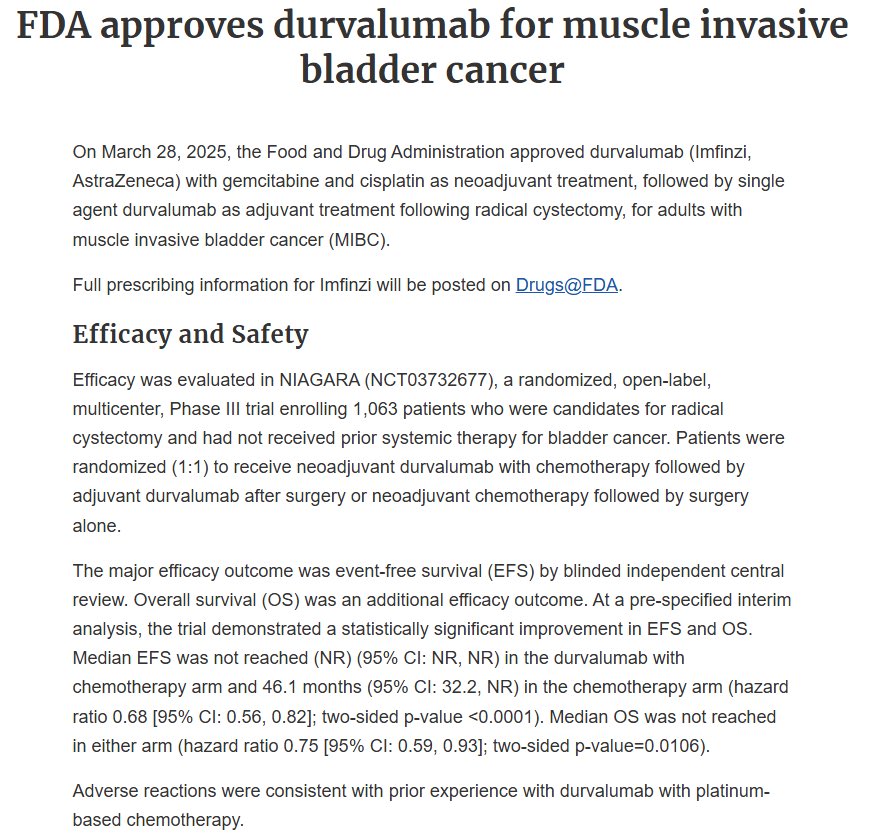
FDA approves durvalumab for muscle invasive
bladder cancer
On March 28, 2025, the Food and Drug Administration approved durvalumab (Imfinzi,
AstraZeneca) with gemcitabine and cisplatin as neoadjuvant treatment, followed by single
agent durvalumab as adjuvant treatment following radical cystectomy, for adults with
muscle invasive bladder cancer (MIBC).
Full prescribing information for Imfinzi will be posted on Drugs@FDA.
Efficacy and Safety
Efficacy was evaluated in NIAGARA (NCT03732677), a randomized, open-label,
multicenter, Phase III trial enrolling 1,063 patients who were candidates for radical
cystectomy and had not received prior systemic therapy for bladder cancer. Patients were
randomized (1:1) to receive neoadjuvant durvalumab with chemotherapy followed by
adjuvant durvalumab after surgery or neoadjuvant chemotherapy followed by surgery
alone.
The major efficacy outcome was event-free survival (EFS) by blinded independent central
review. Overall survival (OS) was an additional efficacy outcome. At a pre-specified interim
analysis, the trial demonstrated a statistically significant improvement in EFS and OS.
Median EFS was not reached (NR) (95% CI: NR, NR) in the durvalumab with
chemotherapy arm and 46.1 months (95% CI: 32.2, NR) in the chemotherapy arm (hazard
ratio 0.68 [95% CI: 0.56, 0.82]; two-sided p-value <0.0001). Median OS was not reached
in either arm (hazard ratio 0.75 [95% CI: 0.59, 0.93]; two-sided p-value=0.0106).
Adverse reactions were consistent with prior experience with durvalumab with platinum-
based chemotherapy.
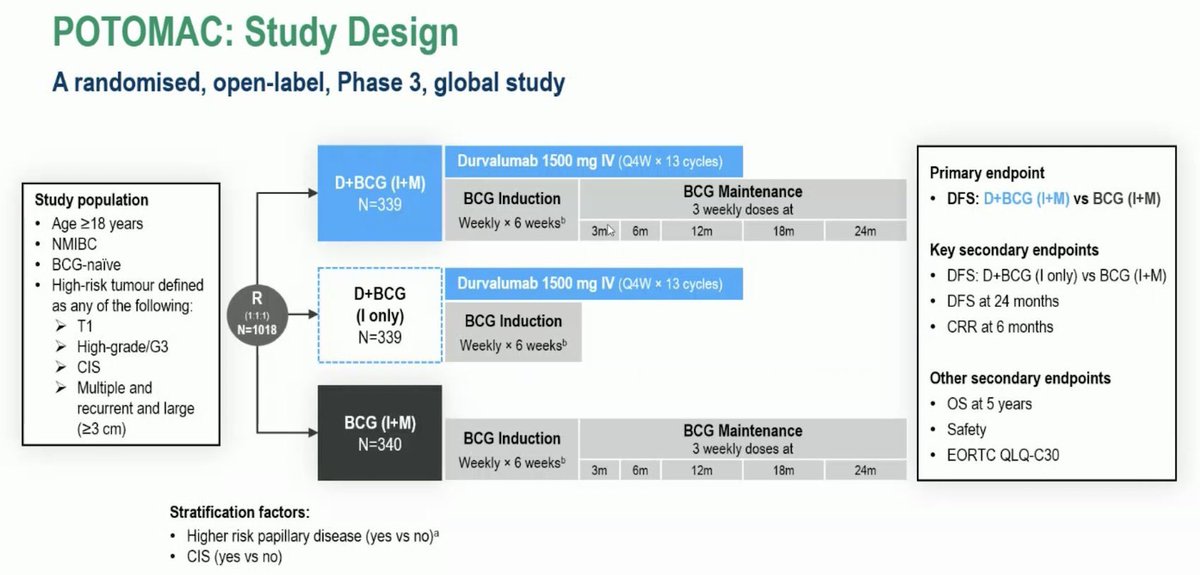
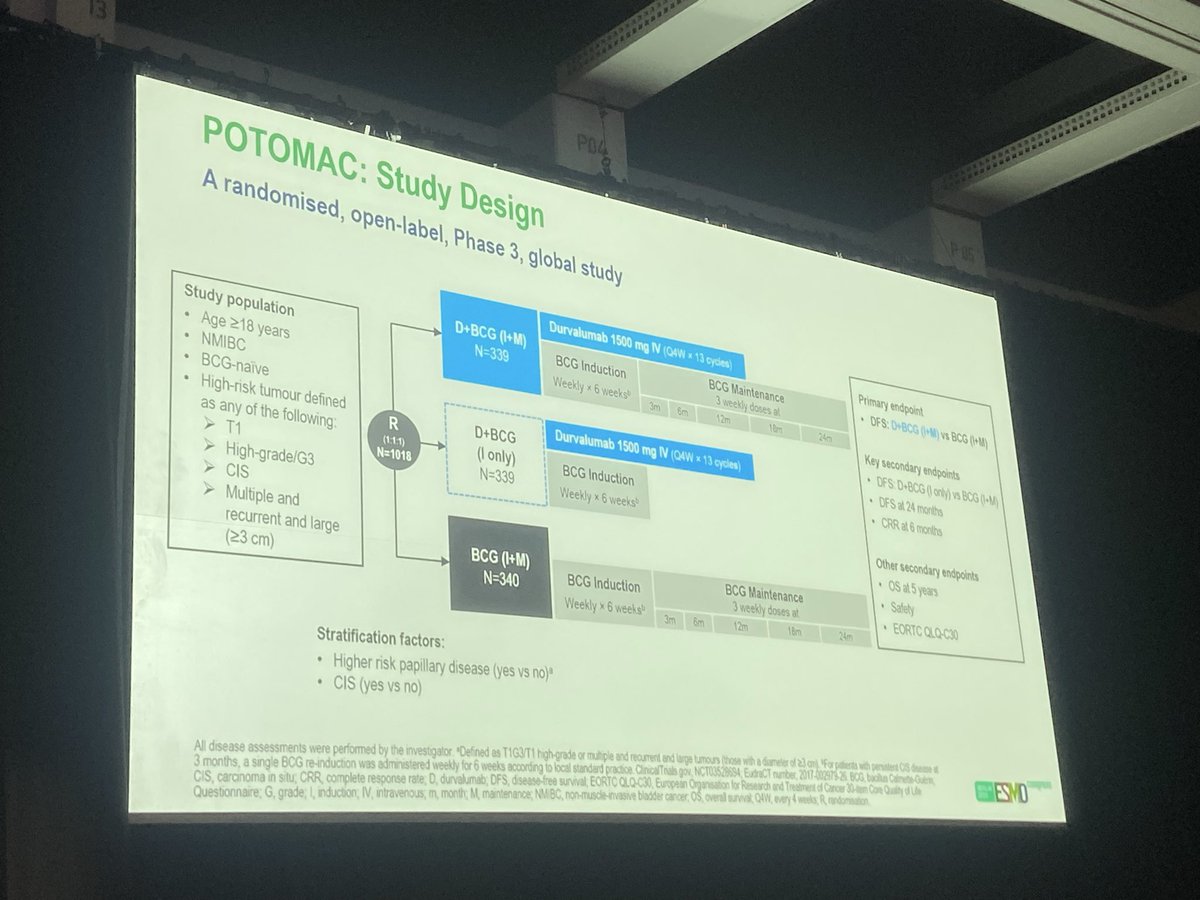
POTOMAC: Study Design
A randomised, open-label, Phase 3, global study
Durvalumab 1500 mg IV (Q4W X 13 cycles)
Primary endpoint
D+BCG (I+M)
BCG Induction
BCG Maintenance
Study population
N=339
DFS: D+BCG (I+M) vs BCG (I+M)
3 weekly doses at
Age ≥18 years
Weekly x 6 weeks
3ml
6m
12m
18m
24m
NMIBC
Key secondary endpoints
BCG-naive
High-risk tumour defined
Durvalumab 1500 mg IV (Q4W X 13 cycles)
DFS: D+BCG (I only) VS BCG (I+M)
as any of the following:
R
D+BCG
DFS at 24 months
(1:1:1)
T1
(I only)
BCG Induction
N=1018
CRR at 6 months
N=339
High-grade/G3
Weekly X 6 weeksb
CIS
Other secondary endpoints
Multiple and
recurrent and large
OS at 5 years
(≥3 cm)
BCG (I+M)
N=340
BCG Induction
BCG Maintenance
Safety
3 weekly doses at
EORTC QLQ-C30
Weekly x 6 weeks
3m
6m
12m
18m
24m
Stratification factors:
Higher risk papillary disease (yes VS no)a
CIS (yes VS no)
---
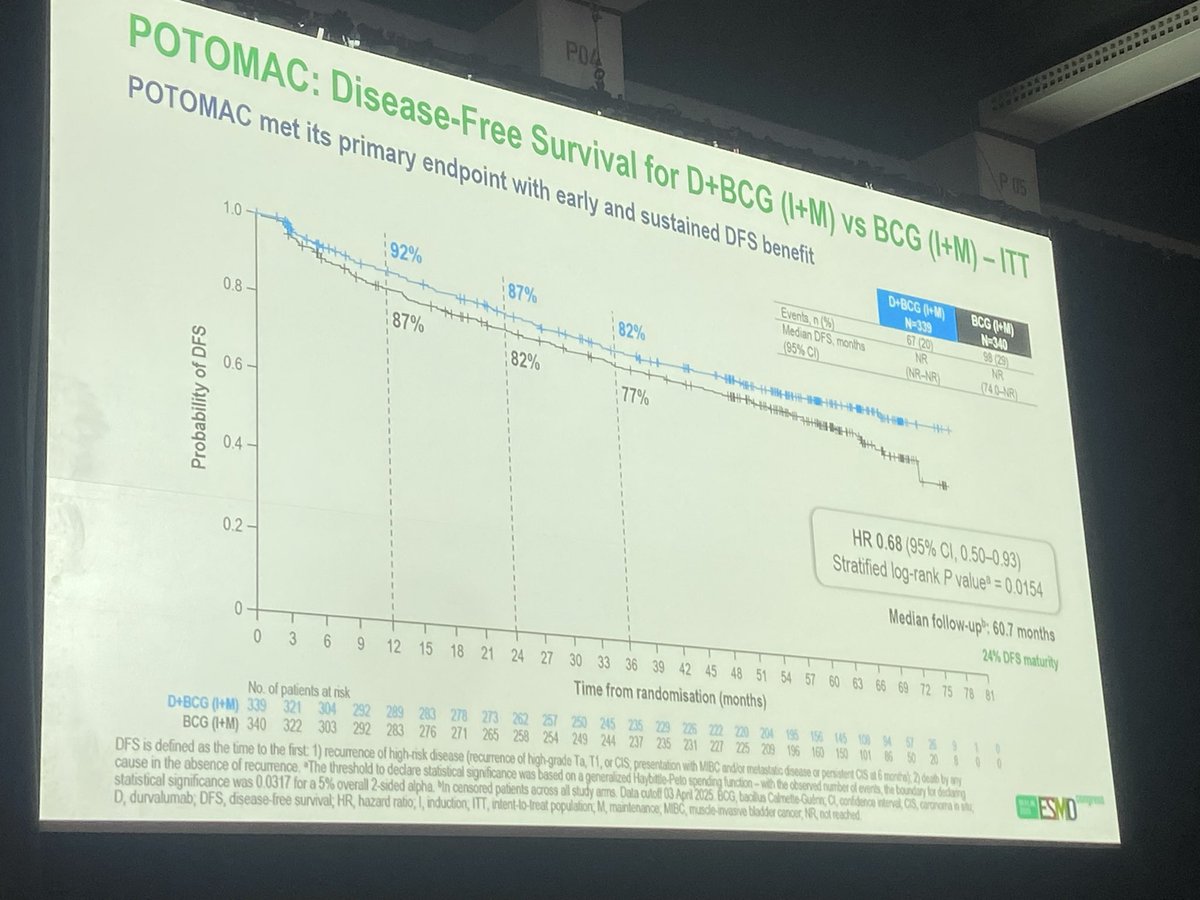
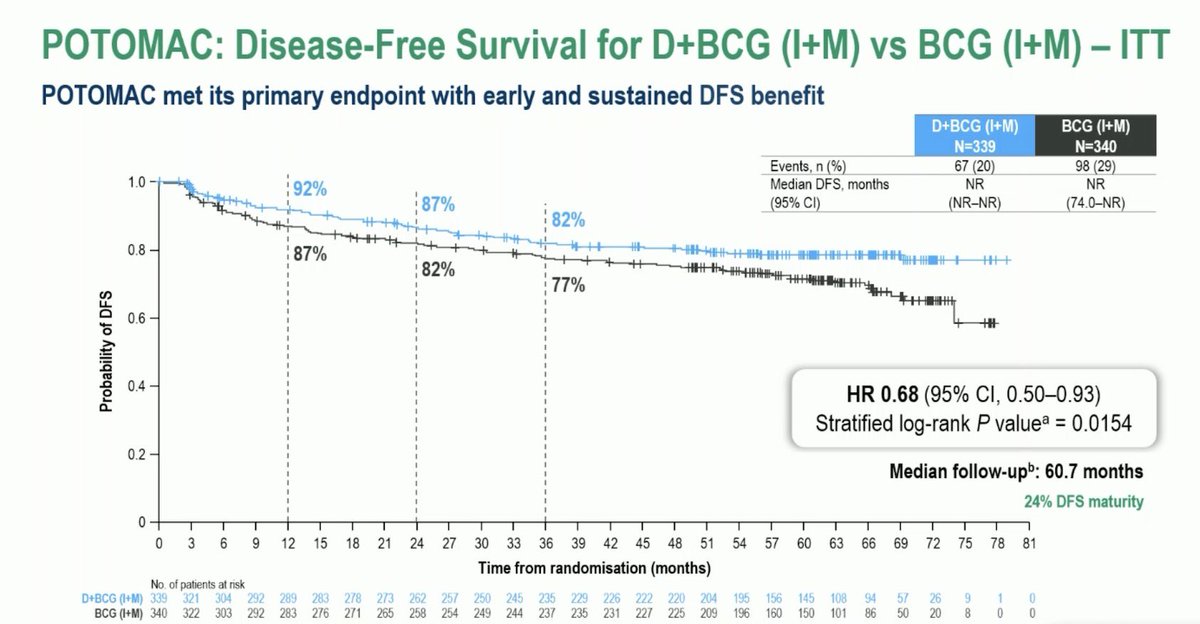
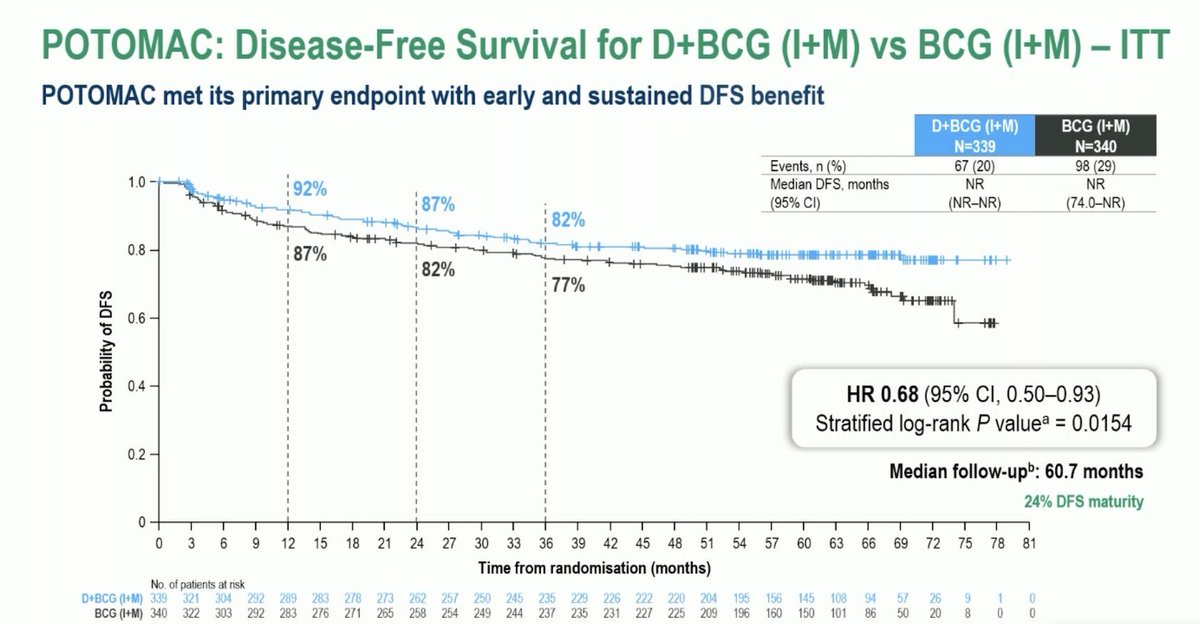
POTOMAC: Disease-Free Survival for D+BCG (I+M) vs BCG (I+M) - ITT
POTOMAC met its primary endpoint with early and sustained DFS benefit
D+BCG (I+M)
BCG (I+M)
N=339
N=340
Events, n (%)
67 (20)
98 (29)
1.0
92%
Median DFS, months
NR
NR
87%
(95% CI)
(NR-NR)
(74.0-NR)
82%
0.8
87%
82%
77%
Probability of DFS
0.6
+
0.4
HR 0.68 (95% CI, 0.50-0.93)
Stratified log-rank P value = 0.0154
0.2
Median follow-upb: 60.7 months
24% DFS maturity
0
0
3
6
9
12
15
18
21
24
27
30
33
36
39
42
45
48
51
54
57
60
63
66
69
72
75
78
81
Time from randomisation (months)
No of patients at risk
D+BCG (I+M)
339
321
304
292
289
283
278
273
262
257
250
245
235
229
226
222
220
204
195
156
145
108
94
57
26
9
1
0
BCG (I+M)
340
322
303
292
283
276
271
265
258
254
249
244
237
235
231
227
225
209
196
160
150
101
86
50
20
8
0
0
---
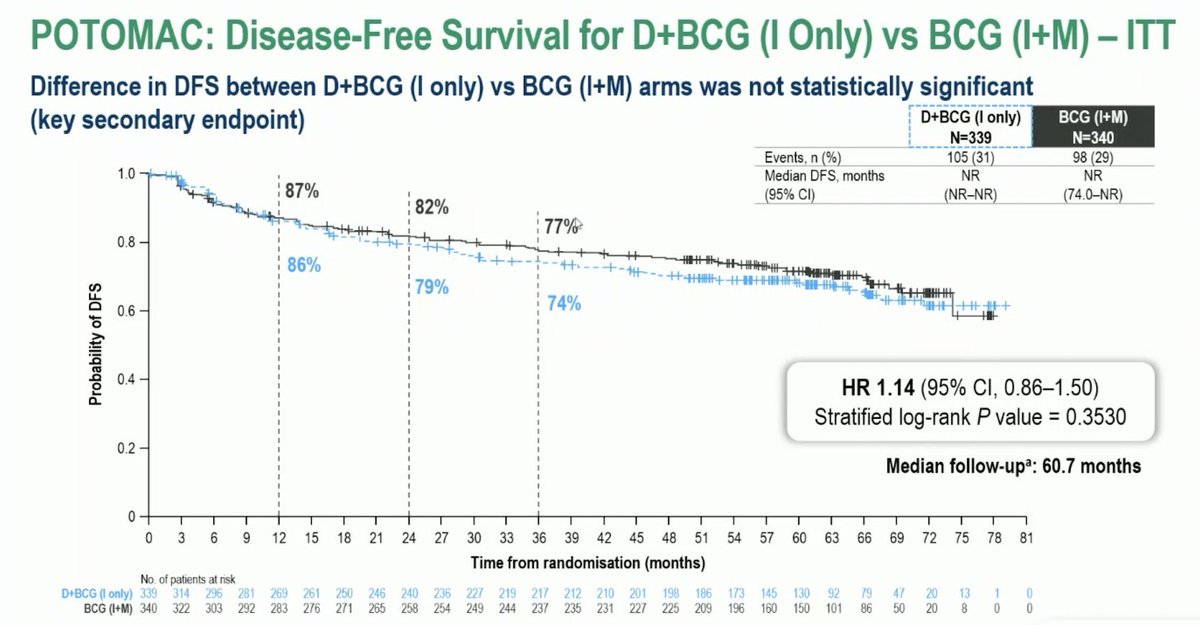
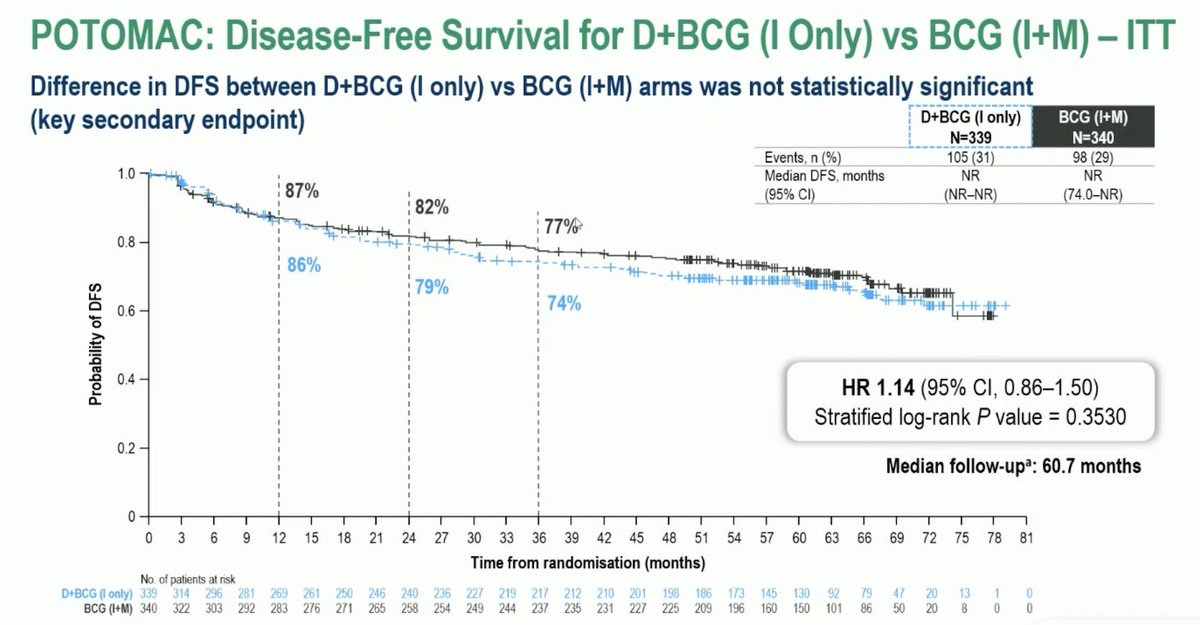
POTOMAC: Disease-Free Survival for D+BCG (I Only) vs BCG (I+M) - ITT
Difference in DFS between D+BCG (I only) vs BCG (I+M) arms was not statistically significant
(key secondary endpoint)
D+BCG (I only)
BCG (I+M)
N=339
N=340
Events, n (%)
105 (31)
98 (29)
1.0
Median DFS, months
NR
NR
87%
(95% CI)
(NR-NR)
(74.0-NR)
82%
77%
0.8
86%
79%
74%
Probability of DFS
0.6
0.4
HR 1.14 (95% CI, 0.86-1.50)
Stratified log-rank P value = 0.3530
0.2
Median follow-upᵃ: 60.7 months
0
0
3
6
9
12
15
18
21
24
27
30
33
36
39
42
45
48
51
54
57
60
63
66
69
72
75
78
81
Time from randomisation (months)
No of patients at risk
D+BCG (I only)
339
314
296
281
269
261
250
246
240
236
227
219
217
212
210
201
198
186
173
145
130
92
79
47
20
13
1
0
BCG (I+M)
340
322
303
292
283
276
271
265
258
254
249
244
237
235
231
227
225
209
196
160
150
101
86
50
20
8
0
0
---
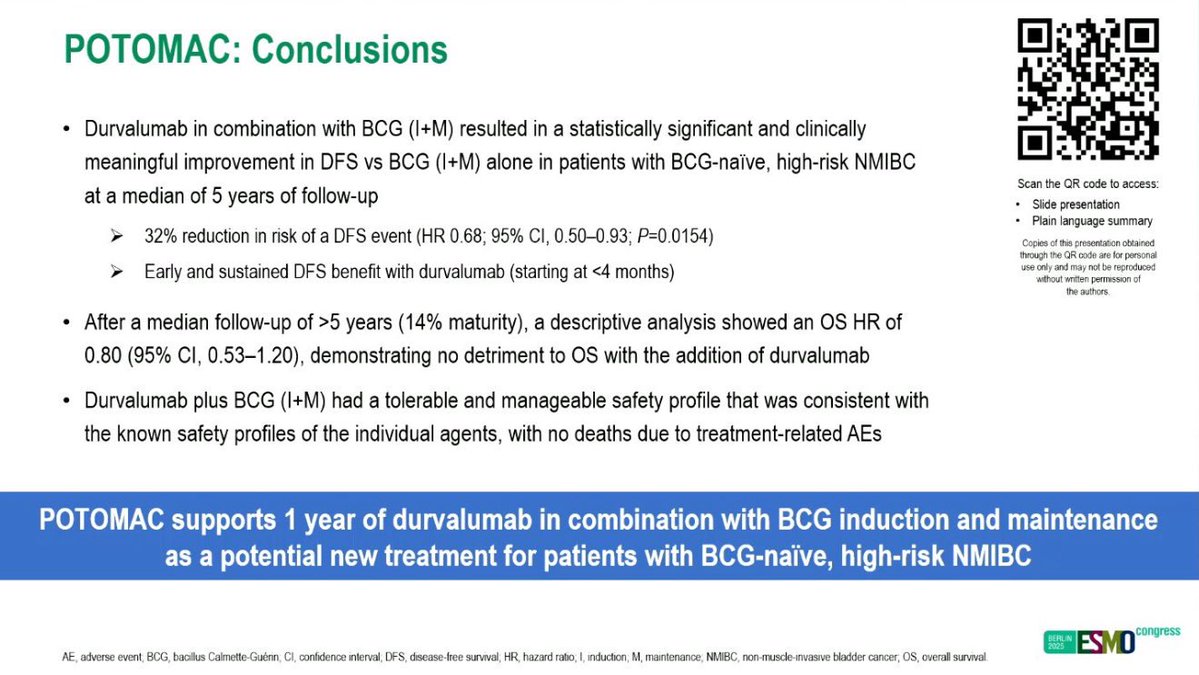
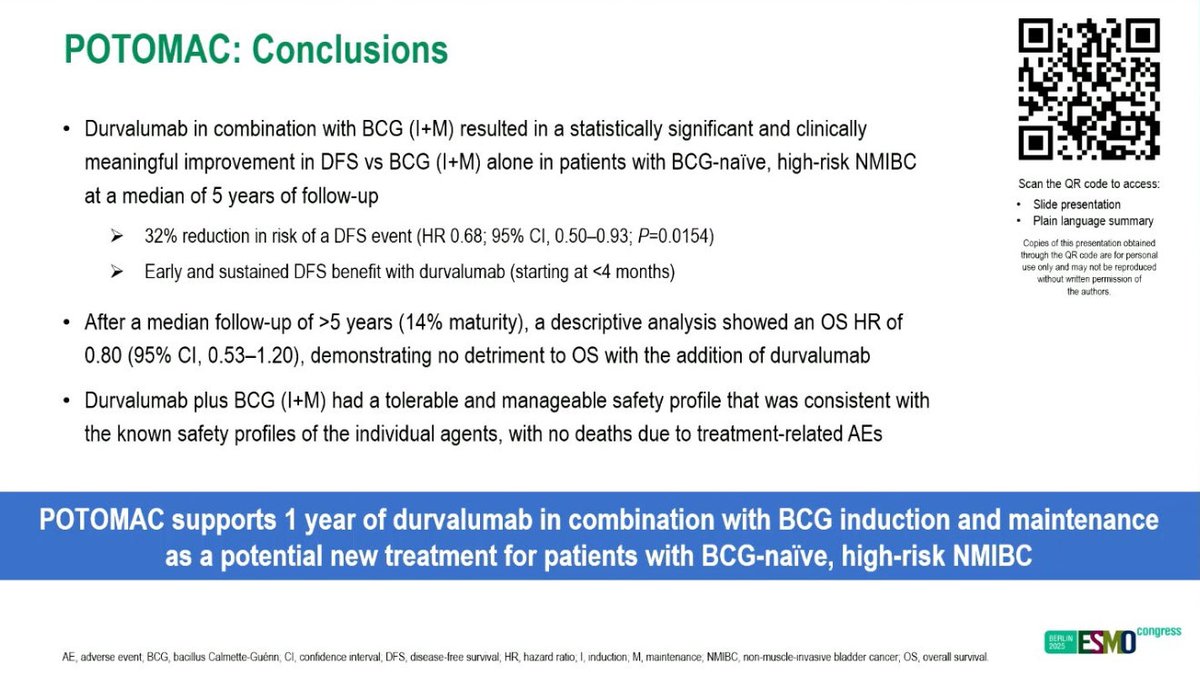
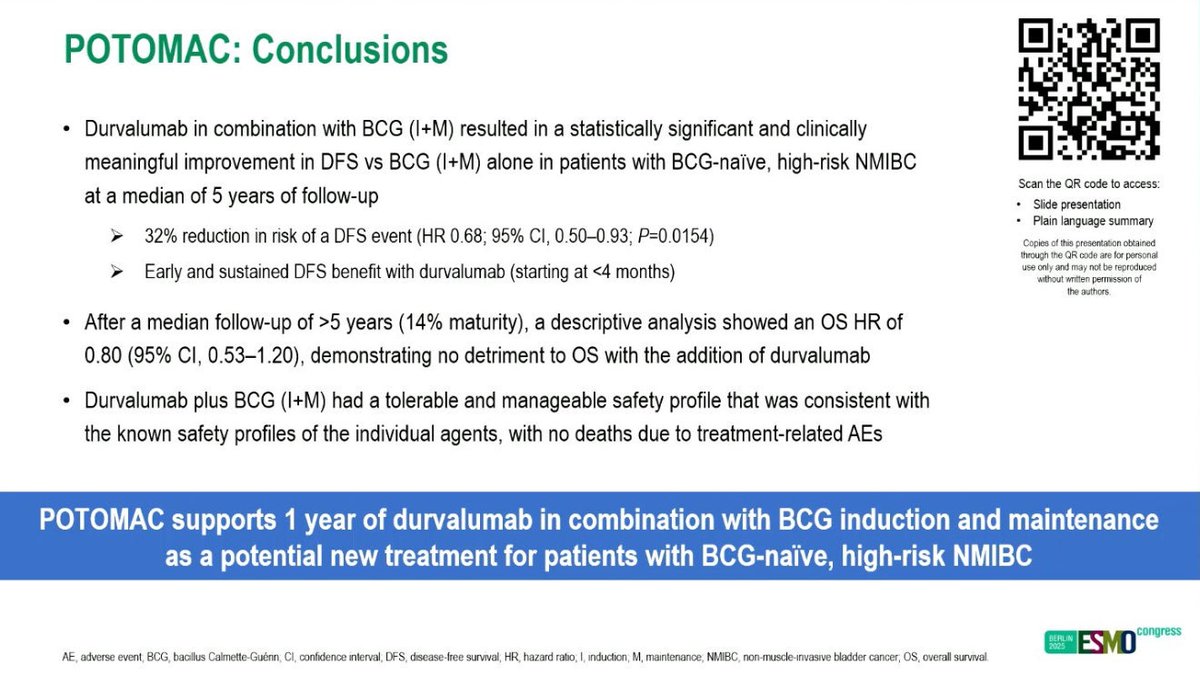
POTOMAC: Conclusions
Durvalumab in combination with BCG (I+M) resulted in a statistically significant and clinically
meaningful improvement in DFS VS BCG (I+M) alone in patients with BCG-naïve, high-risk NMIBC
Scan the QR code to access:
at a median of 5 years of follow-up
Slide presentation
Plain language summary
32% reduction in risk of a DFS event (HR 0.68; 95% CI, 0.50-0.93; P=0.0154)
Copies of this presentation obtained
through the QR code are for personal
Early and sustained DFS benefit with durvalumab (starting at <4 months)
use only and may not be reproduced
without written permission of
the authors
After a median follow-up of >5 years (14% maturity), a descriptive analysis showed an OS HR of
0.80 (95% CI, 0.53-1.20), demonstrating no detriment to OS with the addition of durvalumab
Durvalumab plus BCG (I+M) had a tolerable and manageable safety profile that was consistent with
the known safety profiles of the individual agents, with no deaths due to treatment-related AEs
POTOMAC supports 1 year of durvalumab in combination with BCG induction and maintenance
as a potential new treatment for patients with BCG-naïve, high-risk NMIBC
congress
BERLIN
2025
ESMO
AE, adverse event BCG, bacillus Calmette-Guénn CI, confidence interval DFS, disease-free survival, HR hazard ratio; I, induction M, maintenance, NMIBC non-muscle-invasive bladder cancer, OS, overall survival
Q
=
AstraZeneca
Imfinzi approved in the US
in first and only
immunotherapy
combination for patients
with BCG-naïve, high-risk
non-muscle-invasive
bladder cancer.
PUBLISHED
28 May 2026
FDA Approves Durvalumab in
Combination with Bacillus
Calmette-Guerin for High-Risk Non-
Muscle Invasive Bladder Cancer
As a service to our members, the American Association
for Cancer Research will distribute information from the
U.S. Food and Drug Administration about newly
approved novel therapies for cancer patients. By doing
so, we aim to help the FDA inform cancer researchers
and oncologists of recent approvals in a timely manner.
Included in the email from the FDA will be a link to the
product label, which will provide the relevant clinical
information on the indication, contraindications, dosing,
and safety. In sharing this information, the AACR does
not endorse any product or therapy and does not take
any position on the safety or efficacy of the product or
therapy described.
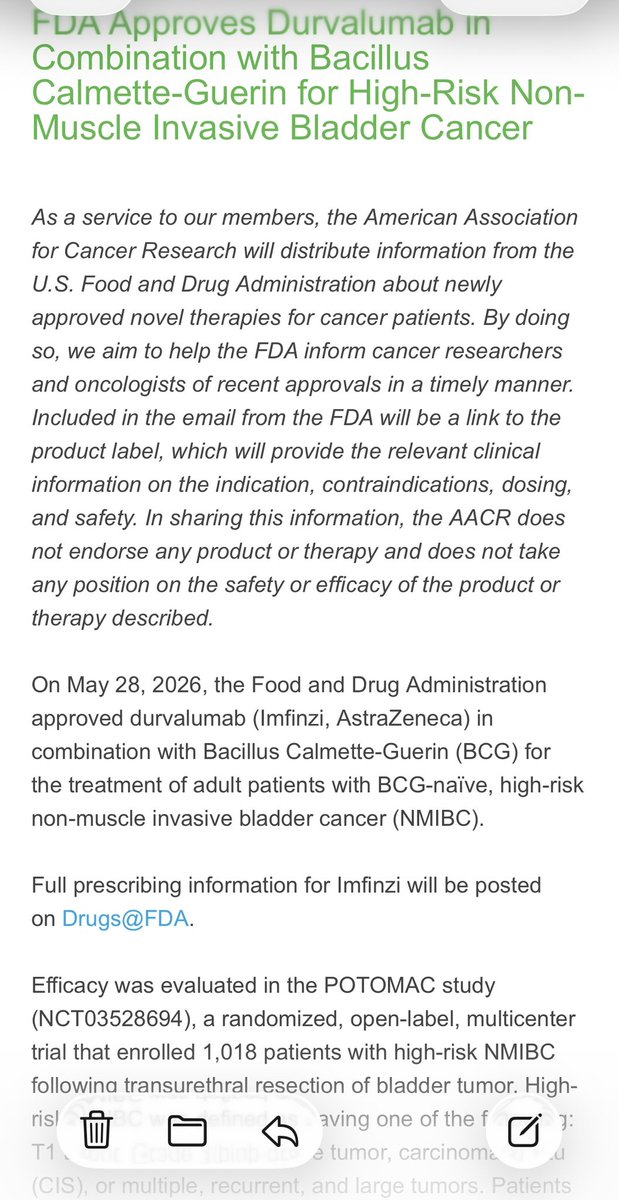
On May 28, 2026, the Food and Drug Administration
approved durvalumab (Imfinzi, AstraZeneca) in
combination with Bacillus Calmette-Guerin (BCG) for
the treatment of adult patients with BCG-naïve, high-risk
non-muscle invasive bladder cancer (NMIBC).
Full prescribing information for Imfinzi will be posted
on Drugs@FDA.
Efficacy was evaluated in the POTOMAC study
(NCT03528694), a randomized, open-label, multicenter
trial that enrolled 1,018 patients with high-risk NMIBC
following transurethral resection of bladder tumor. High-
risl
aving one of the f
7:
T1
e tumor, carcinoma
d
(CIS), or multiple, recurrent, and large tumors. Patients
14:12
5G
010
thelancet.com
X
THE LANCET
of
Search for.
Q
COMMENT - Online first, October 17, 2025
Front-line durvalumab and BCG in
the treatment of non-muscle-
invasive bladder cancer
Andrea Necchi a,b
X
. Alberto Briganti a,c .
Francesco Montorsi a,c
Affiliations & Notes
<
Article Info
<
Linked Articles (1)
>
Over the past 5 years, systemic therapy for urothelial
carcinoma has changed considerably throughout the
clinical stages. 1 In addition to regulatory approvals of
immune-checkpoint inhibitor (ICI)-based therapies for
muscle-invasive or metastatic disease, advances have
also been made for non-muscle-invasive bladder
cancer (NMIBC). Nadofaragene firadenovec-vncg,
nogapendekin alfa inbakicept-pmln, and gemcitabine
%
Get Access
Outline
Share
More
BERLIN
2025
ESMO
congress
BERLIN GERMANY
17-21 OCTOBER 2025
---
POTOMAC: Study Design
A randomised, open-label, Phase 3, global study
Durvalumab 1500 mg IV (Q4W X 13 cycles)
D+BCG (I+M)
Primary endpoint
Study population
N=339
BCG Induction
BCG Maintenance
3 weekly doses at
DFS: D+BCG (I+M) vs BCG (1+M)
Age ≥18 years
Weekly X 6 weeks®
NMIBC
3m
6m
12m
1 Pm
24m
BCG-naive
Key secondary endpoints
High-risk tumour defined
R
D+BCG
Durvalumab 1500 mg IV (Q4W X 13 cycles)
DFS: D+BCG 0 only) vs BCG (I+M)
as any of the following:
(1:11)
(I only)
DFS at 24 months
T1
N=1018
BCG Induction
High-grade/G3
N=339
CRR at 6 months
Weekly X 6 weeks
CIS
Multiple and
Other secondary endpoints
recurrent and large
OS at 5 years
(>3 cm)
BCG (I+M)
BCG Induction
BCG Maintenance
N=340
Safety
3 weekly doses at
Weekly X 6 weeks
EORTC QLQ-C30
3m
5m
12m
18m
24m
Stratification factors:
Higher risk papillary disease (yes VS no)*
CIS (yes VS no)
All disease assessments were performed by the investigator. Defined 05 T1G3/T1 high-grade or multiple and recument and large tumours (those with I diameter of 23 and For patients with persistent OS Income I
3 months, a single BCG re-induction was administered weekly for 6 weeks according to local standard practice. ClinicalTrials gov, NCT03528694; EudraCT number, 2017-002979-26 BCG bacilus Calinete-Guém,
Questionnaire: G, grade; , induction IV, intravenous, m, month; M maintenance; NMBC, non-muscle-invasive bladder cancer OS, overall survival, Q4W, every 4 weeks, R rendomisation
CIS, carcinoma in situ, CRR complete response rate, D, durvalumab, DFS, disease-free survival, EORTC QLQ-C30, European Organisation for Research and Treatment of Cancer 30-tem Core Quality of Lie
ESMO
---
POTOMAC: Disease-Free Survival for D+BCG (I+M) VS BCG (I+M) - ITT
POTOMAC met its primary endpoint with early and sustained DFS benefit
D+BCG (I+M)
BCG (I+M)
N=339
N=340
1.0
Events, n (%)
92%
67(20)
98(29)
Median DFS, months
NR
87%
NR
(95% CI)
82%
(NR-NR)
(74.0-NR)
0.8
87%
82%
77%
Probability of DFS
0.6
0.4
HR 0.68 (95% CI, 0.50-0.93)
Stratified log-rank P value® = 0.0154
0.2
Median follow-upb: 60.7 months
24% DFS maturity
0
0
3
6
9
12
15
18
21
24
27
30
33
36
39
42
45
48
51
54
57
60
63
66
69
72
75
78
81
Time from randomisation (months)
No. of patients at risk
D+BCG (I+M) 339 321 304 292 289 283 278 273 262 257 250 245 235 229 226 222 220 204 195 156 145 108 94 57 20 9 1 0
BCG (I+M) 340 322 303 292 283 276 271 265 258 254 249 244 237 235 231 227 225 209 196 160 150 101 86 50 20 8 0 0
DFS is defined as the time to the first: 1) recurrence of high-risk disease (recurrence of high-grade Ta, T1, or CIS, presentation with MIBC and/or metastatic disease or persistent CIS #6 months): 2) death by any
cause in the absence of recurrence *The threshold to declare statistical significance was based on a generalized Haybittle-Peto spending function- with the observed number of events, the boundary for declaring
statistical significance was 0.0317 for a 5% overall 2-sided alpha. Mn censored patients across all study arms. Data cutoff 03 April 2025 BCG, bacillus Calmette-Guénn; CL confidence interval, CIS, caronoma a sa,
ESMO
D, durvalumab; DFS, disease-free survival; HR, hazard ratio, I, induction; ITT, intent-to-treat population; M, maintenance, MIBC, muscle-invasive bladder cancer, NR not reached.
---
POTOMAC: Conclusions
Durvalumab in combination with BCG (I+M) resulted in a statistically significant and clinically
meaningful improvement in DFS VS BCG (I+M) alone in patients with BCG-naive, high-risk NMIBC
at a median of 5 years of follow-up
Scan the OR code to access
Side presentation
32% reduction in risk of a DFS event (HR 0.68; 95% CI, 0.50-0.93; P=0.0154)
Plan language surmary
Crass If is - and
trugh to DI - is " -
Early and sustained DFS benefit with durvalumab (starting at <4 months)
- (6) as ray
- etc. - #
for ukin
After a median follow-up of >5 years (14% maturity), a descriptive analysis showed an OS HR of
0.80 (95% CI, 0.53-1.20), demonstrating no detriment to OS with the addition of durvalumab
Durvalumab plus BCG (I+M) had a tolerable and manageable safety profile that was consistent with
the known safety profiles of the individual agents, with no deaths due to treatment-related AEs
POTOMAC supports 1 year of durvalumab in combination with BCG induction and maintenance
as a potential new treatment for patients with BCG-naïve, high-risk NMIBC
an
AE, adverse event, BCG, bacillus Calmette-Guérin CI, confidence interval; DFS, disease free survival, HR, hazard ratio, 1, induction M. mantenance, NMBC, non made name Madder canar, 05, overall und
ESMO
POTOMAC: Study Design
A randomised, open-label, Phase 3, global study
Durvalumab 1500 mg IV (Q4W X 13 cycles)
Primary endpoint
D+BCG (I+M)
BCG Induction
BCG Maintenance
Study population
N=339
DFS: D+BCG (I+M) vs BCG (I+M)
3 weekly doses at
Age ≥18 years
Weekly x 6 weeks
3ml
6m
12m
18m
24m
NMIBC
Key secondary endpoints
BCG-naive
High-risk tumour defined
Durvalumab 1500 mg IV (Q4W X 13 cycles)
DFS: D+BCG (I only) VS BCG (I+M)
as any of the following:
R
D+BCG
DFS at 24 months
(1:1:1)
T1
(I only)
BCG Induction
N=1018
CRR at 6 months
N=339
High-grade/G3
Weekly X 6 weeksb
CIS
Other secondary endpoints
Multiple and
recurrent and large
OS at 5 years
(≥3 cm)
BCG (I+M)
N=340
BCG Induction
BCG Maintenance
Safety
3 weekly doses at
EORTC QLQ-C30
Weekly x 6 weeks
3m
6m
12m
18m
24m
Stratification factors:
Higher risk papillary disease (yes VS no)a
CIS (yes VS no)
---
POTOMAC: Disease-Free Survival for D+BCG (I+M) VS BCG (I+M) - ITT
POTOMAC met its primary endpoint with early and sustained DFS benefit
D+BCG (I+M)
BCG (I+M)
N=339
N=340
Events, n (%)
67 (20)
98 (29)
1.0
92%
Median DFS, months
NR
NR
87%
(95% CI)
(NR-NR)
(74.0-NR)
82%
0.8
87%
82%
77%
Probability of DFS
0.6
+
0.4
HR 0.68 (95% CI, 0.50-0.93)
Stratified log-rank P valueᵃ = 0.0154
0.2
Median follow-upb: 60.7 months
24% DFS maturity
0
0
3
6
9
12
15
18
21
24
27
30
33
36
39
42
45
48
51
54
57
60
63
66
69
72
75
78
81
Time from randomisation (months)
No of patients at risk
D+BCG (I+M)
339
321
304
292
289
283
278
273
262
257
250
245
235
229
226
222
220
204
195
156
145
108
94
57
26
9
1
0
BCG (I+M)
340
322
303
292
283
276
271
265
258
254
249
244
237
235
231
227
225
209
196
160
150
101
86
50
20
8
0
0
---
POTOMAC: Disease-Free Survival for D+BCG (I Only) vs BCG (I+M) - ITT
Difference in DFS between D+BCG (I only) vs BCG (I+M) arms was not statistically significant
(key secondary endpoint)
D+BCG (I only)
BCG (I+M)
N=339
N=340
Events, n (%)
105 (31)
98 (29)
1.0
Median DFS, months
NR
NR
87%
(95% CI)
(NR-NR)
(74.0-NR)
82%
77%
0.8
86%
79%
74%
Probability of DFS
0.6
0.4
HR 1.14 (95% CI, 0.86-1.50)
Stratified log-rank P value = 0.3530
0.2
Median follow-upᵃ: 60.7 months
0
0
3
6
9
12
15
18
21
24
27
30
33
36
39
42
45
48
51
54
57
60
63
66
69
72
75
78
81
Time from randomisation (months)
No of patients at risk
D+BCG (I only)
339
314
296
281
269
261
250
246
240
236
227
219
217
212
210
201
198
186
173
145
130
92
79
47
20
13
1
0
BCG (I+M)
340
322
303
292
283
276
271
265
258
254
249
244
237
235
231
227
225
209
196
160
150
101
86
50
20
8
0
0
---
POTOMAC: Conclusions
Durvalumab in combination with BCG (I+M) resulted in a statistically significant and clinically
meaningful improvement in DFS VS BCG (I+M) alone in patients with BCG-naïve, high-risk NMIBC
Scan the QR code to access:
at a median of 5 years of follow-up
Slide presentation
Plain language summary
32% reduction in risk of a DFS event (HR 0.68; 95% CI, 0.50-0.93; P=0.0154)
Copies of this presentation obtained
through the QR code are for personal
Early and sustained DFS benefit with durvalumab (starting at <4 months)
use only and may not be reproduced
without written permission of
the authors
After a median follow-up of >5 years (14% maturity), a descriptive analysis showed an OS HR of
0.80 (95% CI, 0.53-1.20), demonstrating no detriment to OS with the addition of durvalumab
Durvalumab plus BCG (I+M) had a tolerable and manageable safety profile that was consistent with
the known safety profiles of the individual agents, with no deaths due to treatment-related AEs
POTOMAC supports 1 year of durvalumab in combination with BCG induction and maintenance
as a potential new treatment for patients with BCG-naïve, high-risk NMIBC
congress
BERLIN
2025
ESMO
AE, adverse event BCG, bacillus Calmette-Guénn CI, confidence interval, DFS, disease-free survival HR hazard ratio, I, induction M. maintenance, NMIBC non-muscle-invasive bladder cancer, OS, overall survival
POTOMAC: Study Design
A randomised, open-label, Phase 3, global study
Durvalumab 1500 mg IV (Q4W x 13 cycles)
Primary endpoint
D+BCG (I+M)
BCG Induction
BCG Maintenance
Study population
N=339
DFS: D+BCG (I+M) vs BCG (I+M)
3 weekly doses at
Age ≥18 years
Weekly x 6 weeks
3ml.
6m
12m
18m
24m
NMIBC
Key secondary endpoints
BCG-naive
High-risk tumour defined
Durvalumab 1500 mg IV (Q4W X 13 cycles)
DFS: D+BCG (I only) VS BCG (I+M)
as any of the following:
R
D+BCG
DFS at 24 months
(1:1:1)
T1
(I only)
BCG Induction
N=1018
CRR at 6 months
N=339
High-grade/G3
Weekly X 6 weeksb
CIS
Other secondary endpoints
Multiple and
recurrent and large
OS at 5 years
(≥3 cm)
BCG (I+M)
N=340
BCG Induction
BCG Maintenance
Safety
3 weekly doses at
EORTC QLQ-C30
Weekly x 6 weeks
3m
6m
12m
18m
24m
Stratification factors:
Higher risk papillary disease (yes VS no)a
CIS (yes VS no)
---
POTOMAC: Disease-Free Survival for D+BCG (I+M) VS BCG (I+M) - ITT
POTOMAC met its primary endpoint with early and sustained DFS benefit
D+BCG (I+M)
BCG (I+M)
N=339
N=340
Events, n (%)
67 (20)
98 (29)
1.0
92%
Median DFS, months
NR
NR
87%
(95% CI)
(NR-NR)
(74.0-NR)
82%
0.8
87%
82%
77%
Probability of DFS
0.6
+
0.4
HR 0.68 (95% CI, 0.50-0.93)
Stratified log-rank P valueᵃ = 0.0154
0.2
Median follow-upb: 60.7 months
24% DFS maturity
0
0
3
6
9
12
15
18
21
24
27
30
33
36
39
42
45
48
51
54
57
60
63
66
69
72
75
78
81
Time from randomisation (months)
No of patients at risk
D+BCG (I+M)
339
321
304
292
289
283
278
273
262
257
250
245
235
229
226
222
220
204
195
156
145
108
94
57
26
9
1
0
BCG (I+M)
340
322
303
292
283
276
271
265
258
254
249
244
237
235
231
227
225
209
196
160
150
101
86
50
20
8
0
0
---
POTOMAC: Disease-Free Survival for D+BCG (I Only) vs BCG (I+M) - ITT
Difference in DFS between D+BCG (I only) vs BCG (I+M) arms was not statistically significant
(key secondary endpoint)
D+BCG (I only)
BCG (I+M)
N=339
N=340
Events, n (%)
105 (31)
98 (29)
1.0
Median DFS, months
NR
NR
87%
(95% CI)
(NR-NR)
(74.0-NR)
82%
77%
0.8
86%
79%
74%
Probability of DFS
0.6
0.4
HR 1.14 (95% CI, 0.86-1.50)
Stratified log-rank P value = 0.3530
0.2
Median follow-upᵃ: 60.7 months
0
0
3
6
9
12
15
18
21
24
27
30
33
36
39
42
45
48
51
54
57
60
63
66
69
72
75
78
81
Time from randomisation (months)
No of patients at risk
D+BCG (I only)
339
314
296
281
269
261
250
246
240
236
227
219
217
212
210
201
198
186
173
145
130
92
79
47
20
13
1
0
BCG (I+M)
340
322
303
292
283
276
271
265
258
254
249
244
237
235
231
227
225
209
196
160
150
101
86
50
20
8
0
0
---
POTOMAC: Conclusions
Durvalumab in combination with BCG (I+M) resulted in a statistically significant and clinically
meaningful improvement in DFS VS BCG (I+M) alone in patients with BCG-naïve, high-risk NMIBC
Scan the QR code to access:
at a median of 5 years of follow-up
Slide presentation
Plain language summary
32% reduction in risk of a DFS event (HR 0.68; 95% CI, 0.50-0.93; P=0.0154)
Copies of this presentation obtained
through the QR code are for personal
Early and sustained DFS benefit with durvalumab (starting at <4 months)
use only and may not be reproduced
without written permission of
the authors
After a median follow-up of >5 years (14% maturity), a descriptive analysis showed an OS HR of
0.80 (95% CI, 0.53-1.20), demonstrating no detriment to OS with the addition of durvalumab
Durvalumab plus BCG (I+M) had a tolerable and manageable safety profile that was consistent with
the known safety profiles of the individual agents, with no deaths due to treatment-related AEs
POTOMAC supports 1 year of durvalumab in combination with BCG induction and maintenance
as a potential new treatment for patients with BCG-naïve, high-risk NMIBC
congress
BERLIN
2025
ESMO
AE, adverse event BCG, bacillus Calmette-Guénn CI, confidence interval, DFS, disease-free survival HR hazard ratio, I, induction M. maintenance NMIBC non-muscle-invasive bladder cancer, OS, overall survival
Durvalumab in combination with BCG for BCG-naive, high-
risk, non-muscle-invasive bladder cancer (POTOMAC): final
analysis of a randomised, open-label, phase 3 trial
Maria De Santis, Joan Palou Redorta, Hiroyuki Nishiyama, Michal Krawczyński, Artur Seyitkuliev, Andrey Novikov, Félix Guerrero-Ramos,
Ruslan Zukov, Minoru Kato, Takashi Kawahara, Lieven Goeman, Javier Puente, Eva Hellmis, Thomas Powles, Piotr Radziszewski, Kilian M Gust,
Paul Vasey, Pierre Bigot, Yves Fradet, Jarmo Hunting, Jon Armstrong, Suliman Boulos, Stephan Hois, Neal D Shore, on behalf of the POTOMAC
Investigators*
Summary
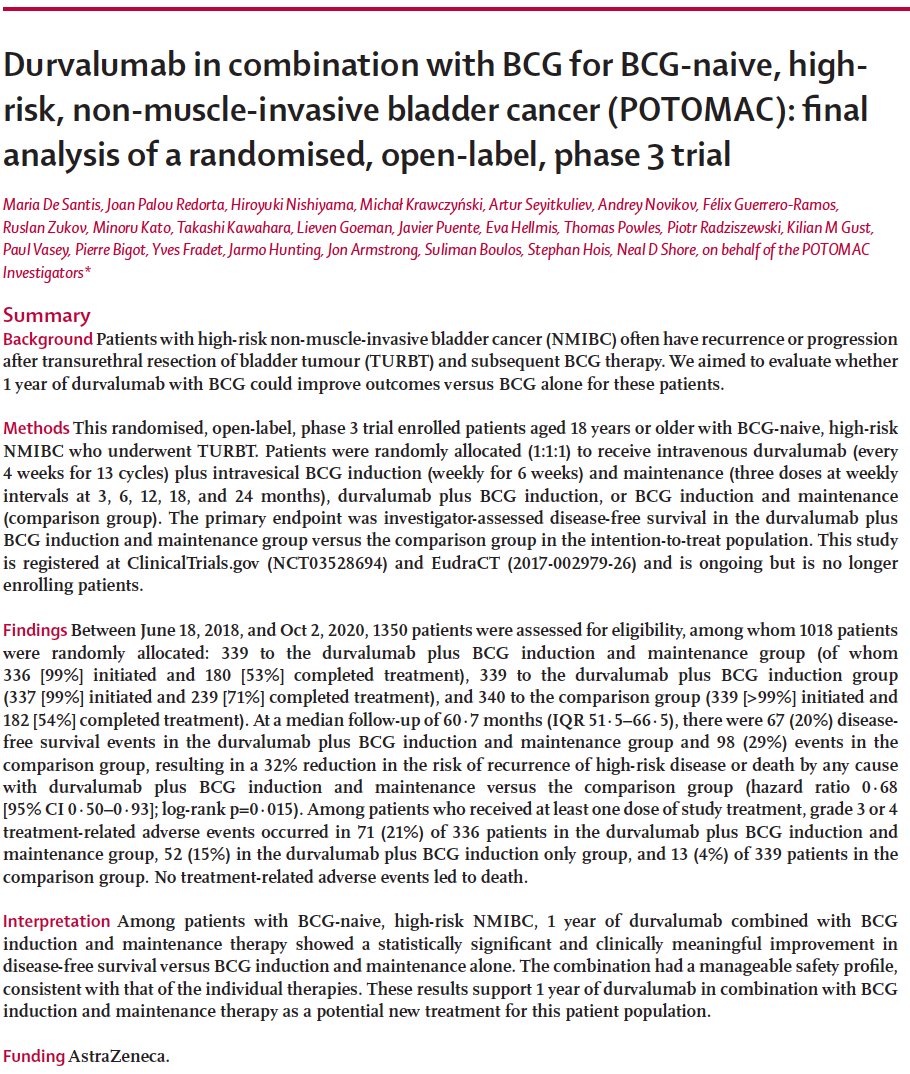
Background Patients with high-risk non-muscle-invasive bladder cancer (NMIBC) often have recurrence or progression
after transurethral resection of bladder tumour (TURBT) and subsequent BCG therapy. We aimed to evaluate whether
1 year of durvalumab with BCG could improve outcomes versus BCG alone for these patients.
Methods This randomised, open-label, phase 3 trial enrolled patients aged 18 years or older with BCG-naive, high-risk
NMIBC who underwent TURBT. Patients were randomly allocated (1:1:1) to receive intravenous durvalumab (every
4 weeks for 13 cycles) plus intravesical BCG induction (weekly for 6 weeks) and maintenance (three doses at weekly
intervals at 3, 6, 12, 18, and 24 months), durvalumab plus BCG induction, or BCG induction and maintenance
(comparison group). The primary endpoint was investigator-assessed disease-free survival in the durvalumab plus
BCG induction and maintenance group versus the comparison group in the intention-to-treat population. This study
is registered at ClinicalTrials.gov (NCT03528694) and EudraCT (2017-002979-26) and is ongoing but is no longer
enrolling patients.
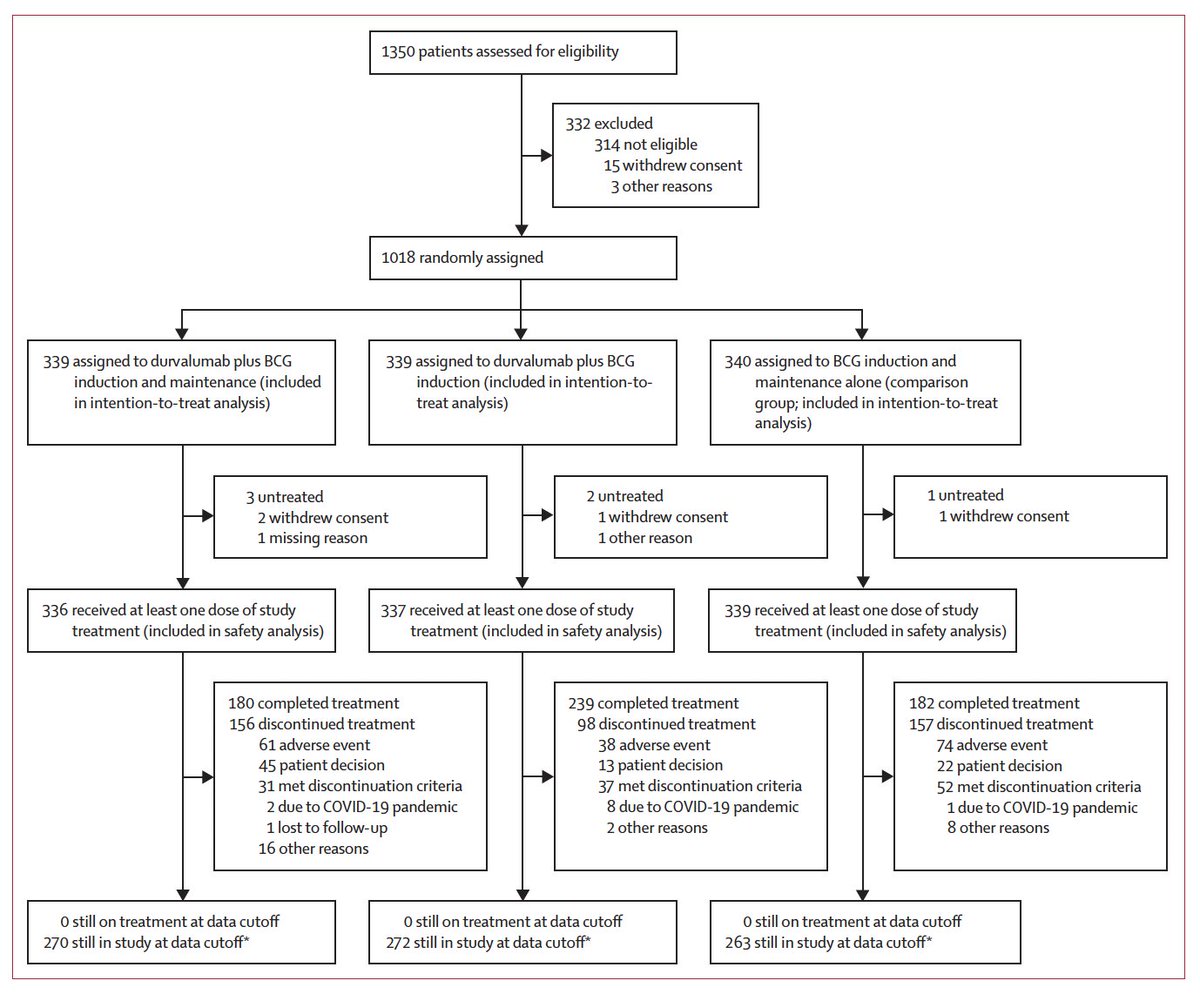
Findings Between June 18, 2018, and Oct 2, 2020, 1350 patients were assessed for eligibility, among whom 1018 patients
were randomly allocated: 339 to the durvalumab plus BCG induction and maintenance group (of whom
336 [99%] initiated and 180 [53%] completed treatment), 339 to the durvalumab plus BCG induction group
(337 [99%] initiated and 239 [71%] completed treatment), and 340 to the comparison group (339 [>99%] initiated and
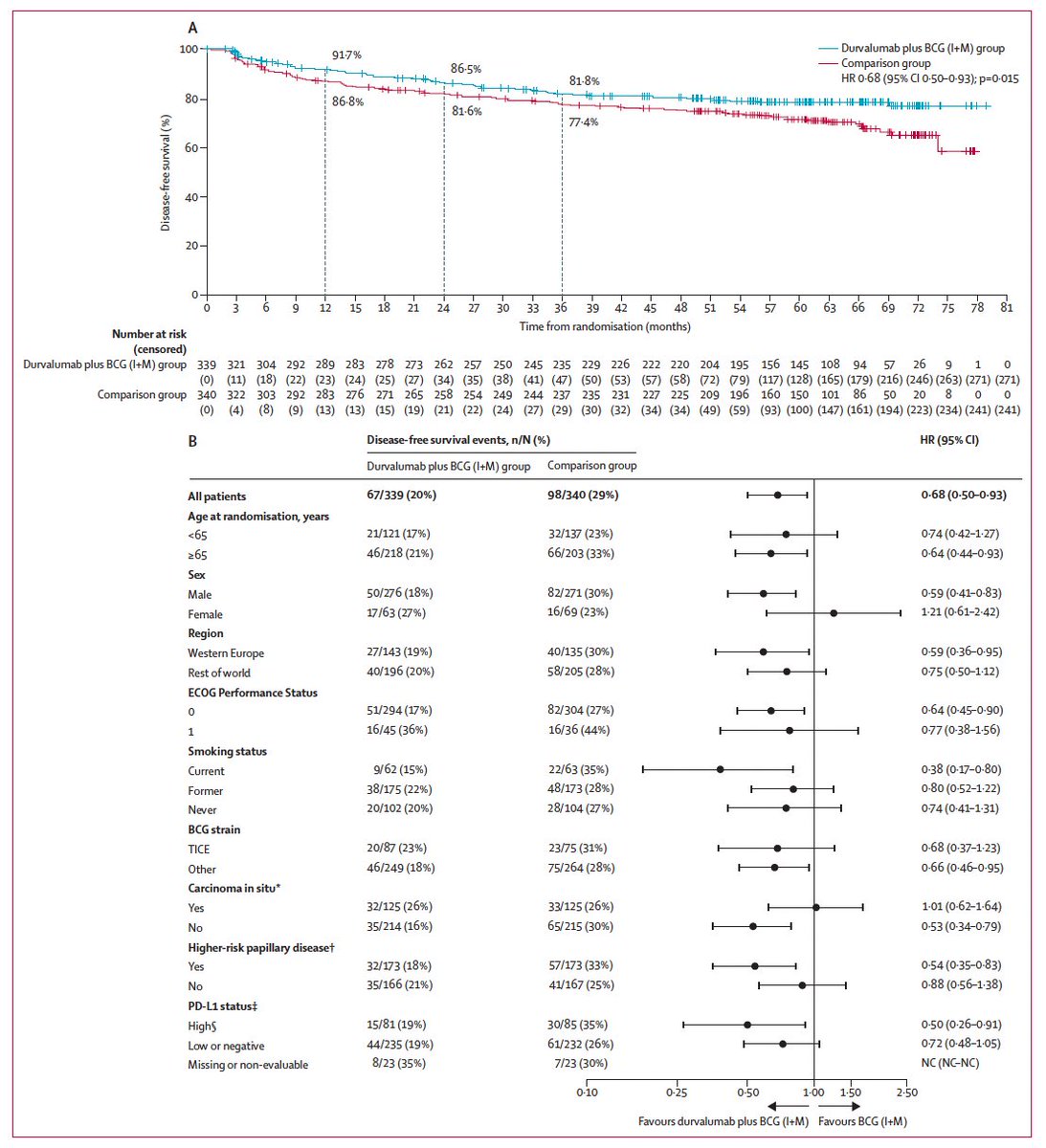
182 [54%] completed treatment). At a median follow-up of 60.7 months (IQR 51.5-66.5), there were 67 (20%) disease-
free survival events in the durvalumab plus BCG induction and maintenance group and 98 (29%) events in the
comparison group, resulting in a 32% reduction in the risk of recurrence of high-risk disease or death by any cause
with durvalumab plus BCG induction and maintenance versus the comparison group (hazard ratio 0.68
[95% CI .50-0.93]; log-rank p=0.015). Among patients who received at least one dose of study treatment, grade 3 or 4
treatment-related adverse events occurred in 71 (21%) of 336 patients in the durvalumab plus BCG induction and
maintenance group, 52 (15%) in the durvalumab plus BCG induction only group, and 13 (4%) of 339 patients in the
comparison group. No treatment-related adverse events led to death.
Interpretation Among patients with BCG-naive, high-risk NMIBC, 1 year of durvalumab combined with BCG
induction and maintenance therapy showed a statistically significant and clinically meaningful improvement in
disease-free survival versus BCG induction and maintenance alone. The combination had a manageable safety profile,
consistent with that of the individual therapies. These results support 1 year of durvalumab in combination with BCG
induction and maintenance therapy as a potential new treatment for this patient population.
Funding AstraZeneca.
---
1350 patients assessed for eligibility
332 excluded
314 not eligible
15 withdrew consent
3 other reasons
1018 randomly assigned
339 assigned to durvalumab plus BCG
339 assigned to durvalumab plus BCG
340 assigned to BCG induction and
induction and maintenance (included
induction (included in intention-to-
maintenance alone (comparison
in intention-to-treat analysis)
treat analysis)
group; included in intention-to-treat
analysis)
3 untreated
2 untreated
1 untreated
2 withdrew consent
1 withdrew consent
1 withdrew consent
1 missing reason
1 other reason
336 received at least one dose of study
337 received at least one dose of study
339 received at least one dose of study
treatment (included in safety analysis)
treatment (included in safety analysis)
treatment (included in safety analysis)
180 completed treatment
239 completed treatment
182 completed treatment
156 discontinued treatment
98 discontinued treatment
157 discontinued treatment
61 adverse event
38 adverse event
74 adverse event
45 patient decision
13 patient decision
22 patient decision
31 met discontinuation criteria
37 met discontinuation criteria
52 met discontinuation criteria
2 due to COVID-19 pandemic
8 due to COVID-19 pandemic
1 due to COVID-19 pandemic
1 lost to follow-up
2 other reasons
8 other reasons
16 other reasons
0 still on treatment at data cutoff
0 still on treatment at data cutoff
0 still on treatment at data cutoff
270 still in study at data cutoff*
272 still in study at data cutoff*
263 still in study at data cutoff*
---
Durvalumab plus
Durvalumab plus
Comparison
BCG induction and
BCG induction group
group
maintenance group
(n=339)
(n=340)
(n=339)
Age, years
Median (IQR)
68 (61-74)
68 (61-73)
67 (61-73)
<65
121 (36%)
123 (36%)
137 (40%)
>65
218 (64%)
216 (64%)
203 (60%)
Sex
Male
276 (81%)
272 (80%)
271 (80%)
Female
63 (19%)
67 (20%)
69 (20%)
Race
White
267 (79%)
267 (79%)
268 (79%)
Asian
61 (18%)
63 (19%)
60 (18%)
Other
4 (1%)
6 (2%)
8 (2%)
Missing
7 (2%)
3 (1%)
4 (1%)
Ethnicity
Hispanic or Latino
17 (5%)
14 (4%)
10 (3%)
Not Hispanic or Latino
322 (95%)
325 (96%)
330 (97%)
Region
Western Europe
143 (42%)
126 (37%)
135 (40%)
Rest of world
196 (58%)
213 (63%)
205 (60%)
ECOG performance status score
0
294 (87%)
305 (90%)
304 (89%)
1
45 (13%)
34 (10%)
36 (11%)
Smoking status
Current
62 (18%)
60 (18%)
63 (19%)
Former
175 (52%)
182 (54%)
173 (51%)
Never
102 (30%)
97 (29%)
104 (31%)
Carcinoma in situ*
Yes
125 (37%)
125 (37%)
125 (37%)
No
214 (63%)
214 (63%)
215 (63%)
Papillary disease only
Yes
217 (64%)
222 (65%)
220 (65%)
No
122 (36%)
117 (35%)
120 (35%)
T1 diseaset
195 (58%)
191 (56%)
211 (62%)
Ta diseaset
112 (33%)
114 (34%)
99 (29%)
Tumour PD-L1 expression
High$
81 (24%)
90 (27%)
85 (25%)
Low or negative
235 (69%)
228 (67%)
232 (68%)
Missing or non-evaluable
23 (7%)
21 (6%)
23 (7%)
Data are median (IQR) or n (%). ECOG=Eastern Cooperative Oncology Group. *Per interactive voice response system;
data represent patients who had carcinoma in situ (with or without papillary disease) at baseline. +Data represent
patients who had papillary disease (with or without carcinoma in situ). #PD-L1 status was determined by the
percentage of tumour cells with any membrane staining above background or by the percentage of tumour-associated
immune cells with staining at any intensity above background; ICP represents the percentage of tumour area occupied
by any tumour-associated immune cells; IC+ represents the percentage area of ICP showing PD-L1 positive immune cell
staining. SPD-L1 status was considered high if any of the following criteria were met: >25% of tumour cells showed
membrane staining; or ICPwas 1% and IC+ was >25%; or ICP was 1% and IC+ was 100%.
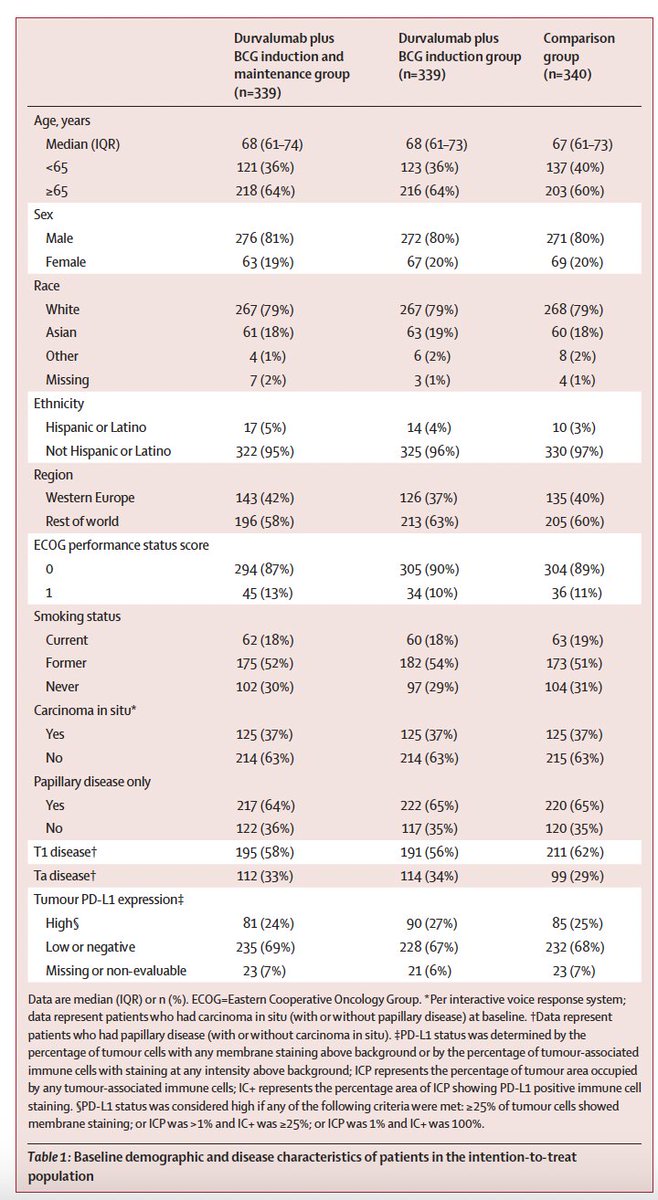
Table 1: Baseline demographic and disease characteristics of patients in the intention-to-treat
population
---
A
100
91.7%
Durvalumab plus BCG (I+M) group
86-5%
Comparison group
81-8%
HR 0-68 (95% CI 0-50-0-93); p=0-015
80
86.8%
81-6%
77-4%
Disease-free survival (%)
60
40
20
0
0
3
6
9
12
15
18
21
24
27
30
33
36
39
42
45
48
51
54
57
60
63
66
69
72
75
78
81
Number at risk
Time from randomisation (months)
(censored)
Durvalumab plus BCG (I+M) group
339
321
304
292
289
283
278
273
262
257
250
245
235
229
226
222
220
204
195
156
145
108
94
57
26
9
1
0
(0)
(11)
(18)
(22)
(23)
(24)
(25)
(27)
(34)
(35)
(38)
(41)
(47)
(50)
(53)
(57)
(58)
(72)
(79)
(117)
(128)
(165)
(179)
(216)
(246)
(263)
(271)
(271)
Comparison group
340
322
303
292
283
276
271
265
258
254
249
244
237
235
231
227
225
209
196
160
150
101
86
50
20
8
0
0
(0)
(4)
(8)
(9)
(13)
(13)
(15)
(19)
(21)
(22)
(24)
(27)
(29)
(30)
(32)
(34)
(34)
(49)
(59)
(93)
(100)
(147)
(161)
(194)
(223)
(234)
(241)
(241)
B
Disease-free survival events, n/N (%)
HR (95% CI)
Durvalumab plus BCG (I+M) group
Comparison group
All patients
67/339 (20%)
98/340 (29%)
0.68 (0-50-0-93)
Age at randomisation, years
<65
21/121 (17%)
32/137 (23%)
0.74 (0-42-1-27)
>65
46/218 (21%)
66/203 (33%)
0.64 (0-44-0-93)
Sex
Male
50/276 (18%)
82/271 (30%)
0.59 (0-41-0-83)
Female
17/63 (27%)
16/69 (23%)
1-21 (0-61-2-42)
Region
Western Europe
27/143 (19%)
40/135 (30%)
0.59 (0-36-0-95)
Rest of world
40/196 (20%)
58/205 (28%)
0.75 (0-50-1-12)
ECOG Performance Status
0
51/294 (17%)
82/304 (27%)
0-64 (0-45-0-90)
1
16/45 (36%)
16/36 (44%)
0.77 (0-38-1-56)
Smoking status
Current
9/62 (15%)
22/63 (35%)
0.38 (0-17-0-80)
Former
38/175 (22%)
48/173 (28%)
0.80 (0-52-1-22)
Never
20/102 (20%)
28/104 (27%)
0.74 (0-41-1-31)
BCG strain
TICE
20/87 (23%)
23/75 (31%)
0-68 (0-37-1-23)
Other
46/249 (18%)
75/264 (28%)
0-66 (0-46-0-95)
Carcinoma in situ*
Yes
32/125 (26%)
33/125 (26%)
1-01 (0-62-1-64)
No
35/214 (16%)
65/215 (30%)
0.53 (0-34-0-79)
Higher-risk papillary diseaset
Yes
32/173 (18%)
57/173 (33%)
0.54 (0-35-0-83)
No
35/166 (21%)
41/167 (25%)
0.88 (0-56-1-38)
PD-L1 status:
HighS
15/81 (19%)
30/85 (35%)
0.50 (0-26-0-91)
Low or negative
44/235 (19%)
61/232 (26%)
0.72 (0-48-1-05)
Missing or non-evaluable
8/23 (35%)
7/23 (30%)
NC (NC-NC)
0-10
0-25
0-50
1-00
1.50
2.50
Favours durvalumab plus BCG (I+M) Favours BCG (I+M)
POTOMAC (NCT03528694) is the randomized, open-label, multicenter Phase 3 trial that brought durvalumab (Imfinzi, AstraZeneca) into the curative-intent setting of BCG-naïve, high-risk non-muscle-invasive bladder cancer (NMIBC). 1,018 patients were randomized 1:1:1 after transurethral resection of bladder tumor (TURBT) to receive durvalumab every 4 weeks for 13 cycles plus BCG induction and maintenance, BCG induction and maintenance alone, or an investigational comparator arm. Presented at ESMO 2025 with simultaneous publication in The Lancet and with the final analysis subsequently presented at the 2026 ASCO GU and AUA meetings, POTOMAC met its primary endpoint of investigator-assessed disease-free survival (DFS HR 0.68; 95% CI 0.50–0.93; p=0.0154). On May 28, 2026, the FDA approved durvalumab in combination with BCG induction and maintenance for adult patients with BCG-naïve, high-risk NMIBC — the first new therapy approved for this population in over three decades.
Population
1,018 adults with BCG-naïve, high-risk NMIBC following TURBT. High-risk defined as ≥1 of: T1 tumor, grade 3/high-grade tumor, carcinoma in situ (CIS), or multiple, recurrent, and large Ta tumors.
Intervention
Durvalumab 1500 mg IV every 4 weeks for 13 cycles + BCG induction & maintenance vs BCG induction & maintenance alone vs an investigational comparator arm (1:1:1).
Primary Endpoint
Investigator-assessed disease-free survival (DFS) — time from randomization to first recurrence of high-risk NMIBC, persistent CIS, muscle-invasive disease, metastatic disease, or death.
Key Secondary
Time to recurrence, time to high-risk event, time to cystectomy, overall survival, safety/tolerability, and patient-reported outcomes.
Efficacy & Safety
Reported Results
Disease-Free Survival (Primary Endpoint)
Adding 1 year of durvalumab to BCG induction and maintenance produced a 32% reduction in the risk of disease recurrence, progression, or death versus BCG alone in BCG-naïve, high-risk NMIBC (HR 0.68; 95% CI 0.50–0.93; p=0.0154). At a median follow-up of 60.7 months, 67 DFS events were observed in the durvalumab + BCG arm vs 98 in BCG alone; median DFS was not reached in either arm. Median time to high-risk event was 14.1 months with durvalumab + BCG vs 8.3 months with BCG alone (AUA 2026 update).
Among patients who ultimately underwent cystectomy, median time to surgery was 19 months with durvalumab + BCG vs 14.1 months with BCG alone. The durvalumab + BCG regimen also delayed progression to muscle-invasive or metastatic disease, supporting its curative-intent positioning. Overall survival remains immature with continued follow-up.
The safety profile was consistent with the known durvalumab profile with no new safety signals attributable to the combination. Grade 3/4 treatment-related adverse events: 21% (durvalumab + BCG) vs 4% (BCG alone); no treatment-related deaths were reported. Immune-mediated adverse reactions, infusion-related reactions, and embryo-fetal toxicities are included as warnings/precautions in the prescribing information.
STATUSFDA Approved · May 28, 2026 · BCG-naïve high-risk NMIBC
On May 28, 2026, the U.S. FDA approved durvalumab (Imfinzi) in combination with Bacillus Calmette-Guérin (BCG) for adult patients with BCG-naïve, high-risk non-muscle-invasive bladder cancer. The approval covers high-risk disease defined as T1 tumor, grade 3/high-grade tumor, carcinoma in situ (CIS), or multiple, recurrent, and large tumors. Approved dosing is durvalumab 1500 mg IV every 4 weeks for 13 cycles plus BCG induction and maintenance. This is the first new therapy approved for BCG-naïve, high-risk NMIBC in over 30 years and the only immunotherapy combination approved in this setting.