Adjuvant treatment of high-risk muscle-invasive urothelial carcinoma (MIUC) — Bristol Myers Squibb
Discover KOL Sentiment on CheckMate-274 →Design - Phase 3 adjuvant nivolumab vs placebo, high-risk muscle-invasive urothelial carcinoma after radical resection (CheckMate-274, NCT02632409); primary endpoint DFS (ITT + PD-L1 >=1%).
DFS (primary) - ITT median 20.8 vs 10.8 mo, HR 0.70 (98.22% CI 0.55-0.90), P<0.001 (NEJM 2021); PD-L1 >=1% subgroup HR 0.53. 5-yr update (Annals 2026): 21.9 vs 11.0 mo, HR 0.74.
OS (5-yr follow-up) - First OS data (Annals of Oncology, Jan 2026): median 75.0 vs 50.1 mo, HR 0.83 (95% CI 0.67-1.02) - 95% CI crosses unity, not formally significant.
Safety - Consistent with the established nivolumab profile; common AEs rash, fatigue, diarrhea, pruritus, musculoskeletal pain, urinary tract infection.
Regulatory - FDA approved August 19, 2021 - adjuvant nivolumab for high-risk urothelial carcinoma after radical resection.
Sponsor / drug - Bristol Myers Squibb + Ono Pharmaceutical; nivolumab (Opdivo).
Compiled and reviewed by the KOL Pulse research team, led by Brian Shields, Founder, KOL Pulse. Last updated July 21, 2026.






Top tweets by impressions — click to view on X
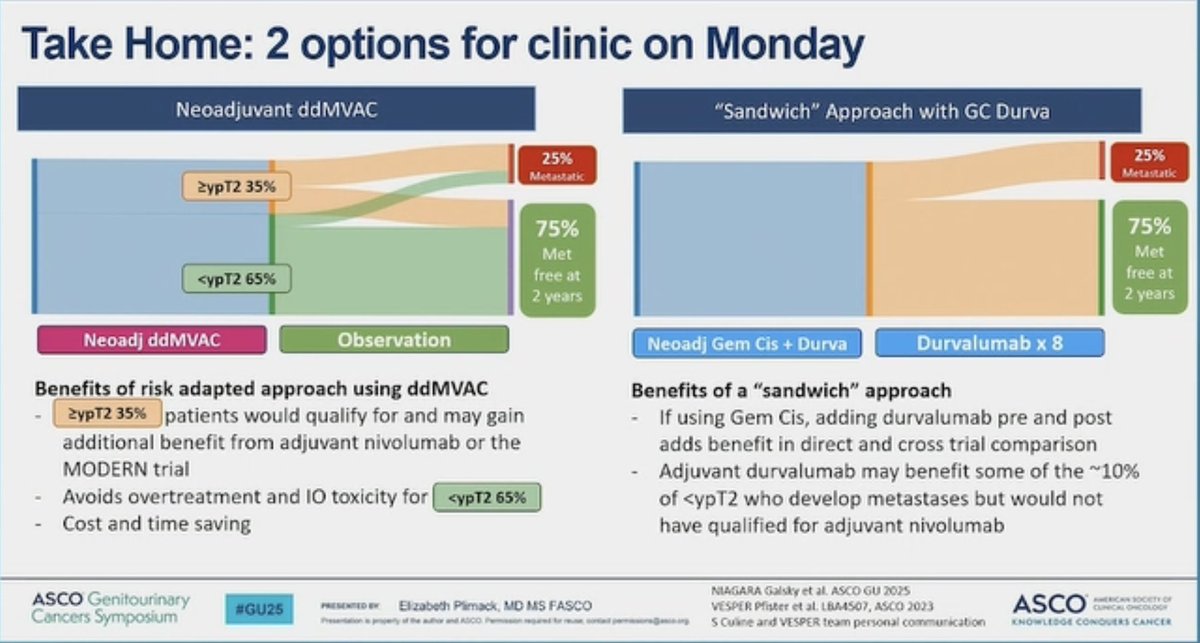
Excellent discussion of CheckMate 274 & NIAGARA by @ERPlimackMD always! 🔥
Great insights into the evolving landscape of perioperative & adjuvant immunotherapy in bladder cancer! 💡
@asco…
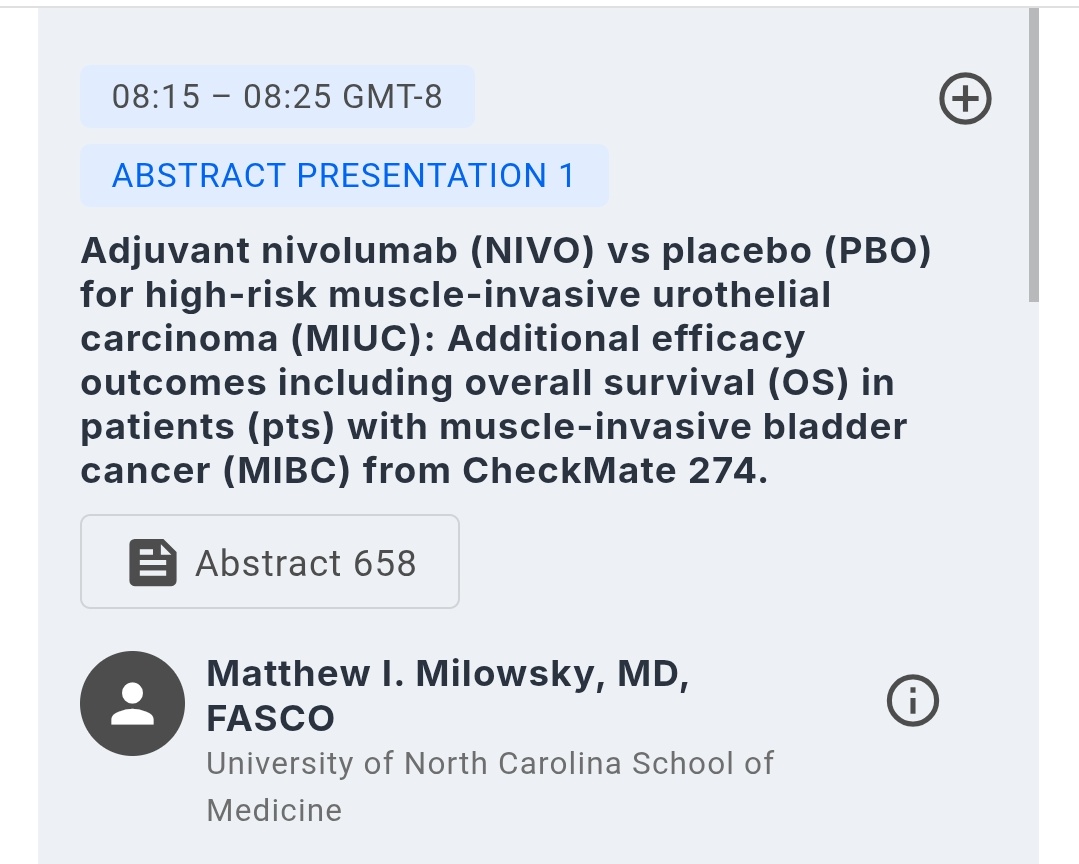
🌟📢 @ASCO #GU25 |
Abstract #658
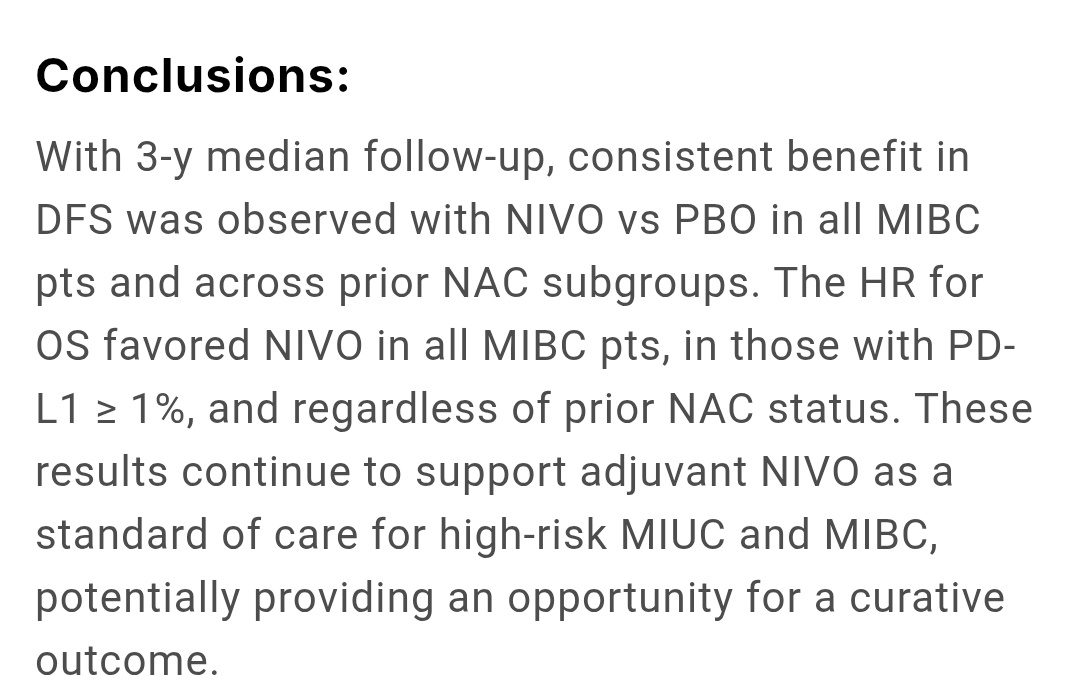
🔬 Adjuvant nivolumab (NIVO) improves DFS & OS in muscle-invasive bladder cancer (MIBC) in CheckMate 274.
@MattGalsky
📊 Key Findings (N=560, FU: 36.1 months)
✅ DFS…
Best Q&A session ever in #GU25. @MattGalsky @tompowles1 @ERPlimackMD @cnsternberg arguing over best treatment approach in localized Bladder cancer upon presentation of NIAGARA and CM274 updated…
Updated OS for checkmate 274.
3 year median follow up.
HR for OS in all comers - 0.70 ( CI 0.55 to 0.90 )
HR for OS in PdL1 more than 1 % - 0.48 ( CI -0.29 to 0.77 )
HR for OS With NAC - 0.74 (…
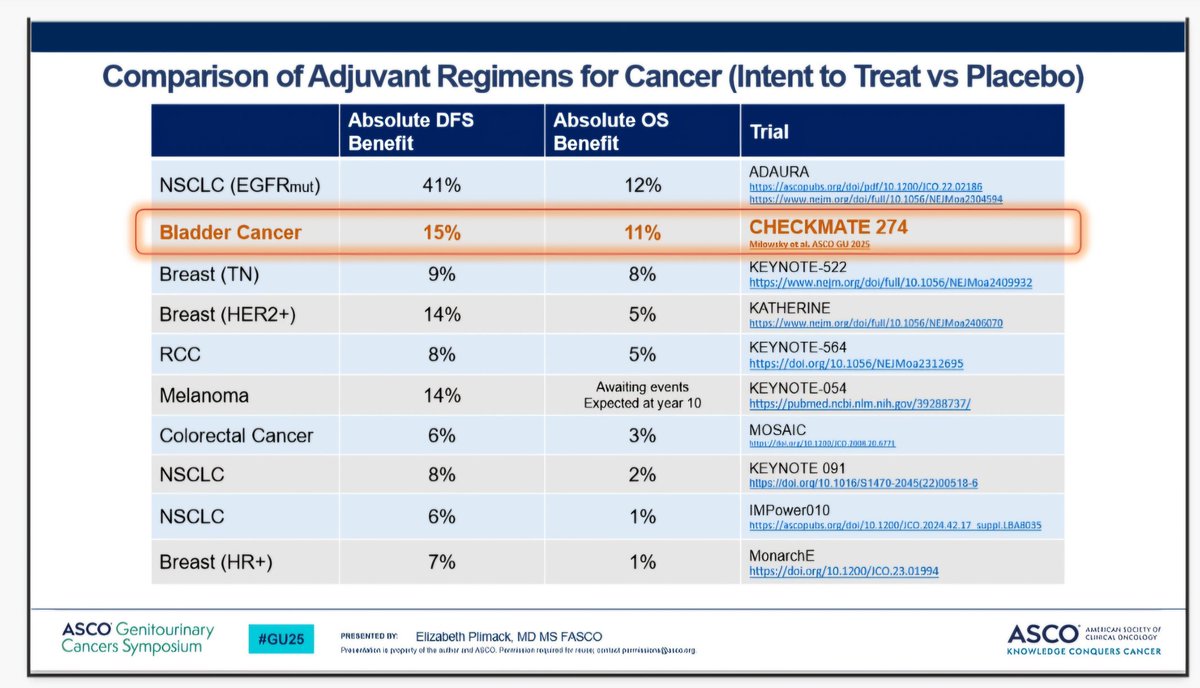
Comparison of Adjuvant regimens for cancer across tumor types #GU25. Nivolumab per Checkmate 274 for #bladdercancer rises to the top. https://t.co/d5owZb03ga... https://t.co/bKvGKciNgx
Excellent discussion by @ERPlimackMD on #CM274 which continues to show OS benefit with caveats:
➡️how can we avoid over treatment -> use of biomarkers - ctDNA, PDL1?
➡️only 50% got SOC NAC
➡️pts…
Checkmate 274 . 3 year OS data. Impressive results. @ASCO #GU25 @OncoAlert https://t.co/u1FwlYCmlb

Ab#658 @ASCO #GU25 by @MattMilowsky 👉 https://t.co/7r9KXGvDEK 👉Ph3 CheckMate 274 trial of adj nivo vs. placebo in MIUC #bladdercancer👉DFS & OS analyses favored nivo regardless of prior neo-adj…

⏰Urothelial Carcinoma Oral Abstracts session happening now
🔸CheckMate 274: OS data with Adj nivo vs pbo in high Rick MIBC
🔸pCR and EFS OS in NIAGARA neoadj cis/gem+/- periop durva
🔸Neoadj Durvalumab…

🗣️Bladder Cancer Oral Abstracts #GU25
Dr @MattMilowsky presenting Abs658 Adjuvant NIVO for MIBC: efficacy and OS #CM274
N = 709
560 (79%) MIBC (NIVO = 279; PBO = 281);
284 (51%) MIBC w/ prior…
Established adjuvant nivolumab as SOC for high-risk MIUC post-radical surgery. With NIAGARA now showing OS benefit with perioperative durvalumab in cisplatin-eligible MIBC, field is shifting to perioperative approach; CheckMate-274 remains relevant for cisplatin-ineligible patients, upper tract disease, or when neoadjuvant was declined/not feasible.
ITT population (primary analysis, NEJM 2021): median DFS 20.8 mo with nivolumab vs. 10.8 mo with placebo (HR 0.7, 98.22% CI 0.55-0.90, P<0.001). PD-L1 ≥1% subgroup: HR 0.53 (NEJM 2021 primary). 5-year update (Annals of Oncology 2026): median DFS 21.9 vs. 11.0 mo, HR 0.74 (95% CI 0.61-0.90).
First overall survival data from the 5-year follow-up (Galsky/Bajorin, Annals of Oncology, January 2026): median OS 75.0 months with nivolumab (95% CI 56.7-NE) vs. 50.1 months with placebo (38.0-72.1); HR 0.83 (95% CI 0.67-1.02). The 95% CI crosses unity — OS improvement is clinically meaningful (nearly 25 months absolute difference in medians) but did not reach conventional statistical significance in the hierarchical testing framework. DFS benefit remained durable alongside this OS signal.
Adverse events significant but manageable; consistent with the established nivolumab safety profile. Most common AEs: rash, fatigue, diarrhea, pruritus, musculoskeletal pain, urinary tract infection.
✅ Established adjuvant SOC for high-risk MIUC. Established adjuvant nivolumab as SOC for high-risk MIUC post-radical surgery. With NIAGARA now showing OS benefit with perioperative durvalumab in cisplatin-eligible MIBC, field is shifting to perioperative approach; CheckMate-274 remains relevant for cisplatin-ineligible patients, upper tract disease, or when neoadjuvant was declined/not feasible.
CheckMate-274 is a Phase 3 randomized, double-blind trial (NCT02632409) of adjuvant nivolumab (Opdivo) versus placebo in patients with high-risk muscle-invasive urothelial carcinoma after radical surgery. Disease-free survival in the overall (intent-to-treat) population and in the PD-L1 >=1% subgroup was the primary endpoint. This page's URL slug reads 'checkmate-274,' but its content and data describe CheckMate-274.
Adjuvant nivolumab significantly prolonged disease-free survival. In the primary analysis (NEJM 2021), median DFS was 20.8 versus 10.8 months in the intent-to-treat population (HR 0.70; 98.22% CI 0.55-0.90; P<0.001), with a greater disease-free survival benefit in the PD-L1 >=1% subgroup (HR 0.53). The 5-year update (Annals of Oncology 2026) confirmed durable benefit with median DFS 21.9 versus 11.0 months (HR 0.74).
Yes. On August 19, 2021 the FDA approved nivolumab (Opdivo) for the adjuvant treatment of adults with urothelial carcinoma who are at high risk of recurrence after radical resection, based on the CheckMate-274 disease-free survival benefit. It established adjuvant immunotherapy as a standard of care in this setting.
The first overall survival results, from the 5-year follow-up (Galsky/Bajorin, Annals of Oncology, January 2026), showed median OS of 75.0 months with nivolumab versus 50.1 months with placebo (HR 0.83; 95% CI 0.67-1.02). Because the 95% confidence interval crosses unity, the overall survival improvement is a favorable trend but was not formally statistically significant.
CheckMate-274 established adjuvant nivolumab as a standard of care for high-risk muscle-invasive urothelial carcinoma after radical surgery. With NIAGARA now showing an overall survival benefit for perioperative (neoadjuvant plus adjuvant) durvalumab in cisplatin-eligible muscle-invasive bladder cancer, the field is increasingly shifting toward perioperative strategies, while adjuvant nivolumab remains an option, particularly for patients who did not receive neoadjuvant immunotherapy.