Perioperative enfortumab vedotin + pembrolizumab (Padcev + Keytruda) is now FDA-approved (July 10, 2026) for adult muscle-invasive bladder cancer patients who are radical-cystectomy candidates, regardless of cisplatin eligibility — based on EV-304/KEYNOTE-B15 (EFS HR 0.53; pCR 55.8% vs. 32.5%), the first platinum-free regimen to beat chemo in ~25 years.
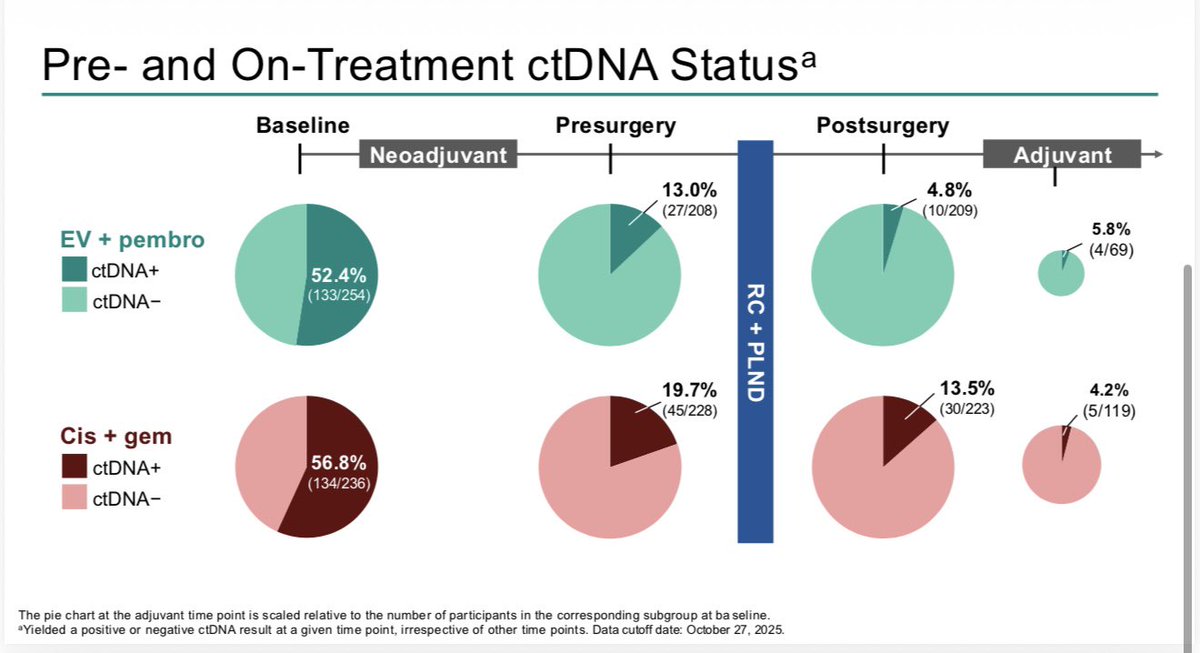
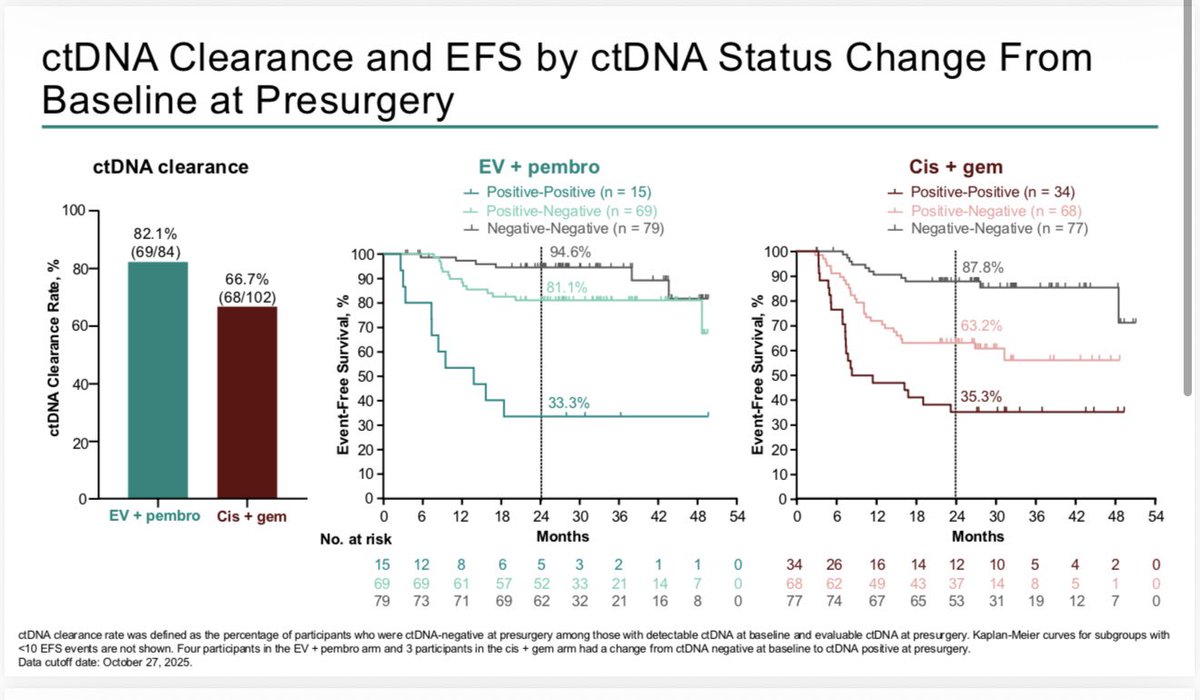
Discover KOL Sentiment on KEYNOTE-B15 →View EV-304 on ClinicalTrials.gov →Jonathan Chatzkel presented an exploratory analysis of circulating tumor DNA (ctDNA, tumor-informed Natera Signatera assay) from KEYNOTE-B15 / EV-304 at ESMO 2026 in Madrid on October 23, 2026. ctDNA was tested at baseline, before surgery, after surgery and during adjuvant treatment (data cutoff 27-Oct-2025). Fewer patients were ctDNA-positive with EV + pembrolizumab than with gemcitabine-cisplatin before surgery (13.0% vs 19.7%) and after surgery (4.8% vs 13.5%), and ctDNA clearance from baseline to surgery was 82.1% vs 66.7% (Abstract 4734O). ctDNA-positive status was associated with worse event-free survival in both arms, and EFS estimates favored EV + pembrolizumab in each ctDNA group (Abstract 4734O). In the discussant’s analysis, pCR was 72.4% vs 43.7% in patients who were ctDNA-negative before surgery and 3.7% vs 2.2% in those who were still ctDNA-positive.
| Measure | EV + pembrolizumab | Gemcitabine-cisplatin | Source |
|---|---|---|---|
| ctDNA-positive at baseline | 52.4% (133/254) | 56.8% (134/236) | Abstract 4734O table; Presented slide |
| ctDNA-positive before surgery | 13.0% (27/208) | 19.7% (45/228) | Abstract 4734O table; Presented slide |
| ctDNA-positive after surgery (before adjuvant) | 4.8% (10/209) | 13.5% (30/223) | Abstract 4734O table; Presented slide |
| ctDNA clearance, baseline to presurgerya | 82.1% (69/84) | 66.7% (68/102) | Abstract 4734O; Presented slide |
| pCR if ctDNA-negative before surgery | 72.4% (131/181) | 43.7% (80/183) | Discussant slide, citing Abstract 4734O |
| pCR if ctDNA-positive before surgery | 3.7% (1/27) | 2.2% (1/45) | Discussant slide, citing Abstract 4734O |
| ctDNA group | EV + pembrolizumab | Gemcitabine-cisplatin | EFS HR (95% CI)b / source |
|---|---|---|---|
| Baseline ctDNA-positive | 24-mo EFS 71.2% (n=133) | 24-mo EFS 54.2% (n=134) | HR 0.54 (0.37–0.80); Abstract 4734O; Presented slide |
| Baseline ctDNA-negative | 24-mo EFS 86.1% (n=121) | 24-mo EFS 82.7% (n=102) | HR 0.68 (0.37–1.26); Abstract 4734O; Presented slide |
| Cleared ctDNA (positive to negative before surgery) | 24-mo EFS 81.1% (n=69) | 24-mo EFS 63.2% (n=68) | Presented slide (no HR shown) |
| Persistent ctDNA-positive before surgery | 24-mo EFS 33.3% (n=15) | 24-mo EFS 35.3% (n=34) | Presented slide (no HR shown) |
| ctDNA-negative at baseline and before surgery | 24-mo EFS 94.6% (n=79) | 24-mo EFS 87.8% (n=77) | Presented slide (no HR shown) |
| Postsurgery ctDNA-negative | 24-mo EFS 89.9% (n=199) | 24-mo EFS 82.2% (n=193) | HR 0.48 (0.29–0.81); Abstract 4734O; Presented slide |
| Postsurgery ctDNA-positive | 24-mo EFS 10.0% (n=10) | 24-mo EFS 10.0% (n=30) | HR 0.63 (0.30–1.35); Abstract 4734O; Presented slide |
a Clearance = share of patients with detectable ctDNA at baseline and an evaluable presurgery sample who were ctDNA-negative before surgery (presented slide). b Unstratified Cox model with treatment as a covariate. 24-month EFS values are read from the Kaplan-Meier curve labels on the presented slides; no landmark values were interpolated. All values: ESMO 2026 Abstract 4734O and presented slides, data cutoff 27-Oct-2025.
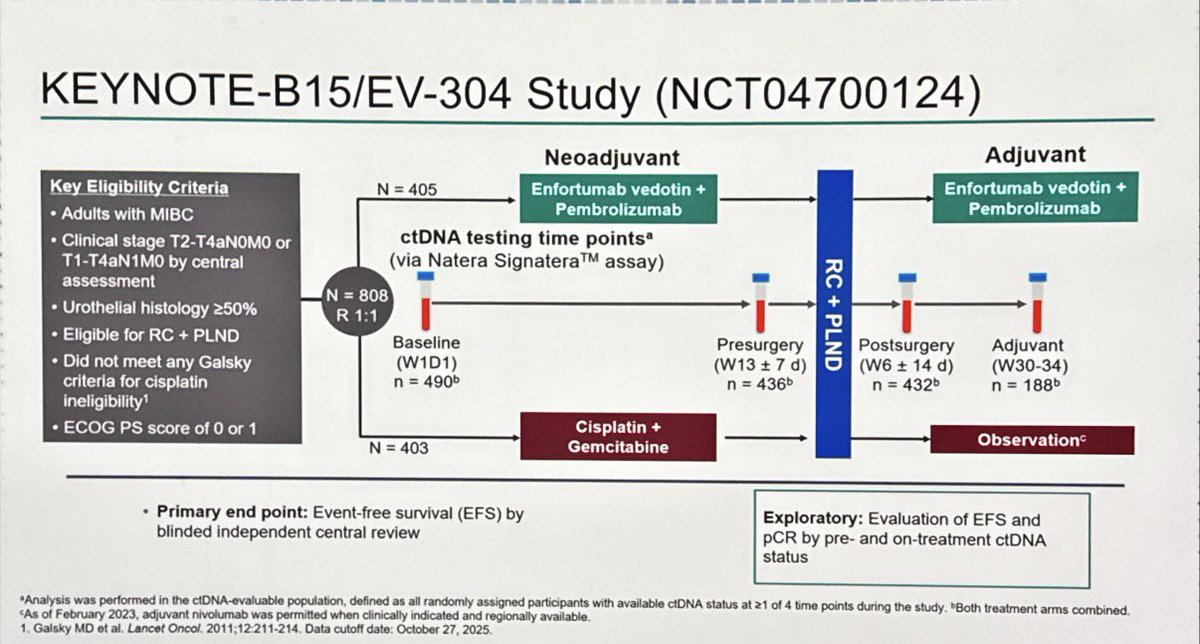
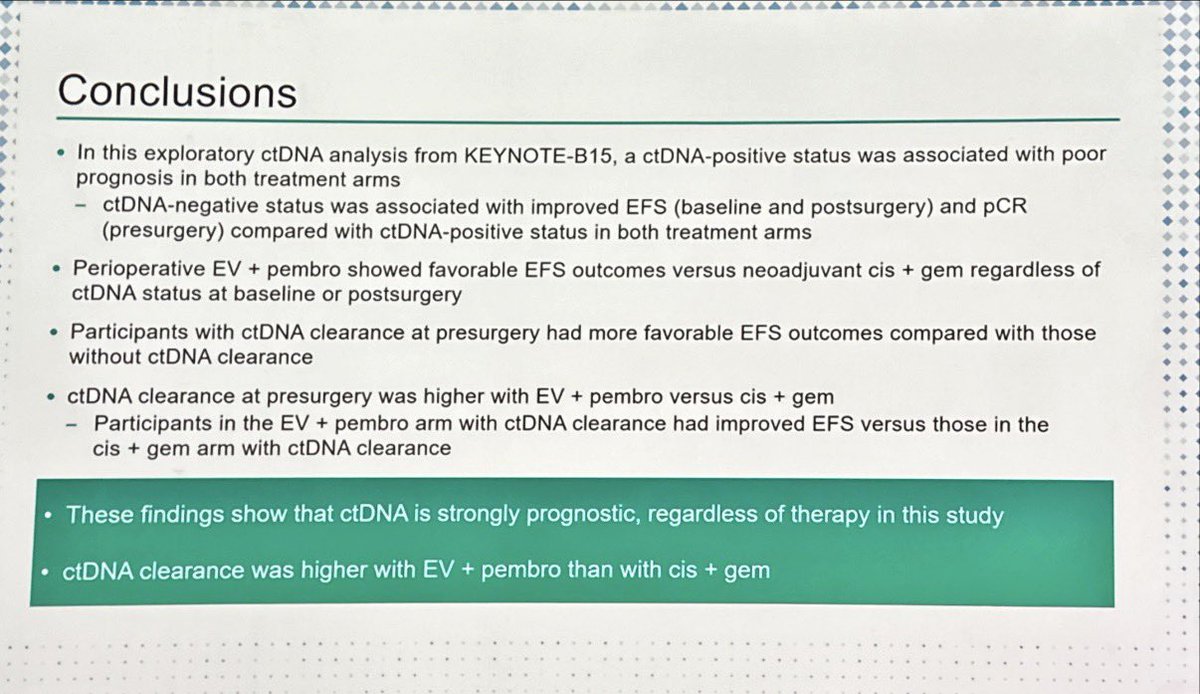
How to read it. This is an exploratory analysis of the ctDNA-evaluable subset (490 of 808 randomized patients had a baseline result), and sample availability fell over time (adjuvant time point: 69 vs 119 patients). The EV + pembrolizumab arm also received adjuvant EV + pembrolizumab, while the chemotherapy arm was observed after surgery, so EFS differences cannot be attributed to the neoadjuvant phase alone (discussant slide). The presenters concluded that ctDNA is strongly prognostic regardless of therapy. The analysis does not show that ctDNA can select patients for treatment, safely omit adjuvant therapy or cystectomy, or guide bladder preservation; those questions need prospective trials. The FDA approval of perioperative EV + pembrolizumab (July 10, 2026) rests on the trial’s EFS and OS results and is unchanged.
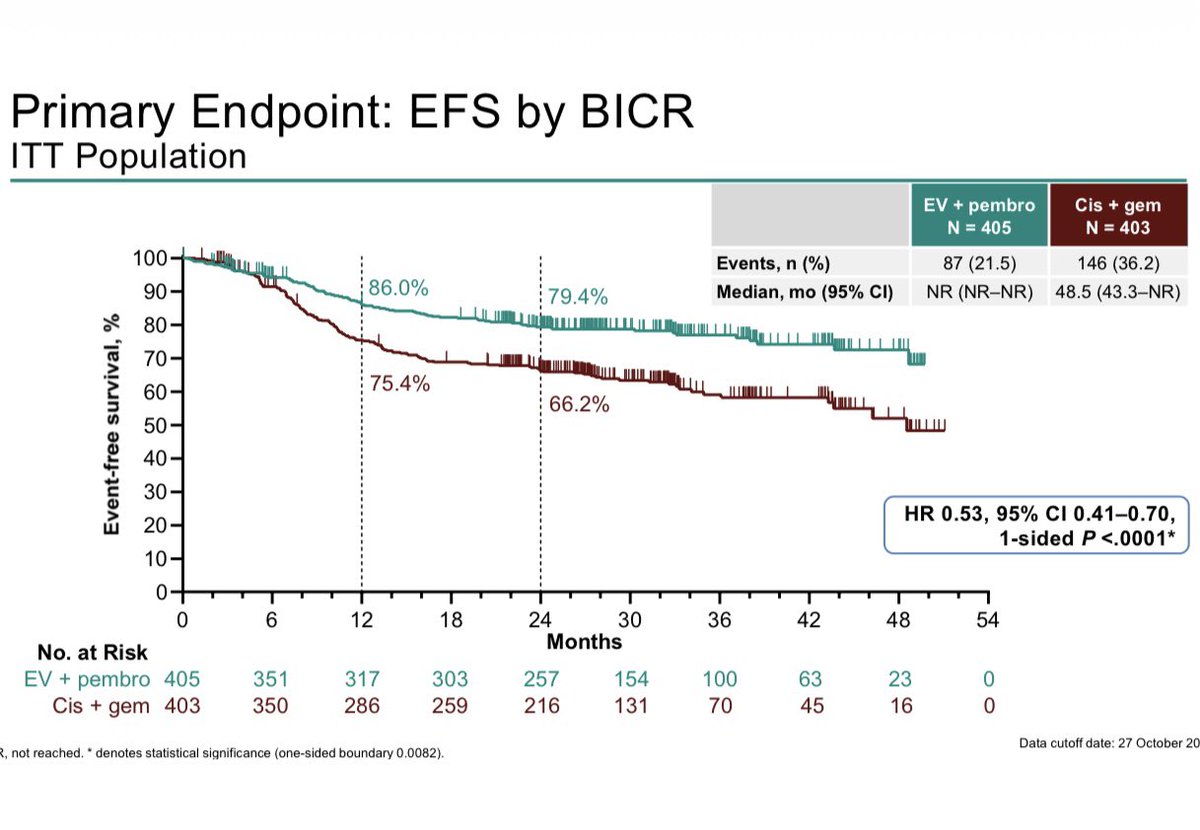
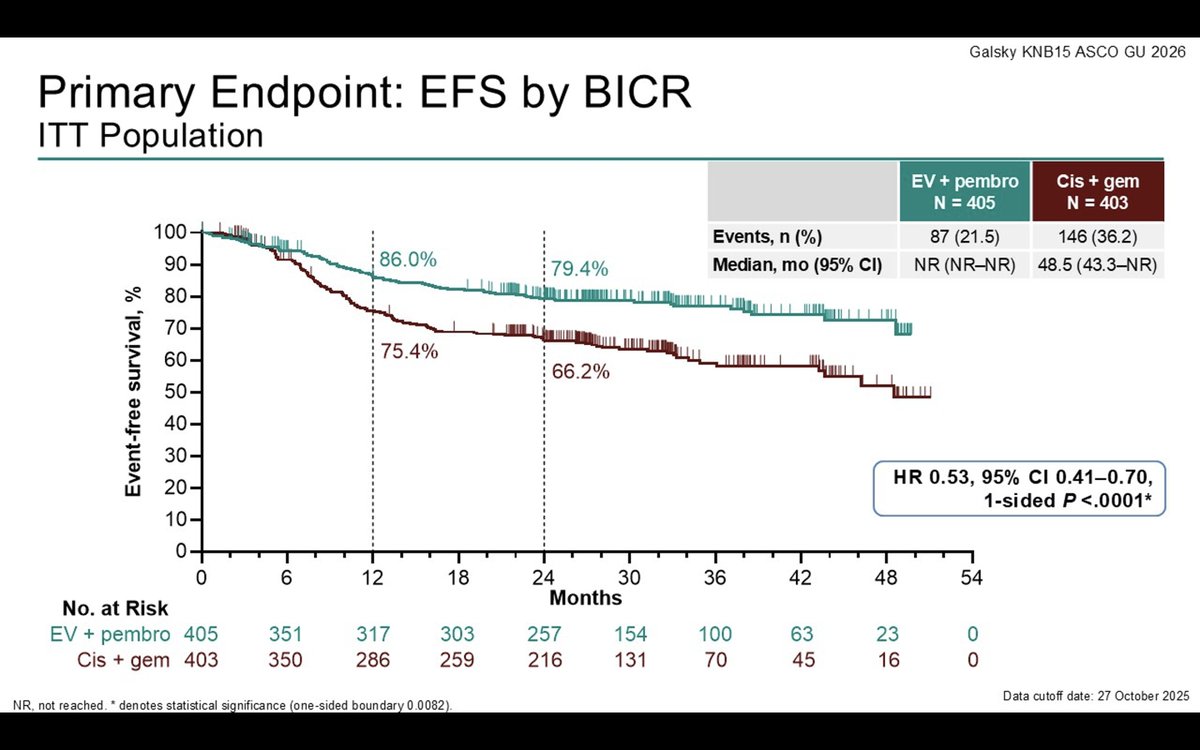
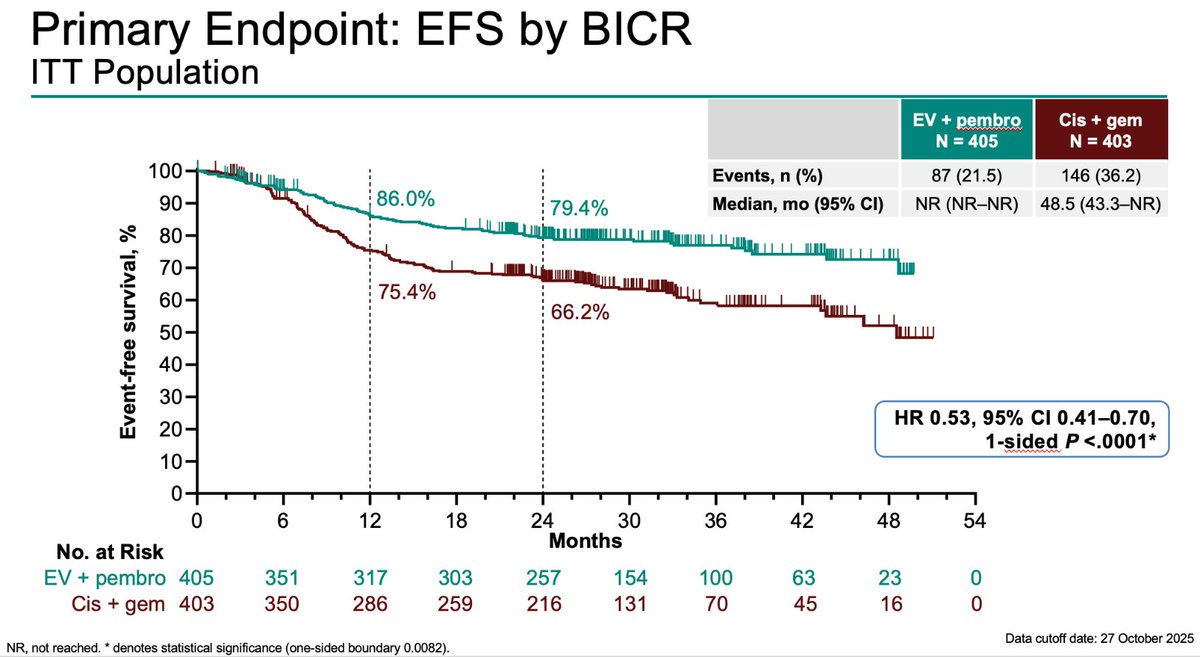
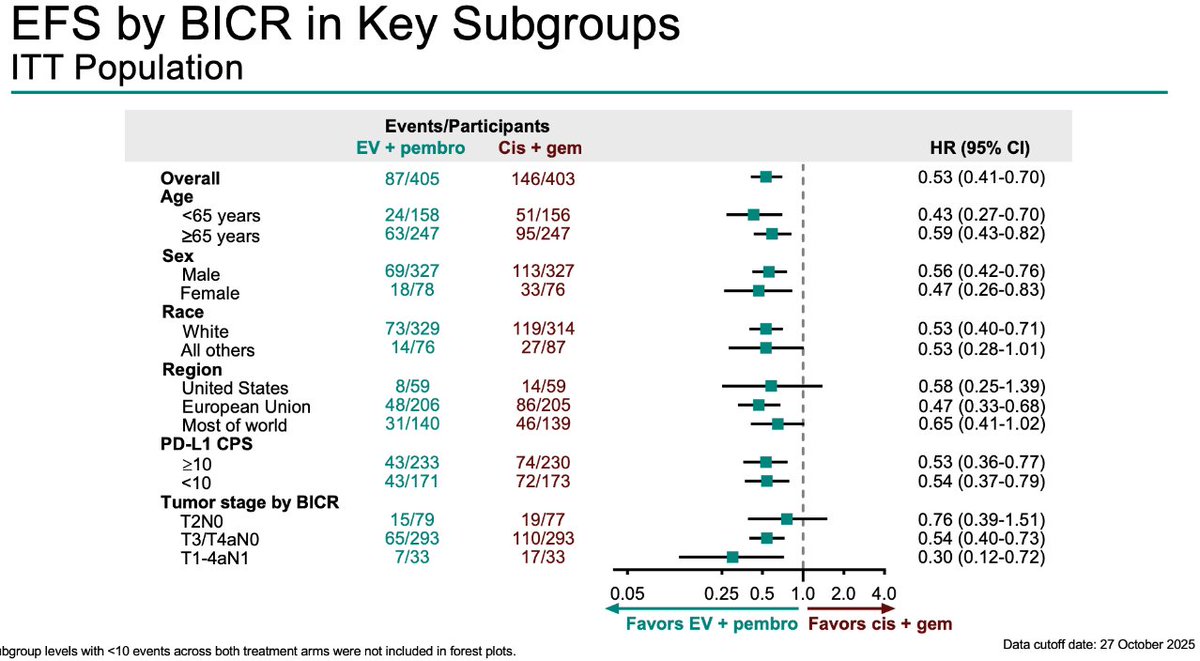
Event-free survival HR was 0.53 (95% CI 0.41-0.70, P<0.0001) favoring enfortumab vedotin + pembrolizumab. 24-month EFS rate: 79.4% vs. 66.2%. Median EFS not reached with EV+P vs. 48.5 months with gem/cis. Key secondary endpoint — pCR (pathological complete response, pT0N0 by central pathology review): 55.8% vs. 32.5% (NEJM 2026; ASCO GU 2026 LBA630; data cutoff 27-Oct-2025).
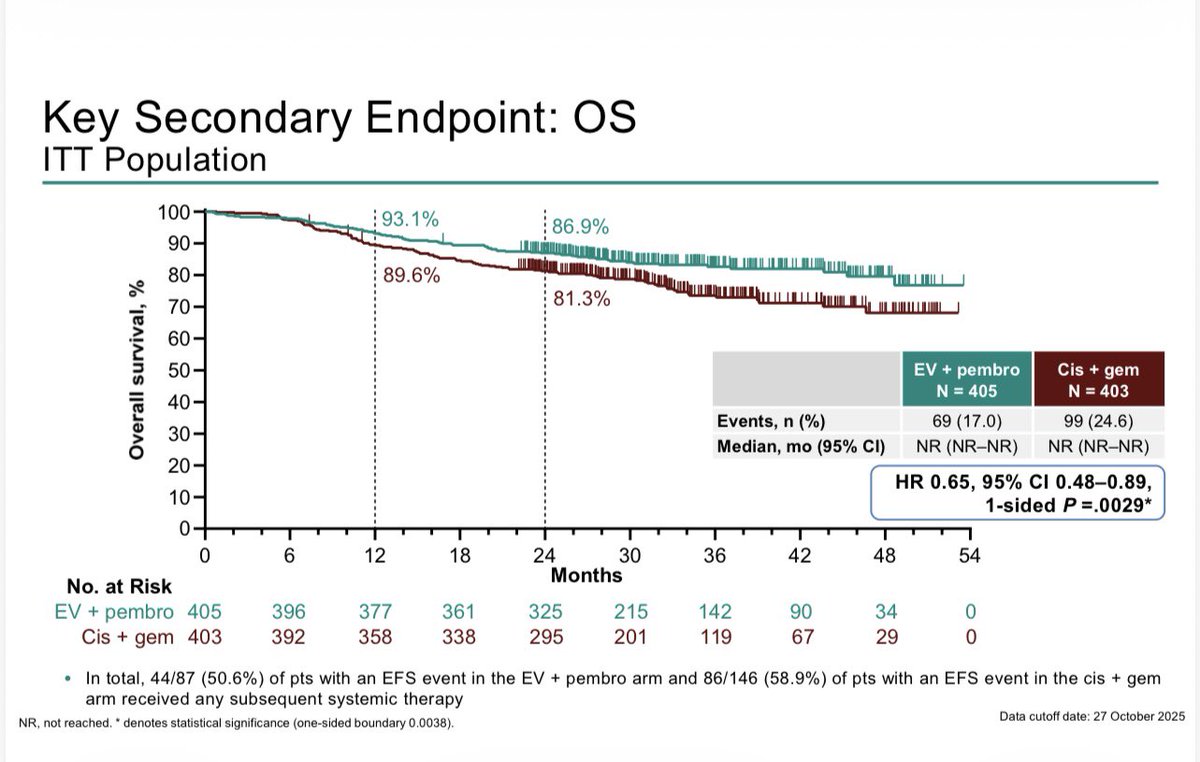
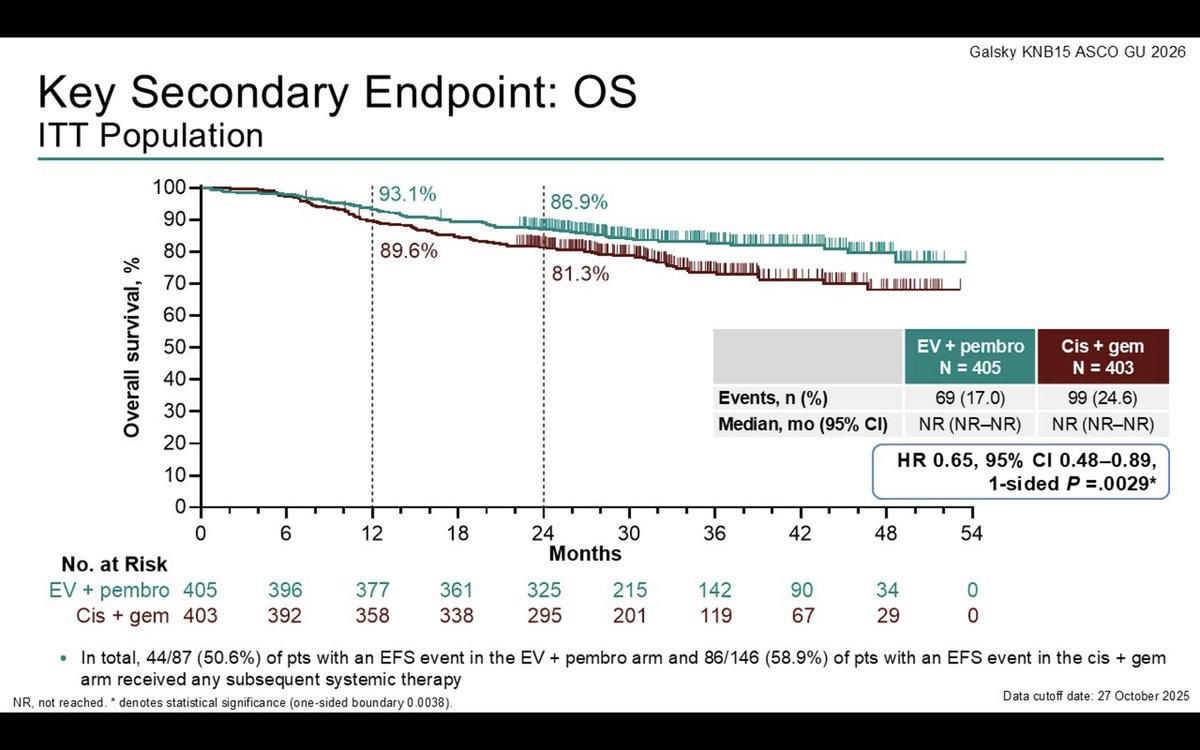
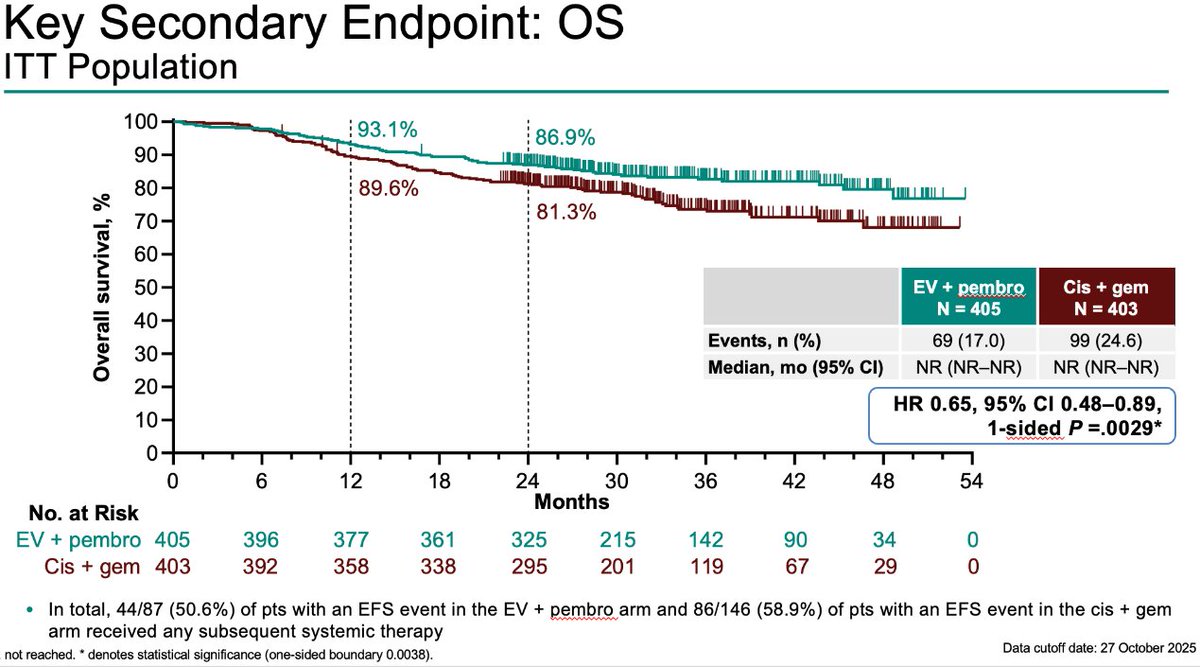
OS improvement reported — approximately 35% risk reduction favoring EV+P vs. chemotherapy (OS HR 0.65, 95% CI 0.48-0.89, 1-sided P=0.0029). Both median OS values not reached. FDA approved the perioperative EV+pembro regimen for cisplatin-eligible MIBC on July 10, 2026.
Grade ≥3 adverse events of any cause (treatment-emergent) occurred in 75.7% with EV+P vs. 67.2% with gem/cis (NEJM 2026; ASCO GU 2026 LBA630; data cutoff 27-Oct-2025). Key AEs: EV-related skin reactions (14.1% G≥3), peripheral neuropathy; pembrolizumab-related skin reactions (13.9% G≥3). Profile manageable and consistent with individual agents. Across EV-303 and EV-304, the most common (≥30%) treatment-related adverse events were pruritus, alopecia, diarrhea, and anemia; no new safety signals were observed. Prescribing warnings include immune-mediated reactions, serious skin reactions, hyperglycemia, pneumonitis/interstitial lung disease, peripheral neuropathy, ocular disorders, infusion-site extravasation, and embryo-fetal toxicity.
ESMO 2026 ctDNA analysis (exploratory) - ctDNA clearance 82.1% vs 66.7%; ctDNA-positive after surgery 4.8% vs 13.5%; pCR 72.4% vs 43.7% if ctDNA-negative before surgery (Abstract 4734O and slides; data cutoff 27-Oct-2025). ctDNA was prognostic in both arms; it is not validated to guide treatment. Details
Regulatory status & clinical implications - FDA approved July 10, 2026 - first platinum-free perioperative regimen to beat cisplatin chemotherapy in MIBC in ~25 years. Perioperative EV+pembro is now FDA-approved for adult MIBC patients who are radical-cystectomy candidates, regardless of cisplatin eligibility. EV+P extends the perioperative IO paradigm beyond NIAGARA (durvalumab+GC), with direct competition between ADC+IO (KEYNOTE-B15) and chemo+IO (NIAGARA) for the cisplatin-eligible population. This label expansion builds on the November 21, 2025 approval for cisplatin-ineligible MIBC (EV-303/KEYNOTE-905).
Sponsor / drug - Astellas + Pfizer (Seagen) + Merck; Padcev + Keytruda.
Compiled and reviewed by the KOL Pulse research team, led by Brian Shields, Founder, KOL Pulse. Last updated October 24, 2026.




Create a free account, pick the tumor types you cover, and go beyond the tweet — the intelligence pharma teams use to map influence and prepare for engagement:




Note: table shown as presented by the author. The KEYNOTE-B15 / EV-304 entry in the "G3/4 AEs" row (63% vs 48%) matches the serious treatment-emergent AE rate reported at ASCO GU 2026 (63.3% vs 48.0%), not a grade 3/4 rate; grade ≥3 AEs of any cause were 75.7% vs 67.2% (NEJM 2026; data cutoff 27-Oct-2025). The KN-905 and NIAGARA entries in that row are treatment-related AE rates, so the row is not directly comparable across trials.



Full, verbatim posts from physicians on X about KEYNOTE-B15 / EV-304, newest first and linked to the originals: ESMO 2026 week (October 17–24, 2026), when most posts discussed the ctDNA analysis, then earlier posts from the ASCO GU 2026 readout and the July 10, 2026 FDA approval. Most describe ctDNA as prognostic in both arms; several ask whether it can guide de-escalation or bladder preservation, which this analysis does not test.
 𝕏
🎯 #ESMO2026 2º day Rapid oral GU non-prostate session. @Uro_Oncologist presented the HRQL of EV-304 periop MIBC!! EV +pembro was not associated with a clinically meaningful detriment in general HRQoL or cystectomy-specific HRQoL!! @OncoAlert @myESMO @GuardConsortium @DrChoueiri @tompowles1 @urotoday @PGrivasMDPhD
 𝕏
#ESMO26 KEYNOTE-B15 HRQoL results further support perioperative EVP in MIBC No clinically meaningful differences in HRQoL despite improved EFS and OS. The greatest deterioration occurred in both arms after surgery (sexual dysfunction) Congrats @Uro_Oncologist! @OncoAlert https://t.co/kPW3DFTBMv
 𝕏
Elegant presentation by @Uro_Oncologist reporting HRQoL from #Keynote-B15. Perioperative EV-P was not associated with clinically meaningful detriment in general HRQoL or cystectomy-specific HRQoL ! #ESMO26 #Day2 @myESMO @OncoAlert https://t.co/eSoiNht3Jw
 𝕏
#ESMO26 The prespecified HRQoL analysis from phase III KEYNOTE-B15/EV-304 was presented: 🔹 Efficacy: EV+P improved EFS (HR 0.53) and OS (HR 0.65) vs neoadjuvant gemcitabine/cisplatin. 🔹 Global QoL at postsurgery week 42: −1.58 vs −2.43 points, with no meaningful between-group difference. 🔹 Physical function: −5.42 vs −6.28 points; role function: −9.56 vs −9.35 points. 🔹 Sexual function: The largest and most persistent deterioration (−15.13 vs −14.82 points), regardless of treatment. @UroToday @myESMO
 𝕏
ctDNA analysis from the EVP vs chemotherapy muscle invasive bladder cancer trial (B15/EV304) shows ctDNA is strongly prognostic at all time points for both arms. EVP has higher clearance rates across time points, underlining its ⬆️ activity. Results for the control arm are strikingly similar to the ctDNA results in the chemo control arm in the NIAGARA trial. This consistency underlines the utility of ctDNA from a prognostic perspective.#ESMO26 @OncoAlert
𝕏ctDNA insights from KEYNOTE-B15 by #DrJonathanChatzkel: perioperative EV + Pembro vs Gem/Cis in cis-eligible MIBC. ctDNA clearance 82.1% vs 66.7%. Post-surgery ctDNA+ 4.8% vs 13.5%. EFS benefit with EV/Pembro across baseline ctDNA strata, exploratory ctDNA+ HR 0.54. #ESMO26 #BladderCancer @myESMO @OncoAlert
𝕏🚨⭐🟠 #ESMO26 | Abstract 4734O | KEYNOTE-B15 / EV-304 ctDNA Analysis of the Phase III KEYNOTE-B15 Trial: Neoadjuvant and Adjuvant Enfortumab Vedotin + Pembrolizumab in Cisplatin-Eligible Muscle-Invasive Bladder Cancer 🎤 Presented by Jonathan Chatzkel 🇺🇸 | Moffitt Cancer Center @OncoAlert @urologysummit 🧬 Can molecular response help redefine perioperative treatment in MIBC? 🔬 STUDY DESIGN Phase III KEYNOTE-B15/EV-304 | N=808 🟢 Perioperative EV + pembrolizumab (n=405) 🔴 Neoadjuvant gemcitabine/cisplatin followed by observation (n=403) All patients underwent planned radical cystectomy + PLND. Exploratory ctDNA analysis using the tumor-informed Signatera assay at baseline, presurgery, postsurgery and during adjuvant treatment. 📊 KEY RESULTS 🧬 1️⃣ Baseline ctDNA: a powerful prognostic marker ctDNA positivity was associated with worse EFS. EV + pembrolizumab vs chemotherapy: ✅ Baseline ctDNA-positive: HR 0.54 (95% CI 0.37–0.80) ✅ Baseline ctDNA-negative: HR 0.68 (95% CI 0.37–1.26) 📌 EFS estimates favored EV + pembrolizumab in both subgroups, although the CI crossed 1 in ctDNA-negative patients. 🧬 2️⃣ ctDNA CLEARANCE BEFORE SURGERY ✅ EV + pembrolizumab: 82.1% 🔴 Gemcitabine/cisplatin: 66.7% 📈 Absolute difference: +15.4 percentage points. Molecular clearance was associated with more favorable EFS and pathological response. 🔬 3️⃣ pCR BY PRESURGICAL ctDNA STATUS Among patients who were ctDNA-negative before surgery: ✅ EV + pembrolizumab: 72.4% 🔴 Gemcitabine/cisplatin: 43.7% Among those remaining ctDNA-positive: • EV + pembrolizumab: 3.7% • Chemotherapy: 2.2% 📌 Persistent ctDNA positivity identified patients with a very low probability of pCR. 🧬 4️⃣ POSTSURGICAL ctDNA AND EFS EV + pembrolizumab vs chemotherapy: ✅ ctDNA-negative: HR 0.48 (95% CI 0.29–0.81) 🔹 ctDNA-positive: HR 0.63 (95% CI 0.30–1.35) Postoperative ctDNA positivity was associated with particularly poor EFS. ⚠️ Interpretation requires caution: the postsurgical ctDNA-positive subgroup was small, and sample availability decreased over time. 🔬 CONCLUSIONS ✅ ctDNA positivity identifies patients with poorer prognosis. ✅ ctDNA clearance was higher with EV + pembrolizumab than with cisplatin-based chemotherapy. ✅ Molecular clearance correlated with improved pathological response and EFS. ✅ EFS estimates favored EV + pembrolizumab across ctDNA-defined groups. ⭐ MY POINT OF VIEW | CLINICAL PEARL We are moving beyond pathological response toward molecular assessment of treatment effectiveness. 🧬 ctDNA could become an essential tool for perioperative risk stratification in MIBC. But an important distinction remains: Prognostic ≠ Predictive. These findings do not yet establish ctDNA as a biomarker for selecting EV + pembrolizumab, omitting cystectomy or safely de-escalating adjuvant therapy. 💡 The next breakthrough may not be another treatment combination, but learning how to personalize treatment intensity according to molecular response. 📌 Prospective ctDNA-guided trials will be essential to translate molecular clearance into clinical decisions. 🌍⭐ GU ONCOLOGY COMMUNITY @brian_rini @tompowles1 @declangmurphy @KidneyCancer @salvolarosa @RenuEapen @seanmcbride @DrJaVallejo @crisbergerot @DrDanielHeng @apolo_andrea @DrChoueiri @PGrivasMDPhD @TiansterZhang @HHammersMD @neerajaiims @amerseburger @sonpavde @drenriquegrande @scserendipity1 @Silke_Gillessen @EfstathiouEleni @BraunMDPhD @cdanicas @AOmlin @montypal @gbanna74 @ravikanesvaran @Uromigos @gu_onc @ecancer @UrologyTimes @urotoday @wearemedsir @OpenMedicineHQ @UCSFCancer #BladderCancer #MIBC #ctDNA #GUOncology #PrecisionOncology #OncoAlertAF
 𝕏
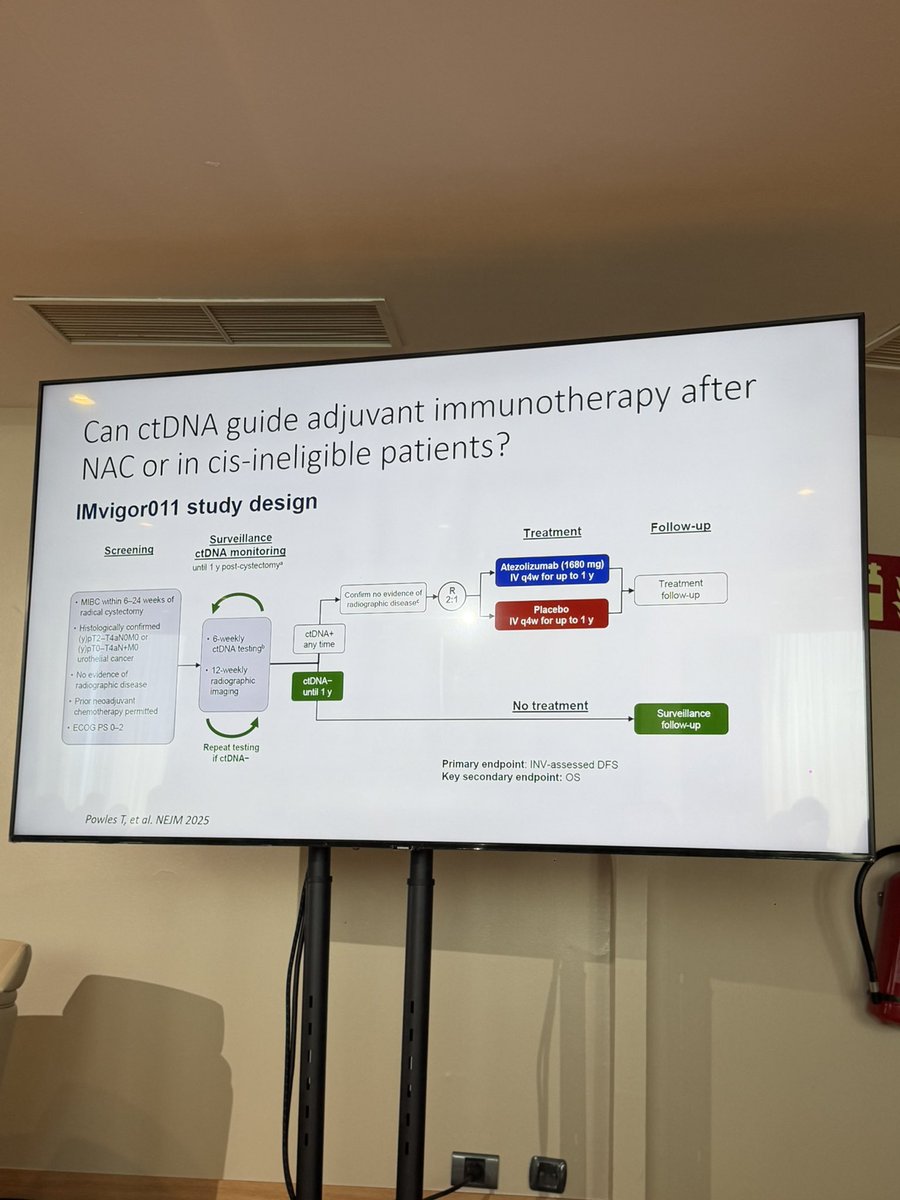
🚨 Important new ctDNA data from KEYNOTE-B15 at ESMO 2026! In cisplatin-eligible MIBC, EV+pembrolizumab achieved: 🔹 82.1% ctDNA clearance during neoadjuvant treatment vs 66.7% with gemcitabine/cisplatin. 🔹 87.0% ctDNA negativity before surgery vs 80.3% with chemotherapy. 🔹 95.2% ctDNA negativity after cystectomy vs 86.5% with chemotherapy. Strikingly, only 4.8% remained ctDNA-positive after neoadjuvant EV+pembrolizumab and surgery! We know from IMvigor011 that postoperative ctDNA can identify patients at high risk of recurrence and help guide adjuvant treatment strategies. But what about patients achieving both pCR and sustained ctDNA negativity? Do they really need another 5–6 cycles of adjuvant EV, with the potential for cumulative tox/ neuropathy? Could pCR + ctDNA clearance, followed by longitudinal ctDNA monitoring, define a population suitable for treatment de-escalation? VOLGA will add another important piece to this puzzle, using only 3 neoadjuvant EV cycles without adjuvant EV. Of course, neither KEYNOTE-B15 nor VOLGA can establish the necessity of adjuvant EV through cross-trial comparisons. We urgently need prospective, biomarker-guided de-escalation trials—not simply more treatment for everyone. @OncoAlert Faculty @DrChoueiri , @tompowles1 , @apolo_andrea , @neerajaiims , @montypal , @Silke_Gillessen , @AOmlin , @brian_rini , @PGrivasMDPhD , @TiansterZhang , @amerseburger , @DrDanielHeng , @HHammersMD , @scocmem , @AndreaNecchi , @AmandaNizamMD , @drenriquegrande , @nataliagandur , @AlbigesL , @cdanicas , @declangmurphy , @seanmmcbride , @shilpaonc , @DrRanaMcKay , @scserendipity1 , @DrYukselUrun , @ravikanesvaran , @BraunMDPhD , @EfstathiouEleni , @mzugman , @crisbergerot @Markuseckstein3
 𝕏
KEYNOTE-B15 ctDNA analysis presented by Jonathan Chatzkel at #ESMO26, with Min Teo as discussant 🧬 In cisplatin-eligible MIBC, ctDNA+ before surgery meant almost no pCR with either regimen (3.7% with EV + pembro, 2.2% with cis/gem). Among ctDNA− patients, pCR was 72.4% with EV + pembro vs 43.7% with cis/gem. In the EV + pembro arm, patients who cleared ctDNA had 24-month EFS of 81% vs 33% with persistent ctDNA+. The postsurgery results replicate NIAGARA. Serial ctDNA could open the door to bladder-sparing and surveillance questions. #MRD #ctDNA #BladderCancer
 𝕏
ctDNA is a risk signal, not yet a treatment compass? KEYNOTE-B15: clearance 82.1% vs 66.7% with EV/pembro vs chemo. When can we safely act on it? @myESMO @OncoAlert @OpenMedicineHQ #ESMO26 @tompowles1 @urologysummit @isliquidbiopsy
 𝕏
Interesting exploratory ctDNA data from EV-304/KEYNOTE-B15 at #ESMO26 in cisplatin-eligible MIBC. 🔹 ctDNA clearance: 82.1% with EV+P vs 66.7% with gem/cis 🔹 Baseline ctDNA+ patients derived substantial EFS benefit from EV+P (HR 0.54) 🔹 Persistent ctDNA positivity after surgery was associated with poor outcomes regardless of treatment. ctDNA is a powerful prognostic biomarker, but can it guide treatment selection or bladder preservation? More work is needed. #BladderCancer #ctDNA
 𝕏
Interesting ctDNA analysis from #EV304/B15 trial — ctDNA (+) groups w poor prognosis but EV-pembro works regardless of ctDNA status @myESMO #ESMO26 @oncoalert https://t.co/CoJhNDucjN
 𝕏
Exploratory ctDNA analysis from #KNB15 #ESMO26 🧬 ctDNA status is strongly prognostic: ctDNA-negative status (baseline/postsurgery) ass w/ improved EFS & pCR 💊 Presurgery ctDNA clearance was higher with EVP vs GC 📈 Periop EVP achieved favorable EFS regardless of ctDNA status https://t.co/5i26zRIYL0
𝕏🎯 #ESMO26 ctDNA analysis of EV304 study! ctDNA is strongly prognostic, regardless of therapy and ctDNA cleareance was >> with EVP!😊 @OncoAlert @myESMO @urotoday @UroTarget @GuardConsortium https://t.co/uwZJoNg2DX
 𝕏
KEYNOTE-B15 ctDNA analysis, cis-eligible MIBC: EV plus pembro cleared ctDNA more often than cis-gem. 📈 Presurgery ctDNA negative: pCR 72.4% vs 43.7% 📊 24-month EFS if cleared 81.1% vs 63.2%, if ctdna persistent 33.3% vs 35.3% 🔍 Presurgery ctDNA positive: pCR only in 2 of 72 across both arms ctDNA is prognostic in both arms. Persistent positivity does poorly on either regimen, and know seeing trial designs to address. #ESMO26 #BladderCancer #MIBC #ctDNA #GUonc
 𝕏
KEYNOTE-B15 ctDNA analysis: Only 4.8% of patients remained ctDNA-positive after neoadjuvant EV + pembrolizumab and radical surgery. ctDNA-guided treatment strategies may become increasingly important in the EV + pembrolizumab era. #ESMO26 https://t.co/me0gaXLX8V
𝕏More from the B15 ctDNA analysis: pre-treatment and presurgery ctDNA both predicted EFS, consistent with NIAGARA and Christensen 2019, and postsurgery ctDNA+ again identified the highest-risk group. #ESMO26 https://t.co/HdByxX6ZKQ
 𝕏
KN-B15: ctDNA analysis is a strong prognostic factor with EVP. Potential role for bladder-sparing strategies or treatment de-escalation? #ESMO26 https://t.co/Z49jQv3nxY
 𝕏
Is ctDNA becoming indispensable in muscle-invasive bladder cancer? KEYNOTE-B15 at #ESMO2026 reinforces its prognostic value and shows higher ctDNA clearance with EV + pembrolizumab (82.1% vs 66.7%). The ? is no longer whether ctDNA matters, but how to integrate it in practice. https://t.co/sz8PLGyzOp
𝕏#ESMO26 Exploratory ctDNA findings from phase III KEYNOTE-B15, comparing perioperative EV+pembrolizumab vs cisplatin/gemcitabine. Key findings: 📌Presurgical ctDNA clearance: 82.1% vs 66.7% 📌24-month EFS after ctDNA clearance: 81.1% vs 63.2% 📌Persistent ctDNA positivity: 24-month EFS only ~33–35% 📌Postsurgical ctDNA positivity: Only 10% event-free at 24 months in either arm 📌Presurgical ctDNA-negative patients: pCR 72.4% vs 43.7% @UroToday @myESMO
 𝕏
A step closer to organ-sparing management of MIBC? #ESMO26 @myESMO https://t.co/JZbTVTQXvW
𝕏Perioperative EVP for MIBC approved in Europe by the EMA irrespective of platinum eligibility. This is based on B15/KN905 with ⬆️ ⬆️ pCR, EFS & OS vs previous standard of care. More patients will get systemic therapy (cisplatin obstacles won’t exist) and these patients will have better outcomes. Will VOLGA tell us more about the optimal number of cycles #ESMO26 ? Which patients don’t need surgery (EV209, EV309, TROFUSE55). Will ctDNA help us?
 𝕏
KEYNOTE-B15 | ESMO 2026 ctDNA: Molecular Clearance vs Clinical Utility Part 1 — Molecular Response - ctDNA clearance: 82.1% vs 66.7% (EV + pembrolizumab vs chemotherapy). - Postsurgical ctDNA positivity: 4.8% vs 13.5%. Part 2 — Prognostic Value - ctDNA positivity → Poorer EFS and pCR. - EV + pembrolizumab showed favourable EFS estimates across ctDNA subgroups. Part 3 — Clinical Implications - Prognostic ✓ | Predictive: Not established - ctDNA cannot yet guide treatment escalation or de-escalation. Part 4 — The Big Picture - Greater molecular clearance does not establish cure or justify ctDNA-guided treatment changes. Take-home: ctDNA helps predict risk, but does not yet determine treatment. Reference: KEYNOTE-B15/EV-304, ESMO 2026 exploratory ctDNA analysis. NCT04700124. #ESMO2026 #KEYNOTEB15 #ctDNA #BladderCancer #MVOnco

Now, the combo of EV-Pembro is @US_FDA approved for all muscle-invasive bladder cancer @OncoAlert @AUC3_Official @Merck @BladderCancerUS @OncoBellmunt @bergsa83 @mouwlab
🚨 Updates for MIBC 🚨 FDA approves neoadjuvant + adjuvant EV+pembro for muscle-invasive bladder cancer — regardless of cisplatin eligibility. The first platinum-free regimen to beat SOC chemo in ~25 yrs. EV-304 (KEYNOTE-B15): 📉 EFS HR 0.53 (47% ↓ recurrence/progression/death)
Is this the end of cisplatin in MIBC?
With the results from NIAGARA, KEYNOTE-B15/EV-304, and KEYNOTE-905/EV-303, along with the emergence of ctDNA in IMvigor011, it is becoming increasingly…

🔥 Presented at #EAU2026: new KEYNOTE-B15 / EV-304 data
✅After previously reported survival benefits, new data now also highlight improved pathological downstaging and disease-free survival with…
UC Takeaways from #ASCOGU26
1) KEYNOTE-B15 is a landmark. Periop EV+pembro vs gem/cis in cis-eligible MIBC: EFS HR 0.53, pCR 55.8% vs 32.5%, OS benefit. First regimen to displace cisplatin in…
KN-B15/EV303: R3 Perioperative EVP vs Gem/cis in MIBC shows EFS HR 0.53 (0.41–0.70), OS HR 0.65 (0.48-0.89), pCR 56% vs 33%, G3+ tox 76% vs 67% #GU26. About half the patients completed 9 cycles of…
KEYNOTE-B15/EV-304 trial is practice-changing: periop EV+ pem:
🔥 47% reduction in risk of events (HR 0.53)
🔥 Significant OS benefit (HR 0.65)
🔥 pCR 55.8% vs 32.5%
A true paradigm shift for…
A "slam-dunk home run" from $PFE $ALPMF Padcev. @ByMadeleineA on #GU26 late-breaking Keynote-B15 data, via @ApexOnco -> https://t.co/O6ynVa4H7H $MRK

🚨 KEYNOTE-B15: Perioperative EV + pembrolizumab significantly improved EFS, OS, & pCR vs cisplatin chemo in cisplatin-eligible MIBC, marking the first regimen in ~25 years to surpass the…

Day 2 (#bladder!) for @ASCO #GU26!!
Really nice discussion by @DrTylerStewart of the KEYNOTE-B15 study
⭐️practice-changing, let's put discussion of ddMVAC to rest https://t.co/0f7ZAfPFOL
Cross trial comparison and where we are heading in MIBC @asco #gu26 @DrChoueiri @dr_yakupergun @brunolarvol @OncoAlert @OncBrothers https://t.co/5gzECBkrrf
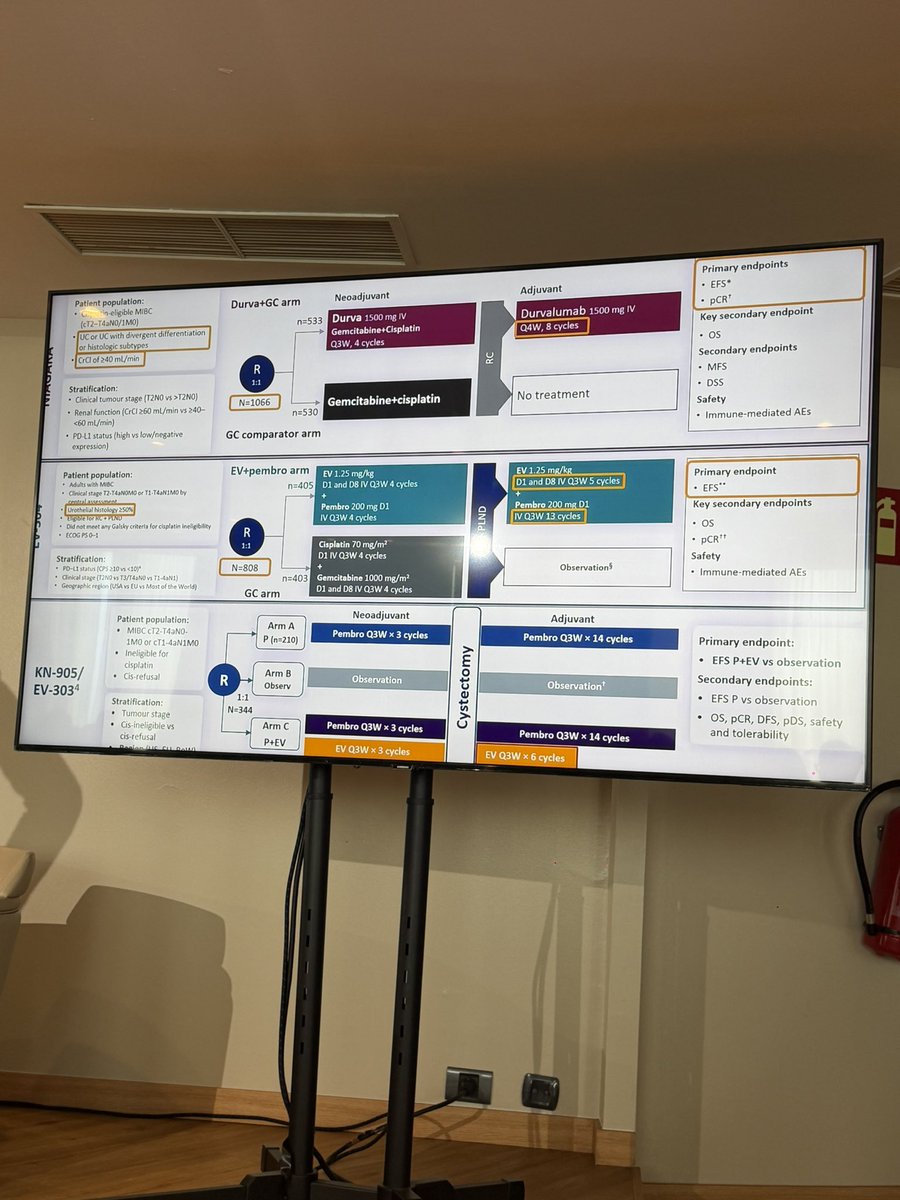
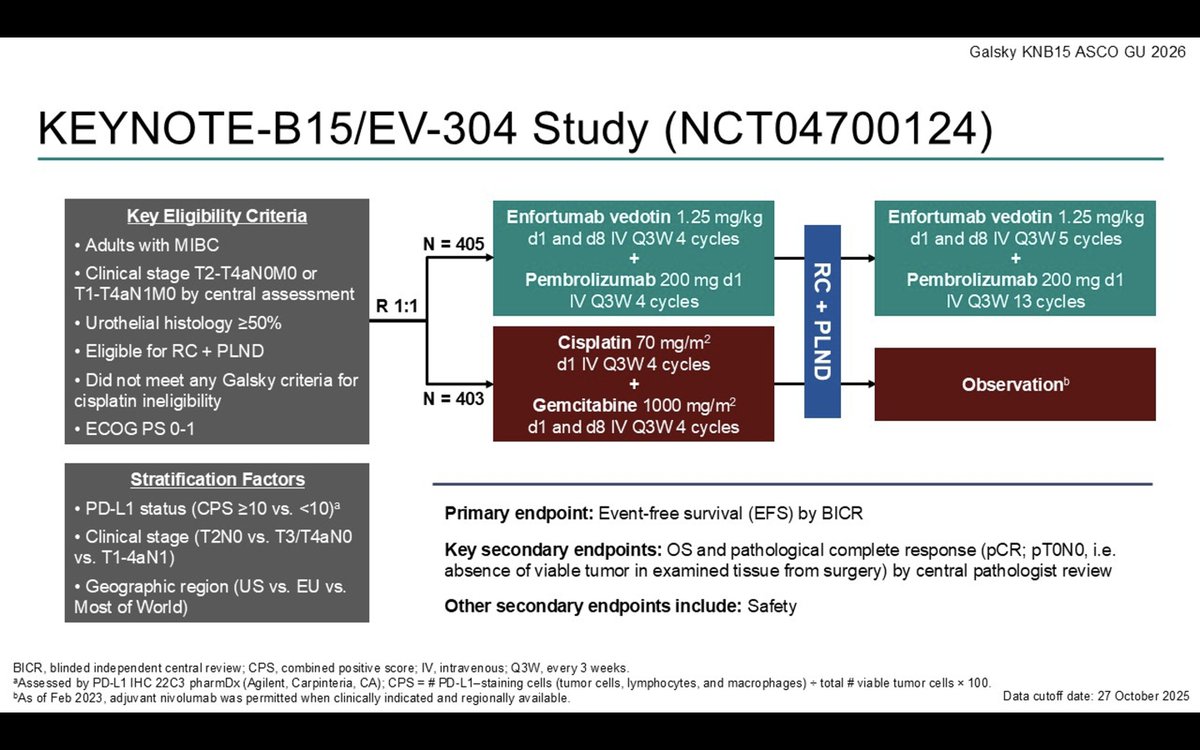
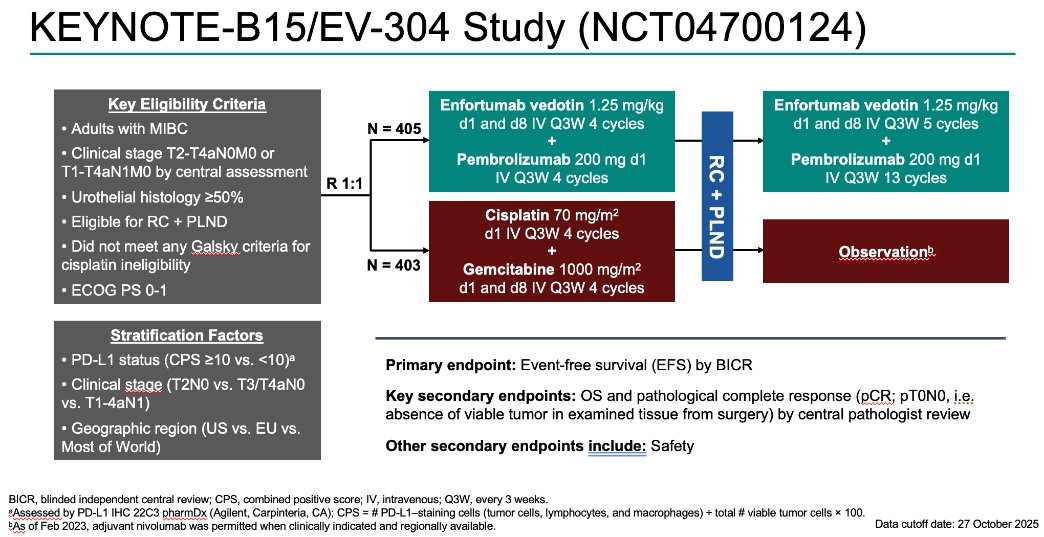
Design — Phase 3 perioperative enfortumab vedotin + pembrolizumab vs gemcitabine/cisplatin, MIBC radical-cystectomy candidates (NCT04700124 / EV-304). The primary endpoint was event-free survival (EFS) by blinded independent central review; overall survival and pathologic complete response (pCR) were key secondary endpoints.
KEYNOTE-B15 / EV-304 (NCT04700124) is a Phase 3 randomized trial of perioperative enfortumab vedotin (Padcev) plus pembrolizumab (Keytruda) versus neoadjuvant gemcitabine-cisplatin in patients with muscle-invasive bladder cancer who are candidates for radical cystectomy. The primary endpoint was event-free survival by blinded independent central review; overall survival and pCR were key secondary endpoints. See Trial Design.
Event-free survival favored enfortumab vedotin plus pembrolizumab (HR 0.53), with improved pathologic complete response and overall survival versus chemotherapy. All figures and sources: At a Glance.
Yes. On July 10, 2026 the FDA approved perioperative enfortumab vedotin (Padcev) plus pembrolizumab (Keytruda) for adults with muscle-invasive bladder cancer who are candidates for radical cystectomy, regardless of cisplatin eligibility. See At a Glance.
Grade 3 or higher adverse events were more frequent than with gemcitabine-cisplatin; key toxicities were skin reactions and peripheral neuropathy, consistent with the individual agents and with no new safety signals. Rates: At a Glance.
In an exploratory analysis (Abstract 4734O), ctDNA cleared more often with EV plus pembrolizumab, and ctDNA-positive status was associated with worse event-free survival in both arms. ctDNA is prognostic; it is not established for selecting treatment, de-escalation or bladder preservation. Details: ESMO 2026 ctDNA analysis.
It extends the perioperative immunotherapy paradigm in MIBC beyond NIAGARA (durvalumab plus gemcitabine-cisplatin) with a platinum-free antibody-drug-conjugate-plus-immunotherapy regimen that outperformed cisplatin-based chemotherapy. See At a Glance.
