KOL Pulse - Trial Profile

DREAMM-8 Trial

RRMM 3L+ BPd - GSK

RRMM 3L+ BPd Blenrep + PomDex ASCO 2024 FDA Approved
Explore Trial Data

Top KOLs Discussing DREAMM-8

Vincent Rajkumar
Vincent Rajkumar
@VincentRK
50.1K impressions
Al-Ola A Abdallah MD (USMIRC)
@Abdallah81MD
27.8K impressions
Robert Z. Orlowski
Robert Z. Orlowski
@Myeloma_Doc
5.6K impressions
Bertrand Delsuc
Bertrand Delsuc
@BertrandBio
5.5K impressions
Rafael Fonseca MD
Rafael Fonseca MD
@Rfonsi1
4.3K impressions
Samer Al Hadidi, MD,MS,FACP
@HadidiSamer
3.5K impressions

DREAMM-8 Key Slides & Visuals

Official trial slides and relevant visuals shared by KOLs at ASCO 2024. Click any image to expand.

Al-Ola A Abdallah MD (USMIRC)
DREAMM-8 Data
16.8K impressions · 79 likes · Jun 02, 2024
View on X ↗
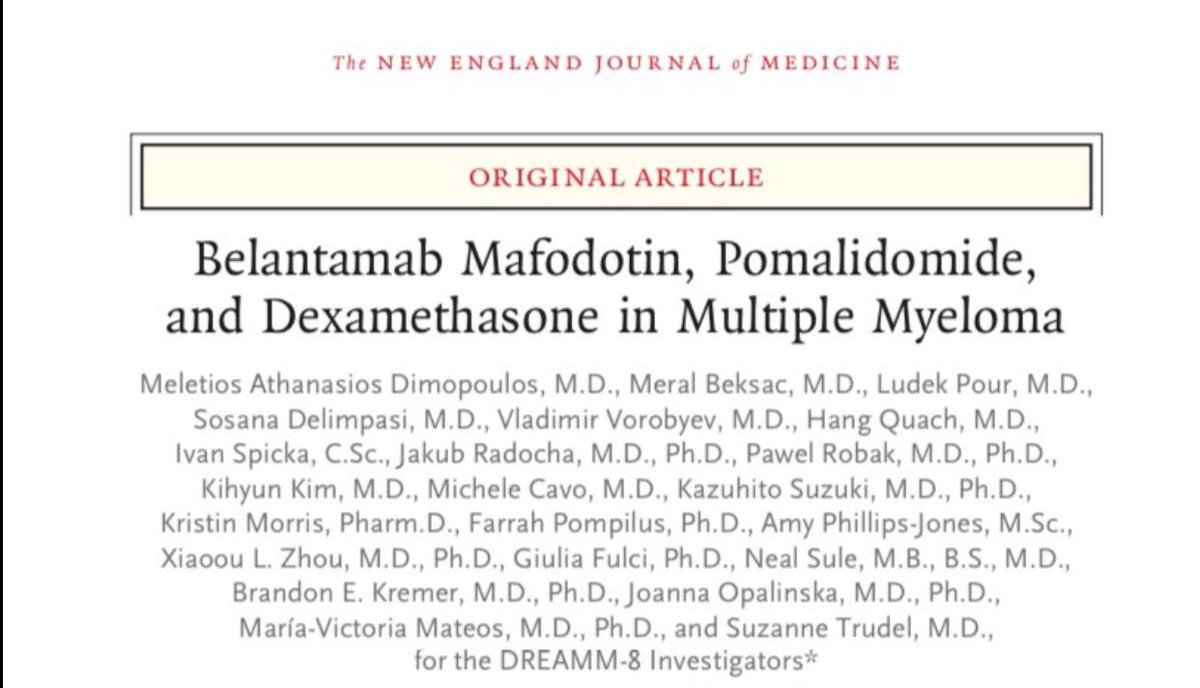
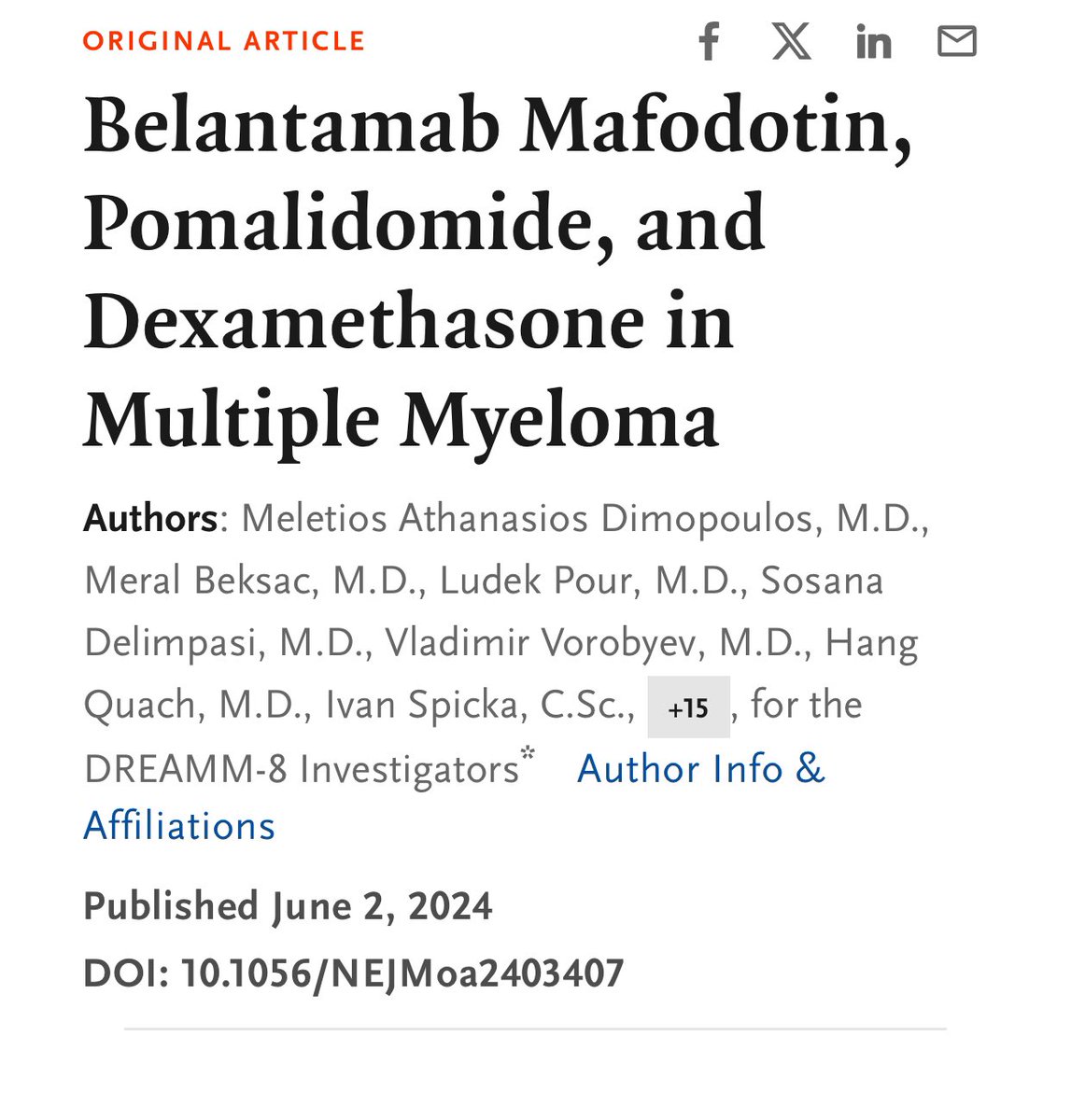
[Slide 1] The NEW ENGLAND JOURNAL of MEDICINE ORIGINAL ARTICLE Belantamab Mafodotin, Bortezomib, and Dexamethasone for Multiple Myeloma V. Hungria, P. Robak, M. Hus, V. Zherebtsova, C. Ward, P.J. Ho, A.C. Ribas de Almeida, R. Hajek, K. Kim, S. Grosicki, H. Sia, A. Bryant, M. Pitombeira de Lacerda, G. Aparecida Martinez, A.M. Sureda Balarí, I. Sandhu, C. Cerchione, P. Ganly, M. Dimopoulos, C. Fu, M. Garg, A.-O. Abdallah, A. Oriol, M.E. Gatt, M. Cavo, R. Rifkin, T. Fujisaki, M. Mielnik, N. Pirooz, A. McKeown, S. McNamara, X. Zhou, M. Nichols, E. Lewis, R. Rogers, H. Baig, L. Eccersley, S. Roy-Ghanta, J. Opalinska, and M.-V. Mateos, for the DREAMM-7 Investigators* --- [Slide 2] The NEW ENGLAND JOURNAL of MEDICINE ORIGINAL ARTICLE Belantamab Mafodotin, Pomalidomide, and Dexamethasone in Multiple Myeloma Meletios Athanasios Dimopoulos, M.D., Meral Beksac, M.D., Ludek Pour, M.D., Sosana Delimpasi, M.D., Vladimir Vorobyev, M.D., Hang Quach, M.D., Ivan Spicka, C.Sc., Jakub Radocha, M.D., Ph.D., Pawel Robak, M.D., Ph.D., Kihyun Kim, M.D., Michele Cavo, M.D., Kazuhito Suzuki, M.D., Ph.D., Kristin Morris, Pharm.D., Farrah Pompilus, Ph.D., Amy Phillips-Jones, M.Sc., Xiaoou L. Zhou, M.D., Ph.D., Giulia Fulci, Ph.D., Neal Sule, M.B., B.S., M.D., Brandon E. Kremer, M.D., Ph.D., Joanna Opalinska, M.D., Ph.D., María-Victoria Mateos, M.D., Ph.D., and Suzanne Trudel, M.D., for the DREAMM-8 Investigators*
Bertrand Delsuc
Bertrand Delsuc @BertrandBio
DREAMM-8 Data
5.1K impressions · 20 likes · Jun 02, 2024
View on X ↗
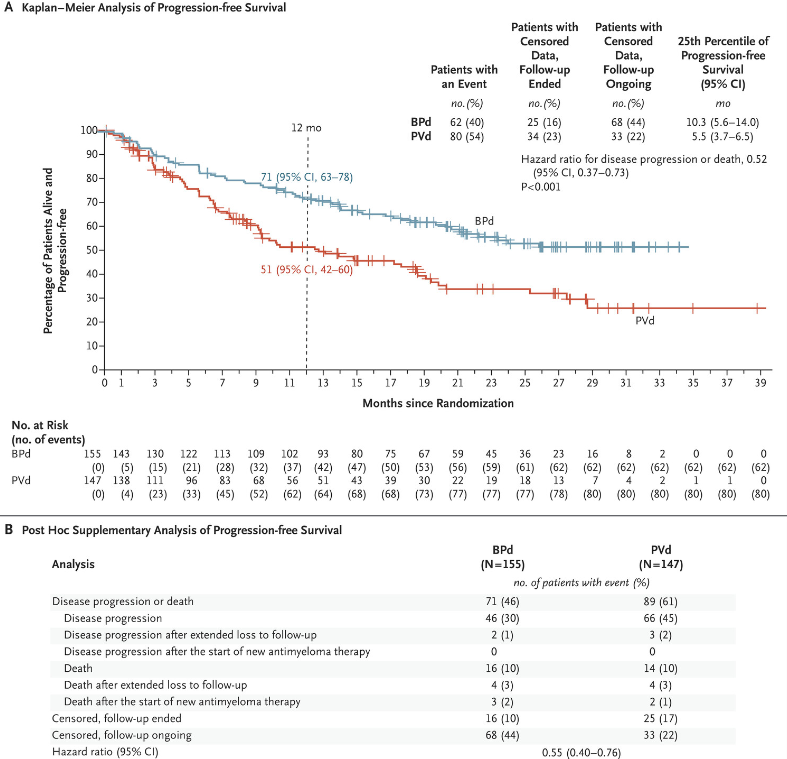
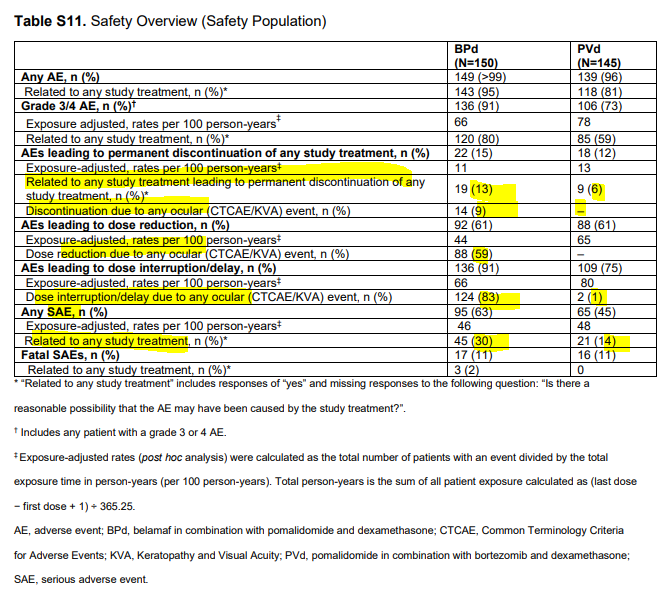
[Slide 1] A Kaplan-Meier Analysis of Progression-free Survival Patients with Patients with Censored Censored 25th Percentile of Data, Data, Progression-free Patients with Follow-up Follow-up Survival an Event Ended Ongoing (95% CI) no. (%) no.(%) no.(%) mo BPd 12 mo 62 (40) 25 (16) 68 (44) 10.3 (5.6-14.0) 100 PVd 80 (54) 34 (23) 33 (22) 5.5 (3.7-6.5) 90 Hazard ratio for disease progression or death, 0.52 80 71 (95% CI, 63-78) (95% CI, 0.37-0.73) P<0.001 Percentage of Patients Alive and 70 60 BPd Progression-free 50 40 51 (95% CI, 42-60) 30 20 PVd 10 0 0 1 3 5 7 9 11 13 15 17 19 21 23 25 27 29 31 33 35 37 39 Months since Randomization No. at Risk (no. of events) BPd 155 143 130 122 113 109 102 93 80 75 67 59 45 36 23 16 8 2 0 0 0 (0) (5) (15) (21) (28) (32) (37) (42) (47) (50) (53) (56) (59) (61) (62) (62) (62) (62) (62) (62) (62) PVd 147 138 111 96 83 68 56 51 43 39 30 22 19 18 13 7 4 2 1 1 0 (0) (4) (23) (33) (45) (52) (62) (64) (68) (68) (73) (77) (77) (77) (78) (80) (80) (80) (80) (80) (80) B Post Hoc Supplementary Analysis of Progression-free Survival BPd PVd Analysis (N=155) (N=147) no. of patients with event (%) Disease progression or death 71 (46) 89 (61) Disease progression 46 (30) 66 (45) Disease progression after extended loss to follow-up 2 (1) 3 (2) Disease progression after the start of new antimyeloma therapy 0 0 Death 16 (10) 14 (10) Death after extended loss to follow-up 4 (3) 4 (3) Death after the start of new antimyeloma therapy 3 (2) 2 (1) Censored, follow-up ended 16 (10) 25 (17) Censored, follow-up ongoing 68 (44) 33 (22) Hazard ratio (95% CI) 0.55 (0.40-0.76) --- [Slide 2] Patients with Patients with Censored Censored Data, Data, 25th Percentile of Patients with Follow-up Follow-up Overall Survival an Event Ended Ongoing (95% CI) no. (%) no. (%) no. (%) mo BPd 49 (32) 12(8) 94 (61) 19.0 (12.2-23.3) PVd 56 (38) 7(5) 84 (57) 12.7 (8.0-18.5) Hazard ratio for death, 0.77 (95% CI, 0.53-1.14) 12 mo 100 83 (95% CI, 76-88) 90 80 70 BPd Percentage of Patients Alive 76 (95% CI, 68-82) 60 50 PVd 40 30 20 10 0 0 2 4 6 8 10 12 14 16 18 20 22 24 26 28 30 32 34 36 38 40 Months since Randomization No. at Risk (no. of events) BPd 155 147 142 141 139 132 125 115 112 104 93 83 63 57 35 24 13 7 1 0 0 (0) (4) (9) (10) (12) (18) (25) (30) (31) (35) (38) (42) (47) (47) (48) (48) (48) (49) (49) (49) (49) PVd 147 140 134 128 119 113 110 101 93 89 75 65 50 46 31 21 13 11 7 3 0 (0) (7) (12) (18) (26) (32) (35) (40) (44) (45) (49) (50) (54) (56) (56) (56) (56) (56) (56) (56) (56) --- [Slide 3] BPd PVd Response (N=155) (N=147) Best overall response - no. (%) Stringent complete response 14(9) 4 (3) Complete response 48 (31) 20 (14) Very good partial response 37 (24) 32 (22) Partial response 21 (14) 50 (34) Minimal response 4 (3) 8 (5) Stable disease 19 (12) 22 (15) Progressive disease 5 (3) 1 (<1) Not evaluable 7 (5) 10 (7) Complete response or bettert No. of patients 62 24 % (95% CI) 40 (32-48) 16 (11-23) Very good partial response or better No. of patients 99 56 % (95% CI) 64 (56-71) 38 (30-46) Any response: partial response or better No. of patients 120 106 % (95% CI) 77 (70-84) 72 (64-79) Response duration of 12 mo - % (95% CI): 79 (71-86) 61 (50-70) MRD-negative statustS Patients with complete response or better No. of patients 37 7 % (95% CI) 24 (17-31) 5 (2-10) Patients with very good partial response or betterll No. of patients 50 8 % (95% CI) 32 (25-40) 5 (2-10) MRD-negative status sustained for 212 monthst5 Patients with complete response or better No. of patients 13 2 % (95% CI) 8 (4-14) 1 (<1-5) Confidence intervals have not been adjusted for multiplicity and cannot be used in place of hypothesis testing. 1 Percentages are based on the intention to treat population. Patients who did not meet the applicable response criteria were considered not to have had a response and are included in the denominator when calculating percentages. : Duration of response was defined as the time from first documented evidence of partial response of better until the occurrence of progressive disease or death from any cause. $ Minimal residual disease (MRD)-negative status was determined on the basis of next generation sequencing with a sensitivity of 10 $. 1 Of the 62 patients in the BPd group who had a complete response or better, 54 had available MRD data. Of the 24 patients in the PVd group who had 3 complete response or better, 20 had available MRD data. $ Of the 99 patients in the BPd group who had very good partial response or better, 82 had available MRD data. Of the 56 patients in the PVd group who had 3 very good partial response or better, 38 had available MRD data. --- [Slide 4] BPd PVd Event (N=150) (N=145) Any Grade Grade >3 Any Grade Grade >3 number (percent) Any adverse event 149 (99) 141 (94) 139 (96) 110 (76) Blurred vision 119 (79) 26 (17) 22 (15) 0 Dry eye 91 (61) 12 (8) 14 (10) 0 Foreign-body sensation in eyes 91 (61) 9 (6) 9 (6) 0 Eye irritation 75 (50) 6 (4) 13 (9) 0 Neutropenia 72 (48) 63 (42) 50 (34) 41 (28) Photophobia 66 (44) 5 (3) 6 (4) 0 Coronavirus disease 2019 56 (37) 10 (7) 31 (21) 3 (2) Thrombocytopenia 54 (36) 36 (24) 44 (30) 29 (20) Eye pain 49 (33) 3 (2) 7 (5) 0 Cataract 40 (27) 9 (6) 15 (10) (4) Fatigue 40 (27) 9 (6) 32 (22) (5) Upper respiratory tract infection 40 (27) (1) 25 (17) 0 Pneumonia 36 (24) 26 (17) 17 (12) 11 (8) Anemia 35 (23) 15 (10) 38 (26) 19 (13) Diarrhea 35 (23) (1) 33 (23) 10 (7) Corneal epithelial microcysts 34 (23) 12 (8) 0 0 Punctate keratitis 34 (23) 9 (6) (1) 1 (1) Reduced visual acuity 34 (23) 20 (13) (6) (1) Decreased neutrophil count 31 (21) 31 (21) 19 (13) 18 (12) Decreased platelet count 30 (20) 22 (15) 22 (15) 18 (12) Constipation 23 (15) 2 (1) 33 (23) 2 (1) Peripheral neuropathy 11 (7) (1) 34 (23) 4 (3) The safety population included all patients who received a least one dose of BPd or PVd. Adverse events were graded with the use of the National Cancer Institute Common Terminology Criteria for Adverse Events, version 5.0.
Al-Ola A Abdallah MD (USMIRC)
DREAMM-8 Data
3.0K impressions · 24 likes · Jun 02, 2024
View on X ↗
Samer Al Hadidi, MD,MS,FACP
DREAMM-8 Data
2.3K impressions · 1 likes · Jun 02, 2024
View on X ↗
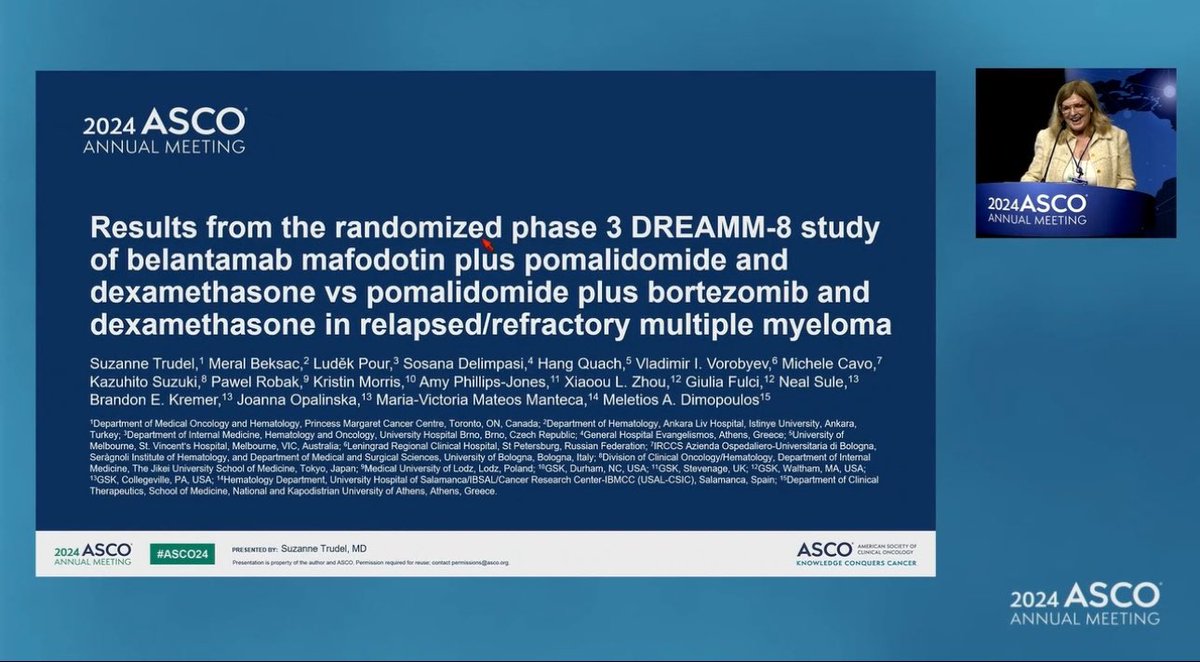
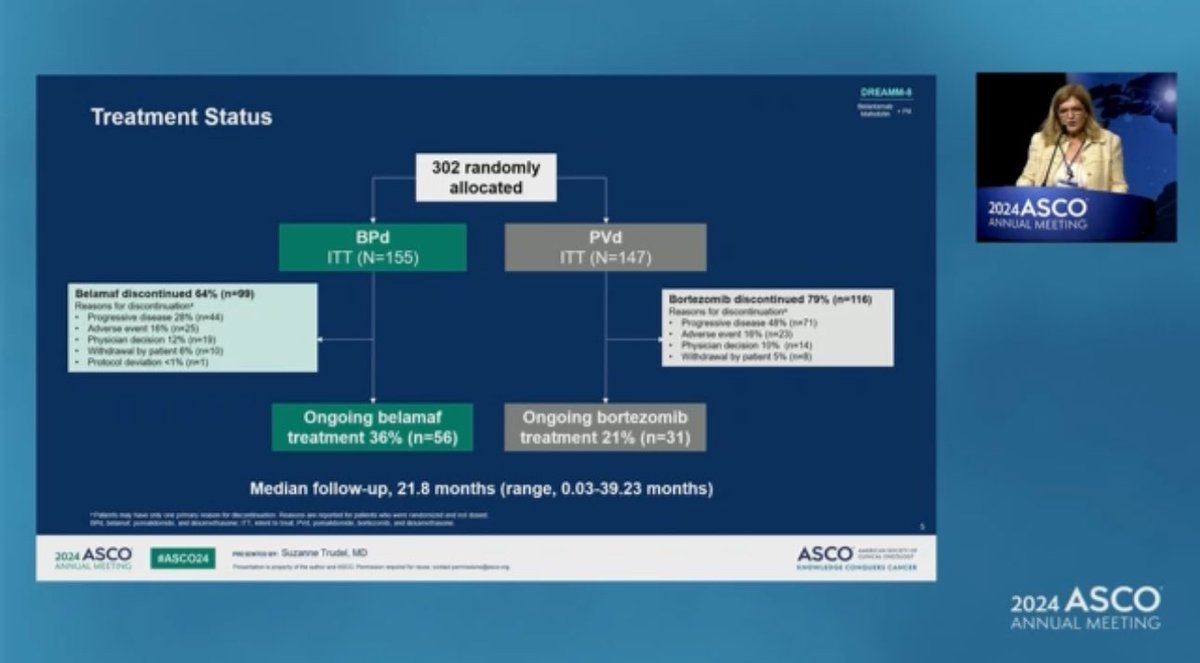
[Slide 1] 2024 ASCO ANNUAL MEETING 2024ASCO Results from the randomized phase 3 DREAMM-8 study ANNUAL MEETING of belantamab mafodotin plus pomalidomide and dexamethasone vs pomalidomide plus bortezomib and dexamethasone in relapsed/refractory multiple myeloma Suzanne Trudel,¹ Meral Beksac,2 Ludek Pour,³ Sosana Delimpasi,⁴ Hang Quach,⁵ Vladimir I. Vorobyev,6 Michele Cavo,⁷ Kazuhito Suzuki,8 Pawel Robak,9 Kristin Morris,¹⁰ Amy Phillips-Jones,¹¹ Xiaoou L. Zhou,¹² Giulia Fulci,12 Neal Sule,¹³ Brandon E. Kremer,¹³ Joanna Opalinska,¹³ Maria-Victoria Mateos Manteca,¹⁴ Meletios A. Dimopoulos15 Department of Medical Oncology and Hematology, Princess Margaret Cancer Centre, Toronto, ON, Canada; Department of Hematology, Ankara Liv Hospital, Istinye University, Ankara, Turkey; Department of Internal Medicine, Hematology and Oncology, University Hospital Brno, Brno, Czech Republic; 'General Hospital Evangelismos, Athens, Greece; University of Melbourne, St. Vincent's Hospital, Melbourne, VIC, Australia; Leningrad Regional Clinical Hospital, St Petersburg, Russian Federation: IRCCS Azienda Ospedaliero-Universitaria di Bologna, Seragnoli Institute of Hematology, and Department of Medical and Surgical Sciences, University of Bologna, Bologna, Italy; Division of Clinical Oncology/Hematology, Department of Internal Medicine, The Jikei University School of Medicine, Tokyo, Japan; "Medical University of Lodz, Lodz, Poland; "GSK, Durham, NC, USA; "GSK, Stevenage, UK; GSK, Waltham, MA, USA; BSK, Collegeville, PA, USA; "Hematology Department, University Hospital of Salamanca/IBSAL/Cancer Research Center-IBMCC (USAL-CSIC), Salamanca, Spain; "Department of Clinical Therapeutics, School of Medicine, National and Kapodistrian University of Athens, Athens, Greece. 2024 ASCO #ASCO24 PRE SENTED BY: Suzanne Trudel, MD ASCO AMERICAN SOCIETY OF CLINICAL ONCOLOGY ANNUAL MEETING Presentation property the author and ASCO Permission required for - contact permissions@asco.org KNOWLEDGE CONQUERS CANCER 2024 ASCO ANNUAL MEETING --- [Slide 2] CREAMM-8 Study Design - Recruitment period Treatment period October 2020 to December 2022 - PD. death, unacceptable toxicity, and of mady, or withhold of - 2024ASCO N=302 Belantamab mafodotin Eligibility criteria ANNILIAL MEETING BPd (Q4W) 2.5 mg/kg IV (cycle 1) then 1.9 mg IV Q4W from cycle 2 Primary endpoint: Adults with MM onward PFS (IRC assessed per IMWG) as prior line of MM Pomalidomide 4 mg orally on days 1-21 (28-day cycles) therapy including LEN Documented PD No prior treatment 1:1 randomization 13 mg/ml SC on days 1, 4, 8, and 11 of cycles 14 then End-ot Visa Key secondary endpoints: Dexamethasone 40 mg* on days 1.8. 15. and 22 during or after their OS, MRD negativity, DOR most recent therapy Bortezomib PVd (Q3W) Additional secondary with anti-BCMA or days 1 and 8 (21 day cycles) endpoints include: pomalidomide; not refractory/intolerant to Pomalidomide 4 mg orally on days 1-14 (21-day cycles) ORR, CRR, 2VGPR, TTBR, bortezomb TTR. TTP. PFS2. AEs, ocular Dexamethasone 20 mg* on the day of and day after findings, HROOL, and PROs bortezumb Stratification*: Prior lines of treatment (1 vs 2 or , is a4) Prior bortazomib (yes vsi not Prior anti-C038 therapy (yes " no) 2024 ASCO #ASCO24 - Suranne Trudel, MD ASCO MEXTING KNOWLEDGE CONSULES 2024 ASCO ANNUAL MEETING --- [Slide 3] DREAMM-8 Treatment Status MASSEW 302 randomly allocated 2024ASCO ANNUAL MEETING BPd PVd ITT (N=155) ITT (N=147) Belamaf discontinued 64% (n=99) Reasons for discontinuation* Bortezomib discontinued 70% (n=116) Reasons for discontinuation* Progressive disease 28% (nm44) Adverse event 18% (nw25) Progressive disease 48% (nw71) Physician decision 12% Adverse event 19% (s=23) Withdrawal by patient 6% (news) Physician decision 10% (nw14) Protocol deviation <1% (AMT) Withdrawal by patient 5% (nw) Ongoing belamaf Ongoing bortezomib treatment 36% (n=56) treatment 21% (n=31) Median follow-up, 21.8 months (range, 0.03-39.23 months) I # - I I - I | - I : PVS | I - examine $ 2024 ASCO #ASCO24 - Suranne Trudel MD ASCO CUSICAS - MEETING I I I I I I I I I KNOWLEDGE CONSUERS CANCER 2024 ASCO ANNUAL MEETING
International Myeloma Foundation
DREAMM-8 Data
1.3K impressions · 15 likes · Apr 17, 2025
View on X ↗
[Slide 1] On the approval of Blenrep (belantamab mafodotin) combinations by UK MHRA in relapsed/refractory multiple myeloma Joseph Mikhael, MD, MEd, FRCPC, FACP, FASCO Chief Medical Officer International Myeloma Foundation "We are pleased to see this advancement in the treatment landscape extended across both academic and community settings where many patients are treated." INTERNATIONAL MYELOMA L FOUNDATION YEAR ANNIVERSARY
Samer Al Hadidi, MD,MS,FACP
DREAMM-8 Data
996 impressions · 5 likes · Jun 02, 2024
View on X ↗
DAVA Oncology
DAVA Oncology @DAVAOnc
DREAMM-8 Data
942 impressions · 8 likes · Apr 05, 2025
View on X ↗
[Slide 1] A PHASE II, OPEN LABEL, RANDOMIZED, TWO-ARM STUDY TO INVESTIGATE THE EFFICACY AND SAFETY OF TWO DOSES OF THE ANTIBODY DRUG CONJUGATE GSK2857916 IN PARTICIPANTS WITH MULTIPLE MYELOMA WHO HAD 3 OR MORE PRIOR LINES OF TREATMENT, ARE REFRACTORY TO A PROTEASOME INHIBITOR AND AN IMMUNOMODULATORY AGENT AND HAVE FAILED AN ANTI-CD38 ANTIBODY (DREAMM 2) Figure 1. Study design¹⁰ Treatment until disease progression or Primary outcome Key secondary outcomes unacceptable toxicity DoR (time from zPR until Belamaf2.5 mg/kg disease progression IV, Q3W or death due to PD) (n=97) ORR: Other efficacy: CBR, PFS, % of patients with EPR OS, TTBR, TTP. TTR Belamaf 3.4 mg/kg (IMWG 2016 criteria) Safety, including Patients: Screening Randomization IV, Q3W 1:1" (n=99) keratopathy (MECs, an >3L RRMM eye examination finding) 12TH SUMMIT ON Eligibility Criteria HEMATOLOGIC Measurable disease ECOG PS of 0-2 >3 prior lines of therapy MALIGNANCIES Refractory to immunomodulatory Prior ASCT allowed; Not exposed to a prior agents and Pls. and refractory and/or intolerant to an anti-CD38 mAb BCMA-targeted therapy allogeneic stem cell transplant excluded *Patients stratified based on number of previous lines of therapy ($4 vs. >4) and presence or absence of HR cytogenetic features; measurable disease AOncology 2025 Whistler HEME defined as serum myeloma protein (M-protein) 20 5 g/dL; urine protein >200 mg/24 h; serum FLC assay involved FLC level >10 mg/dL and an abnormal serum FLC ratio (<0 or >1.65) 3L, third line; ASCT, autologous stem cell transplant; CBR, clinical benefit rate; ECOG PS, Eastern Cooperative Oncology Group Performance Status FLC, serum free light chain assay, PD, progressive disease, Pls, proteasome inhibitors; TTBR, time to best response; TTP, time to progression; TTR, time to response Lonial S, et al. Lancet Oncol 2020;21:207-21 Winship Cancer Institute Emory University 396 --- [Slide 2] Median PFS was longer for belamaf vs Pd, but PFS HR was 1.03 Median follow-up was 11.5 months for belamaf 1.0- Treatment Detantsmab matiodorin and 10.8 months for Pd. Pomaidomide dexamethasone 0.8- Median PFS was longer for belamaf than for Pd, but PFS HR did not reach statistical Belamaf: 11.2 months (95% CI 6.4 - 14.5). Proporto progression I I 0.6 significance. 0.4 0.2 Pd: 7.0 months (95% CI 4.6 - 10.6). 0.0 HR of 1.03 (95% Cl: 0.72, 1.47, p=0.558). 0 2 3 4 5 6 7 . to 11 12 13 14 15 # 17 18 19 20 21 22 23 12ᵀᴴ SUMMIT ON - - Time since randomization (months) KM curves cross over at ~4 months. I I HEMATOLOGIC - - MALIGNANCIES DAVAOncology 2025 Whistler HEME CI. confidence interval HR. hazard ratio KM. Kaplan-Meier, Pd. pomalidomice plus dexamethasone PFS. progression free survival 2023 ASCO #ASCO23 PRESENTED - Dr Katja Weisel ASCO AMERICAN SOCIETY OF CUMICAL PROCEDUR ANNUAL MEETING Presentation - - - MICO Permission - - KNOWLEDGE CONGUERS CANCER Content of this presentation is the property of the author, licensed by ASCO. Permission required/forreis@ancer Institute I Emory University 400 --- [Slide 3] DREAMM-7: PFS AND os IN THE ITT PFS os 1.0 18 months 1.0 18 months 84% 69% 0.8 Median 0.8 36.6 months 0.6 0.6 73% PFS probability, % #++++ 0.4 Median os probability, % 0.4 13.4 0.2 months 0.2 43% 12ᵀᴴ SUMMIT ON 0.0 0.0 HEMATOLOGIC 014569 01 23 4 5 6 7 8 9101112131415161715192021222324232627209303132333435363738394041 No. at risk Time Since randomization, months Time Since randomization, months MALIGNANCIES PFS' BVd (N=243) DVd (N=251) OS' BVd (N=243) DVd (N=251) Events, n(%) 91 (37) 158 (63) Events, n(%) 54 (22) 87 (35) PFS, median (95% CI). mob 36.6 (28.4-NR) 13.4 (11.1-17.5) OS, median (95% CI). mob NR NR DAVAOncology 2025 Whistler HEME HR (95% CI) 0.41 (0.31-0.53) HR (95% CI) 0.57 (0.4-0.8) P value <.00001 P value 00049 WINSHIP CANCER INSTITUTE OF EMORY UNIVERSITY NCI Designated Comprehensive Cancer Center --- [Slide 4] DREAMM-8: EFFICACY BPd PVd PFS Positive os Trend Favoring BPd VS PVd 1.0 1.0 12 months 12 months 83% 0.8 71% 0.8 Proportion alive and progression free 0.6 0.6 76% 0.4 51% Proportion alive 0.4 0.2 0.2 12ᵀᴴ SUMMIT ON 0.0 0.0 0 123456789 1011 12 13 14 15 16 17 18 192021 25 26 77 28 0 123456789 15 18 22 26 27 30 11 HEMATOLOGIC No. at risk Time Since randomization, months No. at risk Time Since randomization, months MALIGNANCIES PFS' BPd (N=155) PVd (N=147) Interim os BPd (N=155) PVd (N=147) Events, n(%) 62 (40) 80 (54) Events, n(%)a 49 (32) 56 (38) Median PFS (95% CI). months NR (20.6-NR) 12.7 (9.1-18.5) Median OS (95% CI), months NR (33.0-NR) NR (25.2-NR) DAVAOncology 2025 Whistler HEME HR (95% CI): P value 0.52 (0.37-0.73): <.001 HR (95% Cl) 0.77 (0.53-1.14) Trudel et al. ASCO 2024 Clin Oncol 42. 2024 (suppl 17. abstr LBA105) WINSHIP CANCER INSTITUTE OF EMORY UNIVERSITY NCI Designated Comprehensive Cancer Center
Bertrand Delsuc
Bertrand Delsuc @BertrandBio
DREAMM-8 Data
401 impressions · 0 likes · Jun 02, 2024
View on X ↗

DREAMM-8 Top Tweets

Top 10 by impressions - click to view on X

Vincent Rajkumar
Vincent Rajkumar@VincentRK

The 4 big myeloma randomized trials to watch out for @ASCO #ASCO24 1. Isa-VRd vs Isa-Rd newly diagnosed 2.Isa-VRd vs VRd (IMROZ) 3.DREAMM8 Bela-Pd vs Pd 4.Ven Dex vs Pom...

👁 39.6K ♡ 231 ↻ 72 Jun 01, 2024
Al-Ola A Abdallah MD (USMIRC)
Al-Ola A Abdallah MD (USMIRC)@Abdallah81MD

The comparison of two manuscripts @NEJM showcasing Belantamab&#x27;s superiority over other anti-myeloma treatments in a head-to-head comparison is widely considered the...

👁 16.8K ♡ 79 ↻ 30 Jun 02, 2024
Vincent Rajkumar
Vincent Rajkumar@VincentRK

2) Belantamab will make a comeback. Corneal toxicity is low with reduced frequency dosing. The drug works very well. And in many patients with refractory myeloma belantamab may be safer and easier...

👁 8.8K ♡ 42 ↻ 4 Jun 01, 2024
Al-Ola A Abdallah MD (USMIRC)
Al-Ola A Abdallah MD (USMIRC)@Abdallah81MD

Looking forward to the #ASCO24! Here are the lists for five #mmsm abstracts for @OncoAlert: 1- DREAMM-8 belantamab plus pomalidomide/dex (BPd) vs PVd in...

👁 7.3K ♡ 32 ↻ 12 May 30, 2024
Bertrand Delsuc
Bertrand Delsuc@BertrandBio

2 NEJM papers for $GSK belamaf @ #ASCO24, respect I bashed that drug a lot (still think its utility gonna be nullified by bispecs) but for now, I just have to shut my...

👁 5.1K ♡ 20 ↻ 0 Jun 02, 2024
Robert Z. Orlowski
Robert Z. Orlowski@Myeloma_Doc

This is the trial they should have done originally for the initial phase III confirmatory study in relapsed/refractory #myeloma as opposed to the nightmarish DREAMM-3.

👁 4.8K ♡ 17 ↻ 2 Mar 07, 2024
Rafael Fonseca MD
Rafael Fonseca MD@Rfonsi1

Myeloma is full of surprises: EXHIBIT A: Canova EXHIBIT B: DreaMM studies #EHA24RF #mmsm

👁 4.3K ♡ 21 ↻ 5 Jun 16, 2024
Al-Ola A Abdallah MD (USMIRC)
Al-Ola A Abdallah MD (USMIRC)@Abdallah81MD

Now out Belantamab/Pd vs PVd DREAMM-8 trial @NEJM in RRMM: N= 302 patients (155/BPd, and 147/PVd) 12-month PFS BPd was 71% Vs 51% with PVd. ORR: BPd 77% vs PVd 72% CR: BPd 40% vs PVd 16%...

👁 3.0K ♡ 24 ↻ 8 Jun 02, 2024
Samer Al Hadidi, MD,MS,FACP
Samer Al Hadidi, MD,MS,FACP@HadidiSamer

#mmsm #ASCO24 DREAMM-8 Study design 👇 Notice the dose of blenrep was lower than the older dosing with lower dose at second dose Consort diagram and reasons for...

👁 2.3K ♡ 1 ↻ 1 Jun 02, 2024
Vincent Rajkumar
Vincent Rajkumar@VincentRK

This study also shows a belantamab based triplet providing better PFS rate than another triplet. DREAMM-7 &amp; DREAMM-8 establish the efficacy of belantamab— will likely lead to regulatory...

👁 1.7K ♡ 6 ↻ 2 Jun 02, 2024

About the DREAMM-8 Trial

DREAMM-8 is a Phase III, open-label, multicenter, randomized trial evaluating belantamab mafodotin (Blenrep) plus pomalidomide and dexamethasone (BPd) versus pomalidomide plus bortezomib and dexamethasone (PVd) in patients with relapsed/refractory multiple myeloma who have received at least one prior line of therapy including lenalidomide. The trial enrolled 302 patients and demonstrated a significant PFS benefit for BPd, supporting belantamab mafodotin combinations as a new treatment paradigm in RRMM alongside the companion DREAMM-7 trial.

FDA Approval

FDA APPROVED Blenrep (belantamab mafodotin) + PomDex — RRMM with 2 or more prior lines including a PI and IMiD, in combination with pomalidomide and dexamethasone (BPd)

On October 23, 2025, the FDA approved belantamab mafodotin in combination with pomalidomide/dexamethasone (BPd) and separately with bortezomib/dexamethasone (BVd, from DREAMM-7) for RRMM. This followed BLA acceptance in November 2024 with PDUFA date of July 23, 2025 (extended). The approval includes a REMS with ETASU for ocular toxicity management. The ODAC had voted 7-1 against BPd but the FDA proceeded with approval.

Source: FDA Press Release

Trial Methodology & Results

Study Design

Phase III, open-label, 1:1 randomized, multicenter trial (NCT04484623). BPd arm: belantamab mafodotin 2.5 mg/kg IV cycle 1, then 1.9 mg/kg Q4W from cycle 2; pomalidomide 4 mg PO days 1-21; dexamethasone 40 mg days 1, 8, 15, 22. PVd arm: bortezomib 1.3 mg/m2 SC days 1, 4, 8, 11 (cycles 1-8), then days 1, 8; pomalidomide 4 mg days 1-14; dexamethasone 20 mg on day of/after bortezomib. Stratified by prior lines, prior bortezomib, and prior anti-CD38. Treatment until progression, death, or unacceptable toxicity.

Population

Adults with relapsed/refractory multiple myeloma who received at least 1 prior line including lenalidomide and had documented disease progression during or after most recent therapy. 78% were lenalidomide-refractory. No prior anti-BCMA or pomalidomide exposure. Not refractory or intolerant to bortezomib. 25% had prior daratumumab exposure.

Interventions

Arm A: Belantamab mafodotin + pomalidomide + dexamethasone (BPd). Arm B: Pomalidomide + bortezomib + dexamethasone (PVd). Treatment continued until progression, death, unacceptable toxicity, withdrawal of consent, or study cessation.

Primary Endpoints

Primary endpoint: PFS by independent review committee per IMWG criteria. Key secondary endpoints: OS, MRD negativity by NGS. Other secondary: ORR, DOR, CR rate, VGPR or better, time to progression, PFS2, AEs, ocular findings, and patient-reported outcomes.

Progression-Free Survival (PFS)

BPd demonstrated a significant PFS benefit with HR 0.52 (95% CI 0.37-0.73; p<0.001) at primary analysis (median follow-up 21.8 months). Median PFS was not reached (95% CI 20.6-NR) for BPd vs 12.7 months (95% CI 9.1-18.5) for PVd. 12-month PFS rate: 71% vs 51%. Updated analysis at 28 months showed median PFS of 32.6 months vs 12.5 months (HR 0.49). ORR: 77% vs 72%, with CR or better of 40% vs 16%. Median duration of response: not reached vs 17.5 months.

PFS HR 0.52 — median 32.6 vs 12.5 months

Source: NEJM - DREAMM-8 Primary Results

Overall Survival (OS)

At the interim analysis, a positive trend in OS was observed favoring BPd but was not yet statistically significant. Follow-up for OS continues. The companion DREAMM-7 trial demonstrated a significant OS benefit (HR 0.58) for belantamab mafodotin + BorDex vs daratumumab + BorDex, providing supportive evidence for the class.


Source: ClinicalTrials.gov - DREAMM-8

Safety & Tolerability

AEs occurred in >99% of BPd vs 96% of PVd patients. Ocular toxicity was the primary safety concern: grade 3/4 ocular AEs in 43% of BPd vs 2% of PVd. Over 90% of patients experienced keratopathy/visual acuity events across DREAMM trials, with 77-78% high-grade. Worsening vision-related function (OSDI) in 73% BPd vs 51% PVd, though 92% improved after median 57 days. Over 75% required dose modifications due to KVA events. Fewer than 50% received full intended dose by cycle 3. Despite this, treatment discontinuation due to ocular toxicity was low, and QOL was maintained per EORTC QLQ-C30.

Ocular toxicity G3/4 in 43% — manageable with dose mods

Source: NICE Draft Guidance

Clinical Implications

DREAMM-8 establishes BPd as a new standard-of-care option for RRMM at first relapse, particularly for lenalidomide-refractory patients. The ODAC committee voted 7-1 against recommending BPd approval (October 2025), primarily citing ocular toxicity concerns and dosing optimization questions, though the FDA approved belantamab mafodotin combinations (BVd from DREAMM-7 and BPd from DREAMM-8) on October 23, 2025 with a REMS program. Key debates include optimal dose-finding (DREAMM-14 exploring lower doses), real-world management of keratopathy without the strict protocol-driven monitoring used in trials, sequencing with bispecifics and CAR-T, and whether the ODAC dissent will impact commercial adoption.

DREAMM-8 in the News

Key KOL Sentiments - DREAMM-8

DoctorSentimentComment
● POSITIVE The comparison of two manuscripts @NEJM showcasing Belantamab's superiority over other anti-myeloma treatments in a head-to-head comparison is widely considered the greatest comeback in the history of myeloma. @FDAOncology #mmsm #myeloma #medtwitter
Vincent Rajkumar
@VincentRK
● POSITIVE 2) Belantamab will make a comeback. Corneal toxicity is low with reduced frequency dosing. The drug works very well. And in many patients with refractory myeloma belantamab may be safer and easier to do than bispecifics. We need options. #ASCO24
● POSITIVE #mmsm #ASCO24 DREAMM-8 and DREAMM-7 data suggest: Blenrep combinations are better than other combinations Less frequent dosing and dose is the way to go for this drug A group of patients cannot tolerate it (&lt;10%) @SagarLonialMD https://t.
Rahul Banerjee, MD, FACP
@RahulBanerjeeMD
● POSITIVE Bela's back, alright! Great to see belantamab returning to markets based on DREAMM-7 and DREAMM-8 data for patients with #MMsm. Cool to see UK 🇬🇧 taking the lead with drug reapproval - hopefully will be reapproved in the US soon! https://t.co/vZ3VJ
gilberto lopes
@GlopesMd
● POSITIVE Second-Line Belantamab Mafodotin in Multiple Myeloma: Will These DREAMMs Become Reality? https://t.co/aaueMk5dxB @asco #asco25 @GlopesMd
Robert Z. Orlowski
@Myeloma_Doc
● NEUTRAL This is the trial they should have done originally for the initial phase III confirmatory study in relapsed/refractory #myeloma as opposed to the nightmarish DREAMM-3. https://t.co/nfVY8n79tn
● NEUTRAL Myeloma is full of surprises: EXHIBIT A: Canova EXHIBIT B: DreaMM studies #EHA24RF #mmsm
● NEUTRAL The UK MHRA approves Blenrep + BVd or BPd for relapsed/refractory myeloma—marking a global first. Backed by DREAMM-7 &amp; 8. IMF CMO Dr. Mikhael calls it "crucial to extending remission and ultimately survival." Read more: https://t.co/7nYO0Y7Y1R @
DAVA Oncology
@DAVAOnc
● NEUTRAL Belantamab mafodotin is back in the game! @AjayNookaMD highlights its solo act in DREAMM-2: durable responses, manageable safety- except the eye stuff DREAMM-3 flopped solo, but combos in DREAMM-7/8 shine Q8W dosing = fewer corneal issues Future’s BR
● NEUTRAL Another tool in the tool box. Blenrep (belantamab mafodotin) combinations approved by UK MHRA in relapsed/refractory multiple myeloma https://t.co/XvoTVQEf9J #mmsm
Ben Derman
@bdermanmd
● NEUTRAL LBA105 (Trudel): DREAMM-8 comparing Bela-Pd vs VPd. We know it's a (+) study and the phase ½ had 24-mos. PFS of 52% with 50% prior anti-CD38. How many pts received prior anti-CD38 here? What was the ocular toxicity with this Bela schedule? And of co
Bertrand Delsuc
@BertrandBio
● NEGATIVE 2 NEJM papers for $GSK belamaf @ #ASCO24, respect I bashed that drug a lot (still think its utility gonna be nullified by bispecs) but for now, I just have to shut my mouth! Belantamab Mafodotin, Pomalidomide, and Dexamethasone in Multiple Myeloma DR