KOL Pulse — Trial Profile

CheckMate-9DW Trial

First-line unresectable hepatocellular carcinoma (HCC) — Bristol Myers Squibb

First-line unresectable hepatocellular carcinoma (HCC)Opdivo + YervoyASCO 2024 / ESMO 2025✓ FDA Approved (2025-04)
Visit Interactive Trial Page →

Top KOLs Discussing CheckMate-9DW

Arndt Vogel
Arndt Vogel
@ArndtVogel
11.9K impressions
HCC CONNECT
HCC CONNECT
@hccconnectinfo
11.7K impressions
Grainne O'Kane
Grainne O'Kane
@graokane
7.3K impressions
Mark Yarchoan
Mark Yarchoan
@MarkYarchoan
6.8K impressions
Dr. Cathy Eng
Dr. Cathy Eng
@CathyEngMD
3.3K impressions
Jun Gong
Jun Gong
@jgong15
1.3K impressions

CheckMate-9DW Key Slides & Visuals

Official trial slides and relevant visuals shared by KOLs at ASCO 2024 / ESMO 2025. Click any image to expand.

Grainne O'Kane
Grainne O'Kane @graokane
CheckMate-9DW Data
7.3K impressions · 63 likes · Jan 24, 2025
View on X ↗
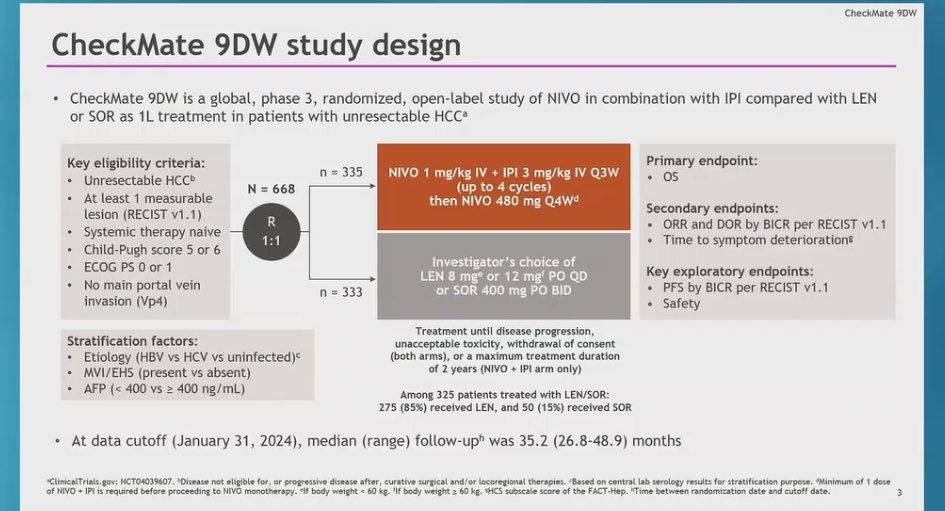
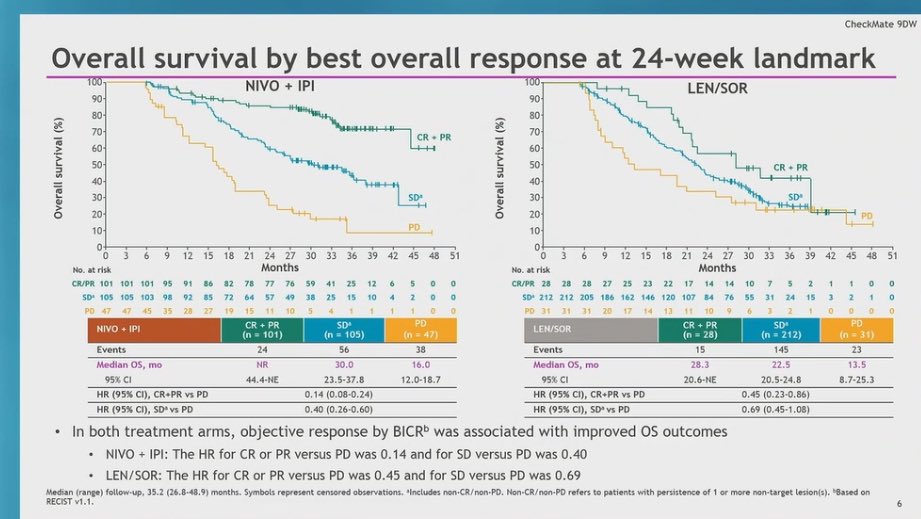
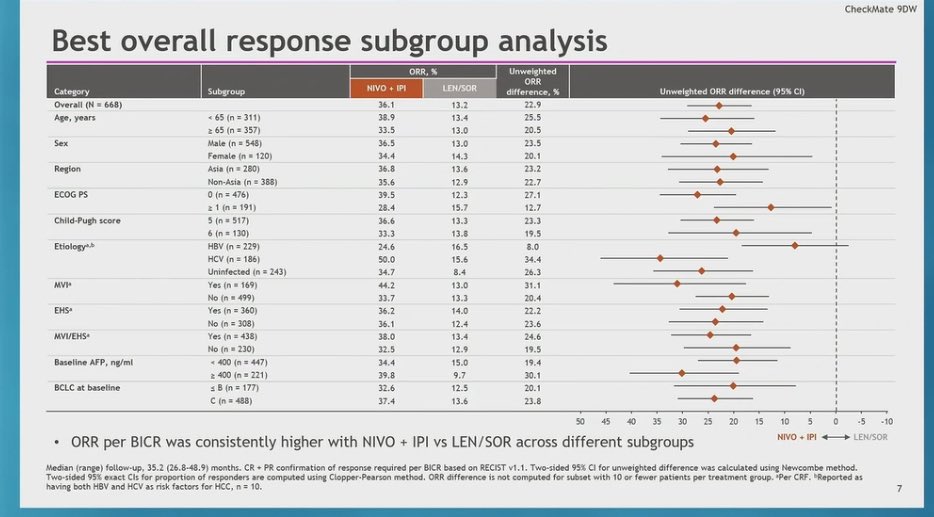
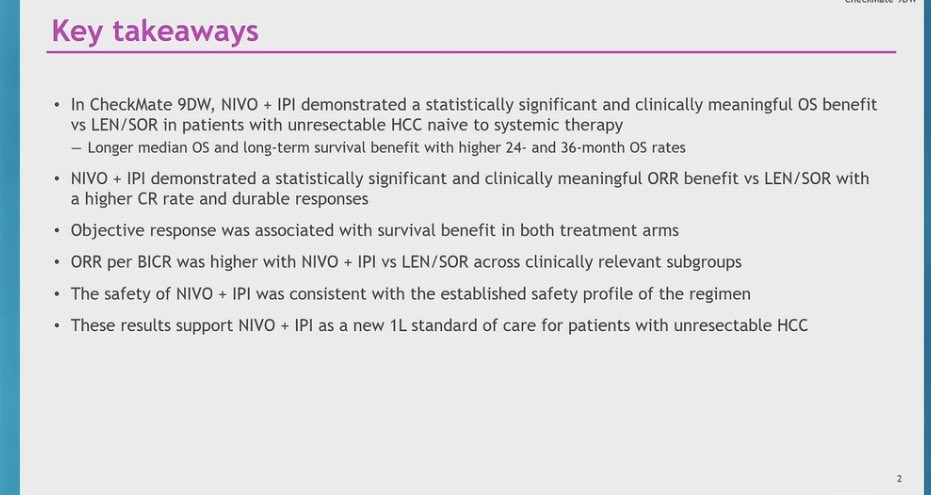
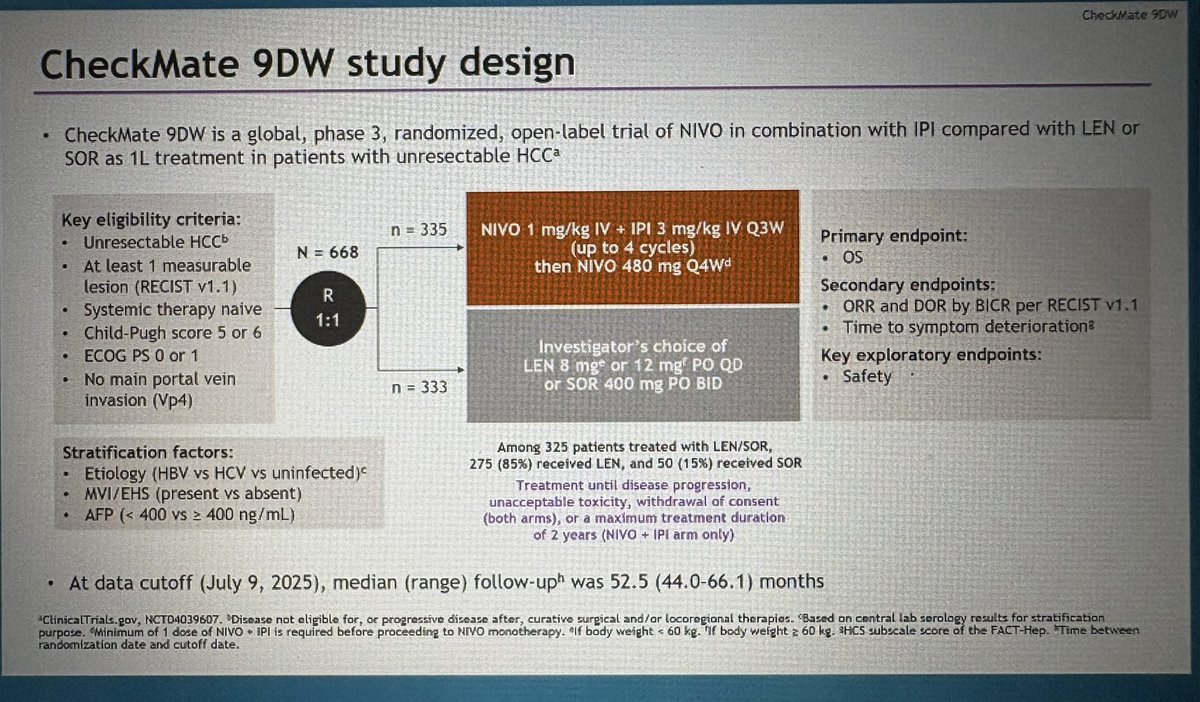
[Slide 1] CheckMate 9DW CheckMate 9DW study design CheckMate 9DW is a global, phase 3, randomized, open-label study of NIVO in combination with IPI compared with LEN or SOR as 1L treatment in patients with unresectable HCC Key eligibility criteria: Primary endpoint: n 335 Unresectable HCC NIVO 1 mg/kg IV + IPI 3 mg/kg IV Q3W os N 668 (up to 4 cycles) At least 1 measurable then NIVO 480 mg Q4W lesion (RECIST v1.1) Secondary endpoints: R Systemic therapy naive ORR and DOR by BICR per RECIST v1.1 1:1 Time to symptom deterioration Child-Pugh score 5 or 6 ECOG PS 0 or 1 Investigator's choice of LEN 8 mge or 12 mg PO QD Key exploratory endpoints: No main portal vein n 333 or SOR 400 mg PO BID PFS by BICR per RECIST v1.1 invasion (Vp4) Safety Treatment until disease progression, Stratification factors: unacceptable toxicity, withdrawal of consent Etiology (HBV vs HCV vs uninfected)c (both arms), or a maximum treatment duration MVI/EHS (present vs absent) of 2 years (NIVO IPI arm only) AFP (< 400 vs 400 ng/mL) Among 325 patients treated with LEN/SOR: 275 (85%) received LEN, and 50 (15%) received SOR At data cutoff (January 31, 2024), median (range) follow-up was 35.2 (26.8-48.9) months *ClinicalTrials.gov: NCT04039607 Disease not eligible for. or progressive disease after. curative surgical and/or locoregional therapies. (Based on central lab serology results for stratification purpose. Manimum of 1 dose of NIVO IPI is required before proceeding to NIVO monotherapy. of body weight kg. If body weight 2 60 kg. HCS subscale score of the FACT-Hep. "Time between randomization date and cutoff date. 3 --- [Slide 2] Key takeaways In CheckMate 9DW, NIVO + IPI demonstrated a statistically significant and clinically meaningful os benefit vs LEN/SOR in patients with unresectable HCC naive to systemic therapy - Longer median os and long-term survival benefit with higher 24- and 36-month os rates NIVO + IPI demonstrated a statistically significant and clinically meaningful ORR benefit vs LEN/SOR with a higher CR rate and durable responses Objective response was associated with survival benefit in both treatment arms ORR per BICR was higher with NIVO + IPI vs LEN/SOR across clinically relevant subgroups The safety of NIVO + IPI was consistent with the established safety profile of the regimen These results support NIVO + IPI as a new 1L standard of care for patients with unresectable HCC 2 --- [Slide 3] CheckMate 9DW CheckMate 9DW study design CheckMate 9DW is a global, phase 3, randomized, open-label study of NIVO in combination with IPI compared with LEN or SOR as 1L treatment in patients with unresectable HCC Key eligibility criteria: Primary endpoint: n = 335 Unresectable HCCb NIVO 1 mg/kg IV + IPI 3 mg/kg IV Q3W OS N 668 (up to 4 cycles) At least 1 measurable then NIVO 480 mg Q4Wd lesion (RECIST v1.1) Secondary endpoints: R Systemic therapy naive ORR and DOR by BICR per RECIST v1.1 1:1 Time to symptom deterioration Child-Pugh score 5 or 6 ECOG PS 0 or 1 Investigator's choice of LEN 8 mge or 12 mg PO QD Key exploratory endpoints: No main portal vein n 333 or SOR 400 mg PO BID PFS by BICR per RECIST v1.1 invasion (Vp4) Safety Treatment until disease progression, Stratification factors: unacceptable toxicity, withdrawal of consent Etiology (HBV vs HCV VS uninfected)c (both arms), or a maximum treatment duration MVI/EHS (present VS absent) of 2 years (NIVO + IPI arm only) AFP (< 400 vs 2 400 ng/mL) Among 325 patients treated with LEN/SOR: 275 (85%) received LEN, and 50 (15%) received SOR At data cutoff (January 31, 2024), median (range) follow-uph was 35.2 (26.8-48.9) months ClinicalTrials.gov: NCT04039607. Disease not eligible for, or progressive disease after, curative surgical and/or locoregional therapies. Based on central lab serology results for stratification purpose. Minimum of 1 dose of NIVO IPI is required before proceeding to NIVO monotherapy. *If body weight 60 kg. 'If body weight : 60 kg. HCS subscale score of the FACT-Hep. "Time between randomization date and cutoff date. 3 --- [Slide 4] CheckMate 9DW Overall survival by best overall response at 24-week landmark 100 NIVO + IPI 100 LEN/SOR 90 90 80 80 70 70 Overall survival (%) CR PR 60 I Overall survival (%) 60 50 50 CR + PR 40 40 +++ 30 SD 30 SD I 11411 20 20 PD 10 PD 10 0 0 0 3 6 9 12 15 18 21 24 27 30 33 36 39 42 45 48 51 0 3 6 9 12 15 18 21 24 27 30 33 36 39 42 45 48 51 No. at risk Months No. at risk Months CR/PR 101 101 101 95 91 86 82 78 77 76 59 41 25 12 6 5 0 0 CR/PR 28 28 28 27 25 23 22 17 14 14 10 7 5 2 1 1 0 0 SD* 105 105 103 98 92 85 72 64 57 49 38 25 15 10 4 2 0 0 SD* 212 212 205 186 162 146 120 107 84 76 55 31 24 15 3 2 1 0 PD 47 47 45 35 28 27 19 15 11 10 5 4 1 1 1 1 0 0 PD 31 11 31 20 17 14 13 11 10 9. 6 ) 2 1 0 0 0 0 NIVO IPI CR PR SD PD LEN/SOR CR PR SD PD (n 101) (n 105) (n 47) (n 28) (n 212) (n 31) Events 24 56 38 Events 15 145 23 Median os, mo NR 30.0 16.0 Median os, mo 28.3 22.5 13.5 95% CI 44.4-NE 23.5-37.8 12.0-18.7 95% CI 20.6-NE 20.5-24.8 8.7-25.3 HR (95% CI), CR+PR vs PD 0.14 (0.08-0.24) HR (95% CI), CR+PR vs PD 0.45 (0.23-0.86) HR (95% CI), SD* vs PD 0.40 (0.26-0.60) HR (95% CI), SD* vs PD 0.69 (0.45-1.08) In both treatment arms, objective response by BICRᵇ was associated with improved OS outcomes NIVO + IPI: The HR for CR or PR versus PD was 0.14 and for SD versus PD was 0.40 LEN/SOR: The HR for CR or PR versus PD was 0.45 and for SD versus PD was 0.69 Median (range) follow-up, 35.2 (26.8-48.9) months. Symbols represent censored observations. *Includes non-CR/non-PD. Non-CR/non-PD refers to patients with persistence of 1 or more non-target lesion(s). "Based on RECIST v1.1. 6 --- [Slide 5] CheckMate 9DW Best overall response subgroup analysis ORR, Unweighted ORR Category Subgroup NIVO IPI LEN/SOR difference, % Unweighted ORR difference (95% CI) Overall (N 668) 36.1 13.2 22.9 Age, years 4 65 (n 311) 38.9 13.4 25.5 : 65 (n 357) 33.5 13.0 20.5 Sex Male (n . 548) 36.5 13.0 23.5 Female (n 120) 34.4 14.3 20.1 Region Asia (n . 280) 36.8 13.6 23.2 Non-Asia (n 388) 35.6 12.9 22.7 ECOG PS 0 (n 476) 39.5 12.3 27.1 1 in . 191) 28.4 15.7 12.7 Child-Pugh score 5 (n 517) 36.6 13.3 23.3 6 (n . 130) 33.3 13.8 19.5 Etiology HBV (n 229) 24.6 16.5 8.0 HCV (n 186) 50.0 15.6 34.4 Uninfected (n 243) 34.7 8.4 26.3 MVI* Yes (n 169) 44.2 13.0 31.1 No (n 499) 33.7 13.3 20.4 EHS+ Yes (n 360) 36.2 14.0 22.2 No (n 308) 36.1 12.4 23.6 MVI/EHS* Yes (n 438) 38.0 13.4 24.6 No (n . 230) 32.5 12.9 19.5 Baseline AFP, ng/ml . 400 (n 447) 34.4 15.0 19.4 a 400 (n 221) 39.8 9.7 30.1 BCLC at baseline $ 8 (n 177) 32.6 12.5 20.1 c (n 488) 37.4 13.6 23.8 50 45 40 35 30 25 20 15 10 5 0 -5 -10 ORR per BICR was consistently higher with NIVO + IPI vs LEN/SOR across different subgroups NIVO IPI LEN/SOR Median (range) follow-up, 35.2 (26.8-48.9) months. CR PR confirmation of response required per BICR based on RECIST v1.1. Two-sided 95% CI for unweighted difference was calculated using Newcombe method. Two-sided 95% exact Cls for proportion of responders are computed using Clopper-Pearson method. ORR difference is not computed for subset with 10 or fewer patients per treatment group. Per CRF. Reported as having both HBV and HCV as risk factors for HCC, n= 10. 7
Mark Yarchoan
Mark Yarchoan @MarkYarchoan
CheckMate-9DW Data
6.8K impressions · 65 likes · Jun 27, 2024
View on X ↗
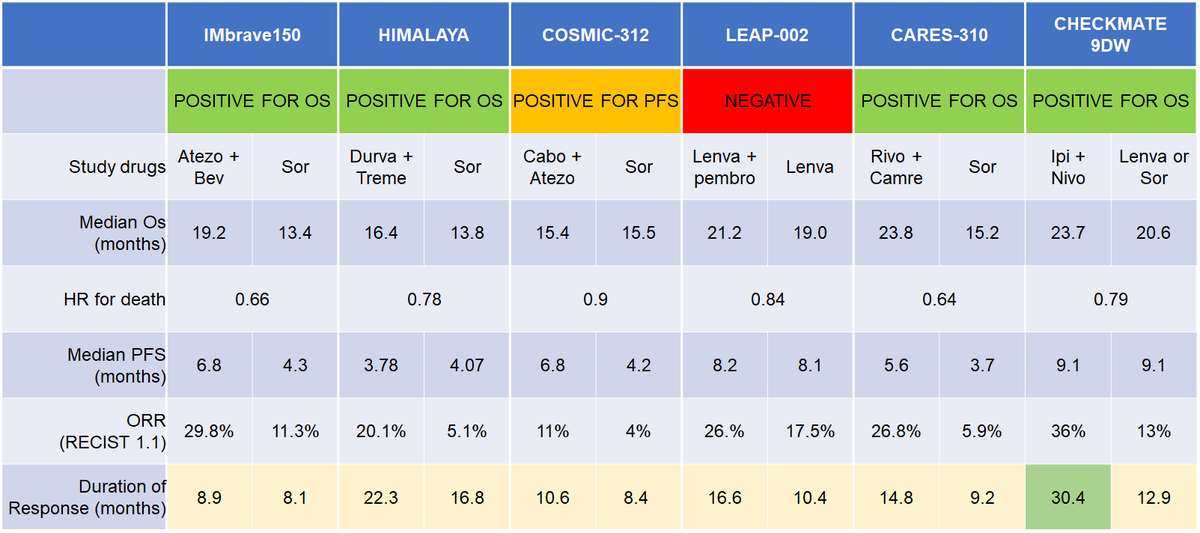
[Slide 1] CHECKMATE IMbrave150 HIMALAYA COSMIC-312 LEAP-002 CARES-310 9DW POSITIVE FOR OS POSITIVE FOR os POSITIVE FOR PFS NEGATIVE POSITIVE FOR os POSITIVE FOR os Atezo + Durva + Cabo + Lenva + Rivo + Study drugs Sor Sor Son Lenva Sor Ipi + Lenva or Bev Treme Atezo pembro Camre Nivo Sor Median Os 19.2 13.4 16.4 13.8 15.4 15.5 21.2 19.0 23.8 15.2 23.7 20.6 (months) HR for death 0,66 0.78 0.9 0.84 0,64 0.79 Median PFS 6.8 4.3 3.78 4.07 6.8 4.2 8.2 8.1 5.6 3.7 9.1 9.1 (months) ORR 29.8% 11.3% 20.1% 5.1% 11% 4% 26% 17.5% 26.8% 5.9% 36% 13% (RECIST 1.1) Duration of 8.9 8.1 22.3 16.8 10.6 8.4 16,6 10.4 14.8 9.2 30,4 12.9 Response (months)
Arndt Vogel
Arndt Vogel @ArndtVogel
CheckMate-9DW Data
6.1K impressions · 95 likes · Jan 10, 2026
View on X ↗
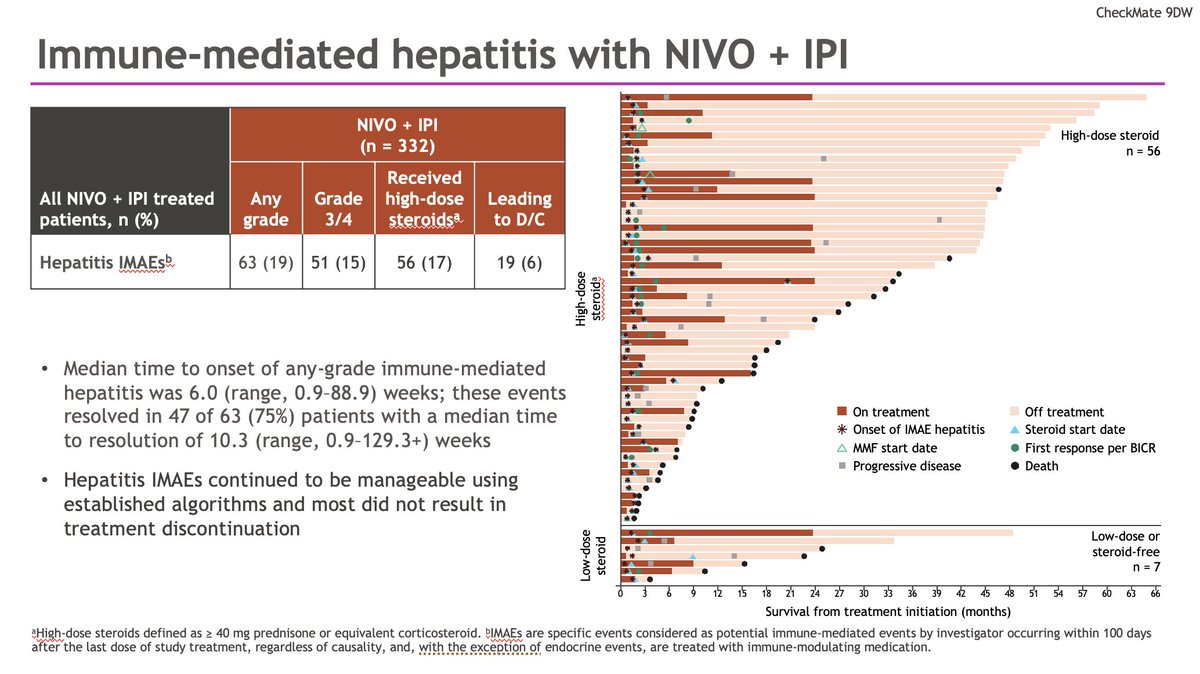
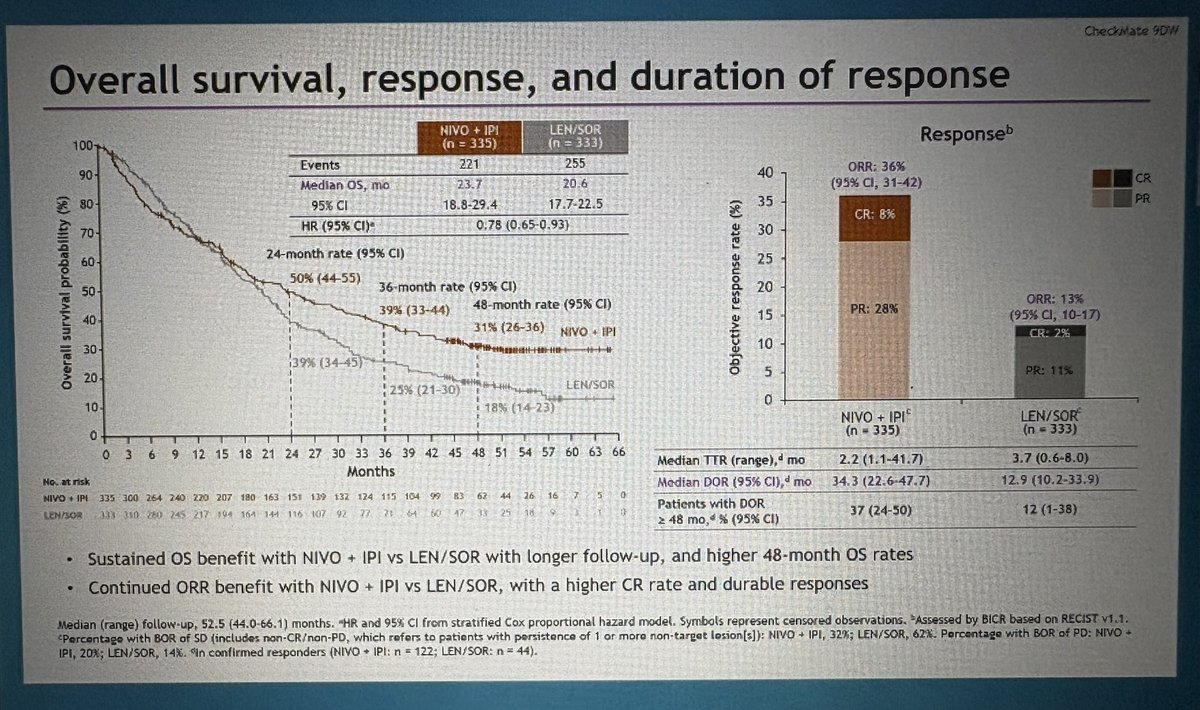
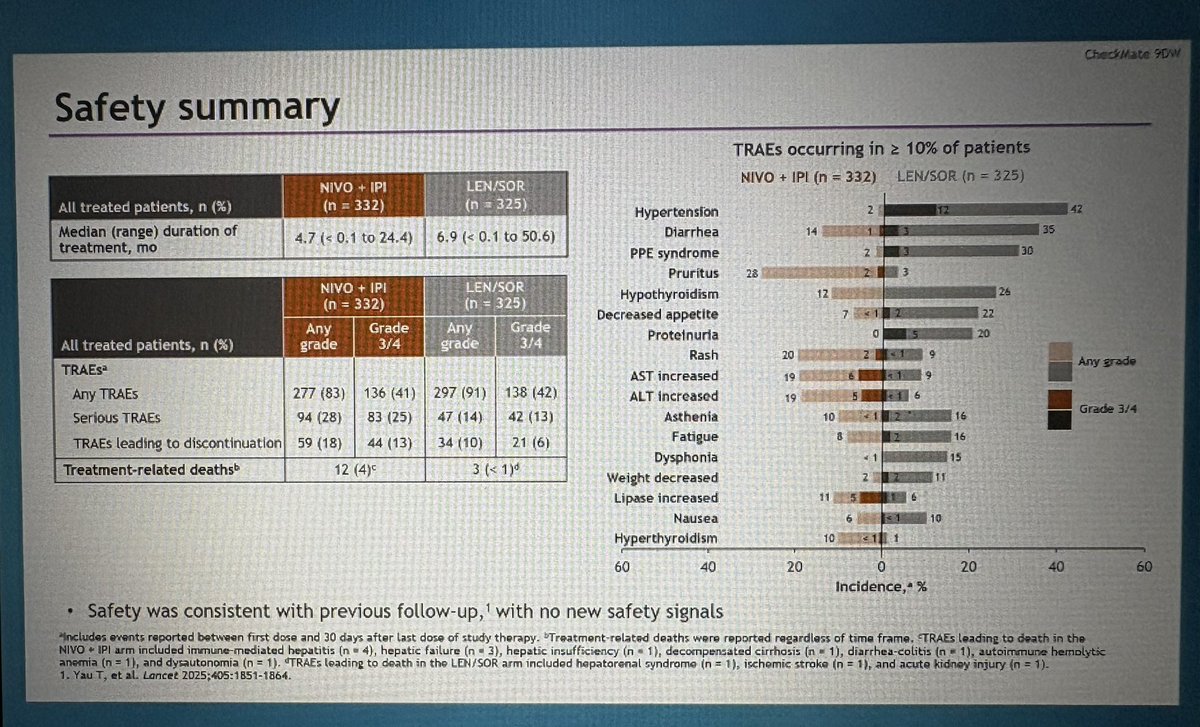
[Slide 1] CheckMate 9DW Overall survival, response, and duration of response NIVO IPI LEN/SOR 100 (n 335) (n 333) Responseb Events 221 255 90 40 ORR: 36% Median os, mo 23.7 20.6 (95% CI, 31-42) CR 80 95% CI 18.8-29.4 17.7-22.5 35 PR CR: 8% 70 HR (95% CI)ᵃ 0.78 (0.65-0.93) 30 Overall survival probability (%) 60 24-month rate (95% CI) 50% (44-55) 50 36-month rate (95% CI) Objective response rate (%) 25 20 39% (33-44) 48-month rate (95% CI) ORR: 13% 15 PR: 28% 40 (95% CI, 10-17) 31% (26-36) NIVO + IPI CR: 2% 30 10 39% (34-45) 20 5 PR: 11% 25% (21-30) LEN/SOR 10 0 18% (14-23) NIVO + IPIᶜ LEN/SOR 0 (n 335) (n 333) 0 3 6 9 12 15 18 21 24 27 30 33 36 39 42 45 48 51 54 57 60 63 66 Median TTR (range), mo 2.2 (1.1-41.7) 3.7 (0.6-8.0) Months No. at risk Median DOR (95% CI),d mo 34.3 (22.6-47.7) 12.9 (10.2-33.9) NIVO IPI 335 300 264 240 220 207 180 163 151 139 132 124 115 104 99 83 62 44 26 16 7 5 0 Patients with DOR LEN/SOR 333 310 280 245 217 194 164 144 116 107 92 77 71 64 60 47 33 25 18 9 3 1 0 37 (24-50) 12 (1-38) 2 48 mo,d % (95% CI) Sustained OS benefit with NIVO + IPI vs LEN/SOR with longer follow-up, and higher 48-month OS rates Continued ORR benefit with NIVO + IPI vs LEN/SOR, with a higher CR rate and durable responses Median (range) follow-up, 52.5 (44.0-66.1) months. HR and 95% CI from stratified Cox proportional hazard model. Symbols represent censored observations. Assessed by BICR based on RECIST v1.1. Percentage with BOR of SD (includes non-CR/non-PD, which refers to patients with persistence of 1 or more non-target lesion[s]): NIVO + IPI, 32%; LEN/SOR, 62%. Percentage with BOR of PD: NIVO + IPI, 20%; LEN/SOR, 14%. In confirmed responders (NIVO + IPI: n = 122; LEN/SOR: n = 44). --- [Slide 2] CheckMate 9DW Immune-mediated hepatitis with NIVO + IPI NIVO + IPI High-dose steroid (n = 332) n = 56 Received All NIVO + IPI treated Any Grade high-dose Leading patients, n (%) grade 3/4 steroids to D/C Hepatitis IMAEsb 63 (19) 51 (15) 56 (17) 19 (6) High-dose steroid Median time to onset of any-grade immune-mediated hepatitis was 6.0 (range, 0.9-88.9) weeks; these events resolved in 47 of 63 (75%) patients with a median time On treatment Off treatment * Onset of IMAE hepatitis Steroid start date to resolution of 10.3 (range, 0.9-129.3+) weeks MMF start date First response per BICR Progressive disease Death Hepatitis IMAEs continued to be manageable using established algorithms and most did not result in treatment discontinuation Low-dose or Low-dose steroid steroid-free n=7 0 3 6 9 12 15 18 21 24 27 30 33 36 39 42 45 48 51 54 57 60 63 66 Survival from treatment initiation (months) High-dose steroids defined as > 40 mg prednisone or equivalent corticosteroid. IMAEs are specific events considered as potential immune-mediated events by investigator occurring within 100 days after the last dose of study treatment, regardless of causality, and, with the exception of endocrine events, are treated with immune-modulating medication. --- [Slide 3] CheckMate 9DW CheckMate 9DW study design CheckMate 9DW is a global, phase 3, randomized, open-label trial of NIVO in combination with IPI compared with LEN or SOR as 1L treatment in patients with unresectable HCCa Key eligibility criteria: n = 335 Unresectable HCCb NIVO 1 mg/kg IV + IPI 3 mg/kg IV Q3W N = 668 (up to 4 cycles) Primary endpoint: At least 1 measurable then NIVO 480 mg Q4Wd OS lesion (RECIST v1.1) R Secondary endpoints: Systemic therapy naive ORR and DOR by BICR per RECIST v1.1 1:1 Child-Pugh score 5 or 6 Time to symptom deterioration ECOG PS 0 or 1 Investigator's choice of LEN 8 mgs or 12 mgf PO QD Key exploratory endpoints: No main portal vein n = 333 or SOR 400 mg PO BID Safety invasion (Vp4) Stratification factors: Among 325 patients treated with LEN/SOR, Etiology (HBV vs HCV vs uninfected)ᶜ 275 (85%) received LEN, and 50 (15%) received SOR MVI/EHS (present vs absent) Treatment until disease progression, unacceptable toxicity, withdrawal of consent AFP (< 400 vs > 400 ng/mL) (both arms), or a maximum treatment duration of 2 years (NIVO + IPI arm only) At data cutoff (July 9, 2025), median (range) follow-uph was 52.5 (44.0-66.1) months ClinicalTrials.gov, NCT04039607. Disease not eligible for, or progressive disease after, curative surgical and/or locoregional therapies. Based on central lab serology results for stratification purpose. Minimum of 1 dose of NIVO + IPI is required before proceeding to NIVO monotherapy. of body weight < 60 kg. If body weight 2 kg. HCS subscale score of the FACT-Hep. Time between randomization date and cutoff date. --- [Slide 4] CheckMate 9DW Safety summary TRAEs occurring in ≥ 10% of patients NIVO + IPI LEN/SOR NIVO + IPI (n = 332) LEN/SOR (n = 325) All treated patients, n (%) (n = 332) (n = 325) Hypertension 2 12 42 Median (range) duration of 4.7 (< 0.1 to 24.4) 6.9 (< 0.1 to 50.6) Diarrhea 14 1 3 35 treatment, mo PPE syndrome 2 3 30 Pruritus 28 2 3 NIVO + IPI LEN/SOR Hypothyroidism 12 26 (n = 332) (n = 325) Decreased appetite 7 <1 2 22 Any Grade Any Grade Proteinuria 0 5 20 All treated patients, n (%) grade 3/4 grade 3/4 Rash 20 2 9 TRAEsa Any grade AST increased 19 6 <1 9 Any TRAEs 277 (83) 136 (41) 297 (91) 138 (42) ALT increased 19 5 <1 6 Serious TRAEs 94 (28) 83 (25) 47 (14) 42 (13) Asthenia 10 <1 2 16 Grade 3/4 TRAEs leading to discontinuation 59 (18) 44 (13) 34 (10) 21 (6) Fatigue 8 2 16 Dysphonia < 1 15 Treatment-related deathsb 12 (4)c 3 (< 1)d Weight decreased 2 2 11 Lipase increased 11 5 6 Nausea 6 A <1 10 Hyperthyroidism 10 <1 1 60 40 20 0 20 40 60 Incidence, Safety was consistent with previous follow-up,¹ with no new safety signals Includes events reported between first dose and 30 days after last dose of study therapy. Treatment-related deaths were reported regardless of time frame. TRAEs leading to death in the NIVO + IPI arm included immune-mediated hepatitis (n = 4), hepatic failure (n = 3), hepatic insufficiency (n = 1), decompensated cirrhosis (n = 1), diarrhea-colitis (n = 1), autoimmune hemolytic anemia (n = 1), and dysautonomia (n = 1). TRAEs leading to death in the LEN/SOR arm included hepatorenal syndrome (n = 1), ischemic stroke (n = 1), and acute kidney injury (n = 1). 1. Yau T, et al. Lancet 2025;405:1851-1864. --- [Slide 5] CheckMate 9DW Immune-mediated hepatitis with NIVO + IPI NIVO + IPI High-dose steroid (n = 332) n = 56 Received All NIVO + IPI treated Any Grade high-dose Leading patients, n (%) grade 3/4 steroids to D/C Hepatitis IMAEsb 63 (19) 51 (15) 56 (17) 19 (6) High-dose steroid Median time to onset of any-grade immune-mediated hepatitis was 6.0 (range, 0.9-88.9) weeks; these events resolved in 47 of 63 (75%) patients with a median time On treatment Off treatment * Onset of IMAE hepatitis Steroid start date to resolution of 10.3 (range, 0.9-129.3+) weeks MMF start date First response per BICR Progressive disease Death Hepatitis IMAEs continued to be manageable using established algorithms and most did not result in treatment discontinuation Low-dose or Low-dose steroid steroid-free n=7 0 3 6 9 12 15 18 21 24 27 30 33 36 39 42 45 48 51 54 57 60 63 66 Survival from treatment initiation (months) High-dose steroids defined as > 40 mg prednisone or equivalent corticosteroid. IMAEs are specific events considered as potential immune-mediated events by investigator occurring within 100 days after the last dose of study treatment, regardless of causality, and, with the exception of endocrine events, are treated with immune-modulating medication.
Dr. Cathy Eng
Dr. Cathy Eng @CathyEngMD
CheckMate-9DW Data
3.3K impressions · 39 likes · Jun 4, 2024
View on X ↗
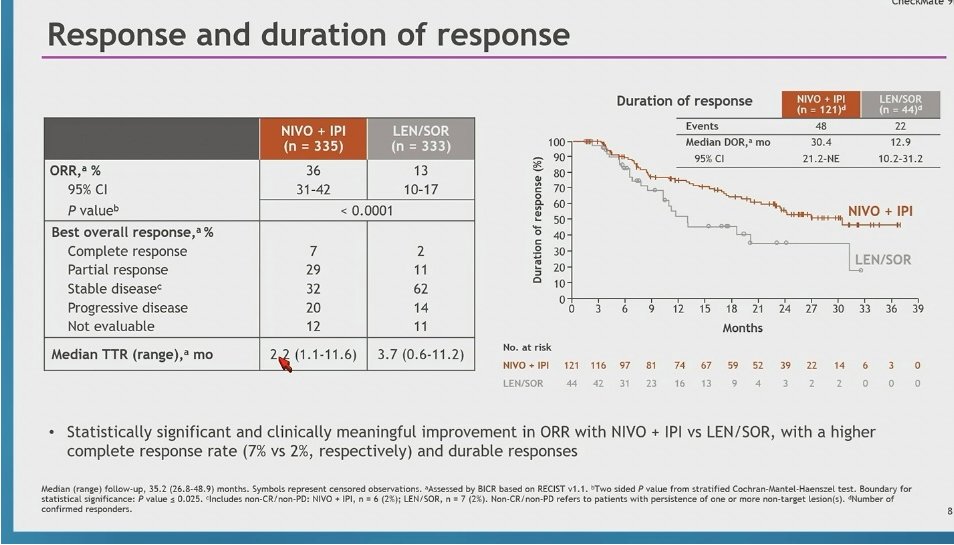
[Slide 1] 12 Application Nivo + Ipi is an option for the first line treatment of patients with advanced hepatocellular carcinoma Particularly if not a candidate for Atezo/Bev High response rate needed-palliation or neoadjuvant? As the treatment of HCC is rapidly evolving, it is difficult to make comparisons across trials Will be critically important to continue to evaluate the role of sequencing in HCC 2024 ASCO #ASCO24 PRESENTED BY: Laura W. Goff, MD ASCO AMERICAN CUNICAL ONCOLOGY SOCIETY OF ANNUAL MEETING Presentation is property of the author and ASCO Permission contact KNOWLEDGE CONQUERS CANCER --- [Slide 2] Response and duration of response Duration of response NIVO + IPI LEN/SOR (n = 121) (n 44)a NIVO + IPI LEN/SOR Events 48 22 (n = 335) (n = 333) 100 Median DOR, mo 30.4 12.9 90 95% CI 21.2-NE 10.2-31.2 ORR, % 36 13 80 +H 95% CI 31-42 10-17 70 60 P valueb < 0.0001 NIVO + IPI 50 Best overall response, 40 Complete response 7 2 30 LEN/SOR Partial response 29 11 20 Stable disease 32 62 10 0 Progressive disease 20 14 0 3 6 9 12 15 18 21 24 27 30 33 36 39 Not evaluable 12 11 Months No. at risk Median TTR (range), mo 2.2 (1.1-11.6) 3.7 (0.6-11.2) NIVO IPI 121 116 97 81 74 67 59 52 39 22 14 6 3 0 LEN/SOR 44 42 31 23 16 13 9 4 3 2 2 0 0 0 Statistically significant and clinically meaningful improvement in ORR with NIVO + IPI vs LEN/SOR, with a higher complete response rate (7% vs 2%, respectively) and durable responses Median (range) follow-up, 35.2 (26.8-48.9) months. Symbols represent censored observations. Assessed by BICR based on RECIST v1.1. "Two sided P value from stratified Cochran-Mantel-Haenszel test. Boundary for statistical significance: P value s 0.025. Includes non-CR/non-PD: NIVO IPI, n 6 (2%): LEN/SOR n. 7 (2%). Non-CR/non-PD refers to patients with persistence of one or more non-target lesion(s). Number of confirmed responders. 8 --- [Slide 3] 6 CheckMate 9DW Results Met its primary endpoint of improved overall survival NIVO IPI LEN/SOR (n 335) (n 333) 100 Events 194 228 Median os, mo 23.7 20.6 90 95% CI 18.8-29.4 17.5-22.5 80 HR (95% CI) 0.79 (0.65-0.96) P value 0.018 70 60 24-month rate 49% 50 36-month rate 40 38% NIVO IPI 30 39% 20 24% 10 LEN/SOR 0 0 3 6 9 12 15 18 21 24 27 30 33 36 39 42 45 48 51 Months No. at risk NIVO IPI 335 300 264 239 220 206 179 162 150 137 104 71 42 24 11 8 0 0 LEN/SOR 333 310 280 245 216 194 164 144 116 106 76 44 34 20 4 3 1 0 2024 ASCO #ASCO24 PRESENTED BY: Laura W. Goff, MD ASCO AMERICAN SOCIETY OF CUNICAL ONCOLOGY --- [Slide 4] 2024 ASCO ANNUAL MEETING 2024ASCO ANNUAL MEETING Refining Treatment in Advanced Hepatobiliary Cancers Laura Williams Goff, MD, MSCI, MMHC Vanderbilt University Medical Center 2024 ASCO #ASCO24 PRESENTED BY: Laura W. Goff, MD ASCO AMERICAN SOCIETY OF OF CLINICAL ONCOLOGY ANNUAL MEETING Presentation $ property of the author and ASCO Permission required for reuse, contact permissions@asco.org KNOWLEDGE CONQUERS CANCER --- [Slide 5] Response and duration of response Duration of response NIVO IPI LEN/SOR (n = 121)d (n 44)a NIVO + IPI LEN/SOR Events 48 22 (n = 335) (n = 333) 100 Median DOR,a mo 30.4 12.9 90 95% CI 21.2-NE 10.2-31.2 ORR,ª % 36 13 80 95% CI 31-42 10-17 < 0.0001 7 Duration of response (%) 70 P valueb 60 NIVO + IPI 50 Best overall response,ᵃ % 40 Complete response 2 30 LEN/SOR Partial response 29 11 20 Stable diseaseᶜ 32 62 10 0 Progressive disease 20 14 0 3 6 9 12 15 18 21 24 27 30 33 36 39 Not evaluable 12 11 Months No. at risk Median TTR (range),ᵃ mo 22 (1.1-11.6) 3.7 (0.6-11.2) NIVO IPI 121 116 97 81 74 67 59 52 39 22 14 6 3 0 LEN/SOR 44 42 31 23 16 13 9 4 3 2 2 0 0 0 Statistically significant and clinically meaningful improvement in ORR with NIVO + IPI VS LEN/SOR, with a higher complete response rate (7% VS 2%, respectively) and durable responses Median (range) follow-up, 35.2 (26.8-48.9) months. Symbols represent censored observations. Assessed by BICR based on RECIST v1.1. Two sided P value from stratified Cochran-Mantel-Haenszel test. Boundary for statistical significance: P value $ 0.025. Includes non-CR/non-PD: NIVO IPI, n=6 (2%); LEN/SOR, n = 7 (2%). Non-CR/non-PD refers to patients with persistence of one or more non-target lesion(s). Number of confirmed responders. 8 --- [Slide 6] 6 CheckMate 9DW Results Met its primary endpoint of improved overall survival NIVO IPI LEN/SOR (n = 335) (n = 333) Events 194 228 100 Median os, mo 23.7 20.6 90 95% CI 18.8-29.4 17.5-22.5 80 HR (95% CI) 0.79 (0.65-0.96) P value 0.018 70 Overall survival (%) 24-month rate 60 49% 36-month rate 50 38% 40 NIVO + IPI 39% 30 20 24% 10 LEN/SOR 0 0 3 6 9 12 15 18 21 24 27 30 33 36 39 42 45 48 51 Months No. at risk NIVO IPI 335 300 264 239 220 206 179 162 150 137 104 71 42 24 11 8 0 0 LEN/SOR 333 310 280 245 216 194 164 144 116 106 76 44 34 20 4 3 1 0 2024 ASCO #ASCO24 PRESENTED BY: Laura W. Goff, MD ASCO AMERICAN SOCIETY OF CUNICAL ONCOLOGY --- [Slide 7] 12 Application Nivo + Ipi is an option for the first line treatment of patients with advanced hepatocellular carcinoma Particularly if not a candidate for Atezo/Bev High response rate needed-palliation or neoadjuvant? As the treatment of HCC is rapidly evolving, it is difficult to make comparisons across trials Will be critically important to continue to evaluate the role of sequencing in HCC 2024 ASCO #ASCO24 PRESENTED BY: Laura W. Goff, MD ASCO AMERICAN SOCIETY OF CUNICAL UNCOLOGY ANNUAL MEETING Presentation - property on the author and ASCO Permission required or revole contact permissions@asco.org KNOWLEDGE CONQUERS CANCER
Jun Gong
Jun Gong @jgong15
CheckMate-9DW Data
1.3K impressions · 19 likes · Jan 10, 2026
View on X ↗
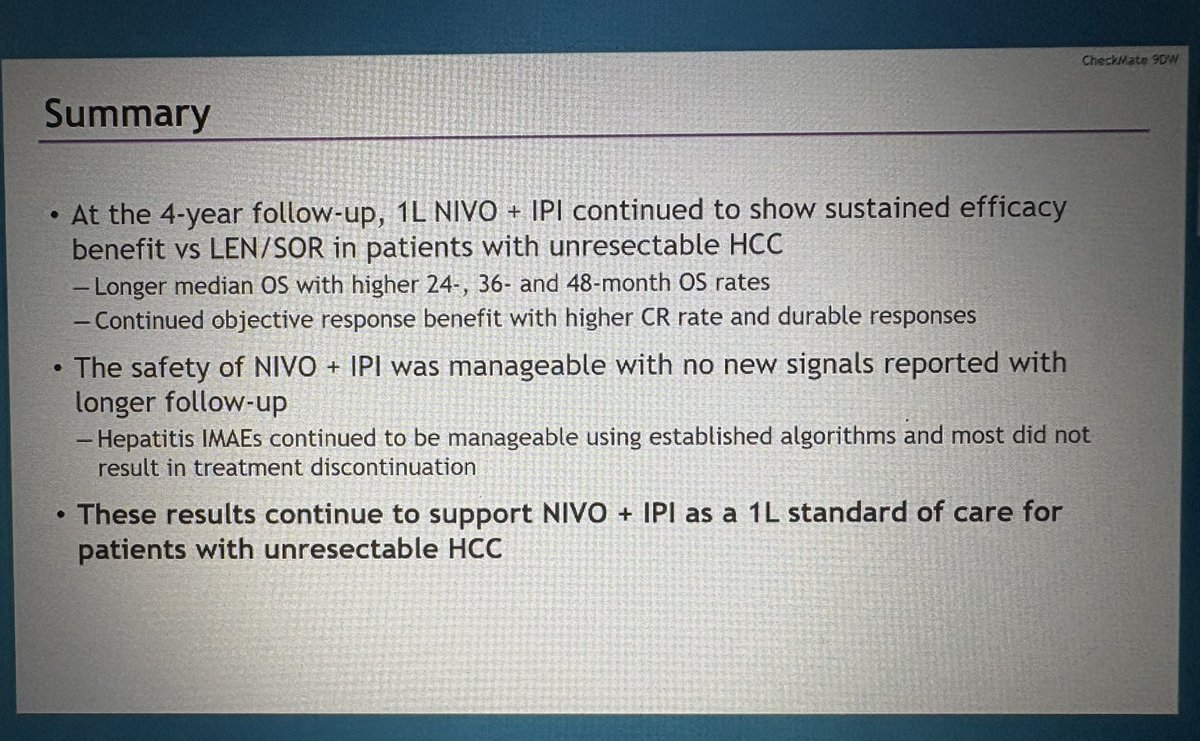
[Slide 1] CheckMate 9DW CheckMate 9DW study design CheckMate 9DW is a global, phase 3, randomized, open-label trial of NIVO in combination with IPI compared with LEN or SOR as 1L treatment in patients with unresectable HCCa Key eligibility criteria: n = 335 NIVO 1 mg/kg IV + IPI 3 mg/kg IV Q3W Unresectable HCCb Primary endpoint: N = 668 (up to 4 cycles) At least 1 measurable OS then NIVO 480 mg Q4Wd lesion (RECIST v1.1) R Secondary endpoints: Systemic therapy naive ORR and DOR by BICR per RECIST v1.1 1:1 Child-Pugh score 5 or 6 Time to symptom deterioration® ECOG PS 0 or 1 Investigator's choice of LEN 8 mge or 12 mg PO QD Key exploratory endpoints: No main portal vein or SOR 400 mg PO BID Safety n 333 invasion (Vp4) Stratification factors: Among 325 patients treated with LEN/SOR, 275 (85%) received LEN, and 50 (15%) received SOR Etiology (HBV VS HCV VS uninfected)c MVI/EHS (present vs absent) Treatment until disease progression, unacceptable toxicity, withdrawal of consent AFP (< 400 VS 2 400 ng/mL) (both arms), or a maximum treatment duration of 2 years (NIVO + IPI arm only) At data cutoff (July 9, 2025), median (range) follow-uph was 52.5 (44.0-66.1) months ClinicalTrials.gov, NCT04039607. Disease not eligible for, or progressive disease after, curative surgical and/or locoregional therapies. Based on central lab serology results for stratification purpose. Minimum of 1 dose of NIVO . IPI is required before proceeding to NIVO monotherapy. of body weight c 60 kg. If body weight = 60 kg. SHCS subscale score of the FACT-Hep. "Time between randomization date and cutoff date. --- [Slide 2] CheckMate 9DW Overall survival, response, and duration of response NIVO IPI LEN/SOR 100 (n 335) (n = 333) Responseᵇ Events 221 255 90 40 ORR: 36% Median os, mo 23.7 20.6 (95% CI, 31-42) CR 80 95% CI 18.8-29.4 17.7-22.5 35 PR CR: 8% 70 HR (95% CI)* 0.78 (0.65-0.93) Overall survival probability (%) 30 60 24-month rate (95% CI) 50% (44-55) 50 36-month rate (95% CI) Objective response rate (%) 25 20 39% (33-44) 48-month rate (95% CI) ORR: 13% 40 15 PR: 28% (95% CI, 10-17) 31% (26-36) NIVO IPI CR: 2% 30 10 39% (34-45) 20 5 PR: 11% 25% (21-30) LEN/SOR 10 18% (14-23) 0 NIVO + IPIC LEN/SOR 0 (n 335) (n 333) 0 3 6 9 12 15 18 21 24 27 30 33 36 39 42 45 48 51 54 57 60 63 66 Median TIR (range),d mo 2.2 (1.1-41.7) 3.7 (0.6-8.0) Months No. at risk Median DOR (95% CI),d mo 34.3 (22.6-47.7) 12.9 (10.2-33.9) NIVO IPI 335 300 264 240 220 207 180 163 151 139 132 124 115 104 99 83 62 44 26 16 / 5 0 Patients with DOR LEN/SOR 333 310 280 245 217 194 164 144 116 107 92 и 71 04 50 17 33 25 18 . 3. 1 0 37 (24-50) 12 (1-38) > 48 mo,4 % (95% CI) Sustained OS benefit with NIVO + IPI vs LEN/SOR with longer follow-up, and higher 48-month os rates Continued ORR benefit with NIVO + IPI VS LEN/SOR, with a higher CR rate and durable responses Median (range) follow-up, 52.5 (44.0-66.1) months. "HR and 95% CI from stratified Cox proportional hazard model. Symbols represent censored observations. Assessed by BICR based on RECIST v1.1. Percentage with BOR of SD (includes non-CR/non-PD, which refers to patients with persistence of 1 or more non-target losion[s]): NIVO * IPI, 32%; LEN/SOR, 62%. Percentage with BOR of PD: NIVO - IPI, 20%; LEN/SOR, 14%. In confirmed responders (NIVO IPI: n = 122; LEN/SOR: n = 44). --- [Slide 3] CheckMate 9DW Safety summary TRAEs occurring in ≥ 10% of patients NIVO + IPI LEN/SOR NIVO + IPI (n = 332) LEN/SOR (n = 325) All treated patients, n (%) (n = 332) (n = 325) Hypertension 2 12 42 Median (range) duration of 4.7 (< 0.1 to 24.4) 6.9 (< 0.1 to 50.6) Diarrhea 14 1 3 35 treatment, mo PPE syndrome 2 3 30 Pruritus 28 2 3 NIVO + IPI LEN/SOR (n = 325) Hypothyroidism 12 26 (n = 332) Decreased appetite 7 2 22 Any Grade Any Grade Proteinuria 0 5 20 All treated patients, n (%) grade 3/4 grade 3/4 Rash 20 2 9 TRAEs Any grade AST increased 19 6 11 9 Any TRAEs 277 (83) 136 (41) 297 (91) 138 (42) ALT increased 19 5 6 Serious TRAEs 94 (28) 83 (25) 47 (14) 42 (13) Asthenia Grade 3/4 10 2 16 TRAEs leading to discontinuation 59 (18) 44 (13) 34 (10) 21 (6) Fatigue 8 2 16 Dysphonia <1 15 Treatment-related deathsb 12 (4)c 3 (< 1)° Weight decreased 2 11 Lipase increased 11 5 6 Nausea 6 <1 10 Hyperthyroidism 10 1 60 40 20 0 20 40 60 Incidence, % Safety was consistent with previous follow-up,¹ with no new safety signals "Includes events reported between first dose and 30 days after Last dose of study therapy. Treatment-related deaths were reported regardless of time frame. TRAEs leading to death in the NIVO * IPI arm included immune-mediated hepatitis (n . 4), hepatic failure (n . 3), hepatic insufficiency (n . 1), decompensated cirrhosis (n - 1), diarrhea-colitis (n . 1), autoimmune hemolytic anemia (n = 1), and dysautonomia (n = 1). TRAEs leading to death in the LEN/SOR arm included hepatorenal syndrome (n = 1), ischemic stroke (n = 1), and acute kidney injury (n = 1). 1. Yau T, et al. Lancet 2025;405:1851-1864. --- [Slide 4] CheckMate 90W Summary At the 4-year follow-up, 1L NIVO + IPI continued to show sustained efficacy benefit VS LEN/SOR in patients with unresectable HCC - Longer median os with higher 24-, 36- and 48-month OS rates - Continued objective response benefit with higher CR rate and durable responses The safety of NIVO + IPI was manageable with no new signals reported with longer follow-up - Hepatitis IMAEs continued to be manageable using established algorithms and most did not result in treatment discontinuation These results continue to support NIVO + IPI as a 1L standard of care for patients with unresectable HCC

CheckMate-9DW Top Tweets

Top tweets by impressions — click to view on X

HCC CONNECT
HCC CONNECT@hccconnectinfo

Did you catch our #HCC 📺video update from #ESMO24? Dr Richard Finn reviews the data from HIMALAYA, CheckMate 9DW, LEAP-012 &amp; IMbrave050 &amp; discuss the key takeaways. Watch the short video…

👁 11.7K ♡ 5 ↻ 4 Jan 21, 2025
Grainne O'Kane
Grainne O'Kane@graokane

CheckMate9DW expanded analyses
#HCC #GI25
➡️ response in HCC predicts OS
➡️ at 24wks med OS not reached in responders ipi/nivo
➡️responses consistent across subgroups
➡️still some toxicity…

👁 7.3K ♡ 63 ↻ 21 Jan 24, 2025
Mark Yarchoan
Mark Yarchoan@MarkYarchoan

Most impressive data from #CheckMate9DW (frontline nivo/ipi in #HCC) is the median duration of response: 30.4 months❗️Reaffirms something we&#x27;ve seen time and time again⏩Anti-CTLA4 responses are the…

👁 6.8K ♡ 65 ↻ 24 Jun 27, 2024
Arndt Vogel
Arndt Vogel@ArndtVogel

Nivolumab plus ipilimumab vs lenvatinib or sorafenib as first-line treatment for HCC: 4-year follow-up of CheckMate 9DW
#ASCOGI26
👉ORR: 36 vs 13%
👉mOS: 23.7 vs 20.6 mo
🧐 Very valid option in HCC;…

👁 6.1K ♡ 95 ↻ 45 Jan 10, 2026
Arndt Vogel
Arndt Vogel@ArndtVogel

Nivolumab plus ipilimumab vs lenvatinib or sorafenib as first-line treatment for HCC
@TheLancet
https://t.co/QlVvcP1U0l
🔎CheckMate 9DW
👉mOS 23·7 vs 20·6 mo
👉ORR 36 vs 13%
👉Consistent efficacy in…

👁 3.5K ♡ 47 ↻ 22 May 8, 2025
Dr. Cathy Eng
Dr. Cathy Eng@CathyEngMD

🙏@drlauragoff @VUMC_Cancer for putting things in perspective to close the @asco #asco24 #GI session 👏👏 re: Checkmate 9DW Nivo/Ipi in #HCC. @bmsnews #cancer #cancerresearch @jordanberlin5 @benhopark

👁 3.3K ♡ 39 ↻ 11 Jun 4, 2024
Arndt Vogel
Arndt Vogel@ArndtVogel

Overall Health-related quality of life &amp; efficacy assessment in pts who discontinued due to TRAEs
🔎CheckMate 9DW
👉Time to def. deterioration: 22.3 vs 0.5 mo
👉20% stopped due to TRAEs —&gt; OS…

👁 2.2K ♡ 19 ↻ 8 Jul 3, 2025
Jun Gong
Jun Gong@jgong15

Dr. Galle 4-year follow-up of CM9DW of #1L nivo/ipi vs. len/sorafenib in adv #HCC ➡️ sustained OS benefit median 23.7 vs 20.6 mos, ORR 36% (8% CR) vs 13% (2% CR) in favor of nivo/ipi. 4% G5 AEs with…

👁 1.3K ♡ 19 ↻ 11 Jan 10, 2026
Sharlene Gill, MD, MPH, MBA, FASCO
Sharlene Gill, MD, MPH, MBA, FASCO@GillSharlene

5/10 – Checkmate 9DW #HCC
#ASCO @ASCO
phase 3 Nivo1+ipi3 q3w ▶️maint nivo/TKI VS len85%/sor15% in 1L aHCC
📌 n=668, CP-A, PS 0-1
👉ORR 36% (7%CR) vs 13%, durable
👉mOS 23.7m vs 20.6m, HR0.79, p0.018 🌟
-…

👁 450 ♡ 0 ↻ 0 Dec 29, 2024
Dr Akhil Santhosh
Dr Akhil Santhosh@tuttsakhil

Nivolumab plus ipilimumab versus lenvatinib or sorafenib as first-line treatment for unresectable hepatocellular carcinoma (CheckMate 9DW): an open-label, randomised, phase 3 trial @TheLancet

👁 230 ♡ 4 ↻ 2 May 8, 2025

About the CheckMate-9DW Trial

CheckMate-9DW converted the prior CheckMate-040 accelerated approval to regular approval (April 11, 2025) and established nivolumab + ipilimumab as the first immunotherapy regimen to demonstrate OS superiority vs. TKI in 1L unresectable HCC. The 6-month KM crossover (early HR 1.65, then sustained HR 0.61) is a defining nuance — patient selection matters. Competes with IMbrave150 (atezolizumab + bevacizumab), HIMALAYA (STRIDE: tremelimumab + durvalumab), and LEAP-002 (lenvatinib + pembrolizumab, negative).

FDA Approval

FDA APPROVED Opdivo + Yervoy — Adult patients with unresectable or metastatic hepatocellular carcinoma (HCC) as first-line treatment. Converts prior accelerated approval (based on CheckMate-040) to regular approval.

FDA approval date: 2025-04-11.

📄 Source: FDA Press Release →

Trial Methodology & Results

Overall Survival — Primary Endpoint

Median: 23.7 months (nivolumab + ipilimumab) vs. 20.6 months (lenvatinib or sorafenib). HR 0.79 (95% CI 0.65-0.96), P=0.018 Median OS 23.7 months with nivolumab + ipilimumab vs. 20.6 months with investigator's choice lenvatinib or sorafenib; HR 0.79 (95% CI 0.65-0.96, P=0.018). ORR 36.1% vs. 13.2% (P<0.0001). Median PFS 9.1 vs. 9.2 months (not significantly different). Critical nuance: Kaplan-Meier curves crossed at 6 months — early HR 1.65 (early-mortality signal) then HR 0.61 sustained long-term benefit. First immunotherapy combination to demonstrate OS benefit vs. TKI standard in 1L HCC.

✓ mOS 23.7 vs. 20.6 mo (HR 0.79, P=0.018)

📄 Source: KOL commentary on X →

Overall Survival (OS)

Median: 23.7 months (nivolumab + ipilimumab) vs. 20.6 months (lenvatinib or sorafenib). HR 0.79 (95% CI 0.65-0.96), P=0.018 See primary (OS is the primary endpoint).


📄 Source →

Safety & Tolerability

Grade ≥3 adverse events: 41% (nivo_ipi) vs. 42% (lenva_sora). Key AEs: immune-mediated hepatitis, colitis / diarrhea, skin toxicity (rash, pruritus), endocrinopathies (thyroid, adrenal). Grade ≥3 TRAE 41% (nivo+ipi) vs. 42% (TKI). 12 treatment-related deaths in nivo+ipi arm vs. 3 in TKI arm — a notable safety signal driven by early immune-related toxicity. Critical take-home: the 6-month KM crossover (early HR 1.65) reflects early treatment-related mortality; patient selection and early irAE monitoring are paramount.

⚠ 12 vs. 3 treatment-related deaths; early KM crossover at 6 mo

📄 Source →

Clinical Implications

FDA-approved 1L standard; first IO combo with OS benefit over TKI in HCC. CheckMate-9DW converted the prior CheckMate-040 accelerated approval to regular approval (April 11, 2025) and established nivolumab + ipilimumab as the first immunotherapy regimen to demonstrate OS superiority vs. TKI in 1L unresectable HCC. The 6-month KM crossover (early HR 1.65, then sustained HR 0.61) is a defining nuance — patient selection matters. Competes with IMbrave150 (atezolizumab + bevacizumab), HIMALAYA (STRIDE: tremelimumab + durvalumab), and LEAP-002 (lenvatinib + pembrolizumab, negative).

CheckMate-9DW in the News

Key KOL Sentiments — CheckMate-9DW

DoctorSentimentComment
Mark Yarchoan ● POSITIVE Most impressive data from #CheckMate9DW (frontline nivo/ipi in #HCC) is the median duration of response: 30.4 months❗️Reaffirms something we've seen time and time again⏩Anti-CTLA4 responses are the most durable https://t.co/jY3D0oQASO
HCC CONNECT ● NEUTRAL Did you catch our #HCC 📺video update from #ESMO24? Dr Richard Finn reviews the data from HIMALAYA, CheckMate 9DW, LEAP-012 &amp; IMbrave050 &amp; discuss the key takeaways. Watch the short video update and download the accompanying slides 👉https://t.co/sm01nobkdM #MedEd AstraZeneca… https://t.co/oiTFEeloyf https://t.co/MwbzLHFfhQ
Grainne O'Kane ● NEUTRAL CheckMate9DW expanded analyses #HCC #GI25 ➡️ response in HCC predicts OS ➡️ at 24wks med OS not reached in responders ipi/nivo ➡️responses consistent across subgroups ➡️still some toxicity concerns particularly in poor liver fxn https://t.co/pgjRDEx4wM
Arndt Vogel ● NEUTRAL Nivolumab plus ipilimumab vs lenvatinib or sorafenib as first-line treatment for HCC: 4-year follow-up of CheckMate 9DW #ASCOGI26 👉ORR: 36 vs 13% 👉mOS: 23.7 vs 20.6 mo 🧐 Very valid option in HCC; Hepatic IMAEs need to be observed @myesmo @ASCO @EASLedu @ILCAnews https://t.co/FWJVQdNjIL
Arndt Vogel ● NEUTRAL Nivolumab plus ipilimumab vs lenvatinib or sorafenib as first-line treatment for HCC @TheLancet https://t.co/QlVvcP1U0l 🔎CheckMate 9DW 👉mOS 23·7 vs 20·6 mo 👉ORR 36 vs 13% 👉Consistent efficacy in ALBI 1 and 2 🧐Great new option for 1st line HCC @myESMO @EASLedu @ILCAnews https://t.co/4vHfY2syRJ
Dr. Cathy Eng ● NEUTRAL 🙏@drlauragoff @VUMC_Cancer for putting things in perspective to close the @asco #asco24 #GI session 👏👏 re: Checkmate 9DW Nivo/Ipi in #HCC. @bmsnews #cancer #cancerresearch @jordanberlin5 @benhopark @KristenCiombor @CardinMD @HeumannThatcher @mgibson21212 @VUMCHemOnc… https://t.co/TQSGucrciw https://t.co/P560KOBhJt
Arndt Vogel ● NEUTRAL Overall Health-related quality of life &amp; efficacy assessment in pts who discontinued due to TRAEs 🔎CheckMate 9DW 👉Time to def. deterioration: 22.3 vs 0.5 mo 👉20% stopped due to TRAEs —&gt; OS benefit maintained 🧐 Interesting analysis, supporting use of Nivo IPI #ESMOAmbassadors https://t.co/ufrZCUZnH9
Jun Gong ● NEUTRAL Dr. Galle 4-year follow-up of CM9DW of #1L nivo/ipi vs. len/sorafenib in adv #HCC ➡️ sustained OS benefit median 23.7 vs 20.6 mos, ORR 36% (8% CR) vs 13% (2% CR) in favor of nivo/ipi. 4% G5 AEs with nivo/ipi vs &lt;1% control arm @OncoAlert #GI26 https://t.co/ZxOdmAA8XY
Sharlene Gill, MD, MPH, MBA, FASCO ● NEUTRAL 5/10 – Checkmate 9DW #HCC #ASCO @ASCO phase 3 Nivo1+ipi3 q3w ▶️maint nivo/TKI VS len85%/sor15% in 1L aHCC 📌 n=668, CP-A, PS 0-1 👉ORR 36% (7%CR) vs 13%, durable 👉mOS 23.7m vs 20.6m, HR0.79, p0.018 🌟 - 2nd study to show 20m mOS with len (LEAP017) - numerically better mOS cf… https://t.co/9WtySgbwv6 https://t.co/1cbgwNqlOm
Dr Akhil Santhosh ● NEUTRAL Nivolumab plus ipilimumab versus lenvatinib or sorafenib as first-line treatment for unresectable hepatocellular carcinoma (CheckMate 9DW): an open-label, randomised, phase 3 trial @TheLancet https://t.co/w209FPrDsO
Santhosh Ambika ● NEUTRAL @jgong15 @OncoAlert @CSCancerCenter @IHPBA @imedverse @mirrorsmed @Innov_Medicine @crisbergerot @OncoReporte @VJOncology @OncoDailyGI @ONCOassist Keep widening after flipping , long tail of IO benefit