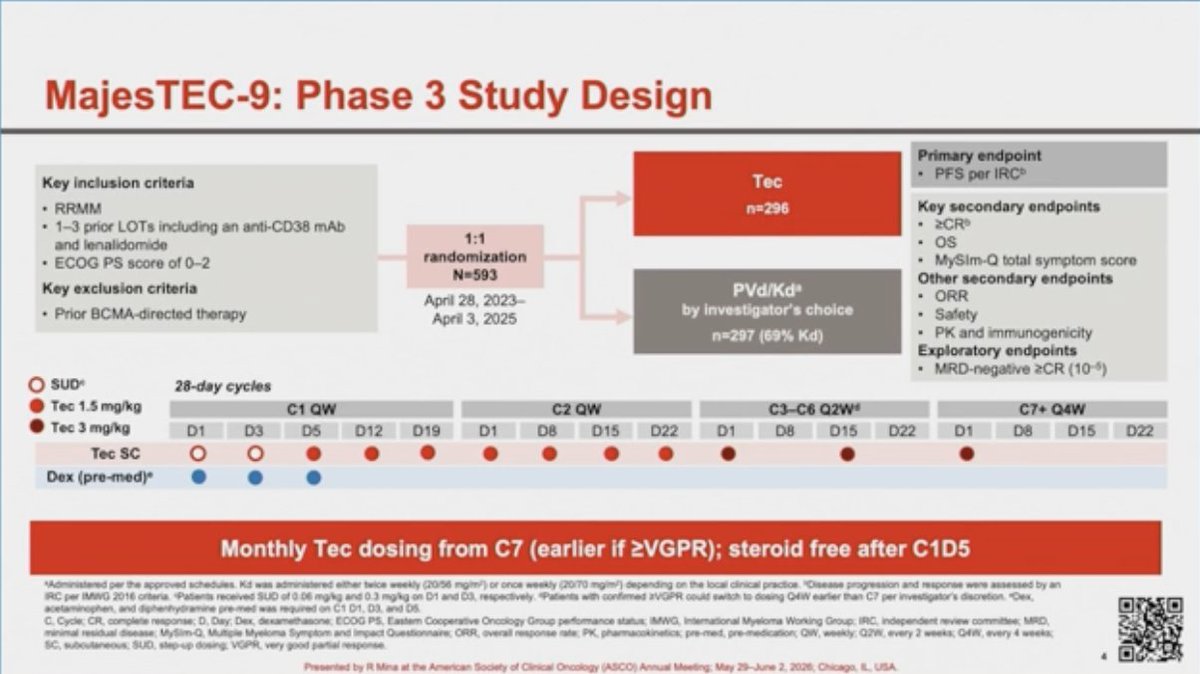
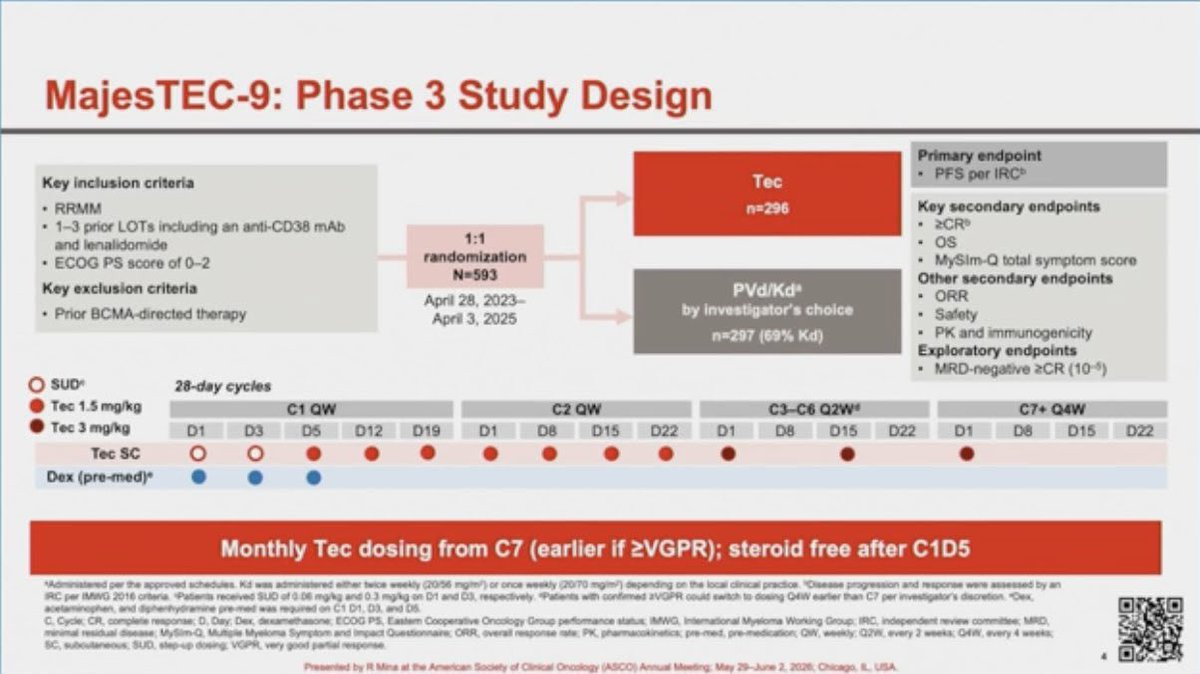
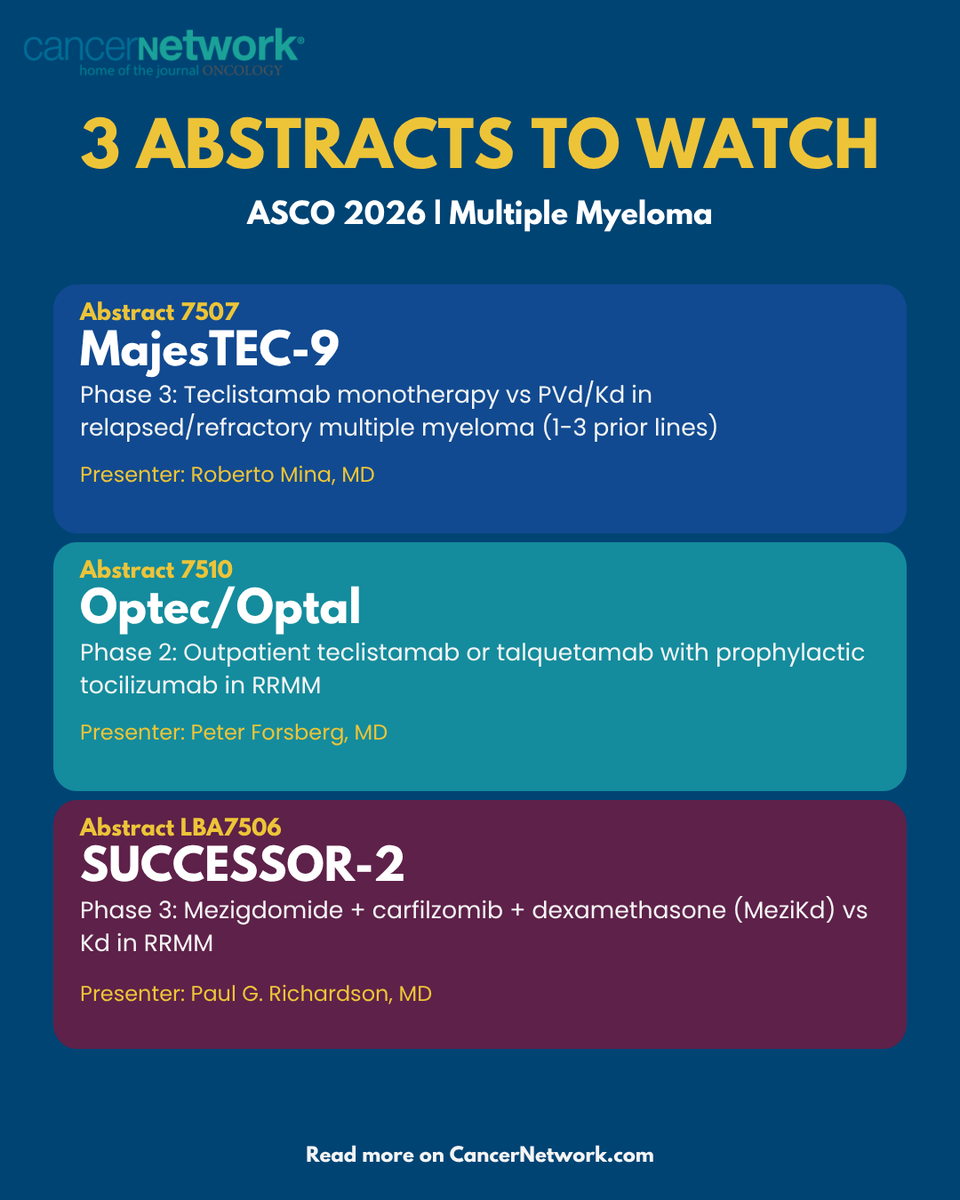
Phase 3 trial of teclistamab (Tecvayli) monotherapy vs investigator's choice of pomalidomide-bortezomib-dexamethasone (PVd) or carfilzomib-dexamethasone (Kd) in relapsed/refractory multiple myeloma with 1–3 prior lines, all lenalidomide-exposed and anti-CD38-exposed. Presented at ASCO 2026 (Abstract 7507), published in NEJM.
The NEW ENGLAND JOURNAL of MEDICINE
ORIGINAL ARTICLE
Teclistamab in Multiple Myeloma with One
to Three Previous Lines of Therapy
C. Touzeau,¹ R. Mina,²,³ H. Quach,⁴ V. Hungria,⁵ D. Bhutani, W. Chen,⁷
S. Kumar,⁸ C. Chaulagain,⁹ M.A. Dimopoulos, 10,11 N.J. Bahlis, 12 S. Maral,¹³
N.W.C.J. van de Donk,¹⁴ J. Schmidt Filho,¹⁵ K. Saja, 16 R. Teipel,¹⁷ M. Ando,¹⁸
W. Roeloffzen,¹ O. Annibali,²⁰ B. Augustson,² C. Botta,²² M. Delforge,²³
E. Bourgeois,² G. Buda,²⁵ M. Hus,26 A. Perrot,2 M. Preis,²⁸,²⁹ M. Beksac,³⁰
L. Pour,³¹ S. Farmer,³² M. Nunes,³³ A. Oriol, 34 T. Melchardt, 35 Y. Hu,³⁶³⁸
M. Flogegård,³⁹ D. Wang,⁴⁰ L. Pei,⁴⁰ S. Wroblewski,⁴ I.M. Ariës,⁴²
N.A. Quijano Cardé,⁴¹ T. Perova, 41 T. de Jager,43 T.-M. Yeh,⁴⁰
V. Vanquickelberghe, P. Shah,⁴⁵ K. Chastain,⁴⁰ R. Kobos,⁴⁰ R. Carson,⁴¹
and O. Landgren,⁴⁶ for the MajesTEC-9 Trial Investigators*
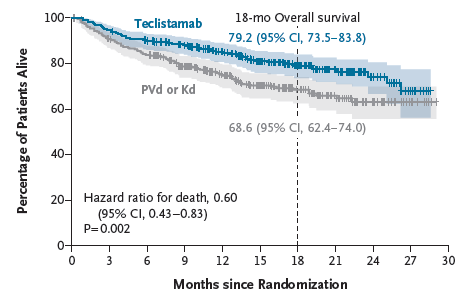
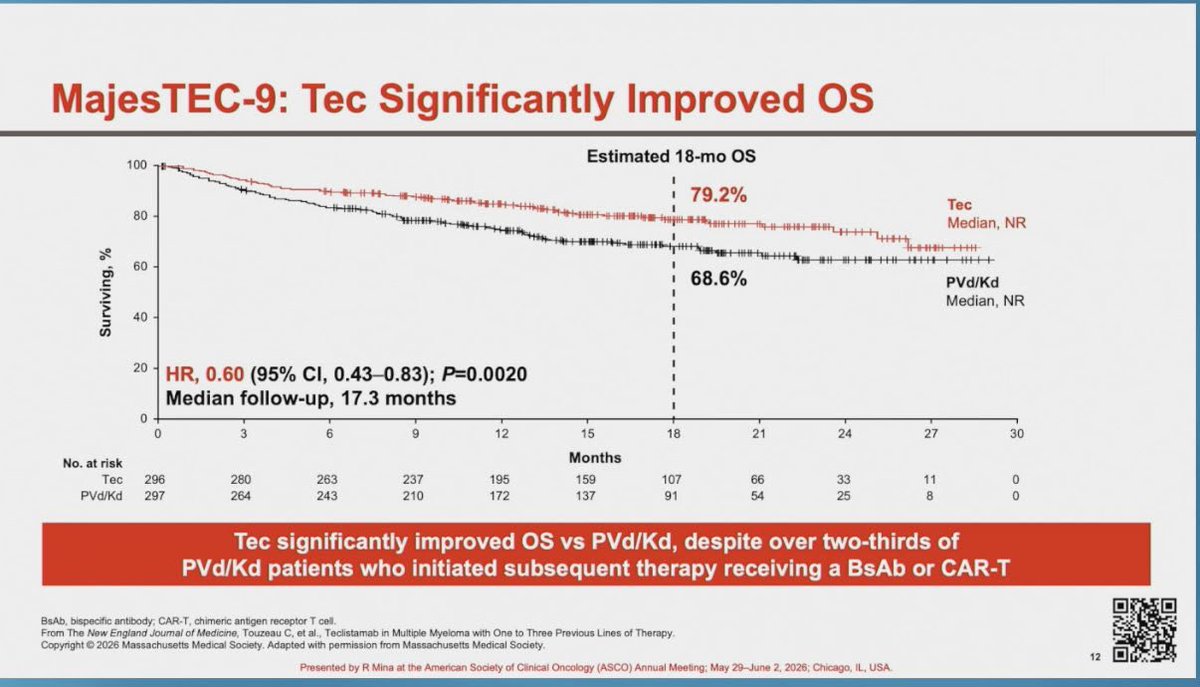
MajesTEC-9: Tec Significantly Improved OS
Estimated 18-mo OS
100
79.2%
Tec
80
Median, NR
Surviving, %
60
68.6%
PVd/Kd
Median, NR
40
20
HR, 0.60 (95% CI, 0.43-0.83); P=0.0020
Median follow-up, 17.3 months
0
0
3
6
9
12
15
18
21
24
27
30
No. at risk
Months
Tec
296
280
263
237
195
159
107
66
33
11
0
PVd/Kd
297
264
243
210
172
137
91
54
25
8
0
Tec significantly improved OS vs PVd/Kd, despite over two-thirds of
PVd/Kd patients who initiated subsequent therapy receiving a BsAb or CAR-T
BsAb, bispecific antibody; CAR-T. chimeric antigen receptor T cell.
From The New England Journal of Medicine, Touzeau C, et al., Teclistamab in Multiple Myeloma with One to Three Previous Lines of Therapy.
Copyright c 2026 Massachusetts Medical Society. Adapted with permission from Massachusetts Medical Society.
12
Presented by R Mina at the American Society of Clinical Oncology (ASCO) Annual Meeting: May 29-June 2. 2026; Chicago, IL, USA.
cancernetwork®
home of the journal ONCOLOGY
3 ABSTRACTS TO WATCH
ASCO 2026 I Multiple Myeloma
Abstract 7507
MajesTEC-9
Phase 3: Teclistamab monotherapy vs PVd/Kd in
relapsed/refractory multiple myeloma (1-3 prior lines)
Presenter: Roberto Mina, MD
Abstract 7510
Optec/Optal
Phase 2: Outpatient teclistamab or talquetamab with prophylactic
tocilizumab in RRMM
Presenter: Peter Forsberg, MD
Abstract LBA7506
SUCCESSOR-2
Phase 3: Mezigdomide + carfilzomib + dexamethasone (Mezikd) vs
Kd in RRMM
Presenter: Paul G. Richardson, MD
Read more on CancerNetwork.com
®
ASCO®
#ASCO26
Abstract #7507
Oral Abstract Session
AMERICAN SOCIETY OF CLINICAL ONCOLOGY
KNOWLEDGE CONQUERS CANCER
MajesTEC-9
Teclistamab
Tec VS PVd/Kd in RRMM
BCMAxCD3
after 1-3 prior lines
bispecific
antibody
FIRST phase 3 study showing superior
PFS & OS with Tec monotherapy in
anti-CD38/LEN-exposed RRMM.
@DrRishabhOnco
KEY EFFICACY RESULTS
PFS (Primary Endpoint)
OS (Secondary Endpoint)
≥CR RATE
HR
HR
0.29
0.60
65.9%
vs
16.8%
Tec
PVd/Kd
(95% CI, 0.23-0.38)
(95% CI, 0.43-0.83)
Benefit consistent
P < 0.0001
P = 0.0020
across key subgroups:
18-MONTH PFS RATE
18-MONTH OS RATE
Anti-CD38 refractory
69.8%
vs
26.9%
86.8%
75.7%
Len refractory
vs
All prior LOT subgroups
Tec
PVd/Kd
Tec
PVd/Kd
SAFETY SNAPSHOT
CRS
ICANS
Grade 3/4 infections
66%
4.1%
higher with Tec
(Grade 1/2: 48.8% / 16.5%)
(Grade 1/2: 2.4% / 1.4%)
TAKEAWAY
Tec monotherapy significantly improves PFS and os vs standard of care
with manageable safety in anti-CD38/LEN-exposed RRMM.
These phase 3 results support Tec-based regimens as early as second line.
ASCO 2026 UPDATE
Majes TEC-9 Trial
Teclistamab VS PVd/Kd in Relapsed/Refractory Multiple Myeloma
MV Onco
01
Earlier Relapse
Remains Challenging
Many RRMM patients now exposed
BCMA
to anti-CD38 + lenalidomide
Early relapse outcomes remain poor
Plasma
T cell
cell
Teclistamab evaluated earlier
than prior studies
First phase 3 trial of teclistamab monotherapy in 1-3 prior lines
02
Simple Phase 3 Design
Teclistamab
VS
PVd/Kd
593 patients
1-3 prior lines
Mostly refractory disease
03
A Difficult-to-Treat Population
80%
85%
92%
Len refractory
Anti-CD38 refractory
Refractory to
last therapy
Reflects modern real-world early relapse RRMM
04
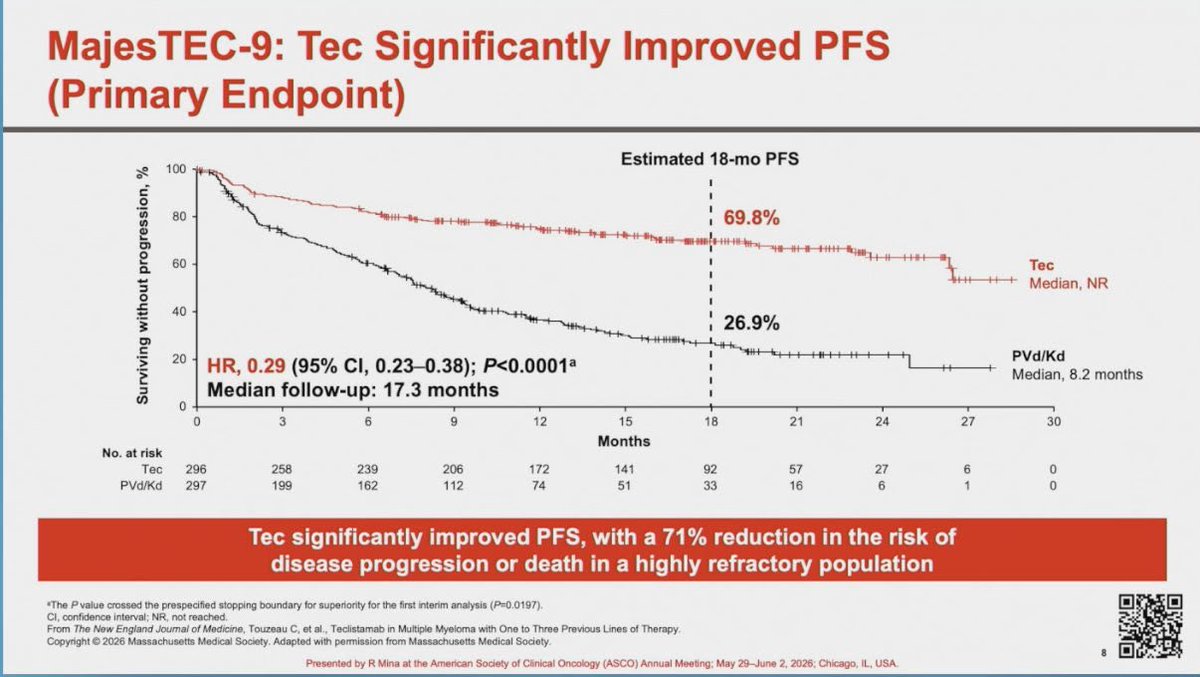
Clear PFS Advantage
Teclistamab markedly prolonged progression-free survival
Median PFS:
18-month PFS:
HR 0.29
Not reached
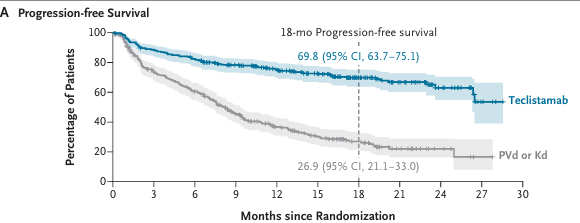
69.8% VS 26.9%
vs 8.2 months
05
Overall Survival Improved
OS benefit persisted despite substantial
subsequent anti-BCMA therapy in the control arm
HR 0.60
Among control-arm patients receiving subsequent therapy,
68.4% later received BsAb or CAR-T therapy
Suggests meaningful early-line benefit with teclistamab
06
Deeper and More
07
Expected Immune Toxicities
Durable Responses
>CR
CRS common
Infections higher
65.9%
vs
16.8%
Mostly Grade 1/2
Monitoring
ICANS uncommon
important
*
Markedly deeper remissions
Safety profile consistent with
with teclistamab
established BCMA bispecific experience
08
What Changes in Practice?
Teclistamab moves closer toward an
earlier-line standard-of-care role in RRMM.
Mina et al
ASCO 2026
ASCO
AMERICAN SOCIETY OF
CLINICAL ONCOLOGY
COI Management
Member Directory
Become Member
Search a
Sign In
Meetings & Education
Research & Data
Practice & Patients
Career Development
News & Initiatives
Get Involved
Abstracts
Guidelines
Journal Articles
Posters
Slides
Videos
Home / Abstracts & Presentations / MajesTEC-9: A phase 3 rando...
MajesTEC-9: A phase 3 randomized study of teclistamab monotherapy vs investigator's choice of
pomalidomide, bortezomib, and dexamethasone or carfilzomib and dexamethasone (PVd/Kd) in patients
(pts) with relapsed refractory multiple myeloma (RRMM).
ONC &
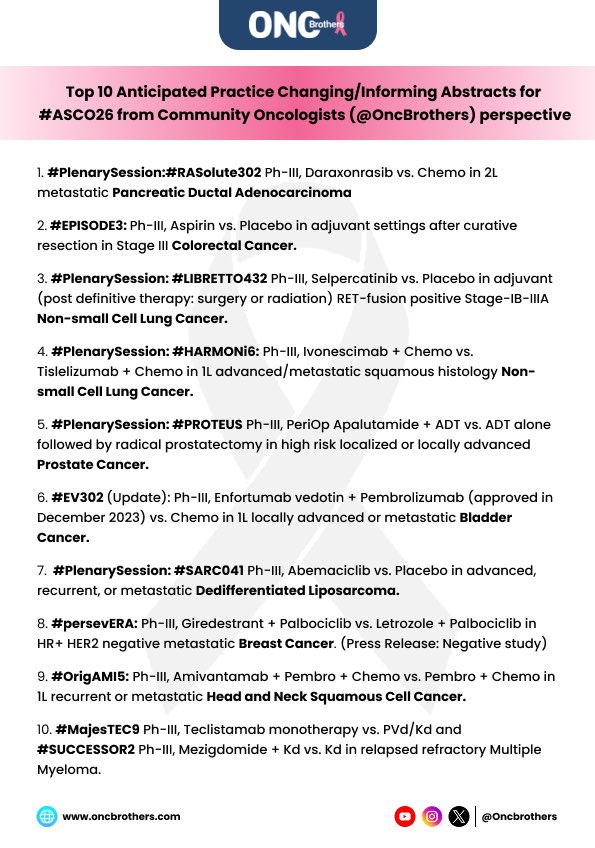
Top 10 Anticipated Practice Changing/Informing Abstracts for
#ASCO26 from Community Oncologists (@OncBrothers) perspective
1. #PlenarySession:#RASolute302 Ph-III, Daraxonrasib VS. Chemo in 2L
metastatic Pancreatic Ductal Adenocarcinoma
2. #EPISODE3: Ph-III, Aspirin vs. Placebo in adjuvant settings after curative
resection in Stage III Colorectal Cancer.
3. #PlenarySession: #LIBRETTO432 Ph-III, Selpercatinib vs. Placebo in adjuvant
(post definitive therapy: surgery or radiation) RET-fusion positive Stage-IB-IIIA
Non-small Cell Lung Cancer.
4. #PlenarySession: #HARMONi6: Ph-III, Ivonescimab + Chemo vs.
Tislelizumab + Chemo in 1L advanced/metastatic squamous histology Non-
small Cell Lung Cancer.
5. #PlenarySession: #PROTEUS Ph-III, PeriOp Apalutamide + ADT VS. ADT alone
followed by radical prostatectomy in high risk localized or locally advanced
Prostate Cancer.
6. #EV302 (Update): Ph-III, Enfortumab vedotin + Pembrolizumab (approved in
December 2023) VS. Chemo in IL locally advanced or metastatic Bladder
Cancer.
7. #PlenarySession: #SARC041 Ph-III, Abemaciclib VS. Placebo in advanced,
recurrent, or metastatic Dedifferentiated Liposarcoma.
8. #persevERA: Ph-III, Giredestrant + Palbociclib VS. Letrozole + Palbociclib in
HR+ HER2 negative metastatic Breast Cancer. (Press Release: Negative study)
9. #OrigAMI5: Ph-III, Amivantamab + Pembro + Chemo VS. Pembro + Chemo in
1L recurrent or metastatic Head and Neck Squamous Cell Cancer.
10. #MajesTEC9 Ph-III, Teclistamab monotherapy VS. PVd/Kd and
#SUCCESSOR2 Ph-III, Mezigdomide + Kd VS. Kd in relapsed refractory Multiple
Myeloma.
www.oncbrothers.com
D
@Oncbrothers
NEW YORK--(BUSINESS WIRE)- Pfizer Inc.
(NYSE: PFE) today announced positive topline
results from the Phase 3 MagnetisMM-5 study
evaluating ELREXFIO® (elranatamab) as
monotherapy in adults with relapsed or refractory
multiple myeloma (RRMM) who received at least
one prior line of treatment. The study
demonstrated a statistically significant and
clinically meaningful improvement in the primary
endpoint of progression-free survival (PFS), as
assessed by blinded independent central review
(BICR), versus standard-of-care daratumumab
plus pomalidomide and dexamethasone (DPd).
The safety and tolerability of ELREXFIO was
consistent with its known safety profile.
MajesTEC-9 Study Design1,2
Key Inclusion Criteria
≥18 years of age with documented MM
Teclistamab
Screening (28 days)
RRMM per IMWG criteria with evidence of
progressive disease or failure to achieve a
R (1:1)a
response to the last LOT
EOT visit
ECOG PS of 0-2
1-3 prior LOT, including ≥2 consecutive
cycles of an anti-CD38 mAb and lenalidomide
PVd or Kdb
Key Exclusion Criteria
Prior BCMA targeted therapy
Primary Endpoints
PFS
CRS by severity
Secondary Endpoints
Efficacy
PRO and HRQoL Analysis
Overall response (≥PR)
Change from baseline in HRQoL outcomes
≥VGPR
Time to worsening in symptoms, functioning, and
≥CR
overall HRQoL
OS
Proportion of patients with meaningful HRQoL
PFS and depth of response in patients with
improvement
high-risk molecular features
TTNT
PK/PD Analysis
Teclistamab serum concentrations
Safety
Presence of ADAs to teclistamab
Incidence and severity of AEs; SAEs
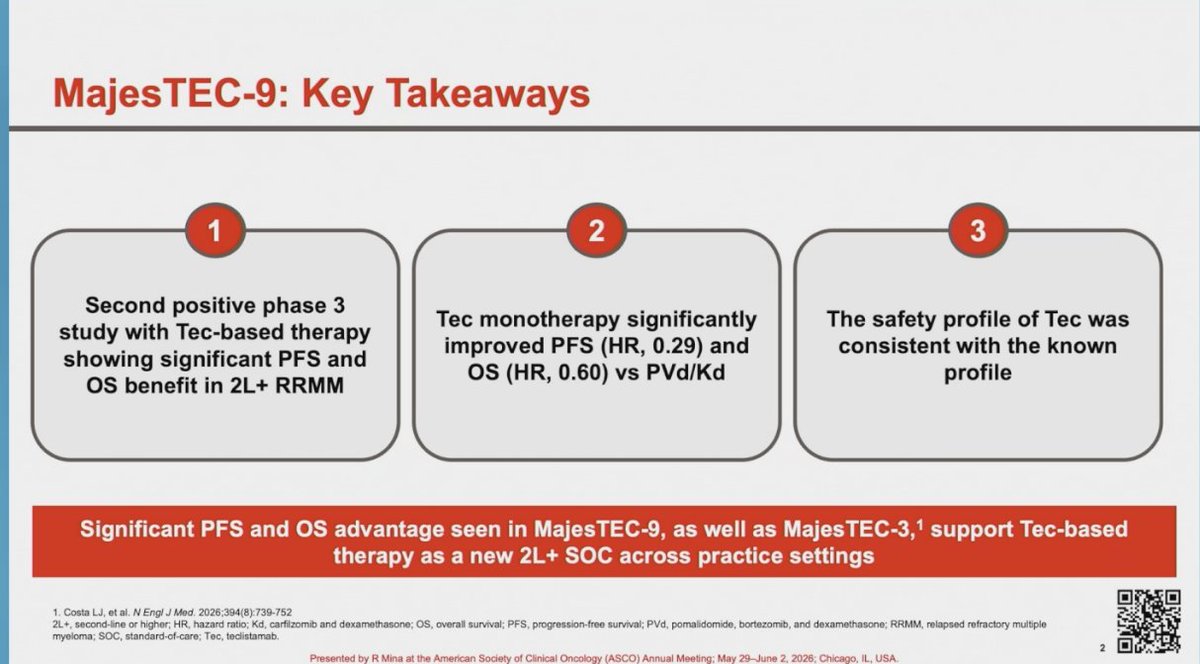
MAJESTEC-9 (NCT05572515) is the Phase 3 trial that took teclistamab (Tecvayli) — the BCMA×CD3 T-cell engager already FDA-approved for heavily pretreated relapsed/refractory multiple myeloma — into earlier lines of therapy (1–3 prior lines, all lenalidomide- and anti-CD38-exposed) versus investigator's choice of PVd or Kd. 593 patients across 24 countries were randomized. At ASCO 2026 (May 29, 2026), presented by Roberto Mina (Winship Cancer Institute of Emory) with simultaneous publication in the New England Journal of Medicine (Touzeau et al., lead author), teclistamab monotherapy delivered a 71% reduction in the risk of disease progression or death (PFS HR 0.29) and a 40% reduction in the risk of death (OS HR 0.60) versus active triplet/doublet standard-of-care — in a population that was 85% anti-CD38–refractory, 79% lenalidomide-refractory, and >90% refractory to their last line of therapy. KOLs across the myeloma field have called the result practice-changing.
Population
Relapsed/refractory multiple myeloma with 1–3 prior lines of therapy; all patients exposed to lenalidomide and an anti-CD38 antibody. N=593 randomized across 24 countries. 85% anti-CD38 refractory, 79% lenalidomide refractory, >90% refractory to their last line.
Intervention
Teclistamab subcutaneous monotherapy (per label step-up dosing) vs investigator's choice of PVd (pomalidomide + bortezomib + dexamethasone) or Kd (carfilzomib + dexamethasone).
Primary Endpoint
Progression-free survival (PFS).
Key Secondary
Efficacy: overall response (≥PR), ≥VGPR, ≥CR, OS, PFS and depth of response in patients with high-risk molecular features, time to next treatment (TTNT). Safety: incidence and severity of AEs/SAEs. PRO/HRQoL: change from baseline in HRQoL, time to worsening in symptoms/functioning/overall HRQoL, proportion of patients with meaningful HRQoL improvement. PK/PD: teclistamab serum concentrations, presence of ADAs to teclistamab.
Efficacy & Safety
Reported Results
Progression-Free Survival (Primary Endpoint)
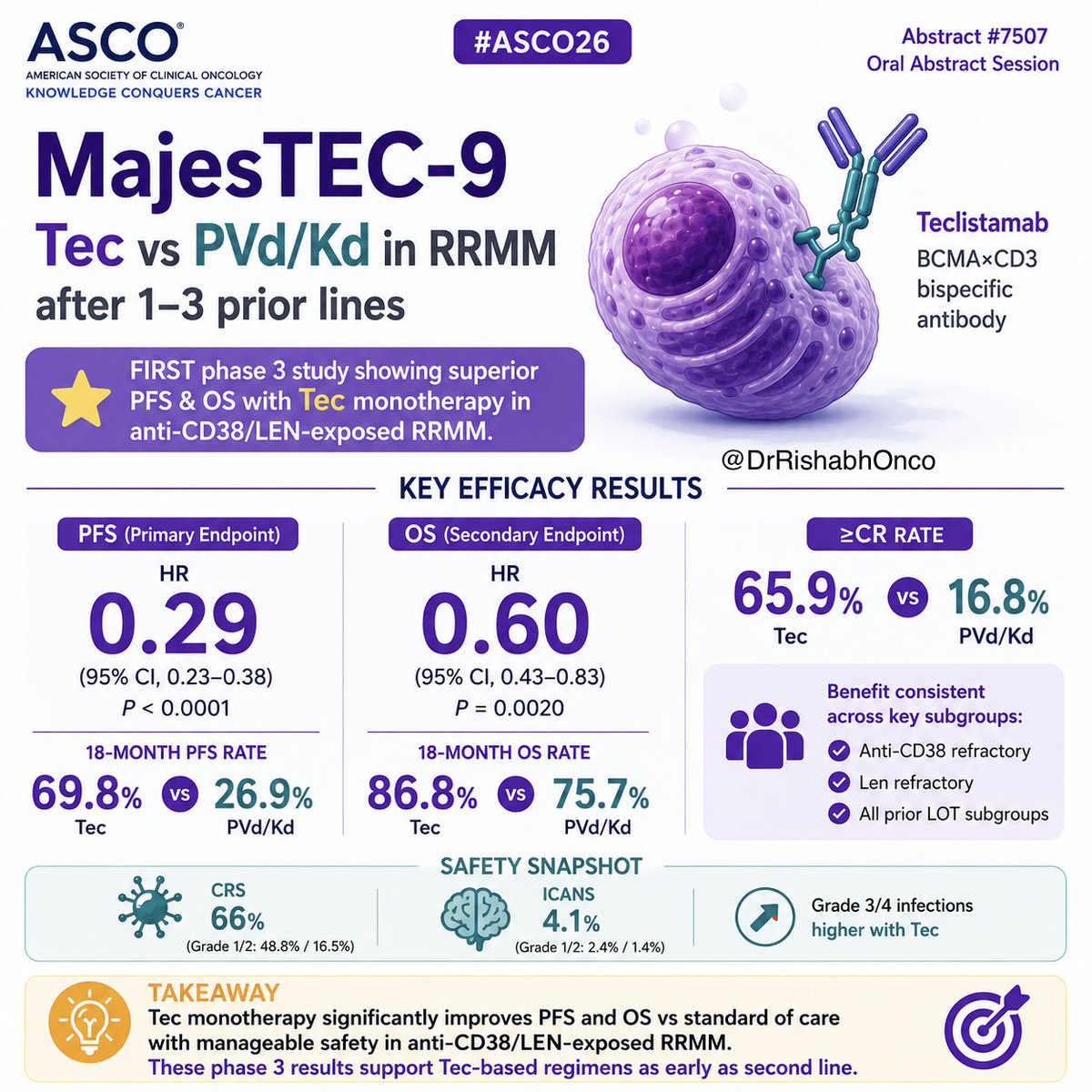
Teclistamab monotherapy delivered a 71% reduction in the risk of progression or death versus investigator's choice PVd/Kd: HR 0.29 (95% CI 0.23–0.38; p<0.0001). The 18-month PFS rate was 69.8% with teclistamab vs ~27% with PVd/Kd — a striking and durable separation despite the comparator being active triplet/doublet regimens in a heavily refractory population.
Teclistamab also delivered a 40% reduction in the risk of death: OS HR 0.60 (95% CI 0.43–0.83) — an early but clinically meaningful survival separation in a population for whom durable disease control has been hard to achieve with standard regimens.
Teclistamab monotherapy produced markedly deeper responses: nearly two-thirds of patients (~66%) achieved a complete response or better (≥CR), with many also achieving minimal residual disease (MRD) negativity. This depth differential vs SOC is what KOLs have repeatedly flagged as the most clinically meaningful contrast between the arms.
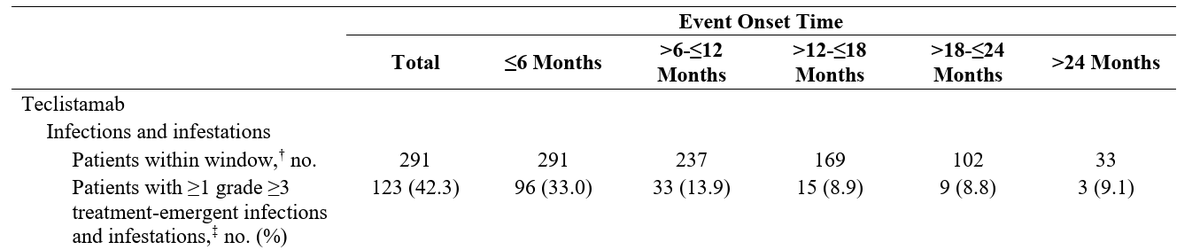
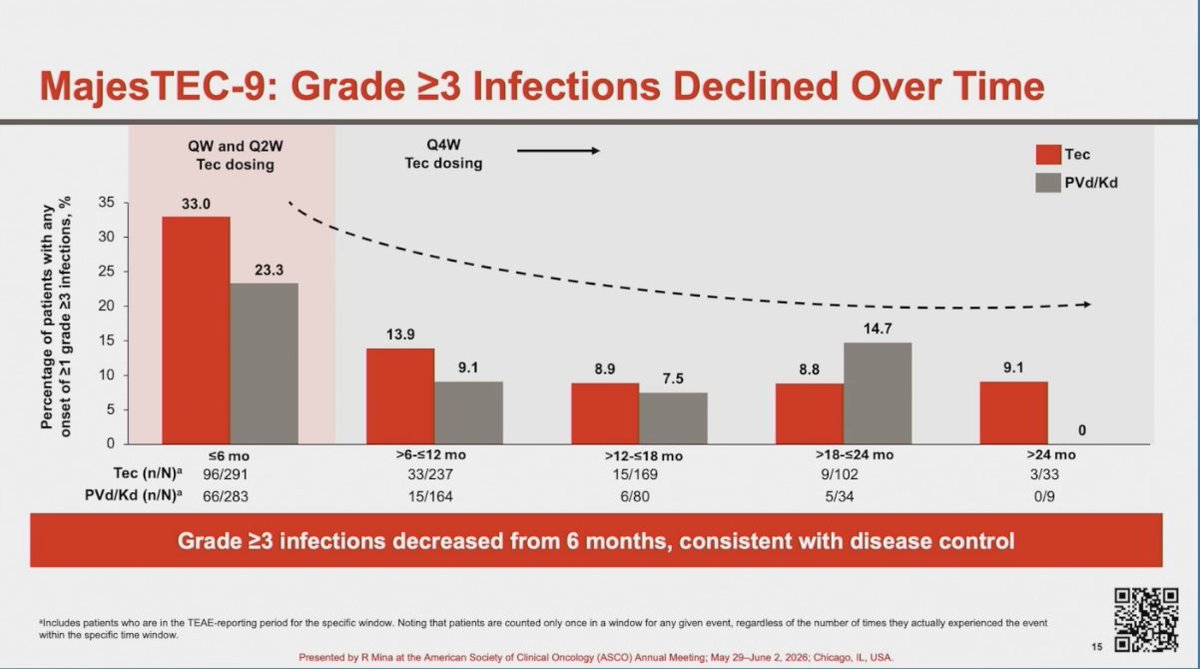
Safety was consistent with the established teclistamab profile (CRS, cytopenias, infections); KOLs have noted the role of universal IVIG prophylaxis in mitigating early infection-related events. The magnitude of PFS and OS benefit was maintained across high-risk subgroups, supporting a broad earlier-line label expansion case.
On March 5, 2026, the FDA approved teclistamab (Tecvayli) + daratumumab hyaluronidase-fihj (Darzalex Faspro) for adults with R/R multiple myeloma after ≥1 prior line (PI + IMiD) — based on the MajesTEC-3 trial (NEJM Dec 2025; PFS HR 0.17, P<0.0001 vs SOC). The same approval converted teclistamab monotherapy's accelerated approval (≥4 prior lines) to traditional approval. MAJESTEC-9 is distinct: it evaluates teclistamab monotherapy (without daratumumab) in the same 1–3 prior-line setting vs PVd or Kd, in patients already exposed to lenalidomide AND anti-CD38. Use of teclistamab monotherapy at 1–3 prior lines is currently investigational; the MAJESTEC-9 readout is the registrational basis for potential approval — positioning monotherapy as an option for patients ineligible for or already exposed to anti-CD38, where the MajesTEC-3 combo is less applicable.