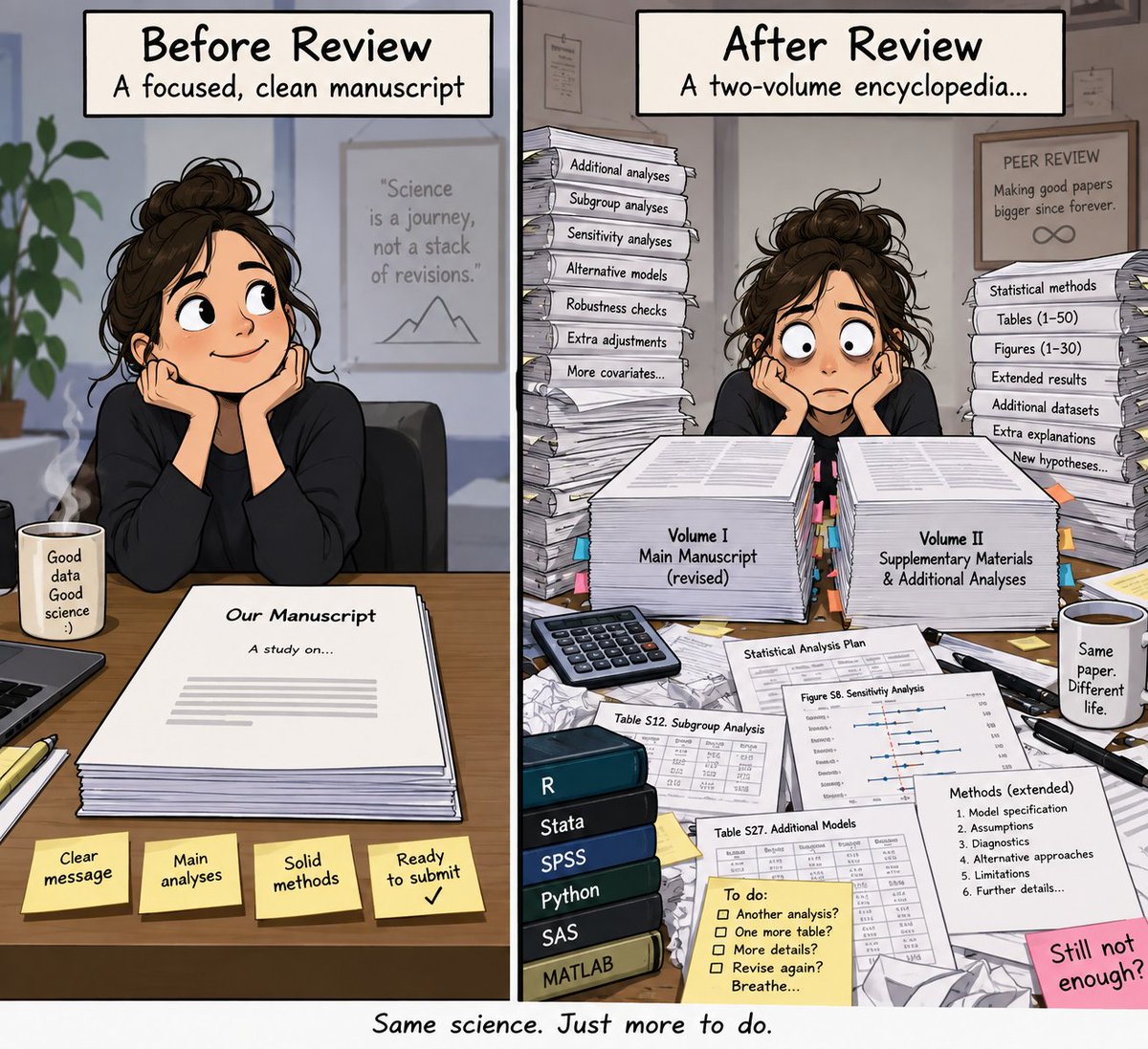
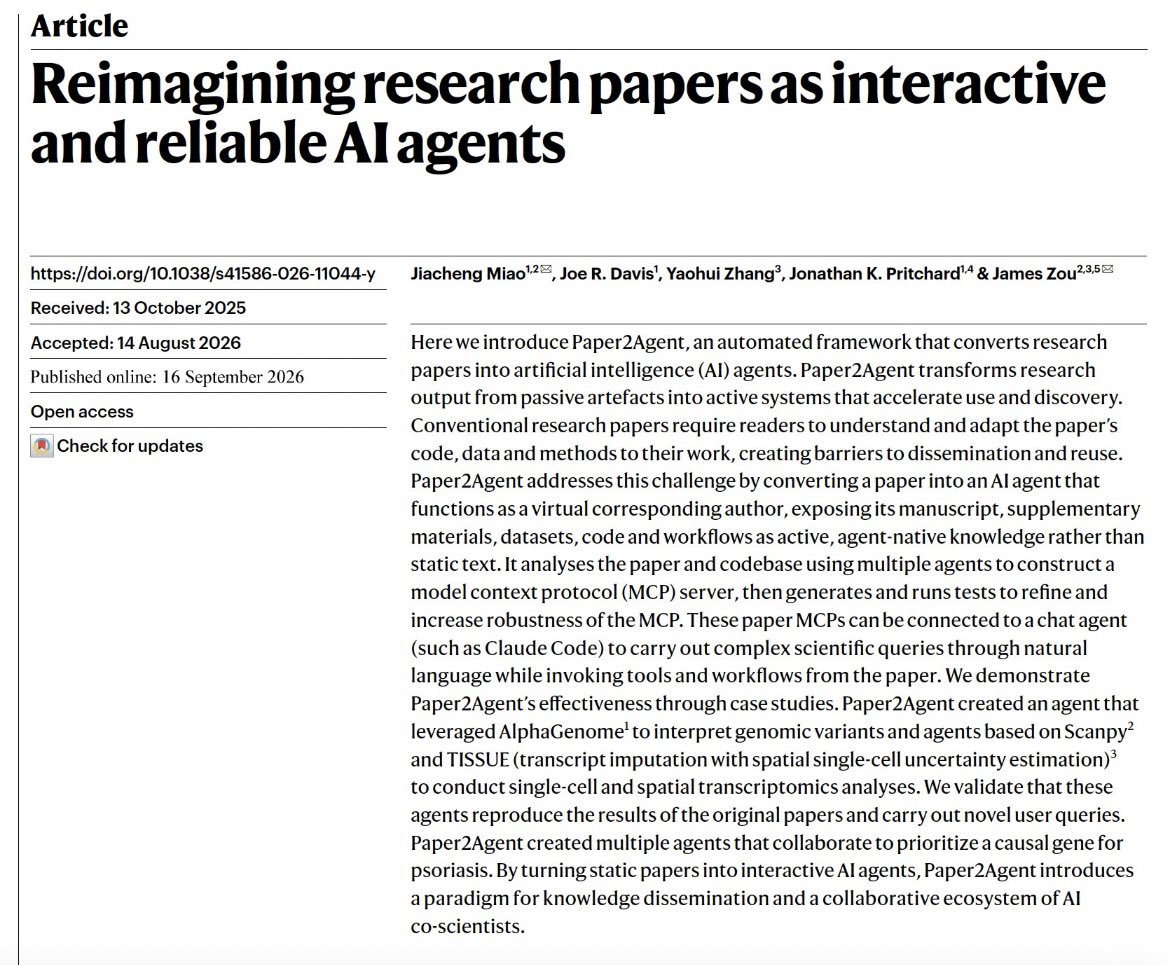
We seriously need to discuss the use of AI in scientific peer review.
Yesterday, we prepared a ~15-page response to a reviewer. We addressed every comment individually and revised the manuscript accordingly.
About 12 hours later, the same reviewer came back with another 2 pages of comments. And these were not simply an assessment of whether we had adequately addressed the original concerns. There were new analyses, new technical details, and new requests that had never been raised in the first round.
Is it humanly possible to carefully read a 15-page response letter, check the revised manuscript and all the changes, critically evaluate them, and then develop an entirely new set of methodological requests within 12 hours?
Perhaps. But it certainly raises questions.
With AI, you can generate an endless list of things authors “could also do”:
“Please perform this subgroup analysis.”
“Add another sensitivity analysis.”
“Repeat the analysis using a different model.”
“Adjust for this additional variable.”
“Validate the findings using another statistical method.”
There is literally no end to this.
And this is not just about whether reviewers use AI. The bigger problem is peer review turning into moving goalposts. Authors address the first-round concerns, only to find that the goalposts have moved and an entirely new set of requests appears in the next round.
Journals need clear rules for AI-assisted peer review. AI use should be disclosed, and unless a genuinely new and critical issue is identified, subsequent review rounds should primarily assess whether the original concerns were adequately addressed.
Otherwise, peer review risks becoming an endless AI prompt loop rather than scientific evaluation.
I fully recognize how difficult it has become for journals to find reviewers, and I am among those who criticize many aspects of the current academic publishing system. But please, if you volunteer to review a paper, don’t make an already exhausting process even more exhausting for authors. Enough is enough.