What Seoul Talked About
Sessions & themes
Click a card to see the physician posts behind each theme. The corpus is small and curated — a focused international meeting, not a firehose — and the value is in the slides below.
Perioperative Immunotherapy

Wonderful joint KSMO/JSMO symposium on perioperative immunotherapy at #KSMO2026.
Dr. @JunTanizaki3 shows trends across cancer types. In lung, adjuvant studies inconsistent while neoadjuvant and perioperative uniformly positive. Have to monitor for irAEs closely.
1.2K impressions · 18 likes · 4 reposts
2026-09-04

📣 #JSMO27 / #KSMO2026 Joint Symposium has just taken place!
“From Evidence to Practice: The Rise of Chemo-IO Combination in the Perioperative Setting”
🎤 Chairs
-Sang-Cheol Lee, Korea
-Junko Tanizaki, Japan
🎤 Speakers
-Keiji Sugiyama, Japan
-Ji Yoon Jung, Korea
-Yoon Ji Choi, Korea
-Junko Tanizaki, Japan
JSMO President Takayuki Yoshino and Chair of the International Affairs Committee Kei Muro also joined the symposium.
A great opportunity to strengthen collaboration and exchange between Japan and Korea! 🤝✨
@KSMO_INTL 고마워 💖~
952 impressions · 5 likes · 2 reposts
2026-09-04
EGFR-Mutant NSCLC
Dr. Ross Soo at #KSMO2026 discusses later line therapy for EGFR NSCLC including many strategies to overcome MET mediated resistance, seen in 10-15% of patients post osimertinib. Novel EGFR inhibitors for on target resistance but lots of focus on ADCs.
1.0K impressions · 17 likes · 9 reposts
2026-09-04
Comprehensive overview of standards and challenges in locally advanced EGFR NSCLC from Dr. @Sehhoon at #KSMO2026. Ongoing questions on optimal duration of therapy, achieving cure or just suppression, and optimizing patient selection. @KSMO_INTL
875 impressions · 9 likes · 2 reposts
2026-09-04
Meeting & Community

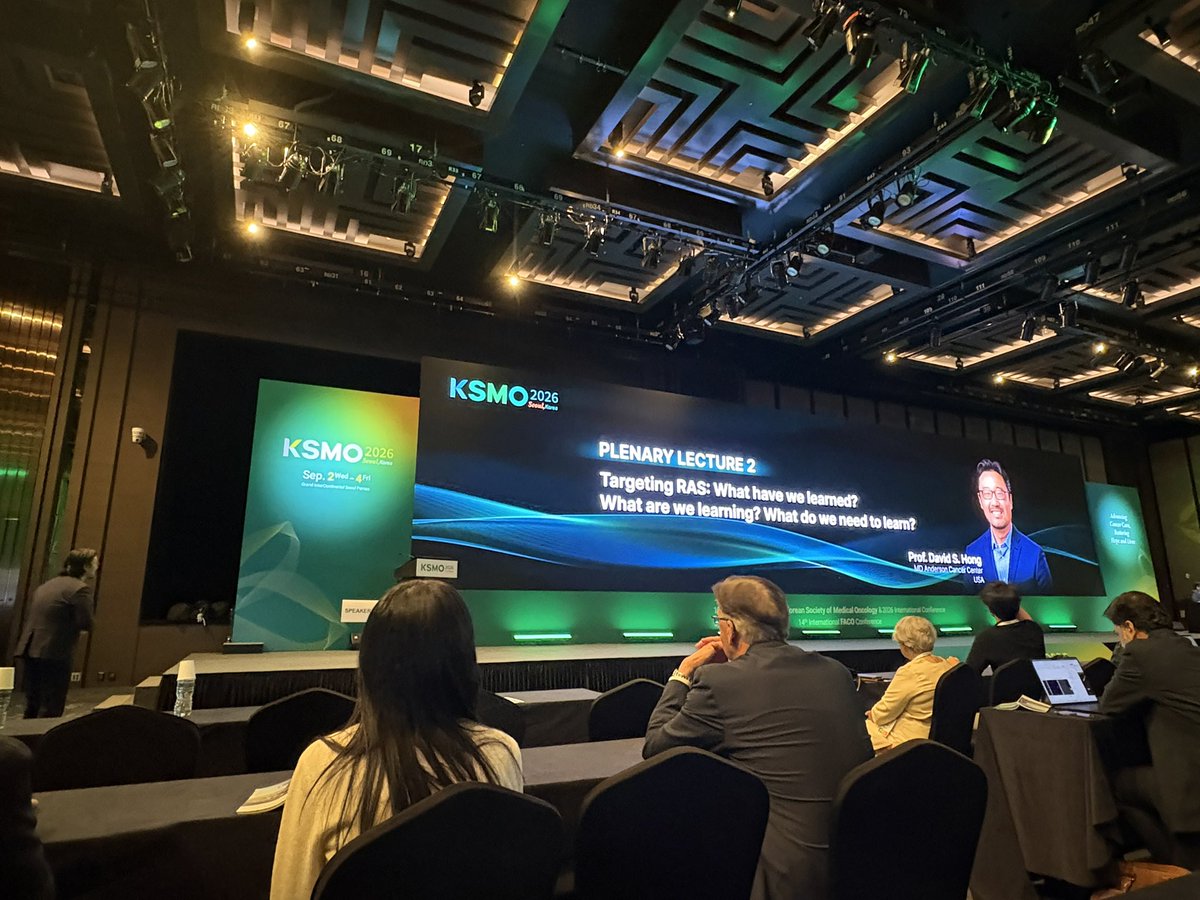
What an amazing time at #KSMO2026. Seoul was amazing! The conference was cutting edge! They even had some opera! @UTMDAnderson @ASCO @myESMO
958 impressions · 28 likes · 5 reposts
2026-09-04
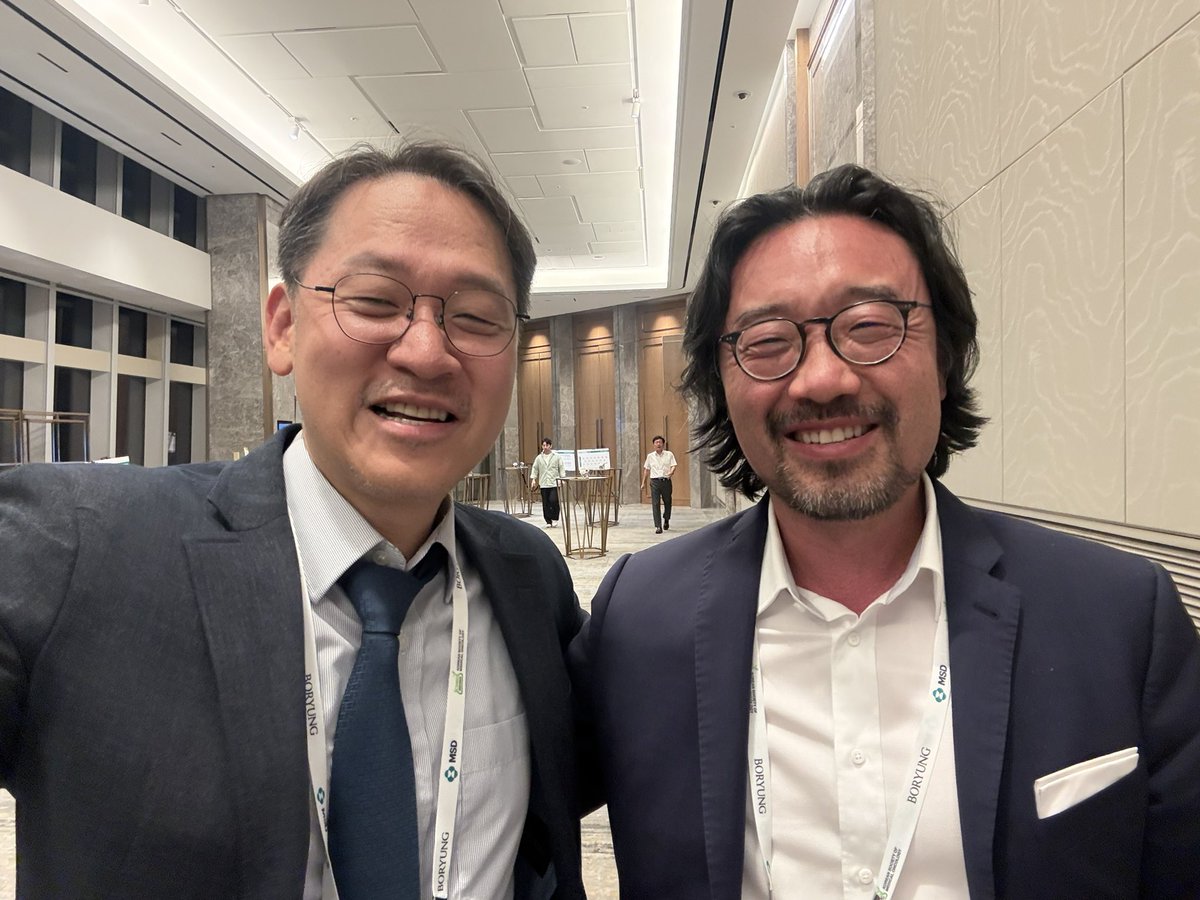
Enjoyed learning from some great speakers and seeing good friends in Seoul at #KSMO2026 @JunTanizaki3 @mihaela_aldea @youngkwangchae @SunMinLim_
905 impressions · 22 likes · 3 reposts
2026-09-04
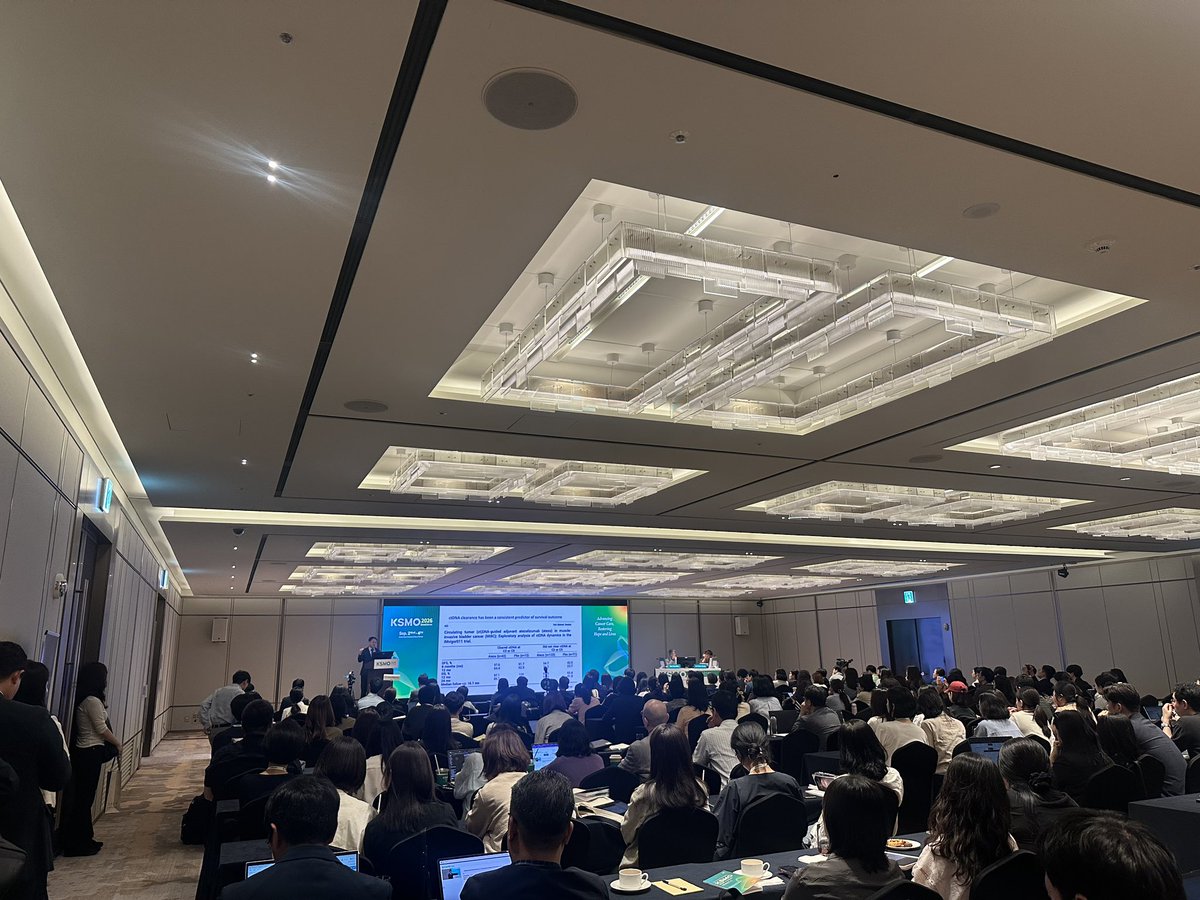
Opening ceremony at the #KSMO 2026 in Seoul
328 impressions · 10 likes · 1 reposts
2026-09-03

Great times in #KSMO2026.
77 impressions · 4 likes
2026-09-04

🚀 KSMO 2026 5th Shorts RELEASED!
Join us for networking, a full buffet, and a Special K-FOOD ZONE at the Welcome Reception! 🥂✨
📢 All registered participants are welcome!
👇 Watch on Shorts:
#KSMO2026 #Oncology #CancerResearch #Shorts
2.3K impressions · 3 likes · 1 reposts
2026-08-02
📣 #JSMO27 / #KSMO2026 Joint Symposium has just taken place!
“From Evidence to Practice: The Rise of Chemo-IO Combination in the Perioperative Setting”
🎤 Chairs
-Sang-Cheol Lee, Korea
-Junko Tanizaki, Japan
🎤 Speakers
-Keiji Sugiyama, Japan
-Ji Yoon Jung, Korea
-Yoon Ji Choi, Korea
-Junko Tanizaki, Japan
JSMO President Takayuki Yoshino and Chair of the International Affairs Committee Kei Muro also joined the symposium.
A great opportunity to strengthen collaboration and exchange between Japan and Korea! 🤝✨
@KSMO_INTL 고마워 💖~
952 impressions · 5 likes · 2 reposts
2026-09-04
The Star Content
Key slides from the floor
Six slide sessions photographed and shared by the physicians in the room, led by Stephen V. Liu and Young Kwang Chae. Every data slide below carries a “View slide text” transcription so the tables and endpoints are readable — and machine-searchable. Slide content belongs to the presenters credited on each slide.
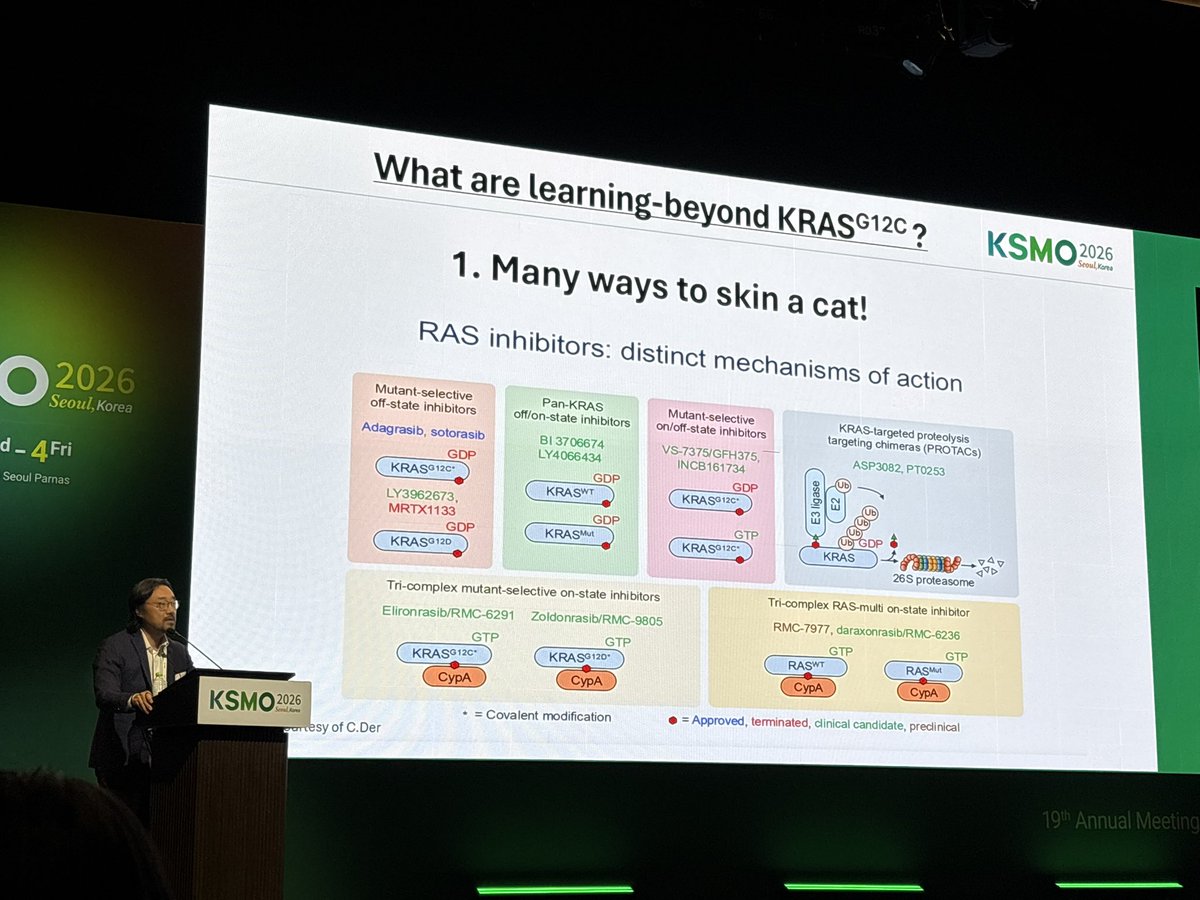
[RAS inhibitors — mechanisms of action]
What are learning - beyond KRAS G12C?
1. Many ways to skin a cat! RAS inhibitors: distinct mechanisms of action
Mutant-selective off-state inhibitors: Adagrasib, sotorasib (KRAS G12C) · LY3962673, MRTX1133 (KRAS G12D)
Pan-KRAS off/on-state inhibitors: BI 3706674, LY4066434
Mutant-selective on/off-state inhibitors: VS-7375/GFH375, INCB161734
KRAS-targeted proteolysis targeting chimeras (PROTACs): ASP3082, PT0253
Tri-complex mutant-selective on-state inhibitors: Elironrasib/RMC-6291 (KRAS G12C), Zoldonrasib/RMC-9805 (KRAS G12D)
Tri-complex RAS-multi on-state inhibitor: RMC-7977, daraxonrasib/RMC-6236 (RAS WT + RAS Mut)
Courtesy of C. Der · * = covalent modification · approved / terminated / clinical candidate / preclinical
---
[What we know and need to know]
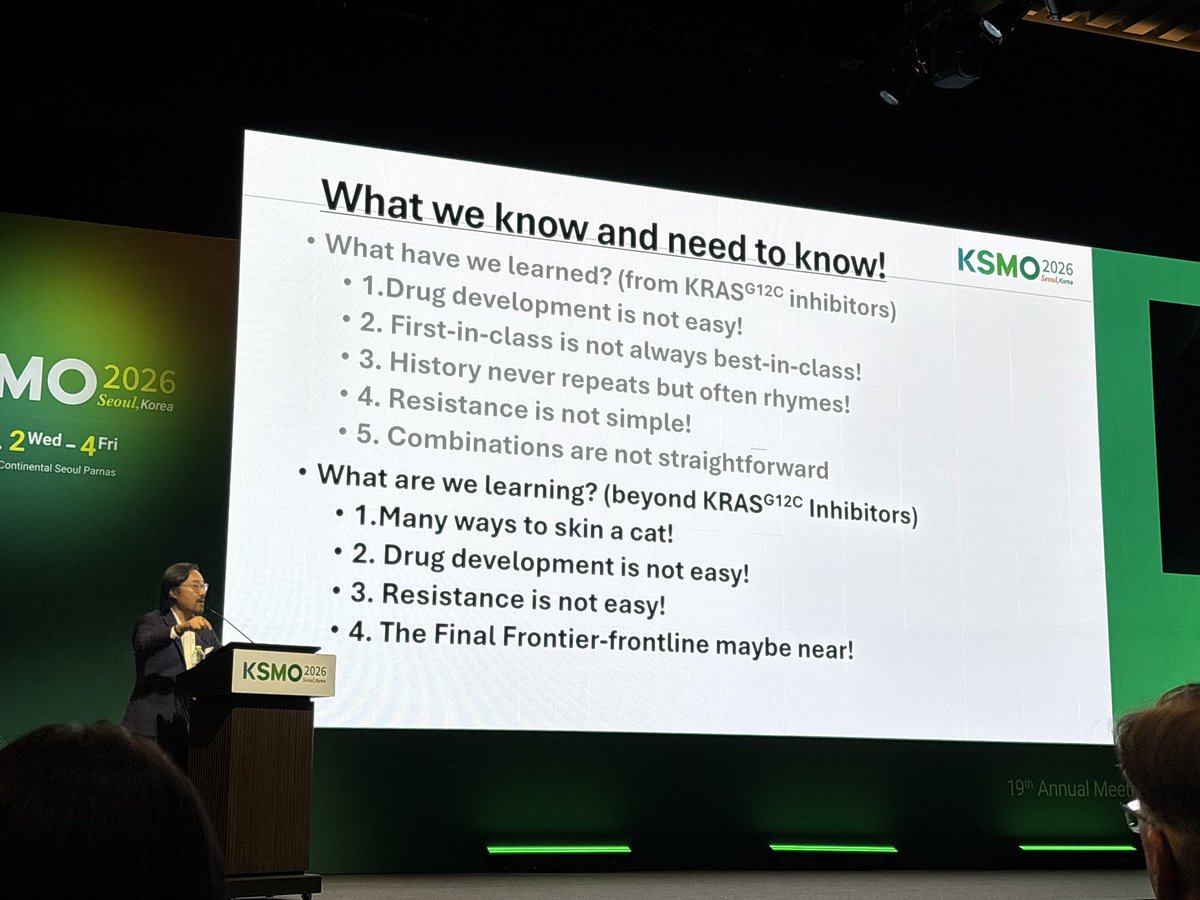
What we know and need to know!
What have we learned? (from KRAS G12C inhibitors)
1. Drug development is not easy!
2. First-in-class is not always best-in-class!
3. History never repeats but often rhymes!
4. Resistance is not simple!
5. Combinations are not straightforward
What are we learning? (beyond KRAS G12C inhibitors)
1. Many ways to skin a cat!
2. Drug development is not easy!
3. Resistance is not easy!
4. The Final Frontier - frontline maybe near!
[The same shift across solid tumors]
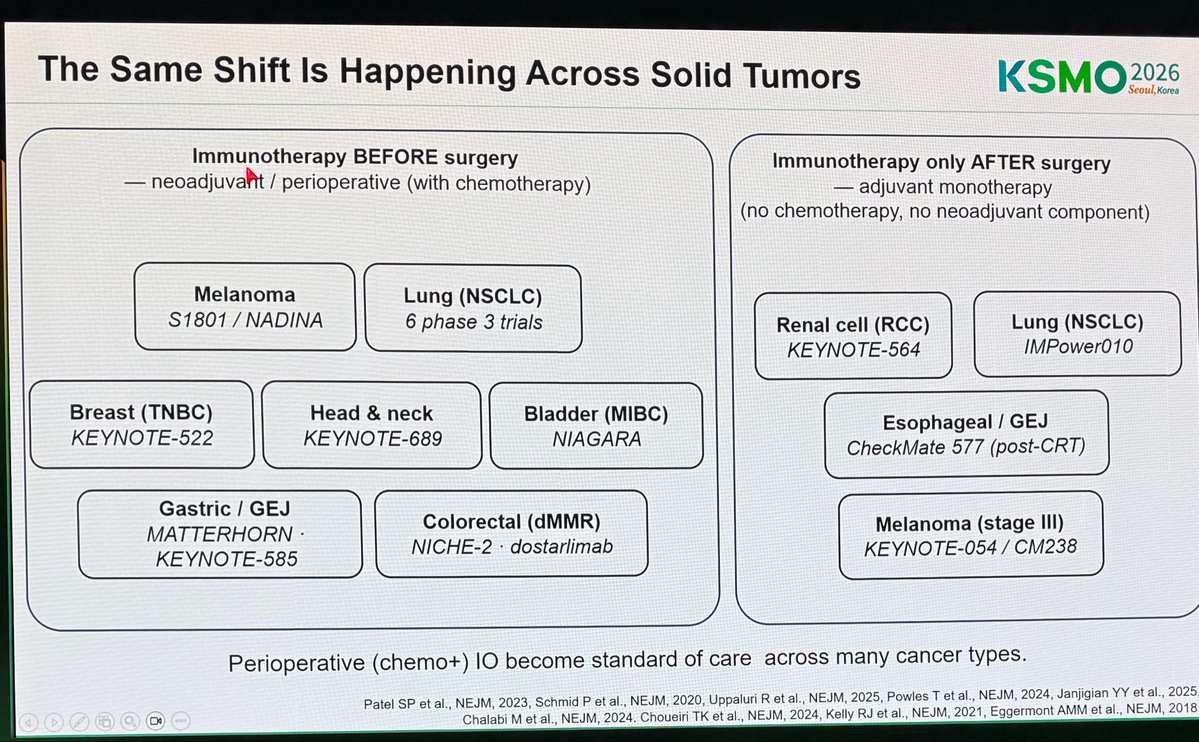
The Same Shift Is Happening Across Solid Tumors
Immunotherapy BEFORE surgery — neoadjuvant / perioperative (with chemotherapy):
Melanoma S1801 / NADINA · Lung (NSCLC) 6 phase 3 trials · Breast (TNBC) KEYNOTE-522 · Head & neck KEYNOTE-689 · Bladder (MIBC) NIAGARA · Gastric/GEJ MATTERHORN · KEYNOTE-585 · Colorectal (dMMR) NICHE-2 · dostarlimab
Immunotherapy only AFTER surgery — adjuvant monotherapy (no chemotherapy, no neoadjuvant component):
Renal cell (RCC) KEYNOTE-564 · Lung (NSCLC) IMpower010 · Esophageal/GEJ CheckMate 577 (post-CRT) · Melanoma (stage III) KEYNOTE-054 / CM238
Perioperative (chemo+) IO become standard of care across many cancer types.
Patel SP et al., NEJM 2023; Schmid P et al., NEJM 2020; Uppaluri R et al., NEJM 2025; Powles T et al., NEJM 2024; Janjigian YY et al., NEJM 2025; Chalabi M et al., NEJM 2024; Choueiri TK et al., NEJM 2024; Kelly RJ et al., NEJM 2021; Eggermont AMM et al., NEJM 2018
---
[Adjuvant IO alone: inconsistent]
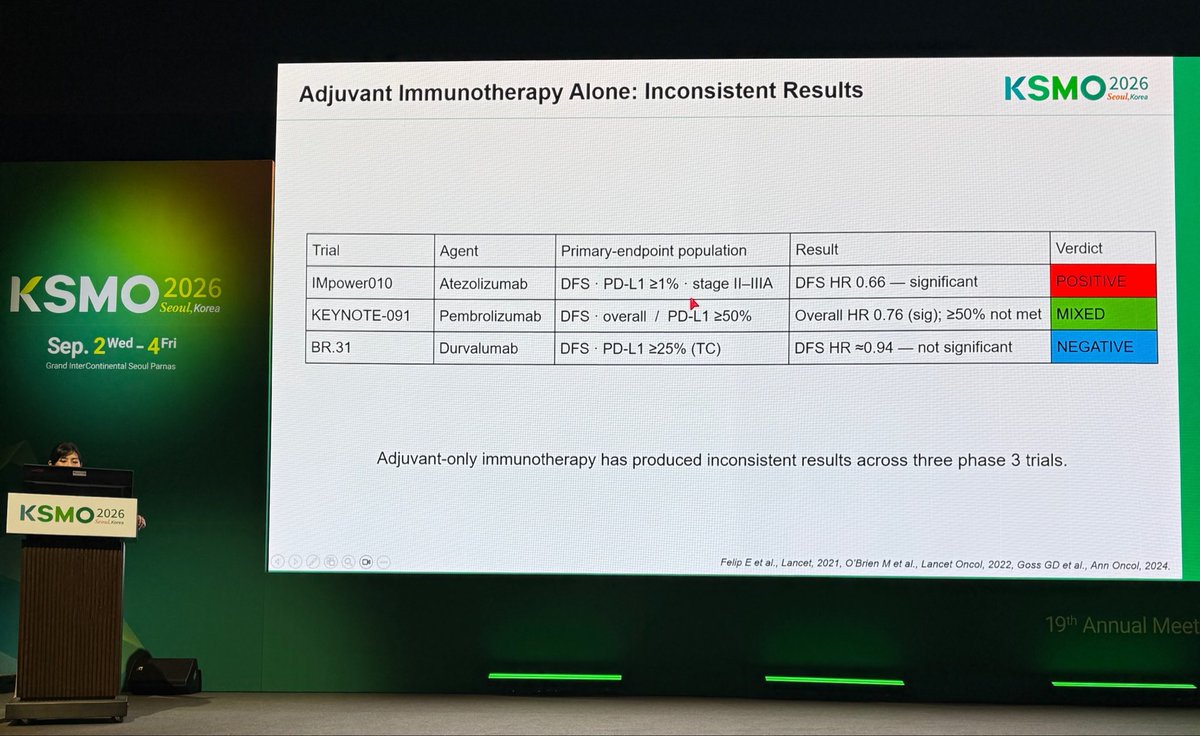
Adjuvant Immunotherapy Alone: Inconsistent Results
IMpower010 · Atezolizumab · DFS, PD-L1 ≥1%, stage II–IIIA · DFS HR 0.66 — significant · POSITIVE
KEYNOTE-091 · Pembrolizumab · DFS, overall / PD-L1 ≥50% · Overall HR 0.76 (sig); ≥50% not met · MIXED
BR.31 · Durvalumab · DFS, PD-L1 ≥25% (TC) · DFS HR ≈0.94 — not significant · NEGATIVE
Adjuvant-only immunotherapy has produced inconsistent results across three phase 3 trials.
Felip E et al., Lancet 2021; O'Brien M et al., Lancet Oncol 2022; Goss GD et al., Ann Oncol 2024
---
[Neoadjuvant & periop: uniformly positive]
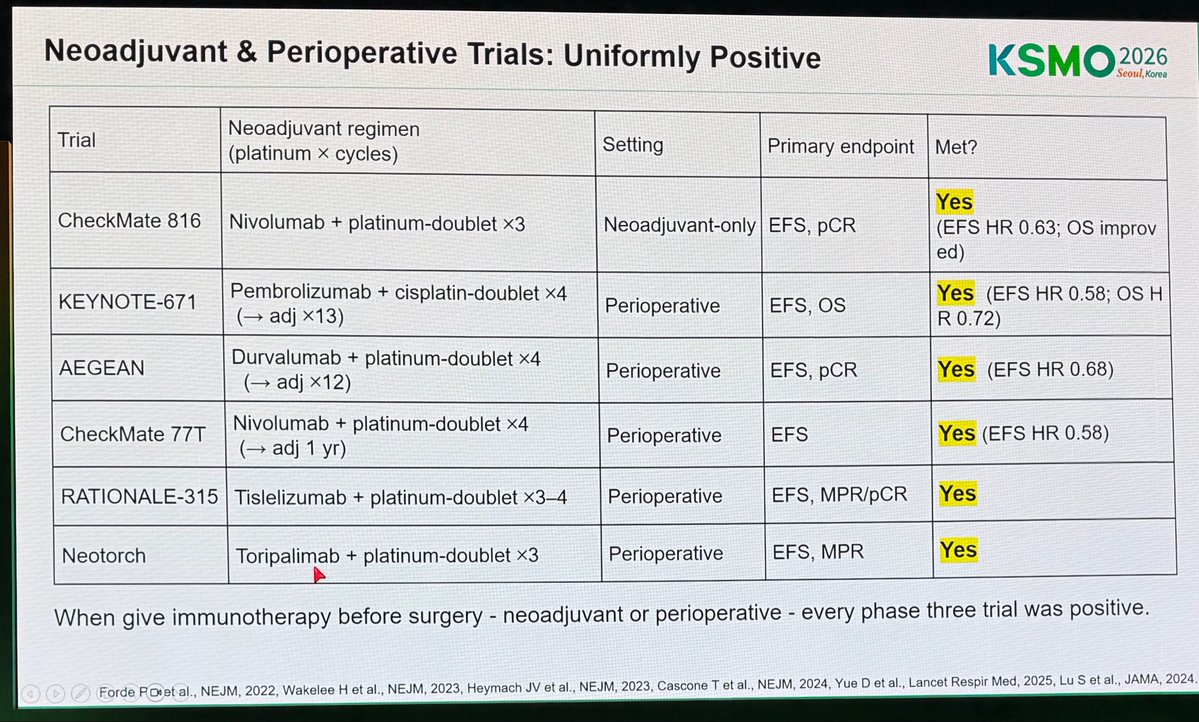
Neoadjuvant & Perioperative Trials: Uniformly Positive
CheckMate 816 · Nivolumab + platinum-doublet ×3 · Neoadjuvant-only · EFS, pCR · Yes (EFS HR 0.63; OS improved)
KEYNOTE-671 · Pembrolizumab + cisplatin-doublet ×4 (→ adj ×13) · Perioperative · EFS, OS · Yes (EFS HR 0.58; OS HR 0.72)
AEGEAN · Durvalumab + platinum-doublet ×4 (→ adj ×12) · Perioperative · EFS, pCR · Yes (EFS HR 0.68)
CheckMate 77T · Nivolumab + platinum-doublet ×4 (→ adj 1 yr) · Perioperative · EFS · Yes (EFS HR 0.58)
RATIONALE-315 · Tislelizumab + platinum-doublet ×3–4 · Perioperative · EFS, MPR/pCR · Yes
Neotorch · Toripalimab + platinum-doublet ×3 · Perioperative · EFS, MPR · Yes
When give immunotherapy before surgery - neoadjuvant or perioperative - every phase three trial was positive.
Forde P et al., NEJM 2022; Wakelee H et al., NEJM 2023; Heymach JV et al., NEJM 2023; Cascone T et al., NEJM 2024; Yue D et al., Lancet Respir Med 2025; Lu S et al., JAMA 2024
---
[Pre-op irAEs — Japanese RWD]
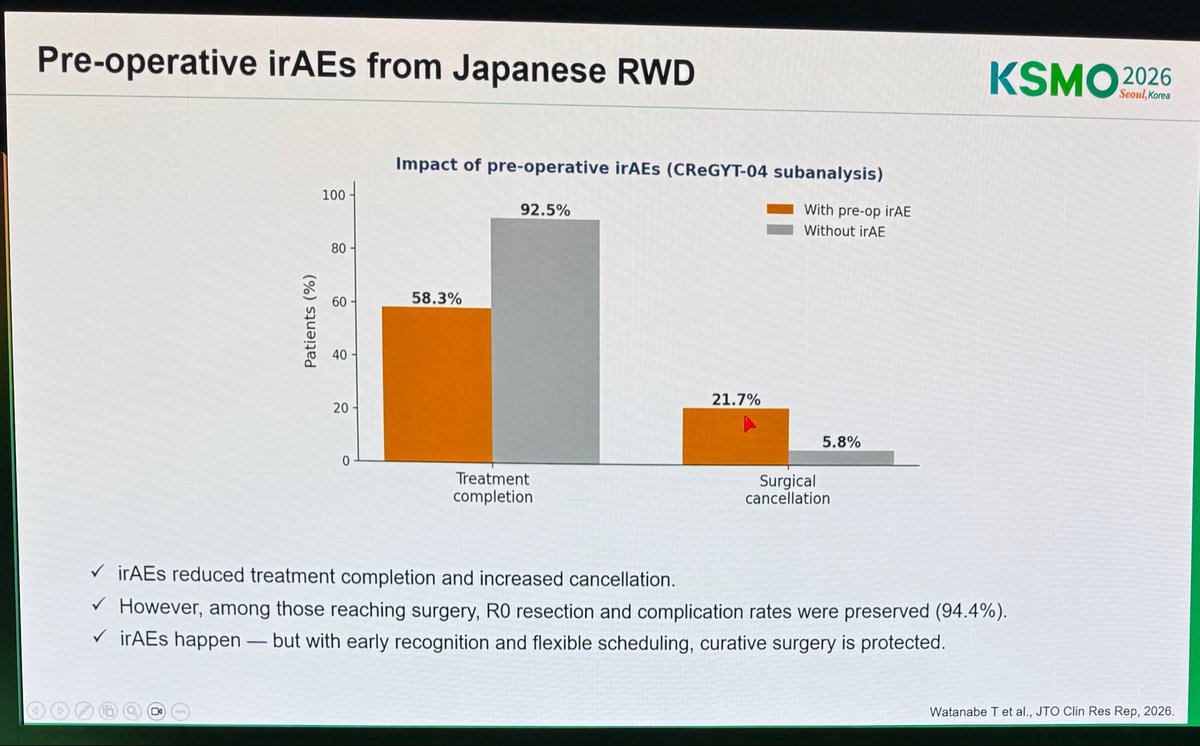
Pre-operative irAEs from Japanese RWD
Impact of pre-operative irAEs (CReGYT-04 subanalysis)
Treatment completion: 58.3% with pre-op irAE vs 92.5% without
Surgical cancellation: 21.7% with pre-op irAE vs 5.8% without
✓ irAEs reduced treatment completion and increased cancellation.
✓ However, among those reaching surgery, R0 resection and complication rates were preserved (94.4%).
✓ irAEs happen — but with early recognition and flexible scheduling, curative surgery is protected.
Watanabe T et al., JTO Clin Res Rep, 2026
[Beyond genotyping — clonal phylogenetics]
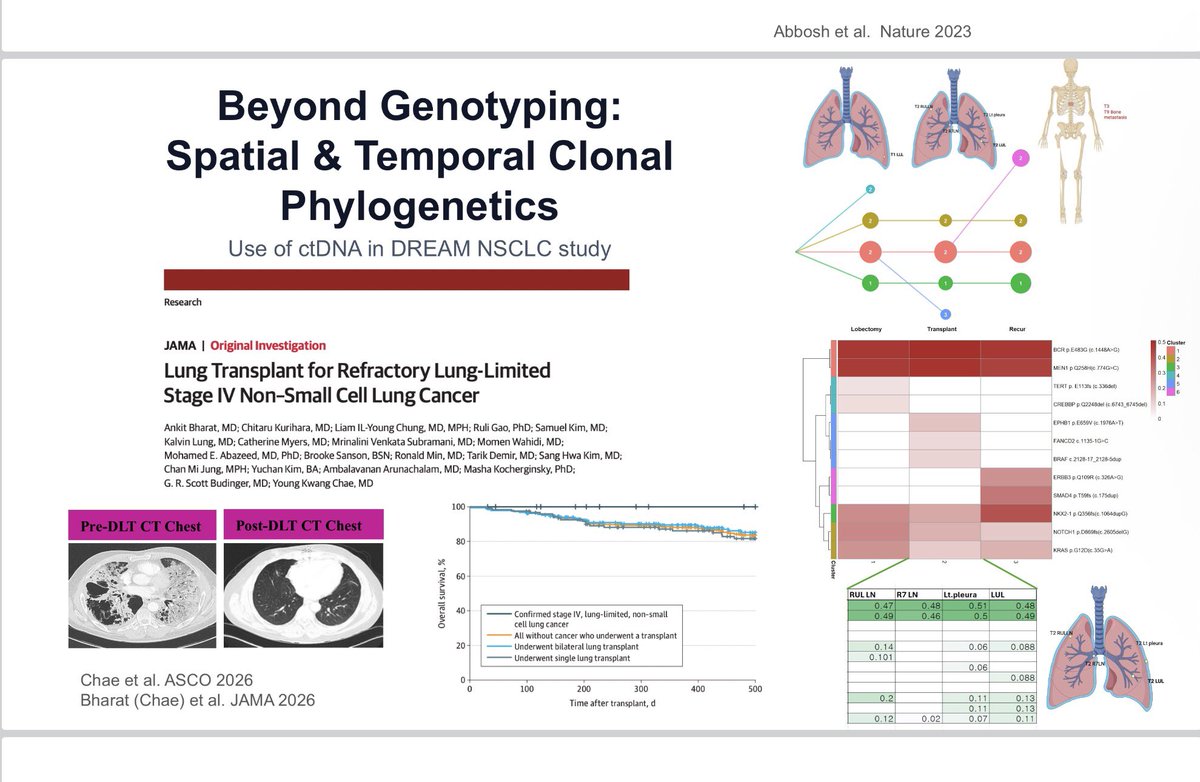
Beyond Genotyping: Spatial & Temporal Clonal Phylogenetics
Use of ctDNA in DREAM NSCLC study
JAMA Original Investigation: Lung Transplant for Refractory Lung-Limited Stage IV Non-Small Cell Lung Cancer
Ankit Bharat, MD; ... G. R. Scott Budinger, MD; Young Kwang Chae, MD (Bharat/Chae et al. JAMA 2026)
Pre-DLT vs Post-DLT CT chest; overall survival after transplant.
Chae et al. ASCO 2026; Bharat (Chae) et al. JAMA 2026; Abbosh et al. Nature 2023
---
[ctDNA take-home messages]
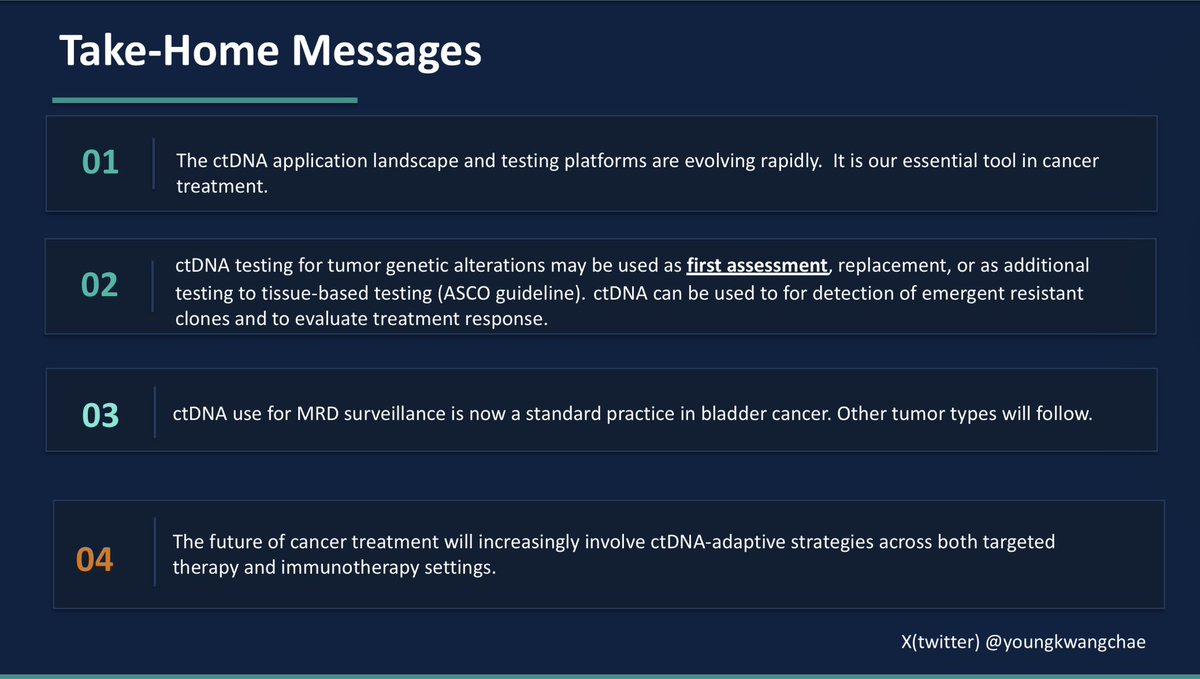
Take-Home Messages
01 The ctDNA application landscape and testing platforms are evolving rapidly. It is our essential tool in cancer treatment.
02 ctDNA testing for tumor genetic alterations may be used as first assessment, replacement, or as additional testing to tissue-based testing (ASCO guideline). ctDNA can be used for detection of emergent resistant clones and to evaluate treatment response.
03 ctDNA use for MRD surveillance is now a standard practice in bladder cancer. Other tumor types will follow.
04 The future of cancer treatment will increasingly involve ctDNA-adaptive strategies across both targeted therapy and immunotherapy settings.
X (twitter) @youngkwangchae
---
[SWOG MRD Restart design]
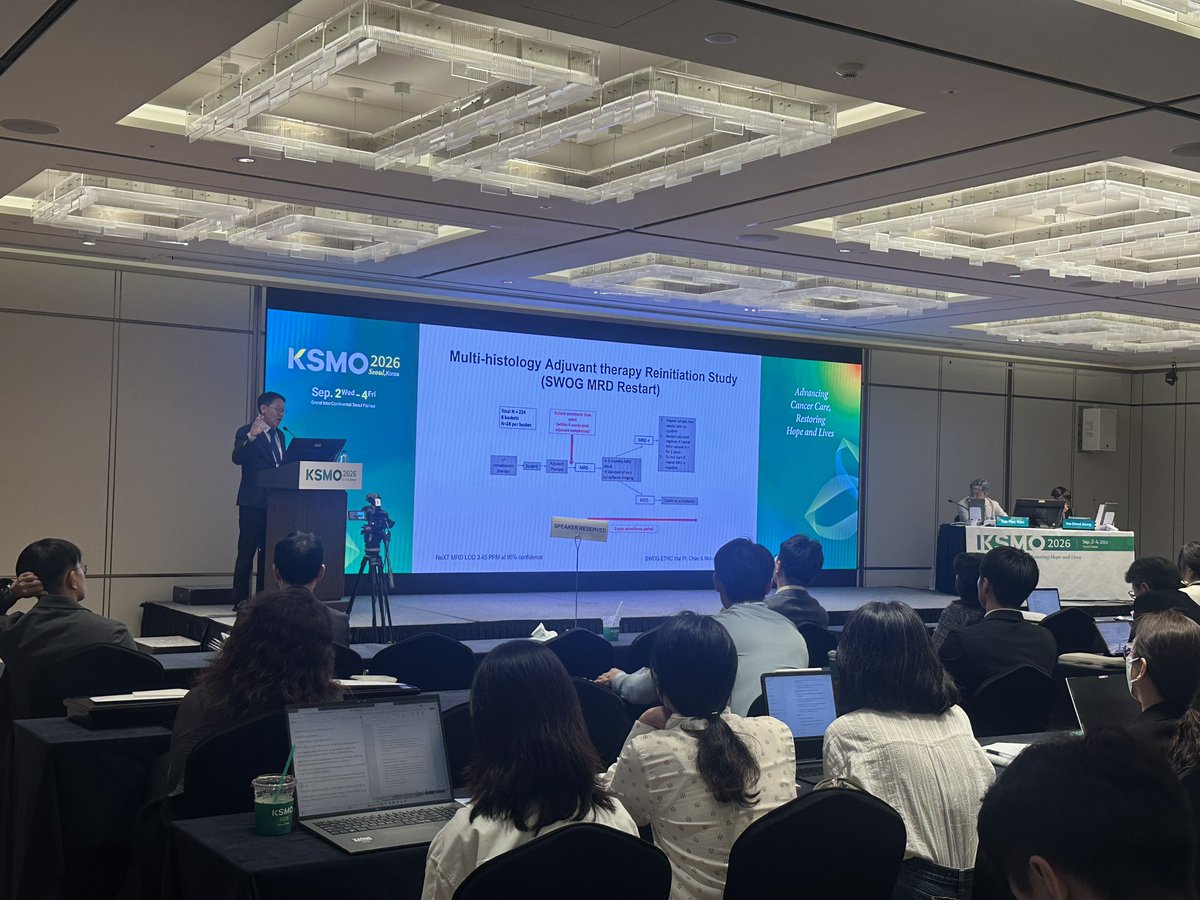
Multi-histology Adjuvant therapy Reinitiation Study (SWOG MRD Restart)
[Design schema, headline values as legible on the slide:]
Total N = 224 · 8 baskets · n=28 per basket
NeXT MRD LOD 3.45 PPM at 95% confidence
SWOG ETRC trial; Chae & Moon PIs (as shown on slide footer)
[Next neoantigen classes]
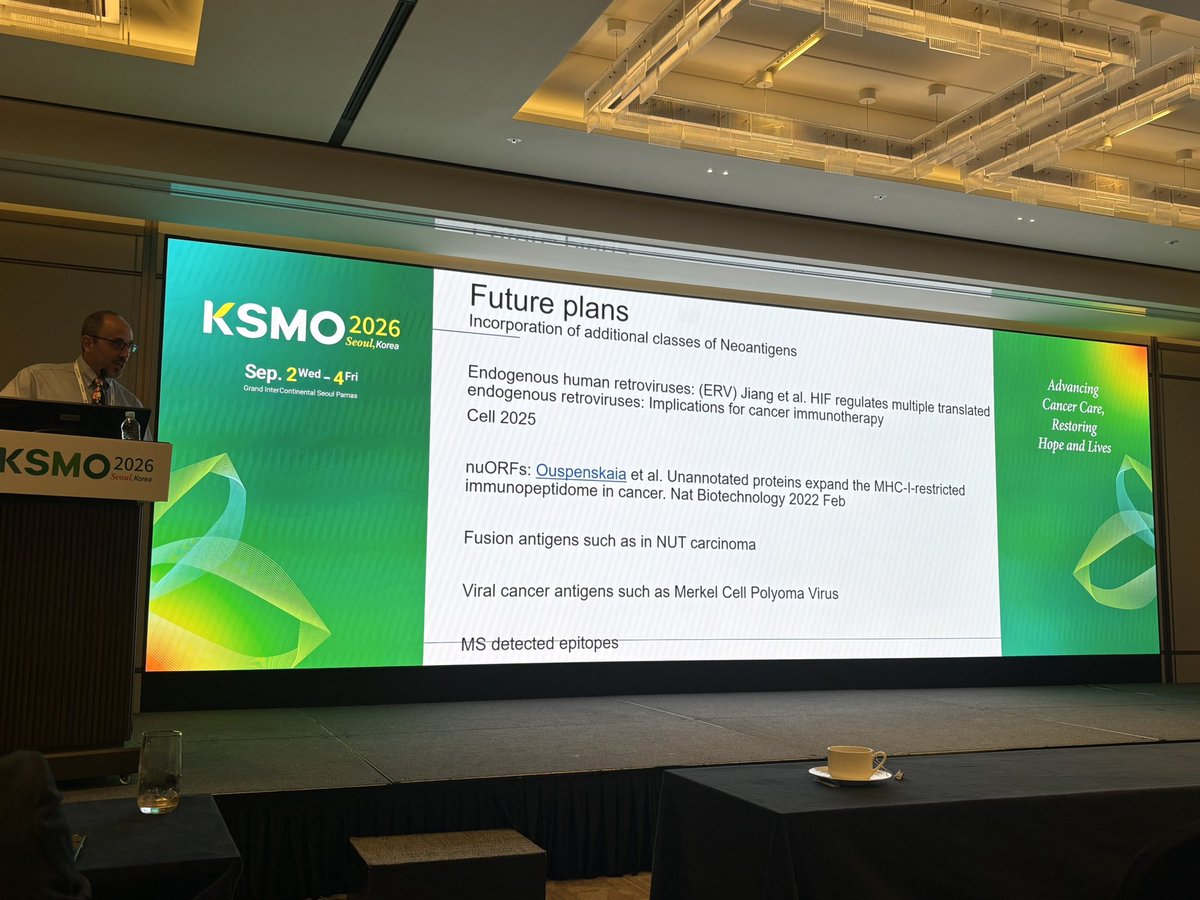
Future plans — Incorporation of additional classes of Neoantigens
• Endogenous human retroviruses (ERV): Jiang et al. HIF regulates multiple translated endogenous retroviruses: Implications for cancer immunotherapy. Cell 2025
• nuORFs: Ouspenskaia et al. Unannotated proteins expand the MHC-I-restricted immunopeptidome in cancer. Nat Biotechnology 2022 Feb
• Fusion antigens such as in NUT carcinoma
• Viral cancer antigens such as Merkel Cell Polyoma Virus
• MS detected epitopes
---
[Vaccine conclusions]
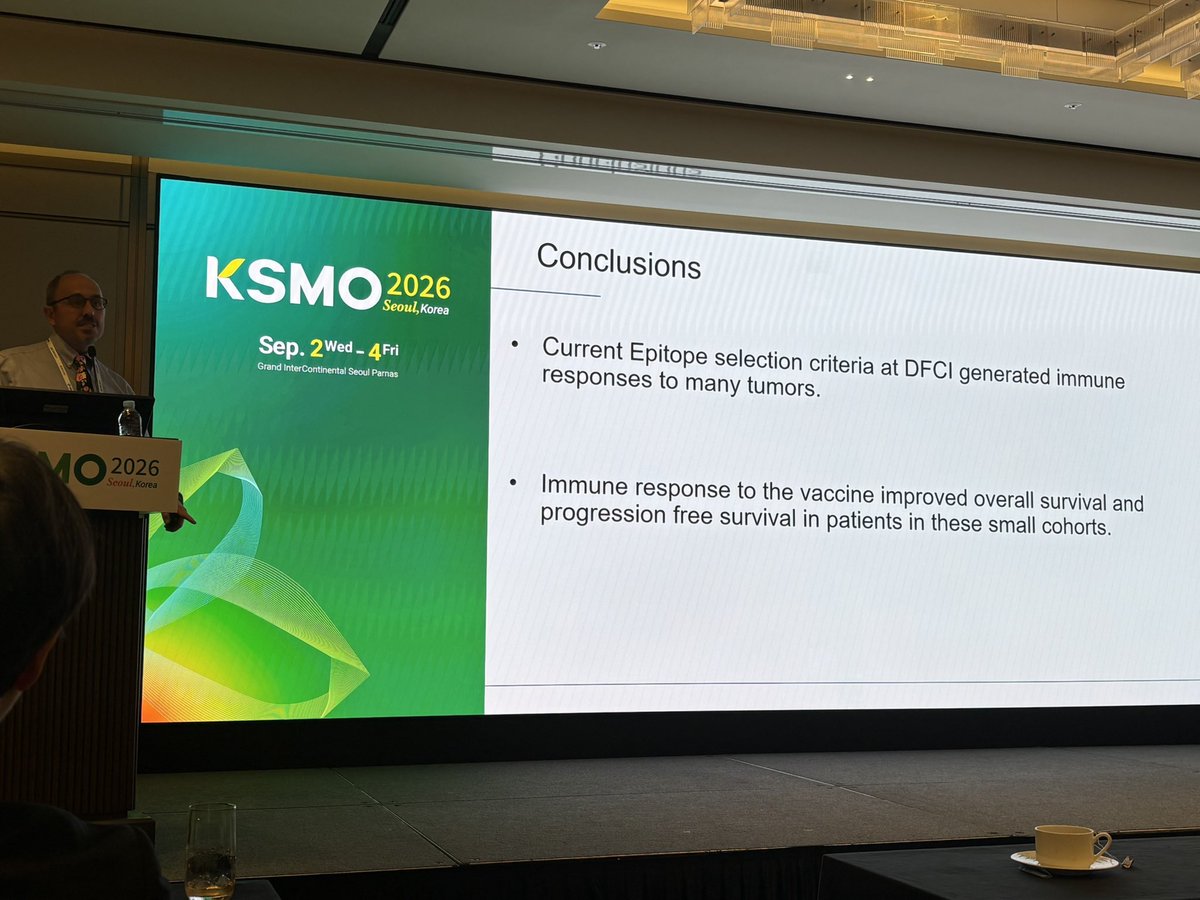
Conclusions
• Current Epitope selection criteria at DFCI generated immune responses to many tumors.
• Immune response to the vaccine improved overall survival and progression free survival in patients in these small cohorts.
[Why LA EGFR-mutant disease is distinct]
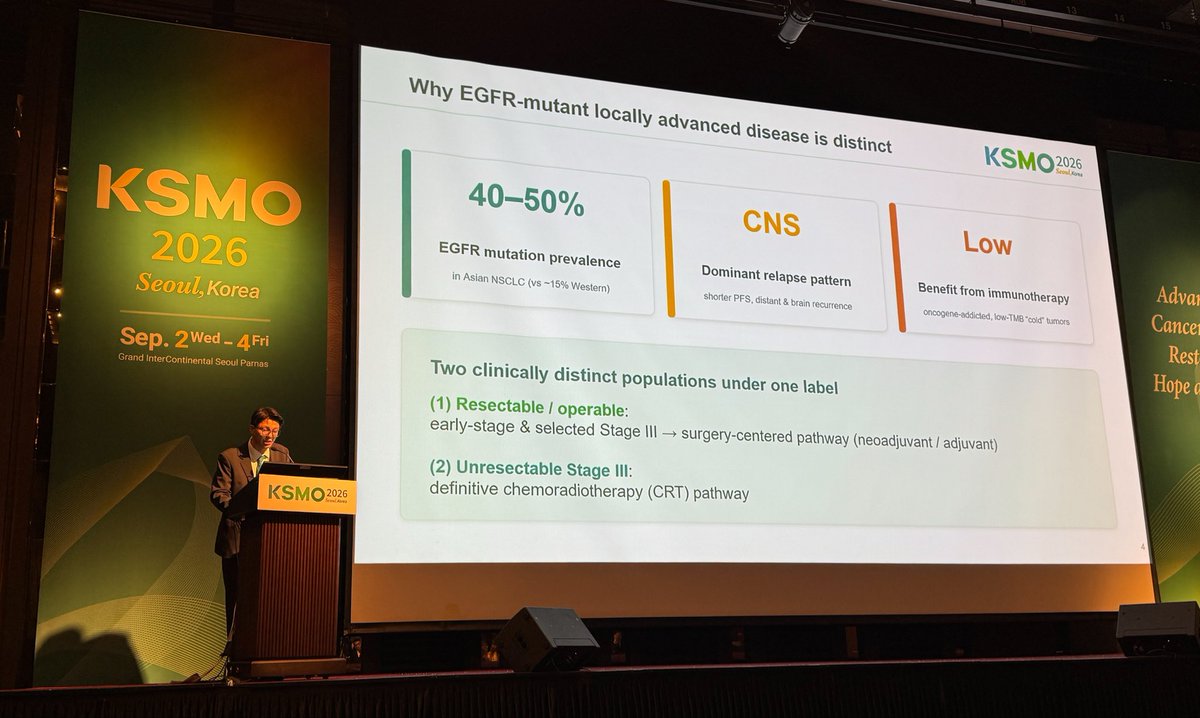
Why EGFR-mutant locally advanced disease is distinct
40–50% EGFR mutation prevalence in Asian NSCLC (vs ~15% Western)
CNS: dominant relapse pattern — shorter PFS, distant & brain recurrence
Low benefit from immunotherapy — oncogene-addicted, low-TMB "cold" tumors
Two clinically distinct populations under one label:
(1) Resectable / operable: early-stage & selected Stage III → surgery-centered pathway (neoadjuvant / adjuvant)
(2) Unresectable Stage III: definitive chemoradiotherapy (CRT) pathway
---
[LAURA — PFS and CNS benefit]
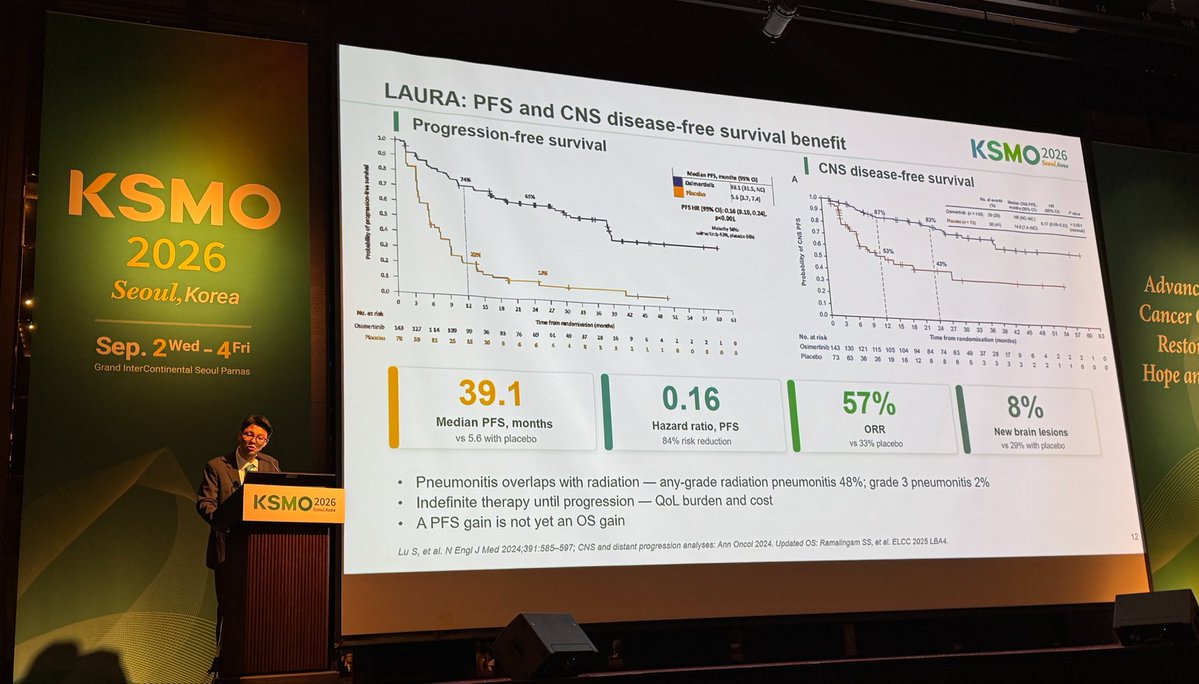
LAURA: PFS and CNS disease-free survival benefit
Median PFS 39.1 months vs 5.6 with placebo
Hazard ratio, PFS: 0.16 — 84% risk reduction
ORR 57% vs 33% placebo
New brain lesions: 8% vs 29% with placebo
• Pneumonitis overlaps with radiation — any-grade radiation pneumonitis 48%; grade 3 pneumonitis 2%
• Indefinite therapy until progression — QoL burden and cost
• A PFS gain is not yet an OS gain
Lu S, et al. N Engl J Med 2024;391:585–597; CNS and distant progression analyses: Ann Oncol 2024; Updated OS: Ramalingam SS, et al. ELCC 2025 LBA4.
---
[ADAURA — is three years arbitrary?]
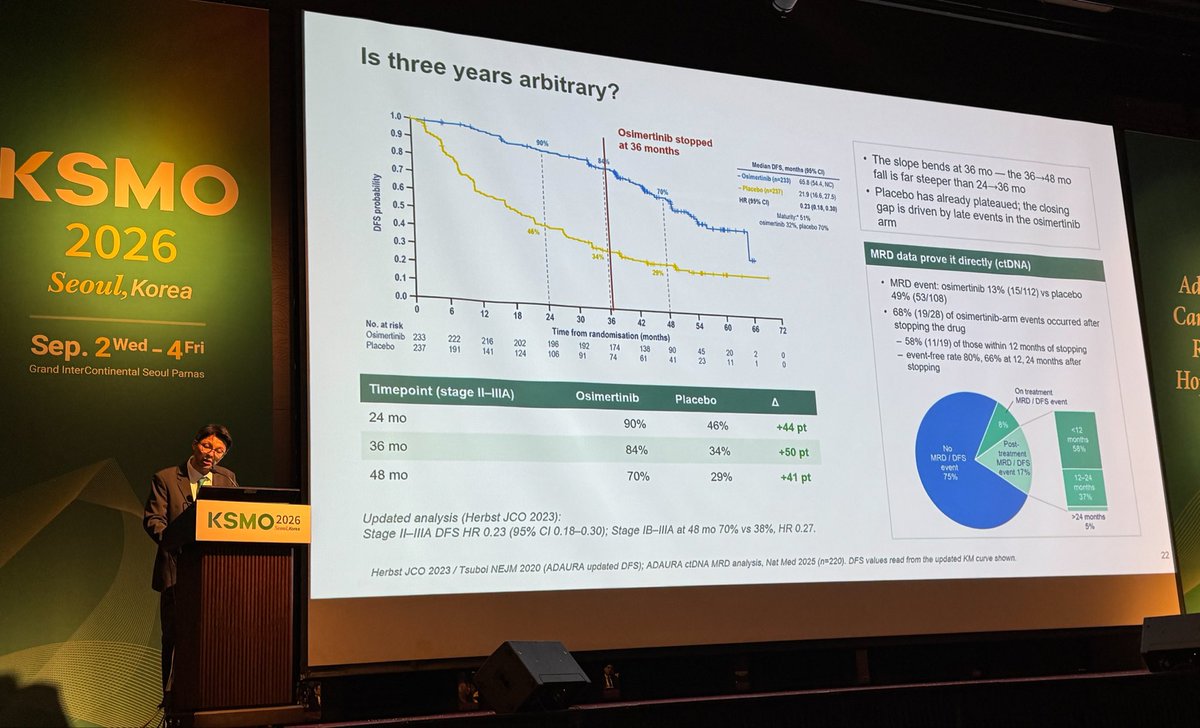
Is three years arbitrary? (ADAURA)
DFS by timepoint (stage II–IIIA), osimertinib vs placebo:
24 mo: 90% vs 46% (+44 pt)
36 mo: 84% vs 34% (+50 pt)
48 mo: 70% vs 29% (+41 pt)
• The slope bends at 36 mo — the 36→48 mo fall is far steeper than 24→36. Placebo has already plateaued; the closing gap is driven by late events in the osimertinib arm.
MRD data prove it directly (ctDNA):
• MRD event: osimertinib 13% (15/112) vs placebo 49% (53/108)
• 68% (19/28) of osimertinib-arm events occurred after stopping the drug — 58% (11/19) of those within 12 months of stopping
• event-free rate 80%, 66% at 12, 24 months after stopping
Updated analysis (Herbst JCO 2023): Stage II–IIIA DFS HR 0.23 (95% CI 0.18–0.30); Stage IB–IIIA at 48 mo 70% vs 38%, HR 0.27.
Herbst JCO 2023 / Tsuboi NEJM 2020 (ADAURA updated DFS); ADAURA ctDNA MRD analysis, Nat Med 2025 (n=220). DFS values read from the updated KM curve shown.
---
[NeoADAURA — major outcomes]
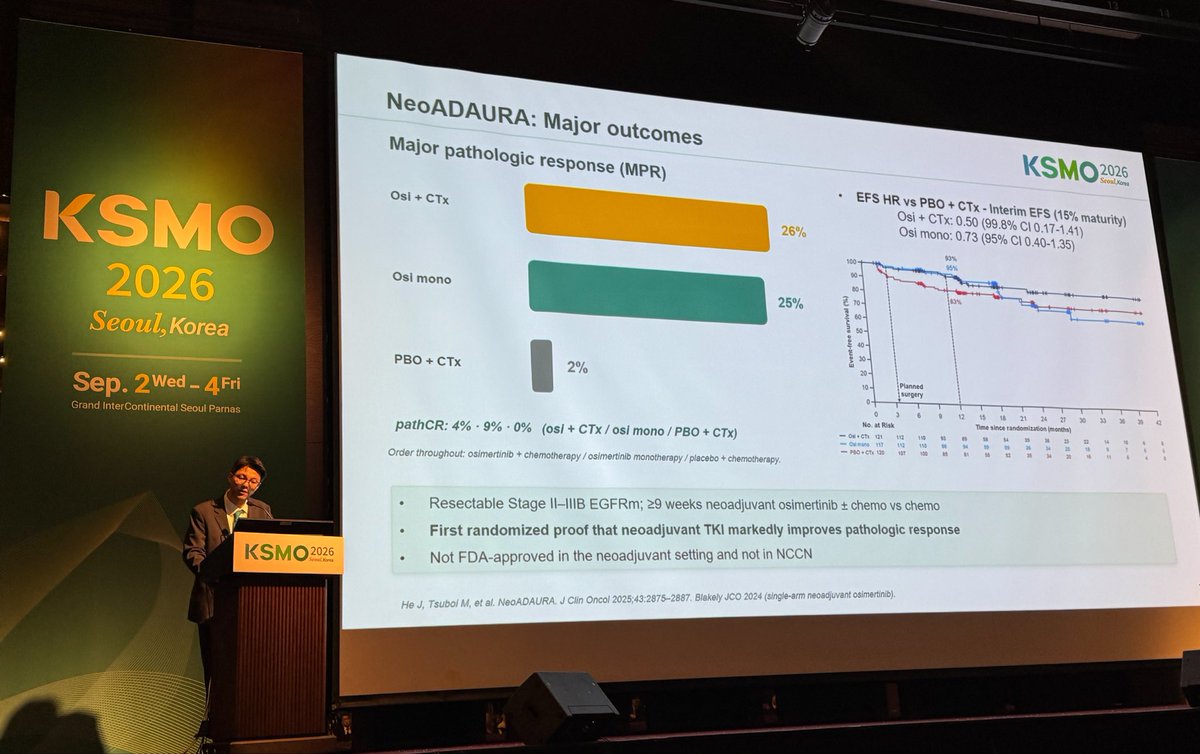
NeoADAURA: Major outcomes
Major pathologic response (MPR): Osi + CTx 26% · Osi mono 25% · PBO + CTx 2%
pathCR: 4% · 9% · 0% (osi + CTx / osi mono / PBO + CTx)
EFS HR vs PBO + CTx — interim EFS (15% maturity):
Osi + CTx: 0.50 (99.8% CI 0.17–1.41)
Osi mono: 0.73 (95% CI 0.40–1.35)
• Resectable Stage II–IIIB EGFRm; ≥9 weeks neoadjuvant osimertinib ± chemo vs chemo
• First randomized proof that neoadjuvant TKI markedly improves pathologic response
• Not FDA-approved in the neoadjuvant setting and not in NCCN
He J, Tsuboi M, et al. NeoADAURA. J Clin Oncol 2025;43:2875–2887. Blakely JCO 2024 (single-arm neoadjuvant osimertinib).
[4G EGFR-TKIs targeting C797S]
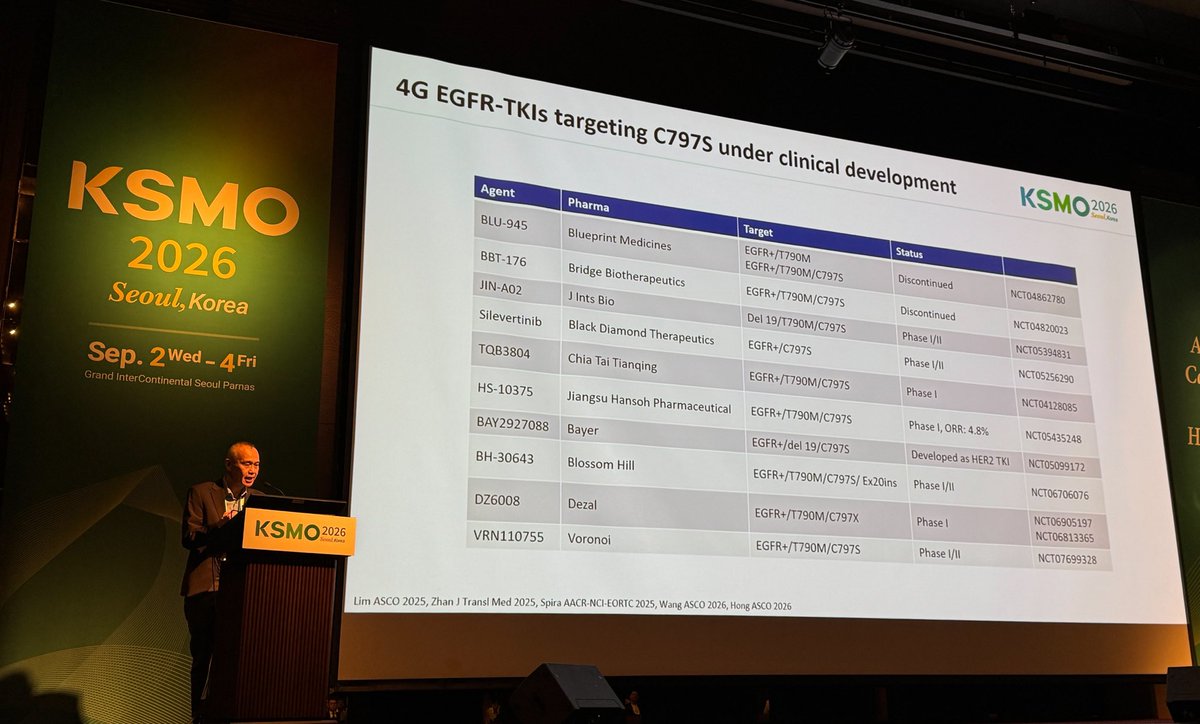
4G EGFR-TKIs targeting C797S under clinical development
BLU-945 · Blueprint Medicines · EGFR+/T790M, EGFR+/T790M/C797S · Discontinued
BBT-176 · Bridge Biotherapeutics · EGFR+/T790M/C797S · Discontinued · NCT04862780
JIN-A02 · J Ints Bio · EGFR+/T790M/C797S · Phase I/II · NCT04820023
Silevertinib · Black Diamond Therapeutics · Del 19/T790M/C797S · Phase I/II · NCT05394831
TQB3804 · Chia Tai Tianqing · EGFR+/C797S · Phase I · NCT05256290
HS-10375 · Jiangsu Hansoh Pharmaceutical · EGFR+/T790M/C797S · Phase I · NCT04128085
BAY2927088 · Bayer · EGFR+/T790M/C797S · Phase I, ORR: 4.8% · NCT05435248
BH-30643 · Blossom Hill · EGFR+/del 19/C797S · Developed as HER2 TKI · NCT05099172
DZ6008 · Dezal · EGFR+/T790M/C797S/Ex20ins · Phase I/II · NCT06706076
VRN110755 · Voronoi · EGFR+/T790M/C797X · Phase I · NCT06905197, NCT06813365 · Phase I/II · NCT07699328
Lim ASCO 2025, Zhan J Transl Med 2025, Spira AACR-NCI-EORTC 2025, Wang ASCO 2026, Hong ASCO 2026
---
[MET inhibitor + osimertinib]
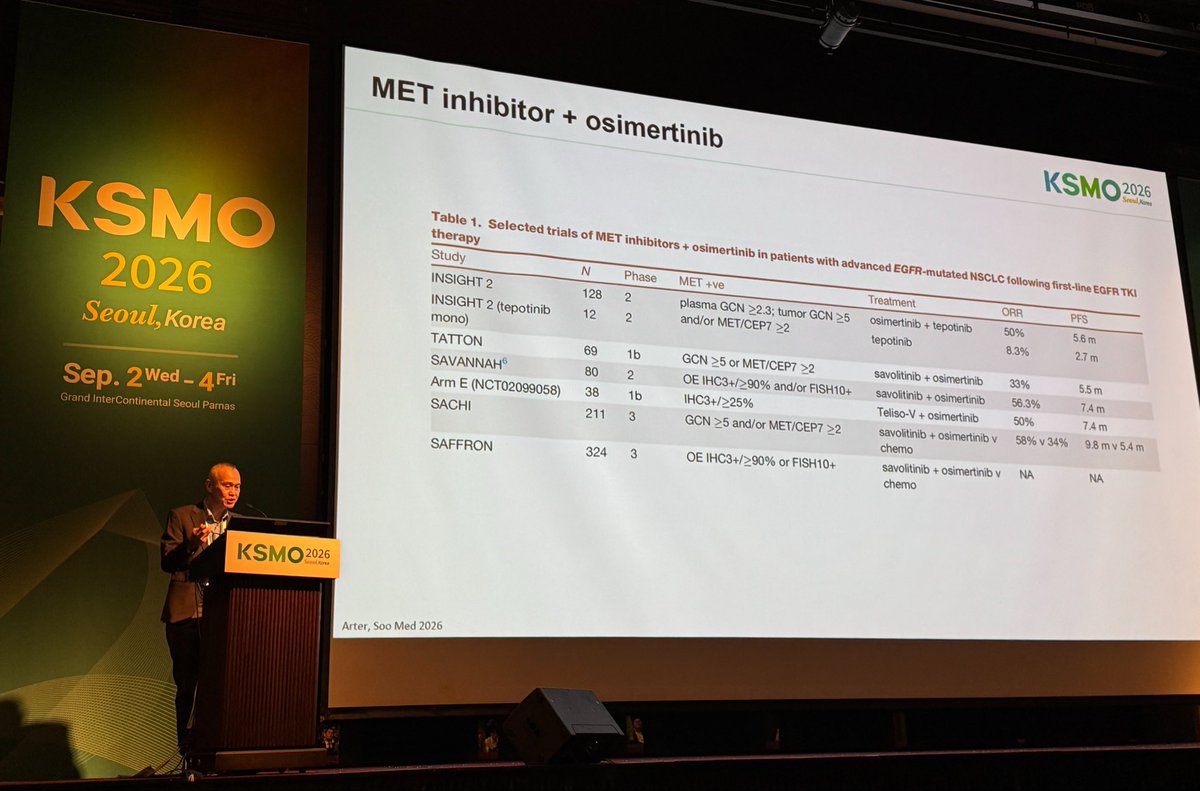
MET inhibitor + osimertinib
Selected trials of MET inhibitors + osimertinib in patients with advanced EGFR-mutated NSCLC following first-line EGFR TKI therapy
INSIGHT 2 · n=128 · Phase 2 · plasma GCN ≥2.3; tumor GCN ≥5 and/or MET/CEP7 ≥2 · osimertinib + tepotinib · ORR 50% · PFS 5.6 m
INSIGHT 2 (tepotinib mono) · n=12 · tepotinib · ORR 8.3% · PFS 2.7 m
TATTON · n=69 · Phase 1b · GCN ≥5 or MET/CEP7 ≥2 · savolitinib + osimertinib · ORR 33% · PFS 5.5 m
SAVANNAH · n=80 · Phase 2 · OE IHC3+/≥90% and/or FISH10+ · savolitinib + osimertinib · ORR 56.3% · PFS 7.4 m
Arm E (NCT02099058) · n=38 · Phase 1b · IHC3+/≥25% · Teliso-V + osimertinib · ORR 50% · PFS 7.4 m
SACHI · n=211 · Phase 3 · GCN ≥5 and/or MET/CEP7 ≥2 · savolitinib + osimertinib vs chemo · ORR 58% v 34% · PFS 9.8 v 5.4 m
SAFFRON · n=324 · Phase 3 · OE IHC3+/≥90% or FISH10+ · savolitinib + osimertinib vs chemo · NA
Arter, Soo Med 2026
---
[ADCs in pre-treated EGFR+ NSCLC]
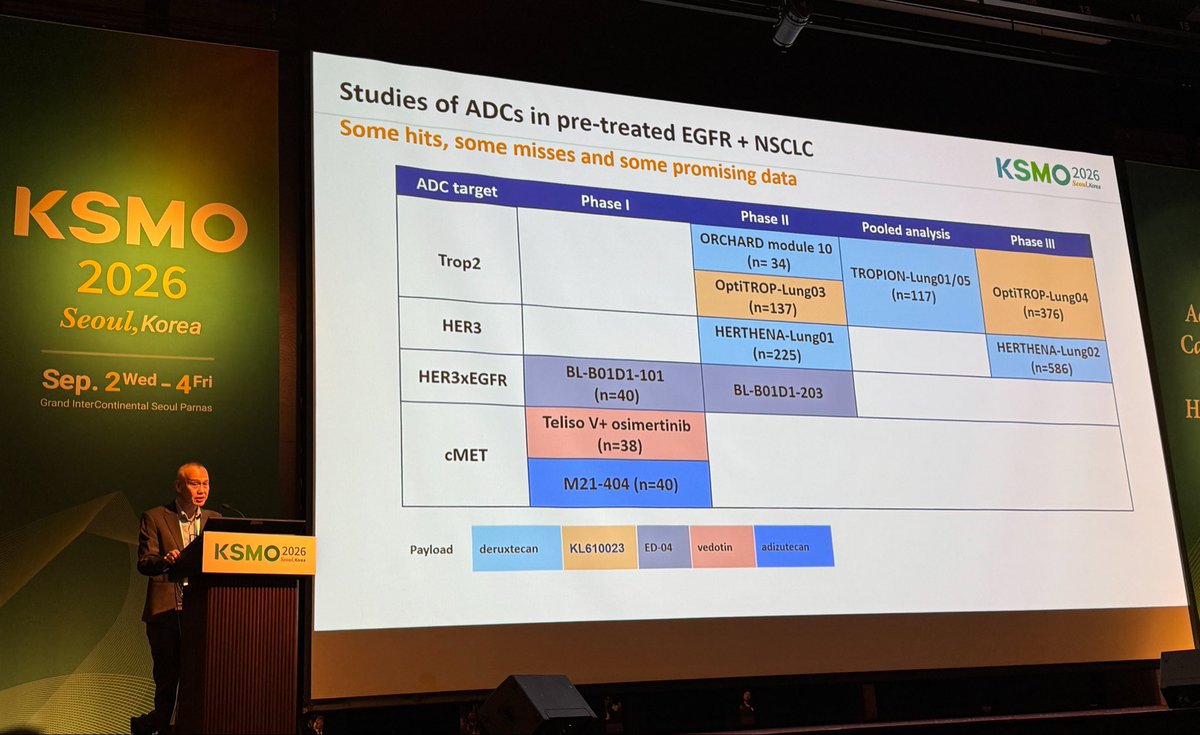
Studies of ADCs in pre-treated EGFR + NSCLC
Some hits, some misses and some promising data
Trop2: ORCHARD module 10 (n=34) · OptiTROP-Lung03 (n=137) · pooled TROPION-Lung01/05 (n=117) · Phase III OptiTROP-Lung04 (n=376)
HER3: HERTHENA-Lung01 (n=225) · Phase III HERTHENA-Lung02 (n=586)
HER3xEGFR: BL-B01D1-101 (n=40) · BL-B01D1-203
cMET: Teliso V + osimertinib (n=38) · M21-404 (n=40)
Payloads: deruxtecan · KL610023 · ED-04 · vedotin · adizutecan
Free Access · KOL Pulse Intelligence
Track oncology’s top KOLs in your specialty
Create a free account, pick the tumor types you cover, and go beyond the tweet — the intelligence pharma teams use to map influence and prepare for engagement:
- ✓Enhanced KOL profiles
- ✓Pharma influence & potential advisory-board patterns
- ✓2025 Open Payments financial analysis
- ✓Social-media sentiment & trend signals
Get free access — pick your specialty
Choose the tumor types you follow. No cost, unsubscribe anytime.
Leaderboard
Top voices at #KSMO2026
1
Stephen V Liu, MD
Thoracic Oncologist · Chief of Heme/Onc, Georgetown · Washington, DC
@StephenVLiu
4.0K
impressions · 4 posts
2
Young Kwang Chae, MD, MPH, MBA
Medical Oncologist · Lurie Cancer Center, Northwestern · Chicago, IL
@youngkwangchae
2.4K
impressions · 4 posts
3
David S. Hong MD
Medical Oncologist · Deputy Chair, Investigational Cancer Therapeutics, MD Anderson · Houston, TX
@DavidHongMD
958
impressions · 1 posts
4
Choong-kun Lee, MD, PhD
Medical Oncologist · Yonsei Cancer Center · Seoul
@choong_kun
77
impressions · 1 posts
Stephen V Liu, MD
Thoracic Oncologist · Chief of Heme/Onc, Georgetown · Washington, DC
@StephenVLiu
4.0K
impressions · 4 posts
2
Young Kwang Chae, MD, MPH, MBA
Medical Oncologist · Lurie Cancer Center, Northwestern · Chicago, IL
@youngkwangchae
2.4K
impressions · 4 posts
3
David S. Hong MD
Medical Oncologist · Deputy Chair, Investigational Cancer Therapeutics, MD Anderson · Houston, TX
@DavidHongMD
958
impressions · 1 posts
4
Choong-kun Lee, MD, PhD
Medical Oncologist · Yonsei Cancer Center · Seoul
@choong_kun
77
impressions · 1 posts


In the News
Media coverage
Media
KSMO 2026 to draw 2,300 cancer experts to Seoul, push Asia-led precision oncology
483 abstracts from 37 countries; an Asia Leadership Meeting with 14 societies plus ASCO, ESMO and JSMO; four plenaries spanning cancer biology, RAS-targeted therapy, liquid biopsy and personalized cancer vaccines.
Media
KSMO 2026 looks beyond networking to build Asia-led oncology research
Preview of the joint congress with the 14th Federation of Asian Clinical Oncology (FACO) Conference and its Asia-led research agenda.
Official
HanchorBio announces HCB301 oral presentation and HCB101 Best Poster selection at KSMO 2026
First-in-human Phase 1 data for HCB301 (SIRPα-PD-L1-TGFβ) in oral session OP02-1, plus HCB101 combination data in advanced gastric cancer and HNSCC.
Media
Korean Society of Medical Oncology (KSMO) 2026 Annual Meeting
OncoCalendar listing: since its 2019 international expansion, KSMO has become a premier Asia-Pacific hub connecting clinical research with patient-centered outcomes.
Official
KSMO 2026 — official conference site
Program overview: plenary lectures, scientific and joint symposia, FACO session, AI sessions, and the KSMO Initiatives for Cancer Care Inequity.