A debate-format CME meeting from the Oncology Learning Network — New York, NY, Sept 26–27, 2026. Physicians argued both sides of live debates spanning tumor-agnostic therapy, lung, GI, neuroendocrine, and GU cancers — captured here in their own words.
59
Tweets Captured
21
Voices Captured
48.0K
Total Impressions
6
Debate Tracks
New York, NY · Sept 26–27, 2026
🎯 Opening & Closing Plenary
Should Every Solid Tumor Get a Tissue-Agnostic Shot?
Vivek Subbiah, MD (Stanford Cancer Institute) opened Great Debates with a case for expanding tumor-agnostic drug approvals — and closed with a call to action on precision-medicine access. The debate that followed: is the science ready even where the testing infrastructure isn't? — 7 tweets, 11.2K impressions.
[Slide 1]
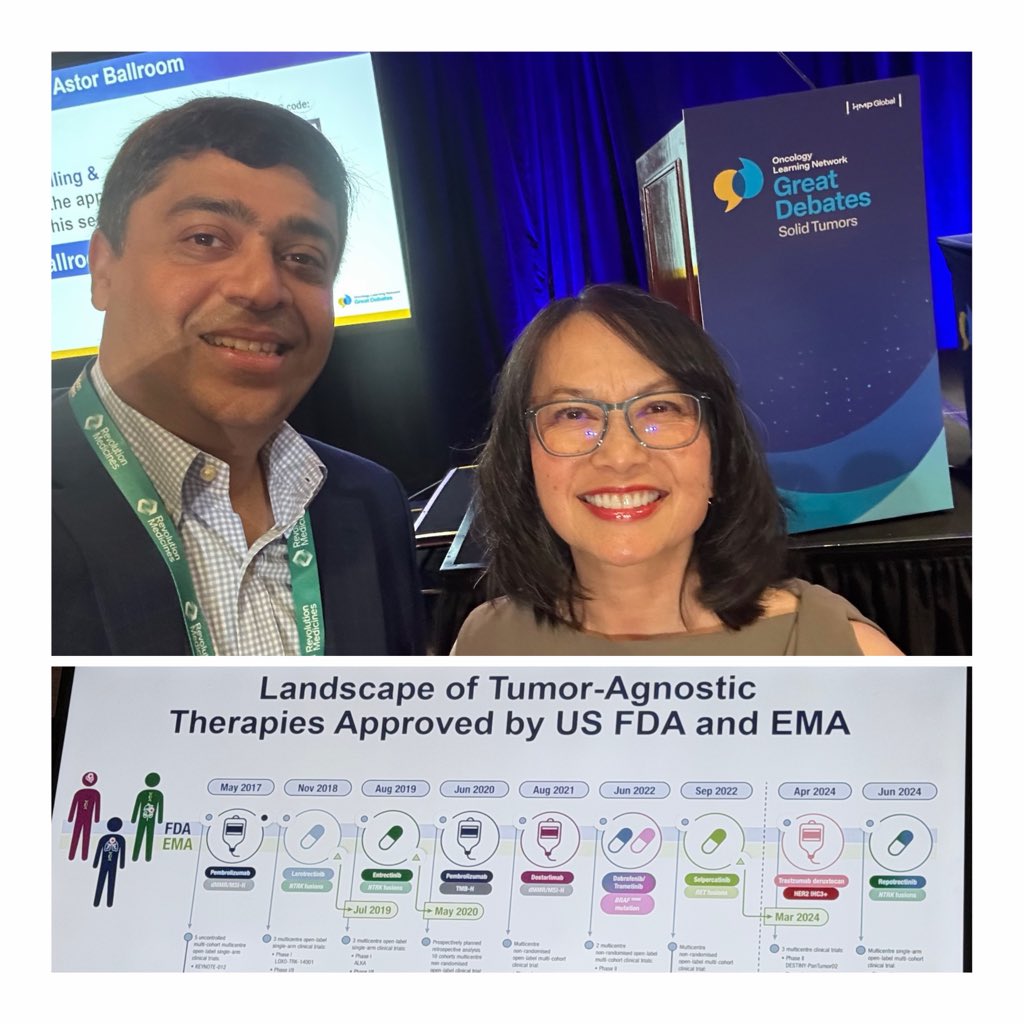
Landscape of Tumor-Agnostic Therapies Approved by US FDA and EMA
Timeline of approvals (FDA/EMA):
May 2017 - Pembrolizumab (dMMR/MSI-H)
Nov 2018 - Larotrectinib (NTRK fusions)
Aug 2019 (Jul 2019 EMA) - Entrectinib (NTRK fusions)
Jun 2020 (May 2020 EMA) - Pembrolizumab (TMB-H)
Aug 2021 - Dostarlimab (dMMR/MSI-H)
Jun 2022 - Dabrafenib/Trametinib (BRAF V600E mutation)
Sep 2022 - Selpercatinib (RET fusions)
Apr 2024 (Mar 2024 EMA) - Trastuzumab deruxtecan (HER2 IHC3+)
Jun 2024 - Repotrectinib (NTRK fusions)
(Photo also shows two people posing in front of an Oncology Learning Network Great Debates Solid Tumors podium sign.)
[Slide 1]
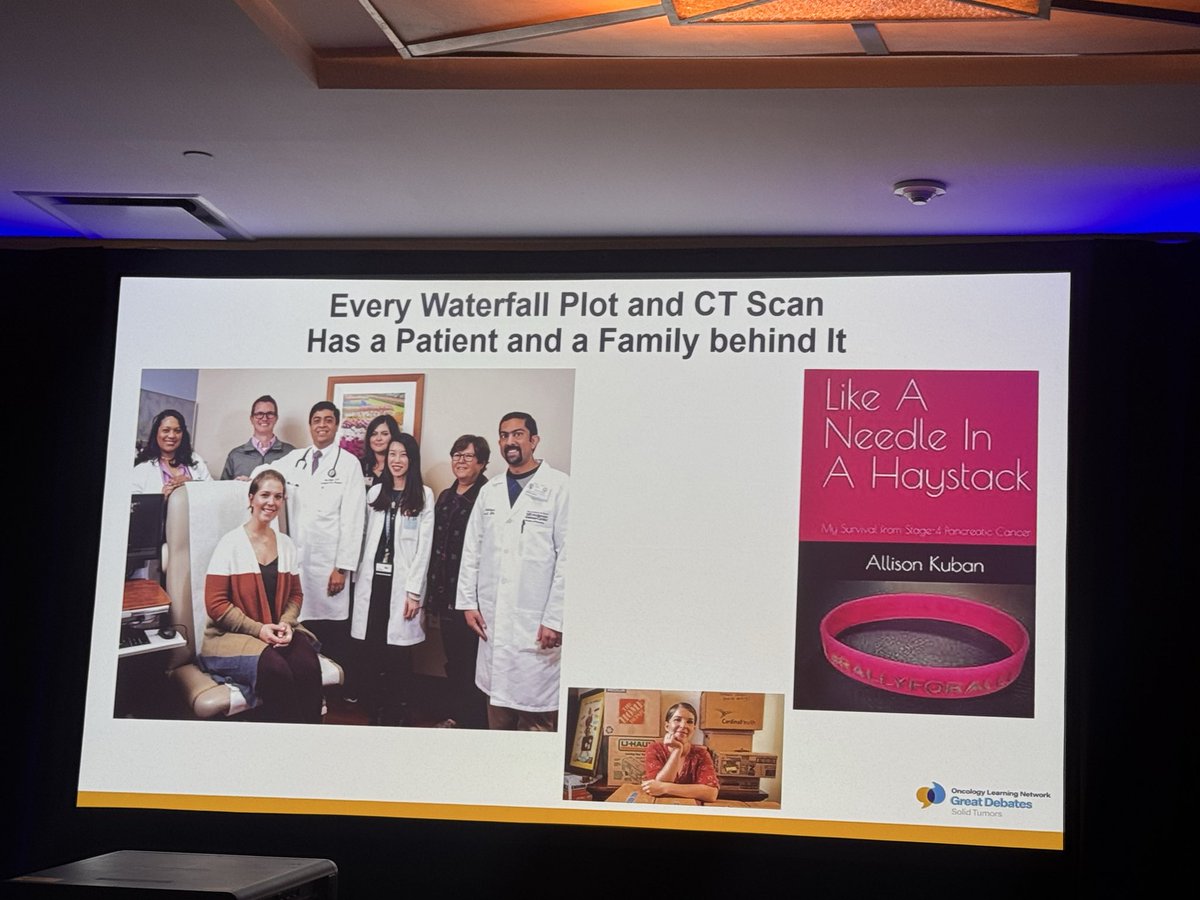
Every Waterfall Plot and CT Scan Has a Patient and a Family behind It
[Photo of a group of physicians/staff in white coats posing with a patient]
Book cover shown: "Like A Needle In A Haystack — My Survival from Stage 4 Pancreatic Cancer" by Allison Kuban (wristband reading #ALLYFORALL visible on cover)
(Wide shot of ballroom screen — Oncology Learning Network Great Debates Solid Tumors branding visible)
[Slide 1]
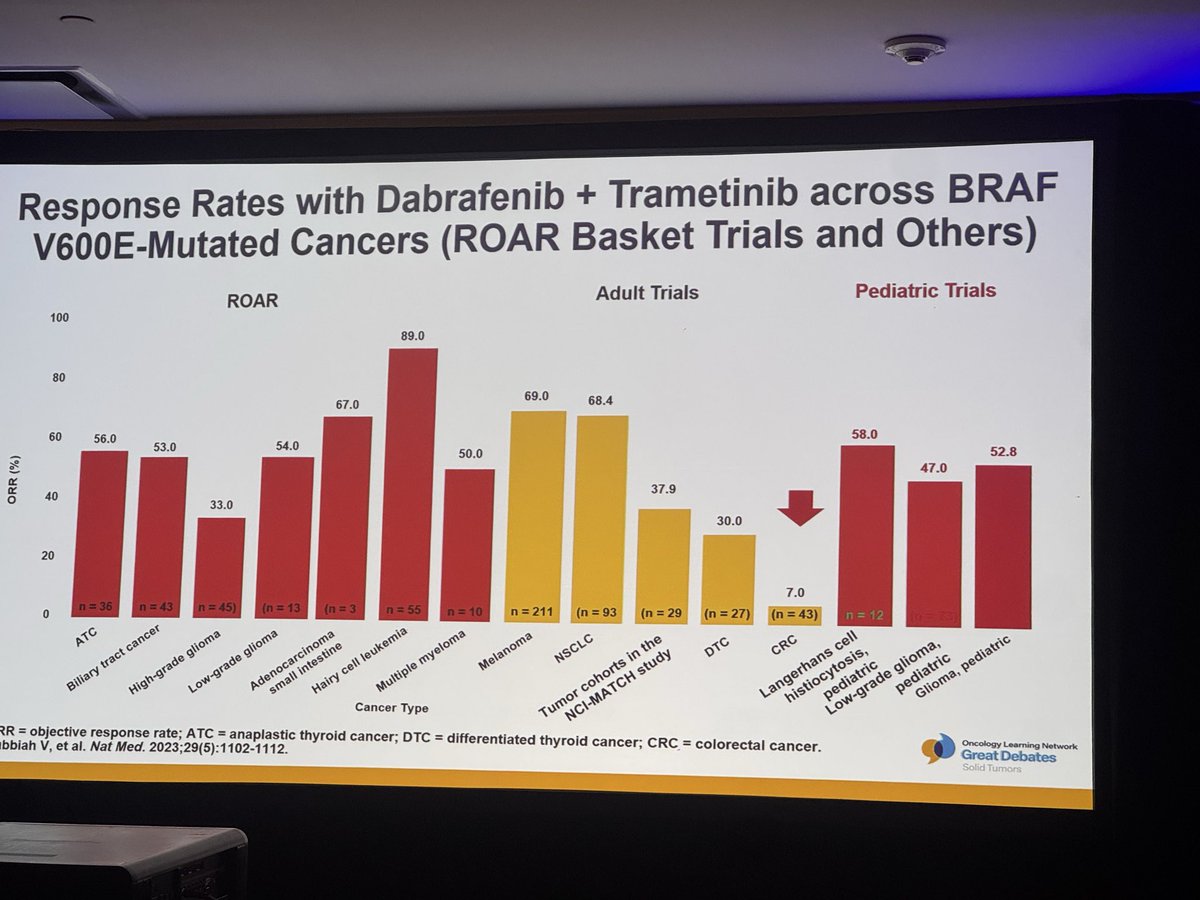
Response Rates with Dabrafenib + Trametinib across BRAF V600E-Mutated Cancers (ROAR Basket Trials and Others)
ORR (%) by cancer type:
ROAR cohort:
ATC: 56.0 (n=36)
Biliary tract cancer: 53.0 (n=43)
High-grade glioma: 33.0 (n=45)
Low-grade glioma: 54.0 (n=13)
Adenocarcinoma small intestine: 67.0 (n=3)
Hairy cell leukemia: 89.0 (n=55)
Multiple myeloma: 50.0 (n=10)
Adult Trials:
Melanoma: 69.0 (n=211)
NSCLC: 68.4 (n=93)
Tumor cohorts in the NCI-MATCH study: 37.9 (n=29)
DTC: 30.0 (n=27)
CRC: 7.0 (n=43)
Pediatric Trials:
Langerhans cell histiocytosis, pediatric: 58.0 (n=12)
Low-grade glioma, pediatric: 47.0 (n=?)
Glioma, pediatric: 52.8 (n=?)
ORR = objective response rate; ATC = anaplastic thyroid cancer; DTC = differentiated thyroid cancer; CRC = colorectal cancer.
Subbiah V, et al. Nat Med. 2023;29(5):1102-1112.
---
[Slide 2]
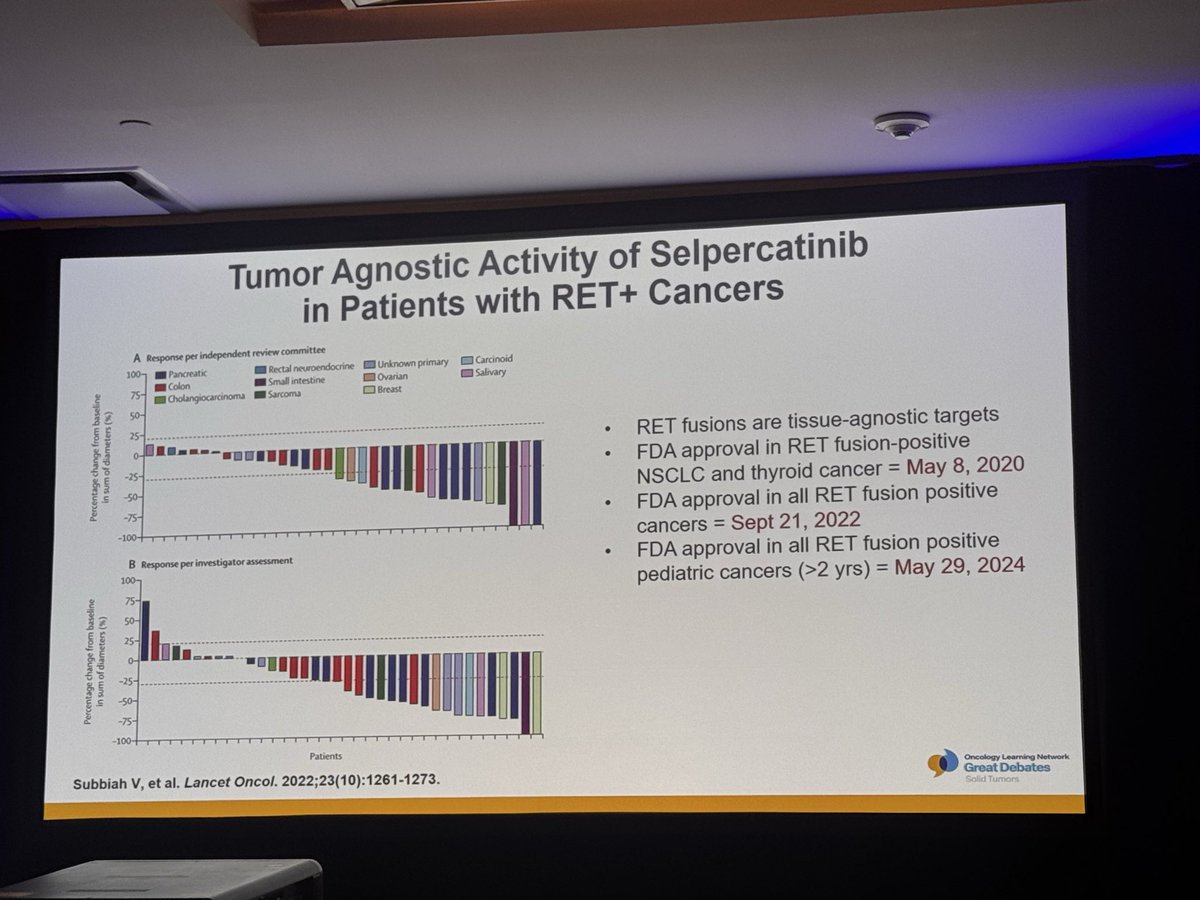
Tumor Agnostic Activity of Selpercatinib in Patients with RET+ Cancers
A. Response per independent review committee / B. Response per investigator assessment — waterfall plots of percentage change from baseline in sum of diameters, by tumor type (Pancreatic, Colon, Cholangiocarcinoma, Sarcoma, Rectal neuroendocrine, Small intestine, Unknown primary, Ovarian, Breast, Carcinoid, Salivary).
- RET fusions are tissue-agnostic targets
- FDA approval in RET fusion-positive NSCLC and thyroid cancer = May 8, 2020
- FDA approval in all RET fusion positive cancers = Sept 21, 2022
- FDA approval in all RET fusion positive pediatric cancers (>2 yrs) = May 29, 2024
Subbiah V, et al. Lancet Oncol. 2022;23(10):1261-1273.
---
[Slide 3]
Every Waterfall Plot and CT Scan Has a Patient and a Family behind It
[Photo of a group of physicians/staff in white coats posing with a patient]
Book cover shown: "Like A Needle In A Haystack — My Survival from Stage 4 Pancreatic Cancer" by Allison Kuban (wristband reading #ALLYFORALL visible on cover)
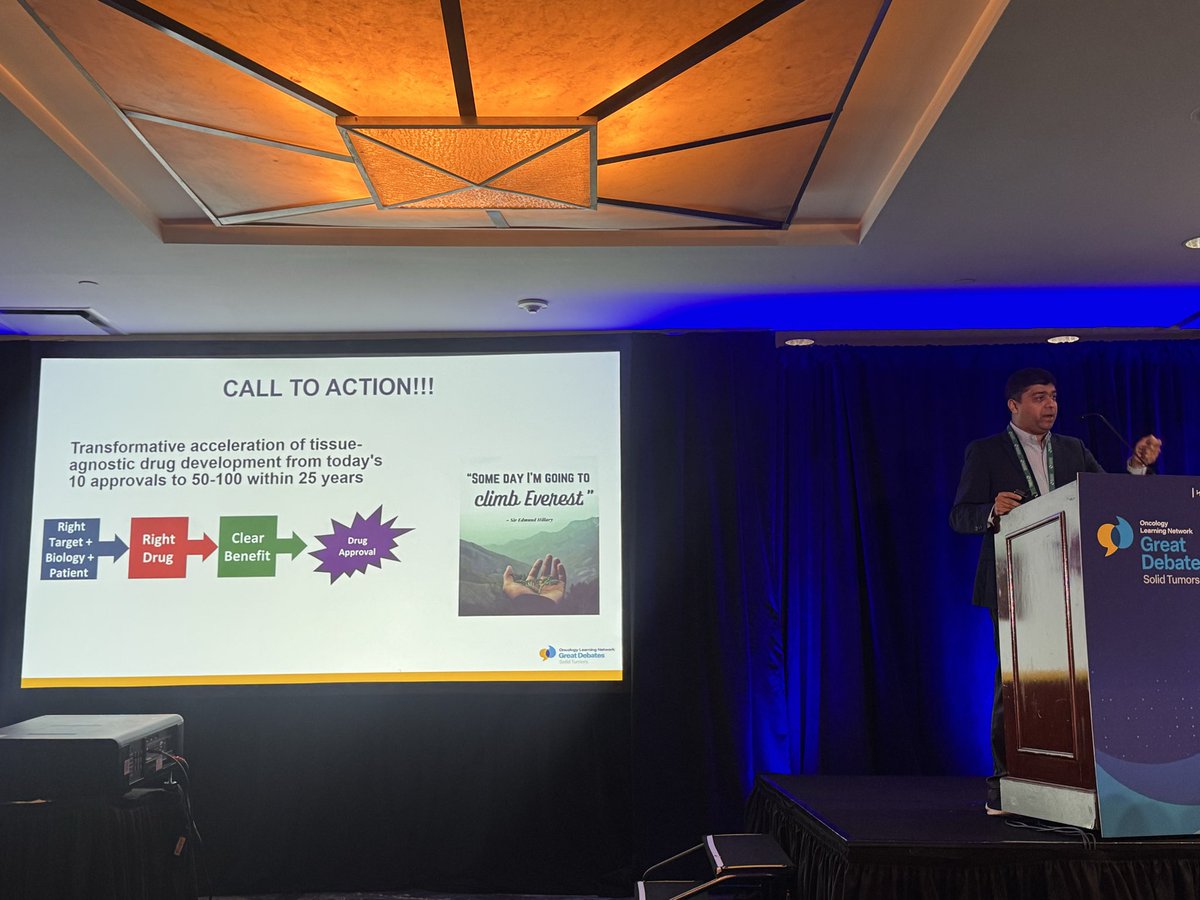
[Slide 1]
CALL TO ACTION!!!
Transformative acceleration of tissue-agnostic drug development from today's 10 approvals to 50-100 within 25 years
Right Target + Biology + Patient -> Right Drug -> Clear Benefit -> Drug Approval
"SOME DAY I'M GOING TO climb Everest" - Sir Edmund Hillary (image of hands holding a plant against a mountain backdrop)
---
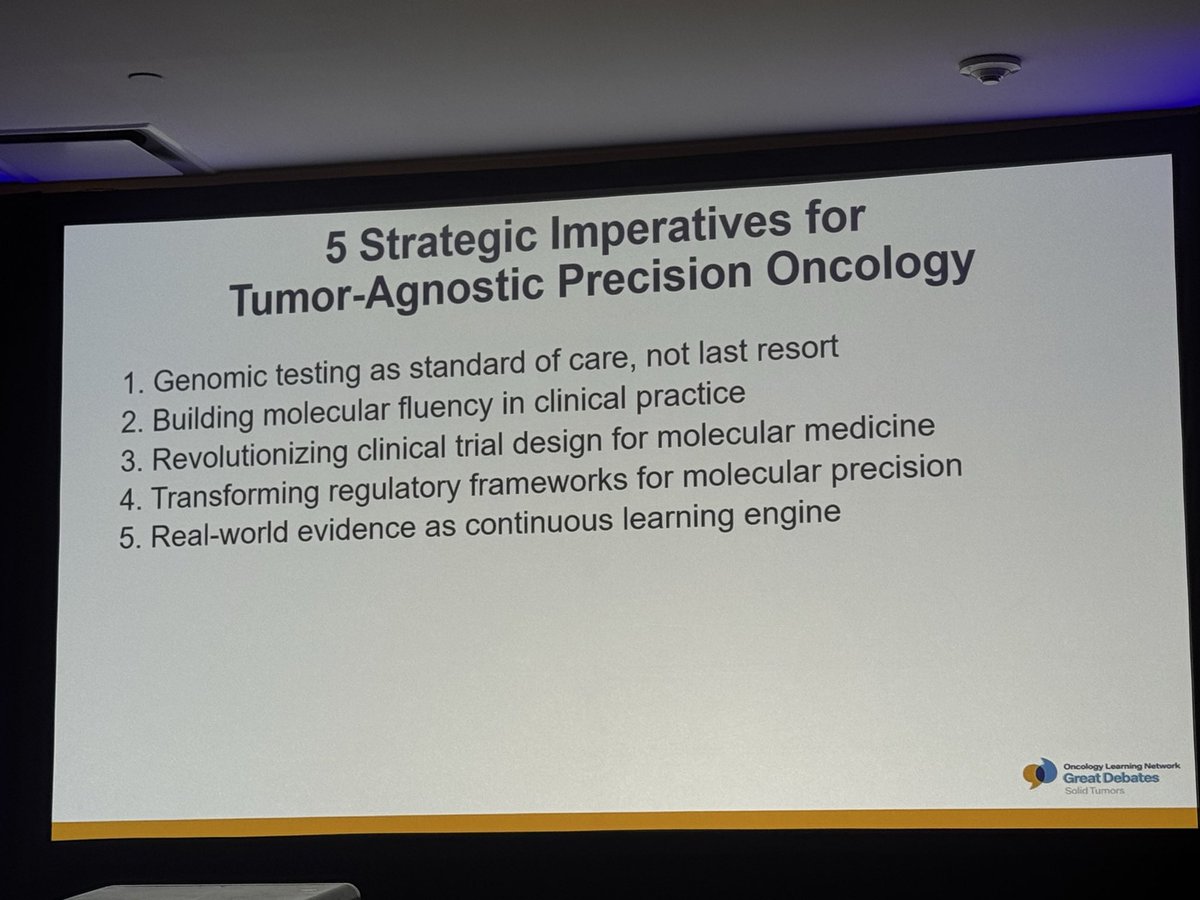
[Slide 2]
5 Strategic Imperatives for Tumor-Agnostic Precision Oncology
1. Genomic testing as standard of care, not last resort
2. Building molecular fluency in clinical practice
3. Revolutionizing clinical trial design for molecular medicine
4. Transforming regulatory frameworks for molecular precision
5. Real-world evidence as continuous learning engine
---
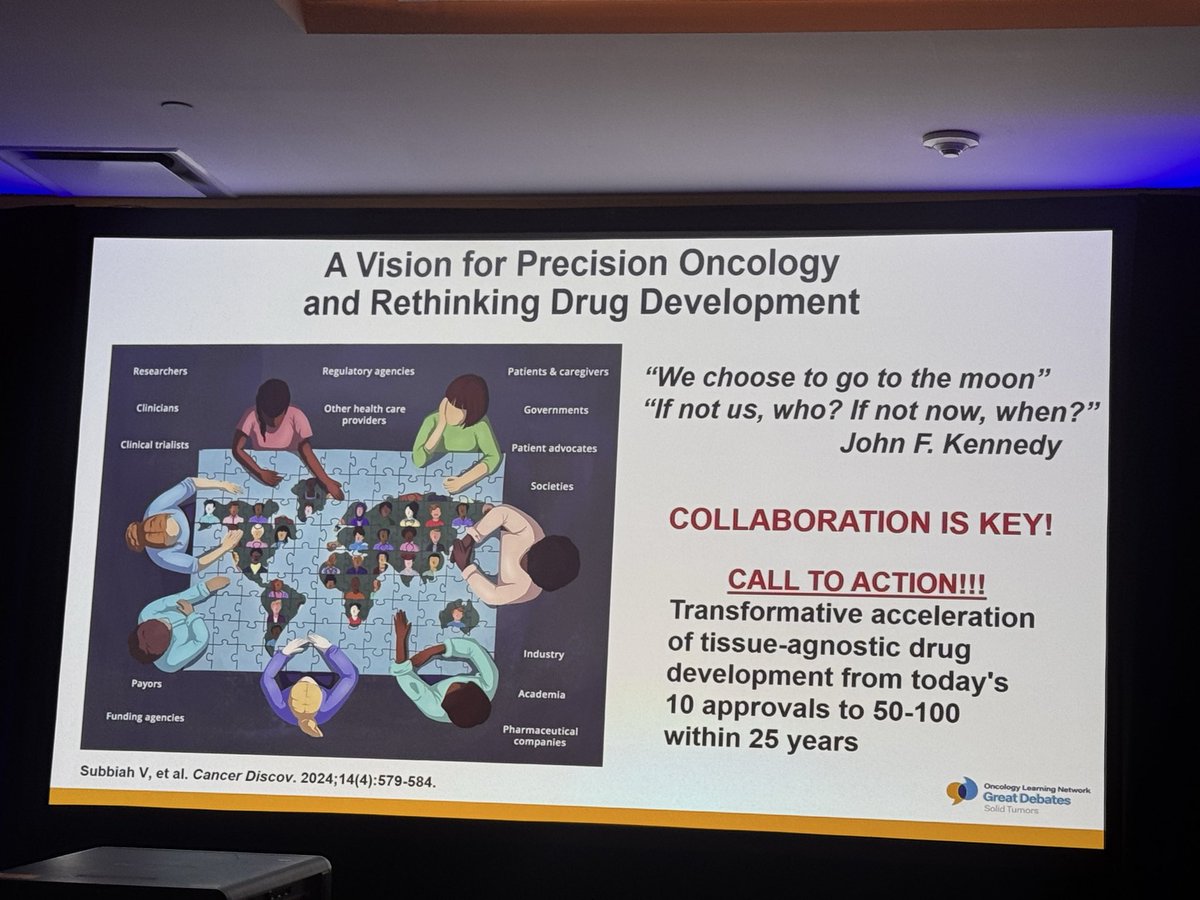
[Slide 3]
A Vision for Precision Oncology and Rethinking Drug Development
[Illustration: world map puzzle being assembled by figures labeled Researchers, Clinicians, Clinical trialists, Payors, Funding agencies, Regulatory agencies, Other health care providers, Patients & caregivers, Governments, Patient advocates, Societies, Industry, Academia, Pharmaceutical companies]
"We choose to go to the moon"
"If not us, who? If not now, when?" - John F. Kennedy
COLLABORATION IS KEY!
CALL TO ACTION!!!
Transformative acceleration of tissue-agnostic drug development from today's 10 approvals to 50-100 within 25 years
Subbiah V, et al. Cancer Discov. 2024;14(4):579-584.
⚠️ Debate Spotlight
Should You Rechallenge Immunotherapy After a Prior Severe Adverse Event?
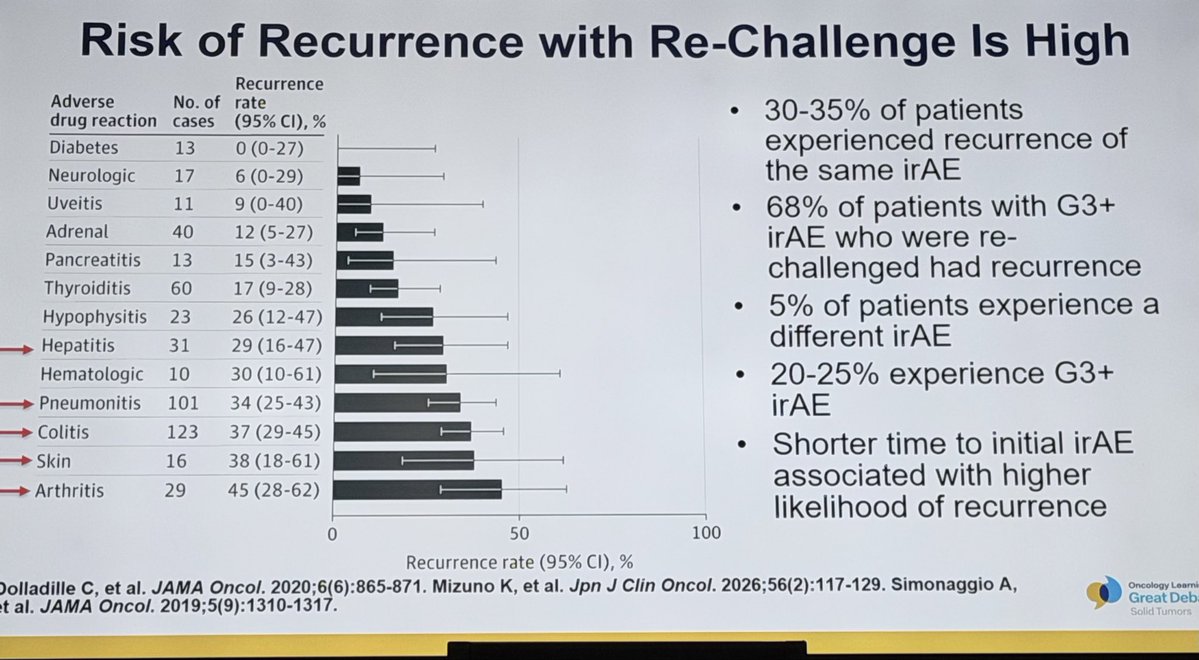
The single highest-impression moment of the entire meeting. The earlier the prior severe adverse event, Cathy Eng's session found, the higher the likelihood of a repeat event on rechallenge — leaving open exactly which patients can safely go back on checkpoint inhibition. — 2 tweets, 12.9K impressions.
[Slide 1]
Risk of Recurrence with Re-Challenge Is High
Table — Adverse drug reaction / No. of cases / Recurrence rate (95% CI), %:
Diabetes: 13 / 0 (0-27)
Neurologic: 17 / 6 (0-29)
Uveitis: 11 / 9 (0-40)
Adrenal: 40 / 12 (5-27)
Pancreatitis: 13 / 15 (3-43)
Thyroiditis: 60 / 17 (9-28)
Hypophysitis: 23 / 26 (12-47)
Hepatitis: 31 / 29 (16-47)
Hematologic: 10 / 30 (10-61)
Pneumonitis: 101 / 34 (25-43)
Colitis: 123 / 37 (29-45)
Skin: 16 / 38 (18-61)
Arthritis: 29 / 45 (28-62)
- 30-35% of patients experienced recurrence of the same irAE
- 68% of patients with G3+ irAE who were re-challenged had recurrence
- 5% of patients experience a different irAE
- 20-25% experience G3+ irAE
- Shorter time to initial irAE associated with higher likelihood of recurrence
Dolladille C, et al. JAMA Oncol. 2020;6(6):865-871. Mizuno K, et al. Jpn J Clin Oncol. 2026;56(2):117-129. Simonaggio A, et al. JAMA Oncol. 2019;5(9):1310-1317.
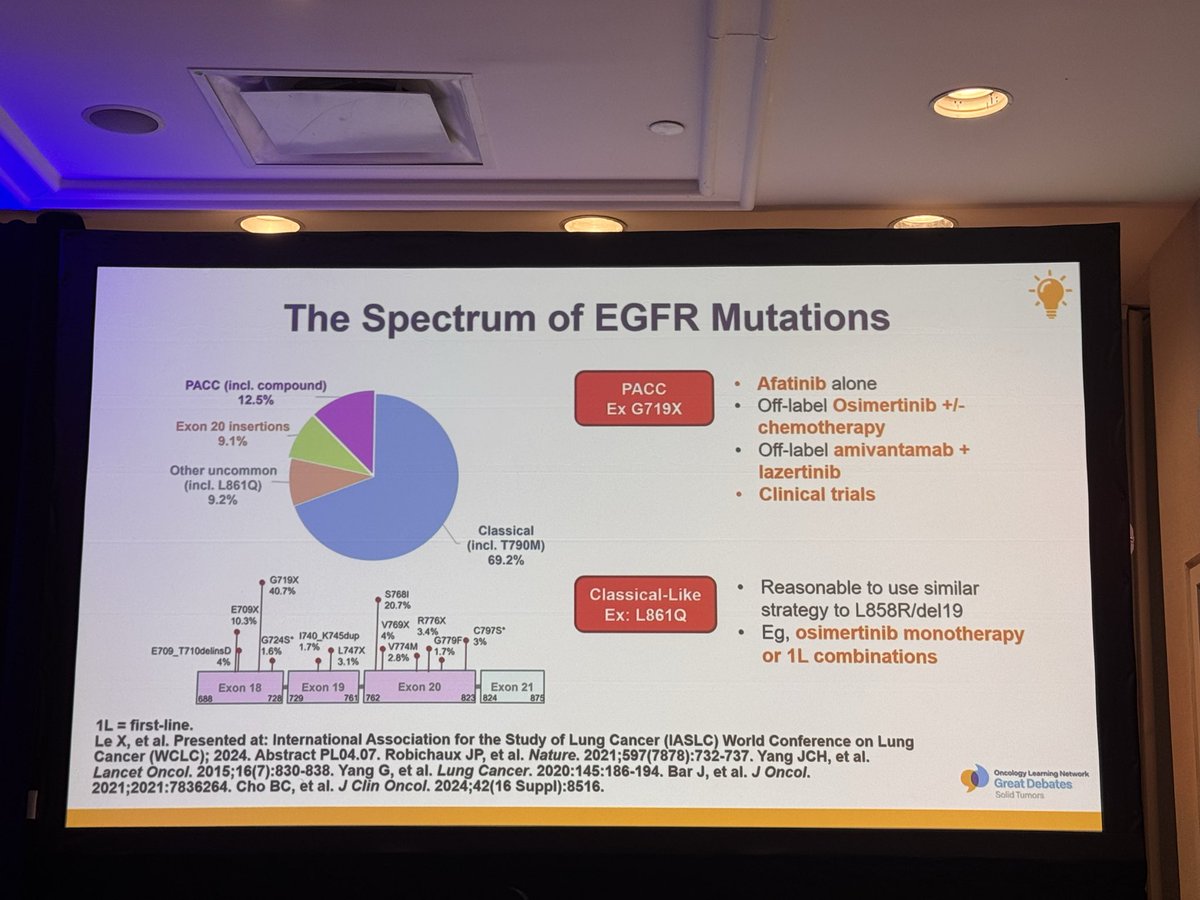
🫁 Lung Cancer
1L EGFR+ Therapy, Perioperative Chemo-IO & Oligoprogression: The Lung Cancer Debates
Three separate head-to-head debates: monotherapy vs. combination for 1L EGFR+ disease (Helena Yu vs. the lung cancer voice behind @lungoncdoc), preoperative vs. perioperative chemoimmunotherapy in resectable NSCLC (Jamie Chaft), and whether local ablative therapy adds a survival advantage in oligoremnant disease (Chinmay Jani vs. Sarah Goldberg on the oligoprogression/oligoremnant distinction). — 28 tweets, 13.1K impressions.
[Slide 1]
Prioritize Efficacy of Osimertinib Alone (for Select Patients) as Front-Line Therapy
Helena Yu, MD
Thoracic Medical Oncologist and Early Drug Development
Memorial Sloan Kettering Cancer Center
New York City, New York
---
[Slide 2]
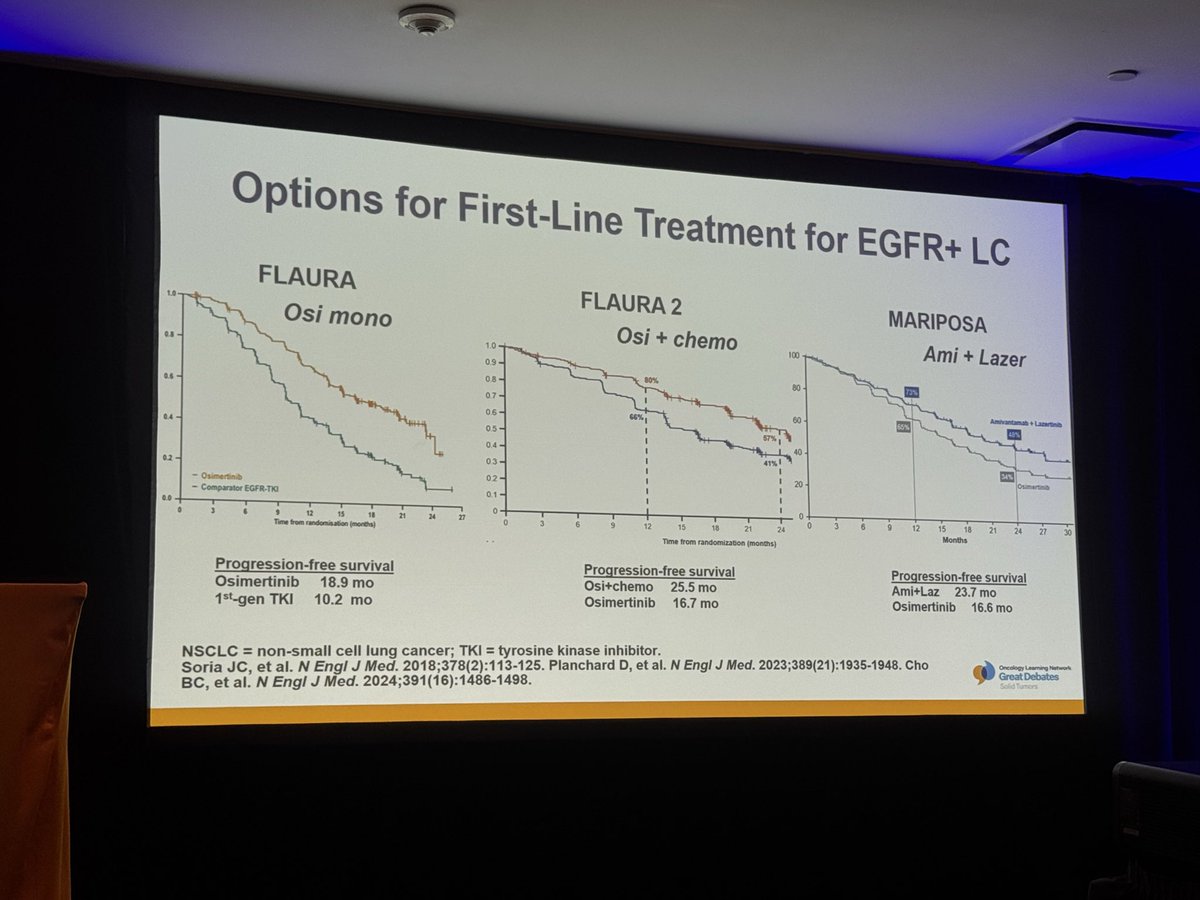
Options for First-Line Treatment for EGFR+ LC
FLAURA (Osi mono): Progression-free survival — Osimertinib 18.9 mo, 1st-gen TKI 10.2 mo
FLAURA 2 (Osi + chemo): Progression-free survival — Osi+chemo 25.5 mo, Osimertinib 16.7 mo
MARIPOSA (Ami + Lazer): Progression-free survival — Ami+Laz 23.7 mo, Osimertinib 16.6 mo
NSCLC = non-small cell lung cancer; TKI = tyrosine kinase inhibitor.
Soria JC, et al. N Engl J Med. 2018;378(2):113-125. Planchard D, et al. N Engl J Med. 2023;389(21):1935-1948. Cho BC, et al. N Engl J Med. 2024;391(16):1486-1498.
---
[Slide 3]
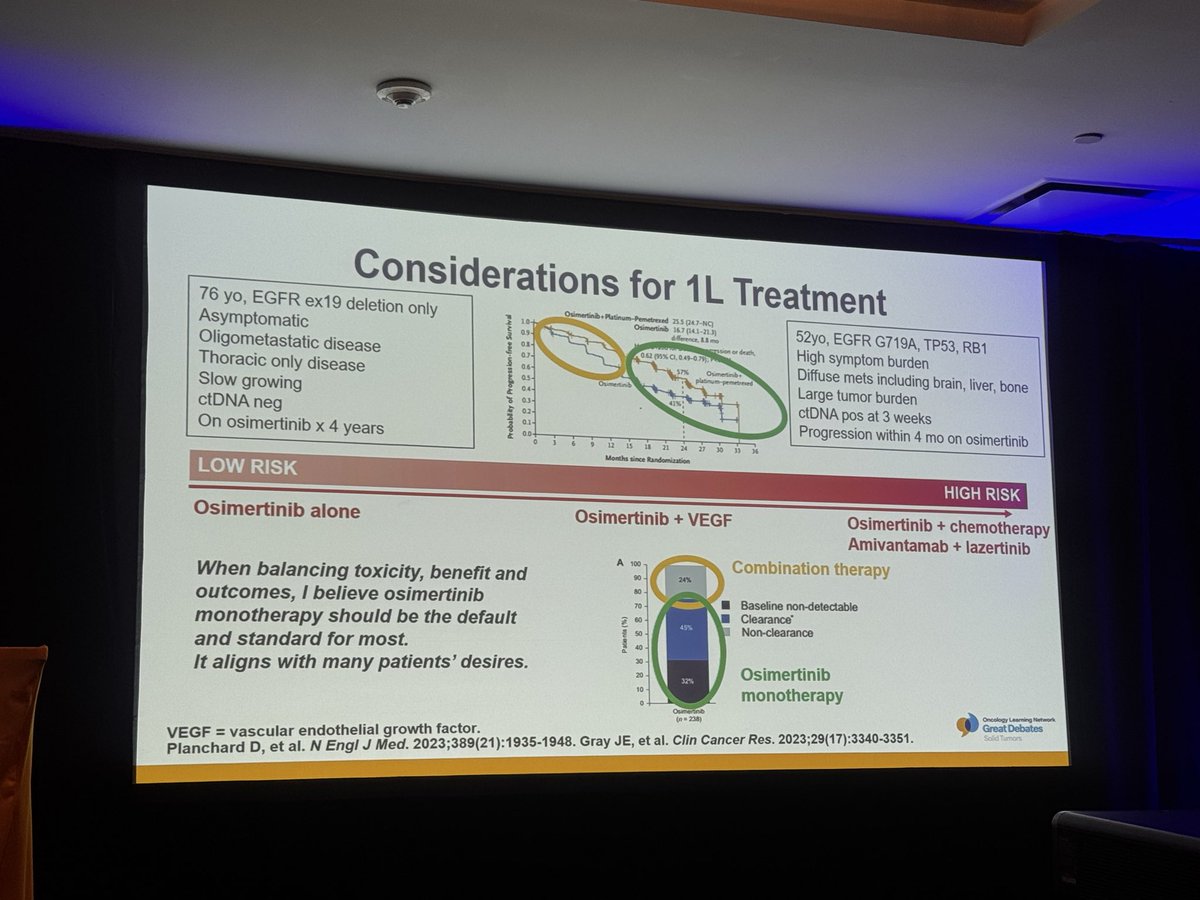
Considerations for 1L Treatment
Side effects / Time and effort / Financial cost / Quality of life <—> Progression-free survival / Overall survival / Ability to sequence treatments / CNS outcomes
1L = first-line; CNS = central nervous system.
---
[Slide 4]
Considerations for 1L Treatment
Low-risk case: 76 yo, EGFR ex19 deletion only, Asymptomatic, Oligometastatic disease, Thoracic only disease, Slow growing, ctDNA neg, On osimertinib x 4 years
High-risk case: 52yo, EGFR G719A, TP53, RB1, High symptom burden, Diffuse mets including brain, liver, bone, Large tumor burden, ctDNA pos at 3 weeks, Progression within 4 mo on osimertinib
LOW RISK <-> HIGH RISK spectrum:
Osimertinib alone -- Osimertinib + VEGF -- Osimertinib + chemotherapy / Amivantamab + lazertinib
"When balancing toxicity, benefit and outcomes, I believe osimertinib monotherapy should be the default and standard for most. It aligns with many patients' desires."
PFS chart: Osimertinib+Platinum-Pemetrexed 25.5 mo (24.7-NC) vs Osimertinib 16.7 mo (14.1-21.3), difference 8.8 mo, HR 0.62 (95% CI 0.49-0.79); combination therapy 57%/41% vs monotherapy at 24/33 months
CtDNA clearance bar chart (Osimertinib n=238): Combination therapy 24% non-clearance; Osimertinib monotherapy 45% clearance, 32% baseline non-detectable
VEGF = vascular endothelial growth factor.
Planchard D, et al. N Engl J Med. 2023;389(21):1935-1948. Gray JE, et al. Clin Cancer Res. 2023;29(17):3340-3351.
[Slide 1]
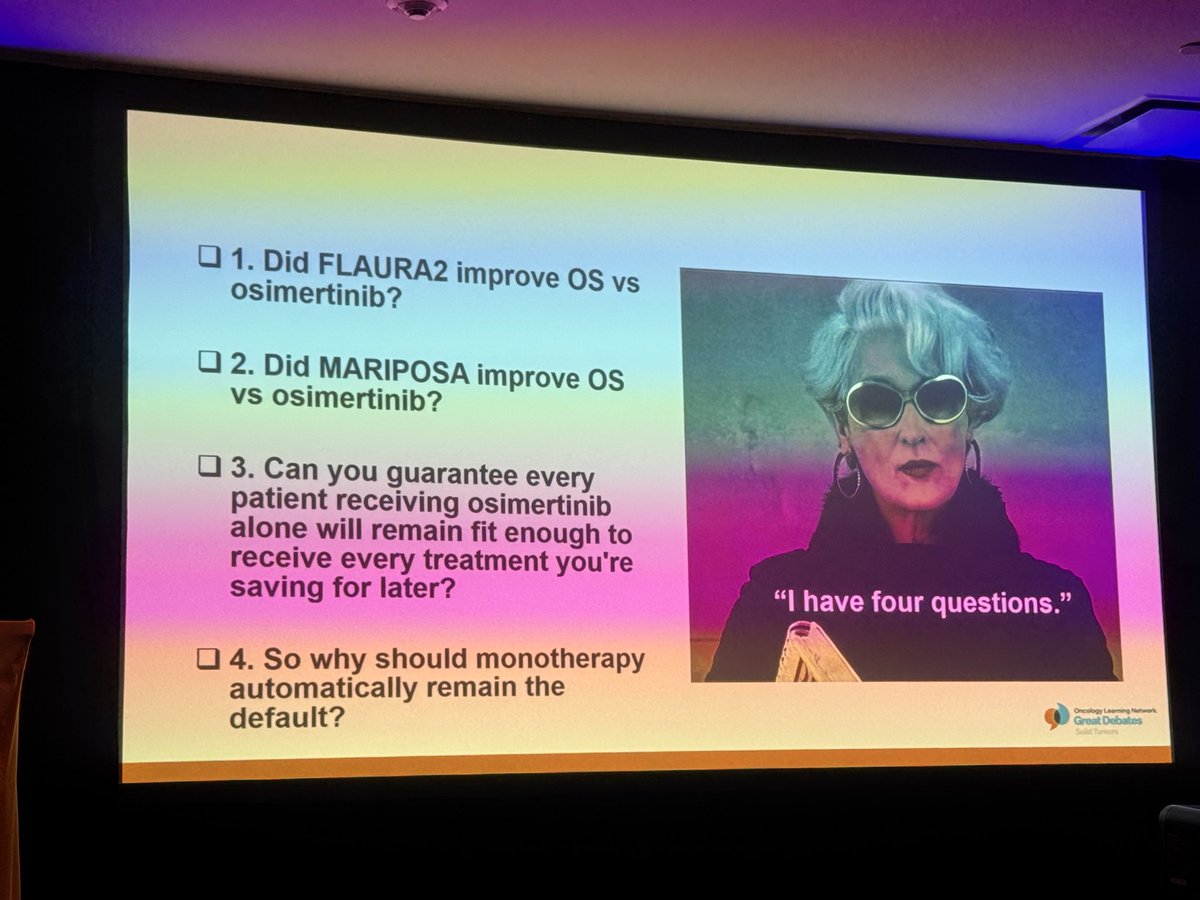
[Discussion questions slide, styled as a checklist with a Devil Wears Prada-themed image captioned "I have four questions."]
1. Did FLAURA2 improve OS vs osimertinib?
2. Did MARIPOSA improve OS vs osimertinib?
3. Can you guarantee every patient receiving osimertinib alone will remain fit enough to receive every treatment you're saving for later?
4. So why should monotherapy automatically remain the default?
[Slide 1]
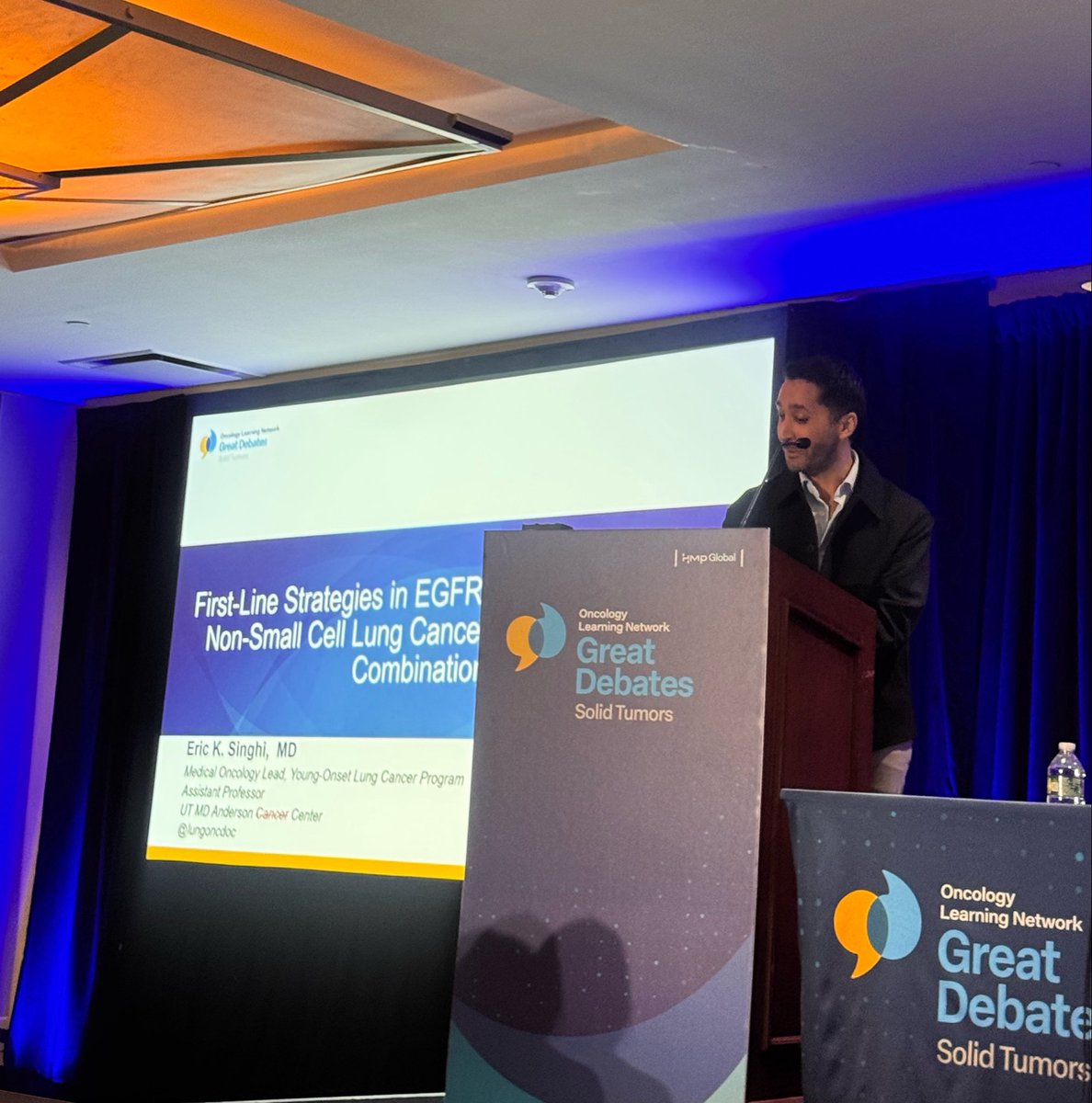
First-Line Strategies in EGFR+ Non-Small Cell Lung Cancer: Combination Therapy
Eric K. Singhi, MD
Medical Oncology Lead, Young-Onset Lung Cancer Program
Assistant Professor
UT MD Anderson Cancer Center
@lungoncdoc
---
[Slide 2]
Or... since we are in NYC
[Image: mock movie poster "EGFR WEARS PRADA 2" styled after The Devil Wears Prada, cast labeled Meryl Streep, Anne Hathaway, Emily Blunt, Stanley Tucci]
Why monotherapy may be so last season
In theaters May 1
---
[Slide 3]
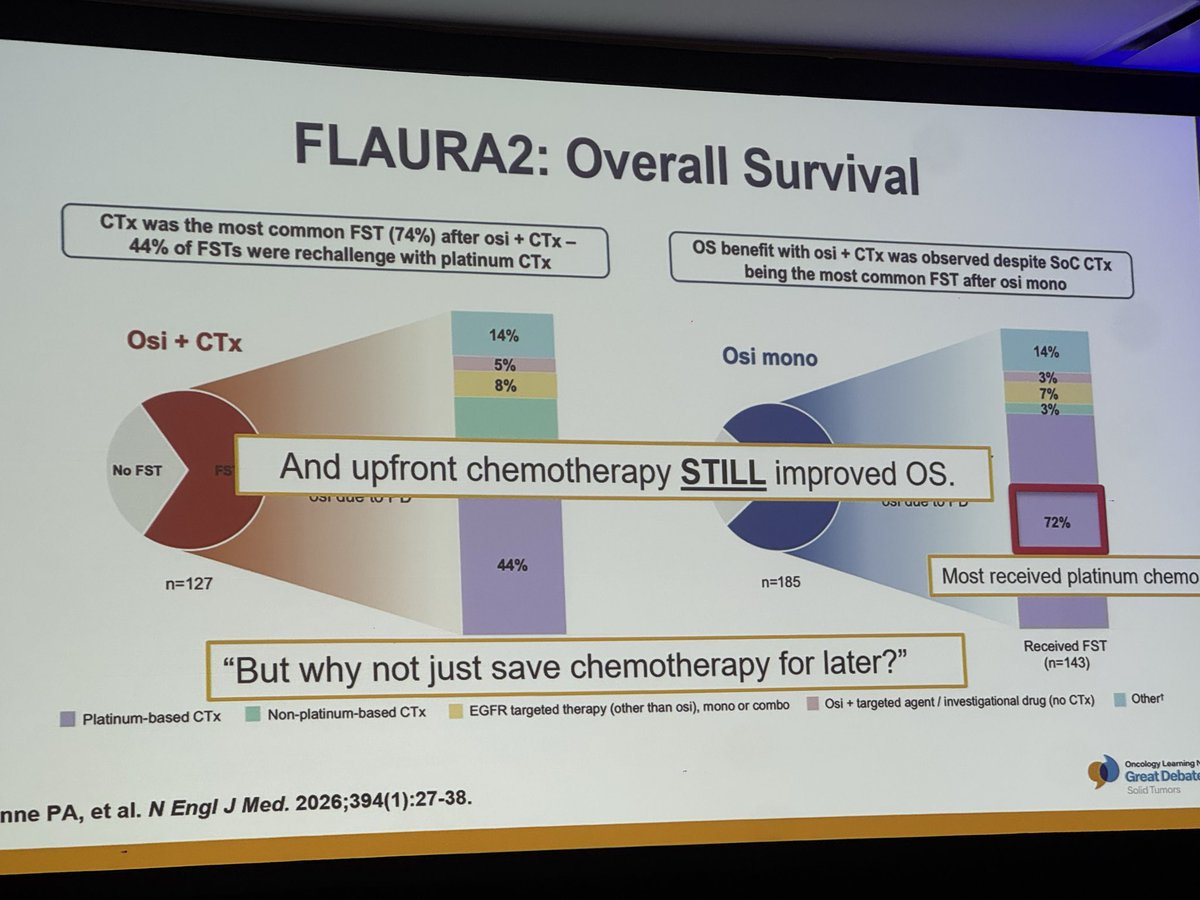
FLAURA2: Overall Survival
CTx was the most common FST (74%) after osi + CTx — 44% of FSTs were rechallenge with platinum CTx
OS benefit with osi + CTx was observed despite SoC CTx being the most common FST after osi mono
Osi + CTx (n=127): No FST vs FST — post-discontinuation therapy breakdown: 14% other, 5%, 8%, 44% platinum-based CTx
Osi mono (n=185): 14%, 3%, 7%, 3%; 72% of those who received FST (n=143) got platinum-based chemo
"And upfront chemotherapy STILL improved OS."
"But why not just save chemotherapy for later?"
Legend: Platinum-based CTx / Non-platinum-based CTx / EGFR targeted therapy (other than osi), mono or combo / Osi + targeted agent/investigational drug (no CTx) / Other
[Janne PA, et al.] N Engl J Med. 2026;394(1):27-38.
[Slide 1]
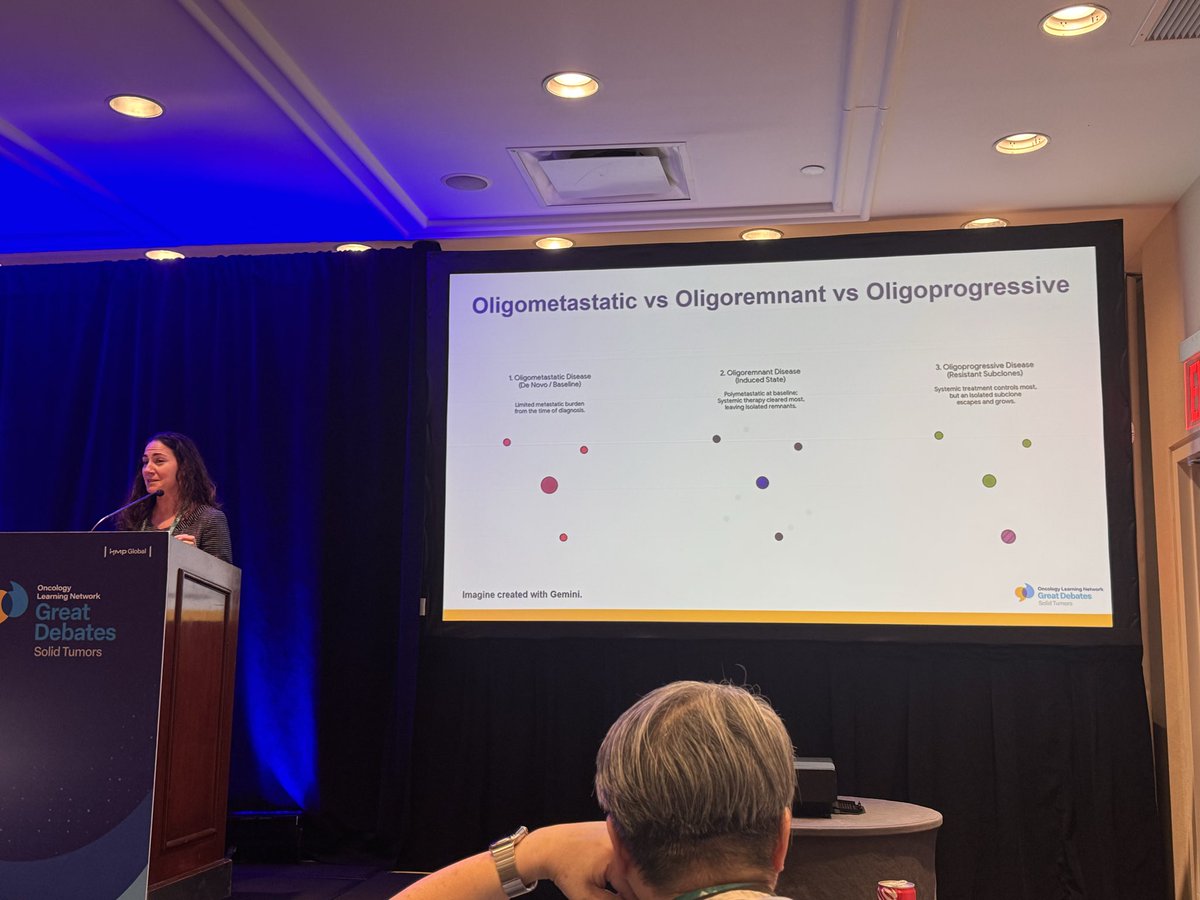
Oligometastatic vs Oligoremnant vs Oligoprogressive
1. Oligometastatic Disease (De Novo / Baseline) — Limited metastatic burden from the time of diagnosis.
2. Oligoremnant Disease (Induced State) — Polymetastatic at baseline; Systemic therapy cleared most, leaving isolated remnants.
3. Oligoprogressive Disease (Resistant Subclones) — Systemic treatment controls most, but an isolated subclone escapes and grows.
Imagine created with Gemini.
---
[Slide 2]
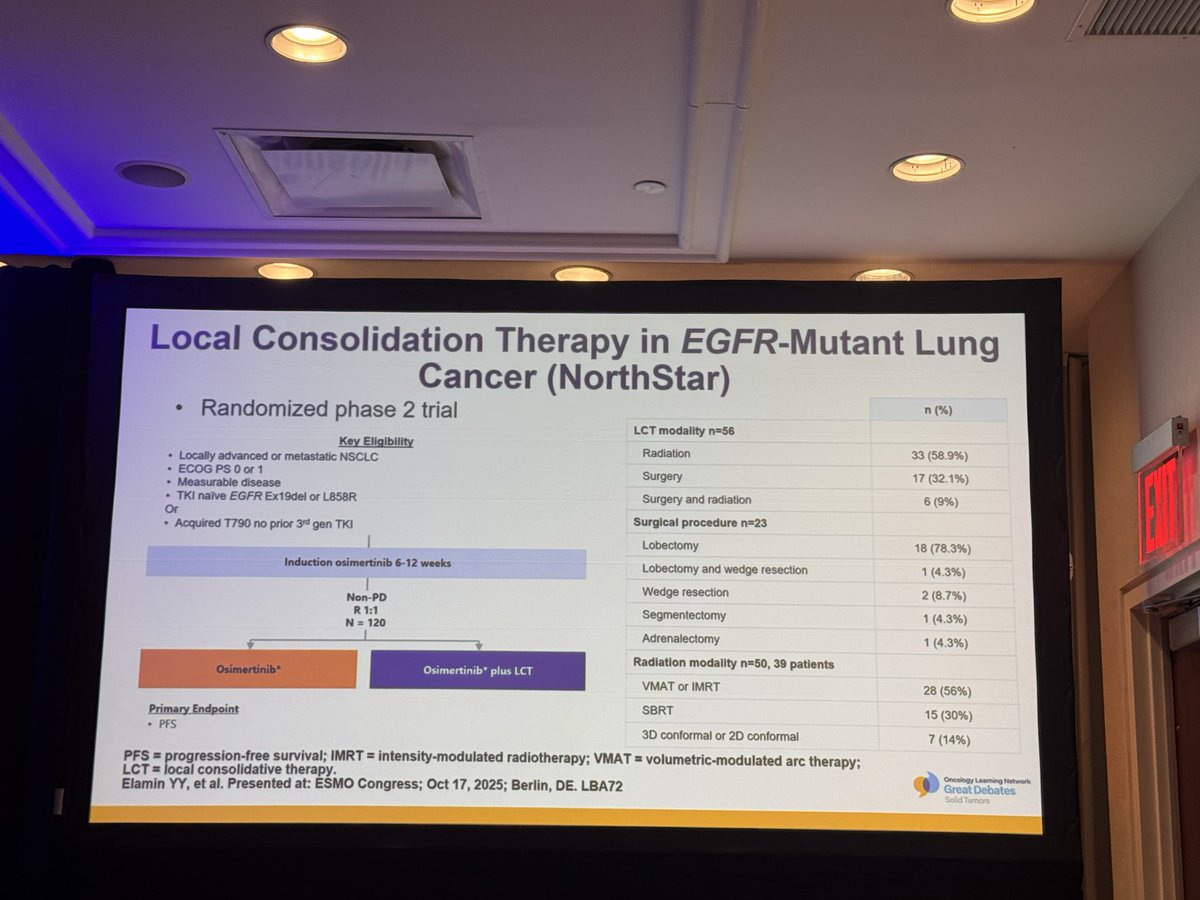
Local Consolidation Therapy in EGFR-Mutant Lung Cancer (NorthStar)
Randomized phase 2 trial
Key Eligibility: Locally advanced or metastatic NSCLC; ECOG PS 0 or 1; Measurable disease; TKI naive EGFR Ex19del or L858R OR Acquired T790 no prior 3rd gen TKI
Induction osimertinib 6-12 weeks -> Non-PD, R 1:1, N=120 -> Osimertinib vs Osimertinib plus LCT
Primary Endpoint: PFS
LCT modality n=56: Radiation 33 (58.9%), Surgery 17 (32.1%), Surgery and radiation 6 (9%)
Surgical procedure n=23: Lobectomy 18 (78.3%), Lobectomy and wedge resection 1 (4.3%), Wedge resection 2 (8.7%), Segmentectomy 1 (4.3%), Adrenalectomy 1 (4.3%)
Radiation modality n=50, 39 patients: VMAT or IMRT 28 (56%), SBRT 15 (30%), 3D conformal or 2D conformal 7 (14%)
PFS = progression-free survival; IMRT = intensity-modulated radiotherapy; VMAT = volumetric-modulated arc therapy; LCT = local consolidative therapy.
Elamin YY, et al. Presented at: ESMO Congress; Oct 17, 2025; Berlin, DE. LBA72.
---
[Slide 3]
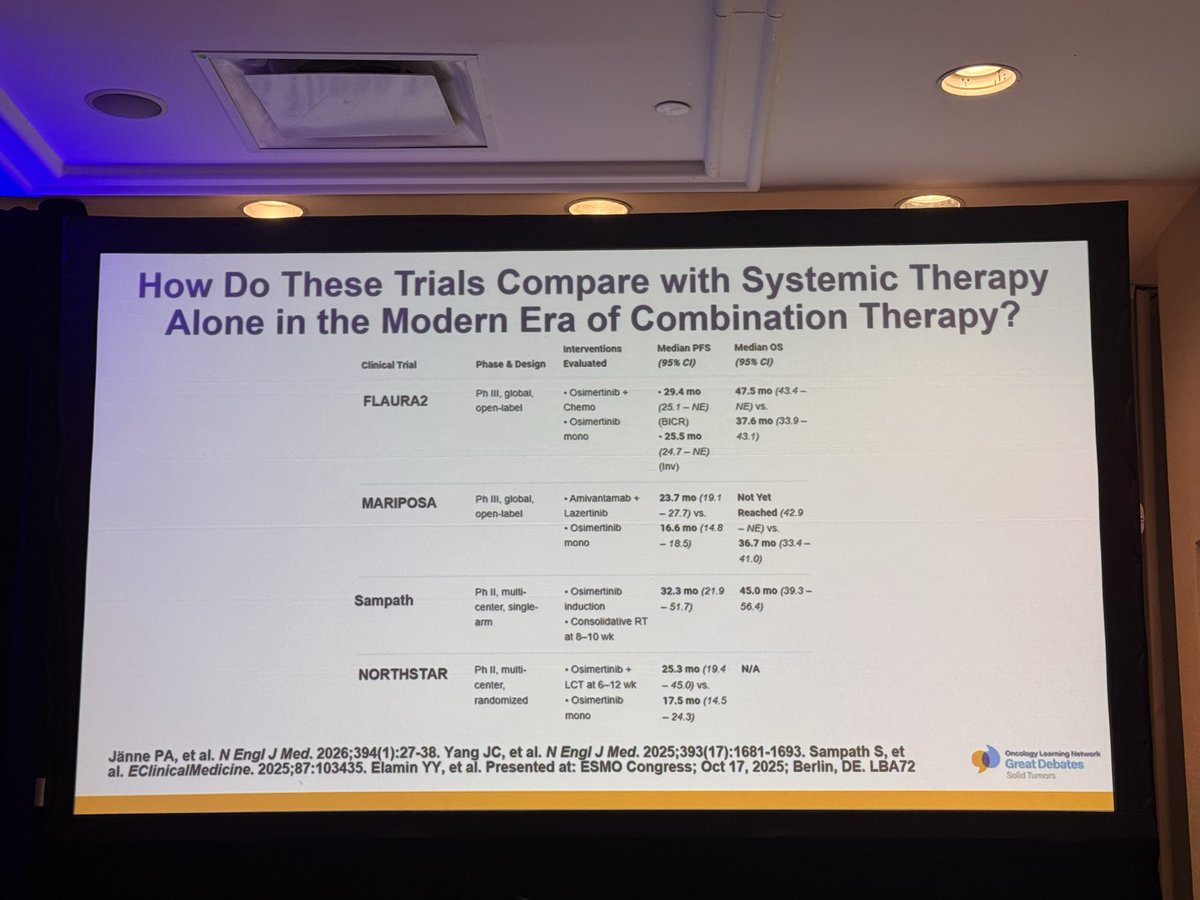
How Do These Trials Compare with Systemic Therapy Alone in the Modern Era of Combination Therapy?
Clinical Trial / Phase & Design / Interventions Evaluated / Median PFS (95% CI) / Median OS (95% CI):
FLAURA2 — Ph III, global, open-label — Osimertinib+Chemo vs Osimertinib mono — 29.4 mo (25.1-NE) [BICR] / 25.5 mo (24.7-NE) [Inv] — 47.5 mo (43.4-NE) vs 37.6 mo (33.9-43.1)
MARIPOSA — Ph III, global, open-label — Amivantamab+Lazertinib vs Osimertinib mono — 23.7 mo (19.1-27.7) vs 16.6 mo (14.8-18.5) — Not Yet Reached (42.9-NE) vs 36.7 mo (33.4-41.0)
Sampath — Ph II, multicenter, single-arm — Osimertinib induction + Consolidative RT at 8-10 wk — 32.3 mo (21.9-51.7) — 45.0 mo (39.3-56.4)
NORTHSTAR — Ph II, multicenter, randomized — Osimertinib+LCT at 6-12 wk vs Osimertinib mono — 25.3 mo (19.4-45.0) vs 17.5 mo (14.5-24.3) — N/A
Janne PA, et al. N Engl J Med. 2026;394(1):27-38. Yang JC, et al. N Engl J Med. 2025;393(17):1681-1693. Sampath S, et al. EClinicalMedicine. 2025;87:103435. Elamin YY, et al. Presented at: ESMO Congress; Oct 17, 2025; Berlin, DE. LBA72.
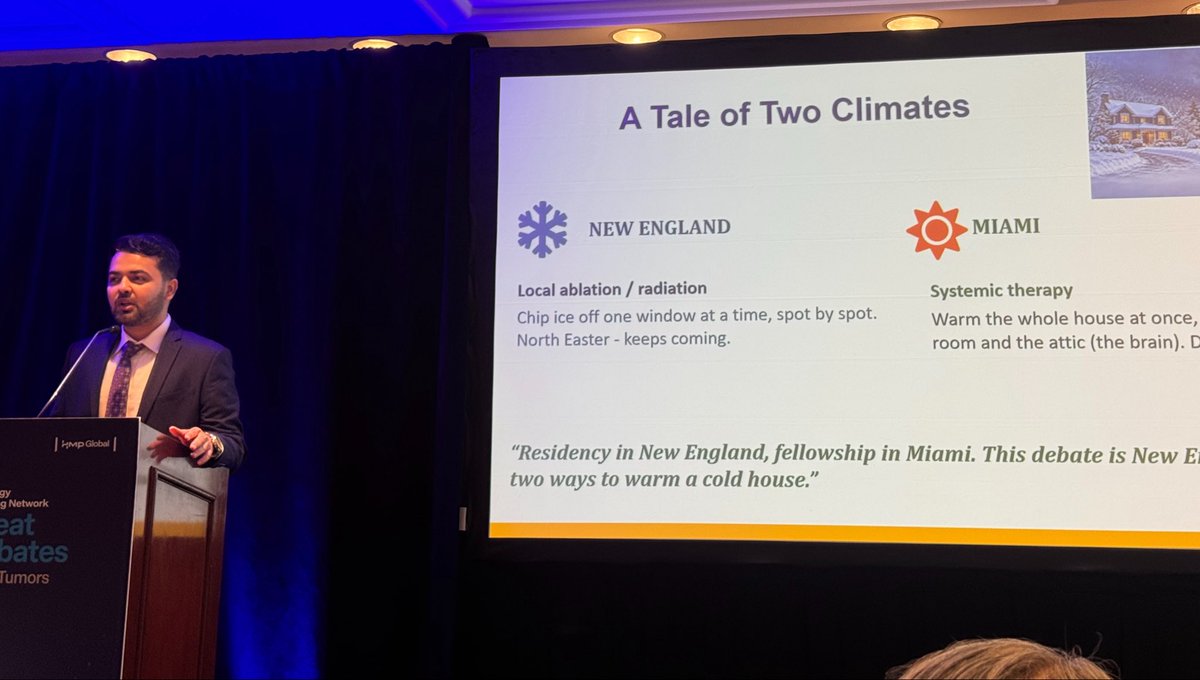
[Slide 1]
A Tale of Two Climates
NEW ENGLAND — Local ablation / radiation: "Chip ice off one window at a time, spot by spot. North Easter - keeps coming."
MIAMI — Systemic therapy: "Warm the whole house at once, room and the attic (the brain). D[...]" [text cut off at right edge of frame]
"Residency in New England, fellowship in Miami. This debate is New E[ngland vs Miami:] two ways to warm a cold house." [quote partially cut off]
🔵 GI Cancers
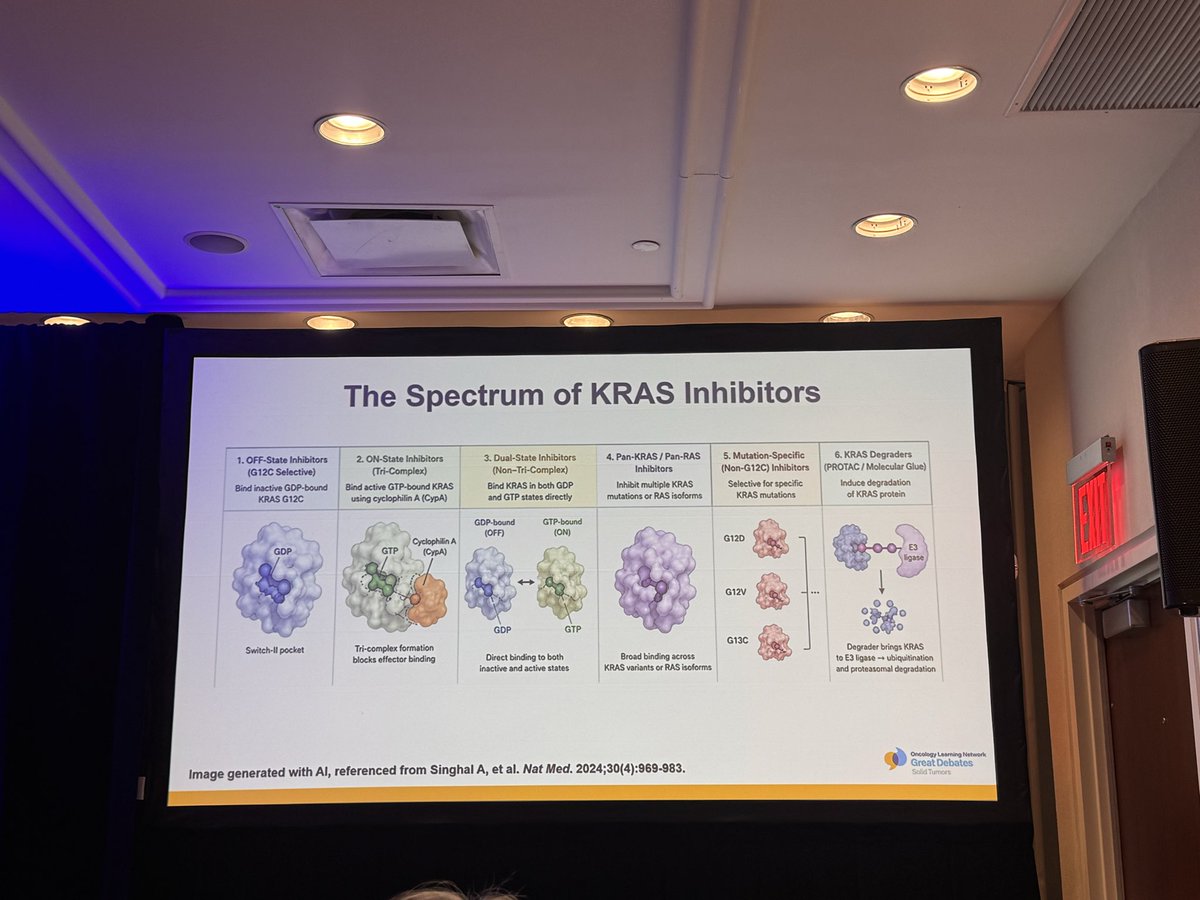
Gastroesophageal Regimens, Pancreatic RAS Inhibitors & Liver-Directed Therapy: The GI Debates
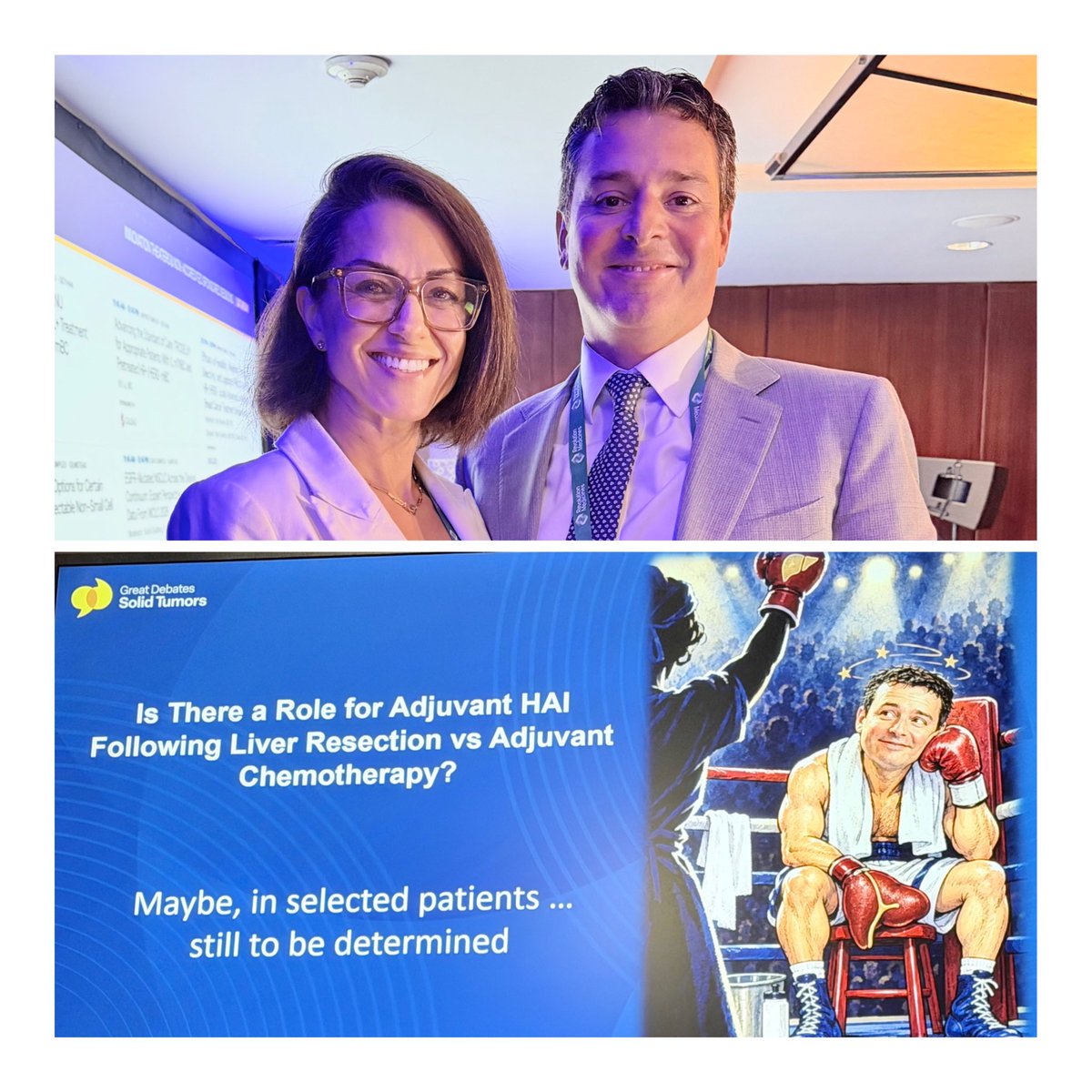
Co-chaired by Cathy Eng, MD and Yelena Janjigian, MD, the GI track ran three debates: a gastroesophageal treatment-strategy face-off (Janjigian vs. Sam Klempner), whether RAS inhibitors are ready as standard of care in pancreatic cancer (Efrat Dotan vs. Olatunji Alese), and whether adjuvant hepatic arterial infusion after liver resection is worth its added toxicity (Sepideh Gholami vs. Kevin Soares). — 10 tweets, 6.2K impressions.
[Slide 1]
[Top half of image: selfie of two attendees at the conference, not a data slide]
Is There a Role for Adjuvant HAI Following Liver Resection vs Adjuvant Chemotherapy?
Maybe, in selected patients ... still to be determined
[Illustration: boxing-themed cartoon, referee raising a fighter's glove, fighter resting on a stool]
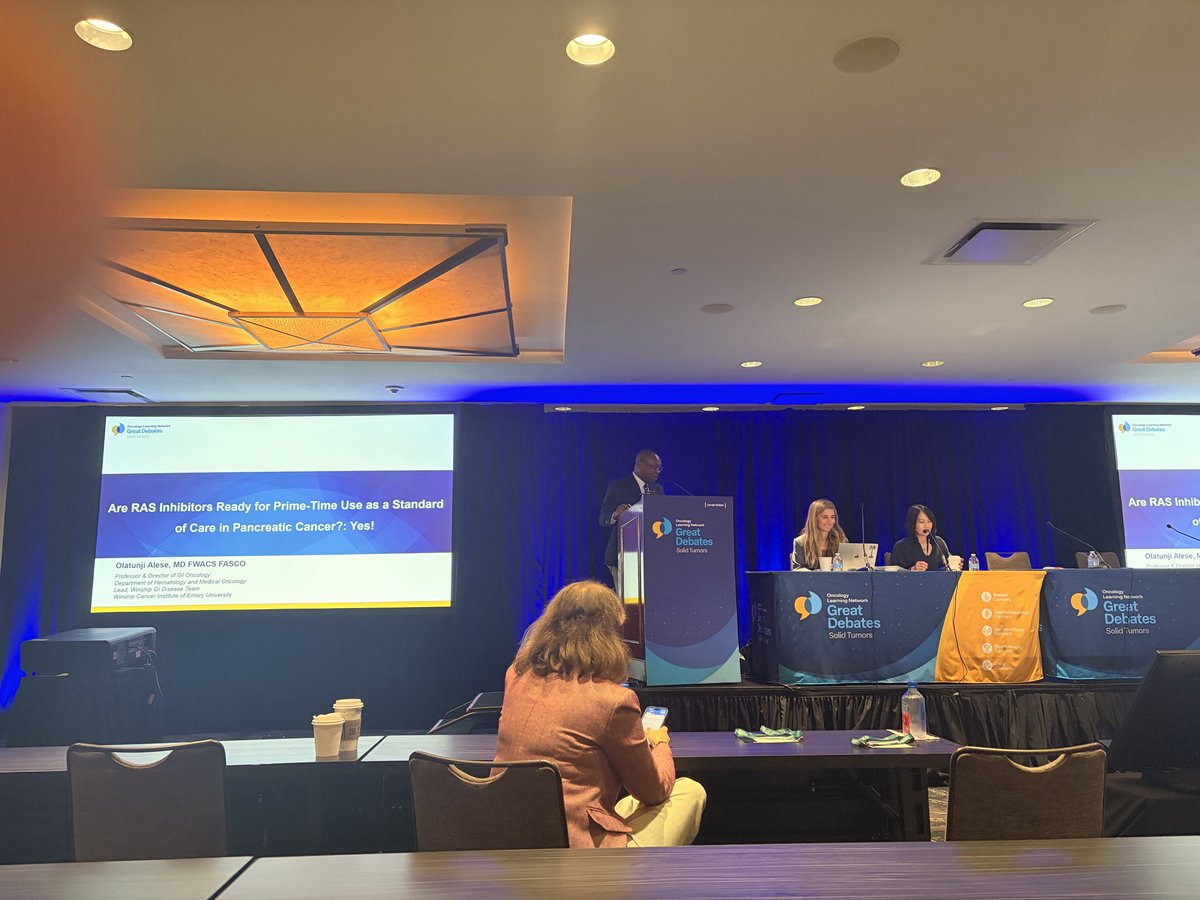
[Slide 1]
Are RAS Inhibitors Ready for Prime-Time Use as a Standard of Care in Pancreatic Cancer?: Yes!
Olatunji Alese, MD FWACS FASCO
Professor & Director of GI Oncology
Department of Hematology and Medical Oncology
Lead, Winship GI Disease Team
Winship Cancer Institute of Emory University
---
[Slide 2]
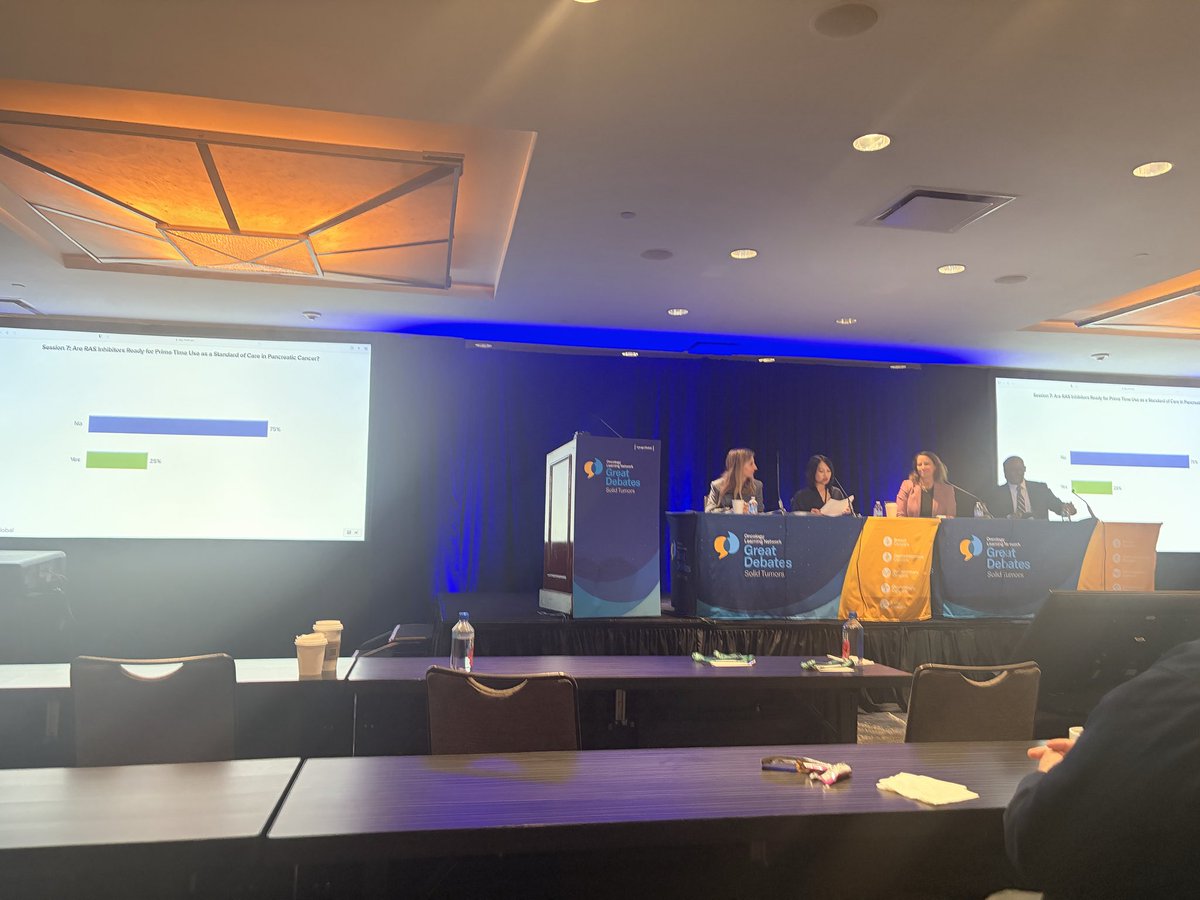
Audience live-poll results displayed on two side screens: "Session 7: Are RAS Inhibitors Ready for Prime-Time Use as a Standard of Care in Pancreatic Cancer?" — Bar chart: No 75%, Yes 25% (shown on both screens, panelists seated at dais below).
🧬 Neuroendocrine Tumors
DLL3-Targeted T-Cell Engagers Take the Stage in Neuroendocrine Tumors
Jennifer Chan, MD, MPH walked through early, promising DLL3 T-cell engagers and antibody-drug conjugates in neuroendocrine and extrapulmonary neuroendocrine cancer — one of the newest mechanisms discussed at the meeting. — 5 tweets, 3.7K impressions.
[Slide 1]
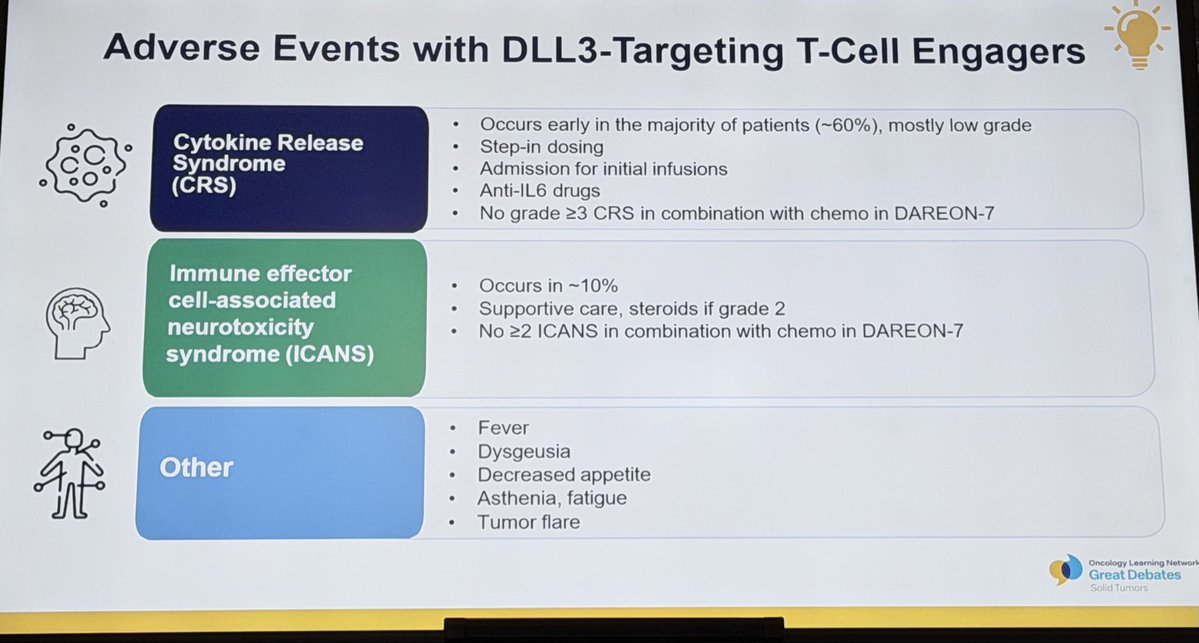
Adverse Events with DLL3-Targeting T-Cell Engagers
Cytokine Release Syndrome (CRS): Occurs early in the majority of patients (~60%), mostly low grade; Step-in dosing; Admission for initial infusions; Anti-IL6 drugs; No grade >=3 CRS in combination with chemo in DAREON-7
Immune effector cell-associated neurotoxicity syndrome (ICANS): Occurs in ~10%; Supportive care, steroids if grade 2; No >=2 ICANS in combination with chemo in DAREON-7
Other: Fever; Dysgeusia; Decreased appetite; Asthenia, fatigue; Tumor flare
[Slide 1]
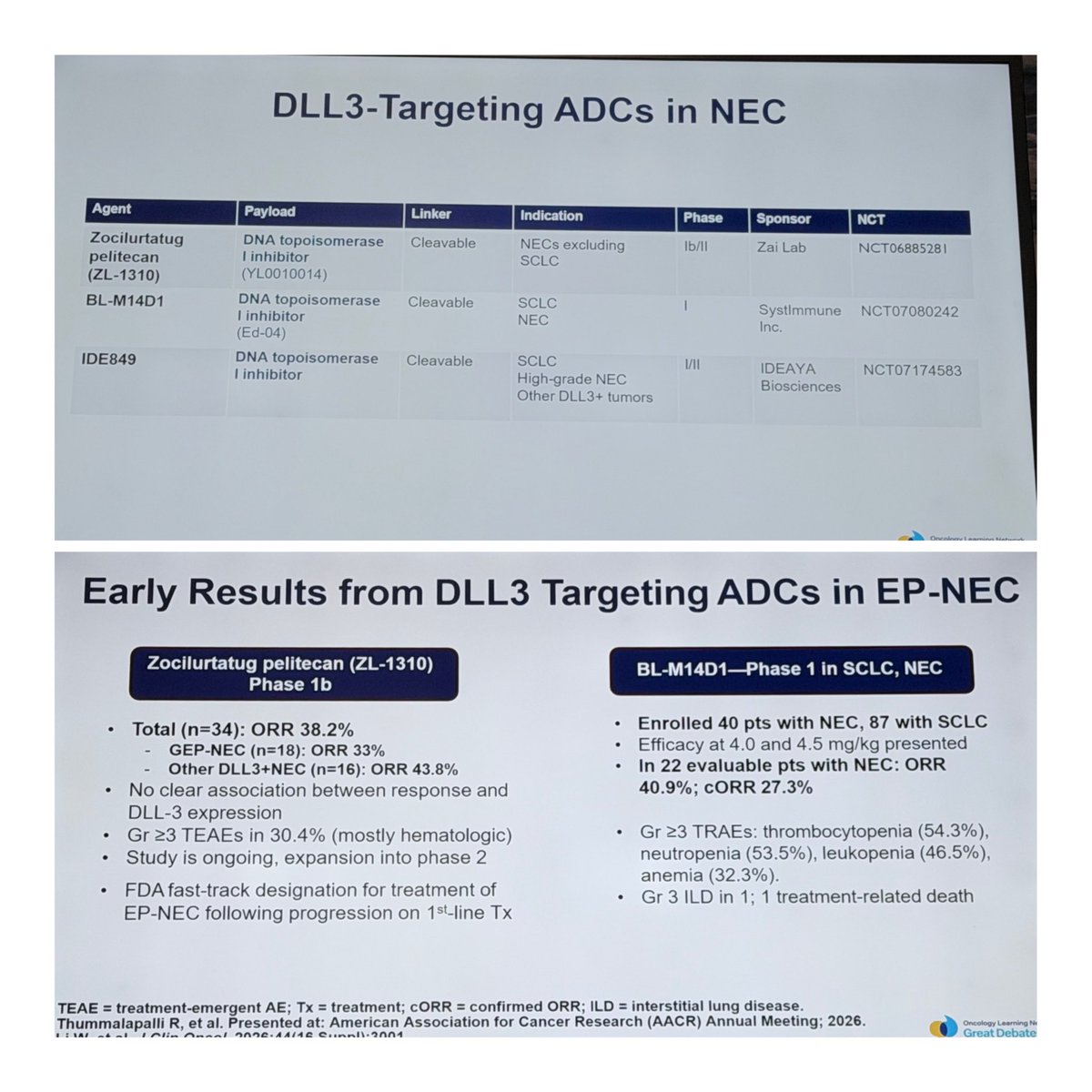
[Top half] DLL3-Targeting ADCs in NEC
Table — Agent / Payload / Linker / Indication / Phase / Sponsor / NCT:
Zocilurtatug pelitecan (ZL-1310) — DNA topoisomerase I inhibitor (YL0010014) — Cleavable — NECs excluding SCLC — Ib/II — Zai Lab — NCT06885281
BL-M14D1 — DNA topoisomerase I inhibitor (Ed-04) — Cleavable — SCLC, NEC — I — SystImmune Inc. — NCT07080242
IDE849 — DNA topoisomerase I inhibitor — Cleavable — SCLC, High-grade NEC, Other DLL3+ tumors — I/II — IDEAYA Biosciences — NCT07174583
[Bottom half] Early Results from DLL3 Targeting ADCs in EP-NEC
Zocilurtatug pelitecan (ZL-1310) Phase 1b: Total (n=34): ORR 38.2%; GEP-NEC (n=18): ORR 33%; Other DLL3+NEC (n=16): ORR 43.8%; No clear association between response and DLL-3 expression; Gr >=3 TEAEs in 30.4% (mostly hematologic); Study is ongoing, expansion into phase 2; FDA fast-track designation for treatment of EP-NEC following progression on 1st-line Tx
BL-M14D1 — Phase 1 in SCLC, NEC: Enrolled 40 pts with NEC, 87 with SCLC; Efficacy at 4.0 and 4.5 mg/kg presented; In 22 evaluable pts with NEC: ORR 40.9%; cORR 27.3%; Gr >=3 TRAEs: thrombocytopenia (54.3%), neutropenia (53.5%), leukopenia (46.5%), anemia (32.3%); Gr 3 ILD in 1; 1 treatment-related death
TEAE = treatment-emergent AE; Tx = treatment; cORR = confirmed ORR; ILD = interstitial lung disease.
Thummalapalli R, et al. Presented at: American Association for Cancer Research (AACR) Annual Meeting; 2026.
[Slide 1]
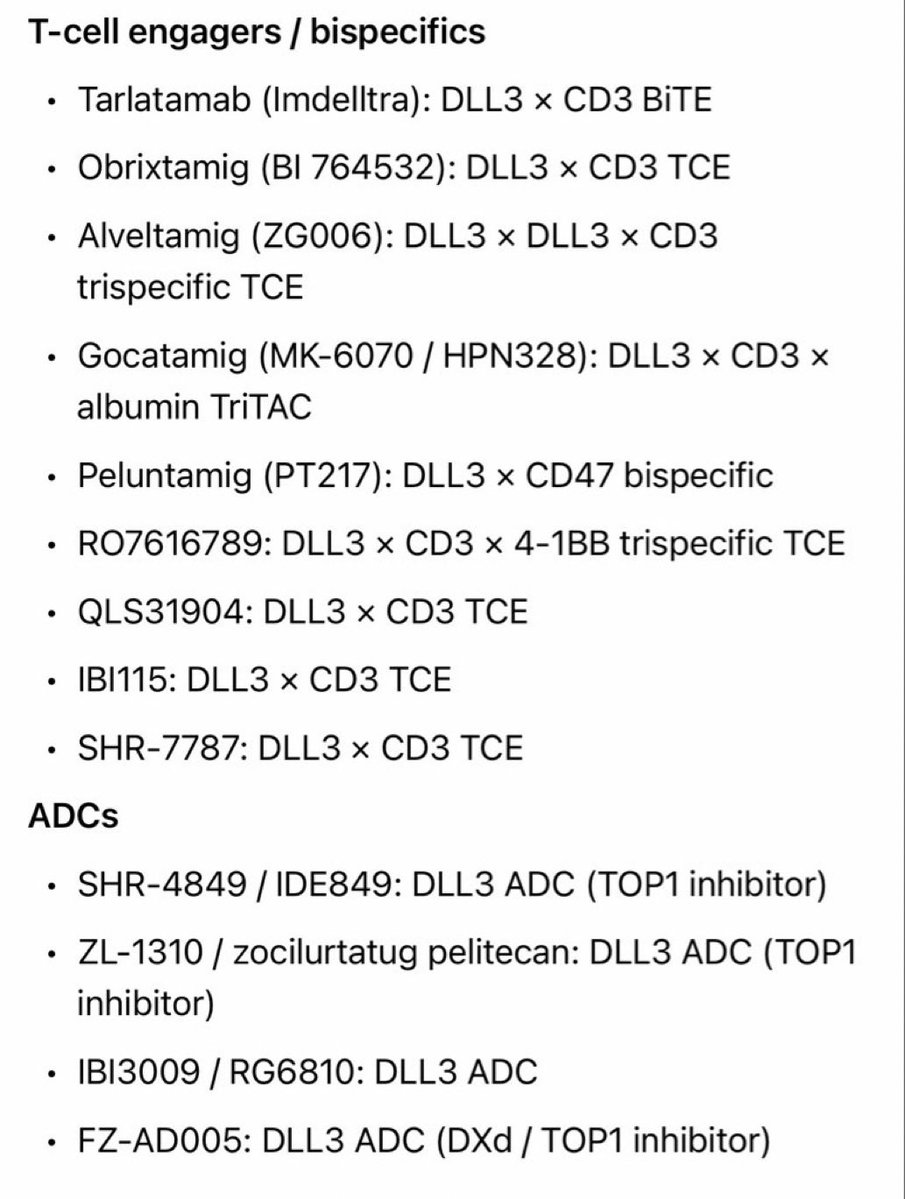
T-cell engagers / bispecifics
- Tarlatamab (Imdelltra): DLL3 x CD3 BiTE
- Obrixtamig (BI 764532): DLL3 x CD3 TCE
- Alveltamig (ZG006): DLL3 x DLL3 x CD3 trispecific TCE
- Gocatamig (MK-6070 / HPN328): DLL3 x CD3 x albumin TriTAC
- Peluntamig (PT217): DLL3 x CD47 bispecific
- RO7616789: DLL3 x CD3 x 4-1BB trispecific TCE
- QLS31904: DLL3 x CD3 TCE
- IBI115: DLL3 x CD3 TCE
- SHR-7787: DLL3 x CD3 TCE
ADCs
- SHR-4849 / IDE849: DLL3 ADC (TOP1 inhibitor)
- ZL-1310 / zocilurtatug pelitecan: DLL3 ADC (TOP1 inhibitor)
- IBI3009 / RG6810: DLL3 ADC
- FZ-AD005: DLL3 ADC (DXd / TOP1 inhibitor)
🔷 GU Cancers
A 50/50 Split on First-Line mRCC, and Shifting Ground in MIBC
Three debates: a first-line metastatic renal cell carcinoma treatment-strategy debate that the audience vote split exactly 50/50, a look at how muscle-invasive bladder cancer management continues to shift with biomarker-driven approaches, and a case-based discussion of when to sequence Lu-177-PSMA radioligand therapy (Scott Tagawa vs. Atish Choudhury). — 4 tweets, 844 impressions.
[Slide 1]
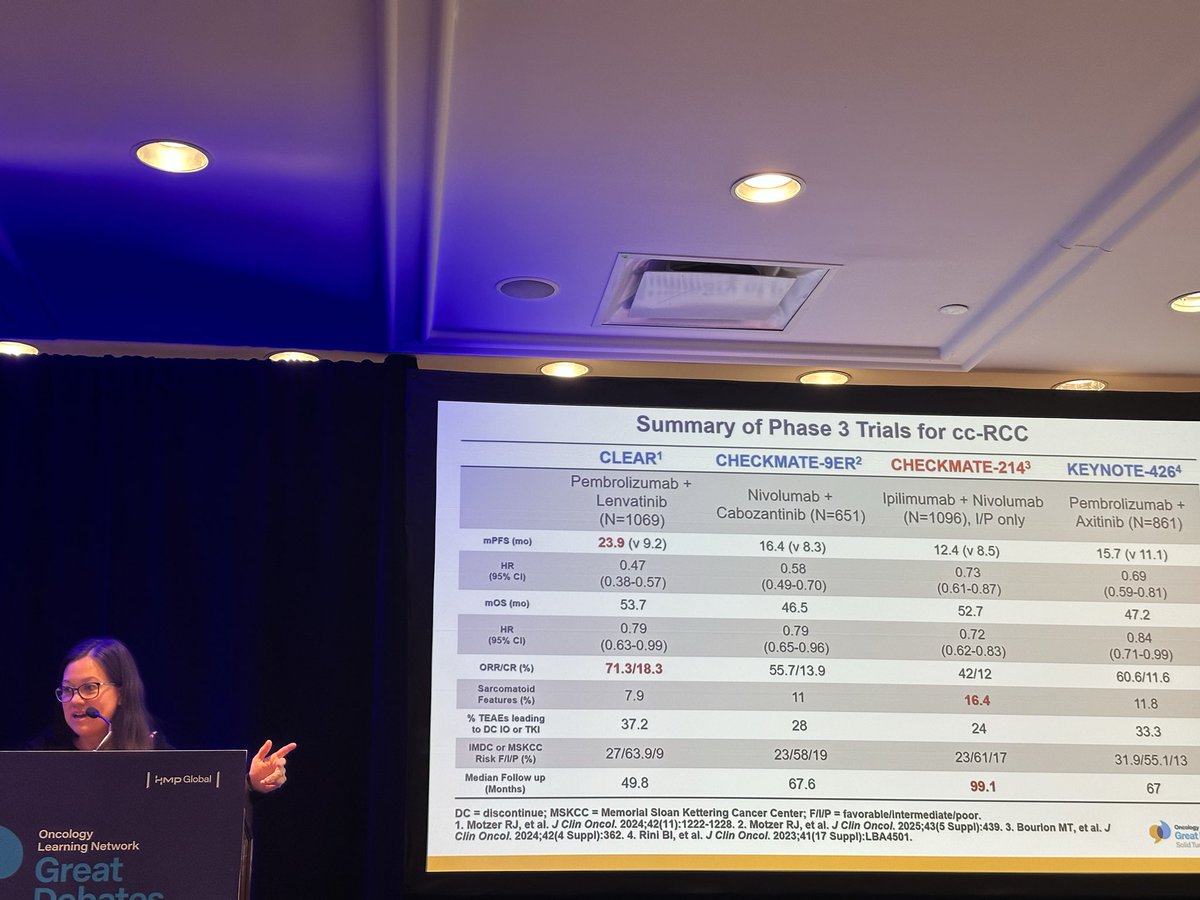
Summary of Phase 3 Trials for cc-RCC
CLEAR (Pembrolizumab + Lenvatinib, N=1069): mPFS 23.9 mo (v 9.2); HR 0.47 (0.38-0.57); mOS 53.7 mo, HR 0.79 (0.63-0.99); ORR/CR 71.3/18.3%; Sarcomatoid features 7.9%; %TEAEs leading to DC IO or TKI 37.2%; IMDC/MSKCC Risk F/I/P 27/63.9/9; Median follow-up 49.8 mo
CHECKMATE-9ER (Nivolumab + Cabozantinib, N=651): mPFS 16.4 mo (v 8.3); HR 0.58 (0.49-0.70); mOS 46.5 mo, HR 0.79 (0.65-0.96); ORR/CR 55.7/13.9%; Sarcomatoid features 11%; %TEAEs leading to DC IO or TKI 28%; IMDC/MSKCC Risk F/I/P 23/58/19; Median follow-up 67.6 mo
CHECKMATE-214 (Ipilimumab + Nivolumab, N=1096, I/P only): mPFS 12.4 mo (v 8.5); HR 0.73 (0.61-0.87); mOS 52.7 mo, HR 0.72 (0.62-0.83); ORR/CR 42/12%; Sarcomatoid features 16.4%; %TEAEs leading to DC IO or TKI 24%; IMDC/MSKCC Risk F/I/P 23/61/17; Median follow-up 99.1 mo
KEYNOTE-426 (Pembrolizumab + Axitinib, N=861): mPFS 15.7 mo (v 11.1); HR 0.69 (0.59-0.81); mOS 47.2 mo, HR 0.84 (0.71-0.99); ORR/CR 60.6/11.6%; Sarcomatoid features 11.8%; %TEAEs leading to DC IO or TKI 33.3%; IMDC/MSKCC Risk F/I/P 31.9/55.1/13; Median follow-up 67 mo
DC = discontinue; MSKCC = Memorial Sloan Kettering Cancer Center; F/I/P = favorable/intermediate/poor.
1. Motzer RJ, et al. J Clin Oncol. 2024;42(11):1222-1228. 2. Motzer RJ, et al. J Clin Oncol. 2025;43(5 Suppl):439. 3. Bourlon MT, et al. J Clin Oncol. 2024;42(4 Suppl):362. 4. Rini BI, et al. J Clin Oncol. 2023;41(17 Suppl):LBA4501.
---
[Slide 2]
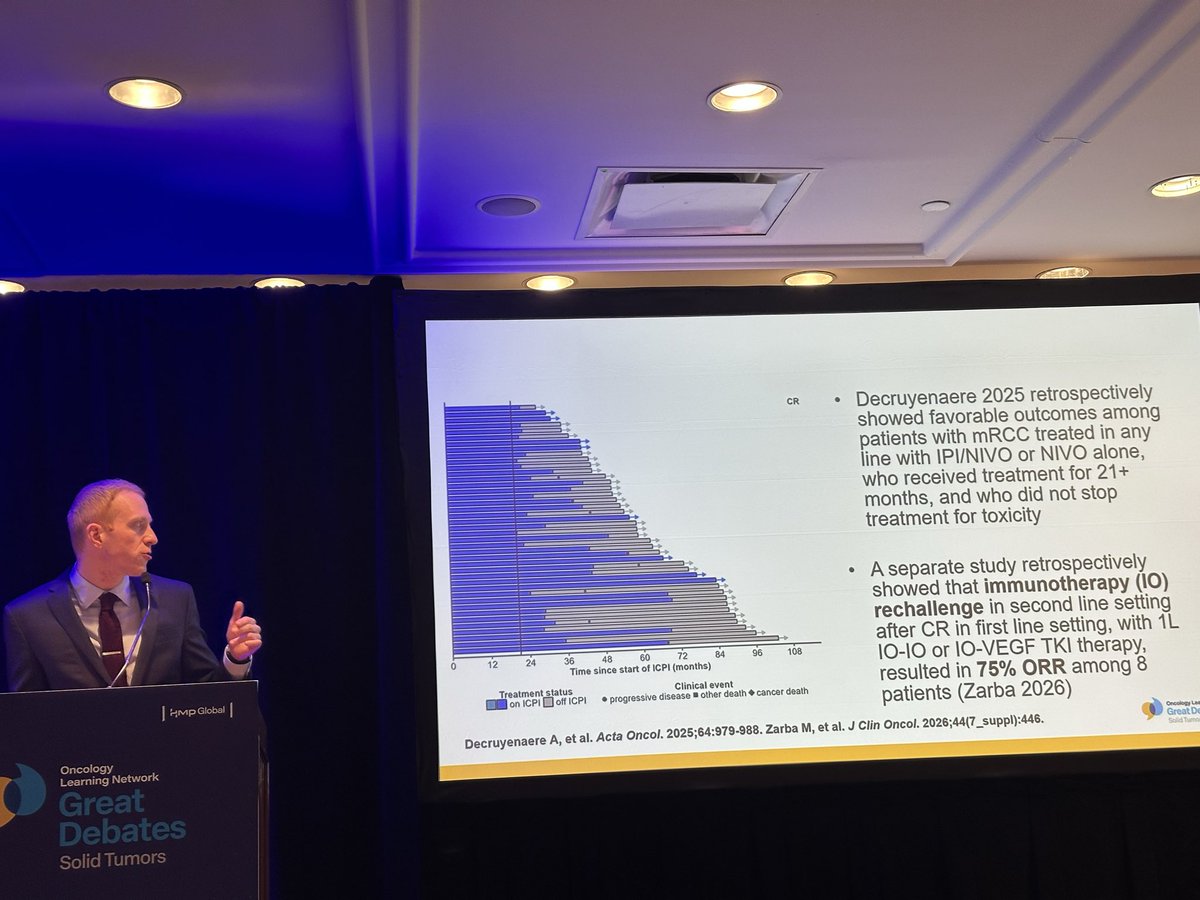
[Bar/line chart of clinical event timelines since start of ICPI (months), by treatment status on/off ICPI, with events marked progressive disease / other death / cancer death, CR label at top]
- Decruyenaere 2025 retrospectively showed favorable outcomes among patients with mRCC treated in any line with IPI/NIVO or NIVO alone, who received treatment for 21+ months, and who did not stop treatment for toxicity
- A separate study retrospectively showed that immunotherapy (IO) rechallenge in second line setting after CR in first line setting, with 1L IO-IO or IO-VEGF TKI therapy, resulted in 75% ORR among 8 patients (Zarba 2026)
Decruyenaere A, et al. Acta Oncol. 2025;64:979-988. Zarba M, et al. J Clin Oncol. 2026;44(7_suppl):446.
[Slide 1]
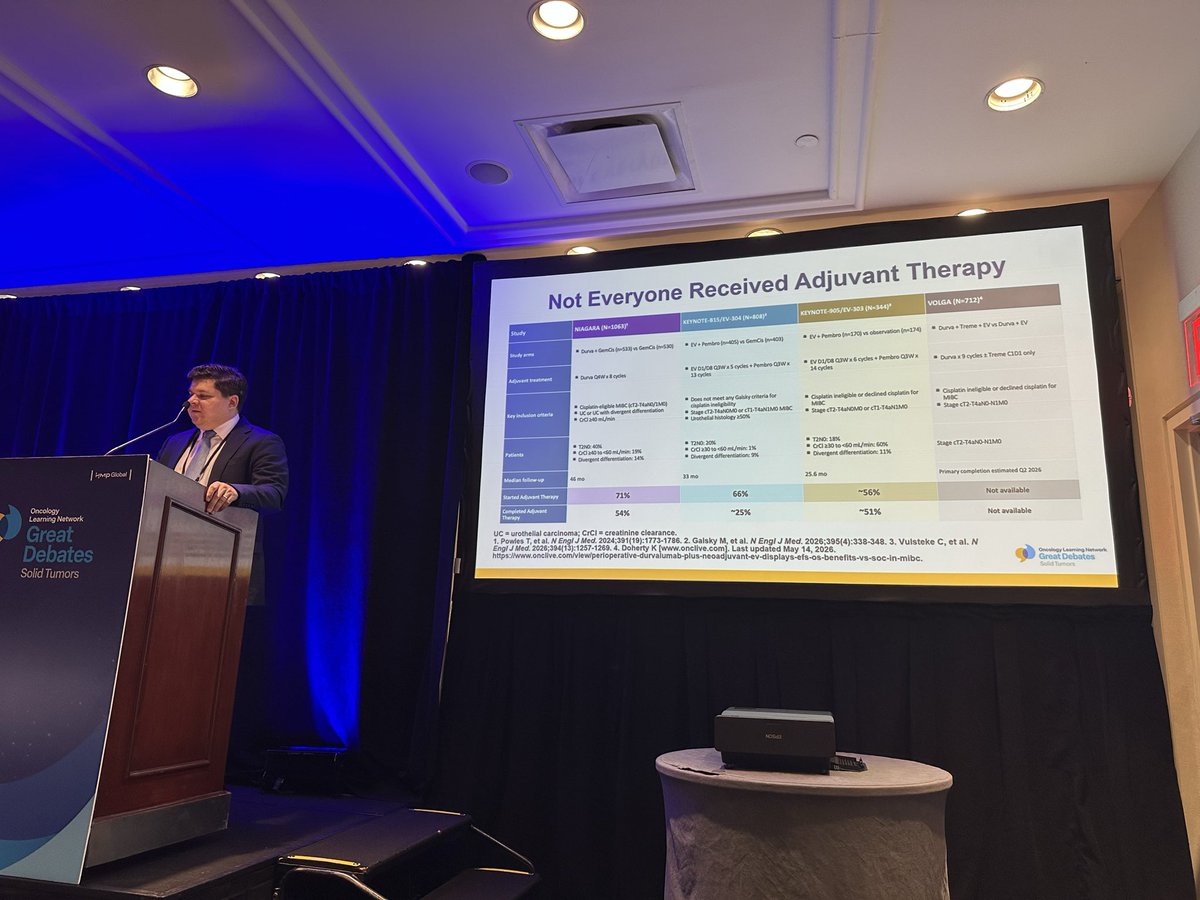
Not Everyone Received Adjuvant Therapy
Table — Study / Study arms / Adjuvant treatment / Key inclusion criteria / Patients / Median follow-up / Started Adjuvant Therapy / Completed Adjuvant Therapy:
NIAGARA (N=1063): Durva+GemCis (n=533) vs GemCis (n=530); Durva Q4W x 8 cycles; Cisplatin-eligible MIBC (cT2-T4aN0/1M0), UC or UC with divergent differentiation, CrCl >=40 mL/min; T2N0 40%, CrCl>=40 to <60 19%, Divergent differentiation 14%; Median follow-up 46 mo; Started 71%; Completed 54%
KEYNOTE-B15/EV-304 (N=808): EV+Pembro (n=405) vs GemCis (n=403); EV D1/D8 Q3W x5 cycles + Pembro Q3W x13 cycles; Does not meet any Galsky criteria for cisplatin ineligibility, Stage cT2-T4aN0M0 or cT1-T4aN1M0 MIBC, Urothelial histology >=50%; T2N0 20%, CrCl>=30 to <60 1%, Divergent differentiation 9%; Median follow-up 33 mo; Started 66%; Completed ~25%
KEYNOTE-905/EV-303 (N=344): EV+Pembro (n=170) vs observation (n=174); EV D1/D8 Q3W x6 cycles + Pembro Q3W x14 cycles; Cisplatin ineligible or declined cisplatin for MIBC, Stage cT2-T4aN0M0 or cT1-T4aN1M0; T2N0 18%, CrCl>=30 to <60 60%, Divergent differentiation 11%; Median follow-up 25.6 mo; Started ~56%; Completed ~51%
VOLGA (N=712): Durva+Treme+EV vs Durva+EV; Durva x9 cycles +/- Treme C1D1 only; Cisplatin ineligible or declined cisplatin for MIBC, Stage cT2-T4aN0-N1M0; Stage cT2-T4aN0-N1M0; Primary completion estimated Q2 2026; Started N/A; Completed N/A
UC = urothelial carcinoma; CrCl = creatinine clearance.
1. Powles T, et al. N Engl J Med. 2024;391(19):1773-1786. 2. Galsky M, et al. N Engl J Med. 2026;395(4):338-348. 3. Vulsteke C, et al. N Engl J Med. 2026;394(13):1257-1269. 4. Doherty K [www.onclive.com]. Last updated May 14, 2026.
---
[Slide 2]
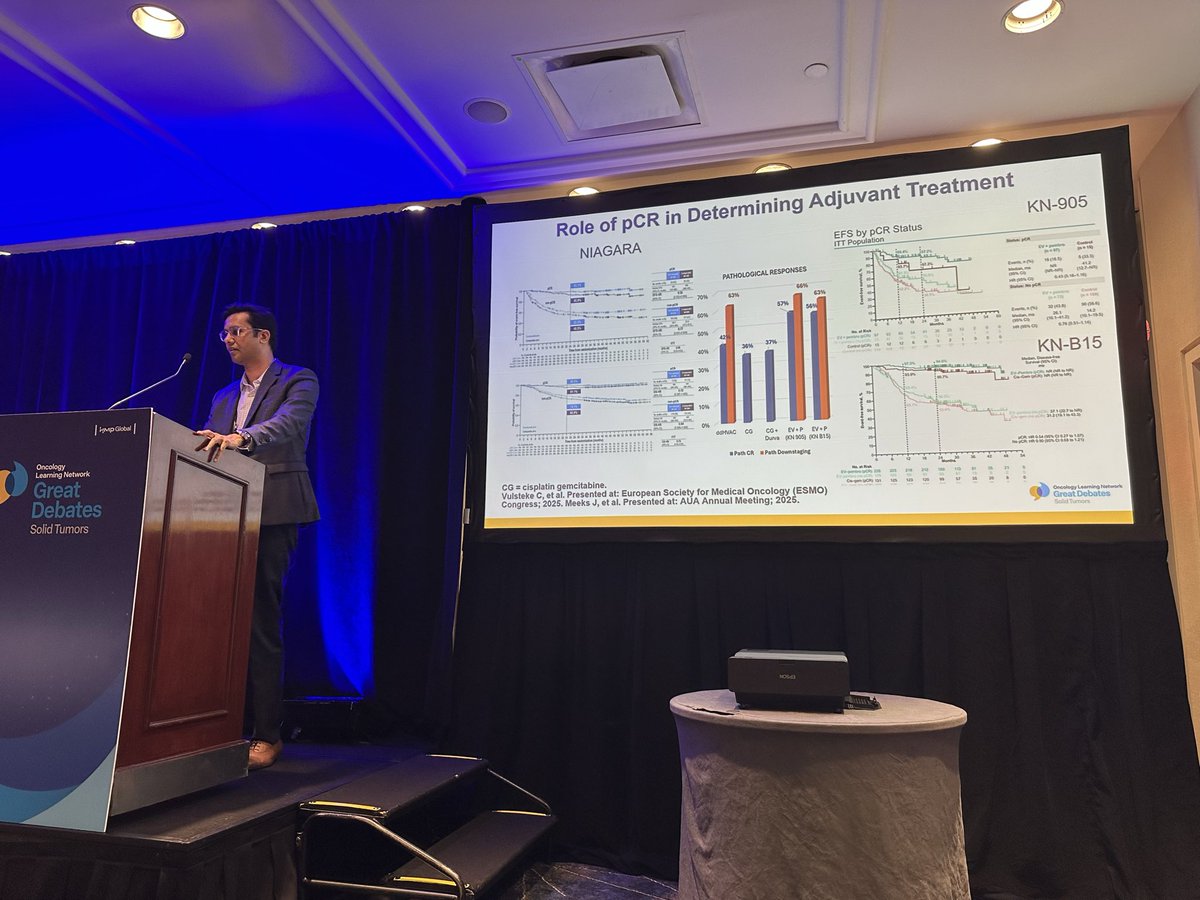
Role of pCR in Determining Adjuvant Treatment
NIAGARA: Event-free survival by pCR status (pCR vs non-pCR), and overall survival by pCR status curves.
Pathological Responses bar chart (Path CR vs Path Downstaging): ddMVAC 42%/63%, CG 36%, CG+Durva 37%, EV+P (KN905) 57%/66%, EV+P (KN B15) 56%/63%
KN-905: EFS by pCR Status, ITT Population — EV+pembro (pCR) n=97: events 16 (16.5%), median NR (NR-NR); Control (pCR) n=15: events 5 (33.3%), median NR (12.7-NR); HR 0.43 (0.18-1.16). No pCR status — EV+pembro n=73: events 32 (43.8%), median 26.1 (10.1-41.2); Control n=168: events 96 (56.6%), median 14.2 (10.1-19.5); HR 0.76 (0.51-1.14)
KN-B15: Median Disease-free Survival — EV-Pembro (pCR) NR (NR to NR) vs Cis-Gem (pCR) 31.2 (19.1 to 43.2); pCR HR 0.54 (95% CI 0.27 to 1.07); No pCR HR 0.90 (95% CI 0.68 to 1.21)
CG = cisplatin gemcitabine.
Vulsteke C, et al. Presented at: European Society for Medical Oncology (ESMO) Congress; 2025. Meeks J, et al. Presented at: AUA Annual Meeting; 2025.
🗽 Conference Highlights
Moments from Two Days in New York
The smaller-format, conversation-driven feel that repeat attendees called out as the meeting's defining strength. — 3 tweets, 93 impressions.
Create a free account, pick the tumor types you cover, and go beyond the tweet — the intelligence pharma teams use to map influence and prepare for engagement:
Free access — track oncology’s top KOLs in your specialty: profiles, pharma influence, ad-board patterns & 2025 Open Payments analysis.Get free access
Data captured from public X (formerly Twitter) posts mentioning or discussing the meeting. KOL Pulse is not affiliated with the Oncology Learning Network or Great Debates & Updates in Solid Tumors.