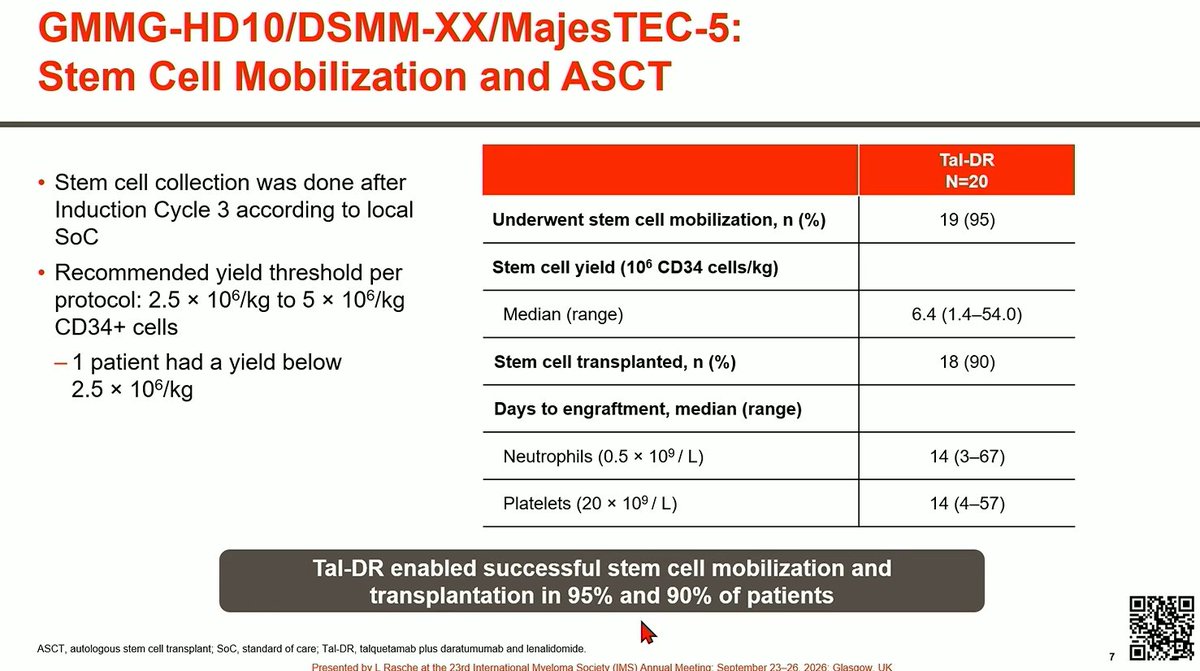
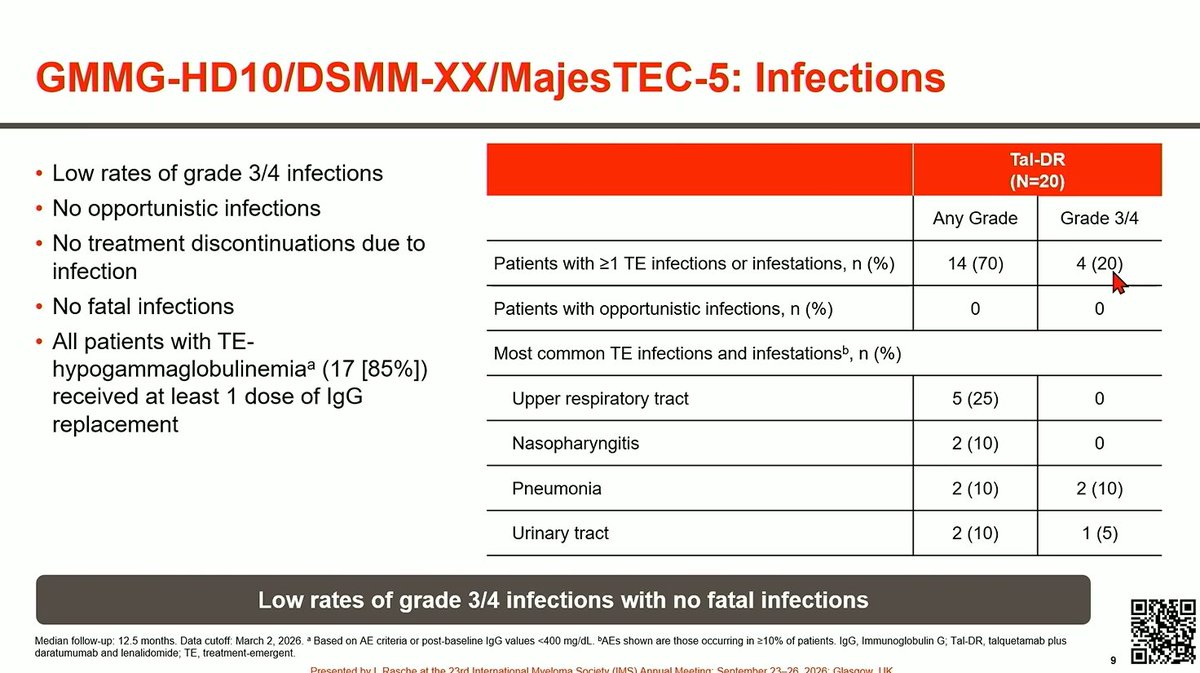
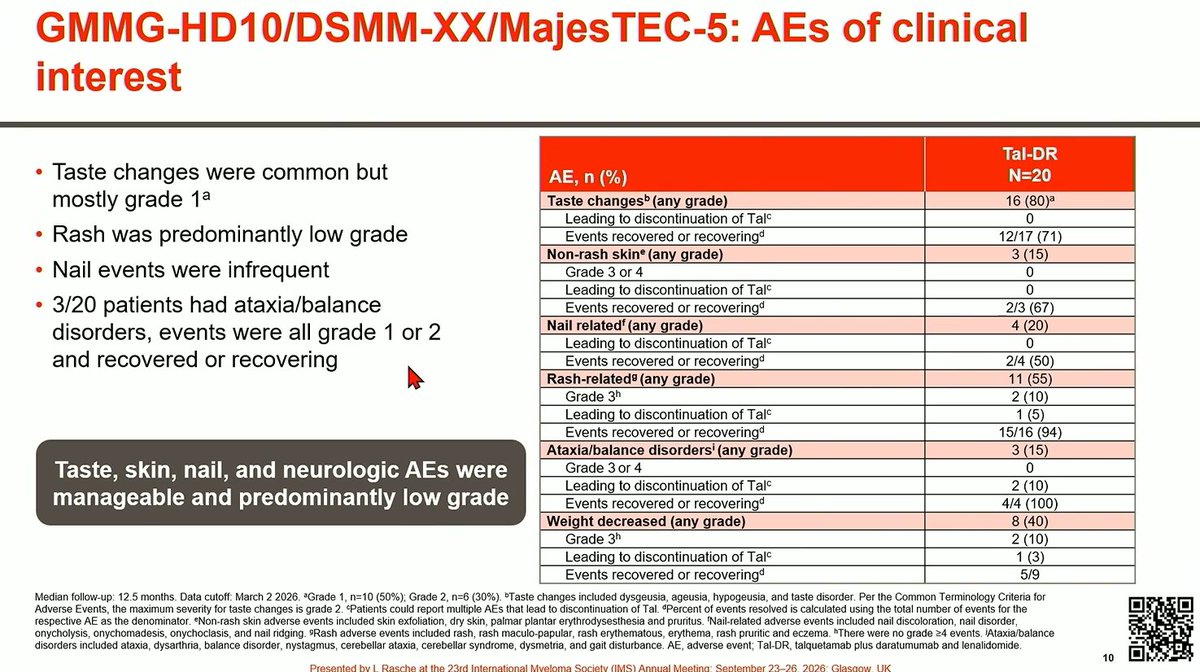
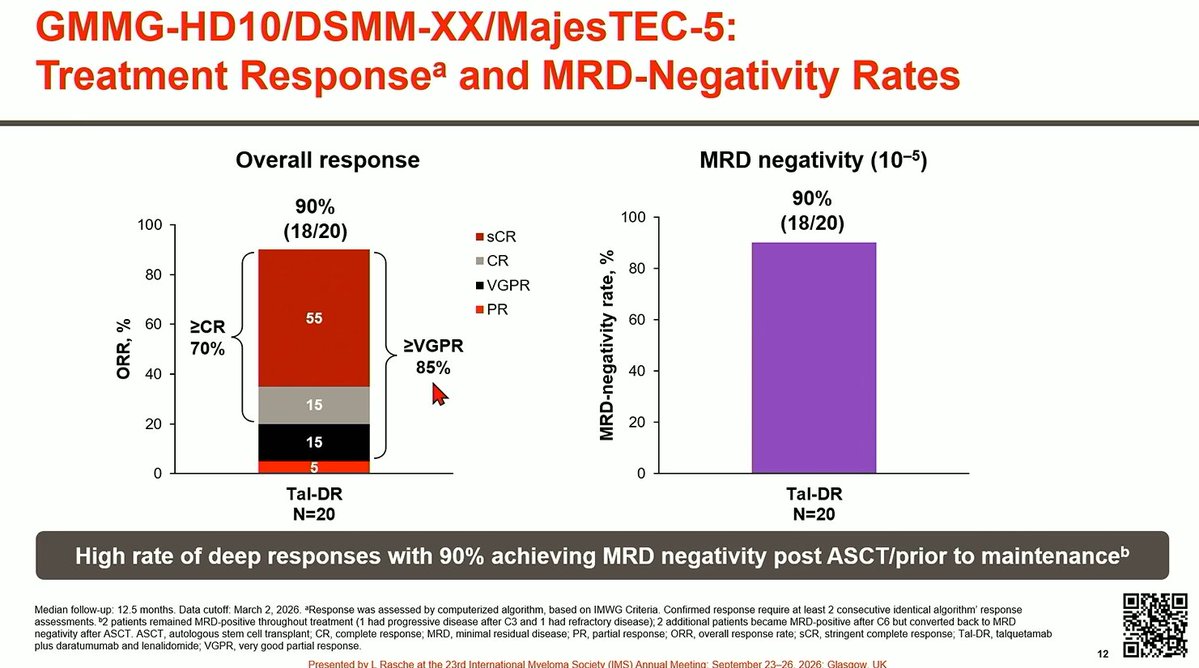
[Slide 1]
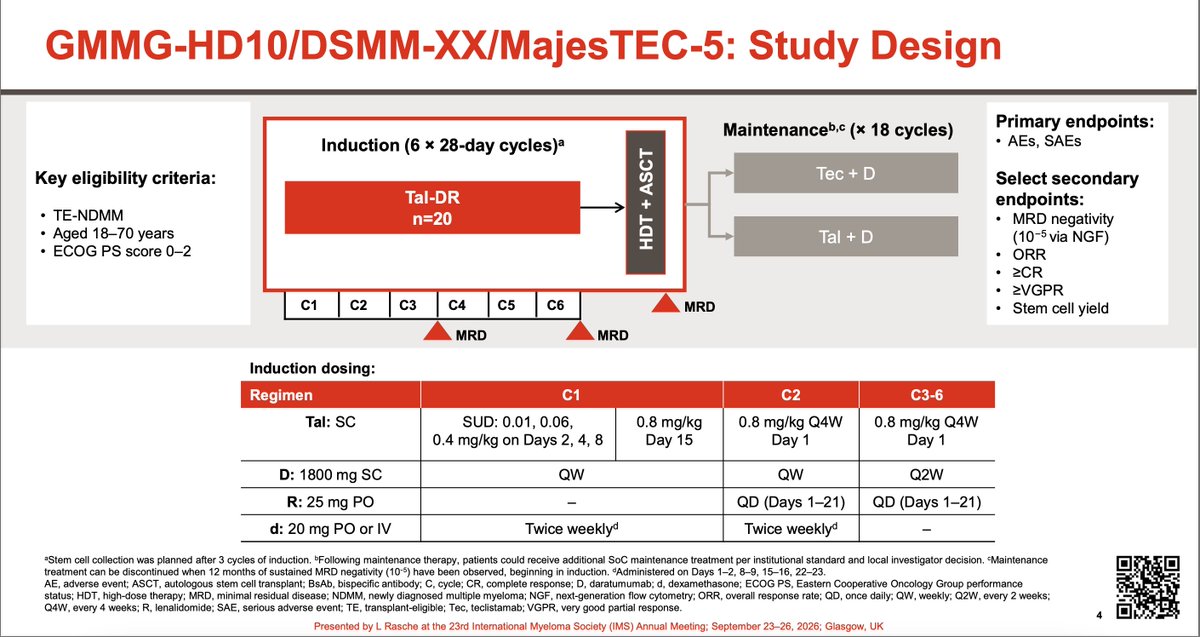
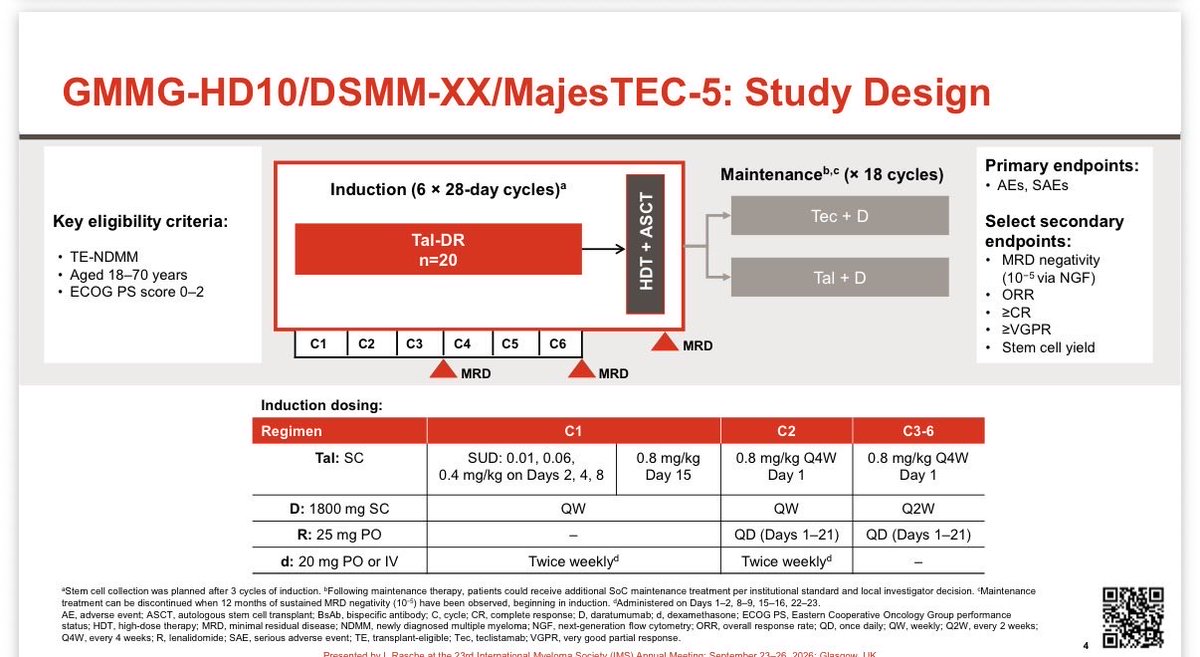
GMMG-HD10/DSMM-XX/MajesTEC-5:
Study Design
Key eligibility
Induction (6 x 28-day cycles)a
Maintenanceᵇ,ᶜ (x 18 cycles)
Primary endpoints:
criteria:
AEs, SAEs
Arm A (n=10):
TE NDMM
Tec (1.5 mg/kg QW)-DR
Select secondary
ECOG PS score
of 0-2
Arm A1 (n=20):
HDT + ASCT
endpoints:
Aged 18-70 years
Tec-D
MRD negativity
Tec (3 mg/kg Q4W)-DR
(10-5 and 10-6)
ORR
>CR
Arm B (n=19):
>VGPR
Tec (3 mg/kg Q4W)-DVR
Stem cell yield
C1
C2
C3
C4
C5
C6
MRD 10-5 via NGF
MRD
MRD
MRD 10⁻⁶ via NGS
Tec (Cycle 1): Tec step-up dosing (0.06 and 0.3 mg/kg on Days 2 and 4) + 1.5 mg/kg on Days 8 and 15e
-
Tec (Cycles 2-6): 1.5 mg/kg QW on Day 1 (ArmA); 3 mg/kg Q4W on Day 1 (Arm A1 and B)
D: 1800 mg SC per label (QW for Cycles 1-2; Q2W for Cycles 3-6)
V: 1.3 mg/m² SC QW
R: 25 mg PO daily starting in Cycle 2 (Days 1-21)
d: 20 mg (PO or IV) in Cycles 1-4 (Arm A) or Cycles 1-2 (Arm A1/B) only
"Stem cell collection was planned after 3 cycles of induction Following maintenance therapy. patients could receive additional SoC maintenance treatment per institutional standard and local investigator decision Maintenance treatment
can be discontinued when 12 months of sustained MRD negativity (10 have been observed beginning in induction Planned maintenance treatment in Arm Awas Teo-DR. A protocol amendment permitted patients initially assigned to Teo-DR
maintenance to receive Tec-D maintenance per investigator's choice (patients who started Tec-DR may have discontinued R to receive Tec- per investigator's choice). "Patients in Arm A received an additional dose of Tec1 1.5 mg/kg on Day 22
AE, adverse event; ASCT, autologous stem cell transplant; CR, complete response D. daratumumab d, dexamethasone; DSMM Deutsche Studiengruppe Multiples Myelom: ECOG PS, Eastern Cooperative Oncology Group performance status:
GMMG, German-speaking Myeloma Multicenter Group: HDT, high-dose therapy; MRD. minimal residual disease NDMM newly diagnosed multiple myeloma; NGF, next-generation flow cytometry: NGS, next-generation sequencing ORR, overall
response rate; QW. weekly; Q2W. every 2 weeks; Q4W. every 4 weeks; R. lenalidomide; SAE serious adverse event; SoC. standard of care, TE, trans plant-eligible; Tec, teclistamab; V. bortezomib; VGPR, very good partial response
5
Presented by MS Raab at the 22nd International Myeloma Society (IMS) Annual Meeting: September 17-20, 2025; Toronto, Canada
---
[Slide 2]
GMMG-HD10/DSMM-XX/MajesTEC-5:
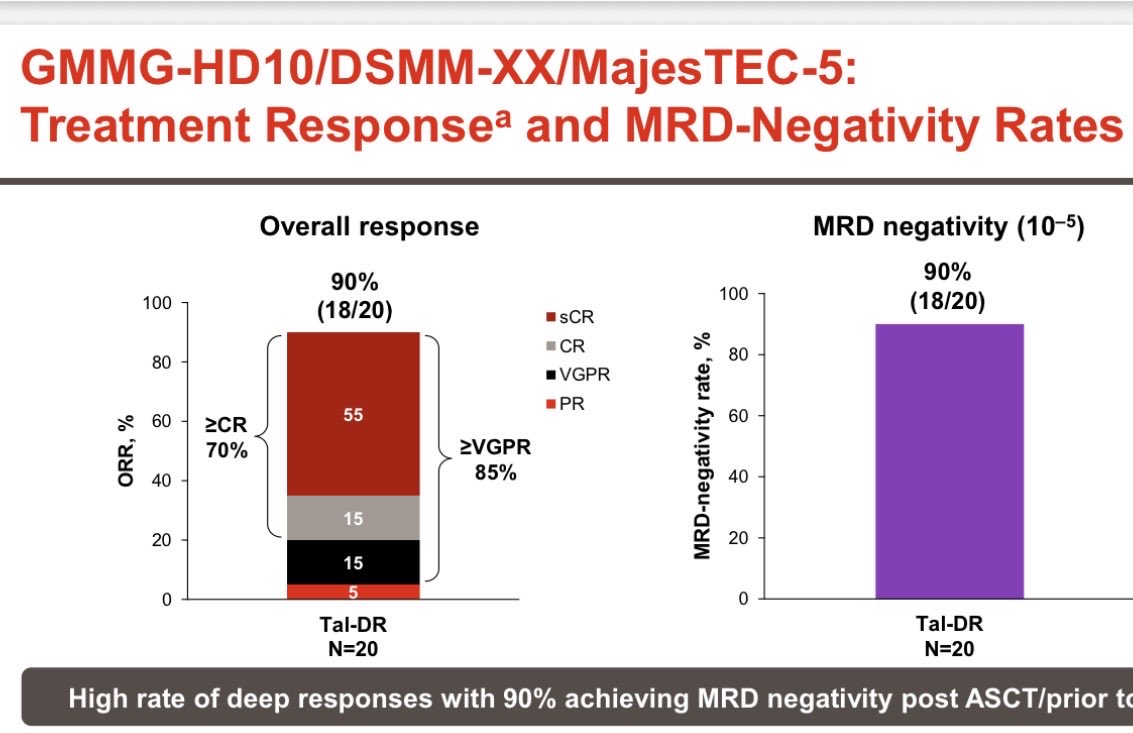
Response Ratesᵃ
ORR
ORR
ORR
100
100
100
100
90
80
70
≥CR
60
73.7
73.7
Patients (%)
sCR
≥CR
≥VGPR
≥CR
≥VGPR
≥VGPR
50
100
95
CR
100
100
95
95
94.7
VGPR
40
PR
30
20
21.1
10
0
5
5.3
Arm A:
Arm A1:
Arm B:
Tec (QW)-DR
Tec (Q4W)-DR
Tec (Q4W)-DVR
n=10
n=20
n=19
100% of patients responded by the end of induction
Response was assessed by investigators based on IMWG criteria, with a confirmed response requiring >2 consecutive identical response assessments ORR was defined as >PR. CR, complete response; D, daratumumab; DSMM,
Deutsche Studiengruppe Multiples Myelom; GMMG, German-speaking Myeloma Multicenter Group; IMWG, International Myeloma Working Group; ORR, overall response rate; PR, partial response; QW, weekly, Q4W, every 4 weeks;
R, lenalidomide; sCR, stringent complete response; Tec, teclistamab; V, bortezomib; VGPR, very good partial response.
12
Presented by MS Raab at the 22nd International Myeloma Society (IMS) Annual Meeting: September 17-20, 2025; Toronto, Canada
---
[Slide 3]
GMMG-HD10/DSMM-XX/MajesTEC-5:
MRD Negativity (10-5)a in the MRD-Evaluable Analysis Set
MRD-evaluable population: all patients with an available MRD test (positive or negative)b
- Only 1 patient was not evaluable for MRD throughout induction (Cycle 3 or 6) due to discontinuation before Cycle 3
Arm A: Tec (QW)-DR
Arm A1: Tec (Q4W)-DR
Arm B: Tec (Q4W)-DVR
100
90
MRD-evaluable patients (%)
80
70
60
50
100
100
100
100
100
100
40
30
20
10
n=10
n=10
n=19°
n=19d
n=17e
n=17'
0
Cycle 3
Cycle 6
Cycle 3
Cycle 6
Cycle 3
Cycle 6
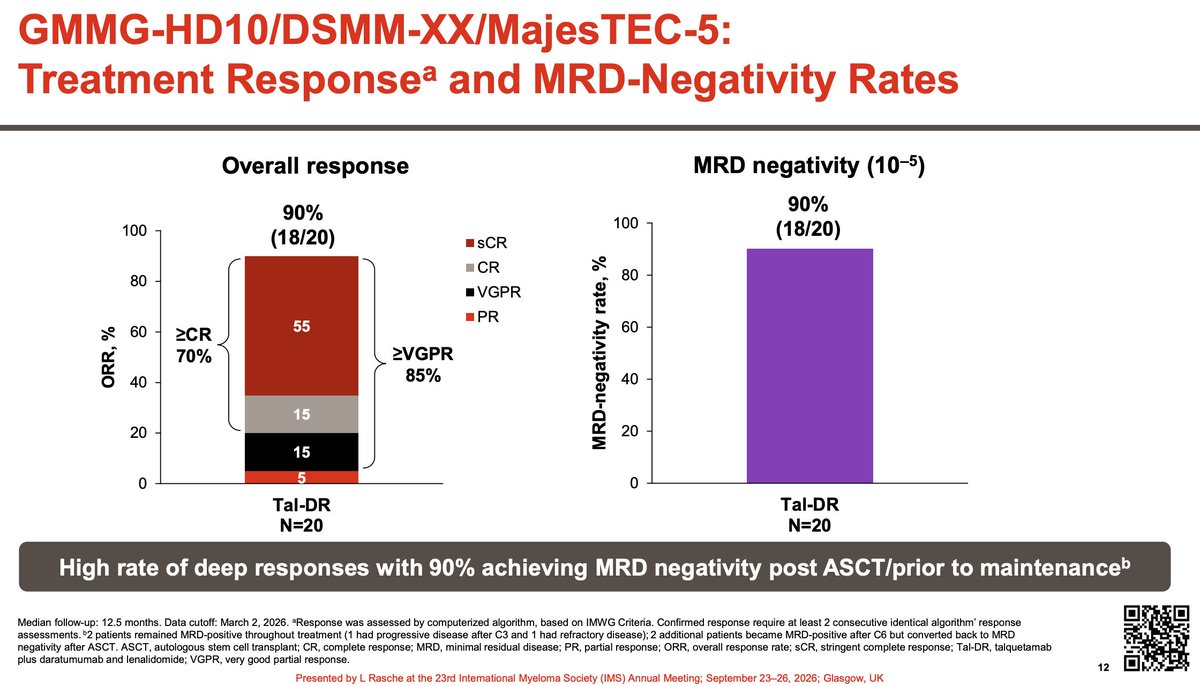
With completion of induction, 100% MRD negativity (10-5) continues to be observed in
MRD-evaluable patients, regardless of depth of response
RD-negativity rate was defined as the proportion of patients who achieved MRD negativity (10-5) per NGF, regardless of response (ie, not all patients achieved CR). Excluding those who were not tested, indeterminate, or had no
baseline done detected (NGS). One patient was not tested One patient had discontinued after completing Cycle 3. "One patient was not tested, and 1 had discontinued before completing Cycle 3. One patient had discontinued
before completing Cycle 3, and 1 had an indeterminate result. CR, complete response; D, daratumumab; DSMM, Deutsche Studiengruppe Multiples Myelom: GMMG, German-speaking Myeloma Multicenter Group; MRD, minimal
residual disease; NGF, nexd-generation flow cytometry, NGS, next-generation sequencing; QW, weekly, Q4W, every 4 weeks; R, lenalidomide; Tec, teclistamab; V, bortezomib.
13
Presented by MS Raab at the 22nd International Myeloma Society (IMS) Annual Meeting: September 17-20, 2025; Toronto, Canada
---
[Slide 4]
GMMG-HD10/DSMM-XX/MajesTEC-5:
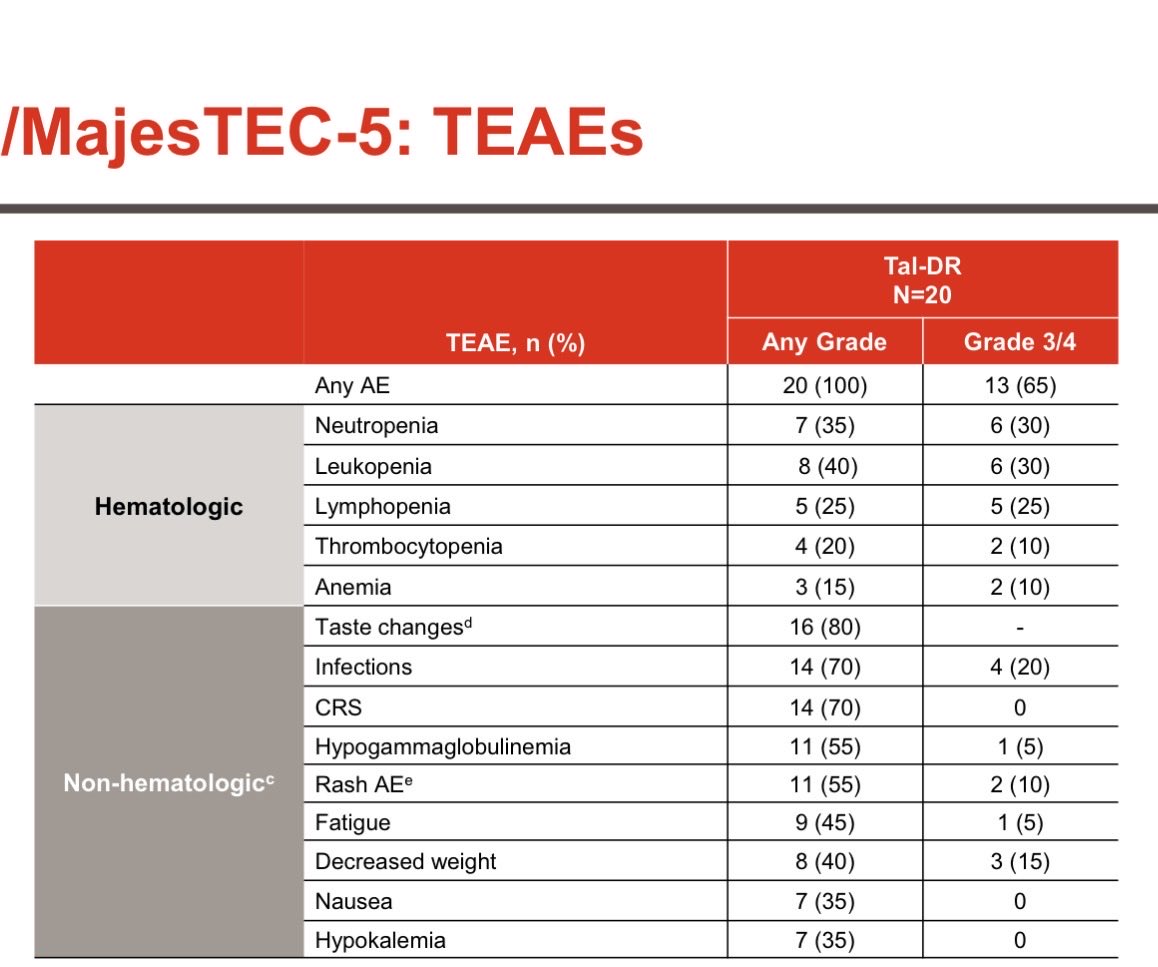
Infections
Arm A:
Arm A1:
Arm B:
18 (36.7%) patients had
Tec (QW)-DR
Tec (Q4W)-DR
Tec (Q4W)-DVR
Total
grade 3/4 infectionsᵇ
(n=10)
(n=20)
(n=19)
(N=49)
All
Grade
All
Grade
All
Grade
All
- No discontinuations due to infection
Grade 3/4
TEAE, n (%)a
grade
3/4
grade
3/4
grade
3/4
grade
- No grade 5 infections
Any infection
10 (100)
4 (40)
18 (90)
10 (50)
11 (57.9)
4 (21.1)b
39 (79.6)
18 (36.7)b
Hypogammaglobulinemia® reported
in 45 (91.8%) patients
Infections
- 44 (89.8%) patients received ≥1
URTI
6 (60)
0
8 (40)
1 (5)
6 (31.6)
0
20 (40.8)
1 (2)
dose of IVIg
COVID-19
2 (20)
0
4 (20)
1 (5)
3 (15.8)
2 (10.5)
9 (18.4)
3 (6.1)
Stringent infection prophylaxis was
strongly recommended,e including
Nasopharyngitis
3 (30)
0
2 (10)
0
2 (10.5)
0
7 (14.3)
0
Ig replacement
Pneumonia
1 (10)
1 (10)
0
0
2 (10.5)
2 (10.5)
3 (6.1)
3 (6.1)
Low patient numbers and relatively
RTI
0
0
1 (5)
0
2 (10.5)
0
3 (6.1)
0
short follow-up time may account
for differing infection rates across
Bronchitis
2 (20)
0
0
0
0
0
2 (4.1)
0
arms
AEs are graded according to the NCI-CTCAE Version 5.0. The median follow-up was 7.3 (3.1-14.5) months. One patient had a grade 3 "unknown" infection that was reported under the "uncoded" category. Infections reported
in > 10% of patients in any arm. "Includes patients with 21 TEAE of hypogammaglobulinemia or a post-baseline IgG value <400 mg/dL. Additional recommended measures included prophylaxis for Pneumocystis jirovecii
pneumonia and herpes zoster reactivation as well as routine antibiotic prophylaxis. D, daratumumab; DSMM, Deutsche Studiengruppe Multiples Myelom; GMMG, German-speaking Myeloma Multicenter Group; Ig.
immunoglobulin; Mg. intravenous immunoglobulin; NCI-CTCAE, National Cancer Institute Common Terminology Criteria for Adverse Events; QW, weekly; Q4W, every 4 weeks; R, lenalidomide; RTI, respiratory tract infection;
TEAE, treatment-emergent adverse event; Tec, teclistamab; URTI, upper respiratory tract infection; V. bortezomib.
10
Presented by MS Raab at the 22nd International Myeloma Society (IMS) Annual Meeting: September 17-20, 2025; Toronto, Canada
[Slide 1]
GMMG-HD10/DSMM-XX/MajesTEC-5:
MRD Negativity (10⁻⁶)a in the MRD-Evaluable Analysis Setb
Arm A: Tec (QW)-DR
Arm A1: Tec (Q4W)-DR
Arm B: Tec (Q4W)-DVR
100
When combining all patients
90
across all arms (n=49),
80
MRD-evaluable patients (%)
cumulative MRD-negativity rate
70
by end of induction in the
60
efficacy analysis set was 98.0%
50
100
100
100
85.7% (42/49) of patients
40
achieved >CR and MRD
30
negativity at Cycle 6 (≤10⁻⁵)
20
10
n=10
n=19c
n=17d
0
Cycle 6
Cycle 6
Cycle 6
100% of patients in the MRD-evaluable population,ᵇ regardless of depth of response,
achieved MRD negativity (10-6) at Cycle 6
MRD-negativity rate was defined as the proportion of patients who achieved MRD negativity (10-6), regardless of response MRD-evaluable population defined as those patients with an available MRD test with a positive or negative
result (excluding those who were not tested, were indeterminate or had no baseline clone detected [NGS]). One patient had discontinued after completing Cycle 3. One patient had discontinued before completing Cycle 3, and 1 had
no baseline clone detected for NGS *Patients who achieved MRD negativity at 10-⁵ or 10-6 at any time on study (post-induction cycle 3 or cycle 6). D. daratumumab; DSMM, Deutsche Studiengruppe Multiples Myelom; GMMG,
German-speaking Myeloma Multicenter Group; MRD, minimal residual disease NGF, next-generation flow cytometry; NGS, next-generation sequencing; QW, weekly; Q4W, every 4 weeks; R. lenalidomide; Tec, teclistamab; V.
bortezomib
14
Presented by MS Raab at the 22nd International Myeloma Society (IMS) Annual Meeting: September 17-20. 2025; Toronto, Canada
[Slide 1]
GMMG-HD10/DSMM-XX/MajesTEC-5:
MRD Negativity (10-6)a in the MRD-Evaluable Analysis Setb
Arm A: Tec (QW)-DR Arm A1: Tec (Q4W)-DR Arm B: Tec (Q4W)-DVR
100
When combining all patients
90
across all arms (n=49),
80
cumulative MRD-negativity rate®
MRD-evaluable patients (%)
70
by end of induction in the
8
efficacy analysis set was 98.0%
50
100
100
100
85.7% (42/49) of patients
40
achieved >CR and MRD
30
negativity at Cycle 6 (≤10⁻⁵)
20
10
n=10
n=19°
n°17°
0
Cycle 6
Cycle 6
Cycle 6
100% of patients in the MRD-evaluable population,ᵇ regardless of depth of response,
achieved MRD negativity (10-5) at Cycle 6
and (sicluding - has was who delined - not RI be poporton - of polients who achoved MRS) (10-9) regardless of response. MRD. evaluable population defined as those patients with an available MRD last -
80 Issue Date for NOS Pateras resied, who achieved MRD or had to baseire done detected (NGS) *Doe patient has discontinued after completing Cycle 3. One polient had discontinged before a positive of negative 1 had
Group, MRD, registrate a 10⁴ at any time on study (post induction cycle 3 or cycle 6) D, ow. OSMM Deumche Studengruppe Multiples completing Myslom Cycle GMMG, 3, and
examal residual donese, NOF, not-generation for cytomosy, NOS NEXT
monthly,
Q4W
every
&
weeks;
R
Imalidomida
Tec.
---
[Slide 2]
GMMG-HD10/DSMM-XX/MajesTEC-51
MRD Negativity (10-⁵)ᵃ in the MRD-Evaluable Analysis Set
MRD-evaluable population: all patients with an available MRD test (positive or negative)ᵇ
- Only 1 patient was not evaluable for MRD throughout induction (Cycle 3 or 6) due to discontinuation before Cycle 3
Arm A: Tec (QW)-DR
Arm A1: Tec (Q4W)-DR
Arm B: Tec (Q4W)-DVR
100
90
MRD-evaluable patients (%)
80
70
60
50
100
100
100
100
100
100
40
30
20
10
n=10
0
n=10
n=19°
n=19d
n=17°
n=17'
Cycle 3
Cycle 6
Cycle 3
Cycle 6
Cycle 3
Cycle 6
With completion of induction, 100% MRD negativity (10-5) continues to be observed in
MRD-evaluable patients, regardless of depth of response
Insure SED regative - was adinat Cen as the provide proportion - not of Instad patients One was belowed achieved had MRD regalizity (189) per NOF, regardiess of - Fax not at patents actived CR) "Excluding Thosa who
---
[Slide 3]
GMMG-HD10/DSMM-XX/MajesTEC-5:
Infections
Arm A:
Arm A1:
Arm B:
18 (36.7%) patients had
Tec (QW)-DR
Tec (Q4W)-DR
Tec (Q4W)-DVR
Total
grade 3/4 infectionsᵇ
(n=10)
(п=20)
(n=19)
(N=49)
All
Grade
All
Grade
All
Grade
All
- No discontinuations due to Infection
Grade 3/4
TEAE, n (%)*
grade
3/4
grade
3/4
grade
3/4
grade
- No grade 5 infections
Any Infection
10 (100)
4 (40)
18 (90)
10 (50)
11 (57.9)
4 (21.1)
39 (79.6)
18 (36.7)b
Hypogammaglobulinemia® reported
in 45 (91.8%) patients
Infectionsᶜ
- 44 (89.8%) patients received ≥1
URTI
6 (60)
0
8 (40)
1 (5)
6 (31.6)
0
20 (40.8)
1 (2)
dose of IVlg
COVID-19
2 (20)
0
4 (20)
1 (5)
3 (15.8)
2 (10.5)
9 (18.4)
3 (6.1)
Stringent infection prophylaxis was
Nasopharyngitis
3 (30)
0
2 (10)
0
2(10.5)
0
7 (14.3)
0
strongly recommended, including
Ig replacement
Pneumonia
1 (10)
1 (10)
0
0
2(10.5)
2 (10.5)
3(6.1)
3 (6.1)
Low patient numbers and relatively
RTI
0
0
1 (5)
0
2 (10.5)
0
3 (6.1)
0
short follow-up time may account
Bronchitis
2 (20)
0
0
0
0
0
2 (4.1)
0
for differing infection rates across
arms
ALA 10% - . graded patents according n any - to the Recludes NO-CTORE patients Version with at 10 TEAE The median of blow-up - 73 or I-14.5) a post months baseine One g0 patient value <00 had a mg/dl grade Additional 3 'ustrown' recommended infection that measures was reported included under prophytics the uncoded Ry Promocysts calogory Infections reported
[Slide 1]
Post-Induction Outcomes and Updated
Minimal Residual Disease Analysis From
GM
MG
GMMG-HD10/DSMM-XX (MajesTEC-5): a Study
deutsche studiengruppe
of Teclistamab-Based Induction Regimens in
multiples envelops
Newly Diagnosed Multiple Myeloma (NDMM)*
dsmm
mong mudes -
*ClinicalTrials.gov Identifier: NCT05695508; sponsored by the University of Heidelberg Medical Center and in collaboration with Johnson & Johnson
Marc S Raab1, Niels Weinhold1, K Martin Kortüm², Jan Krönke³, Lilli Podola¹, Uta Bertsch1,
hops
Julia Mersi², Stefanie Huhn1, Michael Hundemer1, Roland Fenk4, Katja Weisel⁵, Alexander Brobeil°,
The OR code is intended 33 provide scientific
Elias K Mai1, Natalie Schub⁷, Florian Bassermann8, Monika Engelhardt9, Mathias Hänel10,
information for individual and the
information should not be attered or
Hans Salwender11, Raphael Teipel¹², Mohamed Amine Bayar13, Elena Ershova14,
reproduced as any way
Bas D Koster¹⁵, Hartmut Goldschmidt1, Hermann Einsele², Leo Rasche²
'Heidelberg Myeloma Center, Department of Medicine V. Heldelberg University Hospital and Medical Faculty Heldelberg, Heldelberg, Germany; Department of Internal
Medicine 11, University Hospital of Würzburg, Würzburg, Germany; Department for Hematology, Oncology, and Tumor immunology, Charité Universitätsmedizin Bertin,
Germany; Department for Hematology, Oncology and Clinical Immunology, Medical Faculty, Heinrich Heine University Dusseldorf, Moorenstr 5, 40225, Dusseldorf,
Germany: University Medical Center Hamburg-Eppendorf, Hamburg, Germany; Institute of Pathology, University Hospital Heldelberg, Heldelberg, Germany: Department of
Internal Medicine 11, Division of Stem Cell Transplantation and Immunotherapy, UKSH Campus Kiel, Kiel, Germany; Department of Medicine III, TUM Klinikum, Technische
Universität München, München, Germany; German Cancer Consortium (OKTK), German Cancer Research Center (DKFZ), Heldelberg, Germany; Department of
Hematology, Oncology and Stem Cell Transplantation, Medical Centre - University of Freiburg, Faculty of Medicine, University of Freiburg, Freiburg, Germany;
"Department of internal Medicine 111, Klinikum Chemnitz, Chemnitz, Germany; "Asklepios Tumorzentrum Hamburg, AK Altona and AK St Georg, Hamburg, Germany;
Medizinische Klinik und Poliklinik 1, Universitätsklinikums Carl Gustav Carus an der TU Dresden, Dresden, Germany; PJohnson & Johnson, Parts, France;
"Johnson & Johnson, Beerse, Belgium; "Johnson 5 Johnson, Leiden, The Netherlands.
Presented by MS Raab at the 22nd International Myeloma Society (IMS) Annual Meeting: September 17-20, 2025; Toronto, Canada
---
[Slide 2]
GMMG-HD10/DSMM-XX/MajesTEC-5:
Study Design
Key eligibility
Induction (6 x 28-day cycles)a
Maintenanceᵇ,ᶜ (x 18 cycles)
Primary endpoints:
criteria:
Arm A (n=10):
AEs, SAEs
TE NDMM
Tec (1.5 mg/kg QW)-DR
Select secondary
ECOG PS score
of 0-2
Arm A1 (n=20):
Tec (3 mg/kg Q4W)-DR
HDT + ASCT
endpoints:
Aged 18-70 years
Tec-D
MRD negativity
(10⁻⁵ and 10⁻⁶)
ORR
Arm B (n=19):
>CR
>VGPR
Tec (3 mg/kg Q4W)-DVR
Stem cell yield
C1
C2
C3
C4
C5
C6
MRD 10⁻⁵ via NGF
MRD
MRD
MRD 10⁻⁶ via NGS
Tec (Cycle 1): Tec step-up dosing (0.06 and 0.3 mg/kg on Days 2 and 4) + 1.5 mg/kg on Days 8 and 15ᵉ
- Tec (Cycles 2-6): 1.5 mg/kg QW on Day 1 (Arm A); 3 mg/kg Q4W on Day 1 (Arm A1 and B)
D: 1800 mg SC per label (QW for Cycles 1-2; Q2W for Cycles 3-6)
V: 1.3 mg/m2 SC QW
R: 25 mg PO daily starting in Cycle 2 (Days 1-21)
d: 20 mg (PO or IV) in Cycles 1-4 (Arm A) or Cycles 1-2 (Arm A1/B) only
Stem cell collection was planned after 3 cycles of induction. Following maintenance therapy, patients could receive additional SoC maintenance treatment per institutional standard and local investigator decision. Maintenance treatment
an be discontinued when 12 months of sustained MRD negativity (10-4) have been observed, beginning in induction Planned maintenance treatment in Arm A was Tec-DR A protocol amendment permitted patients initially assigned to Tec-DR
saintenance to receive Tec-D maintenance per investigator's choice (patients who started Tec-DR may have discontinued R to receive Tec-D per investigator's choice). Patients in Arm A received an additional dose of Tec 1.5 mg/kg on Day 22.
E, adverse event; ASCT, autologous stem cell transplant; CR, complete response, D, daratumumab; d, dexamethasone; DSMM, Deutsche Studiengruppe Multiples Myelom; ECOG PS, Eastern Cooperative Oncology Group performance status;
MMG, German-speaking Myeloma Multicenter Group; HDT, high-dose therapy, MRD, minimal residual disease; NDMM, newly diagnosed multiple myeloma; NGF, next-generation flow cytometry; NGS, next-generation sequencing ORR, overall
esponse rate; QW, weekly; Q2W, every 2 weeks; Q4W, every 4 weeks; R, lenalidomide; SAE, serious adverse event, SoC, standard of care; TE, transplant-eligible; Tec, teclistamab; V, bortezomib; VGPR, very good partial response
5
Presented by MS Raab at the 22nd International Myoloma Society (IMS) Annual Meeting: September 17-20. 2025; Toronto, Canada
---
[Slide 3]
GMMG-HD10/DSMM-XX/MajesTEC-5:
MRD Negativity (10-6)a in the MRD-Evaluable Analysis Setb
Arm A: Tec (QW)-DR
Arm A1: Tec (Q4W)-DR
Arm B: Tec (Q4W)-DVR
100
When combining all patients
90
across all arms (n=49),
80
cumulative MRD-negativity rate®
MRD-evaluable patients (%)
70
by end of induction in the
60
efficacy analysis set was 98.0%
50
100
100
100
85.7% (42/49) of patients
40
achieved ≥CR and MRD
30
negativity at Cycle 6 (≤10⁻⁵)
20
10
n=10
n=19°
n=17d
0
Cycle 6
Cycle 6
Cycle 6
100% of patients in the MRD-evaluable population,ᵇ regardless of depth of response,
achieved MRD negativity (10-6) at Cycle 6
MRD-negativity rate was defined as the proportion of patients who achieved MRD negativity (10-4). regardless of response. MRD-evaluable population defined as those patients with an available MRD test with a positive or negative
result (excluding those who were not tested, were indeterminate, or had no baseline clone detected [NGS]). One patient had discontinued after completing Cycle 3. One patient had discontinued before completing Cycle 3, and 1 had
no baseline clone detected for NGS. *Patients who achieved MRD negativity at 10-⁵ or 10-4 at any time on study (post-induction cycle 3 or cycle 6). D, daratumumab; DSMM, Deutsche Studiengruppe Multiples Myelom; GMMG,
German-speaking Myeloma Multicenter Group; MRD, minimal residual disease; NGF, next-generation flow cytometry; NGS, next-generation sequencing; QW, weekly, Q4W, every 4 weeks; R, lenalidomide; Tec, teclistamab; V,
bortezomib.
14
Presented by MS Raab at the 22nd International Myeloma Society (IMS) Annual Meeting: September 17-20, 2025; Toronto, Canada
Community Discussion
MajesTEC-5 (MMY2003 / GMMG-HD10 / DSMM-XX) Top Tweets
About the MajesTEC-5 (MMY2003 / GMMG-HD10 / DSMM-XX) Trial
MajesTEC-5 positions teclistamab + DR ± bortezomib as a potential new induction regimen in TE-NDMM with unprecedented MRD negativity rates. Phase 3 confirmation pending. Direct competitor: CARTITUDE-6 (cilta-cel front-line) for the TE-NDMM landscape.
Arm A (Tec-DR weekly, n=10): ORR 100%, sCR/≥CR 100%, 100% MRD-negative by NGS. Arm A1 (Tec-DR Q4W, n=20): ORR 90-100%, ≥CR 95%, 100% MRD-neg. Arm B (Tec-DVR Q4W with bortezomib, n=19): ORR 89.5-100%, ≥CR 73.7%, 100% MRD-neg. Unprecedented depth of response during induction alone.
✓ ORR 90-100%; 100% MRD-neg at Cycle 3/end of induction
⚠️ Phase 2 signal — potential new induction standard. MajesTEC-5 positions teclistamab + DR ± bortezomib as a potential new induction regimen in TE-NDMM with unprecedented MRD negativity rates. Phase 3 confirmation pending. Direct competitor: CARTITUDE-6 (cilta-cel front-line) for the TE-NDMM landscape.
Major Media & Publications
MajesTEC-5 (MMY2003 / GMMG-HD10 / DSMM-XX) in the News