Previously-treated HR+/HER2- metastatic breast cancer — Daiichi Sankyo + AstraZeneca
Discover KOL Sentiment on TROPION-Breast01 →Design - Phase 3 datopotamab deruxtecan (Dato-DXd) vs investigator's-choice chemotherapy, previously treated HR+/HER2- metastatic breast cancer (NCT05104866); dual primary PFS + OS.
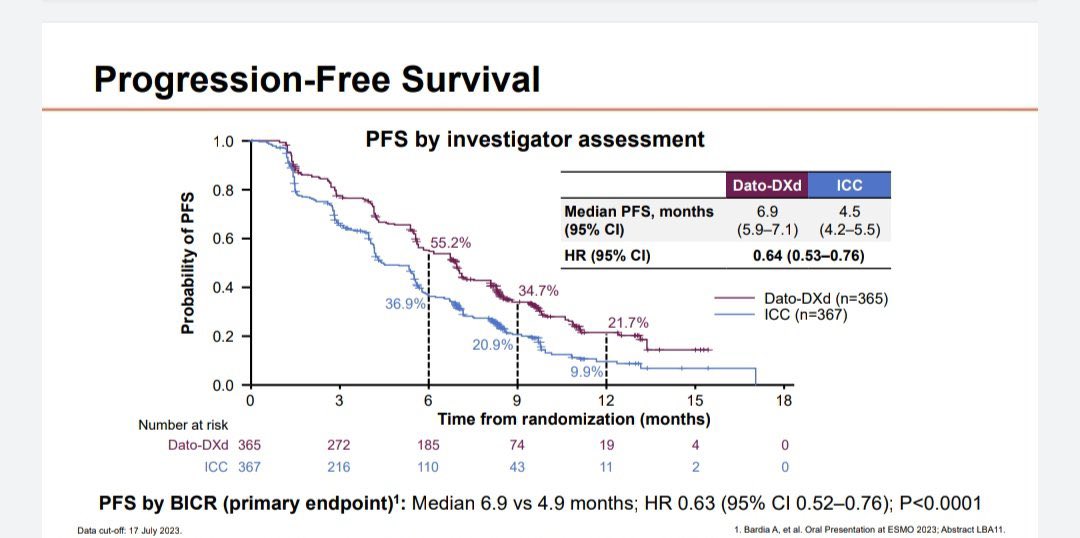
PFS (primary, BICR) - Median 6.9 vs 4.9 mo, HR 0.63 (95% CI 0.52-0.76), P<0.0001 - primary endpoint met.
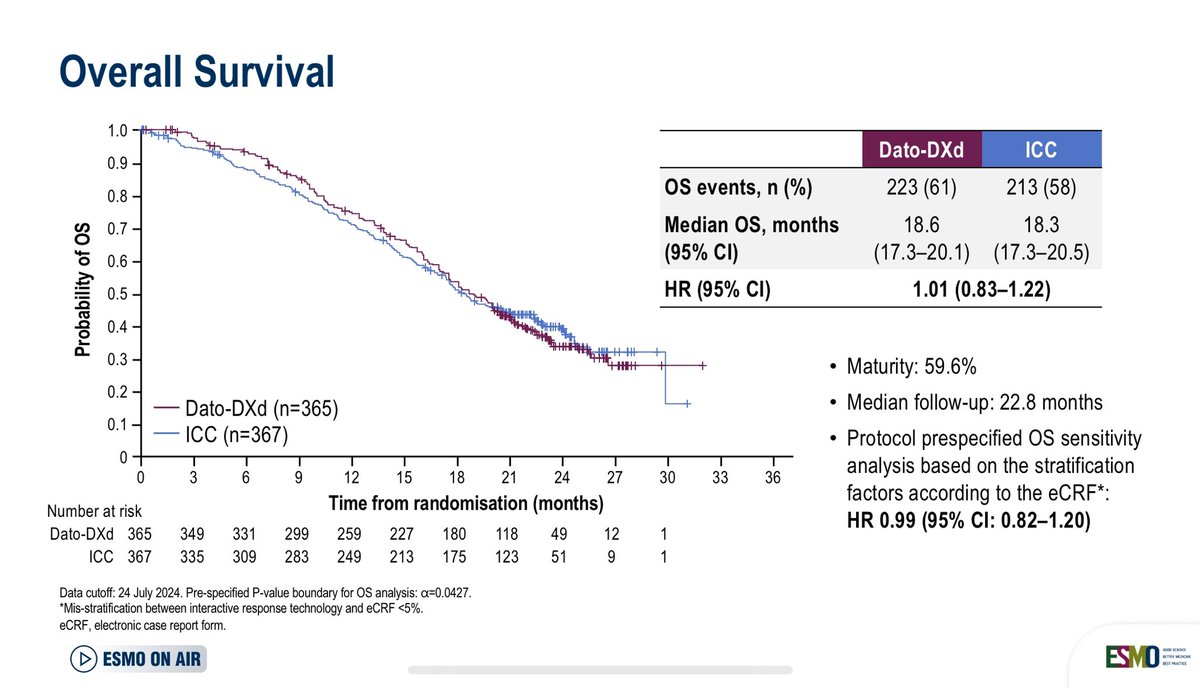
OS (final) - NOT significant - median 18.6 vs 18.3 mo, HR 1.01 (95% CI 0.83-1.22), P=0.9445 (interim OS had been HR 0.84).
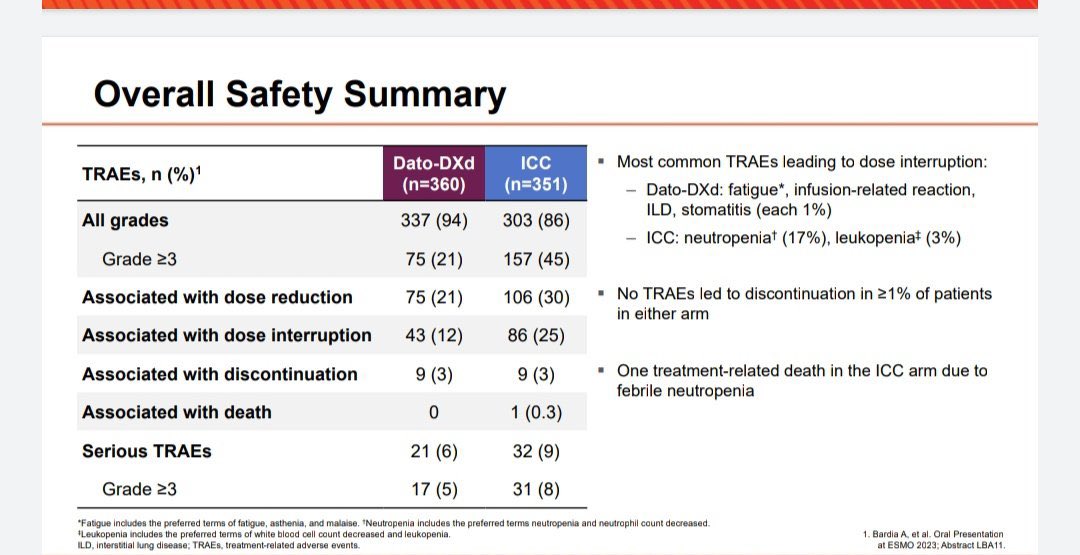
Safety - Grade >=3 AEs 20.8% vs 44.7% (lower with Dato-DXd); characteristic stomatitis, dry eye/keratitis, nausea; ILD/pneumonitis vigilance.
Regulatory - FDA approved January 17, 2025 (Datroway) - approval based on PFS; final OS not significant.
Sponsor / drug - Daiichi Sankyo + AstraZeneca; datopotamab deruxtecan (Datroway).
Compiled and reviewed by the KOL Pulse research team, led by Brian Shields, Founder, KOL Pulse. Last updated July 21, 2026.







Top tweets by impressions — click to view on X
Dato-DXd is the third Topo1 ADC FDA-approved for treating breast cancer.
Multiple ongoing phase 3 trials promise to expand its indication to earlier settings, including the curative setting. …
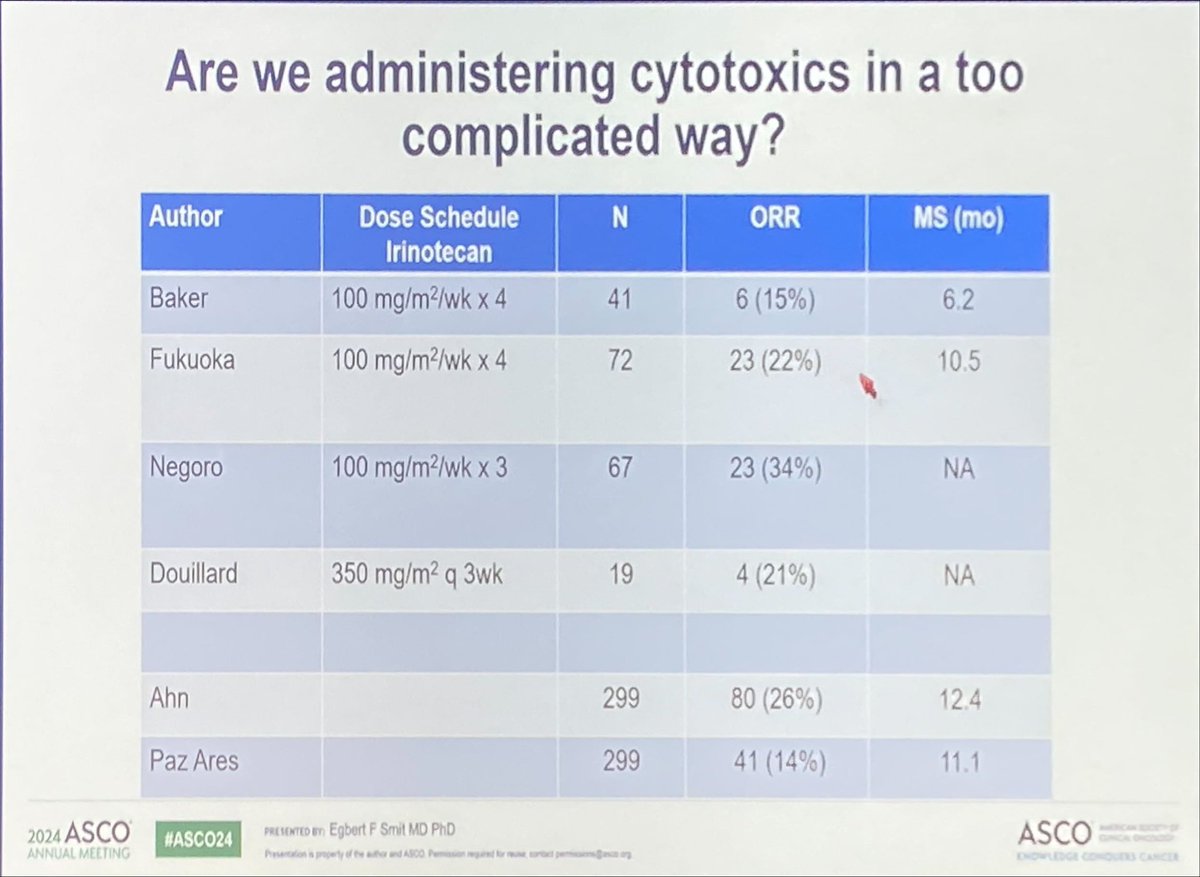
Pr @SmitEgbert elegantly suggests that TROP-2 ADCs with a topo-1 inhibitor payload (deruxtecan, govitecan…) are not better that old fashioned topo-1 inhibitors such as irinotecan or topotecan.…
Good morning. If you're just waking up, Tropion-Breast01 has been toplined.
$DSNKY - no OS benefit - EVERYONE PANIC
$AZN - there's a trend for OS - YESSSSSSS
(In summary: Tropion-Lung01 casts a…
Dato-DXd, approved by the FDA 1 month ago, showed no difference in OS compared to TPC.
In the Tropion-Breast 01 study, OS was a co-primary endpoint along with PFS.
Since OS failed, can we still…
Datopotamab deruxtecan now @FDAOncology approved off #TROPIONBreast01: #DatoDXd Vs Chemo post 1-2L HR+ mBC
- ⏰ to 1st Rx: 8.2 vs 5mos (favoring Dato)
- ⬆️ PFS 6.9mos vs 4.5 mos
- Better AE + QoL…
#DatoDxd was approved on 1/17/25 for HR+ mBC in endocrine resistant settings. But recent update with no OS!!!!
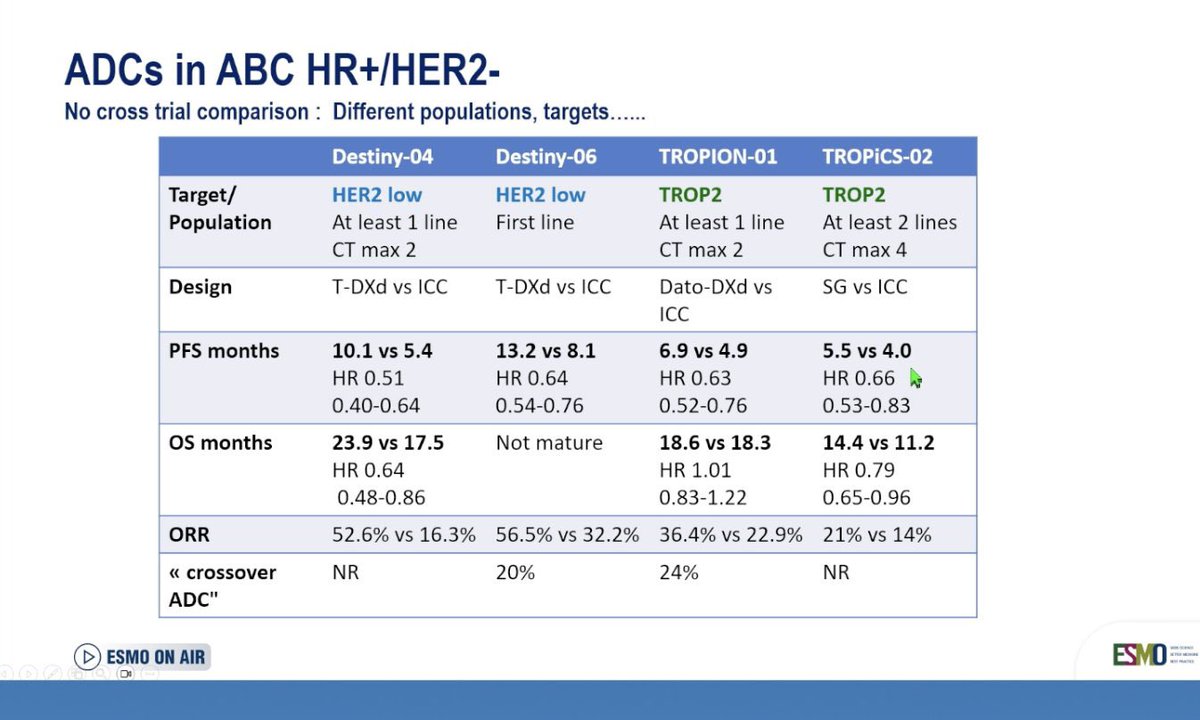
This slide shared by @stolaney1 does an excellent job showing data across different…
Despite prolonging PFS, Dato-DXd did not prolong OS vs chemo in #TB01, likely due to crossover to other Topo1 ADCs at PD (24% in the control arm). Highlights the issue of cross-resistance between…
A Bardia confirms: no deaths on datopotamab dxd in Tropion-Breast01, but one ILD gr 5 was later reanalysed and regraded gr 3 (?) $DSNKY $AZN https://t.co/sVSG4tTul4
#ESMO23 Breast Ca Highlights w/ @ErikaHamilton9
- #KN756
- #TROPIONBreast01
- #KN522
Full discussion:
- https://t.co/PJOBntkWe1
- https://t.co/ukvCupAM8Y
- Also on the “Oncology Brothers”…
And BTW the safety bit is very cautiously worded. Does not mean there weren't any gr5 ILD events in Tropion-Breast01 $AZN $DSNKY https://t.co/8Sz3vK4iPG
Datroway provides a new ADC option after endocrine therapy and chemotherapy in HR+/HER2- mBC. The absence of an OS benefit is a notable caveat — physicians weighing Dato-DXd vs. sacituzumab govitecan (TROPiCS-02) should consider the PFS benefit, favorable safety profile, and class-specific AEs (ocular, stomatitis).
Median: 6.9 months (Dato-DXd, 95% CI 5.7-7.4) vs. 4.9 months (investigator's choice chemo, 95% CI 4.2-5.5). HR 0.63 (95% CI 0.52-0.76), P<0.0001 Significantly longer PFS with Dato-DXd; primary endpoint met.
Median: 18.6 months (Dato-DXd) vs. 18.3 months (chemo). HR 1.01 (95% CI 0.83-1.22), P=0.9445 Final overall survival analysis (ESMO Virtual Plenary 2024 / PMID 41448362): median OS 18.6 months with Dato-DXd vs. 18.3 months with investigator's choice chemotherapy; HR 1.01 (95% CI 0.83-1.22, P=0.9445) — NO statistically significant difference. An earlier interim (ASCO 2023/SABCS 2023) showed HR 0.84 (95% CI 0.62-1.14) trending toward Dato-DXd, but this narrowed to the null at final. Sponsors attributed the neutral final OS in part to high subsequent ADC use in the chemotherapy arm; a post-hoc IPCW sensitivity analysis adjusted for subsequent therapy showed a trend favoring Dato-DXd. FDA approval (Jan 17, 2025) was based on the PFS and ORR benefit; OS did not support approval.
Grade ≥3 adverse events: 20.8% (dato_dxd) vs. 44.7% (chemo). Key AEs: stomatitis (class effect of topoisomerase I ADCs), dry eye / keratitis, nausea. Lower Grade ≥3 TRAE rate with Dato-DXd than with investigator's choice chemotherapy. ILD/pneumonitis rates manageable; vigilance required per class labeling.
✅ FDA-approved option for pre-treated HR+/HER2- mBC. Datroway provides a new ADC option after endocrine therapy and chemotherapy in HR+/HER2- mBC. The absence of an OS benefit is a notable caveat — physicians weighing Dato-DXd vs. sacituzumab govitecan (TROPiCS-02) should consider the PFS benefit, favorable safety profile, and class-specific AEs (ocular, stomatitis).
TROPION-Breast01 is a Phase 3 randomized trial (NCT05104866) of datopotamab deruxtecan (Datroway, a TROP2-directed antibody-drug conjugate) versus investigator's choice of chemotherapy in patients with previously treated, inoperable or metastatic HR-positive, HER2-negative breast cancer. Progression-free survival (by blinded independent central review) and overall survival were dual primary endpoints.
Datopotamab deruxtecan significantly improved progression-free survival: median PFS was 6.9 versus 4.9 months (HR 0.63; 95% CI 0.52-0.76; P<0.0001). However, the final overall survival analysis was not statistically significant - median OS 18.6 versus 18.3 months (HR 1.01; 95% CI 0.83-1.22; P=0.9445) - after an earlier interim OS hazard ratio of 0.84. The absence of a final OS benefit is a key interpretive caveat.
Yes. On January 17, 2025 the FDA approved datopotamab deruxtecan (Datroway) for adults with unresectable or metastatic HR-positive, HER2-negative breast cancer (IHC 0, 1+ or 2+/ISH-negative) who have received prior endocrine-based therapy and chemotherapy for metastatic disease. The approval was based on the TROPION-Breast01 progression-free survival benefit.
Grade 3 or higher adverse events were less frequent with datopotamab deruxtecan than with chemotherapy (20.8% versus 44.7%). The characteristic toxicities were stomatitis/oral mucositis (a class effect of topoisomerase-I ADCs), ocular events such as dry eye and keratitis, and nausea. Interstitial lung disease/pneumonitis rates were manageable but require ongoing vigilance.
Both are TROP2-directed antibody-drug conjugates used after endocrine therapy and chemotherapy in HR-positive, HER2-negative metastatic breast cancer. TROPION-Breast01 showed a clear progression-free survival benefit for datopotamab deruxtecan, but - unlike sacituzumab govitecan in TROPiCS-02 - the final overall survival analysis was not statistically significant, which physicians weigh when choosing between the two ADCs and their differing toxicity profiles.