KOL Pulse — Trial Profile

ZEST Trial

Stage I-III TNBC or BRCA-mutated HR+/HER2- breast cancer with ctDNA-positive MRD after curative therapy — GSK

Stage I-III TNBC or BRCA-mutated HR+/HER2- breast cancer with ctDNA-positive MRD after curative therapyZejulaSABCS 2024
Visit Interactive Trial Page →

Top KOLs Discussing ZEST

Matteo Lambertini, MD PhD
@matteolambe
4.2K impressions
Sara Tolaney
Sara Tolaney
@stolaney1
2.9K impressions
Hope Rugo
Hope Rugo
@hoperugo
2.2K impressions
Stephanie Graff, MD, FACP, FASCO
@DrSGraff
2.1K impressions
Erika Hamilton, MD
Erika Hamilton, MD
@ErikaHamilton9
2K impressions
Yara Abdou
Yara Abdou
@YAbdouMD
2K impressions

ZEST Key Slides & Visuals

Official trial slides and relevant visuals shared by KOLs at SABCS 2024. Click any image to expand.

Matteo Lambertini, MD PhD
ZEST Data
4.2K impressions · 54 likes · Dec 13, 2024
View on X ↗
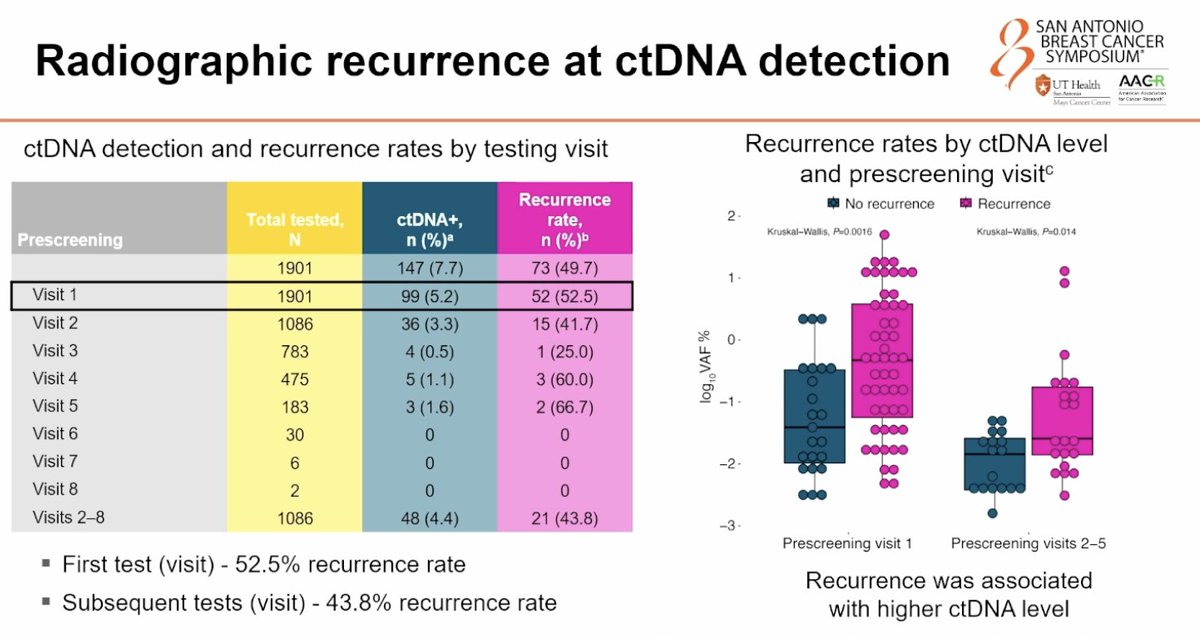
[Slide 1] Timing of ctDNA detection from end of SAN ANTONIO BREAST CANCER SYMPOSIUM definitive treatment UT Health AACR - - Canner Parent Men Caron Crever ctDNA detection by time from end of definitive treatment ctDNA detection by time in cancer subtype 100 ctDNA+ 7 6.7% Disease All ctDNA+ ctDNA+ ctDNA+ 6 type, patients <6 mo >6-12 mo >12 mo 5.2% n (%) post-EODT post-EODT post-EODT 5 (N=147) (n=87; 59.2%) (n=42; 28.6%) (n=18; 12.2%) TNBC n=135 81 (60.0) 40 (29.7) 14 (10.4) 4 HR+ n=12 6 (50.0) 2 (16.7) 4 (33.3) 3.1% 3 2.5% 2 1.8% In TNBC 60% ctDNA+ <6 months from end of definitive treatment 1 Data on HR+ limited by low numbers 0 <3 3-6 >6-9 >9-12 >12 Time since EODT, mo ctDNA+ circulating tumor DNA detected; EODT. end of definitive treatment; HR+ hormone receptor-positive; TNBC. triple-negative breast cancer --- [Slide 2] SAN ANTONIO BREAST CANCER Trial design SYMPOSIUM UT Health AACR - American - - - Man Cancer Com Primary endpoint Key eligibility criteria Cohort 1 Nirapariba Stage I-III breast cancer HER2-tBRCAm Investigator-assessed DFS including HR+ TNBC (regardless of BRCA status) and TNBC zec Randomized (1:1) Key secondary endpoint : or tBRCAm HR+/HER2- OS (target N=200) Completed prior standard therapy ctDNA+ Screening period Placebo for curative intent ctDNA surveillance HR+ allowed adjuvant endocrine Cohort 2 therapy Niraparib Primary endpoint TNBC allowed adjuvant TNBC pembrolizumab tBRCAwt (target N=600) Randomized Investigator-assessed DFS in the HRd and full No clinical sign of recurrence Serial ctDNA testing to populations monitor for MRD Placebo Patients who had neoadjuvant Key secondary endpoint chemotherapy and tumor showed OS no response were excluded Off-study if recurrence on baseline imaging Initially, DFSᵇ was the primary endpoint. This was changed to safety and tolerability of niraparib when enrollment stopped. Recurrence-free interval was also assessed "Patients received 200- or 300-mg/d of niraparib, depending on weight and platelet count. DFS disease-free survival defined as time from randomization to the earliest date of disease recurrence or death by any cause, per investigator-assessed RECIST v1.1. ctDNA+, circulating tumor DNA detected; HER2-, HER2 negative; HR+, hormone receptor-positive; tBRCAm, tumor BRCA-mutated; tBRCA wt, tumor BRCA wild-type; TNBC, triple-negative breast cancer; HRd - Homologous recombination deficiency assessed by Myriad myChoice HRD Plus CDX; Allowing ctDNA surveillance during adjuvant pembrolizumab added in amendment 1 This presentation is the intellectual property of the authors Contact the presenting author at nicholas numer(Dicr ac.uk for permission to reprint and/or distribute INTERNO --- [Slide 3] Timing of ctDNA detection from end of SAN ANTONIO BREAST CANCER SYMPOSIUM definitive treatment UT Health AACR Antreas American - - Mays Cancer Ceres ctDNA detection by time from end of definitive treatment ctDNA detection by time in cancer subtype 100 ctDNA+ 7 6.7% Disease All ctDNA+ ctDNA+ ctDNA+ 6 type, patients <6 mo >6-12 mo >12 mo 5.2% n (%) post-EODT post-EODT post-EODT 5 (N=147) (n=87; 59.2%) (n=42; 28.6%) (n=18; 12.2%) cloNA, % TNBC n=135 81 (60.0) 40 (29.7) 14 (10.4) 4 HR+ n=12 6 (50.0) 2 (16.7) 4 (33.3) 3.1% 3 2.5% 2 1.8% In TNBC 60% ctDNA+ ≤6 months from end of definitive treatment 1 Data on HR+ limited by low numbers 0 <3 3-6 >6-9 >9-12 >12 Time since EODT, mo ctDNA+, circulating tumor DNA detected; EODT, end of definitive treatment; HR+, hormone receptor-positive; TNBC, triple-negative breast cancer. --- [Slide 4] SAN ANTONIO BREAST CANCER Radiographic recurrence at ctDNA detection SYMPOSIUM UT Health AACR - Concer - Mays Career Center ctDNA detection and recurrence rates by testing visit Recurrence rates by ctDNA level and prescreening visitᶜ Recurrence No recurrence Recurrence Total tested, ctDNA+, rate, 2. Kruskal-Wallis, P=0 0016 Kruskal-Wallis P=0.014 Prescreening N n (%)a n (%)b 1901 147 (7.7) 73 (49.7) 1. Visit 1 1901 99 (5.2) 52 (52.5) Visit 2 1086 36 (3.3) 15 (41.7) 8 0- 000 Visit 3 783 4 (0.5) 1 (25.0) log10 VAF % O ....... Visit 4 475 5 (1.1) 3 (60.0) 000 00000 Visit 5 183 3 (1.6) 2 (66.7) -1- 0000 Visit 6 30 0 0 8 000 Visit 7 6 0 0 ... -2- Visit 8 2 0 0 Visits 2-8 1086 48 (4.4) 21 (43.8) -3- Prescreening visit 1 Prescreening visits 2-5 First test (visit) - 52.5% recurrence rate Recurrence was associated Subsequent tests (visit) - 43.8% recurrence rate with higher ctDNA level --- [Slide 5] SAN ANTONIO BREAST CANCER Recurrence-free intervalᵃ SYMPOSIUM UT Health AACR for - - - - Mays Career Care 1.0 Placebo Placebo Niraparib Niraparib (n=22) (n=18) 0.9 Events, n (%) 17 (77.3) 14 (77.8) 0.8 Median recurrence (95% CI), mo 5.4 (2.8-9.3) 11.4 (5.7-18.2) 0.7 Probability of recurrence Hazard ratio (95% CI) 0.66 (0.32-1.36) 0.6 0.5 0.4 0.3 0.2 0.1 0.0 0 2 4 6 8 10 12 14 16 18 20 22 24 26 28 30 Time from randomization, mo No. at risk Placebo 22 19 10 8 6 5 4 3 3 3 3 2 1 1 0 Niraparib 18 16 14 13 13 11 7 7 3 3 2 1 1 1 0 Investigators were unblinded at the time the study was terminated (April 25, 2023) "Recurrence-free interval was defined per STEEP 1.0,¹ and measured as time from randomization to progression, per RECIST v1.1. Recurrence-free interval did not include deaths because follow-up survival was no longer collected after the safety follow-up visit. RECIST, Response Evaluation Criteria in Solid Tumors; STEEP, Standardized Definitions for Efficacy End Points. 1. Hudis CA, et al. J Clin Oncol. 2007;25(15):2127-2132.
Stephanie Graff, MD, FACP, FASCO
ZEST Data
2.1K impressions · 26 likes · Dec 13, 2024
View on X ↗
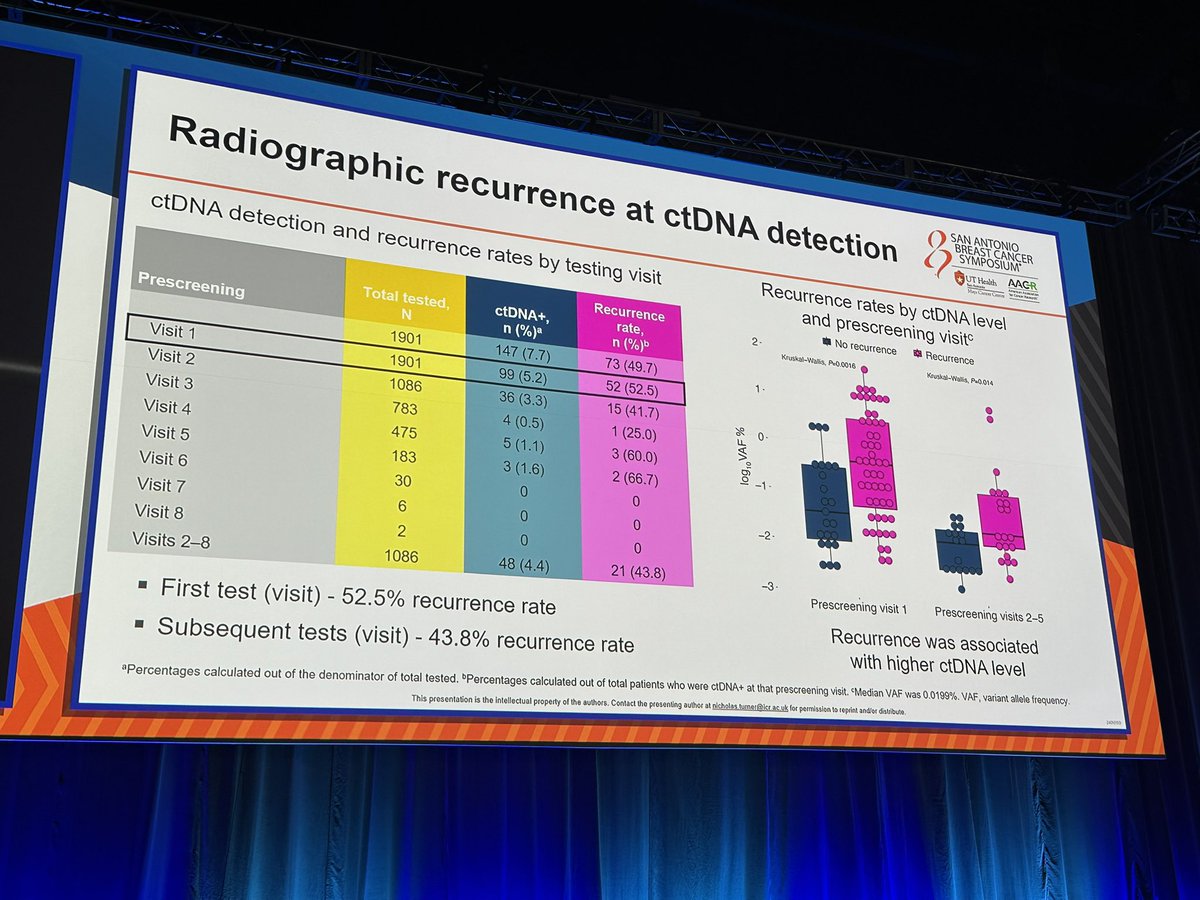
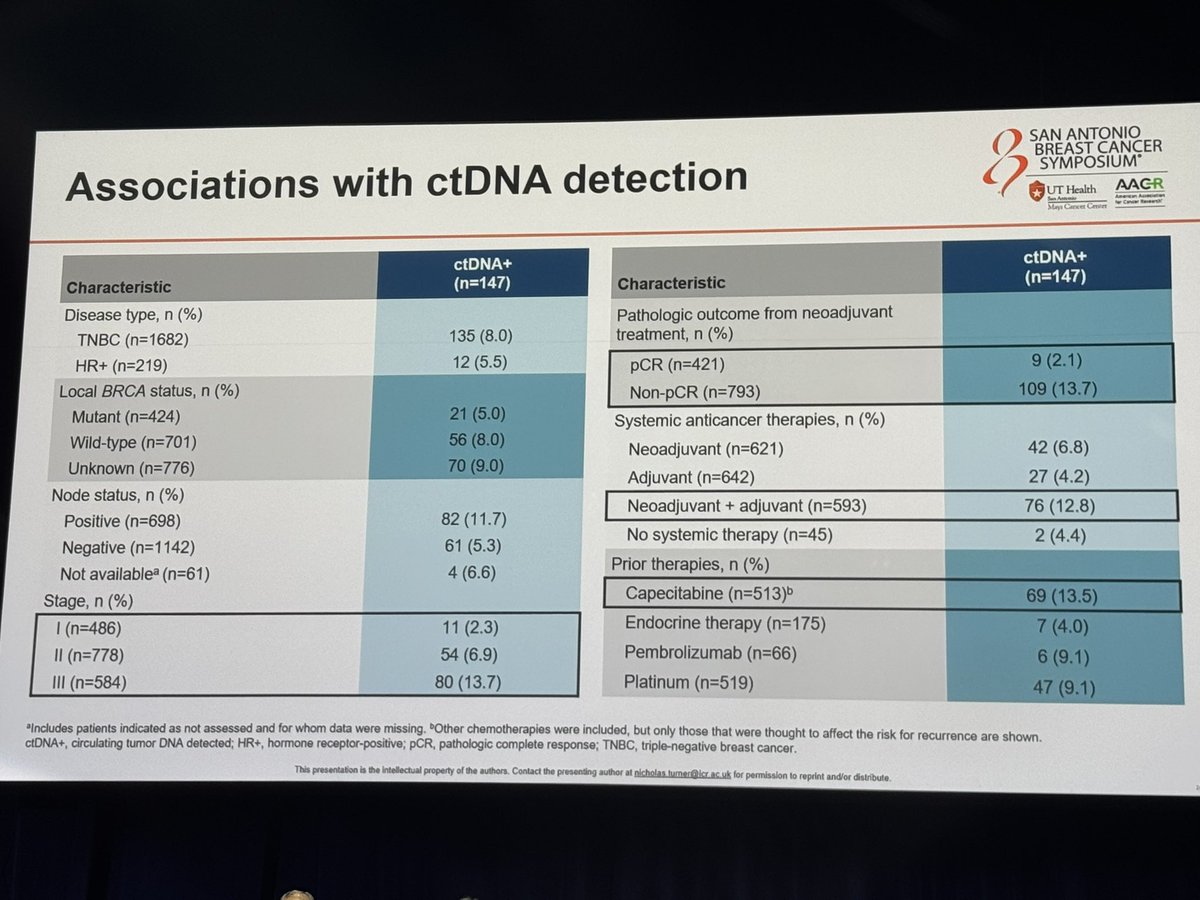
[Slide 1] SAN ANTONIO & BREAST CANCER Associations with ctDNA detection SYMPOSIUM UT Health AACR for Cause Mays Cancer Cream ctDNA+ ctDNA+ Characteristic (n=147) Characteristic (n=147) Disease type, n (%) Pathologic outcome from neoadjuvant TNBC (n=1682) 135 (8.0) treatment, n (%) HR+ (n=219) 12 (5.5) pCR (n=421) 9 (2.1) Local BRCA status, n (%) Non-pCR (n=793) 109 (13.7) Mutant (n=424) 21 (5.0) Systemic anticancer therapies, n (%) Wild-type (n=701) 56 (8.0) Neoadjuvant (n=621) 42 (6.8) Unknown (n=776) 70 (9.0) Adjuvant (n=642) 27 (4.2) Node status, n (%) Neoadjuvant + adjuvant (n=593) 76 (12.8) Positive (n=698) 82 (11.7) No systemic therapy (n=45) 2 (4.4) Negative (n=1142) 61 (5.3) Not available (n=61) 4 (6.6) Prior therapies, n (%) Stage, n (%) Capecitabine (n=513)b 69 (13.5) I (n=486) 11 (2.3) Endocrine therapy (n=175) 7 (4.0) II (n=778) 54 (6.9) Pembrolizumab (n=66) 6 (9.1) III (n=584) 80 (13.7) Platinum (n=519) 47 (9.1) "Includes patients indicated as not assessed and for whom data were missing Other chemotherapies were included, but only those that were thought to affect the risk for recurrence are shown. ctDNA+, circulating tumor DNA detected; HR+, hormone receptor-positive; pCR, pathologic complete response; TNBC, triple-negative breast cancer. This presentation is the intellectual property of the authors. Contact the presenting author turner@ic acuk for permission to reprint and/or distribute --- [Slide 2] SAN AN BREAS Trial design SYMPO UT Healt - - Mays Carent C Primary endpoin Key eligibility criteria Cohort 1 Niraparib Investigator-as Stage I-III breast cancer HER2-tBRCAm including HR+ TNBC (regardless of BRCA status) and TNBC Randomized (1:1) Key secondary e or tBRCAm HR+/HER2- OS (target N=200) Completed prior standard therapy ctDNA surveillance ctDNA+ HR+ allowed adjuvant endocrine Screening period Placebo for curative intent Cohort 2 therapy Niraparib Primary endpoint TNBC TNBC allowed adjuvant pembrolizumab tBRCAwt Randomized (1:1) Investigator-as: in the HRd and Serial ctDNA testing to (target N=600) No clinical sign of recurrence populations monitor for MRD Placebo Patients who had neoadjuvant Key secondary en chemotherapy and tumor showed OS no response were excluded Off-study if recurrence on baseline imaging Initially, DFSᵇ was the primary endpoint. This was changed to safety and tolerability of niraparib when enrollment stopped. Recurrence-free interval was also assessed Patients received 200- or 300-mg/d of niraparib, depending on weight and platelet count. DFS- disease-free survival defined as time from randomization to the earliest date of disease recurrence or death by cause, per investigator-assessed RECIST v1.1. ctDNA+, circulating tumor DNA detected; HER2-, HER2 negative; HR+, hormone receptor-positive; tBRCAm, tumor BRCA-mutated; tBRCA wt, tumor BRCA will TNBC, triple-negative breast cancer; HRd - Homologous recombination deficiency assessed by Myriad myChoice HRD Plus CDX; Allowing ctDNA surveillance during adjuvant pembrolizumab added in amendr This presentation is the intellectual property of the authors. Contact the presenting author at nicholas turner@icr.a for permission to reprint and/or distribute. --- [Slide 3] SAN ANTONIO BREAST CANCER SYMPOSIUM® Associations with ctDNA detection UT Health AACR - Center - Mays Cancer Center ctDNA+ ctDNA+ Characteristic (n=147) Characteristic (n=147) Disease type, n (%) Pathologic outcome from neoadjuvant TNBC (n=1682) 135 (8.0) treatment, n (%) HR+ (n=219) 12 (5.5) pCR (n=421) 9 (2.1) Local BRCA status, n (%) Non-pCR (n=793) 109 (13.7) Mutant (n=424) 21 (5.0) Systemic anticancer therapies, n (%) Wild-type (n=701) 56 (8.0) Neoadjuvant (n=621) 42 (6.8) Unknown (n=776) 70 (9.0) Adjuvant (n=642) 27 (4.2) Node status, n (%) Neoadjuvant + adjuvant (n=593) 76 (12.8) Positive (n=698) 82 (11.7) No systemic therapy (n=45) 2 (4.4) Negative (n=1142) 61 (5.3) 4 (6.6) Prior therapies, n (%) Not available (n=61) Stage, n (%) Capecitabine (n=513)b 69 (13.5) I (n=486) 11 (2.3) Endocrine therapy (n=175) 7 (4.0) II (n=778) 54 (6.9) Pembrolizumab (n=66) 6 (9.1) III (n=584) 80 (13.7) Platinum (n=519) 47 (9.1) "Includes patients indicated as not assessed and for whom data were missing. Other chemotherapies were included, but only those that were thought to affect the risk for recurrence are shown. ctDNA+, circulating tumor DNA detected; HR+, hormone receptor-positive; pCR, pathologic complete response; TNBC, triple-negative breast cancer. This presentation is the intellectual property of the authors Contact the presenting author at nicholas tumer@lcr.ac.uk for permission to reprint and/or distribute. --- [Slide 4] SAN ANTONIO BREAST CANCER Radiographic recurrence at ctDNA detection SYMPOSIUM UT Health AACR - - - Mays General Certer ctDNA detection and recurrence rates by testing visit Recurrence rates by ctDNA level and prescreening visit° Recurrence No recurrence Recurrence Total tested, ctDNA+, rate, 2. Kruskal-Wallis, P=0 0016 Kruskal-Wallis, P=0.014 Prescreening N n (%)a n (%)ᵇ 1901 147 (7.7) 73 (49.7) 1. Visit 1 1901 99 (5.2) 52 (52.5) Visit 2 1086 36 (3.3) 15 (41.7) 8 0. ... Visit 3 783 4 (0.5) 1 (25.0) log₁₀VAF % ...... ... Visit 4 475 5 (1.1) 3 (60.0) 00000 -1- D Visit 5 183 3 (1.6) 2 (66.7) : .... Visit 6 30 0 0 8 ... 000 ... Visit 7 6 0 0 -2- Visit 8 2 0 0 Visits 2-8 1086 48 (4.4) 21 (43.8) -3. Prescreening visit 1 Prescreening visits 2-5 First test (visit) - 52.5% recurrence rate Recurrence was associated Subsequent tests (visit) - 43.8% recurrence rate with higher ctDNA level "Percentages calculated out of the denominator of total tested. Percentages calculated out of total patients who were ctDNA+ at that prescreening visit. Median VAF was 0.0199% VAF, variant allele frequency. This presentation is the intellectual property of the authors Contact the presenting author at nicholas.tumer@lcr.ac.uk for permission to reprint and/or distribute --- [Slide 5] SAN ANTONIO BREAST CANCER Recurrence-free intervalᵃ SYMPOSIUM® UT Health AACR E I - - Map Casm Comm 1.0 Placebo Placebo Niraparib Niraparib (n=22) (n=18) 0.9 Events, n (%) 17 (77.3) 14 (77.8) 0.8 Median recurrence 5.4 (2.8-9.3) 11.4 (5.7-18.2) (95% CI), mo 0.7 Hazard ratio (95% CI) 0.66 (0.32-1.36) Probability of recurrence 0.6 0.5 0.4 0.3 0.2 0.1 0.0 0 2 4 6 8 10 12 14 16 18 20 22 24 26 28 30 Time from randomization, mo No. at risk Placebo 22 19 10 8 6 5 4 3 3 3 3 2 1 1 0 Niraparib 18 16 14 13 13 11 7 7 3 3 2 1 1 1 0 Investigators were unblinded at the time the study was terminated (April 25, 2023) "Recurrence-free interval was defined per STEEP 1.0,¹ and measured as time from randomization to progression, per RECIST v1.1. Recurrence-free interval did not include deaths because follow-up survival was no longer collected after the safety follow-up visit. RECIST, Response Evaluation Criteria in Solid Tumors; STEEP, Standardized Definitions for Efficacy End Points. 1. Hudis CA, et al. J Clin Oncol. 2007;25(15):2127-2132. This presentation is the intellectual property of the authors. Contact the presenting author at nicholas tumer@lcr.ac.uk for permission to reprint and/or distribute
Sara Tolaney
Sara Tolaney @stolaney1
ZEST Data
2.1K impressions · 30 likes · Dec 13, 2024
View on X ↗
[Slide 1] SAN ANTONIO BREAST CANCER SYMPOSIUM SAN ANTONIO BREAST CANCER Conclusion SYMPOSIUM' UT Health AACR - - Man Cancer Center In early breast cancer, multiple studies show strong association between ctDNA presence and distant recurrence No study has shown that intervening on a positive test improves outcomes No study has shown that deescalating therapy based on a negative test is safe Given lack of evidence that ctDNA-guided therapy in early BC improves outcomes, using ctDNA results to guide therapy should only be done as part of a trial Prospective studies are ongoing Technology continues to improve This presentation is the intellectual property of the authors Contact the presenting author at lan krop@yale edu for permission to reprint and/or distribute 14
Hope Rugo
Hope Rugo @hoperugo
ZEST Data
1.4K impressions · 20 likes · Dec 13, 2024
View on X ↗
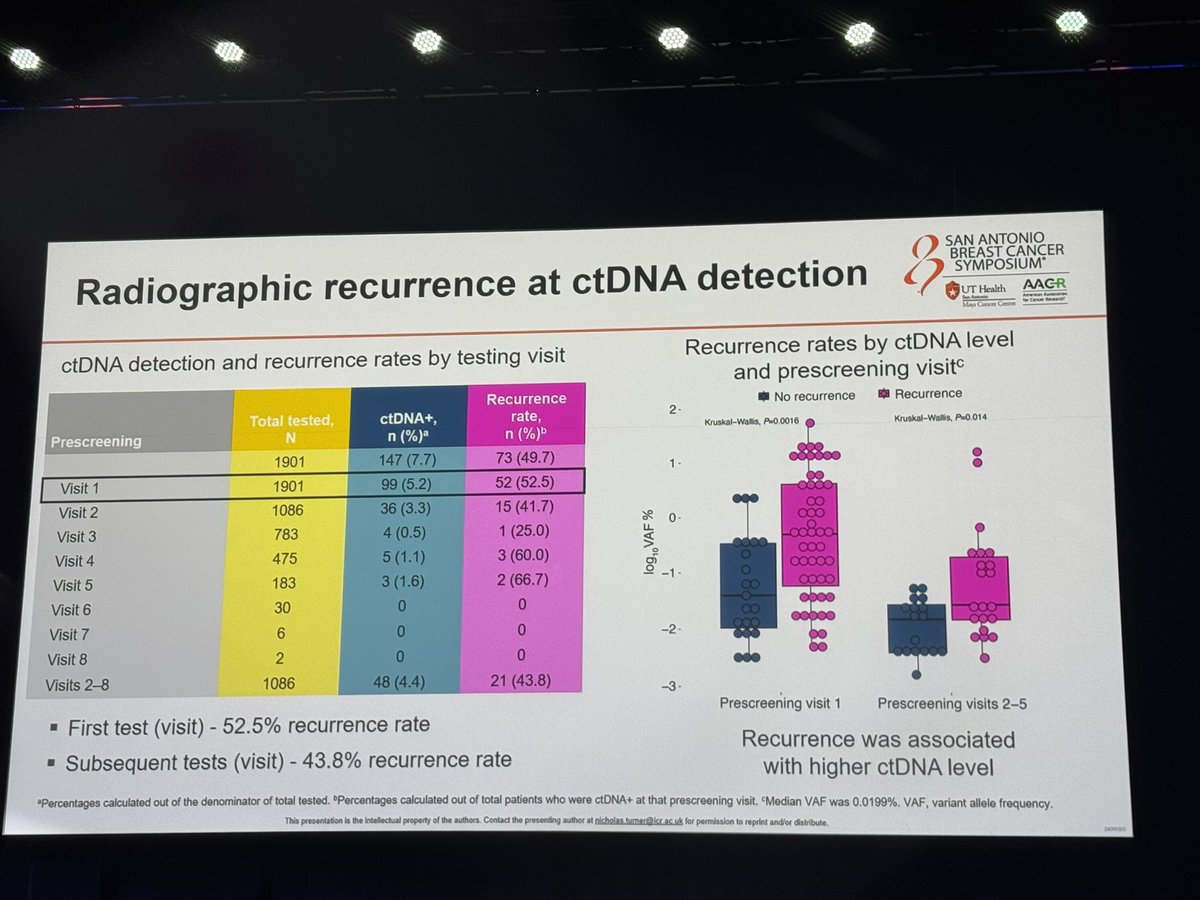
[Slide 1] SAN ANTONIO BREAST CANCER CONSORT diagram SYMPOSIUM UT Health AACR - - - - May Came Center Prescreened/signed ICF (N=2746) Did not enter ctDNA surveillance (n=845*) Entered ctDNA surveillance (n=1901) 4 patients had recurrence despite ctDNA- ctDNA+ (n=147) 8% of patients were ctDNA+ Did not enter screening or not randomized (n=107b) Did not meet inclusion/exclusion criteria, n=83 Radiological recurrence, n=73 73 patients (50%) had radiologic recurrence Entered screening (n=96) Study terminated by sponsor, n=10 when ctDNA+ Withdrawal by patient, n=7 Physician decision, n=1 Randomized (n=40) Niraparib (n=18) Placebo (n=22) Discontinued treatment, n=18 Discontinued treatment, n=22 Radiological recurrence, n= 14 Radiological recurrence, n=13 Completed analysisᶜ, n=3 Study terminated by sponsor, n=7 Withdrawal by patient, n=1 Completed analysisᶜ, n=1 Physician decision, n=1 "These patients did not have Signatera™ assay built. The top 2 reasons for not entering ctDNA surveillance were insufficient tumor tissue sample (n=402) or blood specimen not meeting requirements (n=72). Study sites could select ≥1 reason for patients not entering screening or not being randomized. Patients total to more than 107. Completed analysis but continuing treatment (for niraparib arm) or scans (for placebo arm). ctDNA, circulating tumor DNA; ctDNA+, circulating tumor DNA detected; ctDNA-, circulating tumor DNA not detected; ICF, informed consent form. This presentation is the intellectual property of the authors. Contact the presenting author at nicholas furner@icr.au for permission to repeint and/or distribute 2400 --- [Slide 2] SAN ANTONIO Radiographic recurrence at ctDNA detection BREAST CANCER SYMPOSIUM UT Health AACR - - May Care - ctDNA detection and recurrence rates by testing visit Recurrence rates by ctDNA level and prescreening visitᶜ Recurrence No recurrence Recurrence Total tested, ctDNA+, rate, 2. Prescreening N Kruskal-Walls, Pr0.0016 Kruskal-Walls, P=0.014 n (%)a n (%)b 1901 147 (7.7) 73 (49.7) 1. Visit 1 1901 99 (5.2) 52 (52.5) Visit 2 1086 36 (3.3) 15 (41.7) 8 % 0. ... Visit 3 783 4 (0.5) 1 (25.0) O ...... Visit 4 475 5 (1.1) 3 (60.0) ... 0 ..... Visit 5 183 3 (1.6) 2 (66.7) -1- :: .... Visit 6 30 0 0 8 ... ! Visit 7 6 0 0 -2- 8 Visit 8 2 0 0 Visits 2-8 1086 48 (4.4) 21 (43.8) -3- Prescreening visit 1 Prescreening visits 2-5 First test (visit) - 52.5% recurrence rate Recurrence was associated Subsequent tests (visit) - 43.8% recurrence rate with higher ctDNA level Percentages calculated out of the denominator of total tested. Percentages calculated out of total patients who were ctDNA+ at that prescreening visit. Median VAF was 0.0199%. VAF, variant allele frequency. This presentation is the intellectual property of the authors. Contact the presenting author at nicholes.tumer@icr.ac.uk for permission to reprint and/or distribute. --- [Slide 3] Baseline ctDNA level and recurrence-free SAN ANTONIO BREAST CANCER SYMPOSIUM intervalᵃ UT Health AACR - - - - - May Date Jens Recurrence split by median ctDNA level ctDNA high ctDNA low Placebo Niraparib 1.00 Placebo Niraparib Placebo Niraparib 1.00 Placebo Niraparib (n=13) (n*7) (n*9) (no11) Median recurrence (95% CI), mo 3.2(0.3-9.3) 5.7 (0.6-14.1) Median recurrence (05% Ci), mo 7.4(2.6-NE) 15.9(8.2-NE) 0.75 Hazard ratio (95% CI) 0.91 (0.34-2.44) Hazard ratio (95% CI) 0.60 (0.20-1,81) 0.75 Probability of recurrence 0.50 Probability of recurrence 0.50 0.25 0.25 0.00 0.00 0 2 4 6 8 10 12 14 16 18 20 0 2 4 6 8 10 12 14 16 18 20 22 24 26 28 Time from randomization, mo Time from randomization, mo No. at risk No. at risk Placebo 13 10 4 3 3 2 2 1 1 1 1 Placebo 9 9 6 5 3 3 2 2 2 2 2 1 1 1 0 Niraparib 7 5 4 3 3 3 2 2 1 1 1 Niraparib 11 11 10 10 10 8 5 5 2 2 1 1 1 1 0 In exploratory analysis, recurrence-free interval may be longer in patients with low ctDNA level at baseline Median VAF was 0.0199%. ctDNA high was defined as VAF greater than or equal to median at prescreening; ctDNA low was defined as VAF less than median at prescreening. This presentation is the intellectual property of the authors. Contact the presenting author at nicholas tumer@icr ac.uk for permission to reprint and/or distribute. (40950 --- [Slide 4] SAN ANTONIO BREAST CANCER CONSORT diagram SYMPOSIUM UT Health AACR - - - - May Came Center Prescreened/signed ICF (N=2746) Did not enter ctDNA surveillance (n=845*) Entered ctDNA surveillance (n=1901) 4 patients had recurrence despite ctDNA- ctDNA+ (n=147) 8% of patients were ctDNA+ Did not enter screening or not randomized (n=107b) Did not meet inclusion/exclusion criteria, n=83 Radiological recurrence, n=73 73 patients (50%) had radiologic recurrence Entered screening (n=96) Study terminated by sponsor, n=10 when ctDNA+ Withdrawal by patient, n=7 Physician decision, n=1 Randomized (n=40) Niraparib (n=18) Placebo (n=22) Discontinued treatment, n=18 Discontinued treatment, n=22 Radiological recurrence, n= 14 Radiological recurrence, n=13 Completed analysisᶜ, n=3 Study terminated by sponsor, n=7 Withdrawal by patient, n=1 Completed analysisᶜ, n=1 Physician decision, n=1 "These patients did not have Signatera™ assay built. The top 2 reasons for not entering ctDNA surveillance were insufficient tumor tissue sample (n=402) or blood specimen not meeting requirements (n=72). Study sites could select ≥1 reason for patients not entering screening or not being randomized. Patients total to more than 107. Completed analysis but continuing treatment (for niraparib arm) or scans (for placebo arm). ctDNA, circulating tumor DNA; ctDNA+, circulating tumor DNA detected; ctDNA-, circulating tumor DNA not detected; ICF, informed consent form. This presentation is the intellectual property of the authors. Contact the presenting author at nicholas furner@icr.au for permission to repeint and/or distribute 2400 --- [Slide 5] SAN ANTONIO Radiographic recurrence at ctDNA detection BREAST CANCER SYMPOSIUM UT Health AACR - - May Care - ctDNA detection and recurrence rates by testing visit Recurrence rates by ctDNA level and prescreening visitᶜ Recurrence No recurrence Recurrence Total tested, ctDNA+, rate, 2. Prescreening N Kruskal-Walls, Pr0.0016 Kruskal-Walls, P=0.014 n (%)a n (%)b 1901 147 (7.7) 73 (49.7) 1. Visit 1 1901 99 (5.2) 52 (52.5) Visit 2 1086 36 (3.3) 15 (41.7) 8 % 0. ... Visit 3 783 4 (0.5) 1 (25.0) O ...... Visit 4 475 5 (1.1) 3 (60.0) ... 0 ..... Visit 5 183 3 (1.6) 2 (66.7) -1- :: .... Visit 6 30 0 0 8 ... ! Visit 7 6 0 0 -2- 8 Visit 8 2 0 0 Visits 2-8 1086 48 (4.4) 21 (43.8) -3- Prescreening visit 1 Prescreening visits 2-5 First test (visit) - 52.5% recurrence rate Recurrence was associated Subsequent tests (visit) - 43.8% recurrence rate with higher ctDNA level Percentages calculated out of the denominator of total tested. Percentages calculated out of total patients who were ctDNA+ at that prescreening visit. Median VAF was 0.0199%. VAF, variant allele frequency. This presentation is the intellectual property of the authors. Contact the presenting author at nicholes.tumer@icr.ac.uk for permission to reprint and/or distribute. --- [Slide 6] Baseline ctDNA level and recurrence-free SAN ANTONIO BREAST CANCER SYMPOSIUM intervalᵃ UT Health AACR - - - - - May Date Jens Recurrence split by median ctDNA level ctDNA high ctDNA low Placebo Niraparib 1.00 Placebo Niraparib Placebo Niraparib 1.00 Placebo Niraparib (n=13) (n*7) (n*9) (no11) Median recurrence (95% CI), mo 3.2(0.3-9.3) 5.7 (0.6-14.1) Median recurrence (05% Ci), mo 7.4(2.6-NE) 15.9(8.2-NE) 0.75 Hazard ratio (95% CI) 0.91 (0.34-2.44) Hazard ratio (95% CI) 0.60 (0.20-1,81) 0.75 Probability of recurrence 0.50 Probability of recurrence 0.50 0.25 0.25 0.00 0.00 0 2 4 6 8 10 12 14 16 18 20 0 2 4 6 8 10 12 14 16 18 20 22 24 26 28 Time from randomization, mo Time from randomization, mo No. at risk No. at risk Placebo 13 10 4 3 3 2 2 1 1 1 1 Placebo 9 9 6 5 3 3 2 2 2 2 2 1 1 1 0 Niraparib 7 5 4 3 3 3 2 2 1 1 1 Niraparib 11 11 10 10 10 8 5 5 2 2 1 1 1 1 0 In exploratory analysis, recurrence-free interval may be longer in patients with low ctDNA level at baseline Median VAF was 0.0199%. ctDNA high was defined as VAF greater than or equal to median at prescreening; ctDNA low was defined as VAF less than median at prescreening. This presentation is the intellectual property of the authors. Contact the presenting author at nicholas tumer@icr ac.uk for permission to reprint and/or distribute. (40950 --- [Slide 7] SAN ANTONIO Conclusions BREAST CANCER SYMPOSIUM UT Health AACR - - - Resert Map Cent Center ZEST was the first phase 3 trial of MRD-guided therapy in breast cancer ZEST was terminated early because of a low randomization rate Broad entry criteria including low-risk patients that resulted in a low rate of ctDNA+ High rate (50%) of metastatic disease at the time of ctDNA+ For patients with TNBC, ctDNA+ occurred most frequently on the first test and ≤6 months from end of treatment, consistent with early recurrence typical of TNBC There was a high rate of radiographic recurrence at time of ctDNA+, providing support for strategies to start ctDNA testing earlier in the disease trajectory of TNBC The trial was not powered to evaluate the effect of niraparib versus placebo given early termination; however, recurrence-free interval was numerically longer with niraparib ctDNA, circulating tumor DNA; ctDNA+, circulating tumor DNA detected; MRD, molecular residual disease; TNBC, triple-negative breast cancer. This presentation is the intellectual property of the authors. Contact the presenting author at nicholas.turner@ier.ac.uk for permission to reprint and/or distribute.
Erika Hamilton, MD
Erika Hamilton, MD @ErikaHamilton9
ZEST Data
1.4K impressions · 18 likes · Dec 13, 2024
View on X ↗
[Slide 1] SAN ANTONIC BREAST CAN Trial design SYMPOSIUM UT Health AA Mays Caren Center Primary endpoint Key eligibility criteria Cohort 1 Niraparib Stage I-III breast cancer HER2- tBRCAm Investigator-assess including HR+ TNBC (regardless of BRCA status) and TNBC Randomized (1:1) Key secondary endpoi or tBRCAm HR+/HER2- OS (target N=200) Completed prior standard therapy ctDNA surveillance ctDNA+ HR+ allowed adjuvant endocrine Screening period Placebo for curative intent Cohort 2 therapy Niraparib Primary endpoint TNBC allowed adjuvant TNBC pembrolizumab tBRCAwt Serial ctDNA testing to Randomized (1:1) Investigator-asses: in the HRd and full (target N=600) No clinical sign of recurrence populations monitor for MRD Placebo Patients who had neoadjuvant Key secondary endp chemotherapy and tumor showed OS no response were excluded Off-study if recurrence on baseline imaging Initially, DFSᵇ was the primary endpoint. This was changed to safety and tolerability of niraparib when enrollment stopped. Recurrence-free interval was also assessed Patients received 200- or 300-mg/d of niraparib, depending on weight and platelet count. DFS- disease-free survival defined as time from randomization to the earliest date of disease recurrence or death by I cause, per investigator-assessed RECIST v1.1. ctDNA+, circulating tumor DNA detected; HER2-, HER2 negative; HR+, hormone receptor-positive; tBRCAm, tumor BRCA-mutated; tBRCA wt, tumor BRCA wild TNBC, triple-negative breast cancer; HRd - Homologous recombination deficiency assessed by Myriad myChoice HRD Plus CDX; Allowing ctDNA surveillance during adjuvant pembrolizumab added in amendm This presentation is the intellectual property of the authors. Contact the presenting author at nicholas.tumer@icr.ac.uk for permission to reprint and/or distribute. --- [Slide 2] SAN ANTONIO BREAST CANCER Associations with ctDNA detection SYMPOSIUM® UT Health AACR American - Mays Cancer Center ctDNA+ ctDNA+ Characteristic (n=147) Characteristic (n=147) Disease type, n (%) Pathologic outcome from neoadjuvant TNBC (n=1682) 135 (8.0) treatment, n (%) HR+ (n=219) 12 (5.5) pCR (n=421) 9 (2.1) Local BRCA status, n (%) Non-pCR (n=793) 109 (13.7) Mutant (n=424) 21 (5.0) Systemic anticancer therapies, n (%) Wild-type (n=701) 56 (8.0) Neoadjuvant (n=621) 42 (6.8) Unknown (n=776) 70 (9.0) Adjuvant (n=642) 27 (4.2) Node status, n (%) Neoadjuvant + adjuvant (n=593) 76 (12.8) Positive (n=698) 82 (11.7) No systemic therapy (n=45) 2 (4.4) Negative (n=1142) 61 (5.3) Not available (n=61) 4 (6.6) Prior therapies, n (%) Stage, n (%) Capecitabine (n=513)b 69 (13.5) I (n=486) 11 (2.3) Endocrine therapy (n=175) 7 (4.0) Il (n=778) 54 (6.9) Pembrolizumab (n=66) 6 (9.1) III (n=584) 80 (13.7) Platinum (n=519) 47 (9.1) "Includes patients indicated as not assessed and for whom data were missing. Other chemotherapies were included, but only those that were thought to affect the risk for recurrence are shown. ctDNA+, circulating tumor DNA detected; HR+, hormone receptor-positive; pCR, pathologic complete response; TNBC, triple-negative breast cancer. This presentation is the intellectual property of the authors Contact the presenting author at nicholas.turner@icr.ac.uk for permission to reprint and/or distribute --- [Slide 3] SAN ANTONIO BREAST CANCER Radiographic recurrence at ctDNA detection SYMPOSIUM UT Health AACR - - - Mays Canem Center ctDNA detection and recurrence rates by testing visit Recurrence rates by ctDNA level and prescreening visitᶜ Recurrence No recurrence Recurrence Total tested, ctDNA+, rate, 2. Kruskal-Wallis, P=0.0016 Kruskal-Wallis, P=0.014 Prescreening N n (%)a n (%)b 1901 147 (7.7) 73 (49.7) 1. Visit 1 1901 99 (5.2) 52 (52.5) Visit 2 1086 36 (3.3) 15 (41.7) 8 0- OOO Visit 3 783 4 (0.5) 1 (25.0) VAF log₁₀VAF % O XXXXX Visit 4 475 5 (1.1) 3 (60.0) OOO ..... Visit 5 183 3 (1.6) 2 (66.7) -1- .... Visit 6 30 0 0 ... 6 0 0 000 ... Visit 7 -2- Visit 8 2 0 0 Visits 2-8 1086 48 (4.4) 21 (43.8) -3- Prescreening visit 1 Prescreening visits 2-5 First test (visit) - - 52.5% recurrence rate Recurrence was associated Subsequent tests (visit) - 43.8% recurrence rate with higher ctDNA level "Percentages calculated out of the denominator of total tested. Percentages calculated out of total patients who were ctDNA+ at that prescreening visit. Median VAF was 0.0199%. VAF, variant allele frequency. This presentation is the intellectual property of the authors. Contact the presenting author at nicholas.tumer@icr.ac.uk for permission to reprint and/or distribute. --- [Slide 4] SAN ANTONIO BREAST CANCER Recurrence-free intervalᵃ SYMPOSIUM UT Health AACR - - Center - Mays Canon Level 1.0 Placebo Placebo Niraparib Niraparib (n=22) (n=18) 0.9 Events, n (%) 17 (77.3) 14 (77.8) 0.8 Median recurrence (95% CI), mo 5.4 (2.8-9.3) 11.4 (5.7-18.2) 0.7 Probability of recurrence Hazard ratio (95% CI) 0.66 (0.32-1.36) 0.6 0.5 0.4 0.3 0.2 0.1 0.0 0 2 4 6 8 10 12 14 16 18 20 22 24 26 28 30 Time from randomization, mo No. at risk Placebo 22 19 10 8 6 5 4 3 3 3 3 2 1 1 0 Niraparib 18 16 14 13 13 11 7 7 3 3 2 1 1 1 0 Investigators were unblinded at the time the study was terminated (April 25, 2023) Recurrence-free interval was defined per STEEP 1.0,¹ and measured as time from randomization to progression, per RECIST v1.1. Recurrence-free interval did not include deaths because follow-up survival was no longer collected after the safety follow-up visit. RECIST, Response Evaluation Criteria in Solid Tumors; STEEP, Standardized Definitions for Efficacy End Points. 1. Hudis CA, et al. J Clin Oncol. 2007;25(15):2127-2132. This presentation is the intellectual property of the authors Contact the presenting author at nicholas.tumer@lcr.ac.uk for permission to reprint and/or distribute

ZEST Top Tweets

Top tweets by impressions — click to view on X

Matteo Lambertini, MD PhD
Matteo Lambertini, MD PhD@matteolambe

Presented at #SABCS24 results of the #ZEST trial assessing the impact of #ctDNA surveillance in patients with mostly triple-negative #BreastCancer and molecular residual disease after definitive…

👁 4.2K ♡ 54 ↻ 17 Dec 13, 2024
Stephanie Graff, MD, FACP, FASCO
Stephanie Graff, MD, FACP, FASCO@DrSGraff

ZEST—a ph3 trial for TNBC w/ ctDNA screening
🛑stopped early due to low randomization
🩻 50% with mets at time ctDNA+
⏲️ ctDNA+ occurred often on 1st test/
≤6 mos from EoT
▫️Recurrence-free interval…

👁 2.1K ♡ 26 ↻ 16 Dec 13, 2024
Sara Tolaney
Sara Tolaney@stolaney1

Discussion of ZEST by Ian Krop stating that ctDNA isn&#x27;t quite ready for prime time

@SABCSSanAntonio #SABCS24 @OncoAlert #bcsm https://t.co/ke9rtHSPRT

👁 2.1K ♡ 30 ↻ 10 Dec 13, 2024
Yara Abdou
Yara Abdou@YAbdouMD

Emphasizes importance of designing MRD interception trials with early and frequent ctDNA testing especially in baseline high risk disease!

#bcsm #SABCS24 https://t.co/6NutGXpH7U

👁 2K ♡ 6 ↻ 1 Dec 13, 2024
Hope Rugo
Hope Rugo@hoperugo

#SABCS24 ZEST results w/ 88% TN. 8% who entered surveillance were ctDNA positive, only 4 recurred. 40 rand to nirapirib vs placebo, 15% mutant. 60% TNBC + w/in 6 mo of end of Rx. Fast rise in ctDNA…

👁 1.4K ♡ 20 ↻ 15 Dec 13, 2024
Erika Hamilton, MD
Erika Hamilton, MD@ErikaHamilton9

Dr. Turner presents #ZEST adj study of MRD in pts with HR + w/ BRCA &amp; TNBC all comers w/ niraparib as intervention

147 had ctDNA+, only 40 randomized

Rad recurrence assoc w/ ⬆️ ctDNA level…

👁 1.4K ♡ 18 ↻ 8 Dec 13, 2024
Mridula George
Mridula George@MridulaGeorgeMD

Takeaways from ZEST
📌short lead time between det of ctDNA and recurrence ~5mos
📌Pts who had ➖ ctDNA conv to➕within 3mos with MBC on imaging.
📌 pts with ctDNA have💯recurrence
📌 no data yet that…

👁 883 ♡ 13 ↻ 11 Dec 13, 2024
Sara Tolaney
Sara Tolaney@stolaney1

ZEST: MRD guided tx
n=1901 surveillance (88% TNBC), 147 (8% ctDNA+, highest w/i first 3 mo; 60% w/i 6mo)
ctDNA+: 50% radiologic recurrence, subsequent test 43.8% recurrence
40 pts randomized: HR…

👁 845 ♡ 7 ↻ 6 Dec 13, 2024
Hope Rugo
Hope Rugo@hoperugo

#SABCS24 Ian Krop discusses Zest. As an investigator &amp; provider, frustrated by low ctDNA+ rates, Mets at 1st detection in TNBC. Longer lead time for HR+. My take: we need to direct Rx B4 surgery…

👁 769 ♡ 8 ↻ 4 Dec 13, 2024
Erika Hamilton, MD
Erika Hamilton, MD@ErikaHamilton9

My takeaways- MRD intervention remains hard.

Low yield ⚠️

High metastatic disease rates at ctDNA detection ⚠️

#SABCS24
@OncoAlert
@SABCSSanAntonio

👁 637 ♡ 8 ↻ 5 Dec 13, 2024

About the ZEST Trial

ZEST is a cautionary tale in MRD-guided therapy trial design. Only 7.7% of screened patients were ctDNA-positive after completing curative-intent therapy, and 55% of those already had imaging-detectable disease — meaning ctDNA testing post-treatment was too late. Turner et al. recommend future MRD trials test during neoadjuvant therapy and target higher-risk subsets (stage 2B+ non-pCR). ctDNA assay was personalized tumor-informed test (16 tumor-specific mutations per patient).

Trial Methodology & Results

Recurrence-Free Interval (exploratory, underpowered) — Trial Terminated Early — Insufficient Power

Median: 11.4 months (niraparib) vs. 5.4 months (placebo). Trial terminated early due to low ctDNA-positive enrollment. Only 40 of 1,901 screened patients were randomized — insufficient for meaningful efficacy assessment. Descriptive median recurrence-free interval 11.4 months (niraparib) vs. 5.4 months (placebo). 6 niraparib vs. 4 placebo patients remained recurrence-free at data cutoff. HR, CI, and P-value NOT in published sources (underpowered). Turner et al. emphasized that 55% of ctDNA-positive patients already had imaging-detectable recurrence at first positive test — a critical design lesson.

⚠ Terminated early: only 40/1,901 screened met criteria

📄 Source: KOL commentary on X →

Overall Survival (OS)

Not reported. Trial terminated before any OS analysis.


📄 Source →

Safety & Tolerability

Grade ≥3 TRAE rates NOT in published sources for this terminated trial. Niraparib safety profile well-established from OlympiA/OVA trials — hematologic toxicities (anemia, thrombocytopenia, neutropenia) are class effects.

Safety details not reported (trial terminated early)

📄 Source →

Clinical Implications

Negative trial: terminated early for low enrollment; no practice-changing efficacy signal. ZEST is a cautionary tale in MRD-guided therapy trial design. Only 7.7% of screened patients were ctDNA-positive after completing curative-intent therapy, and 55% of those already had imaging-detectable disease — meaning ctDNA testing post-treatment was too late. Turner et al. recommend future MRD trials test during neoadjuvant therapy and target higher-risk subsets (stage 2B+ non-pCR). ctDNA assay was personalized tumor-informed test (16 tumor-specific mutations per patient).

ZEST in the News

Key KOL Sentiments — ZEST

DoctorSentimentComment
Susan G. Komen ● POSITIVE Results of the phase 3 ZEST trial presented @ #SABCS24 found that presence of circulating tumor DNA after initial treatment was a strong predictor of recurrence in participants with stage I-III HER2- BRCA mutant or triple negative #breastcancer. https://t.co/W4gluumAAn
Matteo Lambertini, MD PhD ● NEUTRAL Presented at #SABCS24 results of the #ZEST trial assessing the impact of #ctDNA surveillance in patients with mostly triple-negative #BreastCancer and molecular residual disease after definitive therapy @SABCSSanAntonio @OncoAlert #bcsm https://t.co/ICQE8DVQxH
Yara Abdou ● NEUTRAL Emphasizes importance of designing MRD interception trials with early and frequent ctDNA testing especially in baseline high risk disease! #bcsm #SABCS24 https://t.co/6NutGXpH7U
Erika Hamilton, MD ● NEUTRAL Dr. Turner presents #ZEST adj study of MRD in pts with HR + w/ BRCA &amp; TNBC all comers w/ niraparib as intervention 147 had ctDNA+, only 40 randomized Rad recurrence assoc w/ ⬆️ ctDNA level RFI 5.4 -&gt; 11.4 mo w/ niraparib #SABCS24 @SABCSSanAntonio @OncoAlert https://t.co/z4lGZp3Xth
Sara Tolaney ● NEUTRAL ZEST: MRD guided tx n=1901 surveillance (88% TNBC), 147 (8% ctDNA+, highest w/i first 3 mo; 60% w/i 6mo) ctDNA+: 50% radiologic recurrence, subsequent test 43.8% recurrence 40 pts randomized: HR 0.66 High rates of metastatic dz if ctDNA+ @SABCSSanAntonio #SABCS24 @oncolaert
Yale Cancer Center ● NEUTRAL Dr. Ian Krop is Discussant on the Phase III ZEST study, today at 9am CT in General Session 3. #SABCS24 #bcsm @SmilowCancer @YaleMed @YNHH @YaleBreast @sabcs https://t.co/Z9yzr9FYHR
Moffitt Cancer Center ● NEUTRAL The ZEST trial highlights: 1️⃣ ctDNA+ detected in 8% of patients post-definitive therapy. 2️⃣ High rate of radiographic recurrence at ctDNA+ detection (~52%). 3️⃣ Niraparib showed a median DFS of 11.4 months vs. 5.4 months for placebo. #SABCS24 @SABCSSanAntonio #MoffittSABCS24 https://t.co/IWNyV8Jzmd
Oncology Tube ● NEUTRAL ctDNA: ZEST Trial Cleans Up - Niraparib (ZEJULA) vs. Placebo in High-Risk Breast Cancer Patients -Full Press Video: https://t.co/KmJCdl8m23 #SABCS24 @GSK @ICR_London @SABCSSanAntonio #ctDNA #ZESTTrial #BreastCancerTreatment #Niraparib #Zejula #Placebo #HighRiskTNBC #BRCAmutated https://t.co/Uroe9hBRfR
Natera Oncology ● NEUTRAL We're in full swing at #SABCS24! 🤝 Say hello to our team at booth #1449 &amp; check out our product theater &amp; presentations feat. the latest #Signatera data incl: 📊Poster Spotlight #PS9-01 | Dec. 12 (today) 📈ZEST Clinical Trial Presentation #GS3-01 | Dec. 13 @SABCSSanAntonio https://t.co/9CgXlyX5uX
Stephanie Graff, MD, FACP, FASCO ● NEGATIVE ZEST—a ph3 trial for TNBC w/ ctDNA screening 🛑stopped early due to low randomization 🩻 50% with mets at time ctDNA+ ⏲️ ctDNA+ occurred often on 1st test/ ≤6 mos from EoT ▫️Recurrence-free interval longer w/ niraparib, but not powered for endpoint #SABCS24 @OncoAlert https://t.co/av6b3mZ4fS
Sara Tolaney ● NEGATIVE Discussion of ZEST by Ian Krop stating that ctDNA isn't quite ready for prime time @SABCSSanAntonio #SABCS24 @OncoAlert #bcsm https://t.co/ke9rtHSPRT
Hope Rugo ● NEGATIVE #SABCS24 ZEST results w/ 88% TN. 8% who entered surveillance were ctDNA positive, only 4 recurred. 40 rand to nirapirib vs placebo, 15% mutant. 60% TNBC + w/in 6 mo of end of Rx. Fast rise in ctDNA in 3 mo. Not enough data to eval efficacy. Need more sensitive tests. @OncoAlert https://t.co/n2c967rr6Y
Mridula George ● NEGATIVE Takeaways from ZEST 📌short lead time between det of ctDNA and recurrence ~5mos 📌Pts who had ➖ ctDNA conv to➕within 3mos with MBC on imaging. 📌 pts with ctDNA have💯recurrence 📌 no data yet that intervening on ➕ctDNA improves outcome. @OncoAlert #SABCS24 https://t.co/3tOFLPBhOq
Hope Rugo ● NEGATIVE #SABCS24 Ian Krop discusses Zest. As an investigator &amp; provider, frustrated by low ctDNA+ rates, Mets at 1st detection in TNBC. Longer lead time for HR+. My take: we need to direct Rx B4 surgery 4 TNBC. HR+ in adj setting. More sensitive testing! Change w/in reach. @oncoalert https://t.co/rGgI5FfmdI
Erika Hamilton, MD ● NEGATIVE My takeaways- MRD intervention remains hard. Low yield ⚠️ High metastatic disease rates at ctDNA detection ⚠️ #SABCS24 @OncoAlert @SABCSSanAntonio
José Sandoval ● NEGATIVE ZEST trial: Niraparib in patients with MRD (ctDNA+ during ctDNA surveillance) EBC (TNBC or tBRCA+) (#SABCS24): - Only 147/1901 patients had ctDNA+, 40 randomised - 800 to be randomised - study terminated Cautionary tale on the challenges of doing MRD-guided RCTs in EBC. https://t.co/4gkvSlxfZq
Richard Simcock ● NEGATIVE Ian Krop discussant on ctDNA in discussing the ZEST trial: No study has shown that intervening on a positive trst improves outcomes No study has shown that deescalating therapy on a negative test is safe For trial use only! #SABCS24 https://t.co/1F4ag0266B
Sana Sukhun - د.سناء السخن ● NEGATIVE Thoughtful discussion of #ZEST trial &amp; #ctDNA by Dr Krop in early #Breastcancer - bottom line “NOT IN CLINIC YET” @SABCSSanAntonio #SABCS24 @oncodaily @OncoAlert https://t.co/GPvLeOigxj
M. Bolton ● NEGATIVE @matteolambe @SABCSSanAntonio @OncoAlert ctDNA: technology that continues searching for clinical utility