HARMONi-2 (NCT05499390): ivonescimab, Summit Therapeutics / Akeso’s first-in-class PD-1/VEGF bispecific antibody, beat pembrolizumab head-to-head in 1L PD-L1-positive advanced NSCLC — median OS 30.8 vs 22.6 months (HR 0.73, P=0.009; WCLC 2026) after the primary PFS win (11.14 vs 5.82 months, HR 0.51; WCLC 2024). Investigational in the US; approved in China.
Discover KOL Sentiment on HARMONi-2 →Design — Phase 3 (China); ivonescimab (PD-1/VEGF bispecific) monotherapy vs pembrolizumab, 1L PD-L1+ advanced NSCLC (NCT05499390). (WCLC 2024 / JTO)
PFS (primary) — Median PFS 11.14 vs 5.82 mo, stratified HR 0.51 (95% CI 0.38-0.69; p<0.0001) — 49% risk reduction. (WCLC 2024, page data)
OS (final readout) — Median OS 30.8 vs 22.6 months, HR 0.73 (95% CI 0.57–0.95; P=0.009) — 27% reduction in risk of death; 234 events, 36-month median follow-up. Subgroups: PD-L1 TPS ≥50% HR 0.58 (0.38–0.89); TPS 1–49% HR 0.85 (0.61–1.18); squamous HR 0.65 (0.45–0.95); non-squamous HR 0.79 (0.55–1.14). Earlier interim (April 2025, immature): HR ~0.78, not significant. (Akeso/Summit PR Sept 13, 2026 · WCLC 2026 OA14.01, DCO 20-Aug-2026)
Safety — Grade ≥3 treatment-related AEs 29% vs 16%; most common Grade ≥3 event hypertension (5%). (page data)
Regulatory — US: NOT FDA approved (investigational). Approved in China (2024/2025) for 1L PD-L1+ NSCLC. (Summit/Akeso)
Sponsor / Drug — Summit Therapeutics / Akeso; ivonescimab, a first-in-class PD-1/VEGF bispecific antibody. (Summit)
Compiled and reviewed by the KOL Pulse research team, led by Brian Shields, Founder, KOL Pulse. Last updated September 13, 2026.
Ivonescimab monotherapy significantly prolonged overall survival versus pembrolizumab in first-line PD-L1-positive (TPS ≥1%) locally advanced or metastatic NSCLC: median OS 30.8 vs 22.6 months (HR 0.73; 95% CI 0.57–0.95; P=0.009), a 27% reduction in the risk of death. Data cutoff August 20, 2026; 234 OS events; median follow-up 36 months. (Akeso/Summit PR, DCO 20-Aug-2026)
Median OS 30.8 vs 22.6 mo · HR 0.73 · P=0.009PD-L1 TPS ≥50%: HR 0.58 (95% CI 0.38–0.89) · PD-L1 TPS 1–49%: HR 0.85 (95% CI 0.61–1.18) · Squamous: HR 0.65 (95% CI 0.45–0.95) · Non-squamous: HR 0.79 (95% CI 0.55–1.14).
Sept 2, 2026 — IDMC-assessed interim met the OS endpoint (topline, no numbers) · Sept 13, 2026 — full OS results released (Akeso/Summit press release) · Sept 15, 2026 — formal oral presentation by Prof. Caicun Zhou at WCLC 2026, Seoul (OA14.01, “The Breakthrough Immunotherapy for Advanced NSCLC” session). Conference slides will be added to the Key Slides section after the oral presentation. An earlier interim analysis (April 2025) was immature: HR ~0.78, not statistically significant — see the OS readout timeline below.
Source: Akeso/Summit press release, Sept 13, 2026 ↗Physician posts about this trial captured live during the IASLC 2026 World Conference on Lung Cancer (Seoul, September 12–15). Quotes are verbatim; each card links to the original post. Last updated 2026-09-15.

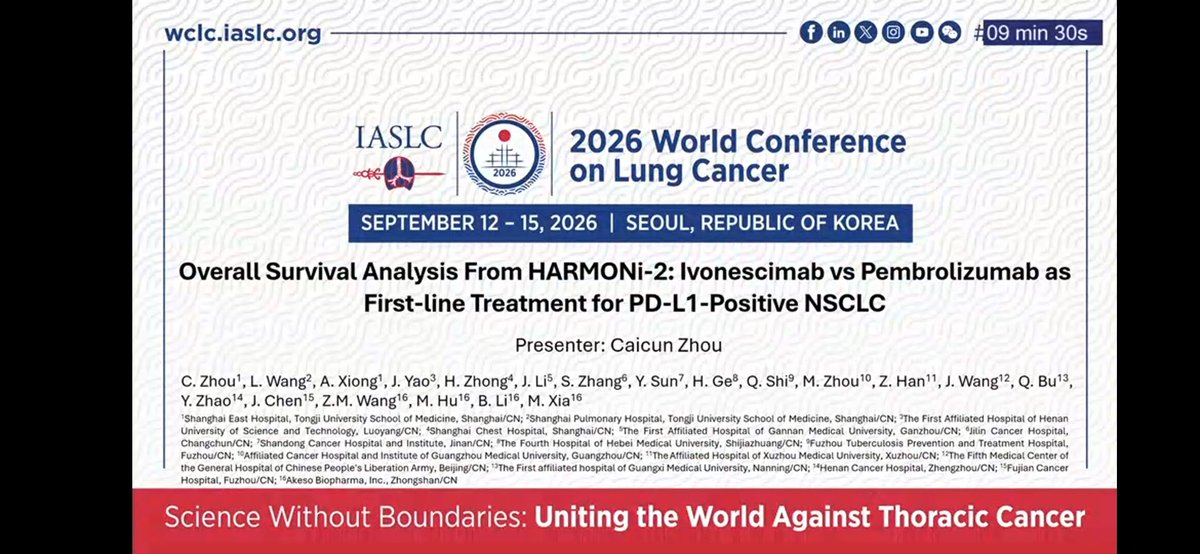
Highlighted Studies at #WCLC26 1️⃣ HARMONi-2 In treatment-naïve, advanced NSCLC with PD-L1 ≥1%, ivonescimab improved PFS (11.1 vs 5.8 months; HR 0.51) and OS (30.8 vs 22.6 months; HR 0.73) compared with pembrolizumab. This is a genuinely positive trial, but it does not tell the same story for all PD-L1-positive patients. The OS benefit was clear in the ≥50% subgroup, whereas the HR was 0.85 with a confidence interval crossing 1 in the 1–49% subgroup. Moreover, pembrolizumab monotherapy is not the real comparator for most patients in this group; chemo-IO is. 2️⃣ SWOG S1827/MAVERICK In patients with SCLC who had completed initial treatment and had no brain metastases, MRI surveillance was compared with MRI plus PCI. MRI alone reduced the risk of cognitive failure or death (HR 0.60); grade ≥3 toxicity was 0.8% vs 7.9%. Interim OS and brain metastasis-free survival were not different. The study does not show that MRI prevents brain metastases more effectively. It shows that adding PCI has so far caused cognitive and serious toxicity without demonstrating a survival benefit. If regular MRI and prompt salvage treatment can be provided, routine PCI is now difficult to justify. Still, it is too early to say that PCI is completely dead before the final OS analysis. 3️⃣ TAISHAN-302 In relapsed SCLC, the B7-H3 ADC Tam-Peli improved OS from 9.4 to 13.3 months versus topotecan (HR 0.46); PFS was 7.4 vs 2.8 months and ORR was 59% vs 10%. Grade ≥3 treatment-related toxicity was also lower. ARTEMIS-008 In relapsed SCLC, another B7-H3 ADC, Ris-Rez, also outperformed topotecan: OS was 18.5 vs 10.3 months (HR 0.46), PFS was 7.2 vs 3.0 months, and ORR was 58% vs 13%. Together with TAISHAN-302, this result strongly confirms that B7-H3 is a genuine target in SCLC. However, the median OS figures from the two trials cannot be used to conclude that Ris-Rez is better. The choice between the two ADCs may be determined more by ILD, hematologic toxicity, and ease of administration than by efficacy figures. The efficacy of either agent after tarlatamab maintenance also remains unknown. 5️⃣ EVOKE-03/KEYNOTE-D46 In metastatic NSCLC with PD-L1 ≥50%, sacituzumab govitecan plus pembrolizumab increased ORR compared with pembrolizumab (%56 vs 44%) and numerically prolonged PFS, but the prespecified statistical threshold was not met. OS was 21.5 vs 22.8 months, duration of response was almost identical, and grade ≥3 toxicity was 56% vs 17%. Adding the ADC shrank tumors in more patients but did not change the natural course of the disease. Considering the similar duration of response, lack of OS benefit, and substantial toxicity, this combination has no place in clinical practice.

Ivonescimab beat pembrolizumab on overall survival in first-line PD-L1+ NSCLC! Next chapter is longer follow-up from the separate global HARMONi study, including Western patients. Different trial. Different population. But critical for understanding geographic translatability. @OncoAlert @OpenMedicineHQ @StephenVLiu @JackWestMD #WCLC26

🔥HARMONi-2: "Statistically significant overall survival (OS) benefit" 🆙 @AkesoInc @SMMT_TX 🔜 #WCLC26 👥Patients: Locally advanced or metastatic, PD-L1-positive (TPS ≥1%), EGFR/ALK wild-type NSCLC, treatment-naïve 3⃣Phase III 🎯OS HR 0.73 (95% CI: 0.57, 0.95) 🎯mOS 30.8m vs 22.6m ⚖️Ivonescimab monotherapy ⚖️Pembrolizumab monotherapy 🔢NCT05499390 #LCSM @OncoAlert @Larvol 🔗 https://t.co/HTPV1Hh500 🔗 https://t.co/TjeFeKibS1

Beyond the TAISHAN-302 study published in NEJM, three other major phase 3 lung cancer results were presented today at #WCLC26: • MAVERICK: In small-cell lung cancer, regular brain MRI instead of preventive brain radiation better preserved thinking and memory, with no early evidence of worse survival. • HARMONi-2: In advanced PD-L1–positive non-small-cell lung cancer, ivonescimab helped patients live longer than pembrolizumab: 30.8 vs 22.6 months. • ARTEMIS-008: In relapsed small-cell lung cancer, the new targeted treatment risvutatug rezetecan improved survival from 10.3 to 18.5 months and shrank tumors in 58% vs 13% of patients. One study shows when we may safely do less. Two show how newer treatments may help patients live longer. Full publications and longer follow-up remain important. https://t.co/K7IwAlu1eG

2. HARMONi-2 ⭐️HARMONi-6, presented @ASCO earlier this year showed an OS benefit favoring ivonesicimab, a PD1+VEGF bispecific, relative to pembrolizumab in squamous NSCLC 📖Previously published data showed a PFS advantage (11.1 vs 5.8 months; HR 0.51) favoring ivonesicimab. Though even in this study, there were some peculiar findings, like the remarkably poor PFS seen in the pembrolizumab arm for PDL1≥50% (which was nearly half of what was seen in KEYNOTE-24) 🤔But the real question was always OS and dissecting the data here will be key. Like HARMONi-6, I will also want to see these studies replicated on a global scale. SOURCES 👉🏽https://t.co/RO52xemiP6 👉🏽https://t.co/8XI8aKCfq9 @lcsmchat @OncoAlert @OncLive @Onco_Nexus @LungCancerEu @Lung_Cancers @MedwatchHQ

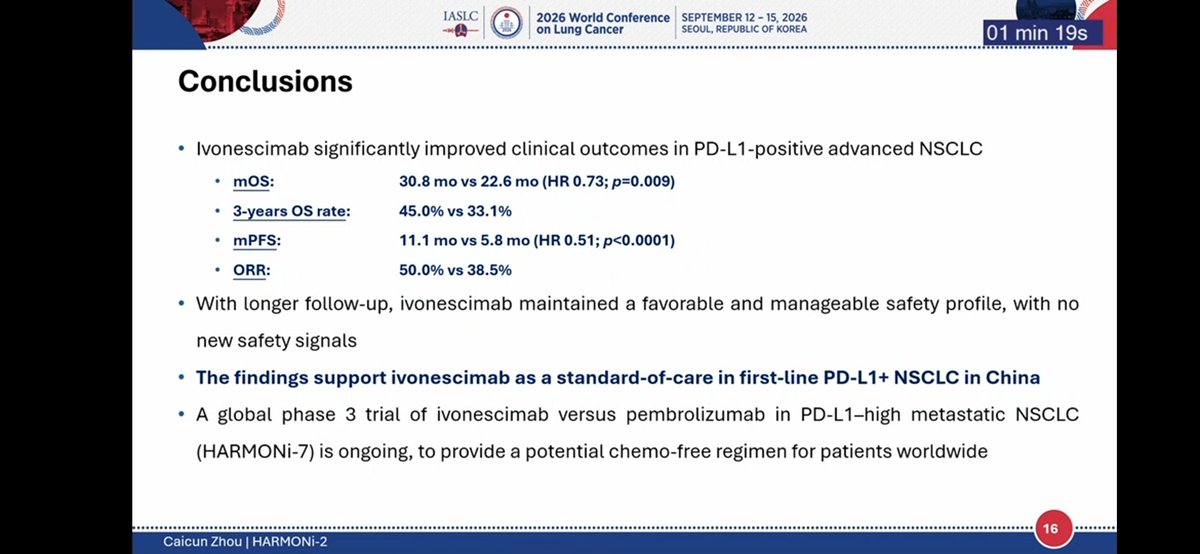
HARMONi-2: PFS benefit — now an OS benefit Ivonescimab (PD-1 × VEGF) vs pembrolizumab in 1L PD-L1+ advanced NSCLC: • PFS: 11.1 vs 5.8 mo | HR 0.51 • OS: 30.75 vs 22.57 mo | HR 0.73 • OS signal strongest in PD-L1 ≥50% • More overall/serious TRAEs, but no new safety signal identified. Take-home: A chemotherapy-free PD-1 × VEGF strategy has now beaten pembrolizumab on both PFS and OS. Zhou C et al. | HARMONi-2 | WCLC 2026 | OA14.01 #WCLC2026 #HARMONi2 #NSCLC #LungCancer #Ivonescimab #Immunotherapy #MVOnco

HARMONi-2: demonstrated the PFS and OS benefit!!! Ivonescimab vs pembrolizumab in 1L PD-L1+ advanced NSCLC: • PFS: 11.1 vs 5.8 mo | HR 0.51 • OS: 30.75 vs 22.57 mo | HR 0.73 A chemo-free PD-1×VEGF strategy beats pembrolizumab on both PFS and OS. #WCLC2026 @Larvol @OncoAlert https://t.co/ykXWZWfo2P

World Lung is in full swing, which means the press releases are coming fast (before the papers or the sessions). 🫁 Why do we care in GI? Because all the shiny things start in lung and eventually make their way over here. HARMONi-2 compared ivonescimab vs pembrolizumab in PD-L1+ advanced NSCLC. We already knew the PFS result was kind of wild (in a China-only study): 11.1 vs 5.8 months HR 0.51 Now OS: 🔥 30.8 vs 22.6 months 🔥 HR 0.73 PD-L1 ≥50%: HR 0.58 PD-L1 1–49%: HR 0.85 So now this PD-1 x VEGF bispecific has beaten pembrolizumab for both PFS and OS in a randomized phase III trial. Yes, China only. Yes, pembro monotherapy is not really the comparator most of us would want for PD-L1 1–49%. Still. An 8-month OS difference is quite a bit. GI oncologists should be paying attention because this is already cooking in the first line mCRC setting with HARMONi-GI3. mFOLFOX6 + ivonescimab vs mFOLFOX6 + bevacizumab Is this an end-run around patent protection laws and PD1/PDL1's run out of time? (yes) Does the strategy have synergystic benefit? Time will tell. https://t.co/jaIkVzMOT3 @OncoAlert @TheGutOncLab @Onco_Nexus
👑 Has King Keytruda finally met its challenger? HARMONi-2 | PD-L1 TPS ≥1% | 1L advanced NSCLC • PFS: HR 0.51 • OS: HR 0.73 PD-1 × VEGF — ivonescimab beat pembrolizumab in HARMONi-2. #MVOnco #WCLC2026 #HARMONi2 #NSCLC #LungCancer #Ivonescimab #Pembrolizumab https://t.co/Lkf6uvbxOe

Ivonescimab Monotherapy Demonstrates a Statistically Significant & Clinically Meaningful Benefit Compared to Pembrolizumab Monotherapy in PD-L1-Positive Advanced NSCLC in Akeso’s HARMONi-2 Study Conducted in China Ivonescimab Reduced the Risk of Death by 27% Compared to Pembrolizumab PD-L1 High Expression Subgroup: Hazard Ratio = 0.58 https://t.co/kFob5LfzMf

Preliminary #WCLC26 preview: HARMONi-2 Based on the company press release, ivonescimab vs pembrolizumab in first-line PD-L1+ advanced NSCLC showed: Median OS: 30.8 vs 22.6 months HR 0.73 (95% CI 0.57–0.95; p=0.009) Median OS gain: 8.2 months Subgroups reported: PD-L1 ≥50%: HR 0.58 PD-L1 1–49%: HR 0.85 Squamous: HR 0.65 Non-squamous: HR 0.79 Also notable: prior PFS HR 0.51. Important caveats: single-region China study results currently from press release / pre-presentation disclosure for PD-L1 1–49%, chemo-immunotherapy is usually preferred, so pembrolizumab monotherapy is not the ideal comparator there Encouraging signal, especially in PD-L1-high disease, but fuller interpretation should wait for the full presentation. #NSCLC #LungCancer #ThoracicOncology #LCSM @iaslc #WCLC26 @oncoalert @oncodaily @larvol @tribeMDUS @sylvestercancer @oncbrothers @chinmay @Jani_Chinmay @latinamd @colazagasti @openmedicineHQ @asco @myesmo @openmedkate @openmedben @chadinabhan @YoungLungCancer @lungoncdoc @OncodailyLung @ClinicalLung #LCSM @LungPolicy @dan_morgen

OS ⬆️ with bi-specific ivonescimab Harmoni-2 #WCLC26 @IASLC https://t.co/IvvjnofNc9

@mgonzalezvelMD @BalazsHalmosMD Harmoni-2 is pos for OS with a very positive HR in the Pd-L1 >50% … time to change practice globally?!

@Latinamd @IASLC HARMONi-2 with updated OS is the one I'm watching most closely. If ivonescimab confirms its PFS advantage in overall survival, first-line treatment for PD-L1-positive NSCLC changes for good.

ivonescimab beat keytruda on overall survival in HARMONi-2, reported in the last hour: HR 0.73, os 30.8 vs 22.6 months. summit filed the same trial's interim data as an 8-k on sept 3. FDA rules on HARMONi in november.

Ivonescimab Versus Pembrolizumab in First-Line PD-L1-Positive NSCLC: Positive Overall Survival Results from HARMONi-2 Presented at WCLC 2026 #Akeso, #NSCLC, #Lungcancer https://t.co/PUSbeunKuV

Encouraging news from the HARMONi-2 trial: the immunotherapy ivonescimab prolonged overall survival compared with pembrolizumab in people with PD-L1-positive advanced non-small cell lung cancer, researchers reported at the IASLC 2026 World Conference on… https://t.co/IYSLxyFnjY https://t.co/TzHvUwCC1W

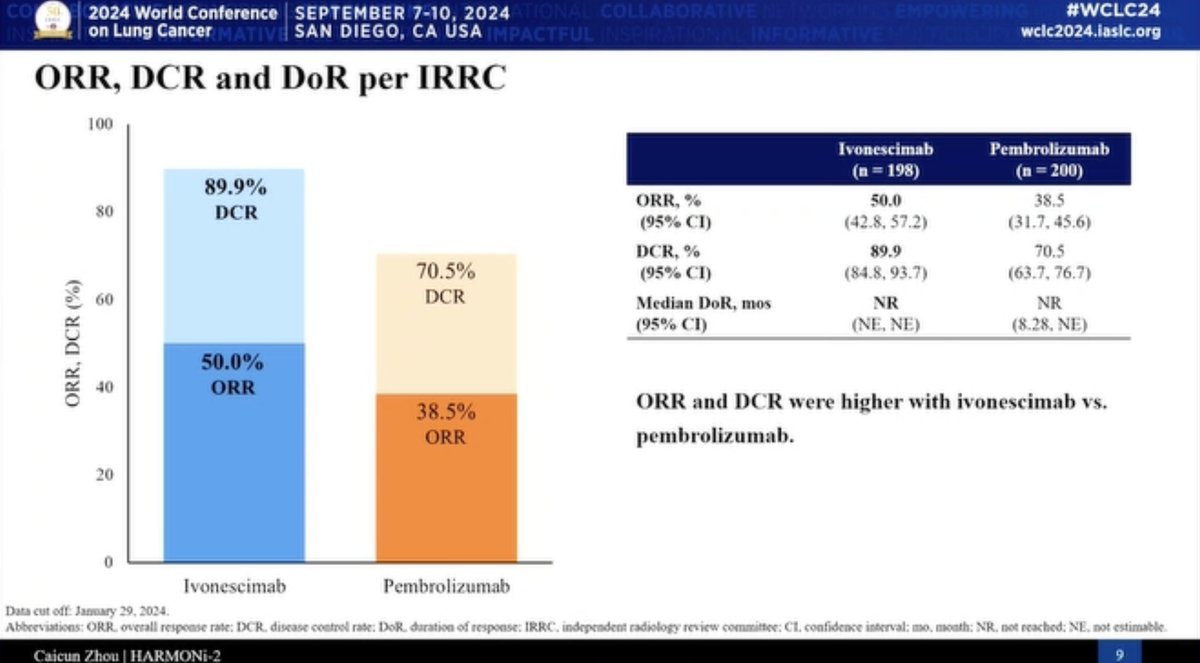
This probably is the best summary slide for Harmoni 2 trial data @IASLC @StephenVLiu @RManochakian @PatelOncology #wclc26 https://t.co/LdbUYEUJWp

#HARMONI2 #WCLC26 Efficacy Results ✅️median OS: 30.8 vs 22.6 mos ✅️ subgroup analysis favaored ivo ✅️ no new safety signals https://t.co/ojZOc8IpA6
















Top 10 by impressions - click to view on X
King Keytruda survived? I think so . @StephenVLiu @JacobPlieth @RManochakian @IASLC #wclc26 @OncBrothers https://t.co/iMTFsWlhIn
Akeso wins Chinese approval for PD-1/VEGF drug positioned to rival Merck’s $MRK Keytruda Ivonescimab lung cancer approval based on Harmoni-2 study. Also new interim OS data HR=0.784 not yet stat...
Good oncologists don't give single agent pembro to pdl1 1-49 And really good oncologists don't give single agent pembro to pdl1 <90 Bizarre trial....
💥 The end of Pembro reign? Phase 3 Study of Ivonescimab (AK112) vs. Pembrolizumab as First-line Treatment for PD-L1-positive Advanced NSCLC: HARMONi-2 #WCLC24 #LCSM
Going to channel my inner @JackWestMD here and remind everyone it’s China only data, not SOC comparator in US and no OS yet before everyone goes overboard on ivonescimab...
The #WCLC24 late-breaker you've all been waiting for: Akeso's Harmoni-2 trial of $SMMT ivonescimab in 1L PD-L1 ≥1% NSCLC, vs $MRK...
#WCLC24 abstract titles released! Don't miss the plenary Sunday September 8th at 8:30am PDT - I am particularly eager to see the ivonescimab vs pembro HARMONi-2...

Ivonescimab vs Pembrolizumab. For First line NSCLC. Harmoni-2 trial. Remember PFS is already declared postive as clinically meaningful. In both Squamous and Non Squamous histology and in both...

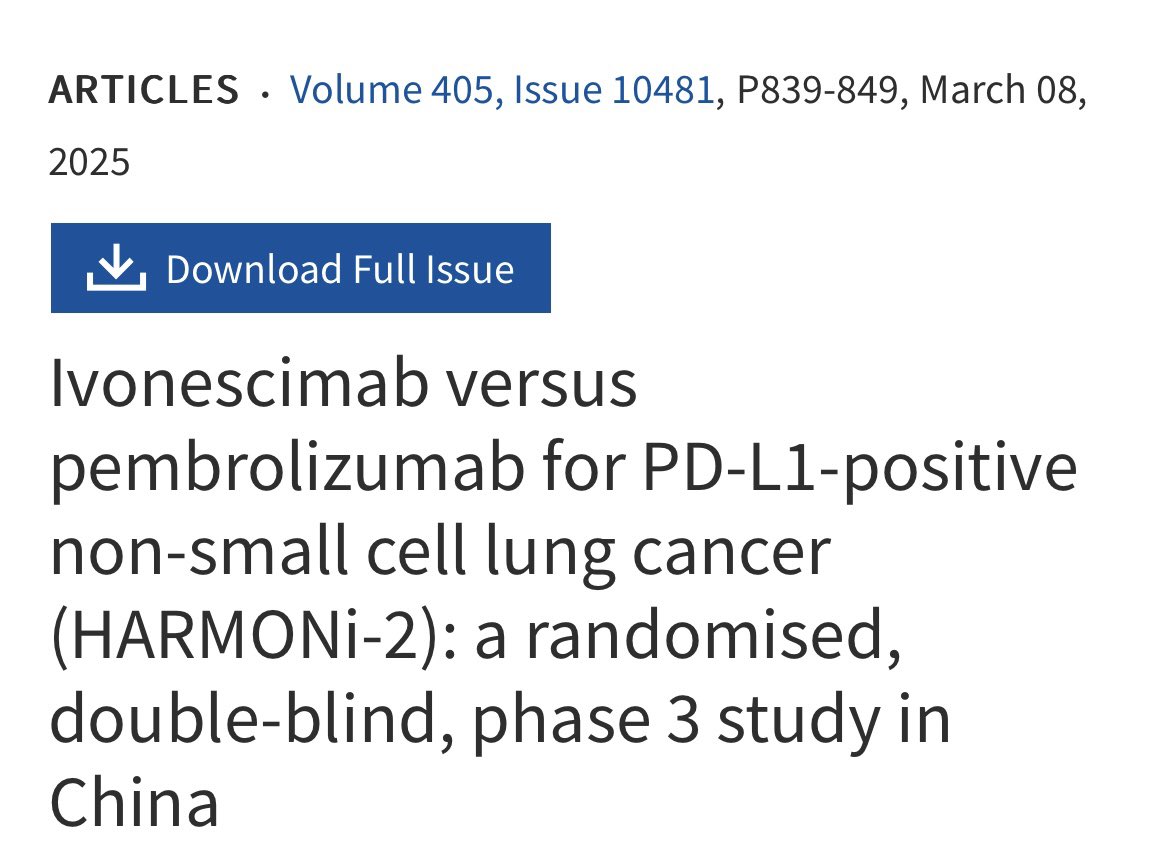
🚨🔥@OncoAlert Hot off the press Just published @TheLancet Results of #HARMONi2 phase 3 trial of #Ivonescimab (#PD1 &...
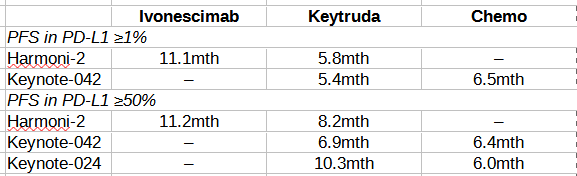
$SMMT Akeso ivonescimab looks pretty convincing in Harmoni-2, but did Keytruda perform in line with KN-042 & KN-024? I've done a handy comparison...

Ivonescimab Monotherapy Decisively Beats Pembrolizumab Monotherapy Head-to-Head, Achieves Statistically Significant Superiority in PFS in First-Line Treatment of Patients with PD-L1 Positive NSCLC in...
HARMONi-2 is a Phase III, multicenter, double-blind trial that compared ivonescimab monotherapy versus pembrolizumab monotherapy as first-line treatment for patients with PD-L1-positive (TPS >=1%) locally advanced or metastatic NSCLC. The trial randomized 398 patients across 55 centers in China between November 2022 and August 2023. Ivonescimab is a first-in-class bispecific antibody that simultaneously blocks PD-1 and VEGF-A within a single molecule, leveraging cooperative binding and a unique 'daisy chaining' mechanism. At the preplanned interim analysis, ivonescimab demonstrated a statistically significant and clinically meaningful PFS improvement over the established standard-of-care pembrolizumab.
Historical record — superseded by the full WCLC 2026 OS results (median OS 30.8 vs 22.6 mo, HR 0.73) shown in the WCLC 2026 section above.
Akeso announced that a pre-specified interim analysis of overall survival in HARMONi-2 (AK112-303), as assessed by the Independent Data Monitoring Committee, met the key secondary endpoint of OS: ivonescimab monotherapy demonstrated a statistically significant and clinically meaningful improvement over pembrolizumab in first-line PD-L1–positive (TPS ≥1%) locally advanced or metastatic NSCLC. Numeric results — hazard ratio, medians, and subgroups — have not yet been released; Akeso says detailed data will be presented at an upcoming international medical conference and published in a peer-reviewed journal. (Akeso press release, Sept 2, 2026)
The result builds on the primary PFS analysis (median PFS 11.14 vs 5.82 months, HR 0.51; WCLC 2024 / Lancet 2025) and follows China’s 2025 approval of ivonescimab in this indication. HARMONi-2 is a single-region trial conducted in China and run by Akeso; ivonescimab remains investigational in the United States. The full interim OS analysis was presented by Prof. Caicun Zhou at WCLC 2026 in Seoul (abstract OA14.01, September 15) — the presented slides are in Key Slides below and match the September 13 data release.04, per Summit’s Aug 25 release).
Akeso press release (Sept 2, 2026) · Summit Therapeutics announcementA five-minute Virtual Medical Science Liaison walkthrough of the open questions ahead of OA14.01 — the April 2025 interim (HR 0.777, and the same-day 0.784 correction), the sister trial’s OS journey, censoring, the comparator, generalizability, and VEGF safety — each attributed to the named physicians and primary sources cited on this page. AI-generated presenter.
Physician reaction landed within hours. Stephen V. Liu: “HARMONi-2 meets its survival endpoint… Now we know that translates to an OS benefit. Await full data!” Balazs Halmos: “ivonescimab taking King Keytruda on one on one! Mano a mano!” Amol Akhade noted the caveats verbatim: “King Keytruda is having serious challenger ( with all the caveats of the trial - control arm , censoring)”. Yuksel Urun: “PFS was impressive. OS is what changes the conversation.” Yago Garitaonaindia flagged what to watch: “The number to look for is OS in the PD-L1 ≥50% subgroup.”
 𝕏
𝕏
 𝕏
𝕏
 𝕏
𝕏
𝕏
𝕏
𝕏
𝕏
 𝕏
𝕏
 𝕏
𝕏
 𝕏
𝕏
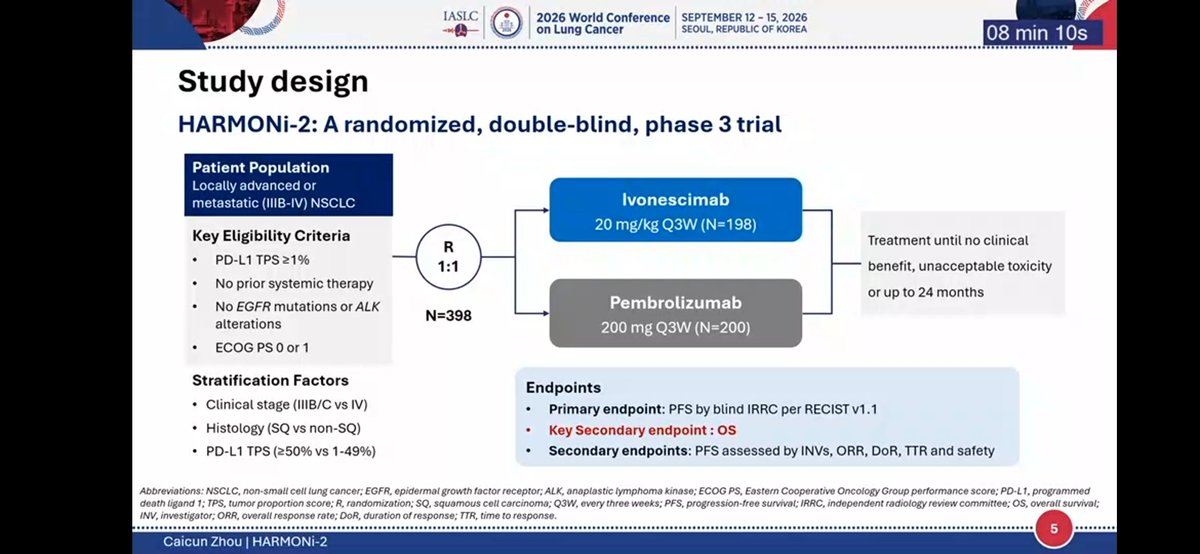
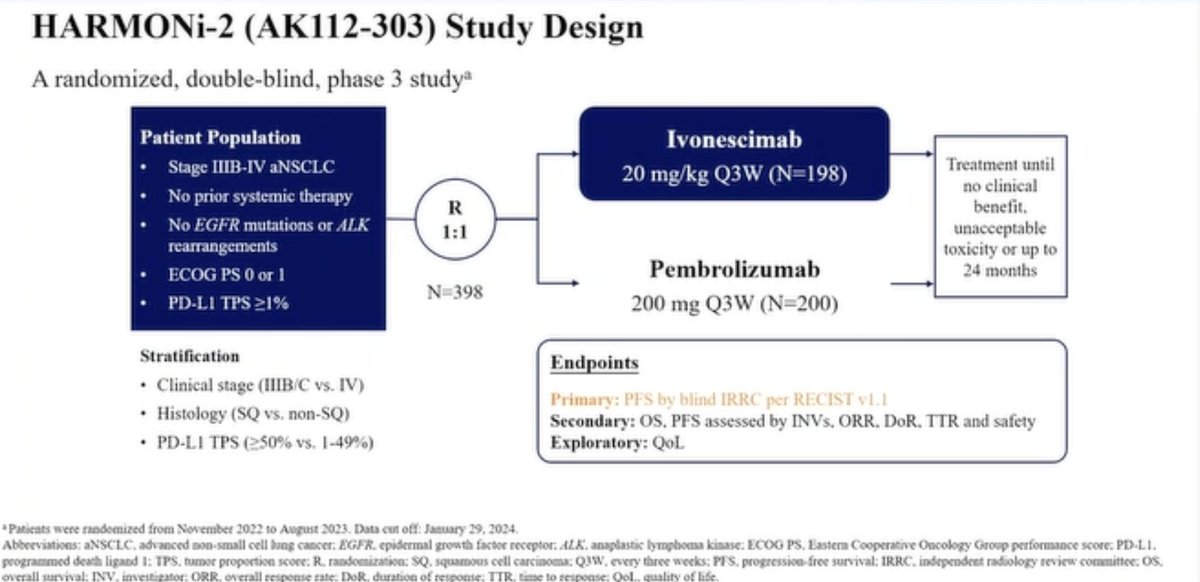
Phase III, multicenter, double-blind, 1:1 randomized trial in 398 patients with untreated locally advanced or metastatic PD-L1-positive (TPS >=1%) NSCLC, negative for EGFR mutations and ALK rearrangements, ECOG PS 0-1. Stratified by PD-L1 expression level (TPS 1-49% vs >=50%) and histology (squamous vs non-squamous). Crossover was not allowed.
Adults with previously untreated locally advanced or metastatic NSCLC, PD-L1 TPS >=1%, ECOG PS 0-1, without EGFR mutations or ALK rearrangements. Approximately 58% had PD-L1 TPS 1-49% and 42% had TPS >=50%. Both squamous and non-squamous histologies were included.
Ivonescimab 20 mg/kg IV every 3 weeks (n=198) versus pembrolizumab 200 mg IV every 3 weeks (n=200) until disease progression or unacceptable toxicity.
Primary endpoint: progression-free survival (PFS) assessed by masked independent radiographic review committee (IRRC). Key secondary endpoints: overall survival (OS), objective response rate (ORR), duration of response, and safety.
At a median follow-up of 8.67 months, median PFS was 11.14 months with ivonescimab versus 5.82 months with pembrolizumab (stratified HR 0.51; 95% CI: 0.38-0.69; p<0.0001), representing a 49% reduction in the risk of disease progression or death. The 9-month PFS rates were 56% with ivonescimab and 40% with pembrolizumab. The PFS benefit was consistent across subgroups: PD-L1 TPS 1-49% (HR 0.54; 95% CI: 0.37-0.78; median PFS 8.0 vs 5.4 months), PD-L1 TPS >=50% (HR 0.48; 95% CI: 0.29-0.79; median PFS 11.1 vs 8.2 months), and across both squamous and non-squamous histologies.
At the pre-specified interim OS analysis presented at WCLC 2026 (DCO 20-Aug-2026; 234 events; median follow-up 36 months), ivonescimab significantly prolonged overall survival: median OS 30.8 vs 22.6 months (HR 0.73; 95% CI 0.57–0.95; P=0.009), a 27% reduction in the risk of death. An earlier preliminary interim (April 2025) had shown HR 0.777, not statistically significant at that data maturity. The HARMONi-7 global trial (ivonescimab vs pembrolizumab in high PD-L1 NSCLC) is powered for both OS and PFS co-primary endpoints to address this question in a multiregional population.
Ivonescimab demonstrated a manageable safety profile with no new safety signals. Grade >=3 treatment-related adverse events occurred in 29% of ivonescimab patients versus 16% with pembrolizumab. The most common grade >=3 TRAE with ivonescimab was hypertension (5%). Serious TRAEs were reported in 21% versus 16%. Grade >=3 immune-related AEs were similar between arms (7% vs 8%). Common AEs related to VEGF blockade included proteinuria and hypertension, generally low-grade. In patients with squamous cell carcinoma, grade >=3 TRAEs were comparable between groups.
HARMONi-2 established ivonescimab as the first therapy to demonstrate a significant PFS benefit over pembrolizumab in a head-to-head Phase III study. Ivonescimab monotherapy was approved in China in April 2025 for first-line PD-L1-positive advanced NSCLC based on these results. However, the trial was conducted exclusively in China, raising questions about generalizability to global populations. Key unresolved questions include: (1) whether the PFS benefit will translate to a definitive OS advantage, (2) whether results will replicate in the ongoing multiregional HARMONi-7 trial, and (3) whether the unique cooperative binding and daisy chaining mechanism of ivonescimab differentiates it from other PD-1/VEGF bispecifics entering the pipeline. Ivonescimab remains investigational in the US and Europe.
🚨 HARMONi-2: OS data . Ivonescimab vs pembrolizumab: 🔹 OS: 30.75 vs 22.57 mo 🔹 OS HR 0.73 (95% CI 0.57–0.95; P=0.009) 🔹 PFS: 11.1 vs 5.8 mo 🔹 PFS HR 0.51 (95% CI 0.38–0.69; P<0.0001) OS by subgroup: • Squamous: HR 0.65 (0.45–0.95) • Non-squamous: HR 0.79 (0.55–1.14) • PD-L1 1–49%: HR 0.85 (0.61–1.18) • PD-L1 ≥50%: HR 0.58 (0.38–0.89) Looking forward to full presentation and discussion. @IASLC @dr_yakupergun @StephenVLiu @RManochakian
@SuyogCancer This comparator would not be accepted in the USA in the PDL1 1-50% population (around 2/3rd of the non-AGA group).
@3A_3Lo_ @SuyogCancer “harmony 2” is a clinic trial in China,“Harmony 7”(PDL1 》50%) is a International multi-center clinical trial
@3A_3Lo_ @SuyogCancer How would Keytruda not be acceptable in 1st-line PD-L1 1-49% NSCLC?
@JacobPlieth @3A_3Lo_ For that population, soc is chemo plus Keytruda. And not Keytruda alone.
@SuyogCancer Data in high PD-L1 are very impressive , even more given the EVOKE3 results
@SuyogCancer Seems like the key question is what nSq looks like on OS, given 22pp erosion of benefit going from PFS to OS in ITT.
HARMONi-2 is a Phase 3 head-to-head trial (conducted in China) of ivonescimab, a PD-1/VEGF bispecific antibody, versus pembrolizumab monotherapy as first-line treatment of PD-L1-positive advanced non-small cell lung cancer (NCT05499390).
No. Ivonescimab is not FDA approved in the United States; it is investigational there. Ivonescimab is approved in China for first-line PD-L1-positive advanced NSCLC. US registrational trials are ongoing.
Ivonescimab monotherapy significantly improved progression-free survival versus pembrolizumab: median PFS was 11.14 versus 5.82 months (stratified HR 0.51; 95% CI 0.38-0.69; p<0.0001), a 49% reduction in the risk of progression or death. It was the first therapy to beat pembrolizumab on PFS in a head-to-head Phase 3 study. At WCLC 2026, overall survival was also positive: median OS 30.8 versus 22.6 months (HR 0.73; 95% CI 0.57-0.95; P=0.009), a 27% reduction in the risk of death (DCO 20-Aug-2026).
In HARMONi-2, Grade ≥3 treatment-related adverse events occurred in 29% of ivonescimab patients versus 16% with pembrolizumab, with hypertension the most common Grade ≥3 event (5%). As a VEGF-targeting agent, ivonescimab has VEGF-class effects such as hypertension.
Ivonescimab is developed by Akeso and, outside China, by Summit Therapeutics.