The Collaboration for Outcomes Using Social Media in Oncology met
August 7–8, 2026 at the Platform Conference Center at BMO Tower in Chicago, IL, organised by
Women in Medicine® as a VERITAS initiative. KOL Pulse tracked 53 posts from
14 oncology voices — physicians, oncology nurses, researchers and patient
advocates — and organised them by topic: misinformation and trust, AI,
patient advocacy, mentorship, and what separates a digital opinion leader from an influencer.
Concluded · August 7–8, 2026Chicago, IL#COSMO26 · #COSMO2026Women in Medicine®
53
Posts Captured
14
Voices Tracked
9
Clinician & Advocate KOLs
26.0K
Total Impressions
10
Topics Tracked
What COSMO Talked About
Topics, not trials
COSMO is a meeting about how oncology communicates, so this page is
organised by conversation topic rather than by clinical trial. Click any topic to read the
posts behind it. Topics with fewer than 3 posts are not shown.
From the Room
Key slides
The slides COSMO faculty actually presented, as photographed and
posted by attendees — 20 slides across 9 posts. Open
“View slide text” for a full verbatim transcription of each data slide,
including every figure exactly as it appears. Title cards and room photos carry no
transcription. Click any slide to open it full size.
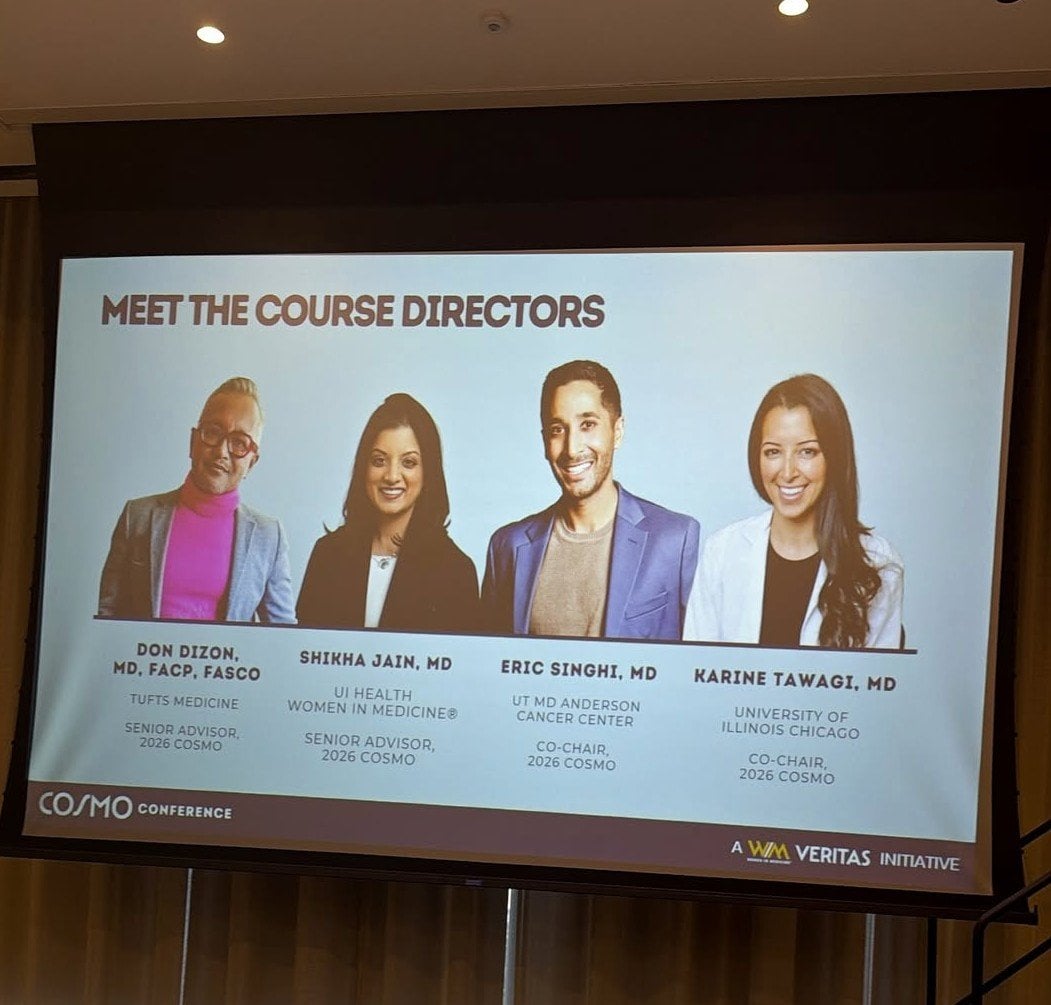
MEET THE COURSE DIRECTORS
DON DIZON, MD, FACP, FASCO
Tufts Medicine
Senior Advisor, 2026 COSMO
SHIKHA JAIN, MD
UI Health
Women in Medicine(R)
Senior Advisor, 2026 COSMO
ERIC SINGHI, MD
UT MD Anderson Cancer Center
Co-Chair, 2026 COSMO
KARINE TAWAGI, MD
University of Illinois Chicago
Co-Chair, 2026 COSMO
COSMO CONFERENCE - A WM VERITAS INITIATIVE
Digital Media Useful for Raising Awareness and Dissemination of Evidence-Based Information · Misinformation is Widespread - prostate cancer content across platforms · In Progress: R01 on Guideline-Discordant Information on Social Media in Prostate Cancer · Examples of Online Misinformation about Prostate Cancer
[Digital Media Useful for Raising Awareness and Dissemination of Evidence-Based Information]
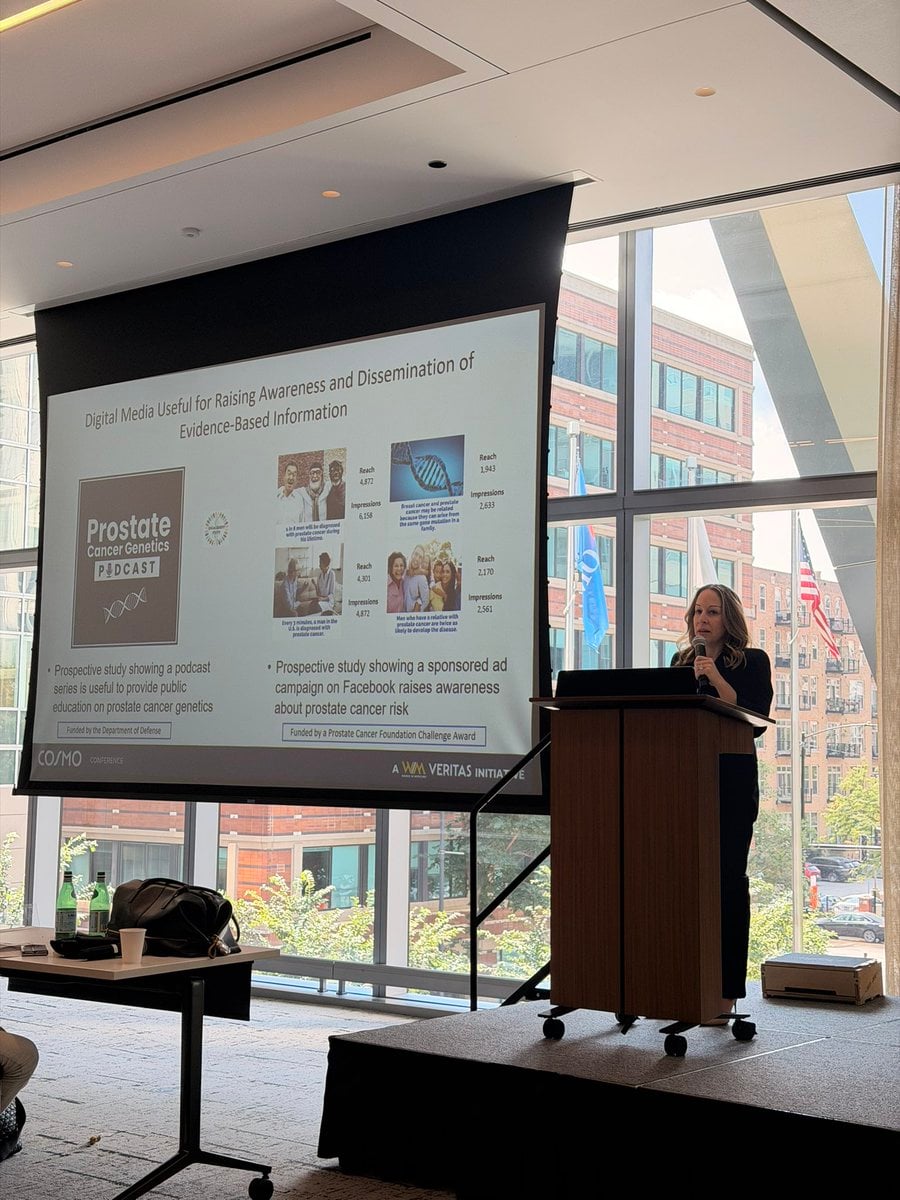
Digital Media Useful for Raising Awareness and Dissemination of Evidence-Based Information
Prostate Cancer Genetics PODCAST
Campaign creative tiles and their metrics:
"1 in 8 men will be diagnosed with prostate cancer during his lifetime."
Reach 4,872
Impressions 6,158
"Breast cancer and prostate cancer may be related because they can arise from the same gene mutation in a family."
Reach 1,943
Impressions 2,633
"Every 3 minutes, a man in the U.S. is diagnosed with prostate cancer."
Reach 4,301
Impressions 4,872
"Men who have a relative with prostate cancer are twice as likely to develop the disease."
Reach 2,170
Impressions 2,561
- Prospective study showing a podcast series is useful to provide public education on prostate cancer genetics
[Funded by the Department of Defense]
- Prospective study showing a sponsored ad campaign on Facebook raises awareness about prostate cancer risk
[Funded by a Prostate Cancer Foundation Challenge Award]
COSMO CONFERENCE - A WM VERITAS INITIATIVE
---
[Misinformation is Widespread - prostate cancer content across platforms]
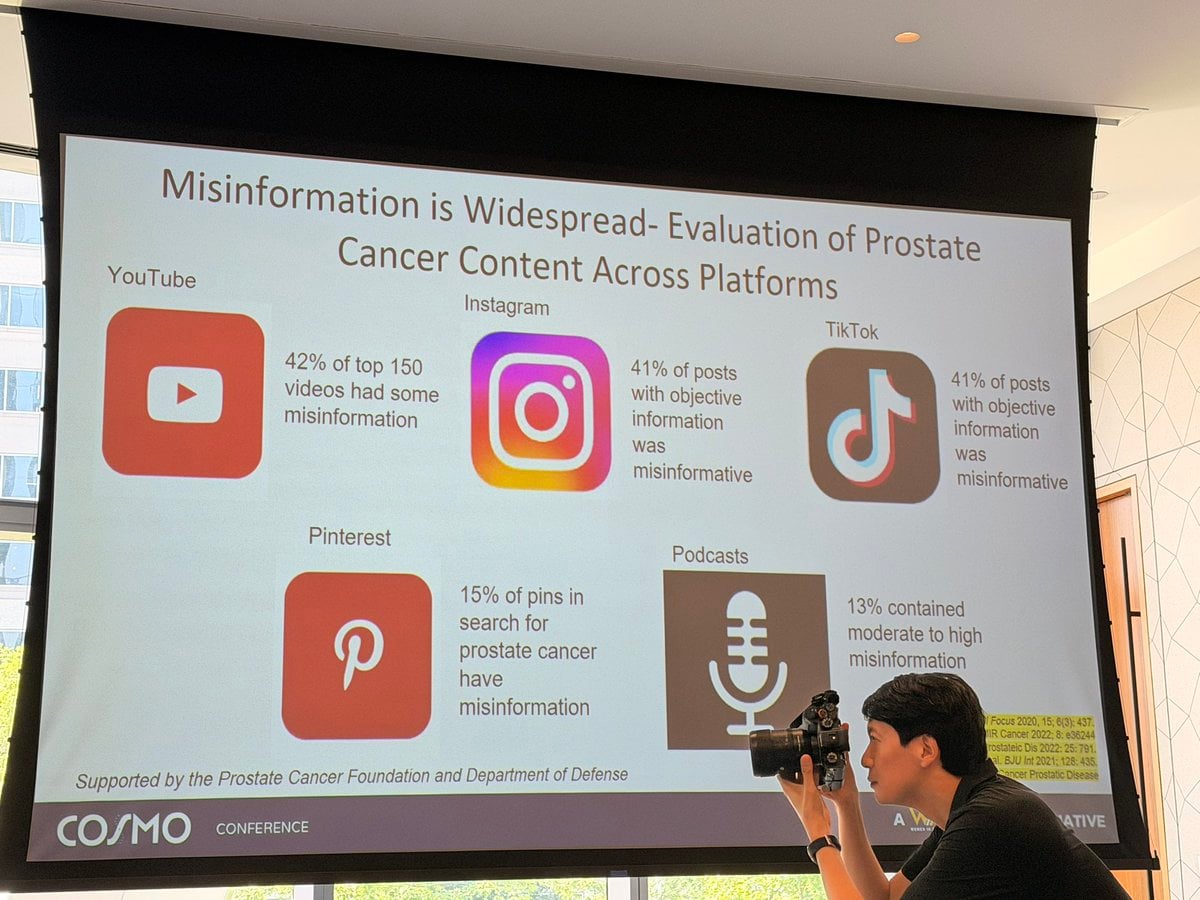
Misinformation is Widespread- Evaluation of Prostate Cancer Content Across Platforms
YouTube
42% of top 150 videos had some misinformation
Instagram
41% of posts with objective information was misinformative
TikTok
41% of posts with objective information was misinformative
Pinterest
15% of pins in search for prostate cancer have misinformation
Podcasts
13% contained moderate to high misinformation
Supported by the Prostate Cancer Foundation and Department of Defense
References (partially legible on slide):
Loeb et al. Eur Urol Focus 2020, 15; 6(3): 437.
Herbert et al. JMIR Cancer 2022; 8: e36244
Xu et al. Prostate Cancer Prostatic Dis 2022; 25: 791.
Xu et al. BJU Int 2021; 128: 435.
Scott et al. Prostate Cancer Prostatic Disease
COSMO CONFERENCE - A WM VERITAS INITIATIVE
---
[In Progress: R01 on Guideline-Discordant Information on Social Media in Prostate Cancer]
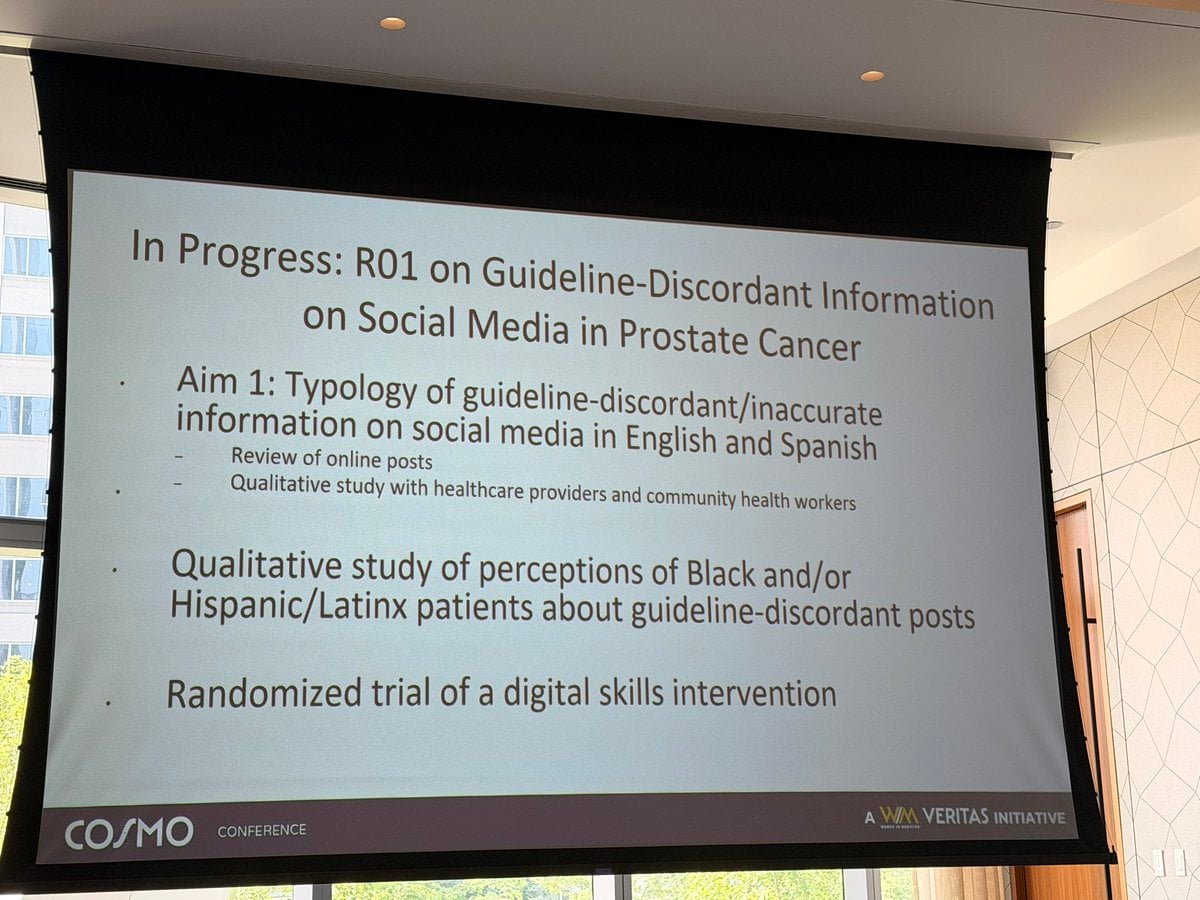
In Progress: R01 on Guideline-Discordant Information on Social Media in Prostate Cancer
Aim 1: Typology of guideline-discordant/inaccurate information on social media in English and Spanish
- Review of online posts
- Qualitative study with healthcare providers and community health workers
Qualitative study of perceptions of Black and/or Hispanic/Latinx patients about guideline-discordant posts
Randomized trial of a digital skills intervention
COSMO CONFERENCE - A WM VERITAS INITIATIVE
---
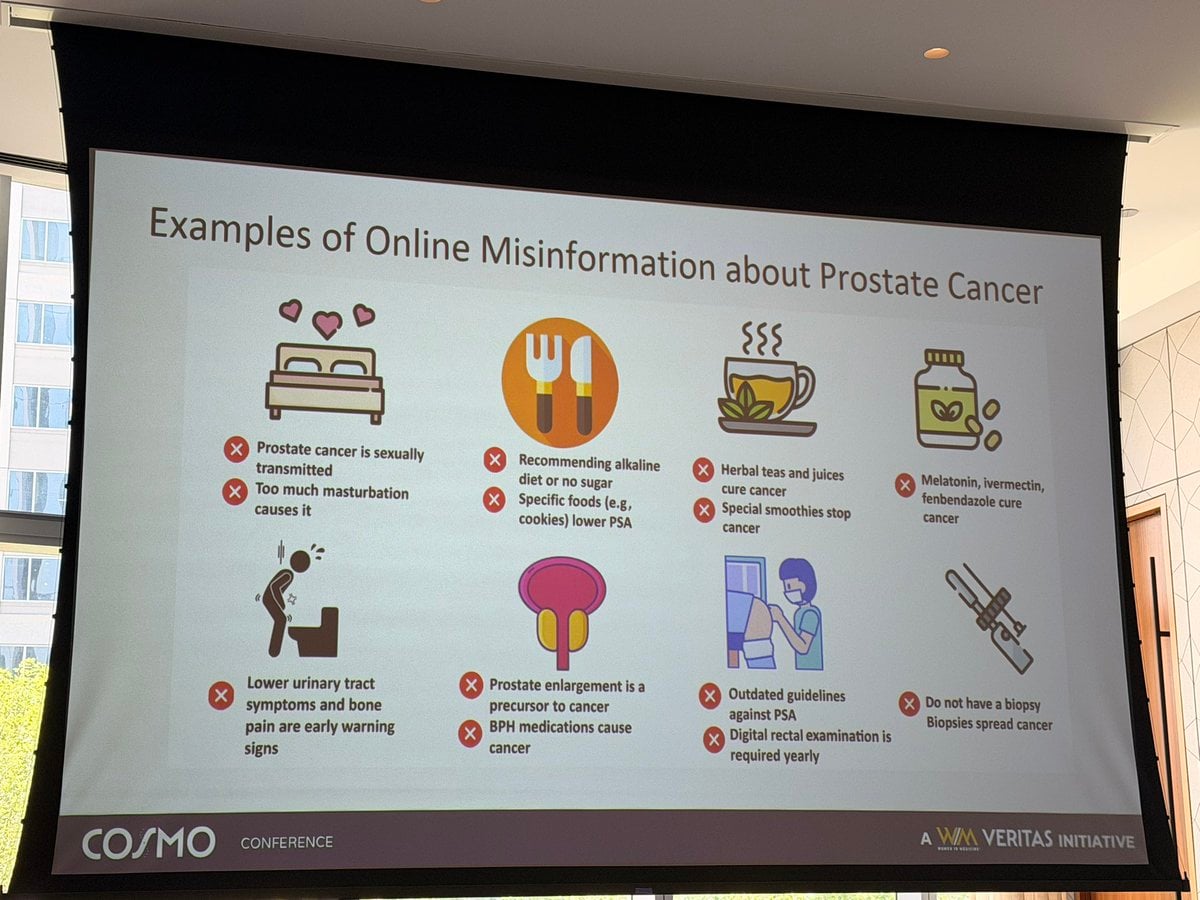
[Examples of Online Misinformation about Prostate Cancer]
Examples of Online Misinformation about Prostate Cancer
(X) Prostate cancer is sexually transmitted
(X) Too much masturbation causes it
(X) Recommending alkaline diet or no sugar
(X) Specific foods (e.g, cookies) lower PSA
(X) Herbal teas and juices cure cancer
(X) Special smoothies stop cancer
(X) Melatonin, ivermectin, fenbendazole cure cancer
(X) Lower urinary tract symptoms and bone pain are early warning signs
(X) Prostate enlargement is a precursor to cancer
(X) BPH medications cause cancer
(X) Outdated guidelines against PSA
(X) Digital rectal examination is required yearly
(X) Do not have a biopsy
Biopsies spread cancer
COSMO CONFERENCE - A WM VERITAS INITIATIVE
Potential of social media for dissemination (Clara Lee) · JAMA Oncology - Assessment of AI Chatbot Responses to Top Searched Queries About Cancer · JAMA Network Open - Effect of Racial Concordance on Patient Trust in Online Prostate Cancer Videos
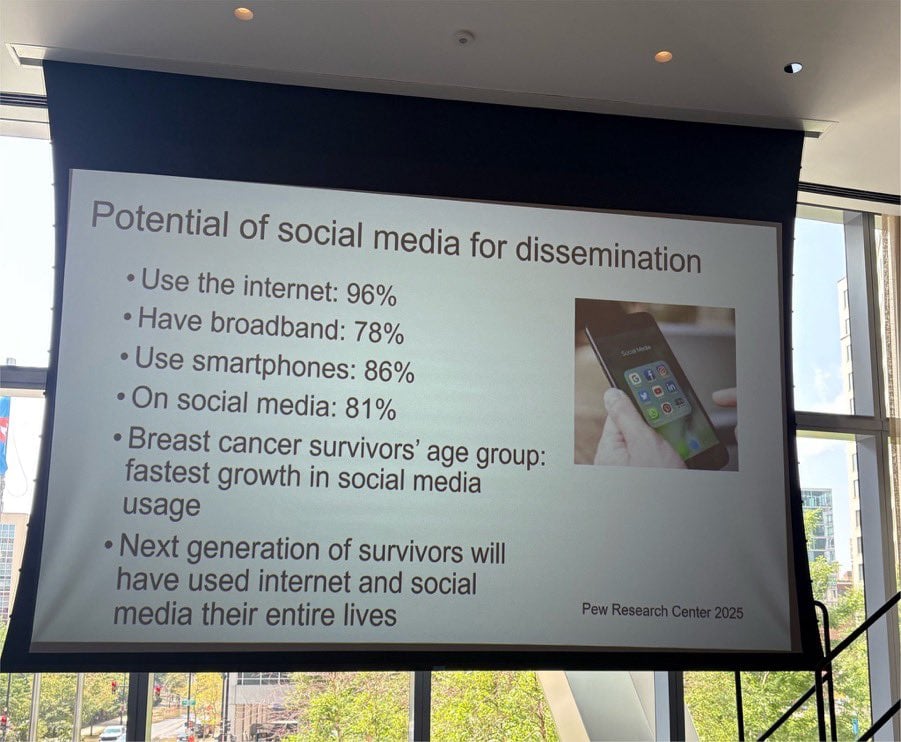
[Potential of social media for dissemination (Clara Lee)]
Potential of social media for dissemination
- Use the internet: 96%
- Have broadband: 78%
- Use smartphones: 86%
- On social media: 81%
- Breast cancer survivors' age group: fastest growth in social media usage
- Next generation of survivors will have used internet and social media their entire lives
Pew Research Center 2025
---
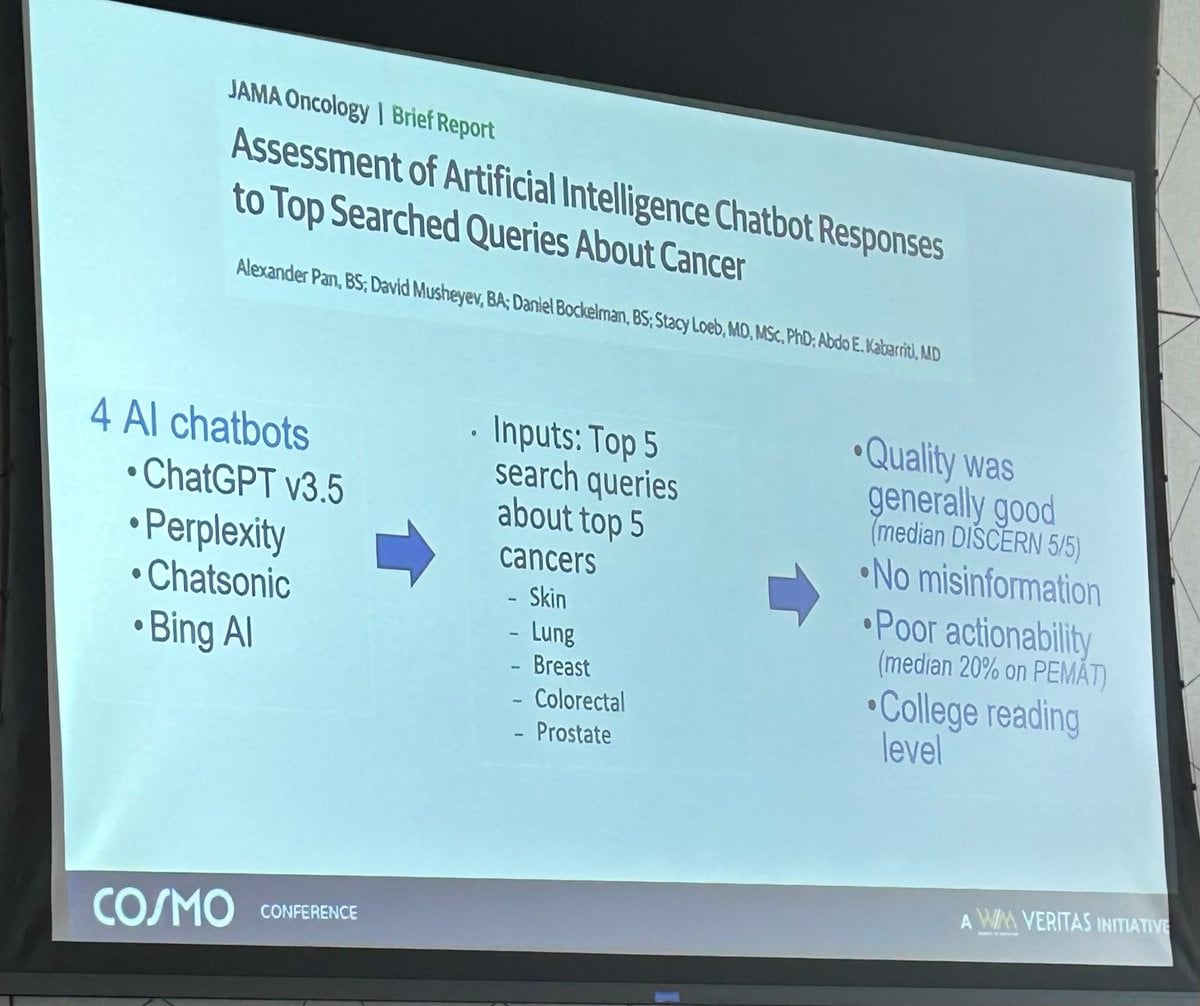
[JAMA Oncology - Assessment of AI Chatbot Responses to Top Searched Queries About Cancer]
JAMA Oncology | Brief Report
Assessment of Artificial Intelligence Chatbot Responses to Top Searched Queries About Cancer
Alexander Pan, BS; David Musheyev, BA; Daniel Bockelman, BS; Stacy Loeb, MD, MSc, PhD; Abdo E. Kabarriti, MD
4 AI chatbots
- ChatGPT v3.5
- Perplexity
- Chatsonic
- Bing AI
Inputs: Top 5 search queries about top 5 cancers
- Skin
- Lung
- Breast
- Colorectal
- Prostate
- Quality was generally good (median DISCERN 5/5)
- No misinformation
- Poor actionability (median 20% on PEMAT)
- College reading level
COSMO CONFERENCE - A WM VERITAS INITIATIVE
---
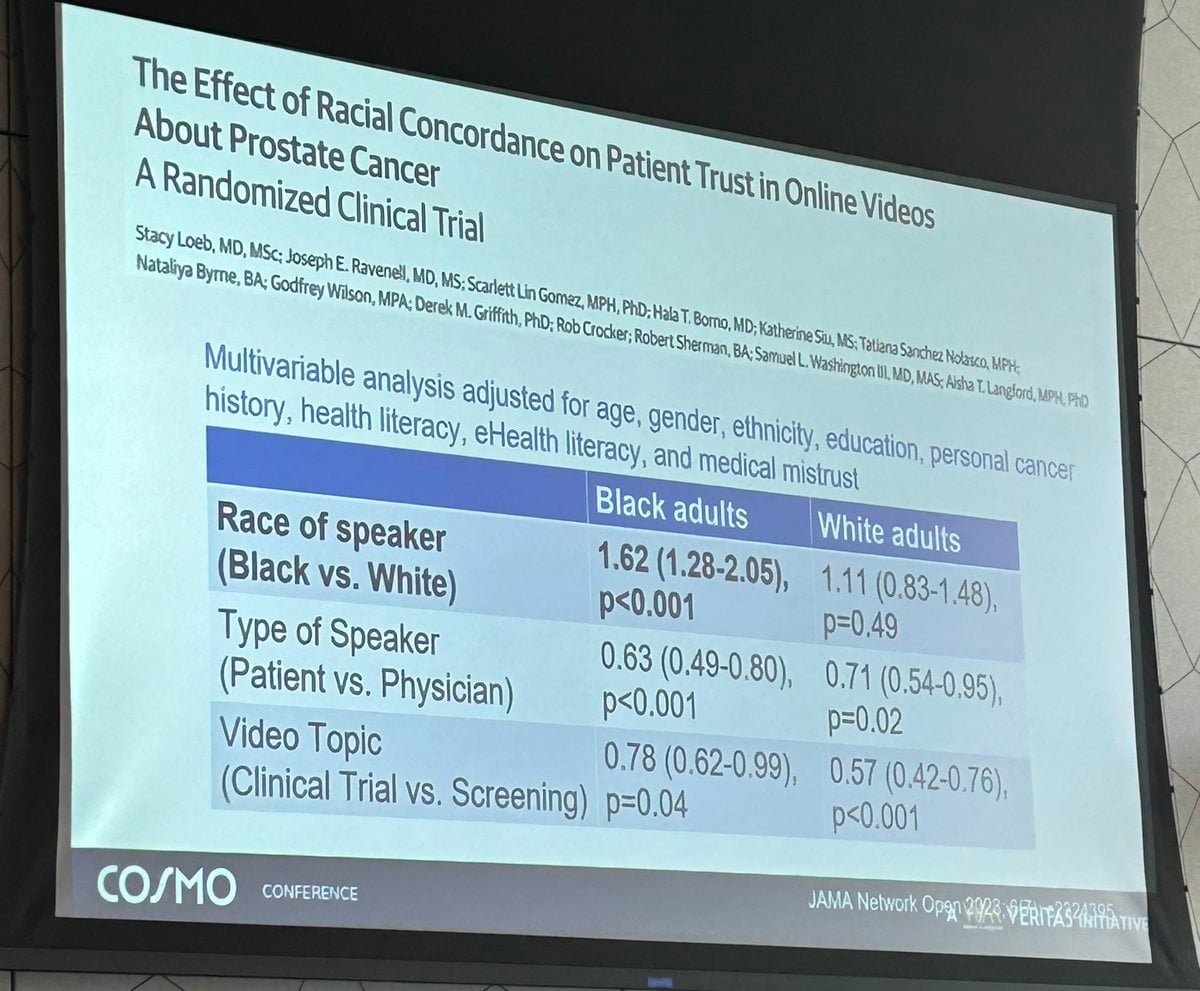
[JAMA Network Open - Effect of Racial Concordance on Patient Trust in Online Prostate Cancer Videos]
The Effect of Racial Concordance on Patient Trust in Online Videos About Prostate Cancer
A Randomized Clinical Trial
Stacy Loeb, MD, MSc; Joseph E. Ravenell, MD, MS; Scarlett Lin Gomez, MPH, PhD; Hala T. Borno, MD;
Katherine Siu, MS; Tatiana Sanchez Nolasco, MPH; Nataliya Byrne, BA; Godfrey Wilson, MPA;
Derek M. Griffith, PhD; Rob Crocker; Robert Sherman, BA; Samuel L. Washington III, MD, MAS;
Aisha T. Langford, MPH, PhD
Multivariable analysis adjusted for age, gender, ethnicity, education, personal cancer history,
health literacy, eHealth literacy, and medical mistrust
Black adults White adults
Race of speaker (Black vs. White) 1.62 (1.28-2.05), p<0.001 1.11 (0.83-1.48), p=0.49
Type of Speaker (Patient vs. Physician) 0.63 (0.49-0.80), p<0.001 0.71 (0.54-0.95), p=0.02
Video Topic (Clinical Trial vs. Screening) 0.78 (0.62-0.99), p=0.04 0.57 (0.42-0.76), p<0.001
JAMA Network Open 2023 (citation partially obscured on slide)
COSMO CONFERENCE - A WM VERITAS INITIATIVE
Global Focus on Cancer - transforming lived experience into meaningful cancer care · Global Focus on Cancer - Fifteen Years Later · Global Focus on Cancer - countries of operation
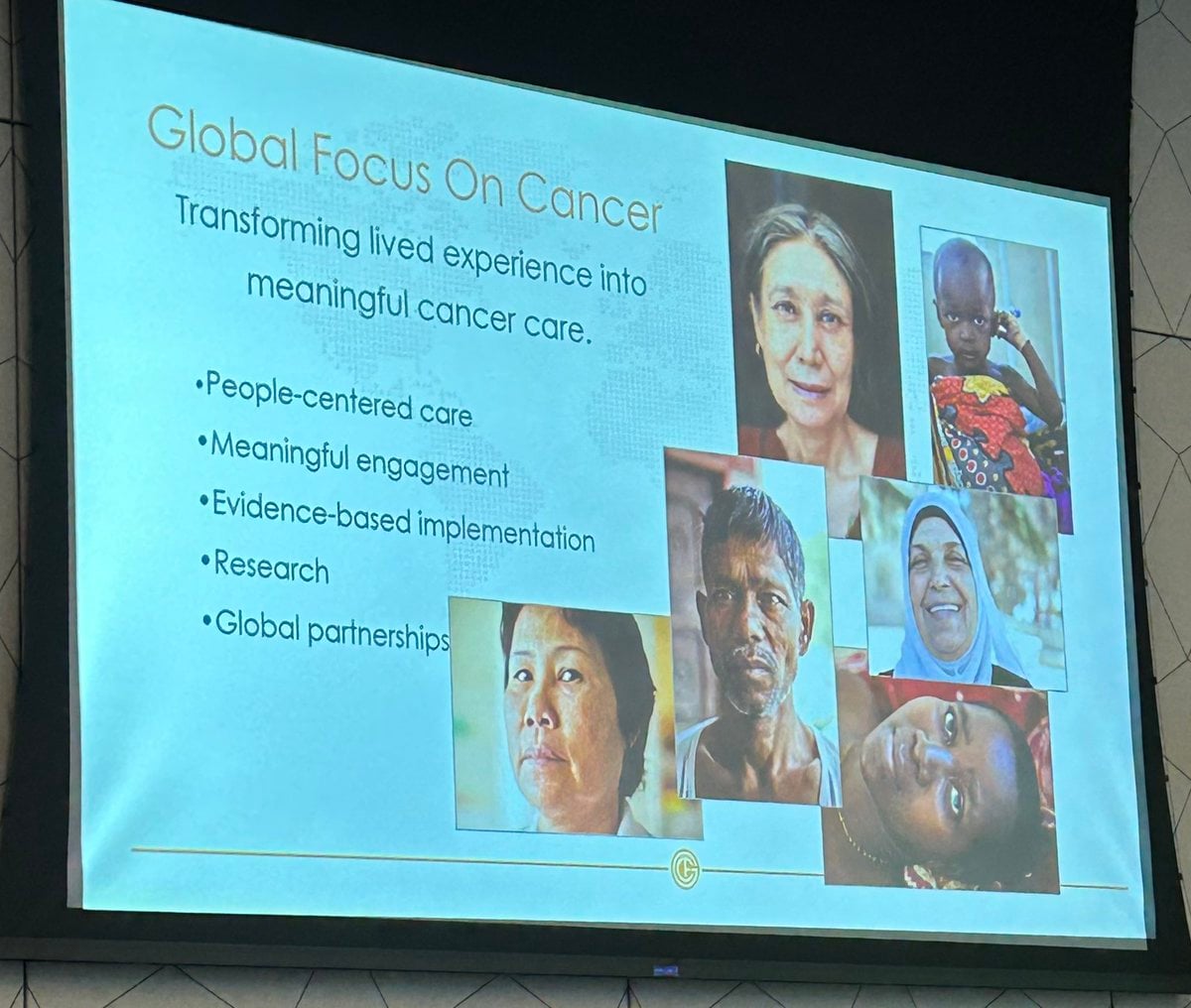
[Global Focus on Cancer - transforming lived experience into meaningful cancer care]
Global Focus On Cancer
Transforming lived experience into meaningful cancer care.
- People-centered care
- Meaningful engagement
- Evidence-based implementation
- Research
- Global partnerships
---
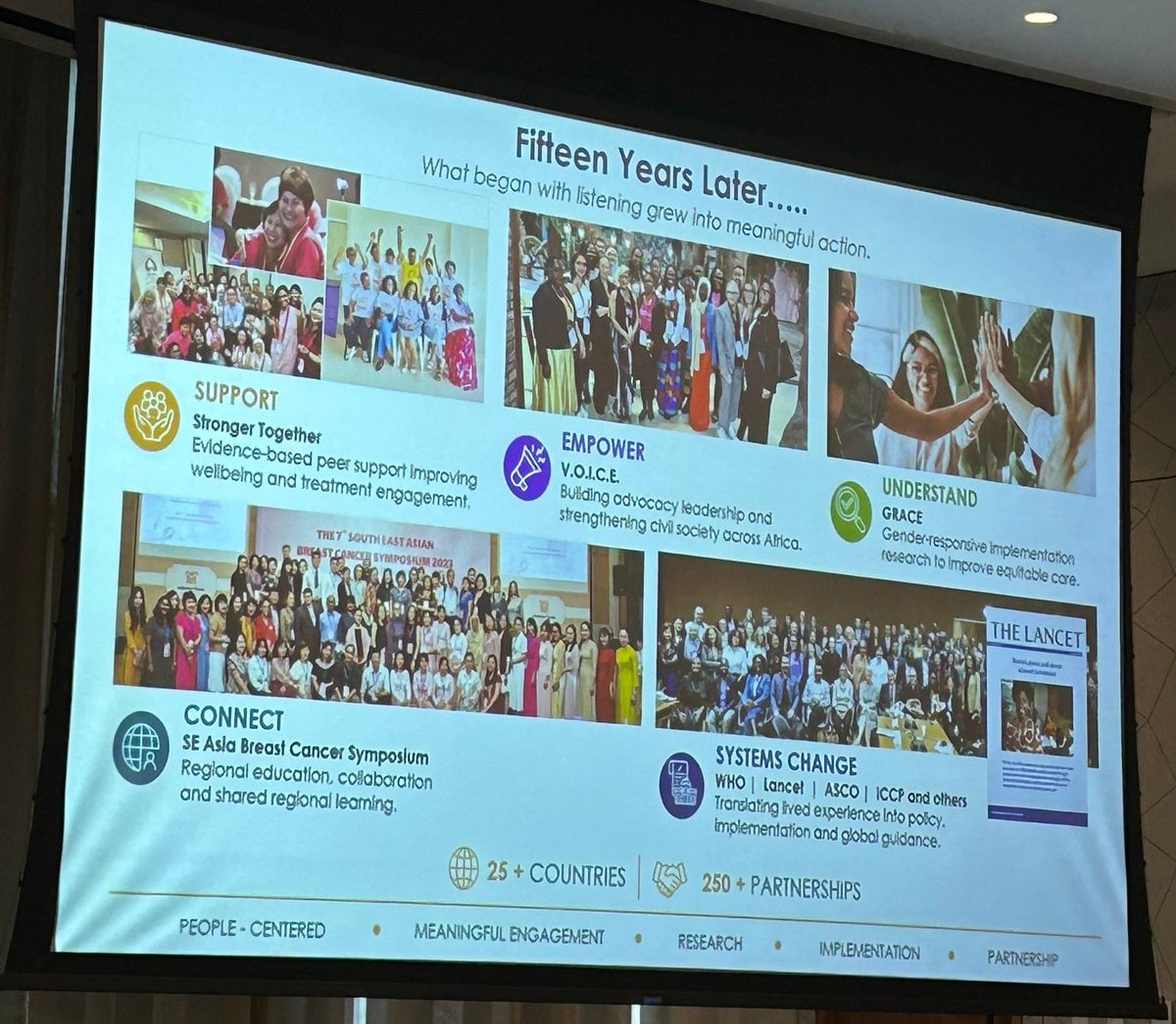
[Global Focus on Cancer - Fifteen Years Later]
Fifteen Years Later.....
What began with listening grew into meaningful action.
SUPPORT
Stronger Together
Evidence-based peer support improving wellbeing and treatment engagement.
EMPOWER
V.O.I.C.E.
Building advocacy leadership and strengthening civil society across Africa.
UNDERSTAND
GRACE
Gender-responsive implementation research to improve equitable care.
CONNECT
SE Asia Breast Cancer Symposium
Regional education, collaboration and shared regional learning.
SYSTEMS CHANGE
WHO | Lancet | ASCO | ICCP and others
Translating lived experience into policy, implementation and global guidance.
25 + COUNTRIES | 250 + PARTNERSHIPS
PEOPLE-CENTERED - MEANINGFUL ENGAGEMENT - RESEARCH - IMPLEMENTATION - PARTNERSHIP
---
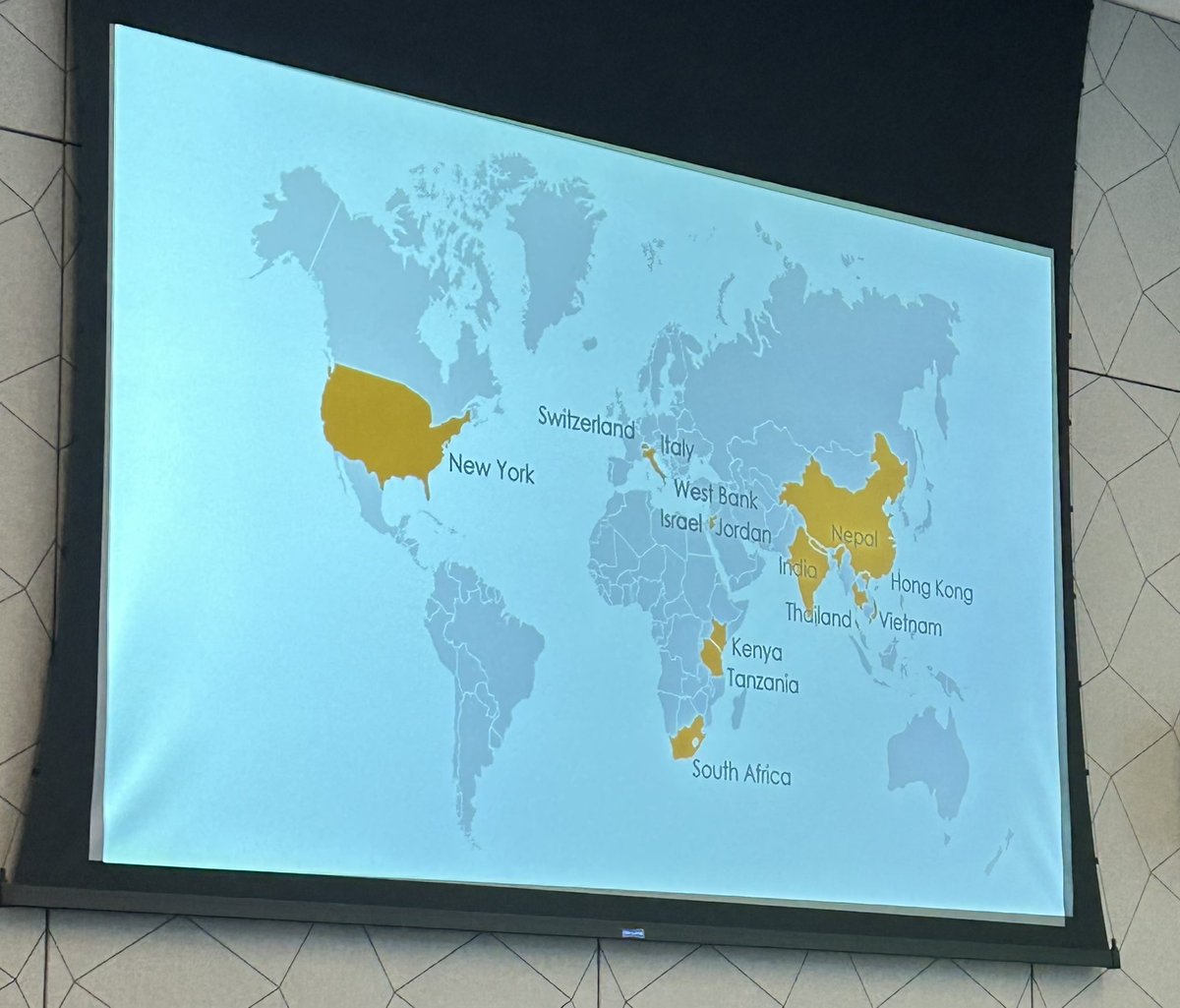
[Global Focus on Cancer - countries of operation]
[World map with highlighted countries, labelled:]
New York
Switzerland
Italy
West Bank
Israel
Jordan
India
Nepal
Hong Kong
Thailand
Vietnam
Kenya
Tanzania
South Africa
[The United States, China, India, Nepal, Thailand, Vietnam, Hong Kong, Kenya, Tanzania,
South Africa and Italy are shaded on the map.]
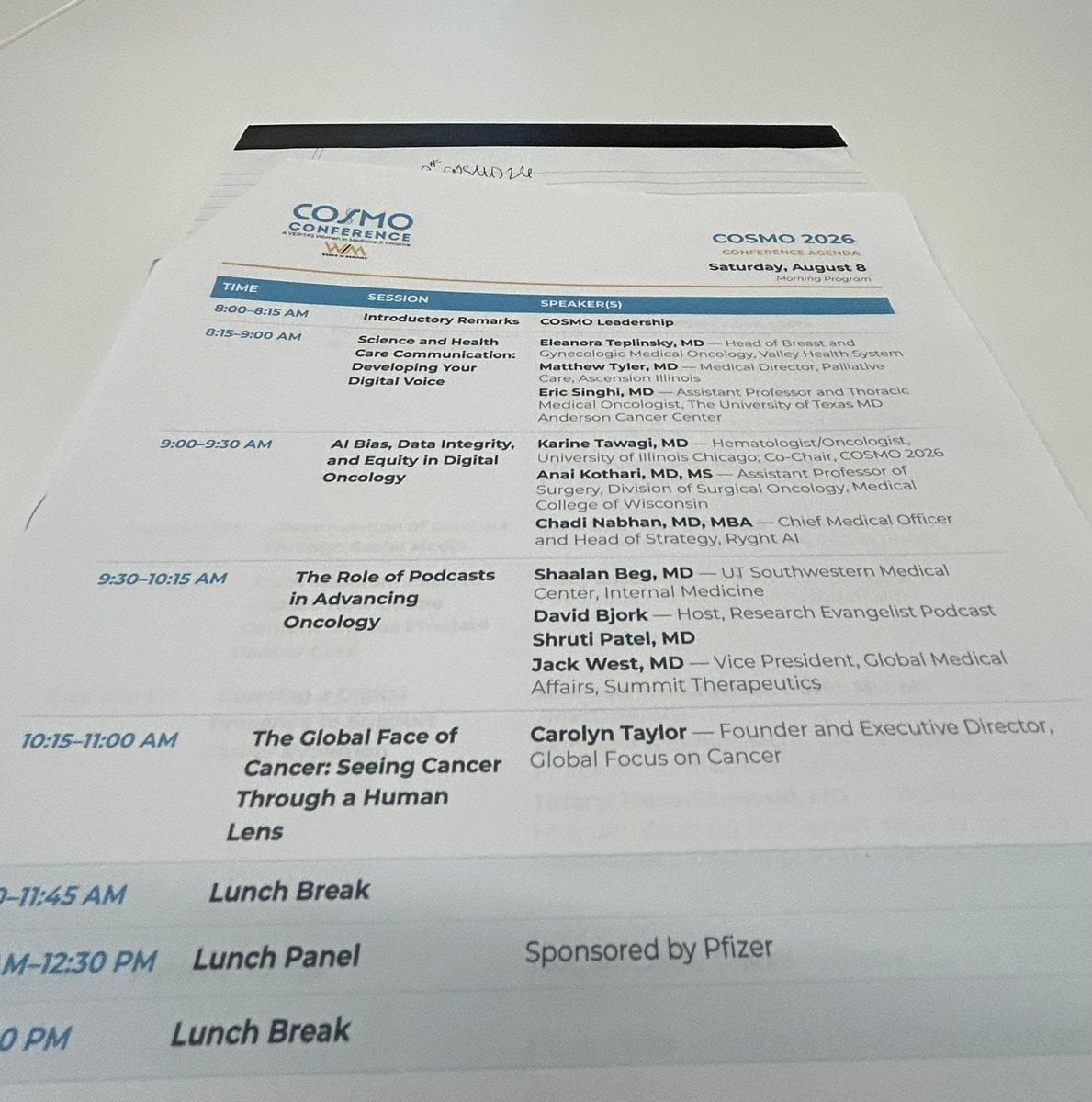
[COSMO 2026 agenda - Saturday, August 8, morning programme]
COSMO CONFERENCE - A VERITAS Women in Medicine Initiative
COSMO 2026 CONFERENCE AGENDA
Saturday, August 8 - Morning Program
TIME | SESSION | SPEAKER(S)
8:00-8:15 AM | Introductory Remarks | COSMO Leadership
8:15-9:00 AM | Science and Health Care Communication: Developing Your Digital Voice |
Eleanora Teplinsky, MD - Head of Breast and Gynecologic Medical Oncology, Valley Health System
Matthew Tyler, MD - Medical Director, Palliative Care, Ascension Illinois
Eric Singhi, MD - Assistant Professor and Thoracic Medical Oncologist, The University of Texas MD Anderson Cancer Center
9:00-9:30 AM | AI Bias, Data Integrity, and Equity in Digital Oncology |
Karine Tawagi, MD - Hematologist/Oncologist, University of Illinois Chicago, Co-Chair, COSMO 2026
Anai Kothari, MD, MS - Assistant Professor of Surgery, Division of Surgical Oncology, Medical College of Wisconsin
Chadi Nabhan, MD, MBA - Chief Medical Officer and Head of Strategy, Ryght AI
9:30-10:15 AM | The Role of Podcasts in Advancing Oncology |
Shaalan Beg, MD - UT Southwestern Medical Center, Internal Medicine
David Bjork - Host, Research Evangelist Podcast
Shruti Patel, MD
Jack West, MD - Vice President, Global Medical Affairs, Summit Therapeutics
10:15-11:00 AM | The Global Face of Cancer: Seeing Cancer Through a Human Lens |
Carolyn Taylor - Founder and Executive Director, Global Focus on Cancer
[--]-11:45 AM | Lunch Break
[--]-12:30 PM | Lunch Panel | Sponsored by Pfizer
[--] PM | Lunch Break
---
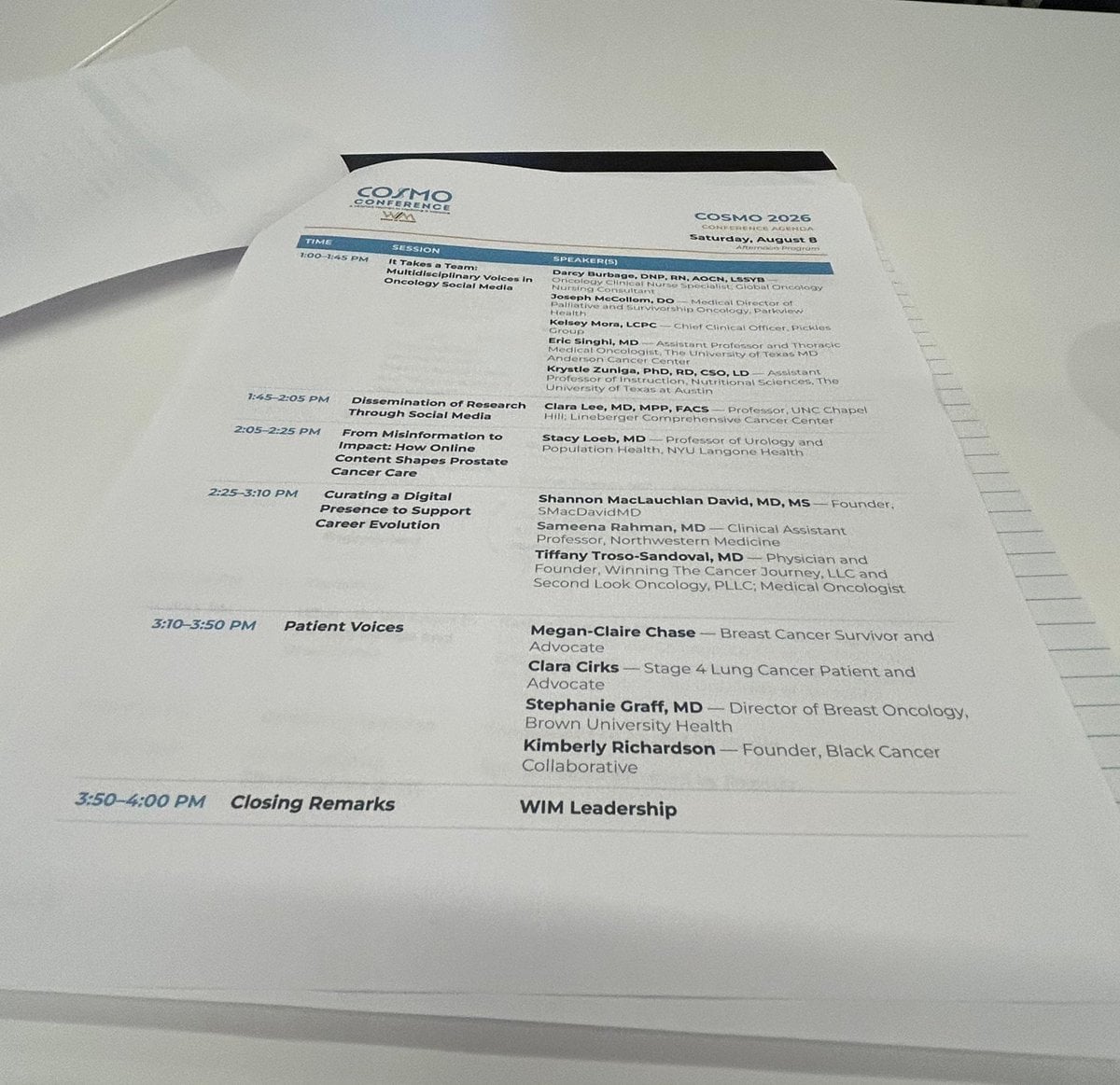
[COSMO 2026 agenda - Saturday, August 8, afternoon programme]
COSMO CONFERENCE
COSMO 2026 CONFERENCE AGENDA
Saturday, August 8 - Afternoon Program
TIME | SESSION | SPEAKER(S)
1:00-1:45 PM | It Takes a Team: Multidisciplinary Voices in Oncology Social Media |
Darcy Burbage, DNP, RN, AOCN, LSSYB - Oncology Clinical Nurse Specialist, Global Oncology Nursing Consultant
Joseph McCollom, DO - Medical Director of Palliative and Survivorship Oncology, Parkview Health
Kelsey Mora, LCPC - Chief Clinical Officer, Pickles Group
Eric Singhi, MD - Assistant Professor and Thoracic Medical Oncologist, The University of Texas MD Anderson Cancer Center
Krystle Zuniga, PhD, RD, CSO, LD - Assistant Professor of Instruction, Nutritional Sciences, The University of Texas at Austin
1:45-2:05 PM | Dissemination of Research Through Social Media |
Clara Lee, MD, MPP, FACS - Professor, UNC Chapel Hill; Lineberger Comprehensive Cancer Center
2:05-2:25 PM | From Misinformation to Impact: How Online Content Shapes Prostate Cancer Care |
Stacy Loeb, MD - Professor of Urology and Population Health, NYU Langone Health
2:25-3:10 PM | Curating a Digital Presence to Support Career Evolution |
Shannon MacLauchlan David, MD, MS - Founder, SMacDavidMD
Sameena Rahman, MD - Clinical Assistant Professor, Northwestern Medicine
Tiffany Troso-Sandoval, MD - Physician and Founder, Winning The Cancer Journey, LLC and Second Look Oncology, PLLC; Medical Oncologist
3:10-3:50 PM | Patient Voices |
Megan-Claire Chase - Breast Cancer Survivor and Advocate
Clara Cirks - Stage 4 Lung Cancer Patient and Advocate
Stephanie Graff, MD - Director of Breast Oncology, Brown University Health
Kimberly Richardson - Founder, Black Cancer Collaborative
3:50-4:00 PM | Closing Remarks | WIM Leadership
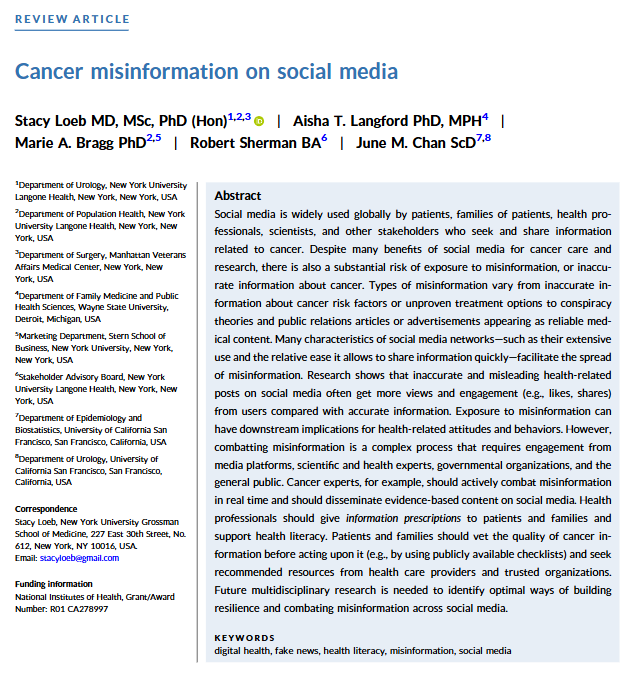
REVIEW ARTICLE
Cancer misinformation on social media
Stacy Loeb MD, MSc, PhD (Hon) 1,2,3 | Aisha T. Langford PhD, MPH 4 |
Marie A. Bragg PhD 2,5 | Robert Sherman BA 6 | June M. Chan ScD 7,8
1 Department of Urology, New York University Langone Health, New York, New York, USA
2 Department of Population Health, New York University Langone Health, New York, New York, USA
3 Department of Surgery, Manhattan Veterans Affairs Medical Center, New York, New York, USA
4 Department of Family Medicine and Public Health Sciences, Wayne State University, Detroit, Michigan, USA
5 Marketing Department, Stern School of Business, New York University, New York, New York, USA
6 Stakeholder Advisory Board, New York University Langone Health, New York, New York, USA
7 Department of Epidemiology and Biostatistics, University of California San Francisco, San Francisco, California, USA
8 Department of Urology, University of California San Francisco, San Francisco, California, USA
Correspondence: Stacy Loeb, New York University Grossman School of Medicine, 227 East 30th Street,
No. 612, New York, NY 10016, USA. Email: stacyloeb@gmail.com
Funding information: National Institutes of Health, Grant/Award Number: R01 CA278997
Abstract
Social media is widely used globally by patients, families of patients, health professionals,
scientists, and other stakeholders who seek and share information related to cancer. Despite many
benefits of social media for cancer care and research, there is also a substantial risk of exposure
to misinformation, or inaccurate information about cancer. Types of misinformation vary from
inaccurate information about cancer risk factors or unproven treatment options to conspiracy
theories and public relations articles or advertisements appearing as reliable medical content.
Many characteristics of social media networks-such as their extensive use and the relative ease it
allows to share information quickly-facilitate the spread of misinformation. Research shows that
inaccurate and misleading health-related posts on social media often get more views and engagement
(e.g., likes, shares) from users compared with accurate information. Exposure to misinformation can
have downstream implications for health-related attitudes and behaviors. However, combatting
misinformation is a complex process that requires engagement from social media platforms,
scientific and health experts, governmental organizations, and the general public. Cancer experts,
for example, should actively combat misinformation in real time and should disseminate
evidence-based content on social media. Health professionals should give information prescriptions
to patients and families and support health literacy. Patients and families should vet the quality
of cancer information before acting upon it (e.g., by using publicly available checklists) and seek
recommended resources from health care providers and trusted organizations. Future
multidisciplinary research is needed to identify optimal ways of building resilience and combating
misinformation across social media.
KEYWORDS
digital health, fake news, health literacy, misinformation, social media
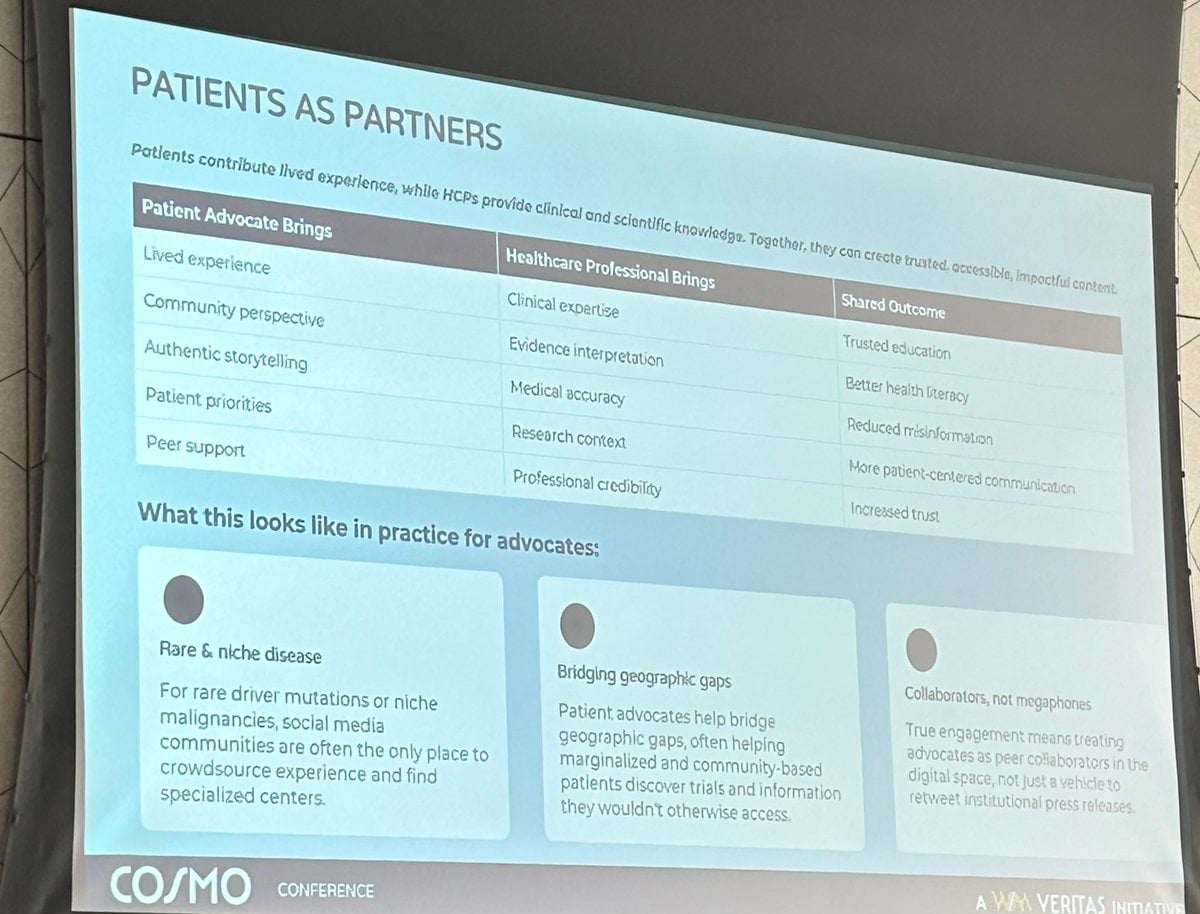
[Patients as Partners]
PATIENTS AS PARTNERS
Patients contribute lived experience, while HCPs provide clinical and scientific knowledge.
Together, they can create trusted, accessible, impactful content.
Patient Advocate Brings | Healthcare Professional Brings | Shared Outcome
Lived experience | Clinical expertise | Trusted education
Community perspective | Evidence interpretation | Better health literacy
Authentic storytelling | Medical accuracy | Reduced misinformation
Patient priorities | Research context | More patient-centered communication
Peer support | Professional credibility | Increased trust
What this looks like in practice for advocates:
Rare & niche disease
For rare driver mutations or niche malignancies, social media communities are often the only
place to crowdsource experience and find specialized centers.
Bridging geographic gaps
Patient advocates help bridge geographic gaps, often helping marginalized and community-based
patients discover trials and information they wouldn't otherwise access.
Collaborators, not megaphones
True engagement means treating advocates as peer collaborators in the digital space, not just
a vehicle to retweet institutional press releases.
COSMO CONFERENCE - A WM VERITAS INITIATIVE
---
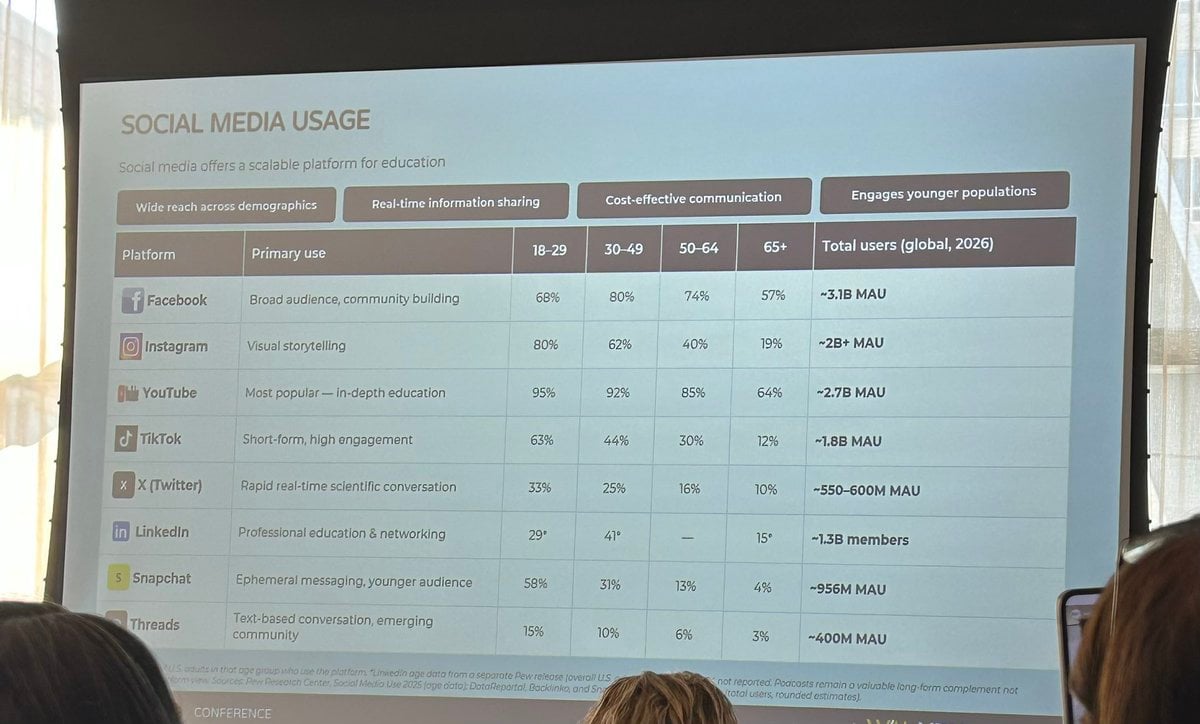
[Social Media Usage - platform reach by age band]
SOCIAL MEDIA USAGE
Social media offers a scalable platform for education
Wide reach across demographics | Real-time information sharing | Cost-effective communication | Engages younger populations
Platform | Primary use | 18-29 | 30-49 | 50-64 | 65+ | Total users (global, 2026)
Facebook | Broad audience, community building | 68% | 80% | 74% | 57% | ~3.1B MAU
Instagram | Visual storytelling | 80% | 62% | 40% | 19% | ~2B+ MAU
YouTube | Most popular - in-depth education | 95% | 92% | 85% | 64% | ~2.7B MAU
TikTok | Short-form, high engagement | 63% | 44% | 30% | 12% | ~1.8B MAU
X (Twitter)| Rapid real-time scientific conversation | 33% | 25% | 16% | 10% | ~550-600M MAU
LinkedIn | Professional education & networking | 29%a | 41%a | - | 15%a| ~1.3B members
Snapchat | Ephemeral messaging, younger audience | 58% | 31% | 13% | 4% | ~956M MAU
Threads | Text-based conversation, emerging community | 15% | 10% | 6% | 3% | ~400M MAU
Footnote (partially legible): U.S. adults in that age group who use the platform. LinkedIn age data
from a separate Pew release (overall U.S. adults ... platform view). Sources: Pew Research Center,
Social Media Use 2025 (age data); DataReportal, Backlinko, and Sprout ... not reported. Podcasts
remain a valuable long-form complement not ... (total users, rounded estimates).
CONFERENCE
---
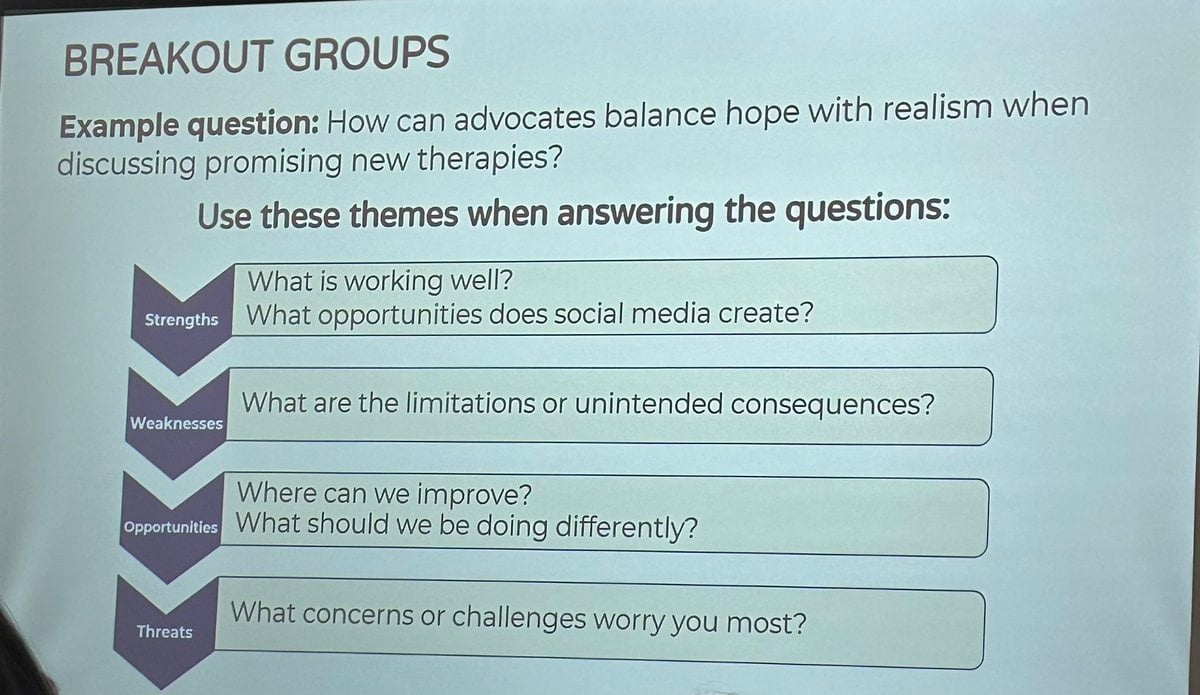
[Breakout Groups - SWOT prompts]
BREAKOUT GROUPS
Example question: How can advocates balance hope with realism when discussing promising new therapies?
Use these themes when answering the questions:
Strengths
What is working well?
What opportunities does social media create?
Weaknesses
What are the limitations or unintended consequences?
Opportunities
Where can we improve?
What should we be doing differently?
Threats
What concerns or challenges worry you most?
---
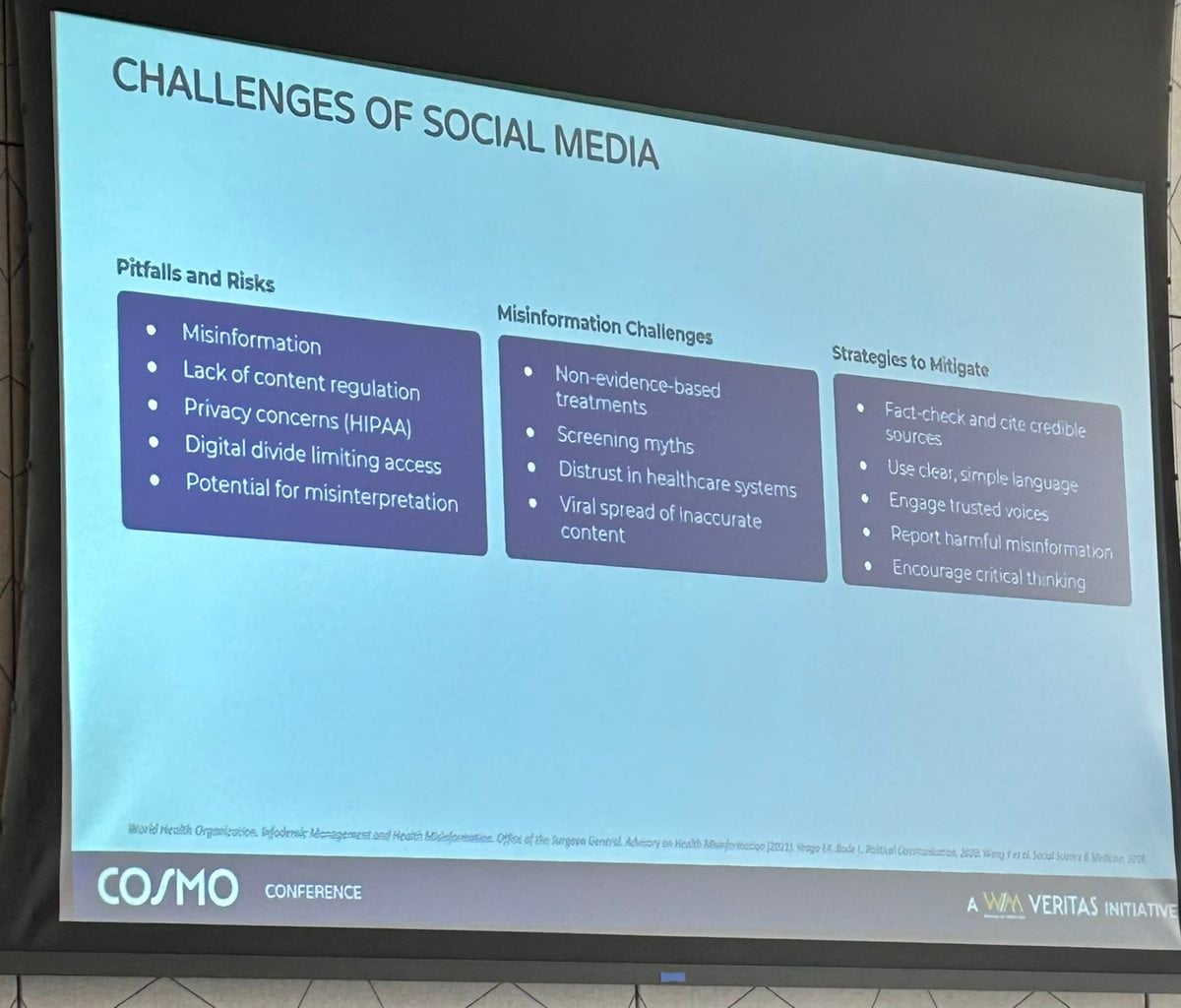
[Challenges of Social Media]
CHALLENGES OF SOCIAL MEDIA
Pitfalls and Risks
- Misinformation
- Lack of content regulation
- Privacy concerns (HIPAA)
- Digital divide limiting access
- Potential for misinterpretation
Misinformation Challenges
- Non-evidence-based treatments
- Screening myths
- Distrust in healthcare systems
- Viral spread of inaccurate content
Strategies to Mitigate
- Fact-check and cite credible sources
- Use clear, simple language
- Engage trusted voices
- Report harmful misinformation
- Encourage critical thinking
Sources (small print, partially legible): World Health Organization, Infodemic Management and
Health Misinformation. Office of the Surgeon General, Advisory on Health Misinformation (2021).
Vraga EK, Bode L. Political Communication, 2019. Wang Y et al. Social Science & Medicine, 2019.
COSMO CONFERENCE - A WM VERITAS INITIATIVE
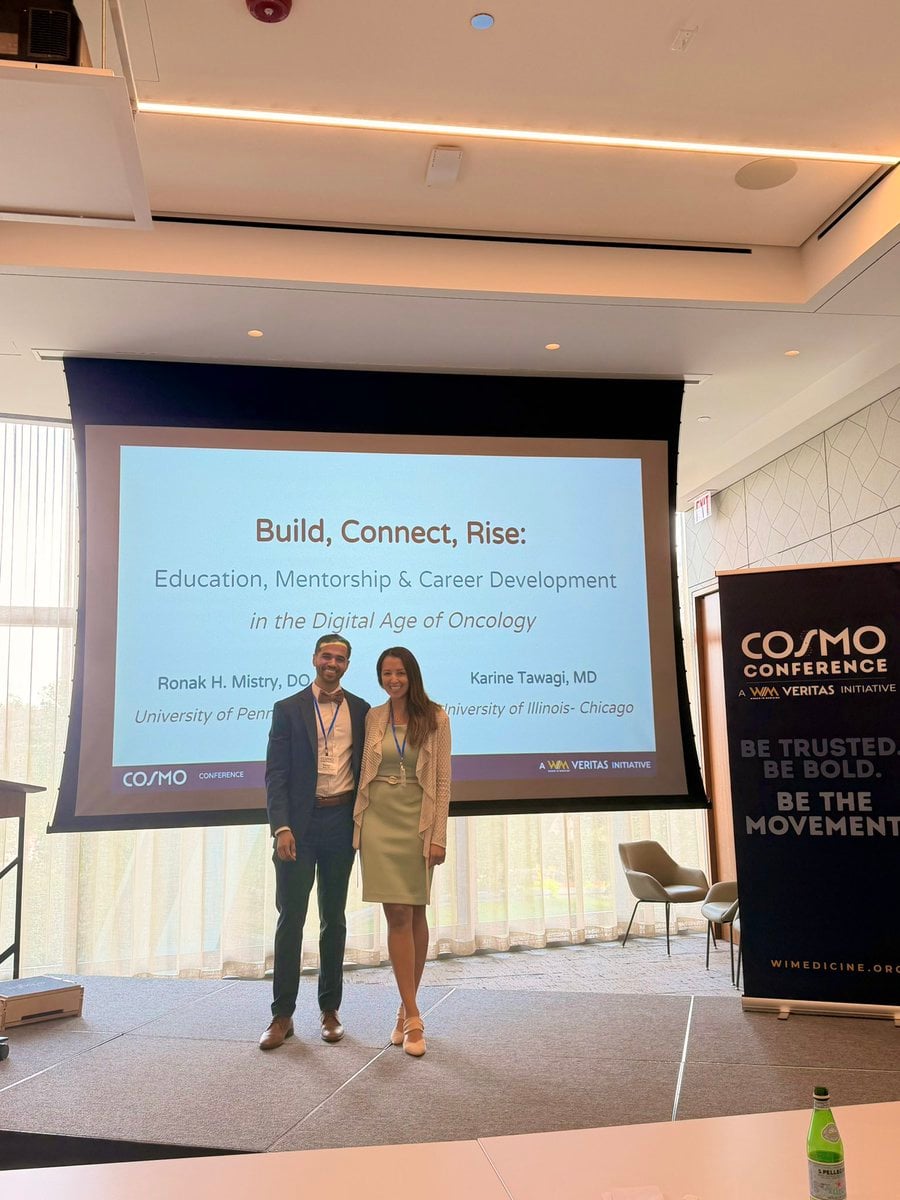
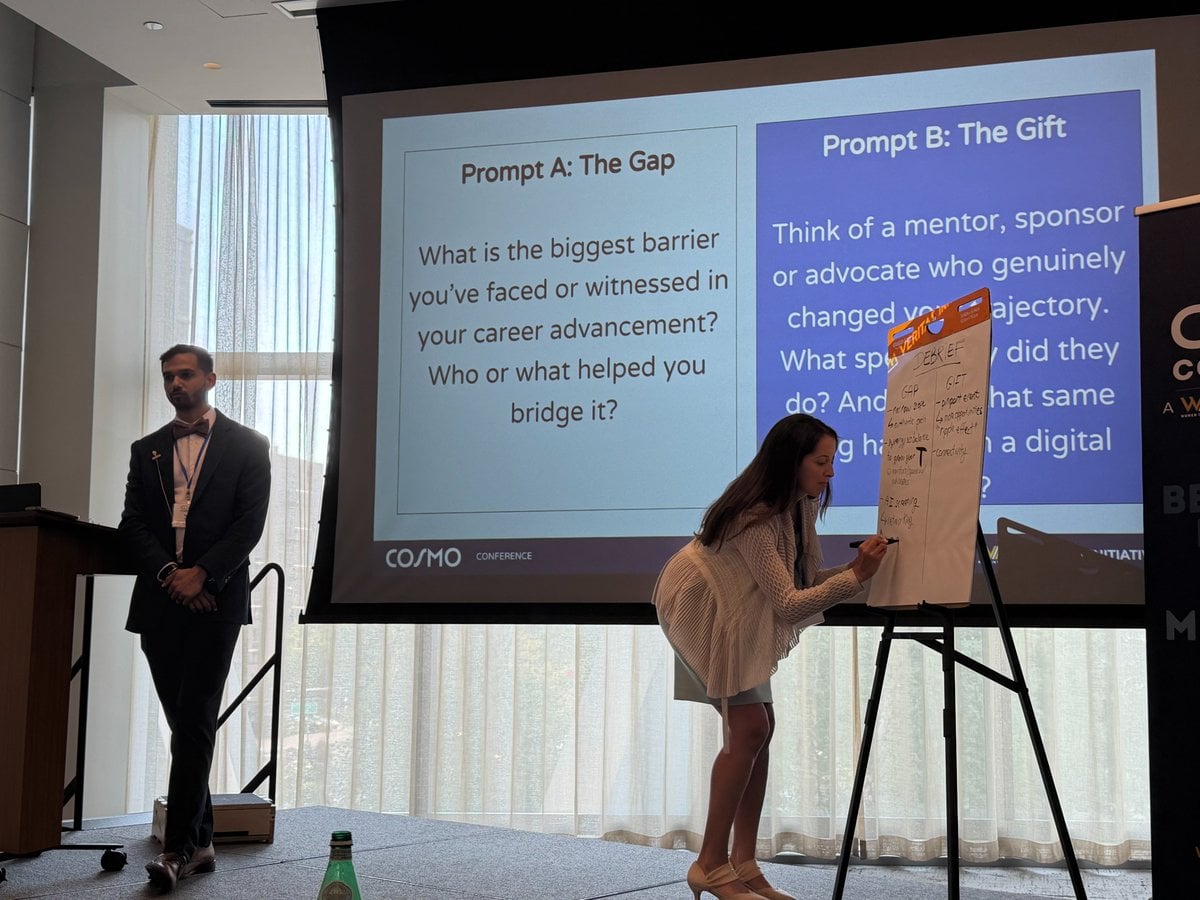
Prompt A: The Gap
What is the biggest barrier you've faced or witnessed in your career advancement?
Who or what helped you bridge it?
Prompt B: The Gift
Think of a mentor, sponsor or advocate who genuinely changed your [career] trajectory.
What spec[ifically] did they do? And [how can] that same [thing hap]pen in a digital [space]?
[A flip chart in front of the screen reads: DEBRIEF - GAP: narrow role, who to path,
synergy/isolation to grow your (?) mentors/sponsors/advocates, GI screening, mentoring.
GIFT: pinpoint event, more opportunities, ripple effect, connectivity.]
COSMO CONFERENCE
Free Access · KOL Pulse Intelligence
Track oncology’s top KOLs in your specialty
Create a free account, pick the tumor types you cover, and go beyond the tweet — the intelligence pharma teams use to map influence and prepare for engagement:
Choose the tumor types you follow. No cost, unsubscribe anytime.
Who Led the Conversation
Top voices at COSMO 2026
Ranked by total impressions across the posts we captured. COSMO is
explicitly multidisciplinary, so clinicians, nurse specialists, researchers and patient
advocates are all counted as key opinion leaders — listed in separate tabs rather than
collapsed into one ranking.
These are the speakers most often mentioned by name in the
posts we captured — a count of @-mentions, not of their own posting. Several presented
at COSMO without posting under the hashtag themselves.
Each topic expands to its top posts, clinician and patient-advocate
voices first, then by reach. Post text is shown in full and verbatim; only the leading
reply-to handle chain is trimmed. Every card links to the original post on X.
Compiled by the KOL Pulse research team, led by Brian Shields, Founder,
KOL Pulse. Conference name, dates, venue and organiser verified against
wimedicine.org.
Post text is verbatim from X. Last updated 2026-08-11.
Free access — track oncology’s top KOLs in your specialty: profiles, pharma influence, ad-board patterns & 2025 Open Payments analysis.KOL Pulse Insider
 Dr Joseph McCollom, DO
GI & palliative oncology · Parkview Health, IN
@realbowtiedoc
6.1K
impressions · 12 posts
2
Dr Joseph McCollom, DO
GI & palliative oncology · Parkview Health, IN
@realbowtiedoc
6.1K
impressions · 12 posts
2
 Darcy Burbage, DNP, RN, AOCN
Oncology clinical nurse specialist · Delaware, US
@DarcyBurbage
3.7K
impressions · 10 posts
3
Darcy Burbage, DNP, RN, AOCN
Oncology clinical nurse specialist · Delaware, US
@DarcyBurbage
3.7K
impressions · 10 posts
3
 Karine Tawagi, MD
GU oncology; COSMO 2026 co-chair · Univ. of Illinois Chicago
@DrKarineTawagi
2.7K
impressions · 2 posts
4
Karine Tawagi, MD
GU oncology; COSMO 2026 co-chair · Univ. of Illinois Chicago
@DrKarineTawagi
2.7K
impressions · 2 posts
4
 Ronak H. Mistry, DO
Hematology; podcast co-host · Penn Medicine
@rmistry91
1.1K
impressions · 3 posts
5
Ronak H. Mistry, DO
Hematology; podcast co-host · Penn Medicine
@rmistry91
1.1K
impressions · 3 posts
5
 Dr. Emily Drake, PhD
Cancer researcher; AYACSM co-founder · Canada
@EK_Drake
291
impressions · 2 posts
Dr. Emily Drake, PhD
Cancer researcher; AYACSM co-founder · Canada
@EK_Drake
291
impressions · 2 posts
 JJ Singleton
Colorectal cancer patient advocate · North Carolina, US
@JJSingleton1
3.6K
impressions · 5 posts
2
JJ Singleton
Colorectal cancer patient advocate · North Carolina, US
@JJSingleton1
3.6K
impressions · 5 posts
2
 Allison Rosen, MS
Cancer survivor & advocate; ACS Project ECHO · Texas, US
@ARosen380
3.3K
impressions · 5 posts
3
Allison Rosen, MS
Cancer survivor & advocate; ACS Project ECHO · Texas, US
@ARosen380
3.3K
impressions · 5 posts
3
 Laura Esfeller
Metastatic kidney cancer (HLRCC) advocate · California, US
@LauraEsfeller
1.1K
impressions · 3 posts
4
Laura Esfeller
Metastatic kidney cancer (HLRCC) advocate · California, US
@LauraEsfeller
1.1K
impressions · 3 posts
4
 Megsie
Breast cancer survivor & advocate · US
@warriormegsie
963
impressions · 4 posts
Megsie
Breast cancer survivor & advocate · US
@warriormegsie
963
impressions · 4 posts
 The Fellow On Call
Heme/onc education podcast (physician-hosted)
@TheFellowOnCall
1.9K
impressions · 2 posts
2
The Fellow On Call
Heme/onc education podcast (physician-hosted)
@TheFellowOnCall
1.9K
impressions · 2 posts
2
 CA: A Cancer Journal for Clinicians
American Cancer Society journal
@CACancerJournal
828
impressions · 1 posts
3
CA: A Cancer Journal for Clinicians
American Cancer Society journal
@CACancerJournal
828
impressions · 1 posts
3
 OncoDaily
Oncology news outlet
@oncodaily
316
impressions · 2 posts
4
OncoDaily
Oncology news outlet
@oncodaily
316
impressions · 2 posts
4
 ellynjane
Marcomm/PR consultant; conversational-AI co-creator
@ellynjane
16
impressions · 1 posts
ellynjane
Marcomm/PR consultant; conversational-AI co-creator
@ellynjane
16
impressions · 1 posts