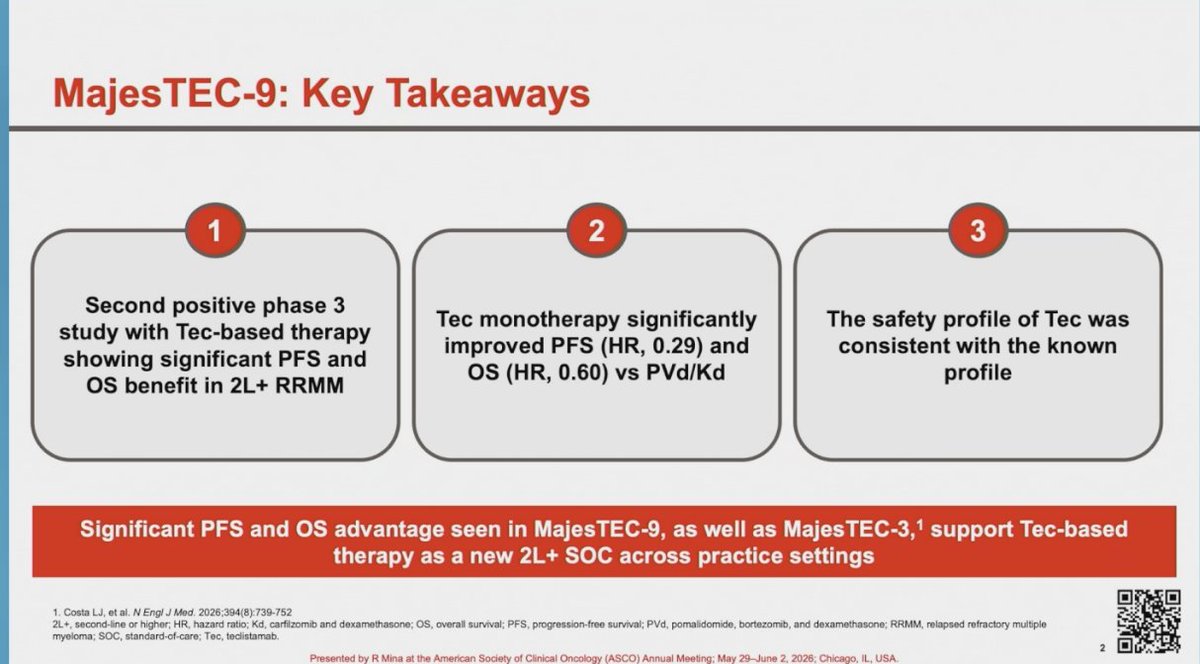
MajesTEC-9 Key Takeaways
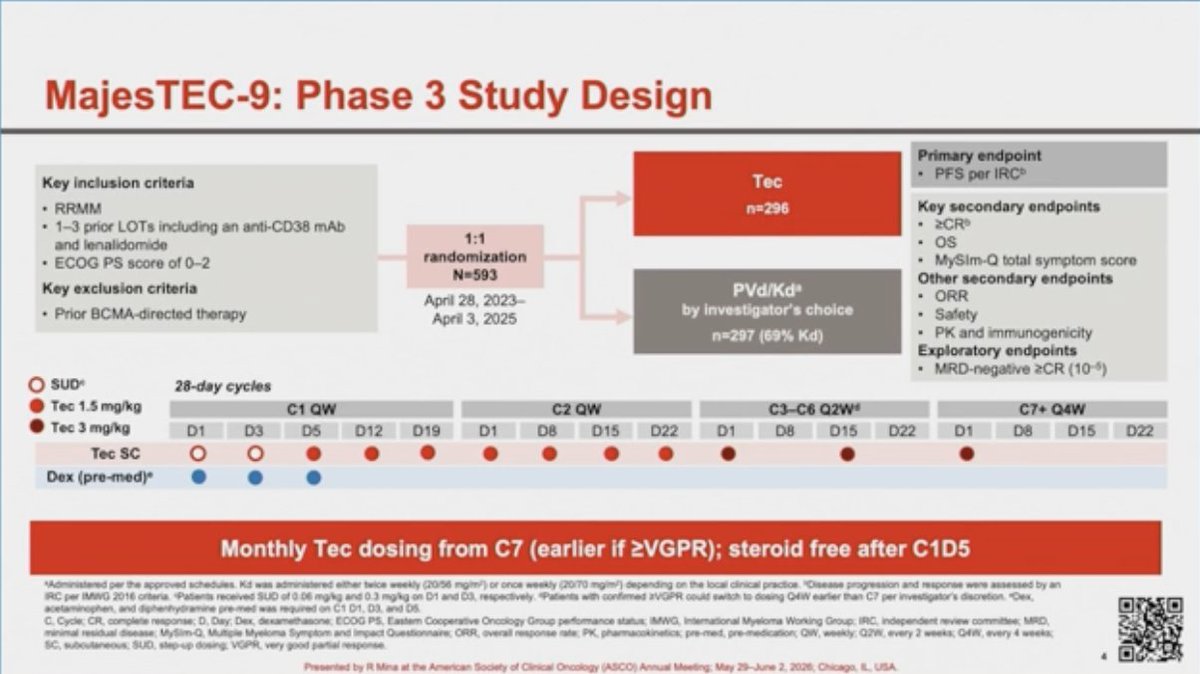
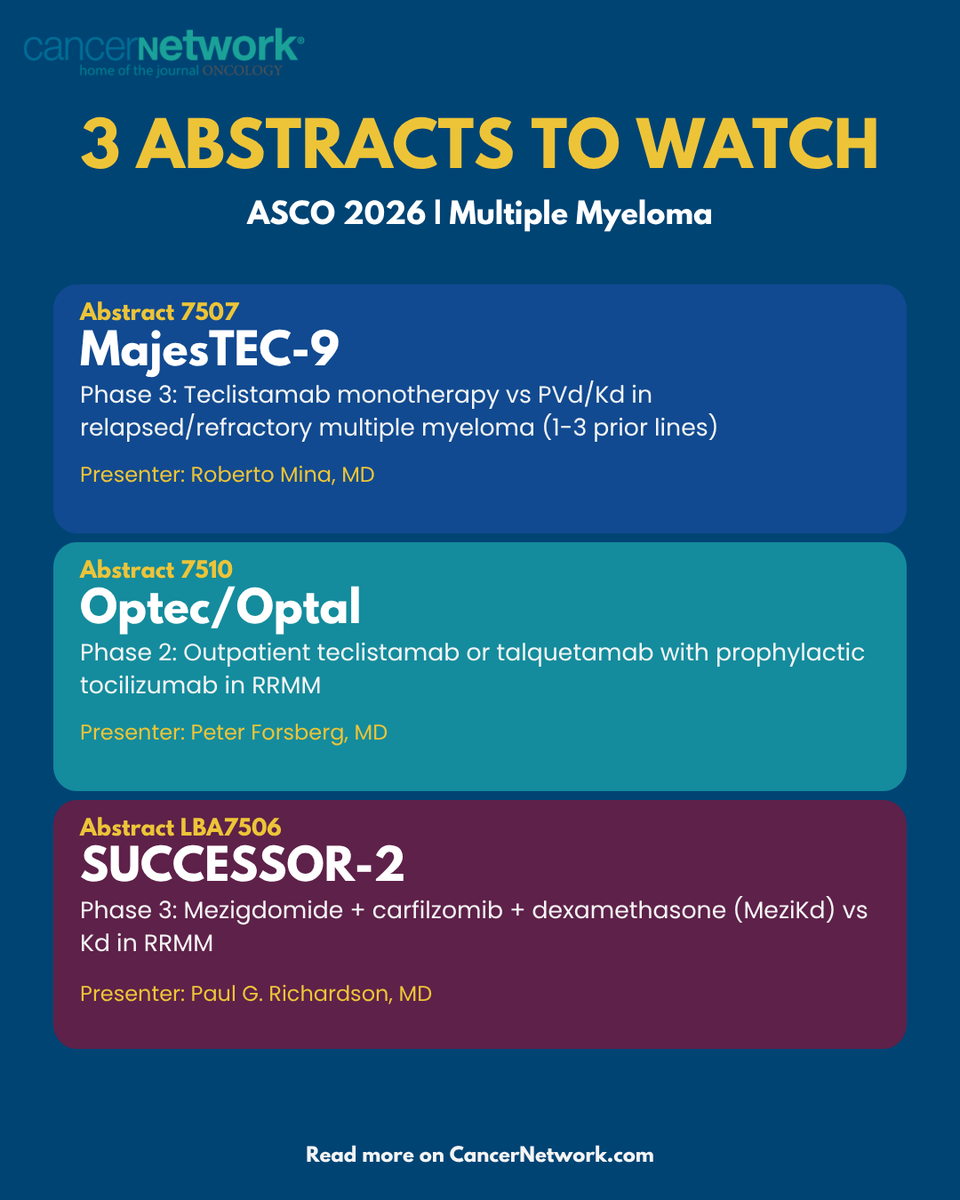
Design - Phase 3, global, randomized trial (NCT05572515) of single-agent teclistamab (Tecvayli) versus investigator's choice of PVd or Kd in RRMM after 1-3 prior lines, all anti-CD38- and lenalidomide-exposed; n=593 randomized (~85% anti-CD38-refractory). Presented at ASCO 2026 (Abstract 7507, Mina) and published in NEJM.
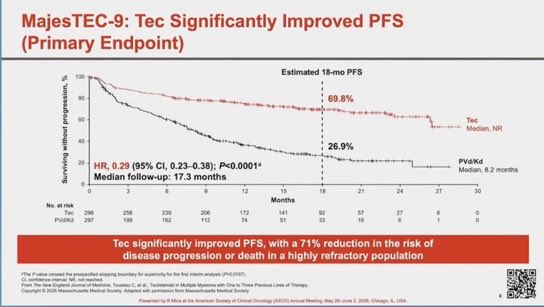
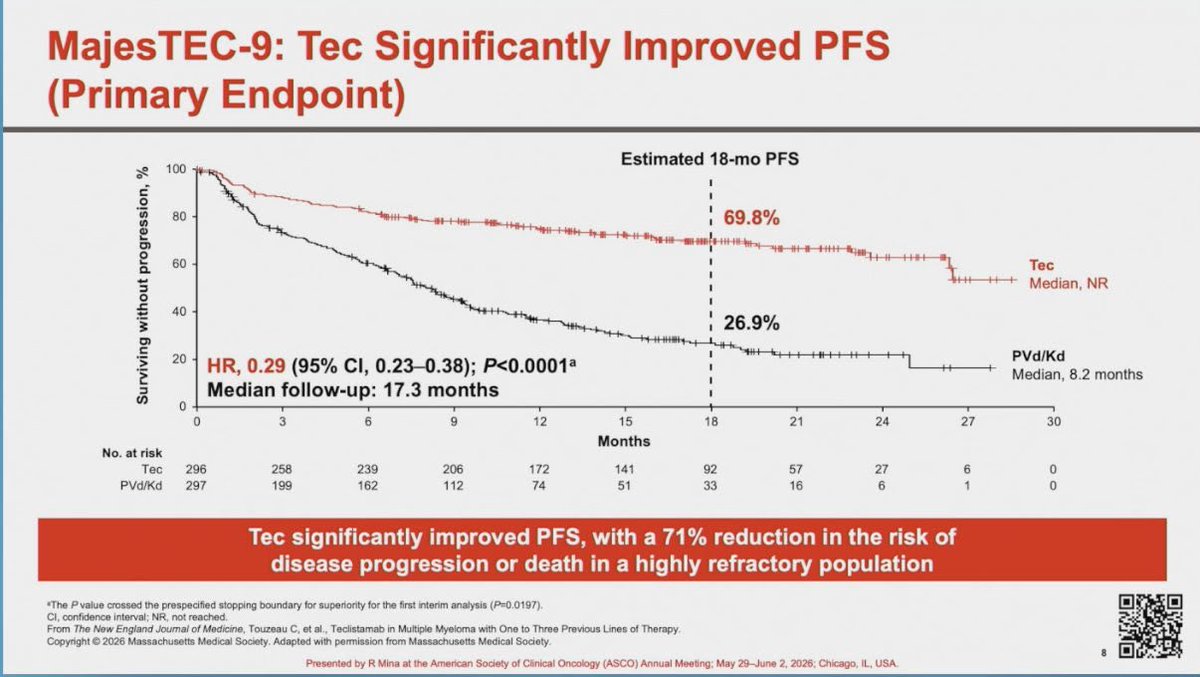
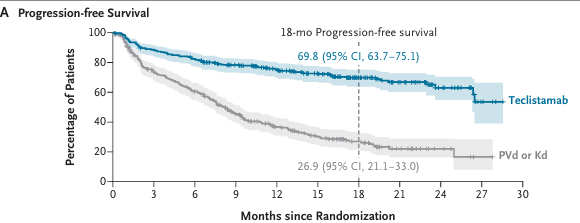
Efficacy / PFS (primary, met) - PFS HR 0.29 (95% CI 0.23-0.38; P<0.001) - a 71% risk reduction. 18-month PFS 69.8% vs 26.9%; median PFS not reached vs ~8.2 months. Consistent across subgroups: lenalidomide-refractory HR 0.30, anti-CD38-refractory HR 0.32, high-risk cytogenetics HR 0.27. Depth: >=CR 65.9% vs 16.8%; MRD-negative (10^-5) CR 38.5% vs 6.7%.
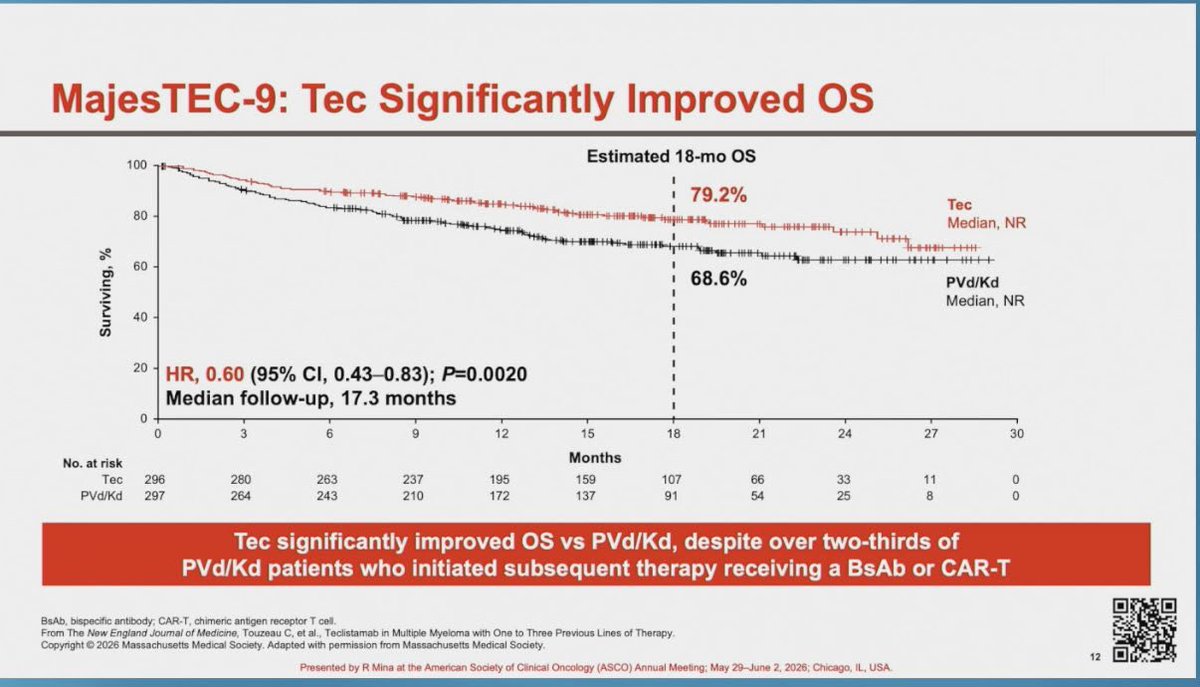
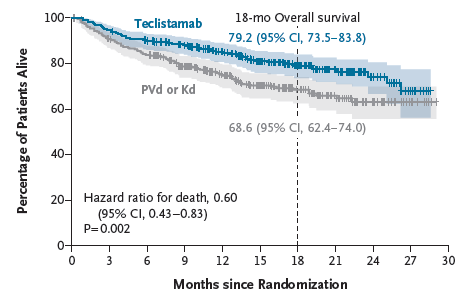
Overall survival (secondary, met) - HR for death 0.60 (95% CI 0.43-0.83; P=0.002); 18-month OS 79.2% vs 68.6%; median OS not reached in either arm at median follow-up 17.3 months - despite 68.4% of subsequent-therapy control patients later receiving a bispecific or CAR-T.
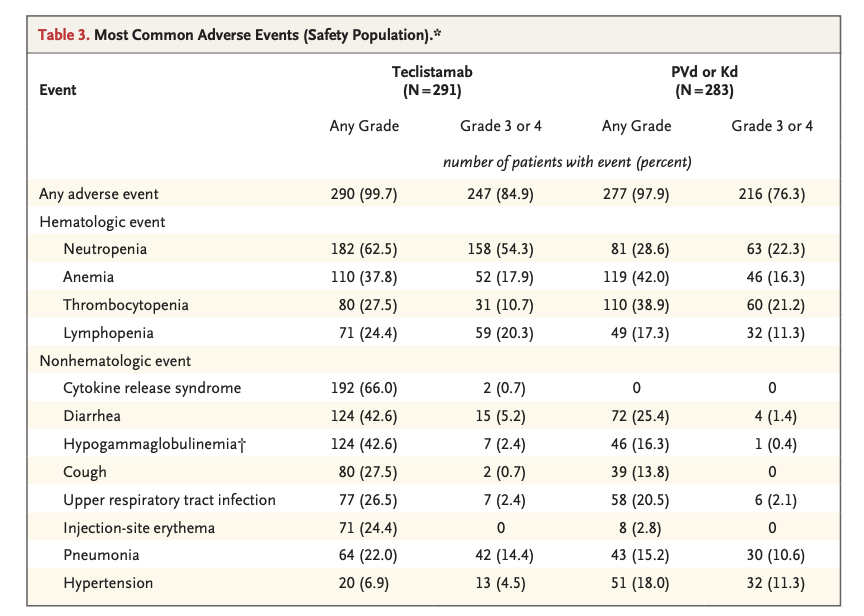
Safety - Grade 3/4 AEs 84.9% vs 76.3%. CRS 66.0% (mostly grade 1-2; grade 3/4 only 0.7%); ICANS/neurotoxicity 4.1% any grade. Grade 3/4 infections 41.6% vs 29.0% - the dominant concern; AE deaths 6.5% vs 3.5% (mostly infections). Infection prophylaxis is essential.
Regulatory / sponsor - Teclistamab (Tecvayli) is FDA-approved: traditional approval as monotherapy for RRMM after >=4 prior lines (accelerated Oct 25, 2022, converted Mar 5, 2026) and, since March 5, 2026, in combination with daratumumab hyaluronidase after >=1 prior line (MajesTEC-3). Teclistamab monotherapy in the 1-3 prior-line setting studied in MajesTEC-9 remains investigational. Sponsor: Janssen Research & Development (Johnson & Johnson).
Compiled and reviewed by the KOL Pulse research team, led by Brian Shields, Founder, KOL Pulse. Last updated August 19, 2026.
KOLs Discussing MajesTEC-9
MajesTEC-9 Key Slides & Visuals
NEJM figures and KOL infographics shared at ASCO 2026 (Abstract 7507, presented by Mina). Click any image to expand.













Top MajesTEC-9 Tweets

Just out: Majestic Majestec-9 results. #ASCO26 @NEJM Single agent teclistamab beats standard triplet in relapsed myeloma. https://t.co/2TeFjBuZSv @DrOlaLandgren @thanosdimop

Day 1 #ASCO26 highlights: 1. #CROWN (update): ALK+ NSCLC 2. #OptiTROPLung05: SacTMT/IO NSCLC 3. #WuKONG28: EGFR 20 NSCLC 4. #EV302 (update): EV-Pembro mUC 5. #MajesTEC9: Teclistamab in RRMM 6. #SUCCESSOR2: Mezigdomide in RRMM #OncTwitter @ASCO 1/7

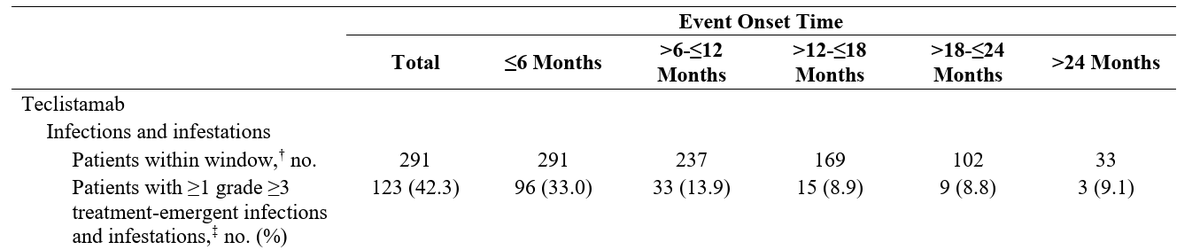
MajesTEC-9 is now out in @NEJM! 18-month PFS ~70% and DoR~80% with Tec! Infection risk mostly front-loaded (1st 6 months) but doesn't plateau [G3+ infections remains at ~10% in each time window beyond 12 months]. The slope of PFS curve in Tec arms progressively flattens with

MAJESTEC-9 trial at #ASCO26 : the message was strikingly simple: a couple of curves summarized it all. At the end, curves speak louder than words. @TheIACH @COMyCongress

MajesTec - 9 & MajecTec - 3 & Cartitude - 4 - My interpretations. IMO: the real question is no longer Tec vs CAR-T. The real question is: which patient should receive which immunotherapy, and when? MajesTEC-9, CARTITUDE-4, and CARTITUDE-1 may be teaching us that sequencing

Concomitant publication in @NEJM #ASCO26 BCMA bispecific moves earlier in myeloma. MajesTEC-9 | NEJM 2026 Teclistamab monotherapy vs PVd/Kd in RRMM after 1-3 prior lines, all exposed to anti-CD38 + lenalidomide. 🧬 18-mo PFS 69.8% vs 26.9% HR 0.29 🫀 18-mo OS 79.2% vs 68.6%

1) MajesTEC-9 (Mina, 7507) - Teclistamab vs. (VPd or Kd). Full summary below. Tec clearly beats out some inferior and less-than-standard comparators. I want to make 4 points about this study 1 - VPd and Kd are not strong comparators, but outside of CAR T/BsAb, there are not
5. MajesTEC-9: PhIII, Teclistamab vs. PVd (Pom + Bortezomib + Dex) or Kd (Carfilzomib + Dex) in refractory/relapse myeloma - At 18mos, PFS: 70% vs. 27% - OS ⬆️ w/ Tec (HR: 0.60) - Gr 3/4 AEs: 85% vs. 76% 😲 - Tec based Rx in 2L now SoC 6/7
MajesTEC-9 is one of the most important myeloma studies of the year. But after reviewing the eligibility criteria and baseline characteristics, I think several myths are emerging. ❌ It was not a triple-class refractory study. ❌ It was not a CAR-T comparison study. ❌ It

Incidentally, the exact same arguments can be made about Kd/PVd in control of MajesTEC-9. @JJ_IMMedAffairs

#ASCO26 @ASCO MajesTEC-9 @NEJM #mmsm Excellent results for use of BCMA BsAb in early relapse 2 main take aways: ➡️If you are not comfortable with BsAb in myeloma, you need to be. Those provide superior outcomes ➡️Infections are serious complication, occurs in all relapsed
Teclistamab changes the relapse conversation in myeloma. MajesTEC-9 | NEJM 2026 In RRMM after 1-3 prior lines: 🧬 18-mo PFS 69.8% vs 26.9% HR 0.29 🫀 18-mo OS 79.2% vs 68.6% HR 0.60 🎯 CR+ 65.9% vs 16.8% The message is getting harder to ignore: BCMA bispecifics are moving
Overview
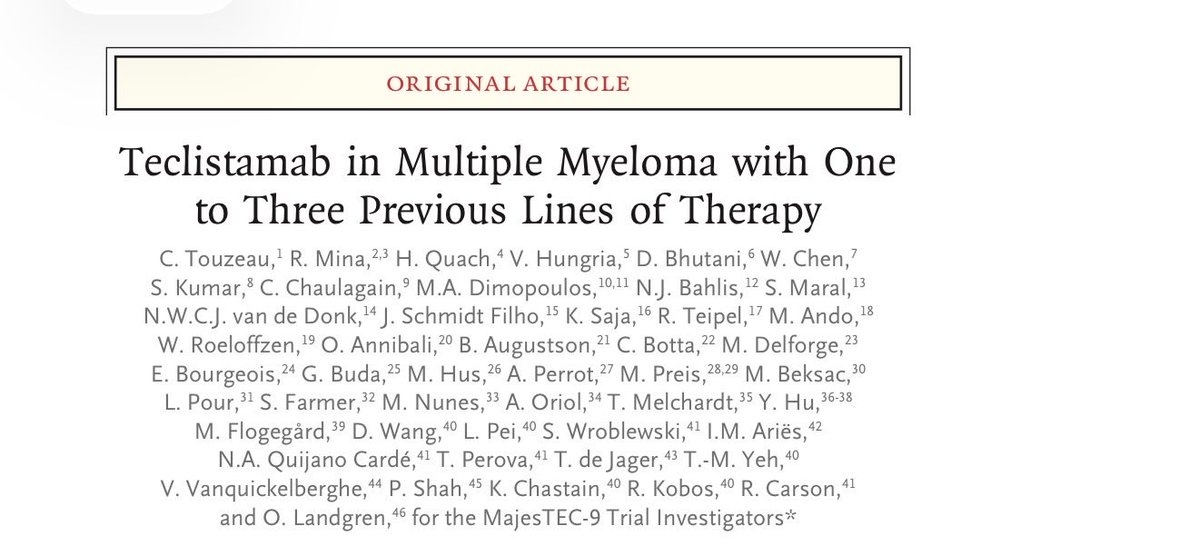
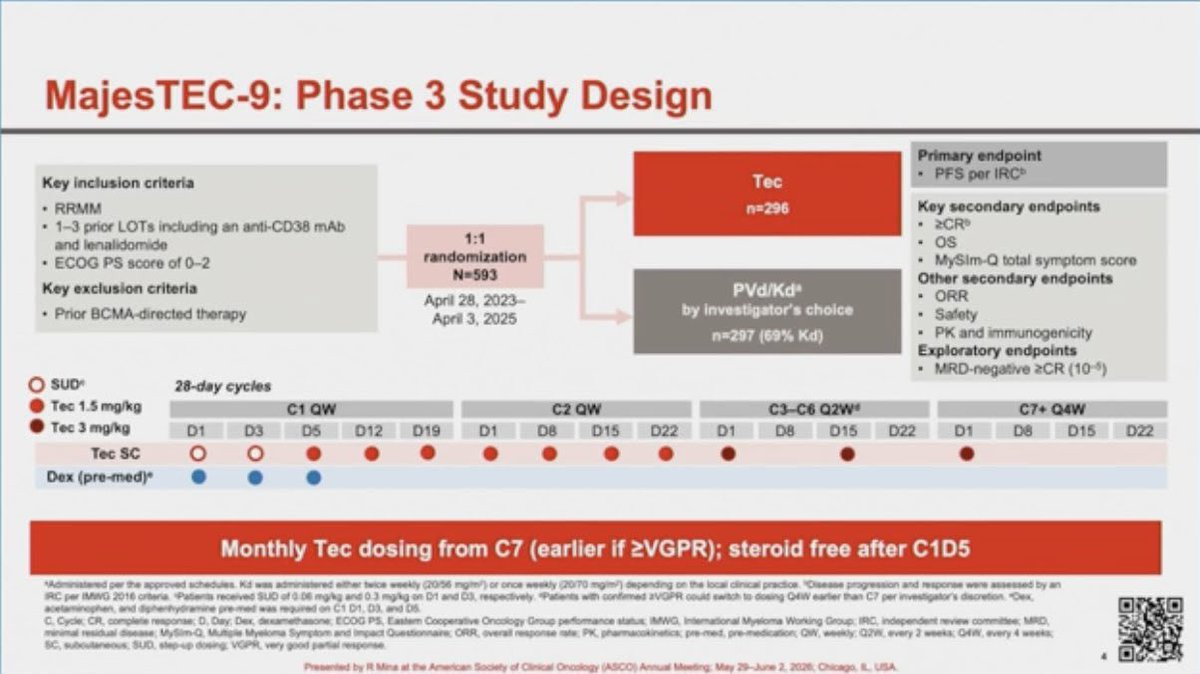
MajesTEC-9 (NCT05572515) is a Phase 3, global, randomized, open-label trial of single-agent teclistamab (Tecvayli), a BCMA×CD3 bispecific antibody, versus investigator's choice of pomalidomide-bortezomib-dexamethasone (PVd) or carfilzomib-dexamethasone (Kd) in patients with relapsed/refractory multiple myeloma after 1–3 prior lines of therapy. All patients were exposed to a proteasome inhibitor, an immunomodulatory drug, and an anti-CD38 monoclonal antibody. The trial randomized 593 patients 1:1 (296 teclistamab vs 297 PVd/Kd). The primary endpoint is progression-free survival by independent review committee. Primary results were presented at #ASCO26 (Abstract 7507) and published simultaneously in the New England Journal of Medicine.
Study Design
Phase 3, global, randomized 1:1, open-label. Teclistamab SC step-up dosing then 3 mg/kg weekly (cycles 3–6 every 2–4 weeks by response; cycle 7+ every 4 weeks) vs investigator's choice of PVd or Kd. Median follow-up 17.3 months.
Population
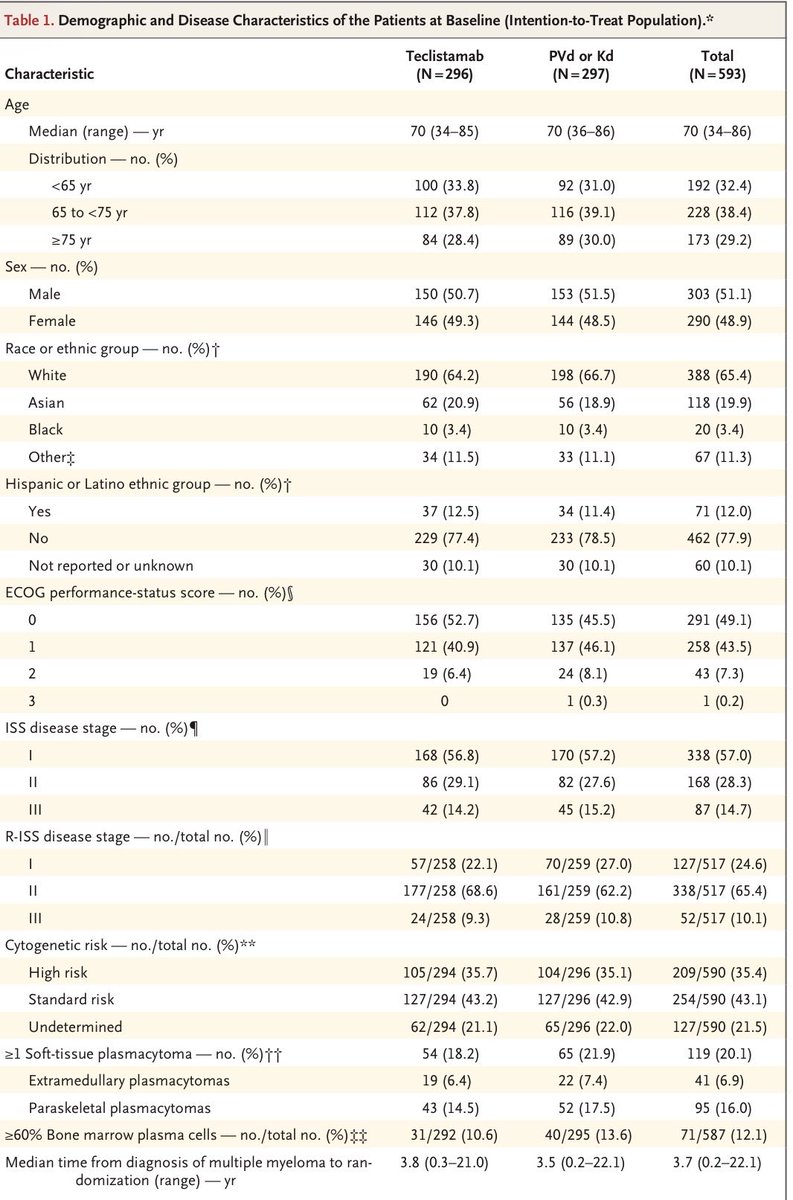
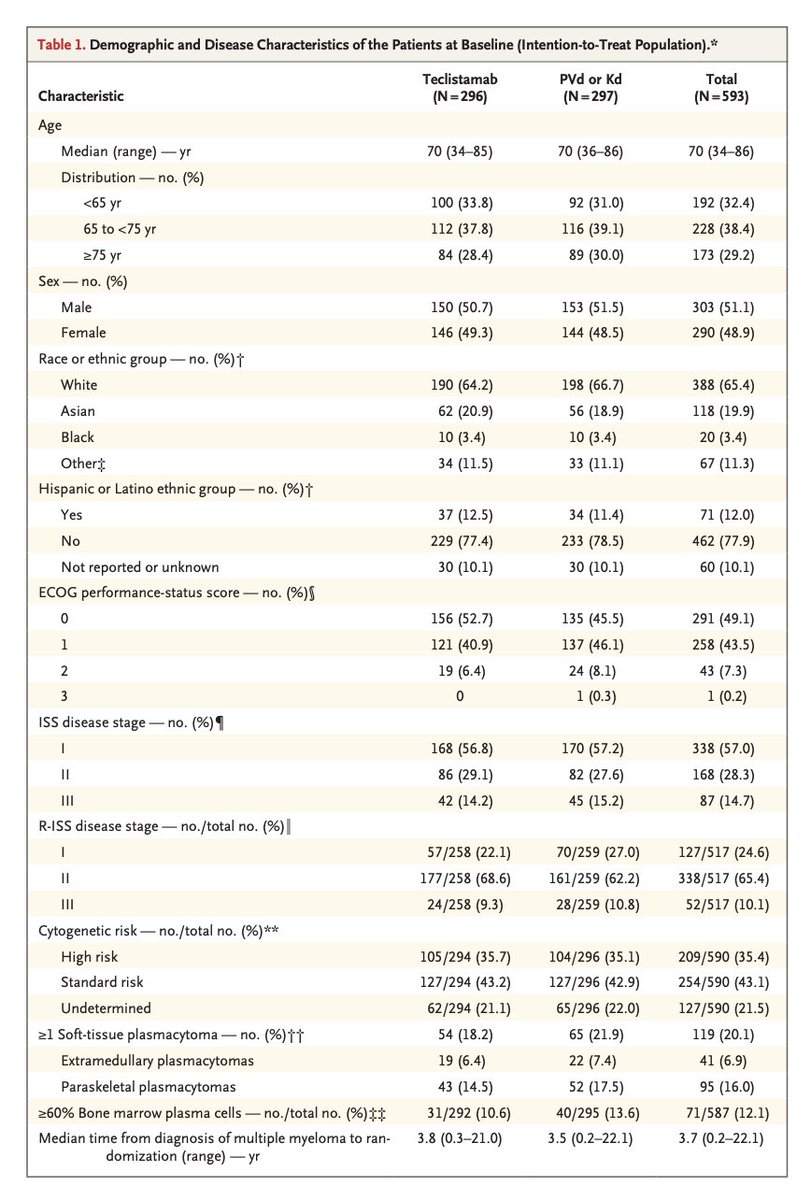
n=593 with RRMM after 1–3 prior lines (median 2). Median age 70 y. Lenalidomide-refractory ~80%, anti-CD38-refractory ~85%, triple-class refractory ~34%, refractory to last line ~92%. All PI-, IMiD-, and anti-CD38-exposed.
Intervention
Experimental: Single-agent teclistamab SC (BCMA×CD3 bispecific), step-up then weekly, with response-adapted de-intensification. Control: Investigator's choice of PVd or Kd.
Endpoints
Primary: PFS by independent review committee. Key secondary: overall survival, ≥CR rate, MRD-negative CR, safety. Hierarchical testing of PFS then OS.
Primary Results — #ASCO26 (Abstract 7507) / NEJM
Progression-Free Survival (Primary Endpoint — MET)
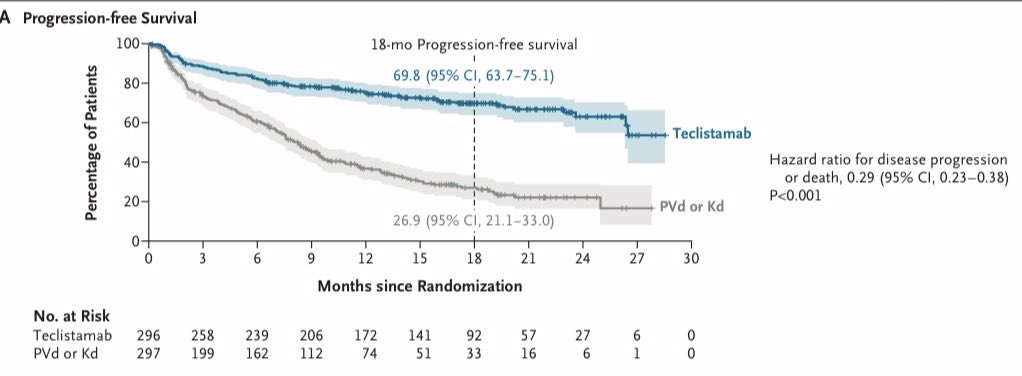
Single-agent teclistamab produced a statistically significant and clinically meaningful improvement in PFS versus investigator's choice of PVd or Kd, with a hazard ratio of 0.29 (95% CI 0.23–0.38; P<0.001) — a 71% reduction in the risk of disease progression or death. The 18-month PFS rate was 69.8% (95% CI 63.7–75.1) with teclistamab vs 26.9% (95% CI 21.1–33.0) with PVd/Kd; median PFS was not reached vs ~8.2 months. The benefit was consistent across all prespecified subgroups, including lenalidomide-refractory (HR 0.30), anti-CD38-refractory (HR 0.32), high-risk cytogenetics (HR 0.27), and 1 vs 2–3 prior lines. Depth of response also favored teclistamab: ≥CR 65.9% vs 16.8% (OR 10.42) and MRD-negative (10⁻⁵) CR 38.5% vs 6.7% (OR 8.56).
18-mo PFS 69.8% vs 26.9% · HR 0.29 (0.23–0.38) · ≥CR 65.9% vs 16.8% · MRD-neg CR 38.5% vs 6.7%Sources: Touzeau/Mina et al., NEJM 2026 (MajesTEC-9, Fig 1) · ASCO 2026 Abstract 7507Overall Survival (Key Secondary — MET)
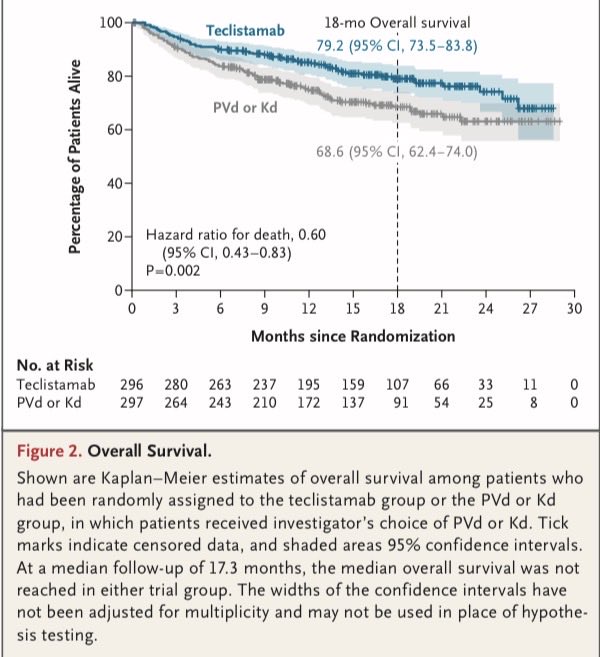
Overall survival also significantly favored teclistamab, with a hazard ratio for death of 0.60 (95% CI 0.43–0.83; P=0.002). The 18-month OS rate was 79.2% (95% CI 73.5–83.8) vs 68.6% (95% CI 62.4–74.0); median OS was not reached in either arm at a median follow-up of 17.3 months. Notably, among the 174 patients in the PVd/Kd arm who received subsequent therapy, 68.4% later received a bispecific antibody or CAR-T — making the OS separation despite substantial crossover-equivalent salvage particularly meaningful.
18-mo OS 79.2% vs 68.6% · HR for death 0.60 (0.43–0.83), P=0.002 · median OS NR both armsSources: Touzeau/Mina et al., NEJM 2026 (MajesTEC-9, Fig 2) · ASCO 2026 Abstract 7507Safety & Tolerability (Safety Population, n=291 vs 283)
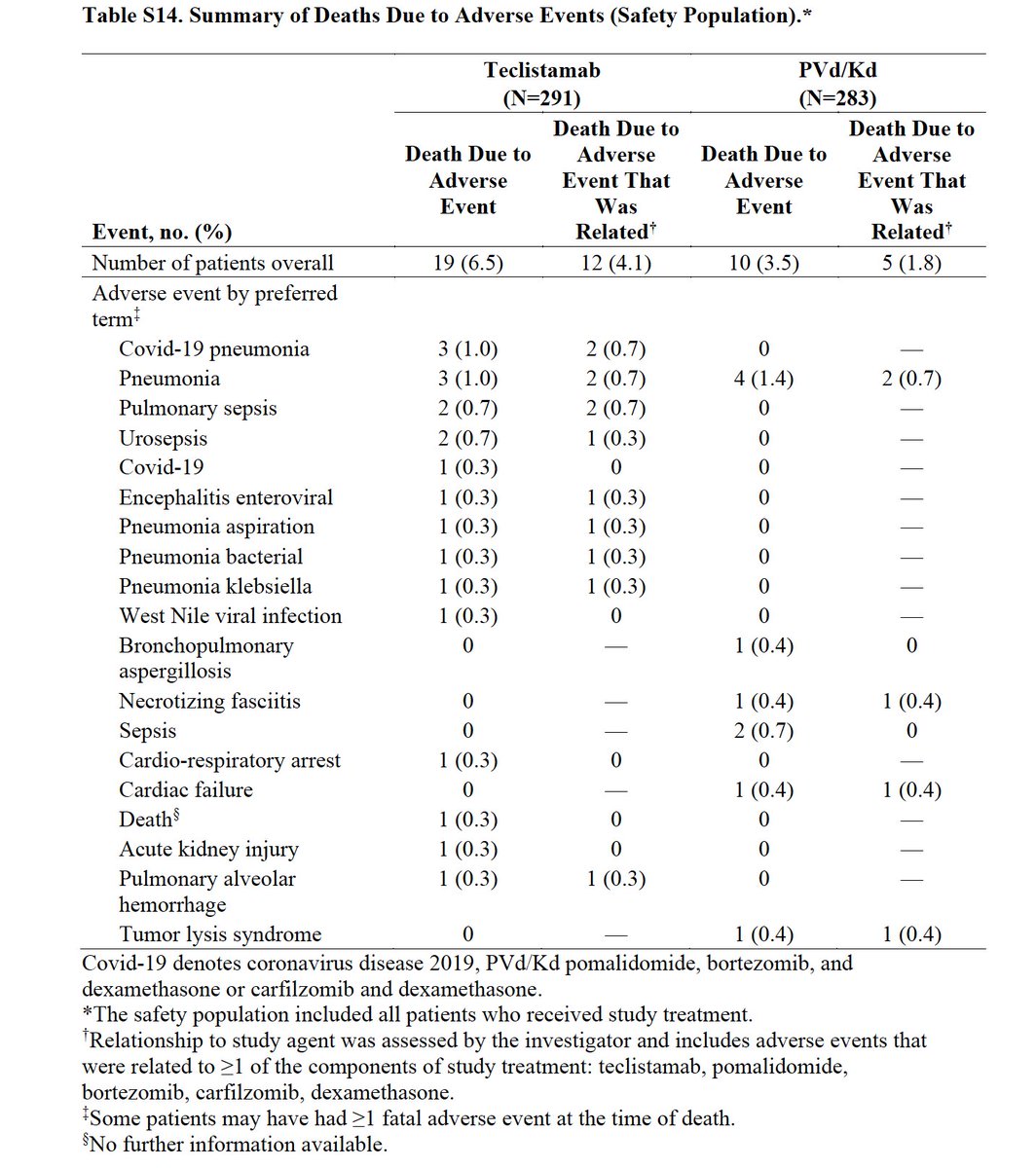
The safety profile was consistent with the established teclistamab experience. Grade 3/4 adverse events occurred in 84.9% of teclistamab patients vs 76.3% with PVd/Kd. Cytokine release syndrome occurred in 66.0% (mostly grade 1–2; grade 3/4 only 0.7%) and ICANS/neurotoxicity in 4.1% (any grade). Hematologic toxicity included neutropenia (62.5%, grade 3/4 54.3%). Grade 3/4 infections were 41.6% vs 29.0% — the dominant safety concern in this BCMA-bispecific population — and deaths due to adverse events were 6.5% vs 3.5% (mostly infections, including COVID-19 pneumonia and sepsis). Per the investigators, grade ≥3 infections decreased over time with prophylaxis, but infection prevention is not optional with this regimen.
CRS 66.0% (G3/4 0.7%) · ICANS 4.1% · G3/4 infections 41.6% vs 29.0% · AE deaths 6.5% vs 3.5%Sources: Touzeau/Mina et al., NEJM 2026 (MajesTEC-9, Table 3 + Table S14)Clinical Implications
MajesTEC-9 is the first Phase 3 trial to move a BCMA bispecific into the earlier-line (1–3 prior) relapsed/refractory setting, where it more than doubled 18-month PFS and improved OS versus standard PI/IMiD triplets and doublets. Several KOLs framed it as practice-defining for double-class–exposed RRMM, while also emphasizing the trade-offs: it was not a head-to-head against CAR-T (CARTITUDE-4), the comparator arms were viewed by some as suboptimal, and the infection burden demands proactive prophylaxis. The result strengthens the case for off-the-shelf, immediately available bispecific therapy earlier in the relapsed course, with sequencing versus CAR-T remaining the central open question.
First Ph3 BCMA bispecific moved earlier-line · sequencing vs CAR-T is the open questionSources: ASCO 2026 Abstract 7507 · NEJM 2026 · ClinicalTrials.gov NCT05572515Key KOL Sentiments — MajesTEC-9






MajesTEC-9 FAQ
What is the MajesTEC-9 trial?
MajesTEC-9 (NCT05572515) is a Phase 3, global, randomized trial comparing single-agent teclistamab (Tecvayli), a BCMA-directed bispecific T-cell engager, against investigator's choice of pomalidomide-bortezomib-dexamethasone (PVd) or carfilzomib-dexamethasone (Kd) in relapsed/refractory multiple myeloma after 1-3 prior lines of therapy. All patients were anti-CD38- and lenalidomide-exposed. Results were presented at ASCO 2026 (Abstract 7507) and published in NEJM.
What did MajesTEC-9 show?
Teclistamab produced a 71% reduction in the risk of progression or death versus PVd/Kd (PFS HR 0.29; 95% CI 0.23-0.38; P<0.001), with 18-month PFS of 69.8% vs 26.9% and median PFS not reached vs ~8.2 months. Overall survival also significantly favored teclistamab (HR 0.60; P=0.002; 18-month OS 79.2% vs 68.6%), and responses were deeper (>=CR 65.9% vs 16.8%).
Is teclistamab FDA approved for earlier-line myeloma?
Partly. Teclistamab (Tecvayli) holds FDA approval as monotherapy for relapsed/refractory multiple myeloma after at least 4 prior lines (accelerated approval October 25, 2022, converted to traditional approval March 5, 2026), and on March 5, 2026 it was also approved in combination with daratumumab and hyaluronidase-fihj for patients after at least 1 prior line, based on MajesTEC-3. However, teclistamab MONOTHERAPY after only 1-3 prior lines - the setting tested in MajesTEC-9 - remains investigational and is not FDA approved.
What is the safety profile of teclistamab in MajesTEC-9?
Grade 3/4 adverse events occurred in 84.9% with teclistamab vs 76.3% with PVd/Kd. Cytokine release syndrome occurred in 66.0% (mostly grade 1-2; grade 3/4 only 0.7%) and ICANS/neurotoxicity in 4.1% (any grade). Grade 3/4 infections were 41.6% vs 29.0% - the dominant safety concern - and deaths from adverse events were 6.5% vs 3.5%, mostly infections, making proactive infection prophylaxis essential.
Why is MajesTEC-9 important?
It is the first Phase 3 trial to test a BCMA bispecific as monotherapy in the earlier-line (1-3 prior) relapsed/refractory setting, where it more than doubled 18-month PFS and improved OS versus standard PI/IMiD-based regimens. It strengthens the case for off-the-shelf, immediately available bispecific therapy earlier in the relapse course, with sequencing versus CAR-T (which was not the comparator) remaining the central open question.