PSMAddition Key Takeaways
Design
Phase III, open-label, 1:1 randomised. 1,144 patients with PSMA-positive metastatic hormone-sensitive prostate cancer received ¹⁷⁷Lu-PSMA-617 plus ADT plus an ARPI, or ADT plus an ARPI alone. Eligibility required at least one PSMA-positive lesion on ⁶⁸Ga-PSMA-11 PET/CT by central read. Crossover to ¹⁷⁷Lu-PSMA-617 was permitted after blinded-independent-review-confirmed radiographic progression on the control arm. (ESMO 2025 LBA6 / ClinicalTrials.gov)
Primary endpoint — radiographic PFS
Met. HR 0.72 (95% CI 0.58–0.90), p=0.002 at interim analysis 2, 74.4% maturity. Median rPFS was not reached in either arm (control arm 95% CI lower bound 29.7 months). (ESMO 2025 LBA6, DCO1 13-Jan-2025)
28% reduction in risk of radiographic progression or deathOverall survival — key secondary, immature
HR 0.84 (95% CI 0.63–1.13), p=0.125 at 47.3% maturity — not statistically significant. (ESMO 2025 LBA6, DCO1 13-Jan-2025) A separately reported updated analysis gives OS HR 0.80 (95% CI 0.63–1.01), still a non-significant trend. (Novartis press release, 31 Jul 2026) No overall survival benefit has been demonstrated.
Biomarker & patient selection
Trial eligibility used ⁶⁸Ga-PSMA-11 PET/CT with central read. FDA states patients should be selected using Locametz (gallium Ga 68 gozetotide) or another approved PSMA PET product based on PSMA expression in tumours. (FDA OCE approval notice, 31-Jul-2026)
Regulatory & publication status
FDA approved 31 July 2026 (supplement NDA 215833/S-037) for Pluvicto® in combination with ARPI therapy — not as monotherapy. Recommended dose 7.4 GBq (200 mCi) every 6 weeks for 6 doses. No peer-reviewed full manuscript exists; the only citable primary record is ESMO Congress 2025 abstract LBA6. (FDA OCE notice / Ann Oncol 2025 LBA6)
Safety — the added toxicity is real
Grade ≥3 treatment-emergent adverse events 50.7% versus 43.0%; grade ≥3 treatment-related 22.7% versus 12.2%; any cytopenia 44.0% versus 20.4%. Adverse events led to discontinuation of any treatment in 16.1% versus 9.0%. (ESMO 2025 LBA6, DCO1 13-Jan-2025)
Track oncology’s top KOLs in your specialty
Create a free account, pick the tumor types you cover, and go beyond the tweet — the intelligence pharma teams use to map influence and prepare for engagement:
- ✓Enhanced KOL profiles
- ✓Pharma influence & potential advisory-board patterns
- ✓2025 Open Payments financial analysis
- ✓Social-media sentiment & trend signals
Top KOLs Discussing PSMAddition






PSMAddition's study leadership also includes Oliver Sartor (Transformational Prostate Cancer Research Center, East Jefferson General Hospital) and Michael J. Morris (Memorial Sloan Kettering Cancer Center). Morris presented the health-related quality of life, pain and symptomatic skeletal event analysis at ASCO GU 2026. Neither appears in the grid above: the X account @sartor_oliver has no profile image set, and we could not resolve a current X handle for Michael J. Morris. Our policy is to omit rather than substitute a stand-in image or guess at a handle. Fred Saad presented the disease-volume and de novo/recurrent subgroup analyses at ASCO 2026 (Abstract 5020).
PSMAddition Key Slides & Visuals


| Radiographic PFS by BIRC | ¹⁷⁷Lu-PSMA-617 + ADT + ARPI (N=572) | ADT + ARPI (N=572) |
|---|---|---|
| Events, n (%) | 139 (24.3) | 172 (30.1) |
| Radiographic progression | 112 (19.6) | 152 (26.6) |
| Death without radiographic progression | 27 (4.7) | 20 (3.5) |
| Median rPFS (95% CI), months | Not reached (NE, NE) | Not reached (29.7, NE) |
| Hazard ratio (95% CI) | 0.72 (0.58–0.90) | |
| p value | 0.002 | |
Primary endpoint, rPFS interim analysis 2; information fraction 74.4%; significance threshold 0.009 (one-sided, stratified log-rank). Median rPFS was not reached in either arm. (ESMO 2025 LBA6, DCO1 13-Jan-2025) NE, not estimable.
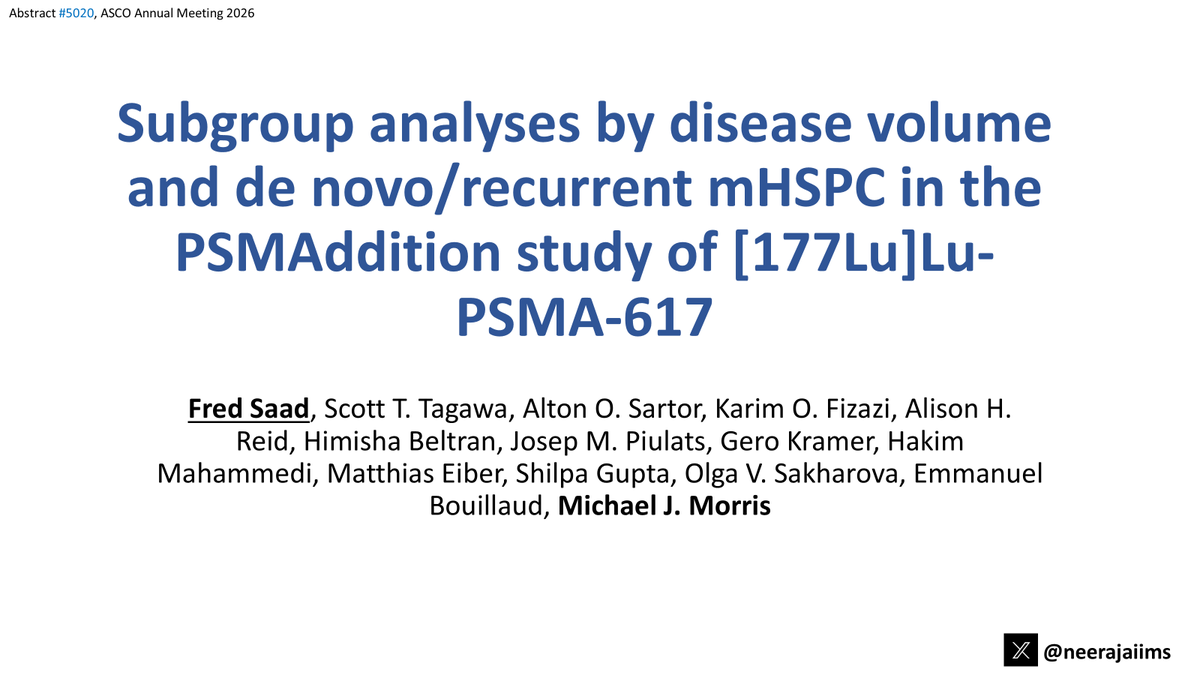


| HR (95% CI), ¹⁷⁷Lu-PSMA-617 vs control | Overall N=1144 | High volume n=779 | Low volume n=365 | De novo n=572 | Recurrent n=523 |
|---|---|---|---|---|---|
| rPFS (primary) | 0.72 (0.58–0.90) | 0.72 (0.56–0.92) | 0.73 (0.42–1.27) | 0.74 (0.54–1.01) | 0.74 (0.53–1.04) |
| PFS per investigator | 0.64 (0.51–0.79) | 0.61 (0.48–0.78) | 0.80 (0.46–1.37) | 0.65 (0.48–0.88) | 0.64 (0.46–0.89) |
| Time to PSA progression | 0.42 (0.30–0.59) | 0.43 (0.31–0.62) | 0.29 (0.08–1.05) | 0.51 (0.32–0.79) | 0.35 (0.21–0.60) |
| Time to symptomatic skeletal event | 0.89 (0.62–1.26) | 0.93 (0.64–1.37) | 0.67 (0.27–1.66) | 0.97 (0.60–1.57) | 0.82 (0.48–1.40) |
| Time to mCRPC | 0.70 (0.58–0.84) | 0.67 (0.54–0.82) | 0.87 (0.55–1.37) | 0.61 (0.47–0.80) | 0.75 (0.56–1.00) |
| BPI-SF pain intensity worsening | 1.02 (0.87–1.18) | 0.98 (0.82–1.18) | 1.09 (0.83–1.44) | 1.06 (0.85–1.31) | 0.97 (0.78–1.22) |
| FACT-P total score worsening | 1.14 (0.98–1.33) | 1.13 (0.94–1.37) | 1.16 (0.88–1.53) | 1.13 (0.90–1.41) | 1.16 (0.92–1.46) |
| EQ-5D-5L worsening | 1.13 (0.97–1.31) | 1.04 (0.87–1.25) | 1.34 (1.01–1.77) | 1.17 (0.93–1.45) | 1.09 (0.87–1.37) |
A hazard ratio below 1 favours the ¹⁷⁷Lu-PSMA-617 arm; for the patient-reported time-to-worsening rows a ratio above 1 numerically favours control. Confidence intervals crossing 1.00 are not statistically significant — note the small low-volume subgroup in particular. N may differ across outcomes. (Saad et al., ASCO 2026 Abstract 5020; same DCO1 13-Jan-2025 lock as the primary analysis)




Yesterday’s Q was which triplet for PSMA+ #mHSPC. Today: which patient? Chemo-triplet evidence is strongest for de novo & high-volume disease. Ditto for #PSMAddition, with encouraging data in subgroups where chemo data are thinner. How will this inform your practice?
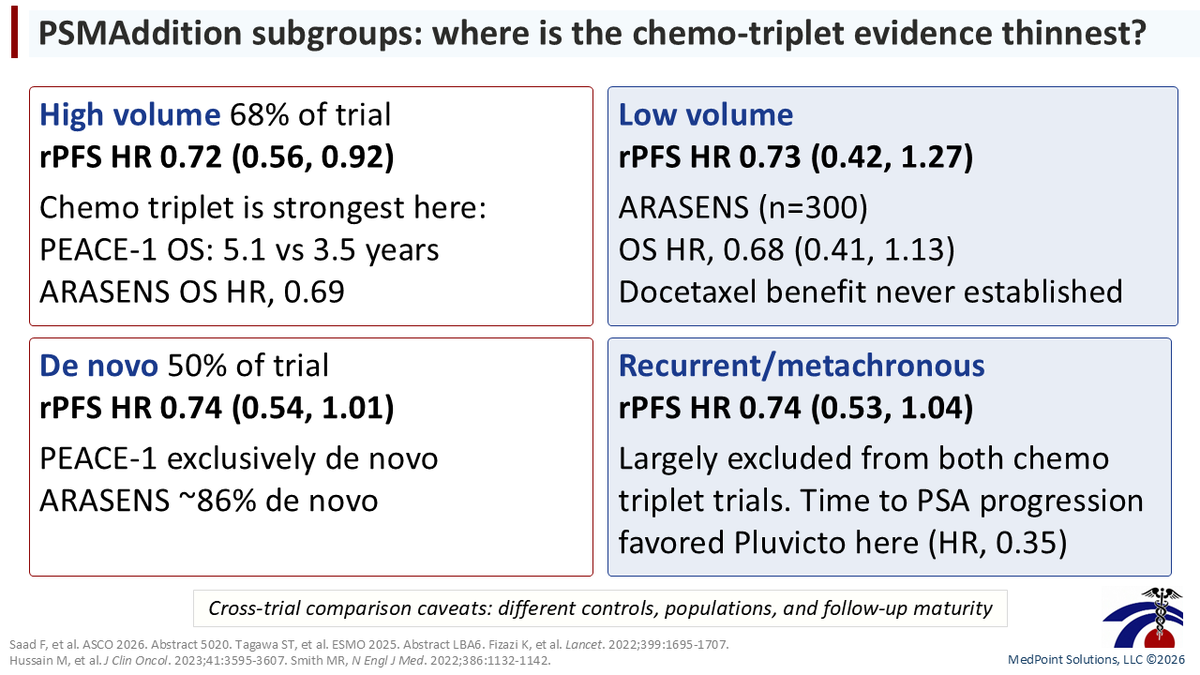
The four PSMAddition rPFS hazard ratios here match the ASCO 2026 subgroup table above exactly (Saad et al., Abstract 5020; DCO1 13-Jan-2025). The PEACE-1 and ARASENS figures are other trials’ results, shown by the author as cross-trial context — the graphic carries its own caveat that controls, populations and follow-up maturity differ. They are not PSMAddition data and no head-to-head comparison exists.
PSMAddition Top Tweets
𝕏𝕏𝕏𝕏𝕏𝕏𝕏𝕏 𝕏
𝕏 𝕏
𝕏FDA Approval
Efficacy basis for the approval
rPFS HR 0.72 (95% CI 0.58–0.90), p=0.002 (ESMO 2025 LBA6, DCO1 13-Jan-2025). An updated rPFS HR 0.67 (95% CI 0.55–0.82) and OS HR 0.80 (95% CI 0.63–1.01) were reported by the sponsor (Novartis press release, 31 Jul 2026).
Note on labelling: as of 2026-08-03 the Full Prescribing Information for this indication had not yet been posted on Drugs@FDA. The currently live label covers the mCRPC indication only. KOL Pulse therefore cites the FDA approval notice rather than label text for this indication.
Pluvicto now spans all three metastatic stages
| Indication | Trial | Approved |
|---|---|---|
| mCRPC, post-ARPI and post-taxane | VISION | 23 Mar 2022 |
| mCRPC, post-ARPI, pre-taxane | PSMAfore | 28 Mar 2025 |
| mAPMN/S (mHSPC), + ARPI | PSMAddition | 31 Jul 2026 |
The description of Pluvicto as the first or only PSMA-targeted radioligand therapy across all metastatic stages is a Novartis and press characterisation, not FDA label text.
About the PSMAddition Trial
PSMAddition (NCT04720157) tested whether moving PSMA-targeted radioligand therapy earlier in the disease course — into hormone-sensitive rather than castration-resistant metastatic prostate cancer — improves outcomes. Patients with at least one PSMA-positive metastatic lesion on ⁶⁸Ga-PSMA-11 PET/CT, who were untreated or minimally treated (no more than 45 days of ADT and/or ARPI before consent), were randomised 1:1 to ¹⁷⁷Lu-PSMA-617 plus ADT plus an ARPI, or to ADT plus an ARPI alone.
The trial enrolled 1,144 patients (572 per arm) with ECOG performance status 0–2 (0: 70.3%, 1: 28.8%, 2: 0.7%), and allowed crossover to ¹⁷⁷Lu-PSMA-617 after blinded independent review committee-confirmed radiographic progression on the control arm. The study started 9 June 2021 with primary completion 13 January 2025. The primary analysis was presented by Scott T. Tagawa as late-breaking abstract LBA6 at the ESMO Congress on 19 October 2025; study leadership also includes Oliver Sartor and Michael J. Morris.
A point worth stating plainly: PSMAddition has never been published as a peer-reviewed full manuscript. The only citable primary record remains the ESMO 2025 late-breaking abstract. Subsequent analyses presented at ASCO GU 2026, AUA 2026 and ASCO 2026 all use the same 13 January 2025 data cutoff — they are parallel analyses of the identical interim lock, not newer data.
Trial Methodology & Results
Study Design
Phase III, open-label, 1:1 parallel randomisation. Crossover permitted to ¹⁷⁷Lu-PSMA-617 after BIRC-confirmed radiographic progression on control.
Population
1,144 randomised (572/arm); ClinicalTrials.gov registry enrollment lists 1,140. Untreated or minimally treated PSMA-positive mHSPC. ECOG 0–2.
Interventions
¹⁷⁷Lu-PSMA-617 7.4 GBq every 6 weeks for 6 cycles + ADT + ARPI, versus ADT + ARPI alone.
Patient Selection
At least one PSMA-positive lesion on ⁶⁸Ga-PSMA-11 PET/CT, central read. The specific commercial kit used in the trial is not confirmed.
Endpoints
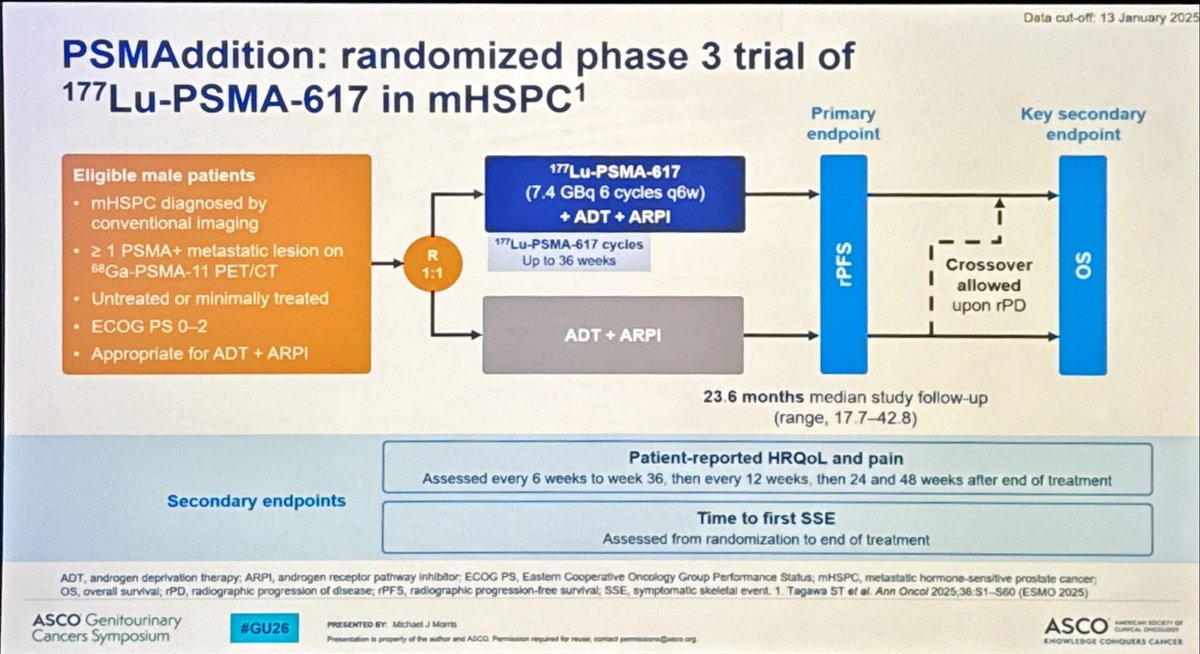
Primary: rPFS by BIRC (PCWG3/RECIST v1.1, or death). Key secondary: overall survival, alpha-gated behind rPFS. Other secondary: time to mCRPC, PSA endpoints, investigator PFS, ORR/DCR/DOR, time to first SSE, HRQoL, safety.
Prior Therapy
No more than 45 days of ADT and/or ARPI before consent. Concurrent cytotoxic chemotherapy was excluded by protocol. (ClinicalTrials.gov)
Radiographic progression-free survival — primary endpoint
The primary endpoint was met. HR 0.72 (95% CI 0.58–0.90), p=0.002 at rPFS interim analysis 2, 74.4% maturity. Median rPFS was not reached in either arm; the control arm's 95% confidence interval had a lower bound of 29.7 months. (ESMO 2025 LBA6, DCO1 13-Jan-2025)
An updated analysis reported only by the sponsor gives rPFS HR 0.67 (95% CI 0.55–0.82), with no p-value stated and no data cutoff disclosed; it is descriptive rather than confirmatory. (Novartis press release, 31 Jul 2026)
Primary endpoint met · median not reached in either armSource: FDA approval notice & ESMO 2025 LBA6 ↗
Overall survival — key secondary endpoint, immature
Overall survival was formally alpha-gated behind rPFS and remained immature at the primary analysis: HR 0.84 (95% CI 0.63–1.13), p=0.125, at 47.3% maturity. (ESMO 2025 LBA6, DCO1 13-Jan-2025) The updated sponsor-reported figure is HR 0.80 (95% CI 0.63–1.01) — a trend that is not statistically significant and still maturing. (Novartis press release, 31 Jul 2026)
Note on transcription: the OS confidence interval lower bound is 0.63 per the ESMO slide deck and the Novartis release. Some secondary coverage prints 0.64.
Source: ClinicalTrials.gov NCT04720157 ↗
Other efficacy endpoints
All values from the primary analysis. (ESMO 2025 LBA6, DCO1 13-Jan-2025)
| Endpoint | Result | Tier |
|---|---|---|
| Time to mCRPC | HR 0.70 (95% CI 0.58–0.84) | Secondary |
| Time to PSA progression | HR 0.42 (95% CI 0.30–0.59) | Secondary |
| PFS (investigator-assessed) | HR 0.64 (95% CI 0.51–0.79) | Secondary |
| Time to first symptomatic skeletal event | HR 0.89 (95% CI 0.62–1.26) — CI crosses 1, not significant | Secondary |
| Objective response rate (RECIST v1.1) | 85.3% (79.9–89.6) vs 80.8% (74.8–85.8) | Secondary |
| Complete response | 57.1% vs 42.3% | Secondary |
Source: ESMO 2025 LBA6 ↗
Subgroup analyses — ASCO 2026 Abstract 5020
Presented by Fred Saad. These use the same 13 January 2025 data cutoff as the primary analysis and are a parallel analysis of the identical interim lock, not newer data. rPFS HR by subgroup: high-volume disease 0.72 (95% CI 0.56–0.92); low-volume 0.73 (0.42–1.27); de novo 0.74 (0.54–1.01); recurrent 0.74 (0.53–1.04). (ASCO 2026 Abstract 5020, DCO1 13-Jan-2025)
The low-volume, de novo and recurrent subgroups are underpowered with confidence intervals crossing 1 and should not be presented as independently positive.
Safety
Safety-evaluable population 564 (¹⁷⁷Lu-PSMA-617 arm) versus 565 (control). (ESMO 2025 LBA6, DCO1 13-Jan-2025)
| Metric | ¹⁷⁷Lu-PSMA-617 arm | Control |
|---|---|---|
| Any-grade TEAE | 98.4% | 96.6% |
| Grade ≥3 TEAE (all-cause) | 50.7% | 43.0% |
| Grade ≥3 treatment-related | 22.7% | 12.2% |
| AEs leading to discontinuation (any treatment) | 16.1% | 9.0% |
| Discontinuation of ¹⁷⁷Lu-PSMA-617 specifically | 8.0% | n/a |
| AEs leading to death | 2.7% | 2.5% |
| Any cytopenia (any grade / grade ≥3) | 44.0% / 14.4% | 20.4% / 5.0% |
| Anaemia | 28.0% / 5.0% | 14.0% / 2.8% |
| Neutropenia | 14.7% / 3.7% | 4.2% / 0.9% |
| Thrombocytopenia | 11.2% / 1.8% | 3.4% / 0.5% |
Most common all-grade adverse events in the ¹⁷⁷Lu-PSMA-617 arm: dry mouth approximately 46%, fatigue 34.8%, nausea 34.2%, hot flush 29.1%, anaemia approximately 28%. No cases of myelodysplastic syndrome or leukaemia were reported at this cutoff, with roughly two years of follow-up; investigators flag the need for continued monitoring.
Grade ≥3 TEAEs 50.7% vs 43.0%Source: FDA approval notice & ESMO 2025 LBA6 ↗
Quality of life and pain
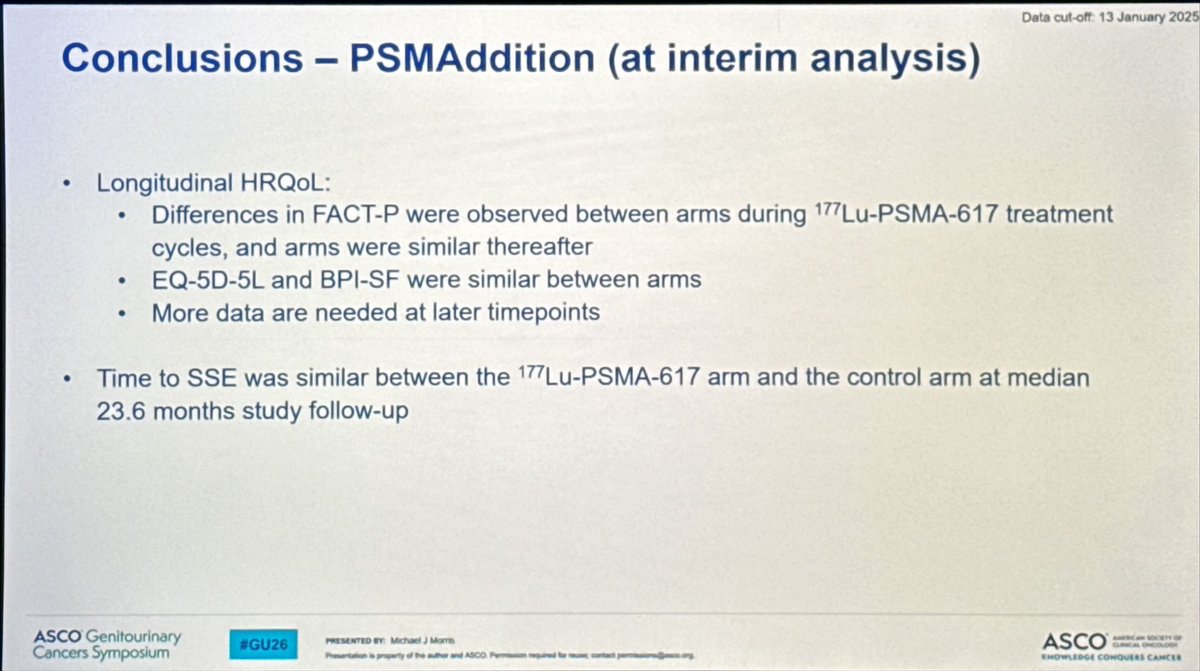
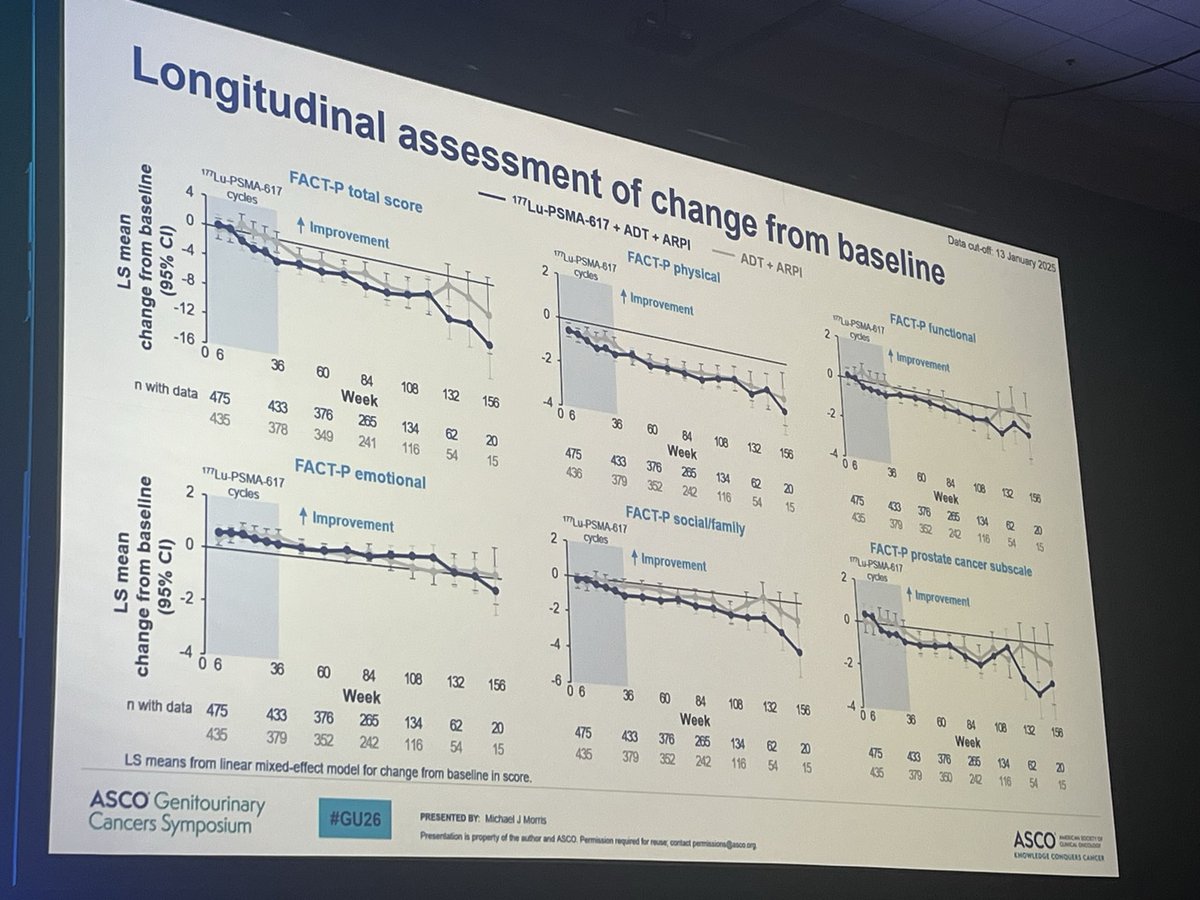
No statistically significant difference was seen in time to worsening for the patient-reported endpoints. All FACT-P, EQ-5D-5L and BPI-SF scales and subscales returned a hazard ratio above 1.0 (all below 1.2, all 95% confidence intervals including 1.0), numerically favouring the control arm. Reported values: FACT-P HR 1.14 (95% CI 0.98–1.33), EQ-5D-5L HR 1.13 (0.97–1.31), BPI-SF pain intensity HR 1.02 (0.87–1.18). (ESMO 2025 LBA6, DCO1 13-Jan-2025)
The accurate statement is that there was no statistically significant difference, not that there was no difference at all: a transient FACT-P decrement occurred during the six-cycle triplet treatment period and reconverged afterwards. These analyses were presented by Michael J. Morris at ASCO GU 2026 using the same 13 January 2025 cutoff.
PSMAddition FAQ
What is the PSMAddition trial and what did it show?
PSMAddition (NCT04720157) is a phase III, open-label, 1:1 randomised trial of ¹⁷⁷Lu-PSMA-617 added to androgen deprivation therapy (ADT) plus an androgen receptor pathway inhibitor (ARPI), versus ADT plus ARPI alone, in 1,144 patients with PSMA-positive metastatic hormone-sensitive prostate cancer. It met its primary endpoint: radiographic progression-free survival (rPFS) hazard ratio 0.72 (95% CI 0.58–0.90), p=0.002 (ESMO 2025 LBA6, DCO1 13-Jan-2025). On 31 July 2026 the FDA approved Pluvicto® (lutetium Lu 177 vipivotide tetraxetan) in combination with ARPI therapy on the basis of this trial.
What was the median radiographic progression-free survival in PSMAddition?
There is none to report. Median rPFS was NOT REACHED in either arm at the primary analysis (ESMO 2025 LBA6, DCO1 13-Jan-2025); the control arm's 95% confidence interval had a lower bound of 29.7 months.
Did PSMAddition show an overall survival benefit?
Not a statistically significant one. Overall survival is a key secondary endpoint, formally alpha-gated behind rPFS. At the primary analysis it was immature: hazard ratio 0.84 (95% CI 0.63–1.13), p=0.125, at 47.3% maturity (ESMO 2025 LBA6, DCO1 13-Jan-2025). Novartis has separately reported an updated overall survival hazard ratio of 0.80 (95% CI 0.63–1.01) (Novartis press release, 31 Jul 2026), which is a trend and remains not statistically significant. No overall survival benefit has been demonstrated.
Why are two different rPFS hazard ratios (0.72 and 0.67) reported for PSMAddition?
HR 0.72 (95% CI 0.58–0.90, p=0.002) is the primary analysis (ESMO 2025 LBA6, DCO1 13-Jan-2025) and is the FDA's stated efficacy basis. HR 0.67 (95% CI 0.55–0.82) is a later sponsor-reported analysis (Novartis press release, 31 Jul 2026).
Has PSMAddition been published in a peer-reviewed journal?
No. As of 3 August 2026 no peer-reviewed full manuscript exists. The only citable primary record is the ESMO Congress 2025 late-breaking abstract (Tagawa ST, Sartor O, Piulats JM, et al. Ann Oncol. 2025; Abstract LBA6, presented 19 October 2025). Several clinicians have publicly flagged this gap between an approved drug and an unpublished dataset.
PSMAddition in the News
Official FDA Oncology Center of Excellence approval notice. Supplement NDA 215833/S-037.
MediaApproval summary with commentary from the PSMAddition study leadership.
MediaTrade coverage of the approval and its place in the metastatic prostate cancer pathway.
MediaSummary of the approval and the PSMAddition efficacy basis.
MediaUrology-focused coverage of the combination approval.
MediaApproval report noting the phase III PSMAddition basis.
MediaGU-specialty coverage of the radiographic progression-free survival basis for approval.
MediaVideo review of PSMAddition in 1,144 PSMA PET-positive patients ahead of the approval.
MediaPatient-facing explainer of what the approval changes.
MediaNews summary of the approval.
MediaImaging-community coverage, including comment from Scott T. Tagawa.
MediaApproval brief for the oncology learning community.
Where does docetaxel fit?
PSMAddition excluded concurrent cytotoxic chemotherapy by protocol, overall survival is immature, and 779 of the 1,144 patients had high-volume disease — the setting in which docetaxel has an established survival benefit. There is no head-to-head comparison. Two separate conversations followed, quoted verbatim.
Conversation 1 — @yaelwaknine, 3–5 August
A standalone post and the reply it drew.


Conversation 2 — under @DrChoueiri’s approval post, 2 August
A separate reply thread, 19:27–20:08 UTC.


Key KOL Sentiments - PSMAddition
Compiled and reviewed by the KOL Pulse research team, led by Brian Shields, Founder, KOL Pulse. Last updated 2026-08-03.
Every clinical figure on this page is labelled with its source and data cut. The ESMO 2025 primary analysis (data cutoff 13 January 2025) is the FDA's stated efficacy basis. Figures marked as sponsor-reported come from the Novartis press release of 31 July 2026, for which no data cutoff date has been disclosed. This page is intended for healthcare professionals and is not medical advice.