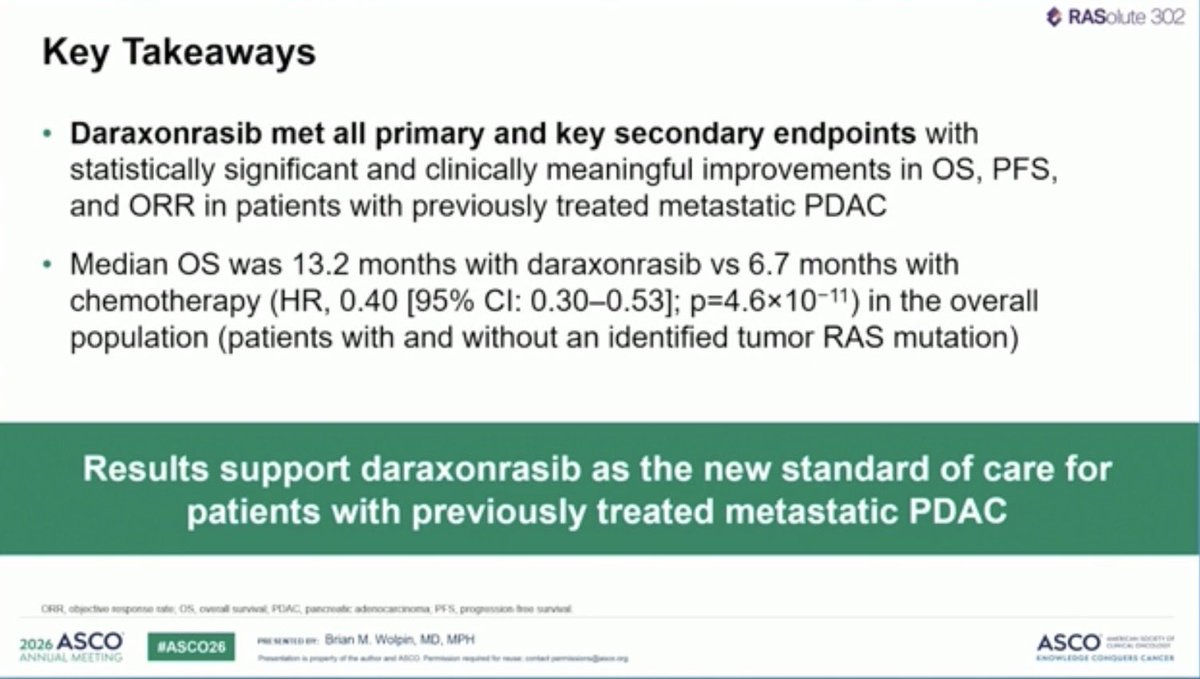
RASolute 302 Key Takeaways
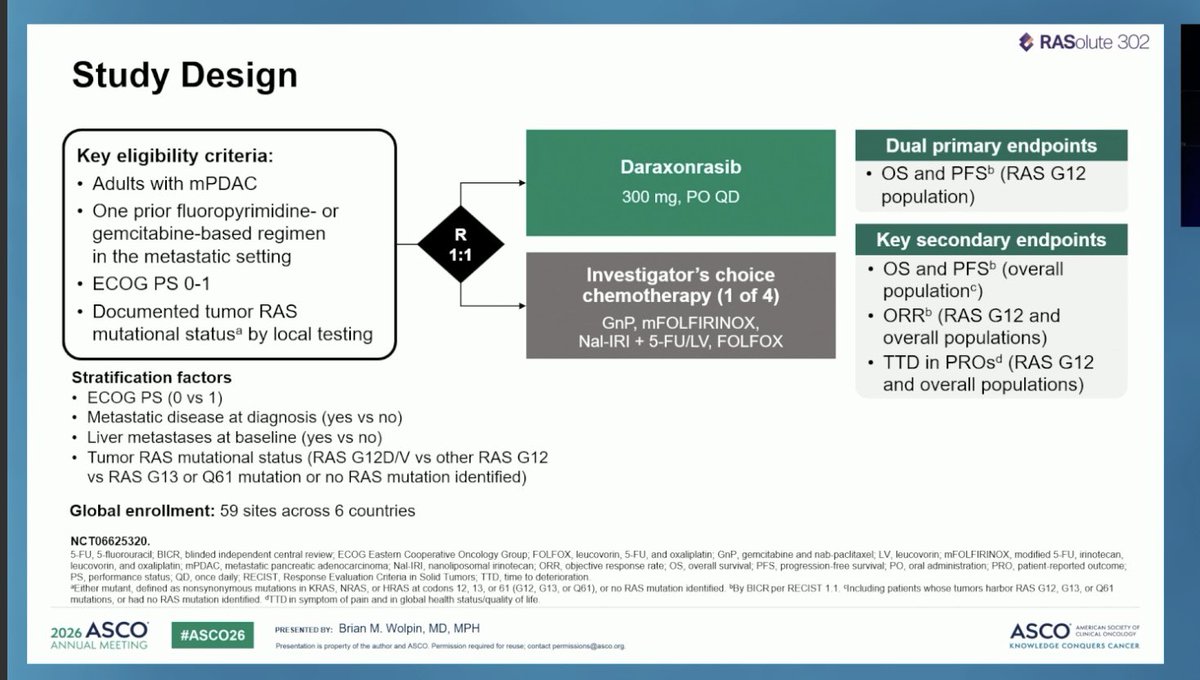
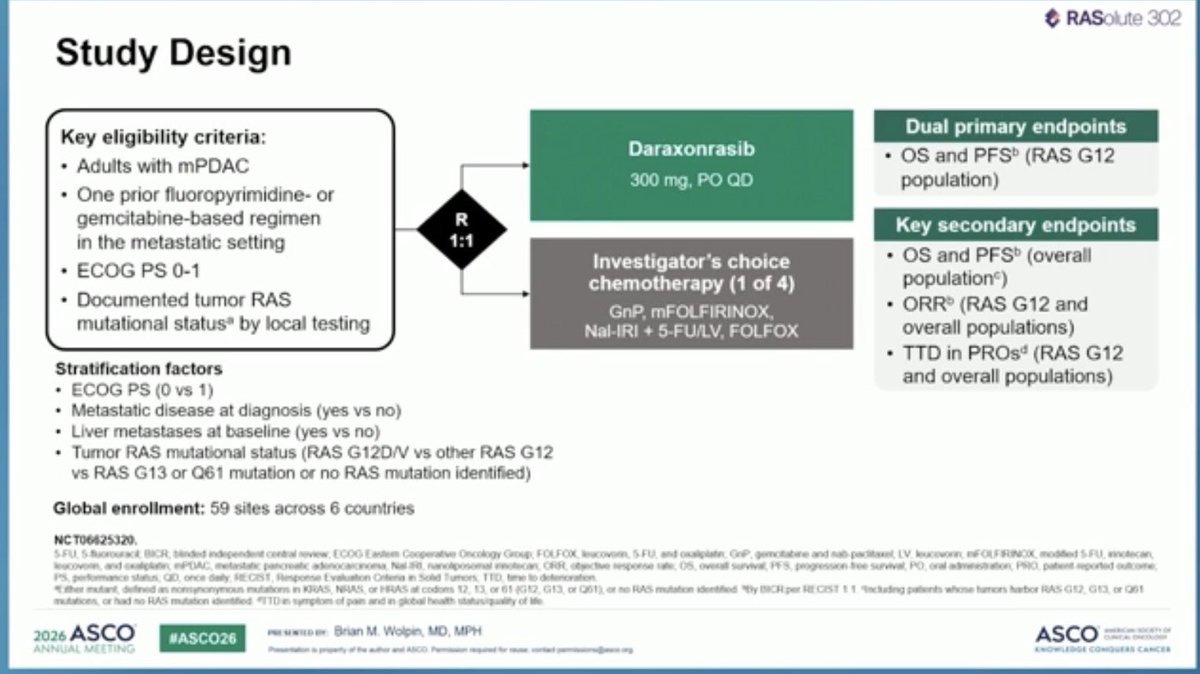
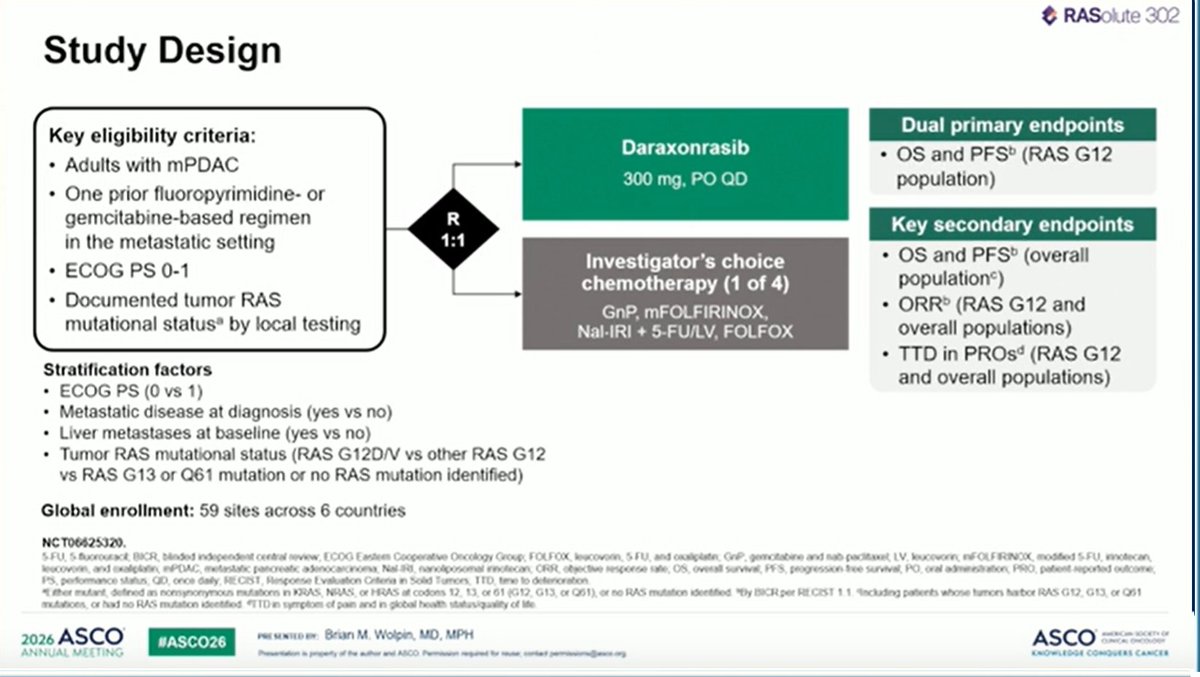
Design - Phase 3 global daraxonrasib (RMC-6236, oral RAS(ON) inhibitor) vs investigator's-choice chemotherapy, second-line metastatic PDAC all-comers (NCT06625320); ASCO 2026 Plenary LBA5, published in NEJM.
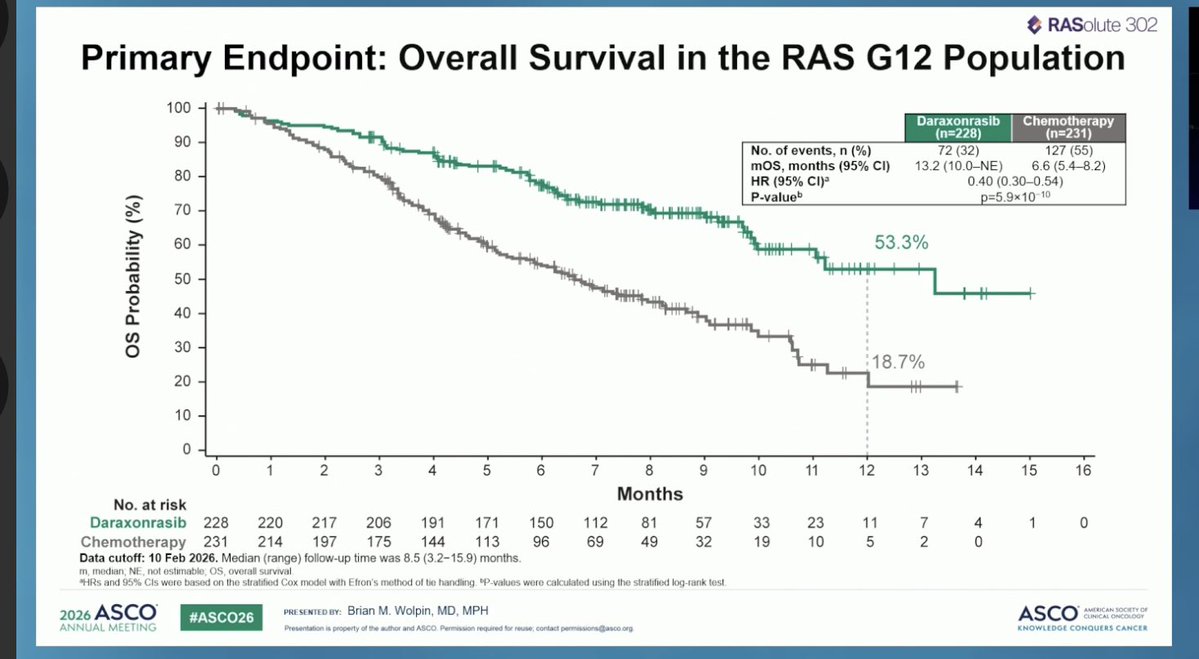
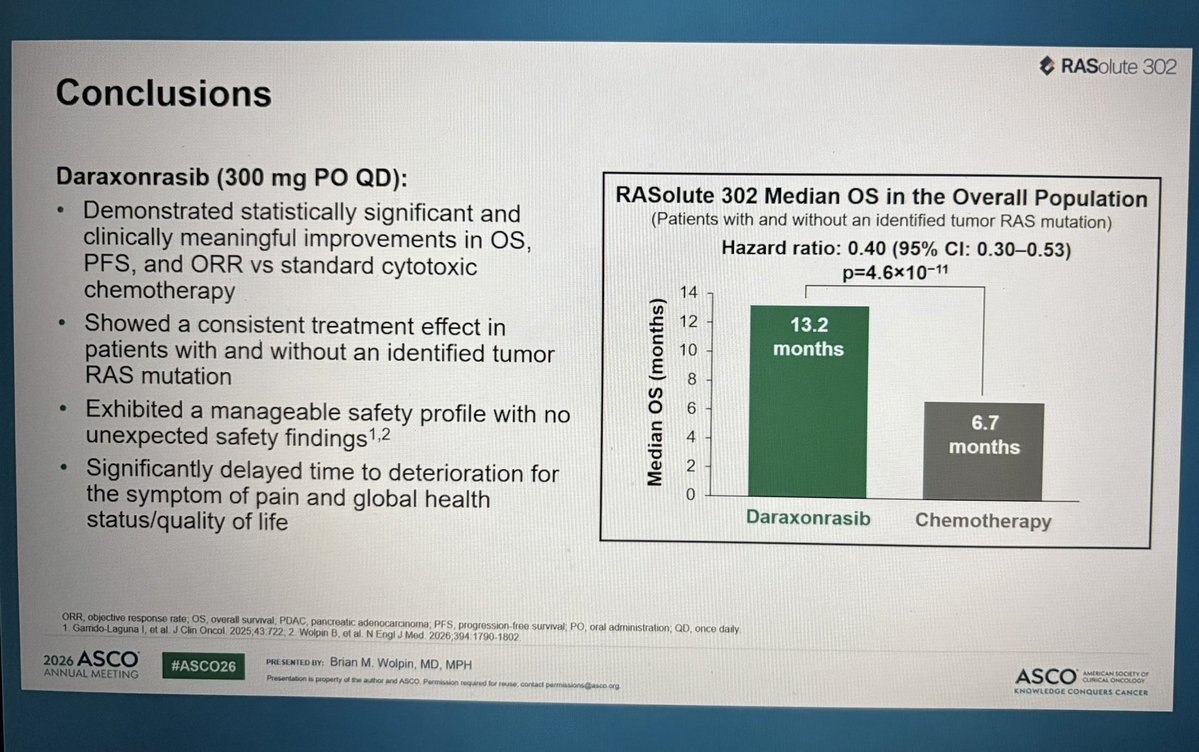
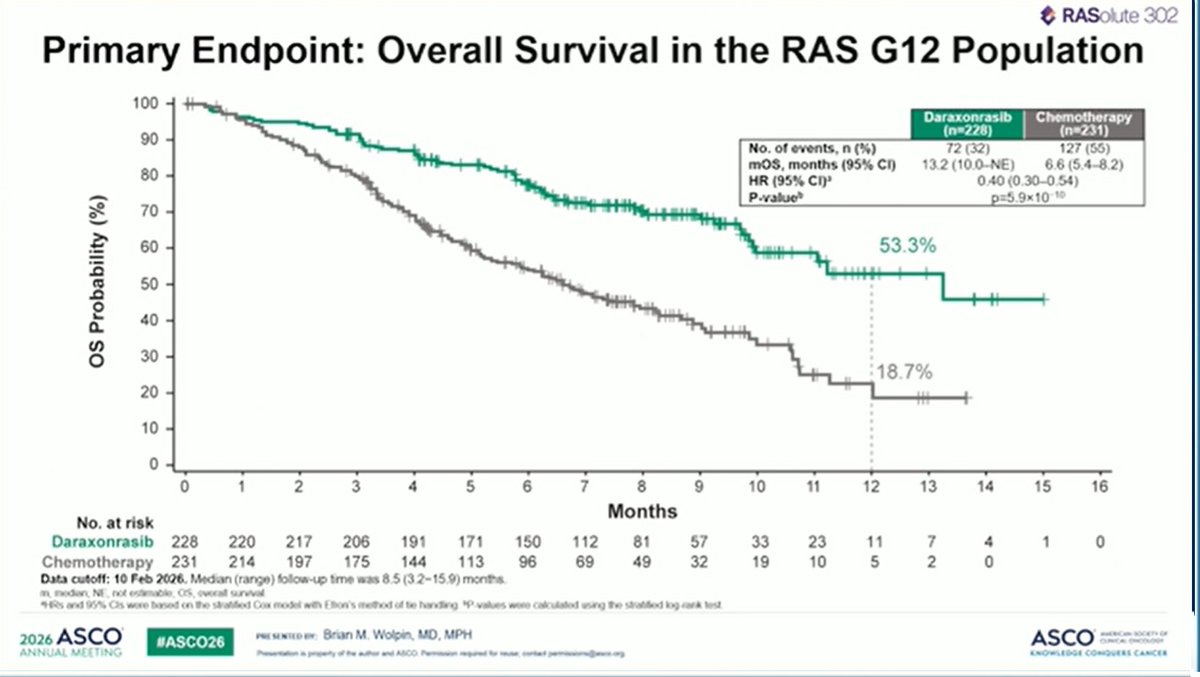
OS (dual primary, RAS G12 - met) - Median 13.2 vs 6.6 mo, HR 0.40 (95% CI 0.30–0.54); overall population (key secondary): 13.2 vs 6.7 mo, HR 0.40 (0.30–0.53) - a 60% reduction in risk of death (NEJM, DCO 10 Feb 2026).
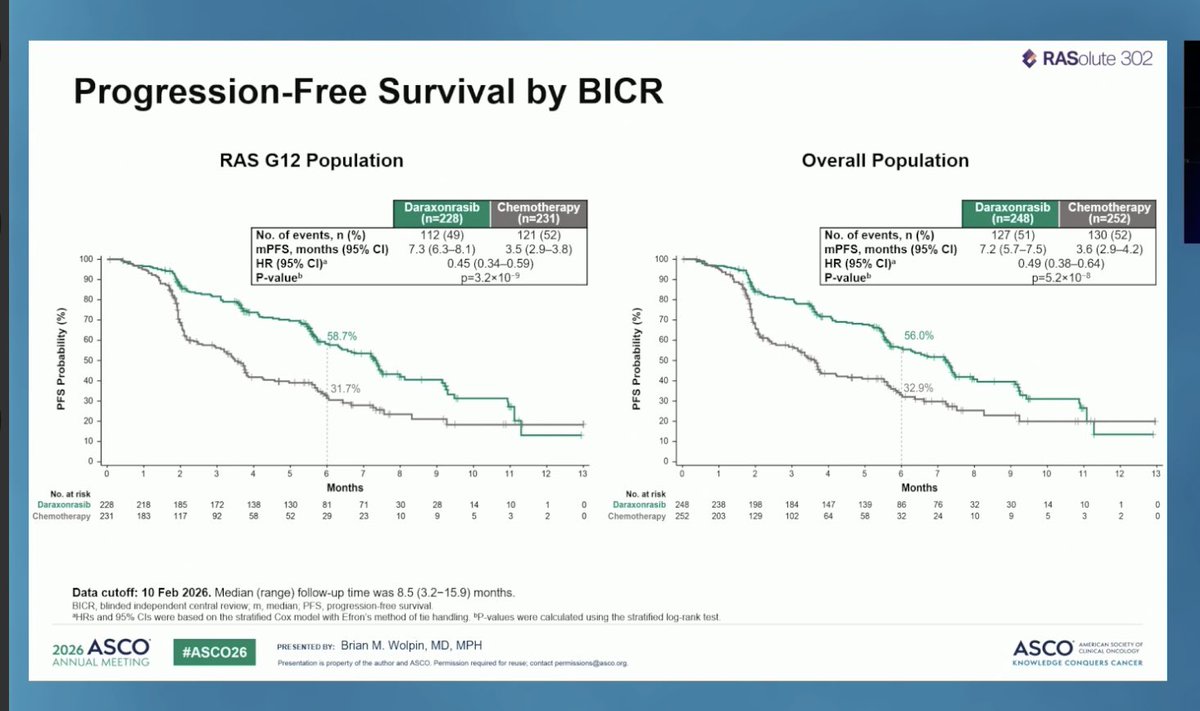
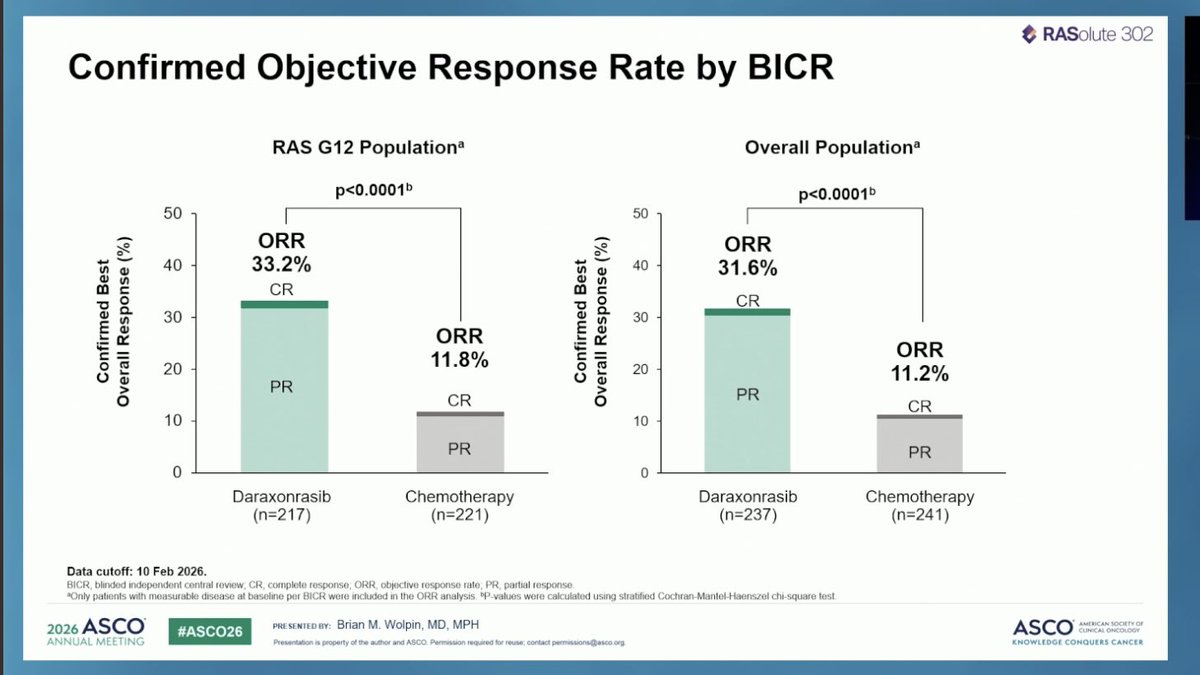
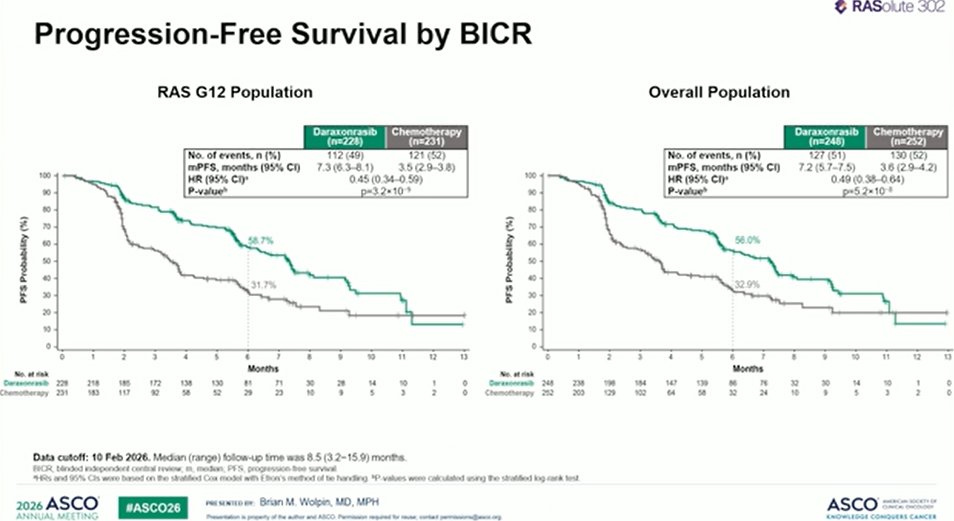
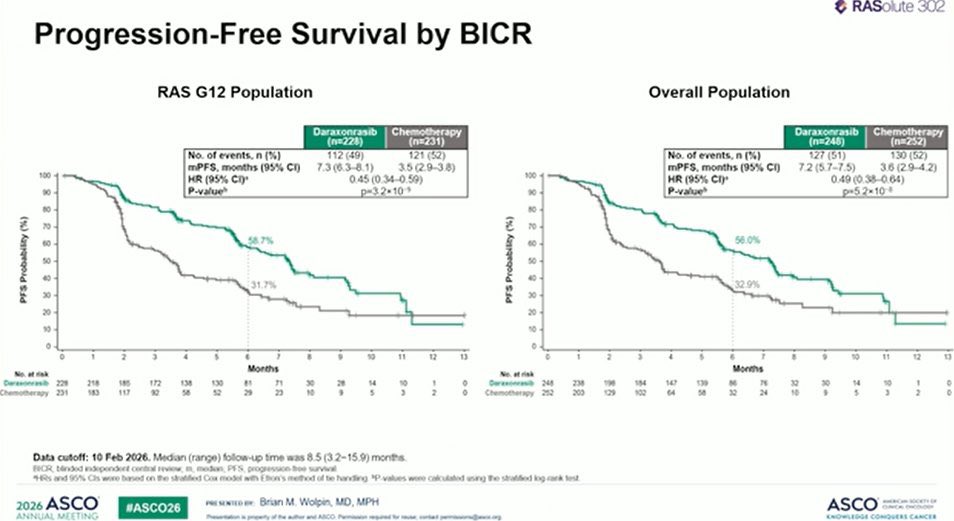
PFS / response - BICR PFS 7.3 vs 3.5 mo, HR 0.45 (0.34–0.59) in RAS G12 (dual primary); overall 7.2 vs 3.6 mo, HR 0.49 (0.38–0.64). Objective response rate 32% vs 11% (RAS G12, all randomized patients; Rasonque USPI).
Safety - Grade >=3 treatment-related AEs 43.6% vs 57.5%; rash 14%, stomatitis 12%; treatment discontinuation 1.2% vs 11.2%.
Regulatory - FDA approved Aug 26, 2026 as Rasonque (daraxonrasib) for metastatic pancreatic adenocarcinoma after ≥1 prior systemic therapy or in patients not candidates for multiagent therapy - first RAS inhibitor approved in PDAC; the label carries no RAS-testing requirement and does not restrict by RAS mutation status (Rasonque USPI, revised 08/2026).
Sponsor / drug - Revolution Medicines; daraxonrasib (RMC-6236), marketed as Rasonque.
Compiled and reviewed by the KOL Pulse research team, led by Brian Shields, Founder, KOL Pulse. Last updated August 26, 2026.
KOLs Discussing RASolute 302



RASolute 302 Key Slides & Visuals
Slides shared by KOLs at the ASCO 2026 Plenary (LBA5, presented by Brian M. Wolpin, MD, MPH, Dana-Farber) plus earlier social conversation. Click any image to expand.











Top RASolute 302 Tweets

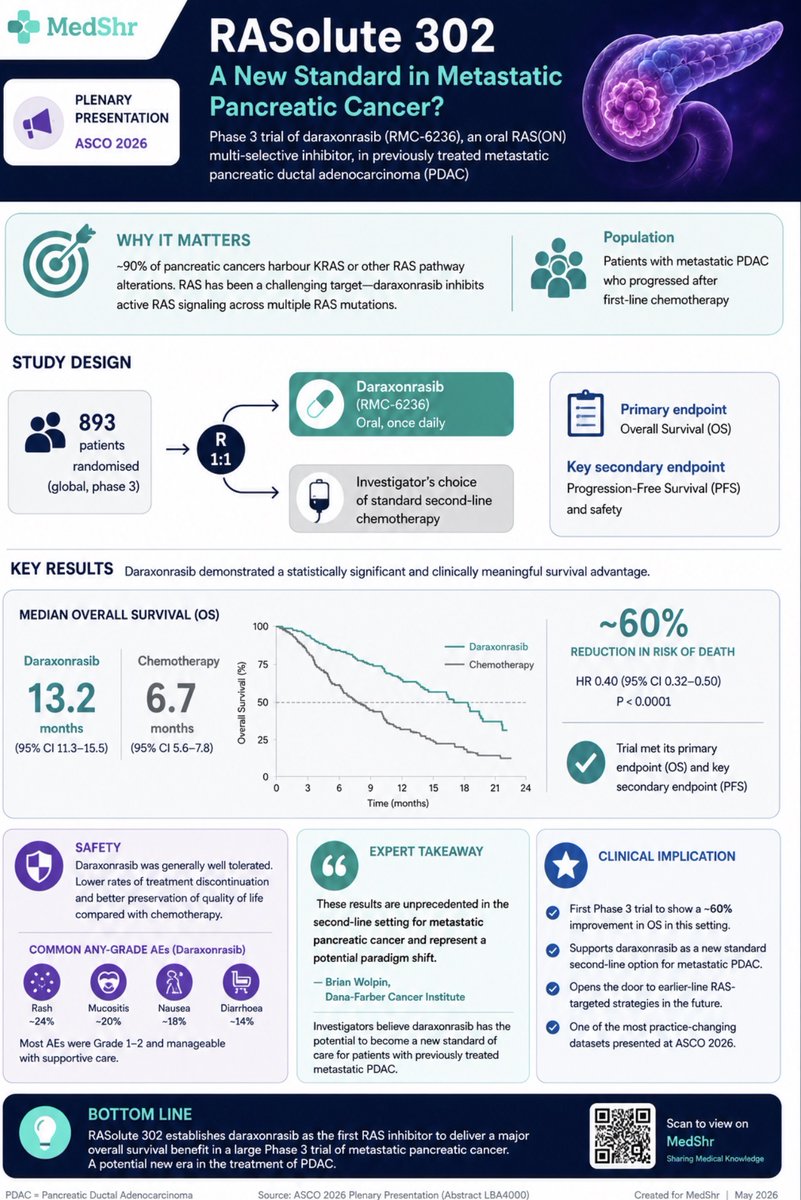
Presented at #ASCO26: Among patients with previously treated metastatic pancreatic ductal adenocarcinoma, the RAS(ON) inhibitor daraxonrasib led to significantly longer overall survival and progression-free survival than chemotherapy. Full phase 3 RASolute 302 trial results:

Cheers, chills, and a standing ovation when RASolute 302 showed unprecedented survival on daraxonrasib for patients with progressive pancreatic cancer Seldom do you sense you’re witnessing a historic moment in cancer care but this feels like ras targeting has arrived #ASCO26

A warm #ASCO26 welcome to daraxonrasib and RASolute-302 study in 2nd line metPDAC from $RVMD My story in the post below. Here are the OS curves you haven't seen yet.

#ASCO26 This one is special. This is the hottest paper of 2026 and potentially in the history of pancreatic cancer. Let’s dive in. RASolute 302: Daraxonrasib vs investigator’s choice chemotherapy in previously treated metastatic pancreatic cancer Abstract LBA5 (soon!)
Revolution Medicines $RVMD starts shipping experimental pancreatic cancer drug, daraxonrasib. “We don’t have a set number where we are going to cap it. We want to make sure everybody who needs daraxonrasib for pancreatic cancer will receive it. That’s just very, very important

This was the moment! Standing ovation at ASCO 2026 for results of RASolute 302 trial. Hopefully RAS inhibitors will change the trajectory of pancreatic cancer forever.
Some $RVMD news from our STAT @ #ASCO26 event: CEO Mark Goldsmith said the company has begun shipping daraxonrasib to physicians and pancreatic cancer patients under the FDA Expanded Access Program. Good news for patients. When will RevMed file for FDA approval? “ASAP,”

5. RASolute-302: Daraxonrasib (pan-RAS inhibitor) vs. chemo in 2L metastatic pancreatic adenocarcinoma: - Majority of PDAC harbor RAS mutation (more than 90%) - mOS (in all comers): 13.2mos vs. 6.7mos (HR: 0.40) - Gr ≥ 3 AEs: 62% vs. 70% - New SoC/paradigm shifting!! 6/6

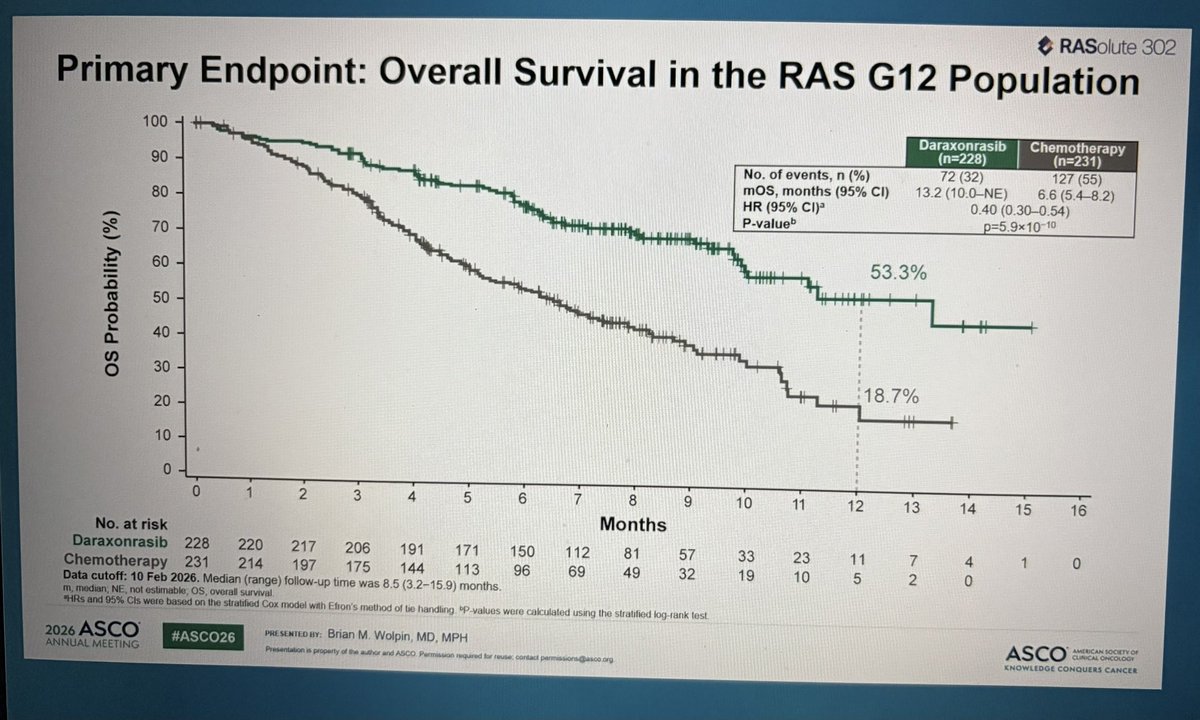
Daraxonrasib's Rasolute 302 OS curve in RAS G12 mutants in 2L pancreatic cancer. The data are almost identical to the OS all-comers result that $RVMD toplined - because 92% of patients had a G12 mutation. The trial was dubbed a "slam dunk" by ASCO's Dr Julie Gralow #ASCO26

LBA5 #ASCO2026 Pancreatic cancer finally gets a major targeted therapy win. RASolute 302 showed daraxonrasib (RAS(ON) inhibitor) significantly improved outcomes vs chemotherapy in 2L metastatic PDAC: • OS: 13.2 vs 6.7 months • HR 0.40 • PFS: 7.2 vs 3.6 months • HR 0.49 •

Witnessed the arrival of a potential game changer👀 #ASCO26 Plenary Session 🔥 RASolute 302 in RAS G12D–mutant pancreatic cancer Daraxonrasib showed a striking OS benefit vs chemotherapy: ✅ mOS 13.2 vs 6.6 months, HR 0.40 ✅ 12-mo OS 53.3% vs 18.7%

Truck test ✅✅✅
Overview
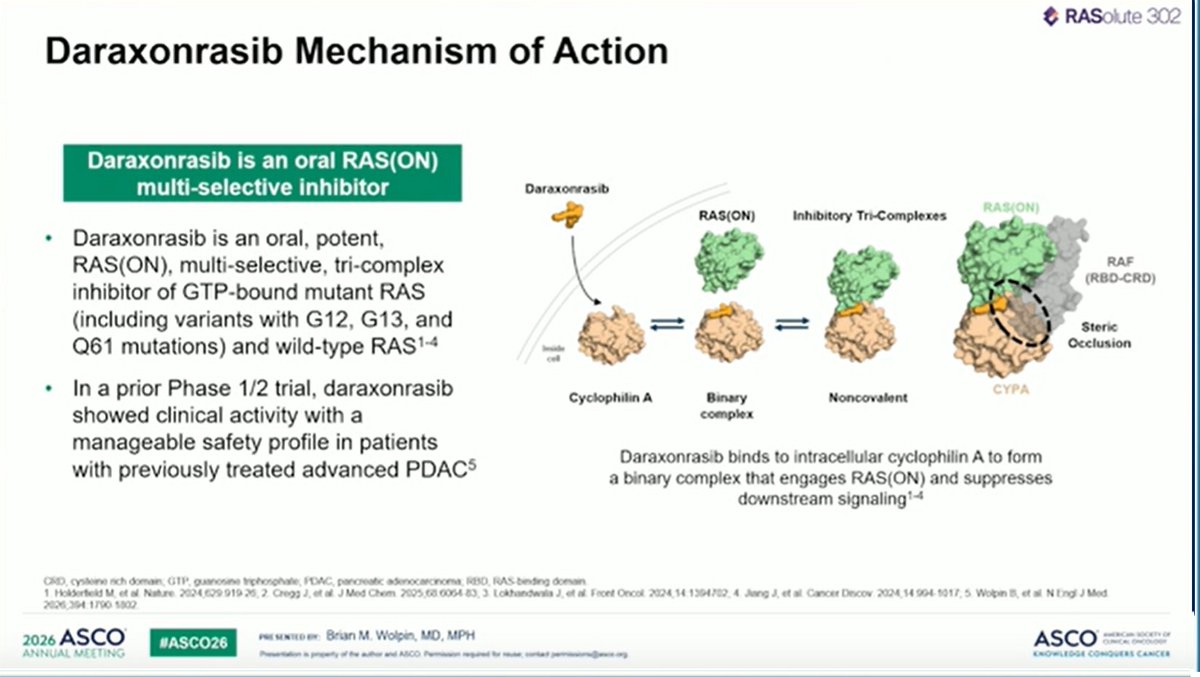
RASolute 302 is a global, randomized Phase 3 trial of daraxonrasib (RMC-6236) — the first oral RAS(ON) multi-selective inhibitor — versus investigator's-choice cytotoxic chemotherapy as second-line therapy for patients with metastatic pancreatic ductal adenocarcinoma (PDAC) who progressed on one prior fluoropyrimidine- or gemcitabine-based regimen. The trial enrolled 500 patients globally (North America, Europe, and Asia), randomized 1:1 (daraxonrasib n=248; chemotherapy n=252); enrollment did not require a RAS mutation, though the large majority (459/500) harbored a RAS G12 mutation. Dual primary endpoints (OS and PFS in the RAS G12 population) were met, with consistent benefit in the intent-to-treat population. Full results were presented at the #ASCO26 Plenary Session (LBA5) by Brian M. Wolpin, MD, MPH (Dana-Farber) and published simultaneously in the New England Journal of Medicine.
Study Design
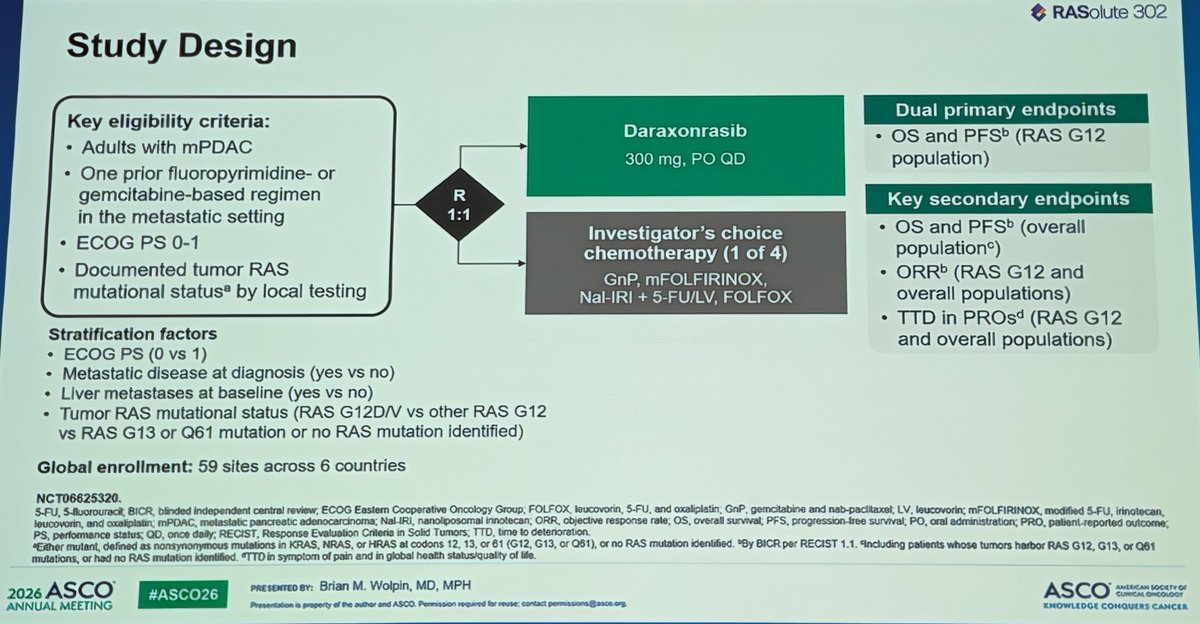
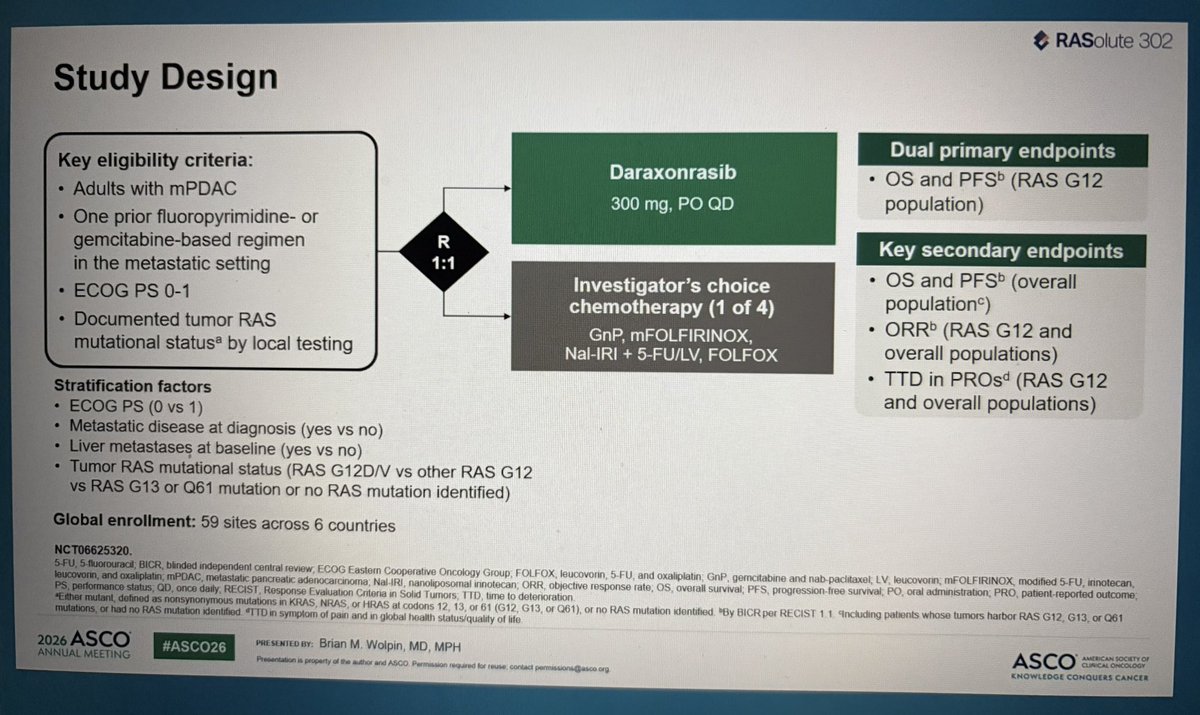
Phase 3, global, randomized, open-label. Patients with metastatic PDAC who progressed on one prior line randomized to oral daraxonrasib 300 mg once daily vs investigator's-choice chemotherapy. Stratified by RAS mutation status and region.
Population
n=500 with metastatic PDAC, one prior fluoropyrimidine- or gemcitabine-based regimen, ECOG 0-1. RAS mutation not required for entry; 459/500 (~92%) had a RAS G12 mutation. Primary endpoint population: RAS G12 (dual primary OS + PFS); ITT analyzed as key secondary.
Intervention
Experimental: Daraxonrasib (RMC-6236) 300 mg orally once daily until progression or unacceptable toxicity. Control: Investigator's choice of standard second-line cytotoxic chemotherapy.
Endpoints
Dual primary: OS and PFS (BICR) in the RAS G12 population. Key secondary: OS and PFS in the ITT population, objective response rate (ORR), duration of response, safety/tolerability.
Primary Results — #ASCO26 Plenary (LBA5)
Overall Survival (Dual Primary Endpoint in RAS G12 — MET)
Daraxonrasib produced a statistically significant and clinically meaningful improvement in overall survival, doubling median OS versus chemotherapy. In the RAS G12 population (dual primary endpoint), median OS was 13.2 vs 6.6 months (HR 0.40; 95% CI 0.30–0.54; p<0.0001). In the overall (intent-to-treat) population (key secondary endpoint), median OS was 13.2 vs 6.7 months (HR 0.40; 95% CI 0.30–0.53; p<0.0001) — a 60% reduction in the risk of death. Median OS exceeding 12 months in the second-line PDAC setting is unprecedented.
OS 13.2 vs 6.6 mo, HR 0.40 (RAS G12) · 13.2 vs 6.7 mo, HR 0.40 (overall) · 60% reduction in risk of deathSources: Revolution Medicines ASCO Plenary press release (May 31, 2026) · NEJM (O’Reilly et al.) · Dana-Farber newsroom · ASCO PostProgression-Free Survival (Dual Primary Endpoint in RAS G12 — MET)
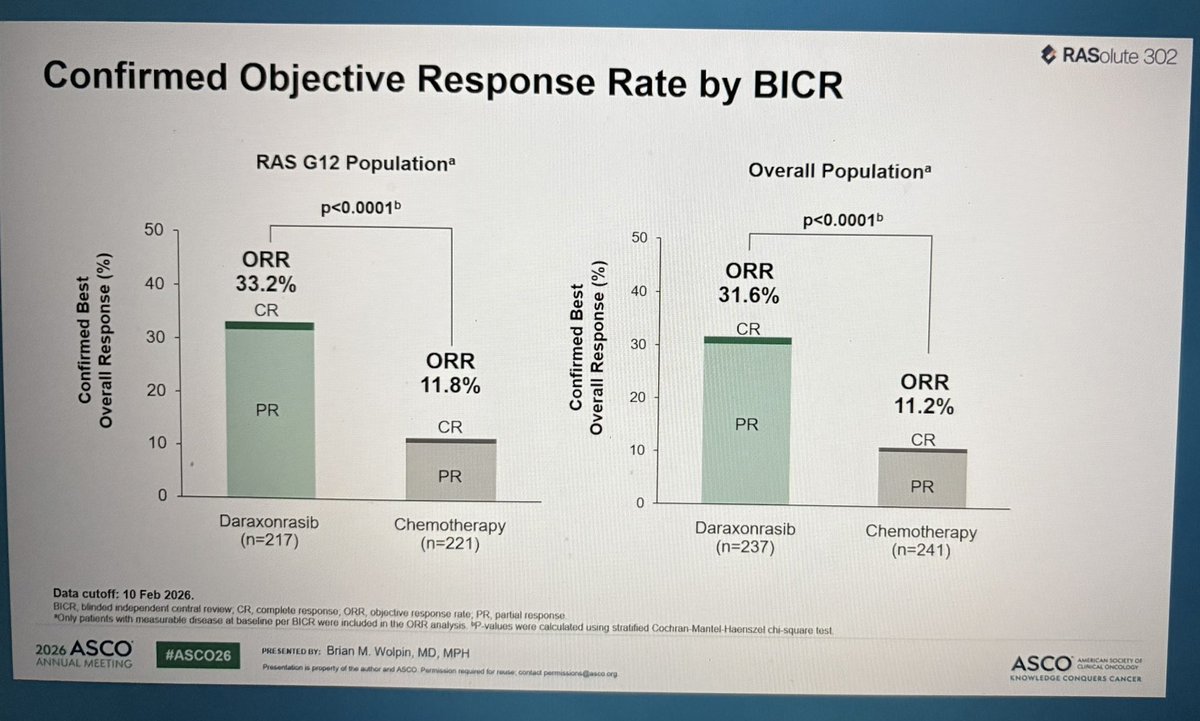
Daraxonrasib also doubled blinded independent central review (BICR) PFS. In the RAS G12 population (dual primary endpoint), median PFS was 7.3 vs 3.5 months (HR 0.45; 95% CI 0.34–0.59); in the overall population (key secondary), 7.2 vs 3.6 months (HR 0.49; 95% CI 0.38–0.64). The objective response rate was nearly tripled — 32% (95% CI 26–38) vs 11% (95% CI 7–16) in the RAS G12 population (all randomized patients, BICR; Rasonque USPI); 30% vs 11% in the overall population.
PFS 7.3 vs 3.5 mo, HR 0.45 (RAS G12) · ORR 32% vs 11% (RAS G12)Sources: Dana-Farber newsroom (PFS medians) · Revolution Medicines press release (PFS HR, ORR) · pharmaphorum ASCO26 coverageSafety & Tolerability
Daraxonrasib is not a benign drug — it carries real, on-target RAS-pathway toxicity that demands active, ongoing management. Grade 3 or higher treatment-related adverse events (TRAEs) occurred in 43.6% of daraxonrasib patients (vs 57.5% with chemotherapy). The most frequent Grade ≥3 TRAEs were rash (14%) and stomatitis (mouth inflammation, 12%); the most common all-grade toxicities were rash, mouth inflammation (stomatitis), nausea, and diarrhea. Treatment-related serious AEs occurred in 10.8% (vs 18.7%), and there was one Grade 5 (fatal) treatment-related pneumonitis (0.4%) in the daraxonrasib arm. The approved label lists ILD/pneumonitis under Warnings & Precautions (§5.5): incidence 2.4% across pancreatic-cancer trials, 0.9% Grade 3, one fatal event, median onset 111 days — with monitoring for new or worsening pulmonary symptoms, alongside warnings for dermatologic/soft-tissue toxicity, stomatitis, diarrhea, gastrointestinal perforation, and embryo-fetal toxicity (Rasonque USPI). Rash is significant enough that the protocol recommends prophylactic oral antibiotics and topical corticosteroids. The toxicities were consistent with prior Phase 1/2 (RMC-6236-001) experience, with no unexpected new signals. Median dose intensity was 93.1%. Treatment discontinuation due to TRAEs was 1.2% vs 11.2% with chemotherapy.
Grade ≥3 TRAEs 43.6% vs 57.5% · rash 14% / stomatitis 12% · 1 fatal pneumonitis (0.4%) · discontinuations 1.2% vs 11.2%Sources: Rasonque USPI (Warnings & Precautions §5.1–5.6, revised 08/2026) · Revolution Medicines ASCO Plenary press release (TRAE rates, dose intensity, pneumonitis) · ASCO Post (Weekes discussant commentary, "not benign") · ASCO abstract (rash prophylaxis)Clinical Implications
RASolute 302 is the first positive Phase 3 trial of a RAS-targeted therapy in pancreatic cancer, a disease in which ~90% of tumors are KRAS-driven and second-line chemotherapy delivers only 6–7 months of median survival. ASCO leadership and discussants described the result as a "grand slam," and multiple KOLs framed daraxonrasib as a potential new second-line standard of care — a role the FDA’s August 26, 2026 approval of Rasonque now formalizes. The all-comers benefit (regardless of RAS mutation status) reinforces the rationale for the broader RAS(ON) multi-selective mechanism.
First positive Phase 3 RAS-targeted therapy in PDAC · FDA approved Aug 26, 2026Sources: Managed Healthcare Executive (ASCO 2026, Gralow "grand slam") · ecancer (Wolpin interview) · NEJMFDA Approval & Regulatory Timeline
KOL Reaction to the Approval
Verbatim posts from physicians, advocates, and the FDA on approval day, August 26, 2026.





NDA & Approval — Commissioner’s National Priority Voucher
Revolution Medicines announced on April 13, 2026 that it intended to submit a New Drug Application (NDA) for daraxonrasib under the FDA Commissioner’s National Priority Voucher (CNPV) pilot program, which is intended to accelerate the development and review of therapies aligned with U.S. national health priorities. The FDA granted daraxonrasib a national priority voucher in October 2025. The FDA approved the application on August 26, 2026. The company previously stated (May 31, 2026) that it intended to submit the RASolute 302 data to global regulatory authorities.
NDA reviewed under the CNPV pilot — approved Aug 26, 2026, 6.5 months before the user fee deadlineSources: FDA Press Announcement · Revolution Medicines ASCO Plenary press release (May 31, 2026)Prior FDA Designations
The FDA previously granted daraxonrasib Breakthrough Therapy Designation and Orphan Drug Designation for the treatment of patients with previously treated metastatic PDAC harboring RAS G12 mutations. These designations expedite development and review but do not constitute approval. (Rasonque was subsequently approved on August 26, 2026 for a broader indication — see above.)
Breakthrough Therapy + Orphan Drug Designation · previously-treated mPDAC, RAS G12Sources: FDA Press Announcement · Revolution Medicines (About Daraxonrasib)Key KOL Sentiments — RASolute 302












All efficacy and safety figures cited above are sourced to the Revolution Medicines ASCO Plenary press release (May 31, 2026), the simultaneous NEJM publication (O’Reilly et al.), and the Dana-Farber newsroom; ORR and discontinuation figures are from the same primary readout. RASolute 302 reflects a single data cut presented at #ASCO26.
RASolute 302 FAQ
What is the RASolute 302 trial?
RASolute 302 is a Phase 3 global, randomized trial (NCT06625320) of once-daily oral daraxonrasib (RMC-6236), a RAS(ON) multi-selective inhibitor, versus investigator's-choice chemotherapy in patients with previously treated metastatic pancreatic ductal adenocarcinoma, regardless of RAS mutation status. Overall survival and progression-free survival in the RAS G12 population were the dual primary endpoints, and the results were presented at the ASCO 2026 Plenary (LBA5) and published in NEJM.
What did RASolute 302 show for survival?
Daraxonrasib doubled median overall survival versus chemotherapy. In the RAS G12 population - the trial's dual primary endpoint population - median OS was 13.2 versus 6.6 months (HR 0.40; 95% CI 0.30-0.54); in the overall population (key secondary endpoint) it was 13.2 versus 6.7 months (HR 0.40; 95% CI 0.30-0.53), a 60% reduction in the risk of death. BICR progression-free survival also doubled (7.3 vs 3.5 months RAS G12; 7.2 vs 3.6 overall), and the objective response rate nearly tripled (32% vs 11% in RAS G12). It is the first positive Phase 3 trial of a RAS-targeted therapy in pancreatic cancer.
Is daraxonrasib FDA approved for pancreatic cancer?
Yes. On August 26, 2026, the FDA approved daraxonrasib under the brand name Rasonque for adults with metastatic pancreatic adenocarcinoma who have received at least one prior systemic therapy or are not candidates for multiagent systemic therapy - the first RAS inhibitor approved in pancreatic cancer. The approval, granted to Revolution Medicines, came 6.5 months before the user fee deadline. Rasonque received Priority Review, and the application was also reviewed under the FDA Commissioner's National Priority Voucher pilot.
What is the safety profile of daraxonrasib in RASolute 302?
Daraxonrasib carries on-target RAS-pathway toxicity that requires active management, but severe toxicity was less frequent than with chemotherapy: Grade 3 or higher treatment-related adverse events occurred in 43.6% versus 57.5%. The most frequent Grade >=3 toxicities were rash (14%) and stomatitis (12%). Treatment discontinuation due to adverse events was much lower with daraxonrasib (1.2%) than with chemotherapy (11.2%).
Why is RASolute 302 considered a landmark trial?
Pancreatic ductal adenocarcinoma is driven by KRAS in about 90% of cases, and second-line chemotherapy historically delivers only about 6-7 months of median survival. RASolute 302 is the first positive Phase 3 trial of a RAS-targeted therapy in this disease; ASCO leadership and discussants described the doubling of overall survival as a 'grand slam,' and multiple KOLs framed daraxonrasib as a potential new second-line standard of care — a role the FDA’s August 26, 2026 approval of Rasonque now formalizes.
Media Coverage & Analysis
Selected coverage of the August 26, 2026 FDA approval and the RASolute 302 Plenary readout, newest first. External links open in a new tab.
Our deep dive on how Digital Opinion Leaders built the launch themselves: the sequencing debate, label analysis with patient advocacy, patient education, biomarkers, and the price and access questions, with every thread embedded verbatim.
The official approval announcement: Rasonque (daraxonrasib) approved for adults with metastatic pancreatic adenocarcinoma after ≥1 prior systemic therapy or not candidates for multiagent therapy, 6.5 months before the user fee deadline.
STAT’s Adam Feuerstein and Angus Chen on the first medicine to attack a genetic cause of pancreatic cancer, with median OS of 13.2 vs 6.7 months as a second-line treatment.
Bloomberg: the first medicine to target one of the key molecular causes of the disease, called one of the more significant breakthroughs in pancreatic cancer in years.
BioSpace on the approval arriving 6.5 months ahead of the user fee deadline, following review under the Commissioner’s National Priority Voucher pilot.
CancerNetwork’s approval coverage, noting the FDA accepted the daraxonrasib NDA for review on July 22, 2026 under the Commissioner’s National Priority Voucher pilot.
A measured KOL take: calls RASolute 302 “a significant step forward” for a long-intractable target, while raising questions on dropout imbalance, the OS-vs-PFS gap, and tolerability in older patients.
Primary readout: daraxonrasib doubled median OS to 13.2 vs 6.7 months (HR 0.40) vs chemotherapy in previously treated metastatic PDAC; all primary and key secondary endpoints met.
Dana-Farber newsroom on the Wolpin-presented Plenary: PFS 7.2 vs 3.6 months and a 60% reduction in risk of death in second-line metastatic pancreatic cancer.
Conference coverage framing the all-comers OS benefit as unprecedented for a second-line PDAC therapy.
AJMC on the magnitude of benefit and what a candidate new second-line standard of care could mean for a disease with few options.
ASCO Post summary including discussant commentary on tolerability and the active toxicity management the RAS(ON) mechanism requires.