HERIZON-GEA-01 is a Phase III trial of first-line zanidatamab + chemotherapy ± tislelizumab vs trastuzumab + chemotherapy in HER2+ gastroesophageal adenocarcinoma. The tislelizumab triplet improved OS (26.4 vs 19.2 months, HR 0.72, P=0.0043); both zanidatamab arms improved PFS (12.4 vs 8.1 months). At the second interim (Aug 31, 2026, topline), zanidatamab + chemo also reached statistically significant OS. FDA approved this 1L use on Aug 25, 2026 — Ziihera + Tevimbra + chemo (IHC 3+ or IHC 2+/ISH+) and Ziihera + chemo (IHC 3+). Sponsor: Jazz Pharmaceuticals / BeOne Medicines.
1L HER2-positive advanced/metastatic gastroesophageal adenocarcinoma (G/GEA)Ziihera + chemo + TevimbraASCO GI 2026 (#ASCOGI26)✅ FDA Approved · Aug 25, 2026 · 1L HER2+ GEA
Posts by physicians about HERIZON-GEA-01, newest first: ESMO 2026 week (October 17–24, 2026), then reactions to the August 2026 FDA approval and second-interim OS announcement, and earlier posts from the ASCO GI 2026 readout. Each post is shown in full and verbatim and linked to the original on X.
FDA APPROVAL · AUGUST 25, 2026FDA approved (Aug 25, 2026): Ziihera in first-line HER2-positive advanced gastroesophageal adenocarcinoma
On August 25, 2026, the FDA approved Ziihera (zanidatamab-hrii) in two first-line regimens for HER2+ unresectable locally advanced or metastatic GEA, as detected by an FDA-authorized test: with Tevimbra (tislelizumab-jsgr) + chemotherapy for IHC 3+ or IHC 2+/ISH+ disease, and with chemotherapy alone for IHC 3+ disease.
The approval is based on HERIZON-GEA-01 (PFS 12.4 vs 8.1 months; triplet OS 26.4 vs 19.2 months). The label carries a boxed warning for diarrhea and embryo-fetal toxicity.
Zanidatamab was previously granted accelerated approval (November 2024) in previously treated HER2-positive (IHC 3+) biliary tract cancer — this approval brings the same drug into an earlier, first-line setting.
OS UPDATE · AUGUST 31, 2026Second interim (top-line): Ziihera + chemo now shows statistically significant overall survival
Jazz Pharmaceuticals announced second interim top-line OS results: Ziihera + chemotherapy (doublet) demonstrated a statistically significant and clinically meaningful OS improvement versus trastuzumab + chemotherapy, with the hazard ratio improved versus the first interim analysis — the arm that had not reached significance at the first interim (P=0.0564).
With longer follow-up, the triplet (Ziihera + Tevimbra + chemotherapy) OS hazard ratio also improved. Numeric results have not yet been disclosed — data submitted for presentation at a major medical meeting in Q4 2026. No new safety signals were reported.
OS (dual primary) - zanidatamab + tislelizumab + chemotherapy: median OS 26.4 months (95% CI 21.5-30.3) vs 19.2 months (95% CI 16.8-21.8) with trastuzumab + chemotherapy; HR 0.72 (95% CI 0.57-0.90), P=0.0043 - statistically significant. 24-month OS 54.3% vs 38.8%. Zanidatamab + chemotherapy: median OS 24.4 months (95% CI 20.4-30.0); HR 0.80 (95% CI 0.64-1.01), P=0.0564 - did not reach statistical significance at this first interim OS analysis; a further OS analysis for this arm is planned. 24-month OS was 54.3% (triplet), 50.3% (doublet) and 38.8% (control). Benefit reported independent of PD-L1. (JCO 2026 LBA285 / NEJM, DCO 1-Oct-2025) At the second interim analysis, zanidatamab + chemotherapy demonstrated a statistically significant and clinically meaningful OS improvement versus trastuzumab + chemotherapy, with the hazard ratio improved versus the first interim; the triplet's OS hazard ratio also improved with longer follow-up. Numeric results have not yet been disclosed — data submitted for presentation at a major medical meeting in Q4 2026. (Jazz topline, second interim, Aug 31, 2026)
Grade >=3 treatment-related AEs occurred in 71.8% (zanidatamab + tislelizumab + chemo), 59.0% (zanidatamab + chemo) and 59.6% (trastuzumab + chemo); Grade >=3 TRAEs in >10% of either zanidatamab arm were diarrhea, hypokalemia and anemia. HER2-targeted therapy was discontinued for related AEs in 11.9%, 8.5% and 2.3% respectively; no new safety signals (JCO 2026 LBA285 / NEJM, DCO 1-Oct-2025). The US Prescribing Information carries Boxed Warnings for diarrhea and embryo-fetal toxicity; with the tislelizumab regimen diarrhea occurred in 85% of patients (Grade 3 24%, Grade 4 2.1%), with fatal outcomes in 1.5% (Ziihera USPI / Jazz press release, Aug 25 2026).
New HRQoL data presented at ESMO GI 2026 (Abstract 494O, presented by Kohei Shitara) show that zanidatamab + chemotherapy ± tislelizumab maintained physical functioning and Global Health Status/QoL (EORTC QLQ-C30) consistent with baseline across all three treatment arms — the efficacy gains seen in PFS and OS were achieved without significant detriment to patient-reported quality of life. Diarrhea, the most common treatment-related adverse event in the zanidatamab-containing arms, was also the symptom scale showing the greatest worsening from baseline (at cycle 8 day 1), consistent with the trial's established safety profile.
HRQoL maintained vs baseline across arms — efficacy gains without a measurable QoL detriment
✅ FDA approved Aug 25, 2026 (1L HER2+ advanced GEA): Ziihera + Tevimbra + chemo for IHC 3+ or IHC 2+/ISH+; Ziihera + chemo for IHC 3+. Boxed warning: diarrhea; embryo-fetal toxicity. Also approved in 2L HER2+ (IHC 3+) biliary tract cancer. With the August 25, 2026 FDA approval, zanidatamab enters practice alongside KEYNOTE-811 (pembrolizumab + trastuzumab + chemo), the prior 1L standard for HER2+ and PD-L1+ tumors. Sponsor/drug: Jazz Pharmaceuticals / BeOne Medicines; zanidatamab (Ziihera, bispecific HER2 antibody) + tislelizumab (Tevimbra).
5. HERIZON-GEA-01: Zanidatamab ± tislelizumab + chemo vs trastuzumab + chemo in 1L HER2+ advanced Gastric/GEJ
- Zani + chemo: mOS 22.9 vs 19.6 mo (HR 0.76; p=0.0088)
- Zani + TIS + chemo: mOS 27.0 vs 19.6 mo (HR 0.65); ~40% alive at 3 yrs
- SoC for HER2+ in 1L
6/8 https://t.co/QpVwE1SbWF https://t.co/7cLJhcxVin
@OncoAlert @myESMO A meaningful advance in 1L treatment, with the incremental benefit of immunotherapy and long-term tolerability remaining key considerations. https://t.co/Vz5UOqah1p
HERIZON-GEA-01 at #ESMO26:
Zanidatamab + chemotherapy improved PFS and OS versus trastuzumab-based therapy in 1L HER2+ advanced GEA. The triplet regimen with tislelizumab achieved a median OS of 27 months and a 3-year OS rate of 40%.
@OncoAlert #HER2Positive https://t.co/U7iPdH0TRg
[Slide 1]
Background
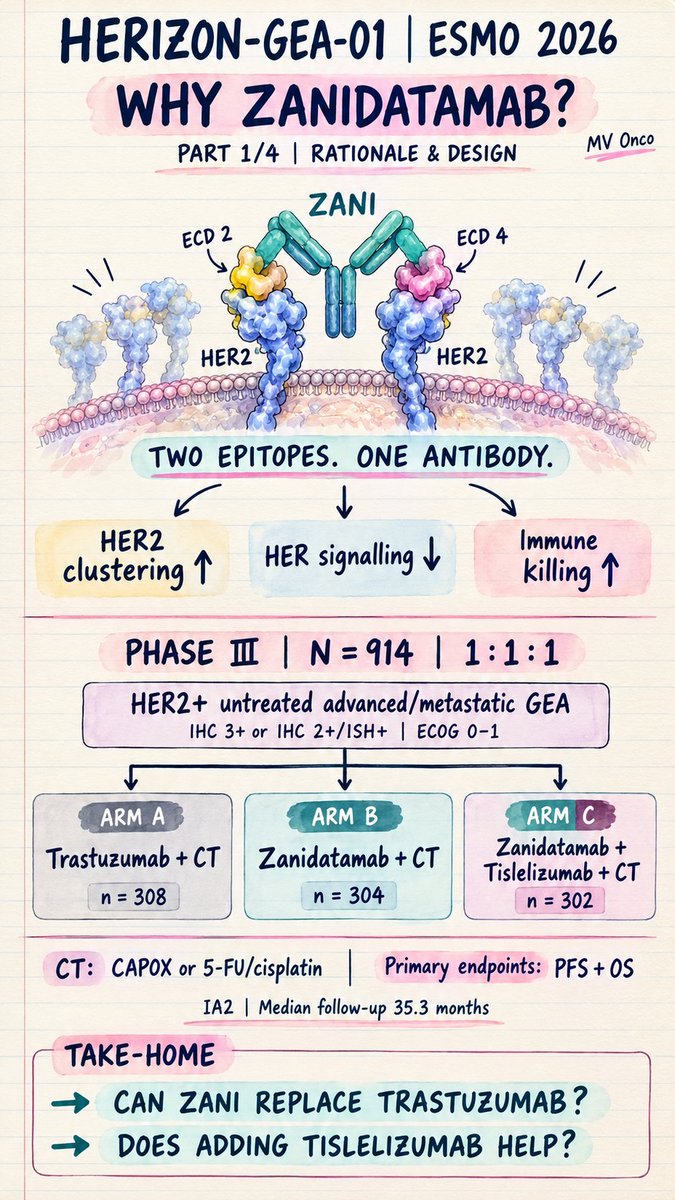
• Zanidatamab is a bispecific HER2-directed antibody that binds to HER2 ECD 2 and 4 in a trans configuration, facilitating crosslinking associated with the formation of distinct HER2 clusters on the cell surface. It has several key mechanisms of action1:
– Increasing HER2 internalisation; reducing phosphorylation of EGFR, HER2, and HER3 and blocking downstream signalling; and inducing immune-mediated effects (CDC, ADCC, and ADCP)
• Tislelizumab is a high-affinity ICI targeting PD-1 and is specifically engineered to minimise Fcγ receptor binding on macrophages
Adults with untreated, unresectable, locally advanced, recurrent or metastatic GEA
• HER2 IHC 3+ or IHC 2+/ISH+ per central testing
• ECOG PS 0 or 1
• No prior HER2-targeted agents or immunotherapy in any setting
Stratification factors
• Geographic region
• HER2 status
• ECOG PS
R 1:1:1 N = 914
Trastuzumab + chemotherapy(a)
Zanidatamab(b) + chemotherapy(a)
Zanidatamab(b) + tislelizumab(c) + chemotherapy(a)
Prophylaxis to prevent IRRs and diarrhoea was mandatory in the zanidatamab-containing arms
Treatment until disease progression/death/unacceptable toxicity. Chemotherapy could be discontinued after 6 cycles
Tumour imaging(d) Q6W
Dual primary endpoints • PFS (per BICR) • OS
Data cutoff for IA2: 15 July 2026
Here we report results from the planned second interim analysis of OS (IA2) from HERIZON-GEA-01
(a)Physician's choice of CAPOX (capecitabine plus oxaliplatin) or FP (5-fluorouracil plus cisplatin). Chemotherapy was administered for at least 6 cycles or until disease progression, unacceptable toxicity, or another criterion for treatment discontinuation was met. (b)Zanidatamab 1800 mg (<70 kg) or 2400 mg (≥70 kg) was administered IV Q3W. (c)Tislelizumab 200 mg was administered IV Q3W. (d)Computed tomography/magnetic resonance imaging scans were performed Q6W for the first 54 weeks, then every 9 weeks.
ADCC, antibody-dependent cellular cytotoxicity; ADCP, antibody-dependent cellular phagocytosis; BICR, blinded independent central review; CDC, complement-dependent cytotoxicity; ECD, extracellular domain; ECOG PS, Eastern Cooperative Oncology Group Performance Status; EGFR, epidermal growth factor receptor; Fcγ, fragment crystallisable-gamma; GEA, gastro-oesophageal adenocarcinoma; HER2, human epidermal growth factor receptor 2; HER3, human epidermal growth factor receptor 3; IA2, planned second interim analysis of OS; ICI, immune checkpoint inhibitor; IHC, immunohistochemistry; IRR, infusion-related reaction; ISH, in situ hybridisation; IV, intravenously; OS, overall survival; PD-1, programmed cell death protein 1; PFS, progression-free survival; Q3W, every 3 weeks; Q6W, every 6 weeks; R, randomisation.
1. Weisser NE, et al. Nat Commun. 2023;14(1):1394.
Kohei Shitara, MD
[Slide 2]
Zanidatamab + Tislelizumab + CT vs Zanidatamab + CT: OS in the ITT Population
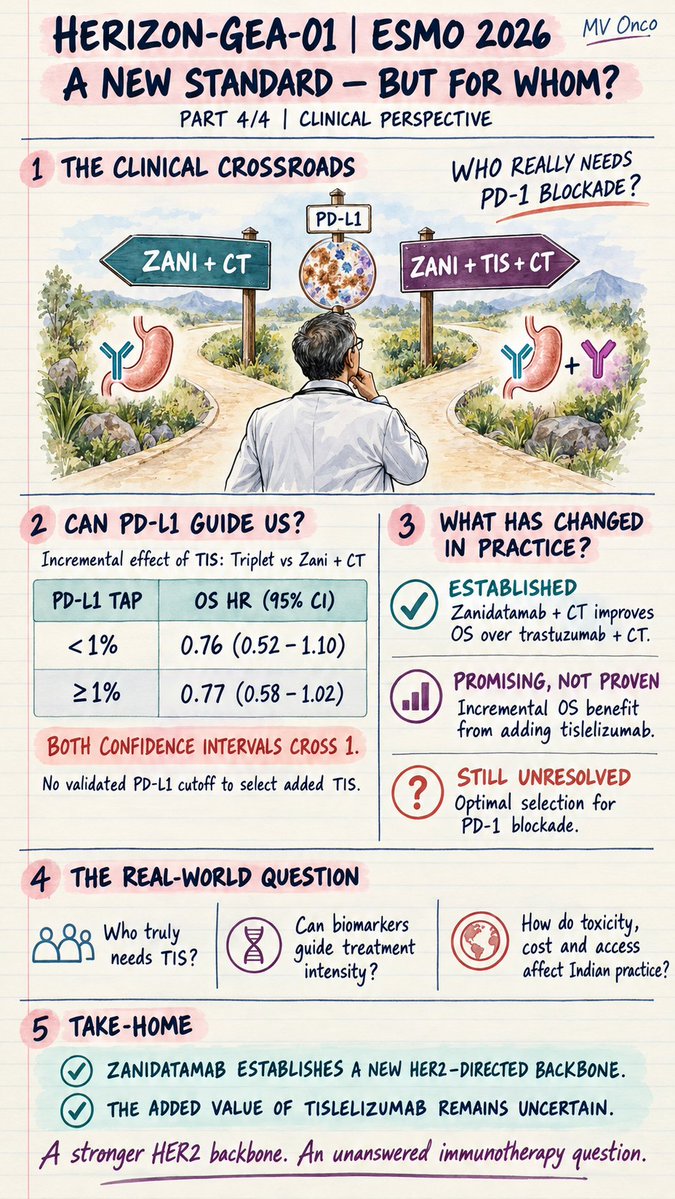
A consistent trend toward improved OS was observed irrespective of PD-L1 status
Zanidatamab + tislelizumab + CT | Zanidatamab + chemotherapy
Median OS (95% CI), mo: 27.0 (23.7–32.2) | 22.9 (19.9–27.6)
ITT HR (95% CI): 0.81 (0.65–1.00); P = 0.0502
PD-L1 TAP <1% HR (95% CI): 0.76 (0.52–1.10)
PD-L1 TAP ≥1% HR (95% CI): 0.77 (0.58–1.02)
Y-axis: Overall survival (%); X-axis: Months from randomisation; + Censored
Patients at risk (0,3,6,...,57 mo):
Zani + TIS + CT: 302 267 246 228 207 185 168 148 129 101 72 64 53 42 35 28 11 6 2 0
Zani + CT: 304 278 256 228 202 182 162 142 122 94 71 51 42 28 22 18 5 3 1 0
Data cutoff: 15 July 2026.
CT, chemotherapy; HR, hazard ratio; ITT, intent-to-treat; OS, overall survival; PD-L1, programmed death-ligand 1; TAP, tumour area positivity; TIS, tislelizumab; Zani, zanidatamab.
Kohei Shitara, MD
Survival table
Endpoint: OS (ITT)
Arm | N | Median | Median CI
Zanidatamab + tislelizumab + CT | 302 | 27.0 mo | 23.7–32.2
Zanidatamab + chemotherapy | 304 | 22.9 mo | 19.9–27.6
HR: 0.81
HR CI: 0.65–1.00
P: 0.0502
[Slide 3]
Safety Summary
The AE profile remained consistent with IA1, and no unexpected safety signals were observed
Columns: Zanidatamab + tislelizumab + CT (n = 294)(a) | Zanidatamab + CT (n = 305)(a) | Trastuzumab + CT (n = 302)
Duration of treatment, weeks
Mean (SD): 64.1 (58.0) | 52.6 (52.6) | 42.3 (39.2)
Median (IQR): 46.6 (17.6–101.4) | 31.1 (14.3–74.7) | 30.0 (18.1–54.1)
Duration of zanidatamab or trastuzumab treatment, weeks
Mean (SD): 60.2 (57.4) | 51.0 (52.9) | 40.8 (39.4)
Median (IQR): 40.5 (14.4–97.1) | 30.1 (12.1–72.7) | 28.2 (16.3–52.1)
Any-grade TEAE, n (%): 293 (99.7) | 301 (98.7) | 297 (98.3)
TRAE, n (%): 289 (98.3) | 296 (97.0) | 291 (96.4)
Grade ≥3: 213 (72.4) | 180 (59.0) | 181 (59.9)
Serious TEAEs, n (%): 176 (59.9) | 155 (50.8) | 131 (43.4)
Treatment-related: 124 (42.2) | 87 (28.5) | 62 (20.5)
TEAEs leading to death, n (%): 30 (10.2) | 26 (8.5) | 22 (7.3)
Treatment-related: 7 (2.4) | 1 (0.3) | 4 (1.3)
Discontinuation due to TRAEs, n (%)
Any component: 132 (44.9) | 107 (35.1) | 88 (29.1)
Zanidatamab or trastuzumab(b): 35 (11.9) | 28 (9.2) | 7 (2.3)
Tislelizumab(c): 49 (16.7) | — | —
Any-grade diarrhoea, n (%): 244 (83.0) | 241 (79.0) | 161 (53.3)
Grade ≥3: 74 (25.2) | 61 (20.0) | 39 (12.9)
AESIs(d), n (%): 103 (35.0) | 94 (30.8) | 56 (18.5)
IRRs: 74 (25.2) | 77 (25.2) | 40 (13.2)
Noninfectious pulmonary toxicities: 22 (7.5) | 5 (1.6) | 4 (1.3)
Left ventricular dysfunction: 27 (9.2) | 20 (6.6) | 13 (4.3)
Immune-mediated AEs(d), n (%): 118 (40.1) | 44 (14.4) | 32 (10.6)
• Diarrhoea occurred primarily in cycles 1 and 2, and the incidence was consistent with IA1
Data cutoff: 15 July 2026. (a)Five patients who were assigned to the zanidatamab + tislelizumab + CT arm did not receive tislelizumab. Data from these patients are summarized in the zanidatamab + CT arm. (b)Zanidatamab- or trastuzumab-related TEAEs that led to discontinuation of zanidatamab or trastuzumab. (c)Tislelizumab-related TEAEs that led to discontinuation of tislelizumab. (d)AESIs for zanidatamab were IRRs, non-infectious pulmonary toxicities, and left ventricular dysfunction; AESIs for tislelizumab were IRRs and immune-mediated AEs. Immune-mediated AEs are excluded from AESIs and reported separately. AESIs for zanidatamab and tislelizumab are reported in all treatment groups, even if the study agent was not administered in that group.
AE, adverse event; AESI, AE of special interest; CT, chemotherapy; IA1, first interim analysis of OS; IQR, interquartile range; IRR, infusion-related reaction; TEAE, treatment-emergent AE; TRAE, treatment-related AE.
Kohei Shitara, MD
[Slide 4]
Zanidatamab + CT: OS in the ITT Population
Zanidatamab + CT demonstrated a statistically significant and clinically meaningful improvement in OS vs trastuzumab + CT (FFA criteria met)
Zanidatamab + CT | Trastuzumab + CT
Median OS (95% CI), mo: 22.9 (19.9–27.6) | 19.6 (16.9–22.2)
HR (95% CI): 0.76 (0.62–0.93); P = 0.0088(a)
Landmark labels: 24 mo: 49.6% (95% CI, 43.6–55.3) [Zani + CT]; 40.7% (95% CI, 34.9–46.5) [Tras + CT]
36 mo: 31.5% (95% CI, 25.4–37.8) [Zani + CT]; 22.9% (95% CI, 17.3–28.9) [Tras + CT]
Y-axis: Overall survival (%); X-axis: Months from randomisation; + Censored
Patients at risk (0,3,6,...,57 mo):
Zani + CT: 304 278 256 228 202 182 162 142 122 94 71 51 42 28 22 18 5 3 1 0
Tras + CT: 308 284 261 227 199 171 147 121 95 70 48 39 33 21 15 12 5 1 1 0
Data cutoff: 15 July 2026. (a)The critical 2-sided alpha was 0.0279.
CT, chemotherapy; FFA, final formal analysis; HR, hazard ratio; ITT, intent-to-treat; OS, overall survival; Tras, trastuzumab; Zani, zanidatamab.
Kohei Shitara, MD
Survival table
Endpoint: OS (ITT)
Arm | N | Median | Median CI
Zanidatamab + CT | 304 | 22.9 mo | 19.9–27.6
Trastuzumab + CT | 308 | 19.6 mo | 16.9–22.2
HR: 0.76
HR CI: 0.62–0.93
P: 0.0088
Landmark rates:
24 mo: Zanidatamab + CT 49.6% (CI 43.6–55.3) | Trastuzumab + CT 40.7% (CI 34.9–46.5)
36 mo: Zanidatamab + CT 31.5% (CI 25.4–37.8) | Trastuzumab + CT 22.9% (CI 17.3–28.9)
🚨 #ESMO26 | HORIZON-GEA-01
Updated OS confirms zanidatamab + CT benefit vs trastuzumab + CT (HR 0.76).
Adding tislelizumab: mOS 27.0 months (HR 0.65 vs control), with no new safety signals.
A new standard in 1L HER2+ mGEA? #GIOnc @OncoAlert @myESMO @KoheiShitara https://t.co/IZRVwfzh6b
[Slide 1]
Patient Disposition
Median follow-up was 35.3 months at IA2, 9.4 months longer than at IA1
Randomised N = 914
Zanidatamab + tislelizumab + CT: n = 302; 299 patients treated^a
Ongoing in study, n = 122 (40%): Ongoing study treatment, n = 67; Survival follow-up, n = 55
Discontinued study, n = 180 (60%): Death, n = 157; Withdrawal of consent, n = 20; Lost to follow-up, n = 3
Zanidatamab + CT: n = 304; 300 patients treated^a
Ongoing in study, n = 103 (34%): Ongoing study treatment, n = 48; Survival follow-up, n = 55
Discontinued study, n = 201 (66%): Death, n = 178; Withdrawal of consent, n = 19; Lost to follow-up, n = 3; Investigator's decision, n = 1
Trastuzumab + CT: n = 308; 302 patients treated
Ongoing in study, n = 75 (24%): Ongoing study treatment, n = 19; Survival follow-up, n = 56
Discontinued study, n = 233 (76%): Death, n = 211; Withdrawal of consent, n = 21; Lost to follow-up, n = 1
Data cutoff: 15 July 2026. ^aTreated includes all randomised patients who received any amount of any study treatment and does not necessarily reflect the safety analysis set. Five patients assigned to the zanidatamab-tislelizumab-CT arm did not receive tislelizumab and are included in the safety analysis set for the zanidatamab-CT arm.
CT, chemotherapy; IA1, first interim analysis of overall survival; IA2, planned second interim analysis of overall survival
Kohei Shitara, MD
[Slide 2]
Zanidatamab + CT: OS in the ITT Population
Zanidatamab + CT demonstrated a statistically significant and clinically meaningful improvement in OS vs trastuzumab + CT (FFA criteria met)
Median OS (95% CI), mo: Zanidatamab + CT 22.9 (19.9-27.6) | Trastuzumab + CT 19.6 (16.9-22.2)
HR (95% CI): 0.76 (0.62-0.93); P = 0.0088^a
Curve annotations: 49.6% (95% CI, 43.6-55.3) [24 mo, zanidatamab + CT]; 40.7% (95% CI, 34.9-46.5) [24 mo, trastuzumab + CT]; 31.5% (95% CI, 25.4-37.8) [36 mo, zanidatamab + CT]; 22.9% (95% CI, 17.3-28.9) [36 mo, trastuzumab + CT]
Y-axis: Overall survival (%); X-axis: Months from randomisation (0-57); + Censored
Patients at risk (partly obscured by camera): Zani + CT: [304] 278 256 228 202 182 162 142 122 94 71 51 42 28 22 18 5 3 1 0; Tras + CT: [308] 284 261 227 199 171 147 121 95 70 48 39 33 21 15 12 5 1 1 0
Data cutoff: [15] July 2026. ^aThe critical 2-sided alpha was 0.0279.
CT, chemotherapy; FFA, final formal analysis; HR, hazard ratio; ITT, intent-to-treat; OS, overall survival; Tras, trastuzumab; Zani, zanidatamab
Kohei Shitara, MD [partly obscured]
Survival table
Endpoint: OS (ITT)
Arm | N | Median | Median CI
Zanidatamab + CT | 304 | 22.9 mo | 19.9-27.6
Trastuzumab + CT | 308 | 19.6 mo | 16.9-22.2
HR: 0.76
HR CI: 0.62-0.93
P: 0.0088 (critical 2-sided alpha 0.0279)
Landmark rates:
24 mo: Zanidatamab + CT 49.6% (CI 43.6-55.3) | Trastuzumab + CT 40.7% (CI 34.9-46.5)
36 mo: Zanidatamab + CT 31.5% (CI 25.4-37.8) | Trastuzumab + CT 22.9% (CI 17.3-28.9)
#ESMO26 | HERIZON-GEA-01 – Updated OS
Her2 positive gastric/ge cancer
At 35.3 months of follow-up, zanidatamab + CT now shows a significant OS benefit over trastuzumab + CT: 22.9 vs 19.6 months (HR 0.76; p=0.0088).
With the addition of tislelizumab, median OS increased to 27 months, but the additional benefit was statistically borderline (HR 0.81; p=0.0502).
Considering toxicity, we need to carefully analyze which patients should receive the triplet regimen.
LBA79 - Zanidatamab (zani) + chemotherapy (CT) ± tislelizumab (TIS) for first-line (1L) HER2-positive (HER2+) advanced/metastatic gastroesophageal adenocarcinoma (mGEA): Second interim analysis (IA) from HERIZON-GEA-01
Speakers Kohei Shitara (Kashiwa, Japan, Chiba)
Lecture Time 16:15 - 16:20
[Abstract button]
Background
In the primary analysis of progression-free survival (PFS) and first IA (IA1) of overall survival (OS) of the phase 3 HERIZON-GEA-01 trial (NCT05152147), zani + CT ± TIS significantly prolonged PFS and, with TIS, provided a significant OS benefit (HR 0.72) vs trastuzumab (tras) + CT (Shitara, et al. NEJM. 2026), supporting the US approval of these regimens in 1L HER2+ mGEA. Here, we present the planned second IA of OS (IA2).
Methods
Patients (pts) with untreated HER2+ mGEA were randomized 1:1:1 to zani (1800 mg [<70 kg]/2400 mg [≥70 kg] IV every 3 weeks [Q3W]) + CT (capecitabine/oxaliplatin or 5-FU/cisplatin) ± TIS (200 mg IV Q3W) or tras + CT. PFS (by blinded independent central review) and OS were primary endpoints. At IA2, formal OS comparisons were tested in sequence: zani + CT vs tras + CT, then zani + CT + TIS vs zani + CT.
Results
914 pts were randomized. With a median follow-up of 35.3 mo (data cutoff: 15 July 2026; 9.4 mo longer than IA1), zani + CT significantly improved OS vs tras + CT (HR 0.76 [95% CI: 0.62–0.93]; P = 0.0088; median OS, 22.9 mo [95% CI: 19.9–27.6] vs 19.6 mo [95% CI: 16.9–22.2]). A 4-mo longer median OS was observed with zani + TIS + CT (27.0 mo [95% CI: 23.7–32.2]) vs zani + CT (HR 0.81 [95% CI: 0.65–1.00]), although the difference was not statistically significant (P = 0.0502). The OS benefit of zani + TIS + CT vs tras + CT observed at IA1 (HR 0.72) was sustained at IA2 with an improved HR (0.65 [95% CI: 0.52–0.80]). Estimated 36-mo OS was 39.8% for zani + CT + TIS, 31.5% for zani + CT, and 22.9% for tras + CT. Median duration of treatment was 46.6 (40.5 for zani) wks with zani + CT + TIS, 31.1 (30.1 for zani) wks with zani + CT, and 30.0 (28.2 for tras) wks with tras + CT. The safety profiles were consistent with IA1.
Conclusions
At IA2, zani + CT led to a statistically significant and clinically meaningful OS improvement vs tras + CT. With longer follow-up, zani + CT + TIS showed improved OS benefit over tras + CT and there was a meaningful trend for OS improvement vs zani + CT. Unchanged safety profiles support the tolerability of prolonged treatment. These results continue to support zani combined with CT ± TIS as a new HER2-directed 1L standard of care in HER2+ mGEA.
KOL-Made Infographics
Physician-authored summary graphics from ESMO 2026 · click to enlarge
Official trial slides and relevant visuals shared by KOLs at the ESMO GI 2026 (#ESMOGI26) HRQoL update and the ASCO GI 2026 (#ASCOGI26) primary readout. Click any image to expand.
[Slide 1] HERIZON-GEA-01 Discussion - ASCO GI 2026 (#GI26), presented by Elena Elimova, MD. HERIZON-GEA-01 is the first phase 3 study in mGEA to demonstrate a median PFS >1 year and a median OS >2 years. These findings support zanidatamab as a promising new standard in HER2-targeting agents, with potential to replace trastuzumab in first-line treatments for HER2+ mGEA. The clinically meaningful survival benefit further supports zanidatamab plus tislelizumab and CT as an important new treatment option for this patient population. Treatment with zanidatamab-containing regimens led to a clinically meaningful prolongation of PFS that was statistically superior to trastuzumab + CT (>4-month prolongation of median PFS). Zanidatamab + tislelizumab + CT demonstrated a clinically meaningful and statistically superior prolongation of OS vs trastuzumab + CT (>7-month prolongation of median OS). At this interim analysis, there was a strong trend toward statistical significance for OS favoring zanidatamab + CT vs trastuzumab + CT (5-month improvement in median OS); the trial is ongoing with additional OS analyses planned for zanidatamab + CT. The PFS and OS benefits were generally observed across key prespecified subgroups, including in patients with PD-L1 TAP scores <1% and >=1%. The safety profile was consistent with the known profiles of each individual treatment; for patients who experienced diarrhea, events generally occurred early in treatment and resolved within 3 weeks.
HERIZON-GEA-01 — Health-Related Quality of Life (HRQoL), ESMO GI 2026 (Abstract 494O), presented by Kohei Shitara.
Key findings reported from these slides (source: OncoDaily ESMO GI 2026 congress coverage and presenter-shared slides):
- EORTC QLQ-C30 questionnaire completion exceeded 95% through cycle 34 day 1 across all arms.
- Physical functioning: mean baseline scores 81.5-83.5 across arms; at cycle 2, reductions were slightly larger with zanidatamab-containing regimens vs trastuzumab but differences remained small; most patients maintained or improved physical functioning from baseline between cycles 2 and 8.
- Global Health Status/QoL: changes from baseline were numerically similar across the three arms, with no substantive changes over time.
- Symptom scales: diarrhea (the most common treatment-related AE in the zanidatamab arms) showed the greatest worsening from baseline at cycle 8 day 1, consistent with the trial's established safety profile.
Note: this ESMO GI 2026 HRQoL analysis is descriptive/supportive; efficacy figures (PFS 12.4 vs 8.1 mo; OS 26.4 vs 19.2 mo) are from the ASCO GI 2026 primary readout (DCO 1-Oct-2025). Both regimens received FDA approval in 1L HER2+ GEA on Aug 25, 2026.
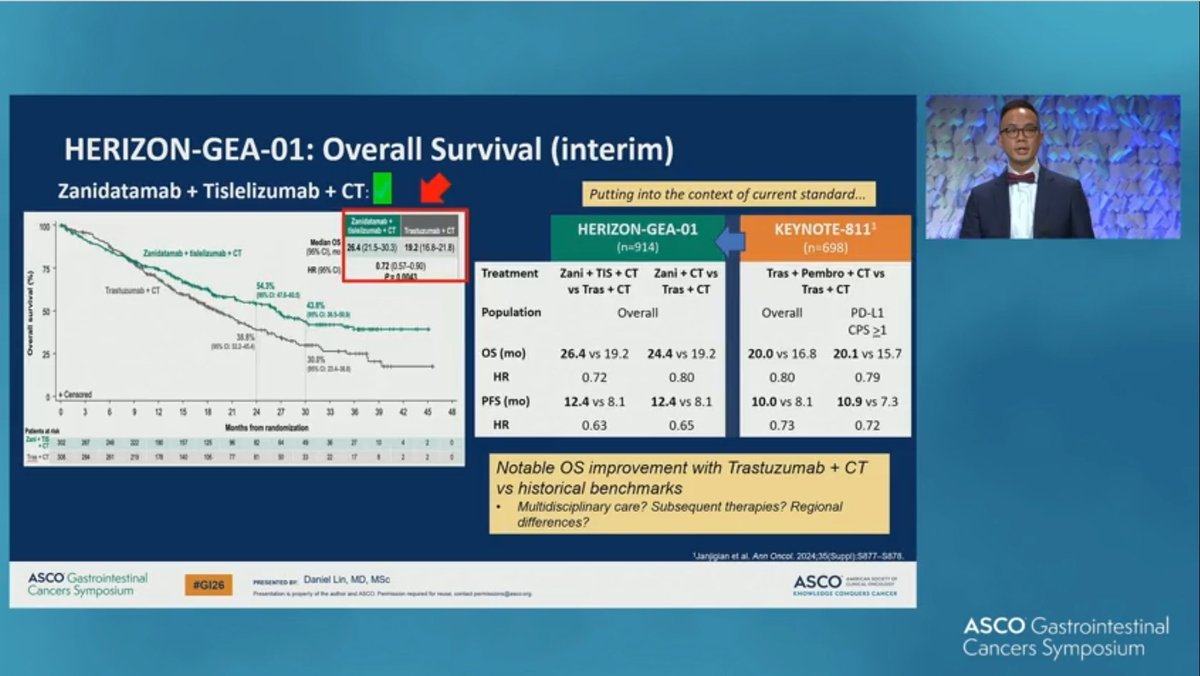
[Slide 1] HERIZON-GEA-01: Overall Survival (interim) - discussant slide (ASCO GI 2026 #GI26, presented by Daniel Lin, MD, MSc). Putting into the context of current standard: HERIZON-GEA-01 (n=914) vs KEYNOTE-811 (n=698; Janjigian et al, Ann Oncol 2024;35(Suppl):S877-S878). HERIZON-GEA-01 (overall population): Zani+TIS+CT vs Tras+CT - OS 26.4 vs 19.2 mo (HR 0.72), PFS 12.4 vs 8.1 mo (HR 0.63); Zani+CT vs Tras+CT - OS 24.4 vs 19.2 mo (HR 0.80), PFS 12.4 vs 8.1 mo (HR 0.65). KEYNOTE-811 (Tras+Pembro+CT vs Tras+CT): overall - OS 20.0 vs 16.8 mo (HR 0.80), PFS 10.0 vs 8.1 mo (HR 0.73); PD-L1 CPS >=1 - OS 20.1 vs 15.7 mo (HR 0.79), PFS 10.9 vs 7.3 mo (HR 0.72). Notable OS improvement with trastuzumab + CT vs historical benchmarks - multidisciplinary care? subsequent therapies? regional differences?
[Slide 1]
HER2+ Gastric Cancer
breaks the OS barrier
@DrRishabhOnco
HERIZON-GEA-01 I Phase III I # GI26
First clear frontline OS win in a decade
Who & What
Phase III, n=914
1L HER2+ metastatic GEA
Global trial
Treatment arms
Trastuzumab
Zanidatamab
Zanidatamab +
+ chemo
+ chemo
chemo + tislelizumab
PFS
8.1
12.4 months
~35% lower progression risk
26.4
Median OS 26.4 months
~28% lower risk of death
Benefit across
MO
regions
~54% alive at 2 years
Independent
of PD-L1
!
Safety
Higher toxicity with triplet
Clinical takeaway:
No new safety signals
Dual HER2 targeting + PD-1
is poised to replace trastuzumab
Save for clinic
as 1L standard in HER2+ mGEA
[Slide 1]
HERIZON
DEA-301
HERIZON-GEA-01 Study Design
Global phase 3 trial of zanidatamab + chemotherapy ± tislelizumab VS trastuzumab + chemotherapy in previously
untreated patients with HER2+ mGEA
Key Eligibility Criteria
Arm A: Trastuzumab +
Age >18 years
chemotherapy
Unresectable, locally advanced,
Dual Primary Endpoints
recurrent or metastatic GEA
PFS (per BICR)
HER2 IHC 3+ or IHC 2+/ISH+
R
Arm B: Zanidatamab
OS
per central testing
1:1:1
1800 mg (<70 kg)/2400 mg (270 kg) IV Q3W
ECOG PS 0 or 1
+ chemotherapy*
CT/MRI
Select Secondary Endpoints
Q6W
No prior treatment for locally advanced
N = 914
cORR (per BICR)
or metastatic disease
Frequency and severity of AEs
No prior HER2-targeted agents or
Arm C: Zanidatamab
immunotherapy in any setting
1800 mg (<70 kg)/2400 mg (270 kg) IV Q3W
ClinicalTrials.gov: NCT05152147
+
tislelizumabᵇ + chemotherapya
Stratification Factors
Prophylaxis to prevent IRR and diarrhea was
Geographic region
mandatory in the zanidatamab-containing arms
HER2 status
ECOG PS
Treatment until disease progression/death/unacceptable toxicity
Chemotherapy could be discontinued after 6 cycles
Physician's choice of capecitabine plus oxaliplatin or 5 Sucrouracil plus cisplatin Chemotherapy was administered for at least 6 cycles or until disease progression, unacceptable toxicity, or another criterion for treatment discontinuation was met
*Tislelizumab 200 mg was administered IV Q3W CT/MRI scans were performed every 6 weeks for the first 54 weeks, then every wooks
AE, adverse event, BICR binded independent contral review, CORR, confirmed objective response rate, CT, computed tomography ECOG PS, Eastern Cooperative Oncology Group performance status, GEA, gastroesophageal adenocarcinoma,
HER2, human epidermal growth factor receptor 2. IHC, immunohistochemistry, IRR, infusion related reaction; ISH, in situ hybridization, IV, intravenously, mGEA, advanced or metastatic GEA MRI, magnetic resonance imaging OS, overall survival
PFS, progression free survival, Q3W, every 3 weeks, Q6W. every 6 weeks, R. randomization
ASCO Gastrointestinal
#GI26
PRESENTED BY Elena Elimova, MD
ASCO
- ENCOLOGY
Cancers Symposium
Presentation property of the author and ASCO Permission required for - contact permissions@asco.org
KNOWLEDGE CONQUERS CANCER
Trial Design
HERIZON-GEA-01 Trial Design
Design: Phase III randomized (1:1:1) trial (NCT05152147, n=914) of first-line zanidatamab + chemotherapy ± tislelizumab vs trastuzumab + chemotherapy in HER2-positive advanced/metastatic gastroesophageal adenocarcinoma.
The first Phase 3 to compare a HER2 bispecific against trastuzumab head-to-head in first-line HER2+ gastroesophageal adenocarcinoma; FDA approved both zanidatamab regimens on August 25, 2026. Zanidatamab is being developed by Jazz and BeOne Medicines under license agreements from Zymeworks, which first developed the molecule; the approval triggers a $250M milestone payment from Jazz to Zymeworks (Zymeworks IR, Aug 25, 2026). Results are in At a Glance. KEYNOTE-811 (pembrolizumab + trastuzumab + chemo) remains approved for HER2+, PD-L1 CPS >=1 disease.
HERIZON-GEA-01 (NCT05152147) is a Phase III randomized trial (n=914) of first-line zanidatamab + chemotherapy, with or without tislelizumab, versus trastuzumab + chemotherapy in HER2-positive advanced/metastatic gastroesophageal adenocarcinoma, sponsored by Jazz Pharmaceuticals and BeOne Medicines. See Trial Design.
What were the key efficacy results of HERIZON-GEA-01?
Both zanidatamab arms improved progression-free survival versus trastuzumab + chemotherapy, and the tislelizumab triplet improved overall survival (HR 0.72) at the first interim analysis; at the second interim (Jazz topline, Aug 31, 2026) the zanidatamab + chemotherapy arm also reached significant OS. All figures, with sources and data cut-offs, are in At a Glance.
Is zanidatamab (Ziihera) FDA approved for gastroesophageal cancer?
Yes. On August 25, 2026 the FDA approved Ziihera (zanidatamab-hrii) for first-line HER2+ advanced gastroesophageal adenocarcinoma: with Tevimbra (tislelizumab-jsgr) and chemotherapy for IHC 3+ or IHC 2+/ISH+ disease, or with chemotherapy alone for IHC 3+ disease. See At a Glance.
How does HERIZON-GEA-01 compare to KEYNOTE-811?
KEYNOTE-811 (pembrolizumab + trastuzumab + chemotherapy) is approved for HER2+, PD-L1 CPS >=1 disease. HERIZON-GEA-01 is the first Phase III to challenge trastuzumab head-to-head in this setting, with benefit reported as independent of PD-L1 status. See At a Glance.
Was quality of life maintained in HERIZON-GEA-01?
Yes. HRQoL data presented at ESMO GI 2026 (Abstract 494O) showed physical functioning and global health status were maintained versus baseline across all three arms; diarrhea was the symptom scale that worsened most. See At a Glance.
Compiled and reviewed by the KOL Pulse research team, led by Brian Shields, Founder, KOL Pulse. Last updated October 26, 2026.
 𝕏
 𝕏
 𝕏
 𝕏
 𝕏
 𝕏
 𝕏