1L dMMR/MSI-H metastatic colorectal cancer — NRG Oncology / SWOG (Cancer Trials Support Unit)
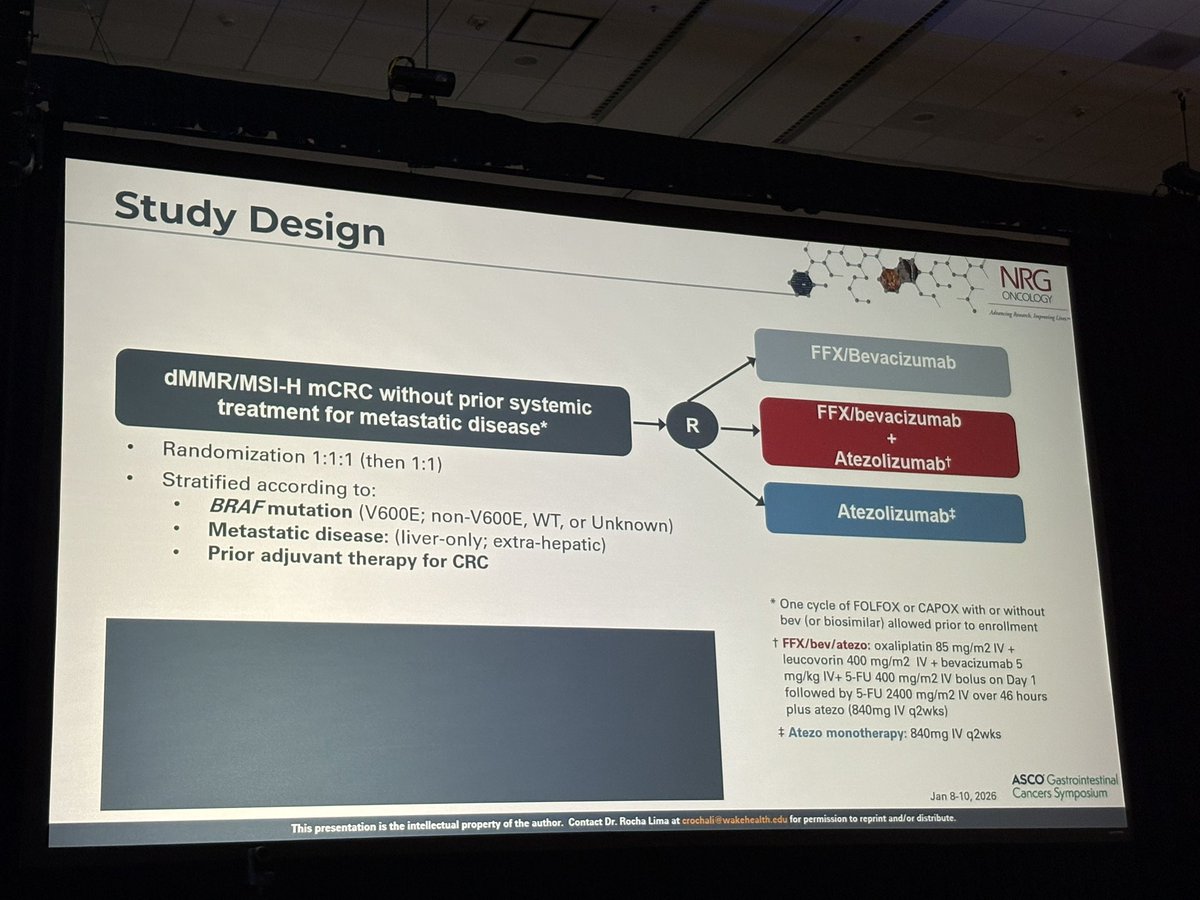
Discover KOL Sentiment on COMMIT →Design - Randomized Phase III NCI-sponsored cooperative-group trial (NRG-GI004/SWOG S1610): atezolizumab + mFOLFOX6 + bevacizumab vs single-agent atezolizumab in first-line dMMR/MSI-H metastatic colorectal cancer. Study closed early after meeting its primary endpoint (ASCO GI 2026).
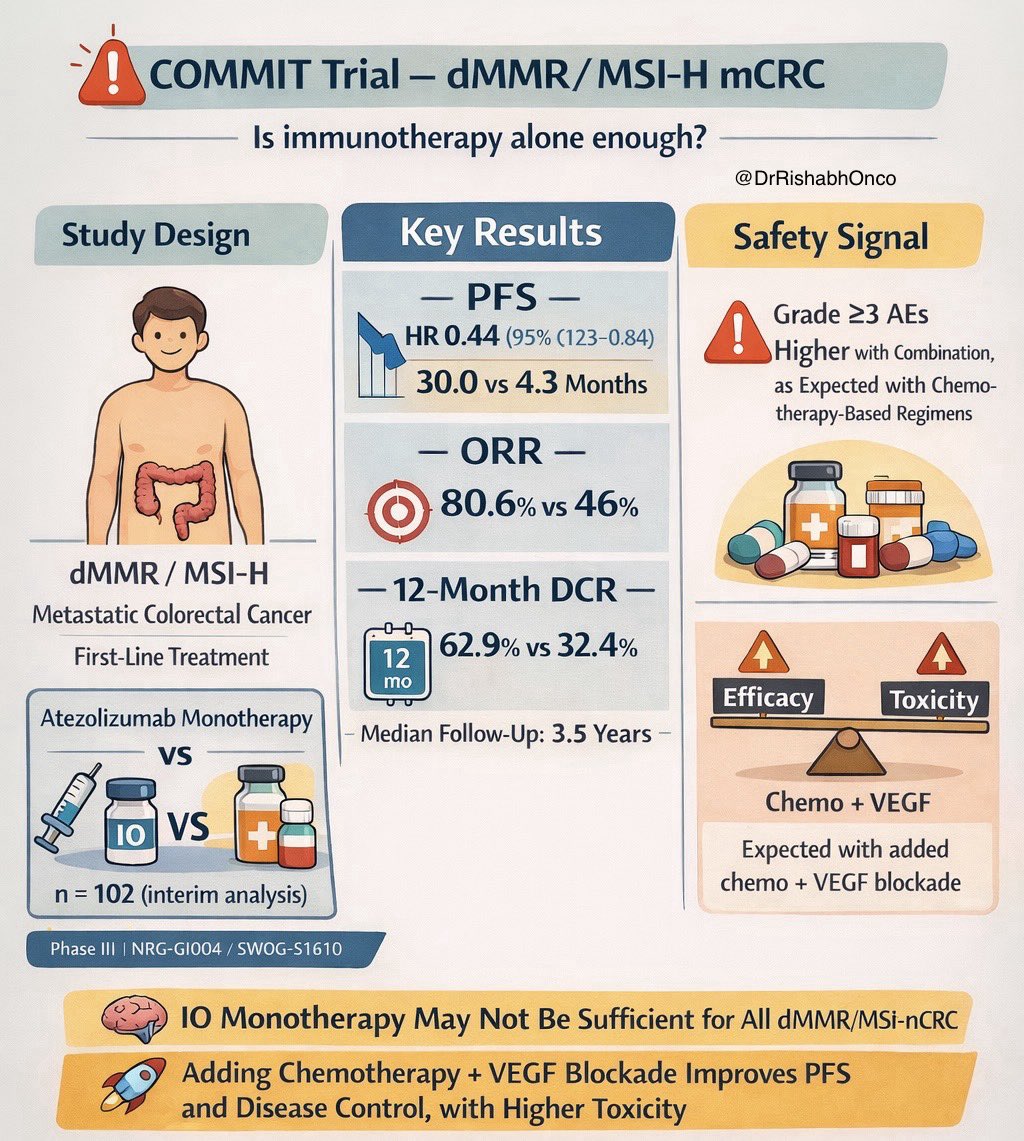
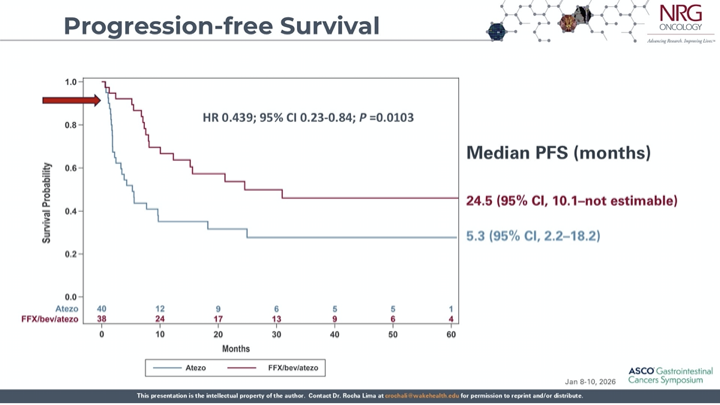
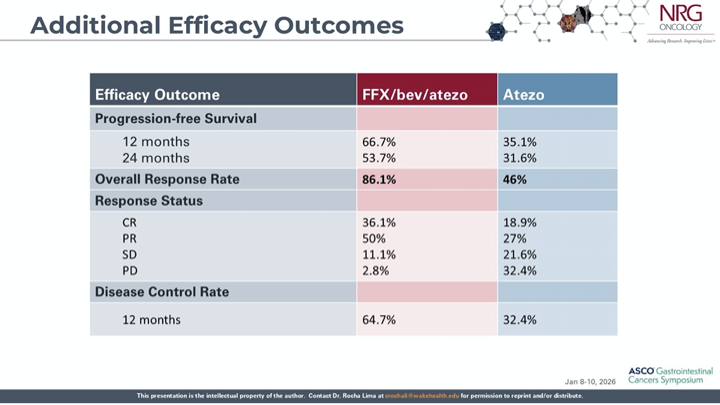
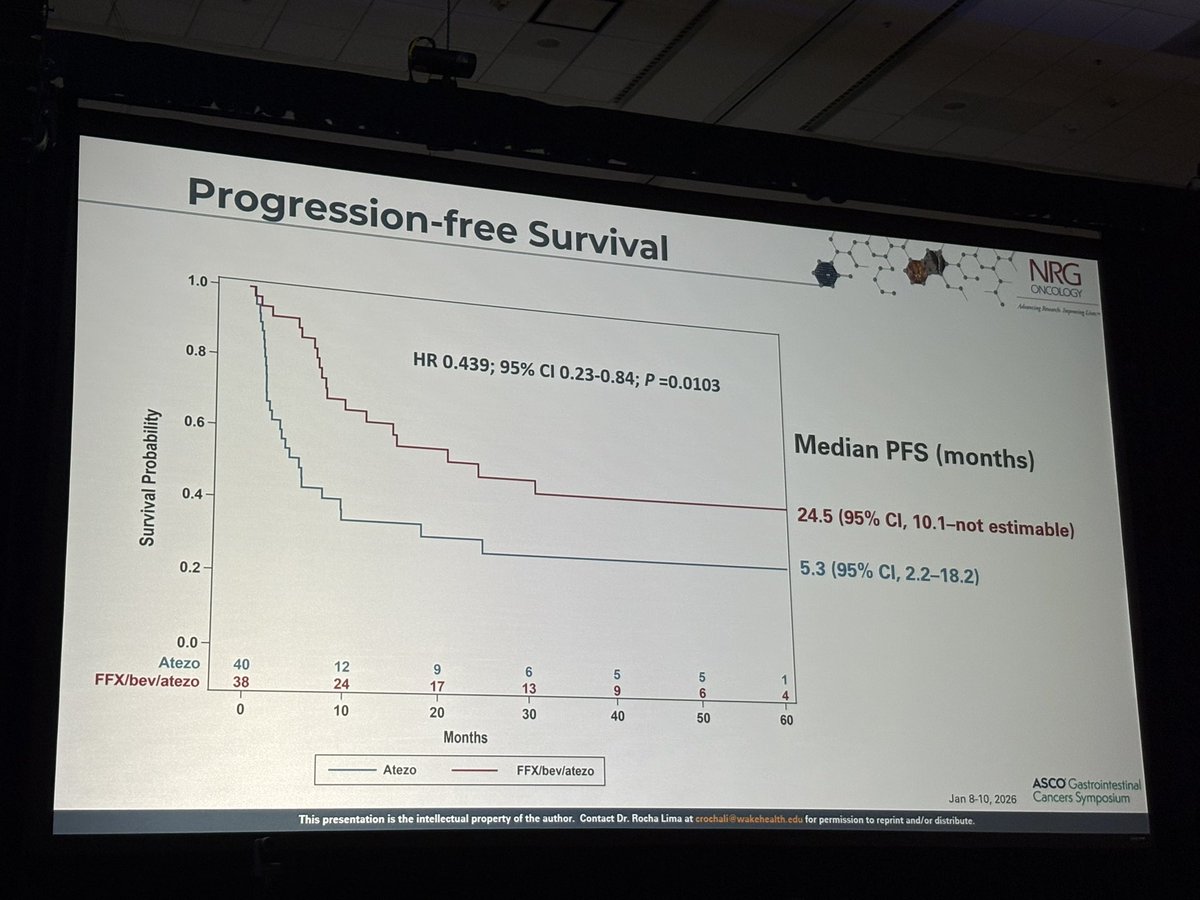
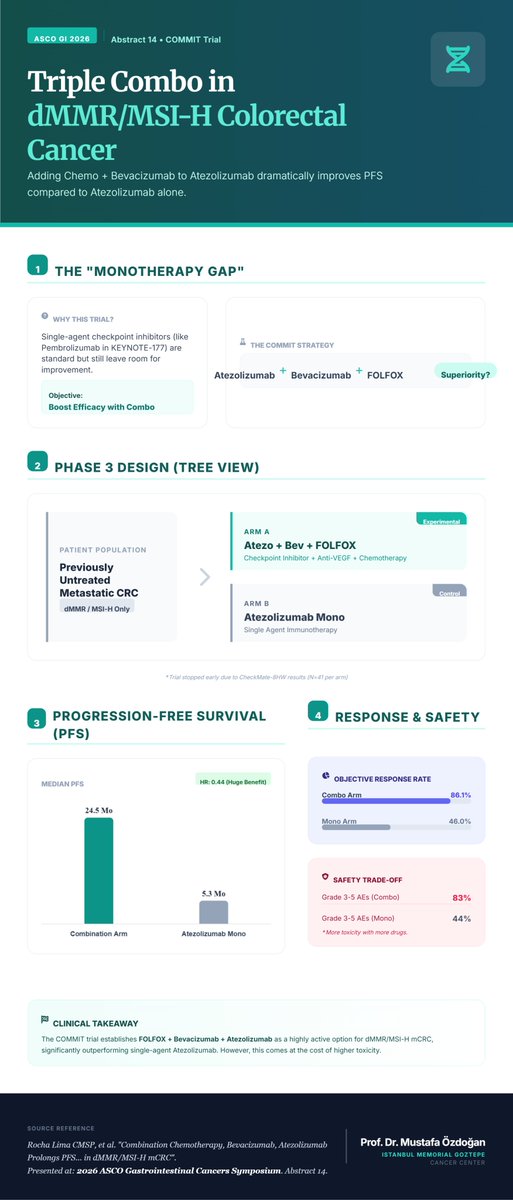
Progression-free survival (primary) - Median PFS 24.5 months with the triplet vs 5.3 months with atezolizumab monotherapy (HR 0.439, 95% CI 0.23-0.84, P=0.0103). ORR 80.6% vs 46%; early progression 2.8% vs 32.4%.
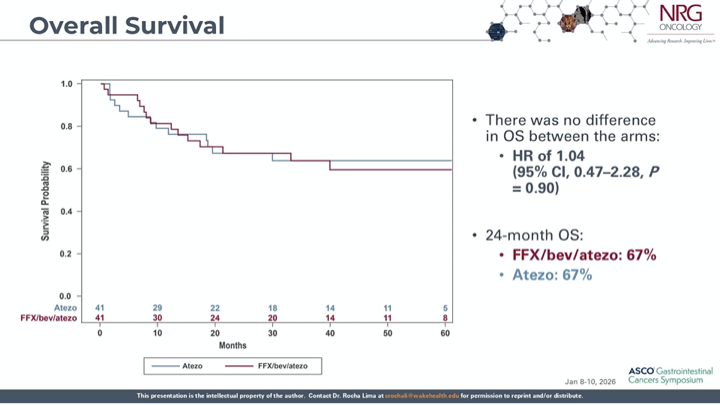
Overall survival - OS data were immature at the interim analysis and OS was not a primary endpoint; follow-up is ongoing after early closure.
Safety - Higher Grade >=3 AEs with the triplet, driven by the chemotherapy backbone (neutropenia, peripheral neuropathy). Atezolizumab monotherapy had lower toxicity but a much higher early-progression rate (32.4% vs 2.8%).
Regulatory / sponsor - Investigational - not FDA approved in this indication; pembrolizumab (KEYNOTE-177) remains the label-approved 1L standard for dMMR/MSI-H mCRC. Lead sponsor: National Cancer Institute, conducted through NRG Oncology and SWOG.
Compiled and reviewed by the KOL Pulse research team, led by Brian Shields, Founder, KOL Pulse. Last updated August 19, 2026.







Top tweets by impressions — click to view on X
🚨 Practice-changing signal in dMMR/MSI-H metastatic CRC
COMMIT trial (NRG-GI004 / SWOG-S1610) at #GI26
Question: Is PD-L1 monotherapy enough for all dMMR mCRC patients?
Answer from COMMIT: Not…
ASCO-GI 2026, abstr 14
🔷COMMIT: Ph3 1L FOLFOX + bev + atezo (n = 41) vs atezo (n = 41) in dMMR/MSI-H mCRC
◾️PFS: 30.0 vs 4.3 m, HR 0.439, p = 0.0103 (<0.0152)
◾️ORR: 80.6 vs 46%
◾️DCR at 12 m:…
#GI26
COMMIT, now with the full presentation data, deserves a serious re-examination.
Dr. Rocha Lima presents COMMIT
1L dMMR/MSI-H mCRC
Atezolizumab alone vs FOLFOX + bevacizumab + atezolizumab
Key…
COMMIT: Positive results, yet interpret with caution #GI26
Why did Atezo (control arm) perform poorly compared to Pembro (KN177) or Nivo (CM8HW)?
1⃣Difference in PD-1 vs PD-L1 for MSI-H/dMMR…
Dr. Max rand PhIII COMMIT @NRGonc of #1L #atezo +/- FOLFOX in #MSI-H #mCRC ➡️ improved PFS median 24.5 vs 5.3 mos, immature OS, ORR 36.1 vs 18.9% FOLFOX-atezo vs atezo, respectively. Note, study…
Immunotherapy alone works in dMMR/MSI-H mCRC.
But is it enough?
At #ASCOGI26, the COMMIT trial shows that adding FOLFOX + Bevacizumab to Atezolizumab dramatically improves outcomes.
But efficacy…

Agree with @jgong15. Good to see studies and investigators doing the right thing and reevaluating continuation of studies when new data becomes available and standards of care changes. Putting…
COMMIT (NRG-GI004 / SWOG-S1610), 1L dMMR/MSI-H mCRC — interim data with key limitations from #ASCOGI2026
• Design: Phase III, heavily amended; final comparison atezo vs mFOLFOX6 + bev + atezo
• N…

I am delighted to serving as coMMit group chair for 2025-2027, alongside Vice-chair Natalie Callander. Thanks @bhemato @DholariaMD @IMFjimMYELOMA and scientific steering committee. Together we will…
@pashtoonkasi @OncoAlert @NRGonc Why are so few people discussing the underperformance! Is this going to impact adjuvant MSI strategies?? Would love to see some post-approval data here.
Addresses the ~40% primary resistance to PD-1 monotherapy seen in KEYNOTE-177. Triplet improves PFS and ORR significantly vs. atezolizumab monotherapy — but without head-to-head data vs. pembrolizumab monotherapy. Potential option for fit dMMR/MSI-H patients prioritizing deeper responses and reduced early-progression risk. Does not supplant KEYNOTE-177 as the label-approved standard.
Median PFS was 24.5 months with atezolizumab + mFOLFOX6 + bevacizumab vs. 5.3 months with atezolizumab monotherapy (HR 0.439, 95% CI 0.23-0.84, P=0.0103). ORR: 80.6% vs. 46%. Early progression: 2.8% vs. 32.4% — triplet eliminates the ~30% primary resistance seen with atezolizumab alone. Study closed early after meeting primary endpoint.
Overall survival data immature at interim analysis; not a primary endpoint. Trial closed early after primary PFS endpoint met; OS follow-up ongoing.
Higher Grade ≥3 AEs with the triplet driven by chemotherapy backbone (neutropenia, peripheral neuropathy). Atezolizumab monotherapy had lower toxicity but a much higher early progression rate (32.4% vs. 2.8%).
⚠️ Does not supplant KEYNOTE-177 but addresses primary resistance. Addresses the ~40% primary resistance to PD-1 monotherapy seen in KEYNOTE-177. Triplet improves PFS and ORR significantly vs. atezolizumab monotherapy — but without head-to-head data vs. pembrolizumab monotherapy. Potential option for fit dMMR/MSI-H patients prioritizing deeper responses and reduced early-progression risk. Does not supplant KEYNOTE-177 as the label-approved standard.
COMMIT (NRG-GI004/SWOG S1610; NCT02997228) is an NCI-sponsored randomized Phase III trial in first-line dMMR/MSI-H metastatic colorectal cancer. It compared atezolizumab combined with mFOLFOX6 chemotherapy and bevacizumab against single-agent atezolizumab. The study closed early after meeting its primary endpoint, with results presented at ASCO GI 2026.
Median PFS was 24.5 months with atezolizumab + mFOLFOX6 + bevacizumab vs 5.3 months with atezolizumab monotherapy (HR 0.439, 95% CI 0.23-0.84, P=0.0103). ORR was 80.6% vs 46%, and early progression fell from 32.4% with monotherapy to 2.8% with the triplet - largely eliminating the primary resistance seen with checkpoint-inhibitor monotherapy.
No. The atezolizumab + mFOLFOX6 + bevacizumab triplet is investigational in this indication, and atezolizumab is not FDA approved for MSI-H colorectal cancer. Pembrolizumab monotherapy, based on KEYNOTE-177, remains the label-approved first-line standard for dMMR/MSI-H metastatic colorectal cancer.
Grade >=3 adverse events were higher with the triplet, driven by the chemotherapy backbone - mainly neutropenia and peripheral neuropathy. Atezolizumab monotherapy was less toxic but carried a much higher early-progression rate (32.4% vs 2.8%), so the added chemotherapy toxicity was offset by a dramatic drop in early progression.
COMMIT addresses the roughly 40% primary-resistance rate seen with PD-1 monotherapy in KEYNOTE-177 by pairing a checkpoint inhibitor with chemotherapy and bevacizumab up front. It significantly improves PFS and ORR versus atezolizumab alone, though without head-to-head data against pembrolizumab monotherapy, so it does not supplant KEYNOTE-177 as the label-approved standard - it is a potential option for fit patients prioritizing deeper responses and lower early-progression risk.