Metastatic NSCLC post-platinum (TTFields) - Novocure
Discover KOL Sentiment on LUNAR →Design - Phase III, randomized, open-label: TTFields (NovoTTF-200T device) plus standard therapy (immune checkpoint inhibitor or docetaxel) vs standard therapy alone in 276 patients with metastatic NSCLC post-platinum, across North America, Europe, and East Asia.
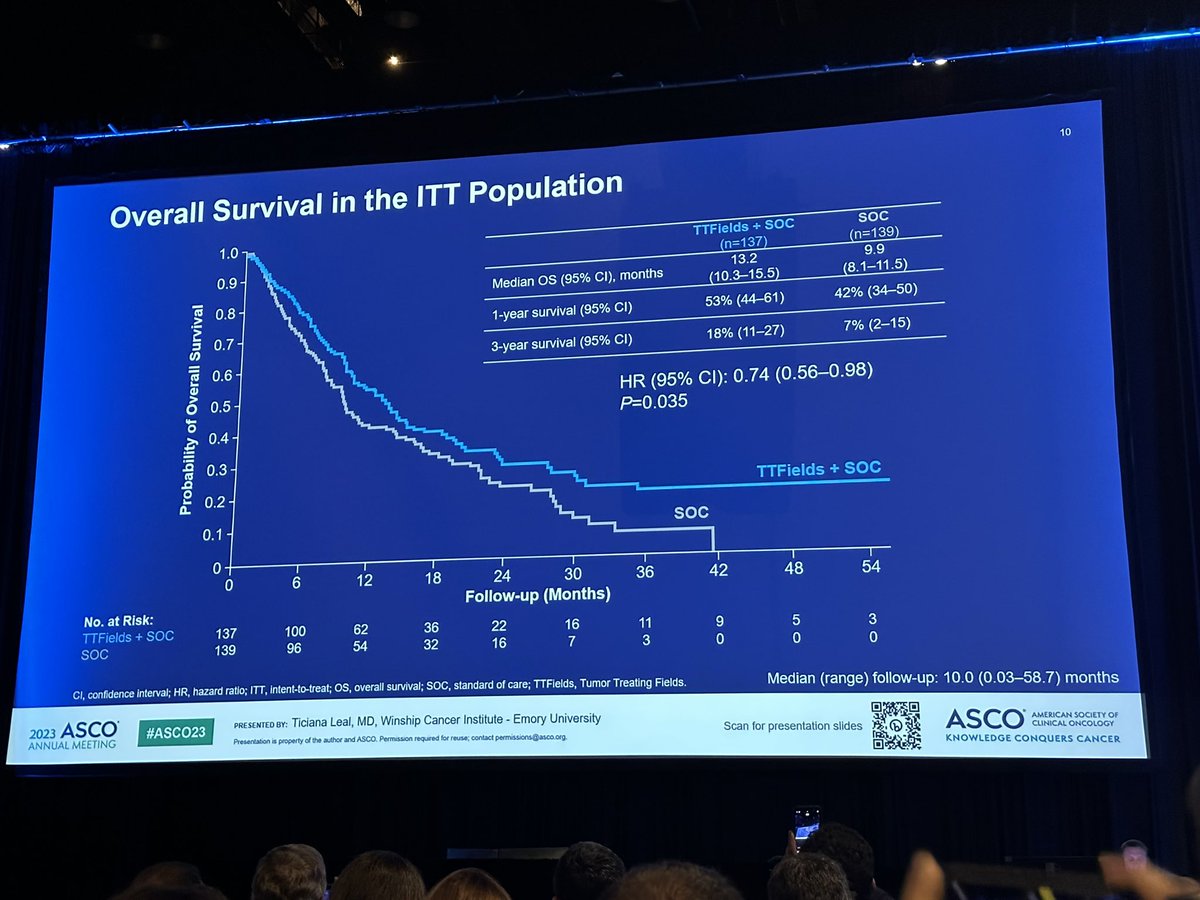
Overall survival - Median OS 13.2 vs 9.9 months (HR 0.74; p=0.035); 1-year OS 53% vs 42%; 3-year OS 18% vs 7% (p=0.015) - the first Phase III OS improvement in metastatic NSCLC post-platinum in more than seven years.
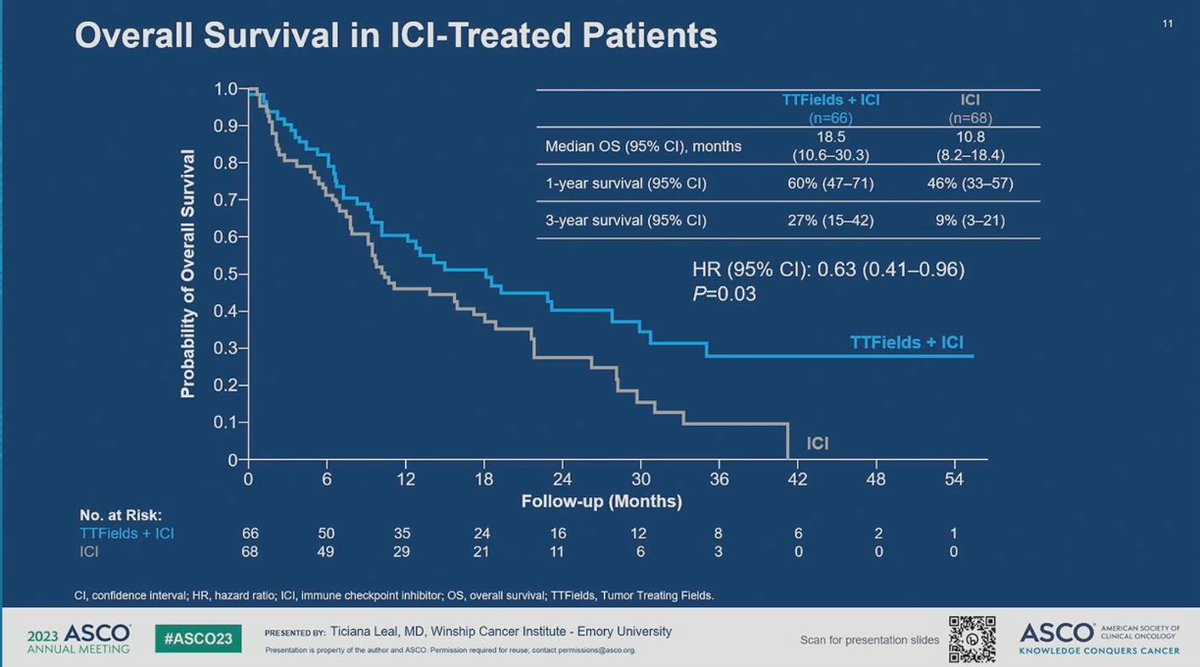
ICI subgroup - The benefit was driven by the immune checkpoint inhibitor subgroup: median OS 18.5 vs 10.8 months (HR 0.63; p=0.03). The docetaxel subgroup showed a positive trend (11.1 vs 8.7 months) that was not individually significant.
Safety - No added systemic toxicity. Device-related AEs in 71% of patients, predominantly grade 1-2 skin irritation (dermatitis 39%, pruritus 12%, rash 9%, skin ulcer 8%); no grade 4-5 device-related events; 14% discontinued due to device-related toxicity.
Regulatory / sponsor - Sponsor: Novocure. FDA approved Optune Lua on October 15, 2024 for metastatic NSCLC post-platinum, used with PD-1/PD-L1 inhibitors or docetaxel. The LUNAR-2 program is evaluating TTFields with first-line pembrolizumab plus chemotherapy.
Compiled and reviewed by the KOL Pulse research team, led by Brian Shields, Founder, KOL Pulse. Last updated August 19, 2026.















Top 10 by impressions - click to view on X
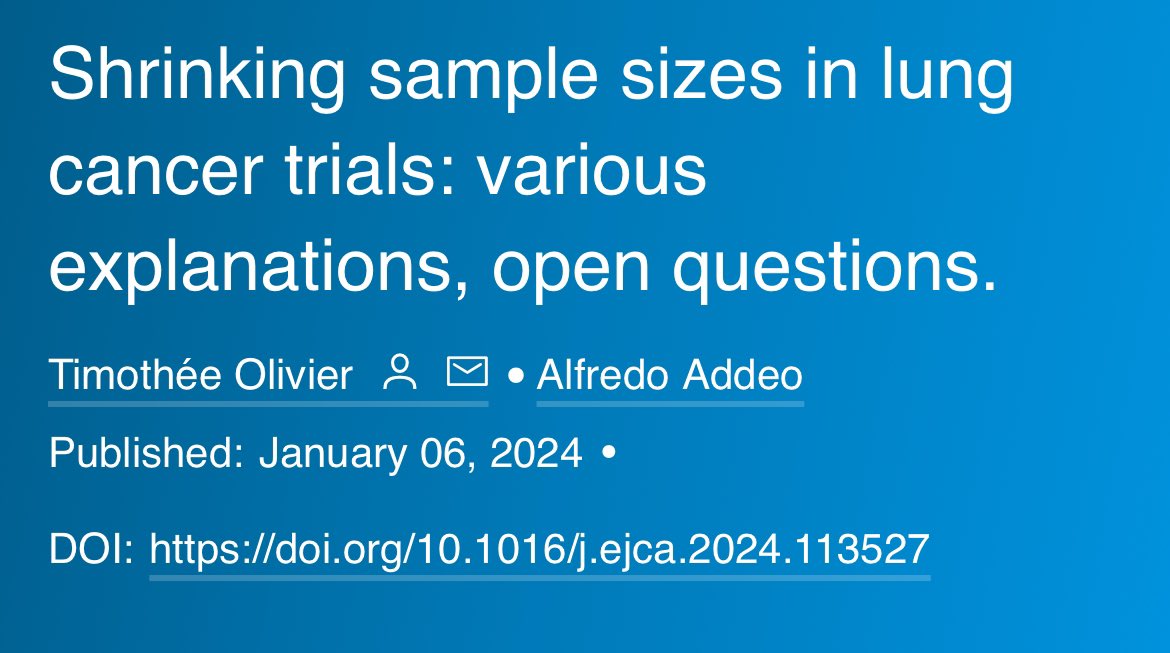
Out today in EJC ! With @Alfdoc2 , we discuss reasons and implications of lowering the sample size in trials, based on 3 recent examples in patients with adv/metastatic lung cancer: -...
FDA approved $NVCR Optune device for the treatment of metastatic NSCLC, based on the LUNAR study. LUNAR was presented at ASCO in 2023. Technically, the study showed a stat sig improvement in OS,...
Novocure trials should not open-label; they should be sham controlled Another failure from @US_FDA to demand proper studies before approving costly, onerous devices that change other...
T.Leal from @WinshipAtEmory presents LUNAR trial adding TTFs to either doce or ICI, showing OS benefit, but OS benefit in pts on doce arm (1/2 of pts) clearly less. Needs to overcome...
FDA is really a failed agency There has to be a better minor league for Pharma executives. Optune -- tumor treating electrical fields-- is such a crazy idea. In GBM, the trial is confounded because...

LUNAR TTF ph3 post platinum of TTF vs CPI/doce. Impressive OS benefit in ITT. Clear separation, esp so in CPI treated. Little benefit in doce pts; suggest benefit driven by CPI synergy. Little ORR...
Tumor Treating Fields (TTFields) with Standard of Care (SOC) in Metastatic Non-Small Cell Lung Cancer (mNSCLC) After Platinum-based Therapies: Randomized, Phase 3 LUNAR Study #LCSM...
Update to the @ASCO living guidelines for driver negative NSCLC @JCO_ASCO includes trastuzumab deruxtecan (T-DXd, #HER2 ADC) for HER2 IHC3+. Also reviewed...

Excellent contribution🙌 by the MD. Ticiana Leal LUNAR phase III study #TTfields therapy with SOC provided a statistically significant 3-month improvement in median OS versus SOC with...

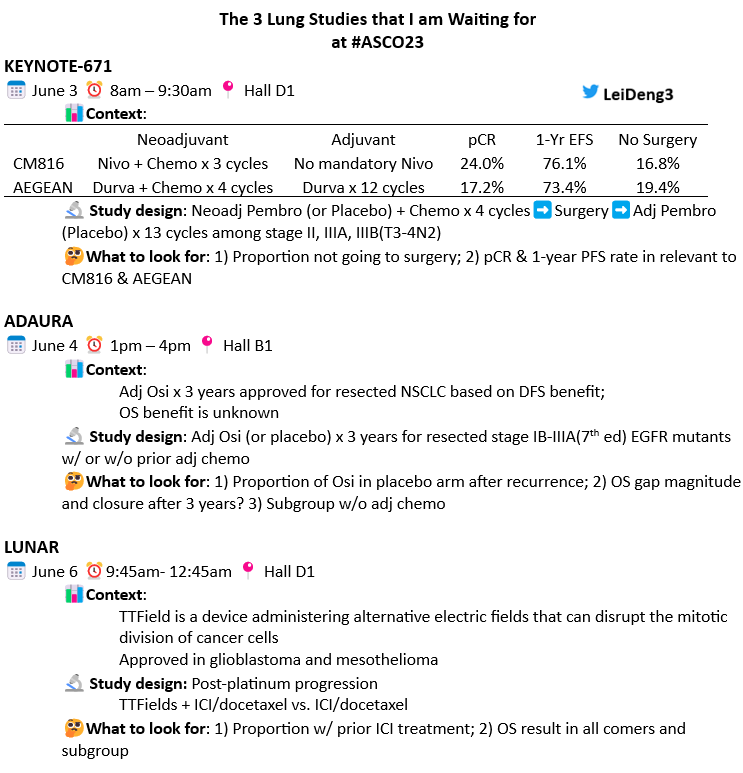
The 3 #LCSM studies that I am waiting for at #ASCO23 - KEYNOTE 671, ADAURA & LUNAR. See the Context, Design, and What to Look For.
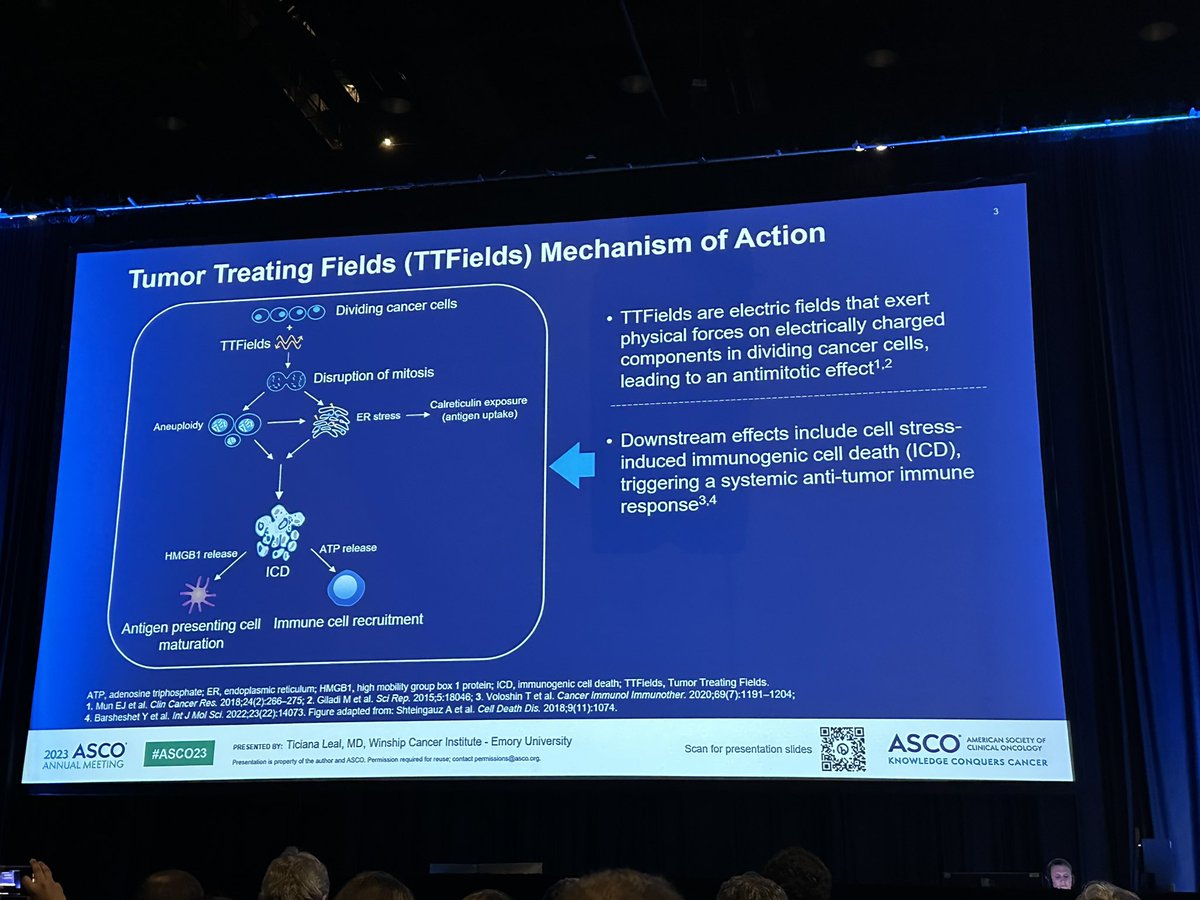
LUNAR is a Phase III, randomized, open-label trial (NCT02973789) that evaluated Tumor Treating Fields (TTFields) therapy delivered by the NovoTTF-200T device in combination with standard systemic therapies for patients with metastatic non-small cell lung cancer (NSCLC) that progressed during or after platinum-based therapy. The trial randomized 276 patients across sites in North America, Western Europe, Eastern Europe, and East Asia. LUNAR is the first Phase III trial in more than seven years to demonstrate a statistically significant improvement in overall survival in metastatic NSCLC post-platinum therapy.
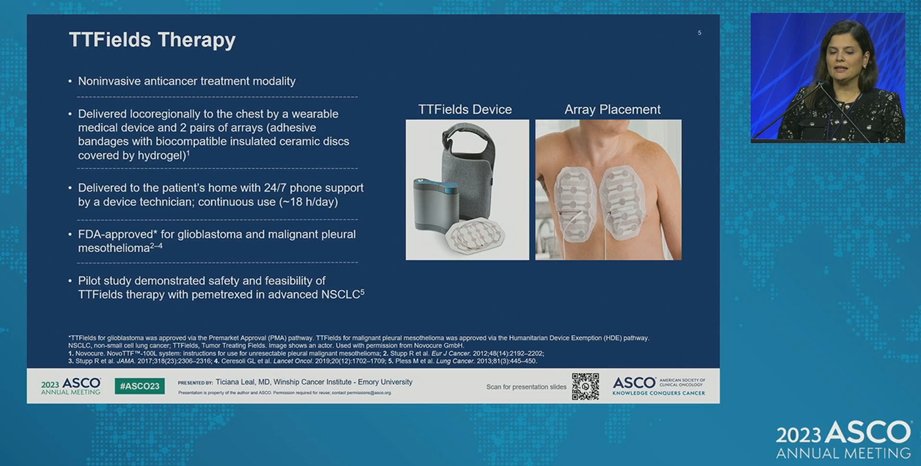
Phase III, randomized (1:1), open-label, pivotal trial. Patients received TTFields (150 kHz delivered continuously via thoracic arrays) plus physician's choice of immune checkpoint inhibitor (nivolumab or pembrolizumab) or docetaxel, versus ICI or docetaxel alone.
Adults with metastatic NSCLC (stage IV) whose disease progressed during or after platinum-based chemotherapy, with ECOG performance status 0-2 and radiologically evaluable thoracic disease. 276 patients enrolled: 137 TTFields + SOC, 139 SOC alone. Median age 64 years, 65% male.
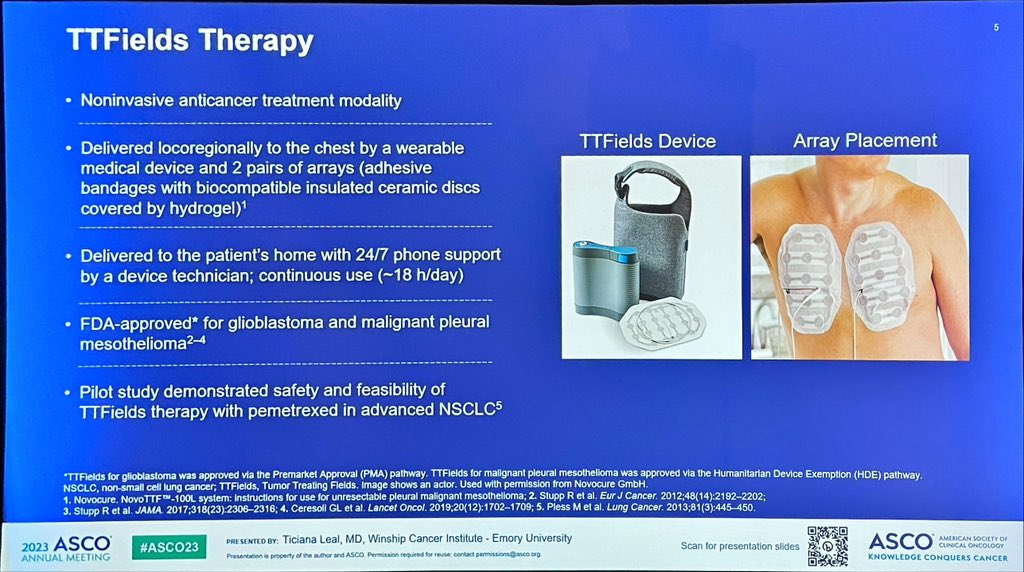
Continuous TTFields therapy at 150 kHz delivered via the NovoTTF-200T device (arrays worn on chest/back at least 18 hours/day) combined with either an immune checkpoint inhibitor or docetaxel, versus ICI or docetaxel alone.
Primary endpoint: overall survival (OS). Key secondary endpoints: OS in ICI subgroup, OS in docetaxel subgroup, progression-free survival (PFS), adverse events.
TTFields combined with standard therapies demonstrated a statistically significant OS improvement with median OS of 13.2 months versus 9.9 months for SOC alone (HR 0.74; p=0.035). In the ICI subgroup, TTFields + ICI achieved median OS of 18.5 months versus 10.8 months for ICI alone (HR 0.63; p=0.03). The 1-year OS rate was 53% versus 42%, and the 3-year OS rate was 18% versus 7% (p=0.015).
The overall survival benefit was driven primarily by the ICI subgroup, where TTFields provided an unprecedented 8-month improvement in median OS (18.5 vs 10.8 months). The docetaxel subgroup showed a positive trend (median OS 11.1 vs 8.7 months) but did not reach statistical significance individually. The FDA approved TTFields (Optune Lua) for metastatic NSCLC in October 2024 based on these results.
TTFields therapy was well-tolerated with no added systemic toxicities. Device-related adverse events occurred in 71% of patients, predominantly grade 1-2 local skin irritation including dermatitis (39%), pruritus (12%), rash (9%), and skin ulcer (8%). Few grade 3 device-related AEs were reported, with no grade 4 or 5 device-related events. 14% of patients in the TTFields arm discontinued due to device-related toxicity.
LUNAR established TTFields as the first non-systemic therapy to improve OS in metastatic NSCLC post-platinum. The pronounced benefit in the ICI subgroup (HR 0.63) has generated significant interest in combining TTFields with immunotherapy, leading to the LUNAR-2 trial evaluating TTFields with first-line pembrolizumab + chemotherapy. Critics have raised concerns about the open-label design (no sham control), the modest PFS benefit (4.8 vs 4.1 months), compliance burden of wearing the device 18+ hours/day, and the cost of TTFields therapy.
Physician posts about this trial captured live during the IASLC 2026 World Conference on Lung Cancer (Seoul, September 12–15). Quotes are verbatim; each card links to the original post. Last updated 2026-09-13.
LUNAR (NCT02973789) is a Phase III, randomized, open-label trial by Novocure that evaluated Tumor Treating Fields (TTFields) therapy, delivered by the wearable NovoTTF-200T device, combined with standard systemic therapy (an immune checkpoint inhibitor or docetaxel) in patients with metastatic NSCLC that progressed during or after platinum-based therapy. It randomized 276 patients across North America, Europe, and East Asia.
Adding TTFields to standard therapy improved median overall survival to 13.2 months versus 9.9 months for standard therapy alone (HR 0.74; p=0.035). The benefit was most pronounced in the immune checkpoint inhibitor subgroup (median OS 18.5 vs 10.8 months; HR 0.63; p=0.03), while the docetaxel subgroup showed a non-significant positive trend. The PFS benefit was modest (4.8 vs 4.1 months).
Yes. On October 15, 2024, the FDA approved Optune Lua (TTFields) for adult patients with metastatic NSCLC that progressed during or after platinum-based therapy, for concurrent use with PD-1/PD-L1 inhibitors or docetaxel, based on the LUNAR results. It is the first non-pharmacological therapy approved for metastatic NSCLC and the third TTFields cancer indication after glioblastoma and mesothelioma.
TTFields added no systemic toxicity. Device-related adverse events occurred in 71% of patients but were predominantly grade 1-2 local skin irritation, including dermatitis (39%), pruritus (12%), rash (9%), and skin ulcer (8%). There were no grade 4 or 5 device-related events, and 14% of patients discontinued due to device-related toxicity.
LUNAR established TTFields as the first non-systemic therapy to improve OS in metastatic NSCLC post-platinum, and the strong ICI-subgroup signal led to the LUNAR-2 trial of TTFields with first-line pembrolizumab plus chemotherapy. Critics point to the open-label design without a sham control, the modest PFS benefit (4.8 vs 4.1 months), the burden of wearing the device 18+ hours per day, and cost.