KOL Pulse - Trial Profile

NATALEE Trial

Adjuvant HR+/HER2- early BC - Novartis

Adjuvant HR+/HER2- early BC Ribociclib (Kisqali) AACR 2024 FDA Approved
Explore Trial Data

Top KOLs Discussing NATALEE

Paolo Tarantino
Paolo Tarantino
@PTarantinoMD
150.6K impressions
Yakup Ergün
Yakup Ergün
@dr_yakupergun
71.0K impressions
Timothe Olivier, MD
Timothe Olivier, MD
@Timothee_MD
59.1K impressions
Vinay Prasad MD MPH
Vinay Prasad MD MPH
@VPrasadMDMPH
53.9K impressions
Oncology Brothers
Oncology Brothers
@OncBrothers
40.0K impressions
NEJM
NEJM
@NEJM
34.3K impressions

NATALEE Key Slides & Visuals

Official trial slides and relevant visuals shared by KOLs at AACR 2024. Click any image to expand.

Yakup Ergün
Yakup Ergün @dr_yakupergun
NATALEE Data
57.6K impressions · 77 likes · Mar 20, 2024
View on X ↗
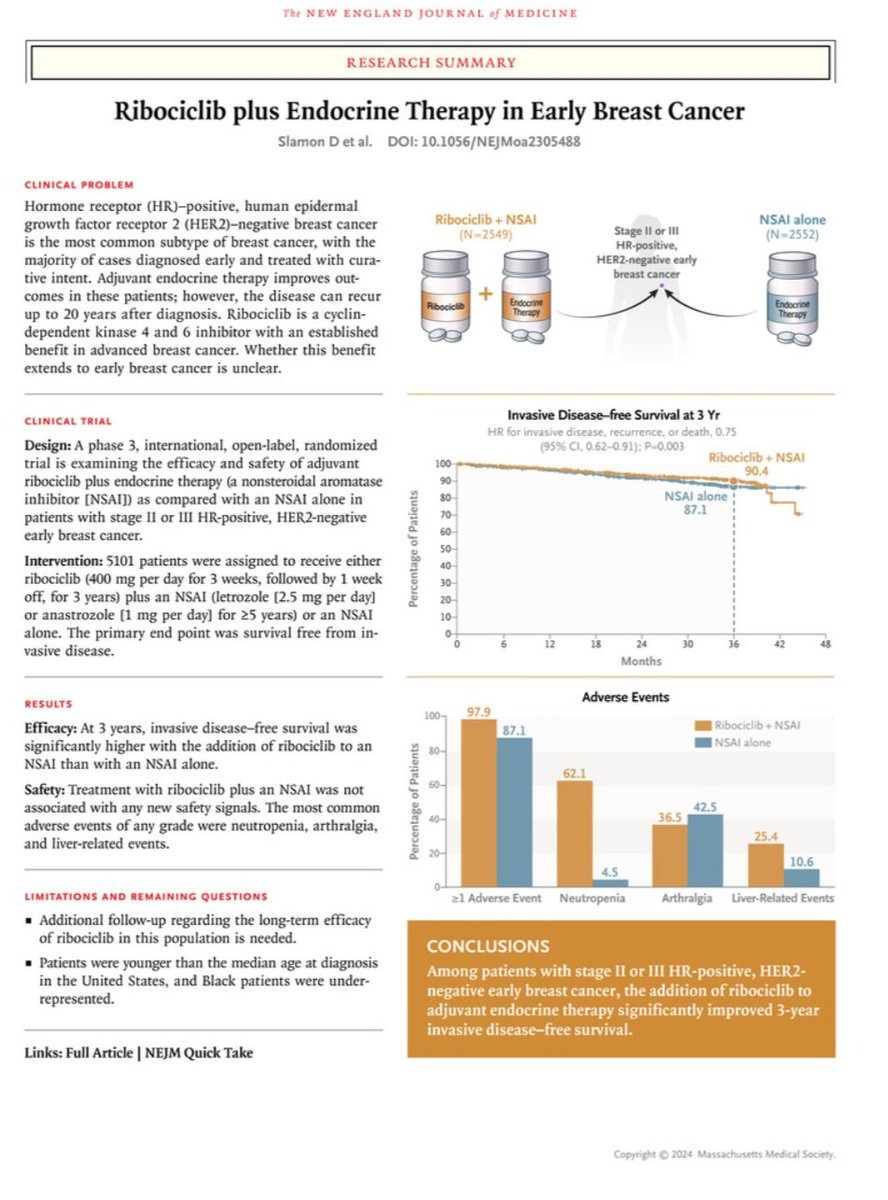
[Slide 1] The NEW ENGLAND JOURNAL of MEDICINE RESEARCH SUMMARY Ribociclib plus Endocrine Therapy in Early Breast Cancer Slamon D et al. DOI: 10.1056/NEjMoa2305488 CLINICAL PROBLEM Hormone receptor (HR)-positive, human epidermal growth factor receptor 2 (HER2)-negative breast cancer Ribociclib + NSAI NSAI alone is the most common subtype of breast cancer, with the (N=2549) Stage II or III (N=2552) HR-positive, majority of cases diagnosed early and treated with cura- HER2-negative early tive intent. Adjuvant endocrine therapy improves out- breast cancer comes in these patients; however, the disease can recur + Ribociclib Endocrine Endocrine up to 20 years after diagnosis. Ribociclib is a cyclin- Therapy Therapy dependent kinase 4 and 6 inhibitor with an established benefit in advanced breast cancer. Whether this benefit extends to early breast cancer is unclear. Invasive Disease-free Survival at 3 Yr CLINICAL TRIAL HR for invasive disease, recurrence, or death, 0.75 Design: A phase 3, international, open-label, randomized (95% CI, 0.62-0.91): P=0.003 trial is examining the efficacy and safety of adjuvant Ribociclib NSAI 100 90.4 ribociclib plus endocrine therapy (a nonsteroidal aromatase 90 inhibitor [NSAI]) as compared with an NSAI alone in 80 NSAI alone 70 87.1 patients with stage II or III HR-positive, HER2-negative early breast cancer. Intervention: 5101 patients were assigned to receive either Percentage of Patients 60 50 40 ribociclib (400 mg per day for 3 weeks, followed by 1 week 30 off, for 3 years) plus an NSAI (letrozole [2.5 mg per day] 20 or anastrozole [1 mg per day] for >5 years) or an NSAI 10 alone. The primary end point was survival free from in- 0 0 6 12 18 vasive disease. 24 30 36 42 48 Months Adverse Events RESULTS 100 97.9 Efficacy: At 3 years, invasive disease-free survival was 87.1 Ribociclib NSAI significantly higher with the addition of ribociclib to an NSAI alone 80 NSAI than with an NSAI alone. Safety: Treatment with ribociclib plus an NSAI was not associated with any new safety signals. The most common Percentage of Patients 62.1 60 42.5 40 36.5 adverse events of any grade were neutropenia, arthralgia, and liver-related events. 25.4 20 10.6 4.5 0 LIMITATIONS AND REMAINING QUESTIONS >1 Adverse Event Neutropenia Arthralgia Liver-Related Events Additional follow-up regarding the long-term efficacy of ribociclib in this population is needed. CONCLUSIONS Patients were younger than the median age at diagnosis Among patients with stage II or III HR-positive, HER2- in the United States, and Black patients were under- represented. negative early breast cancer, the addition of ribociclib to adjuvant endocrine therapy significantly improved 3-year invasive disease-free survival. Links: Full Article I NEJM Quick Take Copyright © 2024 Massachusetts Medical Society.
Paolo Tarantino
Paolo Tarantino @PTarantinoMD
NATALEE Data
49.8K impressions · 329 likes · Mar 27, 2023
View on X ↗
[Slide 1] NOVARTIS Novartis Kisqali® Phase III NATALEE trial meets primary endpoint at interim analysis demonstrating clinically meaningful benefit in broad population of patients with early breast cancer
Paolo Tarantino
Paolo Tarantino @PTarantinoMD
NATALEE Data
49.1K impressions · 329 likes · Mar 27, 2023
View on X ↗
NEJM
NEJM @NEJM
NATALEE Data
34.3K impressions · 67 likes · Mar 20, 2024
View on X ↗
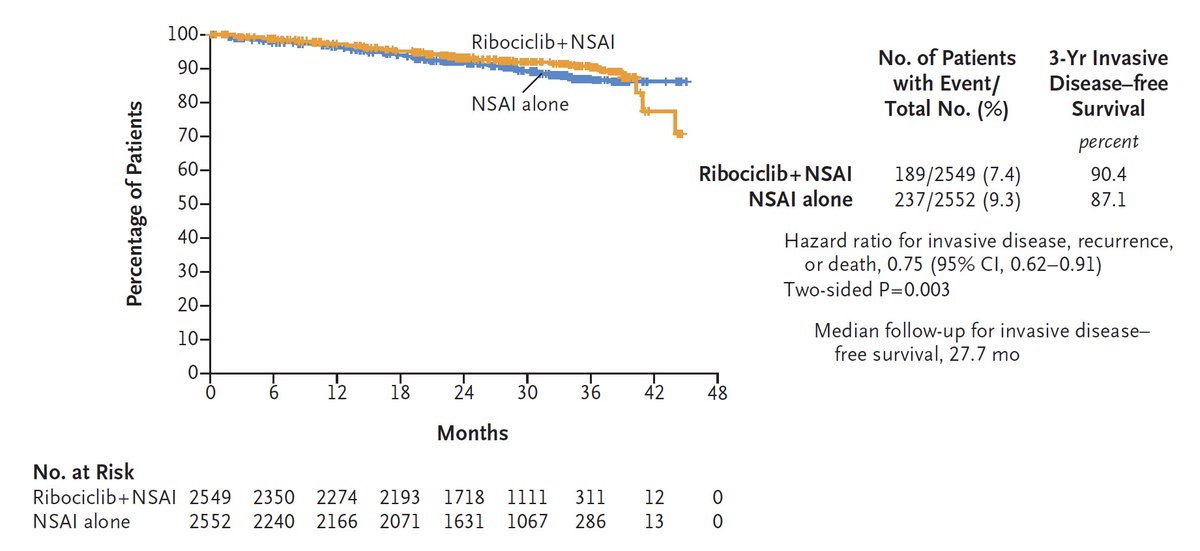
[Slide 1] 100 Ribociclib+NSAI No. of Patients 3-Yr Invasive 90 with Event/ Disease-free 80 NSAI alone Total No. (%) Survival 70 Percentage of Patients percent 60 Ribociclib+ NSAI 189/2549 (7.4) 90.4 50 NSAI alone 237/2552 (9.3) 87.1 40 Hazard ratio for invasive disease, recurrence, 30 or death, 0.75 (95% CI, 0.62-0.91) Two-sided P=0.003 20 10 Median follow-up for invasive disease- free survival, 27.7 mo 0 0 6 12 18 24 30 36 42 48 Months No. at Risk Ribociclib+NSAI 2549 2350 2274 2193 1718 1111 311 12 0 NSAI alone 2552 2240 2166 2071 1631 1067 286 13 0
Sara Tolaney
Sara Tolaney @stolaney1
NATALEE Data
29.0K impressions · 91 likes · Dec 08, 2023
View on X ↗
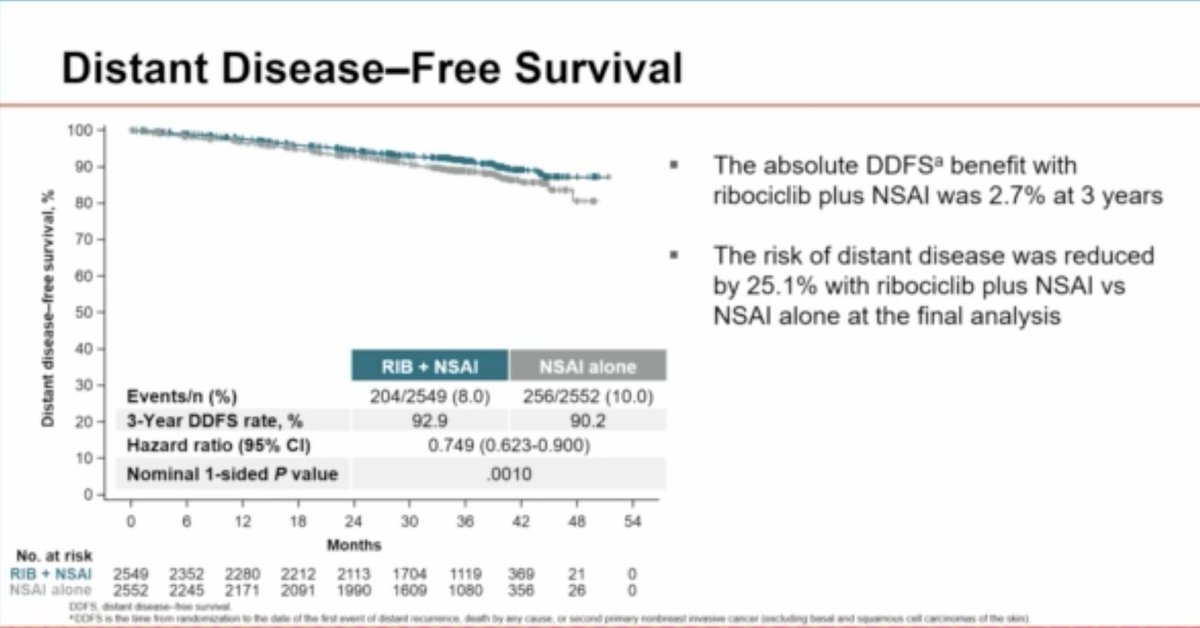
[Slide 1] Distant Disease-Free Survival 100 90 . The absolute DDFSᵃ benefit with 80 ribociclib plus NSAI was 2.7% at 3 years Distant disease-free survival, % 70 . The risk of distant disease was reduced 60 by 25.1% with ribociclib plus NSAI VS 50 NSAI alone at the final analysis 40 RIB + NSAI NSAI alone 30 Events/n (%) 204/2549 (8.0) 256/2552 (10.0) 20 3-Year DDFS rate, % 92.9 90.2 Hazard ratio (95% CI) 0.749 (0.623-0.900) 10 Nominal 1-sided P value 0010 0 0 6 12 18 24 30 36 42 48 54 Months No. at risk RIB + NSAI 2549 2352 2280 2212 2113 1704 1119 369 21 0 NSAI alone 2552 2245 2171 2091 1990 1609 1080 356 26 0 DOFS distant disease free survival *DDFS is the time from randomization to the date of the list event of listant recurrence death by any cause or second primary nonbreast INVESAGE cancer (excluding basal and squarious cell caronomes of the skin) --- [Slide 2] iDFS by Anatomical Stage Stage II Stage III 100 100 90 90 80 80 Invasive disease-free survival, % 70 40 NSAI alone Invasive disease-free survival, % 70 60 60 50 Median follow-up: 38.6 mo Median follow-up: 33.1 mo 50 RIB + NSAI RIB + NSAI NSAI alone 40 30 Events/n (%) 55/1011 (5.44) 80/1034 (7.74) 30 Events/n (%) 170/1528 (11.1) 203/1512 (13.4) 20 3-Year iDFS rate, % 94.2 92.6 20 3-Year iDFS rate, % 88.1 83.8 10 Hazard ratio (95% CI) 0.700 (0.496-0.986) 10 Hazard ratio (95% CI) 0.755 (0.616-0.926) 0 0 0 6 12 18 24 30 36 42 48 54 0 6 12 18 24 30 36 42 48 54 Months Months No. at risk No. at risk RIB + NSAI 1011 929 902 883 859 841 611 194 15 0 RIB + NSAI 1528 1411 1362 1312 1232 844 496 174 6 0 NSAI alone 1034 948 924 893 872 840 609 203 18 0 NSAI alone 1512 1289 1241 1183 1099 753 456 151 8 0 The risk of invasive disease was reduced by 30.0% for stage II and by 24.5% for stage III disease with ribociclib plus NSAI vs NSAI alone --- [Slide 3] iDFS Across Key Prespecified Subgroups RIB NSAI NSAI alone Subgroup Events/n 3-y IDFS rate, % Events/n 3.y iDFS rate, % Hazard ratio 95% CI Menopausal status Men and premenopausal women 83/1125 91.8 114/1132 88.2 0.688 0.519-0.913 Postmenopausal women 143/1424 89.7 169/1420 87.1 0.806 0.645-1.007 AJCC stage Stage II 55/1101 94.2 80/1034 92.6 0.700 0.496-0.986 Stage III 170/1528 88.1 203/1512 83.8 0.755 0.616-0.926 Prior CT Yes 203/2249 90.5 255/2245 87.1 0.746 0.620-0.897 No 23/300 92.0 28/307 91.2 0.852 0.491-1.479 Region North America/Westem Europe/Oceania 131/1563 91.1 166/1565 87.5 0.748 0.595-0.941 Rest of world 95/986 90.1 117/987 87.6 0.774 0.591-1.015 Histological grade at time of surgery Grade 1 9/213 95.1 13/217 93.1 0.708 0.303-1.657 Grade 2 118/1460 91.5 155/1432 88.0 0.696 0.548-0.885 Grade 3 80/684 87.5 89/702 85.9 0.890 0.658-1.204 Ki-67 status Ki-67 ≤20% 93/1199 91.8 117/1236 89.8 0.794 0.605-1.042 Ki-67 >20% 98/920 89.0 125/937 84.9 0.743 0.570-0.988 Nodal status NO 20/285 93.2 31/328 90.6 0.723 0.412-1.288 N1-N3 206/2261 90.3 251/2219 87.1 0.759 0.631-0.912 Prior ET Yes 150/1826 91.4 186/1805 88.4 0.755 0.609-0.936 No 76/723 88.9 97/747 85.8 0.771 0.571-1.040 0.0 0.5 1.0 1.5 2.0 2.5 3.0 AJCC, American Joint Committee on Cancer, CT, chemotherapy Hazard ratio a From archival tumor tissue b Nodal status classification according to AJCC staging Nodal status is from the worst stage derived per surgical specimen or at diagnosis Favors RIB + NSAI Favors NSAI alone --- [Slide 4] Invasive Disease-Free Survival 100 93.5% 90.7% 90 92.0% The median follow-up for iDFS was 33.3 87.6% 80 months (maximum, 51 months)-an 1.5% additional 5.6 months from the second 3.1% Invasive disease-free survival, % 70 interim efficacy analysis¹ 60 The absolute iDFS benefit with ribociclib 50 plus NSAI was 3.1% at 3 years 40 RIB + NSAI NSAI alone The risk of invasive disease was 30 Events/n (%) 226/2549 (8.9) 283/2552 (11.1) reduced by 25.1% with ribociclib plus 20 3-Year iDFS rate, % 90.7 87.6 NSAI vs NSAI alone 10 Hazard ratio (95% CI) 0.749 (0.628-0.892) Nominal 1-sided P value .0006 0 0 6 12 18 24 30 36 42 48 54 Months No. at risk RIB + NSAI 2549 2350 2273 2204 2100 1694 1111 368 21 0 NSAI alone 2552 2241 2169 2080 1975 1597 1067 354 26 0 1 Slamon D. et al ASCO 2023 Oral LBA500
Paolo Tarantino
Paolo Tarantino @PTarantinoMD
NATALEE Data
24.2K impressions · 158 likes · Mar 20, 2024
View on X ↗
M. Bolton
M. Bolton @5_utr
NATALEE Data
15.1K impressions · 44 likes · Mar 20, 2024
View on X ↗
[Slide 1] Invasive Disease-free Survival at 3 Yr HR for invasive disease, recurrence, or death, 0.75 (95% CI, 0.62-0.91): P=0.003 Ribociclib + NSAI 100 90.4 90 80 NSAI alone 87.1 Percentage of Patients 70 60 50 40 30 20 10 0 0 6 12 18 24 30 36 42 48 Months Adverse Events 100 97.9 87.1 Ribociclib + NSAI NSAI alone 80 Percentage of Patients 62.1 60 42.5 40 36.5 25.4 20 10.6 4.5 0 ≥1 Adverse Event Neutropenia Arthralgia Liver-Related Events
Stephanie Graff, MD, FACP, FASCO
NATALEE Data
13.6K impressions · 84 likes · Aug 22, 2023
View on X ↗
[Slide 1] monarchE NATALEE Study drug abemaciclib ribociclib Dosing 150 mg twice daily 400 mg 3 wk on, 1 wk off Duration of therapy 2y 3y ET anastrozole, letrozole, exemestane, tamoxifen, +/- OFS anastrozole, letrozole, +/- OFS Eligible patients 4+ LN or Any LN+ or 1 to 3+ LN and tumor > 2 cm and tumor size 2 5 cm or G3 or histologic grade 3 or G2 and Ki-67 > 20% or Ki-67 > 20% G2 and high genomic risk (oncotype RS > 26, MammaPrint high) 2-y invasive disease-free survival A 3.5%, 92.2% abemaciclib VS 88.7% ET. A 3.3%, 90.4% ribociclib VS 87.1% ET. HR 0.75, P= .012 HR 0.748, P= 0014 Proportion who had completed treatment period 707 (12.5%) 2-y treatment period 515 (20%) 3-y treatment period 4-y invasive disease-free survival 6.4% (85.8% VS 79.4%) Not reported Proportion who had completed treatment period 100% (2,794 treated, including 510 early discontinuation) N/A Any grade noutropenia (z G3) 44.6% (18.0%)2 62.1% (43.8%)1 Liver-related AE (z G3) ALT: 9.5% (2.1%)2 25.4% (8.3%)' Diarrhea (z G3) 82.2% (7.6%)2 14.2% (0.6%) QT prolongation (z G3) 0.0% (0.0%)? 5.3% (1.0%)' ILD pneumonitis (> G3) 2.7% (0.3%)2 1.5% (0.0%)1

NATALEE Top Tweets

Top 10 by impressions - click to view on X

Yakup Ergün
Yakup Ergün@dr_yakupergun

Ribociclib plus Endocrine Therapy in Early Breast Cancer : NATALEE 3y-iDFS: 90.4% vs 87.1% (HR:0.75)

👁 57.6K ♡ 77 ↻ 16 Mar 20, 2024
Vinay Prasad MD MPH
Vinay Prasad MD MPH@VPrasadMDMPH

If you can fit a laser pointer between the curves, you can give the #ASCO24 plenary!

👁 53.9K ♡ 115 ↻ 5 Mar 20, 2024
Paolo Tarantino
Paolo Tarantino@PTarantinoMD

🔥 HUGE news in breast oncology. The #NATALEE phase 3 trial of adjuvant ribociclib for stage II-III breast cancer met the primary endpoint of iDFS!

👁 49.8K ♡ 329 ↻ 109 Mar 27, 2023
Paolo Tarantino
Paolo Tarantino@PTarantinoMD

🔥 HUGE news in breast oncology. The #NATALEE phase 3 trial of adjuvant ribociclib for stage II-III breast cancer met the primary endpoint of iDFS!

👁 49.1K ♡ 329 ↻ 109 Mar 27, 2023
NEJM
NEJM@NEJM

In patients with stage II or III early breast cancer, the addition of ribociclib to adjuvant hormonal therapy resulted in a significant improvement in 3-year invasive disease–free survival. Read the...

👁 34.3K ♡ 67 ↻ 24 Mar 20, 2024
Sara Tolaney
Sara Tolaney@stolaney1

NATALEE: Adj ribociclib for ER+ BC iDFS now with 33 mo of f/u 43% completed 3 yrs of ribo 35.5% with early discontinuation 20.7% still on ribociclib Improvement in iDFS: 90.7vs 87.6% HR 0.749,...

👁 29.0K ♡ 91 ↻ 20 Dec 08, 2023
Timothe Olivier, MD
Timothe Olivier, MD@Timothee_MD

NATALEE phase 3 trial... deserves a sensitivity analyis ! remember the monarchE trial (adjuvant abemaciclib for 2⃣ years) --> now we have NATALEE with adjuvant ribociclib for 3⃣ years...

👁 24.5K ♡ 59 ↻ 16 Mar 29, 2024
Paolo Tarantino
Paolo Tarantino@PTarantinoMD

The NATALEE phase 3 trial of adjuvant ribo for stage II-III HR+ BC is published in @NEJM. With 28 months f-up, adding ribo for 3y to adjuvant AI led to a significant benefit in 3y iDFS...

👁 24.2K ♡ 158 ↻ 36 Mar 20, 2024
Harold J. Burstein, MD, PhD, FASCO
Harold J. Burstein, MD, PhD, FASCO@DrHBurstein

Important data from monarchE and NATALEE adjuvant CDK46 inhibitor @myESMO With @tess_omeara, here's our take on who needs, and who does not need, adjuvant...

👁 23.7K ♡ 83 ↻ 36 Oct 17, 2025
Timothe Olivier, MD
Timothe Olivier, MD@Timothee_MD

@Novartis @NovartisCancer, I'm asking for a clarification regarding the NATALEE subgroup N0 results presented at #ESMO24 ➡️I found a...

👁 19.7K ♡ 18 ↻ 4 Nov 24, 2024

About the NATALEE Trial

NATALEE is a global Phase III, multicenter, randomized, open-label trial that established adjuvant ribociclib (Kisqali) at 400 mg as the first CDK4/6 inhibitor approved for the broadest population of patients with HR+/HER2-negative stage II and III early breast cancer at high risk of recurrence. The trial randomized 5,101 patients across 20 countries to receive ribociclib plus a nonsteroidal aromatase inhibitor (letrozole or anastrozole) for 3 years with endocrine therapy for at least 5 years, or endocrine therapy alone. NATALEE uniquely included node-negative patients and used a lower 400 mg dose (versus the 600 mg metastatic dose) to optimize tolerability over the 3-year treatment duration.

FDA Approval

FDA APPROVED Kisqali (ribociclib) — Adjuvant treatment of adults with HR+/HER2-negative stage II and III early breast cancer at high risk of recurrence, in combination with an aromatase inhibitor

On September 17, 2024, the FDA approved ribociclib (Kisqali) in combination with an aromatase inhibitor for the adjuvant treatment of HR+/HER2-negative stage II and III early breast cancer at high risk of recurrence. The approval was based on the NATALEE trial demonstrating a 25% reduction in risk of invasive disease recurrence. A ribociclib + letrozole co-pack (Kisqali Femara Co-Pack) was also approved. The sNDA used a priority review voucher.

Source: FDA Press Release

Trial Methodology & Results

Study Design

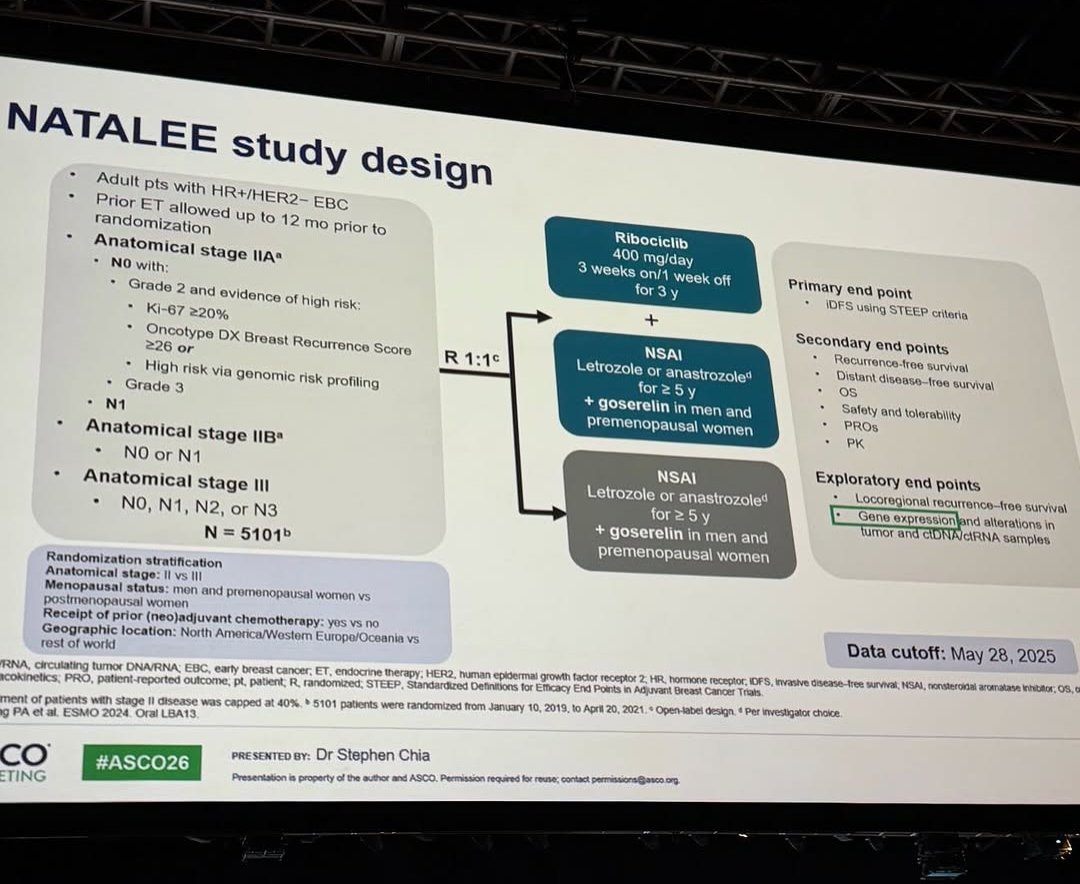
Phase III, global, multicenter, randomized (1:1), open-label trial conducted at 393 centers across 20 countries in collaboration with TRIO. Stratified by menopausal status, AJCC 8th edition anatomic stage (II vs. III), prior neoadjuvant/adjuvant chemotherapy (yes vs. no), and geographic region.

Population

Adults (men and pre- or postmenopausal women) with HR+/HER2-negative stage II or III early breast cancer at high risk of recurrence. Stage IIA T2N0 patients required grade 2 tumor with Ki-67 >=20% or high genomic risk (Oncotype DX Recurrence Score >=26, or high-risk by Prosigna/PAM50, MammaPrint, or EndoPredict), or grade 3 tumor. Node-positive disease of any stage II/III was eligible regardless of additional risk factors. Stage II comprised 40.3% and stage III comprised 59.4% of the study population.

Interventions

Ribociclib 400 mg once daily (3 weeks on / 1 week off in 28-day cycles) for up to 36 months plus NSAI (letrozole or anastrozole) for at least 5 years, with goserelin for men and premenopausal women. Control arm received NSAI alone for at least 5 years.

Primary Endpoints

Primary endpoint: invasive disease-free survival (iDFS) per STEEP criteria. Secondary endpoints: recurrence-free survival (RFS), distant disease-free survival (DDFS), overall survival (OS), patient-reported outcomes (PROs), safety/tolerability, and pharmacokinetics. Exploratory endpoints included locoregional recurrence-free survival and time to subsequent antineoplastic therapy.

Progression-Free Survival (PFS)

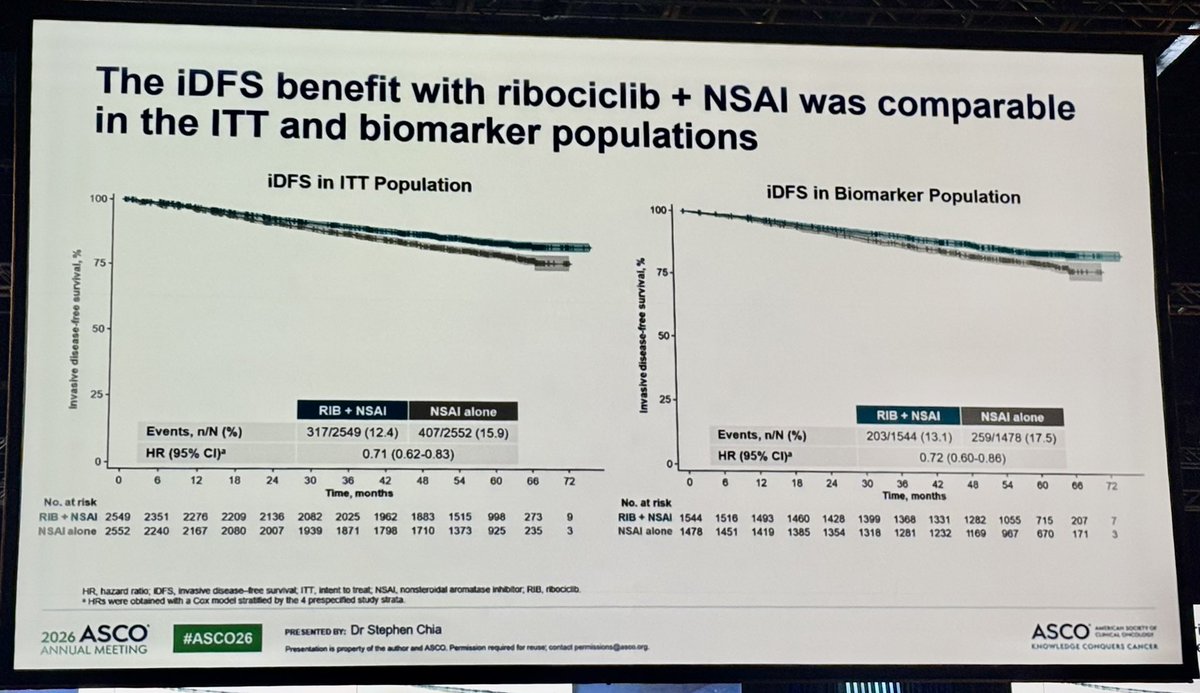
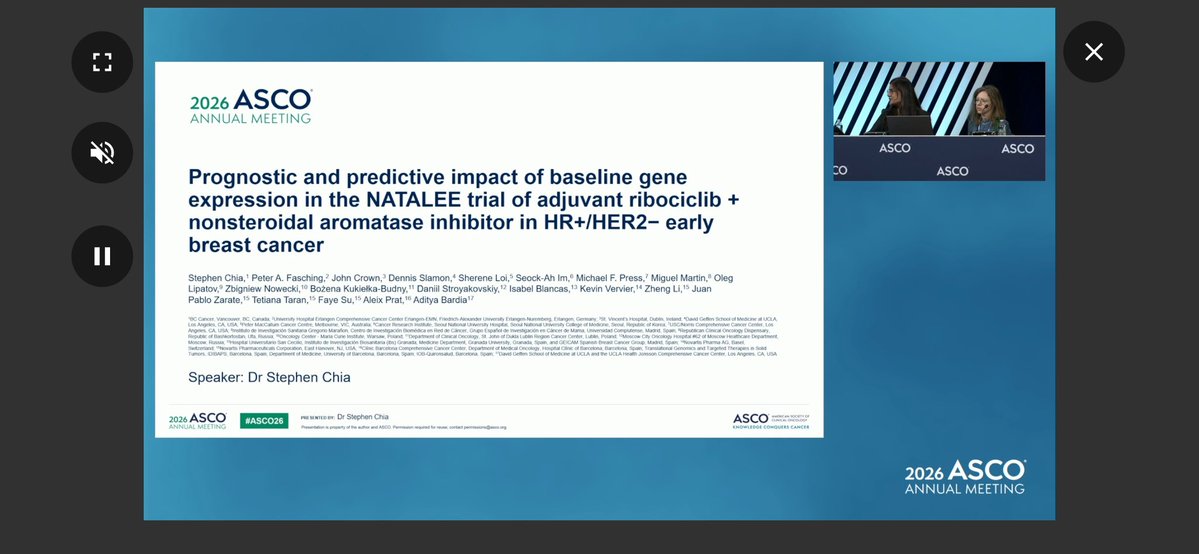
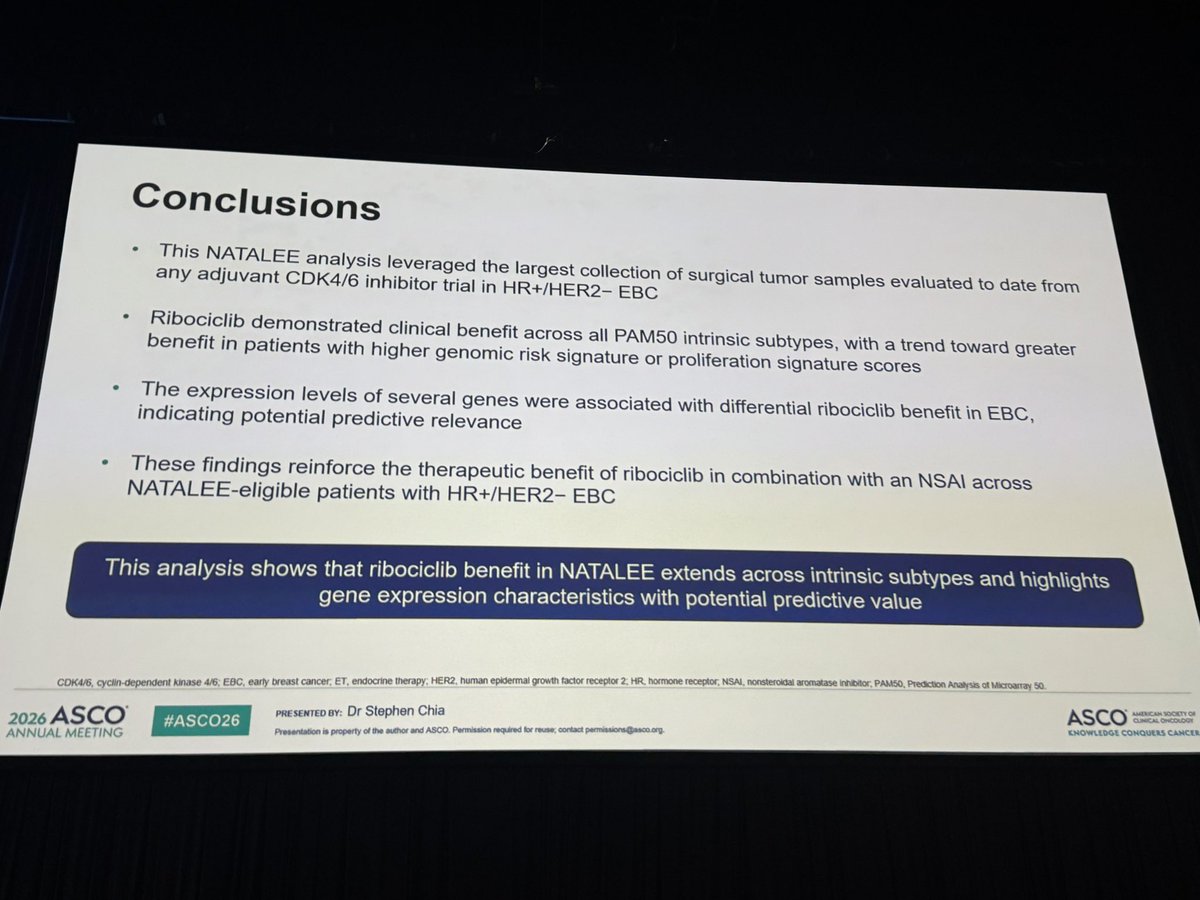
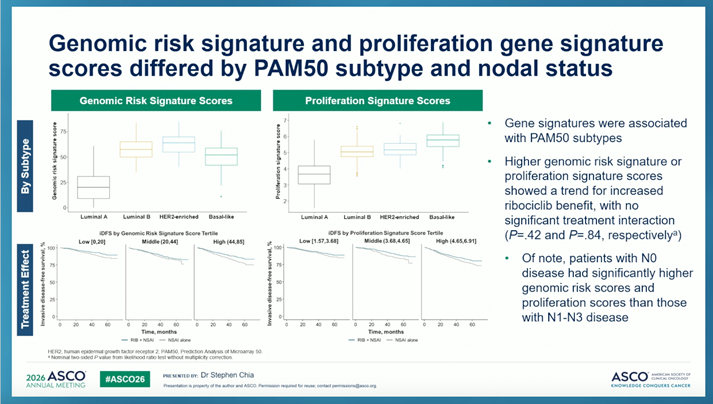
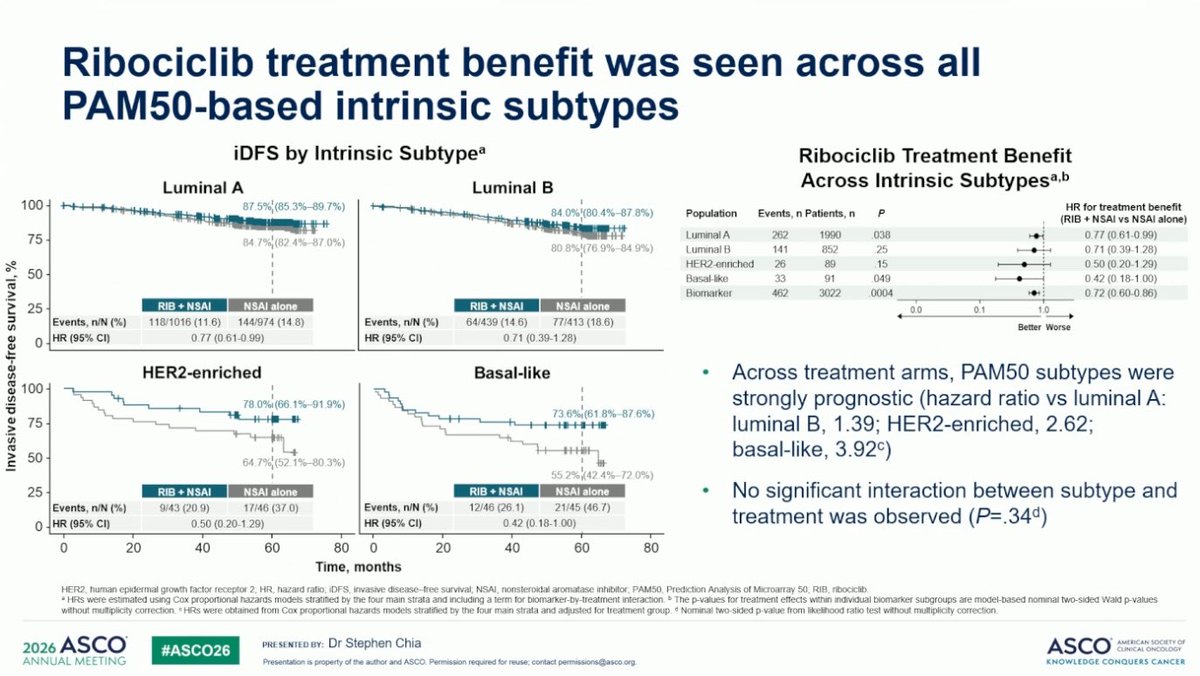
At the final iDFS analysis (median follow-up 33.3 months), ribociclib plus ET demonstrated a significant iDFS benefit with HR 0.749 (95% CI: 0.628-0.892; p=0.0006). The 3-year iDFS rates were 90.7% versus 87.6%, a 3.1% absolute benefit. At the 4-year landmark analysis (44.2 months median follow-up), the benefit was sustained with HR 0.715 (95% CI: 0.609-0.840; p<0.0001). At the 5-year analysis (58.4 months median follow-up), HR was 0.716 (95% CI: 0.618-0.829; nominal p<0.0001), with 5-year iDFS rates of 85.5% versus 81.0%, representing a 4.5% absolute improvement and a 28.4% reduction in risk of recurrence sustained approximately 2 years after completing ribociclib treatment.

iDFS HR 0.716 — 28% risk reduction at 5 years

Source: JCO / SABCS Publication

Overall Survival (OS)

Overall survival data remain immature. At the final iDFS analysis, there were 84 deaths (3%) on the ribociclib arm and 88 deaths (3%) on the ET-alone arm, with an OS HR of 0.89 (95% CI: 0.66-1.20). At the 5-year analysis, the OS trend favored ribociclib with HR 0.800 (95% CI: 0.637-1.003; nominal 1-sided p=0.026), but the trial was not powered for OS.


Source: Novartis 5-Year ESMO 2025 Press Release

Safety & Tolerability

The 400 mg dose showed a predictable and manageable safety profile. Grade 3+ neutropenia occurred in 44.3% but rarely led to clinical complications (febrile neutropenia 0.3%, no neutropenia deaths). Hepatotoxicity occurred in 26.4% (grade 3+: 8.6%), with DILI in 0.4% including 8 Hy's Law cases, all resolving after discontinuation. QTc prolongation was infrequent at 5.3% all-grade (grade 3+: 1.0%), with no Torsades de Pointes. Treatment discontinuation due to AEs was 19.5%, primarily from elevated transaminases (ALT 7.1%) occurring early (median ~4 months). Dose interruptions occurred in 86.1% and dose reductions in 26.7%, primarily for neutropenia. Median relative dose intensity was 94.0%.

Manageable at 400mg — 19.5% AE discontinuation

Source: FDA Label / sNDA Review

Clinical Implications

NATALEE established adjuvant ribociclib as the standard of care for the broadest population of HR+/HER2- early breast cancer patients at risk of recurrence, including those with node-negative disease. The 5-year data showing sustained benefit approximately 2 years after completing 3 years of treatment supports a durable biological effect. Key clinical debates include the optimal selection between ribociclib (NATALEE) and abemaciclib (monarchE) given their different patient populations and dosing strategies, the 3-year treatment duration versus the 2-year duration used with abemaciclib, and whether the lower 400 mg dose adequately balances efficacy and tolerability for long-term adjuvant use.

NATALEE in the News

Key KOL Sentiments - NATALEE

DoctorSentimentComment
Paolo Tarantino
@PTarantinoMD
● POSITIVE The NATALEE phase 3 trial of adjuvant ribo for stage II-III HR+ BC is published in @NEJM. With 28 months f-up, adding ribo for 3y to adjuvant AI led to a significant benefit in 3y iDFS (Δ≃3%). Updated results at SABCS23 were consistent with this anal
Yakup Ergün
@dr_yakupergun
● POSITIVE Excited to share our meta-analysis 💥According to the pooled analysis of the PENELOPE-B, PALLAS, MonarchE and NATALEE trials, there is a significant DFS benefit of CDK 4/6 inhibition, especially in stage 3 patients (HR: 0.67) https://t.co/D2GLhQLknK
Hope Rugo
@hoperugo
● POSITIVE #ESMO25 beautiful discussion by @AngieDemichele covering monarchE and Natalie. Key points below. https://t.co/VI8aKVvQRu
● POSITIVE 3 year IDFS update from #NATALEE shows widening of the curve and benefit for addition of ribo across subgroups with anticipated safety results. #ESMO24 @OncoAlert @myESMO https://t.co/w0N0Es3Imq
● POSITIVE Presented by super @LoiSher at #ESMO24 data from the #NATALEE trial on the benefit of adding #ribociclib to adjuvant endocrine therapy according to age…follow-up still short but signal of larger benefit in young women #ESMOAmbassadors @myESMO @OncoA
Jason A. Mouabbi MD
@JAMouabbi
● POSITIVE The updated #NATALEE trial results are here. The benefit still maintained with patients receiving #ribociclib having 25% reduced risk of recurrence with 78% not on therapy at the time of data cut off! Kudos to “El Jefe” Dr. Gabriel Hortobagyi for an
Eleonora Teplinsky, MD
@drteplinsky
● POSITIVE Super important work given what was presented with updated IDFS data with NATALEE! Congrats! 👏 #ESMO24 https://t.co/aVUpV4HG9Q
Erika Hamilton, MD
@ErikaHamilton9
● POSITIVE @LoiSher presents #NATALEE updates iDFS HR 0.54 young and older pts 0.58 --&gt; benefit regardless of age DDFS 5.1% benefit seen in younger patients vs. 2.8% in older pts Interestingly neutropenia more common in younger pts, but less likely to
OliviaT Health
@drolihealth
● POSITIVE @OncBrothers @US_FDA @OncoAlert @curijoey @PTarantinoMD @BijoyTelivala @RenoHemonc @DrSGraff @Dr_RShatsky @drsarahsam @hoperugo @ErikaHamilton9 @DrHBurstein I'm thrilled to see Ribociclib's FDA approval for high-risk early-stage breast cancer patient
● POSITIVE @matteolambe @LoiSher @myESMO @OncoAlert Interesting! We observed similar more benefits in patients &lt;40 with Ribociclib + ET in RIGHT Choice trial! https://t.co/nyiSMQxIKz
Vinay Prasad MD MPH
@VPrasadMDMPH
● NEUTRAL If you can fit a laser pointer between the curves, you can give the #ASCO24 plenary! https://t.co/TrmXCzrp3J
NEJM
@NEJM
● NEUTRAL In patients with stage II or III early breast cancer, the addition of ribociclib to adjuvant hormonal therapy resulted in a significant improvement in 3-year invasive disease–free survival. Read the full results of the NATALEE phase 3 trial: https://
Sara Tolaney
@stolaney1
● NEUTRAL NATALEE: Adj ribociclib for ER+ BC iDFS now with 33 mo of f/u 43% completed 3 yrs of ribo 35.5% with early discontinuation 20.7% still on ribociclib Improvement in iDFS: 90.7vs 87.6% HR 0.749, p=0.0006 @OncoAlert #SABCS23 https://t.co/VRRmdmoPyK
● NEUTRAL Important data from monarchE and NATALEE adjuvant CDK46 inhibitor @myESMO With @tess_omeara, here's our take on who needs, and who does not need, adjuvant abema/ribo, co-published in @Annals_Oncology https://t.co/ofrZzrsTqF
Elisa Agostinetto
@ElisaAgostinett
● NEUTRAL Adjuvant CDK4/6i for early #breastcancer: how to choose wisely⁉️ In this work we discuss the most recent findings from #MonarchE and #NataLEE trials and put them in perspective for potential use in clinical practice @Lucarecco @E_de_Azambuja @OncoAl
Oncology Brothers
@OncBrothers
● NEUTRAL #Ribociclib now @US_FDA ✅ for adj early stage HR+ breast cancer. Recent #ESMO24 #NATALEE: Stg IIA - III, 400mg (3wks on/1wk off) for 3yrs - Improved iDFS w/Ribo at 4yrs (HR: 0.715) - Improvement seen in all subgroups including N0. OS immature #bcsm
#TumorBoardTuesday
@TumorBoardTues
● NEUTRAL #TumorBoardTuesday 🫗Coke-Pepsi-Dr Pepper 🤷Very similar - and yet docs🧑‍⚕️have their preferences❗️ 📢Join us Tuesday, 02-13-2024 at 8PM ET as @hmcarthur &amp; @prarthnavb compare the data on CDK4/6 inhibitors for the Tx of #breastcancer RT and bring
Ilana Schlam
@IlanaSchlam
● NEUTRAL iDFS NATALEE 3-year iDFS 88% vs 91% favoring ribo Similar benefit in stage 2 and 3, but greater in 3 Node negative group, similar % but not statistical sig (small n) DDFS 91% vs 93% favoring ribo OS data not mature @SABCS23 @oncoalert #bcsm https:
Luca Arecco, MD
@Lucarecco
● NEUTRAL Out on @Oncology_Ther our commentary on the main analogies and differences between #MonarchE and #NataLEE trials and perspective on CDK4/6i use in the adjuvant setting of #high-risk HR+ pts. @ElisaAgostinett @E_de_Azambuja @OncoAlert @UniGenova @Jul
SABCS
@SABCSSanAntonio
● NEUTRAL Mothaffar F. Rimawi and Mylin A. Torres served as moderators for today's #SABCS23 General Session, which featured results from the Mammo-50, NATALEE, and KATHERINE trials and several other clinical studies. @mfrimawi @MylinTorres @UTHealthSAMDA @AACR
Elisabetta Bonzano MD, PhD
@to_be_elizabeth
● NEUTRAL 📌Efficacy and safety of ribociclib (RIB) + nonsteroidal aromatase inhibitor (NSAI) in younger patients (pts) with HR+/HER2-early breast cancer (EBC) in NATALEE @OncoAlert #OncoAlertAF @LoiSher #ESMO24 https://t.co/EMtRrAhgdV
Jame Abraham, MD, FACP
@jamecancerdoc
● NEUTRAL One more treatment option for #breastcancer patients with ER + her-2 negative, early stage breast cancer - https://t.co/YyF3ljvuVW https://t.co/UhN3b7aXUd
● NEUTRAL Nancy Lin, MD (@nlinmd) discussed updates from the #NATALEE trial presented at #ESMO24 Congress. The study showed the efficacy of adjuvant #ribociclib plus nonsteroidal aromatase inhibitor in patients with HR-positive, HER2-negative early #BreastCanc
OncLive.com
@OncLive
● NEUTRAL Final iDFS analysis from #NATALEE w/ absolute benefit of 3yr adjuvant ribociclib+NSAI 3.1% in stage 2, 3 as well as in -LN, ER+ #breastcancer. Trial included tumors with lower risk features compared to current abema approval (+LN, G3, &gt;5cm). Surv
Guilherme Nader Marta
@GuiNaderMarta
● NEUTRAL #NATALEE trial results now published in the @NEJM The addition of adjuvant ribociclib (for 3 years) to an aromatase inhibitor improved iDFS by 3.3% at 3y (HR 0.75) in patients with stage II-III ER+ BC https://t.co/GpShwKh7YQ @OncoAlert https://t.
Erman Akkus
@Erman_Akkus
● NEUTRAL 📣 Adjuvant ribociclib + AI vs AI Stage II-III hormon positive breast ca NATALEE @NEJM ✅Invasive disease free survival at 3 yr : 90.4% vs 87.1%, HR: 0.75 (0.62-0.91), p= 0.003 👉https://t.co/EIdkXJtt4O -------------------------------- @ASCO @ASCOP
Ahmed Alanazi |
@alanazi002
● NEUTRAL #NATALEE trial age &lt; or &gt; 40 years old differ? #efficacy vs #Safety Safety profile? AE lead to discontinuation doubled in age &gt;40 yo specially transaminases? @myESMO @OncoAlert #ESMO24 https://t.co/QwTGo8apN0
● NEUTRAL @dr_yakupergun @NEJM Can we agree that clinical benefit is marginal and probably due to huge sample size?
● NEUTRAL @myESMO @LoiSher presents data on young patients treated with #ribociclib in Natalee  #ESMO24 #ESMOAmbassadors https://t.co/y3eP8Yorzo
Ramez Kouzy, MD
@RKouzyMD
● NEUTRAL @5_utr https://t.co/VcId5axHbP
● NEUTRAL @TumorBoardTues @prarthnavb @PTarantinoMD @Dr_RShatsky @ErikaHamilton9 @CharuAggarwalMD @dradityabardia @hoperugo @maryam_lustberg @drteplinsky @DrSGraff @jane_meisel BTW, its coke all the way!! :)
Novartis Medical
@NovartisMedical
● NEUTRAL Don’t miss Dr. Peter A. Fasching’s Proffered Paper session at #ESMO24, where he will present the 4-Year NATALEE Trial results in patients with Breast Cancer. 📅 Monday, September 16th 🕚 10:15-11:45 CEST 📍 Barcelona Auditorium - Hall 2 https://
Ana Go
@GoAnaGo
● NEUTRAL Final iDFS analysis of NATALEE trial. Ribociclib 400 mg x3 yrs in adjuvant BC treat, maintain significant benefit but 1.6% over NSAI alone for stage II vs. 4.3% in stage III. Differences with not statistically significant for node-negative disease #S
Sameh @ VuMedi
@Sameh_VuMedi
● NEUTRAL Check out Dr. Gabriel Hortobagyi @MDAndersonNews discussing #SABCS23 "Final iDFS Analysis From the NATALEE Trial - Ribociclib + NSAI as Adjuvant Treatment in Patients With HR+/HER2- eBC" Full📽️on #VuMedi 👇 https://t.co/cVT4Shw0JC #bcsm #breastcance
● NEUTRAL Natalee Trial : significant drop out due to toxicity . Might benefit from streamlining the patient population . #sabcs
● NEUTRAL @OncBrothers @laura_huppert @OncUpdates @OncoAlert @SABCSSanAntonio @AACR @dr_yakupergun @Dr_Oncologista @AbiSivaMD @BijoyTelivala @RenoHemonc @SPremji7866 @ElisaAgostinett @HundalJasmin @JaniceTNBCmets @AMJohnston1315 Great summary. The NATALEE upda
Kirstin Spencer
@kjscello
● NEUTRAL Peter A. Fasching, “In the NATALEE breast cancer trial, a dose reduction of Ribociclib did not impact efficacy…” #ESMO24 @METUPUKorg https://t.co/sXOxHpeCWI
drcammclaren
@drcammclaren
● NEUTRAL @VoglNY @PTarantinoMD @NagiSaghir I have never had a patient sit in front of me and ask for a better IDFS. OS and QOL all the way. If the HR of PFS or IDFS is so great that an OS benefit is likely, it "may" suffice until the actual OS data is out.
Timothe Olivier, MD
@Timothee_MD
● NEGATIVE NATALEE phase 3 trial... deserves a sensitivity analyis ! remember the monarchE trial (adjuvant abemaciclib for 2⃣ years) --&gt; now we have NATALEE with adjuvant ribociclib for 3⃣ years ‼️ iDFS benefit ! ... but let's have a closer look ! 1/🧵 htt
M. Bolton
@5_utr
● NEGATIVE NATALEE: A good example of clinically insignificant ~3% benefit in a contrived endpoint at 3-years that jacks up toxicity, plus what happens at ~40 months? Hard to tell without CIs https://t.co/eo4krzODl2 https://t.co/eXLZr1br4W
Dr Amol Akhade
@SuyogCancer
● NEGATIVE More I See these curves of Natalee trial , more I feel , this is NOT the one . IDFS curves are actually crossing each other at 40 weeks . HR for almost all subgroups touching or crossing unity . Only 20 % completed 3 years of ribociclib. OS has no
Jeff Sharman
@jeff_sharman
● NEGATIVE @NEJM Anybody try to calculate a "number needed to treat" on that one? If you need 5K patients to have statistical difference, it tells you it is small. Unless the curves continue to separate - the value is....
Eric Widera, MD
@EWidera
● NEGATIVE @VPrasadMDMPH They need to take a note from the amyloid antibody for Alzhiemers studies: zoom in on the y axis and change the starting point to magnify differences. Like magic, now you got a graph that you can talk about... https://t.co/9zMC7cTCQV
Steven Vogl
@VoglNY
● NEGATIVE @PTarantinoMD @NagiSaghir IDFS is a dumb endpoint for adjuvant trials. DDFS is a preliminary surrogate and OS is the only correct and definitive endpoint. If no OS advantage, then showing a lifetime QOL benefit would be of interest, but very hard to
Ibrahim Azar, MD
@ibrahimazaronc
● NEGATIVE @dr_yakupergun @NEJM The curves really look inseparable. And you're increasing toxicity significantly for a very tiny increase in DFS. If the IDEA trial was interpreted similar to this, we'd give everyone 6m capeox. I'm also surprised it made it to
David McCune
@davidemccune
● NEGATIVE @VPrasadMDMPH Was 36 month DFS the prespecified endpoint? Because that looks like literally the only month where there was a benefit.
● NEGATIVE @VPrasadMDMPH @NEJM is losing credibility by publishing studies like this. INDIGO trial, last week's CAR-T for recurrent glioblastoma, now this study - none of these interventions benefit pts in any meaningful way, but guarantee revenue increase for
● NEGATIVE @5_utr Also can guarantee there will be differential censoring that affects the treatment arm. The less fit patients on ribociclib will have adverse events and therefore the populations end up being different over a several year period. Might make a
Preet Paul Singh, MD
@PreetpaulS
● NEGATIVE @PTarantinoMD @NEJM Sorry. That doesn’t look practice changing at all. Those curves are literally overlapping. Giving a toxic and expensive drug for 3 years for that “benefit” seems egregious. First do no harm.
Santhosh Ambika
@RenoHemonc
● NEGATIVE @matteolambe @LoiSher @myESMO @OncoAlert Obscenely skewed cost benefit ratio .. https://t.co/rXfJvSzRNb
Michiel Strijbos
@StrijbosMichiel
● NEGATIVE @PTarantinoMD @DvirKathrin @NEJM @AlbertGrinshpun Let's do more ridiculously overpowered trials....
Daniel Koffler, MD
@dmkoffler
● NEGATIVE @dr_yakupergun @giammi107 @NEJM I could not in good conscience recommend an intervention with such a questionable benefit at the cost of massively higher hematologic toxicity
Andres Ossa
@tumastologo1
● NEGATIVE @matteolambe @LoiSher @myESMO @OncoAlert I believe that the benefit in premenopausal women is very short given the economic toxicity and side effects in these patients that would limit its use. #ESMO24 #natalee
Bijoy Telivala
@BijoyTelivala
● NEGATIVE @VoglNY @PTarantinoMD @NagiSaghir Never understood why we created and allowed endpoints like PFS/IDFS etc Why not use good end points like OS and QoL These surrogate endpoints dont help many pts but helps pharma and wall street
Hakan Önder
@onder_haka2124
● NEGATIVE @drolihealth @OncBrothers @US_FDA @OncoAlert @curijoey @PTarantinoMD @BijoyTelivala @RenoHemonc @DrSGraff @Dr_RShatsky @drsarahsam @hoperugo @ErikaHamilton9 @DrHBurstein Is your paradigm really going to change with the censored patient numbers at 36
thomas tucker
@tommytuckermd
● NEGATIVE @PTarantinoMD Call me when there's an OS benefit
Tnis Metsaots
@TMetsaots
● NEGATIVE @5_utr Sorry but this is misleading. You need to compare with control arm. Pt-s without ribo had 42% artralgia, 16,5% headache, asthenia 11%. Nausea and fatigue are problematic as in my previous post. Neutropenia is asymptomatic and rarely causes F