RMC-6236-001 (NSCLC) Key Takeaways
Design — Phase 1–2 multicenter dose-escalation/expansion; daraxonrasib 10–400 mg orally once daily, 21-day cycles; primary endpoint safety. (NEJM, DCO 21-Jul-2025)
Population — Previously treated advanced RAS-mutant (non-G12C) NSCLC after platinum chemotherapy and anti-PD-(L)1; n=136 at ≤300 mg. (NEJM)
ORR — Dose-dependent: 31% (≤120 mg), 34% (160–220 mg), 37% (300 mg); docetaxel-naïve 160–220 mg subgroup (n=38): confirmed ORR 42%, DCR 89%. (NEJM / RevMed PR)
Survival — Docetaxel-naïve 160–220 mg subgroup: median PFS 8.3 mo (95% CI 4.0–12.5), median OS 16.0 mo (9.5–NE). (NEJM Fig 2 / RevMed PR)
Safety — Any-grade AEs 99% (any attribution); grade ≥3 AEs 54% (any attribution; pneumonia 10%, diarrhea 9%, rash 8%, anemia 5%); four grade 5 events (NEJM). At 160–220 mg: grade 3 TRAEs 25%, no grade 4/5 TRAEs. (RevMed PR)
Regulatory — ⚠️ Investigational in NSCLC. ✅ FDA-approved (Aug 2026, as RASONQUE) only in metastatic pancreatic adenocarcinoma. Phase 3 RASolve 301 vs docetaxel ongoing (NCT06881784). (RevMed)
Guidelines — Added to the NCCN NSCLC guideline’s “Emerging Biomarkers to Identify Novel Therapies” table as an available targeted agent with activity against KRAS mutations (G12, G13, and Q61 codons); the recommended phase 2 dose in NSCLC is 200 mg once daily, vs the FDA-approved 300 mg dose in pancreatic adenocarcinoma. A guideline listing, not an FDA approval. (NCCN, Sept 2026)
Sponsor / Drug — Revolution Medicines; daraxonrasib (RMC-6236), an oral RAS(ON) multi-selective, noncovalent tri-complex inhibitor. (RevMed)
Compiled and reviewed by the KOL Pulse research team, led by Brian Shields, Founder, KOL Pulse. Last updated September 23, 2026.
Track oncology’s top KOLs in your specialty
Create a free account, pick the tumor types you cover, and go beyond the tweet — the intelligence pharma teams use to map influence and prepare for engagement:
- ✓Enhanced KOL profiles
- ✓Pharma influence & potential advisory-board patterns
- ✓2025 Open Payments financial analysis
- ✓Social-media sentiment & trend signals
Top KOLs Discussing Daraxonrasib in NSCLC






RMC-6236-001 Key Slides & Visuals
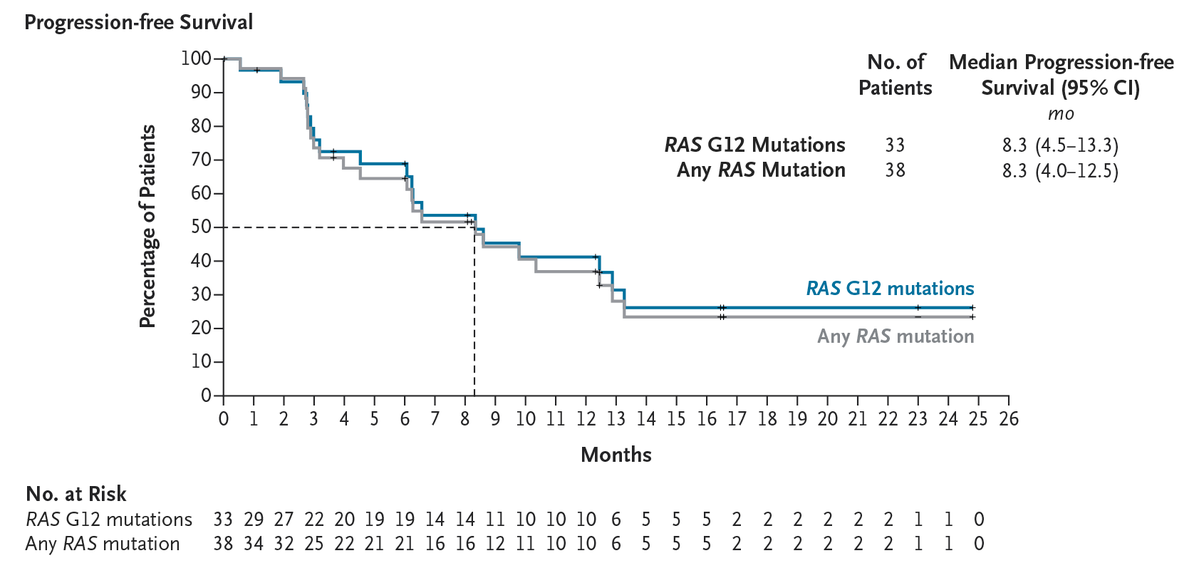
| Population (docetaxel-naïve, 160–220 mg) | N | Median PFS (95% CI) | Median OS (95% CI) |
|---|---|---|---|
| RAS G12 mutations | 33 | 8.3 mo (4.5–13.3) | — |
| Any RAS mutation | 38 | 8.3 mo (4.0–12.5) | 16.0 mo (9.5–NE) |
PFS medians per NEJM Figure 2 (data cutoff Jul 21, 2025); OS per Revolution Medicines release (Sept 2, 2026). Values read from the published figure — no interpolation.


Daraxonrasib NSCLC Top Tweets
𝕏
 𝕏
𝕏
𝕏
𝕏
𝕏
𝕏
𝕏
𝕏
𝕏
𝕏
𝕏
𝕏
𝕏
𝕏
 𝕏
𝕏
 𝕏
𝕏
About the RMC-6236-001 Trial (NSCLC Cohort)
RMC-6236-001 (NCT05379985) is the first-in-human Phase 1–2 study of daraxonrasib, an oral RAS(ON) multi-selective, noncovalent tri-complex inhibitor that targets GTP-bound mutant and wild-type RAS isoforms. RAS mutations are the most common oncogenic drivers in NSCLC, occurring in roughly 30% of cases; outside RAS G12C there are no approved targeted therapies. The NSCLC results, published in the New England Journal of Medicine on September 2, 2026 (Arbour et al., NEJM 2026;395:882-893), cover 136 previously treated patients with advanced RAS-mutant (non-G12C) disease whose cancer progressed on or after platinum-based chemotherapy and anti-PD-(L)1 therapy.
✅ Daraxonrasib is FDA-approved (August 2026, brand name RASONQUE) for adult patients with metastatic pancreatic adenocarcinoma who have received at least one prior systemic therapy or who are not candidates for multiagent systemic therapy — the first broad RAS-targeted medicine approved in that disease. ⚠️ In NSCLC it remains investigational: these Phase 1–2 results informed the design of RASolve 301 (NCT06881784), the ongoing global randomized Phase 3 trial comparing daraxonrasib with docetaxel in previously treated RAS-mutant NSCLC.
Trial Methodology & Results
Study Design
Phase 1–2, multicenter, open-label dose-escalation and dose-expansion; daraxonrasib 10–400 mg orally once daily in 21-day cycles. Primary endpoint: safety.
Population
Previously treated advanced RAS-mutant (non-G12C) NSCLC after platinum-based chemotherapy and anti-PD-(L)1 therapy; 136 patients treated at ≤300 mg evaluated (DCO Jul 21, 2025).
Intervention
Daraxonrasib (RMC-6236) — oral RAS(ON) multi-selective, noncovalent tri-complex inhibitor of GTP-bound mutant and wild-type RAS.
Endpoints
Primary: safety. Secondary: investigator-assessed objective response and duration of response per RECIST 1.1.
Lead Authors
Kathryn C. Arbour, MD (MSKCC) and colleagues incl. David S. Hong, MD, for the RMC-6236-001 Investigators.
Next Step
RASolve 301 (NCT06881784): global randomized Phase 3, daraxonrasib vs docetaxel in previously treated RAS-mutant NSCLC — ongoing.
Objective Response
Responses were dose-dependent: 31% at doses of 120 mg or less, 34% at 160–220 mg, and 37% at 300 mg (NEJM, n=136, DCO 21-Jul-2025). In the docetaxel-naïve subgroup treated at 160–220 mg (n=38) — the population mirrored in the Phase 3 — confirmed ORR was 42% (95% CI 26–59) with a disease control rate of 89% (95% CI 75–97) (RevMed PR, Sept 2, 2026).
ORR 42% in the docetaxel-naïve 160–220 mg subgroupSource: NEJM (DOI 10.1056/NEJMoa2504059)
Progression-Free & Overall Survival
In the docetaxel-naïve 160–220 mg subgroup, median PFS was 8.3 months (95% CI 4.0–12.5 for any RAS mutation, n=38; 4.5–13.3 for RAS G12, n=33 — NEJM Figure 2) and median OS was 16.0 months (95% CI 9.5–NE) (RevMed PR, Sept 2, 2026). PFS and OS were not formal endpoints of this Phase 1–2 study.
Median OS 16.0 months in the docetaxel-naïve subgroupSource: Revolution Medicines (Sept 2, 2026)
Safety
Adverse events of any grade, regardless of attribution, occurred in 99% of patients at ≤300 mg; rash, diarrhea, nausea, vomiting, and mucositis/stomatitis each occurred in at least 30%. Grade ≥3 AEs occurred in 54% (pneumonia 10%, diarrhea 9%, rash 8%, anemia 5%), and four grade 5 adverse events occurred (NEJM, n=136). Within the 160–220 mg dose range, grade 3 treatment-related AEs occurred in 25% of patients (most commonly rash 8% and diarrhea 3%) with no grade 4 or 5 TRAEs (RevMed PR). Physician reaction centered on this efficacy–toxicity balance.
Grade ≥3 AEs 54% overall; G3 TRAEs 25% at 160–220 mgSource: NEJM (DOI 10.1056/NEJMoa2504059)
Daraxonrasib NSCLC in the News
WCLC 2026: Live KOL Reaction
Physician posts about this trial captured live during the IASLC 2026 World Conference on Lung Cancer (Seoul, September 12–15). Quotes are verbatim; each card links to the original post. Last updated 2026-09-13.

This week in medicine 1. Novartis/Ionis' lipoprotein(a)-lowering antisense oligonucleotide FAILS to prevent cardiovascular events in a big phase 3 trial. 2. Ionis’ zilganersen gets FDA-approved - the first for Alexander disease. 3. Akeso’s PD1/VEGF bispecific, ivonescimab, beats the anti-PD1 antibody, pembrolizumab, on overall survival in a Chinese phase 3 trial in lung cancer. 4. Wuhan researchers show that in vivo CAR-T cells can improve neurological autoimmune disorders - including multiple sclerosis. 5. Berkeley researchers find that the GLP1 receptor agonist, semaglutide, is anti-aging for aged female mice. 6. Researchers at Mass General Brigham show a gentler azacitidine–venetoclax regimen beats intensive chemotherapy in fit patients with newly-diagnosed AML. 7. Revolution Medicines' multi-specific RAS inhibitor, daraxonrasib, looks like it's effective in a phase 1-2 trial for RAS-mutant non–small-cell lung cancer. 8. Monash University researchers show that starting atorvastatin as primary prevention cuts major cardiovascular events - even after age 70. 9. Novartis’ BTK inhibitor, remibrutinib, succeeds in two phase 3 trials in relapsing multiple sclerosis. 10. AstraZeneca’s next-gen estrogen receptor degrader, camizestrant, gets accelerated FDA approval for ESR1-mutant HR-positive/HER2-negative advanced breast cancer.

This week in medicine 1. Novartis/Ionis' lipoprotein(a)-lowering antisense oligonucleotide FAILS to prevent cardiovascular events in a big phase 3 trial. 2. Ionis’ zilganersen gets FDA-approved - the first for Alexander disease. 3. Akeso’s PD1/VEGF bispecific, ivonescimab, beats the anti-PD1 antibody, pembrolizumab, on overall survival in a Chinese phase 3 trial in lung cancer. 4. Wuhan researchers show that in vivo CAR-T cells can improve neurological autoimmune disorders - including multiple sclerosis. 5. Berkeley researchers find that the GLP1 receptor agonist, semaglutide, is anti-aging for aged female mice. 6. Researchers at Mass General Brigham show a gentler azacitidine–venetoclax regimen beats intensive chemotherapy in fit patients with newly-diagnosed AML. 7. Revolution Medicines' multi-specific RAS inhibitor, daraxonrasib, looks like it's effective in a phase 1-2 trial for RAS-mutant non–small-cell lung cancer. 8. Monash University researchers show that starting atorvastatin as primary prevention cuts major cardiovascular events - even after age 70. 9. Novartis’ BTK inhibitor, remibrutinib, succeeds in two phase 3 trials in relapsing multiple sclerosis. 10. AstraZeneca’s next-gen estrogen receptor degrader, camizestrant, gets accelerated FDA approval for ESR1-mutant HR-positive/HER2-negative advanced breast cancer.
NCCN Guidelines Add Daraxonrasib for KRAS-Mutant NSCLC
The NCCN Clinical Practice Guidelines for Non-Small Cell Lung Cancer added daraxonrasib to the “Emerging Biomarkers to Identify Novel Therapies” table in September 2026, listing it as an available targeted agent with activity against KRAS mutations at the G12, G13, and Q61 codons — alongside capmatinib, tepotinib, and crizotinib for high-level MET amplification and erdafitinib for FGFR alterations. Per the guideline footnote, the recommended phase 2 dose for daraxonrasib in NSCLC is 200 mg once daily, as compared with the FDA-approved 300 mg once-daily dose in pancreatic adenocarcinoma. ⚠️ This is a guideline listing under emerging biomarkers — daraxonrasib remains investigational in NSCLC, with the Phase 3 RASolve 301 trial ongoing. (NCCN NSCLC Guidelines, Sept 2026)
Medical oncologist Dr. Martin Dietrich shared the guideline listing:
Daraxonrasib NSCLC FAQ
What did the RMC-6236-001 trial show for daraxonrasib in NSCLC?
In the Phase 1-2 RMC-6236-001 study published in NEJM (Sept 2, 2026), daraxonrasib produced dose-dependent objective responses in previously treated RAS-mutant (non-G12C) NSCLC: 31% at doses of 120 mg or less, 34% at 160-220 mg, and 37% at 300 mg (data cutoff July 21, 2025; n=136). In a docetaxel-naive subgroup treated at 160-220 mg (n=38), confirmed ORR was 42% with a disease control rate of 89%.
Is daraxonrasib (RASONQUE) FDA-approved for lung cancer?
No. Daraxonrasib is investigational in NSCLC. Its FDA approval (August 2026, brand name RASONQUE) covers adult patients with metastatic pancreatic adenocarcinoma who have received at least one prior systemic therapy or who are not candidates for multiagent systemic therapy. In September 2026 the NCCN NSCLC guidelines added daraxonrasib to the Emerging Biomarkers table for KRAS mutations (G12, G13, Q61 codons), with a recommended phase 2 dose of 200 mg once daily - a guideline listing, not an FDA approval. Approval in lung cancer would depend on the ongoing Phase 3 RASolve 301 trial.
What survival outcomes were reported?
In the docetaxel-naive 160-220 mg subgroup (n=38), median progression-free survival was 8.3 months (95% CI 4.0-12.5) and median overall survival was 16.0 months (95% CI 9.5-not estimable), per NEJM Figure 2 and the Revolution Medicines announcement.
What is the safety profile of daraxonrasib in NSCLC?
Per the NEJM report (n=136, doses of 300 mg or less), adverse events of any grade occurred in 99% of patients regardless of attribution; grade 3 or higher AEs occurred in 54% (pneumonia 10%, diarrhea 9%, rash 8%, anemia 5%), and four grade 5 events occurred. In the 160-220 mg dose range, grade 3 treatment-related AEs occurred in 25% with no grade 4 or 5 TRAEs.
What is the next step for daraxonrasib in RAS-mutant NSCLC?
RASolve 301 (NCT06881784), a global randomized open-label Phase 3 trial comparing daraxonrasib with docetaxel in previously treated locally advanced or metastatic RAS-mutant NSCLC, is ongoing and was designed from these Phase 1-2 results.