High-risk HR+/HER2- primary operable early breast cancer (neoadjuvant) — SOLTI Breast Cancer Research Group (Spain)
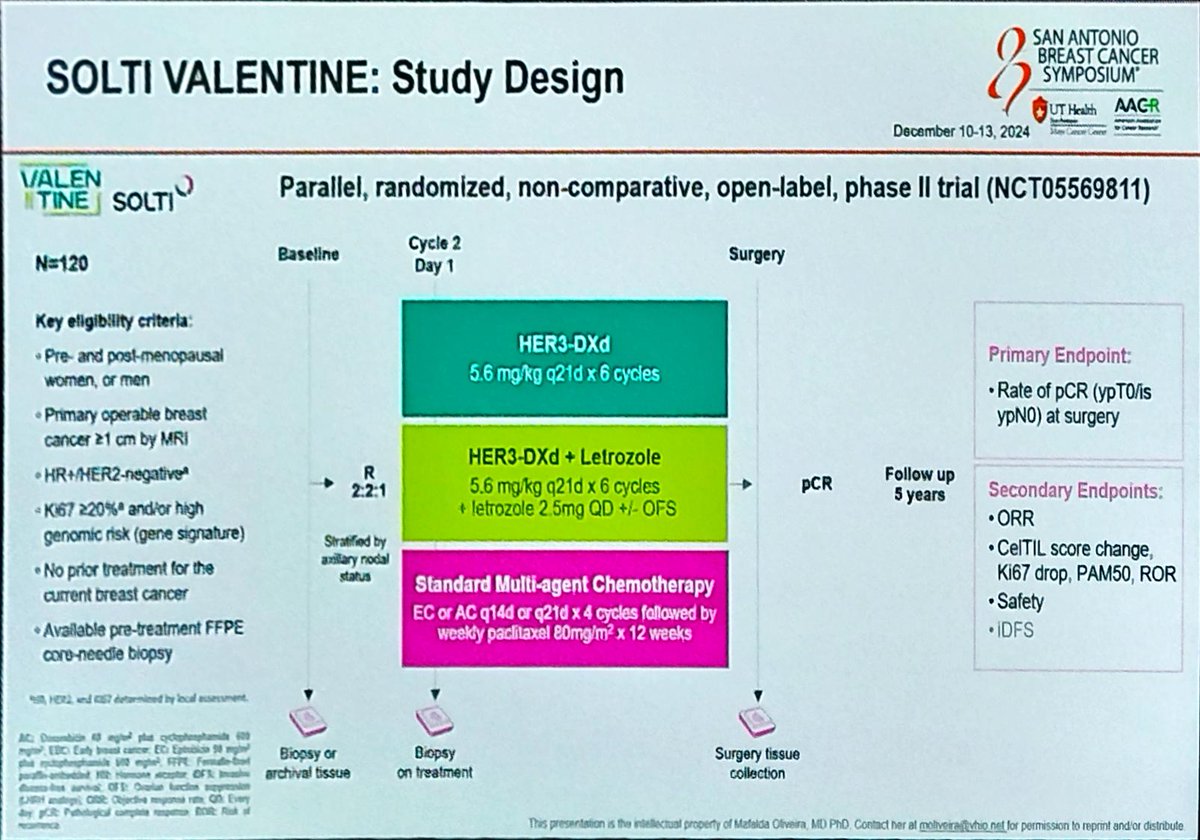
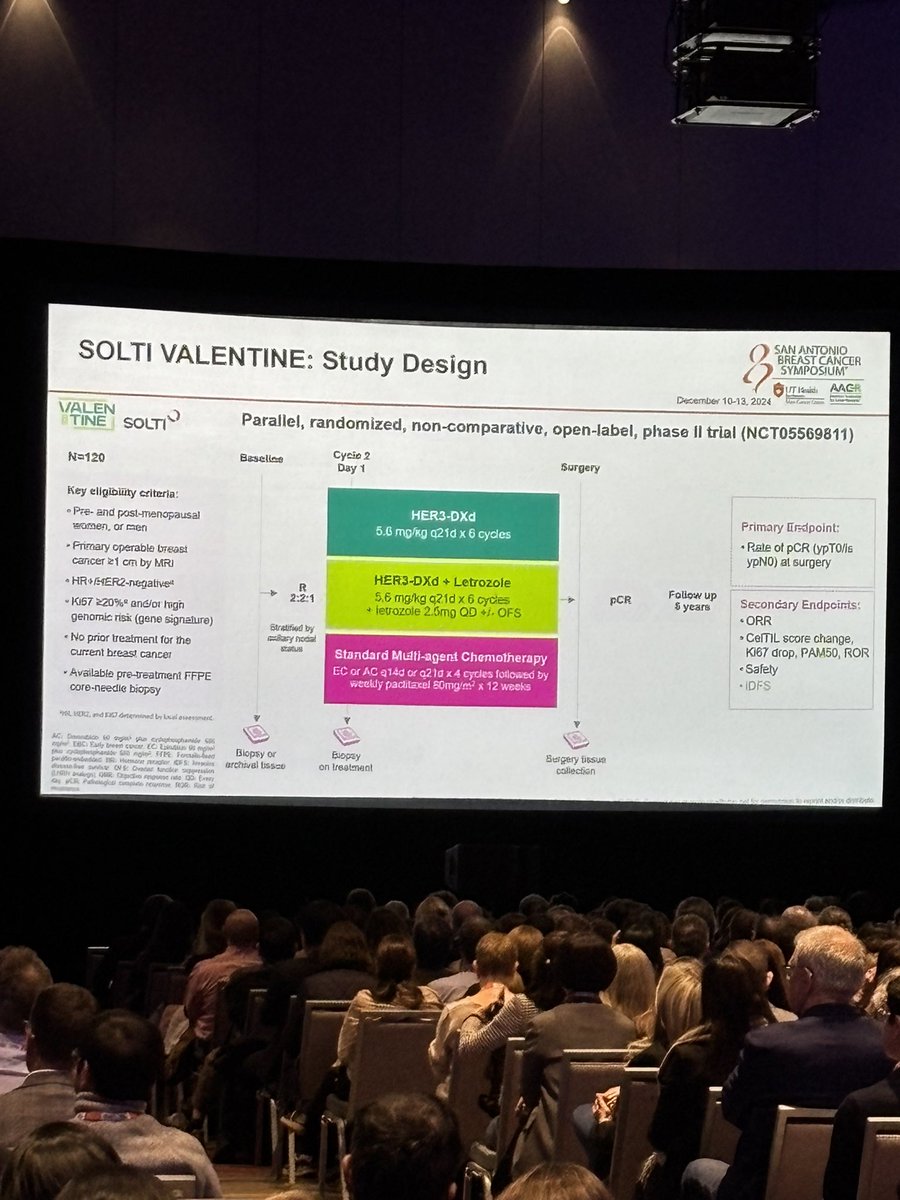
Discover KOL Sentiment on SOLTI-VALENTINE →Design - Randomized Phase 2 (2:2:1) neoadjuvant study: patritumab deruxtecan (HER3-DXd) monotherapy vs HER3-DXd + letrozole vs multi-agent chemotherapy (anthracycline + taxane) in high-risk HR+/HER2- early breast cancer (NCT05569811 / SOLTI-2103; SOLTI Breast Cancer Research Group).
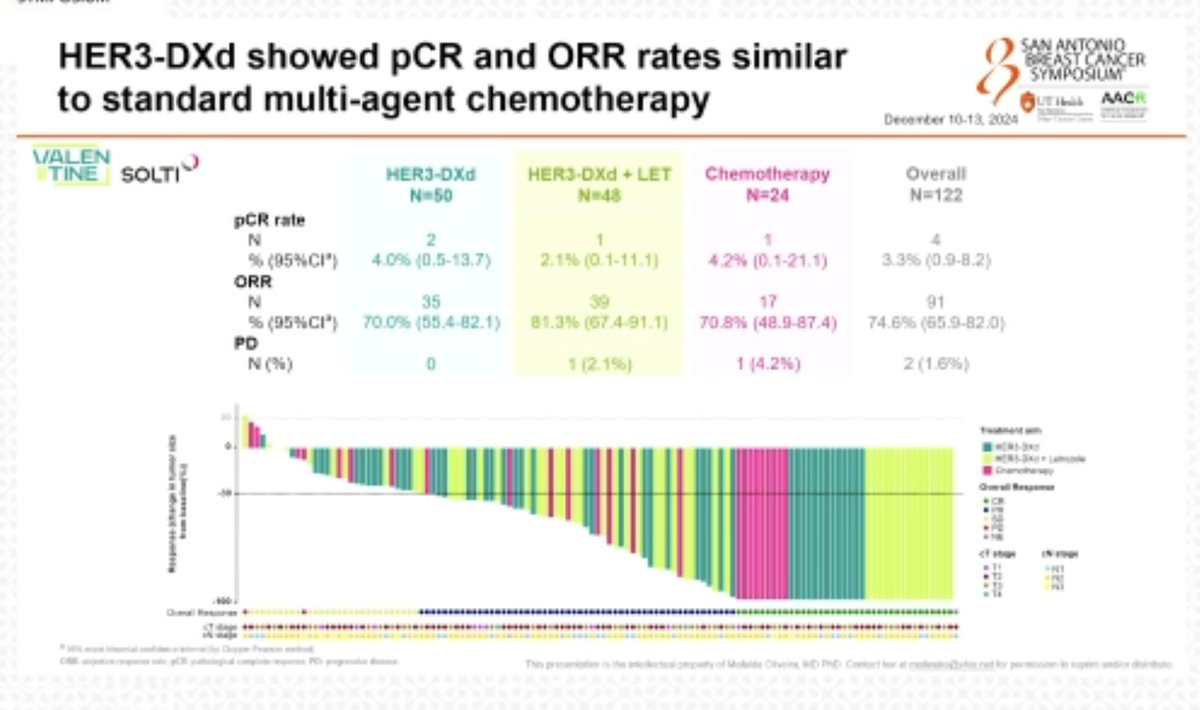
pCR (primary) - Pathologic complete response 4.0% (HER3-DXd) vs 2.1% (HER3-DXd + letrozole) vs 4.2% (multi-agent chemotherapy) - low across all arms, as expected in HR+/HER2- disease.
Objective response - ORR comparable across arms: 70% (HER3-DXd) / 81% (HER3-DXd + letrozole) / 71% (chemotherapy).
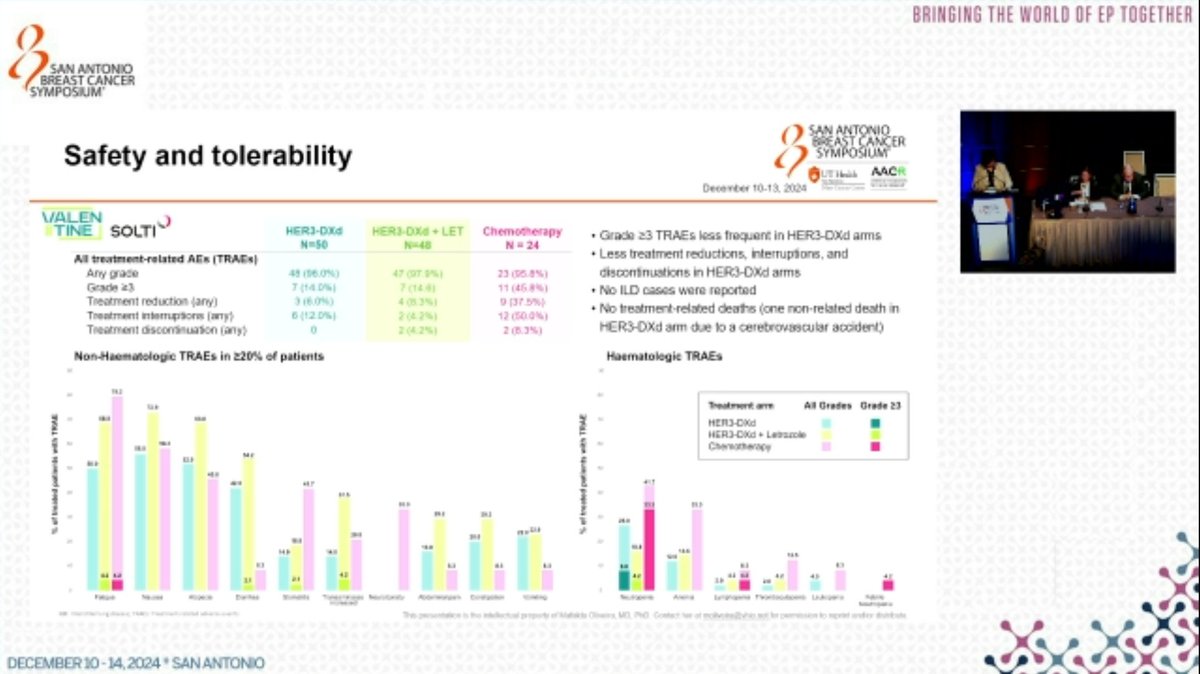
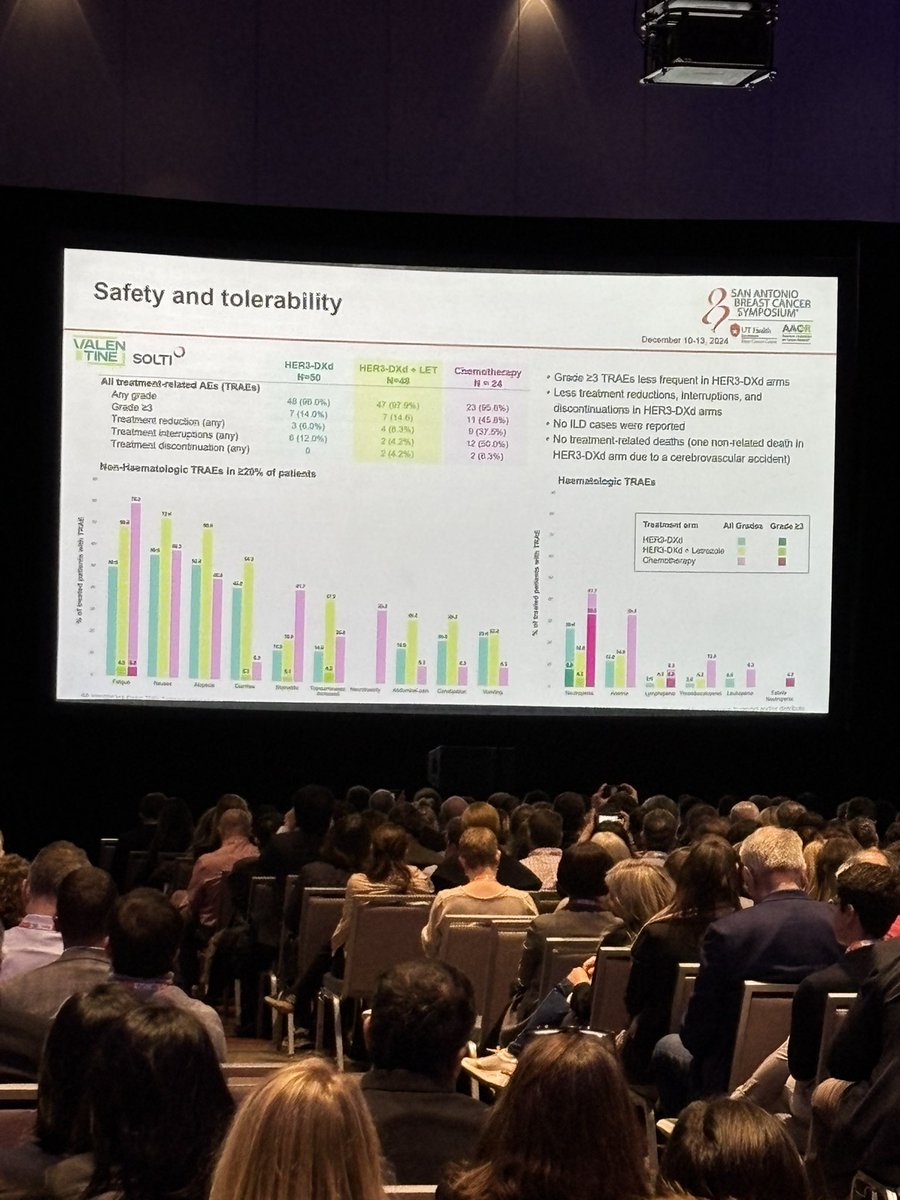
Safety - Grade >=3 adverse events substantially lower in the HER3-DXd arms (mostly low-grade GI events) versus a high proportion of grade 3 hematologic events with chemotherapy; NO interstitial lung disease observed in the HER3-DXd arms.
Regulatory / sponsor - Investigational; patritumab deruxtecan (HER3-DXd) is not FDA approved. Sponsor SOLTI Breast Cancer Research Group. SABCS 2024 (LB1-06).
Compiled and reviewed by the KOL Pulse research team, led by Brian Shields, Founder, KOL Pulse. Last updated July 21, 2026.






Top tweets by impressions — click to view on X
Encouraging results with neo adjuvant HER3-Dxd with letrozole in neoadjuvant Hr positive and her2 negative EBC . We need to see if it changes EFS on longer follow up. Solti Valentine trial. @Larvol…
Similar to TALENT, SOLTI-VALENTINE shows low (<5%) pCR rate with a neoadjuvant DXd ADC for HR+/HER2- MBC (though similar to chemo). Need novel biomarkers to better select the patient population.…
VALENTINE: Preop HER3DXd in ER+ BC
Ki67≥20% or high genomic assay
HER3DXd +/- letrozole vs A(or E) -CT
n=120
pCR: 4% vs 2.1% vs 4.2%
@_SOLTI @SABCSSanAntonio @OncoAlert #SABCS24…
Great presentation of @_SOLTI VALENTINE trial by @MOliveira_MD at #SABCS24
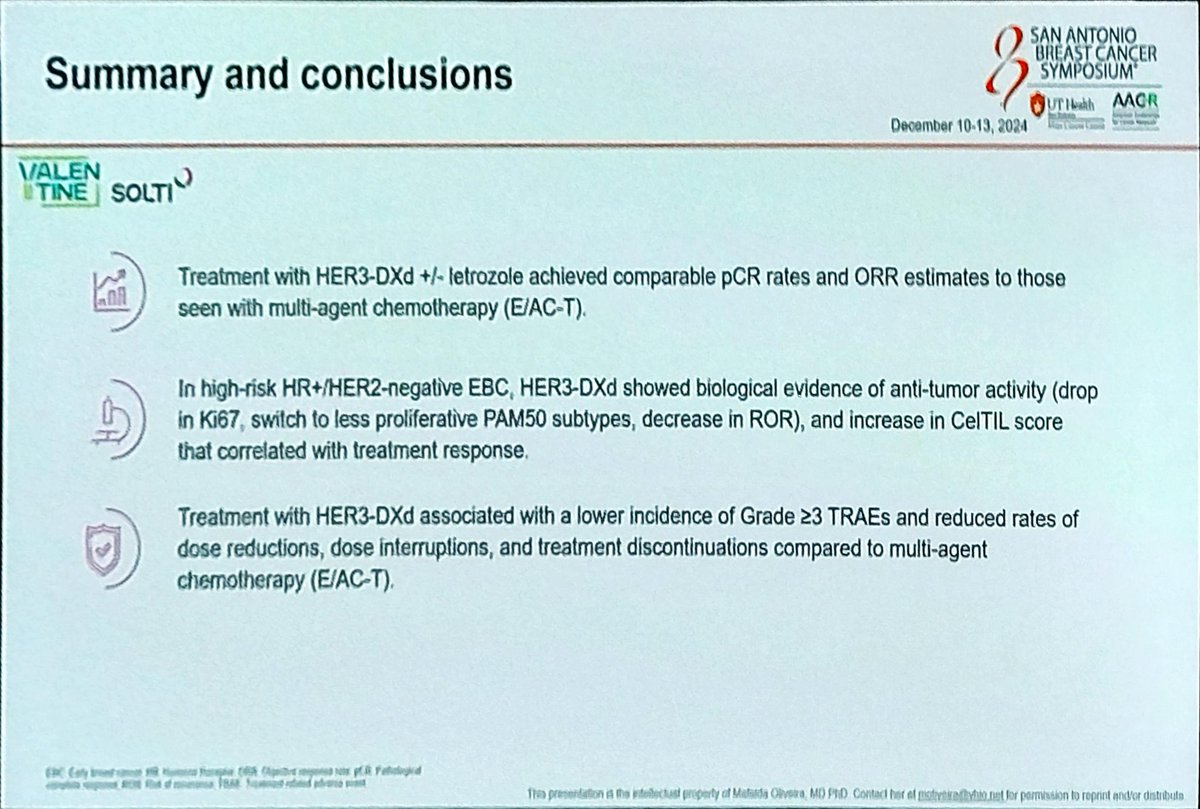
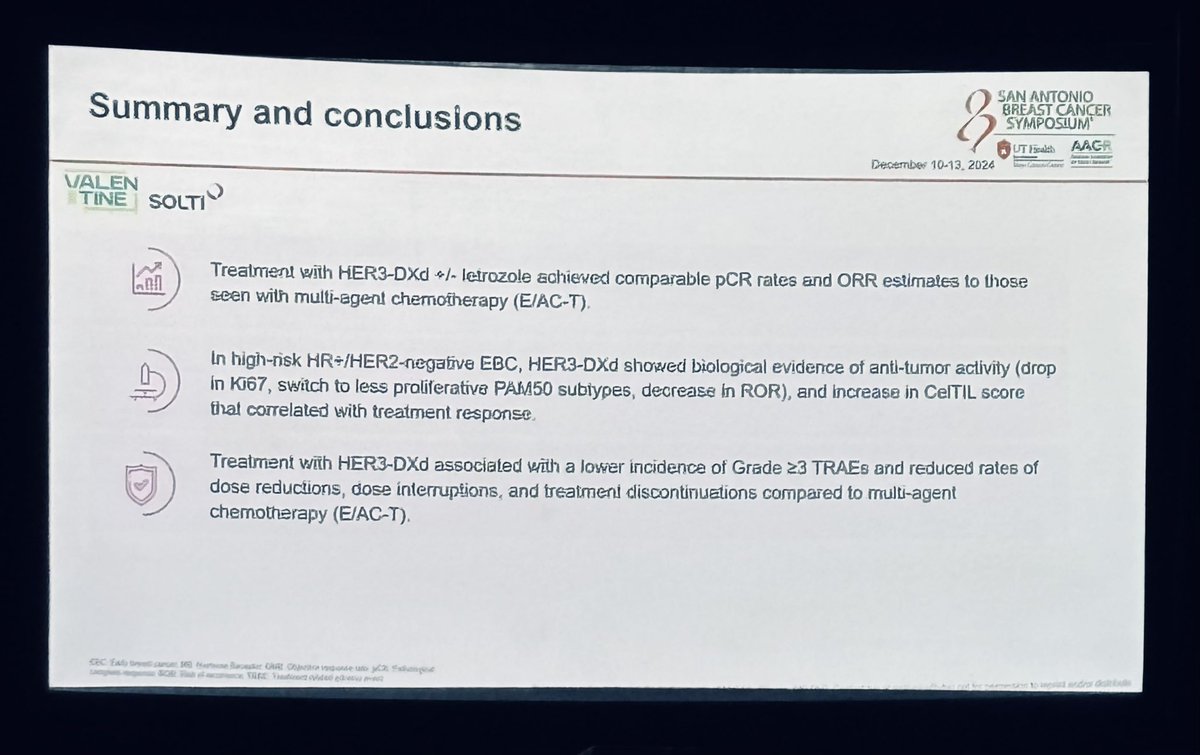
HER3-DXd showed similar pCR and ORR rates to standard CT with better tolerability profile
#bcsm @OncoAlert…
Moffitt’s Ricardo Costa, MD, shares his excitement for LB1-06: SOLTI VALENTINE trial, unveiling primary results on HER3-DXd alone vs. in combo with letrozole for high-risk HR+/HER2- early breast…
At #SABCS24, I caught up with Ricardo Costa, MD, to discuss primary results from the SOLTI VALENTINE trial—a phase II study evaluating HER3-DXd, alone or with letrozole, in high-risk HR+/HER2- early…

📣 Primary results of SOLTI VALENTINE : neoadjuvant randomized phase II trial of HER3-DXd alone or in combination with letrozole for high-risk hormone receptor positive (HR+)/HER2-negative (neg) early…

In this video from the 2024 San Antonio Breast Cancer Symposium, Mafalda Oliveira, MD, PhD, discusses the of SOLTI VALENTINE, a phase II trial of HER3-DXd alone or in combination with letrozole for…

.@MOliveira_MD presents SOLTI VALENTINE: neoadj randomized study of HER3-DXd, an ADC, in high-risk early stage HR+ breast cancer - comparable pCR rate to chemo however still low rates of pCR #SABCS24…

SOLTI Valentine: HER3-DXd +/- ET or Chemo in HR+/HER2- high risk EBC.
pCR rates similar.
Yet, it's a randomised noncomparative trial...is it legit to compare?
HER3-DXd is effective. IMO, we'll need…
SOLTI-VALENTINE is the first trial testing a full course of neoadjuvant HER3-DXd (patritumab deruxtecan) in high-risk HR+/HER2- early breast cancer. pCR rates were low in all arms (4.0% / 2.1% / 4.2%) reflecting the biology of HR+/HER2- — these tumors rarely achieve pCR regardless of neoadjuvant regimen. ORR 70-81% similar across arms. Key signal: HER3-DXd achieved comparable efficacy to anthracycline+taxane chemo with SUBSTANTIALLY LESS toxicity (fewer Grade ≥3 AEs, fewer discontinuations, no ILD). Supports further development of HER3-DXd in high-risk HR+/HER2- eBC. Builds on SOLTI TOT-HER3 which showed single-dose HER3-DXd increased CelTIL score.
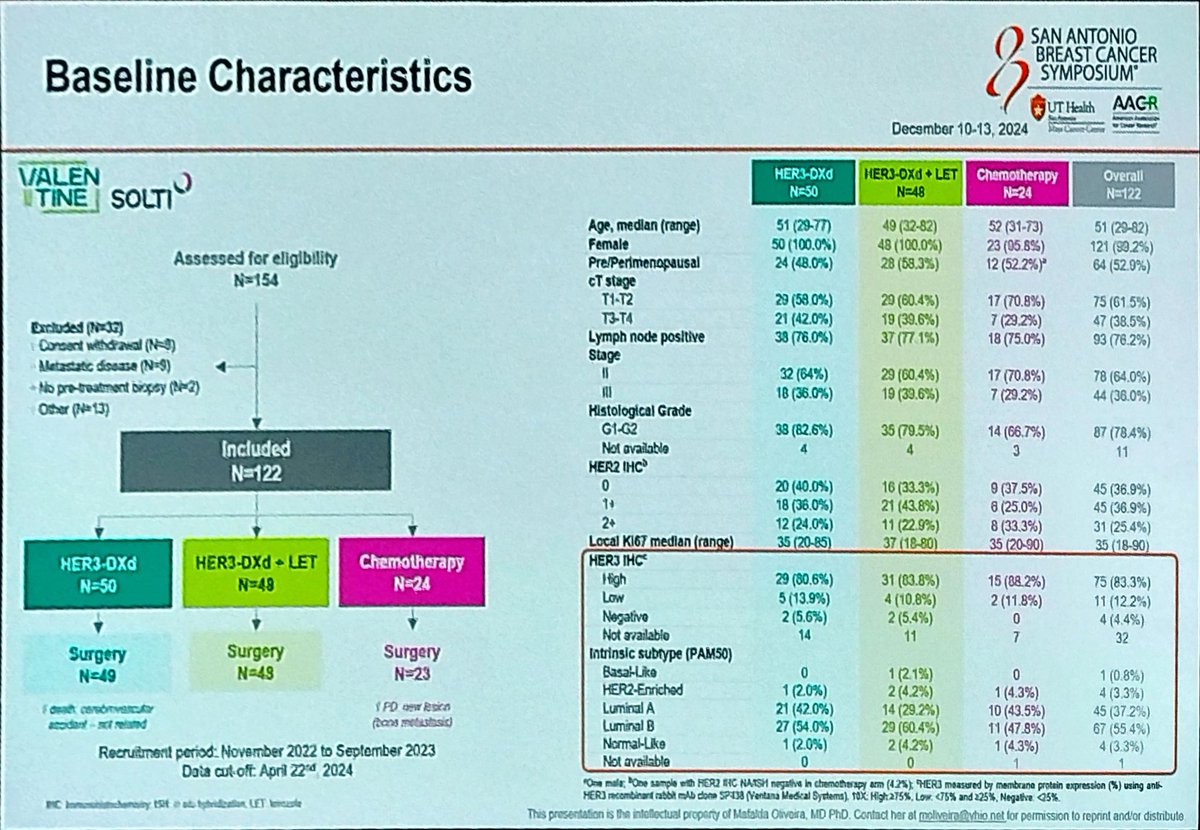
Median: 4.0 % pCR (HER3-DXd monotherapy) vs. 2.1 % pCR (HER3-DXd + letrozole) vs. 4.2 % pCR (multi-agent chemo (anthracycline + taxane)). pCR rates rate: 4.0% (HER3-DXd mono) vs. 2.1% (HER3-DXd + letrozole) vs. 4.2% (chemo). ORR rates rate: 70.0% (HER3-DXd mono) vs. 81.3% (HER3-DXd + letrozole) vs. 70.8% (chemo). Randomized Phase 2 trial (N=122, randomization 2:2:1). pCR rates were comparably LOW across all three arms: HER3-DXd mono 4.0% (95% CI 0.5-13.7%), HER3-DXd + letrozole 2.1% (95% CI 0.1-11.1%), chemo 4.2% (95% CI 0.1-21.1%). ORR: HER3-DXd mono 70.0%, HER3-DXd + letrozole 81.3%, chemo 70.8%. Key finding: HER3-DXd (± letrozole) achieved COMPARABLE efficacy to multi-agent chemo with SIGNIFICANTLY LESS toxicity. Low pCR rates reflect the biology of high-risk HR+/HER2- tumors (typically low pCR in this subtype regardless of regimen). Patients received 6 cycles prior to surgery. Translational: Ki-67 reduction, PAM50 shift from luminal B → luminal A / normal-like, CelTIL score increase correlated with response.
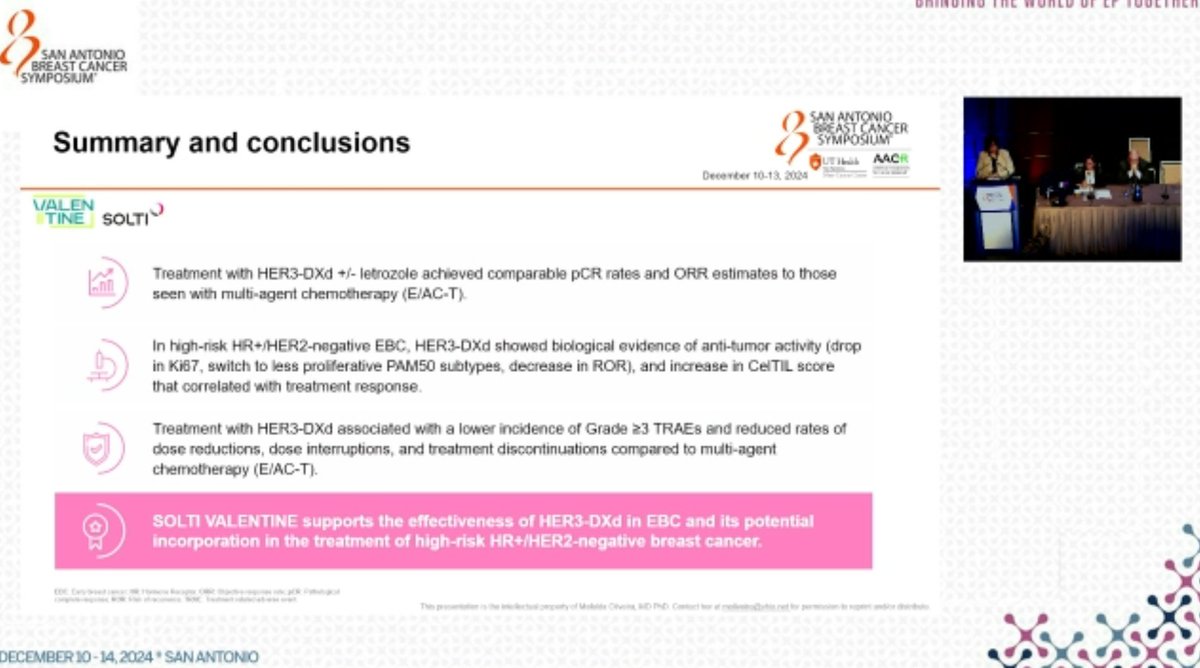
Invasive disease-free survival (iDFS) and long-term outcomes to be reported at later timepoints. Translational data show biological activity: significant Ki-67 reduction, PAM50 subtype shift from proliferative luminal B to less proliferative luminal A / normal-like at surgery, and CelTIL score increase correlating with response rates (replicating TOT-HER3 findings).
Key AEs: HER3-DXd arms: GI side effects (nausea, fatigue) — mostly low-grade, chemo arm: high proportion of Grade 3 hematologic AEs, NO ILD cases observed in HER3-DXd arms (notable). Grade ≥3 AEs "substantially lower" in HER3-DXd arms vs. chemo arm (specific percentages not in SABCS 2024 sources). Fewer treatment discontinuations, dose reductions, dose interruptions with HER3-DXd. Notably no ILD (interstitial lung disease) observed in HER3-DXd arms — important safety finding given class risk of topoisomerase-I ADCs.
🔬 Phase 2 signal: HER3-DXd ± letrozole comparable efficacy to multi-agent chemo with better tolerability in high-risk HR+/HER2- eBC. SOLTI-VALENTINE is the first trial testing a full course of neoadjuvant HER3-DXd (patritumab deruxtecan) in high-risk HR+/HER2- early breast cancer. pCR rates were low in all arms (4.0% / 2.1% / 4.2%) reflecting the biology of HR+/HER2- — these tumors rarely achieve pCR regardless of neoadjuvant regimen. ORR 70-81% similar across arms. Key signal: HER3-DXd achieved comparable efficacy to anthracycline+taxane chemo with SUBSTANTIALLY LESS toxicity (fewer Grade ≥3 AEs, fewer discontinuations, no ILD). Supports further development of HER3-DXd in high-risk HR+/HER2- eBC. Builds on SOLTI TOT-HER3 which showed single-dose HER3-DXd increased CelTIL score.
SOLTI-VALENTINE (SOLTI-2103, NCT05569811) is a randomized Phase 2 (2:2:1) neoadjuvant study run by the SOLTI Breast Cancer Research Group. It is the first trial to test a full course of neoadjuvant patritumab deruxtecan (HER3-DXd), with or without letrozole, compared with multi-agent chemotherapy in patients with high-risk HR-positive/HER2-negative early breast cancer.
Pathologic complete response rates were low across all arms (4.0% for HER3-DXd, 2.1% for HER3-DXd plus letrozole, and 4.2% for multi-agent chemotherapy), which is expected in HR-positive disease. Objective response rates were comparable (70%, 81% and 71% respectively), and the HER3-DXd arms had substantially lower grade 3 or higher adverse events with no cases of interstitial lung disease, suggesting comparable activity with better tolerability.
No. Patritumab deruxtecan (HER3-DXd) is an investigational HER3-directed antibody-drug conjugate and is not FDA approved for any indication. Letrozole (Femara) is separately approved as endocrine therapy, but the HER3-DXd regimens tested in SOLTI-VALENTINE are investigational.
The HER3-DXd arms had mostly low-grade gastrointestinal adverse events (nausea, fatigue) and substantially fewer grade 3 or higher events than the chemotherapy arm, which had a high proportion of grade 3 hematologic toxicity. Notably, no interstitial lung disease was observed in the HER3-DXd arms - an important reassurance given ILD is a known class risk of deruxtecan antibody-drug conjugates.
SOLTI-VALENTINE provides the first neoadjuvant, full-course experience with the HER3-directed antibody-drug conjugate HER3-DXd in HR-positive/HER2-negative early breast cancer, together with translational readouts (Ki-67 reduction and PAM50 subtype shifts). Although pCR was low, the comparable response rates and markedly better tolerability versus chemotherapy make it an important early signal for chemotherapy-sparing strategies.