ALINA is a Phase 3, open-label trial of adjuvant alectinib (Alecensa) versus platinum chemotherapy after complete resection of stage IB-IIIA ALK-positive NSCLC. Alectinib reduced disease recurrence or death (stage II-IIIA DFS HR 0.24), with 2-year DFS of 93.8% versus 63.0%, supporting FDA approval on April 18, 2024. Sponsor: Roche/Genentech.
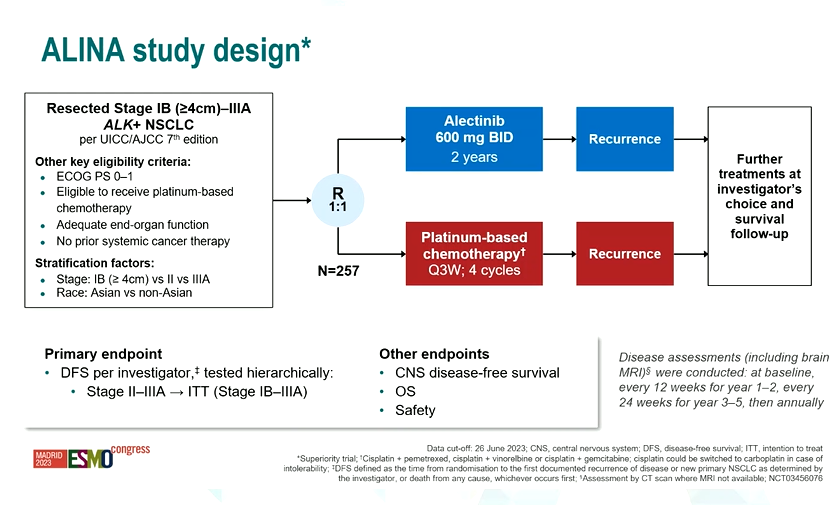
Discover KOL Sentiment on ALINA →Design — Phase 3, open-label; adjuvant alectinib 600 mg BID x24 mo vs platinum chemo, resected stage IB(>=4cm)-IIIA ALK+ NSCLC, n=257 (NCT03456076). (NEJM)
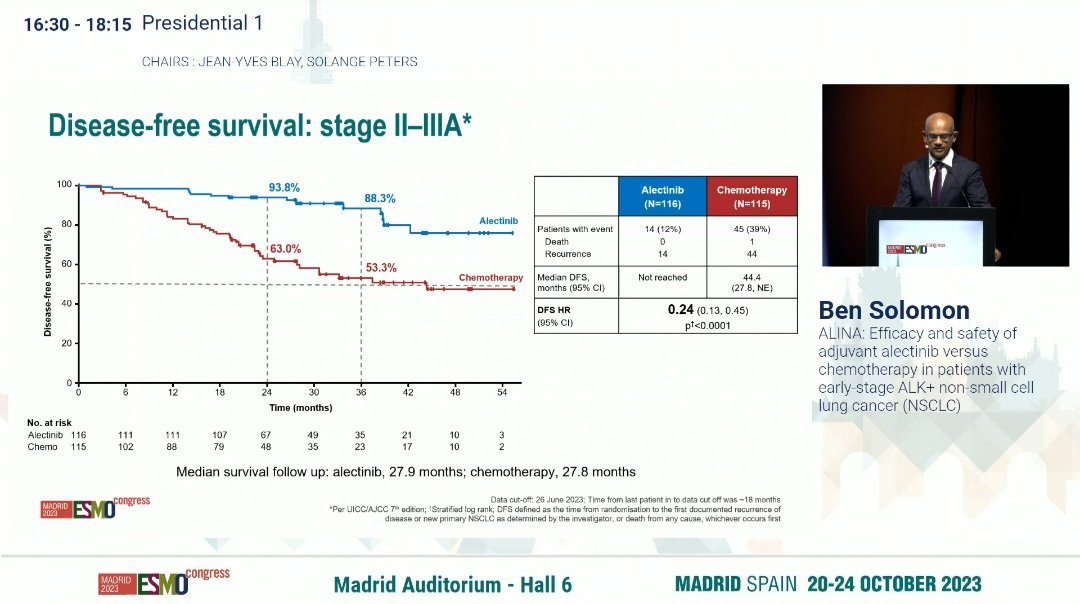
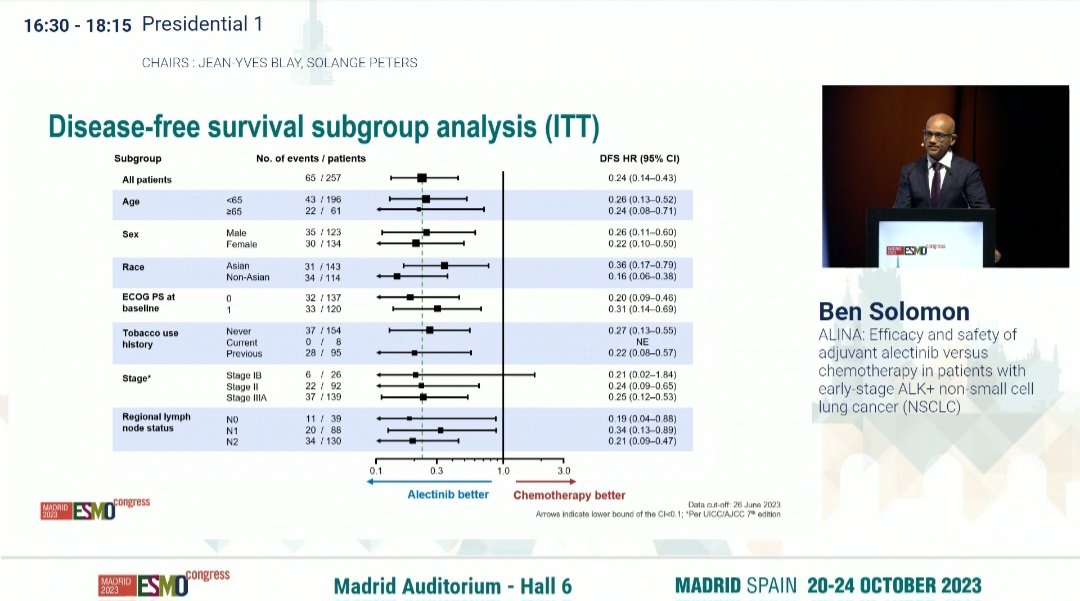
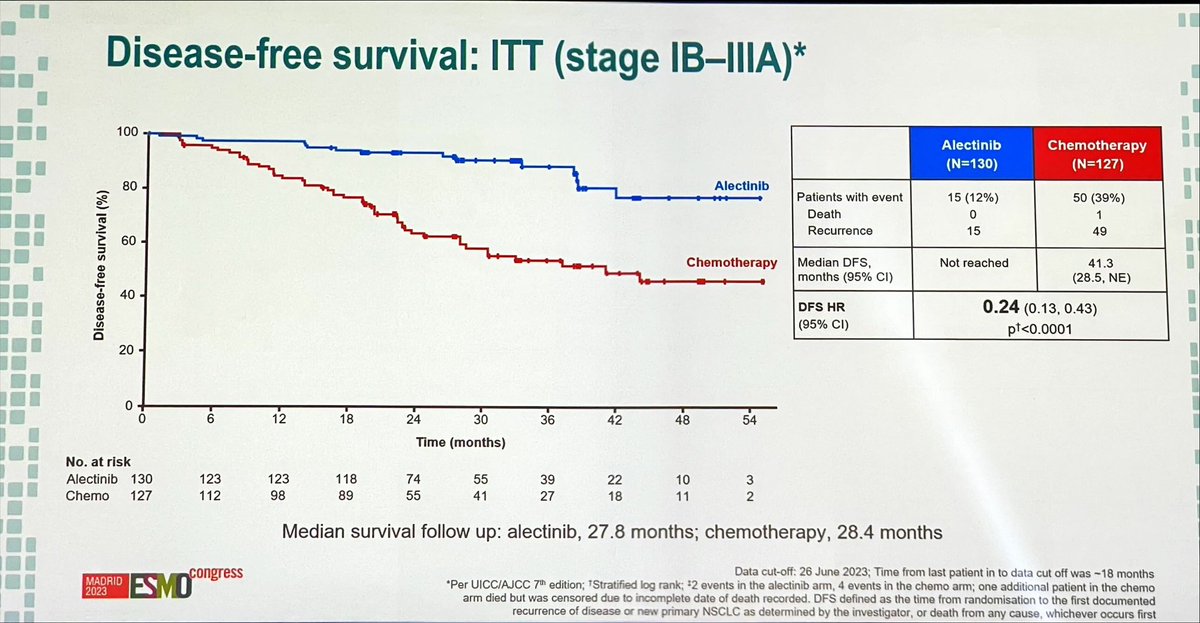
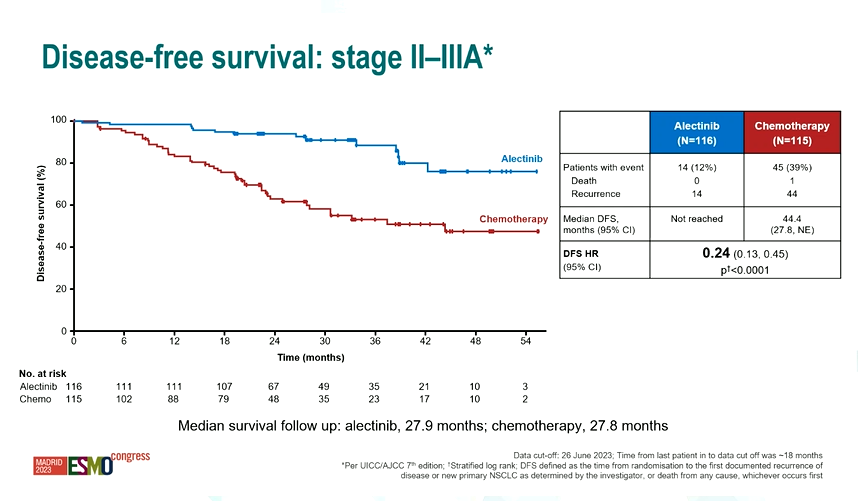
DFS (primary) — Stage II-IIIA DFS HR 0.24 (95% CI 0.13-0.45; p<0.001); 2-year DFS 93.8% vs 63.0%. (NEJM)
Overall survival — Immature; at ESMO 2025 (48-mo follow-up) 4-year OS 98.4% vs 92.4% (few events). (ESMO 2025 update)
Safety — Favorable vs chemotherapy; most common alectinib AEs increased CPK, constipation, myalgia; TRAEs 93.5% vs 89.2%. (NEJM)
Regulatory — FDA approved April 18, 2024 (Project Orbis); companion Dx VENTANA ALK (D5F3) CDx. (FDA.gov)
Sponsor / Drug — Roche/Genentech; alectinib (Alecensa), a 2nd-generation ALK TKI. (FDA label)
Compiled and reviewed by the KOL Pulse research team, led by Brian Shields, Founder, KOL Pulse. Last updated July 21, 2026.








Top 10 by impressions - click to view on X
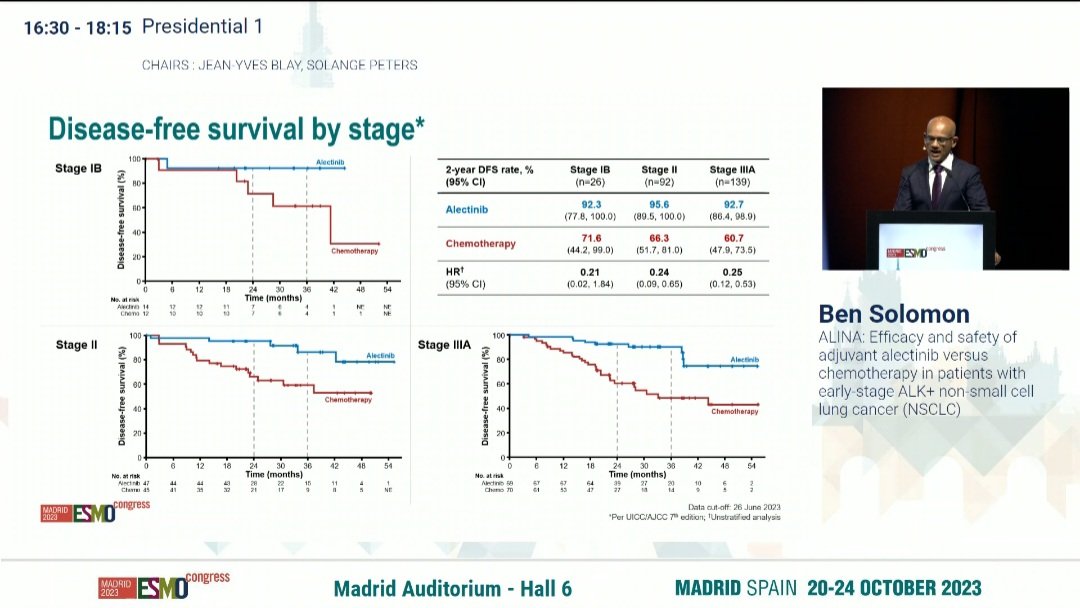
#ESMO23 ALINA trial: Adjuvant Alectinib vs Chemotherapy 3y DFS Stage 1B➡️92.3 vs 71.6% (HR:0.21) Stage 2➡️95.6 vs 66.3% (HR:0.24) Stage 3➡️92.7 vs 60.7%...
ALINA Adjuvant Alectinib versus Chemo in resected ALK+ NSCLC 💥 Alectinib DFS HR 0.24 🧠 Metástasis protection A new SOC to implement tomorrow in the clinic. Takes chemo out of the equation in...

🔥🚨@OncoAlert Hot off the press. Just published @NEJM Results of #ALINA phase 3 trial of adjuvant #Alectinib vs #Chemotherapy in...
Post #ASCO24 (aka #ASCOLung @BalazsHalmosMD), extrapolating from #LAURA, what about Stg III unresectable ALK+ NSCLC, post ChemoXRT, your...
Phase III ALINA trial of adjuvant alectinib for resected stage Ib-IIIA (AJCC v7) #ALK NSCLC now @NEJM. Compared 2y of alectinib to chemotherapy. Alectinib improved DFS (HR...

ALINA #ESMO23 @ESMO Presidential ➡️Phase III study of Adjuvant Alectinib versus Chemo for early-stage resectable ALK+ NSCLC ➡️↑ DFS with Alectinib (HR...

Alectinib in Resected ALK-Positive Non–Small-Cell Lung Cancer | New England Journal of Medicine
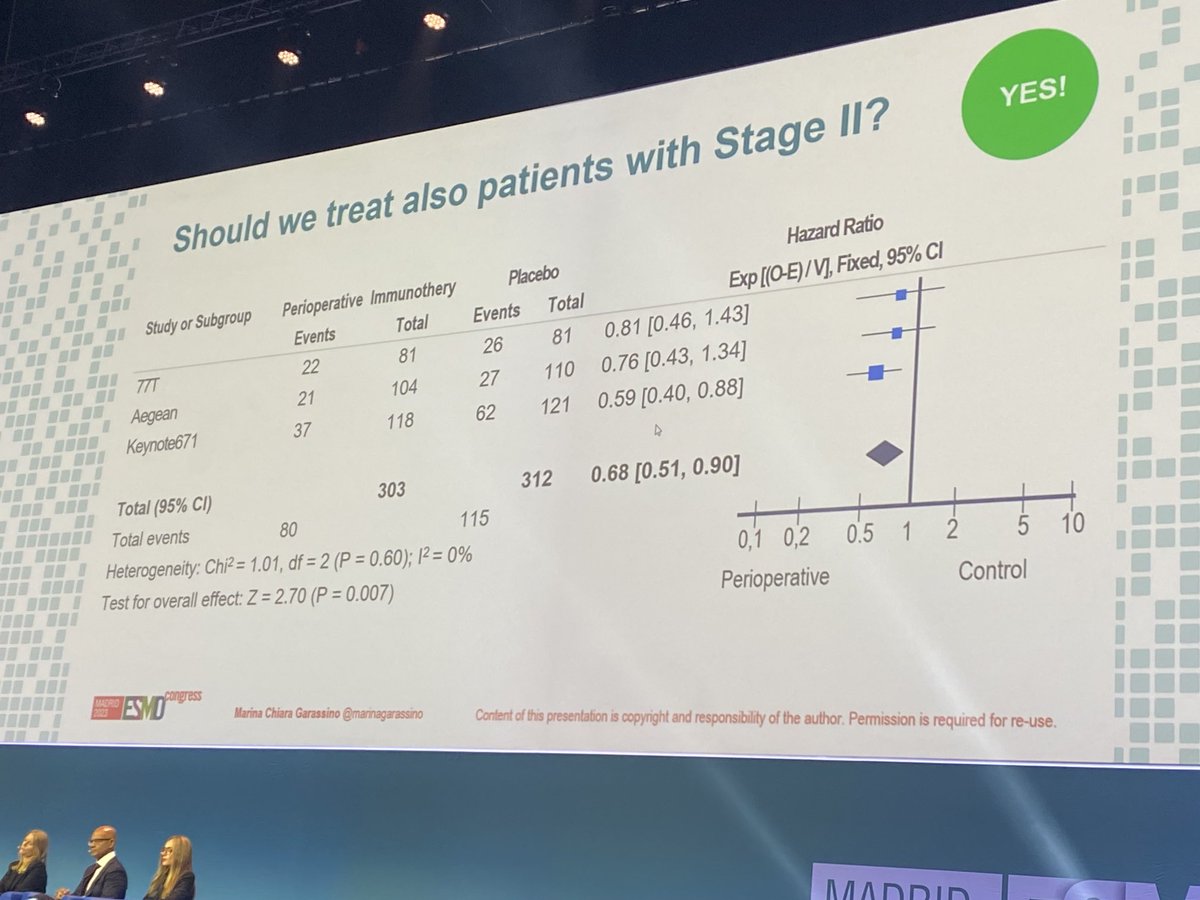
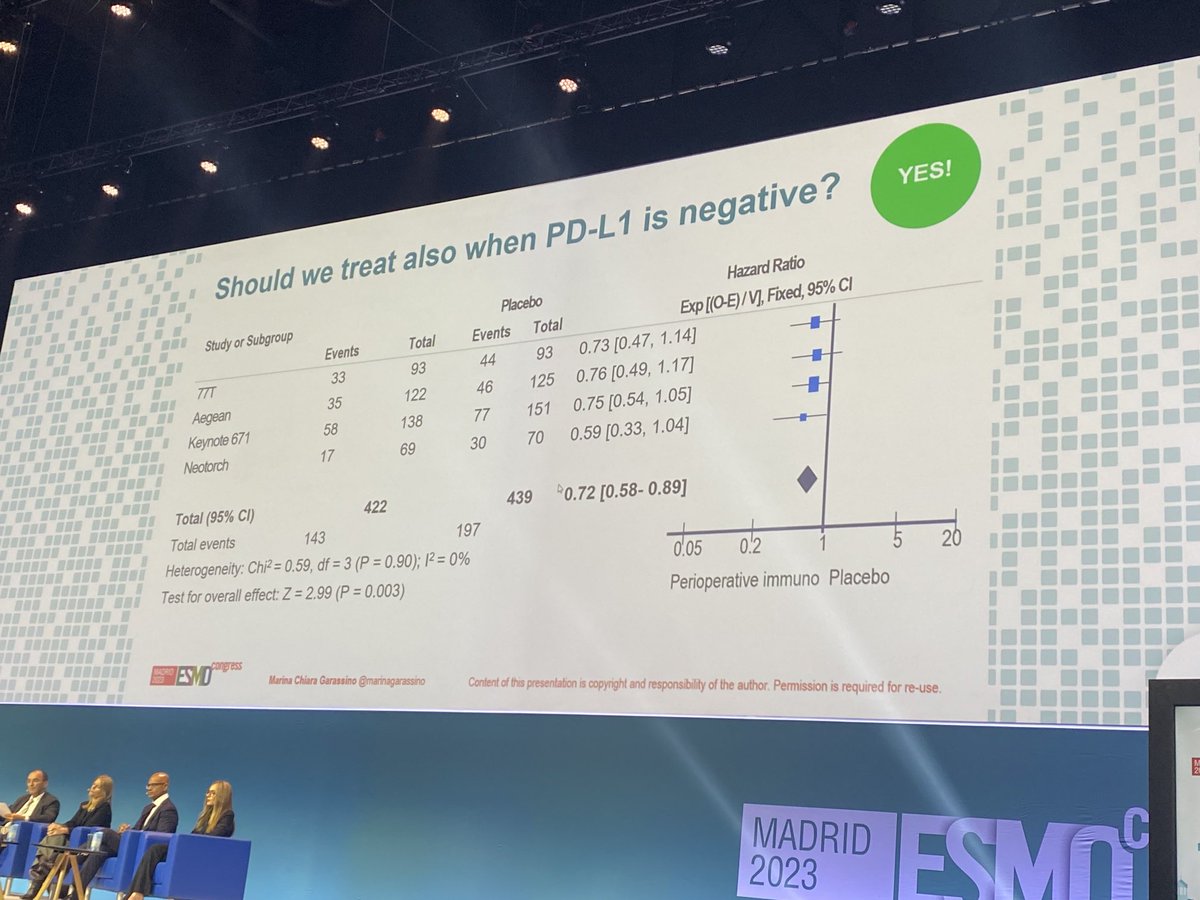
#ESMO23 Excellent discussion by @marinagarassino of CM77T and ALINA In this discussion, she performed her own mini meta-analysis to address whether we should give neoadj...
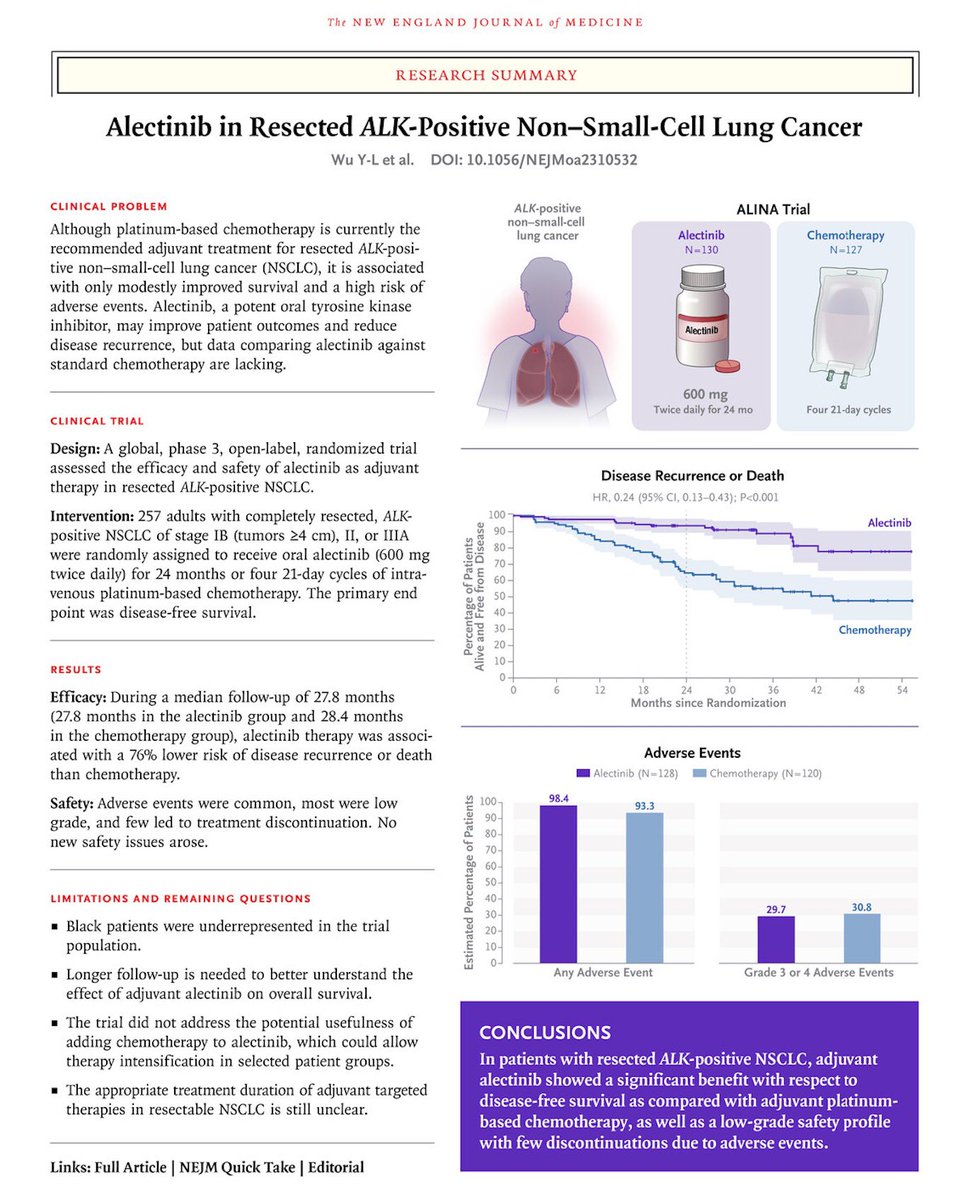
🔥 Results of phase 3 ALINA study now published in @NEJM 2 yrs adjuvant alectinib v chemotherapy ✅ DFS HR 0.24 ✅ 🧠 DFS HR 0.22 IMO, practice changing for our patients w/ ALK positive...

Fantastic #oralabstract session today for #NSCLC, #mesothelioma, & #SCLC w/ my fabulous co-chair @_ShankarSiva at...
ALINA is a Phase III, randomized, open-label, global trial (NCT03456076) that established adjuvant alectinib (Alecensa) as the new standard of care for patients with completely resected ALK-positive non-small cell lung cancer. The trial randomized 257 patients with stage IB (tumors >=4 cm) to IIIA ALK-positive NSCLC to receive either oral alectinib 600 mg twice daily for 24 months or intravenous platinum-based chemotherapy. ALINA is the first trial to demonstrate that an ALK inhibitor in the adjuvant setting provides a significant disease-free survival benefit over chemotherapy, and the second targeted therapy approved for adjuvant NSCLC after osimertinib (ADAURA).
Phase III, randomized (1:1), open-label, global trial. Patients received oral alectinib 600 mg twice daily for 24 months or platinum-based chemotherapy in four 21-day intravenous cycles. ALK-positive status confirmed by FDA-approved test or VENTANA ALK (D5F3) CDx assay.
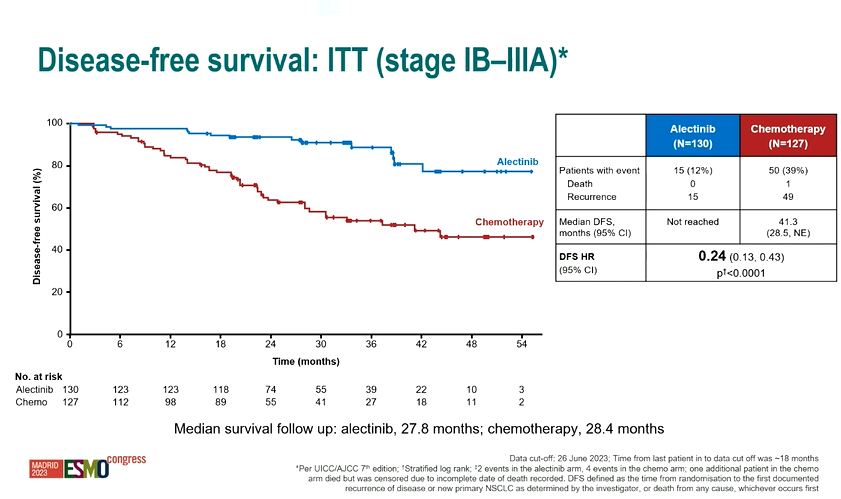
Patients with completely resected, histologically confirmed stage IB (tumors >=4 cm), II, or IIIA ALK-positive NSCLC (AJCC 7th edition). 257 patients randomized: 130 alectinib, 127 chemotherapy. No prior systemic anticancer therapy permitted.
Alectinib 600 mg orally twice daily for 24 months versus investigator's choice of platinum-based chemotherapy (cisplatin or carboplatin with pemetrexed or gemcitabine) for four 21-day cycles.
Primary endpoint: disease-free survival (DFS), tested hierarchically in stage II-IIIA patients then in the ITT population. Secondary endpoints: CNS disease-free survival, overall survival (OS), and safety.
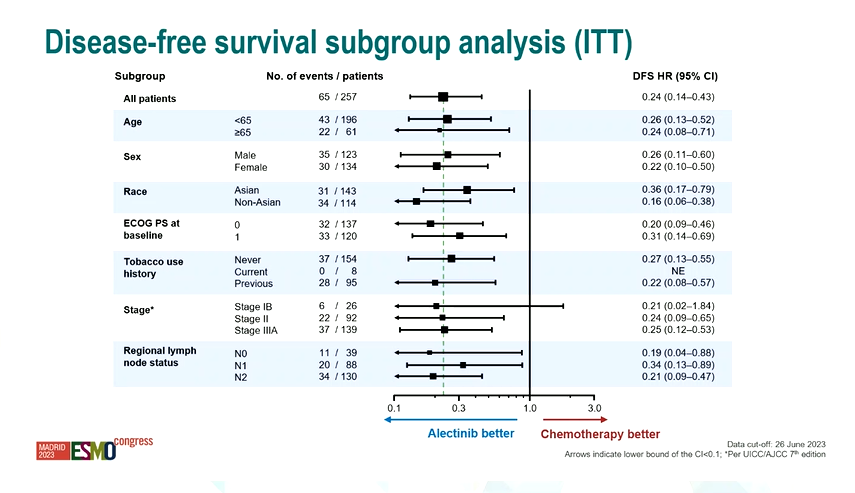
Alectinib demonstrated a profound DFS benefit versus chemotherapy. In stage II-IIIA patients, DFS HR was 0.24 (95% CI: 0.13-0.45; p<0.001). The 2-year DFS was 93.8% with alectinib versus 63.0% with chemotherapy. The 3-year DFS was 88.7% versus 54.0%. Updated data at ESMO 2025 (48-month follow-up) showed DFS HR 0.36, with 4-year DFS of 74.5% vs 46.3%. CNS DFS HR was 0.22 (95% CI: 0.08-0.58), demonstrating significant protection against brain metastases.
Overall survival data remain immature. At the ESMO 2025 update (48-month follow-up), 4-year OS rates were 98.4% with alectinib versus 92.4% with chemotherapy. Only 2 of 130 alectinib patients and 5 of 127 chemotherapy patients had died at the time of the primary analysis.
Alectinib was well tolerated with a favorable safety profile compared to chemotherapy. Treatment-related adverse events occurred in 93.5% of alectinib patients and 89.2% of chemotherapy patients. Most common alectinib AEs were increased creatinine kinase (43%), constipation (42.4%), and hepatotoxicity. Serious AEs occurred in only 1.6% with alectinib versus 6.7% with chemotherapy. Treatment discontinuation due to AEs was 5.5% with alectinib versus 12.5% with chemotherapy. No grade 5 treatment-related events.
ALINA established alectinib as the standard of care for resected ALK-positive NSCLC (NCCN Category 1 for stage II-IIIA). The trial demonstrated that adjuvant targeted therapy can replace chemotherapy entirely in ALK-positive patients, similar to the ADAURA paradigm in EGFR-mutant NSCLC. The strong CNS protective effect (HR 0.22) is particularly meaningful given the 50-60% lifetime risk of brain metastases in ALK-positive NSCLC. Key debates include optimal treatment duration (2 years vs longer), whether chemotherapy adds benefit on top of alectinib, and OS maturity.
ALINA is a Phase 3, randomized, open-label global trial (NCT03456076) that randomized 257 patients with completely resected stage IB (>=4 cm) to IIIA ALK-positive NSCLC to adjuvant alectinib (Alecensa) 600 mg twice daily for 24 months or platinum-based chemotherapy.
Yes. On April 18, 2024 the FDA approved alectinib (Alecensa) for adjuvant treatment of resected ALK-positive NSCLC, as detected by an FDA-approved test. The VENTANA ALK (D5F3) CDx Assay was co-approved. It is the second targeted therapy approved for adjuvant NSCLC, after osimertinib for EGFR.
In stage II-IIIA patients, adjuvant alectinib produced a disease-free survival hazard ratio of 0.24 (95% CI 0.13-0.45; p<0.001) versus chemotherapy. The 2-year DFS rate was 93.8% with alectinib versus 63.0% with chemotherapy.
No. Overall survival data remain immature. At the ESMO 2025 update (48-month follow-up), 4-year OS rates were 98.4% with alectinib versus 92.4% with chemotherapy, based on very few events; longer follow-up is needed.
Alectinib (Alecensa) is a second-generation, CNS-active ALK tyrosine kinase inhibitor developed by Roche/Genentech.