Top KOLs Discussing IMROZ

The 4 big myeloma randomized trials to watch out for @ASCO #ASCO24 1. Isa-VRd vs Isa-Rd newly diagnosed 2.Isa-VRd vs VRd (IMROZ) 3.DREAMM8 Bela-Pd vs Pd 4.Ven Dex vs Pom Dex (Canova) See thread for why they are important.
— Vincent Rajkumar (@VincentRK) 2024-06-01
IMROZ Key Slides & Visuals





IMROZ Top Tweets
 𝕏
𝕏The 4 big myeloma randomized trials to watch out for @ASCO #ASCO24 1. Isa-VRd vs Isa-Rd newly diagnosed 2.Isa-VRd vs VRd (IMROZ) 3.DREAMM8 Bela-Pd vs Pd 4.Ven Dex vs Pom Dex (Canova) See thread for why they are important.
𝕏Just out: mSMART Updated guidelines for newly diagnosed myeloma. https://t.co/x9KJzoK6Nh Main Change: We recommend quadruplets as initial therapy for all newly diagnosed patients who are not frail. Update based on IMROZ, CEPHEUS, and BENEFIT RCT data. @MayoMyeloma https://t.co/jDLiSsjqzD
 𝕏
𝕏Presented at #ASCO24: More patients treated with isatuximab, bortezomib, lenalidomide, and dexamethasone had improved progression-free survival and had a complete or better response than those treated with VRd alone. Full IMROZ trial results: https://t.co/84IlWS1hqB https://t.co/pTnYFvhI3e
 𝕏
𝕏The IMROZ trial (Isa-VRd versus VRd for transplant ineligible myeloma) just dropped. Although the trial is successful, numerous caveats exist. Six key take-aways regarding this trial, while we await the formal presentation at ASCO https://t.co/DQJkqc6rwh 1/ 🧵
𝕏1. The primary endpoint of PFS was met, not reached for Isa-VRd vs 54 mo for VRd For VRd (without transplant) to get median PFS of 54 months is alot Context= VRd in ENDURANCE:35 mo and SWOG0777 43 mo PFS Needs more details, but speaks to fitness/biology of enrolled pts https://t.co/Oy24u7Gg2u
 𝕏
𝕏“To add a PI or not to” With IMROZ and BENEFIT that is the key question. It is always about trade-offs: better efficacy (PFS and MRD-) but also a risk of toxicity. To me a toxicity that is minimized and is critical is peripheral neuropathy #EHA24RF #mmsm 1/x https://t.co/Fg27If1T1C
 𝕏
𝕏Looking forward to the IMROZ trial presentation during #ASCO24 These are practice-changing results which will impact the whole myeloma treatment landscape. @TheIACH @COMyCongress @SanofiFR @Myeloma_Doc @thanosdimop @mbeksac56 et al https://t.co/ZIEsy9QFtB
 𝕏
𝕏Just presented at #ASCO24: IMROZ results: Isa-VRd significantly improved PFS in patients with transplant-ineligible, newly diagnosed #MultipleMyeloma vs VRd with no new safety concerns: https://t.co/TAYkWfxwbY #ASCODailyNews @DrOlaLandgren #mmsm https://t.co/zTuVUvSn4R
 𝕏
𝕏Keep in mind that IMROZ enrolled newly diagnosed #myeloma patients who were up to 80 years old at study entry but not older than that, and so will miss some of the frail group. https://t.co/QQosc8Tv9L
 𝕏
𝕏Welcome to this @OncoAlert 🚨Session Round Up during #ASH24 in San Diego☀️ Todays Round up is on #MultipleMyeloma focusing on Pharmacologic Therapies: Refining the Evidence ✅GMMG-HD7 Publication: https://t.co/Rt9s0MTSuj @EliasKarlMai @RaabMarc We start off with a concomitant… https://t.co/6DNhCoxyK1 https://t.co/Pniz8iy99R
FDA Approval — September 20, 2024
FDA approves isatuximab with bortezomib, lenalidomide, and dexamethasone for newly diagnosed multiple myeloma #mmsm @IMFmyeloma @theMMRF @HealthTree @SanofiUS @sanofi @FDAOncology @ASH_hematology https://t.co/41r4PO5Vah
— C. Ola Landgren, M.D. (@DrOlaLandgren) 2024-09-20
About the IMROZ Trial
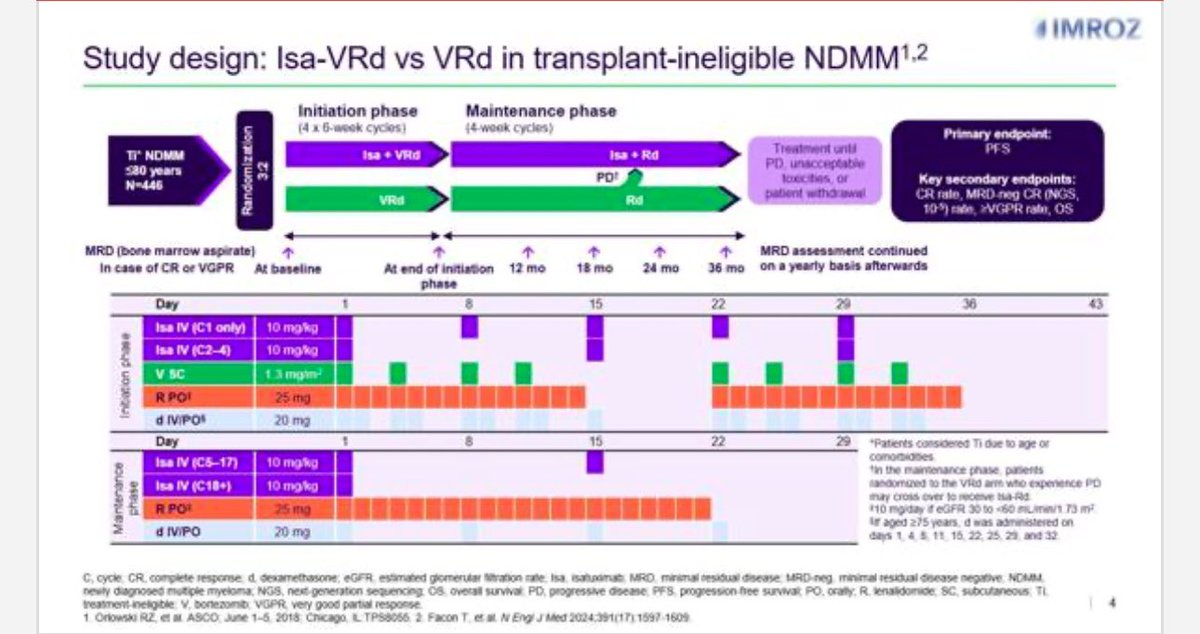
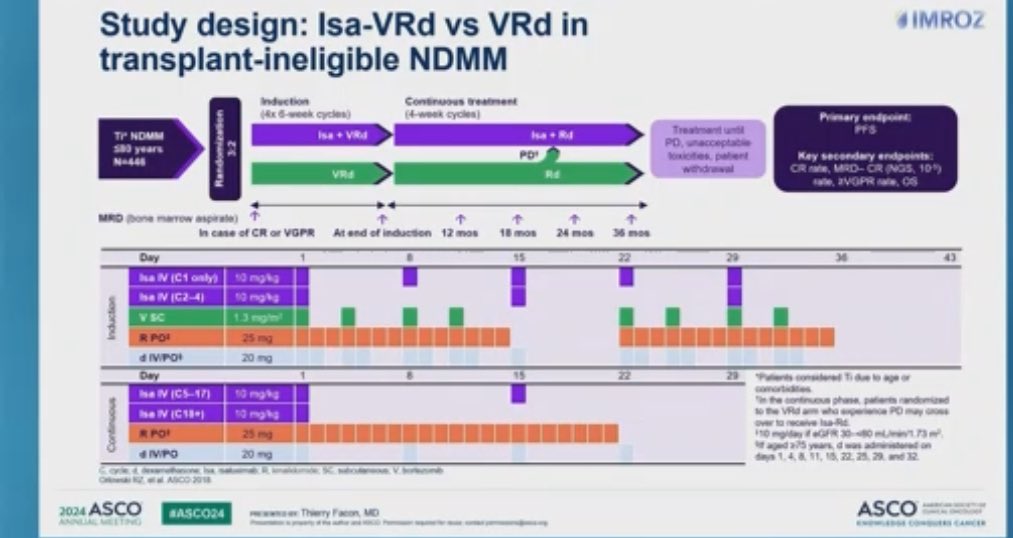
Before IMROZ, the frontline standard for patients not going to transplant was a triplet — VRd, or daratumumab plus lenalidomide and dexamethasone on the strength of MAIA. IMROZ asked whether adding the anti-CD38 antibody isatuximab on top of the full VRd backbone, and then continuing isatuximab with lenalidomide and dexamethasone indefinitely, would extend progression-free survival in that population. It enrolled 446 patients in 21 countries, all aged 80 or younger and considered transplant-ineligible because of age or comorbidities, and randomized them 3:2 to Isa-VRd or VRd. Patients in the VRd arm who progressed during the continuous phase were permitted to cross over to Isa-Rd.
The primary analysis was presented by Thierry Facon, MD (University of Lille) at ASCO 2024 as abstract 7500 and published the same day in the New England Journal of Medicine. It was positive on the primary endpoint and deepened responses across every MRD measure, and it drove the FDA approval three months later. The discussion among myeloma physicians has been unusually granular: the VRd control arm performed better than historical benchmarks (median PFS 54.34 months, versus roughly 35–43 months in ENDURANCE and SWOG S0777), which several KOLs read as evidence that the enrolled population was fitter than the label term “transplant-ineligible” implies; and grade 5 adverse events during treatment were twice as common with the quadruplet. Robert Z. Orlowski, MD PhD presented the MRD-dynamics analysis (abstract 770) at ASH 2024, and comparative work against the subcutaneous isatuximab schedule (ISASOCUT) was presented at IMS 2026 in Glasgow.
Third of the @NEJM #ASCO24 myeloma papers I’m highlighting. The IMROZ trial exploring quadrupletx, Isa-VRd, in transplant ineligible patients with newly diagnosed myeloma. @thanosdimop @Myeloma_Doc #ThierryFacon @Mohty_EBMT @TomBmt133 https://t.co/yTpeFvXyHs
— Vincent Rajkumar (@VincentRK) 2024-06-03
Trial Methodology & Results
Study Design
Phase 3, randomized 3:2, open-label, multicenter (21 countries). Four 6-week induction cycles of Isa-VRd or VRd, then continuous 4-week cycles of Isa-Rd or Rd until progression, unacceptable toxicity or withdrawal. Outcomes-assessor blinded (independent review committee for PFS). (NEJM / CT.gov)
Population
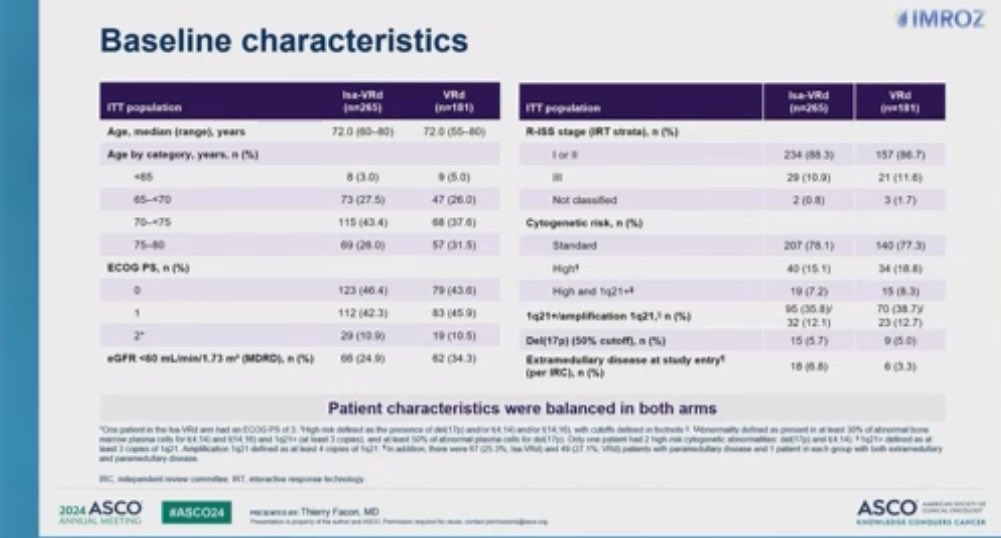
446 adults with newly diagnosed multiple myeloma, aged 80 or younger, considered transplant-ineligible because of age or comorbidities. Median age 72.0 in both arms; 26.0% / 31.5% aged 75–80; ECOG PS 2 in ~11%; high-risk cytogenetics in 15.1% / 18.8%. (ASCO 2024 slide, DCO1)
Interventions
Isatuximab IV 10 mg/kg (weekly in cycle 1, then per schedule), bortezomib SC 1.3 mg/m², lenalidomide 25 mg orally, dexamethasone 20 mg IV/orally — versus the same VRd backbone without isatuximab. Reduced dexamethasone schedule for patients aged 75 or older. (ASCO 2024 / ASH 2024 slides)
Endpoints
Primary: progression-free survival by independent review. Key secondary: complete response rate, MRD-negative complete response rate (NGS, 10⁻⁵), at-least-very-good-partial-response rate, and overall survival. (NEJM / ASCO 2024 slide)
MRD Assay
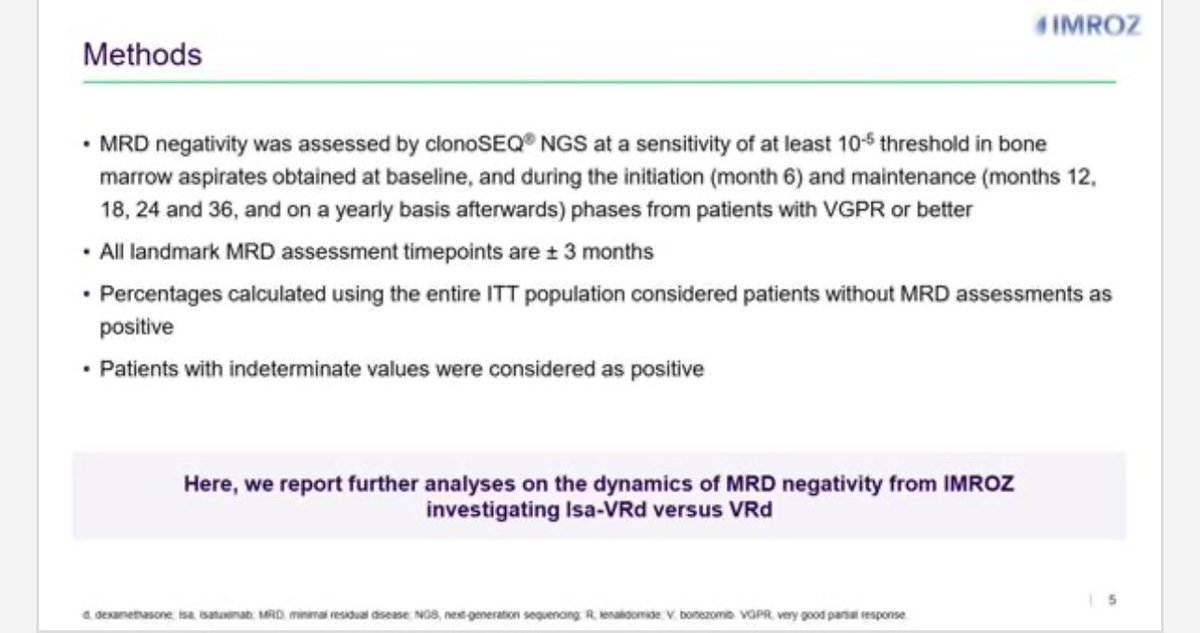
clonoSEQ next-generation sequencing (Adaptive Biotechnologies) on bone-marrow aspirates at a sensitivity of at least 10⁻⁵, collected at baseline, end of induction and months 12, 18, 24 and 36, then yearly. This was the trial’s MRD assay — it is not a companion diagnostic for the approval. (ASH 2024 abstract 770 methods slide)
Lead Investigator
Thierry Facon, MD, University of Lille — first author of the NEJM paper and presenter of ASCO 2024 abstract 7500. Robert Z. Orlowski, MD PhD (MD Anderson) presented the ASH 2024 MRD-dynamics analysis. (NEJM / ASCO / ASH)
Progression-free survival — primary endpoint met
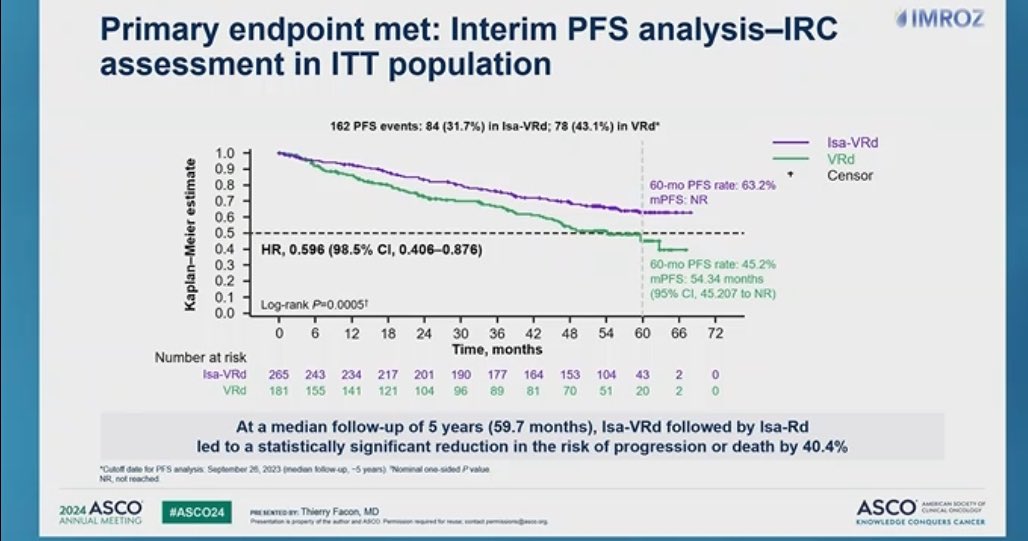
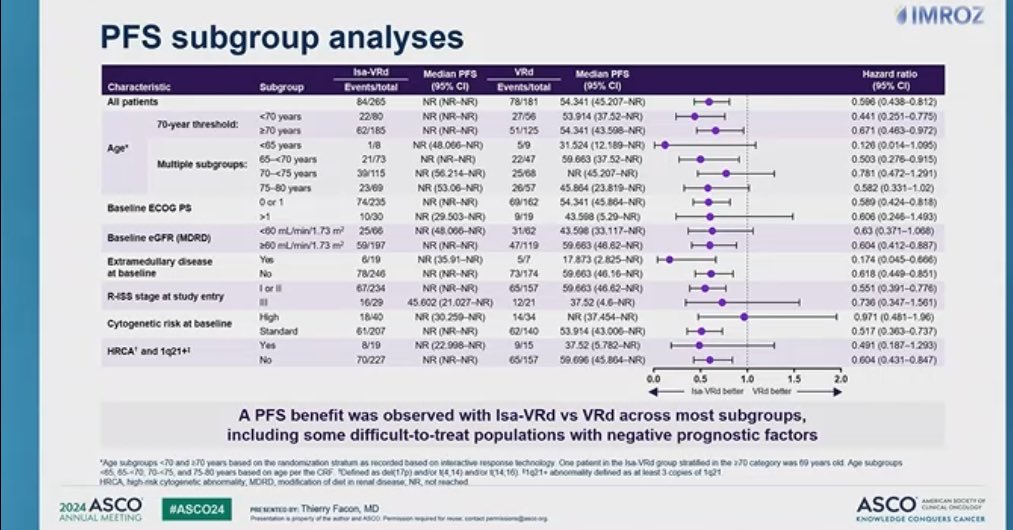
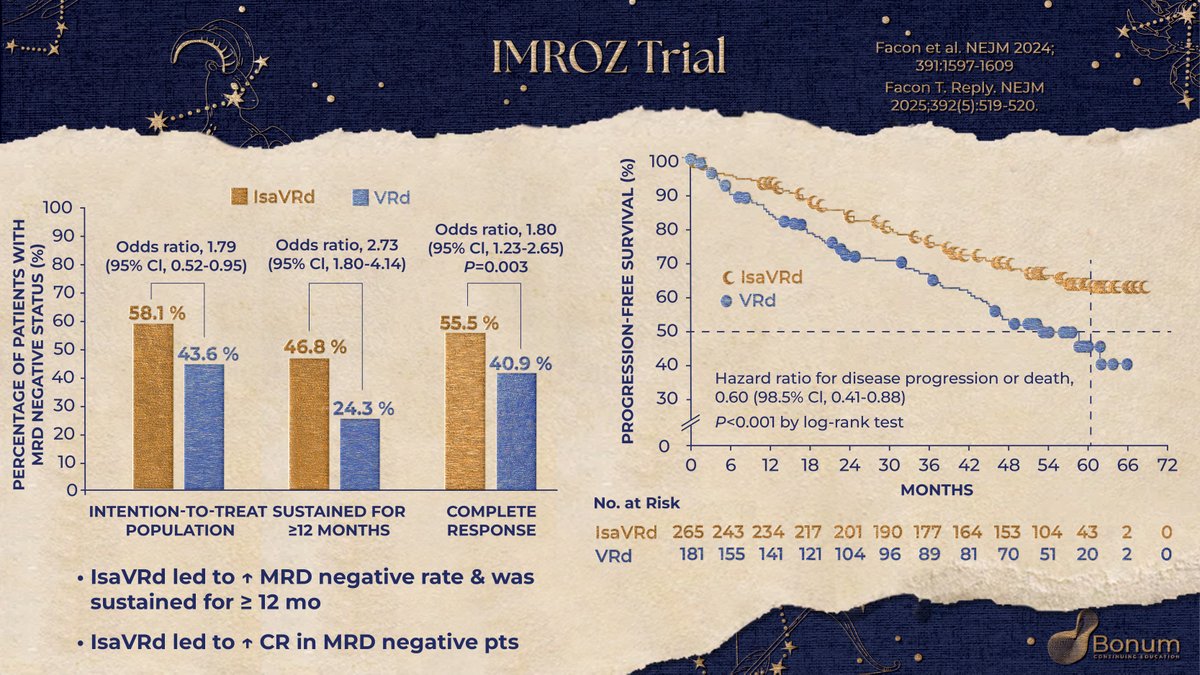
162 PFS events occurred: 84 of 265 (31.7%) with Isa-VRd and 78 of 181 (43.1%) with VRd. At a median follow-up of 59.7 months (IQR 56.0–63.2), estimated 60-month PFS was 63.2% versus 45.2%; hazard ratio 0.596 (98.5% CI 0.406–0.876), log-rank P=0.0005 on the slide and P<0.001 as published. Median PFS was not reached with Isa-VRd and was 54.34 months (95% CI 45.207–NR) with VRd. Time to disease progression favoured Isa-VRd more strongly (HR 0.41, 95% CI 0.29–0.60). The benefit held across most prespecified subgroups — but in patients with high-risk cytogenetics the hazard ratio was 0.97 (95% CI 0.48–1.96), i.e. no demonstrated benefit in that subgroup.
1. The primary endpoint of PFS was met, not reached for Isa-VRd vs 54 mo for VRd For VRd (without transplant) to get median PFS of 54 months is alot Context= VRd in ENDURANCE:35 mo and SWOG0777 43 mo PFS Needs more details, but speaks to fitness/biology of enrolled pts https://t.co/Oy24u7Gg2u
— Manni Mohyuddin (@ManniMD1) 2024-05-24
Response depth and MRD negativity
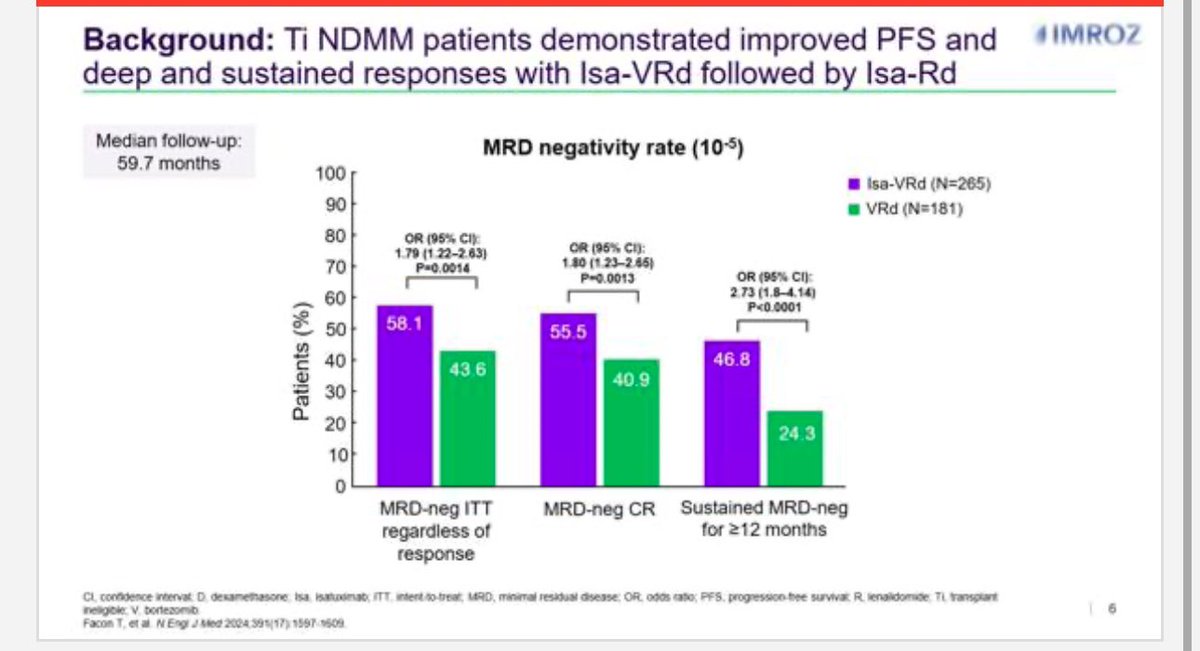
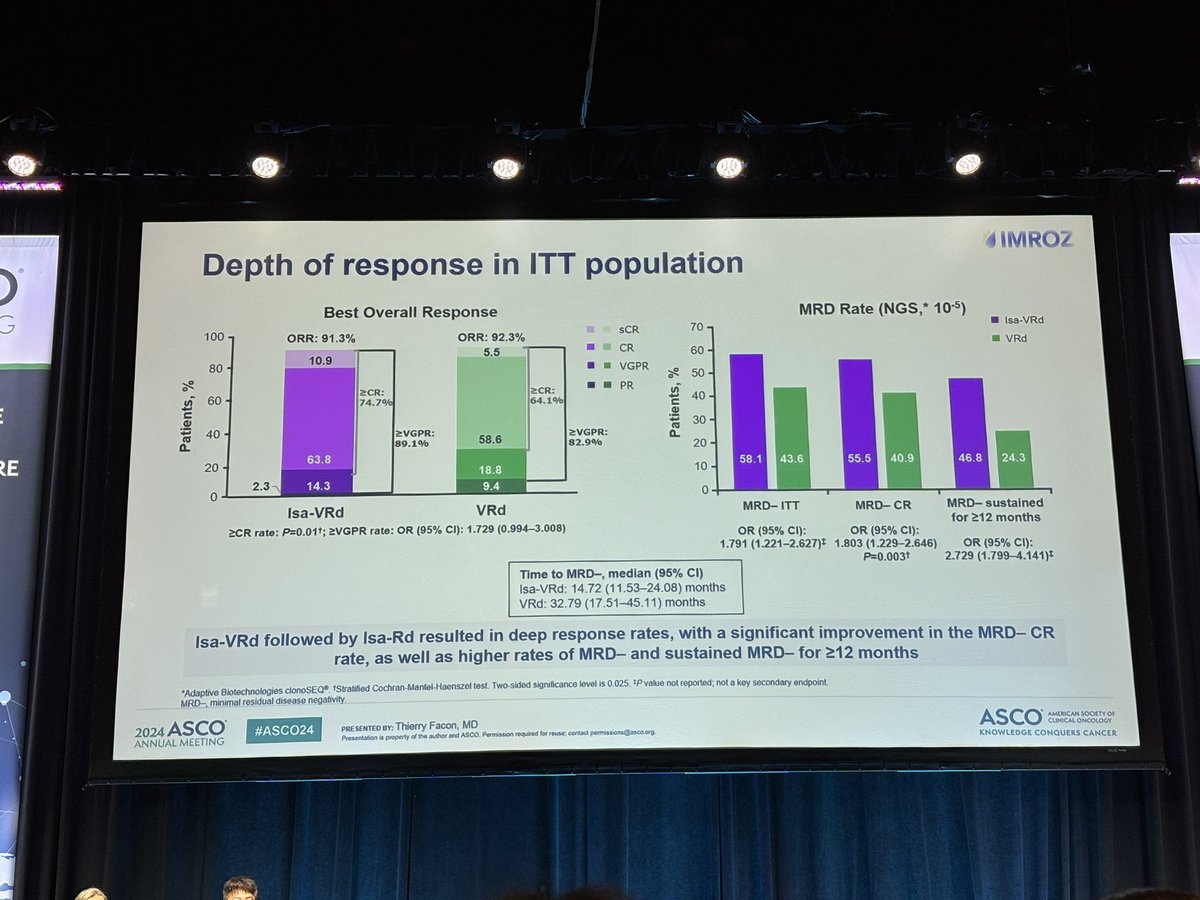
Overall response was similarly high in both arms (91.3% vs 92.3%), but depth of response separated them. Complete response or better: 74.7% versus 64.1% (P=0.01). MRD-negative complete response at any time: 55.5% versus 40.9% (P=0.003). MRD negativity regardless of response: 58.1% versus 43.6%. Sustained MRD negativity for at least 12 months: 46.8% versus 24.3%. Median time to MRD negativity was 14.72 months with Isa-VRd versus 32.79 months with VRd. Within the Isa-VRd arm, patients who reached MRD negativity had markedly better PFS than those who did not (HR 0.22, 95% CI 0.14–0.35).
MRD-negativity (10^-5) in favor of Isa-VRd (58% vs 43%) and sustained MRD negativity was double (47% vs 24%). Look at the time to MRD negativity as well - much shorter (15 vs 33 months). Higher # of deaths from AEs with Isa-VRd - but is this from longer time on treatment? https://t.co/xwTIZGsPUq
— Ben Derman (@bdermanmd) 2024-06-03
Overall survival — interim, immature
At the 26-September-2023 cutoff, 128 patients had died: 69 of 265 (26.0%) with Isa-VRd and 59 of 181 (32.6%) with VRd. Estimated 60-month overall survival was 72.3% versus 66.3%, hazard ratio for death 0.78 (99.97% CI 0.41–1.48). Those 128 deaths represent a 63% information fraction of the planned final overall-survival analysis, and the upper bound of the confidence interval passed the prespecified futility threshold (greater than 1.1); follow-up continues. Deaths attributed to disease progression were lower with Isa-VRd (4.9% versus 12.2%). No overall survival benefit has been demonstrated.
Safety
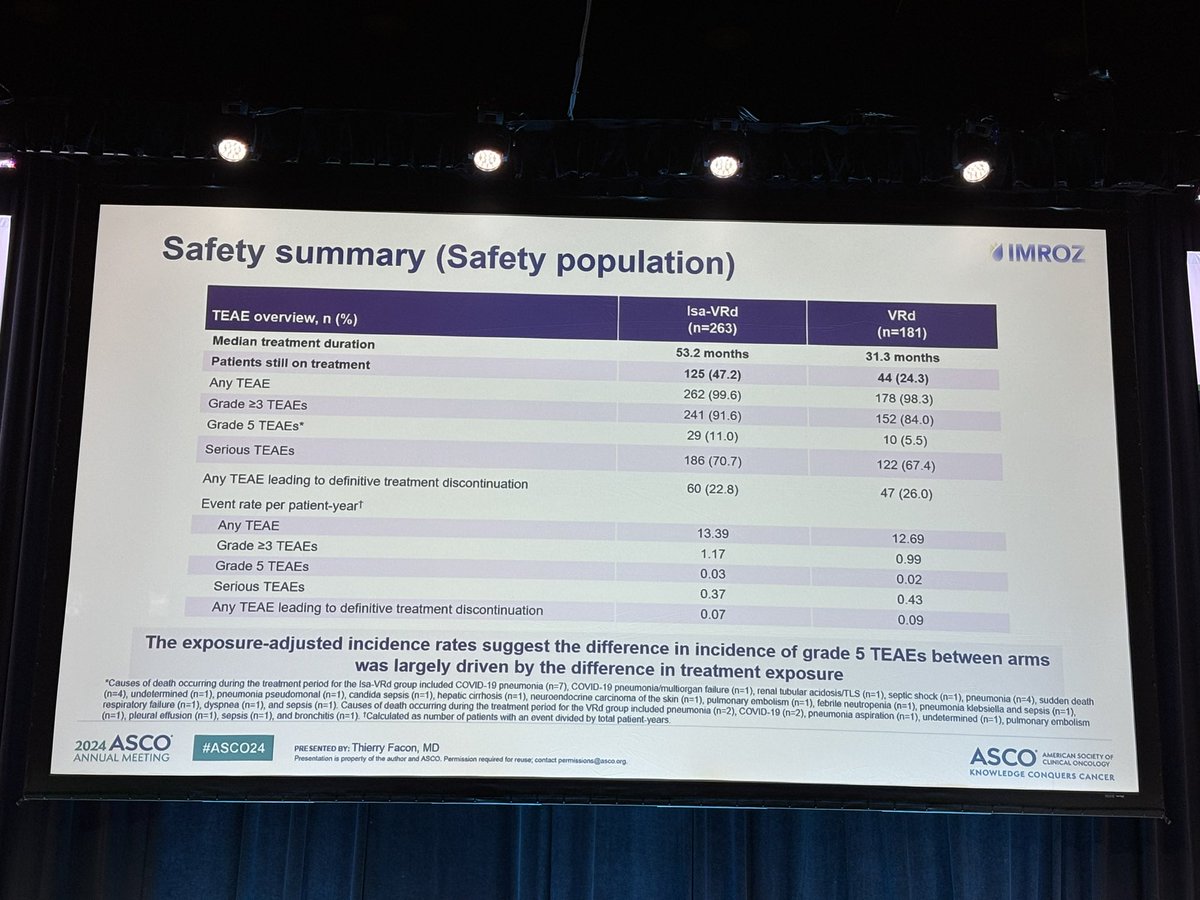
In the safety population (Isa-VRd n=263, VRd n=181), grade 3 or higher treatment-emergent adverse events occurred in 91.6% versus 84.0%, and grade 5 events during the treatment period in 11.0% (29 patients) versus 5.5% (10 patients). Grade 5 events were caused mainly by infection (6.5% versus 3.9%), including COVID-19 (3.0% versus 1.1%). The investigators note that exposure differed substantially — median treatment duration 53.2 versus 31.3 months, and 0.031 versus 0.019 grade 5 events per patient-year — which they judged to account for much of the gap. Grade 3 or higher infection occurred in 44.9% versus 38.1%, and was less frequent among patients receiving antibiotic prophylaxis in both arms. Serious adverse events: 70.7% versus 67.4%. Discontinuation for adverse events was similar and slightly lower with the quadruplet: 22.8% versus 26.0%. Invasive solid-tumour second primary cancers: 8.4% versus 4.4%.
3. Using quads doubled the treatment related deaths. More than 1 in every 10 people (11%!) receiving Isa-VRd died due to a Grade V adverse event as opposed to 5.5% for VRd. This is similar to what was seen in the Spanish GEMFIT study (best MRD with Dara-KRd, but most deaths)
— Manni Mohyuddin (@ManniMD1) 2024-05-24
Clinical implications
✅ FDA-approved: isatuximab-irfc with bortezomib, lenalidomide and dexamethasone for newly diagnosed multiple myeloma in adults ineligible for autologous stem-cell transplant (September 20, 2024). ⚠ Not established by this trial: an overall survival benefit (interim only, 63% information fraction); benefit in patients with high-risk cytogenetics (subgroup HR 0.97, 95% CI 0.48–1.96); and benefit in a clearly frail population — IMROZ capped enrolment at age 80, and several myeloma physicians read the strong VRd control arm (median PFS 54.34 months) as evidence the enrolled cohort was fitter than the term “transplant-ineligible” usually implies. The doubling of grade 5 treatment-period events is the trade-off clinicians weigh when choosing a quadruplet over a triplet in older patients.
Source: FDA approval announcement + NEJM 2024 →IMROZ in the News
IMROZ Trial FAQ
What is the IMROZ trial?
IMROZ (NCT03319667) is a Phase 3, randomized, open-label, multicenter trial run by Sanofi that tested isatuximab added to bortezomib, lenalidomide and dexamethasone (Isa-VRd, followed by Isa-Rd) against VRd followed by Rd in 446 adults aged 80 or younger with newly diagnosed multiple myeloma who were not eligible for autologous stem-cell transplant. The primary endpoint was progression-free survival.
Is isatuximab plus VRd FDA approved for newly diagnosed myeloma?
Yes. On September 20, 2024 the FDA approved isatuximab-irfc (Sarclisa, Sanofi) in combination with bortezomib, lenalidomide and dexamethasone for adults with newly diagnosed multiple myeloma who are ineligible for autologous stem-cell transplant. The approval was based on IMROZ.
What were the IMROZ progression-free survival results?
At a median follow-up of 59.7 months, estimated 60-month progression-free survival was 63.2% with Isa-VRd versus 45.2% with VRd (hazard ratio 0.60; 98.5% CI 0.41-0.88; P<0.001) by independent review. Median PFS was not reached with Isa-VRd versus 54.34 months with VRd. The FDA review reported the same hazard ratio with a 95% CI of 0.44-0.81 (p=0.0009) and median PFS not reached versus 54.3 months.
Did IMROZ show an overall survival benefit?
Not yet. At the September 26, 2023 data cutoff, 128 deaths had occurred (69 of 265 [26.0%] with Isa-VRd and 59 of 181 [32.6%] with VRd). Estimated 60-month overall survival was 72.3% versus 66.3%, hazard ratio for death 0.78 (99.97% CI 0.41-1.48). That interim analysis represents a 63% information fraction, the upper confidence bound passed the prespecified futility threshold, and follow-up is ongoing - so overall survival remains immature.
What are the main safety concerns with Isa-VRd in IMROZ?
Grade 3 or higher treatment-emergent adverse events occurred in 91.6% of Isa-VRd patients versus 84.0% with VRd, and grade 5 (fatal) events in 11.0% (29 of 263) versus 5.5% (10 of 181). The investigators attributed much of that gap to longer treatment exposure (median 53.2 versus 31.3 months; 0.031 versus 0.019 grade 5 events per patient-year), and grade 5 events were driven mainly by infection, including COVID-19. Discontinuation for adverse events was similar (22.8% versus 26.0%). Several myeloma physicians - notably Dr. Manni Mohyuddin - have flagged the doubling of treatment-period deaths as a reason to avoid this quadruplet in clearly frail patients.
Key KOL Sentiments - IMROZ
Compiled and reviewed by the KOL Pulse research team, led by Brian Shields, Founder, KOL Pulse. Last updated 2026-09-24. Every numeric claim on this page is traceable to the IMROZ primary publication (NEJM 2024;391(17):1597-1609), the ASCO 2024 abstract 7500 presentation, the ASH 2024 abstract 770 presentation, or the FDA approval announcement of September 20, 2024, and is labelled with its source and data cut. Physician commentary is quoted verbatim.