ctDNA-guided adjuvant atezolizumab in MIBC after cystectomy — Roche/Genentech
Discover KOL Sentiment on IMvigor011 →Read FDA Press Release →Design - Phase 3 ctDNA-guided adjuvant atezolizumab vs placebo in ctDNA MRD-positive high-risk MIBC after cystectomy (NCT04660344); Signatera (Natera) ctDNA companion-diagnostic enrichment.
DFS (primary) - Median 9.9 vs 4.8 mo, HR 0.64 (P=.0047).
OS (key secondary) - Median 32.8 vs 21.1 mo, HR 0.59 (P=.0131) - an 11.7-month improvement.
Safety - Consistent with the known atezolizumab immune-related profile; no new safety signals.
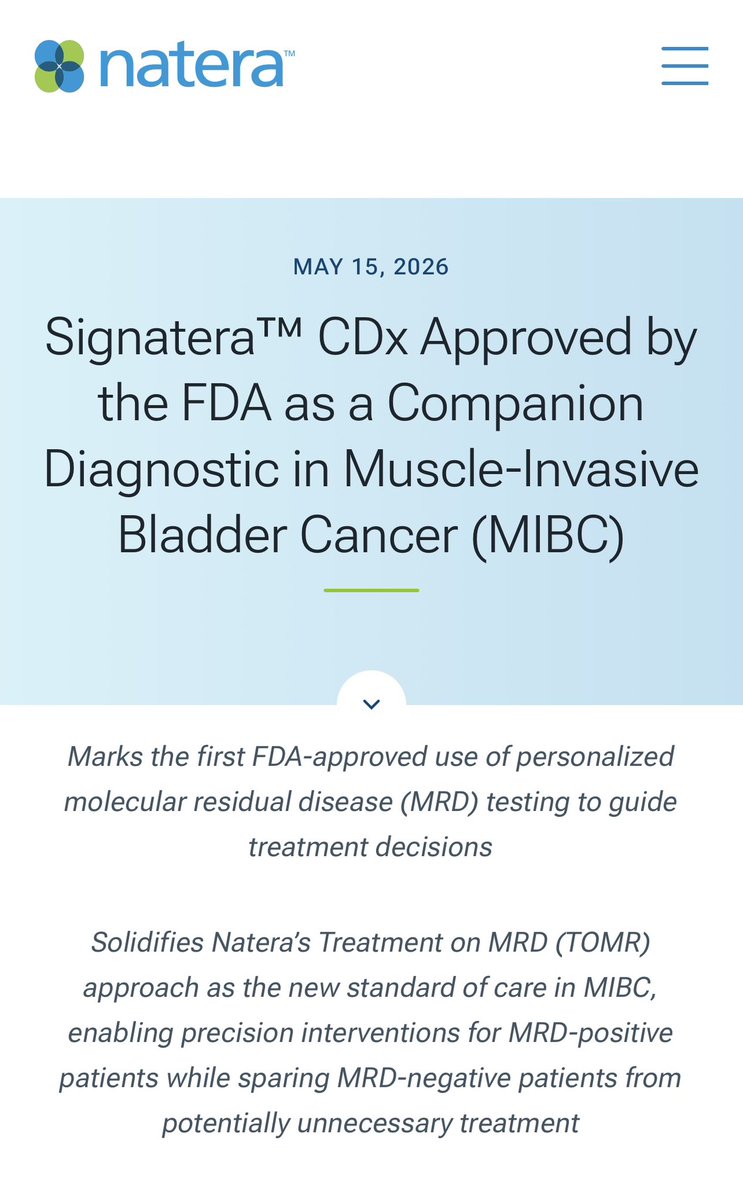
Regulatory - FDA approved May 15, 2026 with Signatera (Natera) CDx co-approval - first biomarker (ctDNA MRD)-selected adjuvant immunotherapy approval in MIBC.
Sponsor / drug - Roche / Genentech; atezolizumab (Tecentriq).
Compiled and reviewed by the KOL Pulse research team, led by Brian Shields, Founder, KOL Pulse. Last updated July 21, 2026.







IMvigor011 is a randomized, double-blind, placebo-controlled Phase 3 trial evaluating adjuvant atezolizumab in patients with high-risk muscle-invasive bladder cancer (MIBC) who are ctDNA-positive after radical cystectomy. Detection of post-surgical molecular residual disease (MRD) was performed using the Signatera personalized ctDNA assay. This is the first trial to prospectively use ctDNA MRD status to select patients for adjuvant immunotherapy — establishing Level-1 evidence that ctDNA-informed treatment substantially improves outcomes in MIBC.
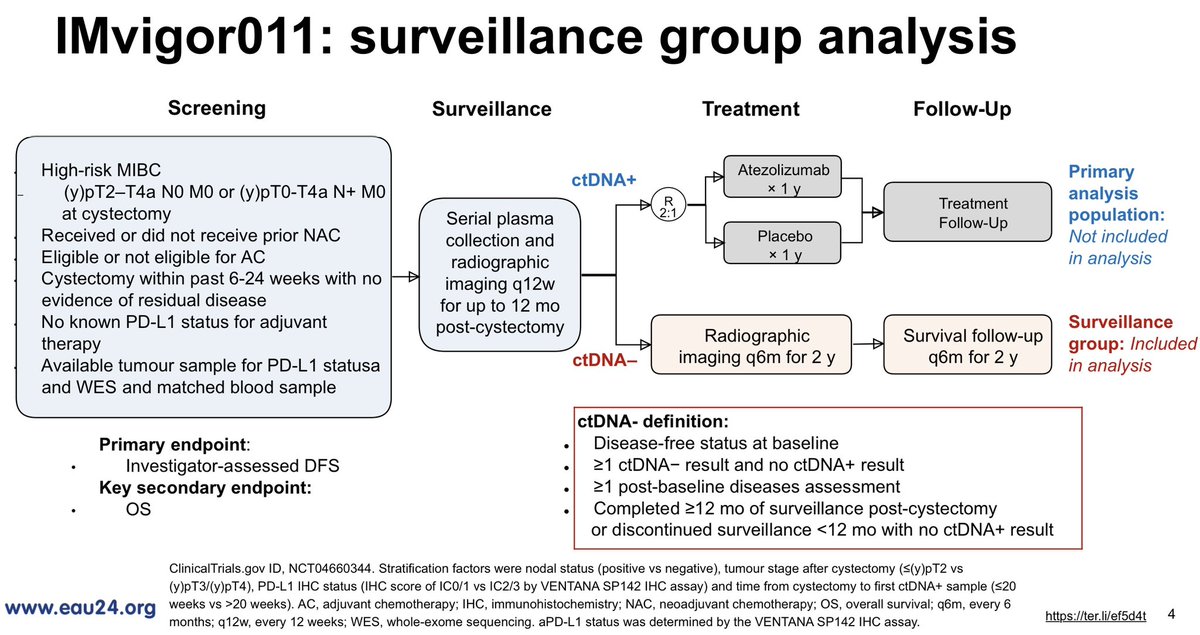
High-risk MIBC patients (ypT2-4a or ypN+ after neoadjuvant chemo and cystectomy; or pT3-4a or pN+ in chemo-naive cystectomy patients) were screened with the Signatera personalized ctDNA assay. Only ctDNA-positive (MRD+) patients were randomized 1:1 to atezolizumab 1200 mg IV q3w for 1 year vs. placebo.
Median DFS was 9.9 months with adjuvant atezolizumab vs. 4.8 months with placebo (HR 0.64, P=.0047). The DFS benefit was statistically significant and clinically meaningful in this high-risk MRD+ population, where recurrence had been near-certain without treatment.
Median OS was 32.8 months with atezolizumab vs. 21.1 months with placebo (HR 0.59, P=.0131). The 11.7-month OS improvement is a landmark result in a setting where adjuvant options have historically been limited to nivolumab (CheckMate-274, non-biomarker-selected).
Adverse events were consistent with the known atezolizumab safety profile — immune-related events (thyroid dysfunction, hepatitis, pneumonitis, colitis) at expected rates. No new safety signals were identified during the IMvigor011 readout or FDA review.
✅ First prospective biomarker-selected adjuvant immunotherapy approval in MIBC. ctDNA MRD+ selection identifies the highest-risk patients who derive the greatest benefit from adjuvant IO — sparing ctDNA-negative patients from unnecessary therapy and toxicity. Practice impact: post-cystectomy ctDNA testing (Signatera) becomes the new standard-of-care decision point; atezolizumab joins the adjuvant MIBC armamentarium alongside nivolumab (CheckMate-274). Sequencing vs. perioperative durvalumab (NIAGARA) and EV+pembro (KEYNOTE-B15) is the next open question.
IMvigor011 is a Phase 3 randomized trial (NCT04660344) of ctDNA-guided adjuvant atezolizumab (Tecentriq) versus placebo in patients with high-risk muscle-invasive bladder cancer who tested circulating-tumor-DNA positive (minimal residual disease positive) with the Signatera assay after radical cystectomy. Disease-free survival was the primary endpoint and overall survival a key secondary endpoint.
Adjuvant atezolizumab significantly improved outcomes in the ctDNA-positive population: median disease-free survival was 9.9 versus 4.8 months (HR 0.64; P=.0047), and median overall survival was 32.8 versus 21.1 months (HR 0.59; P=.0131), an 11.7-month improvement in a setting where recurrence had been near-certain without treatment.
Yes. On May 15, 2026 the FDA approved adjuvant atezolizumab (Tecentriq / Tecentriq Hybreza) for ctDNA-positive high-risk muscle-invasive bladder cancer after radical cystectomy, with the Signatera (Natera) personalized ctDNA assay co-approved as the companion diagnostic. It is the first biomarker (ctDNA MRD)-selected adjuvant immunotherapy approval in bladder cancer.
Patients with high-risk pathology after cystectomy were screened with the Signatera personalized ctDNA assay, and only ctDNA-positive (MRD-positive) patients were randomized to adjuvant atezolizumab or placebo. This biomarker-selected design identifies the highest-risk patients most likely to benefit while sparing ctDNA-negative patients from unnecessary therapy and toxicity.
Adverse events were consistent with the known atezolizumab safety profile, including immune-related events such as thyroid dysfunction, hepatitis, pneumonitis, and colitis at expected rates. No new safety signals were identified during the IMvigor011 readout or the FDA review.