NEW KCRS26 — Kidney Cancer Research Summit: top KOL voices, trial buzz & every slide, decoded View Full Coverage →
KOL Pulse Trial Profile

KEYNOTE-905 Trial

KEYNOTE-905/EV-303 randomized 344 patients with muscle-invasive bladder cancer who were cisplatin-ineligible or declined cisplatin to perioperative enfortumab vedotin (Padcev) plus pembrolizumab (Keytruda) around radical cystectomy, or to surgery alone. Two-year event-free survival was 74.7% (95% CI 66.9-80.8) vs 39.4% (95% CI 31.0-47.8) (HR 0.40 (95% CI 0.28-0.57), two-sided P<0.001). The FDA approved the regimen on November 21, 2025.

FDA Approved November 21, 2025 Phase III · NCT03924895 N = 344 Muscle-Invasive Bladder Cancer 35 KOL posts · 94,460 impressions
See what KOLs are saying →

KEYNOTE-905 Key Takeaways

Design

Randomized phase 3, 344 patients (170 enfortumab vedotin + pembrolizumab / 174 control). Comparator: radical cystectomy + pelvic lymph node dissection alone; no neoadjuvant therapy was permitted, but adjuvant immunotherapy per local guidelines was allowed and 16.7% (29/174) of control patients received adjuvant nivolumab. (NEJM, data cutoff 6 Jun 2025; median follow-up 25.6 months)

Event-free survival (primary endpoint, by BICR)

2-year EFS 74.7% (95% CI 66.9-80.8) vs 39.4% (95% CI 31.0-47.8); HR 0.40 (95% CI 0.28-0.57), two-sided P<0.001. Median EFS not reached (95% CI 37.3-NR) vs 15.7 months (95% CI 10.3-20.5). (NEJM / FDA, data cutoff 6 Jun 2025; median follow-up 25.6 months)

60% reduction in the risk of an event

Overall survival (key secondary)

2-year OS 79.7% vs 63.1%; HR 0.50 (95% CI 0.33-0.74), two-sided P<0.001. Median OS not reached vs 41.7 months (95% CI 31.8-NR). (NEJM / FDA, data cutoff 6 Jun 2025; median follow-up 25.6 months)

50% reduction in the risk of death

Pathological response

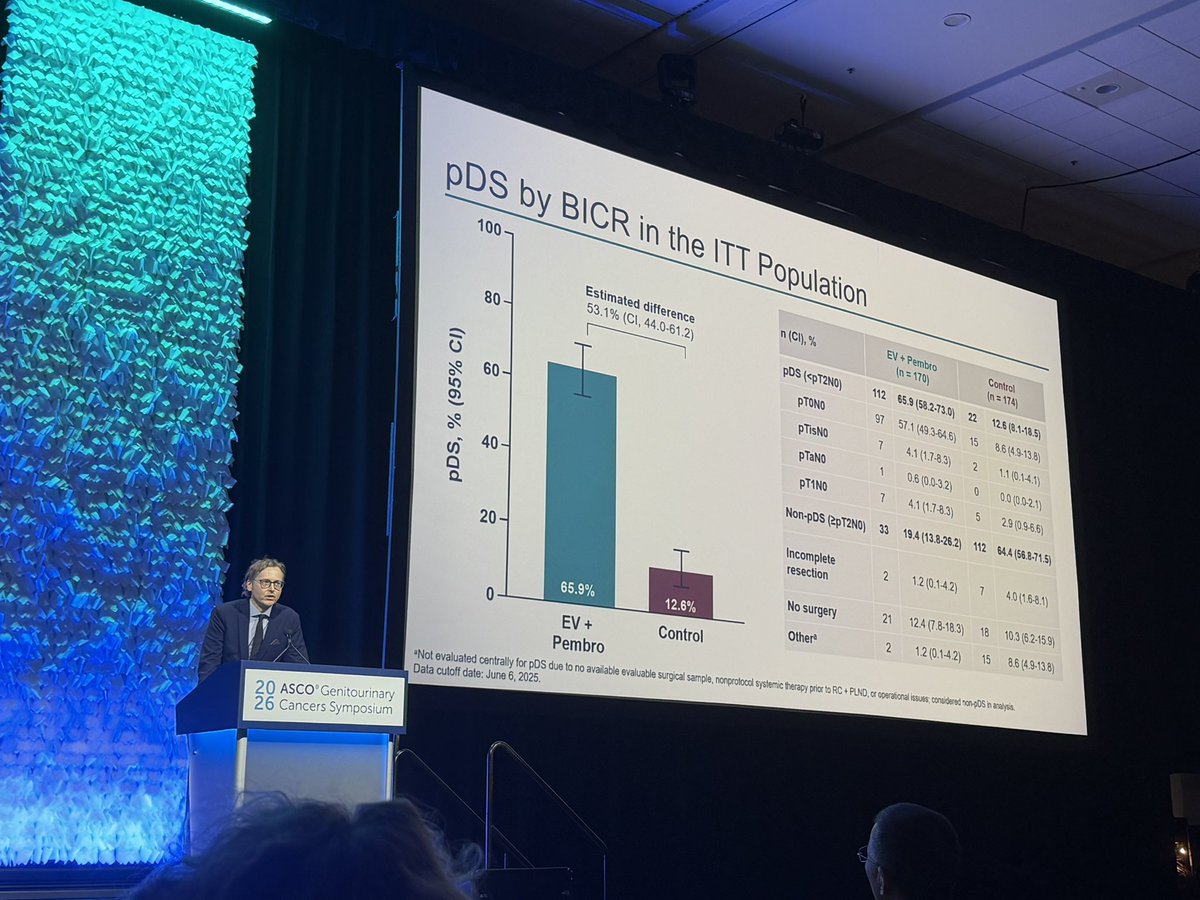
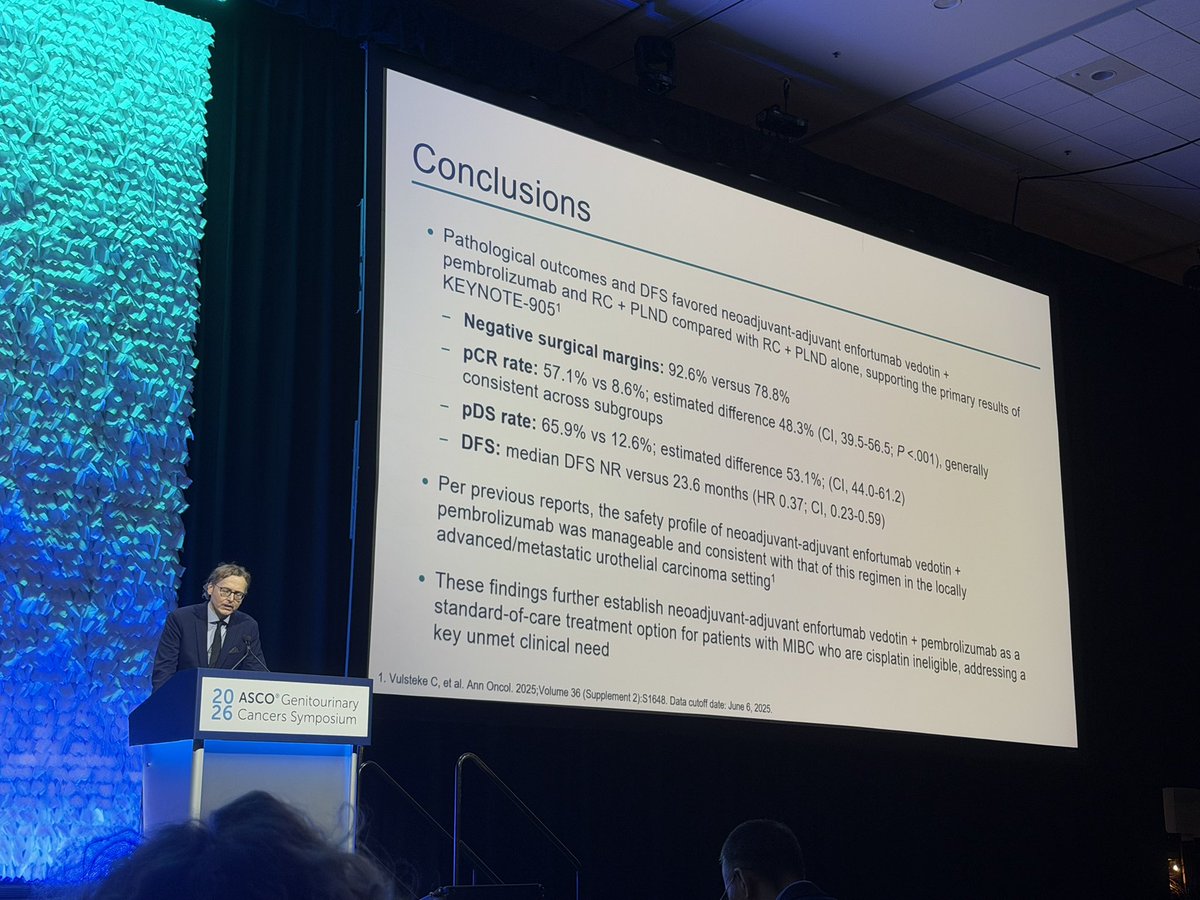
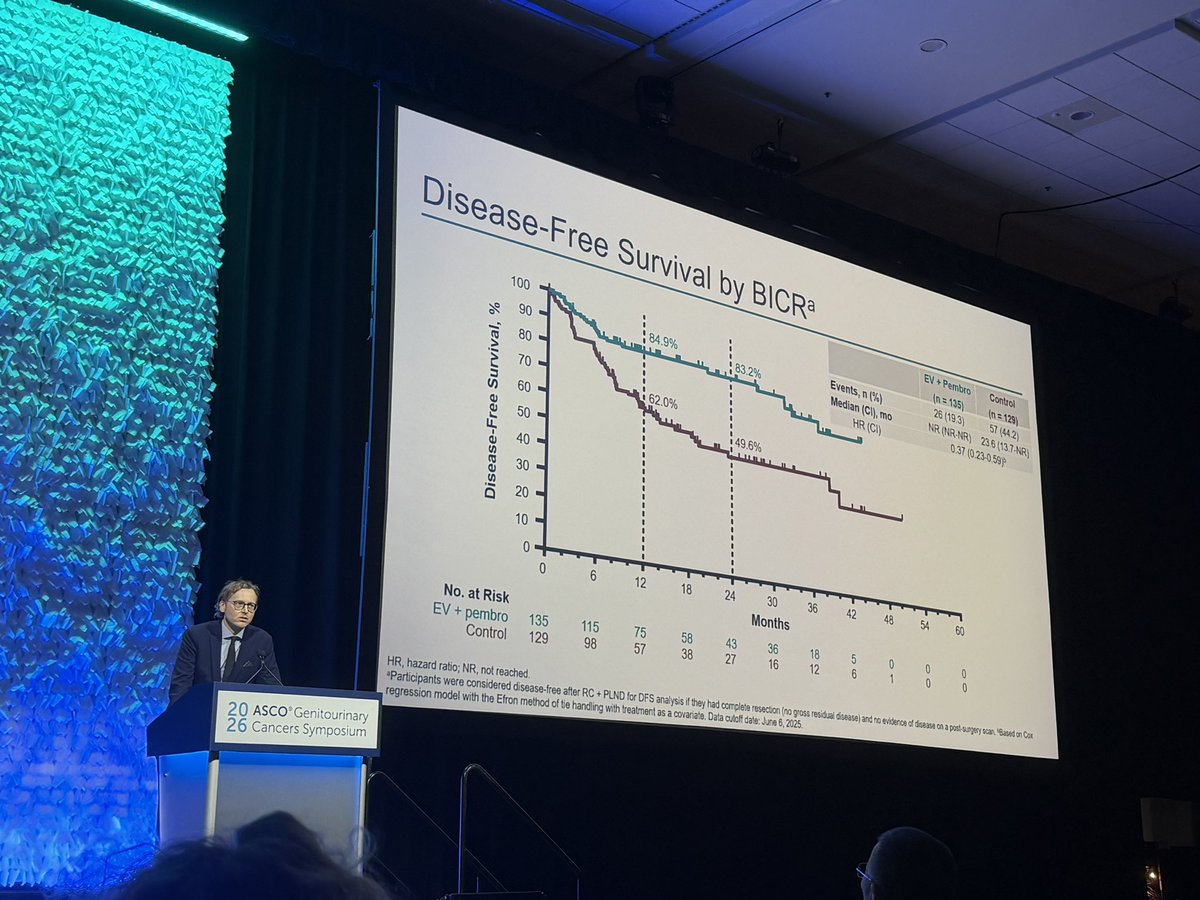
pCR 57.1% vs 8.6%; estimated difference 48.3% (95% CI 39.5-56.5). Pathological downstaging 65.9% vs 12.6%; difference 53.1% (95% CI 44.0-61.2). Disease-free survival median not reached vs 23.6 months (HR 0.37; 95% CI 0.23-0.59). (NEJM / EAU 2026, data cutoff 6 Jun 2025; median follow-up 25.6 months)

Population

281/344 (81.7%) cisplatin-ineligible; 63/344 (18.3%) declined cisplatin — the trial population is predominantly, but not exclusively, cisplatin-ineligible. (NEJM, data cutoff 6 Jun 2025; median follow-up 25.6 months)

Regulatory

✅ FDA approved November 21, 2025 for adults with MIBC ineligible for cisplatin, based on this trial. The indication was broadened on July 10, 2026 to all MIBC patients who are candidates for cystectomy, based on the sister trial KEYNOTE-B15/EV-304 — so the current label is not restricted to cisplatin-ineligible patients. (FDA, data cutoff 6 Jun 2025; median follow-up 25.6 months)

Free Access · KOL Pulse Intelligence

Track oncology’s top KOLs in your specialty

Create a free account, pick the tumor types you cover, and go beyond the tweet — the intelligence pharma teams use to map influence and prepare for engagement:

  • Enhanced KOL profiles
  • Pharma influence & potential advisory-board patterns
  • 2025 Open Payments financial analysis
  • Social-media sentiment & trend signals
Get free access — pick your specialty
Choose the tumor types you follow. No cost, unsubscribe anytime.

Top KOLs Discussing KEYNOTE-905

KEYNOTE-905 Key Slides & Visuals

Slides shared by physicians from the ESMO 2025 Presidential Symposium and subsequent congresses. Expand the OCR panel to read the full slide text.

@tompowles1
Tom Powles@tompowles1
ESMO 2025 Presidential Symposium
Oct 18, 2025
View Post
@SuyogCancer
Dr Amol Akhade@SuyogCancer
ASCO GU 2026
Feb 27, 2026
View Post
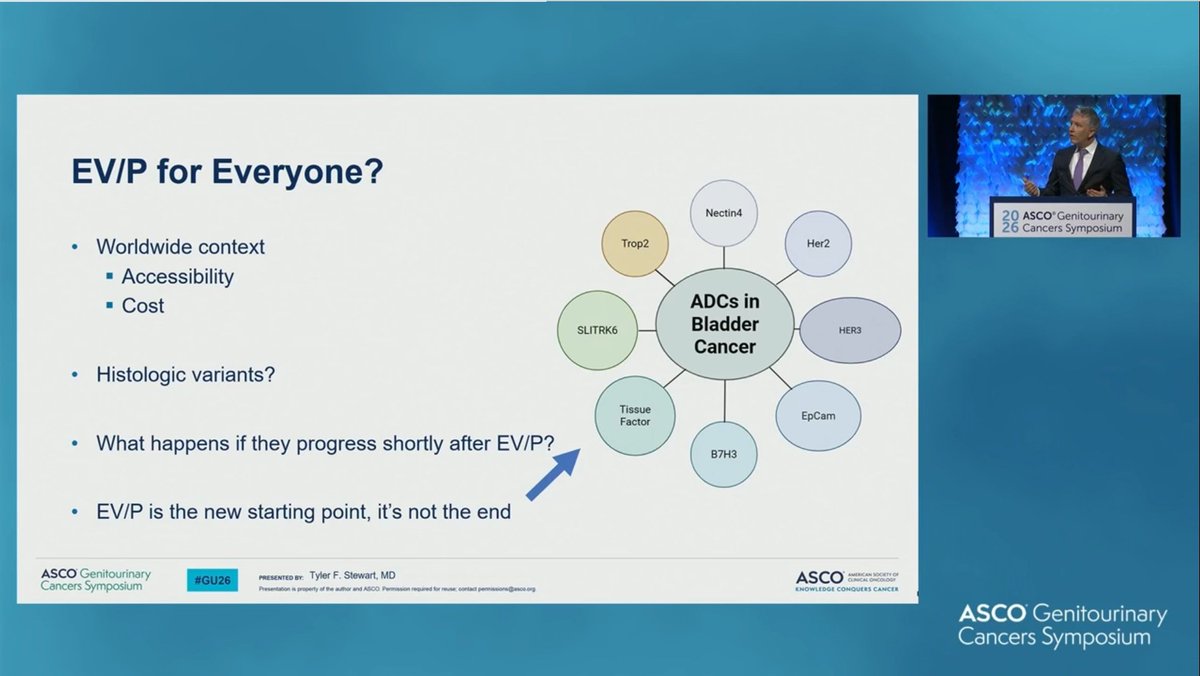
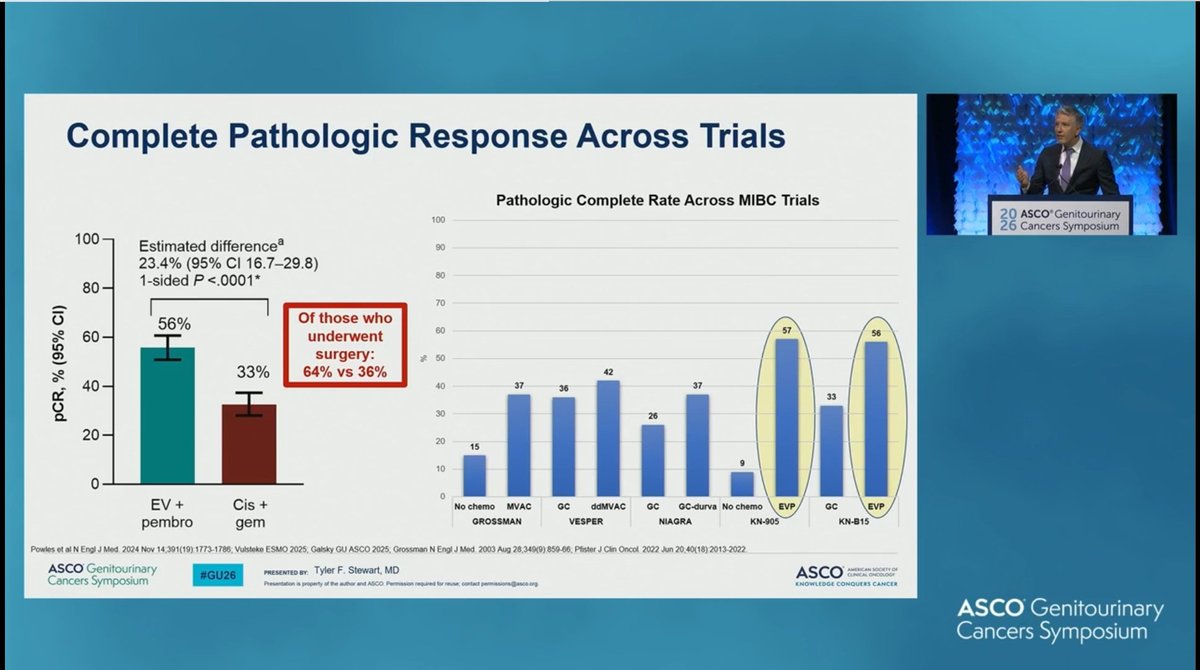
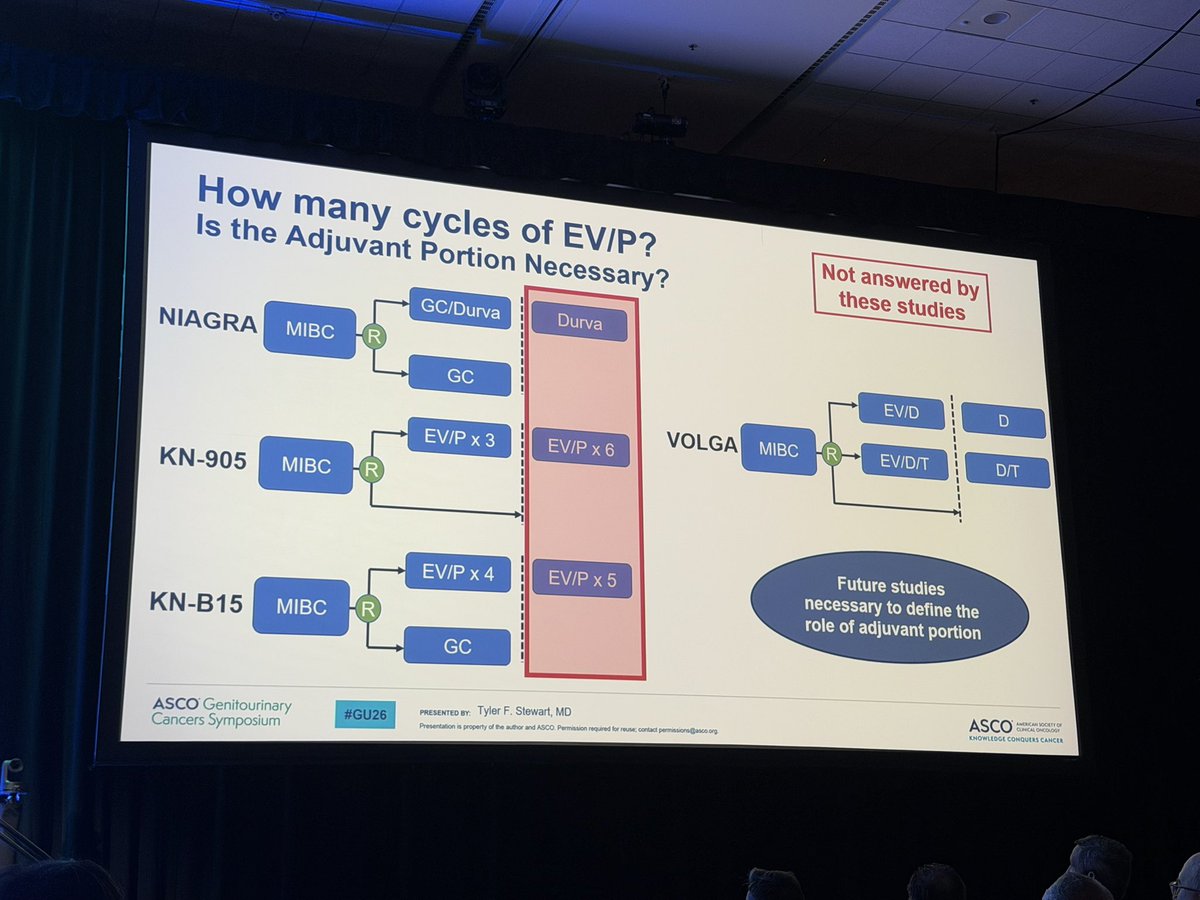
[Slide 1] Bladder Preservation pCR rates are outstanding MIBC Likely to see significant practice swings 20 ASCO"Genitourinary toward bladder preservation 26 Cancers Symposium We are in the wild west until we get data Bladder Cystectomy Preservation Che XRT ?NAC + Cher XRT ChemoXRT 0? Cis-eligible Cis-ineligible GC-Durva GC/DDMVAC +> GC/DDMVAC + EV/Pembro Adjuvant IO for Ct-Guided EV/Pembro (NIAGRA) Adjuvant IO for Ct-Guided High Risk2 Adjuvant 103 (KN-B15)⁵ High Risk2 Adjuvant 103 (KN-905)⁴ OS @ 2 years: OS @ 2 years: OS @ 2 years: EFS @ 2 years: OS @ 2 years: OS @ 2 years: EFS @ years: 82% vs 75% 76% vs 70% 63% vs 47% 79% vs 66% 76% vs 70% 63% vs 47% 75% vs 40% +7% +6% +16%* +13% +6% +16%* +35% os @ 2 years: OS @ 2 years: "ctDNA positive only 87% vs 81% "ctDNA positive only 80% vs 63% +6% +17% Powles et at N Engl Med 2024 Nov 14,391(19) 1773-1786 Galsky J Clin Oncol 43, 15-21(2025) Powles N Engl Med 2025 Dec 18,393(24) 2395-2408; "Vulsteke ESMO 2025; "Galsky GU ASCO 2026 ASCO Genitourinary #GU26 PRESENTED BY Tyler F. Stewart, MD ASCO AMERICAN CURICAL INCOLOGY Cancers Symposium Presentation property author and ASCO Permission required for - contact permasions@asco.org KNOWLEDGE CONQUERS CANCER ASCO Genitourinary Cancers Symposium --- [Slide 2] EV/P for Everyone? Nectin4 20 ASCO® Genitourinary 26 Cancers Symposium Worldwide context Trop2 Her2 Accessibility Cost ADCs in SLITRK6 Bladder HER3 Cancer Histologic variants? Tissue Factor EpCam What happens if they progress shortly after EV/P? B7H3 EV/P is the new starting point, it's not the end ASCO Genitourinary #GU26 PRESENTED BY Tyler F. Stewart, MD ASCO AMERICAN SOCIETY OF CURRENCE Cancers Symposium Presentation property of the author and ASCO Permission required for - contact permissions@asco.org KNOWL EDGE CONQUERS CANCER ASCO Genitourinary Cancers Symposium --- [Slide 3] EFS and OS across MIBC Trials 20 ASCO"Genitourinary 26 Cancers Symposium 2 Year EFS 2 Year os 100 100 87 90 90 82 80 81 80 80 75 70 79 75 70 63 60 68 66 60 % 50 60 % 50 40 40 30 39 30 20 20 10 10 0 0 GC GC-durva No chemo EVP GC EVP GC GC-durva No chemo EVP GC EVP NIAGRA KN-905 KN-B15 NIAGRA KN-905 KN-B15 2y EFS 2y OS HR 0.68 HR 0.53 HR 0.75 HR 0.65 @ median 42 months @ median 33 months @ R median 46 months @ median 33 months Powles of al N Engl Med 2024 Nov 14,391(19) 1773-1786 Galsky J Clin Oncol 43, 15-21(2025) N Engl Med 2025 Dec 18,393(24) 2395-2408 "Vulsteke ESMO 2025; "Galsky GU ASCO 2026 ASCO Genitourinary #GU26 PRESENTED BY: Tyler F. Stewart, MD ASCO AMERICAN SOCIETY or CURICAL SHICOLOGY Cancers Symposium Presentation property the author and ASCO Permission required for - contait permissions@asco.org KNOWLEDGE CONQUERS CANCER ASCO Genitourinary Cancers Symposium --- [Slide 4] Complete Pathologic Response Across Trials Pathologic Complete Rate Across MIBC Trials 100 20 ASCO"Genitourinary 26 Cancers Symposium 100 Estimated differenceᵃ 90 23.4% (95% CI 16.7-29.8) 1-sided P <.0001* 80 80 70 56% Of those who pCR, % (95% CI) 60 57 60 underwent 56 surgery: * 50 33% 64% vs 36% 42 40 40 37 36 37 33 30 26 20 20 15 9 10 0 0 EV + Cis + No chemo MVAC GC ddMVAC GC GC-durva No chemo EVP GC EVP pembro gem GROSSMAN VESPER NIAGRA KN-905 KN-B15 Powles of al N Engl Med 2024 Nov 14,391(19) 1773-1786 Vulsteke ESMO 2025; Galsky GU ASCO 2025; Grossman N Engl J Med 2003 Aug 28,349(9) 859-66; Pfister / Clin Oncol 2022 Jun 40(18)2013-2022 ASCO Genitourinary #GU26 PRESENTED BY Tyler F. Stewart, MD ASCO AMERICAN SOCIETY CUPICAL ONCOLOGY Cancers Symposium Presentation property of the author and ASCO Permission required for - contact permissions@asco.org KNOWLEDGE CONQUERS CANCER ASCO Genitourinary Cancers Symposium
@neerajaiims
Shared February 2026
Feb 23, 2026
View Post
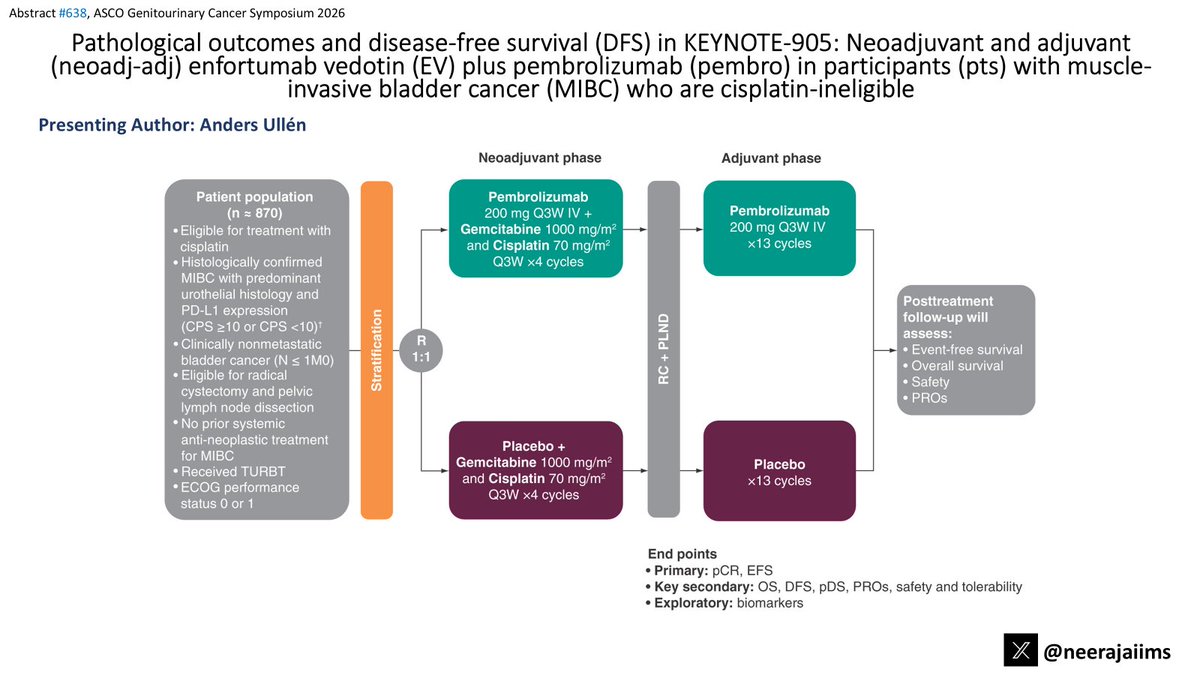
[Slide 1] Abstract #638, ASCO Genitourinary Cancer Symposium 2026 Pathological outcomes and disease-free survival (DFS) in KEYNOTE-905: Neoadjuvant and adjuvant (neoadj- adj) enfortumab vedotin (EV) plus pembrolizumab (pembro) in participants (pts) with muscle-invasive bladder cancer (MIBC) who are cisplatin-ineligible Anders Ullén, Christof Vulsteke, Jens Bedke, Steffen Rausch, Shilpa Gupta, Seok-Ho Kang, Jeanny B. Aragon-Ching, Laura Bernal Vaca, Viktor Paramonov, Avivit Peer, Viktor Stus, Vagif Atduev, Keita Nakane, Jasmine Lichfield, Changting Meng, David Huang, Chethan Ramamurthy, Blanca Homet Moreno, Matthew D. Galsky @neerajaiims --- [Slide 2] Abstract #638, ASCO Genitourinary Cancer Symposium 2026 Pathological outcomes and disease-free survival (DFS) in KEYNOTE-905: Neoadjuvant and adjuvant (neoadj-adj) enfortumab vedotin (EV) plus pembrolizumab (pembro) in participants (pts) with muscle- invasive bladder cancer (MIBC) who are cisplatin-ineligible Presenting Author: Anders Ullén Neoadjuvant phase Adjuvant phase Patient population Pembrolizumab (n 870) 200 mg Q3W IV + Pembrolizumab Eligible for treatment with Gemcitabine 1000 mg/m2 200 mg Q3W IV cisplatin and Cisplatin 70 mg/m2 x13 cycles Histologically confirmed Q3W x4 cycles MIBC with predominant urothelial histology and Posttreatment PD-L1 expression follow-up will (CPS ≥10 or CPS <10) Clinically nonmetastatic bladder cancer (N â 1MO) Stratification R RC + PLND assess: Event-free survival 1:1 Overall survival Eligible for radical Safety cystectomy and pelvic PROs lymph node dissection No prior systemic anti-neoplastic treatment Placebo + for MIBC Gemcitabine 1000 mg/m2 Placebo Received TURBT and Cisplatin 70 mg/m2 ECOG performance x13 cycles Q3W x4 cycles status 0 or 1 End points Primary: pCR, EFS Key secondary: OS, DFS, pDS, PROs, safety and tolerability Exploratory: biomarkers @neerajaiims --- [Slide 3] Abstract #638, ASCO Genitourinary Cancer Symposium 2026 Pathological outcomes and disease-free survival (DFS) in KEYNOTE-905: Neoadjuvant and adjuvant (neoadj-adj) enfortumab vedotin (EV) plus pembrolizumab (pembro) in participants (pts) with muscle- invasive bladder cancer (MIBC) who are cisplatin-ineligible Presenting Author: Anders Ullén Results: N; % (95% CI) EV + pembro, N=170 Control, N=174 pDS (<pT2N0) 112 65.9 (58.2-73.0) 22 12.6 (8.1-18.5) pTONO 97 57.1 (49.3-64.6) 15 8.6 (4.9-13.8) pTisN0 7 4.1 (1.7-8.3) 2 1.1 (0.1-4.1) pTaN0 1 0.6 (0.0-3.2) 0 0.0 (0.0-2.1) pT1N0 7 4.1 (1.7-8.3) 5 2.9 (0.9-6.6) Non-pDS (≥pT2N0) 33 19.4 (13.8-26.2) 112 64.4 (56.8-71.5) Other* 2 1.2 (0.1-4.2) 15 8.6 (4.9-13.8) Incomplete resection 2 1.2 (0.1-4.2) 7 4.0 (1.6-8.1) Did not undergo surgery 21 12.4 (7.8-18.3) 18 10.3 (6.2-15.9) *Not evaluated centrally for pDS due to no available evaluable surgical sample, non-protocol systemic therapy prior to RC + PLND or operational issues; considered non-pDS in analysis. Conclusion: pCR, pDS, surgical outcomes, and DFS favored neoadj-adj EV + pembro and RC + PLND VS RC + PLND alone, supporting the primary results of KEYNOTE-905. These findings further establish neoadj-adj EV + pembro as a potential standard of care for pts with MIBC who are cisplatin-ineligible, addressing a key unmet clinical need. @neerajaiims
@DrChoueiri
ASCO GU 2026
Feb 27, 2026
View Post
[Slide 1] EFS and OS across MIBC Trials 2 Year EFS 2 Year os 100 100 87 90 90 82 80 81 80 80 75 70 79 75 70 63 60 68 66 60 % 50 60 % 50 40 40 30 39 30 20 20 10 10 0 0 GC GC-durva No chemo EVP GC EVP GC GC-durva No chemo EVP GC EVP NIAGRA KN-905 KN-B15 NIAGRA KN-905 KN-B15 2y EFS B 2y OS HR 0.68 HR 0.53 HR 0.75 HR 0.65 @ median 42 months @ median 33 months @ median 46 months @ median 33 months Powles et al N Engl J Med. 2024 Nov 14,391(19): 1773-1786; 2Galsky Clin Oncol 43, 15-21(2025); N Engl J Med. 2025 Dec 18,393(24) 2395-2408 Vulsteke ESMO 2025; "Galsky GU ASCO 2026 ASCO Genitourinary #GU26 PRESENTED BY: Tyler F. Stewart, MD ASCO AMERICAN SOCIETY OF CLINICAL ONCOLOGY Cancers Symposium Presentation is property of the author and ASCO Permission required for reuse, contact permissions@asco.or KNOWLEDGE CONQUERS CANCER --- [Slide 2] How many cycles of EV/P? Not answered by Is the Adjuvant Portion Necessary? these studies GC/Durva Durva NIAGRA MIBC R GC EV/D D VOLGA MIBC R EV/D/T D/T EV/P X 3 EV/P X 6 KN-905 MIBC R EV/P X 4 EV/P X 5 Future studies necessary to define the KN-B15 MIBC R role of adjuvant portion GC ASCO Genitourinary #GU26 PRESENTED BY: Tyler F. Stewart, MD Cancers Symposium ASCO AMERICAN GOOETY OF CUPICAL ONCOLOGY Presentation a property of the author and ASCO Permission required for reuse, contact permissions@asco.org KNOWLEDGE CONQUERS CANCER --- [Slide 3] Preservation ChemoXRT ?NAC ChemoXRT ChemoXRT + 10? Cis-ineligible Adjuvant IO for Ct-Guided EV/Pembro High Risk2 Adjuvant 103 (KN-905)4 @ 2 years: os @ 2 years: 76% vs 70% 63% vs 47% +6% +16%* "CEDNA positive only 95-2408; Vuistake ESMO 2025 ASCO AMERICAN SOCUTION CUPICAL provide KNOWLEDGE CONQUERS CANCER 1 --- [Slide 4] EFS and OS across MIBC Trials 2 Year EFS 2 Year os 100 100 87 90 90 82 80 81 80 80 75 70 79 75 70 63 60 68 66 60 % 50 60 % 50 40 40 30 39 30 20 20 10 10 0 0 GC GC-durva No chemo EVP GC EVP GC GC-durva No chemo EVP GC EVP NIAGRA KN-905 KN-B15 NIAGRA KN-905 KN-B15 2y EFS B 2y OS HR 0.68 HR 0.53 HR 0.75 HR 0.65 @ median 42 months @ median 33 months @ median 46 months @ median 33 months Powles et al N Engl J Med. 2024 Nov 14,391(19): 1773-1786; 2Galsky Clin Oncol 43, 15-21(2025); N Engl J Med. 2025 Dec 18,393(24) 2395-2408 Vulsteke ESMO 2025; "Galsky GU ASCO 2026 ASCO Genitourinary #GU26 PRESENTED BY: Tyler F. Stewart, MD ASCO AMERICAN SOCIETY OF CLINICAL ONCOLOGY Cancers Symposium Presentation is property of the author and ASCO Permission required for reuse, contact permissions@asco.or KNOWLEDGE CONQUERS CANCER --- [Slide 5] Treatment for MIBC MIBC Cis-Gem GUASCO Bladder Cystectomy Preservation ChemoXRT ?NAC +> ChemoXRT ChemoXRT + 10? Cis-eligible Cis-ineligible GC-Durva GC/DDMVAC GC/DDMVAC EV/Pembro Adjuvant 10 for (NIAGRA)1 Adjuvant O for Ct-Guided Ct-Guided EV/Pembro High Risk2 Adjuvant 103 (KN-B15)⁵ High Risk2 Adjuvant 103 (KN-905)4 OS @ 2 years: OS @ 2 years: OS @ 2 years: EFS @ 2 years: OS @ 2 years: OS @ 2 years: EFS @ years: 82% VS 75% 76% VS 70% 63% VS 47% 79% vs 66% 76% VS 70% 63% vs 47% 75% vs 40% +7% +6% +16%* +13% +6% +16%* +35% OS @ 2 years: "ctDNA positive only 87% vs 81% OS @ 2 years: "ctDNA positive only 80% vs 63% +6% Powles et al N Engl Med. 2024 Nov 14,391(19) 1773-1786; 2Galsky Clin Oncol 43, 15-21(2025); Powles N Engl Med. 2025 Dec 18,393(24) 2395-2408 "Vulsteke ESMO 2025; Galsky GU ASCO 2026 +17% ASCO Genitourinary Cancers Symposium #GU26 PRESENTED BY: Tyler F. Stewart, MD ASCO AMERICAN SOCIETY OF Presentation is property of the author and ASCO Permission required for reuse, contact permissions@asco.org CUNICAL ONCOLOGY KNOWLEDGE CONQUERS CANCER --- [Slide 6] How many cycles of EV/P? Not answered by Is the Adjuvant Portion Necessary? these studies GC/Durva Durva NIAGRA MIBC R GC EV/D D VOLGA MIBC R EV/D/T D/T EV/P X 3 EV/P X 6 KN-905 MIBC R EV/P X 4 EV/P X 5 Future studies necessary to define the KN-B15 MIBC R role of adjuvant portion GC ASCO Genitourinary #GU26 PRESENTED BY: Tyler F. Stewart, MD Cancers Symposium ASCO AMERICAN GOOETY OF CUPICAL ONCOLOGY Presentation a property of the author and ASCO Permission required for reuse, contact permissions@asco.org KNOWLEDGE CONQUERS CANCER
@DrChoueiri
ASCO GU 2026
Feb 28, 2026
View Post
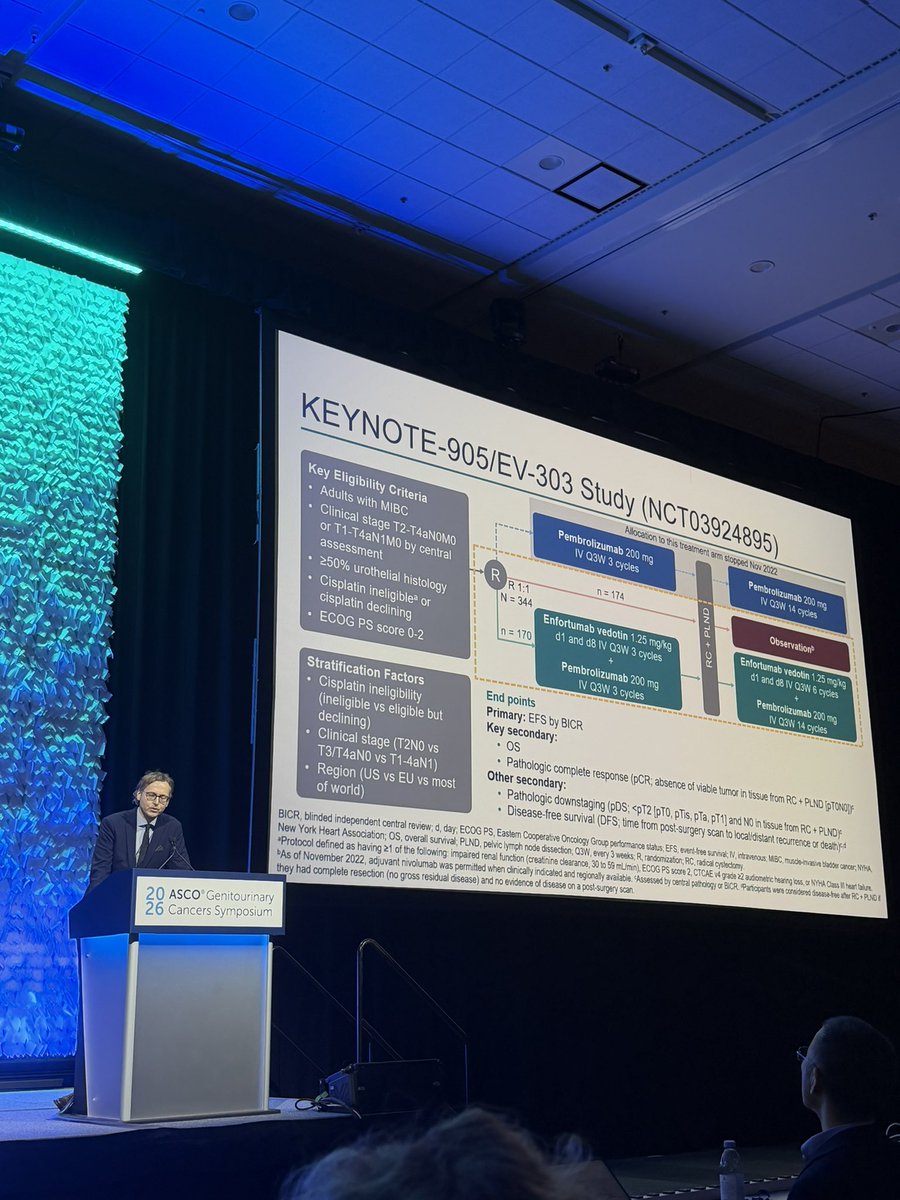
[Slide 1] Conclusions Pathological outcomes and DFS favored neoadjuvant-adjuvant enfortumab vedotin + pembrolizumab and RC + PLND compared with RC + PLND alone, supporting the primary results of KEYNOTE-9051 - Negative surgical margins: 92.6% versus 78.8% - pCR rate: 57.1% VS 8.6%; estimated difference 48.3% (CI, 39.5-56.5; P <.001), generally consistent across subgroups - pDS rate: 65.9% VS 12.6%; estimated difference 53.1%; (CI, 44.0-61.2) - DFS: median DFS NR versus 23.6 months (HR 0.37; CI, 0.23-0.59) Per previous reports, the safety profile of neoadjuvant-adjuvant enfortumab vedotin + pembrolizumab was manageable and consistent with that of this regimen in the locally advanced/metastatic urothelial carcinoma setting¹ These findings further establish neoadjuvant-adjuvant enfortumab vedotin + pembrolizumab as a standard-of-care treatment option for patients with MIBC who are cisplatin ineligible, addressing a key unmet clinical need 1. Vulsteke C, et al. Ann Oncol. 2025; Volume 36 (Supplement 2):S1648. Data cutoff date: June 6, 2025. --- [Slide 2] KEYNOTE-905/EV-303 Study (NCT03924895) Allocation to this treatment arm stopped Nov 2022 Key Eligibility Criteria Adults with MIBC Pembrolizumab 200 mg IV Q3W 3 cycles Pembrolizumab 200 mg Clinical stage T2-T4aNOMO IV Q3W 14 cycles or T1-T4aN1M0 by central assessment R n 174 R 1:1 >50% urothelial histology N : 344 Cisplatin ineligible or Enfortumab vedotin 1.25 mg/kg RC + PLND Observation® cisplatin declining n : 170 d1 and d8 IV Q3W 3 cycles Enfortumab vedotin 1.25 mg/kg ECOG PS score 0-2 + d1 and d8 IV Q3W 6 cycles Pembrolizumab 200 mg IV Q3W 3 cycles Pembrolizumab 200 mg Stratification Factors IV Q3W 14 cycles Cisplatin ineligibility End points (ineligible VS eligible but Primary: EFS by BICR declining) Key secondary: OS Clinical stage (T2N0 VS T3/T4aN0 VS T1-4aN1) Region (US VS EU VS most Other secondary: Pathologic complete response (pCR; absence of viable tumor in tissue from RC + PLND [pTONO[)= of world) Disease-free survival (DFS; time from post-surgery scan to localidistant recurrence or death) Pathologic downstaging (pDS; <pT2 (pTO, pTis, pTa, pT1] and NO in tissue from RC + PLND) Protocol New BICR, York blinded defined Heart independent Association; as central 21 OS, of overall review; survival; d, day; PLND, ECOG pelvic PS, Eastern ymph Cooperative node dissection; Oncology Q3W, Group every performance 3 weeks; R, randomization; status; EFS, event-free RC, radical survival; N, intravenous MBC, muscle-invasive bladder cancer, NYMA, As of November 2022, having adjuvant nivolumab the following: impaired renal function (creatinine clearance, 30 to 59 mL/min), ECOG PS score 2, CTCAE 4 cystectomy grade 22 they had complete resection (no gross residual was disease) permitted and when no evidence clinically of indicated disease and on a regionally post-surgery available. scan Assessed by central pathology or BICR Participants audometric were hearing considered oss, or NYHA doease-free Class after If heart RC alue PLND I 20 ASCO Genitourinary 26 Cancers Symposium --- [Slide 3] pDS by BICR in the ITT Population 100 EV + Pembro Control n (CI), % Estimated difference (n = 170) (n=174) 53.1% (CI, 44.0-61.2) 80 pDS (<pT2N0) 112 65.9(58.2-73.0) 22 12.6(8.1-18.5) pTONO 97 57.1(49.3-64.6) 15 8.6(4.9-13.8) pTisN0 7 4.1(1.7-8.3) 2 1.1 (0.1-4.1) pDS, % (95% CI) 60 pTaNO 1 0.6 (0.0-3.2) 0 0.0(0.0-2.1) pT1N0 7 4.1(1.7-8.3) 5 2.9(0.9-6.6) 40 Non-pDS (2pT2N0) 33 19.4(13.8-26.2) 112 64.4 (56.8-71.5) Incomplete 20 2 resection 1.2(0.1-4.2) 7 4.0(1.6-8.1) No surgery 21 12.4 (7.8-18.3) 18 10.3(6.2-15.9) 65.9% 12.6% 0 Other 2 1.2(0.1-4.2) 15 8.6(4.9-13.8) EV + Control Pembro Not evaluated centrally for pDS due to no available evaluable surgical sample, nonprotocal systemic therapy prior to RC * PLND, or operational issues; considered non-pOS in analysis, Data cutoff date: June 6, 2025. 20 ASCO Genitourinary 26 Cancers Symposium --- [Slide 4] Conclusions Pathological outcomes and DFS favored neoadjuvant-adjuvant enfortumab vedotin + pembrolizumab and RC + PLND compared with RC + PLND alone, supporting the primary results of KEYNOTE-9051 - Negative surgical margins: 92.6% versus 78.8% - pCR rate: 57.1% VS 8.6%; estimated difference 48.3% (CI, 39.5-56.5; P <.001), generally consistent across subgroups - pDS rate: 65.9% VS 12.6%; estimated difference 53.1%; (CI, 44.0-61.2) - DFS: median DFS NR versus 23.6 months (HR 0.37; CI, 0.23-0.59) Per previous reports, the safety profile of neoadjuvant-adjuvant enfortumab vedotin + pembrolizumab was manageable and consistent with that of this regimen in the locally advanced/metastatic urothelial carcinoma setting¹ These findings further establish neoadjuvant-adjuvant enfortumab vedotin + pembrolizumab as a standard-of-care treatment option for patients with MIBC who are cisplatin ineligible, addressing a key unmet clinical need 1. Vulsteke C, et al. Ann Oncol. 2025; Volume 36 (Supplement 2):S1648. Data cutoff date: June 6, 2025. --- [Slide 5] Disease-Free Survival by BICRᵃ EV + Pembro Control 100 (n = 135) (n. : 129) 90 84.9% 83.2% Events, n (%) 26 (19.3) 57 (44.2) 80 Median (CI), mo NR (NR-NR) 23.6 (13.7-NR) Disease-Free Survival, % HR (CI) 0.37 (0.23-0.59) 70 62.0% 60 49.6% 50 40 30 20 10 0 0 6 12 18 24 30 36 42 48 54 60 Months No. at Risk EV + pembro 135 115 75 58 43 36 18 5 0 0 0 Control 129 98 57 38 27 16 12 6 1 0 0 HR, hazard ratio; NR, not reached Participants were considered disease-free after RC . PLND for DFS analysis if they had complete resection (no gross residual disease) and no evidence of disease on a post-surgery scan. Based on Cox regression model with the Efron method of tie handling with treatment as a covariate. Data culoff date: June 6, 2025. Genitourinary

KEYNOTE-905 Top Tweets

Tom Powles
Tom Powles@tompowles1

1/2 KN905 Enfortumab Vedotin + Pembro continues to transform bladder cancer in spectacle fashion. In cisplatin ineligible operable disease it beats cystectomy with EFS HR 0.4, OS HR 0.5. pCR of 57% is much ⬆️ than anything before #ESMO25 pCR&gt; 50% questions unselected surgery

👁 29.6K♡ 319↻ 129Oct 18, 2025
Timothée Olivier, MD
Timothée Olivier, MD@Timothee_MD

Will this make the #ESMO2025 presidential ? There's a lot of excitement around the KEYNOTE-905 trial and results announced by press release. I have three main concerns/questions summarised in the slide. Looking forward to seeing real data and hopefully getting answers to those https://t.co/vruTnybMCi

👁 12.4K♡ 90↻ 27Aug 15, 2025
Tom Powles
Tom Powles@tompowles1

3 studies testing Perioperative immune bases therapy (EVP or Gem/Cis/Durva) in muscle invasive bladder all have shown an OS advantage vs standard of care. KN905 (EVP) is distinct in that it’s in a cisplatin ineligible population (accounting for the poor performance of the control

👁 9.9K♡ 170↻ 77Feb 27, 2026
Shilpa Gupta
Shilpa Gupta@shilpaonc

#ESMO25 had 4 GU trials in the Presidential plenary sessions! @myESMO On behalf our GU team, was proud to represent @CleClinicMD for 3/4! #IMvigor011, KN-905 and PSMAddition! Truly grateful to patients &amp; families, my co- investigators &amp; clinical research team for helping us

👁 4.4K♡ 44↻ 8Oct 21, 2025
Enrique Grande
Enrique Grande@drenriquegrande

⚡️ KEYNOTE-905 published in @NEJM: perioperative enfortumab vedotin + pembrolizumab vs surgery alone in cisplatin-ineligible MIBC (n=344). 2-year EFS: 74.7% vs 39.4% (HR 0.40) 2-year OS: 79.7% vs 63.1% (HR 0.50) pCR: 57.1% vs 8.6% The trial that supported FDA approval in

👁 4.2K♡ 69↻ 30May 21, 2026
OncoAlert
OncoAlert@OncoAlert

Our friends from @GuardConsortium 🇪🇸Deliver another Great Informational Capsule, this time direct from #GU26 🇺🇸 We are proud to introduce our Colleague @mjuanfi81 Discussing the Presentation of: Pathological outcomes and disease-free survival (DFS) in KEYNOTE-905: Neoadjuvant

👁 3.8K♡ 21↻ 15Mar 4, 2026
Dra. María Natalia Gandur Quiroga
Dra. María Natalia Gandur Quiroga@nataliagandur

💫🌟KEYNOTE-905 is not just positive, it is practice-shifting in MIBC @NEJM @OncoAlert In cisplatin-ineligible patients, perioperative enfortumab vedotin + pembrolizumab delivers a magnitude of benefit we rarely see: 🔹 N = 344 🔹 2-year EFS: 74.7% vs 39.4% (HR 0.40) 🔹 2-year https://t.co/HiKDCcjhEi

👁 3.7K♡ 27↻ 14Apr 6, 2026
Kristina Jankovic, MD
Kristina Jankovic, MD@JankovicK

Incredible data from #KEYNOTE905 at #ESMO25 🔥 Enfortumab Vedotin + Pembrolizumab continues to reshape the landscape of bladder cancer. pCR 57% and EFS HR 0.4 / OS HR 0.5 - truly remarkable! @OncoAlert

👁 3K♡ 14↻ 6Oct 19, 2025
Dr Amol Akhade
Dr Amol Akhade@SuyogCancer

Cross trial comparison and where we are heading in MIBC @asco #gu26 @DrChoueiri @dr_yakupergun @brunolarvol @OncoAlert @OncBrothers

👁 2.9K♡ 39↻ 16Feb 27, 2026
Tom Powles
Tom Powles@tompowles1

2/2 this becomes standard of care here. Questions-How would this perform in a cisplatin eligible population? Better? Can ctDNA help? How many cycles are needed? B15 &amp; VOLGA can help here.Finally, bladder sparing trials are needed to address the need for surgery @OncoAlert #ESMO25

👁 2.9K♡ 47↻ 25Oct 18, 2025

FDA Approval

FDAApproved November 21, 2025

The FDA approved pembrolizumab (Keytruda) or pembrolizumab and berahyaluronidase alfa-pmph (Keytruda Qlex) with enfortumab vedotin-ejfv (Padcev) as neoadjuvant treatment followed by adjuvant treatment after cystectomy for adults with muscle-invasive bladder cancer who are ineligible for cisplatin — the indication supported by KEYNOTE-905/EV-303.

On July 10, 2026 the FDA extended this approval from cisplatin-ineligible patients to all patients with MIBC who are candidates for cystectomy, based on KEYNOTE-B15/EV-304. Describing the regimen today as approved only for cisplatin-ineligible disease would be out of date.

Source: FDA approval notices →

About the KEYNOTE-905 Trial

KEYNOTE-905 (EV-303, NCT03924895) is a randomized, open-label phase 3 trial run by Merck Sharp & Dohme with Astellas Pharma and Pfizer (Seagen). It asked whether adding perioperative enfortumab vedotin plus pembrolizumab to radical cystectomy improves outcomes for patients with muscle-invasive bladder cancer who cannot receive cisplatin-based chemotherapy — a group that had historically proceeded straight to surgery with no proven systemic option. Results were presented at the ESMO 2025 Presidential Symposium (LBA2) and published in the New England Journal of Medicine.

The trial originally included a third pembrolizumab-alone arm, which was discontinued in 2022; randomization was then amended to 1:1. Total registered enrollment therefore exceeds the 344 patients randomized concurrently in the two reported arms.

Trial Methodology & Results

Study Design

Randomized, open-label, multicenter phase 3. 344 patients randomized 1:1 (170 / 174).

Population

Adults with clinical stage T2-T4aN0M0 or T1-T4aN1M0 MIBC, ≥50% urothelial histology, ECOG 0-2, candidates for radical cystectomy. 281/344 (81.7%) cisplatin-ineligible; 63/344 (18.3%) declined cisplatin.

Interventions

Enfortumab vedotin 1.25 mg/kg days 1 and 8 every 3 weeks plus pembrolizumab 200 mg every 3 weeks for 3 neoadjuvant cycles, then 6 adjuvant cycles of enfortumab vedotin and up to 14 of pembrolizumab after cystectomy.

Comparator

radical cystectomy + pelvic lymph node dissection alone; no neoadjuvant therapy was permitted, but adjuvant immunotherapy per local guidelines was allowed and 16.7% (29/174) of control patients received adjuvant nivolumab.

Endpoints

Primary: event-free survival by blinded independent central review. Alpha-controlled secondaries in hierarchy: overall survival, then pathological complete response. Other secondaries: DFS, pathological downstaging, safety. Patient-reported outcomes were exploratory.

Lead Author

Christof Vulsteke. Presented at ESMO 2025 Presidential Symposium (LBA2).

Event-Free Survival — Primary Endpoint

Two-year EFS was 74.7% (95% CI 66.9-80.8) vs 39.4% (95% CI 31.0-47.8), HR 0.40 (95% CI 0.28-0.57), two-sided P<0.001. Median EFS was not reached (95% CI 37.3-NR) vs 15.7 months (95% CI 10.3-20.5). (NEJM / FDA, data cutoff 6 Jun 2025; median follow-up 25.6 months)

HR 0.40 — primary endpoint met Source: Vulsteke C, et al. Perioperative Enfortumab Vedotin and Pembrolizumab in Bladder Cancer. N Engl J Med. 2026 Apr 2;394(13):1257-1269. doi:10.1056/NEJMoa2511674 →

Overall Survival

Two-year OS was 79.7% vs 63.1%, HR 0.50 (95% CI 0.33-0.74), two-sided P<0.001. Median OS was not reached vs 41.7 months (95% CI 31.8-NR). (NEJM / FDA, data cutoff 6 Jun 2025; median follow-up 25.6 months)

HR 0.50 — key secondary endpoint met Source: Vulsteke C, et al. Perioperative Enfortumab Vedotin and Pembrolizumab in Bladder Cancer. N Engl J Med. 2026 Apr 2;394(13):1257-1269. doi:10.1056/NEJMoa2511674 →

Pathological and Surgical Outcomes

Pathological complete response was 57.1% vs 8.6%; estimated difference 48.3% (95% CI 39.5-56.5), with non-surgical patients counted as non-responders in the intention-to-treat denominator. Pathological downstaging was 65.9% vs 12.6%; difference 53.1% (95% CI 44.0-61.2), and disease-free survival median not reached vs 23.6 months (HR 0.37; 95% CI 0.23-0.59). (NEJM / EAU 2026, data cutoff 6 Jun 2025; median follow-up 25.6 months)

Safety

Grade 3 or higher all-cause treatment-emergent adverse events occurred in 71.3% vs 45.9% (all-cause; any-grade 100% vs 64.8%). Grade 3 or higher drug-related events occurred in 45.5% grade ≥3 drug-related, combination arm only (no comparator figure exists - the control arm received no study drug). In the trial-specific safety population (167 vs 159), rash was reported in 54% any grade / 7% grade 3-4 and peripheral neuropathy in 39% any grade / 3% grade 3-4; pruritus 47% / 3%, alopecia 35% / 0.6%, fatigue 47% / 4.2%; serious AEs 58.1%; treatment discontinuation 37.1%. Laboratory increased glucose (laboratory abnormality) 72% any grade / 12% grade 3-4, vs 24% / 1.7% in the control arm. Importantly, surgery performed in 87.6% vs 89.7%; grade 3-5 adverse events during the surgical phase were LOWER with the combination (35.6% vs 45.9%). (NEJM / FDA label, data cutoff 6 Jun 2025; median follow-up 25.6 months)

Surgical-phase severe events were lower with the combination Source: Vulsteke C, et al. Perioperative Enfortumab Vedotin and Pembrolizumab in Bladder Cancer. N Engl J Med. 2026 Apr 2;394(13):1257-1269. doi:10.1056/NEJMoa2511674 →

Patient-Reported Outcomes (exploratory)

Patient-reported outcomes were exploratory and descriptive: within-arm mean change from baseline to post-surgery week 18, with no between-group statistical comparison. There was no clinically meaningful quality-of-life detriment from adding enfortumab vedotin plus pembrolizumab (FACT-G -2.73 vs -2.84; FACT-Bl-Cys total +1.31 vs +1.85). Sexual-function scores declined substantially in BOTH arms (-15.46 vs -17.88), a cystectomy effect rather than a drug effect. (Peter H. O'Donnell, ASCO 2026 Annual Meeting, data cutoff 6 Jun 2025; median follow-up 25.6 months)

KEYNOTE-905 in the News

KEYNOTE-905 FAQ

What did the KEYNOTE-905/EV-303 trial show?

In 344 patients with muscle-invasive bladder cancer who were cisplatin-ineligible or declined cisplatin, perioperative enfortumab vedotin plus pembrolizumab around radical cystectomy improved 2-year event-free survival to 74.7% (95% CI 66.9-80.8) vs 39.4% (95% CI 31.0-47.8) (HR 0.40 (95% CI 0.28-0.57), two-sided P<0.001) and 2-year overall survival to 79.7% vs 63.1% (HR 0.50 (95% CI 0.33-0.74), two-sided P<0.001) versus surgery alone. Pathological complete response was 57.1% vs 8.6%; estimated difference 48.3% (95% CI 39.5-56.5).

Is this regimen FDA approved?

Yes. On November 21, 2025 the FDA approved pembrolizumab (Keytruda) or pembrolizumab and berahyaluronidase alfa-pmph (Keytruda Qlex) with enfortumab vedotin-ejfv (Padcev) as neoadjuvant then adjuvant treatment after cystectomy for adults with MIBC ineligible for cisplatin - based on KEYNOTE-905/EV-303. On July 10, 2026 the indication was broadened to all MIBC patients who are candidates for cystectomy, based on the sister trial KEYNOTE-B15/EV-304. The current label is therefore not restricted to cisplatin-ineligible patients.

How is KEYNOTE-905 different from KEYNOTE-B15?

They are separate phase 3 trials with different populations and different comparators. KEYNOTE-905/EV-303 (NCT03924895) enrolled cisplatin-ineligible patients and compared the regimen with surgery alone. KEYNOTE-B15/EV-304 (NCT04700124) enrolled cisplatin-eligible patients and compared it with neoadjuvant gemcitabine plus cisplatin. Their results should not be cross-cited.

What were the main side effects?

Grade 3 or higher all-cause treatment-emergent adverse events occurred in 71.3% vs 45.9% (all-cause; any-grade 100% vs 64.8%). Grade 3 or higher drug-related events occurred in 45.5% grade ≥3 drug-related, combination arm only (no comparator figure exists - the control arm received no study drug). Rash was reported in 54% any grade / 7% grade 3-4 and peripheral neuropathy in 39% any grade / 3% grade 3-4. Notably, surgery performed in 87.6% vs 89.7%; grade 3-5 adverse events during the surgical phase were LOWER with the combination (35.6% vs 45.9%).

Did quality of life get worse with the added therapy?

Patient-reported outcomes were exploratory and descriptive: within-arm mean change from baseline to post-surgery week 18, with no between-group statistical comparison. There was no clinically meaningful quality-of-life detriment from adding enfortumab vedotin plus pembrolizumab (FACT-G -2.73 vs -2.84; FACT-Bl-Cys total +1.31 vs +1.85). Sexual-function scores declined substantially in BOTH arms (-15.46 vs -17.88), a cystectomy effect rather than a drug effect.

Key KOL Sentiments - KEYNOTE-905

KOLComment (verbatim)SentimentDate
Tom Powles
@tompowles1
1/2 KN905 Enfortumab Vedotin + Pembro continues to transform bladder cancer in spectacle fashion. In cisplatin ineligible operable disease it beats cystectomy with EFS HR 0.4, OS HR 0.5. pCR of 57% is much ⬆️ than anything before #ESMO25 pCR&gt; 50% questions unselected surgeryPOSITIVEOct 18, 2025
Enrique Grande
@drenriquegrande
⚡️ KEYNOTE-905 published in @NEJM: perioperative enfortumab vedotin + pembrolizumab vs surgery alone in cisplatin-ineligible MIBC (n=344). 2-year EFS: 74.7% vs 39.4% (HR 0.40) 2-year OS: 79.7% vs 63.1% (HR 0.50) pCR: 57.1% vs 8.6% The trial that supported FDA approval inPOSITIVEMay 21, 2026
Dra. María Natalia Gandur Quiroga
@nataliagandur
💫🌟KEYNOTE-905 is not just positive, it is practice-shifting in MIBC @NEJM @OncoAlert In cisplatin-ineligible patients, perioperative enfortumab vedotin + pembrolizumab delivers a magnitude of benefit we rarely see: 🔹 N = 344 🔹 2-year EFS: 74.7% vs 39.4% (HR 0.40) 🔹 2-year https://t.co/HiKDCcjhEiPOSITIVEApr 6, 2026
Kristina Jankovic, MD
@JankovicK
Incredible data from #KEYNOTE905 at #ESMO25 🔥 Enfortumab Vedotin + Pembrolizumab continues to reshape the landscape of bladder cancer. pCR 57% and EFS HR 0.4 / OS HR 0.5 - truly remarkable! @OncoAlertPOSITIVEOct 19, 2025
Neeraj Agarwal, MD, FASCO
@neerajaiims
Ab#638 @ASCO #GU26 by #AndersUllen👉https://t.co/rogOaZYVAl👉KEYNOTE-905 in cisplatin ineligible MIBC #bladdercancer👉Periop EV+pembro + RC/PLND⬆️OS, pCR, pDS, surgical outcomes &amp; DFS vs surgery alone👉Supports EV+pembro as new SOC 👇@MattGalsky @shilpaonc @OncoAlert @urotodayPOSITIVEFeb 23, 2026
Oncology Brothers
@OncBrothers
5. #KEYNOTE905: PeriOP EV + Pembro in cis-ineligible MIBC followed by postOP EV + Pembro: - EFS At 2yrs: 74.7% vs. 39.4% - EFS HR: 0.40 - OS at 2yrs: 79.7% vs. 63.1 (HR: 0.50) - We will now have KN905 and NIAGARA as our options for MIBC 7/13 https://t.co/CFIDaytkLVPOSITIVEOct 18, 2025
Yüksel Ürün
@DrYukselUrun
2/5 Hits in Bladder &amp; Urothelial: KEYNOTE-B15 (EV + pembro perioperative) crushed it with unprecedented pCR and EFS. IMvigor011 showed ctDNA-guided atezo improving DFS/OS in positives. NIAGARA’s utDNA data enables early relapse detection. KEYNOTE-905 adds EV + pembro forPOSITIVEMar 1, 2026
Shilpa Gupta
@shilpaonc
#ESMO25 had 4 GU trials in the Presidential plenary sessions! @myESMO On behalf our GU team, was proud to represent @CleClinicMD for 3/4! #IMvigor011, KN-905 and PSMAddition! Truly grateful to patients &amp; families, my co- investigators &amp; clinical research team for helping usNEUTRALOct 21, 2025
Dr Amol Akhade
@SuyogCancer
Cross trial comparison and where we are heading in MIBC @asco #gu26 @DrChoueiri @dr_yakupergun @brunolarvol @OncoAlert @OncBrothersNEUTRALFeb 27, 2026
Chandler Park MD FACP
@CParkMD
⚠️ We have a NEW problem after #ESMO25 ❓Incorporating Practice changing studies IMvigor 011, EV 303/Keynote 905, and NIAGRA studies Full video on @OncLive click here 👉 https://t.co/xrah98BZ4o 1️⃣ Perioperative chemo immunotherapy based on NIAGRA is standard of care tx forNEUTRALOct 23, 2025
Yakup Ergün
@dr_yakupergun
#ESMO25 Periop EV + pembro in cisplatin-ineligible MIBC (KEYNOTE-905): Not comment, just look at the curves👇NEUTRALOct 18, 2025
Toni Choueiri, MD
@DrChoueiri
High-yield discussion by @DrTylerStewart how to place peri-op EV+pembro in cis-eligible MIBC, and where HER2 ADCs may land #GU26 #BladderCancer @OncoAlert @OncBrothersNEUTRALFeb 27, 2026
Timothée Olivier, MD
@Timothee_MD
Will this make the #ESMO2025 presidential ? There's a lot of excitement around the KEYNOTE-905 trial and results announced by press release. I have three main concerns/questions summarised in the slide. Looking forward to seeing real data and hopefully getting answers to those https://t.co/vruTnybMCiNEGATIVEAug 15, 2025
K Takemura
@KohjiToncol
Pitfalls in EFS definition in perioperative bladder cancer trials. In NIAGARA, failure to undergo radical cystectomy is counted as an EFS event. However, in KEYNOTE-905 and EV-304, it is not. This difference may affect cross-trial comparisons of EFS. #BladderCancer #ASCOGUNEGATIVEMar 14, 2026

Compiled and reviewed by the KOL Pulse research team, led by Brian Shields, Founder, KOL Pulse. Last updated July 24, 2026.