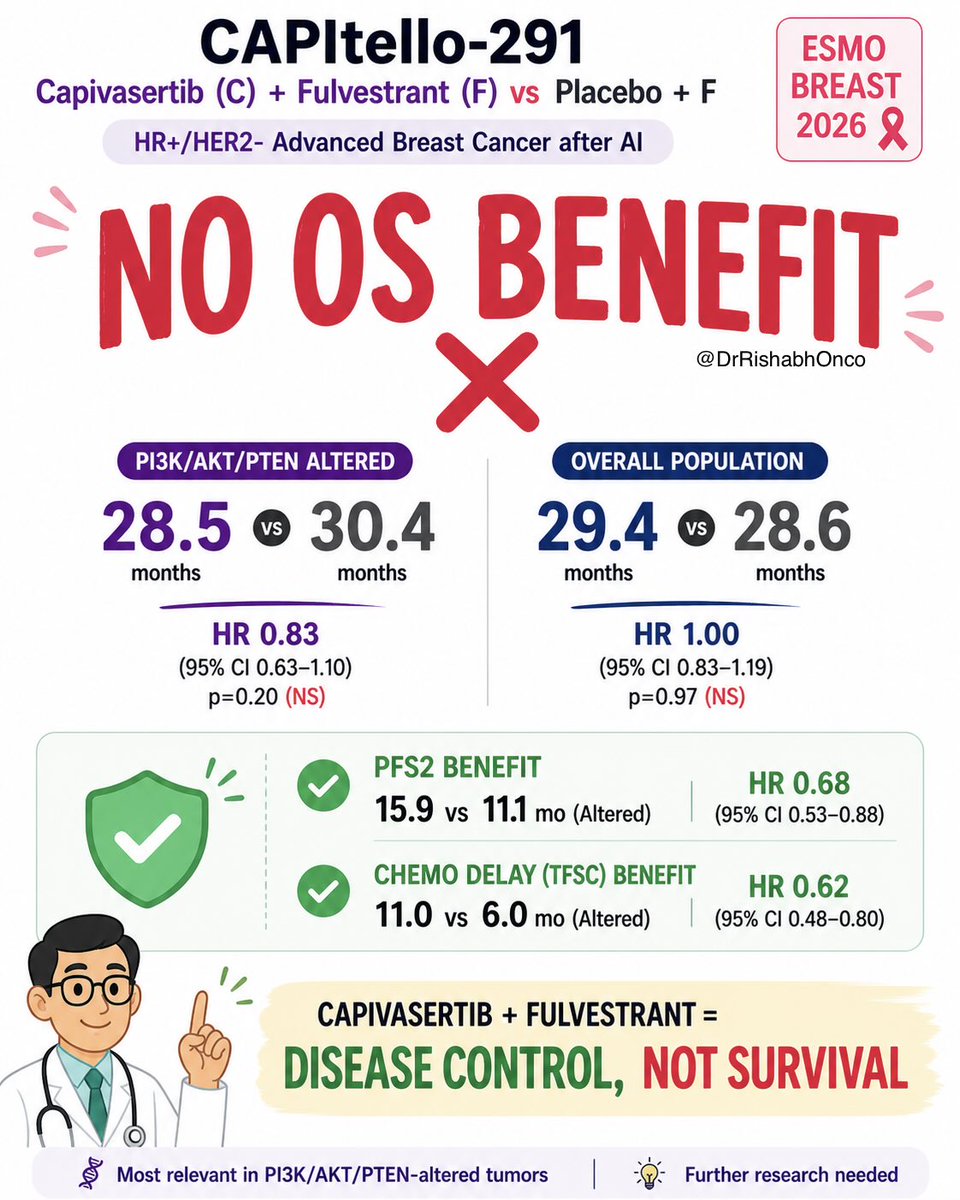
Phase III capivasertib + fulvestrant in HR+/HER2- AKT-pathway altered metastatic breast cancer. FDA-approved Nov 2023; ESMO Breast 2026 final OS not significant, PFS2 wins.
Discover KOL Sentiment on CAPItello-291 →Design - Phase 3 capivasertib (Truqap, AKT inhibitor) + fulvestrant vs placebo + fulvestrant, HR+/HER2- advanced breast cancer post-endocrine therapy (NCT04305496); primary PFS overall + AKT-pathway-altered subgroup.
PFS (biomarker subgroup) - Median 7.3 vs 3.1 mo, HR 0.50 in the PIK3CA/AKT1/PTEN-altered subgroup (n=289) - the basis for approval.
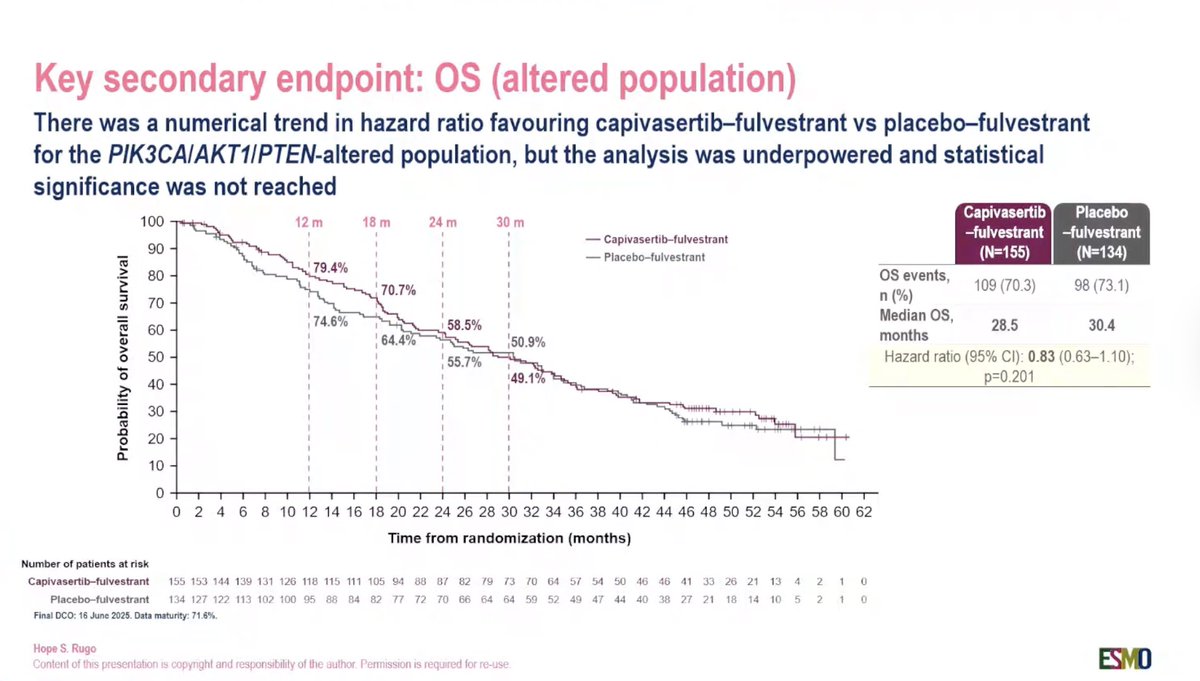
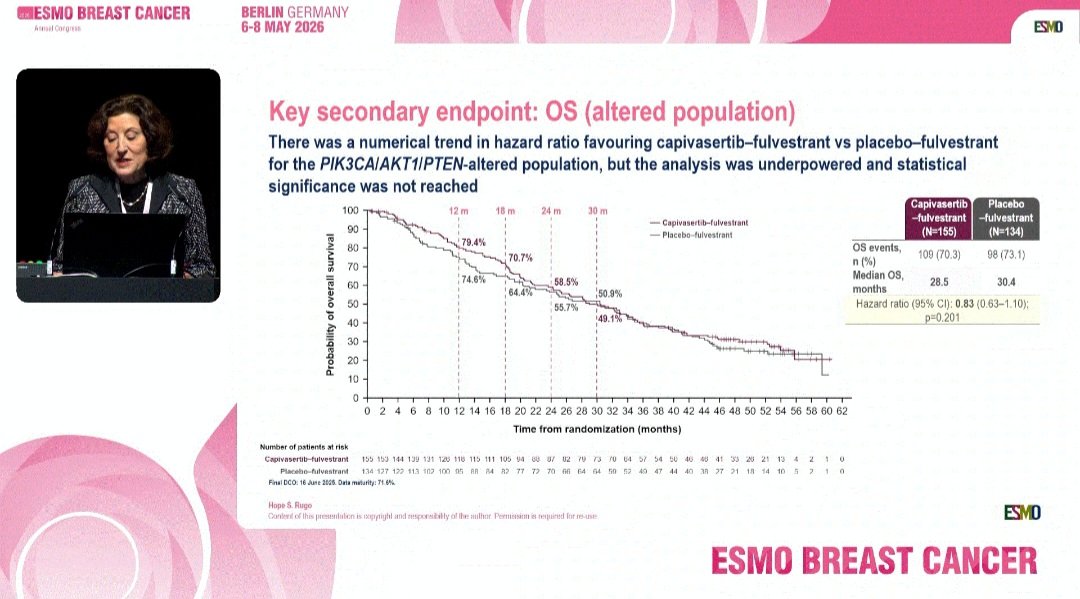
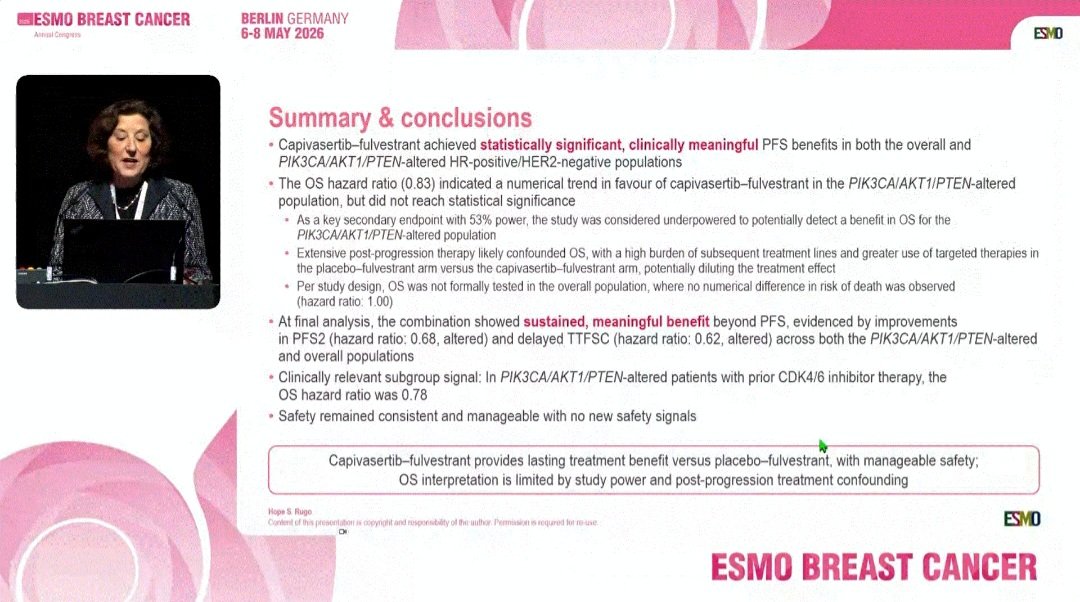
OS (final, ESMO Breast 2026) - Final overall survival update was NOT statistically significant per the page; benefit rests on PFS. PFS2 favorable.
Biomarker - Approval limited to tumors with >=1 PIK3CA, AKT1 or PTEN alteration; companion diagnostic FoundationOne CDx.
Regulatory - FDA approved November 17, 2023 (Truqap + fulvestrant) for the PIK3CA/AKT1/PTEN-altered population.
Sponsor / drug - AstraZeneca; capivasertib (Truqap) + fulvestrant (Faslodex).
Compiled and reviewed by the KOL Pulse research team, led by Brian Shields, Founder, KOL Pulse. Last updated July 21, 2026.


Trial slides shared by KOLs at ESMO Breast 2026 (#ESMOBreast26). Click any image to expand. OCR text extracted via AWS Textract.
[Slide 1]
CAPItello-291
ESMO
Capivasertib (C) + Fulvestrant (F) vs Placebo + F
BREAST
2026
HR+/HER2- Advanced Breast Cancer after AI
&
NO OS BENEFIT
@DrRishabhOnco
PI3K/AKT/PTEN ALTERED
OVERALL POPULATION
28.5 vs vs 30.4
29.4 vs vs 28.6
months
months
months
months
HR 0.83
HR 1.00
(95% CI 0.63-1.10)
(95% CI 0.83-1.19)
p=0.20 (NS)
p=0.97 (NS)
PFS2 BENEFIT
HR 0.68
15.9 vs 11.1 mo (Altered)
(95% CI 0.53-0.88)
CHEMO DELAY (TFSC) BENEFIT
HR 0.62
11.0 vs 6.0 mo (Altered)
(95% CI 0.48-0.80)
CAPIVASERTIB + FULVESTRANT =
DISEASE CONTROL, NOT SURVIVAL
Most relevant in PI3K/AKT/PTEN-altered tumors
Further research needed



[Slide 1]
PIK3CA/AKT1/PTEN alteration concordance
SAN ANTONIO
BREAST CANCER
SYMPOSIUM
between ctDNA and tissue
UT Health
AACR
-
- -
- -
Map Case Case
Comparison of tissue and ctDNA detected
ctDNA methylation tumor fraction
p<0.0001
Samples (n)
100
OPA PPA
0
50
100
150
200
250
300
350
400
10
Any 83.3 76.7
207
30
42
63
17
PIK3CAIAKT1IPTEN alteration
ctDNA TF
(%, log scale)
1
0.1
*
0.01
PIK3CA/AKT1/PTEN alterations
Not
detected
Non shedders
were detected by ctDNA alone
in 72/700 patients (10.3%)
Positive by ctDNA
Positive tissue only
and tissue
(non-altered by
(n=207)
clDNA, n=63)
Number of patients by TF %, n (%)
Positive by ctDNA
Positive ctDNA only
Positive ctDNA only
N
0 >0-0.1 >0.1-1 >1-10 >10
and tissue
(non-altered by tissue)
by tissue)
ctDNA+/Tissue+ 207 0 (0) 3 (1) 38 (18) 81 (39) 85 (41)
Positive tissue only
Positive tissue only
Tot
of patients with available
ctDNA-/Tissue+ 63 18 (29) 13 (21) 14 (22) 11 (17) 7 (11)
(non-altered by ctDNA)
(unknown by ctDNA)
tissu
NA results: N=558
Concordance calculated using tissue results as the reference, excluding un
and PPA calculated based on total number of patients with available tissue and/or ctDNA results (N=700).
AKT1, AKT serine/threonine kinase; ctDNA circulating tumor DNA; on
reament; PIK3CA, phosphatidy/inositol-4,5-bisphosphate 3-kinase catalytic subunit alpha; PPA,
percentage positive agreement; PTEN, phosphatase and tensin hom

---

[Slide 2]
PIK3CA/AKT1/PTEN alteration concordance
SAN ANTONIO
BREAST CANCER
SYMPOSIUM
between ctDNA and tissue
UT Health
AACR
-
- -
- -
Mays CASME Cam
Detection of PTEN alterations was the most discordant between methods
Samples (n)
OPA PPA
0
50
100
150
200
250
300
350
400
Positive
21%
ctDNA only
Any 83.3 76.7
207
51%
30
42
63
17
(29 patients/
21%
PIK3CAIAKT1/PTEN alteration
43 alterations)
7%
PIK3CA 88.9 77.1
155
16
33
46
16
AKT1 98.7 83.8
31
6
Positive
57%
12
PTEN 90.9 54.2
26
29
13
22
2
tissue only
4%
(22 patients/
23 alterations)
39%
Positive by ctDNA
Positive ctDNA only
Positive ctDNA only
and tissue
(non-altered by tissue)
by tissue)
Large genomic
Indel
Homozygous
SNV
Positive tissue only
Positive tissue only
Tota
patients with available
rearrangement
deletion
(non-altered by ctDNA)
(unknown by ctDNA)
tissu
NA results: N=558
Concordance calculated using tissue results as the reference, excluding
and PPA calculated based on total number of patients with available Essue and/or ctDNA results (N=700).
AKT1, AKT serine/threonine kinase; ctDNA, circulating tumor DNA:
NGS, next-generation sequencing; OPA, overall percentage agreement; PIK3CA, phosphatidylinositol-4
5-bisphosphate 3-kinase catalytic subunit alpha; PPA percentage
phosphatase and tensin homolog: SNV, single nucleotide variant.

---

[Slide 3]
SAN ANTONIO
BREAST CANCER
Summary of PFS by ctDNA alteration status
SYMPOSIUM®
UT Health
AACR
-
-
- -
Hep Canner -
Median PFS (months)
Capivasertib
Placebo
n
HR (95% CI)
+
fulvestrant
+
fulvestrant
Overall CAPItello-291 population
708
7.2
3.6
0,60 (0.51-0.71)
PIK3CA/AKT1/PTEN-altered by tissue
289
7.3
3.1
0.50 (0.38-0.65)
All patients with a ctDNA result
658
7.2
3.5
0.59 (0.50-0.71)
PIK3CAIAKT1IPTEN alteration
detected in ctDNA
279
5.6
2.1
0.43 (0.33-0.56)
ESR1m co-mutation
149
5.5
2.1
0.52 (0.36-0.76)
No ESR1m detected
130
7.4
2.6
0.36 (0.23-0.54)
PIK3CAIAKT1/PTEN alteration not
detected in ctDNA
379
7.3
3.7
0.76 (0.60-0.95)
PIK3CAIAKT1/PTEN alteration
detected in either tissue or ctDNA
359
7.2
2.8
0.49 (0.38-0.62)
PIK3CAIAKT1/PTEN alteration
not detected (either both methods
335
7.2
3.7
0.74 (0.58-0.95)
or with one unknown)
0.1
1.0
10.0
Favors capivasertib
Hazard ratio
Favors placebo
plus fulvestrant
(95% CI)
plus fulvestrant
Data cutoff: August 15 2022. AKT1, AKT serine/threonine kinase; CI, CO
ctDNA, circulating turnor DNA; ESR1m, estrogen receptor gene mutation; HR, hazard ratio; PFS, progression-free
survival; PIK3CA, phosphatidylinositol-4,5-bisphosphate 3-kinase cat
/ phosphatase and tensin homolog.

---

[Slide 4]
SAN ANTONIO
BREAST CANCER
Conclusions
SYMPOSIUM®
UT Health
AACR
-
- -
May - -
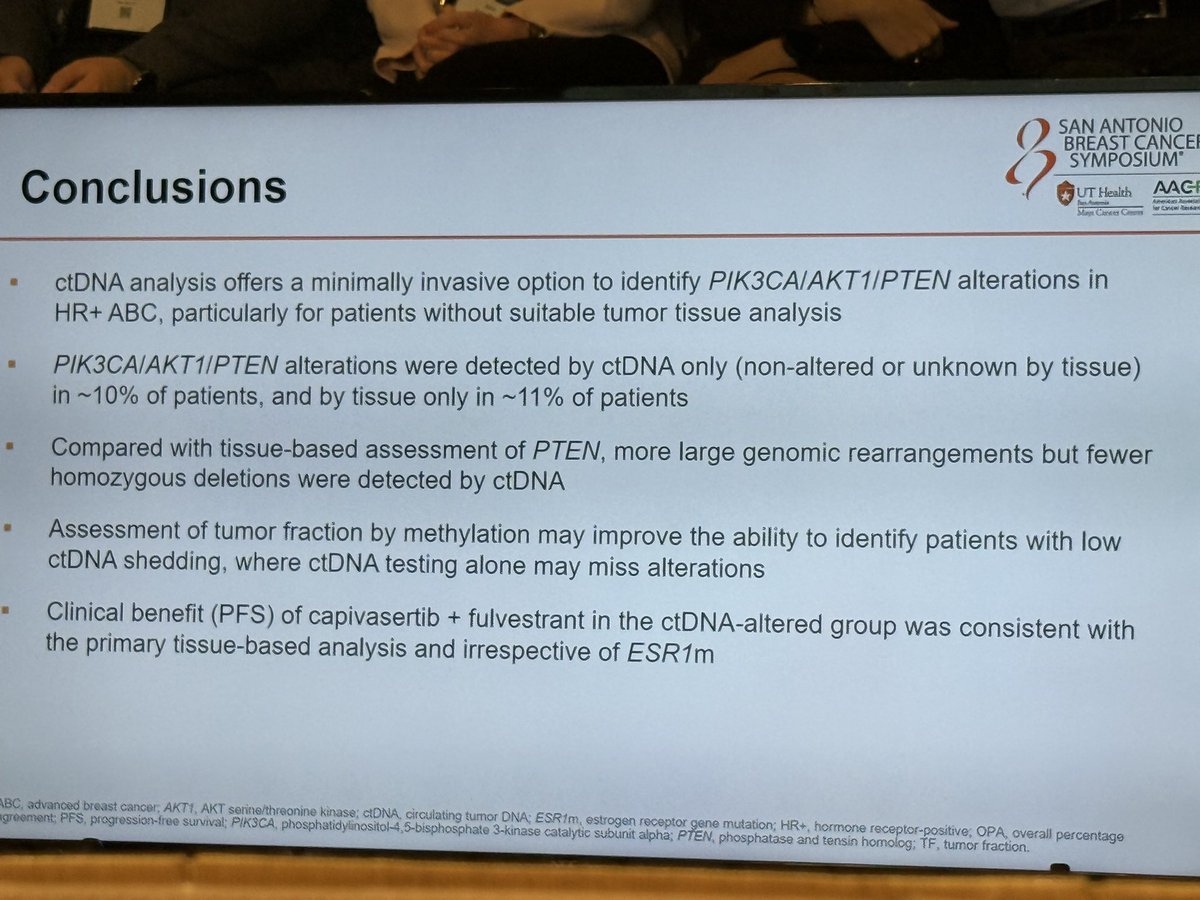
ctDNA analysis offers a minimally invasive option to identify PIK3CAIAKT1/PTEN alterations in
HR+ ABC, particularly for patients without suitable tumor tissue analysis
PIK3CAIAKT1/PTEN alterations were detected by ctDNA only (non-altered or unknown by tissue)
in ~10% of patients, and by tissue only in ~11% of patients
Compared with tissue-based assessment of PTEN, more large genomic rearrangements but fewer
homozygous deletions were detected by ctDNA
Assessment of tumor fraction by methylation may improve the ability to identify patients with low
ctDNA shedding, where ctDNA testing alone may miss alterations
Clinical benefit (PFS) of capivasertib + fulvestrant in the ctDNA-altered group was consistent with
the primary tissue-based analysis and irrespective of ESR1m
ABC, advanced breast cancer; AKT1, AKT serine/threonine kinas
DNA: ESR1m, estrogen receptor gene mutation; HR+, hormone receptor-positive; OPA, overall percentage
agreement; PFS, progression-free survival; PIK3CA, phosphatidy
kinase catalytic subunit alpha; PTEN, phosphatase and tensin homolog: TF, tumor fraction.

[Slide 1]
2026
ESMO BREAST CANCER
Annual Congress
Capivasertib and fulvestrant for patients with
HR+/HER2- advanced breast cancer: Final overall
survival results from the Phase 3 CAPItello-291 trial
Hope S. Rugo,¹ Mafalda Oliveira,2 Sacha Howell,3 Florence Dalenc,⁴ Javier Cortes,⁵
Henry Gomez,⁶ Xichun Hu,⁷ Komal Jhaveri,8 Sibylle Loibl,9 Serafin Morales Murillo,10
Zbigniew Nowecki, 11 Meena Okera, 12 Yeon Hee Park, 13 Joo Hyuk-Sohn,14
Masakazu Toi, 15 Lyudmila Zhukova, 16 lan Wadsworth, 17 Marta Fulford, 18
Vijay Bhagawati Prasad,¹ 17 Nicholas C. Turner19
1 City of Hope Comprehensive Cancer Contor Duarte CA USA*; 2 Medical Oncology Department Vall d'Hebron University Hospital Barcelona Spain 3 The Christie NHS Foundation
Trust, Manchester, UK, 4. Institut Universitaire du Cancer de Toulouse Oncopole Toulouse, France 5. 08 Madrid, Institute of Oncology. Madrid Spain, 6. Instituto Nacional de
Enfermedades Neoplásicas, INEN, Departamento de Oncologia Médica, Lima, Peru 7. Shanghai Cancer Center Fudan University, Shanghai China, 8 Memorial Sloan Kettering Cancer
Center New York NY, USA: 9. GBG Forschungs GmbH Neu-Isenburg Germany 10. Institut de Recerca Biomédica Barcelona, Spain: 11 The Mana Sklodowska Curie Memorial Cancer
Center and Institute of Oncology. Warsaw Poland 12 ICON Cancer Centre. Adelaide Australia 13 Sungkyunkwan University School of Medicine Samsung Medical Center, Seoul, Republic
of Korea, 14. Yonsei University College of Medicine Yonsei Cancer Center Seoul Republic of Korea 15. Kyoto University Hospital Kyoto, Japan; 16. Loginov Moscow Clinical Scentic Center,
Moscow, Russia 17. Oncology R&D. AstraZeneca, Cambridge UK 18 Oncology R&D. AstraZeneca Warsaw Poland 19 Royal Marsden Hospital Institute of Cancer Research London, UK
Affiliation at the time of study Division of Hematology and Oncology, University of California San Francisco Helen Diller Family Comprehensive Cancer Center San Francisco, CA USA
Hope S. Rugo
Content of this presentation is copyright and responsibility of the author Permission is required for re-use
ESMO

---

[Slide 2]
Key secondary endpoint: OS (altered population)
There was a numerical trend in hazard ratio favouring capivasertib-fulvestrant vs placebo-fulvestrant
for the PIK3CA/AKT1/PTEN-altered population, but the analysis was underpowered and statistical
significance was not reached
Capivasertib
Placebo
100
12 m
18 m
24 m
30 m
-fulvestrant
-fulvestrant
—
Capivasertib-fulvestrant
90
—
Placebo-fulvestrant
(N=155)
(N=134)
79.4%
80
OS events,
70.7%
109 (70.3)
98 (73.1)
Probability of overall survival
70
n (%)
74.6%
Median OS,
60
58.5%
28.5
30.4
64.4%
50.9%
months
50
55.7%
Hazard ratio (95% CI): 0.83 (0.63-1.10);
40
49.1%
p=0.201
30
20
10
0
0 2 4 6 8 10 12 14 16 18 20 22 24 26 28 30 32 34 36 38 40 42 44 46 48 50 52 54 56 58 60 62
Time from randomization (months)
Number of patients at risk
Capivasertib-fulvestrant
155
153
144
139
131
126
118
115
111
105
94
88
87
82
79
73
70
64
57
54
50
46
46
41
33
26
21
13
4
2
1
0
Placebo-fulvestrant
134
127
122
113
102
100
95
88
84
82
77
72
70
66
64
64
59
52
49
47
44
40
38
27
21
18
14
10
5
2
1
0
Final DCO: 16 June 2025. Data maturity: 71.6%
Hope S. Rugo
Content of this presentation is copynght and responsibility of the author Permission is required for re-use
ESMO

---

[Slide 3]
Subsequent treatments (altered population)
In the PIK3CA/AKT1/PTEN-altered population, multiple subsequent treatment lines and imbalances in the
use of targeted therapies may have contributed to the reduced treatment effect beyond PFS
PIK3CA/AKT1/PTEN-altered population
PIK3CA/AKT1/PTEN-altered population
Total
Number of lines,
Capivasertib-fulvestrant
Placebo-fulvestrant
Cytotoxic
Capecitabine
n (%)
(N=155)
(N=134)
chemotherapy
Paclitaxel
1
32 (20.6)
31 (23.9)
Total
Fulvestrant
2
28 (18.1)
26 (19.4)
Capivasertib-fulvestrant
Hormone
Exemestane
Placebo-fulvestrant
3
34 (21.9)
20 (14.9)
therapy
Anastrozole
Letrozole
>3
33 (21.3)
38 (28.4)
Tamoxifen
Total
Targeted
CDK4/6i
Treatment type,
Capivasertib-fulvestrant
Placebo-fulvestrant
therapy
Everolimus
n (%)
(N=155)
(N=134)
Alpelisib
Any
127 (81.9)
115 (85.8)
Anti-angiogenic therapy
Cytotoxic ChT
117 (75.5)
100 (74.6)
Experimental therapy
Hormone therapy
59 (38.1)
63 (47.0)
Biologic therapy
PARP inhibitor
Targeted therapy
40 (25.8)
57 (42.5)
Other
0
20
40
60
80
100
Patients, %
ChT, chemotherapy PARP, poly-ADP ribose polymerase
Hope S. Rugo
In the CDK4/6i naive population (n=81), 43.9% of patients in the capivasertib arm
Content of this presentation is copyright and responsibility of the author. Permission is required for re-use
versus 62.5% in the placebo arm received a CDK4/6i post-progression
ESMO

---

[Slide 4]
Key secondary endpoint: OS (altered population)
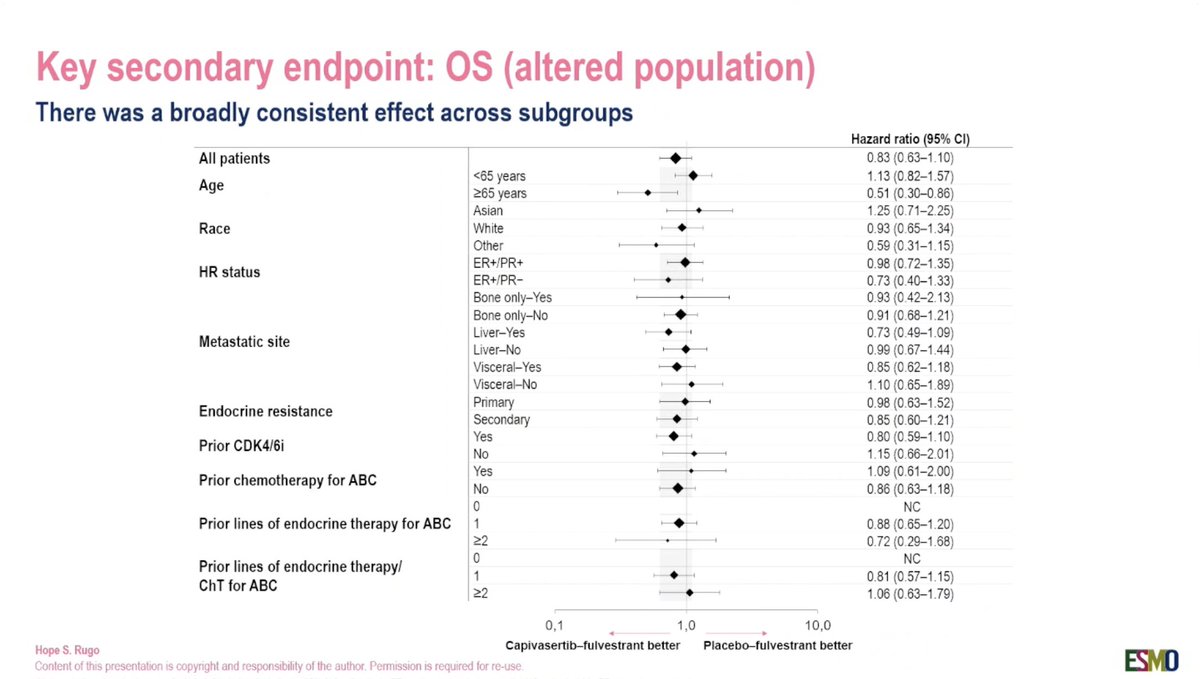
There was a broadly consistent effect across subgroups
Hazard ratio (95% CI)
All patients
0.83 (0.63-1.10)
<65 years
1.13 (0.82-1.57)
Age
>65 years
0.51 (0.30-0.86)
Asian
1.25 (0.71-2.25)
Race
White
0.93 (0.65-1.34)
Other
0.59 (0.31-1.15)
ER+/PR+
HR status
0.98 (0.72-1.35)
ER+/PR-
0.73 (0.40-1.33)
Bone only-Yes
0.93 (0.42-2.13)
Bone only-No
0.91 (0.68-1.21)
Liver-Yes
0.73 (0.49-1.09)
Metastatic site
Liver-No
0.99 (0.67-1.44)
Visceral-Yes
0.85 (0.62-1.18)
Visceral-No
1.10 (0.65-1.89)
Endocrine resistance
Primary
0.98 (0.63-1.52)
Secondary
0.85 (0.60-1.21)
Yes
Prior CDK4/6i
0.80 (0.59-1.10)
No
1.15 (0.66-2.01)
Yes
1.09 (0.61-2.00)
Prior chemotherapy for ABC
No
0.86 (0.63-1.18)
0
NC
Prior lines of endocrine therapy for ABC
1
0.88 (0.65-1.20)
>2
0.72 (0.29-1.68)
0
NC
Prior lines of endocrine therapy/
1
ChT for ABC
0.81 (0.57-1.15)
>2
1.06 (0.63-1.79)
0,1
1,0
10,0
Hope S. Rugo
Capivasertib-fulvestrant better
Placebo-fulvestrant better
Content of this presentation is copyright and responsibility of the author. Permission is required for re-use
ESMO


[Slide 1]
CAPItello-291 study design
Phase 3, randomised, double-blind, placebo-controlled study (NCT04305496)
Patients with
400 mg twice daily,
Dual primary endpoints
HR-positive/HER2-negative* ABC
Capivasertib
4 days on, 3 days off
PFS by investigator assessment in:
Primary DCO
PIK3CA/AKT1/PTEN-allered
Men and pre-/post-menopausal women
Overall population
Recurrence or progression while on.
Fulvestrant
500 mg: Cycle 1, Days 1 &
or <12 months from end of, adjuvant Al,
15; then every 4 weeks
Key secondary endpoint
or progression while on prior Al for ABC
OS
<2 lines of prior endocrine therapy for ABC
Stratification factors:
S1 line of chemotherapy for ABC
R1:1
iver metastases (yes/no)
(N=708)
Prior CDK4/61 (yes/no)
Secondary endpoints
Prior CDK4/6i allowed (at least 51%
required)
Region
PFS2
Final DCO
Safety
No prior SERD mTOR inhibitor, PI3K
inhibitor, or AKT inhibitor
Placebo
Twice daily,
4 days on, 3 days off
Exploratory endpoints
HbA1c <8.0% (63 mmol/mol) and
TTFSC
diabetes not requiring insulin allowed
FFPE tumour sample from the
Fulvestrant
500 mg: Cycle 1, Days 1 &
OS in patients who had received prior
15; then every 4 weeks
CDK4/6
primary/recurrent cancer available for
retrospective central molecular testing
All listed endpoints assessed in:
PIK3CA/AKT1/PTEN-altered
Overall population
Pm. or - - inkning - agreed - to details of - chady involved seas regative - that 11 Tage 1. United Stake Asshm Campan Audress and know Region
I - scope and Thanks - Region 1 Ass V. 000 data - of FIFE ford permits entedided HE ISLL - and MICR rechies: trans on - assistal ITS progression the NEW FFDZ. the from
unit second programs . that the " any - K. NEW schedule costrogon monter together TIPSC time to vst subsequent therethoropy
Hope & Ruge
Content of this presentation is copyright and responsibility of the author Permission n required for re-ute
ESMD
ESMO BREAST CANCER

---

[Slide 2]
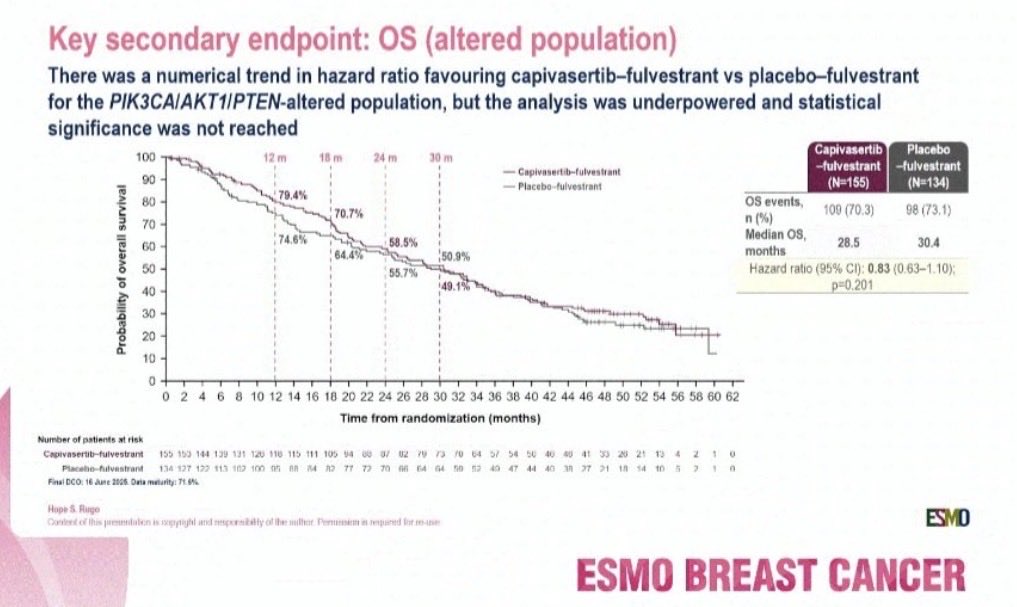
Key secondary endpoint: OS (altered population)
There was a numerical trend in hazard ratio favouring capivasertib-fulvestrant vs placebo-fulvestrant
for the PIK3CA/AKT1/PTEN-altered population, but the analysis was underpowered and statistical
significance was not reached
Capivasertib
Placebo
100
12m
18m
24 m
30m
Capivasertib-fulvestrant
-fulvestrant
-fulvestrant
90
Placebo-fulvestrant
(N=155)
(N=134)
80
79.4%
OS events,
70.7%
n (%)
109 (70.3)
98(73.1)
Probability of overall survival
70
74.6%
60
58.5%
Median OS,
28.5
30.4
64.4%
50.9%
months
50
55.7%
Hazard ratio (95% CI): 0.83 (0.63-1.10):
40
49.1%
p=0.201
30
20
10
0
0 2 4 6 8 10 12 14 16 18 20 22 24 26 28 30 32 34 36 38 40 42 44 46 48 50 52 54 56 58 60 62
Time from randomization (months)
Number of patients at risk
Capivasertitb-fulvestrant 155 150 144 139 131 120 110 115 111 105 94 00 07 02 79 is to 64 57 54 50 40 40 41 33 20 21 13 4 2 1
Placebo-fulvestrant
134 127 122 113 102 100 05 na M R2 77 72 70 66 64 G4 50 52 40 47 44 40 " 77 21 in 14 to 5 7 1 n
Final DCO: 16 June 2025 Date maturity: 71. %
Hope 5. Ruge
Content of this presentation is applytight and responsibility of the milher Permission in required lot re-use
MD
ESMO BREAST CANCER

---

[Slide 3]
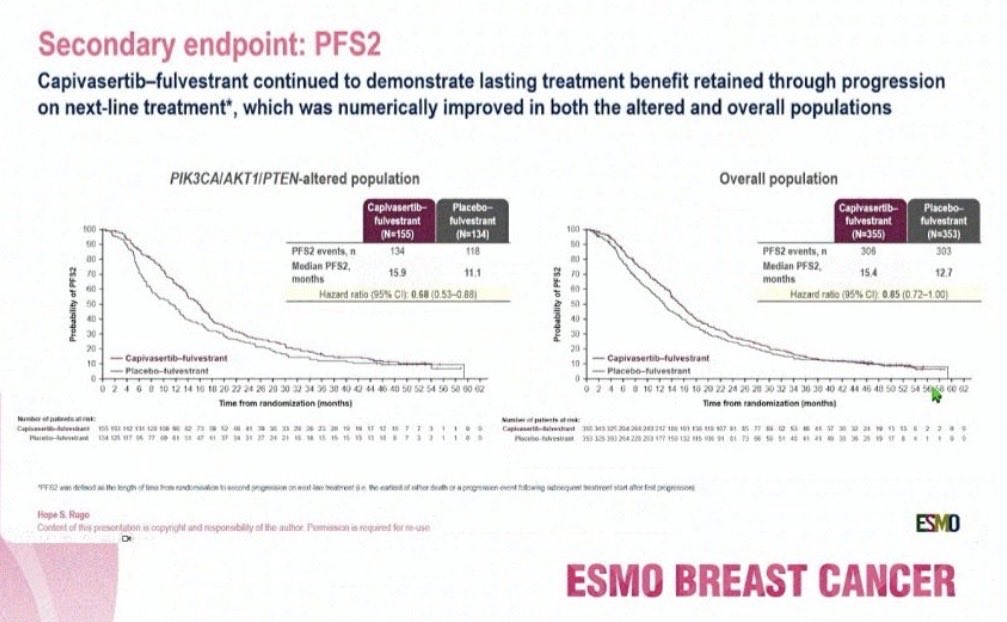
Secondary endpoint: PFS2
Capivasertib-fulvestrant continued to demonstrate lasting treatment benefit retained through progression
on next-line treatment*, which was numerically improved in both the altered and overall populations
PIK3CA/AKT1/PTEN-altered population
Overall population
Capivasertib-
Placebo-
Capivasertib-
Placebo-
fulvestrant
fulvestrant
fulvestrant
fulvestrant
100
(N=155)
(N=134)
100
(N=355)
(N=353)
90
50
PFS2 events, n
134
118
PFS2 events, n
306
303
00
a
Median PFS2,
Median PFS2,
re
15.9
11.1
70
15.4
12.7
months
months
Probability of PF32
60
Hazard ratio (95% CI): 0.68(0.53-0.88)
Probability of PFS2
no
Hazard ratio (95% CI) 0.85 (0.72-1.00)
50
50
40
3
30
30
20
20
10
Capivasertib-fulvestrant
10
Capivasertib-fulvestrant
Placebo-fulvestrant
Placebo-fulvestrant
0
0
0
2
I
0
10
12
14
22
24
26
28
30
R
34
36
30
2
42
48
50
52
54
56
50
8
0
2
4
10
12
22
24
or
32
34
36
30
40
42
44
48
52
54
5068
60
8
Time from randomization (months)
Time from randomization (months)
Number of publicate
Number patients
Placeto
I
..
Placetso
falvestrate
*PF82 - defined - the length if time from to second progressive on most - treatment an the earliest of other Smith of progression event following bestment start after Int progressions
Hope S Ruge
Content of the presentation is copyright and responsibility of the author Permison is required for re-use
ESMO
8
ESMO BREAST CANCER

---

[Slide 4]
Summary & conclusions
Capivasertib-fulvestrant achieved statistically significant, clinically meaningful PFS benefits in both the overall and
PIK3CA/AKT1/PTEN-altered HR-positive/HER2-negative populations
The OS hazard ratio (0.83) indicated a numerical trend in favour of capivasertib-fulvestrant in the PIK3CA/AKT1/PTEN-altered
population, but did not reach statistical significance
As a key secondary endpoint with 53% power, the study was considered underpowered to potentially detect a benefit in OS for the
PIK3CA/AKT1/PTEN-altered population
Extensive post-progression therapy likely confounded OS, with a high burden of subsequent treatment lines and greater use of targeted therapies in
the placebo-fulvestrant arm versus the capivasertib-fulvestrant arm, potentially diluting the treatment effect
Per study design, OS was not formally tested in the overall population, where no numerical difference in risk of death was observed
(hazard ratio: 1.00)
At final analysis, the combination showed sustained, meaningful benefit beyond PFS, evidenced by improvements
in PFS2 (hazard ratio: 0.68, altered) and delayed TTFSC (hazard ratio: 0.62, altered) across both the PIK3CA/AKT1/PTEN-altered
and overall populations
Clinically relevant subgroup signal: In PIK3CA/AKT1/PTEN-altered. patients with prior CDK4/6 inhibitor therapy, the
OS hazard ratio was 0.78
Safety remained consistent and manageable with no new safety signals
Capivasertib-fulvestrant provides lasting treatment benefit versus placebo-fulvestrant, with manageable safety;
OS interpretation is limited by study power and post-progression treatment confounding
Hope $ Rugo
Content of this presentation a copyright and responsibility of the author Permission a request for more
ESMO
8
ESMO BREAST CANCER

[Slide 1]
PIK3CA/AKT1/PTEN alteration concordance
SAN ANTONIO
BREAST CANCER
SYMPOSIUM®
between ctDNA and tissue
UT Health
AACR
American Appeacan
Cancer Research
Mays Cancer Center
Comparison of tissue and ctDNA detected
ctDNA methylation tumor fraction
p<0.0001
Samples (n)
100
OPA PPA
0
50
100
150
200
250
300
350
400
10
1
Any 83.3 76.7
207
30
42
63
17
PIK3CAIAKT1IPTEN alteration
ctDNA TF
(%, log scale)
111
0.1
÷
0.01
PIK3CA/AKT1/PTEN alterations
Not
detected
Non shedders
were detected by ctDNA alone
in 72/700 patients (10.3%)
Positive by ctDNA
Positive tissue only
and tissue
(non-altered by
(n=207)
ctDNA, n=63)
Number of patients by TF %, n (%)
Positive by ctDNA
Positive ctDNA only
Positive ctDNA only
N
0 >0-0.1 >0.1-1 >1-10 >10
and tissue
(non-altered by tissue)
(unknown by tissue)
ctDNA+/Tissue+ 207 0 (0) 3 (1) 38 (18) 81 (39) 85 (41)
Positive tissue only
Positive tissue only
Total number of patients with available
ctDNA-/Tissue+ 63 18 (29) 13 (21) 14 (22) 11 (17) 7 (11)
(non-altered by ctDNA)
(unknown by ctDNA)
tissue and ctDNA results: N=558
Concordance calculated using tissue results as the reference, excluding unknown; OPA and PPA calculated based on total number of patients with available tissue and/or ctDNA results (N=700).
AKT1, AKT serine/threonine kinase; ctDNA, circulating tumor DNA; OPA, overall percentage agreement; PIK3CA, phosphatidylinositol-4,5-bisphosphate 3-kinase catalytic subunit alpha; PPA,
percentage positive agreement; PTEN, phosphatase and tensin homolog: TF, tumor fraction.

---

[Slide 2]
SAN ANTONIO
BREAST CANCE
SYMPOSIUM®
Conclusions
UT Health
AAG
- -
- Lancel ter
Mays Classes Crems
ctDNA analysis offers a minimally invasive option to identify PIK3CAIAKT1/PTEN alterations in
HR+ ABC, particularly for patients without suitable tumor tissue analysis
PIK3CAIAKT1/PTEN alterations were detected by ctDNA only (non-altered or unknown by tissue)
in ~10% of patients, and by tissue only in ~11% of patients
Compared with tissue-based assessment of PTEN, more large genomic rearrangements but fewer
homozygous deletions were detected by ctDNA
Assessment of tumor fraction by methylation may improve the ability to identify patients with low
ctDNA shedding, where ctDNA testing alone may miss alterations
Clinical benefit (PFS) of capivasertib + fulvestrant in the ctDNA-altered group was consistent with
the primary tissue-based analysis and irrespective of ESR1m
BC, advanced breast cancer, AKT1, AKT senne/threonine kinase; ctDNA circulating tumor DNA; ESR1m, estrogen receptor gene mutation; HR+, hormone receptor-positive; OPA, overall percentage
greement; PFS, progression-free survival; PIKSCA, phosphatidylinositol-4,5-bisphosphate 3-kinase catalytic subunit alpha; PTEN, phosphatase and tensin homolog; TF, tumor fraction.

---

[Slide 3]
SAN ANTONIO
BREAST CANCER
Summary of PFS by ctDNA alteration status
SYMPOSIUM®
UT Health
AACR
Service
Aperican Ausorian
for Lence
Mays Cancer Center
Median PFS (months)
Capivasertib
Placebo
n
HR (95% CI)
+
fulvestrant
+
fulvestrant
Overall CAPItello-291 population
708
7.2
3.6
0.60 (0.51-0.71)
PIK3CA/AKT1/PTEN-altered by tissue
289
7.3
3.1
0.50 (0.38-0.65)
All patients with a ctDNA result
658
7.2
3.5
H
0.59 (0.50-0.71)
PIK3CAIAKT1/PTEN alteration
detected in ctDNA
279
5.6
2.1
0.43 (0.33-0.56)
ESR1m co-mutation
149
5.5
2.1
0.52 (0.36-0.76)
No ESR1 1m detected
130
7.4
2.6
0.36 (0.23-0.54)
PIK3CAIAKT1/PTEN alteration not
detected in ctDNA
379
7.3
3.7
0.76 (0.60-0.95)
PIK3CAIAKT1/PTEN alteration
detected in either tissue or ctDNA
359
7.2
2.8
0.49 (0.38-0.62)
PIK3CAIAKT1/PTEN alteration
not detected (either both methods
335
7.2
3.7
0.74 (0.58-0.95)
or with one unknown)
0.1
1.0
10.0
Favors capivasertib
Hazard ratio
Favors placebo
plus fulvestrant
(95% CI)
plus fulvestrant
Data cutoff: August 15 2022. AKT1, AKT serine/threonine kinase; CI, confidence interval; ctDNA, circulating tumor DNA; ESR fm, estrogen receptor gene mutation; HR, hazard ratio; PFS, progression-free
survival; PIK3CA, phosphatidylinositol-4,5-bisphosphate 3-kinase catalytic subunit alpha; PTEN, phosphatase and tensin homolog.

---

[Slide 4]
PIK3CA/AKT1/PTEN alteration concordance
SAN ANTONIO
BREAST CANCER
SYMPOSIUM
between ctDNA and tissue
UT Health
AACR
Sex Antonio
American
for Cancer Research
Mays Cancer Center
Detection of PTEN alterations was the most discordant between methods
Samples (n)
OPA PPA
0
50
100
150
200
250
300
350
400
Positive
21%
ctDNA only
Any 83.3 76.7
207
30
42
63
51%
17
(29 patients/
21%
PIK3CAIAKT1/PTEN alteration
43 alterations)
7%
PIK3CA 88.9 77.1
155
16
33
46
16
AKT1 98.7 83.8
31
6
12
Positive
57%
PTEN 90.9 54.2
26
29
13
22
2
tissue only
4%
(22 patients/
23 alterations)
39%
Positive by ctDNA
Positive ctDNA only
Positive ctDNA only
and tissue
(non-altered by tissue)
(unknown by tissue)
Large genomic
Indel
Homozygous
Positive tissue only
Positive tissue only
Total number of patients with available
SNV
rearrangement
deletion
(non-altered by ctDNA)
(unknown by ctDNA)
tissue and ctDNA results: N=558
Concordance calculated using tissue results as the reference, excluding unknown; OPA and PPA calculated based on total number of patients with available tissue and/or ctDNA results (N=700).
AKT1, AKT serine/threonine kinase; ctDNA, circulating tumor DNA; indel, Insertion/deletion; NGS, next-generation sequencing; OPA, overall percentage agreement; PIK3CA, phosphatidylinositol-4
5-bisphosphate 3-kinase catalytic subunit alpha; PPA, percentage positive agreement; PTEN, phosphatase and tensin homolog; SNV, single nucleotide variant.


[Slide 1]
ESMO BREAST CANCER
BERLIN GERMANY
Amail Corgress
6-8 MAY 2026
ESMO
CAPItello-291 study design
Phase 3, randomised, double-blind, placebo-controlled study (NCT04305496)
Patients with
HR-positive/HER2-negative* ABC
Capivasertib
400 mg twice daily,
Dual primary endpoints
4 days on, 3 days off
PFS by investigator assessment in:
Primary DCO
PIK3CA/AKT1/PTEN-altered
Men and pre-/post-menopausal women
Overall population
Recurrence or progression while on,
Fulvestrant
500 mg: Cycle 1, Days 1&
or <12 months from end of, adjuvant AI,
15; then every 4 weeks
Key secondary endpoint
or progression while on prior AI for ABC
OS
52 lines of prior endocrine therapy for ABC
Stratification factors:
S1 line of chemotherapy for ABC
R1:1
iver metastases (yes/no)
(N=708)
Prior CDK4/6i (yes/no)
Secondary endpoints
Prior CDK4/6i allowed (at least 51%
required)
Region
PFS2
Final DCO
Safety
No prior SERD mTOR inhibitor, PI3K
inhibitor, or AKT inhibitor
Placebo
Twice daily,
4 days on, 3 days off
Exploratory endpoints
HbA1c <B 0% (63. mmol/mol) and
TTFSC
diabetes not requiring insulin allowed
FFPE tumour sample from the
Fulvestrant
500 mg: Cycle 1, Days 1 &
OS in patients who had received prior
primary/recurrent cancer available for
15; then every 4 weeks
CDK4/6i
retrospective central molecular testing
All listed endpoints assessed in:
PIK3CA/AKT1/PTEN-altered
Overall population
- or - unine - agence - his design of the date instruct MERS regative *** I " 11 or FUSH- Rajin United States Westom Temper Audress and nat Region 2 America
petern unge and Formsts Region Asia A/ their 000 sea FFFE formale food persion entedded HC IS ni rechares: larget CO. overall survival FTS. progremen the survive IT 37. time from
rundomision unit second program " dout the to any - R. NERD TIPSC the to VII subsiquent chemotheropy
Hope Rugo
Content of this presentation is copyright and responsibility of the subser Permission n required for re-uin
ESMO
ESMO BREAST CANCER

---

[Slide 2]
ESMO BREAST CANCER
BERLIN GERMANY
Annual Corgress
6-8 MAY 2026
ESMO
Key secondary endpoint: OS (altered population)
There was a numerical trend in hazard ratio favouring capivasertib-fulvestrant vs placebo-fulvestrant
for the PIK3CA/AKT1/PTEN-altered population, but the analysis was underpowered and statistical
significance was not reached
Capivasertib
Placebo
100
12m m
18 m
24 m
30m
-fulvestrant
-fulvestrant
Capivasertib-fulvestrant
90
Placebo-fulvestrant
(N=155)
(N=134)
79.4%
80
OS events,
70.7%
70
(%)
109 (70.3)
98 (73.1)
Probability of overall survival
74.6%
Median OS,
60
58.5%
28.5
30.4
64.4%
(50.9%
months
50
55.7%
Hazard ratio (95% CI): 0.83 (0.63-1.10);
40
49.1%
p=0.201
30
20
10
0
0 2 4 6 8 10 12 14 16 18 20 22 24 26 28 30 32 34 36 38 40 42 44 46 48 50 52 54 56 58 60 62
Time from randomization (months)
Number of patients at risk
Capivasertib-fulvestrant 155 150 144 139 131 120 116 115 111 105 94 00 07 02 (9) 73 ru 04 57 54 50 40 40 41 33 20 21 13 4 2 1 0
Placebo-fulvestrant
134 127 122 113 102 100 as AR A4 32 77 72 70 66 64 64 50 52 40 47 44 40 n 27 21 18 14 to 6 2 1 0
Final DCO: 16 June 2025 Date milurity: 71. 6%
Hope Rugo
Content of this presentation is copyright and responsibility of the withor Permission 8 required for re-use
ESMO
ESMO BREAST CANCER

---

[Slide 3]
ESMO BREAST CANCER
BERLIN GERMANY
Annual Congress
6-8 MAY 2026
ESMO
Secondary endpoint: PFS2
Capivasertib-fulvestrant continued to demonstrate lasting treatment benefit retained through progression
on next-line treatment*, which was numerically improved in both the altered and overall populations
PIK3CA/AKT1/PTEN-altered population
Overall population
Capivasertib-
Placebo-
Capivasertib-
Placebo-
fulvestrant
fulvestrant
fulvestrant
fulvestrant
100
100
(N=155)
(N=134)
(N=355)
(N=353)
90
50
PFS2 events, n
134
118
PFS2 events, n
306
303
as
83
Median PFS2,
Median PFS2,
70
15.9
11.1
70
15.4
12.7
months
months
Probability of PF32
60
Probability of PFS2
60
Hazard ratio (95% Cl): 0. 68 (0.53-0.88)
Hazard ratio (95% CI): 0.85 (0.72-1.00)
50
50
40
10
30
30
20
20
10
Capivasertib-fulvestrant
10
Capivasertib-fulvestrant
Placebo- fulvestrant
Placebo-fulvestrant
0
0
0
2
4
6
8
10
12
14
16
18
20
22
24
26
28
30
R
34
35
38
60
42
44
46
48
50
52
54
56
58
60
62
0
2
4
6
8
10
12
14
16
18
20
22
24
26
28
30
32
34
36
38
40
42
44
46
48
50
52
54
56658
60
62
Time from randomization (months)
Time from randomization (months)
I I I
Number patients at mk
Capital
-
551
142
⑉
129
100
12
73
29
6
-
deleastment
IM
MI
us
204
264
100
161
34
907
-
is
77
-
3
53
"
-
24
19
"
11
0
Placetion
134
"
is
"
-
11
"
47
"
"
14
31
17
24
13
13
13
13
=
Placebo falvostrant 350 177 " 11 73 00 50 11 40 " " 00 0 * 25 19 17 0.
-
PI PF52 was Inflace - the longth of time from rendomization second progression on and - bottment se the earlod of signer Seath progression a following about treatment start shor first progression
Hope S. Rugo
Content of this presentation is copyright and responsibility of the author Permission 8 required for re-use
ESMO
5
ESMO BREAST CANCER

---

[Slide 4]
ESMO BREAST CANCER
BERLIN GERMANY
Assist Congress
6-8 MAY 2026
ESMD
Summary & conclusions
Capivasertib-fulvestrant achieved statistically significant, clinically meaningful PFS benefits in both the overall and
PIK3CA/AKT1/PTEN-altered HR-positive/HER2-negative populations
The OS hazard ratio (0.83) indicated a numerical trend in favour of capivasertib-fulvestrant in the PIK3CA/AKT1/PTEN-altered
population, but did not reach statistical significance
As a key secondary endpoint with 53% power, the study was considered underpowered to potentially detect a benefit in OS for the
PIK3CA/AKT1/PTEN-altered population
Extensive post-progression therapy likely confounded OS, with a high burden of subsequent treatment lines and greater use of targeted therapies in
the placebo-fulvestrant arm versus the capivasertib-fulvestrant arm, potentially diluting the treatment effect
Per study design, OS was not formally tested in the overall population, where no numerical difference in risk of death was observed
(hazard ratio: 1.00)
At final analysis, the combination showed sustained, meaningful benefit beyond PFS, evidenced by improvements
in PFS2 (hazard ratio: 0.68, altered) and delayed TTFSC (hazard ratio: 0.62, altered) across both the PIK3CA/AKT1/PTEN-altered
and overall populations
Clinically relevant subgroup signal: In PIK3CA/AKT1/PTEN-altered patients with prior CDK4/6 inhibitor therapy, the
OS hazard ratio was 0.78
Safety remained consistent and manageable with no new safety signals
Capivasertib-fulvestrant provides lasting treatment benefit versus placebo-fulvestrant, with manageable safety;
OS interpretation is limited by study power and post-progression treatment confounding
Hope Rugo
Content of this presentation . copyngent and responsibility of the author Permission is required for re-use
ESMO
o
ESMO BREAST CANCER

Highest-engagement tweets about this trial, ranked by KOL discussant count (replies + quote-tweets). Replies in green, quote-tweets in blue. Wall Street, stock-promo, and non-substantive replies excluded.
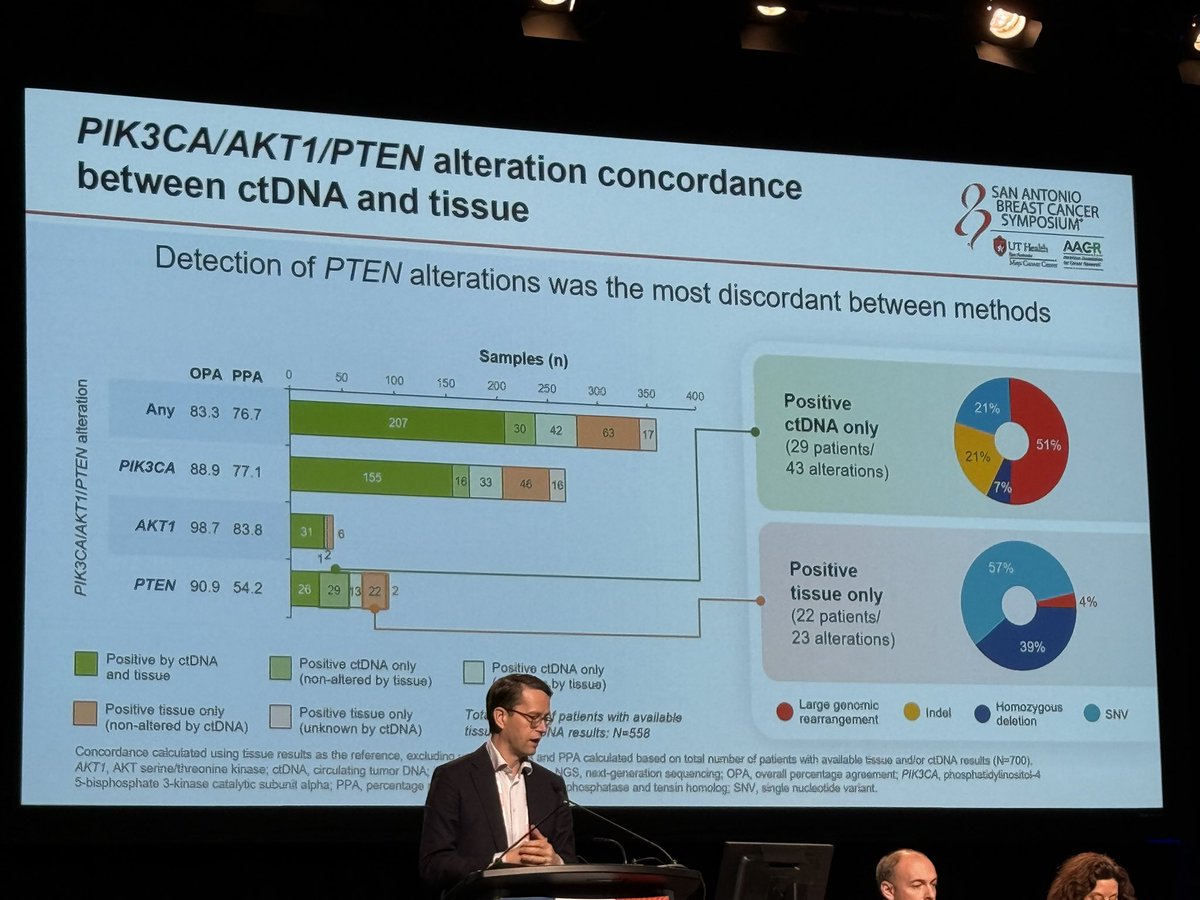
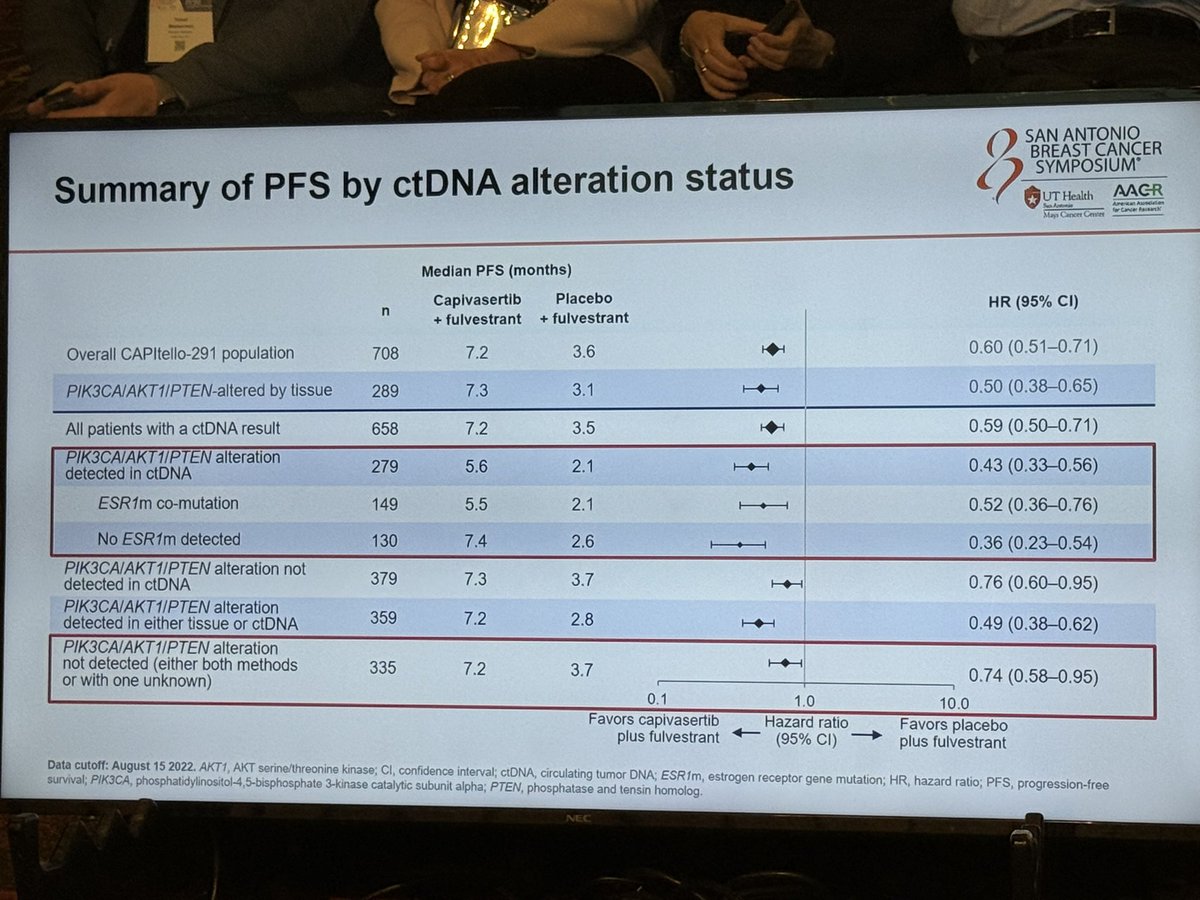
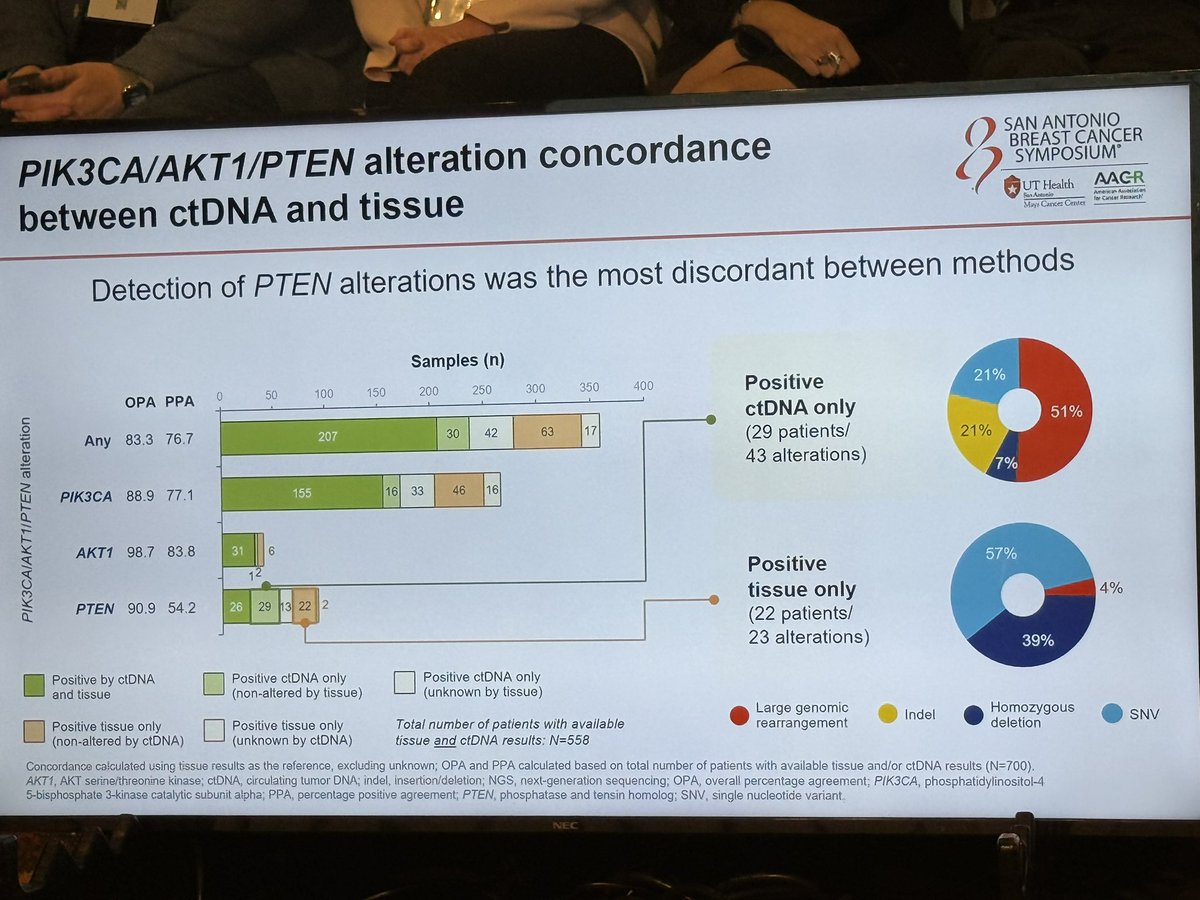
Interesting ctDNA sub-analysis from CAPItello291. Most PIK3CA/AKT/PTEN alterations are found both on tissue and ctDNA, but about 10% are found only on one of the two methods. PTEN alterations the most discordant. #SABCS25 https://t.co/DhqxbknPdh


 +4
+4
🔥 Does capivasertib actually improve survival? CAPItello-291 final OS just answered this 👇 Trial: Capivasertib + fulvestrant vs placebo + fulvestrant Setting: HR+/HER2- ABC post-AI 👥 Study population 708 pts Biomarker cohort: PI3K/AKT/PTEN altered 💊 Arms Capivasertib + https:
#SABCS2025 Nick Turner presents our capi291 ctDNA data. Benefit seen in those without ESR1m and large genomic rearrangements more frequently found in ctDNA vs tissue. Nice data supporting this combination, and supports both tissue and ctDNA evals. @OncoAlert https://t.co/UjMNGd2Y
#ESMOBreast26 CAPItello-291 final analysis PFS benefit is clear; PFS2 also supports sustained disease control. No OS benefit was shown. ➡️ Prior CDK4/6i-altered subgroup: interesting, but exploratory. OS remains unproven and confounded by post-progression therapies. https://t
📌 Capivasertib and fulvestrant for patients with HR+/HER2- advanced breast cancer: Final overall survival ✨results from the phase III CAPItello-291 trial ✨Proffered Paper Session 2 @hoperugo #ESMOBreast26 @OncoAlert #OncoAlertAF https://t.co/shAj2lZNV5
#ESMOBreast26 CAPItello-291 final OS: Capivasertib + fulvestrant continued to show durable benefit in PIK3CA/AKT1/PTEN-altered HR+/HER2− ABC, with meaningful PFS2 improvement and ~7-month OS gain after prior CDK4/6i. Manageable safety profile maintained. #BreastCancer https://t
CAPItello-291 is a global Phase III double-blind, placebo-controlled trial that established capivasertib (Truqap) + fulvestrant as a treatment option for HR+/HER2- advanced breast cancer progressing on aromatase inhibitor therapy, particularly in patients with PIK3CA/AKT1/PTEN-altered tumours. The final OS analysis presented at ESMO Breast 2026 added important nuance: the regimen did NOT improve overall survival in either the altered or overall population, but PFS2 and time-to-chemotherapy data continue to support sustained disease control. Capivasertib + fulvestrant received FDA approval Nov 2023 and NICE approval May 2025 for the PIK3CA/AKT1/PTEN-altered cohort.
FDA approved capivasertib (Truqap) + fulvestrant Nov 2023 for adults with HR+, HER2-negative locally advanced or metastatic breast cancer with one or more PIK3CA/AKT1/PTEN alterations following progression on at least one endocrine-based regimen. Approval based on the PIK3CA/AKT1/PTEN-altered cohort of CAPItello-291 (HR 0.50 vs 0.79 in non-altered).
Approval date: November 2023
Population: Adults with HR+/HER2- locally advanced or metastatic breast cancer who relapsed/progressed during or after AI treatment, with or without prior CDK4/6i. Any menopausal status; men eligible. ~40% PIK3CA/AKT1/PTEN-altered.
Interventions: Capivasertib 400 mg PO BID 4 days on / 3 days off + fulvestrant 500 mg IM Q4W (with C1D1 and C1D15 loading doses). Control: matching placebo + fulvestrant.
Endpoints: Dual primary: investigator-PFS overall and altered. Secondary: OS, PFS2, time to first subsequent chemotherapy, ORR, safety, PROs (HRQoL).
Primary PFS analysis: 7.2 months capivasertib+fulvestrant vs 3.6 months placebo+fulvestrant (HR 0.60, 95% CI 0.51–0.71; p<0.001) overall [NEJM 2023 / SABCS 2022, DCO1]; in the PIK3CA/AKT1/PTEN-altered cohort (n=289), median PFS was 7.3 months (95% CI 5.5–9.0) vs 3.1 months (95% CI 2.0–3.7); HR 0.50 (95% CI 0.38–0.65); p<0.0001 [FDA Drug Trials Snapshot / NEJM 2023]. Final OS analysis at ESMO Breast 2026 was NOT statistically significant: altered population median OS 28.5 vs 30.4 months (HR 0.83, 95% CI 0.63-1.10; p=0.201); overall population 29.4 vs 28.6 months (HR 1.00). However, PFS2 favoured capivasertib in both populations: altered 15.9 vs 11.1 months (HR 0.68); overall 15.4 vs 12.7 months (HR 0.85). Time to first subsequent chemo or death: altered 11.0 vs 6.0 months (HR 0.62); overall 11.0 vs 7.0 months (HR 0.74).
Patient-reported outcomes from CAPItello-291 demonstrated capivasertib-fulvestrant delayed time to deterioration of GHS/QOL and maintained other HRQoL dimensions similarly to fulvestrant — except for diarrhoea symptoms. Common AEs: diarrhoea, rash, hyperglycaemia, nausea. Generally manageable with dose modifications and supportive care. Importantly, the 4-days-on/3-days-off schedule attenuates target AKT inhibition toxicity.
Yakup Ergün cut to the central interpretive tension: “PFS benefit is clear; PFS2 also supports sustained disease control. No OS benefit was shown,” adding that “OS remains unproven and confounded by post-progression therapies.” Rishabh Jain asked the same question more bluntly — “Does capivasertib actually improve survival? CAPItello-291 final OS just answered this” — in the trial’s highest-impression post. Kazuki Nozawa offered a more favorable read, noting capivasertib + fulvestrant “continued to show durable benefit in PIK3CA/AKT1/PTEN-altered HR+/HER2− ABC, with meaningful PFS2 improvement and ~7-month OS gain after prior CDK4/6i.” Paolo Tarantino dug into the biomarker layer at SABCS25, flagging that “Most PIK3CA/AKT/PTEN alterations are found both on tissue and ctDNA, but about 10% are found only on one of the two methods” with “PTEN alterations the most discordant.” Hope Rugo — presenter of the final-OS analysis at ESMO Breast 2026 — flagged the trial-design caveat directly on her own slide: “Overall statistical significance was not observed in the altered population” for OS, with HR 1.00 (95% CI 0.83–1.19) in the altered cohort and HR 1.00 (0.82–1.23) in the overall population. The pre-specified exploratory PIK3CA/AKT1/PTEN-altered + prior CDK4/6i subgroup showed HR 0.78 (0.57–1.07), a ~7-month numerical OS gain that did not cross the statistical hierarchy. Rugo also pointed to the ctDNA biomarker work as supporting “both tissue and ctDNA evals” for patient selection. The most-discussed exchange of the meeting came when Rishabh Jain framed the result as “Does capivasertib actually improve survival? CAPItello-291 final OS just answered this,” and Rugo publicly corrected the framing in a quote-tweet: “Actually the trial was not powered at all for OS. Wait for the data. This was a secondary endpoint and the assumptions were not attainable. Pragmatic decisions.” The exchange — trial design vs. clinical interpretation — is the cleanest articulation of how to read CAPItello-291’s OS column.
CAPItello-291 is a Phase 3 randomized, double-blind trial (NCT04305496) of capivasertib (Truqap, an AKT inhibitor) plus fulvestrant versus placebo plus fulvestrant in patients with HR-positive, HER2-negative locally advanced or metastatic breast cancer whose disease progressed on endocrine therapy. Progression-free survival in the overall population and in the AKT-pathway (PIK3CA/AKT1/PTEN)-altered subgroup were co-primary endpoints.
In the AKT-pathway-altered subgroup (approximately 289 patients), capivasertib plus fulvestrant improved median progression-free survival to 7.3 versus 3.1 months with placebo plus fulvestrant (hazard ratio 0.50). A progression-free survival benefit was also seen in the overall population. At the ESMO Breast 2026 final analysis, overall survival was not statistically significant, so the clinical value rests on the progression-free survival benefit in biomarker-altered tumors.
Yes. On November 17, 2023 the FDA approved capivasertib (Truqap) with fulvestrant for adults with HR-positive, HER2-negative locally advanced or metastatic breast cancer harboring one or more PIK3CA, AKT1 or PTEN alterations, after progression on at least one endocrine-based regimen. The approval was based on the CAPItello-291 progression-free survival benefit in the biomarker-altered subgroup.
The approval is restricted to tumors with one or more PIK3CA, AKT1 or PTEN alterations, identified by an FDA-approved companion diagnostic (FoundationOne CDx). Patients without these AKT-pathway alterations are outside the approved indication.
The most common adverse event is diarrhea; hyperglycemia and rash are also characteristic and require monitoring and management, along with nausea. Patient-reported outcomes showed capivasertib-fulvestrant delayed time to deterioration of global health status/quality of life and maintained other HRQoL dimensions similarly to fulvestrant, except for diarrhea symptoms.
| Handle | Name | Sentiment | Tweet (excerpt) | Imp. |
|---|---|---|---|---|
| @hoperugo | Hope Rugo | Positive | #SABCS2025 Nick Turner presents our capi291 ctDNA data. Benefit seen in those without ESR1m and large genomic rearrangem… | 1,552 |
| @DrRishabhOnco | Dr Rishabh Jain | Neutral | 🔥 Does capivasertib actually improve survival? CAPItello-291 final OS just answered this 👇 Trial: Capivasertib + fulve… | 16,263 |
| @hoperugo | Hope Rugo | Neutral | Actually the trial was not powered at all for OS. Wait for the data. This was a secondary endpoint and the assumptions w… | 9,111 |
| @PTarantinoMD | Paolo Tarantino | Neutral | Interesting ctDNA sub-analysis from CAPItello291. Most PIK3CA/AKT/PTEN alterations are found both on tissue and ctDNA, b… | 4,372 |
| @kazuki_nozawa | Kazuki Nozawa, MD | Neutral | #ESMOBreast26 CAPItello-291 final OS: Capivasertib + fulvestrant continued to show durable benefit in PIK3CA/AKT1/PTEN-… | 1,704 |