Resectable stage II-IIIB NSCLC (perioperative) — Merck Sharp & Dohme LLC
Discover KOL Sentiment on KEYNOTE-671 →Design - Phase 3 perioperative pembrolizumab + neoadjuvant chemo -> adjuvant pembrolizumab vs placebo, resectable stage II-IIIB NSCLC (NCT03425643).
EFS - 5-yr EFS 49.9% (95% CI 44.6-55.0) vs 26.5% (95% CI 21.7-31.5); HR 0.58 (95% CI 0.48-0.69). Median EFS 57.1 vs 18.4 mo. (Annals of Oncology, DCO 3 Jul 2025)
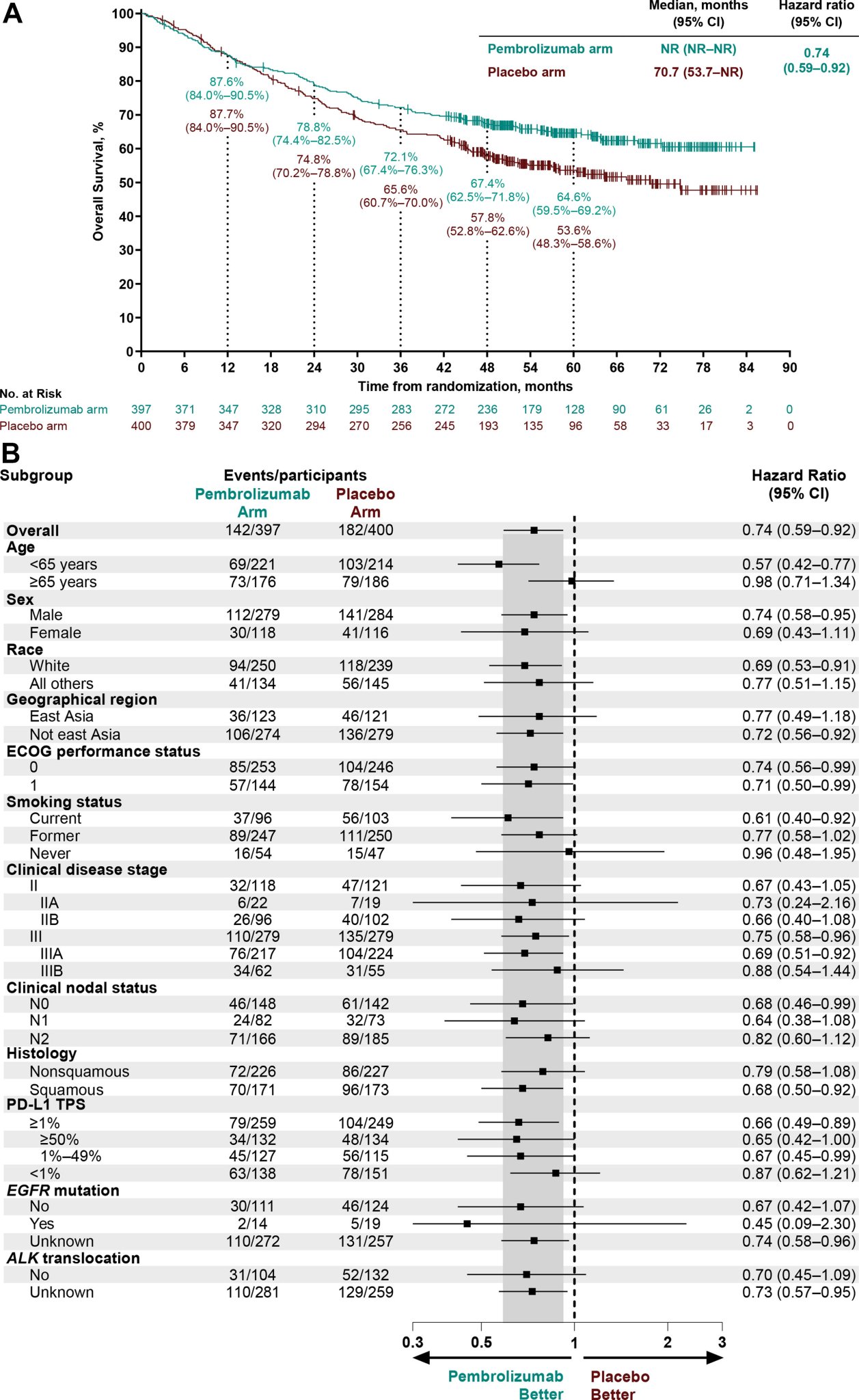
OS - 5-yr OS 64.6% (95% CI 59.5-69.2) vs 53.6% (95% CI 48.3-58.6); HR 0.74 (95% CI 0.59-0.92). Median OS not reached vs 70.7 mo. (Annals of Oncology, DCO 3 Jul 2025)
Earlier primary OS analysis, ESMO 2024: HR 0.72 (95% CI 0.56-0.93, P=0.0103) - a different data cut.
Safety - Grade >=3 AEs 44.9% vs 37.3%; AE discontinuation 13.0% vs 6.5%.
Regulatory - FDA approved October 2023.
Sponsor / drug - Merck (MSD); pembrolizumab (Keytruda).
Compiled and reviewed by the KOL Pulse research team, led by Brian Shields, Founder, KOL Pulse. Last updated August 22, 2026.









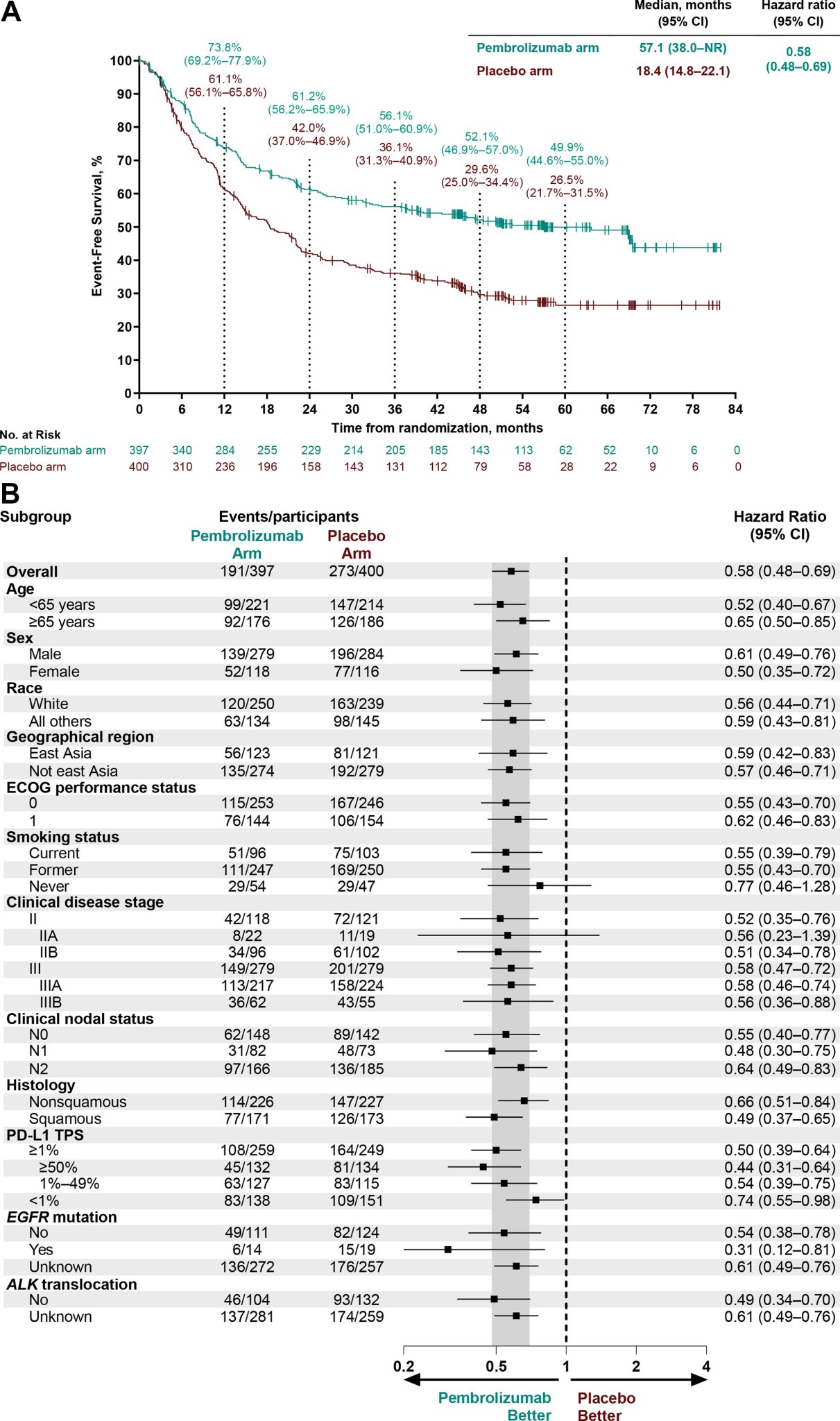
| Endpoint | Perioperative pembrolizumab (n=397) | Placebo + chemo (n=400) |
|---|---|---|
| Median EFS | 57.1 months (38.0–NR) | 18.4 months (14.8–22.1) |
| 12-month EFS | 73.8% (69.2–77.9) | 61.1% (56.1–65.8) |
| 24-month EFS | 61.2% (56.2–65.9) | 42.0% (37.0–46.9) |
| 36-month EFS | 56.1% (51.0–60.9) | 36.1% (31.3–40.9) |
| 48-month EFS | 52.1% (46.9–57.0) | 29.6% (25.0–34.4) |
| 60-month EFS | 49.9% (44.6–55.0) | 26.5% (21.7–31.5) |
| Events / participants | 191/397 | 273/400 |
| Hazard ratio (95% CI) | 0.58 (0.48–0.69) | — |
| Endpoint | Perioperative pembrolizumab (n=397) | Placebo + chemo (n=400) |
|---|---|---|
| Median OS | Not reached | 70.7 months (53.7–NR) |
| 12-month OS | 87.6% (84.0–90.5) | 87.7% (84.0–90.5) |
| 24-month OS | 78.8% (74.4–82.5) | 74.8% (70.2–78.8) |
| 36-month OS | 72.1% (67.4–76.3) | 65.6% (60.7–70.0) |
| 48-month OS | 67.4% (62.5–71.8) | 57.8% (52.8–62.6) |
| 60-month OS | 64.6% (59.5–69.2) | 53.6% (48.3–58.6) |
| Deaths / participants | 142/397 | 182/400 |
| Hazard ratio (95% CI) | 0.74 (0.59–0.92) | — |


Top tweets by impressions — click to view on X
Updated KEYNOTE-671 results: 5-year EFS 49.9% vs 26.5%; OS 64.6% vs 53.6% with periop pembro
Yet key questions remain: Who needs neoadjuvant-only vs periop therapy? Is the adjuvant phase needed—and for how long? Can PD-L1, pCR or ctDNA/MRD guide selection?
https://t.co/mb00TcgnAM
5y outcomes from phase III KEYNOTE-671: perioperative pembrolizumab vs neoadjuvant chemo for resectable NSCLC @Annals_Oncology.
5y EFS 49.9% vs 26.5% (HR 0.58) and 5y OS 64.6% vs 53.6% (HR 0.74) with no detriment to QoL with pembro vs placebo.
https://t.co/73LjhFfiqd

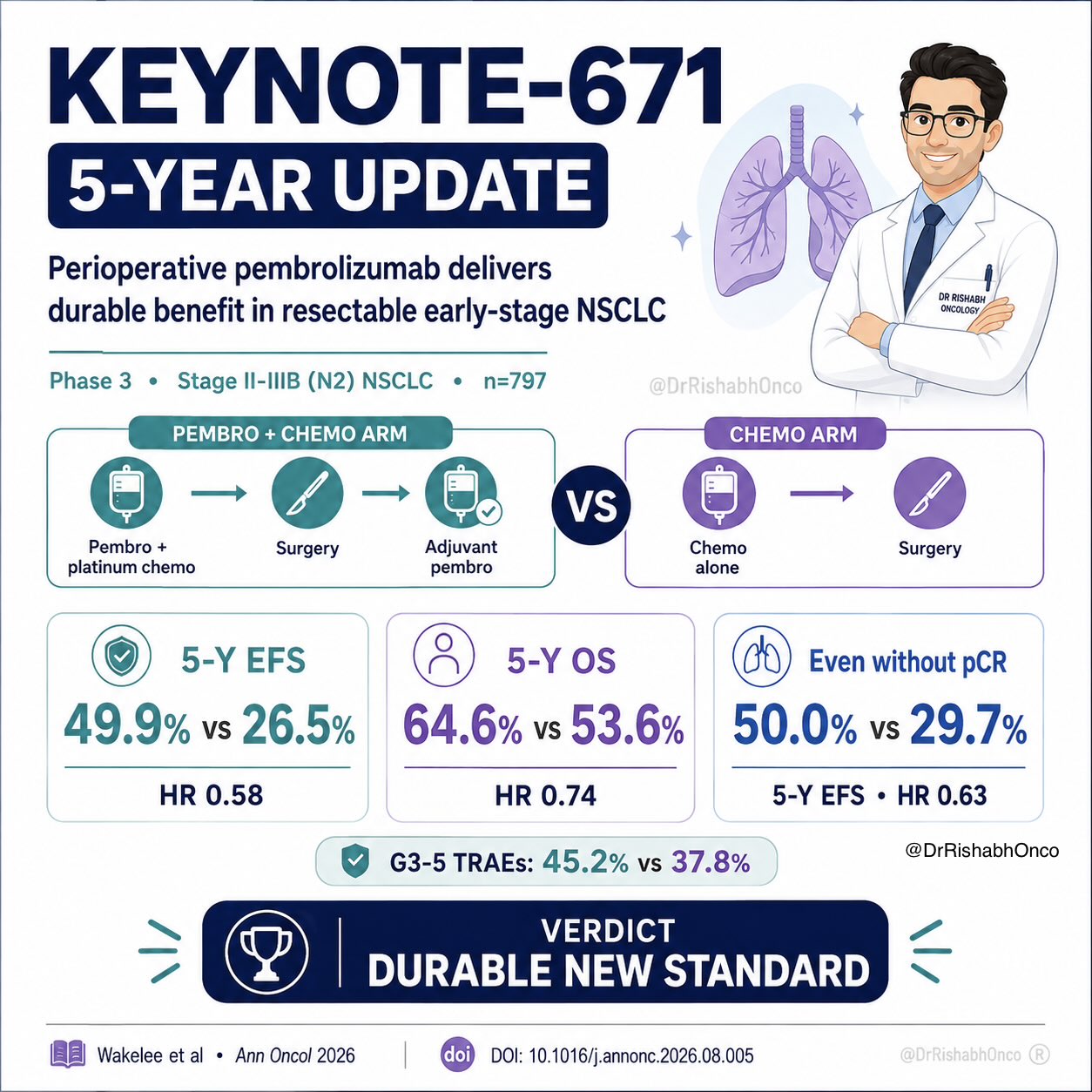
🚨 KEYNOTE-671: 5-year data confirm durable benefit of perioperative pembrolizumab in resectable NSCLC
Stage II–IIIB(N2) NSCLC
Neoadjuvant pembrolizumab + platinum-doublet chemo → surgery → adjuvant pembrolizumab
vs placebo + chemo → surgery → placebo.
📊 5-year outcomes
• EFS: 49.9% vs 26.5%
HR 0.58
• OS: 64.6% vs 53.6%
HR 0.74
Median EFS: 57.1 vs 18.4 months
Importantly, benefit persisted even in patients without pCR:
5-year EFS 50.0% vs 29.7%
HR 0.63
⚠️ Grade 3–5 treatment-related AEs: 45.2% vs 37.8%
🩺 Clinical verdict:
✅ PRACTICE CONFIRMING
Five-year follow-up firmly establishes the durability of perioperative pembrolizumab + chemotherapy for resectable early-stage NSCLC.
@ASCO @oncoalert
#NSCLC #LungCancer #KEYNOTE671 #Immunotherapy

🔥🚨 @OncoAlert Hot off the press.
Just published @Annals_Oncology
⭐️Five-Year Outcomes of #Keynote671
trial of #Perioperative #Pembrolizumab + chemo vs chemo alone in resectable stage II-IIIB non-small cell #LungCancer (#NSCLC).
✅⬆️5-year #EFS
49.9% (pembro arm) vs 26.5% (HR, 0.58)
✅⬆️5-year #OS
64.6% (pembro arm) vs 53.6% (HR, 0.74)
👇🏻
https://t.co/DPEblT4Rry
🔥KEYNOTE-671: 5-year outcomes of perioperative pembrolizumab for early-stage NSCLC
🆙 @Annals_Oncology @myESMO
🎯5-y EFS 49.9 vs 26.5% (HR 0.58, 95% CI, 0.48‒0.69)
🎯5-y OS 64.6 vs 53.6% (HR 0.74, 95% CI, 0.59‒0.92)
🎙 @HwakeleeMD
#LCSM @OncoAlert @Larvol
https://t.co/eaZb5WnfDz
Is it applicable for ANY patients?
But we will need to revise all of these thoughts in the wake of recent data presentations on AEGEAN, Neotorch, & upcoming #ASCO23 presentation of KEYNOTE-671.…
☑️#WCLC25 #LCSM Mini Oral Abstract🆙
🔥KEYNOTE-671 4-year update
🔥Perioperative Pembrolizumab in Non-Small Cell Cancer (NSCLC): 4-Year Outcomes by Nodal Status in the KEYNOTE-671 Study
🎙️…
🚦 pCR + MRD in periop NSCLC:
🔴 MRD+ = worst prognosis
▫️Will adj IO be enough?
🟡 MRD– / no pCR (~80%) = gray zone
▫️Who actually benefits (and is IO ‘right’)?
🟢 pCR + MRD– = best…

More news in early stage #lungcancer: @Merck announces Ph3 KEYNOTE-671 study results: Neoadj pembro/chemo ➡️ adju pembro ⬆️ EFS + ⬆️ MPR vs. neoadj chemo alone in stage II, IIIA, IIIB. #LCSM…
🆙 #ELCC26 @myESMO 🇩🇰
🔥Mini Oral session 2
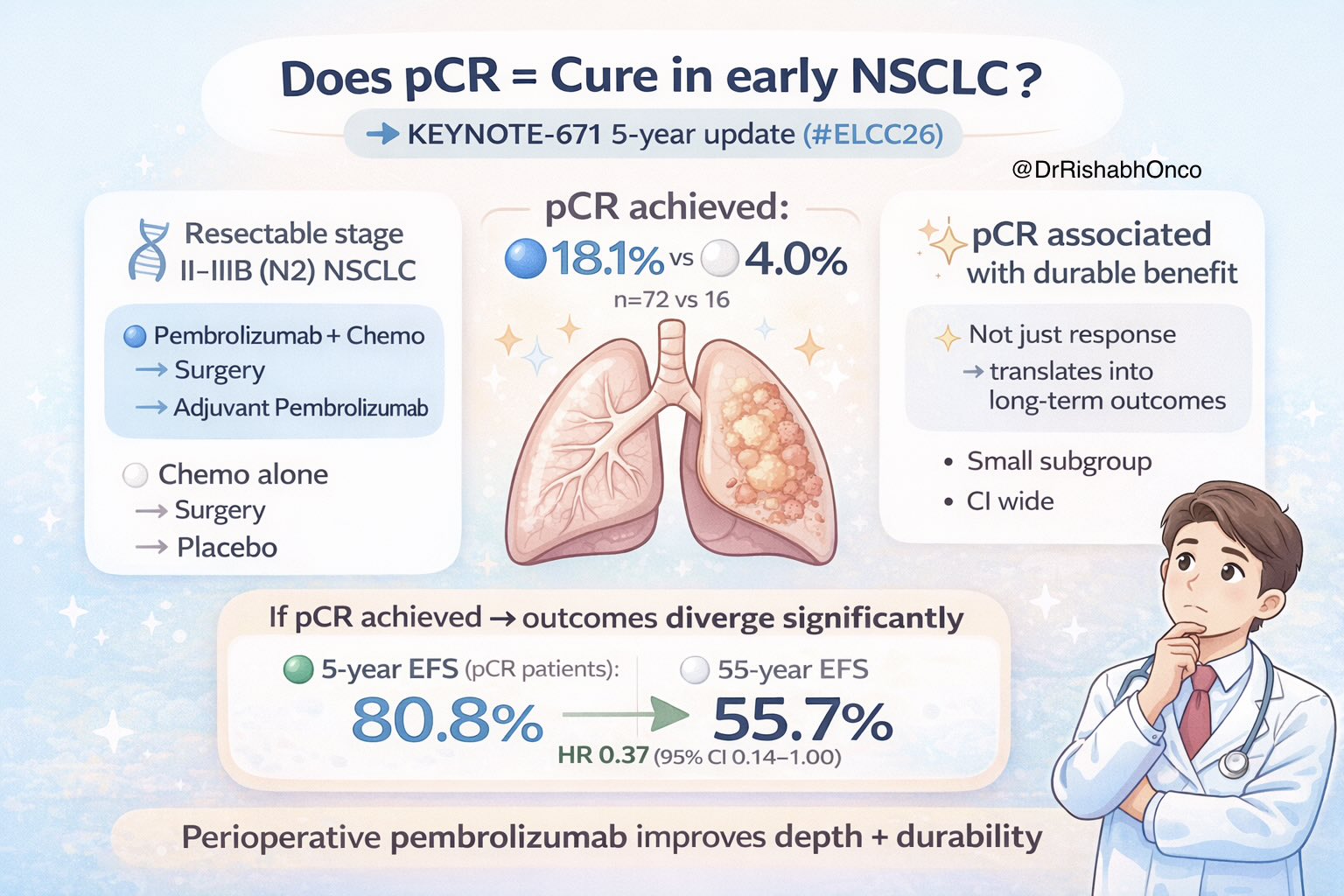
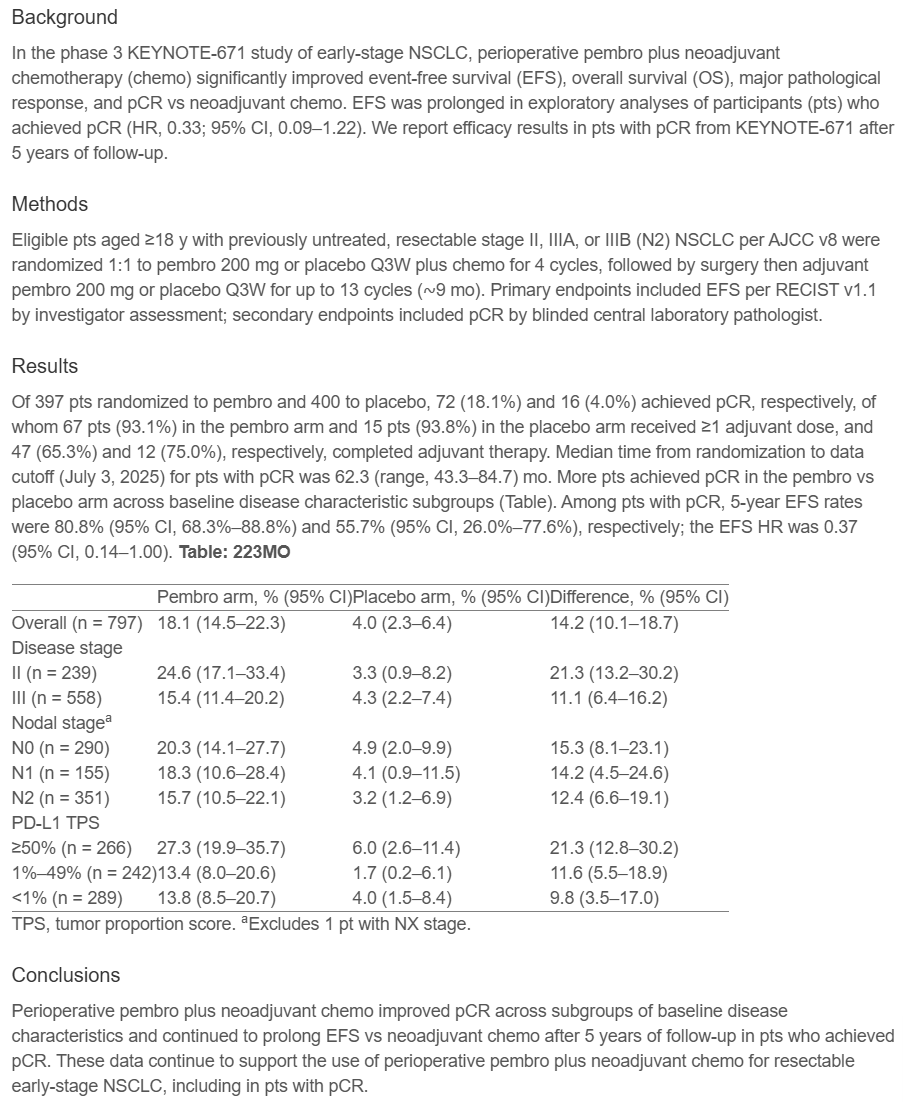
☑️KEYNOTE-671: 5 years F/U in pCR subgroup
🎯EFS HR 0.37, 5-y rate 80.8% vs. 55.7%
🎙️Dr. Margarita Majem
🎙️Chair: Dr. Kersti Oselin…

Today was the first time I observed @SalmaJabbour1 in a debate. It wouldn’t have mattered who was on the other side as she was absolutely spectacular using data and logic to clarify CRT is often the…
🆙 #ELCC26 @myESMO 🇩🇰
🔥Mini Oral session 2
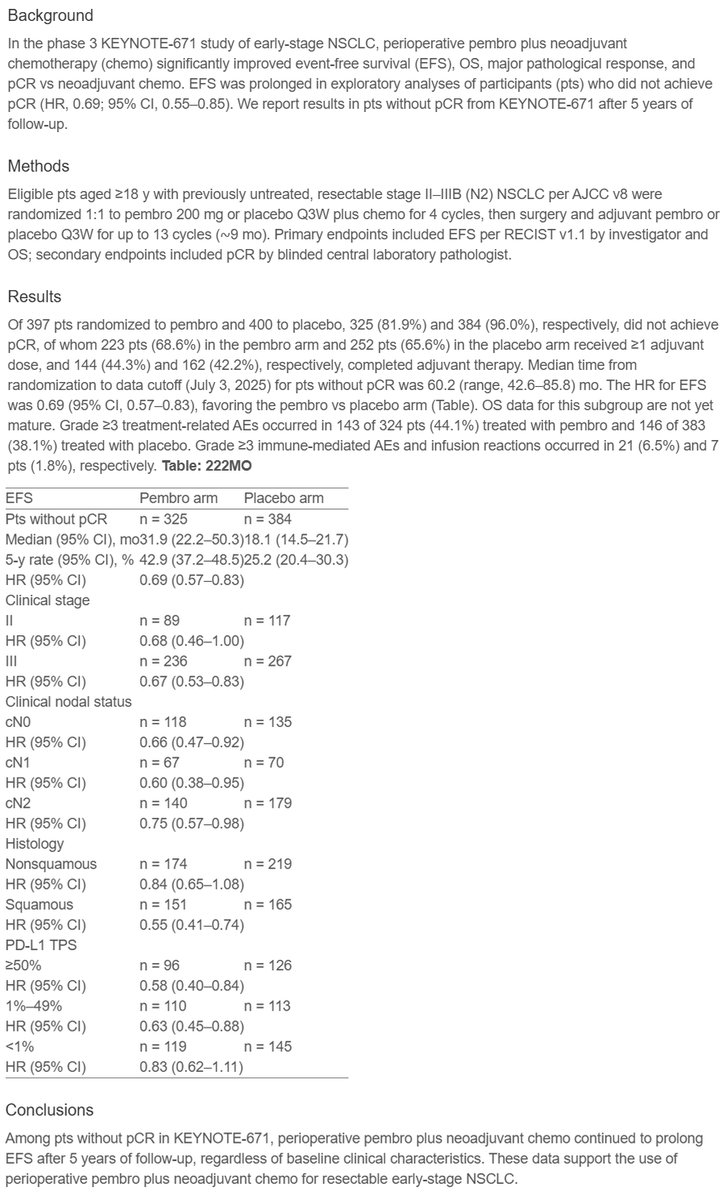
☑️KEYNOTE-671: 5 years F/U in non-pCR subgroup
🎯EFS HR 0.69, 5-y rate 42.9% vs. 25.2%, OS immature
🎙️ @MartinReck2
🎙️Chair: Dr. Kersti Oselin…
🔥 Does pCR translate into long-term benefit? #ELCC26
5-year outcomes from KEYNOTE-671 in early-stage NSCLC answer this 👇
🧬 Study population
• Resectable stage II–IIIB (N2) NSCLC
• Perioperative…

@SalmaJabbour1 and I are going all in for our debate on stage III lung cancer today at #TexasLung26 - it will be a ton of fun and sure to entertain!
The only winner will be our patients who have two…

#ELCC26 @MartinReck2 on KN671 exploratory analysis of patients without pCR
5-year EFS 43% vs 25% , HR =0,69, 95%CI 0.57-0.83) https://t.co/mFvqfzt6Wu
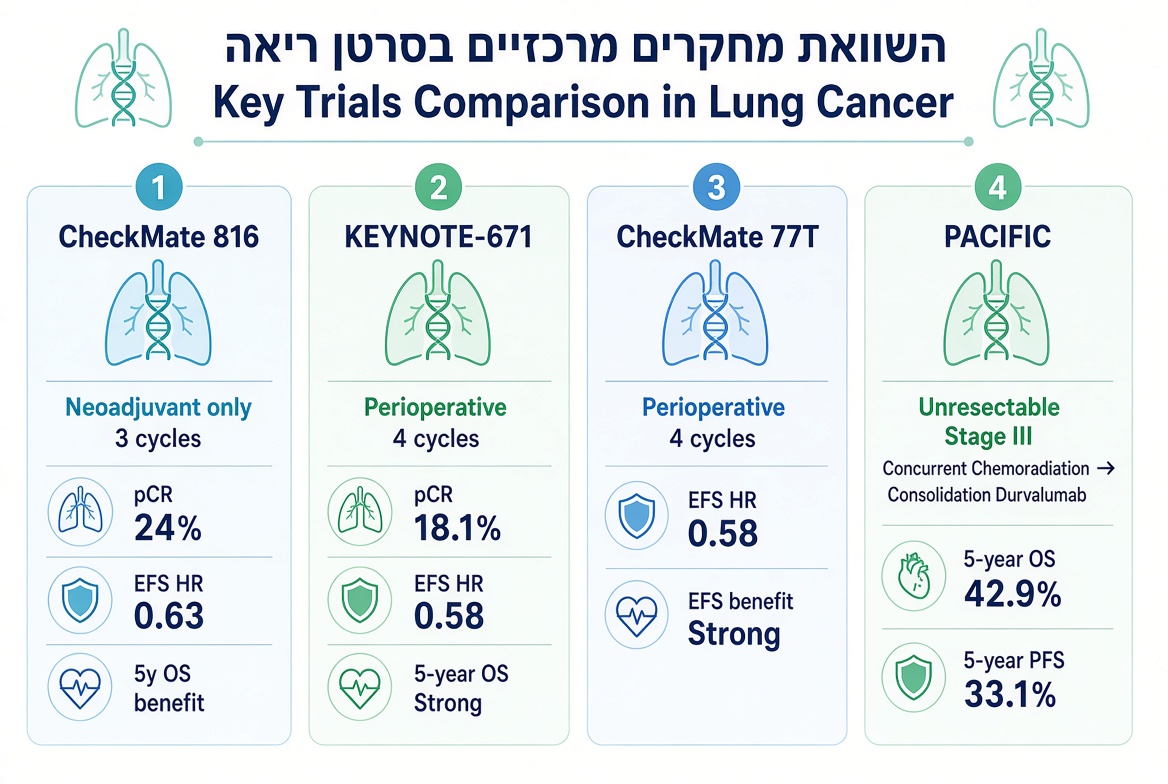
KEYNOTE-671 demonstrated both EFS and OS benefits with perioperative pembrolizumab + chemotherapy, leading to FDA approval October 2023. Alongside AEGEAN (durvalumab), CheckMate-77T (nivolumab), and CheckMate-816 (neoadjuvant-only nivolumab), establishes perioperative immunotherapy as a core stage II-IIIB NSCLC strategy. Choice among regimens individualized by clinical and biomarker factors.
5-year analysis (Annals of Oncology, data cutoff 3 Jul 2025; median follow-up 60.4 months, range 42.6-85.8). Median EFS 57.1 months (95% CI 38.0-NR) with perioperative pembrolizumab vs. 18.4 months (95% CI 14.8-22.1) with placebo. Five-year EFS 49.9% (95% CI 44.6-55.0) vs. 26.5% (95% CI 21.7-31.5); HR 0.58 (95% CI 0.48-0.69), with 191/397 vs. 273/400 events. Benefit was consistent across prespecified subgroups including stage, nodal status, histology and PD-L1 TPS.
Primary analysis (NEJM 2023). Median EFS not reached vs. 17.0 months; HR 0.58 (95% CI 0.46-0.72), P<0.001. pCR 18.1% vs. 4.0%; mPR 30.2% vs. 11.0%.
Pathologic-response subgroups (ELCC 2026 update). pCR subgroup 5-yr EFS 80.8% vs. 55.7% (HR 0.37); non-pCR subgroup 5-yr EFS 42.9% vs. 25.2% (HR 0.69) - durable benefit even without a pathologic complete response.
5-year analysis (Annals of Oncology, data cutoff 3 Jul 2025). Median OS not reached with perioperative pembrolizumab vs. 70.7 months (95% CI 53.7-NR) with placebo. Five-year OS 64.6% (95% CI 59.5-69.2) vs. 53.6% (95% CI 48.3-58.6); HR 0.74 (95% CI 0.59-0.92), with 142/397 vs. 182/400 deaths. No detriment to health-related quality of life was identified with longer follow-up, and safety was consistent with the known profile of each treatment.
Primary OS analysis (ESMO 2024) - a different data cut. HR 0.72 (95% CI 0.56-0.93), P=0.0103, a 28% reduction in the risk of death. The 0.72 and 0.74 hazard ratios come from different cutoffs and should not be quoted interchangeably.
Grade ≥3 adverse events: 44.9% (pembro) vs. 37.3% (placebo). Discontinuation due to AEs: 13.0% (pembro) vs. 6.5% (placebo). Key AEs: neutropenia / chemo-related cytopenia, immune-related AEs (thyroid, skin). Treatment-related deaths 0.8% (pembro) vs. 0.3% (placebo). AE profile consistent with chemotherapy + checkpoint inhibitor combinations.
✅ Perioperative pembrolizumab established as SOC for resectable stage II-IIIB NSCLC. KEYNOTE-671 demonstrated both EFS and OS benefits with perioperative pembrolizumab + chemotherapy, leading to FDA approval October 2023. Alongside AEGEAN (durvalumab), CheckMate-77T (nivolumab), and CheckMate-816 (neoadjuvant-only nivolumab), establishes perioperative immunotherapy as a core stage II-IIIB NSCLC strategy. Choice among regimens individualized by clinical and biomarker factors.
KEYNOTE-671 is a Phase 3 randomized trial (NCT03425643) of perioperative pembrolizumab (Keytruda) - neoadjuvant pembrolizumab plus platinum-based chemotherapy followed by adjuvant pembrolizumab - versus neoadjuvant chemotherapy plus placebo in patients with resectable stage II-IIIB non-small cell lung cancer. Event-free survival and overall survival were the dual primary endpoints.
At the 5-year analysis published in Annals of Oncology on August 21, 2026 (data cutoff July 3, 2025; median follow-up 60.4 months), 5-year event-free survival was 49.9% (95% CI 44.6-55.0) with perioperative pembrolizumab versus 26.5% (95% CI 21.7-31.5) with placebo (HR 0.58; 95% CI 0.48-0.69), and 5-year overall survival was 64.6% (95% CI 59.5-69.2) versus 53.6% (95% CI 48.3-58.6) (HR 0.74; 95% CI 0.59-0.92). Median EFS was 57.1 versus 18.4 months and median OS was not reached versus 70.7 months. Separately, at the earlier ESMO 2024 primary overall-survival analysis the OS hazard ratio was 0.72 (95% CI 0.56-0.93, P=0.0103). These are different data cuts and should not be quoted interchangeably.
No. In the 5-year analysis published in Annals of Oncology (August 21, 2026), no detriment to health-related quality of life was identified in the pembrolizumab arm versus the placebo arm with longer follow-up, and safety was consistent with the known profiles of each treatment.
Yes. In October 2023 the FDA approved pembrolizumab (Keytruda) with neoadjuvant platinum-containing chemotherapy and then continued as a single agent as adjuvant treatment for resectable (tumors >=4 cm or node-positive) NSCLC, based on KEYNOTE-671.
Grade >=3 adverse events occurred in 44.9% of pembrolizumab patients versus 37.3% with placebo, and treatment discontinuation due to adverse events was 13.0% versus 6.5%. Treatment-related deaths were uncommon (0.8% vs 0.3%). The profile is consistent with a chemotherapy-plus-checkpoint-inhibitor combination, with immune-related events (thyroid, skin) among the notable toxicities.
KEYNOTE-671 helped establish perioperative immunotherapy as a core approach for resectable stage II-IIIB NSCLC, alongside AEGEAN (durvalumab), CheckMate-77T (nivolumab), and the neoadjuvant-only CheckMate-816 (nivolumab). It is distinguished by demonstrating both an EFS and a statistically significant OS benefit.