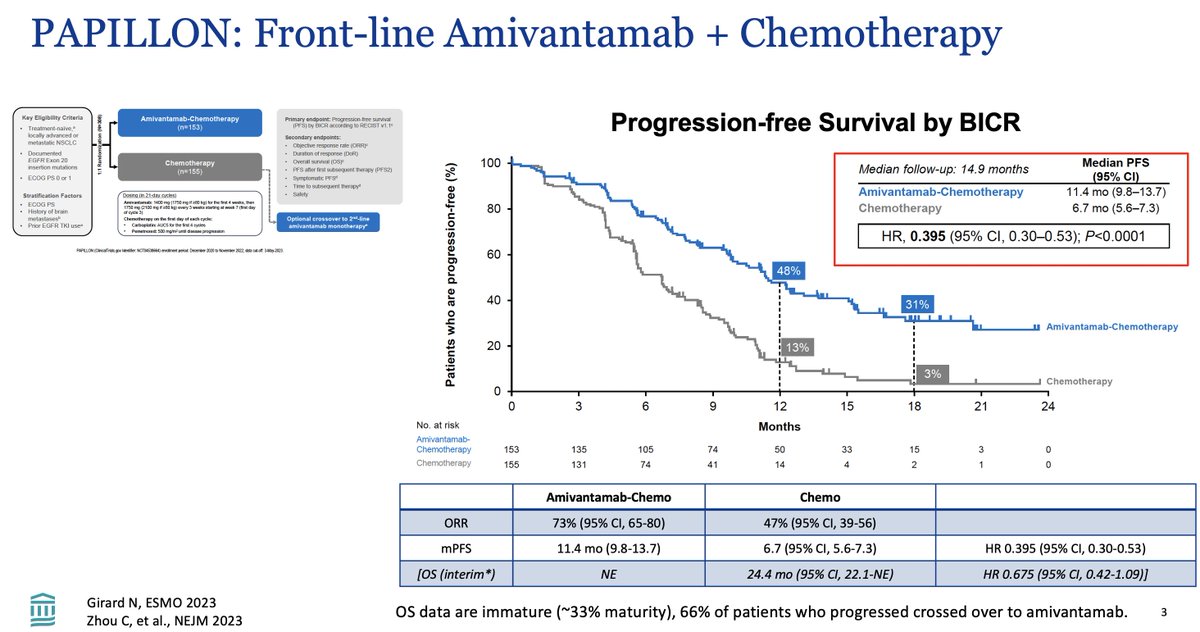
Phase 3 trial of amivantamab (Rybrevant) plus carboplatin-pemetrexed vs chemotherapy alone as first-line treatment for EGFR exon 20 insertion advanced NSCLC. Presented at ESMO 2023, published in NEJM; basis for the March 2024 FDA full approval.
FDA Approved · Mar 2024EGFR Exon20ins NSCLC1st-LinePhase 3Amivantamab + Chemo · Johnson & Johnson
At a Glance
PAPILLON Key Takeaways
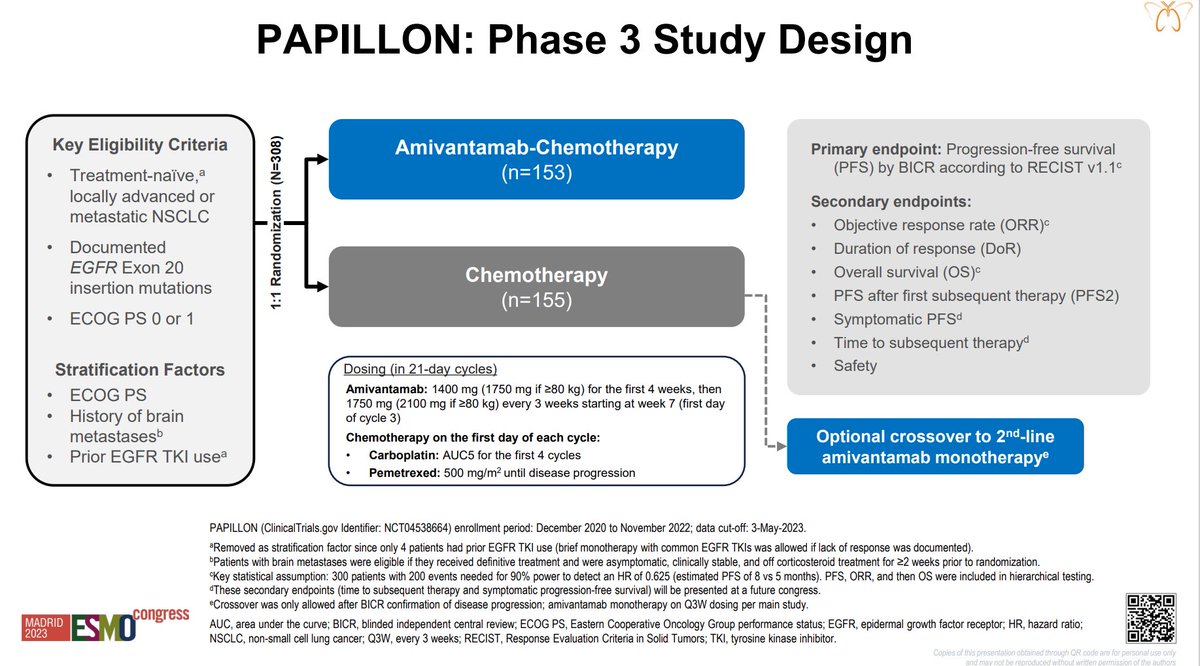
Design - Phase 3, global, randomized, open-label: amivantamab plus carboplatin-pemetrexed vs carboplatin-pemetrexed alone as first-line treatment for advanced NSCLC with EGFR exon 20 insertion mutations. Presented at ESMO 2023 and published simultaneously in NEJM.
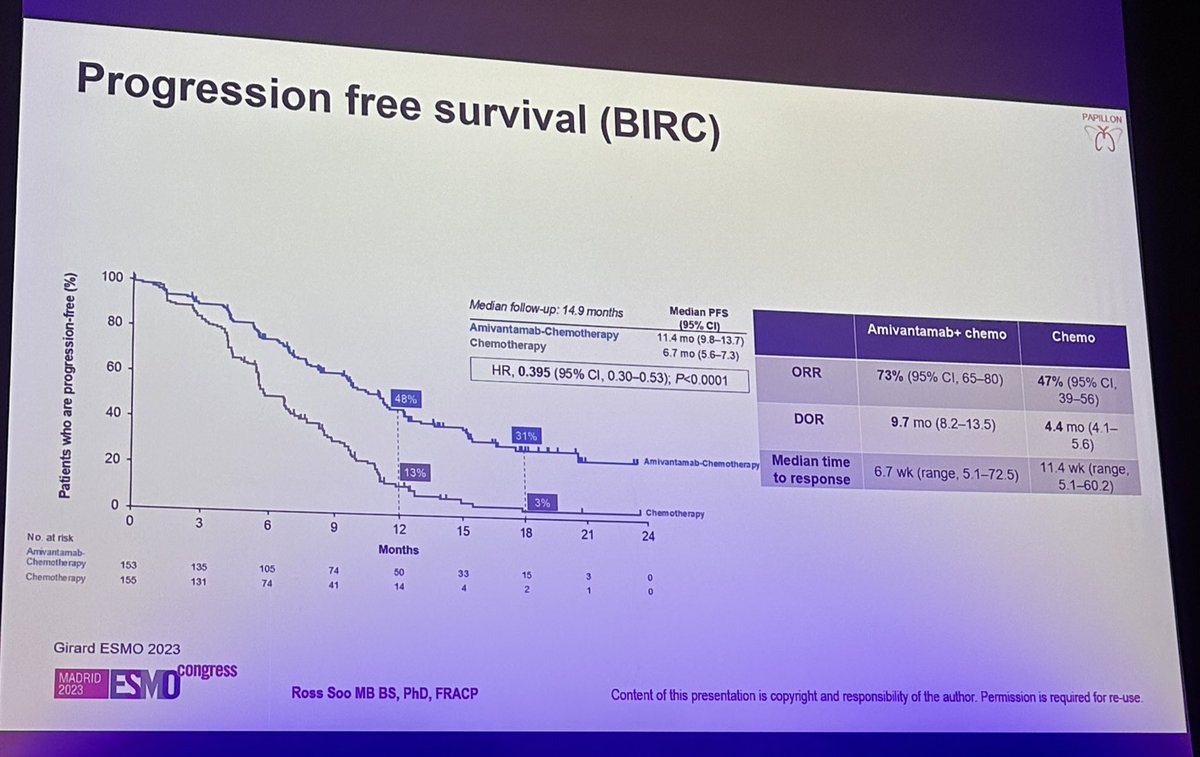
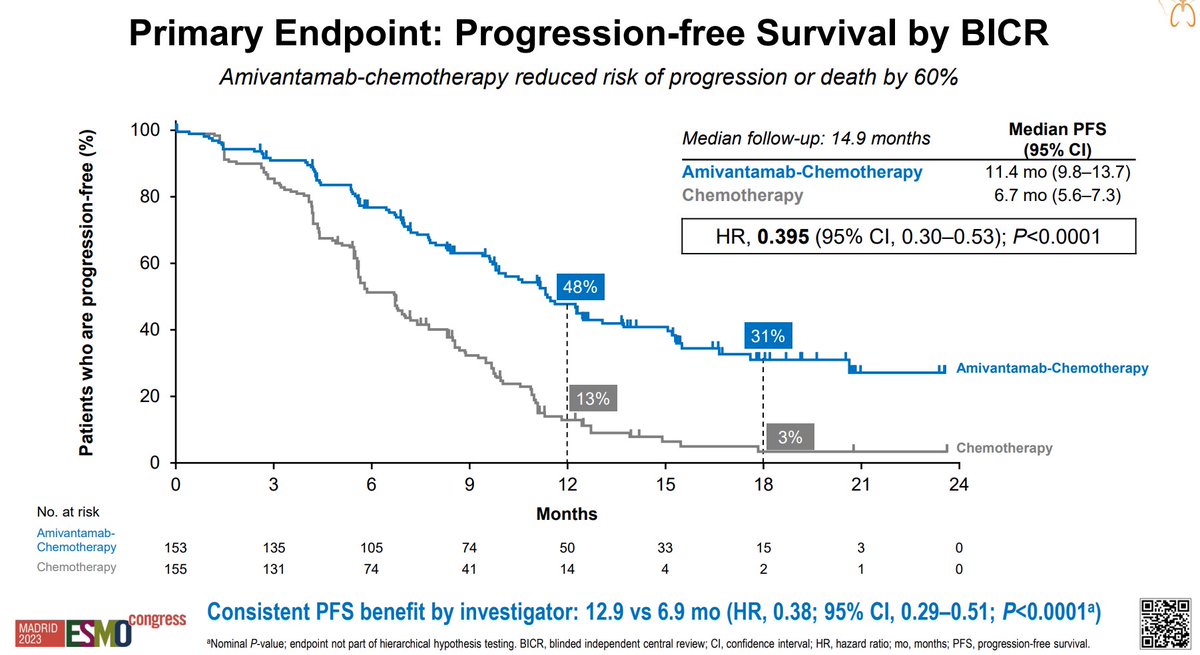
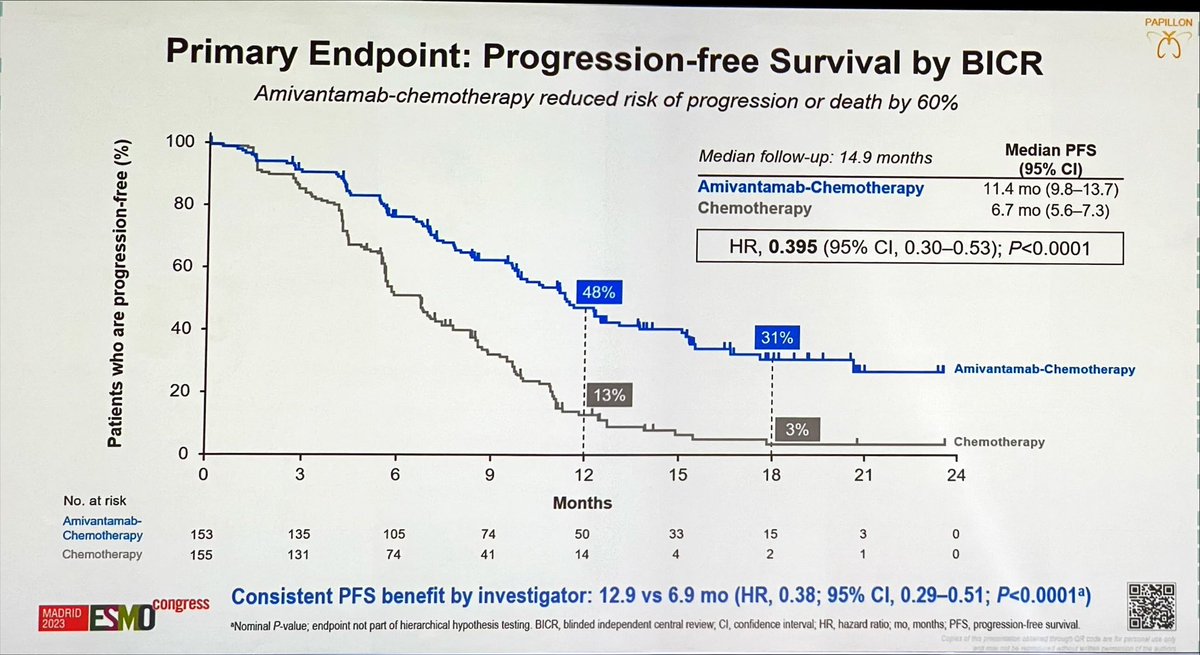
Efficacy / PFS - Primary endpoint met: median PFS 11.4 vs 6.7 months (HR 0.40; 95% CI 0.30-0.53; p<0.0001) at a median follow-up of 14.9 months (NEJM 2023).
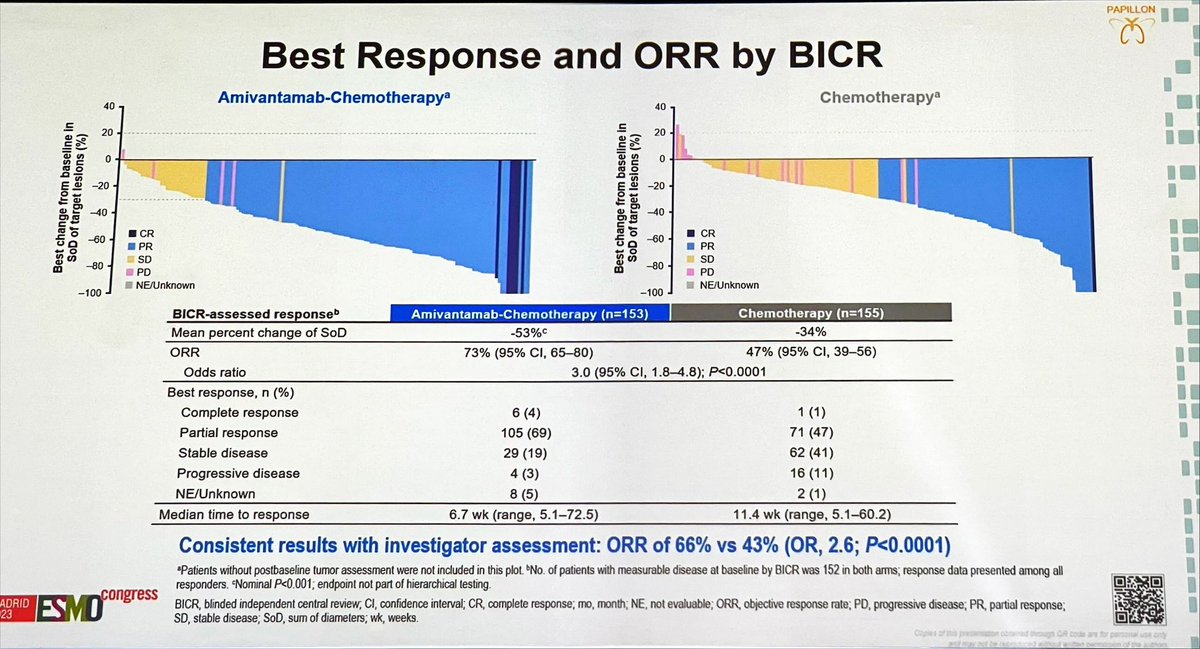
Response & duration - Objective response rate and duration of response were improved with amivantamab plus chemotherapy versus chemotherapy alone; full response figures are reported in the NEJM primary publication.
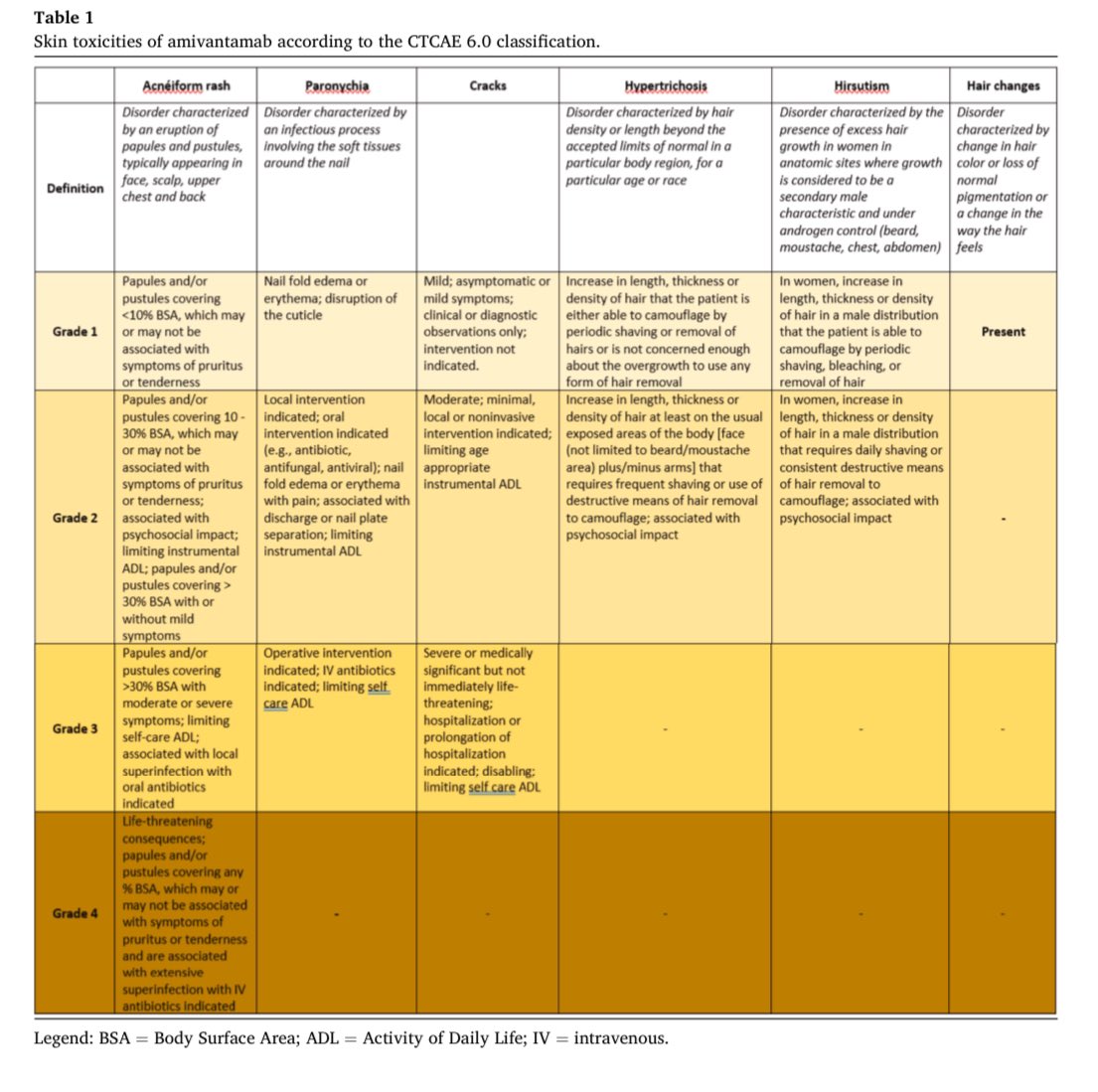
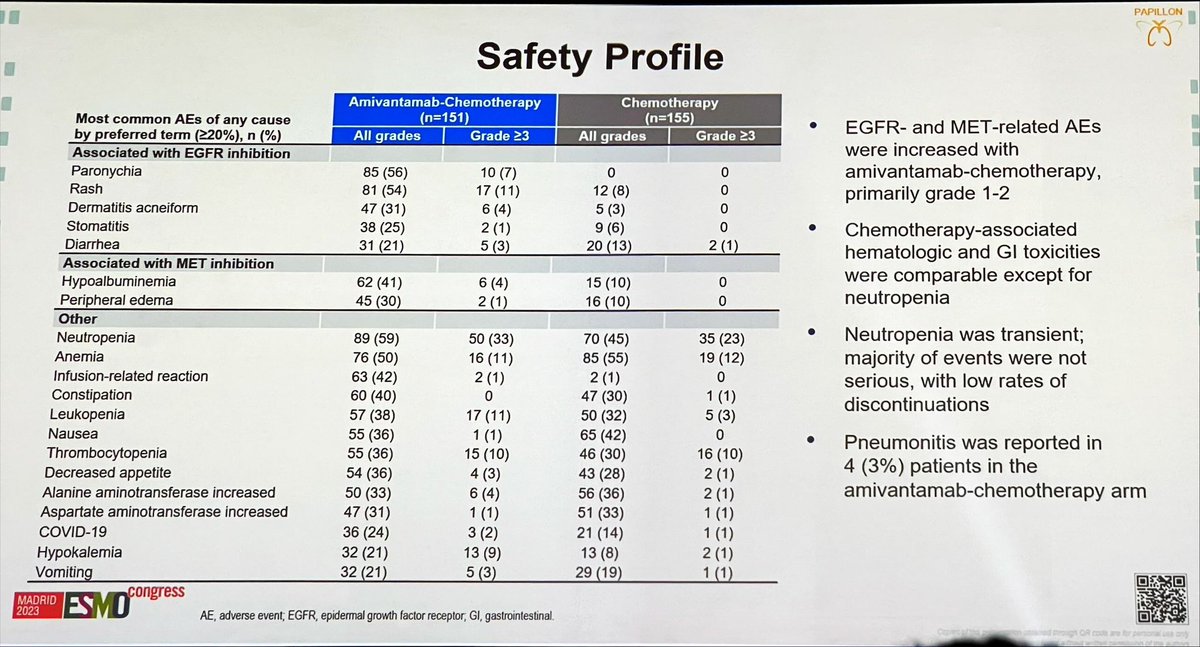
Safety - The amivantamab combination added class-typical EGFR/MET toxicities - infusion-related reactions, rash, and paronychia - on top of the chemotherapy backbone; full adverse-event rates are detailed in the NEJM publication.
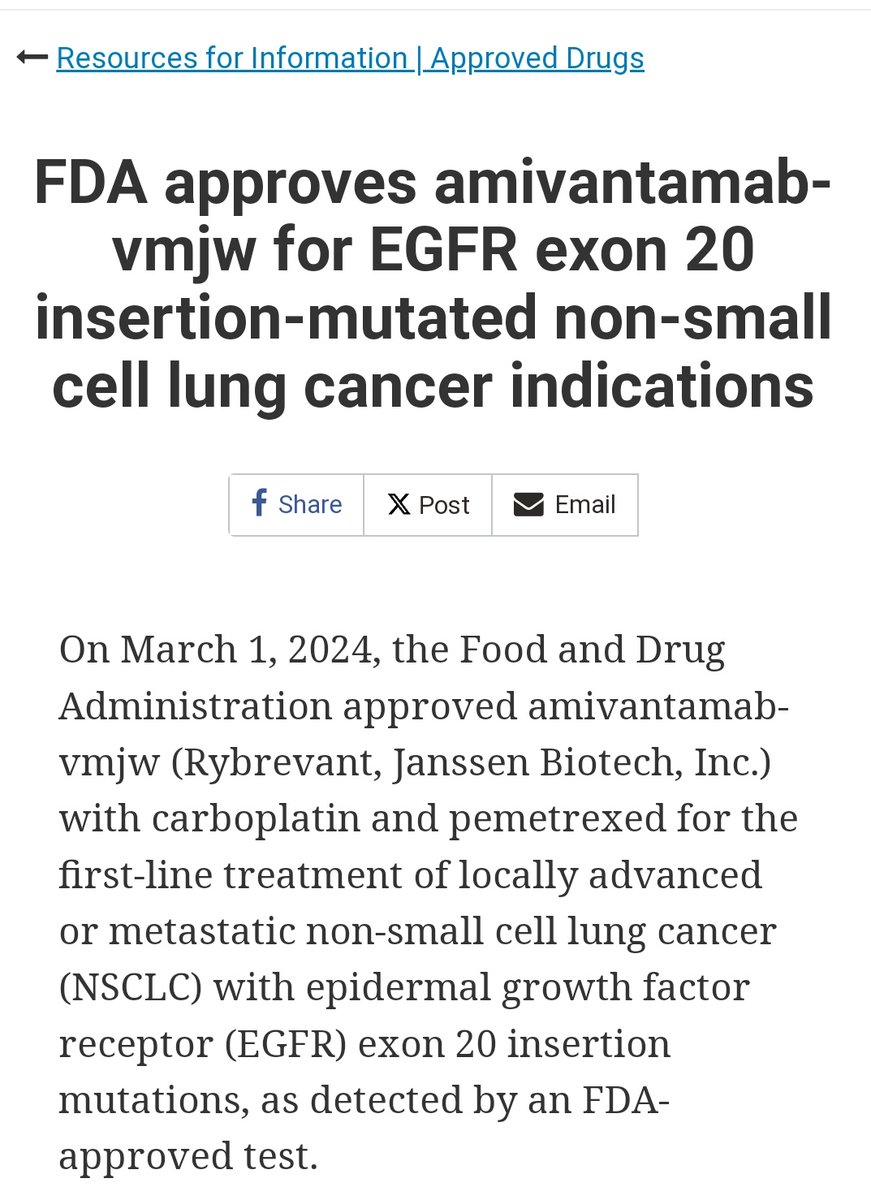
Regulatory / sponsor - Sponsor: Janssen (Johnson & Johnson). FDA full approval March 1, 2024 for amivantamab (Rybrevant) with carboplatin-pemetrexed - the first FDA-approved frontline regimen for EGFR exon 20 insertion NSCLC. Now the benchmark comparator for newer options such as sunvozertinib (WU-KONG28).
Compiled and reviewed by the KOL Pulse research team, led by Brian Shields, Founder, KOL Pulse. Last updated September 14, 2026.
Final OS - WCLC 2026
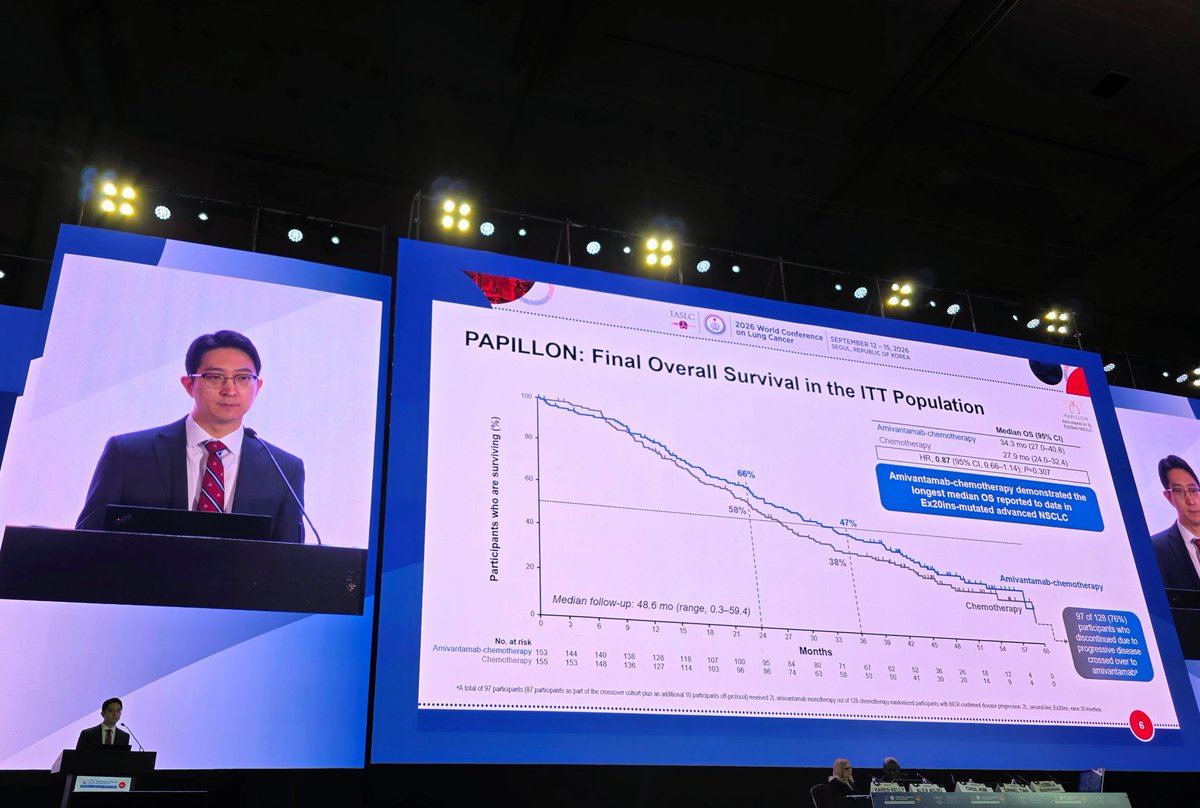
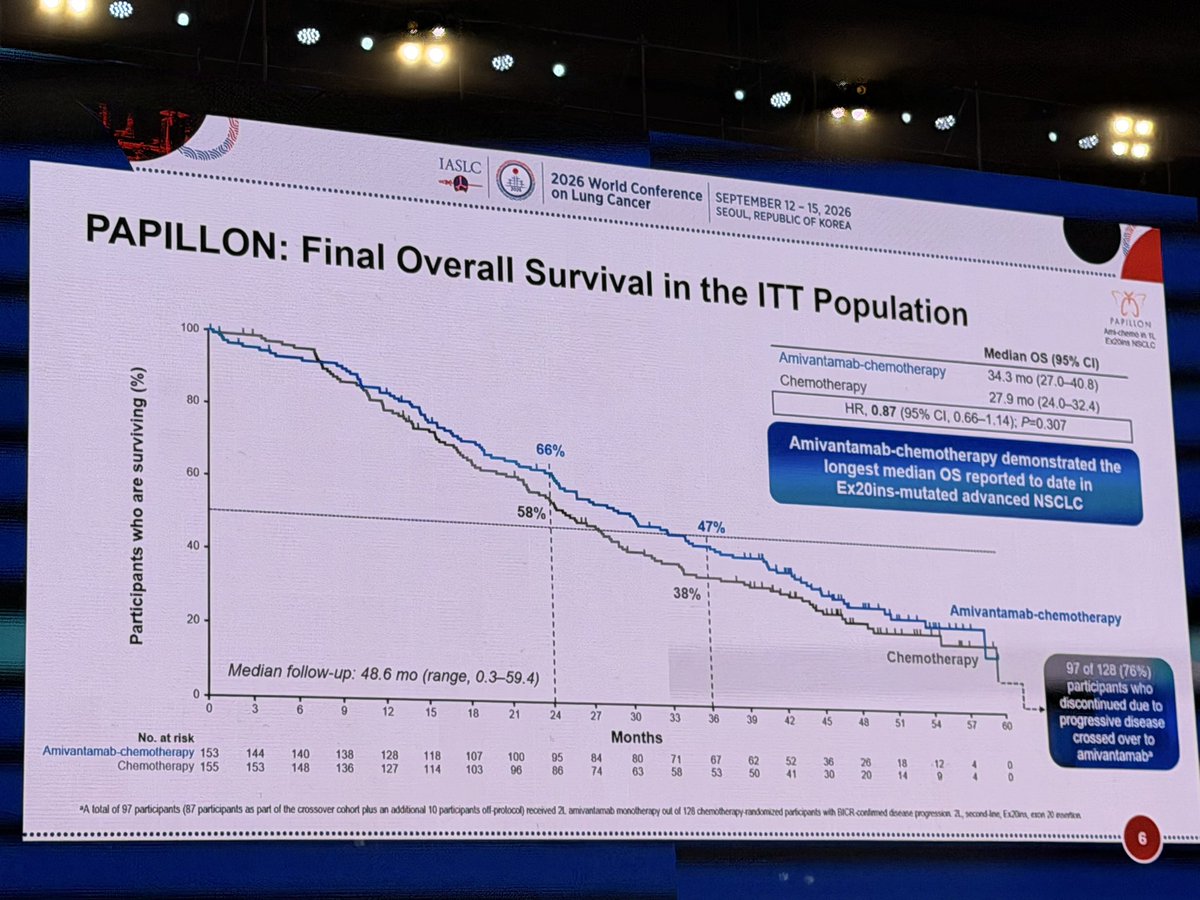
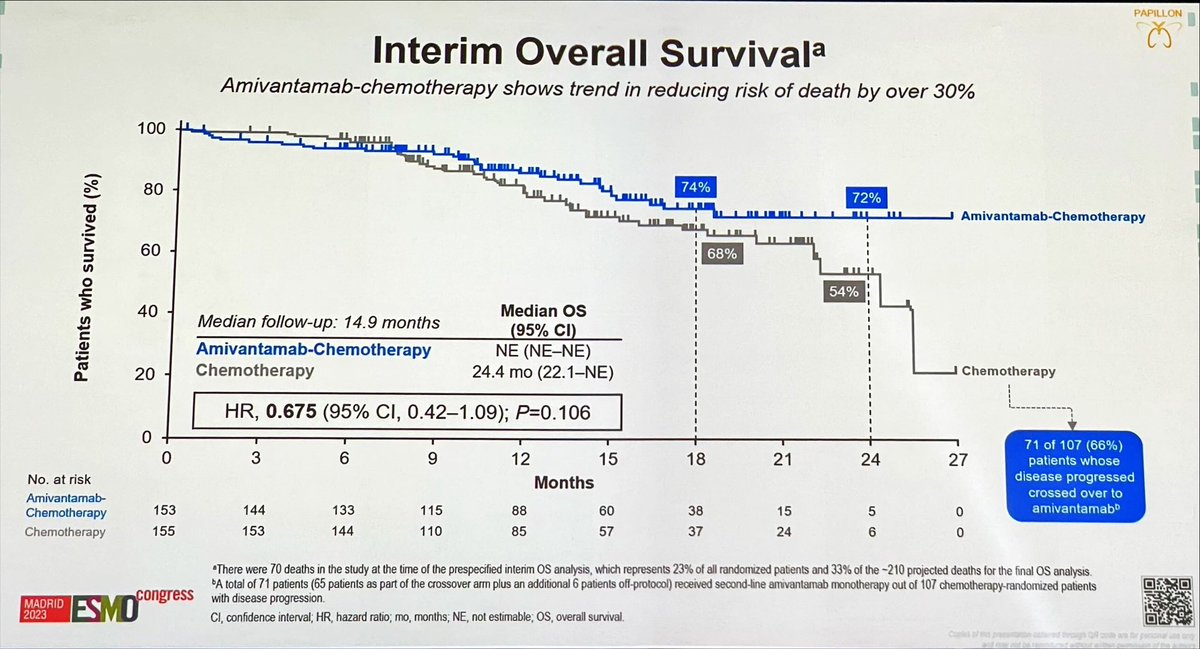
At a median follow-up of 48.6 months, final overall survival in the ITT population was 34.3 vs 27.9 months (HR 0.87; 95% CI 0.66–1.14; P=0.307), with 76% (97/128) of chemotherapy-arm patients who progressed crossing over to amivantamab. The prespecified crossover-adjusted (IPCW) sensitivity analysis showed HR 0.57 (95% CI 0.39–0.82; nominal P=0.003), and PFS2 favored first-line amivantamab-chemotherapy at 28.3 vs 17.5 months (HR 0.59; 95% CI 0.45–0.77). (WCLC 2026 plenary, Kim et al; final OS analysis)
Physician posts about this trial captured live during the IASLC 2026 World Conference on Lung Cancer (Seoul, September 12–15). Quotes are verbatim; each card links to the original post. Last updated 2026-09-14.
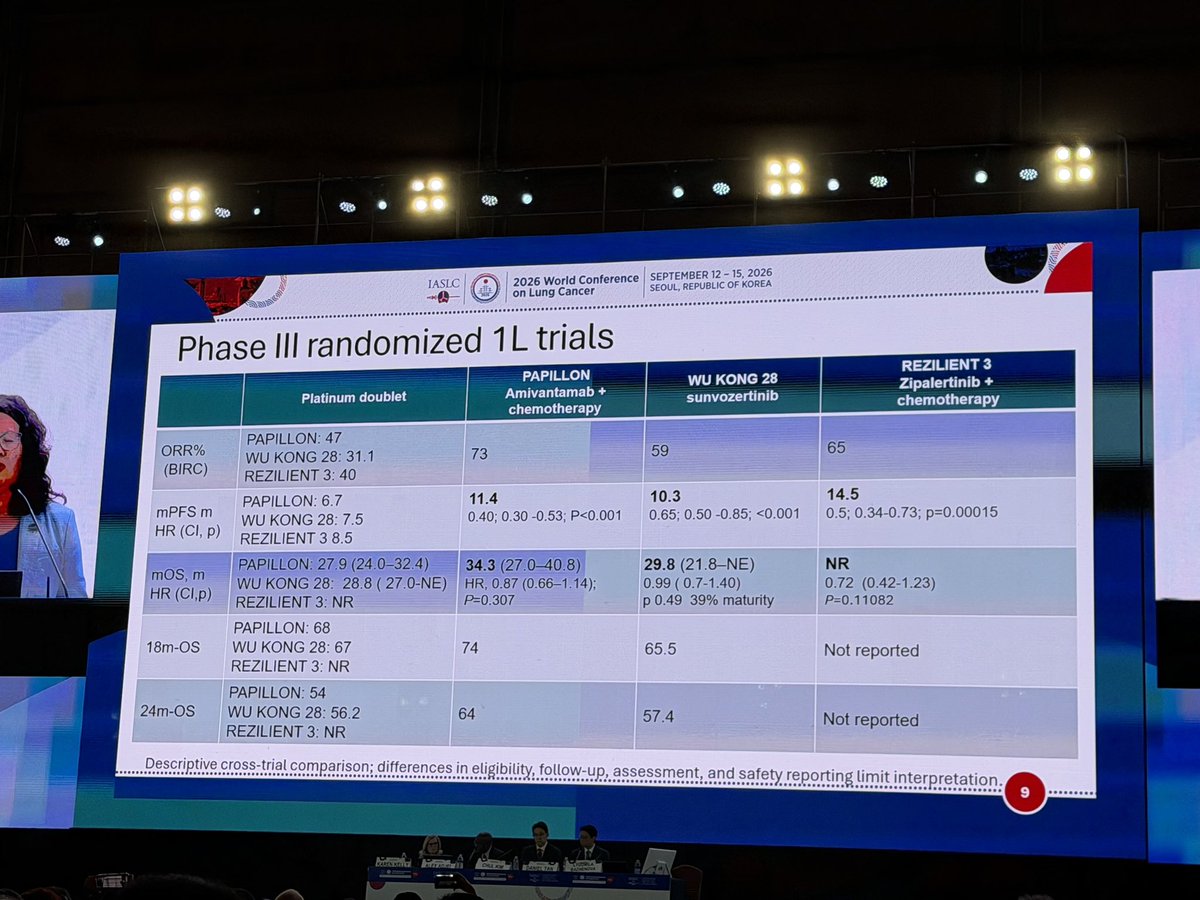
The 1L Exon 20 Insertion Debate: Three Trials, No Head-to-Head
With PAPILLON’s final OS, WU-KONG28 and REZILIENT3 all read out, Dr. Gilberto Lopes posted his verdict on the first-line exon 20 insertion landscape — and Dr. Tejas Patil’s quote-tweet arguing for upfront intensification sparked a direct exchange with Dr. Jennifer Marks on toxicity versus principle. Verbatim, in conversation order.
My read: all 3 are reasonable 1L options.
In practice, sunvozertinib may become preferred for many oncologists and patients because it offers meaningful efficacy as oral monotherapy with lower treatment burden.
😈To play devils advocate, I think FLAURA2 (for sensitizing EGFR mutations), PAPILLION, and REZILIENT3 all point towards the importance of upfront chemotherapy with EGFR inhibition.
💭My thought is that #EGFR lung cancers (esp Exon 20) really do need intensification upfront.
@EGFRResisters @EgfrUk
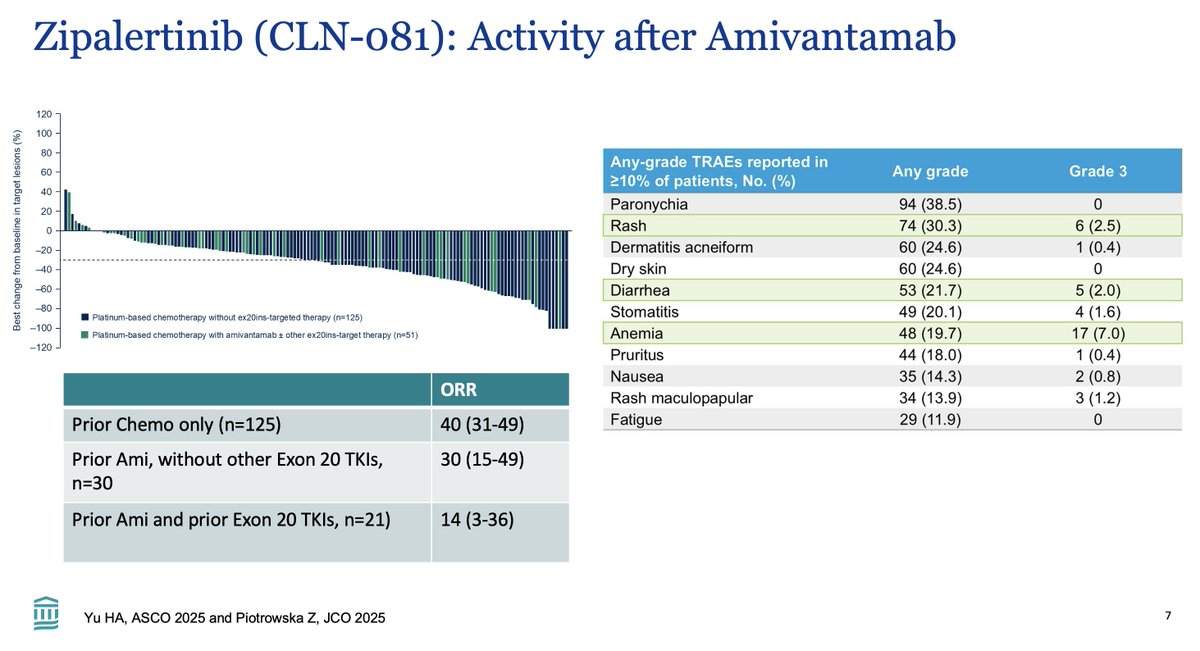
@TejasPatilMD But do you actually though? Perhaps I’m still not over the 1L zipalertinib + chemo toxicity being what it is. I’d rather use ami + chemo.
@jennifermarksmd 1️⃣ You are still offering EGFR inhibition + chemo with Ami/chemo, which is the larger principle.
2️⃣I do think pts with EGFR NSCLC specifically benefit from intensification upfront. Chemo is one way. I’m agnostic to whether it is the ONLY way (ami/laz) but combos needed IMO
@TejasPatilMD The biology/binding pocket is clearly different for exon20ins. I’m not sure the data can justify tki +chemo for the sake of toxicity at this time. Would have been helpful to see 1L monotherapy from zipalertinib.
[Slide 1]
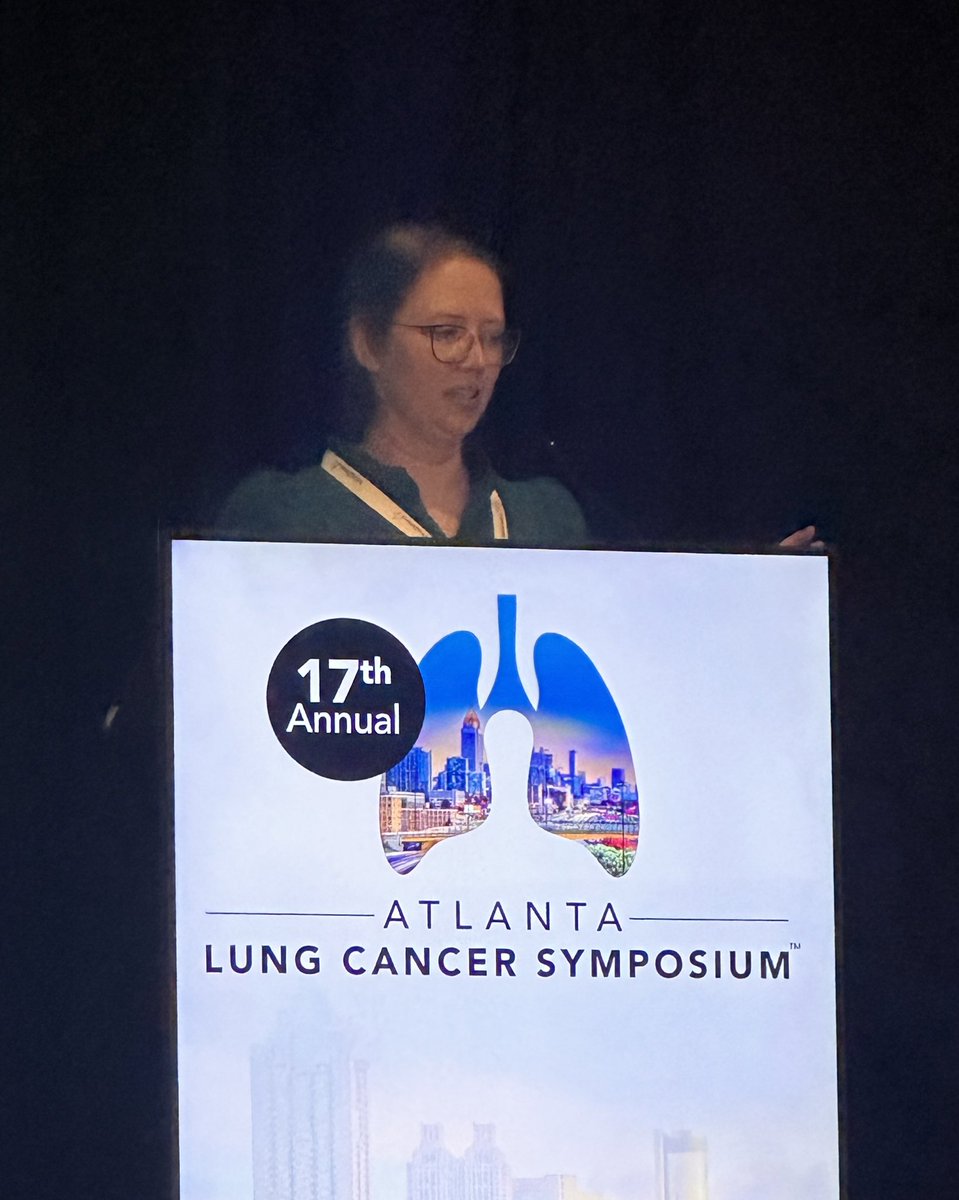
Photo of the WCLC 2026 plenary hall: presenter Dr. Chul Kim at the podium with the slide "PAPILLON: Final Overall Survival in the ITT Population" on screen (IASLC 2026 World Conference on Lung Cancer, September 12-15, 2026, Seoul, Republic of Korea). Slide content transcribed in Slide 2 below.
---
[Slide 2]
PAPILLON: Final Overall Survival in the ITT Population
(PAPILLON: Ami-chemo in 1L Ex20ins NSCLC)
Median OS (95% CI):
Amivantamab-chemotherapy: 34.3 mo (27.0-40.8)
Chemotherapy: 27.9 mo (24.0-32.4)
HR, 0.87 (95% CI, 0.66-1.14); P=0.307
"Amivantamab-chemotherapy demonstrated the longest median OS reported to date in Ex20ins-mutated advanced NSCLC"
Kaplan-Meier landmarks (amivantamab-chemotherapy vs chemotherapy): 24 mo: 66% vs 58%; 36 mo: 47% vs 38%
Median follow-up: 48.6 mo (range, 0.3-59.4)
No. at risk (0 mo): Amivantamab-chemotherapy 153; Chemotherapy 155
Callout: 97 of 128 (76%) participants who discontinued due to progressive disease crossed over to amivantamab.
Footnote: A total of 97 participants (87 participants as part of the crossover cohort plus an additional 10 participants off-protocol) received 2L amivantamab monotherapy out of 128 chemotherapy-randomized participants with BICR-confirmed disease progression. 2L, second-line; Ex20ins, exon 20 insertion.
---
[Slide 3]
PAPILLON: Crossover-Adjusted Final Overall Survival
Inverse Probability of Censoring Weighting (IPCW)
HR (95% CI):
Amivantamab-chemotherapy (ITT) vs chemotherapy (ITT): 0.87 (0.66-1.14); P=0.307
Amivantamab-chemotherapy (ITT) vs IPCW-adjusted chemotherapy: 0.57 (0.39-0.82); nominal P=0.003
"After adjustment for on-protocol crossover with the prespecified IPCW method, amivantamab-chemotherapy demonstrated a significant OS benefit versus chemotherapy"
Medians on curve: Amivantamab-chemotherapy (ITT): 34.3 mo (95% CI, 27.0-40.8); Chemotherapy (IPCW): 22.1 mo (95% CI, 16.4-27.6)
Footnote: Two additional recommended models demonstrated improvement in the OS benefit consistent with IPCW: Two-Stage Estimation (TSE): HR, 0.54 (95% CI, 0.35-0.77) and Rank Preserving Structural Failure Time (RPSFT): HR, 0.71 (95% CI, 0.37-1.36). Reference: Question and answer on adjustment for cross-over in estimating effects in oncology trials. European Medicines Agency.
---
[Slide 4]
PFS2: PFS From Randomization to Second Progression Event
Median PFS2 (95% CI):
Amivantamab-chemotherapy: 28.3 mo (21.8-36.2)
Chemotherapy: 17.5 mo (15.2-21.0)
HR, 0.59 (95% CI, 0.45-0.77); nominal P<0.0001
"PFS2 was extended by >10 months with amivantamab-chemotherapy"
Landmarks (amivantamab-chemotherapy vs chemotherapy): 24 mo: 56% vs 36%; 36 mo: 42% vs 19%
Median follow-up: 48.6 mo (range, 0.3-59.4)
Footnote: Consistent with PFS2, time to treatment discontinuation and time to subsequent therapy were extended with amivantamab-chemotherapy versus chemotherapy (14.1 vs 7.6 mo; HR, 0.36; 95% CI, 0.28-0.46; P<0.0001 and 16.9 vs 9.9 mo; HR, 0.37; 95% CI, 0.29-0.48; P<0.0001, respectively).
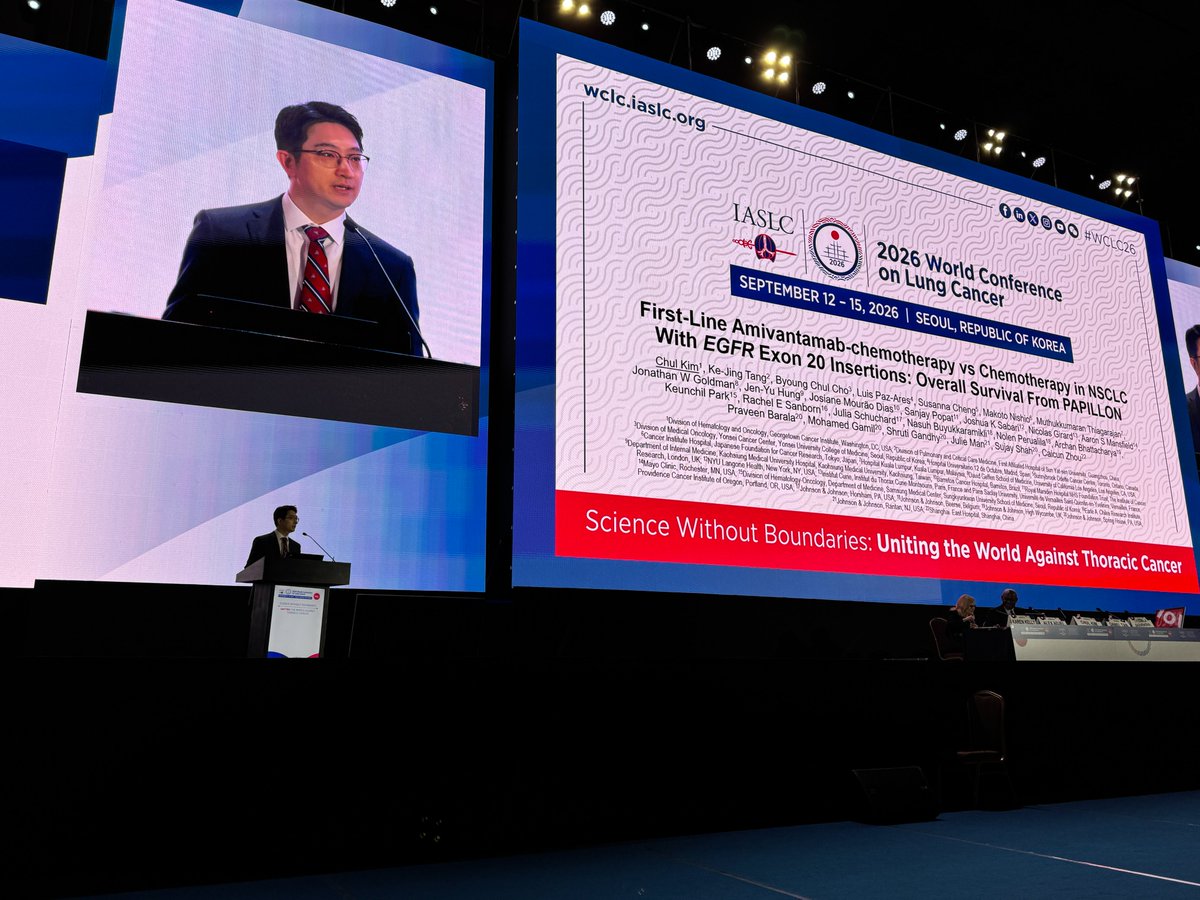
[Slide 1]
Title slide, WCLC 2026 plenary (photo of Dr. Chul Kim presenting):
First-Line Amivantamab-chemotherapy vs Chemotherapy in NSCLC With EGFR Exon 20 Insertions: Overall Survival From PAPILLON
Chul Kim, Ke-Jing Tang, Byoung Chul Cho, Luis Paz-Ares, Susanna Cheng, Makoto Nishio, Muthukkumaran Thiagarajan, Jonathan W Goldman, Jen-Yu Hung, Josiane Mourao Dias, Sanjay Popat, Joshua K Sabari, Nicolas Girard, Aaron S Mansfield, Keunchil Park, Rachel E Sanborn, Julia Schuchard, Nasuh Buyukkaramikli, Nolen Perualila, Archan Bhattacharya, Praveen Barala, Mohamed Gamil, Shruti Gandhy, Julie Man, Sujay Shah, Caicun Zhou
2026 World Conference on Lung Cancer, September 12-15, 2026, Seoul, Republic of Korea. Science Without Boundaries: Uniting the World Against Thoracic Cancer.
---
[Slide 2]
PAPILLON: Final Overall Survival in the ITT Population
Median OS (95% CI): Amivantamab-chemotherapy 34.3 mo (27.0-40.8); Chemotherapy 27.9 mo (24.0-32.4)
HR, 0.87 (95% CI, 0.66-1.14); P=0.307
"Amivantamab-chemotherapy demonstrated the longest median OS reported to date in Ex20ins-mutated advanced NSCLC"
Landmarks: 24 mo: 66% vs 58%; 36 mo: 47% vs 38%. Median follow-up: 48.6 mo (range, 0.3-59.4). No. at risk: 153 vs 155.
Callout: 97 of 128 (76%) participants who discontinued due to progressive disease crossed over to amivantamab.
---
[Slide 3]
PAPILLON: Crossover-Adjusted Final Overall Survival - Inverse Probability of Censoring Weighting (IPCW)
Amivantamab-chemotherapy (ITT) vs chemotherapy (ITT): HR 0.87 (0.66-1.14); P=0.307
Amivantamab-chemotherapy (ITT) vs IPCW-adjusted chemotherapy: HR 0.57 (0.39-0.82); nominal P=0.003
Medians: Amivantamab-chemotherapy (ITT) 34.3 mo (95% CI, 27.0-40.8); Chemotherapy (IPCW) 22.1 mo (95% CI, 16.4-27.6)
"After adjustment for on-protocol crossover with the prespecified IPCW method, amivantamab-chemotherapy demonstrated a significant OS benefit versus chemotherapy"
Footnote: supportive models consistent with IPCW - TSE HR 0.54 (95% CI, 0.35-0.77); RPSFT HR 0.71 (95% CI, 0.37-1.36).
---
[Slide 4]
First Subsequent Therapy
Amivantamab-chemotherapy arm (n=153): did not receive subsequent therapy (non-PD) 18%; did not receive subsequent therapy (PD) 16%; ongoing 12%; received a first subsequent therapy 54% (composition: amivantamab, other EGFR-targeted or TKI-based regimens, chemotherapy or ICI regimens, other).
Chemotherapy arm (n=155): did not receive subsequent therapy (non-PD) 8%; (PD) 8%; received a first subsequent therapy 83%, predominantly amivantamab.
"The crossover design for the chemotherapy arm and lack of active 2L therapies available at the time of this trial likely contributed to differences in rates between arms."
[Slide 1]
Photo of the plenary screen: PAPILLON: Final Overall Survival in the ITT Population
Median OS (95% CI): Amivantamab-chemotherapy 34.3 mo (27.0-40.8); Chemotherapy 27.9 mo (24.0-32.4)
HR, 0.87 (95% CI, 0.66-1.14); P=0.307
"Amivantamab-chemotherapy demonstrated the longest median OS reported to date in Ex20ins-mutated advanced NSCLC"
Landmarks: 24 mo: 66% vs 58%; 36 mo: 47% vs 38%. Median follow-up: 48.6 mo (range, 0.3-59.4).
Callout: 97 of 128 (76%) participants who discontinued due to progressive disease crossed over to amivantamab.
---
[Slide 2]
PAPILLON: Crossover-Adjusted Final Overall Survival - Inverse Probability of Censoring Weighting (IPCW)
Amivantamab-chemotherapy (ITT) vs chemotherapy (ITT): HR 0.87 (0.66-1.14); P=0.307
Amivantamab-chemotherapy (ITT) vs IPCW-adjusted chemotherapy: HR 0.57 (0.39-0.82); nominal P=0.003
Medians: Amivantamab-chemotherapy (ITT) 34.3 mo; Chemotherapy (IPCW) 22.1 mo (95% CI, 16.4-27.6)
"After adjustment for on-protocol crossover with the prespecified IPCW method, amivantamab-chemotherapy demonstrated a significant OS benefit versus chemotherapy"
---
[Slide 3]
First Subsequent Therapy
Amivantamab-chemotherapy arm (n=153): did not receive subsequent therapy (non-PD) 18%; (PD) 16%; ongoing 12%; received a first subsequent therapy 54%.
Chemotherapy arm (n=155): did not receive subsequent therapy (non-PD) 8%; (PD) 8%; received a first subsequent therapy 83%, predominantly amivantamab.
"The crossover design for the chemotherapy arm and lack of active 2L therapies available at the time of this trial likely contributed to differences in rates between arms."
---
[Slide 4]
PFS2: PFS From Randomization to Second Progression Event
Median PFS2 (95% CI): Amivantamab-chemotherapy 28.3 mo (21.8-36.2); Chemotherapy 17.5 mo (15.2-21.0)
HR, 0.59 (95% CI, 0.45-0.77); nominal P<0.0001
"PFS2 was extended by >10 months with amivantamab-chemotherapy"
Landmarks: 24 mo: 56% vs 36%; 36 mo: 42% vs 19%. Median follow-up: 48.6 mo (range, 0.3-59.4).
[Slide 1]
PAPILLON: post-progression analysis: what to expect?
The primary reason for discontinuation was PD:
33% in the ami-chemo arm vs 69% in the chemo arm
Amivantamab
plus PBC
PBC
PAPILLON
21%
7%
11.4
PFS
6.7
HR, 0.395
21%
13.2
TTD
7.5
HR, 0.38
76%
Other
30%
EGFR TKI combination
17.7
EGFR TKIs
TTST
9.9
Amivantamab
HR, 0.35
Chemotherapy
21%
Chemotherapy+IO/VEGFI
NR
17.2
7%
PFS2
HR, 0.49
Ami-Chemo
Chemo
(n=43)
(n=94)
The post-PD endpoints showed that PFS benefit observed with Ami+chemo in the PAPILLON study is preserved
beyond first disease progression, providing strong confidence in the interim os data
HRs for each post-progression endpoint all favoured Ami-chemo
Sites of First Progression
PAPILLON
Rates of first progression at all sites were lower with amivantamab-chemotherapy compared to chemotherapy
Amivantamab-Chemotherapy (n=153)
Lymph node
3.3%
5.2%
Chemotherapy (n=155)
Soft tissue/muscle
0.6%
Bone
11.1%
12.3%
Abdominal viscera
5.2%
18.7%
Brain
5.2%
9.0%
Lung/pleura
11.1%
22.6%
40%
30%
20%
10%
0%
10%
20%
30%
40%
Patients (%)
elcc
Note: Each patient can have multiples sites of progression at first disease progression.
European Lung Cancer Congress 2024
The OR code is intended to provide scientific information for individual reference,
and the information should not be aftered or reproduced in any way.
---
Time to Subsequent Therapy
PAPILLON
Median TTST was longer with amivantamab-chemotherapy compared to chemotherapy
Median TTST
Most Common First Subsequent Therapy Classes
100
Median follow-up 14.9 mo
(95% CI)
Amivantamab-Chemotherapy
17.7 mo (13.7-NE)
In the amivantamab-chemotherapy arm, 43
Chemotherapy
9.9 mo (8.6-11.1)
patients went on to receive subsequent
80
therapy during the study versus 94 patients in
Patients without an event (%)
68%
HR, 0.35 (95% CI, 0.25-0.49); P<0.0001
the chemotherapy arm
60
49%
21%
7%
Otherb
40
EGFR TKI combination
36%
EGFR TKIs
Amivantamab-Chemotherapy
Amivantamab
21%
20
Patients (%)
Chemotherapy
Chemotherapy+IO/VEGFi
14%
76%
Chemotherapy
30%
0
0
3
6
9
12
15
18
21
24
27
No. at risk
Months
21%
7%
Ami-Chemo
153
144
127
98
69
43
25
12
5
0
Ami-Chemo
Chemo
Chemo
155
149
117
71
37
12
6
2
1
0
(n=43)
(n=94)
*TTST was defined as the time from the date of randomization to the start date of the first subsequent anticancer therapy following study treatment discontinuation or death, whichever occurred first. Other category included IO
alone and investigational agents. "Six patients received amivantamab monotherapy off-protocol. dn the amivantamab-chemotherapy and chemotherapy arms, 23% and 1% of patients received single-agent chemotherapy,
respectively, and 7% and 1% of patients received doublet chemotherapy, respectively.
Ami-Chemo, Amivantamab-Chemotherapy; Chemo, Chemotherapy; CI, confidence interval; EGFR, epithelial growth factor receptor; HR, hazard ratio; IO, immuno-oncology; mo, months; NE, not estimable;
elcc
TKI, tyrosine kinase inhibitor; TTST, time to subsequent therapy; VEGFi, vascular endothelial growth factor inhibitor.
European Lung Cancer Congress 2024
The OR code 5 intended to provide scientific information for individual
and the be altered reproduced
---
Crossover to 2L Q3W Amivantamab Monotherapya
PAPILLON
Q3W amivantamab monotherapy (n=65) showed a mPFS of 6.8 mo and a mOS of 17.7 mo (median follow-up: 9.8 mo)
Median TTDᵇ was 9.7 mo (95% CI, 6.7-11.0) and median TTSTb was 9.7 mo (95% CI, 7.7-12.1)
Safety and efficacy for Q3W amivantamab was consistent with the Q2W results from CHRYSALIS in post-platinum EGFR Ex20ins advanced NSCLC1
PFS: Progression-free Survival
OS: Overall Survivald
Median PFSc
Median OSc
100
(95% CI)
100
Median follow-up: 9.8 mo
Median follow-up: 9.8 mo
(95% CI)
Amivantamab monotherapy 6.8 mo (4.4-9.6)
80
80
70%
Amivantamab monotherapy
17.7 mo (12.1-NE)
Patients who are
progression-free (%)
60
52%
Patients who survived (%)
60
40
40
25%
20
20
0
0
0
3
6
9
12
15
18
0
3
6
9
12
15
18
21
24
No. at risk
Months
No. at risk
Months
Amivantamab
Amivantamab
monotherapy
65
43
22
13
5
2
0
monotherapy
65
52
44
26
15
8
3
1
0
*66% (71/107) of patients who progressed on first-line chemotherapy received amivantamab monotherapy, including 6 patients who received amivantamab off-protocol. TTD and TTST were defined as the time from first
administration of amivantamab monotherapy until the date of treatment discontinuation or start of (second) subsequent therapy, respectively. °PFS and OS were defined as the time from first administration of amivantamab
monotherapy until the date of objective disease progression or death, whichever occurred first, or death, respectively. There were 17 deaths reported in the crossover arm.
1L, first-line; 2L, second-line; CI, confidence interval; EGFR, epidermal growth factor receptor; Ex20ins, Exon 20 insertions; mo, months; mOS, median overall survival; mPFS, median progression-free survival; NE, not
estimable; NSCLC, non-small cell lung cancer; OS, overall survival; PFS, progression-free survival; Q2W, every 2 weeks; Q3W, every 3 weeks; TTD, time to treatment discontinuation; TTST, time to subsequent therapy.
elcc
1. Garrido P. et al. J Thorac Oncol. 2023;18(4S):S35-S88.
European Lung Cancer Congress 2024
The OR code intended to provide scientific information for individual
Resources for Information | Approved Drugs
FDA approves amivantamab-
vmjw for EGFR exon 20
insertion-mutated non-small
cell lung cancer indications
f
Share
X Post
Email
On March 1, 2024, the Food and Drug
Administration approved amivantamab-
vmjw (Rybrevant, Janssen Biotech, Inc.)
with carboplatin and pemetrexed for the
first-line treatment of locally advanced
or metastatic non-small cell lung cancer
(NSCLC) with epidermal growth factor
receptor (EGFR) exon 20 insertion
mutations, as detected by an FDA-
approved test.
---
METHODS
The NEW ENGLAND JOURNAL of MEDICINE
RESEARCH SUMMARY
Amivantamab plus Chemotherapy in NSCLC
with EGFR Exon 20 Insertions
Zhou C et al. DOI: 10.1056/NEJMoa2306441
CLINICAL PROBLEM
In patients with non-small-cell lung cancer (NSCLC)
with exon 20 insertions in the gene encoding epidermal
growth factor receptor (EGFR), amivantamab — an EGFR
mesenchymal-epithelial transition factor (MET) bispecific
antibody with immune cell-directing activity — is ap-
proved for use after progression occurs during or after
Amivantamab
EGFR
receipt of first-line platinum-based chemotherapy. A pivotal
phase 1 trial also showed safety and antitumor activity of
amivantamab plus carboplatin-pemetrexed chemotherapy
Chemotherapy
(amivantamab-chemotherapy). More data on this combi-
Exon 20 insertions
c-MET
nation therapy are needed.
CLINICAL TRIAL
Progression-free Survival
Design: A phase 3, international, randomized trial
100
HR for disease progression or death, 0.40
(95% CI,0.30-0.53): P<0.001
assessed the efficacy and safety of amivantamab-
90
chemotherapy as compared with chemotherapy alone
80
as first-line therapy in patients with advanced NSCLC
with EGFR exon 20 insertions.
Percentage of Patients
70
60
Amivantamab + chemotherapy
50
11.4 mo (95% CI, 9.8-13.7)
Intervention: 308 adults were assigned to receive intrave-
40
Chemotherapy
nous amivantamab (1400 mg weekly for the first 4 weeks;
6.7 mo
30
(95% CI, 5.6-7.3)
1750 mg every 3 weeks starting at week 7 until progres-
20
sion occurred) plus carboplatin-pemetrexed chemotherapy
10
or chemotherapy alone, in 21-day cycles. Patients assigned
0
to chemotherapy alone could receive amivantamab mono-
0
3
6
9
12
15
18
21
24
Months since Randomization
therapy after disease progression was documented. The
primary outcome was progression-free survival.
Most Common Adverse Events in Each Group
100
RESULTS
Amivantamab . Chemotherapy
Chemotherapy
Efficacy: Progression-free survival was significantly
80
longer in the amivantamab-chemotherapy group than
in the chemotherapy group.
Safety: No new safety signal emerged for any agent.
Percentage of Patients
59
60
56
54
55
45
42
40
Discontinuation of amivantamab because of adverse
reactions was reported in 7% of patients.
20
0
LIMITATIONS AND REMAINING QUESTIONS
Neutropenia
Paronychia
Rash
Anemia
Neutropenia
Nausea
Blinding of treatment assignments was not possible
because of differences in drug administration, pre-
medication requirements, and safety profiles.
CONCLUSIONS
The number of deaths in the trial was too few to provide
In patients with previously untreated, advanced NSCLC
robust conclusions regarding overall survival; an analysis
with EGFR exon 20 insertions, progression-free survival
is planned at approximately 4 years of follow-up.
was significantly longer with combination amivantamab-
chemotherapy than with chemotherapy alone.
Links: Full Article
NEJM Quick Take
---
October 2, 2023
OSAKA, Japan and CAMBRIDGE,
Massachusetts, October 2, 2023 -
Takeda (TSE:4502/NYSE:TAK) today
announced that, following discussions
with the U.S. Food and Drug
Administration (FDA), it will be
working with the FDA towards a
voluntary withdrawal of EXKIVITY®
(mobocertinib) in the U.S. for adult
patients with epidermal growth factor
receptor (EGFR) Exon20 insertion
mutation-positive (insertion+) locally
advanced or metastatic non-small cell
lung cancer (NSCLC) whose disease
has progressed on or after platinum-
based chemotherapy. Takeda intends
to similarly initiate voluntary
withdrawal globally where EXKIVITY is
approved and is working with
regulators in other countries where it
is currently available on next steps.
---
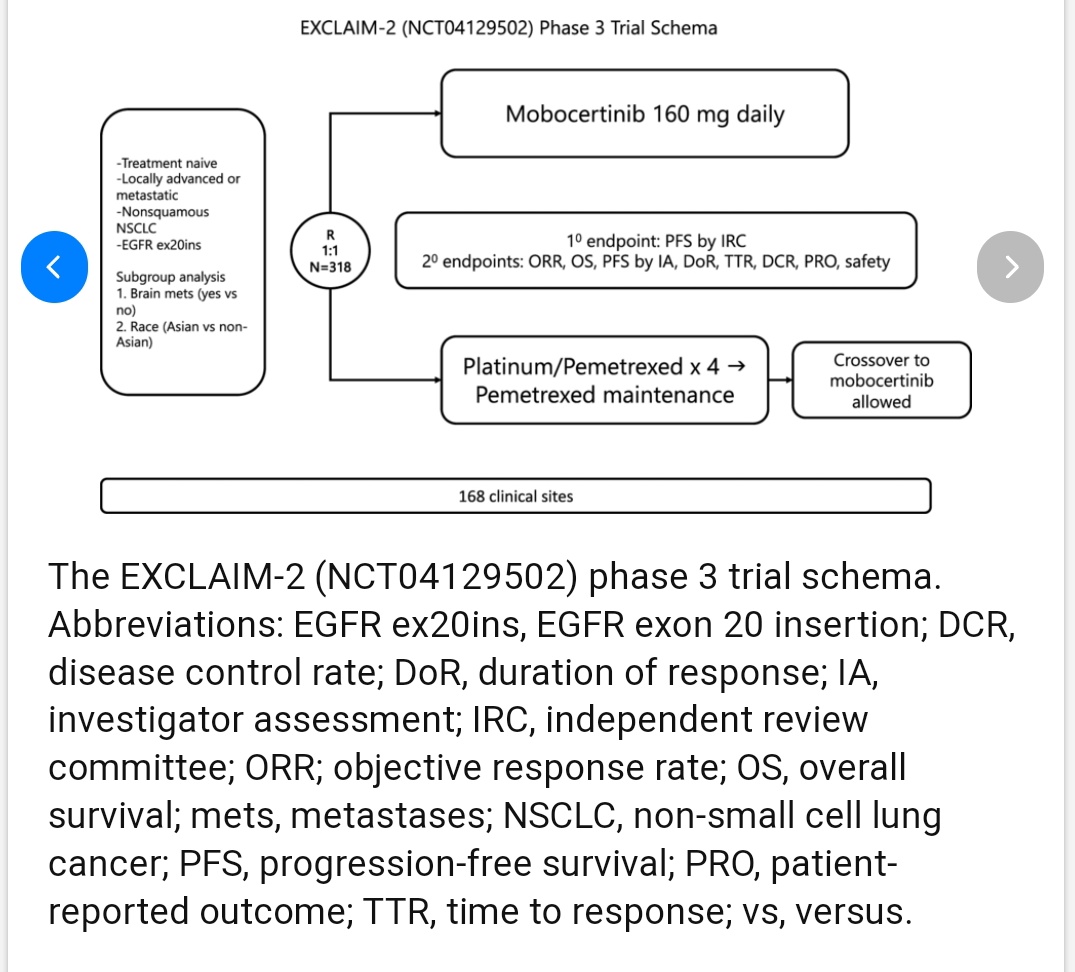
EXCLAIM-2 (NCT04129502) Phase 3 Trial Schema
Mobocertinib 160 mg daily
-Treatment naive
-Locally advanced or
metastatic
-Nonsquamous
NSCLC
R
-EGFR ex20ins
1:1
10 endpoint: PFS by IRC
N=318
2° endpoints: ORR, OS, PFS by IA, DoR, TTR, DCR, PRO, safety
Subgroup analysis
1. Brain mets (yes vs
no)
2. Race (Asian vs non-
Asian)
Platinum/Pemetrexed X 4
Crossover to
mobocertinib
Pemetrexed maintenance
allowed
168 clinical sites
The EXCLAIM-2 (NCT04129502) phase 3 trial schema.
Abbreviations: EGFR ex20ins, EGFR exon 20 insertion; DCR,
disease control rate; DoR, duration of response; IA,
investigator assessment; IRC, independent review
committee; ORR; objective response rate; OS, overall
survival; mets, metastases; NSCLC, non-small cell lung
cancer; PFS, progression-free survival; PRO, patient-
reported outcome; TTR, time to response; VS, versus.
50.
IASLC
2024 Targeted Therapies
of Lung Cancer Meeting
FEBRUARY 21-24, 2024 D SANTA MONICA, CALIFORNIA
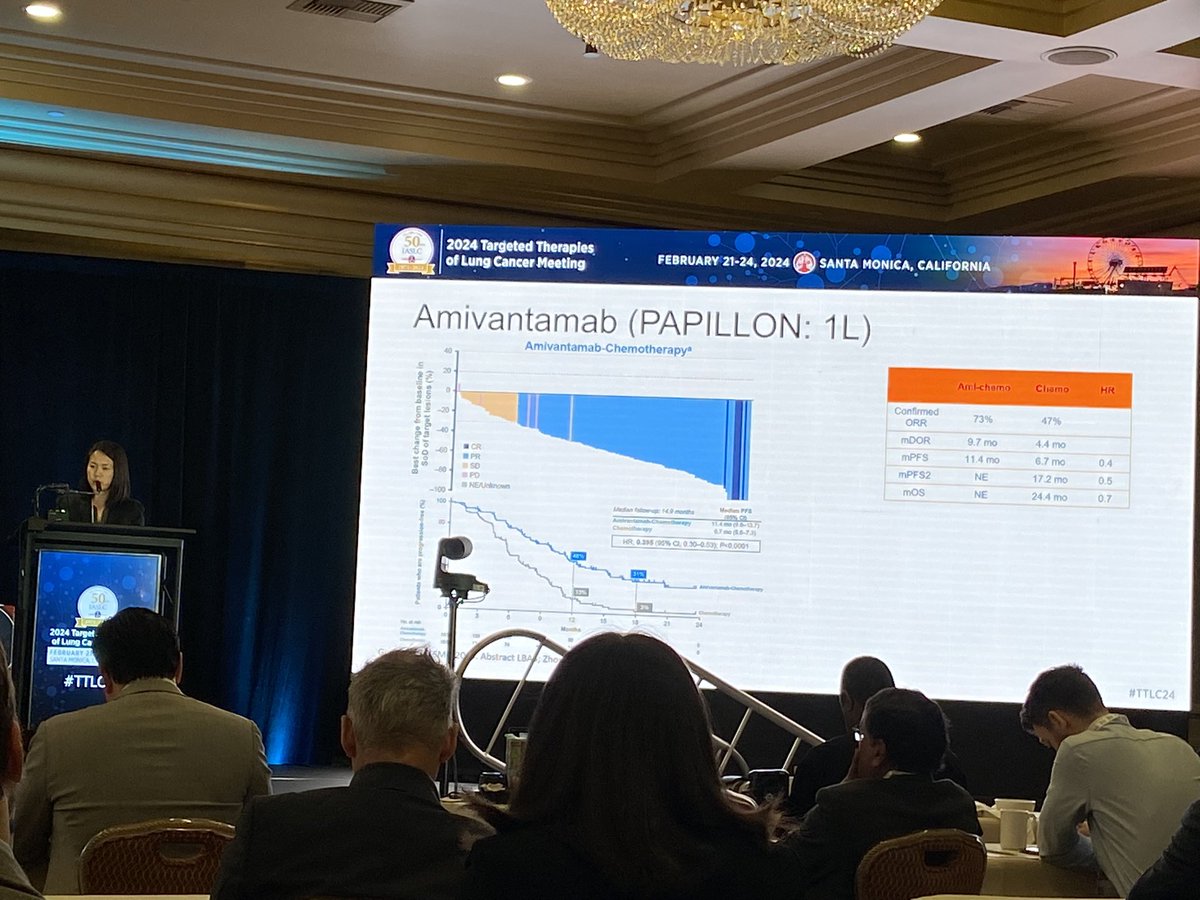
Amivantamab (PAPILLON: 1L)
40
Amivantamab-Chemotherapy
20
Best change from baseline in
Am -chemo
Chamo
HR
SoD of target lesions (%)
0
-20
Confirmed
ORR
73%
47%
-40
mDOR
9.7 mo
4.4 mo
-60
.
K
PR
mPFS
11.4 mo
6.7 mo
0.4
-00
so
PD
mPFS2
NE
17.2 mo
0.5
100
II NE/Unlinows
mOS
NE
24.4 mo
0.7
Median - 14.0 months
Medium FFS
Provents I : 8
-
HR 0.395(90% CI, 3.30-0.53) P<0,0001
G
of
3
0
0
12
15
2
21
24
Months
-
-
SMI
Abstract LBAS Zho
#TTLC24
---
50.
2024 Targeted Theraples
IASLO
of Lung Cancer Meeting
FEBRUARY 21-24, 2024 SANTA MONICA, CALIFORNIA
Sunvozertinib (DZD9008, WU-KONG6)
Beefar BM
IIII
10
111
0
N=97
so
helical (PA)
New loep (NATA)
300 mg
60
ORR=62
DCR-107%
DCR=58 %
40
Confirmed ORR
60.8%
20
(BICR)
I a I /
0
mDoT
7.0 months
-20
-40
40
Loop classification
-$0
Helical insertion (N=2)
Near Loep (N 71)
-
-100
Far Loop (N 24)
Maladies
Characteristics
ets
32%
26%
Wang M et al. ASIO 23 (Abs 90527
ment
3%
#TTLC24
---
50
2024 Targeted Therapies
IASIC
FEBRUARY 21-24, 2024
SANTA MONICA, CALIFORNIA
of Lung Cancer Meeting
Zipalertinib (CLN-081)
100
80
60
Best Response and Change From
Baseline, Sum of Target Lesions (%)
N=73
40
(100mg bid, N=39)
20
Confirmed ORR
38.4%
(BICR)
(41%, 100mg bid)
0
-20
-40
-60
-80
yous EGFR TKI
firmed response
-100
Dose level
565 mg
100 mg
150 mg
Por
stics
38%
Yu HA, et al., ACO 20 Abstract
07
36%
Pintragska et BUC 2023
#TTLC24
---
50.
2024 Targeted Theraples
TASLC
of Lung Cancer Meeting
FEBRUARY 21-24, 2024 SANTA MONICA, CALIFORNIA
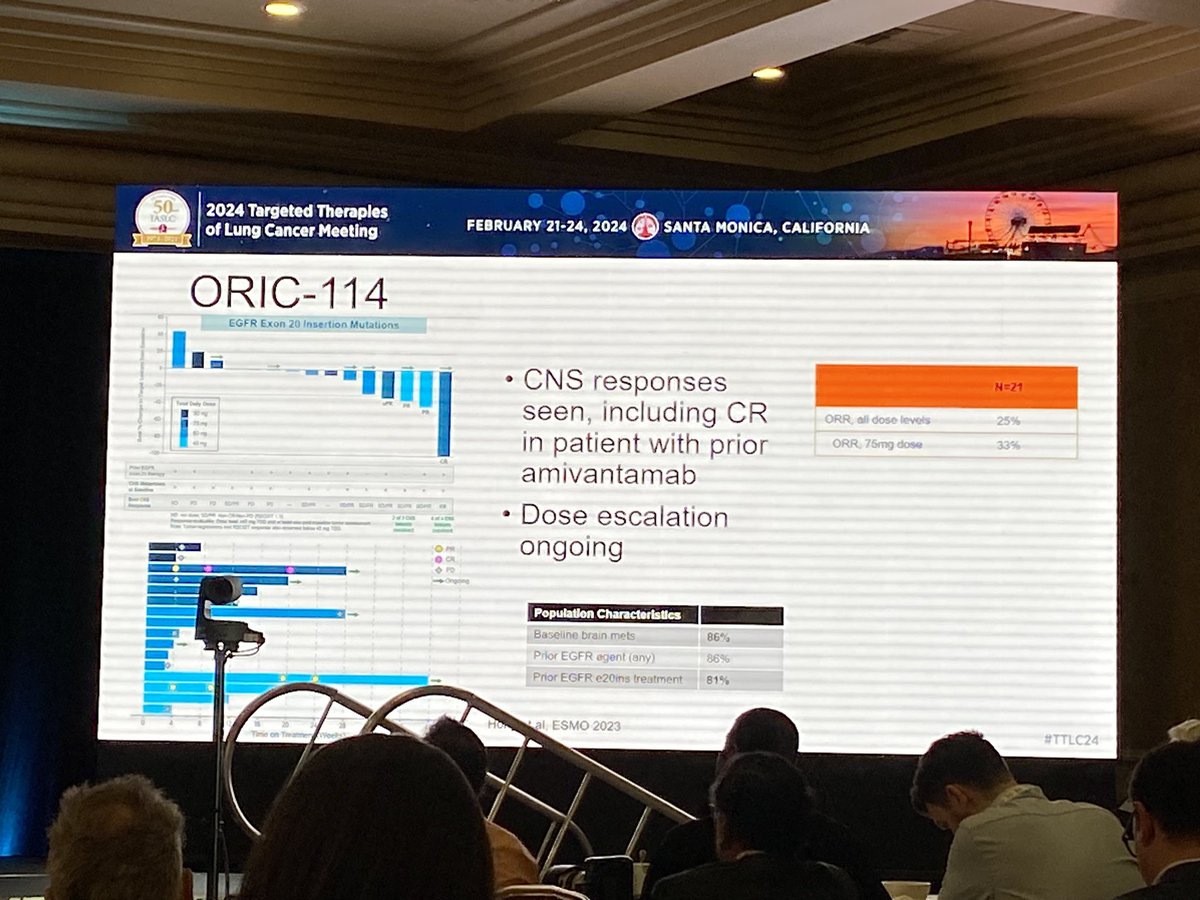
ORIC-114
EGFR Exon 20 Insertion Mutations
CNS responses
N=21
seen, including CR
ORR, all dose levels
25%
in patient with prior
ORR, 75mg dose
33%
amivantamab
Dose escalation
ongoing
Population Characteristics
Baseline brain mets
86%
Prior EGFR agent (any)
86%
Prior EGFR e20ins treatment
81%
4
is
8
a
al ESMO 2023
Time on Treatment
#TTLC24
[Slide 1]
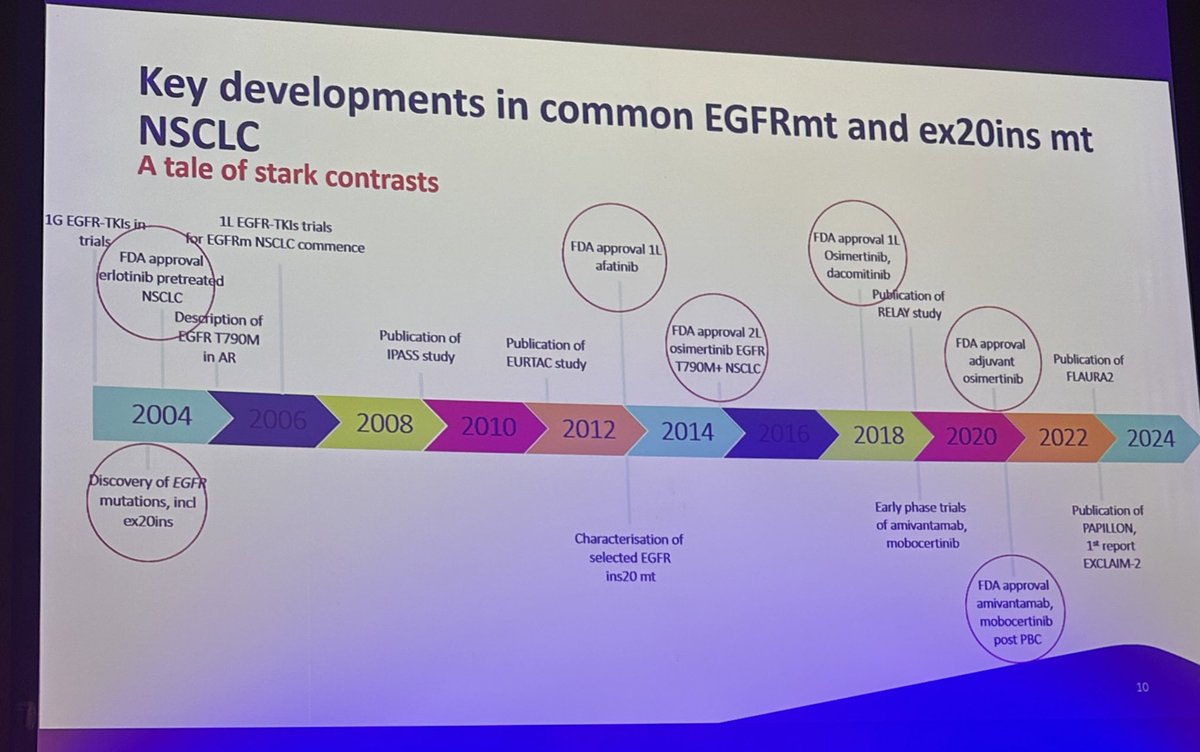
Key developments in common EGFRmt and ex20ins mt
NSCLC
A tale of stark contrasts
1L EGFR-TKIs trials
FDA approval 1L
1G EGFR-TKIs in
for EGFRm NSCLC commence
FDA approval 1l
Osimertinib,
trials
afatinib
dacomitinib
FDA approval
Publication of
erlotinib pretreated
RELAY study
NSCLC
Description of
FDA approval 21
FDA approval
Publication of
EGFR T790M
Publication of
osimertinib EGFR
adjuvant
Publication of
in AR
IPASS study
EURTAC study
1790M+ NSCLC
osimertinib
FLAURA2
2004
2006
2008
2010
2012
2014
2016
2018
2020
2022
2024
Discovery of EGFR
Early phase trials
Publication of
mutations, ind
of amivantamab,
PAPILLON,
ex20ins
Characterisation of
mobocertinib
1st report
selected EGFR
EXCLAIM-2
ins20 mt
FDA approval
amivantamab,
mobocertinib
post PBC
10
National Comprehensive
NCCN
Cancer Network®
NCCN Clinical Practice Guidelines in Oncology (NCCN Guidelines®)
Non-Small Cell Lung
Cancer
Version 1.2024 - December 21, 2023
NCCN.org
NCCN Guidelines for Patients® available at www.nccn.org/patients
Continue
[Slide 1]
PAPILLON: Phase 3 Study Design
Key Eligibility Criteria
Amivantamab-Chemotherapy
Primary endpoint: Progression-free survival
Treatment-naîve a
(n=153)
(PFS) by BICR according to RECIST v1.1°
locally advanced or
Secondary endpoints:
metastatic NSCLC
Objective response rate (ORR)c
Documented
Duration of response (DoR)
EGFR Exon 20
Chemotherapy
Overall survival (OS)c
insertion mutations
(n=155)
PFS after first subsequent therapy (PFS2)
ECOG PS 0 or 1
Symptomatic PFS
Time to subsequent therapyd
Stratification Factors
Dosing (in 21-day cycles)
Safety
ECOG PS
Amivantamab: 1400 mg (1750 mg if >80 kg) for the first 4 weeks, then
1750 mg (2100 mg if >80 kg) every 3 weeks starting at week 7 (first day
History of brain
of cycle 3)
metastases
Chemotherapy on the first day of each cycle:
Optional crossover to 2nd-line
Prior EGFR TKI use
Carboplatin: AUC5 for the first 4 cycles
amivantamab monotherapy®
Pemetrexed: 500 mg/m2 until disease progression
PAPILLON (ClinicalTrials.gov Identifier: NCT04538664) enrollment period: December 2020 to November 2022; data cut-off: 3-May-2023.
Removed as stratification factor since only 4 patients had prior EGFR TKI use (brief monotherapy with common EGFR TKIs was allowed if lack of response was documented).
Patients with brain metastases were eligible if they received definitive treatment and were asymptomatic, clinically stable, and off corticosteroid treatment for >2 weeks prior to randomization.
Key statistical assumption: 300 patients with 200 events needed for 90% power to detect an HR of 0.625 (estimated PFS of 8 vs 5 months). PFS, ORR, and then os were included in hierarchical testing.
These secondary endpoints (time to subsequent therapy and symptomatic progression-free survival) will be presented at a future congress.
*Crossover was only allowed after BICR confirmation of disease progression; amivantamab monotherapy on Q3W dosing per main study.
MADRID
congress
ESMO
AUC. area under the curve; BICR, blinded independent central review: ECOG PS, Eastern Cooperative Oncology Group performance status; EGFR, epidermal growth factor receptor; HR, hazard ratio;
2023
NSCLC, non-small cell lung cancer; Q3W, every 3 weeks; RECIST, Response Evaluation Criteria in Solid Tumors; TKI, tyrosine kinase inhibitor.
Copies of this presentation obtained through OR
---
[Slide 2]
Primary Endpoint: Progression-free Survival by BICR
Amivantamab-chemotherapy reduced risk of progression or death by 60%
Median PFS
100
Median follow-up: 14.9 months
(95% CI)
Amivantamab-Chemotherapy
11.4 mo (9.8-13.7)
Chemotherapy
6.7 mo (5.6-7.3)
80
HR, 0.395 (95% CI, 0.30-0.53); P<0.0001
60
48%
LL
ALL
40
31%
LL
T
Amivantamab-Chemotherapy
20
13%
3%
Chemotherapy
0
9
12
15
18
21
24
0
3
6
Months
No. at risk
Amivantamab-
Chemotherapy
153
135
105
74
50
33
15
3
0
155
131
74
41
14
4
2
1
0
Chemotherapy
Consistent PFS benefit by investigator: 12.9 vs 6.9 mo (HR, 0.38; 95% CI, 0.29-0.51; P<0.0001a)
congress
MADRID
2023
ESMO
Nominal P-value: endpoint not part of hierarchical hypothesis testing. BICR. blinded independent central review; CI. confidence interval; HR, hazard ratio; mo, months: PFS, progression-free survival.
Table 1
Skin toxicities of amivantamab according to the CTCAE 6.0 classification.
Acnéiform rash
Paronychia
Cracks
Hypertrichosis
Hirsutism
Hair changes
Disorder characterized
Disorder characterized by
Disorder characterized by hair
Disorder characterized by the
Disorder
by an eruption of
an infectious process
density or length beyond the
presence of excess hair
characterized by
papules and pustules,
involving the soft tissues
accepted limits of normal in a
growth in women in
change in hair
typically appearing in
around the nail
particular body region, for a
anatomic sites where growth
color or loss of
Definition
face, scalp, upper
particular age or race
is considered to be a
normal
chest and back
secondary male
pigmentation or
characteristic and under
a change in the
androgen control (beard,
way the hair
moustache, chest, abdomen)
feels
Papules and/or
Nail fold edema or
Mild; asymptomatic or
Increase in length, thickness or
In women, increase in
pustules covering
erythema; disruption of
mild symptoms;
density of hair that the patient is
length, thickness or density
<10% BSA, which may
the cuticle
clinical or diagnostic
either able to camouflage by
of hair in a male distribution
Grade 1
or may not be
observations only;
periodic shaving or removal of
that the patient is able to
Present
associated with
intervention not
hairs or is not concerned enough
camouflage by periodic
symptoms of pruritus
indicated.
about the overgrowth to use any
shaving, bleaching, or
or tenderness
form of hair removal
removal of hair
Papules and/or
Local intervention
Moderate; minimal,
Increase in length, thickness or
In women, increase in
pustules covering 10
indicated; oral
local or noninvasive
density of hair at least on the usual
length, thickness or density
30% BSA, which may
intervention indicated
intervention indicated;
exposed areas of the body [face
of hair in a male distribution
or may not be
(e.g., antibiotic,
limiting age
(not limited to beard/moustache
that requires daily shaving or
associated with
antifungal, antiviral); nail
appropriate
area) plus/minus arms] that
consistent destructive means
symptoms of pruritus
fold edema or erythema
instrumental ADL
requires frequent shaving or use of
of hair removal to
or tenderness;
with pain; associated with
destructive means of hair removal
camouflage; associated with
Grade 2
associated with
discharge or nail plate
to camouflage; associated with
psychosocial impact
psychosocial impact;
separation; limiting
psychosocial impact
limiting instrumental
instrumental ADL
ADL; papules and/or
pustules covering >
30% BSA with or
without mild
symptoms
Papules and/or
Operative intervention
Severe or medically
pustules covering
indicated; IV antibiotics
significant but not
>30% BSA with
indicated; limiting self.
immediately life-
moderate or severe
care ADL
threatening;
Grade 3
symptoms; limiting
hospitalization or
self-care ADL;
prolongation of
associated with local
hospitalization
superinfection with
indicated; disabling:
oral antibiotics
limiting self care ADL
indicated
Life-threatening
consequences;
papules and/or
pustules covering any
% BSA, which may or
Grade 4
may not be associated
with symptoms of
pruritus or tenderness
and are associated
with extensive
superinfection with IV
antibiotics indicated
Legend: BSA = Body Surface Area; ADL = Activity of Daily Life; IV = intravenous.
---
Table 3
Guidelines for the management of acneiform rash/paronychia/skin fissures under amivantamab.
Acneiform Rash
Paronychia
Cracks/Skin fissures
Prevention
Moisturizing 2*/day with adapted topics (balm)
Moisturizing of hands and feet 2*/day (ointment)
Moisturizing of hands and feet 2*/day
Prophylactic antibiotic therapy by tetracycline 50
Moisturizing of the cuticule 2*/day (shea butter)
(ointment)
mg 2*/day
Grade 1
Moisturizing 2*/day with adapted topics (balm)
Moisturizing of hands and feet 2*/day (ointment)
Moisturizing of hands and feet 2*/day
Prophylactic antibiotic therapy by tetracycline 50
Moisturizing of the cuticule with shea butter 2*/day
(ointment) to continue
mg 2*/day
(shea butter)
Grade 2
Moisturizing to continue same posologyIncrease
Stop moisturizing
Moisturizing of hands and feet 2*/day
posology of antibiotic therapy
Disinfection with soap and water 2*/day
(ointment), associated with water-free
(tetracyclin 100 mg 2*/day)High level activity
During 3 days: high level activity topic corticosteroids (with
ointment application (specific stick for
topic corticoids
clobetasol propionate) 1*/day associated with occlusion:
fissures)
(with clobetasol propionate) once a day 7 days
semi-permeable film (Tegaderm overnight, and dry
And occlusion with:
Cancer treatment suspension is an option to
dressing during the dayIf improvement: stop occlusion and
-for cracks on feet: moisturizing during 1 h
consider if inefficient result
continue high level activity topic corticosteroids (with
1*/day with cling film surrounding the
clobetasol propionate)
lesion(s)
1*/day for 7 days ion total;
-for cracks on hands: moisturizing during 1
If no improvement: continue high level activity topic
h 1*/day disposable gloves surrounding the
corticosteroids (with clobetasol propionate) 1*/day
lesion(s)Apply
associated until resolution to grade 1
Orthopedic insoles can be consider
If unefficient result: Consider cryotherapy
Cancer treatment suspension is an option to consider if
inefficient result
Grade 3
Moisturizing to continue same posologyAntibiotic
Implement guidelines described in Grade 2
therapy
If inefficient result:
(tetracycline 100 mg 2*/day)High level activity
Cancer treatment suspension is highly recommended if
topic corticosteroids
inefficient result
(with clobetasol propionate) once a day 7 days
Surgical intervention is indicated when all previous
Cancer treatment suspension is highly
treatments are inefficient (phenolization)
recommended if inefficient result
Dose reduction to consider/Hospitalization in
dermatology department for specific care
Additional
Non comedogene make up can be used to fade skin
Prevention: Comfortable and large shoes to avoid friction
If lesion of the heel(s): self-adherent soft
Advises
toxicityUse a degressive posology of topic
Open-toes compression socks
silicone multi-layer foam dressing con be
corticosteroids after long-term application
Water-soluble Nailpolish (Psoriatec) 1*/dayTreatment:
used
(>15 days)
Local anesthetic
(Lidocaine spray 5 %) can be used to make nurse careUse a
degressive posology of topic corticosteroids after long-term
application
(>15 days)
similar to the one described above in the prevention part. There is no
Paronychia corresponds to skin budding along the nails. To prevent
specific other treatment but emphasizing on moisturizing the skin and
nails fragility we recommend an alimentation enriched in biotin, to
the scalp with soothing shampoos. In case of grade 2 toxicity, topic
administer nail polishes with filmogel, and to prefer comfortable and
corticosteroids are recommended, as well as an increased dose of
large shoes. The local prevention of paronychia is based on moisturizing
tetracycline (100 mg twice a day), and if needed amivantamab can be
of hands and feet, and especially of the cuticle around the nail. In tox-
temporary suspended for one injection to give time for healing. In case of
icities grade 2, we implemented local anesthesia before any care and
grade 3 toxicity, we recommend to continue the measures implemented
protection with bandage to avoid frictions. We also added a mechanical
in grade 2, to suspend amivantamab until grade ≤ 2 and to consider a
debridement, and topic corticosteroids application once a day for min-
reduction dose of amivantamab. Hospitalization in dermatology can be
imum 7 days. Antibiotherapy should not be systematic, and only if
an option to consider in case of persistent grade 3 toxicity.
medically indicated. We suggest cryotherapy if the treatments described
A
B
C
Fig. 3. Paronychia treated by cryotherapy. A. Grade 3 paronychia before the treatment. B. Application of the nitrous oxide on the lesion. C. At the end of the
intervention.
120
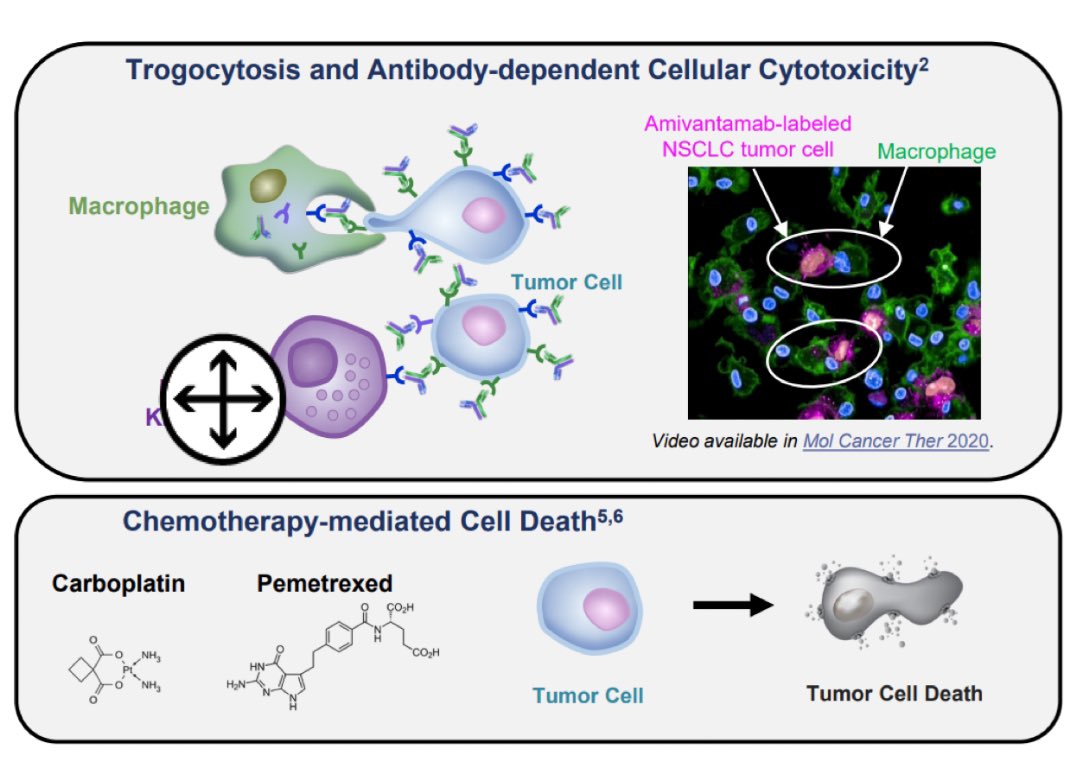
Trogocytosis and Antibody-dependent Cellular Cytotoxicity²
Amivantamab-labeled
NSCLC tumor cell
Macrophage
Macrophage
Tumor Cell
K
Video available in Mol Cancer Ther 2020.
Chemotherapy-mediated Cell Death5,⁶
Carboplatin
Pemetrexed
O
CO2H
O
IZ
H
O
O
NH3
CO2H
Pt
HN
NH3
H2N
N
O
Tumor Cell
Tumor Cell Death
IZ
MADRID
ESMO
congress
2023
-
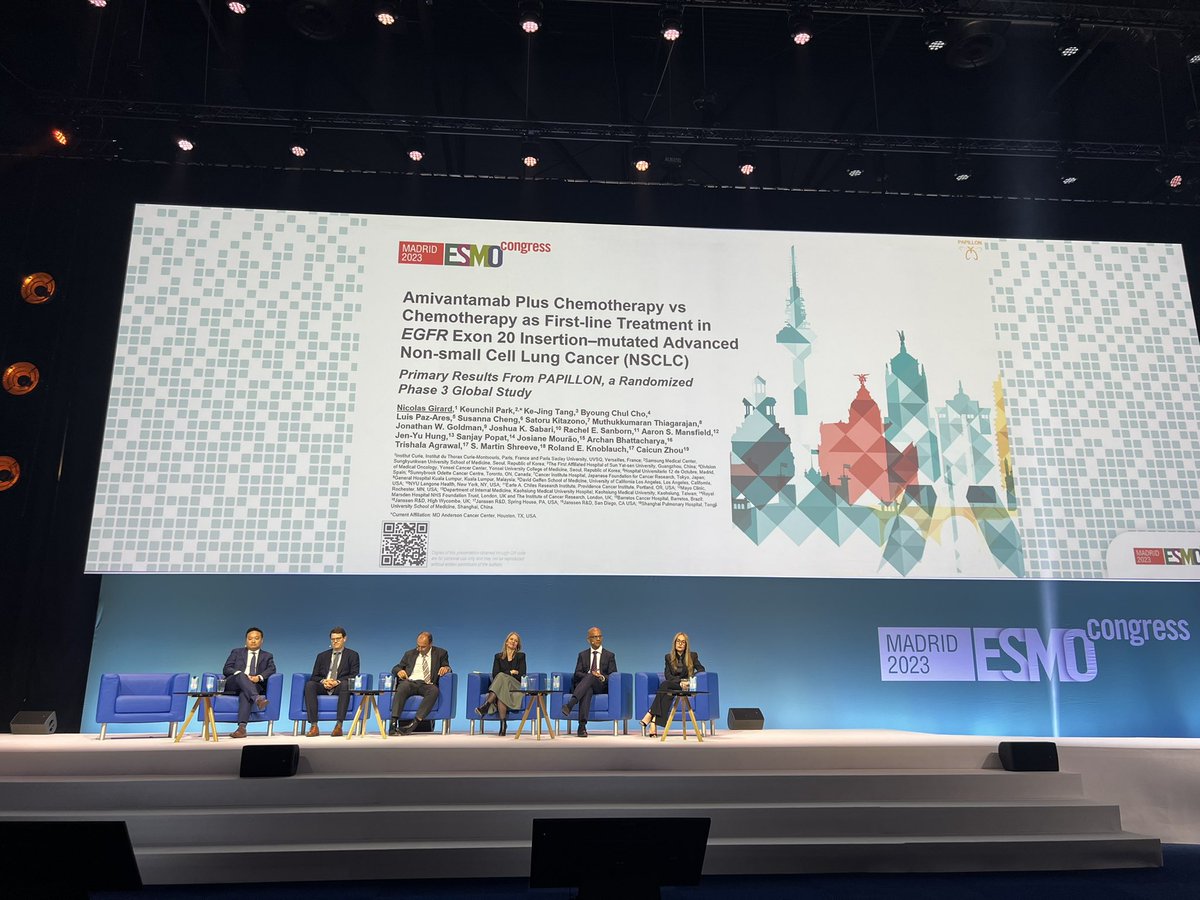
Amivantamab Plus Chemotherapy vs
Chemotherapy as First-line Treatment in
EGFR Exon 20 Insertion-mutated Advanced
Non-small Cell Lung Cancer (NSCLC)
Primary Results From PAPILLON, a Randomized
Phase 3 Global Study
Nicolas Girard Keunchil Park,2.* Ke-Jing Tang,3 Byoung Chul Cho,*
Luis Paz-Ares, Susanna Cheng, Satoru Kitazono, Muthukkumaran Thiagarajan,*
Jonathan W. Goldman, Joshua K. Sabari, 10 Rachel E. Sanborn, 11 Aaron S. Mansfield,12
Jen-Yu Hung,13 Sanjay Popat, 14 Josiane Mourão, 15 Archan Bhattacharya, 16
Trishala Agrawal,1 S. Martin Shreeve, Roland E. Knoblauch, Caicun Zhou
-
I
-
-
Theres
Versites,
France
Send
/
First
Unive
Division
Dolutes
Medical
I
-
New
-
Cellomia,
OR,
MN
Claic,
-
High
UK
PA,
USA
CA
School
===
Milation
MO
MADRID
MADRID
ESMocongress
---
PAPILLON
Primary Endpoint: Progression-free Survival by BICR
Amivantamab-chemotherapy reduced risk of progression or death by 60%
100
Median PFS
Median follow-up: 14.9 months
(95% CI)
Amivantamab-Chemotherapy
11.4 mo (9.8-13.7)
Patients who are progression-free (%)
80
Chemotherapy
6.7 mo (5.6-7.3)
HR, 0.395 (95% CI, 0.30-0.53); P<0.0001
60
48%
40
31%
u Amivantamab-Chemotherapy
20
13%
3%
Chemotherapy
0
0
3
6
9
12
15
18
21
24
No. at risk
Months
Amivantamab-
Chemotherapy
153
135
105
74
50
33
15
3
0
Chemotherapy
155
131
74
41
14
4
2
1
0
MADRID
congress
Consistent PFS benefit by investigator: 12.9 vs 6.9 mo (HR, 0.38; 95% CI, 0.29-0.51; P<0.0001ᵃ)
2023
ESMD
*Nominal P-value; endpoint not part of hierarchical hypothesis testing. BICR, blinded independent central review, CI, confidence interval; HR, hazard ratio, mo, months; PFS, progression-free survival
PAPILLON (NCT04538664) is the pivotal Phase 3 global trial that established amivantamab plus carboplatin-pemetrexed as a first-line standard of care for advanced NSCLC harboring EGFR exon 20 insertion mutations. Presented at the 2023 ESMO Congress and published simultaneously in the New England Journal of Medicine, the trial met its primary endpoint of progression-free survival. On March 1, 2024, the FDA granted full approval to amivantamab (Rybrevant) with carboplatin and pemetrexed for this indication — the first FDA-approved frontline regimen for EGFR exon 20 insertion NSCLC. PAPILLON is the established comparator against which newer first-line options such as sunvozertinib (WU-KONG28) are now being benchmarked.
Population
Treatment-naïve locally advanced/metastatic NSCLC with EGFR exon 20 insertion mutations.
Intervention
IV amivantamab + carboplatin-pemetrexed vs carboplatin-pemetrexed alone.
Primary Endpoint
Progression-free survival by blinded independent central review (RECIST 1.1).
Key Secondary
Objective response rate, duration of response, and overall survival.
Efficacy & Safety
Reported Results
Progression-Free Survival (Primary Endpoint)
Amivantamab plus chemotherapy significantly improved median PFS to 11.4 months vs 6.7 months with chemotherapy alone (HR 0.40; 95% CI, 0.30–0.53; p<0.0001) at a median follow-up of 14.9 months.
Amivantamab plus chemotherapy improved objective response rate and duration of response versus chemotherapy alone; full response figures are reported in the NEJM primary publication.
The amivantamab combination added class-typical EGFR/MET toxicities — infusion-related reactions, rash, and paronychia — on top of the chemotherapy backbone. Full adverse-event rates are detailed in the NEJM publication.
On March 1, 2024, the FDA approved amivantamab-vmjw (Rybrevant) with carboplatin and pemetrexed for the first-line treatment of locally advanced or metastatic NSCLC with EGFR exon 20 insertion mutations — the first FDA-approved frontline regimen for this population, based on the confirmatory Phase 3 PAPILLON study.
PAPILLON (NCT04538664) is the pivotal Phase 3 global trial that established amivantamab plus carboplatin-pemetrexed as a first-line standard of care for advanced NSCLC harboring EGFR exon 20 insertion mutations. It was presented at the 2023 ESMO Congress and published simultaneously in the New England Journal of Medicine.
What did PAPILLON show?
The trial met its primary endpoint of progression-free survival: median PFS was 11.4 months with amivantamab plus chemotherapy versus 6.7 months with chemotherapy alone (HR 0.40; 95% CI 0.30-0.53; p<0.0001) at a median follow-up of 14.9 months. Objective response rate and duration of response also favored the amivantamab combination.
Is amivantamab FDA approved for EGFR exon 20 insertion NSCLC?
Yes. On March 1, 2024, the FDA granted full approval to amivantamab-vmjw (Rybrevant) with carboplatin and pemetrexed for first-line treatment of locally advanced or metastatic NSCLC with EGFR exon 20 insertion mutations, based on PAPILLON. This was the first FDA-approved frontline regimen for this population; amivantamab monotherapy after platinum-based chemotherapy also holds traditional approval in this setting.
What is the safety profile of amivantamab plus chemotherapy in PAPILLON?
The combination added class-typical EGFR/MET-related toxicities - infusion-related reactions, rash, and paronychia - on top of the carboplatin-pemetrexed backbone. Full adverse-event rates are detailed in the NEJM primary publication (NEJMoa2306441).
Why is PAPILLON important?
EGFR exon 20 insertion mutations have historically responded poorly to classical EGFR TKIs, leaving chemotherapy as the frontline default. PAPILLON delivered the first FDA-approved first-line regimen for this population and now serves as the established comparator against which newer options, such as sunvozertinib (WU-KONG28), are benchmarked.
In the same first-line EGFR exon 20 insertion setting that PAPILLON defined, the Phase 3 REZILIENT3 trial of zipalertinib plus platinum-pemetrexed chemotherapy met its primary progression-free survival endpoint at a planned interim analysis on 12 August 2026. That readout is topline only — no median PFS, hazard ratio or response rate has been released — and zipalertinib is investigational and not approved by any health authority.