ESMO 2026 Day 3: Top Trials and KOL Reactions
“If PFS is the primary endpoint, why isn't crossover allowed?” Medical oncologist Yakup Ergün credited the question to Benjamin Besse, the invited discussant for KRASCENDO-1 in Presidential Symposium II. Divarasib beat sotorasib or adagrasib on both PFS (HR 0.58) and OS (HR 0.56) in previously treated KRAS G12C-mutated NSCLC. Thoracic oncologist Stephen Liu wrote that Besse “Rightly points out lack of crossover in a study with a PFS endpoint as unjust.” Physicians raised a similar crossover question about DeLLphi-305 on Days 1–2. The same session brought SAFFRON, HARMONi-GI1 and CLARITY-Gastric01. PERSEE drew heavy discussion, OptiTROP-Lung06 and OptiTROP-Lung04 brought two sacituzumab tirumotecan readouts in lung cancer, and LITESPARK-012 and SigVie-002 were negative. Below are the most-discussed trials of Day 3, each with the result, a presented slide, and physician posts quoted in full.
Physician discussion, Day 3
Physician posts on X, October 25: the top 16 trials, each discussed by at least 10 physicians.
| # | Trial | Physician posts | Physicians posting |
|---|---|---|---|
| 1 | KRASCENDO-1 | 66 | 46 |
| 2 | SAFFRON | 44 | 31 |
| 3 | PERSEE | 36 | 25 |
| 4 | HARMONi-GI1 | 32 | 24 |
| 5 | OptiTROP-Lung06 | 28 | 21 |
| 6 | LITESPARK-012 | 25 | 18 |
| 7 | DeLLphi-305 | 22 | 20 |
| 8 | INTerpath-001 | 20 | 17 |
| 9 | CLARITY-Gastric01 | 20 | 17 |
| 10 | LITESPARK-011 | 19 | 14 |
| 11 | IROCAS | 17 | 11 |
| 12 | XmAb819 Phase 1 | 16 | 14 |
| 13 | VOLGA | 14 | 11 |
| 14 | OptiTROP-Lung04 | 13 | 11 |
| 15 | AZUR-1 | 13 | 10 |
| 16 | SARON | 11 | 10 |
DeLLphi-305 and INTerpath-001 were presented on Day 2; see the Days 1–2 roundup for their results. INTerpath-001 is discussed below with NADINA. LITESPARK-011 results and physician reactions are on its trial page.
Presidential Symposium II
Four Phase 3 readouts shared the session: KRASCENDO-1 and SAFFRON in lung cancer, CLARITY-Gastric01 and HARMONi-GI1 in GI cancers.
KRASCENDO-1: divarasib vs sotorasib or adagrasib in KRAS G12C NSCLC
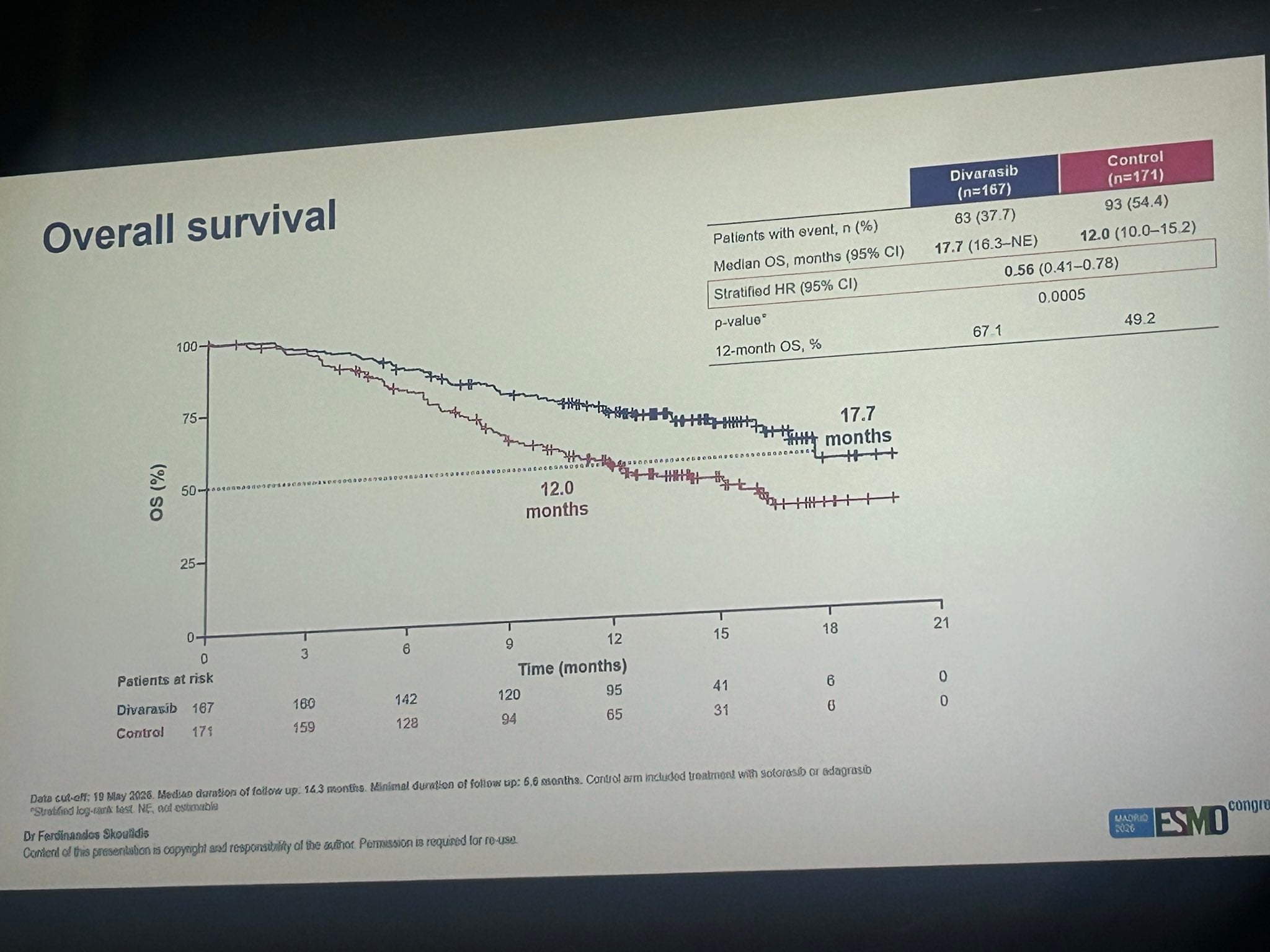
Phase 3, N=338, previously treated KRAS G12C-mutated advanced NSCLC: divarasib (Roche/Genentech) vs investigator’s choice of sotorasib (n=156) or adagrasib (n=15). PFS by BICR, the primary endpoint, 9.8 vs 5.7 months, HR 0.58 (95% CI 0.44–0.76), p<0.0001. OS, the key secondary endpoint, 17.7 vs 12.0 months, HR 0.56 (0.41–0.78), p=0.0005; OS reached significance at the interim analysis. Confirmed ORR 58.4% vs 32.3%. (ESMO 2026 LBA5, Ferdinandos Skoulidis; data cutoff May 19, 2026; median follow-up 14.3 months) Grade 3–4 treatment-related AEs 24.6% vs 34.5%; treatment-related AEs leading to discontinuation 4.8% vs 11.7%. Median treatment duration was 11.3 vs 5.0 months. (LBA5 abstract) Divarasib is investigational. Sotorasib (Lumakras) and adagrasib (Krazati) hold FDA accelerated approvals for previously treated KRAS G12C-mutated NSCLC. (KOL Pulse KRASCENDO-1 page)

Physicians called divarasib a new second-line standard. The invited discussant, Benjamin Besse, argued on his slides that crossover should be reconsidered when PFS is the primary endpoint, and physicians picked up the point. Other questions: whether divarasib works after sotorasib or adagrasib, and how far KRAS G12C therapy still trails other oncogene-driven lung cancers.

SAFFRON: osimertinib + savolitinib after osimertinib in MET-driven EGFR-mutated NSCLC
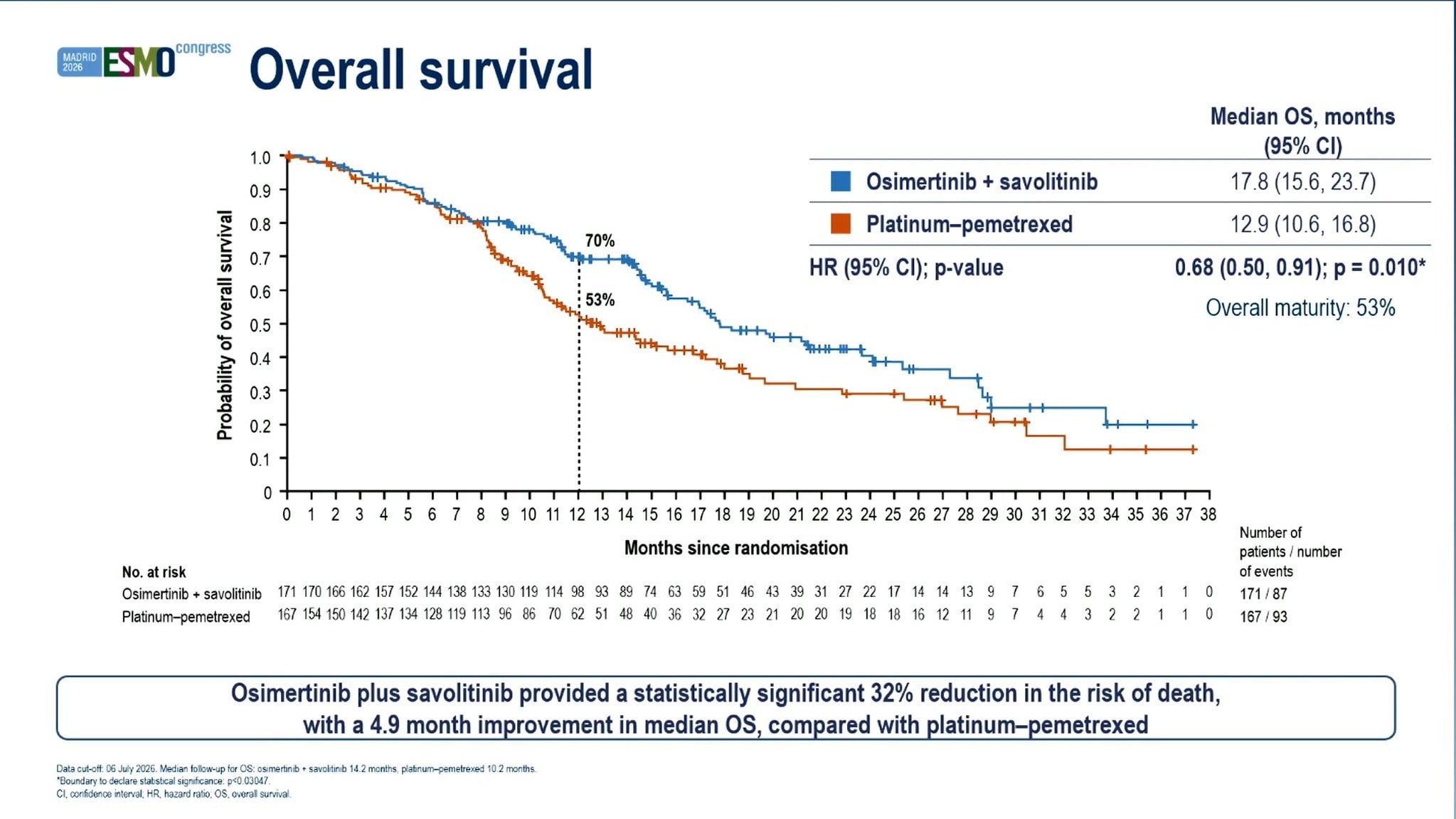
Phase 3, N=338, EGFR-mutated advanced NSCLC with MET overexpression (IHC 3+ in ≥90% of tumor cells) and/or MET amplification (≥10 copies by FISH) after osimertinib: osimertinib + savolitinib (AstraZeneca, HUTCHMED) vs platinum-pemetrexed. PFS by BICR, the primary endpoint, 7.6 vs 5.4 months, HR 0.55 (95% CI 0.42–0.72), p<0.001. OS, a secondary endpoint, 17.8 vs 12.9 months, HR 0.68 (0.50–0.91), p=0.010. (ESMO 2026 LBA6, Shun Lu; data cutoff Jul 6, 2026) Grade ≥3 treatment-related AEs 40% vs 52%; serious AEs 41% vs 28%; AEs leading to discontinuation 14% vs 8%. (LBA6 abstract) The combination is investigational in the US (FDA Fast Track). It is approved in China (June 2025) based on the SACHI trial. Osimertinib alone is FDA approved in EGFR-mutated NSCLC. (KOL Pulse SAFFRON page)

Physicians largely agreed on a new standard after osimertinib in MET-driven disease, and that MET testing at progression matters. The debate after Natasha Leighl’s discussion: whether IHC alone is enough to select patients, how few patients qualify, how to choose against amivantamab plus chemotherapy without head-to-head data, and access to the combination.
HARMONi-GI1: ivonescimab vs durvalumab, each with gemcitabine-cisplatin, in first-line biliary tract cancer
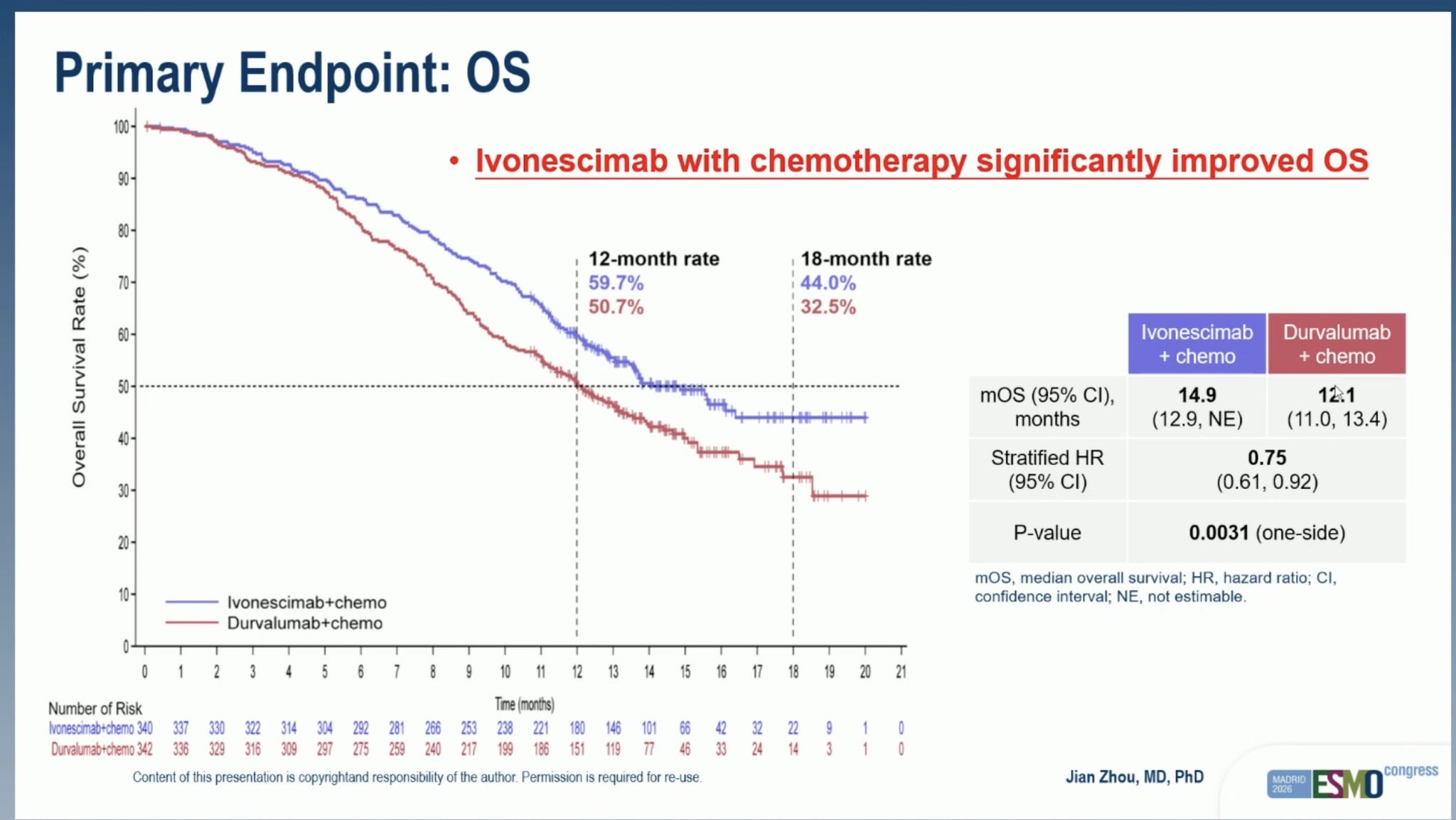
Phase 3 head-to-head trial, conducted in China: ivonescimab (Akeso; Summit Therapeutics licensee), a PD-1×VEGF bispecific, vs durvalumab, each with gemcitabine-cisplatin. OS, the primary endpoint, 14.9 vs 12.1 months, stratified HR 0.75 (95% CI 0.61–0.92), one-sided P=0.0031, at a prespecified interim analysis. Investigator-assessed PFS 8.4 vs 5.8 months, HR 0.61 (0.51–0.72). ORR 53.8% vs 32.5%. Grade 3–4 treatment-emergent AEs 82.0% vs 72.3%. (ESMO 2026 LBA8, Jian Zhou; interim analysis, median follow-up 14.3 months; data cutoff not shown) Subsequent Traditional Chinese Medicine was recorded in 0.6% vs 7.0% of patients. (LBA8 subsequent-therapy slide) Ivonescimab is investigational and not approved for biliary tract cancer in any country. Durvalumab plus gemcitabine-cisplatin is the approved first-line standard (TOPAZ-1). A US registration-enabling trial, ECOG-ACRIN EA2251, will compare ivonescimab plus chemotherapy with pembrolizumab or durvalumab plus chemotherapy. (KOL Pulse HARMONi-GI1 page)

One GI oncologist called durvalumab the right comparator and the data compelling. The questions were a China-only population, added toxicity, and an imbalance in subsequent Traditional Chinese Medicine use in the control arm.

CLARITY-Gastric01: sonesitatug vedotin in previously treated CLDN18.2-positive gastroesophageal cancer
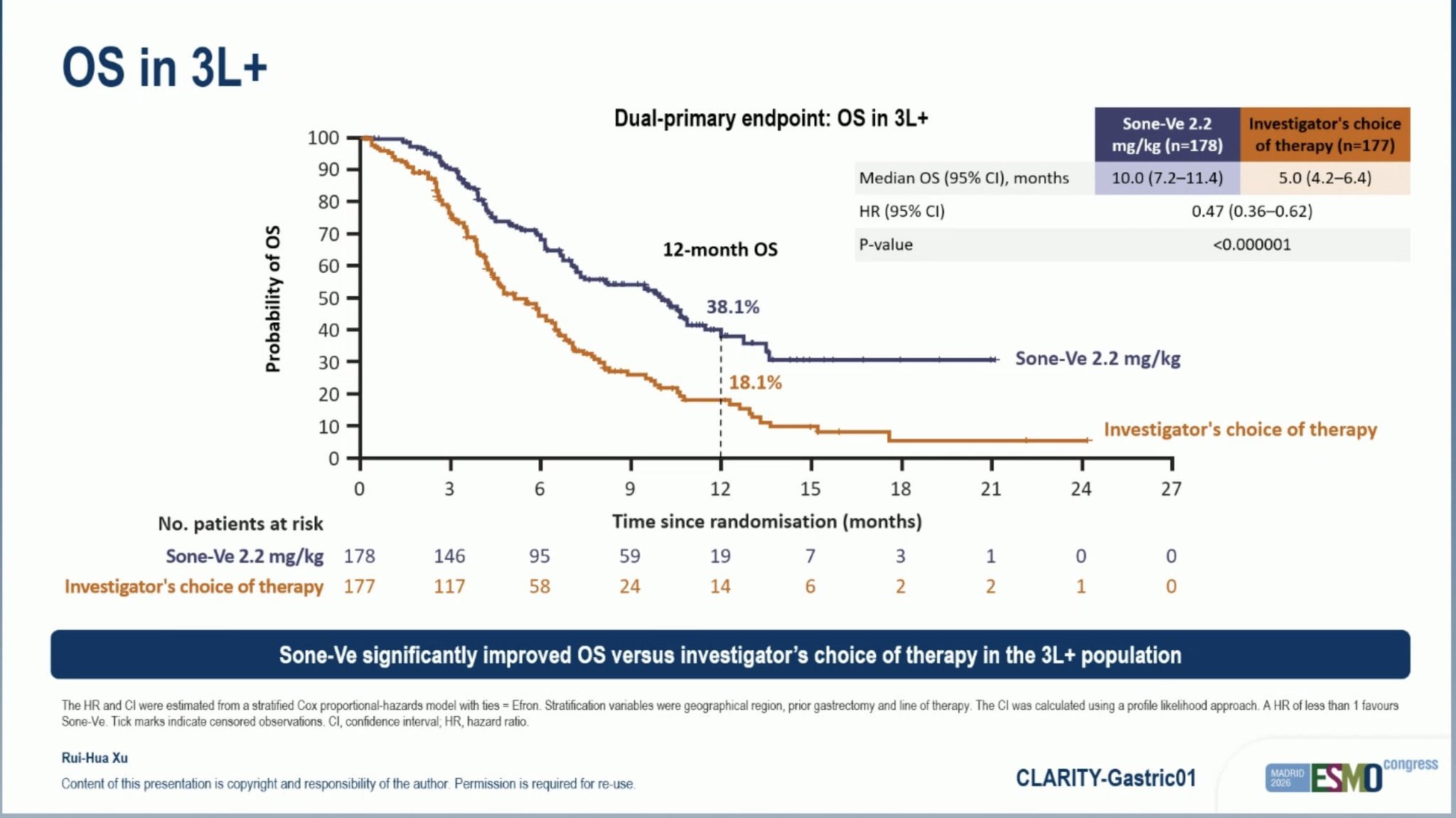
Phase 3, sonesitatug vedotin (Sone-Ve, AstraZeneca), a CLDN18.2 ADC, vs investigator’s choice. Dual primary endpoints, with different results. OS in third line or later (n=355): 10.0 vs 5.0 months, HR 0.47 (95% CI 0.36–0.62), met. PFS by BICR in all second-line-or-later patients (ITT, n=532): 4.2 vs 3.8 months, HR 0.77 (0.62–0.96), P=0.053, not met. OS in the ITT population, the key secondary endpoint, was met: 10.6 vs 6.4 months, HR 0.58 (0.47–0.73). In the second-line subgroup (descriptive) the OS HR was 0.88 (0.60–1.30). Grade ≥3 treatment-related AEs 36.4% vs 44.8%. (ESMO 2026 LBA7, Rui-Hua Xu; planned interim analysis, data cutoff May 31, 2026; median follow-up 8.6 months) Sone-Ve is investigational. The only FDA-approved CLDN18.2 agent is zolbetuximab (VYLOY), for first-line use with chemotherapy. Only 17 patients had prior zolbetuximab. (KOL Pulse CLARITY-Gastric01 page)

Physicians welcomed the later-line OS result. The missed ITT PFS endpoint, the role in second line, activity after zolbetuximab and the use of archival tissue for CLDN18.2 testing were the open questions. The discussant, Salah-Eddin Al-Batran, said more data are needed in second line.
Track oncology’s top KOLs in your specialty
Create a free account, pick the tumor types you cover, and go beyond the tweet — the intelligence pharma teams use to map influence and prepare for engagement:
- ✓Enhanced KOL profiles
- ✓Pharma influence & potential advisory-board patterns
- ✓2025 Open Payments financial analysis
- ✓Social-media sentiment & trend signals
Lung cancer
PERSEE: pembrolizumab with or without chemotherapy in PD-L1 ≥50% NSCLC
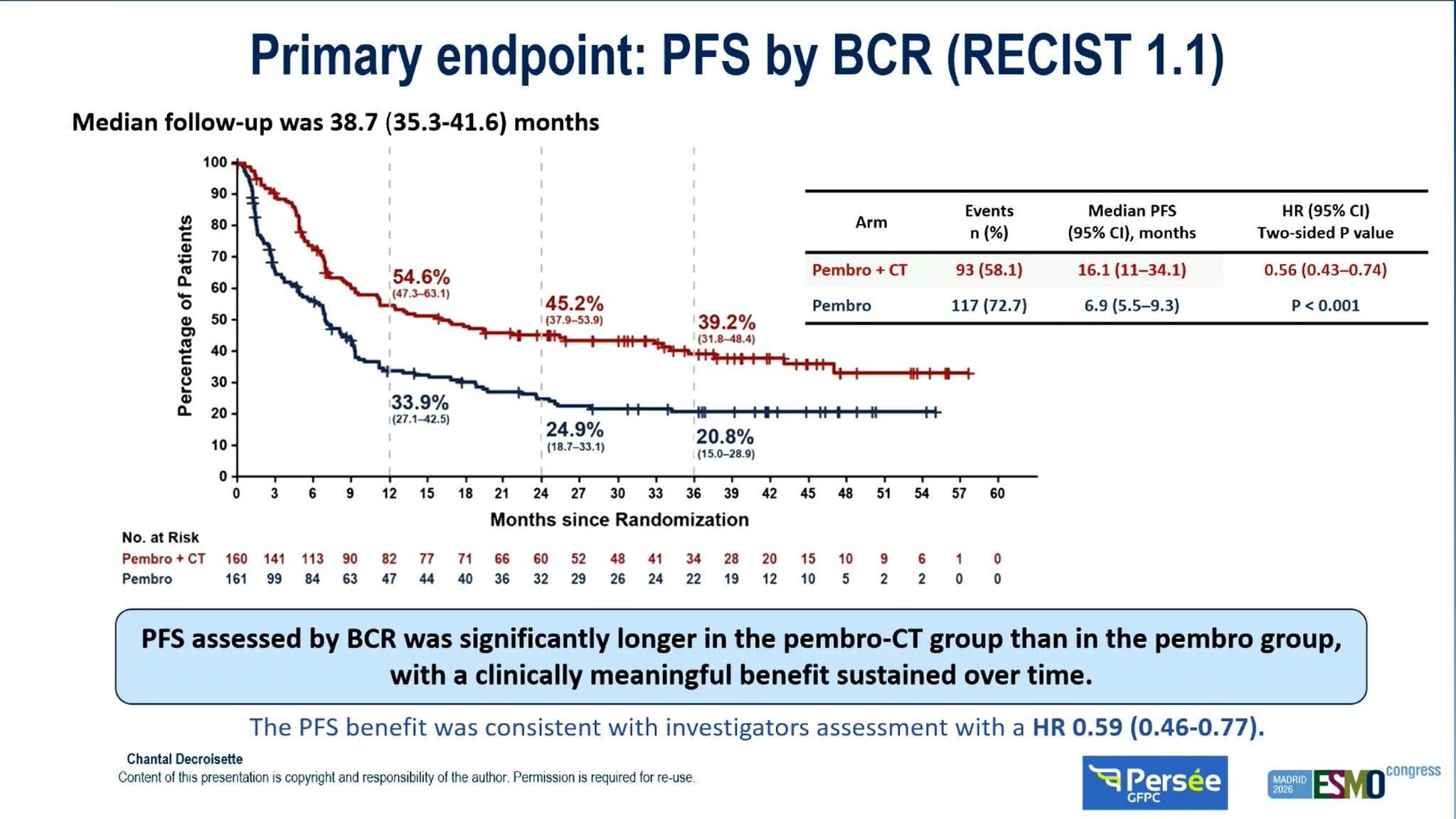
Academic Phase 3 (GFPC, France), N=321, first-line advanced NSCLC with PD-L1 ≥50% and no EGFR, ALK or ROS1 alteration: pembrolizumab + platinum chemotherapy vs pembrolizumab alone. PFS by blinded central review, the primary endpoint, was met: 16.1 vs 6.9 months, HR 0.56 (95% CI 0.43–0.74), P<0.001. The analysis ran with 210 of 249 planned events, which lowered power from 80% to 73%. OS, a secondary endpoint the trial was not powered for, was 50.2 vs 29.9 months, HR 0.77 (0.56–1.05), not statistically significant. In the descriptive PD-L1 90–100% subgroup, PFS was 25.4 vs 7.1 months, HR 0.6 (0.36–1). Grade ≥3 treatment-related AEs 54% vs 19%. (ESMO 2026 2614O, Chantal Decroisette; Annals of Oncology; data cutoff Apr 7, 2026; median follow-up 38.7 months) Both strategies are already FDA-approved first-line options; PERSEE compares them and does not change any label. (KOL Pulse PERSEE page)

Thoracic oncologists read PERSEE as support for adding chemotherapy in fit patients, including those with very high PD-L1. The discussant, Benjamin Levy, pointed to the ongoing INSIGNA trial. The counterpoint was toxicity: grade ≥3 treatment-related AEs nearly tripled.
SigVie-002: sigvotatug vedotin vs docetaxel in previously treated non-squamous NSCLC
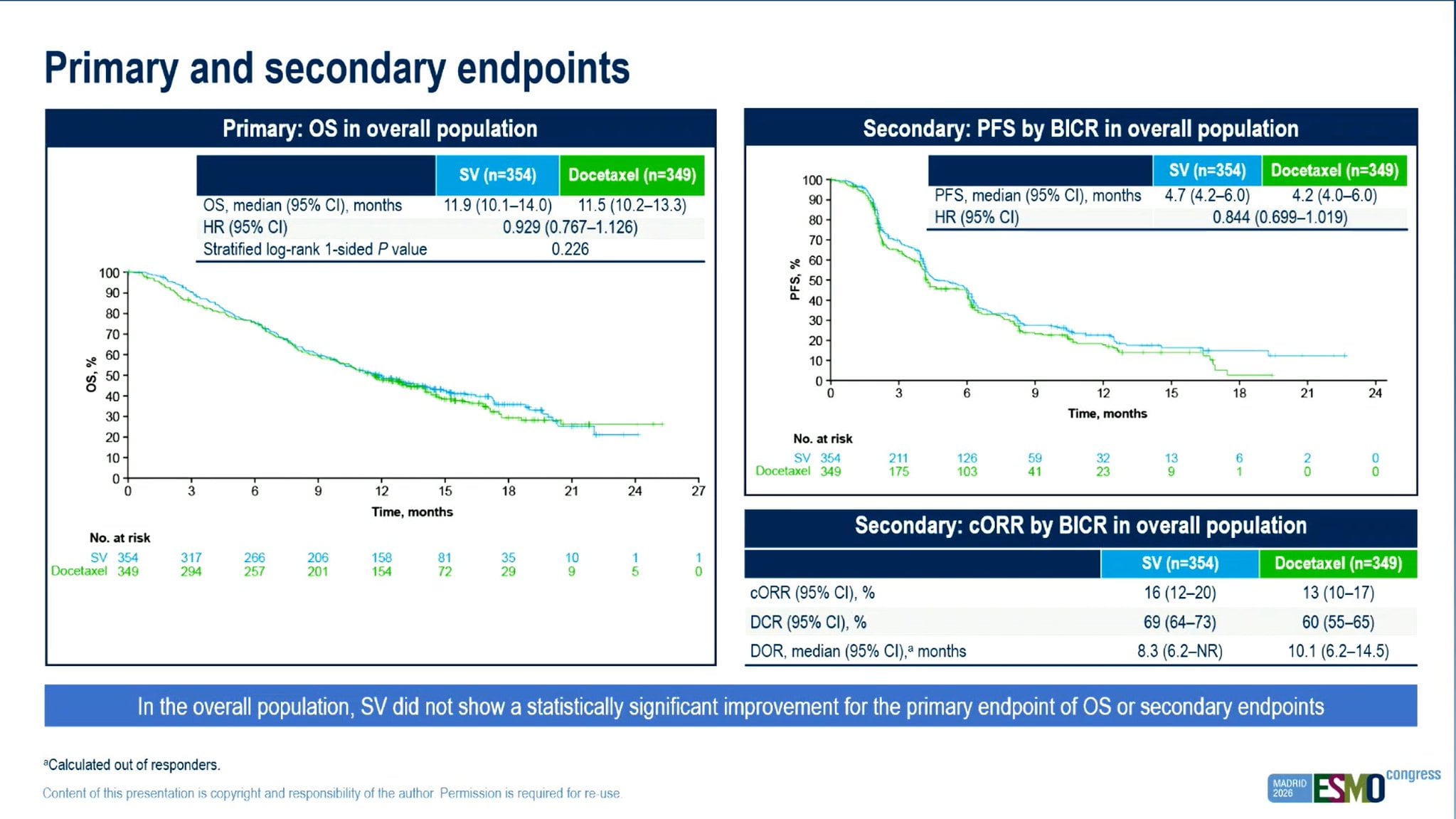
Phase 3, N=703: sigvotatug vedotin (Pfizer), an integrin beta-6 ADC, vs docetaxel. The primary endpoint was not met: OS 11.9 vs 11.5 months, HR 0.929 (95% CI 0.767–1.126), one-sided P=0.226. PFS by BICR 4.7 vs 4.2 months, HR 0.844 (0.699–1.019), not significant. In a post hoc second-line subgroup, OS was 13.6 vs 11.1 months, unstratified HR 0.831 (0.658–1.049); this is hypothesis-generating only. Grade ≥3 treatment-related AEs 33% vs 36%. (ESMO 2026 LBA68, Solange Peters; data cutoff May 18, 2026) Sigvotatug vedotin is investigational and not FDA approved for any use. (KOL Pulse SigVie-002 page)

Physicians called it negative and noted how hard docetaxel remains to beat with an ADC in second line.
Two Phase 3 trials of the TROP2 ADC sacituzumab tirumotecan were presented together in the same session: OptiTROP-Lung06 (LBA66) and OptiTROP-Lung04 (LBA67).
OptiTROP-Lung06: sacituzumab tirumotecan + pembrolizumab in PD-L1-negative non-squamous NSCLC
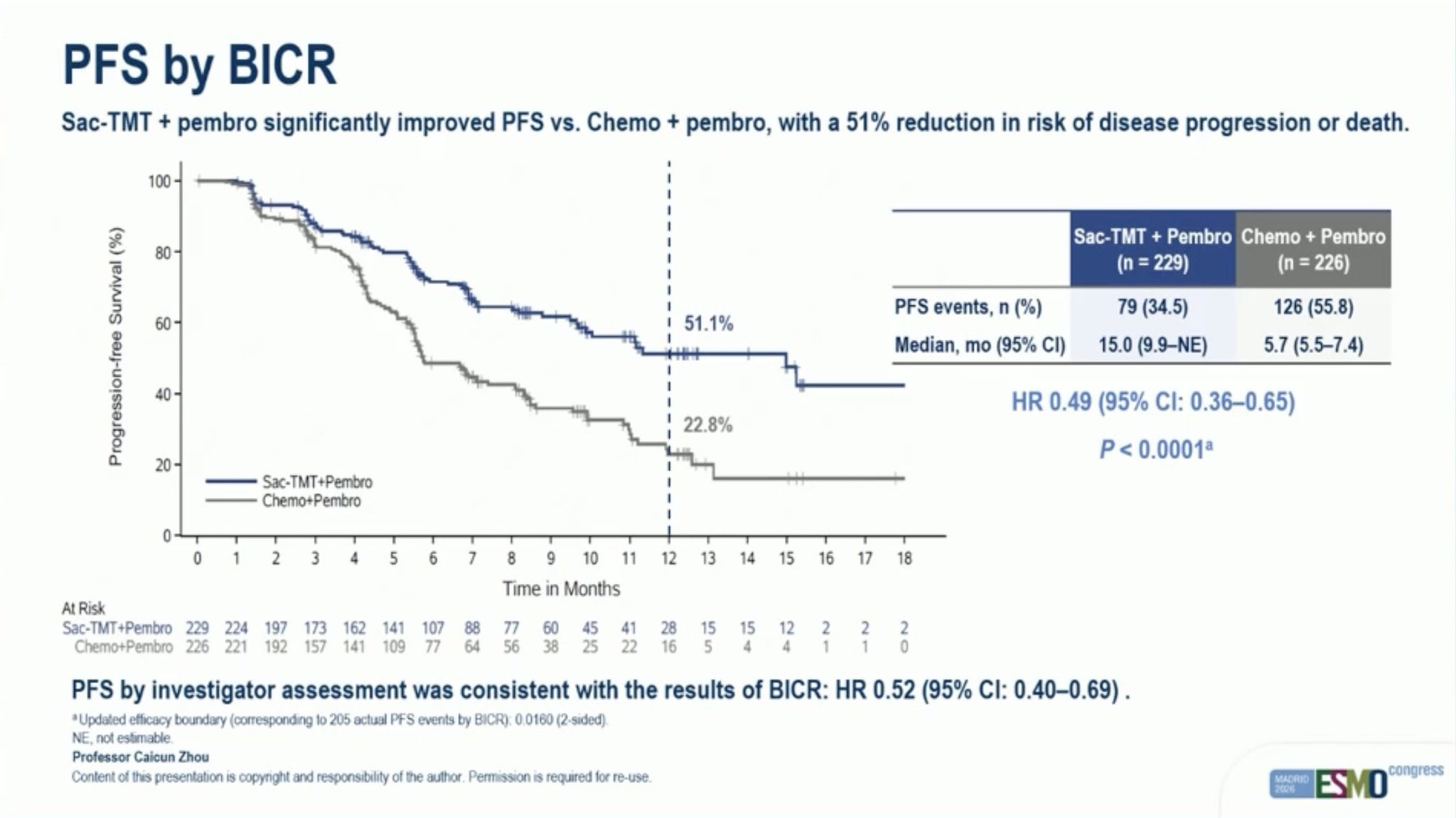
A first-line Phase 3 comparing the TROP2 ADC sacituzumab tirumotecan plus pembrolizumab with chemotherapy plus pembrolizumab drew the fifth-most physician posts of the day. Physicians called the PFS result strong; one questioned calling it chemotherapy-free and wanted a larger survival advantage, with OS still immature. Sacituzumab tirumotecan is not approved by the FDA or the EMA for any use, and first-line use with pembrolizumab is investigational in every region; in China it is approved for other breast and lung cancer indications. (KOL Pulse OptiTROP-Lung06 page)

OptiTROP-Lung04: sacituzumab tirumotecan vs platinum chemotherapy in EGFR-mutated NSCLC after an EGFR TKI
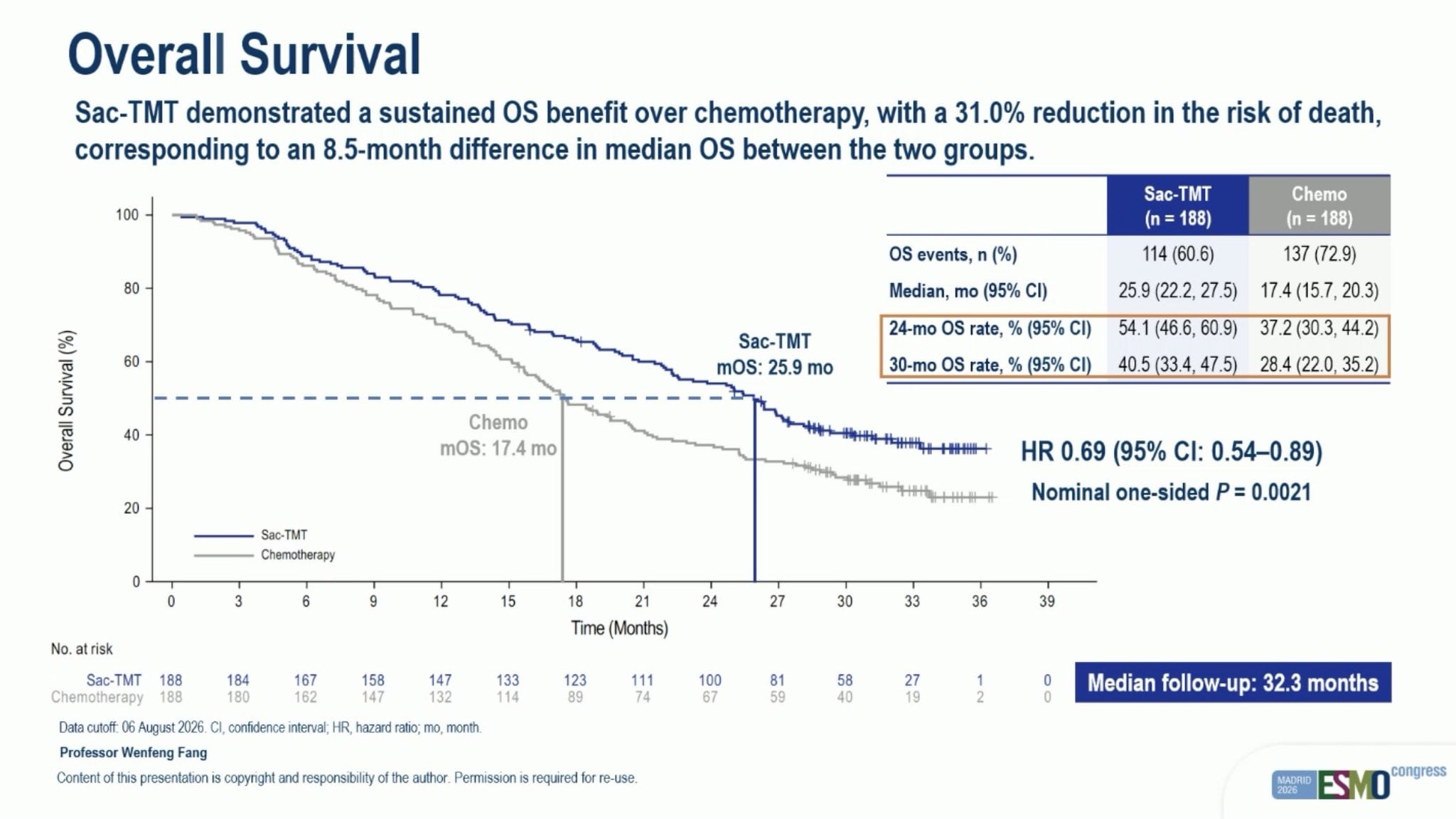
Presented in the same session as OptiTROP-Lung06. Phase 3, N=376, conducted in China (Kelun-Biotech): sacituzumab tirumotecan vs pemetrexed plus platinum in EGFR-mutated non-squamous NSCLC that progressed on an EGFR TKI. PFS by BICR was the primary endpoint and OS the key secondary endpoint; both were significantly improved at the prespecified interim analysis, published in NEJM in 2025. (ClinicalTrials.gov NCT05870319; LBA67 abstract) At the prespecified final OS analysis, median OS was 25.9 vs 17.4 months, HR 0.69 (95% CI 0.54–0.89), nominal one-sided p=0.0021. 24-month OS was 54.1% vs 37.2%. In the chemotherapy arm, 22.6% of patients later received an ADC; adjusted for this with the prespecified RPSFT model, median OS was 25.9 vs 16.6 months, HR 0.57 (0.42–0.75). No new safety signals emerged with longer follow-up. (ESMO 2026 LBA67, Wenfeng Fang; final OS analysis, data cutoff Aug 6, 2026; median follow-up 32.3 months) Sacituzumab tirumotecan is approved in China for EGFR-mutated non-squamous NSCLC after an EGFR TKI. It is not approved by the FDA or the EMA for any use. MSD holds the rights outside Greater China. (Kelun-Biotech release, October 25, 2026; openFDA; EMA medicines database) Another TROP2 ADC, datopotamab deruxtecan (DATROWAY), holds FDA accelerated approval for EGFR-mutated NSCLC after EGFR-directed therapy and platinum-based chemotherapy. (DATROWAY US prescribing information)

Lung cancer oncologists described the survival gain as impressive. Their questions: the nominal p-value at the final analysis, a China-only population and the need for global data, fewer subsequent therapies and more toxicity in the sacituzumab tirumotecan arm, and whether to give an ADC or chemotherapy first after an EGFR TKI, given that the US label for datopotamab deruxtecan requires prior platinum-based chemotherapy. According to a post by Tom John, the invited discussant, Melissa L. Johnson, attributed differences in toxicity between the sacituzumab tirumotecan trials to dose; her slide compared 5 mg/kg in OptiTROP-Lung04 with 4 mg/kg in OptiTROP-Lung06. (Discussant slide, KOL Pulse OptiTROP-Lung06 page; remark as reported by @TommyJohn00 on X, Oct 25)
Kidney and prostate cancer
LITESPARK-012: no gain from a third drug added to first-line pembrolizumab + lenvatinib
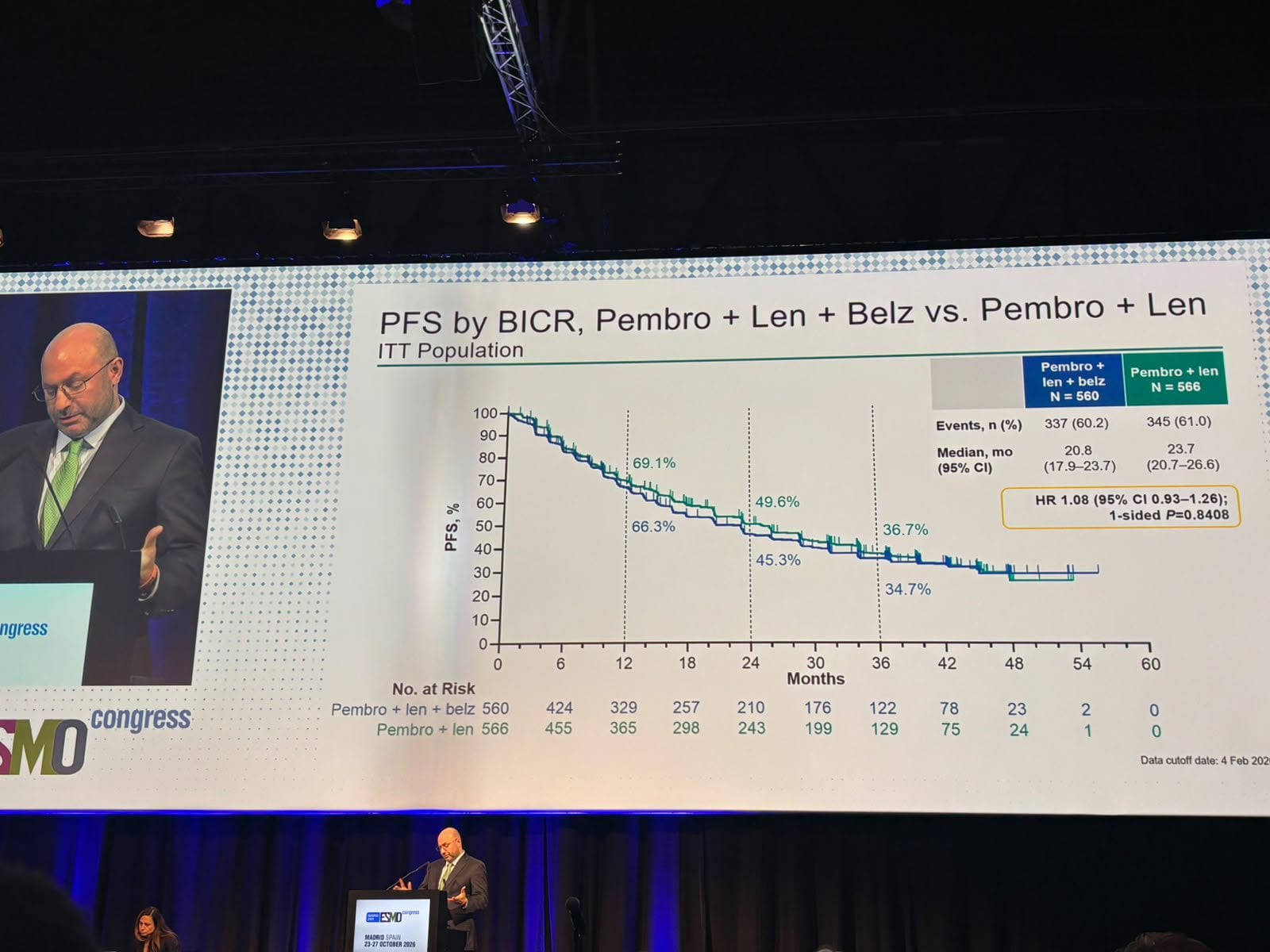
Phase 3, N=1,688, first-line advanced clear-cell RCC (Merck; Eisai collaborator). Belzutifan + pembrolizumab + lenvatinib vs pembrolizumab + lenvatinib missed both dual primary endpoints: PFS by BICR 20.8 vs 23.7 months, HR 1.08 (95% CI 0.93–1.26); OS 52.0 months vs not reached, HR 1.04 (0.87–1.25). The quavonlimab triplet (MK-1308A + lenvatinib) was tested first in IMDC intermediate/poor-risk patients and also missed: PFS HR 1.12 (0.94–1.33), OS HR 1.17 (0.96–1.42). In all randomized patients (nominal, not formally tested), the quavonlimab triplet’s PFS HR was 1.07 and OS HR 1.12. ORR was 69.1% and 69.0% with the triplets vs 76.3% with the doublet. AEs led to discontinuation of any drug in 51.6% and 51.4% vs 36.2%. (ESMO 2026 3586O, Toni Choueiri; Annals of Oncology; data cutoff Feb 4, 2026; median follow-up 43.6 months) Both triplets are investigational. Pembrolizumab + lenvatinib is FDA approved for first-line advanced RCC. (KOL Pulse LITESPARK-012 page)

GU oncologists asked why the triplets failed. Explanations offered included toxicity limiting dose intensity of an already active doublet, and a ceiling on combining current drug classes.

DASL-HiCaP: darolutamide with ADT and radiotherapy in very high-risk localized prostate cancer
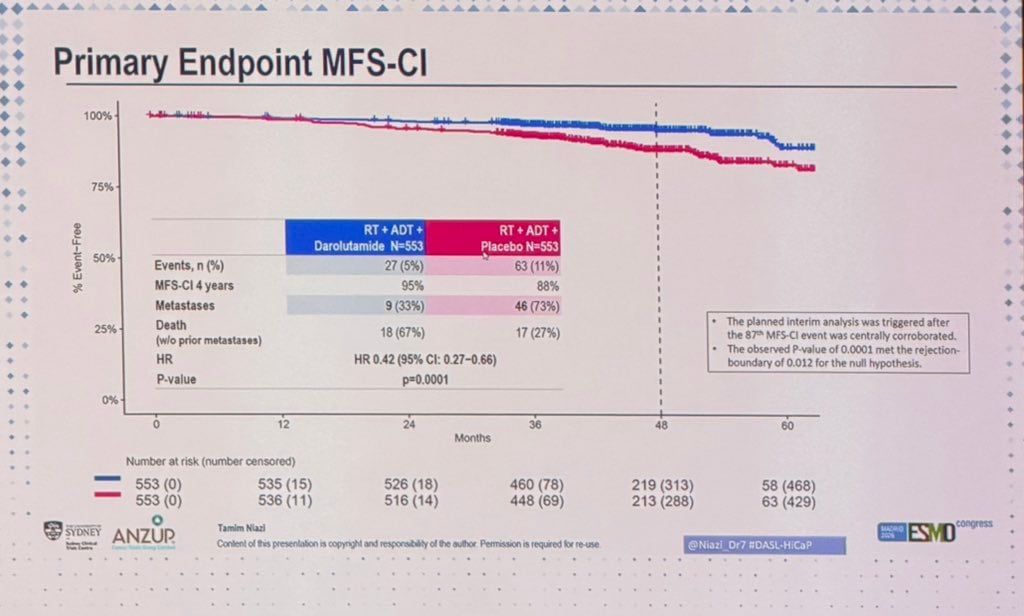
Presented on Day 2 and still discussed on Day 3. Phase 3, N=1,106 (University of Sydney/ANZUP; funded by Bayer): darolutamide vs placebo, each with ADT and radiotherapy. The primary endpoint, metastasis-free survival by conventional imaging, was met at a prespecified interim analysis: 4-year MFS 95% vs 88%, HR 0.42 (95% CI 0.27–0.66), p=0.0001. OS is immature: HR 0.88 (0.49–1.59). Grade ≥3 AEs 43% vs 36%. (ESMO 2026 LBA4, Tamim Niazi; interim analysis after 87 events; median follow-up 3.8 years) Darolutamide is investigational in this setting. NUBEQA is FDA approved for nmCRPC and mCSPC. (KOL Pulse DASL-HiCaP page)

Physicians weighed darolutamide against adjuvant abiraterone, which has mature OS data from STAMPEDE.
Melanoma
NADINA at 3 years, read next to INTerpath-001
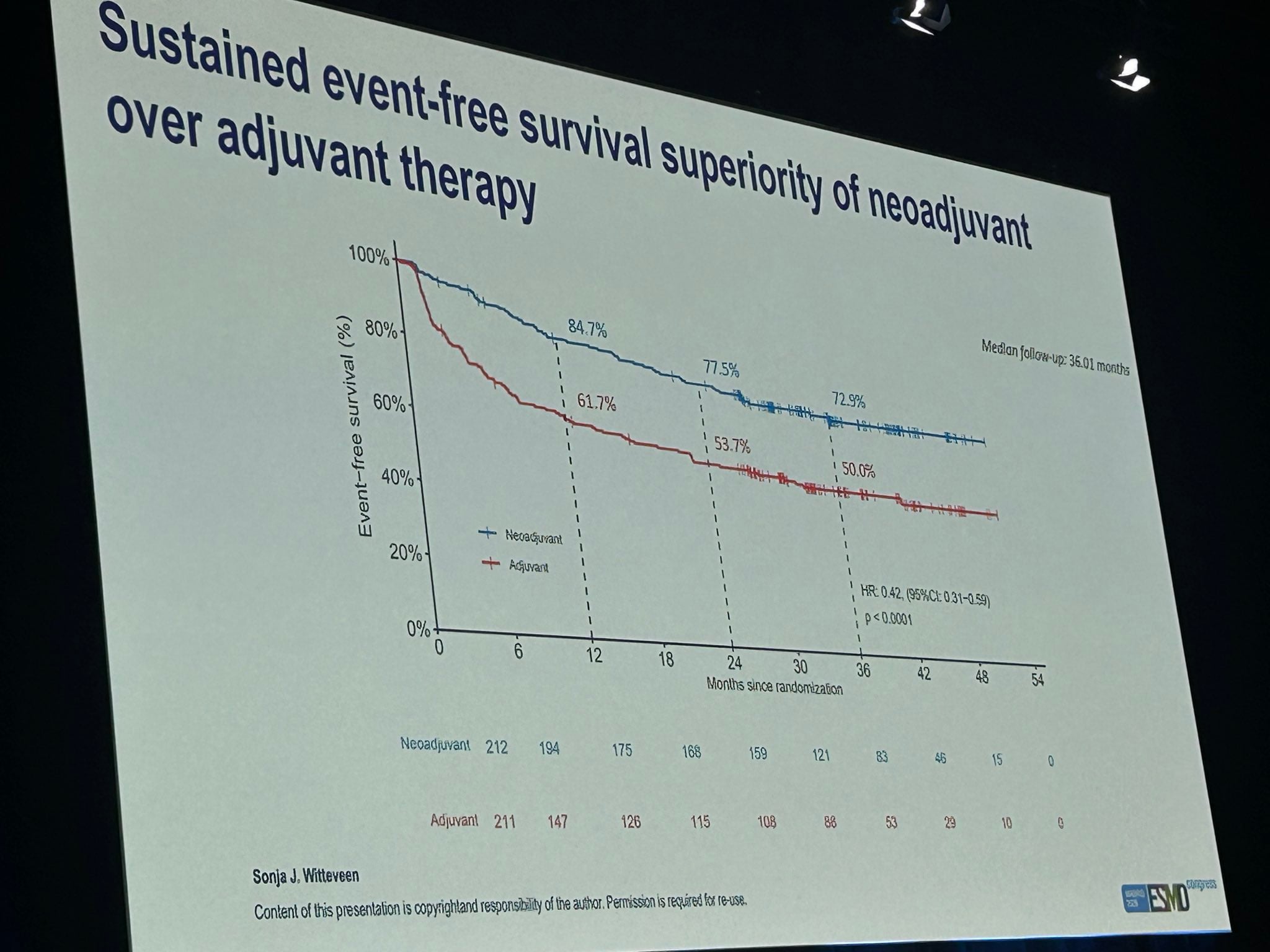
NADINA, Phase 3, N=423, resectable macroscopic stage III melanoma: two cycles of neoadjuvant ipilimumab + nivolumab, then surgery and response-driven adjuvant therapy, vs surgery and adjuvant nivolumab. 3-year EFS 72.9% vs 50.0%, HR 0.42 (95% CI 0.31–0.59); 3-year DMFS 75.3% vs 57.4%, HR 0.46 (0.32–0.66). Grade ≥3 systemic treatment-related AEs 31.6% vs 15.9%. (ESMO 2026 2076RO, Sonja J. Witteveen; data cutoff Mar 30, 2026; median follow-up 36 months) The primary endpoint, event-free survival, was met in 2024: 12-month EFS 83.7% vs 57.2%, HR 0.32 (99.9% CI 0.15–0.66). (NEJM 2024; data cutoff Jan 12, 2024) OS has not been reported. By pathologic response, 3-year RFS was 91.3% after pCR and 62.3% after near-pCR (no adjuvant therapy) vs 87.5% after partial response (adjuvant therapy), in small groups. (2076RO) Neoadjuvant ipilimumab + nivolumab is not an FDA-labeled indication; adjuvant nivolumab, the control arm, is FDA approved. (KOL Pulse NADINA page)
INTerpath-001, presented by Georgina Long on Day 2, tested intismeran autogene plus pembrolizumab vs pembrolizumab alone in a different population (resected stage IIB–IV): RFS HR 0.58 (95% CI 0.45–0.75), 24-month RFS 82.2% vs 70.0%; OS immature (HR 0.77). Intismeran autogene is investigational. (ESMO 2026 LBA1; KOL Pulse INTerpath-001 page) Comparing the two trials is cross-trial, not head-to-head.

Melanoma oncologists asked whether patients with near-pCR should still receive adjuvant therapy. Others asked where a personalized vaccine fits now that neoadjuvant immunotherapy is an option.

Breast cancer
KEYNOTE-B49: pembrolizumab + chemotherapy in PD-L1-positive HR+/HER2− advanced breast cancer
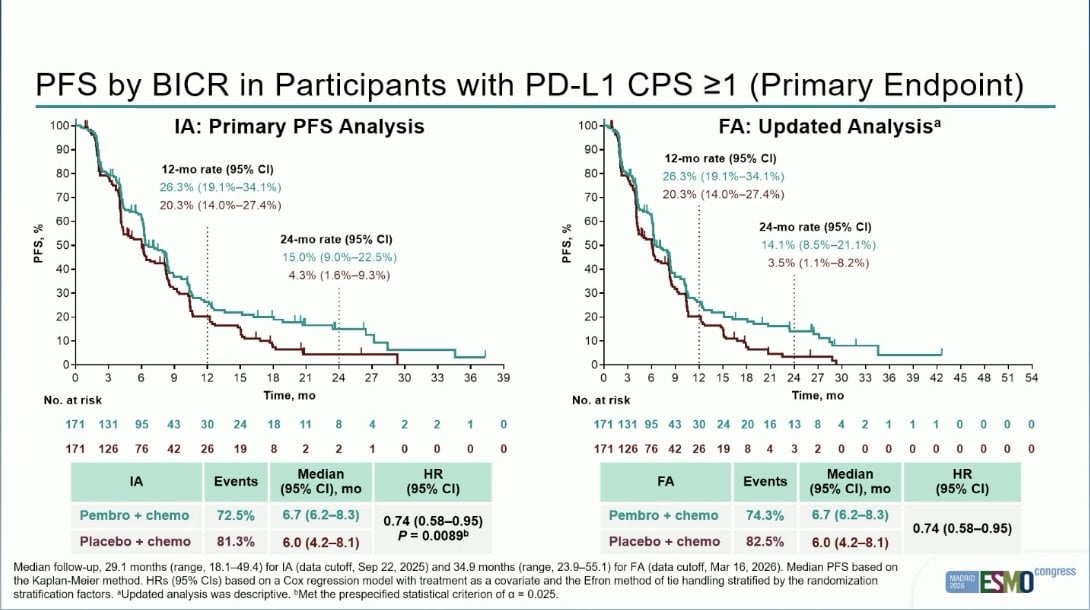
Presented on Day 2 and still discussed on Day 3. Phase 3, N=342, PD-L1 CPS ≥1, after endocrine therapy (Merck). PFS by BICR, the primary endpoint, was met: 6.7 vs 6.0 months, HR 0.74 (95% CI 0.58–0.95), P=0.0089. (ESMO 2026 LBA51, Hope S. Rugo; interim analysis, data cutoff Sep 22, 2025) OS, the key secondary endpoint, was not met: 21.0 vs 22.2 months, HR 1.04 (0.81–1.33). Grade ≥3 treatment-related AEs 37.6% vs 32.7%. (LBA51; final analysis, data cutoff Mar 16, 2026) Pembrolizumab plus chemotherapy is investigational in HR+/HER2− breast cancer; KEYTRUDA’s FDA-approved breast cancer indications are in triple-negative disease. (KOL Pulse KEYNOTE-B49 page)

Breast oncologists questioned whether a PFS-only gain in this setting justifies adding immunotherapy.
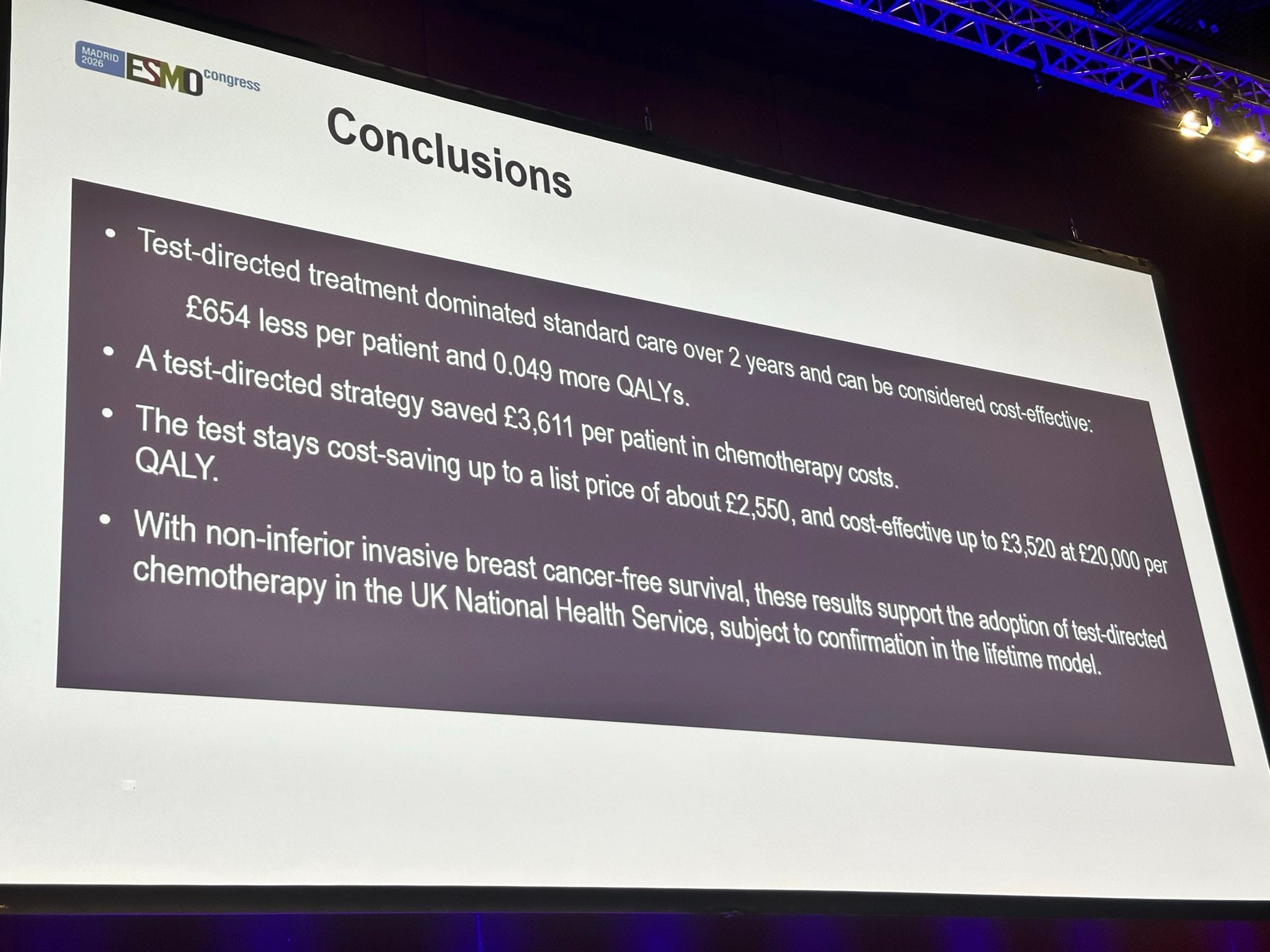
OPTIMA: the cost side of test-directed chemotherapy
OPTIMA (UK NIHR, UCL, Warwick CTU) tested Prosigna (PAM50) test-directed chemotherapy vs chemotherapy for all in clinically high-risk, node-positive HR+/HER2− early breast cancer. Non-inferiority for invasive breast cancer-free survival was reported at ASCO 2026. It is a strategy trial, not a drug approval; Prosigna is an FDA-cleared test. (KOL Pulse OPTIMA page) At ESMO 2026 (LBA86, Peter S. Hall), the investigators presented the prespecified 2-year within-trial economic evaluation from the UK NHS perspective (n=3,425). Test-directed treatment cost £654 less per patient (95% CI −£1,525 to £218, which crosses zero) and gave 0.05 more QALYs (0.02 to 0.08) than chemotherapy for all; 32% of the test-directed arm received chemotherapy. (ESMO 2026 LBA86, Peter S. Hall; KOL Pulse OPTIMA page) Breast surgeon Peter Dubsky summarized the conclusions below.

Also on Day 3
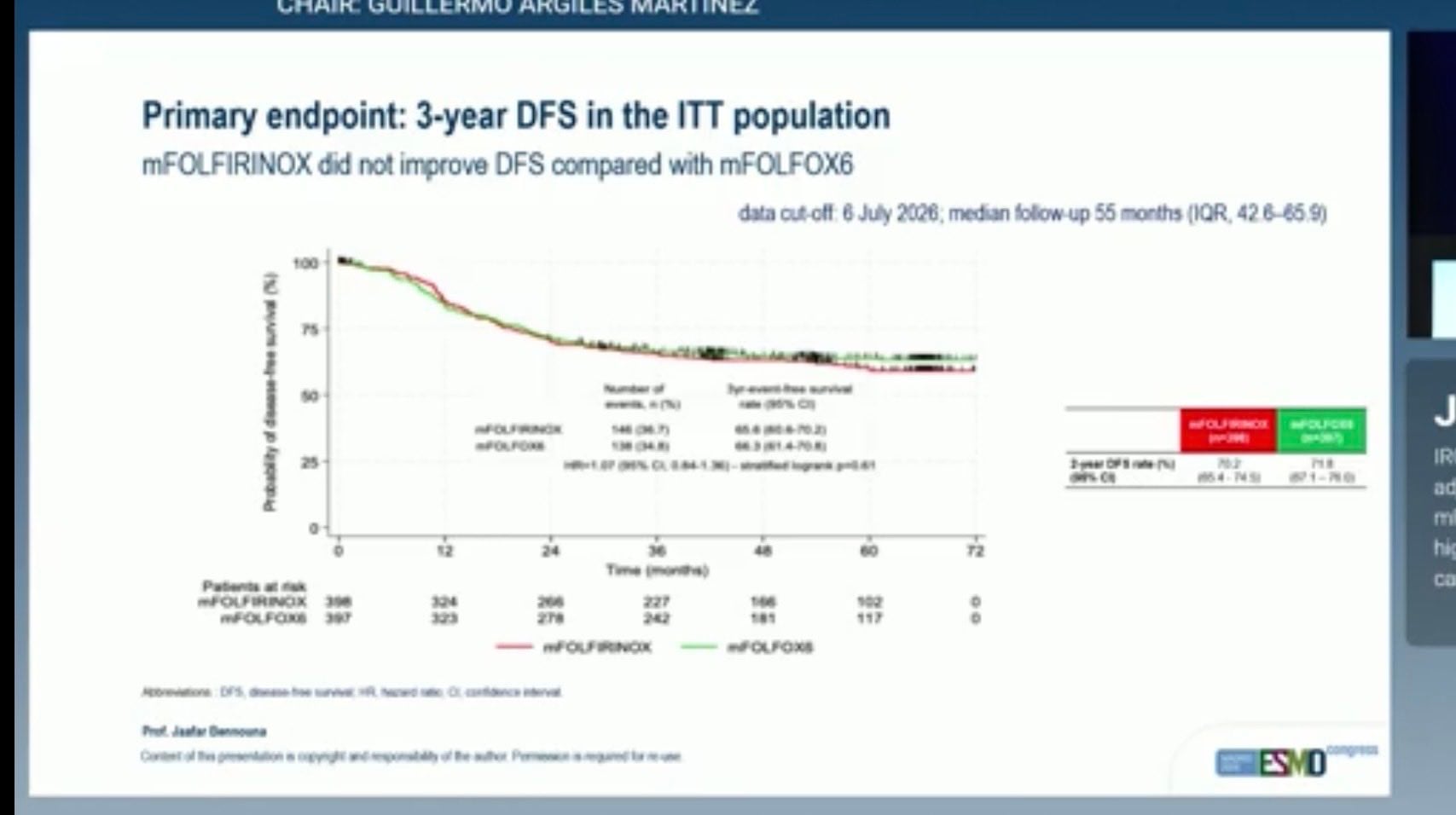
IROCAS: mFOLFIRINOX vs mFOLFOX6 in high-risk stage III colon cancer
Intensifying adjuvant chemotherapy with irinotecan did not improve disease-free survival. GI oncologists said FOLFOX remains the standard.

DeLLphi-305, continued
The Day 2 debate over DeLLphi-305 carried into Day 3, with a thoracic oncologist questioning how few US patients were enrolled in the pivotal trial. First-line tarlatamab plus durvalumab is investigational; tarlatamab is FDA approved after platinum chemotherapy. Results and the crossover debate are in the Days 1–2 roundup.
What to watch, Days 4–5
- Regulatory next steps: Genentech plans submissions for divarasib. In the US, ivonescimab in biliary tract cancer will be tested in ECOG-ACRIN EA2251.
- Follow-up data: OS is immature in DASL-HiCaP. HARMONi-GI1 and CLARITY-Gastric01 results come from interim analyses. KEYNOTE-B49 did not show an OS benefit, and PERSEE was not powered for OS.
- New readouts through October 27, on the ESMO 2026 trials page and the slide library.
FAQ
Which ESMO 2026 trials did physicians discuss most on Day 3?
By physician posts on X on October 25, the most-discussed trials included KRASCENDO-1, SAFFRON, PERSEE, HARMONi-GI1, OptiTROP-Lung06, LITESPARK-012 and CLARITY-Gastric01.
What did KRASCENDO-1 show?
Divarasib improved PFS over sotorasib or adagrasib in previously treated KRAS G12C-mutated NSCLC (9.8 vs 5.7 months, HR 0.58) and OS (17.7 vs 12.0 months, HR 0.56) (ESMO 2026 LBA5, data cutoff May 19, 2026). Divarasib is investigational; sotorasib and adagrasib hold FDA accelerated approvals.
Is osimertinib plus savolitinib approved after osimertinib?
Not in the US, where it is investigational (FDA Fast Track). SAFFRON showed PFS HR 0.55 and OS HR 0.68 vs platinum-pemetrexed in MET-overexpressed or MET-amplified EGFR-mutated NSCLC (ESMO 2026 LBA6). The combination is approved in China based on the SACHI trial.
Did CLARITY-Gastric01 meet its primary endpoints?
One of two. OS in third line or later was met (10.0 vs 5.0 months, HR 0.47). PFS by central review in all second-line-or-later patients was not met (HR 0.77, P=0.053). OS in that population, the key secondary endpoint, was met (HR 0.58). Sonesitatug vedotin is investigational.
Did adding belzutifan improve first-line pembrolizumab plus lenvatinib in RCC?
No. In LITESPARK-012, the belzutifan triplet missed PFS (HR 1.08) and OS (HR 1.04), and the quavonlimab triplet also missed both endpoints. Pembrolizumab plus lenvatinib remains the FDA-approved regimen; both triplets are investigational.
KOL Pulse tracks what oncologists and hematologists post on X. Posts quoted here are shown in full, verbatim, and link to their source. Trial figures come from KOL Pulse trial pages, with the source and data cutoff in parentheses.