ESMO 2026: Top GU Cancer Trials and KOL Voices
On October 26, the FDA approved talazoparib + enzalutamide, based on TALAPRO-3, for adults with HRR gene-mutated metastatic androgen pathway modulation-naïve or -sensitive (mAPMN/S) prostate cancer. GU oncologist Karine Tawagi flagged the open questions: “OS immature, G≥3 anemia 51%, 40% transfused; no docetaxel-triplet comparator” On October 25, kidney cancer took over. In LITESPARK-012, adding belzutifan or CTLA-4 blockade to first-line pembrolizumab + lenvatinib improved neither PFS nor OS. Yüksel Ürün, who contributed to the trial: “A reminder that adding more drugs does not always mean better outcomes.” The LITESPARK-011 final analysis kept the PFS benefit of FDA-approved belzutifan + lenvatinib without a significant OS benefit, Sumanta K. Pal presented Phase 1 data for the T-cell engager XmAb819, and PE-PE tested pembrolizumab with metastasis-directed therapy in oligometastatic RCC. Earlier in the meeting, VOLGA led GU discussion, KEYNOTE-866 and ENERGIZE were negative, and DASL-HiCaP met its primary endpoint at an interim analysis. Below: the Day 3–4 trials first, then the Day 1–2 trials, each with the result, a presented slide and physician posts, then the top GU voices and the last GU session.
Physician discussion of GU trials, October 23–26
Physician posts on X, October 23–26.
| # | Trial | Physician posts | Physicians posting |
|---|---|---|---|
| 1 | VOLGA | 86 | 46 |
| 2 | DASL-HiCaP | 43 | 28 |
| 3 | KEYNOTE-866 | 41 | 25 |
| 4 | KEYNOTE-905 / EV-303 | 31 | 21 |
| 5 | KEYNOTE-B15 / EV-304 | 31 | 20 |
| 6 | ENERGIZE | 29 | 20 |
| 7 | LITESPARK-012 | 28 | 19 |
| 8 | LITESPARK-011 | 24 | 16 |
| 8 | PROTEUS | 24 | 16 |
| 10 | XmAb819 Phase 1 | 23 | 15 |
| 11 | JNJ-6143 Phase 1 | 18 | 14 |
| 12 | PEACE-1 | 16 | 12 |
| 13 | TALAPRO-3 | 11 | 9 |
| 14 | PE-PE | 9 | 7 |
VOLGA, DASL-HiCaP and KEYNOTE-866 lead the congress. The newest trials in the table are LITESPARK-012, LITESPARK-011, XmAb819 and PE-PE, presented October 25, and TALAPRO-3, FDA approved October 26. Days 3–4 come first below, then the Day 1–2 bladder and prostate trials.
Day 4, October 26: FDA approval in prostate cancer
TALAPRO-3: FDA approval of talazoparib + enzalutamide in HRR gene-mutated mAPMN/S prostate cancer
On October 26, 2026, the FDA approved talazoparib (Talzenna, Pfizer) in combination with enzalutamide for adults with metastatic androgen pathway modulation-naïve or -sensitive (mAPMN/S) prostate cancer with homologous recombination repair (HRR) gene mutations, as detected by an FDA-authorized test. The companion diagnostics are FoundationOne CDx (tumor tissue) and FoundationOne Liquid CDx (blood). The approval is based on the Phase 3, double-blind TALAPRO-3 trial (NCT04821622): 599 patients randomized 1:1 to talazoparib or placebo, each with enzalutamide and continuous ADT. Investigator-assessed rPFS, the primary endpoint: median not reached vs 45.8 months, HR 0.48 (95% CI 0.36–0.65), p<0.0001. OS data were immature. Warnings and precautions include myelodysplastic syndrome/acute myeloid leukemia, myelosuppression and embryo-fetal toxicity. (FDA approval notice, October 26, 2026) At the same analysis, interim OS HR was 0.767 (95% CI 0.564–1.044), P=0.0905, not statistically significant. (NEJM / ASCO 2026 LBA5007; data cutoff Feb 18, 2026) This is a separate indication from the June 2023 approval of the combination in HRR gene-mutated mCRPC, which was based on TALAPRO-2. (KOL Pulse TALAPRO-3 page)
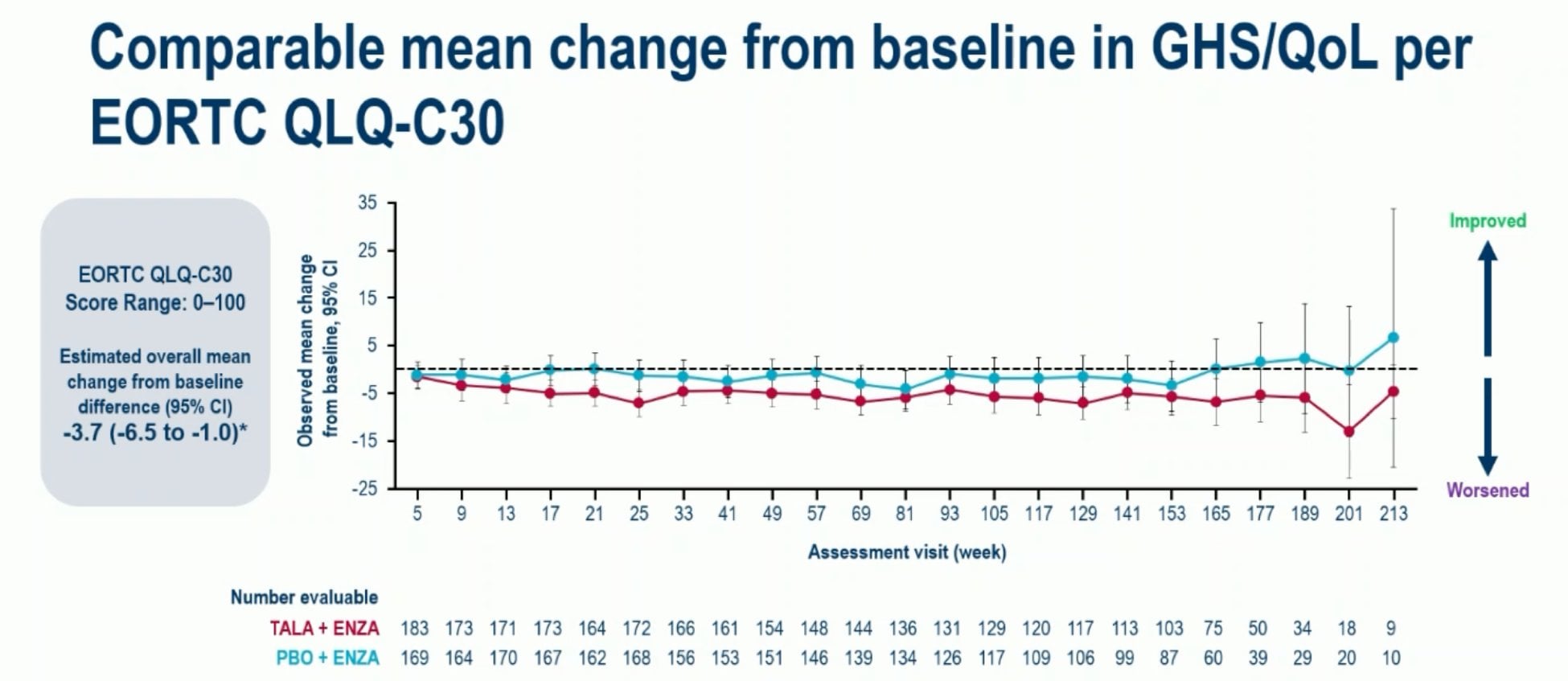
At ESMO 2026, TALAPRO-3 safety, patient-reported outcome, PSA and ctDNA analyses were presented. In the prespecified patient-reported outcome analysis, presented by Arun A. Azad on October 23 (2222RO), there were no clinically meaningful between-arm differences (≥5-point threshold) in GHS/QoL, functioning or symptom scales except appetite loss, which was worse with talazoparib + enzalutamide (difference 5.2, 95% CI 2.5–8.0). The GHS/QoL difference was −3.7 (−6.5 to −1.0). (ESMO 2026 2222RO, Arun A. Azad; data cutoff Feb 18, 2026)

Physicians welcomed the approval for patients with HRR gene mutations. The concerns raised on approval day were immature OS, frequent grade 3 or higher anemia and transfusions, and the lack of a docetaxel-triplet comparator. The ESMO safety analysis showed frequent dose reductions; urologic oncologist Rashid Sayyid summarized the hematologic toxicity as largely manageable.


Day 3, October 25: kidney cancer
LITESPARK-012: adding belzutifan or CTLA-4 blockade to first-line pembrolizumab + lenvatinib
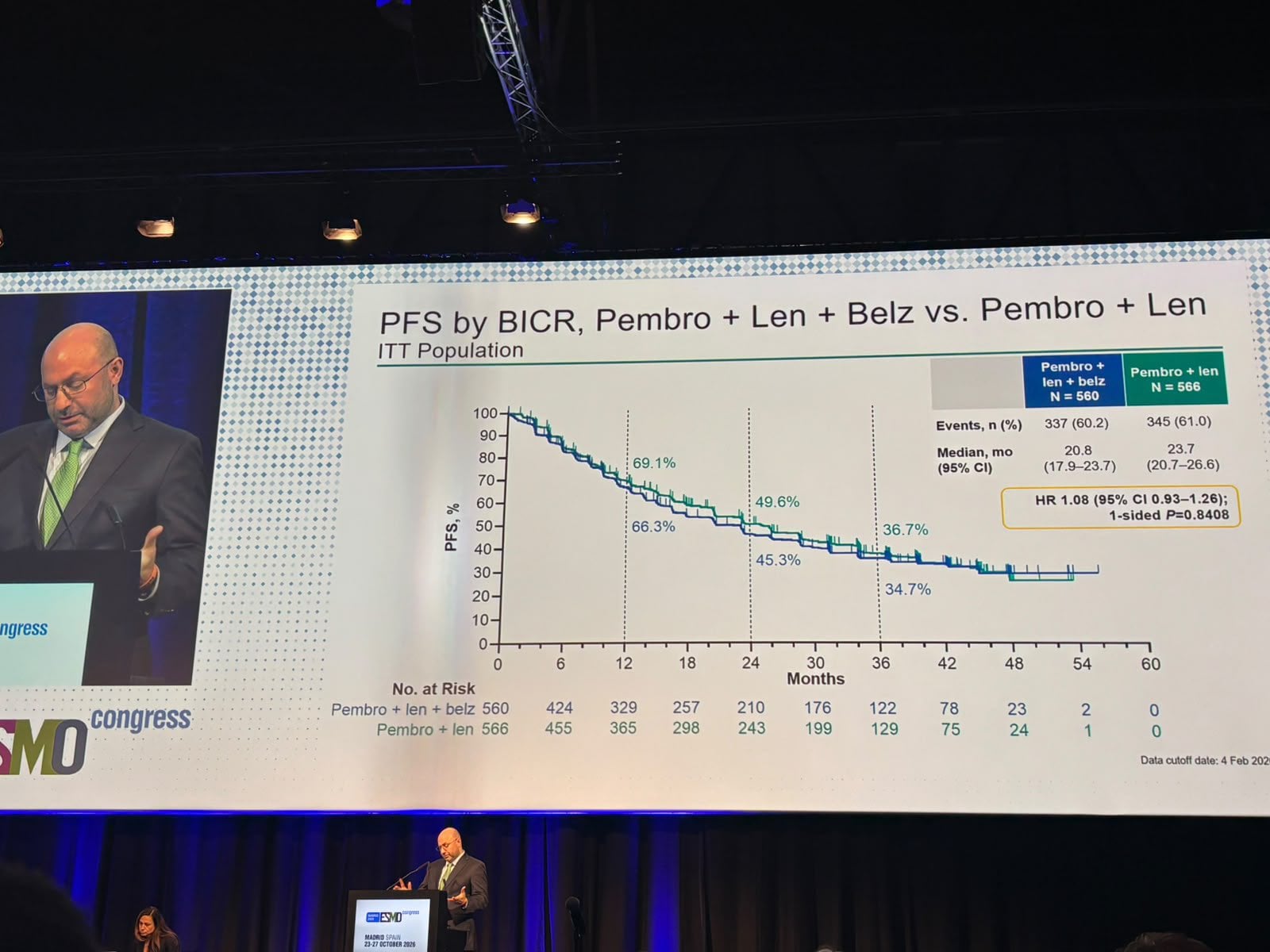
Phase 3, open-label, N=1,688, in previously untreated advanced clear cell RCC: pembrolizumab + lenvatinib with belzutifan, or with quavonlimab (an anti-CTLA-4 antibody) coformulated with pembrolizumab, vs pembrolizumab + lenvatinib. Toni Choueiri presented the trial (3586O), with a concurrent publication in Annals of Oncology. All dual primary endpoints were missed. Belzutifan triplet vs pembrolizumab + lenvatinib, all randomized patients: PFS by blinded central review median 20.8 vs 23.7 months, HR 1.08 (95% CI 0.93–1.26), one-sided P=0.8408; OS median 52.0 months vs not reached, HR 1.04 (0.87–1.25), one-sided P=0.6622. The quavonlimab triplet was tested first in IMDC intermediate/poor-risk patients: PFS HR 1.12 (0.94–1.33), one-sided P=0.8954; OS HR 1.17 (0.96–1.42), one-sided P=0.9419. In all randomized patients its PFS HR was 1.07 and OS HR 1.12, with nominal P values only. ORR 69.1% and 69.0% with the triplets vs 76.3%. Adverse events led to discontinuation of any drug in 51.6% and 51.4% vs 36.2%. (ESMO 2026 3586O slides, abstract and Annals of Oncology, Toni Choueiri; data cutoff Feb 4, 2026; median follow-up 43.6 months) Both triplets are investigational; pembrolizumab + lenvatinib, the control arm, is an FDA-approved first-line regimen. (KOL Pulse LITESPARK-012 page)

Physicians read the trial as a limit on stacking current drug classes. Explanations offered included toxicity reducing the dose intensity of the doublet and a strong control arm; others asked which patients, if any, need CTLA-4 blockade.
LITESPARK-011 final analysis: belzutifan + lenvatinib vs cabozantinib after PD-1/PD-L1 therapy
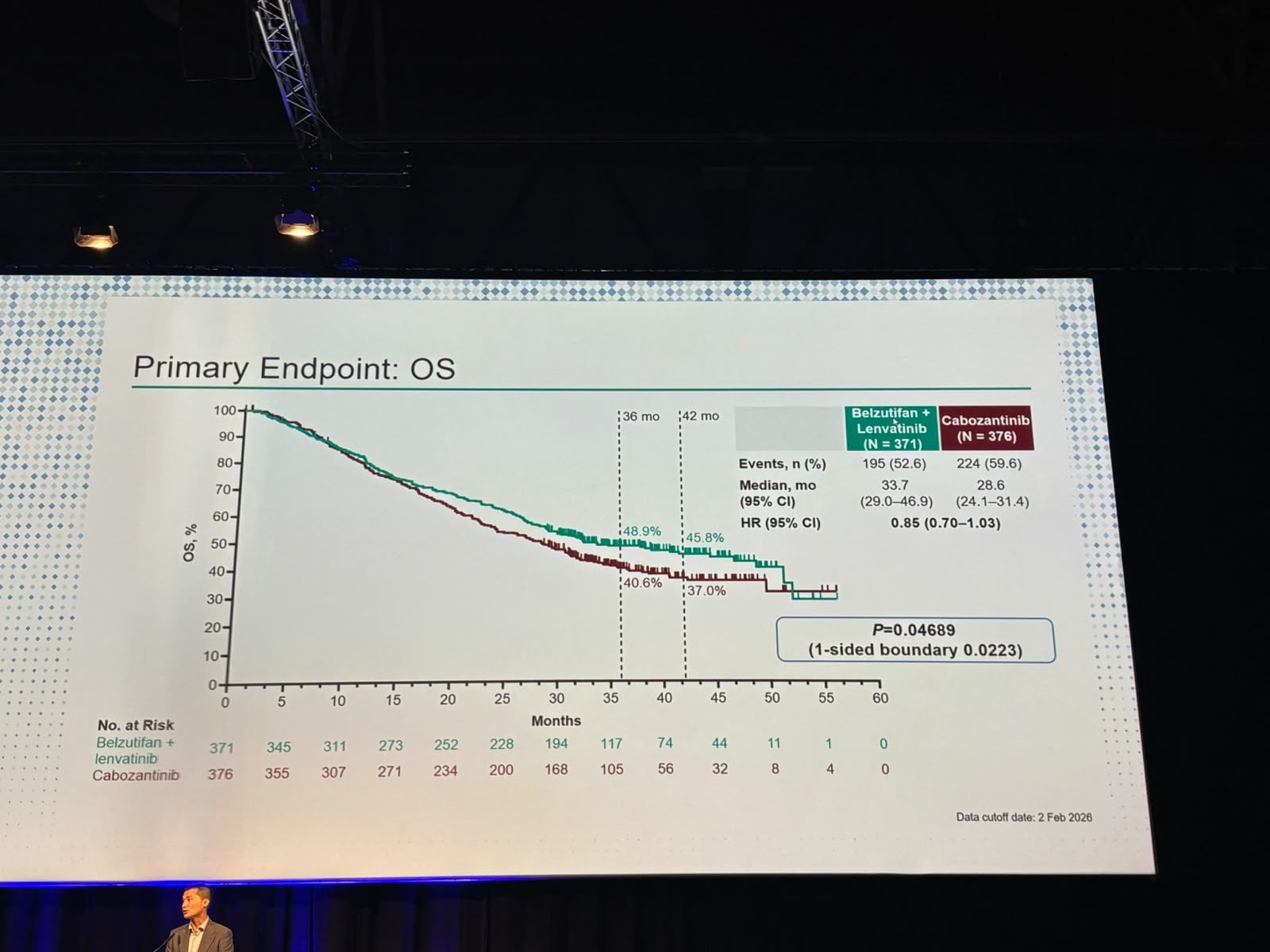
Phase 3, N=747, presented by Daniel Heng (3587O) and published at the same time in Annals of Oncology. Overall survival, a dual primary endpoint, was not statistically significant: median 33.7 vs 28.6 months, HR 0.85 (95% CI 0.70–1.03), one-sided P=0.04689 against a prespecified boundary of 0.0223. PFS by blinded central review: median 14.8 vs 10.8 months, HR 0.74 (0.62–0.88), not formally re-tested at this analysis. ORR 53.1% vs 40.2%; median duration of response 22.0 vs 11.9 months. Grade 3 or higher adverse events 85.4% vs 83.0%. (ESMO 2026 3587O / Annals of Oncology, final analysis; data cutoff Feb 2, 2026) PFS was statistically significant at the first interim analysis: median 14.6 vs 10.6 months, HR 0.74 (0.61–0.89), one-sided p=0.00095. (FDA label; first interim analysis (IA1), data cutoff Jun 26, 2024) The FDA approved belzutifan + lenvatinib on September 24, 2026 for adults with advanced RCC with a clear cell component after a PD-1 or PD-L1 inhibitor, based on PFS and ORR. No overall survival benefit has been demonstrated. (KOL Pulse LITESPARK-011 page)

Physicians agreed the PFS and response benefit held up and that OS missed significance. The debate was whether the combination should displace single-agent therapy after immunotherapy, given lenvatinib tolerability and cardiac toxicity.
XmAb819: an ENPP3 × CD3 T-cell engager in heavily pretreated clear cell RCC
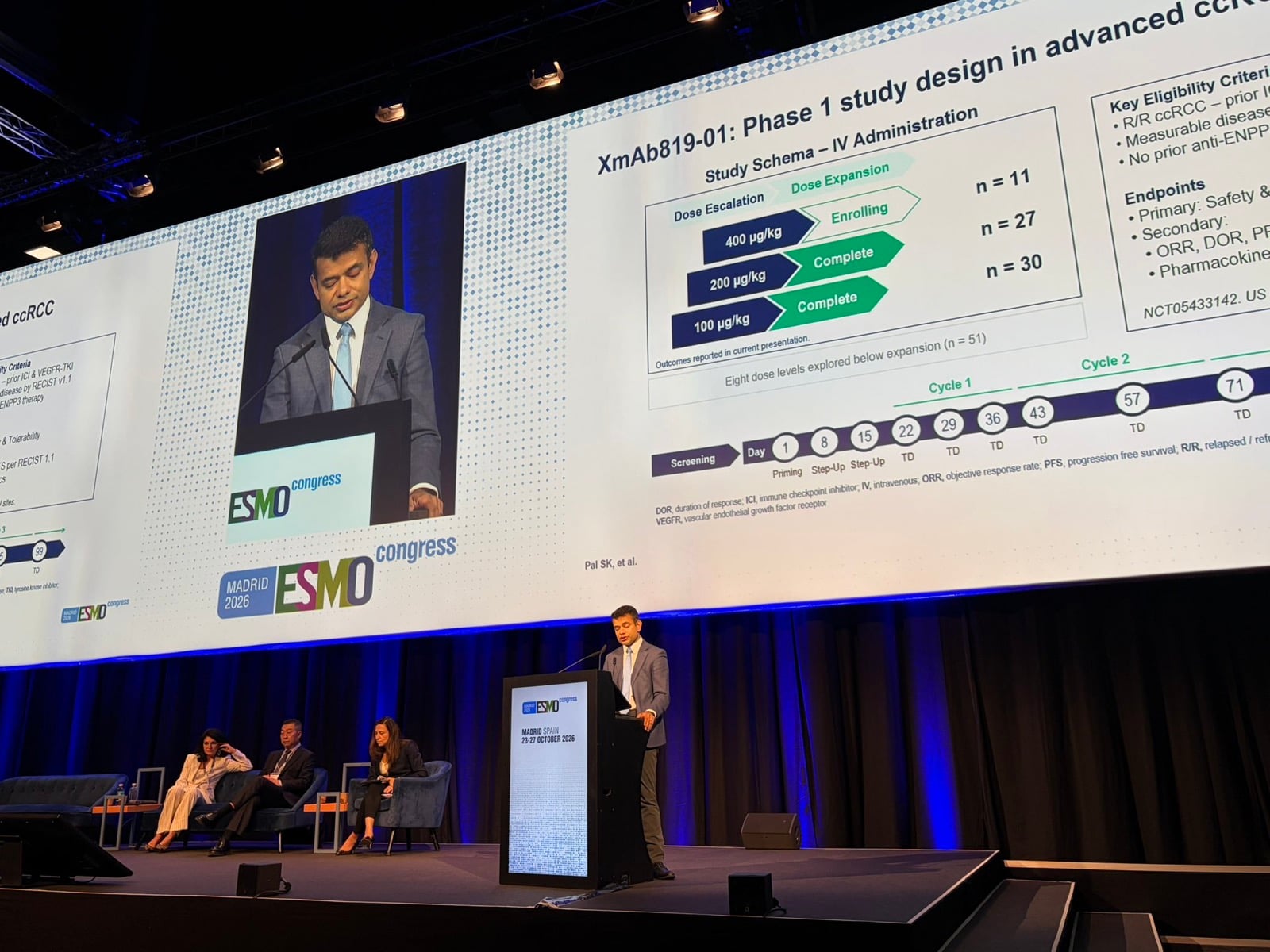
Phase 1 study (XmAb819-01, NCT05433142) of XmAb819, a bispecific T-cell engager that targets ENPP3, in patients with relapsed or refractory clear cell RCC after a checkpoint inhibitor and a VEGFR TKI. Sumanta K. Pal of City of Hope presented the data in the October 25 GU proffered paper session, and Manuela Schmidinger discussed it. XmAb819 is investigational. Source: XmAb819 presentation, ESMO 2026 program.

Physicians, including the LITESPARK-011 presenter, called the activity promising in heavily pretreated disease and pointed to ENPP3 as a new target in RCC. The caveat they raised: these are Phase 1 data, and randomized trials are needed. Pal’s own posts, quoted above, are on LITESPARK-011 and LITESPARK-012.
PE-PE: perioperative pembrolizumab with metastasis-directed therapy in oligometastatic RCC
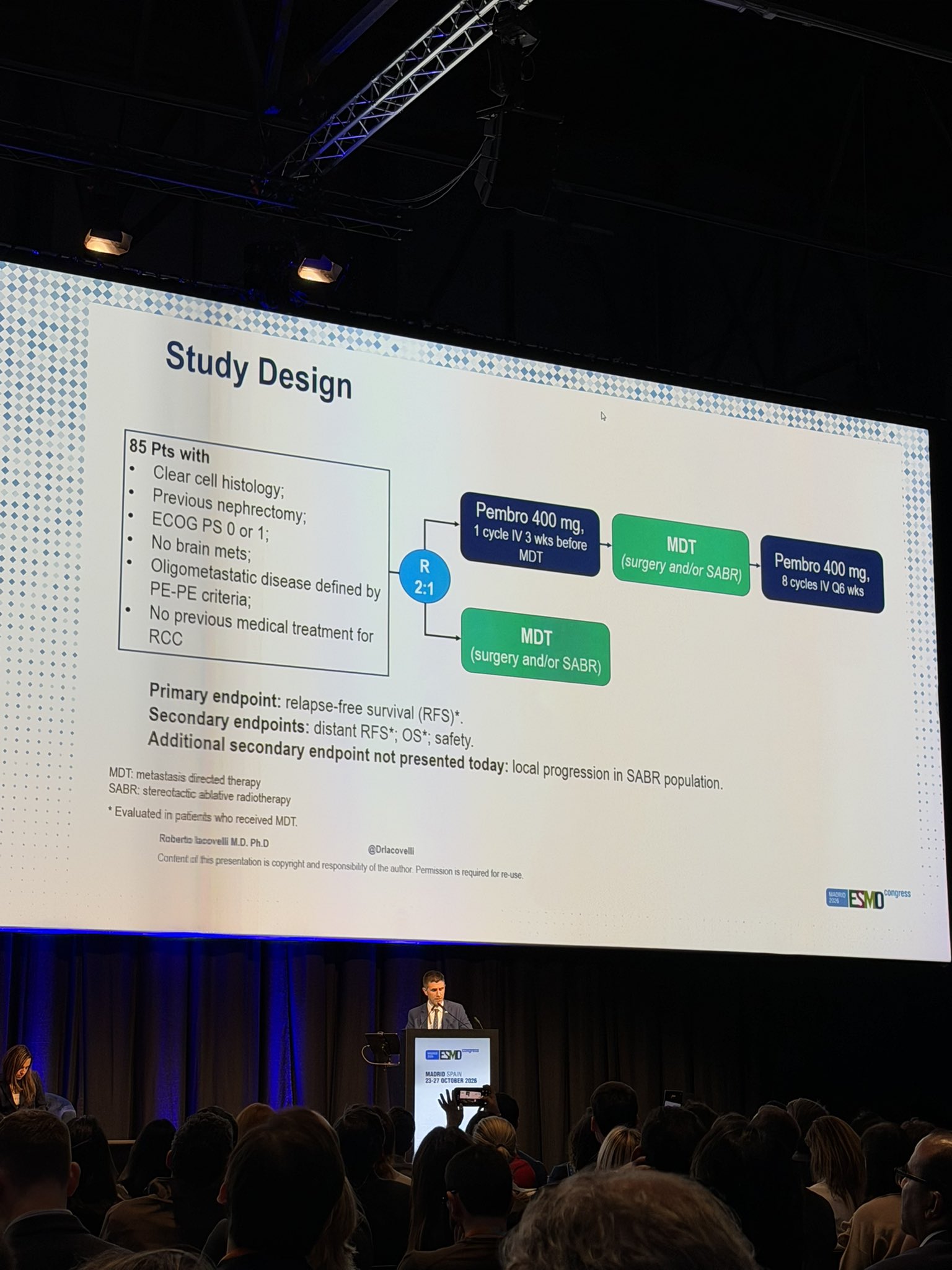
Randomized Phase 2 trial in oligometastatic clear cell RCC after previous nephrectomy, with no previous medical treatment for RCC: pembrolizumab before and after metastasis-directed therapy (surgery and/or SABR) vs metastasis-directed therapy alone, randomized 2:1. The primary endpoint is relapse-free survival. Roberto Iacovelli presented the results on October 25. Pembrolizumab with metastasis-directed therapy is investigational in oligometastatic RCC. Source: PE-PE presentation, ESMO 2026 program.

The presenter reported a benefit with pembrolizumab regardless of the type of metastasis-directed therapy. Physicians called the strategy promising, and one said it matches her current practice; the caveat raised was the need for longer follow-up.
Bladder cancer, October 23–24
VOLGA: durvalumab + 3 cycles of neoadjuvant EV, cisplatin-ineligible MIBC
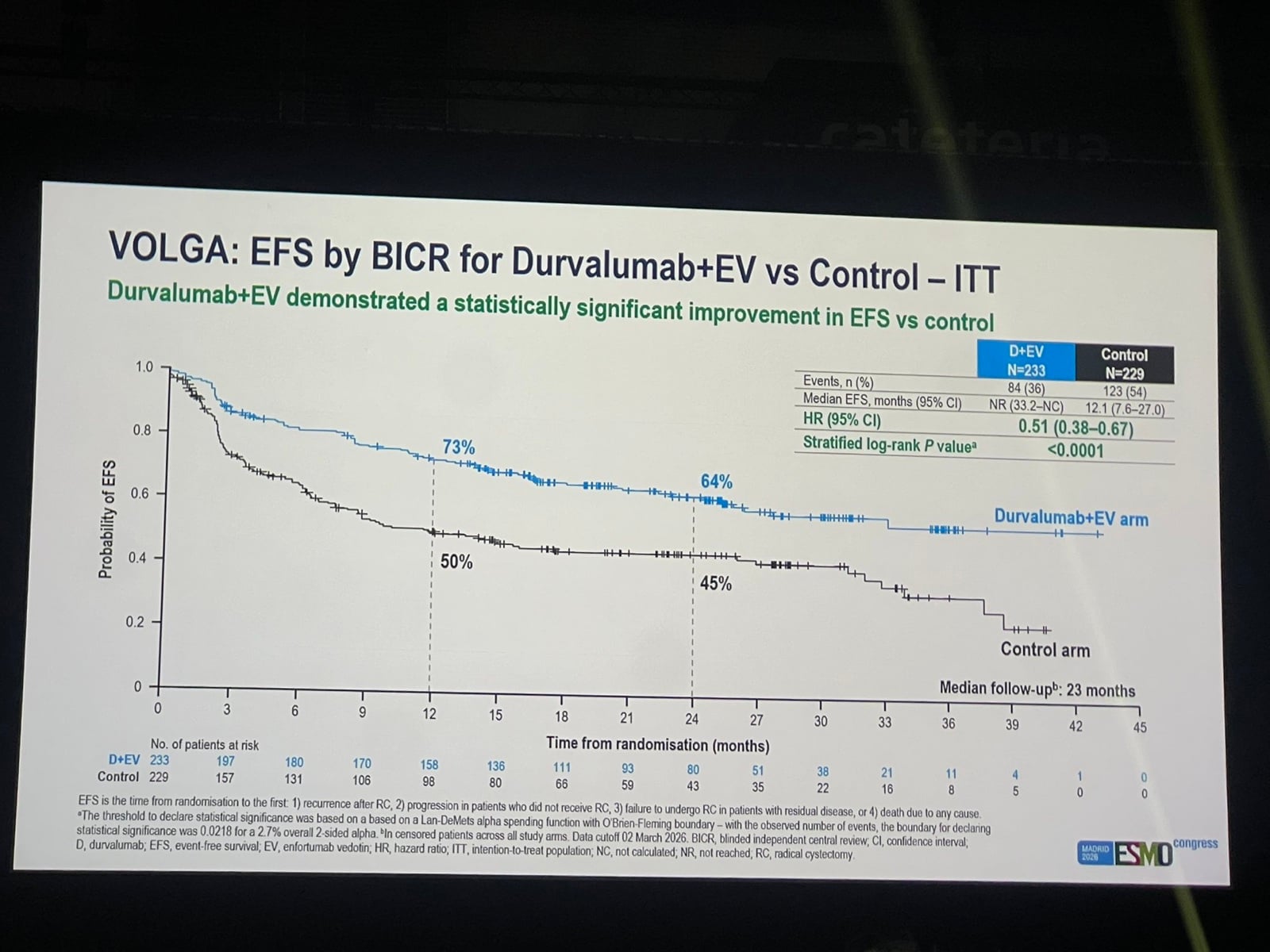
Phase 3, N=695, cisplatin-ineligible or refusing. Durvalumab + EV vs control: EFS HR 0.51 (95% CI 0.38–0.67), 24-month EFS 64% vs 45%. OS HR 0.58 (0.40–0.83), 24-month OS 78% vs 69%. pCR 45% vs 10% (local review). The triplet arm with tremelimumab: EFS HR 0.61 (0.47–0.80); OS HR 0.77 (0.54–1.07), not significant. Grade 3–4 AEs of any cause 64% (durvalumab + EV), 70% (triplet), 44% (control). (ESMO 2026 LBA2, Tom Powles; data cutoff Mar 2, 2026) Investigational. FDA granted Priority Review to durvalumab + EV on September 25, 2026. (KOL Pulse VOLGA page)

Physicians favored the doublet. The debate was the triplet’s added toxicity and how much EV is needed, since VOLGA gave no adjuvant EV.
KEYNOTE-866 and ENERGIZE: two negative Phase 3 trials of PD-1 + cisplatin chemotherapy
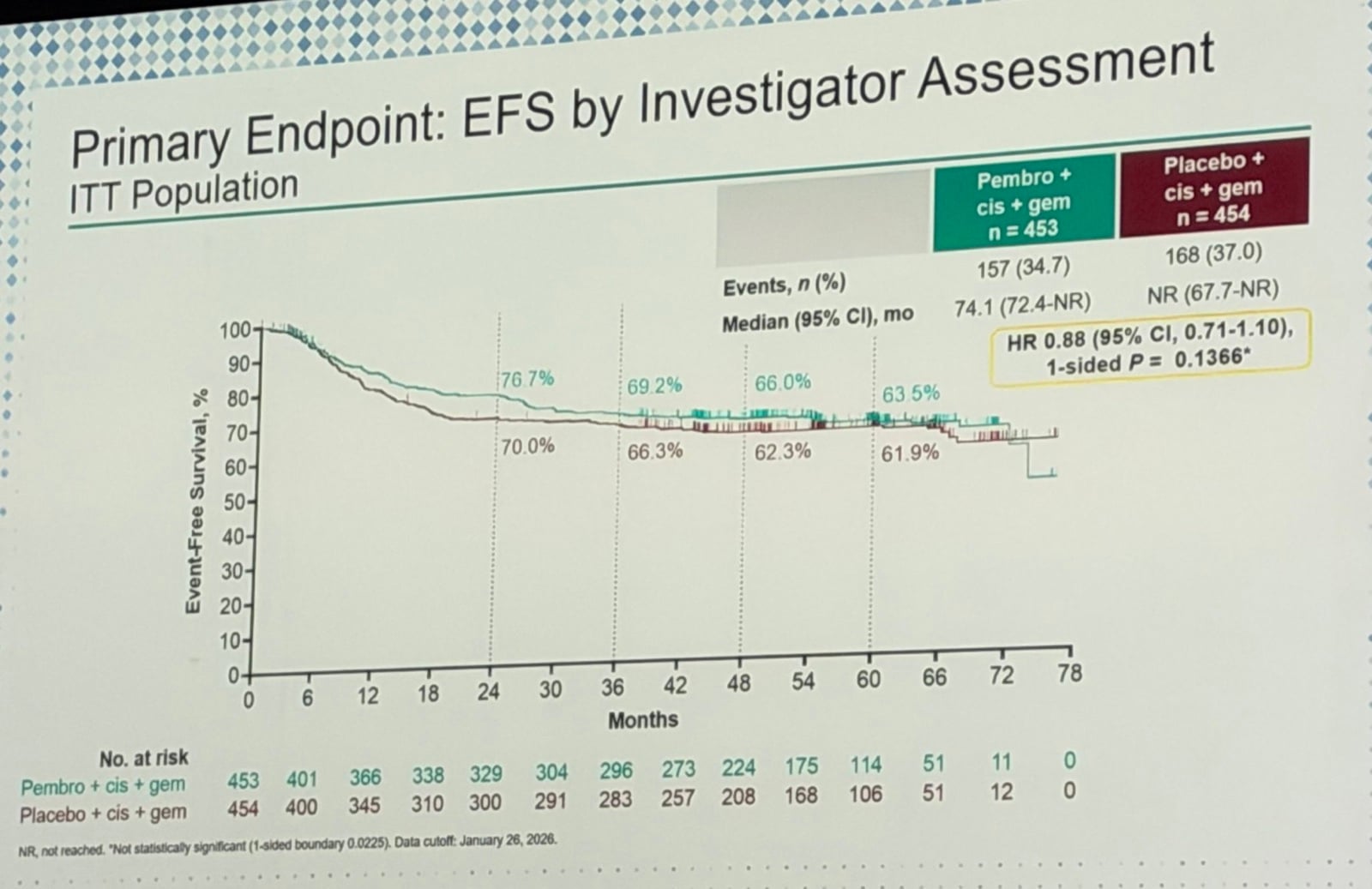
Both trials added a PD-1 inhibitor to neoadjuvant gemcitabine-cisplatin, continued after cystectomy, in cisplatin-eligible MIBC. KEYNOTE-866 (pembrolizumab, N=907): EFS HR 0.88 (95% CI 0.71–1.10), one-sided P=0.1366, not significant. OS HR 1.00 (0.79–1.27). pCR 44.4% vs 35.8%; OS and pCR were not formally tested. (ESMO 2026 4735O, Jens Bedke; data cutoff Jan 26, 2026) ENERGIZE (nivolumab, N=653): EFS HR 0.94 (0.72–1.24), P=0.6697. pCR 39.1% vs 29.6%, not significant after multiplicity adjustment. Both co-primary endpoints were missed. (ESMO 2026 4736O, Andrea Necchi; median follow-up 54.5 months) Neither regimen is approved for MIBC. NIAGARA, with durvalumab on the same chemotherapy backbone, was positive.

Physicians noted that higher pCR did not translate into EFS. Explanations offered for the difference from NIAGARA included control-arm outcomes, trial populations and the need for biomarker selection.

KEYNOTE-B15 / EV-304: ctDNA from the approved perioperative EV + pembrolizumab regimen
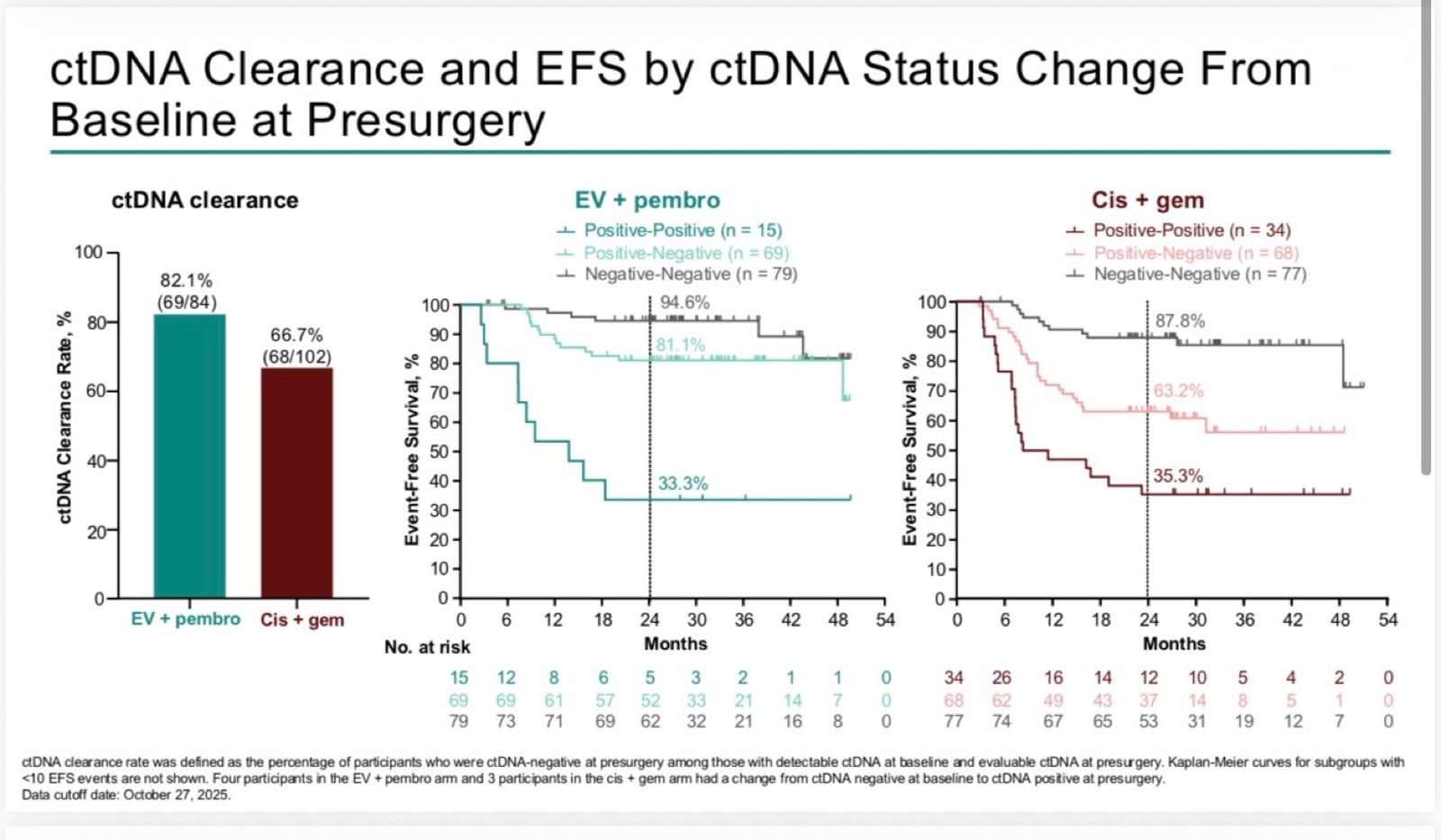
Exploratory ctDNA analysis (Signatera) presented by Jonathan Chatzkel. ctDNA clearance from baseline to surgery 82.1% vs 66.7% with EV + pembrolizumab vs gemcitabine-cisplatin. ctDNA-positive after surgery 4.8% vs 13.5%. pCR 72.4% vs 43.7% in patients ctDNA-negative before surgery, and 3.7% vs 2.2% in those still ctDNA-positive. ctDNA-positive status was associated with worse EFS in both arms. (ESMO 2026 Abstract 4734O and slides; discussant slide for pCR by ctDNA; data cutoff Oct 27, 2025) ctDNA is not validated to guide treatment. Perioperative EV + pembrolizumab has been FDA approved for MIBC since July 10, 2026, based on the trial’s EFS and OS results. (KOL Pulse KEYNOTE-B15 page)

Physicians agreed ctDNA is prognostic. The open question is whether ctDNA and pCR can guide de-escalation, including adjuvant EV and bladder sparing.
KEYNOTE-905 / EV-303: what pembrolizumab alone adds, in an ad hoc three-arm analysis
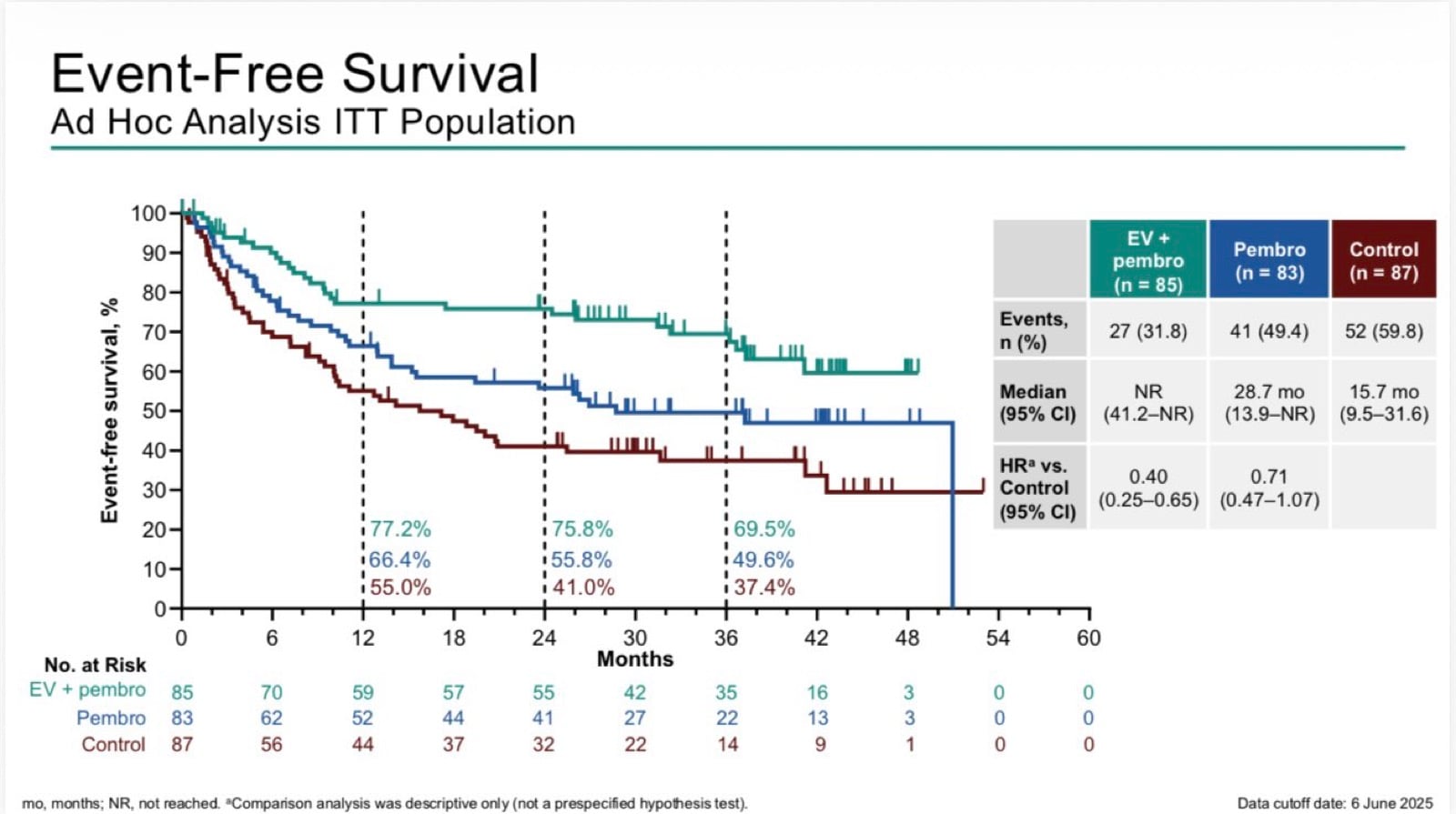
Ad hoc analysis of 255 cisplatin-ineligible or cisplatin-declining patients randomized concurrently to EV + pembrolizumab (n=85), pembrolizumab alone (n=83) or cystectomy alone (n=87). 24-month EFS 75.8%, 55.8% and 41.0%. EFS HR vs cystectomy alone 0.40 (95% CI 0.25–0.65) for EV + pembrolizumab and 0.71 (0.47–1.07) for pembrolizumab alone. OS HR 0.48 (0.29–0.80) and 0.76 (0.48–1.20). pCR 58.8%, 25.3% and 10.3%. All comparisons were descriptive, not prespecified hypothesis tests. (ESMO 2026 4733O slides, Anders Ullén; data cutoff Jun 6, 2025) Perioperative EV + pembrolizumab has been FDA approved since November 21, 2025, based on the primary two-arm analysis. Perioperative pembrolizumab alone is not approved for MIBC. (KOL Pulse KEYNOTE-905 page)

Physicians read the result as support for both drugs. The questions were which patients need EV on top of pembrolizumab, and how much toxicity the added EV brings.
Track oncology’s top KOLs in your specialty
Create a free account, pick the tumor types you cover, and go beyond the tweet — the intelligence pharma teams use to map influence and prepare for engagement:
- ✓Enhanced KOL profiles
- ✓Pharma influence & potential advisory-board patterns
- ✓2025 Open Payments financial analysis
- ✓Social-media sentiment & trend signals
Prostate cancer, October 23–24
DASL-HiCaP: darolutamide added to ADT and radiation in very high-risk localized prostate cancer
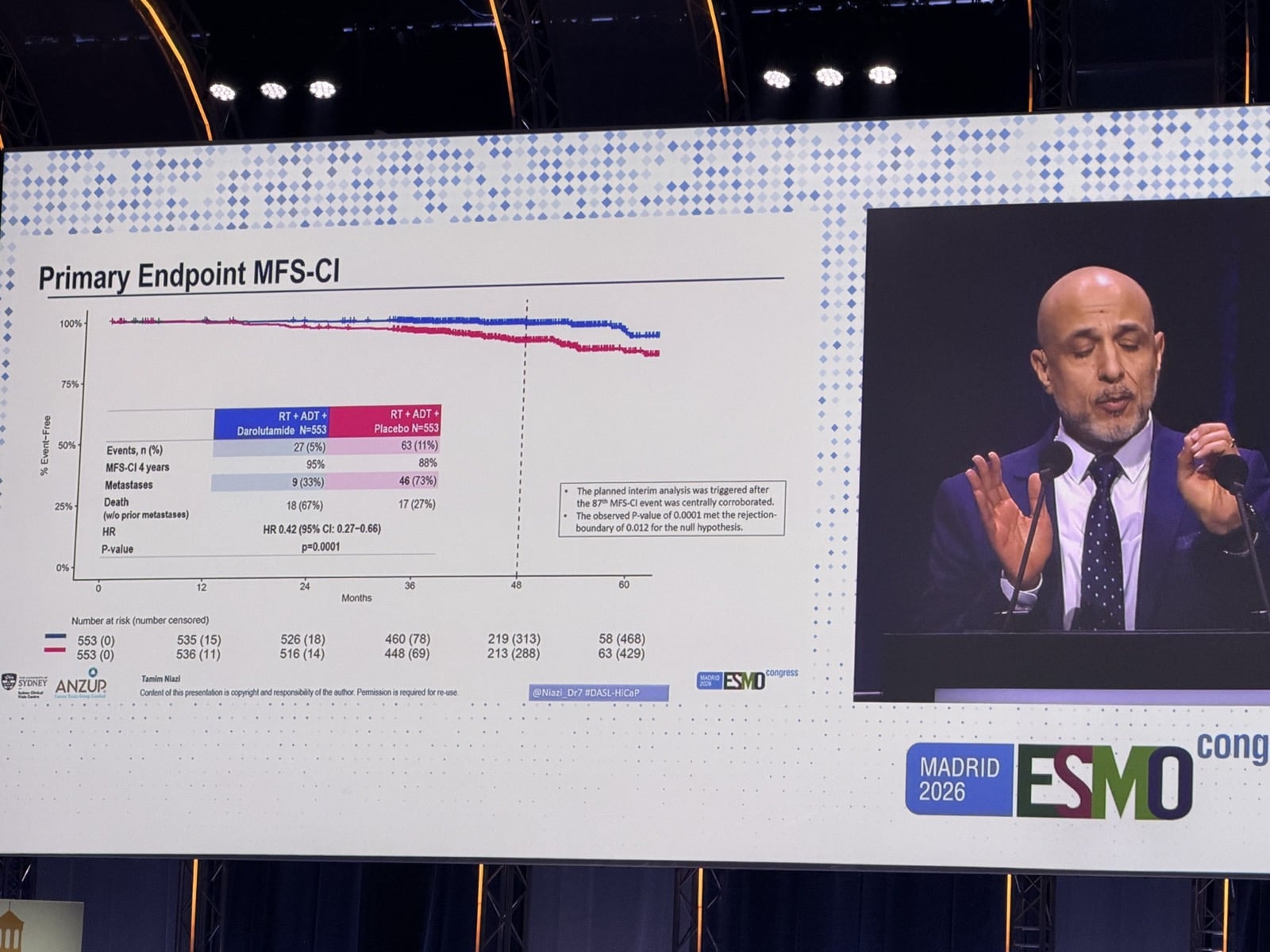
Phase 3, placebo-controlled trial (ANZUP1801) in very high-risk localized prostate cancer, or persistent or rising PSA after prostatectomy, N=1,106: darolutamide or placebo for 96 weeks with ADT and radiation to the prostate or prostate bed and pelvic nodes. Tamim Niazi presented it in Presidential Symposium I (LBA4) on October 24, with Silke Gillessen as discussant. At a prespecified interim analysis, the trial met its primary endpoint, metastasis-free survival by conventional imaging: 4-year MFS 95% vs 88%, HR 0.42 (95% CI 0.27–0.66), p=0.0001. Overall survival is immature: HR 0.88 (0.49–1.59). Grade 3 or higher adverse events 43% vs 36%. (ESMO 2026 LBA4, Tamim Niazi; prespecified interim analysis after 87 MFS-CI events; median follow-up 3.8 years) Darolutamide is investigational in this setting. (KOL Pulse DASL-HiCaP page)

The US lead investigator called it a new standard of care. Others focused on patient selection, nodal disease and what the abstract did not report about radiation. By October 26, the points raised were the definition of very high risk, the absence of PSMA PET for eligibility, and the wait for the final analysis and OS.
PROTEUS substudy: perioperative apalutamide + ADT vs prostatectomy alone
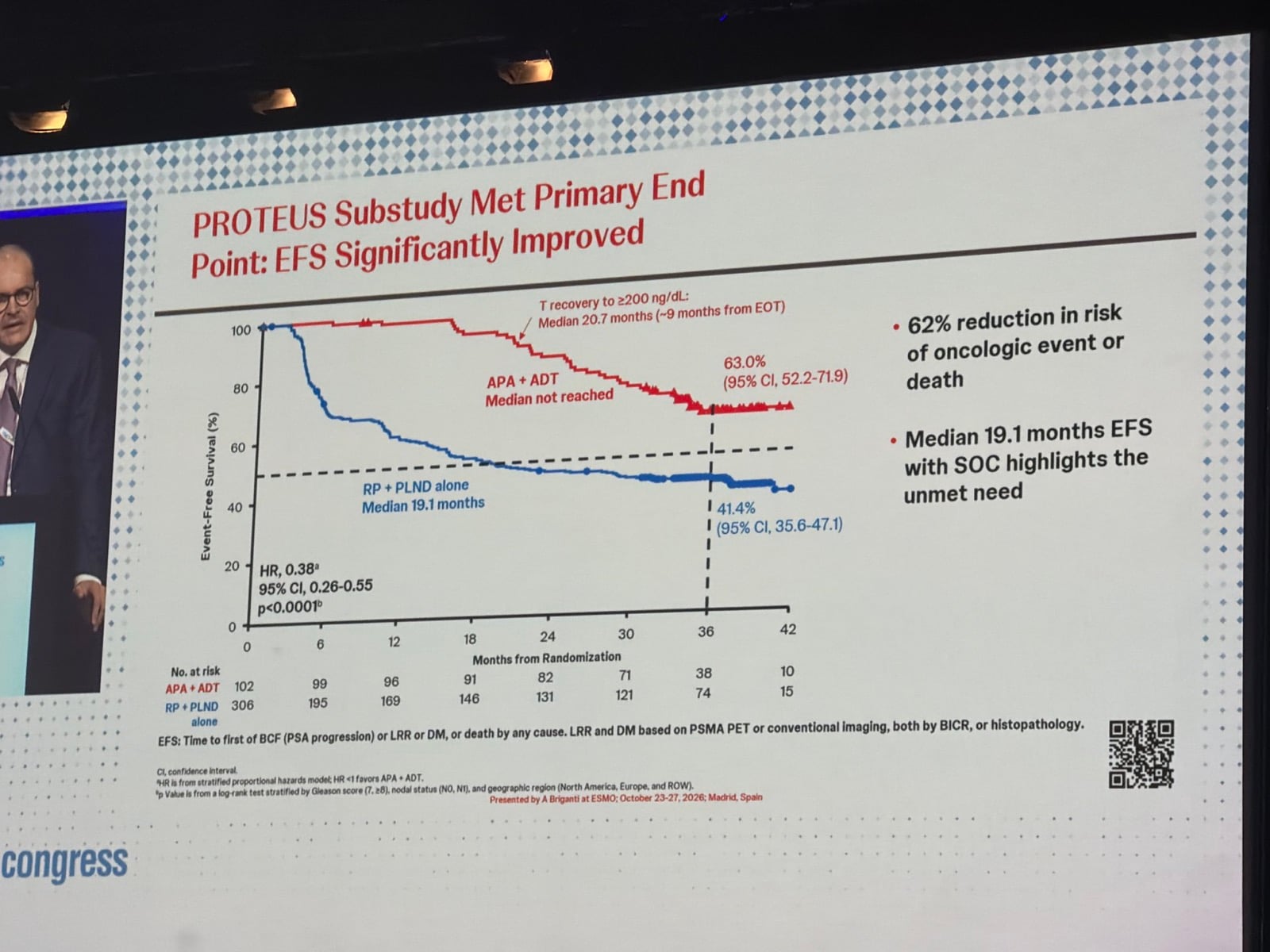
Open-label substudy, randomized 1:3, N=408: apalutamide + ADT around radical prostatectomy and pelvic lymph node dissection (n=102) vs surgery alone (n=306), in high-risk localized or locally advanced disease. EFS HR 0.38 (95% CI 0.26–0.55), P<0.0001; 36-month EFS 63.0% vs 41.4%; median EFS 19.1 months with surgery alone. Metastasis-free survival, a secondary endpoint: HR 0.49 (0.26–0.90), nominal P=0.0193. Time to first subsequent therapy HR 0.29 (0.20–0.43), nominal. (ESMO 2026 LBA53 slides, Alberto Briganti; clinical cutoff Jul 13, 2026) The substudy is separate from the double-blind PROTEUS main trial presented at ASCO 2026. Perioperative apalutamide is investigational; apalutamide is FDA approved in nmCRPC and mCSPC. (KOL Pulse PROTEUS page)

Physicians saw the substudy as addressing a criticism of the main trial, which had no surgery-alone control. One physician reported that the discussant, Nicholas van As, concluded longer follow-up is needed before changing practice.
JNJ-6143: a first-in-class oral AR-targeted RIPTAC in mCRPC
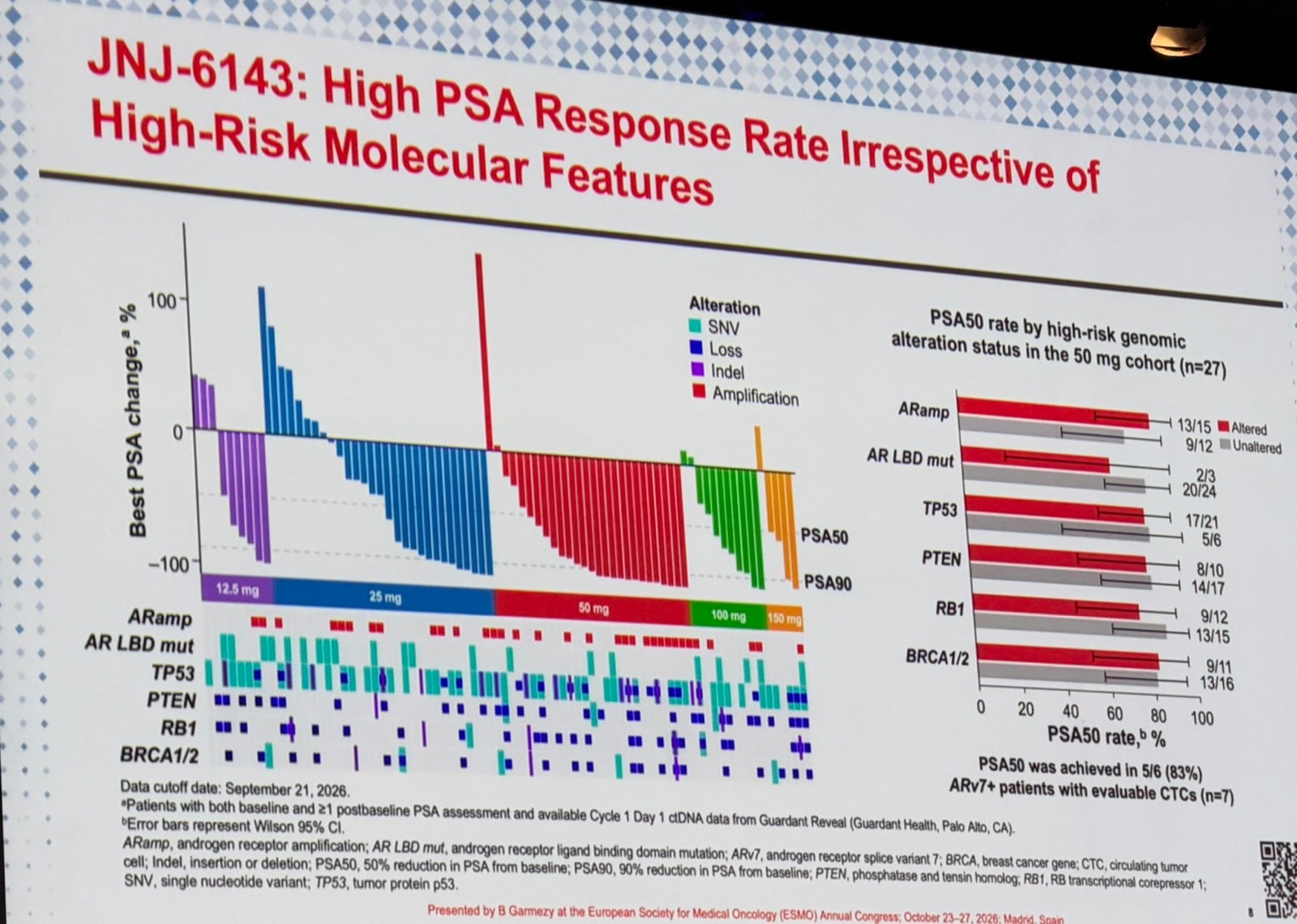
Phase 1 dose-escalation study presented by Benjamin Garmezy (2216O) in heavily pretreated metastatic castration-resistant prostate cancer. JNJ-6143 is investigational. Source: 2216O abstract, ESMO 2026 program.

Physicians highlighted the new mechanism and activity across molecular subgroups, with the caveat that these are Phase 1 data.

Also discussed
PEACE-1 long-term OS (posts), TROPHY-U-01 (posts), CAPItello-281 (posts).
KEYNOTE-564: Toni Choueiri presented the final protocol-prespecified analysis of adjuvant pembrolizumab vs placebo in clear cell RCC on October 25 (3589RO). Physicians pointed to the durability of the benefit. KEYNOTE-564 trial page.
KOL Voices: the top GU physicians at ESMO 2026
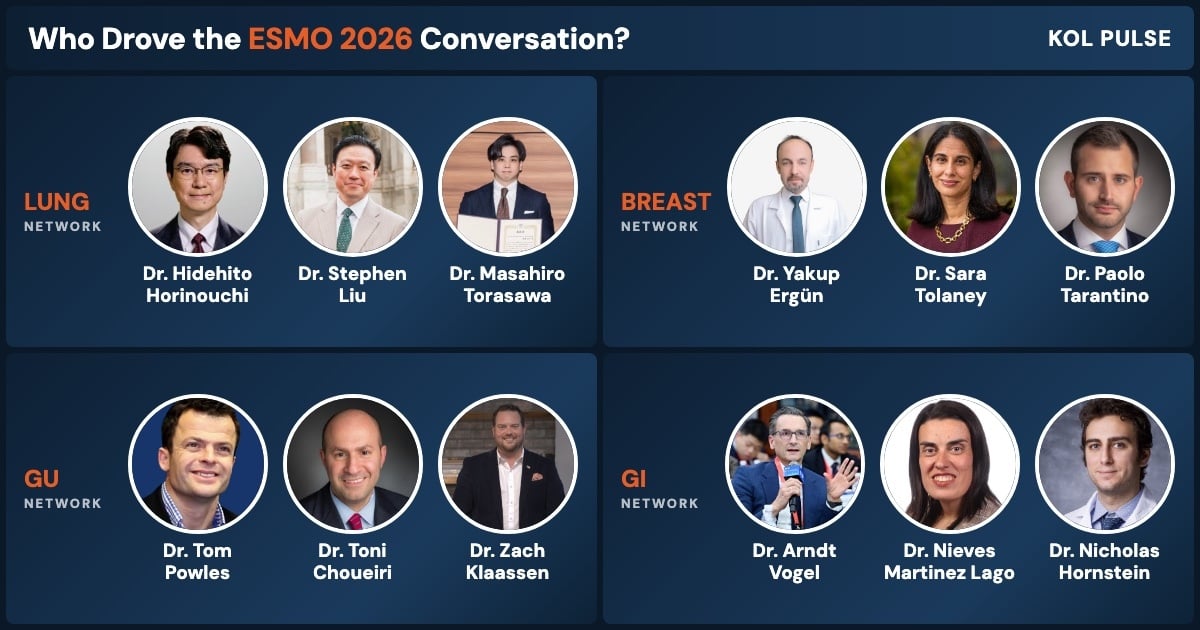
The ten GU physicians at the top of the ESMO 2026 Top KOLs leaderboard. One line from each, verbatim and linked, with the trial it is about.
- 1. Toni Choueiri, MD chief of GU cancers, Dana-Farber · 121.9K impressions, 51 posts
on KEYNOTE-866 → “Higher pCR did not translate into EFS benefit.” - 2. Tom Powles GU oncologist; VOLGA presenter · 94.9K impressions, 25 posts
on VOLGA → “More is not always better.” - 3. Yüksel Ürün GU oncologist, Ankara University · 42.8K impressions, 44 posts
on KEYNOTE-905 / EV-303 → “KEYNOTE-905: pembro alone raises a question worth testing. Who might safely need less?” - 4. Zach Klaassen urologic oncologist · 30.5K impressions, 28 posts
on DASL-HiCaP → “Differences in BL risk and pt selection may explain variation in treatment effects for STAMPEDE M0, ENZARAD, DASL-HiCaP” - 5. Enrique Grande medical oncologist, Quironsalud Madrid · 26.6K impressions, 9 posts
on VOLGA → “Perioperative Durvalumab plus EV showed statistically significant and clinically meaningful improvements in event-free survival and overall survival in muscle-invasive bladder cancer in the Phase III VOLGA trial.” - 6. Markus Eckstein uropathologist, Erlangen · 25.2K impressions, 6 posts
on KEYNOTE-905 / EV-303 → “Equal rates, unequal consequences.” - 7. Dra. María Natalia Gandur Quiroga GU oncologist, Instituto Roffo · 24.8K impressions, 57 posts
on KEYNOTE-866 → “A higher pathological response rate is encouraging, but it is not enough to redefine a standard of care.” - 8. Shilpa Gupta GU oncologist, Cleveland Clinic · 20.6K impressions, 14 posts
on VOLGA → “Tox matters too, especially when OS is achieved.” - 9. David H Aggen, MD PhD GU oncologist, MSK · 16.9K impressions, 21 posts
on ENERGIZE → “ENERGIZE: Another negative perioperative IO trial in MIBC.” - 10. Julian Chavarriaga urologic oncologist · 14.8K impressions, 24 posts
on KEYNOTE-905 / EV-303 → “The efficacy gradient suggests both EV and pembrolizumab contribute to the combination's activity, with substantially greater benefit from EV+P.”
What’s yet to come
The last GU session of ESMO 2026, which ends October 27. Times are Madrid time.
October 27
- Tue Oct 27, 09:00-13:00 (Madrid) · Scientific Congress Highlights 1, Almeria Auditorium - Hall 9. GU prostate, penile and testis 09:20-09:40; GU renal and urothelial 09:40-10:00. Speakers: Christopher J Sweeney; Bernadett E. Szabados.
Regulatory: durvalumab + EV from VOLGA is under FDA Priority Review. (KOL Pulse VOLGA page) Physician posts on new GU readouts are added to the ESMO 2026 trials page through October 27.
Related ESMO 2026 pages
FAQ
Which GU cancer trials did physicians discuss most at ESMO 2026?
By physician posts on X from October 23 to 26, the most-discussed GU trials were VOLGA, DASL-HiCaP, KEYNOTE-866, KEYNOTE-905, KEYNOTE-B15, ENERGIZE, LITESPARK-012, LITESPARK-011, PROTEUS and XmAb819.
What did the FDA approve on October 26, 2026 based on TALAPRO-3?
On October 26, 2026, the FDA approved talazoparib (Talzenna, Pfizer) in combination with enzalutamide for adults with metastatic androgen pathway modulation-naïve or -sensitive (mAPMN/S) prostate cancer with homologous recombination repair (HRR) gene mutations, as detected by an FDA-authorized test (FoundationOne CDx or FoundationOne Liquid CDx). In TALAPRO-3, investigator-assessed rPFS HR was 0.48 (95% CI 0.36-0.65); OS data were immature (FDA approval notice). It is separate from the 2023 mCRPC approval based on TALAPRO-2.
What did VOLGA show?
In cisplatin-ineligible or cisplatin-refusing MIBC, perioperative durvalumab plus 3 cycles of neoadjuvant enfortumab vedotin improved EFS (HR 0.51, 95% CI 0.38-0.67) and OS (HR 0.58, 0.40-0.83) vs control (ESMO 2026 LBA2, data cutoff Mar 2, 2026). It is investigational and under FDA Priority Review.
Why were KEYNOTE-866 and ENERGIZE negative?
Both added a PD-1 inhibitor to neoadjuvant gemcitabine-cisplatin and missed EFS (HR 0.88 and 0.94) despite higher pCR. Physicians on X pointed to control-arm outcomes, trial populations and biomarker selection. These are cross-trial observations, not head-to-head results.
What did the KEYNOTE-905 three-arm analysis add?
In an ad hoc, descriptive analysis of 255 concurrently randomized patients, EFS HR vs cystectomy alone was 0.40 with EV plus pembrolizumab and 0.71 with pembrolizumab alone (ESMO 2026 4733O, data cutoff Jun 6, 2025). Pembrolizumab alone is not approved for MIBC.
What did the LITESPARK-011 final analysis show?
Belzutifan plus lenvatinib did not significantly improve overall survival vs cabozantinib after PD-1/PD-L1 therapy: HR 0.85 (95% CI 0.70-1.03), one-sided P=0.04689 vs a boundary of 0.0223 (ESMO 2026 3587O, final analysis, data cutoff Feb 2, 2026). PFS (HR 0.74) and response benefits were maintained. The combination has been FDA approved since September 24, 2026, based on PFS and ORR.
What did LITESPARK-012 show?
Adding belzutifan or quavonlimab to first-line pembrolizumab plus lenvatinib did not improve PFS or OS in advanced clear cell RCC. Belzutifan triplet: PFS HR 1.08 (95% CI 0.93-1.26), OS HR 1.04 (0.87-1.25). Quavonlimab triplet, tested first in IMDC intermediate/poor-risk patients: PFS HR 1.12, OS HR 1.17 (ESMO 2026 3586O, data cutoff Feb 4, 2026). Both triplets are investigational.
What is XmAb819?
XmAb819 is an investigational ENPP3 x CD3 T-cell engager; Sumanta K. Pal presented Phase 1 data in heavily pretreated clear cell RCC at ESMO 2026.
What did DASL-HiCaP show?
At a prespecified interim analysis, adding darolutamide to ADT and radiation in very high-risk localized prostate cancer improved metastasis-free survival by conventional imaging: 4-year 95% vs 88%, HR 0.42 (95% CI 0.27-0.66). Overall survival is immature (ESMO 2026 LBA4). Darolutamide is investigational in this setting.
Is perioperative apalutamide approved for localized prostate cancer?
No. The PROTEUS substudy showed EFS HR 0.38 (95% CI 0.26-0.55) vs prostatectomy alone (ESMO 2026 LBA53), but perioperative use is investigational. Apalutamide is FDA approved in nmCRPC and mCSPC.
KOL Pulse tracks what oncologists and hematologists post on X. Posts quoted here are shown in full, verbatim, and link to their source; excerpts are marked [...]. Trial figures come from KOL Pulse trial pages, with the source and data cutoff in parentheses.