45 min read
ESMO 2026: Top Lung Cancer Trials and KOL Voices
Brian Shields
:
Oct 25, 2026, 7:42:33 AM
ESMO 2026: Top Lung Cancer Trials and KOL Voices
On Day 4 (October 26), antibody-drug conjugates after EGFR TKIs led the lung discussion: PANKU-Lung01 (iza-bren) drew the most physician posts of the day, followed by HERON-Lung01 (ruzaltatug rezetecan). Both improved PFS over platinum–pemetrexed in EGFR-mutant NSCLC, with overall survival immature. Riyaz Shah wrote of PANKU-Lung01: “This looks like a new SOC I’d like to use in clinic.” Antonio Calles was more cautious on HERON-Lung01: “Not a SoC yet to me.” SANOVO and a Phase 3 trial of dalmelitinib plus aumolertinib added MET-targeted results, and Neotorch, DeLLphi-304, ASTRIDE, PEARLS/KEYNOTE-091 and KEYNOTE-671 followed in the afternoon. Across October 23–26, DeLLphi-305 leads all lung trials with 142 physician posts on X from 89 physicians, ahead of KRASCENDO-1 (80) and SAFFRON (54). Below are the Day 4 presentations, the lung trials from Days 1–3, the top lung KOLs, and the lung sessions on October 27.
Lung cancer trials by physician discussion, October 23–26
Physician posts on X, October 23–26.
| # | Trial | Physician posts | Physicians posting |
|---|---|---|---|
| 1 | DeLLphi-305 | 142 | 89 |
| 2 | KRASCENDO-1 | 80 | 54 |
| 3 | SAFFRON | 54 | 36 |
| 4 | PERSEE (GFPC 01-2020) | 42 | 28 |
| 5 | OptiTROP-Lung06 | 41 | 28 |
| 6 | PANKU-Lung01 | 19 | 15 |
| 7 | SARON | 17 | 14 |
| 8 | DeLLphi-304 | 16 | 11 |
| 9 | OptiTROP-Lung04 | 15 | 14 |
| 10 | NeoCOAST-2 | 14 | 6 |
| 11 | HERON-Lung01 | 13 | 9 |
| 12 | SANOVO | 9 | 9 |
| 13 | SigVie-002 | 9 | 8 |
| 14 | Dalmelitinib + aumolertinib (HS-10241-301) | 8 | 5 |
| 15 | PACE-LUNG | 7 | 7 |
| 16 | SUNRAY-01 / LOXO-RAS-20001 | 7 | 6 |
| 17 | Neotorch | 7 | 4 |
| 18 | COCOON | 6 | 4 |
| 19 | DIAL (IFCT-2103) | 5 | 5 |
| 20 | ASTRIDE | 5 | 4 |
| 21 | PEARLS/KEYNOTE-091 | 3 | 3 |
| 21 | Combi-TED (OSE2101) | 3 | 3 |
| 23 | ROSETTA Lung-107 | 2 | 2 |
| 23 | KEYNOTE-671 | 2 | 2 |
DeLLphi-305, presented on October 24, leads the congress, followed by KRASCENDO-1 and SAFFRON from October 25. Among the Day 4 (October 26) presentations, PANKU-Lung01 drew the most physician posts, followed by HERON-Lung01; PANKU-Lung01 and the DeLLphi-304 extended follow-up each drew posts from 10 or more physicians.
Day 4 (October 26): EGFR-mutant NSCLC after TKIs, MET, and early-stage updates
Two antibody-drug conjugates after an EGFR TKI drew the most physician posts on Day 4. MET-targeted combinations followed in the same session, and Neotorch reported its final analysis in the afternoon.
PANKU-Lung01: iza-bren vs platinum–pemetrexed in EGFR-mutant NSCLC after a third-generation EGFR TKI
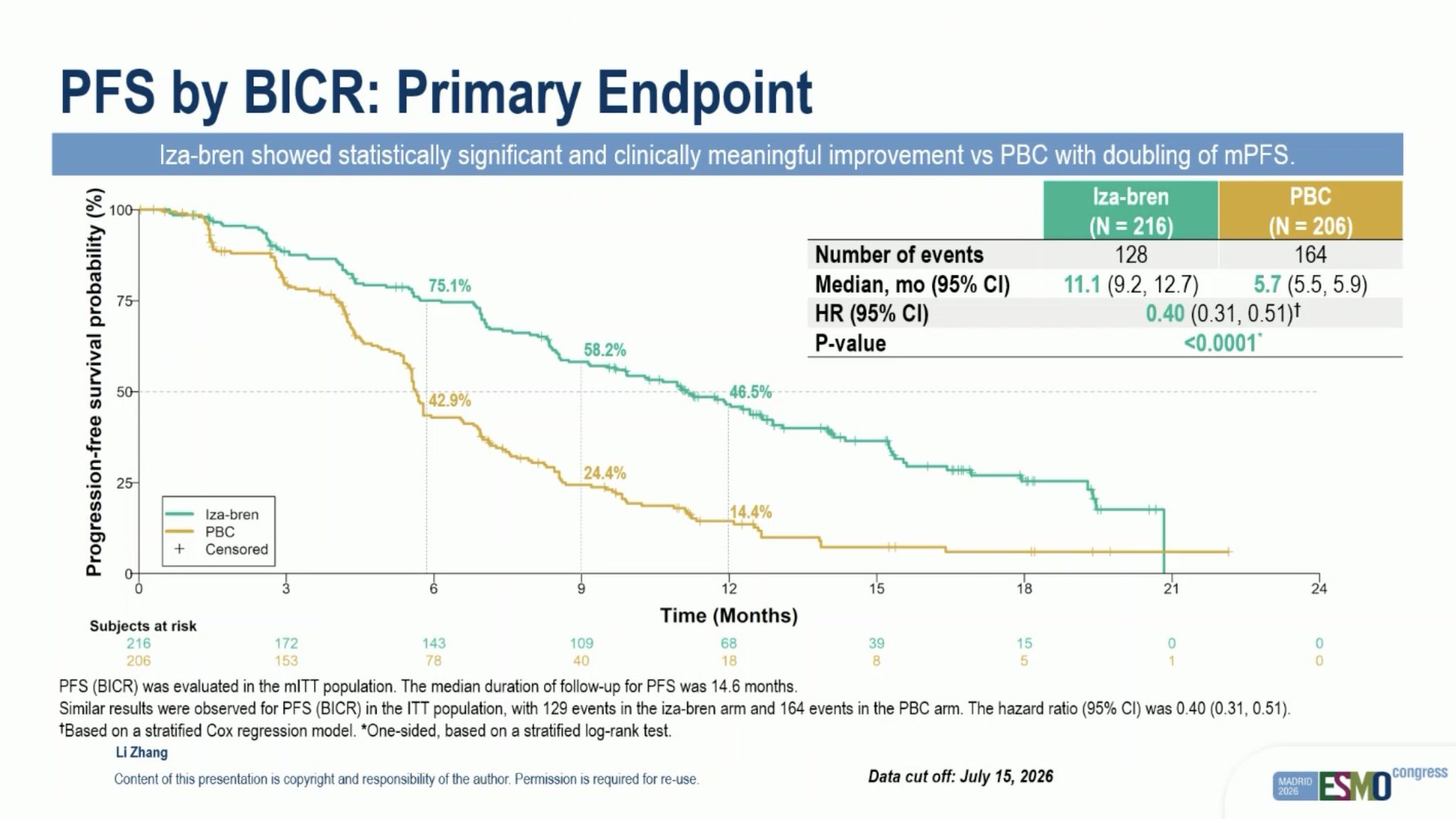
Phase 3 trial in China, N=432: izalontamab brengitecan (iza-bren), an EGFR×HER3 bispecific antibody-drug conjugate from Sichuan Biokin (developed outside China by SystImmune and Bristol Myers Squibb), vs platinum–pemetrexed in EGFR-mutant non-squamous NSCLC after a third-generation EGFR TKI (LBA71, Li Zhang, Proffered paper 2, October 26; invited discussant Simon Ekman), published in The Lancet. The primary endpoint, PFS by blinded independent central review, was met at the final PFS analysis: 11.1 vs 5.7 months, HR 0.40 (95% CI 0.31–0.51), one-sided P<0.0001, in 422 treated patients. Confirmed ORR was 60.2% vs 34.5%, and median duration of response 10.4 vs 5.7 months. (ESMO 2026 LBA71 slides, Li Zhang; final PFS analysis, data cutoff Jul 15, 2026) Overall survival, the key secondary endpoint tested hierarchically after PFS, is immature at this interim analysis: median not reached vs 19.4 months, with 12-month overall survival of 83.0% vs 72.9%. The abstract reports HR 0.66 (0.47–0.91); the presenter’s overall survival slide prints no hazard ratio. (LBA71 slides and abstract; interim OS analysis, data cutoff Jul 15, 2026) Grade ≥3 treatment-related adverse events occurred in 78.7% vs 62.1%, dose reductions for treatment-related adverse events in 60.2% vs 23.3%, and discontinuations in 1.9% in each arm; treatment-related interstitial lung disease occurred in 0.9%. (LBA71 slides; data cutoff Jul 15, 2026) Iza-bren is investigational and is not approved for lung cancer in any country. In the US, amivantamab plus carboplatin–pemetrexed is an FDA-approved option after an EGFR TKI. (KOL Pulse PANKU-Lung01 page)

Physicians welcomed the PFS gain. The debate was over the comparator, toxicity and access: Giannis Mountzios wrote that carboplatin–pemetrexed is no longer the standard of care, and Ryan Gentzler noted that the global IZABRIGHT-Lung01 trial now allows a chemotherapy plus amivantamab control arm. Tom John saw similar adverse events in both arms, while Osman Kostek called toxicity a challenge. All patients were enrolled in China.
Context (Giannis Mountzios’s post): sac-TMT is not FDA or EMA approved in any indication. (KOL Pulse OptiTROP-Lung06 page)
HERON-Lung01: ruzaltatug rezetecan vs platinum–pemetrexed in EGFR-mutant NSCLC after an EGFR TKI
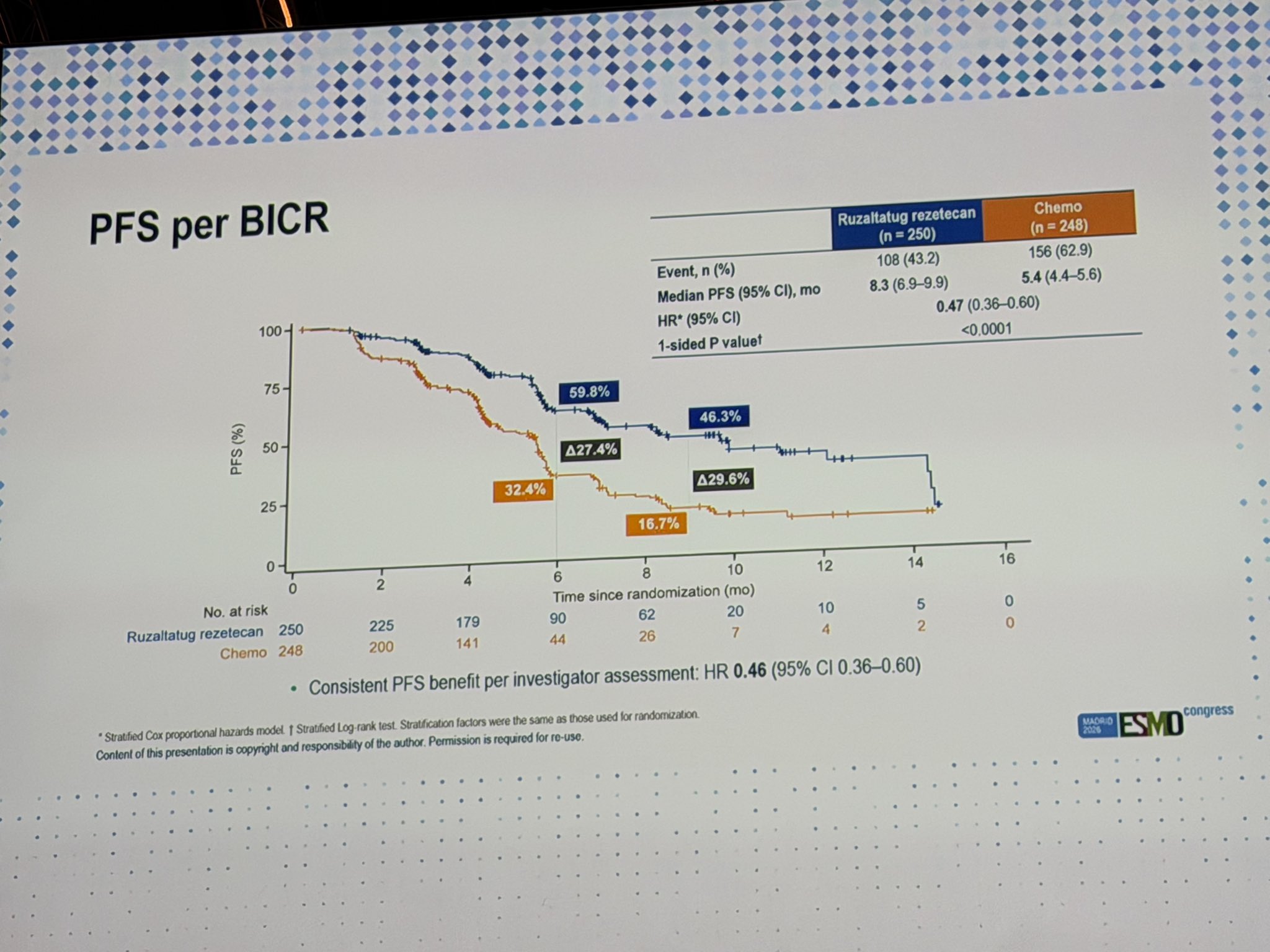
Phase 3 trial in China, N=498: ruzaltatug rezetecan, an investigational HER3-directed antibody-drug conjugate from Jiangsu Hengrui, vs platinum–pemetrexed in EGFR-mutant non-squamous NSCLC after an EGFR TKI, with crossover to ruzaltatug rezetecan allowed at progression (LBA72, Chongrui Xu, Proffered paper 2, October 26; invited discussant Simon Ekman), published in The Lancet. The primary endpoint, PFS by blinded independent central review, was met at the prespecified interim PFS analysis: 8.3 vs 5.4 months, HR 0.47 (95% CI 0.36–0.60), one-sided P<0.0001. ORR was 60.0% vs 34.3%, and median duration of response 8.5 vs 4.4 months. Overall survival, a secondary endpoint, is immature: HR 0.70 (0.43–1.14), with 19.4% of the chemotherapy arm crossing over. Grade ≥3 treatment-related adverse events occurred in 40.7% vs 38.9%; interstitial lung disease in 2.4% (grade ≥3, 0.4%) vs none. (ESMO 2026 LBA72 slides, Chongrui Xu; interim PFS analysis, data cutoff Apr 15, 2026) Ruzaltatug rezetecan is not approved by the FDA, the EMA or China’s NMPA; the NMPA has accepted a marketing application based on this trial. (KOL Pulse HERON-Lung01 page)

The presenter concluded that ruzaltatug rezetecan is a new standard-of-care option. Antonio Calles disagreed, Riyaz Shah asked whether its tolerability looks better than that of iza-bren, and Adam Januszewski asked for more mature overall survival and global data. Urs Weber wanted the EGFR TKI continued in both trials. The invited discussant, Simon Ekman, raised CNS activity, predictive biomarkers beyond HER3 expression, sequencing, and whether the China-only results translate globally. The two trials differ in drug, population and follow-up, so they are not directly comparable.
Dalmelitinib + aumolertinib (HS-10241-301): MET-amplified EGFR-mutant NSCLC after an EGFR TKI
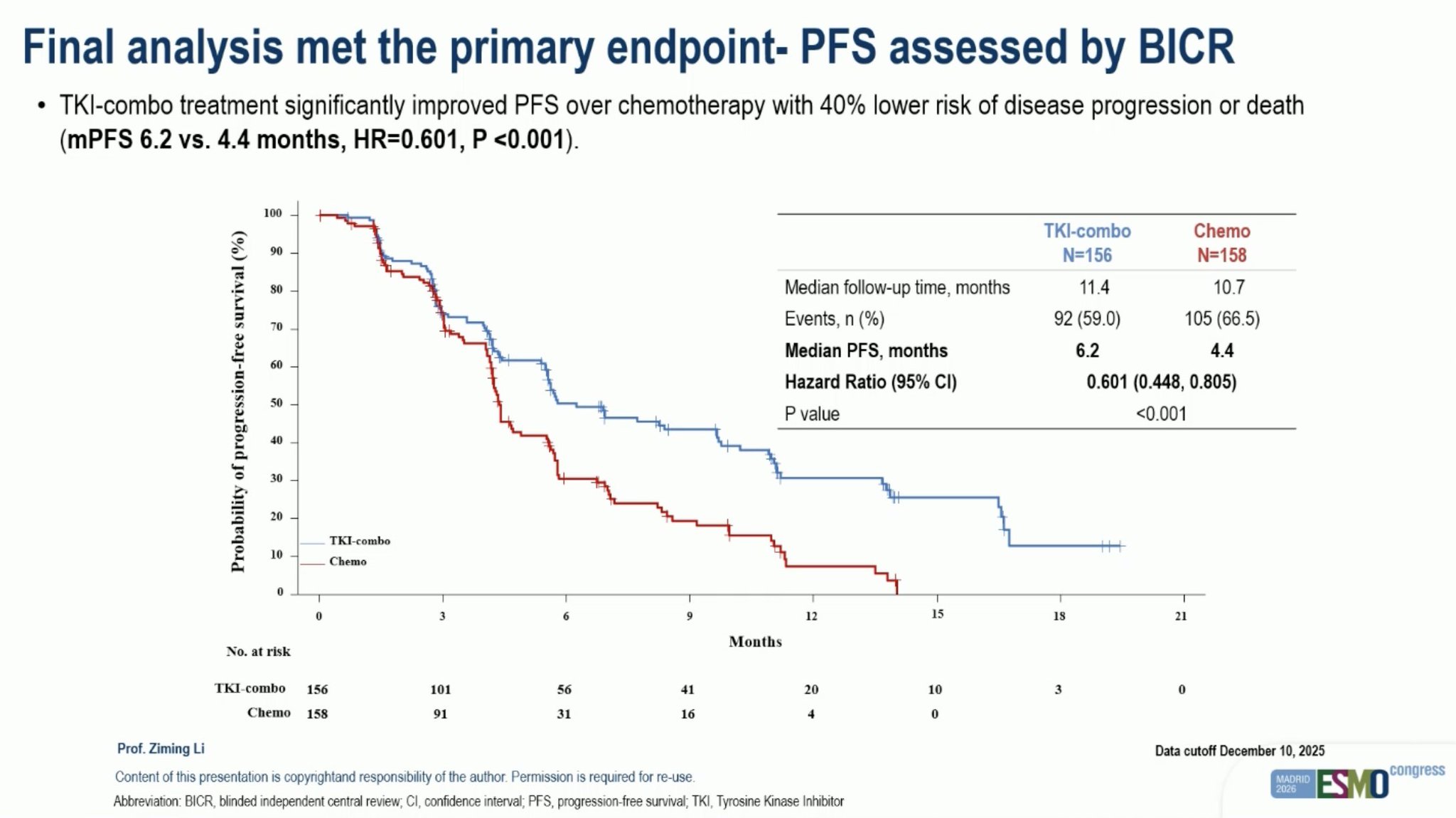
Randomized Phase 3 trial in China, N=314: dalmelitinib, an investigational MET inhibitor from Hansoh, plus aumolertinib vs platinum–pemetrexed in EGFR-mutant NSCLC with MET amplification by FISH (copy number ≥5 or MET/CEP7 ratio ≥2) after an EGFR TKI (2615O, Ziming Li, Proffered paper 2, October 26; invited discussant Rebecca S. Heist), published in the Journal of Clinical Oncology. The primary endpoint, PFS by blinded independent central review, was met at the final PFS analysis: 6.2 vs 4.4 months, HR 0.601 (95% CI 0.448–0.805), P<0.001. ORR was 59.6% vs 38.6%, and median duration of response 9.7 vs 4.4 months. Overall survival, a secondary endpoint, is immature: unstratified HR 0.840 (0.524–1.346), and 46.8% of the chemotherapy arm crossed over to the combination. Grade ≥3 treatment-related adverse events occurred in 46.8% vs 44.8%, with liver-enzyme elevations with the combination and hematologic toxicity with chemotherapy; treatment-related adverse events led to discontinuation in 7.1% vs 2.8%. (ESMO 2026 2615O slides, Ziming Li; final PFS analysis, data cutoff Dec 10, 2025) Dalmelitinib is investigational; China’s NMPA accepted a new drug application for the combination in February 2026. Aumolertinib is approved in China and the EU and is not FDA approved. (KOL Pulse HS-10241-301 page)

Physicians saw another trial supporting MET amplification as a target after an EGFR TKI, and the need for a biopsy at progression. The MET definition was lower than in SAFFRON, and Rebecca Heist’s discussion compared MET inhibitor combinations with amivantamab-based treatment, which is approved after an EGFR TKI without MET selection.
Neotorch final analysis: perioperative toripalimab in resectable stage II–III NSCLC
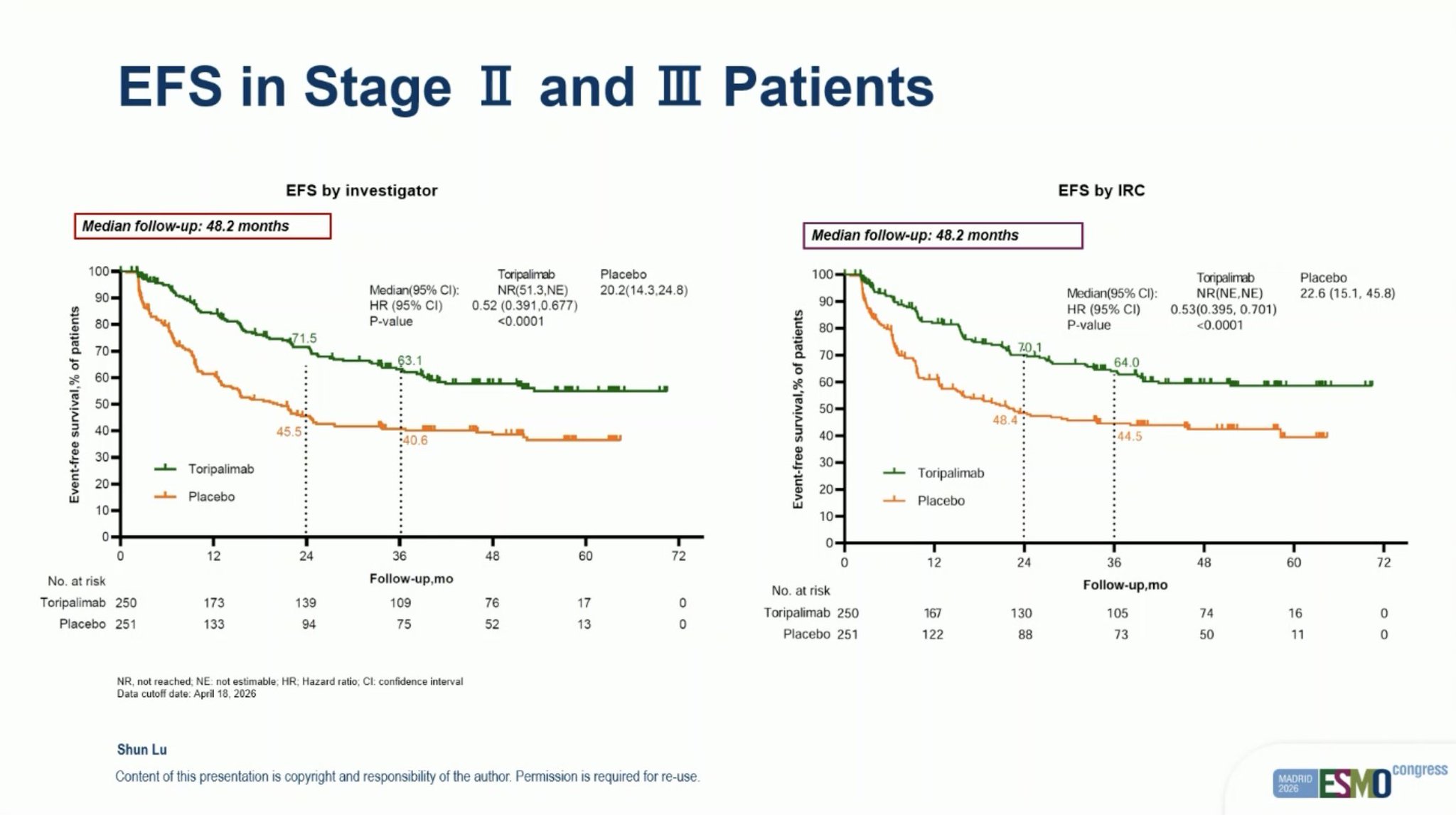
Double-blind Phase 3 trial in China, N=501: perioperative toripalimab (Junshi Biosciences) plus chemotherapy vs placebo plus chemotherapy in resectable stage II–III NSCLC (LBA64, Shun Lu, Proffered paper, October 26; invited discussant Jordi Remon Masip), published in Annals of Oncology. Neotorch has four primary endpoints, event-free survival and major pathological response, each in the stage III and the stage II–III populations. In the stage II–III population, both were met: event-free survival by investigator, not reached vs 20.2 months, HR 0.52 (95% CI 0.391–0.677), P<0.0001; and major pathological response by blinded review, 47.2% vs 9.2%. Pathological complete response, a secondary endpoint, was 25.6% vs 1.2%. Overall survival, a secondary endpoint at 34.3% maturity: medians not reached, HR 0.66 (0.49–0.89), P=0.0072, described as statistically significant in the abstract and the paper. (ESMO 2026 LBA64 slides, Shun Lu; final analysis, data cutoff Apr 18, 2026, median follow-up 48.2 months) China’s NMPA approved perioperative toripalimab for resectable stage IIIA–IIIB NSCLC in December 2023; it is not FDA or EMA approved for lung cancer. (KOL Pulse Neotorch page)

Physicians reported the event-free and overall survival results. Before the presentation, Jeff Ryckman noted that the abstract does not report grade ≥3 adverse event rates.
SANOVO: first-line savolitinib + osimertinib in EGFR-mutant NSCLC with MET overexpression
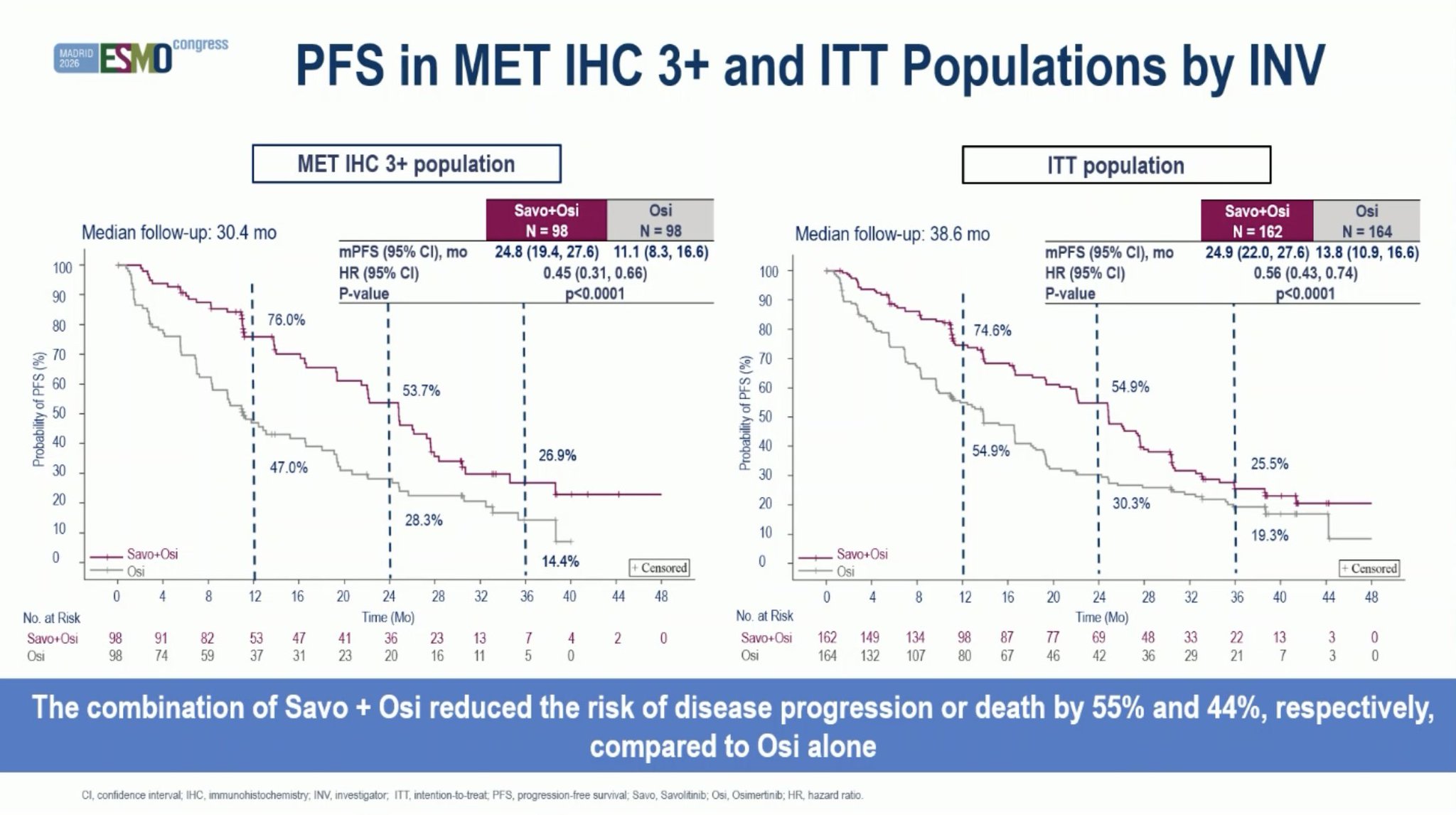
Double-blind Phase 3 trial in China, N=326: savolitinib (HUTCHMED) or placebo plus osimertinib, first line, in EGFR-mutant NSCLC with MET overexpression by IHC (3+, or 2+ with H-score ≥220) (LBA69, Yi-Long Wu, Proffered paper 2, October 26; invited discussant Rebecca S. Heist). The primary endpoint, investigator-assessed PFS, was tested first in the MET IHC 3+ population and then in the ITT population, and both were met: IHC 3+, 24.8 vs 11.1 months, HR 0.45 (95% CI 0.31–0.66); ITT, 24.9 vs 13.8 months, HR 0.56 (0.43–0.74); both P<0.0001. Overall survival, a secondary endpoint at 40.5% maturity in the ITT population, was 44.5 vs 34.9 months, HR 0.48 (0.33–0.68); no P value was reported. Grade ≥3 treatment-emergent adverse events occurred in 77.2% vs 38.4% and discontinuations in 14.8% vs 4.3%, with median exposure of 22.1 vs 12.9 months. (ESMO 2026 LBA69 slides, Yi-Long Wu; data cutoff Jul 31, 2026) The first-line combination is investigational everywhere. Savolitinib is not FDA approved; in China it is approved with osimertinib after EGFR-TKI therapy for MET amplification (SACHI). Osimertinib alone is FDA approved first line. (KOL Pulse SANOVO page)

Physicians called the results impressive and debated three points. The MET definition: the ITT population included IHC 2+, and screening 1,896 patients to randomize 326 is a large testing burden. Toxicity: Tom John saw a minimal increase in adverse events, while Antonio Calles pointed to more MET-related side effects. The comparator: osimertinib alone, rather than first-line regimens such as MARIPOSA or FLAURA2. The same combination improved PFS and overall survival after osimertinib in SAFFRON, presented the day before.
More Day 4 lung presentations
Five more presentations with lung cancer data on October 26 drew physician posts. One post is shown for each.
ASTRIDE: serplulimab vs atezolizumab with chemotherapy in US patients with ES-SCLC
Randomized US bridging trial of serplulimab (Henlius) vs atezolizumab, each with carboplatin–etoposide, first line in extensive-stage SCLC, with one prior chemotherapy cycle allowed (3809O, David R. Gandara, October 26). Overall survival, the primary endpoint, was analyzed descriptively, with no P values: median overall survival 12.4 vs 10.2 months, HR 0.82 (95% CI 0.56–1.20), a confidence interval that includes 1. Grade ≥3 treatment-emergent adverse events occurred in 73.7% vs 73.0%. (ESMO 2026 3809O slides, David R. Gandara; descriptive analysis, data cutoff Feb 18, 2026) Serplulimab is not FDA approved; it is authorized in the EU (HETRONIFLY) for first-line ES-SCLC. Atezolizumab plus carboplatin–etoposide is FDA approved. (KOL Pulse ASTRIDE page)
DeLLphi-304: extended overall survival follow-up of tarlatamab in previously treated SCLC
Extended follow-up of the Phase 3 trial of tarlatamab vs chemotherapy in SCLC after platinum-based chemotherapy (3808O, Charles M. Rudin, October 26; invited discussant Kersti Oselin), published in Annals of Oncology. Overall survival, the primary endpoint, was met at the primary analysis; this update is descriptive, with no new P values. Median overall survival was 13.6 vs 8.4 months, HR 0.62 (95% CI 0.51–0.76), and 24-month overall survival 30% vs 15%. Grade ≥3 treatment-related adverse events occurred in 28% vs 63%. (ESMO 2026 3808O abstract and slides, Charles M. Rudin; extended follow-up, data cutoff Feb 18, 2026) Tarlatamab has full FDA approval for ES-SCLC after platinum chemotherapy (November 19, 2025), with DeLLphi-304 as the confirmatory trial. (KOL Pulse DeLLphi-304 page)
PEARLS/KEYNOTE-091: final analysis of adjuvant pembrolizumab
Final analysis of the Phase 3 trial of 1 year of adjuvant pembrolizumab vs placebo after complete resection of stage IB–IIIA NSCLC (2511O, Mary E. O’Brien, October 26). Disease-free survival in the ITT population was 58.7 vs 43.3 months, HR 0.85 (95% CI 0.73–0.98). Overall survival, a secondary endpoint the trial was not powered for, did not differ: HR 0.98 (0.81–1.18). (ESMO 2026 2511O slides and abstract, Mary O’Brien; final analysis, data cutoff Jan 21, 2026, median follow-up 87.7 months) Grade ≥3 adverse events occurred in 34.0% vs 25.6%. (ESMO 2026 2511O abstract; final analysis, data cutoff Jan 21, 2026) The ITT disease-free survival primary endpoint was met at the 2021 second interim analysis; the PD-L1 TPS ≥50% co-primary endpoint was not met. Adjuvant pembrolizumab after resection and platinum-based chemotherapy is FDA approved (January 2023) and EU approved. (KOL Pulse PEARLS/KEYNOTE-091 page)
KEYNOTE-671: biomarkers and perioperative pembrolizumab
Exploratory, post hoc biomarker analysis of the Phase 3 trial of perioperative pembrolizumab plus neoadjuvant chemotherapy in resectable stage II–IIIB NSCLC (2519O, Marina C. Garassino, October 26; invited discussant Jordi Remon), in the roughly half of patients with an evaluable baseline tumor sample. Event-free and overall survival hazard-ratio point estimates were below 1 across T-cell–inflamed gene expression profile, tumor mutational burden and KRAS subgroups, with overlapping confidence intervals; 8 of the 12 intervals include 1, the subgroups were not powered to test for interaction, and subgroup overall survival is immature. The presenter advised interpreting the results with caution. (ESMO 2026 2519O abstract and slides, Marina C. Garassino; exploratory post hoc analysis, data cutoff Jul 3, 2025) Perioperative pembrolizumab is FDA approved (October 2023). (KOL Pulse KEYNOTE-671 page)
MOIO: 12-weekly vs standard immunotherapy dosing in responders
UNICANCER Phase 3 non-inferiority trial across solid tumors, with lung cancer the largest group: patients responding after 6 months of an immune checkpoint inhibitor were randomized to the same dose every 12 weeks or the standard schedule (LBA10, Gwenaëlle Gravis, Presidential Symposium, October 26; invited discussant Jarushka Naidoo). At the first interim analysis, the trial was stopped early on the recommendation of the independent data monitoring committee, and non-inferiority for PFS, the primary endpoint, was not demonstrated: median PFS 21.9 months with 12-weekly vs 25.0 months with standard dosing, HR 1.35 (96.16% CI 0.90–2.04); the prespecified futility threshold was not crossed. Overall survival, a secondary endpoint at this early interim analysis, showed more deaths with 12-weekly dosing: 19.9% vs 10.5%, HR 2.04 (95% CI 1.08–3.85). In the lung cancer subgroup (93 patients), the PFS HR was 1.6 (0.8–3.1); tumor-type results are small and exploratory. (ESMO 2026 LBA10 slides and abstract, Gwenaëlle Gravis; first interim analysis, data cutoff Dec 1, 2025) MOIO is a dosing-strategy trial; a 12-week interval is not an approved schedule for any of the checkpoint inhibitors used. (KOL Pulse MOIO page)
Small cell lung cancer
DeLLphi-305: tarlatamab + durvalumab as first-line maintenance in ES-SCLC
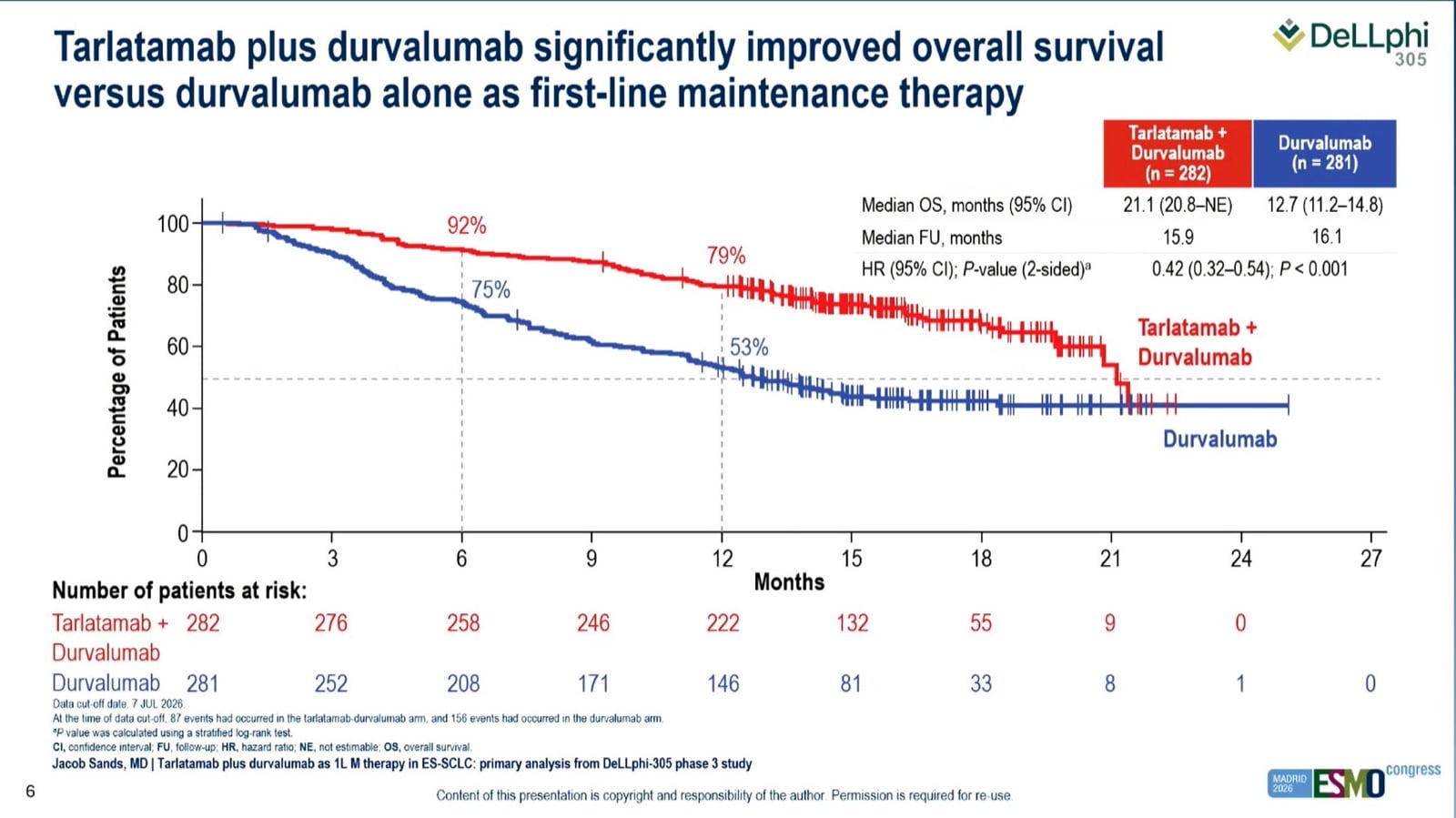
Phase 3, N=563: tarlatamab (IMDELLTRA, Amgen) plus durvalumab vs durvalumab alone after first-line chemo-immunotherapy. Median OS 21.1 vs 12.7 months, HR 0.42 (95% CI 0.32–0.54), P<0.001, at a prespecified interim analysis. 12-month OS 79.4% vs 53.3%. PFS 7.4 vs 1.9 months, HR 0.34 (0.28–0.42). ORR 26.4% vs 4.1%. (ESMO 2026 LBA3, Jacob Sands; NEJM; data cutoff Jul 7, 2026) Grade ≥3 TEAEs 46.8% vs 40.6%. CRS 49.6%, grade 3 0.4%, no grade 4 or 5. ICANS 1.1%, none grade ≥3. (LBA3 abstract and slides) The first-line combination is investigational. Tarlatamab has full FDA approval for ES-SCLC that progressed on or after platinum chemotherapy (November 19, 2025). (KOL Pulse DeLLphi-305 page)

Physicians called it a new standard. Stephen V Liu was the invited discussant. Posts on his discussion and after it raised the attrition between induction and maintenance, access to tarlatamab at progression in the control arm, and global access.
NSCLC: targeted therapy
KRASCENDO-1: divarasib vs sotorasib or adagrasib in KRAS G12C NSCLC
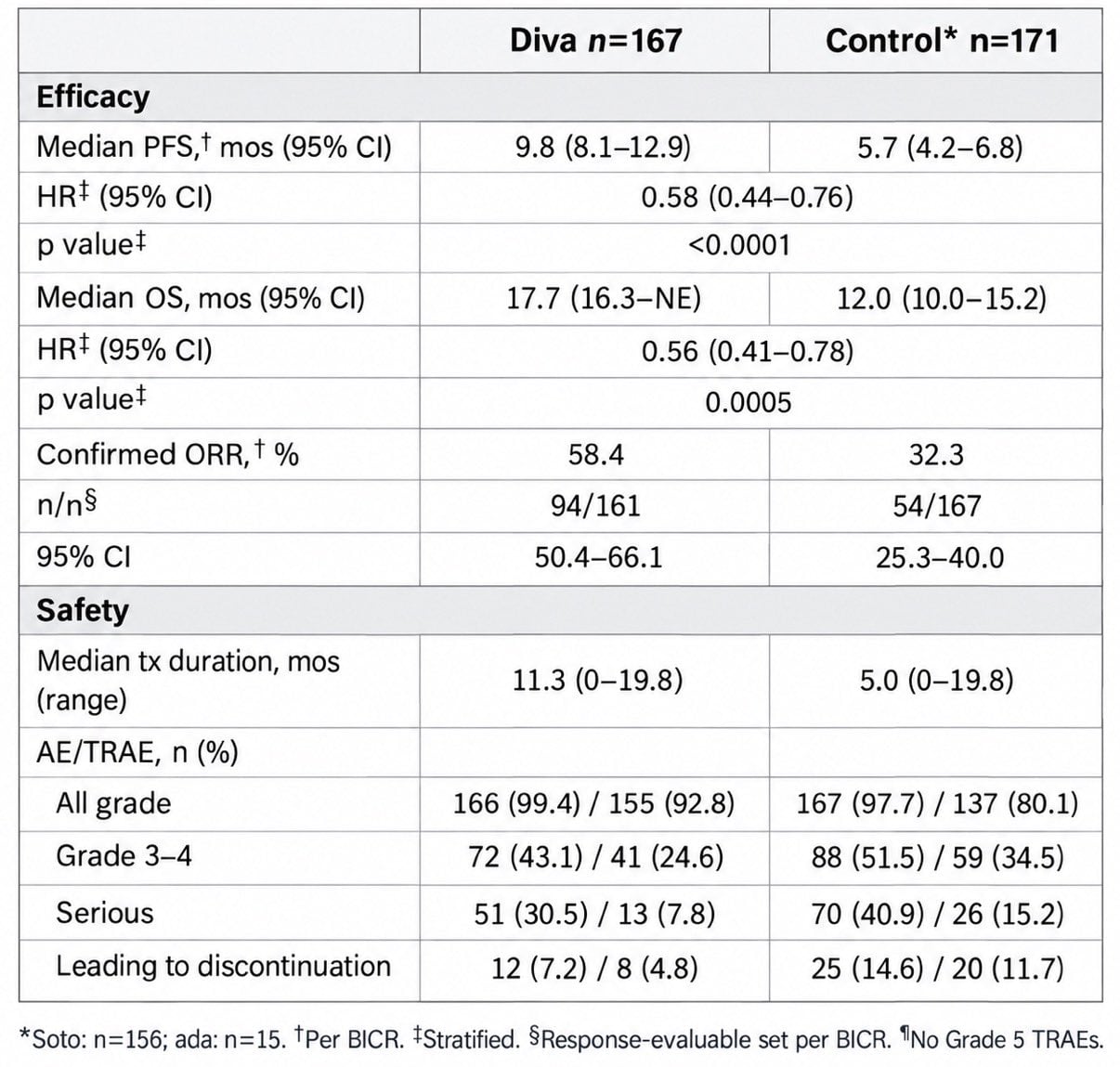
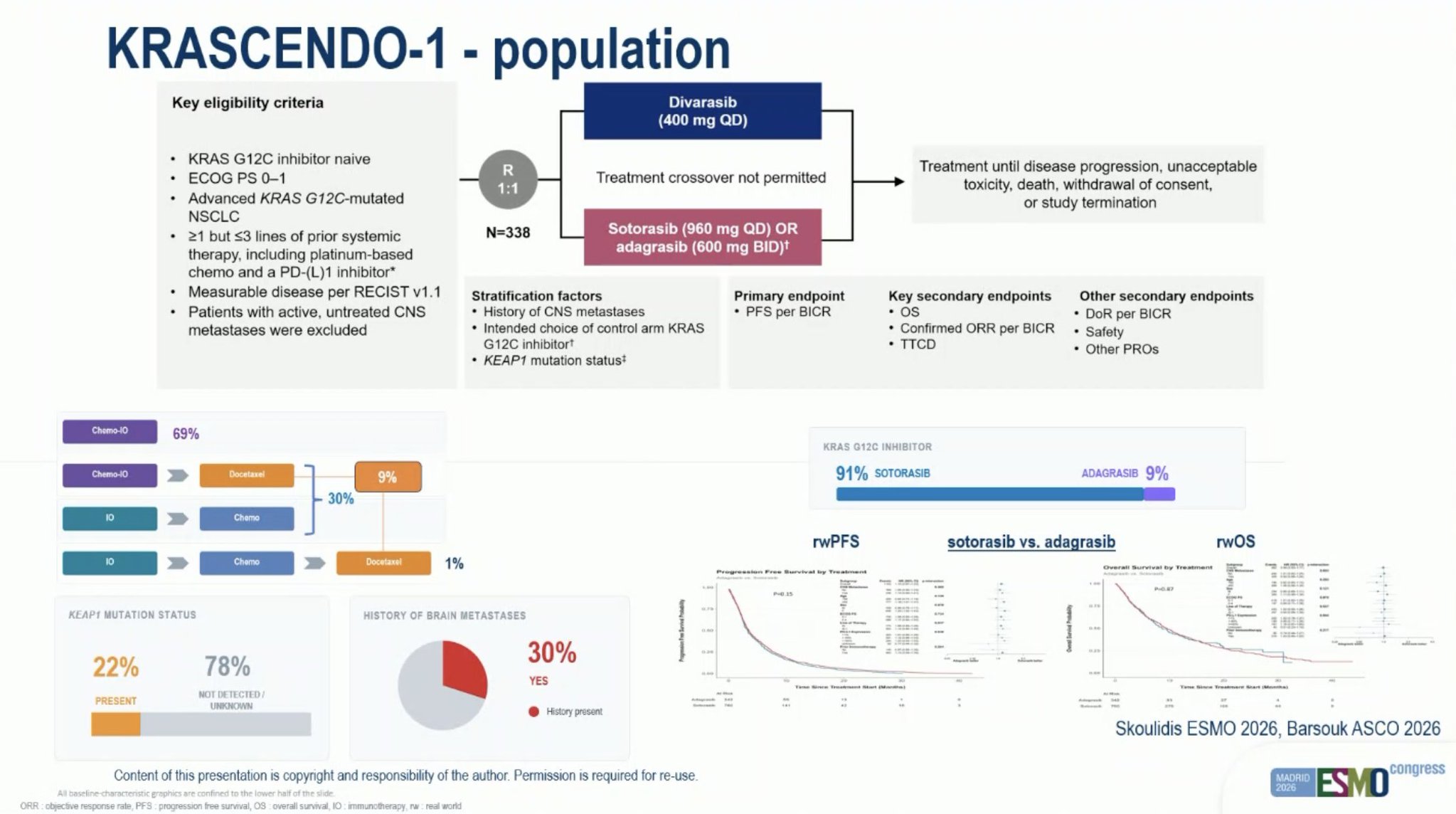
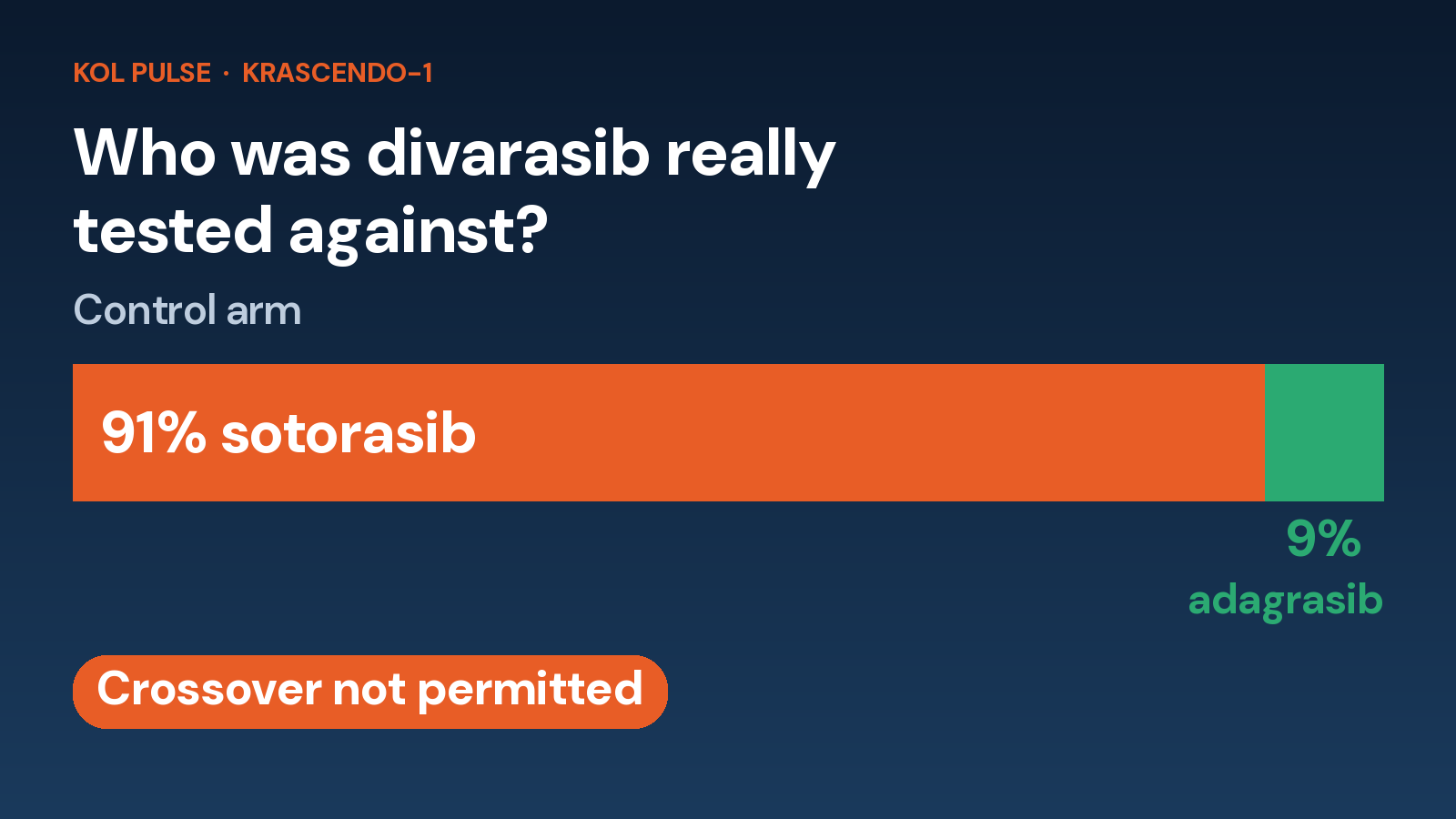
Phase 3 head-to-head, N=338, previously treated advanced KRAS G12C-mutant NSCLC. Divarasib (Roche/Genentech) vs investigator’s choice of sotorasib (n=156) or adagrasib (n=15). PFS by BICR 9.8 vs 5.7 months, HR 0.58 (95% CI 0.44–0.76), P<0.0001. OS 17.7 vs 12.0 months, HR 0.56 (0.41–0.78), P=0.0005. Confirmed ORR 58.4% vs 32.3%. Grade 3–4 treatment-related AEs 24.6% vs 34.5%; treatment-related AEs leading to discontinuation 4.8% vs 11.7%. Median treatment duration was 11.3 vs 5.0 months. (ESMO 2026 LBA5 abstract, Ferdinandos Skoulidis; data cutoff May 19, 2026) Divarasib is investigational. Sotorasib and adagrasib hold FDA accelerated approvals in this setting. (KOL Pulse KRASCENDO-1 page) Ferdinandos Skoulidis presented it on October 25 in Presidential Symposium II, with Benjamin Besse as invited discussant.

Physicians welcomed a randomized comparison within the KRAS G12C class. Before the abstract was released, the questions were the size of the gap and tolerability.


After the presentation, physicians called divarasib a new standard in this setting. The invited discussant, Benjamin Besse, criticized the lack of crossover.

SAFFRON: osimertinib + savolitinib after osimertinib in MET-driven EGFR-mutant NSCLC
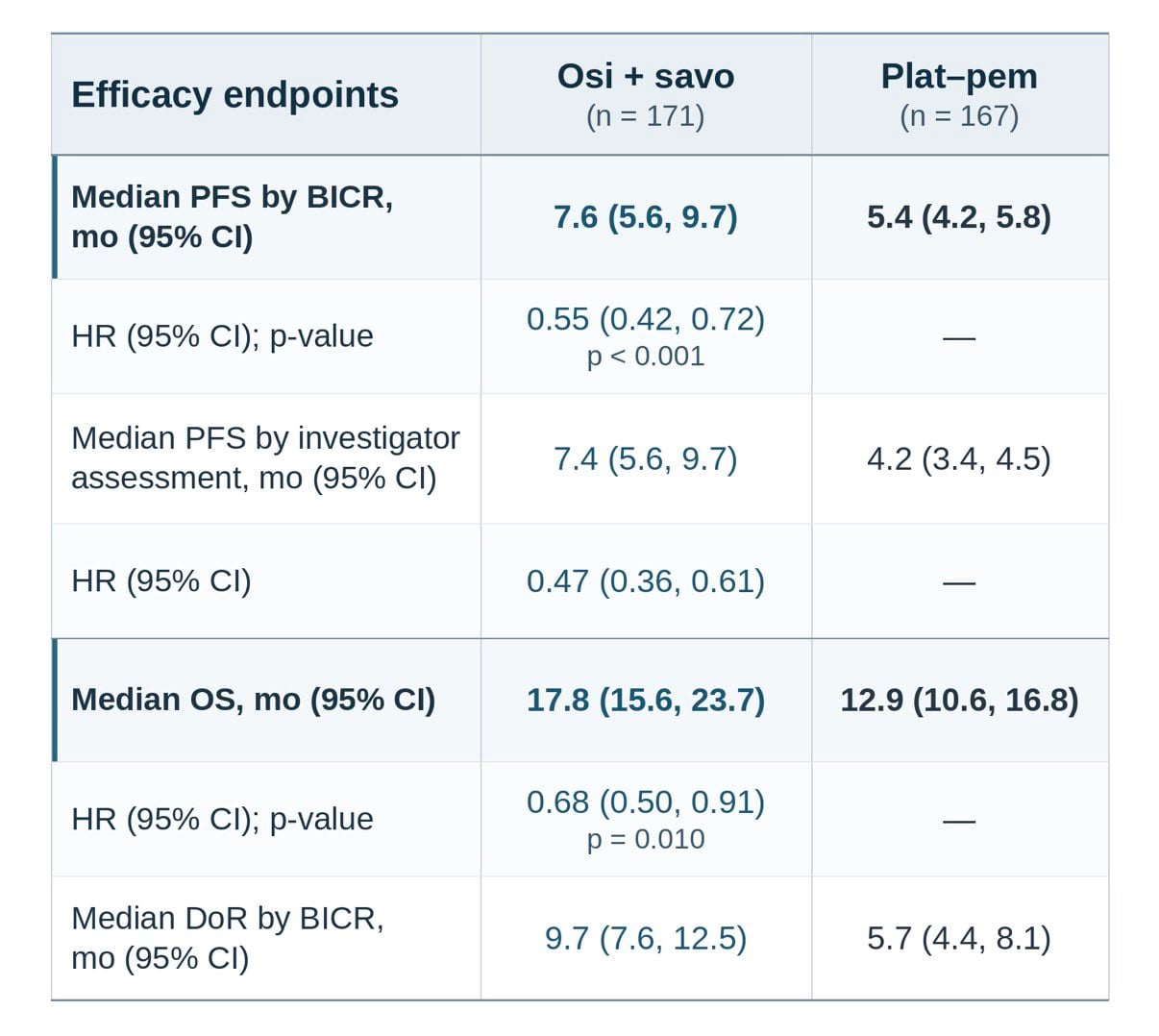
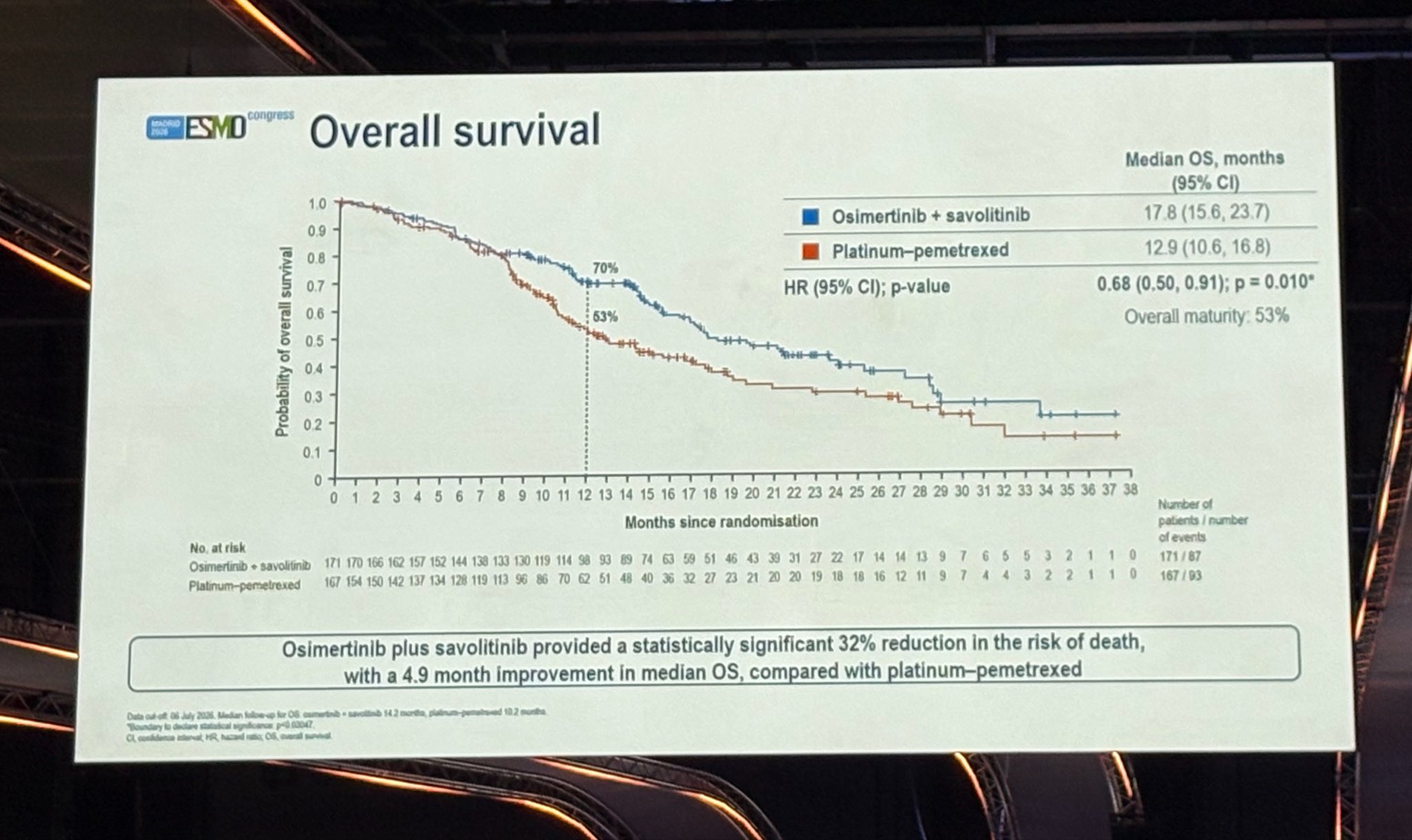
Phase 3, N=338, EGFR-mutant NSCLC with MET overexpression (IHC 3+ in ≥90% of tumor cells) and/or amplification (≥10 copies by FISH) after osimertinib. Osimertinib + savolitinib (n=171) vs platinum–pemetrexed (n=167). PFS by BICR 7.6 vs 5.4 months, HR 0.55 (95% CI 0.42–0.72), P<0.001. OS 17.8 vs 12.9 months, HR 0.68 (0.50–0.91), P=0.010. Grade ≥3 treatment-related AEs 40% vs 52%; adverse events leading to discontinuation (any cause) 14% vs 8%. (ESMO 2026 LBA6 abstract, Shun Lu; data cutoff Jul 6, 2026) The combination is investigational in the US (FDA Fast Track). It is approved in China based on the SACHI trial. (KOL Pulse SAFFRON page) Shun Lu presented it on October 25 in Presidential Symposium II, with Natasha Leighl as invited discussant.

Physicians noted an OS benefit with an all-oral regimen. The questions were whether it becomes the standard after osimertinib and how patients are selected by MET testing.

After the presentation, the discussion turned to patient selection: whether MET testing by IHC alone finds the right patients.
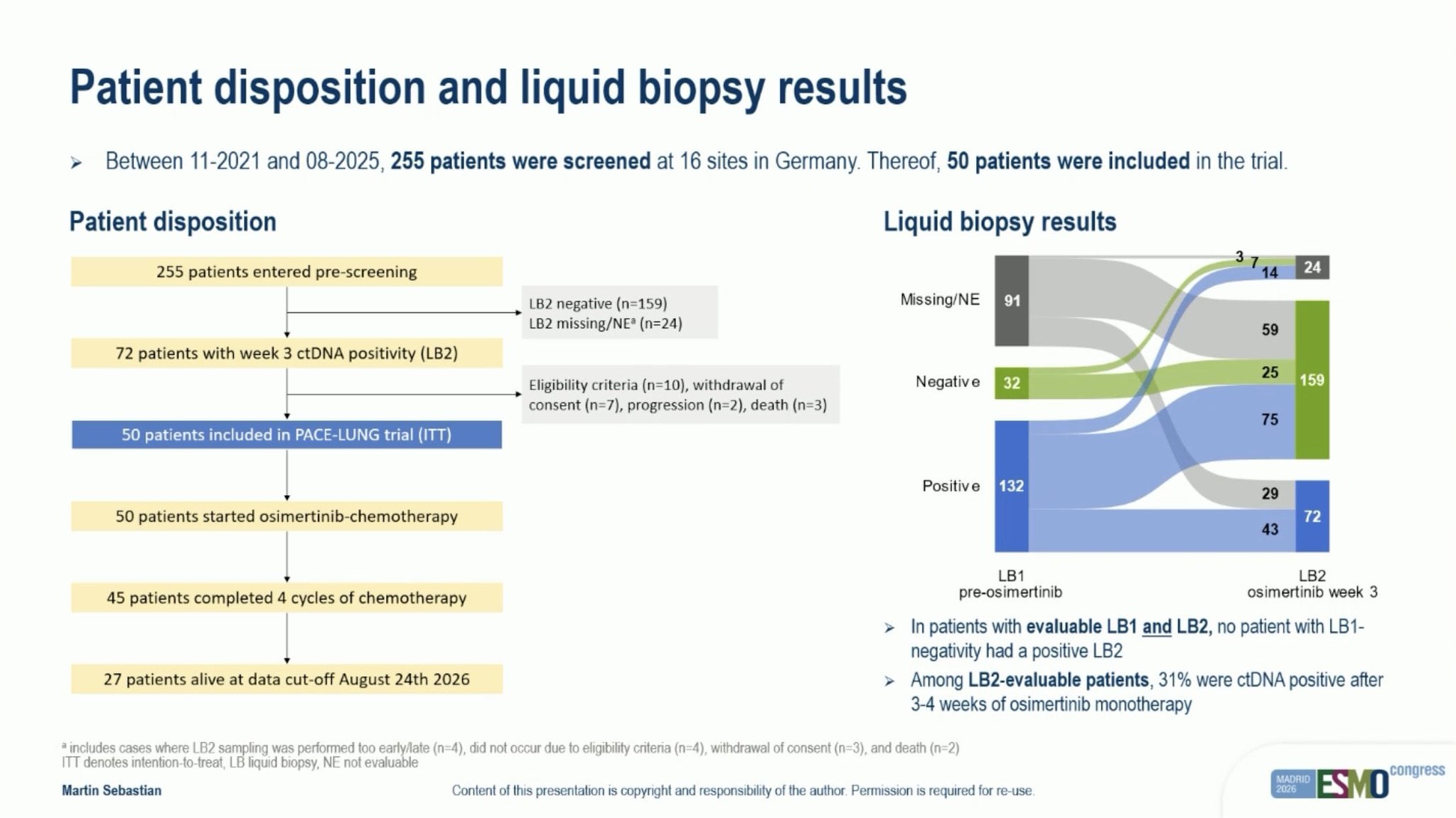
PACE-LUNG: adding chemotherapy when EGFR ctDNA persists on osimertinib
Single-arm Phase 2 trial (LBA73, Martin Sebastian, Rapid oral 1, October 24). Patients with EGFR-mutant NSCLC and plasma EGFR ctDNA still detectable at week 3 of first-line osimertinib received added platinum–pemetrexed. The ctDNA-guided strategy is investigational. Source: LBA73 abstract, ESMO 2026 program.

Physicians agreed the approach is feasible. The debate was the lack of a comparator and whether ctDNA clearance is prognostic or predictive.
Track oncology’s top KOLs in your specialty
Create a free account, pick the tumor types you cover, and go beyond the tweet — the intelligence pharma teams use to map influence and prepare for engagement:
- ✓Enhanced KOL profiles
- ✓Pharma influence & potential advisory-board patterns
- ✓2025 Open Payments financial analysis
- ✓Social-media sentiment & trend signals
NSCLC: radiotherapy, first-line immunotherapy, ADCs, immunotherapy duration and supportive care
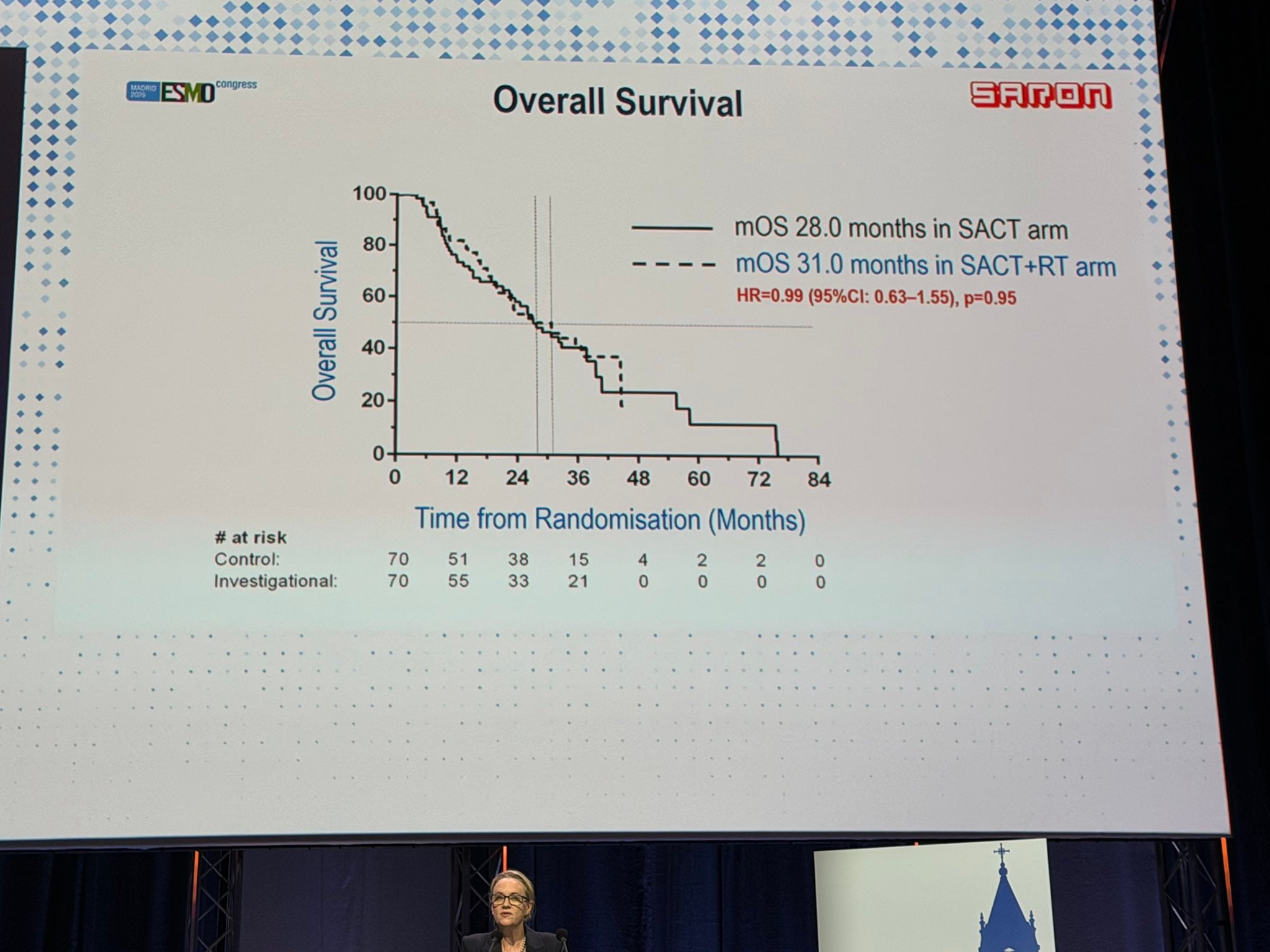
SARON: consolidation radiotherapy for synchronous oligometastatic NSCLC
Randomized trial of systemic therapy with or without consolidation radiotherapy (2613O, Fiona McDonald, Proffered paper 1, October 25). Source: 2613O abstract, ESMO 2026 program.

Physicians focused on better local control and PFS without an OS difference, the radiotherapy techniques used, and how the results apply to patients treated with SABR to all sites.
After the presentation on October 25, physicians agreed on the improved local control and progression-free survival without an overall survival benefit. The open question was which patients gain enough from consolidation radiotherapy to justify it. Benjamin P. Levy was the invited discussant for SARON and PERSEE.
PERSEE (GFPC 01-2020): pembrolizumab with or without chemotherapy in PD-L1-high NSCLC
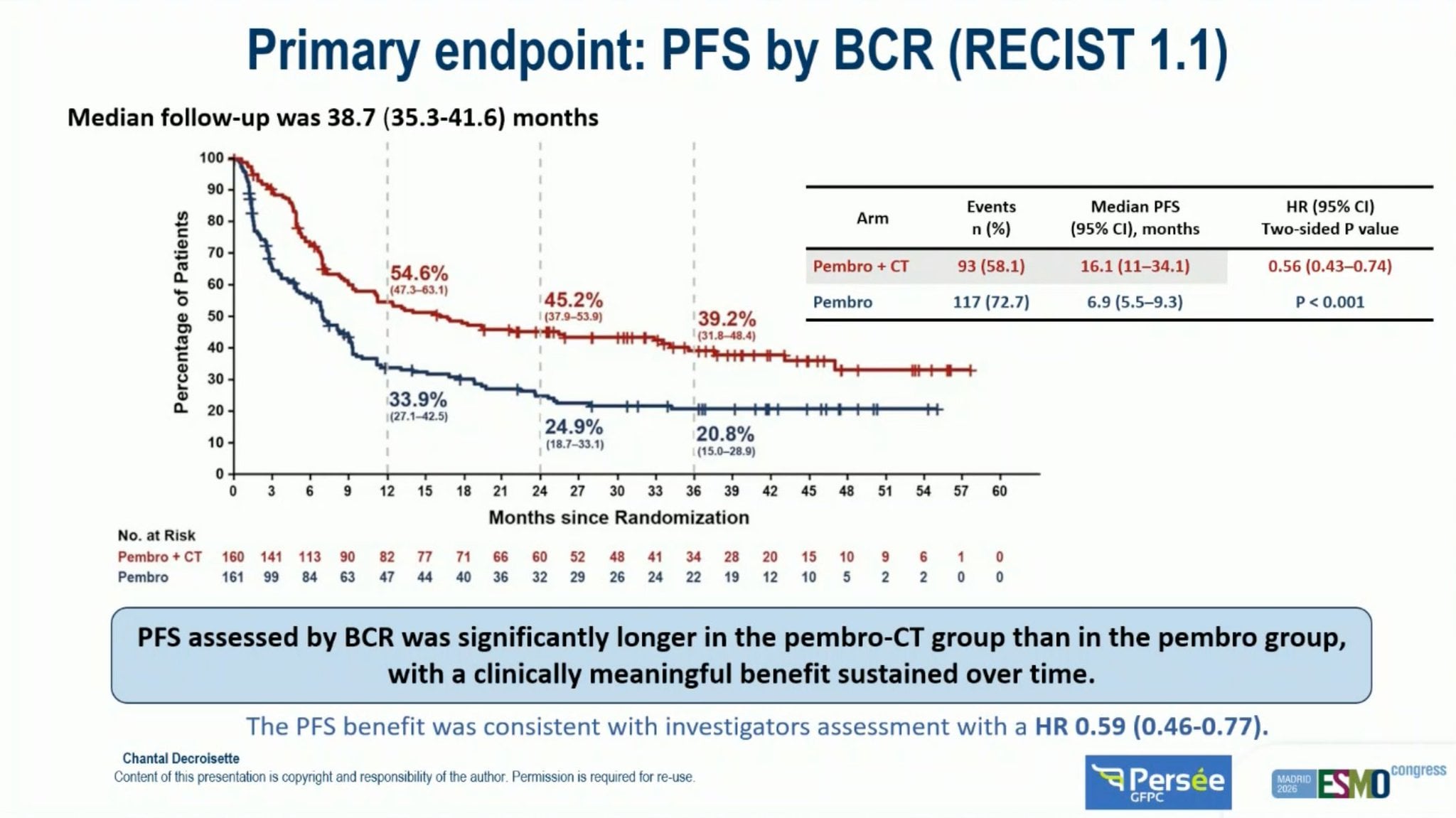
Academic Phase 3 trial from the French GFPC group: pembrolizumab plus platinum-based chemotherapy vs pembrolizumab alone as first-line treatment for advanced NSCLC with PD-L1 ≥50% and no EGFR or ALK alterations (2614O, Chantal Decroisette, Proffered paper 1, October 25; invited discussant Benjamin P. Levy), published simultaneously in Annals of Oncology. The primary endpoint was progression-free survival by blinded central review; overall survival was a secondary endpoint. PFS by blinded central review was 16.1 vs 6.9 months, HR 0.56 (95% CI 0.43–0.74), two-sided P<0.001, with 210 of 249 planned events. Overall survival was 50.2 vs 29.9 months, HR 0.77 (0.56–1.05), not statistically significant; the trial was not powered for overall survival, and 43.5% of the pembrolizumab-alone arm received platinum-based chemotherapy at second line. In the descriptive PD-L1 90–100% subgroup, PFS was 25.4 vs 7.1 months, HR 0.6 (0.36–1). Grade ≥3 treatment-related adverse events occurred in 54% vs 19%. (ESMO 2026 2614O slides and Annals of Oncology, Chantal Decroisette; single analysis, data cutoff Apr 7, 2026) Pembrolizumab alone and pembrolizumab plus chemotherapy are both FDA-approved first-line options in this setting; PERSEE compared them head to head and does not change any label. (KOL Pulse PERSEE page)

Several physicians called PERSEE practice changing. The debate was over the control arm and overall survival. Alfredo Addeo wrote that pembrolizumab alone performed poorly compared with KEYNOTE-024; the presenter, Chantal Decroisette, replied that the arm was consistent with the updated KEYNOTE-024 results. Tom John noted that overall survival was not significant and said he would have liked it as the primary endpoint.

OptiTROP-Lung06: sac-TMT + pembrolizumab in PD-L1-negative non-squamous NSCLC
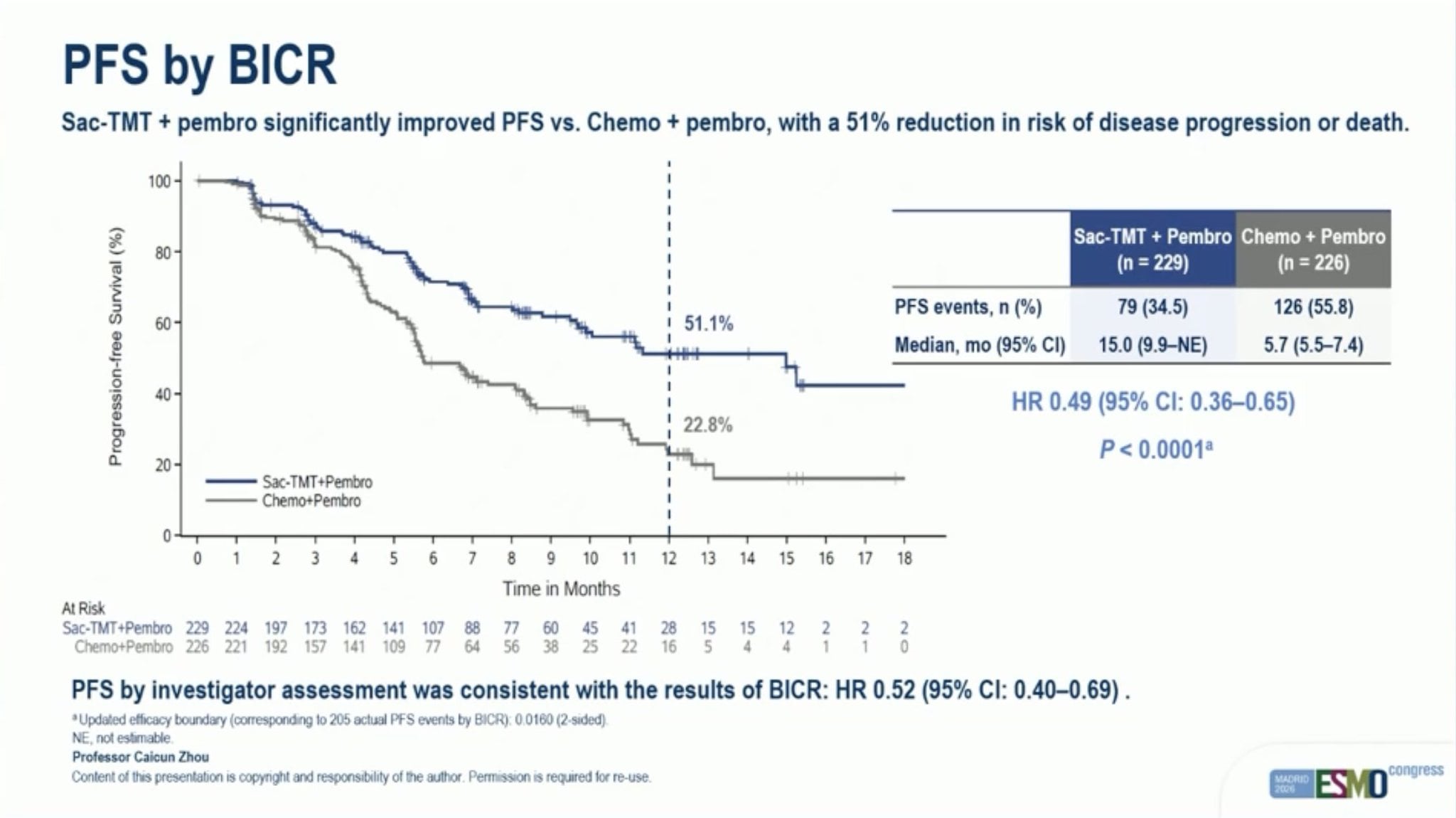
Randomized Phase 3 trial of sacituzumab tirumotecan (sac-TMT) plus pembrolizumab vs platinum–pemetrexed plus pembrolizumab, first line, in PD-L1-negative non-squamous NSCLC without EGFR or ALK alterations (LBA66, Caicun Zhou, Proffered paper 1, October 25; invited discussant Melissa L. Johnson), published in NEJM alongside the presentation. At the prespecified interim PFS analysis, the primary endpoint was met: PFS by BICR 15.0 vs 5.7 months, HR 0.49 (95% CI 0.36–0.65), with 12-month PFS of 51.1% vs 22.8%. Overall survival, a secondary endpoint, is immature and descriptive: medians not reached, HR 0.58 (0.38–0.88); an overall survival benefit has not been established. ORR was 50.2% vs 47.3%, and median duration of response 13.6 vs 6.8 months. Grade ≥3 treatment-emergent adverse events occurred in 47.6% vs 60.6%; stomatitis in 51.1% with sac-TMT (grade ≥3, 2.2%). (ESMO 2026 LBA66 slides, Caicun Zhou; interim PFS analysis, data cutoff Jun 9, 2026) Sac-TMT is not FDA or EMA approved, and first-line sac-TMT plus pembrolizumab for PD-L1-negative NSCLC is not approved anywhere. (KOL Pulse OptiTROP-Lung06 page)

Before the presentation, the question was whether a TROP2 ADC can replace the platinum doublet alongside immunotherapy. After it, physicians pointed to the progression-free survival difference and the duration of response. They also raised immature overall survival and short follow-up, a trial population from China with global data still awaited, and access.
OptiTROP-Lung04: sac-TMT vs platinum chemotherapy in EGFR-mutant NSCLC after EGFR-TKI
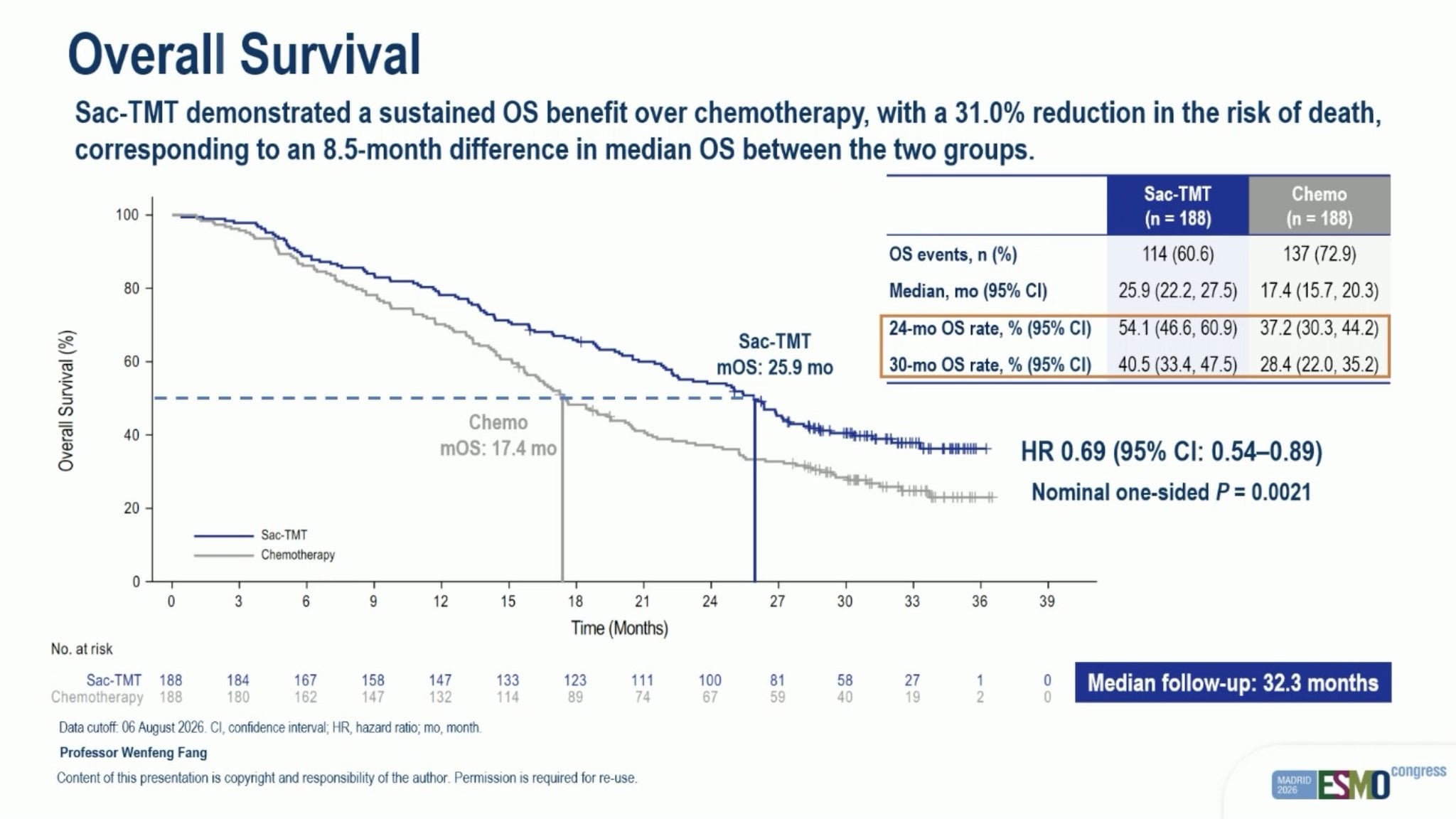
Trending on Day 3: almost all of the OptiTROP-Lung04 physician posts came on October 25, after the presentation. It is a different trial from OptiTROP-Lung06 above. OptiTROP-Lung04 is a randomized Phase 3 trial of sac-TMT monotherapy (Kelun-Biotech; licensed to MSD outside China) vs pemetrexed plus platinum, followed by pemetrexed maintenance, in locally advanced or metastatic EGFR-mutant NSCLC that progressed on EGFR-TKI therapy. ESMO 2026 reported the prespecified final overall survival analysis (LBA67, Wenfeng Fang, Proffered paper 1, October 25; invited discussant Melissa L. Johnson); interim results were published in NEJM in 2025. At the final analysis, median overall survival was 25.9 vs 17.4 months, HR 0.69 (95% CI 0.54–0.89), nominal one-sided P=0.0021; 24-month overall survival was 54.1% vs 37.2%. Overall survival is the key secondary endpoint; it was formally tested, and significant, at the 2025 interim analysis, so the final P value is nominal. Among patients who stopped study treatment, 22.6% in the chemotherapy arm vs 3.5% in the sac-TMT arm later received an ADC; a prespecified sensitivity analysis adjusting for this (RPSFT) gave HR 0.57 (0.42–0.75). (ESMO 2026 LBA67 slides, Wenfeng Fang; final OS analysis, data cutoff Aug 6, 2026) The primary endpoint, PFS by BICR, was met at the interim PFS analysis (HR 0.47; data cutoff Jul 11, 2024); at the final PFS analysis, PFS was 8.3 vs 4.3 months, HR 0.49 (0.39–0.62). (ESMO 2025 LBA5 and NEJM; final PFS analysis, data cutoff Jul 6, 2025) In China, the NMPA approved sac-TMT for EGFR-mutant NSCLC after EGFR-TKI therapy based on this trial. Sac-TMT is not FDA or EMA approved; use outside China is investigational. (KOL Pulse OptiTROP-Lung04 page)

Physicians agreed the overall survival benefit was impressive. The debate was over how to read it: Antonio Calles noted the p value is nominal, Adam Januszewski noted the trial enrolled patients in China and said global data will be important, and Tom John flagged nuances, including subsequent therapies, toxicity and no osimertinib in either arm, while calling the benefit hard to ignore. Neither the presenter nor the discussant had posted about it on X when this was written.
Context: the LBA67 abstract and the presented study design slide list overall survival as the key secondary endpoint; the primary endpoint was progression-free survival by blinded independent central review.
SigVie-002: sigvotatug vedotin vs docetaxel misses its primary endpoint
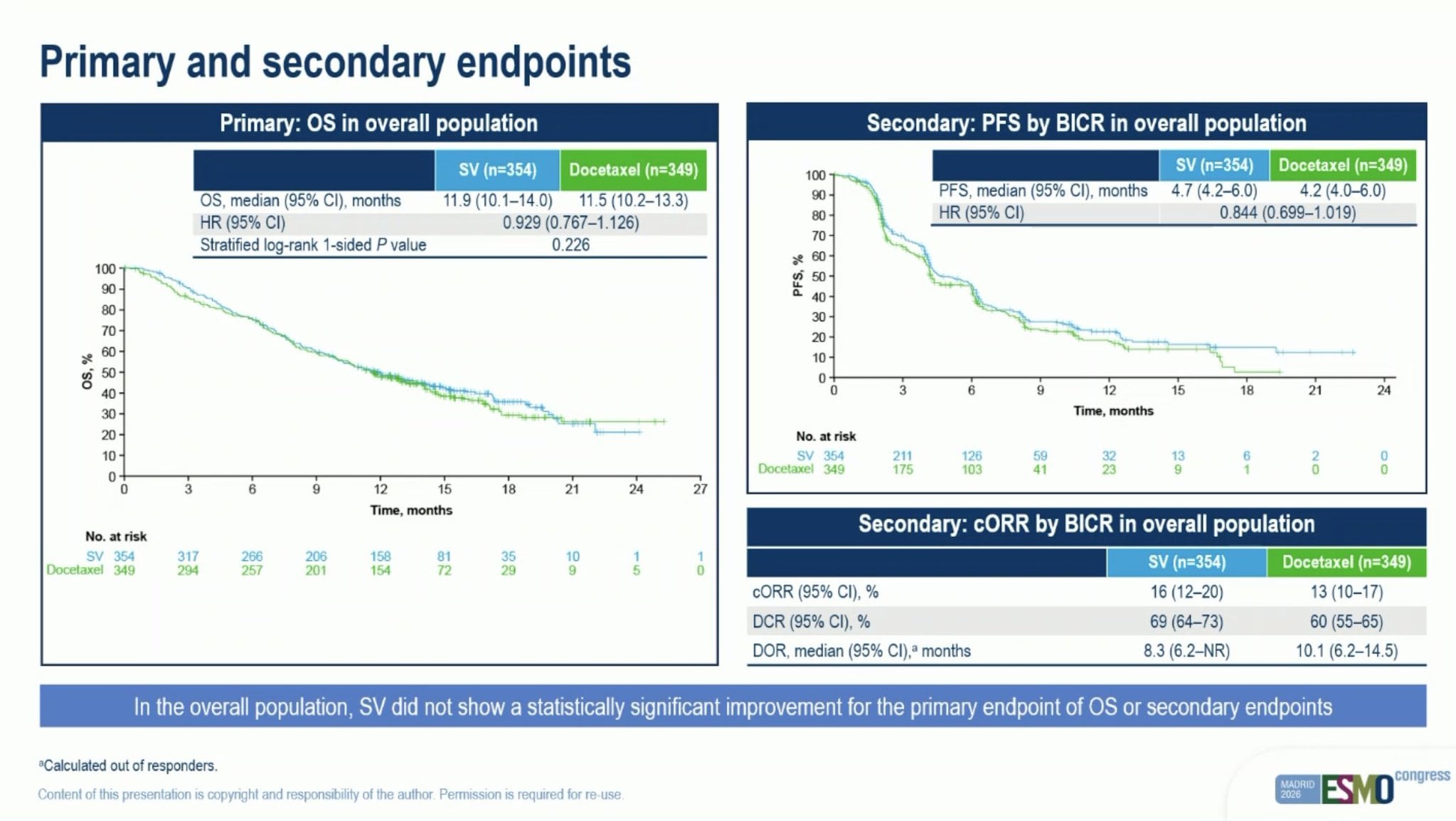
Phase 3 trial of sigvotatug vedotin (Pfizer), an integrin beta-6-directed ADC, vs docetaxel in previously treated non-squamous NSCLC (LBA68, Solange Peters, Proffered paper 1, October 25). Sigvotatug vedotin did not significantly improve overall survival, the primary endpoint, in the overall population, and secondary endpoints including progression-free survival were not significantly improved. The abstract reports favorable trends in a post hoc second-line subgroup, mostly patients without actionable genomic alterations, and no clear relationship between integrin beta-6 expression and efficacy. The authors said the results support further development in combination with pembrolizumab or a PD-1/VEGF bispecific in earlier settings. Median overall survival was 11.9 vs 11.5 months, HR 0.929 (95% CI 0.767–1.126), one-sided P=0.226; PFS by BICR was 4.7 vs 4.2 months, HR 0.844 (0.699–1.019). In the post hoc second-line subgroup, which was not prespecified and had no formal statistical test, overall survival was 13.6 vs 11.1 months, unstratified HR 0.831 (0.658–1.049); these results do not establish a benefit. (ESMO 2026 LBA68 abstract and slides, Solange Peters; data cutoff May 18, 2026) Grade ≥3 treatment-related adverse events occurred in 33% vs 36%. (ESMO 2026 LBA68 abstract; data cutoff May 18, 2026) Sigvotatug vedotin is investigational and not FDA approved. (KOL Pulse SigVie-002 page)

Physicians agreed the trial was negative. Antonio Calles called it completely negative, and Noemi Reguart said the challenge of beating docetaxel with ADCs in second line continues. Stephen V Liu saw some signal in driver-negative patients in second line; the abstract labels that subgroup analysis post hoc.
DIAL (IFCT-2103): stopping immunotherapy at 6 months
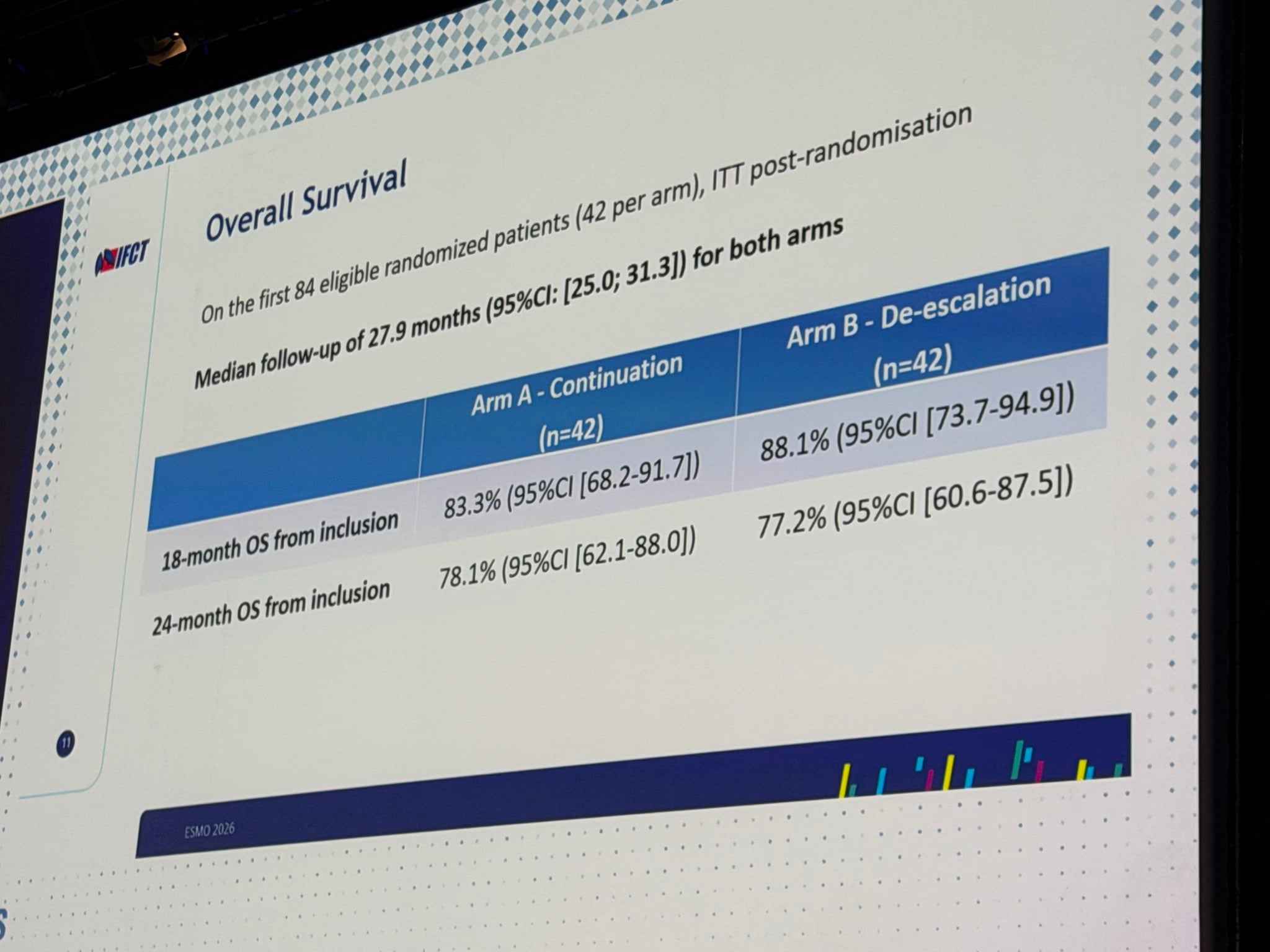
Phase 2 part of the phase 2–3 IFCT-2103 DIAL trial: continuing pembrolizumab (± pemetrexed) up to 2 years vs observation (± pemetrexed) in metastatic NSCLC with disease control at 6 months (2618RO, Anne-Claire Toffart, Rapid oral 2, October 25). Stopping immunotherapy at 6 months is an investigational strategy. Source: 2618RO abstract, ESMO 2026 program.

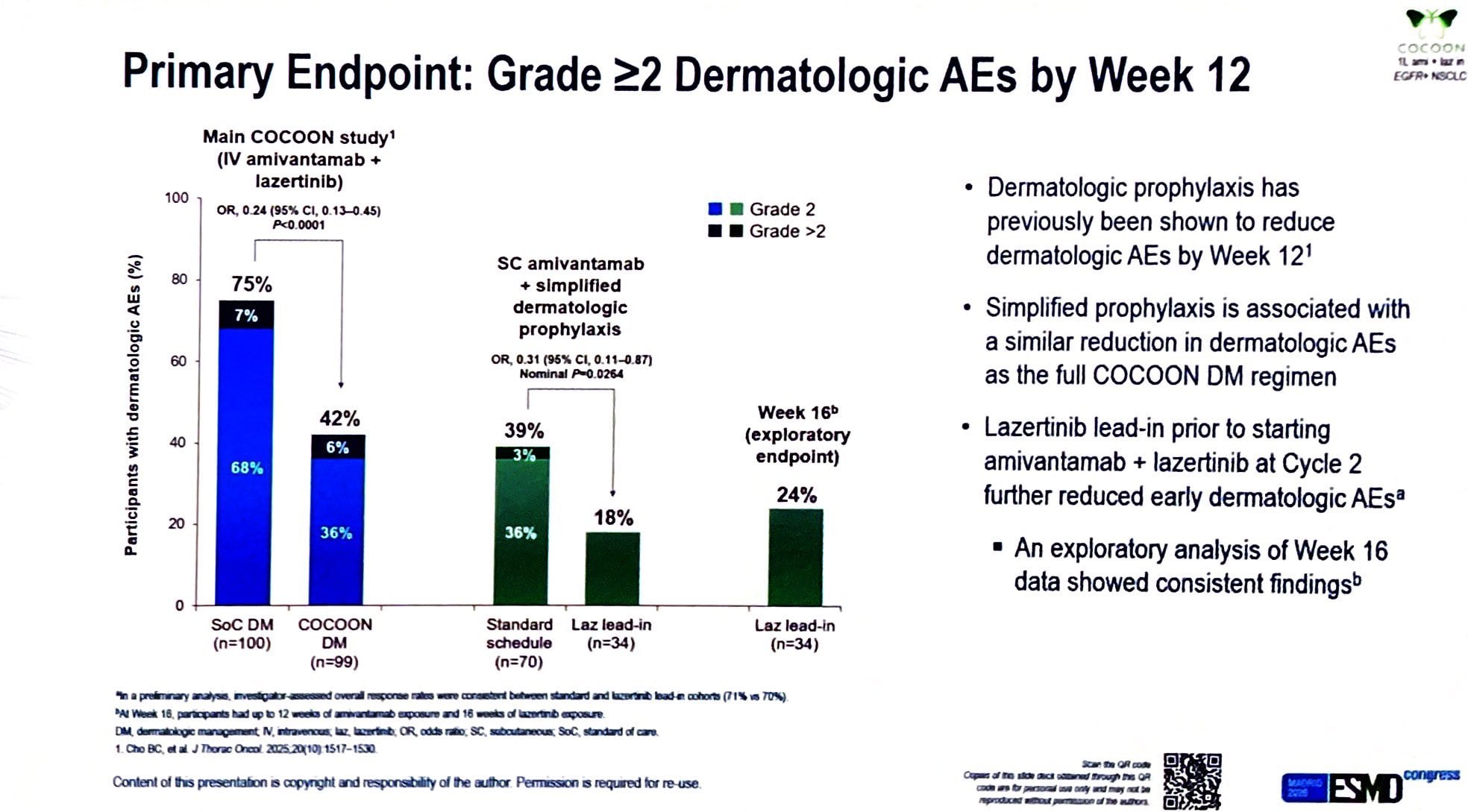
COCOON: preventing skin toxicity with amivantamab + lazertinib
New non-randomized cohorts of the COCOON Phase 2 trial tested simplified dermatologic prophylaxis with subcutaneous amivantamab plus lazertinib, including a lazertinib lead-in (2700RO, Byoung Chul Cho, Rapid oral 1, October 24). Intravenous amivantamab plus lazertinib is FDA approved for first-line NSCLC with EGFR exon 19 deletions or exon 21 L858R mutations. Source: 2700RO abstract, ESMO 2026 program.

Physicians agreed the regimen is easier to tolerate. The open question is whether efficacy holds.
More Day 3 lung presentations
Four more lung presentations on October 25 drew physician posts. One post is shown for each. All four regimens are investigational. Source: ESMO 2026 program.
ROSETTA Lung-107: pumitamig + docetaxel after chemo-immunotherapy
Global Phase 2, open-label trial of pumitamig, a PD-L1 × VEGF-A bispecific antibody, plus docetaxel in metastatic NSCLC after chemo-immunotherapy; first data (LBA76, Byoung Chul Cho, Rapid oral 2, October 25).
Combi-TED: OSE2101 vaccine with docetaxel or nivolumab in second line
Randomized Phase 2 trial of the therapeutic cancer vaccine OSE2101 plus docetaxel or plus nivolumab, vs docetaxel, as second-line therapy for metastatic NSCLC after first-line chemo-immunotherapy (2661RO, Federico Cappuzzo, Rapid oral 2, October 25).
SUNRAY-01 and LOXO-RAS-20001: first-line olomorasib + chemo-immunotherapy in KRAS G12C NSCLC
Updated pooled results of first-line olomorasib plus chemo-immunotherapy in KRAS G12C-mutant NSCLC from the LOXO-RAS-20001 and SUNRAY-01 trials (2652RO, Marcelo V. Negrao, Rapid oral 2, October 25).
NeoCOAST-2: ctDNA clearance in a perioperative platform trial
Association of ctDNA clearance with clinical outcomes in the global platform Phase 2 perioperative NeoCOAST-2 trial in resectable NSCLC (4244RO, Tina Cascone, Rapid oral 1: Basic science and translational research, October 25), published simultaneously in Nature.
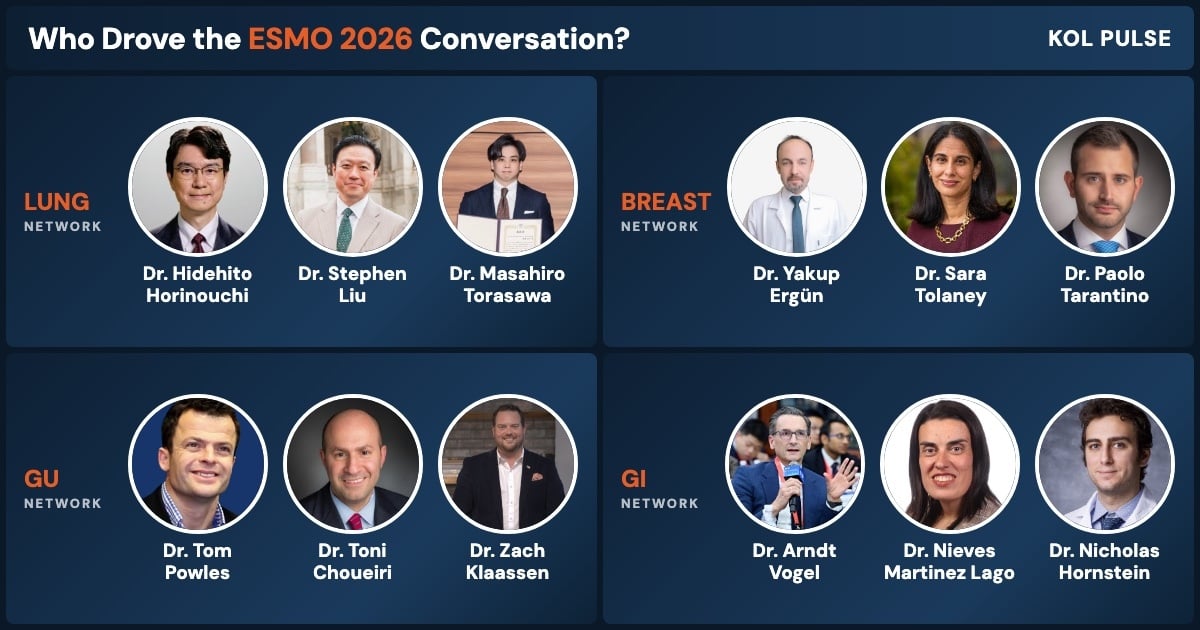
KOL Voices: lung cancer
The top 10 physicians in the Lung tab of the ESMO 2026 Top KOLs leaderboard. One line from each, verbatim and linked, with the trial it is about.
- 1Hidehito Horinouchi @HHorinouchi · 111.7K impressions · 124 posts
- 2Stephen V Liu, MD @StephenVLiu · 45.3K impressions · 37 posts
- 3Masahiro Torasawa, MD, PhD @M_Torasawa · 34.8K impressions · 7 posts
- 4Enes Erul, MD @ErulEnes · 22.5K impressions · 4 posts
- 5Alfredo Addeo, MD @Alfdoc2 · 22.2K impressions · 31 posts
- 6Patrick Forde @FordePatrick · 17.8K impressions · 8 posts
- 7Riyaz Shah @DrRiyazShah · 13.3K impressions · 24 posts
- 8Giannis Mountzios @g_mountzios · 11.7K impressions · 5 posts
- 9Antonio Calles @Tony_Calles · 11.1K impressions · 22 posts
- 10Aakash Desai @ADesaiMD · 11.0K impressions · 10 posts
What’s yet to come: lung cancer, October 27
Times are Madrid time. ESMO 2026 ends on October 27.
| When | Session | Trial or abstract | Presenter |
|---|---|---|---|
| Tue Oct 27, 09:40 | Scientific Congress Highlights 2 | Congress highlights: NSCLC, metastatic | Patrick M. Forde |
| Tue Oct 27, 10:00 | Scientific Congress Highlights 2 | Congress highlights: Non-metastatic NSCLC and other thoracic malignancies | Pilar Garrido Lopez |
The ESMO 2026 trials page adds physician posts as these sessions happen.
FAQ
Which lung cancer trials did physicians discuss most at ESMO 2026?
By physician posts on X on October 23-26, DeLLphi-305 leads with 142 posts from 89 physicians, followed by KRASCENDO-1 (80), SAFFRON (54), PERSEE (42) and OptiTROP-Lung06 (41). Among the Day 4 (October 26) presentations, PANKU-Lung01 drew the most physician posts (19 from 15 physicians across October 23-26), followed by HERON-Lung01 (13).
What did PANKU-Lung01 and HERON-Lung01 show in EGFR-mutant NSCLC after an EGFR TKI?
Both Phase 3 trials, run in China, compared an antibody-drug conjugate with platinum-pemetrexed and met their primary endpoint, PFS by blinded independent central review. PANKU-Lung01 (iza-bren, an EGFRxHER3 bispecific ADC; ESMO 2026 LBA71): 11.1 vs 5.7 months, HR 0.40 (final PFS analysis, data cutoff July 15, 2026). HERON-Lung01 (ruzaltatug rezetecan, a HER3-directed ADC; LBA72): 8.3 vs 5.4 months, HR 0.47 (interim PFS analysis, data cutoff April 15, 2026). Overall survival is immature in both. Both drugs are investigational; in the US, amivantamab plus carboplatin-pemetrexed is an FDA-approved option after an EGFR TKI. The trials differ in drug, population and follow-up, so they are not directly comparable.
What did SANOVO show?
In first-line EGFR-mutant NSCLC with MET overexpression, savolitinib plus osimertinib improved investigator-assessed PFS vs osimertinib alone in the MET IHC 3+ population (24.8 vs 11.1 months, HR 0.45) and the ITT population (24.9 vs 13.8 months, HR 0.56). Overall survival, a secondary endpoint, was 44.5 vs 34.9 months (HR 0.48), with no P value reported. Grade 3 or higher treatment-emergent adverse events were more frequent with the combination (77.2% vs 38.4%). ESMO 2026 LBA69, data cutoff July 31, 2026. The first-line combination is investigational.
Is OptiTROP-Lung04 the same trial as OptiTROP-Lung06?
No. OptiTROP-Lung04 compared sac-TMT alone with platinum-pemetrexed chemotherapy in EGFR-mutant NSCLC after EGFR-TKI therapy; ESMO 2026 reported its final overall survival analysis (LBA67: 25.9 vs 17.4 months, HR 0.69, nominal P value). OptiTROP-Lung06 compared sac-TMT plus pembrolizumab with chemotherapy plus pembrolizumab as first-line treatment for PD-L1-negative non-squamous NSCLC (LBA66: PFS 15.0 vs 5.7 months, HR 0.49, interim analysis). Sac-TMT is approved in China for EGFR-mutant NSCLC after EGFR-TKI therapy and is not FDA or EMA approved.
Did SigVie-002 meet its primary endpoint?
No. Sigvotatug vedotin did not significantly improve overall survival, the primary endpoint, vs docetaxel in previously treated non-squamous NSCLC (ESMO 2026 LBA68: 11.9 vs 11.5 months, HR 0.929). Trends in a second-line subgroup came from a post hoc analysis. Sigvotatug vedotin is investigational.
What did DeLLphi-305 show?
Adding tarlatamab to durvalumab as first-line maintenance in extensive-stage small cell lung cancer improved median OS from 12.7 to 21.1 months (HR 0.42, 95% CI 0.32-0.54) at a prespecified interim analysis (ESMO 2026 LBA3). The first-line combination is investigational; tarlatamab is FDA approved after platinum chemotherapy.
What did KRASCENDO-1 show?
In previously treated KRAS G12C-mutant NSCLC, divarasib improved PFS (9.8 vs 5.7 months, HR 0.58) and OS (17.7 vs 12.0 months, HR 0.56) vs sotorasib or adagrasib in the ESMO 2026 LBA5 abstract (data cutoff May 19, 2026). Divarasib is investigational.
Is osimertinib plus savolitinib approved in the US?
No. The combination is investigational in the US (FDA Fast Track). In SAFFRON (ESMO 2026 LBA6 abstract), it improved PFS (HR 0.55) and OS (HR 0.68) vs platinum-pemetrexed after osimertinib in MET-overexpressed and/or amplified EGFR-mutant NSCLC. SANOVO tested the combination first line; that use is also investigational.
Which lung cancer sessions remain at ESMO 2026?
On October 27, the final day, Scientific Congress Highlights 2 includes lung cancer highlights by Patrick M. Forde (metastatic NSCLC, 09:40 Madrid time) and Pilar Garrido Lopez (non-metastatic NSCLC and other thoracic malignancies, 10:00).
Related ESMO 2026 pages
- ESMO 2026 lung cancer slide library
- ESMO 2026 trials: physician posts by trial
- ESMO 2026 conference page
- DeLLphi-305 trial page
- KRASCENDO-1 trial page
- SAFFRON trial page
- DeLLphi-304 trial page
- SigVie-002 trial page
- PERSEE trial page
- OptiTROP-Lung06 trial page
- OptiTROP-Lung04 trial page
- PANKU-Lung01 trial page
- HERON-Lung01 trial page
- Dalmelitinib + aumolertinib (HS-10241-301) trial page
- SANOVO trial page
- Neotorch trial page
- ASTRIDE trial page
- PEARLS/KEYNOTE-091 trial page
- KEYNOTE-671 trial page
- MOIO trial page
KOL Pulse tracks what oncologists and hematologists post on X. Posts quoted here are shown in full and verbatim, except where marked [...] with a link to the full post. Trial figures come from KOL Pulse trial pages, with the source and data cutoff in parentheses.