ESMO 2026: Top Melanoma Trials and KOL Voices
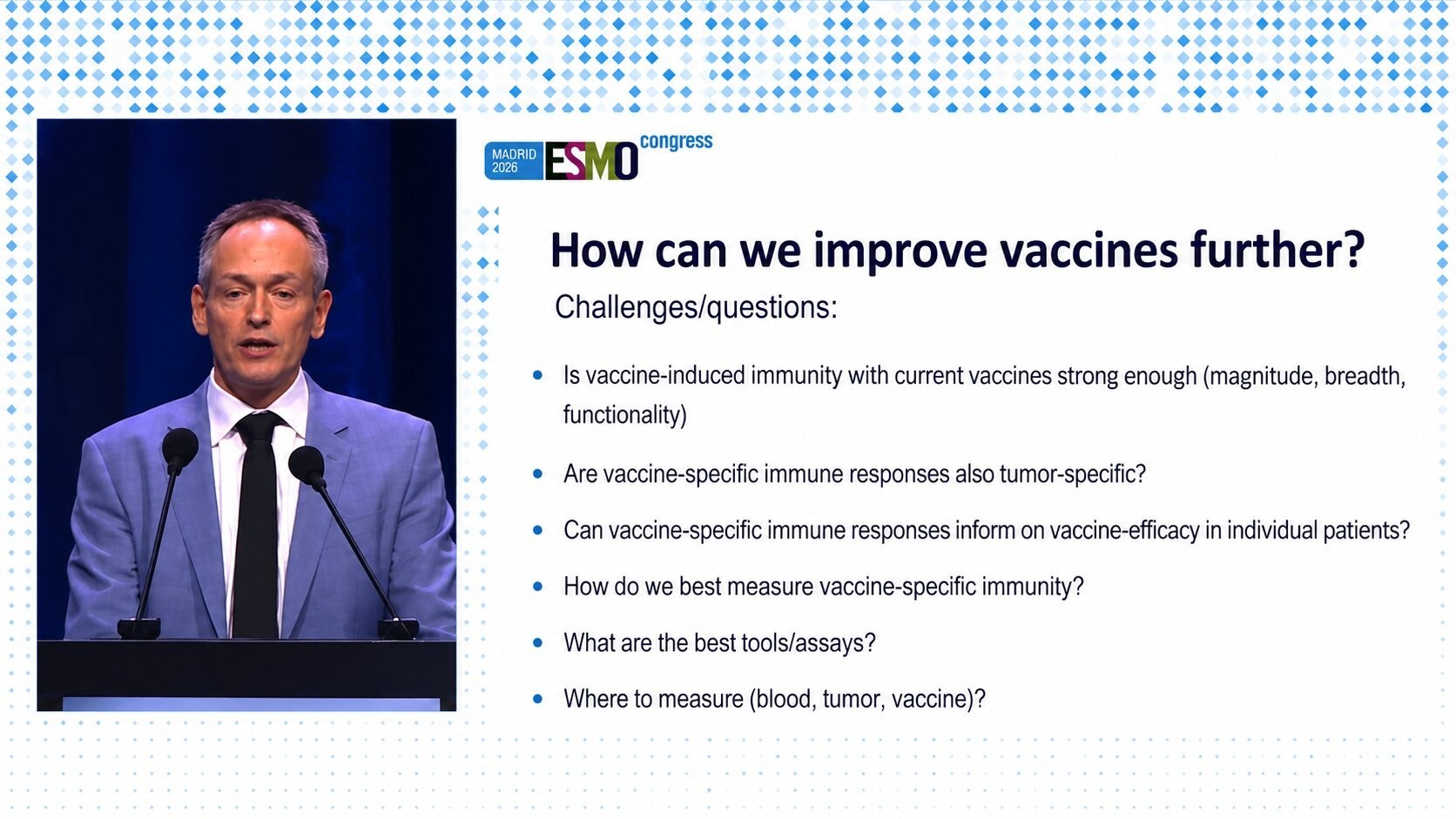
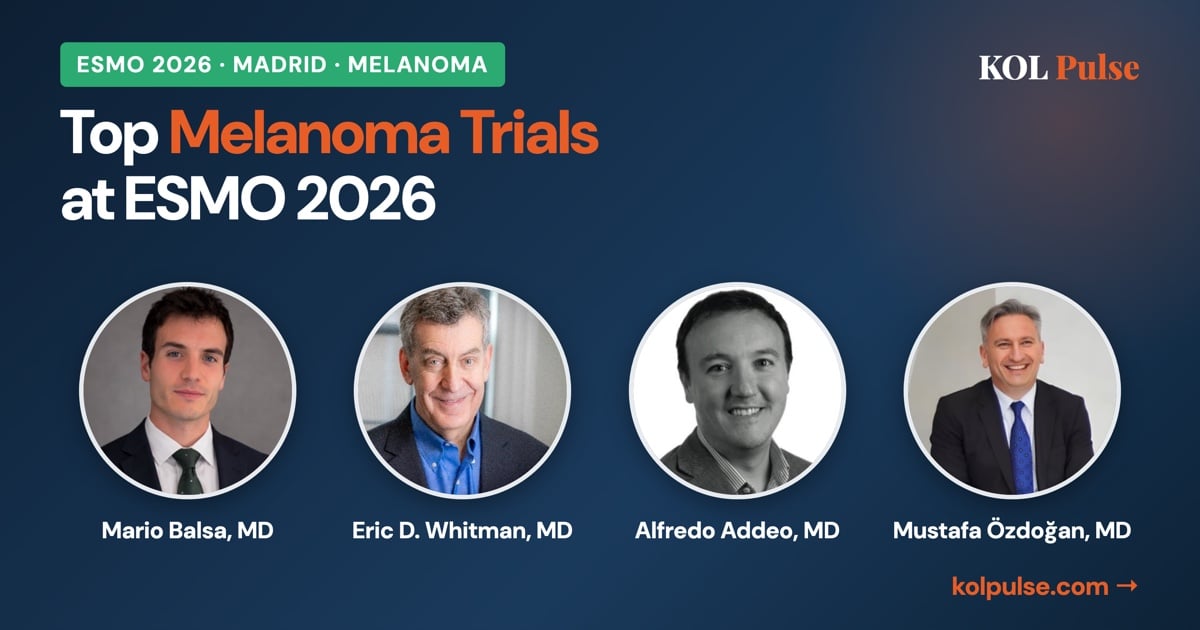
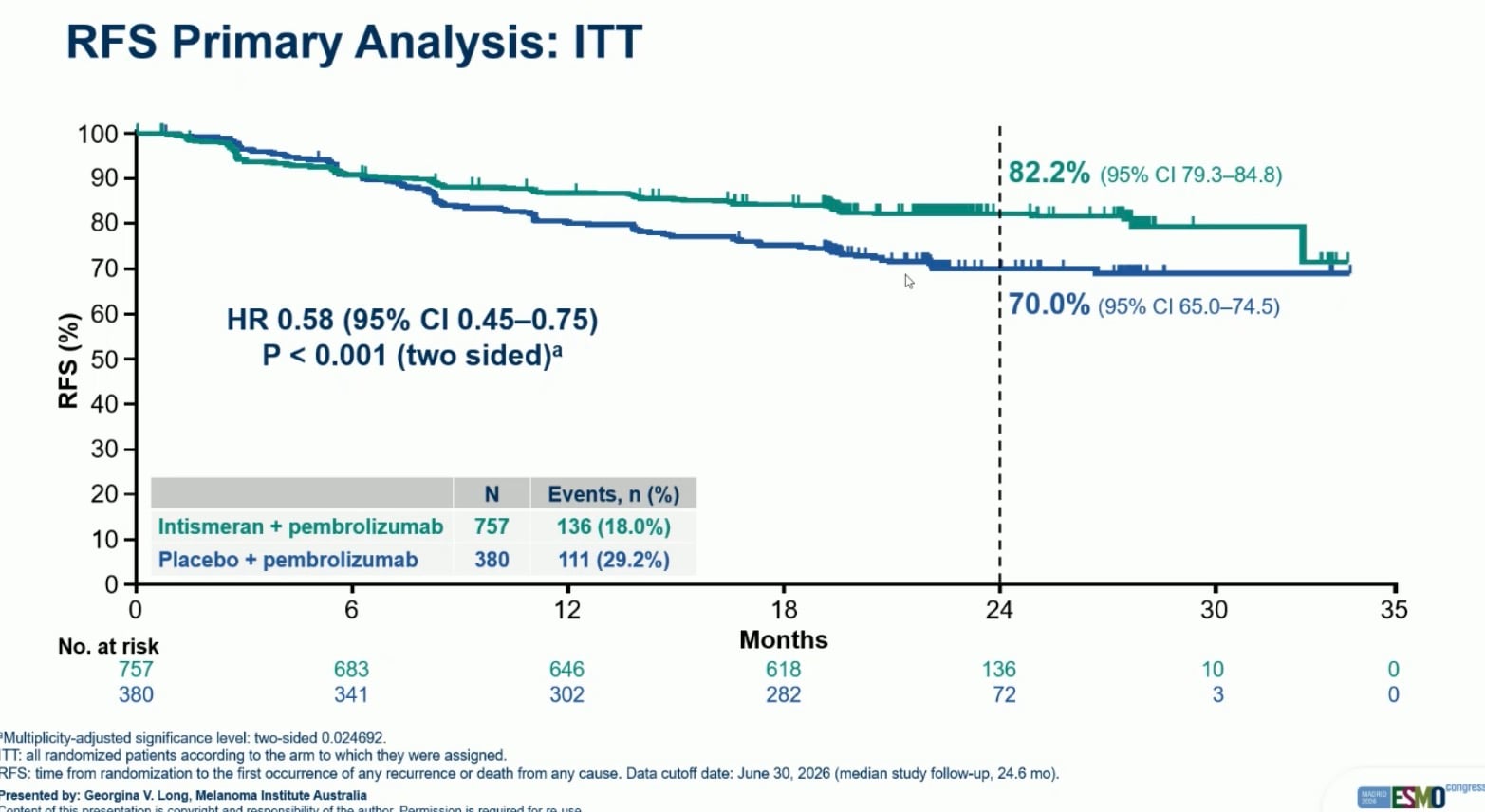
Presenter Georgina Long on INTerpath-001: “The trial showed adding #intismeran autogene, an mRNA based individualised neoantigen therapy, to pembrolizumab reduced the risk of recurrence or death by 42%.” The first open question from the discussant, as posted by Alfredo Addeo: “Will the RFS benefit translate into improved OS?” INTerpath-001 drew 117 physician posts on X from October 23 to 26, more than all other melanoma trials combined. On October 25–26, the discussion turned to sequencing next to NADINA. Mario Balsa asked: “And where does a personalized mRNA vaccine fit in the neoadjuvant era?” Below: INTerpath-001 with its numbers and slide, the Days 3–4 sequencing debate, the Day 3 NADINA update and post-PD-1 data, five more melanoma readouts physicians posted about, the top physician voices, and the last melanoma session on October 27.
Physician discussion, October 23–26
Physician posts on X, October 23–26.
| # | Trial | Physician posts | Physicians posting | ESMO 2026 slot |
|---|---|---|---|---|
| 1 | INTerpath-001 | 117 | 71 | Presidential Symposium I, LBA1 |
| 2 | NADINA (3-year update) | 14 | 11 | Rapid oral, 2076RO |
| 3 | STARBOARD | 4 | 3 | Proffered paper, 2071O |
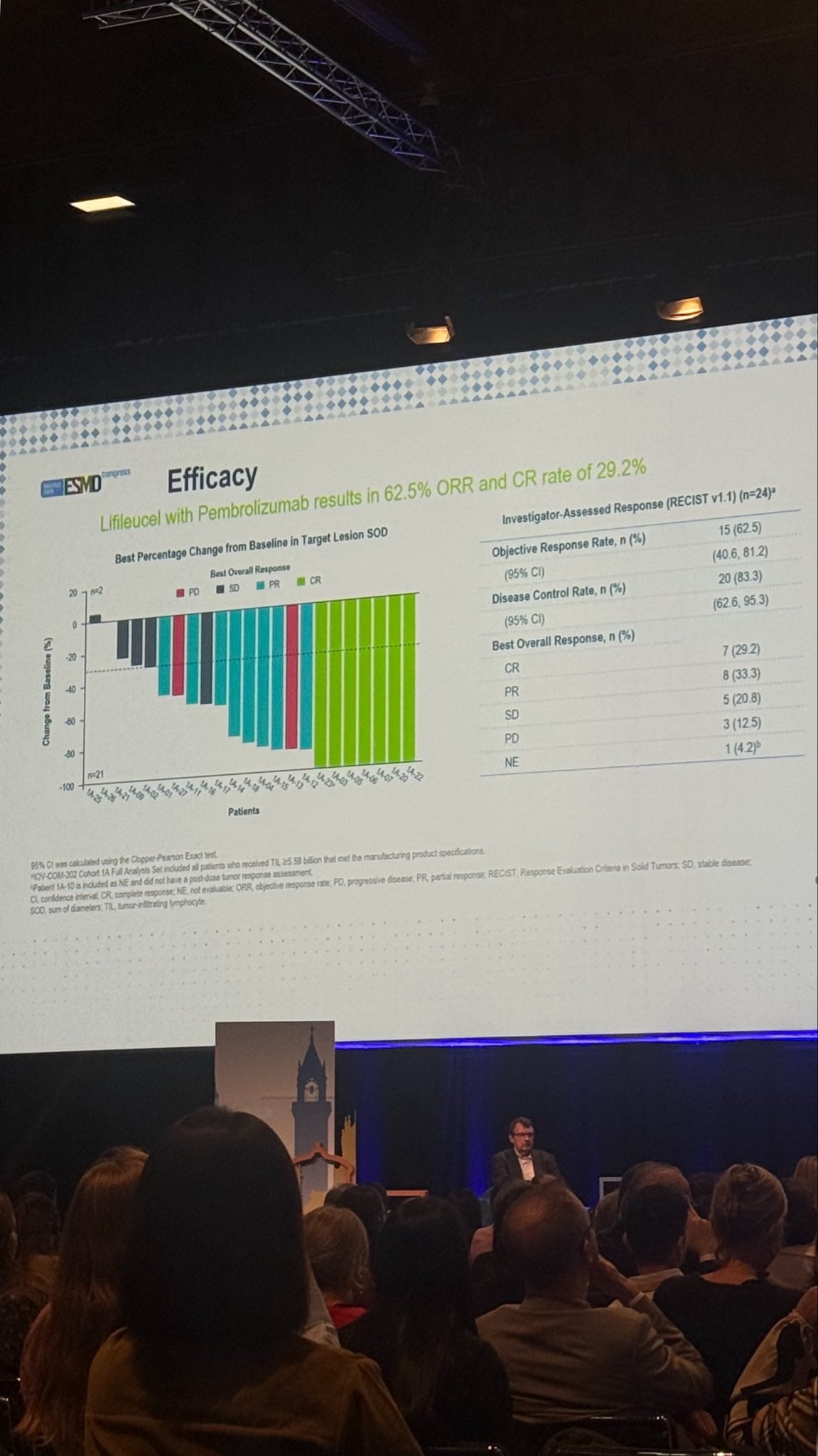
| 4 | IOV-COM-202 (cohort 1A) | 3 | 3 | Proffered paper, 2072O |
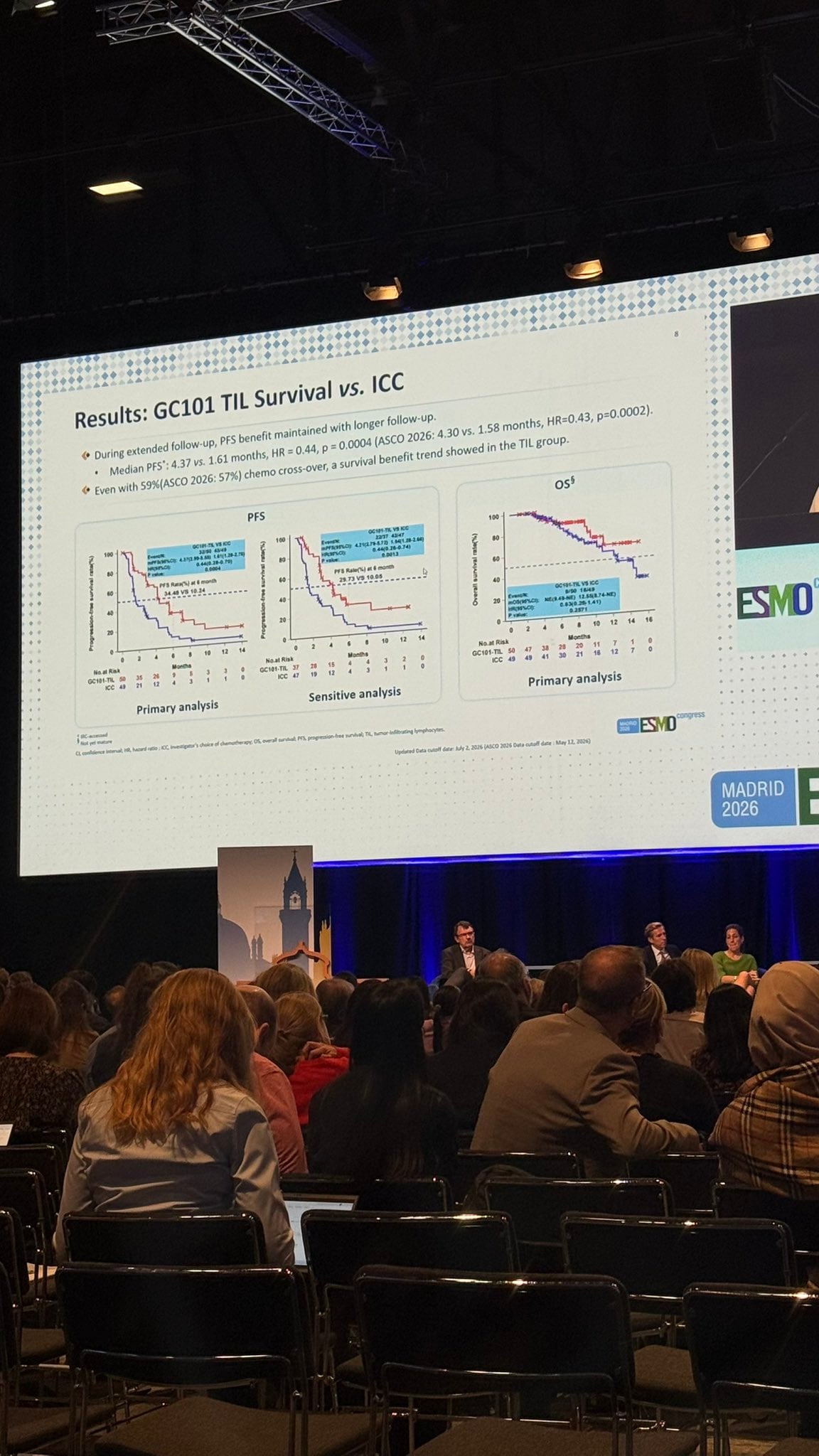
| 5 | GC101 TIL (MIZAR-003) | 3 | 3 | Proffered paper, LBA55 |
| 6 | PLUG-IN GEM 2301 | 3 | 2 | Rapid oral, 2074RO |
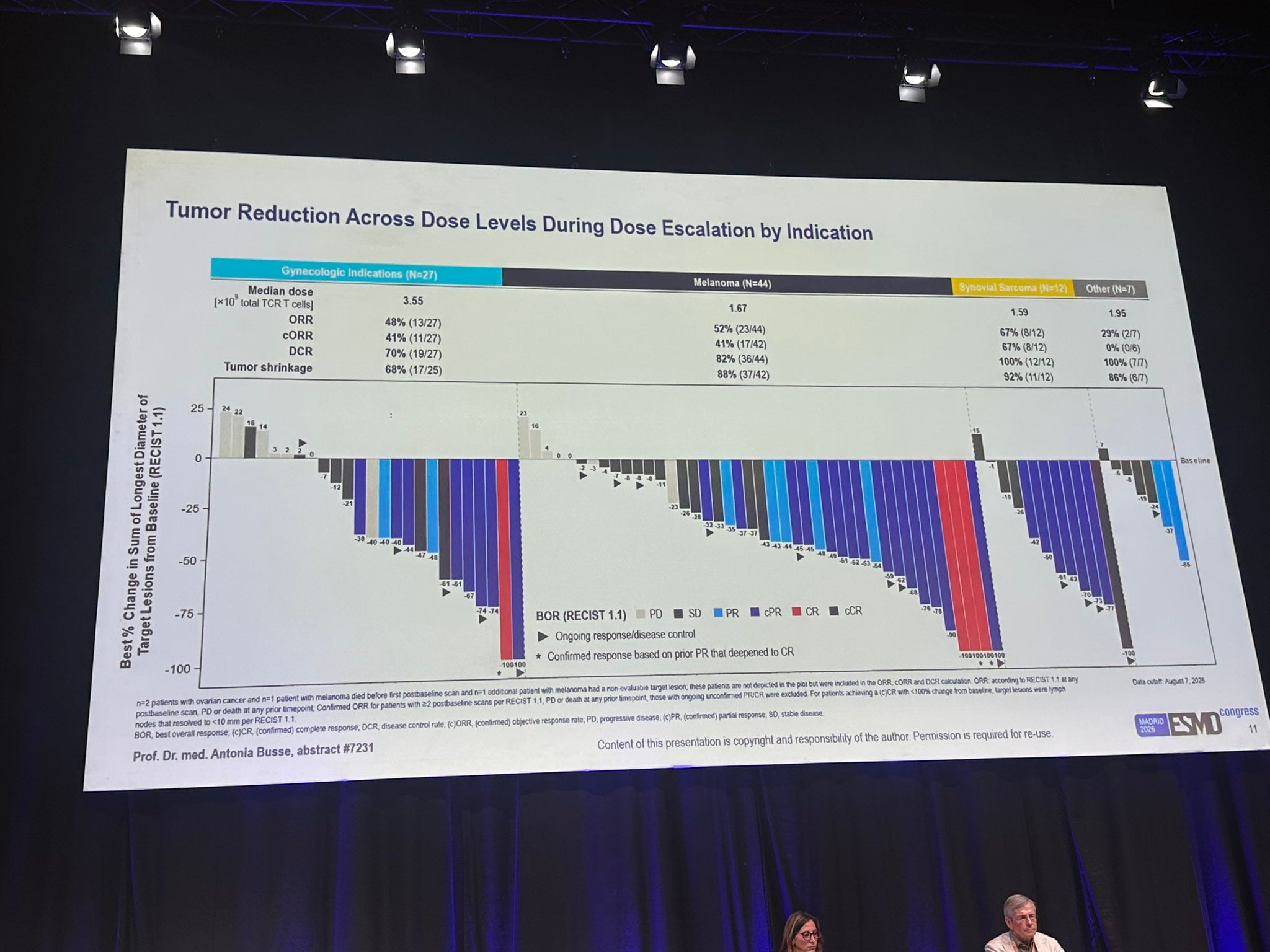
| 7 | IMA203CD8 (melanoma cohort) | 2 | 2 | Phase 1, all PRAME+ solid tumors |
| 8 | FS222 | 2 | 1 | Rapid oral, 2075RO |
| 9 | HERTHENA-PanTumor01 (melanoma) | 1 | 1 | Rapid oral, 2073RO |
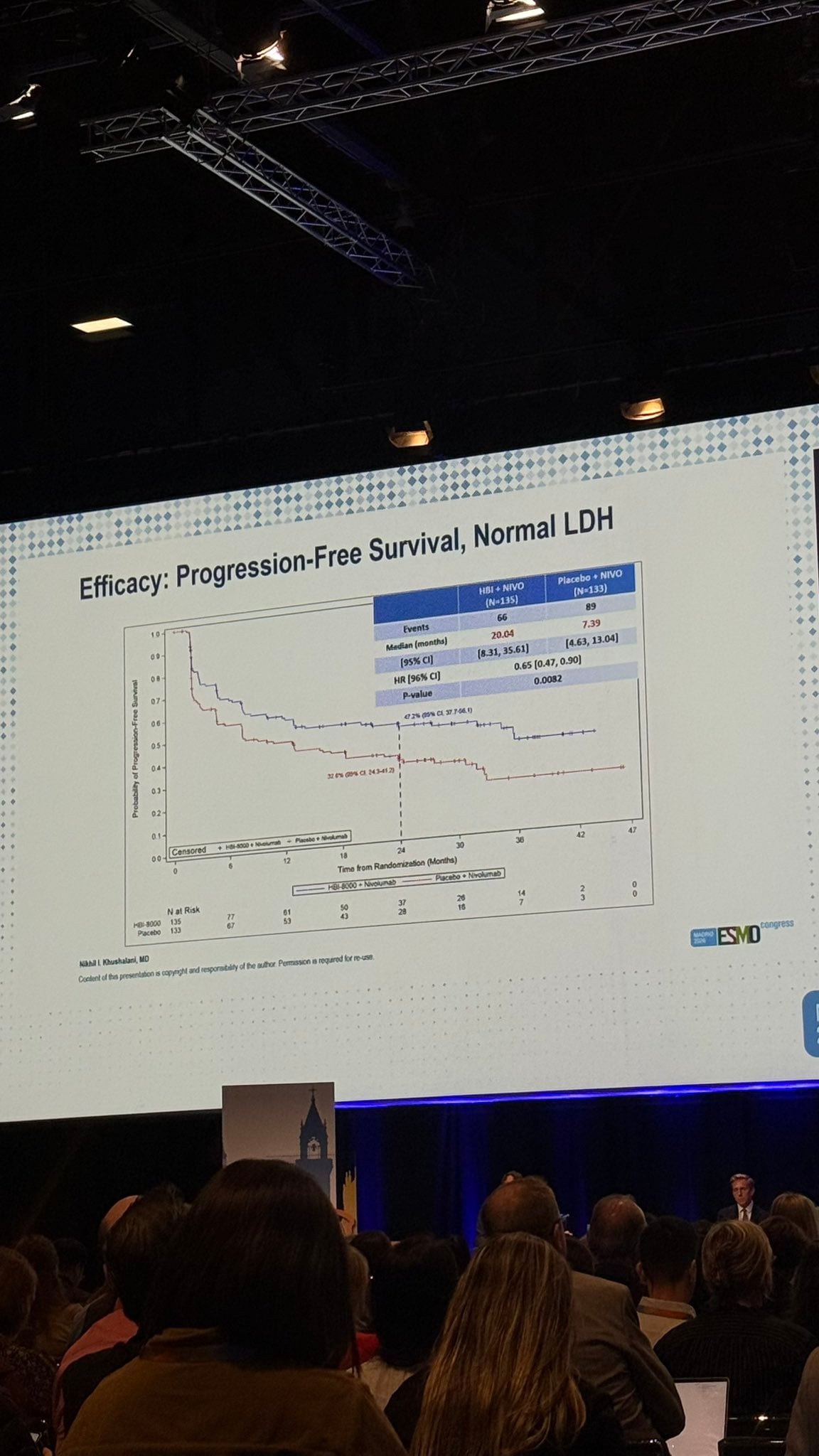
| 10 | HBI-8000-303 | 1 | 1 | Proffered paper, LBA54 |
INTerpath-001 drew more physician posts than all other melanoma trials combined, and the discussion continued on October 26. No melanoma late-breaking abstract was presented on October 26.
INTerpath-001: intismeran autogene plus adjuvant pembrolizumab
Phase 3, N=1,137 (757 vs 380), resected stage IIB–IV melanoma: intismeran autogene (V940/mRNA-4157, Moderna and Merck), an individualized mRNA neoantigen therapy, plus pembrolizumab vs placebo plus pembrolizumab. RFS HR 0.58 (95% CI 0.45–0.75), two-sided P<0.001; 24-month RFS 82.2% vs 70.0%. DMFS HR 0.62 (0.45–0.85); 24-month DMFS 88.5% vs 80.2%. OS is immature and did not meet its prespecified significance boundary: HR 0.77 (0.45–1.31), P=0.33. (ESMO 2026 LBA1, Georgina V. Long; data cutoff Jun 30, 2026; median follow-up 24.6 months) In a prespecified sensitivity analysis, the RFS HR was 0.99 (0.66–1.49) for months 0–6 and 0.42 (0.30–0.58) after month 6. (LBA1 piecewise HR slide) All-cause grade 3–5 AEs 23.6% vs 20.3%; treatment-related grade 3–5 AEs 14.2% vs 13.4%. All-cause AEs led to death in 8 (1.1%) vs 0 patients; 2 (0.3%) vs 0 were treatment-related, none related to intismeran. (LBA1 AE summary slide) Intismeran is investigational and not approved by the FDA or any other regulator. Merck and Moderna plan to engage regulators on filings. (KOL Pulse INTerpath-001 page)

Physicians agreed the trial was positive. The debate was the comparator (adjuvant pembrolizumab, when SWOG S1801 and NADINA moved immunotherapy before surgery for macroscopic stage III), the deaths in the experimental arm, OS, and access. The presenter’s post comes first, then the discussant’s points as reported from the room.

Days 3–4: where INTerpath-001 fits next to NADINA
After the NADINA 3-year update on October 25, the discussion of INTerpath-001 turned to sequencing. The two trials answer different questions. INTerpath-001 added intismeran autogene to adjuvant pembrolizumab after surgery for resected stage IIB–IV melanoma; NADINA compared two cycles of neoadjuvant ipilimumab plus nivolumab, followed by surgery and response-driven adjuvant therapy, with surgery and adjuvant nivolumab in resectable macroscopic stage III disease. Neither compared the two strategies head to head. Intismeran is investigational, and neoadjuvant ipilimumab plus nivolumab is not an FDA-labeled indication in melanoma. (KOL Pulse INTerpath-001 and NADINA pages)

Physicians asked who benefits most, whether the recurrence-free survival benefit will translate into overall survival, and how a personalized vaccine fits with neoadjuvant immunotherapy. Michiel Strijbos pointed out that SWOG S1801 reported the same hazard ratio, for event-free survival, with neoadjuvant plus adjuvant pembrolizumab vs adjuvant pembrolizumab; S1801 used a different comparison, endpoint and population. Alfred So raised tissue availability and cost. On October 26, Ahmet Dirican summarized Patrick A. Ott’s review of personalized neoantigen vaccines and the open question of turning immune responses into durable clinical benefit.

Track oncology’s top KOLs in your specialty
Create a free account, pick the tumor types you cover, and go beyond the tweet — the intelligence pharma teams use to map influence and prepare for engagement:
- ✓Enhanced KOL profiles
- ✓Pharma influence & potential advisory-board patterns
- ✓2025 Open Payments financial analysis
- ✓Social-media sentiment & trend signals
Day 3: NADINA at three years and new options after anti-PD-1
Both readouts below came from the melanoma rapid oral session on October 25.
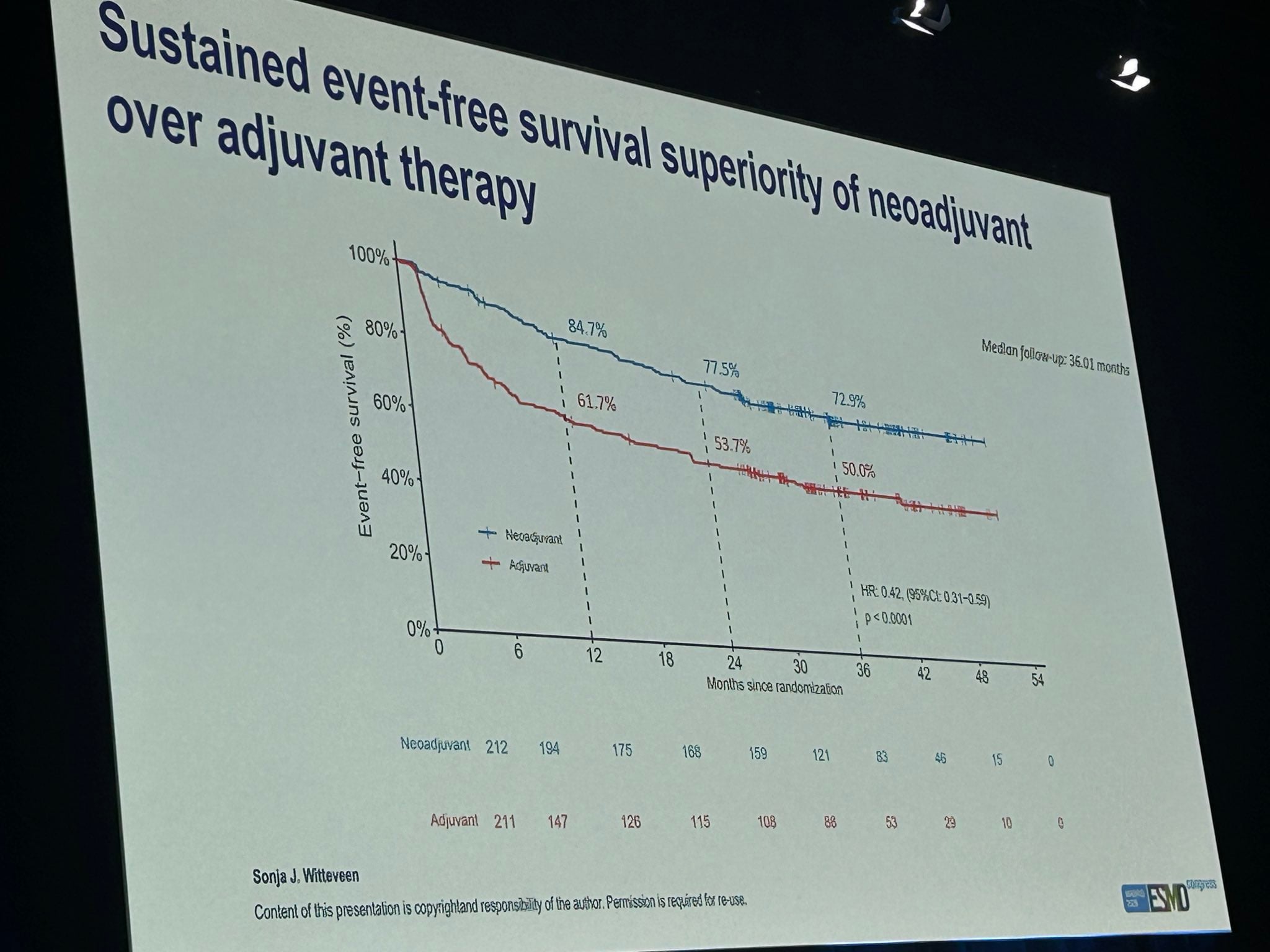
NADINA: neoadjuvant ipilimumab plus nivolumab vs adjuvant nivolumab, 3-year update
Phase 3 trial (NCT04949113) in resectable macroscopic stage III cutaneous melanoma: neoadjuvant ipilimumab plus nivolumab, then surgery with response-driven adjuvant therapy, vs surgery followed by adjuvant nivolumab. The 3-year update was presented by Sonja Witteveen (2076RO). (ESMO 2026 program) Three-year EFS was 72.9% vs 50.0%, HR 0.42 (95% CI 0.31–0.59), p<0.0001. (ESMO 2026 2076RO, Sonja J. Witteveen; data cutoff Mar 30, 2026; median follow-up 36 months; KOL Pulse NADINA page) Nivolumab is FDA approved as adjuvant therapy for completely resected stage IIB–IV melanoma, and nivolumab plus ipilimumab for unresectable or metastatic melanoma; neoadjuvant use is not an FDA-labeled indication. (FDA labels for Opdivo and Yervoy) Physicians read the update next to INTerpath-001 and asked whether patients with a near-pathologic complete response still need adjuvant therapy.

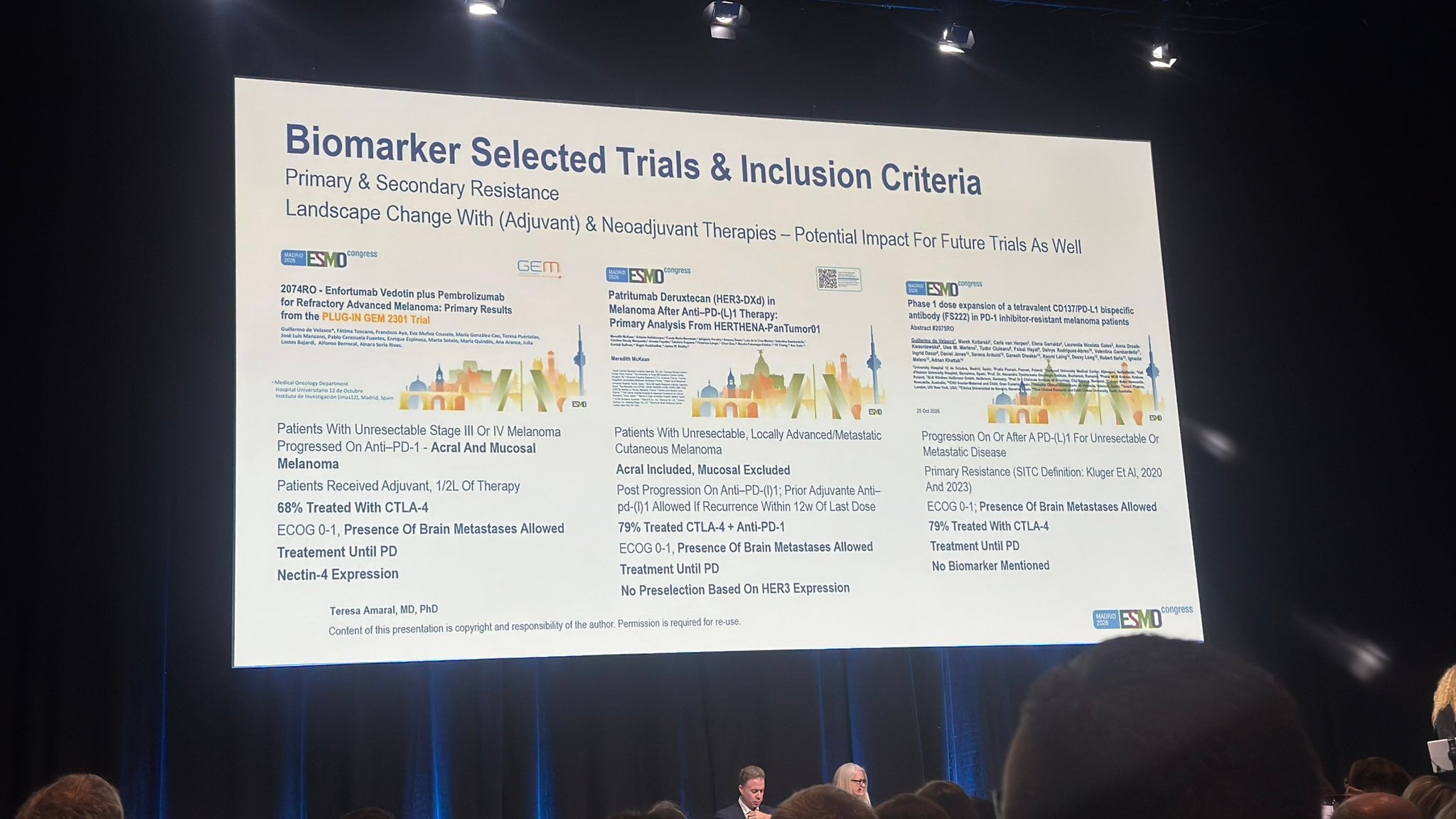
After anti-PD-1: PLUG-IN GEM 2301, HERTHENA-PanTumor01 and FS222
Three rapid orals tested new options in melanoma that progressed on anti-PD-1 therapy: enfortumab vedotin plus pembrolizumab in PLUG-IN GEM 2301 (Guillermo de Velasco, 2074RO), patritumab deruxtecan (HER3-DXd) in the melanoma cohort of HERTHENA-PanTumor01 (Meredith McKean, 2073RO), and the CD137/PD-L1 bispecific antibody FS222 (Muhammad A. Khattak, 2075RO). Session chair Teresa M. Amaral led the discussion. (ESMO 2026 program) Enfortumab vedotin is FDA approved in urothelial cancer; all three treatments are investigational in melanoma. In the room, physicians noted similar response signals across three different approaches and called for better patient selection, biomarkers and inclusion of acral and mucosal melanoma.

Other melanoma readouts physicians posted about
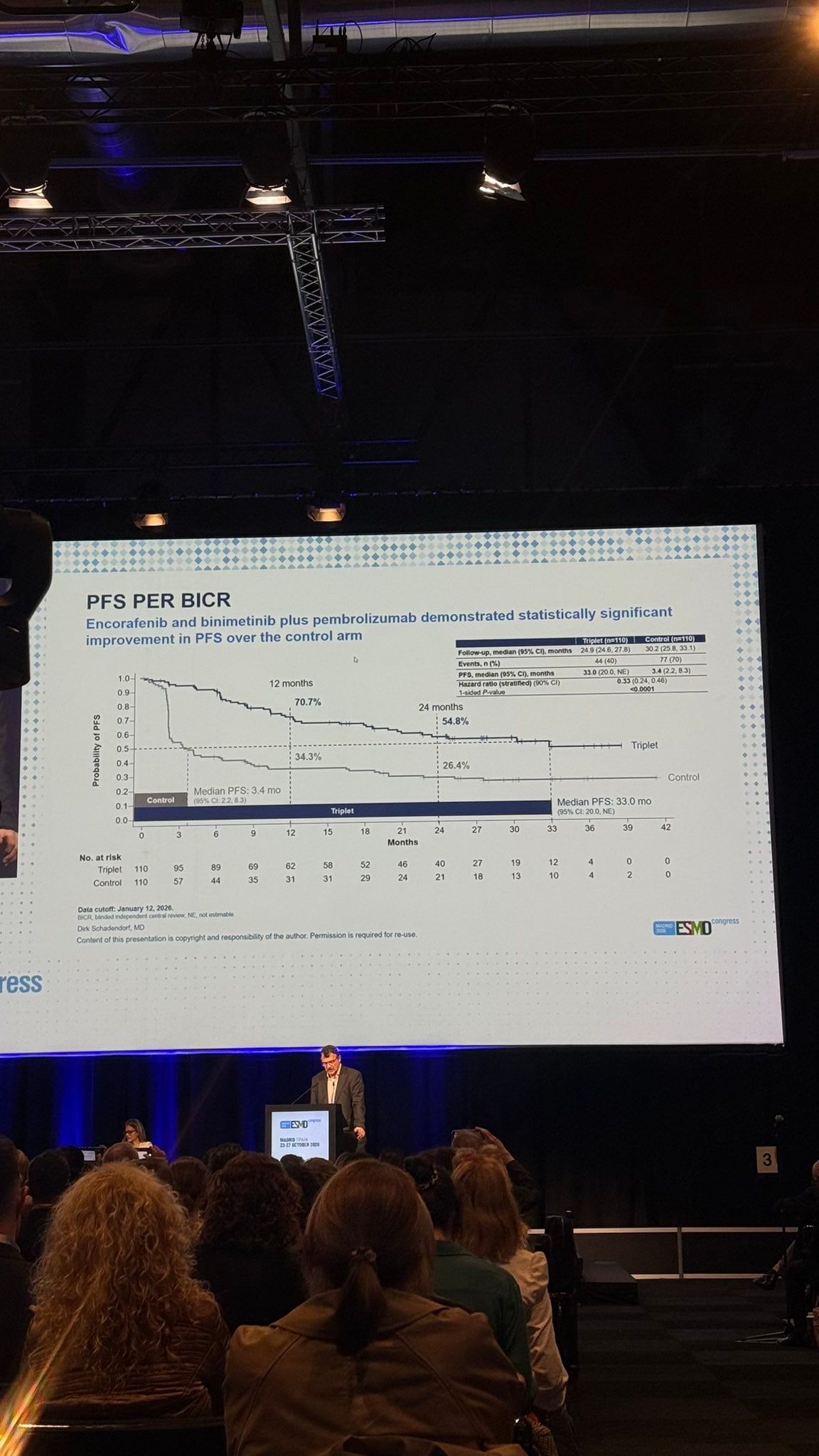
STARBOARD: encorafenib + binimetinib + pembrolizumab, first-line BRAF V600-mutant melanoma
Randomized, double-blind Phase 3 of the triplet vs placebo plus pembrolizumab in unresectable or metastatic BRAF V600-mutant melanoma, presented by Dirk Schadendorf (2071O). (ESMO 2026 program) Encorafenib plus binimetinib is FDA approved for BRAF V600E/K-mutant unresectable or metastatic melanoma; the triplet with pembrolizumab is investigational. Physicians called the PFS result impressive and questioned the control arm (pembrolizumab alone rather than ipilimumab-nivolumab) and the immature OS.


IOV-COM-202 cohort 1A: lifileucel + pembrolizumab in ICI-naive advanced melanoma
Final results from the lifileucel (TIL) plus pembrolizumab cohort, presented by Andrew J. Furness (2072O). (ESMO 2026 program) Lifileucel (Amtagvi) is FDA approved for advanced melanoma after anti-PD-1 therapy; first-line use with pembrolizumab is investigational. Physicians noted the responses and durability, and raised toxicity and the choice of comparator for the Phase 3 trial.

GC101 TIL (MIZAR-003): IL-2-free TIL in anti-PD-1-resistant melanoma
Extended follow-up of a randomized, open-label, pivotal phase II trial of GC101 TIL vs chemotherapy, presented by Lu Si (LBA55). (ESMO 2026 program) Most patients had acral or mucosal melanoma. GC101 TIL is not FDA approved. Physicians focused on the IL-2-free, lower-intensity lymphodepletion approach, the chemotherapy comparator and how GC101 compares with lifileucel.

IMA203CD8: PRAME-directed TCR T cells, phase 1
Phase 1 trial in HLA-A*02:01-positive, PRAME-positive solid tumors, including a melanoma cohort, presented by Antonia Busse. (presented slide) IMA203CD8 is investigational. Physicians highlighted durable responses in heavily pretreated patients.

HBI-8000-303: HBI-8000 + nivolumab in advanced melanoma
Randomized Phase 3 of nivolumab plus HBI-8000 or placebo, presented by Nikhil I. Khushalani (LBA54). (ESMO 2026 program) HBI-8000 plus nivolumab is investigational in melanoma. One physician post discussed it, raising toxicity and OS.

STARBOARD, IOV-COM-202, GC101 TIL, IMA203CD8 and HBI-8000-303 slides on the melanoma slide page.
KOL Voices: top physicians in melanoma at ESMO 2026
From the melanoma tab of the Top KOLs leaderboard on the conference page. One verbatim line each, labeled with the trial it is about; follow the link for the full post.

What’s yet to come: melanoma at ESMO 2026, October 27
Time is Madrid time.
| When | Session | Presentation | Speaker |
|---|---|---|---|
| Tue Oct 27, 10:00–10:20 | Scientific Congress Highlights 1 (Almeria Auditorium, Hall 9) | Congress highlights: Melanoma and other skin tumours | Sapna P. Patel |
Regulatory next step on INTerpath-001: Merck and Moderna plan to engage regulators on filings. INTerpath-001 OS follow-up is ongoing. Physician posts appear on the ESMO 2026 trials page and the melanoma slide library.
FAQ
Which melanoma trials did physicians discuss most at ESMO 2026?
By physician posts on X on October 23-26, INTerpath-001 led by a wide margin (117 posts from 71 physicians), followed by NADINA (3-year update), STARBOARD, IOV-COM-202, GC101 TIL (MIZAR-003), PLUG-IN GEM 2301, IMA203CD8, FS222, HERTHENA-PanTumor01 and HBI-8000-303.
What did INTerpath-001 show?
Adding intismeran autogene to adjuvant pembrolizumab in resected stage IIB-IV melanoma gave an RFS HR of 0.58 (95% CI 0.45-0.75); 24-month RFS was 82.2% vs 70.0%. DMFS HR was 0.62. OS is immature and did not meet its prespecified significance boundary (HR 0.77, P=0.33) (ESMO 2026 LBA1, data cutoff June 30, 2026).
What was presented on NADINA at ESMO 2026?
A 3-year update of the phase 3 NADINA trial of neoadjuvant ipilimumab plus nivolumab followed by surgery vs surgery and adjuvant nivolumab in resectable macroscopic stage III melanoma, presented by Sonja Witteveen (2076RO) on October 25. Neoadjuvant use is not an FDA-labeled indication.
Is intismeran autogene approved?
No. Intismeran autogene is investigational and not approved by the FDA or any other regulator. Merck and Moderna plan to engage regulators on filings.
How does INTerpath-001 relate to NADINA?
They answer different questions and were not compared head to head. INTerpath-001 added intismeran autogene to adjuvant pembrolizumab after surgery for resected stage IIB-IV melanoma. NADINA compared two cycles of neoadjuvant ipilimumab plus nivolumab, followed by surgery and response-driven adjuvant therapy, with surgery and adjuvant nivolumab in resectable macroscopic stage III disease. Physicians at ESMO 2026 debated how a personalized vaccine would fit with neoadjuvant immunotherapy.
What melanoma sessions remain at ESMO 2026?
On October 27: congress highlights for melanoma and other skin tumors (Sapna P. Patel).
Related ESMO 2026 pages
KOL Pulse tracks what oncologists and hematologists post on X. Posts quoted here are shown in full and verbatim, or as marked excerpts, and link to their source. Trial figures come from KOL Pulse trial pages, with the source and data cutoff in parentheses.