Brian Shields
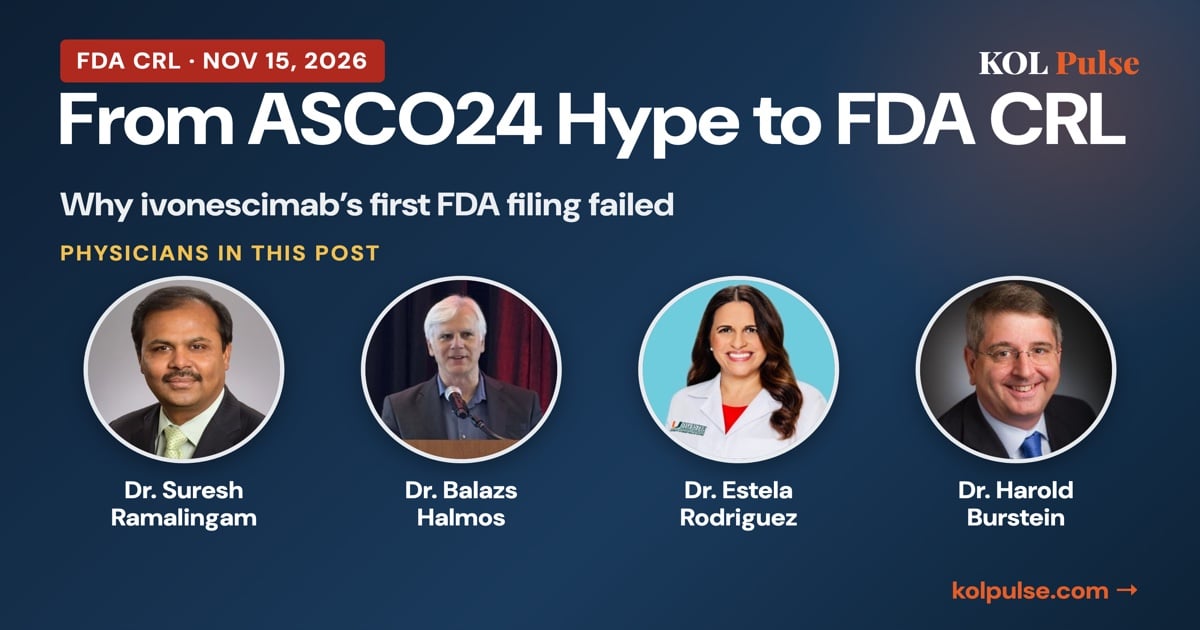
On November 15, 2026, Summit Therapeutics (SMMT) announced that the FDA issued a Complete Response Letter for ivonescimab plus platinum chemotherapy in EGFR-mutant, locally advanced or metastatic non-squamous NSCLC after EGFR TKI therapy. The application was based on the global Phase 3 HARMONi trial. The PDUFA date was November 14, 2026.
Per Summit, the FDA stated that “substantial evidence of effectiveness is not established in the absence of a statistically significant overall survival (OS) improvement.” HARMONi met PFS. OS was a dual primary endpoint and did not reach statistical significance (Summit release).
This post follows ivonescimab in EGFR-mutant NSCLC after EGFR TKI from the HARMONi-A data at ASCO 2024, through the global HARMONi topline in 2025, the WCLC 2025 presentation and Suresh Ramalingam’s discussion, to the CRL, using the slides and physician posts from each point.
ASCO 2024: HARMONi-A
Li Zhang, MD, presented HARMONi-A at ASCO 2024, with simultaneous publication in JAMA on May 31, 2024. HARMONi-A (NCT05184712) is Akeso’s China-only Phase 3 of ivonescimab plus pemetrexed-carboplatin vs placebo plus pemetrexed-carboplatin in non-squamous EGFR-mutant NSCLC after EGFR TKI. Its ClinicalTrials.gov record lists the same protocol number, AK112-301, as the global HARMONi trial (NCT06396065). The primary endpoint was PFS by independent review; OS was a secondary endpoint.
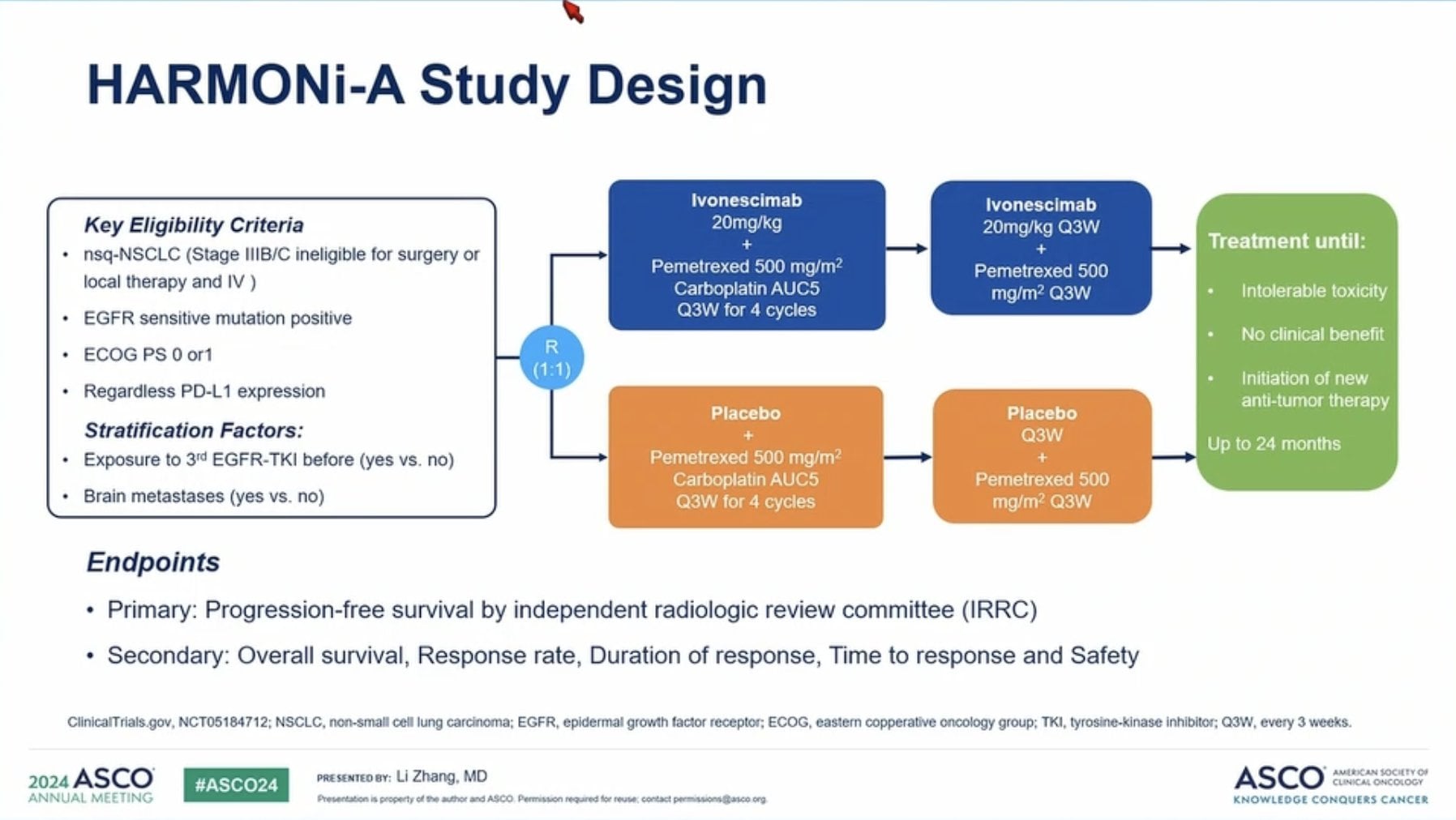
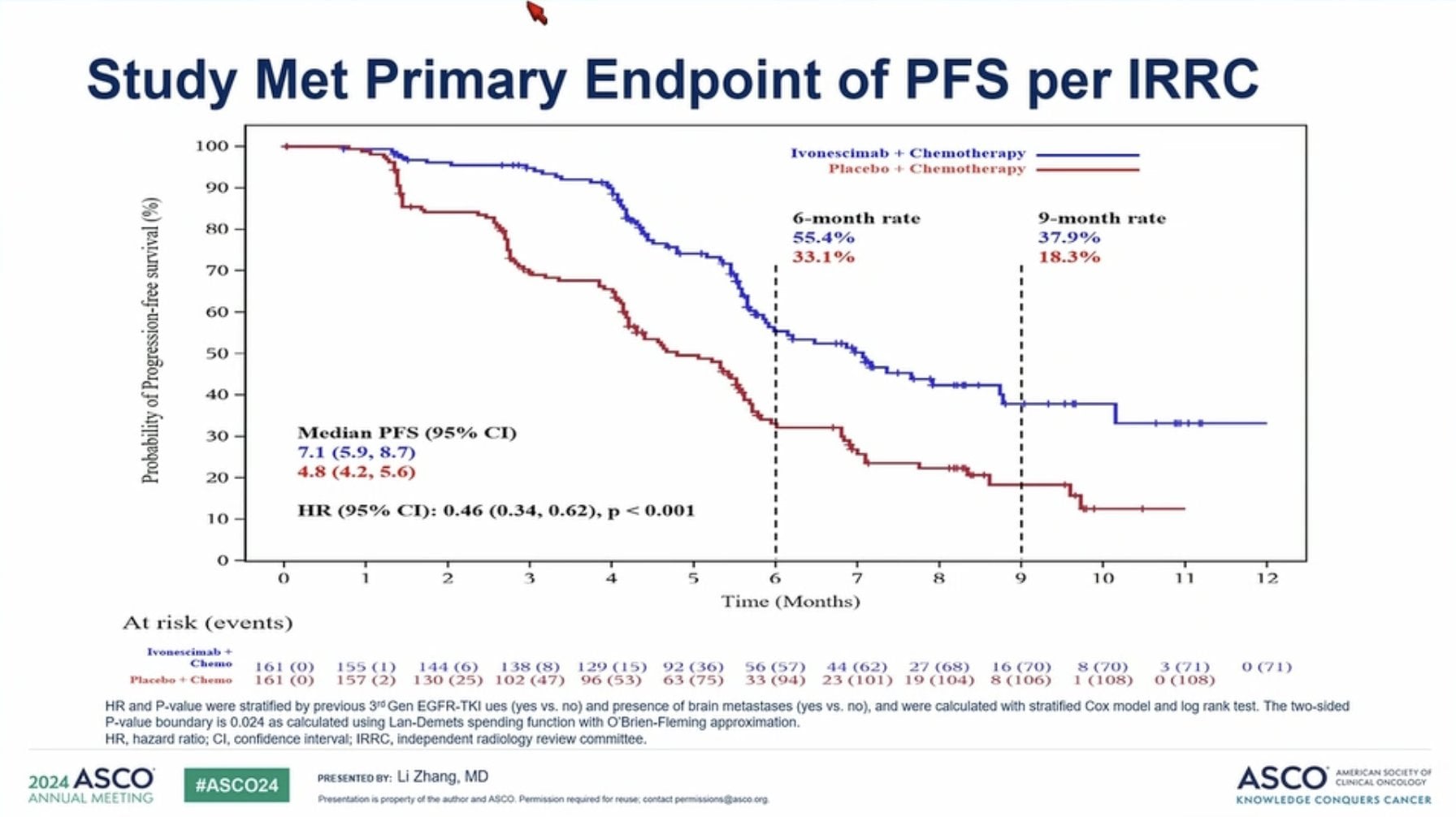
PFS: median 7.1 vs 4.8 months, HR 0.46 (95% CI 0.34–0.62), P<0.001, in 322 patients.
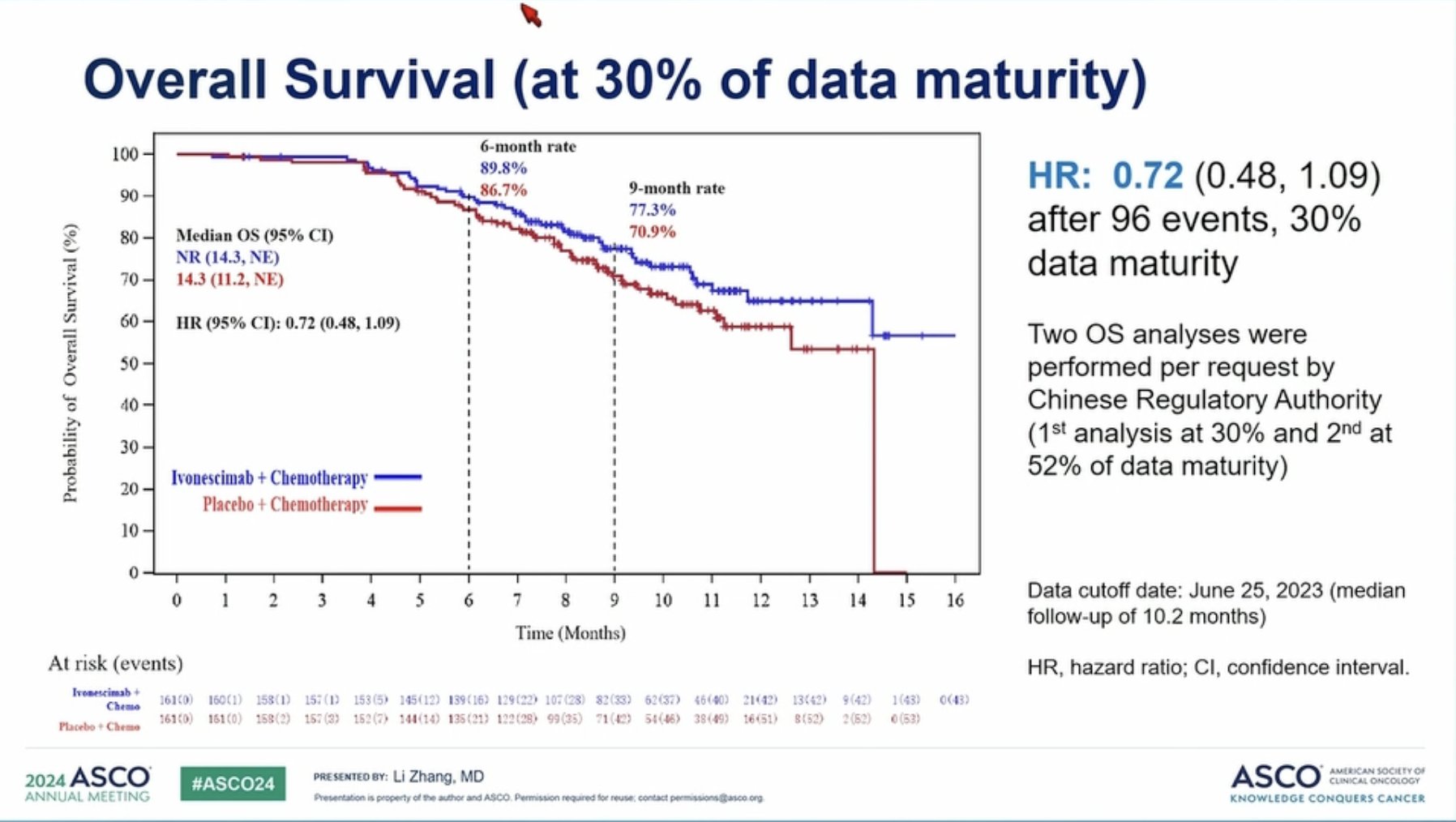
OS at 30% data maturity (96 events; data cut-off June 25, 2023): HR 0.72 (95% CI 0.48–1.09). The slide notes that the Chinese regulatory authority requested two OS analyses, at 30% and 52% data maturity. Per Summit, the 52% analysis (data cut-off December 2023) gave HR 0.80 (95% CI 0.59–1.08). Ivonescimab was approved in China for this setting in May 2024 on the basis of HARMONi-A, with PFS as the primary endpoint.
#ASCO24 Adding ivonescimab to chemotherapy improved PFS (HR 0.46) in pts with #EGFR NSCLC post TKI with benefit across subsets. OS immature at this point. More VEGF mediated toxicity, like hypertension, but similar overall. Now approved in China with global expansion of HARMONi. https://t.co/pMtzWvkMnN
— Stephen V Liu, MD (@StephenVLiu) May 31, 2024
HARMONi-A: Large PFS 0.46 benefit and across subgroups including CNS and genotype. Strong OS signal despite immaturity (52% events). TRAEs discontinuation 5.6%. Mostly heme tox. #ASCO24 https://t.co/DvG7N1s1Y5
— Sanjay Popat (@DrSanjayPopat) May 31, 2024
The day before the presentation, Summit posted the HARMONi-2 topline from China: ivonescimab monotherapy vs pembrolizumab monotherapy in first-line PD-L1-positive NSCLC.
Ivonescimab Monotherapy Decisively Beats Pembrolizumab Monotherapy Head-to-Head, Achieves Statistically Significant Superiority in PFS in First-Line Treatment of Patients with PD-L1 Positive NSCLC in China
— Summit Therapeutics (@SMMT_TX) May 30, 2024
https://t.co/jweKtp0w9T
Jack West, MD, then Summit’s Vice President of Clinical Development, quoted that post:
An exclamation point on HARMONi-A results. Looking forward to discussing with folks in the lung cancer (& broader oncology) community at #ASCO24.
— H. Jack West, MD, FASCO (@JackWestMD) May 30, 2024
#LCSM #OncoAlert https://t.co/ebsKrHJzw3
On May 25, 2024, the week before the presentation, physicians asked where the PFS benefit came from.
I honestly find the HARMONI-A data confusing.
— Tejas Patil (@TejasPatilMD) May 25, 2024
➡️ KEYNOTE-789: no benefit w/ post-osi pembro
➡️ ORIENT-31: sintilimab+bev biosimilar improved PFS post-osi, not OS
➡️ ETOP-BOOSTER: no bev benefit w/ 2L osi
But PD1/VEGF bispecific w/ PFS benefit?
@EGFRResisters @lcsmchat #asco24 https://t.co/R4rcyt0hYu
@TejasPatilMD @EGFRResisters @lcsmchat Isn’t it just chemo/bev effect? Like KEYNOTE and others show no IO benefit, and we know VEGFi provides PFS benefit in a lot of settings; we need to see what OS holds and perhaps ETOP- Osi/Bev not enough on Osi progression- need Chemo (same as with Ami?)
— Aakash Desai (@ADesaiMD) May 25, 2024
@TejasPatilMD @ADesaiMD @EGFRResisters @lcsmchat I think this is a straight up bev- like effect, agree with @ADesaiMD. Platinum doublet with bev always had modestly longer PFS when randomized against chemo, even possibly OS depending on chemo partner. Not necessarily any PD1 activity needed to see this result.
— Nathan A. Pennell MD, PhD, FASCO (@n8pennell) May 25, 2024
May 30, 2025: the global HARMONi topline
On May 30, 2025, in time for ASCO 2025, Summit announced topline results from the global HARMONi trial. Physician posts that day cite PFS HR 0.52 and an OS HR of 0.79 (P=0.057) that was not statistically significant. HARMONi itself was not presented at ASCO 2025. Physicians reacted to the PFS result.
Remarkable results in pretreated EGFR mutant lung cancer! In global trial, stellar benefit in progression-free survival for the addition of ivonescimab to platinum doublet chemo. Given tox profile may be a preferred option in this setting. #LCSM #ASCO25 https://t.co/Me2xdahgQ9
— Patrick Forde (@FordePatrick) May 30, 2025
Potentially game changer, especially for the more favorable toxicity profile than Amivantamab in this indication. #ASCO25 #LCSM https://t.co/TrwnnztxAk
— Dr. Antonio Calles 🫁🚭 (@Tony_Calles) May 30, 2025
#ASCO2025
— Nicholas Hornstein (@GIMedOnc) May 30, 2025
Just a press release so still need the full data, but Anti-VEGFxPD-1 in EGFR-mutant NSCLC seems promising.
Ivonescimab + chemo appears to deliver vs chemo alone.
Post-3rd gen TKI patients.
n = 264
📉 PFS: HR 0.52 (p < 0.05)
🧬 OS trending positive: HR 0.79 (p = 0.057, not mature)
🛡️ Manageable safety
Compared to MARIPOSA-2, HARMONi looks promising. Waiting for the full publication/presentation to make real conclusions.
With 30+ ISTs and phase I/II in most cancer types (including CRC) Ivo is almost certainly going to end up in many clinics over the next few years.
#ASCO25 friends- after the pre-ASCO patritumab/ivonescimab press releases suddenly reshuffled everything in the management of EGFR+ NSCLC- you might really want to join tomorrow as along with fantastic faculty @JuliaRotow and @EnriquetaFelip we will try our best to make sense of the data!
— Balazs Halmos (@BalazsHalmosMD) May 31, 2025
@gotoPER
September 7, 2025: full data at WCLC 2025
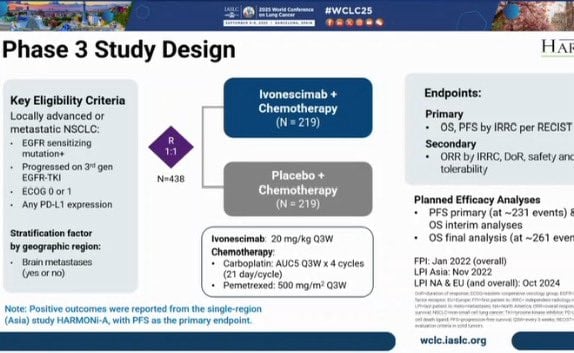
Jonathan Goldman presented HARMONi at the WCLC 2025 Presidential Symposium in Barcelona. The trial randomized 438 patients 1:1 to ivonescimab or placebo plus carboplatin-pemetrexed after progression on a third-generation EGFR TKI. OS and PFS by IRRC were both primary endpoints. The design slide notes that the single-region HARMONi-A study in Asia was positive with PFS as its primary endpoint.
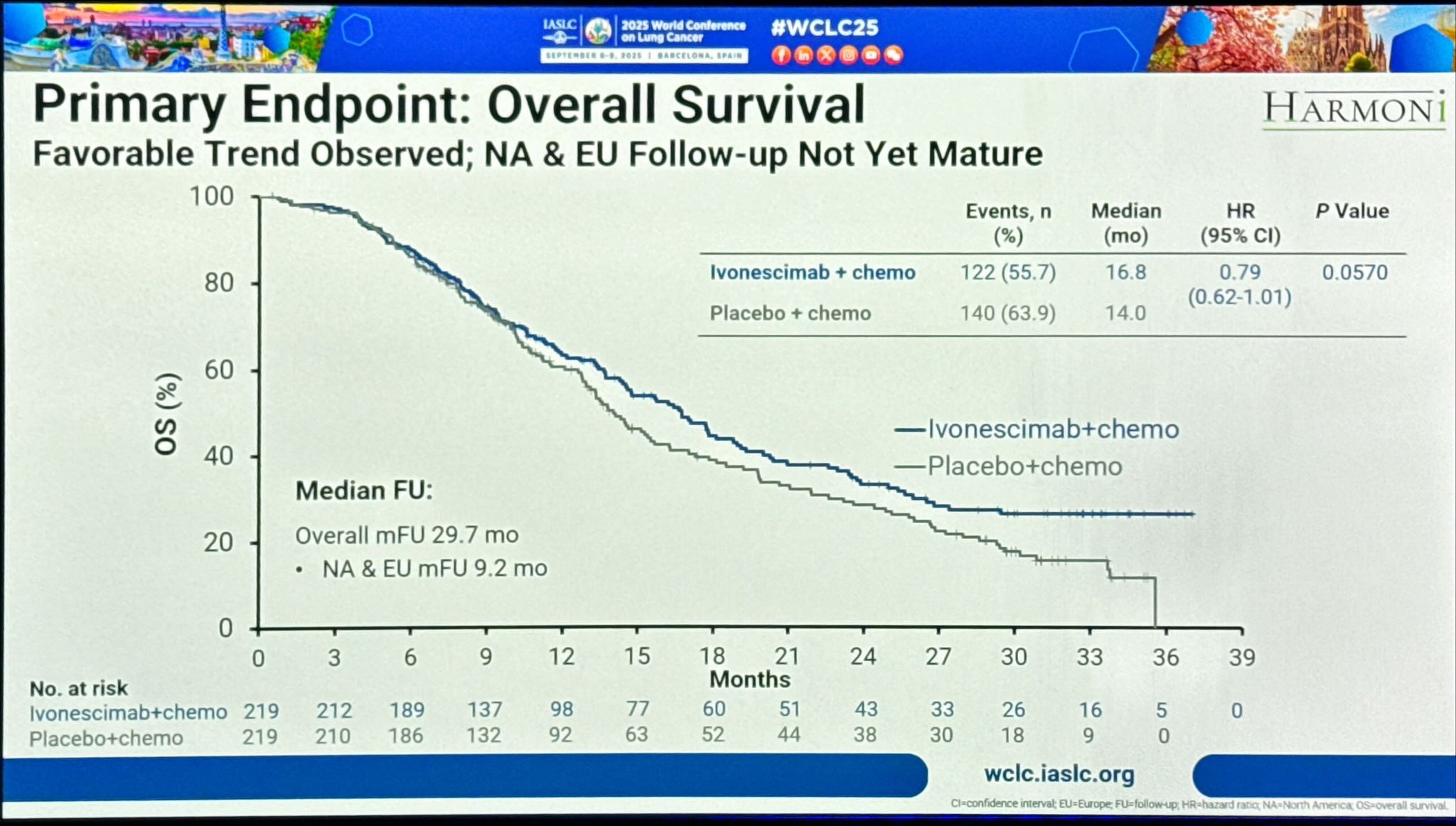
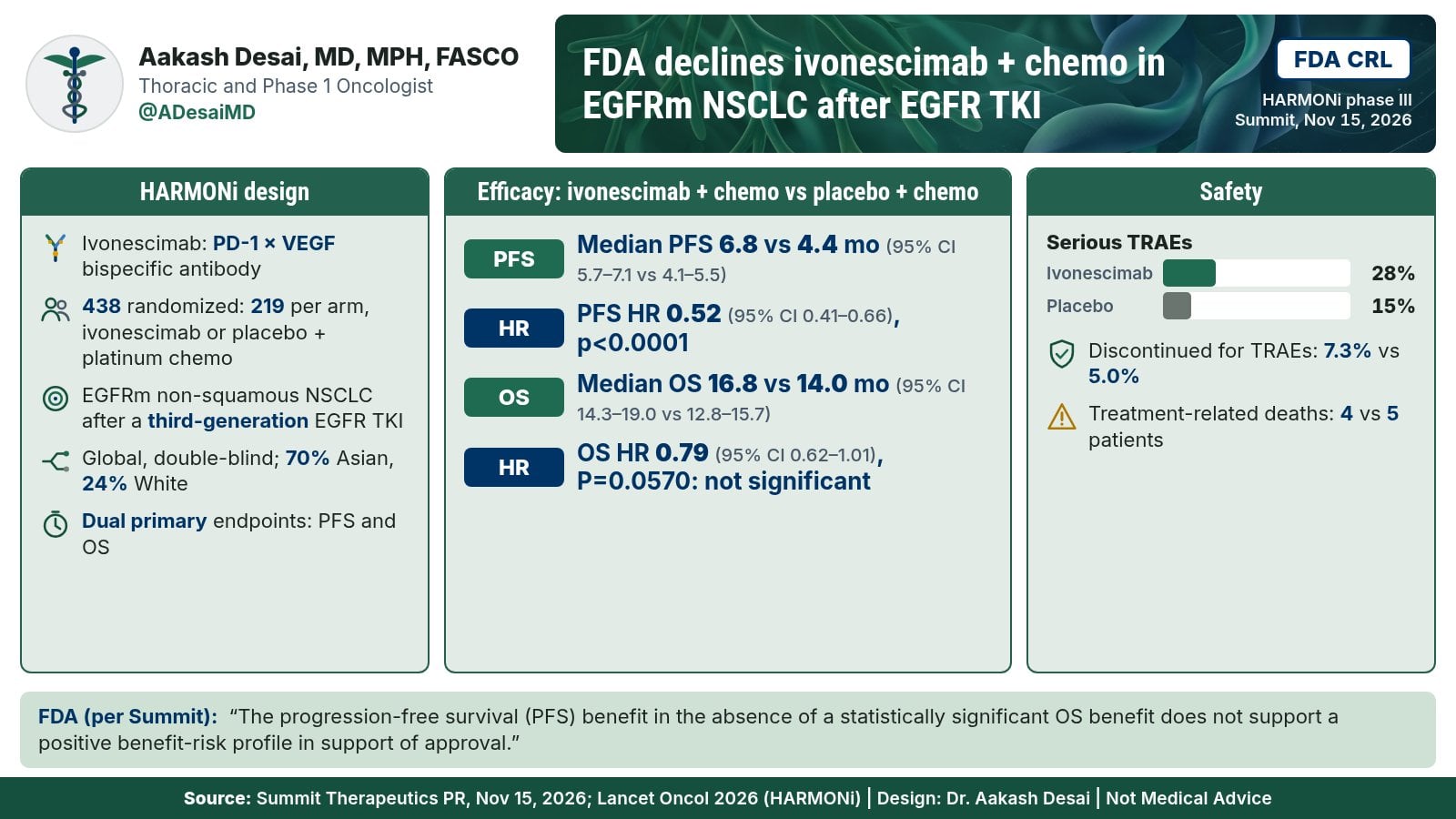
PFS by IRRC: median 6.8 vs 4.4 months, HR 0.52 (95% CI 0.41–0.66), P<0.0001. OS at the primary OS analysis (labeled the final OS analysis on the slides): median 16.8 vs 14.0 months, HR 0.79 (95% CI 0.62–1.01), P=0.0570. Median follow-up was 29.7 months overall and 9.2 months for North American and European patients.
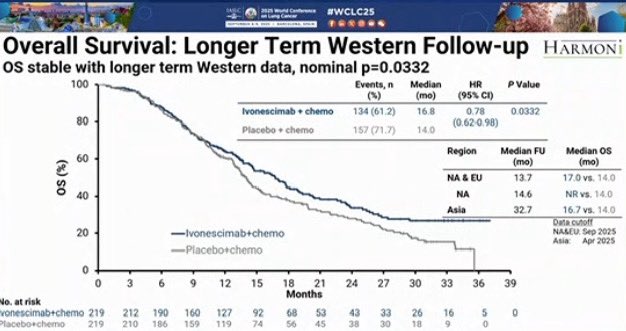
A separate slide updated OS for the full population with longer follow-up of Western patients: HR 0.78 (95% CI 0.62–0.98), nominal P=0.0332. Data cut-offs differed by region: September 2025 for North America and Europe and April 2025 for Asia. Median follow-up was 13.7 months in North America and Europe and 32.7 months in Asia.
HARMONi trial- nice PFS benefit for ivonescimab added to chemo upon progression on 3rd gen EGFR TKI across all subgroups is music to our ears at #WCLC25
— Balazs Halmos (@BalazsHalmosMD) Sep 7, 2025
But the OS results with a p value of 0.057…
The clinical researcher’s worst Halloween nightmare…
@IASLC https://t.co/htQfVmNEpi
HARMONi Phase III outcomes ivonescimab + chemo post progression after 3rd gen TKI in eGFR-mutant #lungcancer
— Shankar Siva (@_ShankarSiva) Sep 7, 2025
➡️(n≈438): PFS HR 0.52 (p<0.01);
➡️OS HR 0.79 (p=0.057).
➡️Grade 3+ AEs ~50%
Not a home run ☹️
#WCLC25 #LCSM https://t.co/XyIWohC4Ai
Dr. Jonathan Goldman presents the HARMONi data at #WCLC25. In EGFR NSCLC post TKI, adding ivonescimab (VEGF/PD1 bispecific) improves PFS (4.4 to 6.8m, HR 0.52). Numeric difference in OS in Western pts, but complicated analysis in heterogenous group. Improvement over MARIPOSA2? https://t.co/ZB0TVXi3Ze
— Stephen V Liu, MD (@StephenVLiu) Sep 7, 2025
The discussant: “A New Symphony or a Familiar Tune?”
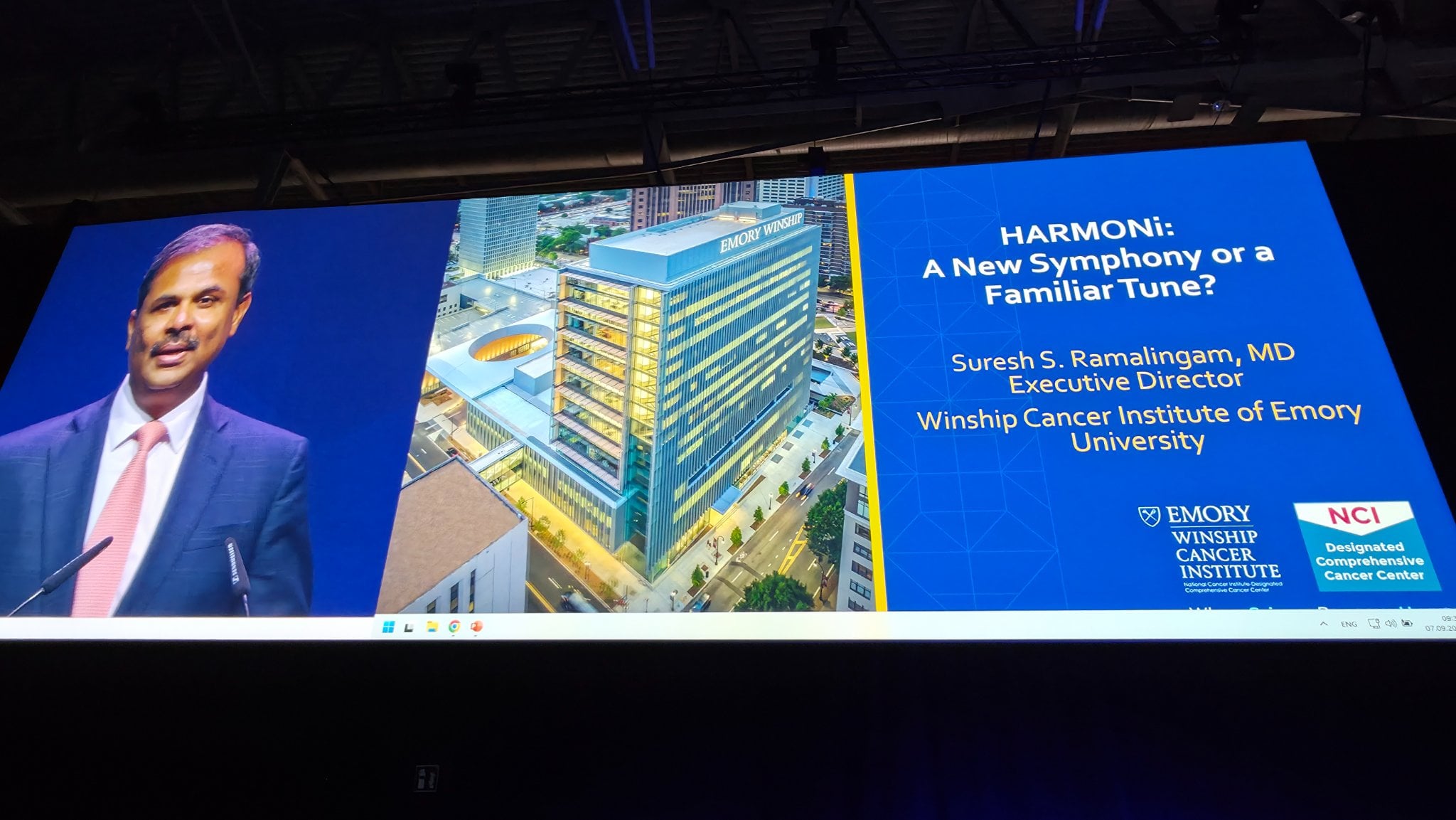
Suresh Ramalingam, MD, of the Winship Cancer Institute of Emory University, discussed HARMONi.
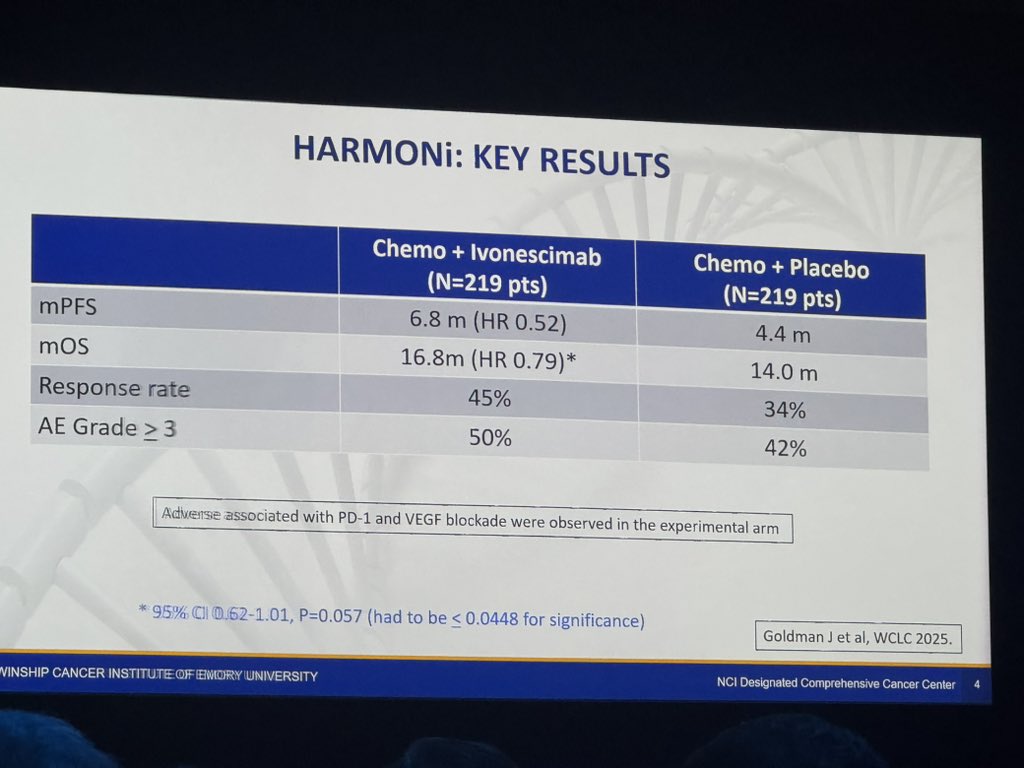
His key-results slide noted that the OS P value of 0.057 had to be 0.0448 or lower for significance. Grade ≥3 adverse events were 50% vs 42%.
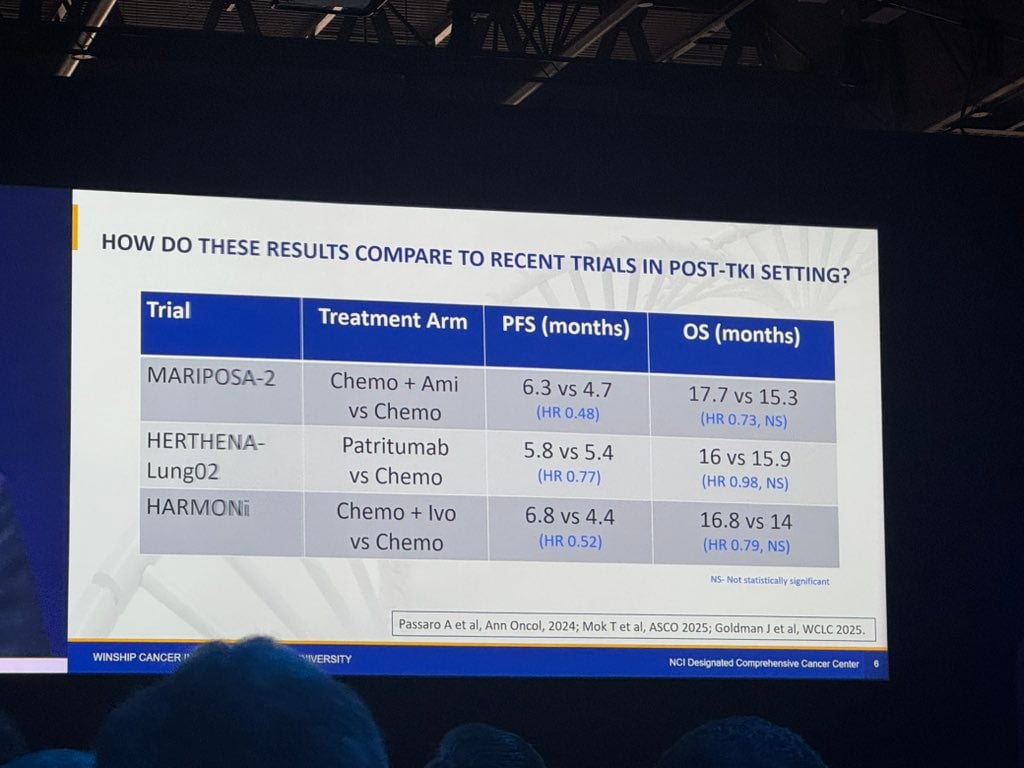
He placed HARMONi next to two other post-TKI trials. MARIPOSA-2 (amivantamab + chemo): PFS 6.3 vs 4.7 months (HR 0.48), OS 17.7 vs 15.3 months (HR 0.73, NS). HERTHENA-Lung02 (patritumab deruxtecan): PFS 5.8 vs 5.4 months (HR 0.77), OS 16 vs 15.9 months (HR 0.98, NS). HARMONi: PFS 6.8 vs 4.4 months (HR 0.52), OS 16.8 vs 14 months (HR 0.79, NS).
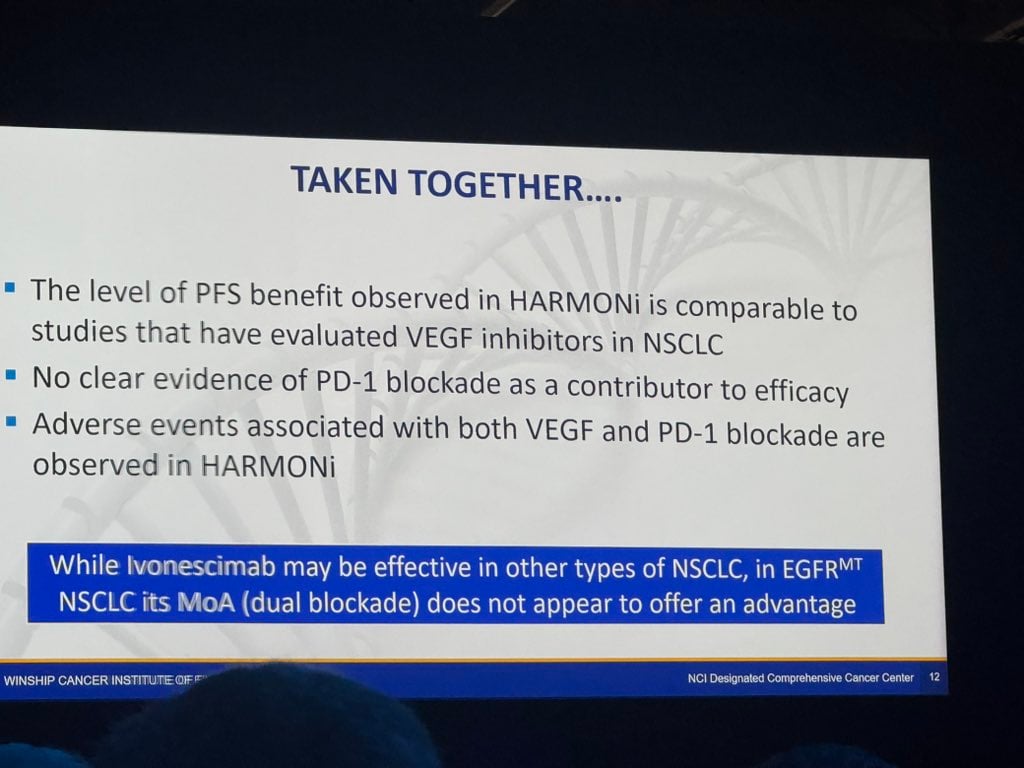
His summary slide: the PFS benefit in HARMONi is comparable to studies of VEGF inhibitors in NSCLC; there is no clear evidence of PD-1 blockade as a contributor to efficacy; adverse events associated with both VEGF and PD-1 blockade were observed. Its conclusion: “While Ivonescimab may be effective in other types of NSCLC, in EGFRMT NSCLC its MoA (dual blockade) does not appear to offer an advantage.”
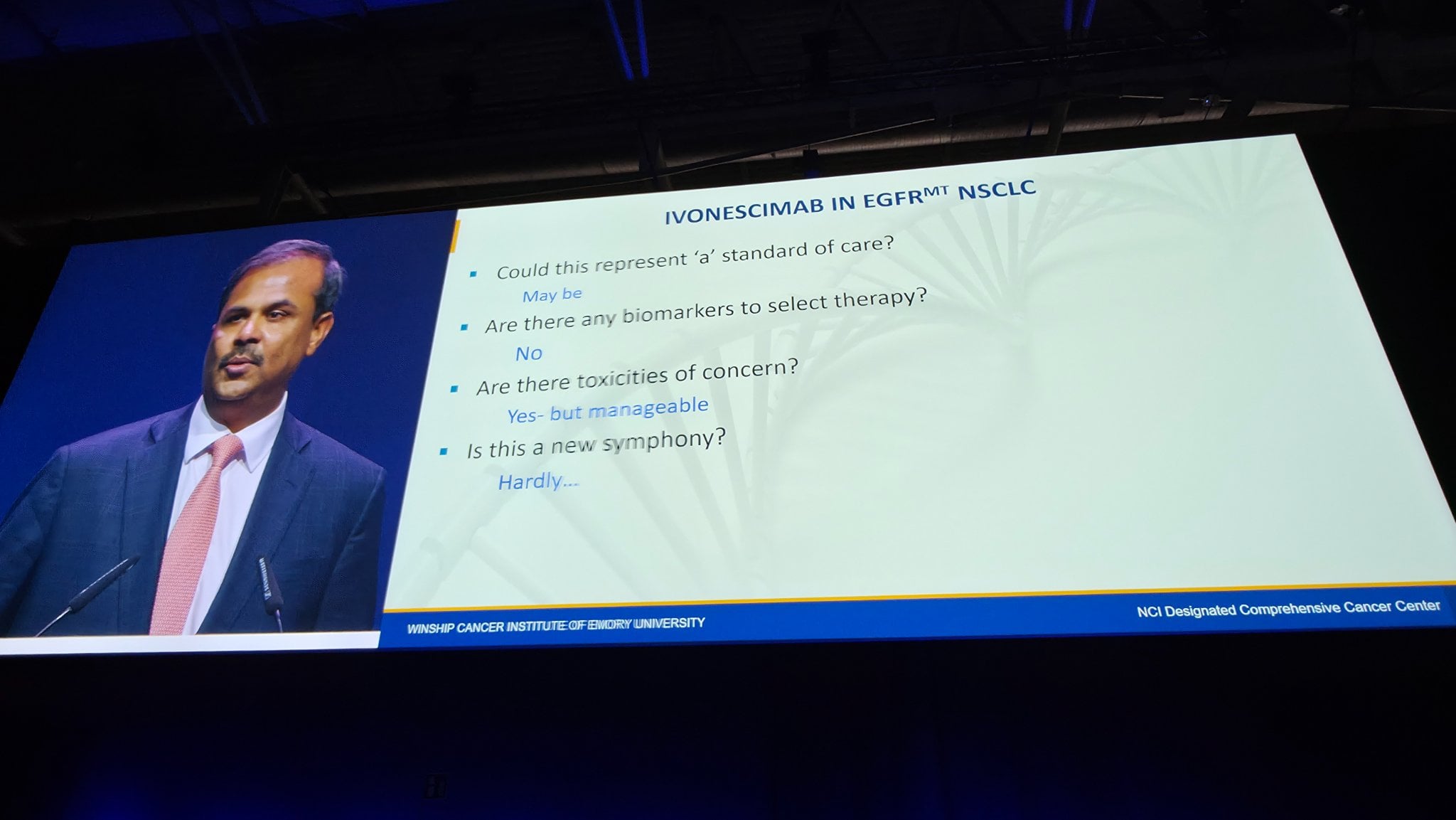
His final slide asked four questions. Could this represent ‘a’ standard of care? “May be.” Are there any biomarkers to select therapy? “No.” Are there toxicities of concern? “Yes- but manageable.” Is this a new symphony? “Hardly…”
#WCLC25 @RamalingamMD brilliantly breaks down the #HARMONi (ivonescimab) data for 1ry EGFR TKI resistance:
— Dr. Estela Rodriguez (@Latinamd) Sep 7, 2025
➡️Is the benefit related solely to VEGF and not PD1 inhibition?
➡️PFS benefit similar to prior VEGFi studies
➡️ Extra irAEs (albeit low) may not be necessary.#lcsm https://t.co/2MewHqCdvQ
🔥"Classic" but precise discussion🌟
— Hidehito HORINOUCHI (@HHorinouchi) Sep 7, 2025
🎙️@RamalingamMD
🎯"Is this a new symphony?" "Hardly..."
@IASLC #WCLC25 @Larvol @EGFRResisters https://t.co/EsLLHBtuBN https://t.co/oku9PGPBB4
The primary results were published in The Lancet Oncology in 2026, with the same OS result: HR 0.79, P=0.057.
November 15, 2026: the CRL
Summit’s release says the BLA “cannot be approved in its present form.” Per Summit, the FDA said the PFS benefit without a statistically significant OS benefit does not support a positive benefit-risk profile for approval. The release cites a post hoc, longer-follow-up OS hazard ratio of 0.76 in the full population and in Asian and Western patients. It does not mention resubmitting this application; it says Summit will continue developing ivonescimab in HARMONi-3 and HARMONi-7 (first-line NSCLC), HARMONi-GI3 (colorectal cancer), HARMONi-GU1 (urothelial cancer) and SMT112-216 (renal cell carcinoma). The FDA publishes complete response letters in its openFDA CRL database; this letter was not posted there as of November 15, 2026. Ivonescimab is approved in China and is investigational in the US (Summit release).
Physicians on the decision:
Disappointing update - ivonescimab will not be FDA approved for EGFR mutant lung cancer. Unusual trial design may have partly driven the lack of OS benefit but will have to wait for Harmoni-3 in non-AGA lung cancer for an approval it seems #lcsm https://t.co/ARbJvFd5SH
— Patrick Forde (@FordePatrick) Nov 15, 2026
@ADesaiMD @KolPulseAI I think the issue was because Summit were permitted to include pts already accrued/actively enrolling in China in the study but add a second global cohort to that group to make a global trial FDA said at the start that OS would be required in this specific trial.
— Patrick Forde (@FordePatrick) Nov 15, 2026
@SuyogCancer @RenoHemonc Let me offer a different viewpoint, I think it matters whether dual vs single primary endpoint the trial was designed with, and I think that hurt Ivo here, although it was the right study to do. So in future, we will see only PFS based studies? Thats my concern https://t.co/yDCtCtu0Ec
— Aakash Desai (@ADesaiMD) Nov 15, 2026
Looks like iwon’tescimab for a while..
— Balazs Halmos (@BalazsHalmosMD) Nov 15, 2026
Indeed disappointing as HARMONi data seemed to mature well and promising a true clinically meaningful benefit in both OS and PFS.
But admit need is less strong in egfr-mutated nsclc w so many other choices- hope other HARMONI trials will strike the right chord with the FDA..
the @FDA has declined to approve ivonescimab in advanced NSCLC because of lack of OS benefit*. Interesting how the 'culture' of different diseases affects norms and standards for regulatory approval. The landscape of advanced breast cancer treatment would look very different and have different kinetics if OS was required for approval.
— Harold J. Burstein, MD, PhD, FASCO (@DrHBurstein) Nov 15, 2026
*this instance may also be affected by the fully ex-US nature of the particular trial
https://t.co/l85y44eaKT
I struggle to understand the FDA’s decision on ivonescimab in light of its previous decisions. Without those precedents, I could understand a rejection based on failure to meet a primary OS endpoint.
— Yakup Ergün (@dr_yakupergun) Nov 15, 2026
In TROPION-Breast01, PFS and OS were dual primary endpoints. Despite a positive PFS result and failure to meet the final OS endpoint, Dato-DXd received regular approval.
Dato-DXd also received accelerated approval in EGFR-mutated lung cancer after prior EGFR-directed therapy and platinum-based chemotherapy, based on response rate and duration of response. TROPION-Lung01, one of the studies contributing to that approval, also failed to meet its primary OS endpoint in the overall population.
Of course, each regimen has a different benefit–risk profile and approval pathway. Still, I look forward to a clear scientific explanation of why a statistically significant OS benefit is indispensable for ivonescimab and what distinguishes this case from these precedents.
@BalazsHalmosMD I fail to understand the inconsistency in FDA decisions. Ami approved with pfs despite no OS (aware of crossover) and Dato approved from pooled analysis. Can someone explain the discrepancy?
— Kaushal Parikh (@kaushalpar) Nov 15, 2026
The record
- HARMONi-A had PFS as its only primary endpoint, with OS secondary. The global HARMONi trial had PFS and OS as dual primary endpoints.
- OS was a dual primary endpoint. At the primary OS analysis, HR was 0.79 (95% CI 0.62–1.01), P=0.057; the significance threshold was P≤0.0448.
- The later OS updates (HR 0.78, nominal P=0.0332 at WCLC 2025; post hoc HR 0.76 per Summit) added longer follow-up of Western patients, who had less follow-up and a later data cut than the Asian cohort. Neither was a formally tested result.
- Per Summit, the FDA’s stated reason was the absence of a statistically significant OS improvement.
- HARMONi-A, Akeso’s China-only Phase 3 under the same protocol number, reported a statistically significant final OS HR of 0.74 (95% CI 0.58–0.95) (Summit, November 2025). The global HARMONi analysis, with 38% of patients from Western countries, did not reach statistical significance on OS.
- At WCLC 2025, Ramalingam’s discussion found the PFS benefit comparable to prior VEGF-inhibitor studies and no clear evidence of a PD-1 contribution in EGFR-mutant NSCLC.
Full HARMONi KOL coverage, slides and the FDA status: HARMONi trial profile on KOL Pulse.