Top KOLs Discussing OrigAMI-4

OrigAMI-4 Key Slides & Visuals




Physician Reactions to the Approval
 𝕏
Amivantamab (SC) now @FDA✅ for 2L R/M HNSCC (HPV-unrelated) post plat + IO based on #OrigAMI4: - Ph1b/2, SC Ami mono (n=102) - ORR 42% (CR 15%). Historic 2L ORR 20-25% - mPFS 6.8mos, mOS 12.5mos - DoR NR (56% ≥6mo)! Much needed option. #OncTwittwer @OncUpdates @OncoAlert https://t.co/l6IF5AJf9E
 𝕏
OrigAMI-4 | JCO 2026 | FDA Accelerated Approval 💊 Amivantamab (Rybrevant Faspro): A new option in previously treated R/M HNSCC! Phase Ib/II | Single-arm | N = 102 🔹 Confirmed ORR: 42% 🔹 Complete response: 15% 🔹 Median PFS: 6.8 months 🔹 Median OS: 12.5 months 🔹 Durable responses: 56% lasted ≥6 months 🎯 Interesting subgroup signal! Oral cavity SCC: 56% ORR vs 30% in non-oral cavity primaries — exploratory, not definitive. ✅ FDA accelerated approval following platinum chemotherapy and anti-PD-(L)1 therapy, excluding HPV-associated oropharyngeal SCC. ⚠️ The caveat: Single-arm evidence. Comparative OS benefit remains unproven; randomized confirmation is needed. Practice in one line: Dual EGFR/MET blockade delivers promising responses after platinum and immunotherapy — but survival superiority is yet to be established. 📖 Burtness et al. JCO. 2026. DOI: 10.1200/JCO-26-01042 @OncoAlert @OncoDaily @myESMO @larvol #OrigAMI4 #Amivantamab #RybrevantFaspro #HNSCC #HeadAndNeckCancer #Oncology #MVOnco
 𝕏
FDA APPROVAL: A NEW CHAPTER IN HEAD & NECK CANCER After a decade without a new systemic treatment approval, subcutaneous amivantamab opens a new therapeutic option for patients with previously treated recurrent or metastatic head and neck cancer. A meaningful step forward but accelerated approval raises an important question: Will promising tumor responses translate into longer survival? Full analysis: https://t.co/2yWStrd16b #FDA #HeadAndNeckCancer
 𝕏
Great news for our patients with head and neck cancers!!!! We got another FDA approval, this time for amivantamab in the second line setting and beyond. This is an area of SUCH need. A happy day indeed!! https://t.co/eF0g1hoj8Q
𝕏OrigAMI-4 | JCO 2026 | FDA Accelerated Approval Amivantamab (Rybrevant Faspro) in previously treated R/M HNSCC After platinum chemotherapy and PD-(L)1 therapy, amivantamab demonstrated encouraging activity in HPV-unrelated HNSCC. 📊 Key Results (N = 102) • ORR: 42% (43/102) • Complete response: 15% • Median PFS: 6.8 months • Median OS: 12.5 months • Responses ≥6 months: 56% of responders 🔍 Interesting oral cavity signal! • Oral cavity ORR: 56% (27/48) • Non-oral cavity ORR: 30% (16/54) ⚠️ Important: Single-arm Phase Ib/II study. The oral cavity finding is exploratory, and comparative survival benefit remains unproven. Bottom line: A promising post-platinum, post-immunotherapy option in R/M HNSCC, with a notable oral cavity response signal. 📖 Burtness et al. | JCO 2026 | OrigAMI-4 #HNSCC #Amivantamab #OrigAMI4 #HeadAndNeckCancer #Oncology #MVOnco @OncoAlert @OncoDaily @larvol
 𝕏
FDA approves amivantamab (EGFR/MET bispecific) for R/M HNSCC based on the results of the OrigAMI-4 trial https://t.co/Ll45gMhMGp
 𝕏
A New Option in Head and Neck Cancer: Is a 42% Response Rate Enough? On November 5, the FDA granted accelerated approval to subcutaneous amivantamab (EGFR×MET bispecific antibody) based on OrigAMI-4. In previously treated R/M HNSCC (n=102): - ORR: 42% - CR: 15% - Median PFS: 6.8 months - Median OS: 12.5 months An encouraging signal in a difficult-to-treat population. But two important questions remain: 1. Can dual EGFR/MET targeting deliver more meaningful benefit than previous EGFR-directed strategies? 2. Will these responses translate into improved survival in randomized trials? Accelerated approval is an important step, but not proof of an OS benefit. #HNSCC #HeadAndNeckCancer @oncodaily @OncBrothers @tompowles1 @US_FDA #amivantanab
 𝕏
FDA gave accelerated approval yesterday to subcutaneous amivantamab for head and neck cancer that progressed after platinum and immunotherapy. First new option in this setting in about 10 years. Response rate was 42% in a single-arm trial of 102 patients. That's a real signal, but response isn't survival. OrigAMI-5 has to confirm it. https://t.co/wmJzLHhjSm
 𝕏
First FDA HNSCC approval to exclude patients by HPV status: amivantamab SC (accelerated, 11/5) for R/M HNSCC after platinum + PD-(L)1. Based on phase Ib OrigAMI-4 (n=102) showing an ORR 42%. IMO potentially the first of many HPV-split labels. #HNSCC https://t.co/bqEaSpAENg
 𝕏
Amivantamab approved for HNSCC 📢 https://t.co/h4tIgsz9jA
“Excited but with questions” — Moma Vélez, MD
 𝕏
1/8 🧵 Ami just got FDA accelerated approval in R/M HNSCC after platinum + anti-PD-(L)1, excluding HPV-associated oropharyngeal SCC. A new option for our patients, here are my #hottakes on OrigAMI-4 🔥 @COlazagasti @AnaVManana @fangdisun @AriRosenbergMD @md_hsu
𝕏2/8 at first glance: 42% ORR after platinum + an ICI? That gets my attention… Because we need more options here. This is encouraging data.
𝕏3/8 But can we talk about that benchmark? 👀 The statistical null was ORR ≤10%. The paper itself cites post-ICI/chemo ORRs of 21–24% with single-agent paclitaxel or cetuximab. The 42% still looks promising. I’m just raising an eyebrow at the bar we’re clearing.
𝕏4/8 Before we make bold claims: single-arm data + historical benchmarks ≠ head-to-head evidence. Randomized data are cooking in 1L: OrigAMI-5 tests Ami + carbo/pembro vs platinum/5-FU/pembro. Different setting AND regimen from post-ICI monotherapy.
𝕏5/8 Subcutaneous? Great. The rash and paronychia did not get that memo. Ami can still be tough to tolerate. Adverse reactions led to interruptions in 51% and dose reductions in 23%. Less chair time is a win. So is being able to comfortably use your hands.
𝕏6/8 My question: will interruptions and reductions affect efficacy? The reported 42% ORR already includes dose modifications. It doesn’t tell us whether lower exposure changes outcomes. I want more data on dose exposure and response durability before making that leap.
𝕏7/8 Also: I’m waiting for the HPV-positive data. HPV-associated oropharyngeal cancer is increasing. These patients develop metastatic disease too. “They do better” is little comfort to someone progressing after platinum + an ICI. Their unmet need is very real.
𝕏8/8 I get the EGFR/MET rationale for prioritizing HPV-negative disease. OrigAMI-4 has a separate HPV-related cohort, and I want to see those results. My hot take: promising activity, welcome option, real toxicity. Excited but with questions
FDA Accelerated Approval — November 5, 2026
Trial Methodology & Results
Study Design
Multicenter, open-label Phase 1b/2 with six cohorts (monotherapy, and combinations with pembrolizumab, paclitaxel, or pembrolizumab + carboplatin). Cohort 1 is single-arm.
Population (Cohort 1)
102 adults with recurrent or metastatic HNSCC after platinum-based chemotherapy and an anti-PD-(L)1 antibody; HPV-associated oropharyngeal SCC excluded by p16 testing.
Intervention
Subcutaneous amivantamab (amivantamab and hyaluronidase-lpuj), weight-based dosing every 3 weeks until progression or unacceptable toxicity.
Endpoints
Primary: overall response rate. Secondary: duration of response. Both assessed by blinded independent central review.
Presenter & Publication
Presented at ASCO 2026 (abstract 6008) by Barbara Burtness, MD; published in the Journal of Clinical Oncology (Burtness, Rosenberg, Calderon et al., 2026).
Sponsor
Janssen Research & Development (Johnson & Johnson). Confirmatory trial: OrigAMI-5 (NCT07276399), first line.
Primary Efficacy — cohort 1 (n=102)
BICR-confirmed ORR 42% (95% CI, 32–52), with complete responses in 15% and partial responses in 28%; 56% of responders kept their response for more than 6 months (J&J press release, Nov 5, 2026). Investigator-confirmed ORR was 47% (JCO 2026). The two figures come from different assessors; the approval rests on the BICR figure.
BICR ORR 42% · CR 15% · 56% of responses >6 monthsSource: J&J press release, Nov 5, 2026 · JCO 2026
Secondary outcomes — JCO 2026 (median follow-up 11.8 months)
Median duration of response not reached among the 43 BICR-confirmed responders, with 63% of responses ongoing; clinical benefit rate 63%; median PFS 6.8 months; median OS 12.5 months (JCO 2026 visual abstract). OS and PFS come from a single-arm cohort and cannot show a survival benefit over other treatments.
Source: Burtness et al., J Clin Oncol 2026Safety
Prescribing-information data for OrigAMI-4 (n=102): most common adverse reactions rash 79%, fatigue 39%, nail toxicity 35%, stomatitis 32%, edema 28%; serious adverse reactions 39%, including pneumonia 8% and hemorrhage 4.9%. Administration-related reactions: 16% of 132 patients on single-agent Rybrevant Faspro, all grade 1–2 (J&J press release). The JCO visual abstract groups terms differently and lists hypoalbuminemia 50% (grade ≥3, 5%), rash 37% (3%), acneiform dermatitis 34% (6%) and paronychia 34% (2%) as the most common treatment-emergent adverse events, with administration-related reactions in 15% (JCO 2026).
Source: J&J press release (prescribing information) · JCO 2026Clinical Implications
✅ FDA-approved (accelerated): single-agent Rybrevant Faspro for recurrent or metastatic HNSCC after platinum-based chemotherapy and an anti-PD-(L)1 antibody, excluding HPV-associated oropharyngeal SCC. ⚠ Investigational: first-line combinations and HPV-associated oropharyngeal disease. Continued approval may depend on OrigAMI-5.
Source: FDA approval noticeFirst-Line Cohort 5: Amivantamab + Pembrolizumab + Carboplatin
⚠ Cohort 5 — separate from the approved indication
At ESMO 2026, cohort 5 of OrigAMI-4 tested amivantamab plus pembrolizumab and carboplatin as first-line treatment for recurrent or metastatic HNSCC. Among 29 participants in the efficacy population, the investigator-assessed confirmed ORR was 66% (95% CI, 46–82): 77% (55–92) in HPV-unrelated disease (n=22, CR 14%) and 29% (4–71) in HPV-related disease (n=7). Median duration of response among the 17 HPV-unrelated responders was not reached, with 65% ongoing (ESMO 2026 slide). These are small, single-arm, investigator-assessed results and are not comparable with the cohort 1 BICR data. The randomized Phase 3 OrigAMI-5 (NCT07276399) is testing amivantamab with carboplatin and pembrolizumab against a platinum, 5-FU and pembrolizumab standard.
Source: ESMO 2026 slide (via @JiaJennyLiu on this page) · ClinicalTrials.gov NCT07276399 𝕏
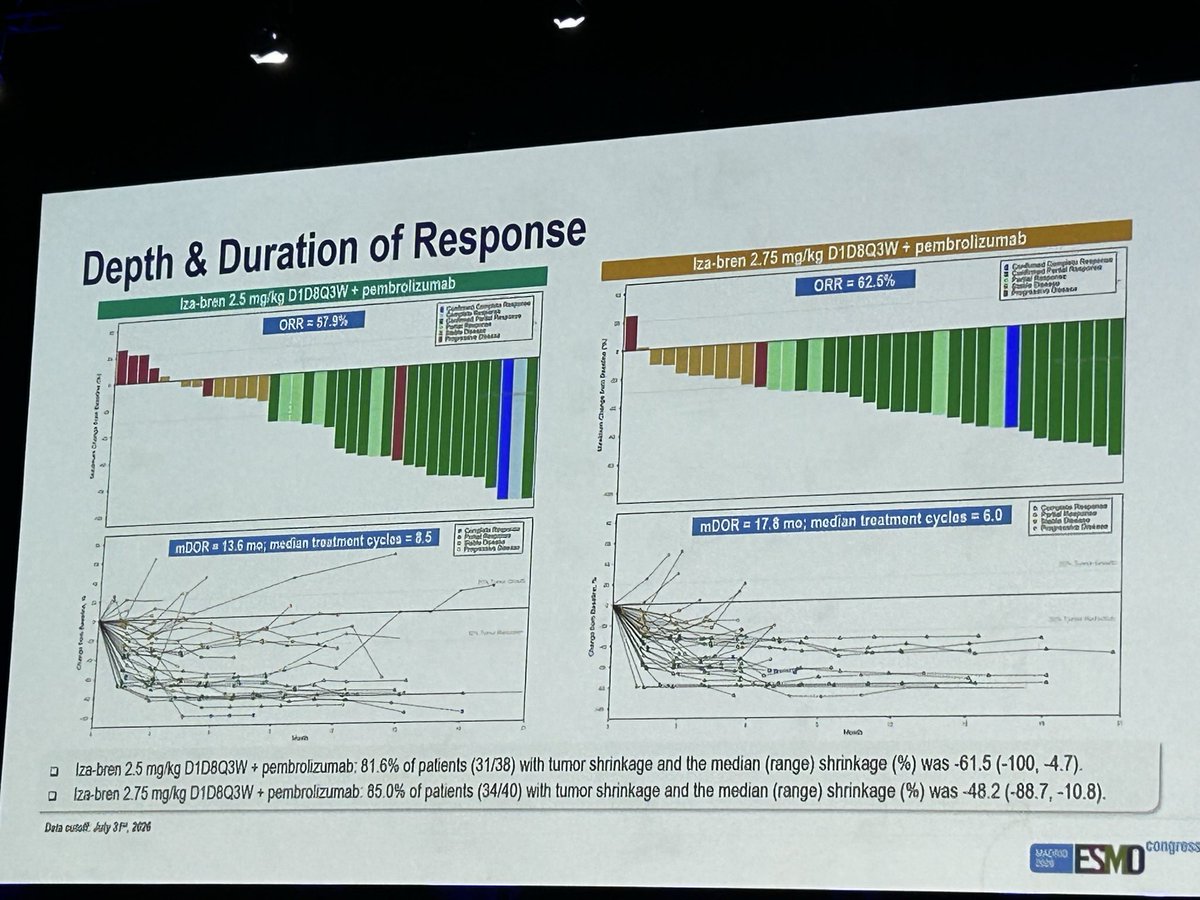
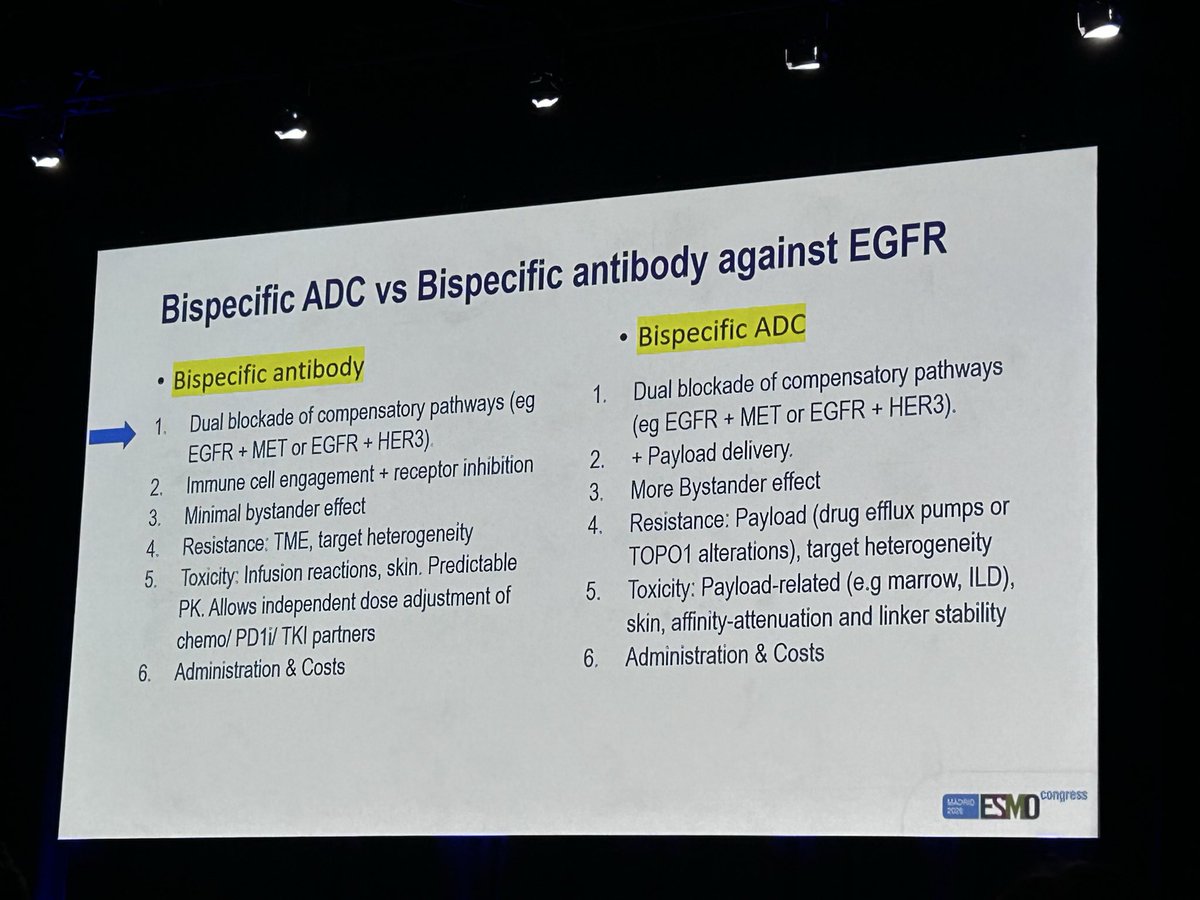
Exciting emerging data in 1L R/M #HNSCC at #ESMO26! 🔹 OrigAMI-4: Amivantamab (EGFR×MET) + pembrolizumab + carboplatin: ORR 77% in HPV-unrelated disease (n=22), CR 14%. 🔹 Iza-bren (EGFR×HER3 bispecific ADC) + pembrolizumab: ORR 58–63% across two dose cohorts, mDoR 13.6–17.8 months. Two different approaches to EGFR targeting: dual receptor blockade versus dual targeting + cytotoxic payload delivery. Key questions: 🔬 How do HPV status, PD-L1 CPS and EGFR/MET/HER3 expression influence benefit? 🔬 What is the incremental contribution of each component? 🔬 Can we identify who needs an ADC payload versus receptor blockade alone? Promising early signals, but small cohorts, different populations and no head-to-head comparisons. The next challenge is moving beyond response rates towards biomarker-guided treatment selection. Great discussion by @BrigetteMa2 #HeadNeckCancer #ADC #bispecific #PrecisionOncology
 𝕏
Chemotherapy-free does not automatically mean low toxicity. OrigAMI-4’s separate amivantamab + pembrolizumab cohort enrolled 39 patients with untreated PD-L1 CPS ≥1 R/M HNSCC, excluding p16+ oropharyngeal cancer. Primary endpoint: ORR. Confirmed ORR was 59% (95% CI 42–74), including 18% complete responses. Median PFS: 7.7 months. Grade ≥3 TEAEs occurred in 72%; treatment-related AEs led to discontinuation of BOTH agents in 13%. Meaningful activity, with a substantial toxicity burden. And 59% with the doublet vs 77% with the triplet cannot establish carboplatin’s contribution: these were separate, nonrandomized cohorts. What is the optimal balance between response, durability and toxicity? @hf_kao @UMRogelCancer @SGCancerUK @myESMO @OncoAlert #OrigAMI4 #HNSCC
𝕏Are we finally seeing HPV+ and HPV-neg R/M HNSCC start to split into different treatment paradigms? EGFR/MET bispecific + carbo/pembro (OrigAMI-4): ORR 29% HPV+ vs 77% HPV-neg Nectin-4 ADC + pembro (EV-202): 82% HPV+ vs 23% HPV-neg https://t.co/FFW2OKlFRz https://t.co/Qov5Zr82Kv
𝕏77% ORR in head & neck cancer deserves attention. The population and denominator matter. OrigAMI-4 evaluated amivantamab + pembrolizumab + carboplatin in untreated PD-L1 CPS ≥1 R/M HNSCC. Primary endpoint: investigator-assessed ORR. In HPV-unrelated disease, 17/22 patients responded: 77% (95% CI 55–92), including 3 complete responses. At cutoff, 11/17 responses were ongoing. In HPV+ oropharyngeal cancer: 2/7 responses—too few patients for a firm subgroup conclusion. An encouraging single-arm phase Ib/II signal. OrigAMI-5 is testing the triplet against pembrolizumab + platinum + 5-FU. Can the response signal translate into a survival advantage against an active standard? @UMRogelCancer @SGCancerUK @myESMO @OncoAlert #ESMO26 #OrigAMI4 #HNSCC
OrigAMI-4 in the News
OrigAMI-4 FAQ
What is the OrigAMI-4 trial?
OrigAMI-4 (NCT06385080) is a multicenter, open-label Phase 1b/2 study sponsored by Janssen Research & Development that tests amivantamab, an EGFR x MET bispecific antibody, alone or with other agents in head and neck squamous cell carcinoma (HNSCC). Cohort 1 gave single-agent subcutaneous amivantamab every 3 weeks to 102 adults with recurrent or metastatic HNSCC that had progressed after platinum-based chemotherapy and an anti-PD-(L)1 antibody, excluding HPV-associated oropharyngeal cancer. Its pivotal results were presented at ASCO 2026 (abstract 6008, Barbara Burtness, MD) and published in the Journal of Clinical Oncology.
What did the FDA approve Rybrevant Faspro for in head and neck cancer?
On November 5, 2026, the FDA granted accelerated approval to Rybrevant Faspro (amivantamab and hyaluronidase-lpuj, Janssen Biotech) for adults with recurrent or metastatic HNSCC whose disease progressed on or after platinum-based chemotherapy and an anti-PD-(L)1 antibody. It is not indicated for oropharyngeal squamous cell carcinoma associated with HPV. The approval was based on overall response rate and duration of response; continued approval may depend on a confirmatory trial (OrigAMI-5). Use in first-line HNSCC remains investigational.
How effective was amivantamab in OrigAMI-4?
In cohort 1 (n=102), the confirmed overall response rate by blinded independent central review was 42% (95% CI, 32-52), with complete responses in 15% and partial responses in 28%; 56% of responders kept their response for more than six months (J&J press release, Nov 5, 2026). The JCO paper also reports an investigator-confirmed ORR of 47%, and, at a median follow-up of 11.8 months, median progression-free survival of 6.8 months and median overall survival of 12.5 months. Because cohort 1 is single-arm, these results do not establish a survival benefit over other treatments.
What are the main side effects of Rybrevant Faspro in head and neck cancer?
In OrigAMI-4 (n=102), the most common adverse reactions (at least 20%) were rash (79%), fatigue (39%), nail toxicity (35%), stomatitis (32%) and edema (28%); serious adverse reactions occurred in 39% of patients (J&J press release, prescribing-information safety data). Administration-related reactions occurred in 16% of 132 patients treated with single-agent Rybrevant Faspro in OrigAMI-4, all grade 1 or 2. The JCO visual abstract lists hypoalbuminemia (50%), rash (37%), acneiform dermatitis (34%) and paronychia (34%) as the most common treatment-emergent adverse events, using different term groupings.
What did OrigAMI-4 show in first-line head and neck cancer?
At ESMO 2026, cohort 5 of OrigAMI-4 tested amivantamab plus pembrolizumab and carboplatin as first-line treatment for recurrent or metastatic HNSCC. Among 29 participants in the efficacy population, the investigator-assessed confirmed ORR was 66% (95% CI, 46-82): 77% in HPV-unrelated disease (n=22) and 29% in HPV-related disease (n=7). This first-line use is investigational; the randomized Phase 3 OrigAMI-5 trial (NCT07276399) is testing amivantamab with carboplatin and pembrolizumab in the first-line setting.