Dana-Farber Breast Cancer Course · Boston, MA · Jul 18, 2026
Dana-Farber Breast Cancer Course 2026 Slide Intelligence
A one-day Dana-Farber CME course, fully distilled: 17 presented slide talks from 16 breast-oncology faculty across locoregional therapy, early-stage and metastatic disease (TNBC, HER2+, ER+), the Schlager keynote on ADC sequencing, and supportive care — every data slide OCR-transcribed and 23 named trials tagged. Curated by KOL Pulse from the live #DanaFarberBreastCancerCourse feed.
17
Slide Talks
45
Slides Captured
16
Faculty
23
Trials Tagged
Faculty · 16 presenters
Course Faculty
Dana-Farber Cancer Institute breast oncology faculty and guest keynote, grouped by the session they led. Handles link to X.
Course Directors, Panel & Tumor Board
Harold J. Burstein, MD, PhDDana-Farber Cancer Institute@DrHBurstein
Radiation Therapy: How Much and In Whom?. Rinaa Punglia, MD, MPH gives an excellent talk on radiation treatment in #BreastCancer, discussing key questions such as How much? In whom can we give less? Or non at all? at the #DanaFarberBreastCancerCourse
Breast Surgery: Axillary Management in 2026. Dr. Elizabeth Mittendorf (@ASCOPres) delivers insights on Breast Surgery focusing on key questions in the surgical management of the axilla. #DanaFarberBreastCancerCourse
[Slide 2]
Questions Regarding Surgical Management of the Axilla in 2026
- Which patients with invasive breast cancer do not require SLNB?
- How do we manage the axilla for HR+/HER2- clinically node positive patients undergoing upfront surgery?
- How do we manage positive nodes after neoadjuvant chemotherapy?
Molecular Diagnostics & ctDNA. Excellent presentation by Ilana Schlam, MD, MPH (@IlanaSchlam) on Molecular Diagnostics and #ctDNA use in #BreastCancer at today's #DanaFarberBreastCancerCourse.
Session 2 · 3 talks
Early-Stage Systemic Therapy
Subtype-directed (neo)adjuvant strategy across triple-negative, HER2-positive, and ER-positive early disease.
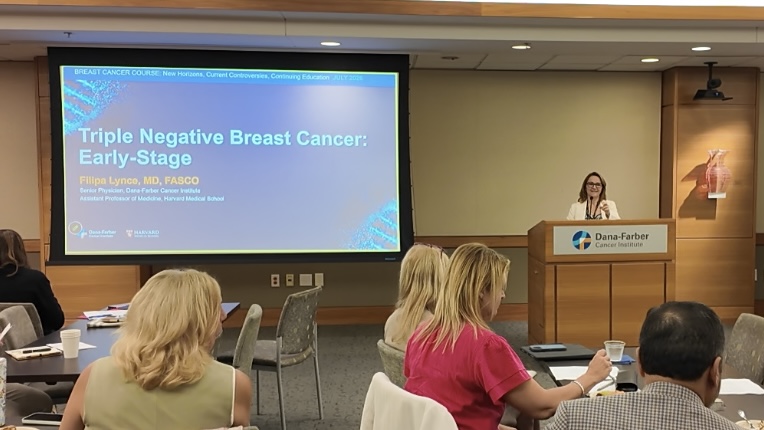
Early-Stage Triple-Negative Breast Cancer. Filipa Lynce, MD (@FilipaLynce) delivered exciting insights on early stage #TNBC in today's #DanaFarberBreastCancerCourse.
#TripleNegativeBreastCancer #BreastCancer
Early-Stage HER2-Positive Breast Cancer. Adrienne Waks, MD (@adawaksmd) shares insights on early stage HER2+ #BreastCancer in today's #DanaFarberBreastCancerCourse.
CompassHER2-pCRHELEN-006NeoCARHP
[Slide 2]
Should we use T-DXd in the Neoadjuvant or the Adjuvant Setting?
| Neoadjuvant T-DXd x4 | Adjuvant T-DXd x14 |
Improves AEs/tolerability compared to neoadjuvant ddAC-T | Worsens AEs/safety compared to adjuvant T-DM1
EFS will be reported, but secondary endpoint | DFS primary endpoint – statistically significant difference shown
What to do with RD post-neoadjuvant T-DXd? | CNS recurrence outcomes look promising in favor of T-DXd
• cT2N0 tumors (without ypN+ residual disease) not represented in either neoadjuvant or adjuvant phase 3 T-DXd data
• I predict: neoadjuvant THP is sufficient for some pts – await CompassHER2-pCR/HELEN-006/NeoCARHP DFS results
• Need biomarkers to help us tailor neoadjuvant + adjuvant regimen selection
Adrienne G. Waks, MD | IBC East | 2026 19
---
[Slide 3]
ER and HER2 are very good biomarkers for pCR:
CompassHER2-pCR:
Clinicopathologic factors significantly associated with pCR following neoadjuvant THP x4 (univariable analysis)
Slide modified from Nadine Tung MD ASCO 2025
pCR rate table
Variable | All pts (n=2141) | ER- HER2+ (n=774) | ER+ HER2+ (n=1367)
Age (median, range) | 55 yrs (22-88) | |
< 50 years | 43.6% | 63.5% | 34%
50-70 years | 47% | 67.9% | 34.2%
>70 years | 31.9% | 48.7% | 21.1%
ECOG PS | | |
0 | 44.7% | 65.4% | 32.9%
1 | 37.4% | 51.6% | 29.7%
Grade | | |
1 | 26.9% | 60% | 21.1%
2 | 37.2% | 63% | 27.9%
3 | 49.5% | 64% | 37.9%
ER (% cells staining) | | |
0% | 63.7% | 63.7% |
1-10% | 62.5% | ---- | 62.5%
11-70% | 51.6% | ---- | 51.6%
> 70% | 22.5% | ---- | 22.5%
HER2 IHC | | |
3+ | 50.3% | 67.6% | 39.3%
2+ | 11.9% | 26% | 8.0%
Taxane^ | | |
paclitaxel | 46.5% | 68.5% | 34.2%
docetaxel | 39.3% | 55.9% | 29.7%
---
[Slide 4]
Conclusions
• Growing evidence supports omission of carboplatin in the treatment of patients with HER2+ early breast cancer – though we are not yet ready to drop it entirely
• T-DXd in the neoadjuvant or the adjuvant setting is the new standard of care for moderate to high risk HER2+ early breast cancer
• Biology assessment at baseline and/or on-treatment should be incorporated into the management of HER2+ early breast cancer – HER2DX genomic risk score, ctDNA, breast MRI, PET scans are all contenders
Adrienne G. Waks, MD | IBC East | 2026 34
Novel Treatment Options for Early ER-Positive Disease. Continuing today's #DanaFarberBreastCancerCourse with a comprehensive review of novel treatment options for early ER+ #BreastCancer presented by Erica Mayer, MD, MPH (@elmayermd).
OPTIMAOFSET
[Slide 2]
HR+ Early Breast Cancer: The Problem of Prolonged Risk
Despite advances in therapy, patients with ER+/HER2- early breast cancer remain at risk of recurrence
Methods to augment efficacy of existing therapies:
• Adjuvant CDK4/6 inhibitors
• Emergence of oral SERDs
• Less chemotherapy, more OFS
WHO NEEDS LESS? <
WHO NEEDS MORE? >
HOW CAN WE TAILOR TREATMENT?
HR+/HER2– Operable BC
Risk of Distant Recurrence
Distant Recurrence (%) vs Years (0 to 20)
N4–9: 22 (yr5), 36 (yr10), 45 (yr15), 52 (yr20)
N1–3: 10 (yr5), 19 (yr10), 25 (yr15), 31 (yr20)
N0: 6 (yr5), 11 (yr10), 16 (yr15), 22 (yr20)
No. at Risk
N4–9: 12,333 | 8,116 | 2165 | 259 | 52
N1–3: 31,936 | 23,576 | 7250 | 949 | 183
N0: 29,925 | 24,081 | 8571 | 1982 | 414
No. of Events — annual rate (%)
N4–9: 2568 (4.8) | 969 (4.0) | 121 (3.1) | 13 (2.2)
N1–3: 3126 (2.2) | 1421 (1.9) | 241 (1.7) | 39 (1.8)
N0: 1646 (1.2) | 835 (1.1) | 272 (1.3) | 68 (1.4)
Pan et al, NEJM 2017 Erica L. Mayer MD, MPH | 2026 3
---
[Slide 3]
Optima – How to Interpret?
• Test-determined treatment selection, using tumor biology rather than clinical features alone, can guide chemo decisions in patients ≥ 40 with ROR scores ≤ 60.
• Results were stable in subgroups, including premenopausal and those with ≥ 4 involved nodes.
• May help avoid chemotherapy in high anatomic risk/low genomic risk disease, including premenopausal.
But Questions
• Do we need longer follow-up to feel secure in this data?
• What about women < 40? Or patients with multinode positive disease?
• Paradigm shift to move away from Oncotype to Prosigna in select situations
• Still need to support OFSET trial!
Erica L. Mayer MD, MPH | 2026 44
---
[Slide 4]
Conclusions: Great Advances in the Management of Early-stage HR+ Disease
• Adjuvant CDK4/6 inhibitors are here and growing in use in a broader population
• Oral SERDs emerging in adjuvant space
✓ Await future approvals and determination of when/how to use giredestrant
✓ Await results from pending oral SERD trials to understand concurrent use with CDK4/6i and timing of administration
• Use of Prosigna may help reduce use of chemotherapy in premenopausal and some higher risk N+ disease
Erica L. Mayer MD, MPH | 2026 46
Session 3 · 1 talk
Metastatic Triple-Negative Breast Cancer
TROP2 ADCs, immunotherapy, and sequencing after ADC progression in mTNBC.
Ana C. Garrido-Castro, MDDana-Farber Breast Cancer Course · Jul 18
Metastatic TNBC: ADCs & Immunotherapy. Ana Garrido-Castro, MD gives an excellent presentation on metastatic triple negative breast cancer focusing on #ADCs and immunotherapy. #DanaFarberBreastCancerCourse #TNBC #MBC
TRADE-DXd
[Slide 2]
NEW TREATMENT ALGORITHM FOR mTNBC
PD-L1-positive (star)
1L: Sacituzumab govitecan + Pembrolizumab
PD-L1-negative (star)
1L: Datopotamab deruxtecan | Sacituzumab govitecan | Olaparib or talazoparib (if BRCAm)
2L: Olaparib or talazoparib (if BRCAm) | Sacituzumab govitecan | T-DXd (if HER2-low) | Chemotherapy (e.g., taxane, platinum)
3L+: Sacituzumab govitecan | T-DXd (if HER2-low) | Olaparib or talazoparib (if BRCAm) | Chemotherapy (e.g., eribulin, capecitabine, gemcitabine, vinorelbine) | Biomarker positive* (TMB-H, MSI-H/dMMR, NTRK fusion, RET fusion)
*TMB-H: Pembrolizumab; MSI-H: Pembrolizumab, Dostarlimab; NTRK fusion: Larotrectinib, Entrectinib, Repotrectinib; RET fusion: Selpercatinib
Ana C. Garrido-Castro, M.D. | 2026 | 25
---
[Slide 3]
TREATMENT OF ADC-REFRACTORY BREAST CANCER WITH DATO-DXd OR T-DXd (TRADE-DXd):
DFCI 24-251/TBCRC 064
Primary endpoint (ADC1, ADC2): ORR
Secondary endpoints: PFS, OS, CBR, TTOR, DOR
Eligibility:
- Confirmed unresectable locally advanced or metastatic breast cancer
- HER2-negative (HER2-low or HER2-0) breast cancer
- Prior endocrine therapy and CDK4/6 inhibitor if HR+
- No prior topo-I inhibitor-based therapy
- Measurable disease
Allocation 1:1 to T-DXd or Dato-DXd as ADC1
ADC1:
- T-DXd (0-1 prior lines): HR+ (Arm A) / HR- (Arm B) -> Crossover to ADC2 at progression -> Dato-DXd (1-2 prior lines): HR+ (Arm E) / HR- (Arm F) -> Treat until progression or unacceptable toxicity
- Dato-DXd (0-1 prior lines): HR+ (Arm C) / HR- (Arm D) -> Crossover to ADC2 at progression -> T-DXd (1-2 prior lines): HR+ (Arm G) / HR- (Arm H) -> Treat until progression or unacceptable toxicity
(star) Tumor assessments + Blood collection q9w
Baseline Pre-ADC1 Biopsy; Post-C2 On-ADC1 Biopsy; Baseline Pre-ADC2 Biopsy; Optional Post-ADC2 Biopsy
*Patients who received T-DXd/Dato-DXd as ADC1 off-study allowed to enroll on ADC2 cohorts.
NCT06533826 / PI: A. Garrido-Castro
Ana C. Garrido-Castro, M.D. | 2026 | 46
---
[Slide 4]
KEY TAKEAWAYS
- Significant improvement in outcomes with TROP2 ADC in 1L mTNBC vs standard chemotherapy
- Given the poor prognosis in this setting, with a high proportion of patients who do not survive past 6 months with standard chemotherapy, TROP2 ADC is now considered a preferred 1L regimen
- Novel ADC, IO and targeted therapy approaches in development: new targets, payloads, bispecific ADCs, combinations
- Understanding the mechanisms that drive response and resistance to ADCs will be key to help inform optimal sequencing, combinations, and duration of therapy
Ana C. Garrido-Castro, M.D. | 2026 | 55
Session 4 · 2 talks
Metastatic HER2-Positive Breast Cancer
First-line T-DXd vs THP, induction-maintenance strategy, and the next generation of HER2 agents.
HER2+ MBC: First-Line & Maintenance Therapy. Stefania Morganti, MD (@StefiMorganti) shares treatment updates on the management of HER2+ Metastatic Breast Cancer, including @DanaFarber recommendations for first-line and maintenance therapy. #DanaFarberBreastCancerCourse #MBC #BreastCancer #bcsm #MetastaticBreastCancer
[Slide 1]
First-Line Therapy: DFCI approach
First-Line and Maintenance Therapy
Options:
- T-DXd-P (Trastuzumab deruxtecan + Pertuzumab) until progression (or toxicity; switch to maintenance to be considered if CR and no BM) -> preferred for patients with high disease burden, recurrent tumors, brain metastases, PIK3CA mutations
- Taxane-HP (Trastuzumab/Pertuzumab) x6-8 cycles followed by maintenance therapy -> preferred for patients with de novo presentation, oligometastatic, non-visceral disease, or contraindication to T-DXd
Maintenance therapy options after THP:
- Palbociclib-HP-ET (Palbociclib + Trastuzumab + Pertuzumab + Endocrine Therapy) -> preferred for patients with ER-positive disease
- Tucatinib-HP (Tucatinib + Trastuzumab + Pertuzumab) -> preferred for patients with ER-negative disease and/or brain metastases
- HP (Trastuzumab + Pertuzumab) -> to be considered for patients with de novo, ER-negative disease, PIK3CA wild type, no brain metastases and complete response after THP
[KM curve, investigator-assessed progression-free survival (%), p<0.0001]
Early Progression -> More likely to benefit from escalation to TDXd-P
Prolonged Response:
Landmark progression-free survival at 8 years 16%, 304 events (76%)
Landmark progression-free survival at 8 years 10%, 329 events (81%)
-> Could save TDXd as 2L therapy
Morganti et al., under review
---
[Slide 2]
First-Line Therapy
NCCN Guidelines (June 2026)
Setting: First Line
Regimen:
- Docetaxel + Trastuzumab + Pertuzumab (category 1, preferred) with maintenance Pertuzumab + Trastuzumab. If HR-positive: Endocrine therapy (Aromatase inhibitor +/- Palbociclib) + Trastuzumab +/- Pertuzumab
- Paclitaxel + Trastuzumab + Pertuzumab (preferred) with maintenance Pertuzumab + Trastuzumab. If HR-positive: Endocrine therapy (Aromatase inhibitor +/- Palbociclib) + Trastuzumab +/- Pertuzumab
- Fam-trastuzumab deruxtecan-nxki(o) + Pertuzumab (other recommended)
CLEOPATRA:
- Centrally confirmed HER2-positive metastatic breast cancer
- No previous treatment for metastatic disease (one previous hormonal treatment permitted)
- N = 808
1:1
- n = 406: Placebo + trastuzumab; Docetaxel >=6 cycles -> PD
- n = 402: Pertuzumab + trastuzumab; Docetaxel >=6 cycles -> PD
DESTINY-Breast09:
Eligibility criteria:
- HER2+ a/mBC
- Asymptomatic/inactive brain mets allowed
- DFI >6 mo from last chemotherapy or HER2-targeted therapy in neoadjuvant/adjuvant setting
- One prior line of ET for mBC permitted
- No other prior systemic treatment for mBC(dagger)
R 1:1:1
- n=387: T-DXd(double-dagger) + placebo
- n=383: T-DXd(double-dagger) + pertuzumab(section)
- n=387: THP — Taxane (paclitaxel or docetaxel(paragraph)) + trastuzumab(paragraph) + pertuzumab(section)
Baselga et al, NEJM 2012; Tolaney, ASCO 2025
---
[Slide 3]
Induction followed by Maintenance versus Continuous Strategy?
CLEOPATRA:
Table 4. Stratified time-dependent Cox regression analysis of PFS and OS(a)
Comparison | Hazard ratio | 95% confidence interval | P-value
PFS
Study treatment (pertuzumab versus placebo) | 0.61 | 0.51-0.74 | <0.0001
D cumulative cycles (>6D versus 6D) | 0.80 | 0.63-1.01 | 0.0640
D cumulative cycles (<6D versus 6D) | 1.72 | 1.13-2.60 | 0.0106
OS
Study treatment (pertuzumab versus placebo) | 0.60 | 0.49-0.74 | <0.0001
D cumulative cycles (>6D versus 6D) | 0.88 | 0.69-1.12 | 0.3073
D cumulative cycles (<6D versus 6D) | 2.49 | 1.79-3.48 | <0.0001
(a)Stratification factors for PFS and OS include prior treatment status and region. OS, overall survival; PFS, progression-free survival.
More than 6 cycles of docetaxel NOT associated with PFS or OS improvement
DESTINY-Breast09:
| CR (n=58) | Deep PR(a) (n=141) | PR (<80%) (n=127) | SD/PD (n=51)
Time to best response (median, mo) [95% CI] | 8.4 [5.6, 11.1] | 9.6 [6.8, 11.0] | 1.5 [1.4, 2.0] | NA
Duration of best response (median, mo) [95% CI] | NC [35.1, NC] | 39.2 [35.3, NC] | 34.8 [22.8, NC] | NA
Patients remaining in best response, % [95% CI]
12 mo | 94.8 [84.8, 98.3] | 91.3 [85.1, 95.0] | 78.9 [70.1, 85.3] | NA
24 mo | 85.0 [72.1, 92.3] | 78.9 [70.4, 85.2] | 60.4 [50.0, 69.3] | NA
Total treatment duration (median, mo) [range](b) | 28.0 [4.8-44.5] | 25.4 [3.4-42.7] | 20.6 [2.8-41.8] | 4.4 [0.3-37.2]
PFS at 24 mo, % [95% CI] | 85.1 [72.2, 92.3] | 80.0 [71.7, 86.1] | 64.3 [54.3, 72.8] | 35.5 [21.1, 50.2]
Median time to maximum tumor reduction (nadir) in the overall population (n=383): ~11 months
60% discontinued TDXd (21% PD, 21% AEs, 11% pt decision, 9% transitioned to maintenance T, 6% other, 4% death)
Miles et al, Ann Onc 2017; Park, ASCO 2026
---
[Slide 4]
Induction followed by Maintenance versus Continuous Strategy?
Maintenance after THP:
Median PFS (months), 1L:
- PATINA (HR+ only): HP + ET + palbo: 44.3 (vs 29.1)
- HER2CLIMB-05: HP + tuc +/- ET: 24.9 (vs 16.3); 24.9 in HR- (vs 12.6) and 25 in HR+ (vs 18.1)
- CLEOPATRA: HP: 18.5
ongoing:
- INAVO 122 (PIK3CAm): HP + inavolisib
- heredERA (HR+ only): HP + giredestrant
PATINA:
- 97% had pertuzumab
- CR/PR to taxane 69%; rapid progressors not included
H2C-05:
- prior pertuzumab mandatory
- CR/PR to taxane 69%; rapid progressors not included
- Concurrent ET allowed for HR+, but only 45% received it
[PATINA KM curve — Progression-free Survival; Palbociclib+HER2+ET vs HER2+ET]
No. at Risk:
Palbociclib+HER2+ET: 261 230 202 166 144 130 111 92 76 54 33 15 5
HER2+ET: 257 197 157 135 115 101 88 68 52 30 15 6 1
(Months: 0 6 12 18 24 30 36 42 48 54 60 66 72)
[HER2CLIMB-05 KM curves — PFS Probability (%)]
Left panel: TUC + TRAS + PERT (n=158) vs PBO + TRAS + PERT (n=152)
Events 68 | 92; Median (months) 24.9 | 12.6; (95% CI) (19.4 to -) | (9.4 to 16.8); HR (95% CI) 0.554 (0.403 to 0.761)
Right panel: TUC + TRAS + PERT (n=168) vs PBO + TRAS + PERT (n=176)
Events 73 | 98; Median (months) 25.0 | 18.1; (95% CI) (16.5 to -) | (13.0 to 20.8); HR (95% CI) 0.725 (0.535 to 0.983)
---
[Slide 5]
Induction followed by Maintenance versus Continuous Strategy?
Maintenance after THP:
Median PFS (months), 1L:
- PATINA (HR+ only): HP + ET + palbo: 44.3 (vs 29.1)
- HER2CLIMB-05: HP + tuc +/- ET: 24.9 (vs 16.3); 24.9 in HR- (vs 12.6) and 25 in HR- (vs 18.1)
- CLEOPATRA: HP: 18.5
ongoing:
- INAVO 122 (PIK3CAm): HP + inavolisib
- heredERA (HR+ only): HP + giredestrant
PATINA:
- 97% had pertuzumab
- CR/PR to taxane 69%; rapid progressors not included
H2C-05:
- prior pertuzumab mandatory
- CR/PR to taxane 69%; rapid progressors not included
- Concurrent ET allowed for HR+, but only 45% received it
DESTINY-Breast09:
DEMETHER: Phase II study of 1L T-DXd induction followed by maintenance PH FDC SC(1)
HER2+ mBC
- No prior systemic therapy for advanced disease (one prior line of ET for aBC allowed)
N = 165
Induction therapy: T-DXd (6 cycles) -> Maintenance therapy: PH FDC SC +/- ET -> Follow-up
ctDNA monitoring
Primary endpoints: 1-year PFS, 3-year OS
- Do all patients need 1L TDXd?
- What is the optimal duration of TDXd induction?
- How do we integrate maintenance studies into 1L TDXd?
HER2+ MBC: Treatment Updates & Future Directions. Great overview by Stefania Morganti, MD (@StefiMorganti) of the various treatment updates in the management of HER2+ Metastatic Breast Cancer in today's #DanaFarberBreastCancerCourse.
[Slide 1]
HER2 targeted agents changed the history of HER2+ MBC
2001 [KM curve, Survival (%) vs Months After Enrollment 0-50]:
Chemotherapy plus trastuzumab (upper curve)
Chemotherapy alone (lower curve)
Median OS 20.3 months with CT alone
2025 [KM curve, Survival (%) vs Months After Enrollment 0-45]:
T-DXd plus pertuzumab (upper curve)
Taxane-trastuzumab-pertuzumab (lower curve)
Median OS NR, ~80% alive at 3 years (16% maturity)
Slamon et al, NEJM 2001; Tolaney, ASCO 2025
---
[Slide 2]
Multiple effective agents led to incremental outcomes improvement
STUDY | LINE OF THERAPY | TREATMENT ARMS | MEDIAN PFS | MEDIAN OS
Pivotal Trastuzumab Trial | 1L | AC/EC or paclitaxel +/- trastuzumab | 4.6 mo vs 7.4 mo | 20.3 mo vs 25.1 mo
CLEOPATRA | 1L | Docetaxel/trastuzumab +/- pertuzumab | 12.4 mo vs 18.7 mo | 40.8 mo vs 57.1 mo
EMILIA | 2L | Lapatinib/capecitabine vs TDM1 | 6.4 mo vs 9.6 mo | 25.9 mo vs 29.9 mo
HER2CLIMB | 3L | Trastuzumab/capecitabine +/- tucatinib | 4.9 mo vs 7.6 mo | 19.2 mo vs 24.7 mo
HER2CLIMB-02 | 2L | TDM1 +/- tucatinib | 7.4 mo vs 9.5 mo | Immature
DESTINY-Breast03 | 2L | TDM1 vs TDXd | 7.2 mo vs 29.0 mo | 42.7 mo vs 52.6 mo
DESTINY-Breast09 | 1L | THP vs TDXd + pertuzumab | 26.9 mo vs 40.7 mo | Immature
PATINA | 1L maintenance | H(P)/ET +/- palbociclib | 29.1 mo vs 44.3 mo | Immature
Courtesy of Nancy Lin
---
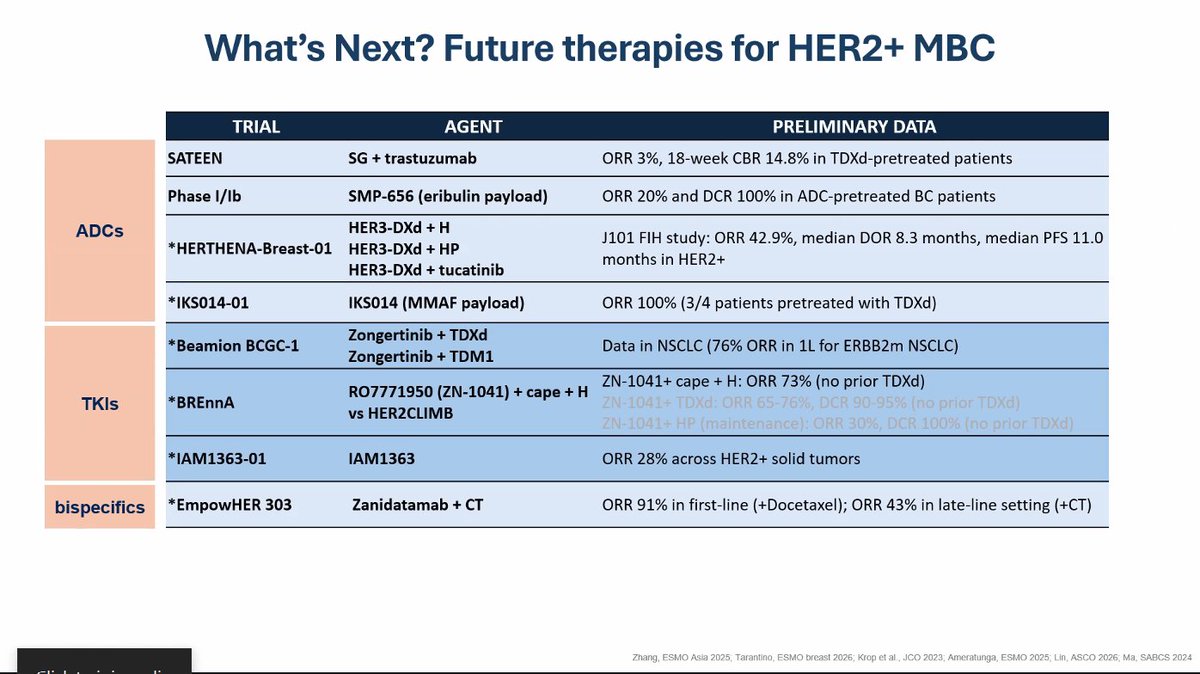
[Slide 3]
What's Next? Future therapies for HER2+ MBC
TRIAL | AGENT | PRELIMINARY DATA
ADCs:
SATEEN | SG + trastuzumab | ORR 3%, 18-week CBR 14.8% in TDXd-pretreated patients
Phase I/Ib | SMP-656 (eribulin payload) | ORR 20% and DCR 100% in ADC-pretreated BC patients
*HERTHENA-Breast-01 | HER3-DXd + H / HER3-DXd + HP / HER3-DXd + tucatinib | J101 FIH study: ORR 42.9%, median DOR 8.3 months, median PFS 11.0 months in HER2+
*IKS014-01 | IKS014 (MMAF payload) | ORR 100% (3/4 patients pretreated with TDXd)
TKIs:
*Beamion BCGC-1 | Zongertinib + TDXd / Zongertinib + TDM1 | Data in NSCLC (76% ORR in 1L for ERBB2m NSCLC)
*BREnnA | RO7771950 (ZN-1041) + cape + H vs HER2CLIMB | ZN-1041 + cape + H: ORR 73% (no prior TDXd); ZN-1041 + TDXd: ORR 65-76%, DCR 90-95% (no prior TDXd); ZN-1041 + HP (maintenance): ORR 30%, DCR 100% (no prior TDXd)
*IAM1363-01 | IAM1363 | ORR 28% across HER2+ solid tumors
bispecifics:
*EmpowHER 303 | Zanidatamab + CT | ORR 91% in first-line (+Docetaxel); ORR 43% in late-line setting (+CT)
Zhang, ESMO Asia 2025; Tarantino, ESMO breast 2026; Krop et al., JCO 2023; Ameratunga, ESMO 2025; Lin, ASCO 2026; Ma, SABCS 2024
---
[Slide 4]
Key Takeaways
1. HER2 targeted therapies revolutionized the history of HER2+ MBC, with most patients alive many years after diagnosis.
2. Efforts are needed to understand how to best treat each individual patient, to avoid undertreatment and overtreatment
- How to best sequence HER2 targeted agents?
- Do all patients need first-line TDXd-pertuzumab?
- Can an induction-maintenance strategy be used for 1L TDXd?
- Can HER2 targeted therapy be safely stopped in exceptional responders?
- Can HER2+ MBC be approached with curative intent?
- What biomarkers can be used to guide individual approaches?
Session 5 · 2 talks
Metastatic ER-Positive / HER2-Negative Breast Cancer
[Slide 2]
Should Oral SERDs be Used in the First-Line Setting?
Columns: Trial | Oral SERD | Line of Therapy | Trial Population | Therapy Partner
persevERA | Giredestrant | 1L | Endocrine sensitive | + Palbociclib
pionERA | Giredestrant | 1L | Endocrine resistant | + CDK4/6i
SERENA-4 | Camizestrant | 1L | Endocrine sensitive | + Palbociclib
SERENA-6 | Camizestrant | 1.5L | Patients currently receiving AI + CDK4/6i with emergence of ESR1mut | + CDK4/6i
OPERA-02 | Palazestrant | 1L | Endocrine sensitive | + Ribociclib
22
---
[Slide 3]
Non-chemo Regimens Beyond 1L for HR+/HER2- MBC
1L: AI or fulvestrant + CDK4/6i | Fulvestrant + palbociclib + inavolisib (if PIK3CA mut and relapse during w/in 12 months adjuvant ET)
1.5L: ?? Screen for ESR1m -> Camizestrant + CDK4/6i*
2L+:
ESR1 wt/PAM not altered
- Fulvestrant/Abema
- Imlunestrant/Abema (Elacestrant/Abema)
- AI or Fulvestrant + Everolimus
- Gedatolisib/Fulvestrant +/-Palbo (PIK3Awt)
ESR1 mut/PAM not altered
Endocrine sensitive: >= 12 mo on prior ET+CDK4/6i
- Elacestrant, Imlunestrant, Vepdegestrant
For ET Sensitive or Resistant:
- Imlunestrant/Abema (Elacestrant/Abema)
- Gedatolisib/Fulvestrant +/-Palbo (PIK3Awt)
- Giradestrant/Everolimus*
PAM altered/ESR1wt
- AI or Fulvestrant w/Alpelisib (PIK3Amut)
- Fulvestrant/Capivasertib (AKT pathway altered)
- Gedatolisib/Fulvestrant +/-Palbo* (PIK3Amut)
- AI or Fulvestrant + Everolimus
- Imlunestrant/Abema, Fulvestrant/Abema (Elacestrant/Abema)
PAM altered/ESR1mut
- Fulvestrant/Alpelisib (PIK3Amut)
- Fulvestrant/Capivasertib (AKT pathway altered)
- Gedatolisib/Fulvestrant +/-Palbo* (PIK3Amut)
- Giradestrant/Everolimus*
- Imlunestrant/Abema (Elacestrant/Abema)
Other Biomarker positive
(gBRCA1/2, gPALB2, sBRCA1/2, TMB-H, ERBB2 mut, MSI-H/dMMR, NTRK fusion, RET fusion)
*If FDA approved
---
[Slide 4]
Conclusions and Questions
ET + CDK4/6i remains 1L standard of care
- Potential role of ESR1 monitoring for early switch to camizestrant + CDK4/6i if approved - in whom and how often and how long to monitor?
Multiple options available after progression on CDK4/6 inhibitor
- For most patients, combination therapy is preferred
- For those with both ESR1m and PAM pathway altered disease - optimal sequence is not yet defined
- Is there a preferred PAM inhibitor?
- Exciting agents in development - Tolerability and ability to combine may be key
Can we overcome resistance?
- Is there a role for oral SERD after oral SERD, especially when switching out the targeted partner?
- Can PAM pathway inhibitors work in sequence?
53
ER+ MBC: ADCs and Beyond. Paolo Tarantino, MD (@PTarantinoMD) closed out the #DanaFarberBreastCancerCourse with a lively discussion on ER+ #MetastaticBreastCancer on ADCs and Beyond.
[Slide 2]
Outcomes of Endocrine Therapy by Line of Treatment
1L: Most patients with ER+ MBC tend to do quite well upon 1L treatment, with mPFS of ~2 years and relatively good QoL
[KM curve - Ribociclib + Letrozole vs Placebo + Letrozole. Number of events, n (%): 140 (41.9) n=334 | 205 (61.4) n=334. Median PFS, months (95% CI): 25.3 (23.0-30.3) | 16.0 (13.4-18.2). Hazard ratio (95% CI): 0.568 (0.457-0.704). P value: 9.63x10^-8]
2L: Outcomes with 2L ET-based treatments are less favorable, yet novel combinations are demonstrating promising mPFS of ~10 months
[KM curve - Imlunestrant-Abemaciclib vs Imlunestrant Alone. No. of Patients: 213 | 213. No. of Events: 114 | 149. Median Progression-free Survival (95% CI): 9.4 (7.5-11.9) | 5.5 (3.8-5.6). Hazard ratio for disease progression or death, 0.57 (95% CI, 0.44-0.73); P<0.001]
3L+: More limited benefit is seen with ET in highly pretreated patients, warranting cautious patient selection and consideration of chemo-based strategies
[KM curve - Elacestrant (n=239) vs SOC (n=238). Events, No. (%): 144 (60.3) | 156 (65.5). HR (95% CI): 0.70 (0.55 to 0.88). P: .0018. 6-month PFS %, (95% CI): 34.3 (27.2-41.5) | 20.4 (14.1 to 26.7). 12-month PFS, % (95% CI): 22.3 (15.2 to 29.4) | 9.4 (4.0 to 14.8)]
Hortobagyi G.N. Ann Onc 2018; Jhaveri K. et al NEJM 2025; Bidard F.C. JCO 2022
Paolo Tarantino, MD, PhD | 2026 3
---
[Slide 3]
Considerations on ADC Sequencing for ER+ MBC
- Multiple retrospective and prospective datasets suggest that, after progression on a prior ADC, a second ADC may lead to relatively poor outcomes
- Based on these data, it is reasonable to prioritize standard chemotherapy after progression on a TOPO1 ADC
- Nonetheless, given that patients with ER+ MBC often receive multiple lines of therapy along the treatment journey, a second ADC may be offered in late lines of treatment
Paolo Tarantino, MD, PhD | 2026 28
Keynote · 1 talk
Schlager Lecture — Sequencing Novel Therapies
Giuseppe Curigliano on ADC sequencing biology and clinical-trial design for the modern era.
Schlager Lecture: Sequencing Novel Therapies in the Modern Era. Giuseppe Curigliano, MD, PhD (@curijoey), our keynote speaker delivering the Schlager Lecture on Sequencing Novel Therapies in the Modern Era – Implications for Clinical Trial Design. #DanaFarberBreastCancerCourse
[Slide 2]
How to apply to ADC sequencing?
TOPO1 (circle) – TROP2, HER2, HER3
→ Targets are redundant
→ Cross-resistance is likely → Target internalization; Payload (TOPO1, ABC); ADC processing (internalization / lysosome)
→ Cumulative toxicities
Predictive biomarkers often 'soft'
Sequencing two ADCs is not biologically 'neutral'
PFS (2nd 'modern' ADC) ~2-3mo
Sequencing ADC is not commutative but influential on post-PD efficacy of another ADC
Ascione, The Onc 2023; Guidi, Cancers 2023; Sledge, NPJ breast 2025; Coates, Cancer Disc 2021; Rampa, CCR 2026; Cerci, Drug Res Up 2026; de Almeida, CTR 2026
---
[Slide 3]
How to identify a sequencing vs single-drug trials?
# | Question | Yes
1 | Is the study question defined as a treatment strategy, not a single-drug comparison? | ☐
2 | Are treatment decision points (switch rules) explicitly prespecified? | ☐
3 | Is expected attrition to second line estimated and incorporated in the design/analysis? | ☐
4 | Is access to second-line therapy protocol-governed and balanced between arms? | ☐
5 | Is the primary or key secondary endpoint appropriate for sequencing (PFS2, OS)? | ☐
6 | Are longitudinal toxicity burden and PRO trajectories formally captured? | ☐
7 | Is post-progression management predefined (treatments, censoring, missing data)? | ☐
8 | Are biological resistance mechanisms measured, not only hypothesized? | ☐
9 | Is the clinical setting transferable to real-world practice (population, imaging, access)? | ☐
10 | Is “strategy success” defined as net clinical benefit (efficacy vs toxicity & attrition)? | ☐
---
[Slide 4]
Take home messages
• ADCs are reshaping the treatment of patients with solid tumors. Novel clinical trials are needed to assess if…
• ADC sequencing provides a clinical benefit
• «Sooner» is always «better»
• Well-designed clinical trials can answer these important clinical questions and inform clinical practice, while balancing clinical needs with feasibility.
• Innovative designs can improve the feasibility of clinical trials
Session 6 · 1 talk
Supportive & Survivorship Care
Sexual health, young-adult survivorship, and management of treatment-related neuropathy.
Janet L. Abrahm, MDDana-Farber Breast Cancer Course · Jul 18
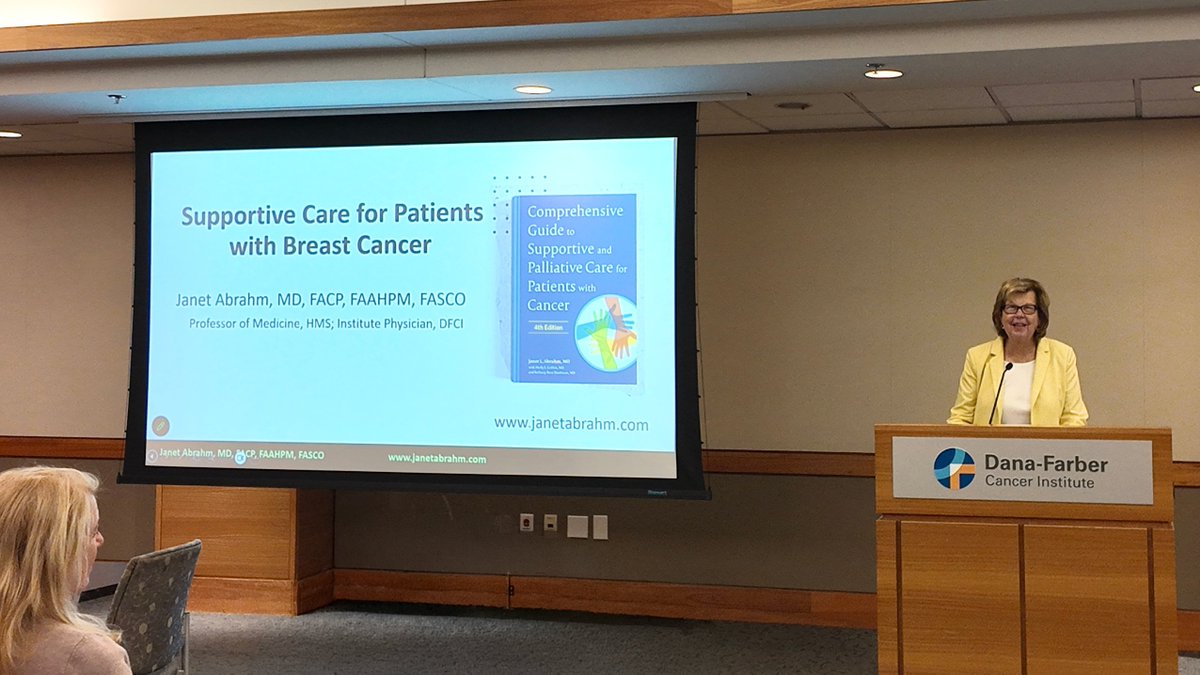
Supportive Care in Breast Cancer. Important session on #SupportiveCare with Janet Abrahm, MD at the #DanaFarberBreastCancerCourse.
[Slide 2]
How do breast cancer treatments alter sexuality?
Columns: Treatment | Menopause | Vaginal/rectal stenosis/dyspareunia | CIPN (including genitalia) | Fatigue | Body Image alterations
Surgery | X | X | | | X
Radiation Therapy | X | X | | X | X
Chemotherapy | X | | X | X |
Inhibitors of Estrogen action or production | X | X | | | X
---
[Slide 3]
Specific Challenges: Young adult
Relationships to others
- Engagement in life
- Sexuality
- Intimacy
Sense of self
- Identity
- Feeling damaged, physically and emotionally
---
[Slide 4]
NEUROPATHIC ADJUVANTS
- Corticosteroids
- Cannabinoids
- Gabapentinoids
- Antidepressants
- Sodium channel blockers
(Anatomical spine diagram labels: Cerebrospinal Fluid (CSF), Dura, Vertebral Body, Posterior Longitudinal Ligament, Herniated Disc, Ligamentum Flavum; cervical vertebrae C1-C7)
Course · 4 talks
Panels, Tumor Board & Highlights
The opening, multidisciplinary tumor board, and cross-panel discussion that framed the day.
Welcome & Opening: New Horizons, Current Controversies. Happening now! #DanaFarberBreastCancerCourse: New Horizons, Current Controversies.
Hal Burstein, MD, PhD (@DrHBurstein) and Ana Garrido-Castro, MD welcoming in-person and virtual attendees.
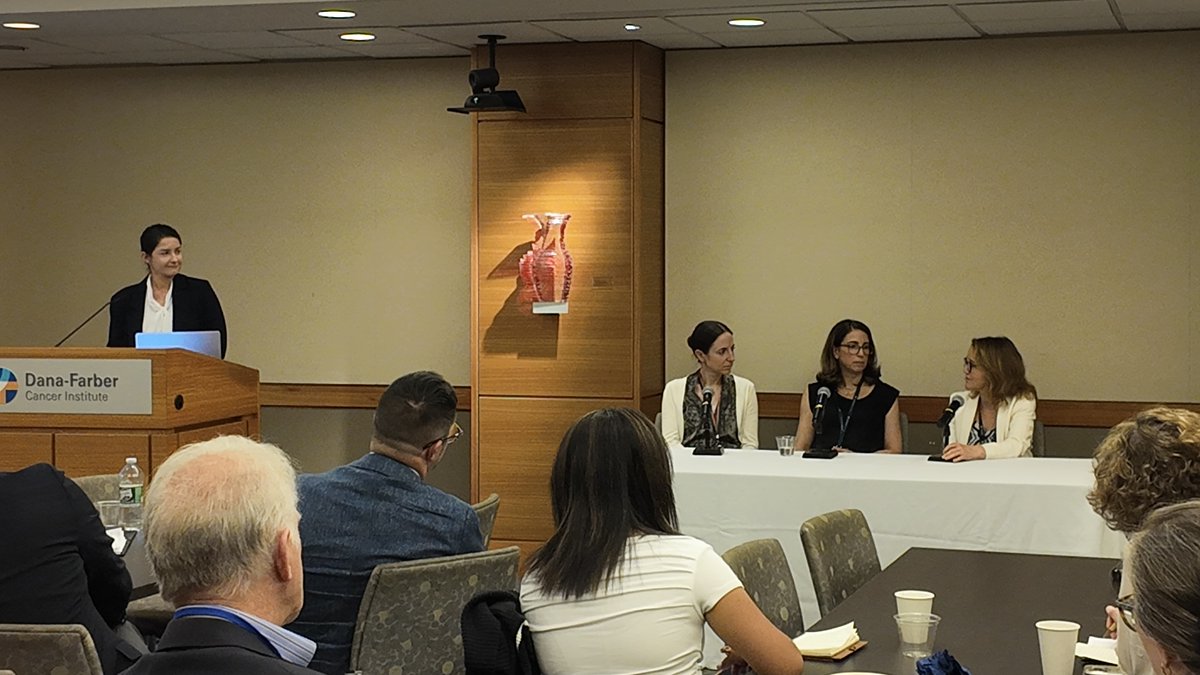
Q&A: Early-Stage Systemic Therapy. Great Q&A session, moderated by Dr. Ana Garrido-Castro, with @adawaksmd, @elmayermd, and @FilipaLynce at the #DanaFarberBreastCancerCourse.
Tumor BoardMittendorf · Cassidy · Punglia · Smith · Varella
Multidisciplinary Breast Cancer Tumor Board. Insightful #BreastCancer Tumor Board discussion featuring a panel of expert multidisciplinary physicians, including Dr. Beth Mittendorf (@ASCOPres), Mike Cassidy, Rinaa Punglia, Claire Smith, Leticia Varella (@VarellaLeticia1). #DanaFarberBreastCancerCourse
Named Trials & Studies
Trials Surfaced at the Dana-Farber Breast Cancer Course
Every clinical trial or study named across the presented slides (extracted via full-slide OCR). Linked badges open the full KOL Pulse trial profile.
KOL Pulse curated every slide the @DFCI_BreastOnc account shared from the July 18, 2026 Dana-Farber Breast Cancer Course: “New Horizons, Current Controversies.” Each talk is attributed to its presenter, the slide text is transcribed verbatim via OCR (toggle on each card), and every named clinical trial is tagged and — where a profile exists — linked to its full KOL Pulse page. Slides reproduce what the faculty presented; figures are the presenters’ own.
Compiled by the KOL Pulse research team, led by Brian Shields, Founder, KOL Pulse. Source: the public #DanaFarberBreastCancerCourse feed. Last updated Jul 19, 2026.
Free Access · KOL Pulse Intelligence
Track oncology’s top KOLs in your specialty
Create a free account, pick the tumor types you cover, and go beyond the tweet — the intelligence pharma teams use to map influence and prepare for engagement: