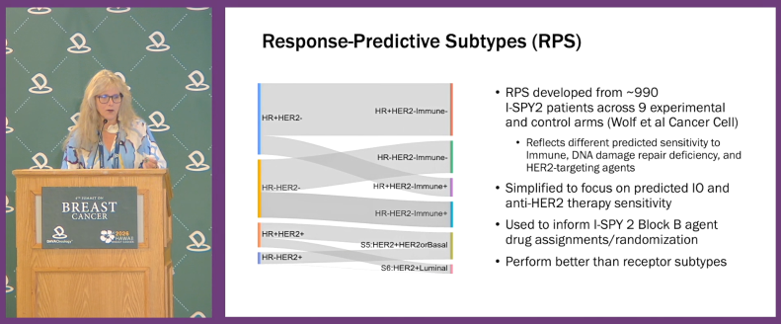
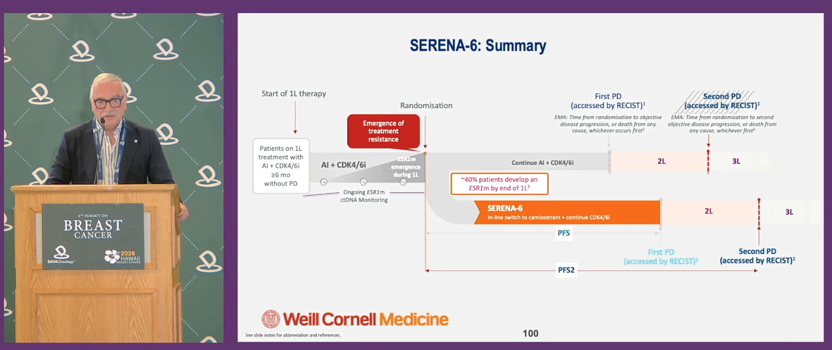
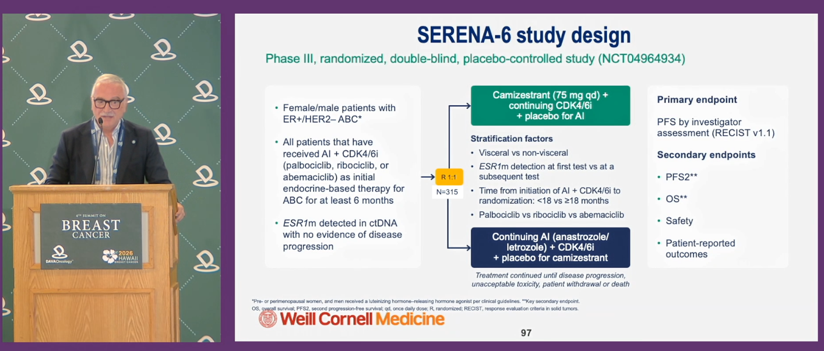
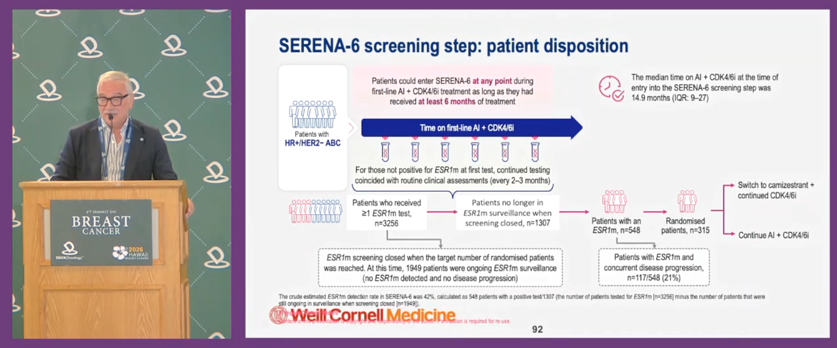
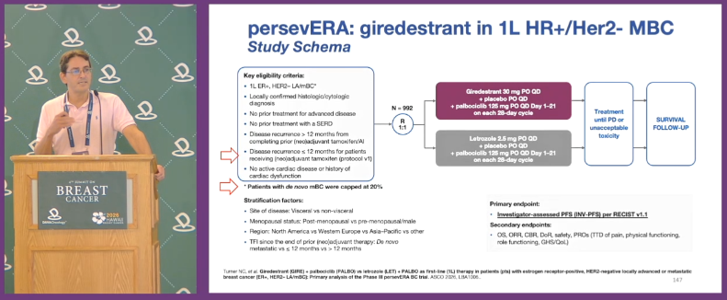
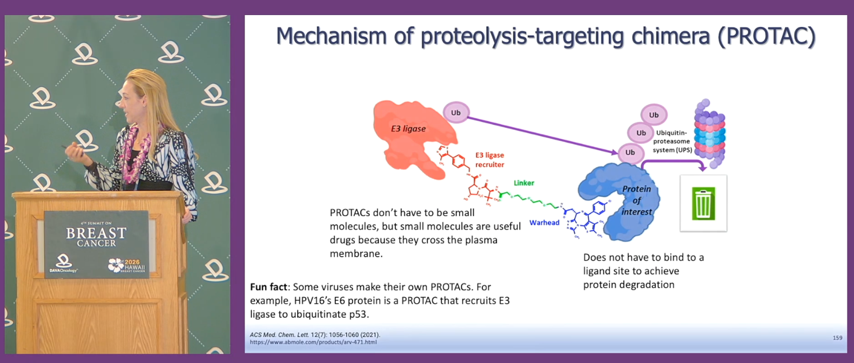
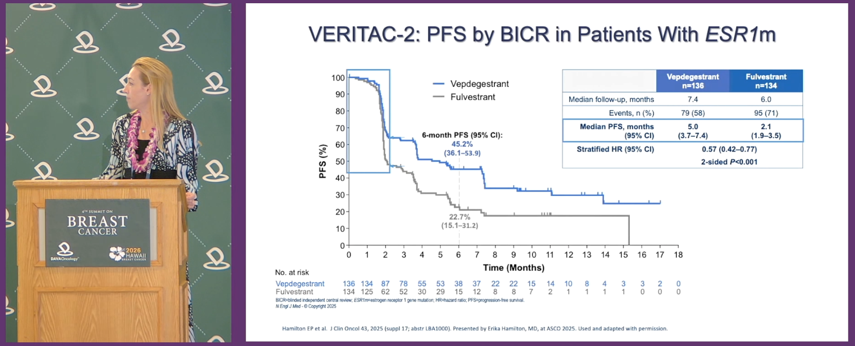
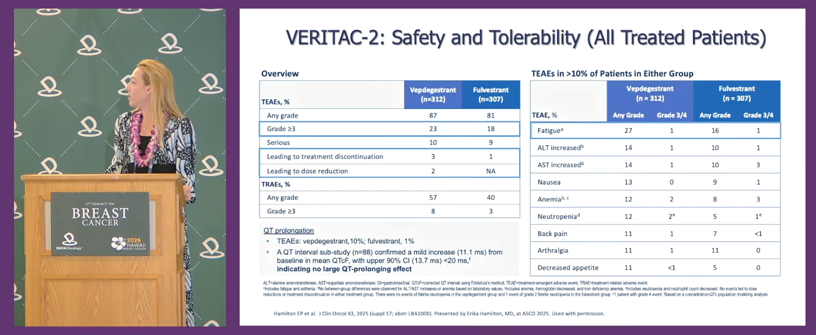
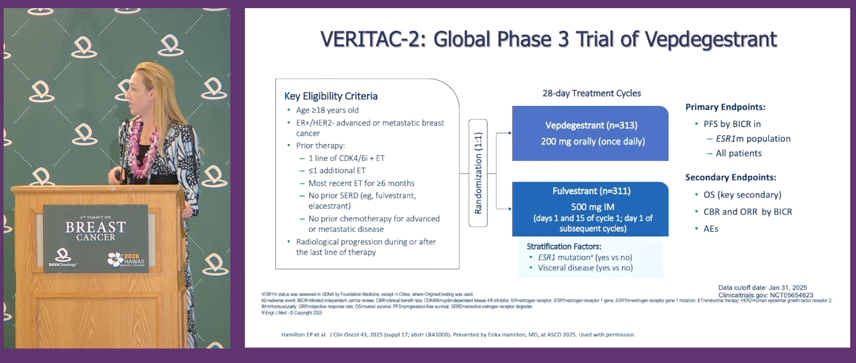
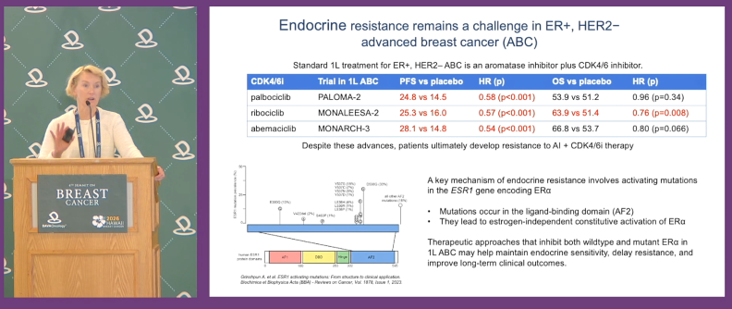
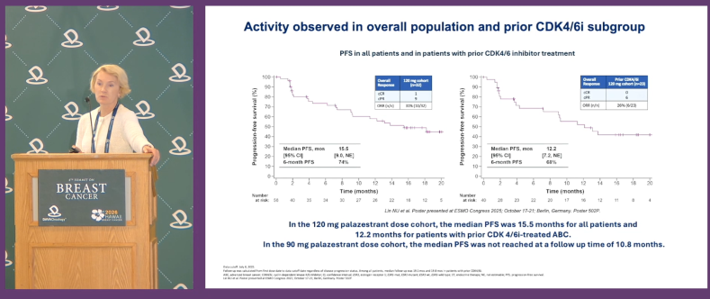
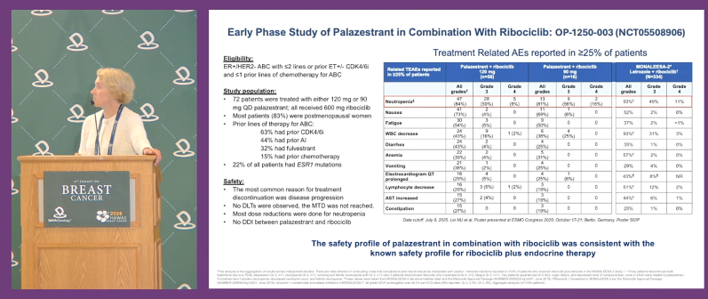
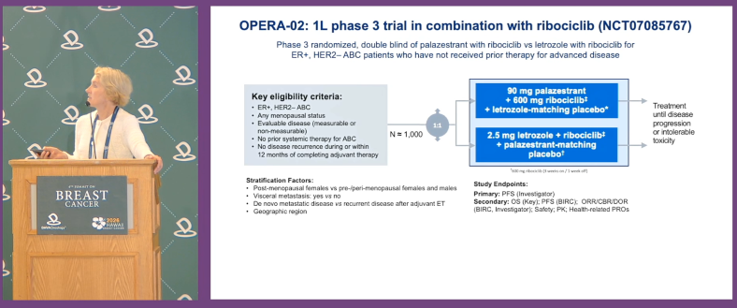
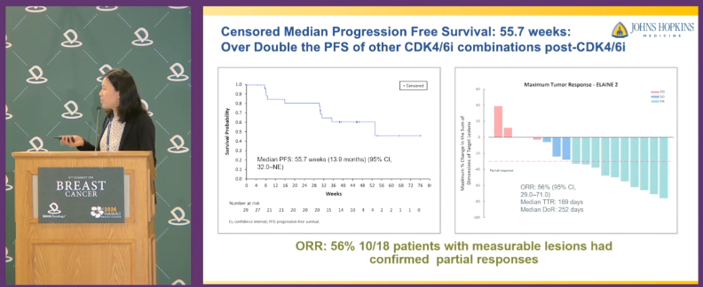
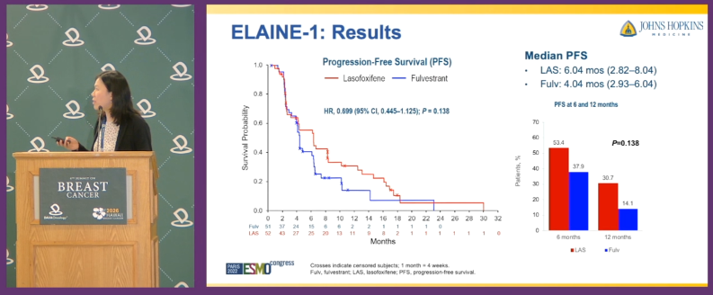
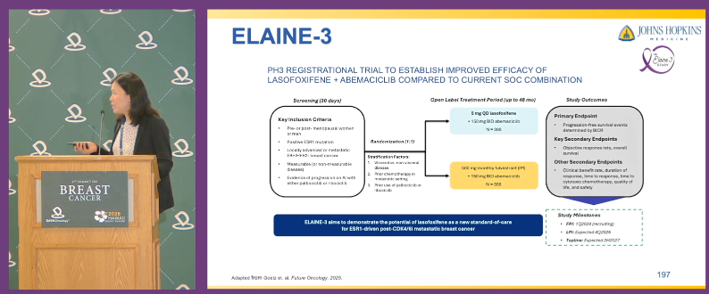
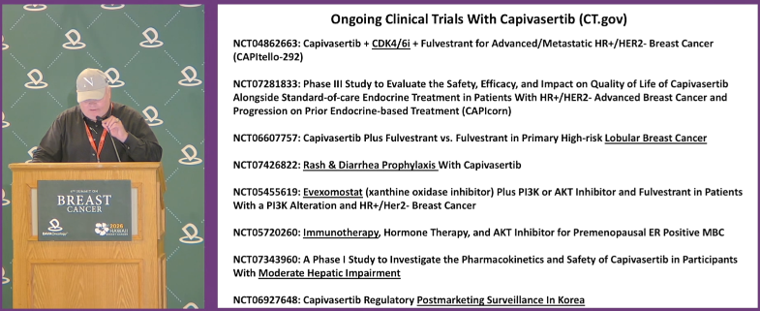
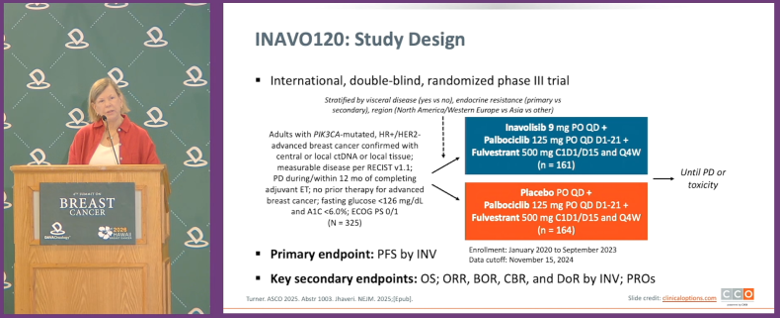
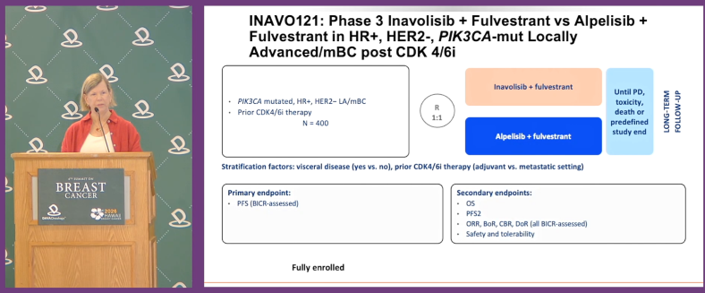
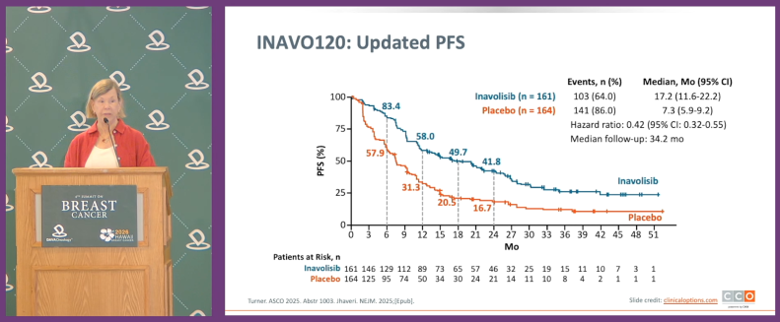
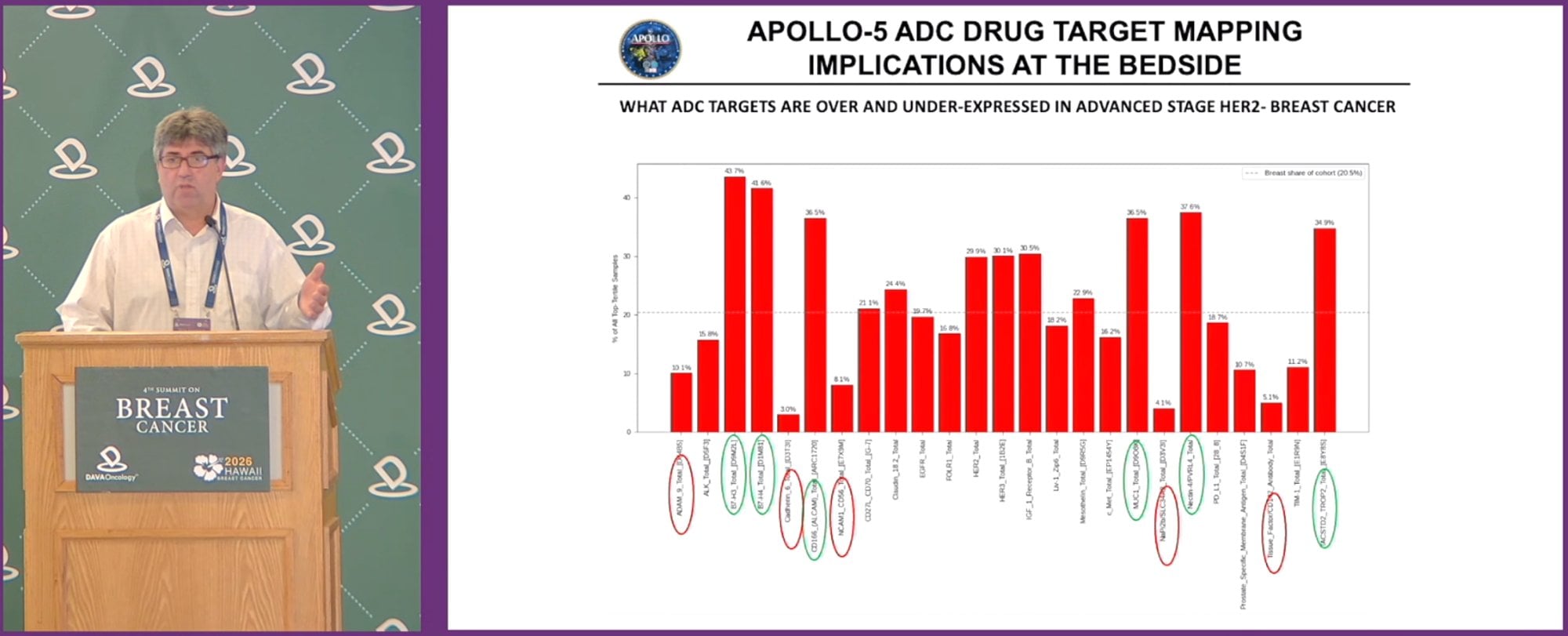
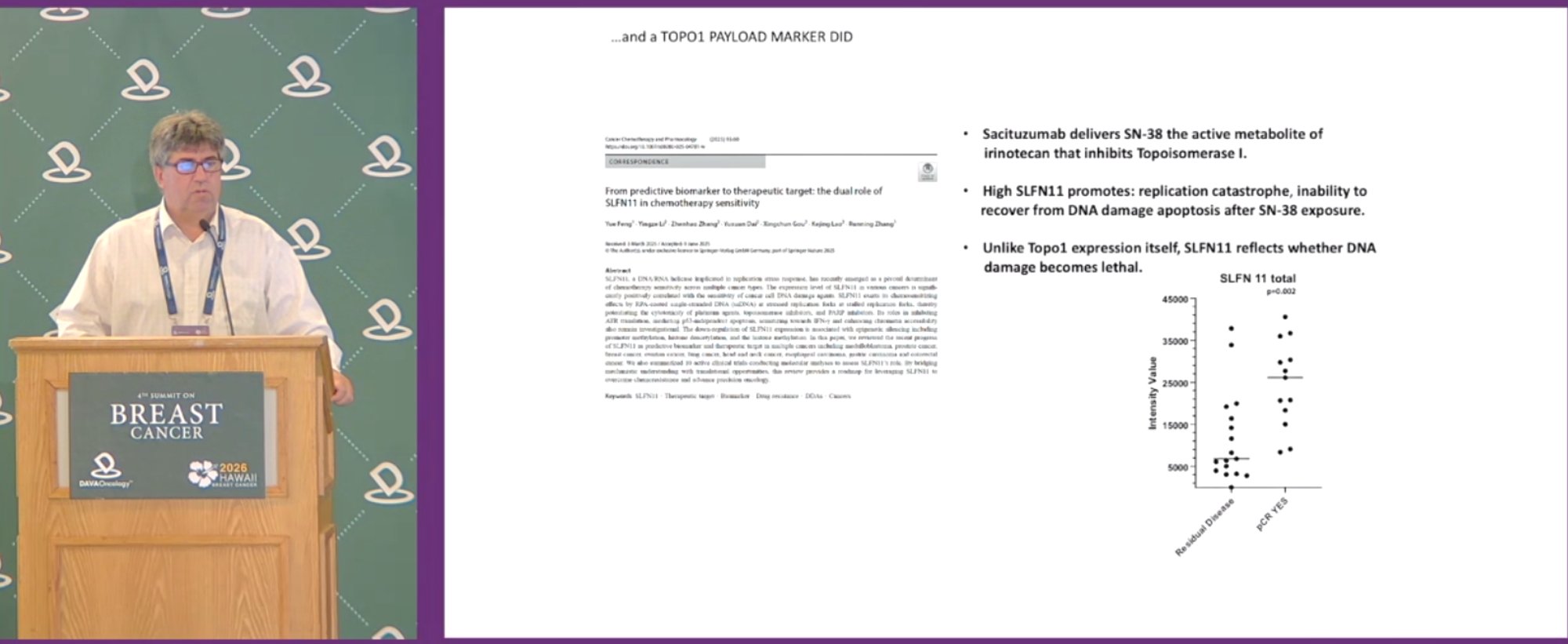
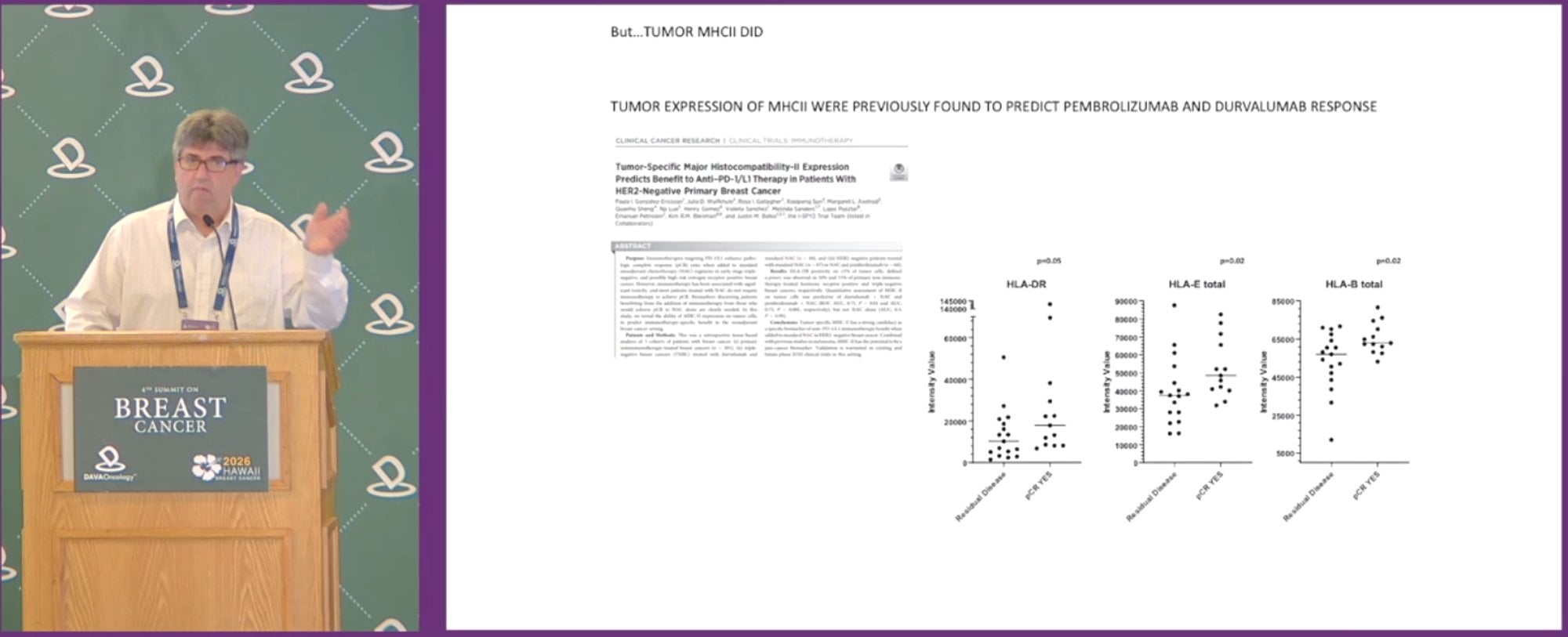
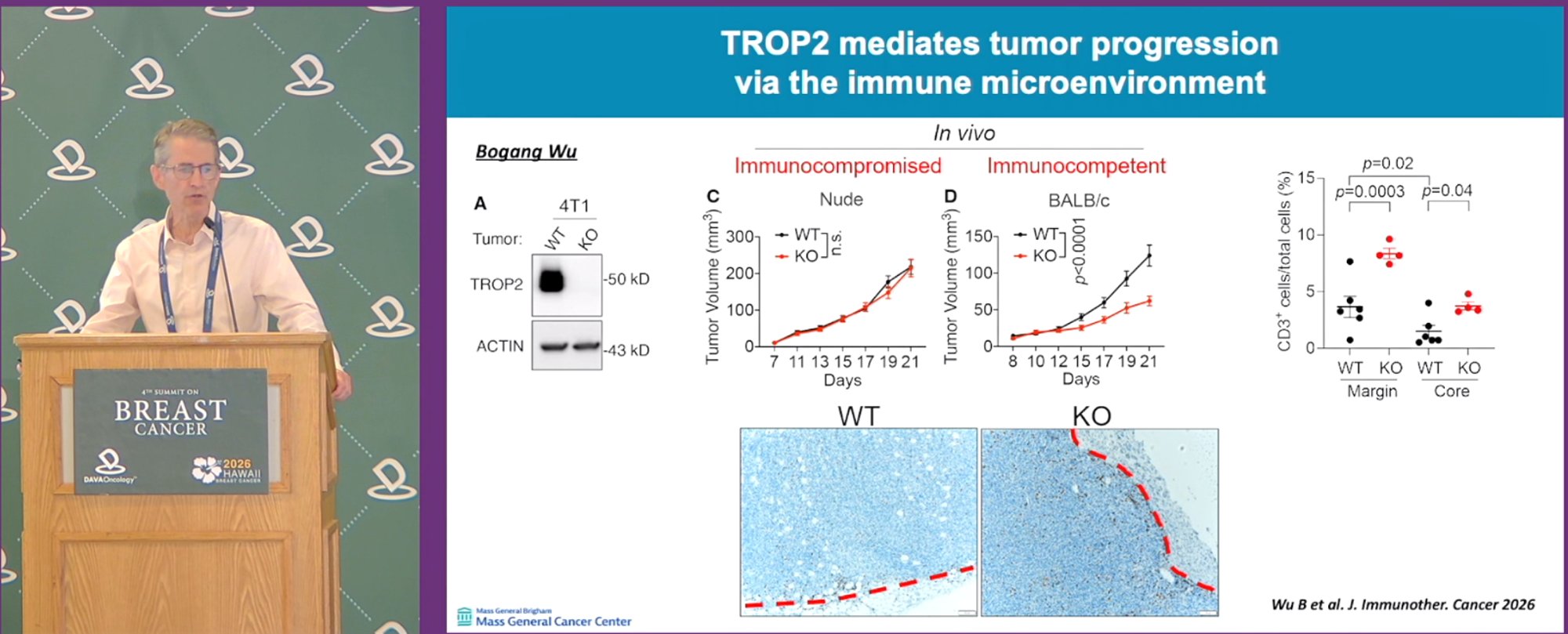
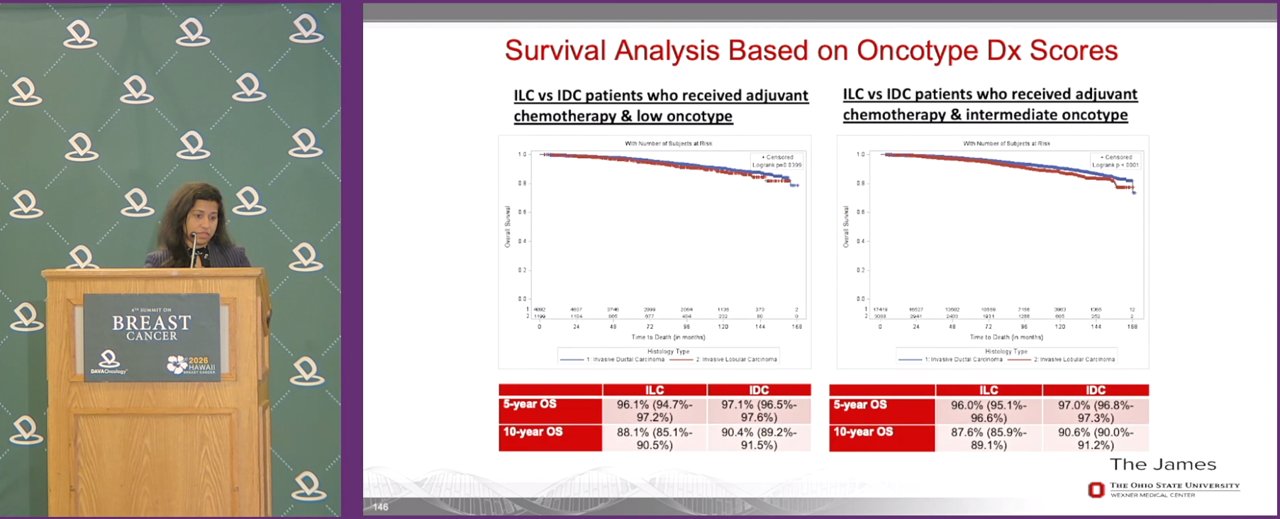
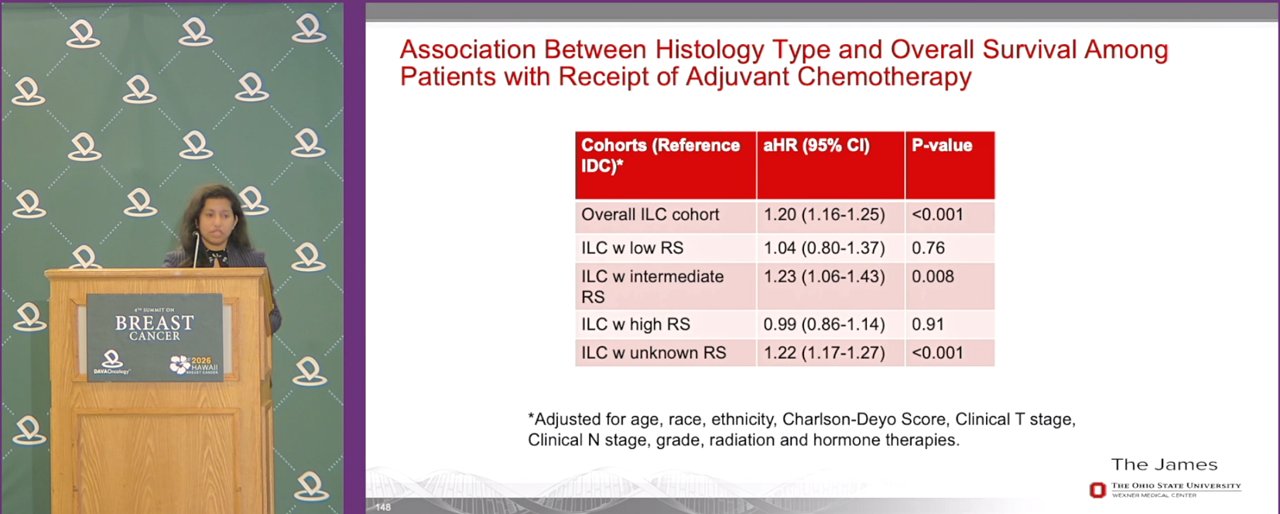
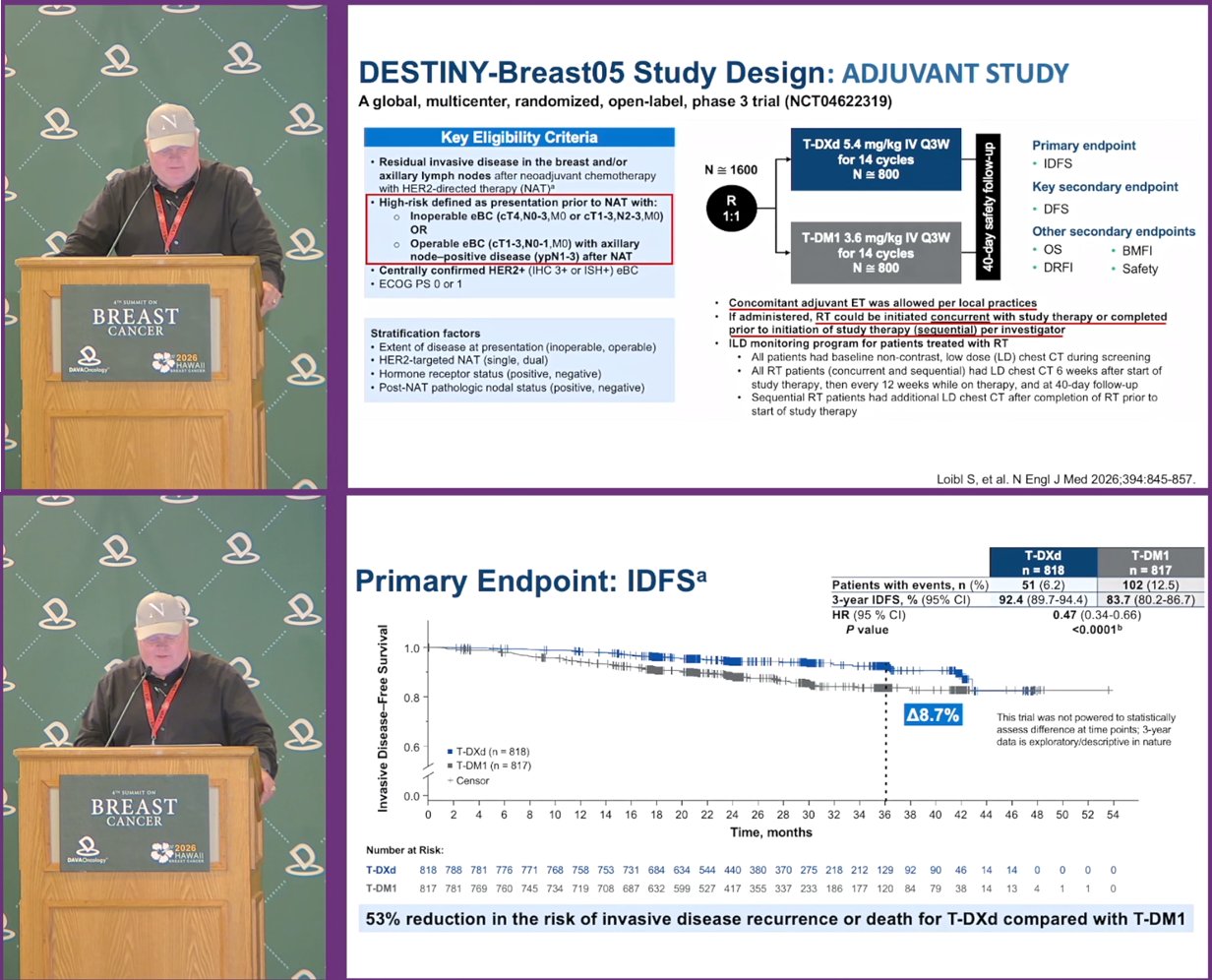
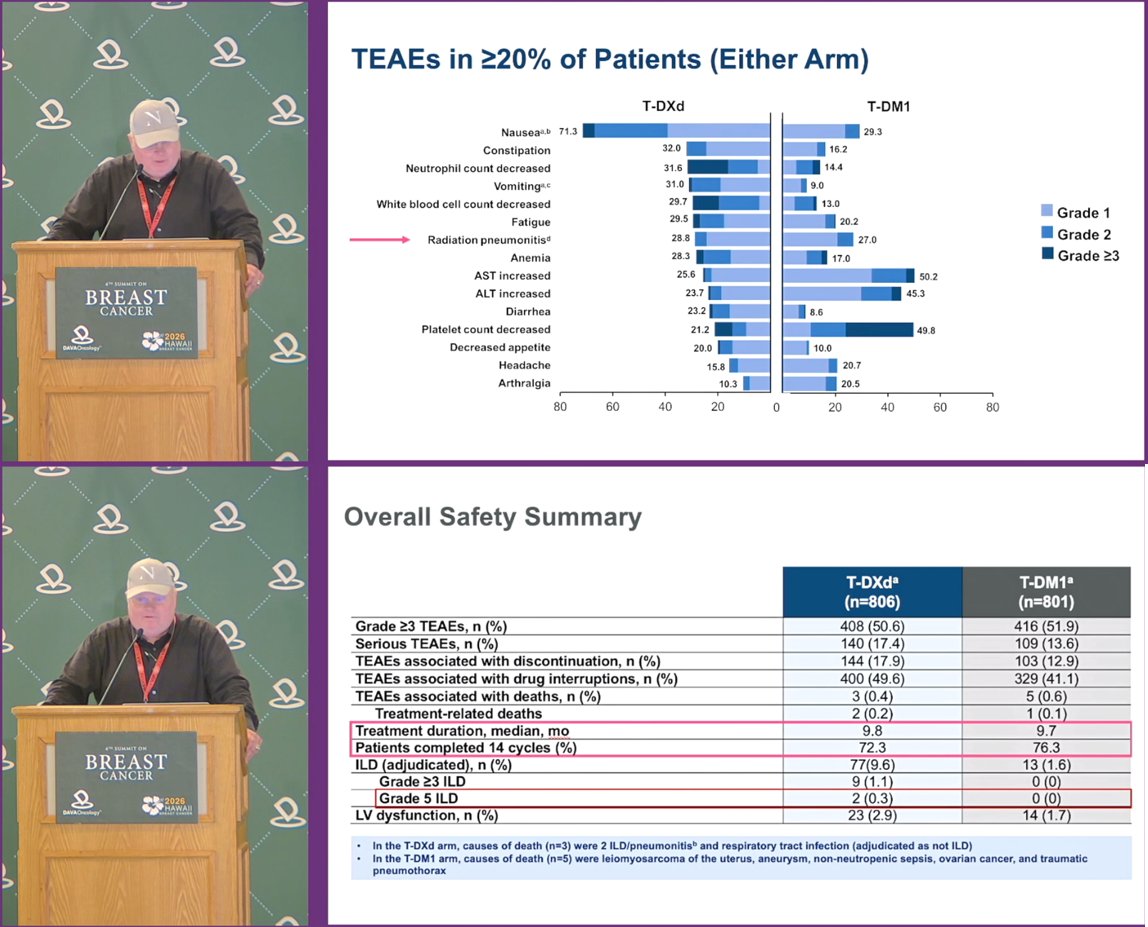
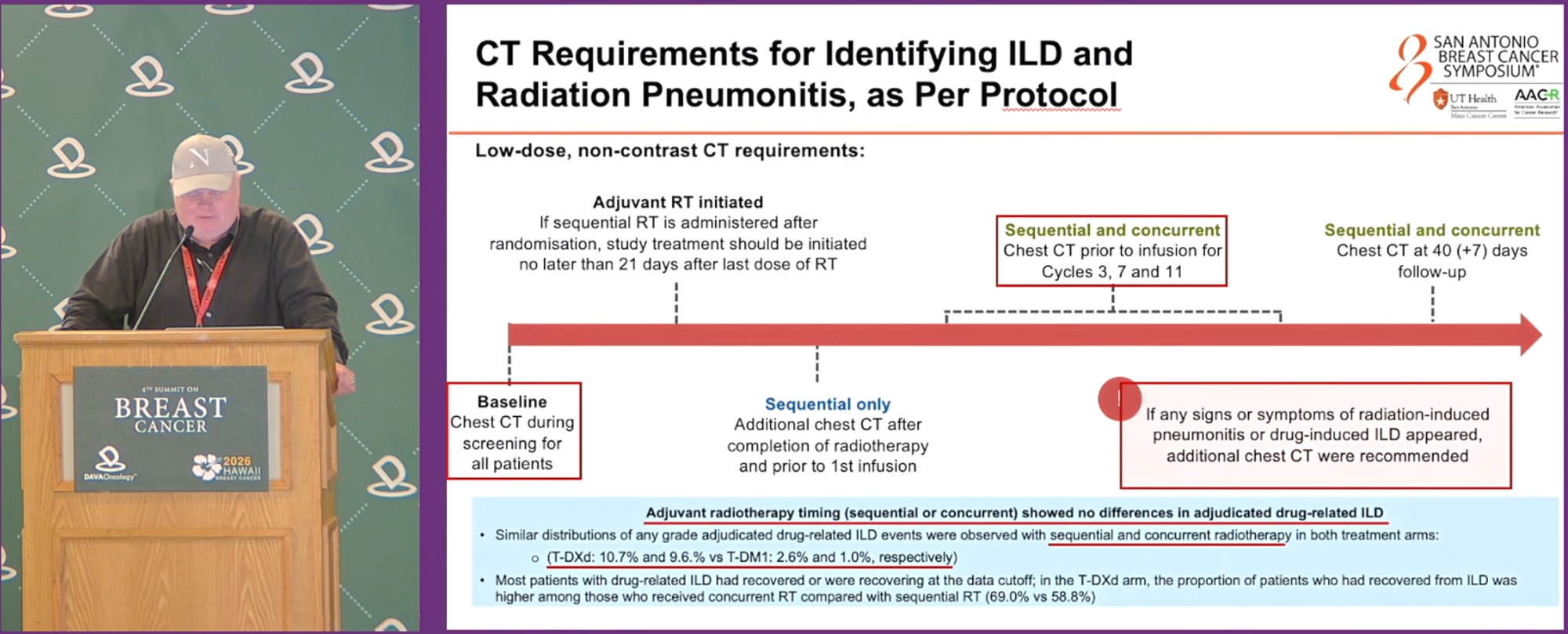
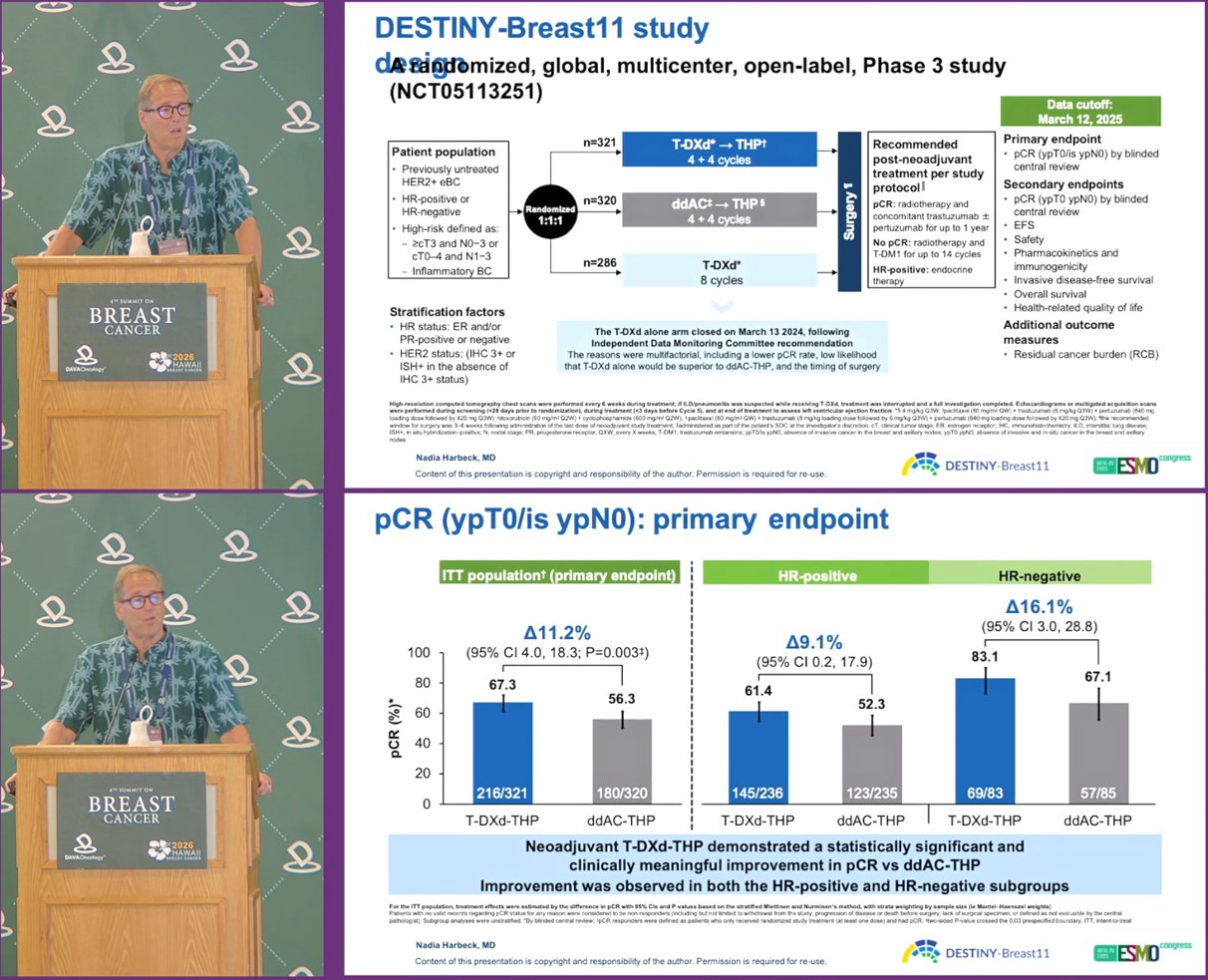
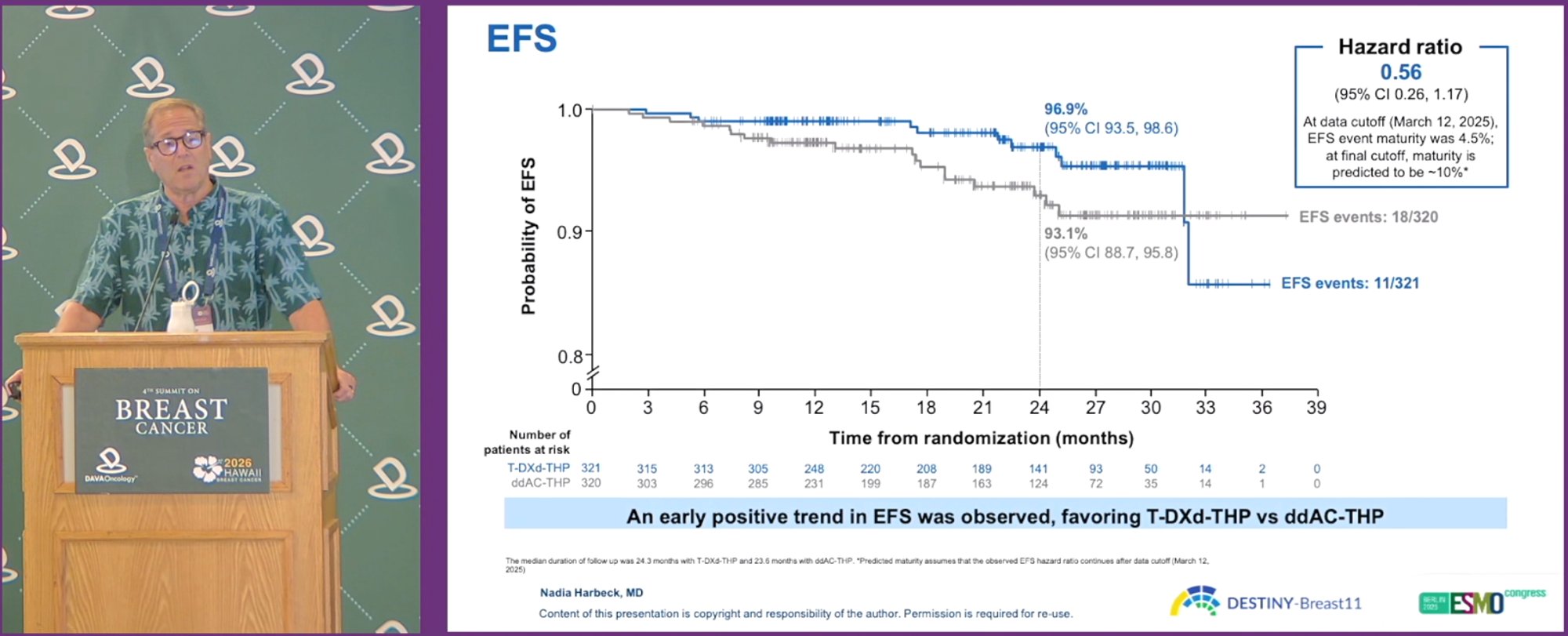
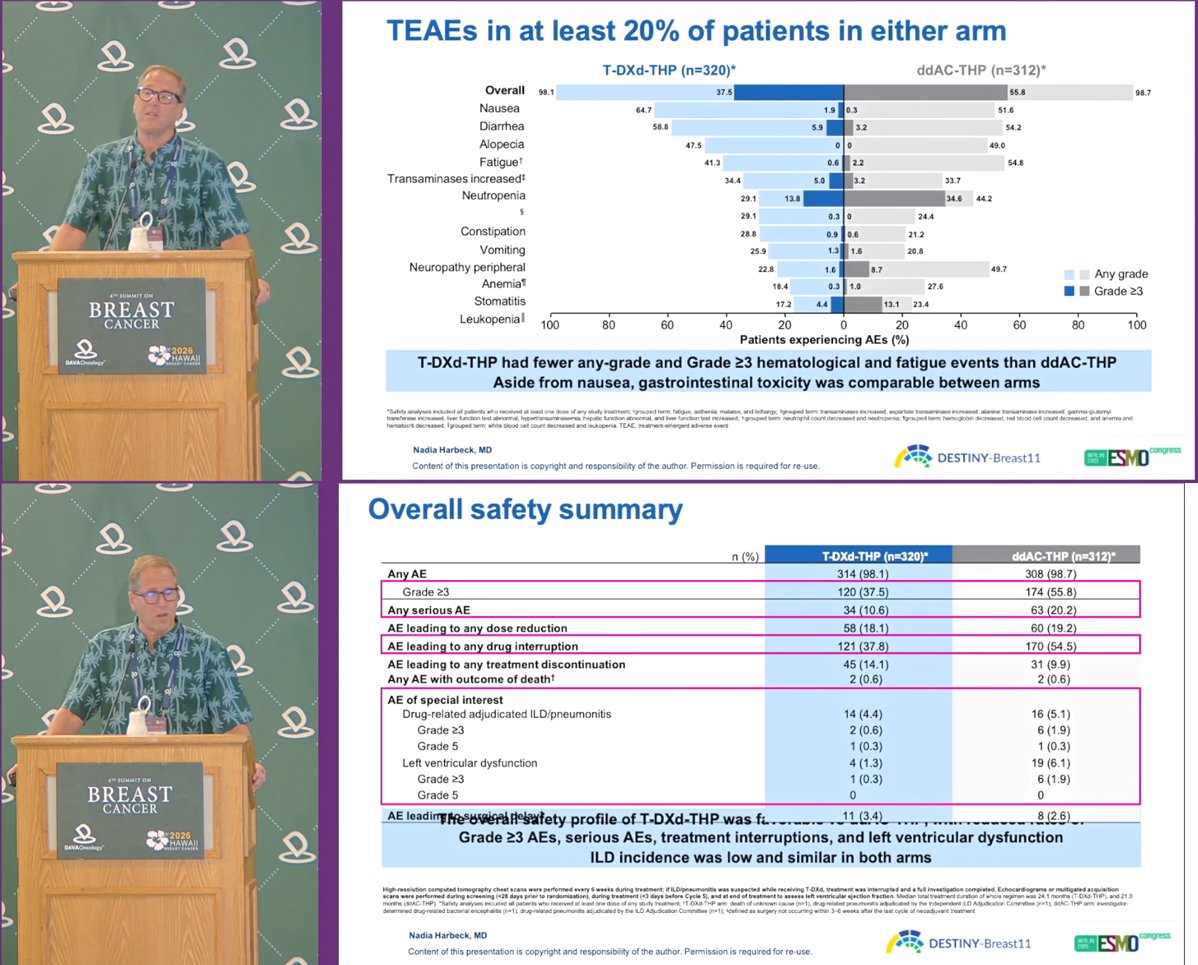
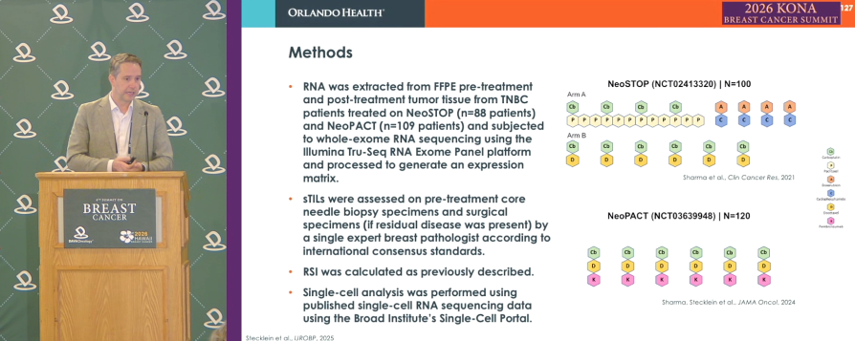
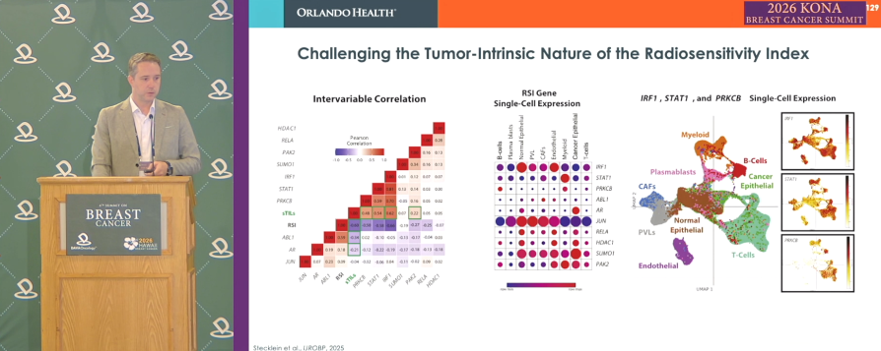
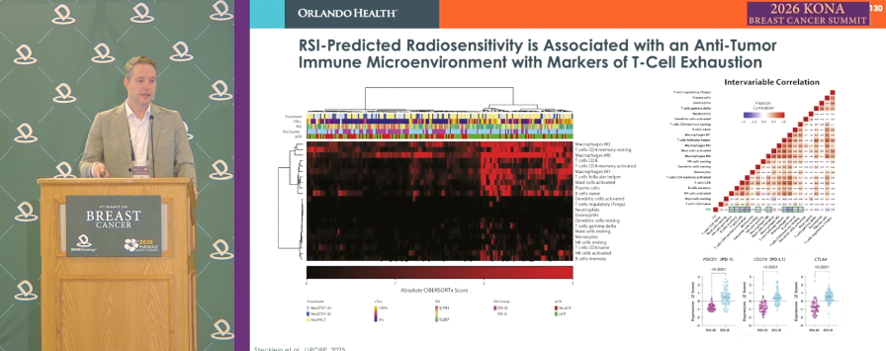
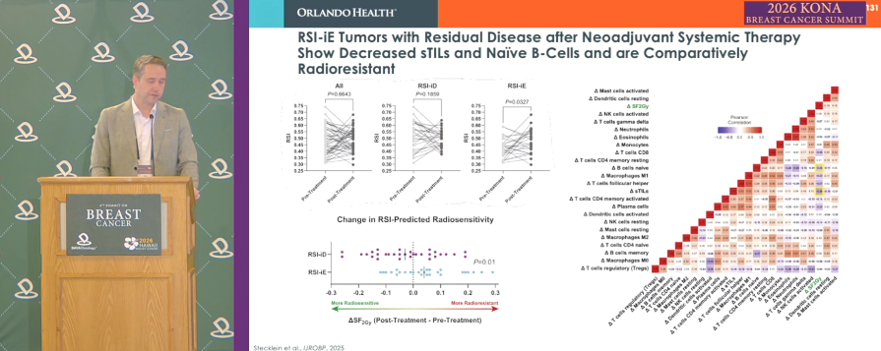
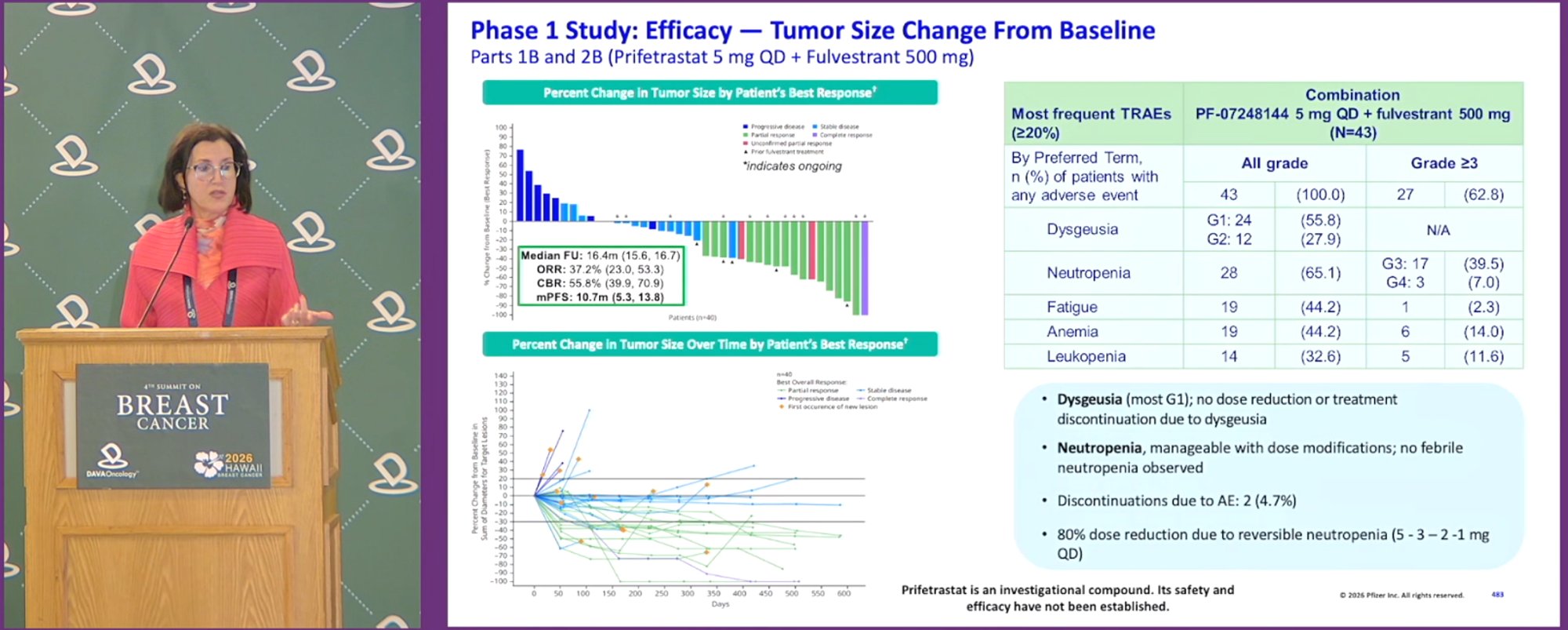
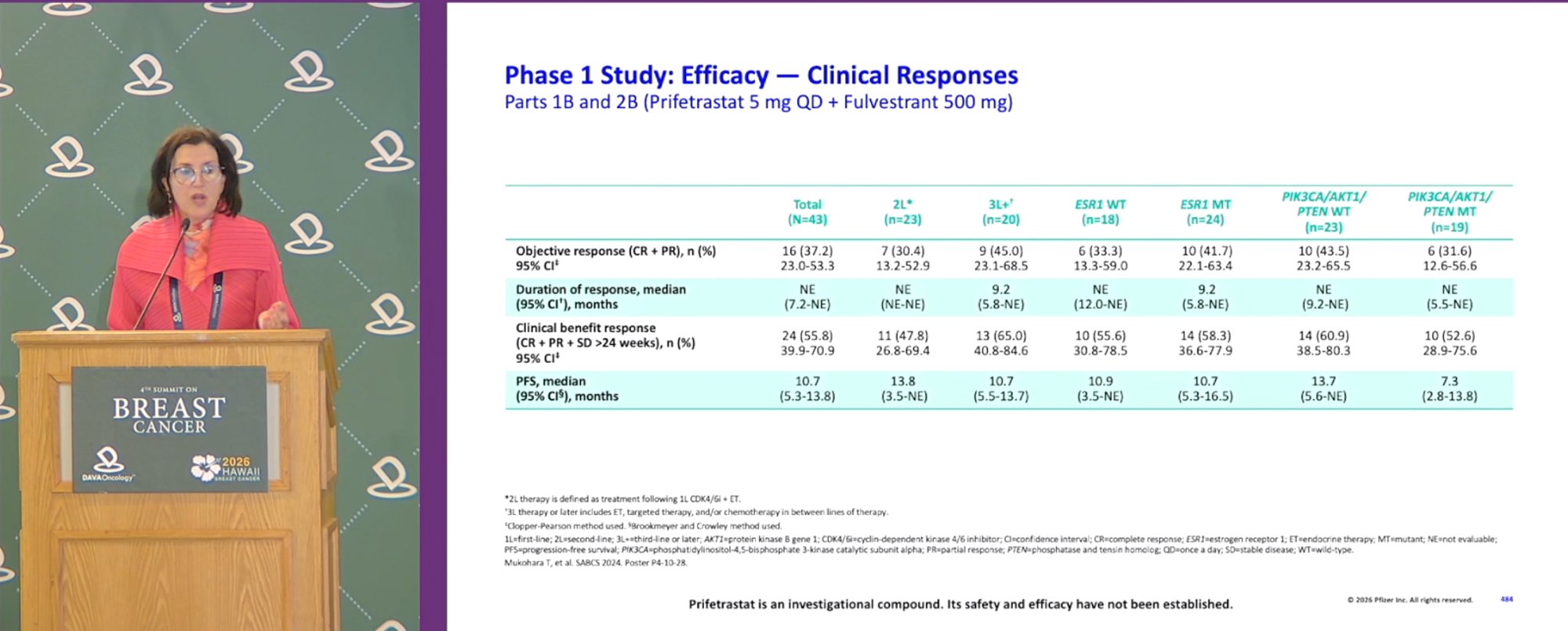
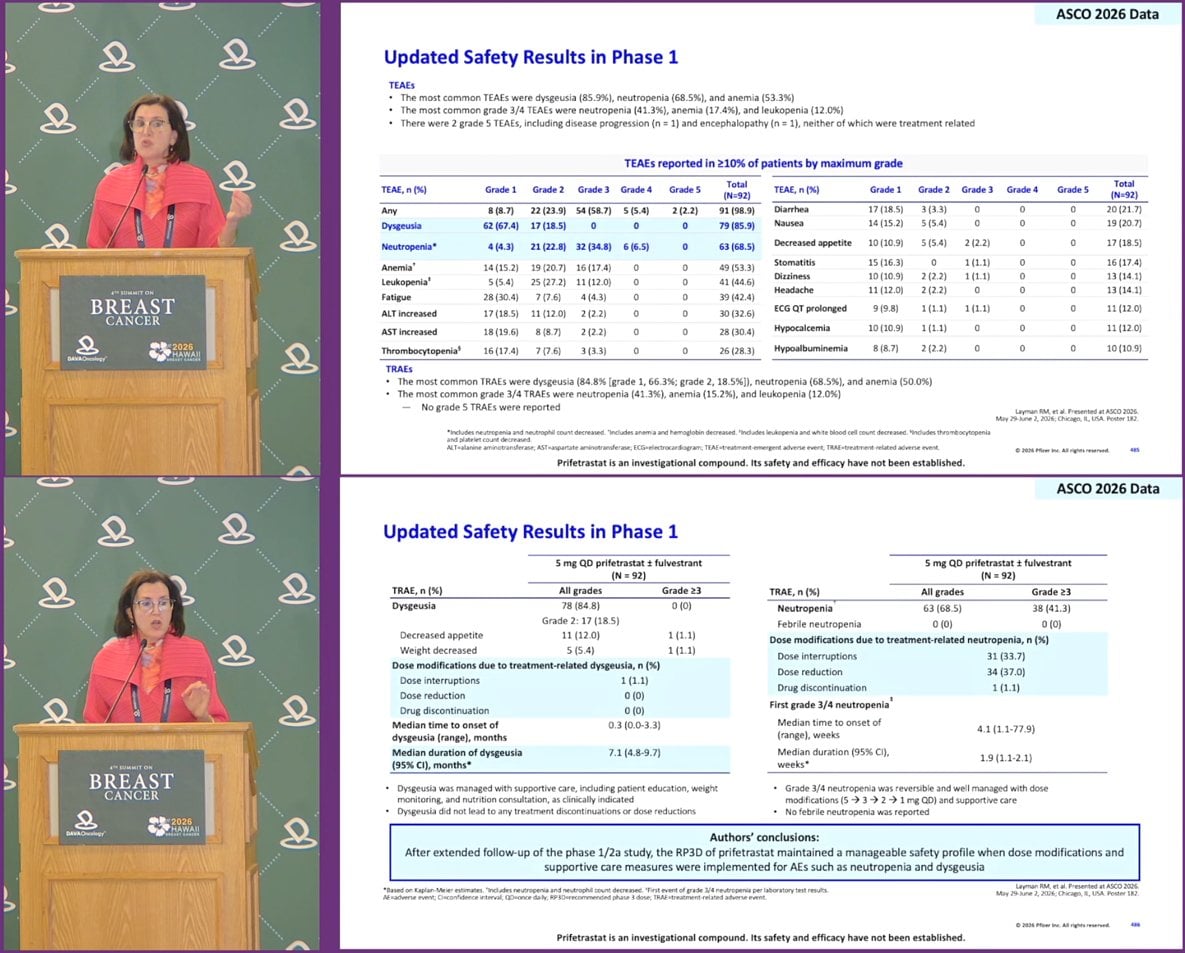
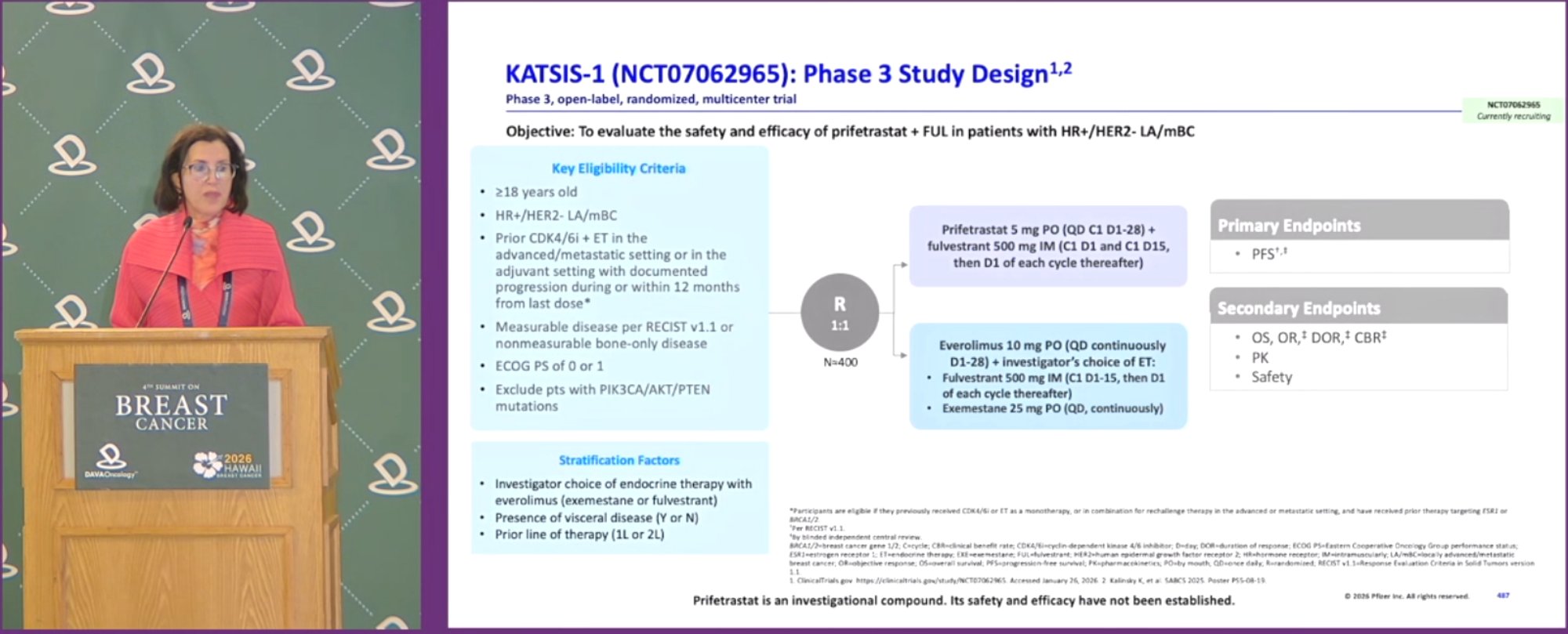
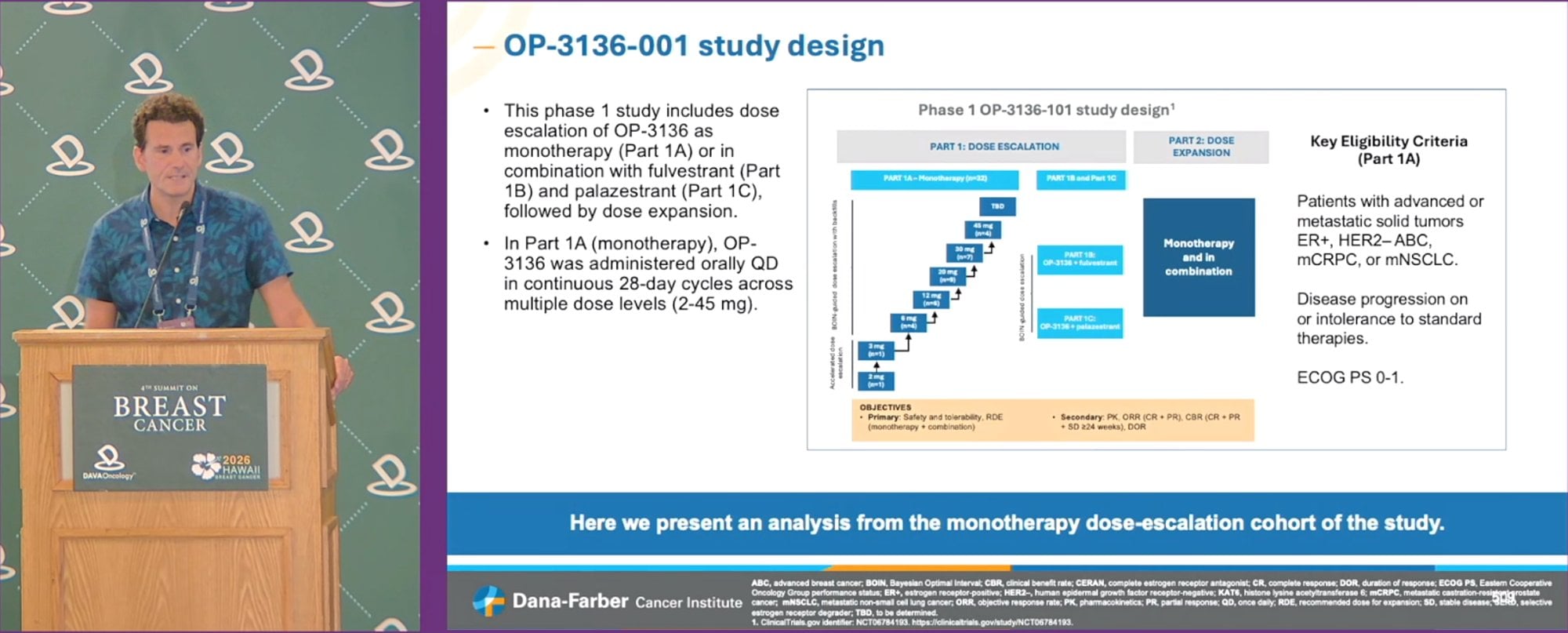
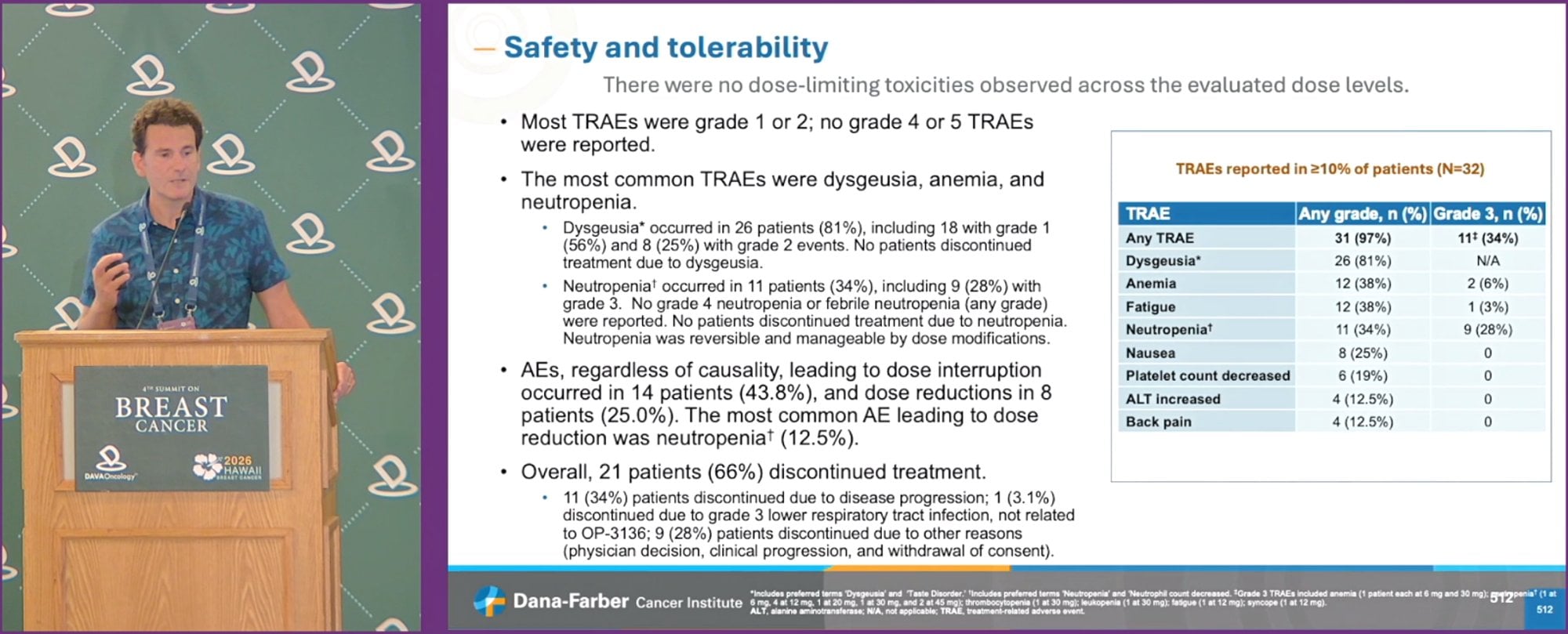
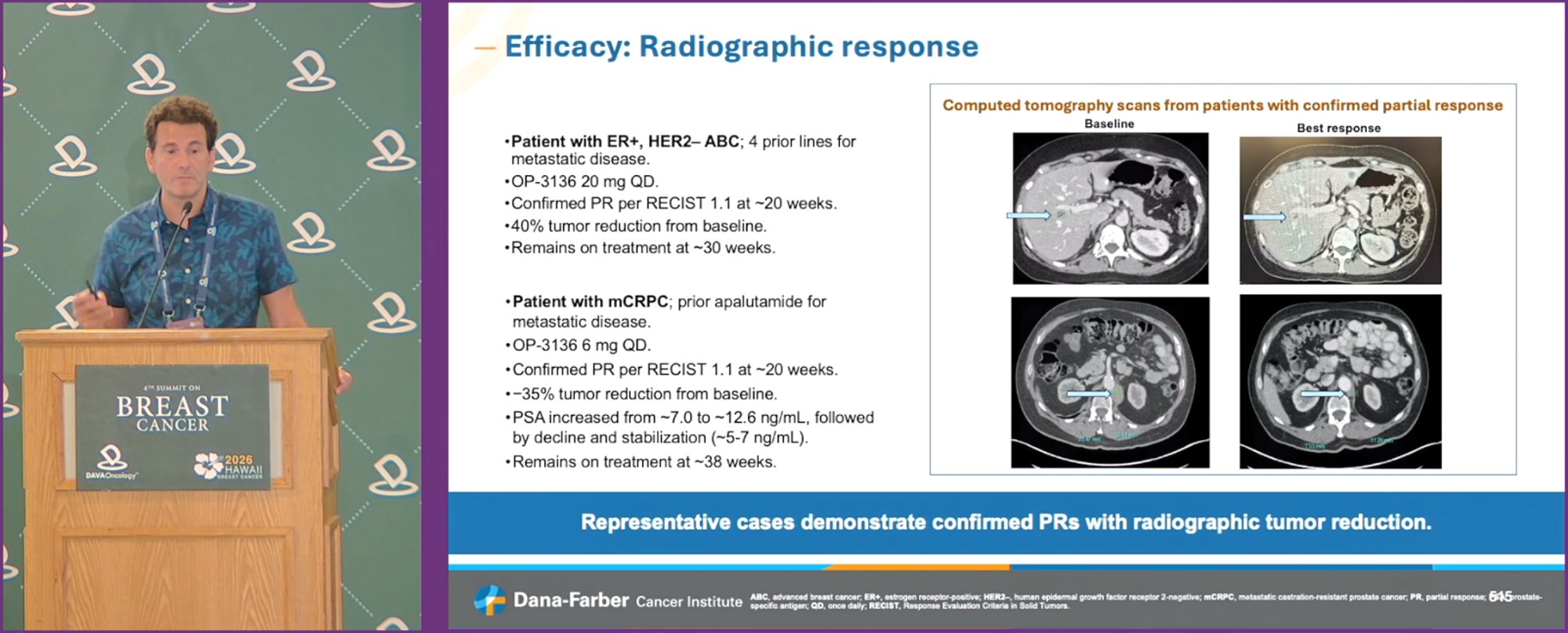
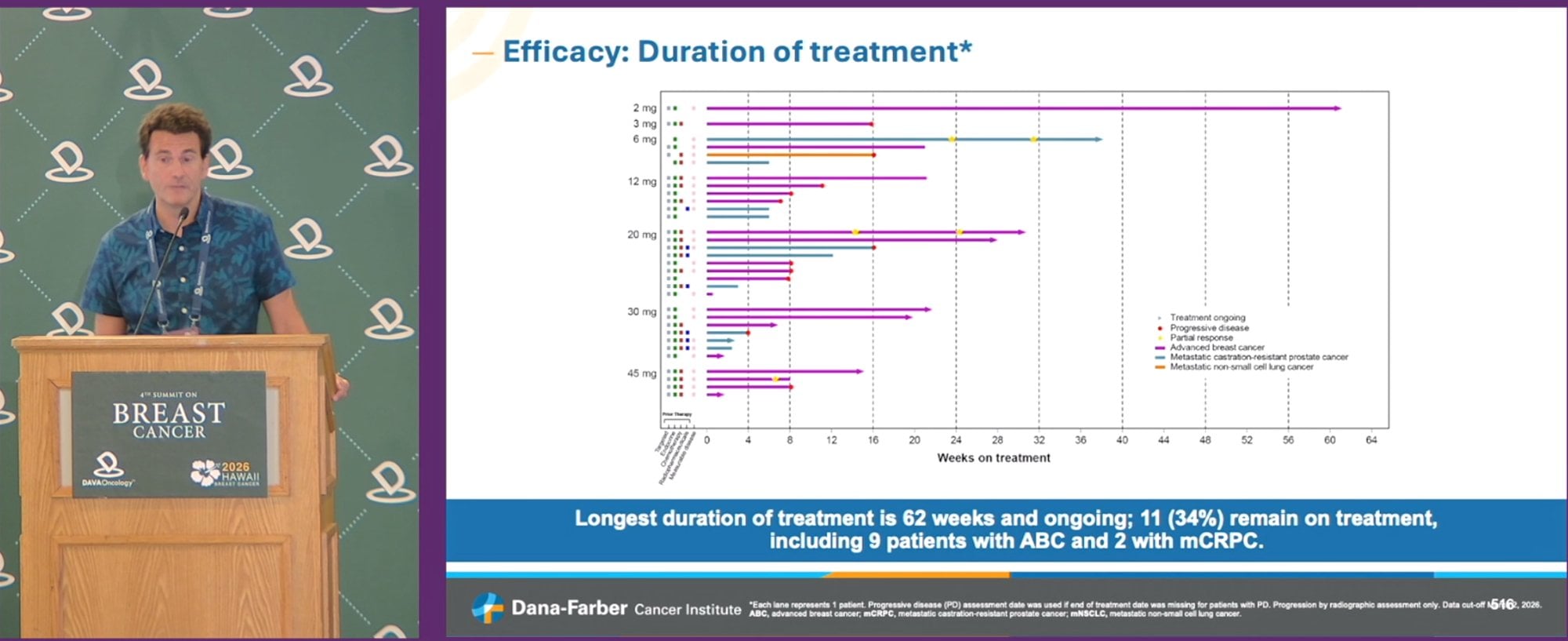
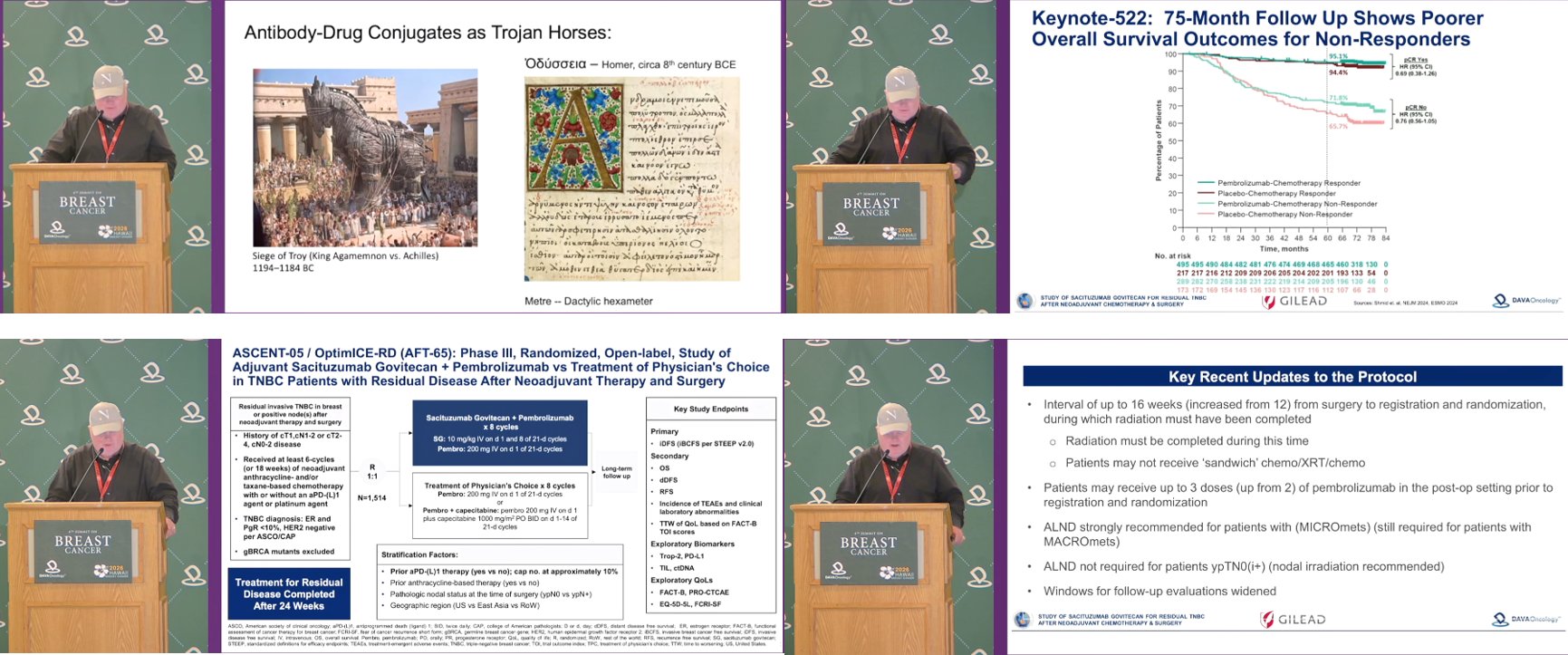
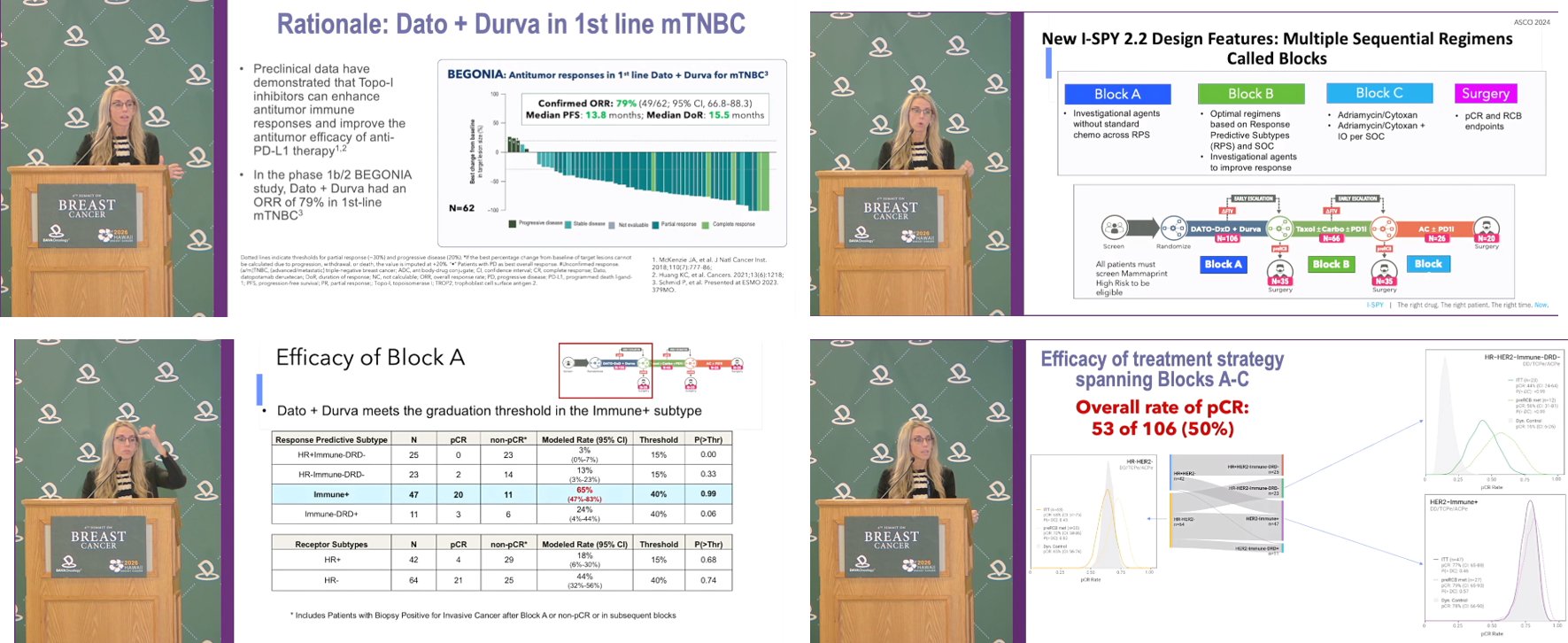
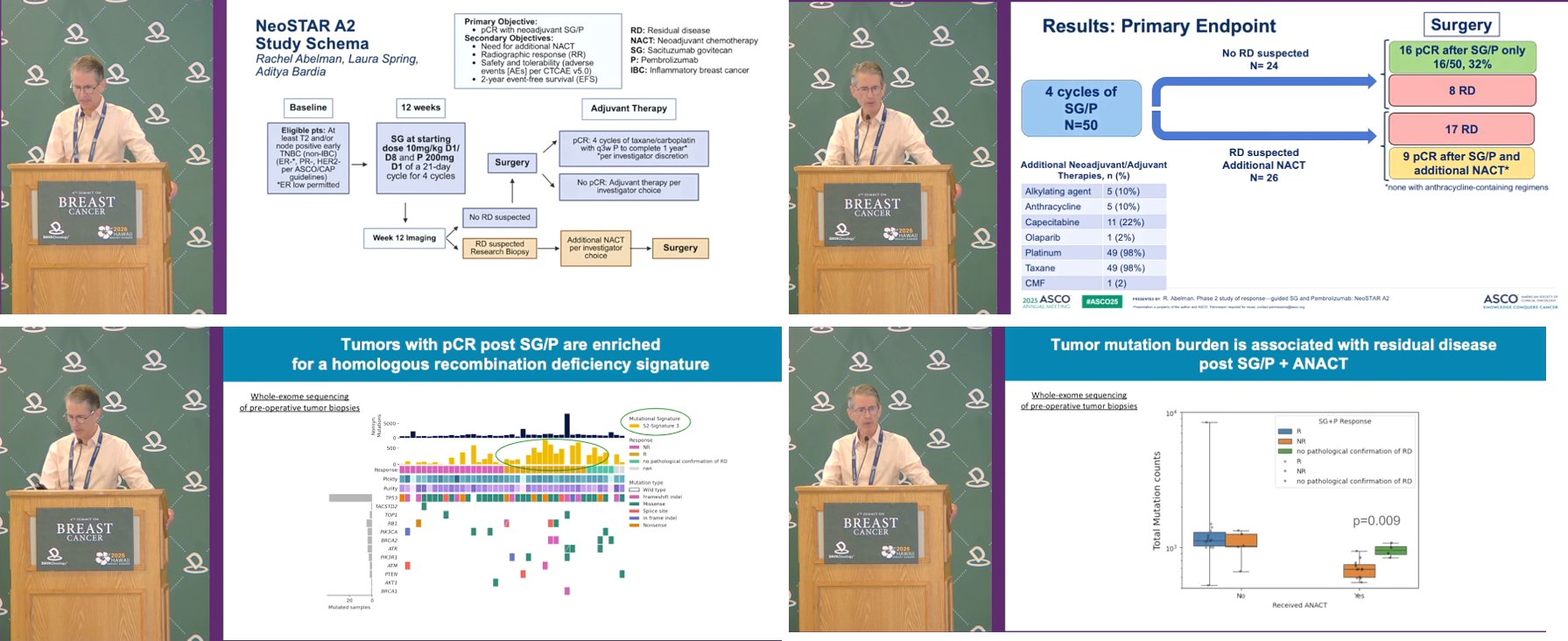
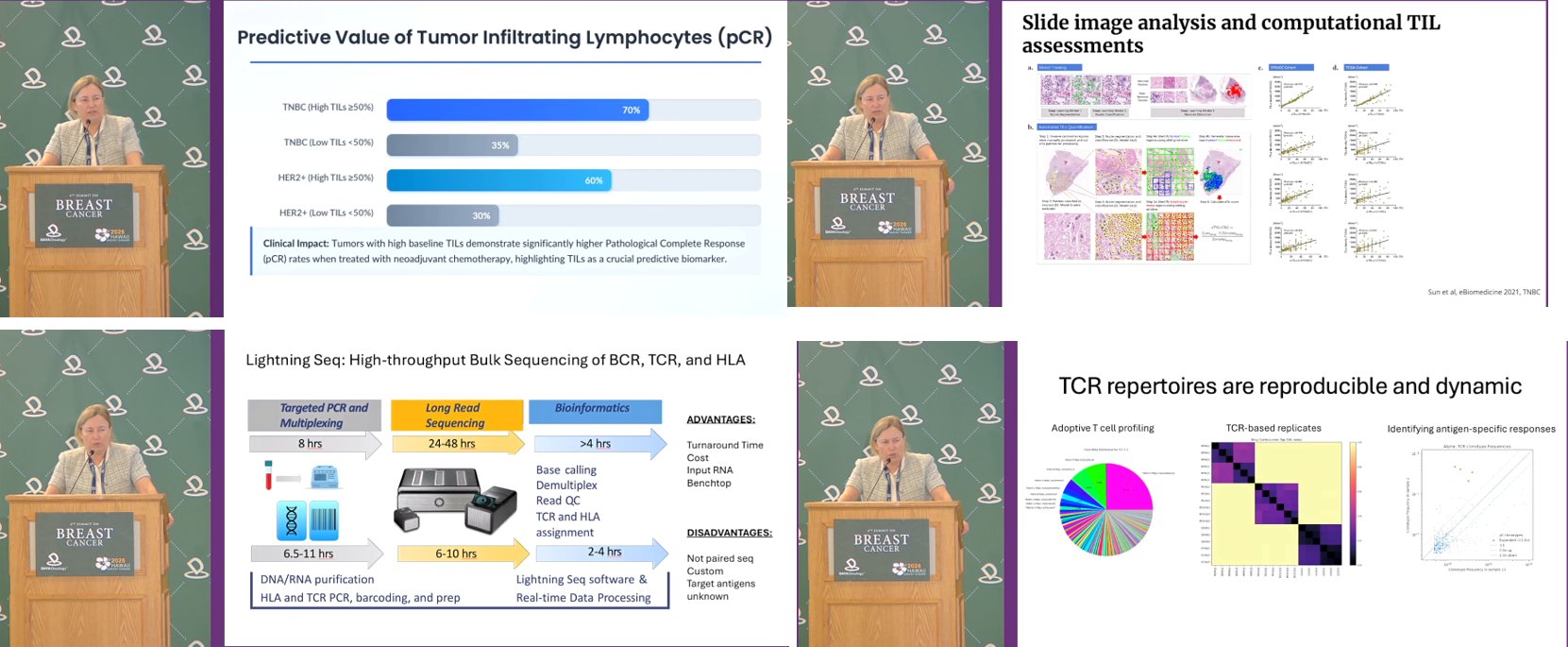
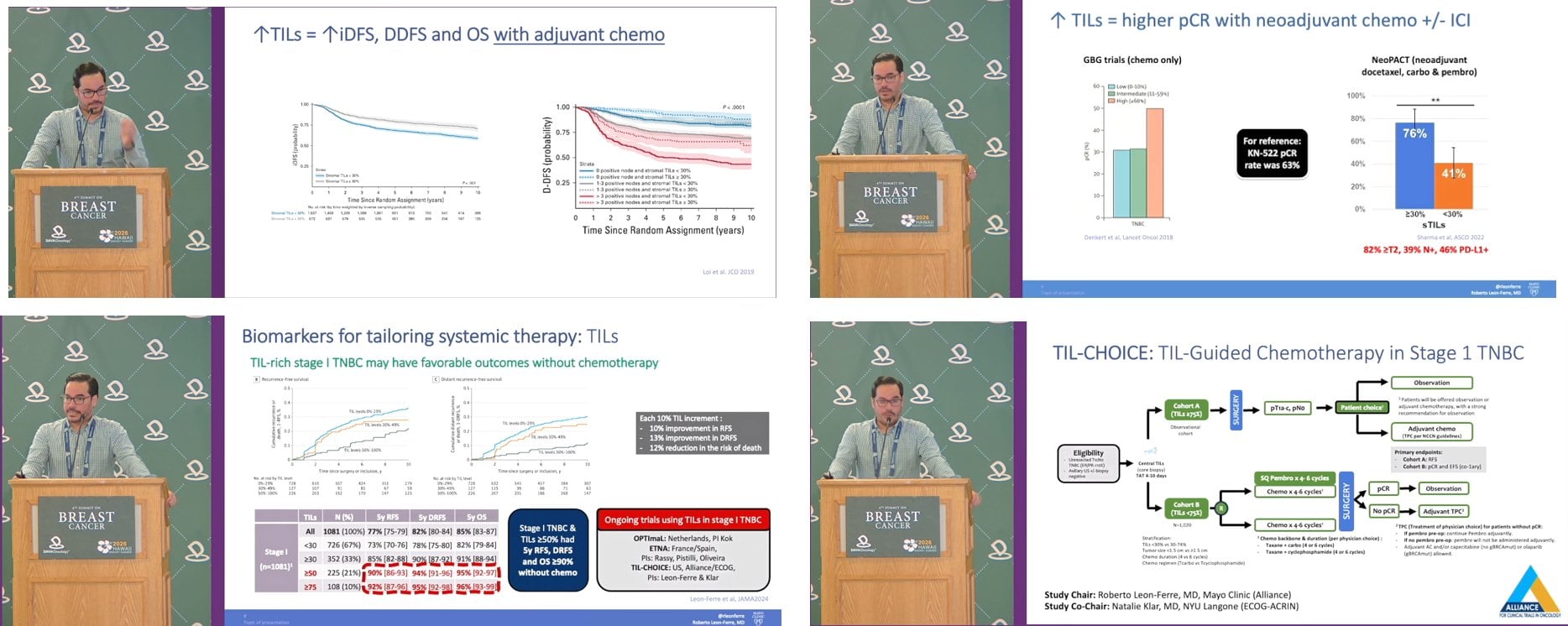
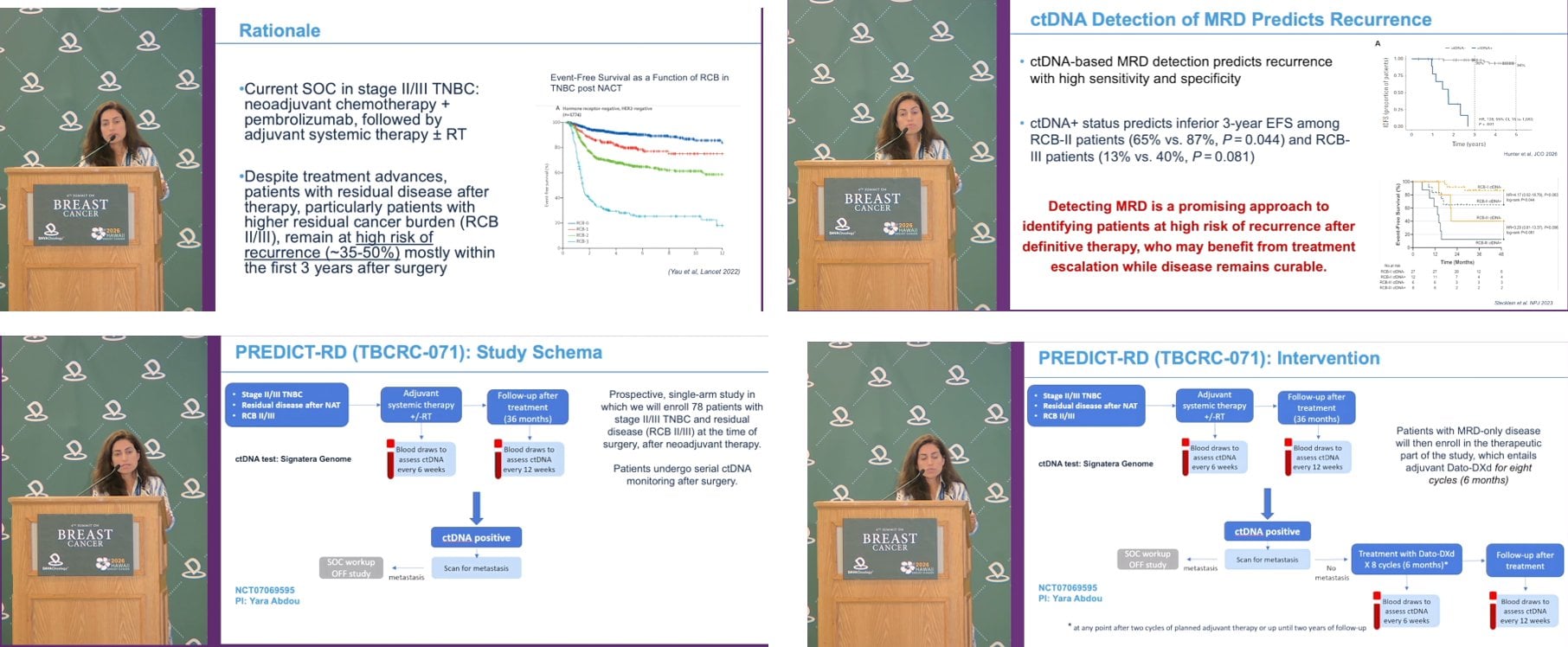
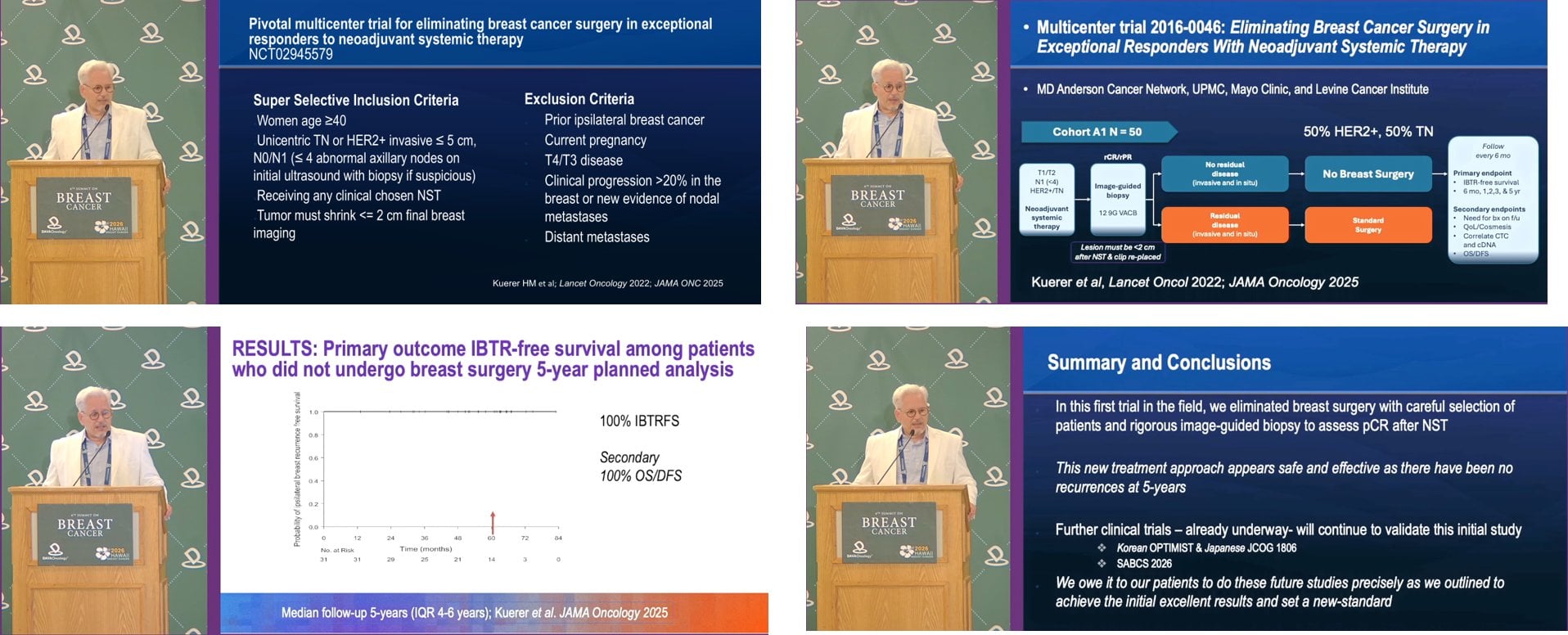
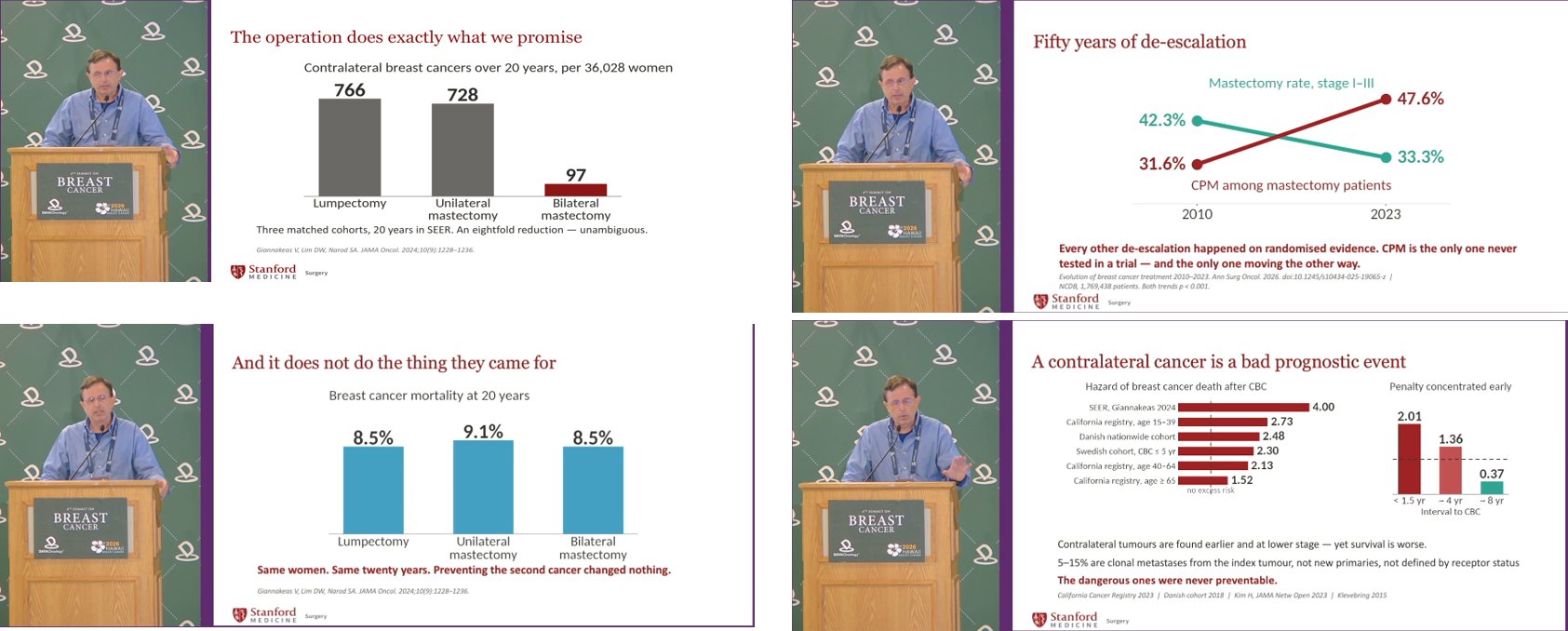
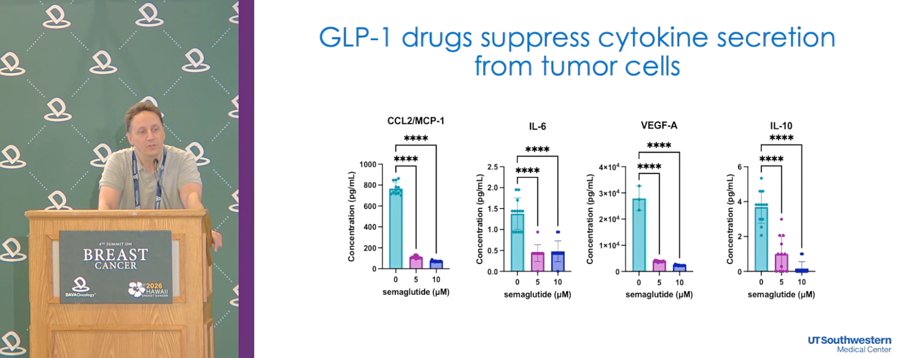
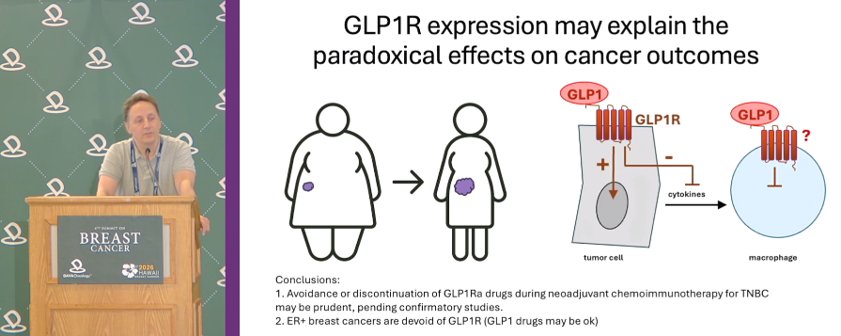
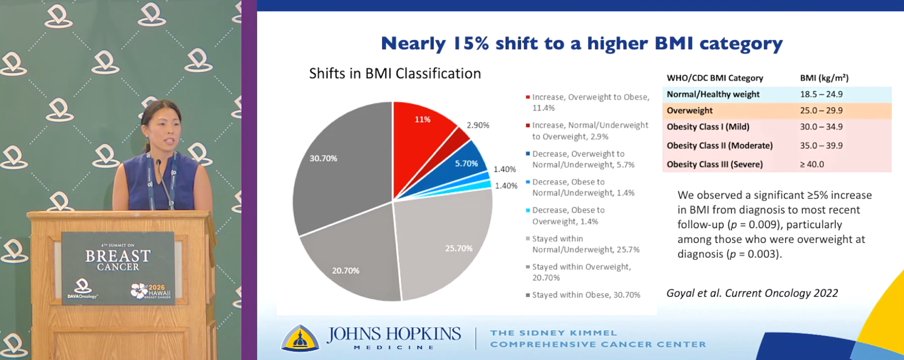
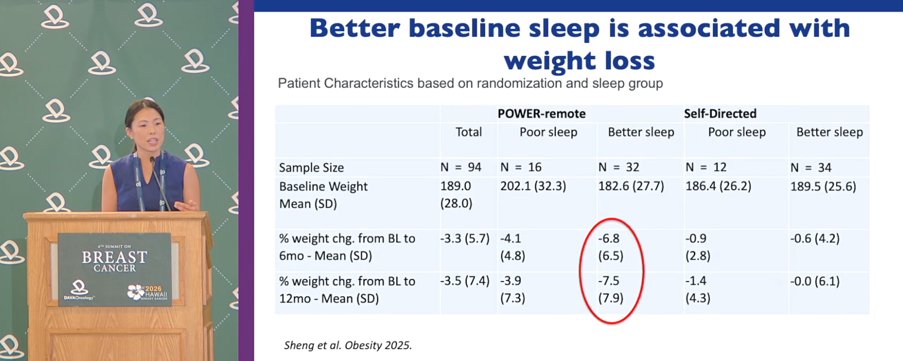
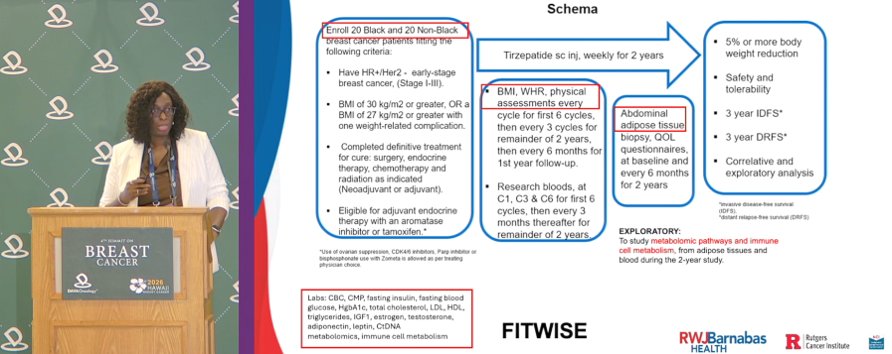
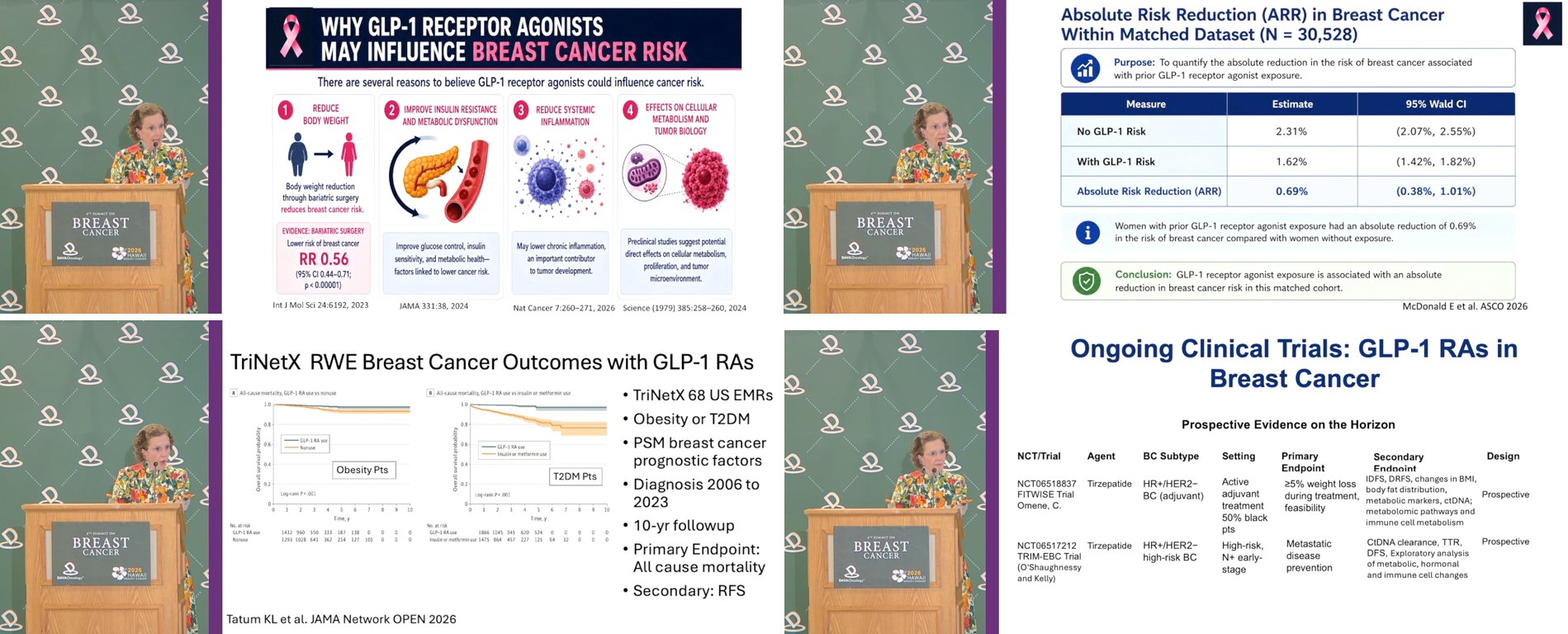
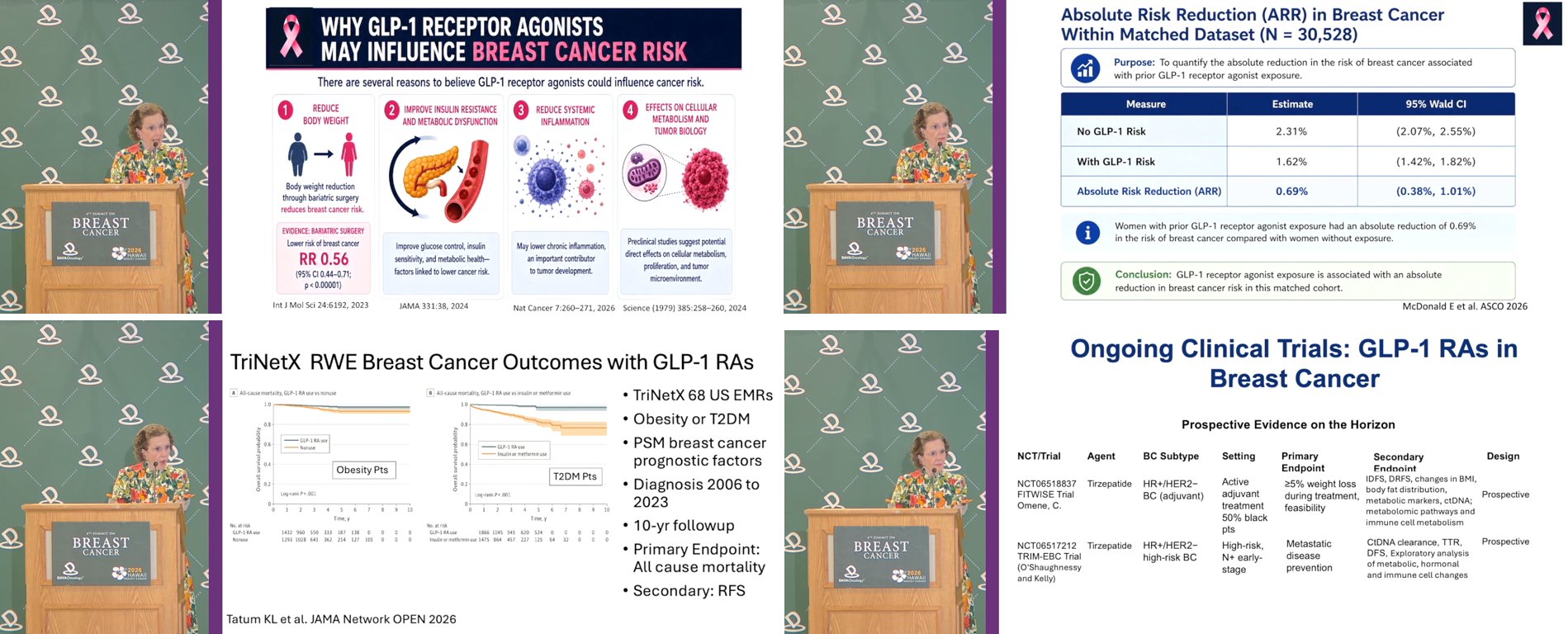
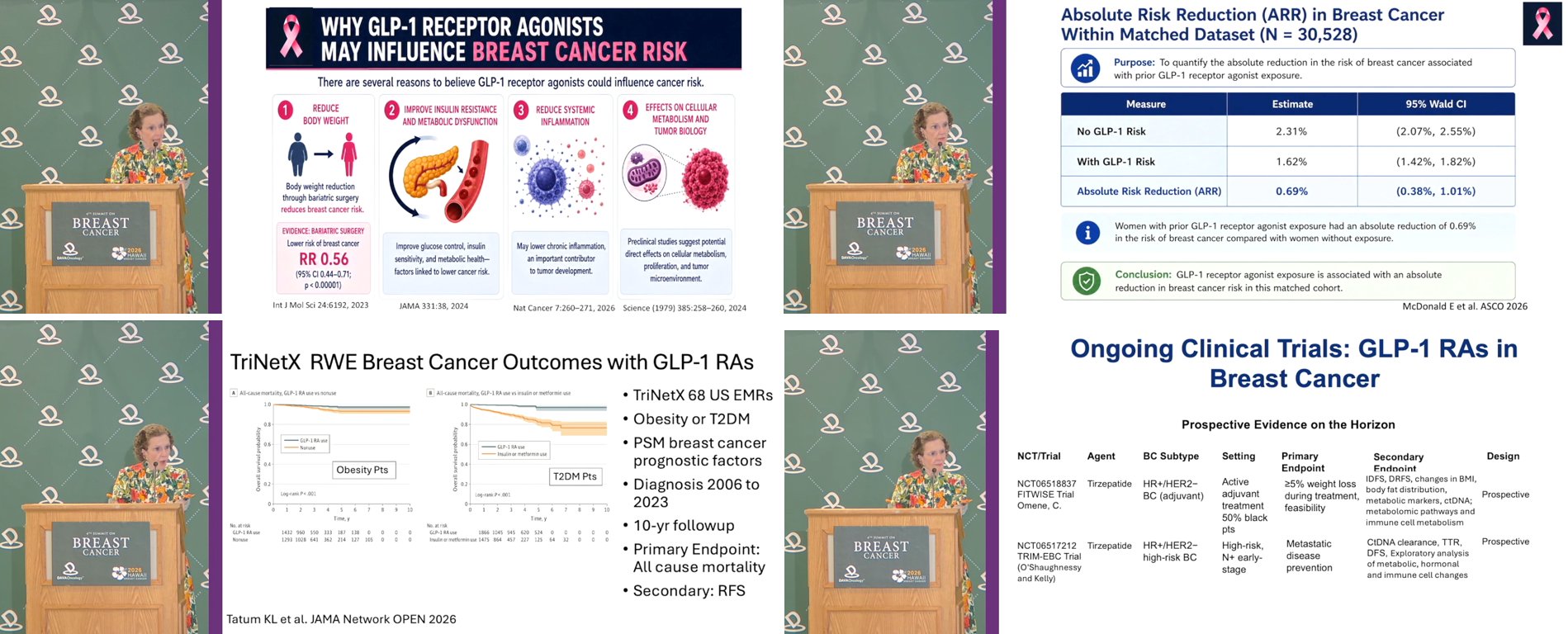
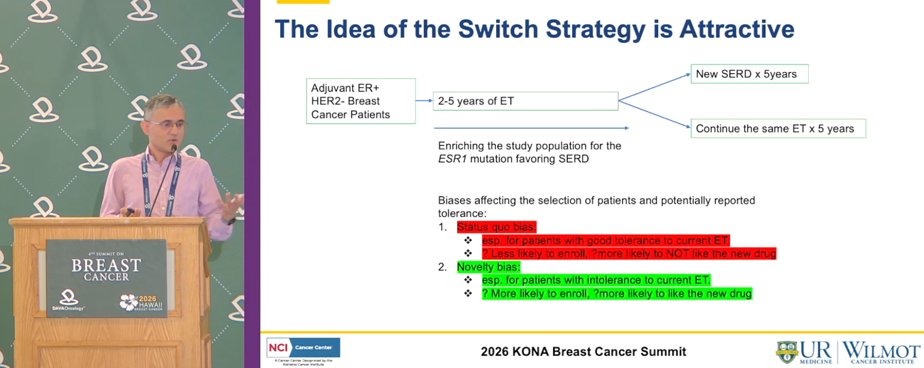
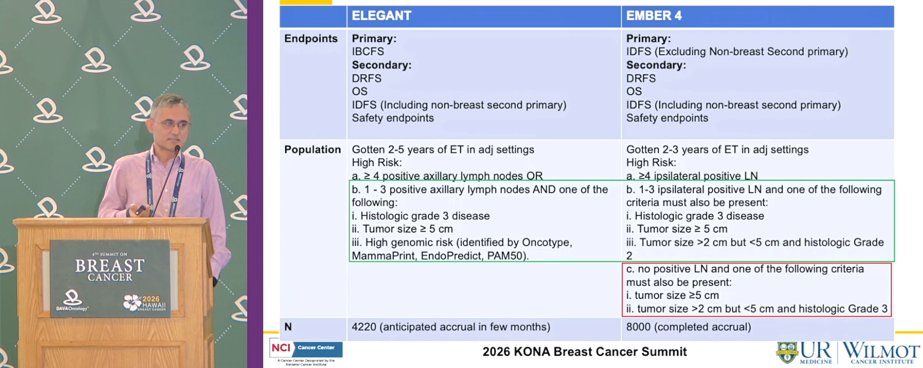
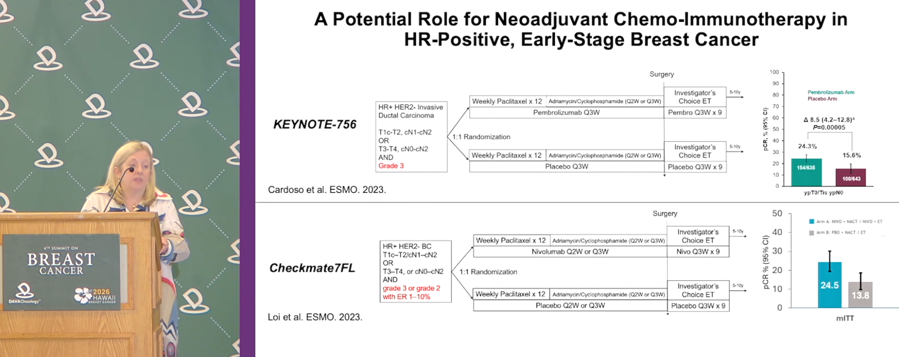
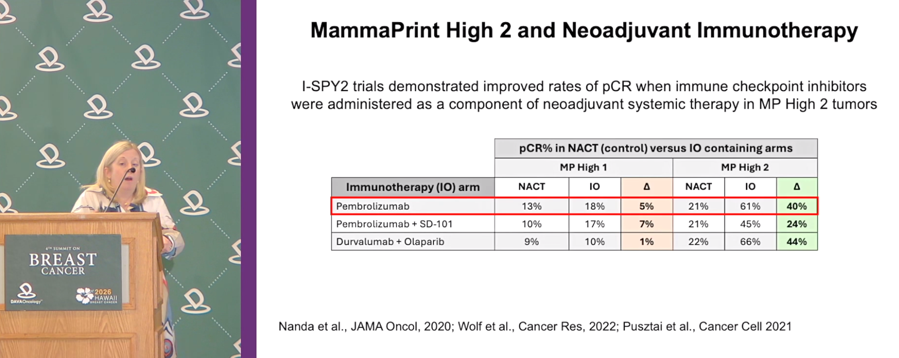
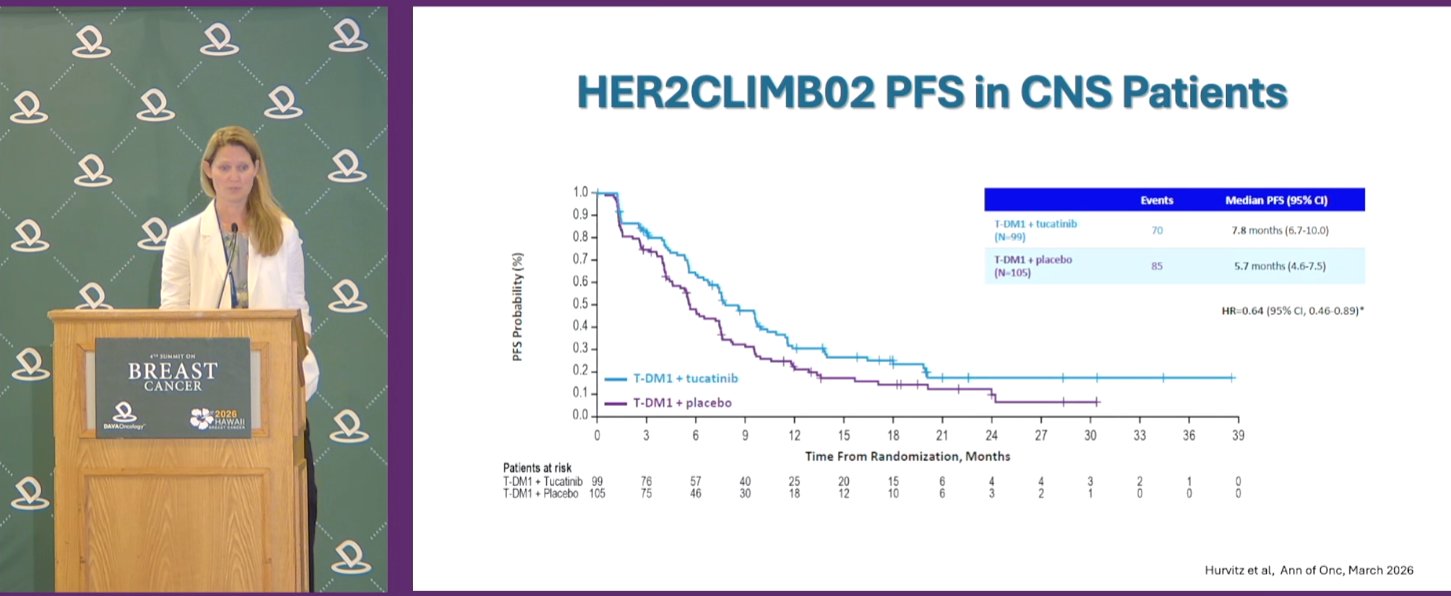
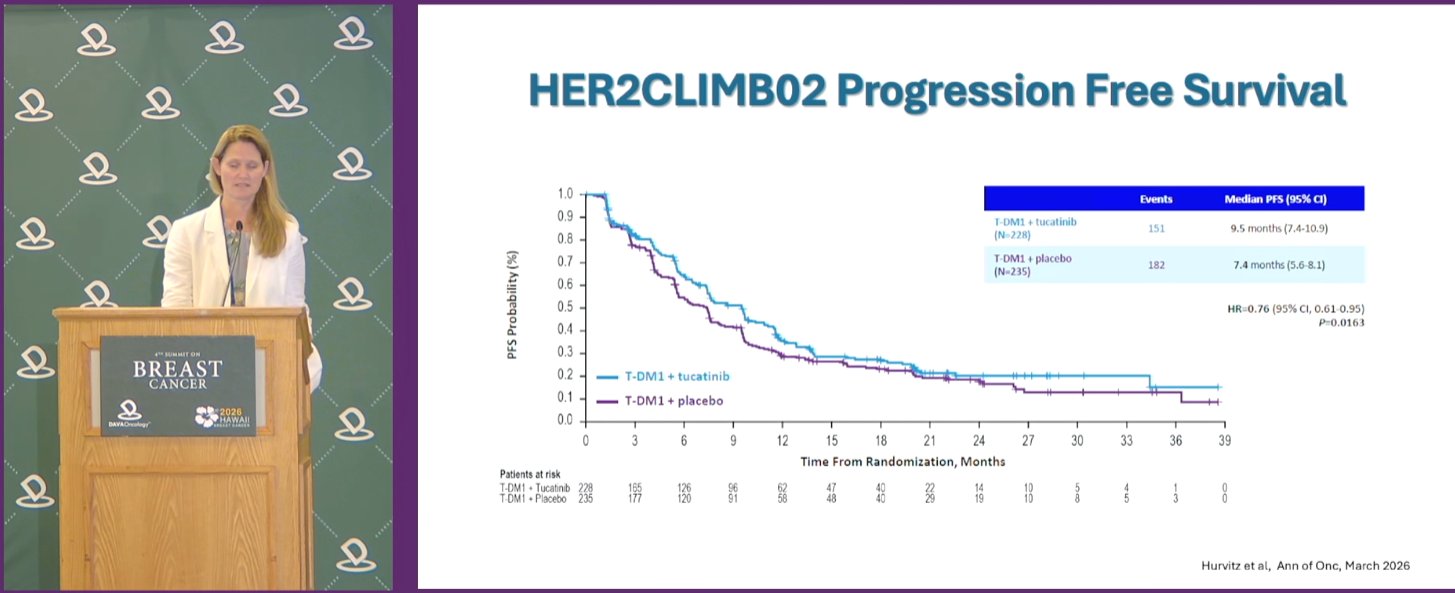
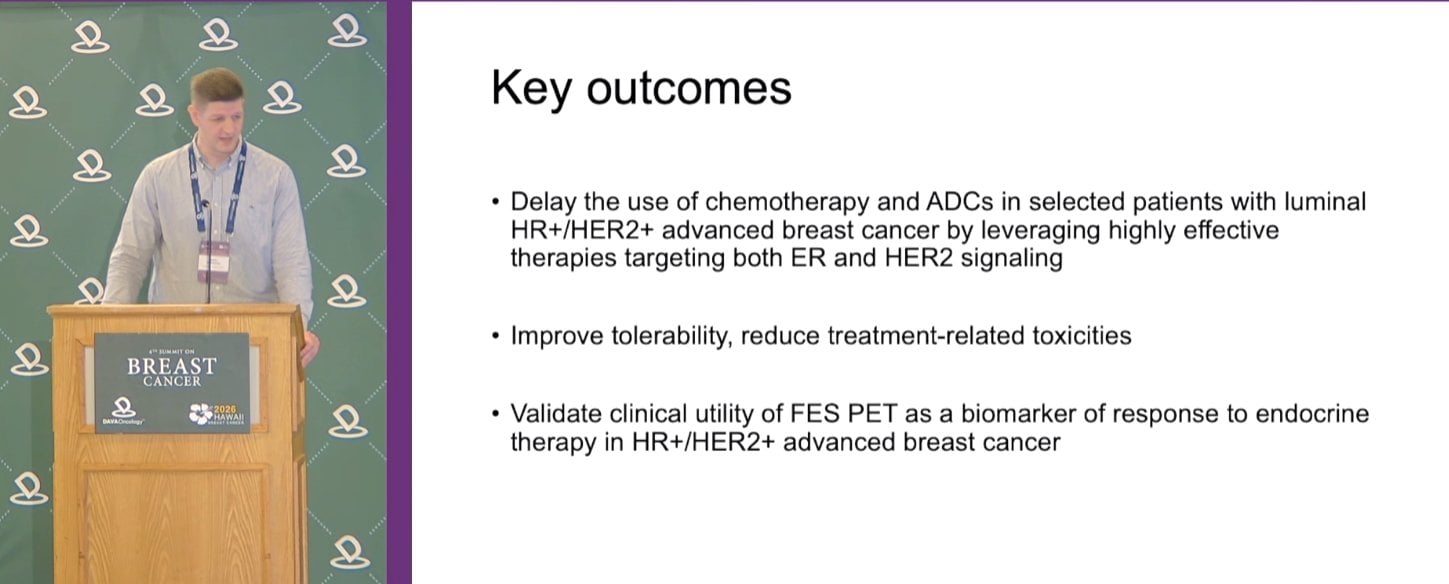
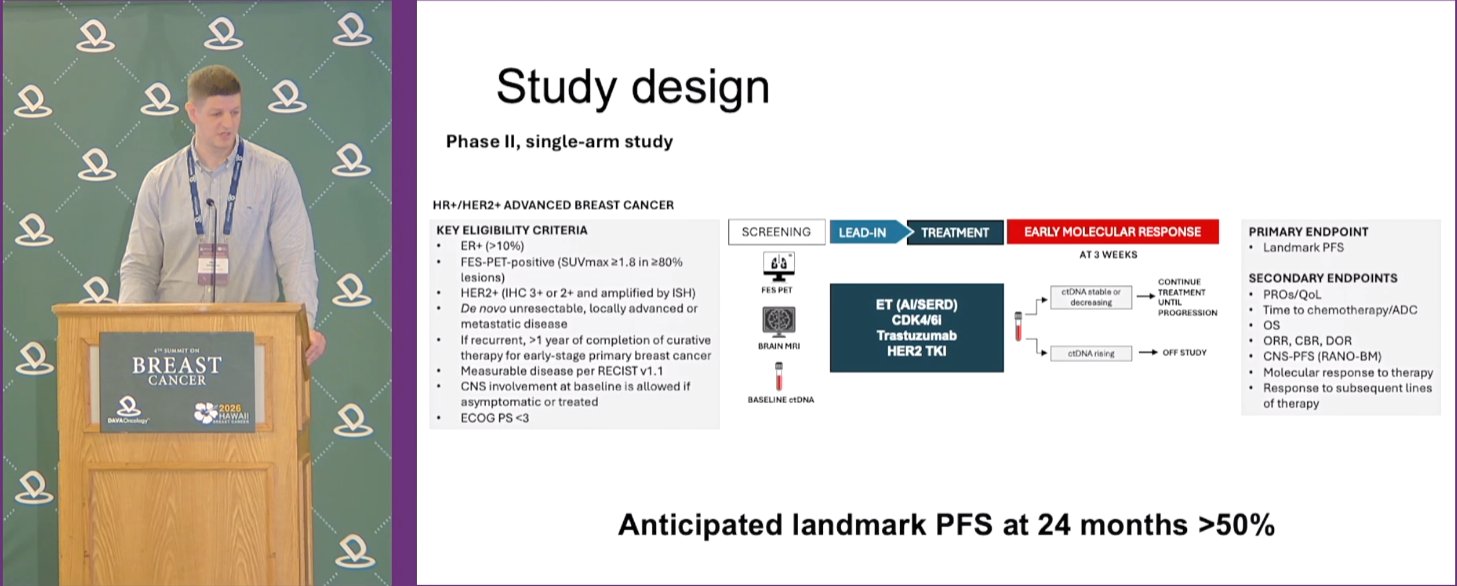
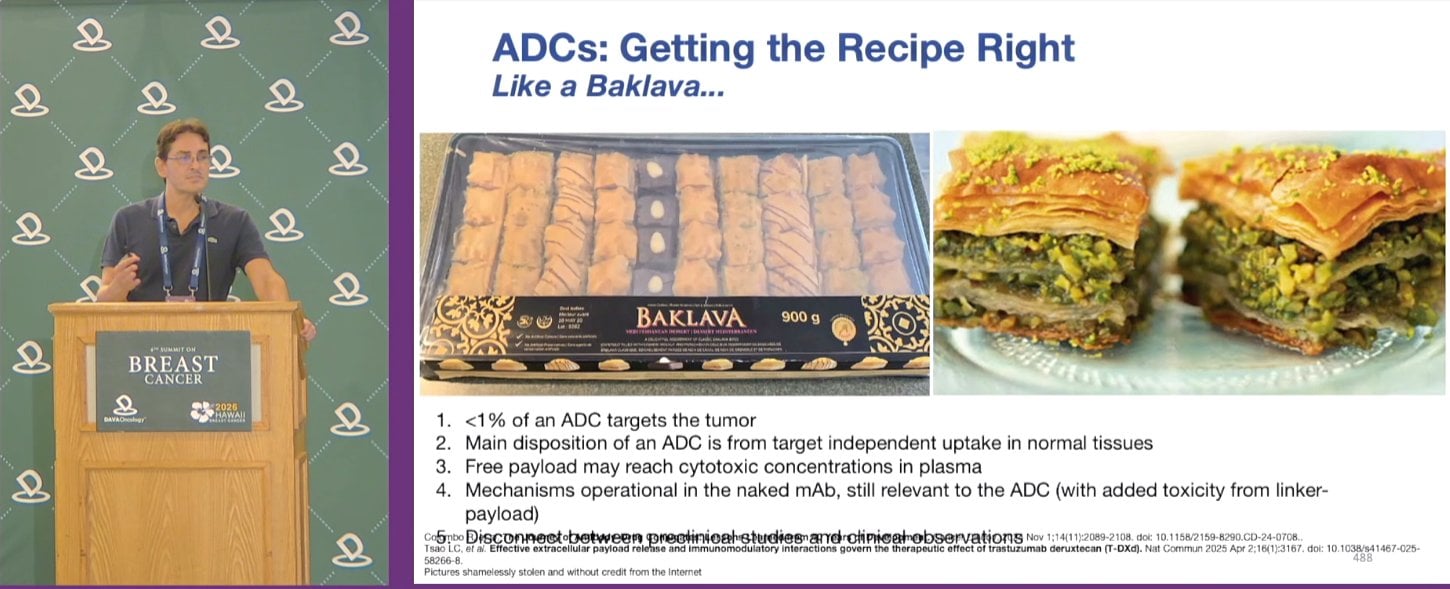
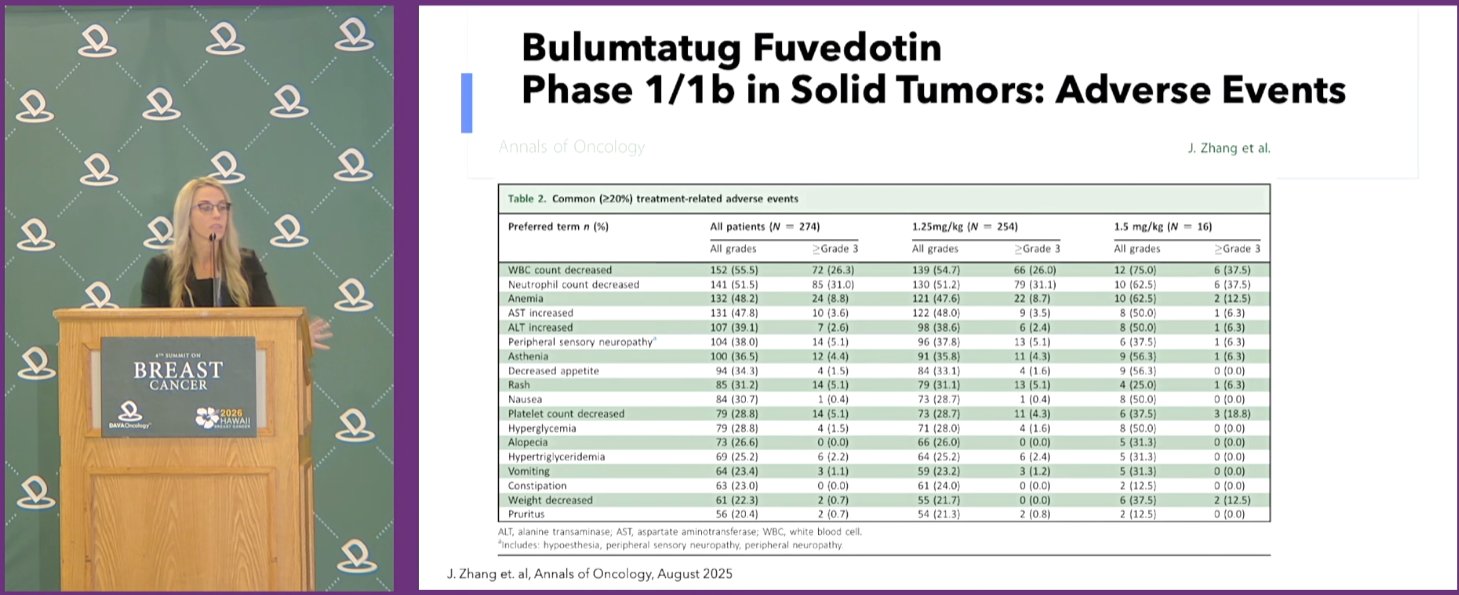
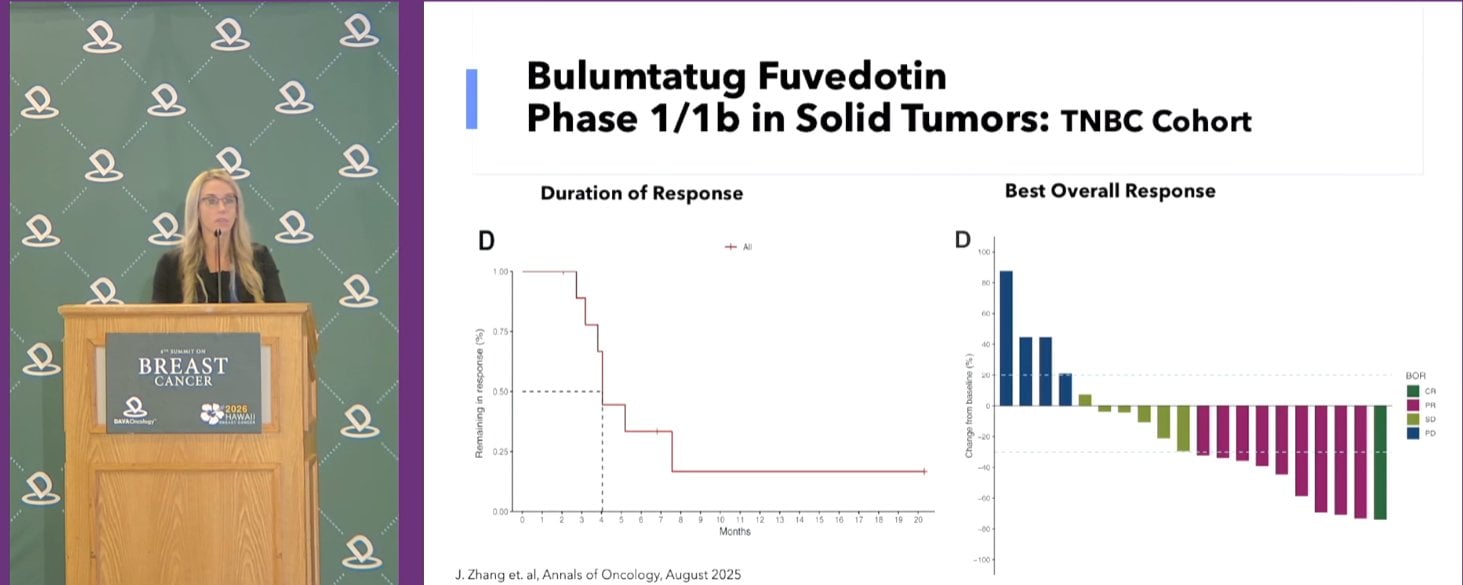
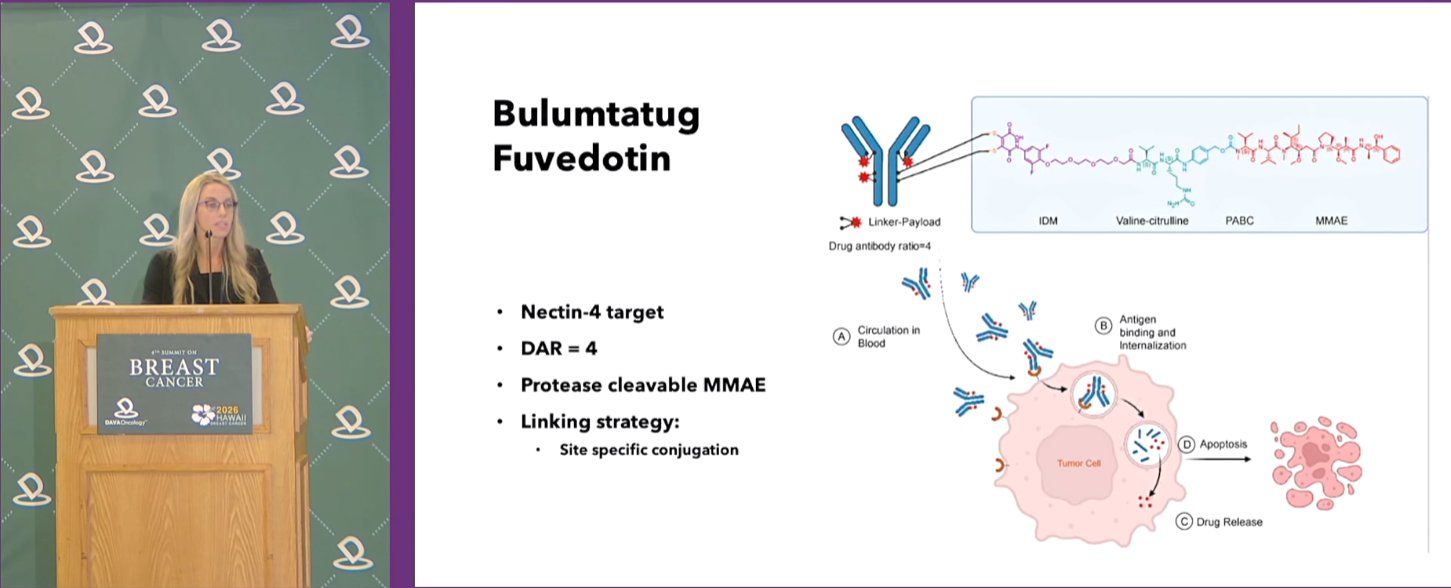
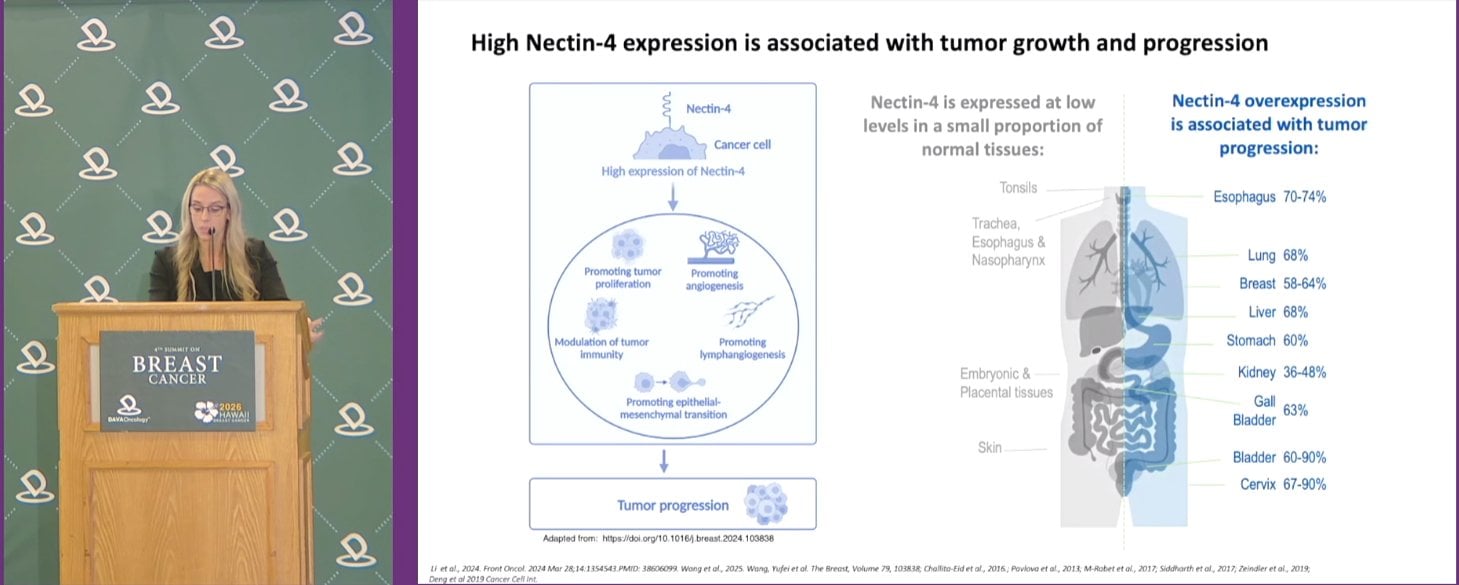
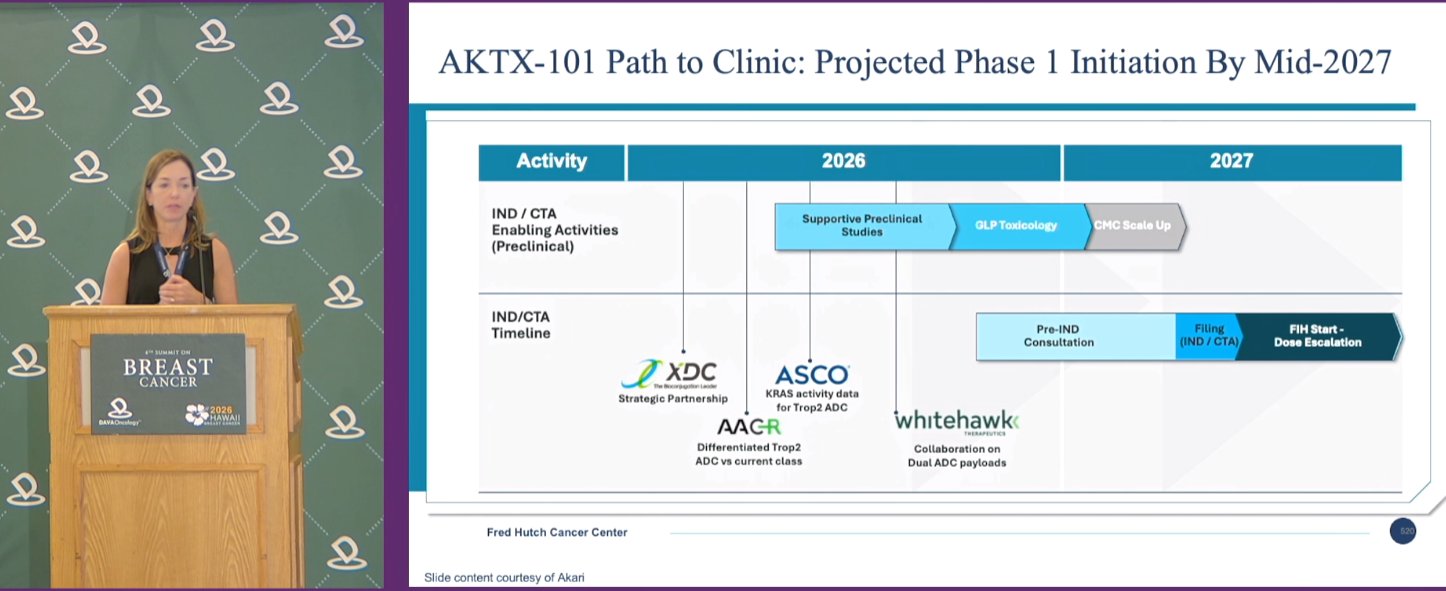
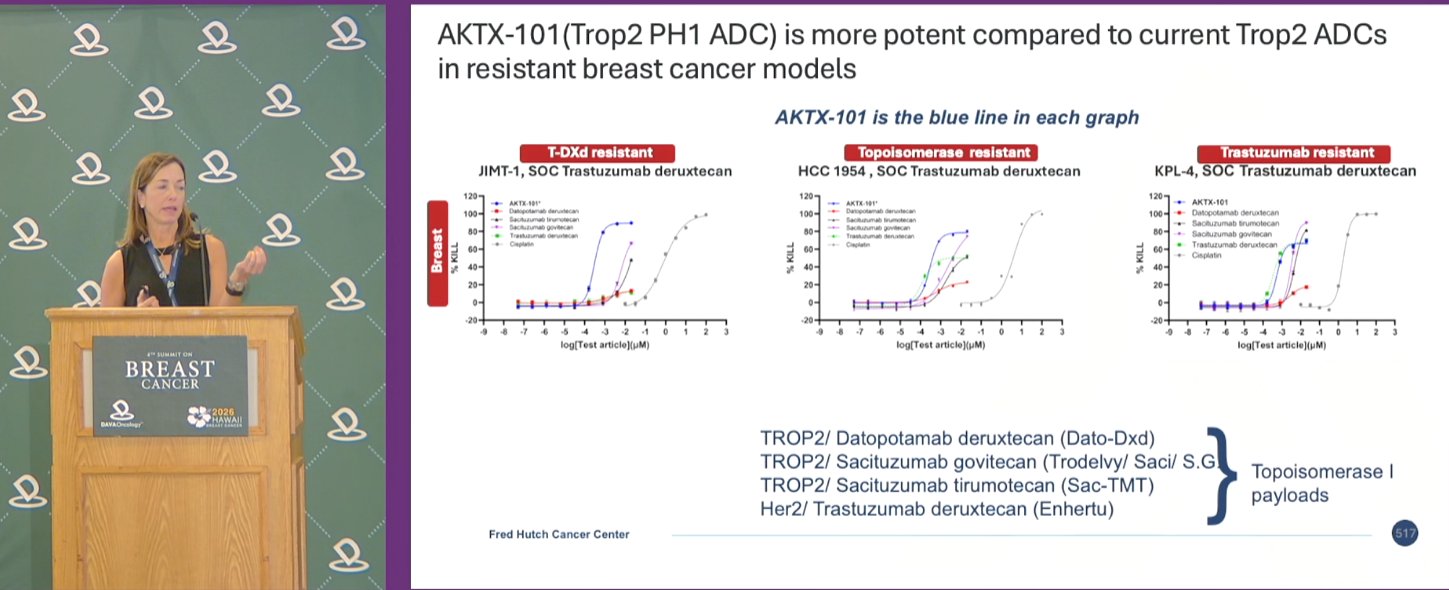
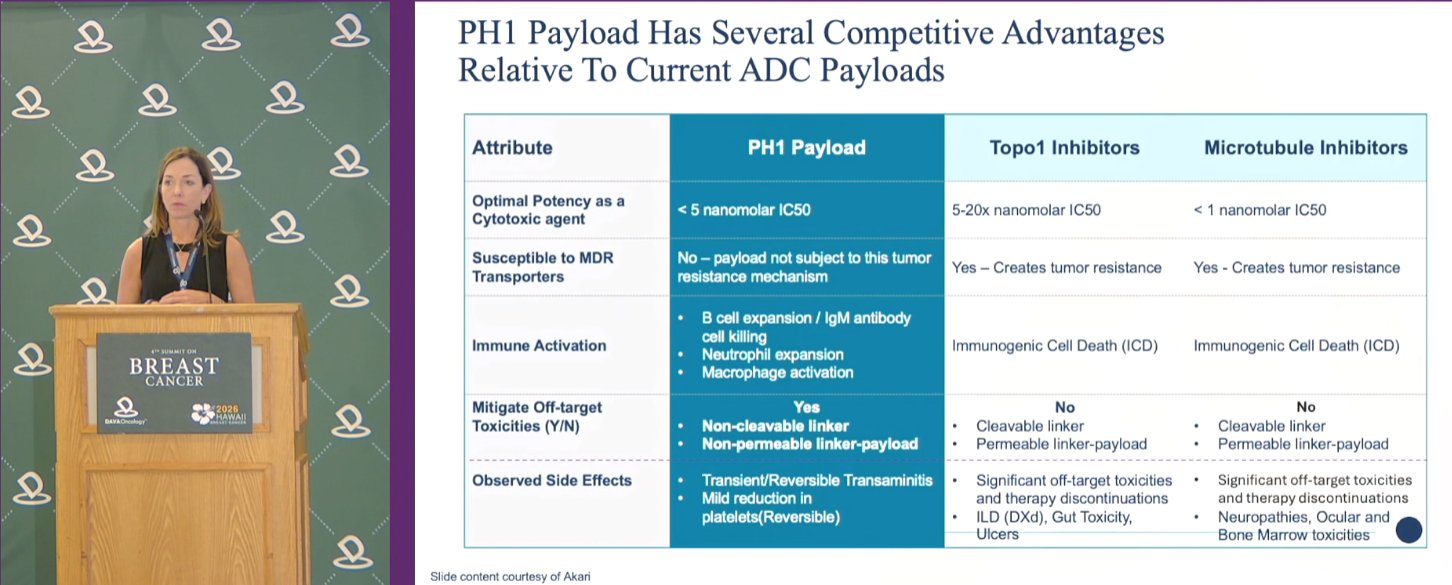
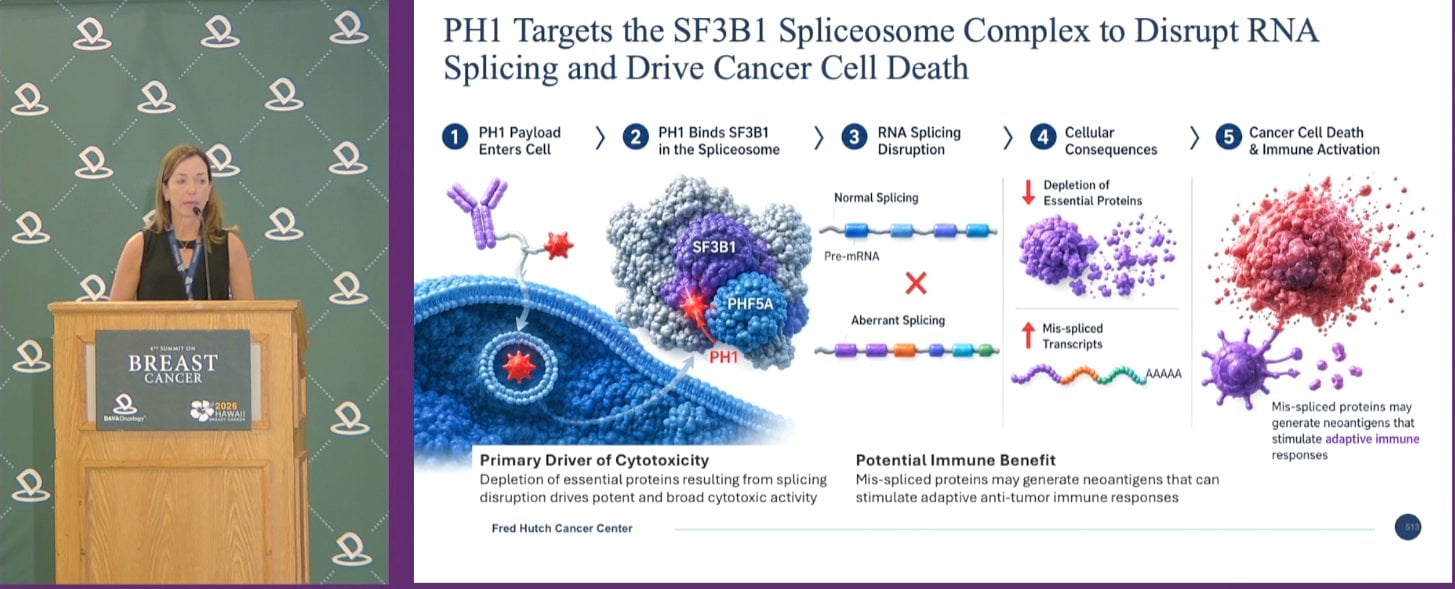
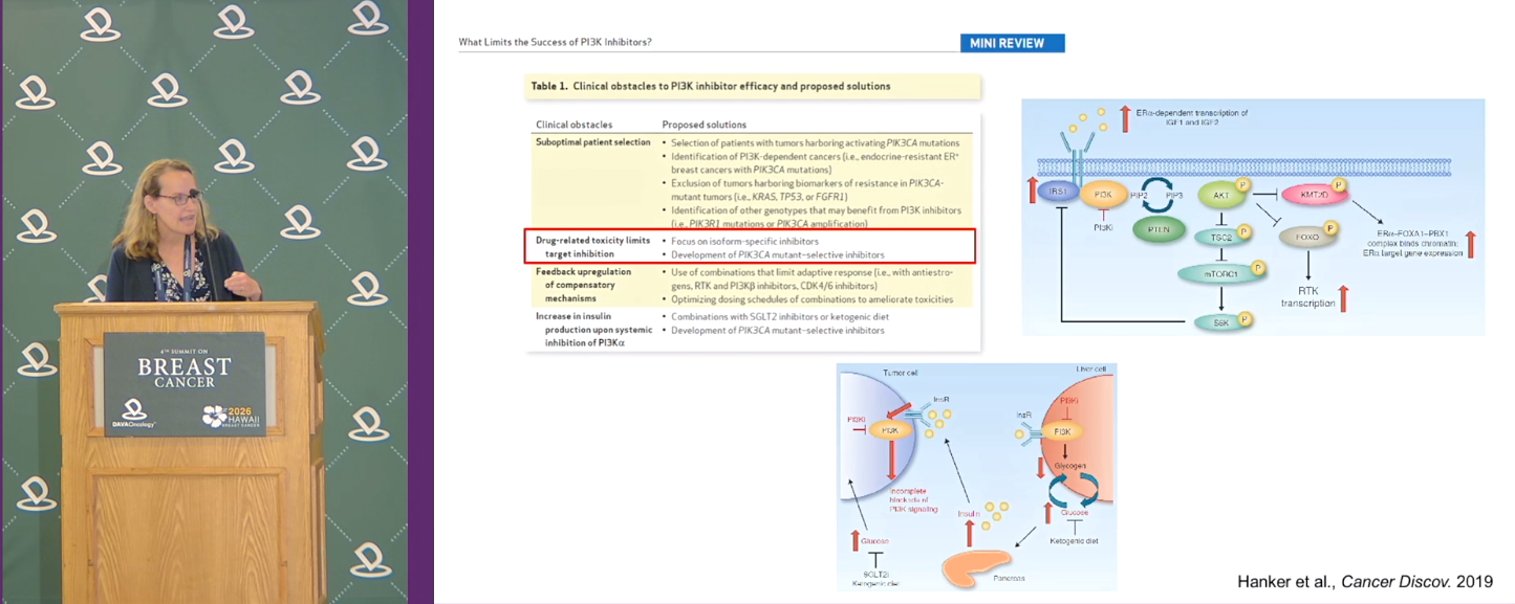
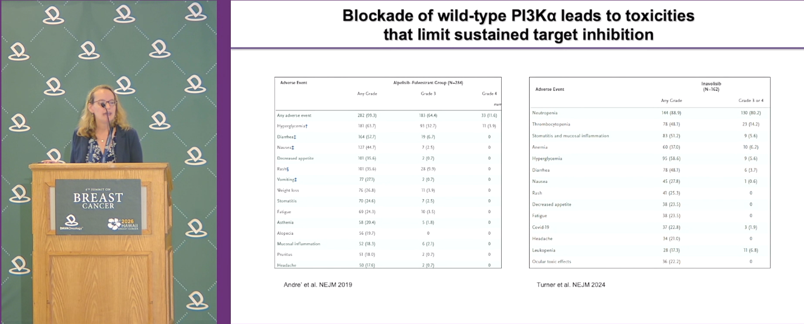
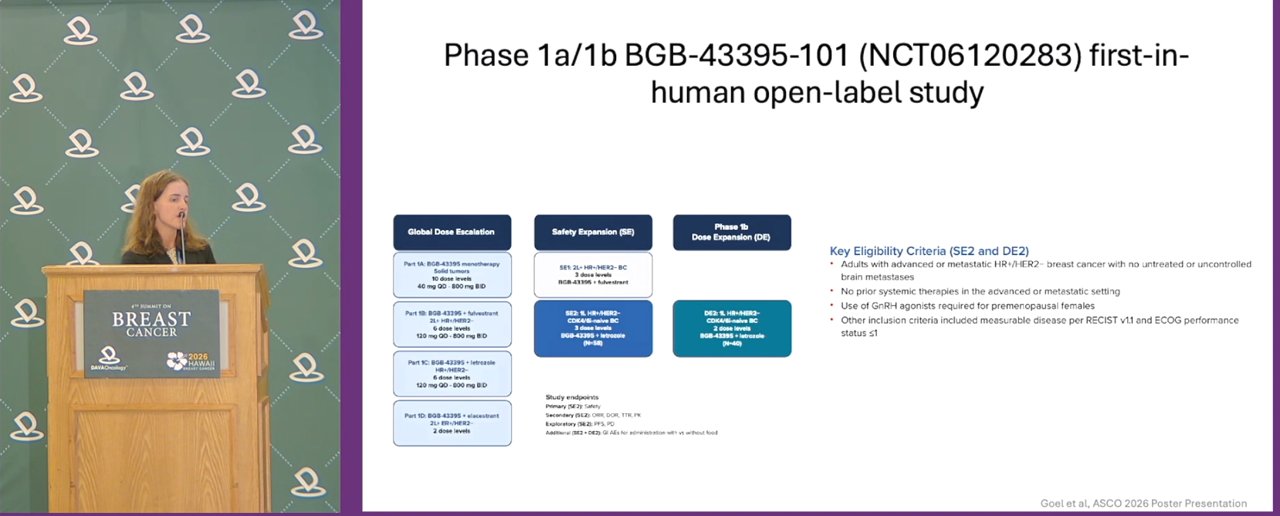
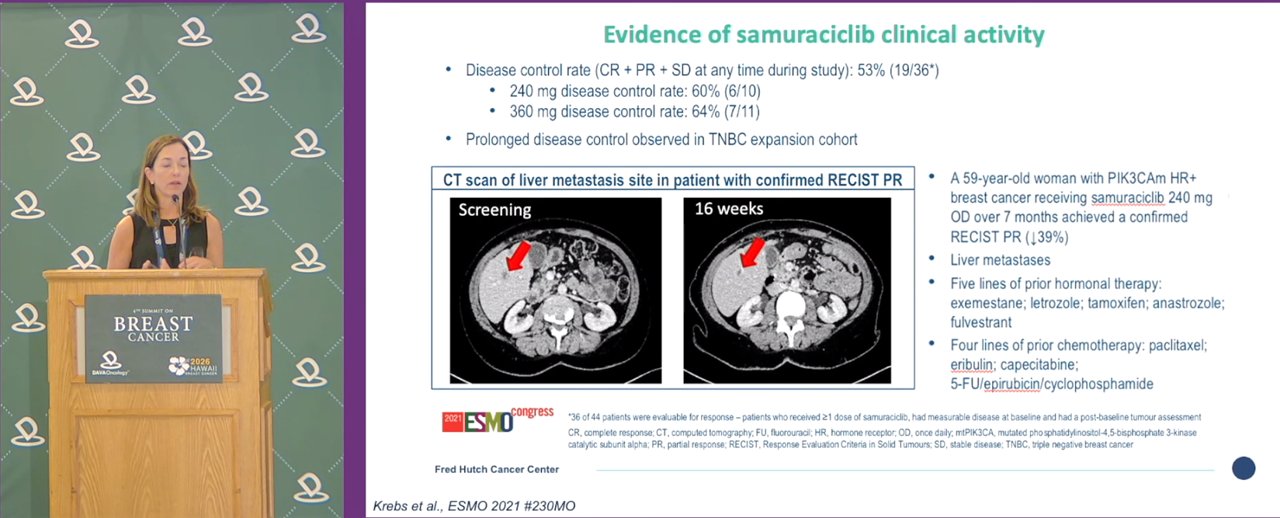
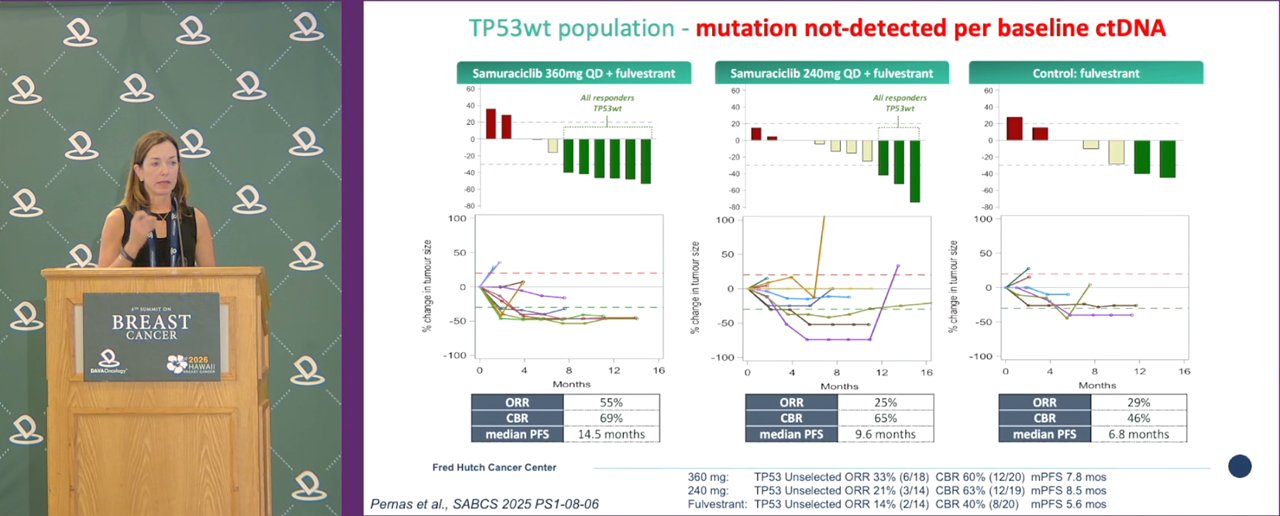
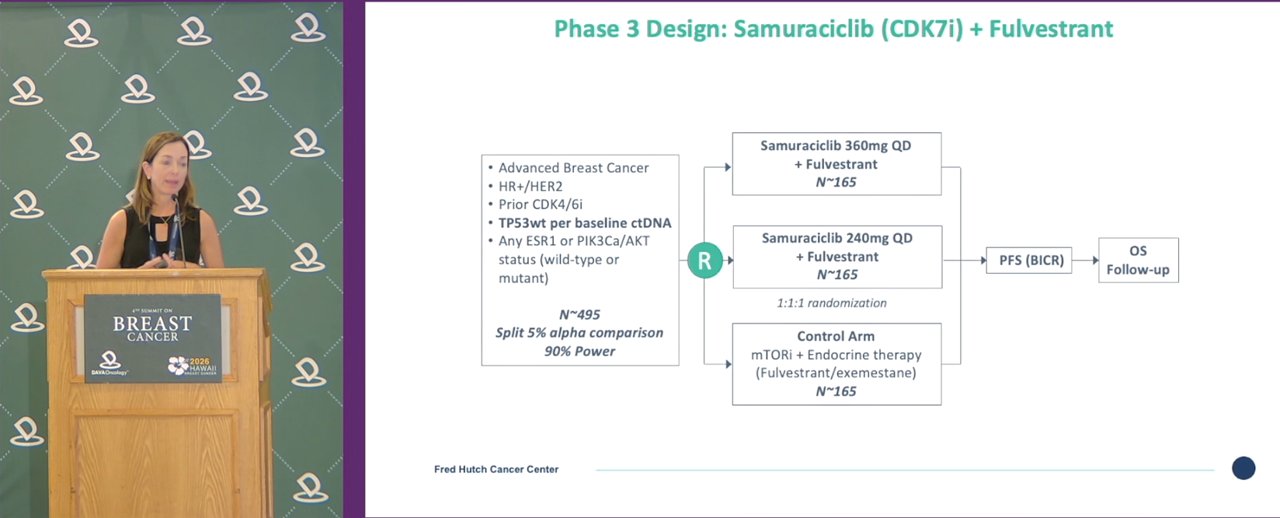
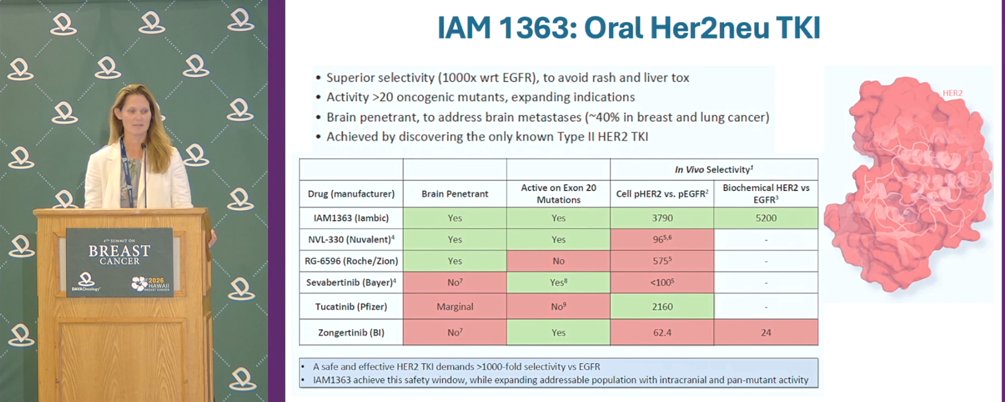
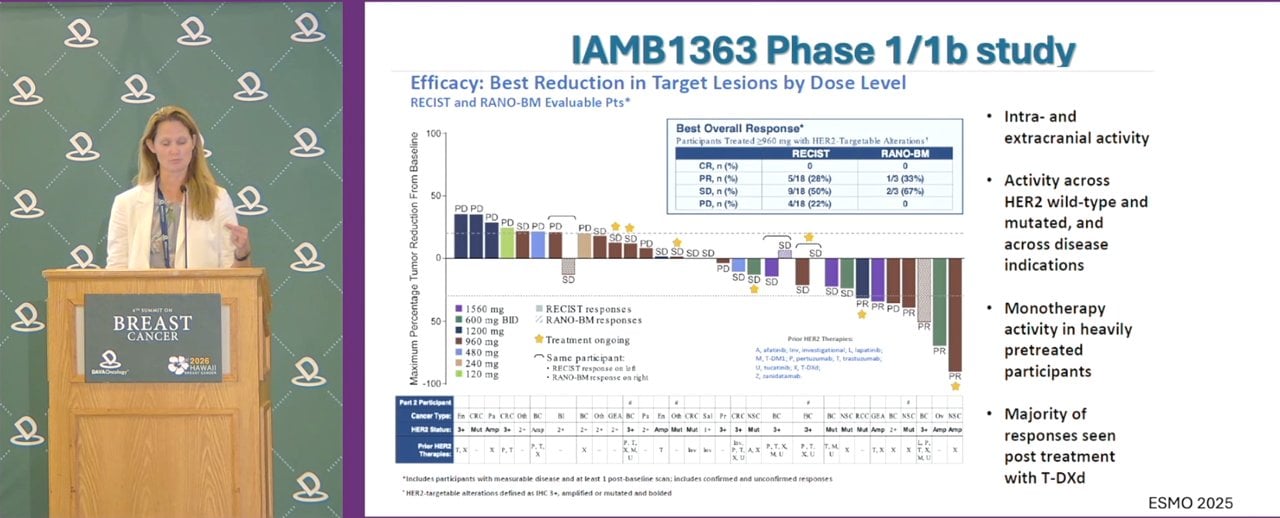
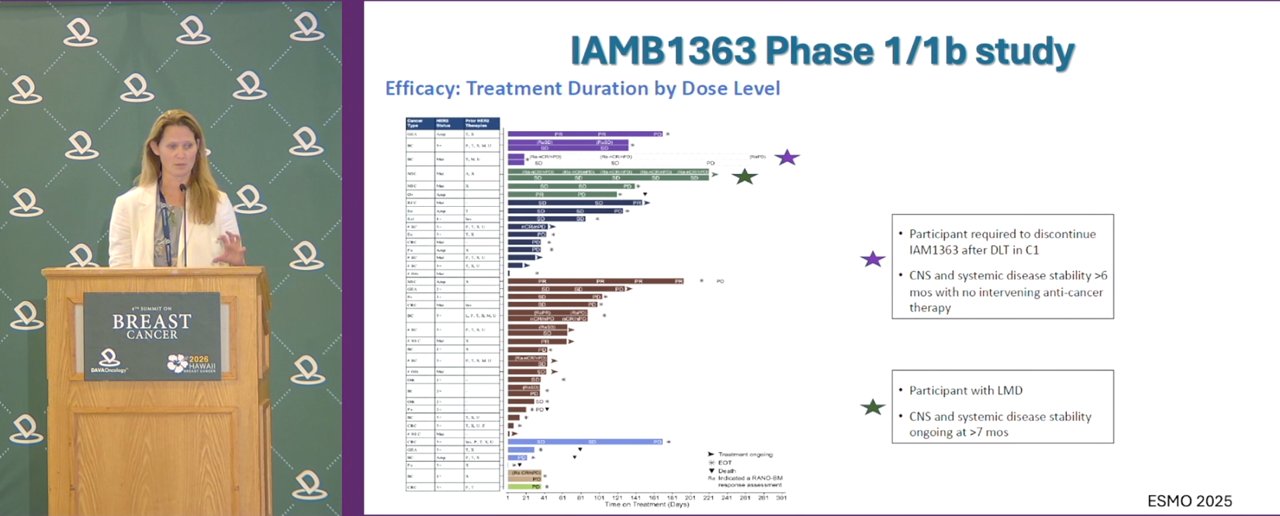
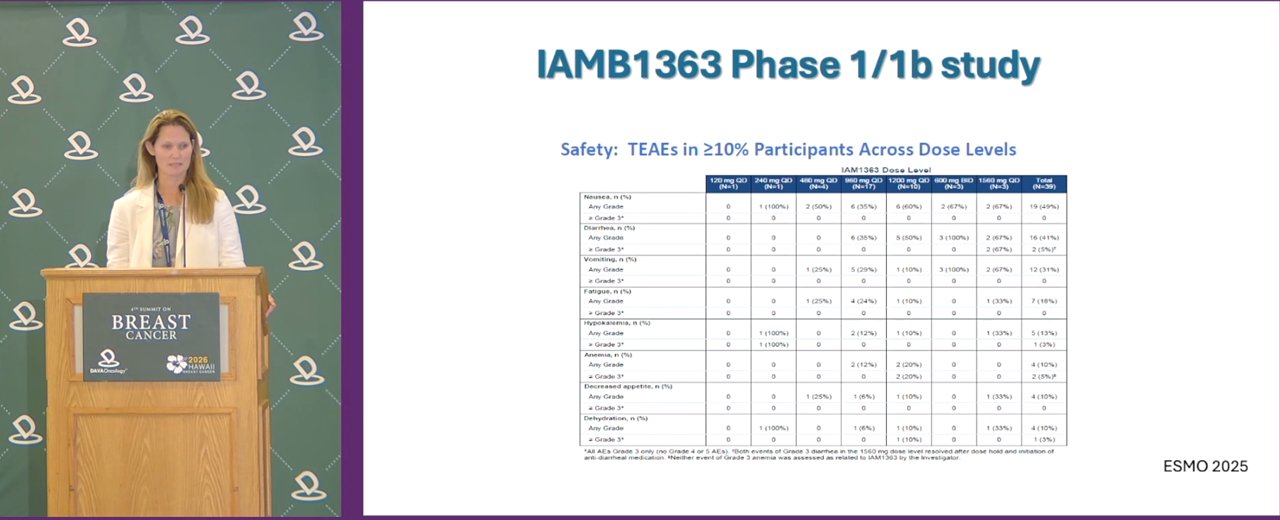
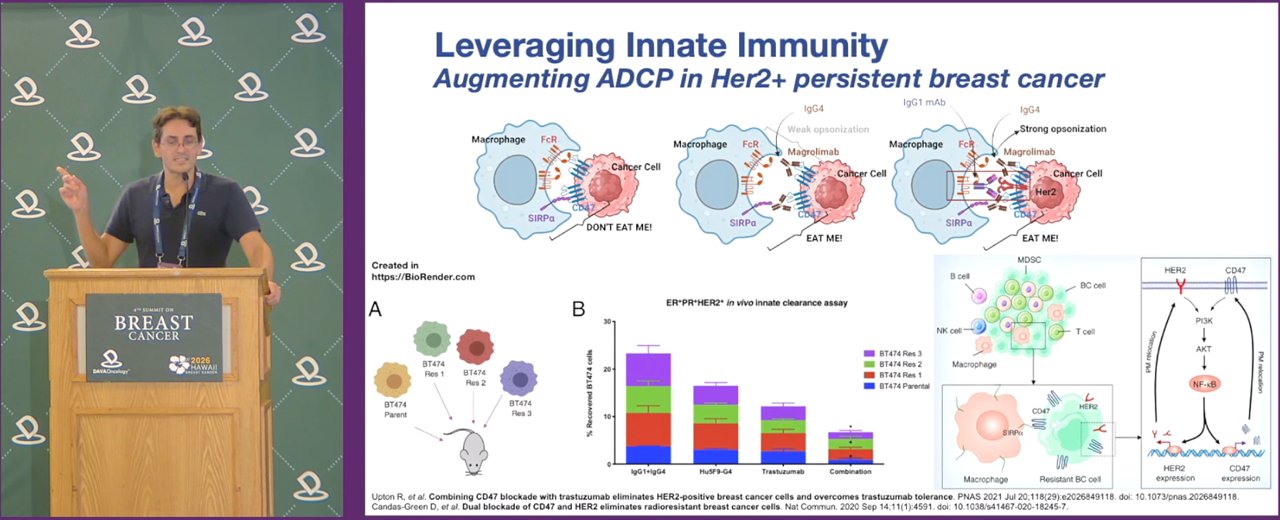
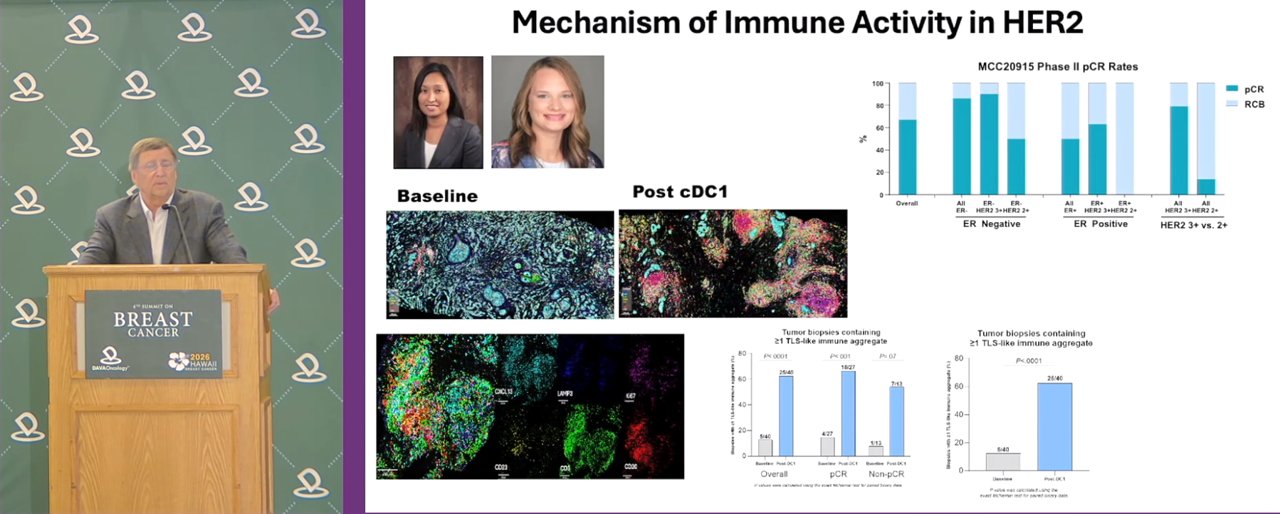
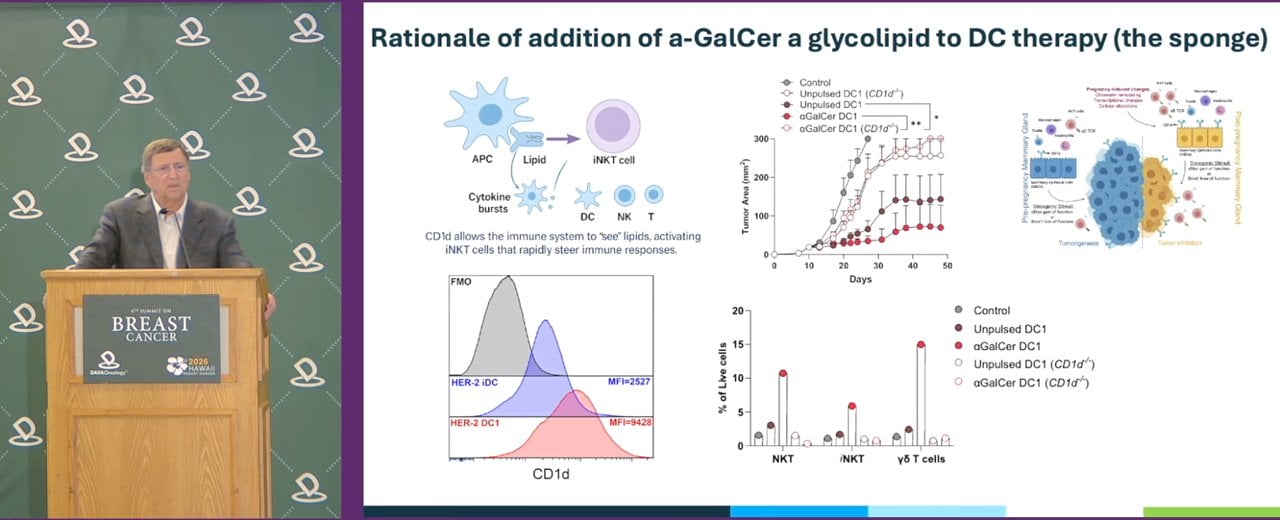
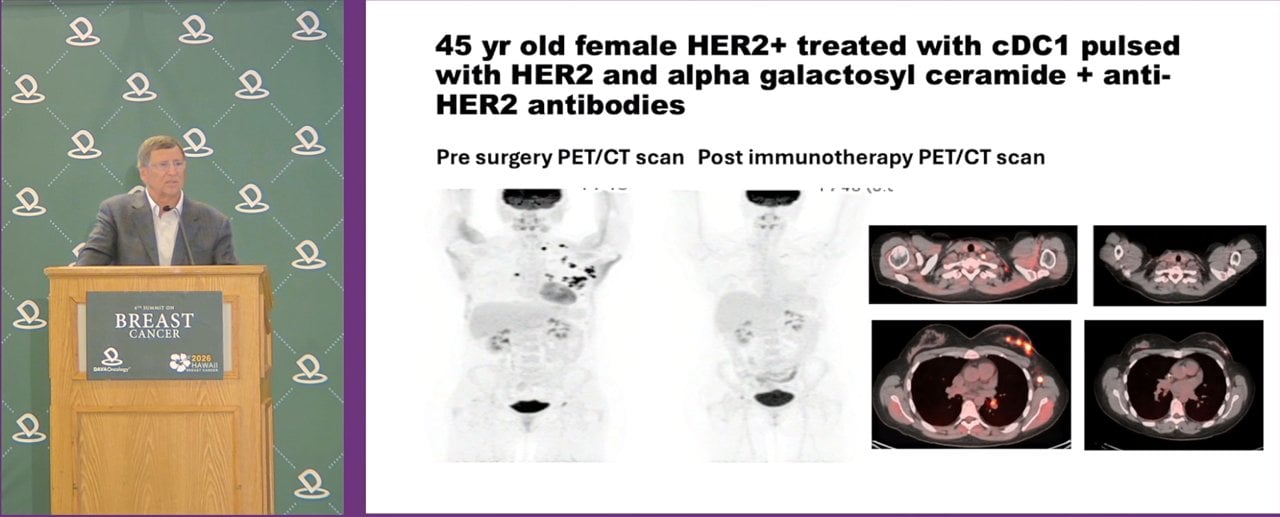
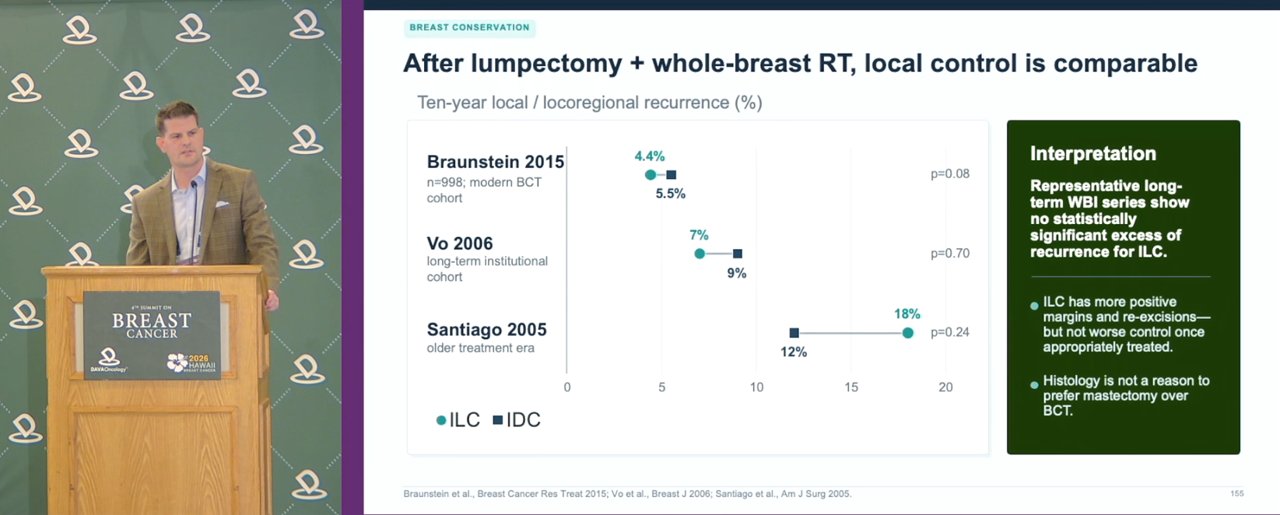
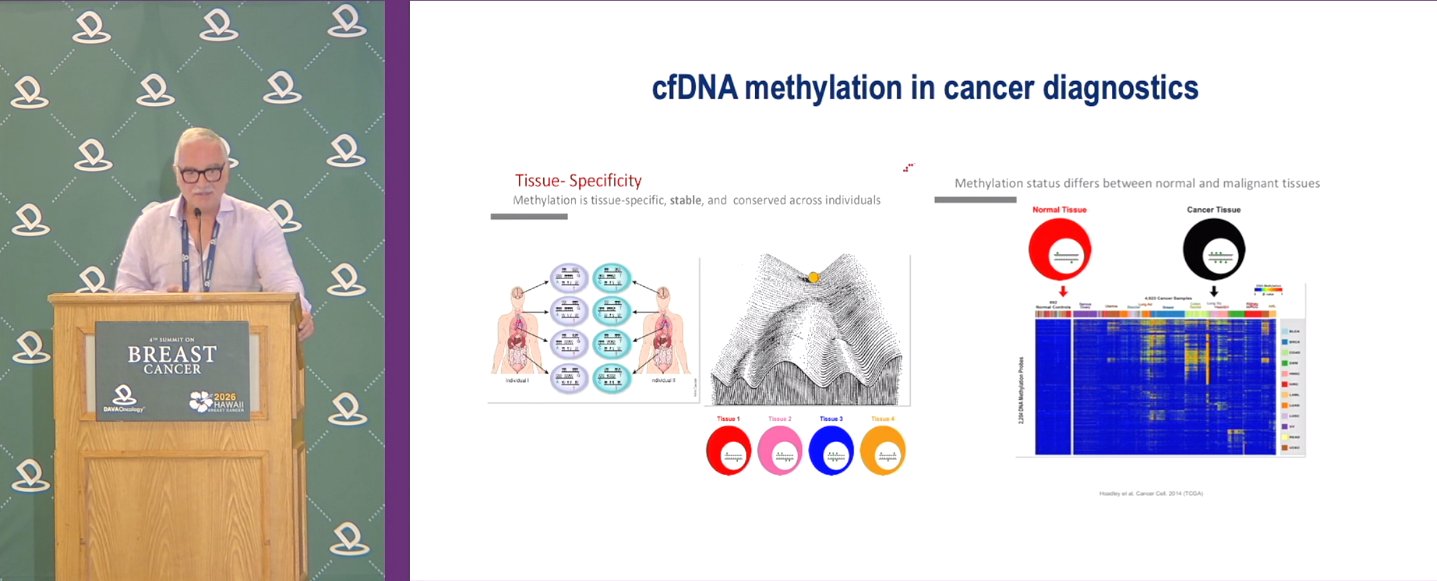
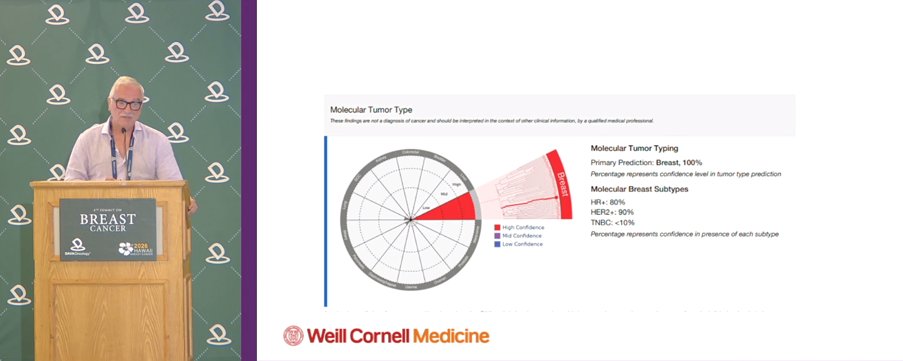
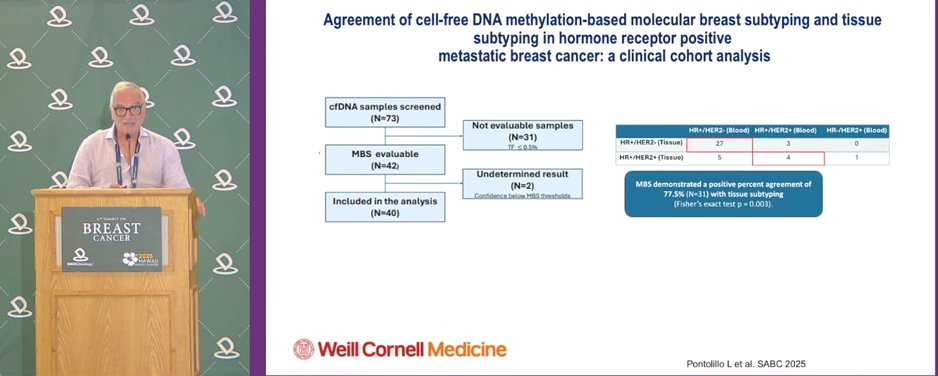
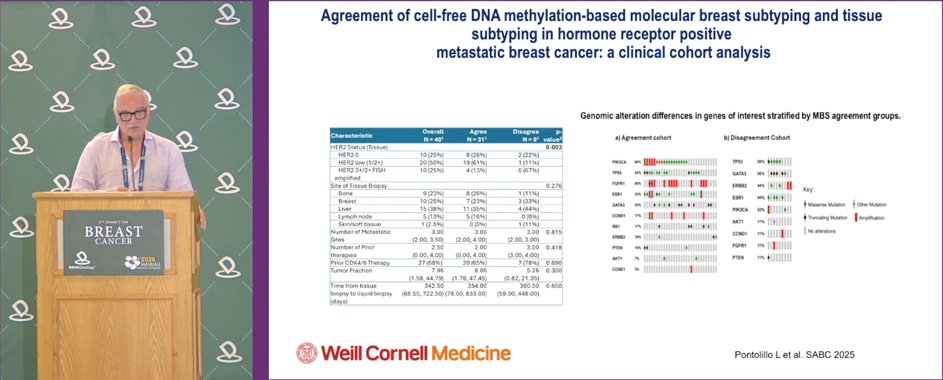
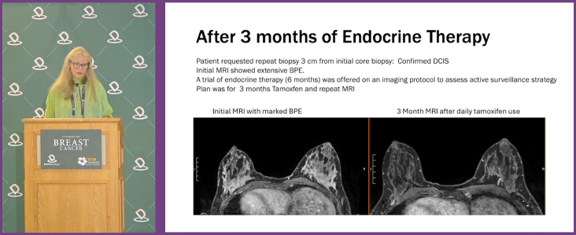
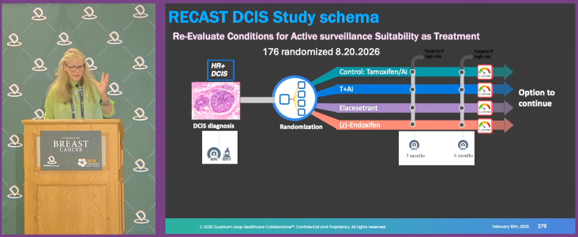
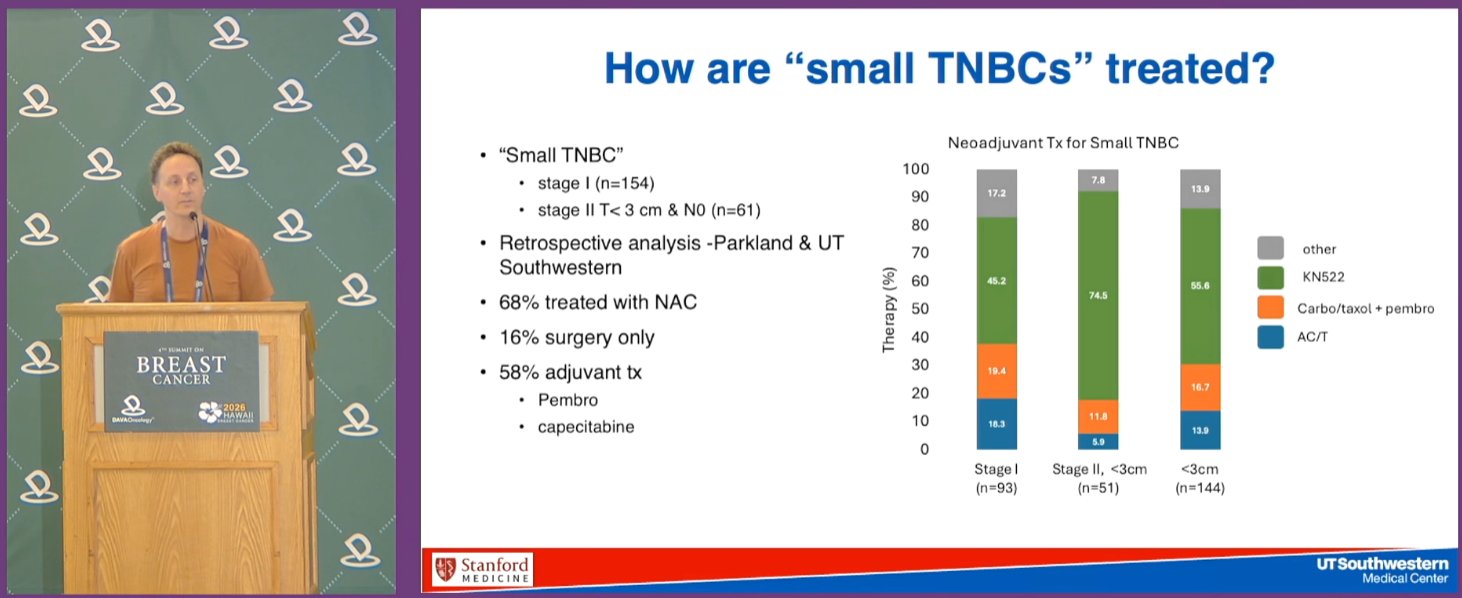
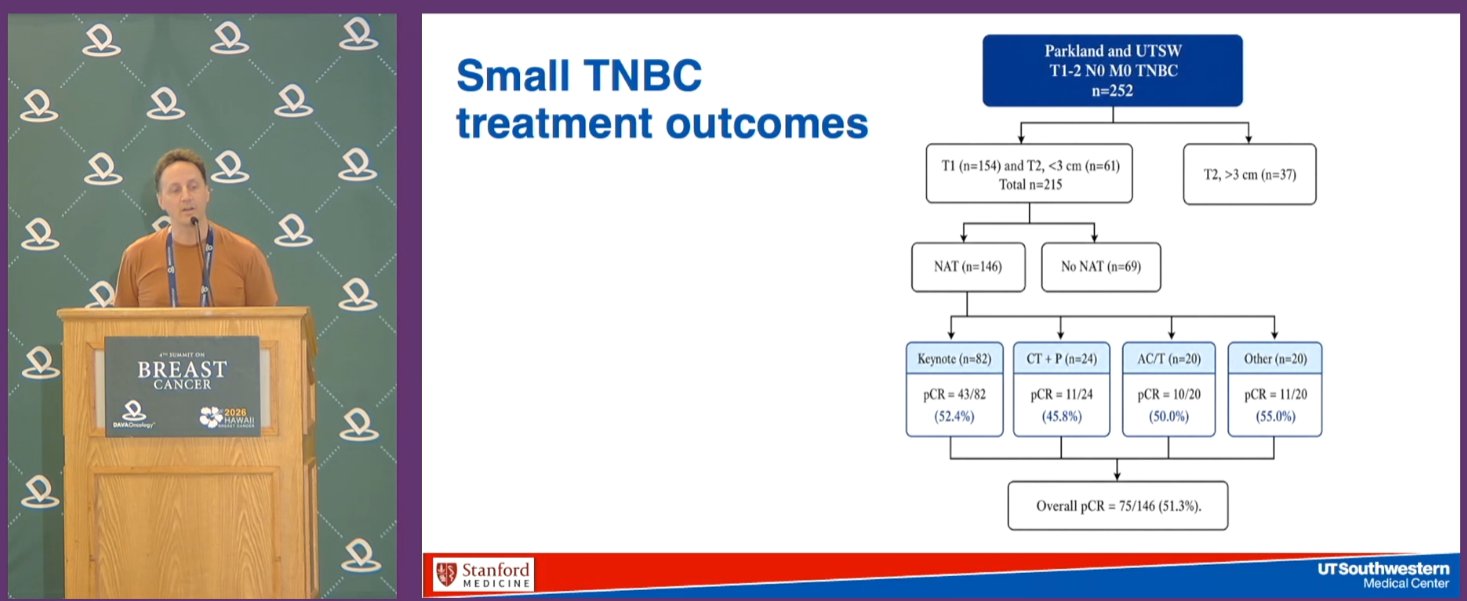
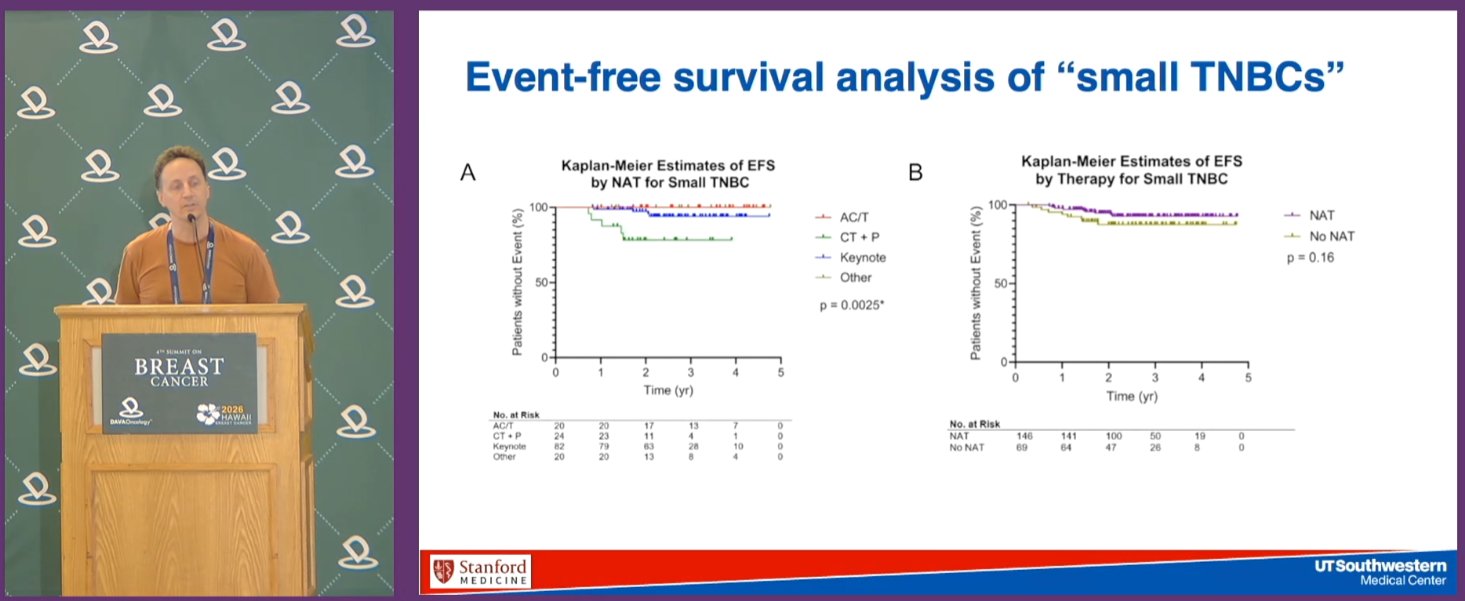
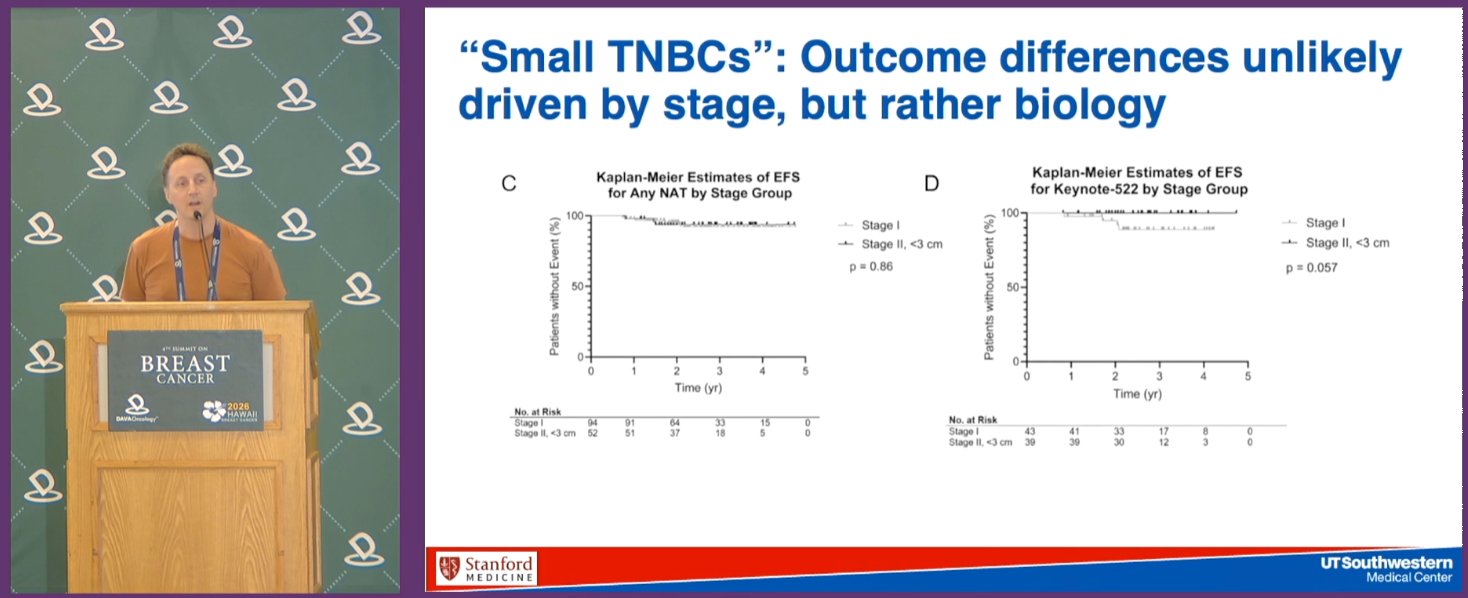
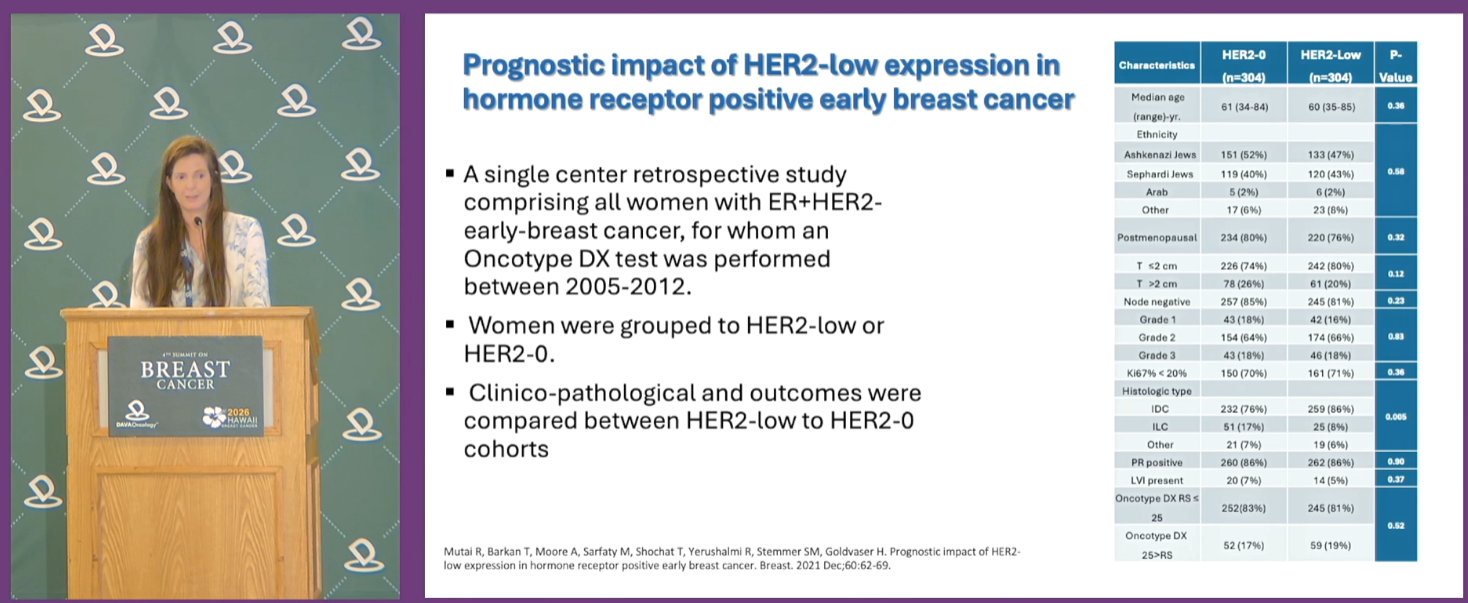
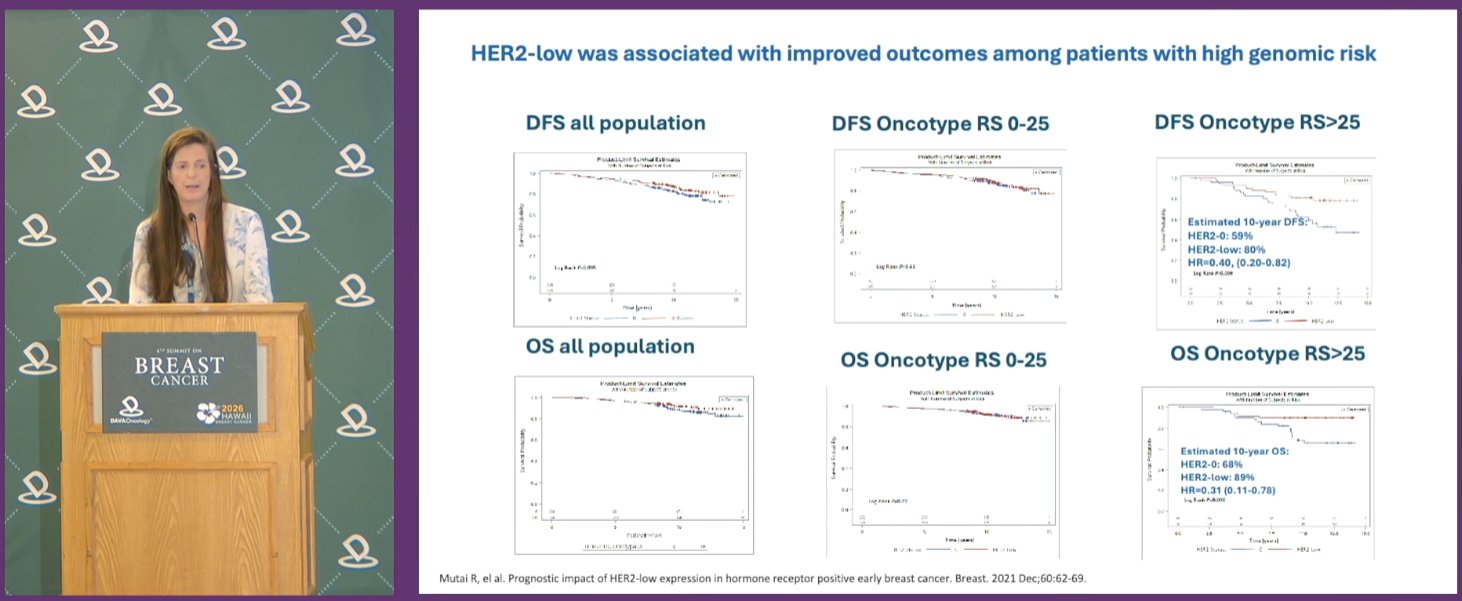
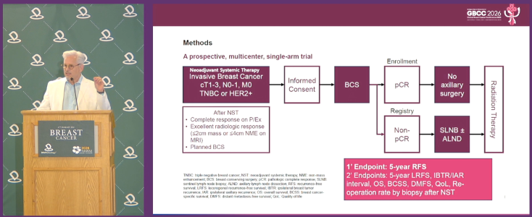
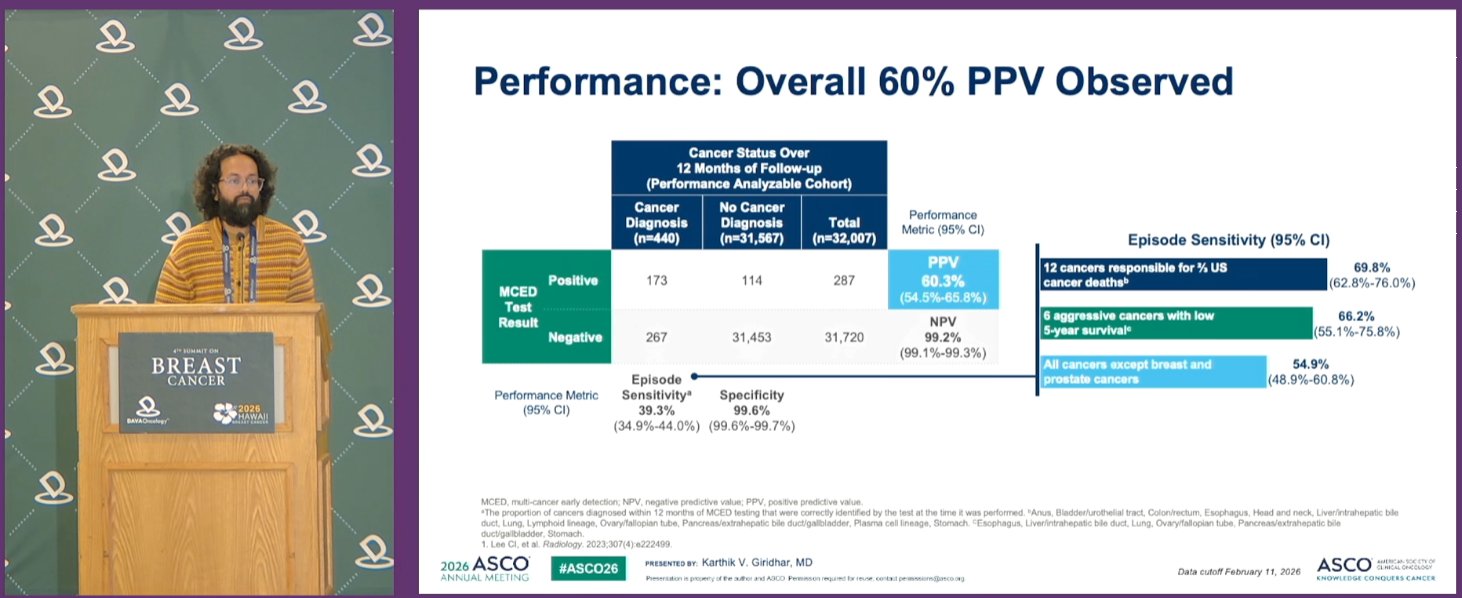
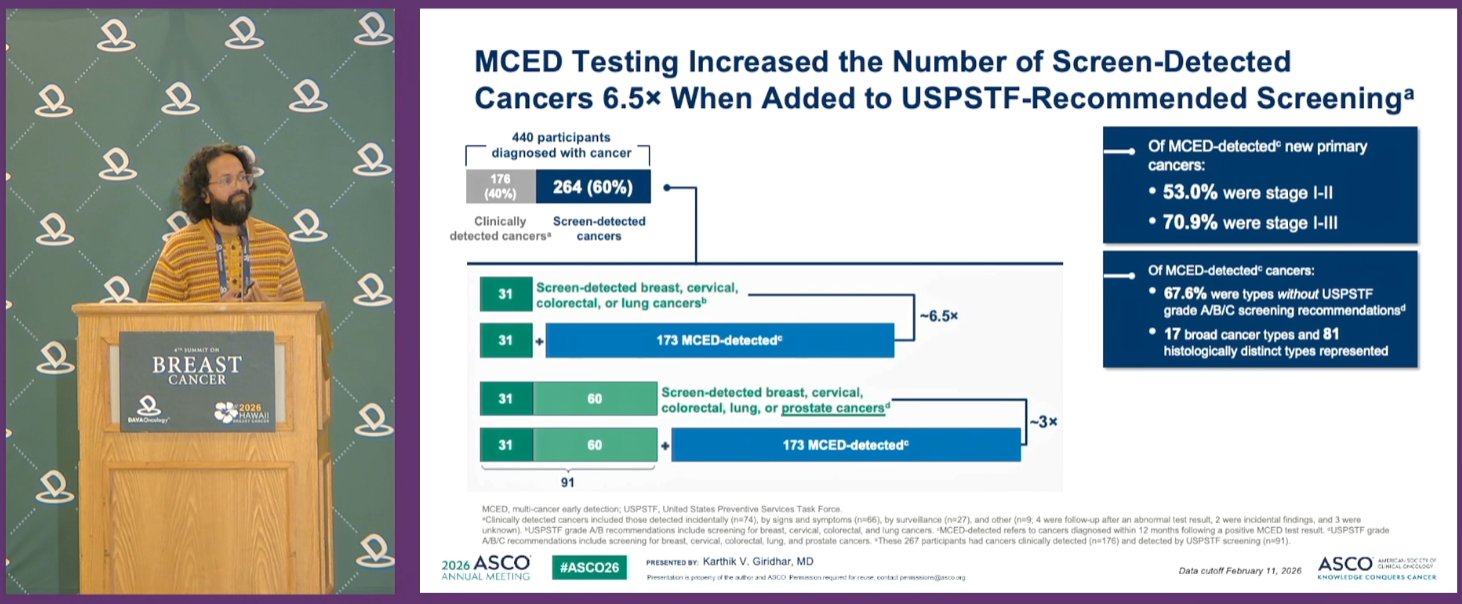
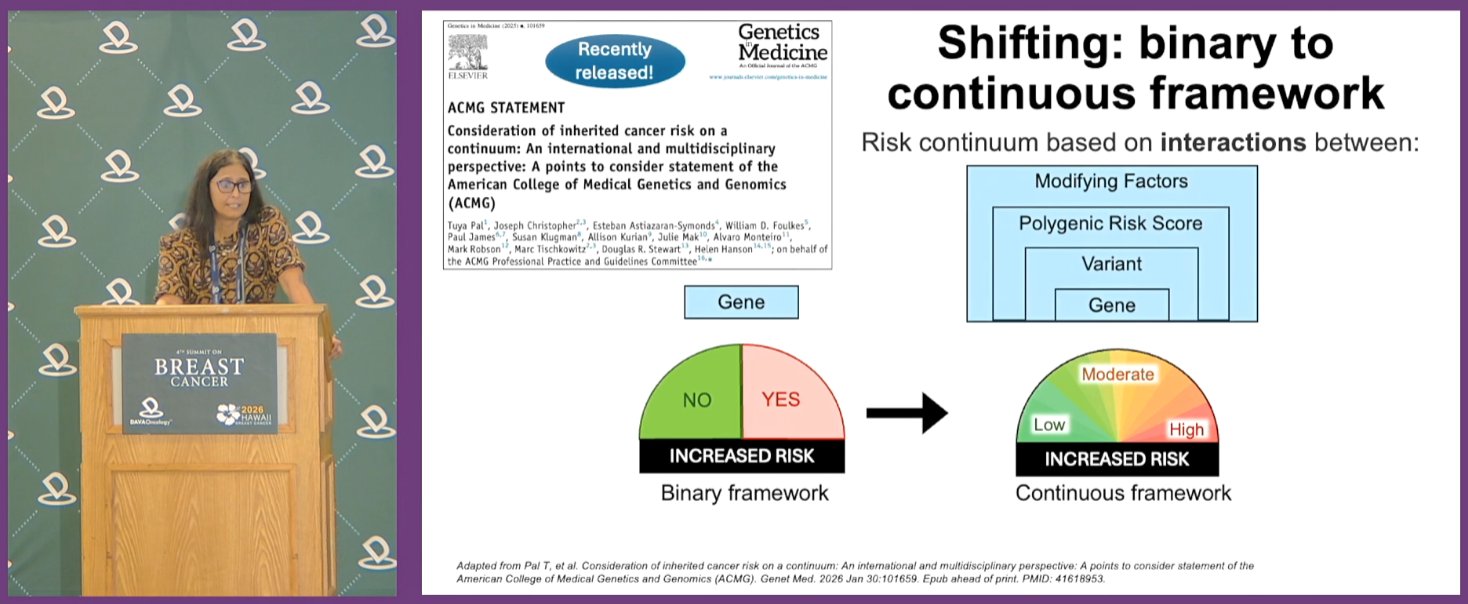
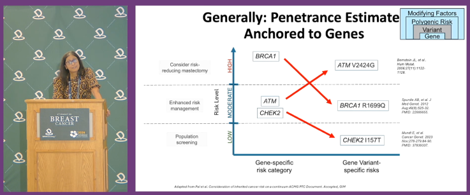
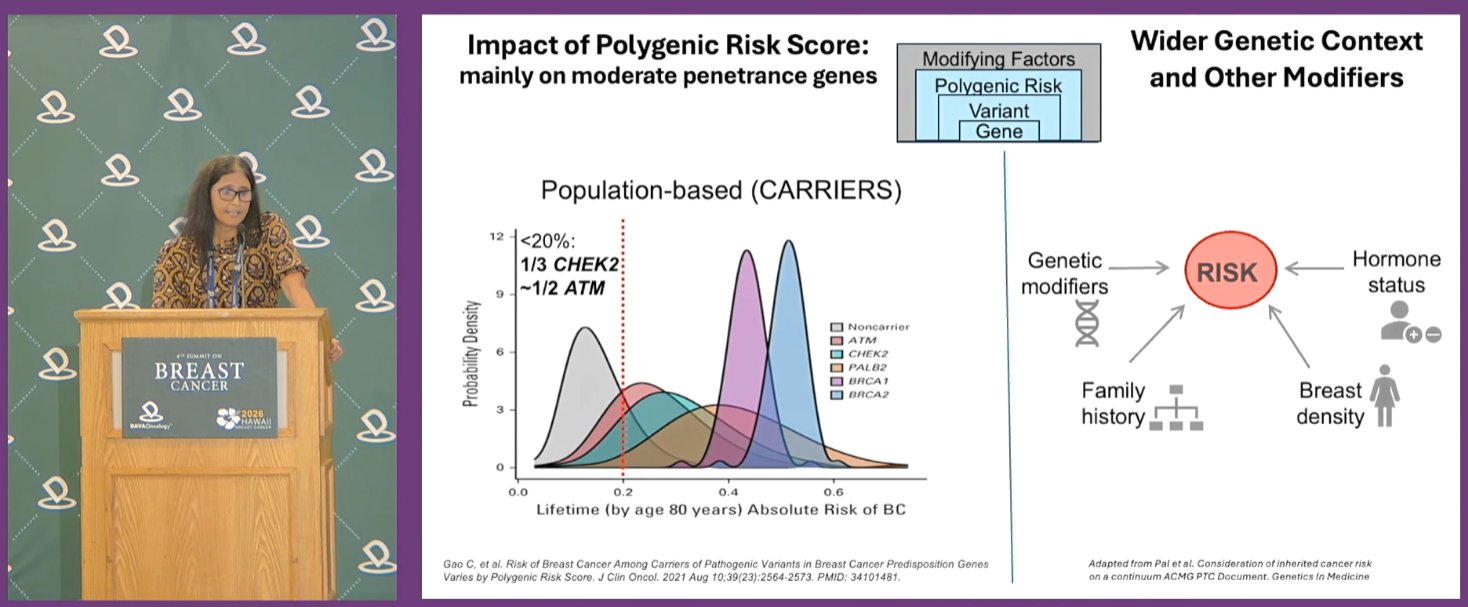
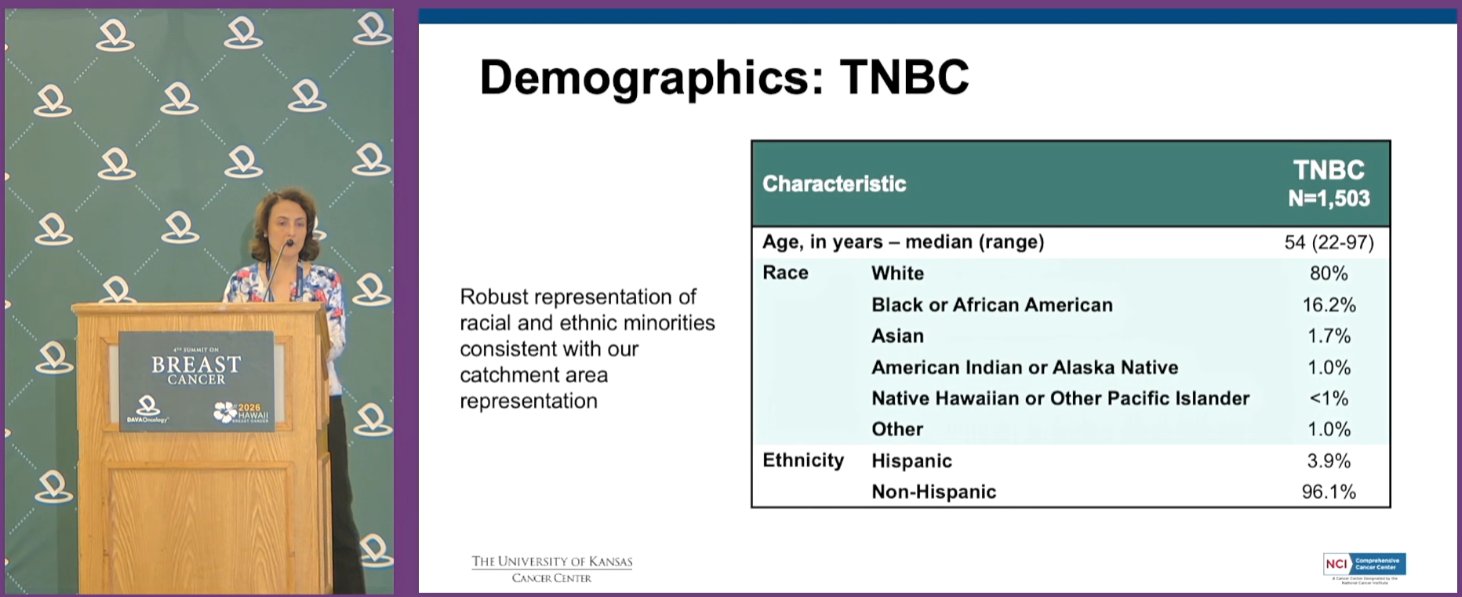
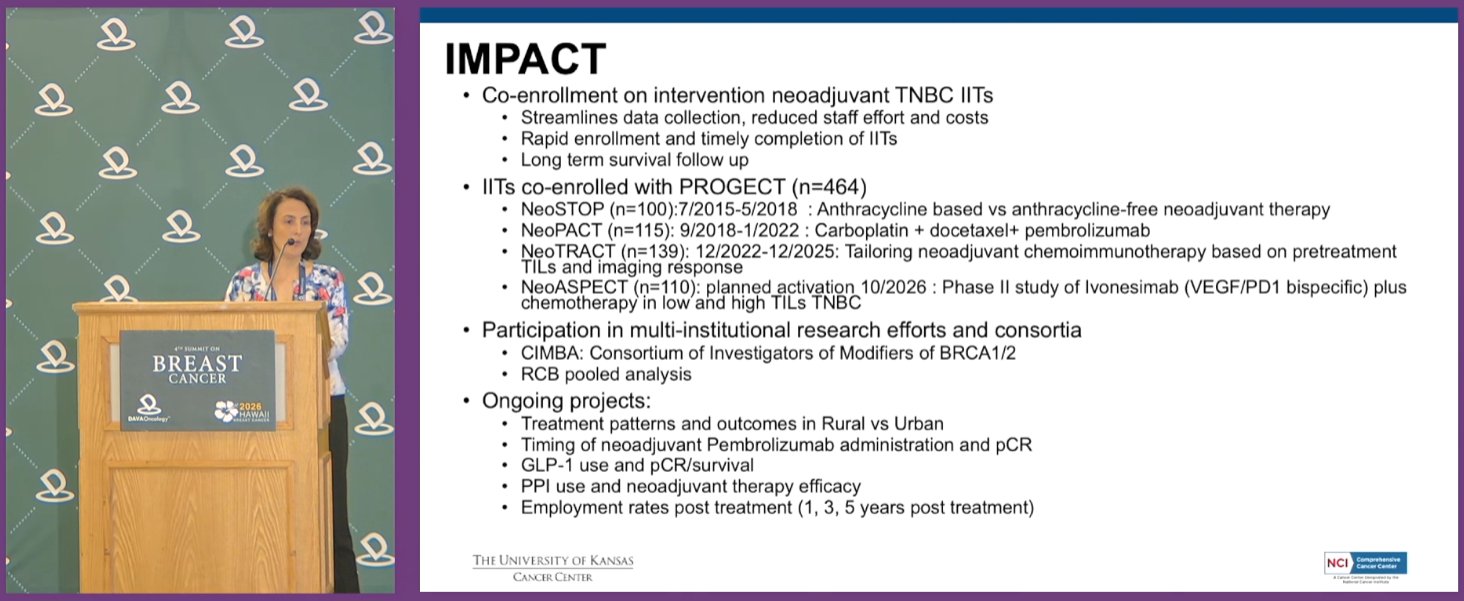
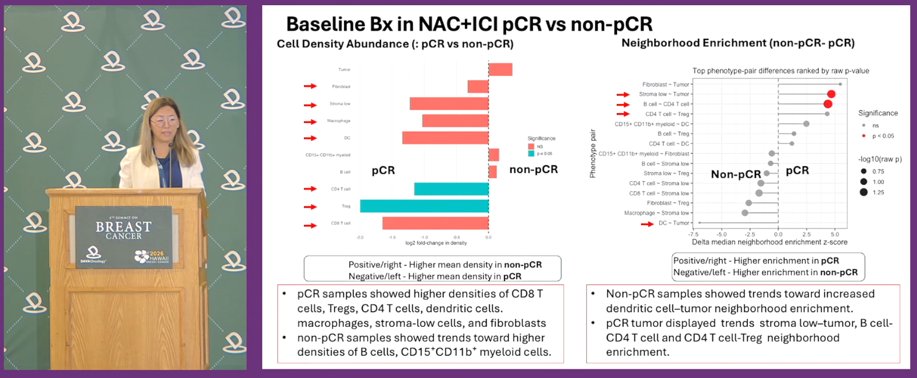
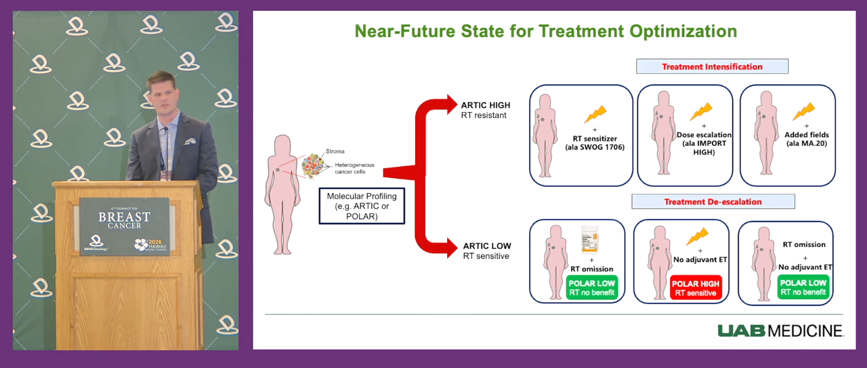
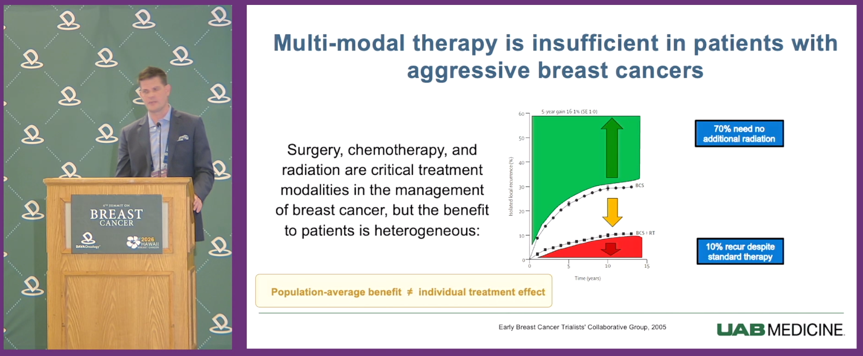
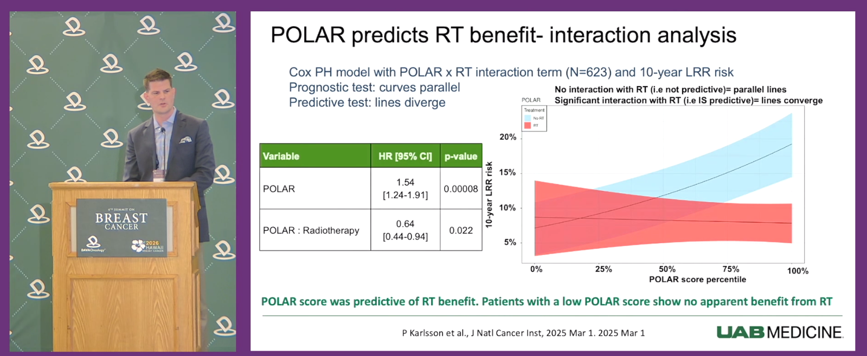
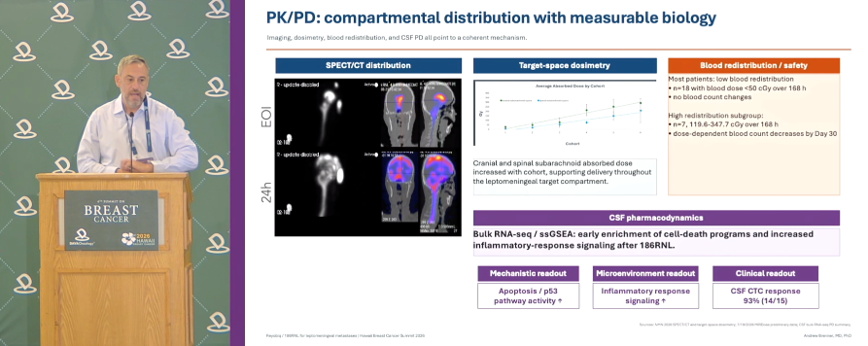
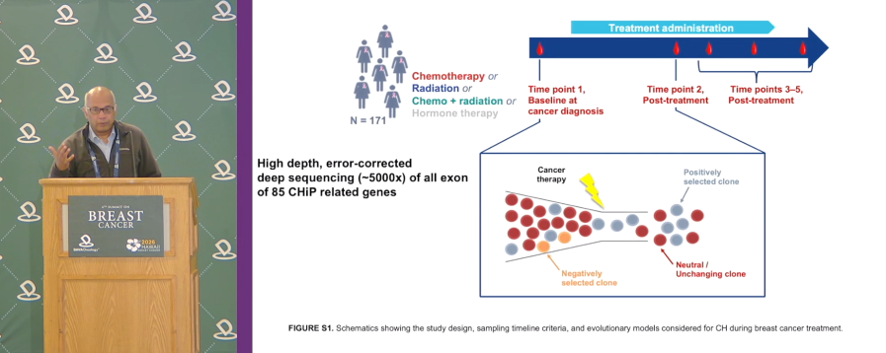
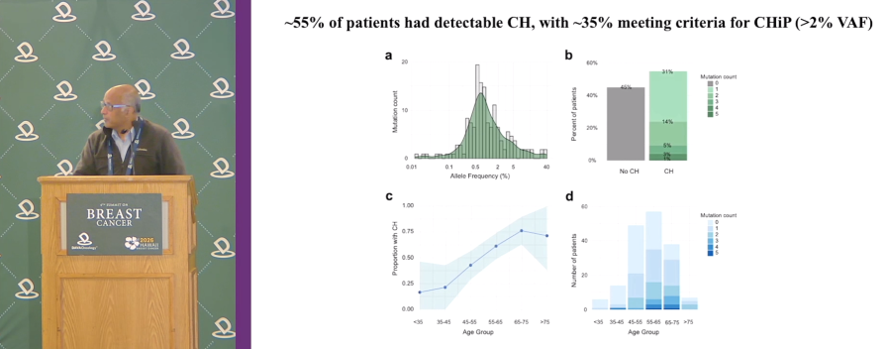
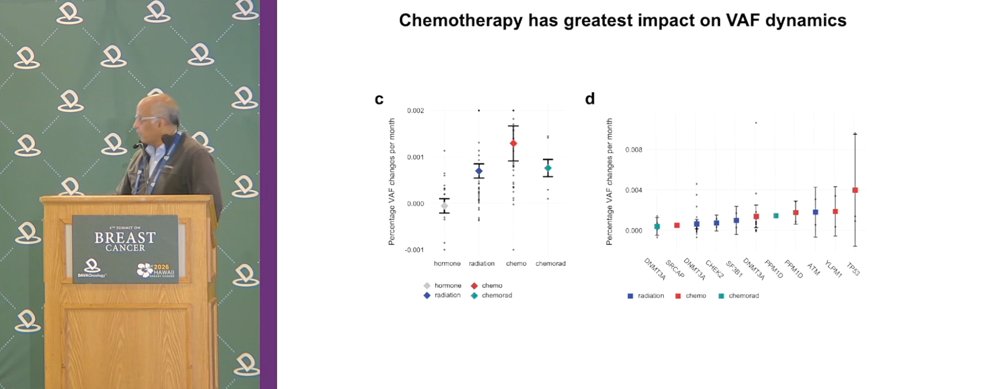
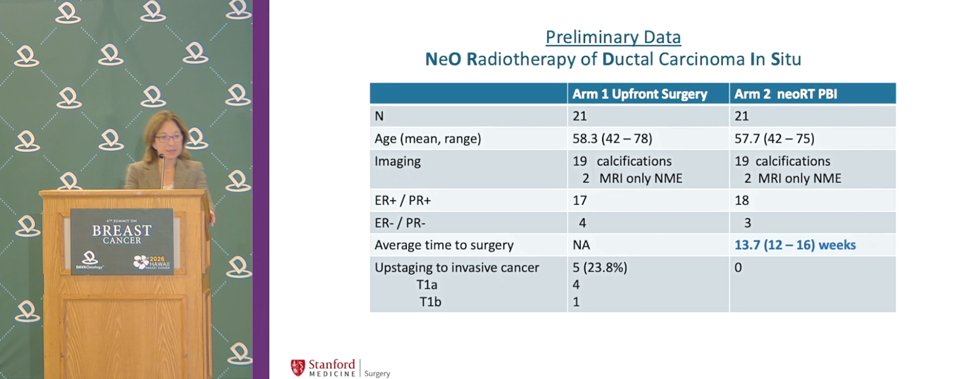
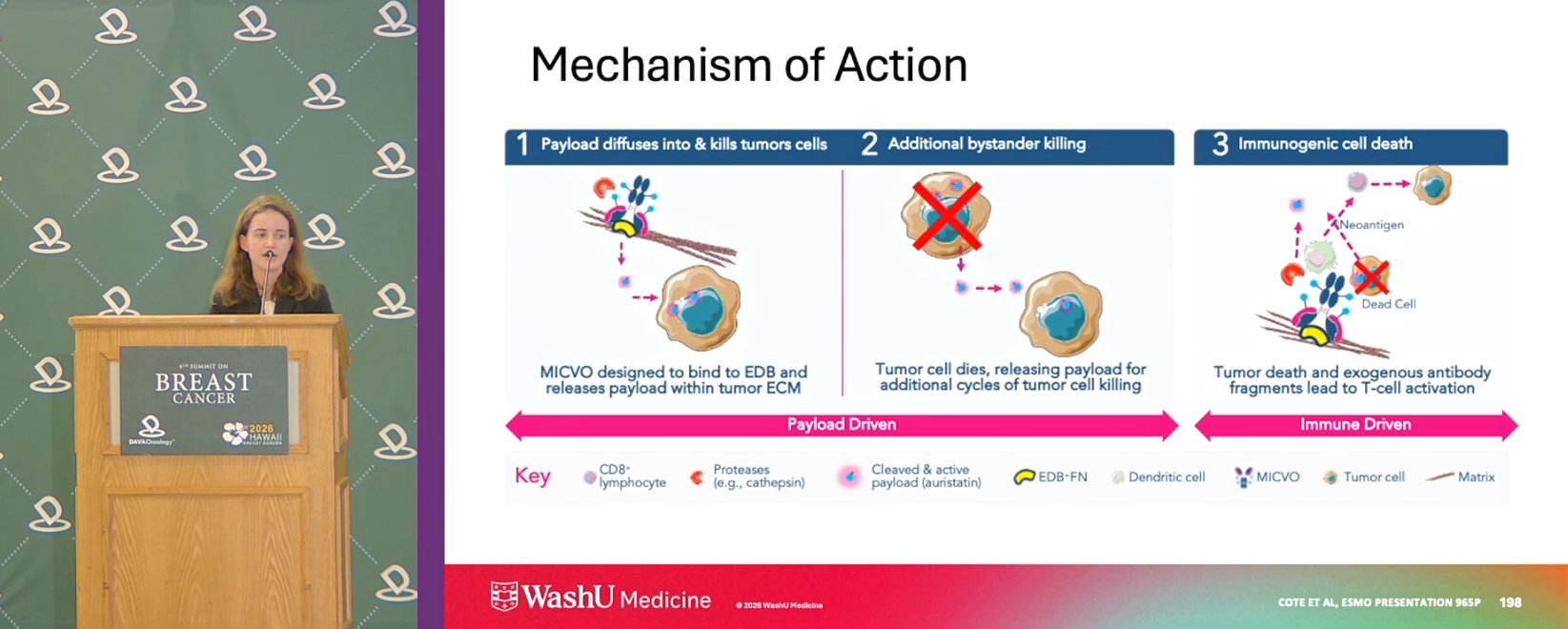
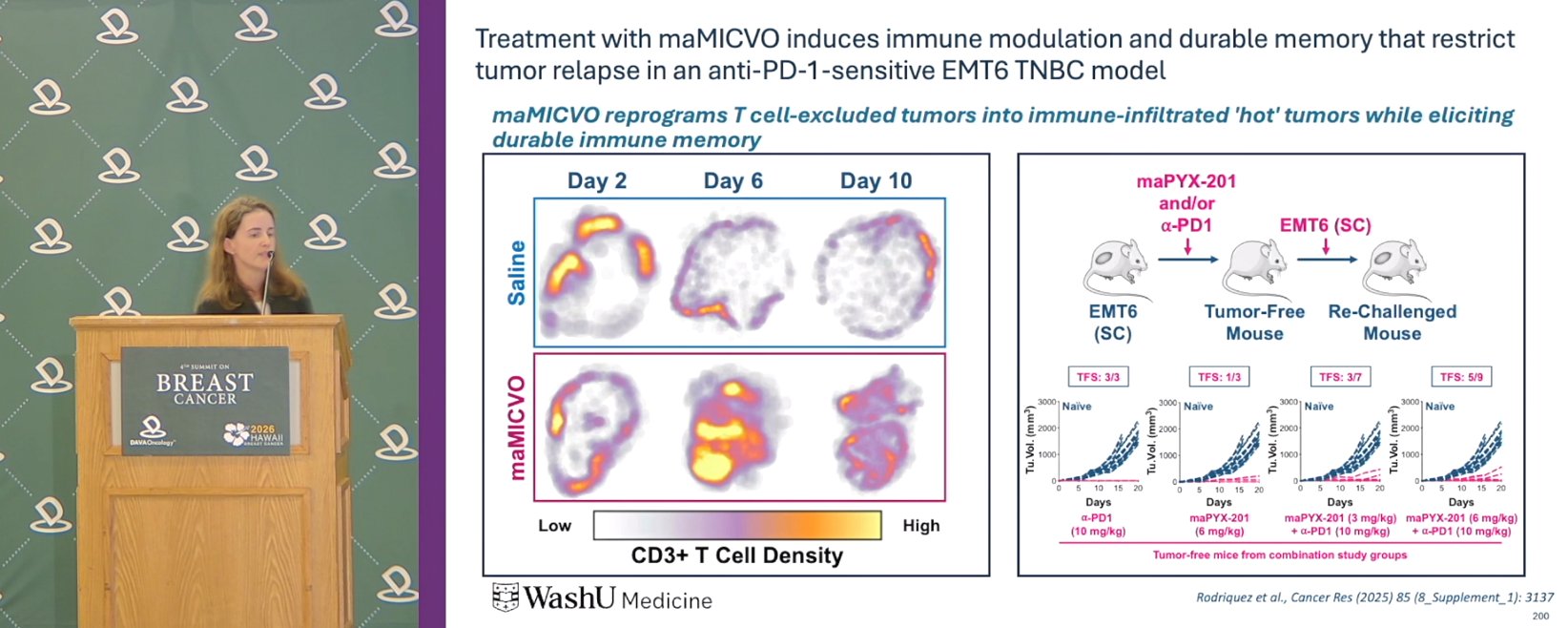
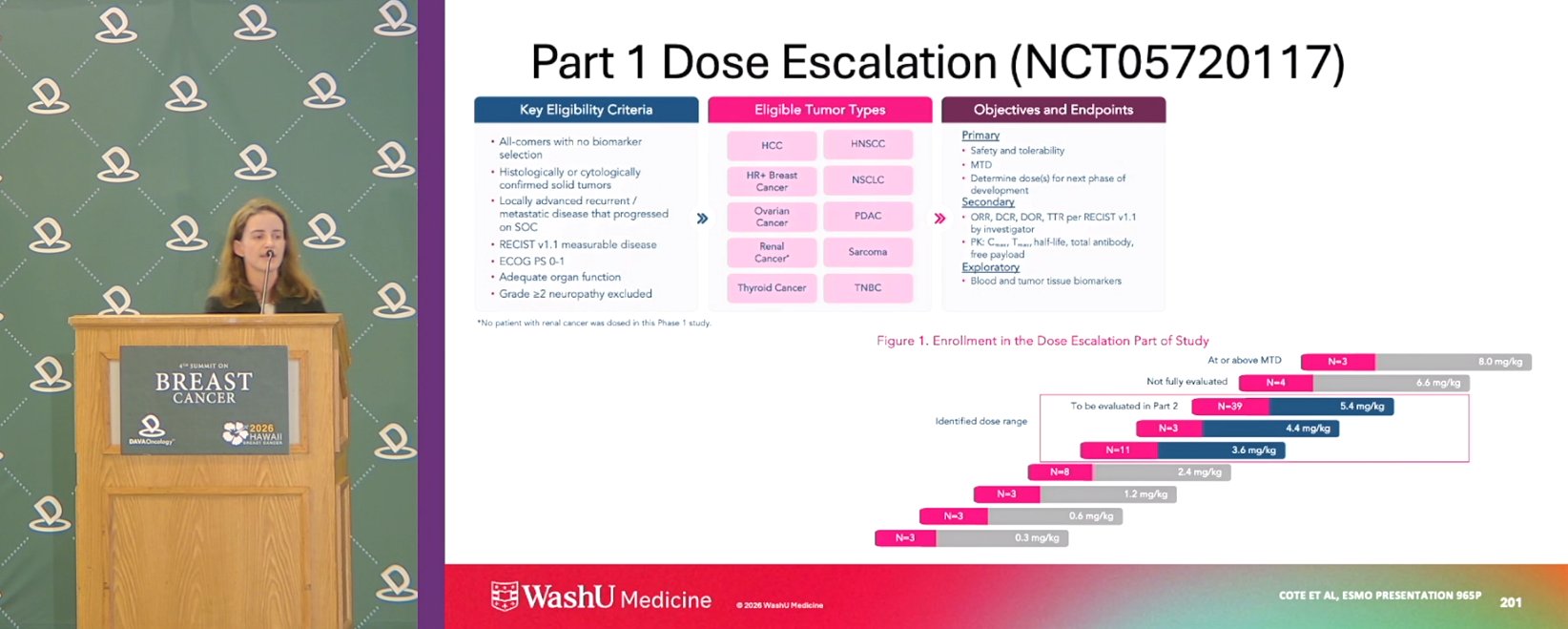
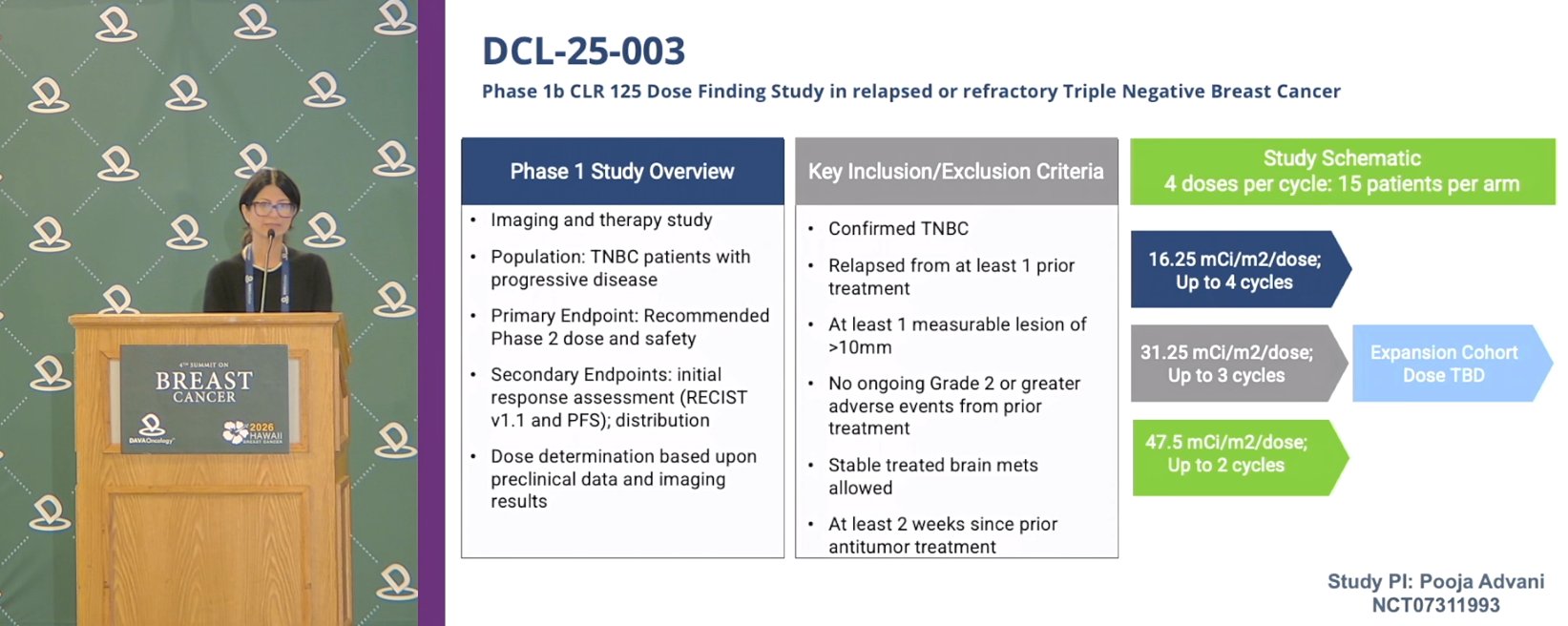
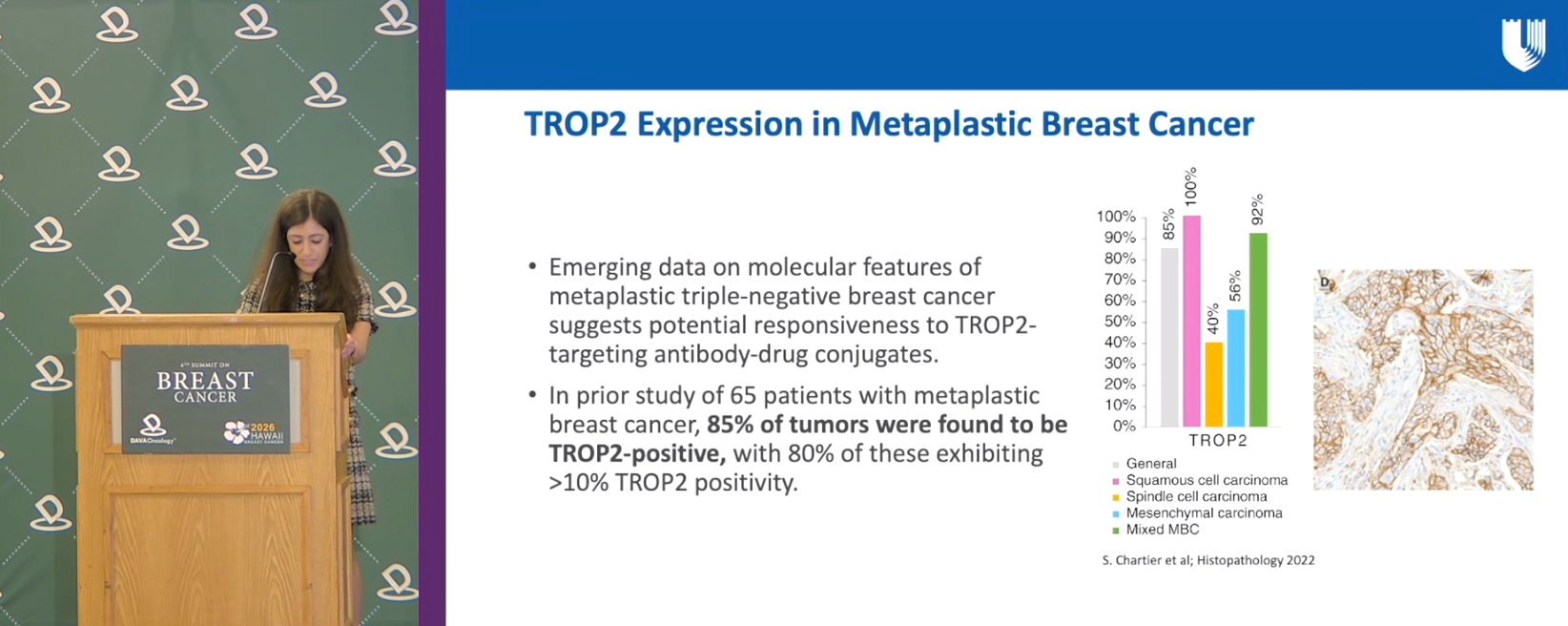
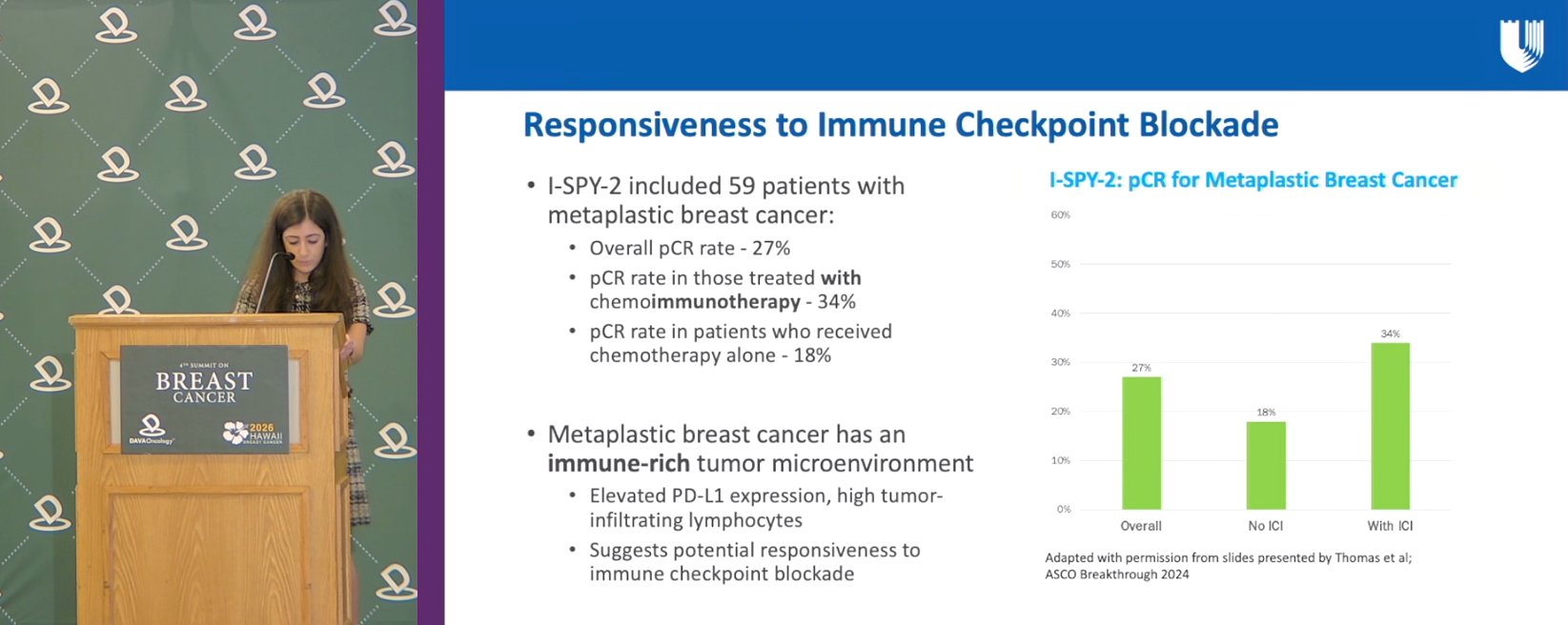
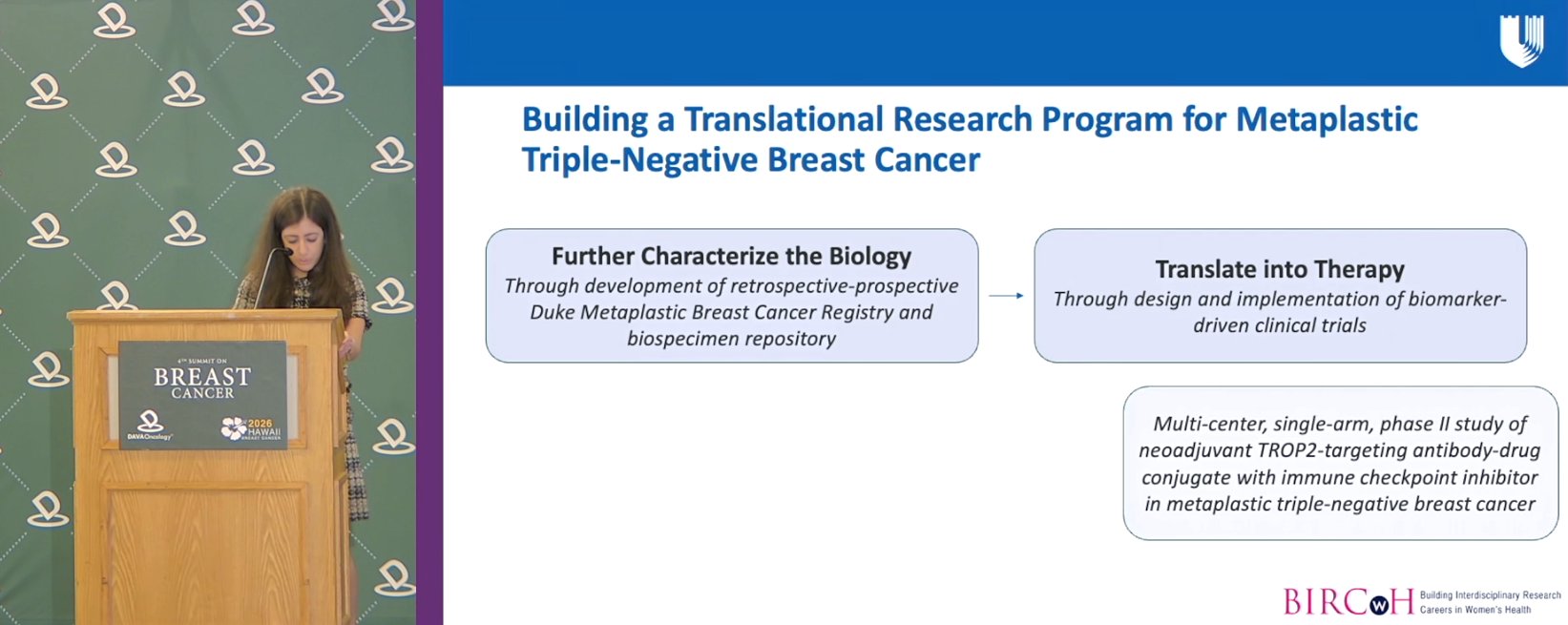
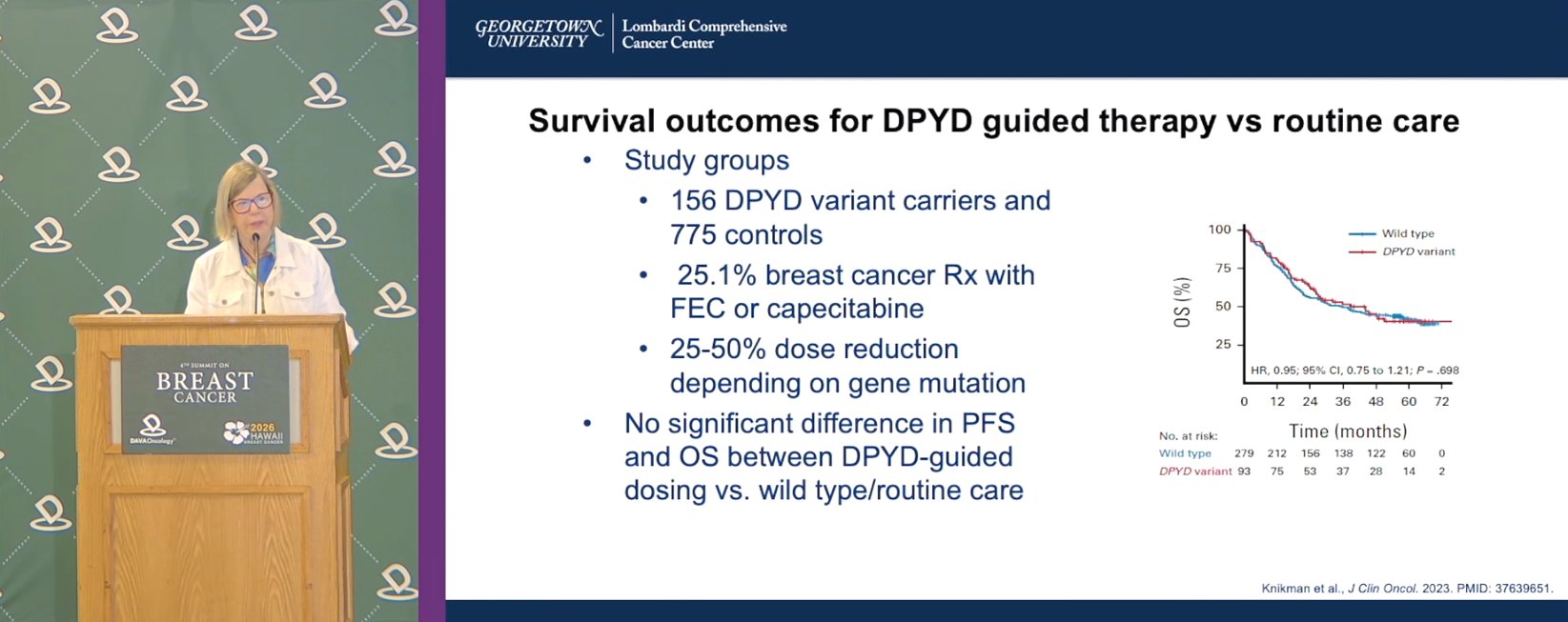
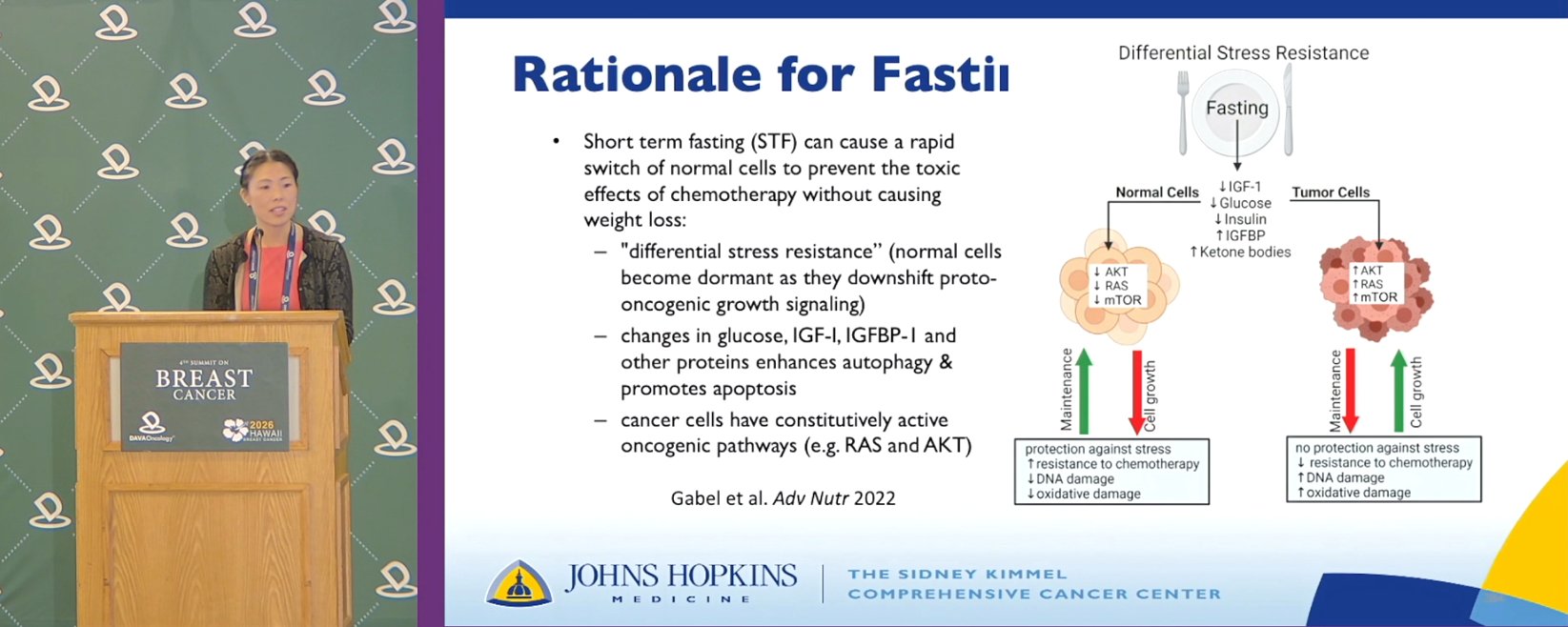
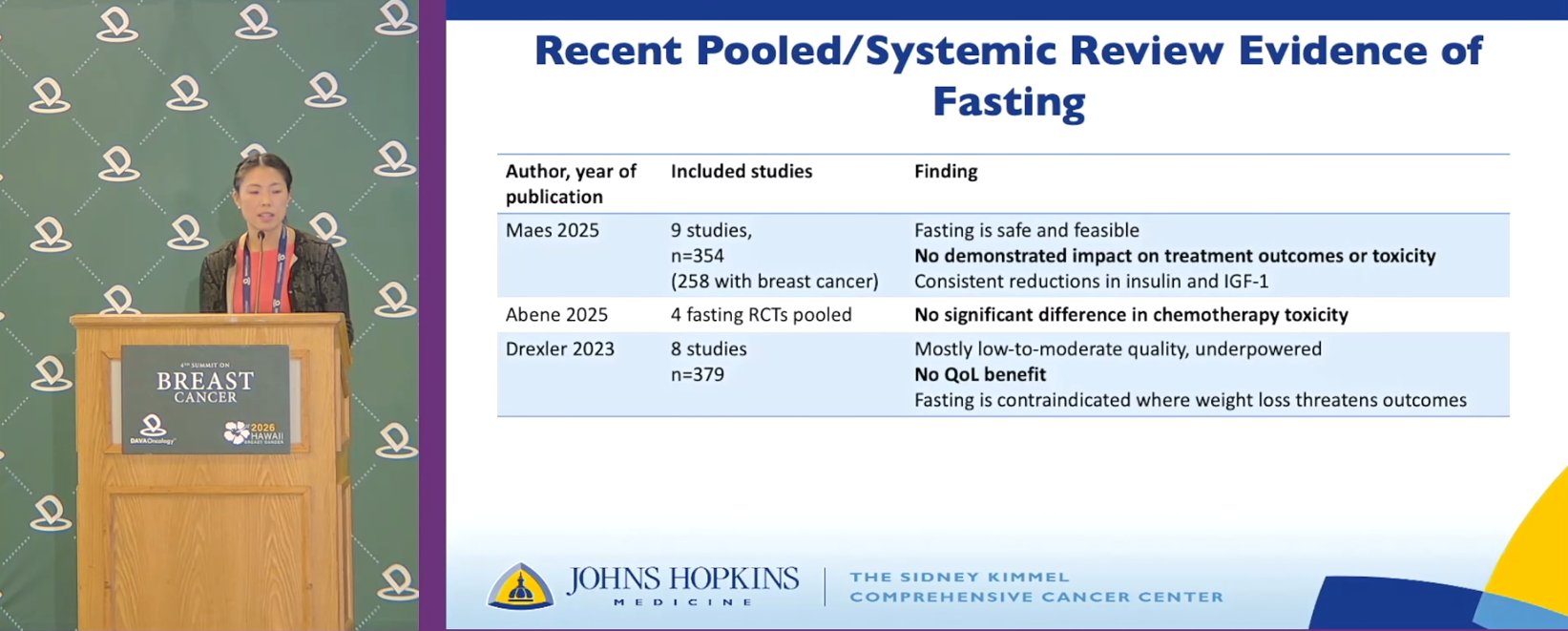
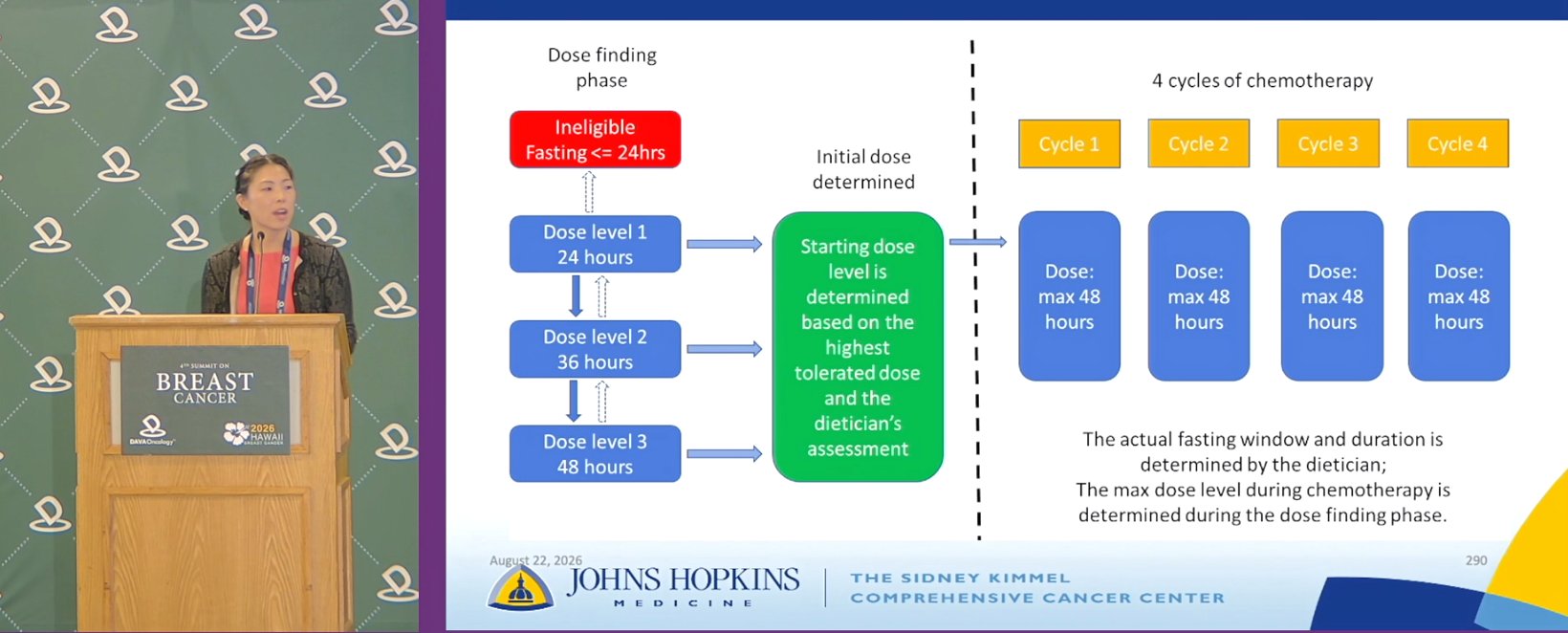
Dr. @BCJoyceO @TexasOncology reviewed retrospective data suggesting lower breast cancer incidence and improved outcomes with incretin mimetics, while the prospective TRIM-EBC trial is evaluating tirzepatide in patients with high-risk HR+/HER2− early breast cancer. #DAVABreast
[Slide 1]
Absolute Risk Reduction (ARR) in Breast Cancer
WHY GLP-1 RECEPTOR AGONISTS
Within Matched Dataset (N = 30,528)
MAY INFLUENCE BREAST CANCER RISK
MI
Purpose: To quantify the absolute reduction in the risk of breast cancer associated
with prior GLP-1 receptor agonist exposure.
There are several reasons to believe GLP-1 receptor agonists could influence cancer risk.
REDUCE
REDUCE SYSTEMIC
EFFECTS ON CELLULAR
Measure
Estimate
95% Wald CI
1
2
IMPROVE INSULIN RESISTANCE
3
4
BODY WEIGHT
AND METABOLIC DYSFUNCTION
INFLAMMATION
METABOLISM AND
TUMOR BIOLOGY
No GLP-1 Risk
2.31%
(2.07%, 2.55%)
With GLP-1 Risk
1.62%
(1.42%, 1.82%)
Body weight reduction
Absolute Risk Reduction (ARR)
0.69%
(0.38%, 1.01%)
through bariatric surgery
reduces breast cancer risk.
BREAST
BREAST
CANCER
EVIDENCE: BARIATRIC SURGERY
CANCER
i
Women with prior GLP-1 receptor agonist exposure had an absolute reduction of 0.69%
Lower risk of breast cancer
improve glucose control, insulin
May lower chronic inflammation,
Prectinical studies suggest potential
in the risk of breast cancer compared with women without exposure.
2026
RR 0.56
direct effects on cellular metabolism
sensitivity, and metabolic health-
an important contributor
(95% CI 0.44-0.71;
factors linked to lower cancer risk.
to tumor development.
proliferation, and tumor
microenvironment
Conclusion: GLP-1 receptor agonist exposure is associated with an absolute
<0.00001)
reduction in breast cancer risk in this matched cohort.
Int Mol Sci 24:6192, 2023
IAMA 331:38, 2024
Nat Cancer 7:260-271, 2026
Science (1979) 385:258-260, 2024
McDonald E et al. ASCO 2026
.
TriNetX RWE Breast Cancer Outcomes with GLP-1 RAs
Ongoing Clinical Trials: GLP-1 RAs in
Breast Cancer
RA -
cause mortality - insulin or M
TriNetX 68 US EMRs
10
10
0.8
0.5
Obesity or T2DM
Prospective Evidence on the Horizon
0.5
0.5
PSM breast cancer
Name
Insuliner methermouse
prognostic factors
.
NCT/Trial
Agent
BC Subtype
Setting
Primary
Secondary
Design
0.4
3.4
Obesity Pts
Endpoint
Endpoint
Overal
T2DM Pts
0.2
0.2
Diagnosis 2006 to
NCT06518837
Tirzepatide
HR+/HER2-
Active
>5% weight loss
IDFS, DRFS, changes in BMI,
FITWISE Trial
BC (adjuvant)
adjuvant
body fat distribution,
00:
during treatment,
Prospective
2023
metabolic markers, ctDNA;
Omene, C.
treatment
2
$
6
1
feasibility
metabolomic pathways and
Time.y
50% black
immune cell metabolism
($)
13
0
945
10-yr followup
pts
214
127
105
Insula
457
227
125
14
-
BREAST
Primary Endpoint:
BREAST
NCT06517212
Tirzepatide
HR+/HER2-
High-risk,
Metastatic
CIDNA clearance, TTR,
Prospective
CANCER
CANCER
TRIM-EBC Trial
high-risk BC
N+ early-
disease
DFS, Exploratory analysis
All cause mortality
(O'Shaughnessy
stage
prevention
of metabolic, hormonal
and Kelly)
and immune cell changes
Secondary: RFS
Tatum KL et al. JAMA Network OPEN 2026
.
---
[Slide 2]
Absolute Risk Reduction (ARR) in Breast Cancer
WHY GLP-1 RECEPTOR AGONISTS
Within Matched Dataset (N = 30,528)
MAY INFLUENCE BREAST CANCER RISK
MI
Purpose: To quantify the absolute reduction in the risk of breast cancer associated
with prior GLP-1 receptor agonist exposure.
There are several reasons to believe GLP-1 receptor agonists could influence cancer risk.
REDUCE
REDUCE SYSTEMIC
EFFECTS ON CELLULAR
Measure
Estimate
95% Wald CI
1
2
IMPROVE INSULIN RESISTANCE
3
4
BODY WEIGHT
AND METABOLIC DYSFUNCTION
INFLAMMATION
METABOLISM AND
TUMOR BIOLOGY
No GLP-1 Risk
2.31%
(2.07%, 2.55%)
With GLP-1 Risk
1.62%
(1.42%, 1.82%)
Body weight reduction
Absolute Risk Reduction (ARR)
0.69%
(0.38%, 1.01%)
through bariatric surgery
reduces breast cancer risk.
BREAST
BREAST
CANCER
EVIDENCE: BARIATRIC SURGERY
CANCER
i
Women with prior GLP-1 receptor agonist exposure had an absolute reduction of 0.69%
Lower risk of breast cancer
improve glucose control, insulin
May lower chronic inflammation,
Prectinical studies suggest potential
in the risk of breast cancer compared with women without exposure.
2026
RR 0.56
direct effects on cellular metabolism
sensitivity, and metabolic health-
an important contributor
(95% CI 0.44-0.71;
factors linked to lower cancer risk.
to tumor development.
proliferation, and tumor
microenvironment
Conclusion: GLP-1 receptor agonist exposure is associated with an absolute
<0.00001)
reduction in breast cancer risk in this matched cohort.
Int Mol Sci 24:6192, 2023
IAMA 331:38, 2024
Nat Cancer 7:260-271, 2026
Science (1979) 385:258-260, 2024
McDonald E et al. ASCO 2026
.
TriNetX RWE Breast Cancer Outcomes with GLP-1 RAs
Ongoing Clinical Trials: GLP-1 RAs in
Breast Cancer
RA -
cause mortality - insulin or M
TriNetX 68 US EMRs
10
10
0.8
0.5
Obesity or T2DM
Prospective Evidence on the Horizon
0.5
0.5
PSM breast cancer
Name
Insuliner methermouse
prognostic factors
.
NCT/Trial
Agent
BC Subtype
Setting
Primary
Secondary
Design
0.4
3.4
Obesity Pts
Endpoint
Endpoint
Overal
T2DM Pts
0.2
0.2
Diagnosis 2006 to
NCT06518837
Tirzepatide
HR+/HER2-
Active
>5% weight loss
IDFS, DRFS, changes in BMI,
FITWISE Trial
BC (adjuvant)
adjuvant
body fat distribution,
00:
during treatment,
Prospective
2023
metabolic markers, ctDNA;
Omene, C.
treatment
2
$
6
1
feasibility
metabolomic pathways and
Time.y
50% black
immune cell metabolism
($)
13
0
945
10-yr followup
pts
214
127
105
Insula
457
227
125
14
-
BREAST
Primary Endpoint:
BREAST
NCT06517212
Tirzepatide
HR+/HER2-
High-risk,
Metastatic
CIDNA clearance, TTR,
Prospective
CANCER
CANCER
TRIM-EBC Trial
high-risk BC
N+ early-
disease
DFS, Exploratory analysis
All cause mortality
(O'Shaughnessy
stage
prevention
of metabolic, hormonal
and Kelly)
and immune cell changes
Secondary: RFS
Tatum KL et al. JAMA Network OPEN 2026
.
---
[Slide 3]
Absolute Risk Reduction (ARR) in Breast Cancer
WHY GLP-1 RECEPTOR AGONISTS
Within Matched Dataset (N = 30,528)
MAY INFLUENCE BREAST CANCER RISK
MI
Purpose: To quantify the absolute reduction in the risk of breast cancer associated
with prior GLP-1 receptor agonist exposure.
There are several reasons to believe GLP-1 receptor agonists could influence cancer risk.
REDUCE
REDUCE SYSTEMIC
EFFECTS ON CELLULAR
Measure
Estimate
95% Wald CI
1
2
IMPROVE INSULIN RESISTANCE
3
4
BODY WEIGHT
AND METABOLIC DYSFUNCTION
INFLAMMATION
METABOLISM AND
TUMOR BIOLOGY
No GLP-1 Risk
2.31%
(2.07%, 2.55%)
With GLP-1 Risk
1.62%
(1.42%, 1.82%)
Body weight reduction
Absolute Risk Reduction (ARR)
0.69%
(0.38%, 1.01%)
through bariatric surgery
reduces breast cancer risk.
BREAST
BREAST
CANCER
EVIDENCE: BARIATRIC SURGERY
CANCER
i
Women with prior GLP-1 receptor agonist exposure had an absolute reduction of 0.69%
Lower risk of breast cancer
improve glucose control, insulin
May lower chronic inflammation,
Prectinical studies suggest potential
in the risk of breast cancer compared with women without exposure.
2026
RR 0.56
direct effects on cellular metabolism
sensitivity, and metabolic health-
an important contributor
(95% CI 0.44-0.71;
factors linked to lower cancer risk.
to tumor development.
proliferation, and tumor
microenvironment
Conclusion: GLP-1 receptor agonist exposure is associated with an absolute
<0.00001)
reduction in breast cancer risk in this matched cohort.
Int Mol Sci 24:6192, 2023
IAMA 331:38, 2024
Nat Cancer 7:260-271, 2026
Science (1979) 385:258-260, 2024
McDonald E et al. ASCO 2026
.
TriNetX RWE Breast Cancer Outcomes with GLP-1 RAs
Ongoing Clinical Trials: GLP-1 RAs in
Breast Cancer
RA -
cause mortality - insulin or M
TriNetX 68 US EMRs
10
10
0.8
0.5
Obesity or T2DM
Prospective Evidence on the Horizon
0.5
0.5
PSM breast cancer
Name
Insuliner methermouse
prognostic factors
.
NCT/Trial
Agent
BC Subtype
Setting
Primary
Secondary
Design
0.4
3.4
Obesity Pts
Endpoint
Endpoint
Overal
T2DM Pts
0.2
0.2
Diagnosis 2006 to
NCT06518837
Tirzepatide
HR+/HER2-
Active
>5% weight loss
IDFS, DRFS, changes in BMI,
FITWISE Trial
BC (adjuvant)
adjuvant
body fat distribution,
00:
during treatment,
Prospective
2023
metabolic markers, ctDNA;
Omene, C.
treatment
2
$
6
1
feasibility
metabolomic pathways and
Time.y
50% black
immune cell metabolism
($)
13
0
945
10-yr followup
pts
214
127
105
Insula
457
227
125
14
-
BREAST
Primary Endpoint:
BREAST
NCT06517212
Tirzepatide
HR+/HER2-
High-risk,
Metastatic
CIDNA clearance, TTR,
Prospective
CANCER
CANCER
TRIM-EBC Trial
high-risk BC
N+ early-
disease
DFS, Exploratory analysis
All cause mortality
(O'Shaughnessy
stage
prevention
of metabolic, hormonal
and Kelly)
and immune cell changes
Secondary: RFS
Tatum KL et al. JAMA Network OPEN 2026
.
---
[Slide 4]
Absolute Risk Reduction (ARR) in Breast Cancer
WHY GLP-1 RECEPTOR AGONISTS
Within Matched Dataset (N = 30,528)
MAY INFLUENCE BREAST CANCER RISK
MI
Purpose: To quantify the absolute reduction in the risk of breast cancer associated
with prior GLP-1 receptor agonist exposure.
There are several reasons to believe GLP-1 receptor agonists could influence cancer risk.
REDUCE
REDUCE SYSTEMIC
EFFECTS ON CELLULAR
Measure
Estimate
95% Wald CI
1
2
IMPROVE INSULIN RESISTANCE
3
4
BODY WEIGHT
AND METABOLIC DYSFUNCTION
INFLAMMATION
METABOLISM AND
TUMOR BIOLOGY
No GLP-1 Risk
2.31%
(2.07%, 2.55%)
With GLP-1 Risk
1.62%
(1.42%, 1.82%)
Body weight reduction
Absolute Risk Reduction (ARR)
0.69%
(0.38%, 1.01%)
through bariatric surgery
reduces breast cancer risk.
BREAST
BREAST
CANCER
EVIDENCE: BARIATRIC SURGERY
CANCER
i
Women with prior GLP-1 receptor agonist exposure had an absolute reduction of 0.69%
Lower risk of breast cancer
improve glucose control, insulin
May lower chronic inflammation,
Prectinical studies suggest potential
in the risk of breast cancer compared with women without exposure.
2026
RR 0.56
direct effects on cellular metabolism
sensitivity, and metabolic health-
an important contributor
(95% CI 0.44-0.71;
factors linked to lower cancer risk.
to tumor development.
proliferation, and tumor
microenvironment
Conclusion: GLP-1 receptor agonist exposure is associated with an absolute
<0.00001)
reduction in breast cancer risk in this matched cohort.
Int Mol Sci 24:6192, 2023
IAMA 331:38, 2024
Nat Cancer 7:260-271, 2026
Science (1979) 385:258-260, 2024
McDonald E et al. ASCO 2026
.
TriNetX RWE Breast Cancer Outcomes with GLP-1 RAs
Ongoing Clinical Trials: GLP-1 RAs in
Breast Cancer
RA -
cause mortality - insulin or M
TriNetX 68 US EMRs
10
10
0.8
0.5
Obesity or T2DM
Prospective Evidence on the Horizon
0.5
0.5
PSM breast cancer
Name
Insuliner methermouse
prognostic factors
.
NCT/Trial
Agent
BC Subtype
Setting
Primary
Secondary
Design
0.4
3.4
Obesity Pts
Endpoint
Endpoint
Overal
T2DM Pts
0.2
0.2
Diagnosis 2006 to
NCT06518837
Tirzepatide
HR+/HER2-
Active
>5% weight loss
IDFS, DRFS, changes in BMI,
FITWISE Trial
BC (adjuvant)
adjuvant
body fat distribution,
00:
during treatment,
Prospective
2023
metabolic markers, ctDNA;
Omene, C.
treatment
2
$
6
1
feasibility
metabolomic pathways and
Time.y
50% black
immune cell metabolism
($)
13
0
945
10-yr followup
pts
214
127
105
Insula
457
227
125
14
-
BREAST
Primary Endpoint:
BREAST
NCT06517212
Tirzepatide
HR+/HER2-
High-risk,
Metastatic
CIDNA clearance, TTR,
Prospective
CANCER
CANCER
TRIM-EBC Trial
high-risk BC
N+ early-
disease
DFS, Exploratory analysis
All cause mortality
(O'Shaughnessy
stage
prevention
of metabolic, hormonal
and Kelly)
and immune cell changes
Secondary: RFS
Tatum KL et al. JAMA Network OPEN 2026
.