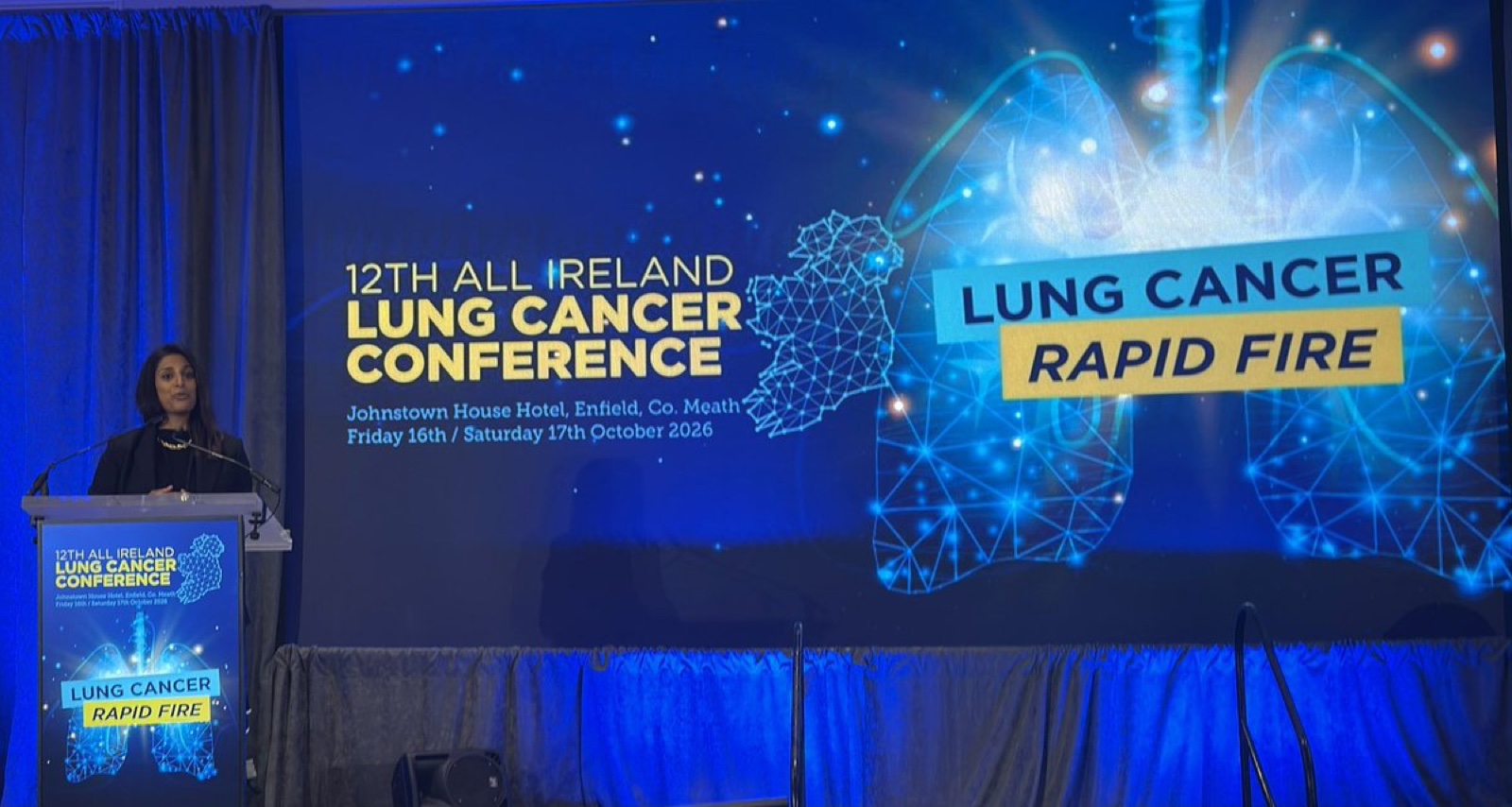
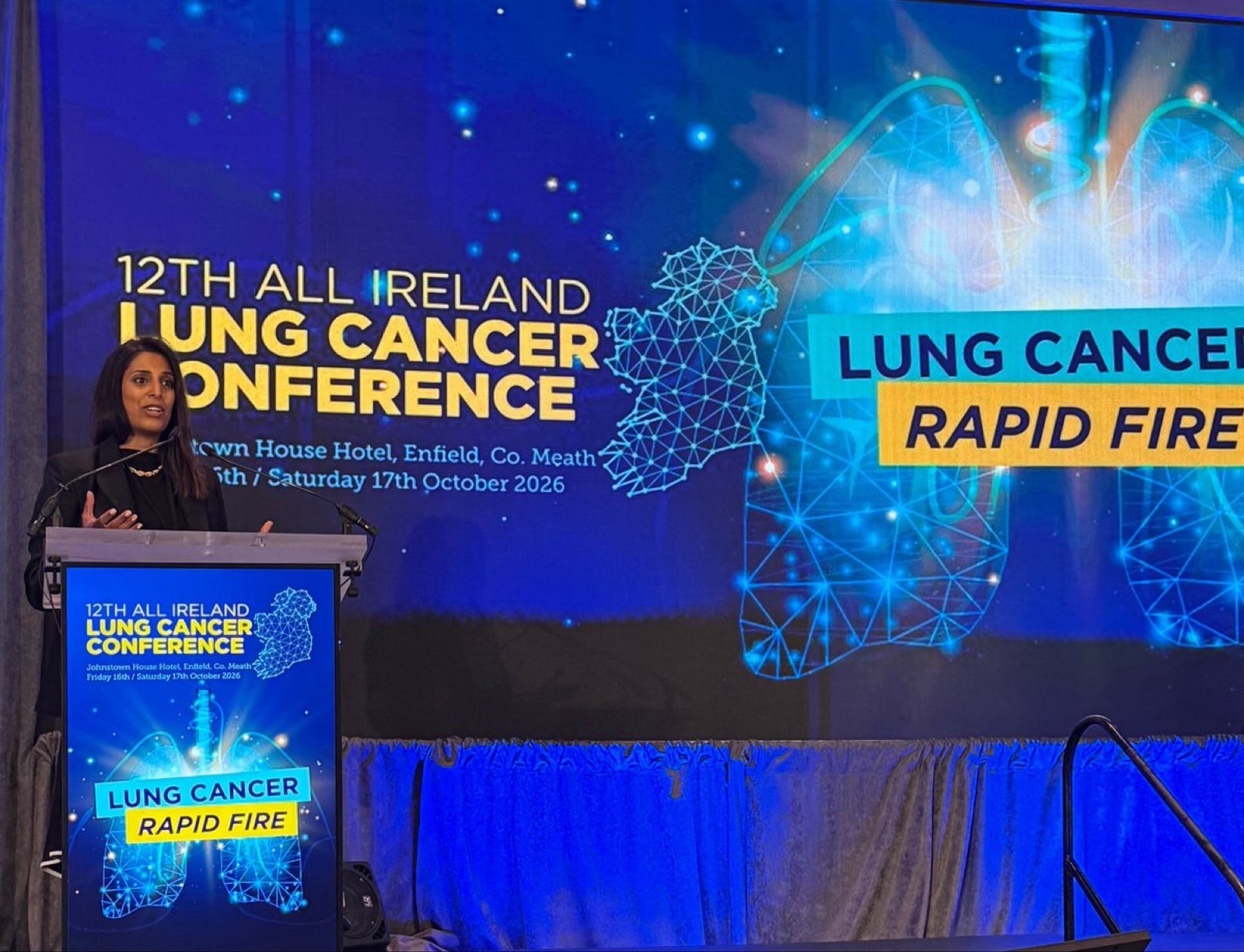
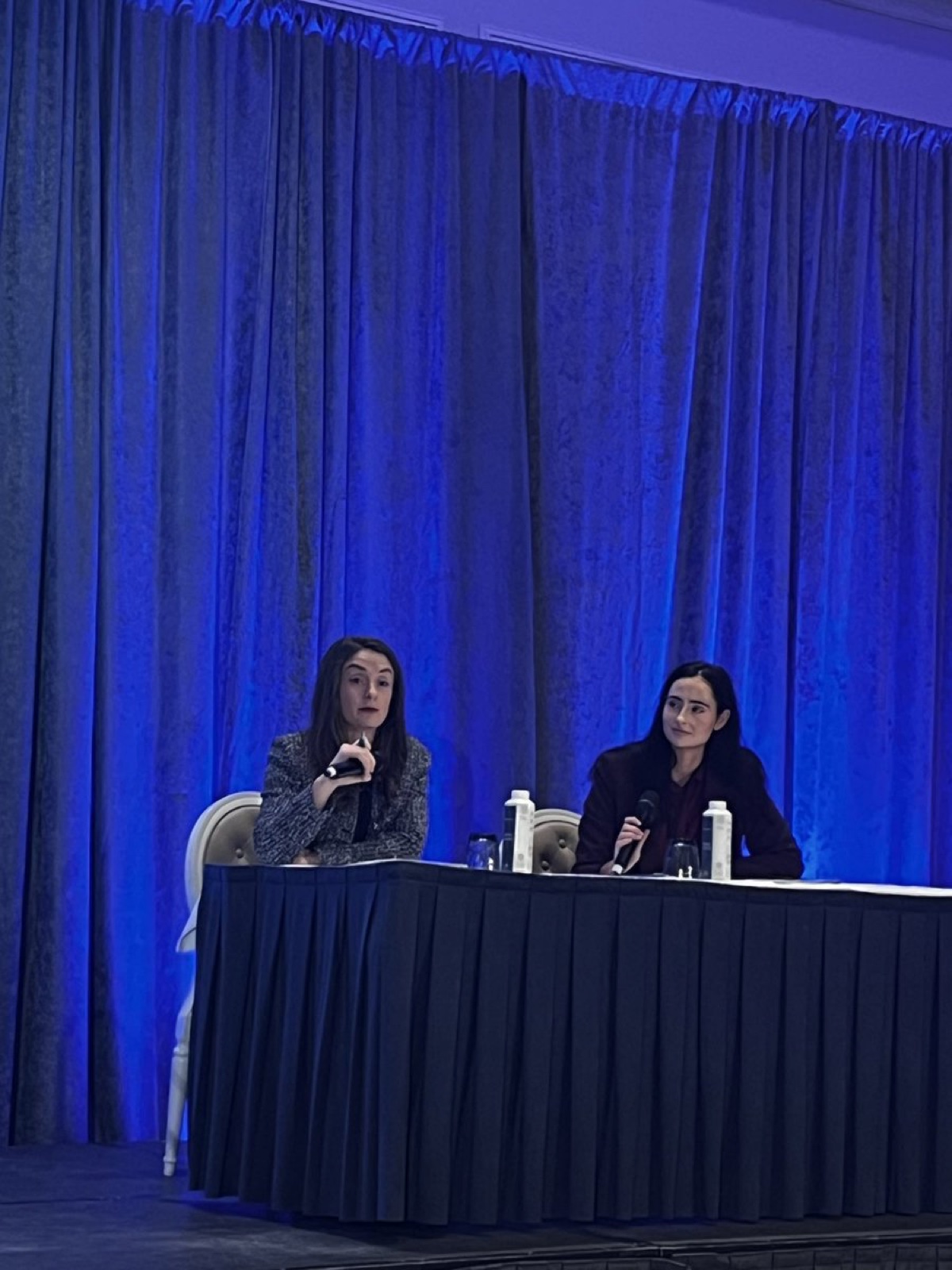
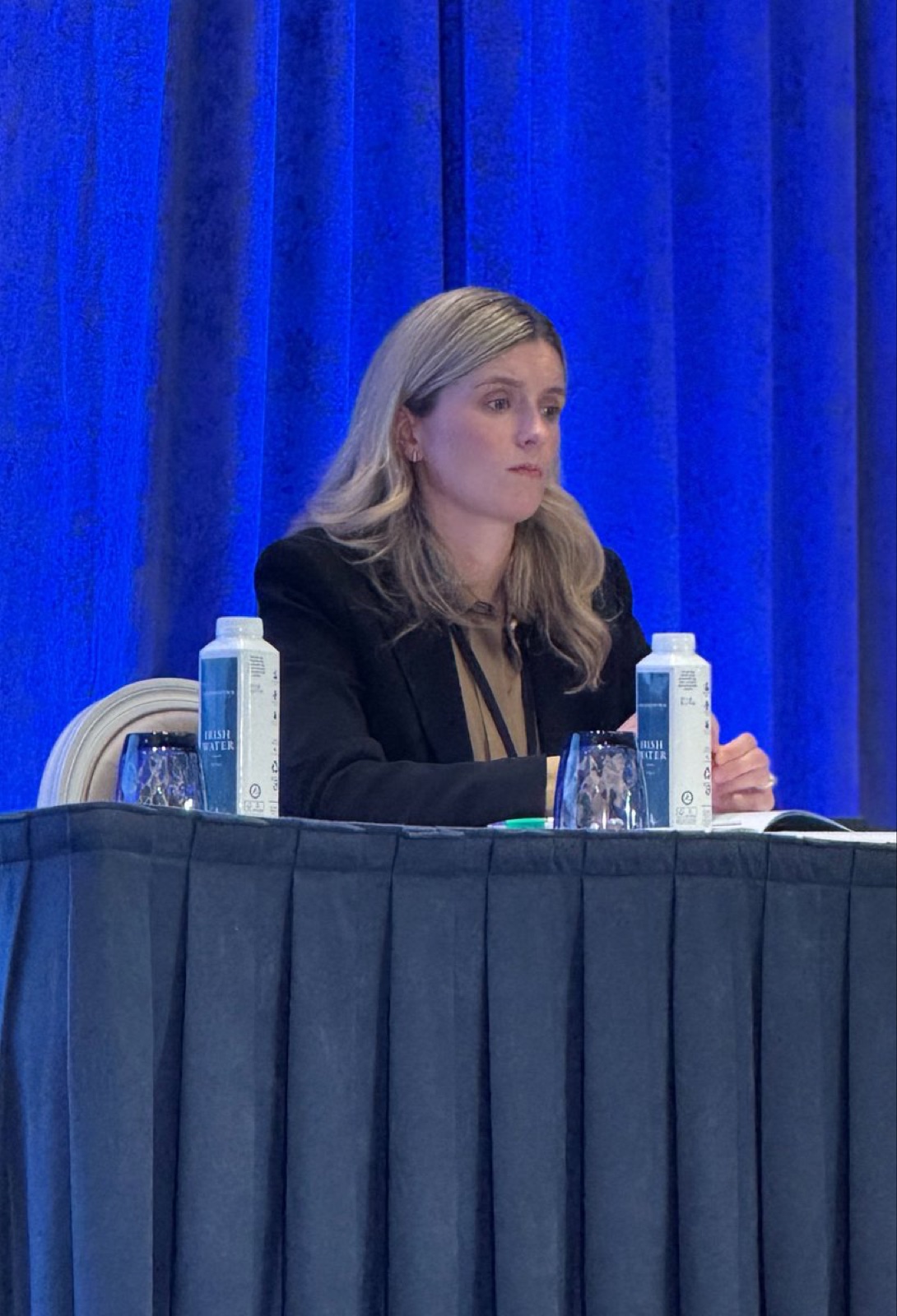
12th edition · Johnstown House Hotel, Enfield, Co. Meath · October 16–17, 2026 · #AILCC26
The 12th All-Ireland Lung Cancer Conference 2026 ran October 16–17 at Johnstown House Hotel, Enfield, Co. Meath, chaired by Jarushka Naidoo with co-chairs Gerry Hanna and Patrick Forde, with keynotes from Mariano Provencio and Solange Peters. This page archives what the room posted — 32 posts from 6 attendees, 70 slide and podium photos across 11 sessions, and the 23 faculty named in those posts — with verbatim captions, machine-transcribed slide text, and links to KOL Pulse trial profiles.
32
Posts Captured
70
Slide & Podium Photos
25
Trials Named
23
Faculty
23 on the program · 17 on X
Faculty
Faculty named by the chairs and attendees in their #AILCC26 posts, grouped by the session they presented or chaired. No public programme was located, so talk titles are taken from the posters’ own captions and affiliations from each speaker’s X profile; names with no X profile are listed as written in the posts. Blue chips are the talk or chair slot; grey chips are the trials named on that speaker’s captured slides or in posts about their talk.
On the podiumJarushka NaidooProfessor of Medical Oncology, Cancer Centre Ireland (Beaumont RCSI)
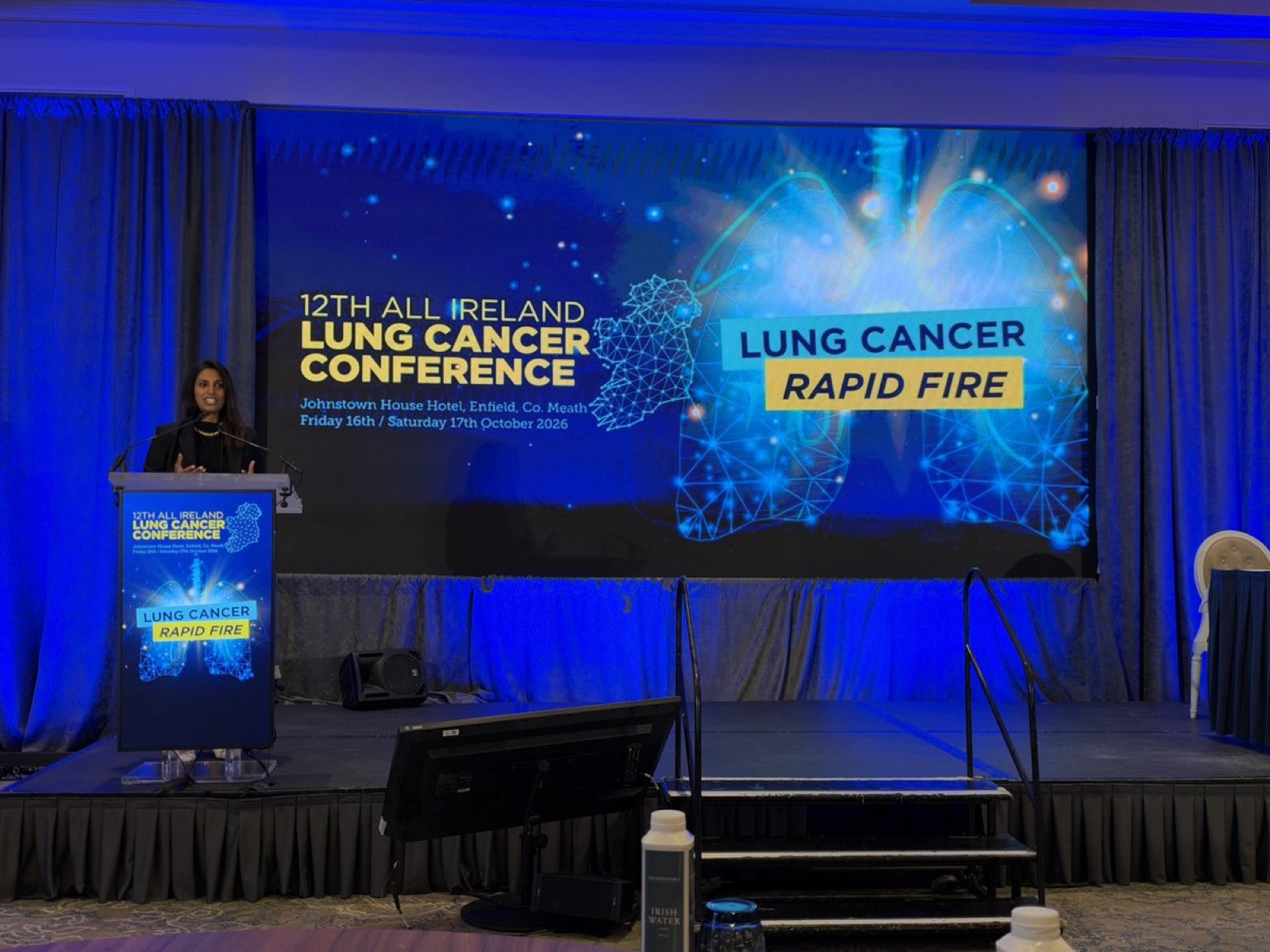
Our chair Dr. @DrJNaidoo opens the 12th All Ireland Lung cancer meeting, great discussions in prospect! #lcsm
Patrick Forde (@FordePatrick)Oct 16, 2026 · 5:43 PM ISTView post on X ↗
On the podiumMariano ProvencioMedical Oncology Chair, Puerta de Hierro University Hospital; Spanish Lung Cancer Group (GECP)Opening keynote: neoadjuvant chemoimmunotherapy for resectable NSCLC
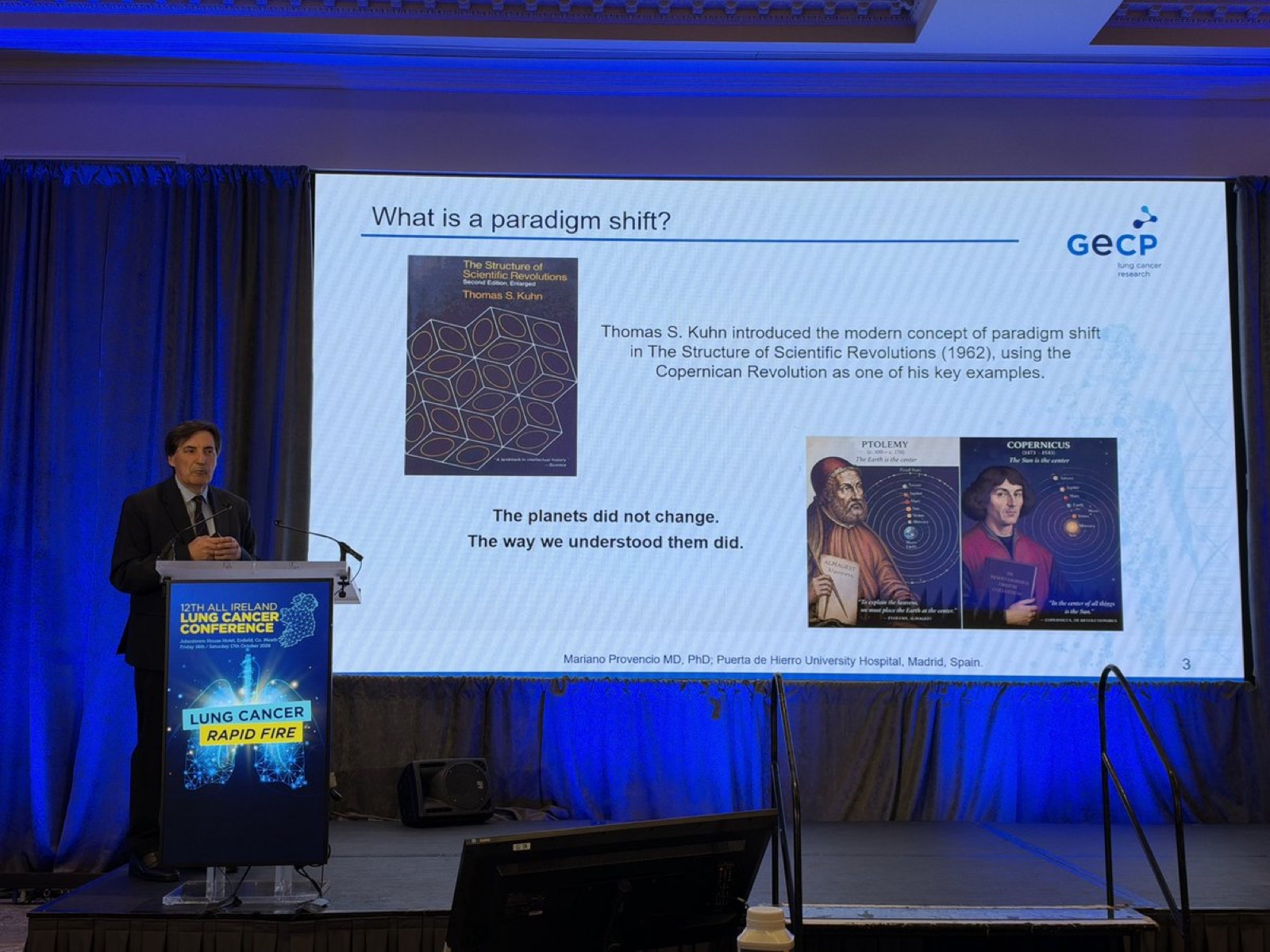
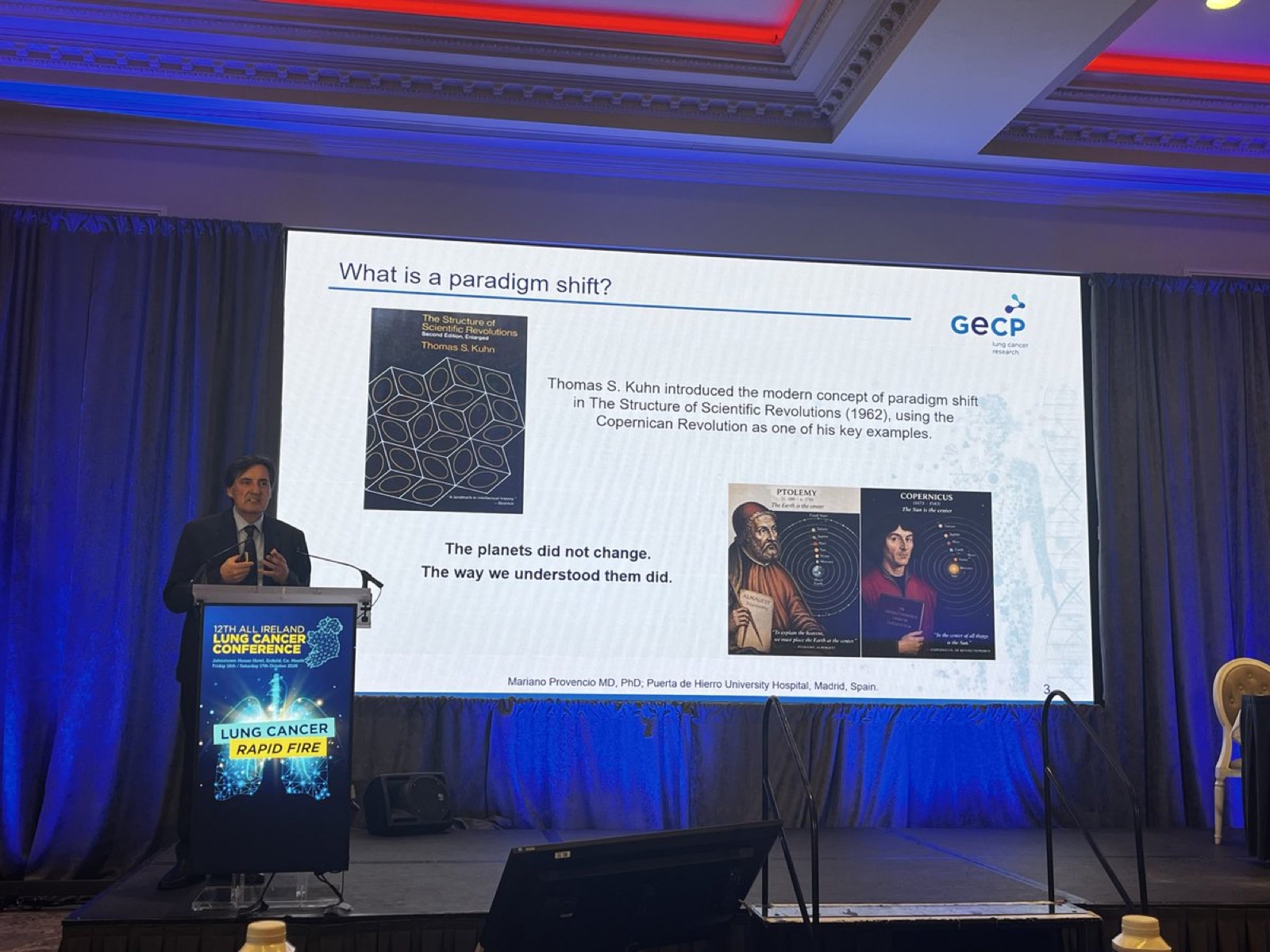
Dr. @MARIANOPROVENCI @gecp_org delivers the opening keynote address of #ailcc26 - neoadjuvant immunotherapy a paradigm shift!
[Slide 1]
What is a paradigm shift?
[Book cover: The Structure of Scientific Revolutions, Second Edition, Enlarged, Thomas S. Kuhn]
Thomas S. Kuhn introduced the modern concept of paradigm shift in The Structure of Scientific Revolutions (1962), using the Copernican Revolution as one of his key examples.
The planets did not change.
The way we understood them did.
[Two portraits: PTOLEMY (c. 100 - c. 170) The Earth is the center; COPERNICUS (1473 - 1543) The Sun is the center; orbit diagrams and quotations]
Mariano Provencio MD, PhD; Puerta de Hierro University Hospital, Madrid, Spain.
3
GECP lung cancer research
---
[Slide 2]
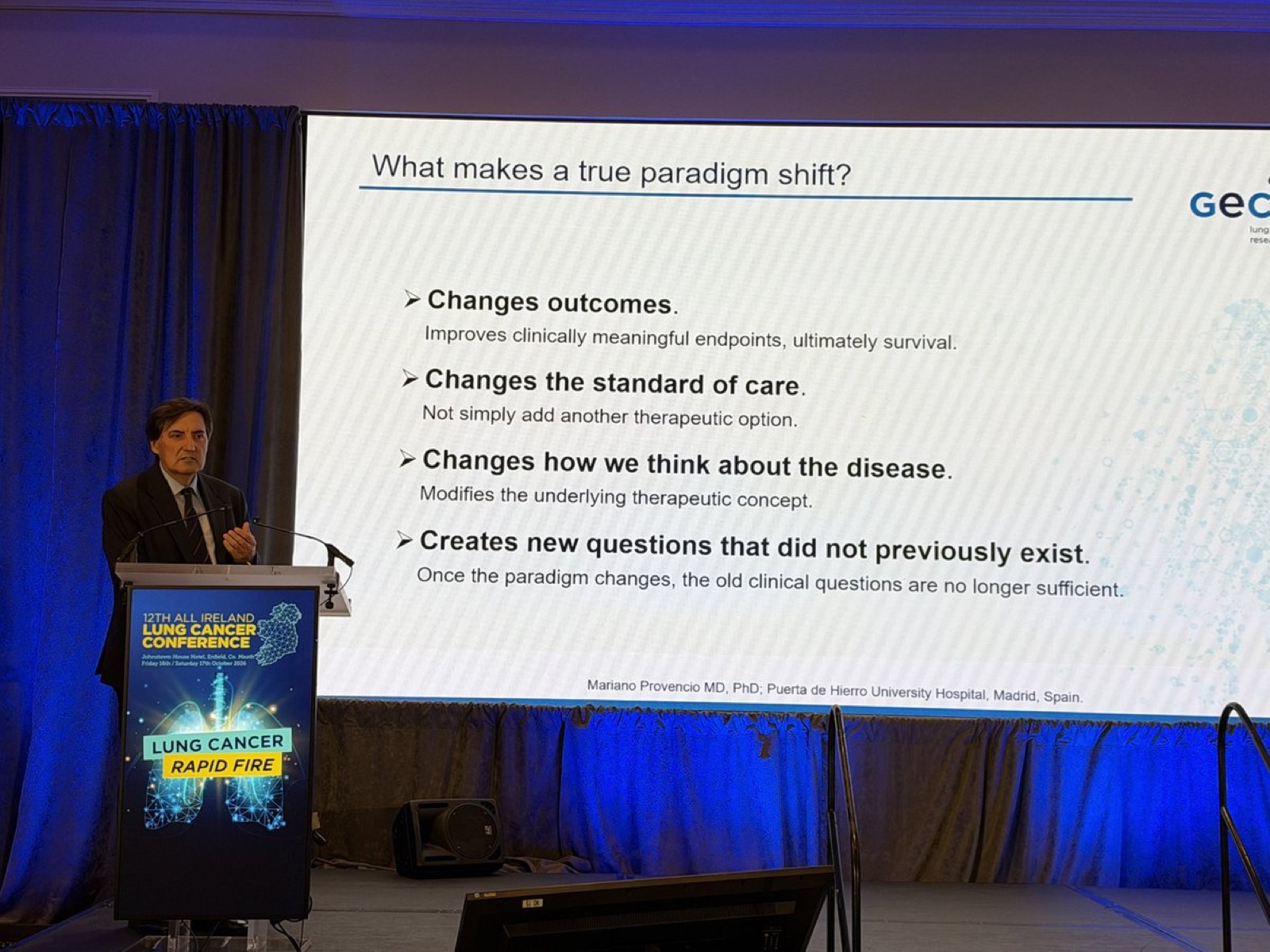
What makes a true paradigm shift?
> Changes outcomes.
Improves clinically meaningful endpoints, ultimately survival.
> Changes the standard of care.
Not simply add another therapeutic option.
> Changes how we think about the disease.
Modifies the underlying therapeutic concept.
> Creates new questions that did not previously exist.
Once the paradigm changes, the old clinical questions are no longer sufficient.
Mariano Provencio MD, PhD; Puerta de Hierro University Hospital, Madrid, Spain.
GECP lung cancer research
---
[Slide 3]
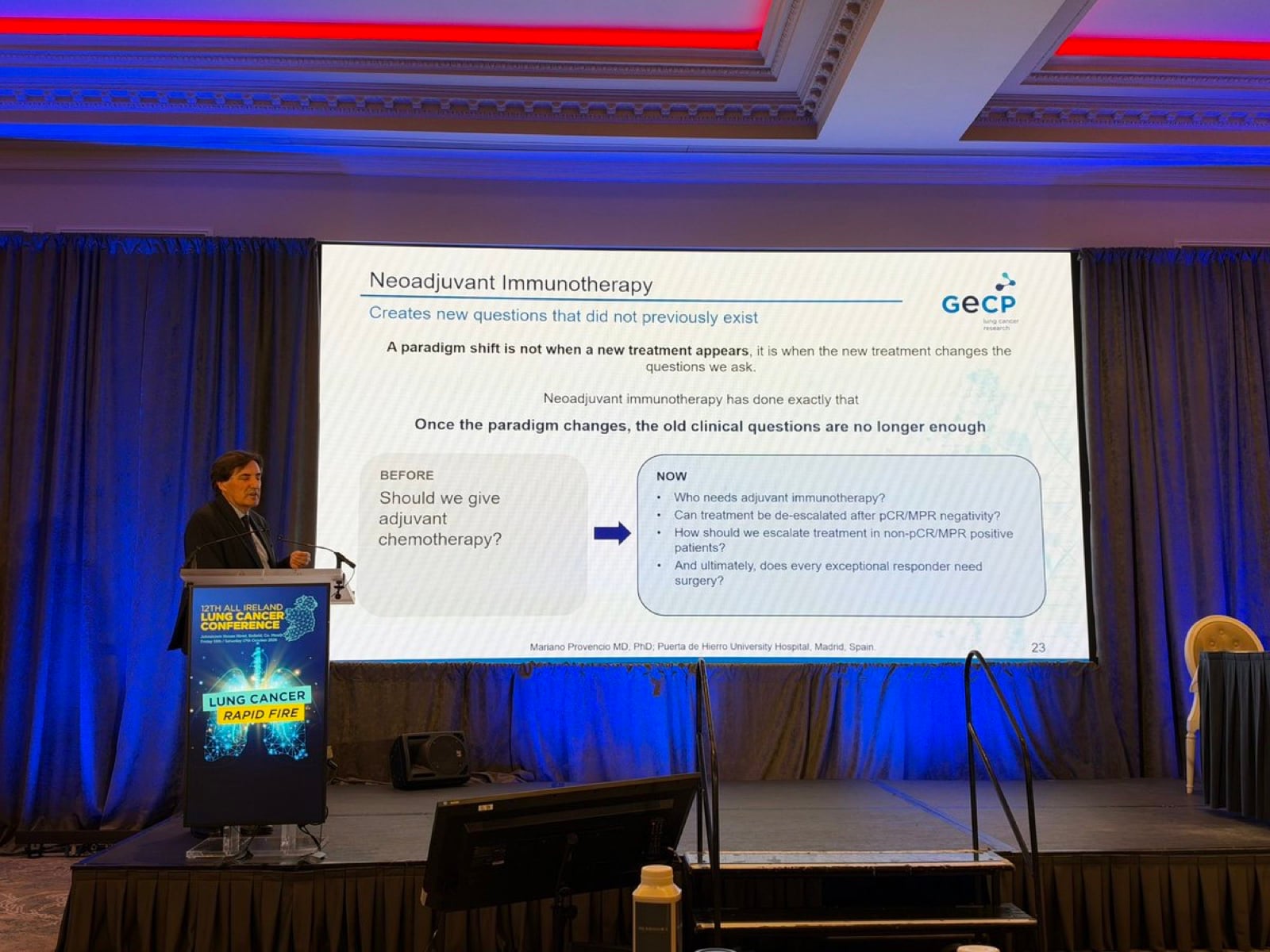
Neoadjuvant Immunotherapy
Creates new questions that did not previously exist
A paradigm shift is not when a new treatment appears, it is when the new treatment changes the questions we ask.
Neoadjuvant immunotherapy has done exactly that
Once the paradigm changes, the old clinical questions are no longer enough
BEFORE
Should we give adjuvant chemotherapy?
[arrow]
NOW
- Who needs adjuvant immunotherapy?
- Can treatment be de-escalated after pCR/MPR negativity?
- How should we escalate treatment in non-pCR/MPR positive patients?
- And ultimately, does every exceptional responder need surgery?
Mariano Provencio MD, PhD; Puerta de Hierro University Hospital, Madrid, Spain.
23
GECP lung cancer research
Patrick Forde (@FordePatrick)Oct 16, 2026 · 5:47 PM ISTView post on X ↗
On the podiumMariano ProvencioMedical Oncology Chair, Puerta de Hierro University Hospital; Spanish Lung Cancer Group (GECP)Opening keynote: neoadjuvant chemoimmunotherapy for resectable NSCLC
Great to get the All-Ireland Lung Cancer Conference 2026 underway today.
Leading out conference Chair @DrJNaidoo gets #AILCC2026 proceedings underway.
At really superb line up ahead including
@MARIANOPROVENCI
@peters_solange
@StephenVLiu
@PatelOncology
@fifimcdrmh
@Alfdoc2
Dr Antonio Passaro
Professor Tina Cascone
Gerry Hanna (@gerryhanna)Oct 16, 2026 · 5:55 PM ISTView post on X ↗
On the podiumMariano ProvencioMedical Oncology Chair, Puerta de Hierro University Hospital; Spanish Lung Cancer Group (GECP)Opening keynote: neoadjuvant chemoimmunotherapy for resectable NSCLC
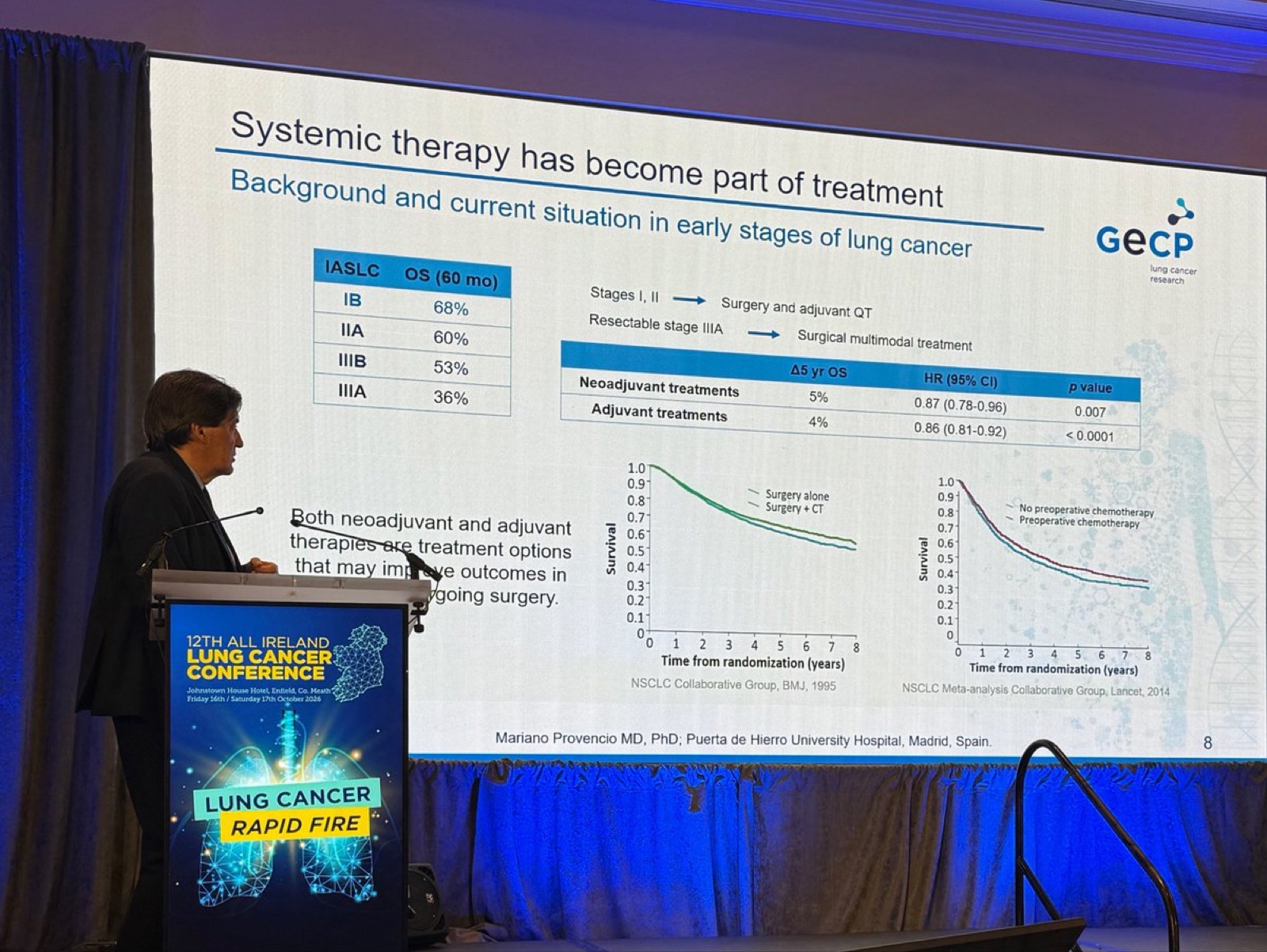
Dr. @MARIANOPROVENCI recounts the paradigm shift of neoadjuvant chemoimmunotherapy for resectable NSCLC. In the right patient, increasing the likelihood of cure. Building a cathedral one stone at a time. #AILCC26
[Slide 1]
Systemic therapy has become part of treatment
Background and current situation in early stages of lung cancer
IASLC | OS (60 mo)
IB | 68%
IIA | 60%
IIIB | 53%
IIIA | 36%
Stages I, II -> Surgery and adjuvant QT
Resectable stage IIIA -> Surgical multimodal treatment
| Δ5 yr OS | HR (95% CI) | p value
Neoadjuvant treatments | 5% | 0.87 (0.78-0.96) | 0.007
Adjuvant treatments | 4% | 0.86 (0.81-0.92) | < 0.0001
Both neoadjuvant and adjuvant therapies are treatment options that may improve outcomes in [patients under]going surgery.
[Left KM-style plot: Survival (0-1.0) vs Time from randomization (years, 0-8); two curves labelled Surgery alone and Surgery + CT] NSCLC Collaborative Group, BMJ, 1995
[Right KM-style plot: Survival vs Time from randomization (years, 0-8); two curves labelled No preoperative chemotherapy and Preoperative chemotherapy] NSCLC Meta-analysis Collaborative Group, Lancet, 2014
Mariano Provencio MD, PhD; Puerta de Hierro University Hospital, Madrid, Spain.
8
GECP lung cancer research
---
[Slide 2]
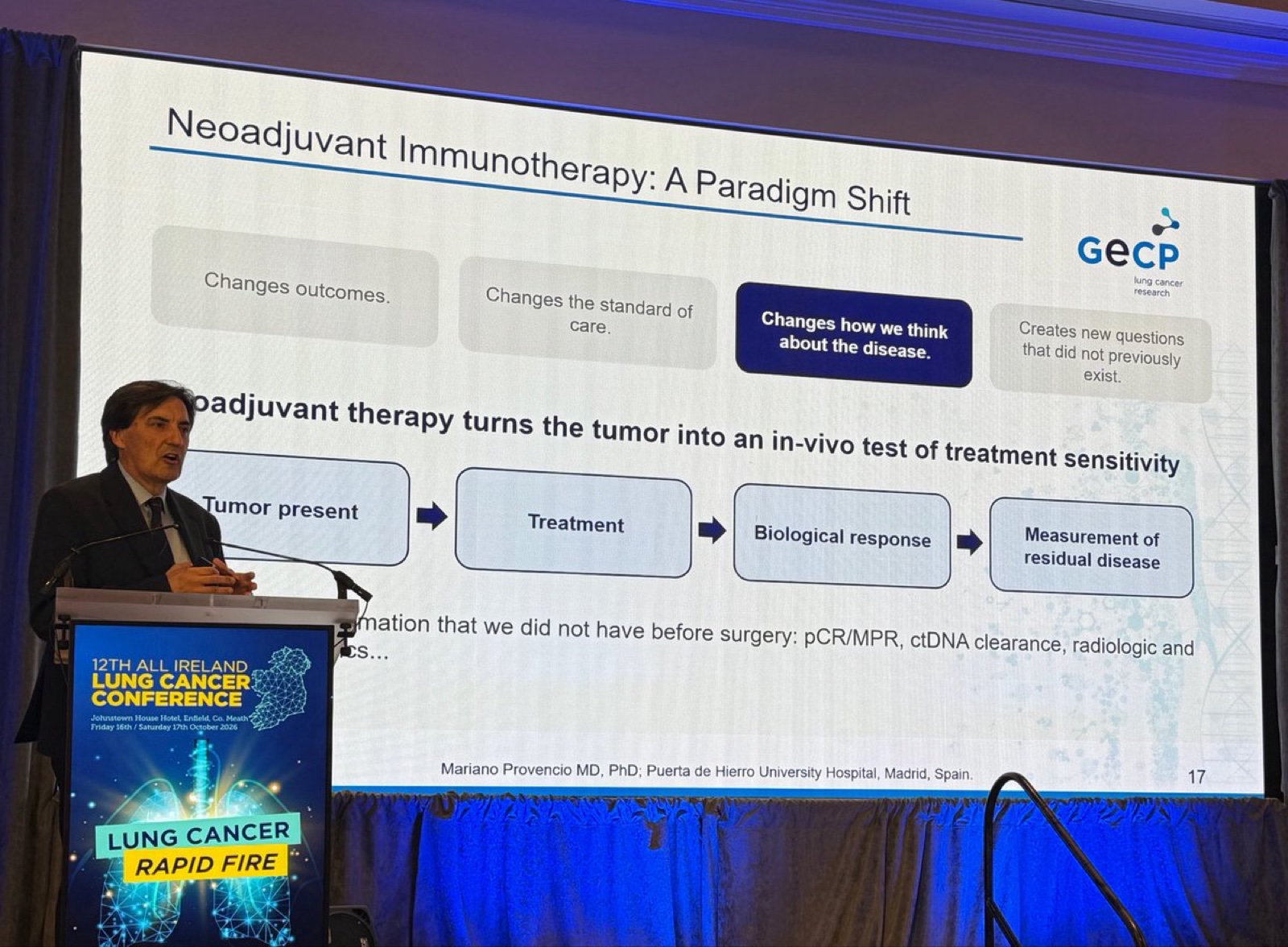
Neoadjuvant Immunotherapy: A Paradigm Shift
[Four tabs:] Changes outcomes. | Changes the standard of care. | Changes how we think about the disease. [highlighted] | Creates new questions that did not previously exist.
[Ne]oadjuvant therapy turns the tumor into an in-vivo test of treatment sensitivity
[Flow:] Tumor present -> Treatment -> Biological response -> Measurement of residual disease
[Infor]mation that we did not have before surgery: pCR/MPR, ctDNA clearance, radiologic and [...]ics...
Mariano Provencio MD, PhD; Puerta de Hierro University Hospital, Madrid, Spain.
17
GECP lung cancer research
---
[Slide 3]
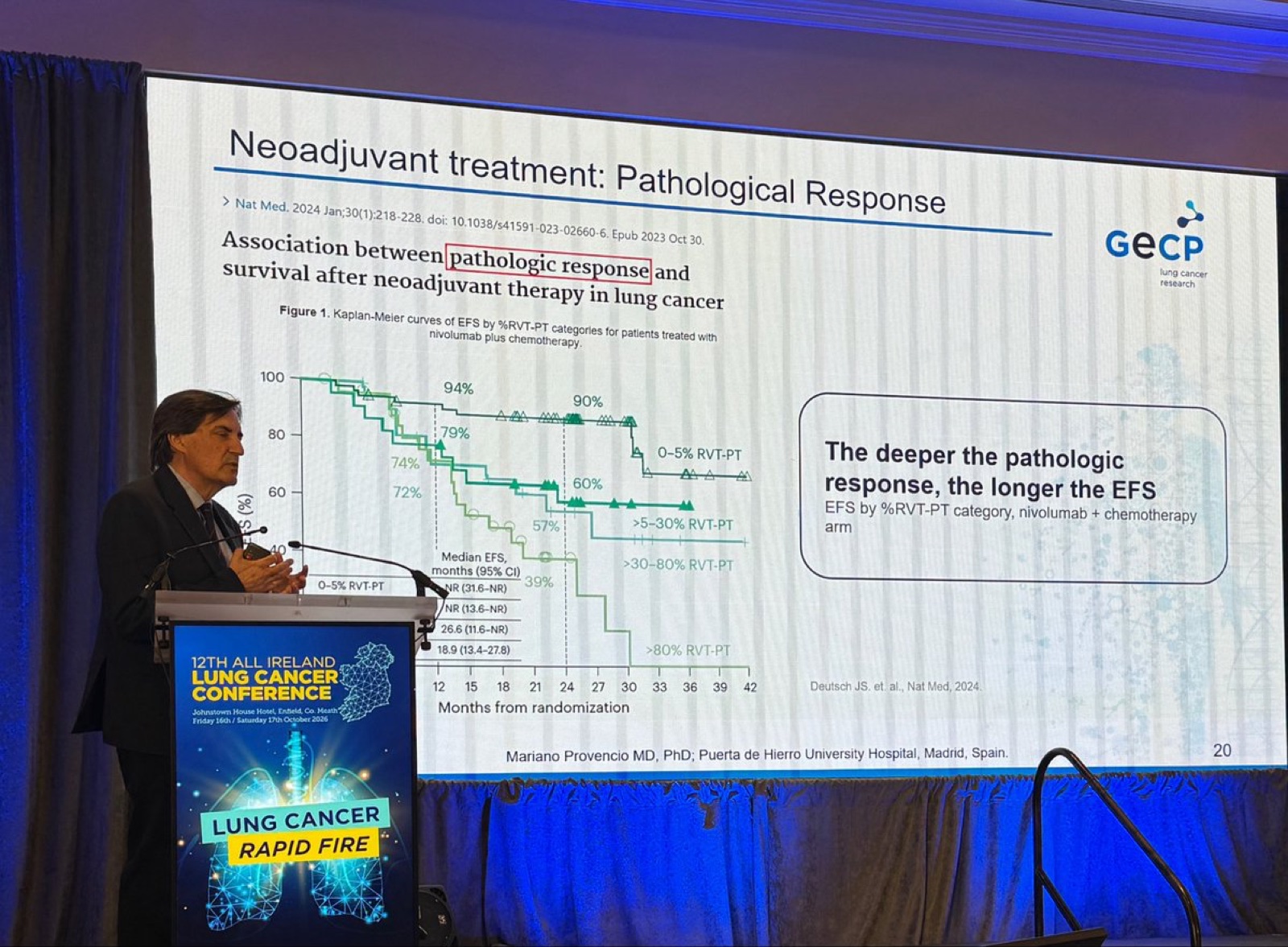
Neoadjuvant treatment: Pathological Response
> Nat Med. 2024 Jan;30(1):218-228. doi: 10.1038/s41591-023-02660-6. Epub 2023 Oct 30.
Association between pathologic response and survival after neoadjuvant therapy in lung cancer
Figure 1. Kaplan-Meier curves of EFS by %RVT-PT categories for patients treated with nivolumab plus chemotherapy.
[KM plot: EFS (%) vs Months from randomization; four curves labelled 0-5% RVT-PT, >5-30% RVT-PT, >30-80% RVT-PT, >80% RVT-PT; landmark labels printed on plot: 94%, 90%, 79%, 74%, 72%, 60%, 57%, 39%]
Median EFS, months (95% CI)
0-5% RVT-PT | NR (31.6-NR)
[>5-30% RVT-PT] | NR (13.6-NR)
[>30-80% RVT-PT] | 26.6 (11.6-NR)
[>80% RVT-PT] | 18.9 (13.4-27.8)
The deeper the pathologic response, the longer the EFS
EFS by %RVT-PT category, nivolumab + chemotherapy arm
Deutsch JS. et. al., Nat Med, 2024.
Mariano Provencio MD, PhD; Puerta de Hierro University Hospital, Madrid, Spain.
20
GECP lung cancer research
[Survival data captured as a table — no point estimates read from the curve]
Endpoint: EFS by %RVT-PT category (nivolumab + chemotherapy arm; Deutsch JS et al., Nat Med 2024 - CheckMate 816 analysis as cited on slide)
0-5% RVT-PT | NR | 31.6-NR
>5-30% RVT-PT | NR | 13.6-NR
>30-80% RVT-PT | 26.6 | 11.6-NR
>80% RVT-PT | 18.9 | 13.4-27.8
Printed on plot (category not unambiguously attached): 94%, 90% (upper curve, 0-5% RVT-PT); 79%, 60% (>5-30% RVT-PT); 74%, 57% (>30-80% RVT-PT); 72%, 39% (>80% RVT-PT) - at the ~12-month and ~24-month dashed reference lines
Note: Median table: only the first row label (0-5% RVT-PT) is visible; row labels 2-4 are occluded by the speaker and are inferred from the legend order (0-5, >5-30, >30-80, >80). Landmark-to-curve mapping is by visual proximity only and should be verified against Deutsch et al. Nat Med 2024 Figure 1. No HR or p value printed.
Stephen V Liu, MD (@StephenVLiu)Oct 16, 2026 · 6:10 PM ISTView post on X ↗
Free Access · KOL Pulse Intelligence
Track oncology’s top KOLs in your specialty
Create a free account, pick the tumor types you cover, and go beyond the tweet — the intelligence pharma teams use to map influence and prepare for engagement:
Choose the tumor types you follow. No cost, unsubscribe anytime.
Day 1 · Oct 16, 2026 · Chair Sarah Lochrin
Immunotherapy & Resectable NSCLC
Patient selection for neoadjuvant chemoimmunotherapy (Forde) · Resectability and borderline resectable NSCLC (Weedle). 5 posts · 10 images captured.
On the podiumPatrick FordeThoracic oncologist; lung cancer and mesothelioma; Trinity College DublinPatient selection for neoadjuvant chemoimmunotherapy
Thrilled to join Dr. @DrJNaidoo for the 12th All Ireland Lung Cancer Conference 🇮🇪! Excited to learn from experts in Ireland and around the world @FordePatrick @gerryhanna @peters_solange @PatelOncology @Alfdoc2 @MARIANOPROVENCI @APassaroMD @fifimcdrmh @gwalls89
Stephen V Liu, MD (@StephenVLiu)Oct 16, 2026 · 5:56 PM ISTView post on X ↗
On the podiumPatrick FordeThoracic oncologist; lung cancer and mesothelioma; Trinity College DublinPatient selection for neoadjuvant chemoimmunotherapy
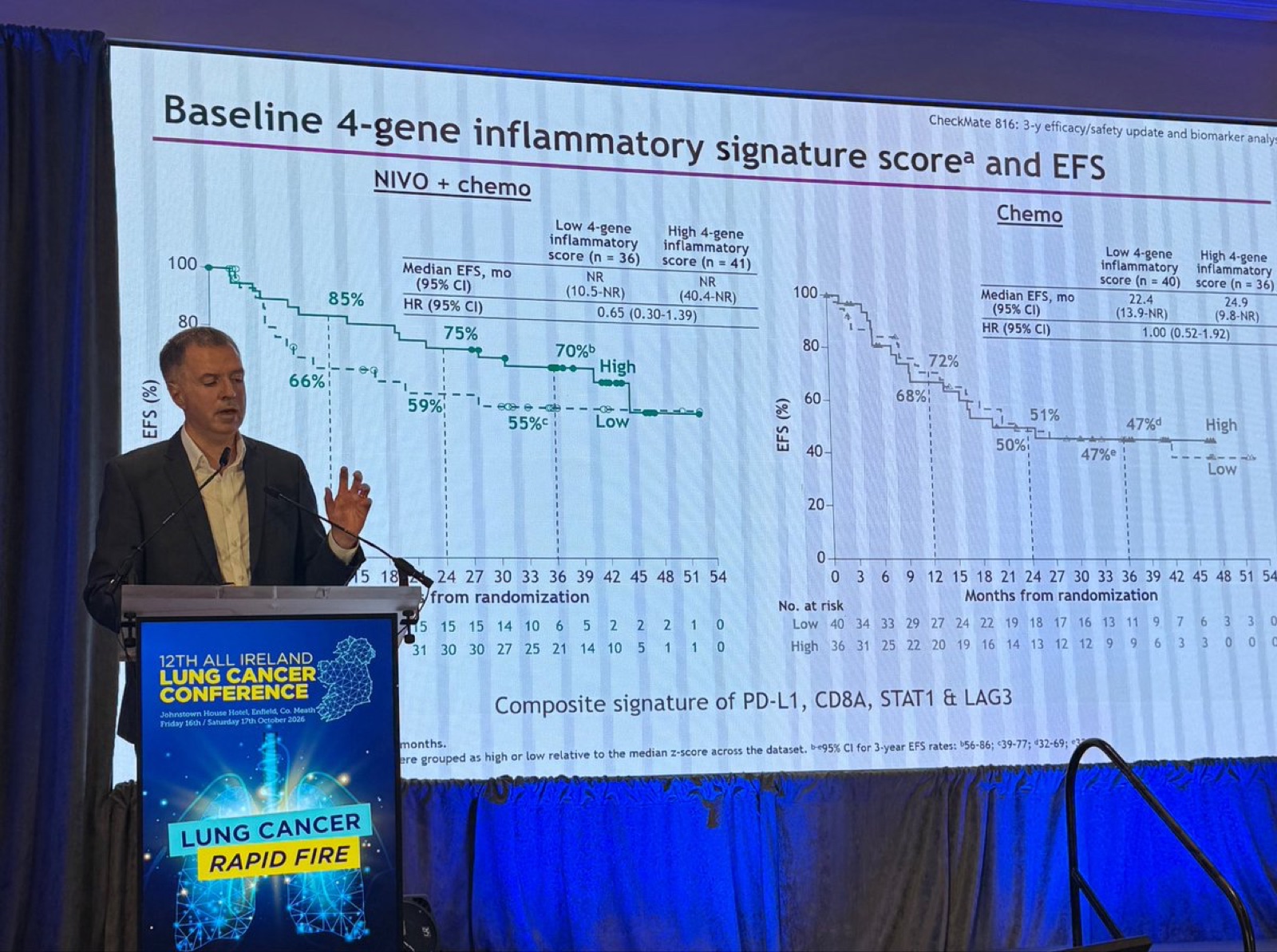
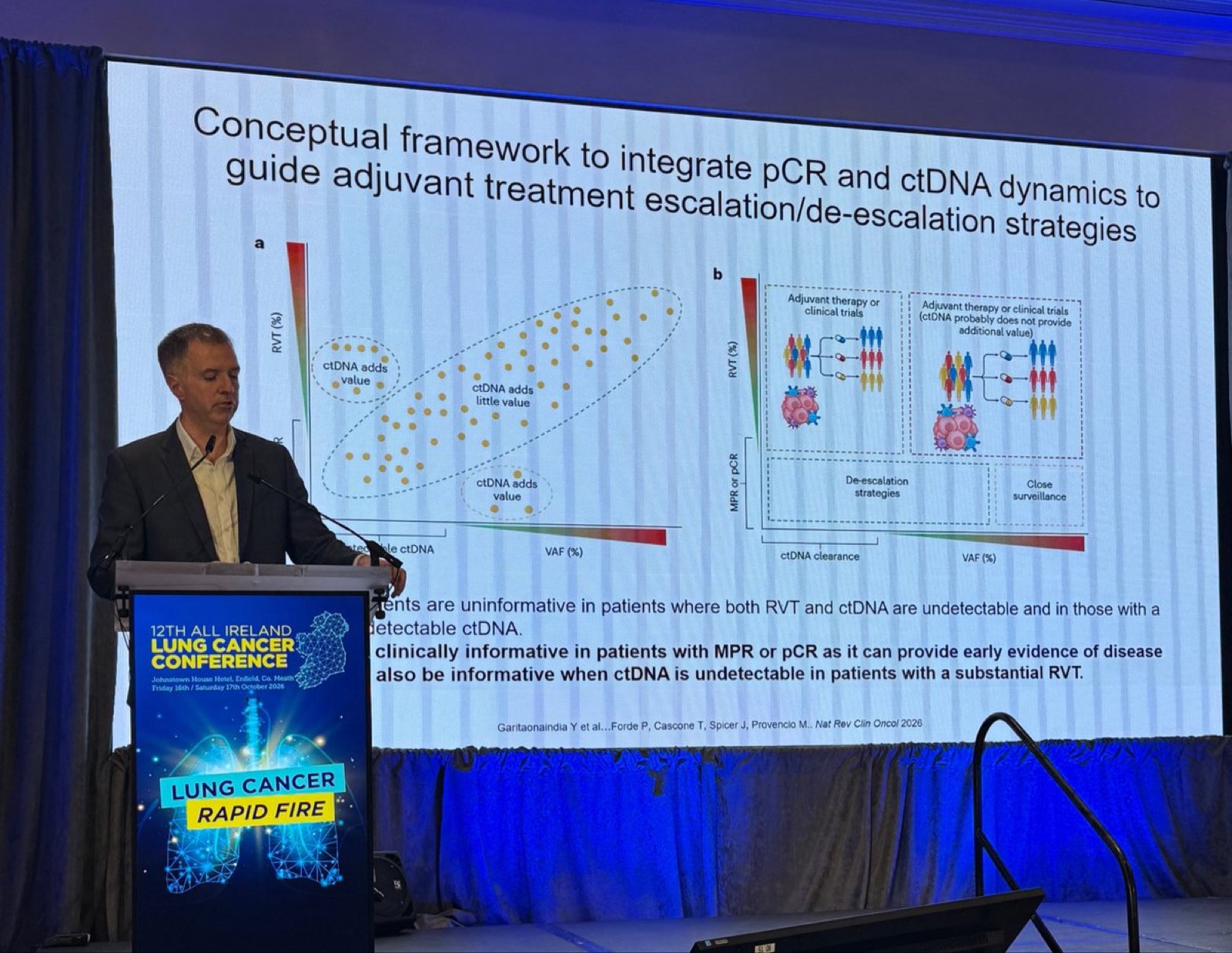
Dr. @FordePatrick at #AILCC26 discusses patient selection for neoadjuvant chemoimmunotherapy. One challenge with gene signatures and tumor informed ctDNA is limited tissue from initial biopsy which is already needed for EGFR testing etc. tumor agnostic ctDNA an option?
CheckMate 816
[Slide 1]
CheckMate 816: 3-y efficacy/safety update and biomarker analys[is]
Baseline 4-gene inflammatory signature scoreᵃ and EFS
NIVO + chemo
| Low 4-gene inflammatory score (n = 36) | High 4-gene inflammatory score (n = 41)
Median EFS, mo (95% CI) | NR (10.5-NR) | NR (40.4-NR)
HR (95% CI) | 0.65 (0.30-1.39)
[KM plot: EFS (%) vs Months from randomization; curves labelled High and Low; landmark labels printed: 85%, 75%, 66%, 70%ᵇ, 59%, 55%ᶜ]
Chemo
| Low 4-gene inflammatory score (n = 40) | High 4-gene inflammatory score (n = 36)
Median EFS, mo (95% CI) | 22.4 (13.9-NR) | 24.9 (9.8-NR)
HR (95% CI) | 1.00 (0.52-1.92)
[KM plot: EFS (%) vs Months from randomization; curves labelled High and Low; landmark labels printed: 72%, 68%, 51%, 50%, 47%ᵈ, 47%ᵉ]
No. at risk [rows for Low and High under each plot]
Composite signature of PD-L1, CD8A, STAT1 & LAG3
[Footnote, partially clipped at left:] ...months. ...ere grouped as high or low relative to the median z-score across the dataset. ᵇ⁻ᵉ95% CI for 3-year EFS rates: ᵇ56-86; ᶜ39-77; ᵈ32-69; ᵉ3[2-...]
[Survival data captured as a table — no point estimates read from the curve]
Endpoint: EFS by baseline 4-gene inflammatory signature score (CheckMate 816, 3-year update)
NIVO + chemo, Low 4-gene inflammatory score | 36 | NR | 10.5-NR
NIVO + chemo, High 4-gene inflammatory score | 41 | NR | 40.4-NR
Chemo, Low 4-gene inflammatory score | 40 | 22.4 | 13.9-NR
Chemo, High 4-gene inflammatory score | 36 | 24.9 | 9.8-NR
HR: NIVO + chemo High vs Low: 0.65; Chemo High vs Low: 1.00
HR CI: 0.30-1.39 (NIVO + chemo); 0.52-1.92 (Chemo)
NIVO + chemo 3-year EFS (per footnote b/c): High 70% (95% CI 56-86), Low 55% (95% CI 39-77)
Chemo 3-year EFS (per footnote d/e): 47% (95% CI 32-69) and 47% (95% CI 3[2]-[clipped]) - high/low assignment of d vs e not legible
Other printed landmarks (timepoint not labelled): NIVO + chemo 85%, 75%, 66%, 59%; Chemo 72%, 68%, 51%, 50%
Note: Source slide is from the CheckMate 816 3-year update (header clipped at right). Footnote 'a' definition and first footnote lines are clipped at left edge. Last CI in footnote e is clipped ('3[2]-...').
---
[Slide 2]
Conceptual framework to integrate pCR and ctDNA dynamics to guide adjuvant treatment escalation/de-escalation strategies
a [Scatter schematic: y-axis RVT (%), x-axis VAF (%) / [Undetect]able ctDNA; three dashed regions labelled 'ctDNA adds value' (upper-left), 'ctDNA adds little value' (large diagonal cluster), 'ctDNA adds value' (lower-right)]
b [2x2 schematic: y-axis RVT (%) vs MPR or pCR; x-axis ctDNA clearance -> VAF (%); quadrants labelled 'Adjuvant therapy or clinical trials', 'Adjuvant therapy or clinical trials (ctDNA probably does not provide additional value)', 'De-escalation strategies', 'Close surveillance']
[...]ents are uninformative in patients where both RVT and ctDNA are undetectable and in those with a [...]etectable ctDNA.
[...] clinically informative in patients with MPR or pCR as it can provide early evidence of disease [...] also be informative when ctDNA is undetectable in patients with a substantial RVT.
Garitaonaindia Y et al...Forde P, Cascone T, Spicer J, Provencio M.. Nat Rev Clin Oncol 2026
---
[Slide 3]
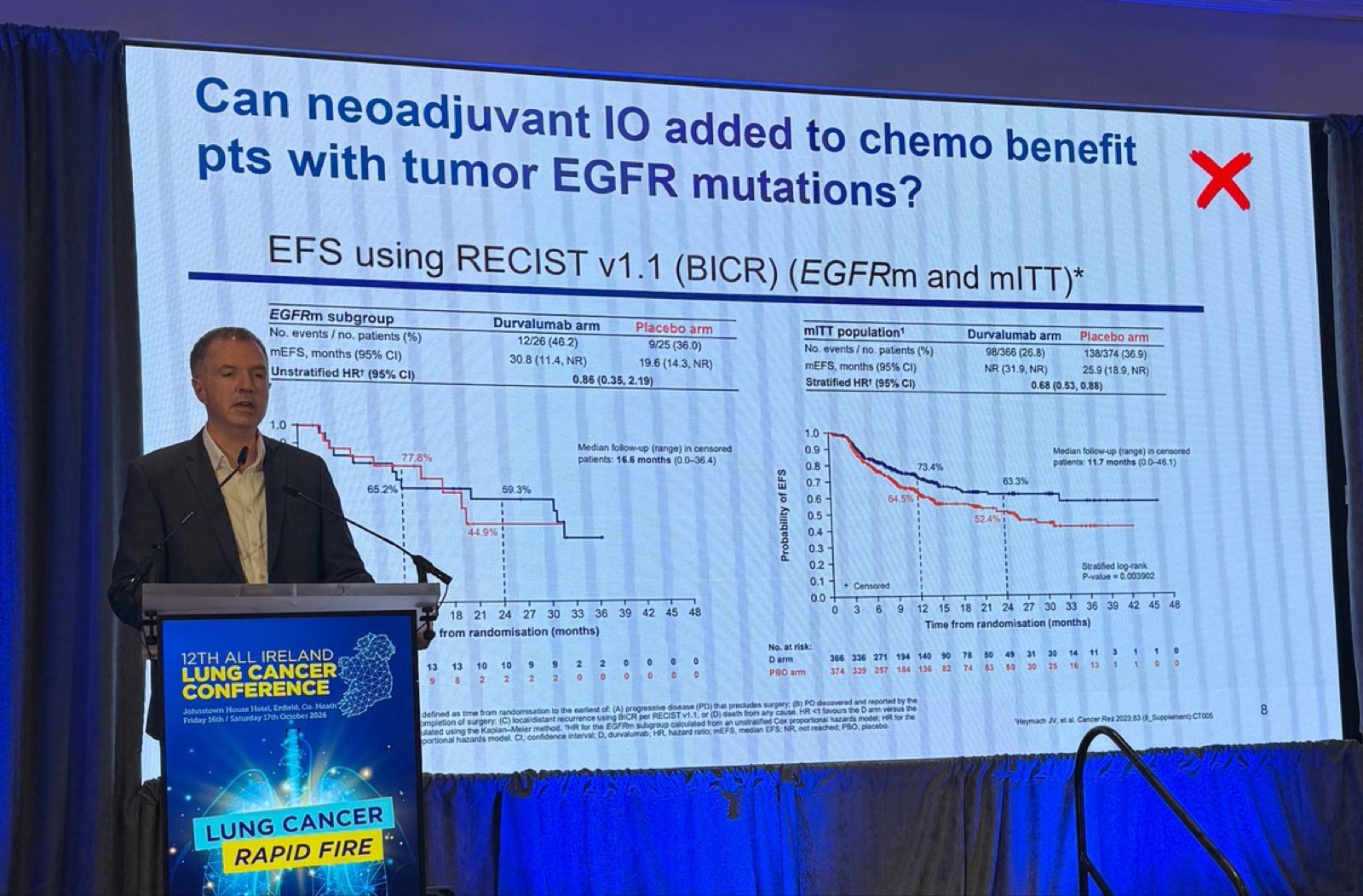
Can neoadjuvant IO added to chemo benefit pts with tumor EGFR mutations? [red X icon]
EFS using RECIST v1.1 (BICR) (EGFRm and mITT)*
EGFRm subgroup | Durvalumab arm | Placebo arm
No. events / no. patients (%) | 12/26 (46.2) | 9/25 (36.0)
mEFS, months (95% CI) | 30.8 (11.4, NR) | 19.6 (14.3, NR)
Unstratified HR† (95% CI) | 0.86 (0.35, 2.19)
[Left KM plot: EFS vs Time from randomisation (months); landmark labels printed: 77.8%, 65.2%, 59.3%, 44.9%; Median follow-up (range) in censored patients: 16.6 months (0.0-36.4)]
mITT population¹ | Durvalumab arm | Placebo arm
No. events / no. patients (%) | 98/366 (26.8) | 138/374 (36.9)
mEFS, months (95% CI) | NR (31.9, NR) | 25.9 (18.9, NR)
Stratified HR† (95% CI) | 0.68 (0.53, 0.88)
[Right KM plot: Probability of EFS vs Time from randomisation (months); landmark labels printed: 73.4%, 64.5%, 63.3%, 52.4%; Median follow-up (range) in censored patients: 11.7 months (0.0-46.1); Stratified log-rank P-value = 0.003902; + Censored]
No. at risk: D arm | PBO arm [rows present]
[Footnote, partially clipped at left:] ...defined as time from randomisation to the earliest of: (A) progressive disease (PD) that precludes surgery; (B) PD discovered and reported by the ...ompletion of surgery; (C) local/distant recurrence using BICR per RECIST v1.1; or (D) death from any cause. HR <1 favours the D arm versus the ...ulated using the Kaplan-Meier method. †HR for the EGFRm subgroup calculated from an unstratified Cox proportional hazards model; HR for the ...portional hazards model. CI, confidence interval; D, durvalumab; HR, hazard ratio; mEFS, median EFS; NR, not reached; PBO, placebo.
¹Heymach JV, et al. Cancer Res 2023;83 (8_Supplement):CT005
8
[Survival data captured as a table — no point estimates read from the curve]
Endpoint: EFS by BICR per RECIST v1.1 (AEGEAN; durvalumab + chemo vs placebo + chemo), EGFRm subgroup and mITT
EGFRm subgroup - Durvalumab arm | 26 | 30.8 | 11.4, NR
EGFRm subgroup - Placebo arm | 25 | 19.6 | 14.3, NR
mITT - Durvalumab arm | 366 | NR | 31.9, NR
mITT - Placebo arm | 374 | 25.9 | 18.9, NR
HR: EGFRm subgroup unstratified HR 0.86; mITT stratified HR 0.68
HR CI: 0.35, 2.19 (EGFRm); 0.53, 0.88 (mITT)
P: mITT stratified log-rank P-value = 0.003902; EGFRm subgroup: no p value printed
EGFRm plot printed labels at ~12 and ~24 month reference lines: 77.8% / 65.2% (12 mo), 59.3% / 44.9% (24 mo) - arm colour: blue = durvalumab, red = placebo; at 12 mo the red (placebo) label reads 77.8% and blue (durvalumab) 65.2%; at 24 mo blue 59.3%, red 44.9%
mITT plot printed labels: 73.4% (D) / 64.5% (PBO) at 12 mo; 63.3% (D) / 52.4% (PBO) at 24 mo
Note: Trial name is not printed on the visible slide; the cited reference (Heymach JV et al. Cancer Res 2023;83(8_Suppl):CT005) is the AEGEAN AACR 2023 presentation. Landmark-to-arm assignment is by label colour (blue = durvalumab, red = placebo); EGFRm 12-month assignment should be verified against the source. Events/patients as printed: EGFRm subgroup - Durvalumab arm: events 12/26 (46.2%); EGFRm subgroup - Placebo arm: events 9/25 (36.0%); mITT - Durvalumab arm: events 98/366 (26.8%); mITT - Placebo arm: events 138/374 (36.9%).
Stephen V Liu, MD (@StephenVLiu)Oct 16, 2026 · 6:14 PM ISTView post on X ↗
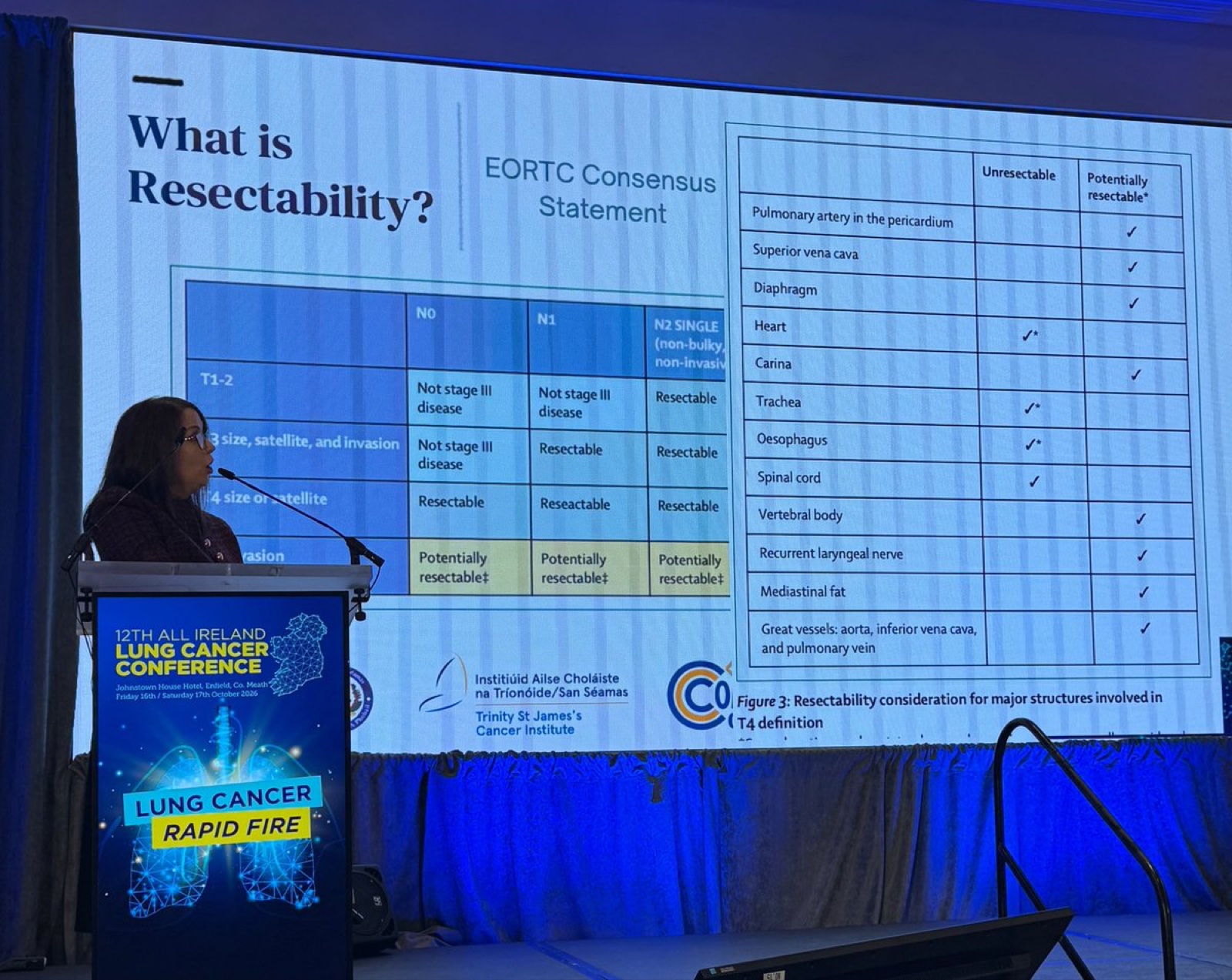
On the podiumRebecca WeedleSt James's HospitalResectability and borderline resectable NSCLC
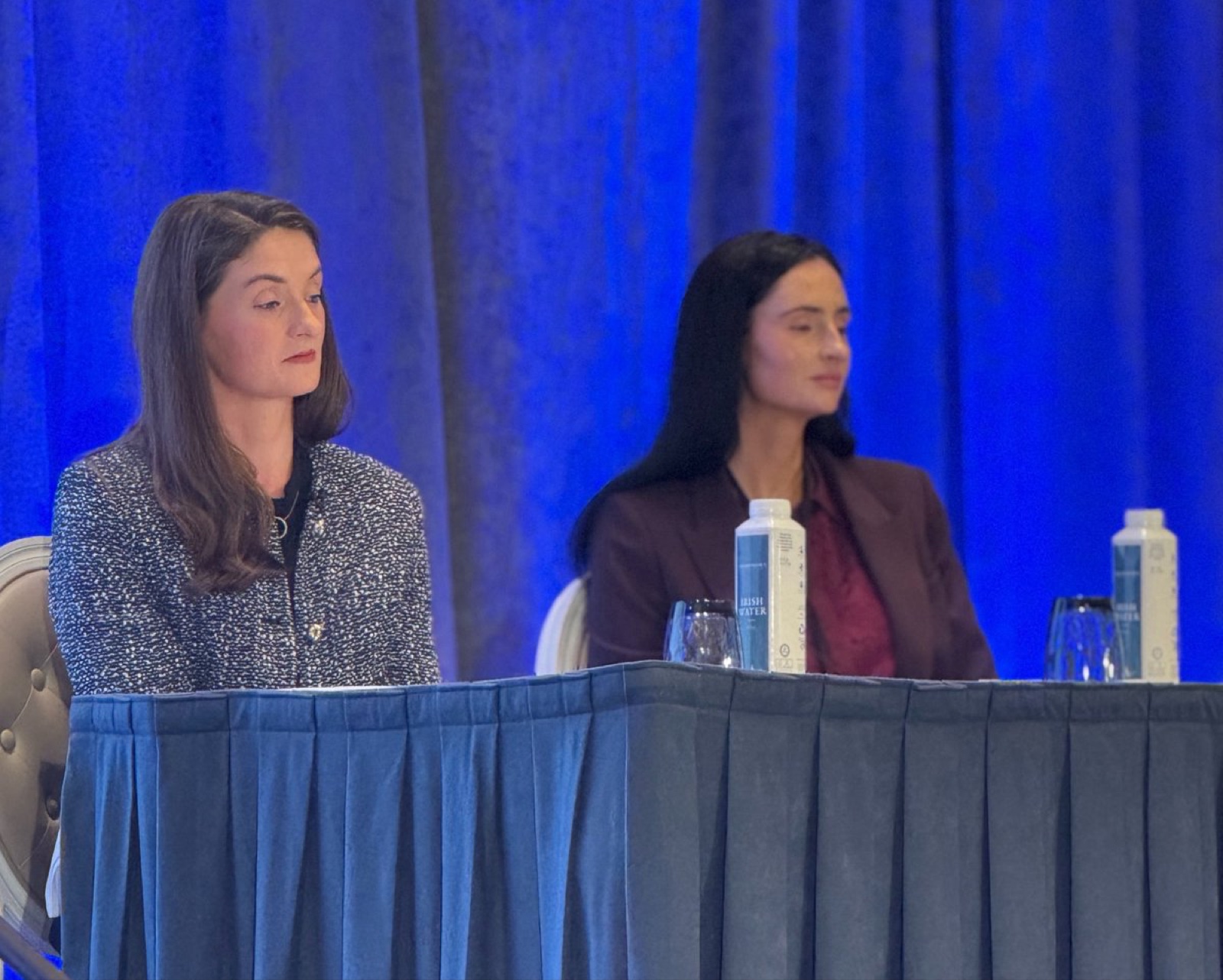
Dr. Rebecca Weedle from St. James’s Hospital with chairs Drs. @LochrinSarah and Deirdre Kelly discuss resectability and the approach for borderline resectable NSCLC at #AILCC26.
[Slide 1]
What is Resectability?
EORTC Consensus Statement
[Table: rows x columns N0 | N1 | N2 SINGLE (non-bulky, non-invasiv[e])]
T1-2 | Not stage III disease | Not stage III disease | Resectable
[T]3 size, satellite, and invasion | Not stage III disease | Resectable | Resectable
[T]4 size or satellite | Resectable | Reseactable [sic] | Resectable
[T4 in]vasion | Potentially resectable‡ | Potentially resectable‡ | Potentially resectable‡
[Right table: structure | Unresectable | Potentially resectable*]
Pulmonary artery in the pericardium | | ✓
Superior vena cava | | ✓
Diaphragm | | ✓
Heart | ✓* |
Carina | | ✓
Trachea | ✓* |
Oesophagus | ✓* |
Spinal cord | ✓ |
Vertebral body | | ✓
Recurrent laryngeal nerve | | ✓
Mediastinal fat | | ✓
Great vessels: aorta, inferior vena cava, and pulmonary vein | | ✓
Figure 3: Resectability consideration for major structures involved in T4 definition
[Logos: Trinity St James's Cancer Institute / Institiúid Ailse Choláiste na Tríonóide/San Séamas; partial second logo]
[Podium banner: 12TH ALL IRELAND LUNG CANCER CONFERENCE ... LUNG CANCER RAPID FIRE]
Stephen V Liu, MD (@StephenVLiu)Oct 16, 2026 · 6:20 PM ISTView post on X ↗
On the podiumPatrick FordeThoracic oncologist; lung cancer and mesothelioma; Trinity College DublinPatient selection for neoadjuvant chemoimmunotherapy
#AILCC26 Immunotherapy session featuring @FordePatrick & @CancerInstIRE #RebeccaWeedle who asks provocative questions on:
- wedge v lobectomy post neoadj
- surgical experience that cannot be captured through traditional tox methods
- surgical guidelines: stage III N2 only?
#LCsM
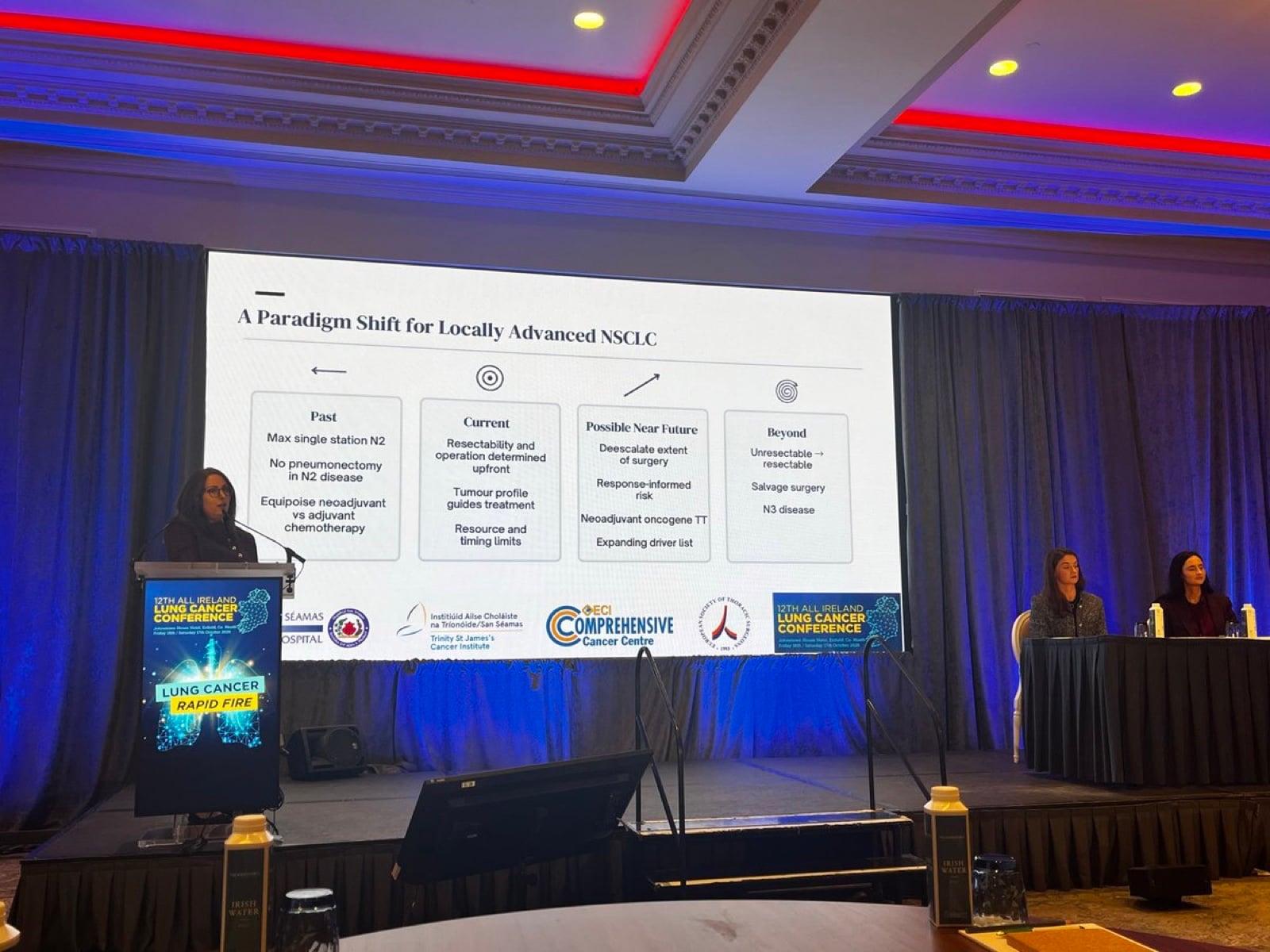
[Slide 1]
A Paradigm Shift for Locally Advanced NSCLC
Past
Max single station N2
No pneumonectomy in N2 disease
Equipoise neoadjuvant vs adjuvant chemotherapy
Current
Resectability and operation determined upfront
Tumour profile guides treatment
Resource and timing limits
Possible Near Future
Deescalate extent of surgery
Response-informed risk
Neoadjuvant oncogene TT
Expanding driver list
Beyond
Unresectable -> resectable
Salvage surgery
N3 disease
[Logos: St James's Hospital; Trinity St James's Cancer Institute / Institiúid Ailse Choláiste na Tríonóide/San Séamas; ECI Comprehensive Cancer Centre; European Society of Thoracic Surgeons; 12TH ALL IRELAND LUNG CANCER CONFERENCE]
Jarushka Naidoo (@DrJNaidoo)Oct 16, 2026 · 6:34 PM ISTView post on X ↗
On the podiumPatrick FordeThoracic oncologist; lung cancer and mesothelioma; Trinity College DublinPatient selection for neoadjuvant chemoimmunotherapy
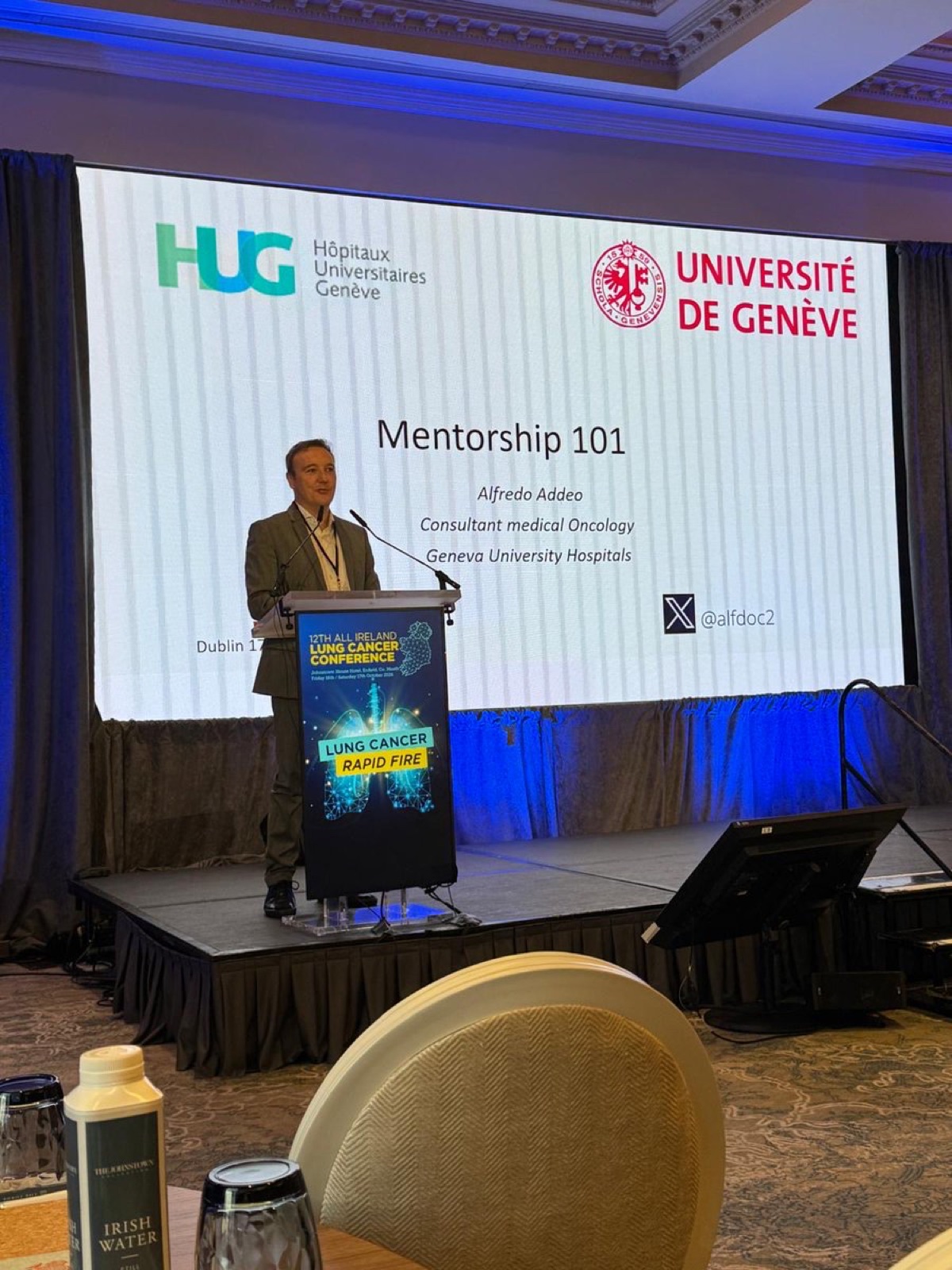
Great to share some thoughts on “Mentorship 101” at the #AILCC26 🇮🇪
One concept I wanted to highlight: hedonic adaptation or “becoming accustomed to success”
Yesterday’s dream becomes today’s normality and tomorrow’s expectations.
In medicine, we constantly chase the next publication, grant, promotion or achievement. But do we ever stop to appreciate how far we’ve come?
We guide a d help our mentees on how to be successful. How about guiding them on how to feel successful? @DrJNaidoo @FordePatrick @gerryhanna
#Mentorship #MedicalEducation #Leadership
Alfredo Addeo MD (@Alfdoc2)Oct 17, 2026 · 11:40 AM ISTView post on X ↗
Day 1 · Oct 16, 2026 · Chair Hazel O'Sullivan
Targeted Therapy Horizons
The now-druggable KRAS (Coyne) · ctDNA and digital pathology (Passaro). 1 post · 3 images captured.
On the podiumZac CoyneOncology, IrelandThe now-druggable KRAS
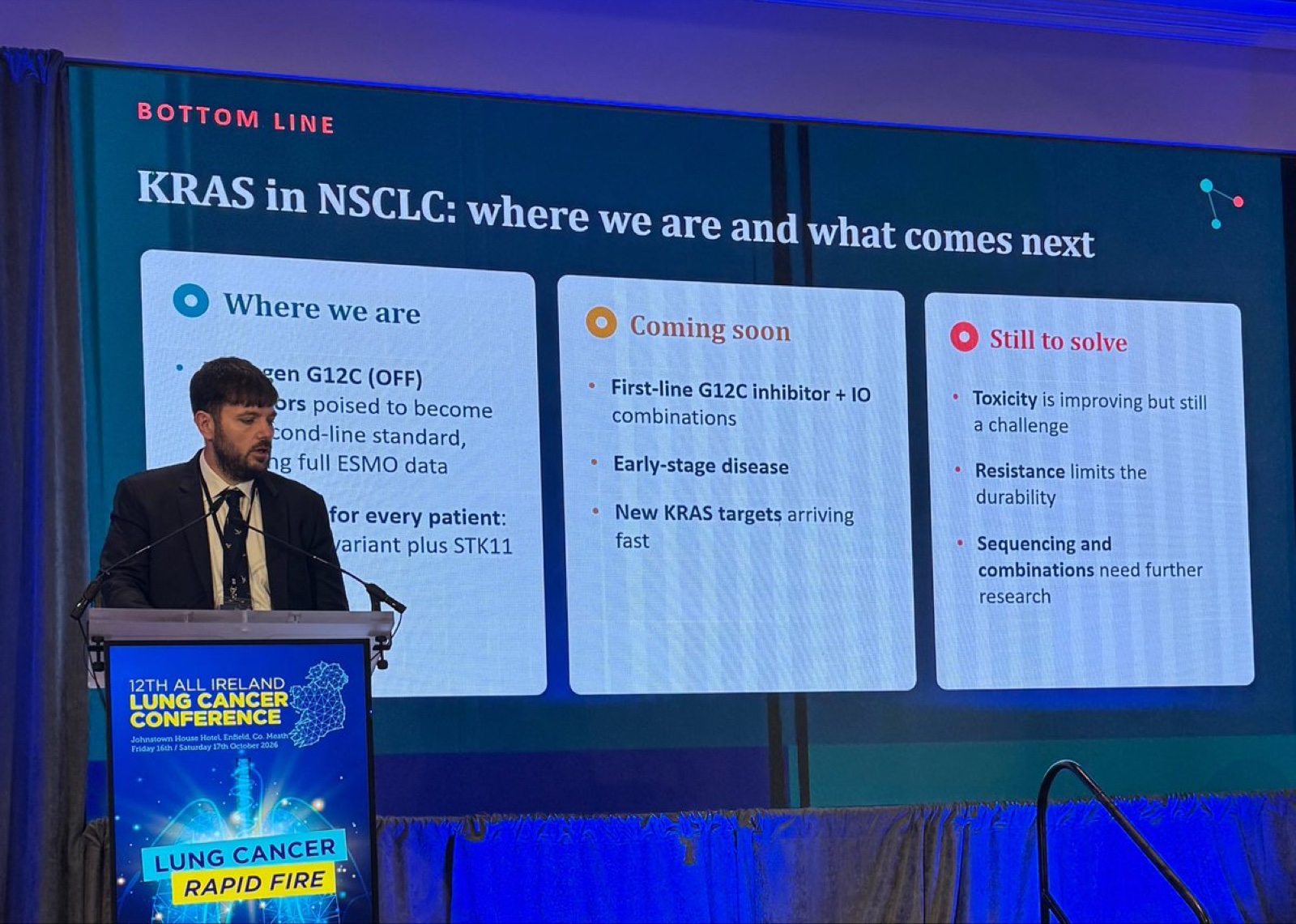
#AILCC26 discussing targeted therapy horizons with chair Dr. @HazelOSulliva14 and engaging talks on the now druggable KRAS from Dr. @zaccoyne and ctDNA and digital pathology from Dr. Stephen Finn.
ELIOS
[Slide 2]
BOTTOM LINE
KRAS in NSCLC: where we are and what comes next
Where we are
- [...]gen G12C (OFF) [inhibit]ors poised to become [se]cond-line standard, [pendin]g full ESMO data
- [...] for every patient: [...] variant plus STK11
Coming soon
- First-line G12C inhibitor + IO combinations
- Early-stage disease
- New KRAS targets arriving fast
Still to solve
- Toxicity is improving but still a challenge
- Resistance limits the durability
- Sequencing and combinations need further research
---
[Slide 3]
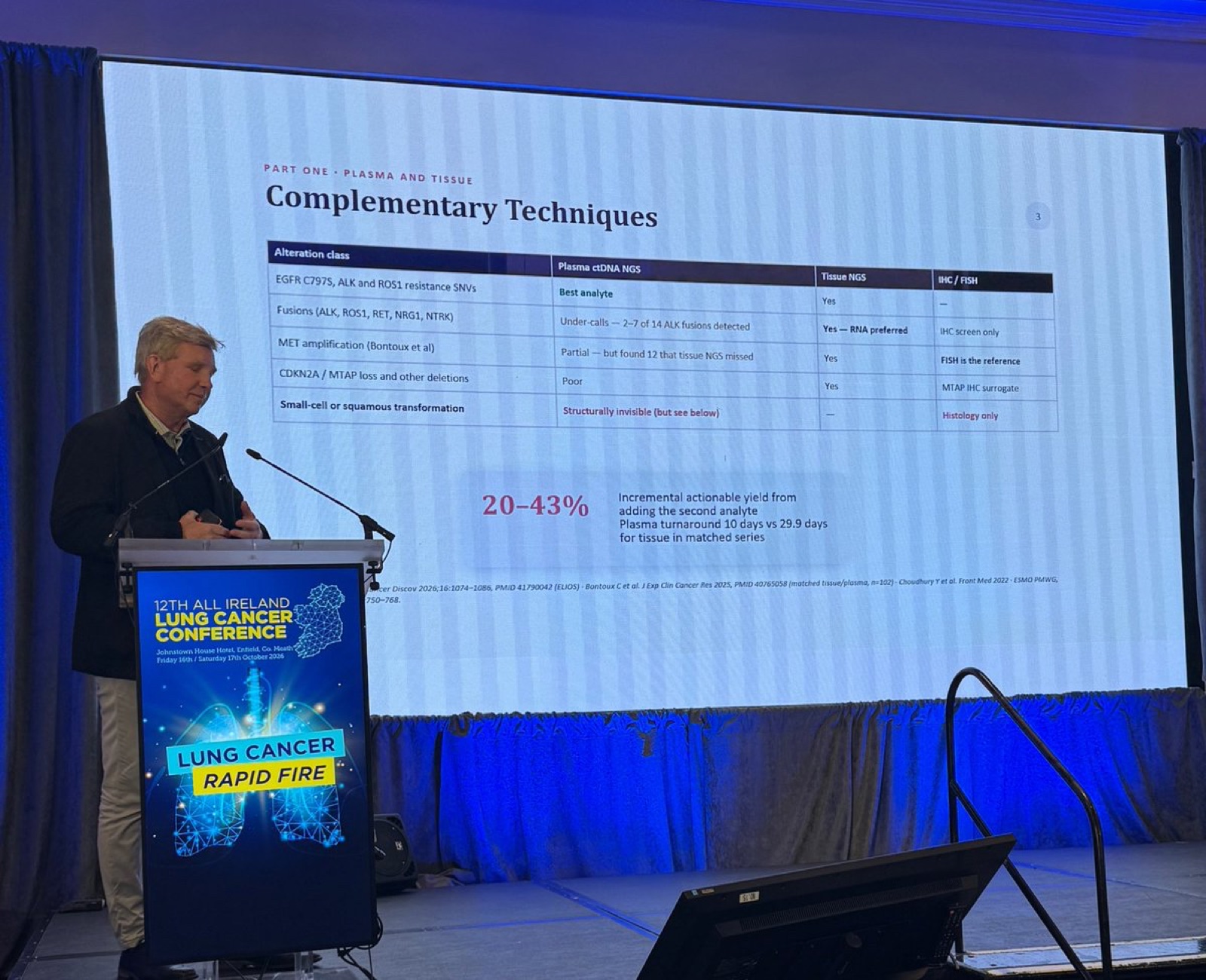
PART ONE · PLASMA AND TISSUE
Complementary Techniques
3
[Table — columns: Alteration class | Plasma ctDNA NGS | Tissue NGS | IHC / FISH]
EGFR C797S, ALK and ROS1 resistance SNVs | Best analyte | Yes | —
Fusions (ALK, ROS1, RET, NRG1, NTRK) | Under-calls — 2–7 of 14 ALK fusions detected | Yes — RNA preferred | IHC screen only
MET amplification (Bontoux et al) | Partial — but found 12 that tissue NGS missed | Yes | FISH is the reference
CDKN2A / MTAP loss and other deletions | Poor | Yes | MTAP IHC surrogate
Small-cell or squamous transformation | Structurally invisible (but see below) | — | Histology only
20–43%
Incremental actionable yield from adding the second analyte
Plasma turnaround 10 days vs 29.9 days for tissue in matched series
[...]cer Discov 2026;16:1074–1086, PMID 41790042 (ELIOS) · Bontoux C et al. J Exp Clin Cancer Res 2025, PMID 40765058 (matched tissue/plasma, n=102) · Choudhury Y et al. Front Med 2022 · ESMO PMWG, [...] 750–768.
Stephen V Liu, MD (@StephenVLiu)Oct 16, 2026 · 6:55 PM ISTView post on X ↗
Day 1 · Oct 16, 2026
Radiotherapy & SBRT
The evolving role of radiotherapy and SBRT (McDonald). 1 post · 4 images captured.
On the podiumFiona McDonaldRadiation oncology, United KingdomThe evolving role of radiotherapy and SBRT
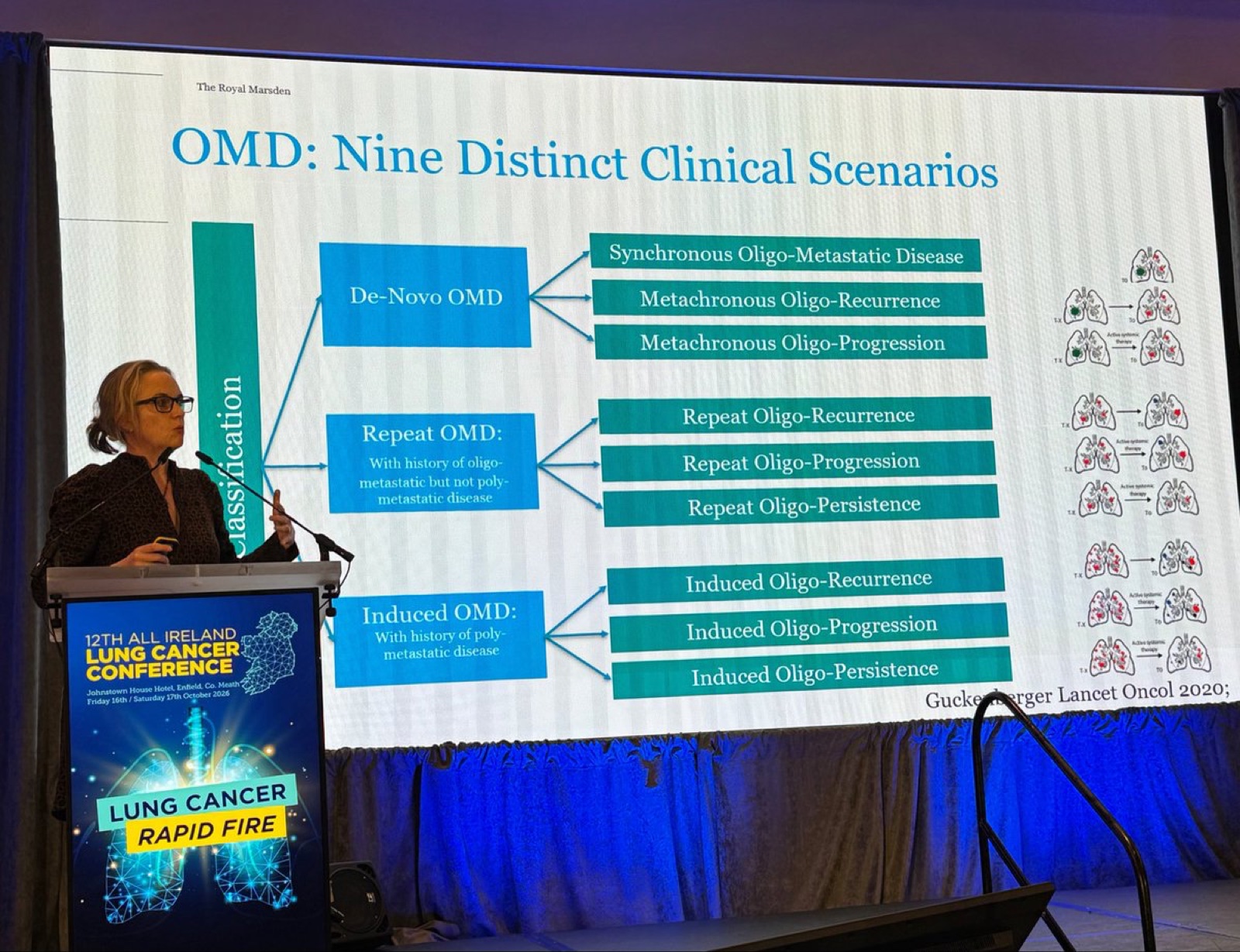
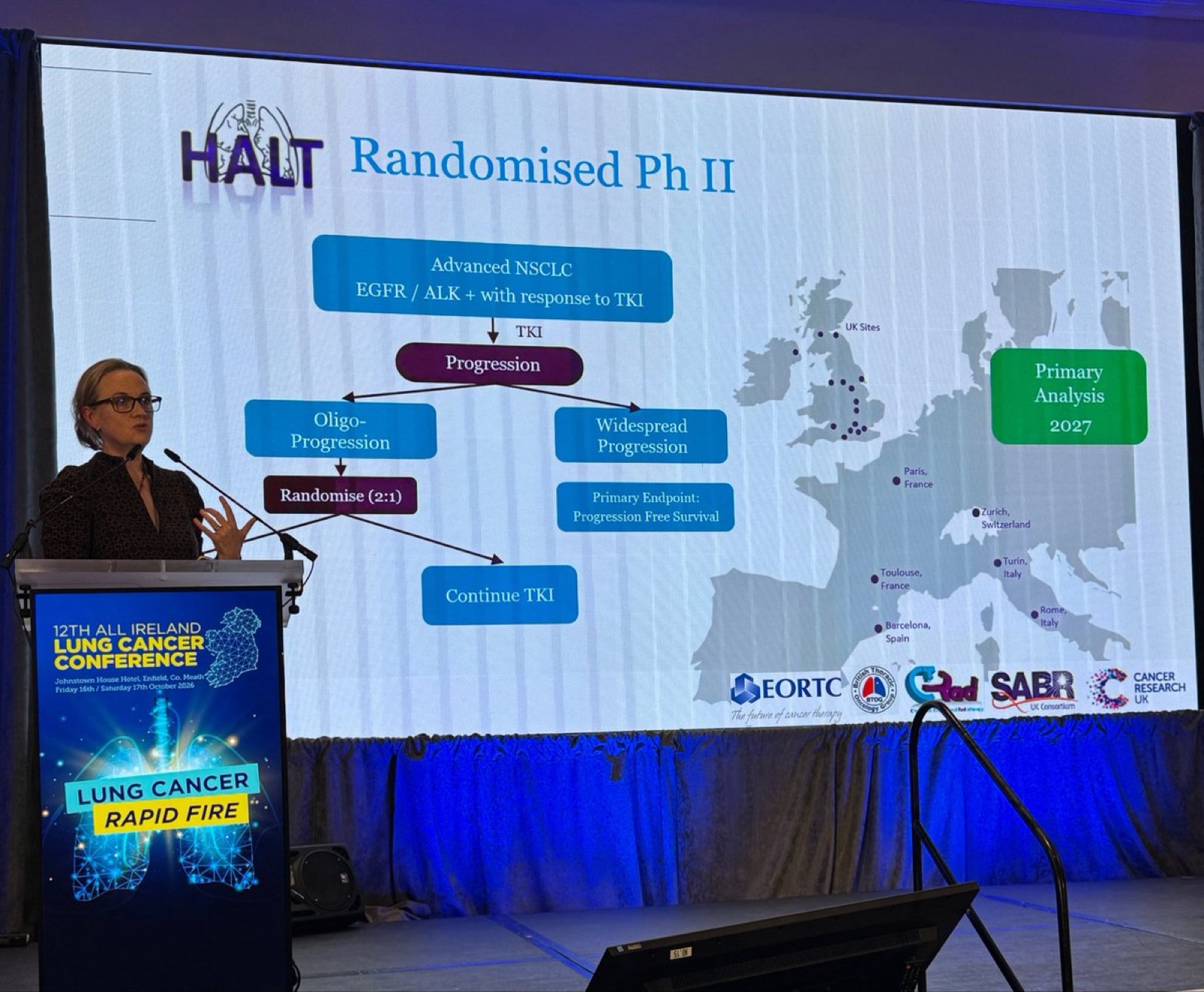
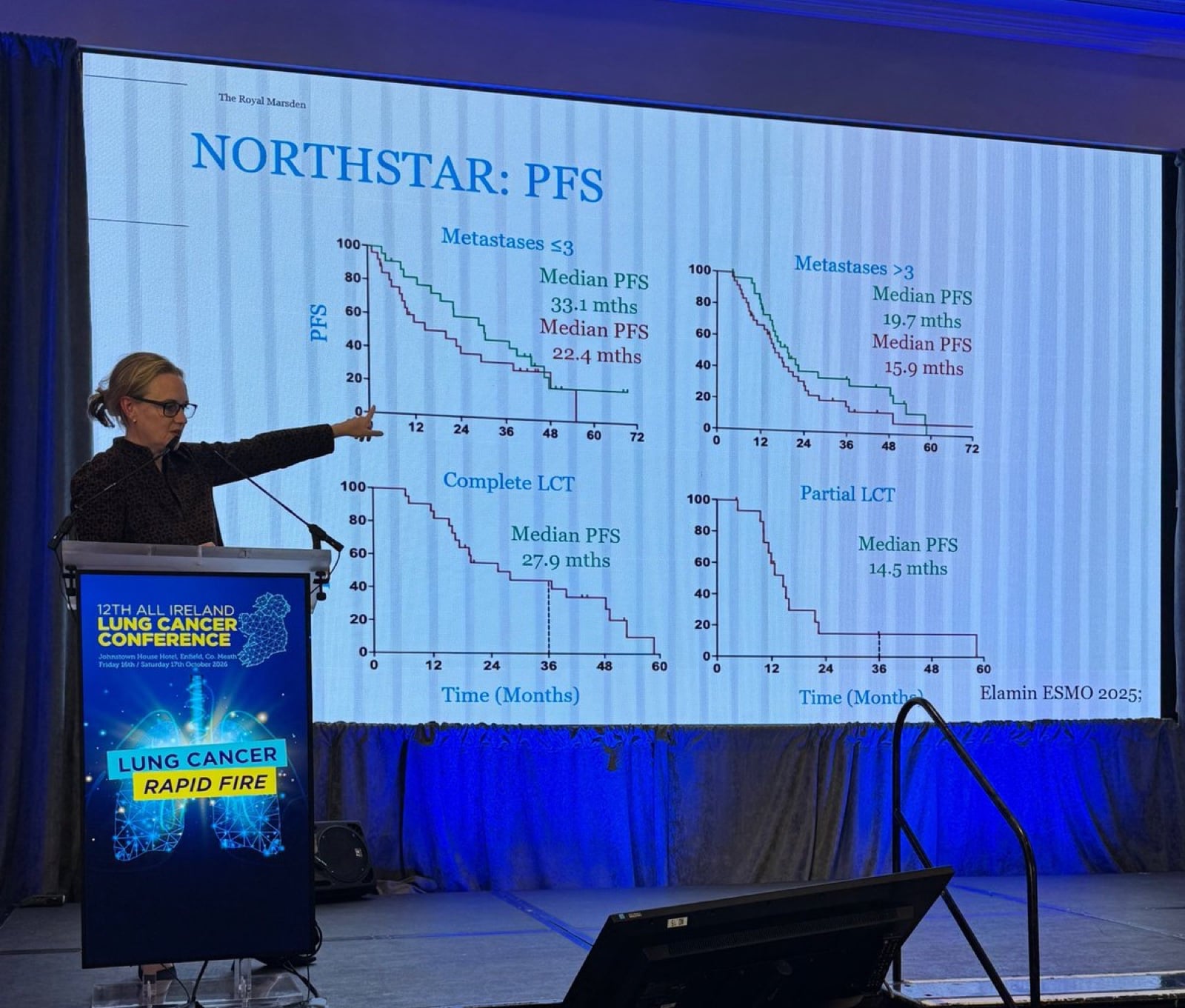
Discussion of the evolving role of radiotherapy from Dr. @fifimcdrmh at #AILCC26 - these are all very different scenarios where SBRT can make a major impact. I’m increasingly leaning toward use in induced oligometastatic disease.
[Slide 2]
The Royal Marsden
OMD: Nine Distinct Clinical Scenarios
Classification
De-Novo OMD
Synchronous Oligo-Metastatic Disease
Metachronous Oligo-Recurrence
Metachronous Oligo-Progression
Repeat OMD: With history of oligo-metastatic but not poly-metastatic disease
Repeat Oligo-Recurrence
Repeat Oligo-Progression
Repeat Oligo-Persistence
Induced OMD: With history of poly-metastatic disease
Induced Oligo-Recurrence
Induced Oligo-Progression
Induced Oligo-Persistence
[Right margin: nine small lung-schematic icons, one per scenario, each labelled with T-X / T0 timepoints and 'Active systemic therapy' arrows — labels too small to read reliably]
Guckenberger Lancet Oncol 2020;
---
[Slide 3]
HALT
Randomised Ph II
Advanced NSCLC
EGFR / ALK + with response to TKI
TKI
Progression
Oligo-Progression
Randomise (2:1)
Widespread Progression
Primary Endpoint: Progression Free Survival
Continue TKI
[Map of Europe with site dots:] UK Sites · Paris, France · Zurich, Switzerland · Toulouse, France · Turin, Italy · Rome, Italy · Barcelona, Spain
Primary Analysis 2027
[Logos:] EORTC — The future of cancer therapy · British Thoracic Oncology Group (BTOG) · CTRad · SABR UK Consortium · Cancer Research UK
---
[Slide 4]
The Royal Marsden
NORTHSTAR: PFS
Metastases ≤3
PFS
Median PFS 33.1 mths
Median PFS 22.4 mths
Metastases >3
Median PFS 19.7 mths
Median PFS 15.9 mths
Complete LCT
Median PFS 27.9 mths
Partial LCT
Median PFS 14.5 mths
Time (Months)
Time (Months)
Elamin ESMO 2025;
[Survival data captured as a table — no point estimates read from the curve]
Endpoint: PFS (four Kaplan-Meier panels: metastases ≤3; metastases >3; complete LCT; partial LCT)
Metastases ≤3 — green curve (arm label not printed) | 33.1 mths
Metastases ≤3 — red curve (arm label not printed) | 22.4 mths
Metastases >3 — green curve (arm label not printed) | 19.7 mths
Metastases >3 — red curve (arm label not printed) | 15.9 mths
Complete LCT | 27.9 mths
Partial LCT | 14.5 mths
Note: Medians are colour-coded to the curves (green vs red) but the slide does NOT print which treatment arm each colour represents (NORTHSTAR randomised osimertinib ± local consolidative therapy — arm assignment must be confirmed from the ESMO 2025 presentation, not inferred here). No HR, CI, p-value, N or landmark rates printed. Dashed vertical reference lines at 36 months on the lower panels are unlabelled.
Stephen V Liu, MD (@StephenVLiu)Oct 16, 2026 · 7:21 PM ISTView post on X ↗
Day 2 · Oct 17, 2026
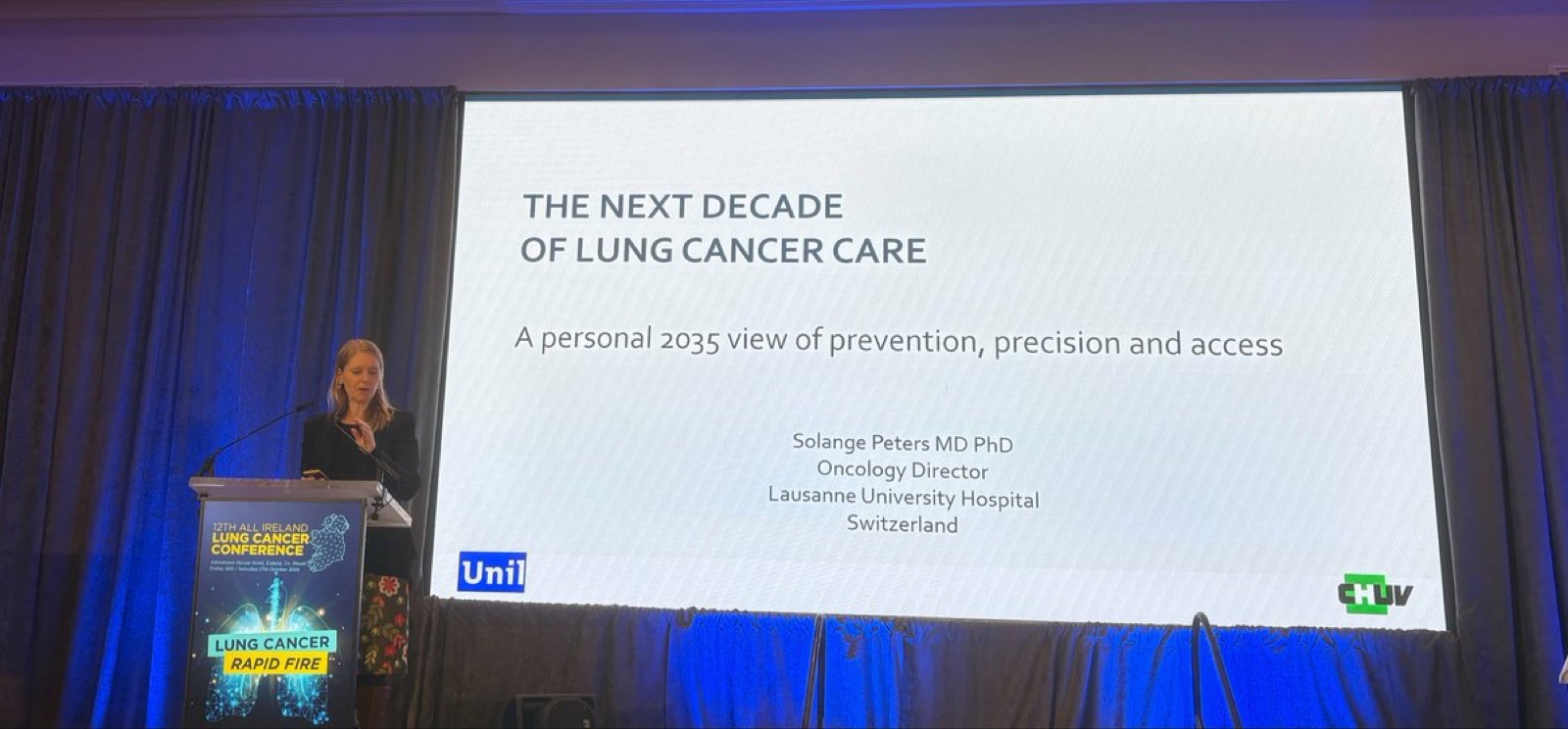
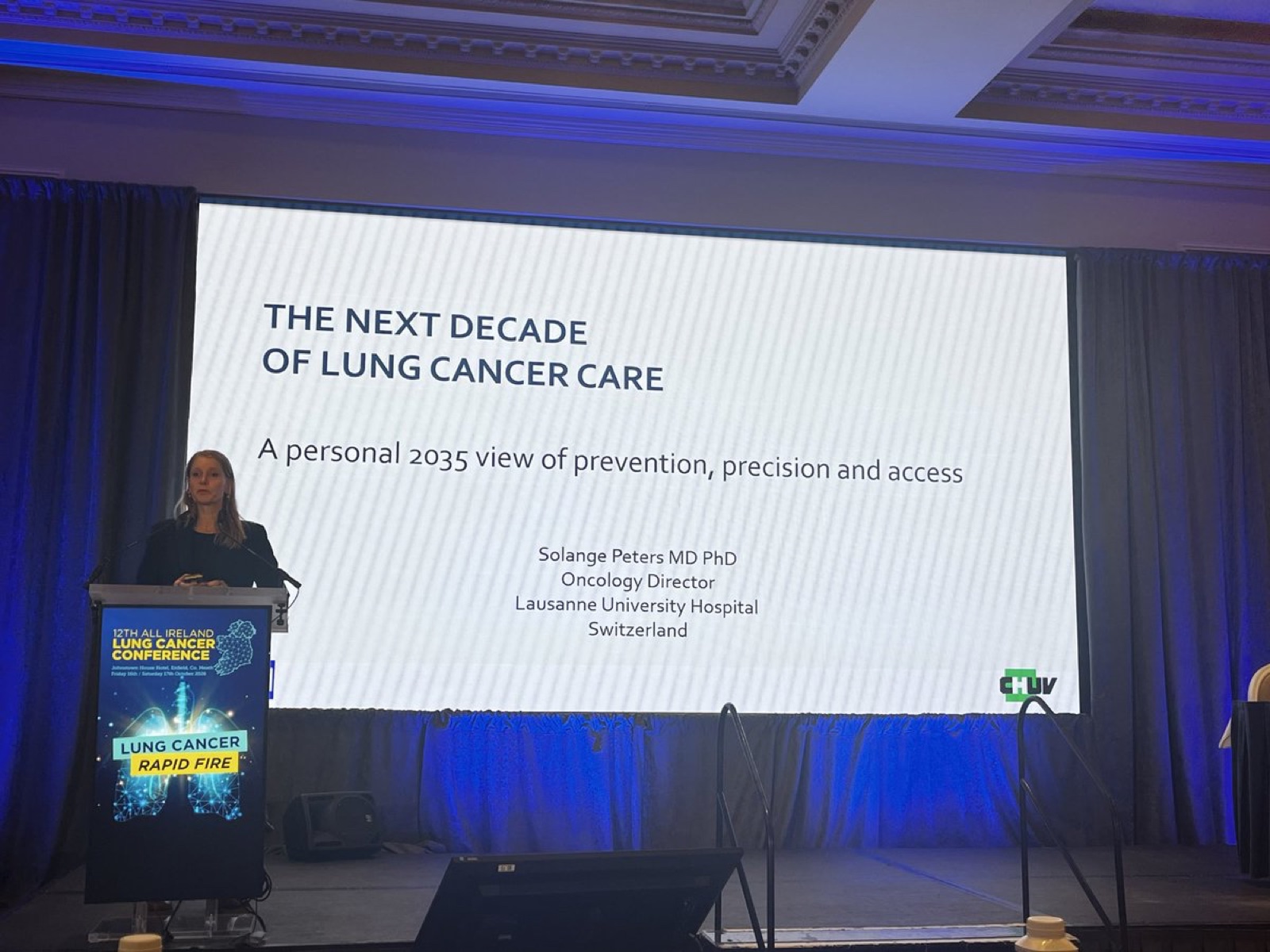
Day 2 Keynote: The Next Decade of Lung Cancer Care
Keynote: the next decade of lung cancer care (Peters). 3 posts · 9 images captured.
On the podiumSolange PetersMedical Oncology Chair, CHUV Lausanne; ESMO President 2020-23Keynote: the next decade of lung cancer care
Visionary talk today on day 2 at #AILCC26 from @peters_solange on the next decade of lung cancer care @FordePatrick @gerryhanna @peters_solange @PatelOncology @Alfdoc2 @MARIANOPROVENCI @APassaroMD @fifimcdrmh @gwalls89 @DrJNaidoo
Alfredo Addeo MD (@Alfdoc2)Oct 17, 2026 · 8:46 AM ISTView post on X ↗
On the podiumSolange PetersMedical Oncology Chair, CHUV Lausanne; ESMO President 2020-23Keynote: the next decade of lung cancer care
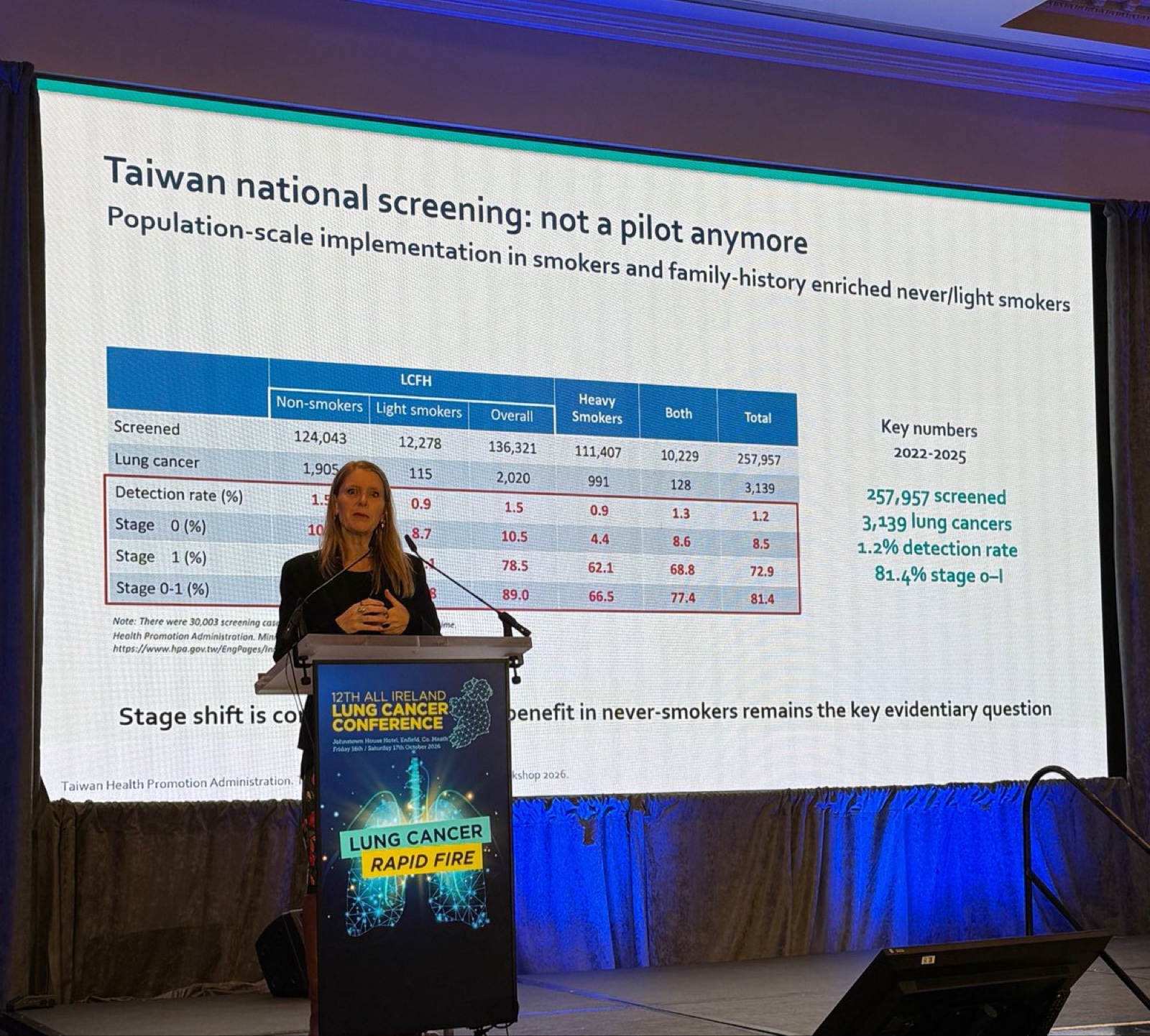
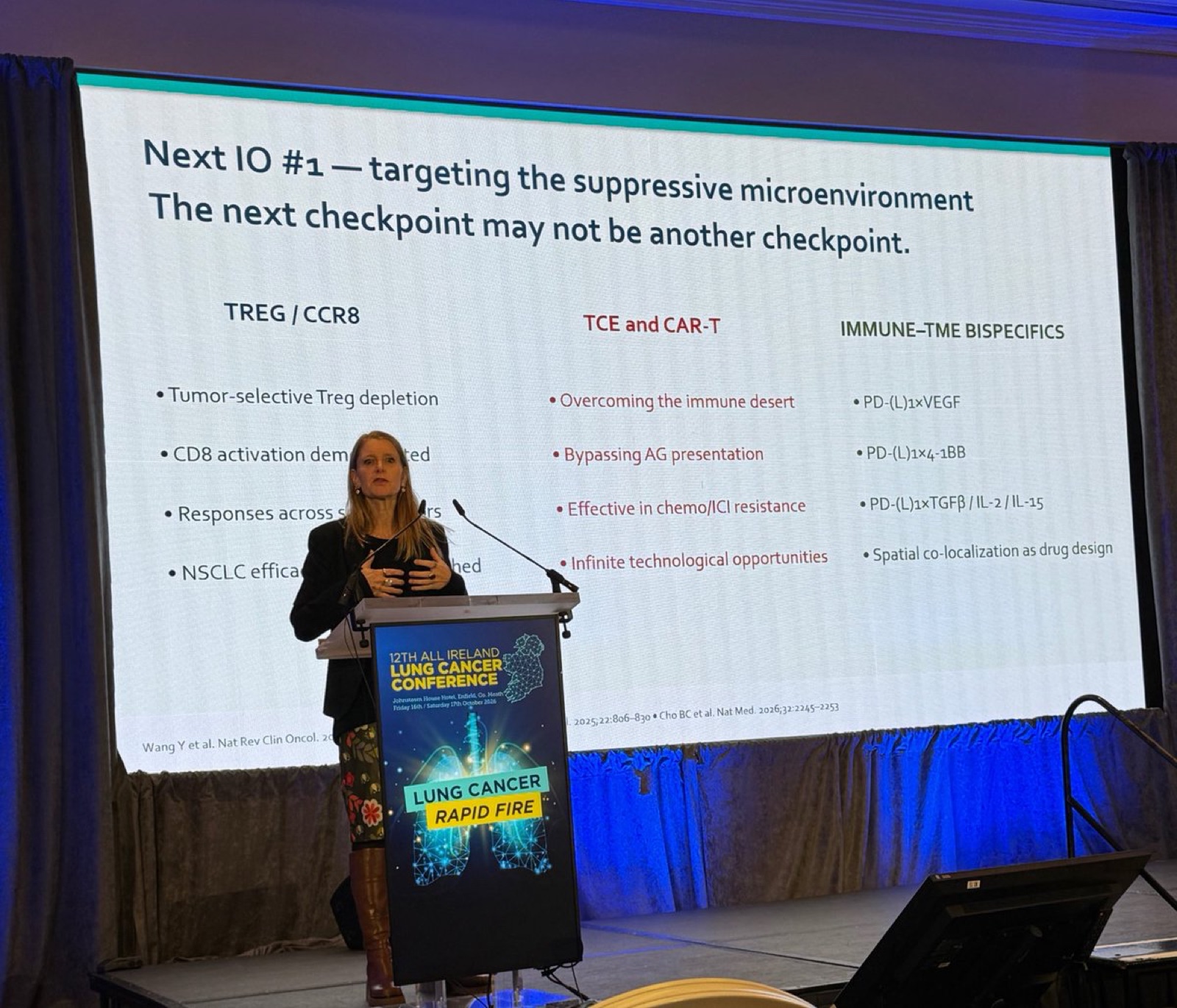
Dr. @peters_solange opens day 2 of #AILCC26 with a look at the coming decade for lung cancer. Highlights screening, liquid biopsy, early stage, next gen immunotherapy and access. What is the value of innovation if patients cannot access it (or worse, inequity in access).
[Slide 1]
Taiwan national screening: not a pilot anymore
Population-scale implementation in smokers and family-history enriched never/light smokers
[Table — column groups: LCFH (Non-smokers | Light smokers | Overall) | Heavy Smokers | Both | Total]
Screened | 124,043 | 12,278 | 136,321 | 111,407 | 10,229 | 257,957
Lung cancer | 1,905 | 115 | 2,020 | 991 | 128 | 3,139
Detection rate (%) | 1.5 | 0.9 | 1.5 | 0.9 | 1.3 | 1.2
Stage 0 (%) | 10[.?] | 8.7 | 10.5 | 4.4 | 8.6 | 8.5
Stage 1 (%) | [occluded] | [occluded] | 78.5 | 62.1 | 68.8 | 72.9
Stage 0-1 (%) | [occluded] | [occluded, ends in 8] | 89.0 | 66.5 | 77.4 | 81.4
Key numbers 2022-2025
257,957 screened
3,139 lung cancers
1.2% detection rate
81.4% stage 0–I
Note: There were 30,003 screening case[s ...] [occluded ...]me.
Health Promotion Administration. Min[istry ...] [occluded]
https://www.hpa.gov.tw/EngPages/In[...] [occluded]
Stage shift is co[...occluded...]benefit in never-smokers remains the key evidentiary question
Taiwan Health Promotion Administration. [...occluded...]kshop 2026.
---
[Slide 2]
Next IO #1 — targeting the suppressive microenvironment
The next checkpoint may not be another checkpoint.
TREG / CCR8
• Tumor-selective Treg depletion
• CD8 activation dem[onstrated — partially occluded]
• Responses across s[olid tumo]rs [partially occluded]
• NSCLC effica[cy ...]hed [partially occluded]
TCE and CAR-T
• Overcoming the immune desert
• Bypassing AG presentation
• Effective in chemo/ICI resistance
• Infinite technological opportunities
IMMUNE–TME BISPECIFICS
• PD-(L)1×VEGF
• PD-(L)1×4-1BB
• PD-(L)1×TGFβ / IL-2 / IL-15
• Spatial co-localization as drug design
Wang Y et al. Nat Rev Clin Oncol. 20[...] [occluded] [...]. 2025;22:806–830 • Cho BC et al. Nat Med. 2026;32:2245–2253
---
[Slide 3]
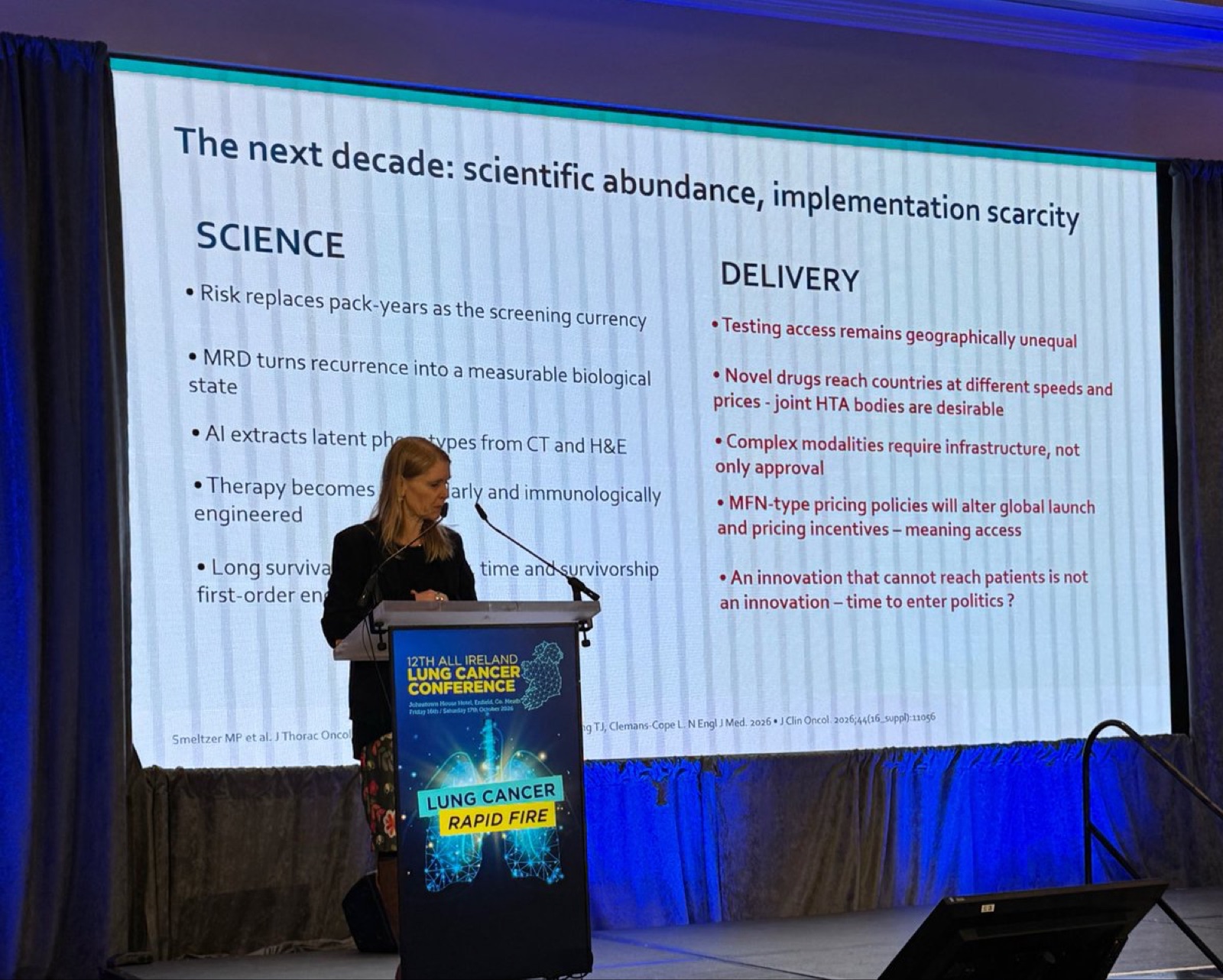
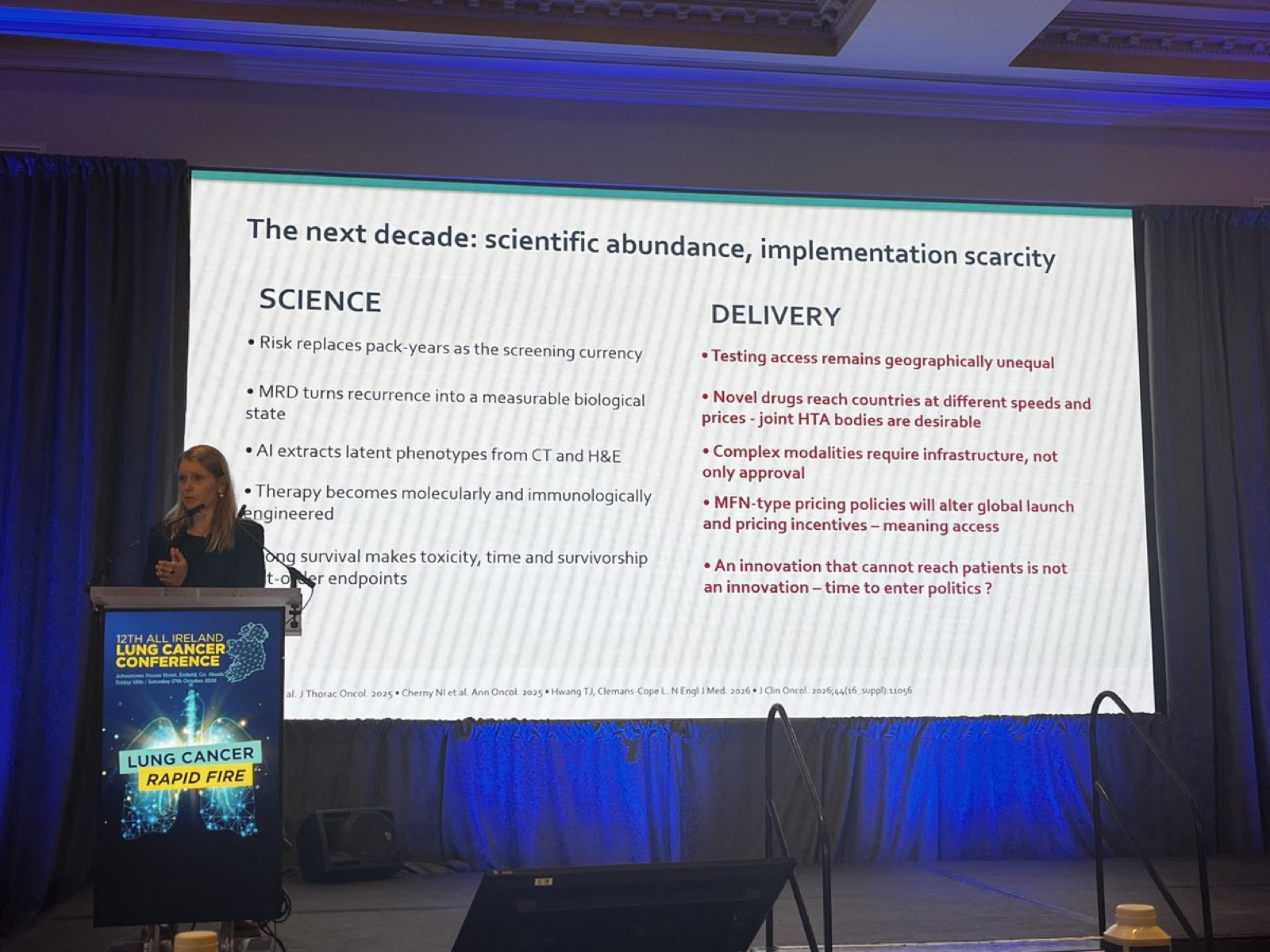
The next decade: scientific abundance, implementation scarcity
SCIENCE
• Risk replaces pack-years as the screening currency
• MRD turns recurrence into a measurable biological state
• AI extracts latent phe[no]types from CT and H&E
• Therapy becomes [molecu]larly and immunologically engineered
• Long surviva[l makes toxicity,] time and survivorship first-order en[dpoints]
DELIVERY
• Testing access remains geographically unequal
• Novel drugs reach countries at different speeds and prices - joint HTA bodies are desirable
• Complex modalities require infrastructure, not only approval
• MFN-type pricing policies will alter global launch and pricing incentives – meaning access
• An innovation that cannot reach patients is not an innovation – time to enter politics ?
Smeltzer MP et al. J Thorac Oncol[...] [occluded] [...]ng TJ, Clemans-Cope L. N Engl J Med. 2026 • J Clin Oncol. 2026;44(16_suppl):11056
---
[Slide 4]
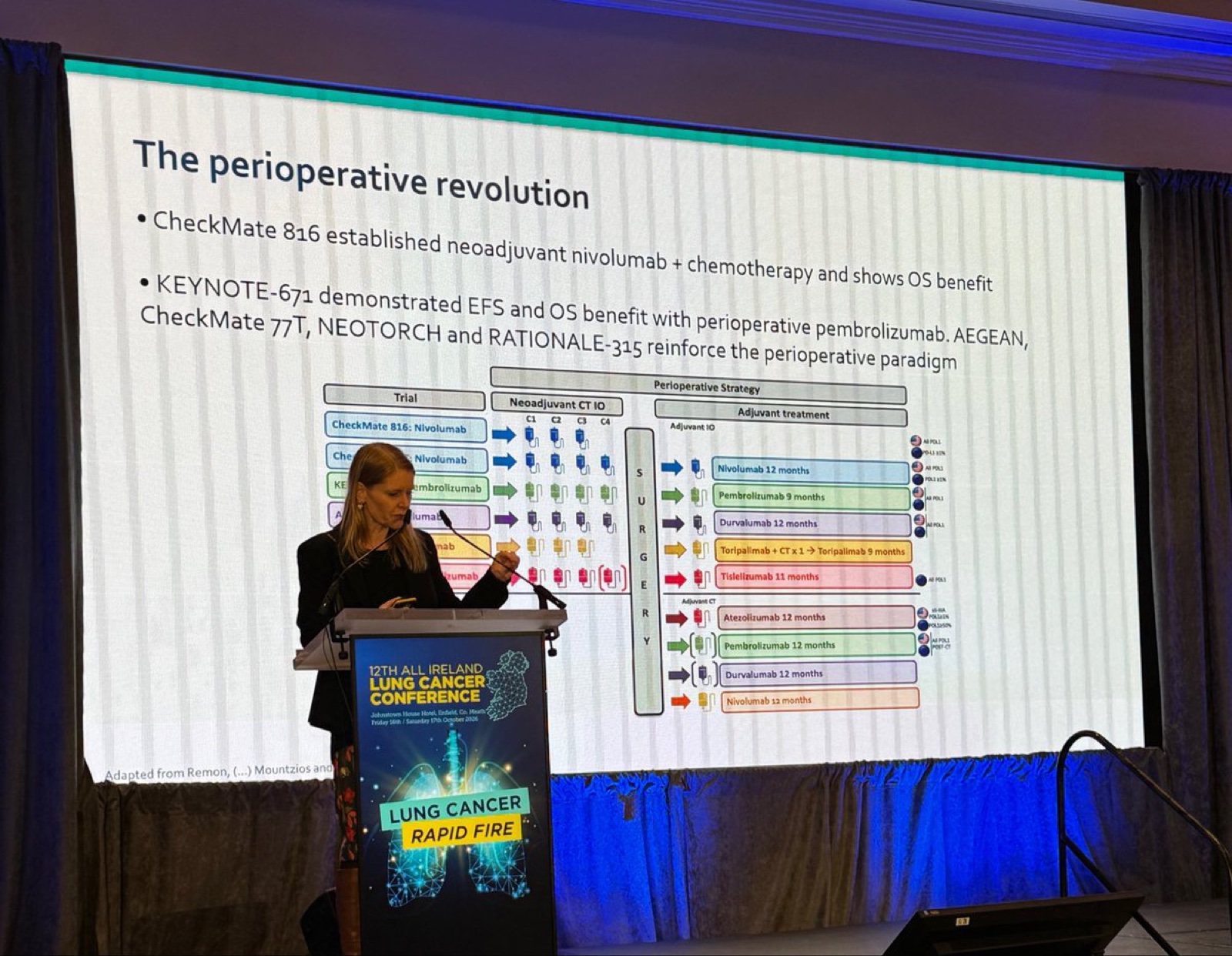
The perioperative revolution
• CheckMate 816 established neoadjuvant nivolumab + chemotherapy and shows OS benefit
• KEYNOTE-671 demonstrated EFS and OS benefit with perioperative pembrolizumab. AEGEAN, CheckMate 77T, NEOTORCH and RATIONALE-315 reinforce the perioperative paradigm
[Figure — schematic table: Trial | Perioperative Strategy: Neoadjuvant CT IO (C1 C2 C3 C4) | SURGERY | Adjuvant treatment]
CheckMate 816: Nivolumab → [3 neoadjuvant cycles] → Surgery → (no adjuvant IO row)
Che[ckMate 77T]: Nivolumab → [4 cycles] → Surgery → Adjuvant IO: Nivolumab 12 months
KE[YNOTE-671: P]embrolizumab → [4 cycles] → Surgery → Pembrolizumab 9 months
A[EGEAN: Durva]lumab → [4 cycles] → Surgery → Durvalumab 12 months
[NEOTORCH: Toripali]mab → [3 cycles] → Surgery → Toripalimab + CT x 1 → Toripalimab 9 months
[RATIONALE-315: Tislel]izumab → [3-4 cycles, 4th bracketed] → Surgery → Tislelizumab 11 months
Adjuvant CT
Atezolizumab 12 months
Pembrolizumab 12 months
Durvalumab 12 months
Nivolumab 12 months
[Right margin: tiny flag icons with PD-L1 eligibility labels per regimen, e.g. 'All PDL1', 'PD-L1 ≥1%', 'IB-IIIA PDL1≥1% / PDL1≥50%', 'All PDL1 POST-CT' — too small to transcribe reliably]
Adapted from Remon, (...) Mountzios and[...]
Stephen V Liu, MD (@StephenVLiu)Oct 17, 2026 · 9:16 AM ISTView post on X ↗
On the podiumSolange PetersMedical Oncology Chair, CHUV Lausanne; ESMO President 2020-23Keynote: the next decade of lung cancer care
Day 2 of #AILCC26 starts with keynote speaker @peters_solange taking us through the next 10yrs of NSCLC, key themes:
- screening: broadening the population?
- liquid biopsy: optimising PPV
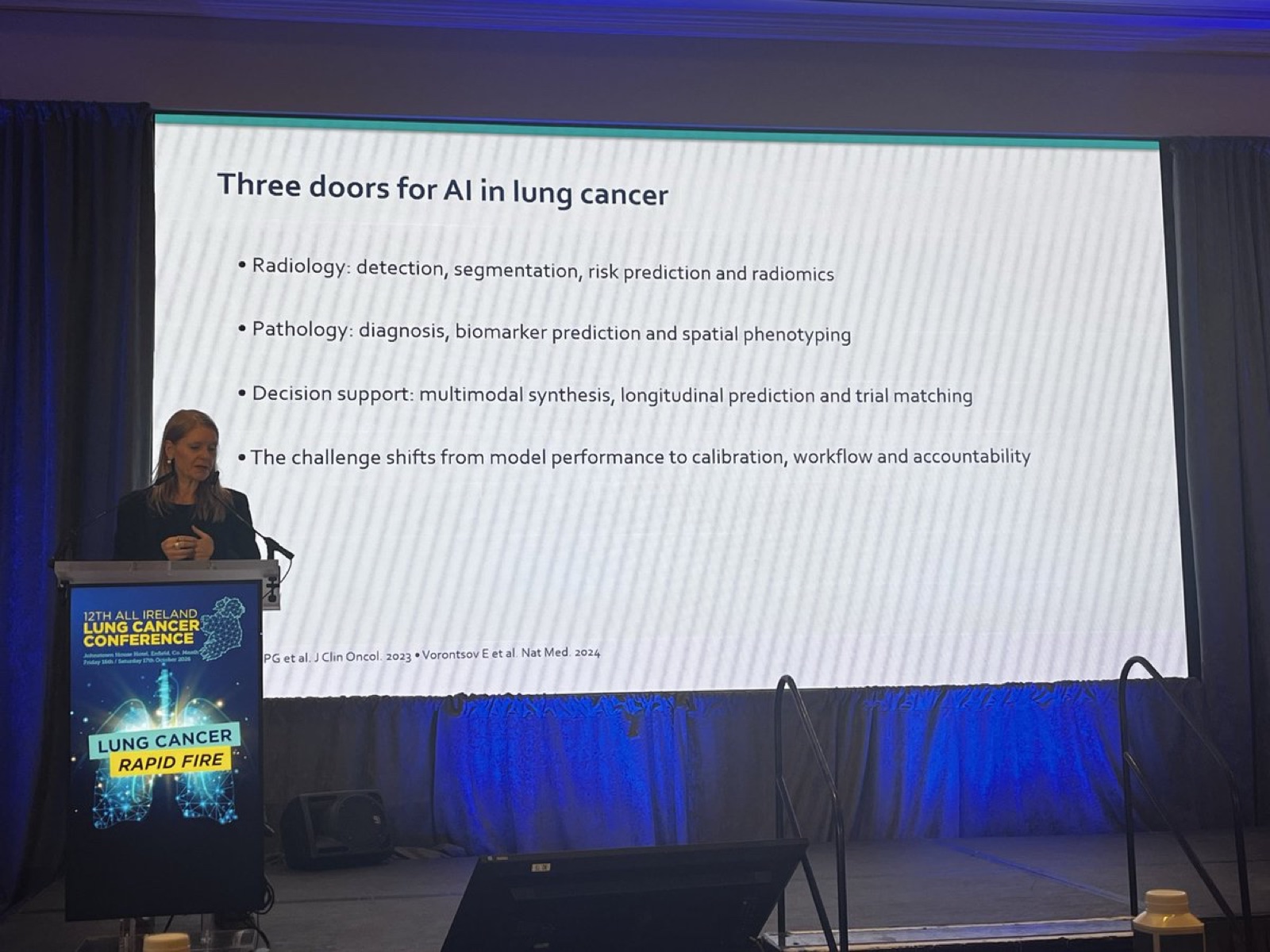
- AI: 3 doors of innovation, radiology & pathology first
- next gen IO: TCEs & more
#LCSM
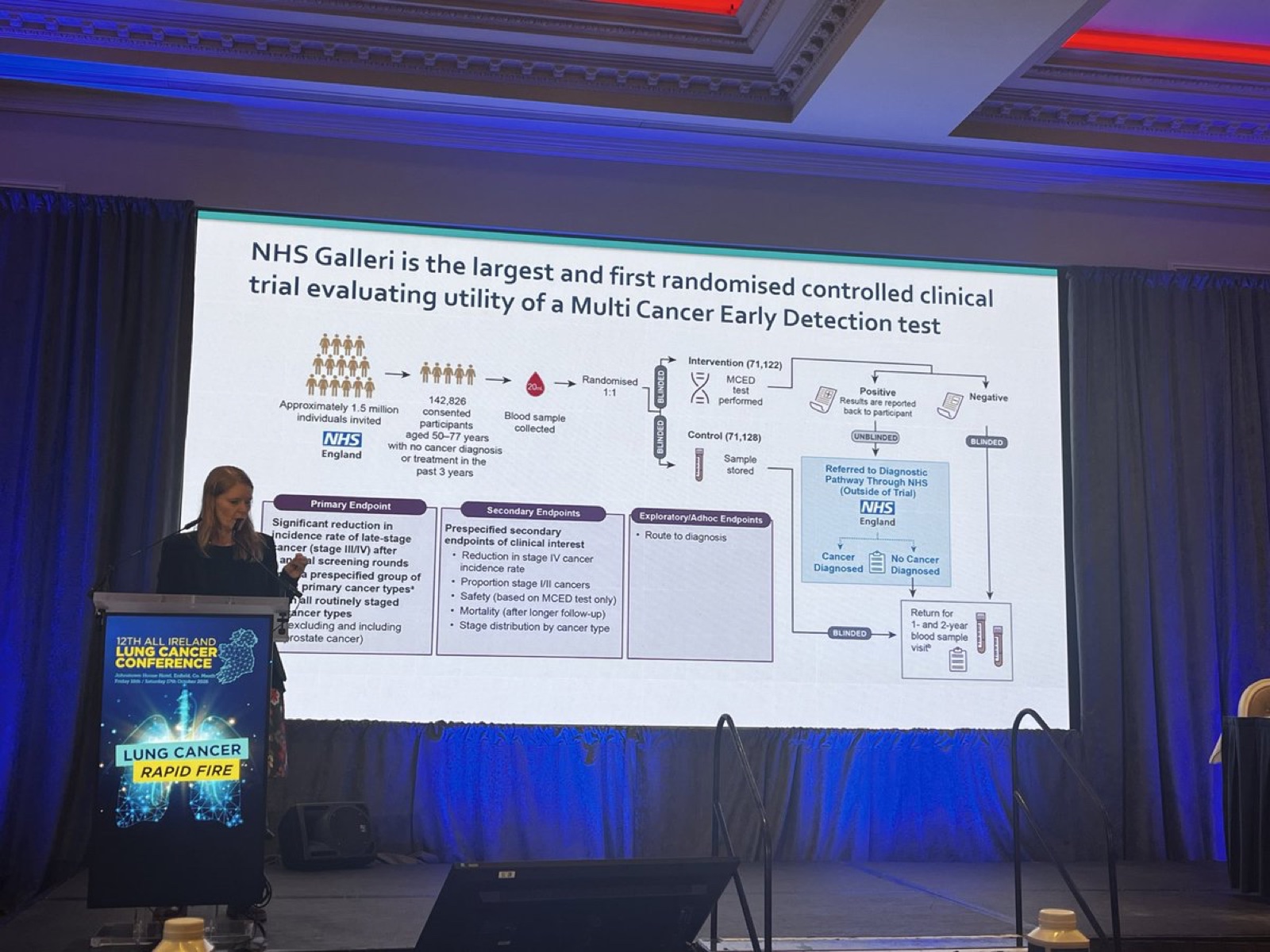
[Slide 2]
NHS Galleri is the largest and first randomised controlled clinical trial evaluating utility of a Multi Cancer Early Detection test
Approximately 1.5 million individuals invited
NHS England
142,826 consented participants aged 50–77 years with no cancer diagnosis or treatment in the past 3 years
Blood sample collected
Randomised 1:1
BLINDED
Intervention (71,122)
MCED test performed
BLINDED
Control (71,128)
Sample stored
Positive — Results are reported back to participant
Negative
UNBLINDED
Referred to Diagnostic Pathway Through NHS (Outside of Trial)
NHS England
Cancer Diagnosed
No Cancer Diagnosed
BLINDED
Return for 1- and 2-year blood sample visit[b]
BLINDED
Primary Endpoint
Significant reduction in incidence rate of late-stage cancer (stage III/IV) after [annu]al screening rounds [in] a prespecified group of [12] primary cancer types[a], [in] all routinely staged cancer types [(]excluding and including [p]rostate cancer)
Secondary Endpoints
Prespecified secondary endpoints of clinical interest
• Reduction in stage IV cancer incidence rate
• Proportion stage I/II cancers
• Safety (based on MCED test only)
• Mortality (after longer follow-up)
• Stage distribution by cancer type
Exploratory/Adhoc Endpoints
• Route to diagnosis
---
[Slide 3]
Three doors for AI in lung cancer
• Radiology: detection, segmentation, risk prediction and radiomics
• Pathology: diagnosis, biomarker prediction and spatial phenotyping
• Decision support: multimodal synthesis, longitudinal prediction and trial matching
• The challenge shifts from model performance to calibration, workflow and accountability
[...]PG et al. J Clin Oncol. 2023 • Vorontsov E et al. Nat Med. 2024
---
[Slide 4]
The next decade: scientific abundance, implementation scarcity
SCIENCE
• Risk replaces pack-years as the screening currency
• MRD turns recurrence into a measurable biological state
• AI extracts latent phenotypes from CT and H&E
• Therapy becomes molecularly and immunologically engineered
• [L]ong survival makes toxicity, time and survivorship [firs]t-order endpoints
DELIVERY
• Testing access remains geographically unequal
• Novel drugs reach countries at different speeds and prices - joint HTA bodies are desirable
• Complex modalities require infrastructure, not only approval
• MFN-type pricing policies will alter global launch and pricing incentives – meaning access
• An innovation that cannot reach patients is not an innovation – time to enter politics ?
[Smeltzer MP et] al. J Thorac Oncol. 2025 • Cherny NI et al. Ann Oncol. 2025 • Hwang TJ, Clemans-Cope L. N Engl J Med. 2026 • J Clin Oncol. 2026;44(16_suppl):11056
Jarushka Naidoo (@DrJNaidoo)Oct 17, 2026 · 9:21 AM ISTView post on X ↗
Day 2 · Oct 17, 2026 · Chair Emer Hanrahan
Stage III NSCLC: Multidisciplinary Discussion
Multidisciplinary discussion of stage III NSCLC (Hanrahan). 1 post · 4 images captured.
On the podiumEmer HanrahanConsultant medical oncologistMultidisciplinary discussion of stage III NSCLC
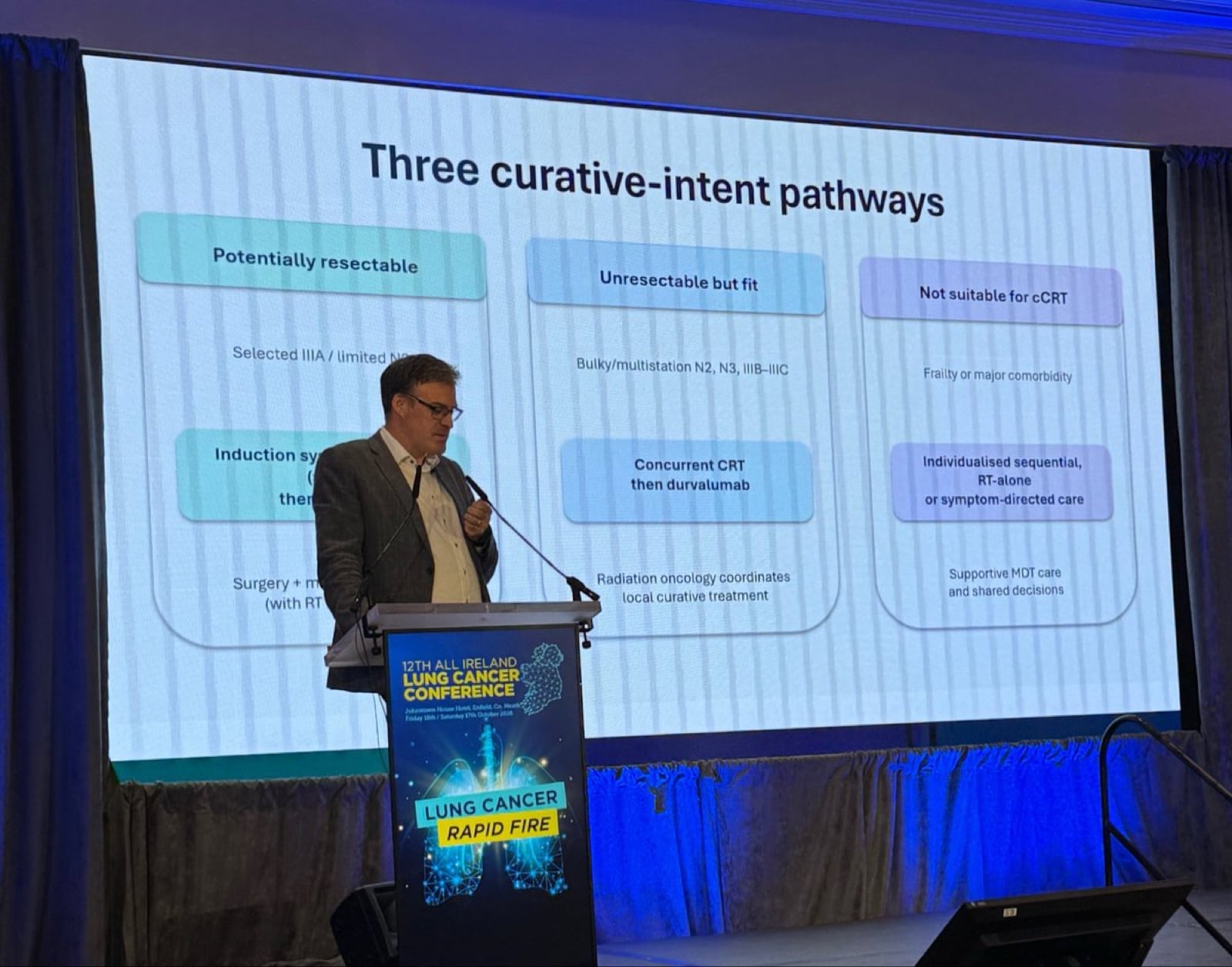
Multidisciplinary discussion of stage III NSCLC at #AILCC26 with Drs. @emer_hanrahan Donna Eaton @rmcd22 Gary Fitzmaurice and Colum Dennehy - all specialties can play a role and key is MDT discussion.
[Slide 2]
Three curative-intent pathways
Potentially resectable
Selected IIIA / limited N2 [partially occluded]
Induction sy[stemic therapy] [occluded]
([...]) [occluded]
then [...] [occluded]
Surgery + m[...] [occluded]
(with RT [...]) [occluded]
Unresectable but fit
Bulky/multistation N2, N3, IIIB–IIIC
Concurrent CRT then durvalumab
Radiation oncology coordinates local curative treatment
Not suitable for cCRT
Frailty or major comorbidity
Individualised sequential, RT-alone or symptom-directed care
Supportive MDT care and shared decisions
---
[Slide 3]
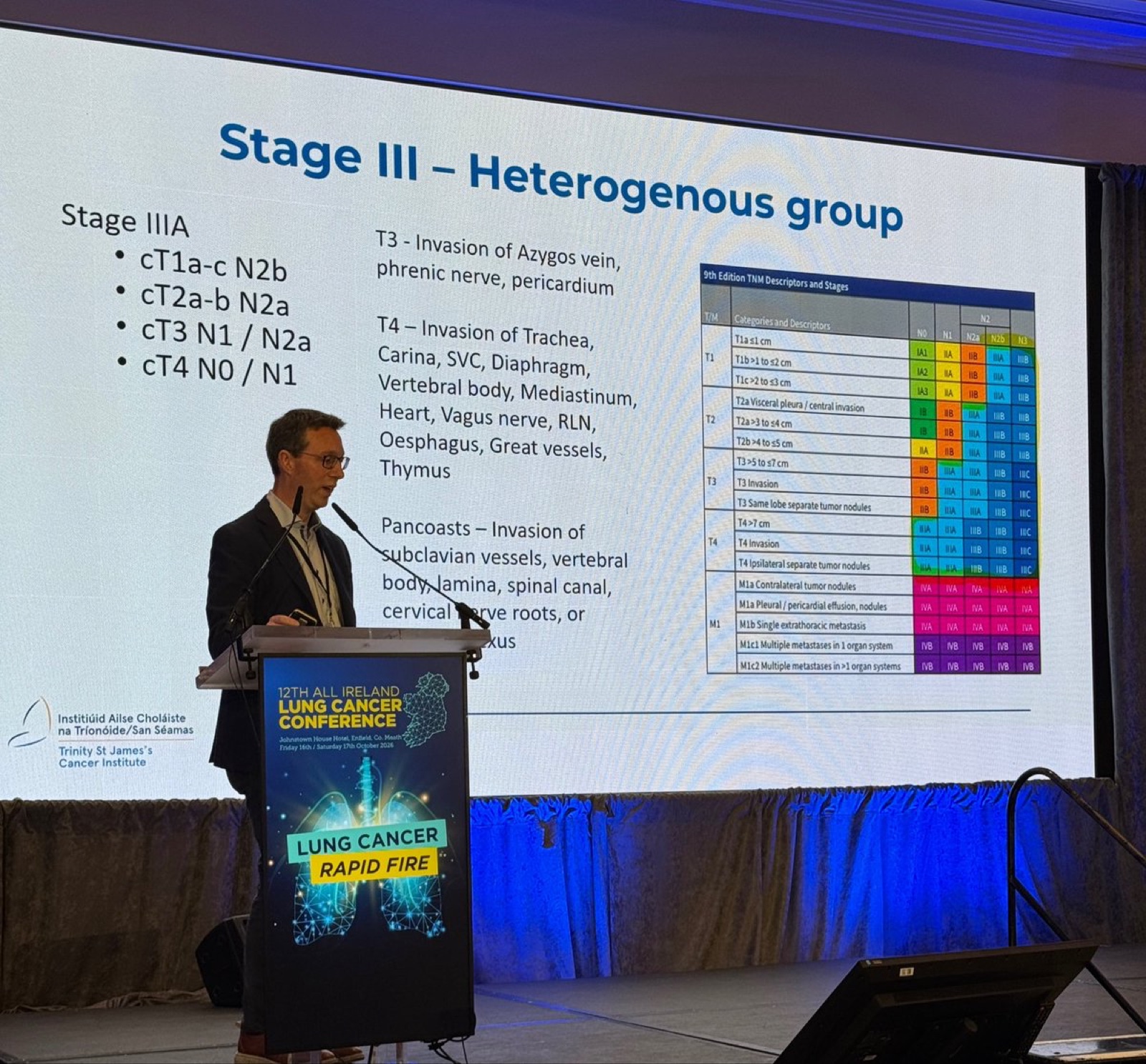
Stage III – Heterogenous group
Stage IIIA
• cT1a-c N2b
• cT2a-b N2a
• cT3 N1 / N2a
• cT4 N0 / N1
T3 - Invasion of Azygos vein, phrenic nerve, pericardium
T4 – Invasion of Trachea, Carina, SVC, Diaphragm, Vertebral body, Mediastinum, Heart, Vagus nerve, RLN, Oesphagus, Great vessels, Thymus
Pancoasts – Invasion of subclavian vessels, vertebral body, lamina, spinal canal, cervical nerve roots, or [brachial pl]exus [partially occluded]
9th Edition TNM Descriptors and Stages
[Table — T/M | Categories and Descriptors | N0 | N1 | N2a | N2b | N3]
T1 | T1a ≤1 cm | IA1 | IIA | IIB | IIIA | IIIB
T1 | T1b >1 to ≤2 cm | IA2 | IIA | IIB | IIIA | IIIB
T1 | T1c >2 to ≤3 cm | IA3 | IIA | IIB | IIIA | IIIB
T2 | T2a Visceral pleura / central invasion | IB | IIB | IIIA | IIIB | IIIB
T2 | T2a >3 to ≤4 cm | IB | IIB | IIIA | IIIB | IIIB
T2 | T2b >4 to ≤5 cm | IIA | IIB | IIIA | IIIB | IIIB
T3 | T3 >5 to ≤7 cm | IIB | IIIA | IIIA | IIIB | IIIC
T3 | T3 Invasion | IIB | IIIA | IIIA | IIIB | IIIC
T3 | T3 Same lobe separate tumor nodules | IIB | IIIA | IIIA | IIIB | IIIC
T4 | T4 >7 cm | IIIA | IIIA | IIIB | IIIB | IIIC
T4 | T4 Invasion | IIIA | IIIA | IIIB | IIIB | IIIC
T4 | T4 Ipsilateral separate tumor nodules | IIIA | IIIA | IIIB | IIIB | IIIC
M1 | M1a Contralateral tumor nodules | IVA | IVA | IVA | IVA | IVA
M1 | M1a Pleural / pericardial effusion, nodules | IVA | IVA | IVA | IVA | IVA
M1 | M1b Single extrathoracic metastasis | IVA | IVA | IVA | IVA | IVA
M1 | M1c1 Multiple metastases in 1 organ system | IVB | IVB | IVB | IVB | IVB
M1 | M1c2 Multiple metastases in >1 organ systems | IVB | IVB | IVB | IVB | IVB
[Logo:] Institiúid Ailse Choláiste na Tríonóide/San Séamas · Trinity St James's Cancer Institute
---
[Slide 4]
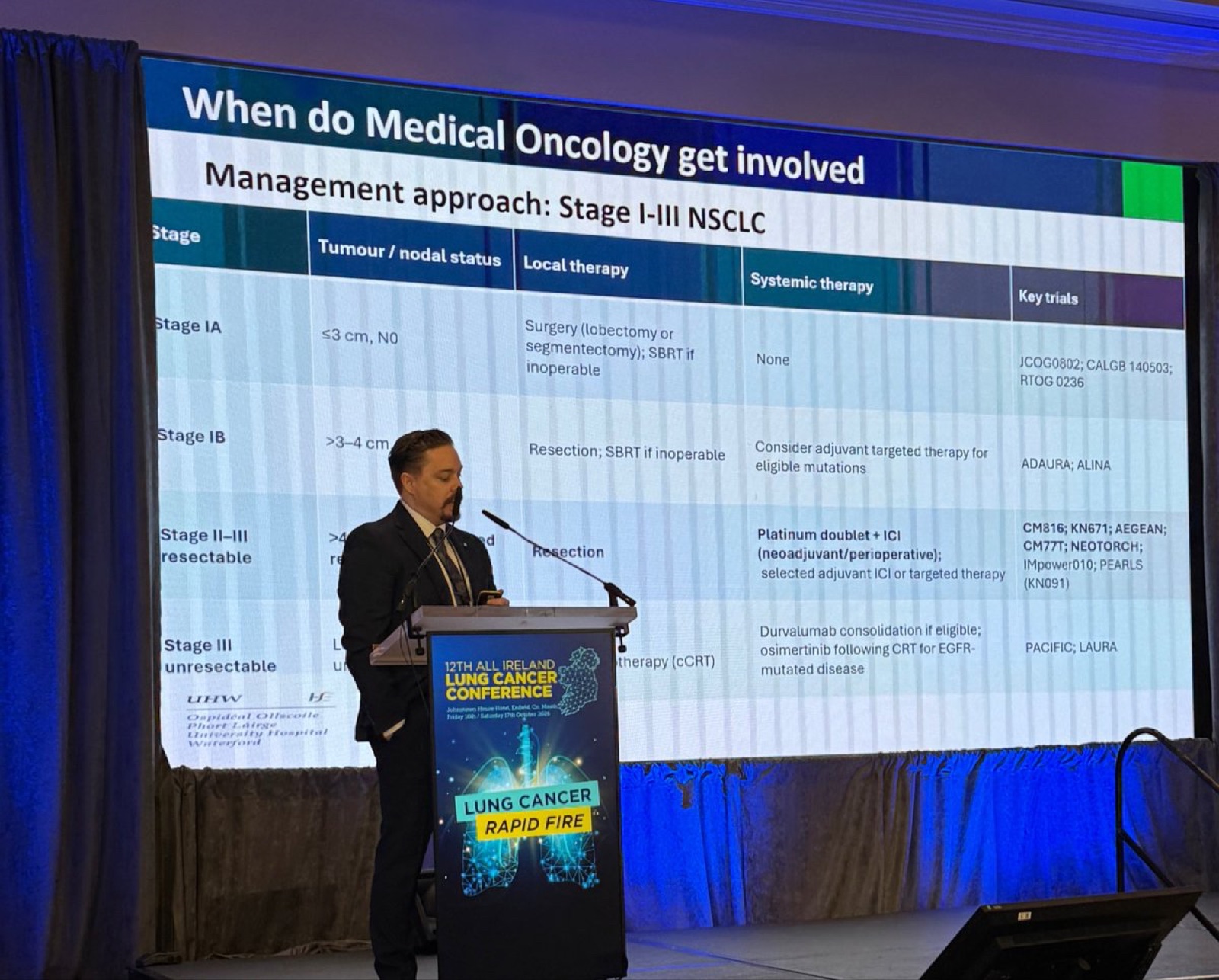
When do Medical Oncology get involved
Management approach: Stage I-III NSCLC
[Table — Stage | Tumour / nodal status | Local therapy | Systemic therapy | Key trials]
Stage IA | ≤3 cm, N0 | Surgery (lobectomy or segmentectomy); SBRT if inoperable | None | JCOG0802; CALGB 140503; RTOG 0236
Stage IB | >3–4 cm[, N0 — occluded] | Resection; SBRT if inoperable | Consider adjuvant targeted therapy for eligible mutations | ADAURA; ALINA
Stage II–III resectable | >4[... occluded ...]ed / re[... occluded] | Resection | Platinum doublet + ICI (neoadjuvant/perioperative); selected adjuvant ICI or targeted therapy | CM816; KN671; AEGEAN; CM77T; NEOTORCH; IMpower010; PEARLS (KN091)
Stage III unresectable | L[... occluded] / un[... occluded] | [... occluded ...]therapy (cCRT) | Durvalumab consolidation if eligible; osimertinib following CRT for EGFR-mutated disease | PACIFIC; LAURA
[Logos:] UHW · Ospidéal Ollscoile Phort Láirge / University Hospital Waterford · HSE
Stephen V Liu, MD (@StephenVLiu)Oct 17, 2026 · 10:20 AM ISTView post on X ↗
Day 2 · Oct 17, 2026
SABR & Radiation Advances
SABR and radiation advances (Walls). 1 post · 3 images captured.
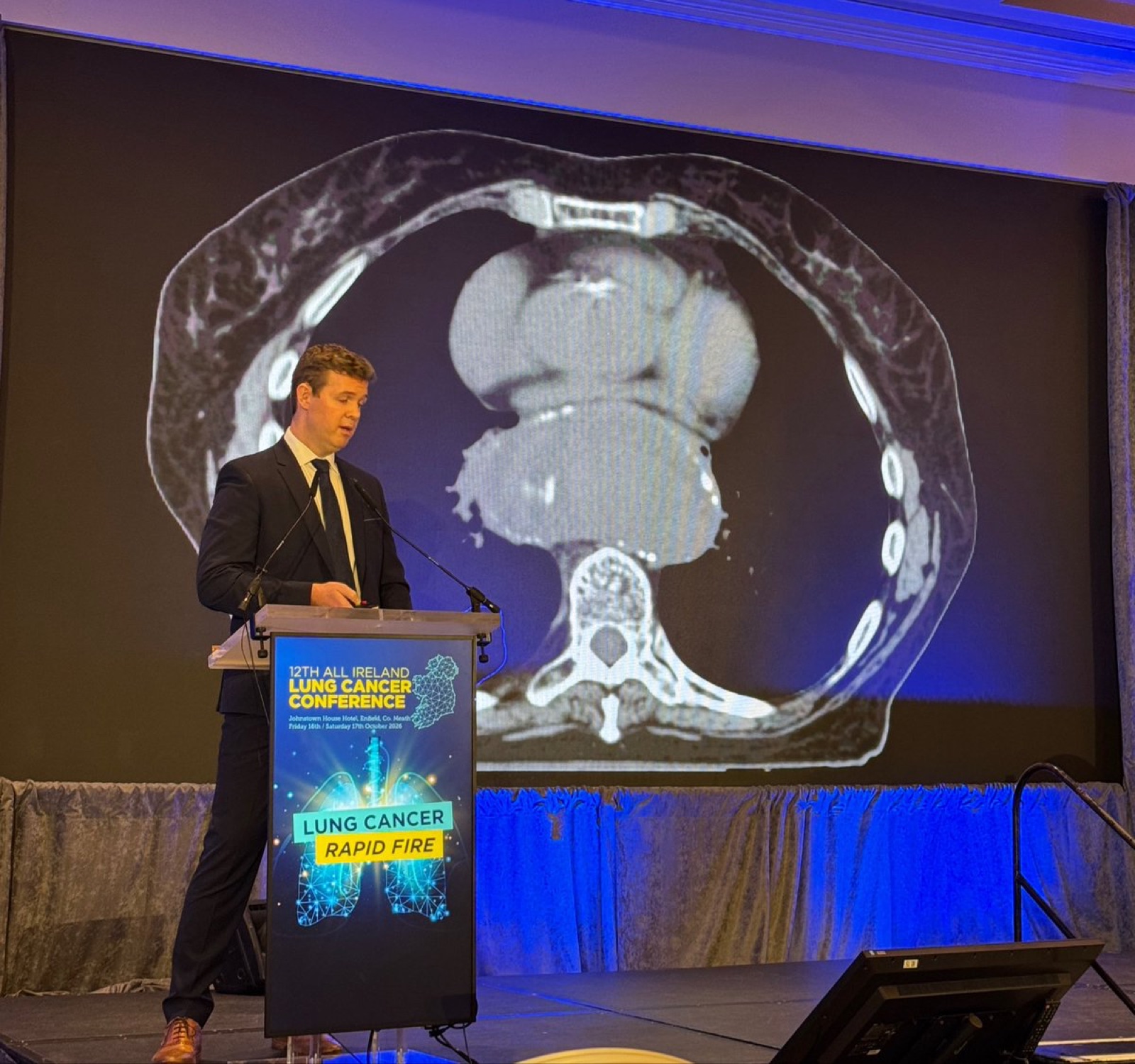
On the podiumGerard WallsClinical Oncologist, BelfastSABR and radiation advances
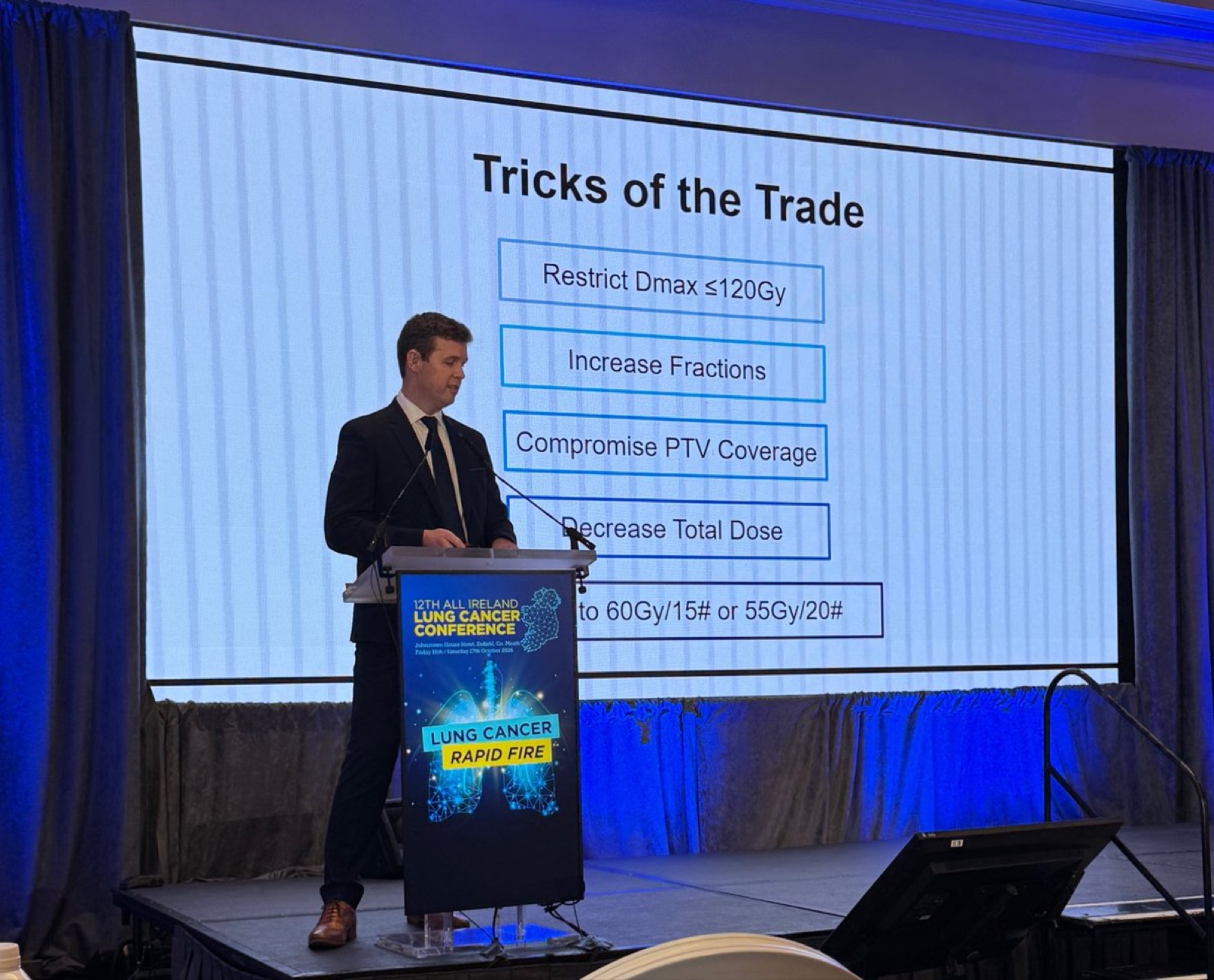
Enjoyed hearing about SABR and radiation advances from Dr. @gwalls89 at #AILCC26. Brilliant talk and impressive growth expected in the near future.
[Slide 1]
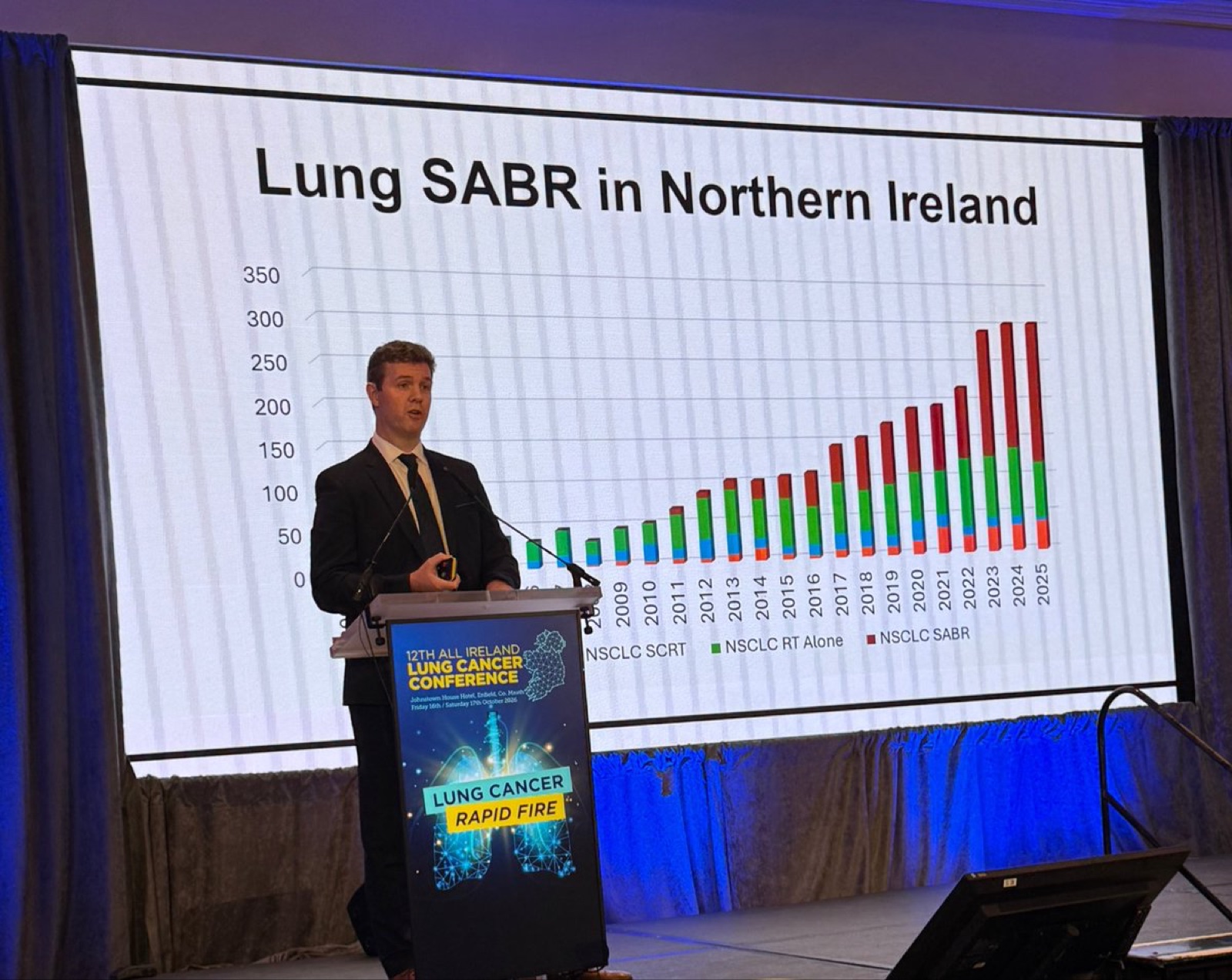
Lung SABR in Northern Ireland
[Stacked bar chart — y-axis 0 to 350 (ticks 50, 100, 150, 200, 250, 300, 350); x-axis years 20[08?], 2009, 2010, 2011, 2012, 2013, 2014, 2015, 2016, 2017, 2018, 2019, 2020, 2021, 2022, 2023, 2024, 2025; three stacked series per year]
Legend: [blue] NSCLC SCRT · [green] NSCLC RT Alone · [red] NSCLC SABR
[Figure description: NSCLC SABR (red) segment grows from near zero in the earliest years to the dominant component by 2022–2025, with total bar height rising from roughly 50 to roughly 290 per year; no bar values are printed on the chart]
---
[Slide 3]
Tricks of the Trade
Restrict Dmax ≤120Gy
Increase Fractions
Compromise PTV Coverage
Decrease Total Dose
[...occluded...] to 60Gy/15# or 55Gy/20#
Stephen V Liu, MD (@StephenVLiu)Oct 17, 2026 · 10:22 AM ISTView post on X ↗
Day 2 · Oct 17, 2026
SCLC, ADCs, AI in Oncology & Advocacy
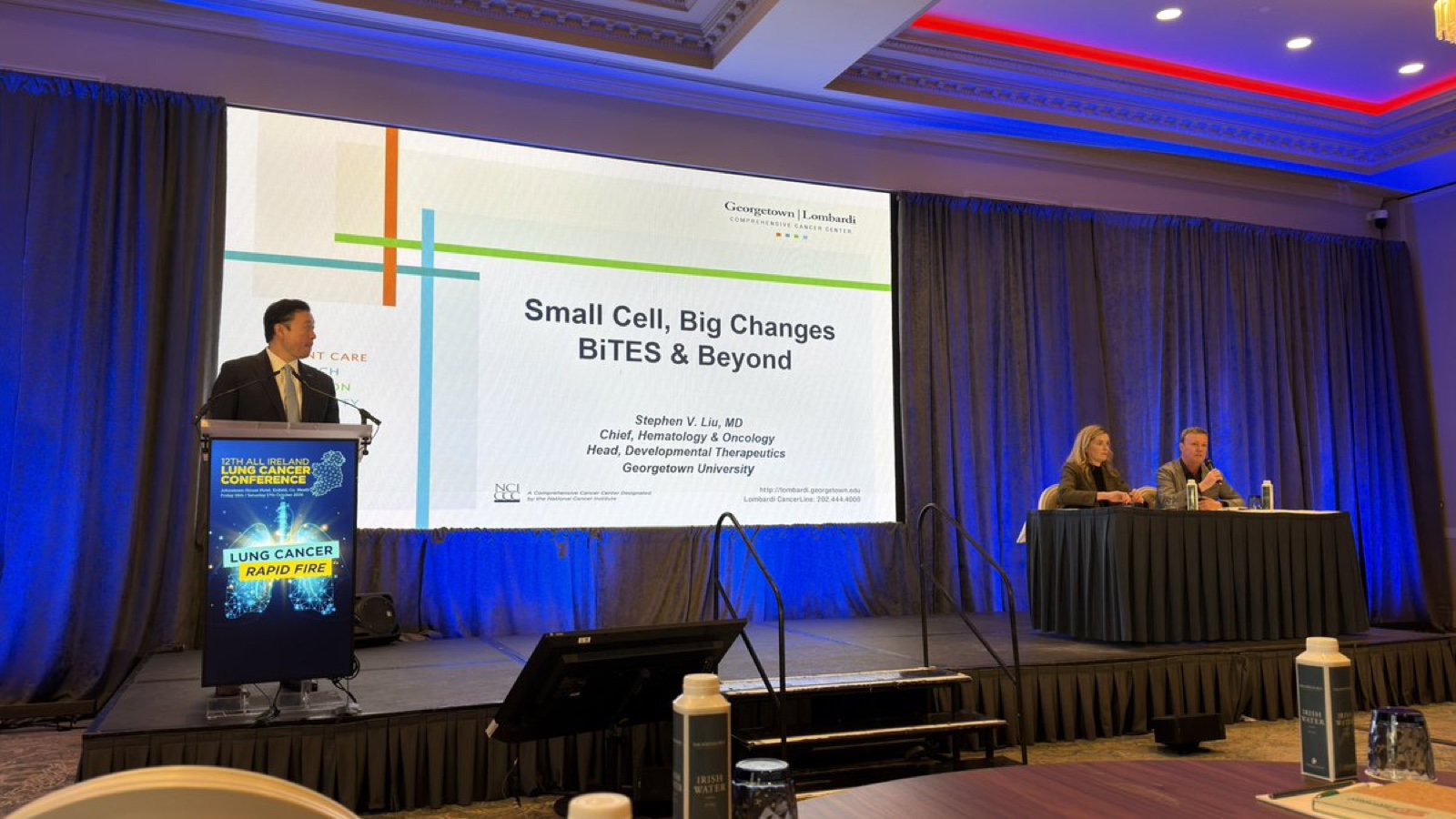
Small cell lung cancer: BiTEs and beyond (Liu) · ADCs in lung cancer (Liu) · AI in medicine and oncology (Patel) · Patient advocacy and access to novel drugs (Baird). 7 posts · 13 images captured.
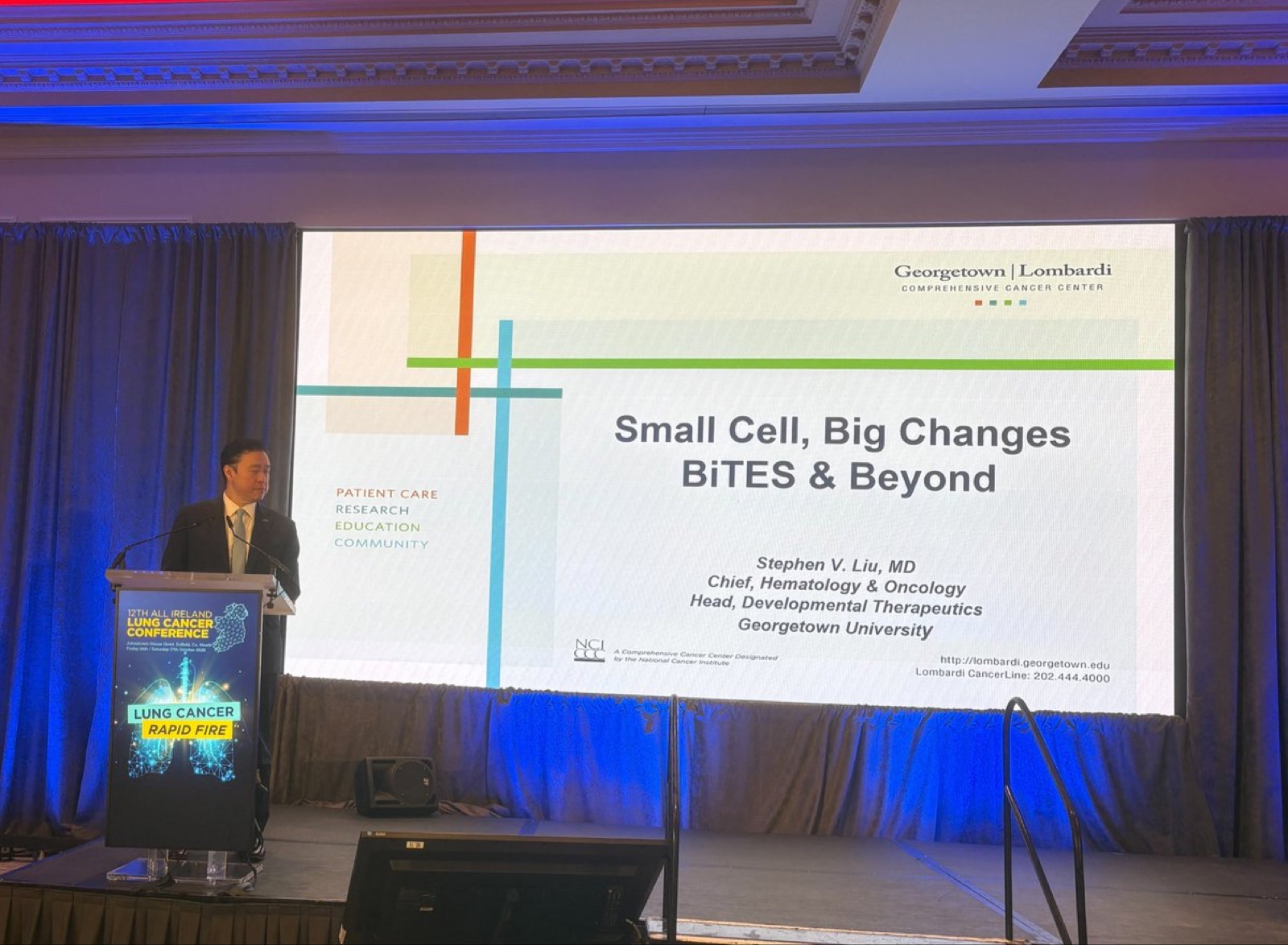
On the podiumStephen V. LiuThoracic Oncologist, Chief of Heme/Onc, Georgetown / MedStar GeorgetownSmall cell lung cancer: BiTEs and beyond
@StephenVLiu delivers a comprehensive talk on SCLC on day2 #AILCC26
Alfredo Addeo MD (@Alfdoc2)Oct 17, 2026 · 10:46 AM ISTView post on X ↗
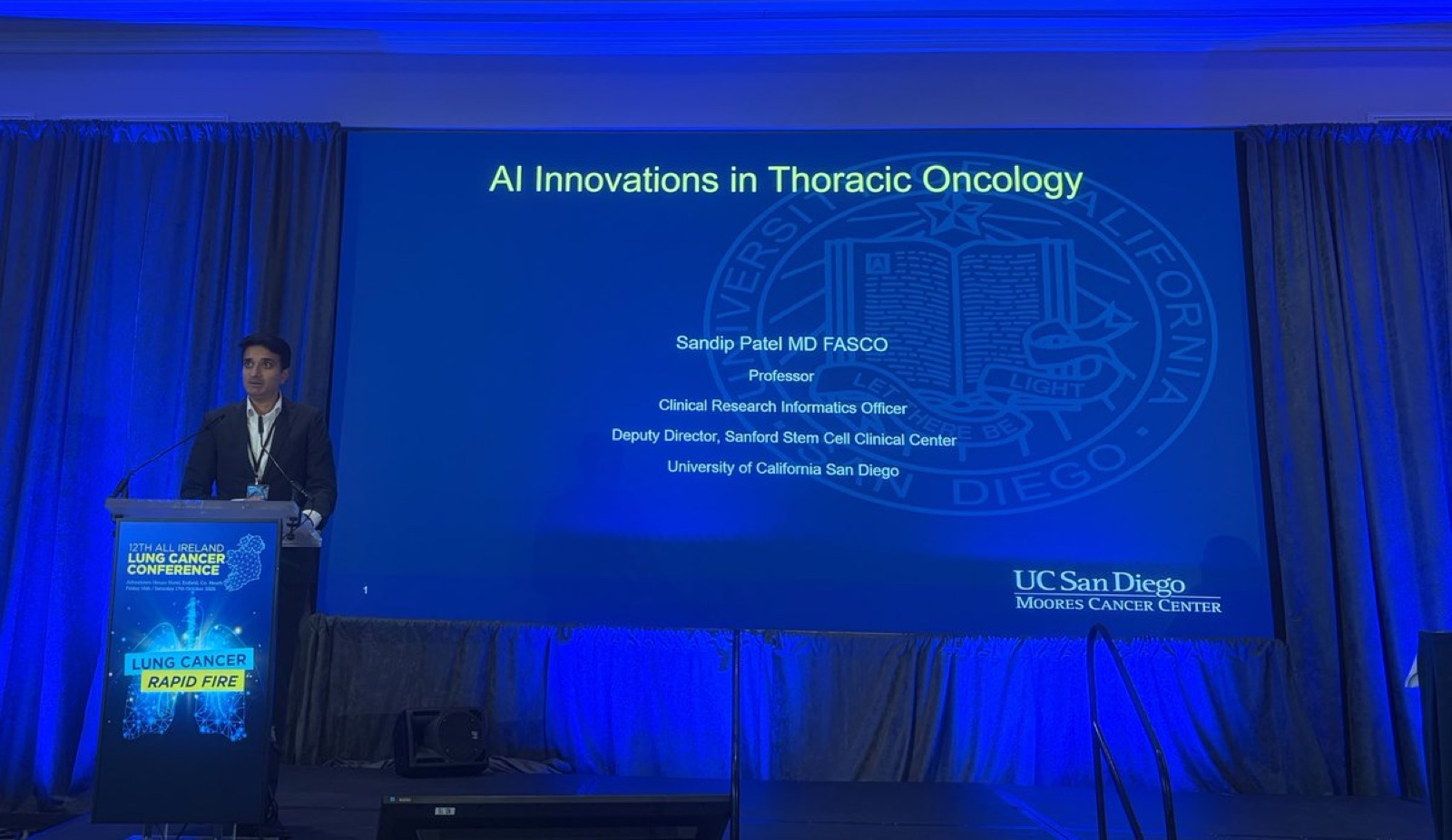
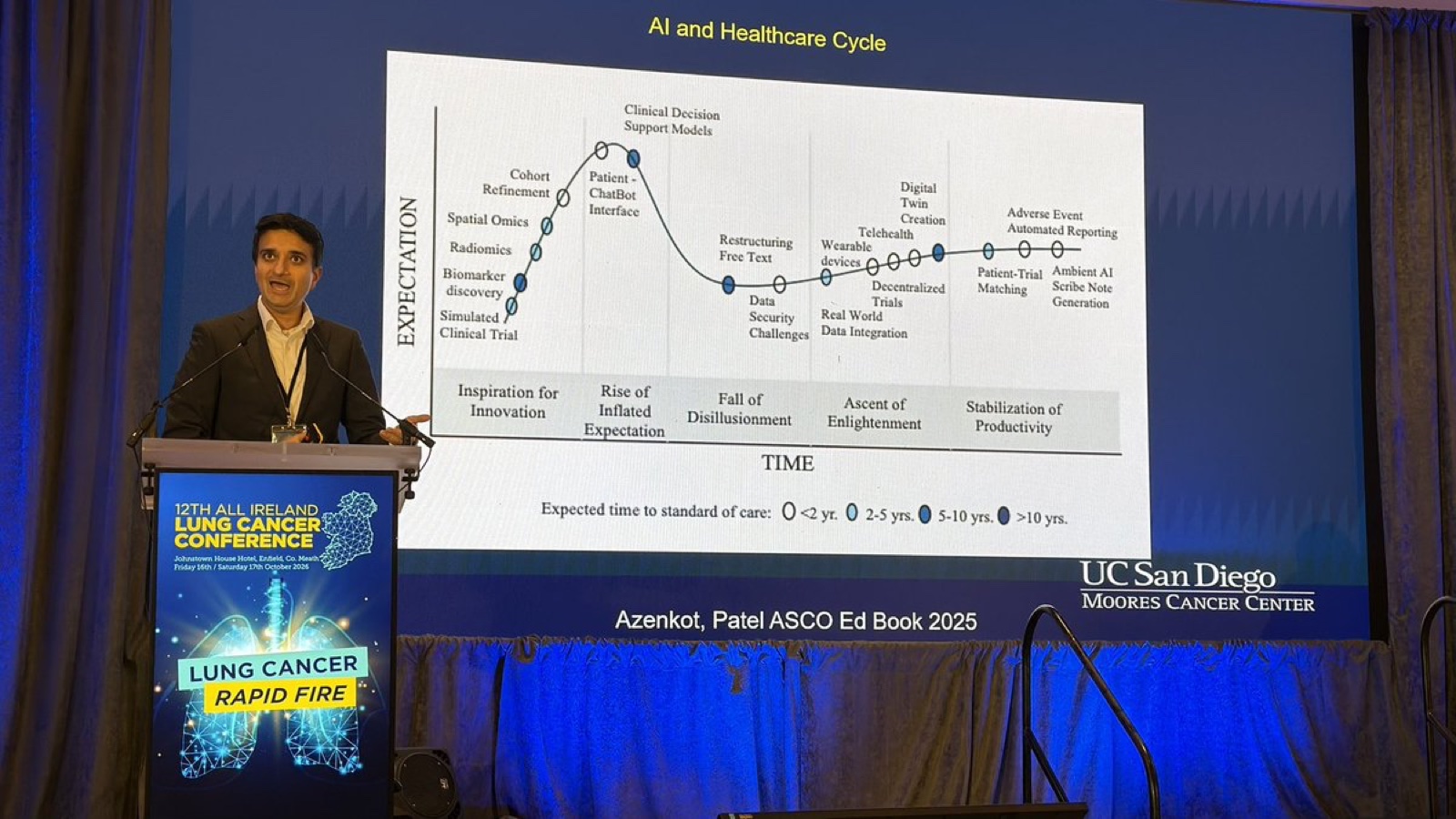
On the podiumSandip PatelProfessor, Medical Oncology, UC San DiegoAI in medicine and oncology
@PatelOncology now on AI in oncology! Are we going to be replaced? #AILCC26
Alfredo Addeo MD (@Alfdoc2)Oct 17, 2026 · 10:56 AM ISTView post on X ↗
On the podiumSandip PatelProfessor, Medical Oncology, UC San DiegoAI in medicine and oncology
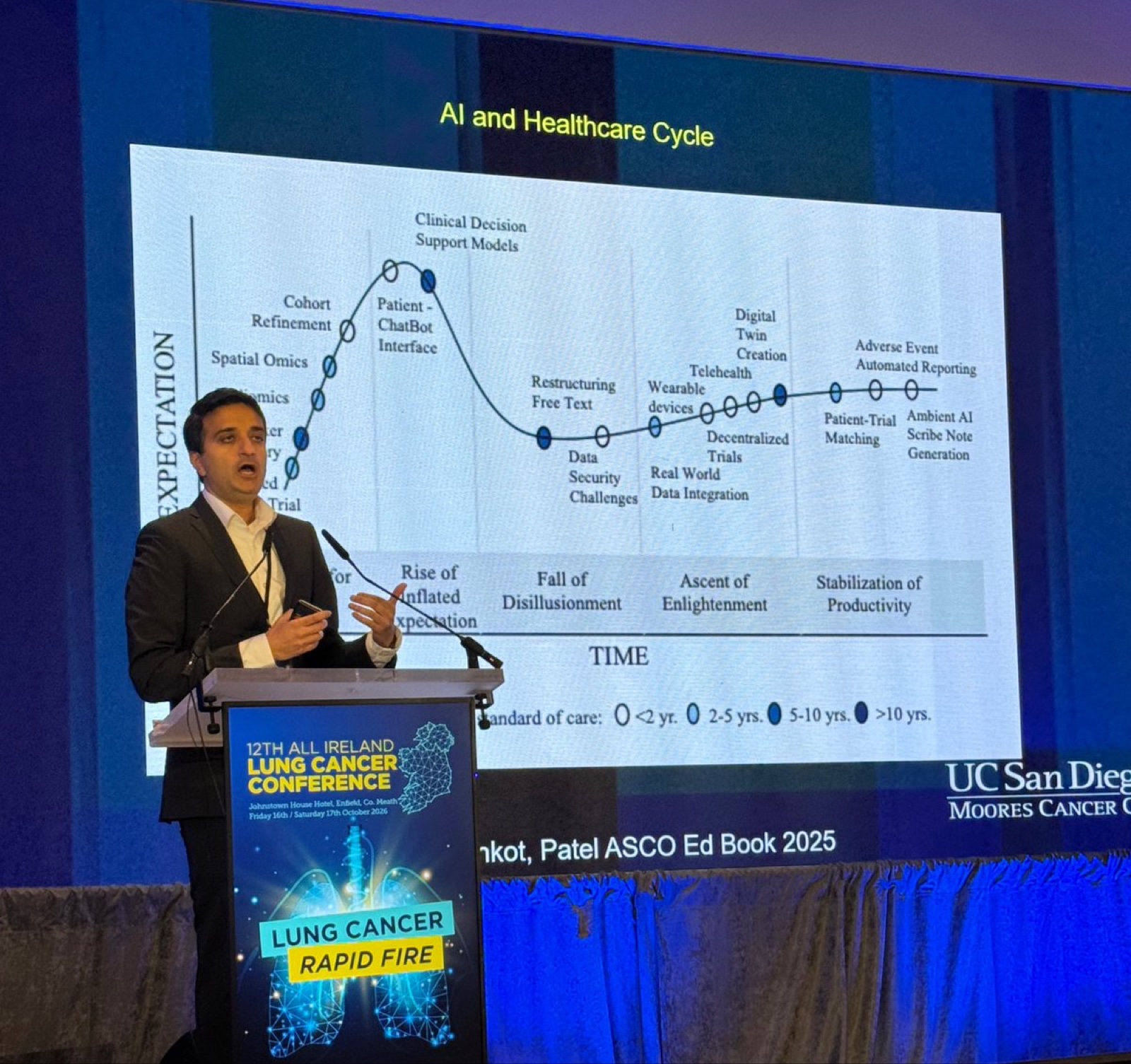
Dr. @PatelOncology at #AILCC26 discusses AI in medicine. Helping with clinic flow and documentation, patient communication, as well as novel biomarkers. But for decisions, need to avoid deskilling and cognitive surrender.
[Slide 1]
AI and Healthcare Cycle
[Hype-cycle style curve: y-axis EXPECTATION, x-axis TIME; labelled points along curve, each marked with a circle whose fill indicates expected time to standard of care]
Cohort Refinement
Spatial Omics
[Radio]mics [partially hidden by speaker]
[Biomarker discovery - hidden by speaker]
[Simulated Clinical] Trial [partially hidden]
Clinical Decision Support Models
Patient - ChatBot Interface
Restructuring Free Text
Data Security Challenges
Wearable devices
Real World Data Integration
Telehealth
Decentralized Trials
Digital Twin Creation
Patient-Trial Matching
Adverse Event Automated Reporting
Ambient AI Scribe Note Generation
[Phase labels along x-axis:] [Inspiration for Innovation - partially hidden] | Rise of Inflated Expectation | Fall of Disillusionment | Ascent of Enlightenment | Stabilization of Productivity
TIME
[Legend:] [Expected time to s]tandard of care: O <2 yr. [light] 2-5 yrs. [mid] 5-10 yrs. [dark] >10 yrs.
[Az]enkot, Patel ASCO Ed Book 2025
UC San Dieg[o] Moores Cancer C[enter]
---
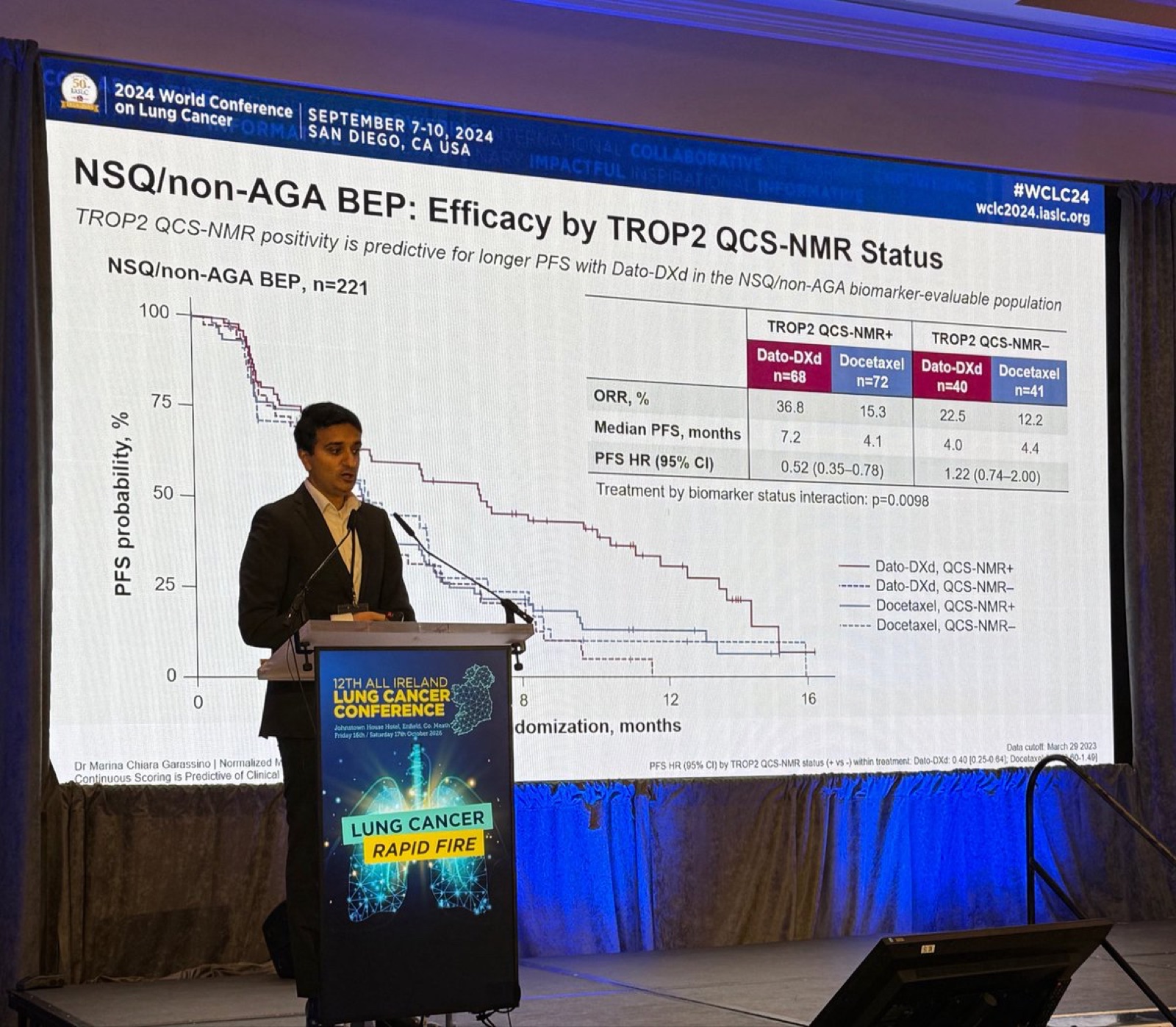
[Slide 2]
2024 World Conference on Lung Cancer | SEPTEMBER 7-10, 2024 SAN DIEGO, CA USA | #WCLC24 wclc2024.iaslc.org
NSQ/non-AGA BEP: Efficacy by TROP2 QCS-NMR Status
TROP2 QCS-NMR positivity is predictive for longer PFS with Dato-DXd in the NSQ/non-AGA biomarker-evaluable population
NSQ/non-AGA BEP, n=221
[Kaplan-Meier plot: y-axis PFS probability, %; x-axis Time from randomization, months; four curves]
[Table:]
| | TROP2 QCS-NMR+ | | TROP2 QCS-NMR- | |
| | Dato-DXd n=68 | Docetaxel n=72 | Dato-DXd n=40 | Docetaxel n=41 |
ORR, % | 36.8 | 15.3 | 22.5 | 12.2
Median PFS, months | 7.2 | 4.1 | 4.0 | 4.4
PFS HR (95% CI) | 0.52 (0.35-0.78) | 1.22 (0.74-2.00)
Treatment by biomarker status interaction: p=0.0098
[Legend:] Dato-DXd, QCS-NMR+ / Dato-DXd, QCS-NMR- / Docetaxel, QCS-NMR+ / Docetaxel, QCS-NMR-
Dr Marina Chiara Garassino | Normalized M[embrane ratio ...] Continuous Scoring is Predictive of Clinical [...] [footer clipped by podium]
Data cutoff: March 29 2023
PFS HR (95% CI) by TROP2 QCS-NMR status (+ vs -) within treatment: Dato-DXd: 0.40 [0.25-0.64]; Docetaxel: [1.0?]0-1.49] [partially occluded]
[Survival data captured as a table — no point estimates read from the curve]
Endpoint: PFS (NSQ/non-AGA biomarker-evaluable population, n=221; TROPION-Lung01 Dato-DXd vs docetaxel, by TROP2 QCS-NMR status)
Dato-DXd, TROP2 QCS-NMR+ | 68 | 7.2 months
Docetaxel, TROP2 QCS-NMR+ | 72 | 4.1 months
Dato-DXd, TROP2 QCS-NMR- | 40 | 4.0 months
Docetaxel, TROP2 QCS-NMR- | 41 | 4.4 months
HR: QCS-NMR+: 0.52; QCS-NMR-: 1.22
HR CI: QCS-NMR+: 0.35-0.78; QCS-NMR-: 0.74-2.00
P: treatment-by-biomarker interaction p=0.0098
Note: ORR %: 36.8 / 15.3 (QCS-NMR+ Dato-DXd / docetaxel); 22.5 / 12.2 (QCS-NMR-). Data cutoff March 29 2023. Footnote within-treatment HR (+ vs -): Dato-DXd 0.40 [0.25-0.64]; docetaxel value partially occluded, reads '[..]0-1.49]'. No landmark % printed.
---
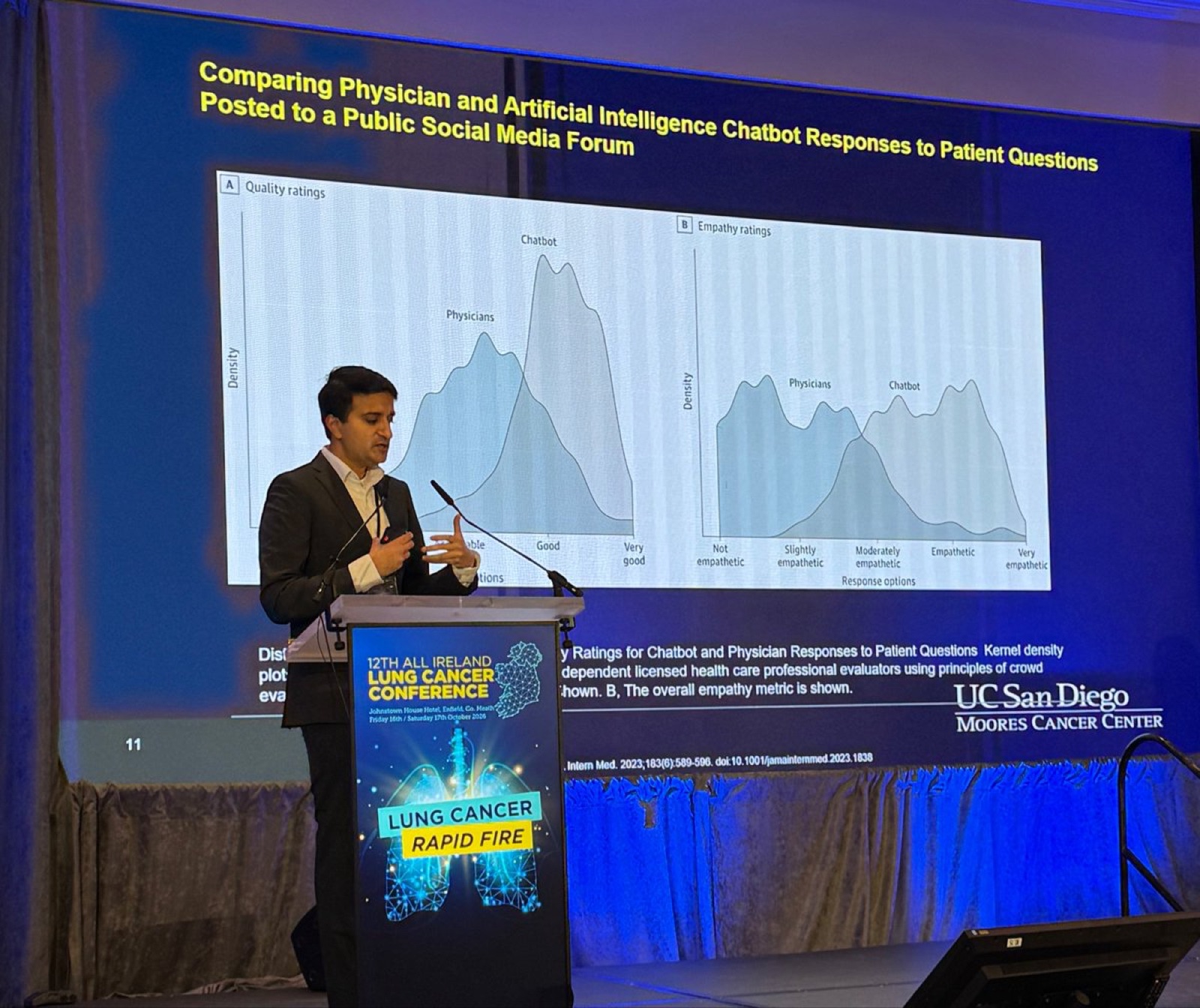
[Slide 3]
Comparing Physician and Artificial Intelligence Chatbot Responses to Patient Questions Posted to a Public Social Media Forum
[A] Quality ratings
[Kernel density plot; y-axis Density; curves labelled Physicians and Chatbot; x-axis Response options: [Very poor / Poor / Accepta]ble, Good, Very good - left labels hidden by speaker]
[B] Empathy ratings
[Kernel density plot; y-axis Density; curves labelled Physicians and Chatbot; x-axis Response options: Not empathetic, Slightly empathetic, Moderately empathetic, Empathetic, Very empathetic]
Dist[ribution of Qualit]y Ratings for Chatbot and Physician Responses to Patient Questions Kernel density plot[s ... in]dependent licensed health care professional evaluators using principles of crowd eva[luation ... s]hown. B, The overall empathy metric is shown.
11
[JAMA] Intern Med. 2023;183(6):589-596. doi:10.1001/jamainternmed.2023.1838
UC San Diego Moores Cancer Center
Stephen V Liu, MD (@StephenVLiu)Oct 17, 2026 · 11:05 AM ISTView post on X ↗
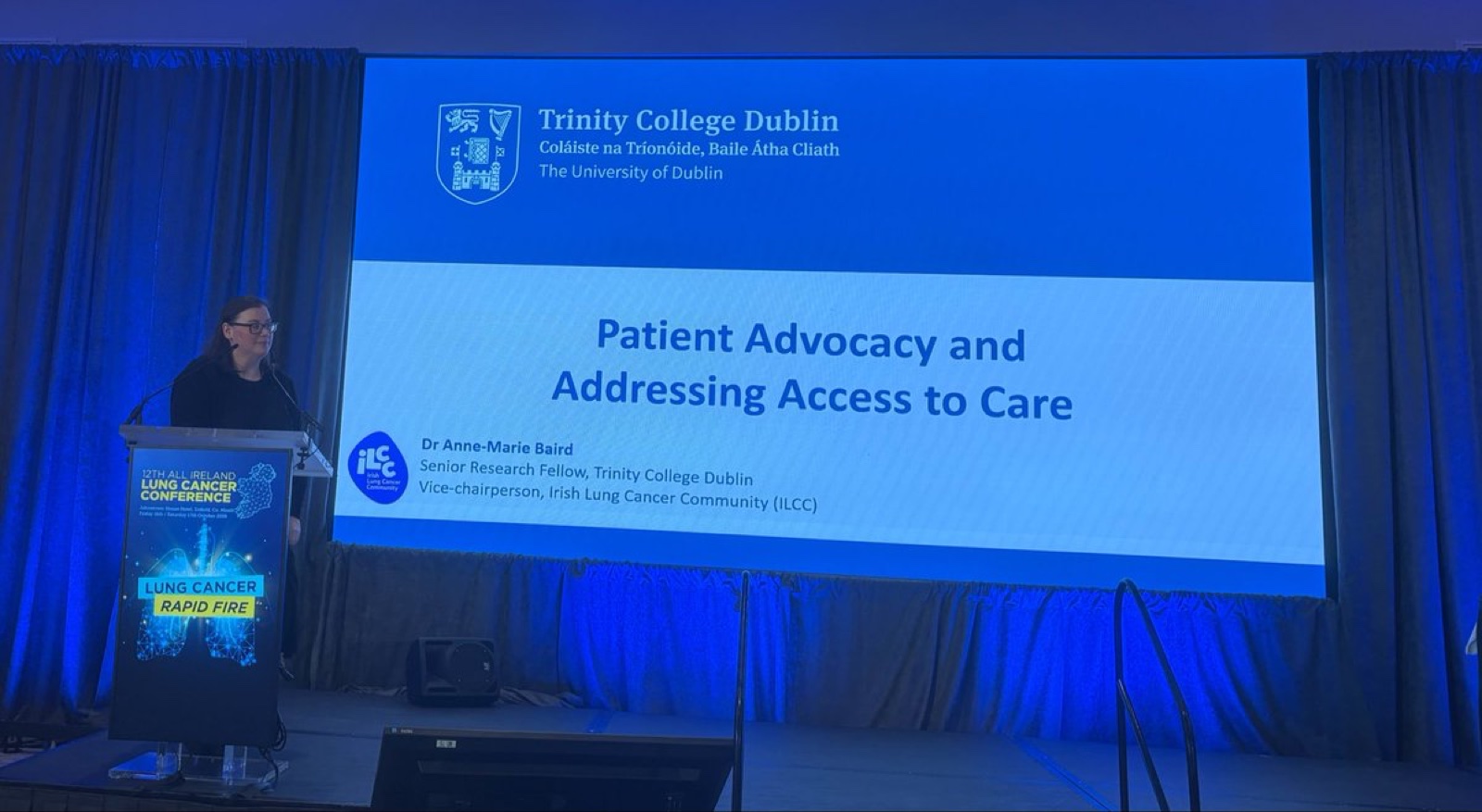
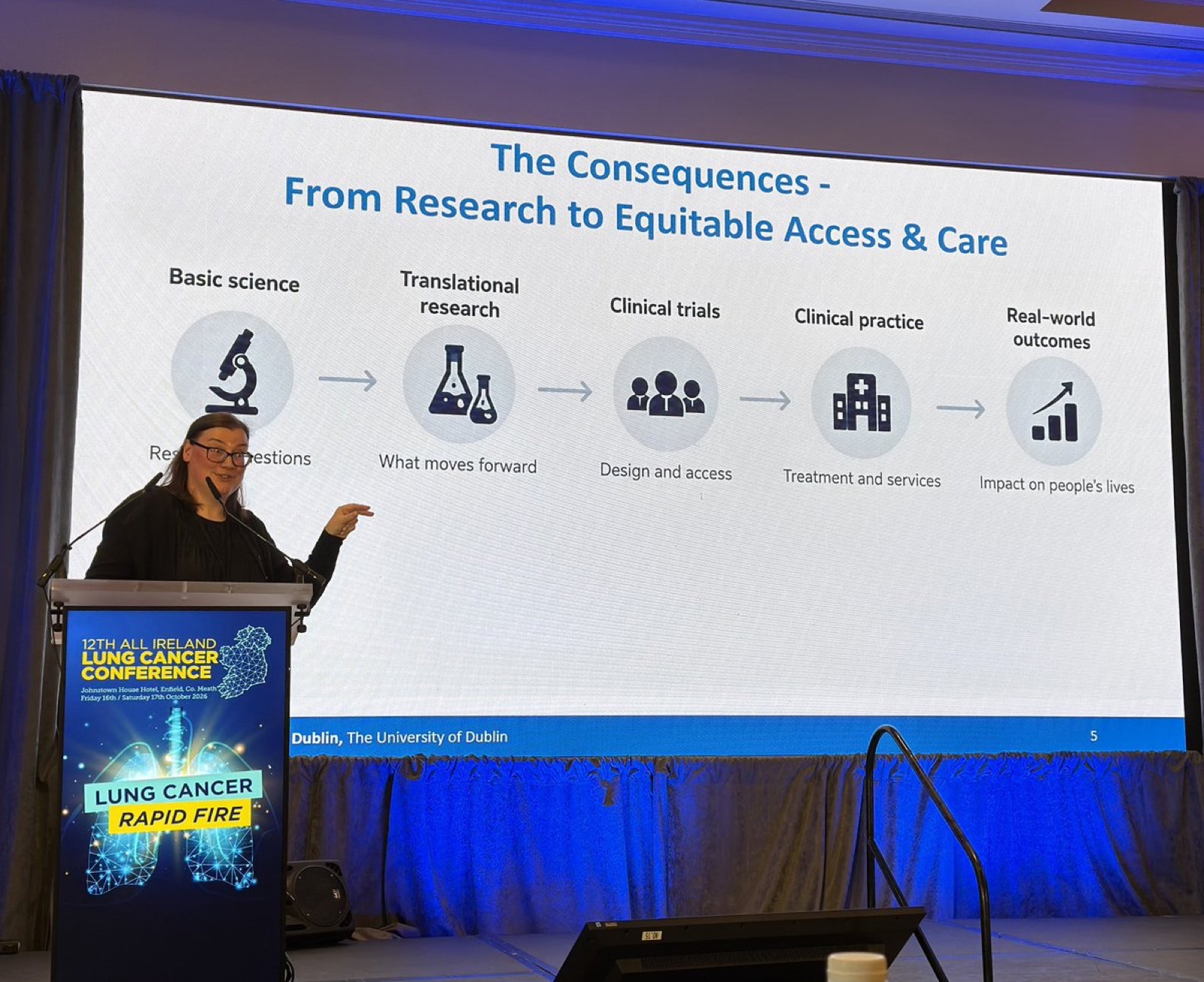
On the podiumAnne-Marie BairdResearcher, Trinity College Dublin; Lung Cancer Europe (LuCE)Patient advocacy and access to novel drugs
@BairdAM on patient advocacy and addressing access to care , day2 #AILCC26
Alfredo Addeo MD (@Alfdoc2)Oct 17, 2026 · 11:07 AM ISTView post on X ↗
On the podiumAnne-Marie BairdResearcher, Trinity College Dublin; Lung Cancer Europe (LuCE)Patient advocacy and access to novel drugs
Stark reminder of the challenges with access for novel drugs and the role advocacy plays at #AILCC26 from @BairdAM
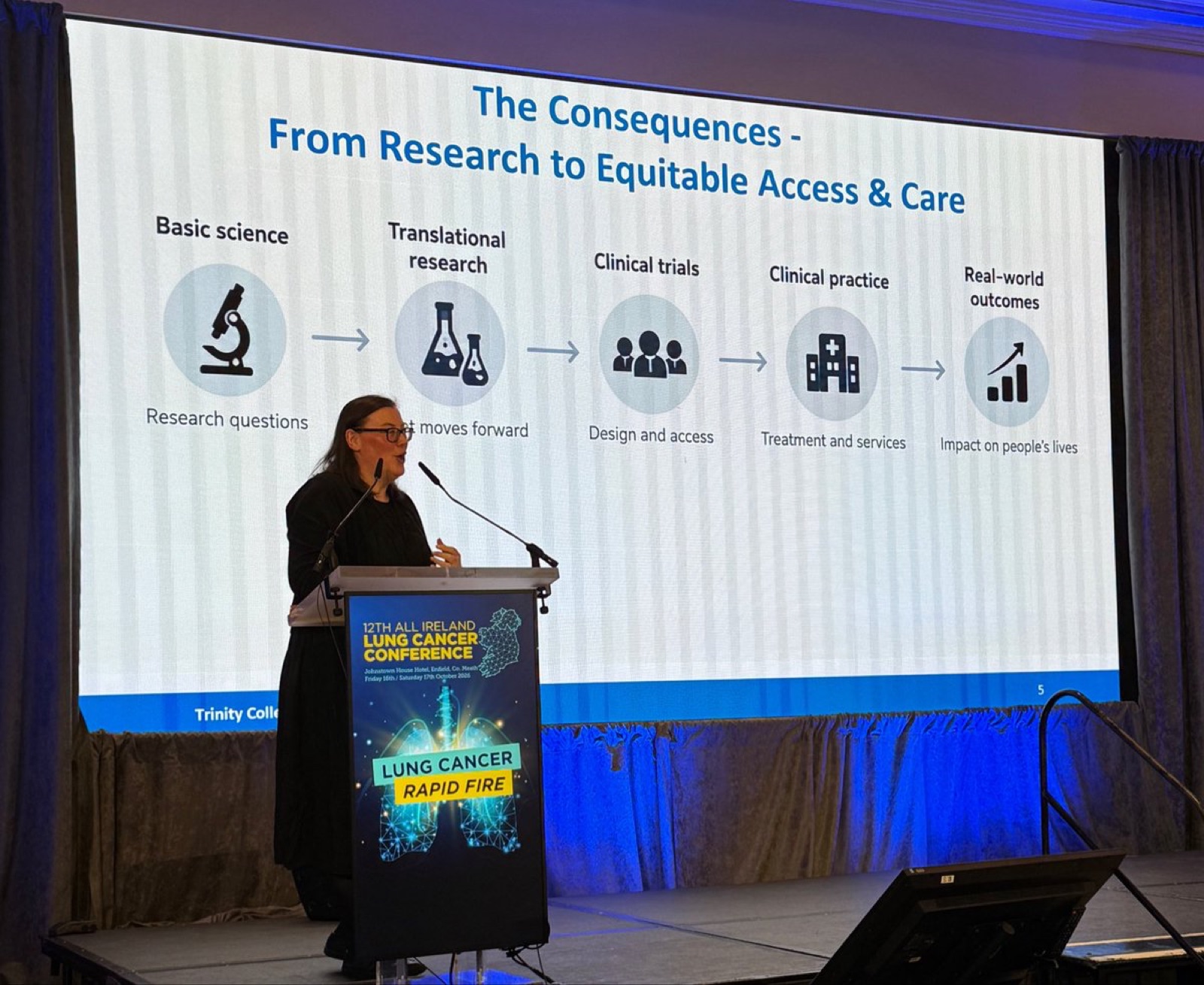
[Slide 1]
The Consequences -
From Research to Equitable Access & Care
[Five-step flow with icons and arrows:]
Basic science - Research questions
Translational research - [Wha]t moves forward
Clinical trials - Design and access
Clinical practice - Treatment and services
Real-world outcomes - Impact on people's lives
Trinity Colle[ge Dublin ...] [footer partially hidden]
5
Stephen V Liu, MD (@StephenVLiu)Oct 17, 2026 · 11:10 AM ISTView post on X ↗
On the podiumStephen V. LiuThoracic Oncologist, Chief of Heme/Onc, Georgetown / MedStar GeorgetownSmall cell lung cancer: BiTEs and beyond
Day 2 of the All-Ireland Lung Cancer Conference and the excellence continues with 3 superb presentations mid morning from @StephenVLiu (ADCs) @PatelOncology (AI) and @BairdAM (Patient Advocacy)
So grateful to everyone who has travelled to be part of #AILCC26
[Slide 2]
AI and Healthcare Cycle
[Hype-cycle style curve: y-axis EXPECTATION, x-axis TIME; labelled points along curve, each marked with a circle whose fill indicates expected time to standard of care]
Cohort Refinement
Spatial Omics
[Radio]mics [partially hidden by speaker]
[Biomarker discovery - hidden by speaker]
[Simulated Clinical] Trial [partially hidden]
Clinical Decision Support Models
Patient - ChatBot Interface
Restructuring Free Text
Data Security Challenges
Wearable devices
Real World Data Integration
Telehealth
Decentralized Trials
Digital Twin Creation
Patient-Trial Matching
Adverse Event Automated Reporting
Ambient AI Scribe Note Generation
[Phase labels along x-axis:] [Inspiration for Innovation - partially hidden] | Rise of Inflated Expectation | Fall of Disillusionment | Ascent of Enlightenment | Stabilization of Productivity
TIME
[Legend:] [Expected time to s]tandard of care: O <2 yr. [light] 2-5 yrs. [mid] 5-10 yrs. [dark] >10 yrs.
[Az]enkot, Patel ASCO Ed Book 2025
UC San Dieg[o] Moores Cancer C[enter]
---
[Slide 3]
The Consequences -
From Research to Equitable Access & Care
[Five-step flow with icons and arrows:]
Basic science - Research questions
Translational research - [Wha]t moves forward
Clinical trials - Design and access
Clinical practice - Treatment and services
Real-world outcomes - Impact on people's lives
Trinity Colle[ge Dublin ...] [footer partially hidden]
5
Gerry Hanna (@gerryhanna)Oct 17, 2026 · 11:18 AM ISTView post on X ↗
On the podiumStephen V. LiuThoracic Oncologist, Chief of Heme/Onc, Georgetown / MedStar GeorgetownSmall cell lung cancer: BiTEs and beyond
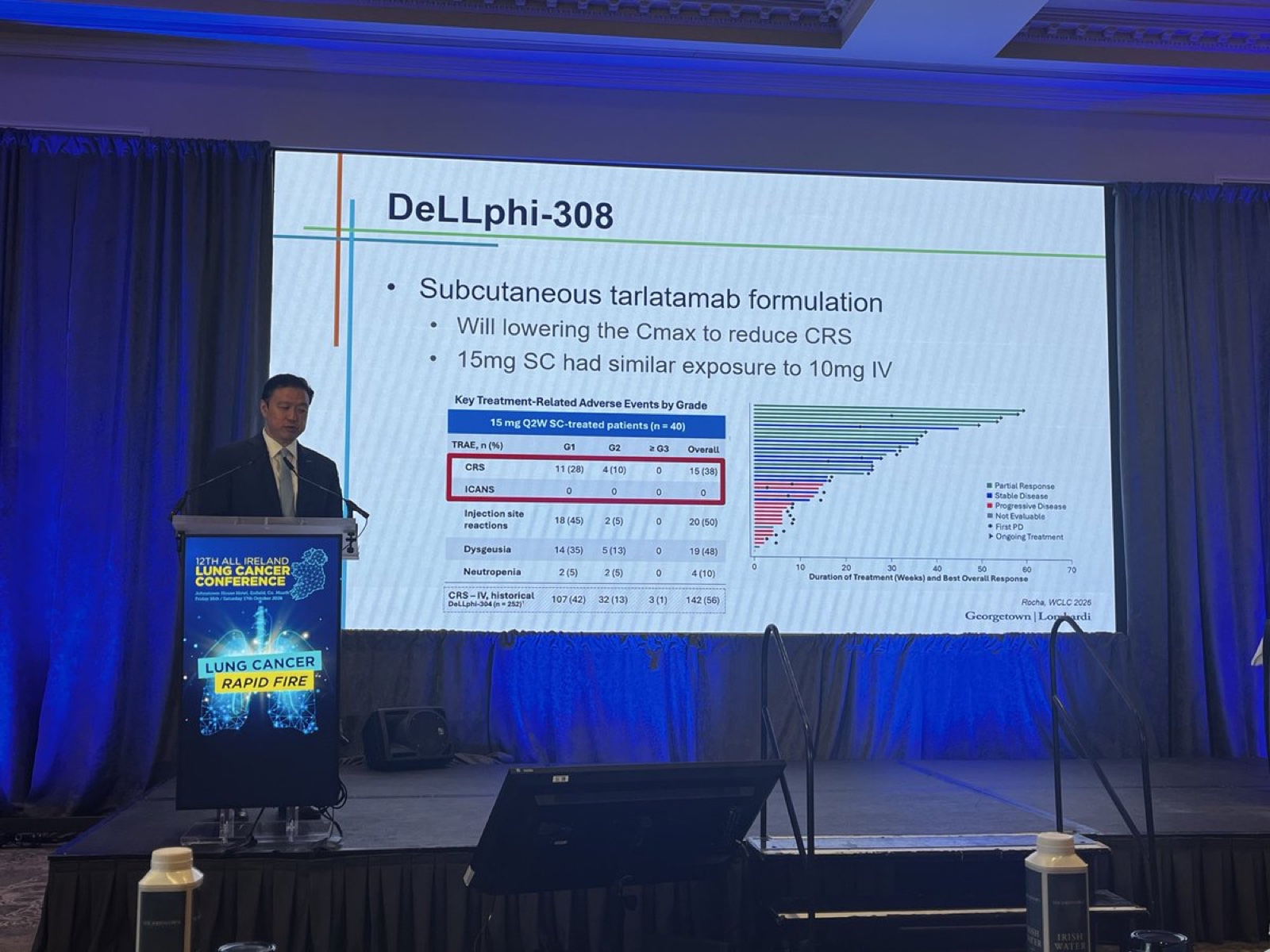
Superb talk at #AILCC26 from @StephenVLiu on the latest in SCLC:
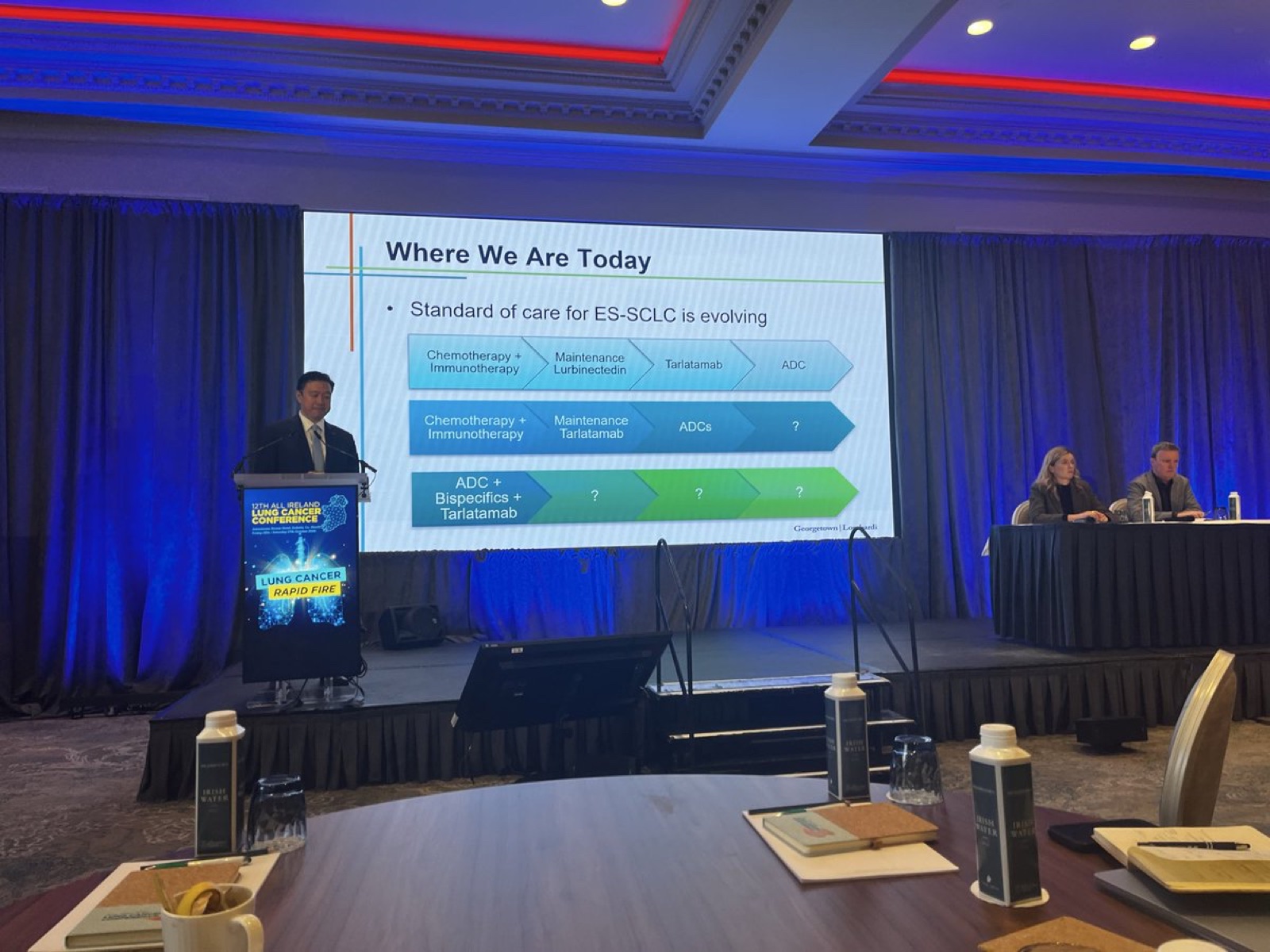
- BiTEs: Tarla now a SOC in 2L (awaiting Irish approval) and new data due to come out at #ESMO26
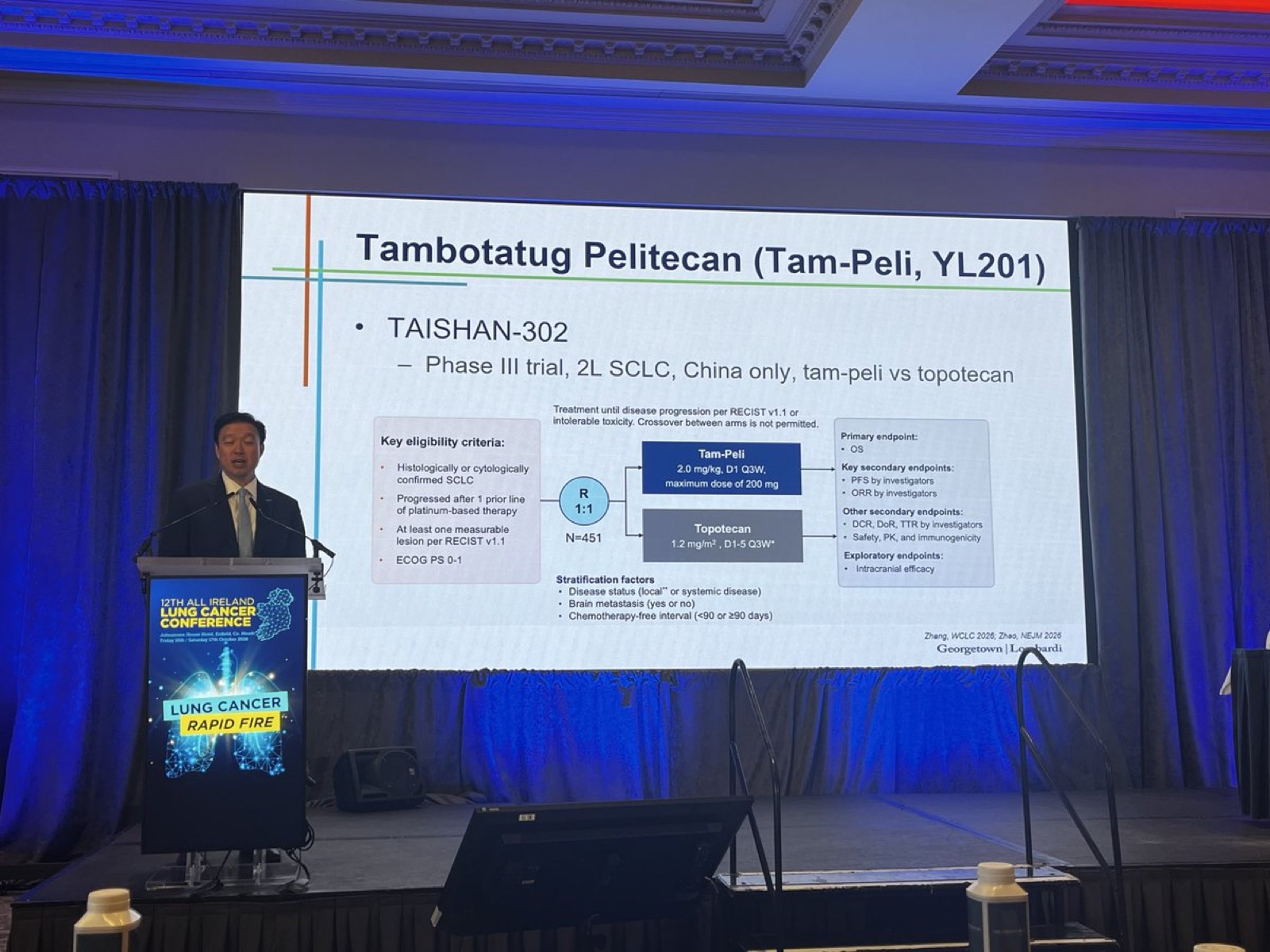
- ADCs: B7H3 ADCs showing survival benefit in ph III trials (e.g: Tam-Peli), more to come
#LCSM
On the podiumAlfredo AddeoMedical Oncologist, Geneva University Hospitals (HUG)Special session: Mentorship 101
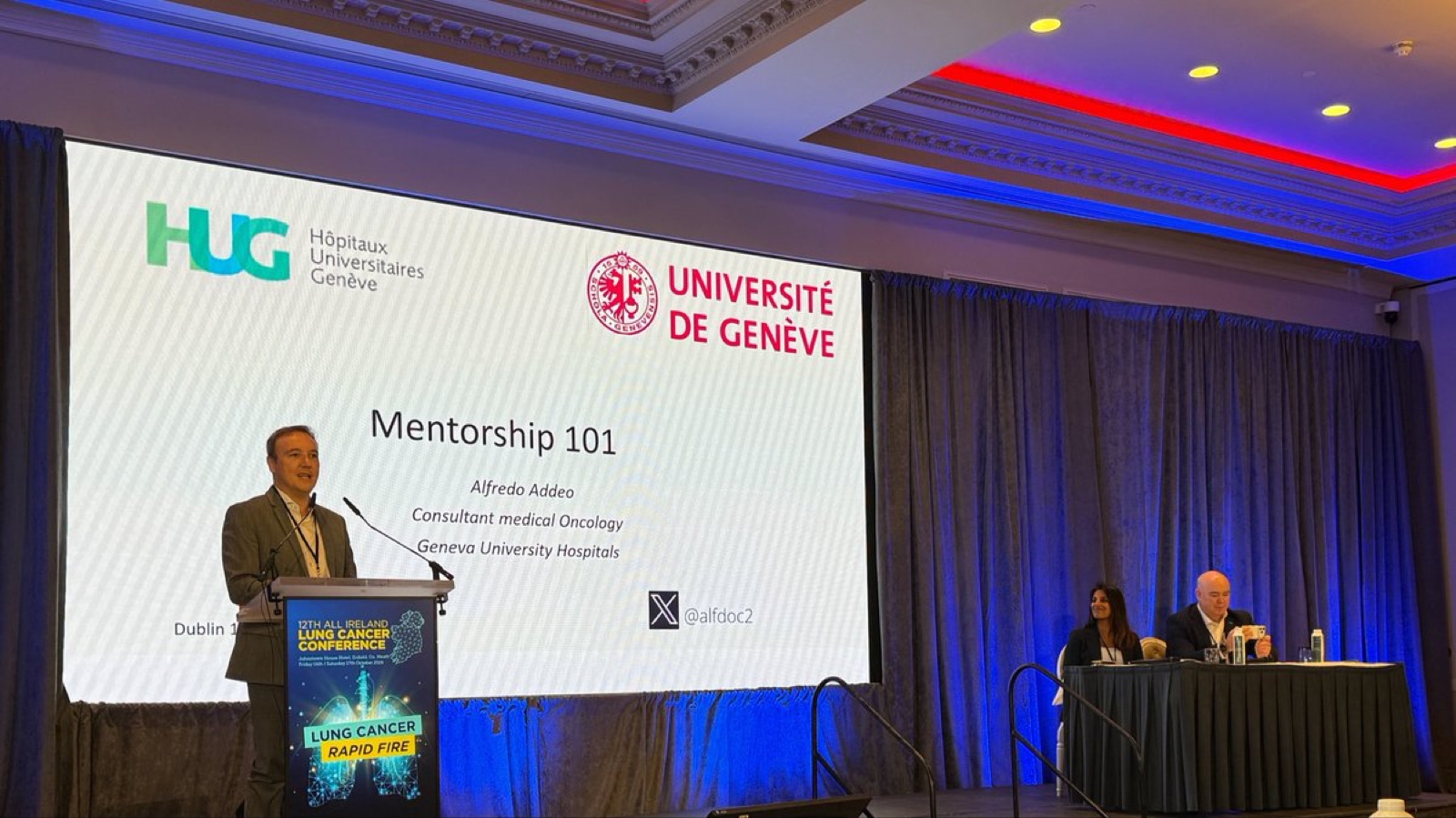
Special session at #AILCC26 from Dr. @Alfdoc2 on mentorship. Mentorship comes in many different forms but is a two way street built on listening and open communication.
Stephen V Liu, MD (@StephenVLiu)Oct 17, 2026 · 11:16 AM ISTView post on X ↗
On the podiumAlfredo AddeoMedical Oncologist, Geneva University Hospitals (HUG)Special session: Mentorship 101
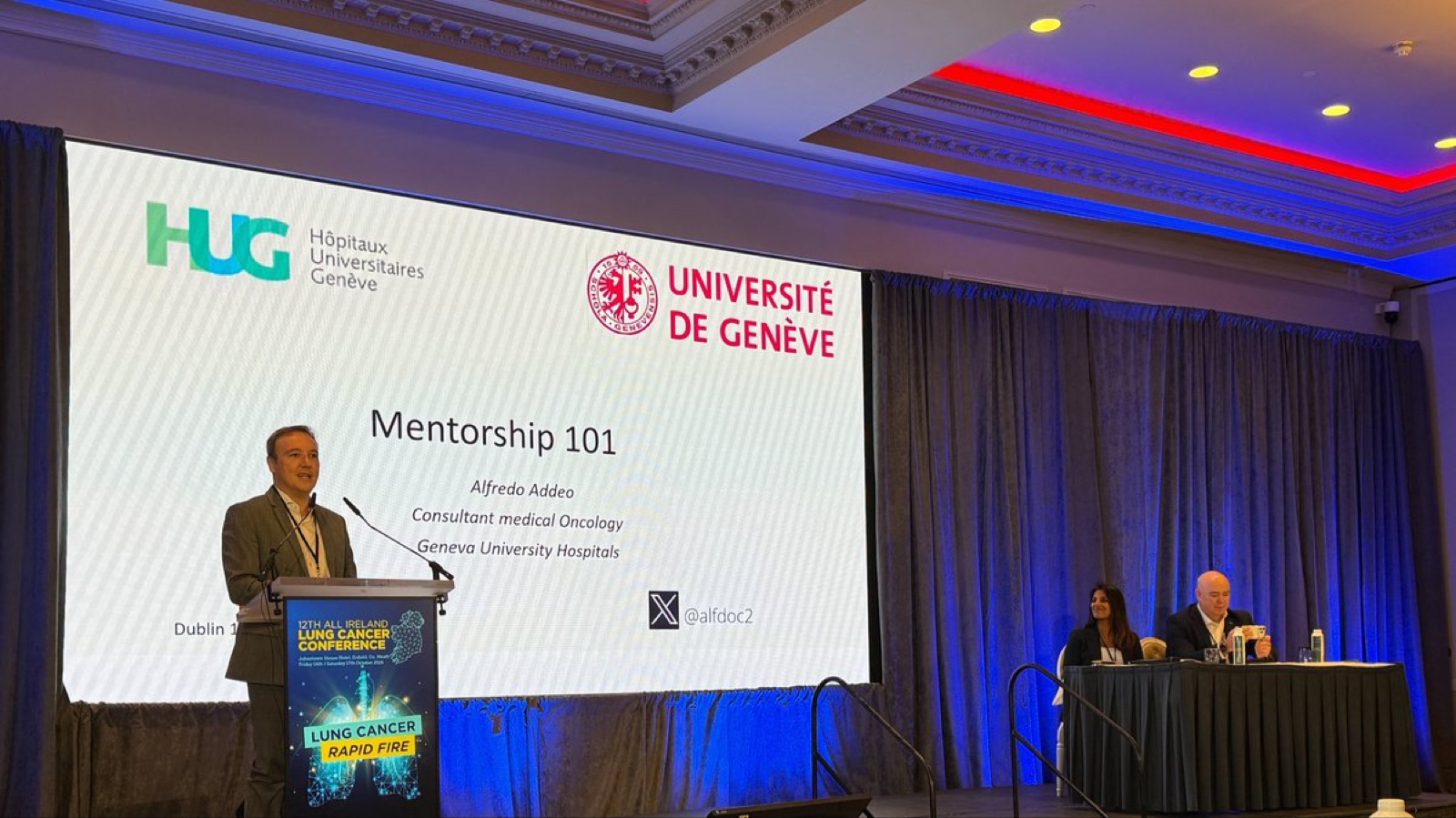
Special session at #AILCC26 from Dr. @Alfdoc2 on mentorship. Mentorship comes in many different forms but is a two way street built on listening and open communication.
Stephen V Liu, MD (@StephenVLiu)Oct 17, 2026 · 11:20 AM ISTView post on X ↗
On the podiumAlfredo AddeoMedical Oncologist, Geneva University Hospitals (HUG)Special session: Mentorship 101
Special Session at #AILCC26 from Dr. Alfredo Addeo - Stephen Liu
@StephenVLiu @Alfdoc2
OncoDaily (@oncodaily)Oct 17, 2026 · 6:30 PM ISTView post on X ↗
Day 2 · Oct 17, 2026
Translational Advances in Immunotherapy
Translational advances in immunotherapy that shaped current practice (Cascone). 1 post · 4 images captured.
On the podiumTina CasconeThoracic medical oncologistTranslational advances in immunotherapy that shaped current practice
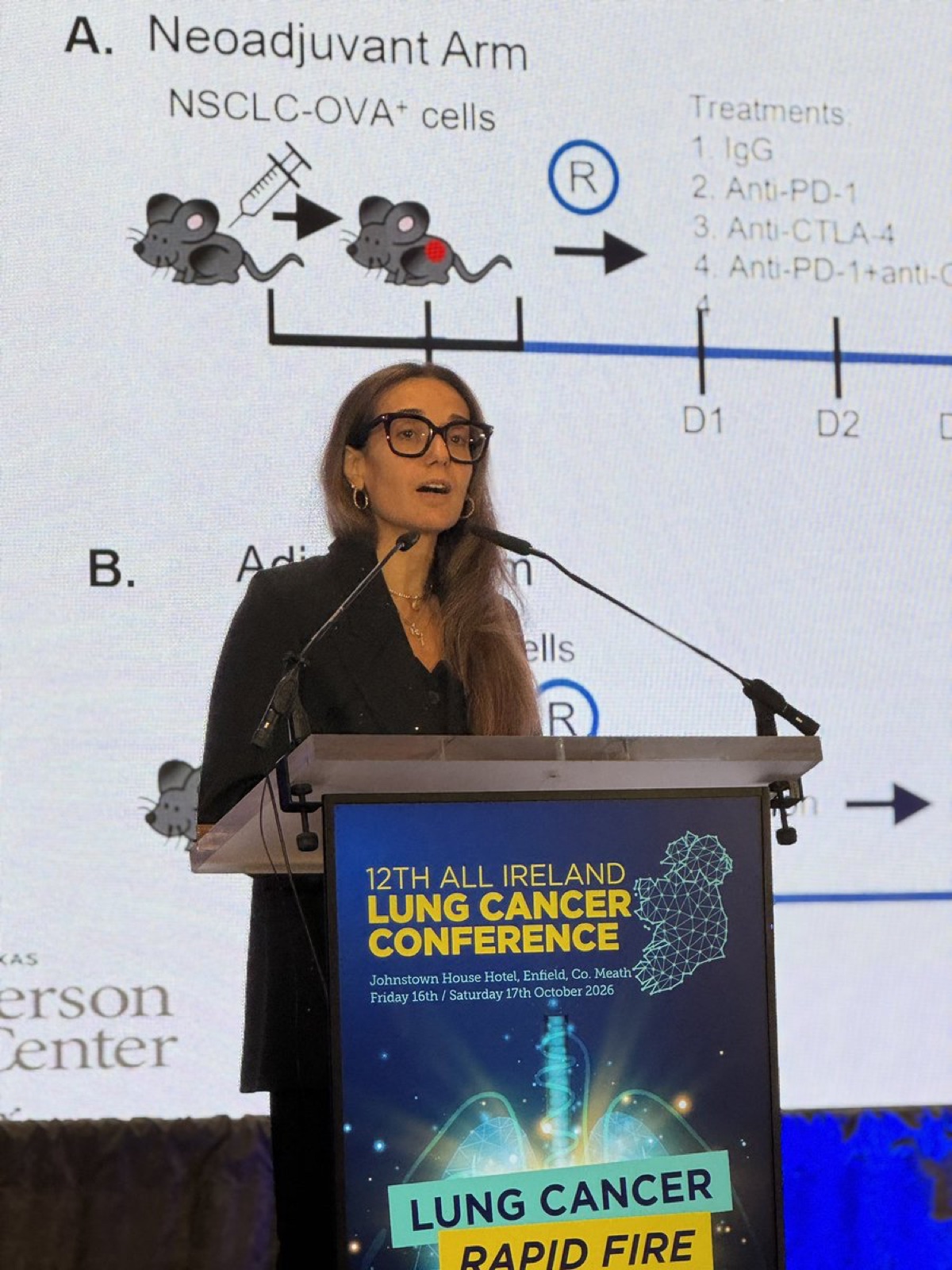
Brilliant peek into the translational advances in immunotherapy that have shaped current practice from Dr. Tina Cascone at #AILCC26. Powerful changes in our SoC rooted in foundational translational science and deep understanding. Impressive and humbling.
[Slide 1]
A. Neoadjuvant Arm
NSCLC-OVA+ cells
[Schematic: mouse injected with cells -> mouse with tumor -> R (randomization) -> Treatments:]
Treatments:
1. IgG
2. Anti-PD-1
3. Anti-CTLA-4
4. Anti-PD-1+anti-C[TLA-4] [clipped at right edge]
[Timeline:] D1 D2 D[3...] [clipped]
B. Adj[uvant Arm] [mostly hidden by speaker]
[... c]ells
[R]
[The University of Texas] MD An[derson] Cancer Center [logo partially visible at lower left]
---
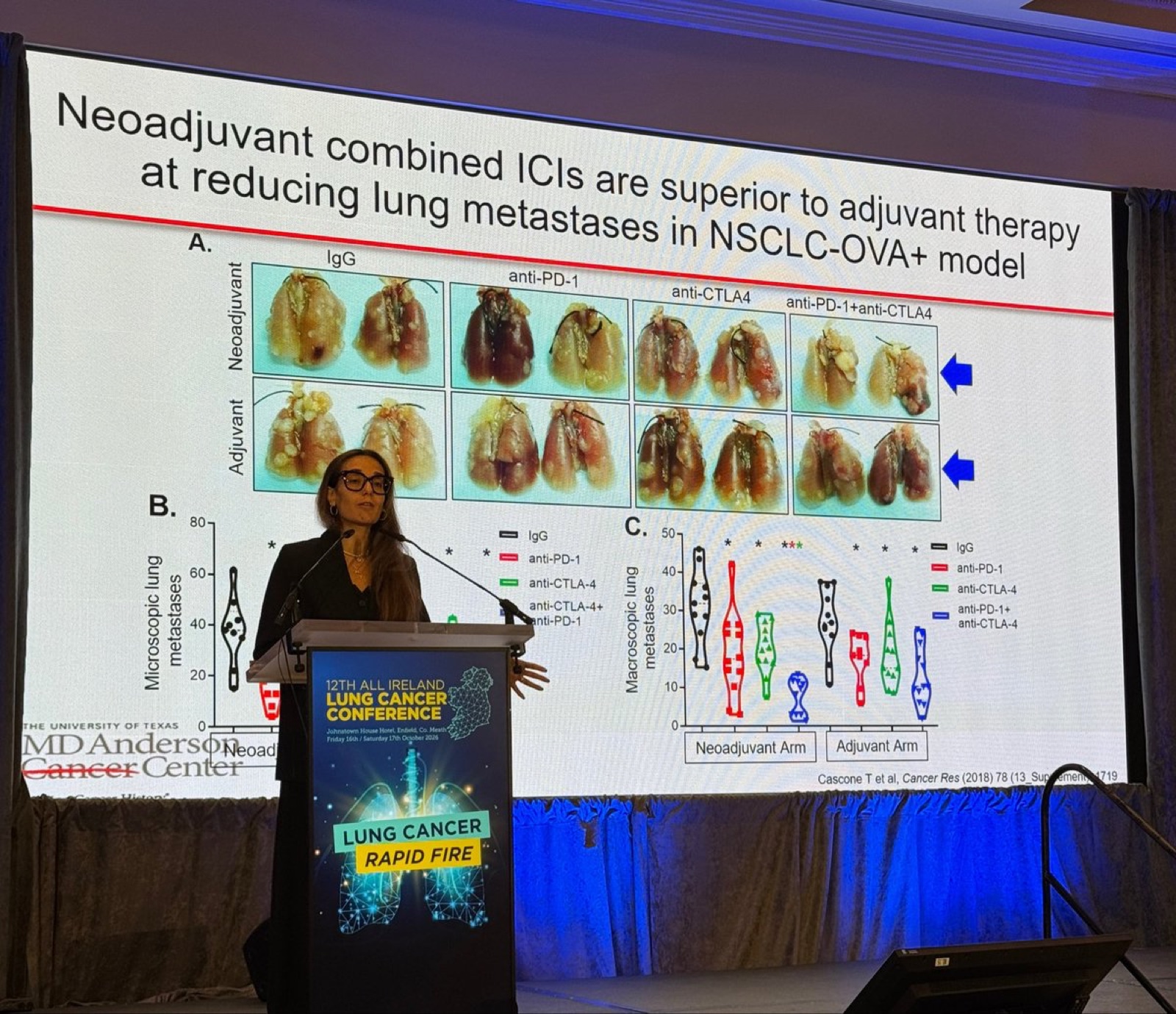
[Slide 2]
Neoadjuvant combined ICIs are superior to adjuvant therapy at reducing lung metastases in NSCLC-OVA+ model
A. [Photographs of excised mouse lungs; rows: Neoadjuvant, Adjuvant; columns: IgG, anti-PD-1, anti-CTLA4, anti-PD-1+anti-CTLA4; blue arrows mark the combination column]
B. [Violin plot; y-axis Microscopic lung metastases, 0-80; x-axis Neoad[juvant Arm] / [Adjuvant Arm - hidden by speaker]; legend: IgG, anti-PD-1, anti-CTLA-4, anti-CTLA-4+anti-PD-1; asterisks * mark significance]
C. [Violin plot; y-axis Macroscopic lung metastases, 0-50; x-axis Neoadjuvant Arm, Adjuvant Arm; legend: IgG, anti-PD-1, anti-CTLA-4, anti-PD-1+anti-CTLA-4; asterisks * and *** mark significance]
Cascone T et al, Cancer Res (2018) 78 (13_Supplement[):] 1719
The University of Texas MD Anderson Cancer Center
---
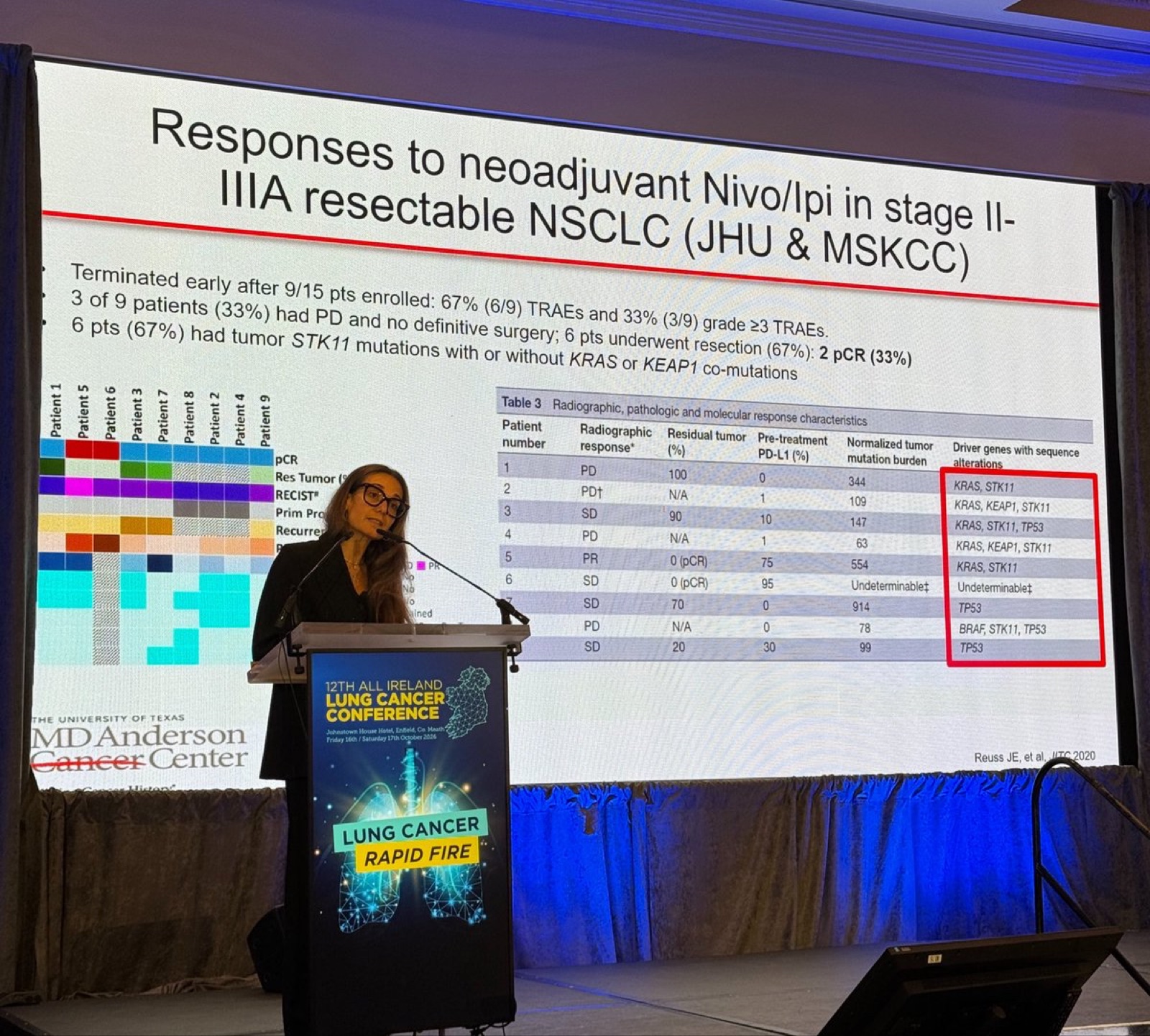
[Slide 3]
Responses to neoadjuvant Nivo/Ipi in stage II-IIIA resectable NSCLC (JHU & MSKCC)
- Terminated early after 9/15 pts enrolled: 67% (6/9) TRAEs and 33% (3/9) grade >=3 TRAEs.
- 3 of 9 patients (33%) had PD and no definitive surgery; 6 pts underwent resection (67%): 2 pCR (33%)
- 6 pts (67%) had tumor STK11 mutations with or without KRAS or KEAP1 co-mutations
[Left: colour-coded heatmap grid, columns Patient 1, Patient 5, Patient 6, Patient 3, Patient 7, Patient 8, Patient 2, Patient 4, Patient 9; rows pCR, Res Tumor (%), RECIST#, Prim Pro[gression?], Recurren[ce], [further rows hidden by speaker]; legend partially hidden: PD, PR, No, ...ained]
Table 3 Radiographic, pathologic and molecular response characteristics
Patient number | Radiographic response* | Residual tumor (%) | Pre-treatment PD-L1 (%) | Normalized tumor mutation burden | Driver genes with sequence alterations
1 | PD | 100 | 0 | 344 | KRAS, STK11
2 | PD+ | N/A | 1 | 109 | KRAS, KEAP1, STK11
3 | SD | 90 | 10 | 147 | KRAS, STK11, TP53
4 | PD | N/A | 1 | 63 | KRAS, KEAP1, STK11
5 | PR | 0 (pCR) | 75 | 554 | KRAS, STK11
6 | SD | 0 (pCR) | 95 | Undeterminable++ | Undeterminable++
[7] | SD | 70 | 0 | 914 | TP53
[8] | PD | N/A | 0 | 78 | BRAF, STK11, TP53
[9] | SD | 20 | 30 | 99 | TP53
[Driver genes column outlined in red box]
Reuss JE, et al, JITC 2020
The University of Texas MD Anderson Cancer Center
---
[Slide 4]
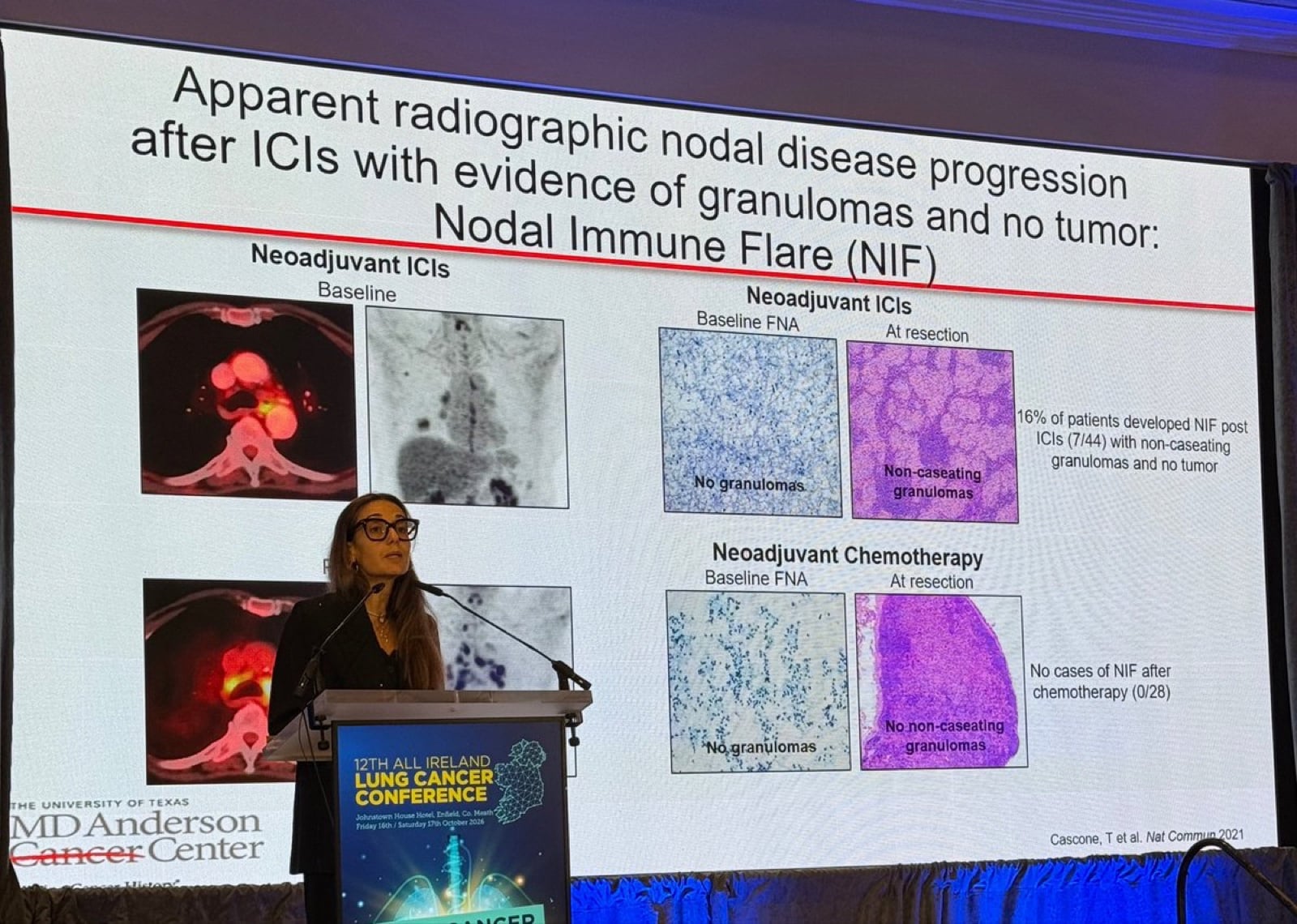
Apparent radiographic nodal disease progression after ICIs with evidence of granulomas and no tumor: Nodal Immune Flare (NIF)
Neoadjuvant ICIs
Baseline
[PET/CT axial image and coronal image at baseline]
P[ost-treatment?] [label hidden by speaker]
[PET/CT axial image and coronal image after ICIs showing increased nodal uptake]
Neoadjuvant ICIs
Baseline FNA - No granulomas
At resection - Non-caseating granulomas
16% of patients developed NIF post ICIs (7/44) with non-caseating granulomas and no tumor
Neoadjuvant Chemotherapy
Baseline FNA - No granulomas
At resection - No non-caseating granulomas
No cases of NIF after chemotherapy (0/28)
Cascone, T et al. Nat Commun 2021
The University of Texas MD Anderson Cancer Center
Stephen V Liu, MD (@StephenVLiu)Oct 17, 2026 · 12:15 PM ISTView post on X ↗
Day 2 · Oct 17, 2026
EGFR-Mutant NSCLC & Limited-Stage SCLC
EGFR-mutant NSCLC: poor-risk features and up-front combination therapy (Lochrin) · Consolidation durvalumab in limited-stage SCLC (Hanna). 2 posts · 3 images captured.
On the podiumSarah LochrinMedical Oncology, IrelandEGFR-mutant NSCLC: poor-risk features and up-front combination therapy
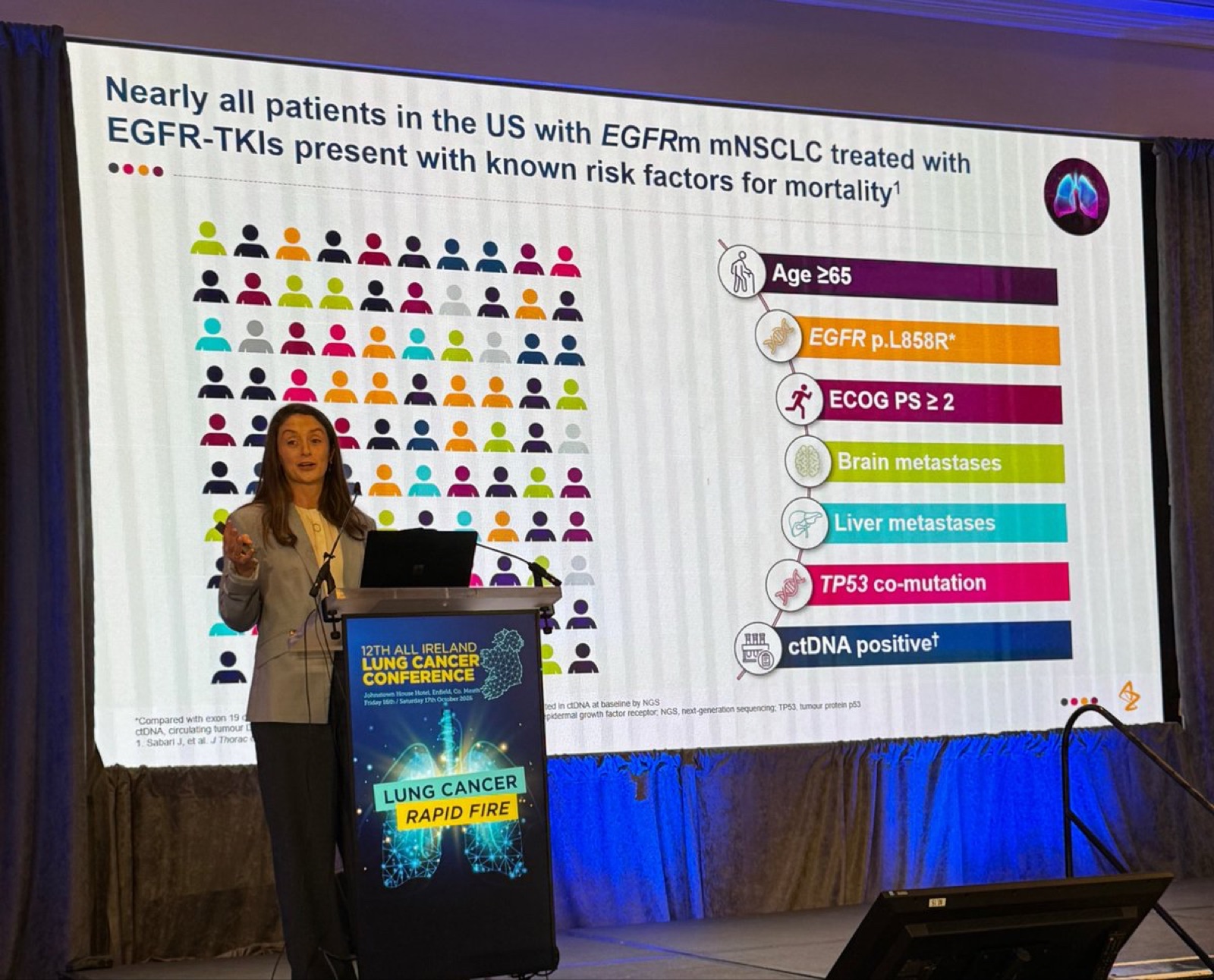
Dr. @LochrinSarah reminds us that most patients with EGFR NSCLC have poor risk features and combination therapy needs to be considered up front. #AILCC26
[Slide 1]
Nearly all patients in the US with EGFRm mNSCLC treated with EGFR-TKIs present with known risk factors for mortality1
[Pictogram grid of coloured person icons, colours keyed to the risk factors at right]
Age >=65
EGFR p.L858R*
ECOG PS >= 2
Brain metastases
Liver metastases
TP53 co-mutation
ctDNA positive+
*Compared with exon 19 d[eletion ...] [clipped]
ctDNA, circulating tumour D[NA ...] [clipped]
1. Sabari J, et al. J Thorac [Oncol ...] [clipped]
[...detec]ted in ctDNA at baseline by NGS
[...] epidermal growth factor receptor; NGS, next-generation sequencing; TP53, tumour protein p53
[AstraZeneca logo]
---
[Slide 2]
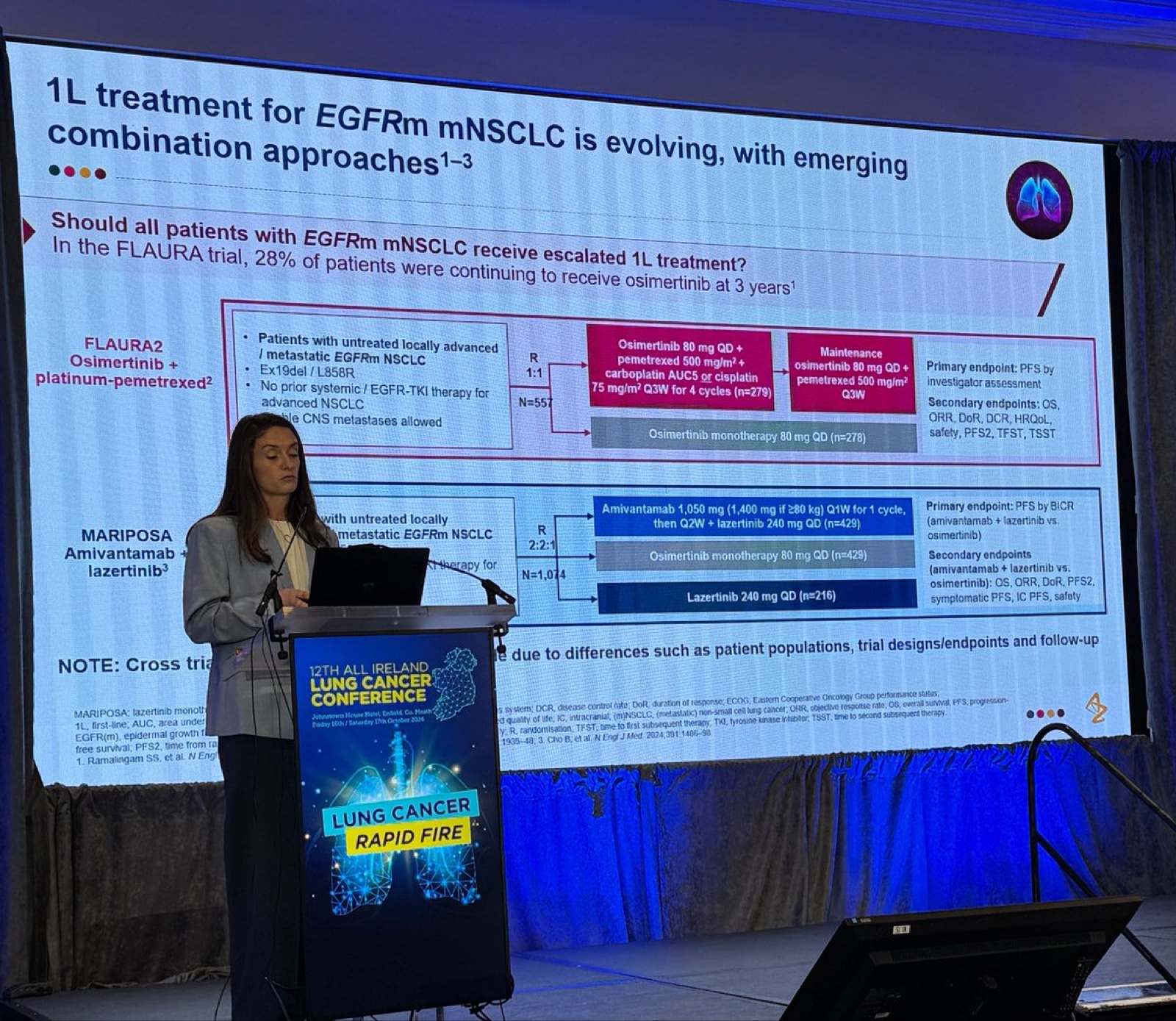
1L treatment for EGFRm mNSCLC is evolving, with emerging combination approaches1-3
Should all patients with EGFRm mNSCLC receive escalated 1L treatment?
In the FLAURA trial, 28% of patients were continuing to receive osimertinib at 3 years1
FLAURA2
Osimertinib + platinum-pemetrexed2
- Patients with untreated locally advanced / metastatic EGFRm NSCLC
- Ex19del / L858R
- No prior systemic / EGFR-TKI therapy for advanced NSCLC
- [Sta]ble CNS metastases allowed
R 1:1
N=557
Osimertinib 80 mg QD + pemetrexed 500 mg/m2 + carboplatin AUC5 or cisplatin 75 mg/m2 Q3W for 4 cycles (n=279) -> Maintenance osimertinib 80 mg QD + pemetrexed 500 mg/m2 Q3W
Osimertinib monotherapy 80 mg QD (n=278)
Primary endpoint: PFS by investigator assessment
Secondary endpoints: OS, ORR, DoR, DCR, HRQoL, safety, PFS2, TFST, TSST
MARIPOSA
Amivantamab + lazertinib3
[Patients] with untreated locally [advanced /] metastatic EGFRm NSCLC
[... EGFR-T]KI therapy for [...] [partially hidden by speaker]
R 2:2:1
N=1,074
Amivantamab 1,050 mg (1,400 mg if >=80 kg) Q1W for 1 cycle, then Q2W + lazertinib 240 mg QD (n=429)
Osimertinib monotherapy 80 mg QD (n=429)
Lazertinib 240 mg QD (n=216)
Primary endpoint: PFS by BICR (amivantamab + lazertinib vs. osimertinib)
Secondary endpoints (amivantamab + lazertinib vs. osimertinib): OS, ORR, DoR, PFS2, symptomatic PFS, IC PFS, safety
NOTE: Cross tria[l comparisons ... may b]e due to differences such as patient populations, trial designs/endpoints and follow-up
MARIPOSA: lazertinib monoth[erapy ...]
1L, first-line; AUC, area under [the curve ...]
EGFR(m), epidermal growth f[actor receptor ...]
free survival; PFS2, time from ra[ndomisation ...]
[...] system; DCR, disease control rate; DoR, duration of response; ECOG, Eastern Cooperative Oncology Group performance status; [...] progression-
[...] quality of life; IC, intracranial; (m)NSCLC, (metastatic) non-small cell lung cancer; ORR, objective response rate; OS, overall survival; PFS, progression-
[...]; R, randomisation; TFST, time to first subsequent therapy; TKI, tyrosine kinase inhibitor; TSST, time to second subsequent therapy.
1. Ramalingam SS, et al. N Engl [J Med ...] [...] 1935-48; 3. Cho B, et al. N Engl J Med. 2024;391:1486-98
[AstraZeneca logo]
Stephen V Liu, MD (@StephenVLiu)Oct 17, 2026 · 1:40 PM ISTView post on X ↗
On the podiumGerry HannaRadiation Oncologist, St Luke's Radiation Oncology Network, St James's Hospital; Marie Curie Chair, Trinity College DublinConsolidation durvalumab in limited-stage SCLC
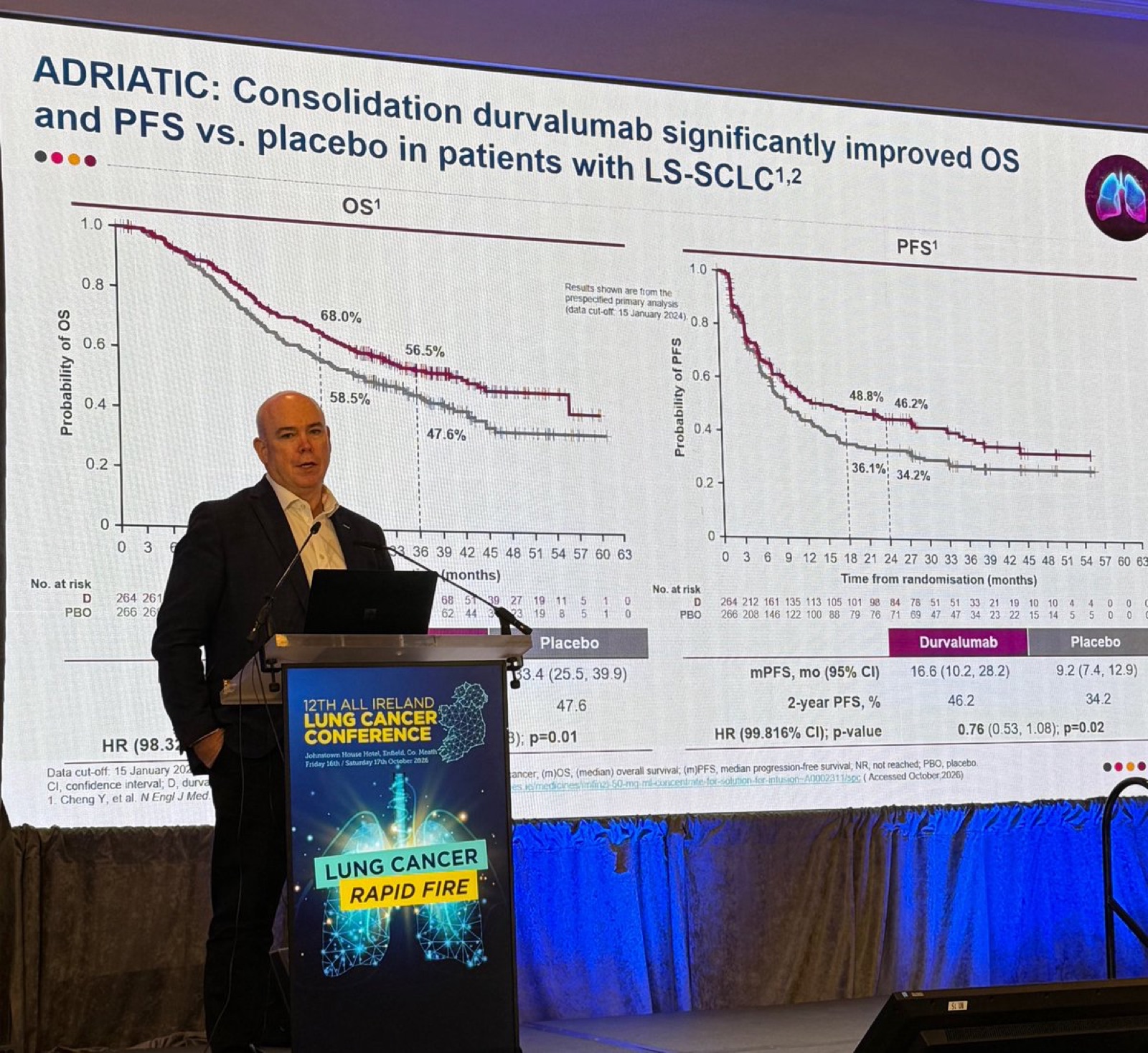
Dr. @gerryhanna outlines the benefit of consolidation durvalumab in limited stage SCLC at #AILCC26.
[Slide 1]
ADRIATIC: Consolidation durvalumab significantly improved OS and PFS vs. placebo in patients with LS-SCLC1,2
OS1
[Kaplan-Meier plot: y-axis Probability of OS; x-axis Time from randomisation (months) 0-63; durvalumab (magenta) vs placebo (grey); printed landmark labels 68.0% and 58.5% at first dashed line, 56.5% and 47.6% at second dashed line]
Results shown are from the prespecified primary analysis (data cut-off: 15 January 2024).
No. at risk
D 264 261 [...occluded...] 68 51 39 27 19 11 5 1 0
PBO 266 26[...occluded...] 62 44 [3?] 23 19 8 5 1 0
[OS table, left column partially hidden by speaker:]
| [Durvalumab] | Placebo
[mOS, mo (95% CI)] | [hidden] | 33.4 (25.5, 39.9)
[3-year OS, %] | [hidden] | 47.6
HR (98.32[1]% CI); [p-value] | [hidden] [...]8); p=0.01
PFS1
[Kaplan-Meier plot: y-axis Probability of PFS; x-axis Time from randomisation (months) 0-63; printed landmark labels 48.8% and 36.1% at first dashed line, 46.2% and 34.2% at second dashed line]
No. at risk
D 264 212 161 135 113 105 101 98 84 78 51 51 33 21 19 10 10 4 4 0 0 [0]
PBO 266 208 146 122 100 88 79 76 71 69 47 47 34 23 22 15 14 5 5 0 0 [0]
| Durvalumab | Placebo
mPFS, mo (95% CI) | 16.6 (10.2, 28.2) | 9.2 (7.4, 12.9)
2-year PFS, % | 46.2 | 34.2
HR (99.816% CI); p-value | 0.76 (0.53, 1.08); p=0.02
Data cut-off: 15 January 202[4 ...] [...]ancer; (m)OS, (median) overall survival; (m)PFS, median progression-free survival; NR, not reached; PBO, placebo.
CI, confidence interval; D, durva[lumab ...]
1. Cheng Y, et al. N Engl J Med. [...] [...]es.ie/medicines/imfinzi-50-mg-ml-concentrate-for-solution-for-infusion-A0002311/spc (Accessed October 2026)
[AstraZeneca logo]
[Survival data captured as a table — no point estimates read from the curve]
Endpoint: OS and PFS, consolidation durvalumab vs placebo, LS-SCLC (ADRIATIC, prespecified primary analysis, data cut-off 15 January 2024)
Durvalumab (OS) | 264 | [hidden by speaker] | [hidden by speaker]
Placebo (OS) | 266 | 33.4 months | 25.5, 39.9
Durvalumab (PFS) | 264 | 16.6 months | 10.2, 28.2
Placebo (PFS) | 266 | 9.2 months | 7.4, 12.9
HR: OS: [value hidden by speaker]; PFS: 0.76
HR CI: OS: 98.32[1]% CI, upper bound ends '...8)' (rest hidden); PFS: 99.816% CI 0.53, 1.08
P: OS p=0.01; PFS p=0.02
OS printed labels: 68.0% / 58.5% (first dashed line) and 56.5% / 47.6% (second dashed line); table row for placebo reads 47.6 (3-year OS row label hidden)
PFS printed labels: 48.8% / 36.1% (first dashed line) and 46.2% / 34.2% (second dashed line); table: 2-year PFS 46.2% durvalumab vs 34.2% placebo
Note: Durvalumab mOS, OS HR point estimate and CI lower bound, and the OS table row labels are all hidden behind the speaker (Gerry Hanna) - do NOT fill from memory; obtain from Cheng et al NEJM 2024 if needed. Landmark time points for the dashed lines are not printed as labels on the curves; the table rows confirm 2-year PFS; the OS row label is hidden. At-risk rows for OS partially occluded; one PBO at-risk value uncertain '[3?]'.
Stephen V Liu, MD (@StephenVLiu)Oct 17, 2026 · 1:51 PM ISTView post on X ↗
25 named on the podium or in posts
Trials Discussed
Every trial named on a captured slide or tagged in a post, with how many posts reference it. The 14 in green have a full KOL Pulse trial profile.
Arrivals, thank-yous and the attendees’ own takeaways — everything posted under #AILCC26 that isn’t a session slide.
Kicking off the 12th All Ireland Lung Cancer Conference 🇮🇪 with our first Keynote Lecture by @MARIANOPROVENCI @gecp_org
[Slide 4]
What is a paradigm shift?
[Book cover: The Structure of Scientific Revolutions, Second Edition, Enlarged, Thomas S. Kuhn]
Thomas S. Kuhn introduced the modern concept of paradigm shift in The Structure of Scientific Revolutions (1962), using the Copernican Revolution as one of his key examples.
The planets did not change.
The way we understood them did.
[Two portraits side by side: PTOLEMY (c. 100 - c. 170) - The Earth is the center; COPERNICUS (1473 - 1543) - The Sun is the center; each with a planetary-orbit diagram and a quotation beneath]
Mariano Provencio MD, PhD; Puerta de Hierro University Hospital, Madrid, Spain.
3
GECP lung cancer research
[Podium banner: 12TH ALL IRELAND LUNG CANCER CONFERENCE, Johnstown House Hotel, Enfield, Co. Meath, Friday 16th / Saturday 17th October 2026, LUNG CANCER RAPID FIRE]
Jarushka Naidoo (@DrJNaidoo)Oct 16, 2026 · 5:42 PM ISTView post on X ↗
#AILCC26
Stephen V Liu, MD (@StephenVLiu)Oct 16, 2026 · 10:53 PM ISTView post on X ↗
As another All-Ireland Lung Cancer Conference comes to an end, a huge shout out to my 2 conference co-chairs @DrJNaidoo and @FordePatrick who are just the best to work with.
Delighted that the meeting has been a great success and huge 🙏 to all the Speakers, Chairs and supporting staff.
Thanks to all the Healtcare professionals and researchers from across Ireland who gave up their weekend to be there and make the meeting a success.
@cancertrials_ie
@CancerInstIRE
@CancerCentreIre
@TrinityMed1
Gerry Hanna (@gerryhanna)Oct 17, 2026 · 5:42 PM ISTView post on X ↗
2 companion pages
Network Analysis
Who drove the #AILCC26 conversation, who amplified it, and who was in the room — the same curated corpus as this page, mapped as networks.
Posts were captured from X under #AILCC26 (October 16–17, 2026) and curated by hand;
every card links back to the post it came from and captions are verbatim. Slide text is machine-transcribed
from the posted photos and shipped as-is, including [bracketed] markers where the capture could not be read;
survival curves are summarized only by the numbers printed on the slide. Sessions and talk titles were
reconstructed from the chairs’ and attendees’ own captions because no public programme was located;
faculty affiliations come from each speaker’s X profile. Trial names link to KOL Pulse trial profiles where one exists.
Free access — track oncology’s top KOLs in your specialty: profiles, pharma influence, ad-board patterns & 2025 Open Payments analysis.KOL Pulse Insider