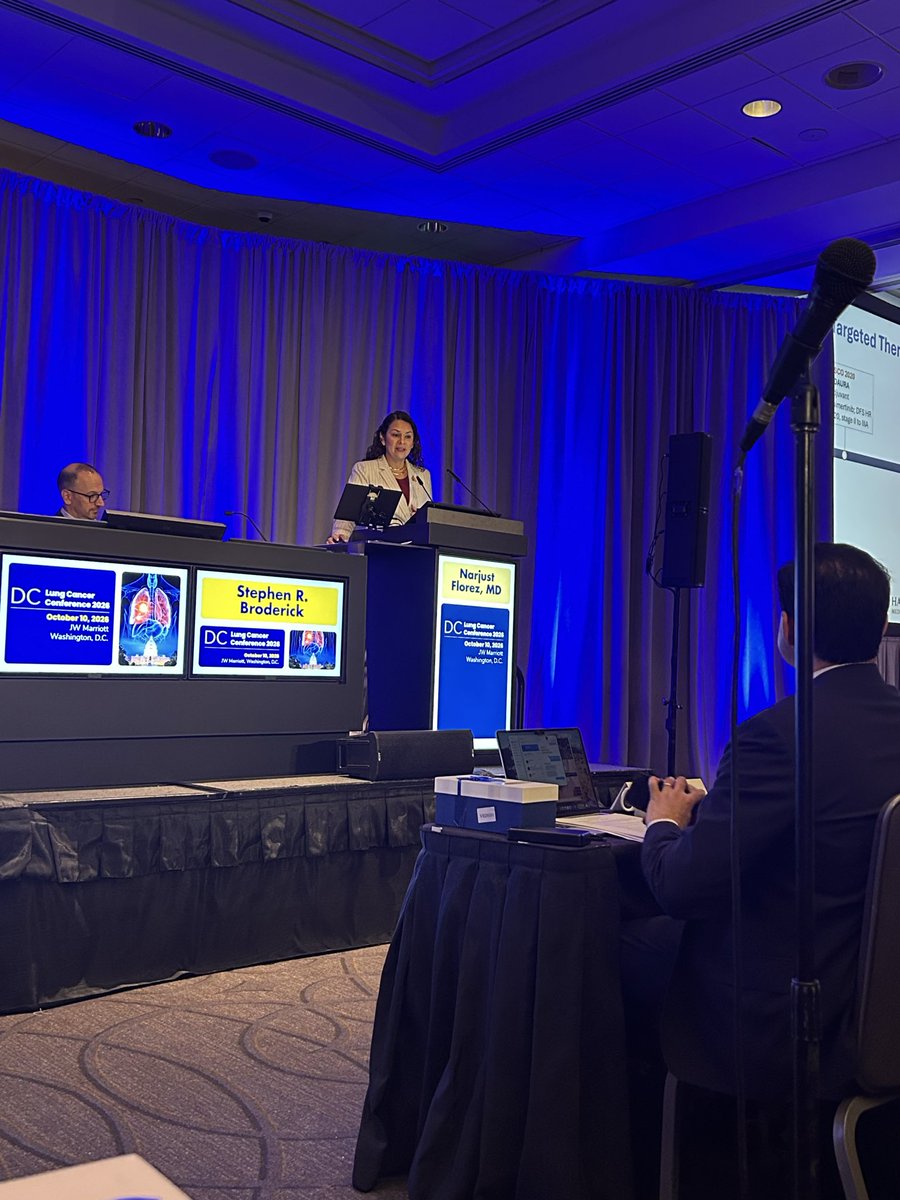
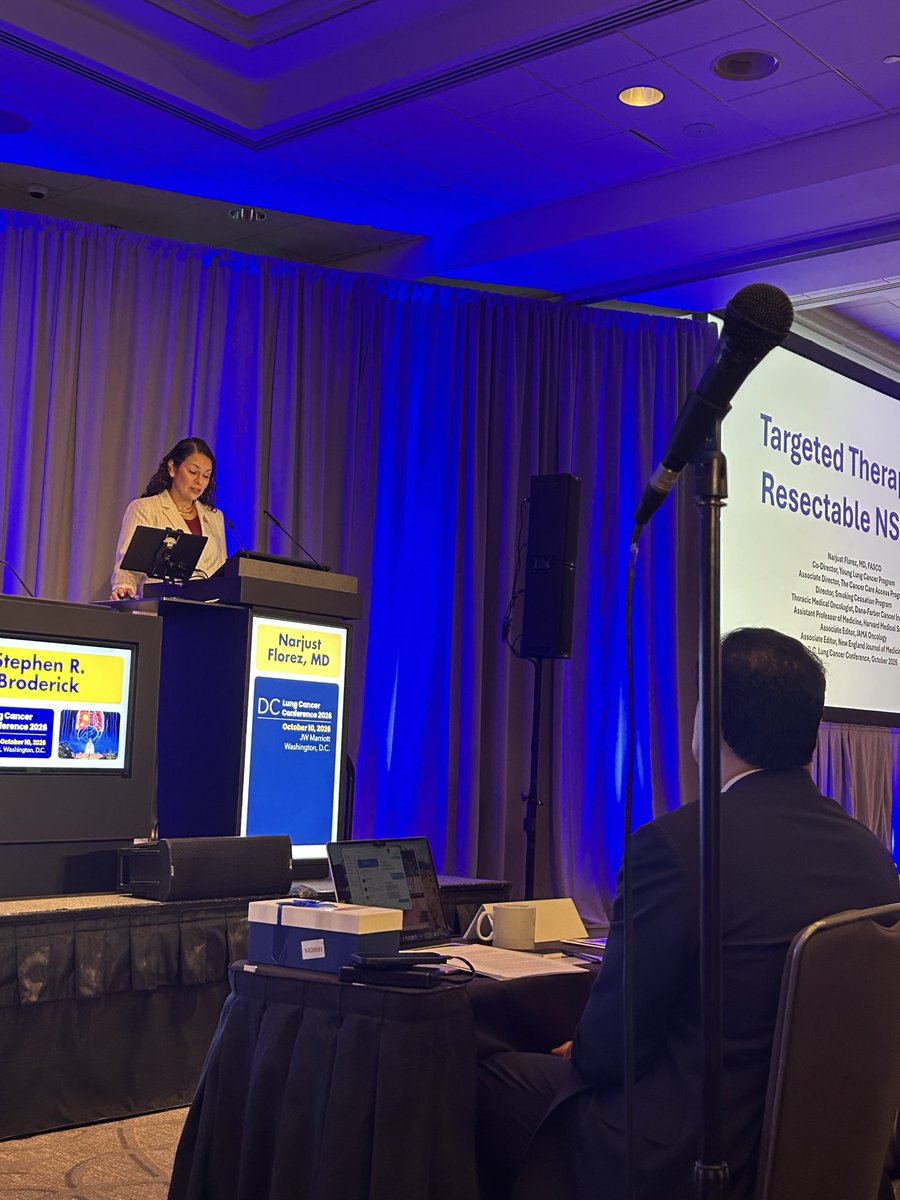
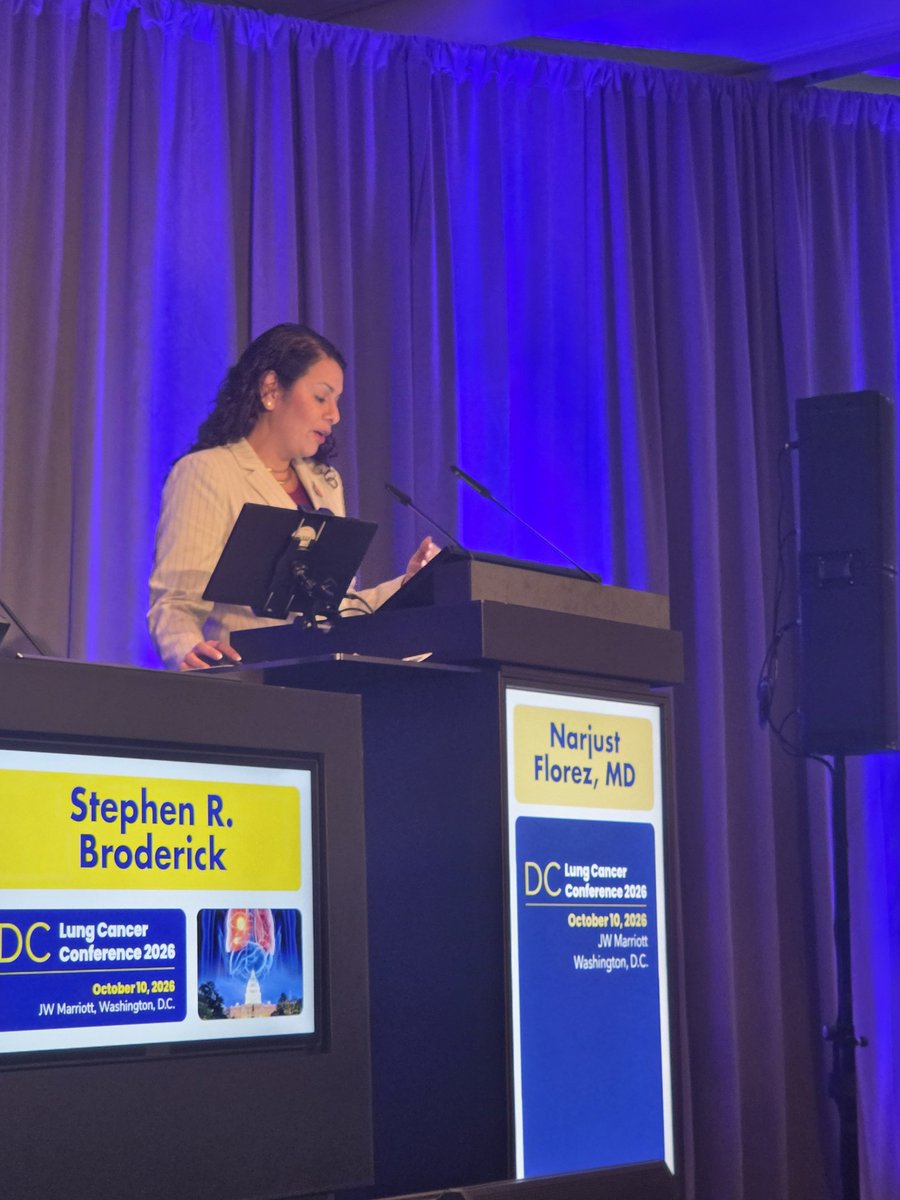
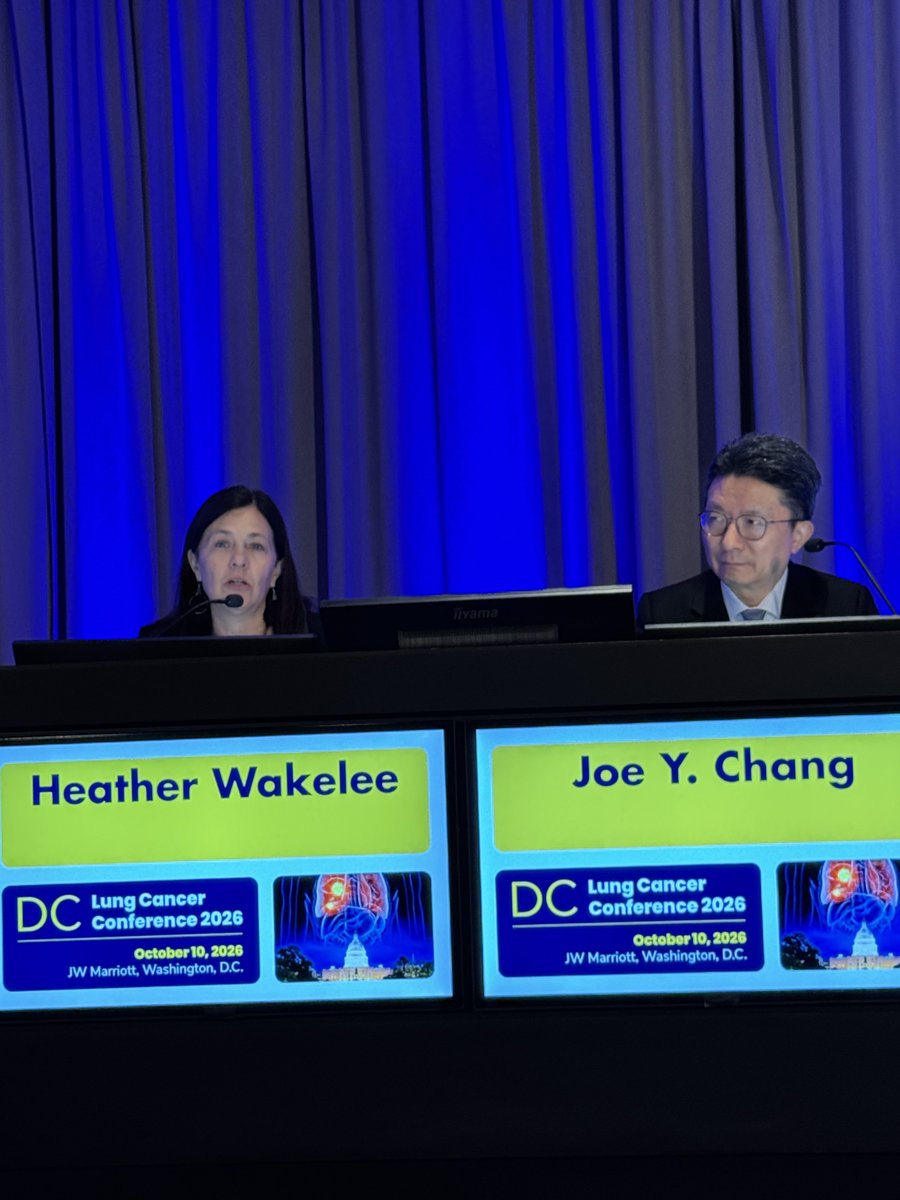
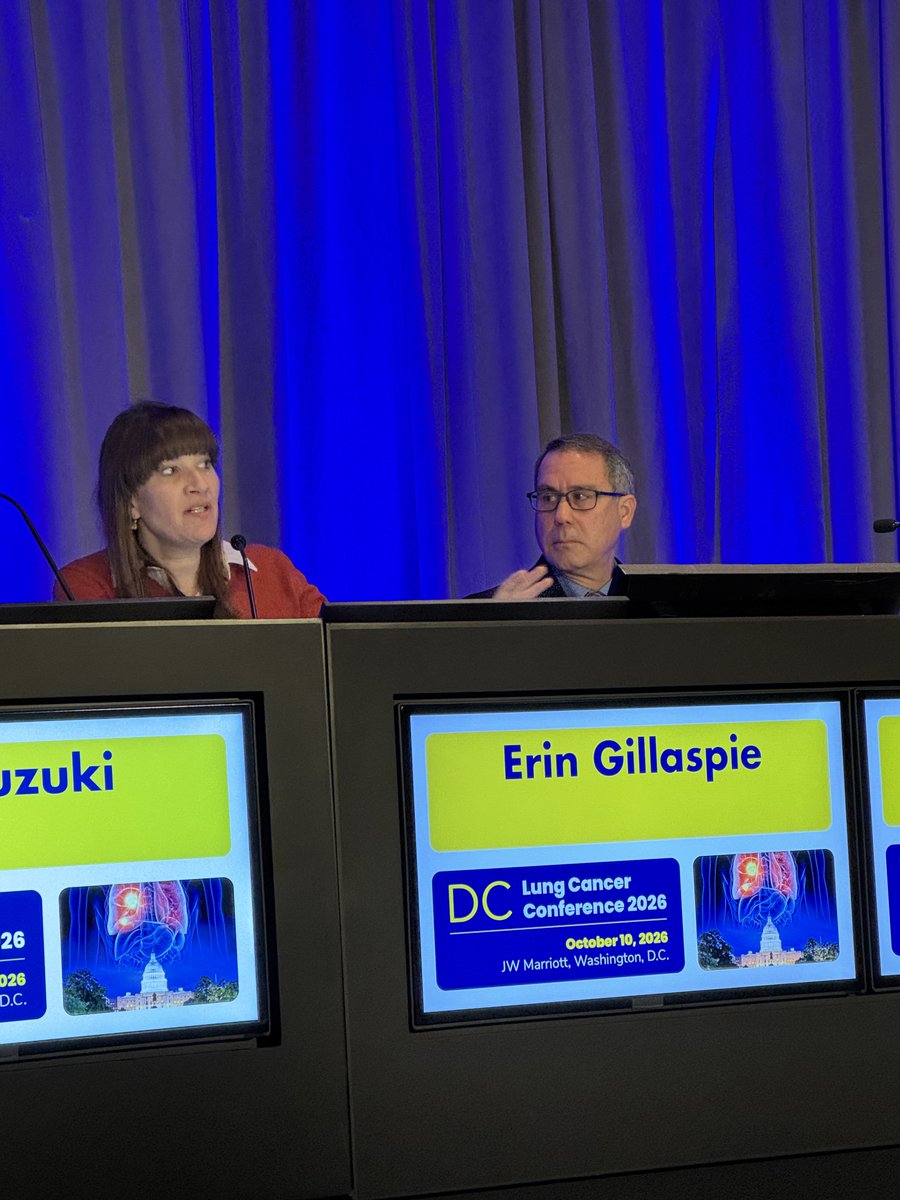
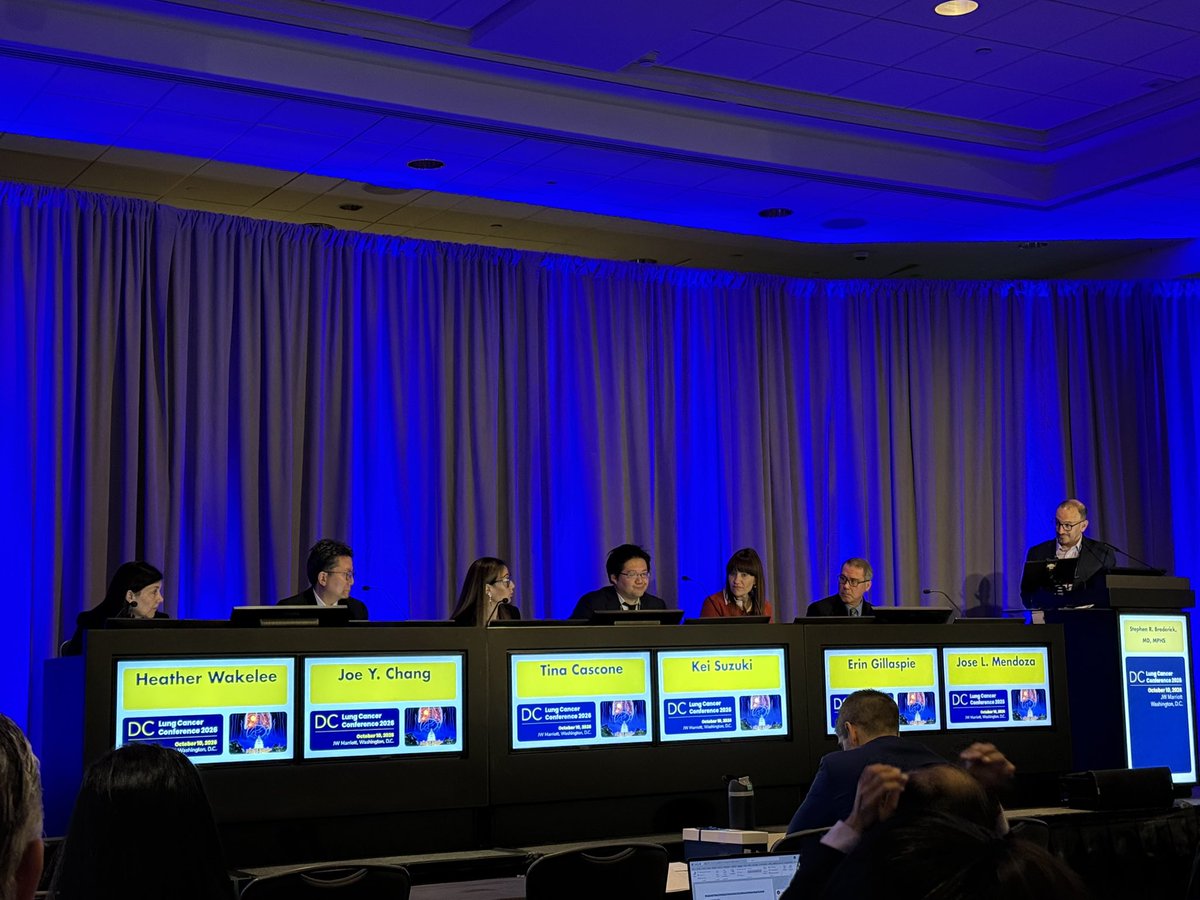
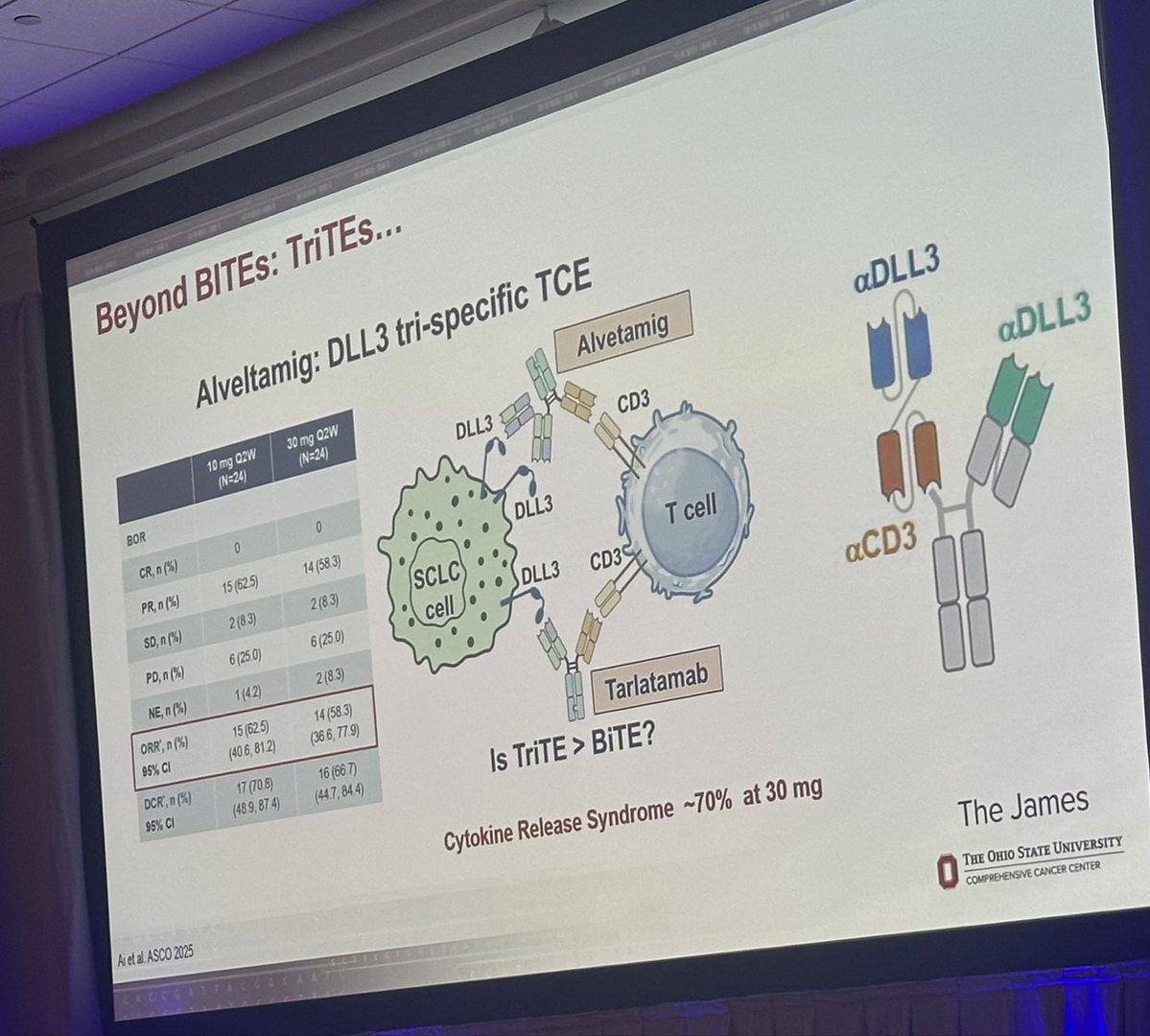
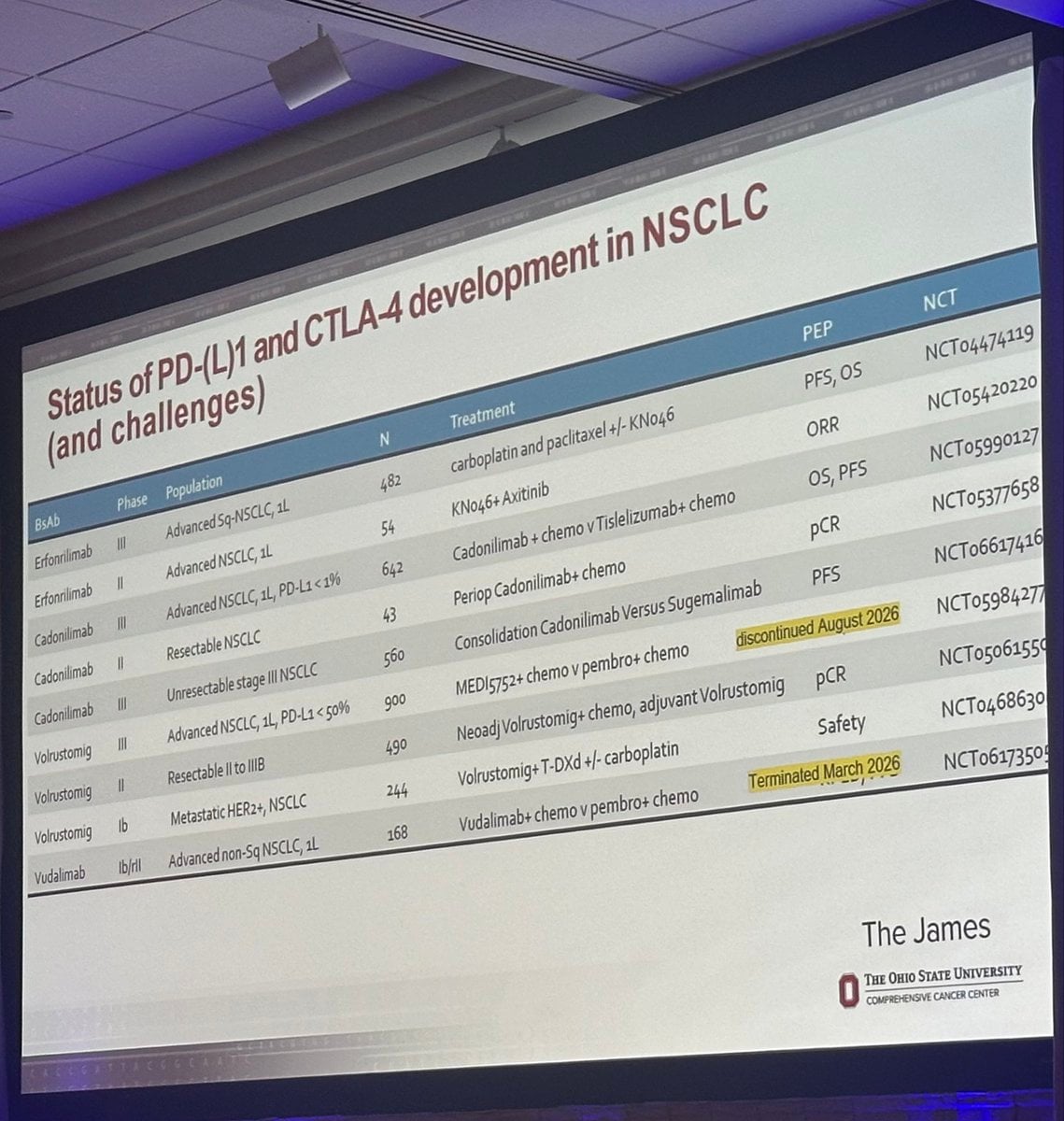
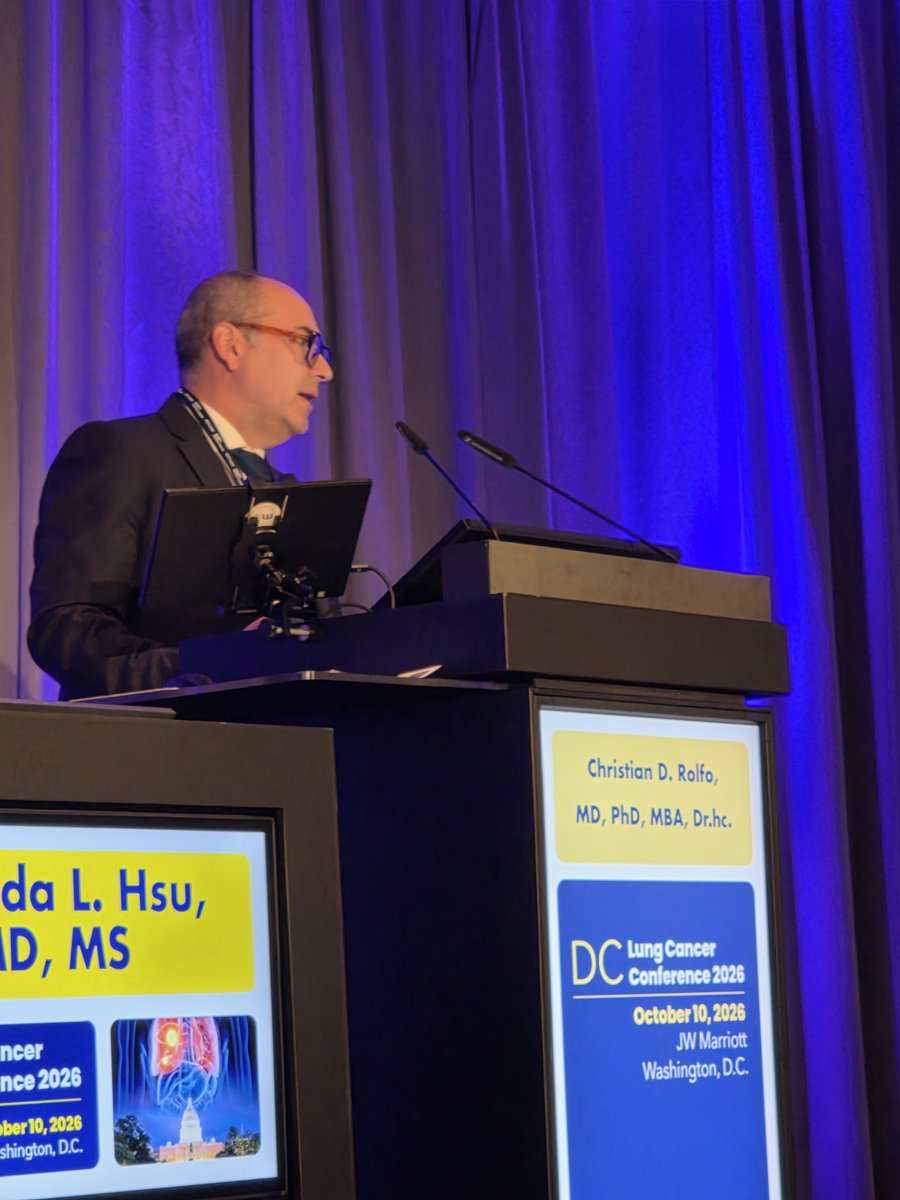
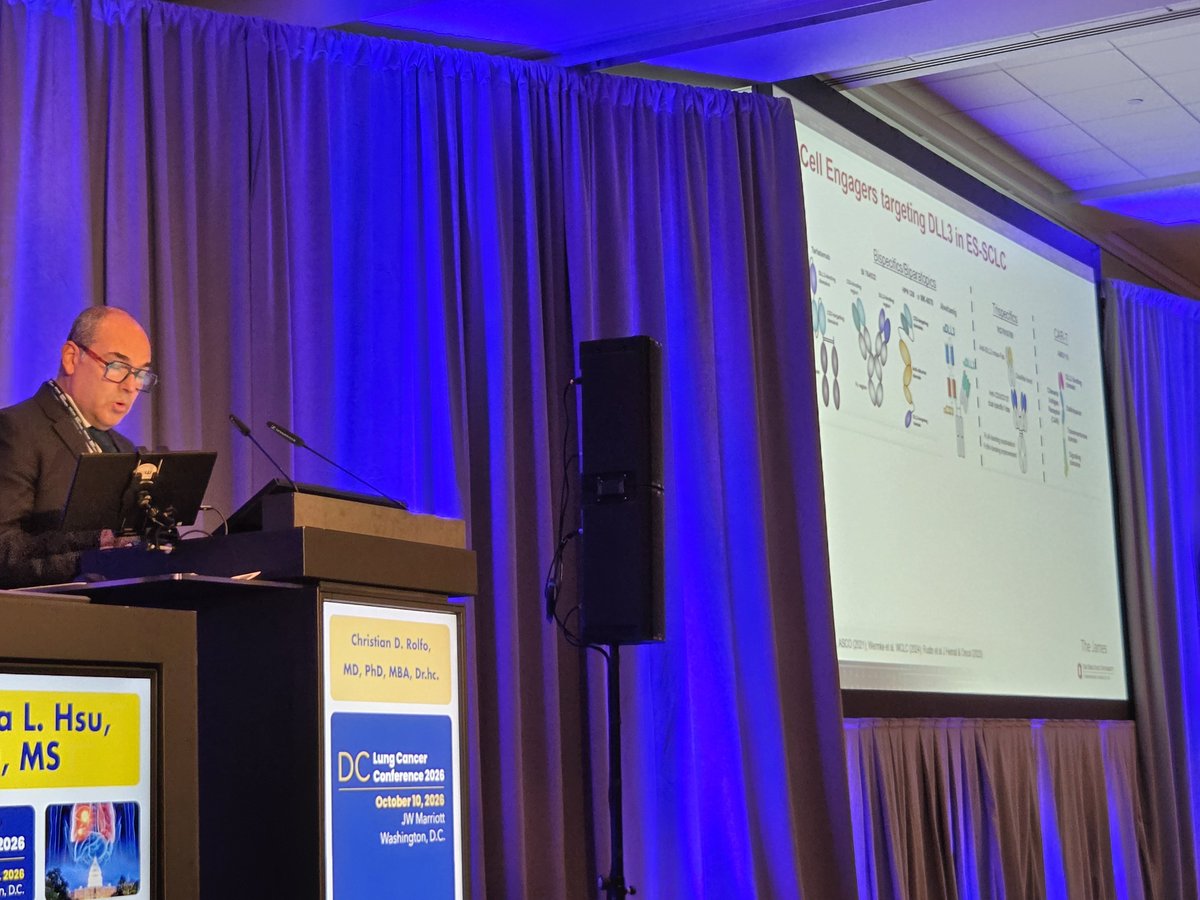
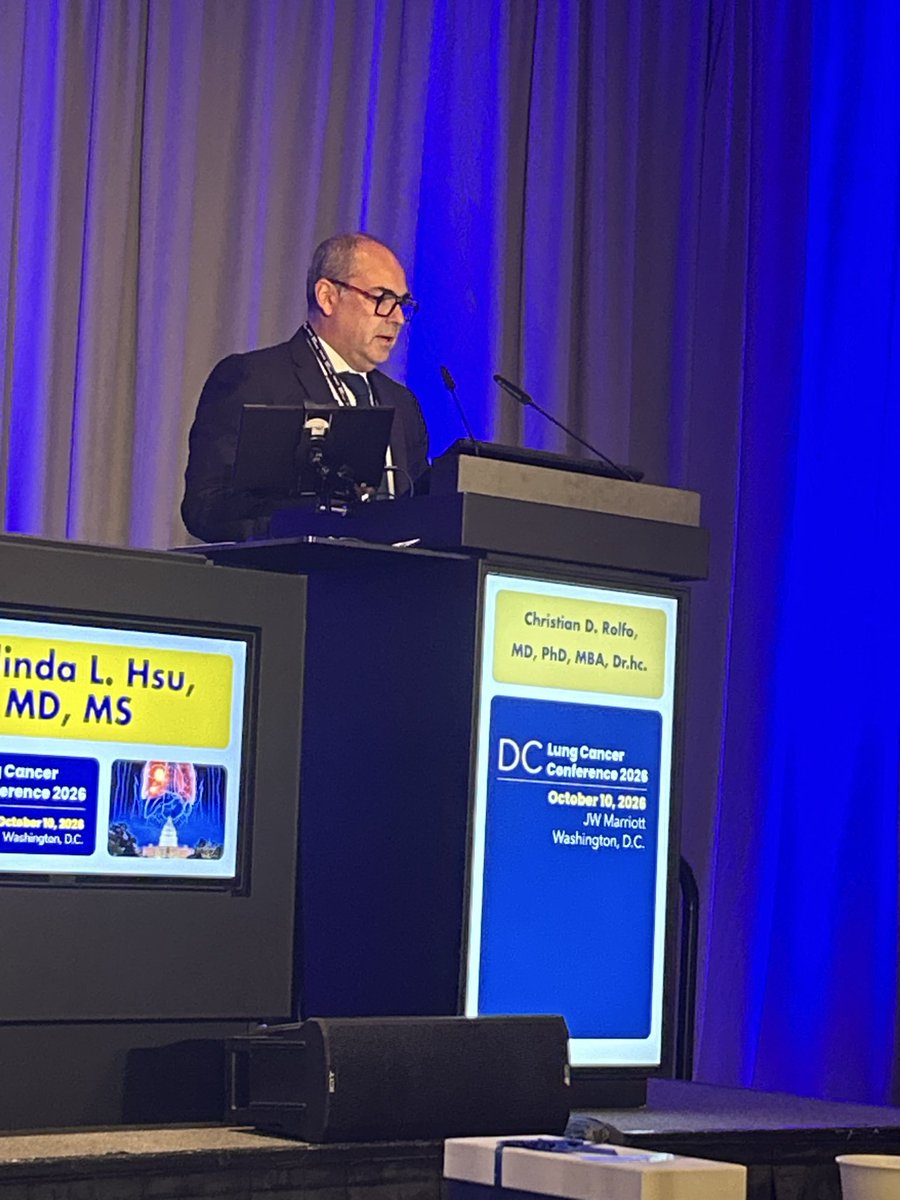
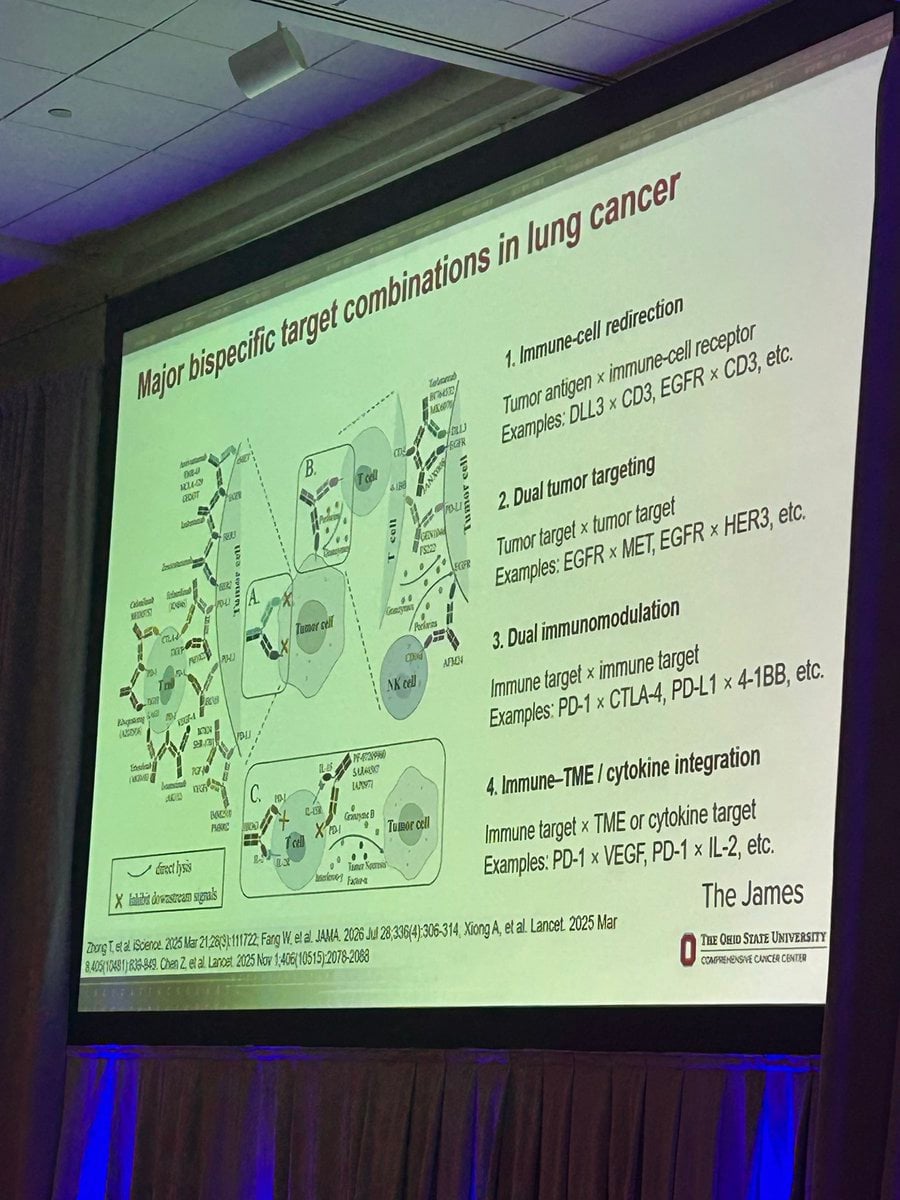
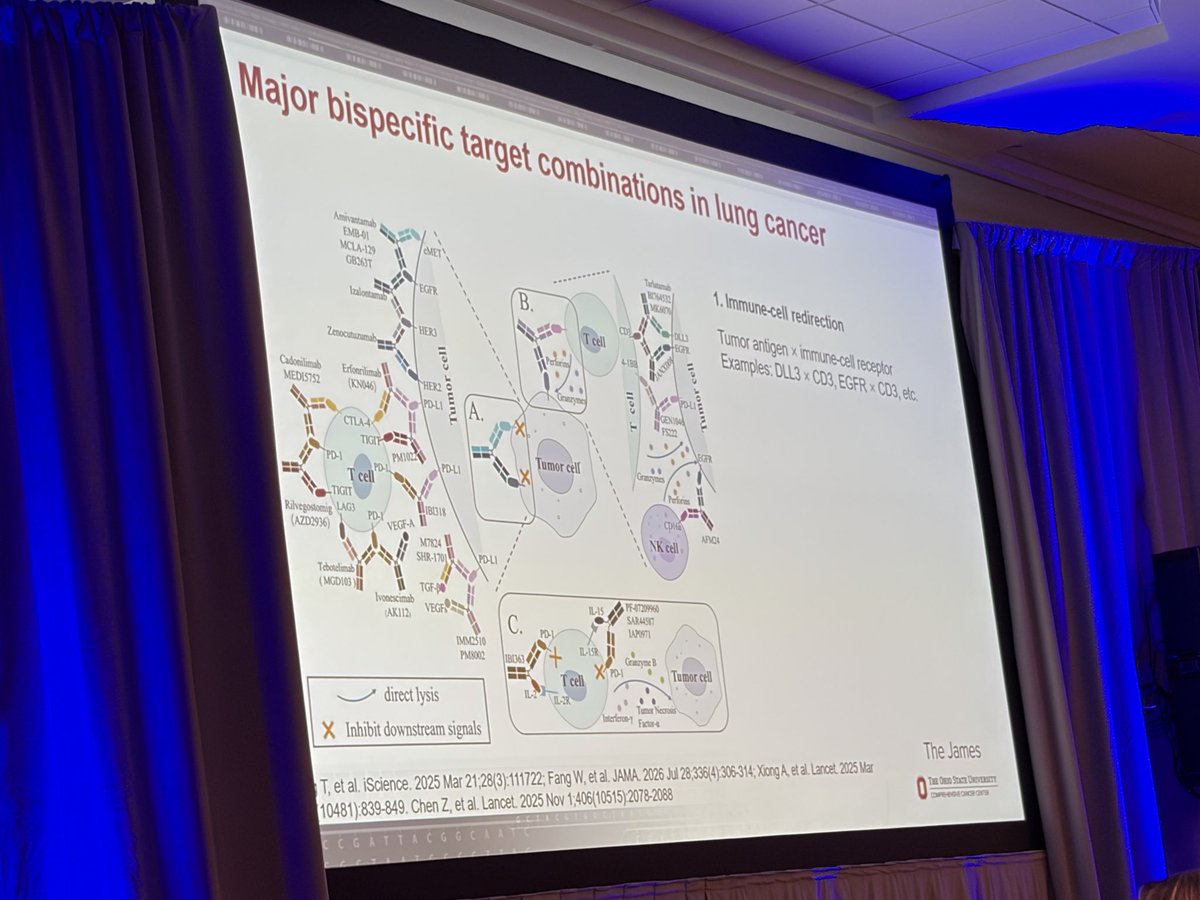
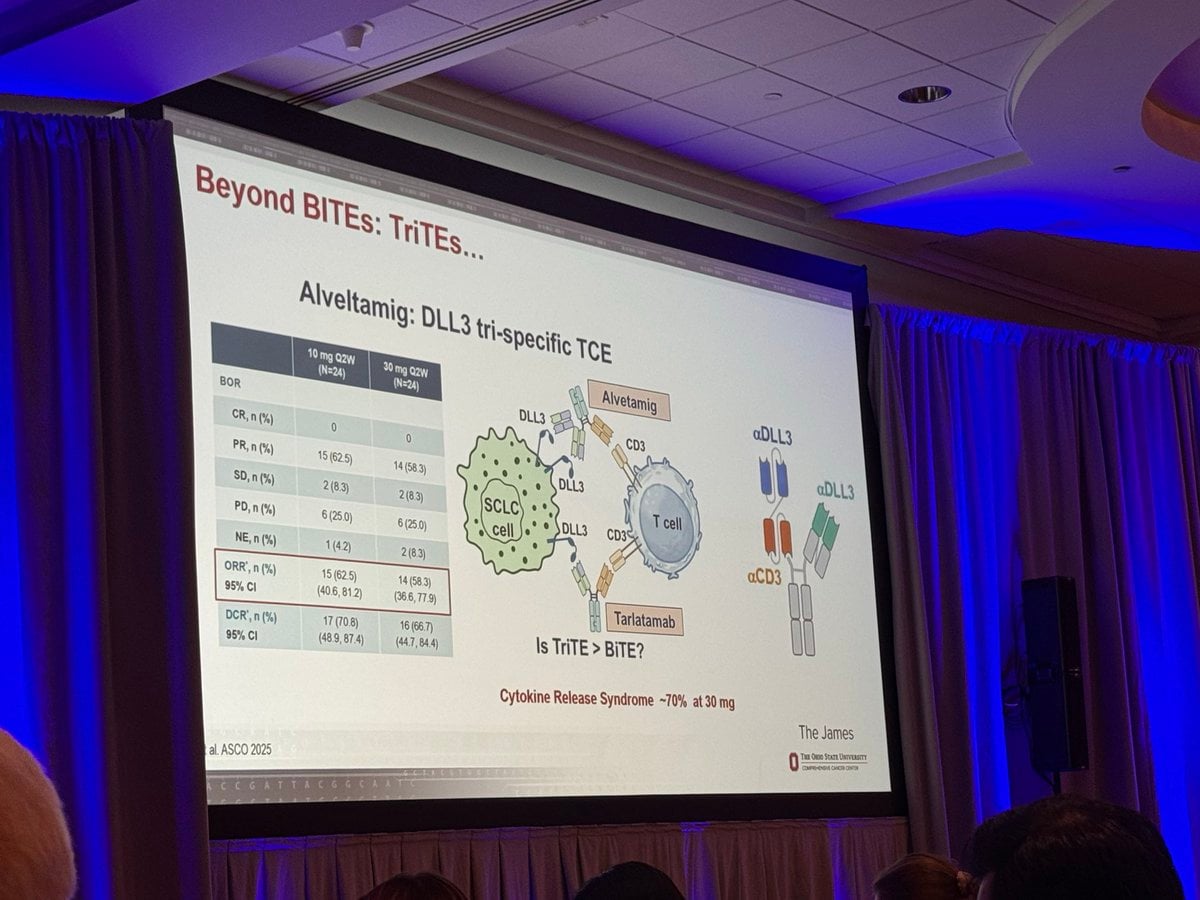
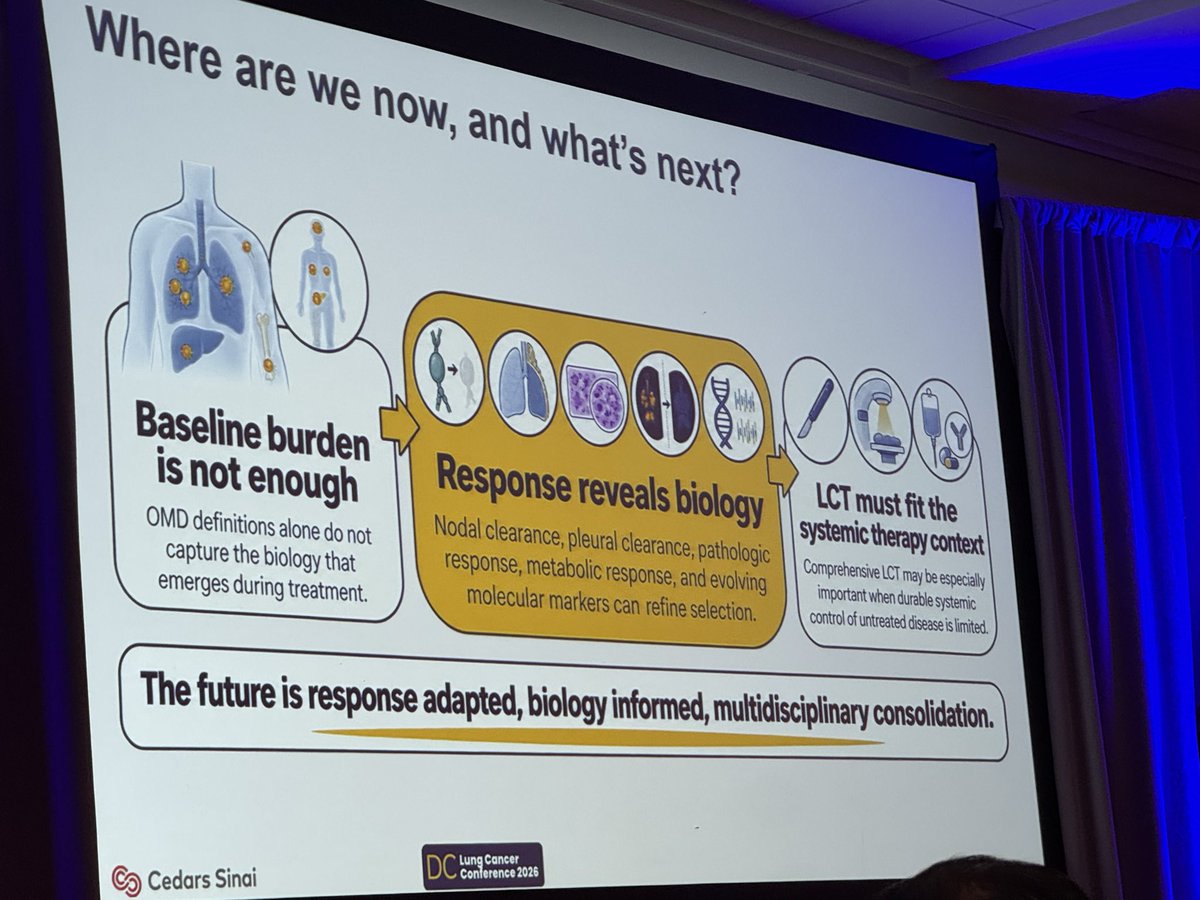
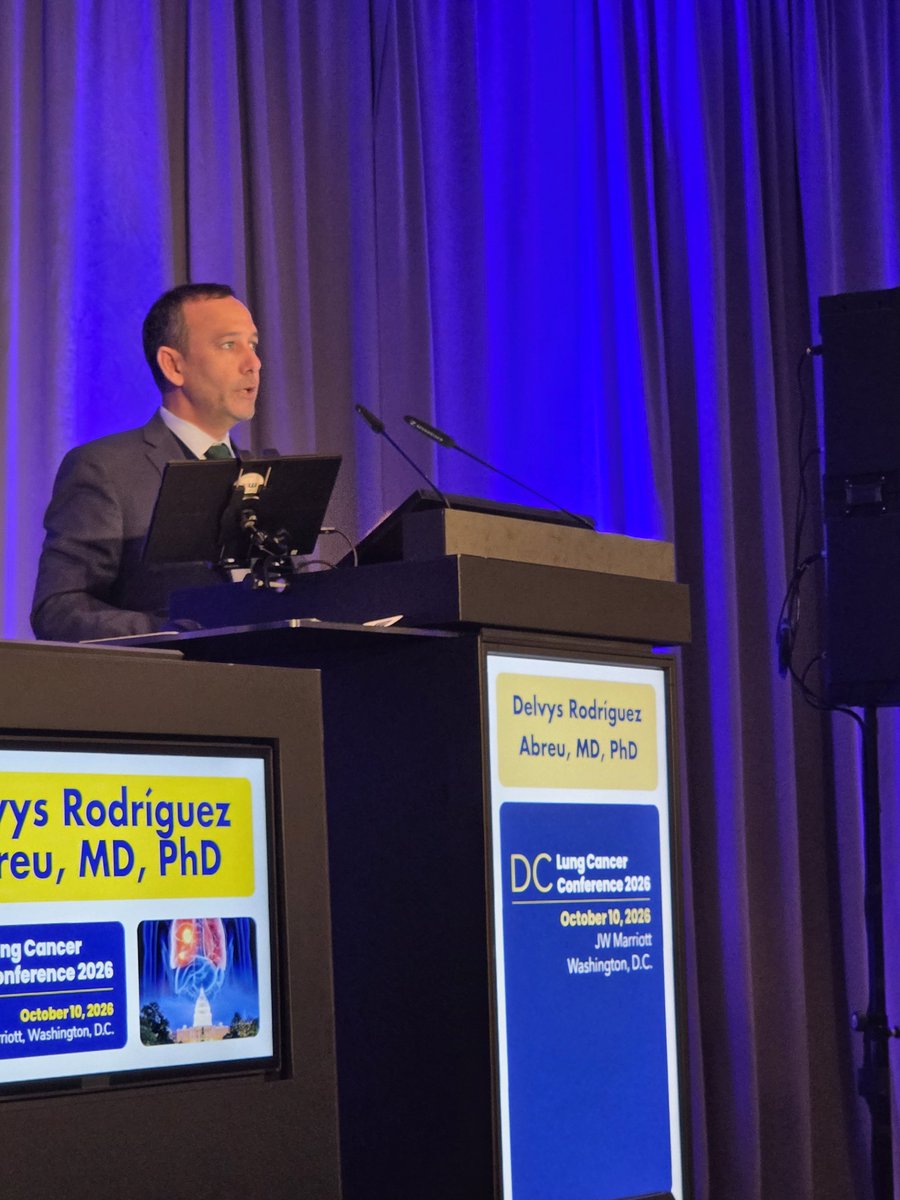
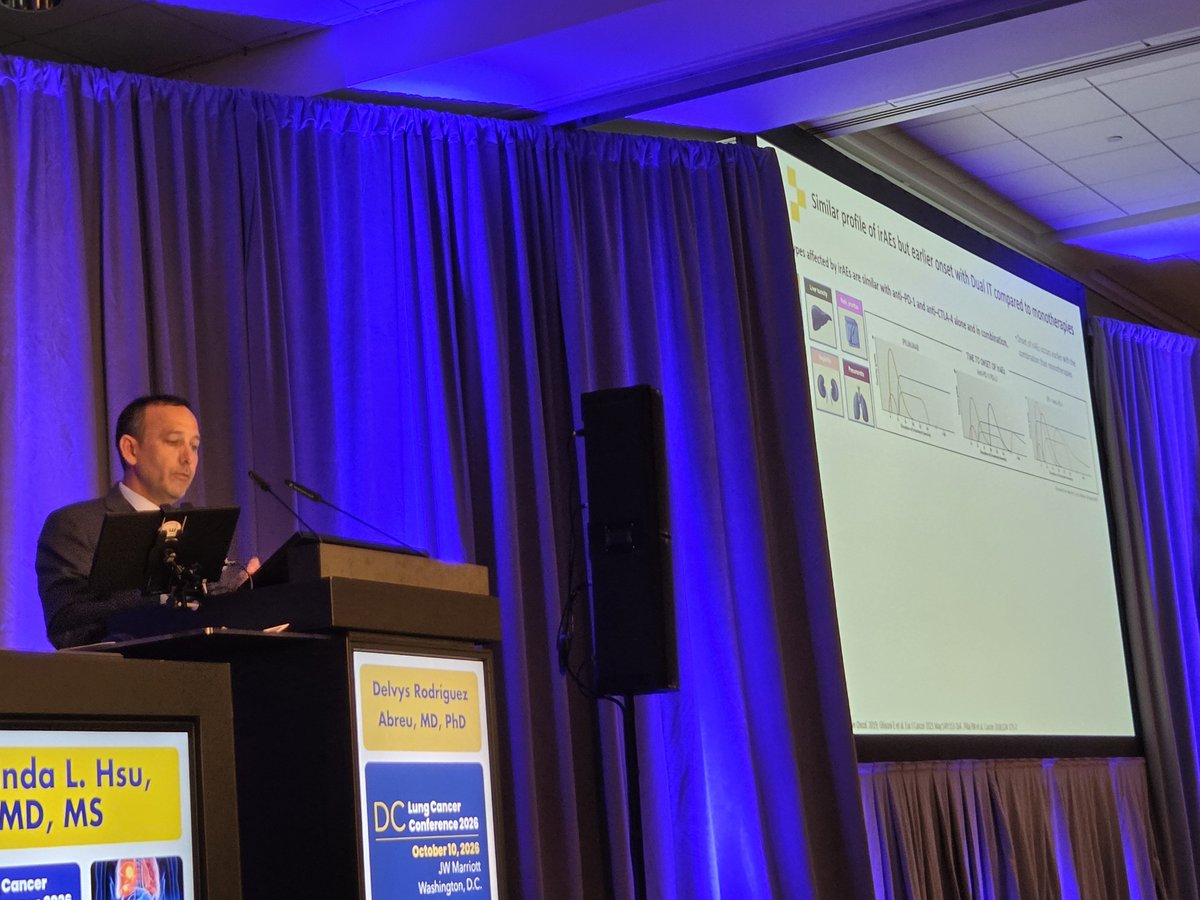
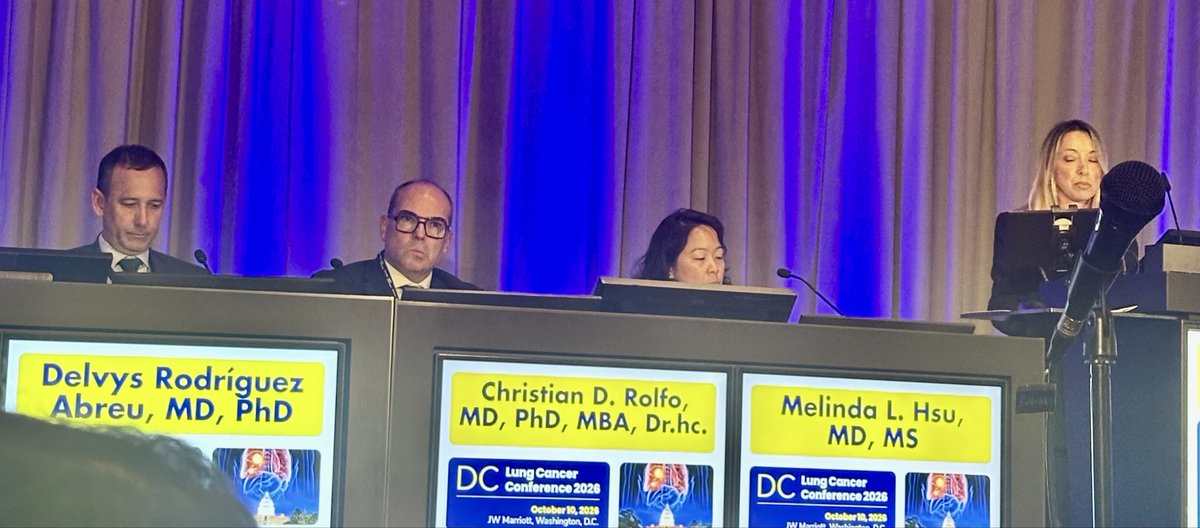
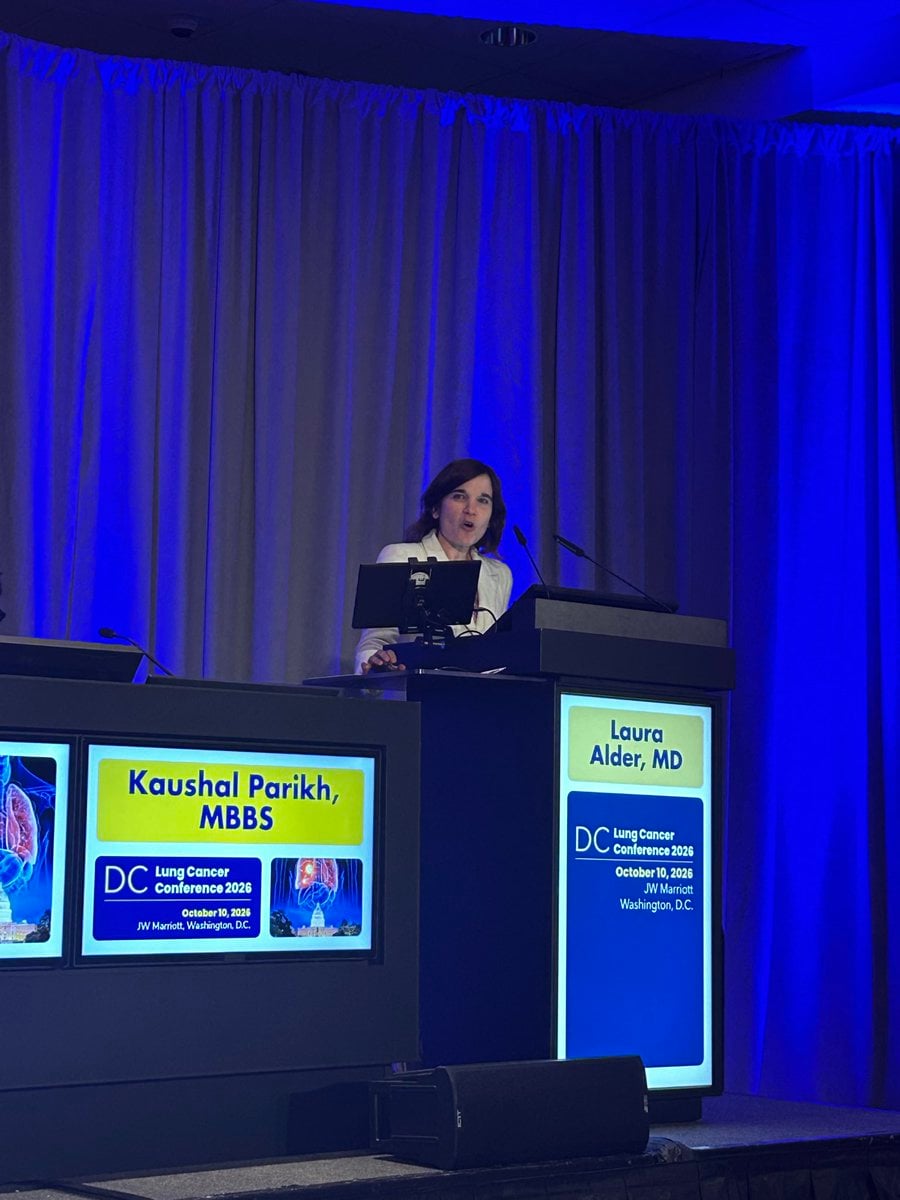
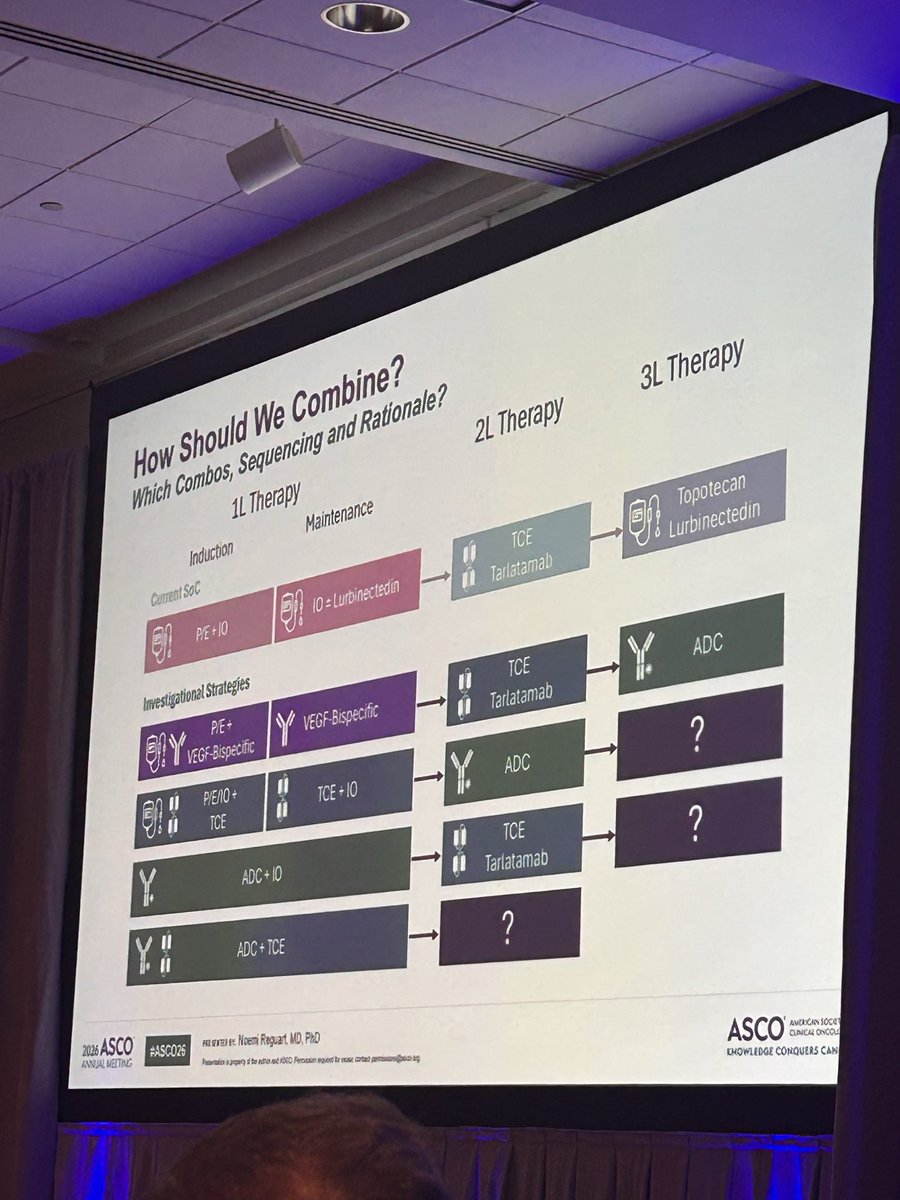
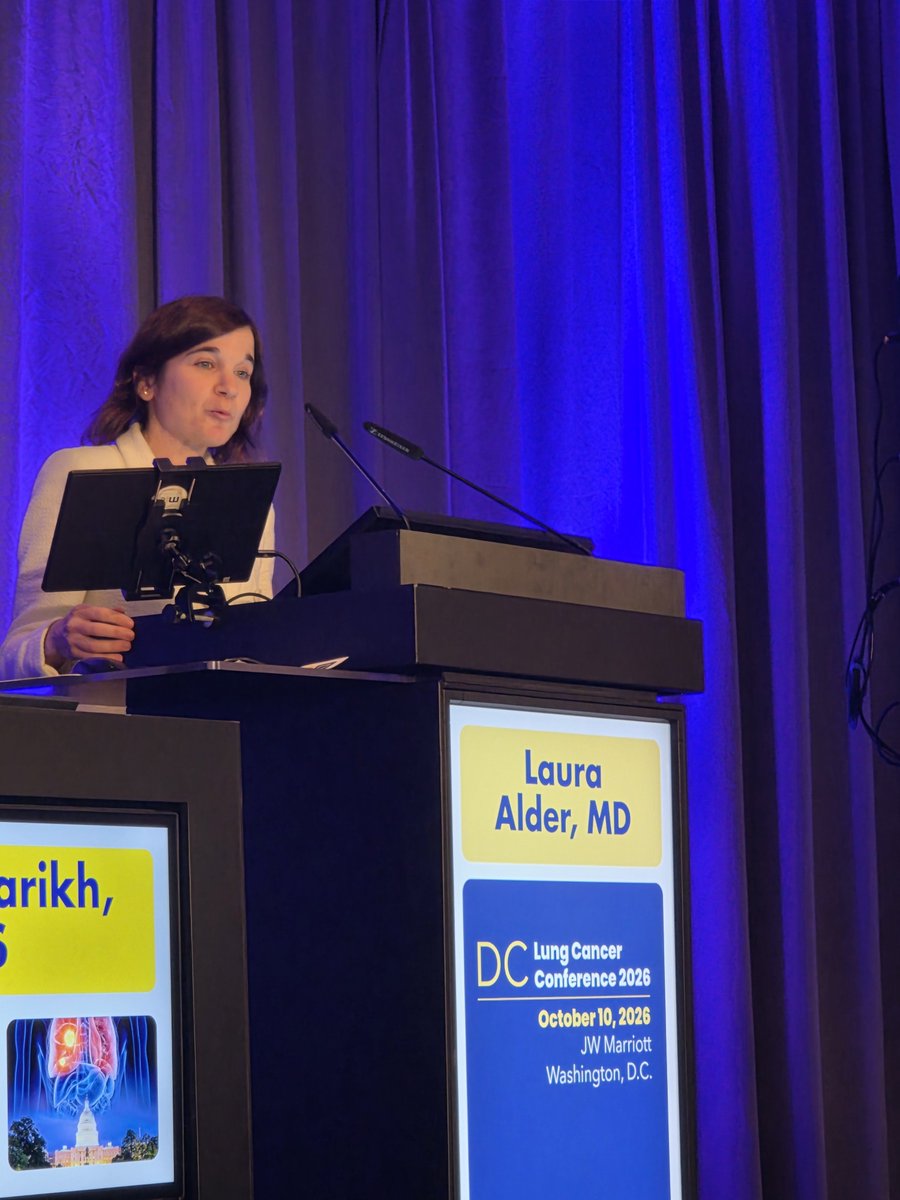
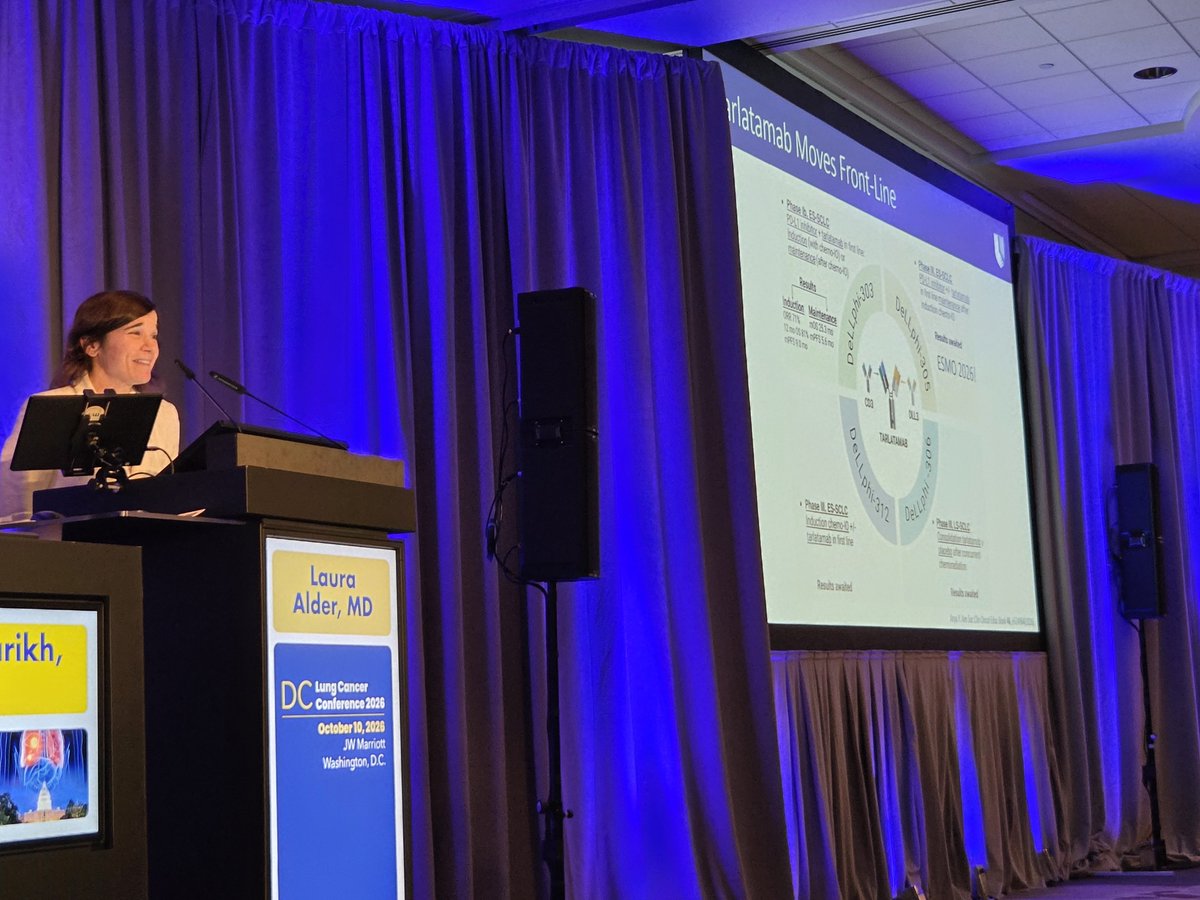
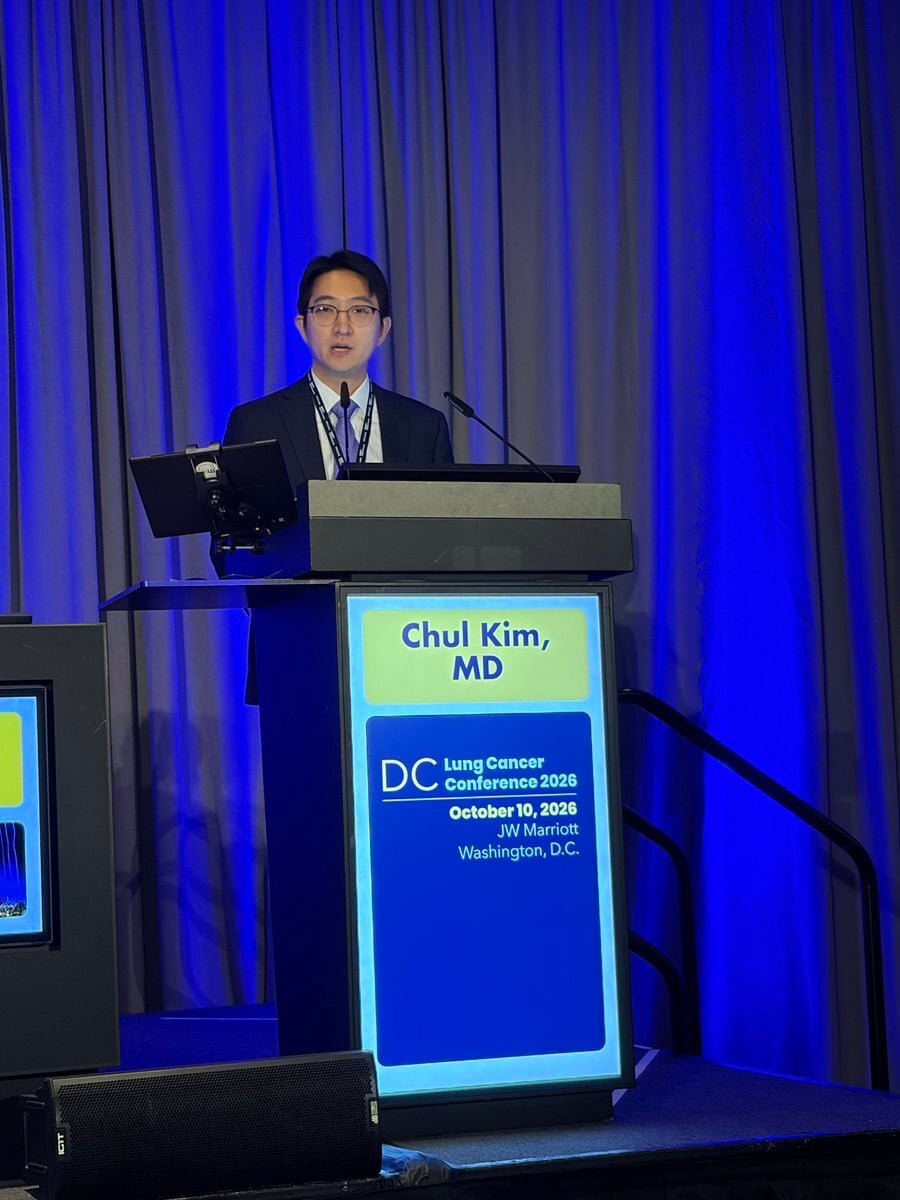
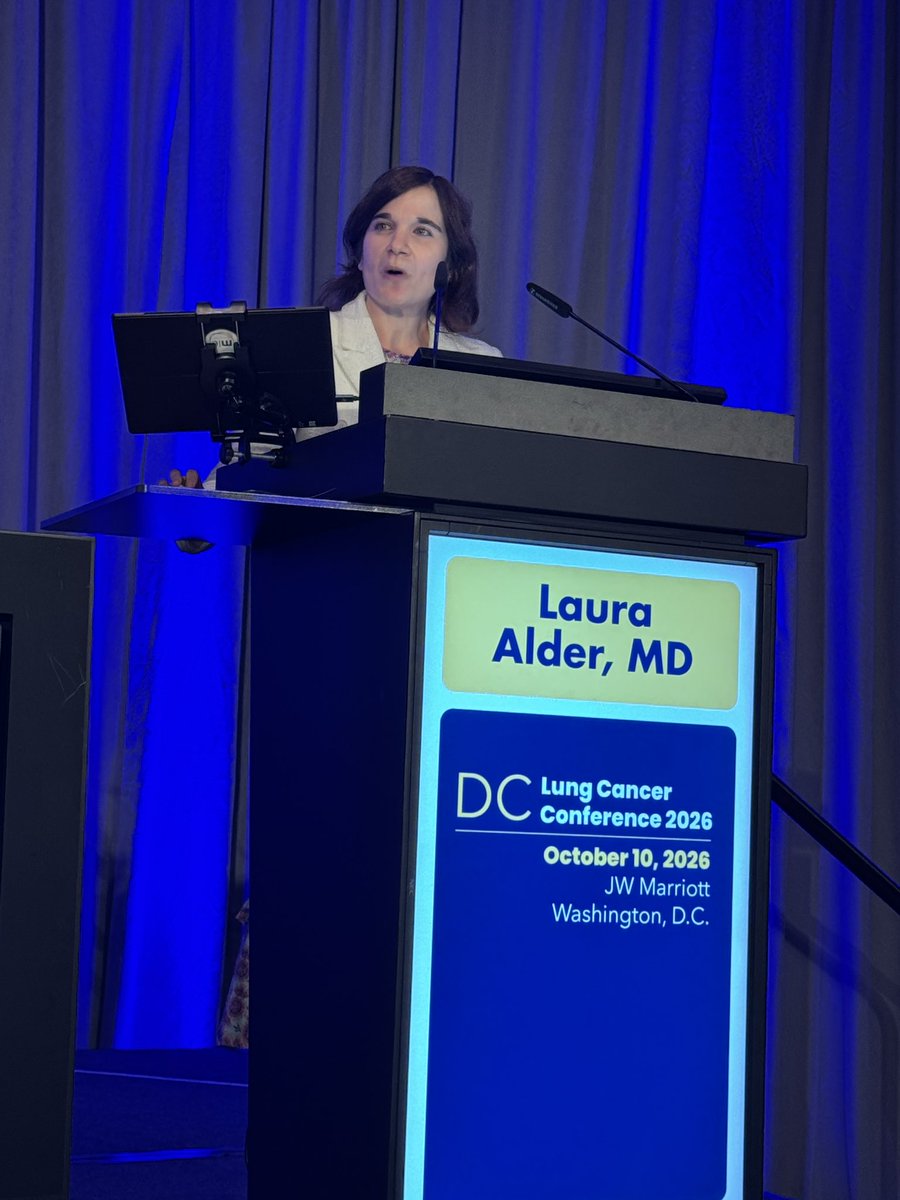
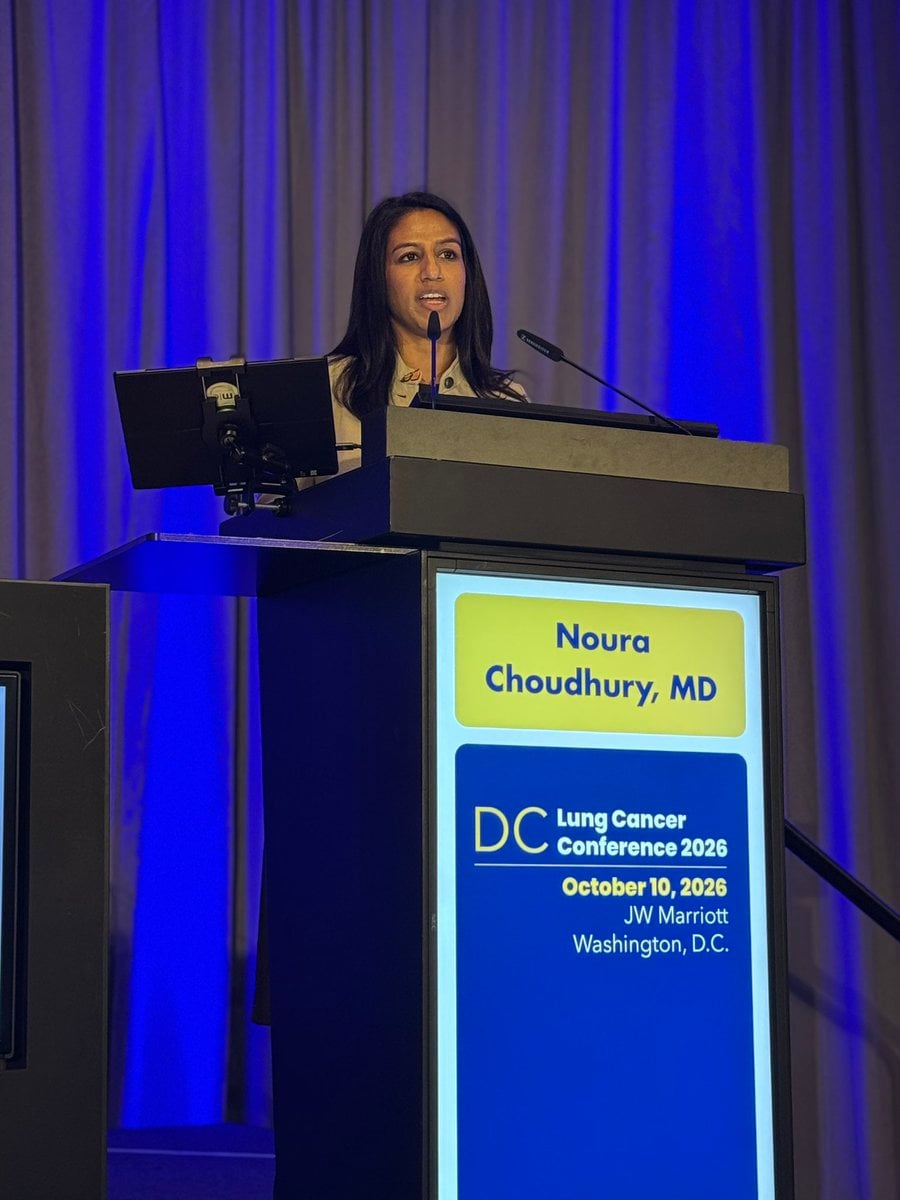
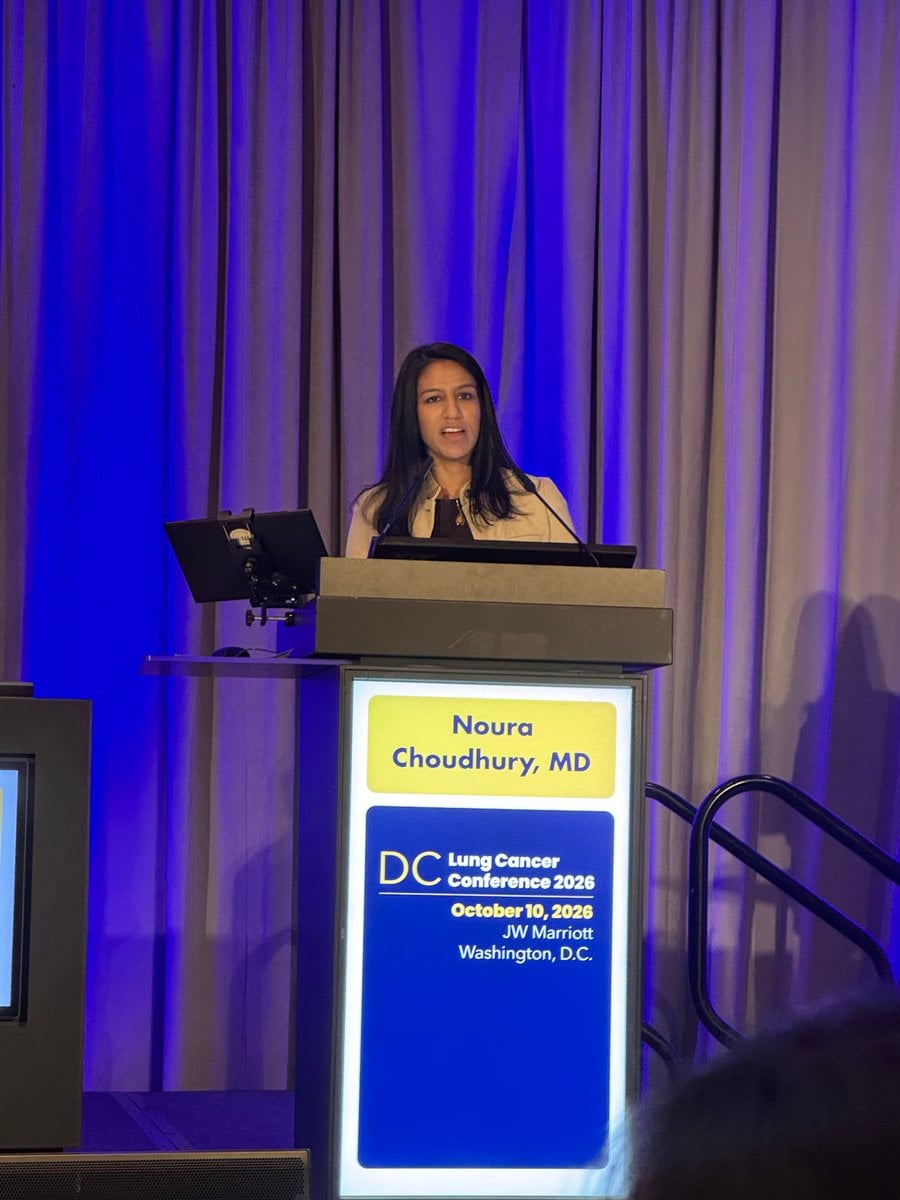
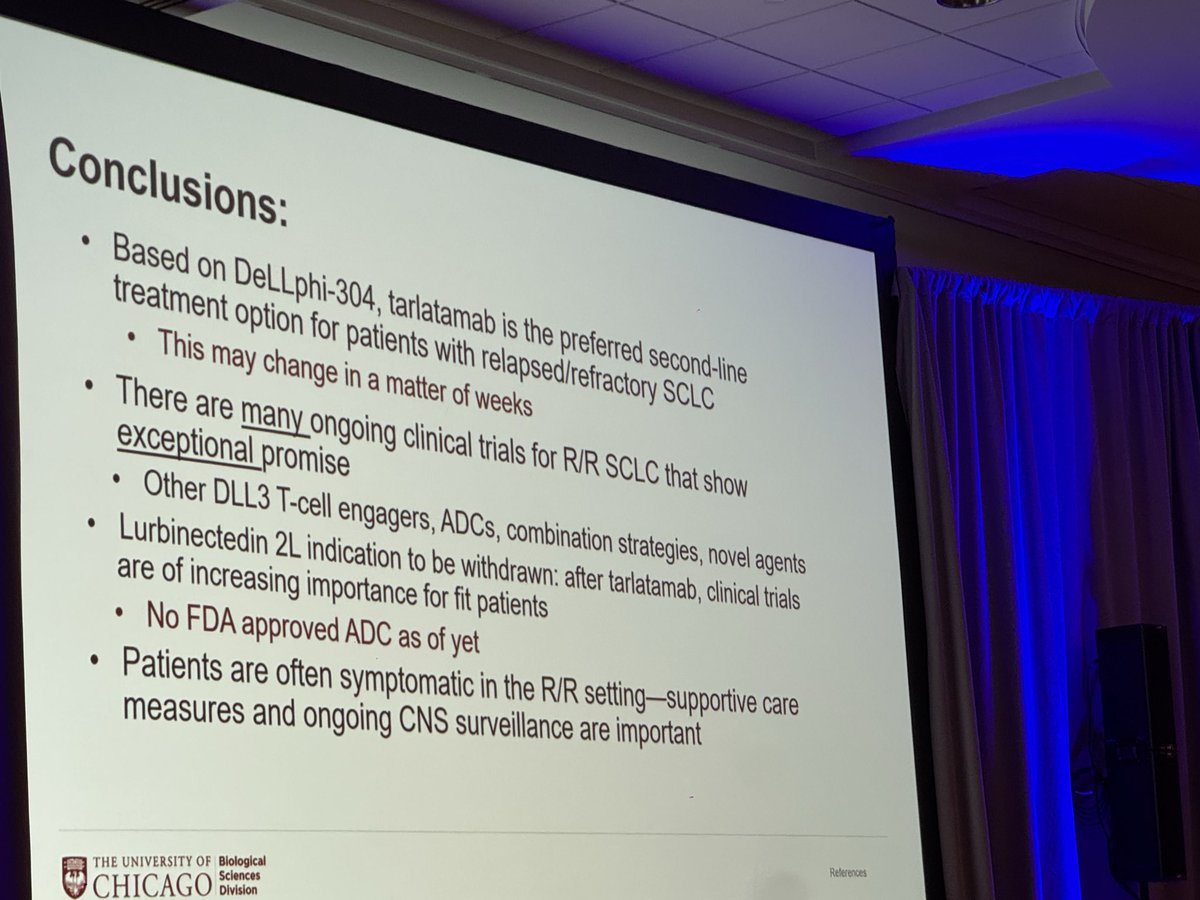
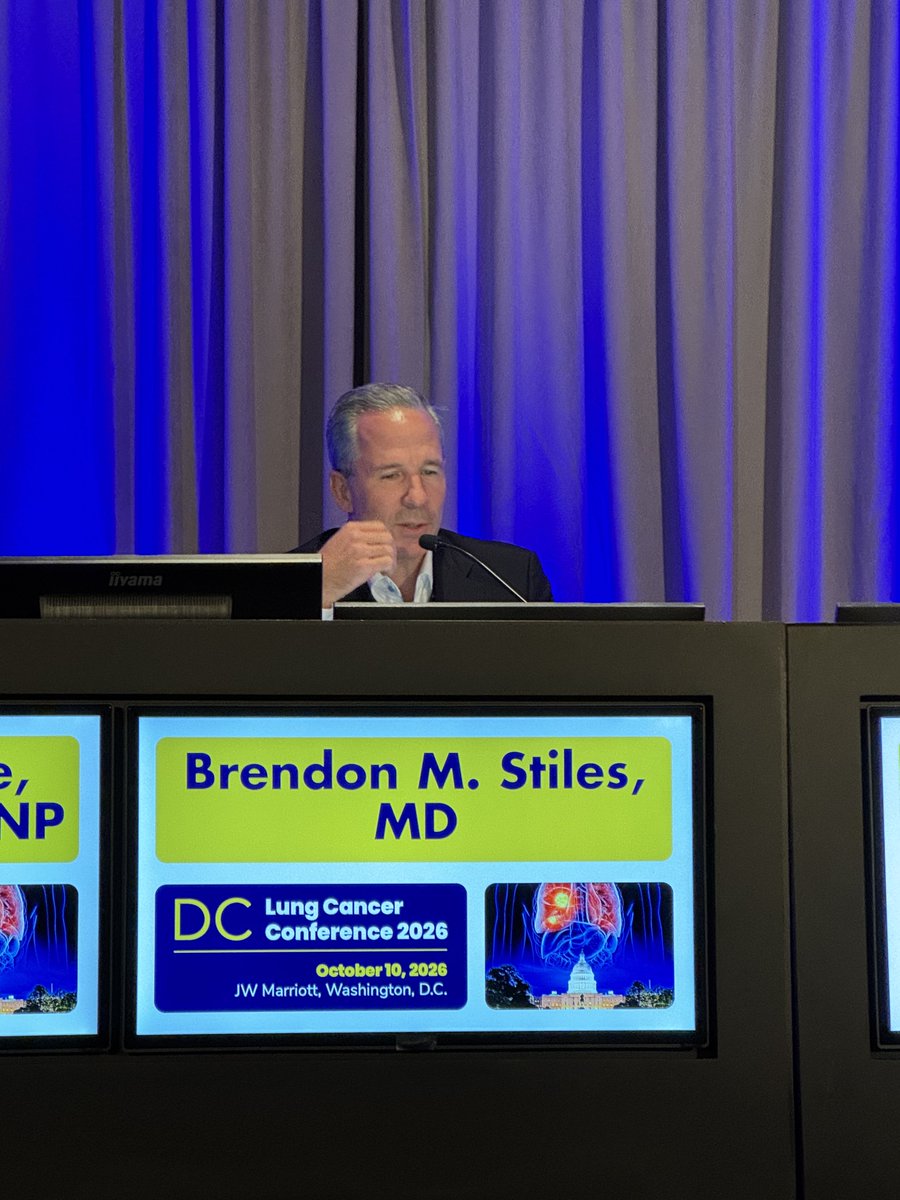
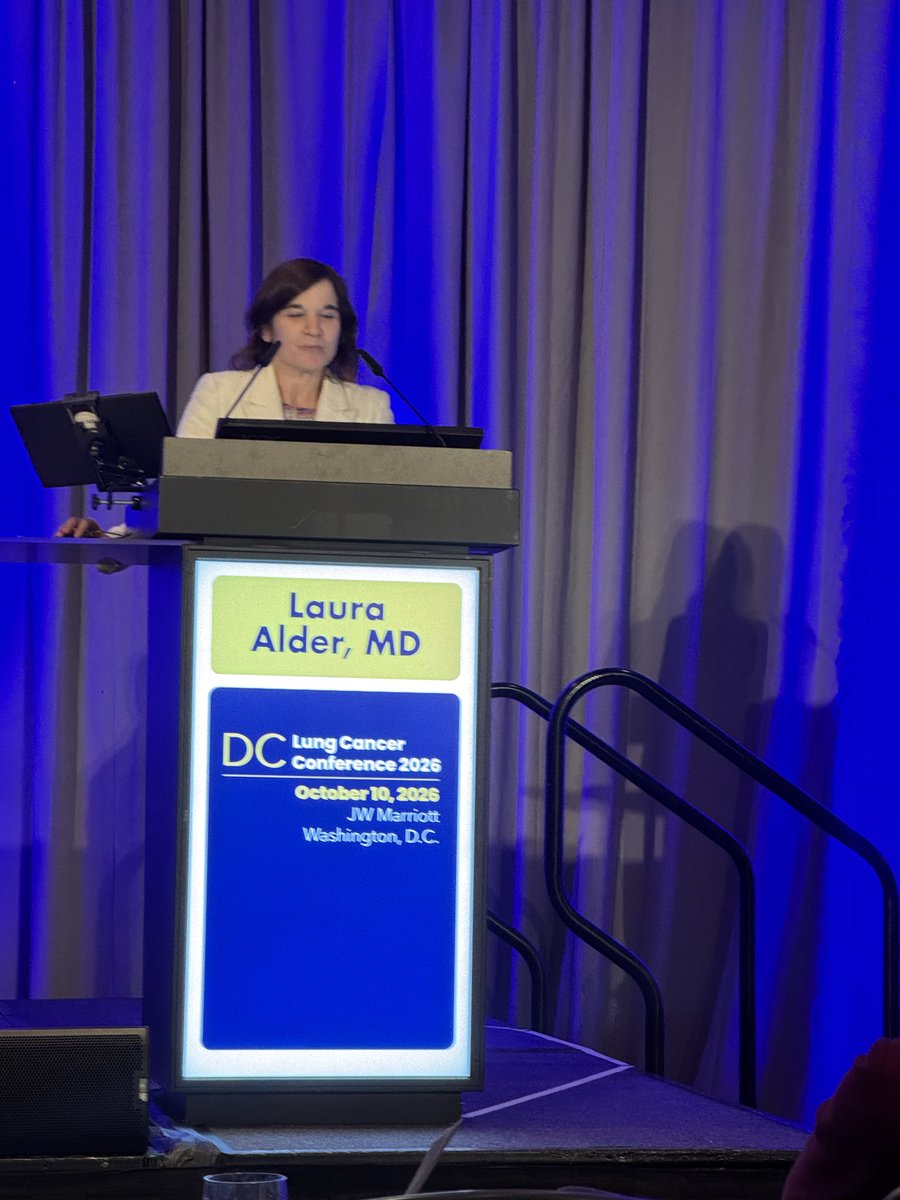
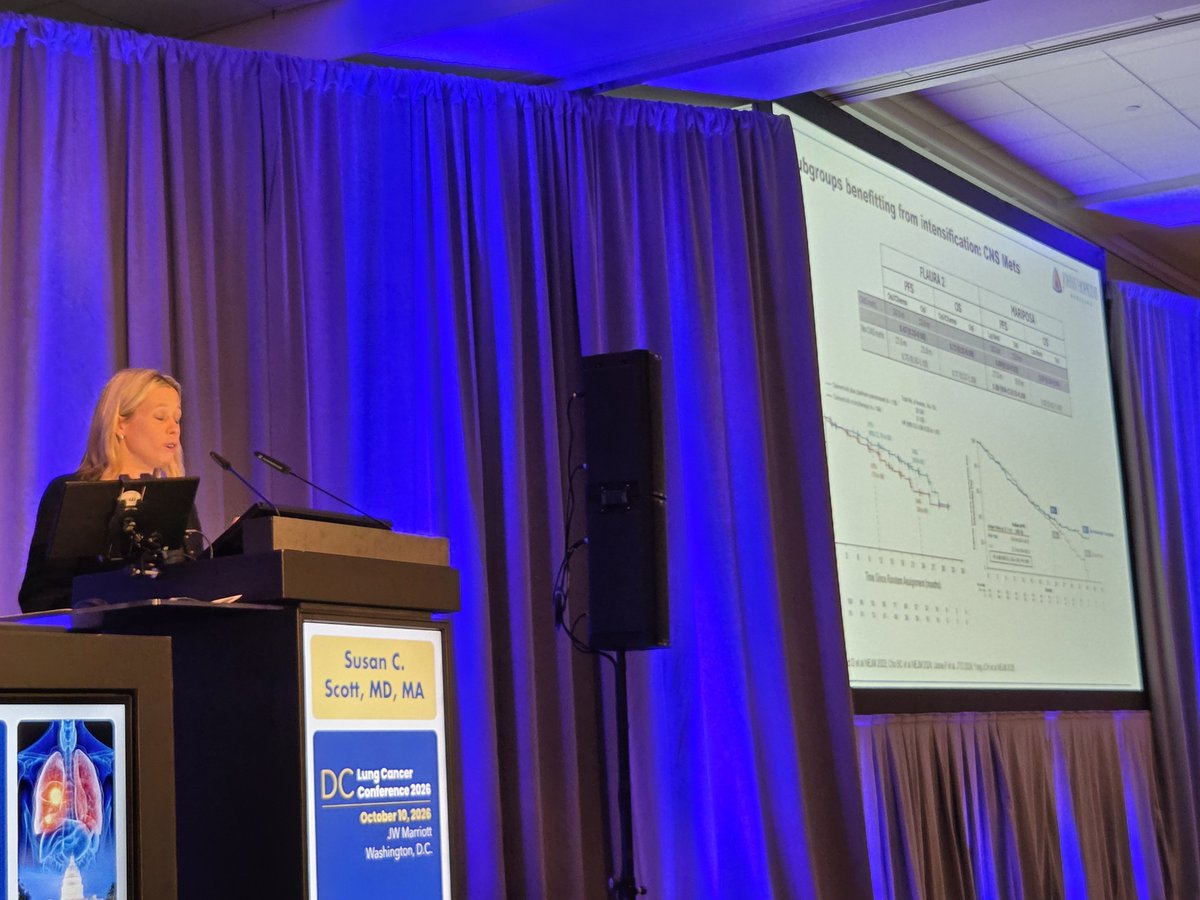
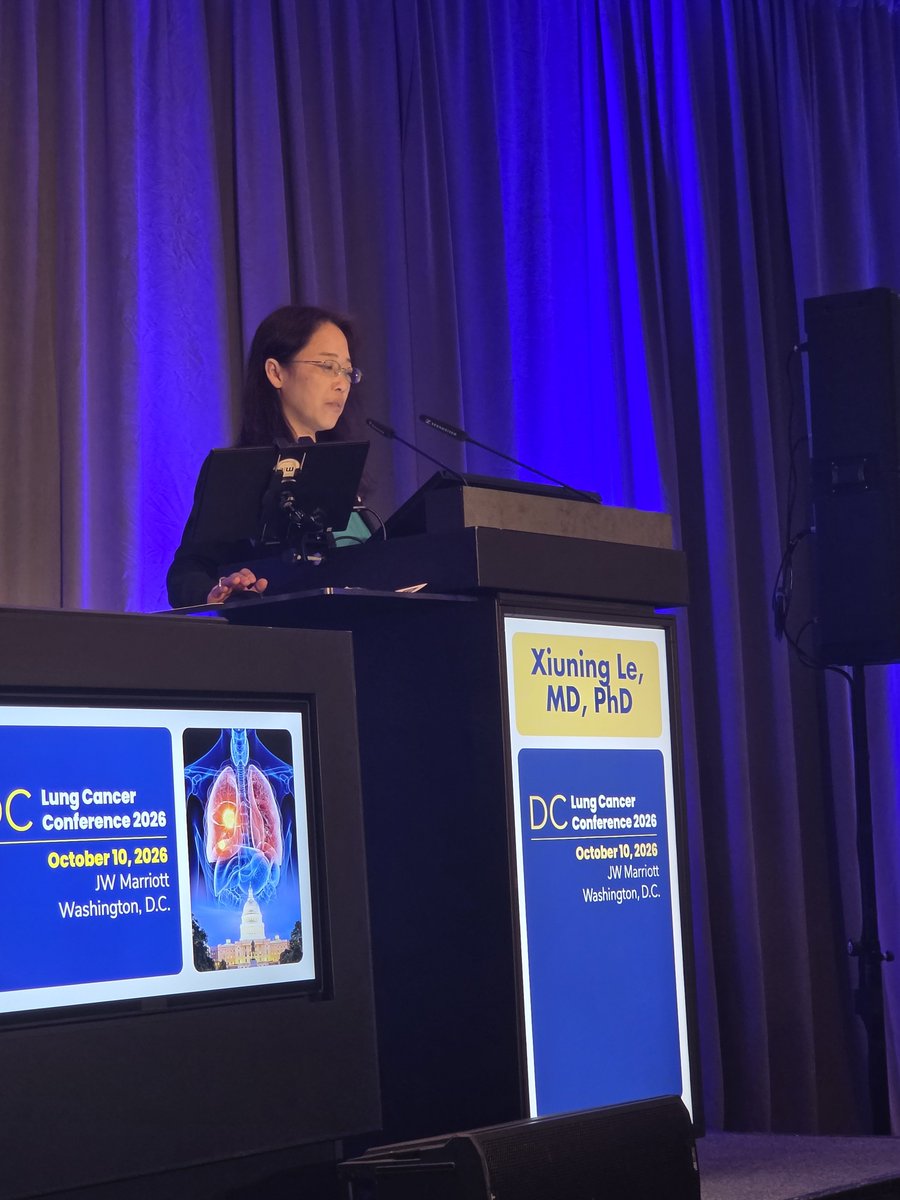
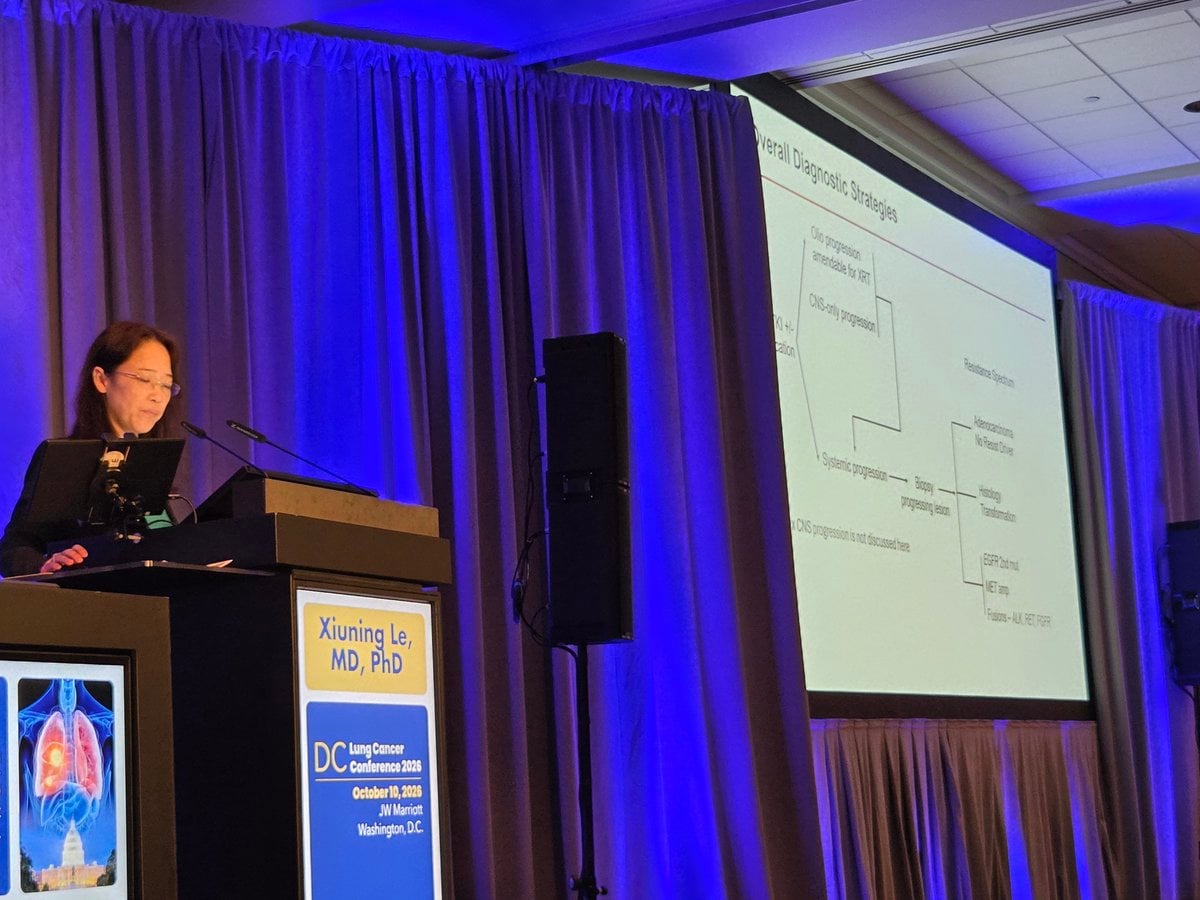
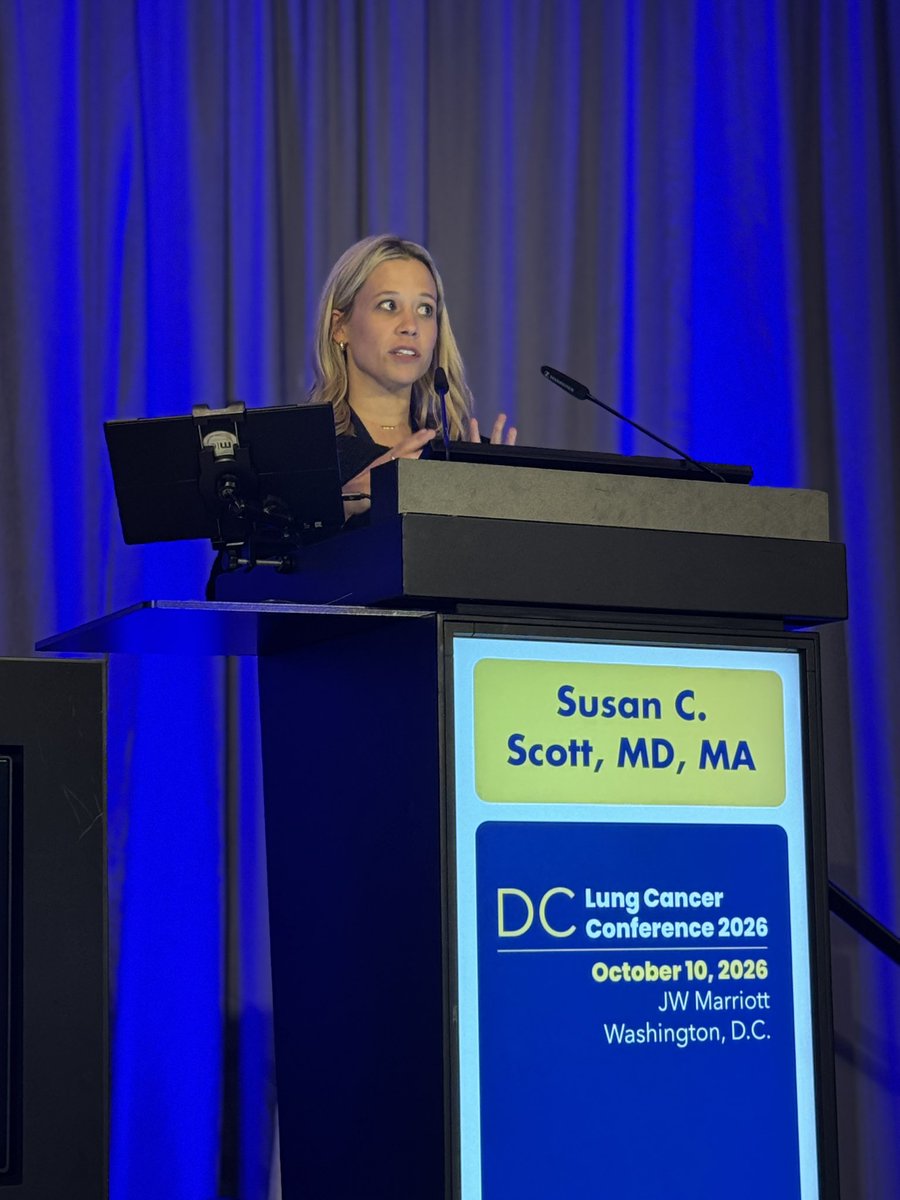
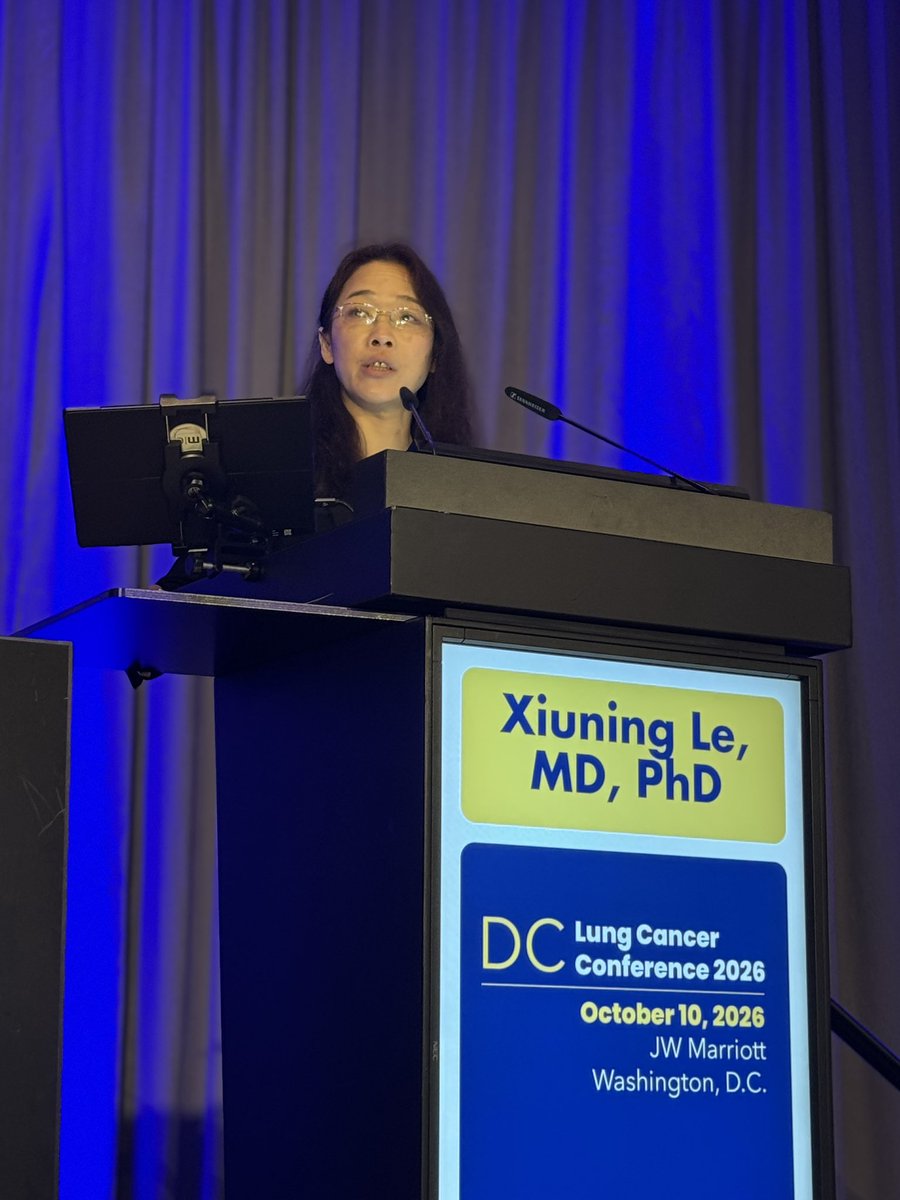
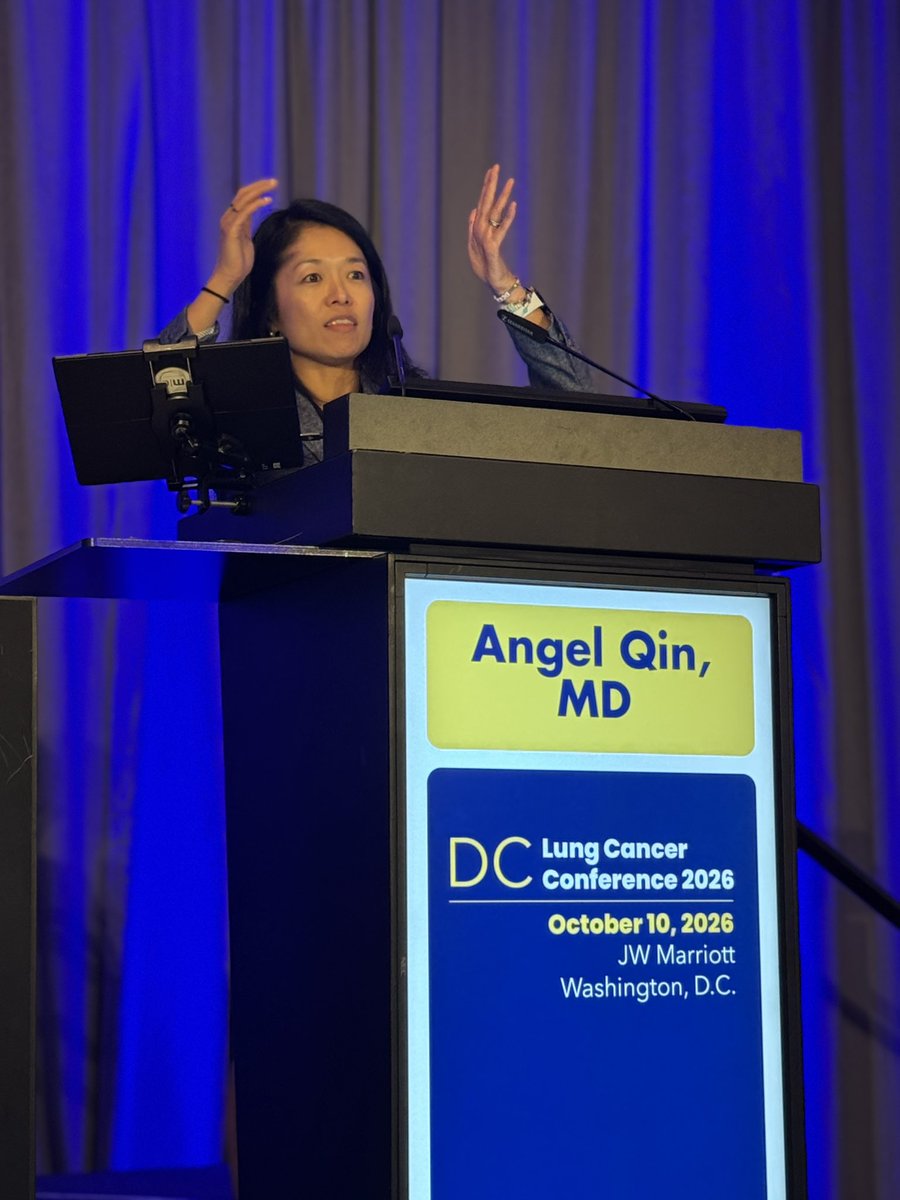
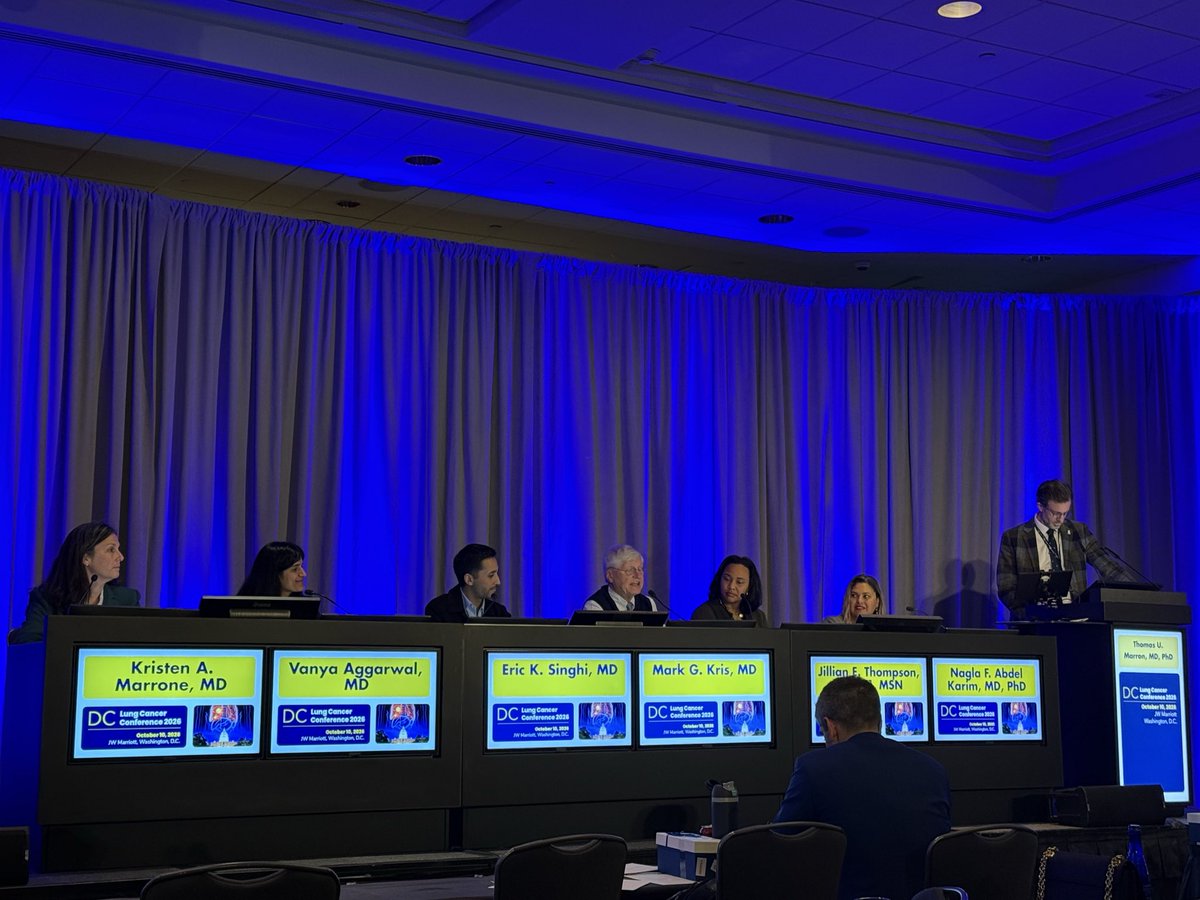
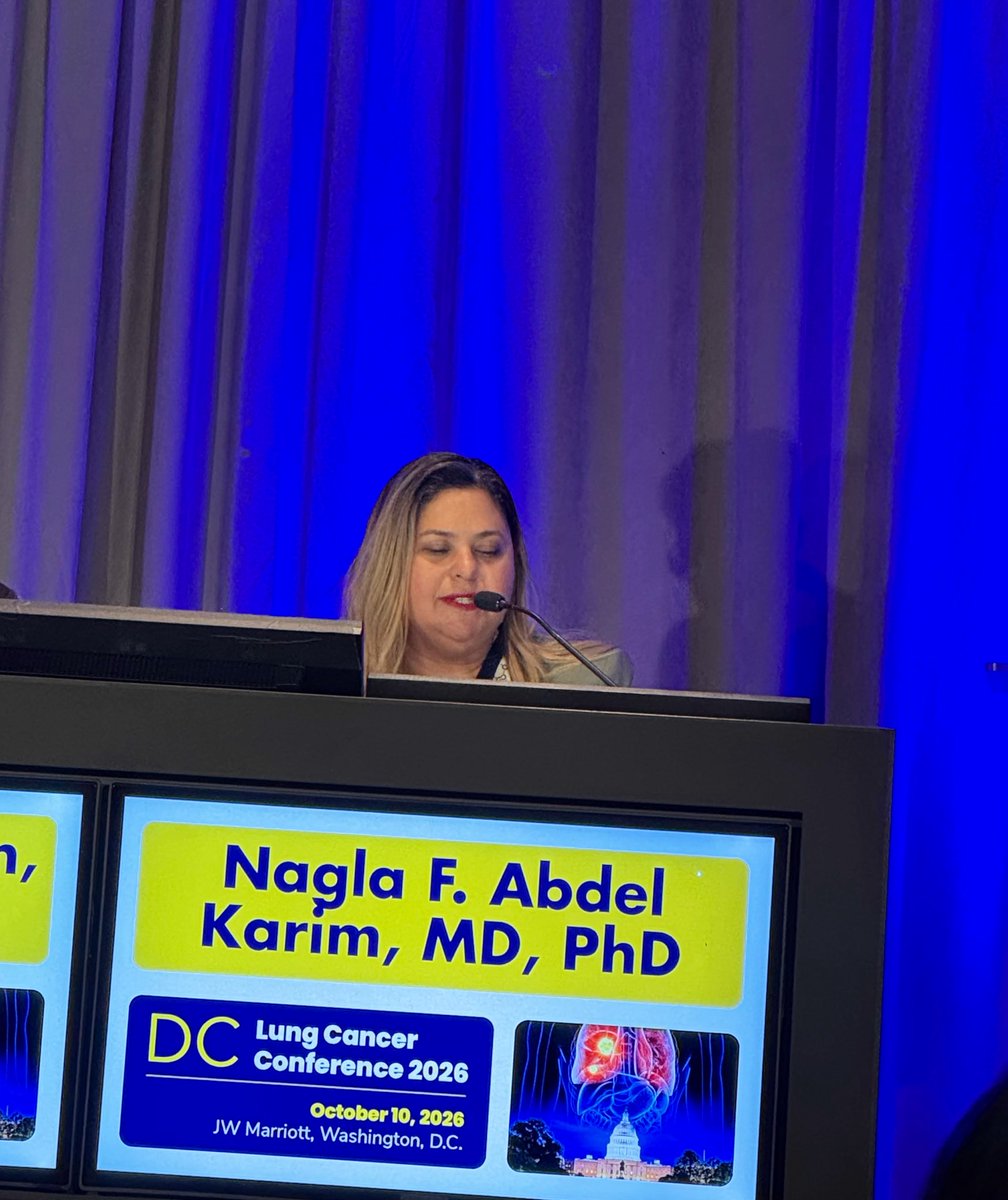
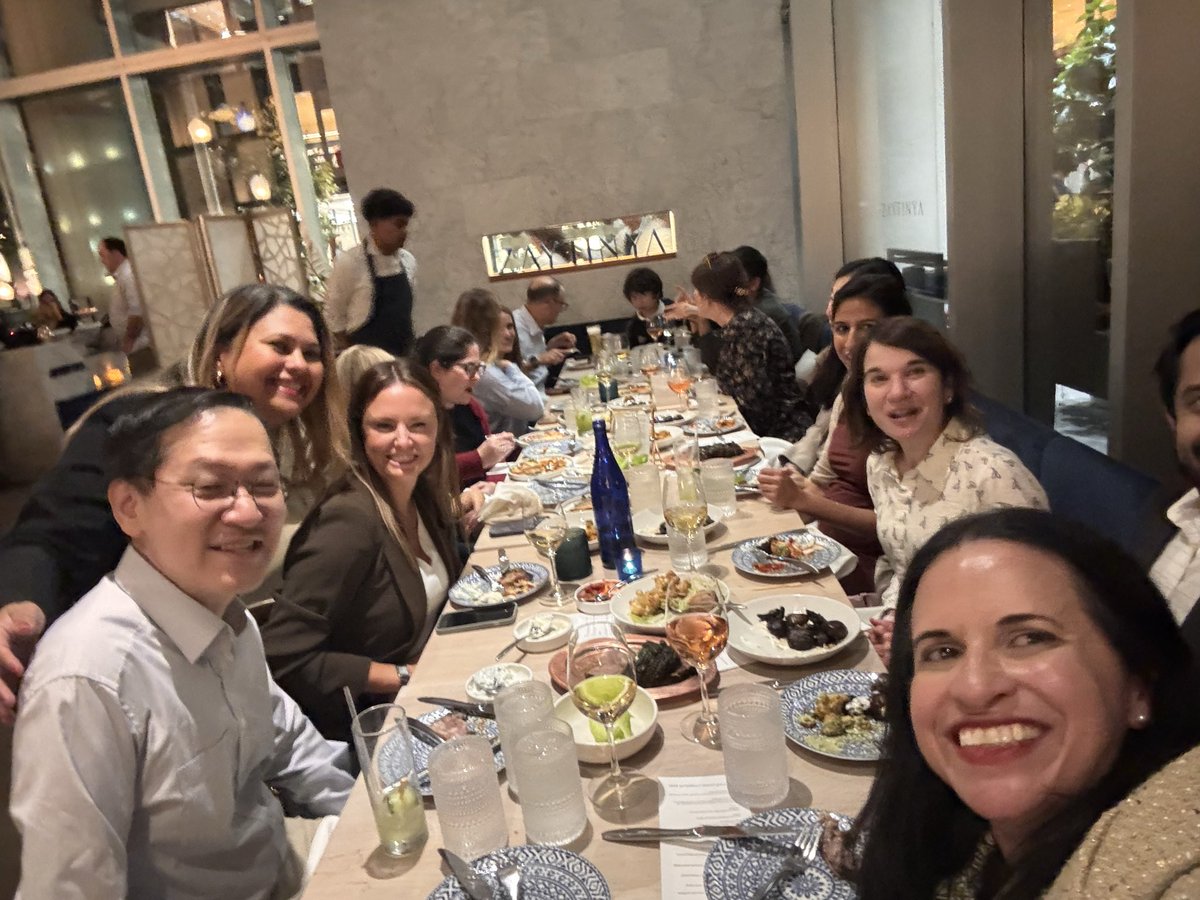
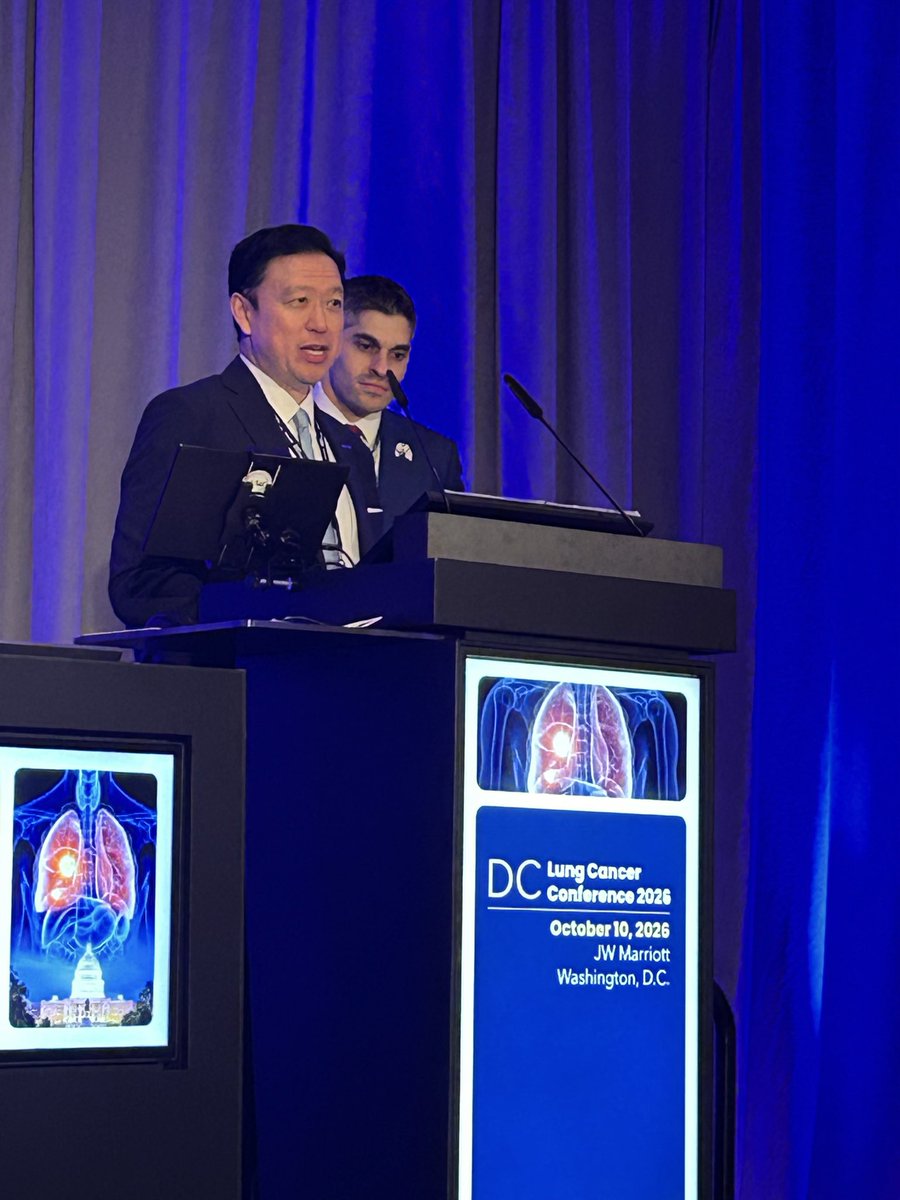
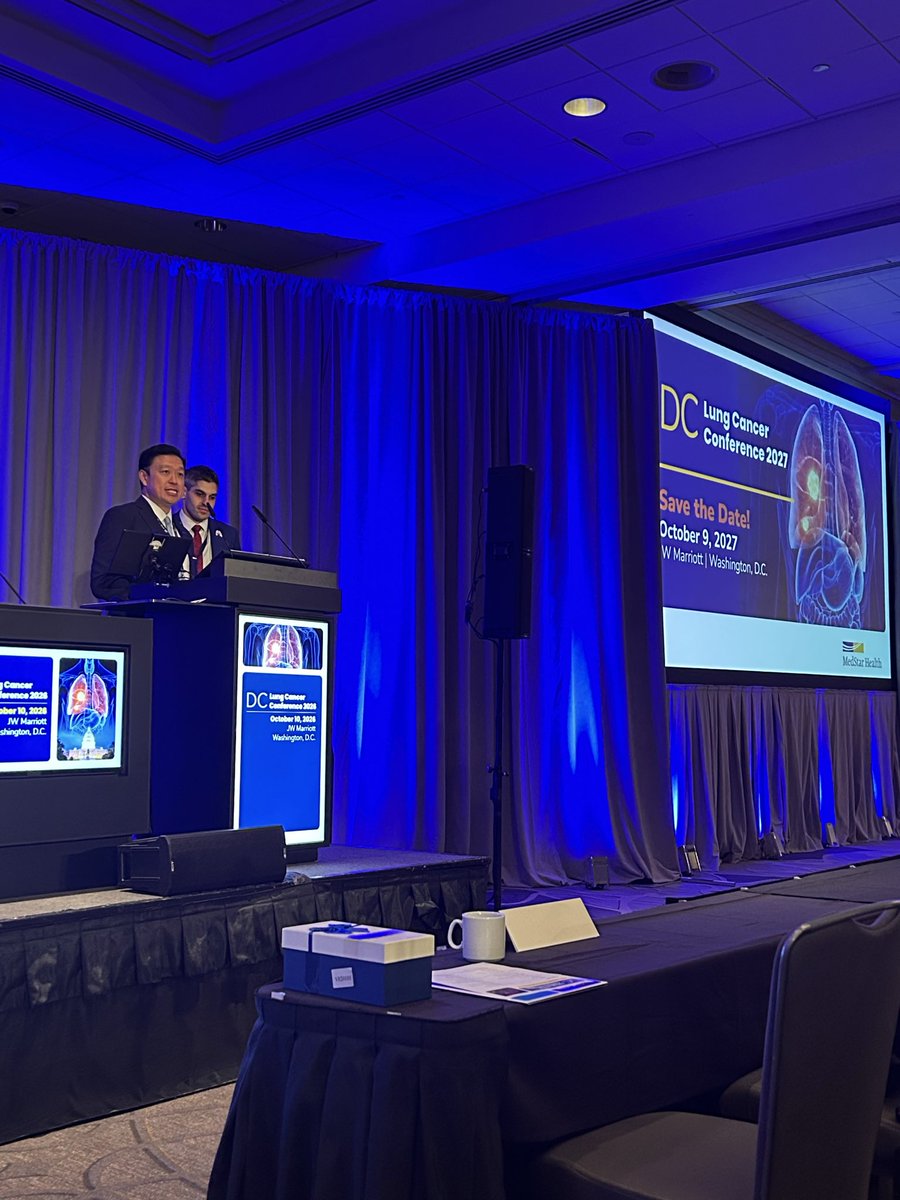
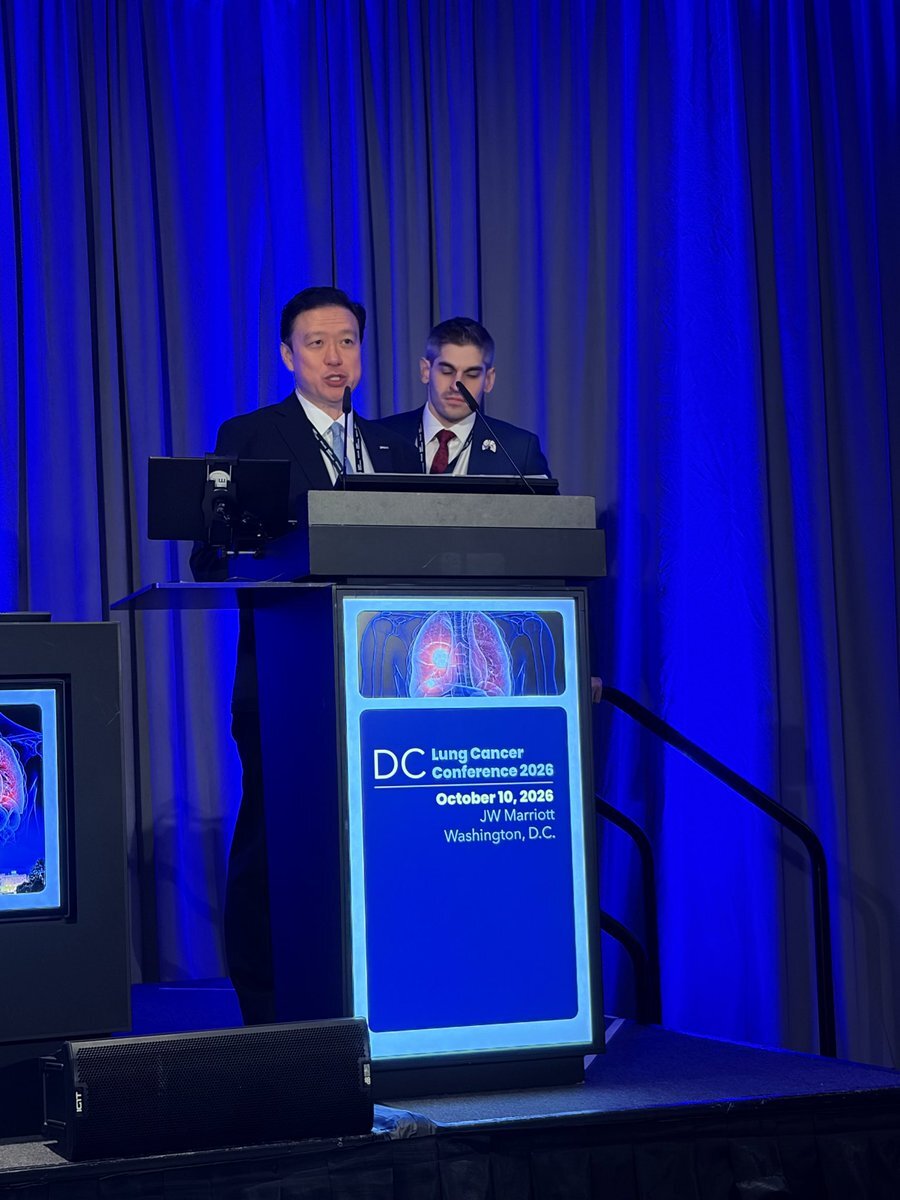
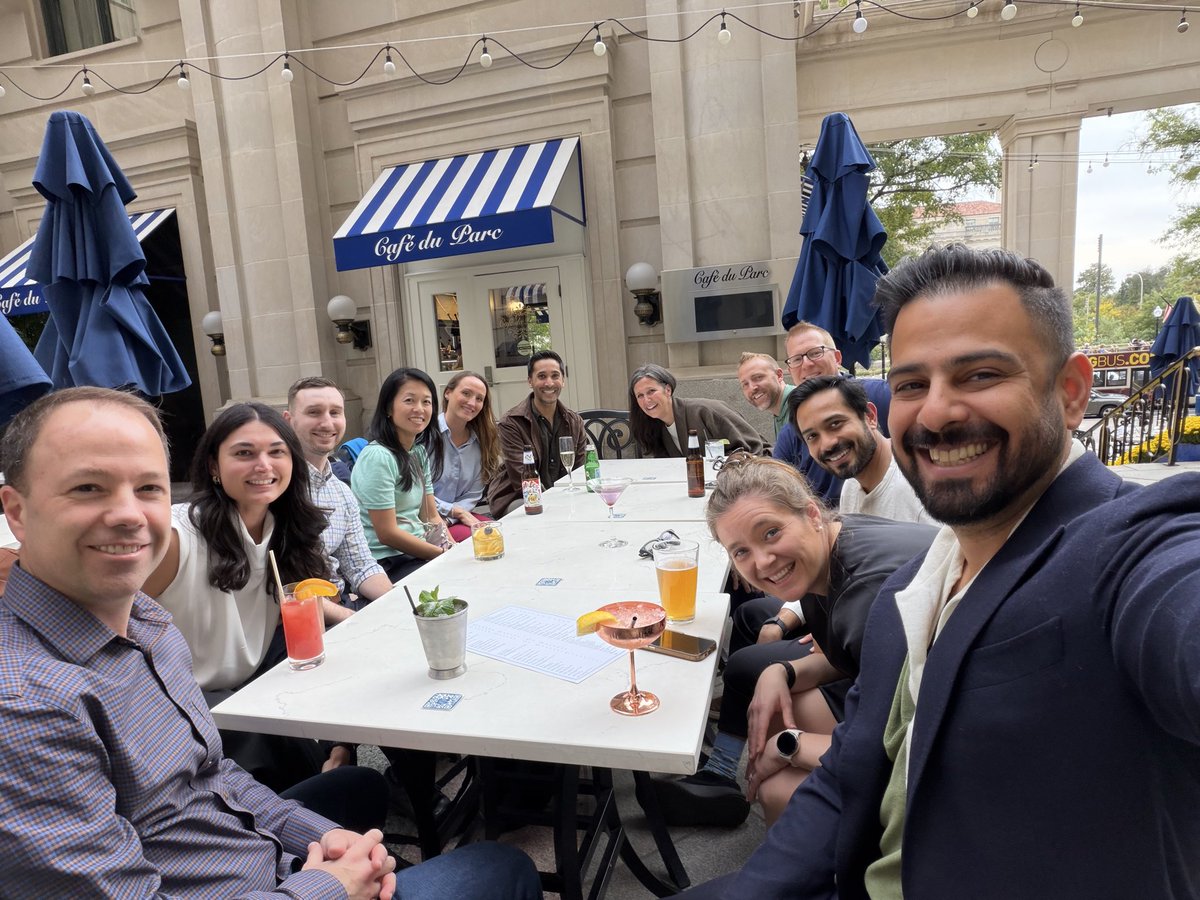
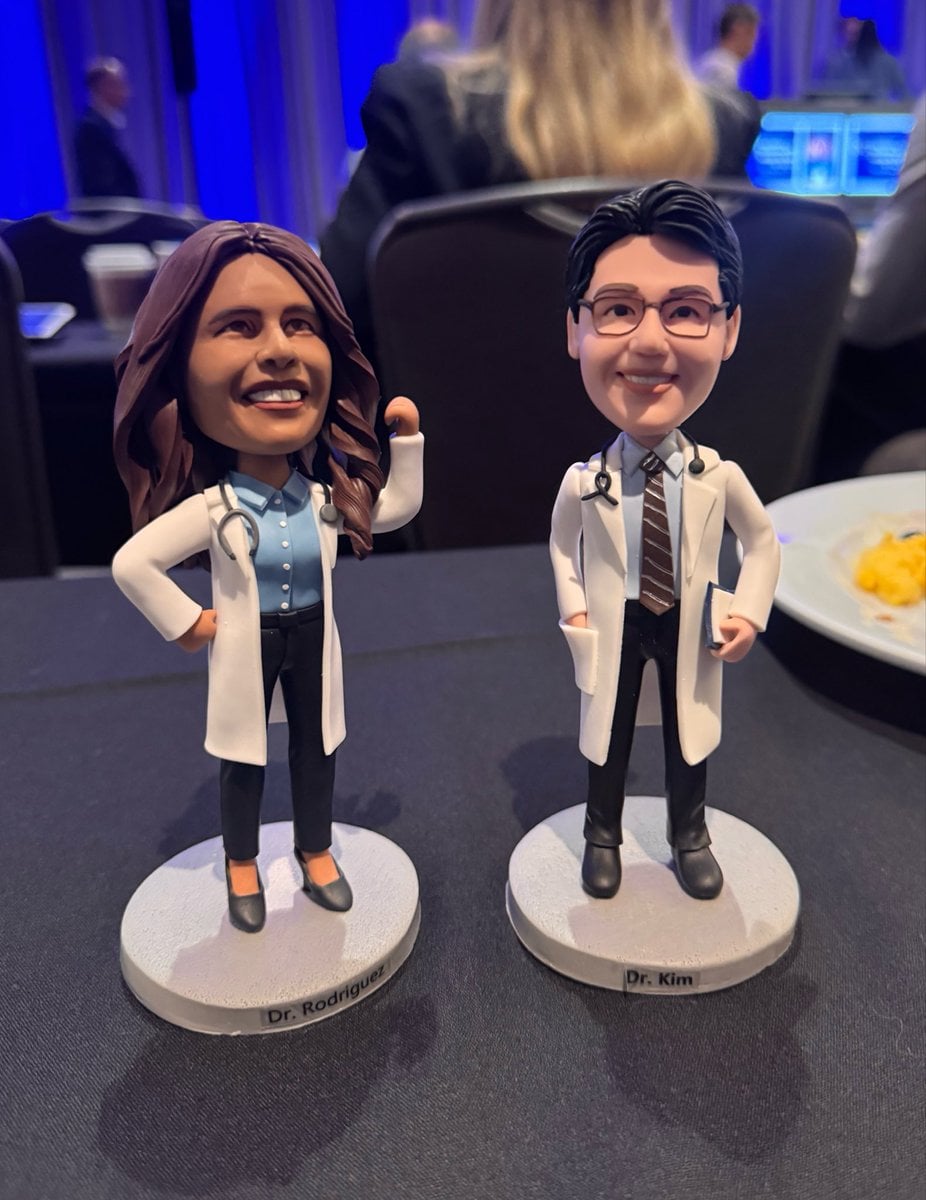
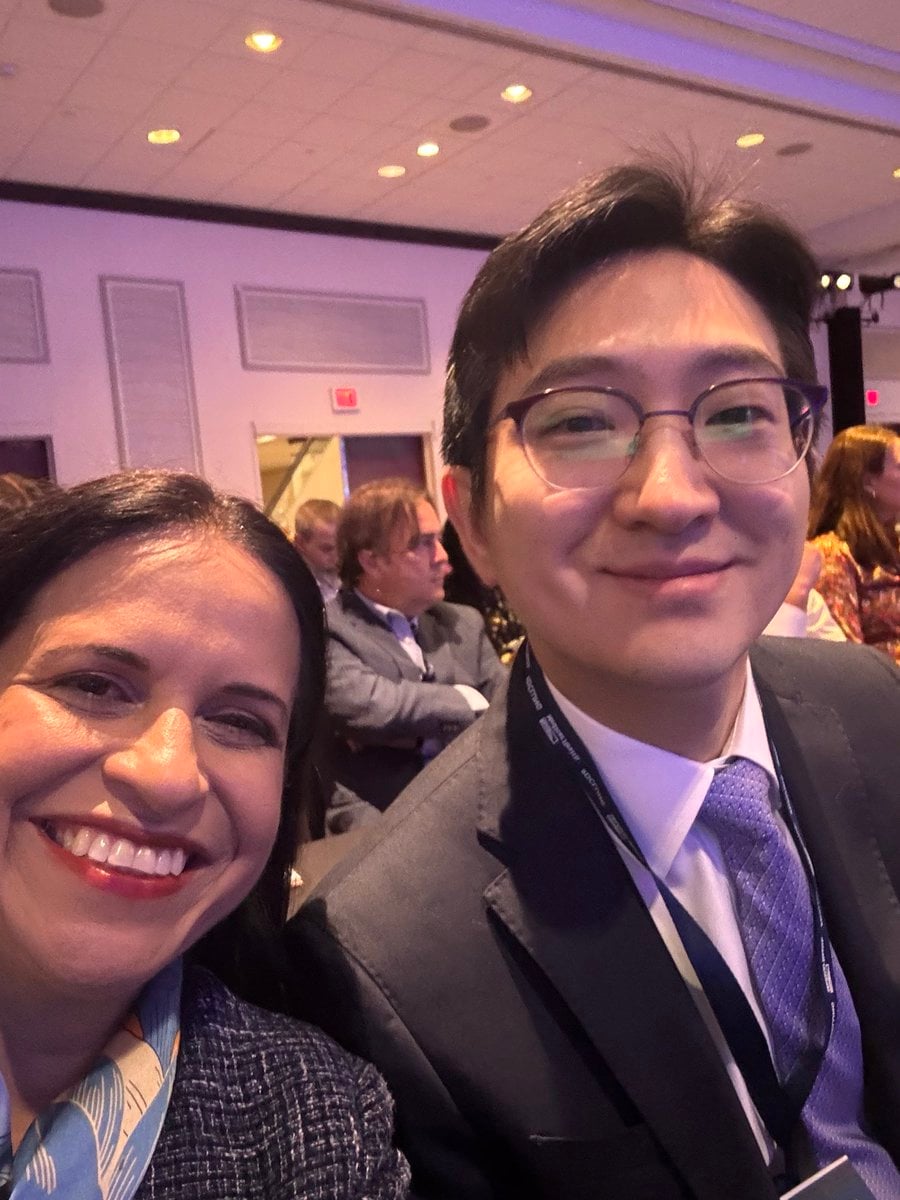
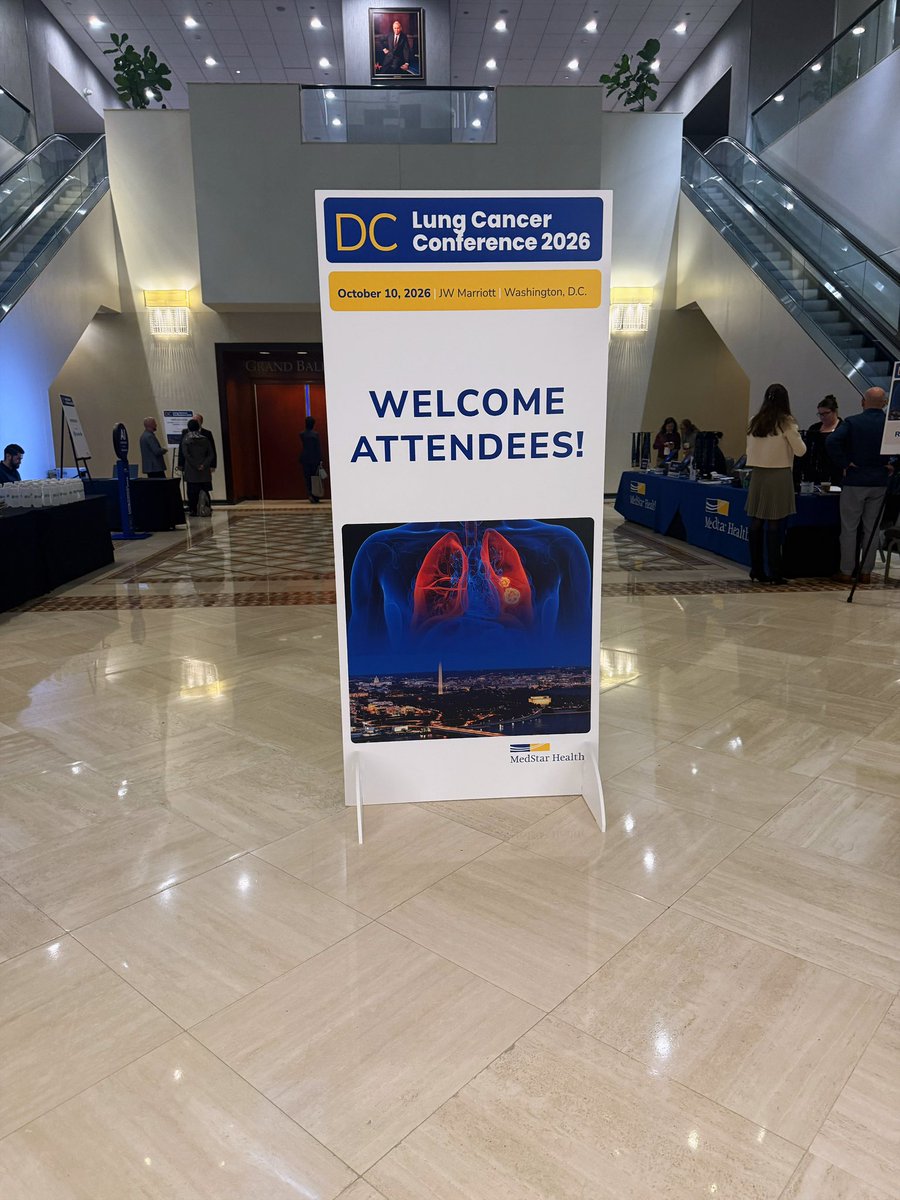
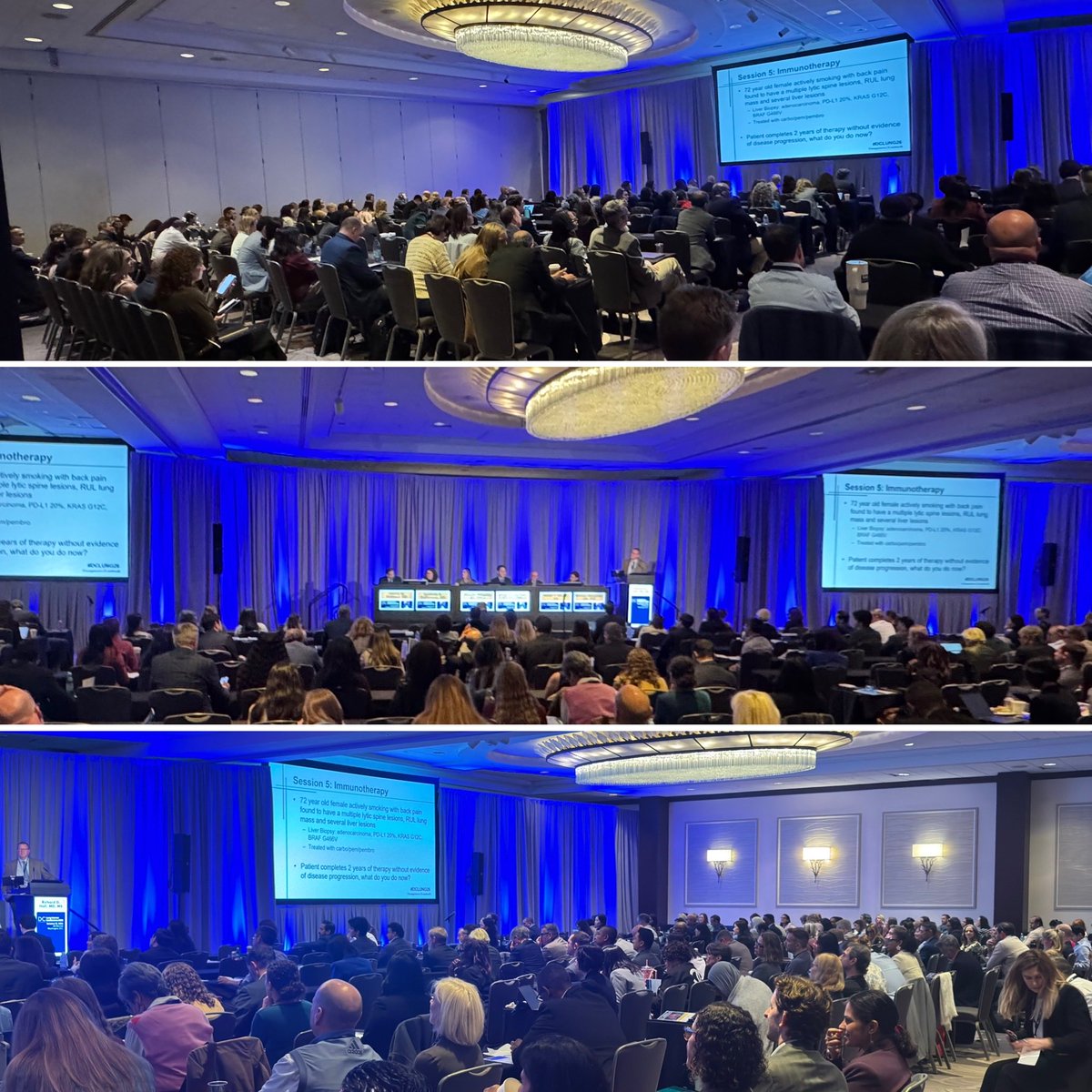
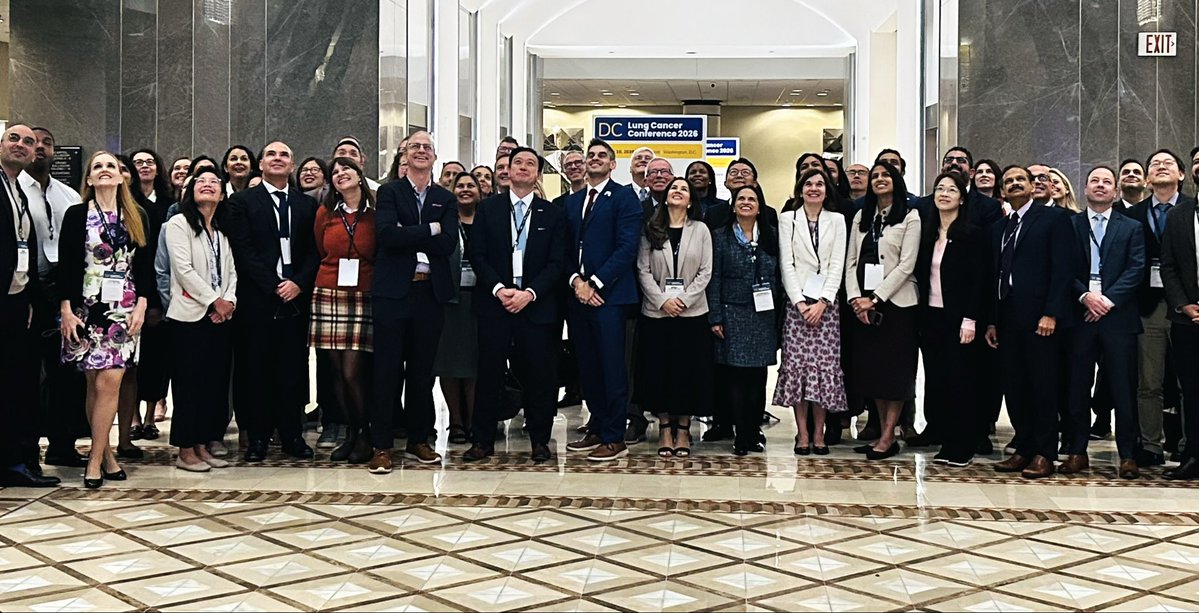
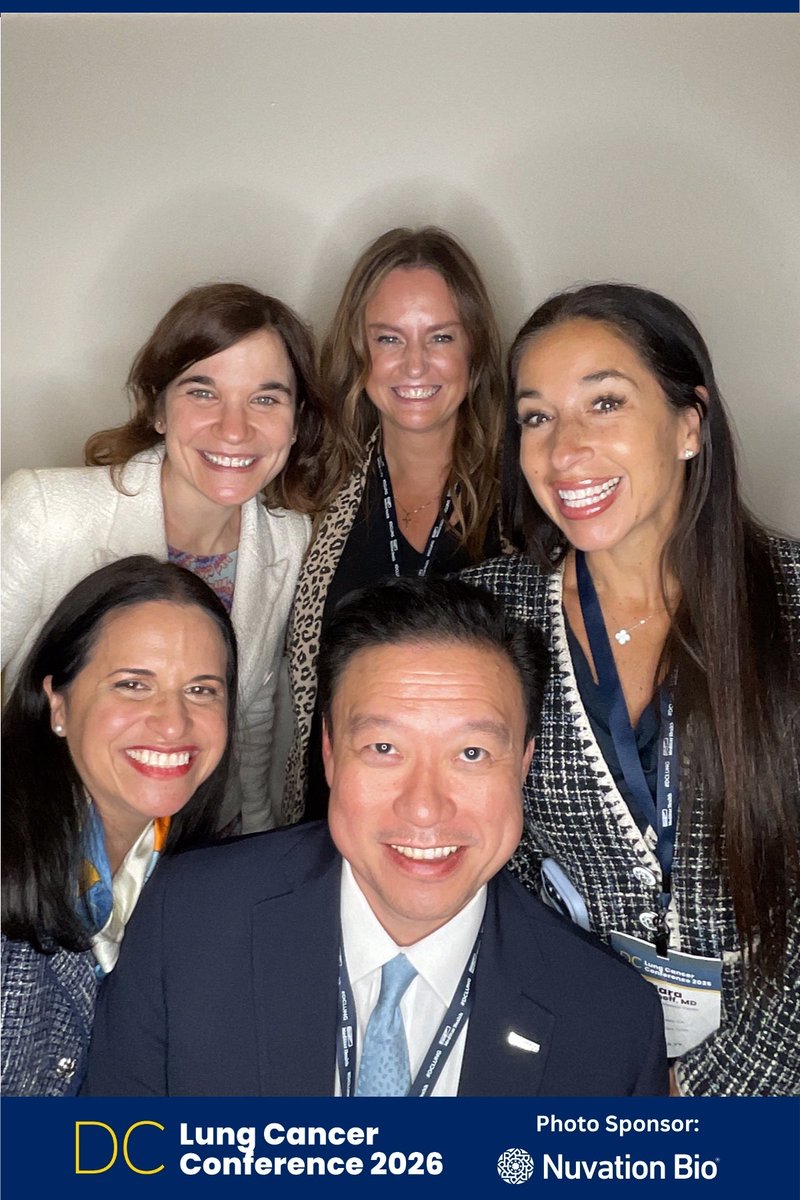
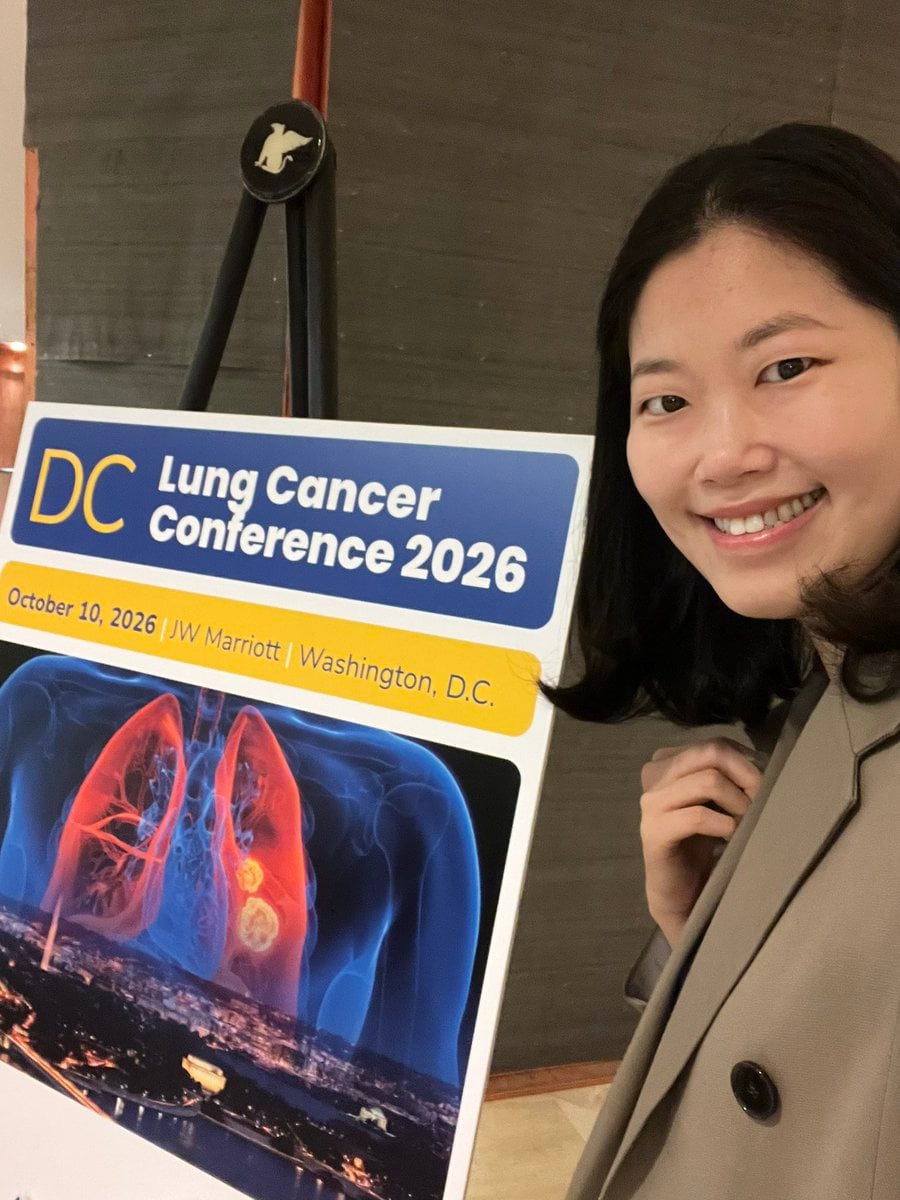
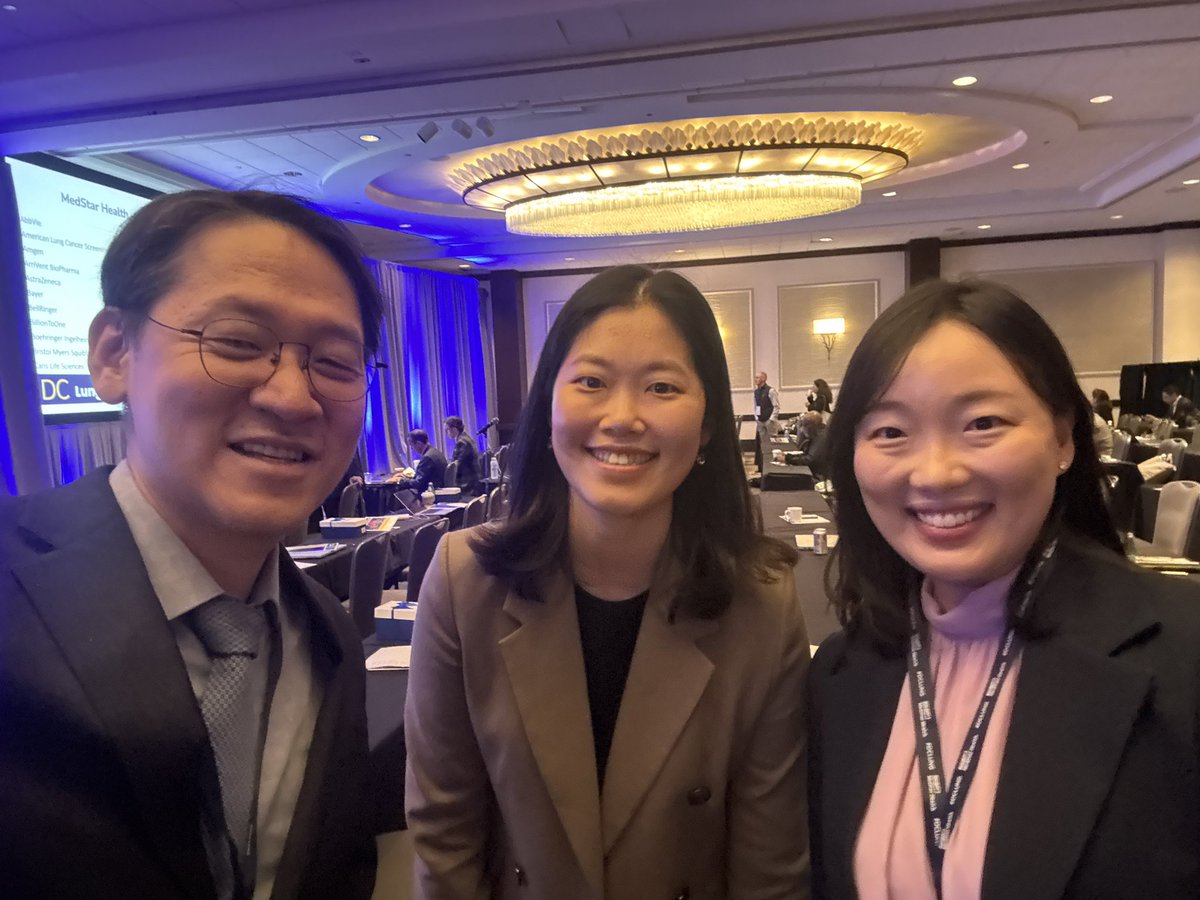
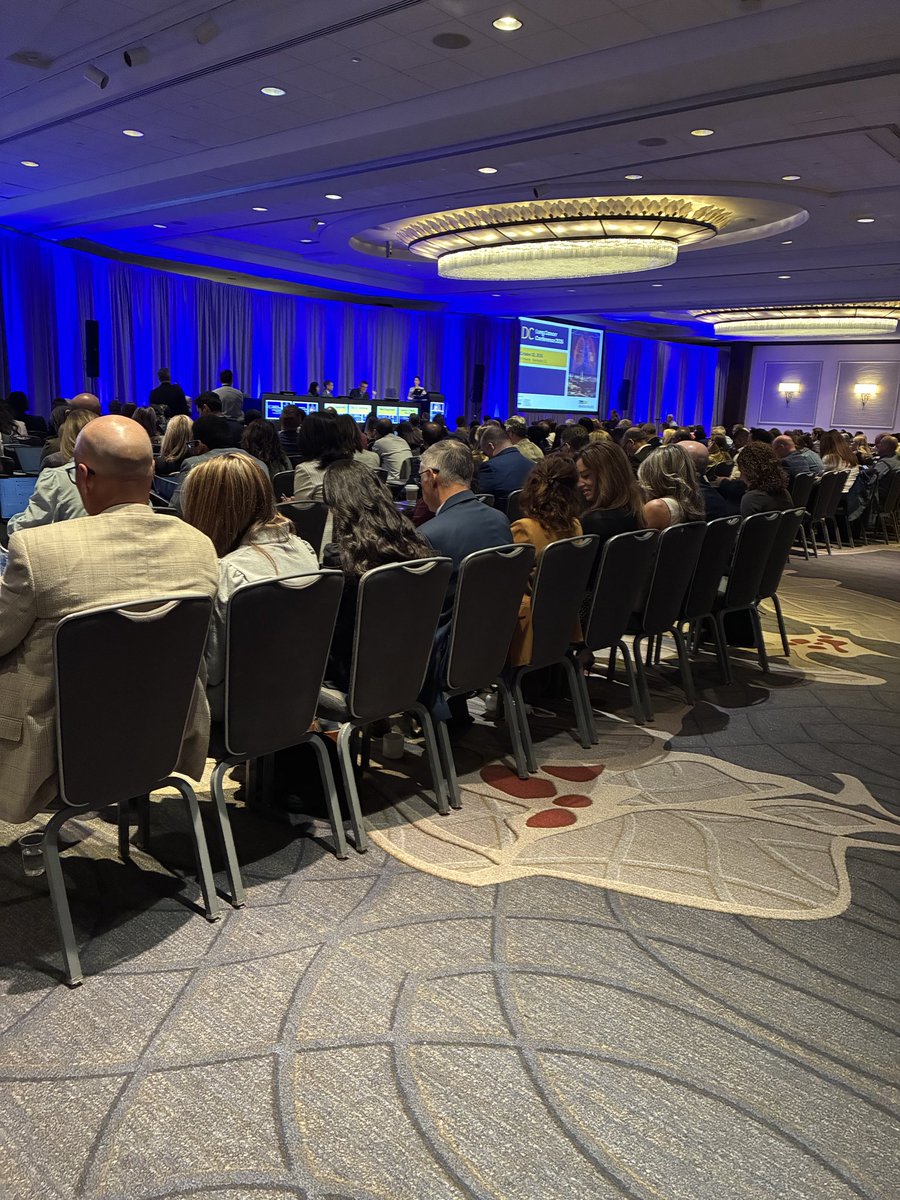
JW Marriott, Washington, D.C. · October 10, 2026 · #DCLung26
DC Lung Cancer Conference 2026 ran October 10 at the JW Marriott in Washington, D.C., chaired by Stephen V. Liu and Joshua E. Reuss of Georgetown Lombardi. This page archives what the room posted — 144 posts from 21 attendees, 116 session slides captured across the eight sessions, the NeoADAURA-vs-LAURA debate, and the full 79-person faculty — with verbatim captions, slide text, and links to KOL Pulse trial profiles.
144
Posts Captured
116
Session Slides
70
Trials Named
79
Faculty
79 on the program · 57 on X
Faculty
The full DC Lung 2026 faculty from the official program, grouped by the session they presented, moderated or paneled (August 2026 program; three names carried only in the June program are included with that note). Titles and affiliations are as printed in the program; the specialty line is the discipline those titles name. Blue chips are the talk, debate, moderator or panel slot; green chips are the topics and the trials named on that speaker’s captured slides or in posts about their talk. Portraits come from each speaker’s X profile where one was verified.
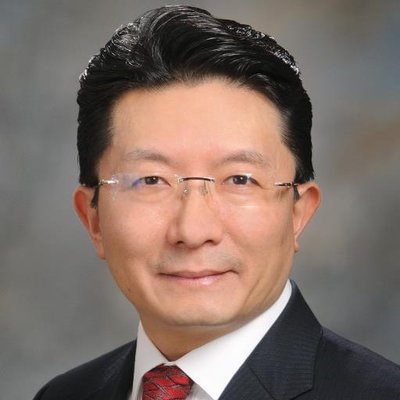
Division Chief, Medical Oncology · Head, Developmental Therapeutics · MedStar Georgetown University Hospital · Georgetown Lombardi Comprehensive Cancer Center · Associate Professor, Medicine · Georgetown University Medical Center · Washington, D.C.
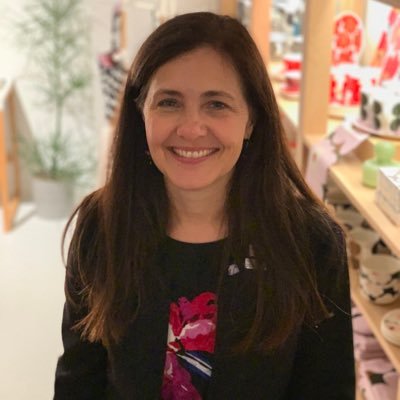
Thoracic Medical Oncologist · MedStar Georgetown University Hospital · Georgetown Lombardi Comprehensive Cancer Center · Assistant Professor, Medicine · Georgetown University Medical Center · Washington, D.C.
Eric D. Anderson, MDInterventional pulmonology3 posts ↓
Director, Interventional Pulmonology · MedStar Georgetown University Hospital · Professor, Clinical Medicine · Division of Pulmonary, Critical Care & Sleep Medicine · Georgetown University Medical Center · Washington, D.C.
Lung Cancer Screening & Smoking Cessation · IPanelist · Session I
Director, Precision Oncology Innovation · Penn Center for Cancer Care Innovation · Leslye Heisler Professor of Lung Cancer Excellence · University of Pennsylvania Perelman School of Medicine · Philadelphia, PA
Biomarker Testing for NSCLC: Best Practice · IPanelist · Session I
Biomarker testingNGS / liquid biopsy
JS
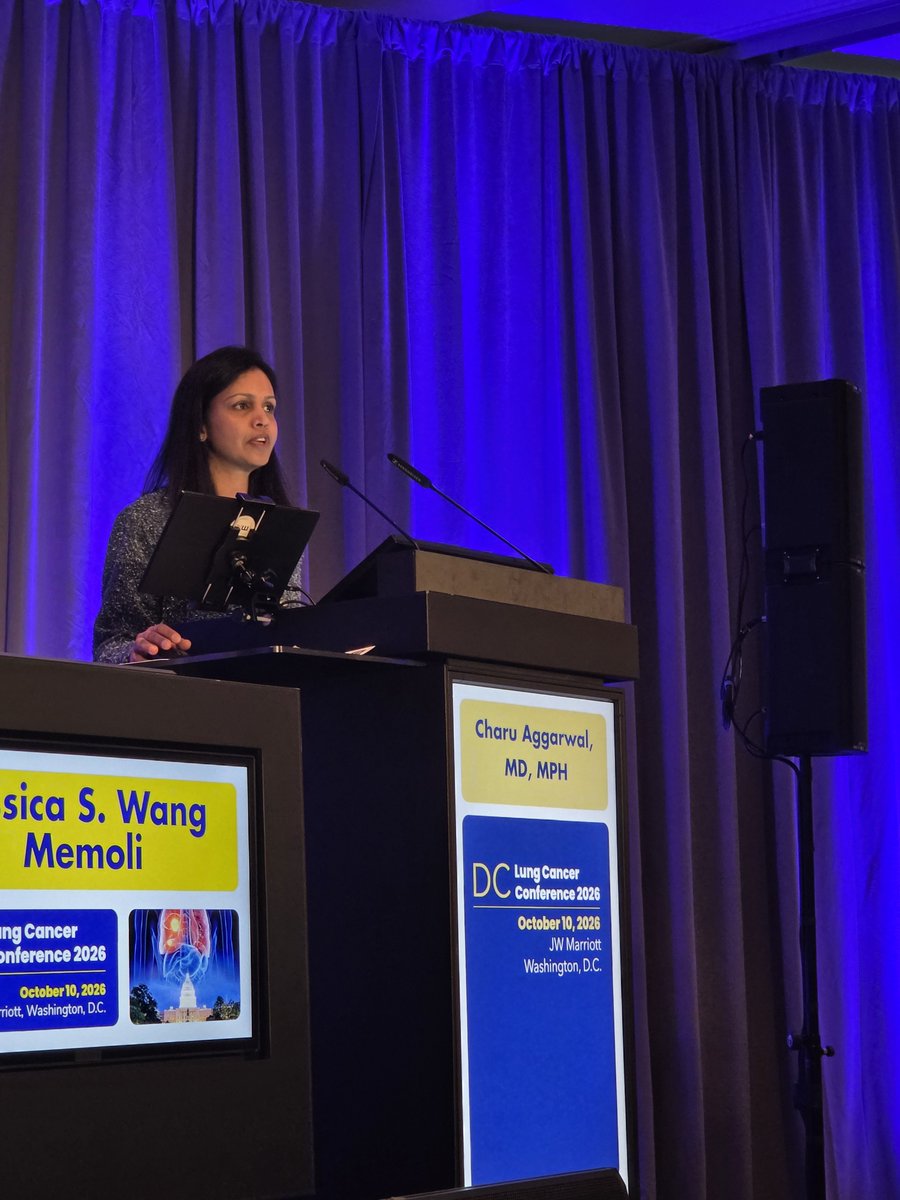
Jessica S. Wang Memoli, MDInterventional pulmonology7 posts ↓
Director, Bronchoscopy & Interventional Pulmonary · Associate Fellowship Program Director, Pulmonary Critical Care Medicine · MedStar Washington Hospital Center · Washington, D.C.
Medical Oncologist, Hematology/Oncology · Associate Professor of Clinical Medicine · Indiana University Simon Comprehensive Cancer Center · Indianapolis, IN
Associate Director of The Cancer Care Access Program · Co-Director, Young Lung Cancer Program · Thoracic Medical Oncologist · Dana-Farber Cancer Institute · Assistant Professor, Medicine · Harvard Medical School · Boston, MA
Radiation Oncologist, Radiation Medicine · MedStar Georgetown University Hospital · Assistant Professor, Radiation Medicine · Georgetown University Medical Center · Washington, D.C.
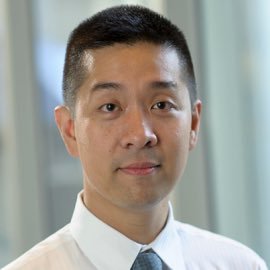
Director, Translational Research · Associate Professor, Thoracic/Head and Neck Medical Oncology · The University of Texas MD Anderson Cancer Center · Houston, TX
Director, Thoracic Surgery Research · Inova Schar Cancer · Thoracic Surgeon · Inova Health System · Assistant Professor, Surgery · UVA Inova Campus · Falls Church, VA
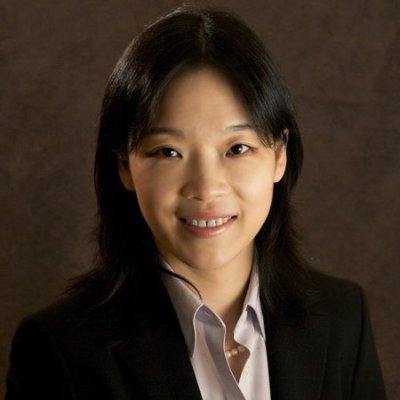
Chief, Oncology · Winston Chen and Phyllis Huang Professor · Stanford University School of Medicine · Deputy Director, Stanford Cancer Institute · Stanford, CA
Panelist · Session II
Session III: Targeted Therapies: Mutations 12 people
Director of Targeted Therapies, Early Phase Trials Unit · Thoracic Oncology · Associate Professor, Medicine, Hematology/Oncology · Tisch Cancer Center Icahn School of Medicine at Mount Sinai · New York, NY
Thoracic Medical Oncologist · Dana-Farber Cancer Institute · Affiliate Staff, Medicine · Brigham and Women’s Hospital · Instructor, Medicine · Harvard Medical School · Boston, MA
Division Chief, Thoracic Medical Oncology · Professor, Medical Oncology & Therapeutics Research · Dr. Norman and Melinda Payson Professor in · Medical Oncology · City of Hope Comprehensive Cancer Center · Duarte, CA
Director, Drug Discovery-Phase I Program · Co-Chief, Thoracic Oncology Division · John Theurer Cancer Center · Hackensack University Medical Center · Professor, Oncology · Hackensack Meridian School of Medicine · Hackensack, NJ
Chief, Thoracic Oncology · Medical Oncologist · Co-Leader, Immunotherapy and Drug Development Center (IDDC) · Professor, Medicine · UPMC Hillman Cancer Center · Pittsburgh, PA
Thoracic Medical Oncologist · Center for Thoracic Cancers · Henri and Belinda Termeer Center for Targeted Therapies · Massachusetts General Hospital · Associate Professor, Medicine · Harvard Medical School · Boston, MA
Cristina M. Merkhofer, MD, MHSMedical oncology2 posts ↓
Thoracic and Head & Neck Medical Oncologist · Assistant Professor, Medicine · MedStar Washington Hospital Center · MedStar Georgetown University Hospital · Georgetown Lombardi Comprehensive Cancer Center · Washington, D.C.
Thoracic Medical Oncologist · Clinical Director, Medical Oncology · Johns Hopkins Sidney Kimmel Cancer Center at Sibley Memorial Hospital · Associate Professor, Oncology · Johns Hopkins University School of Medicine · Washington, D.C.
Director, Thoracic Oncology Program · Professor, Medicine · The University of Chicago Medicine · Chicago, IL
Panelist · Session IV
NB
Natasha B. Leighl, MD, MMScMedical oncology
Division Head, Medical Oncology and Hematology · Princess Margaret Cancer Centre · University Health Network · Professor, Medicine · University of Toronto · Toronto, Canada
Thoracic Medical Oncologist · MedStar Georgetown Cancer Institute · MedStar Washington Hospital Center · Assistant Professor, Medicine · Georgetown University Medical Center · Washington, D.C.
Medical Oncology · The Ohio State University Comprehensive Cancer Center · Associate Professor, Internal Medicine · The Ohio State University · Columbus, OH
Vice-Chair for Clinical Research, Department of Hematology/Oncology · Professor, Department of Hematology/Oncology · Winship Cancer Institute · Emory University · Atlanta, GA
Panelist · Session V
NLST
JW
Jennifer Wheeley, MS, FNP-CNurse practitioner3 posts ↓
Nurse Practitioner · MedStar Washington Hospital Center · Washington, D.C.
Panelist · Session V
NLST
Jonathan Wesley Riess, MD, MSMedical oncology@riess_md
Director, Thoracic Oncology · Associate Professor, Medicine · UC Davis Comprehensive Cancer Center · Sacramento, CA
Thoracic Oncologist · University of Maryland Marlene and Stewart Greenebaum Comprehensive Cancer Center · Assistant Professor, Medicine · University of Maryland School of Medicine · Baltimore, MD
Director, High Reliability Organization Initiatives · NYU Langone Perlmutter Cancer Center · Assistant Professor, Medicine · NYU Grossman School of Medicine · New York, NY
Clinical Director, Lowe Center for Thoracic Oncology · Dana-Farber Cancer Institute · Assistant Professor, Medicine · Harvard Medical School · Boston, MA
Director Division, Medical Oncology · Associate Director, Early Phase Clinical Trials · Professor, Medicine · Ohio State University Comprehensive Cancer Center · The James Cancer Hospital · Columbus, OH
Novel IO: From Bispecifics to Devices · VIPanelist · Session VI
Head, Medical Oncology · Hospital Universitario Insular de Gran Canaria · Associate Professor, Medicine · University of Las Palmas de Gran Canaria (ULPGC) · Las Palmas de Gran Canaria, Spain
Tackling Immunotherapy Toxicity · VIPanelist · Session VI
Program Director of Education, Thoracic and Cardiovascular Surgery · Associate Professor, Thoracic and Cardiovascular Surgery · The University of Texas MD Anderson Cancer Center · Houston, TX
Consolidation for Oligometastatic NSCLC · VIPanelist · Session VI
Thoracic Medical Oncologist · University Hospitals Seidman Cancer Center · Assistant Professor, Internal Medicine · Case Western Reserve University · Cleveland, OH
Consultant Medical Oncologist · Beaumont Hospital Dublin · Professor, Medical Oncology · Royal College of Surgeons in Ireland · Adjunct Assistant Professor, Oncology · Johns Hopkins University · Dublin, Ireland
Tackling Immunotherapy Toxicity · VIJune program
Immune-related AEs
Session VII: SCLC & Other Thoracic Tumors 11 people
Medical Oncologist · Duke Cancer Institute · Assistant Professor, Medicine · Phase One Program Thoracic Lead · Deputy Medical Director Duke Center for Brain and Spine Metastases · Duke University Medical Center · Durham, NC
Thoracic Medical Oncologist · MedStar Georgetown University Hospital · Associate Professor, Medicine · Georgetown Lombardi Comprehensive Cancer Center · Georgetown University Medical Center · Washington, D.C.
Associate Director, Surgical Services · Montefiore-Einstein Comprehensive Cancer Center · Professor and Chief, Thoracic Surgery and Surgical Oncology · Albert Einstein College of Medicine · Montefiore Medical Center · New York, NY
Director, Thoracic Medical Oncology · Leader, Lung Cancer Disease Team · Medical Director, Clinical Trials Office · Professor, Department of Hematology & Oncology · Winship Cancer Institute · Emory University · Atlanta, GA
Initial SCLC Therapy · VIIJune programPanelist · Session VJune program
Thoracic Medical Oncologist · Johns Hopkins Sidney Kimmel Comprehensive Cancer Center · Sibley Memorial Hospital · Assistant Professor, Oncology · Johns Hopkins University School of Medicine · Baltimore, MD
Clinical Associate Professor, Thoracic Medical Oncology · University of Michigan Rogel Cancer Center · Ann Arbor, MI
Atypical and Exon 20 EGFR Mutations · VIII
EGFRExon 20 / atypical
TU
Thomas U. Marron, MD, PhDMedical oncology2 posts ↓
Director, Early Phase Trials Unit · Professor, Medicine · Professor, Immunology and Immunotherapy · The Tisch Cancer Center · Icahn School of Medicine at Mount Sinai · New York, NY
Attending Physician, Thoracic Oncology Service · Memorial Sloan Kettering Cancer Center · Professor, Medicine · Weill Cornell Medical College · New York, NY
Director, Medical Oncology & Hematology Fellowship Program · Associate Professor, Oncology · Johns Hopkins University School of Medicine · Baltimore, MD
General Oncology, Division of Cancer Medicine · Assistant Professor, General Oncology & Thoracic/Head and Neck Medical Oncology · The University of Texas MD Anderson Cancer Center · Houston, TX
Panelist · Session VIII
ADAURAALINANAUTIKA1NeoADAURALORINLIBRETTO-432+18
JE
Jillian E. Thompson, ANP-BC, AOCNPNurse practitioner1 post ↓
Nurse Practitioner, Hematology and Oncology · MedStar Georgetown University Hospital · Washington, D.C.
Panelist · Session VIII
Also on the podium (panelists read from desk name cards, not in the printed program) 4 people
Session I · 08:05–08:55 ET · Moderator Jessica S. Wang Memoli
Diagnosis
My Life with Lung Cancer (Augenstein) · Lung Cancer Screening & Smoking Cessation (Anderson) · Biomarker Testing for NSCLC: Best Practice (Aggarwal). 13 posts · 21 images captured.
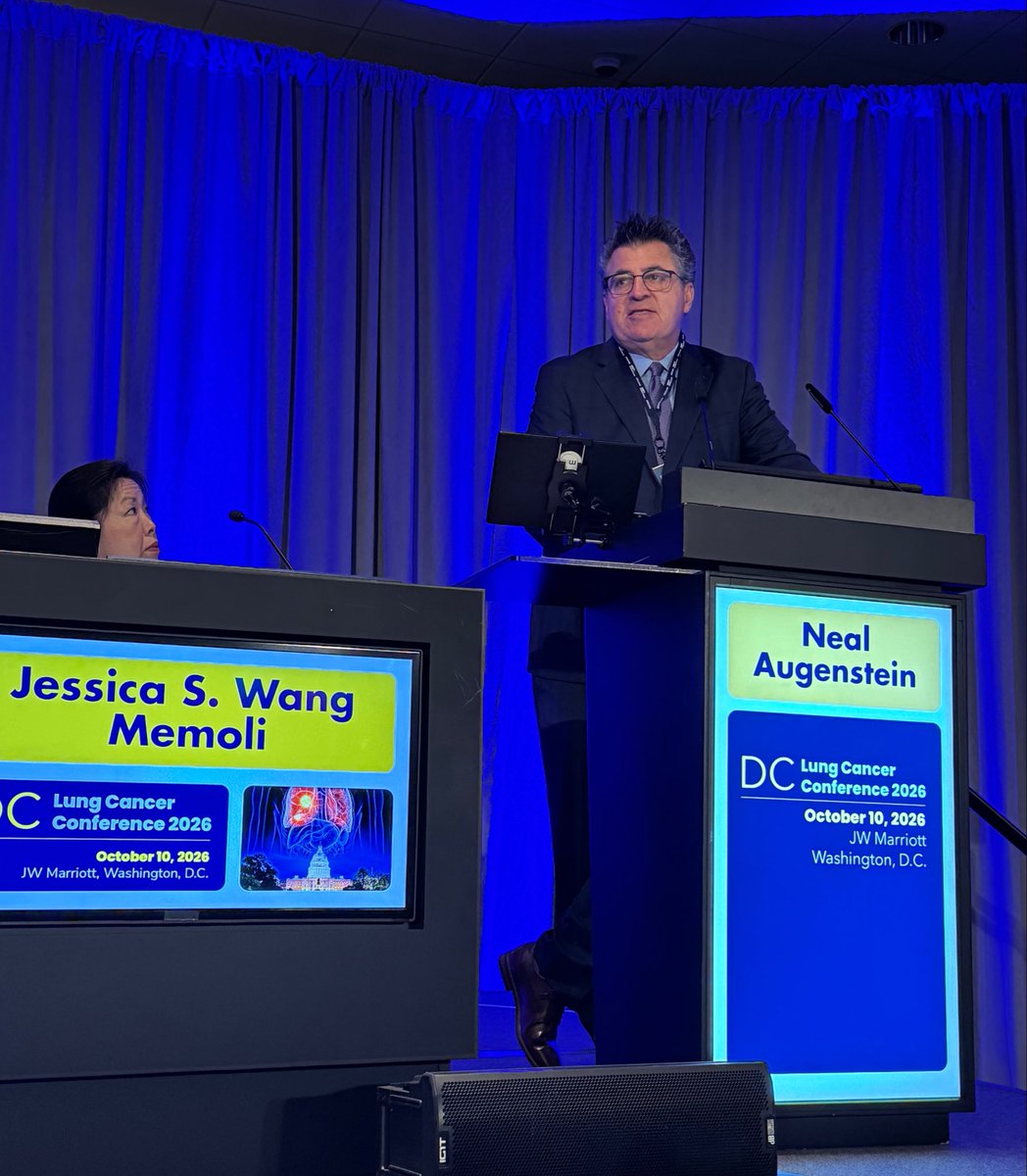
On the podiumNeal AugensteinWTOPMy Life with Lung Cancer
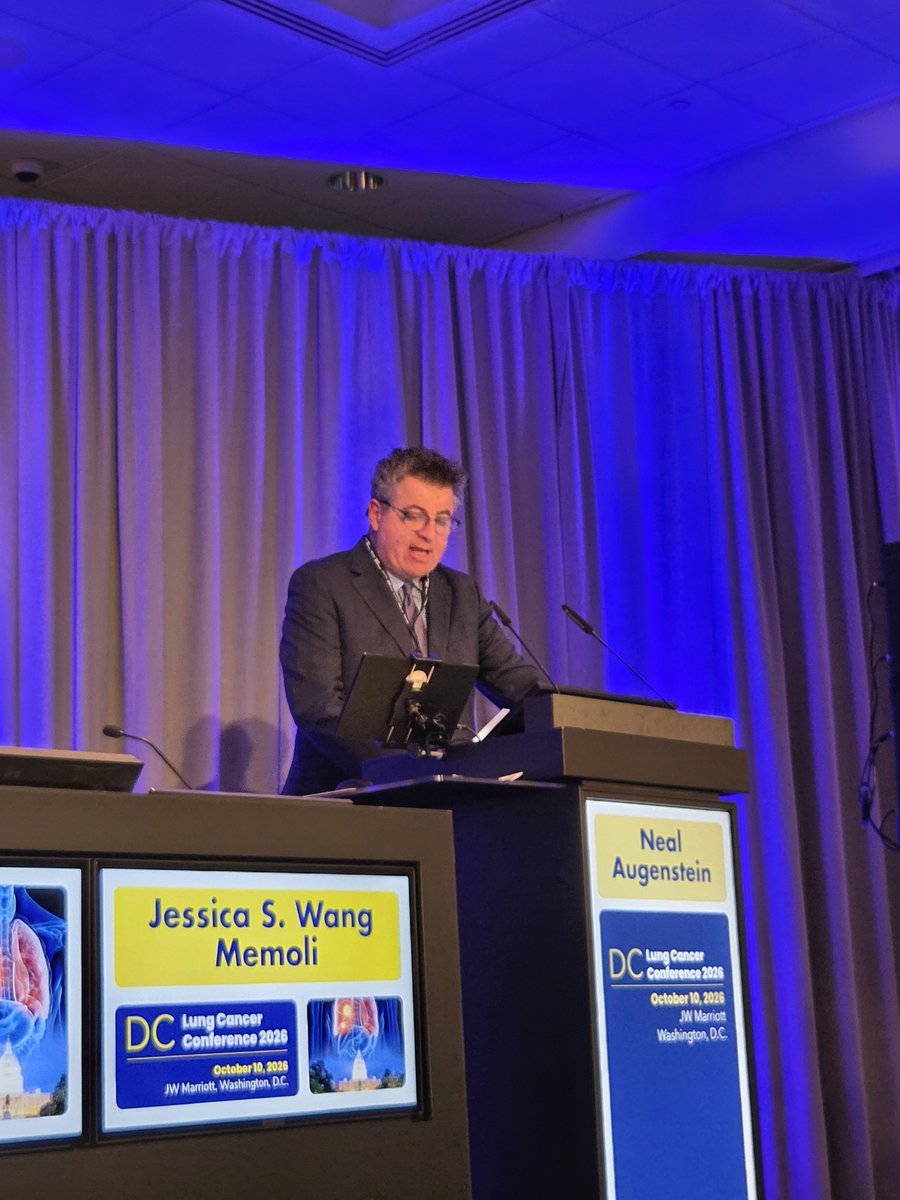
Neal Augensteim with a powerful opening to #DCLung26 providing the patient perspective on why we are all in this fight together.
Joshua Reuss (@Joshua_Reuss)Oct 10, 2026 · 8:14 AM ETView post on X ↗
On the podiumNeal AugensteinWTOPMy Life with Lung Cancer
Lung cancer survivor and @WTOP DC news reporter @AugensteinWTOP kindly shares his life experience with Stage 4 EGFR altered lung cancer and remains NED for the past 3 years. A vital talk to shape perspectives on what truly matters as we start #DCLung26.
Thankful for meaningful translational advances in targeted treatments and growing knowledge of resistance surrounding #EGFR treatments over the past two decades.
Highlights need for ongoing reframing lung cancer screening criteria to capture every person at risk for developing lung cancer early.
@EGFRResisters @EgfrUk @EGFRSummit @StephenVLiu @Joshua_Reuss @AmLungCSI @ChiFuJeffYang @LUNGevity @SclcSMASHERS #lcsm
Misty Dawn Shields (@drshieldsmd)Oct 10, 2026 · 8:18 AM ETView post on X ↗
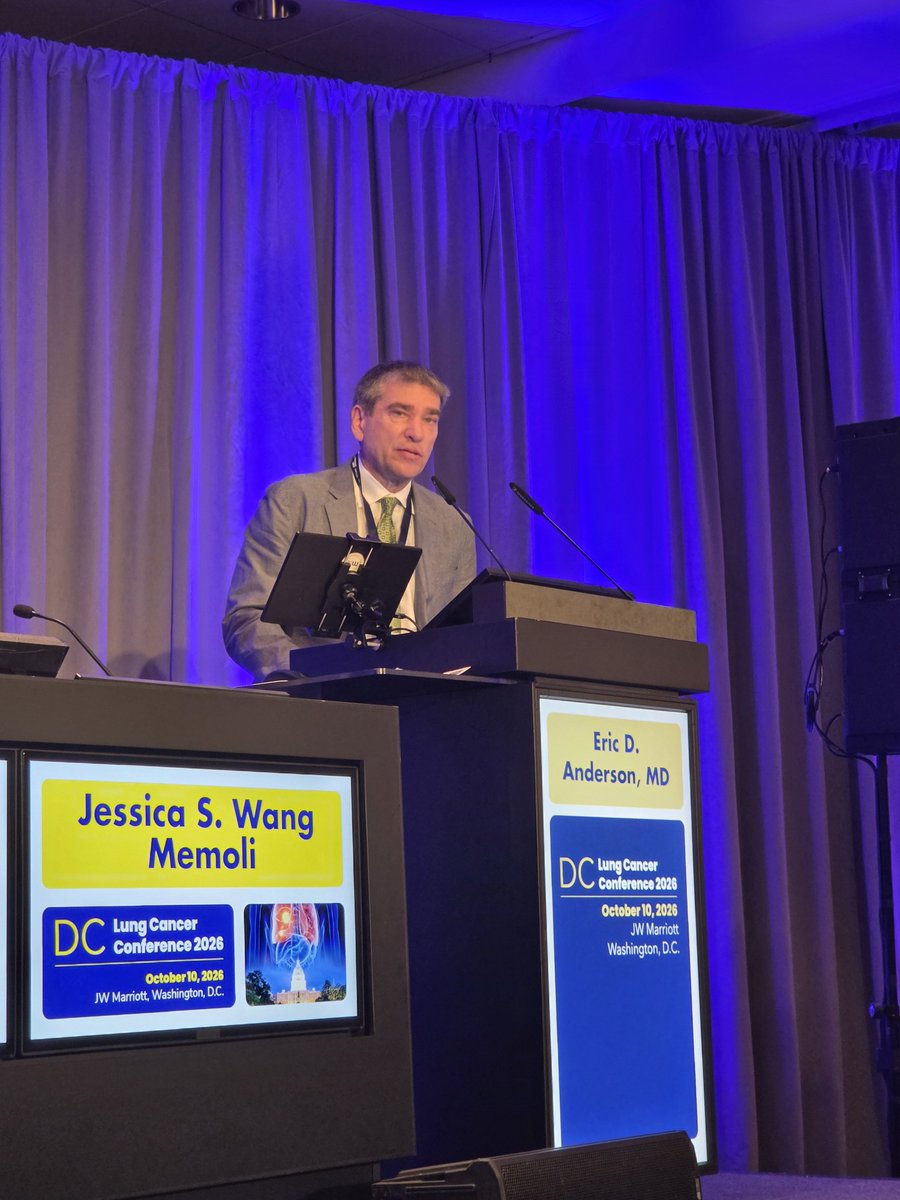
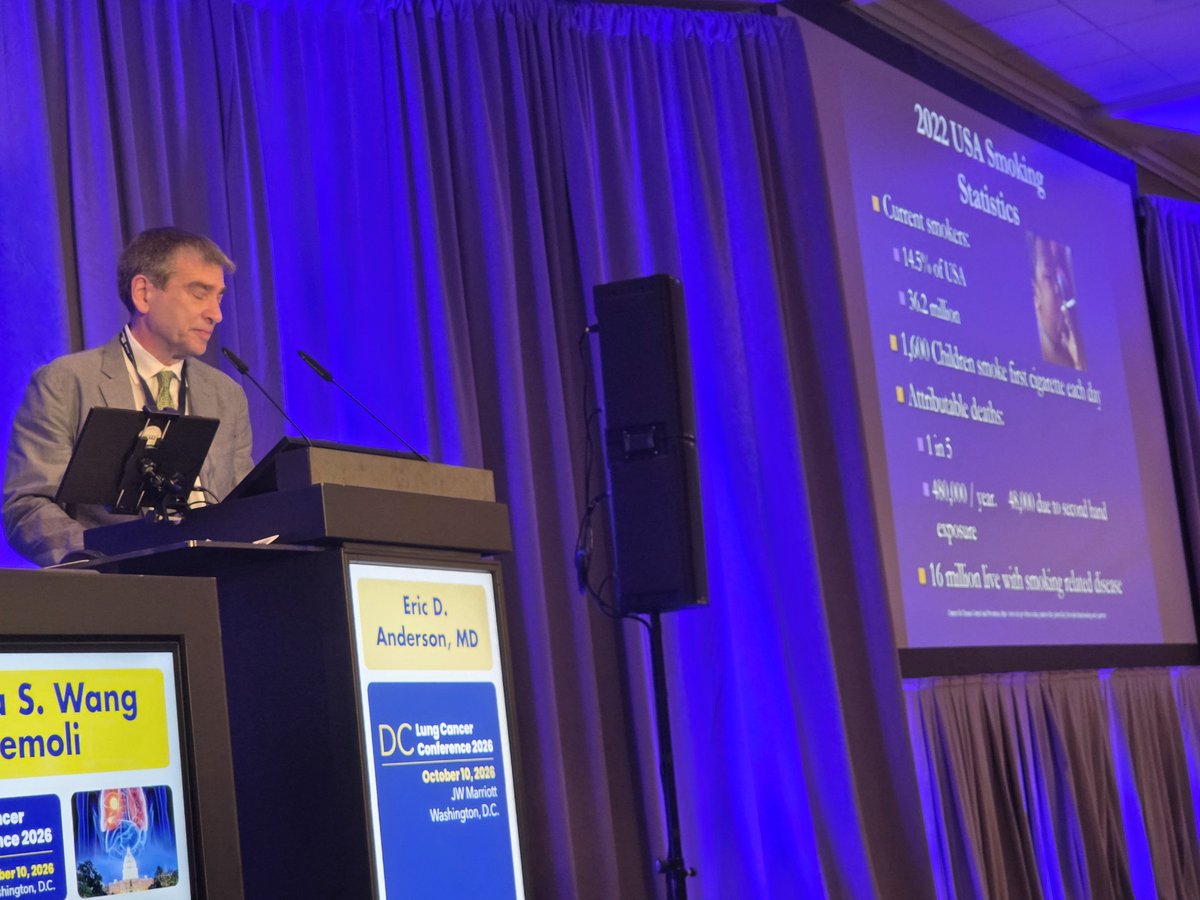
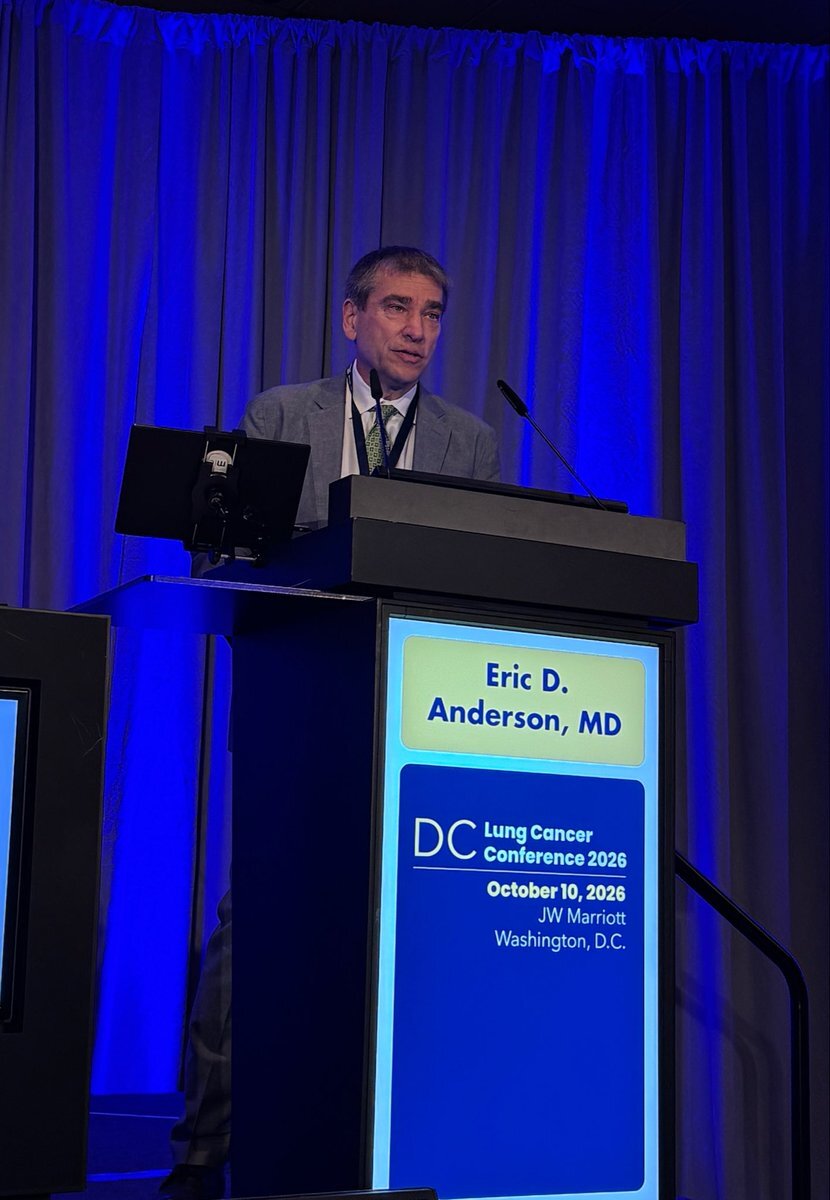
On the podiumEric D. AndersonMedStar Georgetown University HospitalLung Cancer Screening & Smoking Cessation
Dr. Eric Anderson of @MedStarGUH with an excellent and engaging talk on lung cancer screening and smoking cessation at #DCLung26.
[Slide 2]
2022 USA Smoking Statistics
- Current smokers:
- 14.5% of USA
- 36.2 million
- 1,600 Children smoke first cigarette each day
- Attributable deaths:
- 1 in 5
- 480,000 / year. 48,000 due to second hand exposure
- 16 million live with smoking related disease
[footer source line illegible - appears to be a CDC/Centers for Disease Control and Prevention URL]
Joshua Reuss (@Joshua_Reuss)Oct 10, 2026 · 8:25 AM ETView post on X ↗
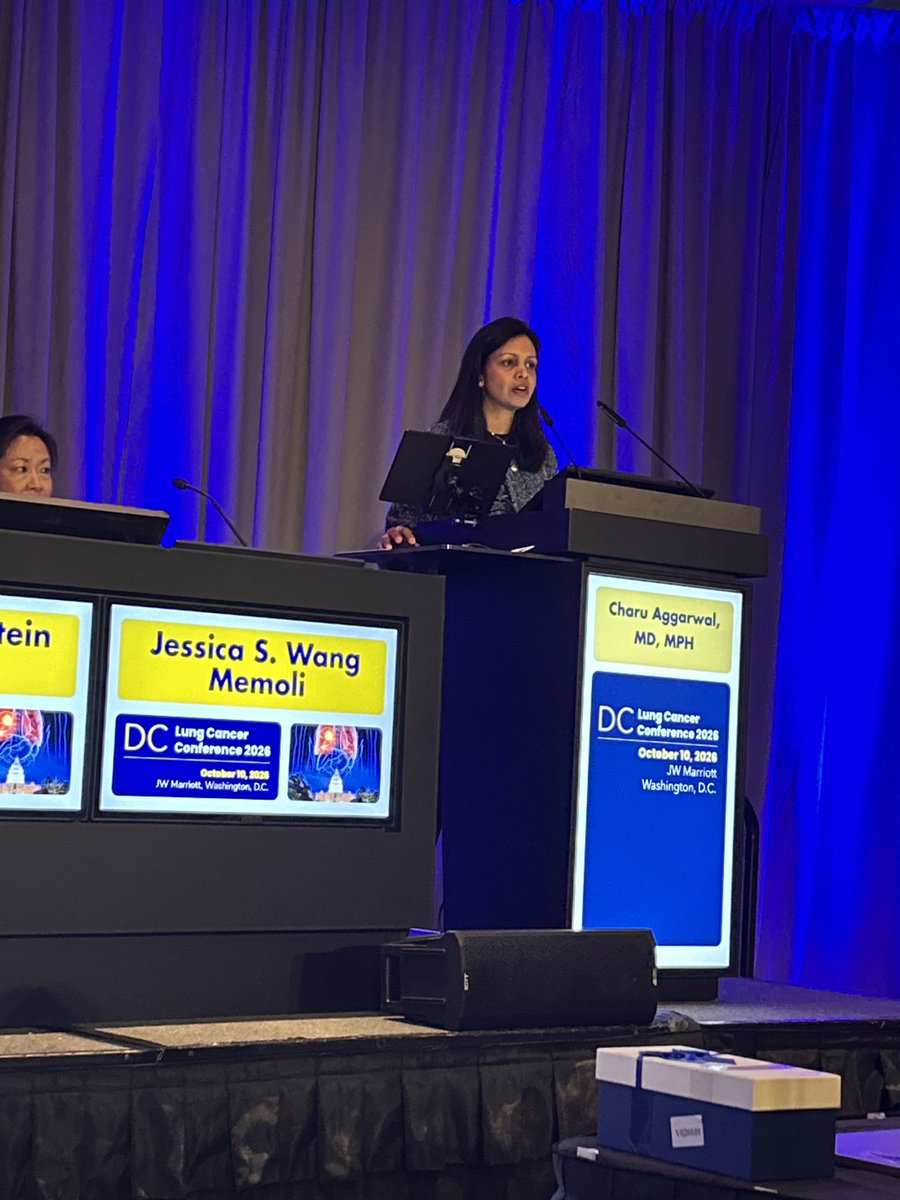
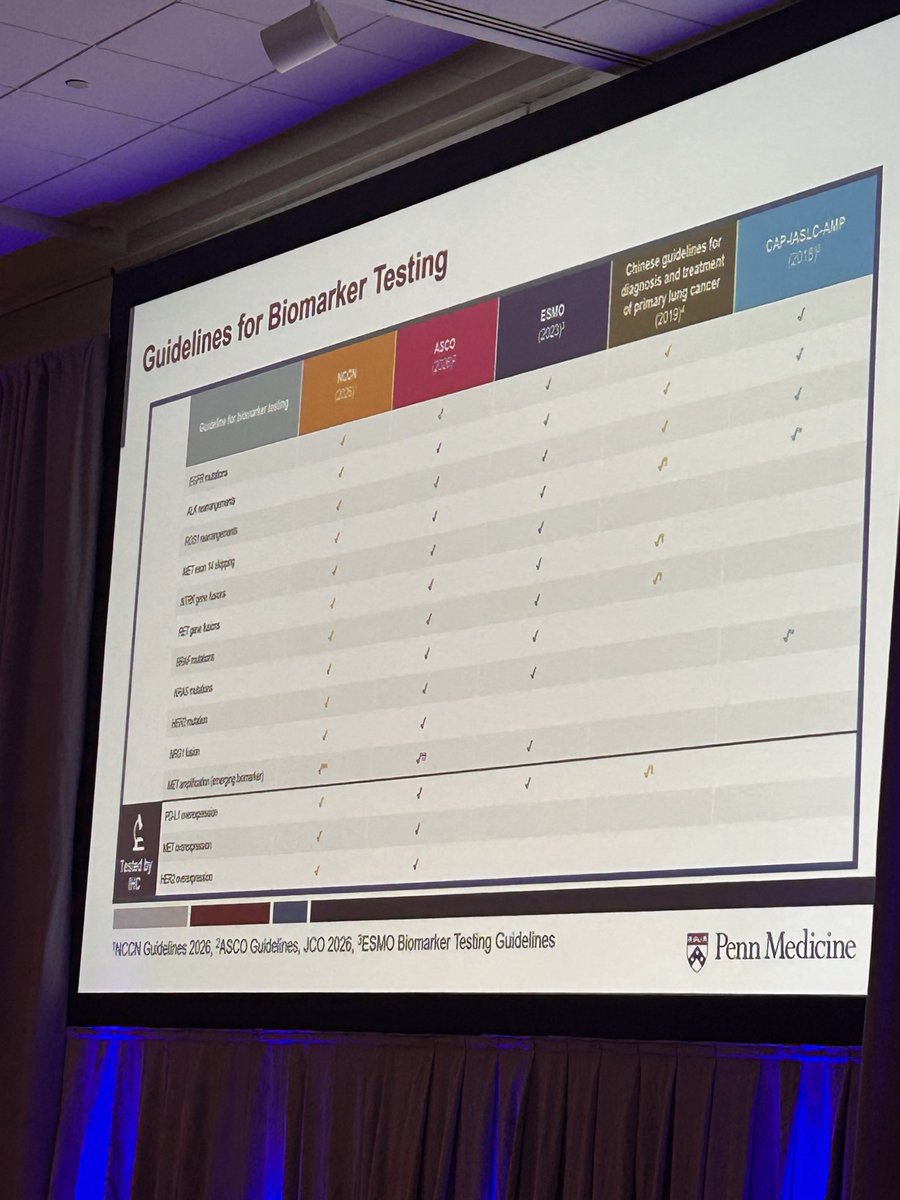
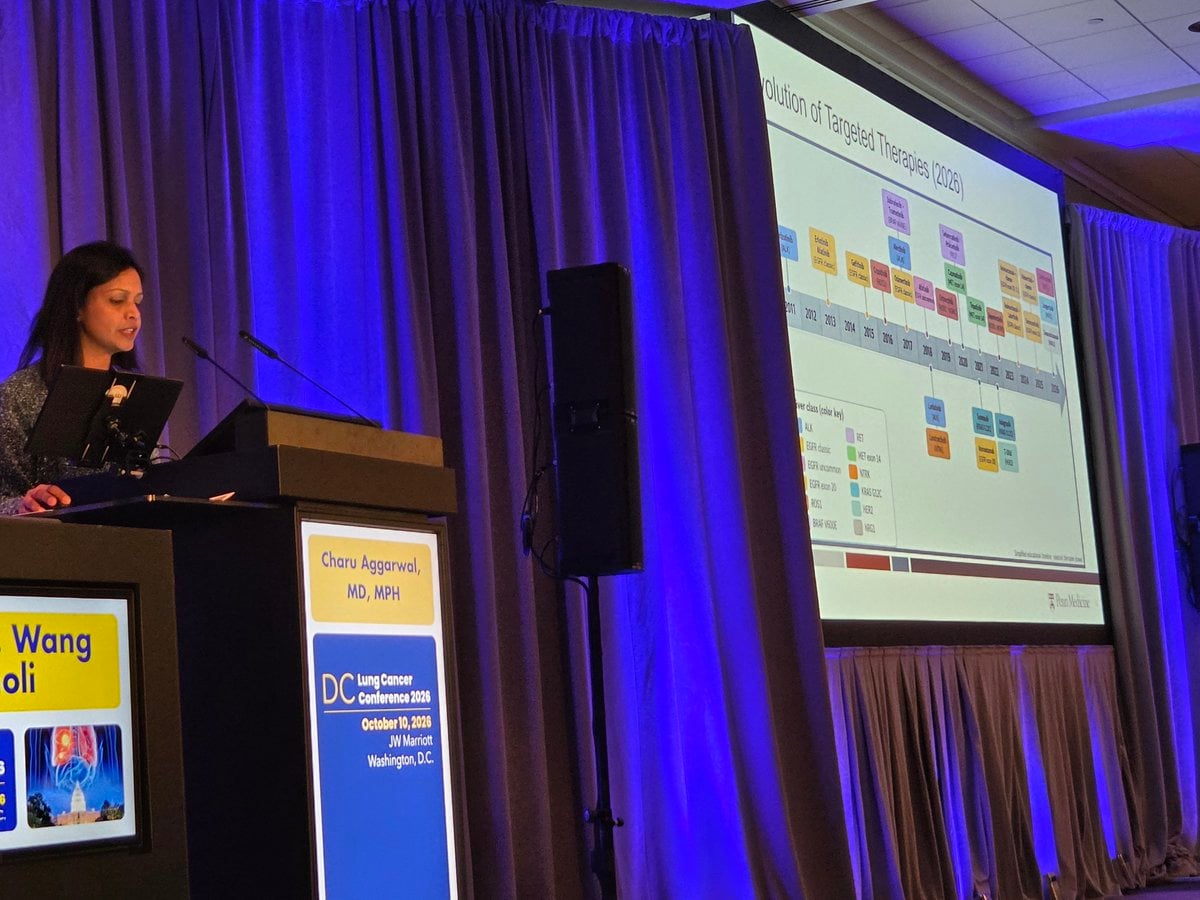
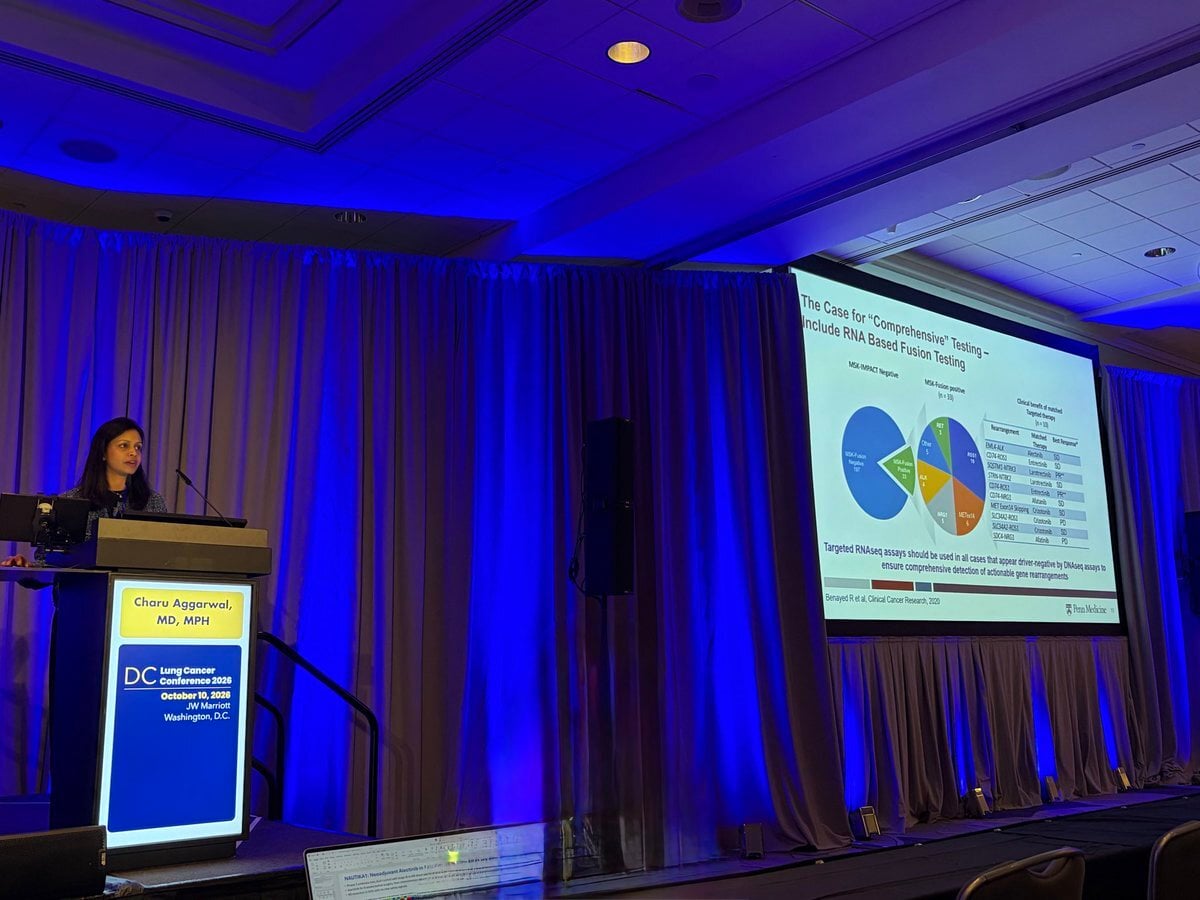
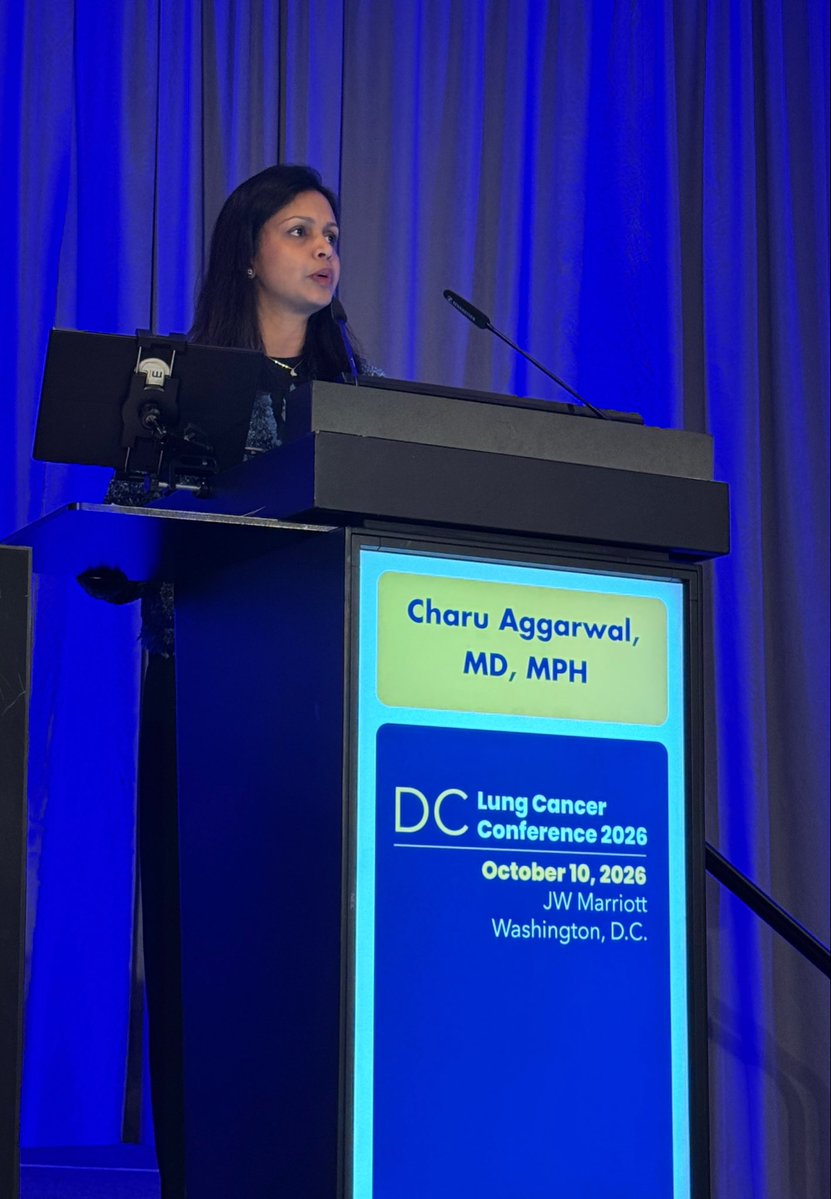
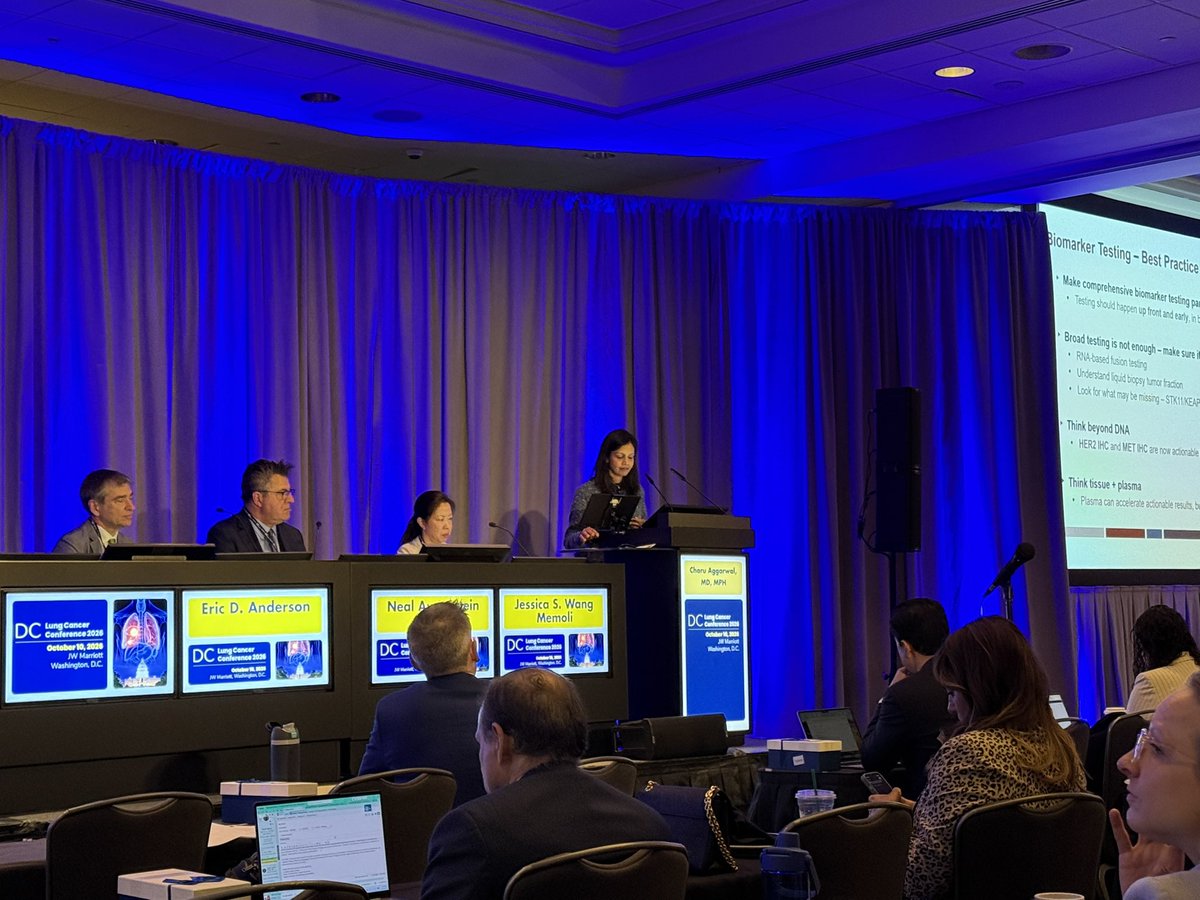
On the podiumCharu AggarwalPenn MedicineBiomarker Testing for NSCLC: Best Practice
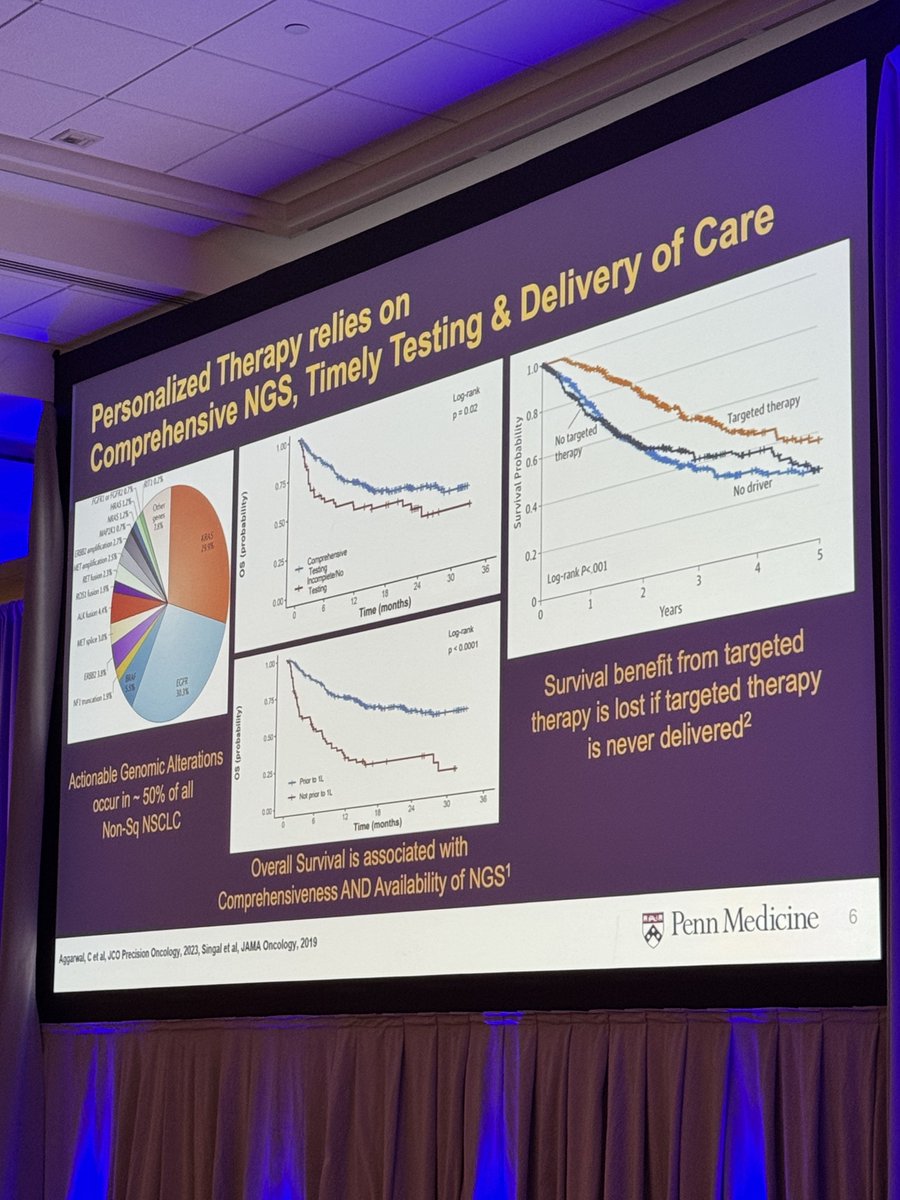
Dr. @CharuAggarwalMD reminds us at #DCLung26 that personalized lung cancer care starts with comprehensive NGS, but only delivers on its promise when patients can access the right treatments.
@StephenVLiu @Joshua_Reuss
[Slide 2]
Personalized Therapy relies on Comprehensive NGS, Timely Testing & Delivery of Care
[Pie chart – genomic alterations, Non-Sq NSCLC]
KRAS 29.9%
EGFR 30.3%
BRAF 5.5%
ERBB2 3.8%
NF1 truncation 1.9%
MET splice 3.0%
ALK fusion 4.4%
ROS1 fusion 1.9%
RET fusion 2.3%
MET amplification 2.5%
ERBB2 amplification 2.7%
MAP2K1 0.7%
NRAS 1.2%
HRAS 1.2%
FGFR1 or FGFR2 0.7%
RIT1 0.2%
Other genes 7.8%
Actionable Genomic Alterations occur in ~ 50% of all Non-Sq NSCLC
[KM panel 1 – OS (probability) vs Time (months), 0–36]
Log-rank p = 0.02
Comprehensive Testing | Incomplete/No Testing
[KM panel 2 – OS (probability) vs Time (months), 0–36]
Log-rank p < 0.0001
Prior to 1L | Not prior to 1L
Overall Survival is associated with Comprehensiveness AND Availability of NGS1
[KM panel 3 – Survival Probability vs Years, 0–5]
Targeted therapy | No targeted therapy | No driver
Log-rank P<.001
Survival benefit from targeted therapy is lost if targeted therapy is never delivered2
Aggarwal, C et al, JCO Precision Oncology, 2023, Singal et al, JAMA Oncology, 2019
Penn Medicine 6
[Survival data captured as a table — no point estimates read from the curve]
Endpoint: Overall survival (three KM panels; no medians, HRs or landmark rates printed)
Panel 1: Comprehensive Testing vs Incomplete/No Testing
Panel 2: NGS results Prior to 1L vs Not prior to 1L
Panel 3: Targeted therapy vs No targeted therapy vs No driver
P: Panel 1 log-rank p = 0.02; Panel 2 log-rank p < 0.0001; Panel 3 log-rank P<.001
Note: Only log-rank p-values are printed. No point estimates read from curve.
Eric K. Singhi, MD (@lungoncdoc)Oct 10, 2026 · 8:30 AM ETView post on X ↗
On the podiumCharu AggarwalPenn MedicineBiomarker Testing for NSCLC: Best Practice
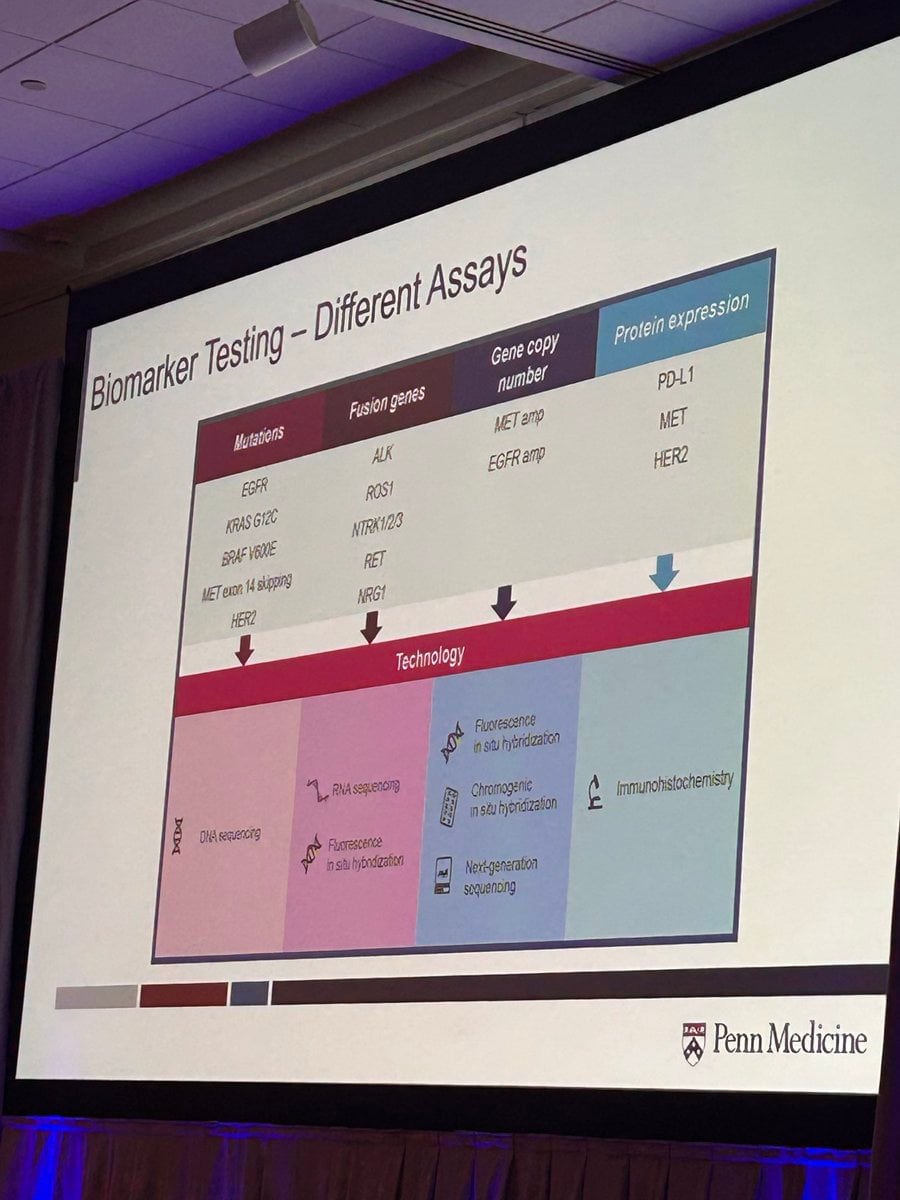
Key slides to save on biomarker assays and appropriate testing in lung cancer by @CharuAggarwalMD at #DCLung26
@Joshua_Reuss @StephenVLiu @MedStarHealth @Penn @PennCancer @carisls @FoundationATCG @TempusAI @GuardantHealth @IASLC @NCCN @ASCO @MyaPrecisionG
Misty Dawn Shields (@drshieldsmd)Oct 10, 2026 · 8:32 AM ETView post on X ↗
On the podiumCharu AggarwalPenn MedicineBiomarker Testing for NSCLC: Best Practice
Dr. @CharuAggarwalMD tackles the critical topic of biomarker testing in NSCLC at #DCLung26. To treat NSCLC without biomarker testing is like driving in the dark without headlights. You are blind to the right therapy for your patient!
[Slide 3]
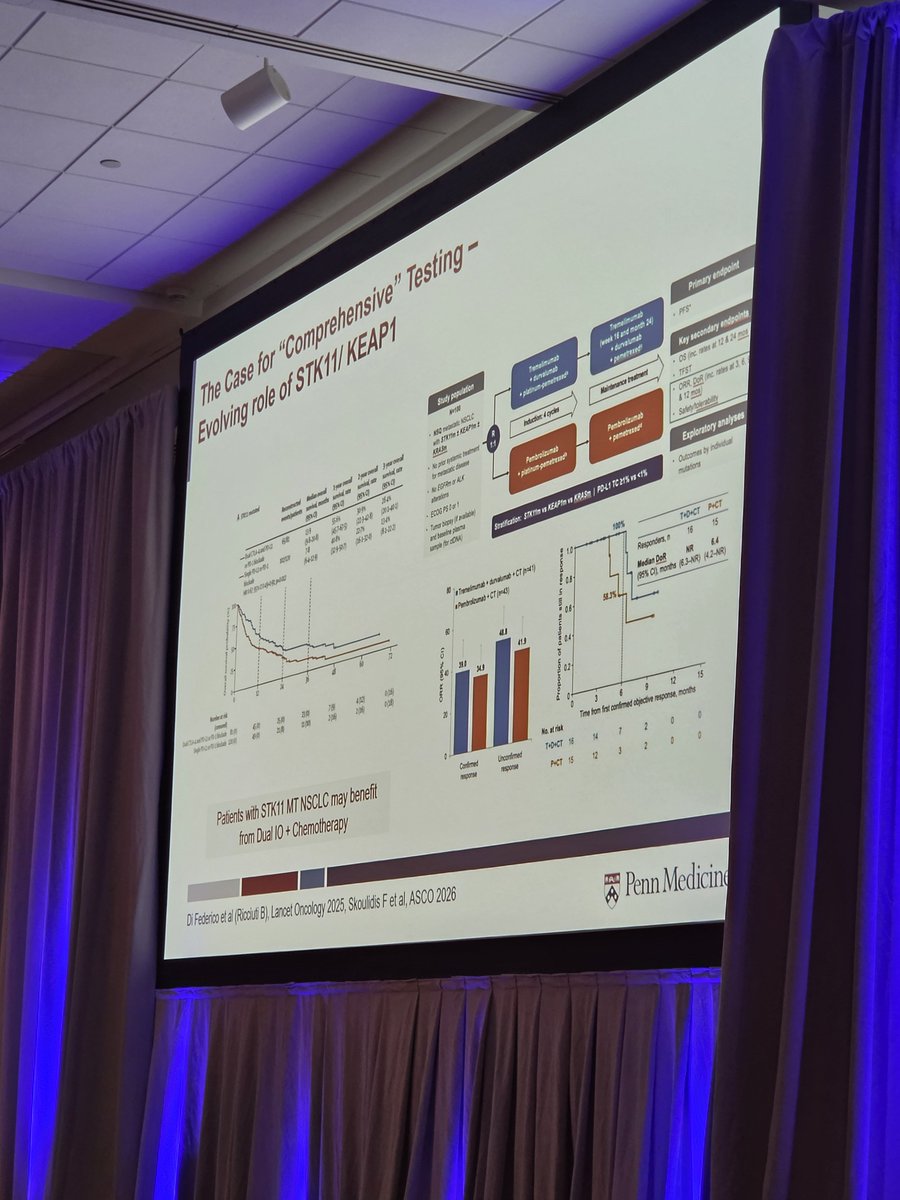
The Case for "Comprehensive" Testing – Evolving role of STK11/ KEAP1
[Left panel – reconstructed OS table + KM, STK11 mutated]
A STK11 mutated
| Reconstructed events/patients | Median overall survival, months (95% CI) | 1-year overall survival rate (95% CI) | 2-year overall survival rate (95% CI) | 3-year overall survival rate (95% CI)
Dual CTLA-4 and PD-L1 or PD-1 blockade | 65/81 | 13·9 (9·8–20·8) | 55·6% (45·7–67·5) | 30·9% (22·3–42·8) | 28·4% (20·1–40·1)
Single PD-L1 or PD-1 blockade | 102/120 | 7·8 (6·4–12·9) | 40·8% (32·9–50·7) | 22·7% (16·1–32·0) | 13·4% (8·1–22·2)
HR 0·67; 95% CI 0·49–0·91; p=0·012
[KM: Overall survival probability (%) vs months 0–72; Number at risk rows present but not reliably legible]
[Right panel – study schema]
Study population
N=100
• NSQ metastatic NSCLC with STK11m ± KEAP1m ± KRASm
• No prior systemic treatment for metastatic disease
• No EGFRm or ALK alterations
• ECOG PS 0 or 1
• Tumor biopsy (if available) and baseline plasma sample (for ctDNA)
R 1:1
Induction: 4 cycles
Tremelimumab + durvalumab + platinum-pemetrexeda → Maintenance treatment → Tremelimumab (week 16 and month 24) + durvalumab + pemetrexedc
Pembrolizumab + platinum-pemetrexedb → Maintenance treatment → Pembrolizumab + pemetrexedd
Stratification: STK11m vs KEAP1m vs KRASm | PD-L1 TC ≥1% vs <1%
Primary endpoint
• PFS*
Key secondary endpoints
• OS (inc. rates at 12 & 24 mos)
• TFST
• ORR, DoR (inc. rates at 3, 6, [illegible] & 12 mos)
• Safety/tolerability
Exploratory analyses
• Outcomes by individual mutations
[Bar chart – ORR (95% CI)]
■ Tremelimumab + durvalumab + CT (n=41)
■ Pembrolizumab + CT (n=43)
Confirmed response: 39.0 | 34.9
Unconfirmed response: 48.8 | 41.9
[DoR curve – Proportion of patients still in response vs Time from first confirmed objective response, months (0–15)]
| T+D+CT | P+CT
Responders, n | 16 | 15
Median DoR (95% CI), months | NR (6.3–NR) | 6.4 (4.2–NR)
Curve annotations printed: 100%, 58.3%
No. at risk
T+D+CT | 16 | 14 | 7 | 2 | 0 | 0
P+CT | 15 | 12 | 3 | 2 | 0 | 0
Patients with STK11 MT NSCLC may benefit from Dual IO + Chemotherapy
Di Federico et al (Ricciuti B), Lancet Oncology 2025, Skoulidis F et al, ASCO 2026
Penn Medicine
[Survival data captured as a table — no point estimates read from the curve]
Endpoint: Overall survival (reconstructed, STK11-mutated; Di Federico/Ricciuti, Lancet Oncology 2025) and duration of response (Skoulidis, ASCO 2026)
Dual CTLA-4 and PD-L1 or PD-1 blockade (OS) | 65/81 events/patients | 13·9 months | 9·8–20·8
Single PD-L1 or PD-1 blockade (OS) | 102/120 events/patients | 7·8 months | 6·4–12·9
T+D+CT responders (DoR) | 16 | NR | 6.3–NR
P+CT responders (DoR) | 15 | 6.4 months | 4.2–NR
HR: 0·67 (OS, dual vs single blockade)
HR CI: 0·49–0·91
P: 0·012
{'arm': 'Dual CTLA-4 and PD-L1 or PD-1 blockade', '1-year OS': '55·6% (45·7–67·5)', '2-year OS': '30·9% (22·3–42·8)', '3-year OS': '28·4% (20·1–40·1)'}
{'arm': 'Single PD-L1 or PD-1 blockade', '1-year OS': '40·8% (32·9–50·7)', '2-year OS': '22·7% (16·1–32·0)', '3-year OS': '13·4% (8·1–22·2)'}
{'arm': 'DoR curve annotations', 'printed': '100% and 58.3% (arm attribution not labeled on slide)'}
Note: OS table values transcribed from the printed table, not the curve; the table is small and photographed at an angle even in the 3000px original, so every OS cell and the HR line are MEDIUM confidence and should be checked against Di Federico et al, Lancet Oncology 2025 before citing. No point estimates read from curve. KM number-at-risk rows for the OS panel not transcribed (illegible).
Joshua Reuss (@Joshua_Reuss)Oct 10, 2026 · 8:35 AM ETView post on X ↗
On the podiumCharu AggarwalPenn MedicineBiomarker Testing for NSCLC: Best Practice
Dr @CharuAggarwalMD giving a phenomenal talk #DCLung26 on the importance of comprehensive genomic testing!
⭐️Critical to include RNA fusion panels
⭐️Liquid Biopsy valuable tool, but also be aware of ‘negative’ = insufficient ctDNA and need for comprehensive tumor tissue testing!
@StephenVLiu @Joshua_Reuss @ChristianRolfo @drshieldsmd @lungoncdoc
Laura Alder, MD (@LauraAlderMD)Oct 10, 2026 · 8:36 AM ETView post on X ↗
On the podiumNeal AugensteinWTOPMy Life with Lung Cancer
Opening session at #DCLung26 tackles diagnosis: inspiring patient experience from @AugensteinWTOP, screening impact from Dr. Eric Anderson, and biomarker testing from Dr. @CharuAggarwalMD. Fantastic perspectives.
Stephen V Liu, MD (@StephenVLiu)Oct 10, 2026 · 8:40 AM ETView post on X ↗
On the podiumCharu AggarwalPenn MedicineBiomarker Testing for NSCLC: Best Practice
How to optimize your comprehensive biomarker testing in lung cancer?
Save this slide! 🚨
@CharuAggarwalMD highlights at #DCLung26 how her practice efficiently performs this testing at @PennCancer
@StephenVLiu @Joshua_Reuss @MedStarHealth #lcsm @carisls @FoundationATCG @TempusAI @GuardantHealth @MyaPrecisionG
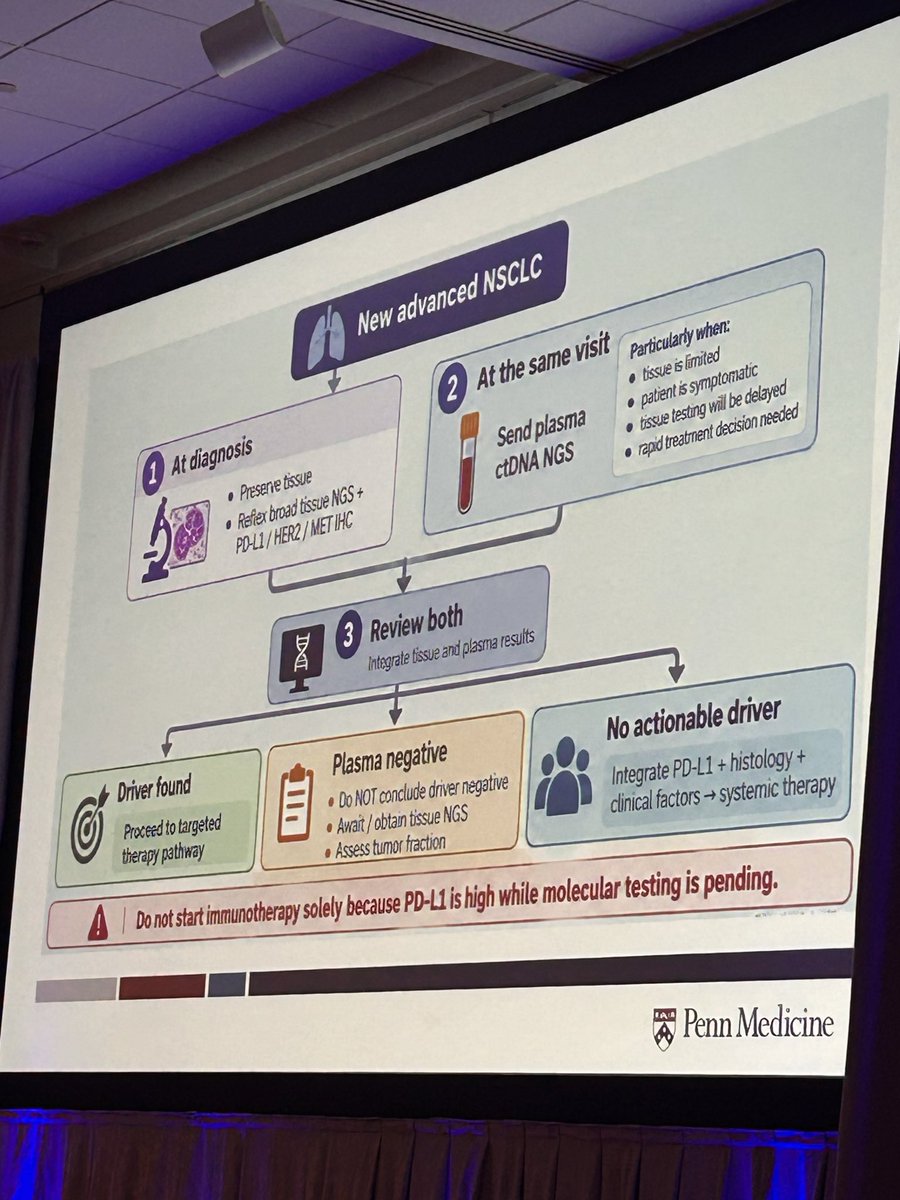
[Slide 1]
New advanced NSCLC
1 At diagnosis
• Preserve tissue
• Reflex broad tissue NGS + PD-L1 / HER2 / MET IHC
2 At the same visit
Send plasma ctDNA NGS
Particularly when:
• tissue is limited
• patient is symptomatic
• tissue testing will be delayed
• rapid treatment decision needed
3 Review both
Integrate tissue and plasma results
Driver found
Proceed to targeted therapy pathway
Plasma negative
• Do NOT conclude driver negative
• Await / obtain tissue NGS
• Assess tumor fraction
No actionable driver
Integrate PD-L1 + histology + clinical factors → systemic therapy
⚠ Do not start immunotherapy solely because PD-L1 is high while molecular testing is pending.
Penn Medicine
Misty Dawn Shields (@drshieldsmd)Oct 10, 2026 · 8:43 AM ETView post on X ↗
On the podiumEric D. AndersonMedStar Georgetown University HospitalLung Cancer Screening & Smoking Cessation
Great discussion on biomarker testing at #DCLung2026 by @CharuAggarwalMD
Key takeaways: Test early and comprehensively, ensure complete molecular profiling, think beyond DNA, and leverage both tissue and plasma testing to guide personalized treatment decisions.
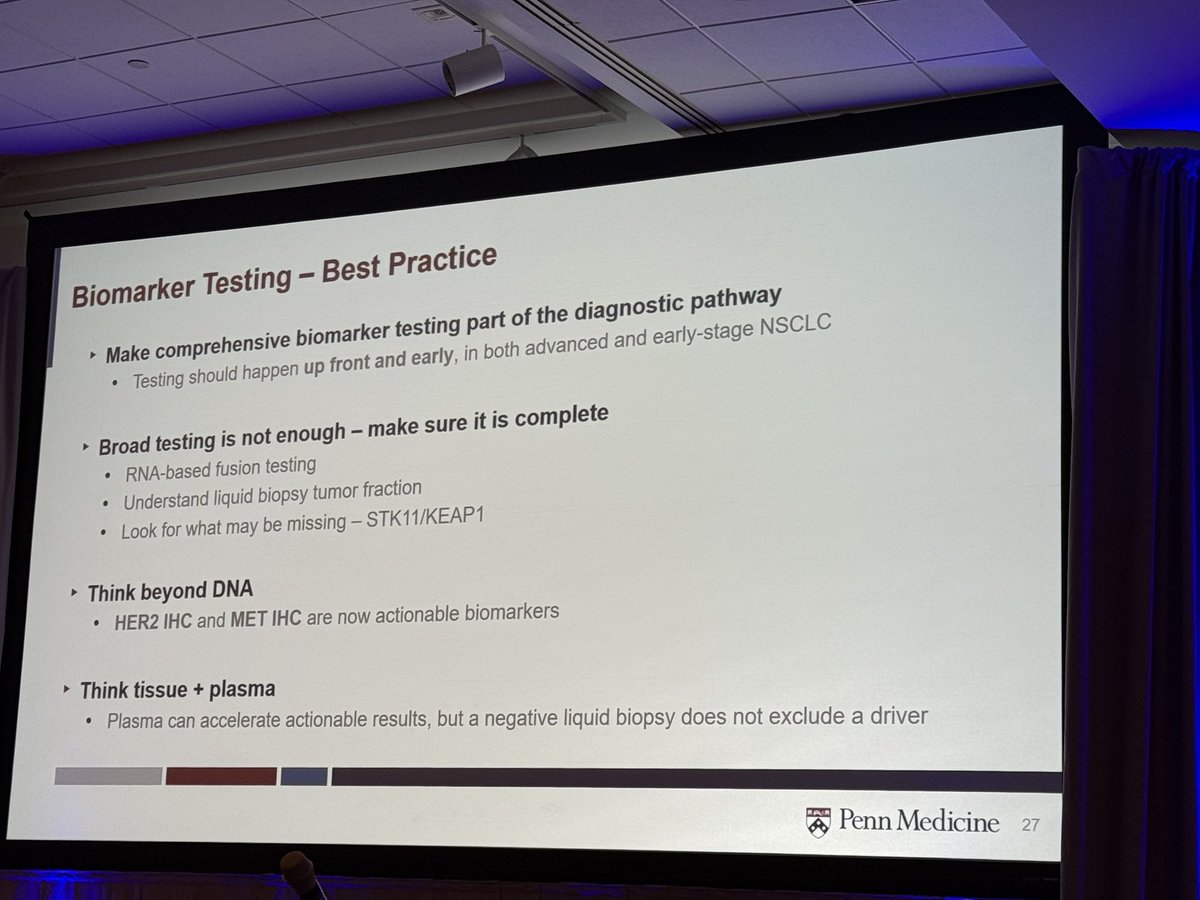
[Slide 1]
Biomarker Testing – Best Practice
▸ Make comprehensive biomarker testing part of the diagnostic pathway
• Testing should happen up front and early, in both advanced and early-stage NSCLC
▸ Broad testing is not enough – make sure it is complete
• RNA-based fusion testing
• Understand liquid biopsy tumor fraction
• Look for what may be missing – STK11/KEAP1
▸ Think beyond DNA
• HER2 IHC and MET IHC are now actionable biomarkers
▸ Think tissue + plasma
• Plasma can accelerate actionable results, but a negative liquid biopsy does not exclude a driver
Penn Medicine 27
On the podiumNeal AugensteinWTOPMy Life with Lung Cancer
A special thank you to @AugensteinWTOP for taking the time to join us at #DCLung2026 and sharing his inspiring story.
A powerful reminder of why we do what we do!
On the podiumCharu AggarwalPenn MedicineBiomarker Testing for NSCLC: Best Practice
The Role of Comprehensive NGS and Treatment Access in Personalized Lung Cancer Care at #DCLung26 - Eric Singhi
@lungoncdoc @CharuAggarwalMD
OncoDaily Lung (@OncodailyLung)Oct 10, 2026 · 3:20 PM ETView post on X ↗
On the podiumNeal AugensteinWTOPMy Life with Lung Cancer
Neal Augenstein on His Lung Cancer Journey at #DCLung26 - Misty Shields
@AugensteinWTOP @drshieldsmd @WTOP
OncoDaily Lung (@OncodailyLung)Oct 10, 2026 · 3:28 PM ETView post on X ↗
Free Access · KOL Pulse Intelligence
Track oncology’s top KOLs in your specialty
Create a free account, pick the tumor types you cover, and go beyond the tweet — the intelligence pharma teams use to map influence and prepare for engagement:
Choose the tumor types you follow. No cost, unsubscribe anytime.
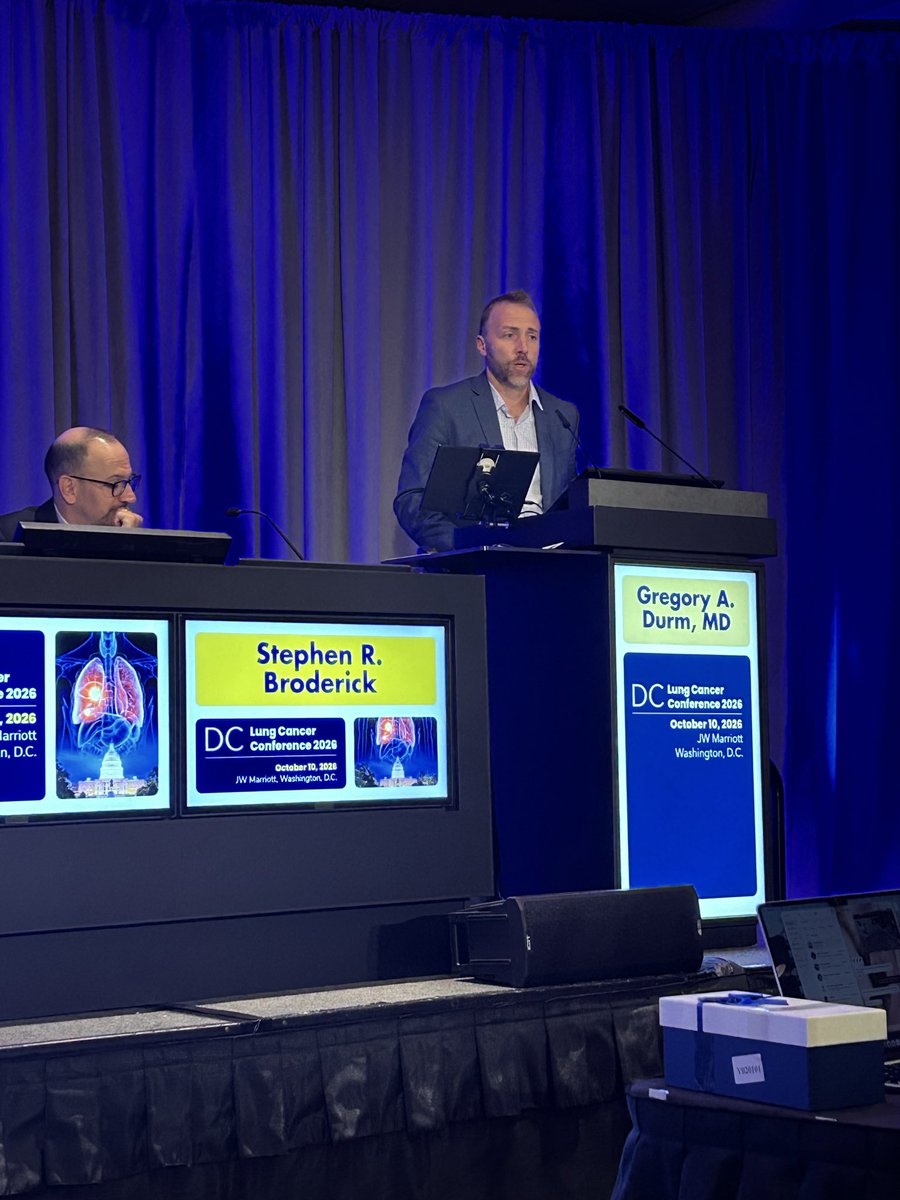
Session II · 08:55–10:00 ET · Moderator Stephen R. Broderick
Early-Stage NSCLC
Operability and Resectability (Margolis) · Immunotherapy in Resectable NSCLC (Durm) · Targeted Therapy in Resectable NSCLC (Florez) · Unresectable NSCLC (Paudel). 14 posts · 27 images captured.
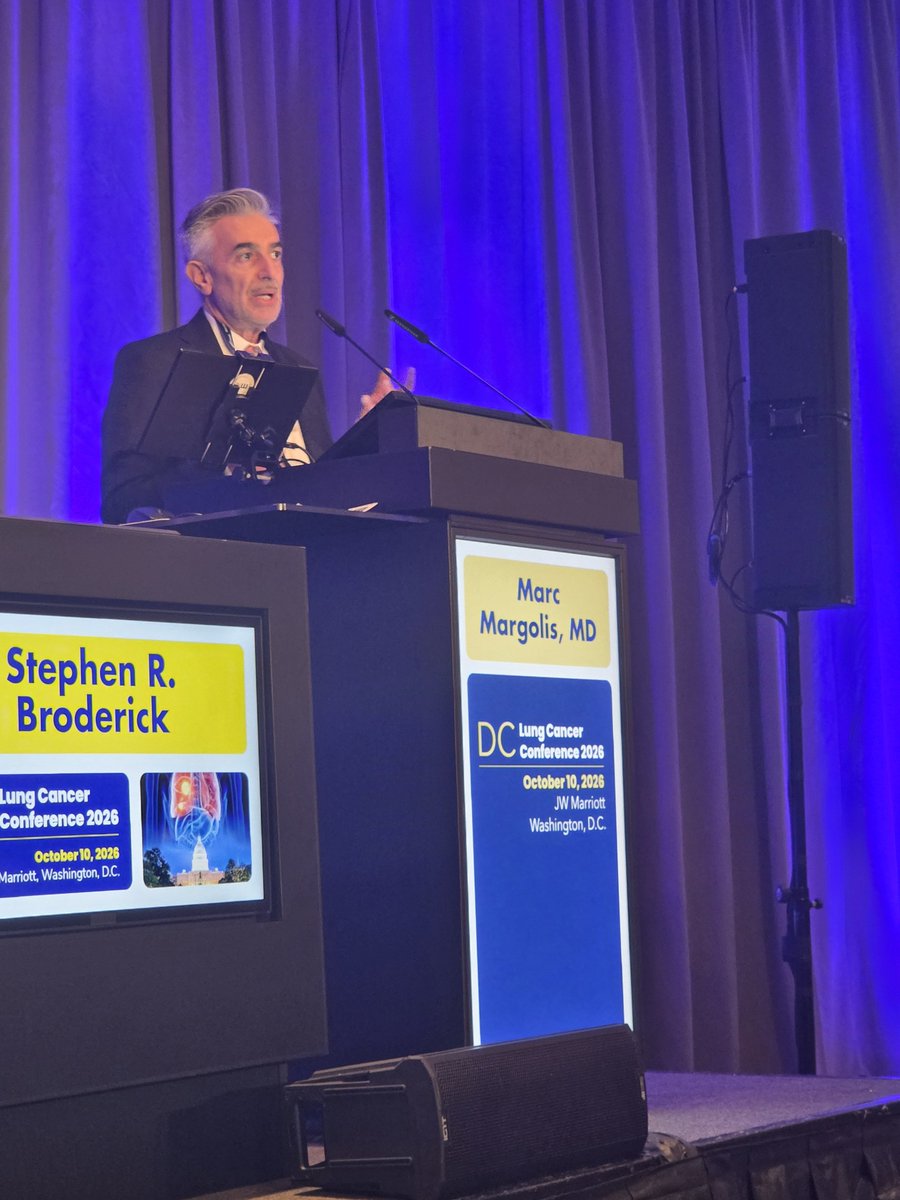
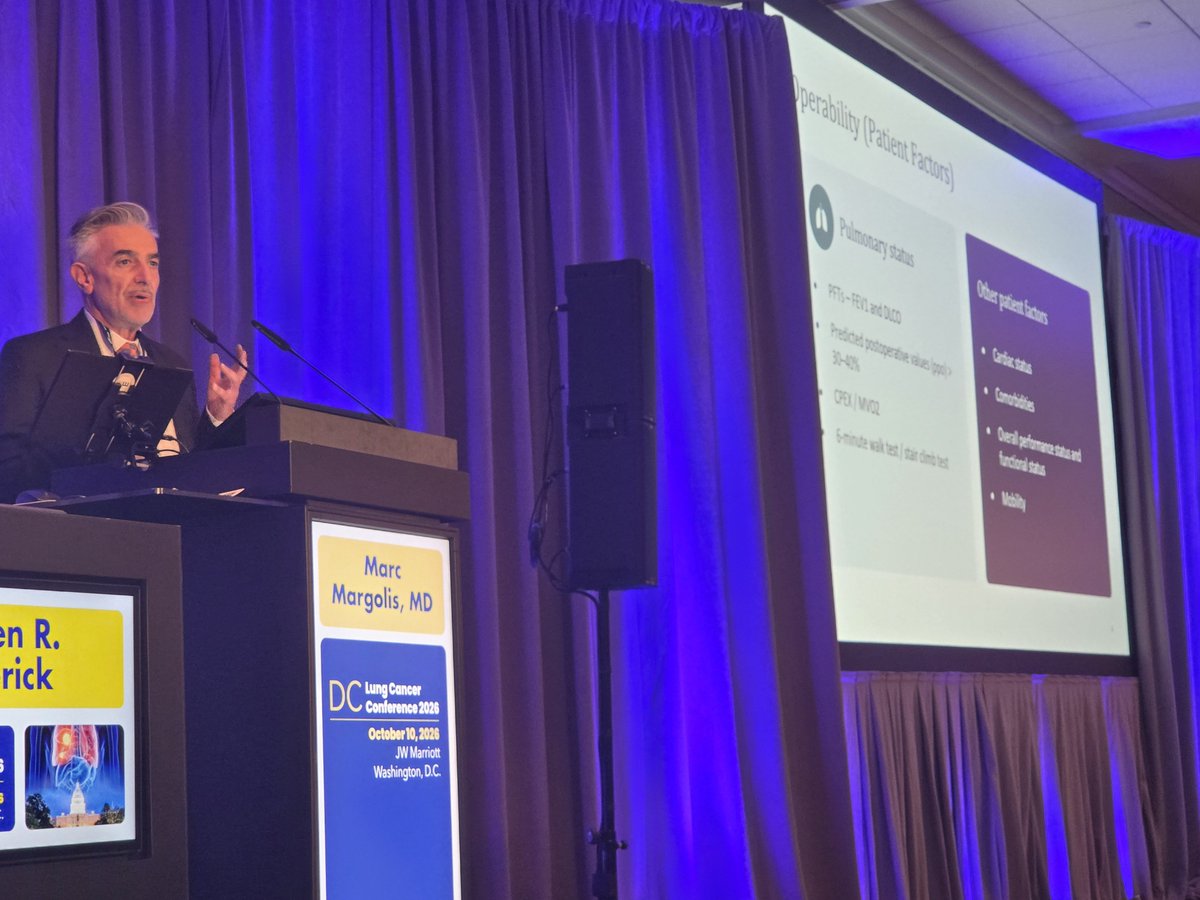
On the podiumMarc MargolisMedStar Georgetown University HospitalOperability and Resectability
Dr. Marc Margolis of @MedStarGUH takes us through the important differences between resectability and operability in NSCLC at #DCLung26.
[Slide 2]
[O]perability (Patient Factors)
Pulmonary status
- PFTs - FEV1 and DLCO
- Predicted postoperative values (ppo) > 30-40%
- CPEX / MVO2
- 6-minute walk test / stair climb test
Other patient factors
- Cardiac status
- Comorbidities
- Overall performance status and functional status
- Mobility
Joshua Reuss (@Joshua_Reuss)Oct 10, 2026 · 9:09 AM ETView post on X ↗
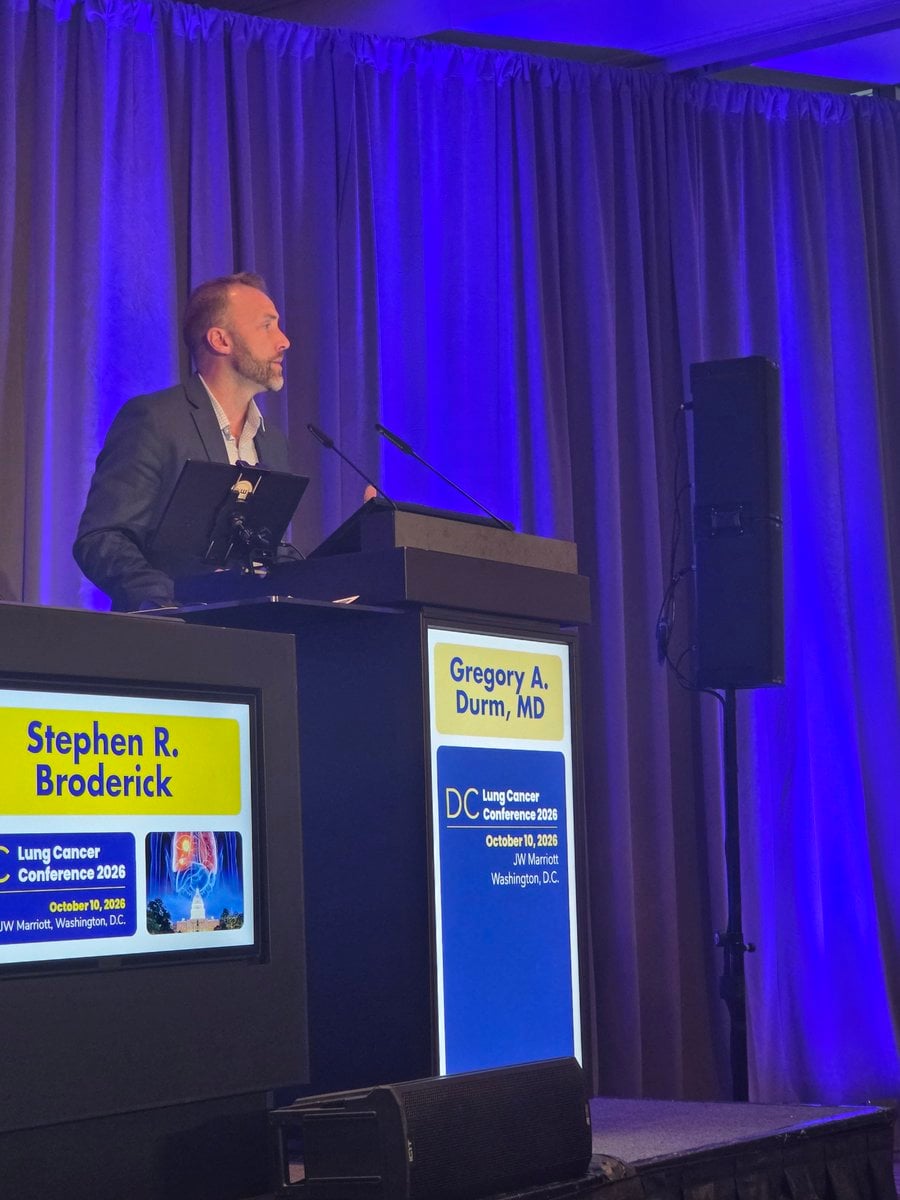
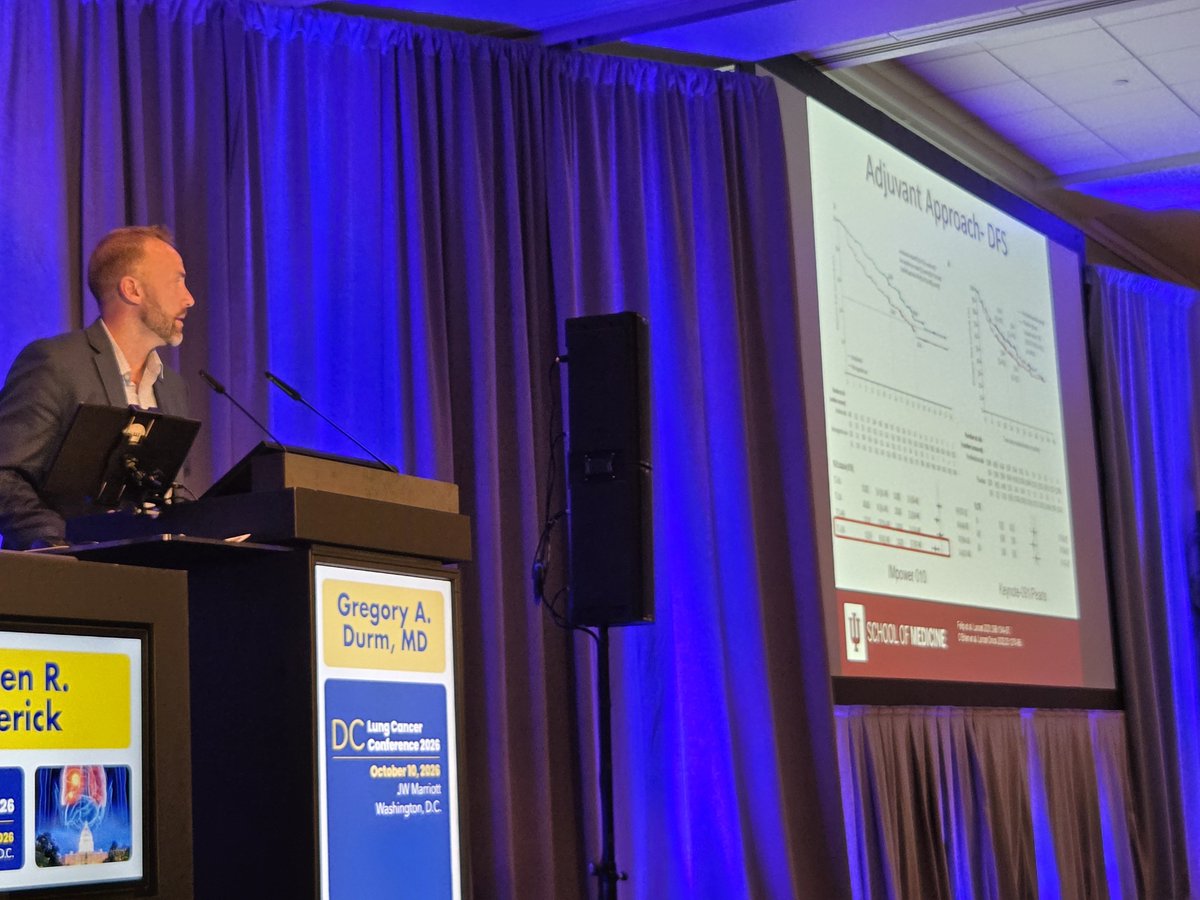
On the podiumGregory A. DurmIndiana University Simon Comprehensive Cancer CenterImmunotherapy in Resectable NSCLC
Dr. @gdurm with an incredibly comprehensive overview of perioperative immunotherapy strategies in NSCLC. pCR, MRD and other biomarkers will hopefully help maximize impact for patients in the future. Need prospective data in this space. #DCLung26
IMpower010
[Slide 2]
Adjuvant Approach- DFS
[Left panel: DFS Kaplan-Meier curves + subgroup/forest table labeled] IMpower 010
[Right panel: DFS Kaplan-Meier curves + number-at-risk table labeled] Keynote-091/Pearls
IU SCHOOL OF MEDICINE
[Footer citations, partially legible:] Felip et al. Lancet 2021;398:1344-57 [?]; O'Brien et al. Lancet Oncol 2022;23:1274-86 [?]
Joshua Reuss (@Joshua_Reuss)Oct 10, 2026 · 9:13 AM ETView post on X ↗
On the podiumGregory A. DurmIndiana University Simon Comprehensive Cancer CenterImmunotherapy in Resectable NSCLC
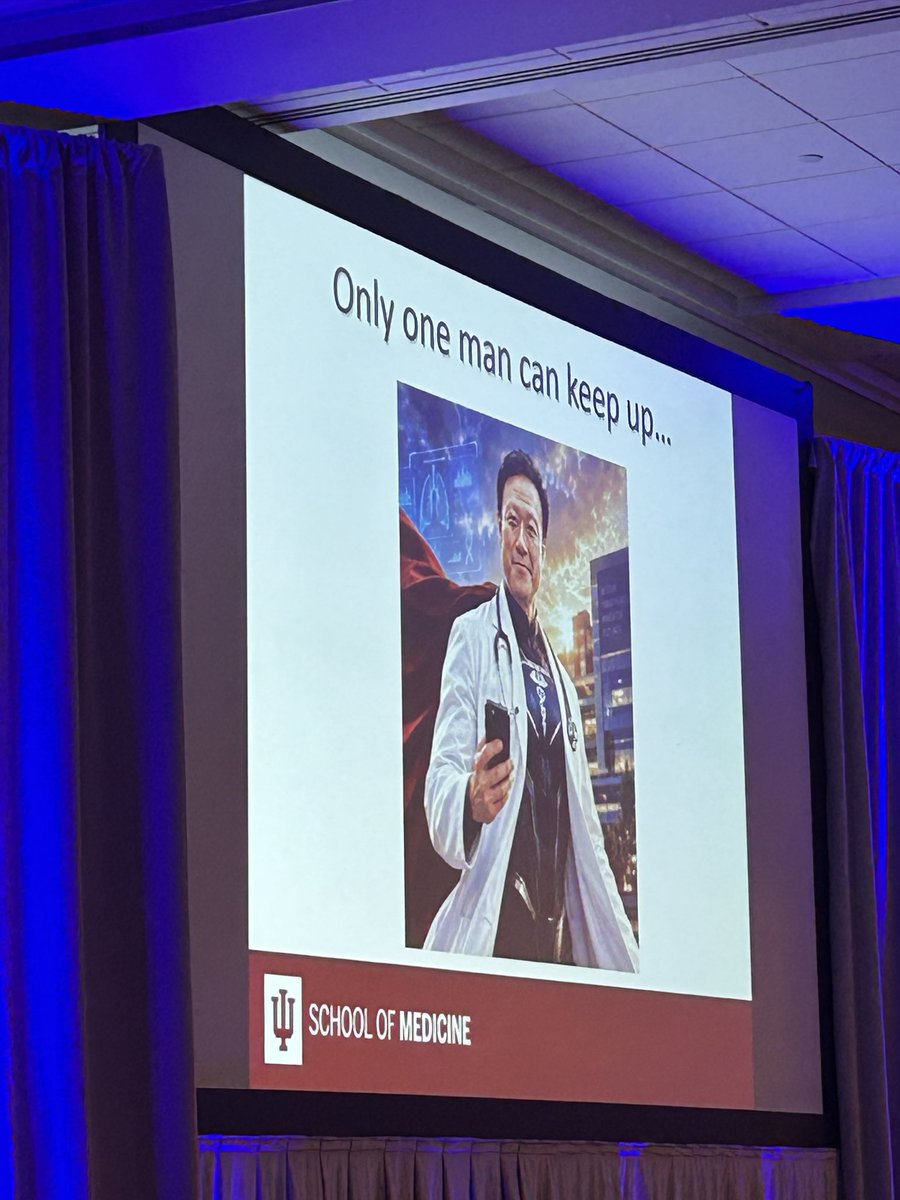
My colleague and friend @gdurm @IUCancerCenter highlighting at #DCLung26 the evolving perioperative strategies in lung cancer.
He queried AI for critical updates for trials,
With returning insight that AI could hardly keep up with the tremendous data…
Except for only one @StephenVLiu!
@Joshua_Reuss @MedStarHealth
Misty Dawn Shields (@drshieldsmd)Oct 10, 2026 · 9:14 AM ETView post on X ↗
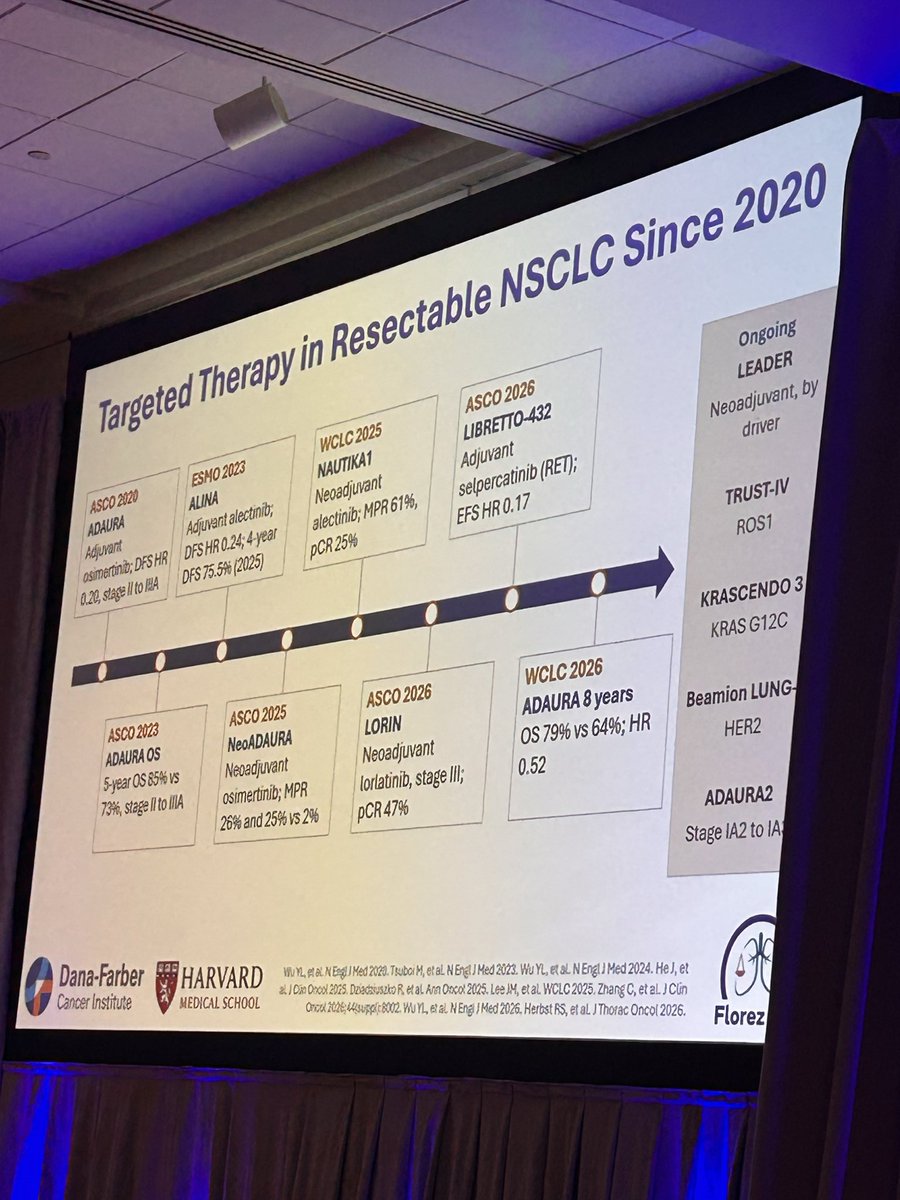
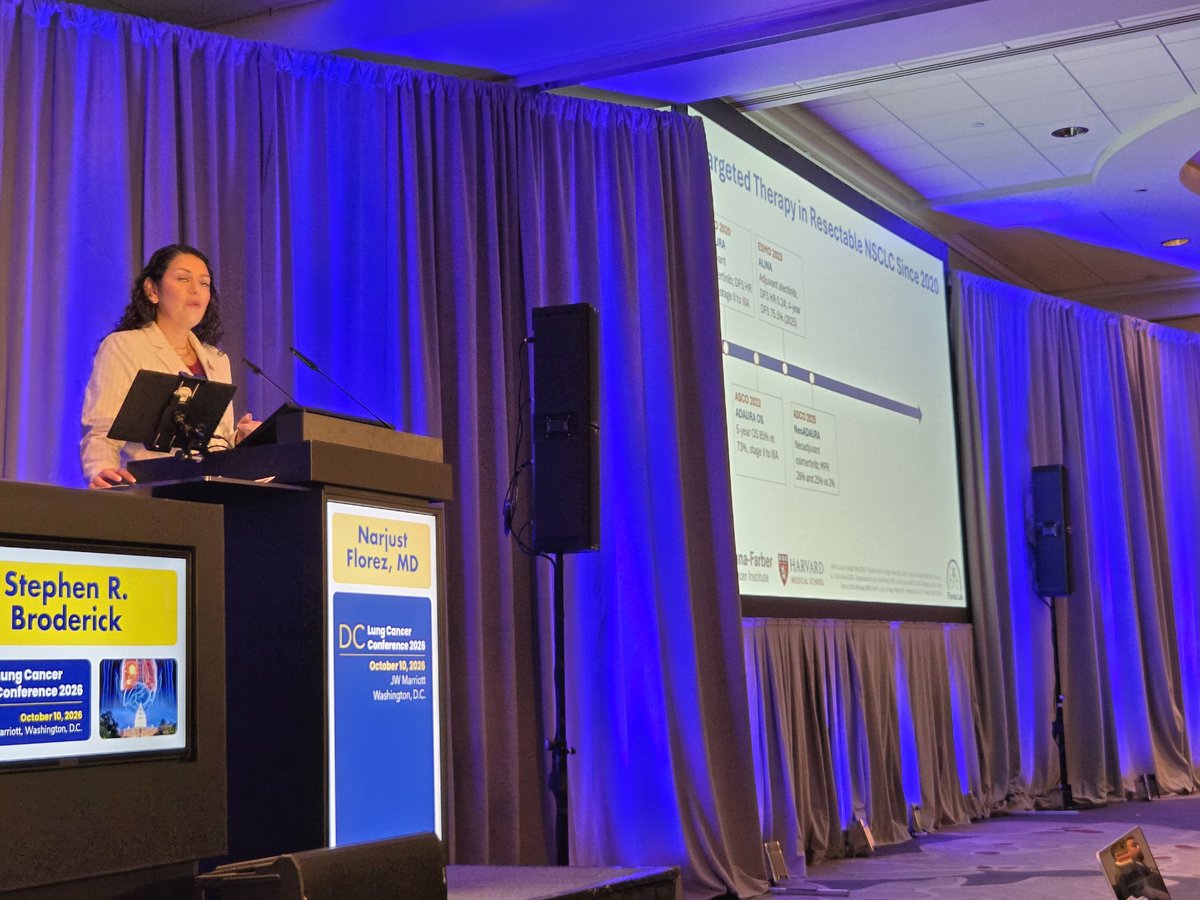
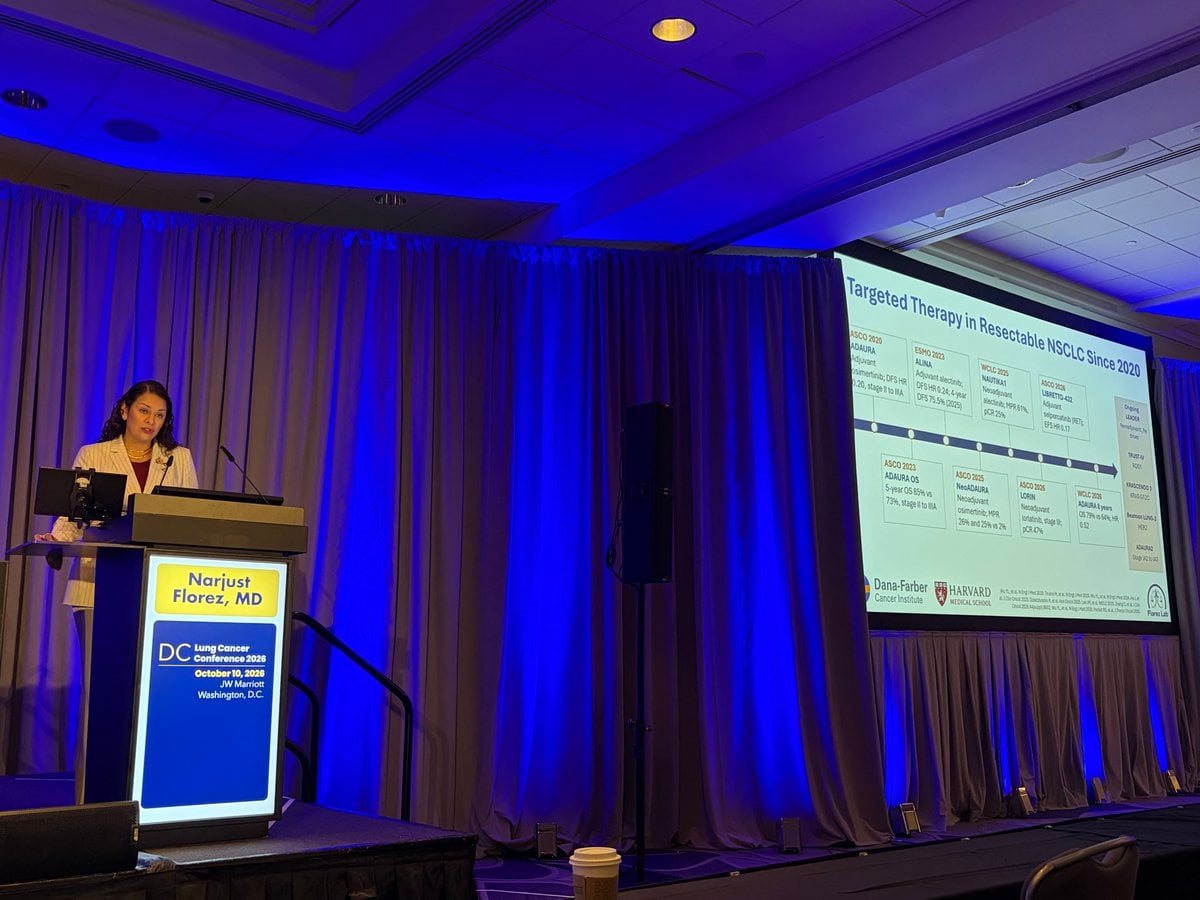
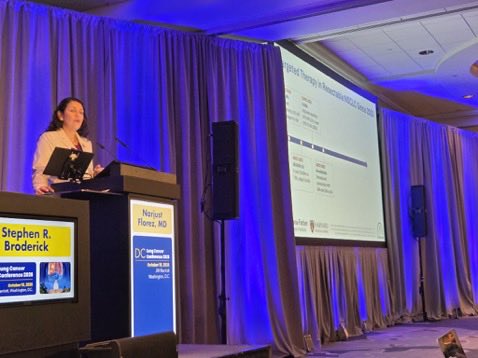
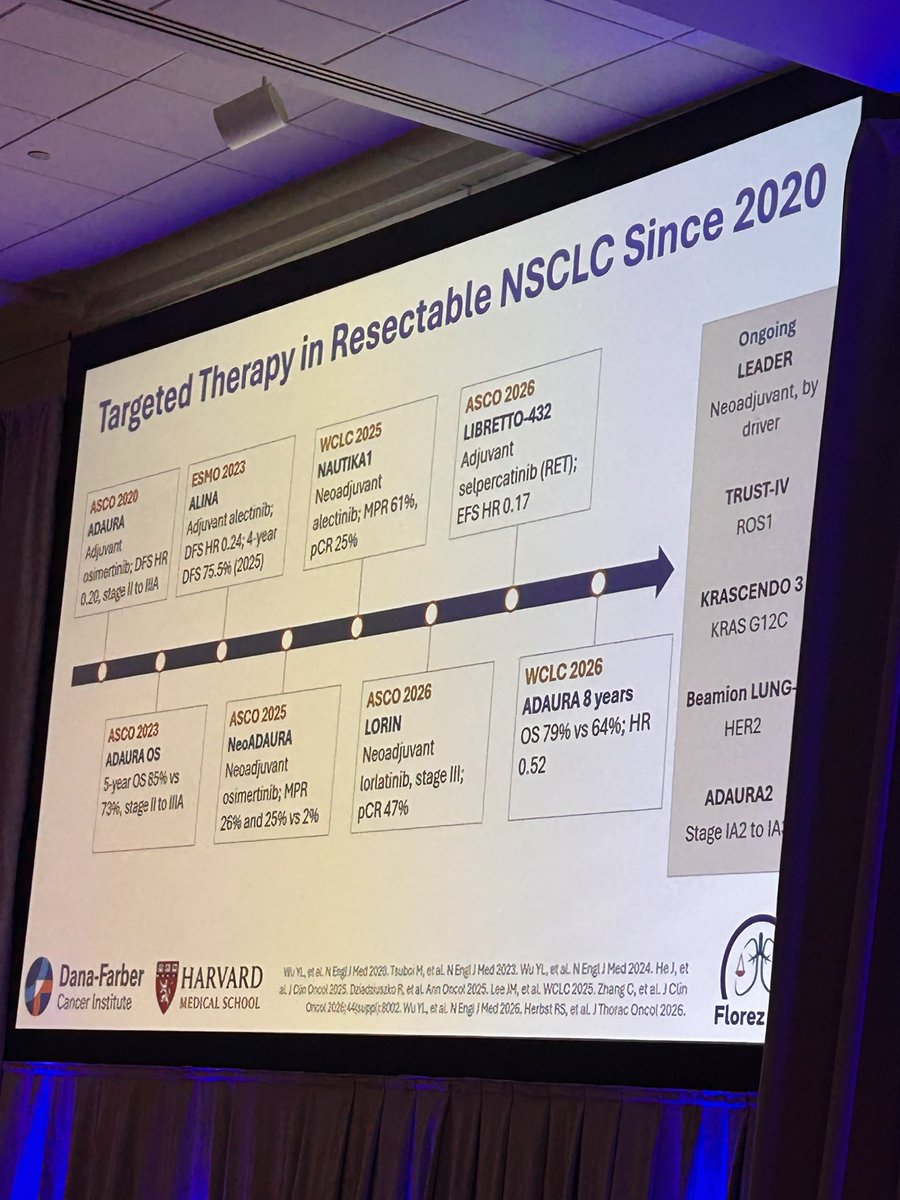
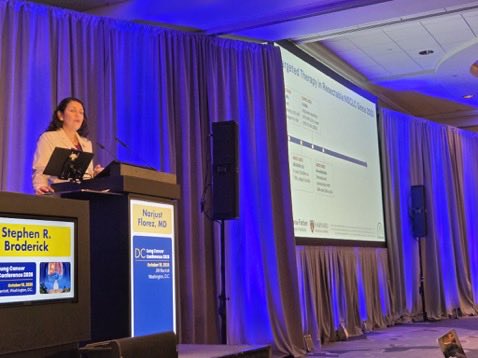
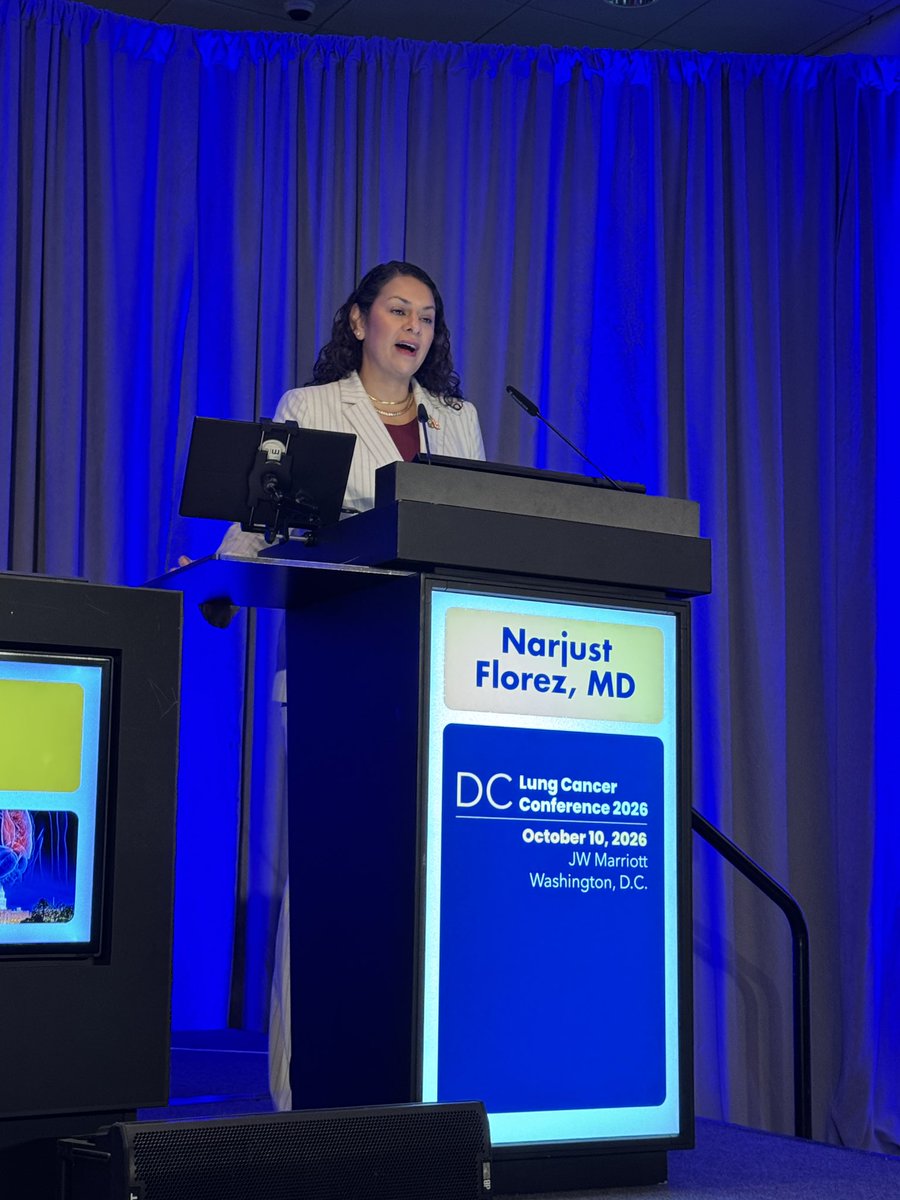
On the podiumNarjust FlorezDana-Farber Cancer InstituteTargeted Therapy in Resectable NSCLC
My dear friend @NarjustFlorezMD distilling recent practice changing updates in the use of targeted therapies in resectable NSCLC at #DCLung26.
🚨Key summary slide of major updates
@StephenVLiu @Joshua_Reuss @lungoncdoc @Latinamd @LuisRaezMD @RManochakian @LauraAlderMD @MariamAlex26 @DanaFarber @jillfeldman4 @EGFRResisters @RETpositive @RetRenegades @ALKPositiveinc @Florez_Lab
[Slide 1]
Targeted Therapy in Resectable NSCLC Since 2020
[Timeline – top row]
ASCO 2020 | ADAURA | Adjuvant osimertinib; DFS HR 0.20, stage II to IIIA
ESMO 2023 | ALINA | Adjuvant alectinib; DFS HR 0.24; 4-year DFS 75.5% (2025)
WCLC 2025 | NAUTIKA1 | Neoadjuvant alectinib; MPR 61%, pCR 25%
ASCO 2026 | LIBRETTO-432 | Adjuvant selpercatinib (RET); EFS HR 0.17
[Timeline – bottom row]
ASCO 2023 | ADAURA OS | 5-year OS 85% vs 73%, stage II to IIIA
ASCO 2025 | NeoADAURA | Neoadjuvant osimertinib; MPR 26% and 25% vs 2%
ASCO 2026 | LORIN | Neoadjuvant lorlatinib, stage III; pCR 47%
WCLC 2026 | ADAURA 8 years | OS 79% vs 64%; HR 0.52
[Right column]
Ongoing
LEADER | Neoadjuvant, by driver
TRUST-IV | ROS1
KRASCENDO 3 | KRAS G12C
Beamion LUNG-[cut off] | HER2
ADAURA2 | Stage IA2 to IA[cut off]
Wu YL, et al. N Engl J Med 2020. Tsuboi M, et al. N Engl J Med 2023. Wu YL, et al. N Engl J Med 2024. He J, et al. J Clin Oncol 2025. Dziadziuszko R, et al. Ann Oncol 2025. Lee JM, et al. WCLC 2025. Zhang C, et al. J Clin Oncol 2026;44(suppl):8002. Wu YL, et al. N Engl J Med 2026. Herbst RS, et al. J Thorac Oncol 2026.
Dana-Farber Cancer Institute | Harvard Medical School | Florez [Lab logo]
Misty Dawn Shields (@drshieldsmd)Oct 10, 2026 · 9:21 AM ETView post on X ↗
On the podiumNarjust FlorezDana-Farber Cancer InstituteTargeted Therapy in Resectable NSCLC
Dr. @NarjustFlorezMD walks us through targeted therapy in resectable NSCLC. Amazing to see the ongoing progress in this space in recent years. #DCLung26
[Slide 1]
[T]argeted Therapy in Resectable NSCLC Since 2020
[ASC]O 2020 | [AD]AURA | [Adju]vant [osim]ertinib; DFS HR [0.20 - cut off], stage II to IIIA
ESMO 2023 | ALINA | Adjuvant alectinib; DFS HR 0.24; 4-year DFS 75.5% (2025)
ASCO 2023 | ADAURA OS | 5-year OS 85% vs 73%, stage II to IIIA
ASCO 2025 | NeoADAURA | Neoadjuvant osimertinib; MPR 26% and 25% vs 2%
[Da]na-Farber [Can]cer Institute | HARVARD MEDICAL SCHOOL | Florez Lab
[reference footer illegible at this angle - see t022_s1 for the same slide's full footer]
Joshua Reuss (@Joshua_Reuss)Oct 10, 2026 · 9:22 AM ETView post on X ↗
On the podiumNarjust FlorezDana-Farber Cancer InstituteTargeted Therapy in Resectable NSCLC
Dr @NarjustFlorezMD with a terrific overview of how far we’ve come in early stage AGA+ NSCLC with targeted therapies #DCLung26.
⭐️Highlights need for comprehensive biomarker testing for *all* stages of lung cancer prior to treatment decision.
👏Shout out for all her amazing work in young lung, as well! @YoungLungCancer @NarjustFlorezMD @Florez_Lab @EGFRResisters @ALKPositiveinc @KRASKickers
@Joshua_Reuss @StephenVLiu
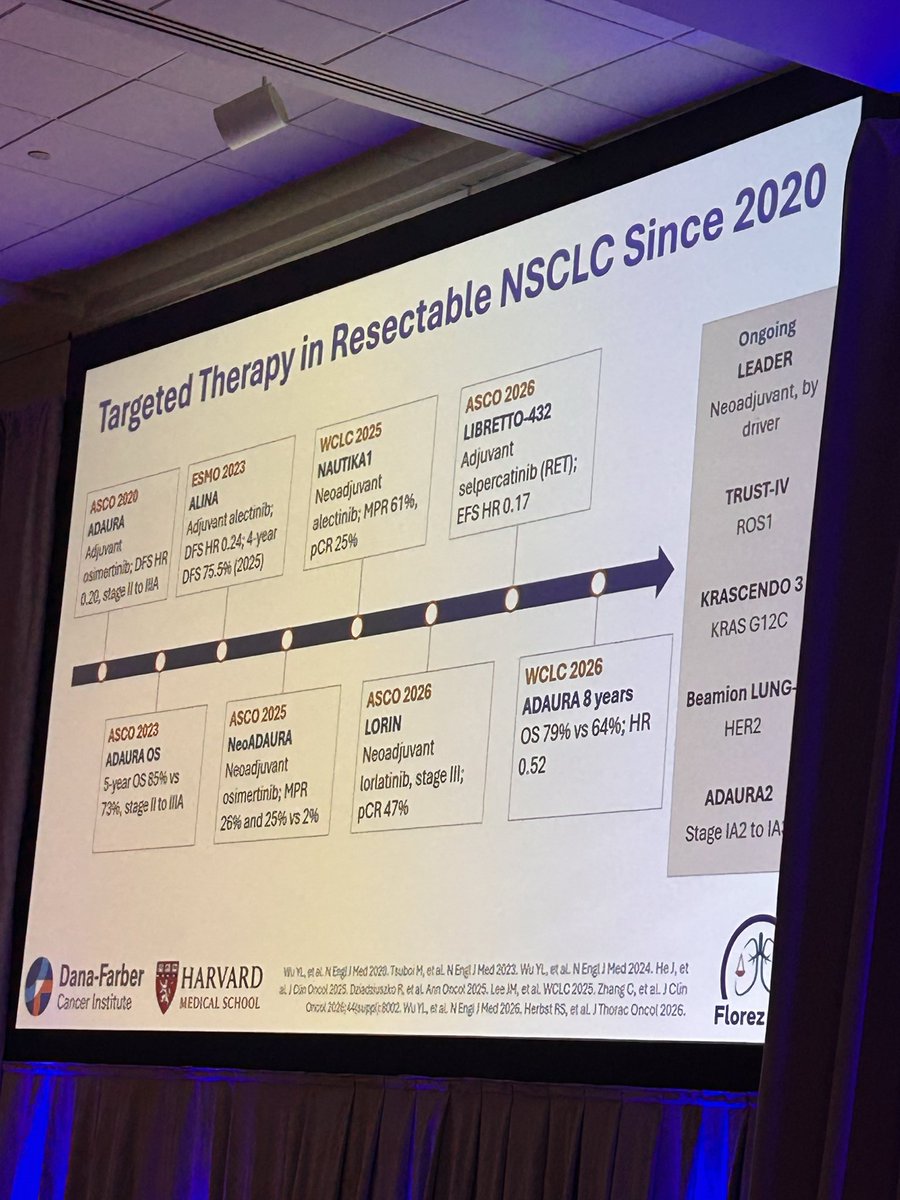
[Slide 1]
Targeted Therapy in Resectable NSCLC Since 2020
ASCO 2020 | ADAURA | Adjuvant osimertinib; DFS HR 0.20, stage II to IIIA
ESMO 2023 | ALINA | Adjuvant alectinib; DFS HR 0.24; 4-year DFS 75.5% (2025)
WCLC 2025 | NAUTIKA1 | Neoadjuvant alectinib; MPR 61%, pCR 25%
ASCO 2026 | LIBRETTO-432 | Adjuvant selpercatinib (RET); EFS HR 0.17
ASCO 2023 | ADAURA OS | 5-year OS 85% vs 73%, stage II to IIIA
ASCO 2025 | NeoADAURA | Neoadjuvant osimertinib; MPR 26% and 25% vs 2%
ASCO 2026 | LORIN | Neoadjuvant lorlatinib, stage III; pCR 47%
WCLC 2026 | ADAURA 8 years | OS 79% vs 64%; HR 0.52
Ongoing
LEADER | Neoadjuvant, by driver
TRUST-IV | ROS1
KRASCENDO 3 | KRAS G12C
Beamion LUNG-3 | HER2
ADAURA2 | Stage IA2 to IA3
Dana-Farber Cancer Institute | HARVARD MEDICAL SCHOOL | Florez Lab
Wu YL, et al. N Engl J Med 2020. Tsuboi M, et al. N Engl J Med 2023. Wu YL, et al. N Engl J Med 2024. He J, et al. J Clin Oncol 2025. Dziadziuszko R, et al. Ann Oncol 2025. Lee JM, et al. WCLC 2025. Zhang C, et al. J Clin Oncol 2026;44(suppl):8002. Wu YL, et al. N Engl J Med 2026. Herbst RS, et al. J Thorac Oncol 2026.
Laura Alder, MD (@LauraAlderMD)Oct 10, 2026 · 9:23 AM ETView post on X ↗
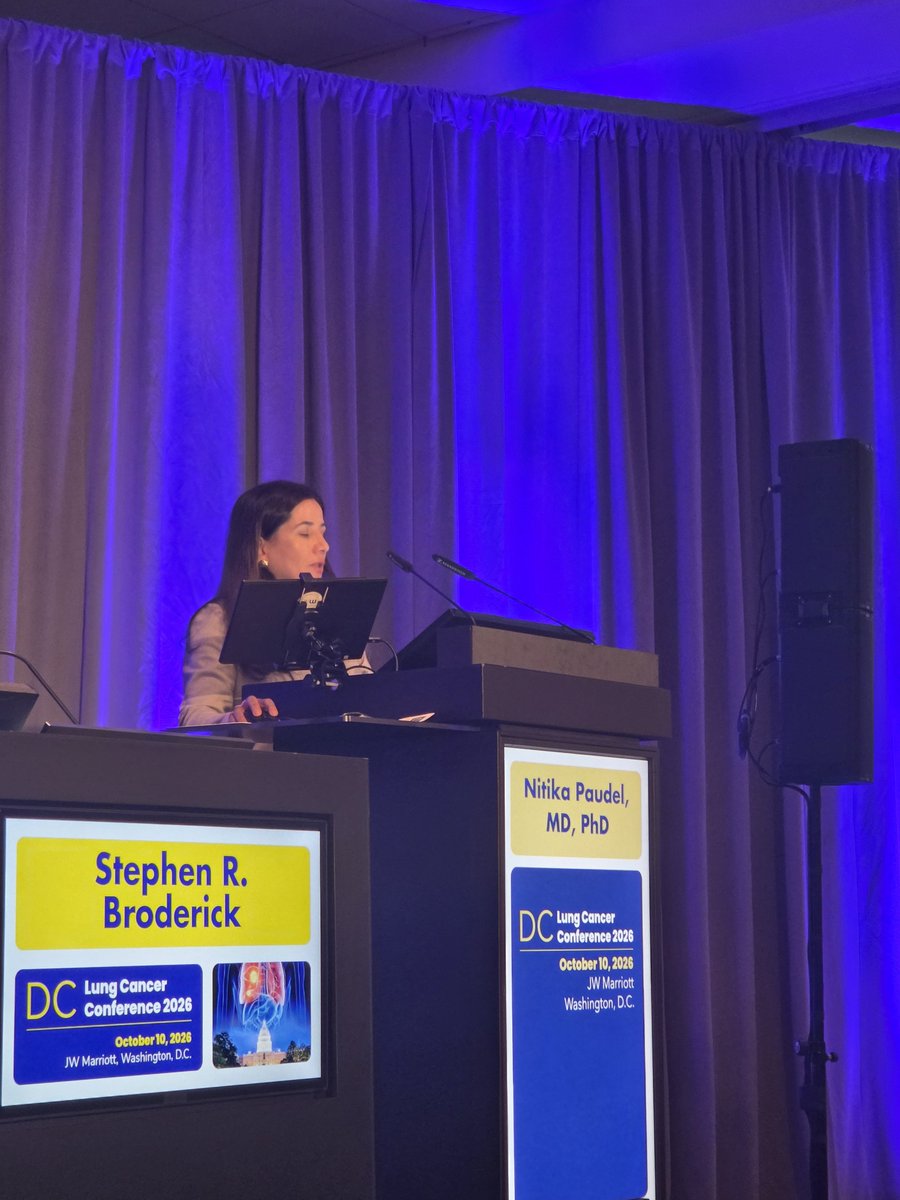
On the podiumNitika PaudelMedStar Georgetown University HospitalUnresectable NSCLC
Dr. @NitikaPaudel with an important overview of the current standards in unresectable locally advanced NSCLC at #DCLung26.
Joshua Reuss (@Joshua_Reuss)Oct 10, 2026 · 9:30 AM ETView post on X ↗
On the podiumHeather WakeleeStanford University School of Medicine
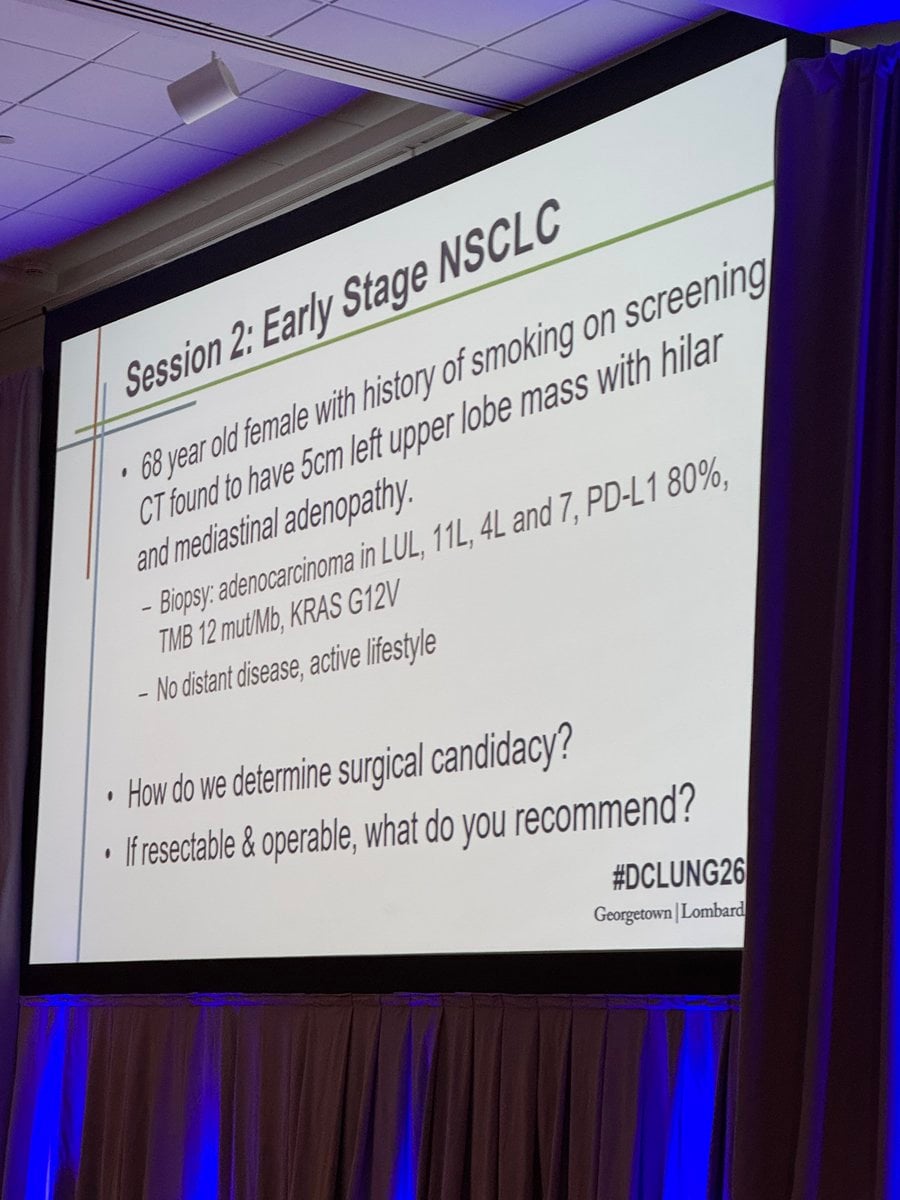
Best part of the #DCLung26 lung conference? Difficult case discussions!
Here’s an early stage NSCLC case we discussed! @StephenVLiu @Joshua_Reuss @ErinGillaspie @JoeChangMD
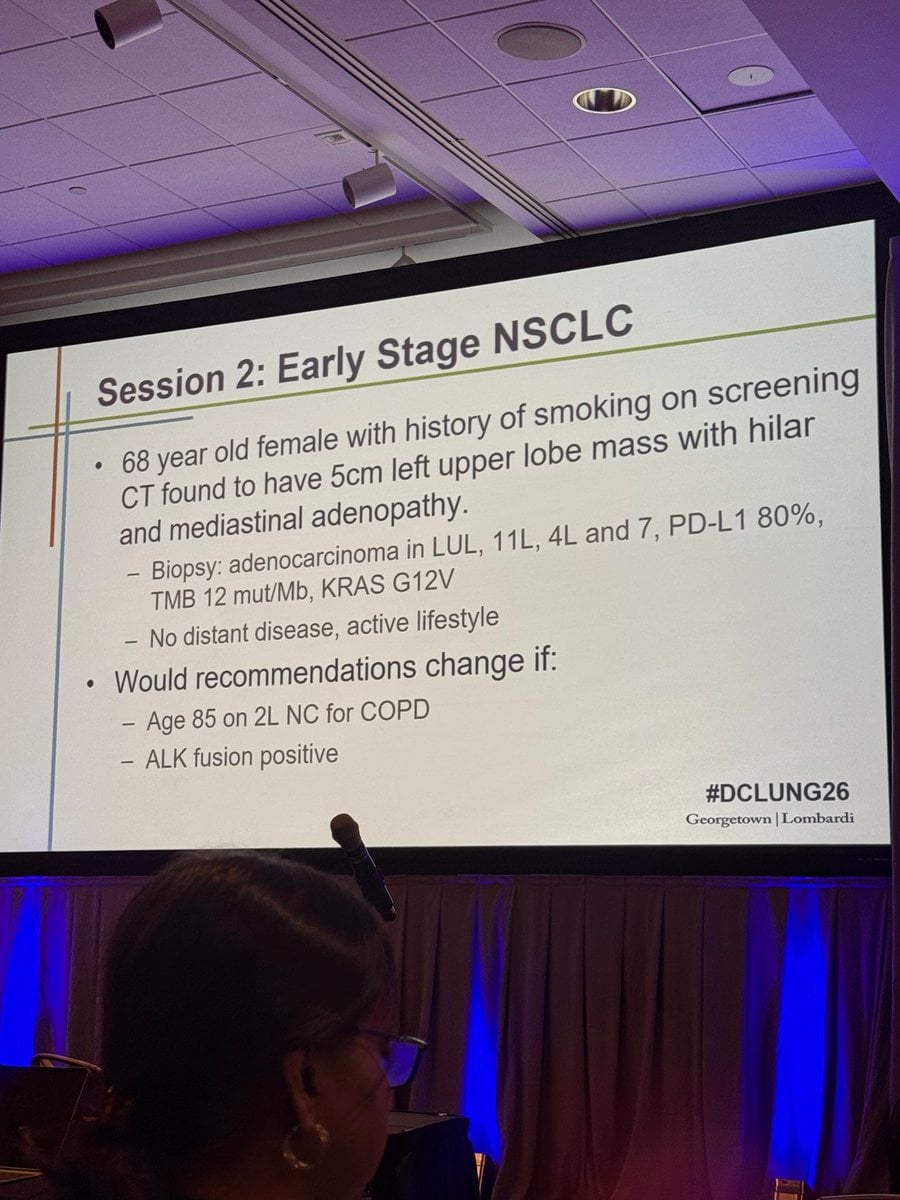
[Slide 1]
Session 2: Early Stage NSCLC
• 68 year old female with history of smoking on screening CT found to have 5cm left upper lobe mass with hilar and mediastinal adenopathy.
– Biopsy: adenocarcinoma in LUL, 11L, 4L and 7, PD-L1 80%, TMB 12 mut/Mb, KRAS G12V
– No distant disease, active lifestyle
• How do we determine surgical candidacy?
• If resectable & operable, what do you recommend?
#DCLUNG26
Georgetown | Lombardi
Eric K. Singhi, MD (@lungoncdoc)Oct 10, 2026 · 9:35 AM ETView post on X ↗
On the podiumHeather WakeleeStanford University School of Medicine
All-star panel navigating challenging cases at #DCLung26!
So many factors to consider in early-stage and locally advanced lung cancer-clinical, pathologic, and molecular findings.
Multidisciplinary input is key to optimizing patient care!
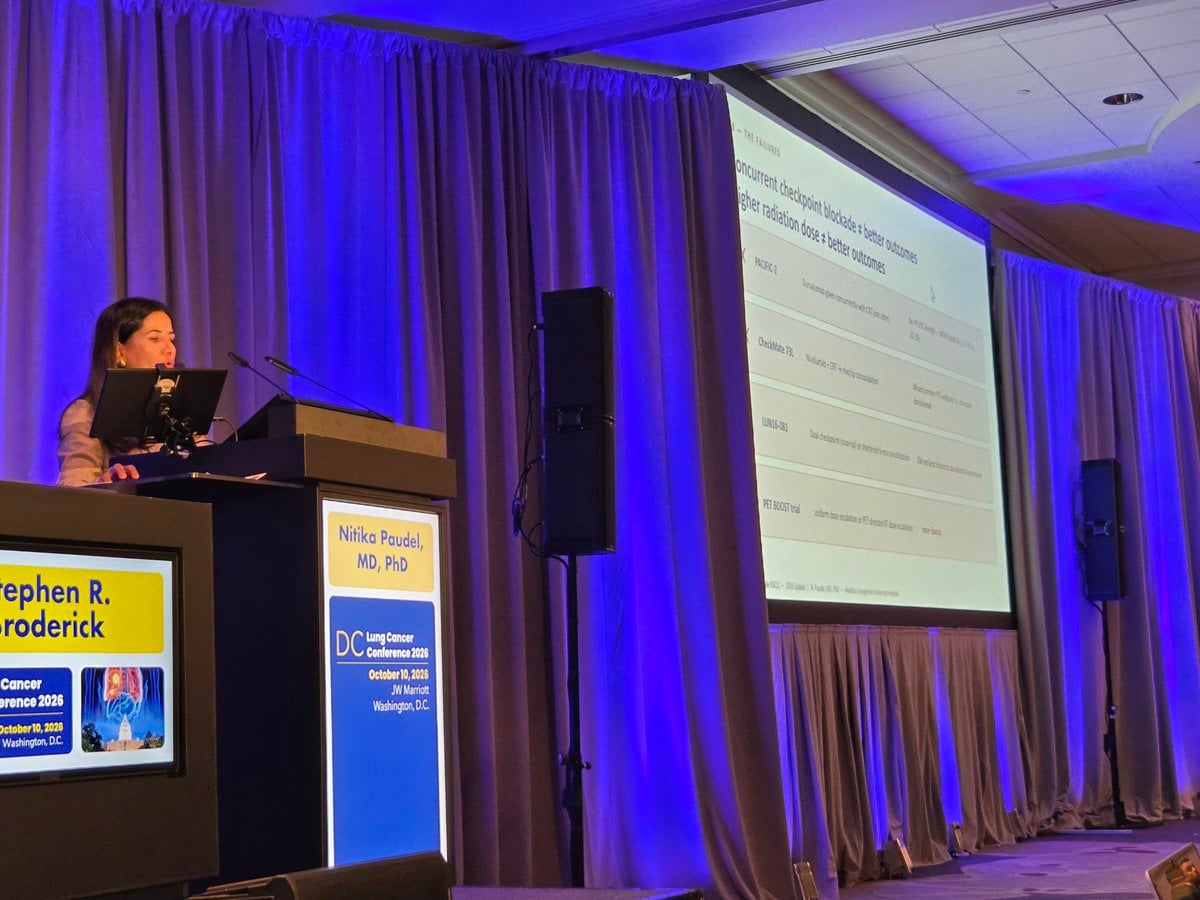
On the podiumNitika PaudelMedStar Georgetown University HospitalUnresectable NSCLC
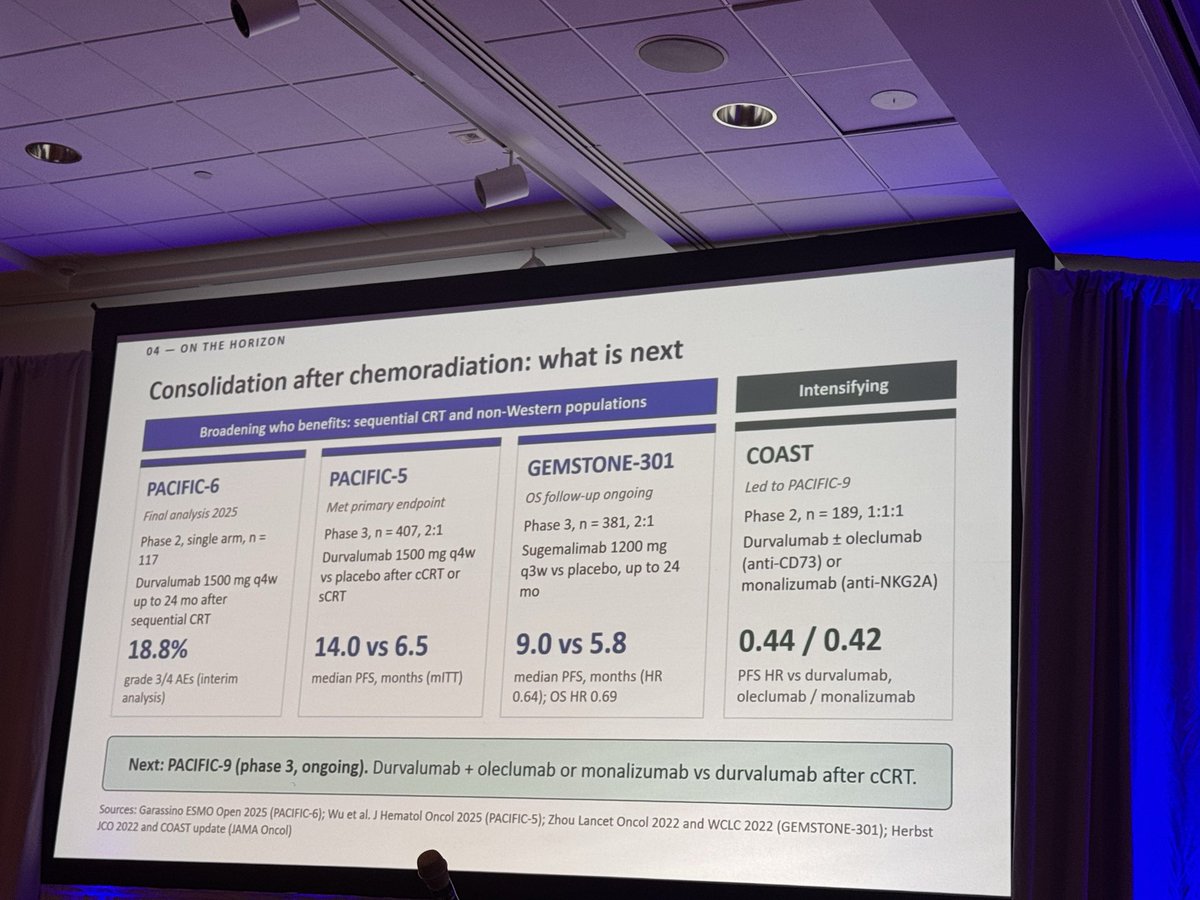
#DCLung26 Dr. @NitikaPaudel provides an important overview of current standards of care for unresectable, locally advanced #NSCLC. Where immunotherapy and targeted therapy can be integrated with radiation ☢️ and where the data shows it doesn’t help ! 🫁 #lcsm
PACIFIC-6PACIFIC-5GEMSTONE-301COASTPACIFIC-9
[Slide 2]
04 — ON THE HORIZON
Consolidation after chemoradiation: what is next
Broadening who benefits: sequential CRT and non-Western populations
PACIFIC-6
Final analysis 2025
Phase 2, single arm, n = 117
Durvalumab 1500 mg q4w up to 24 mo after sequential CRT
18.8%
grade 3/4 AEs (interim analysis)
PACIFIC-5
Met primary endpoint
Phase 3, n = 407, 2:1
Durvalumab 1500 mg q4w vs placebo after cCRT or sCRT
14.0 vs 6.5
median PFS, months (mITT)
GEMSTONE-301
OS follow-up ongoing
Phase 3, n = 381, 2:1
Sugemalimab 1200 mg q3w vs placebo, up to 24 mo
9.0 vs 5.8
median PFS, months (HR 0.64); OS HR 0.69
Intensifying
COAST
Led to PACIFIC-9
Phase 2, n = 189, 1:1:1
Durvalumab ± oleclumab (anti-CD73) or monalizumab (anti-NKG2A)
0.44 / 0.42
PFS HR vs durvalumab, oleclumab / monalizumab
Next: PACIFIC-9 (phase 3, ongoing). Durvalumab + oleclumab or monalizumab vs durvalumab after cCRT.
Sources: Garassino ESMO Open 2025 (PACIFIC-6); Wu et al. J Hematol Oncol 2025 (PACIFIC-5); Zhou Lancet Oncol 2022 and WCLC 2022 (GEMSTONE-301); Herbst JCO 2022 and COAST update (JAMA Oncol)
Dr. Estela Rodriguez (@Latinamd)Oct 10, 2026 · 10:28 AM ETView post on X ↗
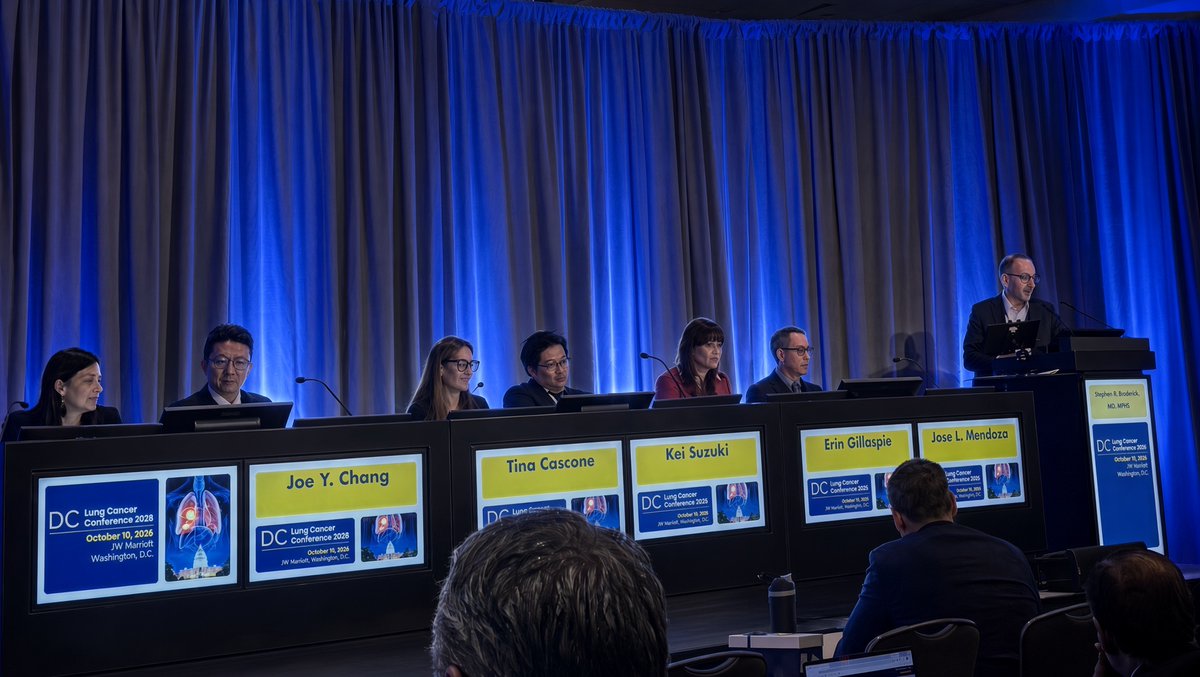
On the podiumJoe Y. ChangMD Anderson Cancer Center
#DCLung26 Excellent case based discussion on early stage lung cancer bringing up the complexity of Resectability, biomarker testing, and center expertise in management with a stellar multiD group Dr Tina Cascone @ErinGillaspie @KeiSuzukiMD @HwakeleeMD @JoeChangMD Dr Jose Mendoza
[Slide 2]
Session 2: Early Stage NSCLC
• 68 year old female with history of smoking on screening CT found to have 5cm left upper lobe mass with hilar and mediastinal adenopathy.
– Biopsy: adenocarcinoma in LUL, 11L, 4L and 7, PD-L1 80%, TMB 12 mut/Mb, KRAS G12V
– No distant disease, active lifestyle
• How do we determine surgical candidacy?
• If resectable & operable, what do you recommend?
#DCLUNG26
Georgetown | Lombardi
Dr. Estela Rodriguez (@Latinamd)Oct 10, 2026 · 10:39 AM ETView post on X ↗
On the podiumNarjust FlorezDana-Farber Cancer InstituteTargeted Therapy in Resectable NSCLC
#DCLung26 Excellent review of advancements in targeted therapy🎯 in resectable lung cancer and what’s to come moving from EGFR ALK, RET approvals to other potential targets in this space.
2 questions come to mind
👉🏽does neoadjuvant add to adjuvant targets therapy?
👉🏽are me curing more pts or treating micro mets early and what is risk of stopping adjuvant therapy?
[Slide 2]
Targeted Therapy in Resectable NSCLC Since 2020
[Timeline – top row]
ASCO 2020 | ADAURA | Adjuvant osimertinib; DFS HR 0.20, stage II to IIIA
ESMO 2023 | ALINA | Adjuvant alectinib; DFS HR 0.24; 4-year DFS 75.5% (2025)
WCLC 2025 | NAUTIKA1 | Neoadjuvant alectinib; MPR 61%, pCR 25%
ASCO 2026 | LIBRETTO-432 | Adjuvant selpercatinib (RET); EFS HR 0.17
[Timeline – bottom row]
ASCO 2023 | ADAURA OS | 5-year OS 85% vs 73%, stage II to IIIA
ASCO 2025 | NeoADAURA | Neoadjuvant osimertinib; MPR 26% and 25% vs 2%
ASCO 2026 | LORIN | Neoadjuvant lorlatinib, stage III; pCR 47%
WCLC 2026 | ADAURA 8 years | OS 79% vs 64%; HR 0.52
[Right column]
Ongoing
LEADER | Neoadjuvant, by driver
TRUST-IV | ROS1
KRASCENDO 3 | KRAS G12C
Beamion LUNG-[cut off] | HER2
ADAURA2 | Stage IA2 to IA[cut off]
Wu YL, et al. N Engl J Med 2020. Tsuboi M, et al. N Engl J Med 2023. Wu YL, et al. N Engl J Med 2024. He J, et al. J Clin Oncol 2025. Dziadziuszko R, et al. Ann Oncol 2025. Lee JM, et al. WCLC 2025. Zhang C, et al. J Clin Oncol 2026;44(suppl):8002. Wu YL, et al. N Engl J Med 2026. Herbst RS, et al. J Thorac Oncol 2026.
Dana-Farber Cancer Institute | Harvard Medical School | Florez [Lab logo]
Dr. Estela Rodriguez (@Latinamd)Oct 10, 2026 · 10:47 AM ETView post on X ↗
On the podiumNarjust FlorezDana-Farber Cancer InstituteTargeted Therapy in Resectable NSCLC
#DCLung26 Excellent review of advancements in targeted therapy🎯 in resectable lung cancer by @NarjustFlorezMD and what’s to come moving from EGFR ALK, RET approvals to other potential targets in this space.
2 questions come to mind
👉🏽Does neoadjuvant add to adjuvant targeted therapy?
👉🏽Are we curing more pts or treating micro mets early and what is the risk of stopping adjuvant therapy?
[Slide 2]
Targeted Therapy in Resectable NSCLC Since 2020
[Timeline – top row]
ASCO 2020 | ADAURA | Adjuvant osimertinib; DFS HR 0.20, stage II to IIIA
ESMO 2023 | ALINA | Adjuvant alectinib; DFS HR 0.24; 4-year DFS 75.5% (2025)
WCLC 2025 | NAUTIKA1 | Neoadjuvant alectinib; MPR 61%, pCR 25%
ASCO 2026 | LIBRETTO-432 | Adjuvant selpercatinib (RET); EFS HR 0.17
[Timeline – bottom row]
ASCO 2023 | ADAURA OS | 5-year OS 85% vs 73%, stage II to IIIA
ASCO 2025 | NeoADAURA | Neoadjuvant osimertinib; MPR 26% and 25% vs 2%
ASCO 2026 | LORIN | Neoadjuvant lorlatinib, stage III; pCR 47%
WCLC 2026 | ADAURA 8 years | OS 79% vs 64%; HR 0.52
[Right column]
Ongoing
LEADER | Neoadjuvant, by driver
TRUST-IV | ROS1
KRASCENDO 3 | KRAS G12C
Beamion LUNG-[cut off] | HER2
ADAURA2 | Stage IA2 to IA[cut off]
Wu YL, et al. N Engl J Med 2020. Tsuboi M, et al. N Engl J Med 2023. Wu YL, et al. N Engl J Med 2024. He J, et al. J Clin Oncol 2025. Dziadziuszko R, et al. Ann Oncol 2025. Lee JM, et al. WCLC 2025. Zhang C, et al. J Clin Oncol 2026;44(suppl):8002. Wu YL, et al. N Engl J Med 2026. Herbst RS, et al. J Thorac Oncol 2026.
Dana-Farber Cancer Institute | Harvard Medical School | Florez [Lab logo]
Dr. Estela Rodriguez (@Latinamd)Oct 10, 2026 · 11:09 AM ETView post on X ↗
On the podiumNarjust FlorezDana-Farber Cancer InstituteTargeted Therapy in Resectable NSCLC
@NarjustFlorezMD @lungoncdoc such a great gathering here in #DCLung26 capturing all the important updates! The good news is that the improvement in outcomes continues to grow that is why we smile to the future @StephenVLiu @Joshua_Reuss
Dr. Nagla Abdel Karim (@NaglaAKarimMD)Oct 10, 2026 · 4:52 PM ETView post on X ↗
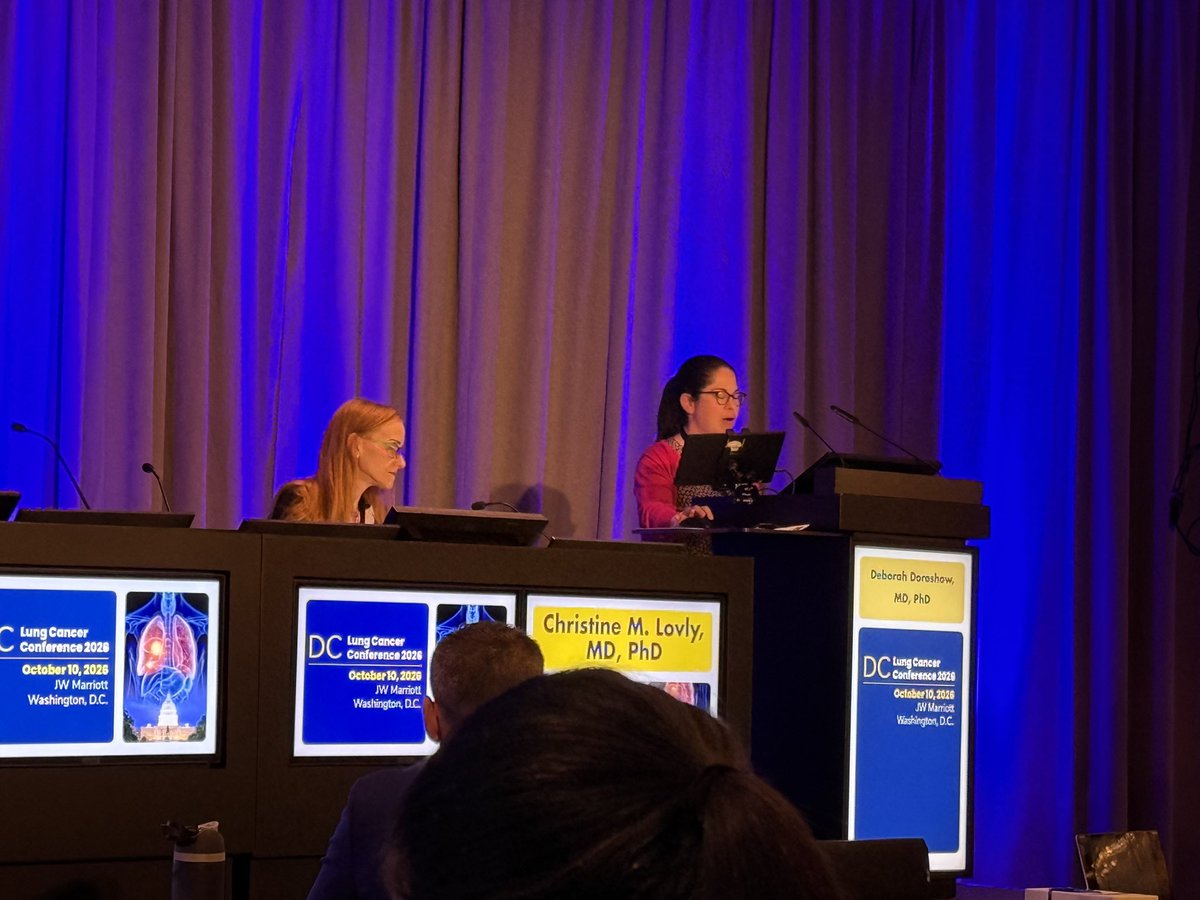
Session III · 10:00–11:05 ET · Moderator Christine M. Lovly
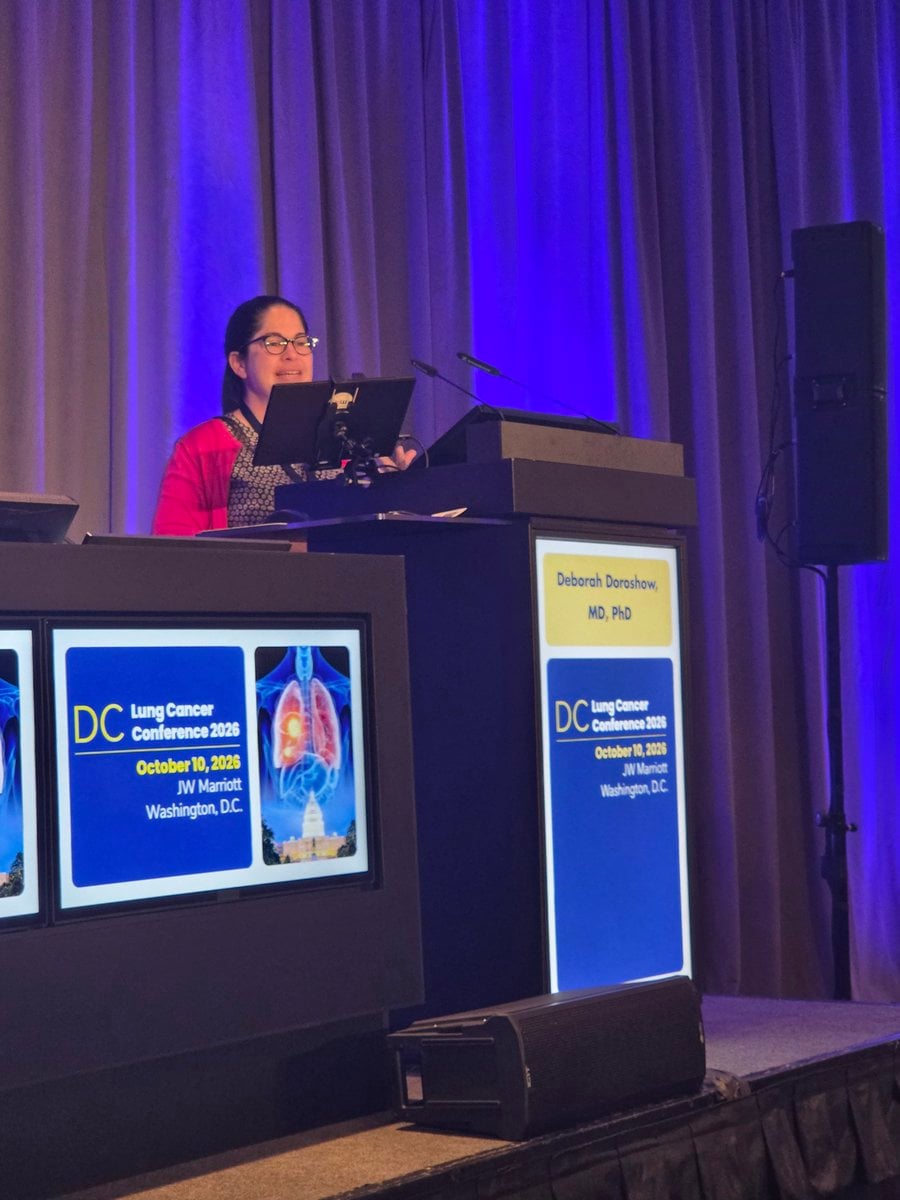
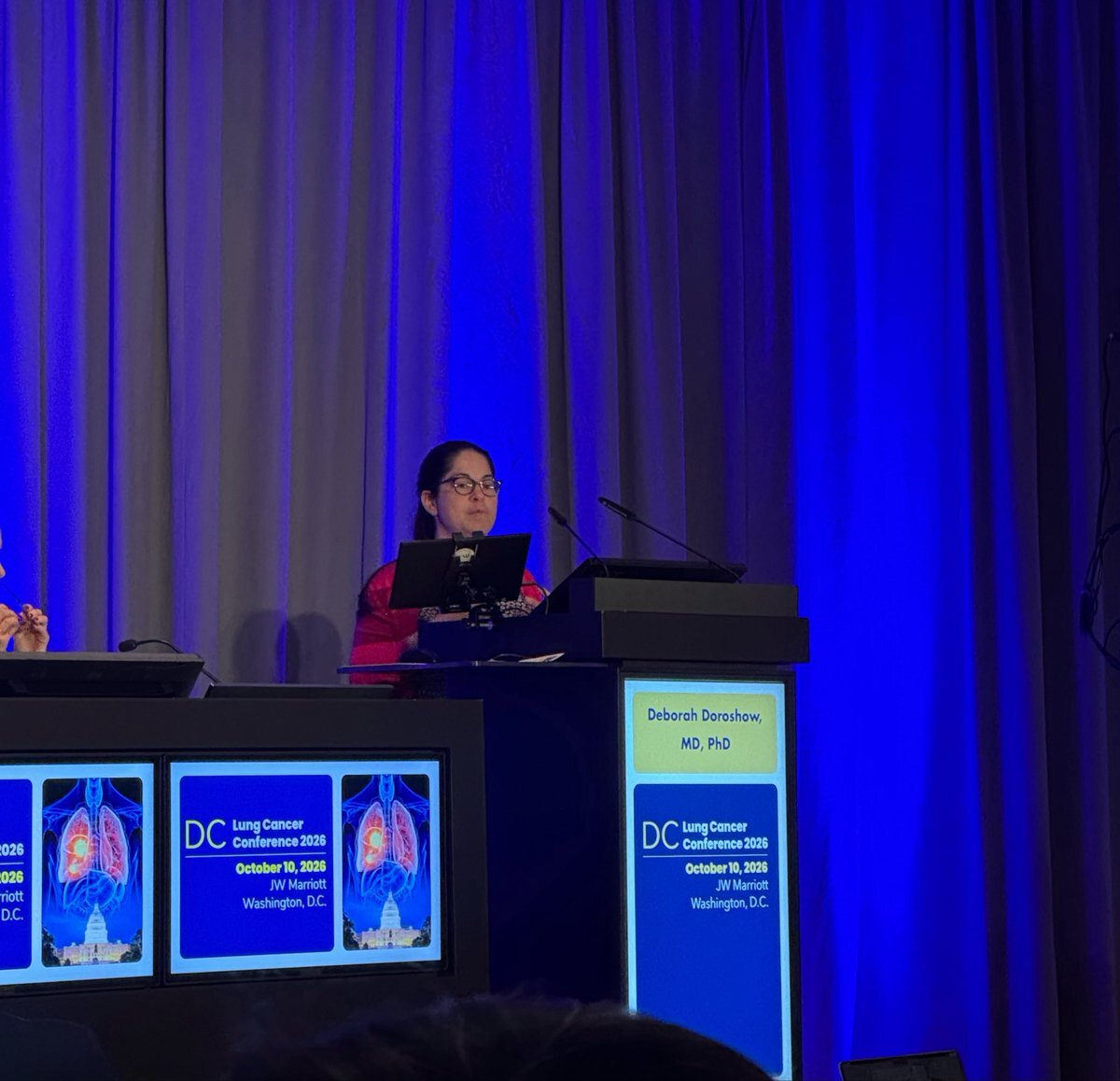
On the podiumDeborah DoroshowTisch Cancer Center, Mount SinaiHER2
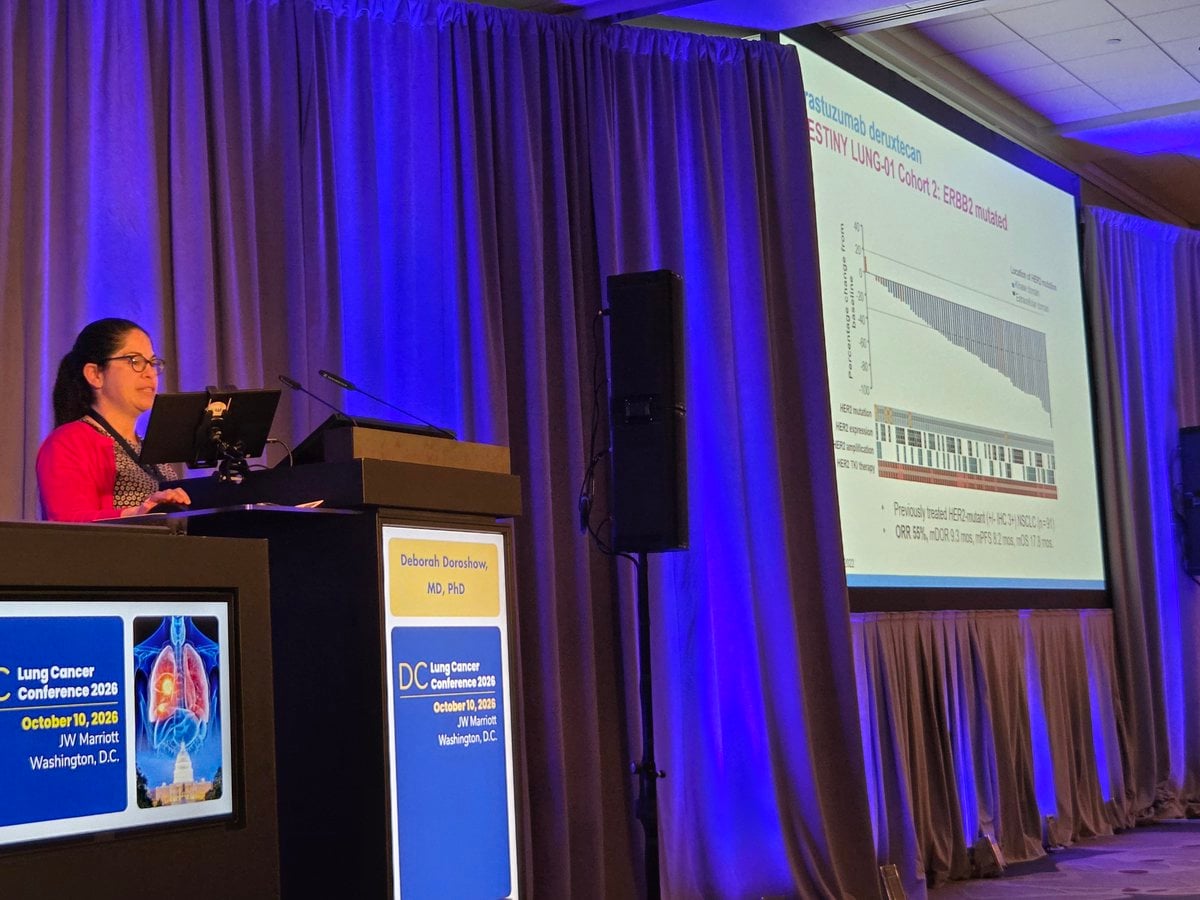
Dr. @DDoroshow presents updates on the rapidly changing HER2m NSCLC space. Two TKIs and an ADC approved here. More data on sequencing will be important to optimize patient care. #DCLung26
Joshua Reuss (@Joshua_Reuss)Oct 10, 2026 · 10:09 AM ETView post on X ↗
On the podiumDeborah DoroshowTisch Cancer Center, Mount SinaiHER2
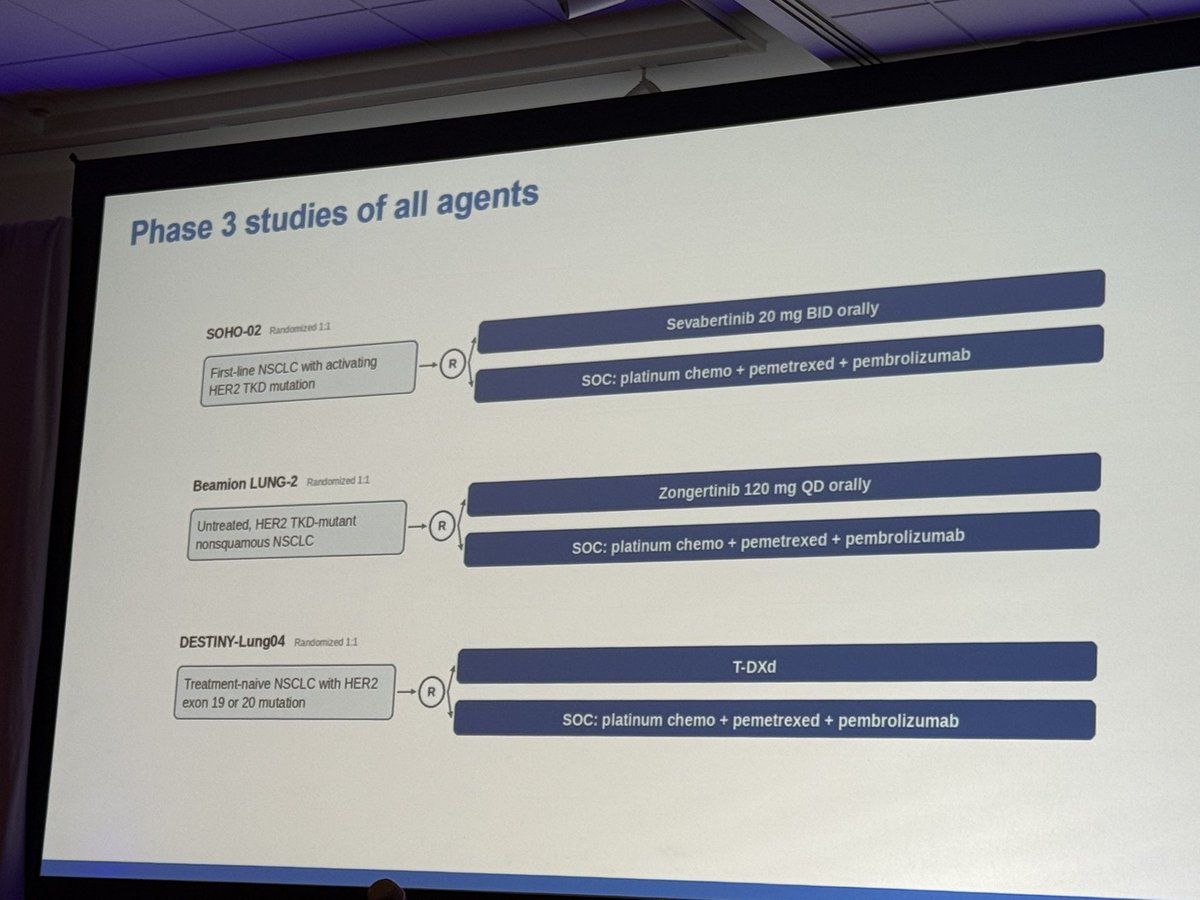
HER2-mutant NSCLC: One of the most rapidly evolving fields!
Three approved agents: zongertinib, sevabertinib, and T-DXd (first two now approved in 1L).
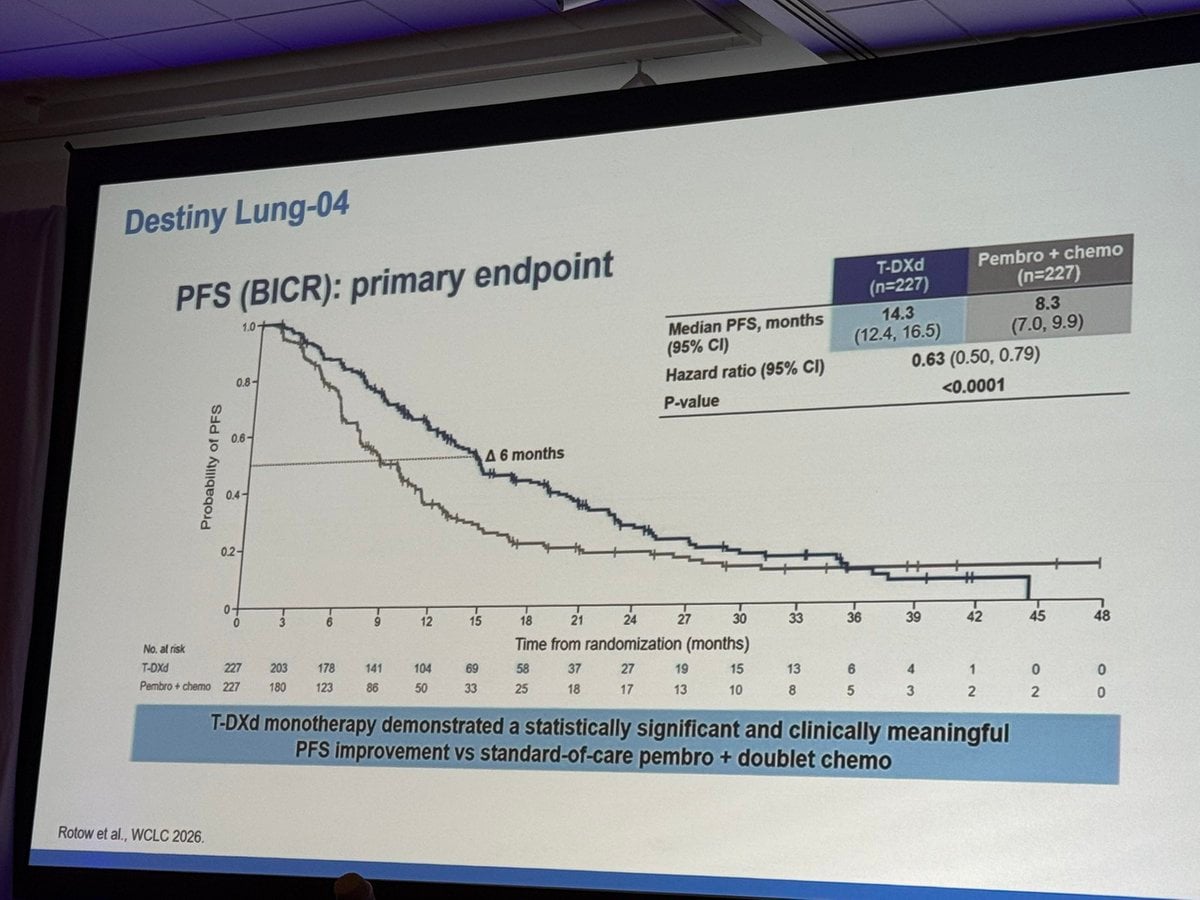
DESTINY-Lung04 presented at #WCLC26. Ongoing randomized 1L trials will further reshape the landscape! @DDoroshow #DCLung26
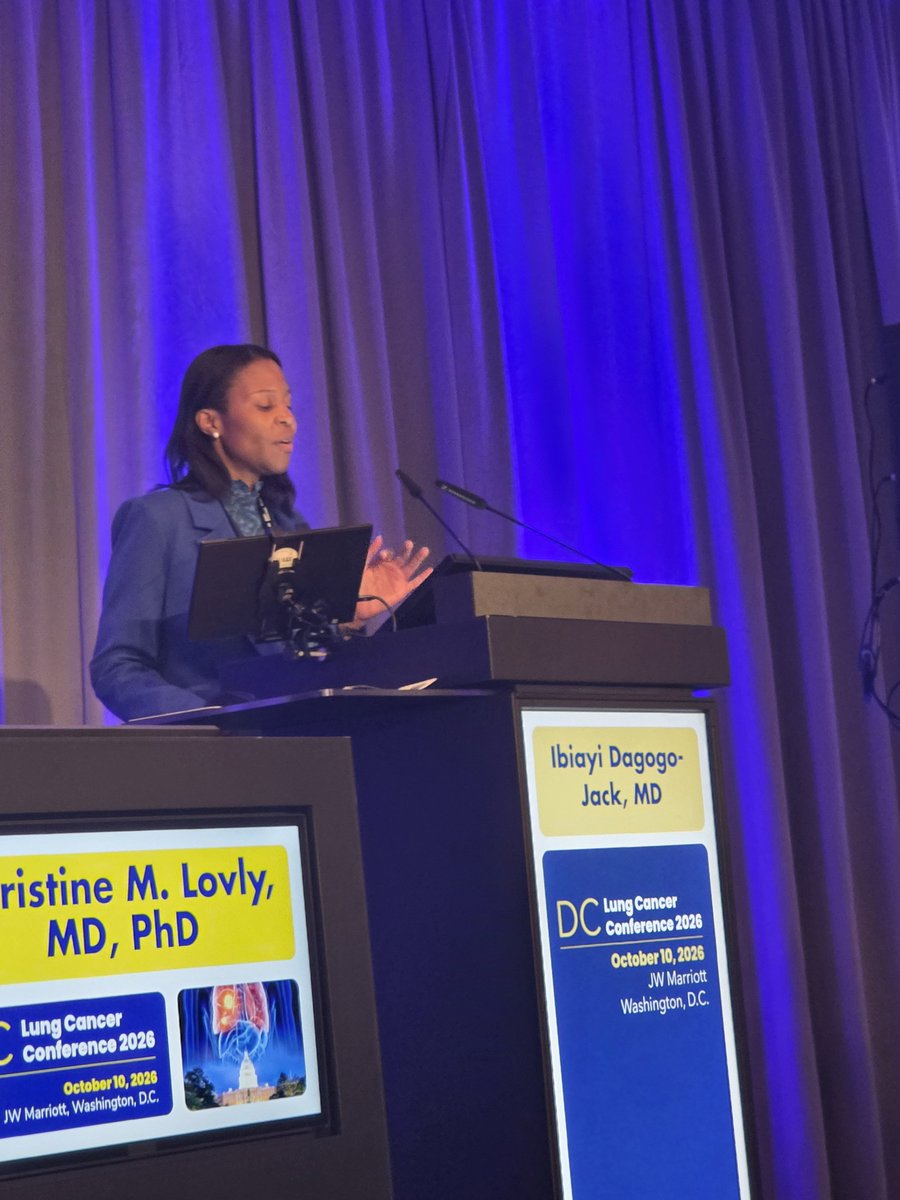
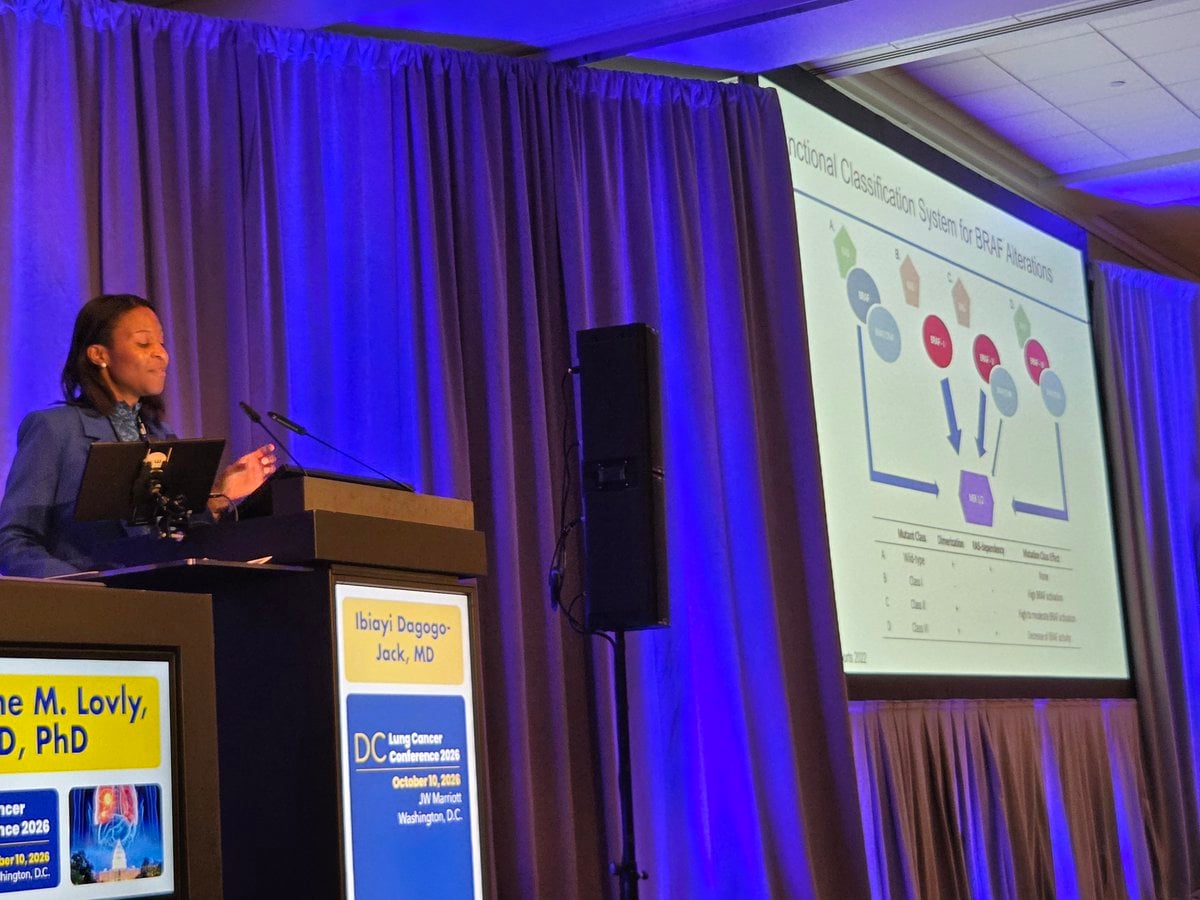
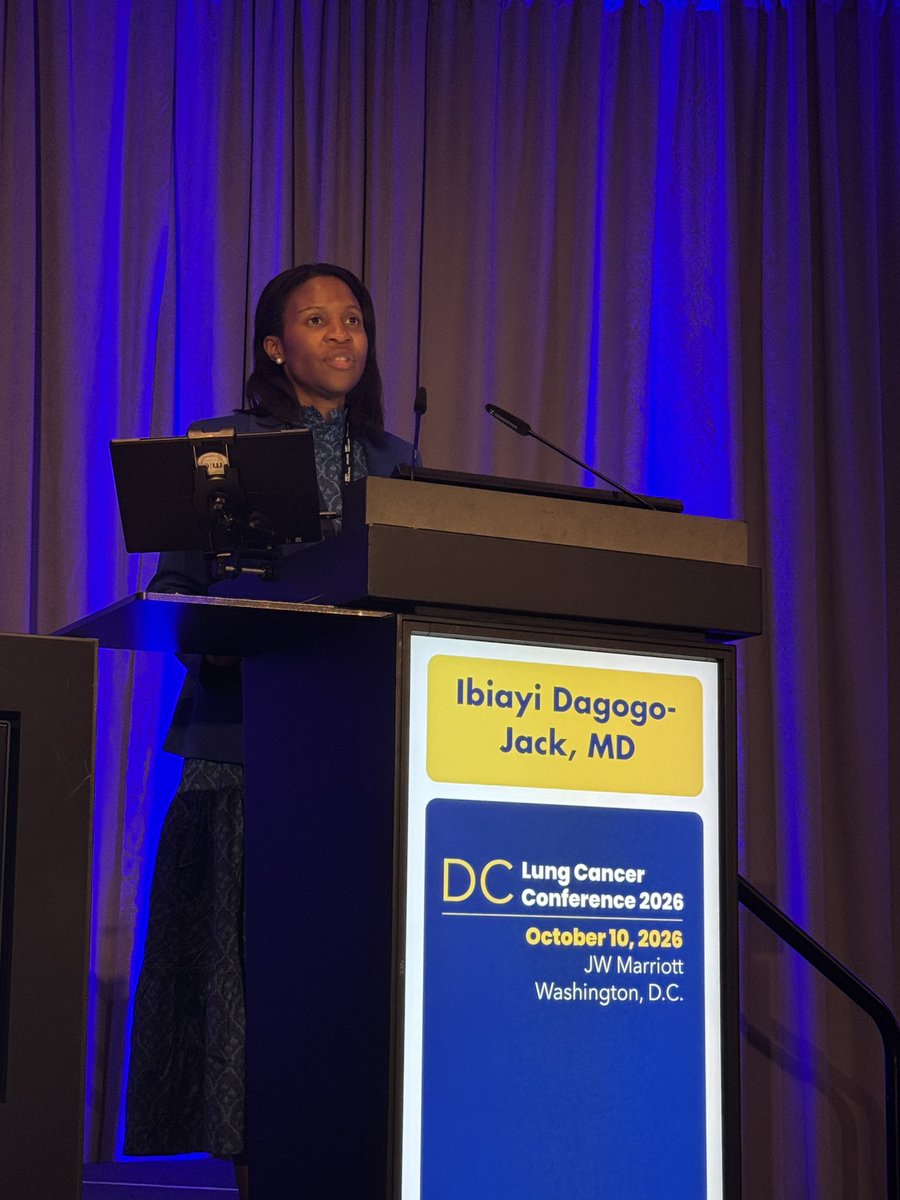
On the podiumIbiayi Dagogo-JackMassachusetts General HospitalBRAF
Dr. @IbiayiMD with an excellent overview on the status of treatment strategies in BRAFm NSCLC. #DCLung26
[Slide 2]
[Fu]nctional Classification System for BRAF Alterations
[Schematic A-D: RAS -> BRAF/CRAF dimer (A); BRAF-I monomer (B); BRAF-II dimer (C); BRAF-III + CRAF (D) -> MEK 1/2 - labels inside shapes blurred]
Mutant Class | Dimerization | RAS-dependency | Mutation Class Effect
A | Wild-type | + | + | None
B | Class I | - | - | High BRAF activation
C | Class II | + | - | High to moderate BRAF activation
D | Class III | + | + | Decrease of BRAF activity
[Footer: ...orts 2022]
Joshua Reuss (@Joshua_Reuss)Oct 10, 2026 · 10:15 AM ETView post on X ↗
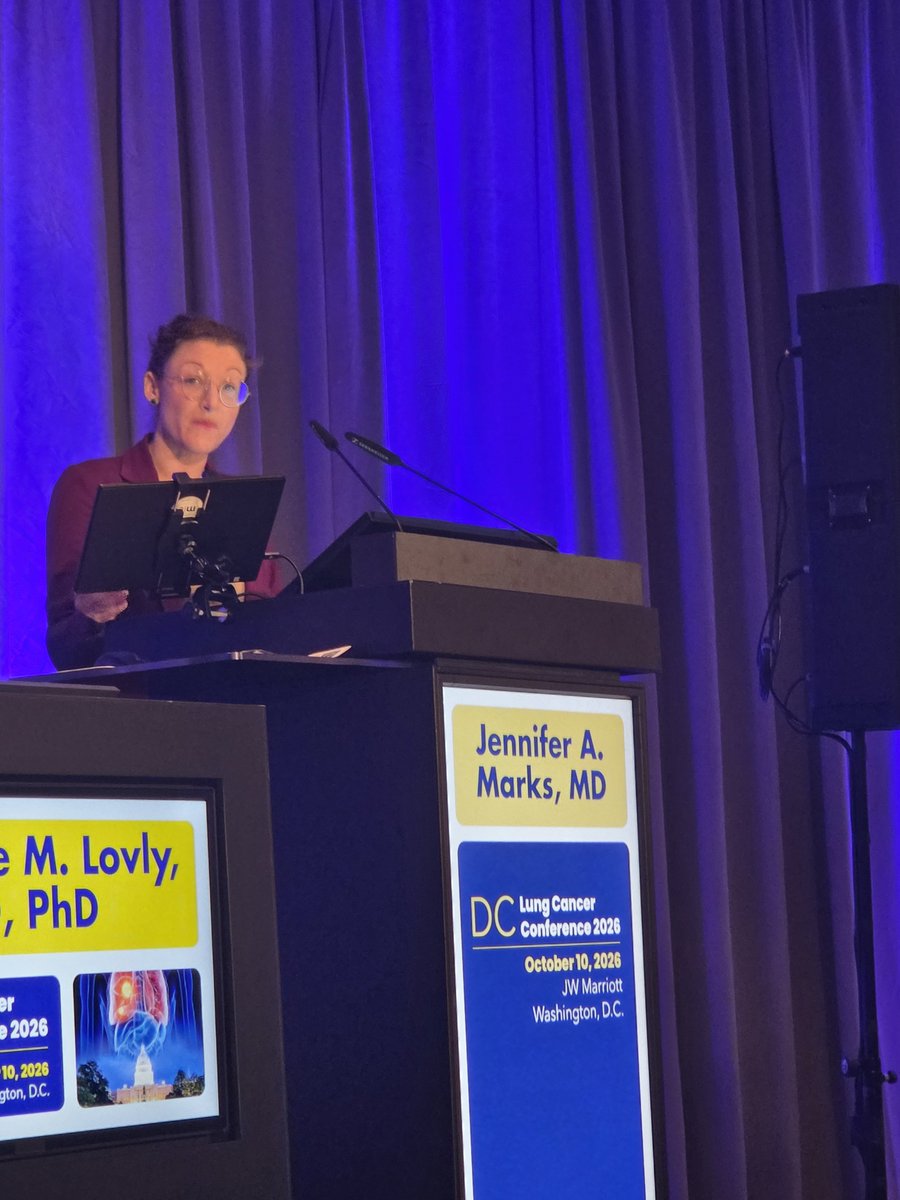
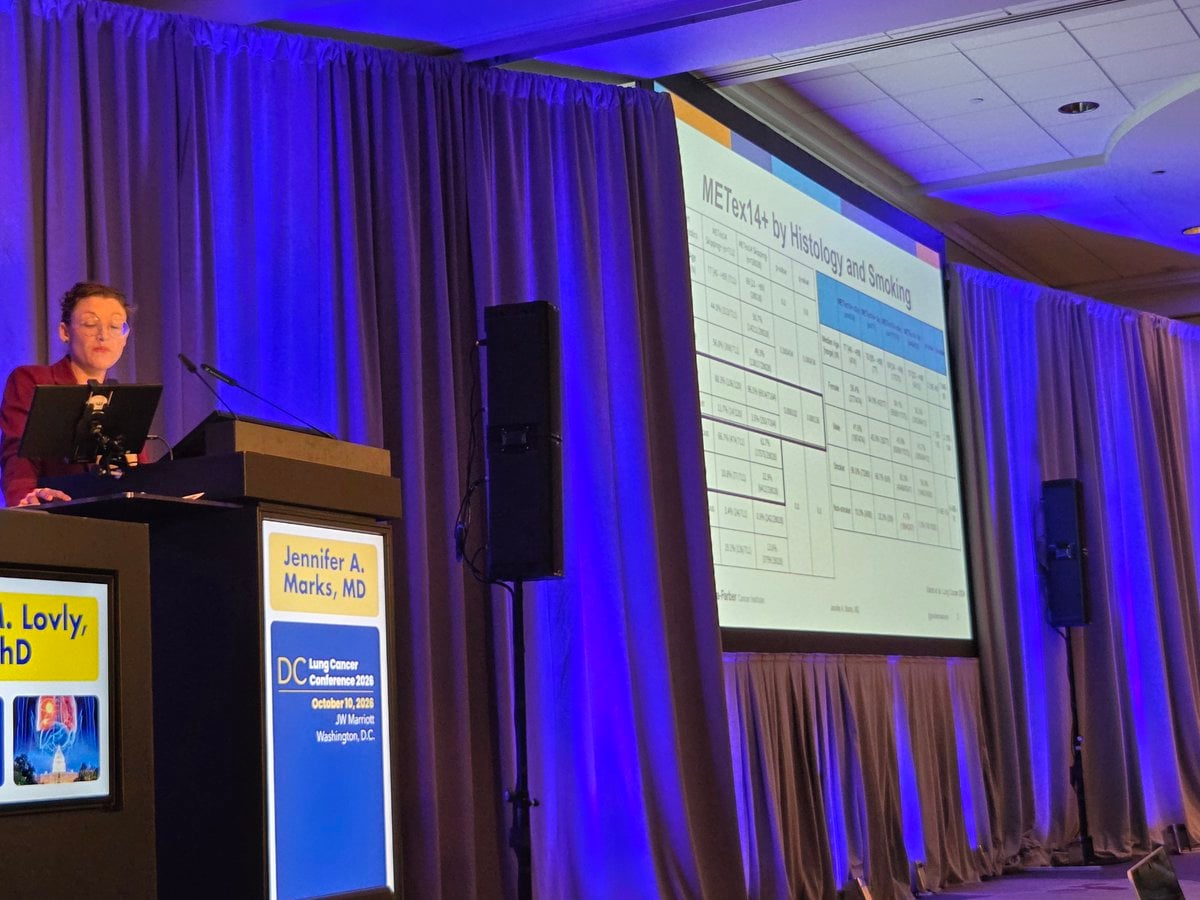
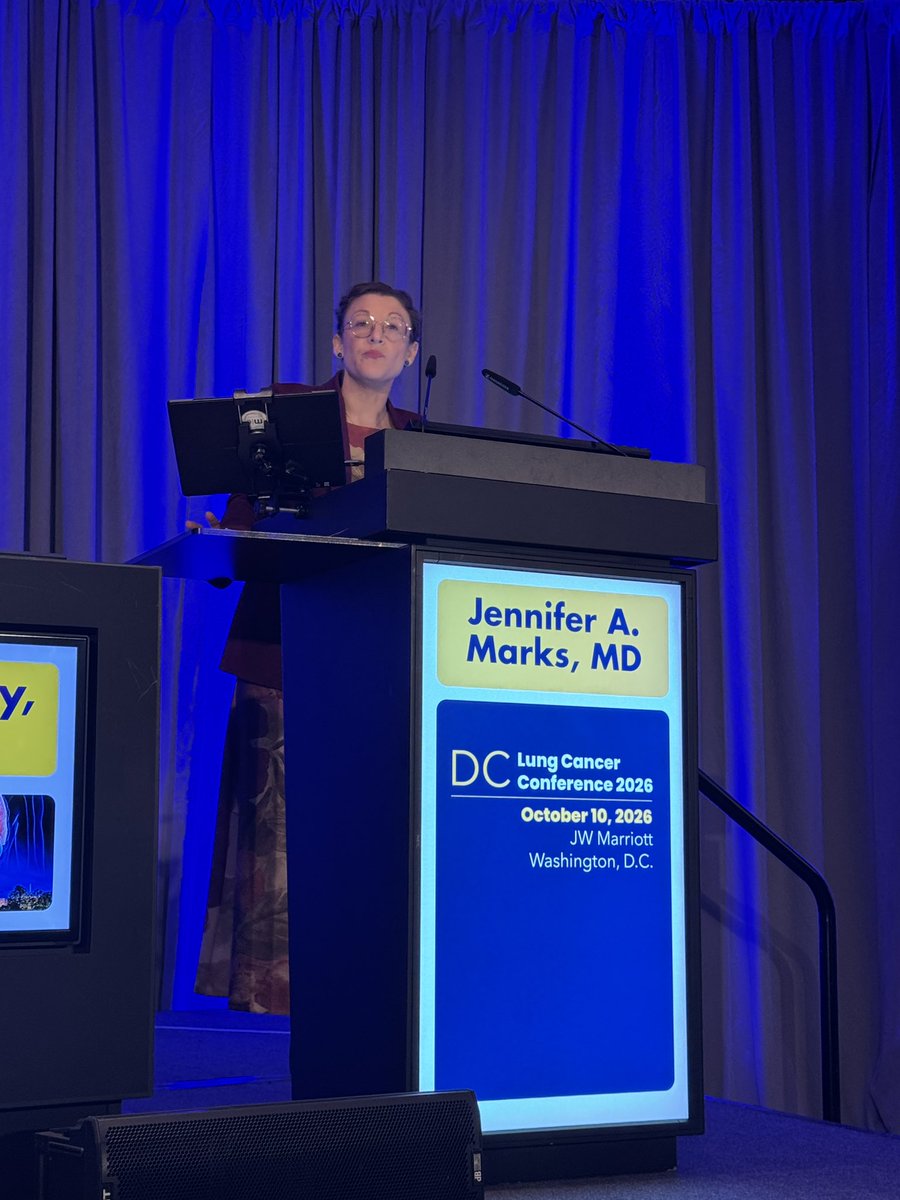
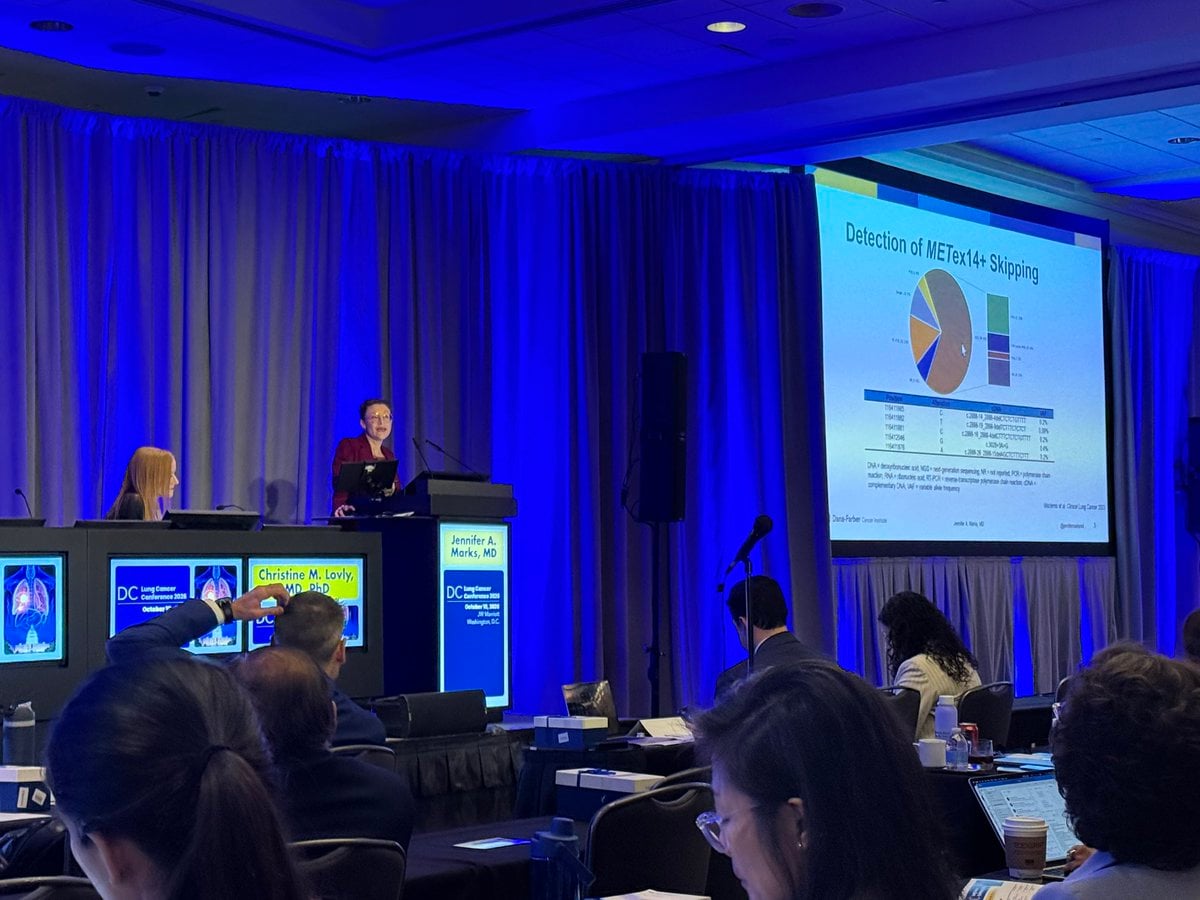
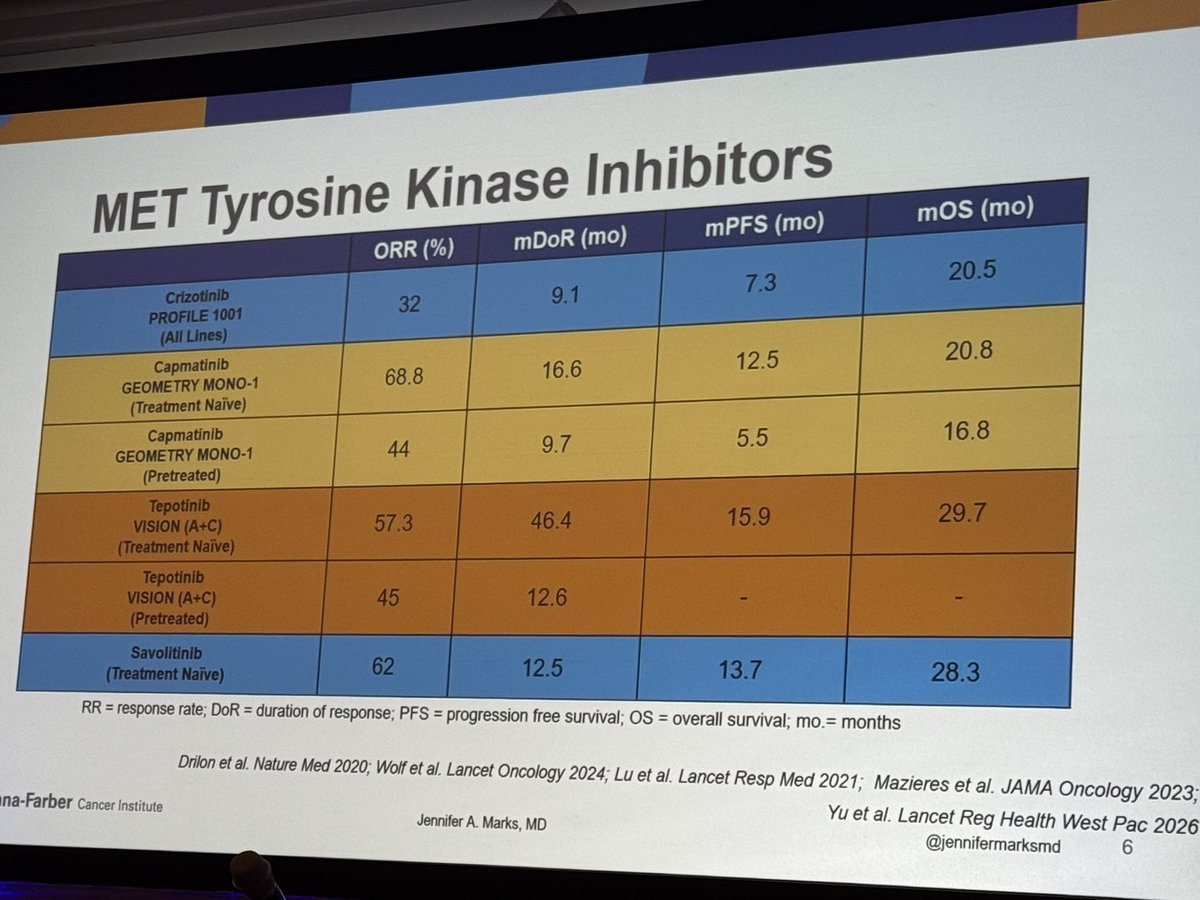
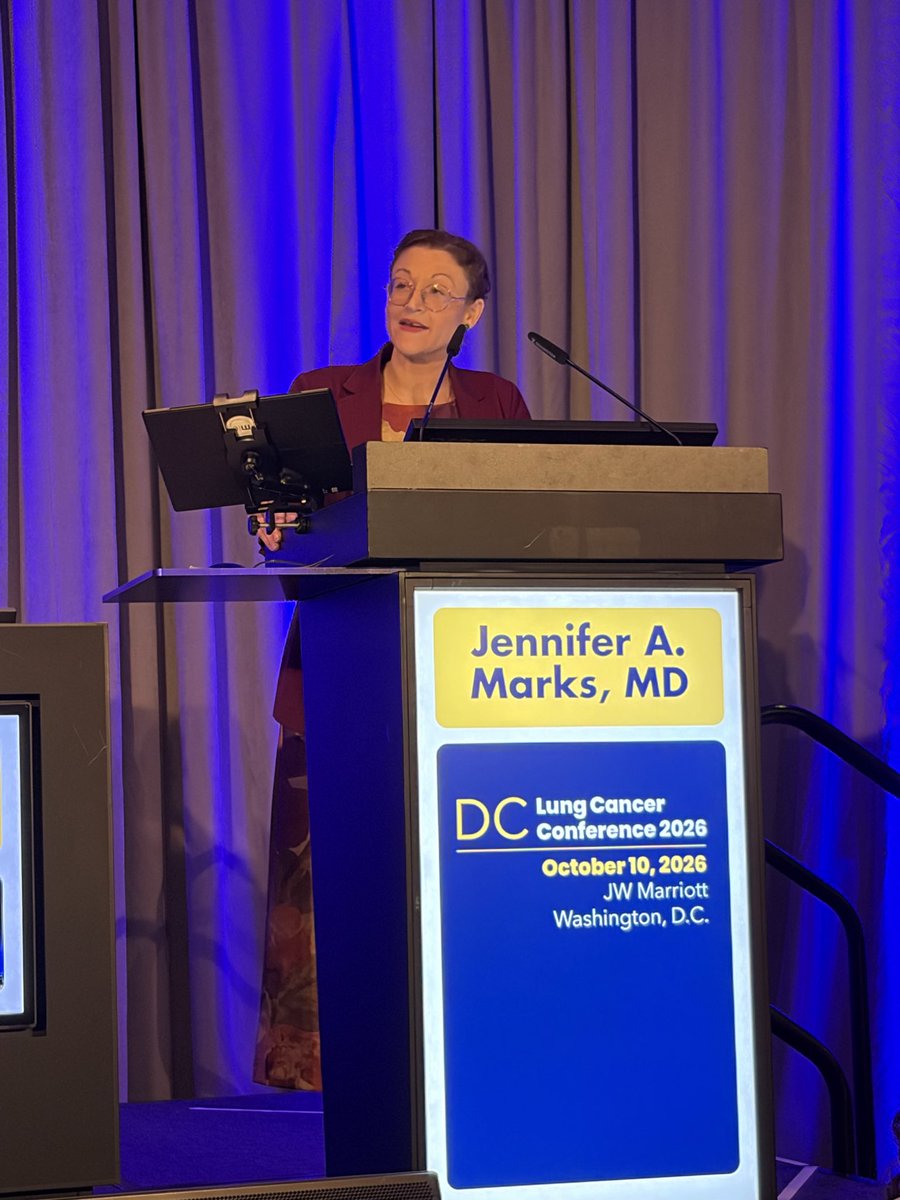
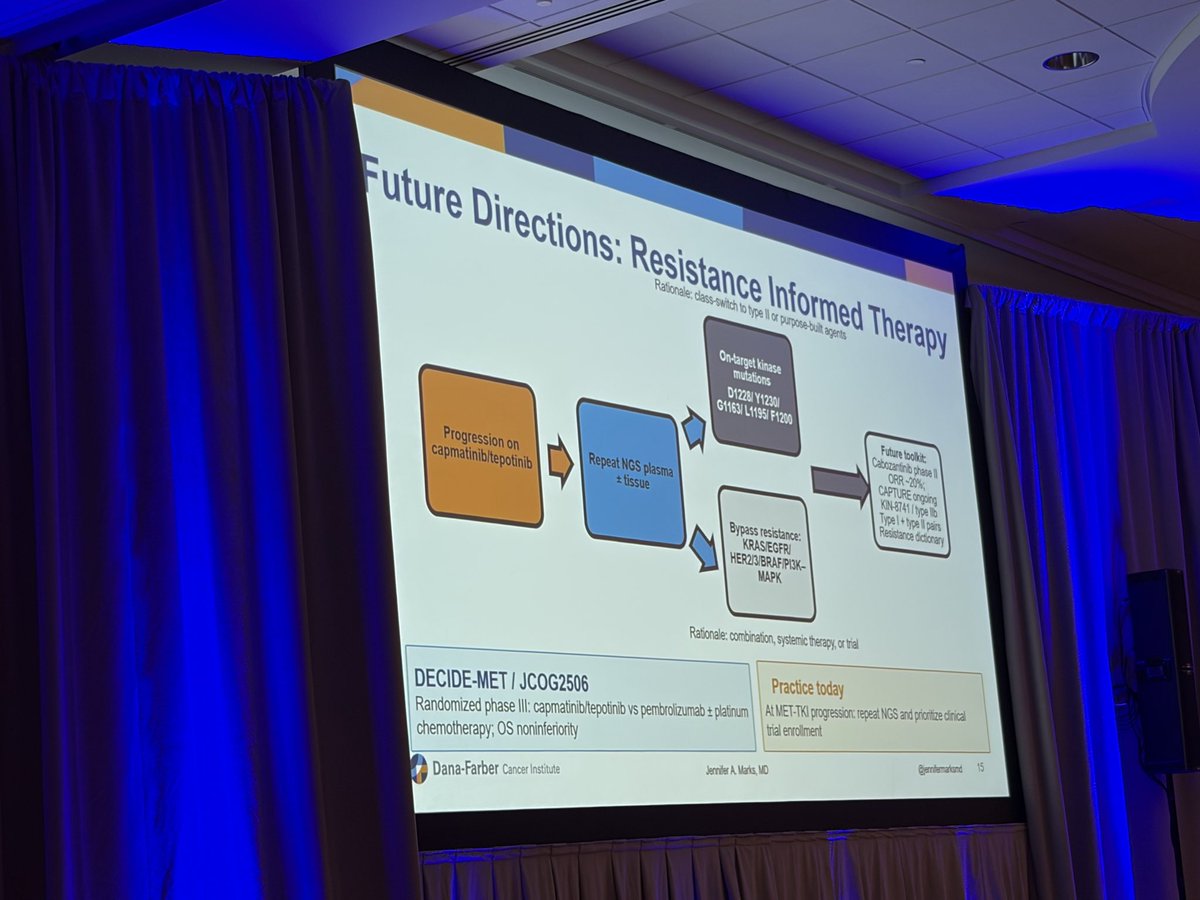
On the podiumJennifer A. MarksDana-Farber Cancer InstituteMET
Dr. @jennifermarksmd reviews MET-altered NSCLC at #DCLung26. Impt to know biologic differences between mutation vs overexpression and how that impacts treatment decision-making.
Joshua Reuss (@Joshua_Reuss)Oct 10, 2026 · 10:21 AM ETView post on X ↗
On the podiumIbiayi Dagogo-JackMassachusetts General HospitalBRAF
So many advances in targeted therapy for NSCLC. Great overviews at #DCLung26 from Drs. @IbiayiMD @jennifermarksmd @PatelOncology @NarjustFlorezMD and so many more.
Stephen V Liu, MD (@StephenVLiu)Oct 10, 2026 · 10:26 AM ETView post on X ↗
On the podiumJennifer A. MarksDana-Farber Cancer InstituteMET
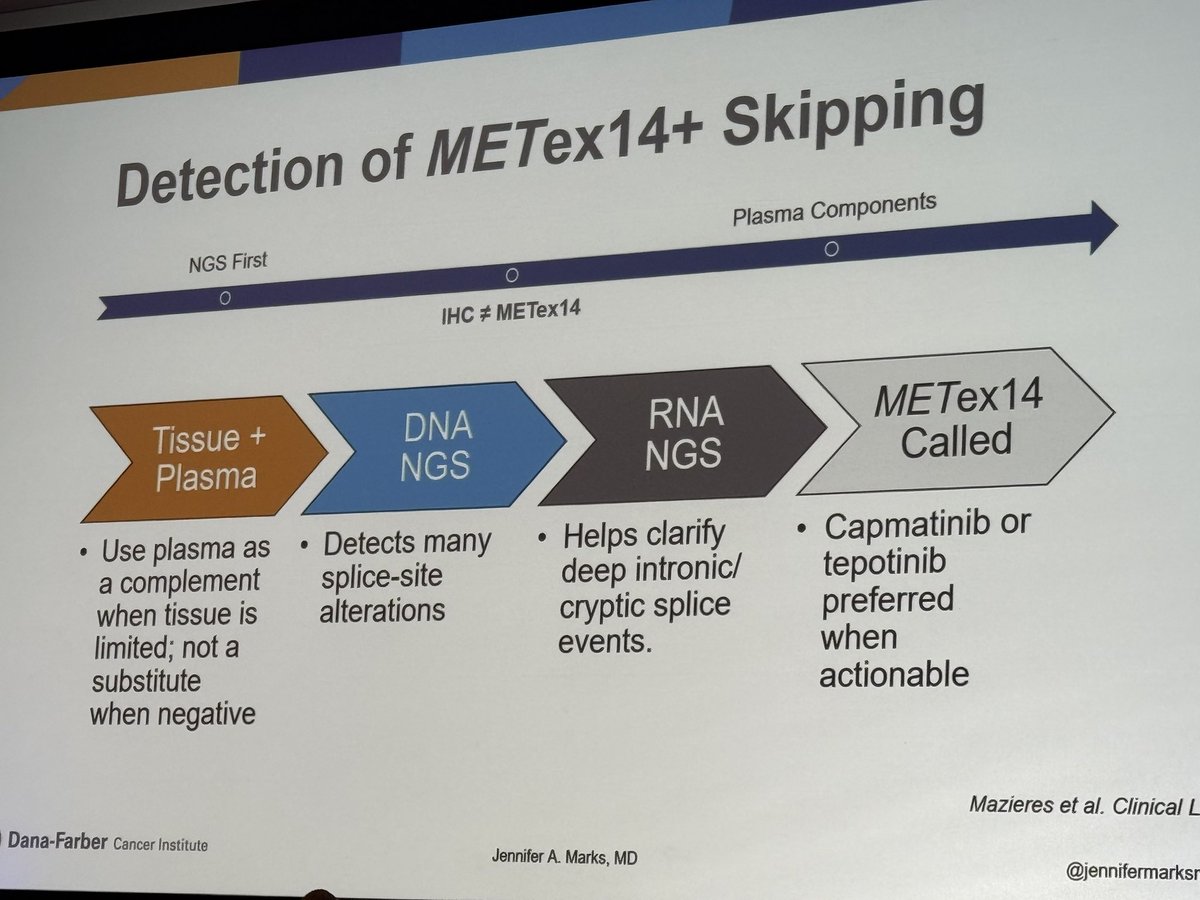
METex14 occurs across histologies. RNAseq can identify additional cases missed by DNAseq.
Capmatinib and tepotinib remain preferred. 1L IO may have a role in select pts based on clinicopathologic factors. The DECIDE-MET trial will help clarify this. #DCLung2026 @jennifermarksmd
DECIDE-METPROFILE 1001GEOMETRY MONO-1VISION
[Slide 2]
Detection of METex14+ Skipping
NGS First → IHC ≠ METex14 → Plasma Components
Tissue + Plasma
• Use plasma as a complement when tissue is limited; not a substitute when negative
DNA NGS
• Detects many splice-site alterations
RNA NGS
• Helps clarify deep intronic/ cryptic splice events.
METex14 Called
• Capmatinib or tepotinib preferred when actionable
Mazieres et al. Clinical L[cut off]
Dana-Farber Cancer Institute | Jennifer A. Marks, MD | @jennifermarksm[d]
---
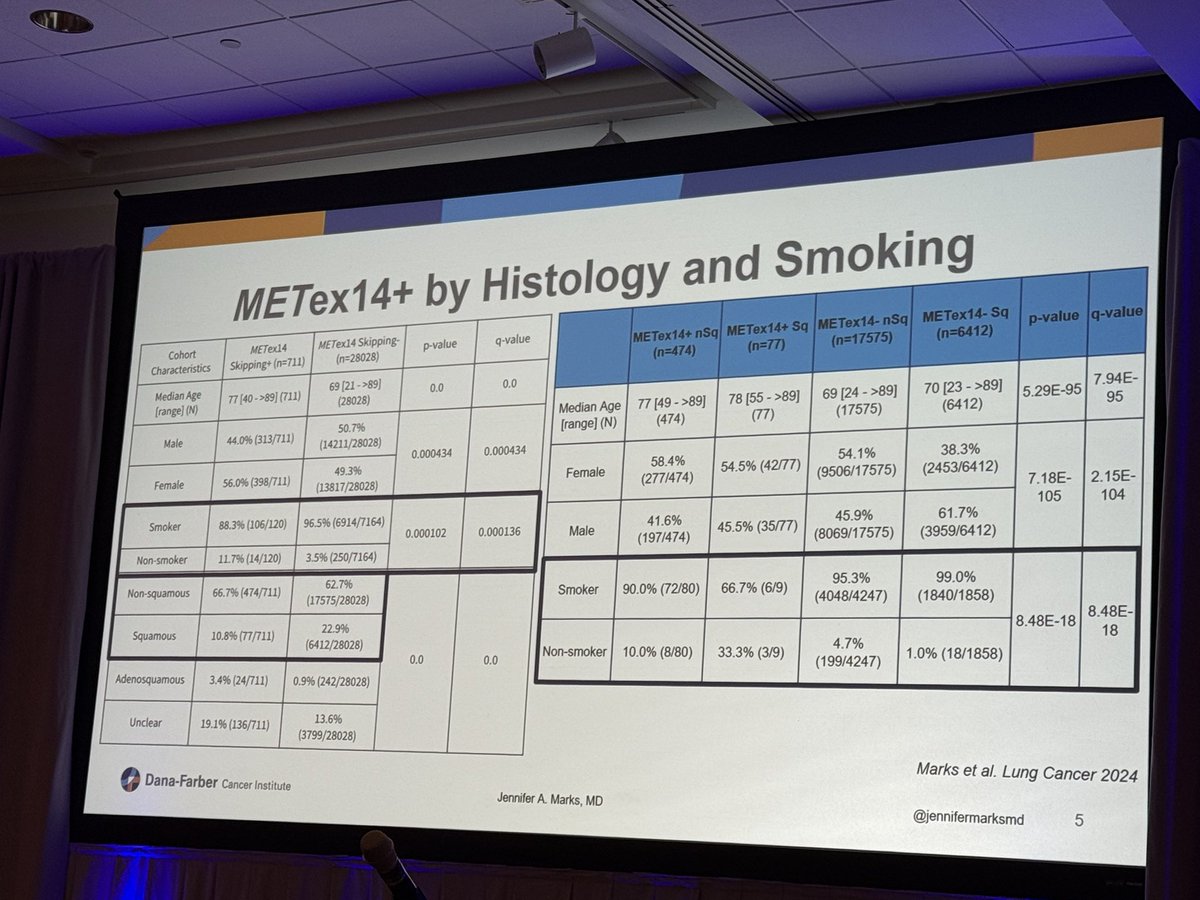
[Slide 3]
METex14+ by Histology and Smoking
[Left table]
Cohort Characteristics | METex14 Skipping+ (n=711) | METex14 Skipping- (n=28028) | p-value | q-value
Median Age [range] (N) | 77 [40 - >89] (711) | 69 [21 - >89] (28028) | 0.0 | 0.0
Male | 44.0% (313/711) | 50.7% (14211/28028) | 0.000434 | 0.000434
Female | 56.0% (398/711) | 49.3% (13817/28028) | (same row-pair p/q as Male) |
Smoker | 88.3% (106/120) | 96.5% (6914/7164) | 0.000102 | 0.000136
Non-smoker | 11.7% (14/120) | 3.5% (250/7164) | (same row-pair p/q as Smoker) |
Non-squamous | 66.7% (474/711) | 62.7% (17575/28028) | 0.0 | 0.0
Squamous | 10.8% (77/711) | 22.9% (6412/28028) | (histology group p/q) |
Adenosquamous | 3.4% (24/711) | 0.9% (242/28028) | (histology group p/q) |
Unclear | 19.1% (136/711) | 13.6% (3799/28028) | (histology group p/q) |
[Right table]
| METex14+ nSq (n=474) | METex14+ Sq (n=77) | METex14- nSq (n=17575) | METex14- Sq (n=6412) | p-value | q-value
Median Age [range] (N) | 77 [49 - >89] (474) | 78 [55 - >89] (77) | 69 [24 - >89] (17575) | 70 [23 - >89] (6412) | 5.29E-95 | 7.94E-95
Female | 58.4% (277/474) | 54.5% (42/77) | 54.1% (9506/17575) | 38.3% (2453/6412) | 7.18E-105 | 2.15E-104
Male | 41.6% (197/474) | 45.5% (35/77) | 45.9% (8069/17575) | 61.7% (3959/6412) | (same row-pair p/q as Female) |
Smoker | 90.0% (72/80) | 66.7% (6/9) | 95.3% (4048/4247) | 99.0% (1840/1858) | 8.48E-18 | 8.48E-18
Non-smoker | 10.0% (8/80) | 33.3% (3/9) | 4.7% (199/4247) | 1.0% (18/1858) | (same row-pair p/q as Smoker) |
Marks et al. Lung Cancer 2024
Dana-Farber Cancer Institute | Jennifer A. Marks, MD | @jennifermarksmd 5
---
[Slide 4]
MET Tyrosine Kinase Inhibitors
| ORR (%) | mDoR (mo) | mPFS (mo) | mOS (mo)
Crizotinib PROFILE 1001 (All Lines) | 32 | 9.1 | 7.3 | 20.5
Capmatinib GEOMETRY MONO-1 (Treatment Naïve) | 68.8 | 16.6 | 12.5 | 20.8
Capmatinib GEOMETRY MONO-1 (Pretreated) | 44 | 9.7 | 5.5 | 16.8
Tepotinib VISION (A+C) (Treatment Naïve) | 57.3 | 46.4 | 15.9 | 29.7
Tepotinib VISION (A+C) (Pretreated) | 45 | 12.6 | - | -
Savolitinib (Treatment Naïve) | 62 | 12.5 | 13.7 | 28.3
RR = response rate; DoR = duration of response; PFS = progression free survival; OS = overall survival; mo.= months
Drilon et al. Nature Med 2020; Wolf et al. Lancet Oncology 2024; Lu et al. Lancet Resp Med 2021; Mazieres et al. JAMA Oncology 2023; Yu et al. Lancet Reg Health West Pac 2026
Dana-Farber Cancer Institute | Jennifer A. Marks, MD | @jennifermarksmd 6
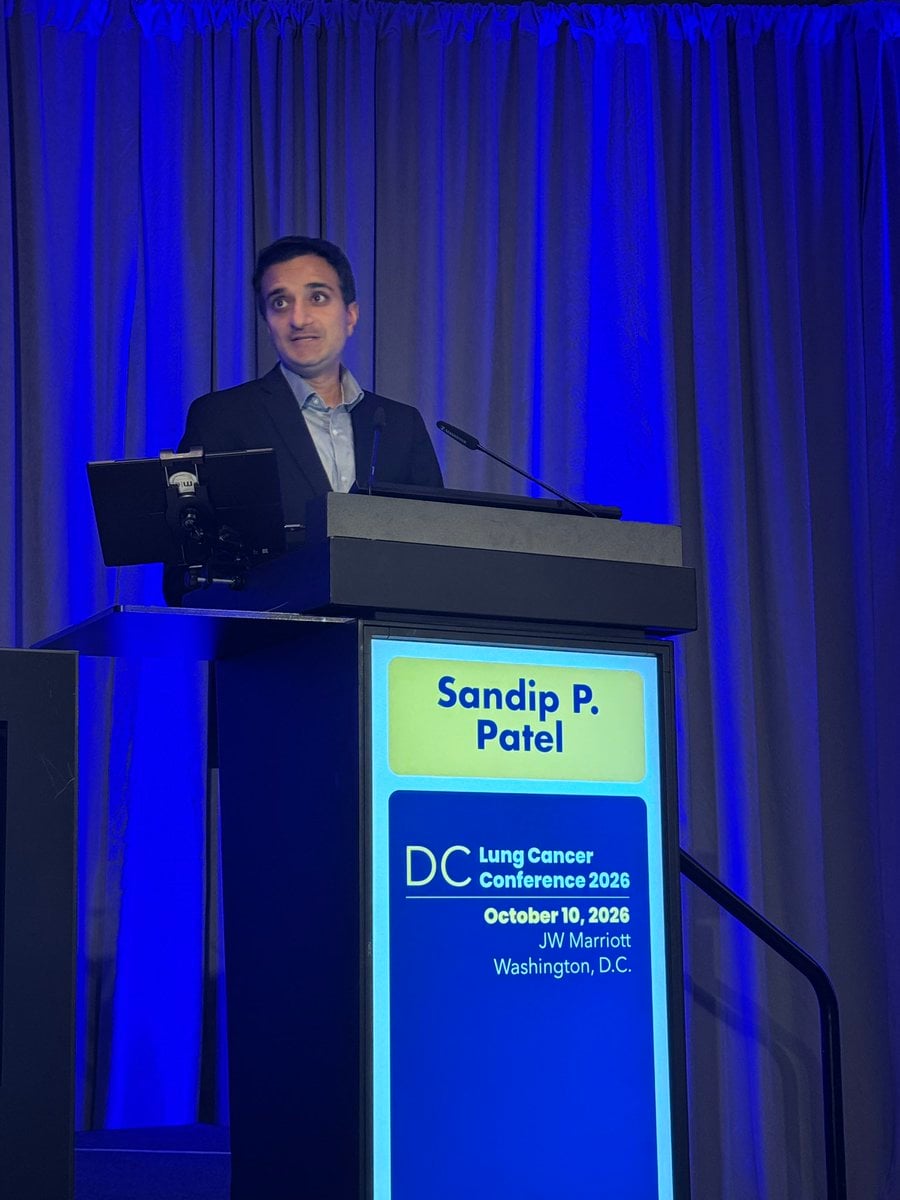
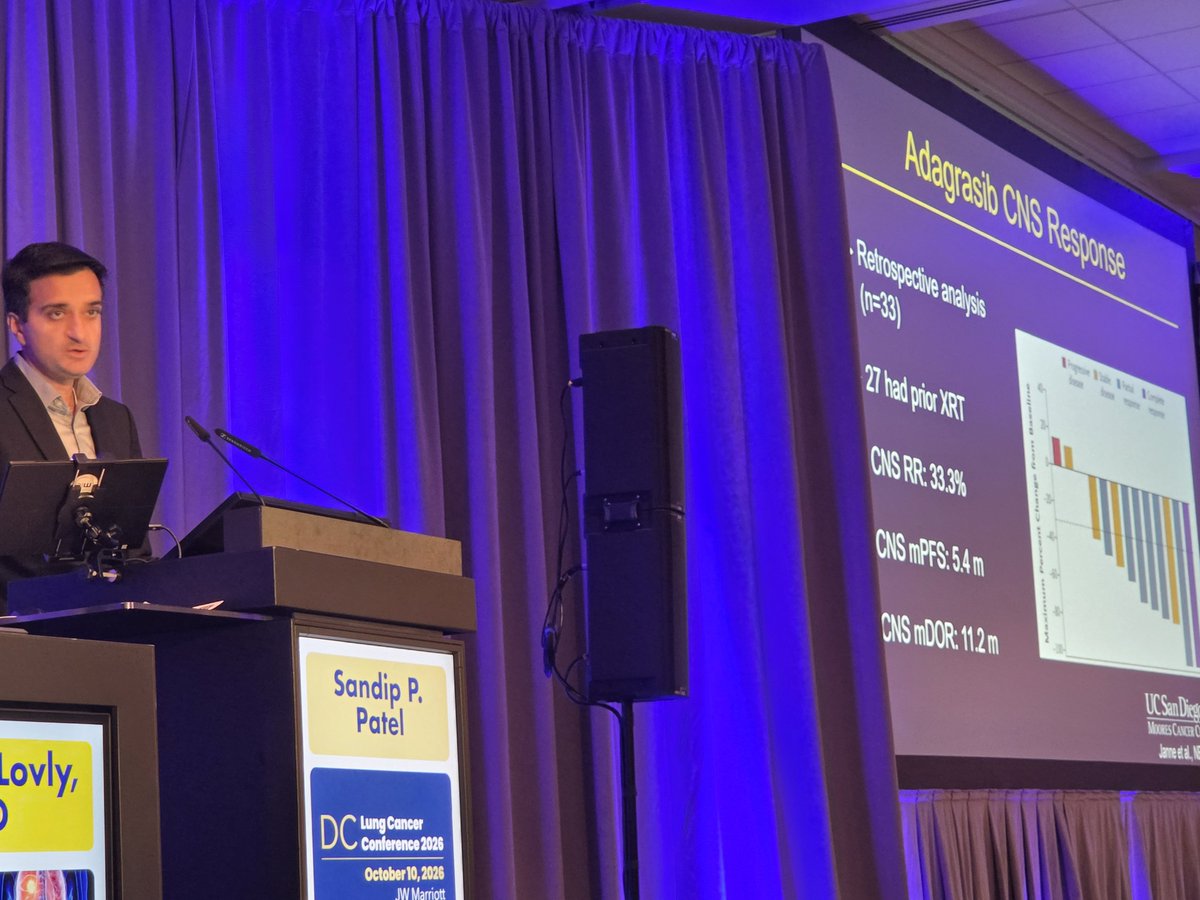
Dr. @PatelOncology takes us through the exciting current and emerging therapeutics in KRASm NSCLC. Looking forward to seeing data on several next-generation molecules in the near future. #DCLung26
[Slide 2]
Adagrasib CNS Response
- Retrospective analysis (n=33)
- 27 had prior XRT
- CNS RR: 33.3%
- CNS mPFS: 5.4 m
- CNS mDOR: 11.2 m
[Waterfall plot: 'Maximum Percent Change from Baseline' 40 to -100; legend: Progressive disease / Stable disease / Partial response / Complete response]
UC San Diego Moores Cancer C[enter]
Janne et al., NE[JM ...]
Joshua Reuss (@Joshua_Reuss)Oct 10, 2026 · 10:27 AM ETView post on X ↗
On the podiumJennifer A. MarksDana-Farber Cancer InstituteMET
Phenomenal talk by Dr @jennifermarksmd at #DCLung26 on Met exon 14 skipping NSCLC! Discusses nuances in choosing chemo+ICI vs TKI as initial treatment and future directions including assessing resistance patterns to inform optimal next line of treatment.
@DanaFarber @Joshua_Reuss @StephenVLiu
DECIDE-METCAPTURE
[Slide 2]
Future Directions: Resistance Informed Therapy
Rationale: class-switch to type II or purpose-built agents
Progression on capmatinib/tepotinib → Repeat NGS plasma ± tissue →
On-target kinase mutations: D1228/ Y1230/ G1163/ L1195/ F1200
Bypass resistance: KRAS/EGFR/ HER2/3/BRAF/PI3K–MAPK
→ Future toolkit:
Cabozantinib phase II ORR ~20%;
CAPTURE ongoing
KIN-8741 / type IIb
Type I + type II pairs
Resistance dictionary
Rationale: combination, systemic therapy, or trial
DECIDE-MET / JCOG2506
Randomized phase III: capmatinib/tepotinib vs pembrolizumab ± platinum chemotherapy; OS noninferiority
Practice today
At MET-TKI progression: repeat NGS and prioritize clinical trial enrollment
Dana-Farber Cancer Institute | Jennifer A. Marks, MD | @jennifermarksmd 15
Laura Alder, MD (@LauraAlderMD)Oct 10, 2026 · 10:28 AM ETView post on X ↗
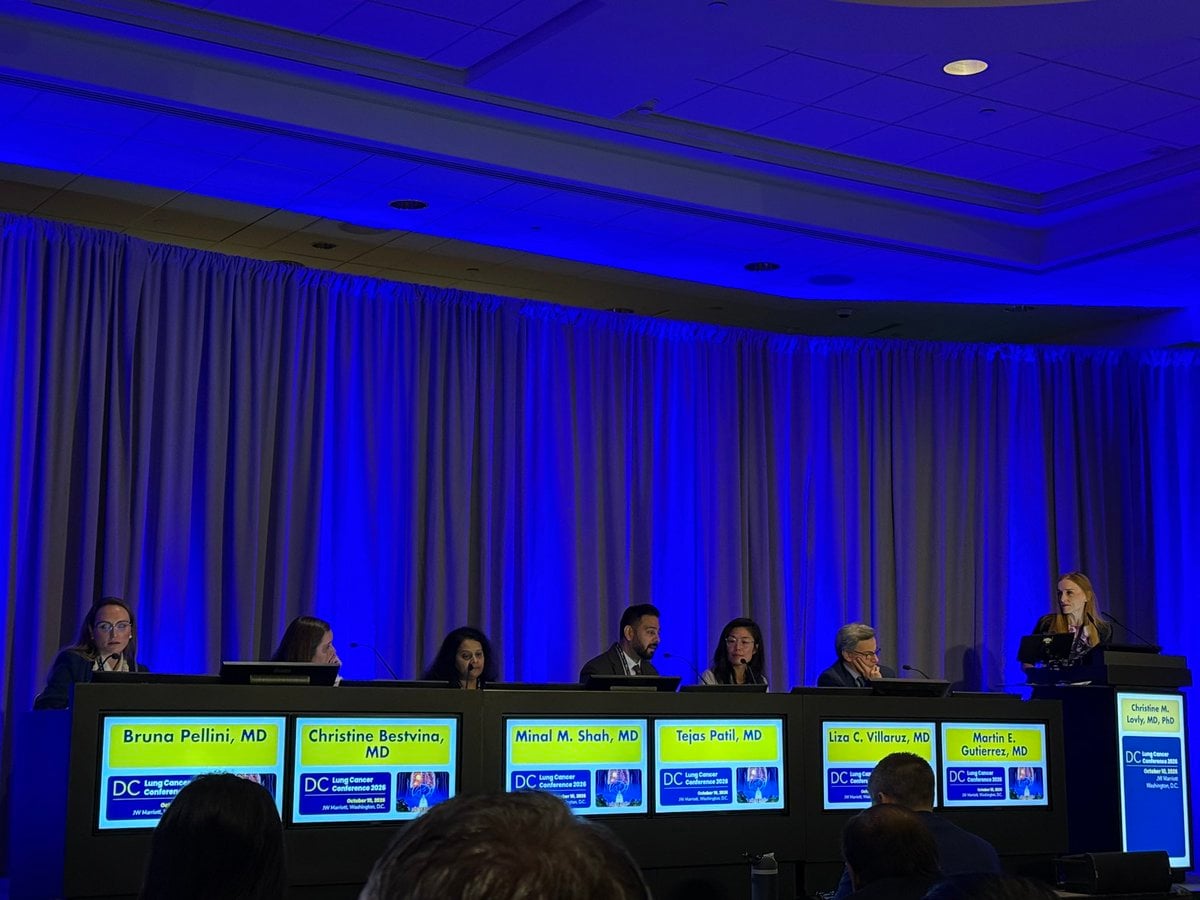
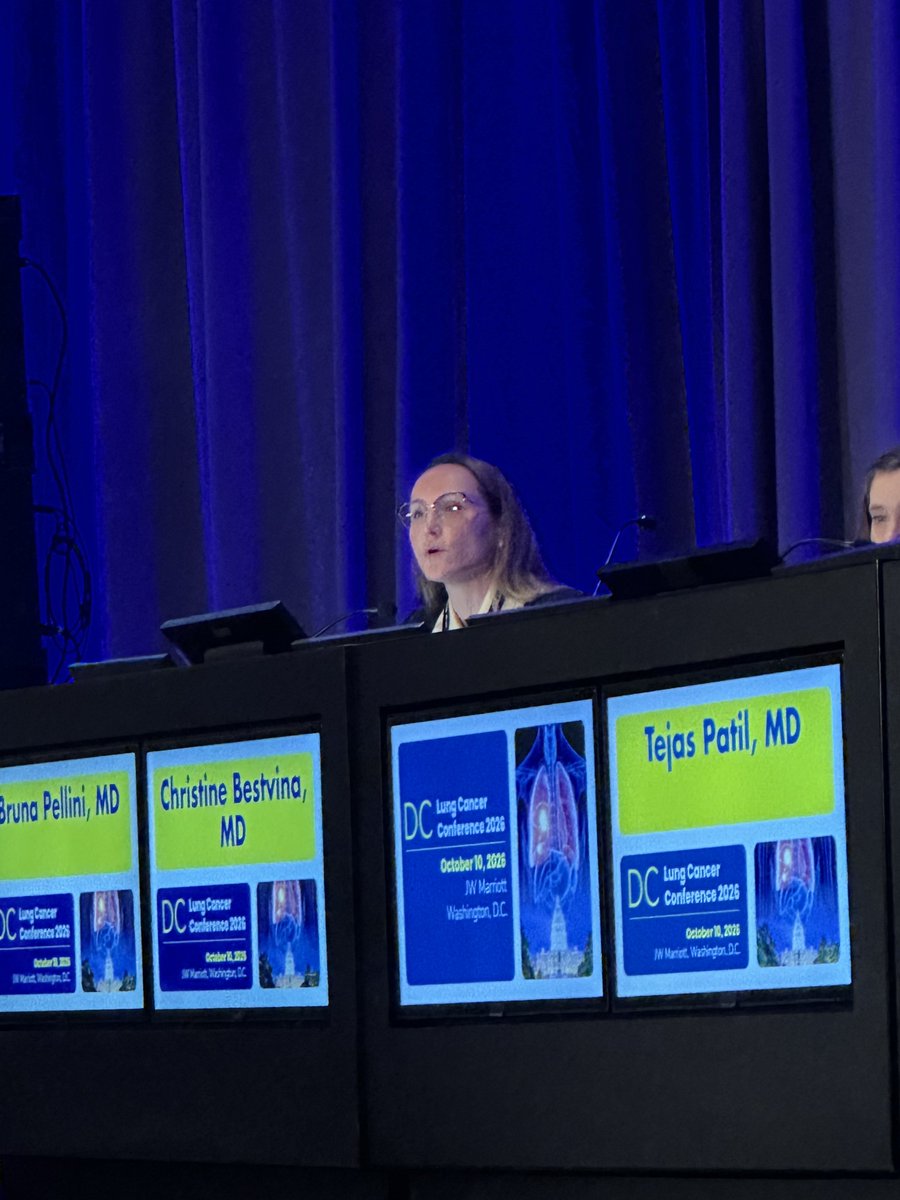
On the podiumBruna PelliniMiami Cancer Institute, Baptist Health South Florida
Excellent panel discussion on HER2, MET, KRAS, and BRAF at #DCLung2026!
Many effective targeted therapies are now available, but optimal management truly requires multidisciplinary input. Great insights from esteemed panelists.
On the podiumBruna PelliniMiami Cancer Institute, Baptist Health South Florida
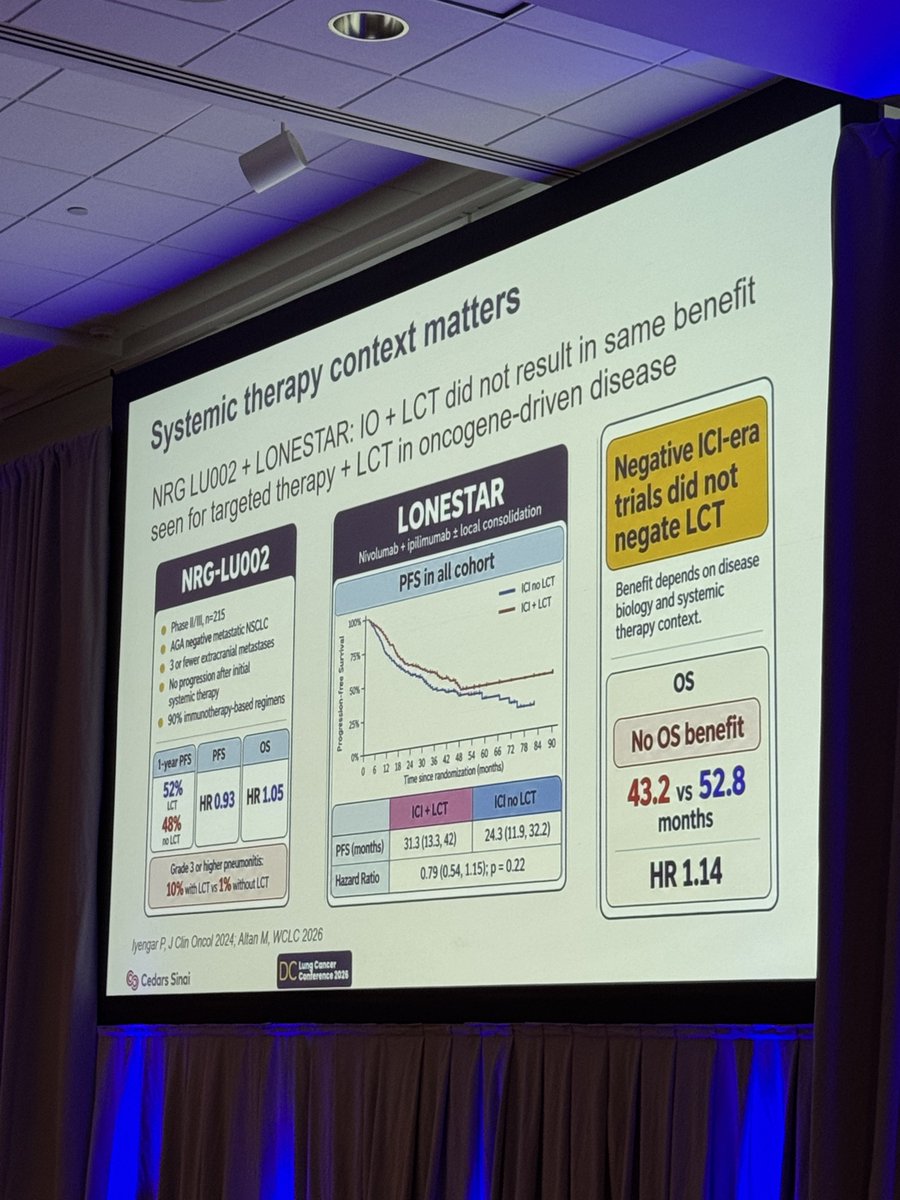
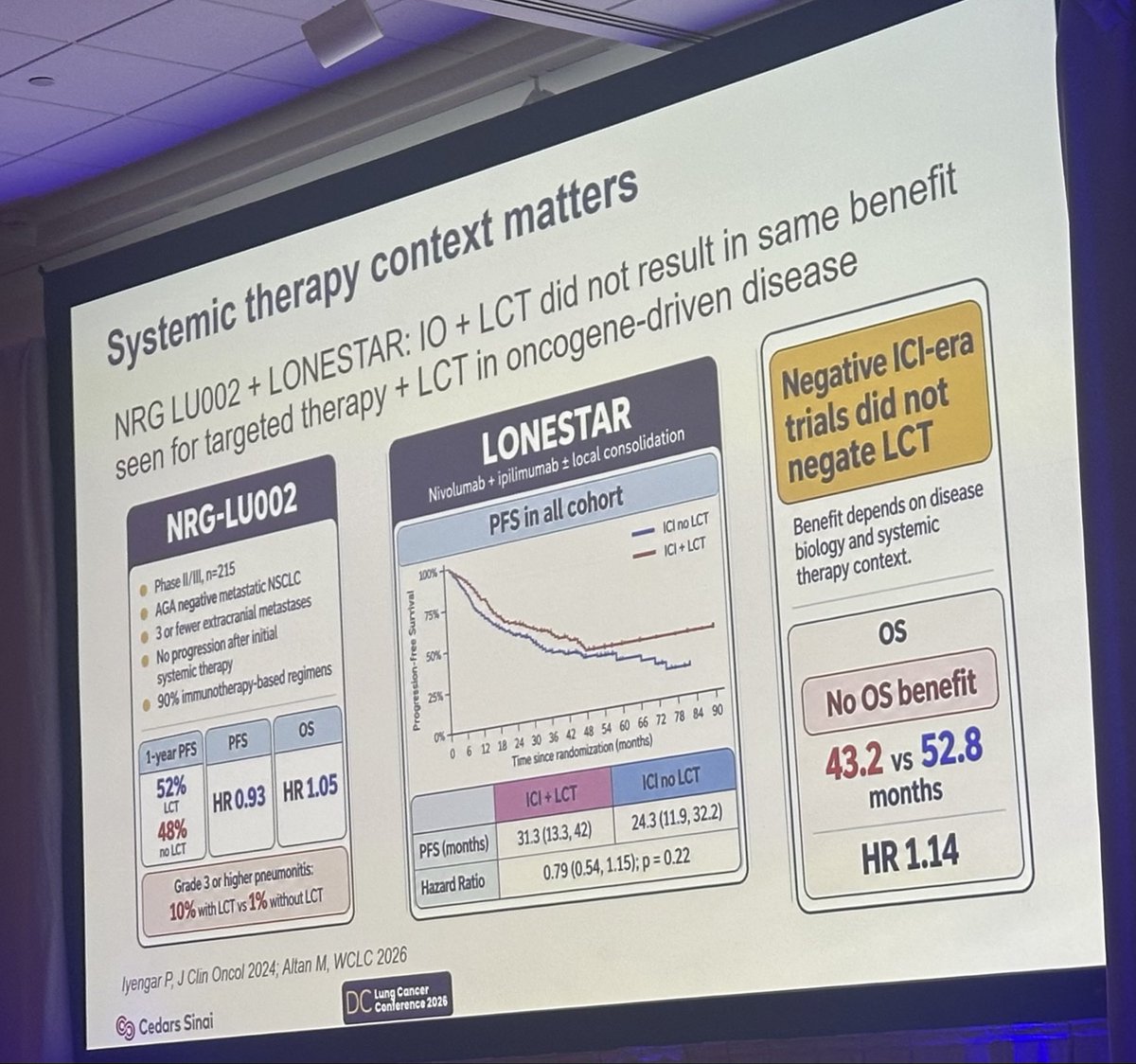
One of today’s most provocative questions for our patients with oncogene-driven advanced NSCLC: if we are going to pursue LCT, when is the best time to do it?
@BrunaPellini @StephenVLiu @Joshua_Reuss #DCLung26
Eric K. Singhi, MD (@lungoncdoc)Oct 10, 2026 · 11:09 AM ETView post on X ↗
On the podiumDeborah DoroshowTisch Cancer Center, Mount SinaiHER2
#DCLung26 Dr. @DDoroshow presents updates on the rapidly evolving HER2-mutant #NSCLC landscape. With two approved 1st line TKIs—zongertinib and sevazertinib —and the ADC enherthu (TDxd) now expanding treatment options, the field is moving fast. More drugs in the horizon (NVL-330) data on sequencing, resistance, and optimal treatment selection is needed. @Exon20Group #lcsm
Dr. Estela Rodriguez (@Latinamd)Oct 10, 2026 · 11:48 AM ETView post on X ↗
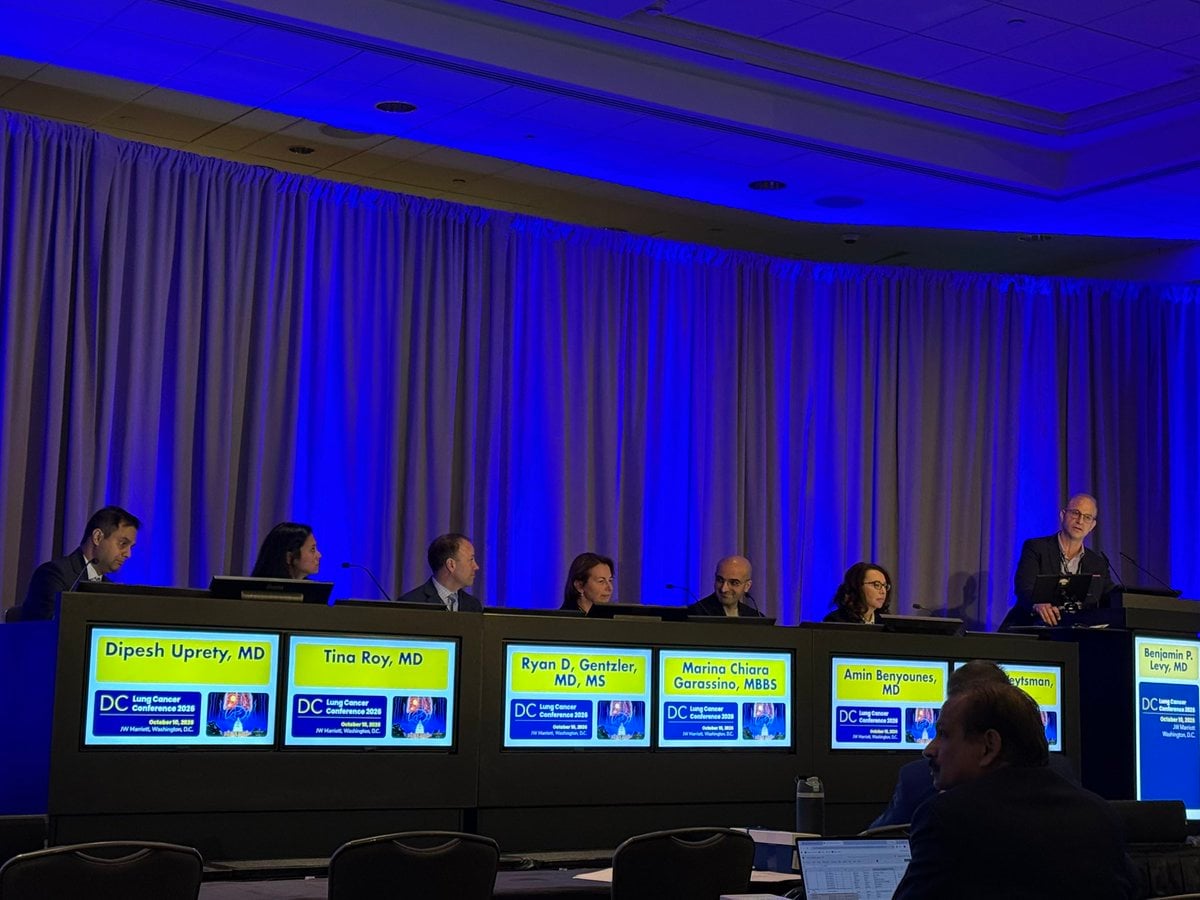
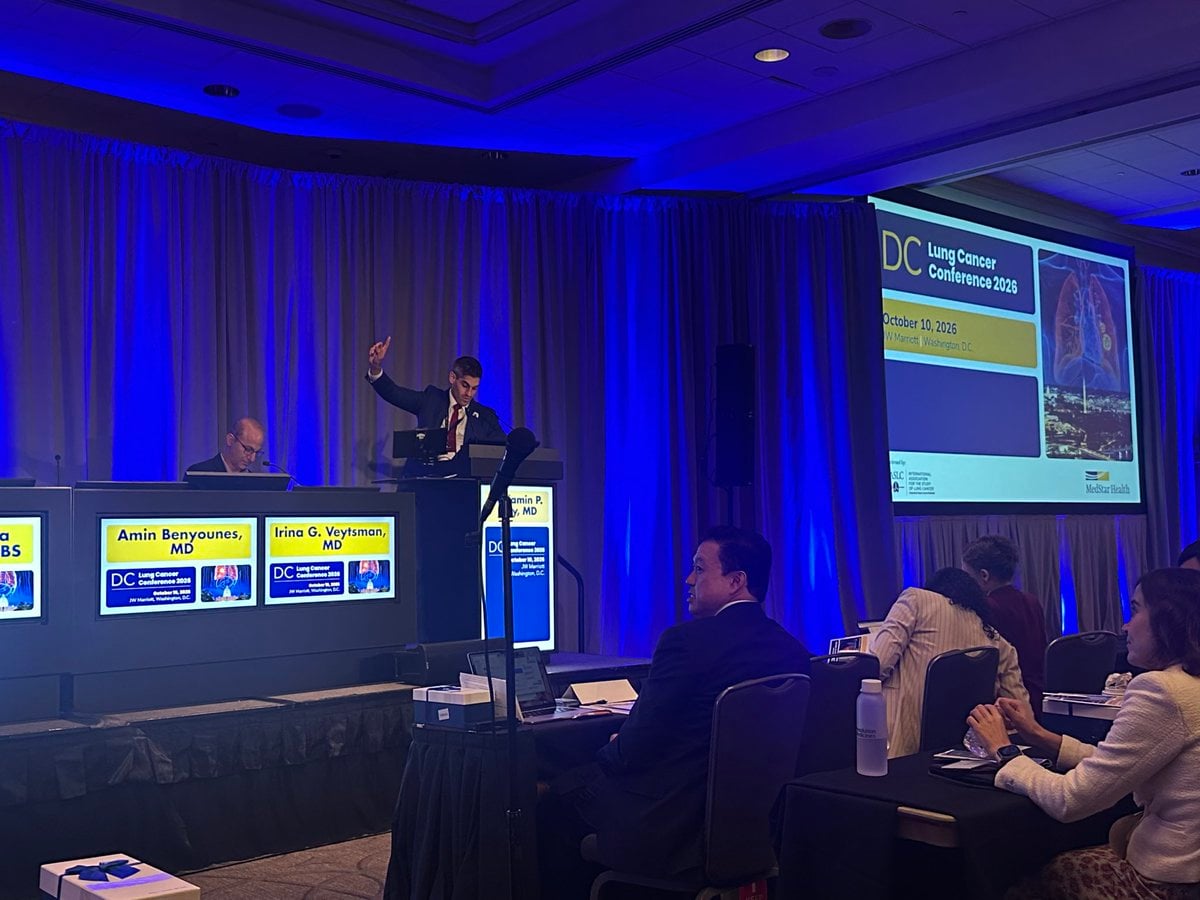
Session IV · 11:05–12:10 ET · Moderator Benjamin P. Levy
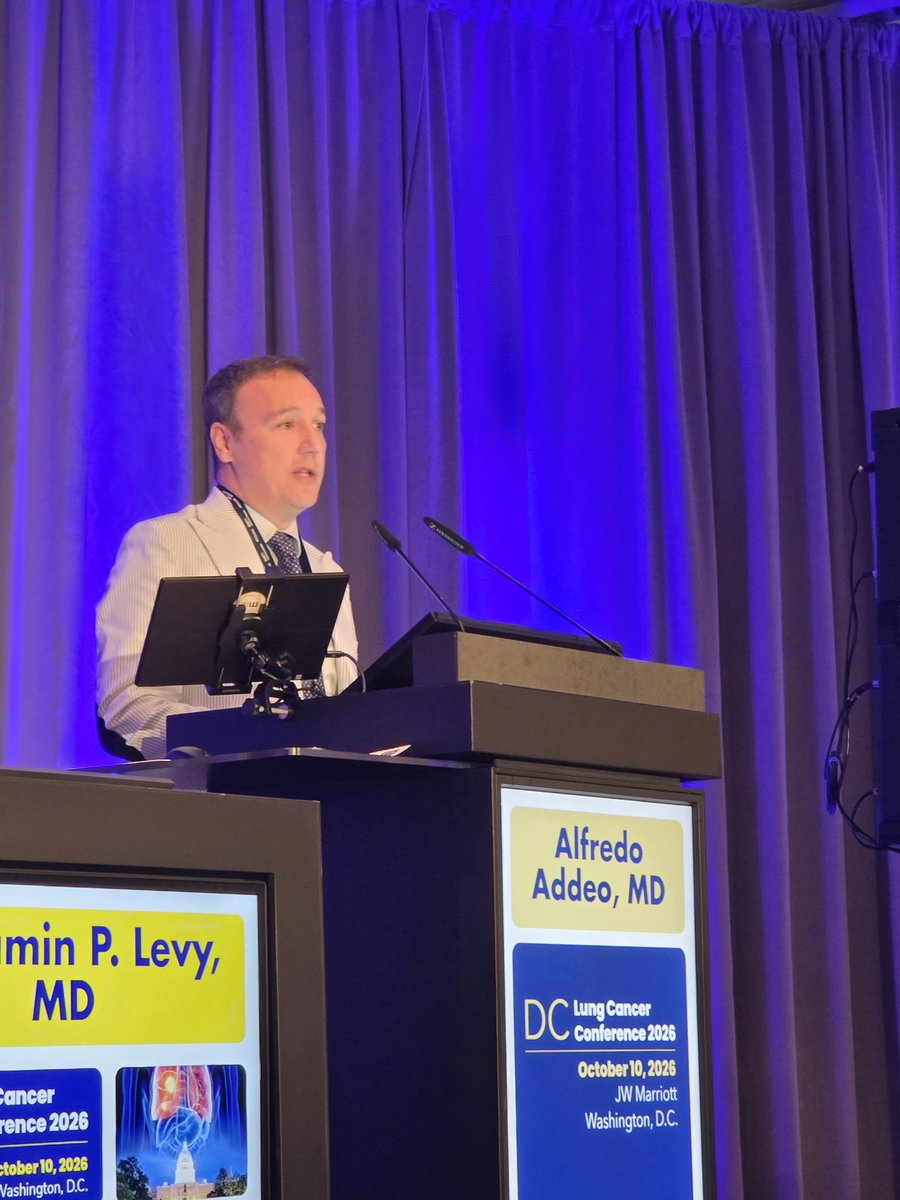
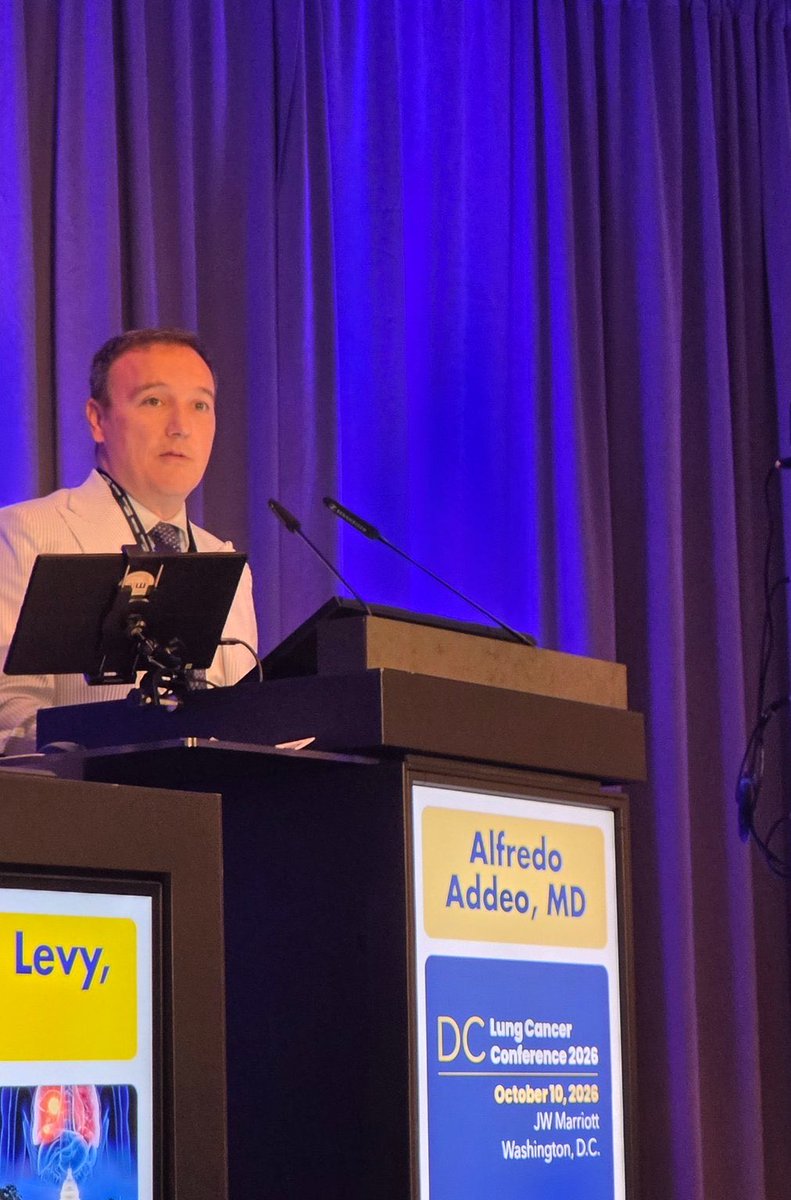
On the podiumAlfredo AddeoUniversity Hospital of GenevaAnaplastic Lymphoma Kinase (ALK)
Dr. @Alfdoc2 with a great rapid-fire review of ALK, where we are and where we are going. #DCLung26.
Joshua Reuss (@Joshua_Reuss)Oct 10, 2026 · 11:12 AM ETView post on X ↗
On the podiumAlfredo AddeoUniversity Hospital of GenevaAnaplastic Lymphoma Kinase (ALK)
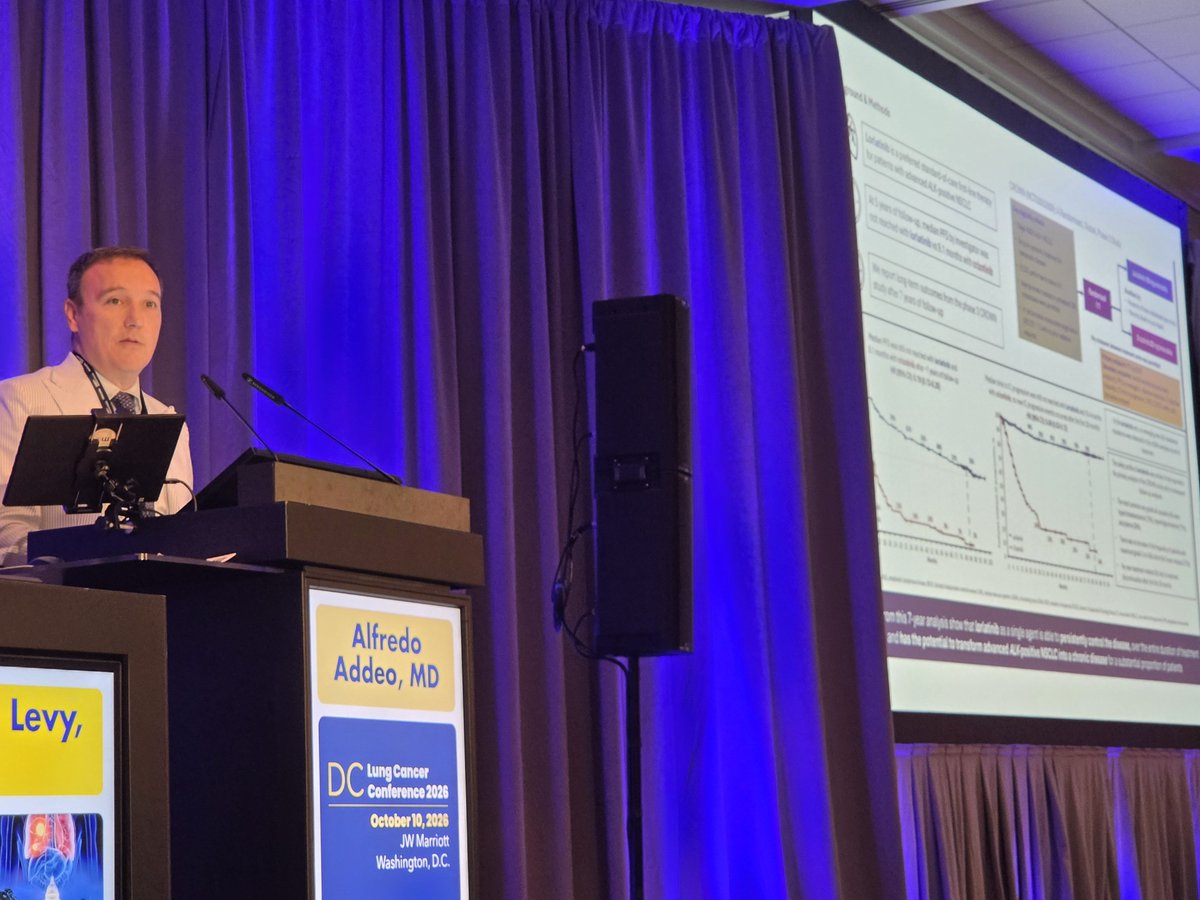
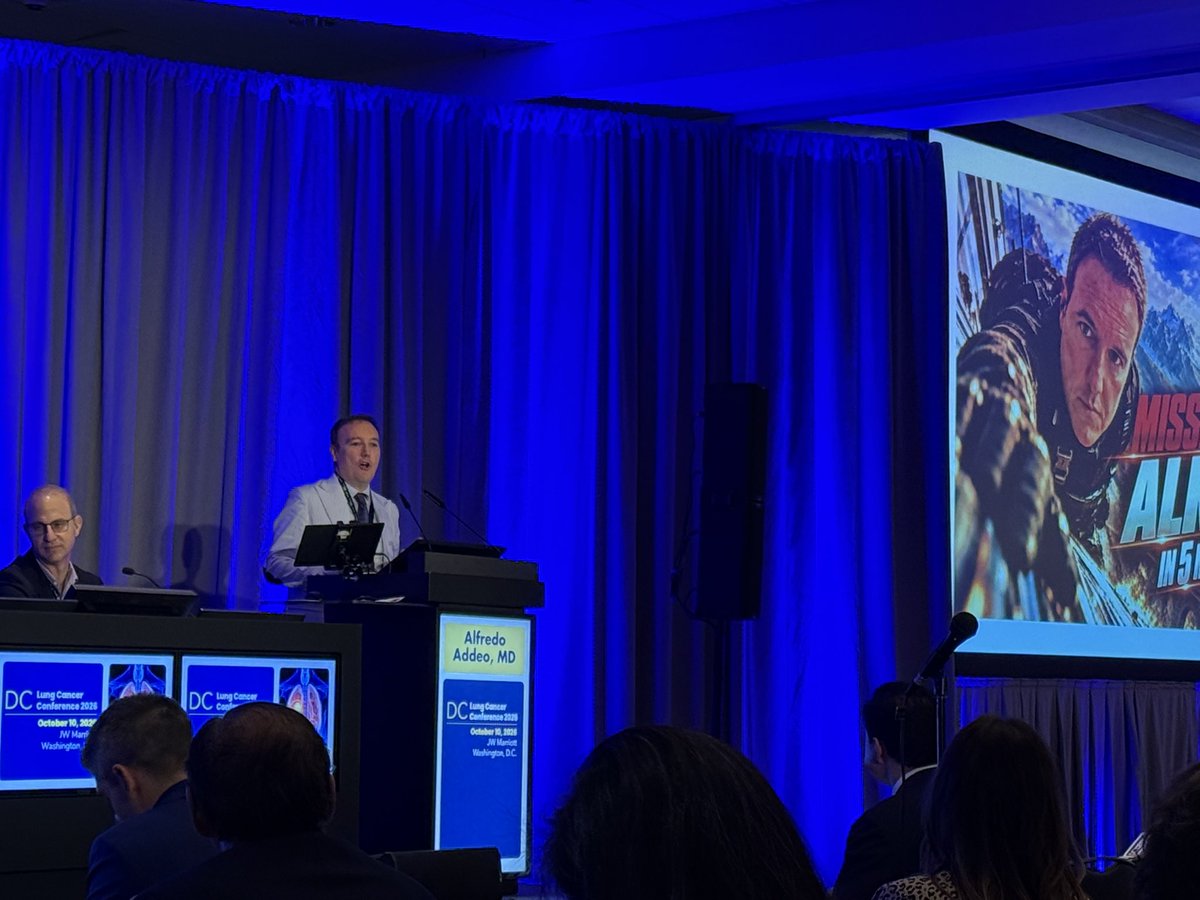
Comprehensive overview of ALK fusion-positive NSCLC in 5 minutes by @Alfdoc2 #DCLung2026.
Many excellent treatment options, but CROWN (lorlatinib vs. crizotinib) has passed the “truck test”!
Novel agents like neladalkib and innovative approaches such as ALK vaccines emerging.
[Slide 2]
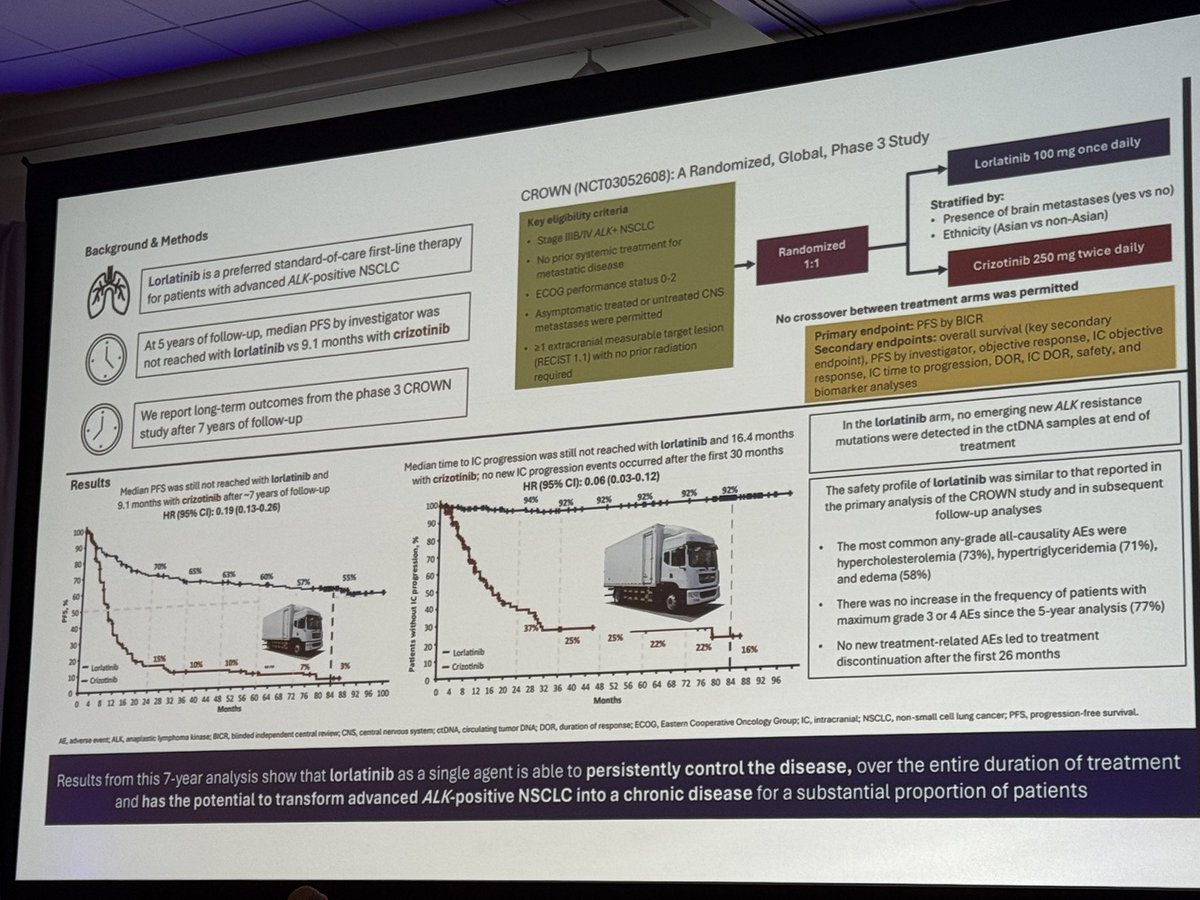
Background & Methods
Lorlatinib is a preferred standard-of-care first-line therapy for patients with advanced ALK-positive NSCLC
At 5 years of follow-up, median PFS by investigator was not reached with lorlatinib vs 9.1 months with crizotinib
We report long-term outcomes from the phase 3 CROWN study after 7 years of follow-up
CROWN (NCT03052608): A Randomized, Global, Phase 3 Study
Key eligibility criteria
- Stage IIIB/IV ALK+ NSCLC
- No prior systemic treatment for metastatic disease
- ECOG performance status 0-2
- Asymptomatic treated or untreated CNS metastases were permitted
- >=1 extracranial measurable target lesion (RECIST 1.1) with no prior radiation required
Randomized 1:1
Stratified by:
- Presence of brain metastases (yes vs no)
- Ethnicity (Asian vs non-Asian)
Lorlatinib 100 mg once daily
Crizotinib 250 mg twice daily
No crossover between treatment arms was permitted
Primary endpoint: PFS by BICR
Secondary endpoints: overall survival (key secondary endpoint), PFS by investigator, objective response, IC objective response, IC time to progression, DOR, IC DOR, safety, and biomarker analyses
Results
Median PFS was still not reached with lorlatinib and 9.1 months with crizotinib after ~7 years of follow-up
HR (95% CI): 0.19 (0.13-0.26)
[Kaplan-Meier: PFS, % vs Months; arms Lorlatinib, Crizotinib — see km_table]
Median time to IC progression was still not reached with lorlatinib and 16.4 months with crizotinib; no new IC progression events occurred after the first 30 months
HR (95% CI): 0.06 (0.03-0.12)
[Kaplan-Meier: Patients without IC progression, % vs Months; arms Lorlatinib, Crizotinib — see km_table]
In the lorlatinib arm, no emerging new ALK resistance mutations were detected in the ctDNA samples at end of treatment
The safety profile of lorlatinib was similar to that reported in the primary analysis of the CROWN study and in subsequent follow-up analyses
- The most common any-grade all-causality AEs were hypercholesterolemia (73%), hypertriglyceridemia (71%), and edema (58%)
- There was no increase in the frequency of patients with maximum grade 3 or 4 AEs since the 5-year analysis (77%)
- No new treatment-related AEs led to treatment discontinuation after the first 26 months
AE, adverse event; ALK, anaplastic lymphoma kinase; BICR, blinded independent central review; CNS, central nervous system; ctDNA, circulating tumor DNA; DOR, duration of response; ECOG, Eastern Cooperative Oncology Group; IC, intracranial; NSCLC, non-small cell lung cancer; PFS, progression-free survival.
Results from this 7-year analysis show that lorlatinib as a single agent is able to persistently control the disease, over the entire duration of treatment and has the potential to transform advanced ALK-positive NSCLC into a chronic disease for a substantial proportion of patients
[Survival data captured as a table — no point estimates read from the curve]
Endpoint: PFS by investigator (~7-year follow-up) and time to intracranial (IC) progression
Lorlatinib 100 mg QD | not printed | PFS: not reached; time to IC progression: not reached | not printed
Crizotinib 250 mg BID | not printed | PFS: 9.1 months; time to IC progression: 16.4 months | not printed
HR: PFS HR 0.19; IC progression HR 0.06
HR CI: PFS 95% CI 0.13-0.26; IC progression 95% CI 0.03-0.12
P: not printed
{'curve': 'PFS, lorlatinib', 'values_printed_left_to_right': ['70%', '65%', '63%', '60%', '57%', '55%'], 'timepoints': 'not labelled on slide — do not assign'}
{'curve': 'PFS, crizotinib', 'values_printed_left_to_right': ['15%', '10%', '10%', '[illegible]', '7%', '3%'], 'timepoints': 'not labelled on slide — do not assign'}
{'curve': 'Without IC progression, lorlatinib', 'values_printed_left_to_right': ['94%', '92%', '92%', '92%', '92%', '92%'], 'timepoints': 'not labelled on slide — do not assign'}
{'curve': 'Without IC progression, crizotinib', 'values_printed_left_to_right': ['37%', '25%', '25%', '22%', '22%', '16%'], 'timepoints': 'not labelled on slide — do not assign'}
Note: No point estimates read from curve. Landmark percentages are printed annotations on the curves but their x-axis timepoints are NOT labelled; x-axis runs 0-100 months (PFS) and 0-96 months (IC). Fourth crizotinib PFS annotation illegible.
---
[Slide 3]
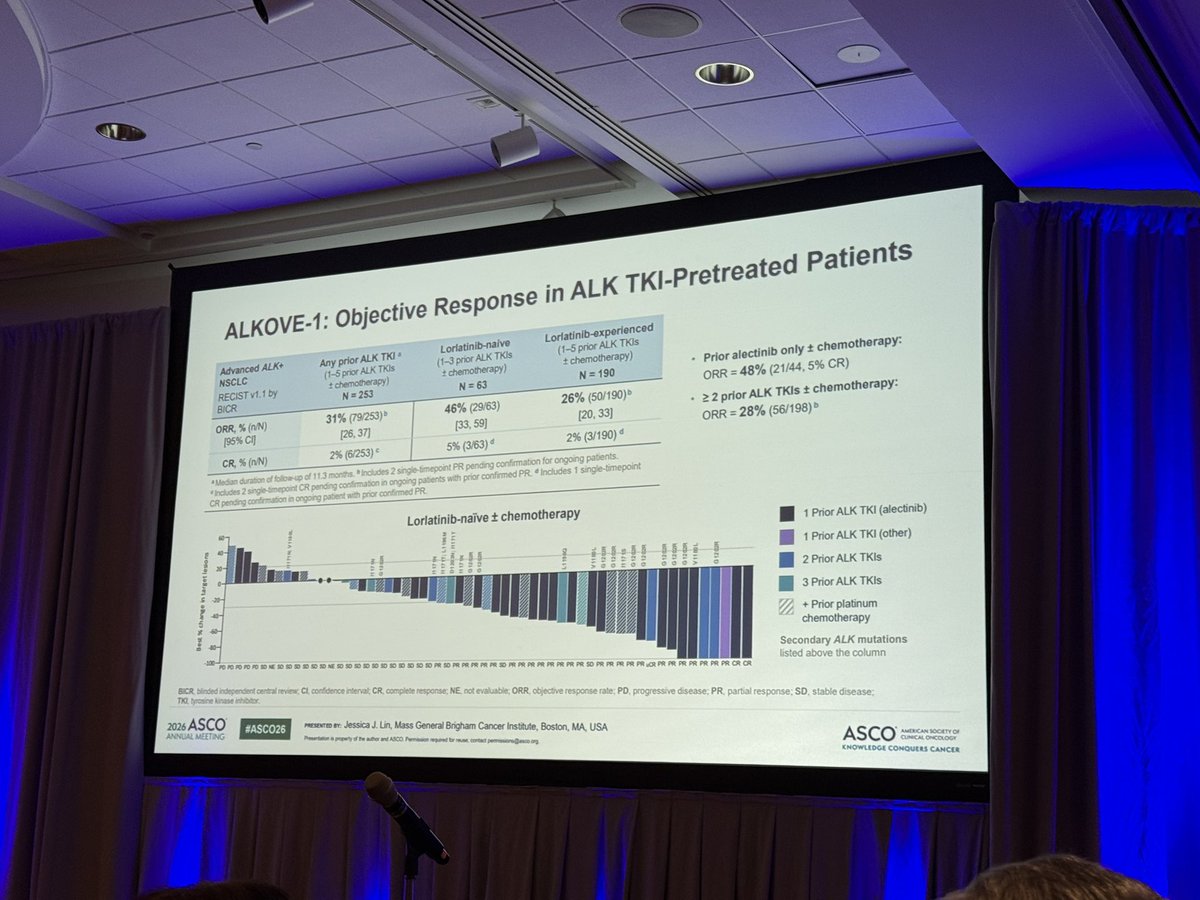
ALKOVE-1: Objective Response in ALK TKI-Pretreated Patients
Advanced ALK+ NSCLC, RECIST v1.1 by BICR | Any prior ALK TKI a (1-5 prior ALK TKIs ± chemotherapy) N = 253 | Lorlatinib-naive (1-3 prior ALK TKIs ± chemotherapy) N = 63 | Lorlatinib-experienced (1-5 prior ALK TKIs ± chemotherapy) N = 190
ORR, % (n/N) [95% CI] | 31% (79/253) b [26, 37] | 46% (29/63) [33, 59] | 26% (50/190) b [20, 33]
CR, % (n/N) | 2% (6/253) c | 5% (3/63) d | 2% (3/190) d
a Median duration of follow-up of 11.3 months. b Includes 2 single-timepoint PR pending confirmation for ongoing patients. c Includes 2 single-timepoint CR pending confirmation in ongoing patients with prior confirmed PR. d Includes 1 single-timepoint CR pending confirmation in ongoing patient with prior confirmed PR.
- Prior alectinib only ± chemotherapy: ORR = 48% (21/44, 5% CR)
- >= 2 prior ALK TKIs ± chemotherapy: ORR = 28% (56/198) b
Lorlatinib-naive ± chemotherapy
[Waterfall plot: Best % change in target lesions, y-axis +60 to -100; secondary ALK mutations listed above the columns; x-axis labels PD/SD/PR/CR/NE per patient — individual bar values not transcribed]
Legend: 1 Prior ALK TKI (alectinib) | 1 Prior ALK TKI (other) | 2 Prior ALK TKIs | 3 Prior ALK TKIs | + Prior platinum chemotherapy | Secondary ALK mutations listed above the column
BICR, blinded independent central review; CI, confidence interval; CR, complete response; NE, not evaluable; ORR, objective response rate; PD, progressive disease; PR, partial response; SD, stable disease; TKI, tyrosine kinase inhibitor.
2026 ASCO ANNUAL MEETING #ASCO26
PRESENTED BY: Jessica J. Lin, Mass General Brigham Cancer Institute, Boston, MA, USA
Presentation is property of the author and ASCO. Permission required for reuse; contact permissions@asco.org.
ASCO AMERICAN SOCIETY OF CLINICAL ONCOLOGY — KNOWLEDGE CONQUERS CANCER
---
[Slide 4]
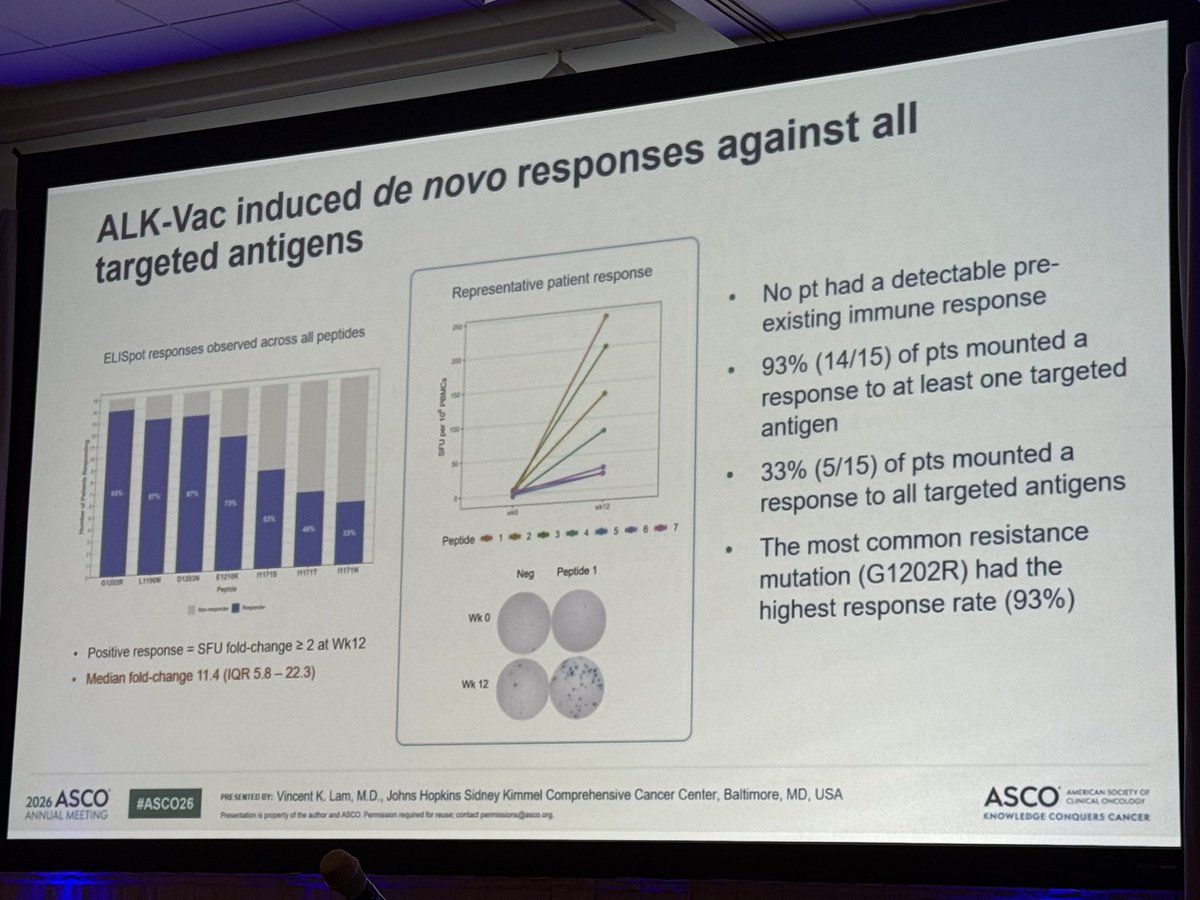
ALK-Vac induced de novo responses against all targeted antigens
ELISpot responses observed across all peptides
[Stacked bar chart; y-axis: Number of Patients Responding (0-15); x-axis: Peptide; legend: Non-responder / Responder]
Peptide | Responder % printed on bar
G1202R | 93%
L1196M | 87%
D1203N | 87%
E1210K | 73%
I1171S | 53%
I1171T | 40%
I1171N | 33%
- Positive response = SFU fold-change >= 2 at Wk12
- Median fold-change 11.4 (IQR 5.8 - 22.3)
Representative patient response
[Line plot: SFU per 10^6 PBMCs (y-axis 0-250) at wk0 vs wk12; legend: Peptide 1, 2, 3, 4, 5, 6, 7]
[ELISpot well images] Neg | Peptide 1 — Wk 0 ; Wk 12
- No pt had a detectable pre-existing immune response
- 93% (14/15) of pts mounted a response to at least one targeted antigen
- 33% (5/15) of pts mounted a response to all targeted antigens
- The most common resistance mutation (G1202R) had the highest response rate (93%)
2026 ASCO ANNUAL MEETING #ASCO26
PRESENTED BY: Vincent K. Lam, M.D., Johns Hopkins Sidney Kimmel Comprehensive Cancer Center, Baltimore, MD, USA
Presentation is property of the author and ASCO. Permission required for reuse; contact permissions@asco.org.
ASCO AMERICAN SOCIETY OF CLINICAL ONCOLOGY — KNOWLEDGE CONQUERS CANCER
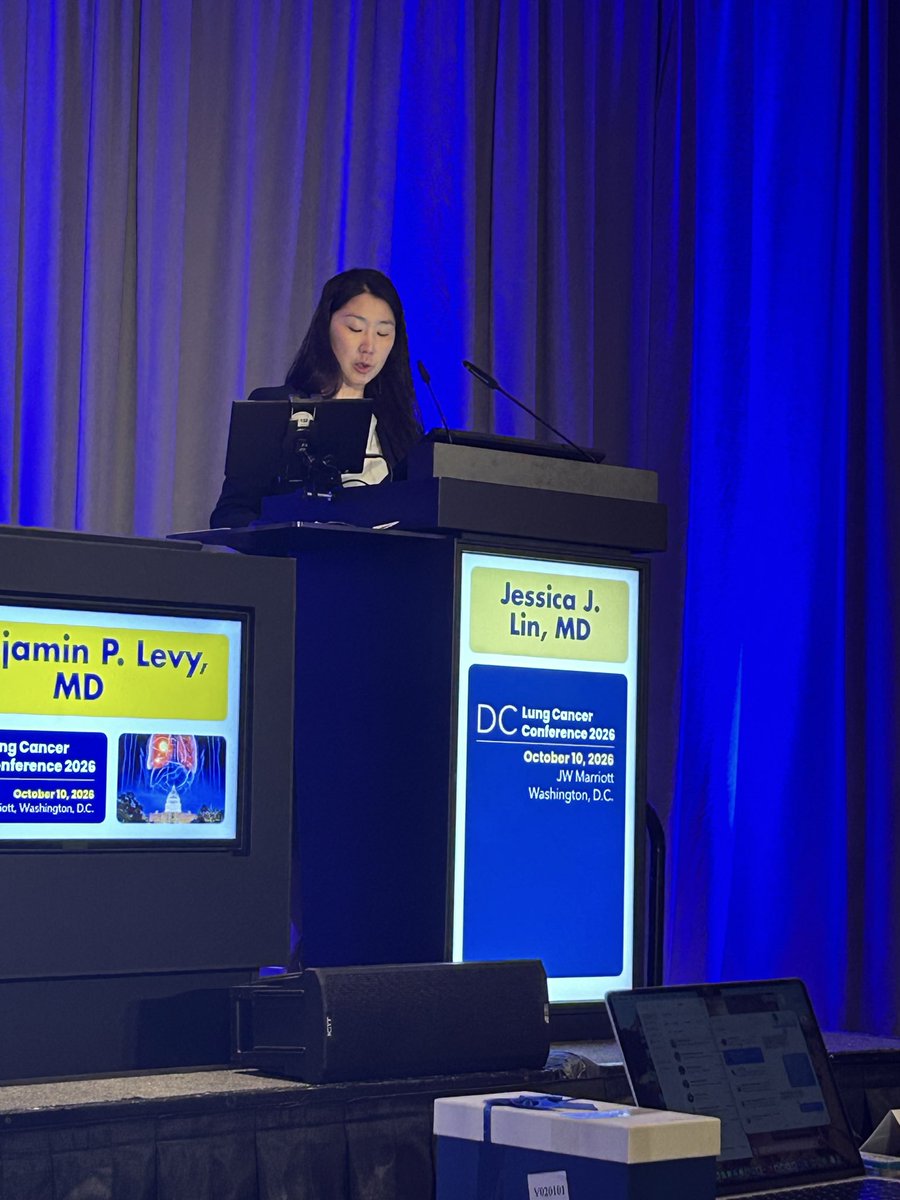
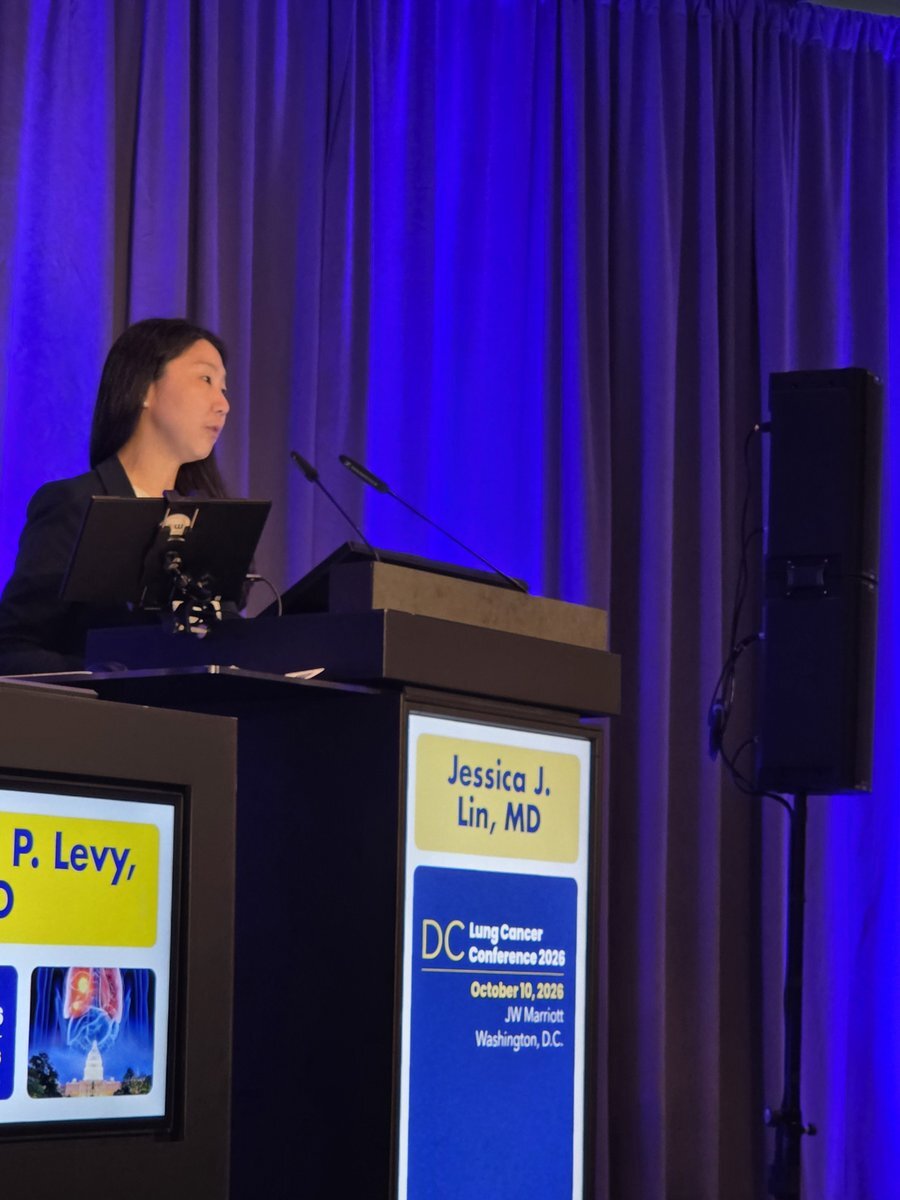
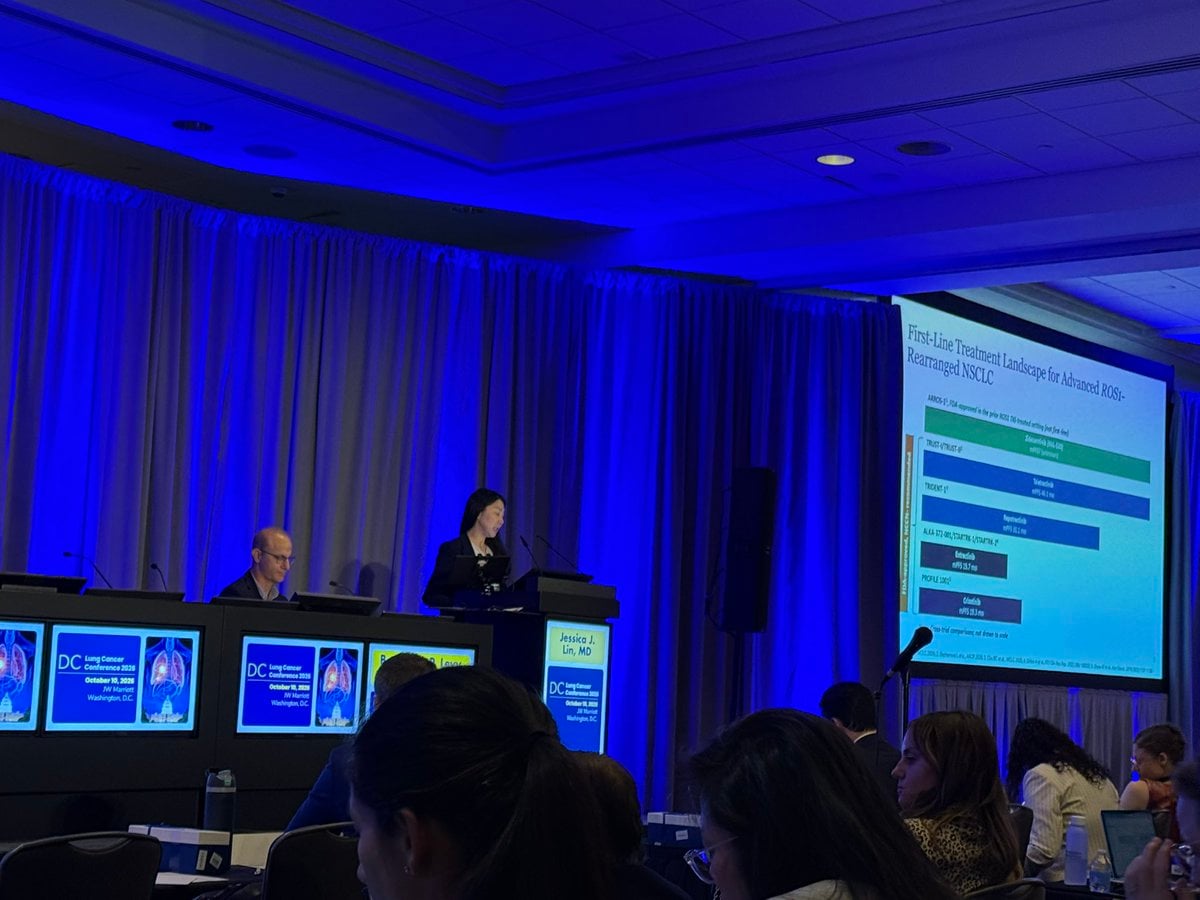
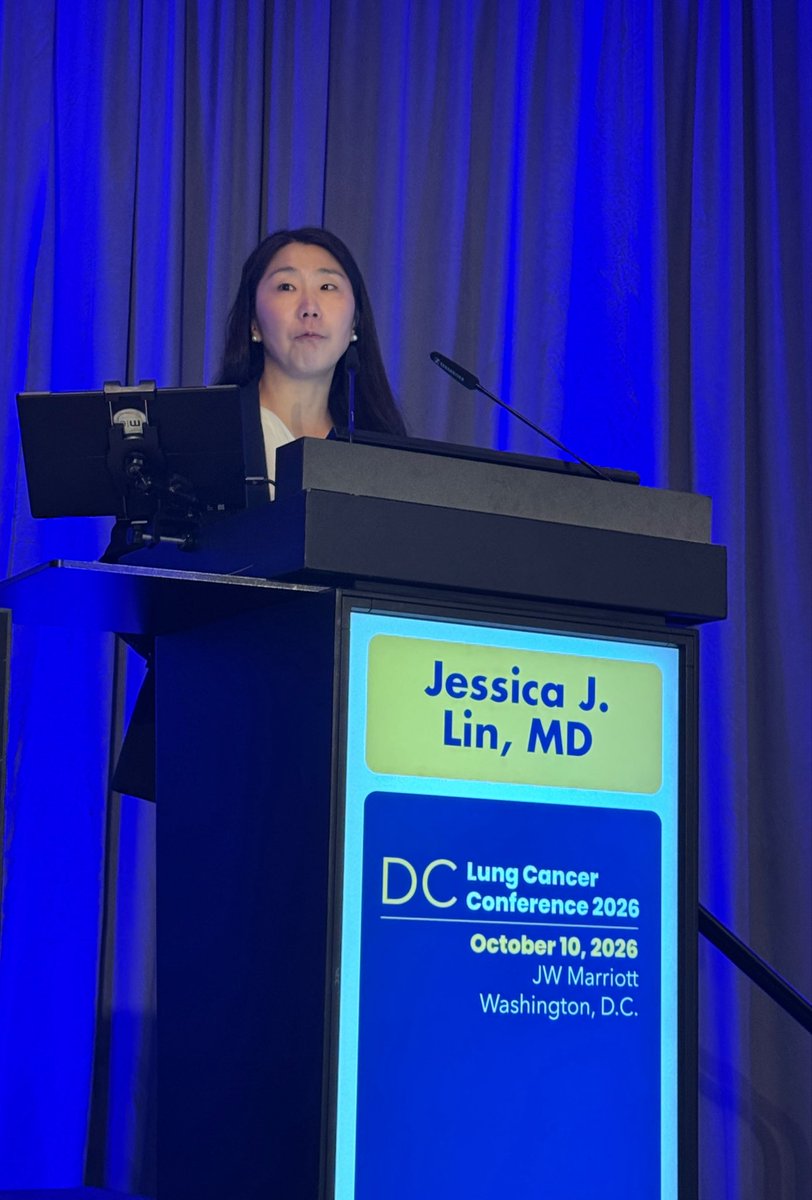
On the podiumJessica J. LinMassachusetts General HospitalROS1
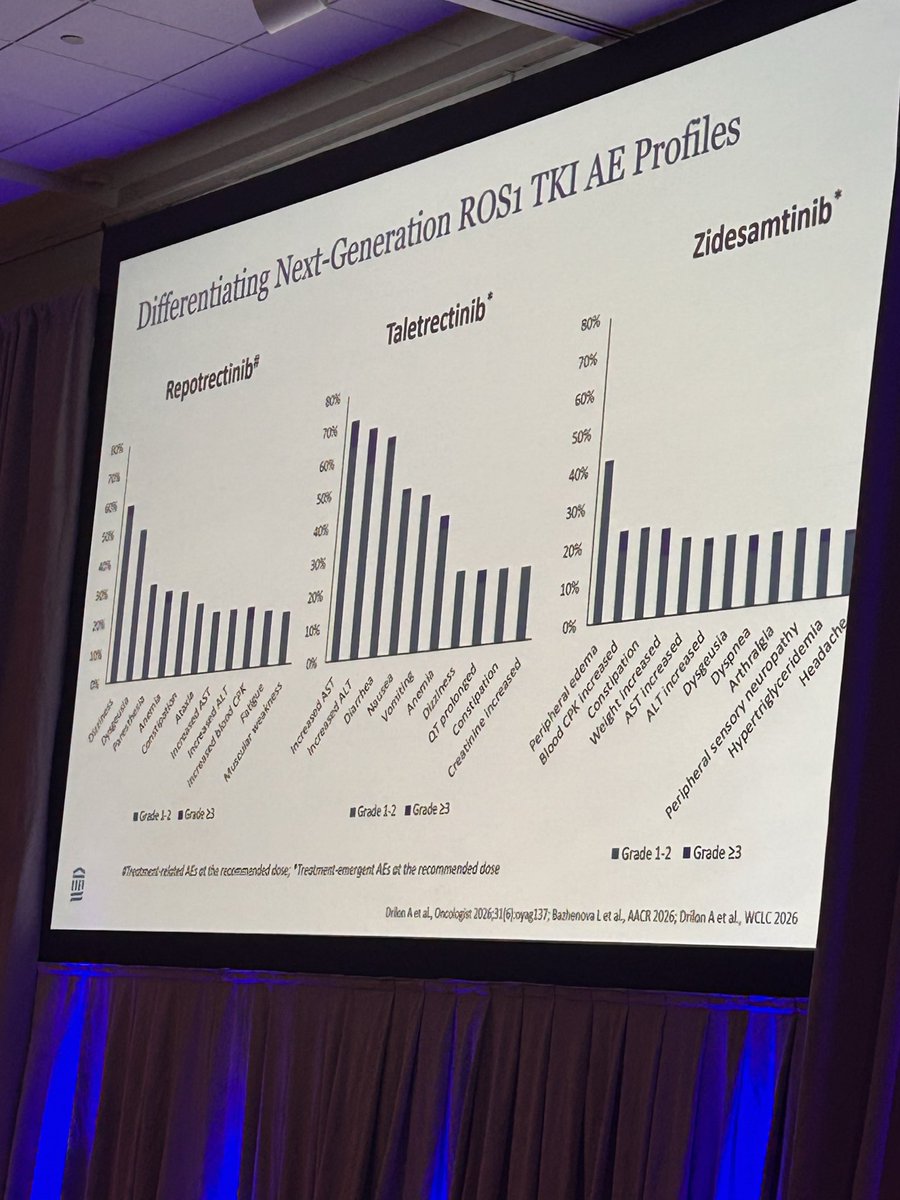
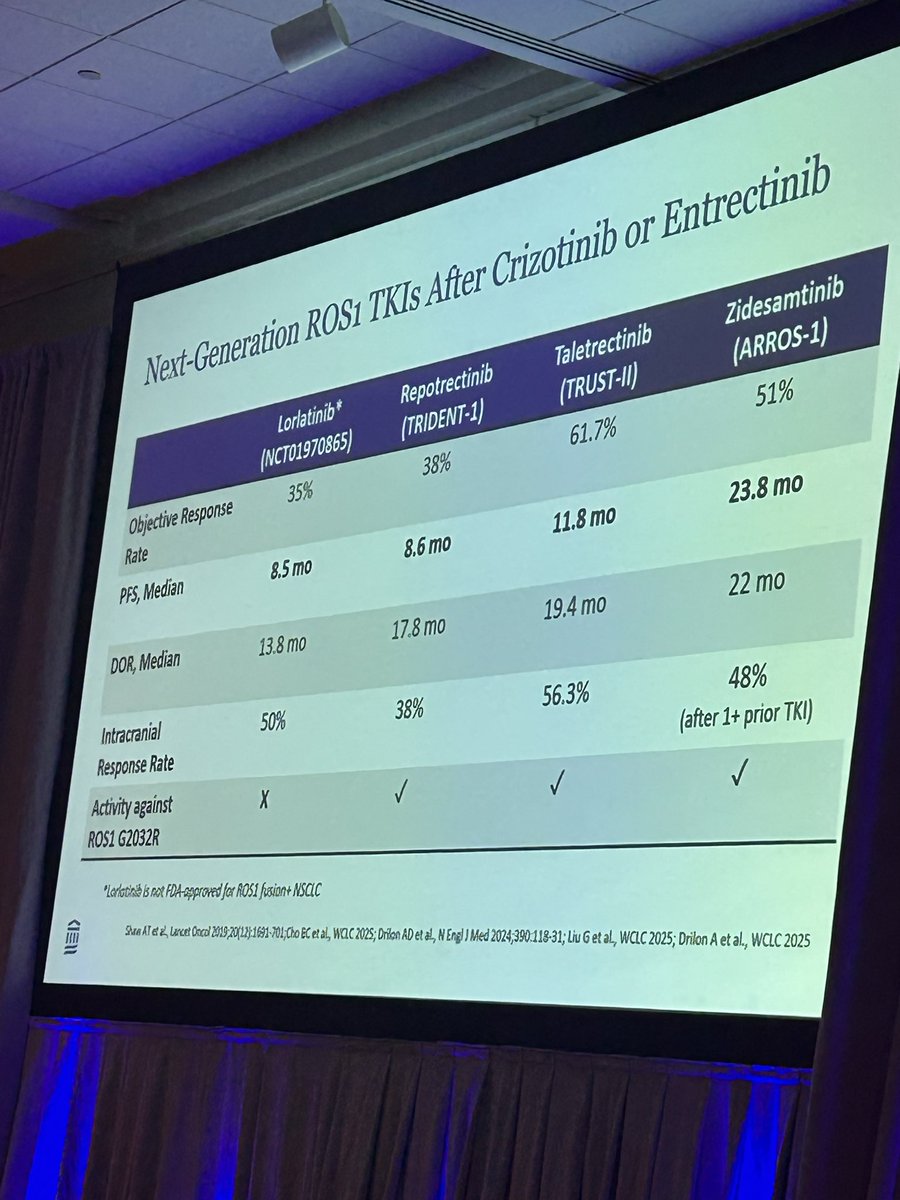
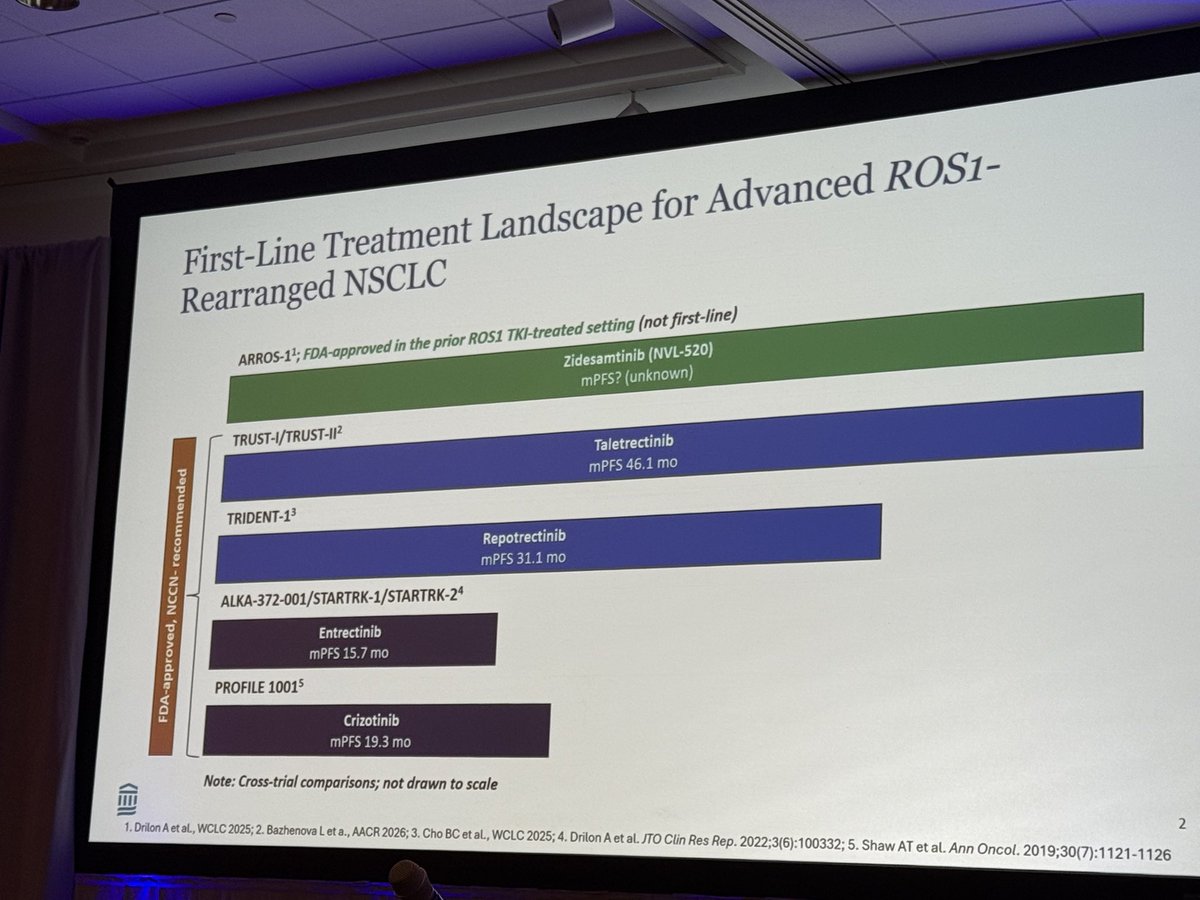
Dr. Jessica Lin (@JessicaJLinMD) provides a comprehensive update on the continuum of agents in management of ROS1 altered #NSCLC with various ROS1 TKIs with notable unique AE profiles & activity following prior crizotinib or entrectinib at #DCLung26.
@StephenVLiu @Joshua_Reuss @MedStarHealth @ros1cancer @lungoncdoc @LauraAlderMD @MassGeneralNews
[Slide 2]
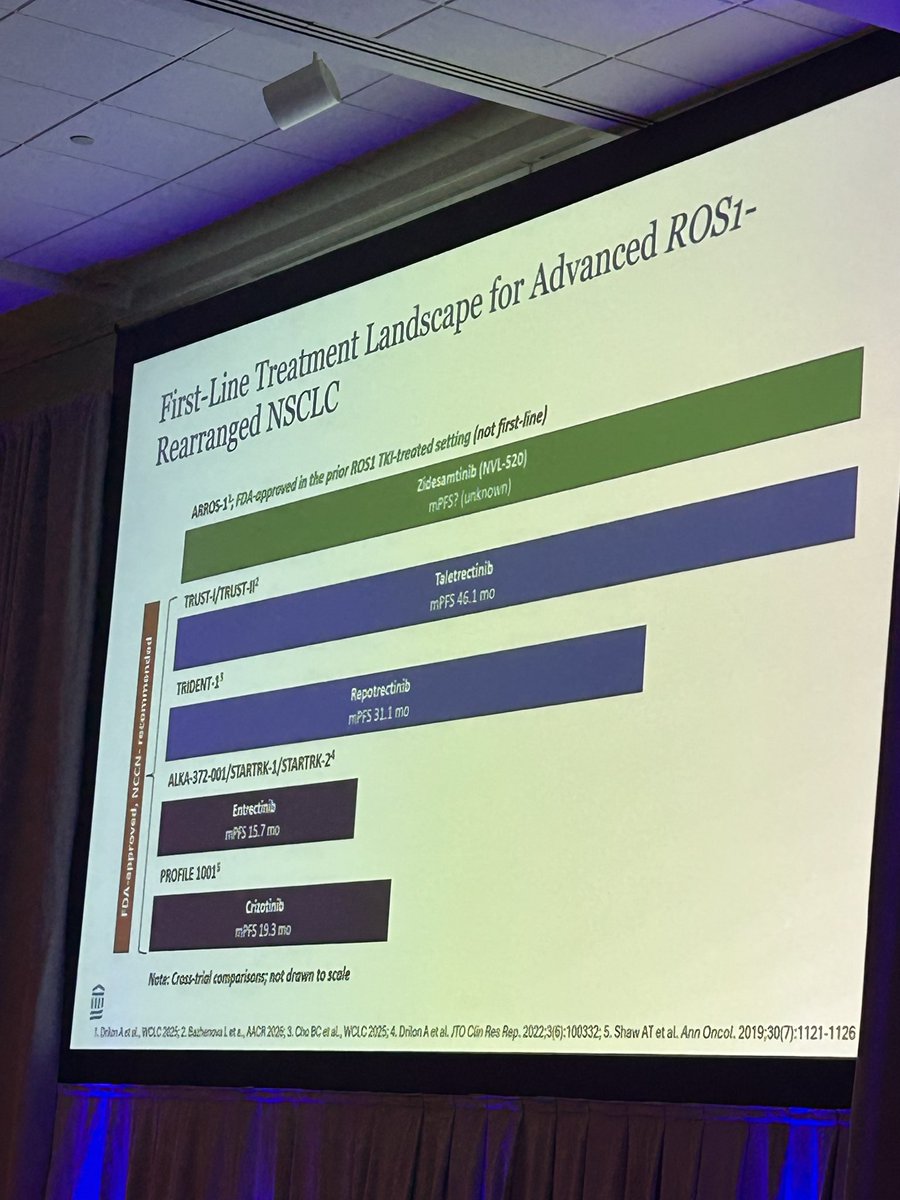
First-Line Treatment Landscape for Advanced ROS1-Rearranged NSCLC
[Horizontal bar schematic — cross-trial comparison; not drawn to scale]
ARROS-1 1; FDA-approved in the prior ROS1 TKI-treated setting (not first-line) | Zidesamtinib (NVL-520) | mPFS? (unknown)
FDA-approved, NCCN-recommended (bracket covering the four rows below):
TRUST-I/TRUST-II 2 | Taletrectinib | mPFS 46.1 mo
TRIDENT-1 3 | Repotrectinib | mPFS 31.1 mo
ALKA-372-001/STARTRK-1/STARTRK-2 4 | Entrectinib | mPFS 15.7 mo
PROFILE 1001 5 | Crizotinib | mPFS 19.3 mo
Note: Cross-trial comparisons; not drawn to scale
1. Drilon A et al., WCLC 2025; 2. Bazhenova L et al., AACR 2026; 3. Cho BC et al., WCLC 2025; 4. Drilon A et al. JTO Clin Res Rep. 2022;3(6):100332; 5. Shaw AT et al. Ann Oncol. 2019;30(7):1121-1126
---
[Slide 3]
Differentiating Next-Generation ROS1 TKI AE Profiles
Repotrectinib # [bar chart, y-axis 0%-80%; Grade 1-2 / Grade >=3]
AEs (left to right): Dizziness, Dysgeusia, Paresthesia, Anemia, Constipation, Ataxia, Increased AST, Increased ALT, Increased blood CPK, Fatigue, Muscular weakness
Taletrectinib * [bar chart, y-axis 0%-80%; Grade 1-2 / Grade >=3]
AEs (left to right): Increased AST, Increased ALT, Diarrhea, Nausea, Vomiting, Anemia, Dizziness, QT prolonged, Constipation, Creatinine increased
Zidesamtinib * [bar chart, y-axis 0%-80%; Grade 1-2 / Grade >=3]
AEs (left to right): Peripheral edema, Blood CPK increased, Constipation, Weight increased, AST increased, ALT increased, Dysgeusia, Dyspnea, Arthralgia, Peripheral sensory neuropathy, Hypertriglyceridemia, Headache
# Treatment-related AEs at the recommended dose; * Treatment-emergent AEs at the recommended dose
Drilon A et al., Oncologist 2026;31(6):oyag137; Bazhenova L et al., AACR 2026; Drilon A et al., WCLC 2026
---
[Slide 4]
Next-Generation ROS1 TKIs After Crizotinib or Entrectinib
| Lorlatinib* (NCT01970865) | Repotrectinib (TRIDENT-1) | Taletrectinib (TRUST-II) | Zidesamtinib (ARROS-1)
Objective Response Rate | 35% | 38% | 61.7% | 51%
PFS, Median | 8.5 mo | 8.6 mo | 11.8 mo | 23.8 mo
DOR, Median | 13.8 mo | 17.8 mo | 19.4 mo | 22 mo
Intracranial Response Rate | 50% | 38% | 56.3% | 48% (after 1+ prior TKI)
Activity against ROS1 G2032R | X | ✓ | ✓ | ✓
*Lorlatinib is not FDA-approved for ROS1 fusion+ NSCLC
Shaw AT et al., Lancet Oncol 2019;20(12):1691-701; Cho BC et al., WCLC 2025; Drilon AD et al., N Engl J Med 2024;390:118-31; Liu G et al., WCLC 2025; Drilon A et al., WCLC 2025
Misty Dawn Shields (@drshieldsmd)Oct 10, 2026 · 11:21 AM ETView post on X ↗
On the podiumJessica J. LinMassachusetts General HospitalROS1
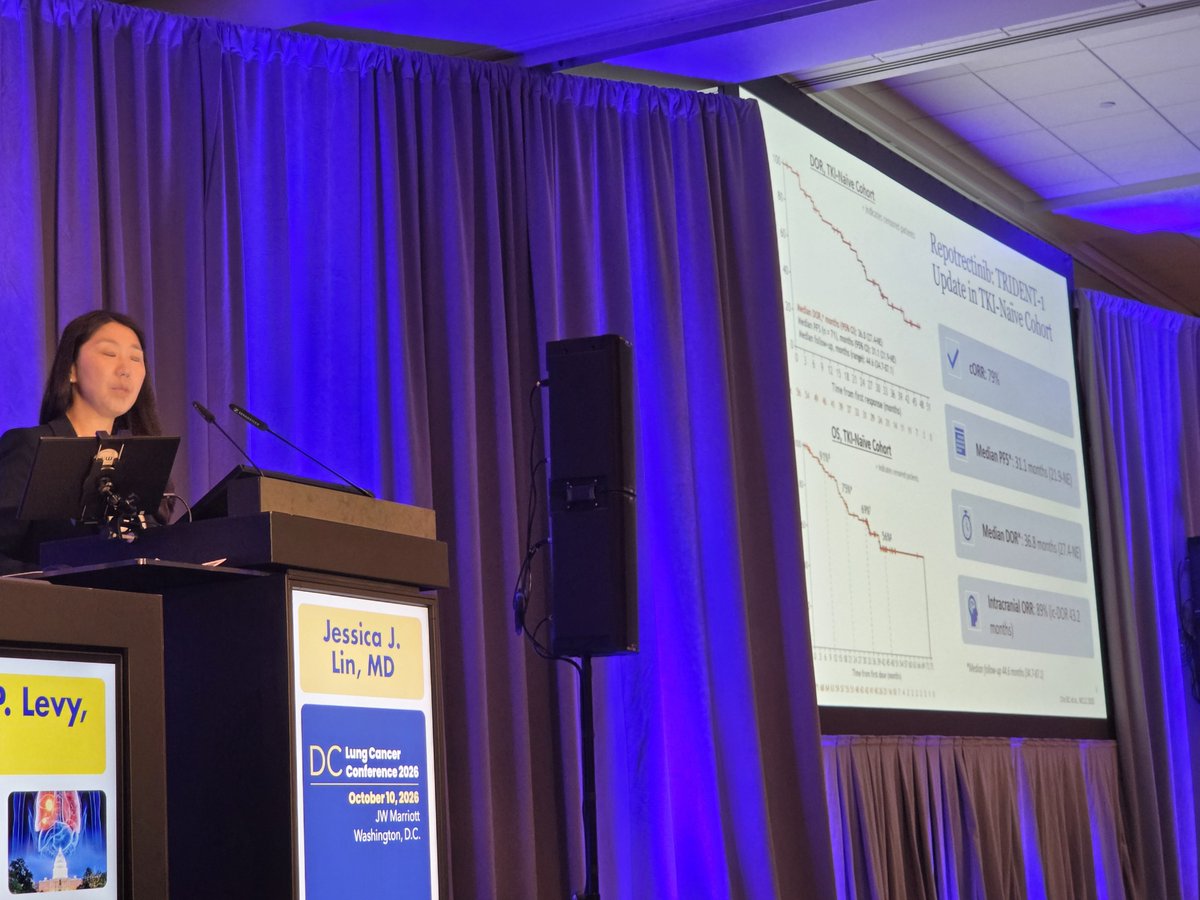
Dr. @JessicaJLinMD provides an excellent and thorough update on the evolution of ROS1 fusion+ NSCLC. Great to have agents with increasing activity and decreasing toxicity. #DCLung26
TRIDENT-1
[Slide 2]
Repotrectinib: TRIDENT-1 Update in TKI-Naive Cohort
[Left panel, top KM: DOR, TKI-Naive Cohort] (+ indicates censored patients)
Median DOR,* months (95% CI): 36.8 (27.4-NE)
Median PFS (n = 71), months (95% CI): 31.1 (21.9-NE)
Median follow-up, months (range): 44.6 (34.7-67.1)
x-axis: Time from first response (months) 0 3 6 9 12 15 18 21 24 27 30 33 36 39 42 45 48 51
[Left panel, bottom KM: OS, TKI-Naive Cohort] (+ indicates censored patients)
Landmark OS labels printed on curve (timepoints not legible): 91%* | 75%* | 69%* | 56%*
x-axis: Time from first dose (months)
[Right panel]
cORR: 79%
Median PFS*: 31.1 months (21.9-NE)
Median DOR*: 36.8 months (27.4-NE)
Intracranial ORR: 89% (ic-DOR 43.2 months)
*Median follow-up 44.6 months (34.7-67.1)
[Survival data captured as a table — no point estimates read from the curve]
Endpoint: DOR / PFS / OS, TRIDENT-1 TKI-naive ROS1+ cohort (repotrectinib, single arm)
Joshua Reuss (@Joshua_Reuss)Oct 10, 2026 · 11:22 AM ETView post on X ↗
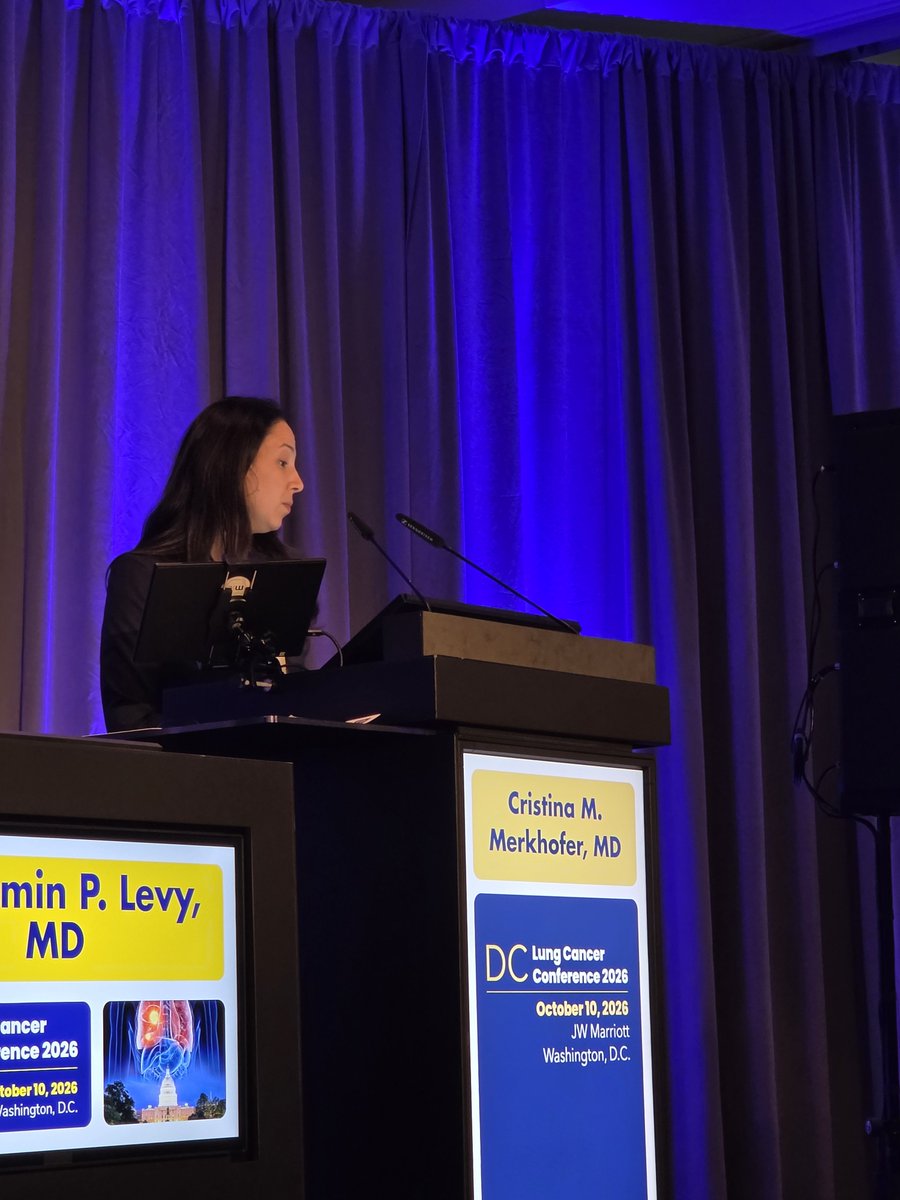
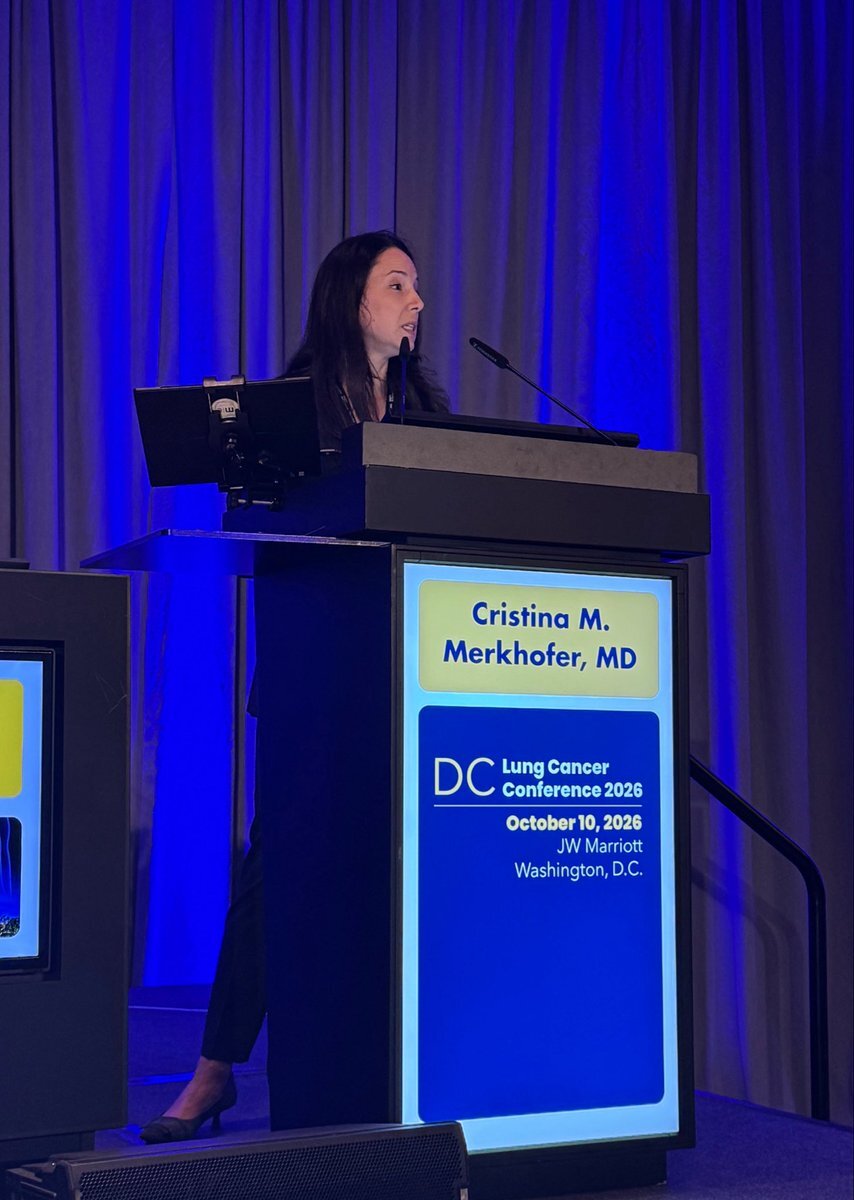
On the podiumCristina M. MerkhoferMedStar Washington Hospital Center / Georgetown LombardiRET
Dr. Cristina Merkhofer presents updates on RET-altered NSCLC at #DCLung26. @MedStarWHC
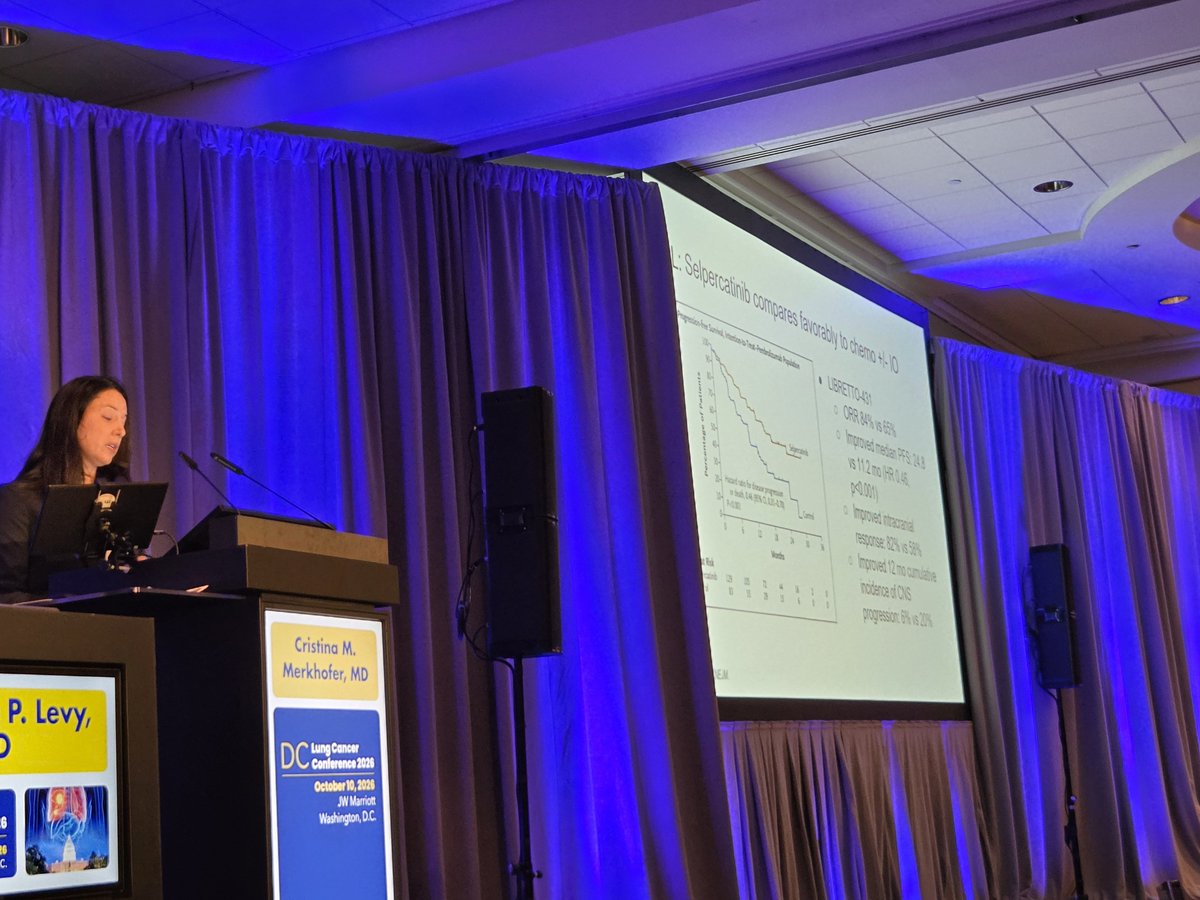
LIBRETTO-431
[Slide 2]
[..]L: Selpercatinib compares favorably to chemo +/- IO (left edge of title cut by frame; likely '1L')
[KM figure] Progression-free Survival, Intention-to-Treat-Pembrolizumab Population
y-axis: Percentage of Patients (0-100); x-axis: Months 0 6 12 18 24 30 36
Curves labelled: Selpercatinib | Control
Hazard ratio for disease progression or death, 0.46 (95% CI, 0.31-0.70)
P<0.001
No. at Risk
[Selpe]rcatinib | 129 | 105 | 72 | 44 | 16 | 2 | 0
[Contr]ol | 83 | 55 | 29 | 15 | 6 | 0 | 0
[Bullets]
• LIBRETTO-431
o ORR 84% vs 65%
o Improved median PFS: 24.8 vs 11.2 mo (HR 0.46, p<0.001)
o Improved intracranial response: 82% vs 58%
o Improved 12 mo cumulative incidence of CNS progression: 6% vs 20%
Footer: NEJM
[Survival data captured as a table — no point estimates read from the curve]
Endpoint: PFS, ITT-pembrolizumab population, LIBRETTO-431
Joshua Reuss (@Joshua_Reuss)Oct 10, 2026 · 11:27 AM ETView post on X ↗
On the podiumJessica J. LinMassachusetts General HospitalROS1
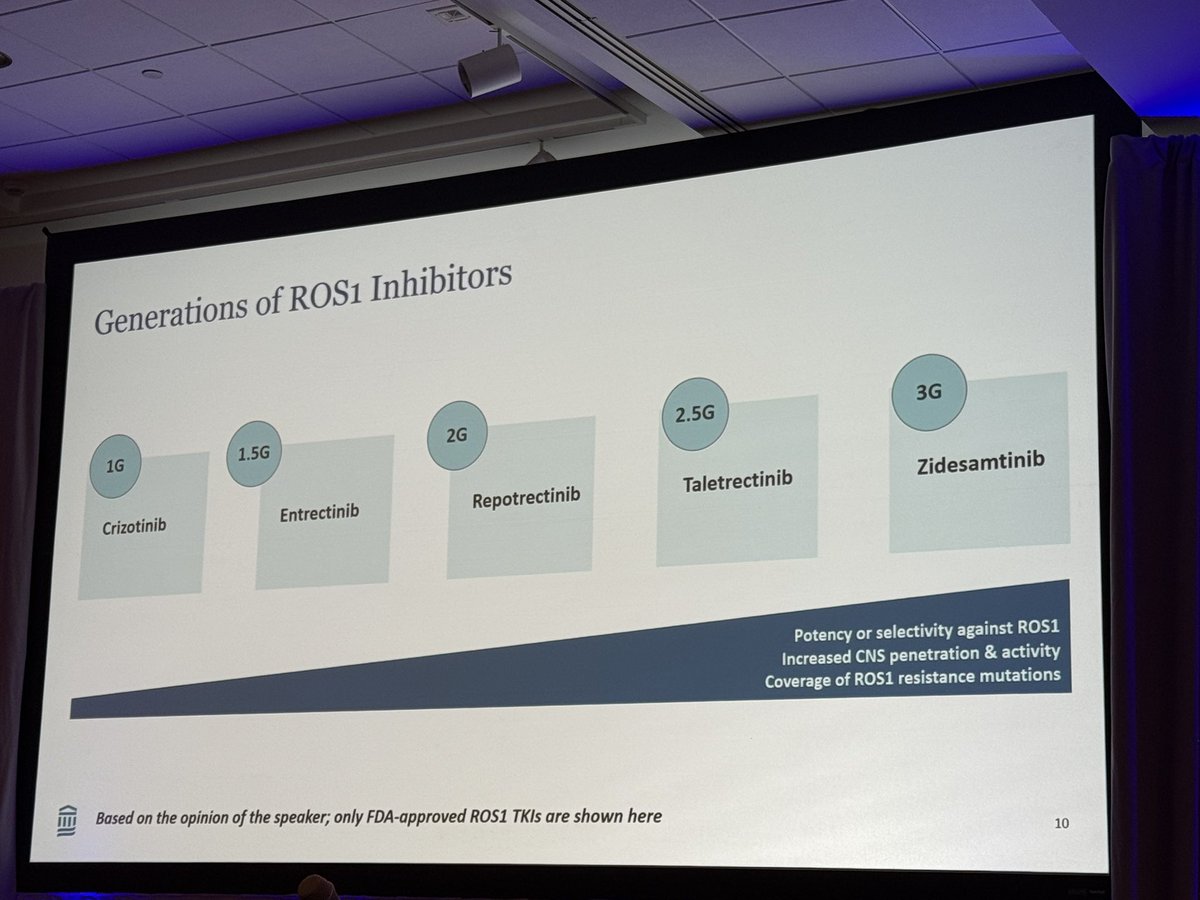
The ROS1+ NSCLC treatment landscape has evolved, with newer agents offering improved efficacy, CNS activity, and coverage of resistance mutations (e.g. G2032R).
Four approved agents in 1L, with zidesamtinib approved as 2L and showing promising 1L data! #DCLung26
@JessicaJLinMD
[Slide 1]
First-Line Treatment Landscape for Advanced ROS1-Rearranged NSCLC
[Horizontal bar schematic — cross-trial comparison; not drawn to scale]
ARROS-1 1; FDA-approved in the prior ROS1 TKI-treated setting (not first-line) | Zidesamtinib (NVL-520) | mPFS? (unknown)
FDA-approved, NCCN-recommended (bracket covering the four rows below):
TRUST-I/TRUST-II 2 | Taletrectinib | mPFS 46.1 mo
TRIDENT-1 3 | Repotrectinib | mPFS 31.1 mo
ALKA-372-001/STARTRK-1/STARTRK-2 4 | Entrectinib | mPFS 15.7 mo
PROFILE 1001 5 | Crizotinib | mPFS 19.3 mo
Note: Cross-trial comparisons; not drawn to scale
1. Drilon A et al., WCLC 2025; 2. Bazhenova L et al., AACR 2026; 3. Cho BC et al., WCLC 2025; 4. Drilon A et al. JTO Clin Res Rep. 2022;3(6):100332; 5. Shaw AT et al. Ann Oncol. 2019;30(7):1121-1126
---
[Slide 2]
Generations of ROS1 Inhibitors
1G Crizotinib | 1.5G Entrectinib | 2G Repotrectinib | 2.5G Taletrectinib | 3G Zidesamtinib
[Increasing wedge, left to right:]
Potency or selectivity against ROS1
Increased CNS penetration & activity
Coverage of ROS1 resistance mutations
Based on the opinion of the speaker; only FDA-approved ROS1 TKIs are shown here
10
---
[Slide 3]
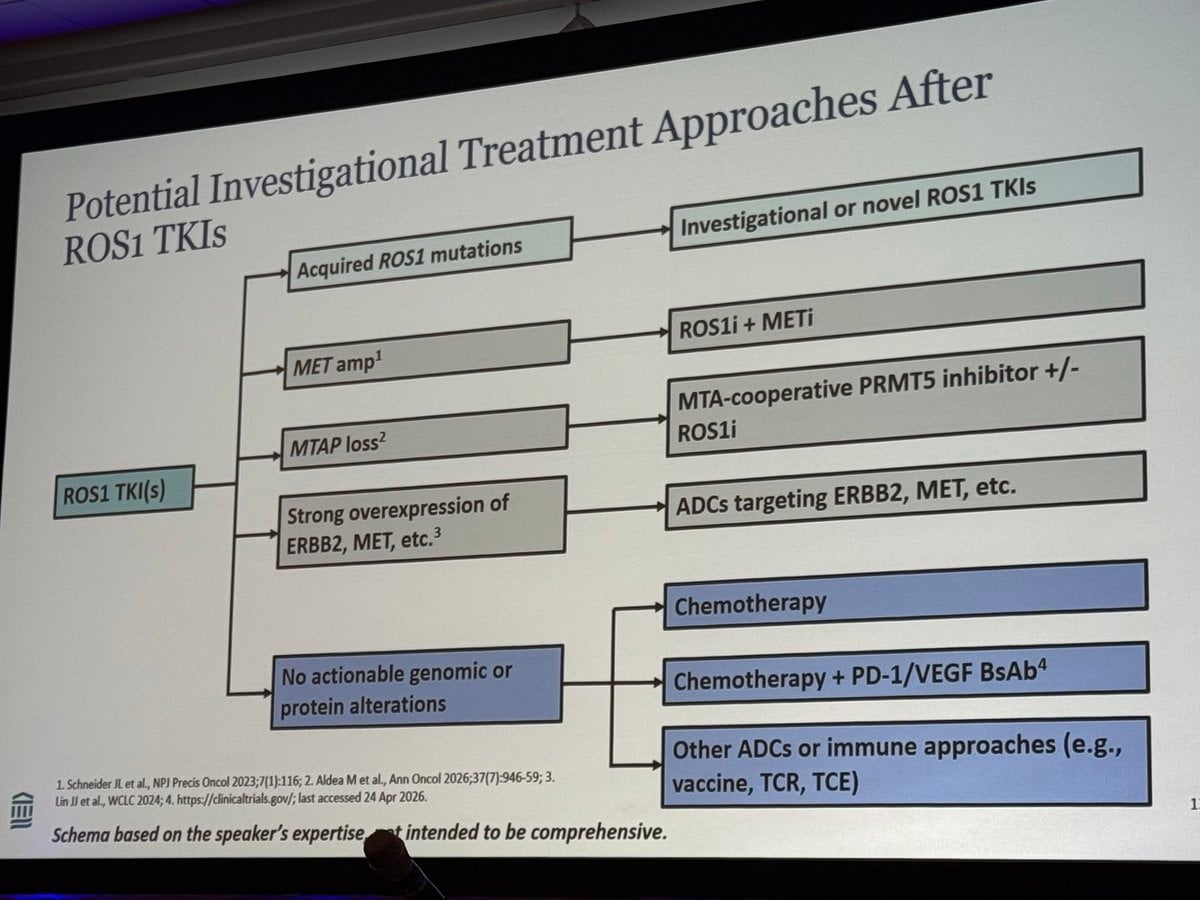
Potential Investigational Treatment Approaches After ROS1 TKIs
ROS1 TKI(s) ->
Acquired ROS1 mutations -> Investigational or novel ROS1 TKIs
MET amp 1 -> ROS1i + METi
MTAP loss 2 -> MTA-cooperative PRMT5 inhibitor +/- ROS1i
Strong overexpression of ERBB2, MET, etc. 3 -> ADCs targeting ERBB2, MET, etc.
No actionable genomic or protein alterations -> Chemotherapy
No actionable genomic or protein alterations -> Chemotherapy + PD-1/VEGF BsAb 4
No actionable genomic or protein alterations -> Other ADCs or immune approaches (e.g., vaccine, TCR, TCE)
1. Schneider JL et al., NPJ Precis Oncol 2023;7(1):116; 2. Aldea M et al., Ann Oncol 2026;37(7):946-59; 3. Lin JJ et al., WCLC 2024; 4. https://clinicaltrials.gov/; last accessed 24 Apr 2026.
Schema based on the speaker's expertise, not intended to be comprehensive.
1[1 — slide number partially cut off]
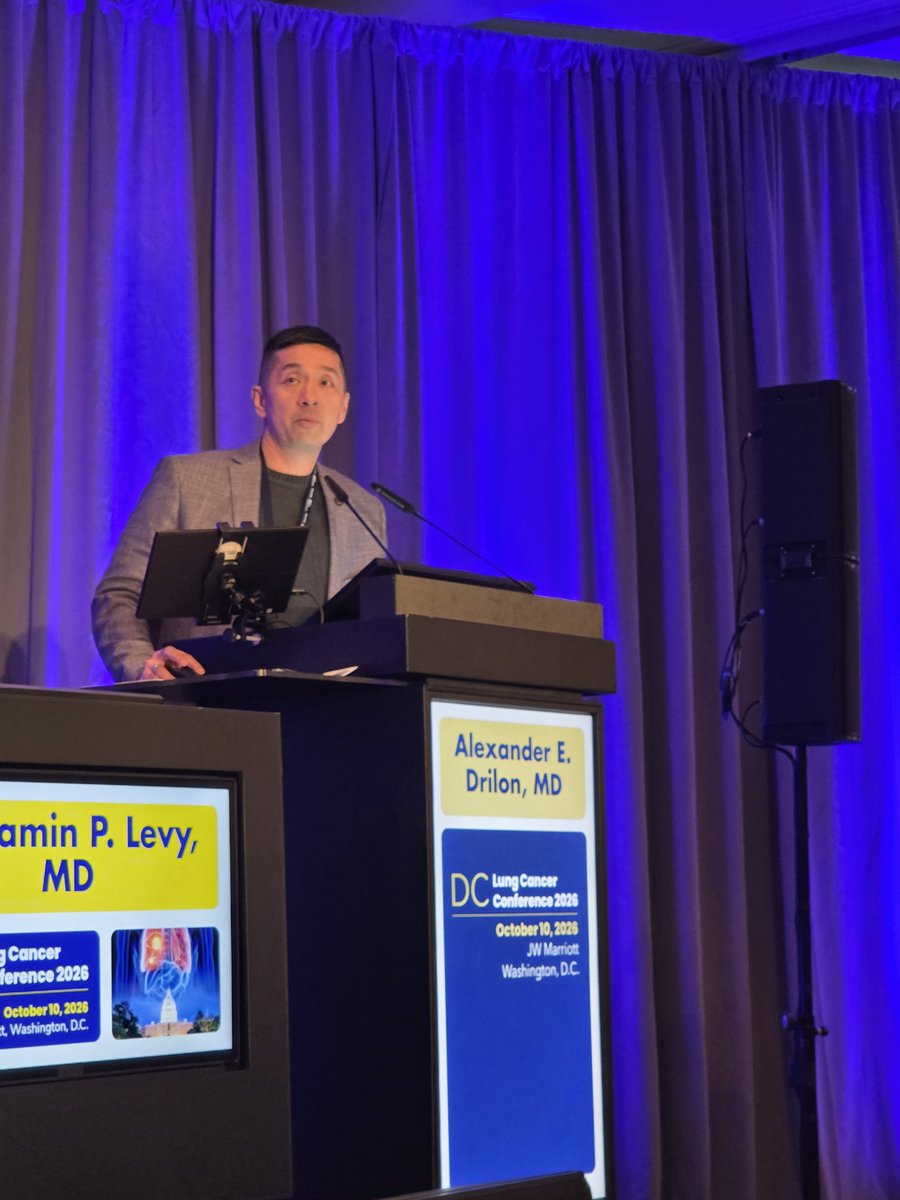
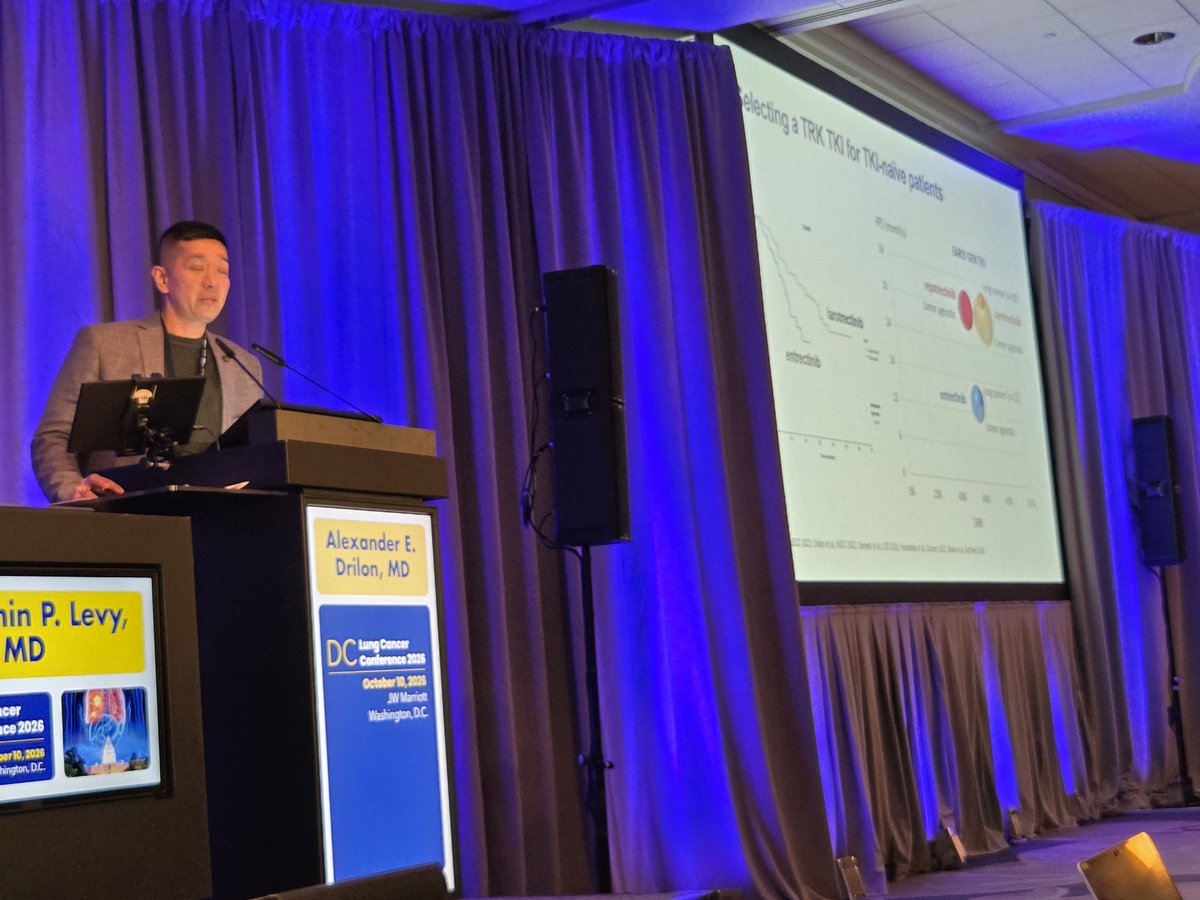
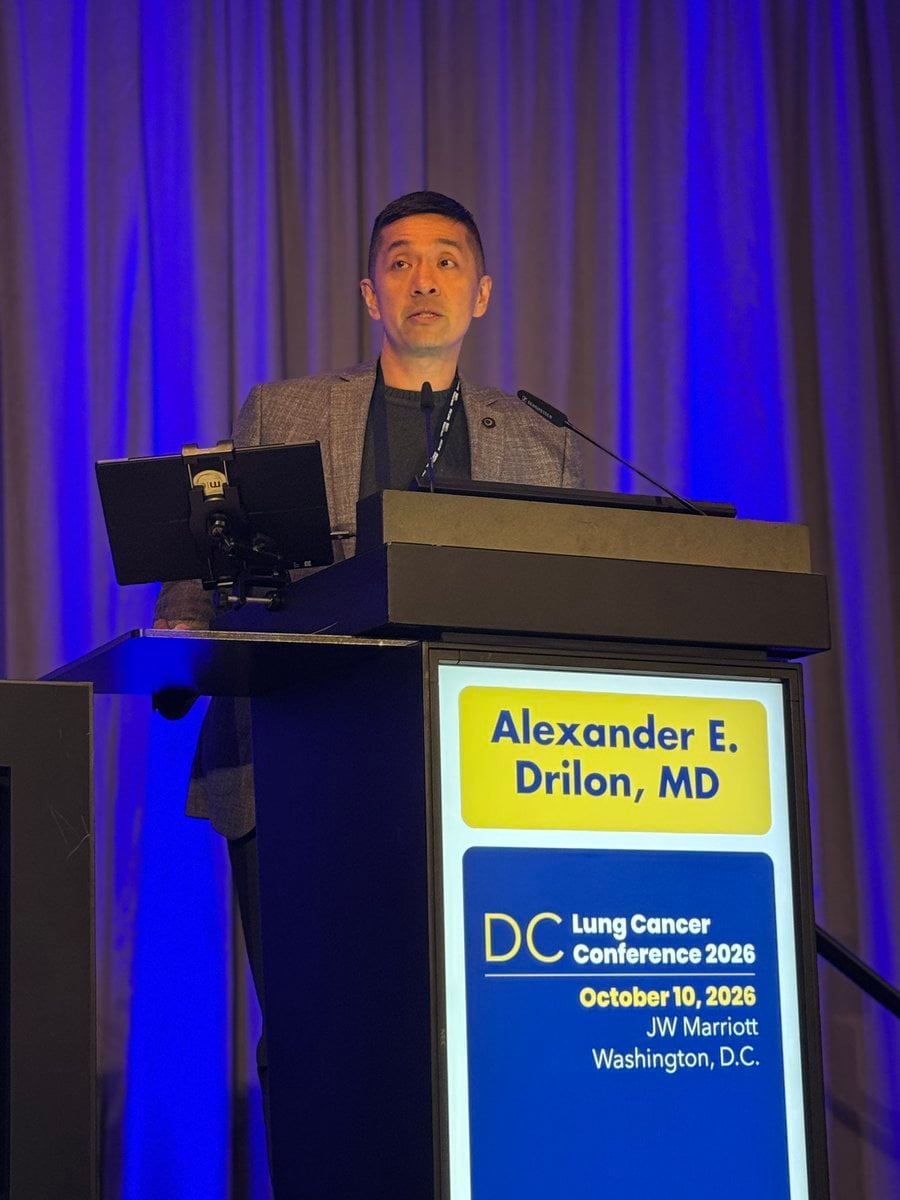
On the podiumAlexander DrilonMemorial Sloan Kettering Cancer CenterNTRK / NRG1
Dr. @alexdrilon with an incredibly insightful overview of NTRK and NRG1 fusions at #DCLung26.
Joshua Reuss (@Joshua_Reuss)Oct 10, 2026 · 11:35 AM ETView post on X ↗
On the podiumTina RoyVirginia Cancer Specialists
Great panel discussion on ALK, ROS1, RET, NTRK, and NRG1, exploring challenging clinical cases.
With multiple approved therapies, treatment selection requires consideration of efficacy, differing safety profiles, and shared decision-making with patients. #DCLung26
On the podiumMarina Chiara GarassinoUniversity of Chicago Medicine
I am so excited to be here, traveling after @SWOG to #DCLung26
Dr. Nagla Abdel Karim (@NaglaAKarimMD)Oct 10, 2026 · 11:58 AM ETView post on X ↗
On the podiumAlfredo AddeoUniversity Hospital of GenevaAnaplastic Lymphoma Kinase (ALK)
#DCLung26 advances in fusion positive NSCLC highlighted by Drs. @Alfdoc2 @JessicaJLinMD Cristina Merkhofer and @alexdrilon. Exciting novel agents and greater understanding of resistance are pushing outcomes even higher.
Stephen V Liu, MD (@StephenVLiu)Oct 10, 2026 · 1:19 PM ETView post on X ↗
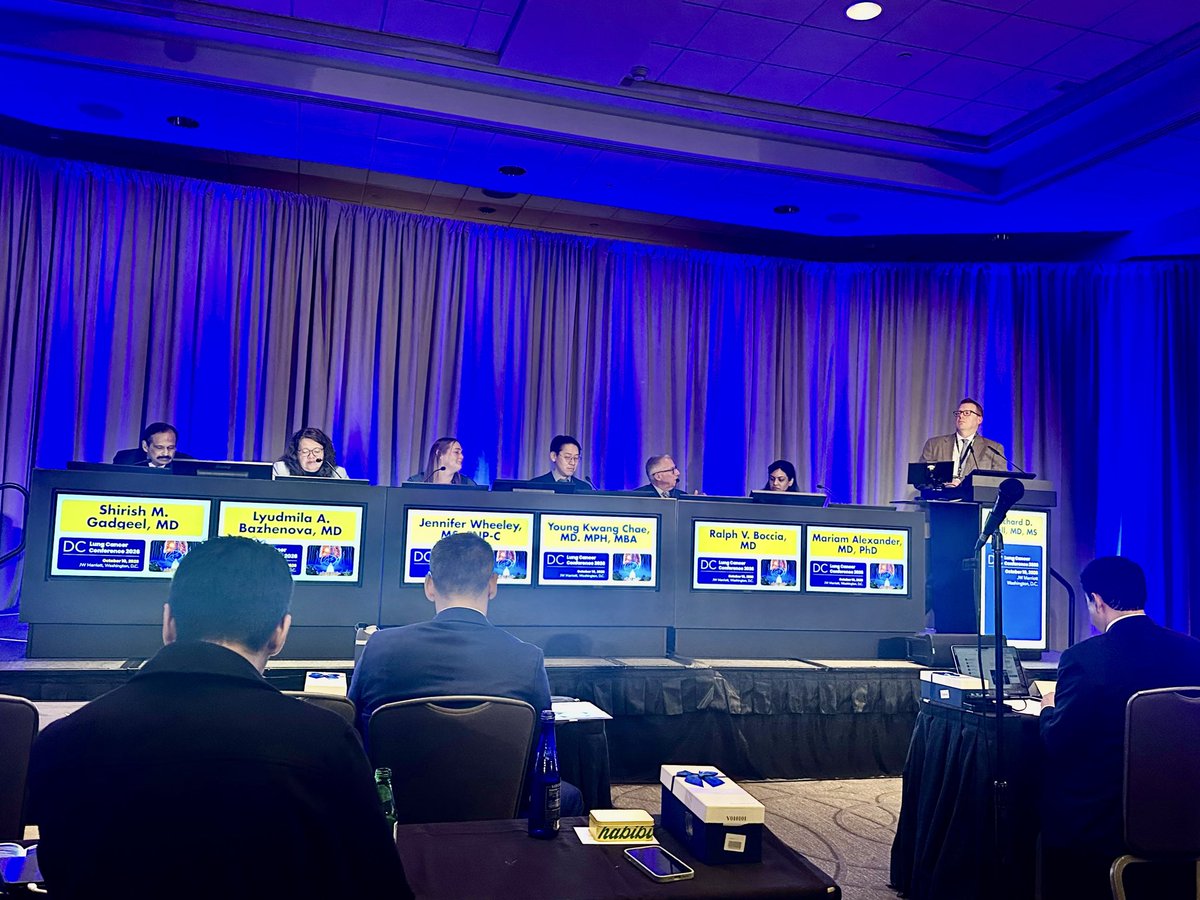
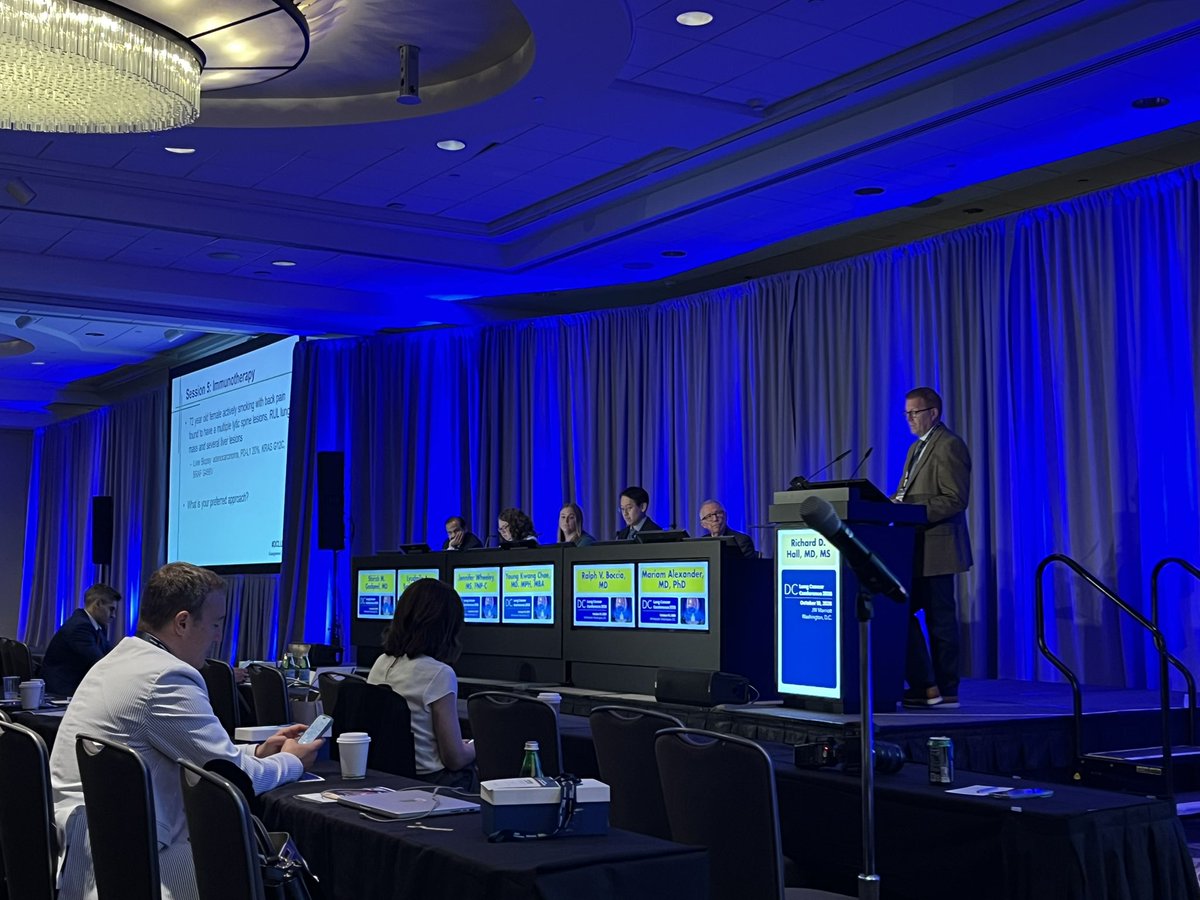
Session V · 13:10–14:40 ET · Moderator Richard D. Hall
Immunotherapy for NSCLC & the NeoADAURA vs LAURA Debate
PD(L)1 Monotherapy (Jeon) · PD(L)1 Combinations (Owen) · Debate Introduction: NeoADAURA vs LAURA (Rosner) · Debate I (NeoADAURA) (Sabari) · Debate II (LAURA) (Rotow). 14 posts · 27 images captured.
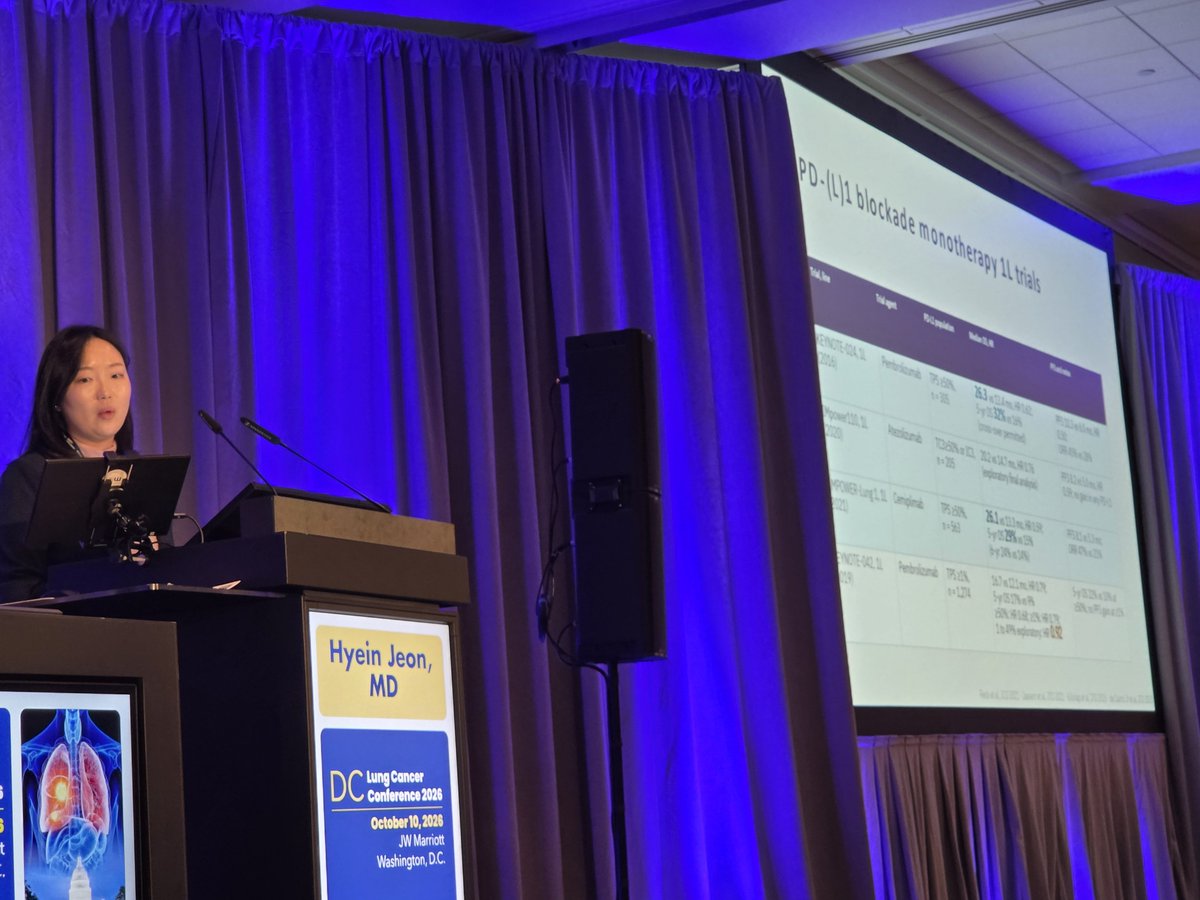
On the podiumHyein JeonMedStar Georgetown Cancer InstitutePD(L)1 Monotherapy
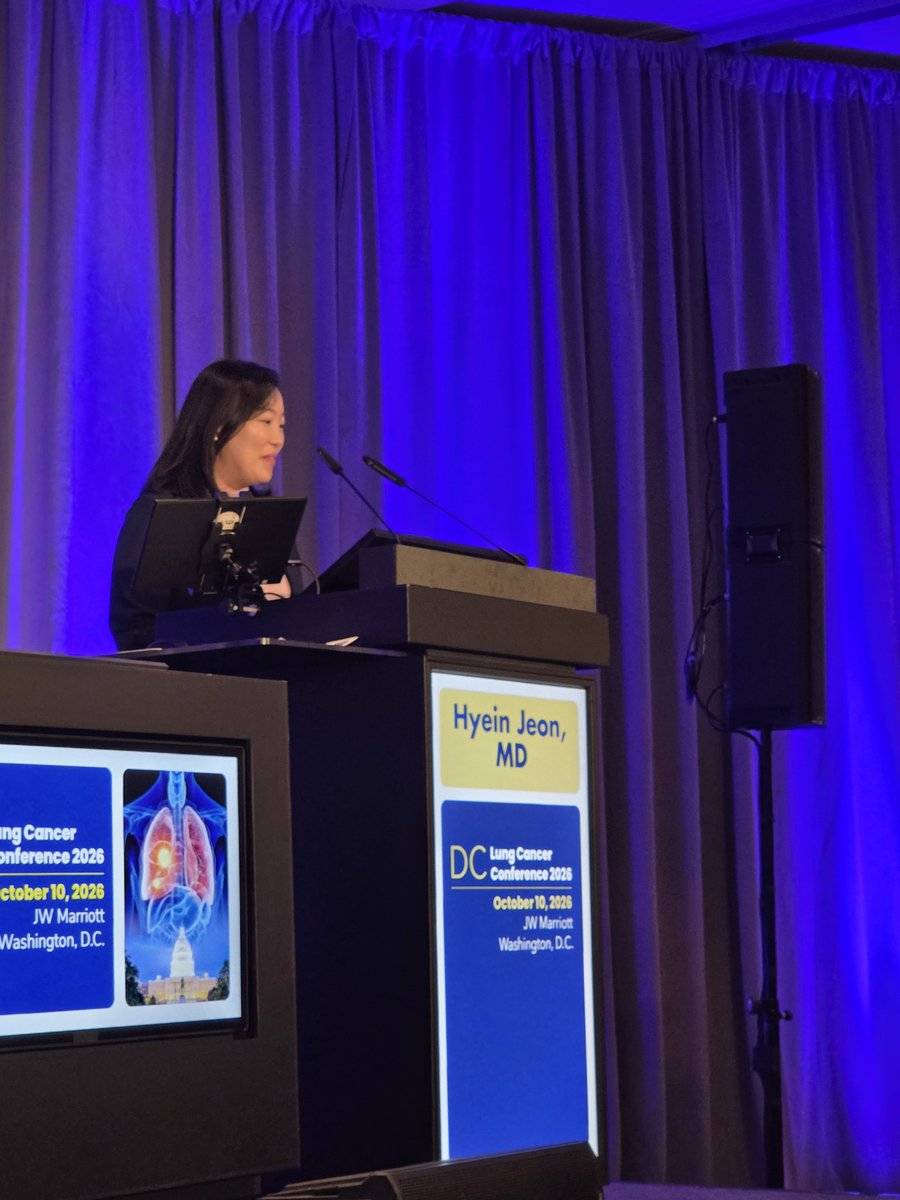
Dr. @HyeinJeon_MD with an excellent and succinct summary of anti-PD(L)1 monotherapy strategies in advanced NSCLC at #DCLung26
KEYNOTE-024IMpower110EMPOWER-Lung 1KEYNOTE-042
[Slide 2]
PD-(L)1 blockade monotherapy 1L trials
Trial, line | Trial agent | PD-L1 population | Median OS, HR | PFS and notes
KEYNOTE-024, 1L (2016) | Pembrolizumab | TPS >=50%, n = 305 | 26.3 vs 13.4 mo, HR 0.62; 5-yr OS 32% vs 16% (cross-over permitted) | PFS 10.3 vs 6.0 mo, HR 0.50; ORR 45% vs 28%
IMpower110, 1L (2020) | Atezolizumab | TC>=50% or IC3, n = 205 | 20.2 vs 14.7 mo, HR 0.76 (exploratory final analysis) | PFS 8.2 vs 5.0 mo, HR 0.59; no gain in any PD-L1
EMPOWER-Lung 1, 1L (2021) | Cemiplimab | TPS >=50%, n = 563 | 26.1 vs 13.3 mo, HR 0.59; 5-yr OS 29% vs 15% (6-yr 24% vs 14%) | PFS 8.1 vs 5.3 mo; ORR 47% vs 21%
KEYNOTE-042, 1L (2019) | Pembrolizumab | TPS >=1%, n = 1,274 | 16.7 vs 12.1 mo, HR 0.79; 5-yr OS 17% vs 9%; >=50%: HR 0.68; >=20%: HR 0.75; 1 to 49% exploratory: HR 0.92 | 5-yr OS 22% vs 10% at >=50%; no PFS gain at >=1%
Footer: citation line present but illegible (four 'et al.' references)
Joshua Reuss (@Joshua_Reuss)Oct 10, 2026 · 1:17 PM ETView post on X ↗
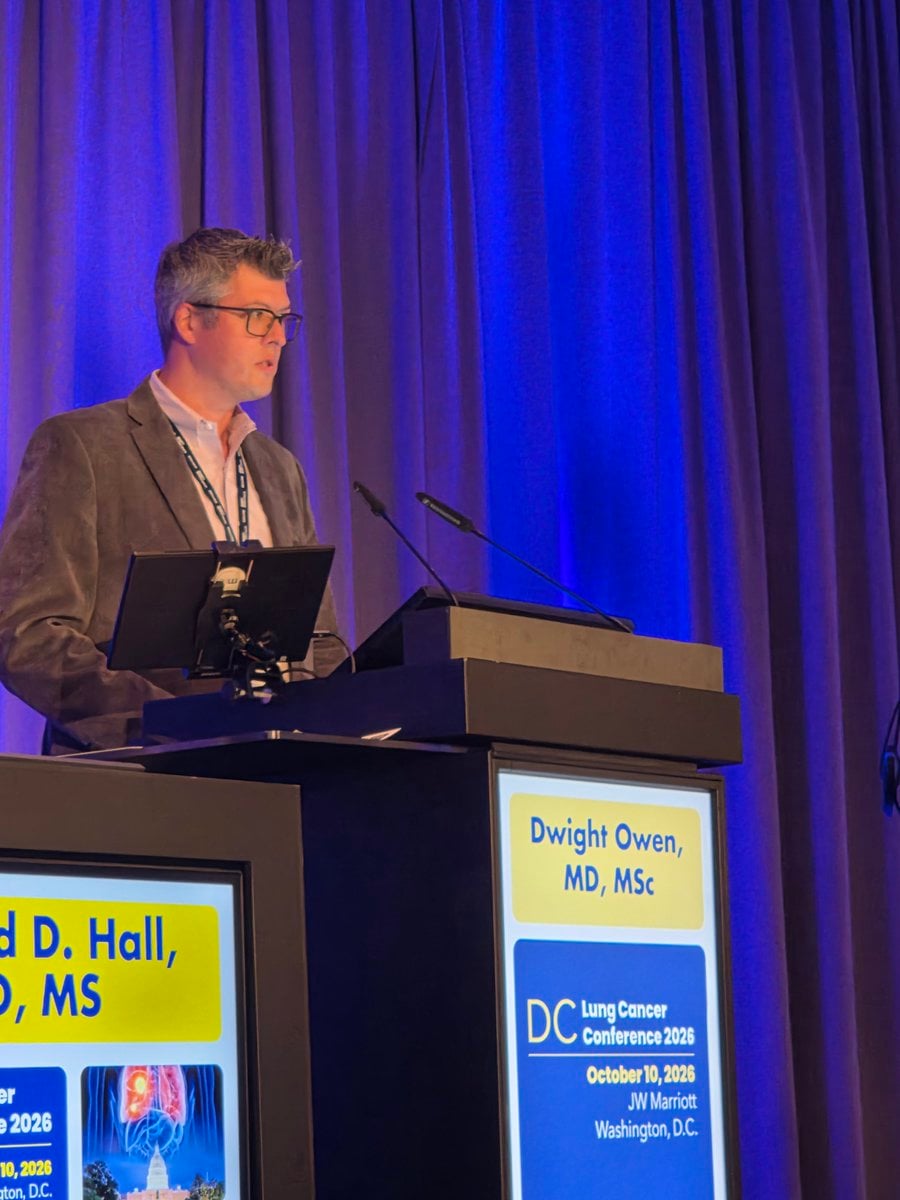
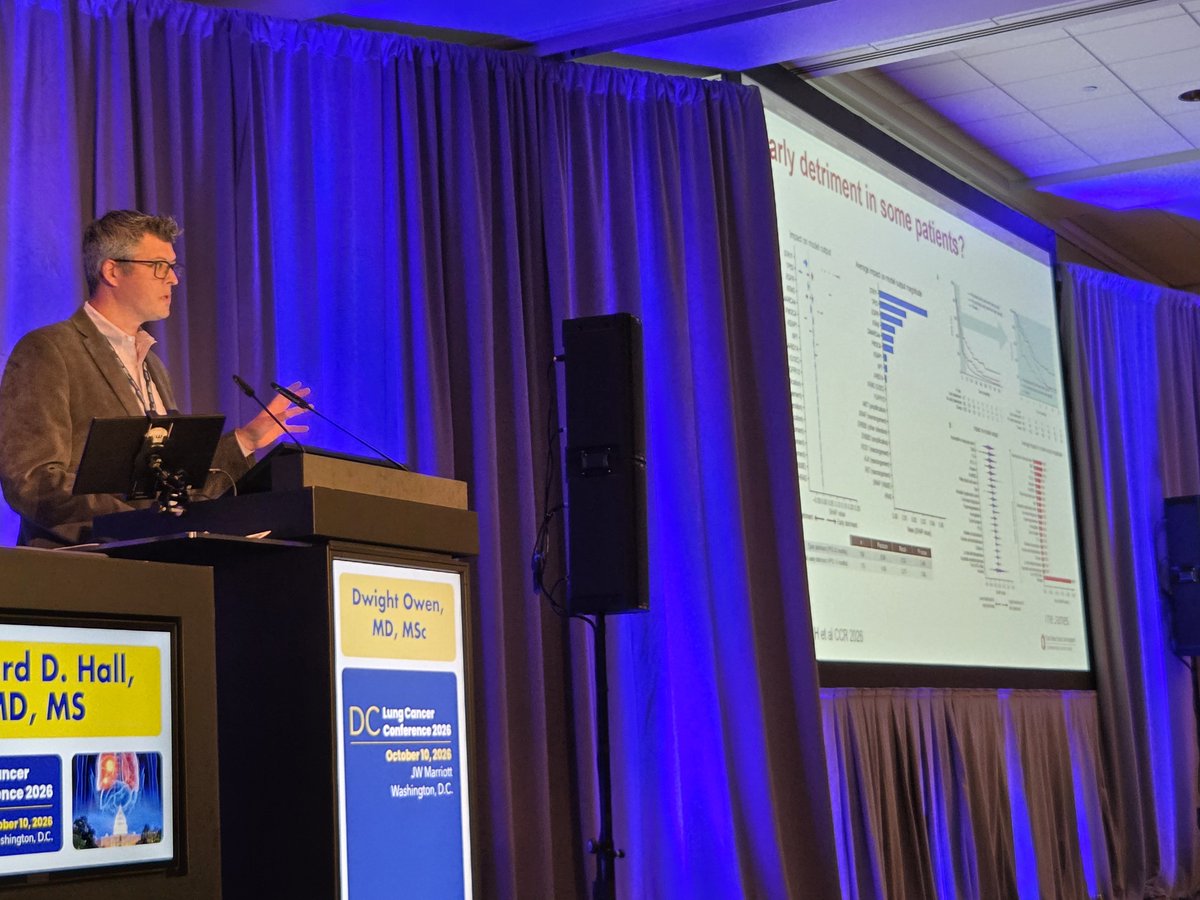
On the podiumDwight OwenThe Ohio State University Comprehensive Cancer CenterPD(L)1 Combinations
Dr. @dwightowenmd with a superb summary of immunotherapy combination treatments, both standard and emerging, in advanced NSCLC. Hope to see some advances in this space in near future. #DCLung26
Joshua Reuss (@Joshua_Reuss)Oct 10, 2026 · 1:26 PM ETView post on X ↗
On the podiumShirish M. GadgeelWinship Cancer Institute, Emory
[Slide 1]
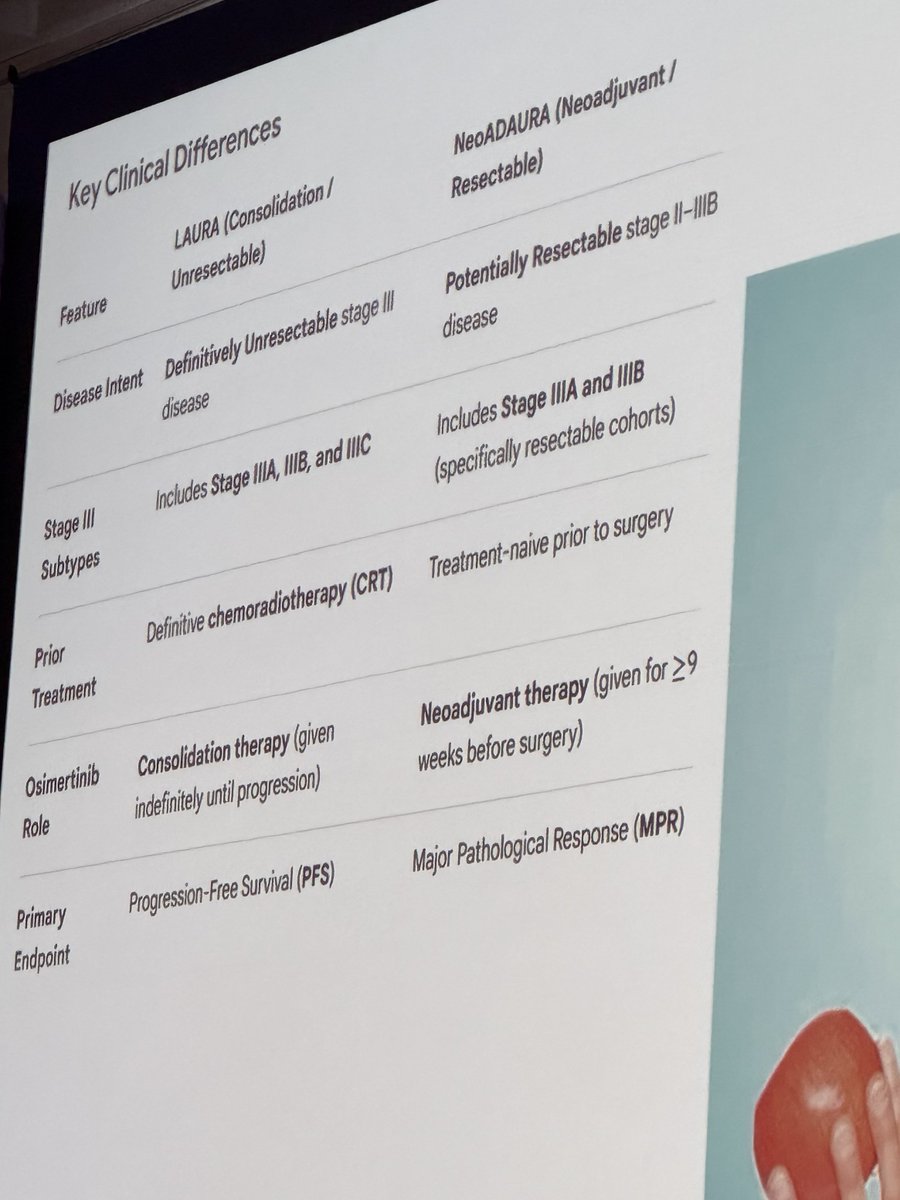
Key Clinical Differences
Feature | LAURA (Consolidation / Unresectable) | NeoADAURA (Neoadjuvant / Resectable)
Disease Intent | Definitively Unresectable stage III disease | Potentially Resectable stage II-IIIB disease
Stage III Subtypes | Includes Stage IIIA, IIIB, and IIIC | Includes Stage IIIA and IIIB (specifically resectable cohorts)
Prior Treatment | Definitive chemoradiotherapy (CRT) | Treatment-naive prior to surgery
Osimertinib Role | Consolidation therapy (given indefinitely until progression) | Neoadjuvant therapy (given for >=9 weeks before surgery)
Primary Endpoint | Progression-Free Survival (PFS) | Major Pathological Response (MPR)
Eric K. Singhi, MD (@lungoncdoc)Oct 10, 2026 · 2:03 PM ETView post on X ↗
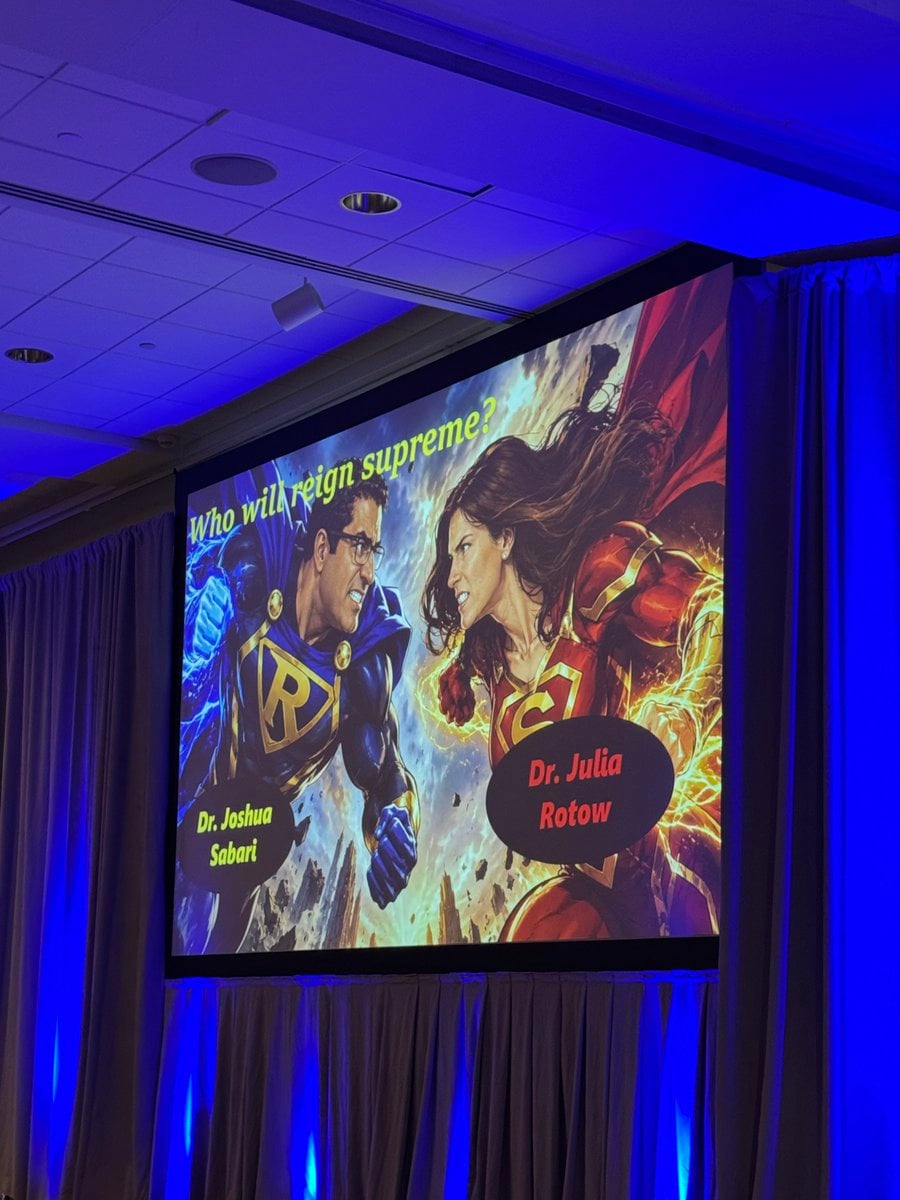
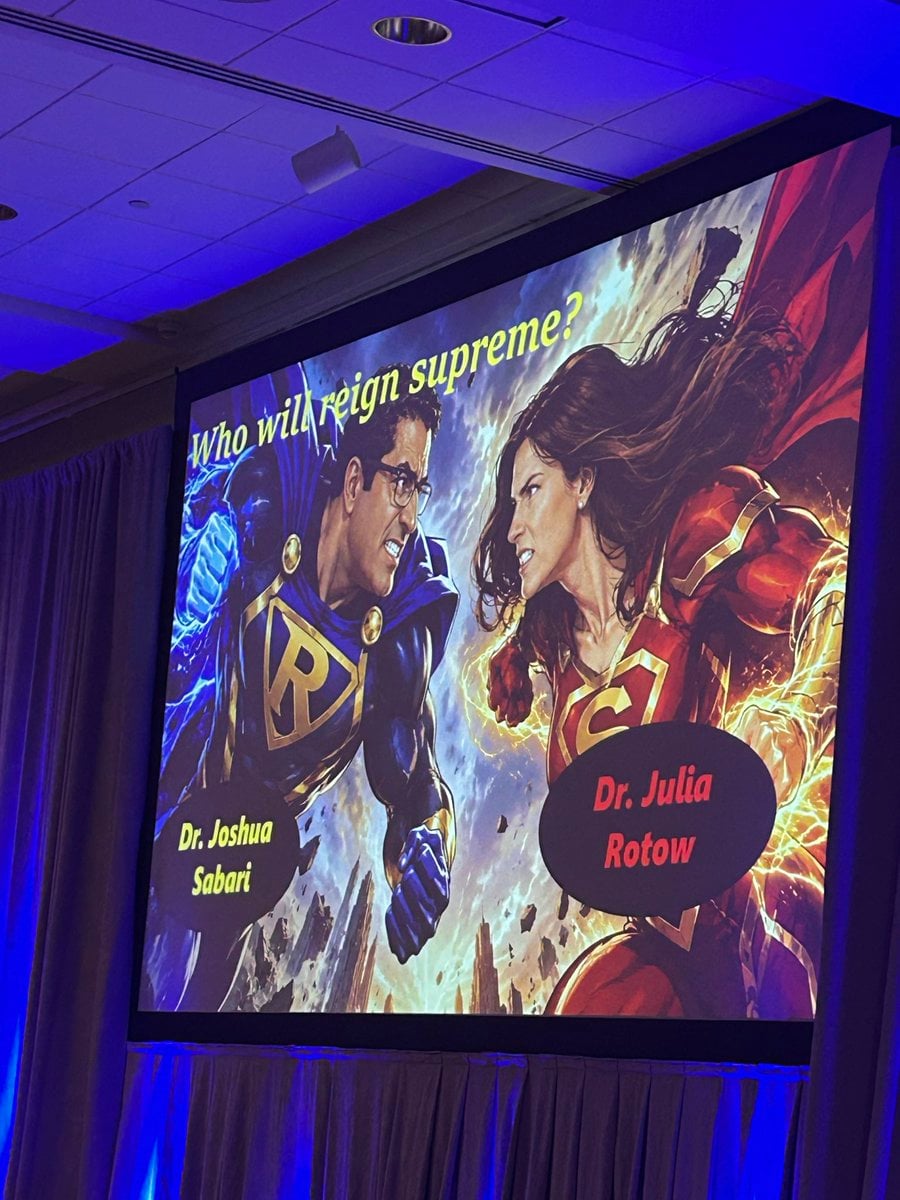
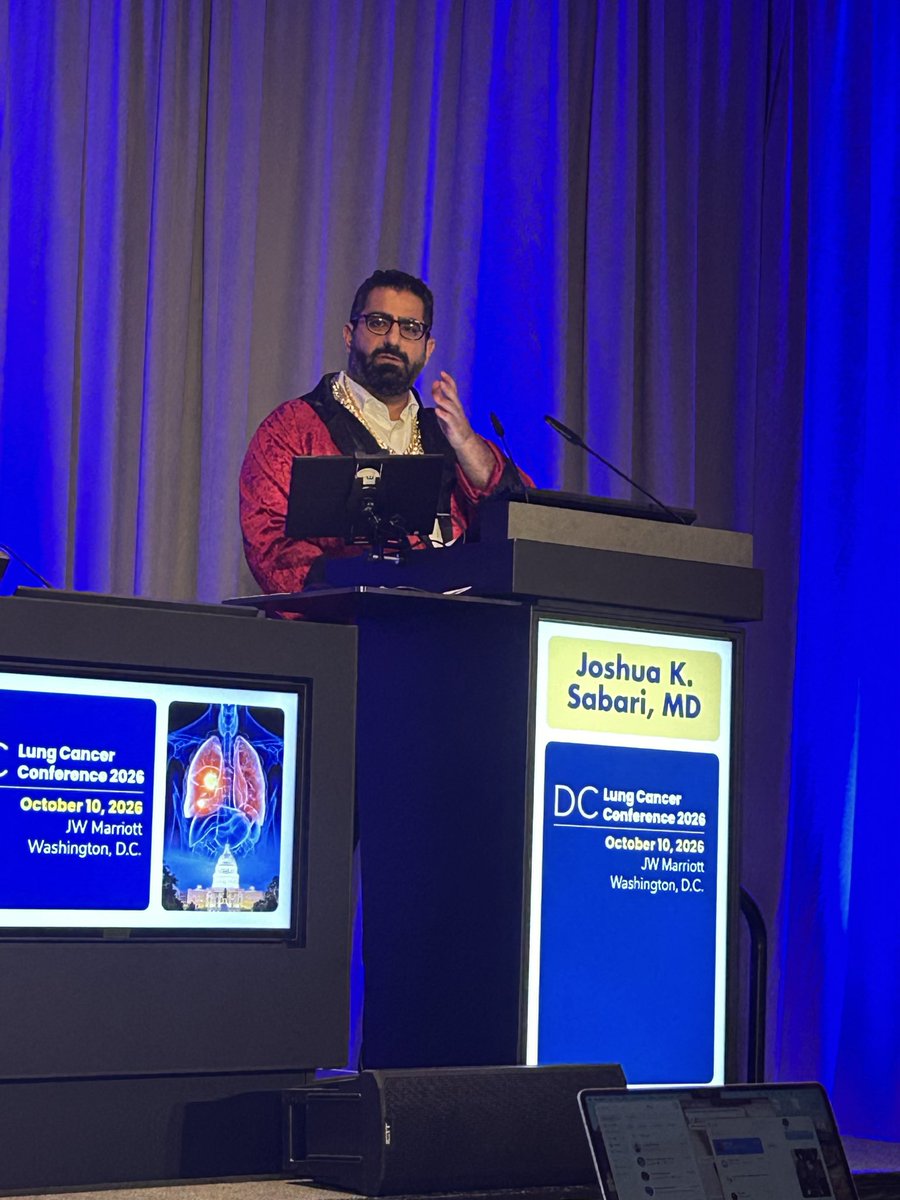
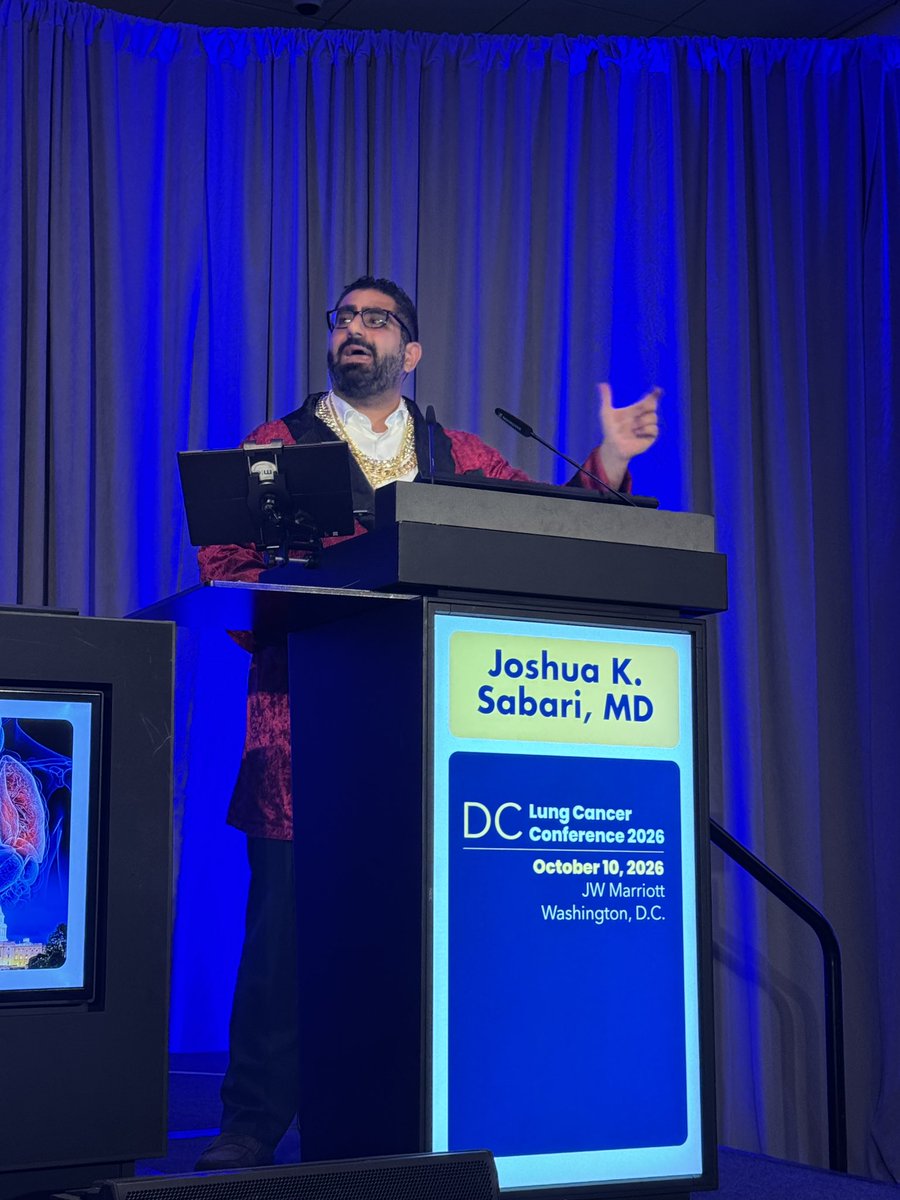
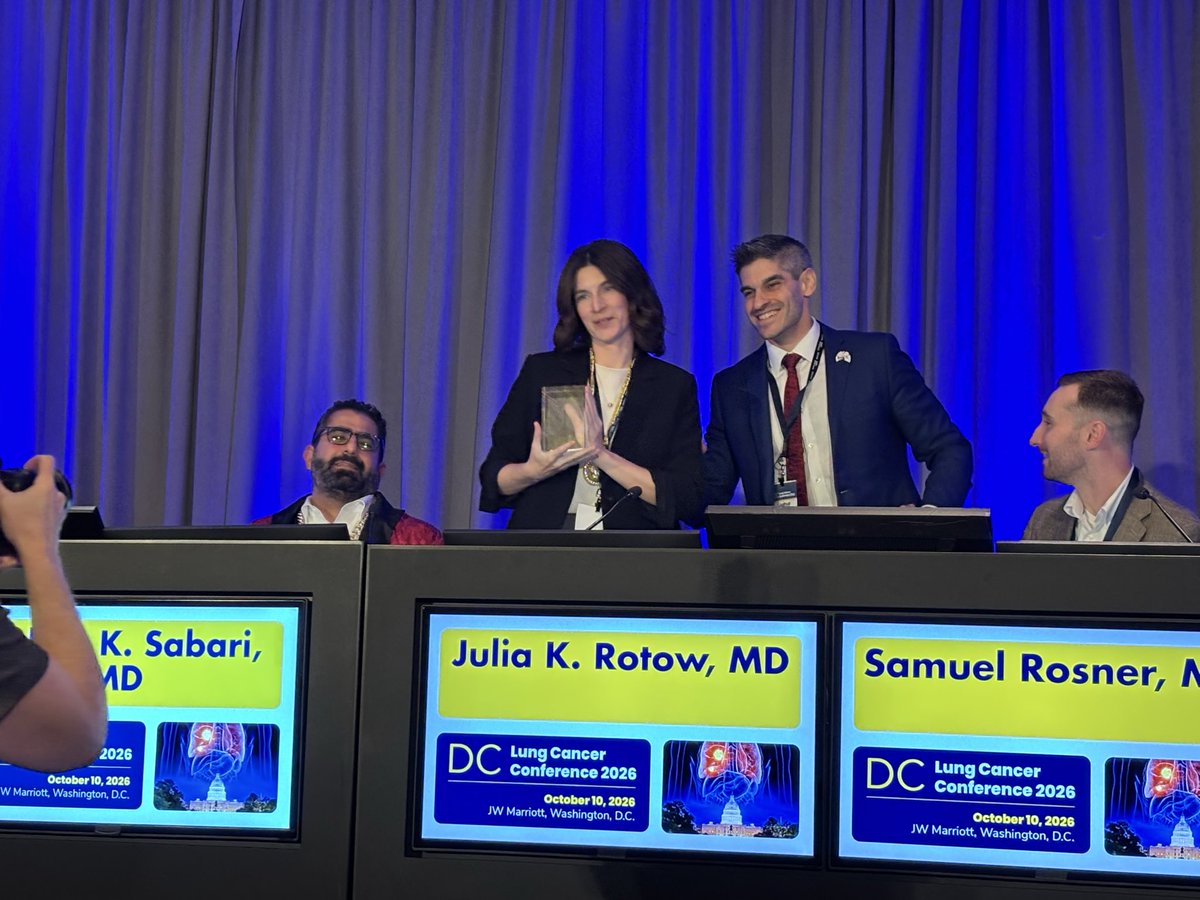
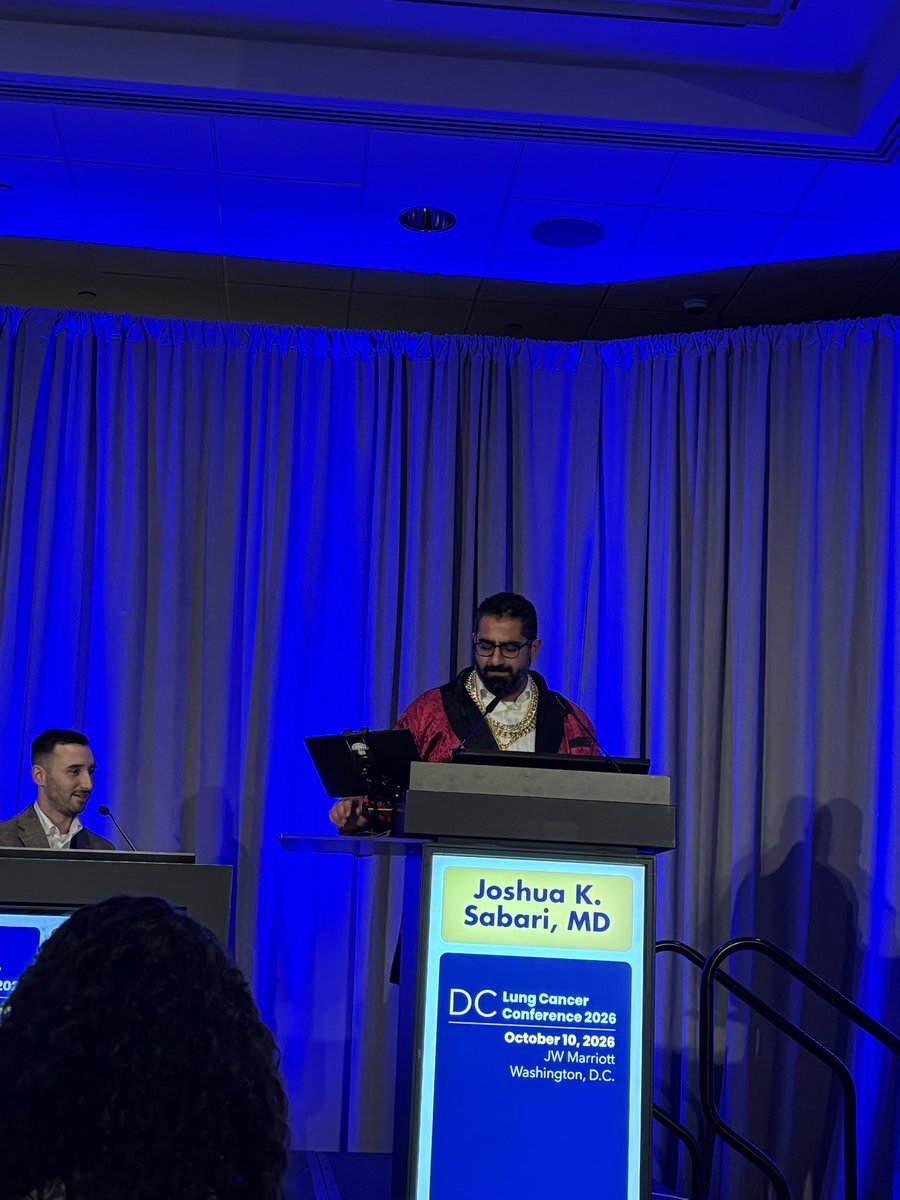
On the podiumJoshua K. SabariNYU Langone Perlmutter Cancer CenterDebate I (NeoADAURA)
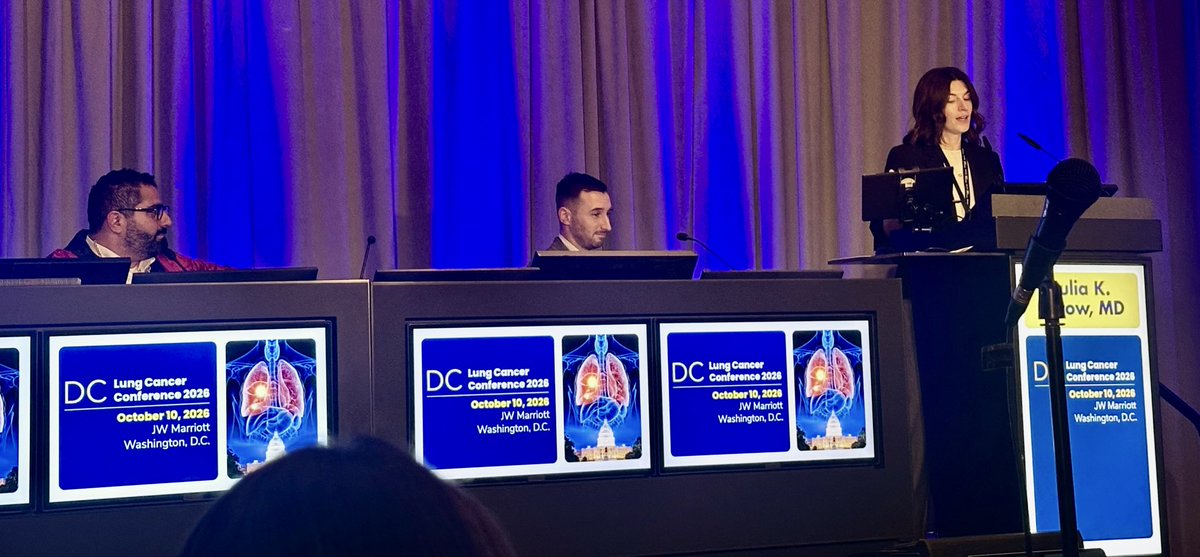
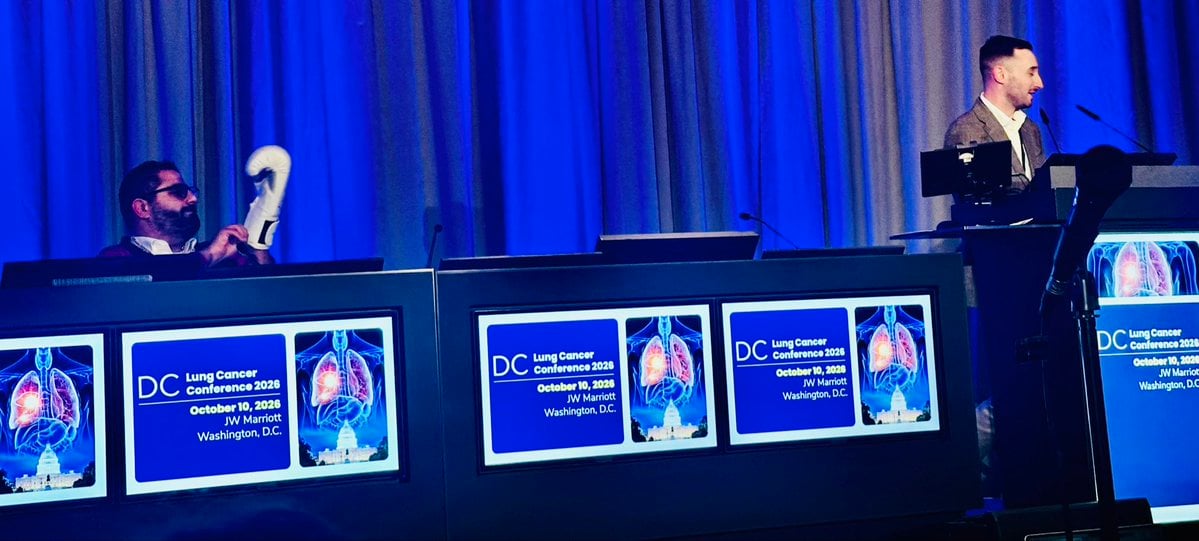
The great debate on management of borderline resectable EGFR altered NSCLC starts now at #DCLung26!
Dr. Josh Sabari @JSabari @nyulangone
vs
Dr. Julia Rotow @JuliaRotow @DanaFarber
@Joshua_Reuss @StephenVLiu @lungoncdoc @Latinamd @LauraAlderMD @BrunaPellini @BrendonStilesMD @BalazsHalmosMD @benlevylungdoc
Misty Dawn Shields (@drshieldsmd)Oct 10, 2026 · 2:03 PM ETView post on X ↗
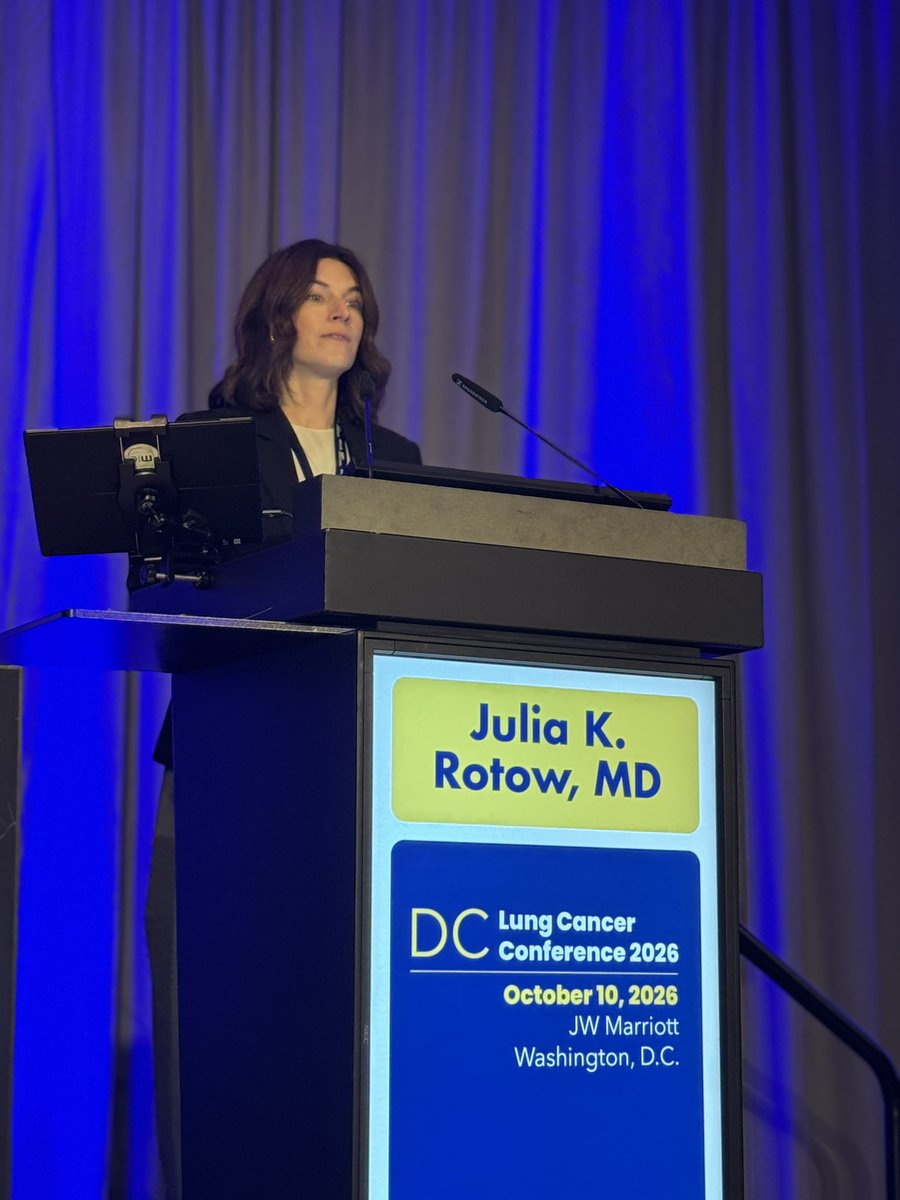
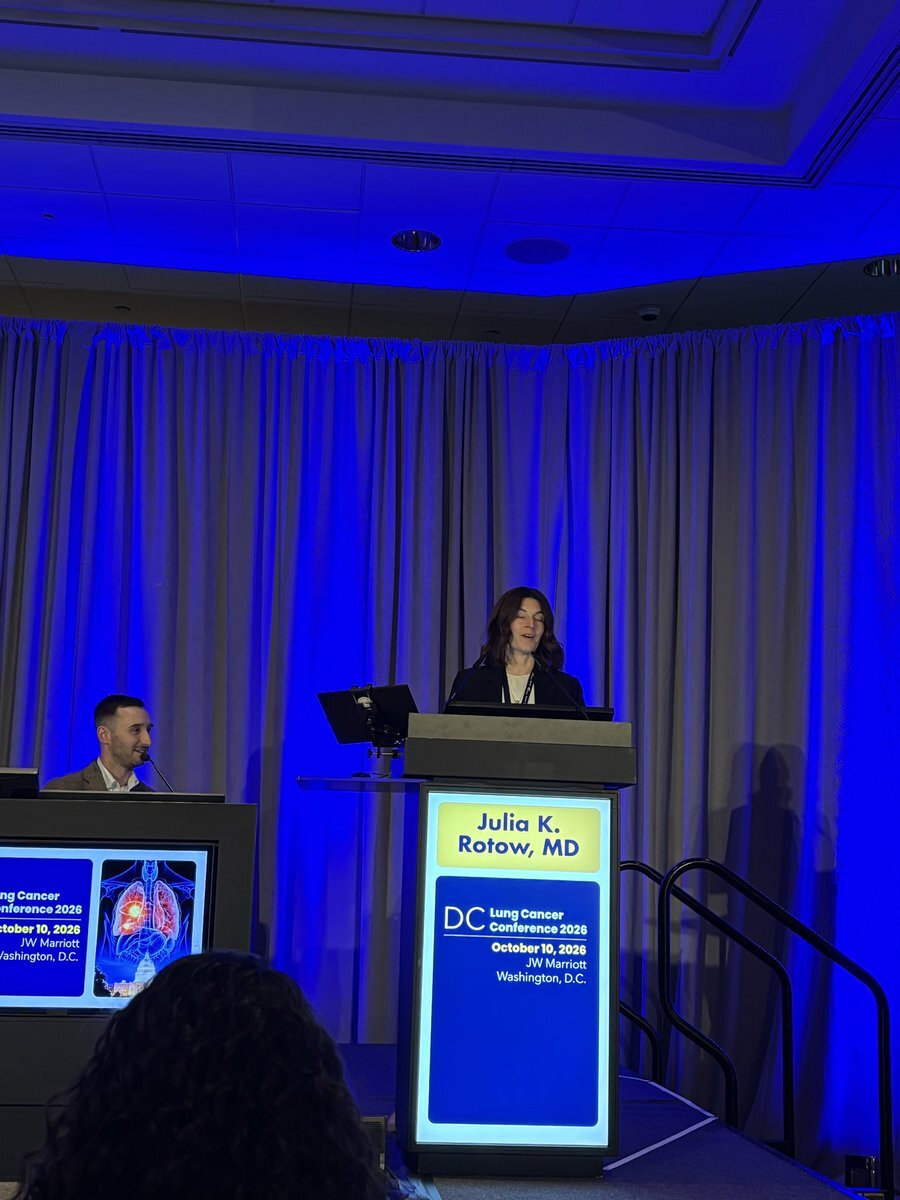
On the podiumJulia K. RotowDana-Farber Cancer InstituteDebate II (LAURA)
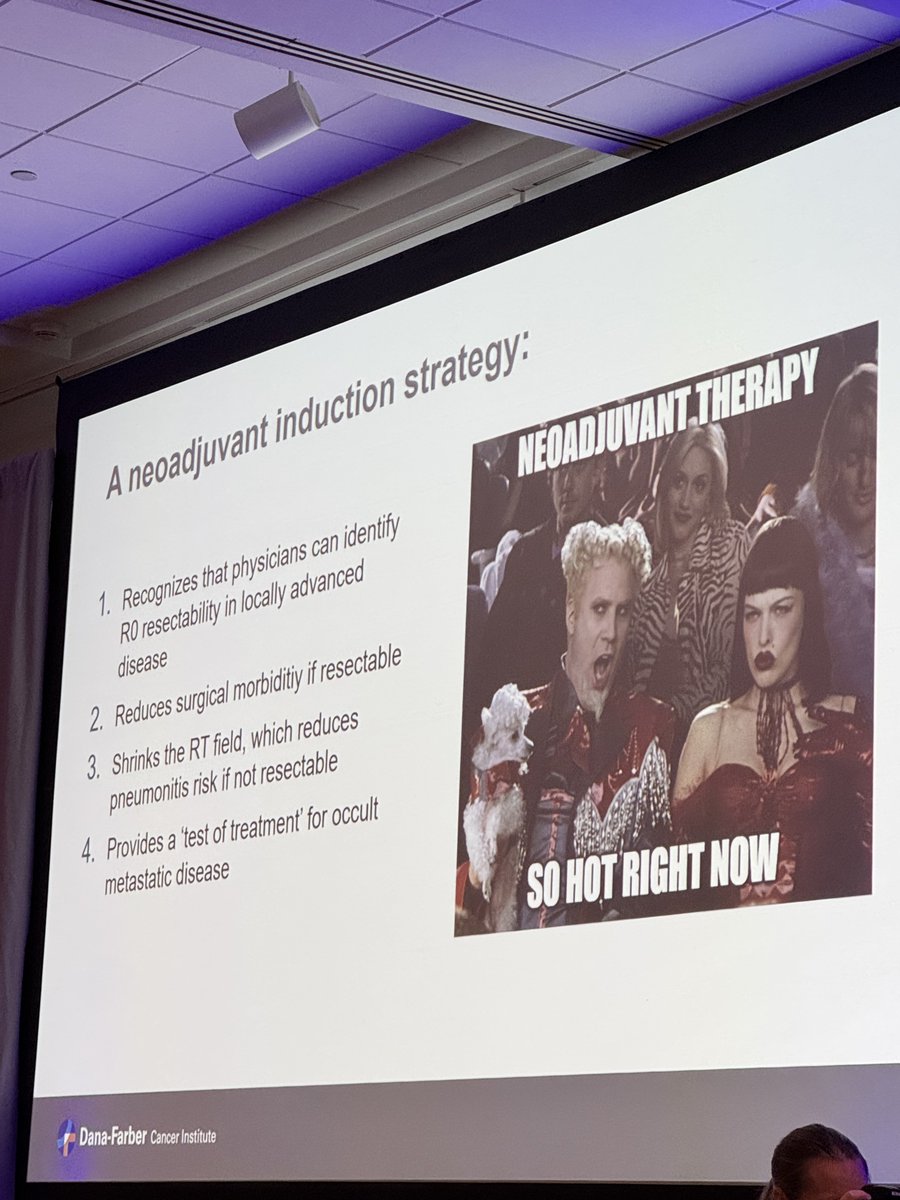
Neoadjuvant induction strategy: the WHY.
#DCLung26 @JuliaRotow
[Slide 1]
A neoadjuvant induction strategy:
1. Recognizes that physicians can identify R0 resectability in locally advanced disease
2. Reduces surgical morbiditiy if resectable
3. Shrinks the RT field, which reduces pneumonitis risk if not resectable
4. Provides a 'test of treatment' for occult metastatic disease
[Meme image: "NEOADJUVANT THERAPY ... SO HOT RIGHT NOW"]
Dana-Farber Cancer Institute
Eric K. Singhi, MD (@lungoncdoc)Oct 10, 2026 · 2:10 PM ETView post on X ↗
On the podiumJoshua K. SabariNYU Langone Perlmutter Cancer CenterDebate I (NeoADAURA)
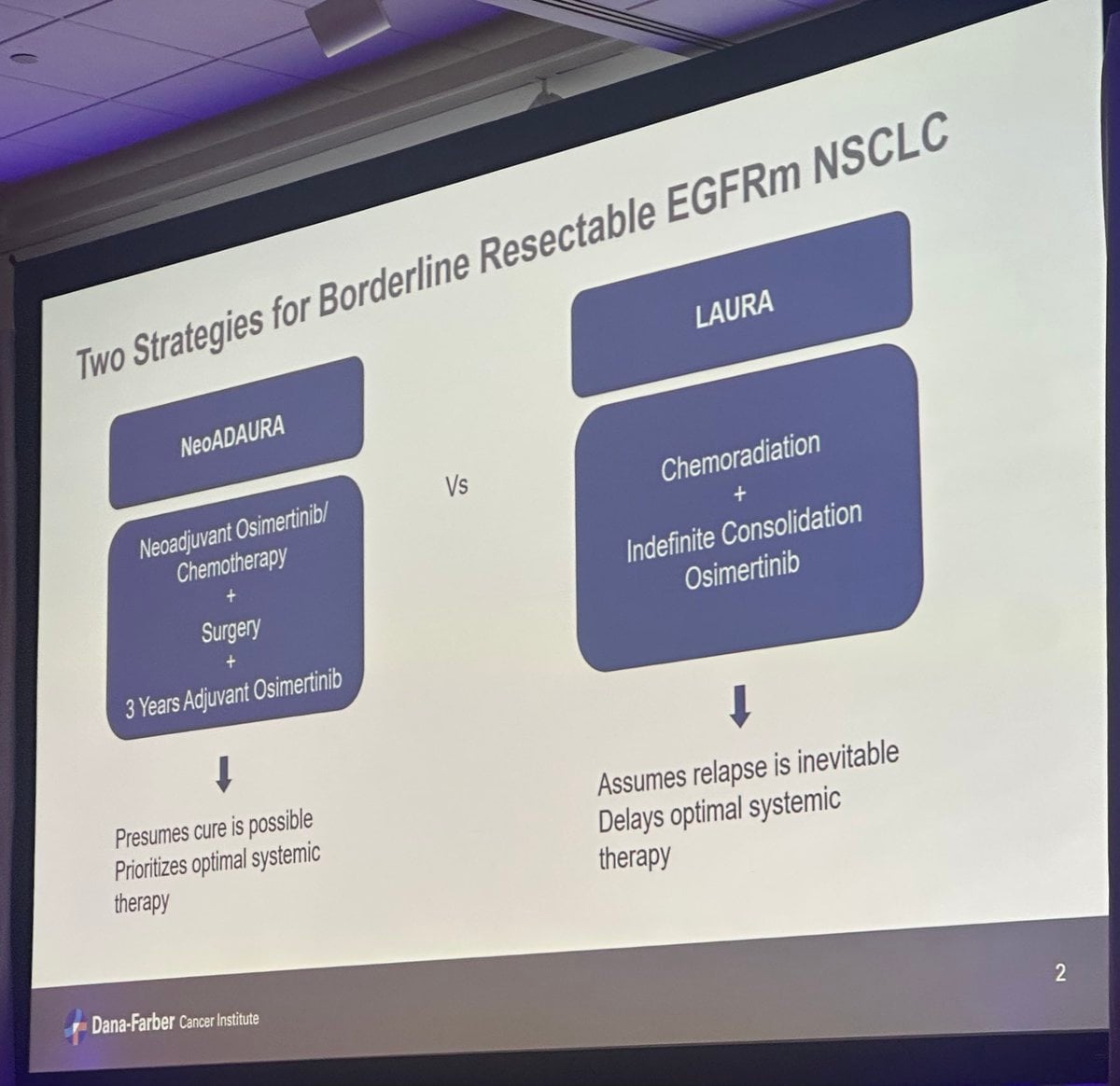
Debating whether to use NEOADAURA vs LAURA @JSabari @JuliaRotow which one should we choose? @Joshua_Reuss @StephenVLiu @chulkimMD #DCLung26
[Slide 1]
Two Strategies for Borderline Resectable EGFRm NSCLC
NeoADAURA | Vs | LAURA
Neoadjuvant Osimertinib/ Chemotherapy + Surgery + 3 Years Adjuvant Osimertinib | | Chemoradiation + Indefinite Consolidation Osimertinib
Presumes cure is possible / Prioritizes optimal systemic therapy | | Assumes relapse is inevitable / Delays optimal systemic therapy
Dana-Farber Cancer Institute
2
Dr. Nagla Abdel Karim (@NaglaAKarimMD)Oct 10, 2026 · 2:12 PM ETView post on X ↗
On the podiumJoshua K. SabariNYU Langone Perlmutter Cancer CenterDebate I (NeoADAURA)
How do we approach borderline resectable EGFR mutant NSCLC: NeoADAURA or LAURA? Debate at #DCLung26 with Drs. @JSabari and @JuliaRotow made great points. The room went with NeoADAURA but great case made for both shows how each case is unique.
Stephen V Liu, MD (@StephenVLiu)Oct 10, 2026 · 2:46 PM ETView post on X ↗
On the podiumHyein JeonMedStar Georgetown Cancer InstitutePD(L)1 Monotherapy
@HyeinJeon_MD excellent summary of PDL1 monotherapy #DCLUNG26
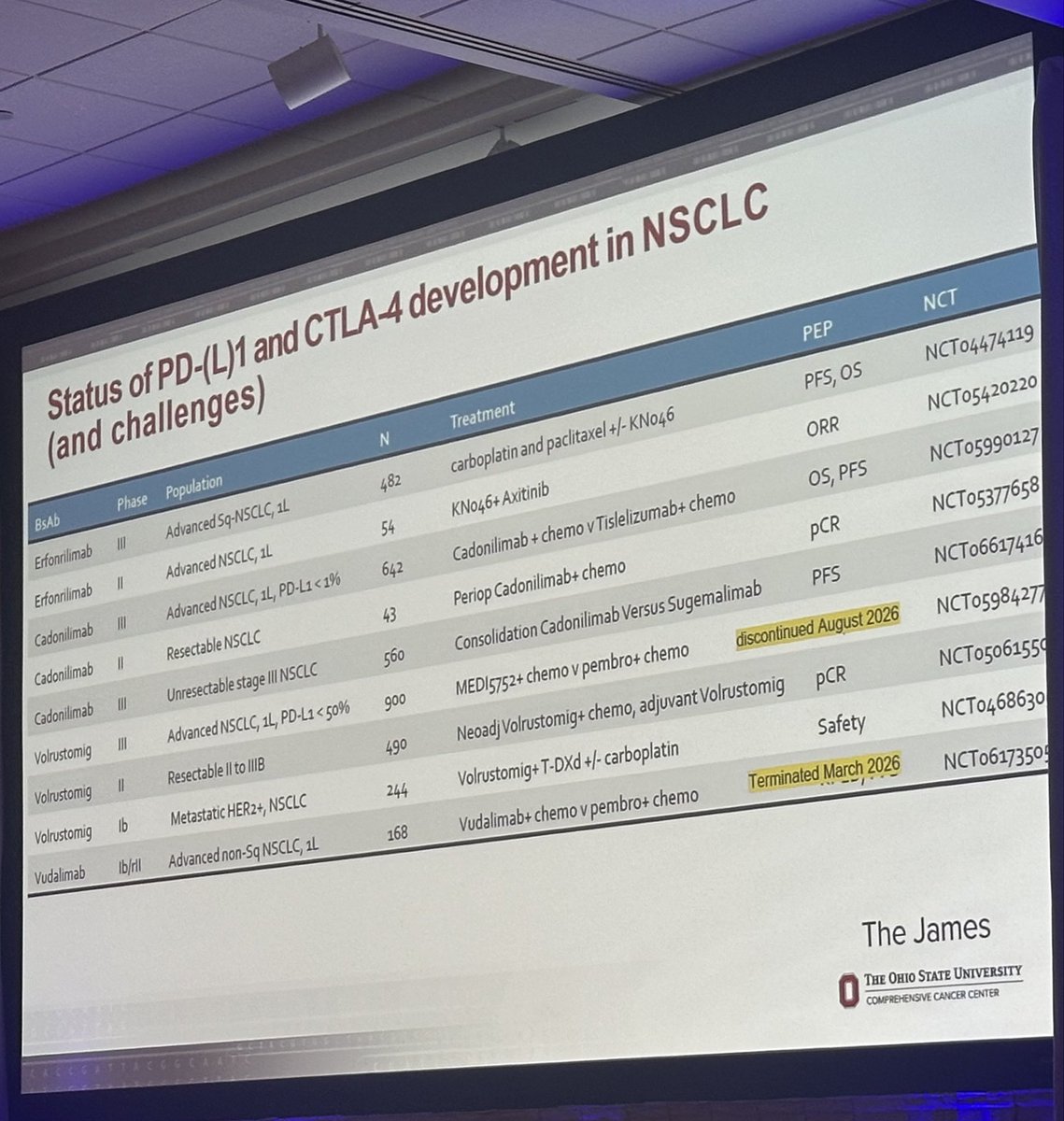
HARMONi-3OptiTROP-Lung05HARMONi-7INSIGNA
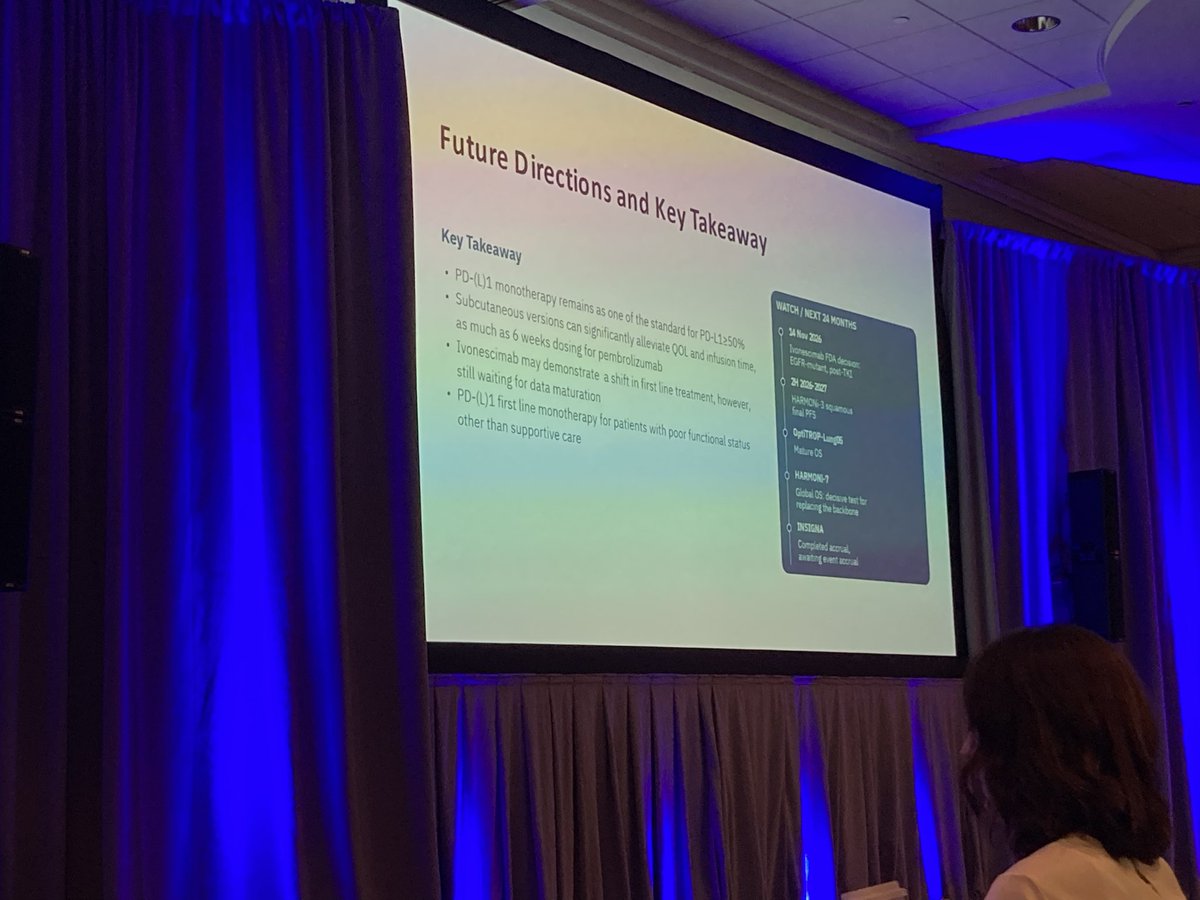
[Slide 2]
Future Directions and Key Takeaway
Key Takeaway
• PD-(L)1 monotherapy remains as one of the standard for PD-L1≥50%
• Subcutaneous versions can significantly alleviate QOL and infusion time, as much as 6 weeks dosing for pembrolizumab
• Ivonescimab may demonstrate a shift in first line treatment, however, still waiting for data maturation
• PD-(L)1 first line monotherapy for patients with poor functional status other than supportive care
WATCH / NEXT 24 MONTHS
○ 14 Nov 2026 — Ivonescimab FDA decision: EGFR-mutant, post-TKI
○ 2H 2026-2027 — HARMONi-3 squamous final PFS
○ OptiTROP-Lung05 — Mature OS
○ HARMONi-7 — Global OS; decisive test for replacing the backbone
○ INSIGNA — Completed accrual, awaiting event accrual
Mariam Alexander (@MariamAlex26)Oct 10, 2026 · 3:56 PM ETView post on X ↗
On the podiumDwight OwenThe Ohio State University Comprehensive Cancer CenterPD(L)1 Combinations
Great talk by @dwightowenmd on IO-combinations in NSCLC at #DCLung26
@OhioStateMedOnc
@OSUCCC_James
@StephenVLiu
@Joshua_Reuss
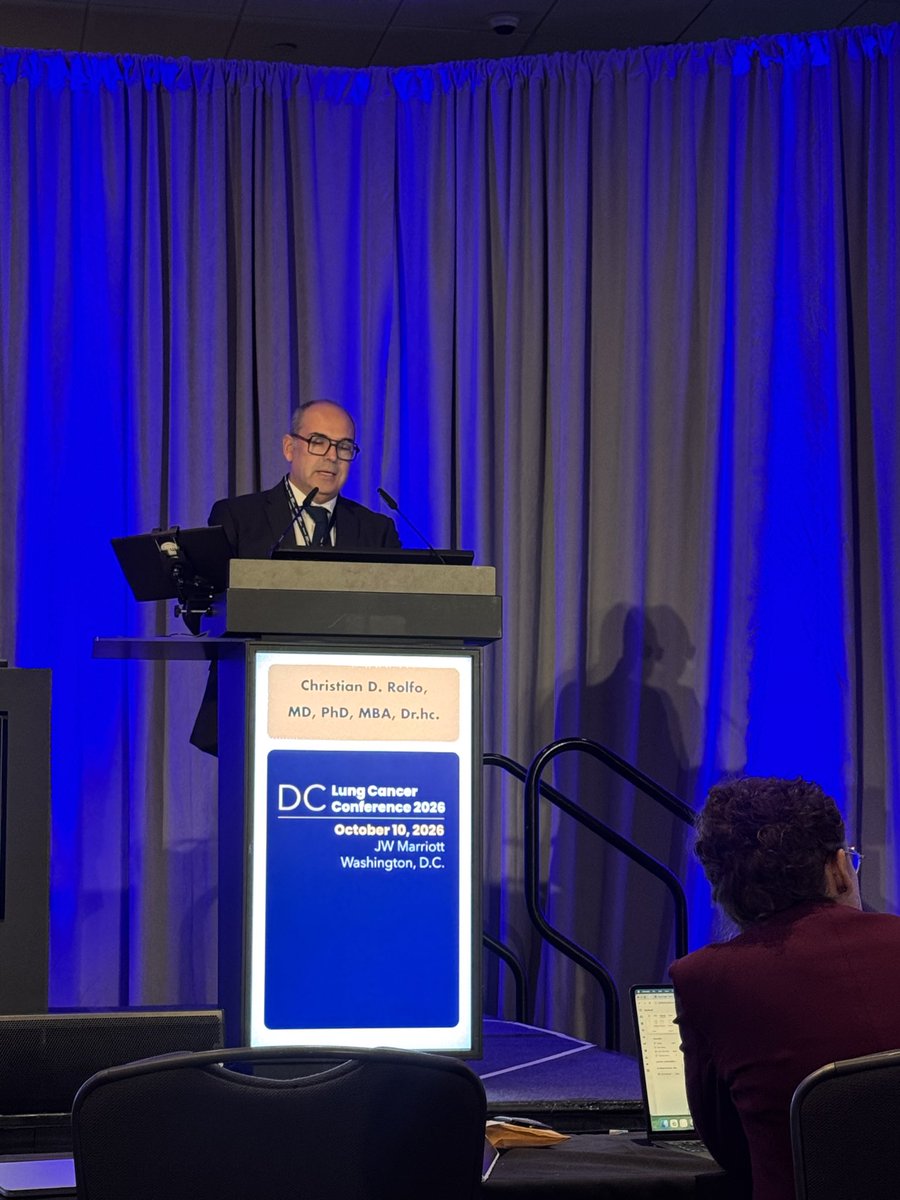
Christian Rolfo (@ChristianRolfo)Oct 10, 2026 · 4:18 PM ETView post on X ↗
On the podiumShirish M. GadgeelWinship Cancer Institute, Emory
🌟 Had a fantastic time at #DCLung26! Insightful, inspiring lectures 💡, lively discussions 💬, and wonderful connections with friends and colleagues! 🤝
👏 Special kudos to our outstanding conference chairs, @StephenVLiu and @Joshua_Reuss, for a terrific meeting!
@LauraAlderMD @kaushalpar @NaglaAKarimMD @drshieldsmd @HyeinJeon_MD @JeongminSeoMD @Latinamd @NouraChoudhury
Young Kwang Chae, MD, MPH, MBA (@youngkwangchae)Oct 10, 2026 · 9:14 PM ETView post on X ↗
On the podiumShirish M. GadgeelWinship Cancer Institute, Emory
A few interesting things I learned at #DCLung26🫁
• Negative LB w/ ctDNA TF <1%: Prioritize tissue NGS (Rolfo, CCR 2024)
• METex14 NSCLC w/ PD-L1 >80%: 1L ICI ± chemo may outperform MET TKI (Pecci, CCR 2025)
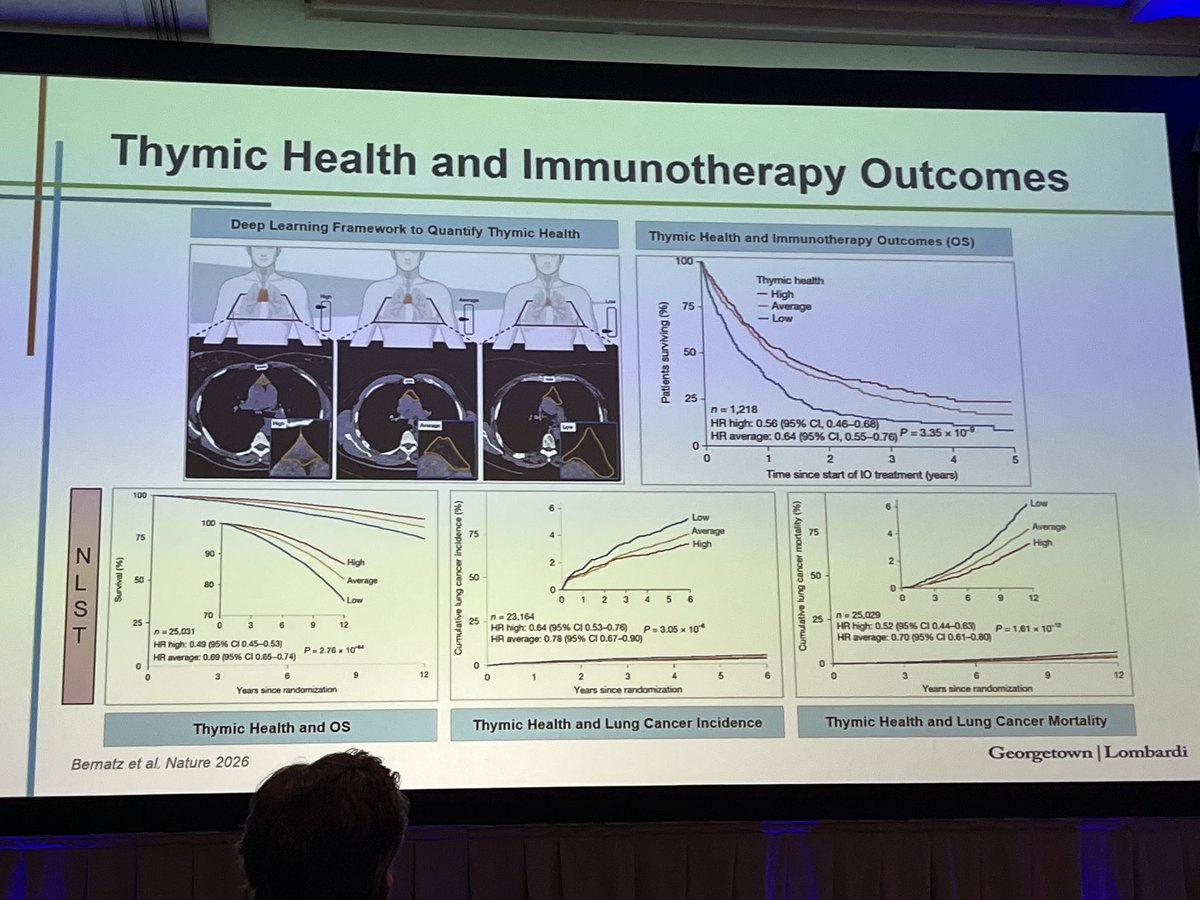
• Thymic health is associated with ICI outcomes and OS (Bernatz, Nature 2026)
NLST
[Slide 2]
Thymic Health and Immunotherapy Outcomes
Deep Learning Framework to Quantify Thymic Health
[Three CT panels labelled High | Average | Low thymic health, with thymus segmentation insets]
Thymic Health and Immunotherapy Outcomes (OS)
[KM plot] y: Patients surviving (%) 0-100 | x: Time since start of IO treatment (years) 0-5
Thymic health: High | Average | Low
n = 1,218
HR high: 0.56 (95% CI, 0.46-0.68)
HR average: 0.64 (95% CI, 0.55-0.76)
P = 3.35 x 10^-9
NLST
Thymic Health and OS
[Survival (%) vs Years since randomization 0-12; inset 70-100% scale; curves High | Average | Low]
n = 25,031
HR high: 0.49 (95% CI 0.45-0.53)
HR average: 0.69 (95% CI 0.65-0.74)
P = 2.76 x 10^-[exponent illegible; two digits, second appears to be 4]
Thymic Health and Lung Cancer Incidence
[Cumulative lung cancer incidence (%) vs Years since randomization 0-6; inset 0-6% scale; curves Low | Average | High]
n = 23,164
HR high: 0.64 (95% CI 0.53-0.76)
HR average: 0.78 (95% CI 0.67-0.90)
P = 3.05 x 10^-6 [exponent read as -6; small print]
Thymic Health and Lung Cancer Mortality
[Cumulative lung cancer mortality (%) vs Years since randomization 0-12; inset 0-6% scale; curves Low | Average | High]
n = 25,029
HR high: 0.52 (95% CI 0.44-0.63)
HR average: 0.70 (95% CI 0.61-0.80)
P = 1.61 x 10^-12 [exponent read as -12; small print]
Bernatz et al. Nature 2026
Georgetown | Lombardi
[Survival data captured as a table — no point estimates read from the curve]
Endpoint: Multiple: (1) OS from start of IO treatment by thymic-health tertile (n=1,218); (2) NLST OS; (3) NLST cumulative lung cancer incidence; (4) NLST cumulative lung cancer mortality. Reference group = Low thymic health. No point estimates read from curves.
IO cohort - High thymic health vs Low | 1,218 (whole cohort)
IO cohort - Average thymic health vs Low | 1,218 (whole cohort)
NLST OS - High vs Low | 25,031 (whole cohort)
NLST OS - Average vs Low | 25,031 (whole cohort)
NLST lung cancer incidence - High vs Low | 23,164 (whole cohort)
NLST lung cancer incidence - Average vs Low | 23,164 (whole cohort)
NLST lung cancer mortality - High vs Low | 25,029 (whole cohort)
NLST lung cancer mortality - Average vs Low | 25,029 (whole cohort)
HR: see arms (per-panel HRs)
HR CI: see arms
P: IO OS: 3.35 x 10^-9 | NLST OS: 2.76 x 10^-[illegible] | NLST incidence: 3.05 x 10^-6 (small print) | NLST mortality: 1.61 x 10^-12 (small print)
Note: Per-arm n values are not printed; only cohort n per panel. Medians not printed. Curve values not read. P-value exponents on the three NLST panels are superscripts in very small type: the NLST OS exponent could not be read confidently; the incidence (-6) and mortality (-12) exponents are read from the original-resolution crop at medium confidence. Reviewer should confirm all four P exponents against Bernatz et al. Nature 2026 before quoting.
---
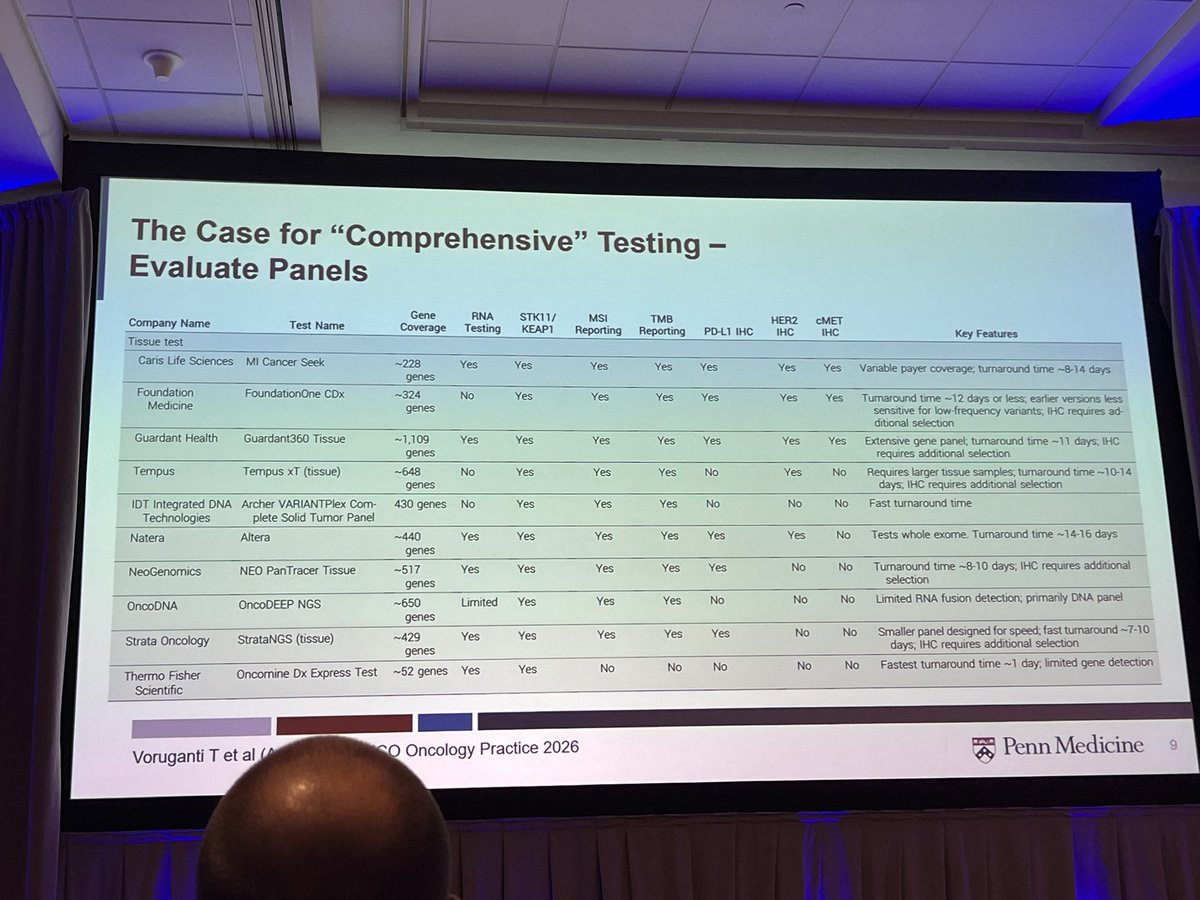
[Slide 3]
The Case for "Comprehensive" Testing - Evaluate Panels
Company Name | Test Name | Gene Coverage | RNA Testing | STK11/KEAP1 | MSI Reporting | TMB Reporting | PD-L1 IHC | HER2 IHC | cMET IHC | Key Features
Tissue test
Caris Life Sciences | MI Cancer Seek | ~228 genes | Yes | Yes | Yes | Yes | Yes | Yes | Yes | Variable payer coverage; turnaround time ~8-14 days
Foundation Medicine | FoundationOne CDx | ~324 genes | No | Yes | Yes | Yes | Yes | Yes | Yes | Turnaround time ~12 days or less; earlier versions less sensitive for low-frequency variants; IHC requires additional selection
Guardant Health | Guardant360 Tissue | ~1,109 genes | Yes | Yes | Yes | Yes | Yes | Yes | Yes | Extensive gene panel; turnaround time ~11 days; IHC requires additional selection
Tempus | Tempus xT (tissue) | ~648 genes | No | Yes | Yes | Yes | No | Yes | No | Requires larger tissue samples; turnaround time ~10-14 days; IHC requires additional selection
IDT Integrated DNA Technologies | Archer VARIANTPlex Complete Solid Tumor Panel | 430 genes | No | Yes | Yes | Yes | No | No | No | Fast turnaround time
Natera | Altera | ~440 genes | Yes | Yes | Yes | Yes | Yes | Yes | No | Tests whole exome. Turnaround time ~14-16 days
NeoGenomics | NEO PanTracer Tissue | ~517 genes | Yes | Yes | Yes | Yes | Yes | No | No | Turnaround time ~8-10 days; IHC requires additional selection
OncoDNA | OncoDEEP NGS | ~650 genes | Limited | Yes | Yes | Yes | No | No | No | Limited RNA fusion detection; primarily DNA panel
Strata Oncology | StrataNGS (tissue) | ~429 genes | Yes | Yes | Yes | Yes | Yes | No | No | Smaller panel designed for speed; fast turnaround ~7-10 days; IHC requires additional selection
Thermo Fisher Scientific | Oncomine Dx Express Test | ~52 genes | Yes | Yes | No | No | No | No | No | Fastest turnaround time ~1 day; limited gene detection
Voruganti T et al (A[obscured by audience member's head]CO Oncology Practice 2026
Penn Medicine | 9
Jeongmin Seo (@JeongminSeoMD)Oct 11, 2026 · 2:16 PM ETView post on X ↗
On the podiumJoshua K. SabariNYU Langone Perlmutter Cancer CenterDebate I (NeoADAURA)
How should we approach borderline resectable EGFR mutated NSCLC?
Levity with a left hook on LAURA by @JSabari vs elegant retort on NEOADURA by @JuliaRotow
@Sam_Rosner_ @Joshua_Reuss
#DCLung26
Hyein Jeon, MD (@HyeinJeon_MD)Oct 11, 2026 · 2:38 PM ETView post on X ↗
Session VI · 14:40–15:40 ET · Moderator Melinda L. Hsu
Practice Pearls
Novel IO: From Bispecifics to Devices (Rolfo) · Tackling Immunotherapy Toxicity (Delvys Rodríguez Abreu) · Nuances of Informed Consent (Pompili) · Consolidation for Oligometastatic NSCLC (Antonoff). 19 posts · 47 images captured.
On the podiumChristian D. RolfoThe Ohio State University / The JamesNovel IO: From Bispecifics to Devices
@ChristianRolfo presents all about Novel IO-From Bispecifics to beyond! #DCLung26 @chulkimMD @Joshua_Reuss @StephenVLiu The field is moving forward to help our patients with #LungCancer have way better options for their disease.
[Slide 2]
T Cell Engagers targeting DLL3 in ES-SCLC
Bispecifics/Biparatopics
Tarlatamab [DLL3-binding domains; CD3-targeting domains; Fc region]
BI 764532 [CD3-binding region; DLL3-binding region; Fc region]
HPN 328 or MK-6070 [CD3-targeting domains; Anti-albumin domain; DLL3-targeting domain]
Alveltamig [αDLL3; αDLL3; αCD3]
Trispecifics
RO7616789 [Anti-DLL3 cross-Fab; Disulfide bond; Anti-CD3/CD137 dual specific Fabs; FcγR-binding inactivation/ FcRn-binding improvement]
CAR-T
AMG119 [DLL3 binding domain; Stalk/spacer; Transmembrane domain; Signaling domains; Chimeric Antigen Receptor (CAR)]
Tarlatamab engages endogenous T cells and SCLC cells
Tarlatamab HLE BiTE® molecule [Anti-CD3; Anti-DLL3; Fc domain (to extend half-life)] -> T cell (CD3) / SCLC cell (DLL3) -> T-cell activation -> T-cell proliferation; Serial lysis of SCLC cells -> Tumor cell apoptosis
CD, cluster of differentiation; DLL3, delta-like ligand 3; Fc, fragment crystallizable domain; HLE BiTE, half-life extended bispecific T-cell engager; SCLC, small cell lung cancer.
Obrixtamig*: a novel IgG-like DLL3-targeting T-cell engager
[anti-CD3 / anti-DLL3; Human IgG-like structure; Obrixtamig; Inactive T-cell; CD3; DLL3; Cancer cell -> Activated T-cell; CD3; DLL3; Cytolytic synapse; Cancer cell apoptosis]
DLL3: Notch ligand selectively expressed on the cell surface of SCLC, and epNECs
Owonikoko et al. ASCO (2021); Wermke et al. WCLC (2024); Rudin et al J Hemat & Oncol (2023)
The James — The Ohio State University Comprehensive Cancer Center
---
[Slide 3]
Beyond BITEs: TriTEs...
Alveltamig: DLL3 tri-specific TCE
| 10 mg Q2W (N=24) | 30 mg Q2W (N=24)
BOR | |
CR, n (%) | 0 | 0
PR, n (%) | 15 (62.5) | 14 (58.3)
SD, n (%) | 2 (8.3) | 2 (8.3)
PD, n (%) | 6 (25.0) | 6 (25.0)
NE, n (%) | 1 (4.2) | 2 (8.3)
ORR', n (%) 95% CI | 15 (62.5) (40.6, 81.2) | 14 (58.3) (36.6, 77.9)
DCR', n (%) 95% CI | 17 (70.8) (48.9, 87.4) | 16 (66.7) (44.7, 84.4)
[Schematic: Alveltamig — DLL3 / CD3 / SCLC cell / T cell; Tarlatamab; αDLL3, αDLL3, αCD3]
Is TriTE > BiTE?
Cytokine Release Syndrome ~70% at 30 mg
Ai et al. ASCO 2025
The James — The Ohio State University Comprehensive Cancer Center
---
[Slide 4]
Status of PD-(L)1 and CTLA-4 development in NSCLC (and challenges)
BsAb | Phase | Population | N | Treatment | PEP | NCT
Erfonrilimab | III | Advanced Sq-NSCLC, 1L | 482 | carboplatin and paclitaxel +/- KN046 | PFS, OS | NCT04474119
Erfonrilimab | II | Advanced NSCLC, 1L | 54 | KN046+ Axitinib | ORR | NCT05420220
Cadonilimab | III | Advanced NSCLC, 1L, PD-L1 < 1% | 642 | Cadonilimab + chemo v Tislelizumab+ chemo | OS, PFS | NCT05990127
Cadonilimab | II | Resectable NSCLC | 43 | Periop Cadonilimab+ chemo | pCR | NCT05377658
Cadonilimab | III | Unresectable stage III NSCLC | 560 | Consolidation Cadonilimab Versus Sugemalimab | PFS | NCT06617416
Volrustomig | III | Advanced NSCLC, 1L, PD-L1 < 50% | 900 | MEDI5752+ chemo v pembro+ chemo | discontinued August 2026 [highlighted] | NCT05984277
Volrustomig | II | Resectable II to IIIB | 490 | Neoadj Volrustomig+ chemo, adjuvant Volrustomig | pCR | NCT0506155[last digit clipped by screen edge]
Volrustomig | Ib | Metastatic HER2+, NSCLC | 244 | Volrustomig+ T-DXd +/- carboplatin | Safety | NCT0468630[last digit clipped by screen edge]
Vudalimab | Ib/rII | Advanced non-Sq NSCLC, 1L | 168 | Vudalimab+ chemo v pembro+ chemo | Terminated March 2026 [highlighted; overlays an underlying PEP entry that is illegible] | NCT0617350[last digit clipped by screen edge]
The James — The Ohio State University Comprehensive Cancer Center
Dr. Nagla Abdel Karim (@NaglaAKarimMD)Oct 10, 2026 · 2:50 PM ETView post on X ↗
On the podiumChristian D. RolfoThe Ohio State University / The JamesNovel IO: From Bispecifics to Devices
Dr. @ChristianRolfo with a look at devices and what the future holds with next generation therapies -- bispecifics, ADCs & more at #DCLung26
Joshua Reuss (@Joshua_Reuss)Oct 10, 2026 · 2:51 PM ETView post on X ↗
On the podiumChristian D. RolfoThe Ohio State University / The JamesNovel IO: From Bispecifics to Devices
Dr. Christian Rolfo @ChristianRolfo @OhioStateMedOnc covers the comprehensive landscape of novel immunotherapies in lung cancer, from bispecific-/trispecific- T cell engagers, TTF, and bispecific antibodies at #DCLung26.
@StephenVLiu @Joshua_Reuss @lungoncdoc @triparnasen @AsrarAlahmadi @dwightowenmd @DCarboneMD #lcsm
[Slide 2]
Major bispecific target combinations in lung cancer
[Left: schematic figure of bispecific antibody mechanisms, panels A / B / C around a T cell, Tumor cell and NK cell. Figure labels are small and mostly illegible in the photo; confidently legible labels only:]
A. Tumor cell
B. T cell | Perforin | Granzyme
C. T cell | Tumor cell | PD-1 | IL-15 | Granzyme B | Tumor Necrosis Factor-α | Interferon-γ | PF-07209960 | SAR445877 | IAP0971
[outer ring of drug/target names around T cell and Tumor cell — mostly illegible; legible fragments:] Ivonescimab (AK112) | Cadonilimab | PD-1 | PD-L1 | CTLA-4 | VEGF-A | 4-1BB | EGFR | HER3 | MET | DLL3 | CD3 | Tarlatamab | BI 764532 | MK-6070 | Amivantamab | Zenocutuzumab | Izalontamab | AFM24 | CD16A | NK cell
[legend:] ⌒ direct lysis | ✕ inhibit downstream signals
1. Immune-cell redirection
Tumor antigen × immune-cell receptor
Examples: DLL3 × CD3, EGFR × CD3, etc.
2. Dual tumor targeting
Tumor target × tumor target
Examples: EGFR × MET, EGFR × HER3, etc.
3. Dual immunomodulation
Immune target × immune target
Examples: PD-1 × CTLA-4, PD-L1 × 4-1BB, etc.
4. Immune–TME / cytokine integration
Immune target × TME or cytokine target
Examples: PD-1 × VEGF, PD-1 × IL-2, etc.
The James
The Ohio State University Comprehensive Cancer Center
Zhong T, et al. iScience. 2025 Mar 21;28(3):111722; Fang W, et al. JAMA. 2026 Jul 28;336(4):306-314; Xiong A, et al. Lancet. 2025 Mar 8;405(10481):839-849; Chen Z, et al. Lancet. 2025 Nov 1;406(10515):2078-2088
Misty Dawn Shields (@drshieldsmd)Oct 10, 2026 · 2:52 PM ETView post on X ↗
On the podiumChristian D. RolfoThe Ohio State University / The JamesNovel IO: From Bispecifics to Devices
Dr @ChristianRolfo giving a masterclass on Novel IO strategies at #DCLung26 : from Bispecifics to Devices including TTFields. Lots happening in this space! Looking forward to further trial results and choosing optimal treatment based on patient and tumor characteristics.
@Joshua_Reuss @StephenVLiu
@drshieldsmd @lungoncdoc
[Slide 2]
Major bispecific target combinations in lung cancer
[Left: schematic figure of bispecific antibody mechanisms, panels A / B / C around a T cell, Tumor cell and NK cell. Figure labels are small and mostly illegible in the photo; confidently legible labels only:]
A. Tumor cell
B. T cell | Perforin | Granzyme
C. T cell | Tumor cell | PD-1 | IL-15 | Granzyme B | Tumor Necrosis Factor-α | Interferon-γ | PF-07209960 | SAR445877 | IAP0971
[outer ring of drug/target names around T cell and Tumor cell — mostly illegible; legible fragments:] Ivonescimab (AK112) | Cadonilimab | PD-1 | PD-L1 | CTLA-4 | VEGF-A | 4-1BB | EGFR | HER3 | MET | DLL3 | CD3 | Tarlatamab | BI 764532 | MK-6070 | Amivantamab | Zenocutuzumab | Izalontamab | AFM24 | CD16A | NK cell
[legend:] ⌒ direct lysis | ✕ inhibit downstream signals
1. Immune-cell redirection
Tumor antigen × immune-cell receptor
Examples: DLL3 × CD3, EGFR × CD3, etc.
2. Dual tumor targeting
Tumor target × tumor target
Examples: EGFR × MET, EGFR × HER3, etc.
3. Dual immunomodulation
Immune target × immune target
Examples: PD-1 × CTLA-4, PD-L1 × 4-1BB, etc.
4. Immune–TME / cytokine integration
Immune target × TME or cytokine target
Examples: PD-1 × VEGF, PD-1 × IL-2, etc.
The James
The Ohio State University Comprehensive Cancer Center
Zhong T, et al. iScience. 2025 Mar 21;28(3):111722; Fang W, et al. JAMA. 2026 Jul 28;336(4):306-314; Xiong A, et al. Lancet. 2025 Mar 8;405(10481):839-849; Chen Z, et al. Lancet. 2025 Nov 1;406(10515):2078-2088
Laura Alder, MD (@LauraAlderMD)Oct 10, 2026 · 2:54 PM ETView post on X ↗
On the podiumChristian D. RolfoThe Ohio State University / The JamesNovel IO: From Bispecifics to Devices
#DCLung26 @ChristianRolfo @OSUCCC_James discusses the next generation of immunotherapies in lung cancer—from bispecifics to trispecifics. Exciting advances ahead! #LungCancer #ThoracicOncology #lcsm
[Slide 2]
Beyond BITEs: TriTEs...
Alveltamig: DLL3 tri-specific TCE
| 10 mg Q2W (N=24) | 30 mg Q2W (N=24)
BOR | |
CR, n (%) | 0 | 0
PR, n (%) | 15 (62.5) | 14 (58.3)
SD, n (%) | 2 (8.3) | 2 (8.3)
PD, n (%) | 6 (25.0) | 6 (25.0)
NE, n (%) | 1 (4.2) | 2 (8.3)
ORR', n (%) 95% CI | 15 (62.5) (40.6, 81.2) | 14 (58.3) (36.6, 77.9)
DCR', n (%) 95% CI | 17 (70.8) (48.9, 87.4) | 16 (66.7) (44.7, 84.4)
[Schematic: Alveltamig — DLL3 / CD3 / SCLC cell / T cell; Tarlatamab; αDLL3, αDLL3, αCD3]
Is TriTE > BiTE?
Cytokine Release Syndrome ~70% at 30 mg
Ai et al. ASCO 2025
The James — The Ohio State University Comprehensive Cancer Center
Dr. Estela Rodriguez (@Latinamd)Oct 10, 2026 · 3:04 PM ETView post on X ↗
On the podiumCecilia PompiliUniversity of HullNuances of Informed Consent
This slide is SO on point @pompili_cecilia
One consent process for all patients is NOT enough.
#DCLung26
[Slide 1]
Is One Consent Process Enough?
From Adaptive Consent to Broader Representation
[Three illustrated patient archetypes]
1. UNCERTAIN PATIENT
Overwhelmed, anxious, facing a preference-sensitive decision.
[thought bubbles: Surgery or radiotherapy? | What are the risks and benefits? | What matters for my life?]
2. THE "DR GOOGLE" PATIENT
Well informed, but often confused by conflicting information.
[thought bubbles: Google — lung cancer treatment | Miracle cure? | New treatment in trials | High risk complications | Survival rates: what do the numbers mean?]
3. THE VULNERABLE PATIENT
Older, hearing or language barriers, lower health literacy, cognitive impairment.
[thought bubbles: hearing icon ? | translation icon A ? | scribble]
Eric K. Singhi, MD (@lungoncdoc)Oct 10, 2026 · 3:10 PM ETView post on X ↗
On the podiumCecilia PompiliUniversity of HullNuances of Informed Consent
Outstanding talk by Dr @pompili_cecilia at #DCLung26 on the nuances of informed consent. We must meet the patient where they are, ensuring clear communication and mutual understanding of treatment trade offs and goals of care. Terrific reminder while we are discussing ever expanding treatments!
@StephenVLiu @Joshua_Reuss @lungoncdoc @drshieldsmd @chulkimMD
[Slide 2]
When the "Best" Treatment Is Not Obvious
[Left illustration — patient thought bubbles:]
How long might I live? | Will my breathing be worse? | What are the side effects? | How long is the recovery? | What matters most to me and my family? | Will I be able to live independently?
[Middle: CT chest image; cardiopulmonary exercise test chart (VO2 ... 11 mL/kg/min — small, partially legible); MDT illustration with speech bubbles:]
Technically resectable but tumour close to / slightly invades the pulmonary artery | Consider neoadjuvant chemo-immunotherapy | Targeted therapy option if actionable driver | Surgery possible in experienced centre
[Right box:]
• Survival
• Physical Function
• Daily Life & Independence
• Role Functioning
• Symptoms & Treatment Toxicity
• Psychological Well-being
• Social Functioning
• Financial Toxicity
• Time Toxicity
• Overall Quality of Life (HRQoL)
Key information on outcomes that matter most to patients is often missing.
Laura Alder, MD (@LauraAlderMD)Oct 10, 2026 · 3:18 PM ETView post on X ↗
On the podiumCecilia PompiliUniversity of HullNuances of Informed Consent
Dr. @pompili_cecilia with an incredibly important discussion on the nuances, goals, pitfalls and opportunities to improve informed consent for patients. #DCLung26
[Slide 2]
Is One Consent Process Enough?
From Adaptive Consent to Broader Representation
[Illustration thought bubbles] Surgery or radiotherapy? | What are the risks and benefits? | What matters for my life? | Google: 'lung cancer treatment' | [icons with '?']
1. UNCERTAIN PATIENT
Overwhelmed, anxious, facing a preference-sensitive decision.
2. THE "DR GOOGLE" PATIENT
Well informed, but often confused by conflicting information.
3. THE VULNERABLE PATIENT
Older, hearing or language barriers, lower health literacy, cognitive impairment.
Joshua Reuss (@Joshua_Reuss)Oct 10, 2026 · 3:19 PM ETView post on X ↗
On the podiumChristian D. RolfoThe Ohio State University / The JamesNovel IO: From Bispecifics to Devices
Dr. Cecilia Pompili @pompili_cecilia at #DCLung26 expertly outlines the importance of tailoring informed consent, with shared decision making, in our clinical care and trials, especially with clear information plus thoughtful and purposeful alignment to what matters most for patients and their loved ones in their lung cancer journey.
@StephenVLiu @Joshua_Reuss @lungoncdoc @maraantonoff @BrendonStilesMD @ErinGillaspie @SclcSMASHERS @LUNGevity
[Slide 2]
From Informed Consent to Shared Decision-Making
Not every patient needs the same level of decisional support.
[Left flowchart — small, largely illegible even at full resolution; confidently legible nodes only:]
Contemplation of surgery → Determine decisional needs → Low needs | [illegible, yellow box] | Complex needs → SDM services → SDM services model?
Universal SDM + [illegible] : I Individualised | N Needs, preferences and goals | F Facts to guide likelihood of benefits, harms, consequences | [illegible] | O Options including best supportive care
Measure outcomes for patients who do and do not have surgery → SDM process | Outcomes important to patients | Outcomes important to healthcare systems
Information alone is not enough
[Right diagram — small; legible parts:]
Skilled communicator(s) for SDM consultations | SDM MDT forum
Prepared patients → WHAT = Core components: Relational skills | Eliciting goals, values, expectations and preferences | Discussing management options | Risk communication | Offering a patient-centric treatment recommendation | Supporting deliberation
Information from primary care
[from MDT forum:] Treatment options | Individualised peri-operative risk assessment | Likelihoods and uncertainties | Guidance on escalation and limitations of care
SDM framework (3-talk model, SHARE) | HOW | Experiential communication skills training
The goal is not simply an informed patient, but a goal-concordant decision.
Leong D, Collins A, Philip J, et al. PeriOperative Quality Initiative consensus statement recommendations on the definitions, aims a[nd] delivery of shared decision-making for major surgery. Anaesthesia. 2026;81:1100–11[cut off]
---
[Slide 3]
When the "Best" Treatment Is Not Obvious
[Left illustration — patient thought bubbles:]
How long might I live? | Will my breathing be worse? | What are the side effects? | How long is the recovery? | What matters most to me and my family? | Will I be able to live independently?
[Middle: CT chest image; cardiopulmonary exercise test chart (VO2 ... 11 mL/kg/min — small, partially legible); MDT illustration with speech bubbles:]
Technically resectable but tumour close to / slightly invades the pulmonary artery | Consider neoadjuvant chemo-immunotherapy | Targeted therapy option if actionable driver | Surgery possible in experienced centre
[Right box:]
• Survival
• Physical Function
• Daily Life & Independence
• Role Functioning
• Symptoms & Treatment Toxicity
• Psychological Well-being
• Social Functioning
• Financial Toxicity
• Time Toxicity
• Overall Quality of Life (HRQoL)
Key information on outcomes that matter most to patients is often missing.
Misty Dawn Shields (@drshieldsmd)Oct 10, 2026 · 3:19 PM ETView post on X ↗
On the podiumMara B. AntonoffMD Anderson Cancer CenterConsolidation for Oligometastatic NSCLC
At #DCLung26, @maraantonoff reviews the evolving role of surgical consolidation in metastatic NSCLC.
Where is the evidence strongest?
Where do gaps remain?
“Benefit isn’t one-size fits all. Disease biology and the context of systemic therapy matter.”
NRG-LU002LONESTAR
[Slide 2]
Systemic therapy context matters
NRG LU002 + LONESTAR: IO + LCT did not result in same benefit seen for targeted therapy + LCT in oncogene-driven disease
NRG-LU002
• Phase II/III, n=215
• AGA negative metastatic NSCLC
• 3 or fewer extracranial metastases
• No progression after initial systemic therapy
• 90% immunotherapy-based regimens
1-year PFS | PFS | OS
52% LCT / 48% no LCT | HR 0.93 | HR 1.05
Grade 3 or higher pneumonitis: 10% with LCT vs 1% without LCT
LONESTAR
Nivolumab + ipilimumab ± local consolidation
PFS in all cohort
[KM curve — ICI no LCT vs ICI + LCT; y-axis Progression-free Survival 0%–100%; x-axis Time since randomization (months) 0–90; no point estimates read from curve]
| ICI + LCT | ICI no LCT
PFS (months) | 31.3 (13.3, 42) | 24.3 (11.9, 32.2)
Hazard Ratio | 0.79 (0.54, 1.15); p = 0.22
Negative ICI-era trials did not negate LCT
Benefit depends on disease biology and systemic therapy context.
OS
No OS benefit
43.2 vs 52.8 months
HR 1.14
Iyengar P, J Clin Oncol 2024; Altan M, WCLC 2026
Cedars Sinai | DC Lung Cancer Conference 2026
[Survival data captured as a table — no point estimates read from the curve]
Endpoint: PFS (LONESTAR, all cohort); plus NRG-LU002 summary stats as printed
LONESTAR ICI + LCT | 31.3 months | 13.3, 42
LONESTAR ICI no LCT | 24.3 months | 11.9, 32.2
NRG-LU002 LCT (1-year PFS)
NRG-LU002 no LCT (1-year PFS)
HR: LONESTAR PFS HR 0.79; NRG-LU002 PFS HR 0.93, OS HR 1.05
HR CI: LONESTAR PFS 0.54, 1.15 (NRG-LU002 HR CIs not printed)
P: LONESTAR PFS p = 0.22 (NRG-LU002 p not printed)
NRG-LU002 1-year PFS 52% LCT vs 48% no LCT (printed as numbers)
Note: LONESTAR OS box: 'No OS benefit', 43.2 vs 52.8 months, HR 1.14 — arm assignment of 43.2 vs 52.8 is implied only by color (red = ICI + LCT styling, blue = ICI no LCT styling in the PFS table header), not labeled in text; no CI or p printed for OS. NRG-LU002 n=215, Phase II/III, AGA-negative; grade >=3 pneumonitis 10% with LCT vs 1% without. No values read from the KM curve itself.
Eric K. Singhi, MD (@lungoncdoc)Oct 10, 2026 · 3:21 PM ETView post on X ↗
On the podiumChristian D. RolfoThe Ohio State University / The JamesNovel IO: From Bispecifics to Devices
Practice Pearls at #DCLung26 with dynamic talks from Drs. @ChristianRolfo @delvysra @pompili_cecilia @maraantonoff - incorporating bispecifics and local consolidation, tackling toxicity, and nuances of informed consent from four global experts
Stephen V Liu, MD (@StephenVLiu)Oct 10, 2026 · 3:23 PM ETView post on X ↗
On the podiumMara B. AntonoffMD Anderson Cancer CenterConsolidation for Oligometastatic NSCLC
The role of surgery in advanced NSCLC is evolving. Dr. @maraantonoff discusses how we can approach this in an era of improved systemic therapy. #DCLung26
[Slide 2]
Prospective multicenter surgical data are needed
Randomized LCT data support concept, prospective surgical data remain limited
Persistent questions: selection, operative strategy, and outcomes of lung resection in stage IV NSCLC
Background & rationale
1 Modern systemic therapy has increased durable disease control in selected stage IV NSCLC
2 Randomized studies support LCT in well selected metastatic disease
3 Evolving evidence challenges rigid OMD versus PMD distinctions and focuses attention on biology and response
4 Surgery is used in selected patients, but prospective surgical data remain limited
5 Existing surgical series are predominantly retrospective, highly selected, and single institution
[Flow diagram] Modern systemic therapy (Targeted therapy | Immunotherapy | Chemotherapy) -> Tumor response -> Local consolidative therapy (Pulmonary resection | SBRT | Local ablation)
Prospective multicenter surgical data are needed to define the role, application, and consequences of pulmonary resection in stage IV NSCLC in the era of modern systemic therapy
Footer: [Antono]ff MB, Ann Thorac Surg 2025; Elamin YY, Ann Oncol 2025 | [Ced]ars Sinai | DC Lung Cancer Conference 2026
Joshua Reuss (@Joshua_Reuss)Oct 10, 2026 · 3:24 PM ETView post on X ↗
On the podiumDelvys Rodríguez AbreuHospital Universitario Insular de Gran CanariaTackling Immunotherapy Toxicity
#DCLung26 | @delvysra @ulpgcresearch discusses the early recognition and management of immunotherapy-related toxicities — Key Message: Best treatment for severe irAES is early detection”. #Immunotherapy #LungCancer
[Slide 2]
Servicio Canario de la Salud
Complejo Hospitalario Universitario Insular - Materno Infantil
Management of Toxicities
Common Terminology Criteria for Adverse Events (CTCAE) v6.0 (MedDRA 28.0). Published July 22, 2025
Steroids are the Backbone BUT are not the treatment for every immune toxicity.
Grade 1 | Symptomatic management | Continue I-O
Grade 2 | Steroids 0.5-1 mg/kg/day prednisone (2 mg if no improvement in 2-3 days), taper over 4-6 ws | Hold I-O | Restart I-O once grade ≤1 and prednisone at 10 mg daily
Grade 3 | Steroids 1-2 mg/kg/day prednisone IV | Add Infliximab (if no improvement in 2-3 days) | When grade ≤1, taper over 4-6 ws | May start I-O with high level of caution
Grade 4 | Steroids 1-2 mg/kg/day prednisone IV | Add Infliximab (if no improvement in 2-3 days) | Other immunosuppressants | Discontinue I-O (except endocrinopathies)
➤ Grade
➤ Hold
➤ Treat
➤ Escalate
➤ Slow taper
The grade matters but the organ matters even more
[Bryan J.] Schneider et al. J Clin Oncol 39, 4073–4126 (2021)
---
[Slide 3]
Servicio Canario de la Salud
Complejo Hospitalario Universitario Insular - Materno Infantil
Some take home messages
1. Think immune toxicity early.
2. Always exclude competing diagnoses.
3. Grade determines management but the organ matters too.
4. Start steroids promptly when indicated BUT reassess early.
5. Rare toxicities can be the most dangerous and need agressive approaches.
"The best treatment for severe immune toxicity is early recognition."
Dr. Estela Rodriguez (@Latinamd)Oct 10, 2026 · 3:25 PM ETView post on X ↗
On the podiumMara B. AntonoffMD Anderson Cancer CenterConsolidation for Oligometastatic NSCLC
Love this slide, @maraantonoff!
In NSCLC, stage alone does NOT tell us the whole story.
Tumor biology absolutely matters.
#DCLung26
[Slide 1]
Stage is an imperfect surrogate for biology
Baseline disease [lungs / lymph nodes / pleura; brain / liver / bone / adrenal icons]
anatomy / lesion count
→ Systemic therapy →
Observed biology: Nodal clearance | Depth of response | Pleural clearance | Residual disease distribution | No new sites
→ Controllable residual disease → Consider LCT [surgery / radiotherapy icons]
Biology guides timing, sequence and integration of local therapy in oligometastatic disease
Cedars Sinai | DC Lung Cancer Conference 2026
Eric K. Singhi, MD (@lungoncdoc)Oct 10, 2026 · 3:28 PM ETView post on X ↗
On the podiumChristian D. RolfoThe Ohio State University / The JamesNovel IO: From Bispecifics to Devices
Dr. Mara Antonoff (@maraantonoff) comprehensively highlights the clear role of surgical resection and local consolidation and important need for more prospective studies in the multiD management of lung cancer at #DCLung26.
@StephenVLiu @Joshua_Reuss @lungoncdoc @CedarsSinai
[Slide 2]
Stage is an imperfect surrogate for biology
Baseline disease [lungs / lymph nodes / pleura; brain / liver / bone / adrenal icons]
anatomy / lesion count
→ Systemic therapy →
Observed biology: Nodal clearance | Depth of response | Pleural clearance | Residual disease distribution | No new sites
→ Controllable residual disease → Consider LCT [surgery / radiotherapy icons]
Biology guides timing, sequence and integration of local therapy in oligometastatic disease
Cedars Sinai | DC Lung Cancer Conference 2026
---
[Slide 3]
Survival alone does not capture patient experience
What we need to understand
• How patients feel and function after surgical consolidation
• Symptom burden, recovery, and return to daily life
• Emotional well-being and perspectives on the treatment decision
How we are addressing it
• Dedicated QoL survey linked to the stage IV surgical registry
• Optional participation alongside clinical outcomes collection
• Goal: inform patient selection, counseling, and supportive care
QoL component already funded
We need to understand both how long patients live and how well they live.
[Cedars] Sinai | DC Lung Cancer Conference 2026
---
[Slide 4]
Resection can change what happens next
Recent analysis: surgical pathology generated a probable or definite downstream management change in ~ 1 in 4 patients
Primary result
18 / 73 evaluable patients
24.7%
probable or definite downstream management change
95% CI 16.2%–35.6%
Definite: | 15/73 (20.5%)
Probable: | 3/73 (4.1%)
Possible / indirect: | 13/73 (17.8%)
No change: | 42/73 (57.5%)
What drove the change?
Pathologic response | 83.3%
Systemic therapy escalation | 50.0%
Systemic therapy de-escalation | 44.4%
Surveillance adjustment | 44.4%
Additional local therapy | 33.3%
New molecular profiling data | 11.1%
Resect — Surgical resection of oligometastatic NSCLC
↓
Learn — Pathologic response | Nodal status | Histology / transformation | Molecular data
↓
Act — Systemic therapy | Surveillance | Additional local therapy
Surgery can generate management-changing information in roughly 1 in 4 evaluable patients.
Haimi I, Antonoff MB, ITSOS 2026
Cedars Sinai | DC Lung Cancer Conference 2026
Misty Dawn Shields (@drshieldsmd)Oct 10, 2026 · 3:29 PM ETView post on X ↗
On the podiumChristian D. RolfoThe Ohio State University / The JamesNovel IO: From Bispecifics to Devices
Christian Rolfo on Novel IO Strategies at #DCLung26 - Laura Alder
@LauraAlderMD @ChristianRolfo
OncoDaily Lung (@OncodailyLung)Oct 10, 2026 · 4:09 PM ETView post on X ↗
On the podiumCecilia PompiliUniversity of HullNuances of Informed Consent
At #DCLung26, Dr. @pompili_cecilia leads an important discussion on the nuances of informed consent—and how to make the process clearer, more meaningful, and patient-centered especially when discussing #clinicaltrials #PatientCenteredCare @IASLC
[Slide 3]
Is One Consent Process Enough?
From Adaptive Consent to Broader Representation
[Three illustrated patient archetypes]
1. UNCERTAIN PATIENT
Overwhelmed, anxious, facing a preference-sensitive decision.
[thought bubbles: Surgery or radiotherapy? | What are the risks and benefits? | What matters for my life?]
2. THE "DR GOOGLE" PATIENT
Well informed, but often confused by conflicting information.
[thought bubbles: Google — lung cancer treatment | Miracle cure? | New treatment in trials | High risk complications | Survival rates: what do the numbers mean?]
3. THE VULNERABLE PATIENT
Older, hearing or language barriers, lower health literacy, cognitive impairment.
[thought bubbles: hearing icon ? | translation icon A ? | scribble]
Dr. Estela Rodriguez (@Latinamd)Oct 10, 2026 · 5:12 PM ETView post on X ↗
On the podiumCecilia PompiliUniversity of HullNuances of Informed Consent
#DCLung26
Dr. @pompili_cecilia leads an important discussion on the nuances of informed consent—and how to make the process clearer, more meaningful, and patient-centered especially when discussing #clinicaltrials #PatientCenteredCare @IASLC
[Slide 3]
Is One Consent Process Enough?
From Adaptive Consent to Broader Representation
[Three illustrated patient archetypes]
1. UNCERTAIN PATIENT
Overwhelmed, anxious, facing a preference-sensitive decision.
[thought bubbles: Surgery or radiotherapy? | What are the risks and benefits? | What matters for my life?]
2. THE "DR GOOGLE" PATIENT
Well informed, but often confused by conflicting information.
[thought bubbles: Google — lung cancer treatment | Miracle cure? | New treatment in trials | High risk complications | Survival rates: what do the numbers mean?]
3. THE VULNERABLE PATIENT
Older, hearing or language barriers, lower health literacy, cognitive impairment.
[thought bubbles: hearing icon ? | translation icon A ? | scribble]
Dr. Estela Rodriguez (@Latinamd)Oct 10, 2026 · 5:12 PM ETView post on X ↗
On the podiumMara B. AntonoffMD Anderson Cancer CenterConsolidation for Oligometastatic NSCLC
#DCLung26 Great talk by @maraantonoff @CedarsSinai on the evolving role of local consolidation therapy—including surgery—in advanced lung cancer. The discussion highlighted how careful patient selection and tumor biology can help guide treatment decisions and clarify when local therapy may complement systemic treatment. #LocalConsolidationTherapy #LungCancerSurgery #lcsm
[Slide 2]
Selection for LCT is moving beyond lesion count
Traditional Paradigm
Lesion count and location
->
Evolving Paradigm
Treatment response | Tumor biology | Disease trajectory | Multidisciplinary selection
The question is shifting from "How many lesions?" to "Is the biology favorable after systemic therapy?"
Antonoff MB, Ann Thorac Surg 2025
Cedars Sinai | DC Lung Cancer Conference 2026
---
[Slide 3]
Surgery can provide more than local control
NORTHSTAR lung resection patients
- N = 21
- Surgery was safe
- Provided pathologic information on residual disease
Who underwent pulmonary resection?
N = 21 lung resection patients
More often polymetastatic at baseline: 76.2% vs 45.7%, P = 0.030
Greater radiographic response after induction: 100% vs 78.8%, P = 0.035
Median time from osimertinib initiation to surgery: 3.6 months
Pulmonary resection after osimertinib was safe
Median LOS: 3 days (1-6)
Pneumonitis: 4.8%
Tachyarrhythmia: 9.5%
No ICU admissions
No reoperations
No perioperative deaths
Surgery gave us insight
Median residual viable tumor: 11% | IQR 6.5-25%
pCR: 9.5% (2/21)
MPR: 23.8% (5/21)
Radiographic and pathologic response were not always concordant.
Surgery provided local control, safety, and direct biologic insight.
Antonoff MB, STS 2026
Cedars Sinai | DC Lung Cancer Conference 2026
---
[Slide 4]
Where are we now, and what's next?
Baseline burden is not enough
OMD definitions alone do not capture the biology that emerges during treatment.
->
Response reveals biology
Nodal clearance, pleural clearance, pathologic response, metabolic response, and evolving molecular markers can refine selection.
->
LCT must fit the systemic therapy context
Comprehensive LCT may be especially important when durable systemic control of untreated disease is limited.
The future is response adapted, biology informed, multidisciplinary consolidation.
Cedars Sinai | DC Lung Cancer Conference 2026
Dr. Estela Rodriguez (@Latinamd)Oct 10, 2026 · 5:19 PM ETView post on X ↗
Session VII · 15:40–16:45 ET · Moderator Kaushal Parikh
On the podiumEstelamari RodriguezUniversity of Miami Sylvester Comprehensive Cancer CenterMesothelioma
Dr. @delvysra walks us through the key considerations and questions related to immunotherapy toxicity at #DCLung26.
[Slide 2]
Similar profile of irAEs but earlier onset with Dual IT compared to monotherapies
[..]ypes affected by irAEs are similar with anti-PD-1 and anti-CTLA-4 alone and in combination. (left edge cut; likely 'Organ types...')
• Onset of irAEs occurs earlier with the combination than monotherapies
[Organ icons] Liver toxicity | Rash, pruritus | Nephritis | Pneumonitis
[Three time-to-onset curve panels] TIME TO ONSET OF irAEs: IPILIMUMAB | Anti-PD-1/PD-L1 | IPI + Anti-PD-1 (axes/values illegible)
Footer: [..]n Oncol. 2019; Ghisoni E et al. Eur J Cancer 2021 May;149:153-164. Pillai RN et al. Cancer 2018;124:271-7
Joshua Reuss (@Joshua_Reuss)Oct 10, 2026 · 3:07 PM ETView post on X ↗
On the podiumEstelamari RodriguezUniversity of Miami Sylvester Comprehensive Cancer CenterMesothelioma
From Consent Documentation to meaningful consent forms! Style of Communication & Shared Decision Making! @pompili_cecilia gives this unique presentation #DCLung26 @StephenVLiu @Joshua_Reuss @chulkimMD @ChristianRolfo @delvysra
[Slide 2]
Status of PD-(L)1 and CTLA-4 development in NSCLC (and challenges)
BsAb | Phase | Population | N | Treatment | PEP | NCT
Erfonrilimab | III | Advanced Sq-NSCLC, 1L | 482 | carboplatin and paclitaxel +/- KN046 | PFS, OS | NCT04474119
Erfonrilimab | II | Advanced NSCLC, 1L | 54 | KN046+ Axitinib | ORR | NCT05420220
Cadonilimab | III | Advanced NSCLC, 1L, PD-L1 < 1% | 642 | Cadonilimab + chemo v Tislelizumab+ chemo | OS, PFS | NCT05990127
Cadonilimab | II | Resectable NSCLC | 43 | Periop Cadonilimab+ chemo | pCR | NCT05377658
Cadonilimab | III | Unresectable stage III NSCLC | 560 | Consolidation Cadonilimab Versus Sugemalimab | PFS | NCT06617416
Volrustomig | III | Advanced NSCLC, 1L, PD-L1 < 50% | 900 | MEDI5752+ chemo v pembro+ chemo | discontinued August 2026 [highlighted] | NCT05984277
Volrustomig | II | Resectable II to IIIB | 490 | Neoadj Volrustomig+ chemo, adjuvant Volrustomig | pCR | NCT0506155[last digit clipped by screen edge]
Volrustomig | Ib | Metastatic HER2+, NSCLC | 244 | Volrustomig+ T-DXd +/- carboplatin | Safety | NCT0468630[last digit clipped by screen edge]
Vudalimab | Ib/rII | Advanced non-Sq NSCLC, 1L | 168 | Vudalimab+ chemo v pembro+ chemo | Terminated March 2026 [highlighted; overlays an underlying PEP entry that is illegible] | NCT0617350[last digit clipped by screen edge]
The James — The Ohio State University Comprehensive Cancer Center
---
[Slide 3]
Is One Consent Process Enough?
From Adaptive Consent to Broader Representation
[Three illustrated patient archetypes]
1. UNCERTAIN PATIENT
Overwhelmed, anxious, facing a preference-sensitive decision.
[thought bubbles: Surgery or radiotherapy? | What are the risks and benefits? | What matters for my life?]
2. THE "DR GOOGLE" PATIENT
Well informed, but often confused by conflicting information.
[thought bubbles: Google — lung cancer treatment | Miracle cure? | New treatment in trials | High risk complications | Survival rates: what do the numbers mean?]
3. THE VULNERABLE PATIENT
Older, hearing or language barriers, lower health literacy, cognitive impairment.
[thought bubbles: hearing icon ? | translation icon A ? | scribble]
Dr. Nagla Abdel Karim (@NaglaAKarimMD)Oct 10, 2026 · 3:13 PM ETView post on X ↗
On the podiumEstelamari RodriguezUniversity of Miami Sylvester Comprehensive Cancer CenterMesothelioma
@maraantonoff brings up the point here about the need & role of prospective studies of surgical resection in patients with lung cancer & oligometastatic disease! The disease burden may not tell the whole story #DCLung26 @chulkimMD @StephenVLiu @Joshua_Reuss
NRG-LU002LONESTAR
[Slide 2]
Systemic therapy context matters
NRG LU002 + LONESTAR: IO + LCT did not result in same benefit seen for targeted therapy + LCT in oncogene-driven disease
NRG-LU002
• Phase II/III, n=215
• AGA negative metastatic NSCLC
• 3 or fewer extracranial metastases
• No progression after initial systemic therapy
• 90% immunotherapy-based regimens
1-year PFS | PFS | OS
52% LCT / 48% no LCT | HR 0.93 | HR 1.05
Grade 3 or higher pneumonitis: 10% with LCT vs 1% without LCT
LONESTAR
Nivolumab + ipilimumab ± local consolidation
PFS in all cohort
[KM curve — ICI no LCT vs ICI + LCT; y-axis Progression-free Survival 0%–100%; x-axis Time since randomization (months) 0–90; no point estimates read from curve]
| ICI + LCT | ICI no LCT
PFS (months) | 31.3 (13.3, 42) | 24.3 (11.9, 32.2)
Hazard Ratio | 0.79 (0.54, 1.15); p = 0.22
Negative ICI-era trials did not negate LCT
Benefit depends on disease biology and systemic therapy context.
OS
No OS benefit
43.2 vs 52.8 months
HR 1.14
Iyengar P, J Clin Oncol 2024; Altan M, WCLC 2026
Cedars Sinai | DC Lung Cancer Conference 2026
[Survival data captured as a table — no point estimates read from the curve]
Endpoint: PFS (LONESTAR, all cohort); plus NRG-LU002 summary stats as printed
LONESTAR ICI + LCT | 31.3 months | 13.3, 42
LONESTAR ICI no LCT | 24.3 months | 11.9, 32.2
NRG-LU002 LCT (1-year PFS)
NRG-LU002 no LCT (1-year PFS)
HR: LONESTAR PFS HR 0.79; NRG-LU002 PFS HR 0.93, OS HR 1.05
HR CI: LONESTAR PFS 0.54, 1.15 (NRG-LU002 HR CIs not printed)
P: LONESTAR PFS p = 0.22 (NRG-LU002 p not printed)
NRG-LU002 1-year PFS 52% LCT vs 48% no LCT (printed as numbers)
Note: LONESTAR OS box: 'No OS benefit', 43.2 vs 52.8 months, HR 1.14 — arm assignment of 43.2 vs 52.8 is implied only by color (red = ICI + LCT styling, blue = ICI no LCT styling in the PFS table header), not labeled in text; no CI or p printed for OS. NRG-LU002 n=215, Phase II/III, AGA-negative; grade >=3 pneumonitis 10% with LCT vs 1% without. No values read from the KM curve itself.
Dr. Nagla Abdel Karim (@NaglaAKarimMD)Oct 10, 2026 · 3:24 PM ETView post on X ↗
On the podiumLaura AlderDuke Cancer InstituteInitial SCLC Therapy
Dr. Laura Alder @LauraAlderMD @DukeCancer details the first-line therapies for #SCLC at #DCLung26, including chemoIO, IMforte, and DeLLphi-303/305, and ADCs.
@StephenVLiu @Joshua_Reuss @lungoncdoc @NouraChoudhury @SclcSMASHERS @SCLCYIForum
[Slide 2]
Tarlatamab Moves Front-Line
• Phase Ib, ES-SCLC
PD-L1 inhibitor + tarlatamab in first line: Induction (with chemo-IO) or maintenance (after chemo-IO)
Results
Induction | Maintenance
ORR 71% | mOS 25.3 mo
12 mo OS 81% | mPFS 5.6 mo
mPFS 9.0 mo |
[wheel segment: DeLLphi-303]
• Phase III, ES-SCLC
PD-L1 inhibitor +/- tarlatamab in first line maintenance after induction chemo-IO
Results awaited
ESMO 2026!
[wheel segment: DeLLphi-305]
• Phase III, ES-SCLC
Induction chemo-IO +/- tarlatamab in first line
Results awaited
[wheel segment: DeLLphi-312]
• Phase III, LS-SCLC
Consolidation tarlatamab v placebo after concurrent chemoradiation
Results awaited
[wheel segment: DeLLphi-306]
[Center graphic] CD3 | TARLATAMAB | DLL3
Footer: Arya Y, Am Soc Clin Oncol Educ Book 46, e52 4964(?) 2026 [citation partially legible]
Joshua Reuss (@Joshua_Reuss)Oct 10, 2026 · 3:47 PM ETView post on X ↗
On the podiumLaura AlderDuke Cancer InstituteInitial SCLC Therapy
@LauraAlderMD is guiding us on the new advances in SCLC at #DCLung26 on a brilliant presentation.
Very exciting to see we have more options for our patients.
@StephenVLiu
@Joshua_Reuss
@IASLC
@SclcSMASHERS
[Slide 2]
Tarlatamab Moves Front-Line
DeLLphi-303
• Phase Ib, ES-SCLC
PD-L1 inhibitor + tarlatamab in first line: Induction (with chemo-IO) or maintenance (after chemo-IO)
Results
Induction | Maintenance
ORR 71% | mOS 25.3 mo
12 mo OS 81% | mPFS 5.6 mo
mPFS 9.0 mo |
DeLLphi-305
• Phase III, ES-SCLC
PD-L1 inhibitor +/- tarlatamab in first line maintenance after induction chemo-IO
Results awaited
ESMO 2026!
DeLLphi-306
• Phase III, LS-SCLC
Consolidation tarlatamab v placebo after concurrent chemoradiation
Results awaited
DeLLphi-312
• Phase III, ES-SCLC
Induction chemo-IO +/- tarlatamab in first line
Results awaited
[center graphic:] CD3 — TARLATAMAB — DLL3
Arya Y. Am Soc Clin Oncol Educ Book 46, e524964(2026)
Christian Rolfo (@ChristianRolfo)Oct 10, 2026 · 3:48 PM ETView post on X ↗
On the podiumLaura AlderDuke Cancer InstituteInitial SCLC Therapy
Dr Laura Alder giving a phenomenal talk on frontline SCLC #DCLUNG26 @LauraAlderMD @StephenVLiu @Joshua_Reuss #SCLC @SclcSMASHERS
[Slide 2]
Tarlatamab Moves Front-Line
• Phase Ib, ES-SCLC
PD-L1 inhibitor + tarlatamab in first line: Induction (with chemo-IO) or maintenance (after chemo-IO)
Results
Induction | Maintenance
ORR 71% | mOS 25.3 mo
12 mo OS 81% | mPFS 5.6 mo
mPFS 9.0 mo |
[wheel segment: DeLLphi-303]
• Phase III, ES-SCLC
PD-L1 inhibitor +/- tarlatamab in first line maintenance after induction chemo-IO
Results awaited
ESMO 2026!
[wheel segment: DeLLphi-305]
• Phase III, ES-SCLC
Induction chemo-IO +/- tarlatamab in first line
Results awaited
[wheel segment: DeLLphi-312]
• Phase III, LS-SCLC
Consolidation tarlatamab v placebo after concurrent chemoradiation
Results awaited
[wheel segment: DeLLphi-306]
[Center graphic] CD3 | TARLATAMAB | DLL3
Footer: Arya Y, Am Soc Clin Oncol Educ Book 46, e52 4964(?) 2026 [citation partially legible]
Mariam Alexander (@MariamAlex26)Oct 10, 2026 · 3:52 PM ETView post on X ↗
On the podiumNoura ChoudhuryUniversity of Chicago MedicineTreating Relapsed SCLC
Dr. Noura Choudhury @NouraChoudhury presents the current and projected relapsed/refractory treatment in the evolving landscape for #SCLC at #DCLung26.
@StephenVLiu @Joshua_Reuss @LauraAlderMD @kaushalpar @SclcSMASHERS @SCLCYIForum
[Slide 2]
Conclusions:
• Based on DeLLphi-304, tarlatamab is the preferred second-line treatment option for patients with relapsed/refractory SCLC
◦ This may change in a matter of weeks
• There are many ongoing clinical trials for R/R SCLC that show exceptional promise
◦ Other DLL3 T-cell engagers, ADCs, combination strategies, novel agents
• Lurbinectedin 2L indication to be withdrawn: after tarlatamab, clinical trials are of increasing importance for fit patients
◦ No FDA approved ADC as of yet
• Patients are often symptomatic in the R/R setting—supportive care measures and ongoing CNS surveillance are important
The University of Chicago Biological Sciences Division
Misty Dawn Shields (@drshieldsmd)Oct 10, 2026 · 3:53 PM ETView post on X ↗
On the podiumNoura ChoudhuryUniversity of Chicago MedicineTreating Relapsed SCLC
Dr. @NouraChoudhury with an excellent discussion on the incredibly rapidly evolving field of 2L+ SCLC at #DCLung26. Agents coming, agents going, but hopefully some new options on horizon.
[Slide 2]
How I treat relapsed SCLC (for now....)
[Flow diagram]
1L: Platinum [et]oposide plus ICI
-> Maintenance: Tarlatamab plus durvalumab (DeLLphi-305) -> 2L: Clinical Trial preferred -> 3L: single-agent chemotherapy [blue pathway]
-> Maintenance: ICI monotherapy OR Lurbinectedin plus atezo -> 2L: Tarlatamab -> 3L: Clinical Trial preferred OR single agent chemotherapy [red pathway]
Consider clinical trials*
Early palliative care referral
Frequent (q3-6 mo) CNS surveillance
*[Trials that pro]hibit prior tarlatamab use in the R/R setting need closer examination [footnote, partially cut at left; low confidence]
Logo: The University of Chicago Biological Sciences Division
Joshua Reuss (@Joshua_Reuss)Oct 10, 2026 · 3:54 PM ETView post on X ↗
On the podiumKaushal ParikhMayo Clinic Comprehensive Cancer Center
Thymic Tumors’ incidence rate has been rising globally! @chulkimMD presents significant updates & areas of unmet needs in Thymoma & Thymic Carcinoma #DCLung26 @StephenVLiu @Joshua_Reuss @OncoAlert @oncodaily
[Slide 2]
Increasing Global Incidence Rates
[Line chart: y-axis Annual Incidence Rates 0 – 1.4 (ticks 0, 0.2, 0.4, 0.6, 0.8, 1, 1.2, 1.4); x-axis Age Groups (years): 0-4 | 5-9 | 10-14 | 15-19 | 20-24 | 25-29 | 30-34 | 35-39 | 40-44 | 45-49 | 50-54 | 55-59 | 60-64 | 64-69 | 70-74 | 75-79 | 80-84 | 85+]
Legend (period series): 2013-2017 | 2008-2012 | 2003-2007 | 1998-2002 | 1993-1997 | 1988-1992
[no point values printed; curves rise with age, peak around the 70-79 age groups, and are higher for each more recent period — no values read from the curves]
Possibly associated with development of screening (e.g. CT screening for lung cancer), especially in countries with high HDI values
Jiang et al. JCO Glob Oncol 2026
Georgetown | Lombardi
Dr. Nagla Abdel Karim (@NaglaAKarimMD)Oct 10, 2026 · 3:57 PM ETView post on X ↗
On the podiumChul KimMedStar Georgetown University Hospital / Georgetown LombardiThymic Cancer
Great talk by my @LombardiCancer colleague @chulkimMD on thymic malignancies and the role of thoracic radiation in NSCLC immunotherapy outcomes at #DCLung26.
Joshua Reuss (@Joshua_Reuss)Oct 10, 2026 · 3:59 PM ETView post on X ↗
On the podiumKaushal ParikhMayo Clinic Comprehensive Cancer Center
@LauraAlderMD @NouraChoudhury #SCLC first line & subsequent line therapies might be changing awaiting more data @myESMO #DCLung26 @StephenVLiu @Joshua_Reuss
[Slide 2]
ADCs Moving Front-Line
Target | DLL3 | DLL3 | B7-H3 | B7-H3 | B7-H3 | SEZ6
Agent | BL-M14D1 | ZL-1310 | I-DXd (Ifinatamab deruxtecan) | YL201 | BNT324 (DB-1311) | ABBV-706
Trial (NCT) | BrenDeLL-Lung01 (NCT07625644) | NCT06179069 | IDeate-Lung03 (NCT06362252); also NCT07227597 | NCT07407933 | NCT06892548 | SEZanne (NCT07155174)
Phase | 3 — Phase 3 | 1 — Phase 1 | 1/2 — Phase 1/2 | 1/2 — Phase 1/2 | 1/2 — Phase 1/2 | 2 — Phase 2
Geography / Sponsor | China (SystImmune / Baili-Biokin) | China (Zai Lab, Shanghai) | Japan/US (Daiichi Sankyo / Merck) | China (MediLink, Suzhou) | China-origin / Germany (Duality Biologics → BioNTech) | US (AbbVie)
Payload | Topoisomerase I inhibitor | Camptothecin-class topo I inhibitor | DXd (exatecan-derivative topo I); cleavable tetrapeptide linker | Novel topo I inhibitor; protease-cleavable TMALIN linker, DAR 8 | Proprietary topo I inhibitor | Topoisomerase I inhibitor
1L Combination Partner | atezo; carbo/etopo; lurbinectedin | atezo; ± carbo | atezo; platinum backbone (replaces/adds to) | atezo | BNT327 (PD-L1×VEGF bispecific) | atezo; carbo/etopo
---
[Slide 4]
How I treat relapsed SCLC (for now....)
1L: Platinum etoposide plus ICI
-> Maintenance: Tarlatamab plus durvalumab (DeLLphi-305) -> 2L: Clinical Trial preferred -> 3L: single-agent chemotherapy
-> Maintenance: ICI monotherapy OR Lurbinectedin plus atezo -> 2L Tarlatamab -> 3L: Clinical Trial preferred OR single agent chemotherapy
Consider clinical trials*
Early palliative care referral
Frequent (q3-6 mo) CNS surveillance
*trials that prohibit prior tarlatamab use in the R/R setting need closer examination
THE UNIVERSITY OF CHICAGO | Biological Sciences Division
Dr. Nagla Abdel Karim (@NaglaAKarimMD)Oct 10, 2026 · 4:00 PM ETView post on X ↗
On the podiumEstelamari RodriguezUniversity of Miami Sylvester Comprehensive Cancer CenterMesothelioma
@Latinamd my awesome friend presents all about mesothelioma & the promising new updates & potential novel targets #DCLung26 @StephenVLiu @Joshua_Reuss
CheckMate 743BEAT-mesoDREAM3RIND.227
[Slide 2]
Immunotherapy as first-line therapy
Historical trial landscape
CheckMate 743 | 1L nivolumab + ipilimumab versus chemotherapy
MEDIAN OVERALL SURVIVAL: 18.1 vs 14.1 mo | HR 0.74 (95% CI 0.60-0.91) | p=0.0020
OVERALL SURVIVAL: 12 months: 68% vs 58% | 24 months: 41% vs 27%
BEAT-meso [X]
1L carbo/pem/bev +/- atezo
Randomization 1:1 - 4-6 cycles
Carbo/pem + bev -> Bev maint.
Carbo/pem + bev + atezo -> Bev + atezo maint.
Negative study
DREAM3R [X]
1L platinum/pem +/- durvalumab
Randomization 2:1 - up to 6 cycles
Platinum/pem + durvalumab -> Durvalumab maint.
Platinum/pem alone -> Observe (no IO)
Closed Early
IND.227
1L platinum/pem +/- pembro (4-6 cycles)
mOS 17.3 mos vs. 16.1 (HR 0.79); 3yr OS 25% vs 17%
Platinum/pem + pembro -> Pembro maint.
Platinum/pem alone -> No IO maint.
Approved Sept 2024
Baas et al., Lancet 2021; Chu et l Lancet 2023
SYLVESTER COMPREHENSIVE CANCER CENTER | UNIVERSITY OF MIAMI HEALTH SYSTEM
---
[Slide 3]
Future Treatment Approaches for Pleural Mesothelioma
[Figure: Inhaled Asbestos Fibers -> LUNG / HEART -> 20-to-50-year latency period -> Mesothelioma tumor]
Considerations and Targets for Future Therapy
Phenotypic Histologic Subtypes
Epithelioid (50-60% of cases)
Biphasic (30-40% of cases)
Sarcomatoid (10% of cases)
Current and Future Systemic Approaches
Chemotherapy
Antibody-drug conjugates
Immune checkpoint inhibition (PD-1 or PD-L1 inhibition)
Ferroptosis inducers
Cellular therapy (CAR-T cells targeting mesothelin)
Angiogenesis inhibition
Genomic or Epigenomic Landscape
Mutation | Therapeutic Targets
BAP1 | EZH2; PARP
CDKN2A | p16
NF2 | FAK, YAP-TEAD, mTOR and PI3K
ASS1 | Arginine
Sam Janes, Doraid Alrifai, Dean Fennel. NEJM, 2021
SYLVESTER COMPREHENSIVE CANCER CENTER | UNIVERSITY OF MIAMI HEALTH SYSTEM
Dr. Nagla Abdel Karim (@NaglaAKarimMD)Oct 10, 2026 · 4:05 PM ETView post on X ↗
On the podiumEstelamari RodriguezUniversity of Miami Sylvester Comprehensive Cancer CenterMesothelioma
Dr Estelamari Rodriguez @Latinamd gives an excellent lecture on the new advances in Mesothelioma, several news on development: Biomarkers MTAP, YAP/TEAD and new drugs in clinical trials. Looking forward to get those effective in clinical practice.
#DCLung26
@SylvesterCancer
Christian Rolfo (@ChristianRolfo)Oct 10, 2026 · 4:07 PM ETView post on X ↗
On the podiumEstelamari RodriguezUniversity of Miami Sylvester Comprehensive Cancer CenterMesothelioma
Dr. @Latinamd with a fantastic review of current standards and promising new agents in mesothelioma at #DCLung26. Don't forget to pursue NGS in these patients to inform later line decision-making.
EORTC 1205
[Slide 2]
ASCO: perioperative IO remains conditional (left edge of slide cut by frame; leading words of several lines missing)
[Ad]juvant vs Neoadjuvant chemo:
[EO]RTC 1205 (n=69) no OS/PFS difference
[..] cycles chemo, either sequence acceptable
[mP]FS 10.8 mos vs 8.0mos (neoadj)
[Ne]oadjuvant Chemo IO:
[Pha]se 2 (n=30 patients) nonrandomized
[epit]helioid / biphasic trial population
[A: ]nivolumab x 3 cycles -> nivo adj
[B: ]nivolumab + ipilimumab -> nivo adj
[Res]ults
[Arm ]A: mPFS 9.6 mos, mOS 19.3 mos
[Arm ]B: mPFS 19.8 mos, mOS 28.6 mos
[.. P]FS if ctDNA+ pre-surgery and after cycle 3
[Right: ASCO guideline flow diagram - text illegible]
Footer: [..]L, JCO 2025 - Table 3, recommendations 2.1-2.3 and 2.10
[..], Nature Medicine 2025
Logo: Sylvester Comprehensive Cancer Center, University of Miami Health System
Joshua Reuss (@Joshua_Reuss)Oct 10, 2026 · 4:09 PM ETView post on X ↗
On the podiumEstelamari RodriguezUniversity of Miami Sylvester Comprehensive Cancer CenterMesothelioma
Tour de force of mesothelioma by @Latinamd #DCLUNG26
Mariam Alexander (@MariamAlex26)Oct 10, 2026 · 4:10 PM ETView post on X ↗
On the podiumChul KimMedStar Georgetown University Hospital / Georgetown LombardiThymic Cancer
Dr @chulkimMD with outstanding talk at #DCLung26 on thymic cancer, advances in therapy, and thymic health! Much needed advances on the horizon with clinical trials.
@MedStarGUH @StephenVLiu @Joshua_Reuss
CAVEATTPECATI
[Slide 2]
Systemic Therapies for Previously Treated Thymic Epithelial Tumors
[Bubble chart, left panel] Thymoma
y-axis: Overall response rate (%) 0-80 | x-axis: Progression-free survival (months) 0-30
Drug class legend: Chemotherapy | Somatostatin analogue | ICI | ICI plus TKI | TKI
Plotted regimens (labels as printed): Apatinib; Octreotide +/- prednisone; Avelumab + axitinib; Capecitabine + gemcitabine; Sunitinib; Pembrolizumab; Pemetrexed; Pembrolizumab + lenvatinib; Nivolumab; Regorafenib; Palbociclib; Sunitinib; Everolimus; Sunitinib
[Bubble chart, right panel] Thymic carcinoma
y-axis: (ORR %) 0-50 | x-axis: Progression-free survival (months) 0-14
Plotted regimens (labels as printed): Capecitabine + gemcitabine; Lenvatinib; Avelumab + axitinib; Pembrolizumab; Sunitinib; Apatinib; Pembrolizumab + lenvatinib; Everolimus; Pembrolizumab; Nivolumab; Sunitinib; Regorafenib; Pemetrexed; Nivolumab + voralatinib [label as printed, partly illegible]; Palbociclib; Octreotide +/- prednisone
- Anti-angiogenic TKIs: Lenvatinib (TC) ORR 38%, mPFS 9.3 mo; sunitinib (TC) ORR 26%
- Single-agent ICI: ORR 12-29%, mPFS 3-6 mo; serious irAE 15% in TC, up to 70% in thymoma
- ICI + VEGF TKI (CAVEATT, PECATI): ORR 23-34%, mPFS 7.5-14.9 mo
- Open questions: No predictive biomarker to guide choice. Development of therapeutic strategies.
Imbimbo et al. ESMO Rare Cancers 2025; Sato et al. Lancet Oncol 2020; Conforti et al. Lancet Oncol 2022; Remon et al. ESMO 2024
Georgetown | Lombardi
Laura Alder, MD (@LauraAlderMD)Oct 10, 2026 · 4:10 PM ETView post on X ↗
On the podiumLaura AlderDuke Cancer InstituteInitial SCLC Therapy
Some great overviews of SCLC, thymic tumors, and mesothelioma at #DCLung26 from Drs. @LauraAlderMD @NouraChoudhury @chulkimMD and @Latinamd
Stephen V Liu, MD (@StephenVLiu)Oct 10, 2026 · 4:15 PM ETView post on X ↗
On the podiumChul KimMedStar Georgetown University Hospital / Georgetown LombardiThymic Cancer
@chulkimMD is a superstar. Loved this 5 minute talk on #thymic cancer #DCLUNG26
Mariam Alexander (@MariamAlex26)Oct 10, 2026 · 4:15 PM ETView post on X ↗
On the podiumLaura A. MackeGeorgetown Lombardi / MedStar Georgetown
All star panel at #DCLung26 discussing SCLC, mesothelioma, and thymic cancer challenging cases: Drs. @drshieldsmd , @Annechiangmd , @FordePatrick , @BrendonStilesMD
Laura Alder, MD (@LauraAlderMD)Oct 10, 2026 · 4:16 PM ETView post on X ↗
On the podiumLaura A. MackeGeorgetown Lombardi / MedStar Georgetown
SCLC Panel; Adding my overview: Extensive Stage SCLC first Line therapy: consider current options; Imforte vs clinical trials, consider adding trilaciclib & awaiting Tarla maintenance data especially if Brain Metastasis #DCLung26
Dr. Nagla Abdel Karim (@NaglaAKarimMD)Oct 10, 2026 · 4:16 PM ETView post on X ↗
On the podiumNoura ChoudhuryUniversity of Chicago MedicineTreating Relapsed SCLC
#DCLung26 @NouraChoudhury reviews current and emerging treatment strategies for relapsed/refractory #SCLC, exploring the now rapidly evolving therapeutic landscape and what lies ahead- ADCs and other other DLL3 T cell engagers.
#lcsm @SclcSMASHERS @SCLCYIForum
[Slide 2]
Conclusions:
• Based on DeLLphi-304, tarlatamab is the preferred second-line treatment option for patients with relapsed/refractory SCLC
◦ This may change in a matter of weeks
• There are many ongoing clinical trials for R/R SCLC that show exceptional promise
◦ Other DLL3 T-cell engagers, ADCs, combination strategies, novel agents
• Lurbinectedin 2L indication to be withdrawn: after tarlatamab, clinical trials are of increasing importance for fit patients
◦ No FDA approved ADC as of yet
• Patients are often symptomatic in the R/R setting—supportive care measures and ongoing CNS surveillance are important
The University of Chicago Biological Sciences Division
Dr. Estela Rodriguez (@Latinamd)Oct 10, 2026 · 4:21 PM ETView post on X ↗
On the podiumBrendon M. StilesMontefiore-Einstein Comprehensive Cancer Center
Dr. @BrendonStilesMD discusses the role of surgery in mesothelioma as of 2026.
“I knew this panel invite was a setup.” 🤣
#DCLung26
Eric K. Singhi, MD (@lungoncdoc)Oct 10, 2026 · 4:28 PM ETView post on X ↗
On the podiumLaura AlderDuke Cancer InstituteInitial SCLC Therapy
At #DCLung26, @LauraAlderMD @DukeCancer reviews first-line #SCLC treatment in 2026: Which chemoimmunotherapy and maintenance regimens are preferred? Where does lurbinectedin maintenance fit in, and how might the treatment landscape evolve as tarlatamab moves into earlier lines of therapy? @SclcSMASHERS
[Slide 2]
How Should We Combine?
Which Combos, Sequencing and Rationale?
1L Therapy (Induction | Maintenance) | 2L Therapy | 3L Therapy
Current SoC
P/E + IO | IO ± Lurbinectedin | → TCE Tarlatamab | → Topotecan / Lurbinectedin
Investigational Strategies
P/E + VEGF-Bispecific | VEGF-Bispecific | → TCE Tarlatamab | → ADC
P/E/IO + TCE | TCE + IO | → ADC | → ?
ADC + IO | → TCE Tarlatamab | → ?
ADC + TCE | → ?
2026 ASCO Annual Meeting | #ASCO26 | PRESENTED BY: Noemi Reguart, MD, PhD
Presentation is property of the author and ASCO. Permission required for reuse; contact permissions@asco.org
ASCO American Society of Clinical Oncology — Knowledge Conquers Cancer
Dr. Estela Rodriguez (@Latinamd)Oct 10, 2026 · 4:38 PM ETView post on X ↗
On the podiumLaura A. MackeGeorgetown Lombardi / MedStar Georgetown
Great panel discussion on SCLC and rare tumors!
Exciting treatment development across settings. Equally important is ensuring that these advances reach all patients.
Multidisciplinary care and effective implementation deserve more attention.
#DCLung26
On the podiumEric K. SinghiMD Anderson Cancer Center
We are ready for the upcoming panel on #EGFR_Lung @lungoncdoc and closing session of #DCLung26 @StephenVLiu @Joshua_Reuss Thank you for the most wonderful scientific event!
Dr. Nagla Abdel Karim (@NaglaAKarimMD)Oct 10, 2026 · 4:47 PM ETView post on X ↗
On the podiumSusan C. ScottJohns Hopkins Sidney Kimmel / Sibley Memorial HospitalFirst-Line EGFR Therapy
Dr. @SusanScottMD kicks off our final session on frontline treatment of EGFRm NSCLC at #DCLung26.
Joshua Reuss (@Joshua_Reuss)Oct 10, 2026 · 4:52 PM ETView post on X ↗
On the podiumXiuning LeMD Anderson Cancer CenterLater-Line EGFR Therapy
Dr. @LeXiuning dissects the spectrum of subsequent line therapy options in EGFRm NSCLC at #DCLung26.
[Slide 2]
Overall Diagnostic Strategies
[Flow diagram, left edge cut]
[..]TKI +/- [..]cation (left-edge node, partially outside frame)
-> Oligo progression amendable for XRT
-> CNS-only progression
-> Systemic progression -> Biopsy progressing lesion -> Resistance Spectrum:
Adenocarcinoma No Resist Driver
Histology Transformation
EGFR 2nd mut
MET amp
Fusions - ALK, RET, FGFR
[..]x CNS progression is not discussed here (footnote, left edge cut; likely 'Dx ...' / 'Rx ...')
Joshua Reuss (@Joshua_Reuss)Oct 10, 2026 · 4:58 PM ETView post on X ↗
On the podiumSusan C. ScottJohns Hopkins Sidney Kimmel / Sibley Memorial HospitalFirst-Line EGFR Therapy
Fantastic coverage of EGFR: 1L, 2L+, atypical and exon 20 at #DCLung26 from Drs. @SusanScottMD @LeXiuning and Angel Qin. Details matter - major advances make this field increasingly complex.
Stephen V Liu, MD (@StephenVLiu)Oct 10, 2026 · 5:06 PM ETView post on X ↗
On the podiumXiuning LeMD Anderson Cancer CenterLater-Line EGFR Therapy
Great talk by @LeXiuning on overcoming resistance in EGFR-mutant NSCLC.
Tissue testing and molecular profiling at progression can help guide treatment strategies.
Much remains to be studied, but many promising therapeutic options are emerging!
#DCLung26
On the podiumXiuning LeMD Anderson Cancer CenterLater-Line EGFR Therapy
Dr. Xiuning Le @LeXiuning @UTMDAnderson expertly outlining the complexities of management of EGFR altered lung cancer, including acquired driver resistance mechanisms, small cell transformation, and non-driver identified resistance at #DCLung26.
Highlights the importance of repeat biopsy for rule out of small cell transformation as well as repeat NGS for biomarker identification for optimized treatment at relapse.
@StephenVLiu @Joshua_Reuss @lungoncdoc @jillfeldman4 @EGFRResisters @EgfrUk @RETpositive @ros1cancer @SclcSMASHERS @LUNGevity
[Slide 1]
Overall Diagnostic Strategies
3G TKI +/- Intensification
-> Olio progression amendable for XRT [as printed]
-> CNS-only progression
-> Systemic progression -> Biopsy progressing lesion -> Resistance Spectrum:
Adenocarcinoma No Resist Driver
Histology Transformation
EGFR 2nd mut
MET amp
Fusions - ALK, RET, FGFR [star icon]
Complex CNS progression is not discussed here
Xiuning Le MD PhD MD Anderson Cancer Center
---
[Slide 2]
Progression with small cell transformation
In a multi-center study
N=67
Median OS since transformation 10.9 months
TP53, Rb1 loss, PIK3CA mutations are the most commonly associated with SCLC
MDACC single center N=34
After SCLC transformation
- Carbo-etoposide + osimertinib
- OS 11.1 months (n=25)
Vs.
- Carbo-etoposide + PD1
- OS 15.9 months (n=8)
P=0.95
DLL3, B7H3, and BTK7 were observed to be upregulated in transformed tumors, could be targeted potentially.
[KM plot] OS since SCLC transformation stratified by EGFR TKI status
y-axis: Survival Probability 0%-100% | x-axis: Months 0-50
p = 0.84
Number at risk (months 0, 10, 20, 30, 40, 50):
TKI=0 [legend label partly illegible] | 8 | 5 | 2 | 0 | 0 | 0
TKI>=1 [legend label partly illegible] | 25 | 15 | 5 | 4 | 1 | 0
Marcox et al JCO 2022, Zhang B and Le et al JTO CRR 2023
After neuroendocrine transformation -> carbo-etoposide based therapies
After progression on platinum-based therapies -> other neuroendocrine tumor therapies
[Survival data captured as a table — no point estimates read from the curve]
Endpoint: OS since SCLC transformation, stratified by EGFR TKI status (MDACC single-center series) - no point estimates read from curve
Carbo-etoposide + osimertinib (text block) | 25 | 11.1 months
Carbo-etoposide + PD1 (text block) | 8 | 15.9 months
KM stratum labelled approx. 'TKI=0' (at-risk row, label partly illegible) | 8
KM stratum labelled approx. 'TKI>=1' (at-risk row, label partly illegible) | 25
P: P=0.95 printed in text block for the 11.1 vs 15.9 month comparison; p = 0.84 printed on the KM plot
Note: Two different p-values appear: P=0.95 (text, carbo-etoposide+osimertinib vs carbo-etoposide+PD1) and p=0.84 (KM plot, stratified by EGFR TKI status). They are separate comparisons - do not merge. Medians read ONLY from the printed text; curve not interpreted. The KM legend labels are blurred; the strata n (8 and 25) match the text-block n values.
---
[Slide 3]
Before Treatment Strategies - Treatment Options Available
Treatment options in Oct 2026
- Platinum-doublet
with pemetrexed (adeno), paclitaxel (squamous), etoposide (SCLC)
- Amivantamab
with platinum-pemetrexed (MARIPOSA2)
with lazer/osimertinib (off-label, MARIPOSA)
- Dato-Dxd
Monotherapy: post-TKI, post-chemo
with osimertinib (off-label, ORCHARD m10)
- Anti-VEGF + PD1/L1
with platinum-doublet (IMpower150)
- Teliso-V. - If MET IHC3+
- T-Dxd (Enhertu). If HER2 IHC 3+
---
[Slide 4]
What is on the horizon?
Resistance Spectrum
Adenocarcinoma No Resist Driver } Newer generation of ADCs
Sac-TMT, Iza-Bren, Temab-A and many others
Ivonescimab + chemo (Awaiting FDA approval)
Histology Transformation } DLL3, B7H3, and other ADC/TCE
EGFR 2nd mut } C797S - BlossomHill, Dizal 6008
MET amp } and other 4th Generation EGFR TKIs
Fusions - ALK, RET, FGFR } MET OE and AMP, SAFFRON trial
Osimertinib+Savolitinib (ESMO26)
Misty Dawn Shields (@drshieldsmd)Oct 10, 2026 · 5:10 PM ETView post on X ↗
On the podiumAngel QinUniversity of Michigan Rogel Cancer CenterAtypical and Exon 20 EGFR Mutations
Dr. Angel Qin takes us home with a comprehensive overview of treatment approaches for egfr atypical and exon20insertion mutations at #DCLung26
Joshua Reuss (@Joshua_Reuss)Oct 10, 2026 · 5:12 PM ETView post on X ↗
On the podiumKristen A. MarroneJohns Hopkins University School of Medicine
Great interactive panel discussion!
Managing EGFR-mut NSCLC requires consideration of multiple factors, including EGFR mut subtype, co-mutations, clinical factors such as high-risk features. Treatment decisions are becoming increasingly sophisticated and nuanced.
#DCLung26
On the podiumNagla F. Abdel KarimGeorge Washington University Cancer Center
#DCLung26 @NaglaAKarimMD @GWtweets highlights the importance of repeat biopsies and molecular testing at the time of EGFR-targeted therapy resistance to guide next steps in treatment. #LCSM @EGFRResisters
Dr. Estela Rodriguez (@Latinamd)Oct 11, 2026 · 4:32 PM ETView post on X ↗
70 named on the podium or in posts
Trials Discussed
Every trial named on a captured slide or tagged in a post, with how many posts reference it. The 16 in green have a full KOL Pulse trial profile.
Arrivals, the inaugural DC Lung Prom, and the attendees’ own takeaways — everything posted under #DCLung26 that isn’t a session slide.
@LauraAlderMD @StephenVLiu @Joshua_Reuss @smithsoniannpg @drshieldsmd @MariamAlex26 @lungoncdoc @PatelOncology @christine_lovly Nothing like a room full of people who actually read the data. Wish I were there. Have a great #DCLung26 ! 🫁
Jordan FatCat (@ParkLover_JA)Oct 10, 2026 · 8:33 AM ETView post on X ↗
#DCLung26 @IASLC #lcsm
DCLung26 early takeaway: comprehensive NGS only delivers when patients can access matched treatments.
Justin Austin (@ConferenceHype)Oct 11, 2026 · 6:13 PM ETView post on X ↗
Join us in Washington, DC tomorrow, Saturday, October 10 for #DCLung26 - a 1-day, comprehensive, @IASLC endorsed, multidisciplinary, discussion-based lung cancer CME update!
On-site registration available and join us afterwards for our inaugural gala!
Stephen V Liu, MD (@StephenVLiu)Oct 9, 2026 · 6:10 AM ETView post on X ↗
Faculty dinner at #DClung26 thanks for the invitation. @StephenVLiu @Joshua_Reuss
Dr. Estela Rodriguez (@Latinamd)Oct 9, 2026 · 7:51 PM ETView post on X ↗
Looking forward to a intellectually packed day of impactful updates in lung cancer at #DCLung26 hosted by @StephenVLiu @Joshua_Reuss @MedStarHealth
Misty Dawn Shields (@drshieldsmd)Oct 10, 2026 · 8:05 AM ETView post on X ↗
Drs. @StephenVLiu and @Joshua_Reuss kicking off #DCLung26!! Always incredible to bring our 🫁 community together! Even got to enjoy a trip to the @smithsoniannpg before the event!
@drshieldsmd @MariamAlex26 @lungoncdoc @PatelOncology @christine_lovly
Laura Alder, MD (@LauraAlderMD)Oct 10, 2026 · 8:05 AM ETView post on X ↗
🙏🏽Best part of conferences, like #DCLung26, is catching up friends - old and new.
@ryangentzler @BrunaPellini @lungoncdoc @kamarroneMD @kaushalpar @ChristineBestv1 @gdurm Angel Qin, Rick Hall, Sam Rossner, Dena Rhineheart
Tejas Patil (@TejasPatilMD)Oct 10, 2026 · 10:05 AM ETView post on X ↗
Our bobbleheads are ready to learn and share insights at #DCLung26 on rare thoracic malignancies : I’ll speak on mesothelioma, while @chulkim will address thymic malignancies. We look forward to discussing new data and advancing care. 🫁 Thanks for the fun gift!
Dr. Estela Rodriguez (@Latinamd)Oct 10, 2026 · 10:17 AM ETView post on X ↗
Great science to come! 🤎🫶🫁 #dclung26
Katie Ringley (@katie_ringley)Oct 10, 2026 · 11:39 AM ETView post on X ↗
If you’re at #DCLung26 please say hi to graduate student Agustina de Rosa from @SylvesterCancer Center at the University of Miami! She is attending to learn more about the unmet needs in Lung cancer that we can try to address in the laboratory and with translational research!
Taylor Lab UM (@TaylorJ_MD)Oct 10, 2026 · 12:39 PM ETView post on X ↗
Think we may have found the ultimate baklava at #DCLung26 from Yellow Cafe!
@maraantonoff @JackWestMD @chadinabhan @VivekSubbiah @BalazsHalmosMD @lungoncdoc @PGrivasMDPhD @StephenVLiu @Joshua_Reuss @gdurm
Misty Dawn Shields (@drshieldsmd)Oct 10, 2026 · 12:45 PM ETView post on X ↗
#DCLung26 Where is the baklava thoracic expert when you need him? @BalazsHalmosMD
Dr. Estela Rodriguez (@Latinamd)Oct 10, 2026 · 1:10 PM ETView post on X ↗
#DCLung26 is an Excellent meeting to have a complete overview on the lung cancer therapeutic landscape and great discussions. Congrats @StephenVLiu & @Joshua_Reuss for the impressive agenda, speakers and participation!
Christian Rolfo (@ChristianRolfo)Oct 10, 2026 · 2:00 PM ETView post on X ↗
I guess they’re called “researchers” for good reason. How did the kind folks who invited me to speak at #dclung2026 know what shirt I’d wear and how my hair would look? Terrific day learning about latest clinical trials for #lungcancer. Thanks @StephenVLiu and @Joshua_Reuss!
Neal Augenstein (@AugensteinWTOP)Oct 10, 2026 · 2:06 PM ETView post on X ↗
My first official #DCLung26 faculty bobblehead!
Thanks @StephenVLiu & @Joshua_Reuss for the invite!!
Eric K. Singhi, MD (@lungoncdoc)Oct 10, 2026 · 4:03 PM ETView post on X ↗
Things are looking up at #DCLung26 ! 🚀 An outstanding lineup of thoracic oncology experts, sharing knowledge and advancing the field. Honored to work and collaborate with so many of these incredible colleagues!
👏👏Congratulations to cochairs @StephenVLiu @Joshua_Reuss and the @MedStarGUH group for a wonderful conference #LungCancer #lcsm
Dr. Estela Rodriguez (@Latinamd)Oct 10, 2026 · 4:15 PM ETView post on X ↗
@Annechiangmd confirms that we both quickly moved from condensed discussions on #SCLC at one meeting to the presentation of data & clinical trials updates at #DCLung26
Dr. Nagla Abdel Karim (@NaglaAKarimMD)Oct 10, 2026 · 4:57 PM ETView post on X ↗
Thoracic oncologists at #DCLung26 conference by day, superheroes on the side! @StephenVLiu @maraantonoff @drshieldsmd @Latinamd
Laura Alder, MD (@LauraAlderMD)Oct 10, 2026 · 5:15 PM ETView post on X ↗
Fun times at #DCLung26 with @ChristianRolfo! Grateful for his leadership, generosity, and the doors he has opened for so many in thoracic oncology. Always appreciate colleagues who lift others as they rise! 🙌
Dr. Estela Rodriguez (@Latinamd)Oct 10, 2026 · 5:26 PM ETView post on X ↗
Probably everyone at #DCLung26 noticed the names of the songs played at the breaks spelled out DCLUNG26 and DCLUNGGALA!
Stephen V Liu, MD (@StephenVLiu)Oct 10, 2026 · 5:57 PM ETView post on X ↗
A great way to spend my birthday with the Caring Community Foundation -a 501(c)(3) that provides emergency financial assistance to cancer patients. The band was thrilled to be a part of the gala! Although I missed #DCLung26, still working to make an impact for patients! #jazz
Lauren Meehan Machos, MPH (@LaurenMachos)Oct 11, 2026 · 8:57 AM ETView post on X ↗
The inaugural DC Lung Prom was a phenomenal success!
👏Kudos to chairs @StephenVLiu and @Joshua_Reuss for the incredible celebration & bringing together this wonderful community of amazing thoracic oncology friends!
The #DCLung26 Prom proceeds support @LUNGevity to help provide critical education, fund groundbreaking research, and fuel lung cancer-focused communities built specifically for our patients and their loved ones, including our @SclcSMASHERS.
@lungoncdoc @maraantonoff @LauraAlderMD @NaglaAKarimMD @jennifermarksmd @SoraElyMD @Latinamd @Annechiangmd
Misty Dawn Shields (@drshieldsmd)Oct 11, 2026 · 10:35 AM ETView post on X ↗
Community and Science at #DCLung26 Opening - Laura Alder, MD
@LauraAlderMD @StephenVLiu @Joshua_Reuss
OncoDaily Lung (@OncodailyLung)Oct 11, 2026 · 12:32 PM ETView post on X ↗
An amazing weekend at #DCLung26! Great science and even greater people. Feeling so blessed to be part of this community.
Loved exploring DC, catching the Tony-winning musical Maybe Happy Ending, and reconnecting with dear friends😁
Heading back to Houston with so many new ideas!💡
Jeongmin Seo (@JeongminSeoMD)Oct 11, 2026 · 2:01 PM ETView post on X ↗
An amazing experience at #dclung26 listening to leaders in the field speak on the updates in thoracic oncology. I am grateful to take part (and take silly photos) 🫁🤍
Katie Ringley (@katie_ringley)Oct 11, 2026 · 2:09 PM ETView post on X ↗
I finally got to meet @Alfdoc2 at the #DCLung26 Faculty event. Prof Alfredo Addeo is an outstanding voice in thoracic oncology! a consultant medical oncologist and head of the Lung Cancer Center at Geneva University Hospitals. Always a pleasure to exchange ideas with colleagues advancing lung cancer research, education, and patient care worldwide. 🌍🫁 #LCSM #ThoracicOncology @IASLC
Dr. Estela Rodriguez (@Latinamd)Oct 11, 2026 · 3:31 PM ETView post on X ↗
#DCLung26 was not only about learning, but mentoring, too! Great to spend time with Agustina De Rosa, @SylvesterCancer PhD candidate studying EGFR therapy resistance and having the opportunity to introduce her to experts in the field. Grateful to all the colleagues who took the time to share their advice and expertise and encourage the next generation of scientists. #ThoracicOncology #LCSM @LatinasinSTEM #mentoringmatters
Dr. Estela Rodriguez (@Latinamd)Oct 11, 2026 · 4:44 PM ETView post on X ↗
2 companion pages
Network Analysis
Who drove the #DCLung26 conversation, who amplified it, and who was in the room — the same curated corpus as this page, mapped as networks.
Posts were captured from X under #DCLung26 (October 9–11, 2026) and curated by hand;
every card links back to the post it came from and captions are verbatim. Slide text is machine-transcribed
from the posted photos and shipped as-is, including [illegible] markers where the capture could not be read;
survival curves are summarized only by the numbers printed on the slide. Session placement follows the
official MedStar program; faculty names, titles and affiliations are as printed in the conference brochure.
Trial names link to KOL Pulse trial profiles where one exists.
Free access — track oncology’s top KOLs in your specialty: profiles, pharma influence, ad-board patterns & 2025 Open Payments analysis.KOL Pulse Insider