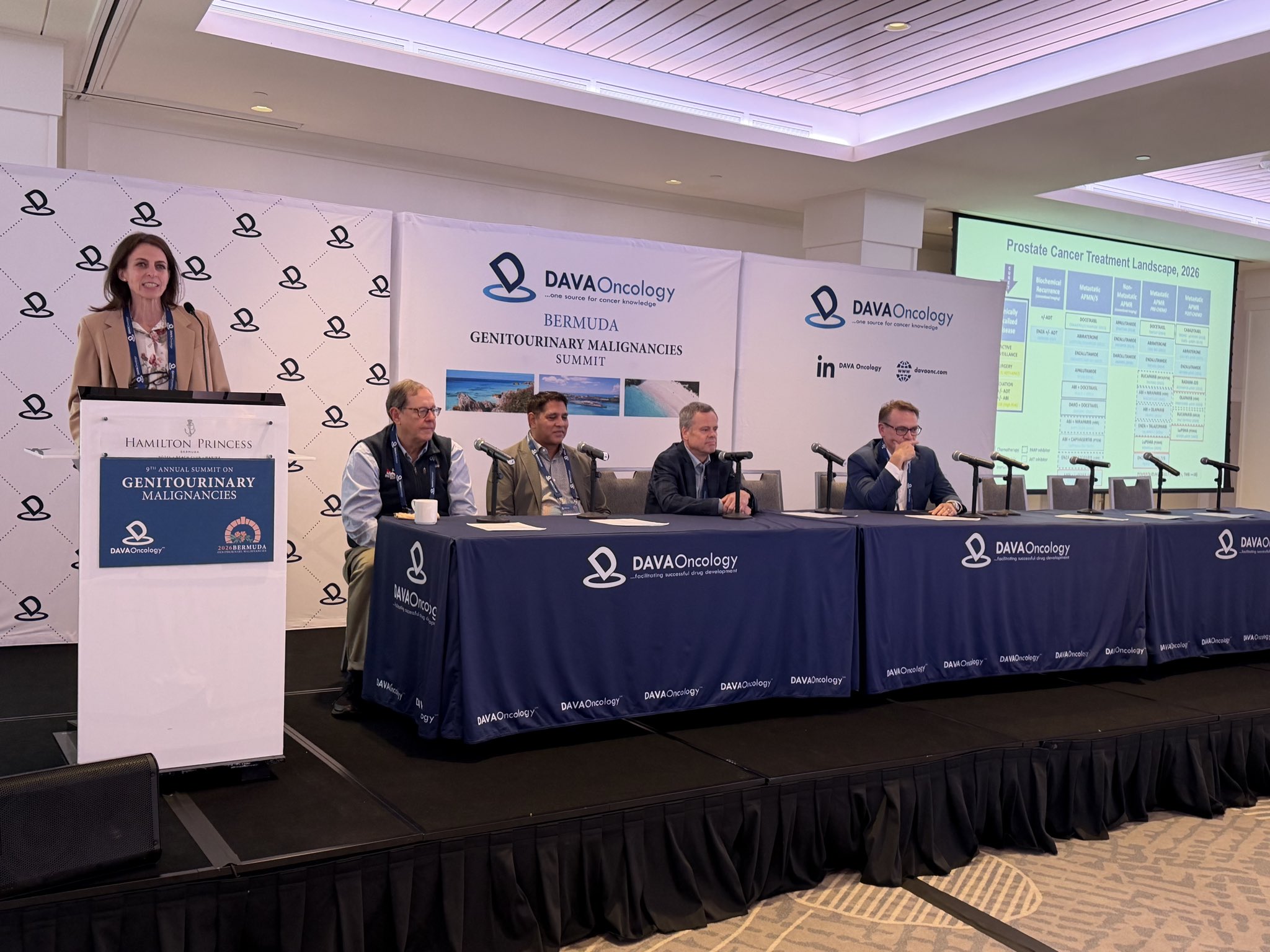
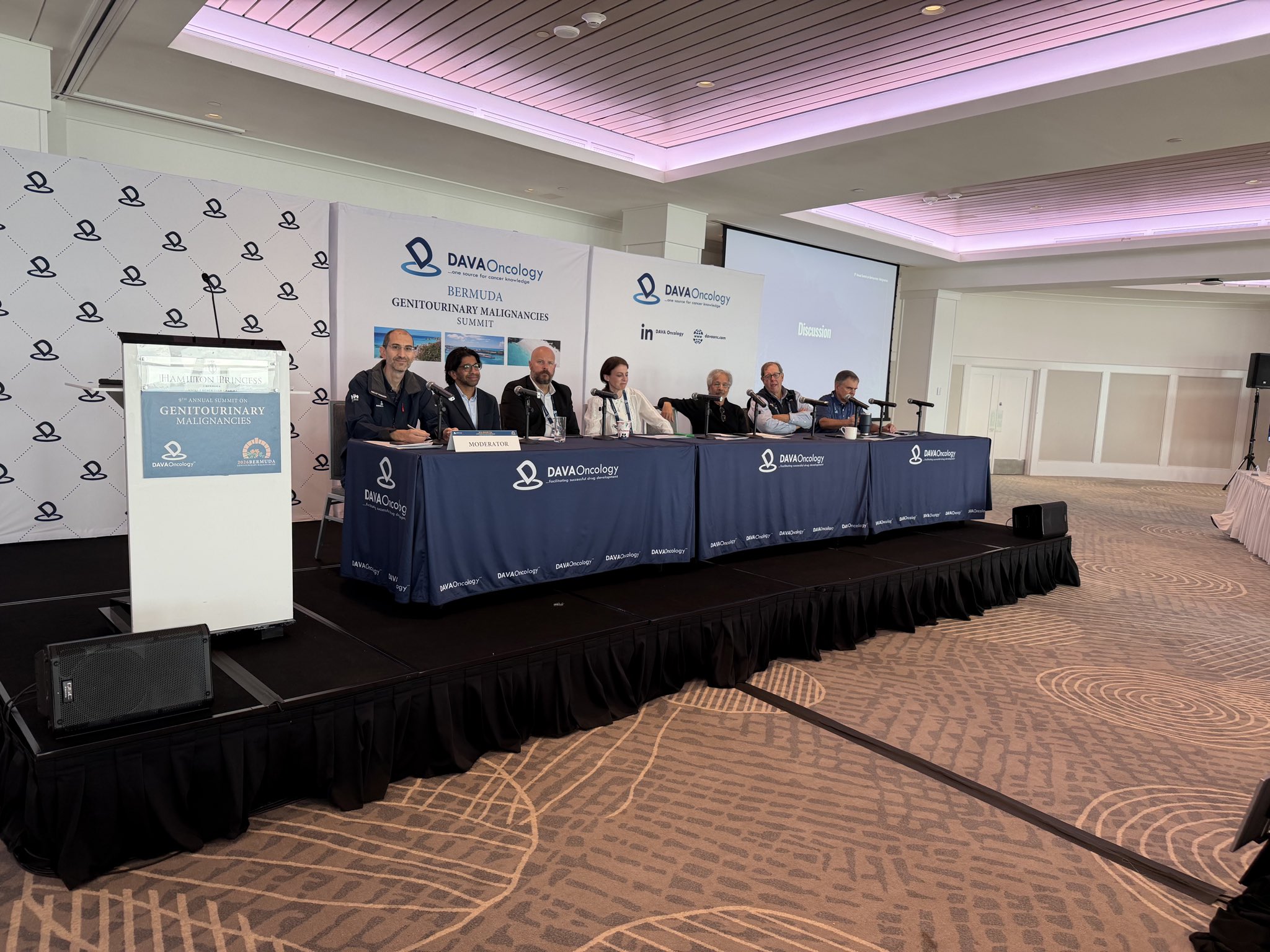
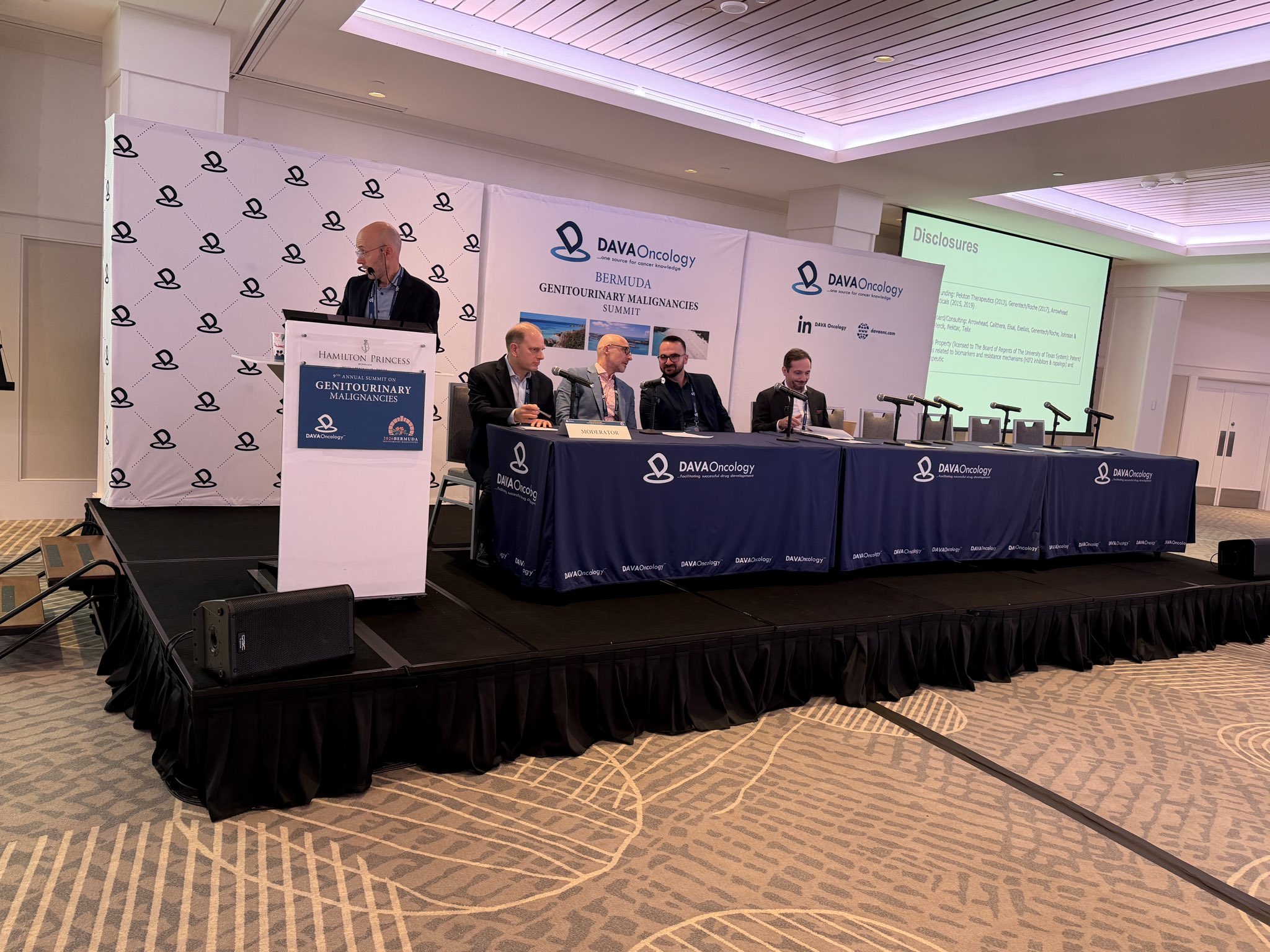
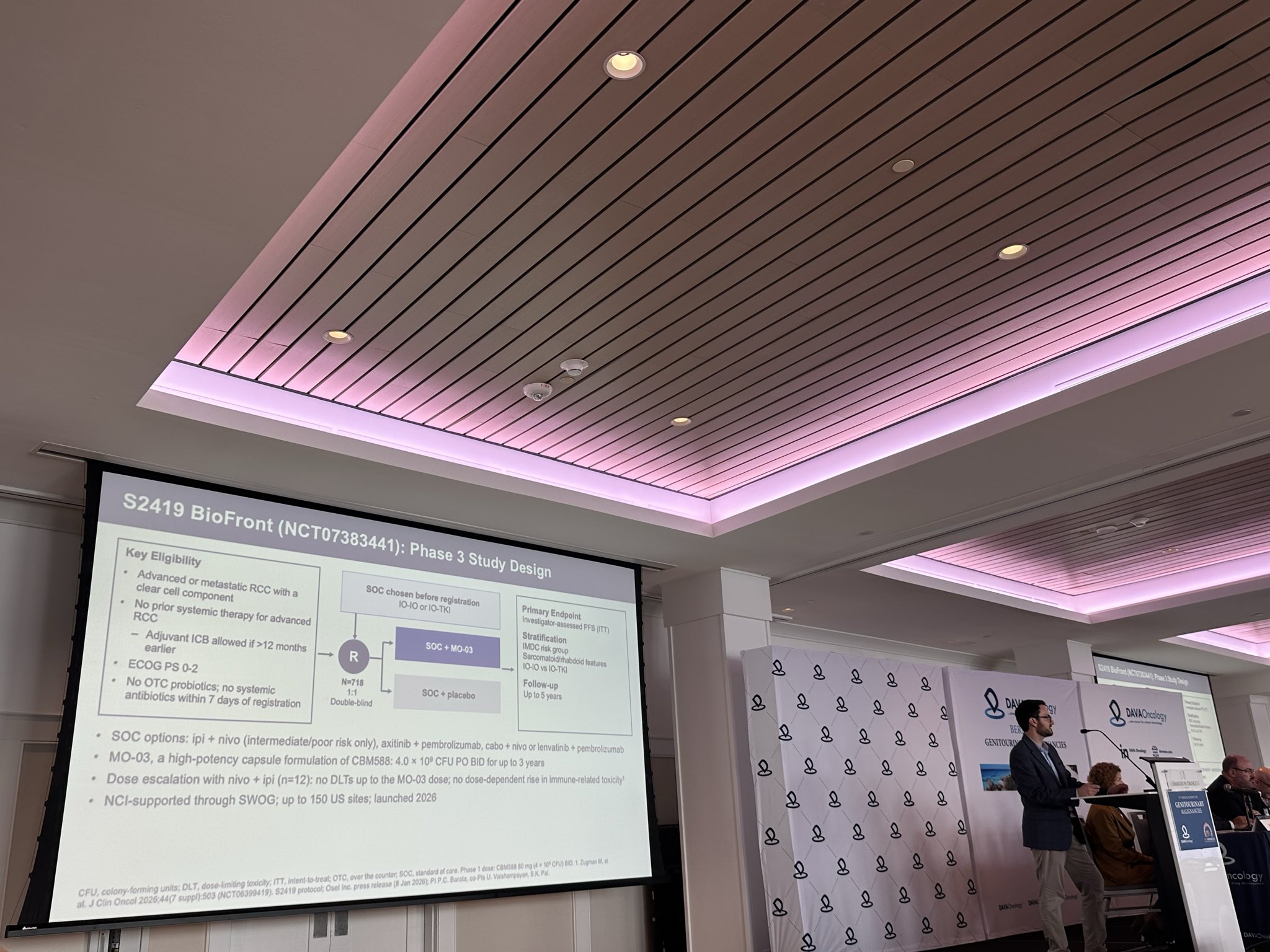
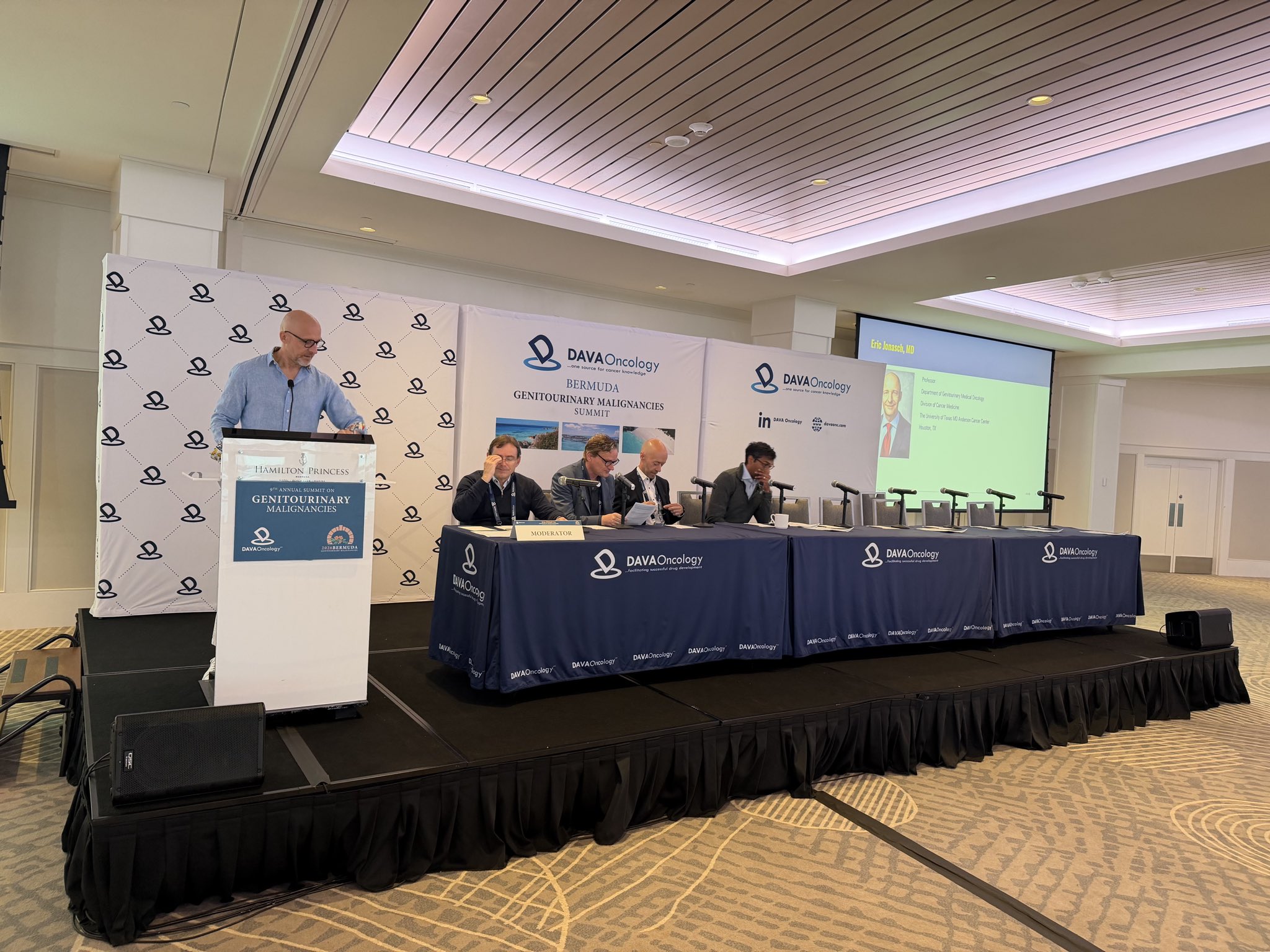
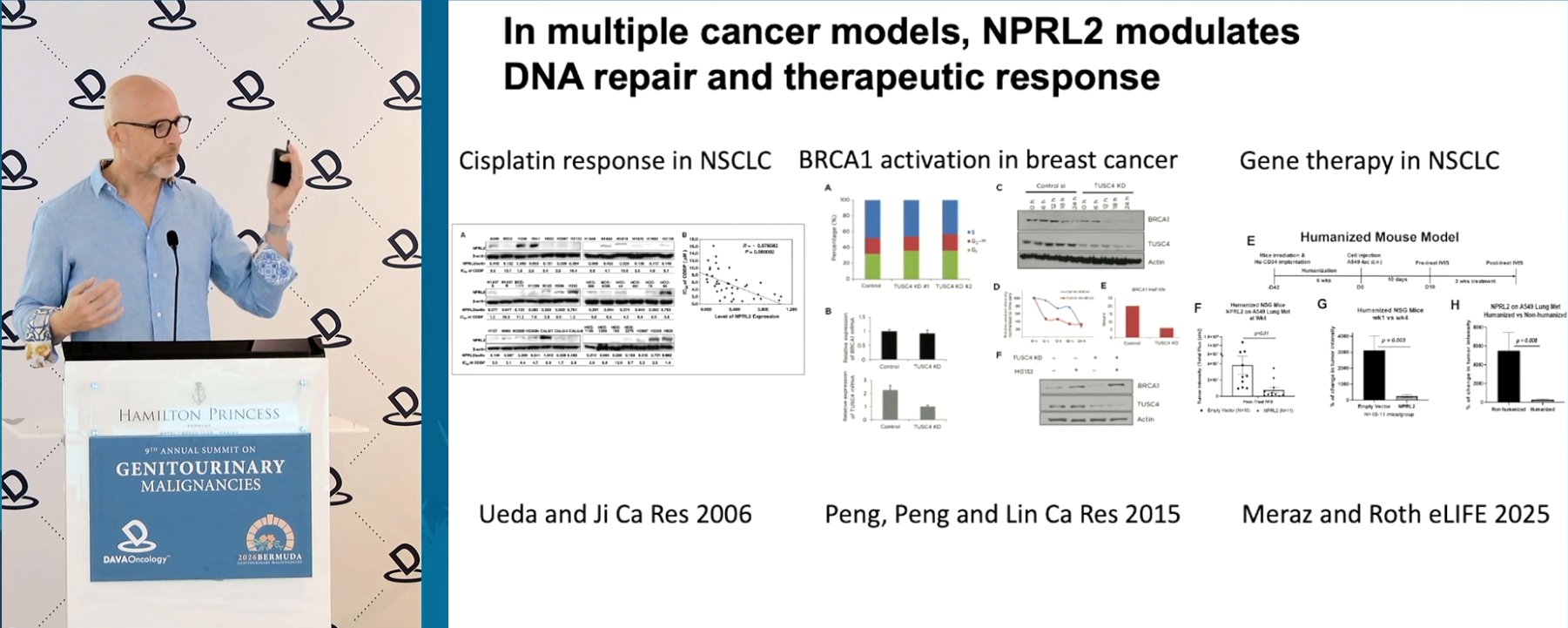
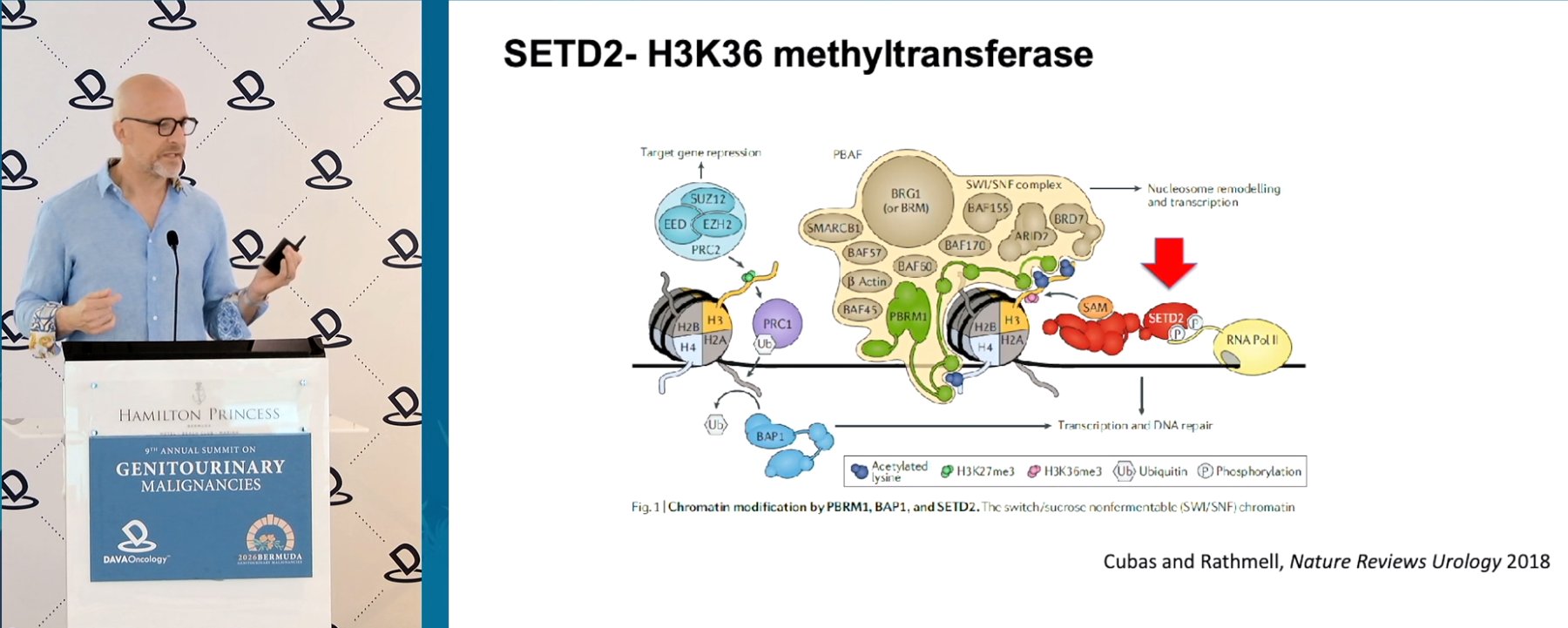
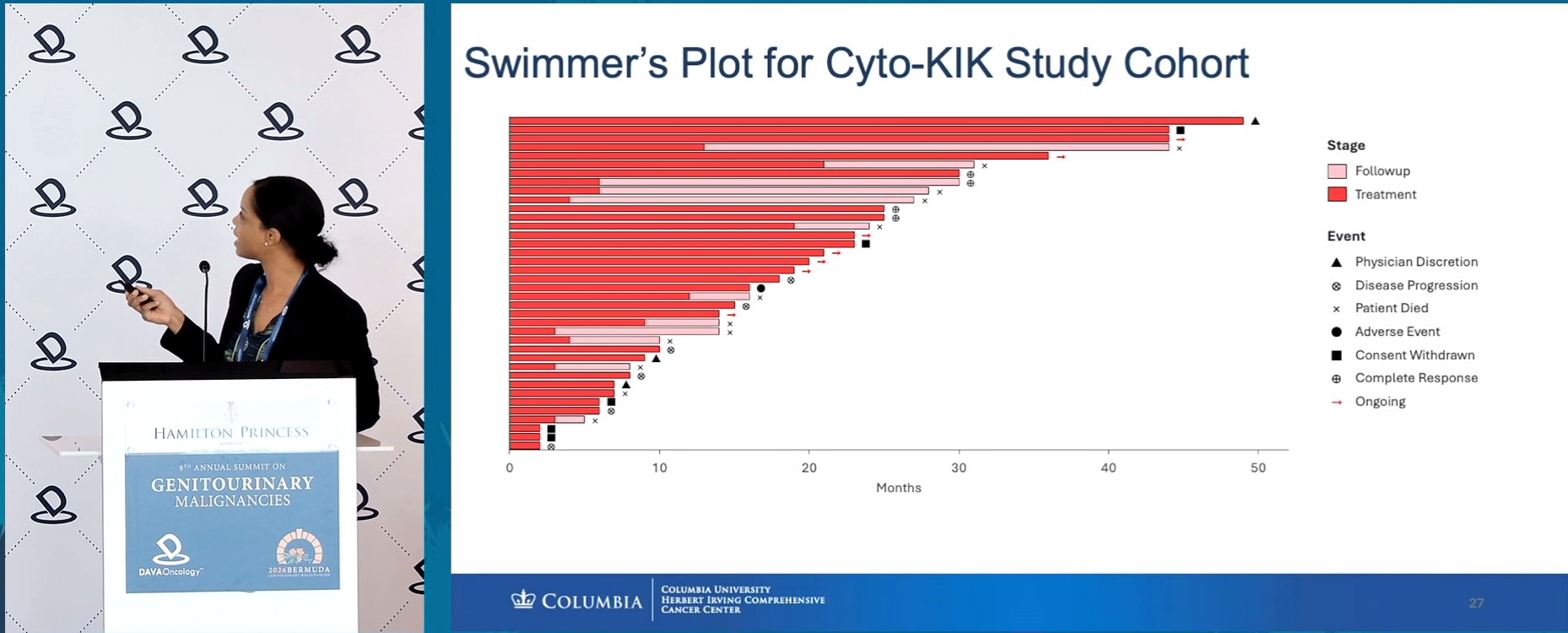
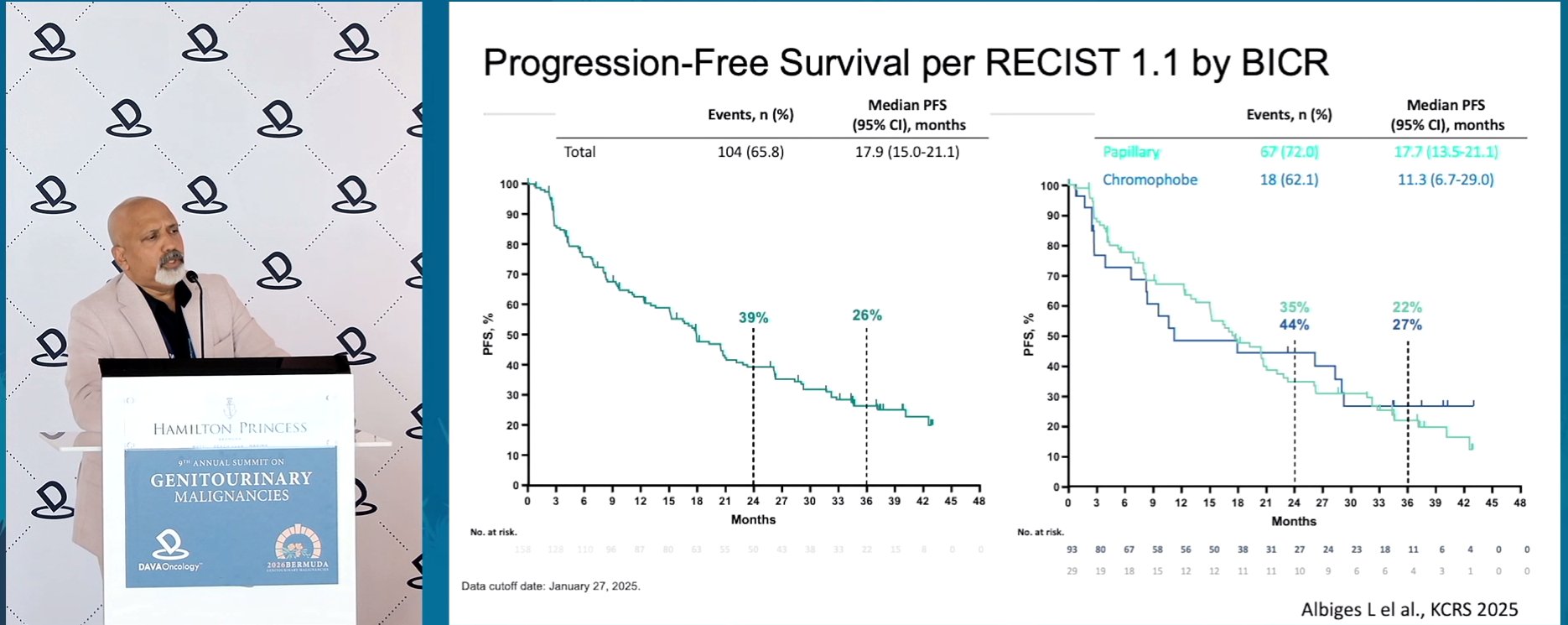
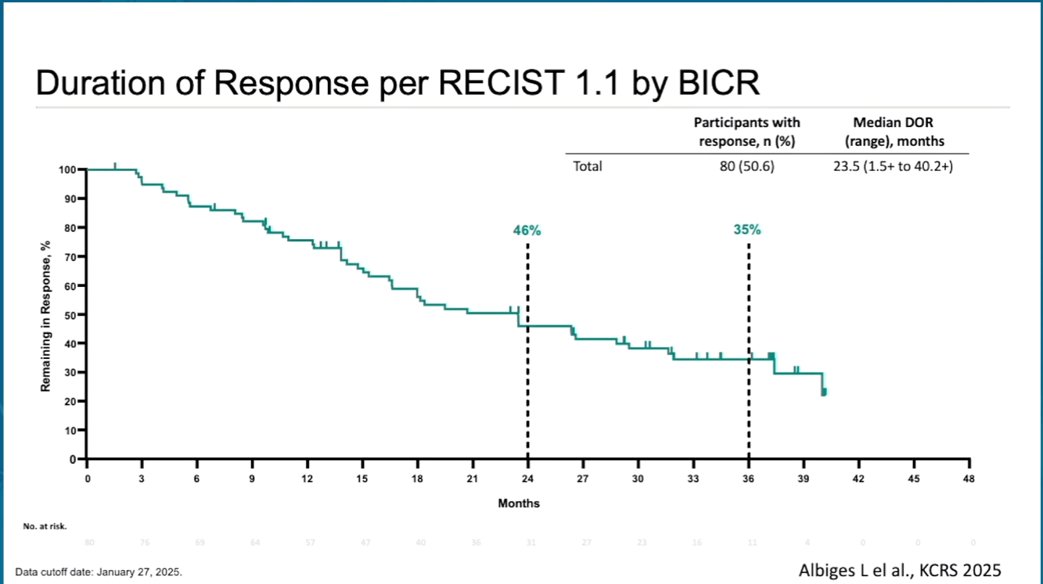
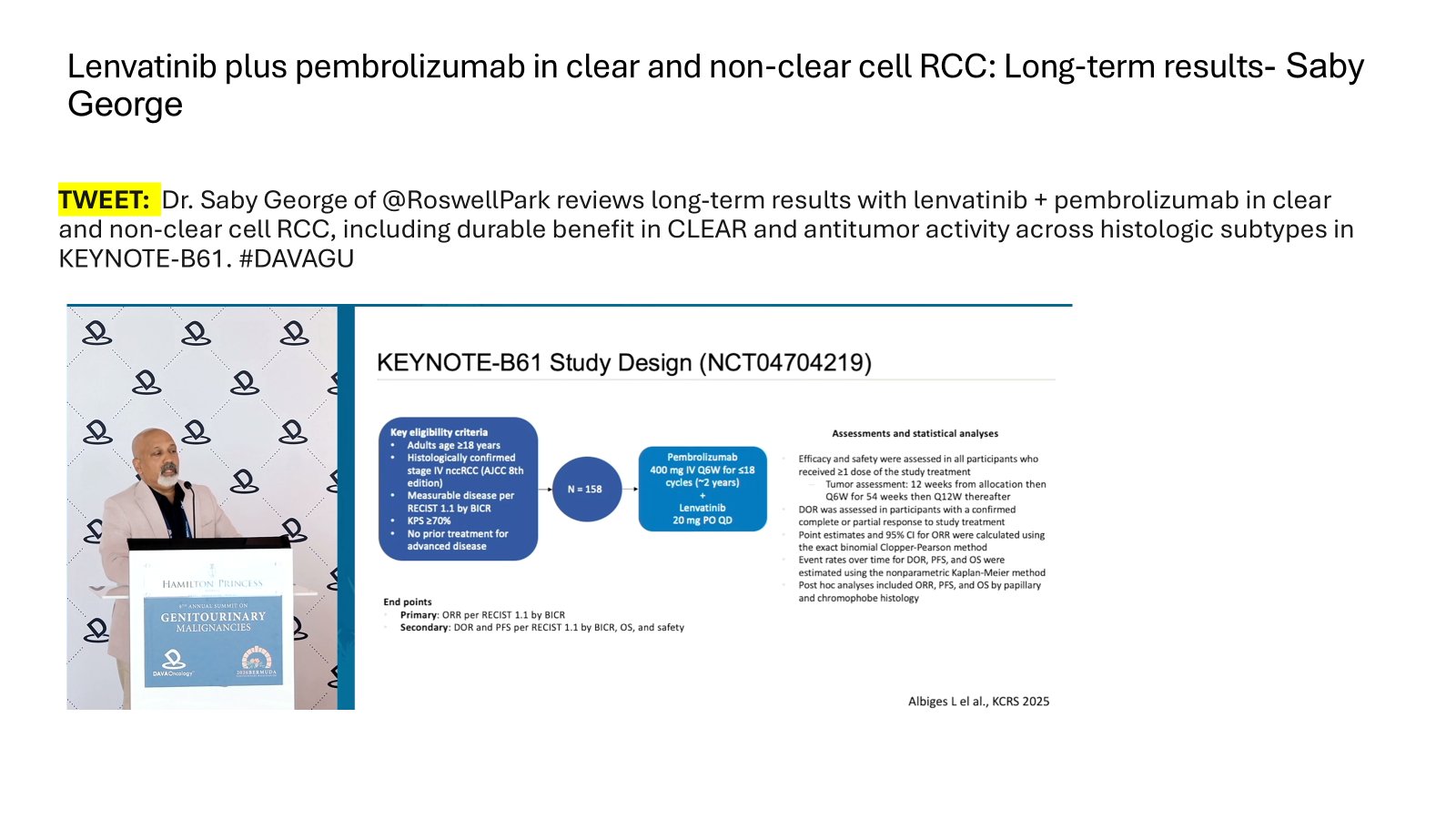
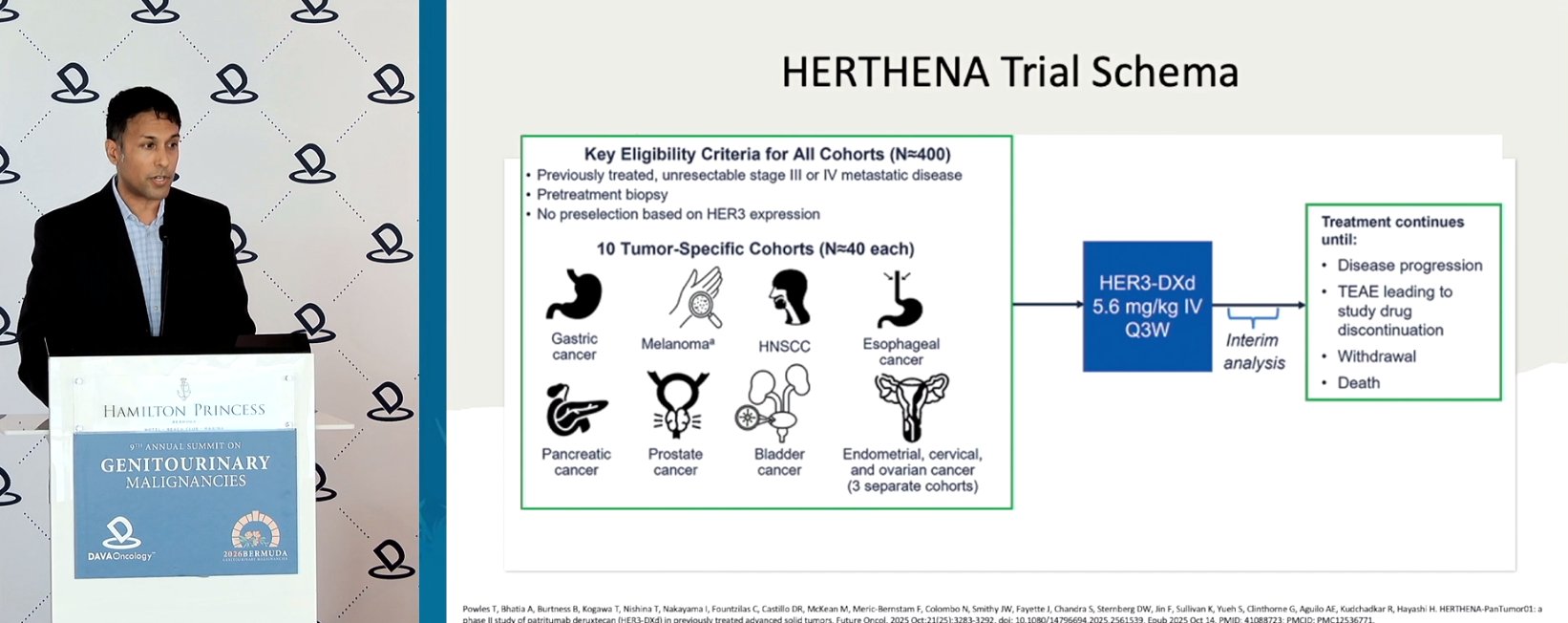
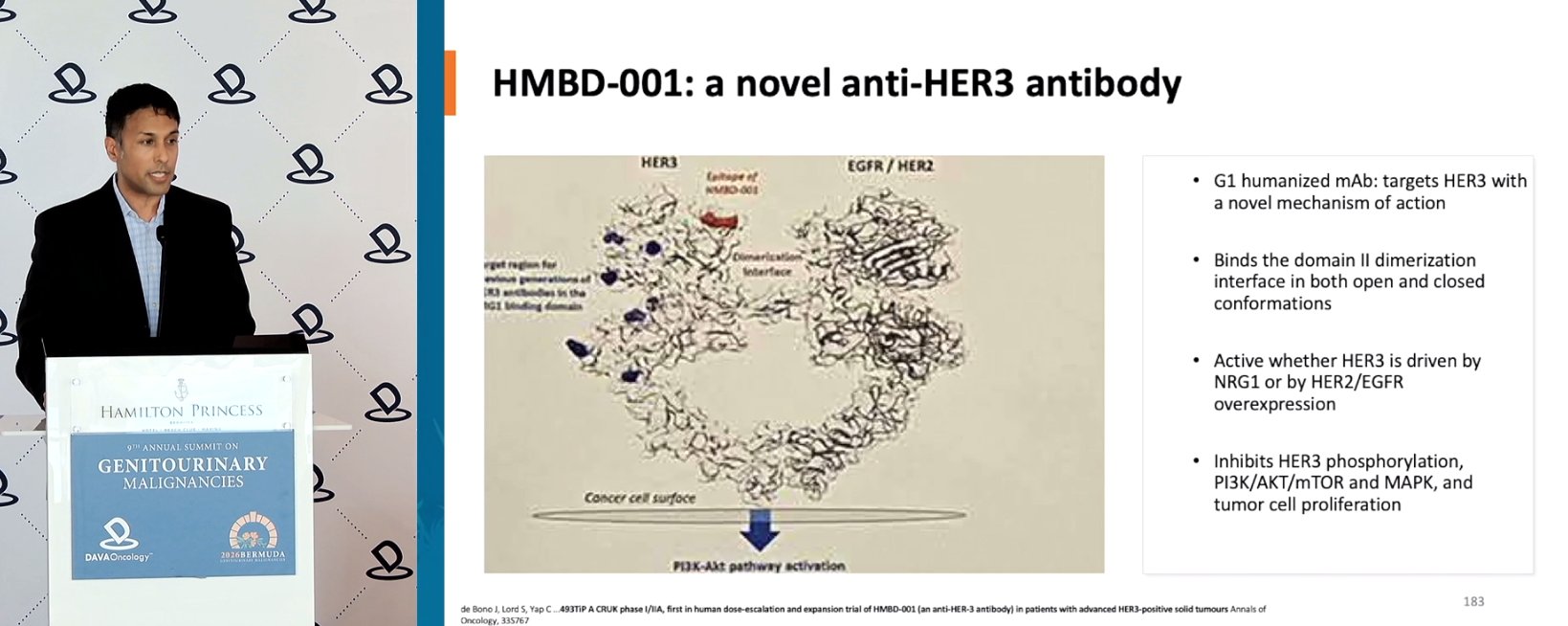
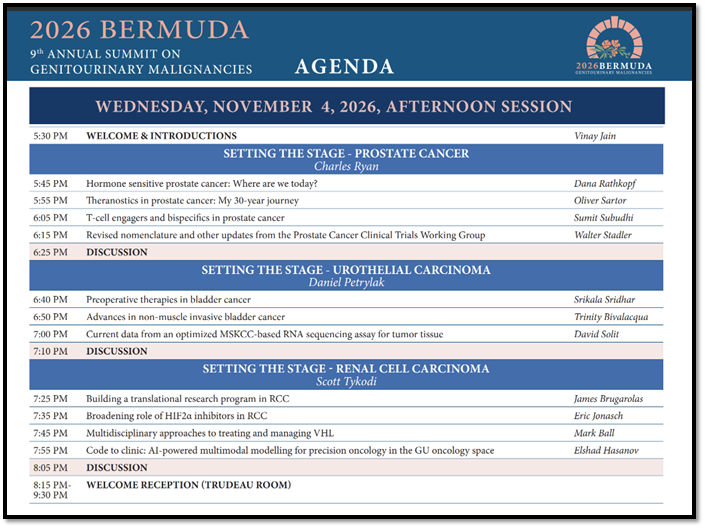
DAVA 9th Annual Summit on Genitourinary Malignancies
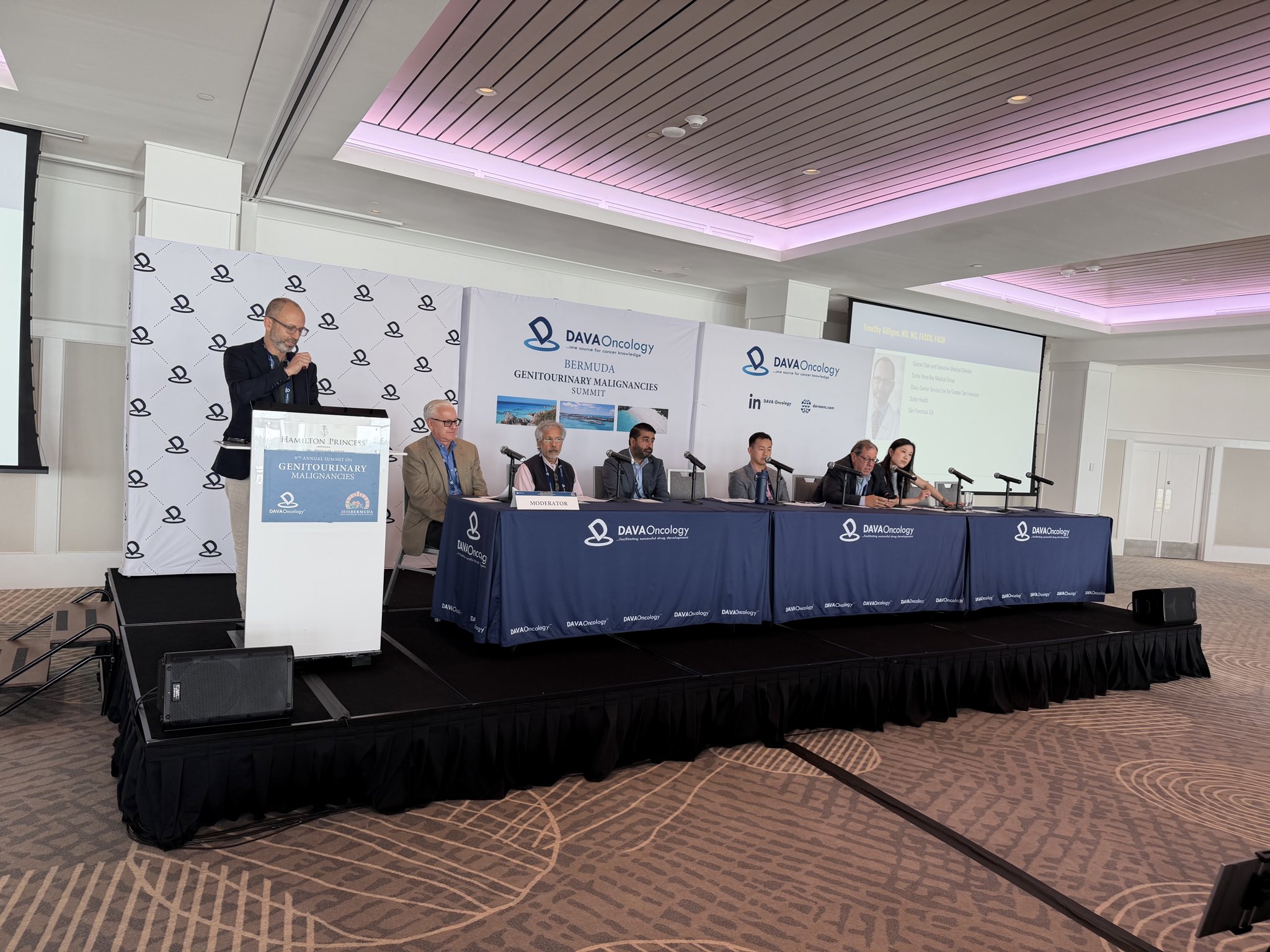
Fairmont Hamilton Princess, Bermuda · November 4–8, 2026
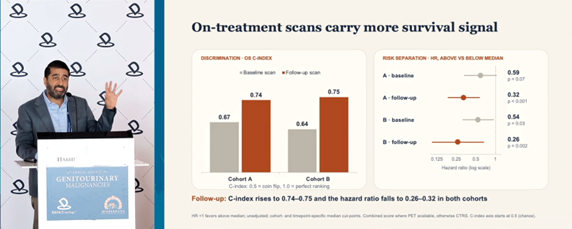
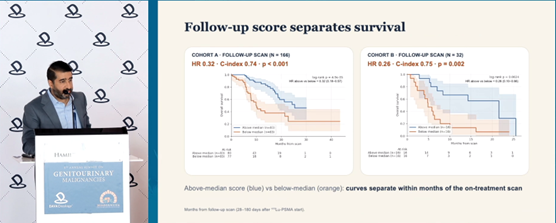
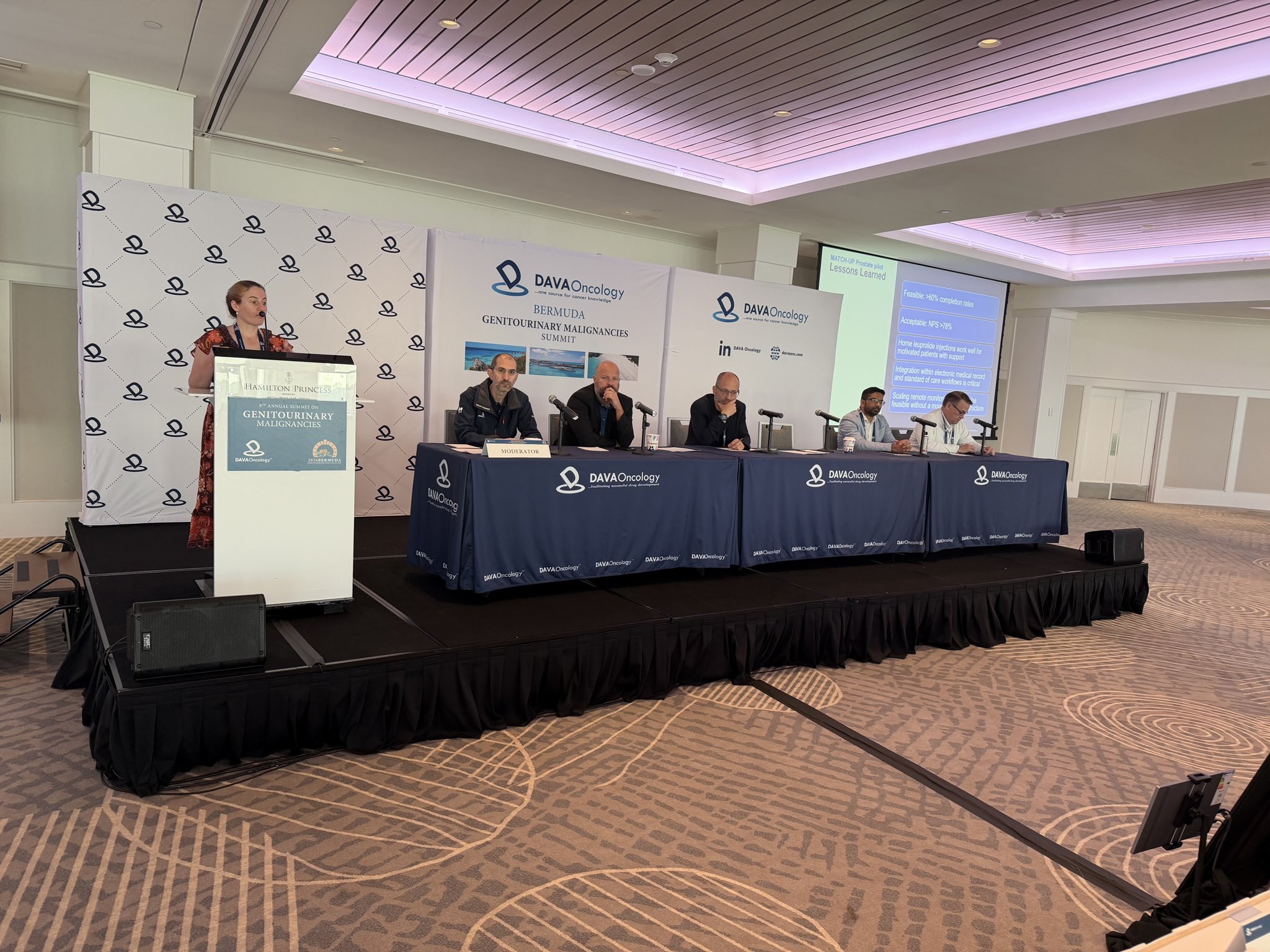
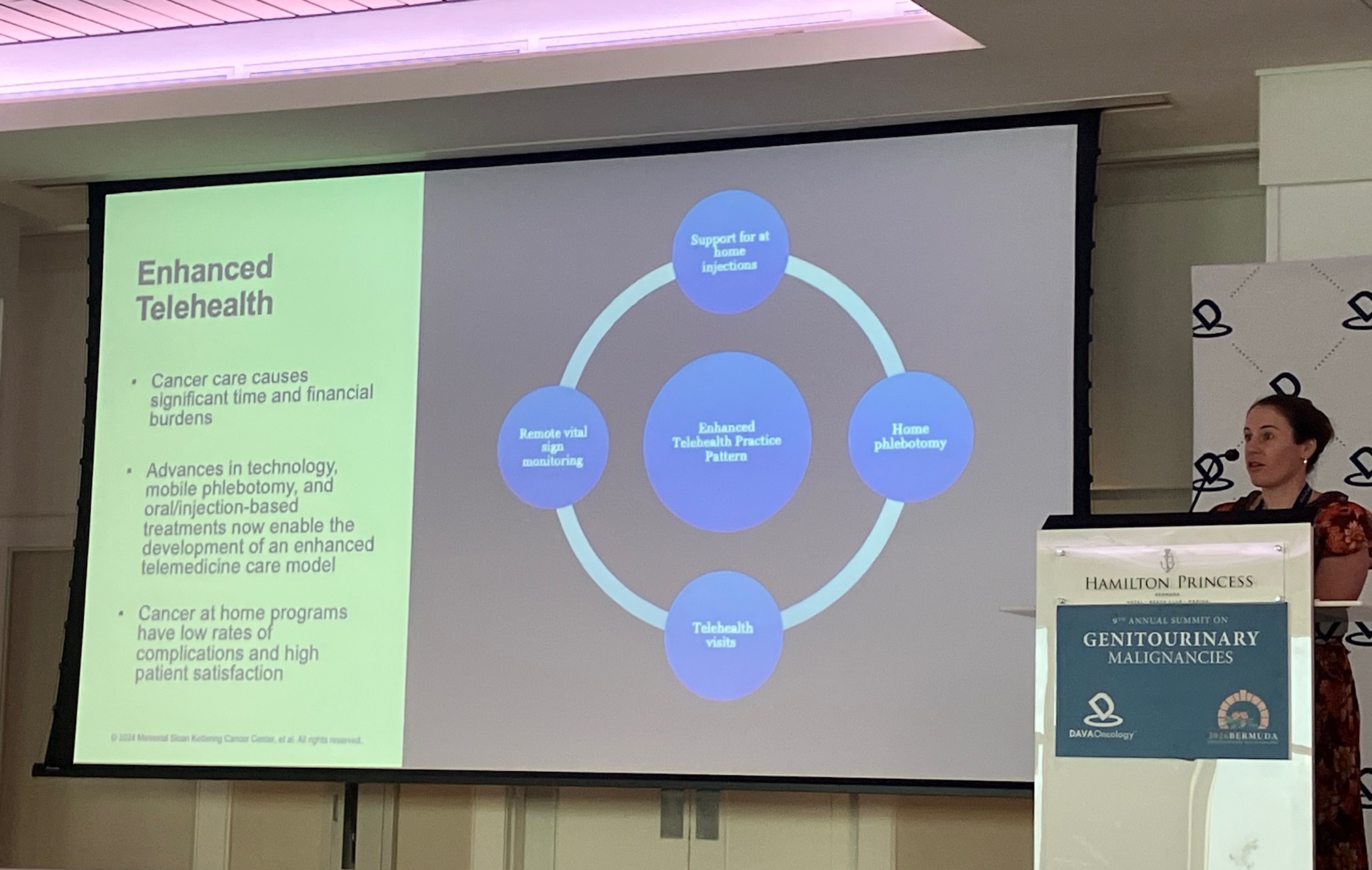
DAVA Oncology’s 9th Annual Summit on Genitourinary Malignancies wrapped November 8 at the Fairmont Hamilton Princess, Bermuda. This page archives the meeting’s session feed — 133 slide posts and 483 captured slides across prostate, theranostics, bladder & urothelial, kidney, ADC & T-cell engager, germ cell & rare GU, and AI & access sessions — with verbatim captions, slide text and links to KOL Pulse trial profiles.
133
Slide Posts
483
Slides Captured
94
Trials Named
56
Faculty
56 physicians · 38 on X
Faculty
The treating physicians and scientists on the Bermuda GU 2026 program, A–Z by surname, with links to each speaker’s X profile and institutional faculty page where available.
Emmanuel Antonarakis@EAntonarakisUniversity of MinnesotaXFaculty page
Leonard Appleman@LenApplemanUPMC Hillman Cancer CenterXFaculty page
Saad Atiq@SaadAtiq24Icahn School of Medicine at Mount SinaiXFaculty page
Mark Ball@markballmdNational Cancer InstituteXFaculty page
Erin Bange@erin_bangeMemorial Sloan Kettering Cancer CenterXFaculty page
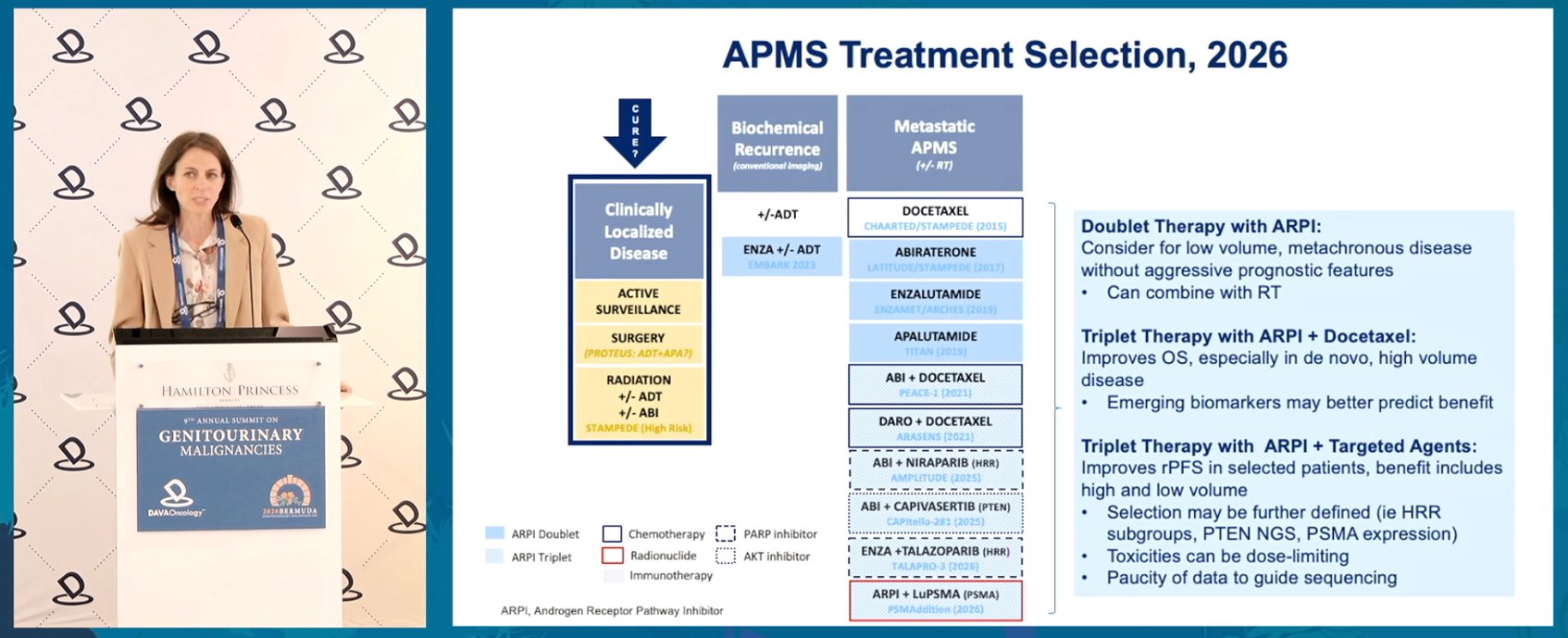
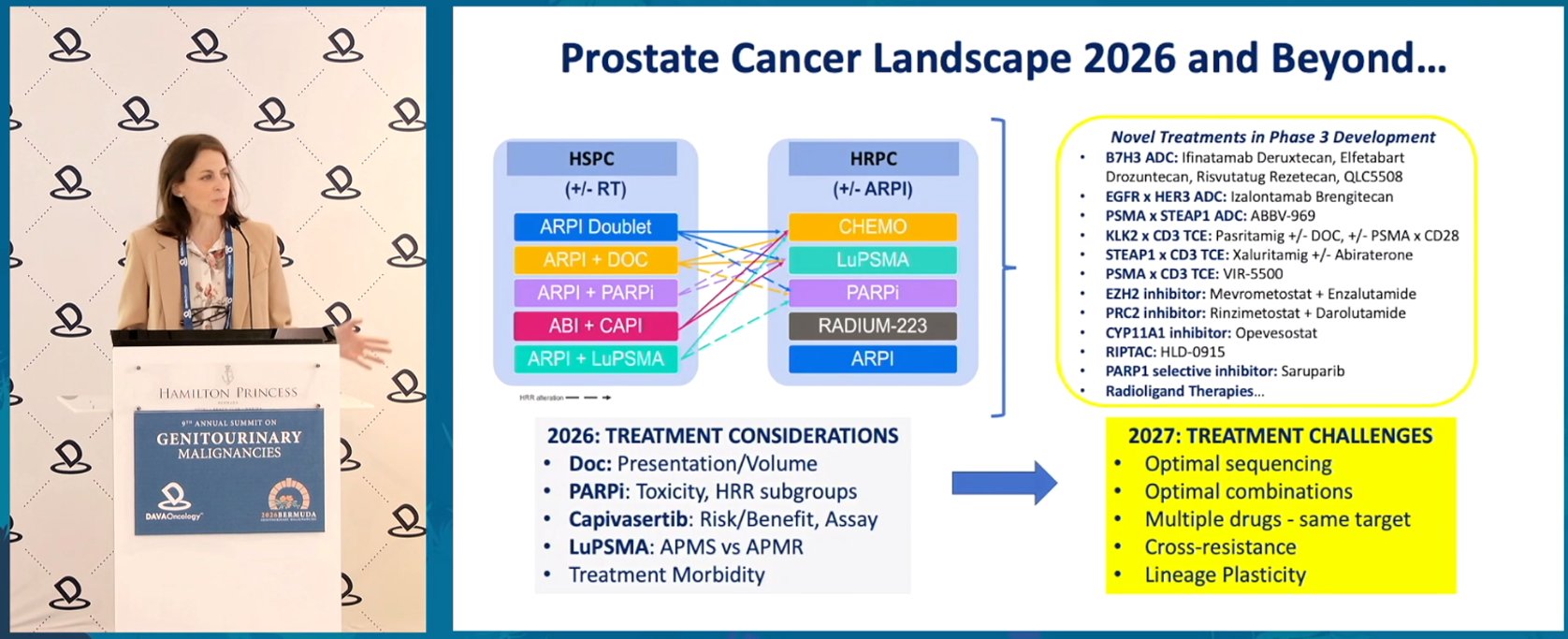
Treatment Selection in HSPC: At #DAVAGU, Dr. Dana Rathkopf (@MSKCancerCenter) reviewed doublet vs triplet therapy, age, disease volume, biomarker-guided treatment selection, findings from AMPLITUDE, CAPItello-281, PSMAddition& TALAPRO-3, and emerging therapies.
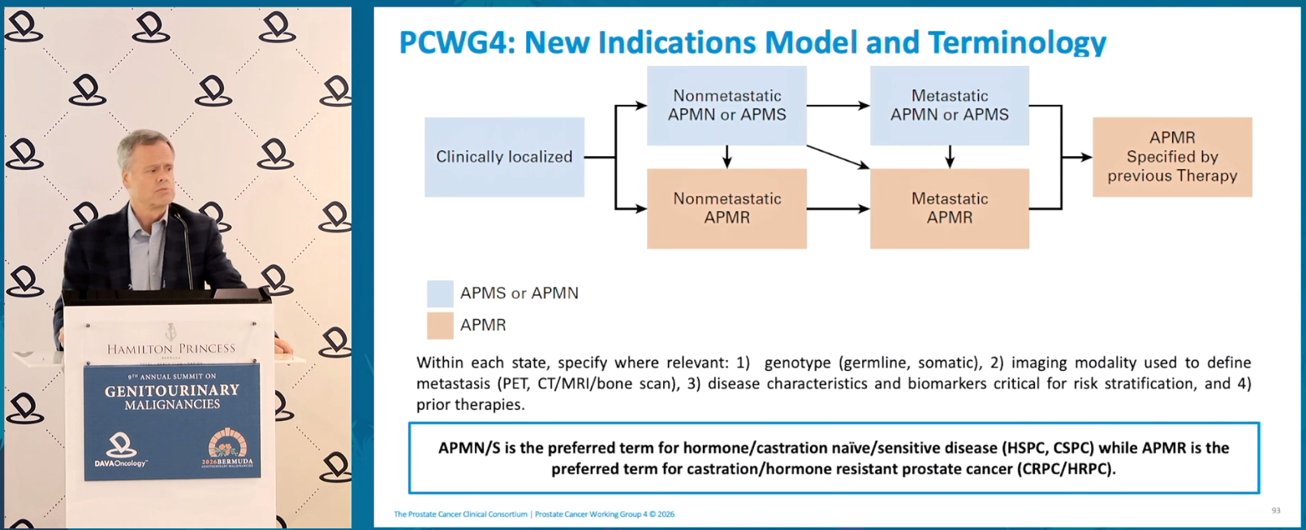
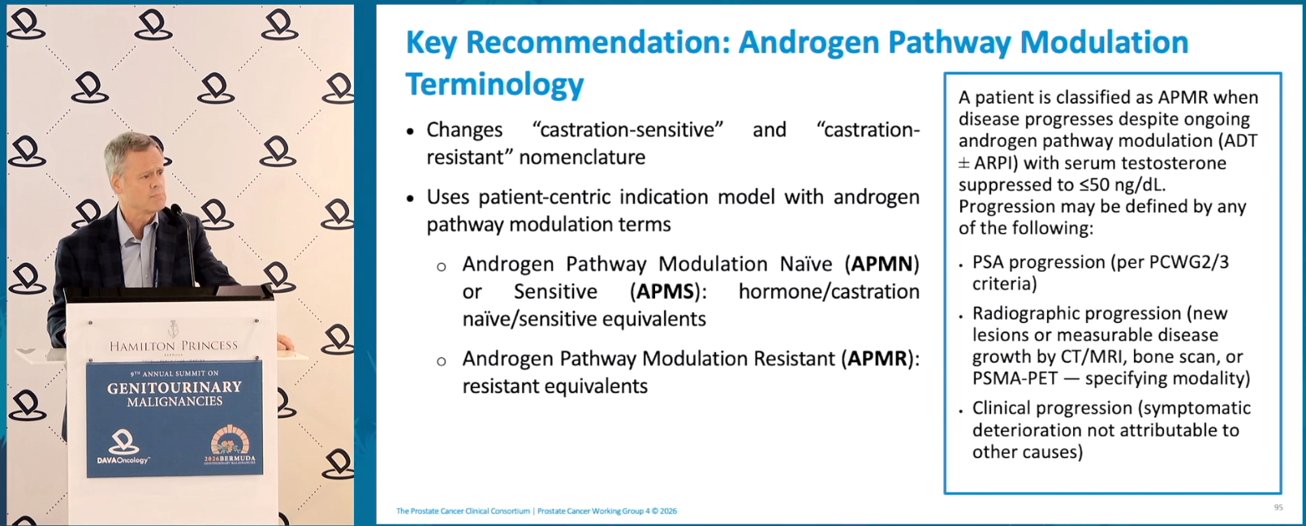
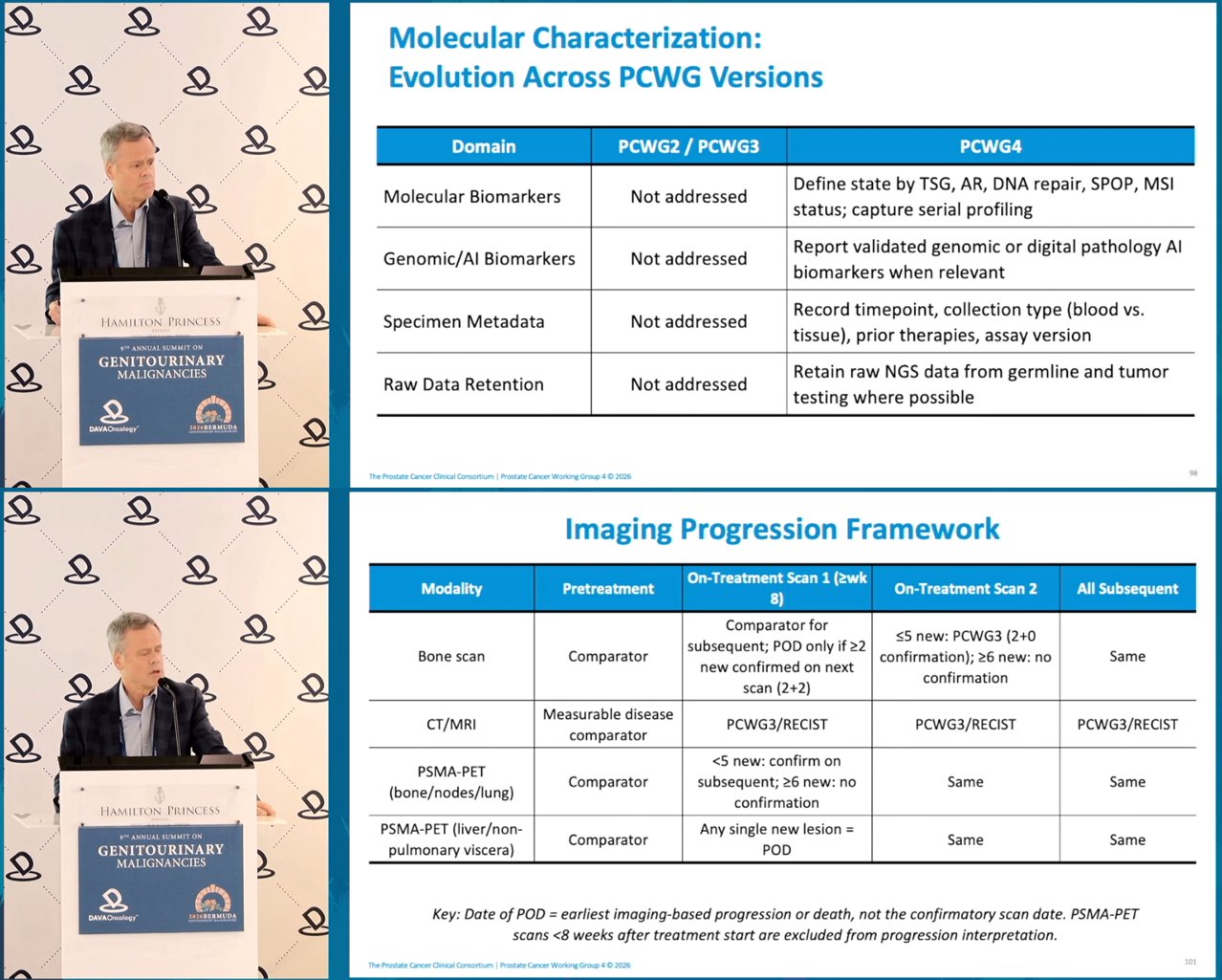
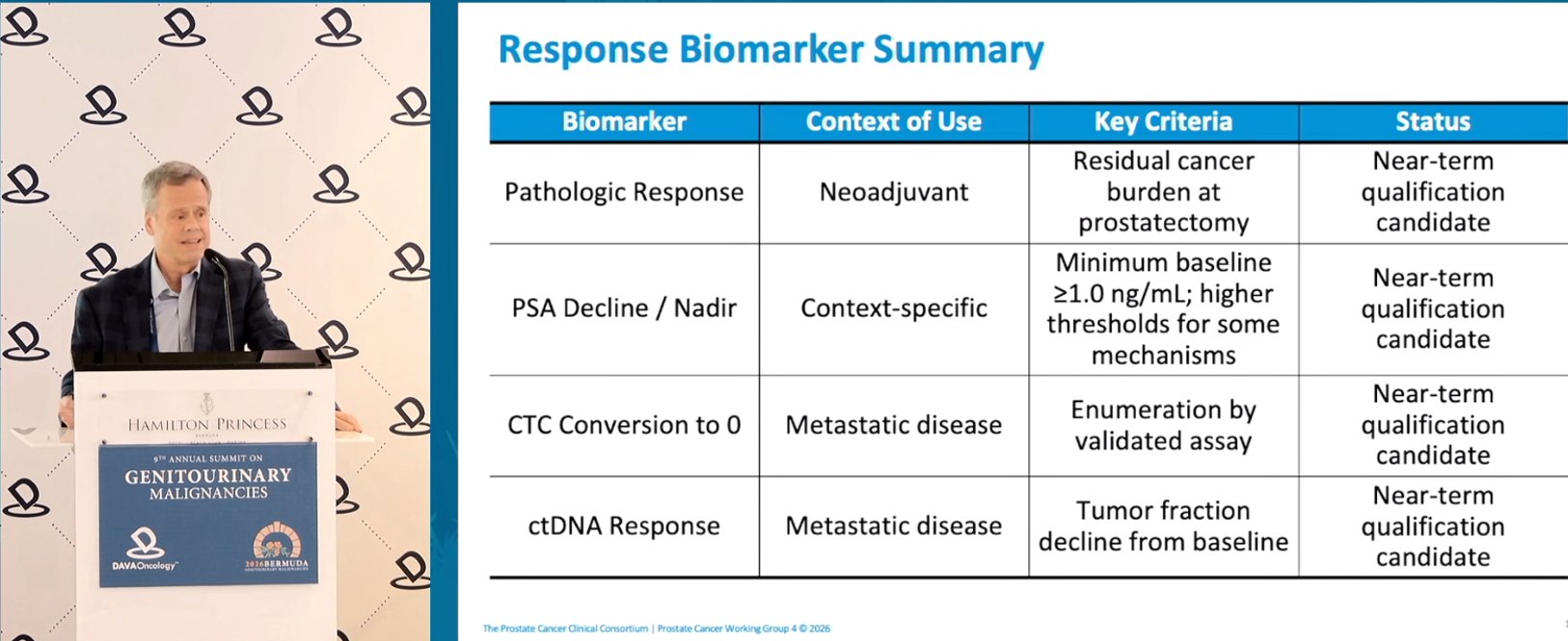
PCWG4 Updates in Prostate Cancer: Dr. @WalterStadler5 (@cityofhope) highlighted APMN/S and APMR terminology, molecular characterization, PSMA-PET progression criteria, the ≥6 new lesion rule, patient-reported outcomes, and emerging response biomarkers. #DAVAGU
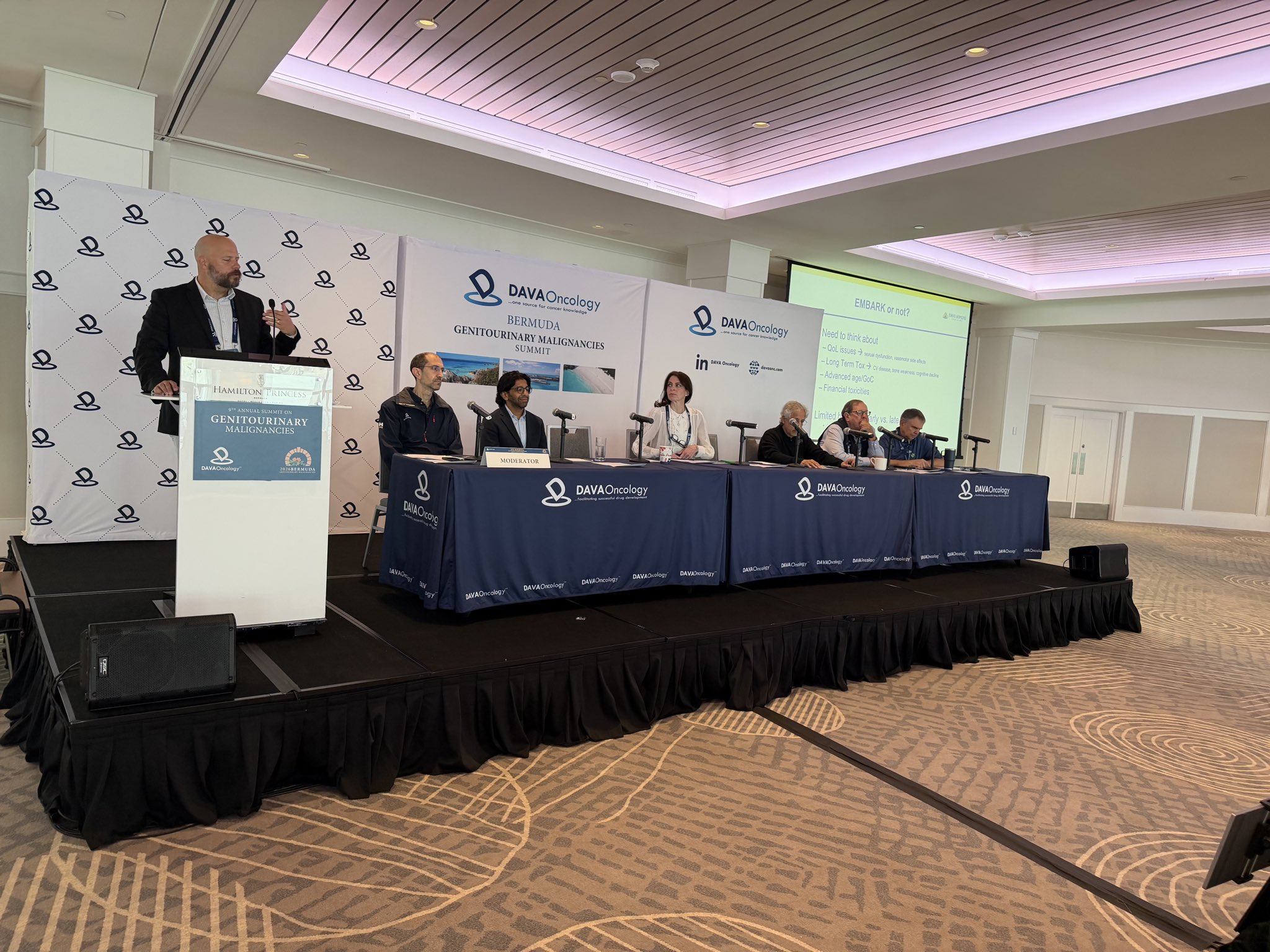
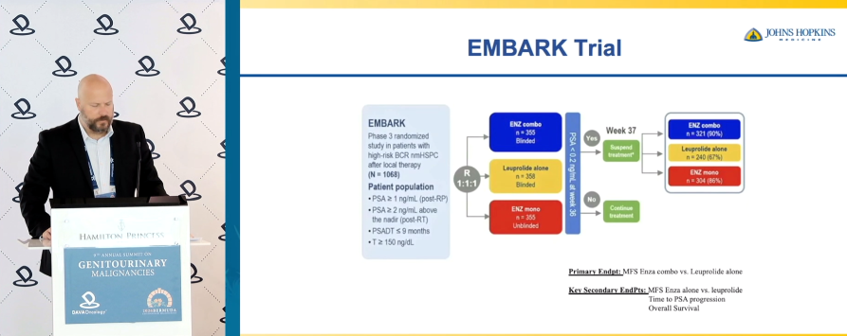
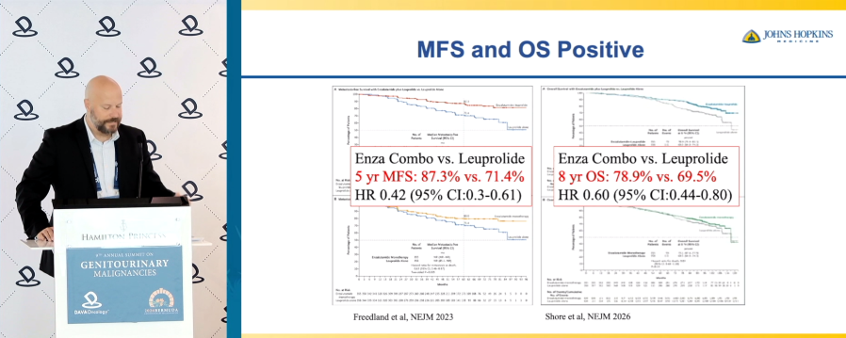
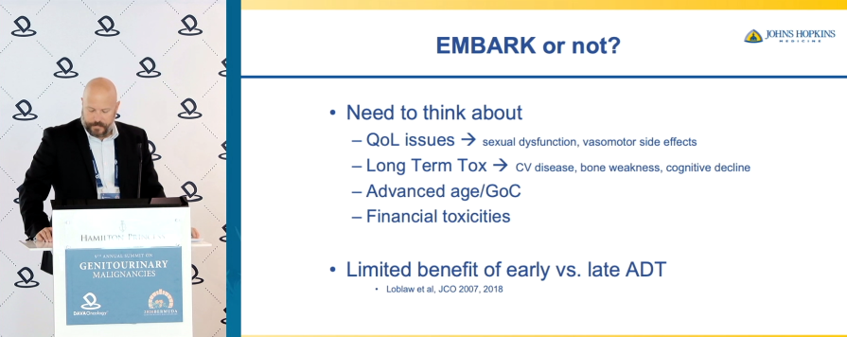
Dr. Mark Markowski (@HopkinsMedicine) on EMBARK, to treat or not? In high-risk BCR nmHSPC, enza + leuprolide vs leuprolide: 5-yr MFS 87.3% vs 71.4% (HR 0.42); 8-yr OS 78.9% vs 69.5% (HR 0.60). To weigh: QoL, long-term toxicity, age, financial toxicity. Biomarkers needed. #DAVAGU
EMBARK
[Slide 1]
EMBARK Trial
JOHNS HOPKINS MEDICINE
EMBARK
Phase 3 randomized study in patients with high-risk BCR nmHSPC after local therapy
(N = 1068)
Patient population
PSA >= 1 ng/mL (post-RP)
PSA >= 2 ng/mL above the nadir (post-RT)
PSADT <= 9 months
T >= 150 ng/dL
R 1:1:1
ENZ combo n = 355 Blinded
Leuprolide alone n = 358 Blinded
ENZ mono n = 355 Unblinded
PSA < 0.2 ng/mL at week 36
Yes -> Week 37 Suspend treatment*; No -> Continue treatment
ENZ combo n = 321 (90%)
Leuprolide alone n = 240 (67%)
ENZ mono n = 304 (86%)
Primary Endpt: MFS Enza combo vs. Leuprolide alone
Key Secondary EndPts: MFS Enza alone vs. leuprolide
Time to PSA progression
Overall Survival
---
[Slide 2]
MFS and OS Positive
JOHNS HOPKINS MEDICINE
Enza Combo vs. Leuprolide
5 yr MFS: 87.3% vs. 71.4%
HR 0.42 (95% CI:0.3-0.61)
Enza Combo vs. Leuprolide
8 yr OS: 78.9% vs. 69.5%
HR 0.60 (95% CI:0.44-0.80)
Freedland et al, NEJM 2023
Shore et al, NEJM 2026
---
[Slide 3]
EMBARK or not?
JOHNS HOPKINS MEDICINE
Need to think about
QoL issues -> sexual dysfunction, vasomotor side effects
Long Term Tox -> CV disease, bone weakness, cognitive decline
Advanced age/GoC
Financial toxicities
Limited benefit of early vs. late ADT
Loblaw et al, JCO 2007, 2018
---
[Slide 4]
EMBARK or not?
JOHNS HOPKINS MEDICINE
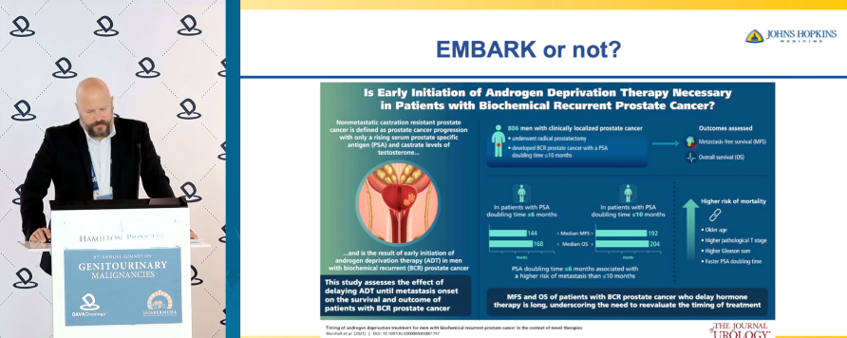
Is Early Initiation of Androgen Deprivation Therapy Necessary in Patients with Biochemical Recurrent Prostate Cancer?
Nonmetastatic castration resistant prostate cancer is defined as prostate cancer progression with only a rising serum prostate specific antigen (PSA) and castrate levels of testosterone...
...and is the result of early initiation of androgen deprivation therapy (ADT) in men with biochemical recurrent (BCR) prostate cancer
This study assesses the effect of delaying ADT until metastasis onset on the survival and outcome of patients with BCR prostate cancer
806 men with clinically localized prostate cancer
underwent radical prostatectomy
developed BCR prostate cancer with a PSA doubling time <=10 months
Outcomes assessed
Metastasis-free survival (MFS)
Overall survival (OS)
In patients with PSA doubling time <=6 months | In patients with PSA doubling time <=10 months
Median MFS | 144 | 192
Median OS | 168 | 204
Months
PSA doubling time <=6 months associated with a higher risk of metastasis than <=10 months
Higher risk of mortality: Older age; Higher pathological T stage; Higher Gleason sum; Faster PSA doubling time
MFS and OS of patients with BCR prostate cancer who delay hormone therapy is long, underscoring the need to reevaluate the timing of treatment
Timing of androgen deprivation treatment for men with biochemical recurrent prostate cancer in the context of novel therapies. Marshall et al [illegible]. The Journal of Urology
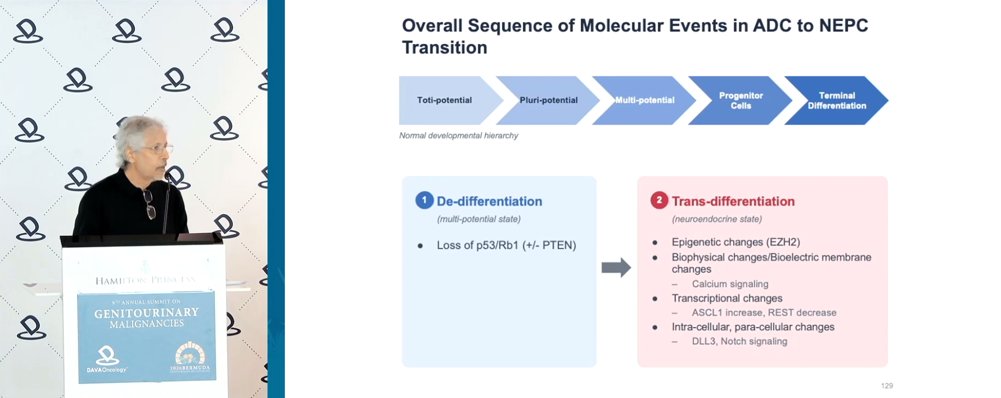
Neuroendocrine transformation of prostate cancer: Dr. Arif Hussain (@UMGCCC) traced ADC to NEPC via p53/Rb1 loss, EZH2, REST loss, ASCL1/DLL3/Notch and membrane depolarization. Potential approaches: DLL3, EZH2 inhibitors, T-type calcium modulators, M2 macrophage targeting. #DAVAGU
[Slide 1]
Overall Sequence of Molecular Events in ADC to NEPC Transition
Toti-potential > Pluri-potential > Multi-potential > Progenitor Cells > Terminal Differentiation
Normal developmental hierarchy
1 De-differentiation (multi-potential state)
Loss of p53/Rb1 (+/- PTEN)
2 Trans-differentiation (neuroendocrine state)
Epigenetic changes (EZH2)
Biophysical changes/Bioelectric membrane changes
Calcium signaling
Transcriptional changes
ASCL1 increase, REST decrease
Intra-cellular, para-cellular changes
DLL3, Notch signaling
129
---
[Slide 2]
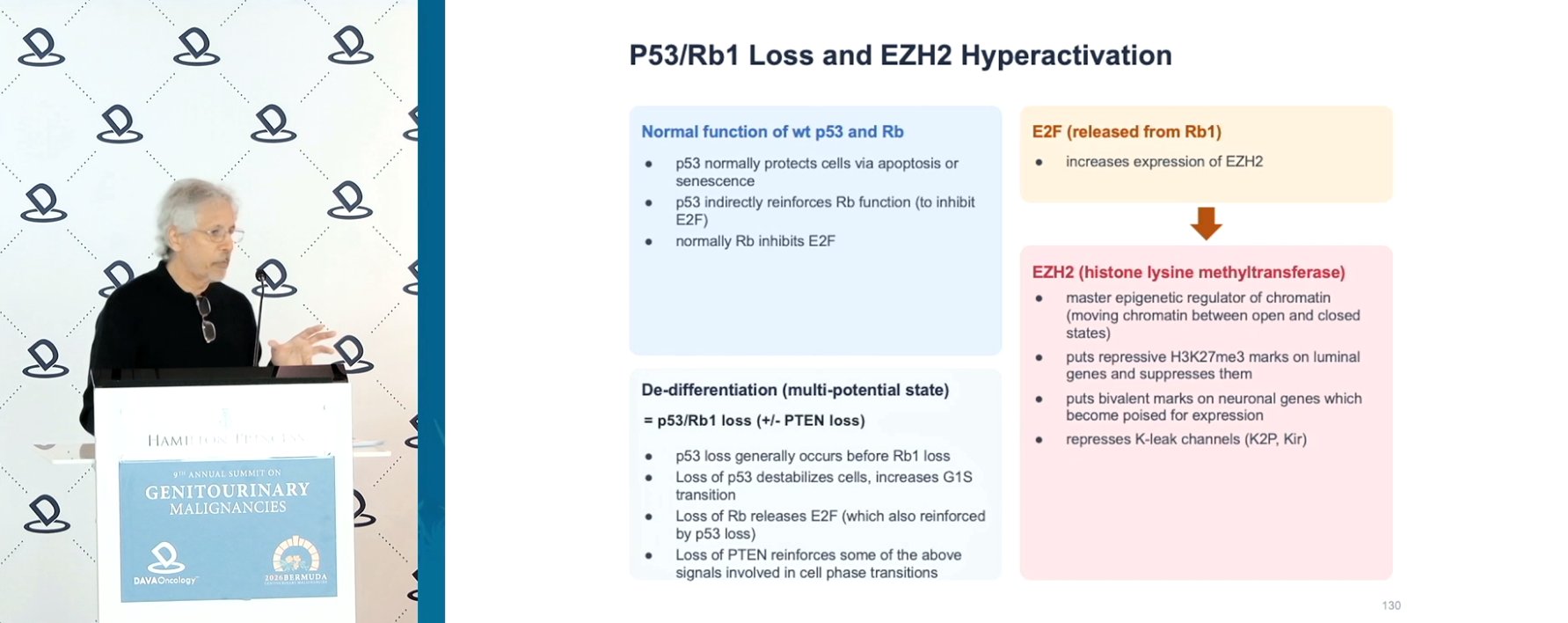
P53/Rb1 Loss and EZH2 Hyperactivation
Normal function of wt p53 and Rb
p53 normally protects cells via apoptosis or senescence
p53 indirectly reinforces Rb function (to inhibit E2F)
normally Rb inhibits E2F
E2F (released from Rb1)
increases expression of EZH2
EZH2 (histone lysine methyltransferase)
master epigenetic regulator of chromatin (moving chromatin between open and closed states)
puts repressive H3K27me3 marks on luminal genes and suppresses them
puts bivalent marks on neuronal genes which become poised for expression
represses K-leak channels (K2P, Kir)
De-differentiation (multi-potential state)
= p53/Rb1 loss (+/- PTEN loss)
p53 loss generally occurs before Rb1 loss
Loss of p53 destabilizes cells, increases G1S transition
Loss of Rb releases E2F (which also reinforced by p53 loss)
Loss of PTEN reinforces some of the above signals involved in cell phase transitions
130
---
[Slide 3]
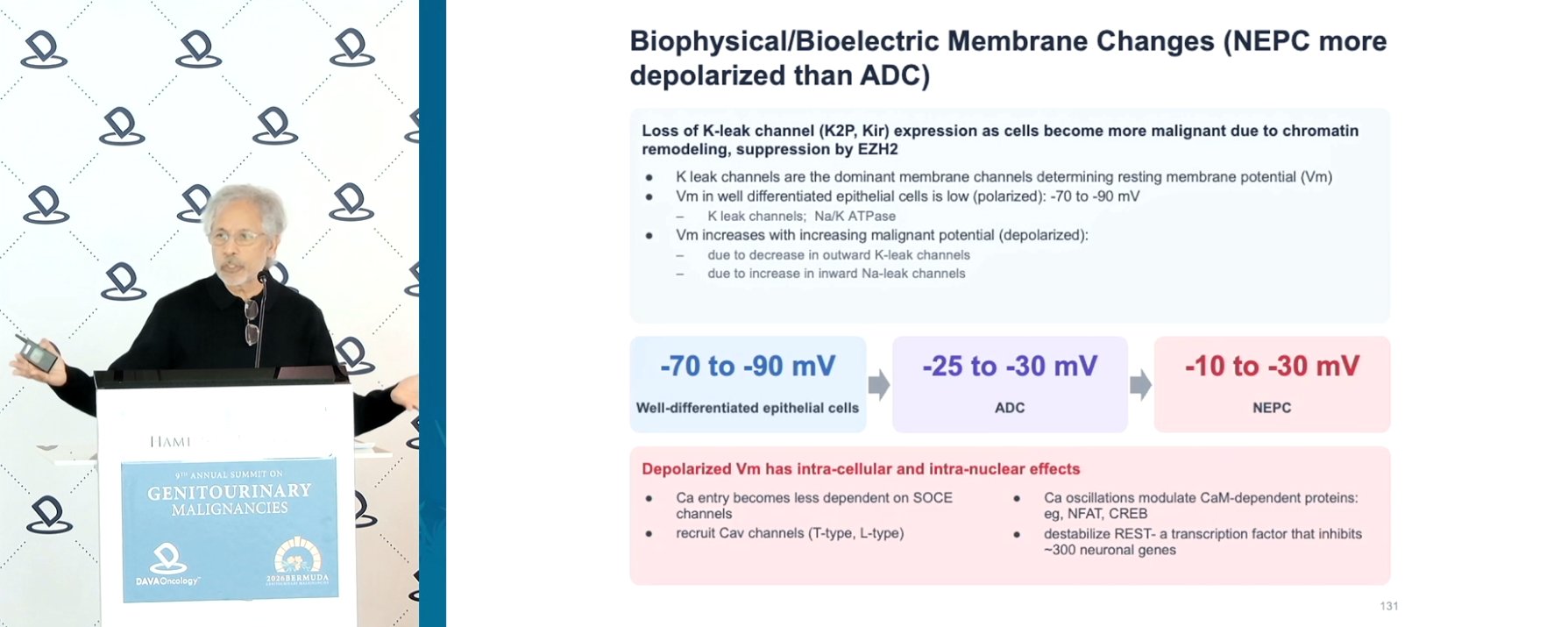
Biophysical/Bioelectric Membrane Changes (NEPC more depolarized than ADC)
Loss of K-leak channel (K2P, Kir) expression as cells become more malignant due to chromatin remodeling, suppression by EZH2
K leak channels are the dominant membrane channels determining resting membrane potential (Vm)
Vm in well differentiated epithelial cells is low (polarized): -70 to -90 mV
K leak channels; Na/K ATPase
Vm increases with increasing malignant potential (depolarized):
due to decrease in outward K-leak channels
due to increase in inward Na-leak channels
-70 to -90 mV Well-differentiated epithelial cells > -25 to -30 mV ADC > -10 to -30 mV NEPC
Depolarized Vm has intra-cellular and intra-nuclear effects
Ca entry becomes less dependent on SOCE channels
recruit Cav channels (T-type, L-type)
Ca oscillations modulate CaM-dependent proteins: eg, NFAT, CREB
destabilize REST- a transcription factor that inhibits ~300 neuronal genes
131
---
[Slide 4]
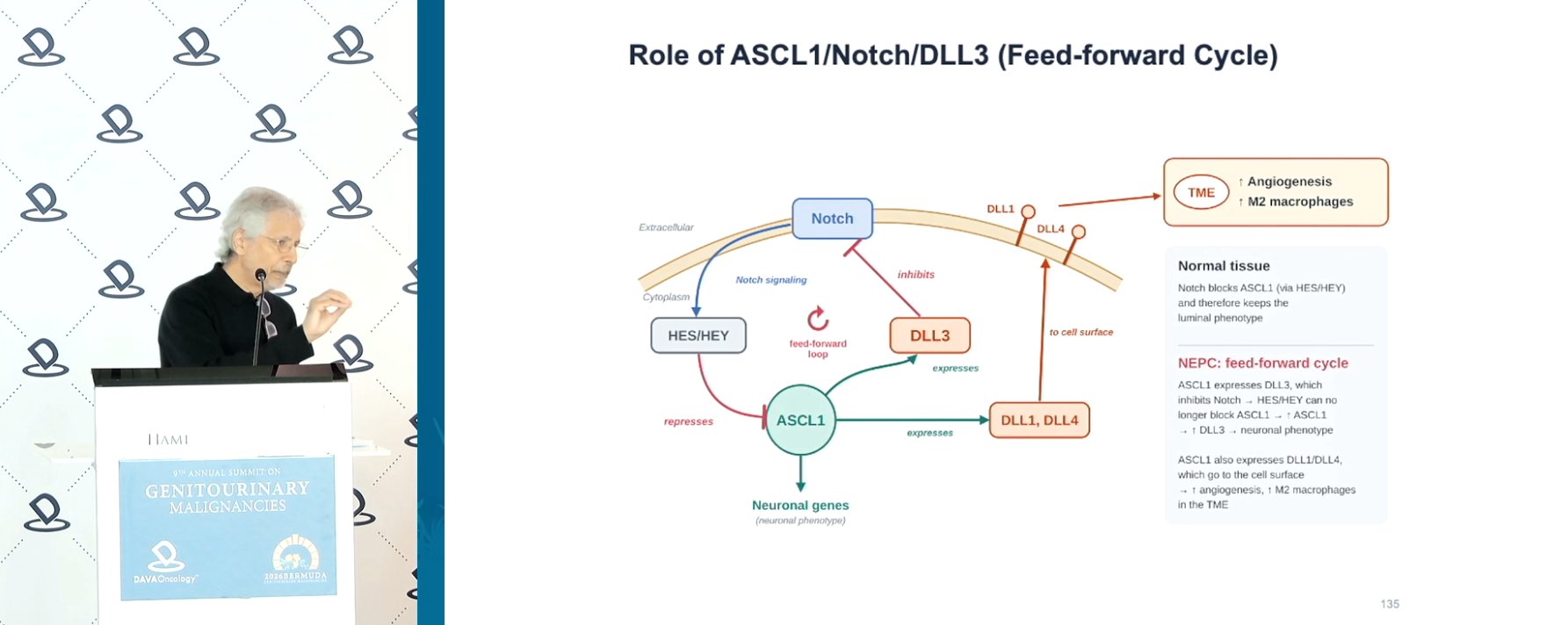
Role of ASCL1/Notch/DLL3 (Feed-forward Cycle)
Diagram labels: Extracellular; Cytoplasm; Notch; Notch signaling; inhibits; DLL1; DLL4; to cell surface; HES/HEY; feed-forward loop; DLL3; expresses; represses; ASCL1; DLL1, DLL4; expresses; Neuronal genes (neuronal phenotype)
TME: increased Angiogenesis; increased M2 macrophages
Normal tissue
Notch blocks ASCL1 (via HES/HEY) and therefore keeps the luminal phenotype
NEPC: feed-forward cycle
ASCL1 expresses DLL3, which inhibits Notch -> HES/HEY can no longer block ASCL1 -> increased ASCL1 -> increased DLL3 -> neuronal phenotype
ASCL1 also expresses DLL1/DLL4, which go to the cell surface -> increased angiogenesis, increased M2 macrophages in the TME
135
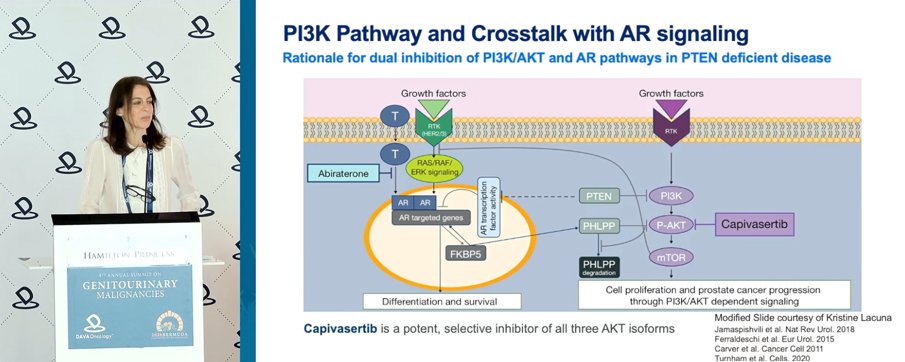
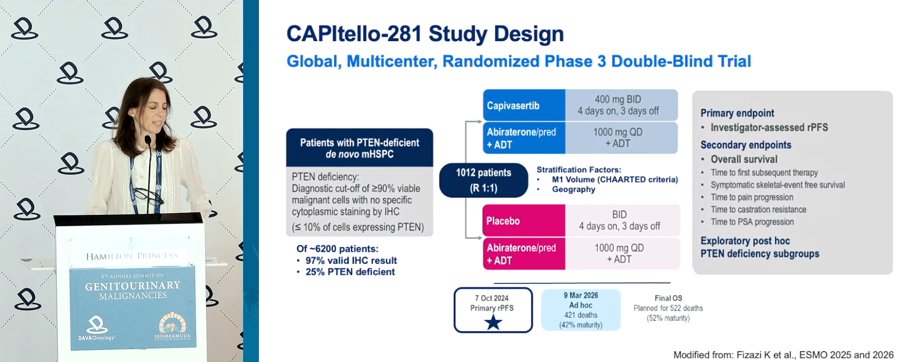
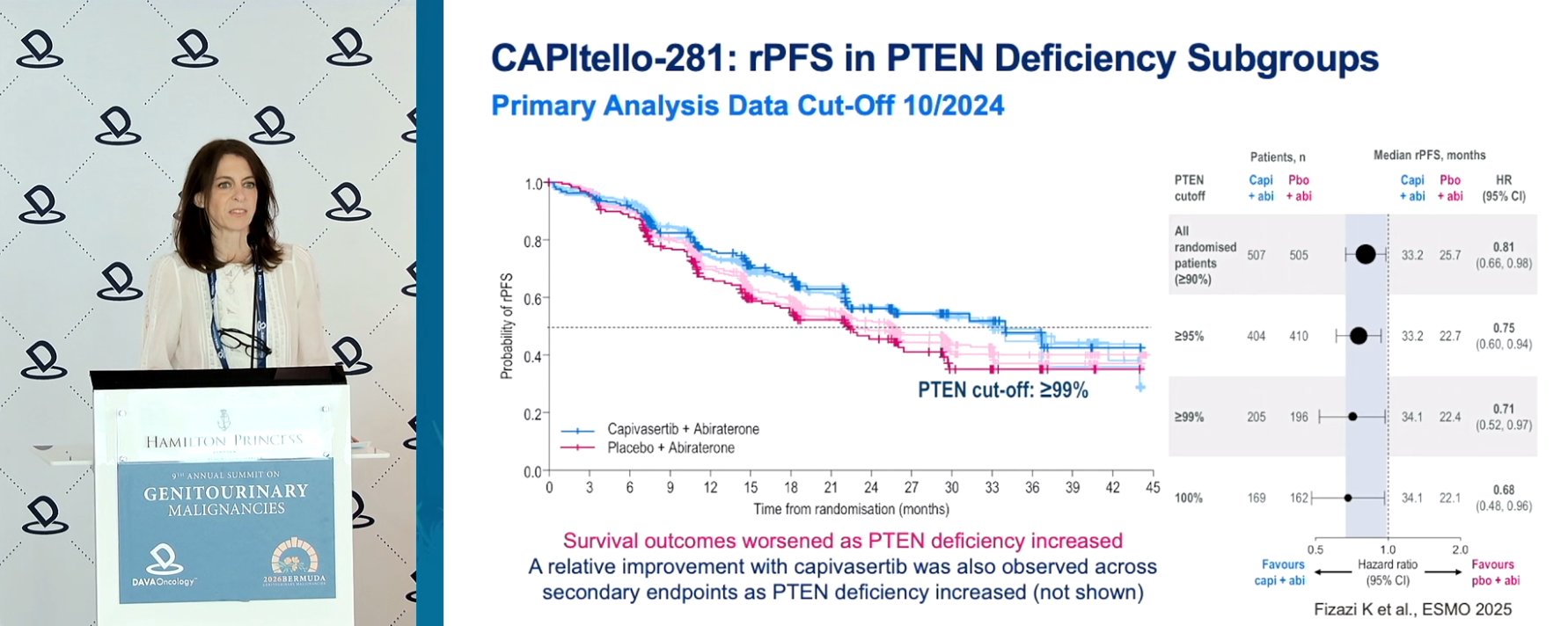
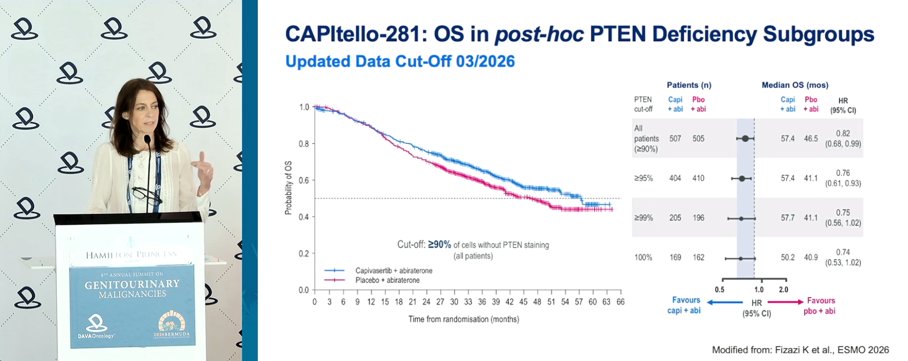
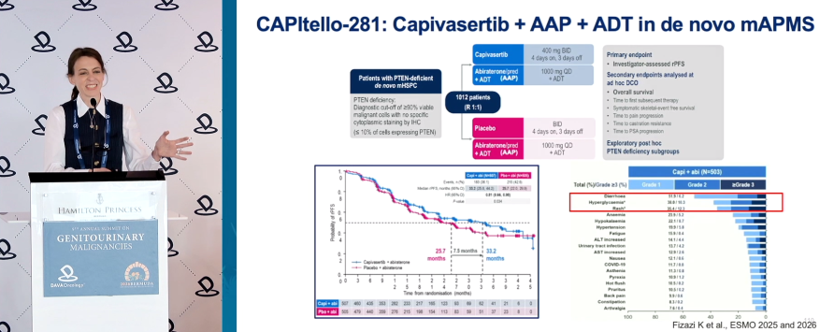
Can AKT inhibition help PTEN-deficient de novo mHSPC? Dr. Dana Rathkopf (@MSKCancerCenter) reviewed CAPItello-281 (N=1,012): capivasertib + abi/pred + ADT, rPFS 33.2 vs 25.7 mo (HR 0.81). Descriptive OS 57.4 vs 46.5 mo (HR 0.82). Top AEs: diarrhea, hyperglycemia, rash. #DAVAGU
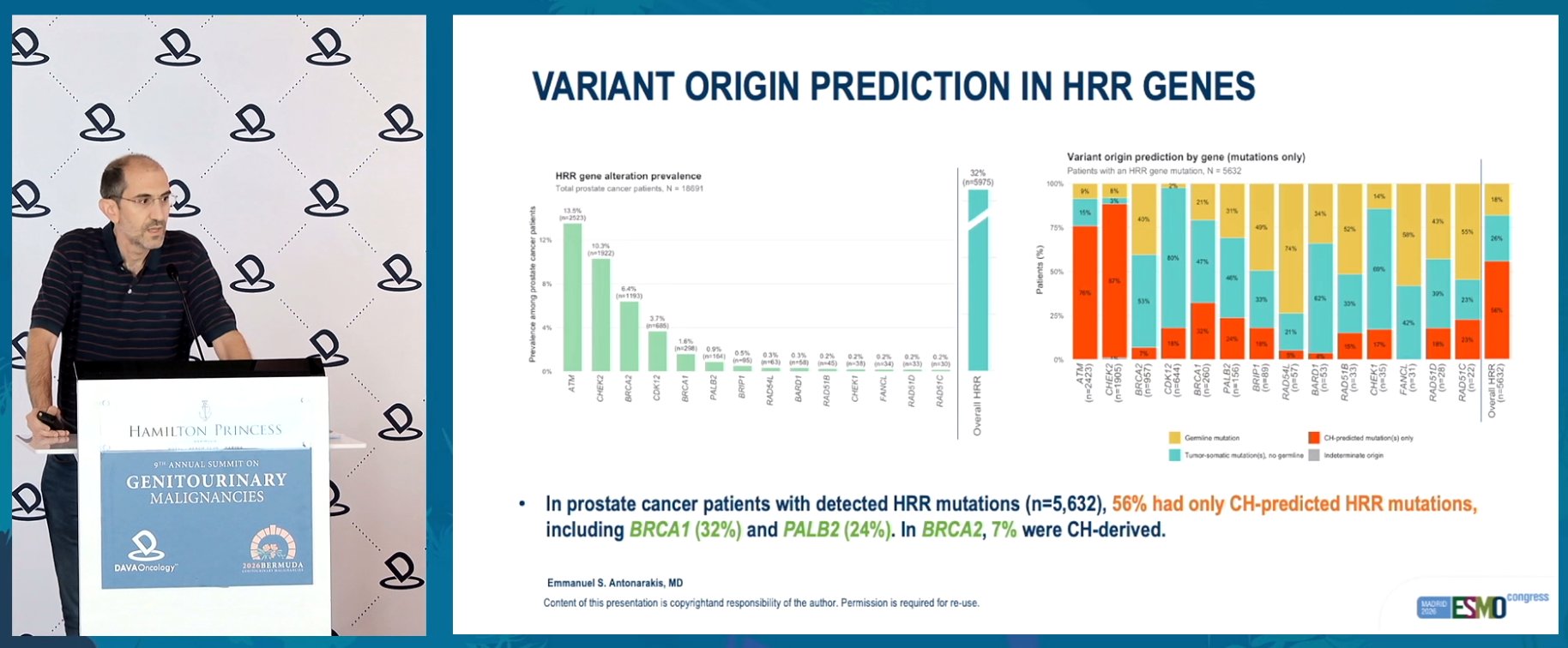
Liquid biopsy HRR findings can reflect clonal hematopoiesis (CH): 56% of 5,632 prostate cancer patients with HRR mutations had only CH-predicted HRR variants. @EAntonarakis @UMNews examines variant origin and PARPi outcomes. #DAVAGU
[Slide 1]
VARIANT ORIGIN PREDICTION IN HRR GENES
HRR gene alteration prevalence
Total prostate cancer patients, N = 18691
ATM 13.5% (n=2523); CHEK2 10.3% (n=1922); BRCA2 6.4% (n=1193); CDK12 3.7% (n=685); BRCA1 1.6% (n=298); PALB2 0.9% (n=164); BRIP1 0.5% (n=95); RAD54L 0.3% (n=63); BARD1 0.3% (n=58); RAD51B 0.2% (n=45); CHEK1 0.2% (n=38); FANCL 0.2% (n=34); RAD51D 0.2% (n=33); RAD51C 0.2% (n=30)
Overall HRR 32% (n=5975)
Variant origin prediction by gene (mutations only)
Patients with an HRR gene mutation, N = 5632
Legend: Germline mutation; CH-predicted mutation(s) only; Tumor-somatic mutation(s), no germline; Indeterminate origin
Overall HRR (n=5632): 18% | 26% | 56% [stacked-bar percentages for individual genes partially illegible]
In prostate cancer patients with detected HRR mutations (n=5,632), 56% had only CH-predicted HRR mutations, including BRCA1 (32%) and PALB2 (24%). In BRCA2, 7% were CH-derived.
Emmanuel S. Antonarakis, MD
Content of this presentation is copyright and responsibility of the author. Permission is required for re-use.
ESMO congress MADRID 2026
---
[Slide 2]
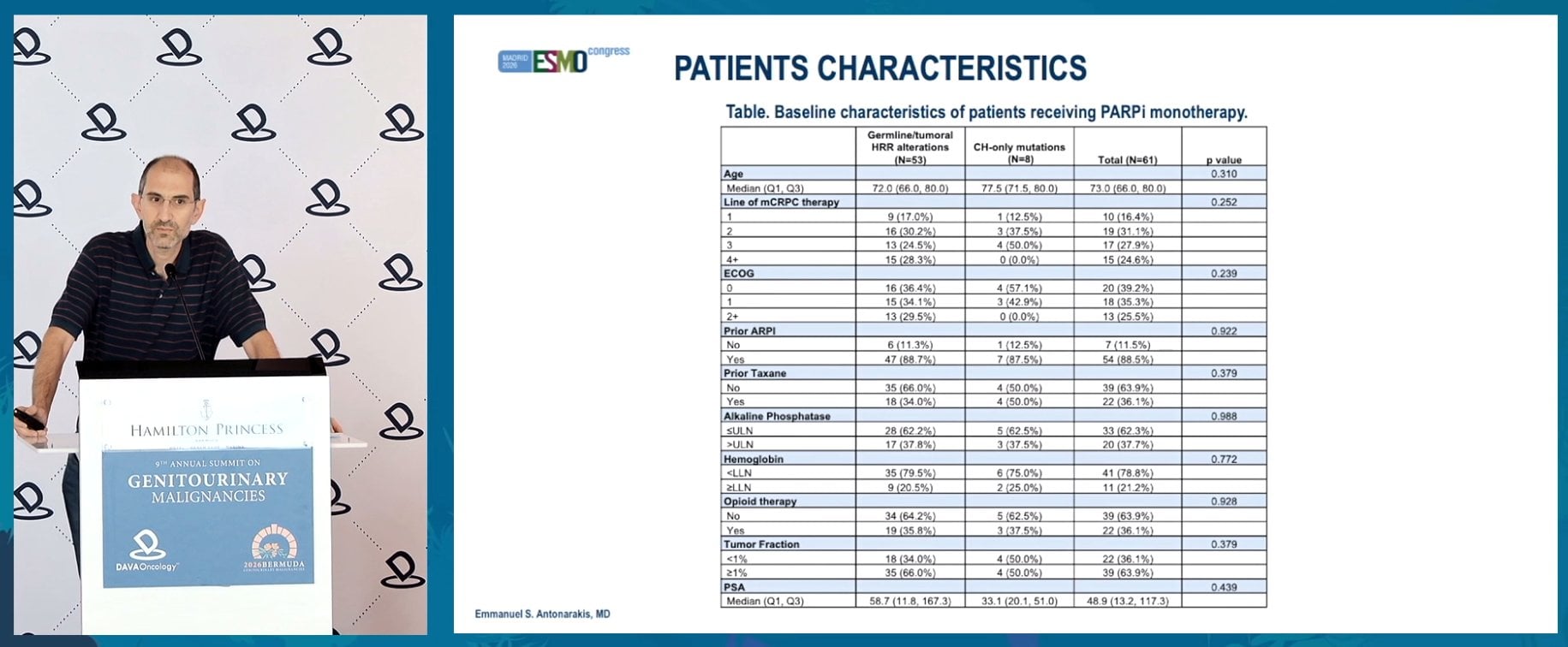
PATIENTS CHARACTERISTICS
Table. Baseline characteristics of patients receiving PARPi monotherapy.
| Germline/tumoral HRR alterations (N=53) | CH-only mutations (N=8) | Total (N=61) | p value
Age | | | | 0.310
Median (Q1, Q3) | 72.0 (66.0, 80.0) | 77.5 (71.5, 80.0) | 73.0 (66.0, 80.0) |
Line of mCRPC therapy | | | | 0.252
1 | 9 (17.0%) | 1 (12.5%) | 10 (16.4%) |
2 | 16 (30.2%) | 3 (37.5%) | 19 (31.1%) |
3 | 13 (24.5%) | 4 (50.0%) | 17 (27.9%) |
4+ | 15 (28.3%) | 0 (0.0%) | 15 (24.6%) |
ECOG | | | | 0.239
0 | 16 (36.4%) | 4 (57.1%) | 20 (39.2%) |
1 | 15 (34.1%) | 3 (42.9%) | 18 (35.3%) |
2+ | 13 (29.5%) | 0 (0.0%) | 13 (25.5%) |
Prior ARPI | | | | 0.922
No | 6 (11.3%) | 1 (12.5%) | 7 (11.5%) |
Yes | 47 (88.7%) | 7 (87.5%) | 54 (88.5%) |
Prior Taxane | | | | 0.379
No | 35 (66.0%) | 4 (50.0%) | 39 (63.9%) |
Yes | 18 (34.0%) | 4 (50.0%) | 22 (36.1%) |
Alkaline Phosphatase | | | | 0.988
≤ULN | 28 (62.2%) | 5 (62.5%) | 33 (62.3%) |
>ULN | 17 (37.8%) | 3 (37.5%) | 20 (37.7%) |
Hemoglobin | | | | 0.772
<LLN | 35 (79.5%) | 6 (75.0%) | 41 (78.8%) |
≥LLN | 9 (20.5%) | 2 (25.0%) | 11 (21.2%) |
Opioid therapy | | | | 0.928
No | 34 (64.2%) | 5 (62.5%) | 39 (63.9%) |
Yes | 19 (35.8%) | 3 (37.5%) | 22 (36.1%) |
Tumor Fraction | | | | 0.379
<1% | 18 (34.0%) | 4 (50.0%) | 22 (36.1%) |
≥1% | 35 (66.0%) | 4 (50.0%) | 39 (63.9%) |
PSA | | | | 0.439
Median (Q1, Q3) | 58.7 (11.8, 167.3) | 33.1 (20.1, 51.0) | 48.9 (13.2, 117.3) |
Emmanuel S. Antonarakis, MD
ESMO congress MADRID 2026
---
[Slide 3]
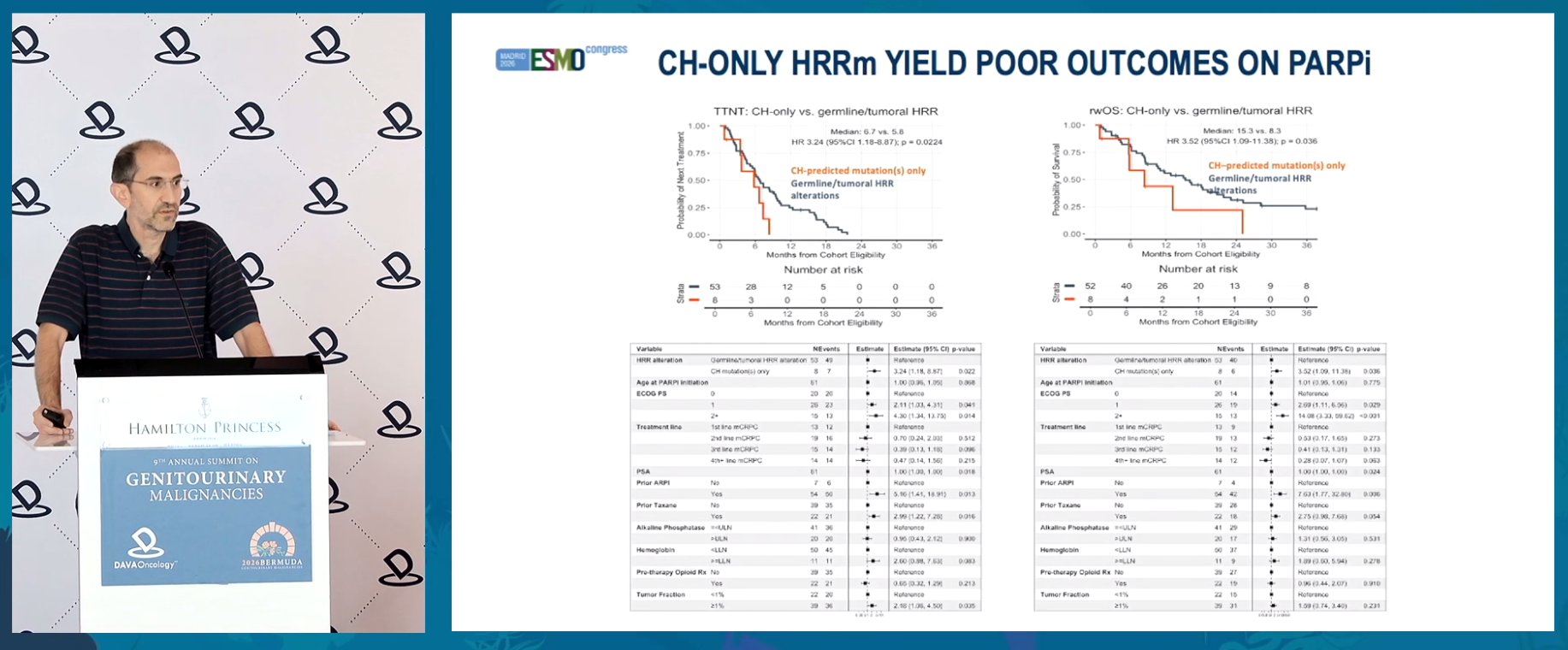
CH-ONLY HRRm YIELD POOR OUTCOMES ON PARPi
TTNT: CH-only vs. germline/tumoral HRR
Median: 6.7 vs. 5.8
HR 3.24 (95% CI 1.18-8.87); p = 0.0224
rwOS: CH-only vs. germline/tumoral HRR
Median: 15.3 vs. 8.3
HR 3.52 (95% CI 1.09-11.38); p = 0.036
CH-predicted mutation(s) only; Germline/tumoral HRR alterations
Number at risk (TTNT): Strata germline/tumoral 53 | 28 | 12 | 5 | 0 | 0 | 0; CH-only 8 | 3 | 0 | 0 | 0 | 0 | 0
Number at risk (rwOS): germline/tumoral 52 | 40 | 26 | 20 | 13 | 9 | 8; CH-only 8 | 4 | 2 | 1 | 1 | 0 | 0
Months from Cohort Eligibility
Multivariable tables below each plot (Variable | NEvents | Estimate | Estimate (95% CI) | p-value): text too small [illegible] except
TTNT: HRR alteration CH mutation(s) only 3.24 (1.18, 8.87) 0.022
rwOS: HRR alteration CH mutation(s) only 3.52 (1.09, 11.38) 0.036
ESMO congress MADRID 2026
---
[Slide 4]
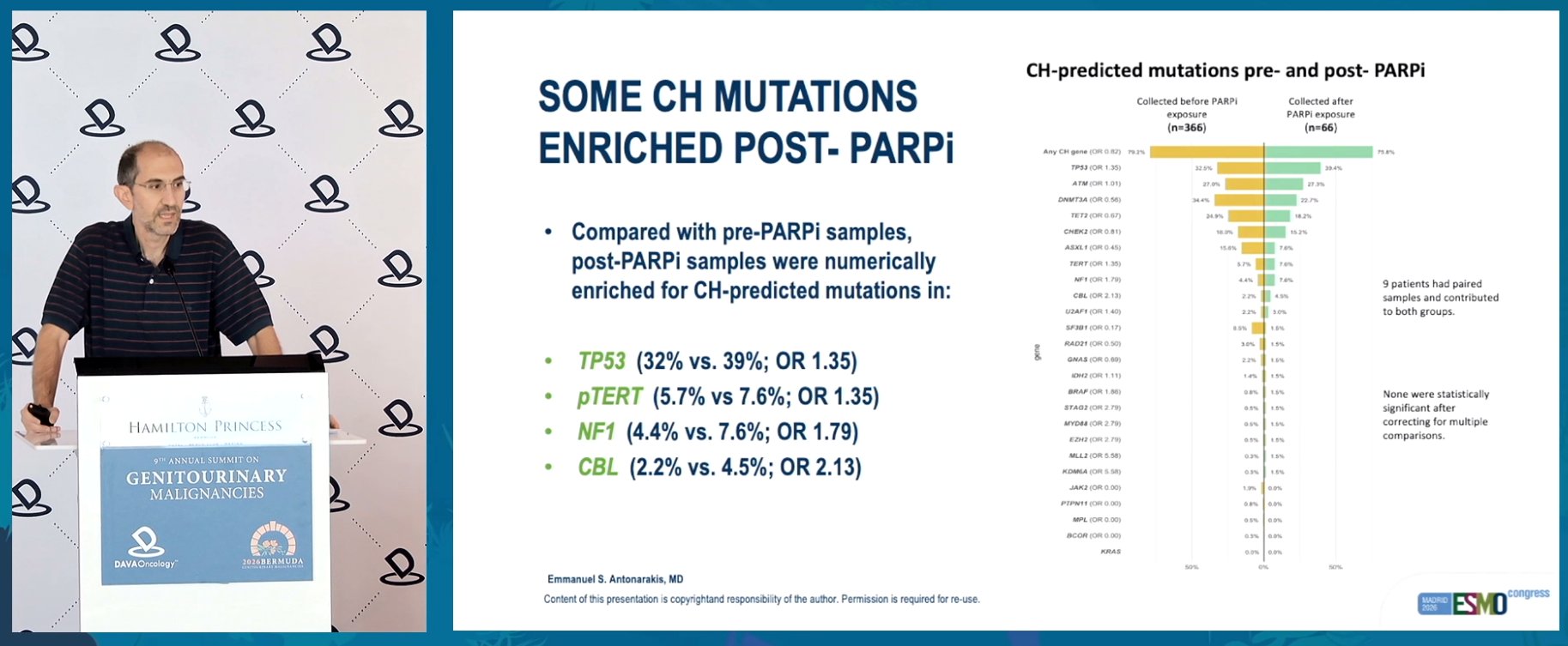
SOME CH MUTATIONS ENRICHED POST- PARPi
Compared with pre-PARPi samples, post-PARPi samples were numerically enriched for CH-predicted mutations in:
TP53 (32% vs. 39%; OR 1.35)
pTERT (5.7% vs 7.6%; OR 1.35)
NF1 (4.4% vs. 7.6%; OR 1.79)
CBL (2.2% vs. 4.5%; OR 2.13)
CH-predicted mutations pre- and post- PARPi
Collected before PARPi exposure (n=366) | Collected after PARPi exposure (n=66)
Any CH gene (OR 0.82) 79.2% | 75.8%; TP53 (OR 1.35) 32.5% | 39.4%; ATM (OR 1.01) 27.9% | 27.3%; DNMT3A (OR 0.56) 34.4% | 22.7%; TET2 (OR 0.67) 24.9% | 18.2%; CHEK2 (OR 0.81) 18.0% | 15.2%; ASXL1 (OR 0.45) 15.6% | 7.6%; TERT (OR 1.35) 5.7% | 7.6%; NF1 (OR 1.79) 4.4% | 7.6%; CBL (OR 2.13) 2.2% | 4.5%; remaining gene rows [illegible]
9 patients had paired samples and contributed to both groups.
None were statistically significant after correcting for multiple comparisons.
Emmanuel S. Antonarakis, MD
ESMO congress MADRID 2026
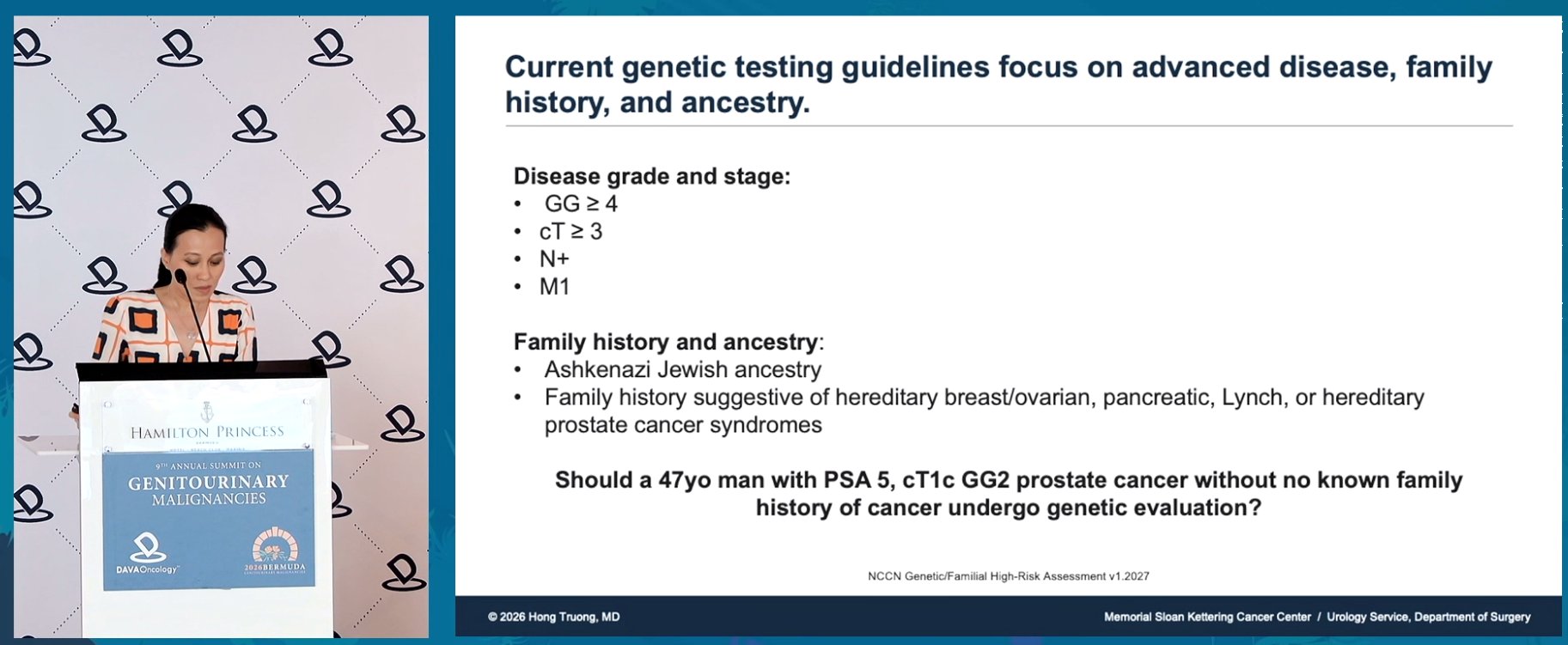
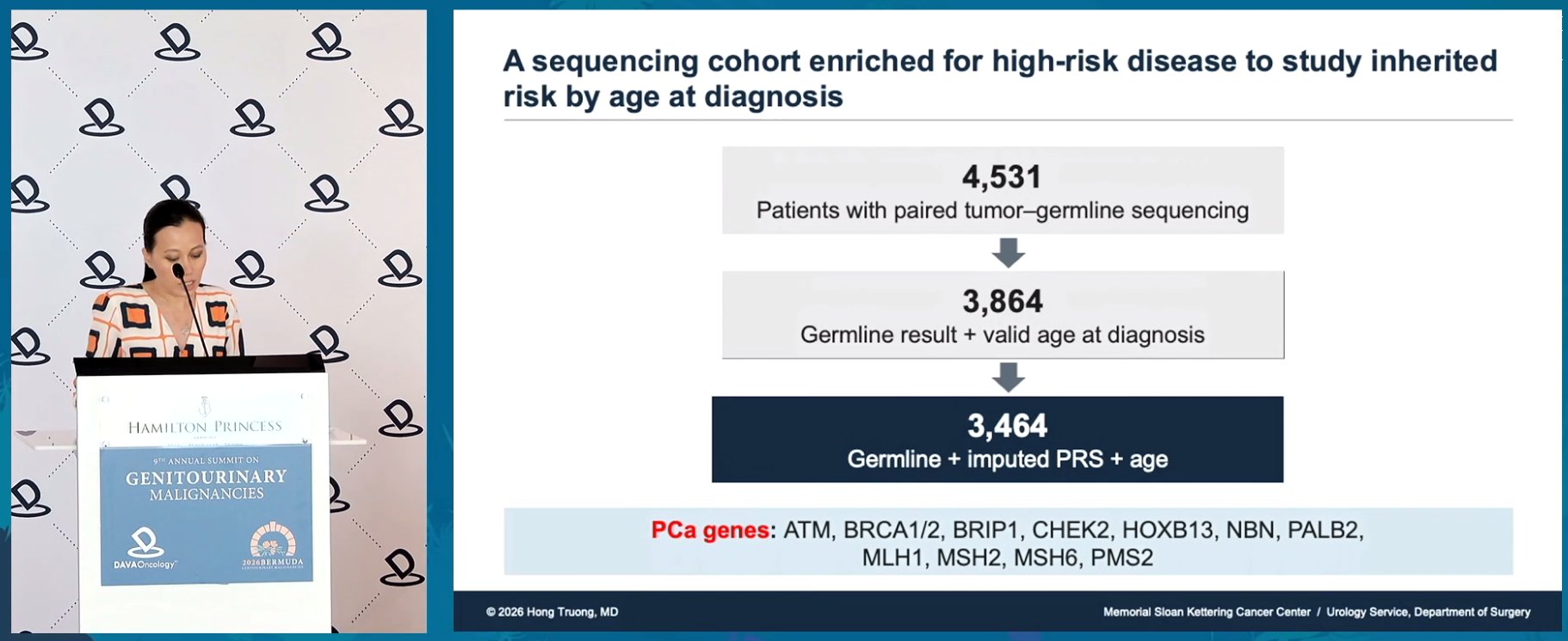
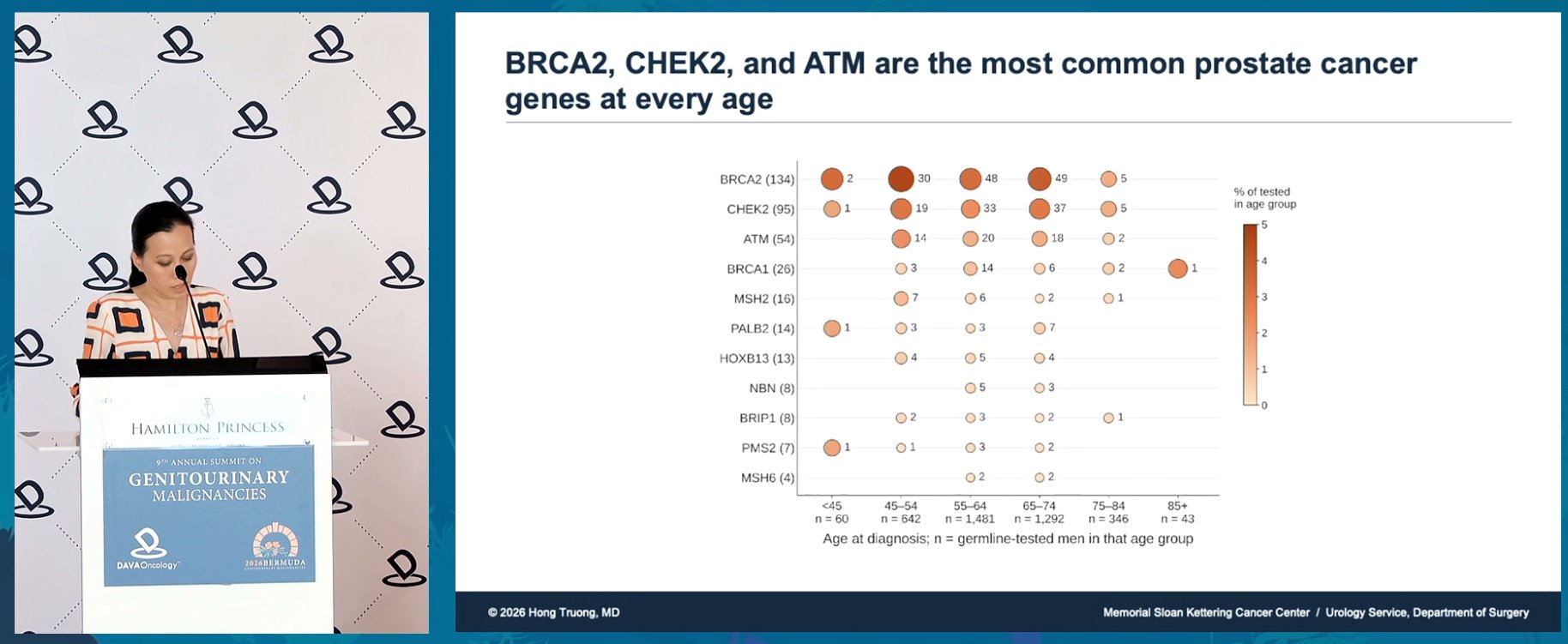
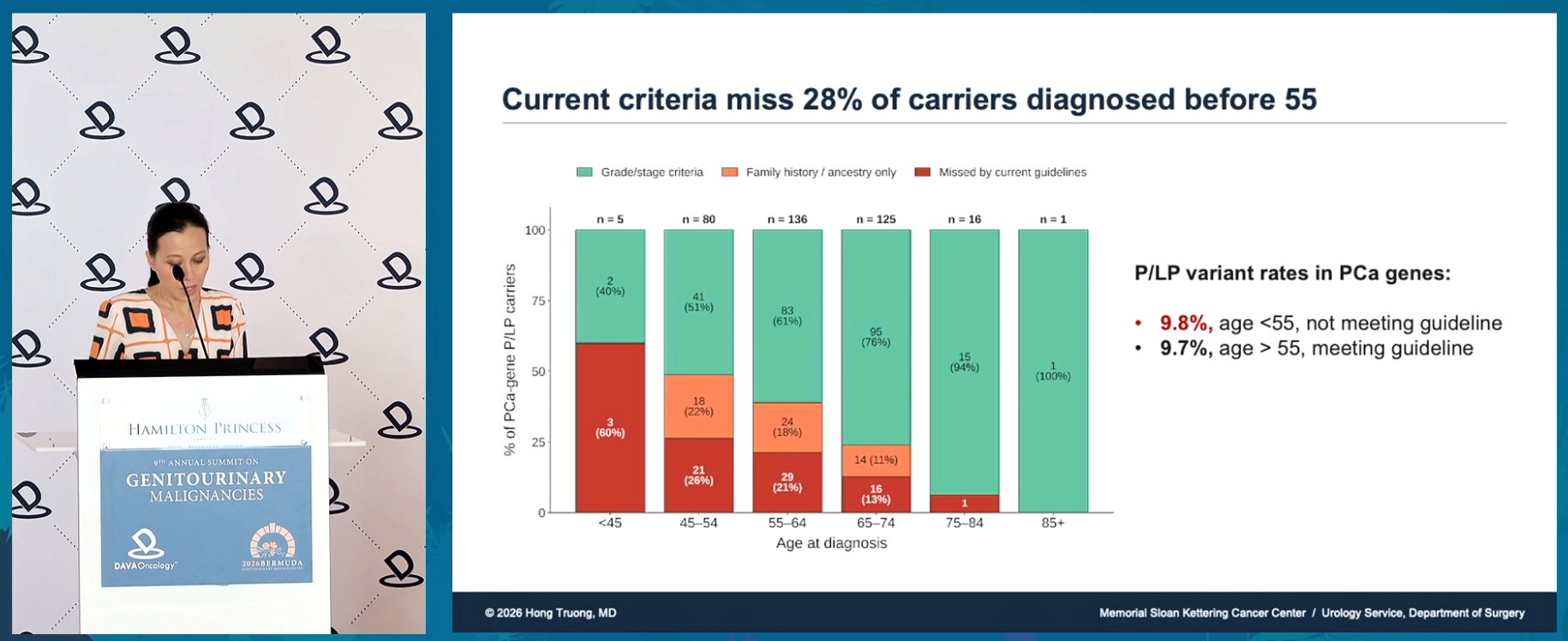
In a cohort enriched for high-risk prostate cancer, 28% of germline pathogenic/likely pathogenic variant carriers diagnosed before 55 did not meet testing criteria. Insights on inherited risk from @HongTruongMD @UrologyMSK. #DAVAGU
[Slide 1]
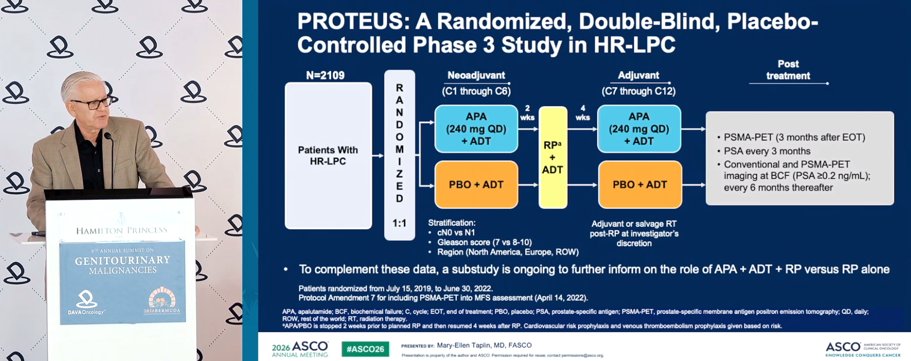
PROTEUS: A Randomized, Double-Blind, Placebo-Controlled Phase 3 Study in HR-LPC
N=2109
Patients With HR-LPC -> R A N D O M I Z E D 1:1
Neoadjuvant (C1 through C6): APA (240 mg QD) + ADT | PBO + ADT
2 wks -> RPa + ADT -> 4 wks
Adjuvant (C7 through C12): APA (240 mg QD) + ADT | PBO + ADT
Post treatment: PSMA-PET (3 months after EOT); PSA every 3 months; Conventional and PSMA-PET imaging at BCF (PSA ≥0.2 ng/mL); every 6 months thereafter
Stratification: cN0 vs N1; Gleason score (7 vs 8-10); Region (North America, Europe, ROW)
Adjuvant or salvage RT post-RP at investigator's discretion
To complement these data, a substudy is ongoing to further inform on the role of APA + ADT + RP versus RP alone
Patients randomized from July 15, 2019 to June 30, 2022.
Protocol Amendment 7 for including PSMA-PET into MFS assessment (April 14, 2022).
APA, apalutamide; BCF, biochemical failure; C, cycle; EOT, end of treatment; PBO, placebo; PSA, prostate-specific antigen; PSMA, prostate-specific membrane antigen positron emission tomography; QD, daily; ROW, rest of the world; RP, radical prostatectomy; RT, radiation therapy.
aAPA/PBO is stopped 2 weeks prior to planned RP and then resumed 4 weeks after RP. Cardiovascular risk prophylaxis and venous thromboembolism prophylaxis given based on risk.
2026 ASCO Annual Meeting #ASCO26 PRESENTED BY: Mary-Ellen Taplin, MD, FASCO
---
[Slide 2]
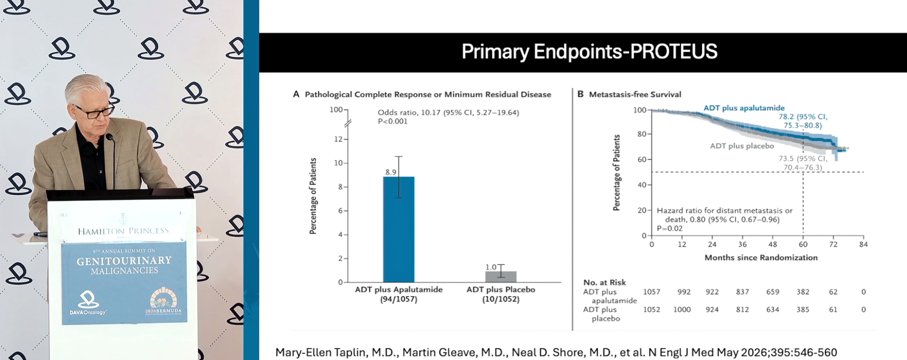
Primary Endpoints-PROTEUS
A Pathological Complete Response or Minimum Residual Disease
Odds ratio, 10.17 (95% CI, 5.27-19.64) P<0.001
Percentage of Patients
ADT plus Apalutamide (94/1057): 8.9
ADT plus Placebo (10/1052): 1.0
B Metastasis-free Survival
ADT plus apalutamide: 78.2 (95% CI, 75.3-80.8)
ADT plus placebo: 73.5 (95% CI, 70.4-76.3)
Hazard ratio for distant metastasis or death, 0.80 (95% CI, 0.67-0.96) P=0.02
Months since Randomization
No. at Risk
ADT plus apalutamide: 1057 | 992 | 922 | 837 | 659 | 382 | 62 | 0
ADT plus placebo: 1052 | 1000 | 924 | 812 | 634 | 385 | 61 | 0
Mary-Ellen Taplin, M.D., Martin Gleave, M.D., Neal D. Shore, M.D., et al. N Engl J Med May 2026;395:546-560
---
[Slide 3]
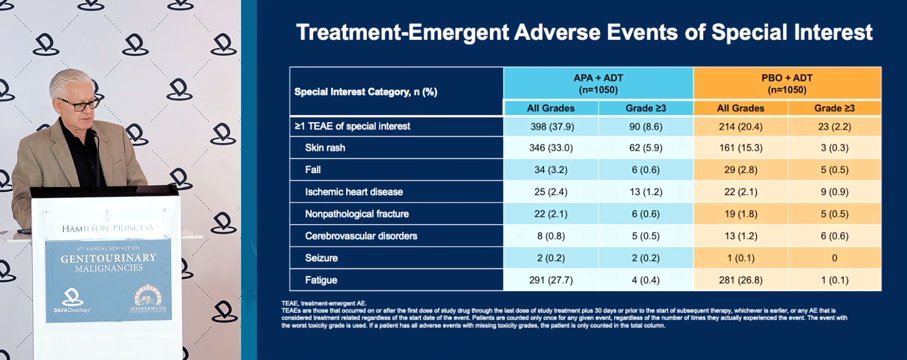
Treatment-Emergent Adverse Events of Special Interest
Special Interest Category, n (%) | APA + ADT (n=1050) All Grades | Grade ≥3 | PBO + ADT (n=1050) All Grades | Grade ≥3
≥1 TEAE of special interest | 398 (37.9) | 90 (8.6) | 214 (20.4) | 23 (2.2)
Skin rash | 346 (33.0) | 62 (5.9) | 161 (15.3) | 3 (0.3)
Fall | 34 (3.2) | 6 (0.6) | 29 (2.8) | 5 (0.5)
Ischemic heart disease | 25 (2.4) | 13 (1.2) | 22 (2.1) | 9 (0.9)
Nonpathological fracture | 22 (2.1) | 6 (0.6) | 19 (1.8) | 5 (0.5)
Cerebrovascular disorders | 8 (0.8) | 5 (0.5) | 13 (1.2) | 6 (0.6)
Seizure | 2 (0.2) | 2 (0.2) | 1 (0.1) | 0
Fatigue | 291 (27.7) | 4 (0.4) | 281 (26.8) | 1 (0.1)
TEAE, treatment-emergent AE.
TEAEs are those that occurred on or after the first dose of study drug through the last dose of study treatment plus 30 days or prior to the start of subsequent therapy, whichever is earlier, or any AE that is considered treatment related regardless of the start date of the event. Patients are counted only once for any given event, regardless of the number of times they actually experienced the event. The event with the worst toxicity grade is used. If a patient has all adverse events with missing toxicity grades, the patient is only counted in the total column.
---
[Slide 4]
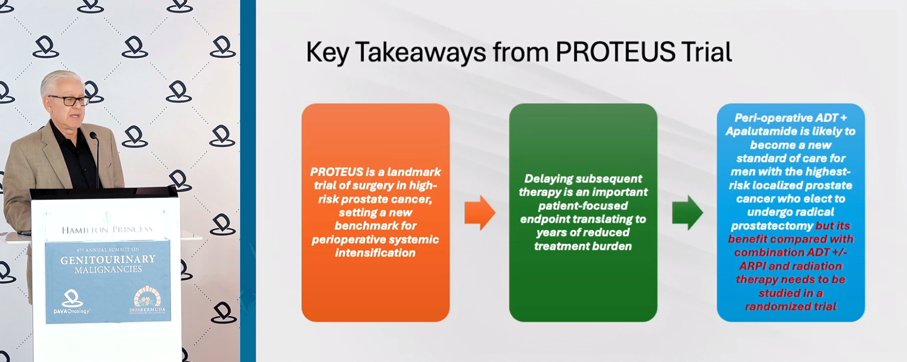
Key Takeaways from PROTEUS Trial
PROTEUS is a landmark trial of surgery in high-risk prostate cancer, setting a new benchmark for perioperative systemic intensification
Delaying subsequent therapy is an important patient-focused endpoint translating to years of reduced treatment burden
Peri-operative ADT + Apalutamide is likely to become a new standard of care for men with the highest-risk localized prostate cancer who elect to undergo radical prostatectomy but its benefit compared with combination ADT +/- ARPI and radiation therapy needs to be studied in a randomized trial
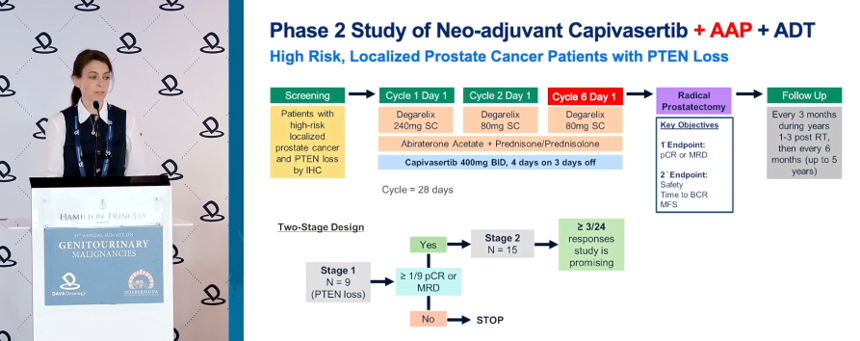
Dr. Dana Rathkopf (@MSKCancerCenter) on moving capivasertib earlier: after CAPItello-281 (rPFS 33.2 vs 25.7 mo, HR 0.81 in PTEN-deficient mHSPC), a phase 2 trial tests neoadjuvant capivasertib + AAP + ADT pre-RP in high-risk localized PC with PTEN loss. Primary endpoint pCR/MRD #DAVAGU
[Slide 1]
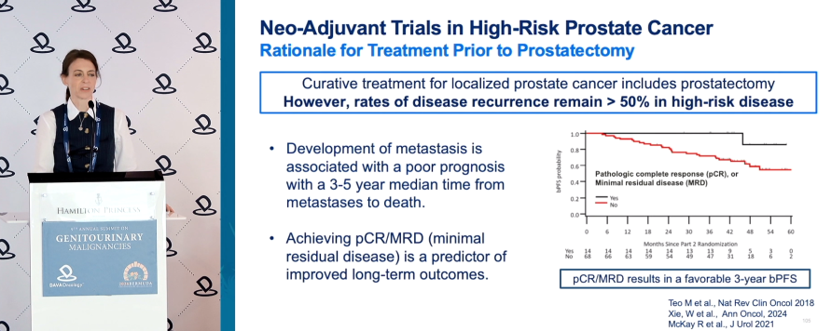
Neo-Adjuvant Trials in High-Risk Prostate Cancer
Rationale for Treatment Prior to Prostatectomy
Curative treatment for localized prostate cancer includes prostatectomy
However, rates of disease recurrence remain > 50% in high-risk disease
Development of metastasis is associated with a poor prognosis with a 3-5 year median time from metastases to death.
Achieving pCR/MRD (minimal residual disease) is a predictor of improved long-term outcomes.
Pathologic complete response (pCR), or Minimal residual disease (MRD): Yes / No
bPFS probability vs Months Since Part 2 Randomization
Yes: 14 | 14 | 14 | 14 | 14 | 13 | 9 | 3 | 3 | 0
No: 68 | 66 | 63 | 59 | 54 | 49 | 47 | 31 | 18 | 6 | 2
pCR/MRD results in a favorable 3-year bPFS
Teo M et al., Nat Rev Clin Oncol 2018
Xie, W et al., Ann Oncol, 2024
McKay R et al., J Urol 2021
---
[Slide 2]
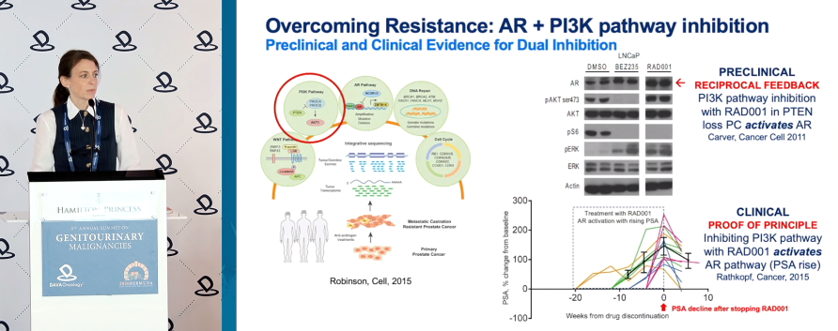
Overcoming Resistance: AR + PI3K pathway inhibition
Preclinical and Clinical Evidence for Dual Inhibition
Robinson, Cell, 2015
LNCaP: DMSO | BEZ235 | RAD001
AR; pAKT ser473; AKT; pS6; pERK; ERK; Actin
PRECLINICAL
RECIPROCAL FEEDBACK
PI3K pathway inhibition with RAD001 in PTEN loss PC activates AR
Carver, Cancer Cell 2011
CLINICAL
PROOF OF PRINCIPLE
Inhibiting PI3K pathway with RAD001 activates AR pathway (PSA rise)
Rathkopf, Cancer, 2015
PSA % change from baseline vs Weeks from drug discontinuation
Treatment with RAD001 AR activation with rising PSA
PSA decline after stopping RAD001
---
[Slide 3]
CAPItello-281: Capivasertib + AAP + ADT in de novo mAPMS
Patients with PTEN-deficient de novo mHSPC
PTEN deficiency: Diagnostic cut-off of ≥90% viable malignant cells with no specific cytoplasmic staining by IHC (≤ 10% of cells expressing PTEN)
1012 patients (R 1:1)
Capivasertib 400 mg BID, 4 days on, 3 days off + Abiraterone(pred) (AAP) 1000 mg QD + ADT
Placebo BID, 4 days on 3 days off + Abiraterone(pred) (AAP) 1000 mg QD + ADT
Primary endpoint: Investigator-assessed rPFS
Secondary endpoints analysed at ad hoc DCO: Overall survival; Time to first subsequent therapy; Symptomatic skeletal event-free survival; Time to pain progression; Time to castration resistance; Time to PSA progression
Exploratory post hoc PTEN deficiency subgroups
Probability of rPFS vs Time from randomisation (months)
25.7 months | 7.8 months | 33.2 months
Capi + abi | Plac + abi
Capi + abi (N=503) Total (%)/Grade ≥3 (%): Diarrhea; Hyperglycemia; Rash; Anemia; Hypokalemia; Hypertension; Fatigue; ALT increased; Urinary tract infection; AST increased; Nausea; COVID-19; Asthenia; Pruritus; Hot flush; Back pain; Constipation; Arthralgia [illegible values]
Fizazi K et al., ESMO 2025 and 2026
---
[Slide 4]
Phase 2 Study of Neo-adjuvant Capivasertib + AAP + ADT
High Risk, Localized Prostate Cancer Patients with PTEN Loss
Screening: Patients with high-risk localized prostate cancer and PTEN loss by IHC
Cycle 1 Day 1: Degarelix 240mg SC
Cycle 2 Day 1: Degarelix 80mg SC
Cycle 6 Day 1: Degarelix 80mg SC
Abiraterone Acetate + Prednisone/Prednisolone
Capivasertib 400mg BID, 4 days on 3 days off
Cycle = 28 days
Radical Prostatectomy
Key Objectives
1° Endpoint: pCR or MRD
2° Endpoint: Safety; Time to BCR; MFS
Follow Up: Every 3 months during years 1-3 post RT, then every 6 months (up to 5 years)
Two-Stage Design
Stage 1 N = 9 (PTEN loss) -> ≥ 1/9 pCR or MRD? Yes -> Stage 2 N = 15 -> ≥ 3/24 responses study is promising; No -> STOP
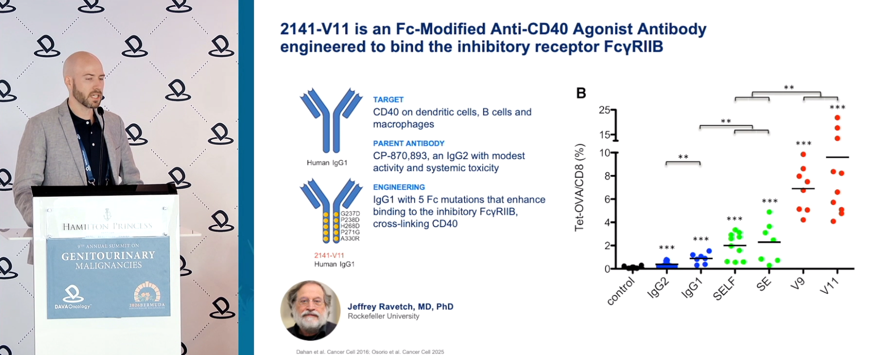
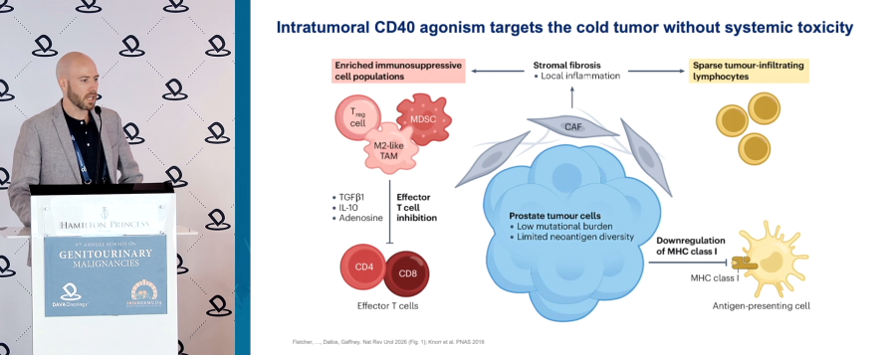
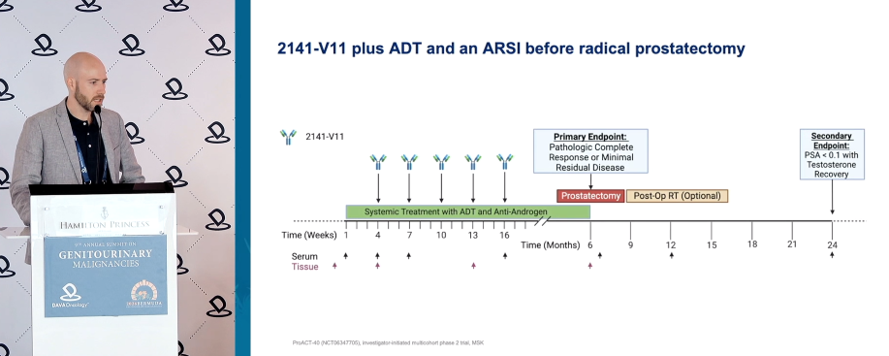
Priming the cold prostate tumor: @CGaffMD (@MSKCancerCenter) presented ProACT-40 Cohort B (NCT06347705), a phase 2 trial of intratumoral CD40 agonist 2141-V11 + 6 mo ADT + ARSI before RP in high-risk PC. Primary endpoint pCR/MRD; target 35% vs ~15% historical. #DAVAGU
[Slide 1]
2141-V11 is an Fc-Modified Anti-CD40 Agonist Antibody engineered to bind the inhibitory receptor FcγRIIB
TARGET: CD40 on dendritic cells, B cells and macrophages
PARENT ANTIBODY: CP-870,893, an IgG2 with modest activity and systemic toxicity
ENGINEERING: IgG1 with 5 Fc mutations that enhance binding to the inhibitory FcγRIIB, cross-linking CD40
Human IgG1; 2141-V11 Human IgG1
G237D P238D H268D P271G A330R
B: Tet-OVA/CD8 (%) for control, IgG2, IgG1, SELF, SE, V9, V11
Jeffrey Ravetch, MD, PhD Rockefeller University
Dahan et al. Cancer Cell 2016; Osorio et al. Cancer Cell 2025
---
[Slide 2]
Intratumoral CD40 agonism targets the cold tumor without systemic toxicity
Enriched immunosuppressive cell populations
Treg cell; MDSC; M2-like TAM
TGFβ1; IL-10; Adenosine; Effector T cell inhibition
CD4; CD8; Effector T cells
Stromal fibrosis; Local inflammation; CAF
Sparse tumour-infiltrating lymphocytes
Prostate tumour cells: Low mutational burden; Limited neoantigen diversity
Downregulation of MHC class I
Antigen-presenting cell
Fletcher, ..., Dallos, Gaffney, Nat Rev Urol 2026 (Fig. 1); Knorr et al. PNAS 2018
---
[Slide 3]
2141-V11 plus ADT and an ARSI before radical prostatectomy
2141-V11
Primary Endpoint: Pathologic Complete Response or Minimal Residual Disease
Secondary Endpoint: PSA < 0.1 with Testosterone Recovery
Systemic Treatment with ADT and Anti-Androgen
Prostatectomy | Post-Op RT (Optional)
Time (Weeks) 1 4 7 10 13 16
Time (Months) 6 9 12 15 18 21 24
Serum; Tissue
ProACT-40 (NCT06347705), investigator-initiated multicohort phase 2 trial, MSK
---
[Slide 4]
FUTURE DIRECTIONS
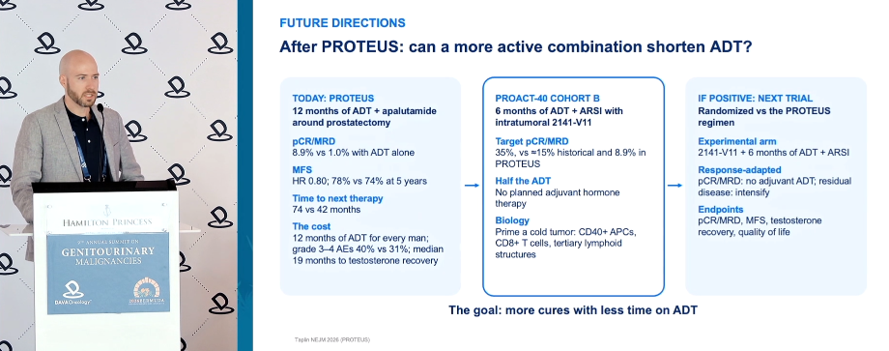
After PROTEUS: can a more active combination shorten ADT?
TODAY: PROTEUS
12 months of ADT + apalutamide around prostatectomy
pCR/MRD: 8.9% vs 1.0% with ADT alone
MFS: HR 0.80; 78% vs 74% at 5 years
Time to next therapy: 74 vs 42 months
The cost: 12 months of ADT for every man; grade 3-4 AEs 40% vs 31%; median 19 months to testosterone recovery
PROACT-40 COHORT B
6 months of ADT + ARSI with intratumoral 2141-V11
Target pCR/MRD: 35%, vs ≈15% historical and 8.9% in PROTEUS
Half the ADT: No planned adjuvant hormone therapy
Biology: Prime a cold tumor: CD40+ APCs, CD8+ T cells, tertiary lymphoid structures
IF POSITIVE: NEXT TRIAL
Randomized vs the PROTEUS regimen
Experimental arm: 2141-V11 + 6 months of ADT + ARSI
Response-adapted: pCR/MRD: no adjuvant ADT; residual disease: intensify
Endpoints: pCR/MRD, MFS, testosterone recovery, quality of life
The goal: more cures with less time on ADT
Taplin NEJM 2026 (PROTEUS)
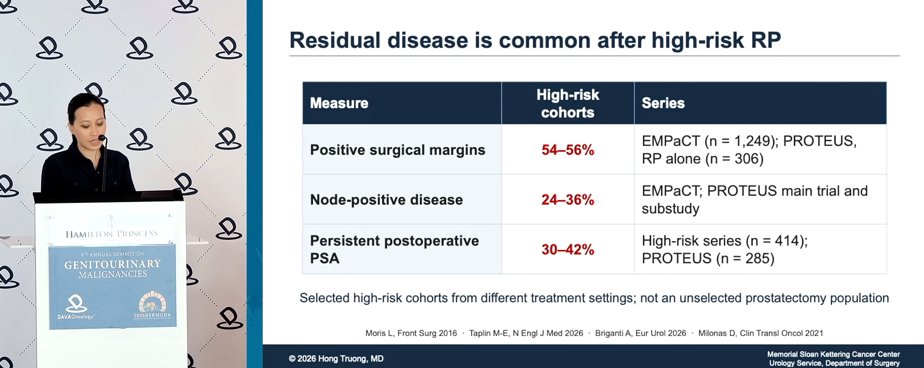
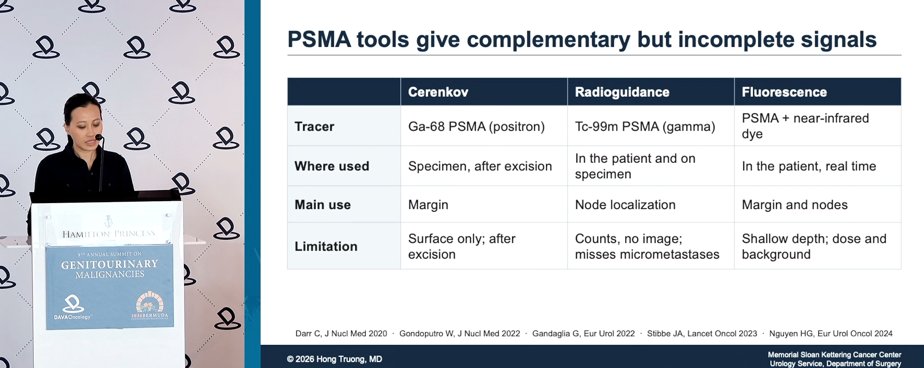
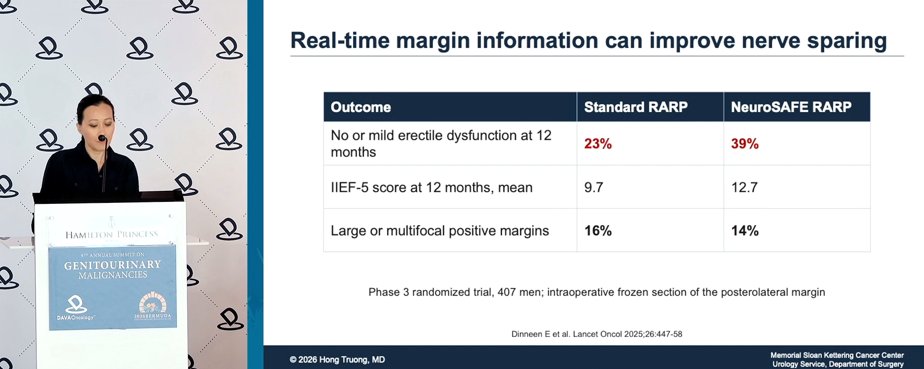
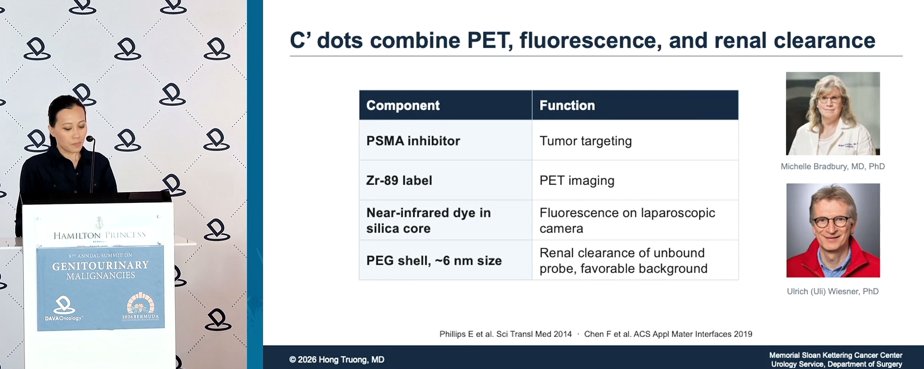
Can image guidance help remove all resectable cancer at radical prostatectomy? Dr. @HongTruongMD (@MSKCancerCenter): in high-risk cohorts, positive margins 54-56%, pN+ 24-36%. A first-in-human study of PSMA-targeted C’ dots (Zr-89 PET + NIR fluorescence) is underway. #DAVAGU
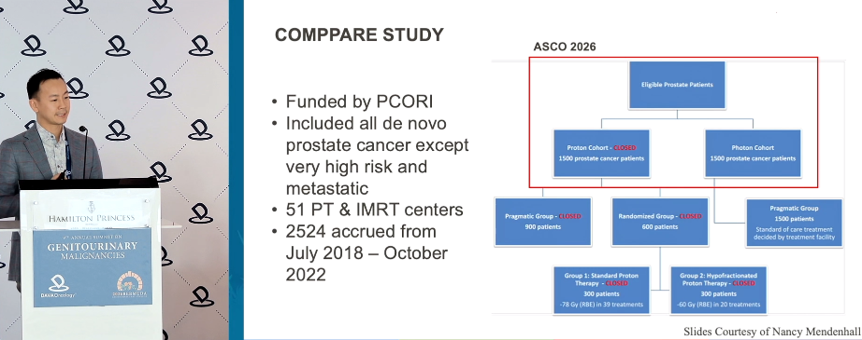
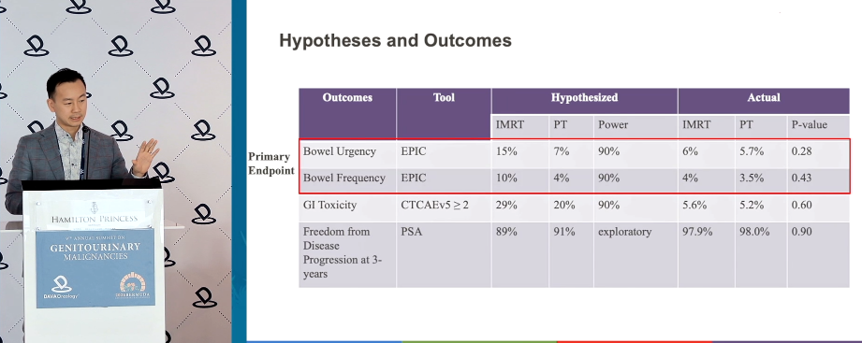
Dr. @ChadTangMD (@UTMDAnderson) reviewed proton vs IMRT in prostate cancer. COMPPARE (n=2524, non-randomized): no improvement in bowel or urinary QOL; 3-yr FFDP 98.0% vs 97.9%. PARTIQOL (phase 3 RCT, n=450): no bowel function benefit at 24 mo. Excellent QOL with both. #DAVAGU
COMPPAREPARTIQOL
[Slide 1]
COMPPARE STUDY
Funded by PCORI
Included all de novo prostate cancer except very high risk and metastatic
51 PT & IMRT centers
2524 accrued from July 2018 – October 2022
ASCO 2026
Eligible Prostate Patients
Proton Cohort - CLOSED 1500 prostate cancer patients
Photon Cohort - CLOSED 1500 prostate cancer patients
Pragmatic Group - CLOSED 900 patients
Randomized Group - CLOSED 600 patients
Pragmatic Group 1500 patients: Standard of care treatment decided by treatment facility
Group 1: Standard Proton Therapy - CLOSED 300 patients - 78 Gy (RBE) in 39 treatments
Group 2: Hypofractionated Proton Therapy - CLOSED 300 patients - 60 Gy (RBE) in 20 treatments
Slides Courtesy of Nancy Mendenhall
---
[Slide 2]
Hypotheses and Outcomes
Outcomes | Tool | Hypothesized IMRT | PT | Power | Actual IMRT | PT | P-value
Primary Endpoint:
Bowel Urgency | EPIC | 15% | 7% | 90% | 6% | 5.7% | 0.28
Bowel Frequency | EPIC | 10% | 4% | 90% | 4% | 3.5% | 0.43
GI Toxicity | CTCAEv5 ≥ 2 | 29% | 20% | 90% | 5.6% | 5.2% | 0.60
Freedom from Disease Progression at 3-years | PSA | 89% | 91% | exploratory | 97.9% | 98.0% | 0.90
---
[Slide 3]
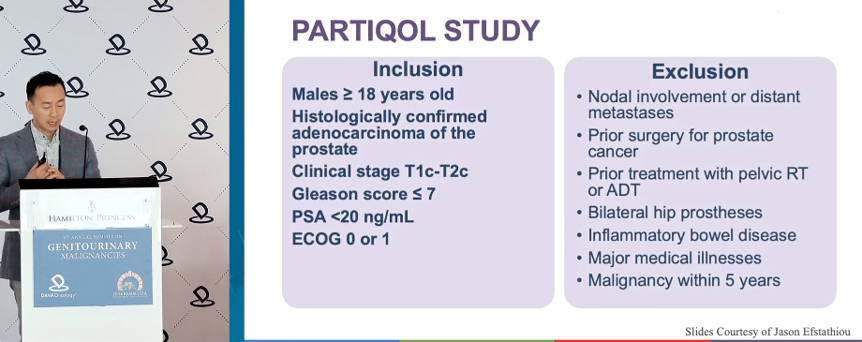
PARTIQOL STUDY
Inclusion
Males ≥ 18 years old
Histologically confirmed adenocarcinoma of the prostate
Clinical stage T1c-T2c
Gleason score ≤ 7
PSA <20 ng/mL
ECOG 0 or 1
Exclusion
Nodal involvement or distant metastases
Prior surgery for prostate cancer
Prior treatment with pelvic RT or ADT
Bilateral hip prostheses
Inflammatory bowel disease
Major medical illnesses
Malignancy within 5 years
Slides Courtesy of Jason Efstathiou
---
[Slide 4]
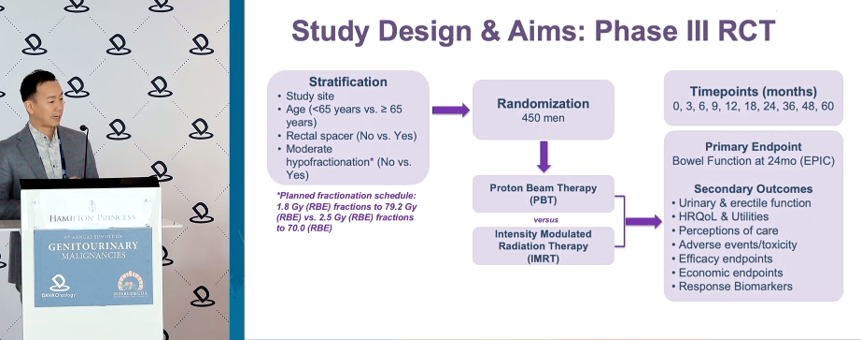
Study Design & Aims: Phase III RCT
Stratification
Study site
Age (<65 years vs. ≥ 65 years)
Rectal spacer (No vs. Yes)
Moderate hypofractionation* (No vs. Yes)
*Planned fractionation schedule: 1.8 Gy (RBE) fractions to 79.2 Gy (RBE) vs. 2.5 Gy (RBE) fractions to 70.0 (RBE)
Randomization 450 men
Proton Beam Therapy (PBT) versus Intensity Modulated Radiation Therapy (IMRT)
Timepoints (months): 0, 3, 6, 9, 12, 18, 24, 36, 48, 60
Primary Endpoint: Bowel Function at 24mo (EPIC)
Secondary Outcomes: Urinary & erectile function; HRQoL & Utilities; Perceptions of care; Adverse events/toxicity; Efficacy endpoints; Economic endpoints; Response Biomarkers
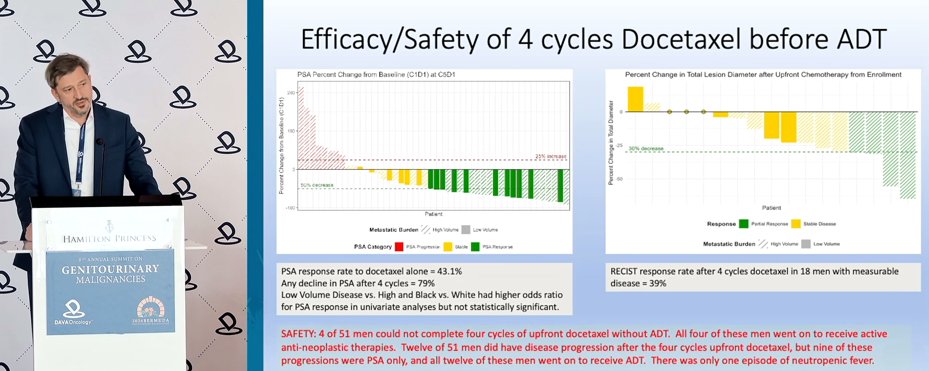
Docetaxel before castration in newly diagnosed mHSPC: Theodore Gourdin, MD (@MUSCHollings) shared phase 2 results (n=52). PSA CR at 10 mo 29.4%, not improved vs historical control. PSA response to docetaxel alone 43.1%; mPFS 15.9 mo, mOS 52.4 mo. #DAVAGU
CHAARTED
[Slide 1]
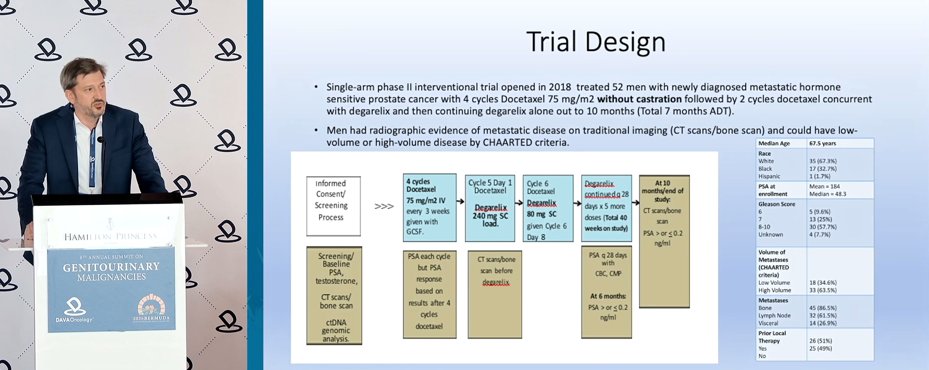
Trial Design
Single-arm phase II interventional trial opened in 2018 treated 52 men with newly diagnosed metastatic hormone sensitive prostate cancer with 4 cycles Docetaxel 75 mg/m2 without castration followed by 2 cycles docetaxel concurrent with degarelix and then continuing degarelix alone out to 10 months (Total 7 months ADT).
Men had radiographic evidence of metastatic disease on traditional imaging (CT scans/bone scan) and could have low-volume or high-volume disease by CHAARTED criteria.
Informed Consent/Screening Process
4 cycles Docetaxel 75 mg/m2 IV every 3 weeks given with GCSF.
Cycle 5 Day 1 Degarelix 240 mg SC load.
Cycle 6 Docetaxel Degarelix 80 mg SC given Cycle 6 Day 8
Degarelix continued q 28 days x 5 months doses (Total 40 weeks on study)
At 10 months/end of study: CT scan/bone scan; PSA > or ≤ 0.2 ng/ml
Screening/Baseline: PSA, testosterone, CT scans/bone scan, ctDNA genomic analysis.
PSA each cycle but PSA response based on results after 4 cycles docetaxel
CT scan/bone scan before degarelix
PSA q 28 days with CBC, CMP
At 6 months: PSA > or ≤ 0.2 ng/ml
Median Age 67.5 years
Race: White 35 (67.3%); Black 17 (32.7%); Hispanic 1 (1.7%)
PSA at enrollment: Mean = 184; Median = 48.3
Gleason Score: 6 5 (9.6%); 7 13 (25%); 8-10 30 (57.7%); Unknown 4 (7.7%)
Volume of Metastasis (CHAARTED criteria): Low Volume 18 (34.6%); High Volume 33 (63.5%)
Metastases: Bone 45 (86.5%); Lymph Node 32 (61.5%); Visceral 14 (26.9%)
Prior Local Therapy: Yes 26 (51%); No 25 (49%)
---
[Slide 2]
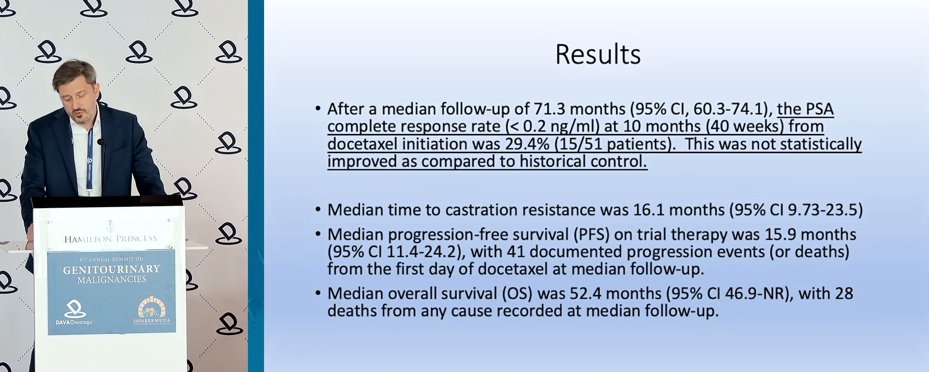
Results
After a median follow-up of 71.3 months (95% CI, 60.3-74.1), the PSA complete response rate (< 0.2 ng/ml) at 10 months (40 weeks) from docetaxel initiation was 29.4% (15/51 patients). This was not statistically improved as compared to historical control.
Median time to castration resistance was 16.1 months (95% CI 9.73-23.5)
Median progression-free survival (PFS) on trial therapy was 15.9 months (95% CI 11.4-24.2), with 41 documented progression events (or deaths) from the first day of docetaxel at median follow-up.
Median overall survival (OS) was 52.4 months (95% CI 46.9-NR), with 28 deaths from any cause recorded at median follow-up.
---
[Slide 3]
Efficacy/Safety of 4 cycles Docetaxel before ADT
PSA Percent Change from Baseline (C1D1) at C5D1
Metastatic Burden: High Volume | Low Volume
PSA Category: PSA Progression; Stable; PSA Response
Percent Change in Total Lesion Diameter after Upfront Chemotherapy from Enrollment
Response: Partial Response; Stable Disease
PSA response rate to docetaxel alone = 43.1%
Any decline in PSA after 4 cycles = 79%
Low Volume Disease vs. High and Black vs. White had higher odds ratio for PSA response in univariate analyses but not statistically significant.
RECIST response rate after 4 cycles docetaxel in 18 men with measurable disease = 39%
SAFETY: 4 of 51 men could not complete four cycles of upfront docetaxel without ADT. All four of these men went on to receive active anti-neoplastic therapies. Twelve of 51 men did have disease progression after the four cycles upfront docetaxel, but nine of these progressions were PSA only, and all twelve of these men went on to receive ADT. There was only one episode of neutropenic fever.
---
[Slide 4]
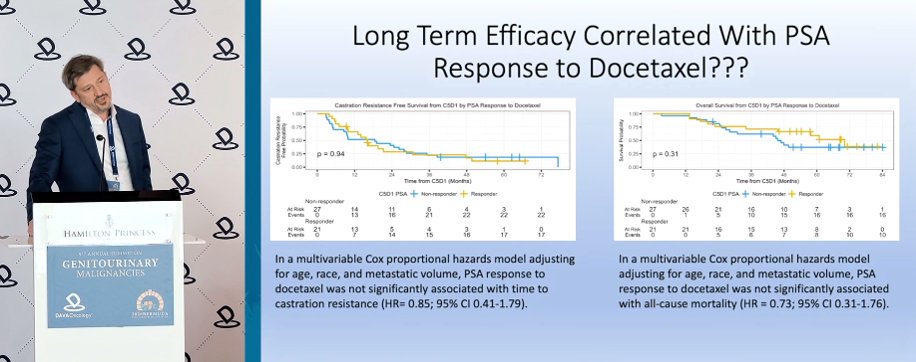
Long Term Efficacy Correlated With PSA Response to Docetaxel???
Castration Resistance Free Survival from C5D1 by PSA Response to Docetaxel
p = 0.94
Overall Survival from C5D1 by PSA Response to Docetaxel
p = 0.31
Time from C5D1 (Months)
Non-responder / Responder
At Risk (Non-responder) 27 | 14 | 11 | 6 | 4 | 3 | 1
Events 0 | 13 | 16 | 21 | 22 | 22 | 22
At Risk (Responder) 21 | 13 | 7 | 5 | 4 | 3 | 1 [illegible]
In a multivariable Cox proportional hazards model adjusting for age, race, and metastatic volume, PSA response to docetaxel was not significantly associated with time to castration resistance (HR= 0.85; 95% CI 0.41-1.79).
In a multivariable Cox proportional hazards model adjusting for age, race, and metastatic volume, PSA response to docetaxel was not significantly associated with all-cause mortality (HR = 0.73; 95% CI 0.31-1.76).
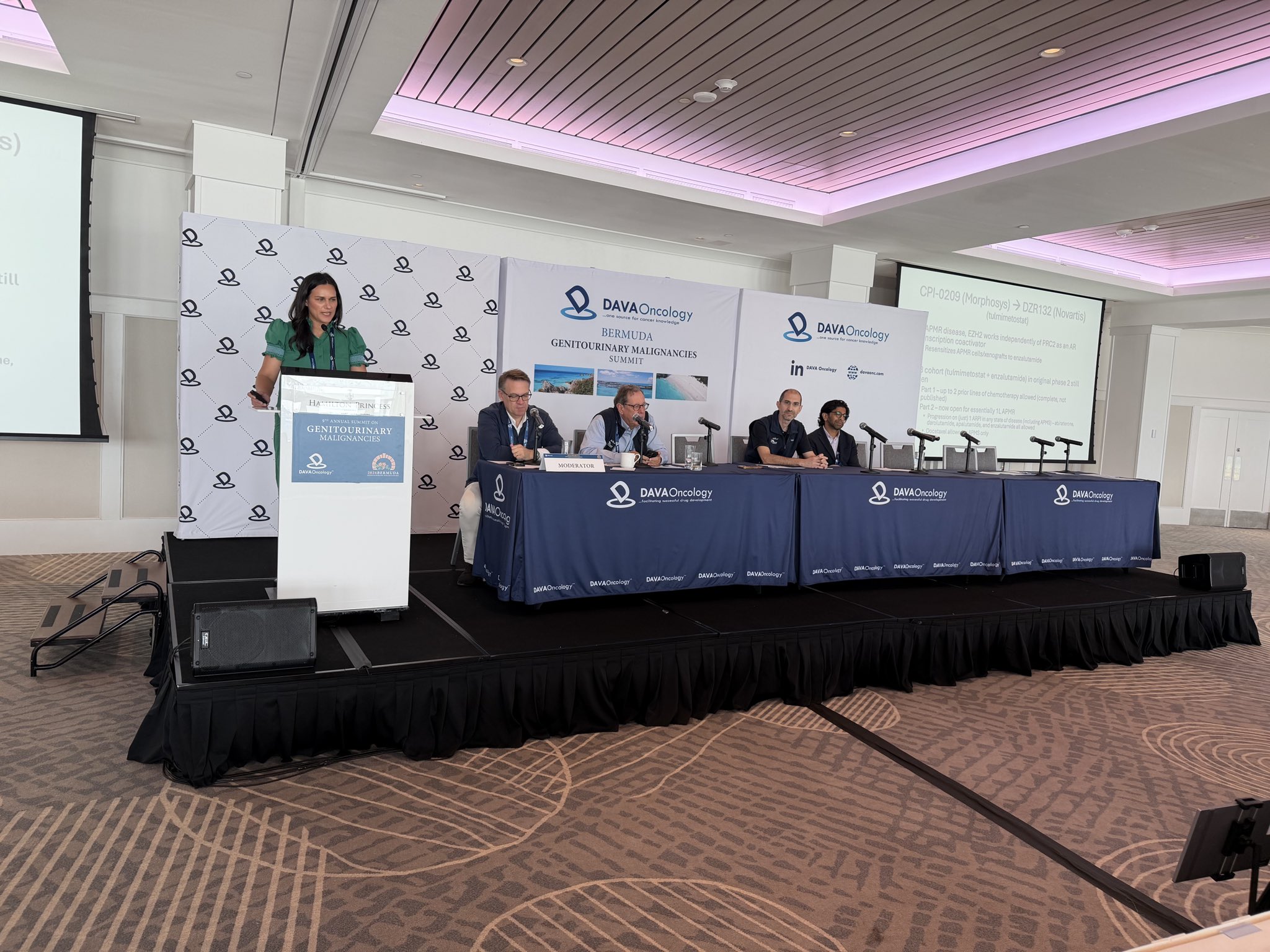
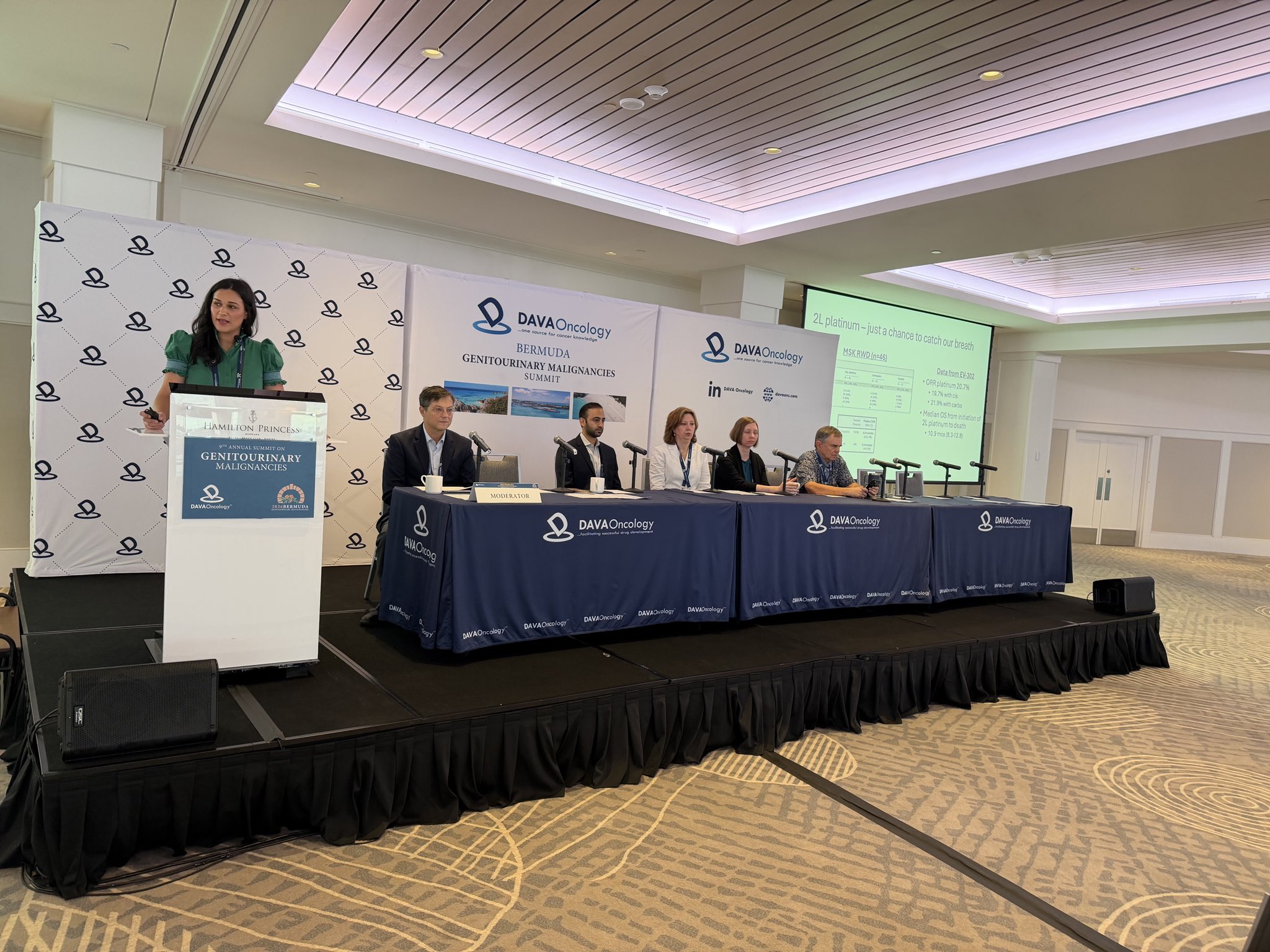
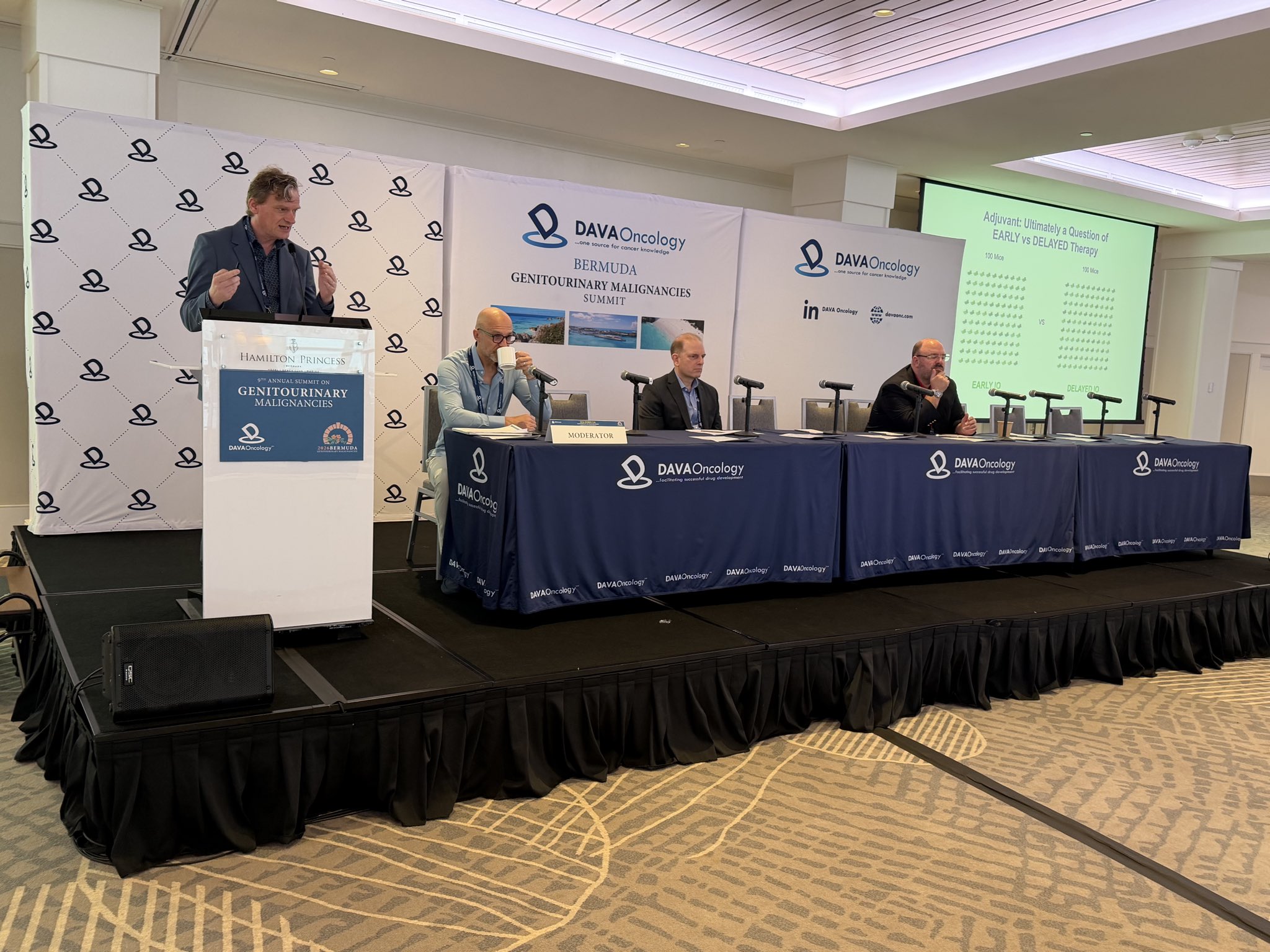
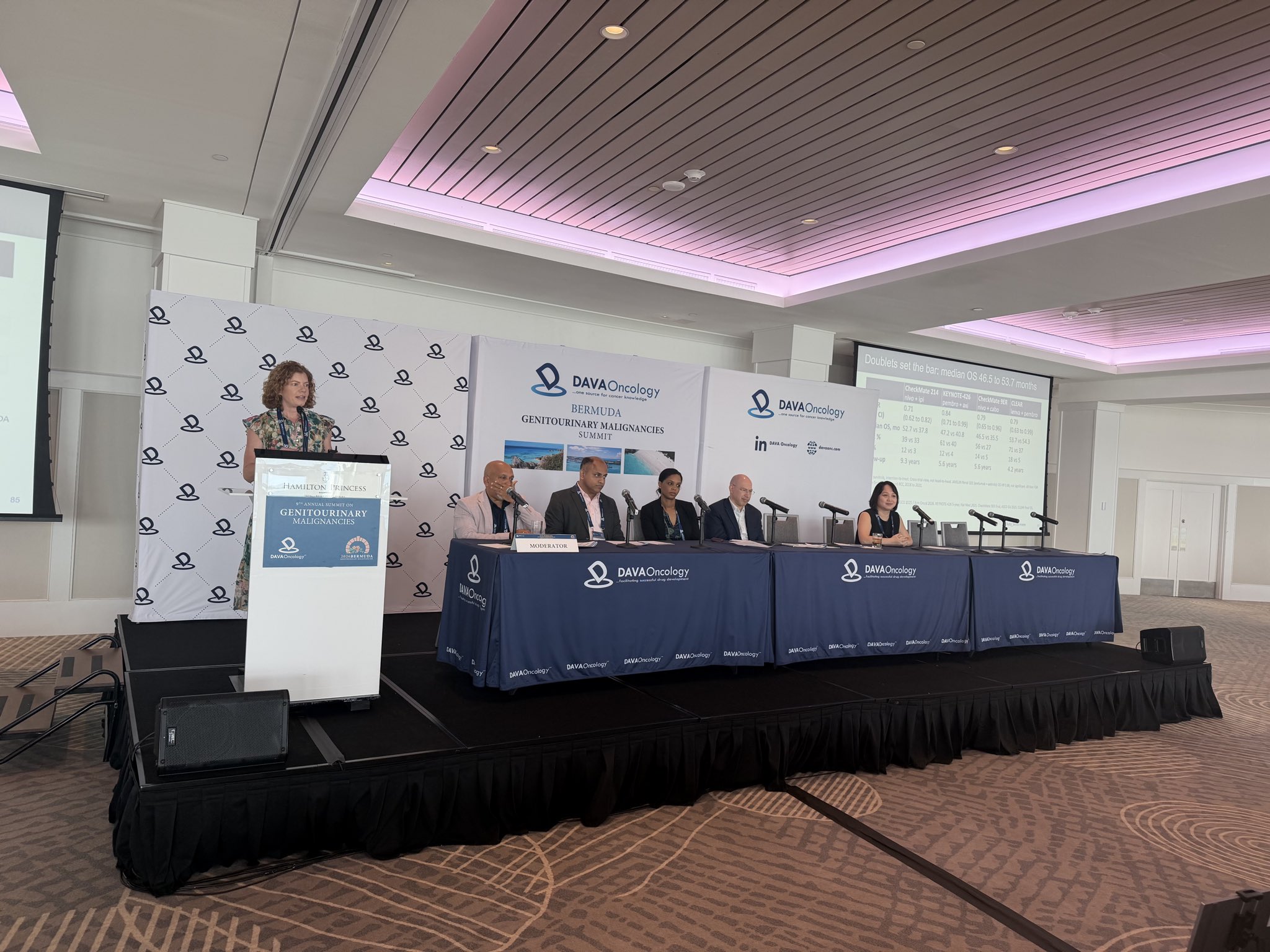
Targeting epigenetics pathways in prostate cancer @DAVAOnc #DAVAGU
[Slide 1]
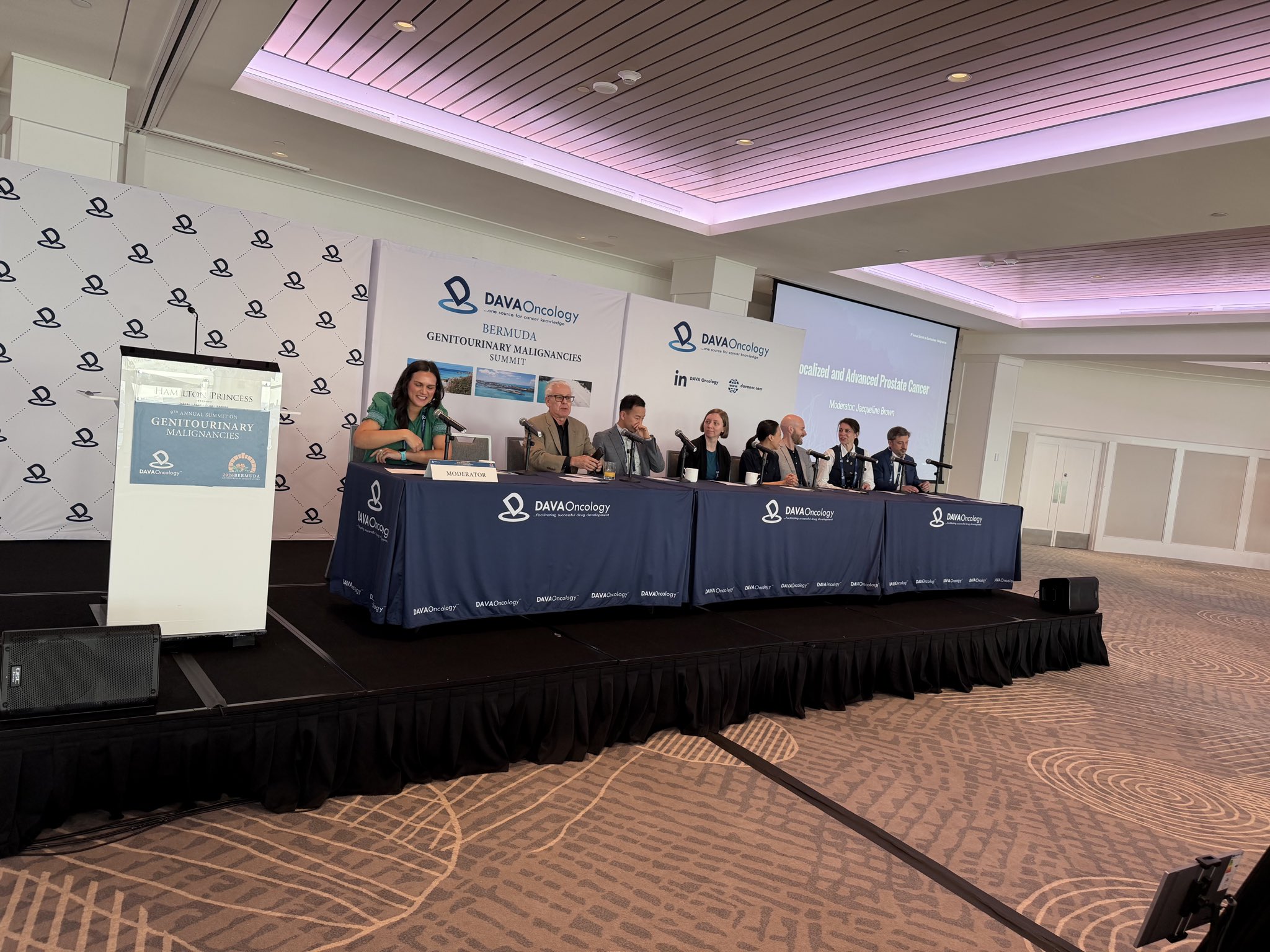
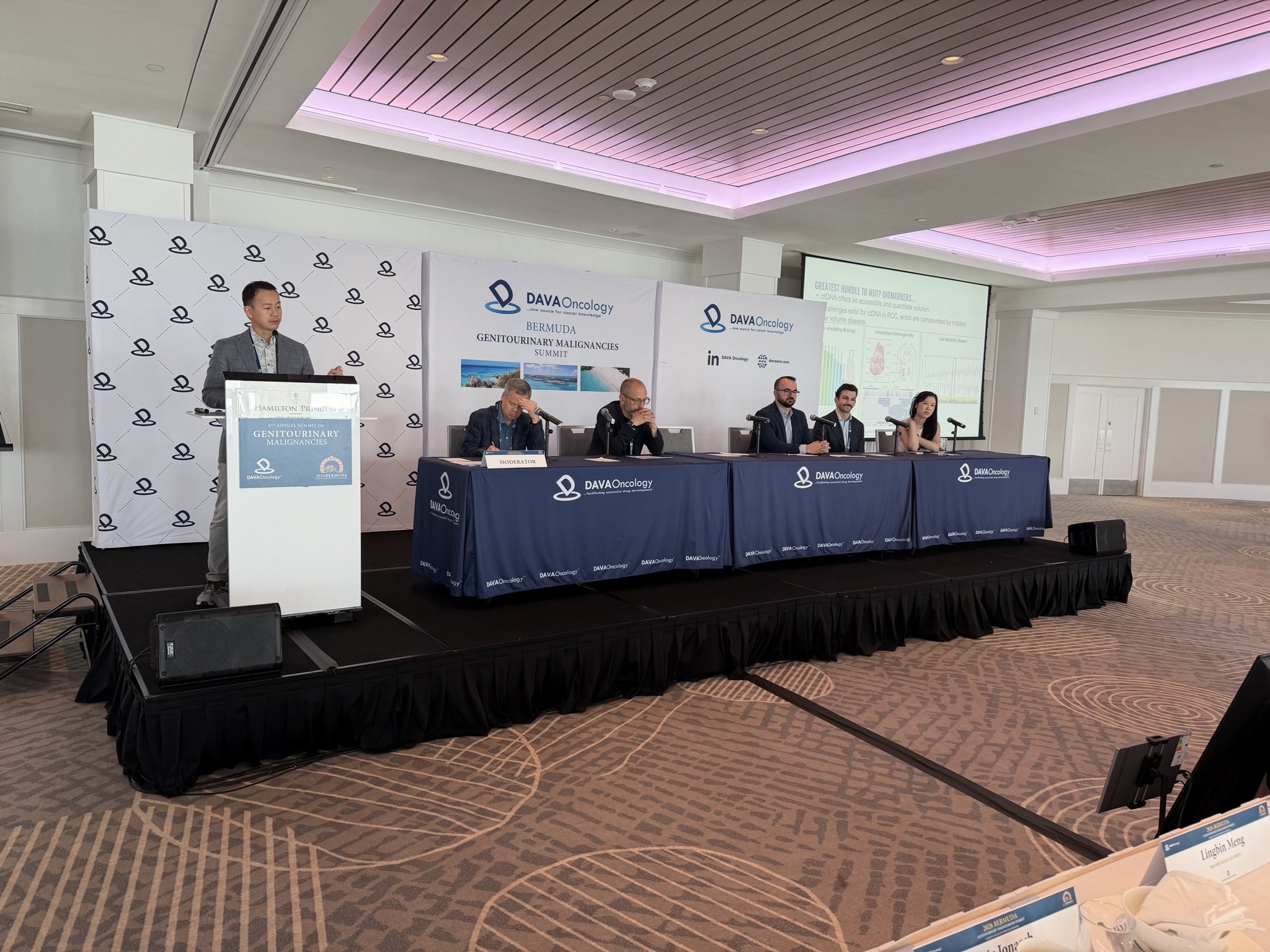
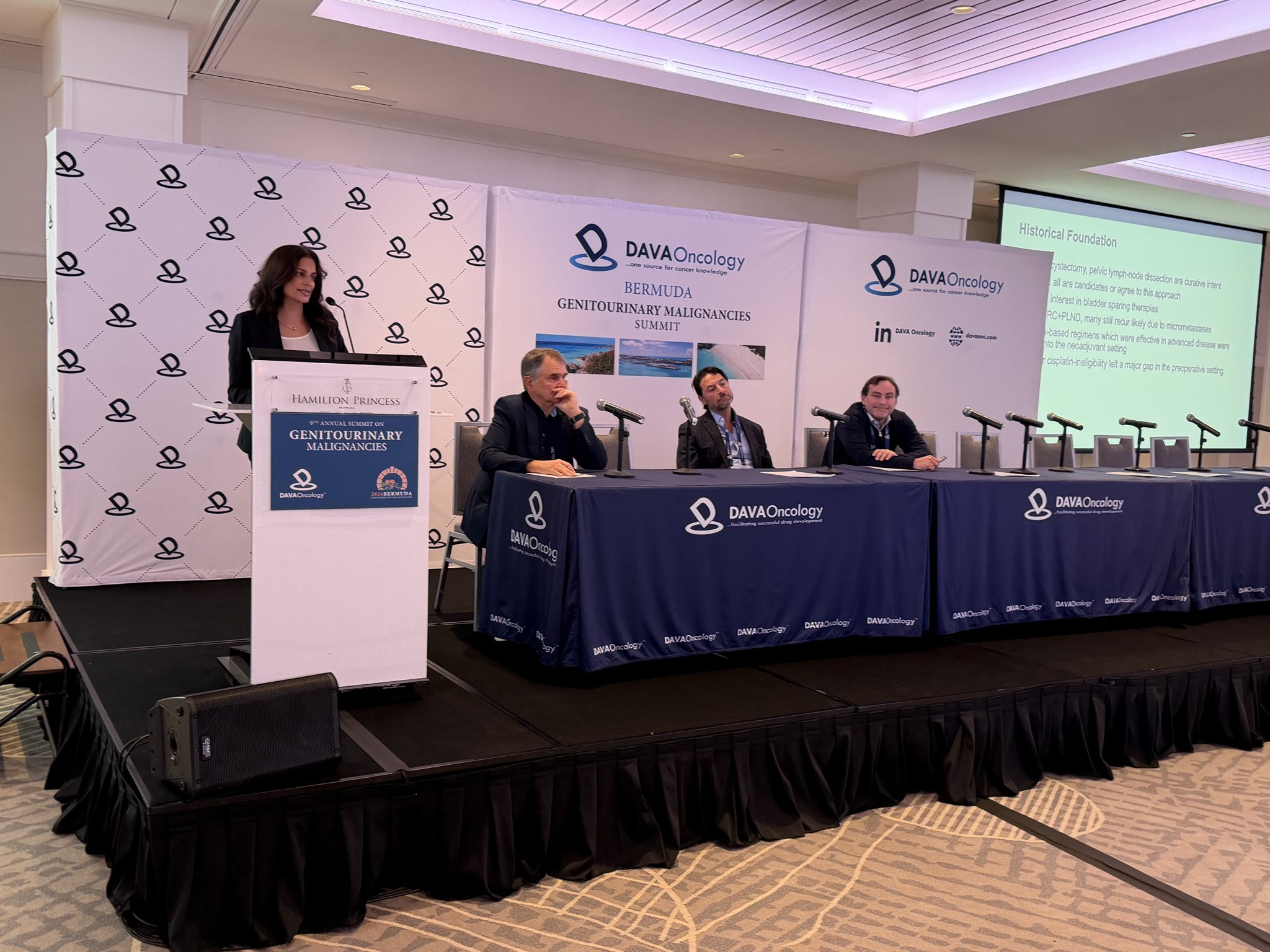
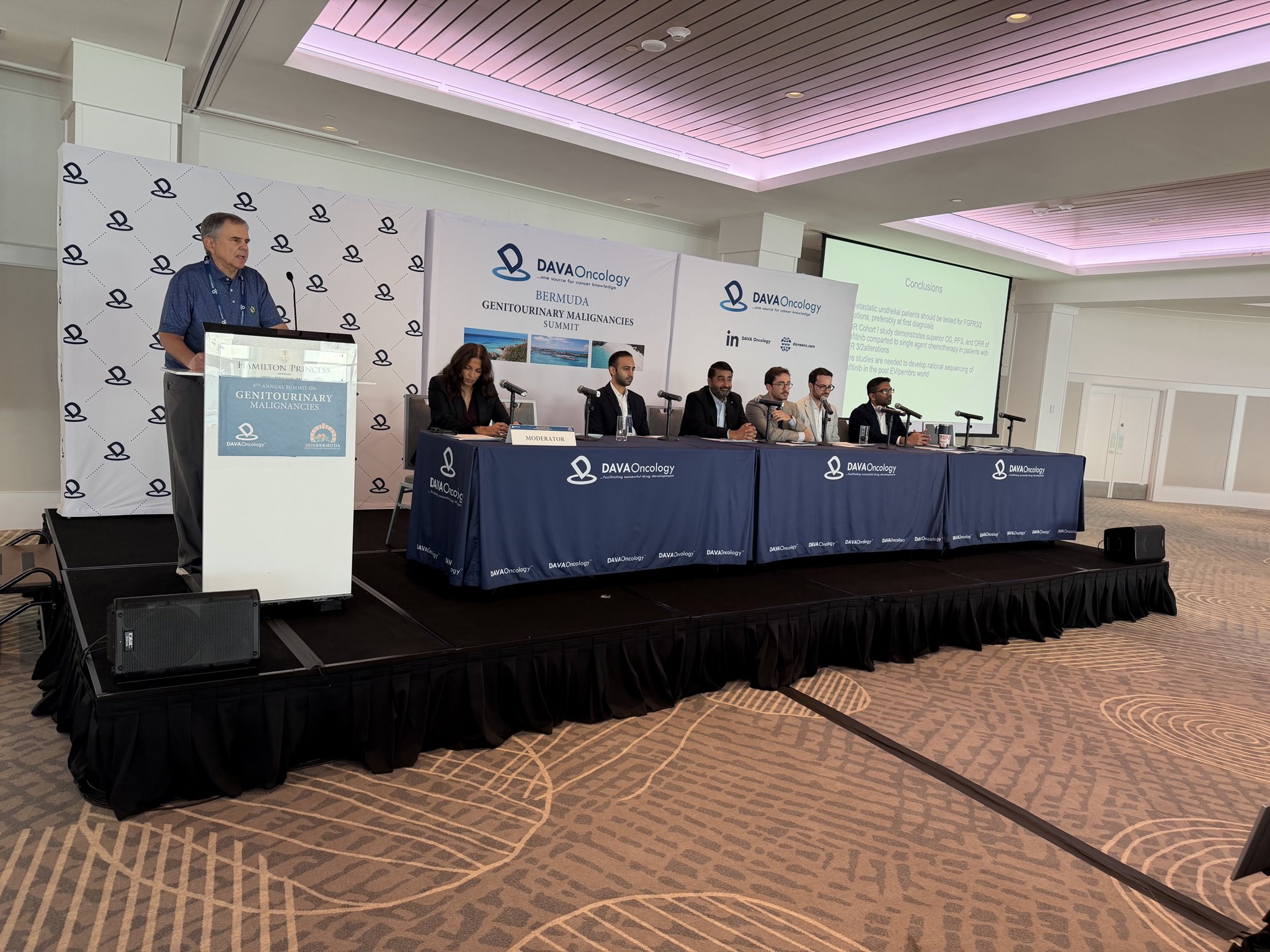
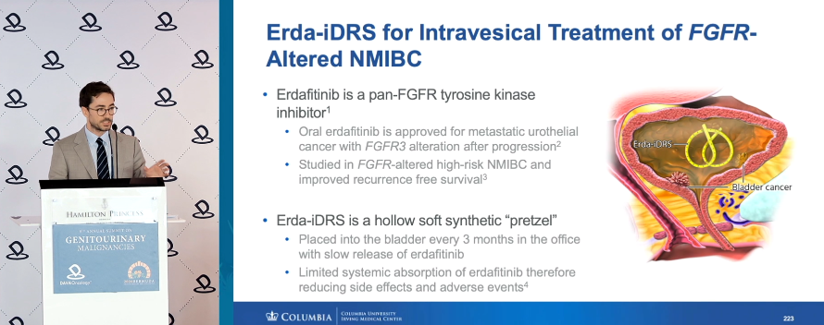
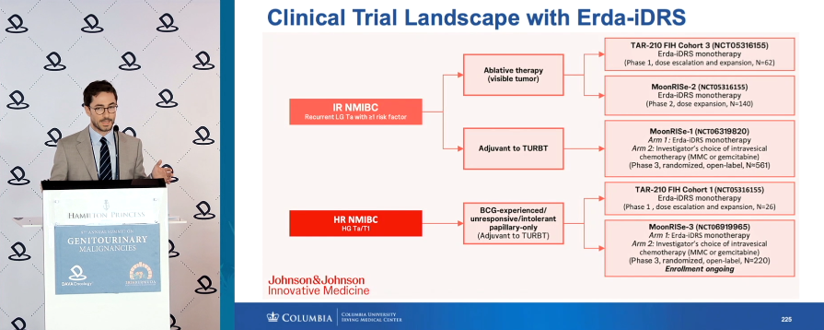
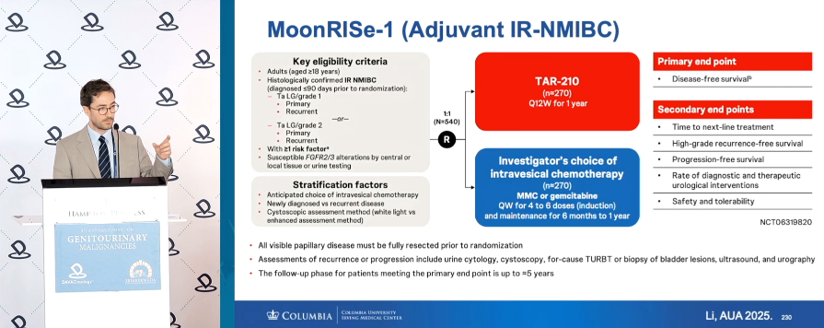
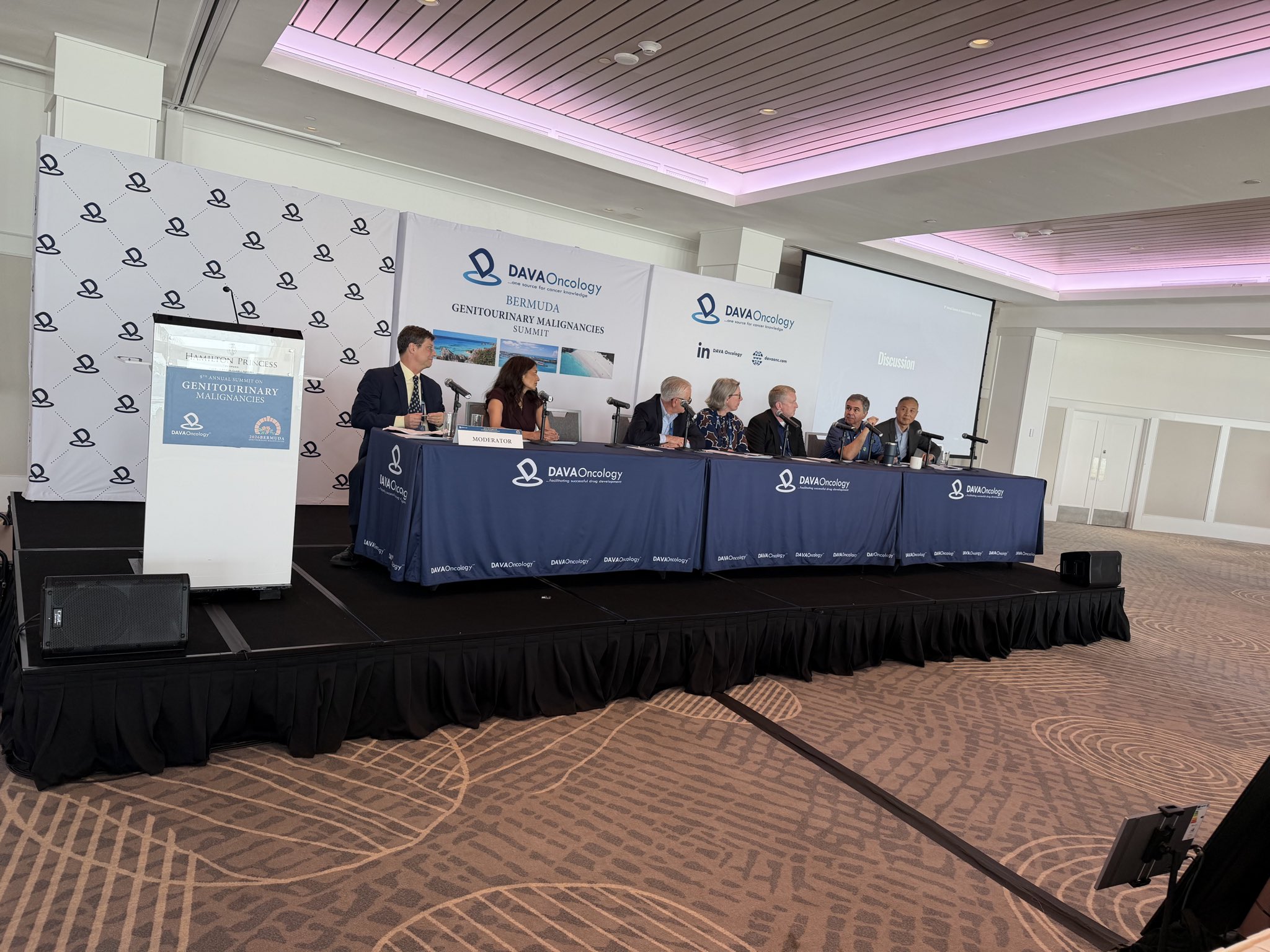
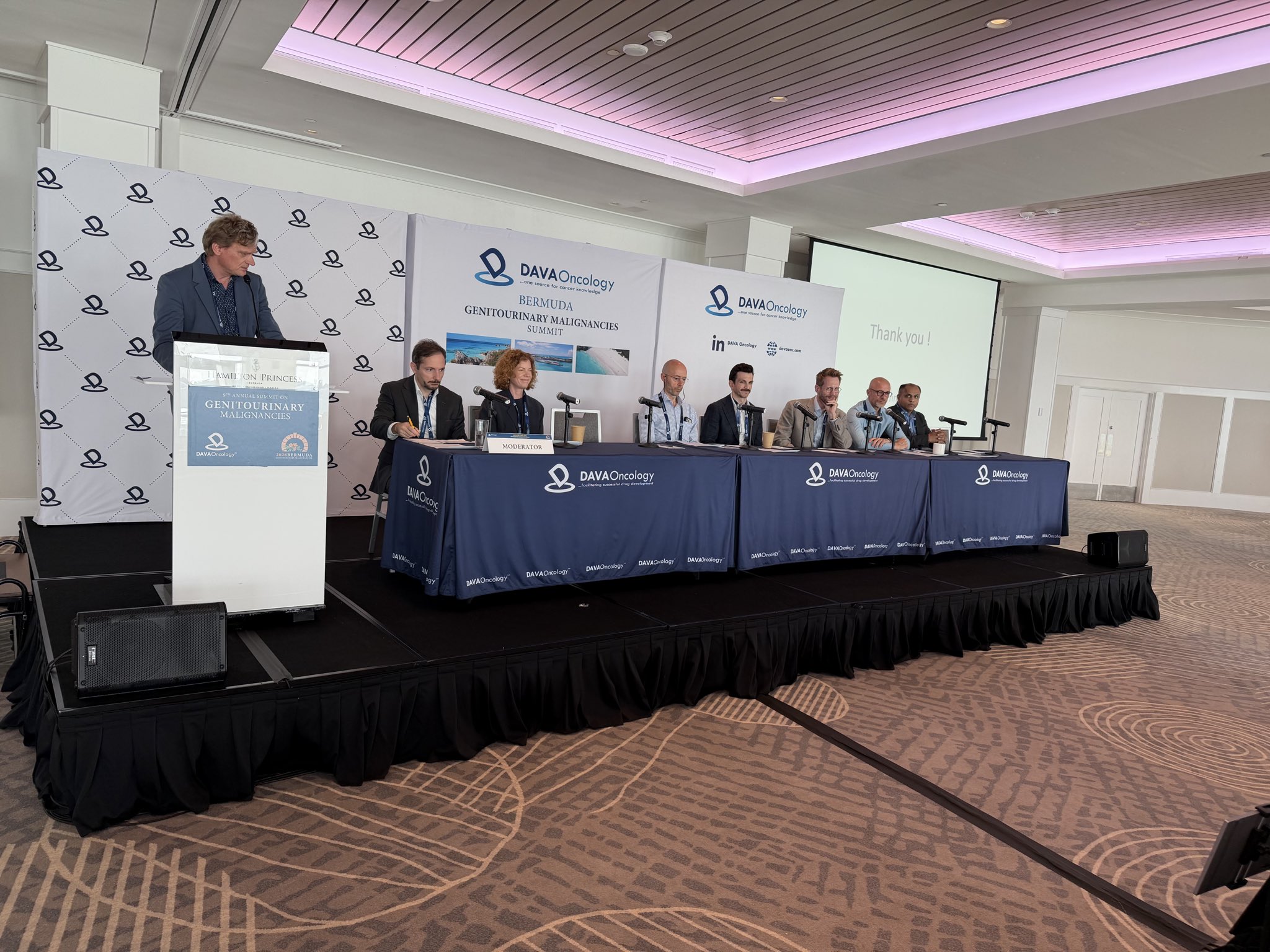
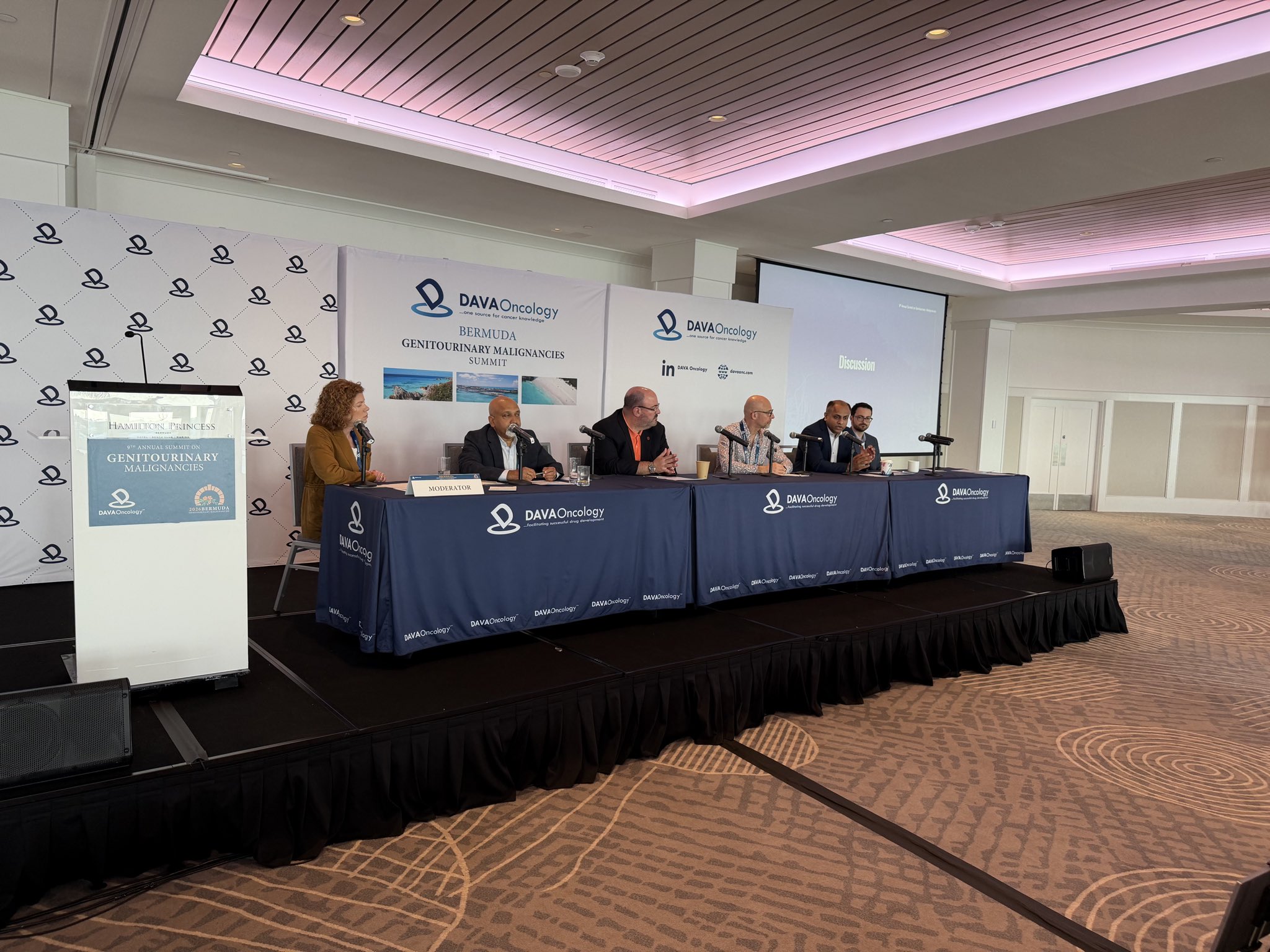
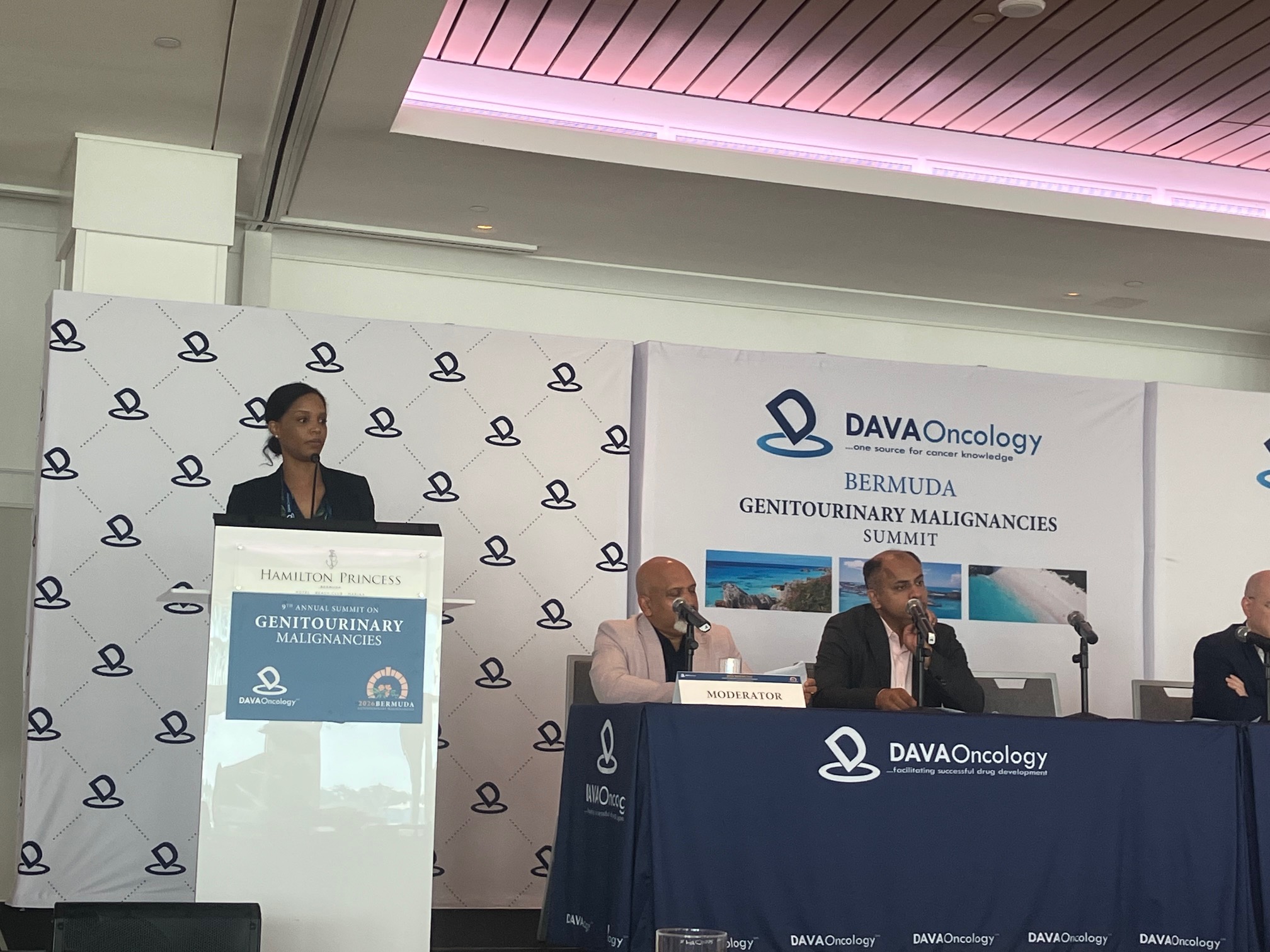
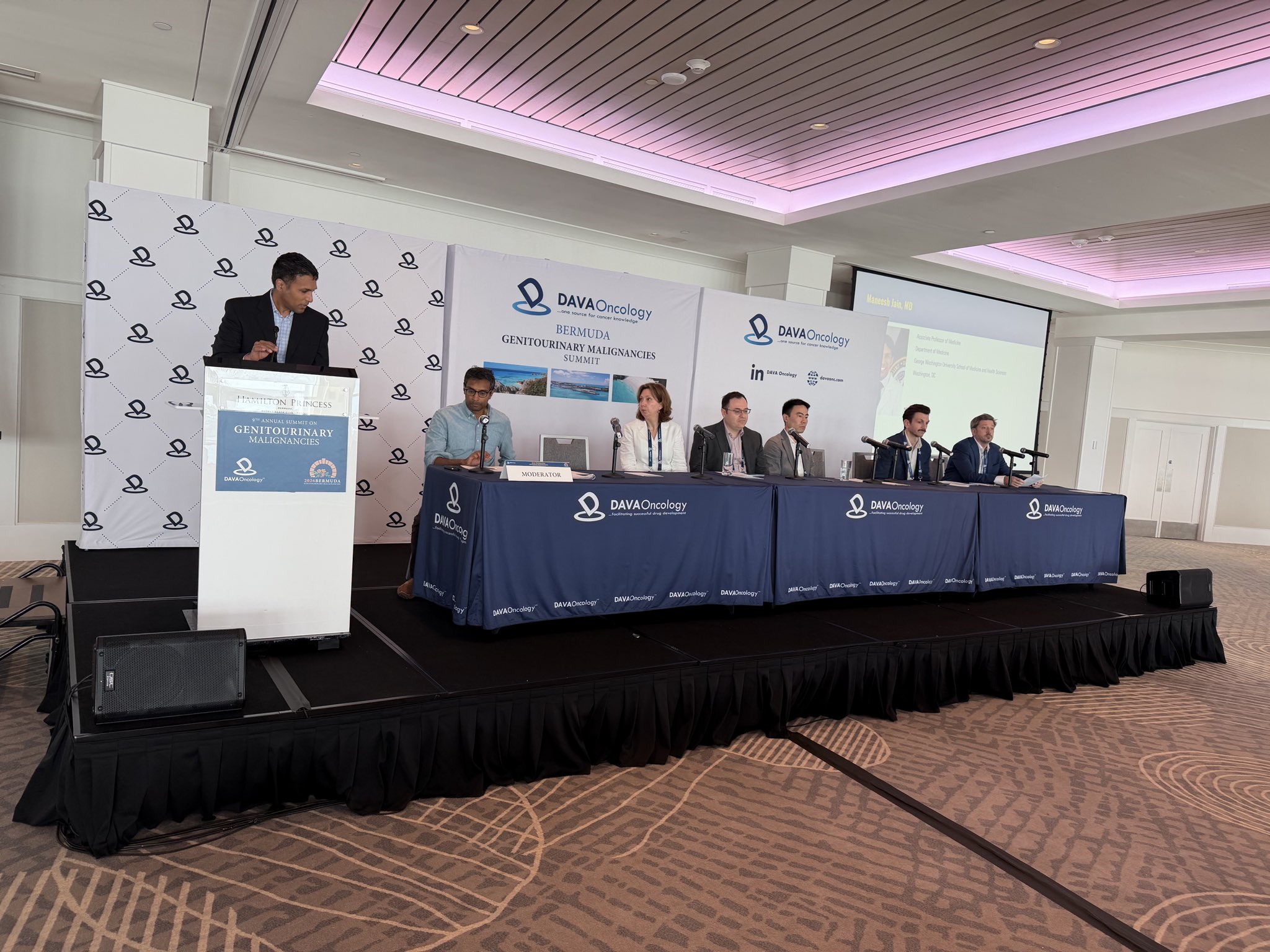
DAVA Oncology Bermuda Genitourinary Malignancies Summit
Hamilton Princess 9th Annual Summit on Genitourinary Malignancies
MODERATOR (table placard)
Projected slide (partially visible, right screen):
CPI-0209 (Morphosys) -> DZR132 (Novartis)
(tulmimetostat)
[illegible] APMR disease, EZH2 works independently of PRC2 as an AR transcription coactivator
Resensitizes APMR cells/xenografts to enzalutamide
[illegible] cohort (tulmimetostat + enzalutamide) in original phase 2 still [illegible]
Part 1 - up to 2 prior lines of chemotherapy allowed (complete, not published)
Part 2 - now open for essentially 1L APMR
Progression on (just) 1 APRI in any state of disease (including APMS) - abiraterone, darolutamide, apalutamide, and enzalutamide all allowed
Docetaxel allowed [illegible] APMS only
Left screen (cut off): s) / still / ne, [illegible]
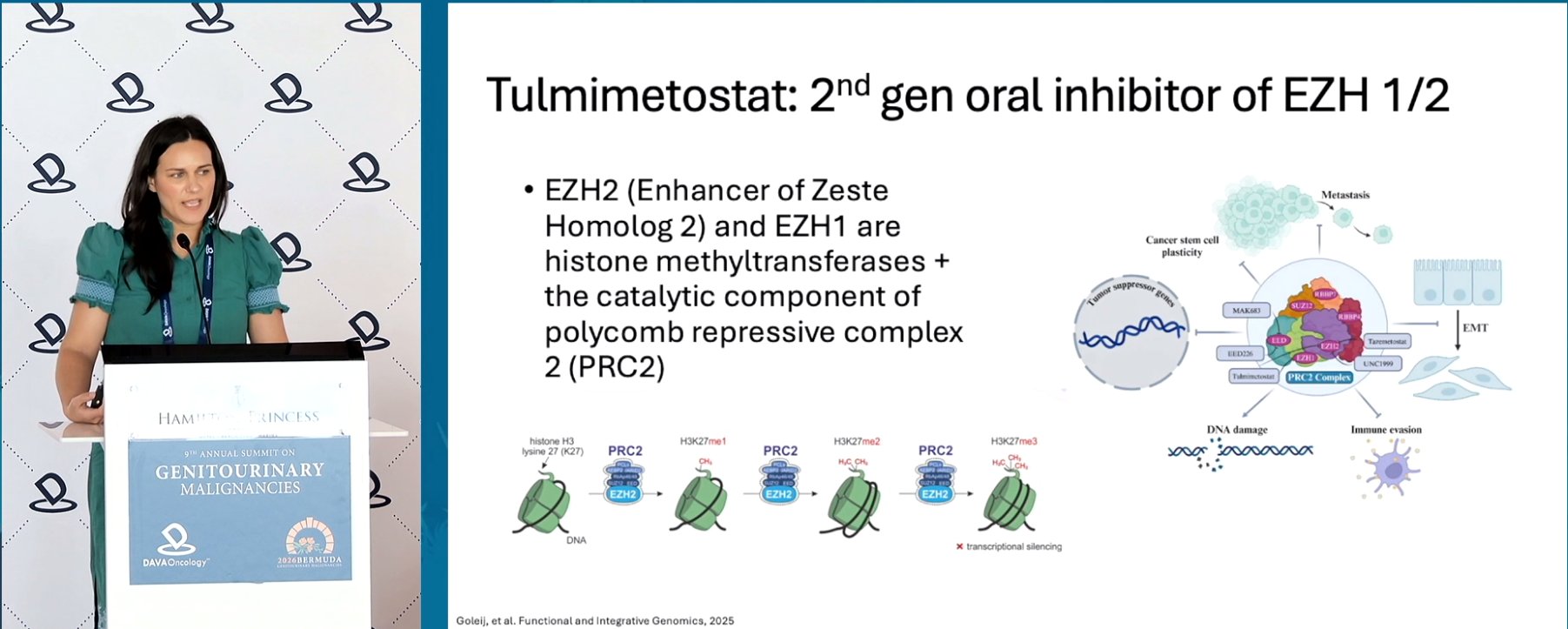
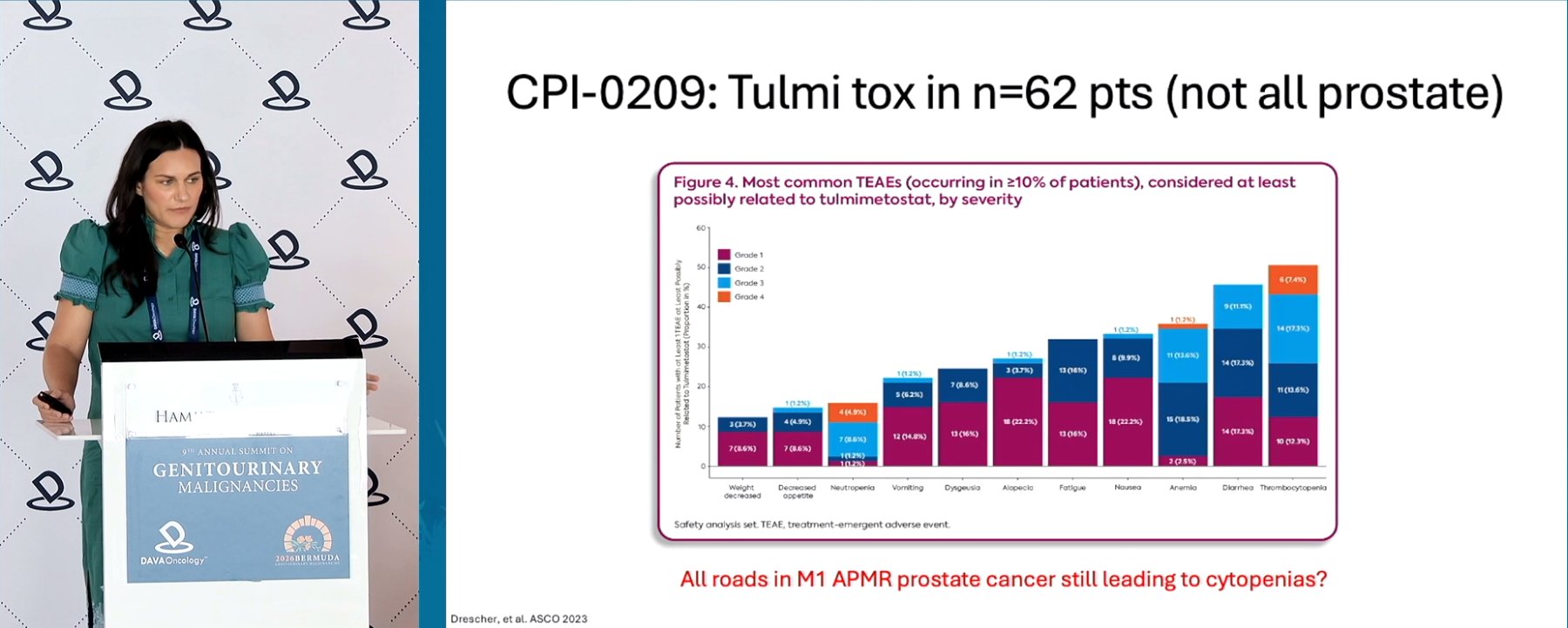
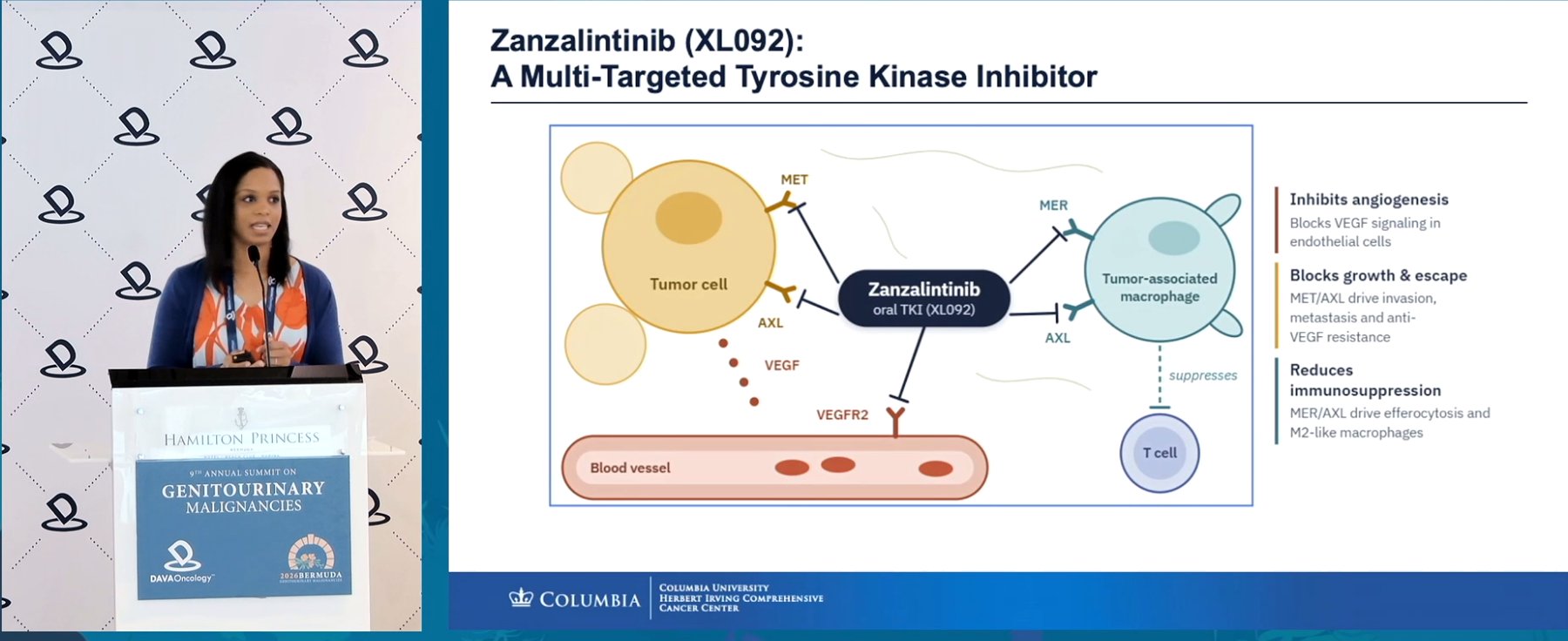
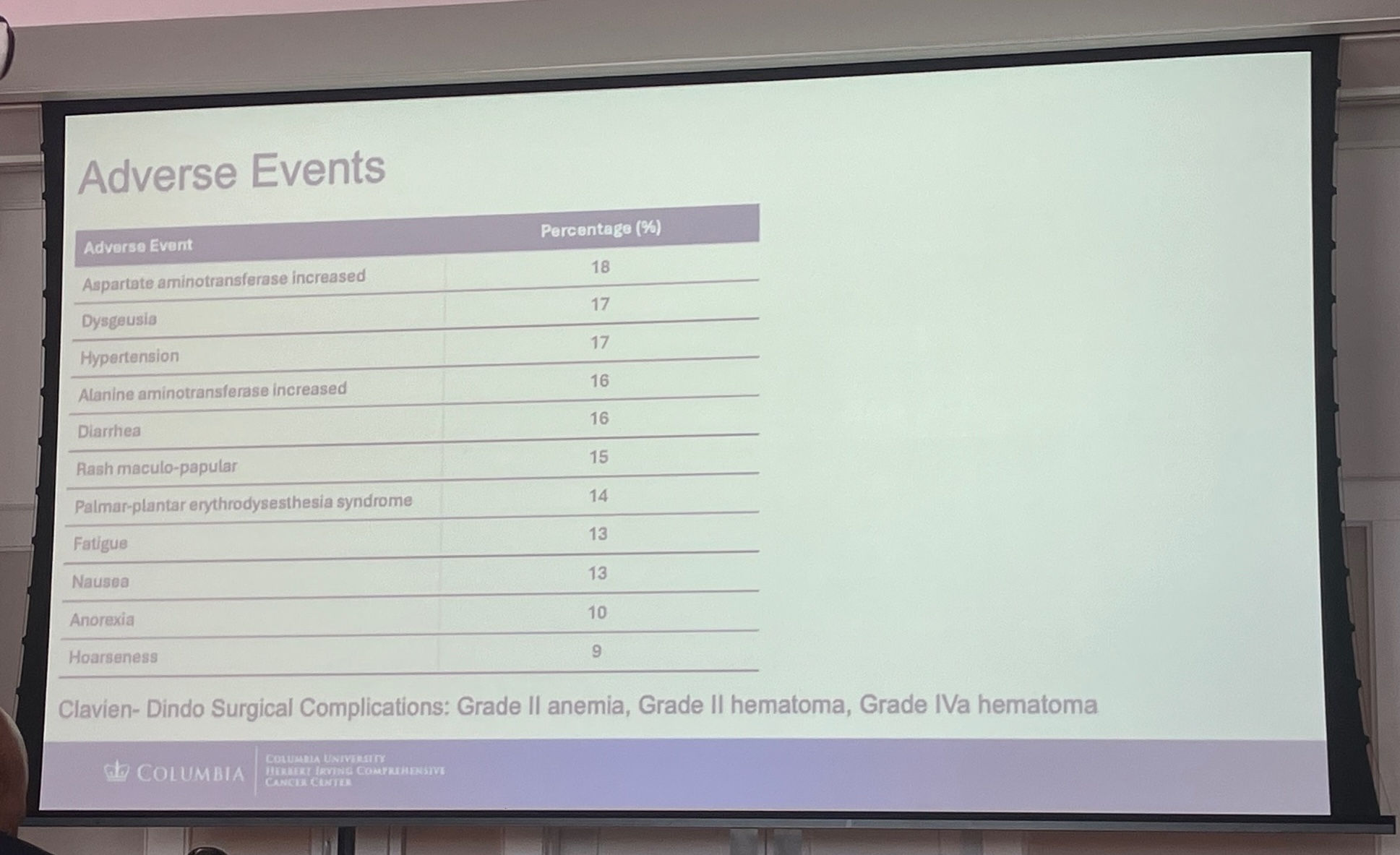
At #DAVAGU, Dr. @jackiebrown_MD from @WinshipAtEmory reviews Phase 2 CPI-0209 data on tulmimetostat in metastatic #CRPC. Early findings highlight cytopenias, particularly thrombocytopenia, alongside GI toxicities and fatigue as important safety considerations
[Slide 1]
Tulmimetostat: 2nd gen oral inhibitor of EZH 1/2
EZH2 (Enhancer of Zeste Homolog 2) and EZH1 are histone methyltransferases + the catalytic component of polycomb repressive complex 2 (PRC2)
Diagram: histone H3 lysine 27 (K27); PRC2 EZH2; H3K27me1; H3K27me2; H3K27me3; transcriptional silencing; DNA
Diagram labels: Metastasis; Cancer stem cell plasticity; Tumor suppressor genes; MAK683; EED226; Tulmimetostat; Tazemetostat; UNC1999; PRC2 Complex; EMT; DNA damage; Immune evasion
Goleij, et al. Functional and Integrative Genomics, 2025
---
[Slide 2]
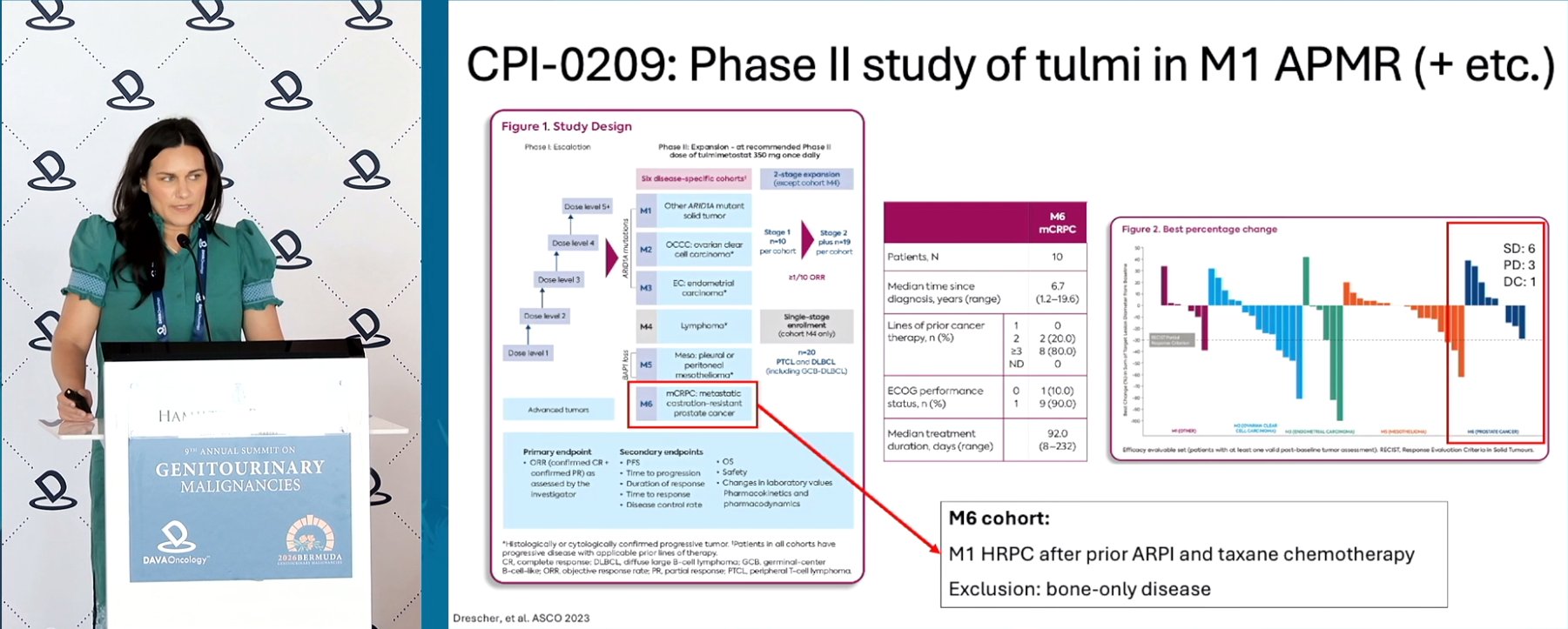
CPI-0209: Phase II study of tulmi in M1 APMR (+ etc.)
Figure 1. Study Design
Phase I: Escalation; Phase II: Expansion - at recommended Phase II dose of tulmimetostat 350 mg once daily
Six disease-specific cohorts; 2-stage expansion (except cohort M4)
M1 Other ARID1A mutant solid tumor; M2 OCCC: ovarian clear cell carcinoma; M3 EC: endometrial carcinoma; M4 Lymphoma; M5 Meso: pleural or peritoneal mesothelioma; M6 mRCPC: metastatic castration-resistant prostate cancer
Stage 1 n=10 per cohort; Stage 2 plus n=19 per cohort; ≥1/10 ORR; Single-stage enrollment (cohort M4 only) n=20 PTCL and DLBCL (including GCB-DLBCL)
Primary endpoint: ORR (confirmed CR + confirmed PR) as assessed by the investigator
Secondary endpoints: PFS; Time to progression; Duration of response; Time to response; Disease control rate; OS; Safety; Changes in laboratory values and pharmacodynamics
M6 mCRPC table: Patients, N 10; Median time since diagnosis, years (range) 6.7 (1.2-19.6); Lines of prior cancer therapy, n (%): 1: 0 | 2: 2 (20.0) | ≥3: 8 (80.0) | ND: 0; ECOG performance status, n (%): 0: 1 (10.0) | 1: 9 (90.0); Median treatment duration, days (range) 92.0 (8-232)
Figure 2. Best percentage change; M6 (prostate cancer) boxed: SD: 6; PD: 3; DC: 1
M6 cohort:
M1 HRPC after prior ARPI and taxane chemotherapy
Exclusion: bone-only disease
Drescher, et al. ASCO 2023
---
[Slide 3]
CPI-0209: Tulmi tox in n=62 pts (not all prostate)
Figure 4. Most common TEAEs (occurring in ≥10% of patients), considered at least possibly related to tulmimetostat, by severity
Y axis: Number of Patients with at Least 1TEAE at Least Possibly Related to Tulmimetostat (Proportion in %)
Grade 1; Grade 2; Grade 3; Grade 4
Weight decreased: G1 7 (8.6%); G2 3 (3.7%)
Decreased appetite: G1 7 (8.6%); G2 4 (4.9%); G3 1 (1.2%)
Neutropenia: G1 1 (1.2%); G2 1 (1.2%); G3 7 (8.6%); G4 4 (4.9%)
Vomiting: G1 12 (14.8%); G2 5 (6.2%); G3 1 (1.2%)
Dysgeusia: G1 13 (16%); G2 7 (8.6%)
Alopecia: G1 18 (22.2%); G2 3 (3.7%); G3 1 (1.2%)
Fatigue: G1 13 (16%); G2 13 (16%)
Nausea: G1 18 (22.2%); G2 8 (9.9%); G3 1 (1.2%)
Anemia: G1 2 (2.5%); G2 15 (18.5%); G3 11 (13.6%); G4 1 (1.2%)
Diarrhea: G1 14 (17.3%); G2 14 (17.3%); G3 9 (11.1%)
Thrombocytopenia: G1 10 (12.3%); G2 11 (13.6%); G3 14 (17.3%); G4 6 (7.4%)
Safety analysis set. TEAE, treatment-emergent adverse event.
All roads in M1 APMR prostate cancer still leading to cytopenias?
Drescher, et al. ASCO 2023
---
[Slide 4]
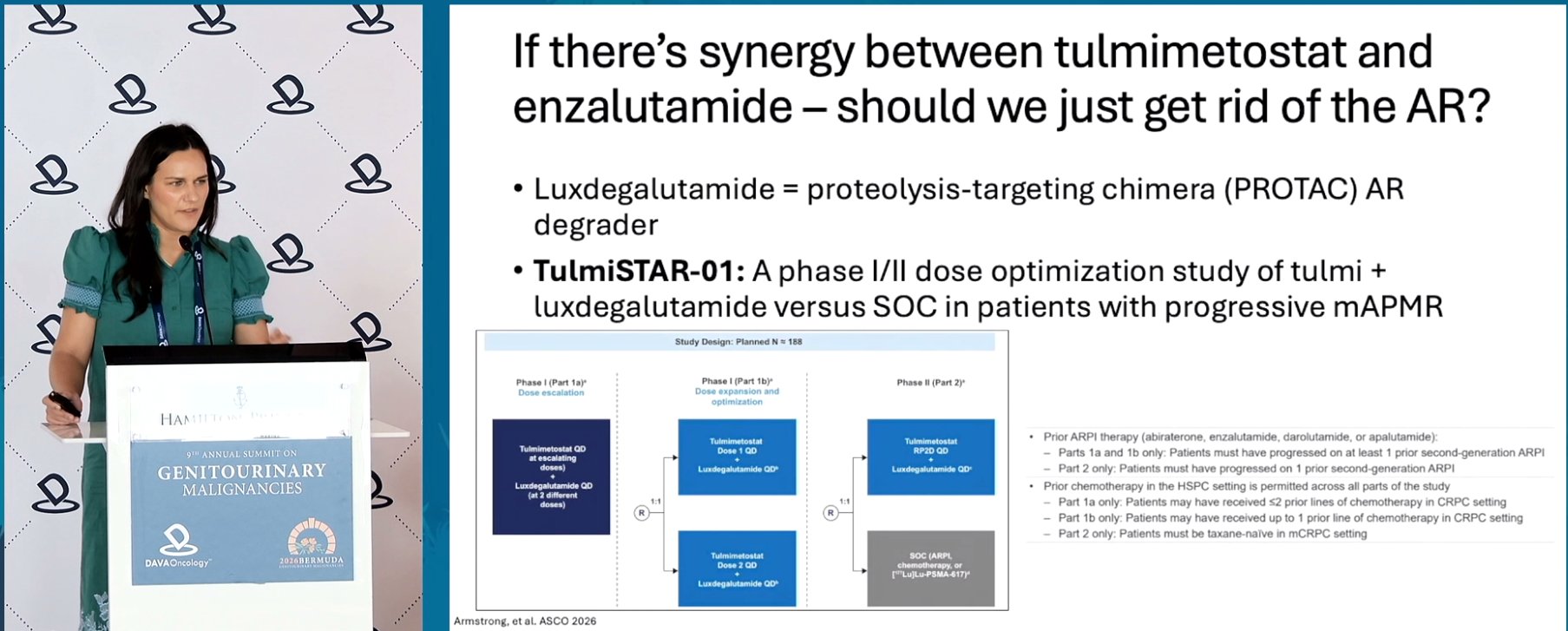
If there's synergy between tulmimetostat and enzalutamide - should we just get rid of the AR?
Luxdegalutamide = proteolysis-targeting chimera (PROTAC) AR degrader
TulmiSTAR-01: A phase I/II dose optimization study of tulmi + luxdegalutamide versus SOC in patients with progressive mAPMR
Study Design: Planned N ≈ 188
Phase I (Part 1a): Dose escalation - Tulmimetostat QD at escalating doses + Luxdegalutamide QD (at 2 different doses)
Phase I (Part 1b): Dose expansion and optimization - R 1:1 - Tulmimetostat Dose 1 QD + Luxdegalutamide QD; Tulmimetostat Dose 2 QD + Luxdegalutamide QD
Phase II (Part 2): R 1:1 - Tulmimetostat RP2D QD + Luxdegalutamide QD; SOC (ARPI, chemotherapy, or [177Lu]Lu-PSMA-617)
Prior ARPI therapy (abiraterone, enzalutamide, darolutamide, or apalutamide):
Parts 1a and 1b only: Patients must have progressed on at least 1 prior second-generation ARPI
Part 2 only: Patients must have progressed on 1 prior second-generation ARPI
Prior chemotherapy in the HSPC setting is permitted across all parts of the study
Part 1a only: Patients may have received ≤2 prior lines of chemotherapy in CRPC setting
Part 1b only: Patients may have received up to 1 prior line of chemotherapy in CRPC setting
Part 2 only: Patients must be taxane-naive in mCRPC setting
Armstrong, et al. ASCO 2026
Dr. @EAntonarakis from @UMNews highlights OMAHA-004, evaluating opevesostat vs an ARPI switch in pre-chemotherapy #mCRPC. The Phase 3 trial will assess radiographic PFS and explore outcomes by AR-LBD mutation status #DAVAGU
CYPIDESOMAHA-004
[Slide 1]
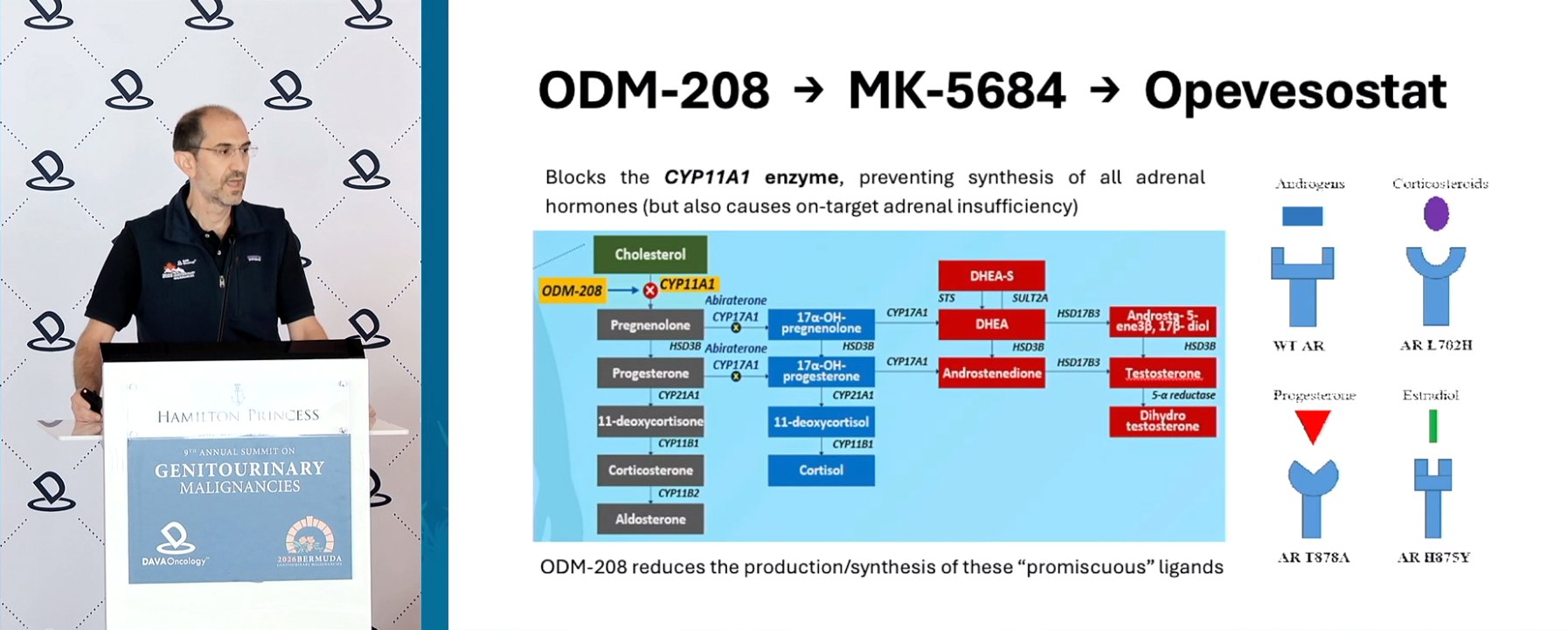
ODM-208 -> MK-5684 -> Opevesostat
Blocks the CYP11A1 enzyme, preventing synthesis of all adrenal hormones (but also causes on-target adrenal insufficiency)
Steroid synthesis pathway diagram: Cholesterol; ODM-208 (blocks CYP11A1); Pregnenolone; Progesterone; 11-deoxycortisone; Corticosterone; Aldosterone; 17α-OH-pregnenolone; 17α-OH-progesterone; 11-deoxycortisol; Cortisol; DHEA-S; DHEA; Androstenedione; Androsta-5-ene3β, 17β-diol; Testosterone; Dihydrotestosterone; Abiraterone (CYP17A1); enzymes CYP21A1, CYP11B1, CYP11B2, HSD3B, HSD17B3, SULT2A, STS, 5-α reductase
ODM-208 reduces the production/synthesis of these "promiscuous" ligands
Androgens, Corticosteroids, Progesterone, Estradiol binding: WT AR; AR L702H; AR T878A; AR H875Y
---
[Slide 2]
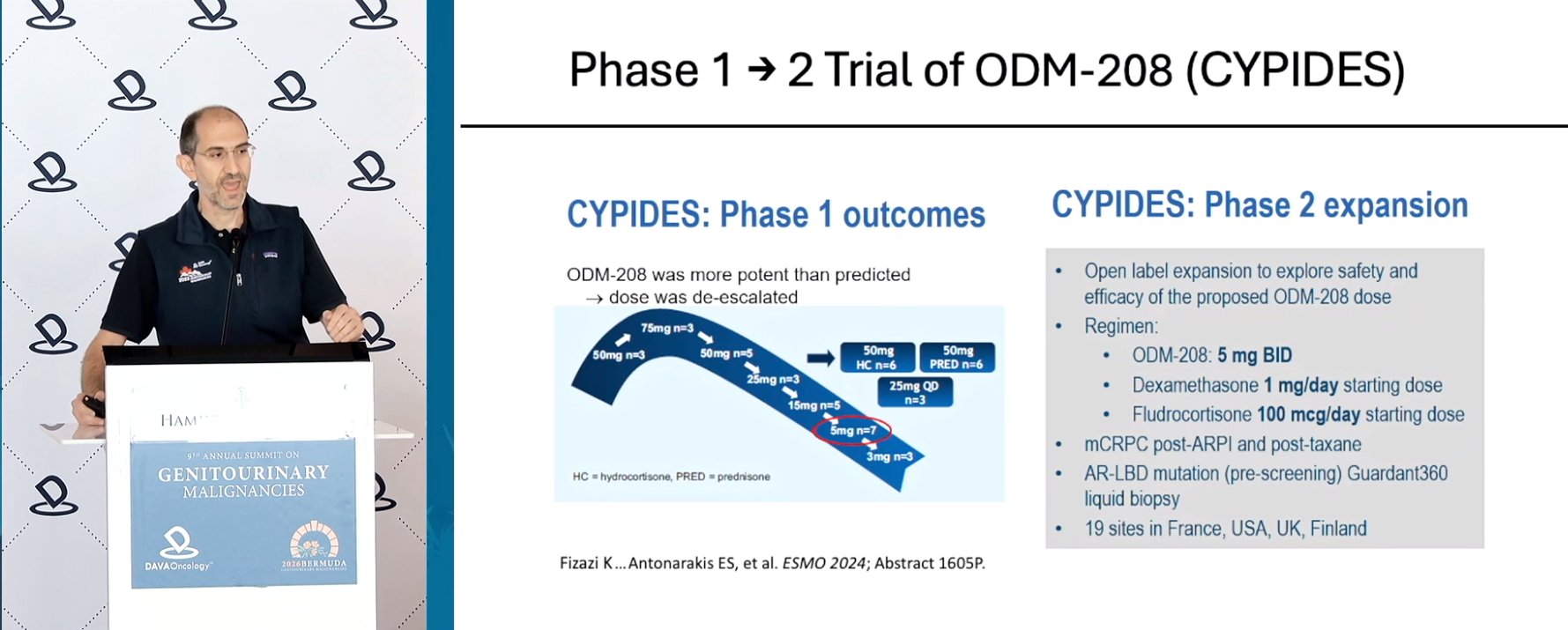
Phase 1 -> 2 Trial of ODM-208 (CYPIDES)
CYPIDES: Phase 1 outcomes
ODM-208 was more potent than predicted -> dose was de-escalated
Dose steps: 50mg n=3; 75mg n=3; 50mg n=5; 25mg n=3; 15mg n=5; 5mg n=7 (circled); 3mg n=3; 50mg HC n=6; 50mg PRED n=6; 25mg QD n=3
HC = hydrocortisone, PRED = prednisone
CYPIDES: Phase 2 expansion
Open label expansion to explore safety and efficacy of the proposed ODM-208 dose
Regimen:
ODM-208: 5 mg BID
Dexamethasone 1 mg/day starting dose
Fludrocortisone 100 mcg/day starting dose
mCRPC post-ARPI and post-taxane
AR-LBD mutation (pre-screening) Guardant360 liquid biopsy
19 sites in France, USA, UK, Finland
Fizazi K...Antonarakis ES, et al. ESMO 2024; Abstract 1605P.
---
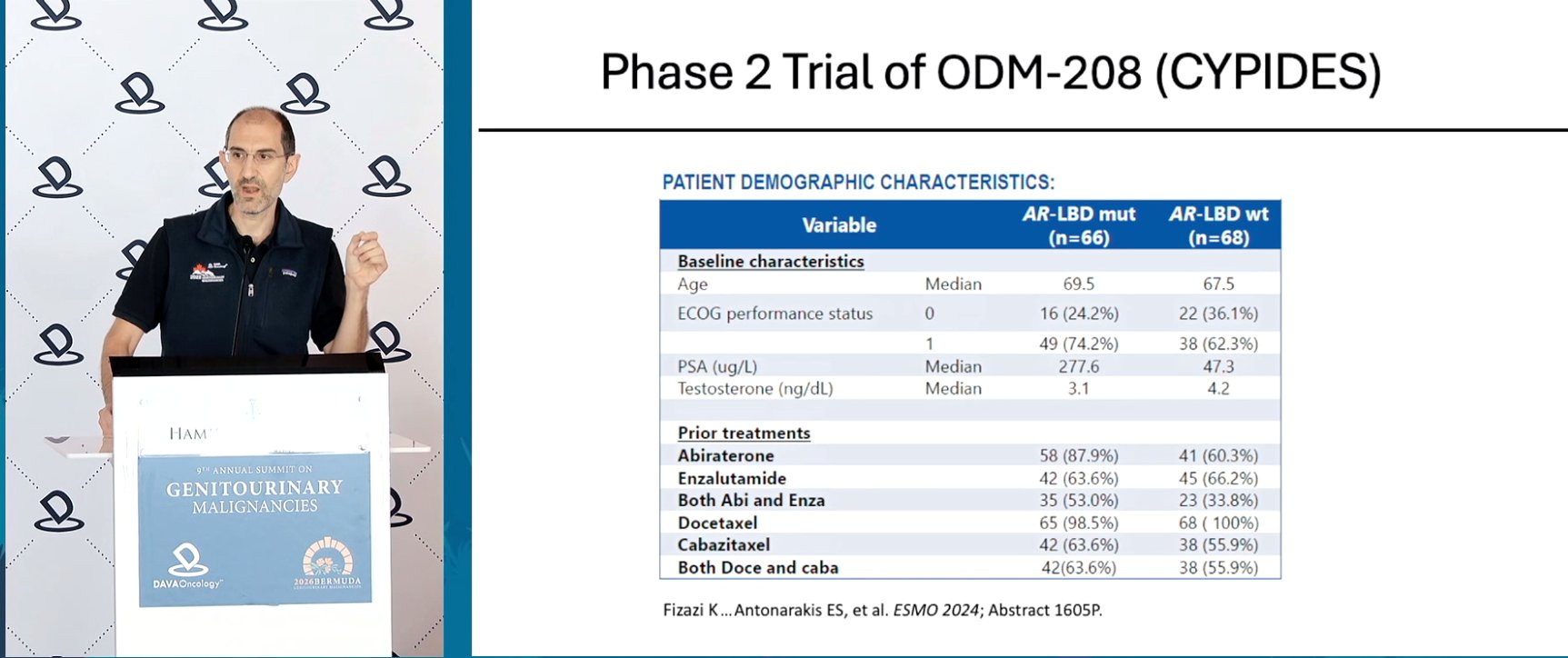
[Slide 3]
Phase 2 Trial of ODM-208 (CYPIDES)
PATIENT DEMOGRAPHIC CHARACTERISTICS:
Variable | | AR-LBD mut (n=66) | AR-LBD wt (n=68)
Baseline characteristics
Age | Median | 69.5 | 67.5
ECOG performance status | 0 | 16 (24.2%) | 22 (36.1%)
| 1 | 49 (74.2%) | 38 (62.3%)
PSA (ug/L) | Median | 277.6 | 47.3
Testosterone (ng/dL) | Median | 3.1 | 4.2
Prior treatments
Abiraterone | 58 (87.9%) | 41 (60.3%)
Enzalutamide | 42 (63.6%) | 45 (66.2%)
Both Abi and Enza | 35 (53.0%) | 23 (33.8%)
Docetaxel | 65 (98.5%) | 68 ( 100%)
Cabazitaxel | 42 (63.6%) | 38 (55.9%)
Both Doce and caba | 42(63.6%) | 38 (55.9%)
Fizazi K...Antonarakis ES, et al. ESMO 2024; Abstract 1605P.
---
[Slide 4]
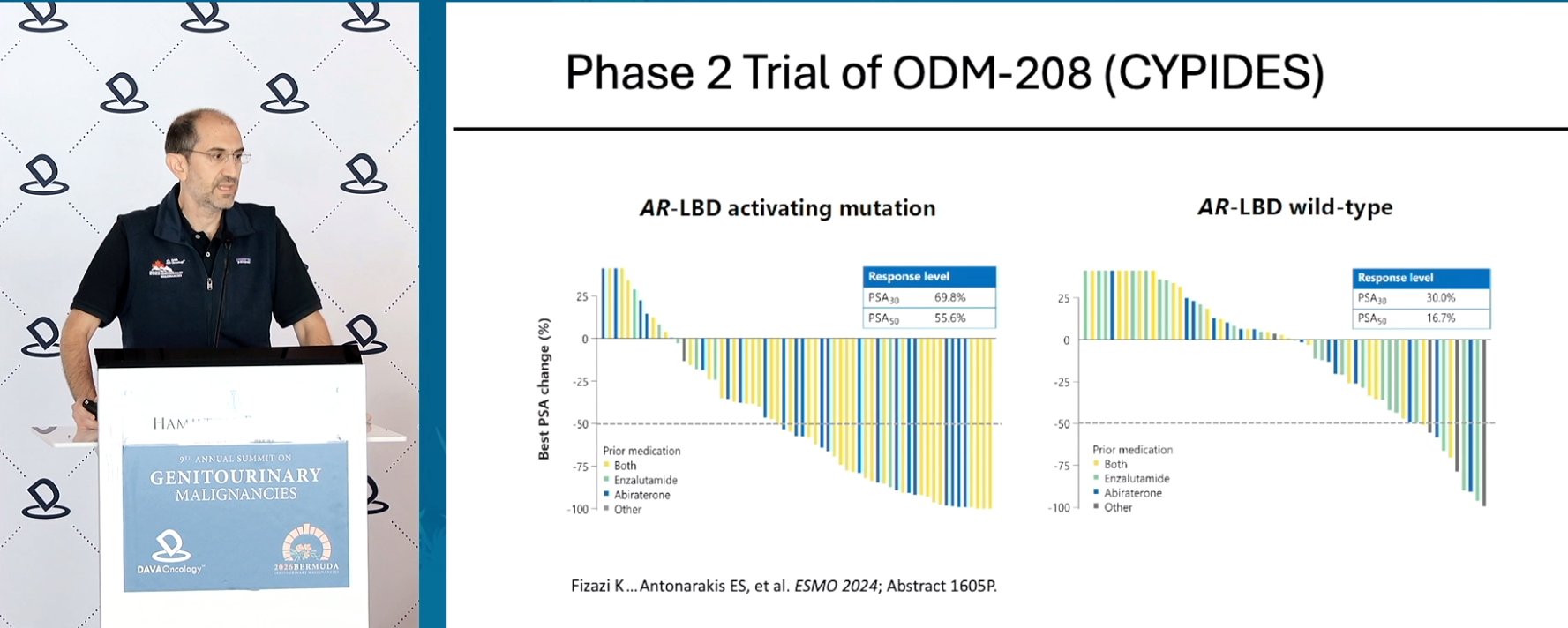
Phase 2 Trial of ODM-208 (CYPIDES)
AR-LBD activating mutation | Response level: PSA30 69.8%; PSA50 55.6%
AR-LBD wild-type | Response level: PSA30 30.0%; PSA50 16.7%
Waterfall plots; Y axis: Best PSA change (%)
Prior medication: Both; Enzalutamide; Abiraterone; Other
Fizazi K...Antonarakis ES, et al. ESMO 2024; Abstract 1605P.
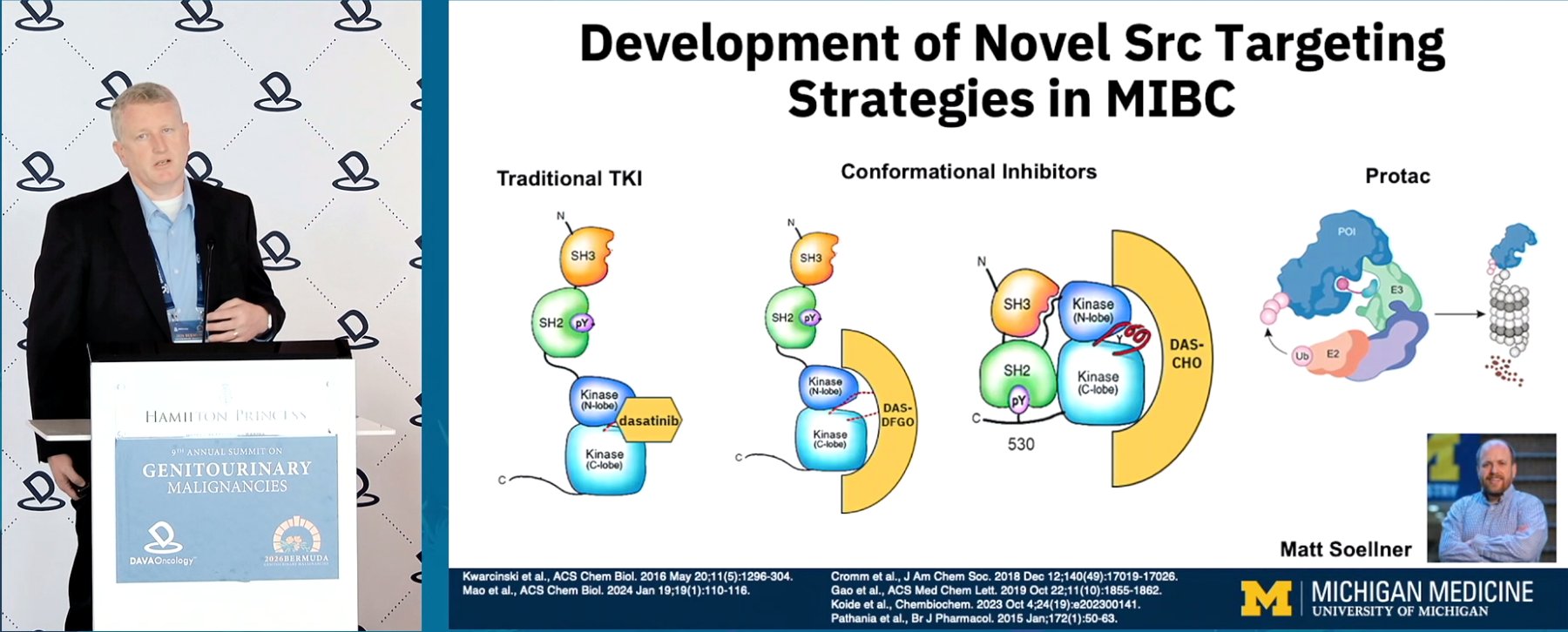
Dr. Rohit Bose from @UCSFMedicine presents research identifying ZFHX3 loss-of-function as a potential biomarker of enhanced ADT + ARPI sensitivity in prostate cancer, highlighting how tumor evolution may inform treatment response and precision oncology #DAVAGU
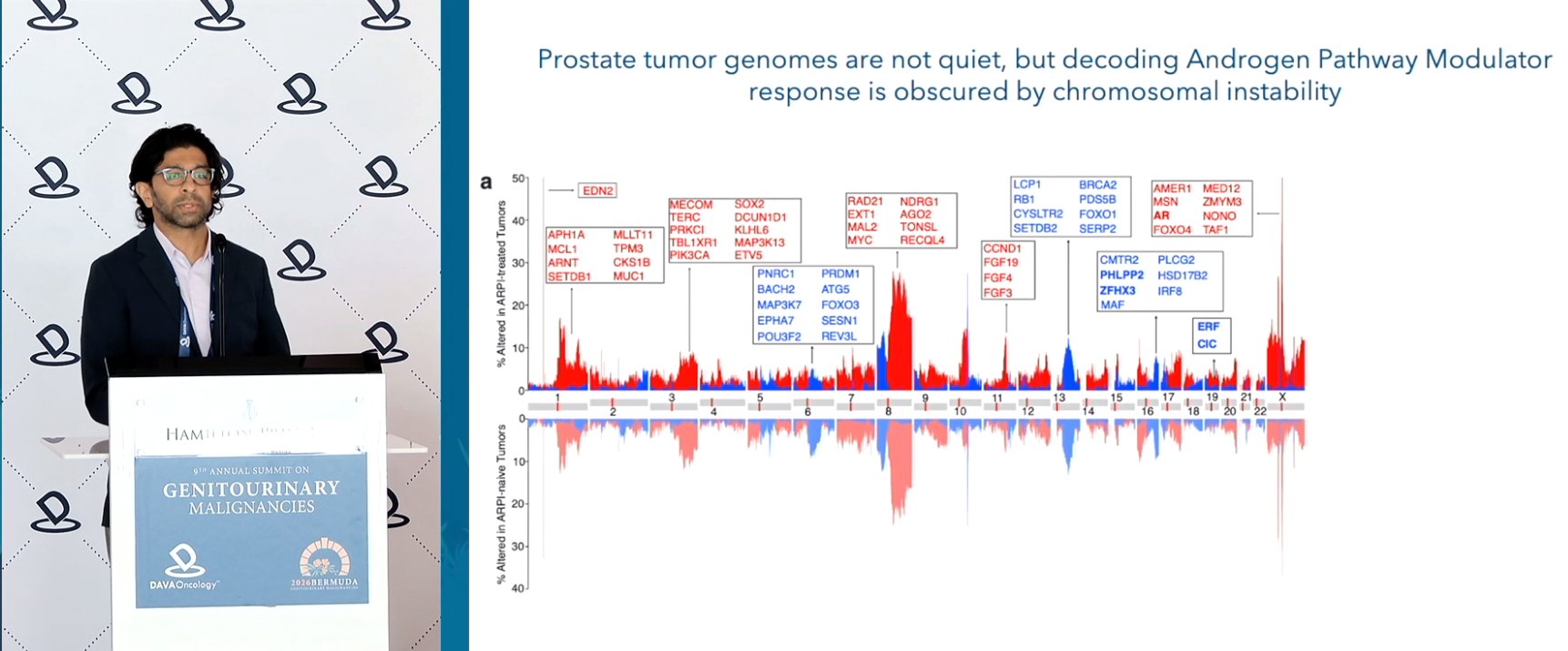
[Slide 1]
Prostate tumor genomes are not quiet, but decoding Androgen Pathway Modulator response is obscured by chromosomal instability
a: % Altered in ARPI-treated Tumors (top) vs % Altered in ARPI-naive Tumors (bottom), by chromosome 1-22, X
Gene labels (red/blue boxes): EDN2; APH1A MLLT11 MCL1 TPM3 ARNT CKS1B SETDB1 MUC1; MECOM SOX2 TERC DCUN1D1 PRKCI KLHL6 TBL1XR1 MAP3K13 PIK3CA ETV5; PNRC1 PRDM1 BACH2 ATG5 MAP3K7 FOXO3 EPHA7 SESN1 POU3F2 REV3L; RAD21 NDRG1 EXT1 AGO2 MAL2 TONSL MYC RECQL4; LCP1 BRCA2 RB1 PDS5B CYSTLR2 FOXO1 SETDB2 SERP2; CCND1 FGF19 FGF4 FGF3; CMTR2 PLCG2 PHLPP2 HSD17B2 ZFHX3 IRF8 MAF; ERF CIC; AMER1 MED12 MSN ZMYM3 AR NONO FOXO4 TAF1
---
[Slide 2]
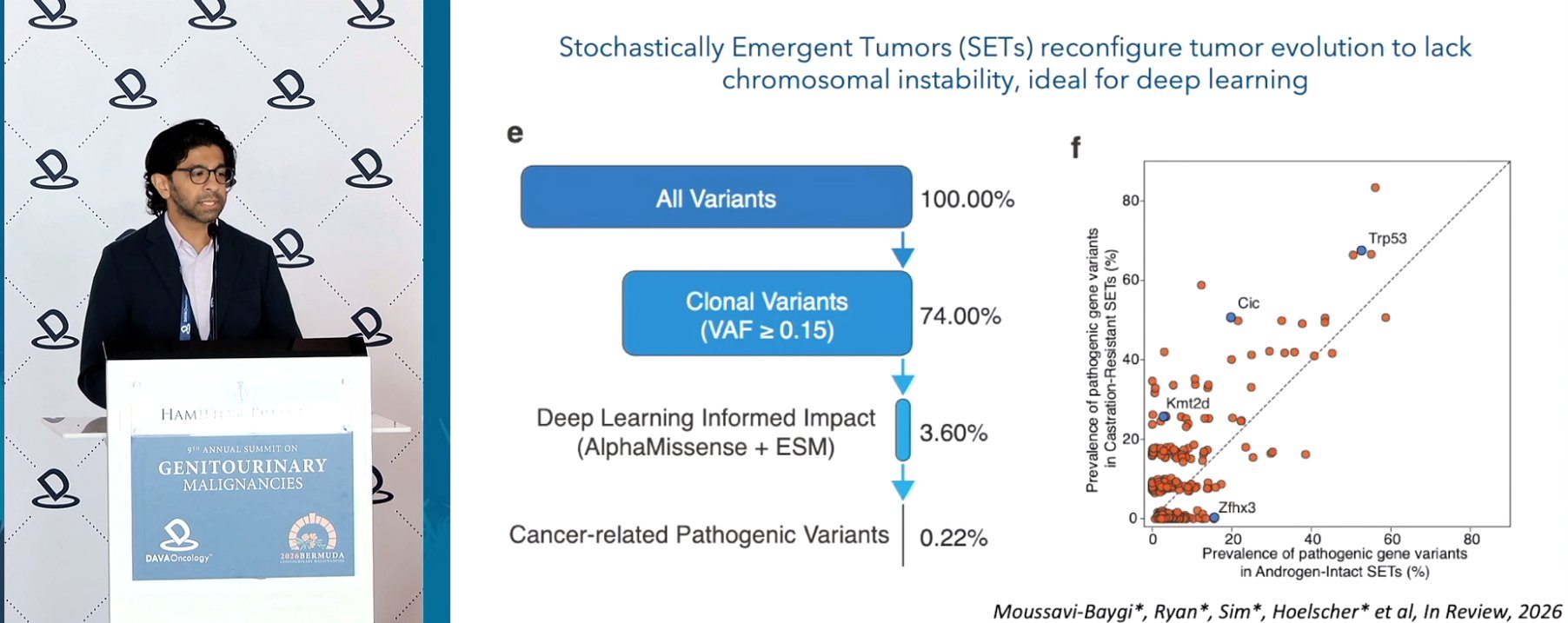
Stochastically Emergent Tumors (SETs) reconfigure tumor evolution to lack chromosomal instability, ideal for deep learning
e: All Variants 100.00%
Clonal Variants (VAF ≥ 0.15) 74.00%
Deep Learning Informed Impact (AlphaMissense + ESM) 3.60%
Cancer-related Pathogenic Variants 0.22%
f: Prevalence of pathogenic gene variants in Castration-Resistant SETs (%) vs Prevalence of pathogenic gene variants in Androgen-Intact SETs (%); labeled points: Trp53, Cic, Kmt2d, Zfhx3
Moussavi-Baygi*, Ryan*, Sim*, Hoelscher* et al, In Review, 2026
---
[Slide 3]
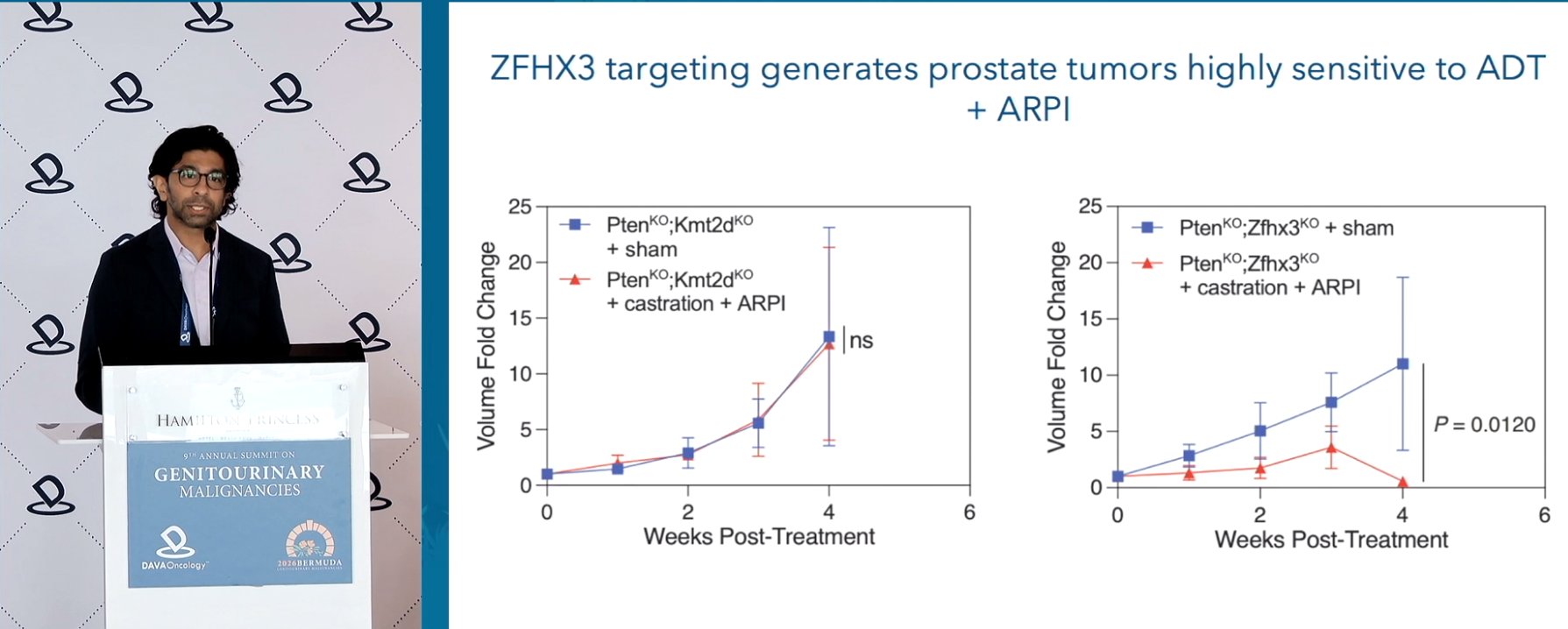
ZFHX3 targeting generates prostate tumors highly sensitive to ADT + ARPI
Left plot: PtenKO;Kmt2dKO + sham; PtenKO;Kmt2dKO + castration + ARPI; ns
Right plot: PtenKO;Zfhx3KO + sham; PtenKO;Zfhx3KO + castration + ARPI; P = 0.0120
Y axis: Volume Fold Change. X axis: Weeks Post-Treatment
---
[Slide 4]
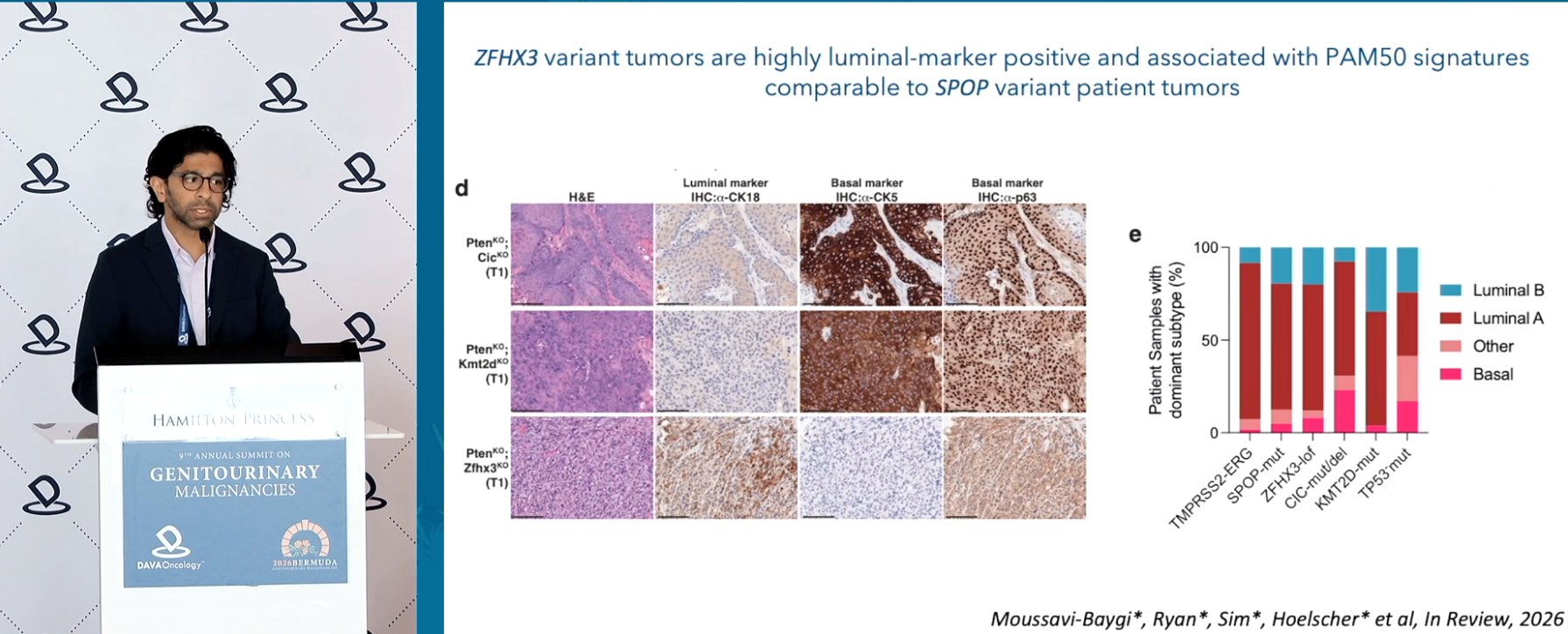
ZFHX3 variant tumors are highly luminal-marker positive and associated with PAM50 signatures comparable to SPOP variant patient tumors
d: H&E | Luminal marker IHC:α-CK18 | Basal marker IHC:α-CK5 | Basal marker IHC:α-p63
Rows: PtenKO; CicKO (T1); PtenKO; Kmt2dKO (T1); PtenKO; Zfhx3KO (T1)
e: Patient Samples with dominant subtype (%); Luminal B; Luminal A; Other; Basal
x axis: TMPRSS2-ERG; SPOP-mut; ZFHX3-lof; CIC-mut/del; KMT2D-mut; TP53-mut
Moussavi-Baygi*, Ryan*, Sim*, Hoelscher* et al, In Review, 2026
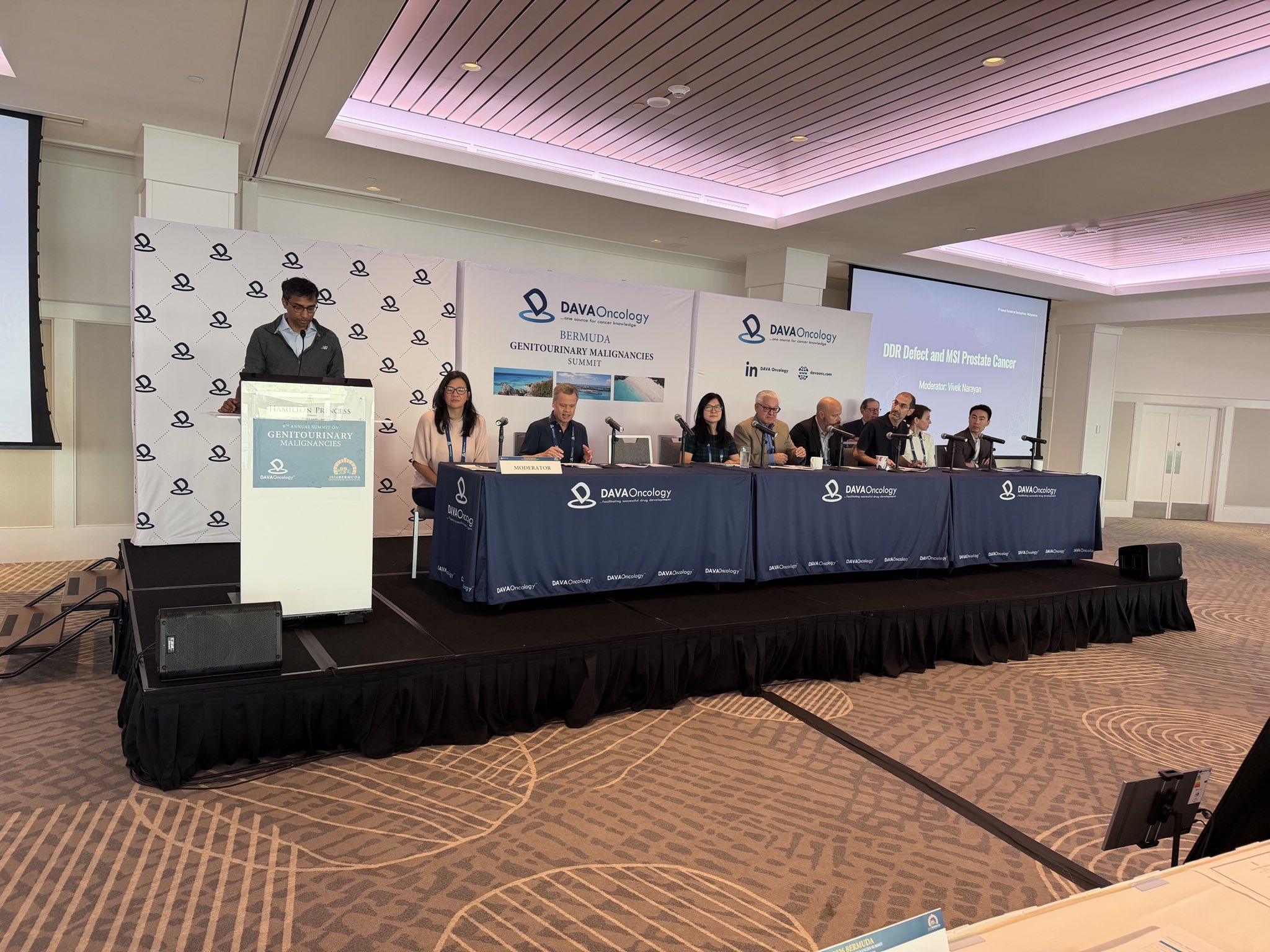
Exploring DDR Defects and MSI in Prostate Cancer with Dr. Vivek Narayan of @PennMedicine, highlighting their implications for precision oncology and evolving treatment strategies.
#DAVAGU #ProstateCancer #PrecisionOncology
[Slide 1]
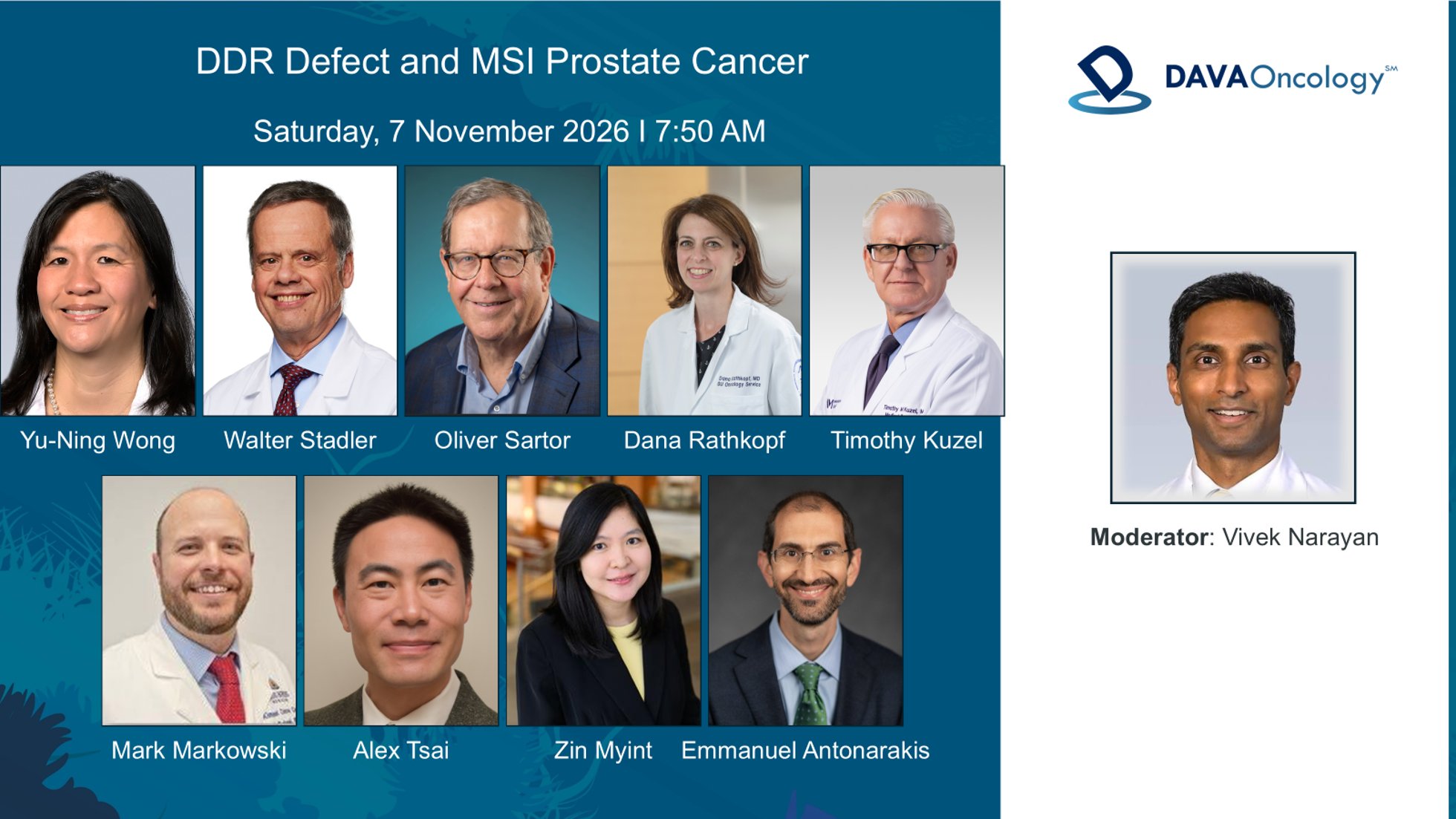
DDR Defect and MSI Prostate Cancer
Saturday, 7 November 2026 I 7:50 AM
DAVAOncology
Yu-Ning Wong
Walter Stadler
Oliver Sartor
Dana Rathkopf
Timothy Kuzel
Mark Markowski
Alex Tsai
Zin Myint
Emmanuel Antonarakis
Moderator: Vivek Narayan
How common are germline pathogenic variants in real-world prostate cancer cohorts?
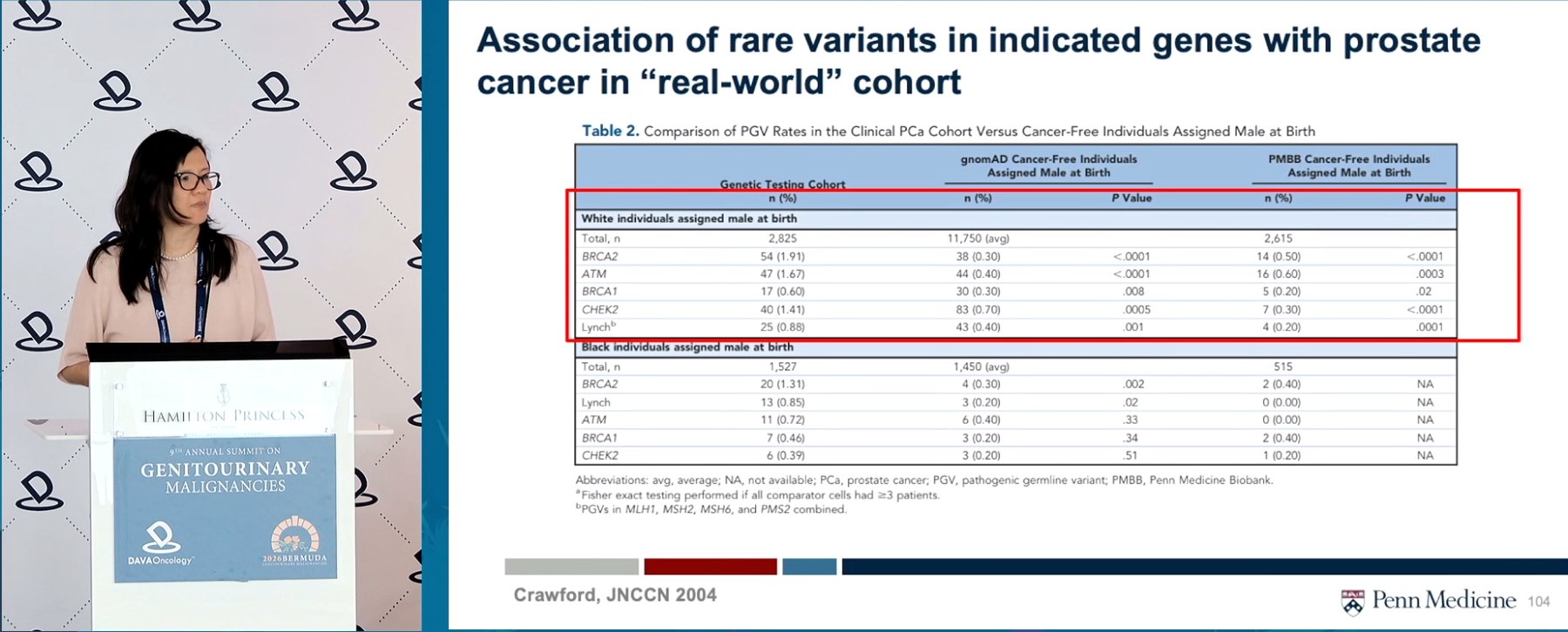
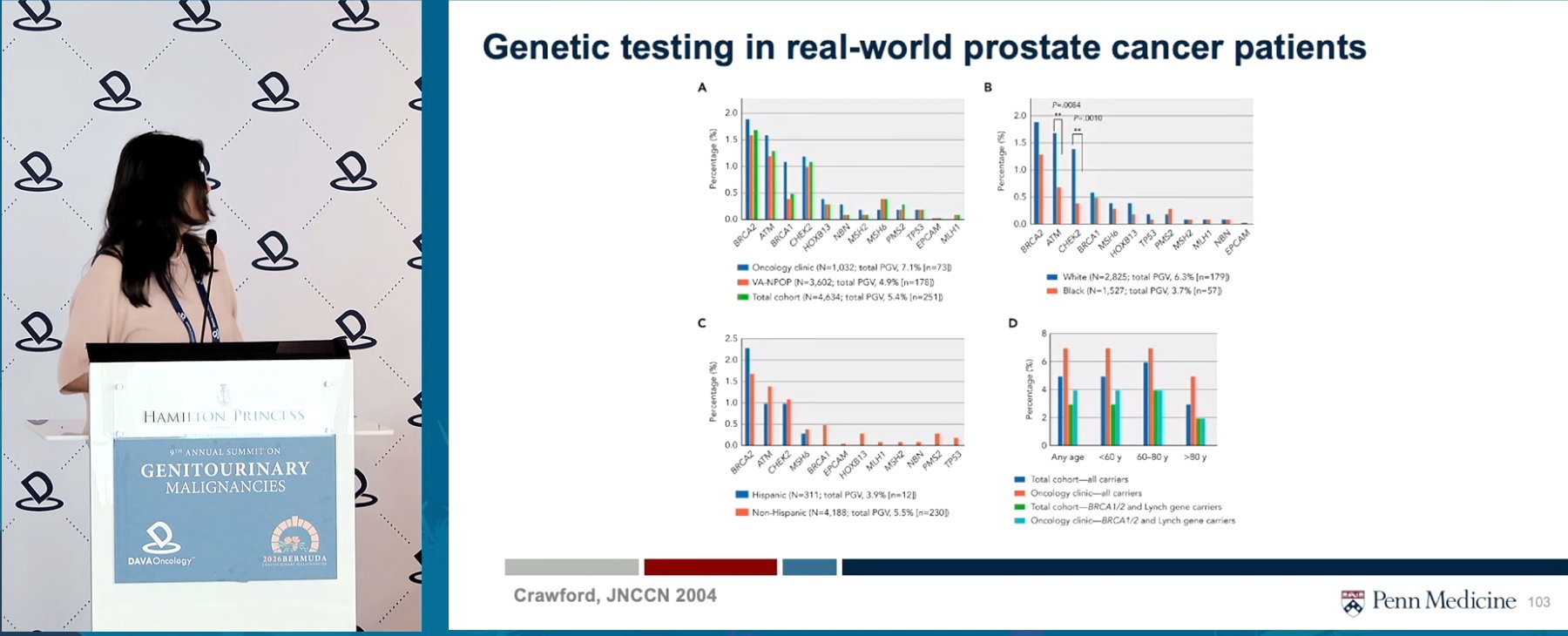
Dr. Yu-Ning Wong @PennMedicine reports a 5.4% rate among 4,634 patients (33% Black), driven by BRCA2 (1.7%), ATM (1.3%), CHEK2 (1.1%) and BRCA1 (0.5%).#DAVAGU
[Slide 1]
Association of rare variants in indicated genes with prostate cancer in "real-world" cohort
Table 2. Comparison of PGV Rates in the Clinical PCa Cohort Versus Cancer-Free Individuals Assigned Male at Birth
Genetic Testing Cohort n (%) | gnomAD Cancer-Free Individuals Assigned Male at Birth n (%) | P Value | PMBB Cancer-Free Individuals Assigned Male at Birth n (%) | P Value
White individuals assigned male at birth
Total, n | 2,825 | 11,750 (avg) | | 2,615 |
BRCA2 | 54 (1.91) | 38 (0.30) | <.0001 | 14 (0.50) | <.0001
ATM | 47 (1.67) | 44 (0.40) | <.0001 | 16 (0.60) | .0003
BRCA1 | 17 (0.60) | 30 (0.30) | .008 | 5 (0.20) | .02
CHEK2 | 40 (1.41) | 83 (0.70) | .0005 | 7 (0.30) | <.0001
Lynch(b) | 25 (0.88) | 43 (0.40) | .001 | 4 (0.20) | .0001
Black individuals assigned male at birth
Total, n | 1,527 | 1,450 (avg) | | 515 |
BRCA2 | 20 (1.31) | 4 (0.30) | .002 | 2 (0.40) | NA
Lynch | 13 (0.85) | 3 (0.20) | .02 | 0 (0.00) | NA
ATM | 11 (0.72) | 6 (0.40) | .33 | 0 (0.00) | NA
BRCA1 | 7 (0.46) | 3 (0.20) | .34 | 2 (0.40) | NA
CHEK2 | 6 (0.39) | 3 (0.20) | .51 | 1 (0.20) | NA
Abbreviations: avg, average; NA, not available; PCa, prostate cancer; PGV, pathogenic germline variant; PMBB, Penn Medicine Biobank.
a Fisher exact testing performed if all comparator cells had >=3 patients.
b PGVs in MLH1, MSH2, MSH6, and PMS2 combined.
Crawford, JNCCN 2004
Penn Medicine 104
9th Annual Summit on Genitourinary Malignancies
---
[Slide 2]
Genetic testing in real-world prostate cancer patients
A / B / C / D (bar charts; y-axis Percentage (%))
Panel A legend: Oncology clinic (N=1,032; total PGV, 7.1% [n=73]) | VA-NPOP (N=3,602; total PGV, 4.9% [n=178]) | Total cohort (N=4,634; total PGV, 5.4% [n=251])
Panel B legend: White (N=2,825; total PGV, 6.3% [n=179]) | Black (N=1,527; total PGV, 3.7% [n=57]); P=.0084; P=.0010
Panel C legend: Hispanic (N=311; total PGV, 3.9% [n=12]) | Non-Hispanic (N=4,188; total PGV, 5.5% [n=230])
Panel D x-axis: Any age | <60 y | 60-80 y | >80 y
Panel D legend: Total cohort-all carriers | Oncology clinic-all carriers | Total cohort-BRCA1/2 and Lynch gene carriers | Oncology clinic-BRCA1/2 and Lynch gene carriers
Gene labels (x-axis): BRCA2, ATM, BRCA1, CHEK2, HOXB13, NBN, MSH2, MSH6, PMS2, TP53, EPCAM, MLH1
Crawford, JNCCN 2004
Penn Medicine 103
---
[Slide 3]
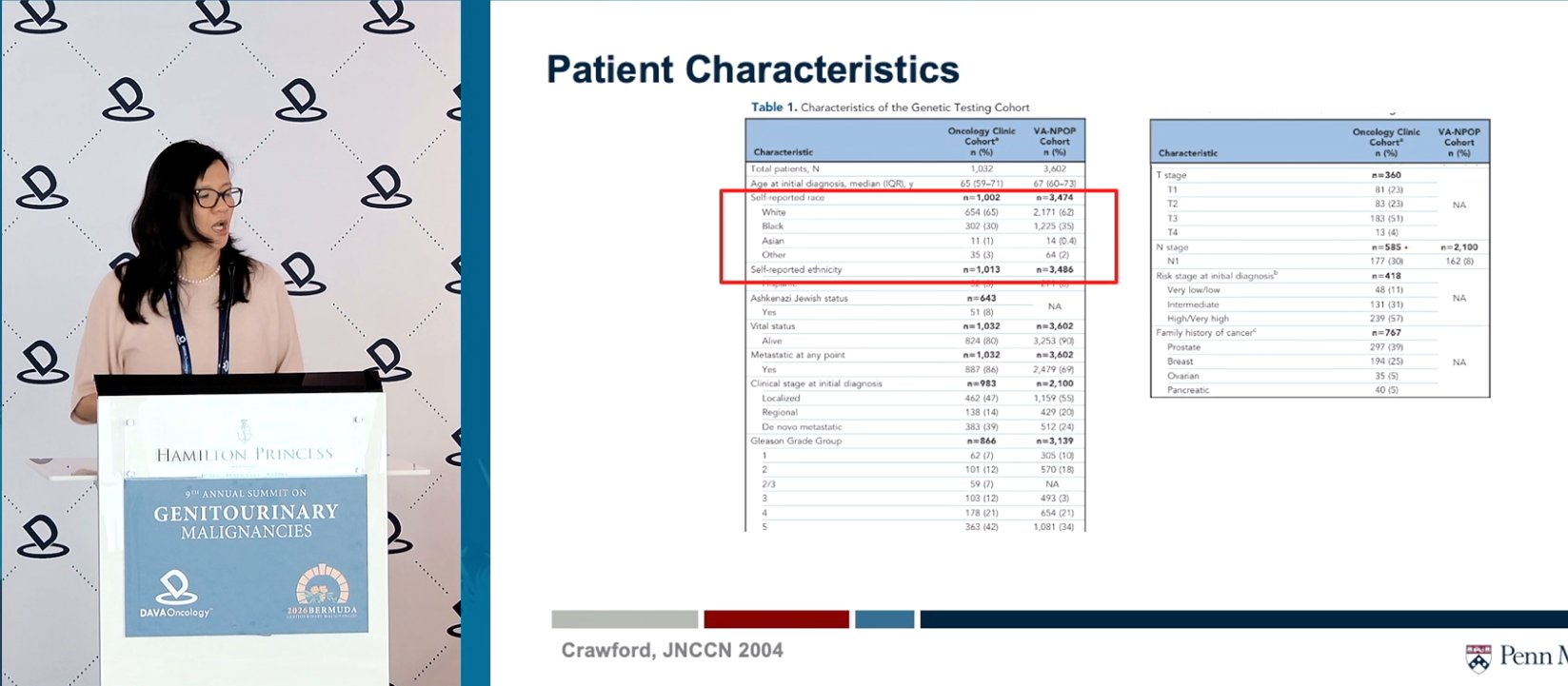
Patient Characteristics
Table 1. Characteristics of the Genetic Testing Cohort
Characteristic | Oncology Clinic Cohort(a) n (%) | VA-NPOP Cohort n (%)
Total patients, N | 1,032 | 3,602
Age at initial diagnosis, median (IQR), y | 65 (59-71) | 67 (60-73)
Self-reported race | n=1,002 | n=3,474
White | 654 (65) | 2,171 (62)
Black | 302 (30) | 1,225 (35)
Asian | 11 (1) | 14 (0.4)
Other | 35 (3) | 64 (2)
Self-reported ethnicity | n=1,013 | n=3,486
Hispanic | [illegible] | [illegible]
Ashkenazi Jewish status | n=643 | NA
Yes | 51 (8)
Vital status | n=1,032 | n=3,602
Alive | 824 (80) | 3,253 (90)
Metastatic at any point | n=1,032 | n=3,602
Yes | 887 (86) | 2,479 (69)
Clinical stage at initial diagnosis | n=983 | n=2,100
Localized | 462 (47) | 1,159 (55)
Regional | 138 (14) | 429 (20)
De novo metastatic | 383 (39) | 512 (24)
Gleason Grade Group | n=866 | n=3,139
1 | 62 (7) | 305 (10)
2 | 101 (12) | 570 (18)
2/3 | 59 (7) | NA
3 | 103 (12) | 493 (3)
4 | 178 (21) | 654 (21)
5 | 363 (42) | 1,081 (34)
Right table: Characteristic | Oncology Clinic Cohort(a) n (%) | VA-NPOP Cohort n (%)
T stage | n=360 | NA
T1 | 81 (23)
T2 | 83 (23)
T3 | 183 (51)
T4 | 13 (4)
N stage | n=585 | n=2,100
N1 | 177 (30) | 162 (8)
Risk stage at initial diagnosis(b) | n=418 | NA
Very low/low | 48 (11)
Intermediate | 131 (31)
High/Very high | 239 (57)
Family history of cancer(c) | n=767 | NA
Prostate | 297 (39)
Breast | 194 (25)
Ovarian | 35 (5)
Pancreatic | 40 (5)
Crawford, JNCCN 2004
Penn Medicine
---
[Slide 4]
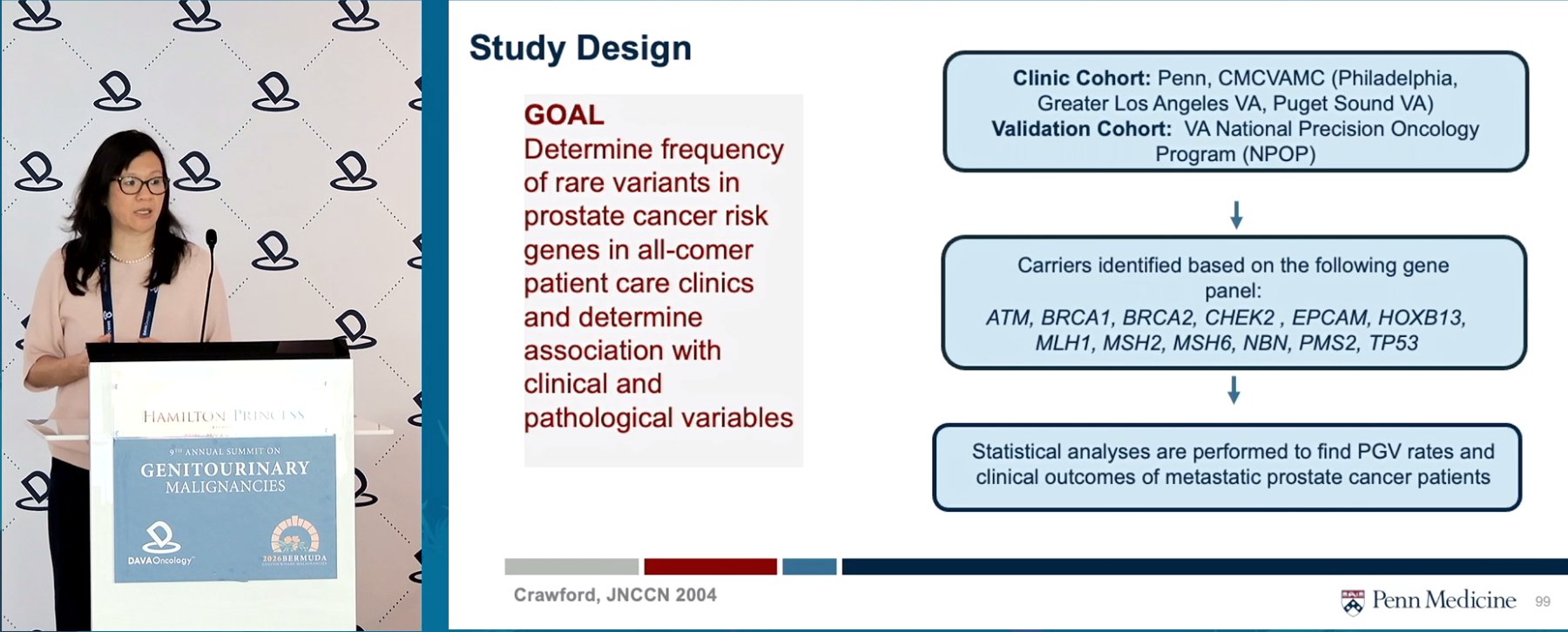
Study Design
GOAL
Determine frequency of rare variants in prostate cancer risk genes in all-comer patient care clinics and determine association with clinical and pathological variables
Clinic Cohort: Penn, CMCVAMC (Philadelphia, Greater Los Angeles VA, Puget Sound VA)
Validation Cohort: VA National Precision Oncology Program (NPOP)
Carriers identified based on the following gene panel:
ATM, BRCA1, BRCA2, CHEK2, EPCAM, HOXB13, MLH1, MSH2, MSH6, NBN, PMS2, TP53
Statistical analyses are performed to find PGV rates and clinical outcomes of metastatic prostate cancer patients
Crawford, JNCCN 2004
Penn Medicine 99
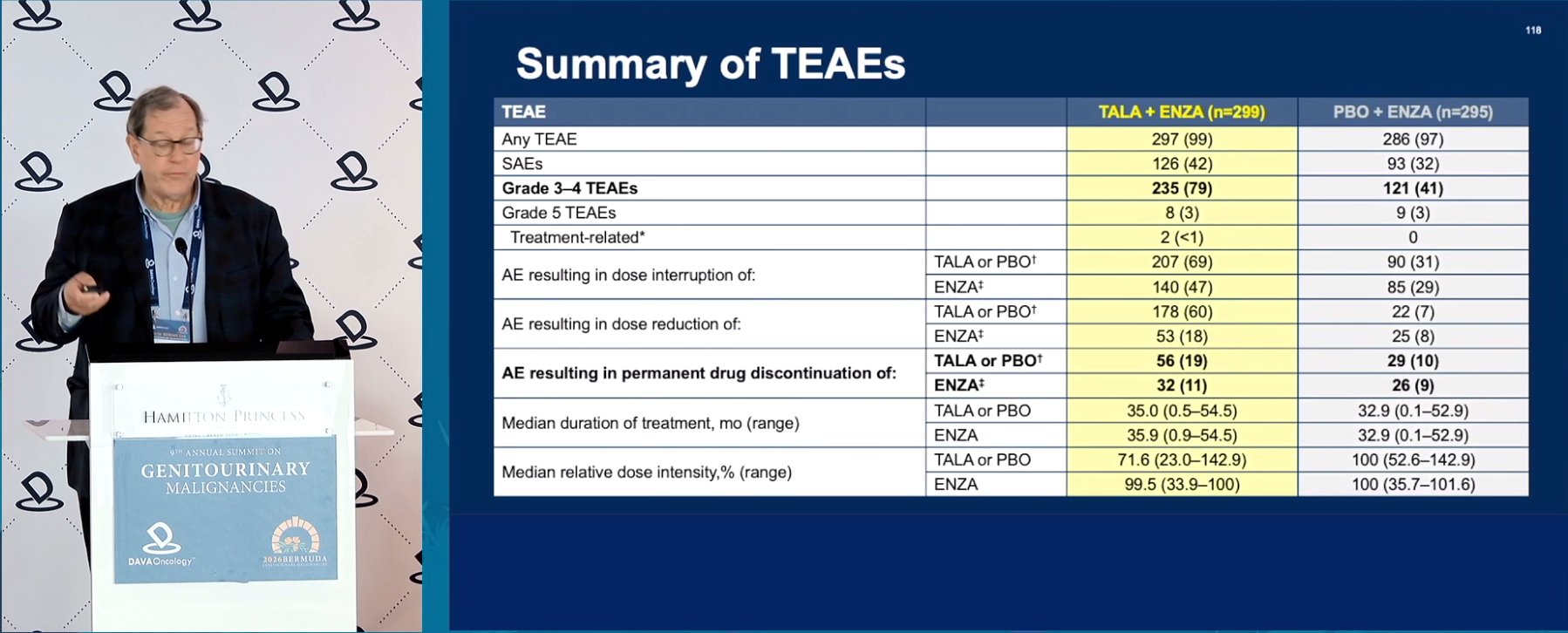
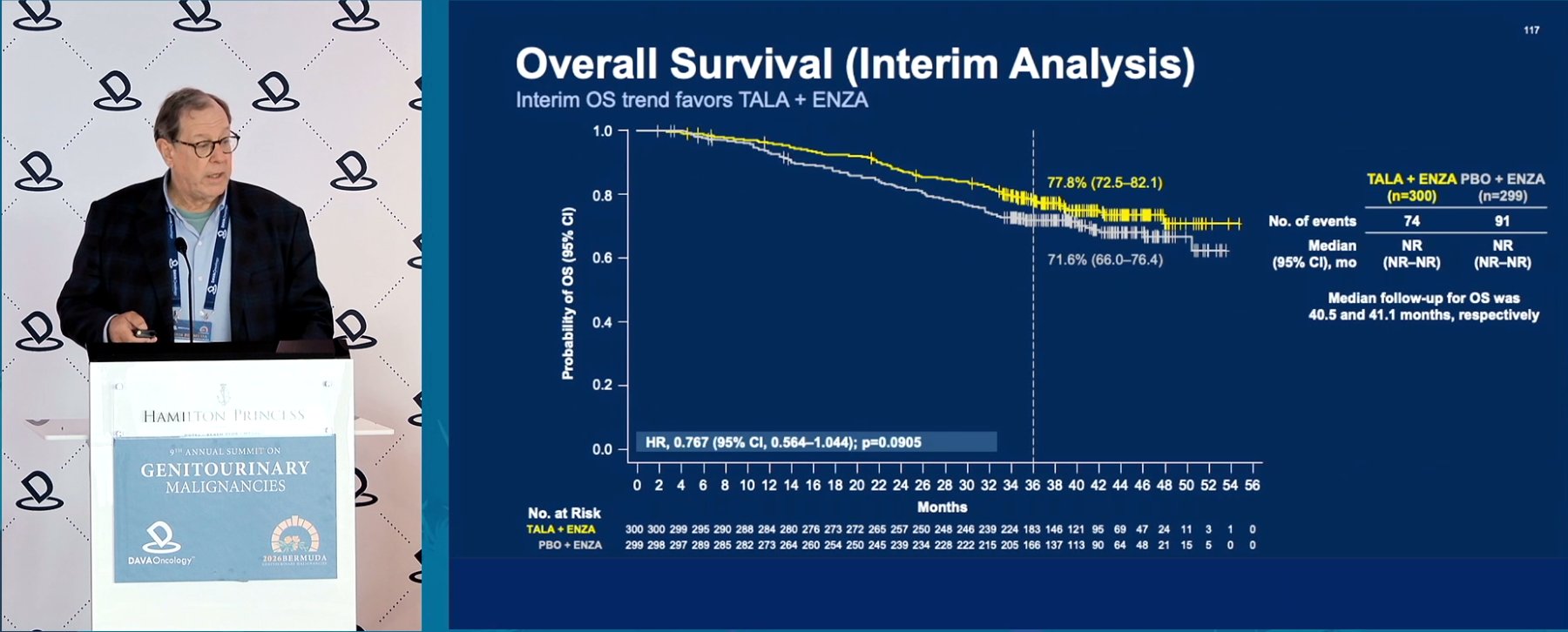
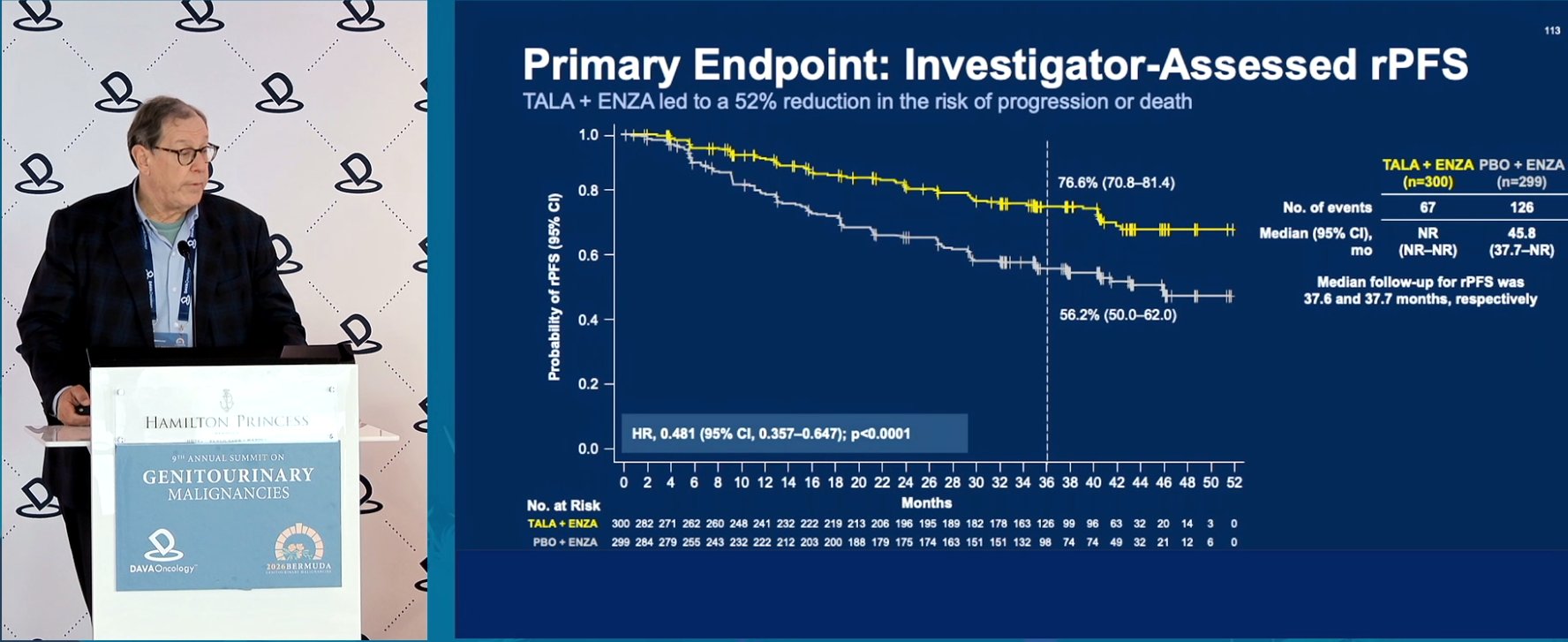
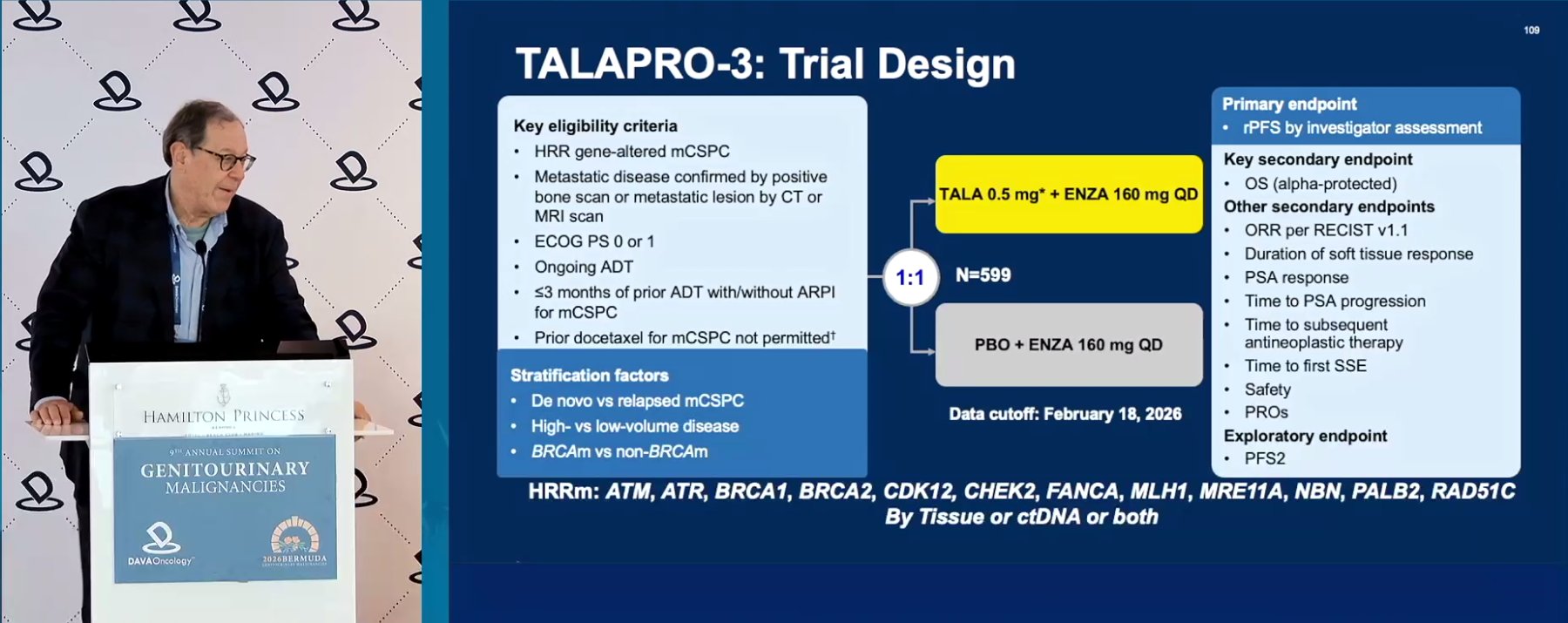
TALAPRO-3: Dr. @sartor_oliver @LCMCHealth reviews talazoparib + enzalutamide in HRR-altered mCSPC, showing a 52% reduction in the risk of radiographic progression or death (rPFS HR 0.481; p<0.0001). Interim OS: HR 0.767 (p=0.0905). Anemia: 71%. #DAVAGU
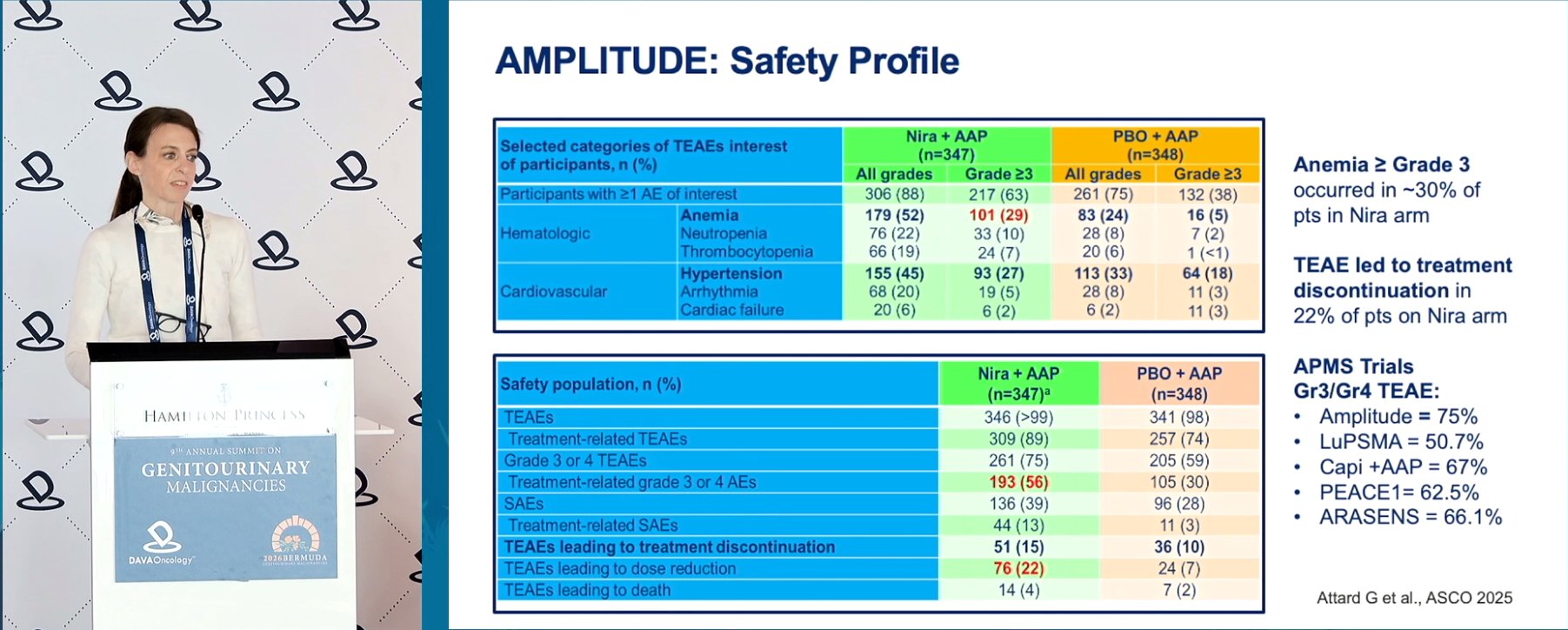
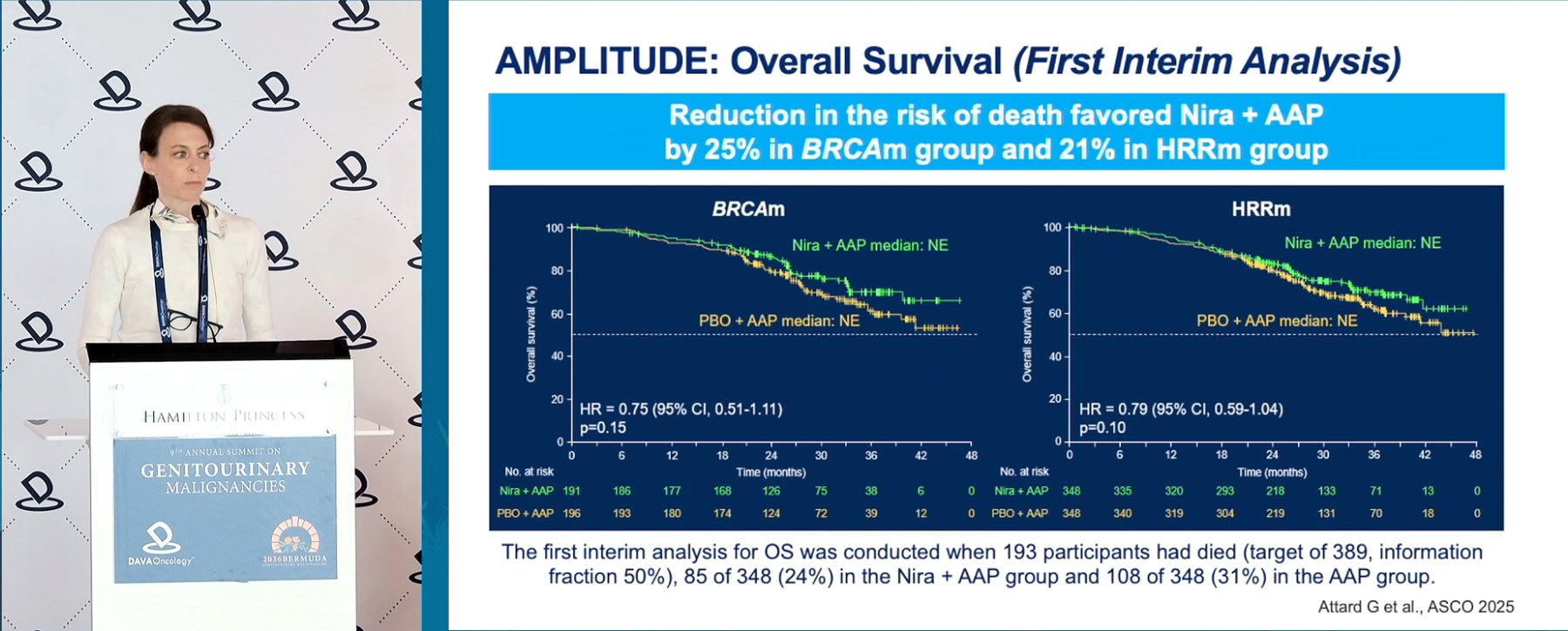
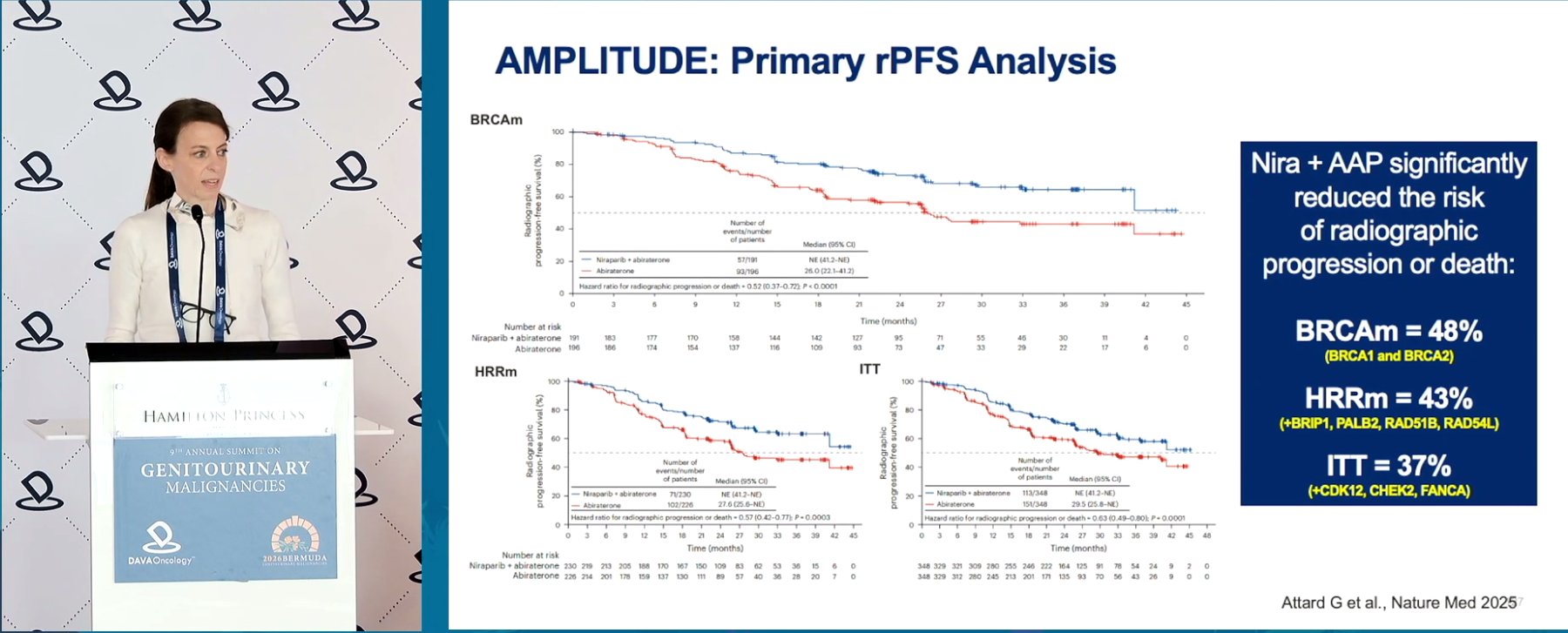
AMPLITUDE: Dr. Dana Rathkopf @MSKCancerCenter reviews niraparib + AA/P vs AA/P in HRR-altered APMS. rPFS risk fell 48% in BRCAm and 43% in HRRm groups. Interim OS favored niraparib (25% and 21% lower risk of death, respectively). Grade ≥3 anemia: ~30%. #DAVAGU
AMPLITUDEARASENSPEACE-1
[Slide 1]
AMPLITUDE: Safety Profile
Selected categories of TEAEs interest of participants, n (%) | Nira + AAP (n=347) All grades | Grade >=3 | PBO + AAP (n=348) All grades | Grade >=3
Participants with >=1 AE of interest | 306 (88) | 217 (63) | 261 (75) | 132 (38)
Hematologic: Anemia | 179 (52) | 101 (29) | 83 (24) | 16 (5)
Neutropenia | 76 (22) | 33 (10) | 28 (8) | 7 (2)
Thrombocytopenia | 66 (19) | 24 (7) | 20 (6) | 1 (<1)
Cardiovascular: Hypertension | 155 (45) | 93 (27) | 113 (33) | 64 (18)
Arrhythmia | 68 (20) | 19 (5) | 28 (8) | 11 (3)
Cardiac failure | 20 (6) | 6 (2) | 6 (2) | 11 (3)
Safety population, n (%) | Nira + AAP (n=347)(a) | PBO + AAP (n=348)
TEAEs | 346 (>99) | 341 (98)
Treatment-related TEAEs | 309 (89) | 257 (74)
Grade 3 or 4 TEAEs | 261 (75) | 205 (59)
Treatment-related grade 3 or 4 AEs | 193 (56) | 105 (30)
SAEs | 136 (39) | 96 (28)
Treatment-related SAEs | 44 (13) | 11 (3)
TEAEs leading to treatment discontinuation | 51 (15) | 36 (10)
TEAEs leading to dose reduction | 76 (22) | 24 (7)
TEAEs leading to death | 14 (4) | 7 (2)
Anemia >= Grade 3 occurred in ~30% of pts in Nira arm
TEAE led to treatment discontinuation in 22% of pts on Nira arm
APMS Trials Gr3/Gr4 TEAE:
Amplitude = 75%
LuPSMA = 50.7%
Capi +AAP = 67%
PEACE1= 62.5%
ARASENS = 66.1%
Attard G et al., ASCO 2025
---
[Slide 2]
AMPLITUDE: Overall Survival (First Interim Analysis)
Reduction in the risk of death favored Nira + AAP by 25% in BRCAm group and 21% in HRRm group
BRCAm: Nira + AAP median: NE; PBO + AAP median: NE
HR = 0.75 (95% CI, 0.51-1.11) p=0.15
HRRm: Nira + AAP median: NE; PBO + AAP median: NE
HR = 0.79 (95% CI, 0.59-1.04) p=0.10
No. at risk (Time (months) 0, 6, 12, 18, 24, 30, 36, 42, 48)
BRCAm: Nira + AAP | 191 186 177 168 126 75 38 6 0
BRCAm: PBO + AAP | 196 193 180 174 124 72 39 12 0
HRRm: Nira + AAP | 348 335 320 293 218 133 71 13 0
HRRm: PBO + AAP | 348 340 319 304 219 131 70 18 0
The first interim analysis for OS was conducted when 193 participants had died (target of 389, information fraction 50%), 85 of 348 (24%) in the Nira + AAP group and 108 of 348 (31%) in the AAP group.
Attard G et al., ASCO 2025
---
[Slide 3]
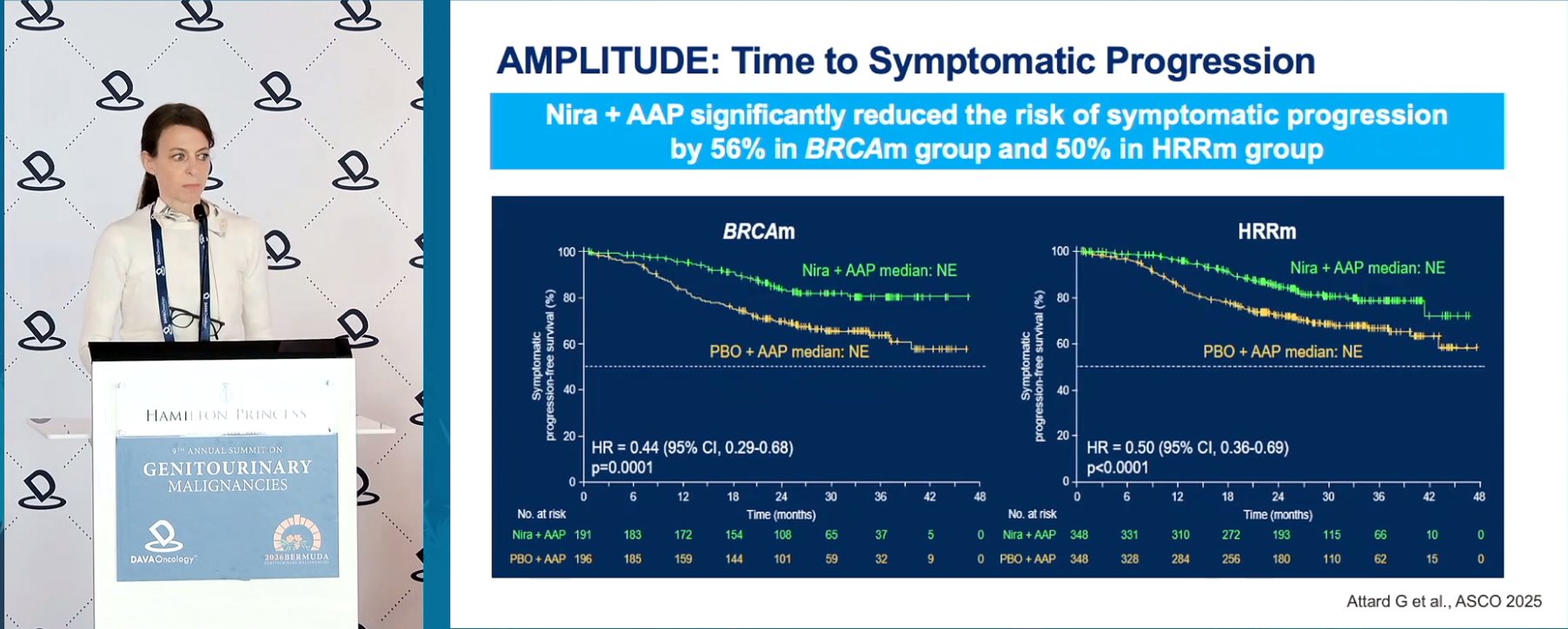
AMPLITUDE: Time to Symptomatic Progression
Nira + AAP significantly reduced the risk of symptomatic progression by 56% in BRCAm group and 50% in HRRm group
BRCAm: Nira + AAP median: NE; PBO + AAP median: NE
HR = 0.44 (95% CI, 0.29-0.68) p=0.0001
HRRm: Nira + AAP median: NE; PBO + AAP median: NE
HR = 0.50 (95% CI, 0.36-0.69) p<0.0001
No. at risk (Time (months) 0, 6, 12, 18, 24, 30, 36, 42, 48)
BRCAm: Nira + AAP | 191 183 172 154 108 65 37 5 0
BRCAm: PBO + AAP | 196 185 159 144 101 59 32 9 0
HRRm: Nira + AAP | 348 331 310 272 193 115 66 10 0
HRRm: PBO + AAP | 348 328 284 256 180 110 62 15 0
Attard G et al., ASCO 2025
---
[Slide 4]
AMPLITUDE: Primary rPFS Analysis
BRCAm; HRRm; ITT (radiographic progression-free survival KM plots)
Number of events/number of patients | Median (95% CI)
BRCAm: Niraparib + abiraterone 57/191 NE (41.2-NE); Abiraterone 93/196 26.0 (22.1-41.2)
Hazard ratio for radiographic progression or death = 0.52 (0.37-0.72); P < 0.0001
HRRm: Niraparib + abiraterone 71/230 NE (41.2-NE); Abiraterone 102/226 27.6 (25.6-NE)
Hazard ratio for radiographic progression or death = 0.57 (0.42-0.77); P = 0.0003
ITT: Niraparib + abiraterone 113/348 NE (41.2-NE); Abiraterone 151/348 29.5 (25.8-NE)
Hazard ratio for radiographic progression or death = 0.63 (0.49-0.80); P < 0.0001
Nira + AAP significantly reduced the risk of radiographic progression or death:
BRCAm = 48% (BRCA1 and BRCA2)
HRRm = 43% (+BRIP1, PALB2, RAD51B, RAD54L)
ITT = 37% (+CDK12, CHEK2, FANCA)
Attard G et al., Nature Med 2025
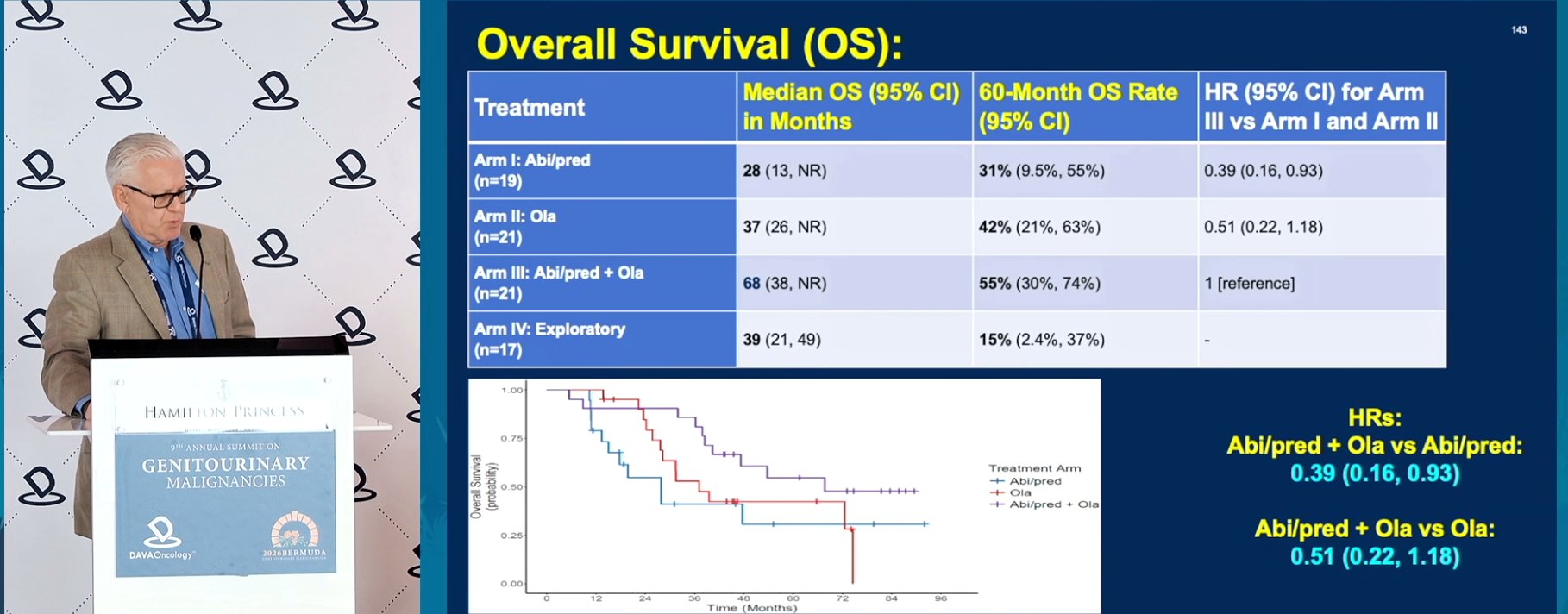
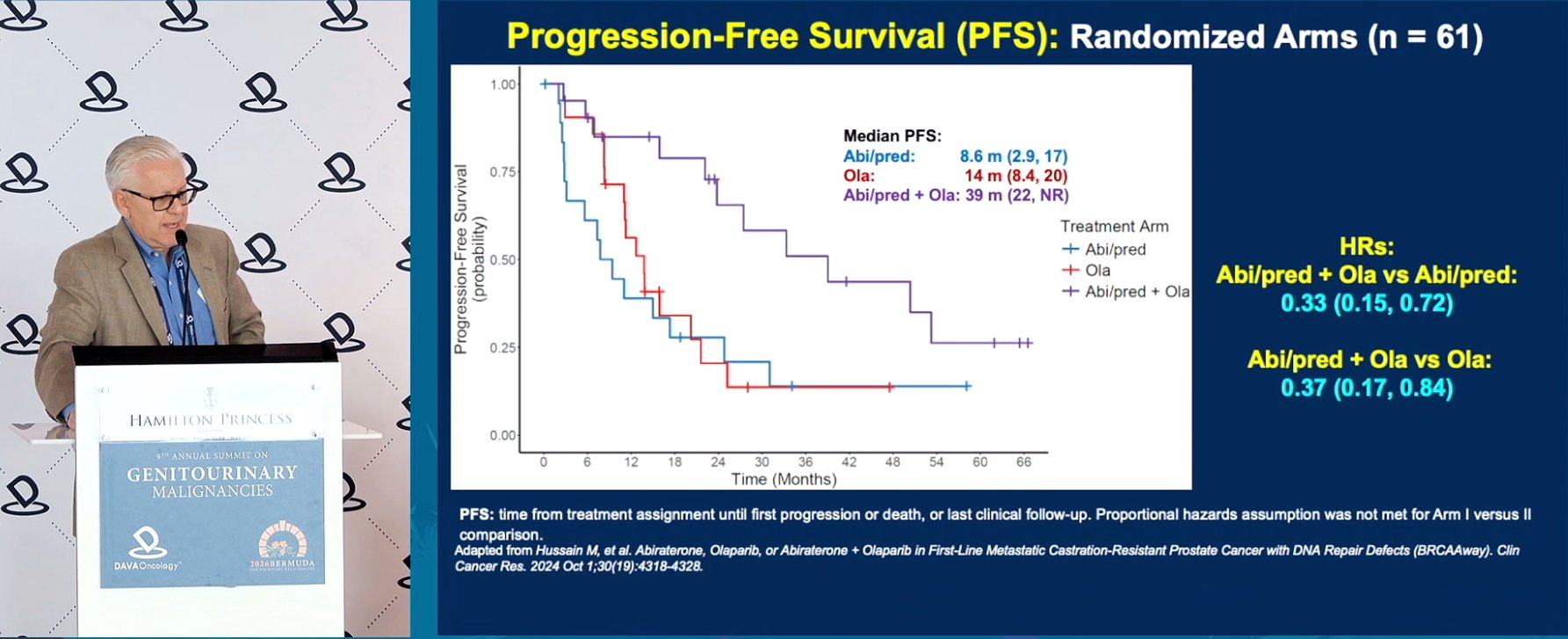
BRCAAway: Dr. Timothy Kuzel @LurieCancer reports median PFS of 8.6, 14 and 39 months with abiraterone/prednisone, olaparib and their combination, respectively, in BRCA1/2- or ATM-altered mCRPC. Median OS was 28, 37 and 68 months, respectively. #DAVAGU
BRCAAway
[Slide 1]
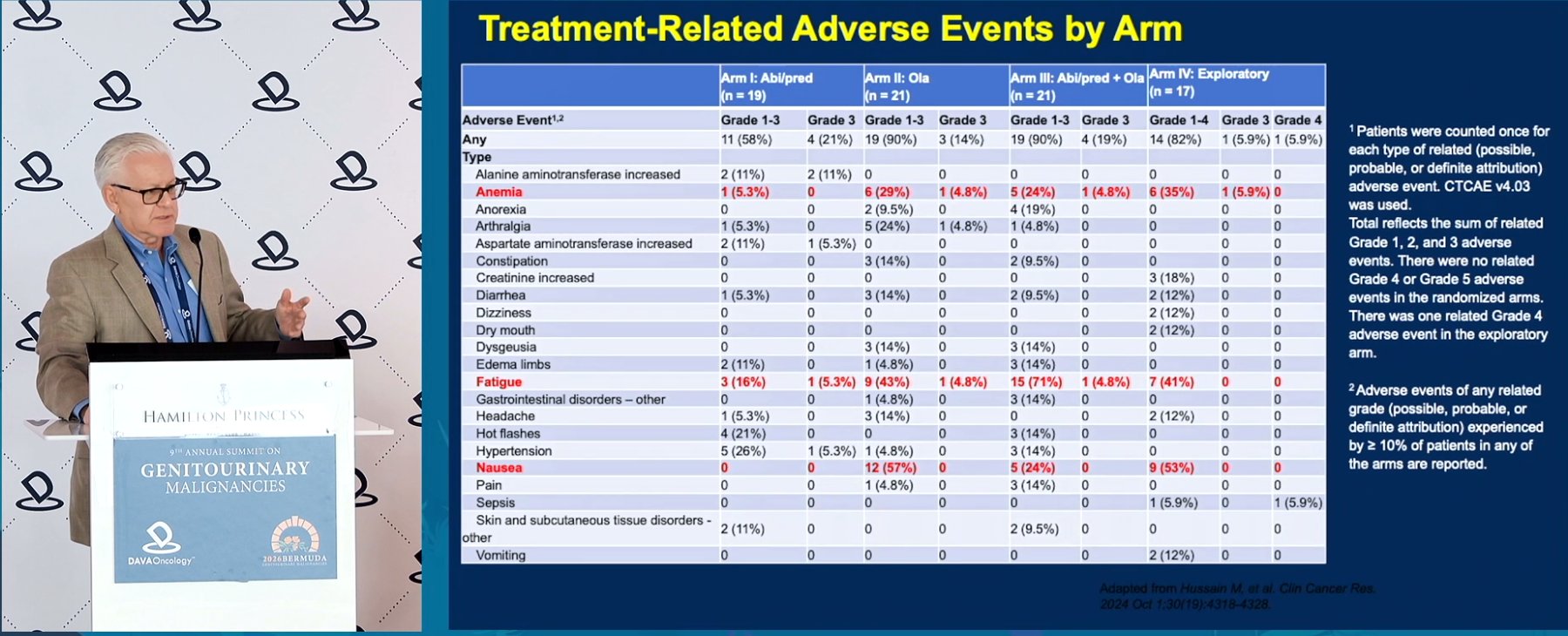
Treatment-Related Adverse Events by Arm
Arm I: Abi/pred (n = 19) | Arm II: Ola (n = 21) | Arm III: Abi/pred + Ola (n = 21) | Arm IV: Exploratory (n = 17)
Adverse Event(1,2) | Grade 1-3 | Grade 3 | Grade 1-3 | Grade 3 | Grade 1-3 | Grade 3 | Grade 1-4 | Grade 3 | Grade 4
Any | 11 (58%) | 4 (21%) | 19 (90%) | 3 (14%) | 19 (90%) | 4 (19%) | 14 (82%) | 1 (5.9%) | 1 (5.9%)
Alanine aminotransferase increased | 2 (11%) | 2 (11%) | 0 | 0 | 0 | 0 | 0 | 0 | 0
Anemia | 1 (5.3%) | 0 | 6 (29%) | 1 (4.8%) | 5 (24%) | 1 (4.8%) | 6 (35%) | 1 (5.9%) | 0
Anorexia | 0 | 0 | 2 (9.5%) | 0 | 4 (19%) | 0 | 0 | 0 | 0
Arthralgia | 1 (5.3%) | 0 | 5 (24%) | 1 (4.8%) | 1 (4.8%) | 0 | 0 | 0 | 0
Aspartate aminotransferase increased | 2 (11%) | 1 (5.3%) | 0 | 0 | 0 | 0 | 0 | 0 | 0
Constipation | 0 | 0 | 3 (14%) | 0 | 2 (9.5%) | 0 | 0 | 0 | 0
Creatinine increased | 0 | 0 | 0 | 0 | 2 (9.5%) | 0 | 3 (18%) | 0 | 0
Diarrhea | 1 (5.3%) | 0 | 3 (14%) | 0 | 2 (9.5%) | 0 | 2 (12%) | 0 | 0
Dizziness | 0 | 0 | 0 | 0 | 0 | 0 | 2 (12%) | 0 | 0
Dry mouth | 0 | 0 | 0 | 0 | 0 | 0 | 2 (12%) | 0 | 0
Dysgeusia | 0 | 0 | 3 (14%) | 0 | 3 (14%) | 0 | 0 | 0 | 0
Edema limbs | 2 (11%) | 0 | 1 (4.8%) | 0 | 3 (14%) | 0 | 0 | 0 | 0
Fatigue | 3 (16%) | 1 (5.3%) | 9 (43%) | 1 (4.8%) | 15 (71%) | 1 (4.8%) | 7 (41%) | 0 | 0
Gastrointestinal disorders - other | 0 | 0 | 1 (4.8%) | 0 | 3 (14%) | 0 | 0 | 0 | 0
Headache | 1 (5.3%) | 0 | 3 (14%) | 0 | 0 | 0 | 2 (12%) | 0 | 0
Hot flashes | 4 (21%) | 0 | 0 | 0 | 3 (14%) | 0 | 0 | 0 | 0
Hypertension | 5 (26%) | 1 (5.3%) | 1 (4.8%) | 0 | 3 (14%) | 0 | 0 | 0 | 0
Nausea | 0 | 0 | 12 (57%) | 0 | 5 (24%) | 0 | 9 (53%) | 0 | 0
Pain | 0 | 0 | 1 (4.8%) | 0 | 3 (14%) | 0 | 0 | 0 | 0
Sepsis | 0 | 0 | 0 | 0 | 0 | 0 | 1 (5.9%) | 0 | 1 (5.9%)
Skin and subcutaneous tissue disorders - other | 2 (11%) | 0 | 0 | 0 | 2 (9.5%) | 0 | 0 | 0 | 0
Vomiting | 0 | 0 | 0 | 0 | 0 | 0 | 2 (12%) | 0 | 0
(1) Patients were counted once for each type of related (possible, probable, or definite attribution) adverse event. CTCAE v4.03 was used. Total reflects the sum of related Grade 1, 2, and 3 adverse events. There were no related Grade 4 or Grade 5 adverse events in the randomized arms. There was one related Grade 4 adverse event in the exploratory arm.
(2) Adverse events of any related grade (possible, probable, or definite attribution) experienced by >= 10% of patients in any of the arms are reported.
Adapted from Hussain M, et al. Clin Cancer Res. 2024 Oct 1;30(19):4318-4328.
---
[Slide 2]
Overall Survival (OS):
Treatment | Median OS (95% CI) in Months | 60-Month OS Rate (95% CI) | HR (95% CI) for Arm III vs Arm I and Arm II
Arm I: Abi/pred (n=19) | 28 (13, NR) | 31% (9.5%, 55%) | 0.39 (0.16, 0.93)
Arm II: Ola (n=21) | 37 (26, NR) | 42% (21%, 63%) | 0.51 (0.22, 1.18)
Arm III: Abi/pred + Ola (n=21) | 68 (38, NR) | 55% (30%, 74%) | 1 [reference]
Arm IV: Exploratory (n=17) | 39 (21, 49) | 15% (2.4%, 37%) | -
KM plot: Overall Survival (probability) vs Time (Months); Treatment Arm: Abi/pred, Ola, Abi/pred + Ola
HRs:
Abi/pred + Ola vs Abi/pred: 0.39 (0.16, 0.93)
Abi/pred + Ola vs Ola: 0.51 (0.22, 1.18)
143
---
[Slide 3]
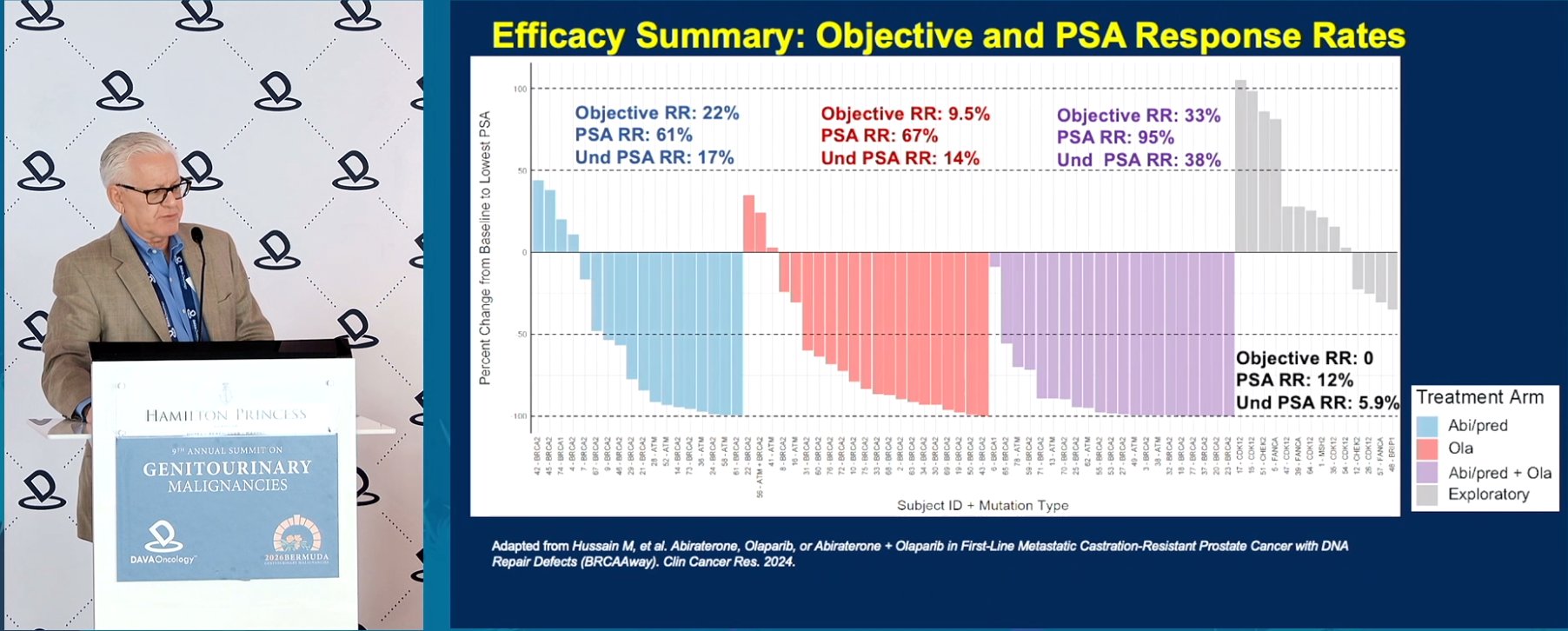
Efficacy Summary: Objective and PSA Response Rates
Waterfall plot: Percent Change from Baseline to Lowest PSA; Subject ID + Mutation Type
Treatment Arm: Abi/pred | Ola | Abi/pred + Ola | Exploratory
Abi/pred: Objective RR: 22% | PSA RR: 61% | Und PSA RR: 17%
Ola: Objective RR: 9.5% | PSA RR: 67% | Und PSA RR: 14%
Abi/pred + Ola: Objective RR: 33% | PSA RR: 95% | Und PSA RR: 38%
Exploratory: Objective RR: 0 | PSA RR: 12% | Und PSA RR: 5.9%
Adapted from Hussain M, et al. Abiraterone, Olaparib, or Abiraterone + Olaparib in First-Line Metastatic Castration-Resistant Prostate Cancer with DNA Repair Defects (BRCAAway). Clin Cancer Res. 2024.
---
[Slide 4]
Progression-Free Survival (PFS): Randomized Arms (n = 61)
Median PFS:
Abi/pred: 8.6 m (2.9, 17)
Ola: 14 m (8.4, 20)
Abi/pred + Ola: 39 m (22, NR)
KM plot: Progression-Free Survival (probability) vs Time (Months); Treatment Arm: Abi/pred, Ola, Abi/pred + Ola
HRs:
Abi/pred + Ola vs Abi/pred: 0.33 (0.15, 0.72)
Abi/pred + Ola vs Ola: 0.37 (0.17, 0.84)
PFS: time from treatment assignment until first progression or death, or last clinical follow-up. Proportional hazards assumption was not met for Arm I versus II comparison.
Adapted from Hussain M, et al. Abiraterone, Olaparib, or Abiraterone + Olaparib in First-Line Metastatic Castration-Resistant Prostate Cancer with DNA Repair Defects (BRCAAway). Clin Cancer Res. 2024 Oct 1;30(19):4318-4328.
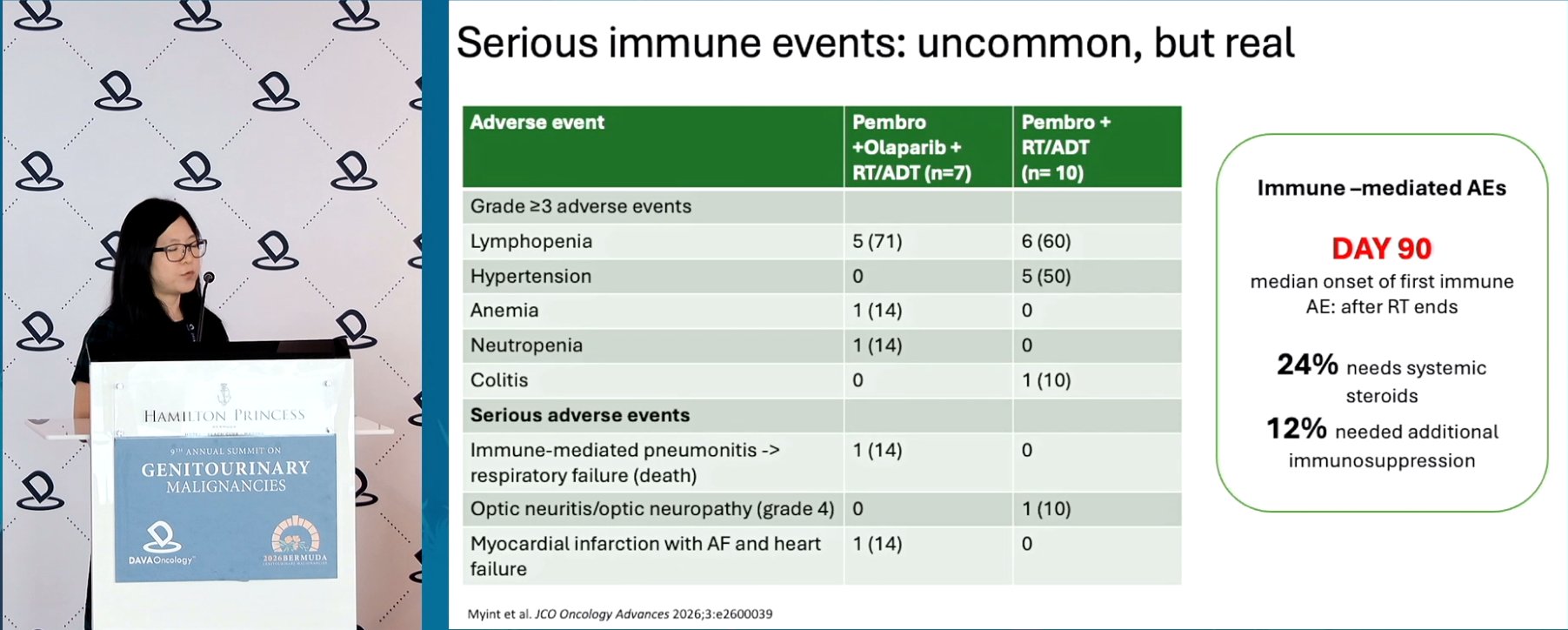
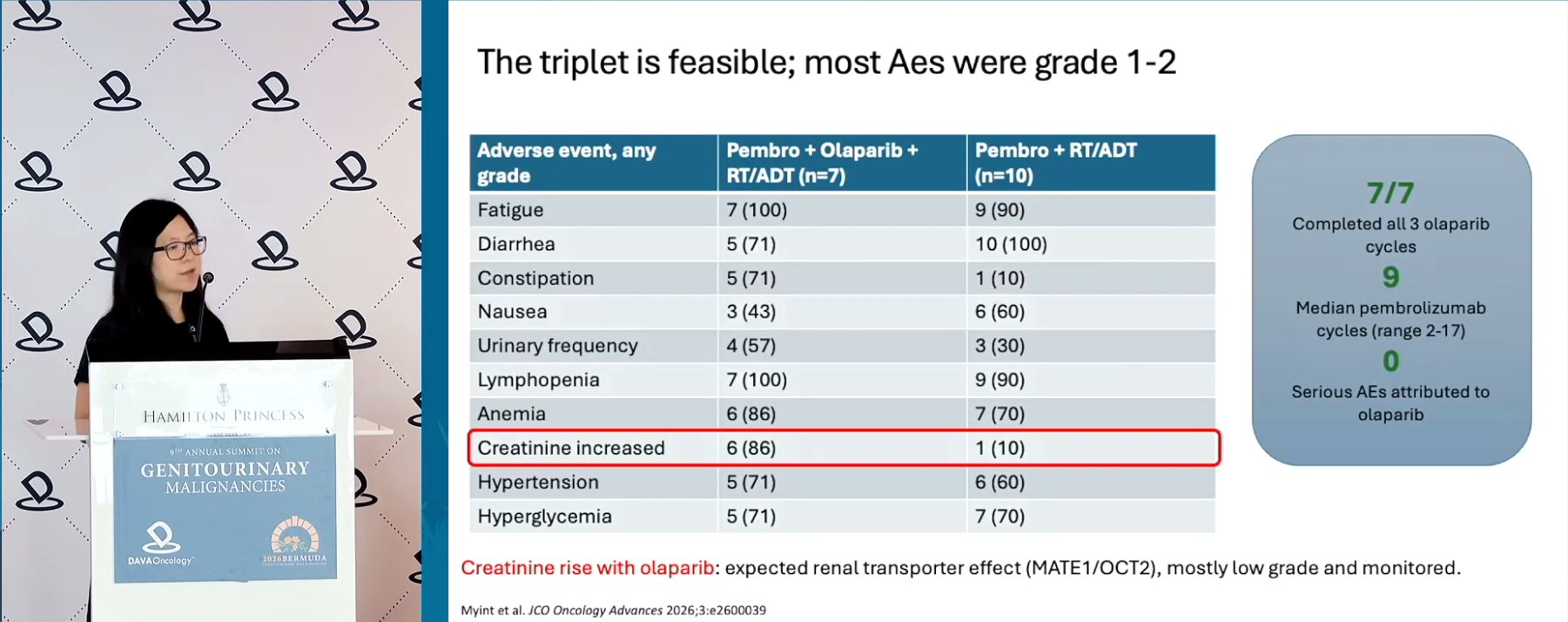
Dr. Zin Myint @UKMarkey presents Phase II interim safety data for pembrolizumab + olaparib + RT/ADT in high-risk localized prostate cancer. All 7 patients completed 3 cycles of olaparib, with no serious AEs attributed to it. Late immune toxicity remains a concern. #DAVAGU
KEYNOTE-641KEYNOTE-921
[Slide 1]
Serious immune events: uncommon, but real
Adverse event | Pembro +Olaparib + RT/ADT (n=7) | Pembro + RT/ADT (n= 10)
Grade >=3 adverse events
Lymphopenia | 5 (71) | 6 (60)
Hypertension | 0 | 5 (50)
Anemia | 1 (14) | 0
Neutropenia | 1 (14) | 0
Colitis | 0 | 1 (10)
Serious adverse events
Immune-mediated pneumonitis -> respiratory failure (death) | 1 (14) | 0
Optic neuritis/optic neuropathy (grade 4) | 0 | 1 (10)
Myocardial infarction with AF and heart failure | 1 (14) | 0
Immune-mediated AEs
DAY 90 median onset of first immune AE: after RT ends
24% needs systemic steroids
12% needed additional immunosuppression
Myint et al. JCO Oncology Advances 2026;3:e2600039
---
[Slide 2]
The triplet is feasible; most Aes were grade 1-2
Adverse event, any grade | Pembro + Olaparib + RT/ADT (n=7) | Pembro + RT/ADT (n=10)
Fatigue | 7 (100) | 9 (90)
Diarrhea | 5 (71) | 10 (100)
Constipation | 5 (71) | 1 (10)
Nausea | 3 (43) | 6 (60)
Urinary frequency | 4 (57) | 3 (30)
Lymphopenia | 7 (100) | 9 (90)
Anemia | 6 (86) | 7 (70)
Creatinine increased | 6 (86) | 1 (10)
Hypertension | 5 (71) | 6 (60)
Hyperglycemia | 5 (71) | 7 (70)
7/7 Completed all 3 olaparib cycles
9 Median pembrolizumab cycles (range 2-17)
0 Serious AEs attributed to olaparib
Creatinine rise with olaparib: expected renal transporter effect (MATE1/OCT2), mostly low grade and monitored.
Myint et al. JCO Oncology Advances 2026;3:e2600039
---
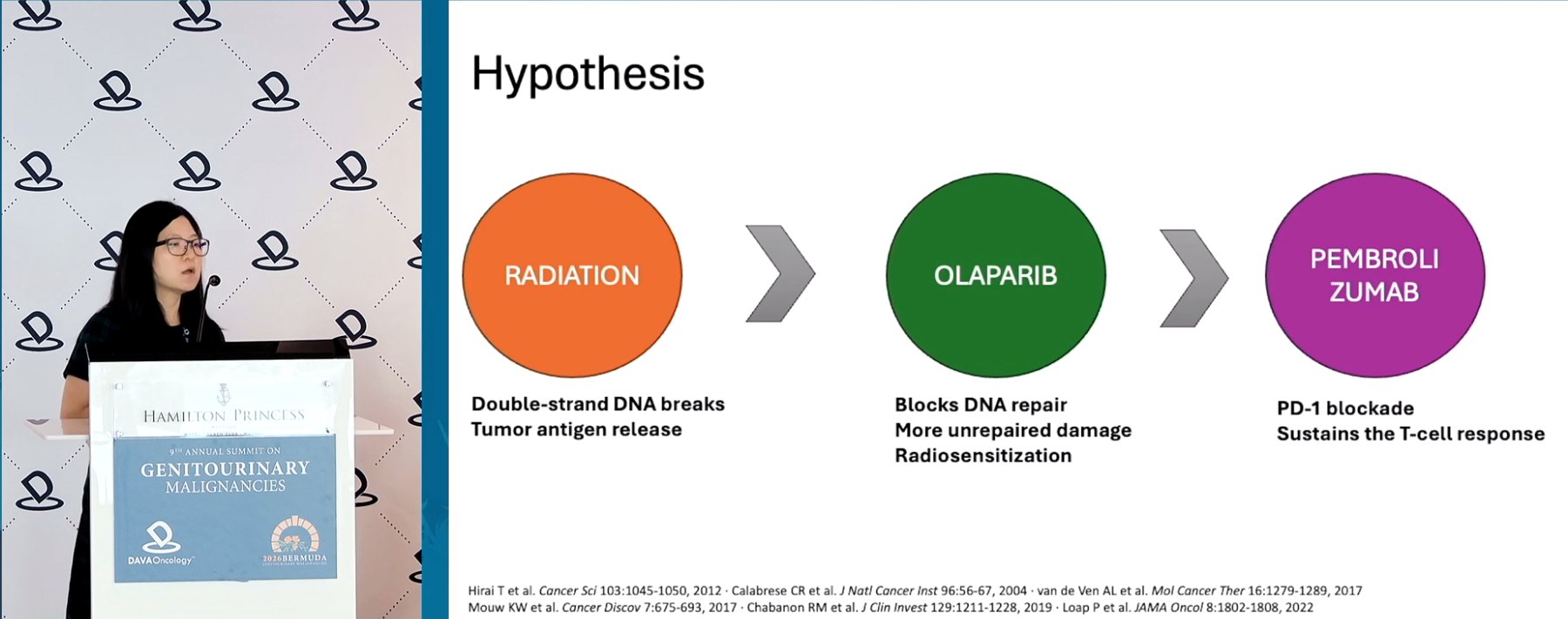
[Slide 3]
Hypothesis
RADIATION: Double-strand DNA breaks; Tumor antigen release
OLAPARIB: Blocks DNA repair; More unpaired damage; Radiosensitization
PEMBROLIZUMAB: PD-1 blockade; Sustains the T-cell response
Hirai T et al. Cancer Sci 103:1045-1050, 2012 · Calabrese CR et al. J Natl Cancer Inst 96:56-67, 2004 · van de Ven AL et al. Mol Cancer Ther 16:1279-1289, 2017
Mouw KW et al. Cancer Discov 7:675-693, 2017 · Chabanon RM et al. J Clin Invest 129:1211-1228, 2019 · Loap P et al. JAMA Oncol 8:1802-1808, 2022
---
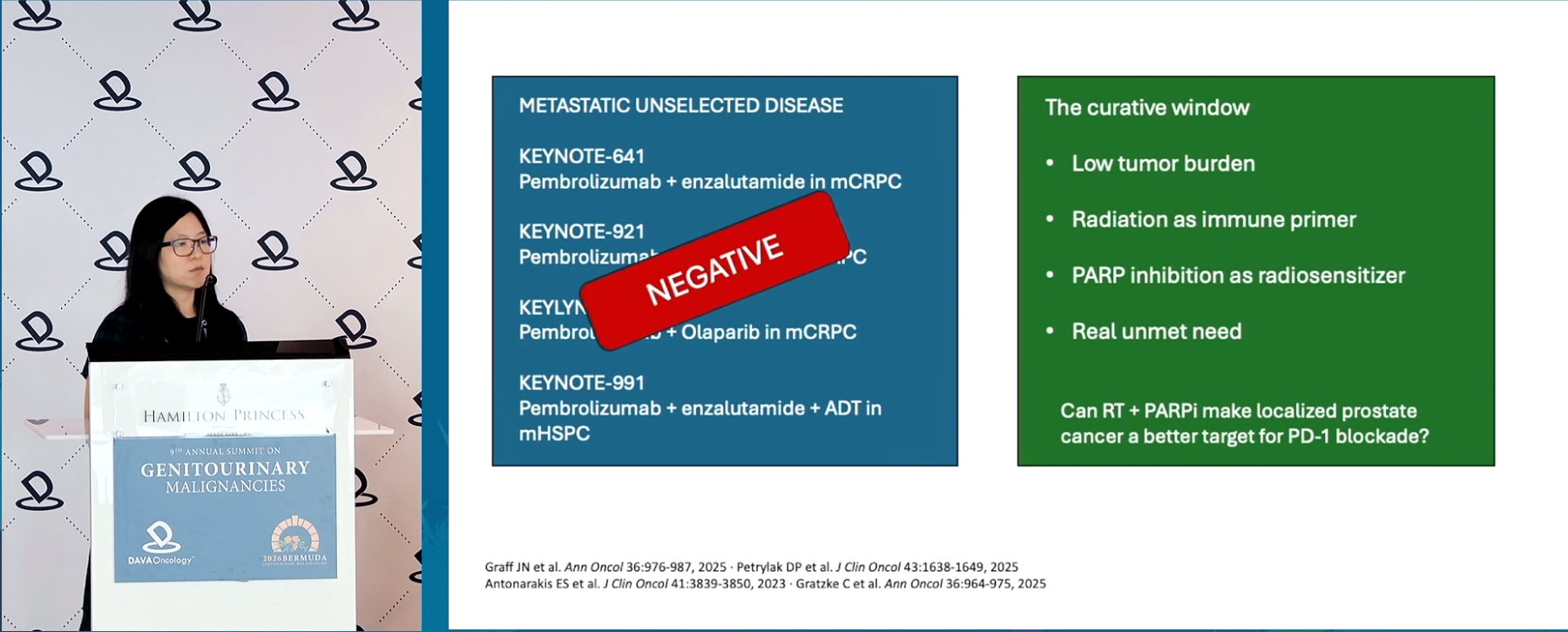
[Slide 4]
METASTATIC UNSELECTED DISEASE
KEYNOTE-641
Pembrolizumab + enzalutamide in mCRPC
KEYNOTE-921
Pembrolizum[illegible] [illegible]PC
KEYLYN[illegible]
Pembro[illegible] + Olaparib in mCRPC
KEYNOTE-991
Pembrolizumab + enzalutamide + ADT in mHSPC
NEGATIVE (stamp)
The curative window
Low tumor burden
Radiation as immune primer
PARP inhibition as radiosensitizer
Real unmet need
Can RT + PARPi make localized prostate cancer a better target for PD-1 blockade?
Graff JN et al. Ann Oncol 36:976-987, 2025 · Petrylak DP et al. J Clin Oncol 43:1638-1649, 2025
Antonarakis ES et al. J Clin Oncol 41:3839-3850, 2023 · Gratzke C et al. Ann Oncol 36:964-975, 2025
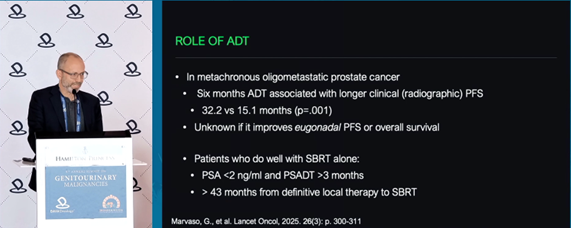
Radiographic PFS reached 32.2 vs 15.1 months with 6 months of ADT in metachronous oligometastatic prostate cancer (P=0.001). @TimGilliganMD @SutterHealth highlighted these findings while emphasizing that the impact on overall survival remains uncertain. #DAVAGU
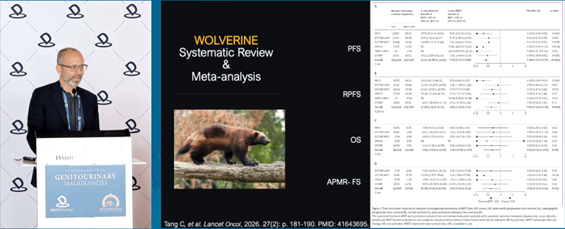
WOLVERINE
[Slide 1]
WOLVERINE
Systematic Review & Meta-analysis
PFS
RPFS
OS
APMR- FS
[forest plot content illegible]
Tang C, et al. Lancet Oncol, 2026. 27(2): p. 181-190. PMID: 41643690
---
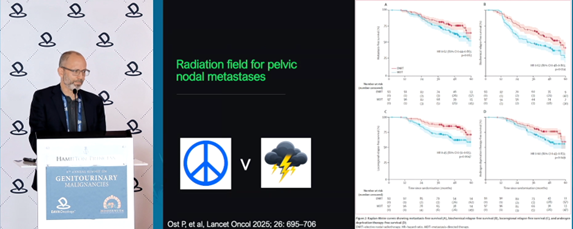
[Slide 2]
Radiation field for pelvic nodal metastases
Ost P, et al, Lancet Oncol 2025; 26: 695-706
[KM curves; details illegible]
---
[Slide 3]
ROLE OF ADT
In metachronous oligometastatic prostate cancer
Six months ADT associated with longer clinical (radiographic) PFS
32.2 vs 15.1 months (p=.001)
Unknown if it improves eugonadal PFS or overall survival
Patients who do well with SBRT alone:
PSA <2 ng/ml and PSADT >3 months
> 43 months from definitive local therapy to SBRT
Marvaso, G., et al. Lancet Oncol, 2025. 26(3): p. 300-311
---
[Slide 4]
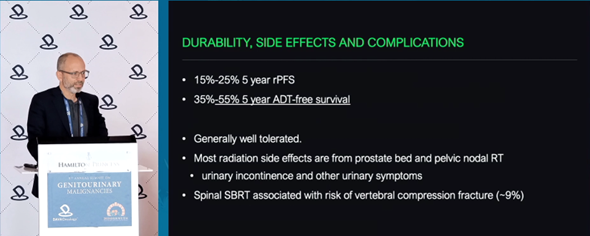
DURABILITY, SIDE EFFECTS AND COMPLICATIONS
15%-25% 5 year rPFS
35%-55% 5 year ADT-free survival
Generally well tolerated.
Most radiation side effects are from prostate bed and pelvic nodal RT
urinary incontinence and other urinary symptoms
Spinal SBRT associated with risk of vertebral compression fracture (~9%)
Adding MDT to SOC improved median PFS from 14.9 to 32 months in oligometastatic prostate cancer (HR 0.45; 95% CI 0.35–0.58; P<0.001). @ChadTangMD (@MDAndersonNews) presented pooled data from 5 trials (N=472). #DAVAGU
WOLVERINE
[Slide 1]
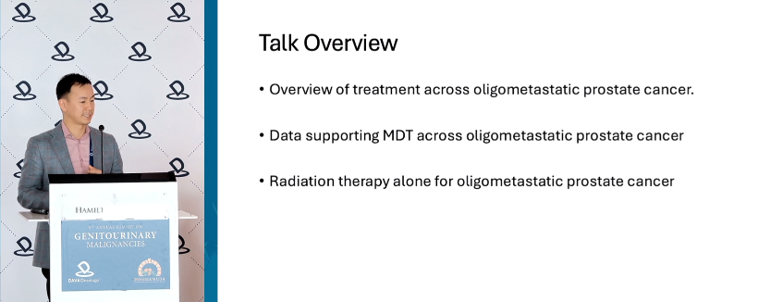
Talk Overview
Overview of treatment across oligometastatic prostate cancer.
Data supporting MDT across oligometastatic prostate cancer
Radiation therapy alone for oligometastatic prostate cancer
---
[Slide 2]
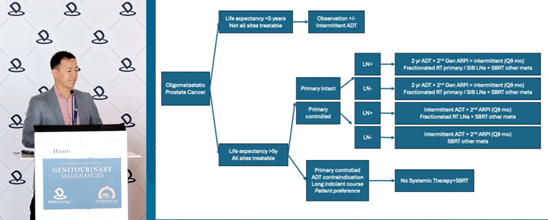
Oligometastatic Prostate Cancer
Life expectancy <5 years. Not all sites treatable -> Observation +/- Intermittent ADT
Life expectancy >5y. All sites treatable
Primary Intact: LN+ -> 2 yr ADT + 2nd Gen ARPI > intermittent (Q9 mo) Fractionated RT primary / SIB LNs + SBRT other mets
Primary Intact: LN- -> 2 yr ADT + 2nd Gen ARPI > intermittent (Q9 mo) Fractionated RT primary + SBRT other mets
Primary controlled: LN+ -> Intermittent ADT + 2nd ARPI (Q9 mo) Fractionated RT LNs + SBRT other mets
Primary controlled: LN- -> Intermittent ADT + 2nd ARPI (Q9 mo) SBRT other mets
Primary controlled: ADT contraindication, Long indolent course, Patient preference -> No Systemic Therapy+SBRT
---
[Slide 3]
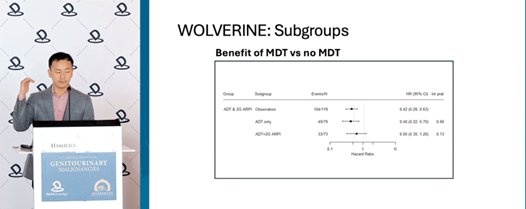
WOLVERINE: Subgroups
Benefit of MDT vs no MDT
Group | Subgroup | Events/N | HR (95% CI) | Int. pval
ADT & 2G ARPI | Observation | 104/119 | 0.42 (0.28, 0.63) |
| ADT only | 49/79 | 0.46 (0.22, 0.75) | 0.66
| ADT+2G ARPI | 23/73 | 0.69 (0.35, 1.26) | 0.13
Hazard Ratio
---
[Slide 4]
In Summary
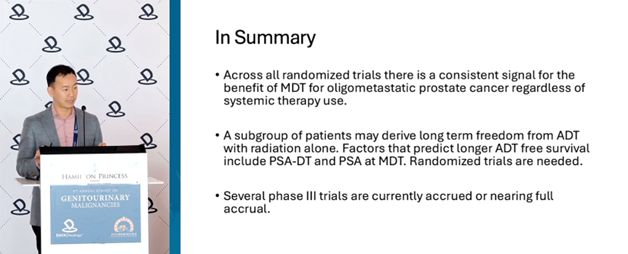
Across all randomized trials there is a consistent signal for the benefit of MDT for oligometastatic prostate cancer regardless of systemic therapy use.
A subgroup of patients may derive long term freedom from ADT with radiation alone. Factors that predict longer ADT free survival include PSA-DT and PSA at MDT. Randomized trials are needed.
Several phase III trials are currently accrued or nearing full accrual.
Create a free account, pick the tumor types you cover, and go beyond the tweet — the intelligence pharma teams use to map influence and prepare for engagement:
Choose the tumor types you follow. No cost, unsubscribe anytime.
8 posts · 29 slides
Theranostics & Radioligand Therapy
Three decades of targeted radiation: From Sm-153 EDTMP and radium-223 (ALSYMPCA) to Lu-177 PSMA-617 in VISION, PSMAfore & PSMAddition, and the ongoing phase 3 PSMA-DC trial, traced by Dr. Oliver Sartor (LCMC Hospitals). #DAVAGU
[Slide 1]
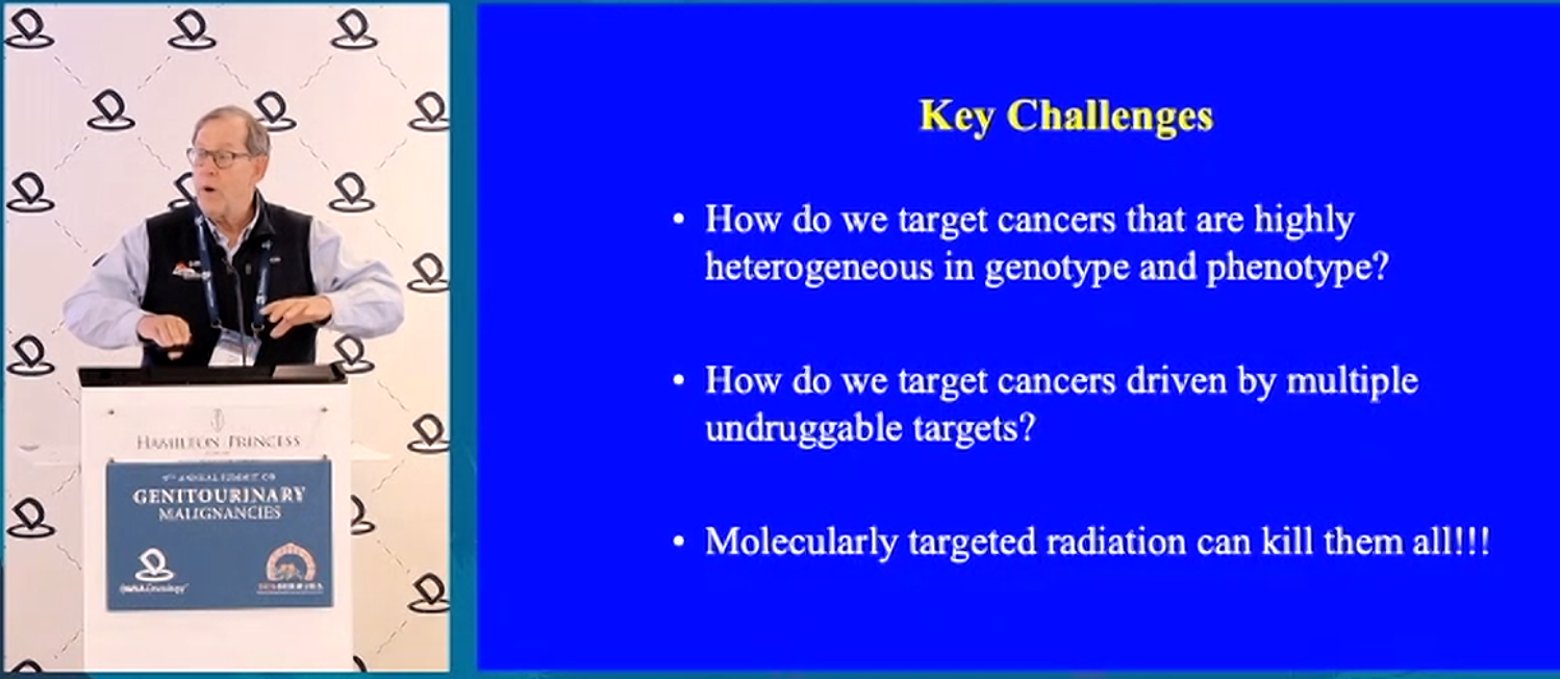
Key Challenges
• How do we target cancers that are highly heterogeneous in genotype and phenotype?
• How do we target cancers driven by multiple undruggable targets?
• Molecularly targeted radiation can kill them all!!!
---
[Slide 2]
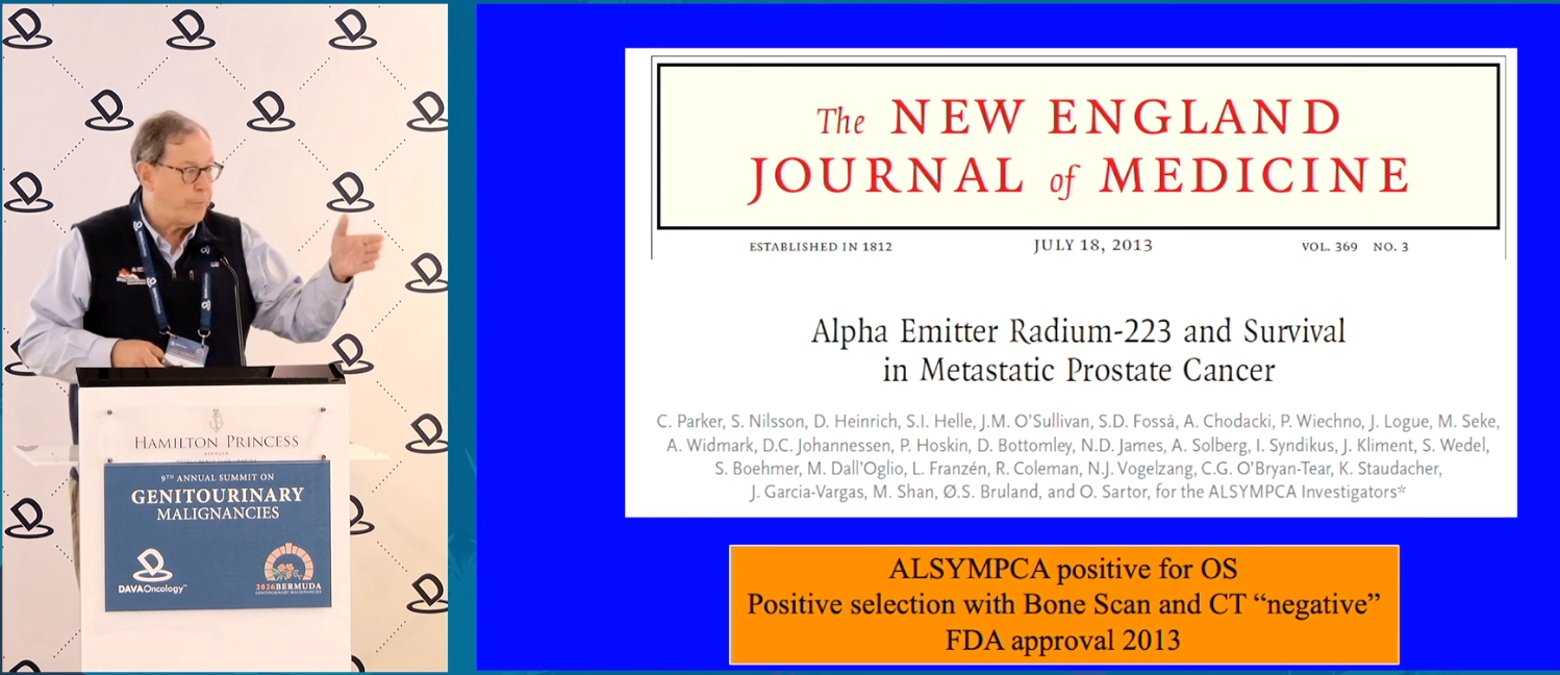
The NEW ENGLAND JOURNAL of MEDICINE
ESTABLISHED IN 1812 | JULY 18, 2013 | VOL. 369 NO. 3
Alpha Emitter Radium-223 and Survival in Metastatic Prostate Cancer
C. Parker, S. Nilsson, D. Heinrich, S.I. Helle, J.M. O'Sullivan, S.D. Fosså, A. Chodacki, P. Wiechno, J. Logue, M. Seke, A. Widmark, D.C. Johannessen, P. Hoskin, D. Bottomley, N.D. James, A. Solberg, I. Syndikus, J. Kliment, S. Wedel, S. Boehmer, M. Dall'Oglio, L. Franzén, R. Coleman, N.J. Vogelzang, C.G. O'Bryan-Tear, K. Staudacher, J. Garcia-Vargas, M. Shan, Ø.S. Bruland, and O. Sartor, for the ALSYMPCA Investigators*
ALSYMPCA positive for OS
Positive selection with Bone Scan and CT "negative"
FDA approval 2013
---
[Slide 3]
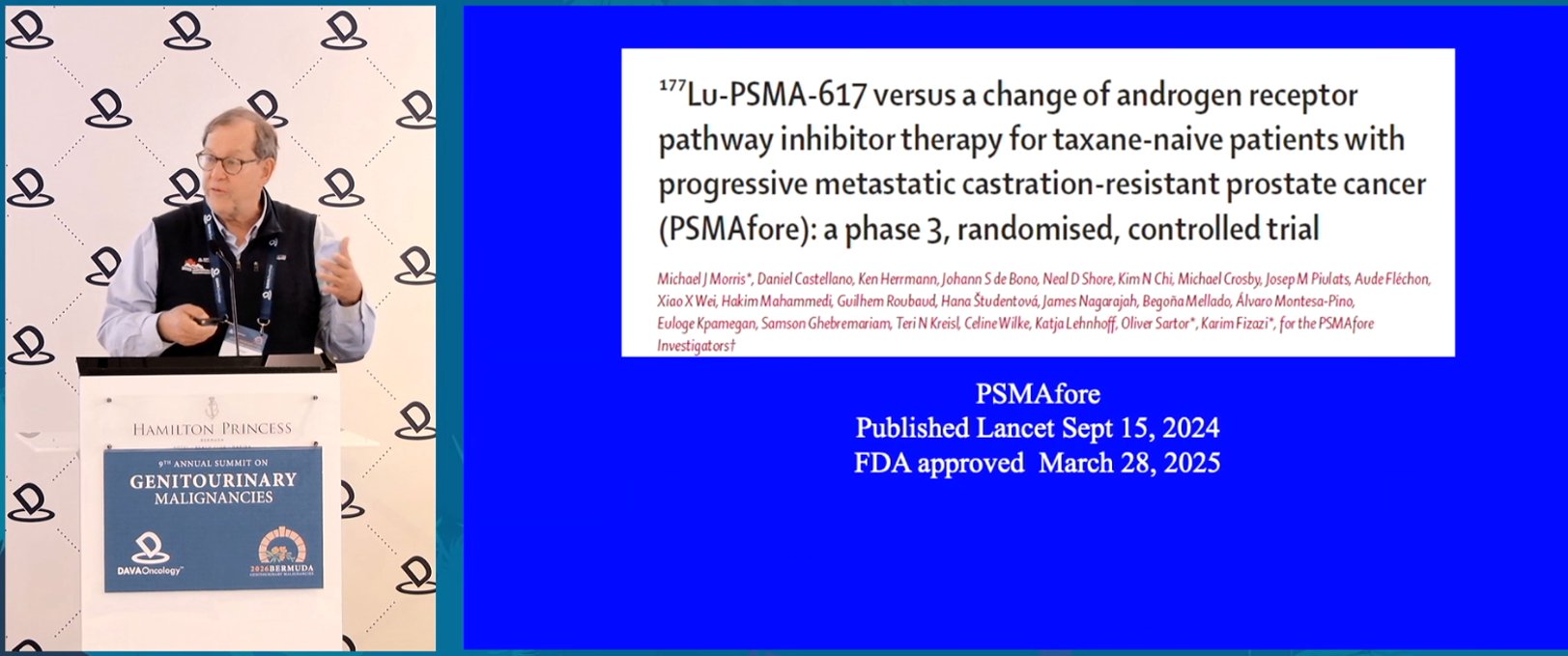
177Lu-PSMA-617 versus a change of androgen receptor pathway inhibitor therapy for taxane-naive patients with progressive metastatic castration-resistant prostate cancer (PSMAfore): a phase 3, randomised, controlled trial
Michael J Morris*, Daniel Castellano, Ken Herrmann, Johann S de Bono, Neal D Shore, Kim N Chi, Michael Crosby, Josep M Piulats, Aude Fléchon, Xiao X Wei, Hakim Mahammedi, Guilhem Roubaud, Hana Študentová, James Nagarajah, Begoña Mellado, Álvaro Montesa-Pino, Euloge Kpamegan, Samson Ghebremariam, Teri N Kreisl, Celine Wilke, Katja Lehnhoff, Oliver Sartor*, Karim Fizazi*, for the PSMAfore Investigators†
PSMAfore
Published Lancet Sept 15, 2024
FDA approved March 28, 2025
---
[Slide 4]
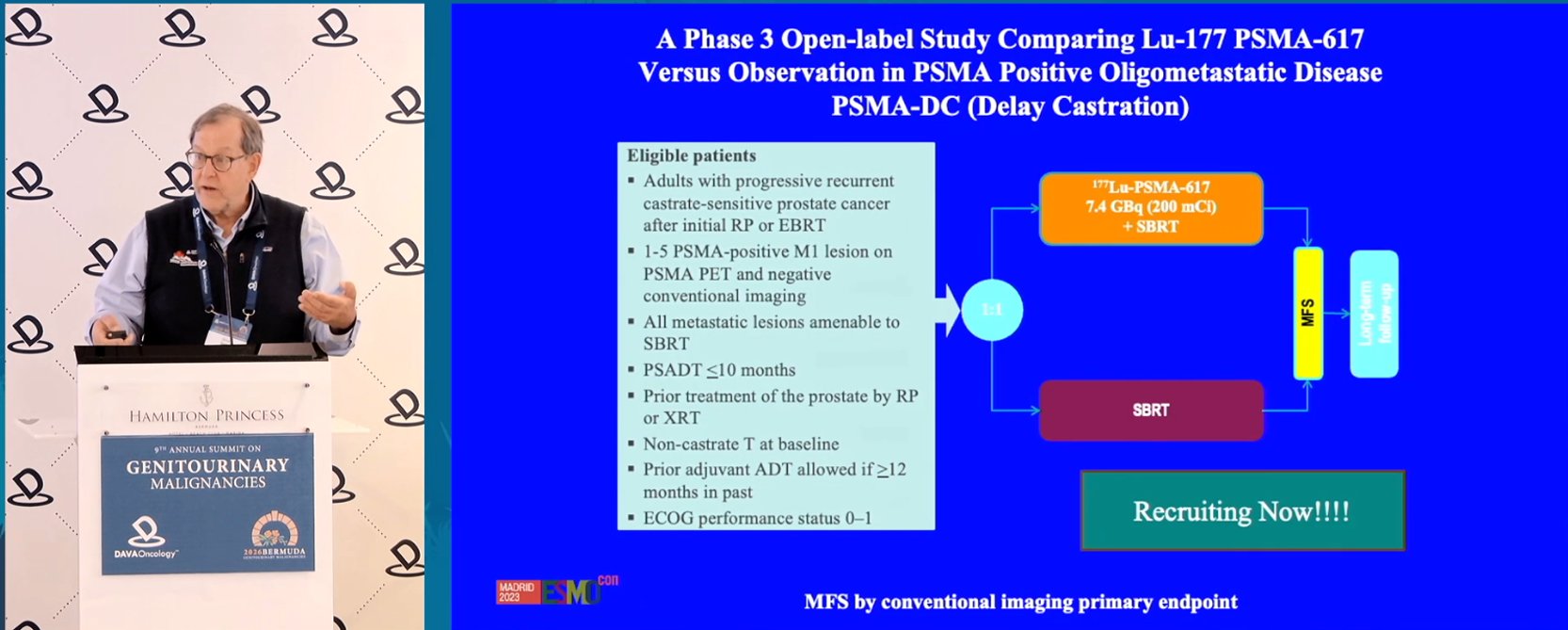
A Phase 3 Open-label Study Comparing Lu-177 PSMA-617 Versus Observation in PSMA Positive Oligometastatic Disease
PSMA-DC (Delay Castration)
Eligible patients
• Adults with progressive recurrent castrate-sensitive prostate cancer after initial RP or EBRT
• 1-5 PSMA-positive M1 lesion on PSMA PET and negative conventional imaging
• All metastatic lesions amenable to SBRT
• PSADT ≤10 months
• Prior treatment of the prostate by RP or XRT
• Non-castrate T at baseline
• Prior adjuvant ADT allowed if ≥12 months in past
• ECOG performance status 0-1
1:1
177Lu-PSMA-617 7.4 GBq (200 mCi) + SBRT
SBRT
MFS
Long-term follow-up
Recruiting Now!!!!
MADRID 2023 ESMO
MFS by conventional imaging primary endpoint
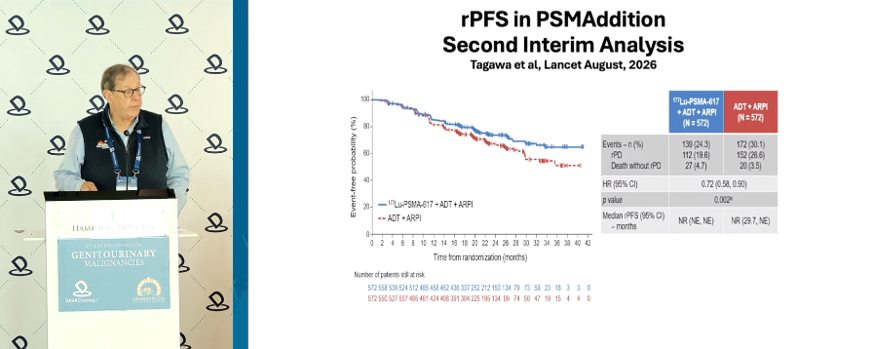
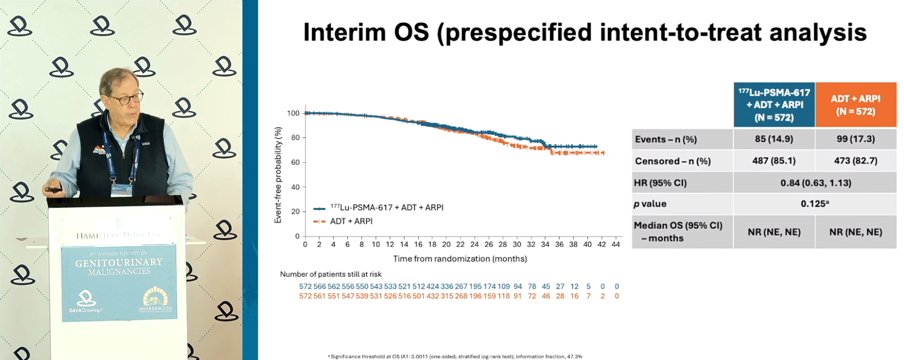
Radioligand therapy in PSMA+ mHSPC: Dr. @DrsartorOliver (LCMC Health) reviewed PSMAddition (N=1,144). 177Lu-PSMA-617 + ADT + ARPI vs ADT + ARPI: rPFS HR 0.72 at 2nd interim, final rPFS HR 0.67; OS IA2 HR 0.80 (95% CI 0.63-1.01). FDA approved July 31, 2026. #DAVAGU
[Slide 1]
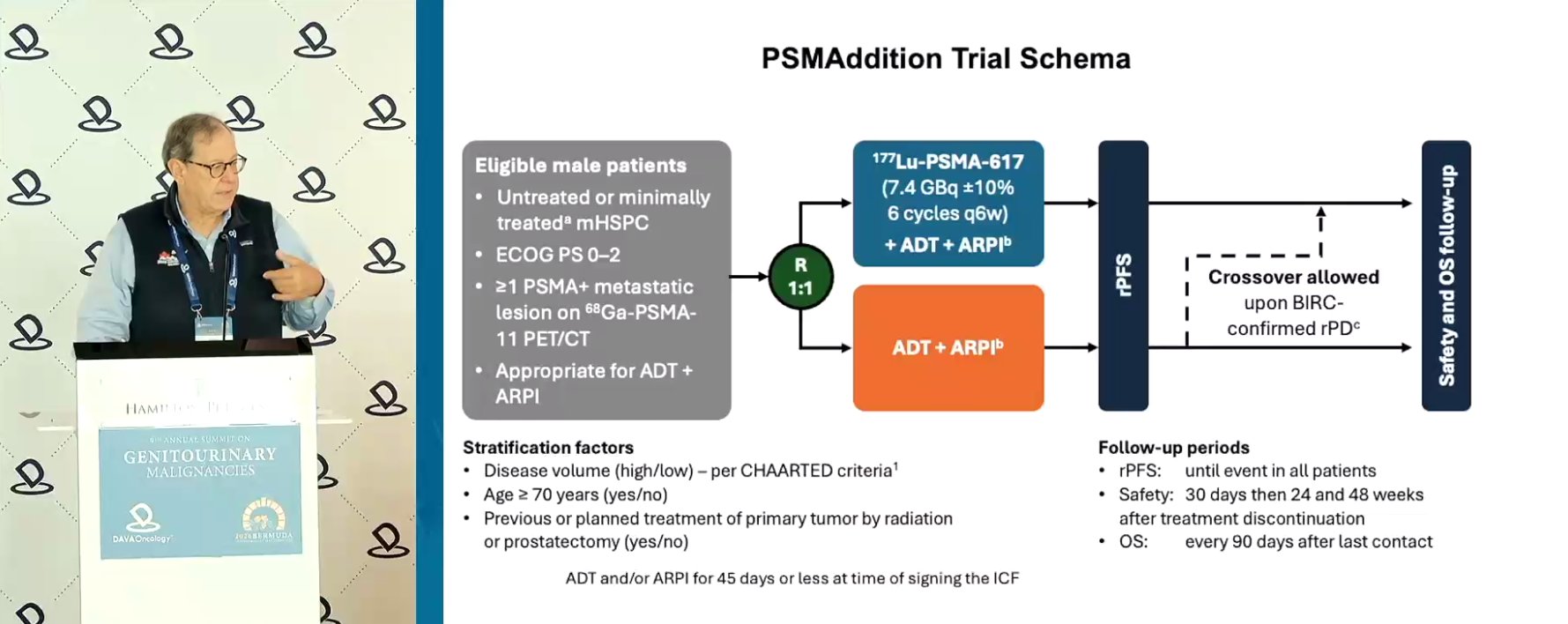
PSMAddition Trial Schema
Eligible male patients
Untreated or minimally treated(a) mHSPC
ECOG PS 0-2
>=1 PSMA+ metastatic lesion on 68Ga-PSMA-11 PET/CT
Appropriate for ADT + ARPI
R 1:1
177Lu-PSMA-617 (7.4 GBq +/-10% 6 cycles q6w) + ADT + ARPI(b)
ADT + ARPI(b)
rPFS
Crossover allowed upon BIRC-confirmed rPD(c)
Safety and OS follow-up
Stratification factors
Disease volume (high/low) - per CHAARTED criteria(1)
Age >= 70 years (yes/no)
Previous or planned treatment of primary tumor by radiation or prostatectomy (yes/no)
Follow-up periods
rPFS: until event in all patients
Safety: 30 days then 24 and 48 weeks after treatment discontinuation
OS: every 90 days after last contact
ADT and/or ARPI for 45 days or less at time of signing the ICF
---
[Slide 2]
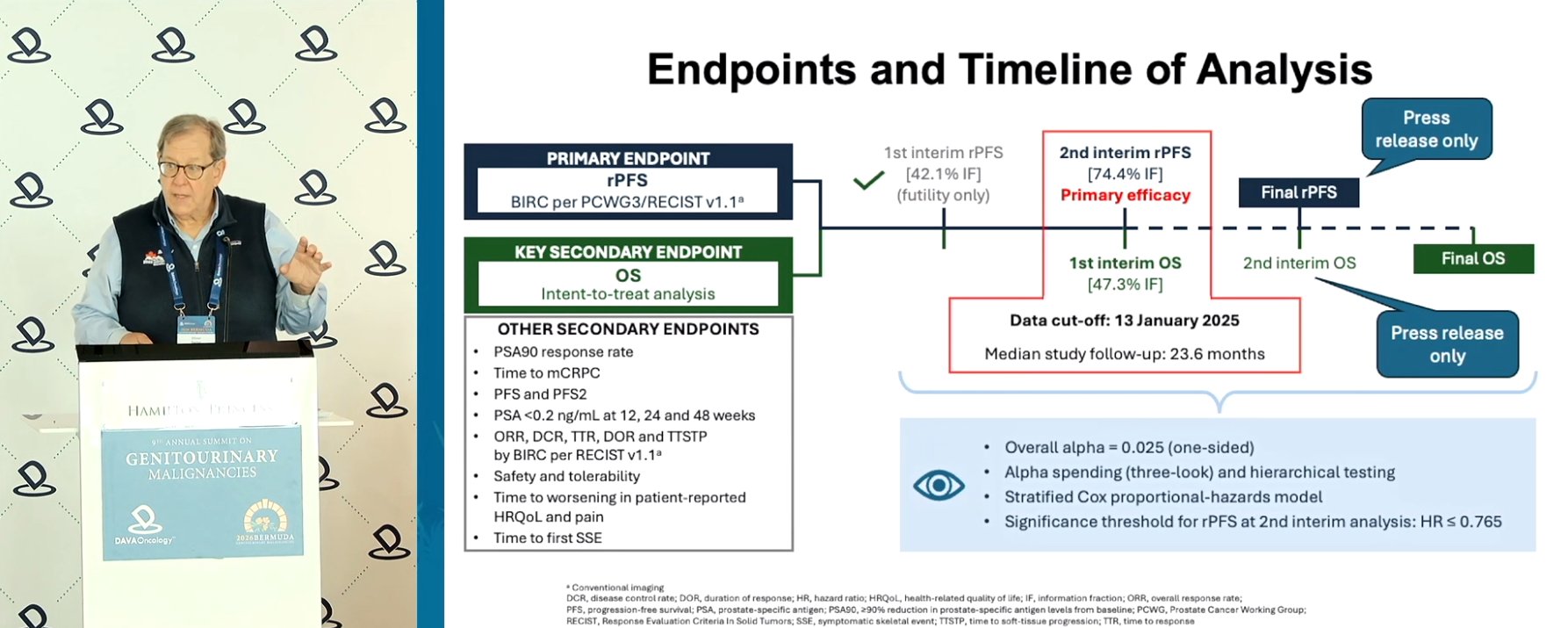
Endpoints and Timeline of Analysis
PRIMARY ENDPOINT
rPFS
BIRC per PCWG3/RECIST v1.1(a)
KEY SECONDARY ENDPOINT
OS
Intent-to-treat analysis
OTHER SECONDARY ENDPOINTS
PSA90 response rate
Time to mCRPC
PFS and PFS2
PSA <0.2 ng/mL at 12, 24 and 48 weeks
ORR, DCR, TTR, DOR and TTSTP by BIRC per RECIST v1.1(a)
Safety and tolerability
Time to worsening in patient-reported HRQoL and pain
Time to first SSE
1st interim rPFS [42.1% IF] (futility only)
2nd interim rPFS [74.4% IF] Primary efficacy
1st interim OS [47.3% IF]
Data cut-off: 13 January 2025
Median study follow-up: 23.6 months
Final rPFS (Press release only)
2nd interim OS (Press release only)
Final OS
Overall alpha = 0.025 (one-sided)
Alpha spending (three-look) and hierarchical testing
Stratified Cox proportional-hazards model
Significance threshold for rPFS at 2nd interim analysis: HR <= 0.765
(a) Conventional imaging
DCR, disease control rate; DOR, duration of response; HR, hazard ratio; HRQoL, health-related quality of life; IF, information fraction; ORR, overall response rate; PFS, progression-free survival; PSA, prostate-specific antigen; PSA90, >=90% reduction in prostate-specific antigen levels from baseline; PCWG, Prostate Cancer Working Group; RECIST, Response Evaluation Criteria In Solid Tumors; SSE, symptomatic skeletal event; TTSTP, time to soft-tissue progression; TTR, time to response
---
[Slide 3]
rPFS in PSMAddition
Second Interim Analysis
Tagawa et al, Lancet August, 2026
Event-free probability (%)
Time from randomization (months)
177Lu-PSMA-617 + ADT + ARPI (N = 572)
ADT + ARPI (N = 572)
Events - n (%) | 139 (24.3) | 172 (30.1)
rPD | 112 (19.6) | 152 (26.6)
Death without rPD | 27 (4.7) | 20 (3.5)
HR (95% CI) | 0.72 (0.58, 0.90)
p value | 0.002
Median rPFS (95% CI) - months | NR (NE, NE) | NR (29.7, NE)
Number of patients still at risk: [illegible]
---
[Slide 4]
Interim OS (prespecified intent-to-treat analysis)
Event-free probability (%)
Time from randomization (months)
177Lu-PSMA-617 + ADT + ARPI (N = 572)
ADT + ARPI (N = 572)
Events - n (%) | 85 (14.9) | 99 (17.3)
Censored - n (%) | 487 (85.1) | 473 (82.7)
HR (95% CI) | 0.84 (0.63, 1.13)
p value | 0.125
Median OS (95% CI) - months | NR (NE, NE) | NR (NE, NE)
Number of patients still at risk: [illegible]
Significance threshold at OS IA1: 0.0011 (one-sided; stratified log-rank test); information fraction, 47.3%
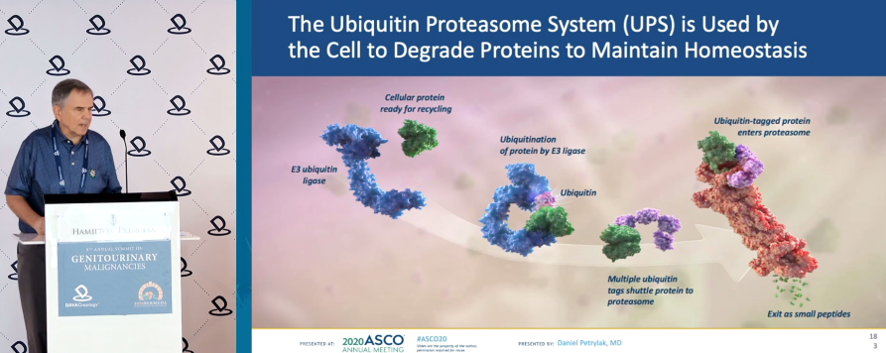
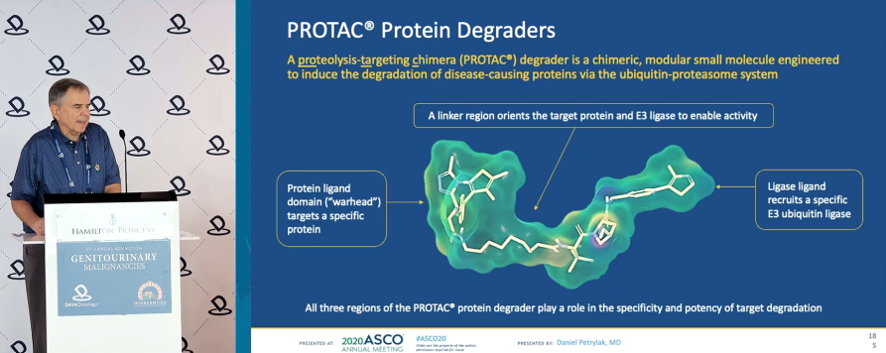
Can AR degradation plus PSMA radioligand therapy help mCRPC? Dr. Daniel Petrylak (@YaleCancer) reviewed ARV-766, an AR PROTAC: PSA50 43% (n=47), unconfirmed ORR 30% (n=20) in AR LBD-mutant disease. Phase 2 LuxAR-02: JSB462 100 or 300 mg + 177Lu-PSMA-617 vs 177Lu-PSMA-617. #DAVAGU
LuxAR-02
[Slide 1]
The Ubiquitin Proteasome System (UPS) is Used by the Cell to Degrade Proteins to Maintain Homeostasis
Cellular protein ready for recycling
Ubiquitination of protein by E3 ligase
Ubiquitin-tagged protein enters proteasome
E3 ubiquitin ligase
Ubiquitin
Multiple ubiquitin tags shuttle protein to proteasome
Exit as small peptides
PRESENTED AT: 2020 ASCO ANNUAL MEETING #ASCO20
Slides are the property of the author, permission required for reuse.
PRESENTED BY: Daniel Petrylak, MD
18 3
---
[Slide 2]
PROTAC(R) Protein Degraders
A proteolysis-targeting chimera (PROTAC(R)) degrader is a chimeric, modular small molecule engineered to induce the degradation of disease-causing proteins via the ubiquitin-proteasome system
A linker region orients the target protein and E3 ligase to enable activity
Protein ligand domain ("warhead") targets a specific protein
Ligase ligand recruits a specific E3 ubiquitin ligase
All three regions of the PROTAC(R) protein degrader play a role in the specificity and potency of target degradation
PRESENTED AT: 2020 ASCO ANNUAL MEETING #ASCO20
PRESENTED BY: Daniel Petrylak, MD
18 5
---
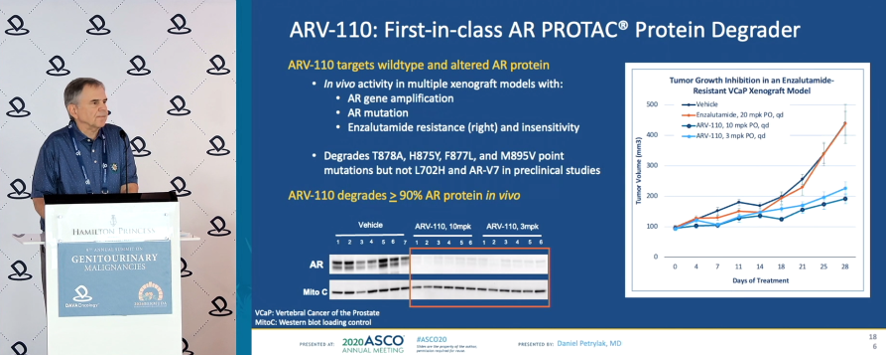
[Slide 3]
ARV-110: First-in-class AR PROTAC(R) Protein Degrader
ARV-110 targets wildtype and altered AR protein
In vivo activity in multiple xenograft models with:
AR gene amplification
AR mutation
Enzalutamide resistance (right) and insensitivity
Degrades T878A, H875Y, F877L, and M895V point mutations but not L702H and AR-V7 in preclinical studies
ARV-110 degrades >= 90% AR protein in vivo
Tumor Growth Inhibition in an Enzalutamide-Resistant VCaP Xenograft Model
Legend: Vehicle; Enzalutamide, 20 mpk PO, qd; ARV-110, 10 mpk PO, qd; ARV-110, 3 mpk PO, qd
Tumor Volume (mm3)
Days of Treatment
Western blot: Vehicle | ARV-110, 10mpk | ARV-110, 3mpk; AR; Mito C
VCaP: Vertebral Cancer of the Prostate
MitoC: Western blot loading control
PRESENTED AT: 2020 ASCO ANNUAL MEETING #ASCO20
PRESENTED BY: Daniel Petrylak, MD
18 6
---
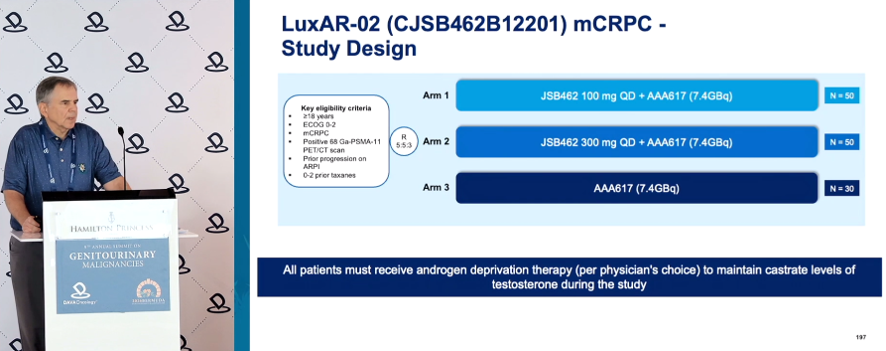
[Slide 4]
LuxAR-02 (CJSB462B12201) mCRPC - Study Design
Key eligibility criteria
>=18 years
ECOG 0-2
mCRPC
Positive 68 Ga-PSMA-11 PET/CT scan
Prior progression on ARPI
0-2 prior taxanes
R 5:5:3
Arm 1 | JSB462 100 mg QD + AAA617 (7.4GBq) | N = 50
Arm 2 | JSB462 300 mg QD + AAA617 (7.4GBq) | N = 50
Arm 3 | AAA617 (7.4GBq) | N = 30
All patients must receive androgen deprivation therapy (per physician's choice) to maintain castrate levels of testosterone during the study
197
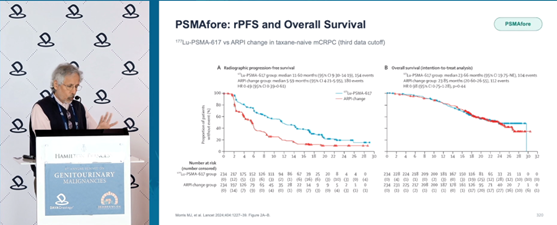
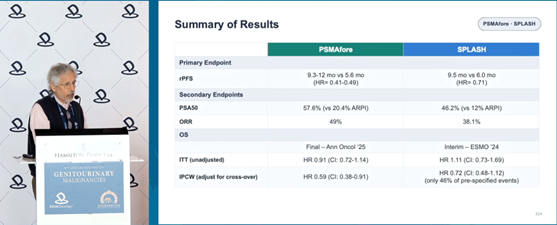
PSMAfore vs SPLASH: Dr. Arif Hussain @UMGCCC highlighted rPFS benefits with ¹⁷⁷Lu-PSMA therapy in mCRPC. PSMAforereported HR 0.41–0.49 and SPLASH HR 0.71, with PSA50 responses of 57.6% and 46.2%, respectively. #DAVAGU
PSMAforeSPLASHVISION
[Slide 1]
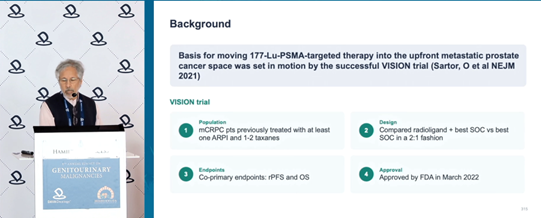
Background
Basis for moving 177-Lu-PSMA-targeted therapy into the upfront metastatic prostate cancer space was set in motion by the successful VISION trial (Sartor, O et al NEJM 2021)
VISION trial
Population: mCRPC pts previously treated with at least one ARPI and 1-2 taxanes
Design: Compared radioligand + best SOC vs best SOC in a 2:1 fashion
Endpoints: Co-primary endpoints: rPFS and OS
Approval: Approved by FDA in March 2022
[illegible] (slide number)
9th Annual Summit on Genitourinary Malignancies
---
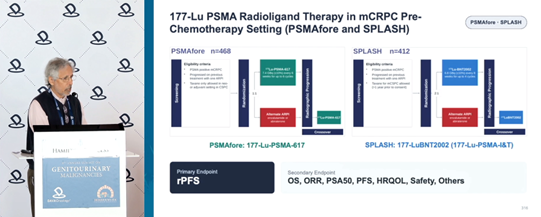
[Slide 2]
177-Lu PSMA Radioligand Therapy in mCRPC Pre-Chemotherapy Setting (PSMAfore and SPLASH)
PSMAfore | SPLASH
PSMAfore n=468
SPLASH n=412
Eligibility criteria: [illegible]
Screening | Randomization | Radiographic progression | Crossover
PSMAfore: 177-Lu-PSMA-617
SPLASH: 177-LuBNT2002 (177-Lu-PSMA-I&T)
Primary Endpoint
rPFS
Secondary Endpoint
OS, ORR, PSA50, PFS, HRQOL, Safety, Others
---
[Slide 3]
PSMAfore: rPFS and Overall Survival
PSMAfore
177Lu-PSMA-617 vs ARPI change in taxane-naive mCRPC (third data cutoff)
A Radiographic progression-free survival
B Overall survival (intention-to-treat analysis)
[curve annotations illegible]
Number at risk (number censored)
177Lu-PSMA-617 group | ARPI change group
Months [axis 0 to 30]
Morris MJ, et al. Lancet. 2026;[illegible]
---
[Slide 4]
Summary of Results
PSMAfore - SPLASH
| PSMAfore | SPLASH
Primary Endpoint
rPFS | 9.3-12 mo vs 5.6 mo (HR= 0.41-0.49) | 9.5 mo vs 6.0 mo (HR= 0.71)
Secondary Endpoints
PSA50 | 57.6% (vs 20.4% ARPI) | 46.2% (vs 12% ARPI)
ORR | 49% | 38.1%
OS
| Final - Ann Oncol '25 | Interim - ESMO '24
ITT (unadjusted) | HR 0.91 (CI: 0.72-1.14) | HR 1.11 (CI: 0.73-1.69)
IPCW (adjust for cross-over) | HR 0.59 (CI: 0.38-0.91) | HR 0.72 (CI: 0.48-1.12) (only 46% of pre-specified events)
PEACE-3 demonstrated improved rPFS(19.4 vs 16.4 months; HR 0.69; P=0.0009) and OS (38.2 vs 32.6 months; HR 0.76) with Ra-223 + enzalutamide vs enzalutamide alone in mCRPC (N=446). @sartor_oliver (@LCMCHealth) reviewed the findings. #DAVAGU
[Slide 1]
EORTC-GUCG 1333 (PEACE-3)
Study population
Patients with mCRPC and bone metastases (>=4 bone metastases)
Asymptomatic or mildly symptomatic*
WHO PS of 0 or 1
No prior treatment with enzalutamide or Ra223
No known visceral metastases
Ongoing ADT
Prior treatment with abiraterone in mHSPC allowed
N446**
1:1 Randomisation
Ra223 55 kBq/kg iv every 4 weeks for 6 cycles plus Enzalutamide 160 mg od
Enzalutamide 160 mg od
Stratification factors
Country
Baseline pain (BPI worst pain 0-1 vs 2-3)
Prior docetaxel (yes vs no)
Use of bone protecting agents (yes vs no)
Prior abiraterone (yes vs no)
Primary endpoint
rPFS
Key secondary endpoints
Safety
Overall Survival
Time to next treatment
Time to pain progression
Time to first SSE (symptomatic skeletal event)
*defined as brief pain inventory WP24 score <= 4
** original target accrual N=560, adapted for slow accrual
EORTC
---
[Slide 2]
Overall survival
HR 0.76
95% CI 0.60-0.96
1-sided stratified log-rank p = 0.0096
Median OS
38.2 months Enza + Ra-223
32.6 months Enza
Deaths: 152/222 vs 165/224
Curves cross around 18 months
Overall survival (%) vs Time in months
Treatment: Enza | Enza+RAD223
Patients-at-Risk
Enza- 224 208 151 65 31 6 3 0
Enza+RAD223- 222 201 156 94 53 33 20 9 2 0
EORTC
---
[Slide 3]
RESULTS: Overall Survival stratified by bone health agents
Median OS longer by 17 mo (HR=0.56 95%CI=0.37-0.86)
[left curve legend and table values illegible]
73.6 mo
22.8 mo
Saad et al, EAU 2025
Overall survival
EORTC
---
[Slide 4]
Conclusions
The combination of enzalutamide and 6 cycles of Ra223 shows a statistically significant improvement in rPFS in pts with no ARPI pretreatment
HR of 0.69 (p=0.0009)
Median rPFS increased from 16.4 months with enzalutamide to 19.4 months with the combination.
Improvement in rPFS supported by a significantly improved OS (HR 0.69, p=0.0031)
Bone health agents are key with this regimen!
EORTC
Radiation intensification without ADT took focus as @angela_jia_ discussed STARLiT, a Phase I/II study evaluating ¹⁷⁷Lu-PSMA-617 + SBRT in very-high-risk localized prostate cancer (N=45). The Phase II primary endpoint is 3-year ADT-free survival. #DAVAGU
PSMAforeSTARLiTVISION
[Slide 1]
STARLiT: STereotActic body Radiotherapy and 177Lutetium PSMA in Locally advanced prostate cancer: A Phase I/II Trial
NCT06574880
PI: Jia
Key Eligibility n=45
Newly diagnosed very-high risk, defined as >=2 of: cT3; >= GG4; PSA >= 40ng/mL and / or cN1
PSMA positive disease: SUVmax >= 10
M0
7.4GBq | 7.4GBq | 7.4GBq
6 wks | 6 wks
177LuPSMA-617 | SBRT | 177LuPSMA-617 | 177LuPSMA-617
prostate + ENI
SPECT/CT @ 48h | SPECT/CT @ 72h | SPECT/CT @ 72h
prostate biopsy
PSMA PET/CT 12mo from SBRT
1st endpoint:
Ph1: Maximally tolerated activity of Lu-PSMA when administered with prostate SBRT
Ph2: 3-yr ADT-free survival
2nd endpoints:
Overall survival
Cumulative incidence of distant metastasis and prostate cancer-specific survival
Patient reported quality of life
Time to salvage therapy
Exploratory endpoints
Dosimetry (SPECT with prior information)
AI histopathology
Radiomics
Circulating biomarkers
---
[Slide 2]
iPSA 5, GS 4+5=9, SUVmax 13.3
Prostate and pelvis SBRT, 5 fractions
Baseline PSMA PET/CT
Cycle 1, post-infusion SPECT/CT
@ 48h
Cycle 2, SPECT/CT @ 72h
@ 72h
12mo post-SBRT PSMA PET/CT
---
[Slide 3]
PSMA biomarkers for Lu-PSMA in mAPM-R
SUVmean ∝ target expression
Volume ∝ disease extent
TheraP (cabazitaxel)
SUVmean >=10 | OS 21.4 vs 15.0 mo (HR 0.47)
VISION (SoC)
SUVmean <5.7: OS 14.5 vs 11.3 mo (HR 0.87, NS)
PSMAfore (ARPI)
Lu-PSMA arm: rPFS 17.1 (p median) vs 7.5 mo (p median)
ARPI arm: rPFS 5.7 vs 5.5 mo (NS)
ENZA-P (enzalutamide alone)
Predictive: high TTV favors adding Lu-PSMA (OS 4 8mo); low TTV: no benefit, interaction p = 0.008
PSMAfore
Prognostic: lower PSMA+ volume -> longer rPFS in both arms
Sartor JP et al, Lancet Oncol, 2022 | Kuo P et al, Radiology 2024 | Hermann K et al, ESMO 2025 | Emmett L et al, Lancet Oncol 2025
[some figures illegible]
---
[Slide 4]
Summary
Current standard of care: RT + ADT +/- AA/P
ADT contributes to QOL decline, morbidity (falls, fracture, cardiac disease, obesity, muscle loss, etc), and patients decline receiving optimal treatment for cancer control
STARLiT: ADT-free approach: 177Lu-PSMA + SBRT
Open questions (no predictive biomarker in intact setting)
Dosimetry - absorbed dose? BED?
Synergy with external beam?
Predictive biomarkers to adapt treatment and personalize estimation of toxicity
Need multidisciplinary care -> collaboration with nuclear medicine, urology, medical oncology and radiation oncology is critical
University Hospitals Seidman Cancer Center
ACTION-1: @sartor_oliver (@LCMCHealth) reviewed Phase I results for ²²⁵Ac-PSMA-617 in mCRPC (N=101). PSA50 rates were 58.8%, 85.2%, and 52.5% across Groups A, B, and C, respectively. Grade 1–2 dry mouth was the most common AE. #DAVAGU
ACTION-1
[Slide 1]
AcTION-1 trial (PSMA-617 AC-225)
Emmett et al. ASCO 2026
Open-label Phase 1 dosage-escalation/expansion
Patient population
>=18 years
Confirmed mCRPC
ECOG 0-2
Positive 68Ga-PSMA-11 PET/CT scan
Group A: Prior taxane + ARPI; Naive to 177Lu-PSMA RLT
Group B: No prior taxane + ARPI; Naive to 177Lu-PSMA RLT
Group C: Prior 177Lu-PSMA RLT; No prior taxane or ARPI required
Endpoints
Primary: RP2D
Secondary: Safety/tolerability, Confirmed PSA50, RECIST v1.1, HRQOL
Dosage and treatment schedule
Cycle 1 ... Cycle 6; Follow-up
Study start: April 2021 | Last patient first treatment: [illegible]
---
[Slide 2]
Patient disposition and exposure
| Group A (N=34) Prior taxane/ARPI | Group B (N=27) Taxane/ARPI-naive | Group C (N=40) Prior 177Lu-PSMA RLT
Patient disposition, n (%)
[table values illegible]
Reason for treatment discontinuation, n (%)
Clinical progression; Death; Radiographic progressive disease; Adverse event (AE); Other
225Ac-PSMA-617 treatment exposure, median (IQR)
Duration of treatment exposure, months
Number of 225Ac-PSMA-617 cycles received
Cumulative dosage, MBq
Duration of follow-up, months
All-related discontinuations were infrequent across all groups and treatment completion rates were higher in the taxane/ARPI-naive Group B.
---
[Slide 3]
Grade 1-2 dry mouth was the most common AE with 225Ac-PSMA-617
Group A 10 MBq (Prior taxane + ARPI; N=11) | Group B 10 MBq (Taxane/ARPI naive; N=11) | Group C 10 MBq (Prior 177Lu-PSMA RLT; N=11)
Treatment duration, days
Legend: Grade 1 | Grade 2 | Treatment cycle (nightbale) | Treatment ongoing
Reported dry mouth AEs: Overall / 10 MBq
Grade 1; Grade 2; Not reported [values illegible]
There was no dosage-related trend for dry mouth frequency or severity.
There was one treatment discontinuation due to dry mouth in Group C at 8 MBq.
---
[Slide 4]
225Ac-PSMA-617 shows robust PSA response across treatment groups
Group A (Prior taxane + ARPI; N=34) | Overall (N=34) | 10 MBq (N=11)
% [95% CI]
PSA50 | 38.2 [20.7, 54.0] | 72.7 [39.0, 94.0]
PSA80 | 44.1 [27.2, 62.1] | 63.6 [30.8, 89.1]
Group B (Taxane/ARPI naive; N=27) | Overall (N=27) | 10 MBq (N=11)
PSA50 | 85.2 [66.3, 95.8] | 100.0 [71.5, 100.0]
PSA80 | 51.9 [31.9, 71.3] | 90.9 [58.7, 99.8]
Group C (Prior 177Lu-PSMA RLT; N=40) | Overall (N=40)
PSA50 | 52.5 [36.1, 68.5] | 56.3 [29.9, 80.2]
PSA80 | 17.5 [7.3, 32.8] | 18.8 [4.0, 45.6]
Dosage levels: 4MBq, 6MBq, 8MBq, 10MBq
Best PSA percent change from baseline waterfall plots
[footnotes illegible]
What is shaping perioperative MIBC care? Dr. @kalasri3 (@pmcancercentre) highlights split-dose cisplatin, adjuvant ICI, ctDNA-guided trials, and findings from NIAGARA, EV-303, EV-304, VOLGA, ENERGIZE & KEYNOTE-866. #DAVAGU
[Slide 1]
[Top slide]
Imvigor 010: Results
DFS in the ITT population
| Atezolizumab (N = 406) | Observation (N = 403)
DFS events, n (%) | 212 (52) | 208 (52)
Median DFS (95% CI), mo | 19.4 (15.9, 24.8) | 16.6 (11.2, 24.8)
18-mo DFS rate (95% CI), % | 51 (46, 56) | 49 (44, 54)
DFS HR (95% CI)a | 0.89 (0.74, 1.08); P = 0.2446b
Data cutoff: November 30, 2019. Median follow-up: 21.9 mo. a Stratified by post-resection tumor stage, nodal status and PD-L1 status. b 2-sided.
DFS | Months (axis 0 to 48)
No. at risk
Atezolizumab | 406 | 332 | 281 | 248 | 223 | 201 | 169 | 142 | 115 | 92 | 67 | 52 | 15 | 10 | 3 | 2
Observation | 403 | 305 | 240 | 211 | 188 | 177 | 156 | 131 | 109 | 87 | 67 | 42 | 17 | 12 | 2
Powles T, NEJM 2025
[Bottom slide]
Evolution of Systemic Therapy in MIBC
From surgery alone to multimodality and perioperative systemic therapy
1980s - Radical cystectomy - RC + pelvic lymph-node dissection becomes the curative cornerstone
1990s - Bladder preservation - Maximal TURBT + concurrent chemoradiation develops as a curative alternative
2003 - Cisplatin NAC - SWOG-8710 supports neoadjuvant cisplatin-based chemotherapy before RC
2021 - Adjuvant nivolumab - CheckMate 274 brings checkpoint inhibition into curative-intent MIBC
2024-25 - Perioperative IO - NIAGARA: durvalumab + GC + RC + durvalumab advances the perioperative strategy
2025-26 - EV + pembrolizumab - EV-303 / EV-304 move EV+P into earlier-stage MIBC
Key shift: MIBC treatment has moved from local therapy alone → perioperative cisplatin → immunotherapy → ADC + immunotherapy, while bladder-preserving trimodality therapy remains an important curative pathway especially as pathological complete response rates go up!
Selected landmark advances; MIBC = muscle-invasive bladder cancer; RC = radical cystectomy; NAC = neoadjuvant chemotherapy; GC = gemcitabine/cisplatin.
---
[Slide 2]
VOLGA - Cis-Ineligible
Neoadjuvant | Adjuvant
D+EV N=233: Durvalumab Q3W x 3 cycles + Enfortumab vedotin Q3W x 3 cycles -> Durvalumab Q4W x 9 cycles
D+T+EV N=233: Durvalumab Q3W x 3 cycles + Tremelimumab Q3W x 2 cycles + Enfortumab vedotin Q3W x 3 cycles -> Durvalumab Q4W x 9 cycles + Tremelimumab Q4W x 1 cycle
Control N=229: No treatment, Straight to RC -> Observation/locally approved treatment
Patients: Adults aged ≥18 years; MIBC (cT2-T4aN0/1M0 or cT1N1M0) by local assessment; Ineligible for or refused cisplatin; UC or UC with divergent differentiation or histological subtypes; Evaluated and confirmed for cystectomy
Endpoints: Dual primary - EFS; Key secondary - OS; Other secondary - pCR, EORTC QLQ-C30; Exploratory - ctDNA analysis; Safety
VOLGA: EFS by BICR for Durvalumab+EV vs Control - ITT
VOLGA: OS for Durvalumab+EV vs Control - ITT
[curve-inset statistics too small; illegible]
Can we give less EV or do we compromise efficacy in a curative setting?
Powles T, ESMO 2026
---
[Slide 3]
ESMO 2026 – Why were these 2 trials negative?
Phase 3 KEYNOTE-866 Study Design (NCT03924856)
Key Eligibility Criteria: Adults with MIBC; Clinical stage T2-T4aN0M0 or T1-T4aN1M0 by central assessment; Urothelial histology ≥50%; Eligible for RC + PLND; Did not meet Galsky criteria for cisplatin ineligibility, including GFR ≥60 mL/min; ECOG PS 0 or 1
Stratification Factors: PD-L1 status (CPS ≥10 vs <10); Clinical stage (T2N0 vs T3/T4aN0 vs T1-T4aN1); Geographic region (US vs Western Europe vs most of world)
R 1:1
Pembrolizumab 200 mg d1 IV Q3W 4 cycles + Cisplatin 70 mg/m2 d1 + Gemcitabine 1000 mg/m2 d1 and d8 IV Q3W 4 cycles, n = 453 -> RC + PLND -> Pembrolizumab 200 mg d1 IV Q3W 13 cycles
Placebo d1 IV Q3W 4 cycles + Cisplatin 70 mg/m2 d1 + Gemcitabine 1000 mg/m2 d1 and d8 IV Q3W 4 cycles, n = 454 -> RC + PLND -> Placebo d1 IV Q3W 13 cycles
Primary endpoint: EFS by investigator assessment
Key secondary endpoints: OS and pathological complete response (pCR; pT0N0, ie, absence of viable tumor in examined tissue from cystectomy) by central pathologist review
Other secondary endpoints include: Safety
Phase 3 randomized trial of neoadjuvant NIVO plus GC, followed by adjuvant NIVO, vs neoadjuvant GC alone for previously untreated MIBC (NCT03661320)
Screening; Neoadjuvant presurgical treatment; Surgery; Adjuvant postsurgical treatment
GC Q3W x 4 cycles + NIVO 360 mg Q3W x 4 cycles, N = 325 -> Radical cystectomy -> NIVO 480 mg Q4W x 9 cycles
GC Q3W x 4 cycles, N = 328 -> Radical cystectomy -> No further treatment
Co-primary endpoints: pCR and EFS per BICR; Secondary endpoints: OS, safety; Exploratory endpoints: ctDNA analyses
Median follow-up (range): 54.5 months (39.4-77.0)
Need to consider: patient population and treatment, study design, access to subsequent therapies
Necchi A, ESMO 2026, Bedke J ESMO 2026
---
[Slide 4]
Phase III Perioperative Trials in MIBC
Trial (Regimen) | Patient population and treatment details | pCR rate (Experimental vs Control) % | EFS Hazard Ratio (95% CI) | OS Hazard Ratio (95% CI)
EV-303 / KEYNOTE-905 (EV + pembrolizumab) | Cisplatin-ineligible or cisplatin-refusing; cT2-T4aN0M0 or T1-T4aN1M0; Neoadjuvant: EV + pembrolizumab x 3 cycles -> RC; Adjuvant: EV + pembrolizumab x 9 cycles, then pembrolizumab to complete 1 year total | 56% vs 9% | 0.40 (0.31-0.52) | 0.50 (0.38-0.66)
EV-304 / KEYNOTE-B15 (EV + pembrolizumab) | Cisplatin-eligible; cT2-T4aN0M0 or T1-T4aN1M0; Neoadjuvant: EV + pembrolizumab x 4 cycles -> RC; Adjuvant: EV + pembrolizumab x 5 cycles, then pembrolizumab to complete 1 year total | 57% vs 33% | 0.53 (0.43-0.66) | 0.65 (0.50-0.85)
VOLGA (Durvalumab + EV) | Cisplatin-ineligible or cisplatin-refusing; cT2-T4aN0/1M0 or cT1N1M0; Neoadjuvant: Durvalumab + EV x 3 cycles -> RC; Adjuvant: Durvalumab (no adjuvant EV) | 45% vs 10% (Durva + EV vs control) | 0.51 (0.38-0.67); 24-mo rate: 64% vs 45% | 0.58 (0.40-0.83); 24-mo rate: 78% vs 69%
NIAGARA (Durvalumab + gem/cis) | Cisplatin-eligible; cT2-T4aN0M0 or T1-T4aN1M0; Neoadjuvant: Durvalumab + gem/cis x 4 cycles -> RC; Adjuvant: Durvalumab (total of 8 cycles) | 37% vs 28% | 0.68 (0.56-0.82) | 0.75 (0.59-0.96)
ENERGIZE (Nivolumab + gem/cis) | Cisplatin-eligible/ineligible (split-dose allowed, GFR 50 to 60 mL/min); cT2-T4aN0M0 or T1-T4aN1M0; Neoadjuvant: Nivolumab + gem/cis x 4 cycles -> RC; Adjuvant: Nivolumab (total of 8 cycles) | 39.1% vs 29.6% | 0.94 (0.71-1.25), p = 0.67 | 0.88 (0.64-1.21) (descriptive)
KEYNOTE-866 (Pembrolizumab + gem/cis) | Cisplatin-eligible; cT2-T4aN0M0 or T1-T4aN1M0; Neoadjuvant: Pembrolizumab + gem/cis x 4 cycles -> RC; Adjuvant: Pembrolizumab (total of 8 cycles) | 44.4% vs 35.8% | 0.88 (0.71-1.10), p = 0.14 | 1.00 (0.79-1.27) (descriptive)
Patient populations, chemotherapy regimens (including use of split-dose cisplatin), treatment duration, endpoint definitions and trial designs differ across studies. Cross-trial comparisons should be interpreted with caution.
Red = EFS endpoint not met
Abbreviations: pCR, pathologic complete response; EFS, event-free survival; OS, overall survival; RC, radical cystectomy; GFR, glomerular filtration rate.
Sources: EV-303/KEYNOTE-905, EV-304/KEYNOTE-B15, VOLGA (NCT04960709), NIAGARA, ENERGIZE, KEYNOTE-866 (ESMO 2026 presentations/abstracts).
For VOLGA, a durvalumab + tremelimumab + EV arm was also studied (not shown) and met the EFS primary endpoint (HR [illegible]) but did not meet OS.
Aggen D, X, 2026
Managing High-Risk NMIBC: Dr. @tbivala1 (@PennMedicine) outlines AUA/EAU risk stratification, BCG-exposed and BCG-unresponsive disease states, and treatment options incl. TAR-200, pembrolizumab, nadofaragene firadenovec& Anktiva + BCG. #DAVAGU
[Slide 1]
Risk Stratification of NMIBC
AUA 2026 NMIBC Guidelines
TABLE 3: AUA Risk Stratification for NMIBC
Low-Risk | Intermediate-Risk | High-Risk
LGa solitary Ta ≤ 3cm | LGa Ta, recurrence within 1 year | Any HGc or CIS
PUNLMPb | LGa Ta >3cm | Any subtype histology
| LGa Ta, multifocal | Any LVI
| | Any HGc prostatic urethral involvement
aLG= low grade; bPUNLMP= papillary urothelial neoplasm of low malignant potential; cHG= high grade
EAU 2021 NMIBC Guidelines
Risk group
Low Risk: A primary, single, TaT1 LG/G1 tumour < 3 cm in diameter without CIS in a patient ≤ 70 years; A primary Ta LG/G1 tumour without CIS with at most ONE of the additional clinical risk factors
Intermediate Risk: Patients without CIS who are not included in either the low-, high-, or very high-risk groups
High Risk: All T1 HG/G3 without CIS, EXCEPT those included in the very high-risk group; All CIS patients, EXCEPT those included in the very high-risk group
Stage, grade with additional clinical risk factors: Ta LG/G2 or T1 G1, no CIS with all three risk factors; Ta HG/G3 or T1 LG, no CIS with at least two risk factors; T1 G2 no CIS with at least one risk factor
Very High Risk: Stage, grade with additional clinical risk factors: Ta HG/G3 and CIS with all three risk factors; T1 G2 and CIS with at least two risk factors; T1 HG/G3 and CIS with at least one risk factor; T1 HG/G3 no CIS with all three risk factors
CIS = carcinoma in situ; EAU = European Association of Urology; G = grade; HG = high-grade; LG = low-grade; NMIBC = non-muscle-invasive bladder cancer; PUNLMP = papillary urothelial neoplasm of low malignant potential; WHO = World Health Organization.
Additional clinical risk factors are age > 70; multiple papillary tumours; and tumour diameter > 3 cm.
Clark, Holzbeierlein et al. J Urol 2026
Babjuk et al. Eur Uro. 2022; 81
---
[Slide 2]
BCG "Unresponsive"
BCG Unresponsive: (FDA Definition)
• Persistent or recurrent CIS alone or with recurrent Ta or T1 disease within 12 months of completion of adequate BCG therapy
• Recurrent HG Ta/T1 disease within 6 months of completion of adequate BCG therapy
• HG T1 disease at first evaluation following BCG induction.
Adequate BCG: (7 doses)
• At least 5/6 doses of an induction course plus at least 2/3 doses of maintenance BCG
TABLE BLADDER CA SURVIVAL BY BCG UNRESPONSIVENESS
| BCG-unresponsive group | Non-BCG-unresponsive group
5-year estimated relapse-free survival | 66.2% | 89.3%
Estimated progression-free survival | 93.5% | 100%
Source: Roger Li, MD
Penn Medicine 148
---
[Slide 3]
No prior BCG, BCG >24 mo ago, or max 1-2 doses within past 24 mo of current diagnosis | BCG induction only | Adequate BCG | Inadequate BCG
Stage/Grade of recurrence | Time to event | Disease State
Any high-risk recurrence -> First Evaluation -> BCG-Naïve
HG Ta/CIS -> First Evaluation -> BCG-resistant
HG T1 -> First Evaluation -> BCG-Unresponsive
HG Ta/T1 -> ≤6 Mo after last dose of BCG -> BCG-Unresponsive
CIS -> ≤12 Mo after last dose of BCG -> BCG-Unresponsive
Adequate BCG: Any high-risk recurrence -> 12-24 Mo after last BCG for CIS; 6-24 Mo after last BCG for Ta/T1 -> Late relapse after adequate BCG
Inadequate BCG: Any high-risk recurrence -> <24 Mo after last dose of BCG -> Late relapse after inadequate BCG
BCG-Exposed
Roumiguié M, Kamat AM, Bivalacqua TJ, et al. Eur Urol. 2022 Jul;82(1):34-46
Penn Medicine 149
---
[Slide 4]
Treatment Paradigm - High-risk NMIBC
Diagnosis
Patient Segment: High-risk NMIBC
BCG-naïve | BCG-unresponsive or -intolerant
Current Treatments
BCG-naïve: No very-high-risk features: BCG (preferred regimen star), Cystectomy; Very-high-risk features*: Cystectomy (preferred regimen star), BCG
BCG-unresponsive or -intolerant: Cystectomy1; Pembrolizumab (select patients); Nadofaragene firadenovec (select patients); BCG + Anktiva (select patients); TAR-200
Source: NCCN Guidelines 2024
Preferred regimen
*Lymphovascular invasion, prostatic urethral involvement of tumor, variant histology
1 If not a cystectomy candidate, and recurrence is high-grade cTa or cT1, consider concurrent chemoradiotherapy or a clinical trial
BCG-naïve
• BCG is the primary treatment option for HR BCG-naïve NMIBC, and such patients are prioritized for full strength BCG
• Cystectomy is a life-altering surgery resulting in a partial or complete bladder removal is often recommended but it has a relatively high mortality rate
o Cystectomy surgery is a curative option in HR NMIBC setting; however, most patients opt to delay or forego the surgery all together due to [illegible]
BCG-unresponsive or -intolerant
• TAR200 - pretezel chemotherapy may be considered in HR BCG-unresponsive, NMIBC with CIS (with or without papillary) (category 2A) or HR BCG-unresponsive NMIBC with HG papillary Ta/T1 only tumors without CIS (category 2B)
• KEYTRUDA (pembrolizumab) may be considered in HR BCG- unresponsive NMIBC with Tis (with or without papillary) tumors (category 2A) or HR BCG-unresponsive, NMIBC with HG papillary Ta/T1 only tumors without Tis (category 2B) may be considered in HR BCG-unresponsive, NMIBC with CIS (with or without papillary) (category 2A) or HR BCG-unresponsive NMIBC with HG papillary Ta/T1 only tumors without CIS (category 2B)
• Anktiva + BCG (IL-15 super agonist) may be considered in HR BCG-unresponsive, NMIBC with CIS (with or without papillary) (category 2A) or HR BCG-unresponsive NMIBC with HG papillary Ta/T1 only tumors without CIS (category 2B)
RNA-seqbeyond DNA: Dr. @Dsolit (@MSKCancerCenter) shares MSK-TARGET (>2,000 samples), identification of a NUMA1-MST1R fusion missed by DNA profiling, and an NSCLC case with outlier ERBB2 expression and tumor shrinkage on T-DXd. #DAVAGU
[Slide 1]
Progress made but still a large unmet need
Standard Care | Investigational
2017: 8.9% (standard care), 37.8% (investigational)
2022: 31.6% (standard care), 38.5% (investigational); total 70.1%
• Can we derive additional information from DNA sequencing?
• Alternative platforms – RNA sequencing
Suehnholz et al., Cancer Discovery, 2023
Memorial Sloan Kettering Cancer Center
---
[Slide 2]
RNA can complement DNA panel sequencing
MSK-TARGET: Clinical Whole Transcriptome RNA-Seq
Transcriptome Analysis and RNA Gene Expression Test
Key features
• Optimized for FFPE-derived RNA (also blood, bone marrow)
• Total RNA library prep (100-500 ng input)
• Whole exome capture of cDNA libraries (remove rRNA, enrich for coding content)
• 50M paired-end reads (NovaSeq X-plus)
• FORTE pipeline for fusion calling and gene expression
Allows for removal of PCR duplicates
Enriches for mRNAs
Caryn Hale, Brian Loomis, Sara DiNapoli, Fanli Meng, David Brown, Grittney Tam, Sitharam Ramaswami, Mark Donoghue, Allison Richards, Anne Marie Noronha, Alexandria Dymun, Yixiao Gong, Wayne Yu, Emily Franzese, Kerry Mullaney, Tessa Baldi, Tracy McMillen, Tina Alano
Memorial Sloan Kettering Cancer Center
---
[Slide 3]
MSK-TARGET Progress to date
>2000 samples passed QC
# of samples by tumor type (Clinical | Validation): Non-Small Cell Lung Cancer 308; Breast Cancer 216; Soft Tissue Sarcoma 204; Colorectal Cancer 106; Bladder Cancer 103; Esophagogastric Cancer 96; Endometrial Cancer 94; Cancer of Unknown Primary 73; Ovarian Cancer 64; Leukemia 60; Small Cell Lung Cancer 60; Uterine Sarcoma 54; Prostate Cancer 50; Pancreatic Cancer 45; Renal Cell Carcinoma 44; Germ Cell Tumor 43; Melanoma 42; Hepatobiliary Cancer 32; Glioma 31; Appendiceal Cancer 21; Mature T and NK Neoplasms 19; Mesothelioma 15; Salivary Gland Cancer 13; Neoplastic Vs Reactive 12; Thyroid Cancer 12; Bone Cancer 10; Skin Cancer, Non-Melanoma 9; B-Lymphoblastic Leukemia/Lymphoma 5; Myelodysplastic Syndromes 5
Tissue type legend (t-SNE plot): Appendiceal Cancer, Bladder Cancer, Breast Cancer, Colorectal Cancer, Endometrial Cancer, Esophagogastric Cancer, Germ Cell Tumor, Glioma, Hepatobiliary Cancer, Leukemia, Melanoma, Non-Small Cell Lung Cancer, Ovarian Cancer, Pancreatic Cancer, Prostate Cancer, Renal Cell Carcinoma, Small Cell Lung Cancer, Soft Tissue Sarcoma, Uterine Sarcoma
Memorial Sloan Kettering Cancer Center
---
[Slide 4]
[Top slide]
Patient with NSCLC and outlier ERBB2 expression
ADC targets (lung cancer cohort)
MSK-TARGET gene expression
Genes: TNFRSF17, TFE3, TF, TACSTD2, SEZ6, NECTIN4, MET, GPNMB, FOLR1, FGFR2, ERBB3, ERBB2, EGFR, DLL3, CD79B, CD33, CD22, CD19
T-DXd
12.4 x 11.9 x 10.3
6.5 cm x 6.1 x 5.6
Jamie Chaft, MD
[Bottom slide]
KLK2 pan-Cancer expression
Tumor Type (tpm axis)
Pasritamig - (KLK2 + CD3 bispecific) - NCT05818683
Prior Taxane-Naive | Prior Taxane-Exposed | Visceral
Maximum Percent Reduction from baseline in PSA (%)
Patel M, et al., ASCO GU, 2026
Need help designing Precision Oncology v2.0 - For each tumor type:
1) What expression markers are unique to your particular cancer type of interest?
2) What are your 5-10 top ADC/bispecific/CAR-T targets that could be included in clinical reports?
3) What other gene signatures are of disease-specific interest?
Memorial Sloan Kettering Cancer Center
Dr. Daniel Petrylak (@YaleCancer) reviewed THOR in FGFR3/2-altered mUC. Cohort 1 (post anti-PD-(L)1): erdafitinib vs chemo OS 12.1 vs 7.8 mo (HR 0.64); upper tract subgroup HR 0.34. Cohort 2 (PD-(L)1-naive): OS 10.9 vs 11.1 mo vs pembrolizumab, primary endpoint not met. #DAVAGU
BLC2001THOR
[Slide 1]
Erdafitinib is a Pan-FGFR Inhibitor With Activity in mUC
FGFRalt are observed in ~20% of advanced or mUC of the bladder and ~35% of upper tract mUC and may function as oncogenic drivers(1-3)
Erdafitinib is an oral selective pan-FGFR tyrosine kinase inhibitor(4,5)
Erdafitinib was granted accelerated approval in the United States and is approved in 18 other countries to treat locally advanced or mUC in adults with susceptible FGFR3/2alt with disease progression during or after platinum-containing chemotherapy(5-7)
In the single-arm phase 2 BLC2001 trial, erdafitinib showed a benefit in patients with FGFR-altered advanced urothelial cancer(6)
ORR: 40%
Median PFS: 5.5 months
Median OS: 11.3 months
FGFRalt, FGFR alterations; ORR, overall response rate; OS, overall survival; PFS, progression-free survival.
1. Necchi A, et al. Future Oncol. 2019;15:853-856; 2. di Martino E, et al. Future Oncol. 2016;12:2243-2263; 3. Sfakianos JP, et al. Eur Urol. 2015;68(6):970-977; 4. Perera TPS, et al. Mol Cancer Ther. 2017;16:1010-1020; 5. BALVERSA(R) (erdafitinib) [package insert]. Horsham, PA: Janssen Products, LP; 2023; 6. Loriot Y, et al. N Engl J Med. 2019;381:338-348; 7. Siefker-Radtke AO, et al. Lancet Oncol. 2022;23:248-258.
205
---
[Slide 2]
THOR Cohort 1: Erdafitinib Versus Investigator's Choice of Chemotherapy in Patients With FGFR-altered mUC
THOR cohort 1 study design
Key eligibility criteria
Age >=18 years
Metastatic or unresectable UC
Confirmed disease progression
Prior tx with anti-PD-(L)1
1-2 lines of systemic tx
Select FGFR3/2alt (mutation/fusion)
ECOG PS 0-2
1:1 N=266
Erdafitinib (n=136): Once-daily erdafitinib 8 mg with pharmacodynamically guided uptitration to 9 mg
Chemotherapy of choice (n=130): Docetaxel or vinflunine once Q3W
Primary end point: OS
Key secondary end points: PFS; ORR; Safety
Stratification factors: region (North America vs European Union vs rest of world), ECOG PS (0 or 1 vs 2), and disease distribution (presence vs absence of visceral [lung, liver, or bone] metastases)
NCT03390504
Based on superior efficacy at a preplanned interim analysis, the IDMC recommended to stop the study, unblind data, and cross over patients from chemotherapy to erdafitinib
Erdafitinib demonstrated superior efficacy versus chemotherapy in patients with FGFR-altered mUC
Median OS: 12.1 vs 7.8 months (HR, 0.64; 95% CI, 0.47-0.88; P = 0.005)
Median follow-up: 15.9 months
Months Since Randomization
No. at risk: [illegible]
Median PFS: 5.6 vs 2.7 months (HR, 0.58; 95% CI, 0.44-0.78; P = 0.0002)
ORR: 45.6% vs 11.5% (relative risk, 3.94; 95% CI, 2.37-6.57; P < 0.001)
Footnotes: [illegible] (includes data cutoff January 15, 2023). CI, confidence interval; HR, hazard ratio; IDMC, independent data monitoring committee; ECOG PS, Eastern Cooperative Oncology Group performance status; Q3W, every 3 weeks; tx, treatment; UC, urothelial carcinoma. 1. Loriot Y, et al. J Clin Oncol. 2023;41(Suppl 17):LBA4619.
206
---
[Slide 3]
Phase 3 THOR Study: Erdafitinib Versus Pembrolizumab in Patients With Metastatic Urothelial Carcinoma and Select FGFR Alterations
Cohort 2
Key eligibility criteria
Age >=18 years
Metastatic or unresectable UC
Confirmed disease progression on 1 prior tx
Naive to anti-PD-(L)1 tx
Select FGFR3/2alt (mutation/fusion)
ECOG PS 0-2
1:1 N=351
Erdafitinib (n=175): Once-daily erdafitinib 8 mg with pharmacodynamically guided uptitration to 9 mg
Pembrolizumab (n=176): 200 mg once every 3 weeks
Primary end point: OS
Secondary end points: PFS; ORR; Safety
Stratification factors: region (North America vs European Union vs rest of world), ECOG PS (0 or 1 vs 2), and disease distribution (presence vs absence of visceral [lung, liver, or bone] metastases)
NCT03390504
Footnotes: [illegible] (includes data cutoff January 15, 2023). ECOG PS, Eastern Cooperative Oncology Group performance status; ORR, overall response rate; PFS, progression-free survival; R, randomization; tx, treatment; UC, urothelial carcinoma.
211
---
[Slide 4]
Can Inhibition of FGFR2/3 Convert a Cold to a Hot Tumor?
FGFRalt patients treated on the BLC2001 Phase II trial of Erdafintinib who previously received checkpoint inhibition had a 5% ORR to the ICI
In vitro studies have demonstrated that treatment with Erdafintinib leads to tumor infiltration with CD4+ and CD8+ T cells
Norse Phase 2 Erdafintinib + Cetrelimab presented later today
Yale Cancer Center | Smilow Cancer Hospital at Yale-New Haven
21[illegible]
Intravesical erdafitinib for FGFR-altered NMIBC: @AndrewLenis reviewed TAR-210. FIH: IR-NMIBC CR 89% at 6 mo; HR-NMIBC 12-mo RFS 83%. MoonRISe-2: ablative IR-NMIBC (N=140). MoonRISe-1 and MoonRISe-3: phase 3 vs intravesical chemo in IR and HR-NMIBC. #DAVAGU
MoonRISe-1MoonRISe-2MoonRISe-3
[Slide 1]
Erda-iDRS for Intravesical Treatment of FGFR-Altered NMIBC
Erdafitinib is a pan-FGFR tyrosine kinase inhibitor1
Oral erdafitinib is approved for metastatic urothelial cancer with FGFR3 alteration after progression2
Studied in FGFR-altered high-risk NMIBC and improved recurrence free survival3
Erda-iDRS is a hollow soft synthetic "pretzel"
Placed into the bladder every 3 months in the office with slow release of erdafitinib
Limited systemic absorption of erdafitinib therefore reducing side effects and adverse events4
Erda-iDRS
Bladder cancer
COLUMBIA UNIVERSITY IRVING MEDICAL CENTER
223
---
[Slide 2]
Clinical Trial Landscape with Erda-iDRS
IR NMIBC
Recurrent LG Ta with ≥1 risk factor
Ablative therapy (visible tumor)
Adjuvant to TURBT
TAR-210 FIH Cohort 3 (NCT05316155)
Erda-iDRS monotherapy
(Phase 1, dose escalation and expansion, N=62)
MoonRISe-2 (NCT05316155)
Erda-iDRS monotherapy
(Phase 2, dose expansion, N=140)
MoonRISe-1 (NCT06319820)
Arm 1: Erda-iDRS monotherapy
Arm 2: Investigator's choice of intravesical chemotherapy (MMC or gemcitabine)
(Phase 3, randomized, open-label, N=561)
HR NMIBC
HG Ta/T1
BCG-experienced/ unresponsive/intolerant papillary-only (Adjuvant to TURBT)
TAR-210 FIH Cohort 1 (NCT05316155)
Erda-iDRS monotherapy
(Phase 1, dose escalation and expansion, N=26)
MoonRISe-3 (NCT06919965)
Arm 1: Erda-iDRS monotherapy
Arm 2: Investigator's choice of intravesical chemotherapy
(Phase 3, randomized, open-label, N=220)
Enrollment ongoing
Johnson&Johnson Innovative Medicine
COLUMBIA UNIVERSITY IRVING MEDICAL CENTER
225
---
[Slide 3]
MoonRISe-1 (Adjuvant IR-NMIBC)
Key eligibility criteria
Adults (aged ≥18 years)
Histologically confirmed IR NMIBC (diagnosed ≤90 days prior to randomization):
Ta LG/grade 1
Primary
Recurrent
—or—
Ta LG/grade 2
Primary
Recurrent
With ≥1 risk factor
Susceptible FGFR2/3 alterations by central or local tissue or urine testing
Stratification factors
Anticipated choice of intravesical chemotherapy
Newly diagnosed vs recurrent disease
Cystoscopic assessment method (white light vs enhanced assessment method)
1:1 (N=540)
R
TAR-210 (n=270) Q12W for 1 year
Investigator's choice of intravesical chemotherapy (n=270)
MMC or gemcitabine
QW for 4 to 6 doses (induction) and maintenance for 6 months to 1 year
Primary end point
Disease-free survival
Secondary end points
Time to next-line treatment
High-grade recurrence-free survival
Progression-free survival
Rate of diagnostic and therapeutic urological interventions
Safety and tolerability
NCT06319820
All visible papillary disease must be fully resected prior to randomization
Assessments of recurrence or progression include urine cytology, cystoscopy, for-cause TURBT or biopsy of bladder lesions, ultrasound, and urography
The follow-up phase for patients meeting the primary end point is up to ≈5 years
Li, AUA 2025.
COLUMBIA UNIVERSITY IRVING MEDICAL CENTER
230
---
[Slide 4]
MoonRISe-2 (Ablative IR-NMIBC)
Key eligibility criteria
Adults (aged ≥18 years)
Histologically confirmed recurrent IR NMIBC, defined as Ta LG/grade 1 or Ta LG/grade 2
Must have visible disease (≥5 mm) in the bladder and must have not undergone complete/debulking resection or other ablative procedure of bladder tumors following current diagnosis
Must submit tissue and urine for FGFR testing
Must have ≥1 IBCG risk factor
Multiple Ta LG tumors
Solitary LG tumor ≥3 cm
Early recurrence (<1 year)
Frequent recurrences (>1 per year)
Recurrence after prior adjuvant intravesical treatment
Erda-iDRS (N=140) Q12W for ~1 year
Primary end point
Overall CR rate
Secondary end points
Duration of CR (key)
CR at 3 months (key)
TURBT-free survival
Safety and tolerability
Patient-reported outcomes
NCT05316155
MoonRISe-2 is a phase 2 expansion of the first-in-human study in recurrent IR NMIBC
Response to treatment will be assessed based on cystoscopic visualization (Q12W) and biopsy (if needed)
The study began in April 2025. Enrollment is complete, with 140 patients enrolled at 52 sites across 7 countries
Pieczonka, AUA 2026.
COLUMBIA UNIVERSITY IRVING MEDICAL CENTER
228
Dr. @DavidBenjaminMD (@HoagHealth) presented BHV-1530, an anti-FGFR3 ADC with a topoisomerase I inhibitor payload. Phase 1 (n=17, 1.0-7.0 mg/kg): confirmed responses in 3 (17.6%; 2 UC, 1 HNSCC), tumor reduction 47.1%, DCR 64.7%. Most common TEAE: nausea 41.2%. #DAVAGU
BLC2001THOR
[Slide 1]
FGFR3 Alteration and Overexpression Prevalence
Frequency of FGFR3 Alterations and Overexpression in UC:
Upper tract UC
~40-60% FGFR3-altered
+ ~15-25% overexpressing WT
Non-muscle invasive UC
~60-70% FGFR3-altered
+ ~10-15% overexpressing WT
Muscle invasive UC
~20% FGFR3-altered
+ ~25-40% overexpressing WT
Metastatic UC
~25% FGFR3-altered
+ ~30% overexpressing WT
FGFR3 Alterations and Overexpression also seen in:
HSNCC
~15-20% FGFR3-altered in HPV+ HSNCC
+ up to 50% overexpressing WT
NSCLC
~1-2% FGFR3-altered
+ up to 30% overexpressing WT
Other
~1-5% FGFR3-alterations in other cancers
Falchook G, et al. ESMO Congress. Madrid, Spain. October 2026.
---
[Slide 2]
Current Treatment Approaches
Erdafitinib, an oral pan-FGFR inhibitor, received accelerated approval in 2019 based off the phase II BLC2001 study
Erdafitinib was also studied in combination with cetrelimab in the first-line setting for cisplatin-ineligible metastatic UC in the phase II NORSE study, and post chemotherapy and PD1/PDL1 inhibitor in the phase III THOR trial1,2,3
Erdafitinib, as other oncologic TKIs, develops resistance through several mechanisms4
Cold tumor prior to Erdafitinib treatment
Hot tumor after Erdafitinib treatment
Cancer cell; Fibroblast; Treg; Dying cancer cell; CD8+ T cell
1. Benjamin DJ, et al. Clinical Medicine Insights: Oncology. September 2022. 2. Loriot Y, et al. Journal of Clinical Oncology. March 2026. 3. Loriot Y, et al. The New England Journal of Medicine. October 2023. 4. Benjamin DJ and Mita A. Targeted Oncology. December 2024.
---
[Slide 3]
Overview of BHV-1530-101
Ongoing phase I study (NCT06874335) evaluating the safety and tolerability of BHV-1530 monotherapy. Secondary objectives of PK and efficacy
Eligible patients are adults with advanced/metastatic urothelial carcinoma, non-small cell lung cancer, head & neck cancer, and other solid tumors with documented FGFR3 mutation
Second portion of study is evaluating BHV-1530 in combination with an anti-PD1 inhibitor
---
[Slide 4]
Results
Preliminary data from 17 patients (data cut-off of September 17, 2026) presented at ESMO
Dose range from 1.0 mg/kg to 7.0 mg/kg were evaluated
Confirmed responses in 3 patients (17.6%) including 2 with UC and 1 with HNSCC
Tumor reduction in 8 patients (47.1%) and disease control rate was 64.7%
Demographic Characteristics | BHV-1530 Q3W (n=17)
Age, y, median (min, max) | 66.0 (28, 74)
Gender, n (%)
Male | 10 (58.8)
Female | 7 (41.2)
Histology, n (%)
Urothelial cancer (UC) | 4 (23.5)
Activating FGFR3 alteration | 3 (75)
Head and neck squamous cell carcinoma (HNSCC) | 2 (11.8)
Activating FGFR3 alteration | 1 (50)
Non-small cell lung cancer (NSCLC) | 2 (11.8)
Activating FGFR3 alteration | 0
Others | 9 (52.9)
Activating FGFR3 alteration | 4 (44.4)
Prior line of therapy for advanced/metastatic disease, median (min, max) | [illegible]
ECOG PS 0, n (%) / 1, n (%) | 8 (47.1) / 9 (52.9)
Prior *EV, P (UC only), n (%) | 4 (100)
Prior anti-FGFR3 therapy | [illegible]
*EV, P: Enfortumab vedotin, pembrolizumab
Falchook G, et al. ESMO Congress. Madrid, Spain. October 2026.
Sequencing ADCs in the post-EV era: Dr. @sumitshahMD (@StanfordMed) on T-DXd in HER2-expressing UC. DESTINY-PanTumor02 bladder (n=41): ORR 41.5% (56.3% IHC 3+), mPFS 7.0 mo, mOS 12.8 mo. Post-EV data remain thin. Test HER2 by IHC + NGS on fresh metastatic tissue. #DAVAGU
DESTINY-PanTumor02NEXUS-01RC48-C016
[Slide 1]
Trastuzumab deruxtecan (T-DXd / Enhertu)
HER2-directed ADC · topoisomerase I payload
Trastuzumab deruxtecan (T-DXd / Enhertu)
Antibody-Drug Conjugate (ADC) Structure
Trastuzumab Humanized IgG1 Monoclonal Antibody
Cleavable Tetrapeptide-Based Linker (enzymatically cleavable)
DXd (Deruxtecan) Topoisomerase I Inhibitor Payload
High Drug-to-Antibody Ratio (~8)
Targeted Delivery; Linker Cleavage & Payload Release; DNA Damage & Tumor Cell Death
HER2 AS A TARGET IN UC
Recognized early 2000s (overexpression/amplification in subsets of UC). First prospective trastuzumab trials in metastatic disease ~2007. Kinase inhibitors largely disappointing. ADCs reopened the target by using HER2 primarily as a delivery antigen rather than a driver.
KEY INDICATIONS (FDA)
2019 | HER2+ metastatic breast (after prior anti-HER2)
2021 | HER2+ advanced gastric / GEJ
2022 | HER2-mutant NSCLC; HER2-low metastatic breast
2024 | Tumor-agnostic HER2 IHC 3+ solid tumors (accelerated) — includes urothelial carcinoma
2025-26 | HER2-low/ultralow HR+ breast; 1L + pertuzumab; early-stage neoadjuvant/adjuvant
---
[Slide 2]
DESTINY-PanTumor02 bladder cohort: final data
Investigator-assessed ORR
41.5% All (17/41)
56.3% IHC 3+ (9/16)
40.0% IHC 2+ (8/20)
Endpoint (n=41) | Result
Median DoR | 9.5 mo
Median PFS | 7.0 mo
Median OS | 12.8 mo
Drug-related ILD | 9.8%, all grade 1–2
N.B: enrolled before EV-pembrolizumab was first-line; no EV-exposed subgroup reported. 14 of 17 responders were checkpoint-pretreated.
Sources: Jung KH et al., ASCO GU 2026, abstr 734 (cutoff Oct 2024); Meric-Bernstam F et al., J Clin Oncol 2024
---
[Slide 3]
After EV: a new payload plus a validated target
ADC given after EV | Target / payload | Selected? | ORR | Median PFS
Sacituzumab govitecan (MSK, n=82) | TROP2 / SN-38 (topo-I) | No | 11% | 2.1 mo
Sacituzumab govitecan (UNITE, n=107) | TROP2 / SN-38 (topo-I) | No | 18% | 3.2 mo
LY4052031 (NEXUS-01, 3.6 mg/kg) | Nectin-4 / topo-I | No | 47% (7/15) | Not reported
T-DXd | HER2 / DXd (topo-I) | HER2 IHC | No prospective post-EV data | —
EV resistance is often payload-specific, but SG shows a new payload alone is not enough. And it cuts both ways: no LY4052031 responses after a prior topo-I ADC.
Sources: Sternschuss et al., ESMO Open 2025; UNITE, Urol Oncol 2025; Iyer et al., ASCO 2026 abstr 4508; Apolo, ASCO 2026 discussant
---
[Slide 4]
Three HER2 ADCs; only T-DXd is FDA-approved
Agent | Antibody / linker / payload | HER2 selection | Key bladder trial | Key result | Status
Trastuzumab deruxtecan (T-DXd) | Trastuzumab; cleavable peptide linker; topo-I inhibitor (DXd), DAR ~8 | IHC 2+/3+ | DESTINY-PanTumor02 bladder cohort (ph 2, n = 41, pretreated) | ORR 41.5%; 56.3% IHC 3+, 40.0% IHC 2+ | FDA-approved, IHC 3+ (tumor-agnostic, 2024)
Disitamab vedotin + toripalimab | Novel anti-HER2 mAb; cleavable linker; MMAE (same payload as EV) | IHC 1+–3+ | RC48-C016 (ph 3, 1L vs platinum chemo, n = 484) | mPFS 13.1 vs 6.5 mo (HR 0.36); mOS 31.5 vs 16.9 mo (HR 0.54) | China; global ph 3 with pembro ongoing
Disitamab vedotin monotherapy | As above (MMAE) | IHC 1+–3+ | RC48G001 (global ph 2, 1–2 prior lines, no prior EV) | ORR 54.9% HER2+, 52.6% HER2-low; mPFS 5.7 mo | Investigational outside China
Trastuzumab rezetecan (SHR-A1811) | Trastuzumab; cleavable linker; topo-I inhibitor (rezetecan), DAR ~6 | HER2-expressing or mutated | HORIZON-X (ph 1, UC cohort, heavily pretreated) | Confirmed ORR 46.2% | Investigational in bladder
Cross-trial comparison not valid: HER2 definitions, lines of therapy and assays differ. Sources: Jung et al., ASCO GU 2026 abstr 734 (DESTINY-PanTumor02); Sheng et al., NEJM 2025 (RC48-C016); Powles et al., ASCO GU 2026 (RC48G001); HORIZON-X, Signal Transduct Target Ther 2026; FDA, Apr 2024
Great talk @sumitshahMD #DAVAGU tackling important question in sequencing T-dXD after EVP. Reasonable based on small clinical data and addressing potential target or payload escape
[Slide 2]
Almost every relapse will now be EV-exposed
MUSCLE-INVASIVE: Perioperative EV-P vs EV-D
→
METASTATIC: First-line EV-P
→
RELAPSE: EV-exposed
The question is no longer "EV or not?" but
What works after EV?
Sources: EV-302 long-term update (ASCO 2026); EV-303 (ESMO 2025); KEYNOTE-B15 (ASCO GU 2026)
---
[Slide 3]
Direct evidence after EV–pembrolizumab is small
Second-line treatment after EV-pembrolizumab
Patients, UNITE cohort (n = 68)
Platinum chemo | 26 pts
Sacituzumab govitecan | 14 pts
Erdafitinib | 7 pts
Radiation | 7 pts
T-DXd | 6 pts
Clinical trial | 5 pts
Taxane chemo | 2 pts
Second-line T-DXd (n = 6)
5.8 months
Median PFS, 95% CI 2.5–not reached
8.5 months
Median OS, 95% CI 3.4–not reached
Too few patients to establish comparative benefit or an IHC-specific treatment effect
Jiang et al. UNITE. ASCO GU 2026, abstract 705. Retrospective, conference abstract.
05
Where does disitamab vedotin fit in HER2-expressing mUC? Dr. @SaadAtiq24 (@IcahnMountSinai) reviewed RC48-C016 (n=484): DV + toripalimab vs platinum chemo, 1L ORR 76.1% vs 50.2%, mPFS 13.1 vs 6.5 mo (HR 0.36), mOS 31.5 vs 16.9 mo (HR 0.54). Post-EV efficacy remains open. #DAVAGU
RC48-C016
[Slide 1]
RC48-C005/C009: Initial Proof of Activity
Combined analysis of 2 phase II studies in China (n=107) in patients with HER2 2+/3+ mUC post-chemotherapy
ORR: 50.5%; DCR: 82.2%
IHC 3+ or IHC 2+/FISH+: ORR 62.2%
IHC2+/FISH-: ORR 39.6%
mPFS: 5.9 months; mOS: 14.2 months
[Waterfall plot A and swimmer plot B, text illegible]
References: Sheng X, et al. J Clin Oncol. 2024;42:2939-2949. doi:10.1200/JCO.22.02912.
---
[Slide 2]
RC48G001: Global Validation
Cohort A: HER2-positive
IHC 2+/ISH+
IHC 3+
Cohort B: HER2-low
IHC 1+
IHC 2+/ISH-
Best change from baseline in SOD per BICR, %
Global multicohort, single-arm phase II trial (n=151) in patients with HER2-expressing mUC post-chemo
Cohort A: IHC 3+ (69.9%) and IHC 2+/ISH+ (30.1%)
ORR: 54.9%, mOS: 20.0 months
Cohort B: IHC 2+/ISH- (69.2%) and IHC 1+ (28.2%)
ORR: 52.6%, mOS: 17.0 months
References: Powles T, et al. RC48G001. J Clin Oncol. 2026;44(suppl 7):LBA631. doi:10.1200/JCO.2026.44.7_suppl.LBA631.
---
[Slide 3]
RC48-C016: Randomized Phase III
Randomized phase III trial (n=484) of DV + Toripalimab vs. platinum-based chemo in patients with previously untreated HER2-expressing mUC
ORR 76.1% (DV + Tori) vs. 50.2% (platinum chemo)
mPFS 13.1 vs. 6.5 months (HR 0.36)
mOS 31.5 vs. 16.9 months (HR 0.54)
[Kaplan-Meier PFS, subgroup forest plot, and OS plots; text illegible]
References: Sheng X, et al. N Engl J Med. 2025;393:2324-2337. doi:10.1056/NEJMoa2511648.
---
[Slide 4]
DV Toxicity Profile
Neuropathy
Most frequent reason for dose interruption/modification in RC48-C014
Most common TRAE leading to treatment discontinuation in RC48-C016
GI sxs
Alopecia
Incidence, %
Grade 1/2; Grade ≥3
Overall | 41.1 | 50.3
Fatigue | 13.9 | 39.1
Peripheral sensory neuropathy | 2.0 | 50.3
Nausea | 1.3 | 31.2
Decreased appetite | 1.3 | 29.2
Alopecia | 0 | 27.8
Diarrhea | 4.0 | 23.8
Constipation | 0.7 | 16.5
Weight decreased | 0.7 | 15.9
Pruritus | 0 | 11.9
Arthralgia | [illegible] | 8.6
Peripheral motor neuropathy | 0.7 | 9.9
Vomiting | [illegible] | 8.0
References: Powles T, et al. J Clin Oncol. 2026;44(suppl 7):LBA631.
Perioperative durvalumab in MIBC- Dr. Srikala Sridhar @kalasri3 (@pmcancercentre) reviewed NIAGARA data at #DAVAGU, including OS (HR 0.75), higher pre-cystectomy ctDNA clearance (70% vs 57%), and no clinically meaningful differences in HRQOL between treatment arms.
[Slide 1]
Niagara: Overall Survival
Overall Survival
Durvalumab arm N=533 | Comparator arm N=530
Number of deaths, n (%) | 136 (25.5) | 169 (31.9)
HR (95% CI) | 0.75 (0.59–0.93)
Stratified log-rank P value | 0.0196
12 months: [illegible] | 86.5%
24 months: [illegible] | 75.2%
Probability of survival
Time from randomisation (months)
Median follow-up in censored patients: 46.3 months (range: 0.03–64.7)
[number-at-risk rows and footnote illegible]
Improved OS with a HR of 0.75
All pts need an up-front referral to Med Oncology
No adverse surgical outcomes
Does not require response assessment prior to adjuvant ICI, suggesting a role for bladder sparing?
Risk adapted approaches coming soon!
Powles T, ESMO 2024
---
[Slide 2]
Niagara: ctDNA Key Takeaways
NIAGARA Neoadjuvant Treatment: ctDNA Clearance Was Higher in the Durvalumab Arm and Prognostic for EFS
ctDNA clearance from baseline to pre-cystectomy
Proportion of patients with ctDNA clearance (%)
70% Durvalumab (N=126)
57% Comparator (N=111)
Patients that were ctDNA+ at baseline and had a pre-RC ctDNA sample
EFS in the baseline ctDNA+ population that did or did not clear ctDNA pre-cystectomy (combined arms)
Probability of EFS
Time from randomisation (months)
ctDNA clearance; Persistent ctDNA+
[number-at-risk rows illegible]
ctDNA clearance vs persistent ctDNA+ HR, 0.32 (95% CI, 0.22–0.47)
ctDNA clearance after NAC associated with improved EFS
Powles T, ASCO 2026
---
[Slide 3]
Efficacy outcomes favored Durvalumab arm
Figure 2. pCR, EFS, and OS in patients with UC with DDHS
A pCR rate
Odds ratio, 1.43 (95% CI, 0.75–2.70)
D arm n=76: 41% (31/76)
C arm n=89: 33% (29/89)
ITT | D arm N=533 | C arm N=530 | Odds ratio (95% CI)
pCR rate, n | 199 (37%) | 146 (28%) | 1.60 (1.23–2.08)
B EFS
| UC with DDHS D arm N=76 | C arm N=89 | ITT D arm N=533 | C arm N=530
EFS events, n (%) | 24 (32) | 49 (55) | 187 (35) | 246 (46)
Median EFS (95% CI), months | NR (NR–NR) | 32.2 (16.1–NR) | NR (NR–NR) | 46.1 (32.2–NR)
HR (95% CI) | 0.52 (0.32–0.84) | | 0.68 (0.56–0.82) |
C OS
| UC with DDHS D arm N=76 | C arm N=89 | ITT D arm N=533 | C arm N=530
Deaths, n (%) | 19 (25) | 39 (44) | 136 (26) | 169 (32)
Median OS (95% CI), months | NR (NR–NR) | NR (35.8–NR) | NR (NR–NR) | NR (NR–NR)
HR (95% CI) | 0.53 (0.30–0.91) | | 0.75 (0.59–0.93) |
[Kaplan-Meier plots and number-at-risk rows illegible]
Zakharia, Y, ESMO 2026
---
[Slide 4]
NIAGARA HRQOLn TRIAL
Largest prospective analysis of HRQOL in MIBC receiving perioperative Durvalumab
Both treatment arms had worse HRQOL in the neoadjuvant and cystectomy phases that improved in the adjuvant phase
No clinically meaningful differences between arms
Comparable time to event deterioration
Did not adversely impact PRO
Van der Heijden M, ESMO 2025
Two MIBC questions at #DAVAGU: perioperative efficacy and bladder surveillance. Timothy Kuzel (@LurieCancer) discussed EV + pembrolizumab OS HRs of 0.50 (KN-905) and 0.65 (KN-B15), plus RETAIN-2's ctDNA positivity in 2/21 local recurrences.
Treatment de-escalation in MIBC: Dr. Chong-Xian Pan @ChongPan_HMS (@harvardmed) presented a pragmatic trial of surveillance without adjuvant therapy after neoadjuvant EV + ICI and cystectomy in patients with ypCR and negative ctDNA. Endpoints include PFS, OS and CSS. #DAVAGU
[Slide 1]
BACKGROUND
The standard of care for muscle-invasive bladder cancer (MIBC) is perioperative immunotherapy-based therapy
Cisplatin-ineligible
KEYNOTE-905/EV-303
Enfortumab vedotin (EV) + pembrolizumab (Pembro) for 3 cycles
Radical cystectomy
64% have complete remission (ypCR)
EV + Pembro for 6 cycles
Pembro for 8 cycles
Total: 9 Cycles of EV and one year of pembro
Cisplatin-eligible
KEYNOTE-B15
Enfortumab vedotin (EV) + pembrolizumab (Pembro) for 4 cycles
Radical cystectomy
64% have ypCR vs 37% in the NIAGARA
EV + Pembro for 5 cycles
Pembro for 8 cycles
Total: 9 Cycles of EV and one year of pembro
461
---
[Slide 2]
Treatment outcomes of perioperative therapy in MIBC
Cisplatin-ineligible KEYNOTE-905/EV-303
Cisplatin-eligible KEYNOTE-B15
pCR, % (95% CI)
Estimated difference 48.3% (95% CI 39.5-56.5) one-sided P <.000001*
Estimated difference 23.4% (95% CI 16.7-29.8) 1-sided P <.0001*
EV + pembro | Control
EV + pembro | Cis + gem
ypCR in ITT: 57.1 vs 8.6%
ypCR in pts having surgery: 64%
ypCR in ITT: 55.8 vs 32.5%
ypCR in pts having surgery: 64.4%
Vulsteke et al, ESMO2025; NEJM 2026
Galsky et al, ASCO GU 2026
462
---
[Slide 3]
CLINICAL TRIAL DESIGN
SOC: Neoadjuvant EV + ICI (pembro, Durvalumab)
SOC: Radical cystectomy
If ypCR, then enrolled into the trial:
Inclusion criteria: ypCR at cystectomy after neoadjuvant therapy
Negative ctDNA
MPACT (Matching patients to accelerate clinical trials) to select patients
DCT: Decentralized Clinical Trial team to coordinate the trial
Randomized Ph III trial
SOC: EV + pembro
Active surveillance
Primary endpoints: Progression-free survival (PFS)
Secondary endpoints: Overall survival (OS), cancer-specific survival (CSS), treatment information, plasma ctDNA and correlation with outcomes
---
[Slide 4]
IMPACTS
Less side effects, better QOL
Fewer travels, less disruption of life
Fewer clinical visits and less use of clinical resources
Cost saving: Over $20 million during this clinical trial
| KEYNOTE-905 (%) EV + Pembro | KEYNOTE-B15 (%) EV + Pembro
Grade ≥3 AE | 71.3 | 75.7
Grade ≥3 AE at neoadjuvant | 41.9 |
Grade ≥3 AE at adjuvant | 56.0 |
Serious AE | 58.1 | 63.3
Serious AE at neoadjuvant | 26.9 |
Serious AE at adjuvant | 43.0 |
Adjuvant TEAE leading to drug discontinuation | 37.0 | 28.6
Drug Names | | Retail Price | VA Price
EV | Per 30-mg vial | $5,056.20 | $3,073.52
EV | Per cycle | $40,449.6 | $24,588.16
Pembro | Per 100-mg vial | $7,363.20 | $4,060.51
Pembro | Per 3-week cycle | $14,726.4 | $8,121.02
Total price (per cycle) | | $55,176 | $32,709
The drug price per cycle is calculated based on an 80-Kg patient.
466
Assessing response after neoadjuvant therapy in urothelial cancer remains complex. Dr. Sara Wobker (@UNC_Lineberger) reviewed variable TURBT/NAC and post-ADC histology, lack of consensus on regression grading, and emerging ctDNA/utDNA and digital pathology. #DAVAGU
[Slide 1]
What We Think We Know...
UNC School of Medicine
Treatment effects in the urinary bladder are variable and range from localized post transurethral resection changes to widespread systemic therapy effect
Very little guidance on approach to post-therapy specimens for macroscopic evaluation, histopathologic changes following treatment, tumor regression grading and reporting treatment effect
No consensus on use of validated TRG system in urothelial carcinoma
International Society of Urological Pathology Multidisciplinary Expert Consultation Conference on Evaluation of Treatment Effects in Prostate and Bladder Cancer:
Working Group 2: The Urinary Bladder
Am J Surg Pathol. 2026 Sep 2. PMID: 42682094
Authors: Michelle R. Downes, MD; Sara E. Wobker, MD; Steven C. Smith, MD, PhD; Markus Eckstein, MD; Mahmut Akgul, MD; Dilek Ertoy Baydar, MD; Fadi Brimo, MD; Eva Compérat, MD; Arndt Hartmann, MD; Ashish M. Kamat, MD; Anandi Lobo, MD; Maria R Raspollini, PhD; Ankur R Sangoi MD; Shahrokh F Shariat, MD; Toyonori Tsuzuki, MD; Bas WG van Rhijn, MD, PhD; Sean R Williamson, MD; Geert JLH van Leenders, MD, PhD; Liang Cheng, MD; Antonio Lopez-Beltran, MD, PhD; and the Members of ISUP GU Cancer Treatment Effects Consensus Panel
---
[Slide 2]
Histologic Changes Post-Treatment
UNC School of Medicine
TURBT as initial diagnostic procedure may also be therapeutic, unlike core biopsy
TURBT histologic changes include giant cells, fibrosis, inflammation, necrosis and calcification
With NAC, similar changes seen plus hyalinization of bladder wall, foamy macrophages, and lymph node fibrosis/necrosis
Brant A, Kates M, Chappidi MR, et al. Pathologic response in patients receiving neoadjuvant chemotherapy for muscle-invasive bladder cancer: is therapeutic effect owing to chemotherapy or TURBT? Urol Oncol. 2017;35:34.e17-34.e25. PMID: 27639777.
Wang HJ, Solanki S, Traboulsi S, Kassouf W, Brimo F. Neoadjuvant chemotherapy-related histologic changes in radical cystectomy: assessment accuracy and prediction of response. Hum Pathol. 2016 Jul;53:35-40. PMID: 27321168.
Chart legend: No Response | Partial Response | Complete Response; x-axis: Non-NAC | NAC
Table 1 A comparison of the histologic features in 2 groups: TUR + NAC and TUR only
Histologic changes | TUR + NAC | TUR only | P
Hyalinization | 9/25 (36%) | 0/14 | .001
Giant cells | 13/25 (52%) | 14/14 (100%) | .002
Inflammation | 3/25 (12%) | 7/14 (50%) | .01
Necrosis | 4/25 (16%) | 6/14 (43%) | .1
Foamy macrophages | 4/25 (16%) | 0/14 | .27
Lymph nodes changes | 4/25 (16%) | 0/14 | .4
Calcifications | 7/25 (28%) | 2/14 (14%) | .44
Fibrosis | 16/25 (64%) | 10/14 (71%) | .73
---
[Slide 3]
Histologic Changes Post-Antibody Drug Conjugates
UNC School of Medicine
???
Early observations include
Extensive tumor cell degeneration
Necrosis
Heterogeneous residual disease
TURBT status post EVP
No residual carcinoma identified
---
[Slide 4]
Pathology Driving Future Directions
UNC School of Medicine
Molecular residual disease testing (ctDNA, utDNA)
Quantitative digital pathology
Predict response on pre-treatment specimens
AI-assisted measurement of
Residual tumor area
Treatment fibrosis
Immune infiltrates
Spatial relationships
Figure steps: 1. Morphology Staining and Probe Hybridisation; 2. ROI Selection and Segmentation; 3. UV Cleavage of linkers; 4. Barcode Sequencing; 5. Quantification and Analysis; 6. Single Cell Deconvolution; 7. Ligand Signalling Analysis
Whole Transcriptome Atlas - 18,000 RNA Targets
From: Eyers, M., Irlam, J., Marshall, G. et al. Digital spatial profiling of the microenvironment of muscle invasive bladder cancer. Commun Biol 7, 737 (2024).
At #DAVAGU, Phillip Palmbos (@UMRogelCancer) discussed isoform-based risk stratification in MIBC, highlighting 34 isoforms associated with bladder cancer survival and distinct associations with overall survival for TA and ΔN TP63 isoform classes.
[Slide 1]
TP63 Isoforms Risk Stratify MIBC Patients
TP63 Isoform Annotations
TA Group: TAp63alpha NM_003722; TAp63beta NM_001114978; TAp63delta NM_001329144
dN Group: DNp63alpha NM_001114980; DNp63beta NM_001114981; DNp63delta NM_001329145
TA, BLCA, N=408 LR P = 0.000663, 95% quant. thresh.
>0.89 log2 TPM, N=21
<=0.89 log2 TPM, N=386
DN, BLCA, N=408 LR P = 0.00555, 10% quant. thresh.
>1.1 log2 TPM, N=367
<=1.1 log2 TPM, N=40
Surviving % ; Months
TP63 is a marker of basal bladder cancer.
TP63 exists in multiple isoforms.
TA and dN TP63 isoform classes have significantly different associations with OS in MIBC.
eBiomedicine 2020
Michigan Medicine University of Michigan
---
[Slide 2]
Isoform Heterogeneity and Bladder Cancer
Gene expression has been used to dichotomize bladder cancer patients into good and poor prognosis groups
Alternative splicing events may drive bladder cancer progression just like mutations or epigenetic aberrations
Comprehensive description of the isoform expression landscape in bladder cancer was lacking
MSKCC OS
p=0.0081
OS Probability; Months
Basal | Luminal
Damrauer JS et al. Proc Natl Acad Sci U S A. (2014)
FLNB prognostic
FLNB gene
Michigan Medicine University of Michigan
---
[Slide 3]
34 Isoforms Associated with Bladder Cancer Patient Survival
Isoform | Hazard Ratio plot (forest-style); right column Cox/LR p-values [illegible]
ZNF423 | NM_001330533
WASHC4 | NM_015275
VKORC1 | NM_001311311
TTYH2 | NM_032646
TMEM9 | NM_001288570
TIAL1 | NM_001323970
TIAL1 | NM_001323969
SPHK1 | NM_182965
SNHG29 | NR_045028
SNHG29 | NR_027161
SEZ6L2 | NM_201575
S1PR5 | NM_001166215
PYCR1 | NM_006907
PCDHGA4 | NM_032053
MRTFB | NM_001365412
MRPL48 | NR_134658
MAPK9 | NM_001364608
LZTFL1 | NM_001276379
KCNK2 | NM_001017425
HPSE | NM_006665
GPATCH2L | NM_001322027
GNG2 | NM_001243773
EIF3CL | NM_001317856_2
DLEU1 | NR_109973
CSTF1 | NM_001033521
COL6A3 | NM_057166
COL6A3 | NM_057164
CLCN2 | NM_001171089
AXL | NM_001699
APLP2 | NM_001328685
APLP2 | NM_001328684
ANK3 | NM_001149
ADSL | NM_000026
FLNB | NM_001164319
Hazard Ratio axis 1, 2, 3
Chris Patsalis
Michigan Medicine University of Michigan
---
[Slide 4]
Isoforms Associated with Bladder Cancer Patient Survival
APLP2 prognostic / APLP2 gene
FLNB prognostic / FLNB gene
TIAL1 prognostic / TIAL1 gene
qPCR was used to confirm bioinformatic quantifications and presence of selected isoforms in human bladder cancer cell lines
FLNB
BLCA, NM_001164319
HR=1.2(1.1-1.3), P=0.00064, LR P=5.2e-06
50th perc. threshold
>0 log2 TPM, N=117
<=0 log2 TPM, N=289
TIAL1
BLCA, NM_001323969
HR=1.3(1.1-1.4), P=0.00065, LR P=0.00065
50th perc. threshold
>1.4 log2 TPM, N=203
<=1.4 log2 TPM, N=203
Prognostic Isoform (top row); Gene (bottom row)
BLCA, FLNB
HR=1(0.84-1.2), P=0.99, LR P=0.76
50th perc. threshold
>6.4 log2 TPM, N=203
<=6.4 log2 TPM, N=203
BLCA, TIAL1
HR=1(0.69-1.5), P=0.9, LR P=0.22
50th perc. threshold
>5.1 log2 TPM, N=204
<=5.1 log2 TPM, N=202
Surviving %; Months
Chris Patsalis
Michigan Medicine University of Michigan
At #DAVAGU, Dr. Daniel Petrylak @DanielPetrylak (@YaleCancer) discussed AVZO-103, a dual TROP2/Nectin-4 ADC, with preclinical activity in EV-refractory models. Phase 1 evaluation includes monotherapy and immunotherapy combinations, with safety, tolerability and dose finding as primary objectives.
[Slide 1]
AVZO-103: Preclinical Background
In preclinical xenograft studies including EV refractory models, AVZO-103 demonstrated robust tumor growth inhibition
In tumor cells overexpressing both Nectin4 and Trop2, AVZO-103 demonstrated enhanced binding, internalization, and cytotoxicity
AVZO-103 has moderate affinity for both Nectin4 and Trop2, potentially reducing target-driven toxicities in normal tissues
Combining AVZO-103 with an immunotherapy is supported clinical validation of PD-1 inhibitor efficacy enhancement in Nectin4- and Trop2-expressing tumors, as well as preclinical data showing topoisomerase I-based ADCs enhance PD-1 inhibitor efficacy
Yale Cancer Center | Smilow Cancer Hospital at Yale-New Haven
---
[Slide 2]
A
Tumor Growth Inhibition by AVZO-103 in MDA-MB-453 CDX
High Trop2, moderate Nectin4
Vehicle; EV (3 mg/kg); SG (8 mg/kg); EV + SG (1.25+8 mg/kg); AVZO-103 (4 mg/kg); AVZO-103 (8 mg/kg)
2-way ANOVA: ****P<0.0001
Mean Tumor Volume (Mean ± SEM, mm3)
Days post-randomization
Dosing: D0
B
Tumor Growth Inhibition by AVZO-103 in HT1376 CDX
High Trop2, moderate Nectin4
Vehicle; EV (3 mg/kg); SG (8 mg/kg); EV + SG (1.25+8 mg/kg); AVZO-103 (3 mg/kg); AVZO-103 (8 mg/kg); AVZO-103 (12 mg/kg)
2-way ANOVA: ***P<0.001
Dosing: D0, D7
ANOVA, analysis of variance; CDX, cell line-derived xenograft; EV, enfortumab vedotin; SEM, standard error of the mean; SG, sacituzumab govitecan.
Yale Cancer Center | Smilow Cancer Hospital at Yale-New Haven
---
[Slide 3]
Phase I study Design
Phase 1 Part A: Advanced solid tumors including urothelial cancer
AVZO-103 monotherapy (n=50)
n=3 to 12 in each dose level
At least 1 urothelial cancer patient per dose
Dose level 1 - Dose level 6
Backfill: Advanced urothelial cancer AVZO-103 monotherapy (n=~30)
Phase 1 Part B: Advanced urothelial cancer
AVZO-103 + immunotherapy (n=~15)
n=3 to 12 in each dose level
Dose level 1 - Dose level 3
Backfill: Advanced urothelial cancer AVZO-103 + immunotherapy (n=~20)
a Advanced solid tumors that are known to express high Nectin4, including UC, cervical cancer, TNBC, SCCHN, NSCLC with EGFR mutations, and non-squamous NSCLC with no AGAs. b Backfill enrollment to further explore safety, PK, and pharmacodynamics, and efficacy in 1 or more dose levels that have been cleared by the SRC for tolerability.
AGA, actionable genomic alteration; BOIN, Bayesian Optimal Interval Design; MTD, maximum tolerated dose; NSCLC, non-small cell lung cancer; PK, pharmacokinetics; RP2D, recommended Phase 2 dose; SCCHN, squamous cell carcinoma of the head and neck; SRC, safety review committee; TNBC, Triple Negative Breast Cancer; UC, urothelial cancer.
Figure 2. Study design of AVZO-103-1001.12
Yale Cancer Center | Smilow Cancer Hospital at Yale-New Haven
---
[Slide 4]
Key Primary Endpoints
MTD or preliminary RP2D of AVZO-103 as monotherapy and in combination therapy- Based on the number of patients with a dose-limiting toxicity during the first cycle
Safety and tolerability of AVZO-103 as monotherapy and in combination therapy- Includes incidence and severity of treatment-emergent or serious adverse events
Yale Cancer Center | Smilow Cancer Hospital at Yale-New Haven
Nadofaragene firadenovec in BCG-unresponsive NMIBC: Real-world data (n=70) showed CR rates of 78.6% at 3 months and 70% at 6 months. Presented by @AndrewLenis from @ColumbiaUrology at Bermuda GU Summit 2026 #DAVAGU
[Slide 1]
Real-World Evidence
Multi-center experience at three Mayo Clinic campuses
70 patients with BCG unresponsive disease treated with nadofaragene between November 2023 and June 2025
Over median follow up of 9.3 months:
CR at 3 months: 78.6% (55/70)
CR at 6 months: 70% (49/70)
Cystectomy avoidance 91% over study period
Three patients progressed: T1, T2, and M1
Grade 1-2 TRAEs in 61%; Grade 3 in 23%
No discontinuations due to side effects
Columbia University Irving Medical Center
Moolupuri, AUA 2026. 42
---
[Slide 2]
Re-induction with Nadofaragene
13 patients treated with re-induction at 3 months for persistent disease
4/13 (31%) responded at 6 months
1 recurred
1 progressed to MIBC
1 disease-free at 12 months
1 disease-free at 6 months
Sample may not be representative of standard BCG-u population
Swimmer plot: Patients 1-13; x-axis Doses received 0-4
Legend: Persistence/recurrence; Complete response; Not assessed; Disease progression; Ongoing response as of last assessment
Disease stage prior to initiating nadofaragene firadenovec: CIS only | CIS + Ta | CIS + T1
Reichard et al, Transl Androl Urol, 2026. 43
Columbia University Irving Medical Center
---
[Slide 3]
Ongoing Clinical Trials--ABLE-22
N≈250
≥18 years with HG BCG-unresponsive NMIBC with CIS ± Ta/T1
TURBT within 14-70 days of first study treatment
At least 8 weeks since last adjuvant intravesical therapy
No evidence of muscle-invasive or metastatic disease
Combination treatment: Nadofaragene firadenovec administered quarterly alone or in combination with gemcitabine and docetaxel once weekly for 6 weeks followed by monthly maintenance
1:1 randomization
75mL nadofaragene firadenovec (n≈100)
75mL nadofaragene firadenovec plus gemcitabine and docetaxel (n≈100)
75mL nadofaragene firadenovec plus pembrolizumab*
Nadofaragene dosing: 1st dose (0), 2nd (3), 3rd (6), 4th (9), 5th (12), 6th (15), 7th (18), 8th (21); Duration (months) 24, 36 End of study
Quarterly disease evaluation up to month 24: Cystoscopy, urine cytology, for-cause biopsy
Mandatory biopsy at month 12
*Effective March 2026, randomization to the nadofaragene firadenovec plus pembrolizumab arm will be discontinued. Patients who were randomized to this arm prior to its closure may continue to receive study treatment and remain in the trial per protocol.
Study information: Phase 3; Randomized; Multicenter; Open-label; NCT06545955
Study objective: Evaluate the efficacy of nadofaragene firadenovec administered every 3 months alone or in combination with chemotherapy or immunotherapy in participants with HG BCG-unresponsive NMIBC with CIS ± Ta/T1
Endpoints
Primary: Complete response at month 3 or 6
Secondary: Durability of complete response; Muscle-invasive progression; Cystectomy-free survival; Pathologic staging; Overall survival; Safety
Provided by Ferring. 44
Columbia University Irving Medical Center
---
[Slide 4]
Ongoing Clinical Trials--ABLE-32
N≈454
≥18 years with newly diagnosed or recurrent intermediate-risk NMIBC per AUA criteria
TURBT within 60 days before randomization ± perioperative chemotherapy
No evidence of muscle-invasive or metastatic disease
Stratification Factors: Prior treatment, perioperative chemotherapy, region
Observation (n=227)
3×10^11 vp/mL nadofaragene firadenovec (n=227)
May cross over at recurrence of intermediate-risk NMIBC <24 months
Doses 1st-8th at months 0, 3, 6, 9, 12, 15, 18, 21; Duration (months) 24, 30, 36, 42, 48, 60
Quarterly disease evaluation up to month 24: Cystoscopy, urine cytology, for-cause biopsy
Disease evaluation up to month 60: Cystoscopy, urine cytology, for-cause biopsy
Study information: Phase 3; Multicenter; Randomized; Repeat-dose; NCT06510374
Study objective: To evaluate the efficacy of nadofaragene firadenovec administered every 3 months compared with observation in participants with intermediate-risk NMIBC
Endpoints
Primary: Recurrence-free survival, defined as the time from randomization to first recurrence, progression, or death due to any cause, whichever occurs first during the 24-month treatment period
Secondary: Recurrence-free survival at 12 and 24 months; Safety (frequency and severity of AEs)
Provided by Ferring. 45
Columbia University Irving Medical Center
CORE-008 cohort CX: Cretostimogene + gemcitabine showed an 85.7% CR rate at any time (24/28; ITT) in BCG-unresponsive/BCG-exposed CIS. @tbivala1 @PennMedicine reviews the efficacy and safety findings. #DAVAGU
CORE-008
[Slide 1]
CORE-008: Phase 2/3, Multi-Cohort Trial in HR NMIBC
Cretostimogene Treatment: Monotherapy | Combination
Study Cohort: BCG-Naive Cohort A, Arms 1 & 2 N=54 | BCG-Exposed Cohort B N~100 | BCG-UR / BCG-Exposed Cohort CX N=55
Patient Population: CIS+/-Ta/T1 | HG Ta/T1 Only | CIS+/-Ta/T1 | HG Ta/T1 Only | CIS and/or HG Ta/T1
1:1 Concurrent creto+GEM | Sequential creto+GEM
Primary Endpoint: CR at any time | HG-EFS | CR at any time | HG-EFS | HG-EFS
BCG-Exposed: Patients who had prior BCG and either presented with CIS/HGTa recurrence at first evaluation (BCG-resistant), recurred outside of the BCG-unresponsive window following adequate BCG, or recurred within 24 months after inadequate BCG
BCG-Unresponsive: Participants who received adequate BCG (5+2) and present with: HG T1 at first evaluation following induction course; HG Ta/T1 within 6 mo; CIS within 12 mo
CIS, carcinoma in situ; CR, complete response; GEM, gemcitabine; HG-EFS, high-grade event-free survival. HG-EFS defined as High-grade recurrence/persistence, progression to T1, progression to T2+ and death from any cause
Concurrent: Same-day administration of cretostimogene (first) followed by gemcitabine throughout induction and maintenance.
Sequential: Two weekly cretostimogene instillations followed by one gemcitabine instillation (Weeks 1, 2, 4, 5 vs Weeks 3, 6), continued in maintenance.
Penn Medicine 60
---
[Slide 2]
CORE-008 Cohort A: High Initial Response Rates
Overall CR Rate At Any Time
83.7% (95% CI: 70.3, 92.7)
CR (n=41) (n=49)
CR Rate | % (n/N) | Confidence Interval (95% CI)
Original Admin** | 79.2% 19 out of 24 patients | (57.8, 92.9)
Optimized Admin*** | 88.0% 22 out of 25 patients | (68.8, 97.5)
Median follow-up 4.6 months
No patients required radical cystectomy
No treatment-related progression to MIBC or mUC
3 patients had NMIBC stage reclassification
Efficacy data cutoff as of 01SEP2025
Efficacy analysis centrally confirmed. All patients have active disease at baseline prior to enrollment; MIBC: muscle-invasive bladder cancer; mUC: metastatic urothelial cancer; NMIBC: non-muscle-invasive bladder cancer; * 49 patients were assessed for efficacy at the time of data cutoff. 4 re-induced patients are pending 6-month assessments; **Original administration included 5-step instillation with series of bladder saline washes followed by DDM and cretostimogene instillations ***Optimized administration streamlined the process to 2-steps inclusive of DDM followed by cretostimogene instillations
CR defined as having a negative cystoscopy, a negative urine cytology, and a negative biopsy (as indicated); Analysis based on both landmark CR rate assessed in clinical trial and DoR by Kaplan-Meier estimate.
---
[Slide 3]
CORE-008 Cohort CX
High-Grade Event-Free Survival at 3 and 6-Months: (ITT Population)
High Grade Event-Free Survival (%); Time From First Treatment to Reinduction (months)
Estimated HG-EFS at Month 3: 96.0% (95% CI: 84.0 - 99.0)
Estimated HG-EFS at Month 6: 89.5% (95% CI: 76.6 - 95.5)
Legend: Censored; Overall; Arm 1 (Concurrent); Arm 2 (Sequential)
Median follow-up: 6.6 months
No significant differences in HG-EFS by arm
Consistent response among BCG-UR and BCG-exposed subgroups
No treatment-related progression to MIBC or mUC
2 patients had NMIBC stage reclassification
Efficacy data cutoff as of 13MAR2026
BCG, Bacillus Calmette-Guérin; BCG-UR, BCG-unresponsive; HG-EFS, high-grade event-free survival; MIBC, muscle-invasive bladder cancer; mUC, metastatic urothelial carcinoma; NMIBC, non-muscle-invasive bladder cancer; HG-EFS defined as high-grade recurrence/persistence, progression to T1, progression to T2+ and death from any cause; Efficacy assessments based on local pathology review; HG-EFS presented in intention to treat (ITT) population representative of all patients randomized on CORE-008 Cohort CX (Arm 1/Concurrent; Arm 2/Sequential); Two patients with CIS at baseline were found with HGT1 at Month 6.
Penn Medicine 65
---
[Slide 4]
CORE-008 Cohort CX
High Complete Response Rates Within CIS-Containing Population
CR at Anytime: 85.7% (95% CI, 67.3% - 96.0%) Intention to Treat Population* (n=28), CR (n=24)
CR at Anytime: 92.3% (95% CI, 74.9% - 99.1%) Efficacy Evaluable Population** (n=26), CR (n=24)
CR Rate (ITT) | % (n/N) | 95% Confidence Interval
Concurrent | 83.3% 10 /12 patients | (51.6, 97.9)
Sequential | 87.5% 14 /16 patients | (61.7, 98.5)
Safety
0% Grade ≥ 3 TRAEs, SAEs or deaths
85.5% (47/55) completed all protocol-defined treatments (27/27 [100%] in Arm 2)
No patients discontinued on Arm 2 (sequential) due to TRAE
Efficacy data cutoff as of 13MAR2026
CI, confidence interval; CIS, carcinoma in situ; CR, complete response; NMIBC, non-muscle-invasive bladder cancer; SAE, serious adverse event; TRAE, treatment-related adverse event; * Intention to treat (ITT) population includes all participants who are randomized in Cohort CX (Arm 1/Concurrent, Arm 2/Sequential); ** Efficacy evaluable population includes patients who have received at least four doses of cretostimogene, meet the definition of BCG-Unresponsive/BCG-Exposed and have completed a protocol-defined efficacy assessment at Month 3
Penn Medicine 35
What comes after EV+P in advanced UC? @jackiebrown_MD (@WinshipAtEmory): 2L platinum yields ~20% ORR with modest PFS; erdafitinib (FGFR3) and T-DXd (HER2 2-3+) have minimal post-EV data. Trials preferred for fit pts, incl TROP2, HER3/EGFR and Nectin-4 Topo-I ADCs. #DAVAGU
Dr. @SaadAtiq24 (@IcahnMountSinai) on bladder sparing with neoadjuvant EV+P in MIBC: pCR 55.8-57.1% in phase 3 trials, but cCR ≠ pCR. cCR must be stringent, multimodal, reproducible; ctDNA may be prognostic but doesn’t replace bladder assessment. EV-209, EV-309 ongoing. #DAVAGU
EV-209EV-309
[Slide 1]
cCR ≠ pCR
cCR = disease state safe to attempt to preserve the bladder while minimizing recurrence risk
pCR = complete eradication of disease from the bladder at time of RC
Bladder preservation trials have used varying definitions of cCR, often allowing low grade NMIBC to be included in the definition
Yet many of these studies have shown patients with residual MIBC upon RC, demonstrating an inability of ctDNA and imaging/biopsies to accurately characterize residual disease in the bladder
High pCR rates are creating an unprecedented opportunity to explore bladder preservation in clinical trials
---
[Slide 2]
HCRN GU20-444: Pembrolizumab with Response-Guided Bladder-Sparing in Patients with MIBC
TURBT
Pembrolizumab q6 week dosing
Pembrolizumab Cycle 1
Pembrolizumab Cycle 2
Clinical Restaging: Cystoscopy, Biopsies, Urine cytology, MRI
No Clinical CR -> Cystectomy or chemoradiation
Clinical CR -> Pembrolizumab Cycle 3 ... Pembrolizumab Cycle 9
*Patients not achieving a clinical CR were offered 7 cycles of adjuvant pembrolizumab.
20/46 patients (43%) with cCR (median follow-up 11 months)
Of patients without cCR
11 underwent upfront RC
5 underwent chemoRT
8 opted for non-protocol therapy
Anker JF et al. J Clin Oncol. 2026;44(suppl 7):737.
---
[Slide 3]
EV-309: Enfortumab Vedotin in Combination With Pembrolizumab vs. Concurrent Chemoradiotherapy (cCRT) in People With Muscle Invasive Bladder Cancer
Patient Population
MIBC (cT2-T4aN0M0)
No prior systemic therapy or radiotherapy
ECOG 0-2
Eligible for cCRT
Fit for systemic therapy and ineligible for or elect not to undergo cystectomy
Max TURBT
R 1:1
Stratification: cT2 vs cT3-T4a; Cystectomy eligibility; Regions
Treatment
EV + Pembrolizumab Q3W x 9 cycles -> Pembrolizumab Q3W x 8 cycles -> Active Surveillance
Concurrent CRT 4 or 6.5 weeks -> Active Surveillance
Endpoints
Dual Primary: BI-EFS by BICR; OS
Secondary: BI-EFS by investigator; cCR; MFS; Time to cystectomy; DFS; CFS; Safety
Phase II trial for patients with cT2–T4 N0M0 MIBC, n=390 patients
Co-Primary endpoints: Bladder-intact Event-free Survival and Overall Survival
---
[Slide 4]
A Practical Framework for Surgery & Bladder Preservation
Standard of care: Muscle Invasive Bladder Cancer -> Systemic treatment -> Radical Cystectomy -> +/- Systemic treatment -> Surveillance -> Metastatic disease; Post-cystectomy cancer-free long-term survival
Next-generation bladder preservation approach for clinical investigators: Systemic treatment -> Clinical response evaluation (TURBT, Urine cytology, Cross-sectional imaging; Bladder MRI, ctDNA, utDNA*) -> No clinical complete response -> Radical cystectomy; Clinical complete response -> Omit cystectomy -> +/- Systemic treatment -> Surveillance -> Bladder-intact cancer-free long-term survival; Local recurrence; Metastatic disease
Core principles for development of next-generation bladder-sparing trials
Informed decision making
Robust clinical response evaluation
cCR as primary/co-primary endpoint in early phase trials
EFS as primary/co-primary endpoint in registrational trials
Ensure no detriment to survival outcomes
Monitor PROs
Biomarker development
Necchi A, et al. J Clin Oncol. 2025;43(32):3536-3544.
Real-world lessons from the multicenter UNITE database: Catherine Fahey, MD, PhD (@UNC_Lineberger) on EV+P in UC. ORR 55% in pure UC vs 57% with histologic subtypes; OS 45.3 vs 20 mo, PFS 12.7 vs 10.4 mo. FGFR3-altered pts had outcomes concordant with WT (n=313). #DAVAGU
[Slide 1]
UNITE: Urothelial Cancer Network to Investigate Therapeutic Experiences
Lineberger Comprehensive Cancer Center
OUR MISSION
To better understand the clinical experience and outcomes of using enfortumab vedotin (EV) in patients with metastatic urothelial cancer with specific focus on its use and efficacy in patients with variant histologies and clinical non-trial contexts.
https://medschool.umich.edu/departments/internal-medicine/divisions/hematology-oncology/research/unite-collaboration
36
---
[Slide 2]
UNITE Goals
Lineberger Comprehensive Cancer Center
To establish a retrospective database of patients with locally advanced or metastatic bladder and urinary tract cancers treated with EV and other targeted agents
To describe the clinical experience and outcomes of using EV, as well as potentially other novel agents, in the treatment of locally advanced or metastatic bladder and urinary tract cancers
To identify potential prognostic and predictive biomarkers, including clinicopathologic characteristics and genomic markers, in patients with metastatic bladder and urinary tract cancers treated with EV or other targeted agents
37
---
[Slide 3]
In patients treated with EV+P, some responses were seen with high histologic subtype prevalence
Lineberger Comprehensive Cancer Center
Observed Response Rate Based on Histologic Subtype Component
Variant Histology | N | Overall ORR | Urothelial Predominant (<50% HS) (N) | Urothelial Predominant ORR | HS Predominant [50-99% HS] (N) | HS Predominant ORR | Pure HS [100% HS] (N) | Pure HS ORR
Squamous | 50 | 54% (22/41) | 31 | 62% (16/26) | 10 | 56% (5/9) | 9 | 17% (1/6)
Micropapillary | 19 | 75% (12/16) | 17 | 71% (10/14) | 2 | 100% (2/2) | 0 | -
Plasmacytoid | 15 | 43% (6/14) | 10 | 50% (5/10) | 5 | 25% (1/4) | 0 | -
Sarcomatoid | 13 | 67% (8/12) | 7 | 67% (4/6) | 2 | 100% (2/2) | 4 | 50% (2/4)
Adenocarcinoma | 5 | 50% (2/4) | 3 | 67% (2/3) | 0 | - | 2 | 0% (0/1)
NE/Small Cell | 4 | 100% (2/2) | 2 | Not Evaluable | 2 | 100% (2/2) | 0 | -
Nested | 3 | 33% (1/3) | 2 | 50% (1/2) | 1 | 0% (0/1) | 0 | -
Pleomorphic giant cell | 1 | 100% (1/1) | 1 | 100% (1/1) | 0 | - | 0 | -
Mixed Histology | 19 | 50% (9/18) | 16 | 47% (7/15) | 1 | 100% (1/1) | 2 | 50% (1/2)
All Variant Histologies | 129 | 57% (63/111) | 89 | 60% (46/77) | 23 | 62% (13/21) | 17 | 31% (4/13)
| pUC (n=242) | HS (n =129)
ORR | 55% | 57%
OS (months) | 45.3 | 20
PFS (months) | 12.7 | 10.4
Poster presented by Tanya Jindal at ESMO 2025. Tables adapted for this presentation
40
---
[Slide 4]
Conclusions
Lineberger Comprehensive Cancer Center
Retrospective studies allow examination of outcomes for cohorts excluded from clinical trials
Multicenter studies can pool patients to create a diverse patient populations to answer real world questions
UNITE has examined outcomes by histologic subtype and molecular alteration
44
Nectin-4 across rare GU histologies: Dr. @SaadAtiq24 (@IcahnMountSinai) on phase II E-VIRTUE, EV ± pembro in urinary tract adenocarcinoma, SCC and refractory testicular GCT. Nectin-4 expression: 90-100% adeno, 87-92% SCC, 36.4% GCT. Six cohorts of 10; primary endpoint ORR. #DAVAGU
E-VIRTUE
[Slide 1]
Rare GU Tumors: Small Populations with Large Evidence Gaps
Pure urinary tract adenocarcinoma/urachal carcinoma, pure SCC, refractory GCT and other rare GU malignancies are routinely underrepresented or excluded from pivotal trials
Histology-specific randomized trials are often not feasible
Management is consequently based on: retrospective series, extrapolation, very small prospective studies
Multi-histology basket trials offer an efficient way to identify treatment signals
---
[Slide 2]
Nectin-4 in Rare GU Malignancies
Retrospective analyses have demonstrated variable Nectin-4 expression across rare GU tumors
Pure urinary tract adenocarcinoma: 90-100%
Pure urinary tract SCC: 87-92%
Testicular GCT: 36.4%
Chandran ERA, et al. E-VIRTUE design and rationale. Future Oncol. 2025.
---
[Slide 3]
E-VIRTUE
Phase II trial of Enfortumab Vedotin +/- Pembrolizumab in rare GU tumors:
Urinary tract (including urachal) adenocarcinoma
Urinary tract squamous cell carcinoma
Refractory testicular GCT
Built around EV target biology of Nectin-4
Design
Cohort A: urinary tract adenocarcinoma (including urachal)
Cohort B: urinary tract squamous cell carcinoma
Cohort C: treatment refractory testicular germ cell tumors
PD-1/PD-L1-treated (Cohorts A1, B1 and C1) -> Arm 1: Enfortumab vedotin 1.25mg/kg Days 1, 8 and 15 (28-day cycle)
PD-1/PD-L1-naive (Cohorts A2, B2 and C2) -> Arm 2: Enfortumab vedotin 1.25mg/kg Days 1 and 8 + Pembrolizumab 200mg Day 1 (21-day cycle)
1. Patients may continue EV for up to 5 years, until disease progression or intolerable side effects.
2. Up to a maximum of 125 mg for patients ≥100 kg.
3. Patients who complete 35 cycles of pembrolizumab or stopped for confirmed CR may be eligible for a second course of pembrolizumab.
Chandran ERA, et al. E-VIRTUE design and rationale. Future Oncol. 2025.
---
[Slide 4]
E-VIRTUE: Correlatives and Statistical Design
Correlative science is essential: Nectin-4 expression, DNA/RNA sequencing, peripheral blood analyses, ctDNA, utDNA, CTCs
Six Cohorts: n=10 evaluable patients per cohort
Primary Endpoint: ORR (is there enough activity to justify further exploration?)
H0: ORR ≤ 5% vs H1: ORR ≥ 30%. Single-stage exact binomial design with one-sided α = 0.10, 85.3% power
≥ 2/10 objective responses → activity demonstrated
Chandran ERA, et al. E-VIRTUE design and rationale. Future Oncol. 2025.
Dr. Daniel Petrylak (@YaleCancer) reviewed phase 1a NEXUS-01 of LY4052031, a Nectin-4 ADC with Topo-I payload. Topo-I naïve mUC, CYP2D6 AS ≥0.5: ORR 42%, DCR 79%; post-EV ORR 33%, mDoR 7.4 mo. CYP2D6 AS 0.0-0.25 linked to severe toxicity; germline genotyping implemented. #DAVAGU
NEXUS-01
[Slide 1]
NEXUS-01 Study Design, Eligibility Criteria, Objectives
Phase 1a Dose Escalation and Optimization (Q3W Dosing)
Cohort A1: Dose Escalation
mUC and select solid tumorsa
DL5.5 5.4 mg/kg; DL5 4.8 mg/kg; DL4.5b 4.2 mg/kg; DL4a 3.6 mg/kg; DL3 2.4 mg/kg; DL2 1.2 mg/kg; DL1 0.6 mg/kg
Renal Insufficiency Sub-study (CrCl 30-49 mL/min)c
Cohort A2: Randomized Dose Optimization
mUC
R -> DL-A 2.4 mg/kg; DL-B 3.6 mg/kg; DL-C 4.2 mg/kg; DL-D 4.8 mg/kg
Study Design
BOIN design with backfilling
21-day cycle (DLT evaluation period)
Key Eligibility Criteria
ECOG PS 0-1
Advanced/metastatic select tumors known to express Nectin-4
Measurable or non-measurable (cohort A1 only) disease per RECIST v1.1
Prior EV permitted
Key Objectives
Determine optimal dose
Safety and tolerability
Pharmacokinetics
Preliminary efficacy per RECIST v1.1
Data cutoff date of 29 April 2026. [illegible footnotes]
2026 ASCO Annual Meeting #ASCO26 PRESENTED BY: Gopa Iyer
Presentation is property of the author and ASCO. Permission required for reuse; contact permissions@asco.org.
ASCO American Society of Clinical Oncology Knowledge Conquers Cancer
---
[Slide 2]
Safety Profile CYP2D6 AS ≥0.5
Treatment-Emergent AEsa (≥10%), CYP2D6 AS ≥0.5
Common TEAEs, % | Total (n=122) Any G / G ≥3 | 2.4 mg/kg (n=19) Any G / G ≥3 | 3.6 mg/kg (n=43) Any G / G ≥3 | 4.2 mg/kg (n=26) Any G / G ≥3 | 4.8 mg/kg (n=20) Any G / G ≥3
Nausea | 40 / 3 | 47 / - | 44 / 2 | 27 / 4 | 40 / 5
Dysgeusia | 38 / - | 26 / - | 42 / - | 39 / - | 50 / -
Alopecia | 37 / - | 37 / - | 35 / - | 39 / - | 40 / -
Fatigue | 30 / 5 | 32 / 5 | 33 / 5 | 19 / 8 | 25 / -
Anemia | 25 / 13 | 21 / 11 | 21 / 12 | 39 / 12 | 30 / 25
Constipation | 25 / - | 32 / - | 30 / - | 8 / - | 40 / -
Vomiting | 21 / 3 | 26 / - | 28 / - | 4 / 4 | 20 / 5
Decreased appetite | 21 / 3 | 16 / - | 19 / 2 | 15 / 4 | 30 / 5
Diarrhea | 18 / 3 | 21 / - | 19 / 2 | 4 / - | 25 / 10
Mucositisb | 17 / 3 | 5 / - | 19 / - | 15 / 4 | 35 / 10
Neutropeniac | 12 / 5 | 5 / 5 | 5 / - | 12 / - | 40 / 20
Dry eye | 10 / - | 11 / - | 9 / - | 8 / - | 5 / -
Dry skin | 10 / - | 21 / - | 12 / - | - / - | 10 / -
Dose Modifications due to TEAEs, %
Dose reductions | 13 | 11 | 7 | 12 | 30
Discontinuations | 3 | - | 2 | - | 5
61 (50%) pts remain on treatment at data cutoff
Neutropenia was uncommon and predominantly low grade
Only 3 participants (2.5%) with AS ≥0.5 had grade 4 AE (neutropenia and WBC decrease)
Dose reductions / discontinuations were infrequent
Data cutoff date of 29 April 2026. Median time on treatment was 2 months (range: 0.1-16). [illegible footnotes]
2026 ASCO Annual Meeting #ASCO26 PRESENTED BY: Gopa Iyer
---
[Slide 3]
Payload Exposure (Cavg) and AEs of Interest by CYP2D6 Function
Payload Cavg/Dose (nM/mg)
CYP2D6 Activity Score: ≥0.5 (n=95) | 0.25 (n=6) | 0.0 (n=4)
Median (Quartiles) payload Cavg/dose
AS ≥0.5: 0.00364 (0.00226-0.0035)
AS 0.25: 0.00479 (0.00251-0.00673)
AS 0.0: 0.015 (0.00995-0.0335)
Treatment-Emergent AEs, known CYP2D6a
TEAEs, % | AS 0.0 (n=4) Any G / ≥G3 | AS 0.25 (n=6) Any G / ≥G3 | AS ≥0.50 (n=122) Any G / ≥G3
Mucositisb | 75 / 50 | 50 / 17 | 17 / 3
Neutropeniac | 50 / 50 | 17 / - | 12 / 5
Febrile neutropenia | 50 / 50 | 17 / 17 | <1 / <1
Sepsisd | 25 / 25 | - / - | 2 / 2
Dose Modifications due to TEAEs, %
Dose reductions | - | 33 | 13
Discontinuations | 75 | 17 | 3
Participants with poor or minimal CYP2D6 function (AS 0.0/0.25) demonstrated higher payload exposure and increased risk of severe toxicity
Prolonged neutropenia, complicated by febrile neutropenia and sepsis were observed
There were 3 treatment related deaths – aspiration pneumonia (AS 0.25 at 4.8 mg/kg) and sepsis (AS 0.0 at 1.2 mg/kg and AS unknown at 3.6 mg/kg)a,d
Prospective CYP2D6 genotyping enables a precision medicine approach to dose optimization; pharmacogenomic-guided dosing is ongoing for participants with AS 0.25; participants with AS 0.0 are not currently being enrolled
Data cutoff date of 29 April 2026. [illegible footnotes]
2026 ASCO Annual Meeting #ASCO26 PRESENTED BY: Gopa Iyer
---
[Slide 4]
Antitumor Activity in mUC Post EV
Topo-I naïve, CYP2D6 AS ≥0.5
Efficacy Evaluable Participantsa | Total (n=36)
ORRb, % (n) | 33 (12)
CR, n (%) | 1 (3)
PR, n (%) | 11c (31)
SD, n (%) | 15 (42)
DCR, % (n) | 75 (27)
Best % Change from Baseline
Dose Level (Q2W): 2.4 mg/kg; 3.6 mg/kg; 4.2 mg/kg; 4.8 mg/kg
BOR: PR; uPR; SD; PD
Treatment Ongoing; Discontinued prior EV due to toxicity
LY4052031 demonstrated promising antitumor activity post EV
ORR 47% (7/15) at 3.6 mg/kg
Data cutoff date of 29 April 2026. [illegible footnotes]
2026 ASCO Annual Meeting #ASCO26 PRESENTED BY: Gopa Iyer
Dr. @BrendanGuercio @WilmotCancer reviews EV-303/304 and VOLGA in MIBC. In VOLGA, 3 neoadjuvant EV cycles + perioperative durvalumab improved EFS (HR 0.51) and OS (HR 0.58) vs cystectomy alone in patients ineligible for or declining cisplatin. #DAVAGU
[Slide 1]
EV-P Improves EFS and OS Independent of Cisplatin-Eligibility
KEYNOTE-905/EV-303 vs cystectomy alone1
KEYNOTE-B15/EV-304 vs gemcitabine-cisplatin2
Event-free survival (BICR)
Overall survival
Event-free survival (BICR)
Overall survival
Trial Arms | EFS HR (95% CI) | 2-yr EFS | OS HR (95% CI) | 2-yr OS | pCR
EV-P vs cystectomy alone1 | 0.40 (0.28-0.57) | 74.7% vs 39.4% | 0.50 (0.33-0.74) | 79.7% vs 63.1% | 57.1% vs 8.6%
EV-P vs gem-cis2 | 0.53 (0.41-0.70) | 79.4% vs 66.2% | 0.65 (0.48-0.89) | 86.9% vs 81.3% | 55.8% vs 32.5%
NIAGARA: D + gem-cis vs gem-cis3 | 0.68 (0.56-0.82) | 67.8% vs 59.8% | 0.75 (0.59-0.93) | 82.2% vs 75.2% | 37.3% vs 27.5%*
Larger relative gains than adding durvalumab to gem-cis (NIAGARA), although there is no head-to-head comparison
Intention-to-treat populations: EV-303, 170 vs 174, and EV-304, 405 vs 403 (first interim analyses); NIAGARA, 533 vs 530. Subgroup analyses exploratory. *Descriptive reanalysis; primary analysis 33.8% vs 25.8% (not significant). Cross-trial comparison; EFS definitions and eligibility differed. BICR, blinded independent central review; D, durvalumab; EV-P, enfortumab vedotin + pembrolizumab; gem-cis, gemcitabine-cisplatin. Figures from references 1 and 2.
1. Vulsteke C, et al. N Engl J Med 2026;394:1257-69. 2. Galsky MD, et al. N Engl J Med 2026;395:338-48. 3. Powles T, et al. N Engl J Med 2024;391:1773-86.
---
[Slide 2]
VOLGA (NCT04960709) - How Much EV is Enough?
VOLGA (N=695)1
Phase 3 - cisplatin-ineligible or refused
Key Eligibility
cT2-T4aN0/1M0 or cT1N1M0*
Cisplatin-ineligible or refused
Confirmed cystectomy candidate
UC, incl. histologic subtypes
R 1:1:1
Neoadjuvant | Surgery | Adjuvant (no EV)
D+EV (n=233) Durvalumab + EV x 3 cycles | RC | Durvalumab x 9 cycles
D+T+EV (n=233) D+EV x 3 + tremelimumab x 2 | RC | Durvalumab x 9 + tremelimumab x 1
Control (n=229): straight to RC | RC | Observation or locally approved therapy
Events, n (%): 84 (36) | 123 (54)
Median EFS, months (95% CI): NR (33.2-NC) | 12.1 (7.6-27.0)
HR (95% CI): 0.51 (0.38-0.67)
Stratified log-rank P value: <0.0001
Deaths, n (%): 49 (21) | 74 (32)
Median OS, months (95% CI): NR (NC-NC) | NR (37.7-NC)
HR (95% CI): 0.58 (0.40-0.83)
Stratified log-rank P value: 0.0027
Durvalumab+EV arm
Control arm
Median follow-up: 23 months
Median follow-up: 26 months
How VOLGA differs from EV-303: EV x 3 in total, all before surgery (EV-303: 3 + 6) - durvalumab (PD-L1), not pembrolizumab (PD-1) - refused cisplatin 23-25% (17-20%) - N1 14-16%* (4-6%) - ECOG PS 2 8-9% (12-15%)
*Local staging (EV-303: central); population ranges by arm. Dual primary endpoint: EFS by BICR, each experimental arm vs control; key secondary: OS. Interim analysis (cutoff 2 Mar 2026). BICR, blinded independent central review; D, durvalumab; RC, radical cystectomy; T, tremelimumab; UC, urothelial carcinoma. Figures from reference 1.
1. Powles T, et al. ESMO 2026, LBA2. 2. Vulsteke C, et al. N Engl J Med 2026;394:1257-69. Trial in progress: Powles T, et al. ASCO GU 2022.
---
[Slide 3]
VOLGA Efficacy Alongside KEYNOTE-905/EV-303
Hazard ratio vs cystectomy alone (95% CI)
Event-free survival
KEYNOTE-905: EV-P1 | 0.40 (0.28-0.57)
VOLGA: D+EV2 | 0.51 (0.38-0.67)
VOLGA: D+T+EV2 | 0.61 (0.47-0.80)
Overall survival
KEYNOTE-905: EV-P1 | 0.50 (0.33-0.74)
VOLGA: D+EV2 | 0.58 (0.40-0.83)
VOLGA: D+T+EV2 | 0.77 (0.54-1.07)
Favors EV-containing arm
vs cystectomy alone | VOLGA: D+EV2 | KEYNOTE-905: EV-P1
EV cycles: neo + adj | 3 + 0 | 3 + 6
PD-(L)1 partner | Durvalumab | Pembrolizumab
2-yr EFS | 64% vs 45% | 74.7% vs 39.4%
2-yr OS | 78% vs 69% | 79.7% vs 63.1%
pCR (central review) | 40% vs 8% | 57.1% vs 8.6%
Median follow-up* | 23-26 months | 25.6 months
Stratified Cox hazard ratios. VOLGA interim analysis: D+EV vs control, P<0.0001 (EFS) and P=0.0027 (OS); D+T+EV vs control, P=0.0004 (EFS) and P=0.12 (OS, not significant). pCR by central review in both trials (VOLGA local review: 45% vs 10%). *EV-303, randomization to data cutoff; VOLGA, censored patients (EFS and OS). Cross-trial comparison, not formally tested. D, durvalumab; EV-P, enfortumab vedotin + pembrolizumab; T, tremelimumab.
1. Vulsteke C, et al. N Engl J Med 2026;394:1257-69. 2. Powles T, et al. ESMO 2026, LBA2.
---
[Slide 4]
PD-1 Alone is Not Enough (KEYNOTE-905) and ctDNA is Prognostic
Pembrolizumab alone: active, but weaker than EV-P
KEYNOTE-905: EFS (BICR), all three arms (n=255; ad hoc, descriptive)1
EV + pembro (n = 85) | Pembro (n = 83) | Control (n = 87)
Events, n (%) | 27 (31.8) | 41 (49.4) | 52 (59.8)
Median | NR (41.2-NR) | 28.7 mo (13.9-NR) | 15.7 mo (9.5-31.6)
HR vs. Control (95% CI) | 0.40 (0.25-0.65) | 0.71 (0.47-1.07)
77.2% | 75.8% | 69.5%
66.4% | 55.8% | 49.6%
55.0% | 41.0% | 37.4%
Some EV appears necessary
pCR: 58.8% with EV-P vs 25.3% with pembrolizumab alone
Ad hoc analysis; arms not formally compared
ctDNA: a powerful prognostic marker
KEYNOTE-B15: EFS by ctDNA status after cystectomy2
ctDNA-: EV + pembro | Cis + gem; ctDNA+: EV + pembro | Cis + gem
Events, n (%) / HR (95% CI): 22 (11.1) / 41 (21.2); 0.48 (0.29-0.81); 9 (90.0) / 27 (90.0); 0.63 (0.30-1.35)
VOLGA (D+EV): EFS by ctDNA, baseline -> before cystectomy3
Persistent negative | Clearance | Persistent positive
Prognostic is not predictive
Only 4.8% ctDNA+ after cystectomy with EV-P
24-month EFS: 10% if ctDNA+ vs 90% if ctDNA-
ctDNA-guided adjuvant therapy is untested after neoadjuvant EV + PD-(L)1
KEYNOTE-905: ad hoc, descriptive analysis of patients concurrently randomized to all three arms; arms not formally compared. ctDNA: exploratory, evaluable subsets (KEYNOTE-B15, Signatera; VOLGA, Signatera Genome, n=112); assays differ. EV-P, enfortumab vedotin + pembrolizumab; RC, radical cystectomy. Figures from references 1-3.
1. Ullen A, et al. ESMO 2026, 4733O. 2. Chatzkel J, et al. ESMO 2026, 4734O. 3. Powles T, et al. ESMO 2026, LBA2.
Dr. @lingbin_meng @OSUCCC_James presents IMvigor011 findings showing improved DFS and interim OS with adjuvant atezolizumab vs placebo in ctDNA+ MIBC after cystectomy. Median OS was 32.8 vs 21.1 months, respectively. #DAVAGU
[Slide 1]
IMvigor011 randomized only patients who turned ctDNA+
Enrolled: n = 761
MIBC, 6-24 wk after radical cystectomy
(y)pT2-4a or ypN+ after platinum NAC, or pT2-4a / pN+ without NAC if not receiving adjuvant cisplatin (ineligible, declined, or physician decision)
No disease on CT/MRI
Surveillance up to 12 mo
Signatera trial assay (local assay in China) every 6 wk to 9 mo + 12-mo test
CT/MRI every 12 wk
ctDNA+
R 2:1
Atezolizumab 1680 mg IV q4w, <=1 yr (n = 167)
Placebo q4w, <=1 yr (n = 83)
ctDNA+ at any time: 379 (49.8%) -> 250 with clear imaging randomized, double-blind (129 not randomized: 95 radiographic recurrence, 34 other)
ctDNA-
Persistently ctDNA-: 377 (357 evaluable)
No adjuvant therapy; continued monitoring
Stratification
Nodal status - (y)pT <=2 vs 3-4 - PD-L1 IC <5% vs >=5% - first ctDNA+ <=20 vs >20 wk
Endpoints
Primary: investigator-assessed DFS. Key secondary: OS (hierarchical). Also IRF-DFS, DMFS, ctDNA clearance, PROs, safety
Design
Phase 3, double-blind, placebo-controlled; 157 sites in 24 countries
Powles T, et al. N Engl J Med 2025;393:2395-408. Tecentriq (atezolizumab) USPI, rev. 05/2026, §14.6. ClinicalTrials.gov NCT04660344
The James
The Ohio State University Wexner Medical Center
---
[Slide 2]
Atezolizumab improved DFS (HR 0.64) and interim OS (HR 0.59)
Disease-free survival (primary, investigator)
Atezolizumab (n = 167) | Placebo (n = 83)
44.7% | 30.0% (12 mo)
28.0% | 12.1% (24 mo)
HR 0.64
95% CI 0.47-0.87 - P = 0.0047
Median 9.9 vs 4.8 mo (from randomization)
Overall survival (key secondary; interim, 96 deaths)
Atezolizumab (n = 167) | Placebo (n = 83)
85.1% | 70.0% (12 mo)
62.8% | 46.9% (24 mo)
HR 0.59
95% CI 0.39-0.90 - P = 0.013
Median 32.8 vs 21.1 mo (from randomization)
Safety (atezolizumab vs placebo): grade 3-4 AEs 28.5% vs 21.7% - treatment-related grade 3-4 7.3% vs 3.6% - immune-mediated AEs 38.8% vs 12.0% (grade 3-4: 4.8% vs 1.2%) - treatment-related deaths 1.8% vs 0% - AE-related discontinuation 9.1% vs 3.6% - QoL: no significant difference
Powles T, et al. N Engl J Med 2025;393:2395-408. Landmark rates: Powles TB, et al. Ann Oncol 2025;36(suppl 2):S1634 (ESMO 2025 LBA8, meeting presentation). NCT04660344 posted results; Tecentriq USPI rev. 05/2026.
The James
The Ohio State University Wexner Medical Center
---
[Slide 3]
Exploratory analyses: timing, ctDNA level, and clearance
DFS favored atezolizumab by timing of ctDNA+
ctDNA+ on first test (n = 148) | HR 0.62 | 95% CI 0.42-0.91
ctDNA+ on a later test (n = 102) | HR 0.67 | 95% CI 0.40-1.10
ctDNA+ rate by pathologic stage
pT2N0 | 20.5%
ypT2N0 | 33.0%
(y)pT3-4 / N+ | 82.5%
DFS HR by ctDNA level (MTM/mL)
Lower HR = greater benefit
<=0.1 | 0.81
>0.1-3 | 0.59
>3 | 0.47
ctDNA clearance on treatment (cycle 3 or 5)
25.1% atezolizumab | 14.5% placebo
P = 0.051
ctDNA fell on atezolizumab and rose on placebo (log2 fold-change -0.4 vs +0.5; P = 0.009)
Clearance was associated with longer DFS and OS
Exploratory; ESMO 2025, SUO 2025 and ASCO GU 2026 (abstract 633) presentations as reported; NCT04660344 posted results (clearance). MTM, mean tumor molecules.
The James
The Ohio State University Wexner Medical Center
---
[Slide 4]
Where IMvigor011 fits in a fast-changing perioperative landscape
Neoadjuvant / perioperative | Radical cystectomy | Adjuvant
NIAGARA (cis-eligible)
Durvalumab + GC -> durvalumab
EFS HR 0.68 - OS HR 0.75
KEYNOTE-B15 / EV-304 (cis-eligible)
EV + pembrolizumab vs GC
EFS HR 0.53 - OS HR 0.65
KEYNOTE-905 / EV-303 (cis-ineligible)
EV + pembrolizumab vs surgery
EFS HR 0.40 - OS HR 0.50
ctDNA+ rate (NIAGARA)
Baseline 57% | Before surgery 22% | After surgery 9%
CheckMate 274 / AMBASSADOR
Nivolumab or pembrolizumab, unselected
DFS HR 0.74 / 0.73 - OS NS
IMvigor011 (ctDNA+ only)
Atezolizumab vs placebo
DFS HR 0.64 - OS HR 0.59
MODERN (Alliance A032103)
ctDNA+: nivo +/- relatlimab; ctDNA-: nivo vs surveillance
Ongoing phase 2/3 (n = 992)
Open question: IMvigor011 enrolled patients after neoadjuvant chemotherapy or none; the role of ctDNA-guided adjuvant IO after perioperative IO or EV-based therapy is undefined.
Powles T, et al. N Engl J Med 2024;391:1773-86 (NIAGARA); NIAGARA ctDNA, ASCO 2025 abstract 4503. Galsky MD, et al. N Engl J Med 2026;395:338-48. Vulsteke C, et al. N Engl J Med 2026;394:1257-69. NCT05987241.
The James
The Ohio State University Wexner Medical Center
Targeting TROP2 and PD-1/TIGIT after surgery: Dr. Galina Lagos @BrownUCancer reviews TROPION-Urothelial04, a phase 3 trial testing adjuvant Dato-DXd + rilvegostomig vs standard care in high-risk MIUC, with DFS as the primary endpoint. #DAVAGU
[Slide 1]
Current Adjuvant Standard of Care
Peri-operative EV+Pembro
EV-303 Cisplatin Ineligible
EV-304 Cisplatin Eligible
Peri-operative Gem/Cis/Durva
NIAGARA
Event-free Survival
Adjuvant ICI
CM274
Ambassador
IMvigor011
Nivolumab
Placebo
Pembrolizumab
Observation
Atezolizumab
Unstratified hazard ratio for first disease recurrence or death, 0.62 (95% CI, 0.42-0.91)
Atezolizumab 73 (74) | 8.3 (6.2-12.6)
Placebo 41 (84) | 4.2 (2.4-7.7)
EV-pembro | Control | Cis-gem | Durvalumab | Comparison
No. at Risk (EV-303): EV-pembro 170 140 116 73 56 42 35 16 3 0 | Control 174 116 84 48 33 22 14 9 1 0
No. at Risk (EV-304): EV-pembro 405 351 317 303 257 154 100 63 23 0 | Cis-gem 403 350 286 259 216 131 70 45 16 0
---
[Slide 2]
Unmet Need: Patients who don't achieve pCR
NIAGARA- EFS by pCR
EV303- EFS by pCR
pCR: HR 0.43 (95% CI 0.16 to 1.16)
No pCR: HR 0.76 (95% CI 0.51 to 1.14)
Estimated difference: 48.3% (95% CI 39.5-56.5) one-sided P < .000001
Median, mo (95
NR (NR
41.2 (12.7 to NR)
26.1 (10.1 to 41.2)
14.2 (10.1 to 19.5)
No. at Risk
EV + pembro (pCR) 97 93 80 54 41 30 25 13 2 0 0
EV + pembro (no pCR) 73 47 36 19 15 12 10 3 1 0 0
Control (pCR) 15 12 12 6 6 3 2 1 0 0 0
Control (no pCR) 159 104 72 42 27 19 12 8 1 0 0
Primary Analysis of Pathological Complete Response
Risk ratio, 1.30 (95% CI, 1.09-1.56) P=0.004
Durvalumab (N=533) | Comparison (N=530)
>40% of patients don't achieve pCR
About 50% with non-pCR will relapse within 2 years of surgery
Vulsteke C et al. NEJM 2026
Galsky MD et al. GU ASCO 2025
---
[Slide 3]
Dato-DXd+Rilve in mUC
Phase II TROPION-PanTumor03: Cohort 6B
Key eligibility
Histologically confirmed unresectable, la/m UC
No prior anti-PD-(L)1, anti-CTLA-4, anti-TIGIT, enfortumab vedotin, or TROP2-targeted or deruxtecan-based ADCs
Either 1L cisplatin-ineligible
No prior systemic therapy in the la/m setting
Cisplatin-ineligible (investigator's opinion) and met one of the following:
ECOG PS 2
CrCl >=30 mL/min but <= 60 mL/min
NCI CTCAE v5.0 grade >=2 hearing loss
NCI CTCAE v5.0 grade >=2 peripheral neuropathy
Or 2L platinum-treated
Previously treated with platinum-based chemotherapy in the la/m setting
ECOG PS 0 or 1
N=40
Dato-DXd 6 mg/kg IV Q3W + Rilvegostomig 750 mg Q3W
Endpoints
Primary: ORR (by investigator, per RECIST v1.1); Safety and tolerability
Secondary: DCR, DoR and PFS (by investigator, per RECIST v1.1)
1L cisplatin-ineligible (N=22)
Confirmed ORR, % (95% CI) | 68.2 (45.1-86.1)
DCR at 12 weeks, % (80% CI) | 95.5 (83.4-99.5)
Median time to response, months (range) | 1.4 (1.2-3.9)
Median DoR, months (95% CI) | NC (9.4-NC)
2L (N=18)
Confirmed ORR, % (95% CI) | 38.9 (17.3-64.3)
DCR at 12 weeks, % (80% CI) | 83.3 (66.6-93.7)
Median time to response, months (range) | 1.3 (1.2-8.4)
Median DoR, months (95% CI) | NC (6.9-NC)
Rha SY et al. ESMO 2025
---
[Slide 4]
TROPION Urothelial-04
A Phase III, Open-Label, Randomized, Multicentre, Global Study of Adjuvant Datopotamab Deruxtecan in Combination With Rilvegostomig in Participants With High-risk Muscle Invasive Urothelial Carcinoma
Patient Population
Histologically confirmed MIUC including UTUC who have completed neoadjuvant chemo+/-IO or naive to neoadjuvant and post radical surgery
Randomization within 120 days of radical surgery (must have recovered from all surgical complications <= G1)
High risk
>=ypT2 or ypTanyN+ who have received prior neoadjuvant therapy
>=pT3 or pTanyN+ who have not received prior neoadjuvant therapy
Stratification factors
Prior neoadjuvant therapy: prior IO vs IO naive
Pathological stages: pT2 N0 vs >pT2 or N+
Tumor location: Bladder vs UTUC
(N=915) R 2:1:2
Arm 1: Dato-DXd + Rilvegostomig (N=366)
Dato-DXd 6 mg/kg IV Q3W for 9 cycles + rilvegostomig 750 mg IV Q3W up to 1 year
Arm 2: Dato-DXd (N=183)
6mg/kg IV Q3W for 9 cycles
Arm 3: SoC (N=366)
Nivolumab or Durvalumab or EV + Pembrolizumab
Endpoints
Primary: DFS by Investigator
Secondary endpoints: OS; DFS by BICR; DSS; Distant MFS; NUT-RFS; Safety; PRO; PK & immunogenicity
Neoadjuvant | Choice of SoC
Chemo/ No treatment | Nivolumab
Durvalumab+Chemo | Durvalumab
EV+Pembro | EV+Pembro
Dato-DXd treatment duration can be extended based on investigator assessment of tolerability up to 1 year
SoC arm choice based on neoadjuvant treatment received and local approvals/reimbursement of regimen (applicable for NIAGARA and EV + pembrolizumab)
Nivolumab: 240 mg IV Q2W or 480 mg IV Q4W up to 1 year
Durvalumab: 1500 mg IV Q4W up to 8 cycles
EV + Pembrolizumab: EV 1.25 mg/kg IV D1, D8 Q3W up to 6 cycles + Pembrolizumab 200 mg IV Q3W up to 14 cycles or 400 mg IV Q6W up to 7 cycles.
Estimated enrollment= 915
First patient enrolled August 2026
Dr. Phillip Palmbos @UMRogelCancer highlights that TRIM29-Src signaling drives bladder cancer invasion. Novel Src inhibitors targeting conformational changes may be more effective than traditional TKIs, with potential clinical utility in high-risk NMI disease. #DAVAGU
[Slide 1]
Src-Targeting Agents Inhibit Migration/Invasion
Nicole Jerome
Migration Velocity (um/hr) bar charts: Dasatinib (UM-UC5; DMSO, 0.1uM, 0.333uM, 1uM) | DAS-DFGO (UM-UC5; DMSO, 0.050uM, 0.1uM, 0.333uM) | DAS-CHO (UM-UC5; DMSO, 0.5uM, 1uM, 1.5uM)
with Grace Lee
Michigan Medicine University of Michigan
---
[Slide 2]
Development of Novel Src Targeting Strategies in MIBC
Traditional TKI
Conformational Inhibitors
Protac
SH3, SH2, pY, Kinase (N-lobe), Kinase (C-lobe), dasatinib, DAS-DFGO, DAS-CHO, 530, POI, E3, Ub, E2
Matt Soellner
Kwarcinski et al., ACS Chem Biol. 2016 May 20;11(5):1296-304.
Mao et al., ACS Chem Biol. 2024 Jan 19;19(1):110-116.
Cromm et al., J Am Chem Soc. 2018 Dec 12;140(49):17019-17026.
Gao et al., ACS Med Chem Lett. 2019 Oct 22;11(10):1855-1862.
Koide et al., Chembiochem. 2023 Oct 4;19(19):e202300141.
Pathania et al., Br J Pharmacol. 2015 Jan;172(1):50-63.
Michigan Medicine University of Michigan
---
[Slide 3]
Src Inhibition in Urothelial Cancers
Preclinical studies suggest Src may play important roles in MIBC.
NCT00706641 Phase 2 trial of neoadjuvant dasatinib (4 weeks) in 25 MIBC pts.
Safe and feasible, but no clear signal.
Dasatinib
Hahn et al Urol Oncol 2016
Michigan Medicine University of Michigan
---
[Slide 4]
TRIM29-Src Axis Regulates Bladder Cancer Invasive Progression
TRIM29, Src, FAK, Focal Adhesion, Integrins, migration, invasion
Michigan Medicine University of Michigan
Real-world analysis of 800 metastatic UC patients with histologic subtypes: Dr. Zin Myint @UKMarkey reports median OS of 11.3 months with chemo-IO vs 8.1 with chemo and 5.0 with IO alone. Chemo-IO showed a survival signal, not proof. Outcomes varied by histology (5–15 months). #DAVAGU
[Slide 1]
Histologic subtypes are not one disease
Subtype | N | Median OS, mo (95% CI) | Adjusted HR vs. adeno
Micropapillary | 56 | 14.9 (9.3-21.3) | 0.64 (0.45-0.92)
adenocarcinoma | 126 | 11.6 (8.7-14.5) | Reference
Small cell/ NE | 380 | 8.8 (7.7-9.9) | 1.17 (0.93-1.48)
Squamous cell | 160 | 5.1 (4.2-5.9) | 1.34 (1.03-1.74)
Sarcomatoid | 78 | 4.8 (3.3-7.7) | 1.16 (0.84-1.59)
Survival Curves by Histology Subgroup (Survival Probability vs Survival Months after Treatment Start)
Legend: Squamous Cell Carcinoma, Sarcomatoid Carcinoma, Small Cell/Neuroendocrine Carcinoma, Adenocarcinoma, Micropapillary Urothelial Carcinoma
Myint ZW et al. Cancers 2026;18:950
---
[Slide 2]
Signal, not proof
What this study can tell us
National treatment patterns
Survival signals by strategy and by subtype
Where prospective trials are needed most
What NCDB cannot capture
Performance status, metastatic burden
Exact regimen, agent, dose, duration
PD-L1, genomics, response, later lines
% subtype (predominant histology only)
The neuroendocrine question: 77% of chemo-IO patients had small cell/neuroendocrine carcinoma. Part of the chemo-IO signal may reflect how we treat neuroendocrine disease, not histologic subtypes in general.
Pre-EV-P era: Our cohort 2016 to 2021 before EV-302 changed first-line care. EV-302 did not report outcomes by histologic subtype. Our data give a real-world reference point for new combinations.
---
[Slide 3]
Overall survival stratified by treatment groups
Survival Curves by Treatment Group
Log-rank P-value: 0.005
Treatment Group | Median Survival Month | 95% CI
Concurrent firstline chemotherapy and immunotherapy | 11.3 | (9.9, 13.2)
Firstline chemotherapy only | 8.1 | (7.2, 9.3)
Firstline immunotherapy only | 5.0 | (3.4, 7.3)
Chemo-IO: Longest survival
IO monotherapy: Shortest
11.3 vs. 8.1 vs. 5.0 months, p = 0.005
Myint ZW et al. Cancers 2026;18:950
---
[Slide 4]
800 patients from the National Cancer Database, 2016 - 2021
De novo stage IV urothelial carcinoma with a histologic subtype
Bladder, renal pelvis, ureter first primary
Excluded: pure UC. First-line surgery, unknown systemic therapy, treatment start >180 days.
596 Chemotherapy alone 74.5%
106 Immunotherapy alone 13%
98 Concurrent chemo-IO 12%
Histologic subtypes (N = 800)
Small cell / neuroendocrine 47.5% (n = 380)
Squamous cell 20% (n = 160)
Adenocarcinoma 15.8% (n = 126)
Sarcomatoid 9.8% (n = 78)
Micropapillary 7% (n = 56)
Plasmacytoid and nested subtypes have no distinct ICD-O codes and are not captured.
Myint ZW et al. Cancers 2026;18:950
Dr. @BrendanGuercio @WilmotCancer highlights ERCC2 mutations as key predictors of cisplatin sensitivity in MIBC. DDR panels alone cannot justify omitting cystectomy. In RETAIN-2, 68% on active surveillance remained metastasis-free with an intact bladder, despite local recurrence risks. #DAVAGU
RETAIN-1RETAIN-2
[Slide 1]
Metastatic UC: DDR Alterations and Platinum Outcomes
CALGB 90601: phase 3 trial of first-line gemcitabine-cisplatin plus bevacizumab or placebo (N=506)
Archival tumor, MSK-IMPACT (n=208)(1)
Pretreatment cfDNA, MSK-ACCESS (n=201)(2)
PFS / OS KM plots: DDR WT: 6.9 (6.4-8.0) vs DDR Altered: 8.3 (6.4-14.7) (PFS); DDR WT: 14.3 (12.2-16.2) vs DDR Altered: 15.0 (12.8-42.1) (OS)
ERCC2 WT: 6.9 (6.4-8.0) vs ERCC2 Altered: 12.8 (6.7-NE) (PFS); ERCC2 WT: 14.3 (12.4-16.2) vs ERCC2 Altered: 18.9 (12.8-NE) (OS)
Univariable OS by cfDNA alteration; OS by cfDNA ERCC2 (teal = altered)
Red = altered. DDR (A031701 panel, n=29): OS HR 0.77, P=.22
ERCC2 (n=11, 5%): OS HR 0.65, P=.23
In contrast, a retrospective MSK series (n=100) linked DDR alterations to longer PFS (9.3 vs 6.0 mo) and OS (23.7 vs 13.0 mo)(3)
No association with longer survival in CALGB 90601. Why?
Different biology: metastatic UC may differ from MIBC, and most profiled tumors were archival primaries(1)
Underpowered: ERCC2 altered in only ~5% (vs 9% in TCGA); 80% power only for an OS HR of ~2(1,2)
cfDNA, cell-free DNA; DDR, DNA damage response; HR, hazard ratio; TCGA, The Cancer Genome Atlas. 1. Iyer G, et al. JCO Precis Oncol 2025;9:e2400938 (Fig 2). 2. Guercio BJ, et al. Eur Urol Open Sci 2025;75:80-8 (Fig 2A; Suppl Fig 3). 3. Teo MY, et al. Clin Cancer Res 2017;23:3610-8 (platinum-treated; any alteration in 34 DDR genes).
---
[Slide 2]
RETAIN-2: DDR Mutation + cCR After AMVAC + Nivolumab
Major Inclusion Criteria: cT2-T3 N0; Predominant Urothelial Carcinoma of Bladder; ECOG 0-1
TURBT #1 -> Nivolumab X 3 + AMVAC X 3 -> 1. Mapping + TURBT #2 2. CT scan 3. Urine cytology
Mutation positive AND No residual disease/cT0 -> ACTIVE SURVEILLANCE
No mutation OR Any residual disease, positive urine cytology -> INTERVENTION: Intravesical Tx OR Chemo-RT OR Cystectomy
NGS (Caris): Mutation positive defined as alterations in: biomarker ATM, RB1, ERCC2
Primary endpoint: 2-yr Metastasis Free Survival; Follow up: 5 years
Yellow outline: the DDR-guided surveillance path(1)
RETAIN-1 (AMVAC) vs RETAIN-2 (AMVAC + nivo): Local Recurrence 62% vs 36%; Metastases 36% vs 14%; Metastasis-free with intact non-irradiated bladder 48% vs 68%
N=71: 44% mutation-positive; 22 on AS; median follow-up 32 mo
Primary endpoint met: 70% metastasis-free at 2 years (lower bound 62.4% vs 56% threshold; Kaplan-Meier 83.5%)
On AS: 68% metastasis-free with an intact, non-irradiated bladder; every metastasis followed a local recurrence
Outcomes on AS: RETAIN-1 vs RETAIN-2 (cross-trial)(1,2)
Gains over RETAIN-1 may reflect nivolumab (DDR alterations also predict PD-1/PD-L1 response(3)) or patient selection
AS, active surveillance; MFS, metastasis-free survival. 70% is the binomial estimate used for the non-inferiority test. Numbers as presented (updated from the abstract). 1. Ghatalia P, et al. ASCO GU 2026, LBA632 (J Clin Oncol 2026;44[7 suppl]:LBA632). 2. Geynisman DM, et al. J Clin Oncol 2025;43:1113-22. 3. Teo MY, et al. J Clin Oncol 2018;36:1685-94.
---
[Slide 3]
DDR-Guided Bladder Sparing: RETAIN-1 and HCRN GU16-257
RETAIN-1: AMVAC; surveillance if DDR mutation + cT0(1)
HCRN GU16-257: GC + nivolumab; no cystectomy if cCR(2)
Major Inclusion Criteria: cT2-T3 N0M0; ECOG 0-1; Urothelial Predominant Histology; Not a randomized trial
TURBT #1 -> AMVAC x 3 -> TURBT #2
Sequencing (Caris) Mutation positive defined as any alterations in: ATM, RB1, FANCC, ERCC2
No residual tumor/cT0 AND Mutation Pos (+) -> Active Surveillance
cTa or cTis or cT1 or Pos (+) cytology OR cT0 mutation Neg (-) -> Intravesical Tx OR Chemo-RT OR Cystectomy
cT2 -> Chemo-RT OR Cystectomy
>=cT3 -> Cystectomy
HCRN: cT2-T4aN0M0 Cisplatin-eligible; Gemcitabine + Cisplatin + Nivolumab x 4 cycles; Clinical Restaging (Cystoscopy, Biopsies, Urine cytology, MRI); Clinical CR -> No cystectomy -> Nivolumab x 8 cycles / Cystectomy; No Clinical CR -> Cystectomy
N=70: 47% mutation-positive; 36% began active surveillance (AS)
2-year MFS 72.9% (lower bound 62.8%; >64% required): primary endpoint not met
On AS: 68% recurred; 48% metastasis-free with an intact bladder
N=76: clinical complete response (cCR) in 43%; cCR predicted a favorable 2-year outcome (PPV 0.97)
ATM, RB1, FANCC and ERCC2 alterations (and TMB) did not improve on cCR alone
Awaited: Alliance A031701(3)
GC or dose-dense GC; bladder sparing if a deleterious alteration in any of 9 DDR genes and <cT1 response. Primary endpoint: 3-year EFS. Closed to accrual March 2026.
AS, active surveillance; EFS, event-free survival; MFS, metastasis-free survival; TMB, tumor mutational burden. 1. Geynisman DM, et al. J Clin Oncol 2025;43:1113-22. 2. Galsky MD, et al. Nat Med 2023;29:2825-34. 3. NCT03609216; Iyer G, et al. ASCO 2022 (TPS4615); CTSU listing (closed to accrual 2 Mar 2026).
---
[Slide 4]
ERCC2 Mutations Are Enriched in Cisplatin Responders
Discovery: exome sequencing of 50 NAC-treated tumors(1)
Validation: overall survival (n=48)(2)
Legend: Responder / Non-responder; Syn. / Non syn.; Missense, Splice site, Nonsense, Frame shift, In frame indel, Other non syn
Genes: TP53 56%, RB1 24%, KDM6A 24%, ARID1A 26%, ERCC2 18%
Overall survival: FCCC (validation) cohort; ERCC2 mutation vs No ERCC2 mutation; P=.03
No. at risk by time: No ERCC2 mutation 38 | 20 | 8 | 0; ERCC2 mutation 10 | 8 | 4 | 0
ERCC2 was the only gene enriched in responders: mutated in 9 of 25 responders vs 0 of 25 non-responders (q=0.007)(1)
Patient-derived ERCC2 mutants failed to restore cisplatin resistance in ERCC2-deficient cells(1); an engineered ERCC2 mutation sensitized bladder xenografts to cisplatin(3)
Validation: ERCC2 mutations in 40% of responders vs 7% of non-responders (P=.01)(2); across 2,012 patients, 87% of ERCC2 mutations were in helicase domains, and every helicase variant tested conferred cisplatin sensitivity(4)
1. Van Allen EM, et al. Cancer Discov 2014;4:1140-53. 2. Liu D, et al. JAMA Oncol 2016;2:1094-6. 3. Li Q, et al. Clin Cancer Res 2019;25:977-88. 4. Börcsök J, et al. J Clin Invest 2025;135:e186688.
🧬 CRISPR targeting in bladder cancer!
Dr. Phillip Palmbos @UMRogelCancer presents KLIPP, a novel split Fok1-dCas9 approach targeting chromosomal rearrangements to induce lethal DNA breaks. Preclinical models showed tumor regression, with lipid nanoparticle delivery under development. #DAVAGU
[Slide 1]
Development of Lipid Nanoparticle Delivery Vector for Bladder
Endocytosis; IVT mRNA-nanosystem complex; Endosome; Endosome escape; Receptor; Cytoplasm; Translation; Polypeptide; Ribosome; Nucleus
SH LNP
Michigan Medicine University of Michigan
---
[Slide 2]
KLIPP Induces Bladder Tumor Regression In Vivo
A: Timeline (days): Surgery 0; Biolum (T0) 6; Doxy Water Start 6; yH2AX Staining 10; Biolum (T1) 13; Biolum(T2) 20; Biolum(T3) 27; Biolum Sacrifice 35
B: -Dox / +Dox bioluminescence imaging, T0 and T3
C: tumors
D: Total Flux (p/s x 10^10) vs Weeks; -Dox, +Dox; **
E: fluorescence image
F: +Dox / -Dox histology
Michigan Medicine University of Michigan
---
[Slide 3]
KLIPP Induces Double Stranded DNA Breaks and Tumor Cell Death In Vitro
A: Ch 2 (LRRTM4), Ch 4, Ch 7 (IMMP2L)
B: Fok1-dCas9 no sgRNA | Fok1-dCas9 N.T. | Fok1-dCas9 7 & 2 | Fok1-dCas9 7 & 4; yH2AX, DAPI, merged
C: Survival (%) vs DOX (ng/ml) 0, 400, 600, 800 for each condition; NU7441
Michigan Medicine University of Michigan
---
[Slide 4]
KLIPP Utilizes Chromosomal Translocations to Optimize Patient Specific Treatment
Genomic Rearrangement; gRNA; Fok1; dCas9
KLIPP- Swedish for "cut"
Uses a split Fok1-dCas9 system with guide RNA specific to chromosomal translocations
Induces lethal DNA DSB in cancer cells specifically
Can target any DNA translocation/rearrangement
Michigan Medicine University of Michigan
🧬 Is ctDNA clearance prognostic in metastatic UC?
Dr. @lingbin_meng @OSUCCC_James reports 60% ctDNA clearance with first-line EV + pembrolizumab (median 124 days), associated with longer PFS and OS. ctDNA is not yet validated to guide treatment decisions. #DAVAGU
[Slide 1]
All 15 clearers responded; clearance tracked longer PFS/OS
Best response (investigator, unconfirmed)
Clearance (n = 15): CR 27%, PR 73%
No clearance (n = 10): CR 10%, PR 30%, SD 40%, PD 20%
ORR 100% vs 40%
P = 0.0012 (global P = 0.003)
PFS (KM): median NR vs 7.3 mo; HR 0.16 (0.05-0.54); events 4/15 vs 9/10
OS (KM): median NR vs 10.4 mo; HR 0.08 (0.01-0.68); deaths 1/15 vs 6/10
Concordance, not prediction: both assessed over the whole course; unadjusted for time to clear (next slide)
HRs and P values in panels from univariate Cox regression (Wald); log-rank P = 0.001 (PFS), 0.003 (OS). Data: updated analysis (Khorasanchi A, Mullick Chowdhury S, et al., manuscript under revision); first reported in Meng L, et al. J Clin Oncol 2026;44(7_suppl):860 (ASCO GU 2026 abstract; some values since updated).
The James Ohio State University Wexner Medical Center
303
---
[Slide 2]
ctDNA fell early in most but cleared late: median 124 days
100% baseline detectable 18/18
89% any decrease (16/18) 78% within 60 d (14/18)
97% median first decrease
60% cleared (15/25) 95% CI 38.7-78.9
124 d median time to clearance IQR 71-224
Cumulative ctDNA negativity (n = 25)
By 12 weeks (4/25) 16%
By 24 weeks (10/25) 40%
Any time (15/25) 60%
Context
Reyes 2026 (EV +/- P): 33.9% (21/62 evaluable) cleared within 12 wk
EV-302 (imaging analogue): median time to CR 4.3 mo; 66% of CRs (88/133) began as PR
Our timing reflects routine draws, typically every 6-12 wk; true clearance may be earlier
Data: updated analysis (Khorasanchi A, Mullick Chowdhury S, et al., manuscript under revision); first reported in Meng L, et al. J Clin Oncol 2026;44(7_suppl):860 (ASCO GU 2026 abstract; some values since updated). Reyes KR, et al. Eur Urol Oncol 2026. Gupta S, et al. J Clin Oncol 2026;44(7_suppl):746 (abstract). Powles T, et al. J Clin Oncol 2026;44(16_suppl):4507 (abstract).
The James Ohio State University Wexner Medical Center
302
---
[Slide 3]
OSU: 25 patients on first-line EV + P, 186 ctDNA draws
EV + pembrolizumab at OSUCCC institutional database: n = 84
Excluded: no ctDNA testing 52 · assay failure 1 · other criteria 6
First-line EV + P, Apr 2023-Aug 2025, >=1 Signatera result n = 25 · 186 draws (median 5 per patient)
Objectives: (1) kinetics (2) clearance vs response and survival (3) lead time of a rise (4) genomics (exploratory)
Signatera; clearance = 0 MTM/mL at any time
Draws in routine care, typically every 6-12 wk
RECIST 1.1, investigator-assessed, unconfirmed, not blinded
Testing at physician discretion: not a consecutive series
Characteristic (N = 25) | Value
Age, median (range), years | 69 (49-85)
Male | 17 (68%)
ECOG 2 | 5 (20%)
Upper-tract primary | 5 (20%)
Variant histology | 4 (16%)
Visceral metastases (of 23 documented) | 12 (52%); liver 5
Prior systemic therapy for localized disease | 14 (56%)
Baseline ctDNA available* | 18 (72%)
Baseline ctDNA, median (IQR), MTM/mL | 20.8 (11.6-223.8)
Median follow-up | 15.6 months
*Drawn 0-37 d before the first dose in 15; first available sample 47, 208 or 295 d after the first dose in 3. Data: updated analysis (Khorasanchi A, Mullick Chowdhury S, et al., manuscript under revision); first reported in Meng L, et al. J Clin Oncol 2026;44(7_suppl):860 (ASCO GU 2026 abstract; some values since updated). MTM, mean tumor molecules.
The James Ohio State University Wexner Medical Center
301
---
[Slide 4]
Early ctDNA declines track better outcomes on EV +/- P
Favorable early metric | Endpoint | HR (95% CI) | Cohort
>=50% decline | PFS | 0.06 (0.02-0.25) | UNITE (n = 33)
>=90% decline | PFS | 0.19 (0.07-0.55) | UNITE
>=90% decline | OS | 0.14 (0.03-0.61) | UNITE
Negative <=2 mo | PFS | 0.08 (0.01-0.59) | UCSF (8 vs 21)
>2-log fall, any time* | PFS | 0.09 (0.02-0.44) | Mayo (n = 32)
>2-log fall, any time* | OS | 0.11 (0.01-0.88) | Mayo
Response rate within each ctDNA group (MD Anderson): % of patients in each group whose tumor shrank on scan
Clearance 87.1% | Decrease 55.6% | Increase 38.4%
Inverse: no decrease <=2 mo (UCSF; 7 vs 22): PFS HR 5.9 (1.9-19.2); OS HR 20.8 (2.3-192)
Still unknown
Not all cohort reported as limited to first-line EV + P
Small, overlapping, mostly abstract cohorts
Lead time rests on one group's data (UCSF/OU)
*Not landmarked; immortal-time bias possible. All cohorts retrospective; only UCSF 2025 included EV alone (8 of 36).
Jindal T, et al. J Clin Oncol 2026;44(7_suppl):800. Reyes KR, et al. J Clin Oncol 2025;43(16_suppl):4560. Humayun MA, et al. J Clin Oncol 2026;44(7_suppl):703. Moussa MJ, et al. J Clin Oncol 2026;44(16_suppl):4582 (all meeting abstracts). Powles T, et al. Nat Med 2024;30:2508-16.
The James Ohio State University Wexner Medical Center
300
Picking intravesical therapies for intermediate risk non-muscle invasive bladder cancer is a bit like the wild west. Can patient-derived organoids help us select the best option for patients? Early work by @AndrewLenis of @ColumbiaUrology suggests the answer might be yes. Excited to see where this work leads #DAVAGU
[Slide 1]
In vitro drug chemotherapy response assay
Sample of patient derived organoids (PDOs) plated in triplicate
Dose titration of six commonly used intravesical agents
Response outcomes: area under the curve (AUC; continuous) and growth inhibition of 50% (GI50; binary)
Legend: Gemcitabine | Cisplatin | Docetaxel | Cabazitaxel | MMC | Anthracyclines
Drug (uM)
Inhibition (%)
JwB16
Names under photos: [illegible] | Julia | Le Gal | Christie
COLUMBIA
---
[Slide 2]
Patient-derived tumoroids (PDTs) for rapid in vitro testing and chemotherapy sensitivity assessment
Cold cup biopsies of papillary tumor
SCBT-6 | SCBT-7
Variable | Total n=17
Male sex, n (%) | 13 (76.5)
Age, median (IQR) | 75 (68-85)
Grade
LG | 8 (47.1)
Mixed (>10% HG) | 9 (52.9)
Adjuvant therapy
None | 10 (58.8)
Gemcitabine | 3 (17.6)
Gemcitabine-docetaxel | 3 (17.6)
BCG | 1 (5.9)
Maintenance, n (%) | 5 (71.4)
Recurrence, n (%) | 5 (29)
Follow-up, median (IQR) | 10 (4-12)
Predominant epithelial population with other cell components
Alterations consistent with LG samples
Unpublished
COLUMBIA
116
---
[Slide 3]
Clinical responses correlate with in vitro responses
A.
Patients receiving gemcitabine-based adjuvant therapy
SCBT1 | SCBT6 | SCBT10 | SCBT3 | SCBT8 | SCBT11
Patients receiving no adjuvant therapy
SCBT2 | SCBT7 | SCBT14 | SCBT12 | SCBT17 | SCBT13 | SCBT9 | SCBT5 | SCBT4 | SCBT16 | SCBT15
Legend: Follow-up duration | Adjuvant gemcitabine duration | NED / last follow-up | Recurrence | Gemcitabine in vitro responder | Gemcitabine in vitro non-responder
Months from TURBT
0 | 3 | 6 | 9 | 12 | 15 | 18 | 21 | 24 | 27 | 30 | 33 | 36
Unpublished
COLUMBIA UNIVERSITY IRVING MEDICAL CENTER
112
---
[Slide 4]
Bladder Intravesical Novel Goal-directed Organoid (BINGO) Trial
Eligible patients:
Confirmed LG IR-NMIBC
Sample obtained and assay performed
No upper tract disease
Randomize 1:1
PDT-informed therapy:
Gemcitabine if gem-responsive
Lowest AUC therapy if gem-unresponsive
6 weekly treatments
Physician-directed:
Surveillance vs. 6 weekly intravesical treatments
Follow-up: Months 3-24
3mo | 6mo | 9mo | 12mo | 18mo | 24mo
Cystoscopy, cytology
Translational correlatives: Genomic sequencing, Transcriptomic analysis, tumor immune cell profiles, urinary cell-free tumor DNA
Unpublished
COLUMBIA
115
From HIF-2α discovery to the clinic: Dr. @Jbrugarolas (@UTSWMedCenter) shares UTSW Kidney Cancer Program advances in BAP1/PBRM1 genetics, HIF-2 inhibitor resistance, an [18F]PT2385 PET tracer, a casdatifan trial for hypercalcemia & >200 tumorgrafts. #DAVAGU
[Slide 1]
[Top slide]
Objectives
A UTSW Journey from HIF-2α Gene Discovery to First-in-Class Drug
1997 - McKnight & Russell discover HIF-2α gene (Tian et al., Genes & Dev 1997)
2003 - Gardner solves HIF-2α protein atomic structure (Erbel et al., PNAS 2003)
2009 - Gardner identifies unusual cavity in HIF-2α (Scheuermann et al., PNAS 2009)
2013 - Bruick & Gardner screen UTSW chemical/drug library (>200k) and identify candidate drugs (Scheuermann et al., Nat Chem Biol 2013)
2016 - Founded by McKnight in the UTSW BioCenter, Peloton Therapeutics develops PT2385 (first-in-human) and PT2399 (tool compound) (Wallace et al., Cancer Res. 2016); Brugarolas (and Kaelin) report activity in preclinical models (Chen et al., Nature 2016)
2018 - Phase 1 trial led by Courtney shows safety and promising activity (Courtney et al., JCO 2018)
2019 - Peloton develops PT2977 (renamed Belzutifan upon Merck acquisition) (Xu et al., J Med Chem. 2019)
UT Southwestern Medical Center Kidney Cancer Program
[Bottom slide]
Pioneering Clinical Innovation Driving Leading Early-Phase Investigator-Initiated Trial Portfolio
First study of SABR for IVC tumor thrombi (Hannan et al., Cancer Biol Ther. 2015)
Global experience (Freifeld et al., Urol Oncol. 2022)
Presurgical phase 2 trial (Hannan et al., JAMA Oncol. 2026)
SRS for >25 brain metastases (Wardak et al., Clin Genitourin Cancer 2019)
Phase 2 trial of SABR for primary RCC (Hannan et al., J Eur Urol. 2023)
Phase 2 trial of iterative SABR for treatment naive oligometastatic RCC (Hannan et al., J Eur Urol Oncol. 2022)
Phase 2 trial of SABR for oligoprogressive RCC (Hannan et al., Eur Urol Oncol. 2022)
Raquib Hannan, MD, PhD
UT Southwestern Medical Center Kidney Cancer Program
---
[Slide 2]
[Top slide]
Foundational Genetic Discoveries
➢ VHL insufficient for ccRCC development (Wang et al., PNAS 2014)
➢ BAP1 mutation + association with high grade + inflammation + poor outcomes (Peña-Llopis et al., Nat Genet. 2012; Kapur et al., Lancet Oncol. 2013; Peña-Llopis et al., Cancer Res. 2013; Wang et al., PNAS 2014; Joseph et al., Cancer 2014; Joseph et al., J Urol. 2016; Wang et al., Cancer Discov. 2018)
➢ mTOR pathway mutations (TSC1) in ccRCC (Kucejova et al., Mol Cancer Res. 2011)
➢ Molecular genetic classification: Pioneering genetic engineering in mouse models showing that PBRM1 and BAP1 cooperate with VHL + drive tumor grade + low grade PBRM1-deficient tumors can be transformed by mTORC1 activation (Gu et al., Cancer Discov. 2017)
➢ MITF translocation in tRCC (Durinck et al., Nat Genet. 2015)
➢ NF2 mutations in nccRCC (Durinck et al., Nat Genet. 2015)
➢ Familial RCC syndrome caused by germline BAP1 mutation (Farley et al., Mol Cancer Res. 2013)
UT Southwestern Medical Center Kidney Cancer Program
[Bottom slide]
Mechanisms of Resistance
➢ HIF-2 inhibitors (Courtney et al., Clin Can Res. 2020)
➢ Rapalogs (Yang et al., PNAS 2024)
G323E (HIF2α)
F446L (HIF1β)
HIF-1β | HIF-2α
Rapamycin; mTORC1 OFF; Sensitivity restored; Tumor cells are sensitive in culture; mTOR resistant fibroblasts support tumor grown in co-culture experiments; CRISPR-Cas9 gene editing; Tumor resistant to rapamycin
Essential role of TME for rapalog anti-tumor effect
UT Southwestern Medical Center Kidney Cancer Program
---
[Slide 3]
HIF-2 regulates PTHLH (PTHrP)/paraneoplastic hypercalcemia → Clinical trial
Primary Endpoint: Percent of subjects who normalize PTHrP + decreased corrected Cad with Casdatifanc
Key Eligibility Criteria
• Hypercalcemia with corrected Ca 11-13 mg/dLa
• Clear cell renal cell carcinoma (with or without sarcomatoid)
• ECOG ≤ 3
• No co-morbidities precluding casdatifan
Baseline PTHrP | N = 20b,c
Casdatifan 100 mg qdc [up to 2 weeks]
Stop casdatifan
Standard of care therapy
Janie Qin, MD, Assistant Professor
aCorrected Calcium >13 mg/dL may be allowed after discussion with PI. bPatients without PTHrP elevation will be replaced. cAll patients will receive Casdatifan 100 mg PO once daily as monotherapy. Patients will continue casdatifan until initiation of standard of care therapy (or if the patient is given calcium lowering agents [calcitonin, bisphosphonates and/or denosumab]). Patients may remain on Casdatifan for up to 14 days. Patients who receive fewer than 7 days of Casdatifan, miss more than 1 in 7 doses, or require dose reduction will be replaced; dDecreased corrected Ca is defined by a ≥50% reduction when compared to ULN (i.e., a reduction of ≥ 50% is defined as ≥ (baseline corrected calcium – ULN corrected calcium) x 0.5.
Kidney Cancer Program
---
[Slide 4]
Invest in Resources
• Tumor Bank (>2,000 patients with live RCC tumor samples)
• >200 Tumorgrafts (PDX) (>2,000 tumors implanted) (Sivanand et al., Sci Transl Med. 2012; Pavía-Jiménez et al., Nat Protoc. 2014; Elias et al., Cell Rep. 2021)
• >50 Primary Cell Lines
• ~2,500 patients with tumor/normal WES+RNAseq (2027 Q1; Pharma partnerships [Genentech, Durinck et al., Nat Genet. 2015; RGC, unpublished])
• Kidney Cancer Explorer (Web accessible database linking clinical information/ genomics/ tumor bank / tumorgrafts)
• Genetically Engineered Mouse [illegible] Discov. 2017), tRCC (Prakasam [illegible] 2021). Deposited in Jackson Lab [illegible]
• Somatic models of ccRCC and [illegible]
Promoting Kidney Cancer Research Globally
• Patients' samples & information
• Weekly review of requests, monthly review of MTAs, personalized assistance, protocols/training
UT Southwestern Medical Center Kidney Cancer Program
HIF2α Inhibition in RCC & VHL: Belzutifan in VHL disease (LITESPARK-004), adjuvant ccRCC (LITESPARK-022), 1L and later-line ccRCC (LITESPARK-012, -005, -011), and emerging casdatifan combinations, reviewed by Dr. @Ejonasch (@MDAndersonNews) at #DAVAGU.
[Slide 1]
Casdatifan Monotherapy- Later Line
PFS Kaplan-Meier (top): Casdatifan 100 mg QD
Events, n (%): 13 (42) | Median PFS, months (95% CI): NE (5.7–NE)
Number at risk: 31 | 25 | 20 | 17 | 8 | 0 (Time, months 0 3 6 9 12 15)
PFS Kaplan-Meier (bottom): Total casdatifan monotherapy population
Events, n (%): 66 (55) | Median PFS, months (95% CI): 12.2 (9.4–20.6)
Number at risk: 121 | 88 | 72 | 66 | 48 | 22 | 20 | 6 | 0 (Time, months 0 3 6 9 12 15 18 21 24)
Fig. 1 | PFS for the casdatifan 100 mg QD cohort and the total casdatifan monotherapy population (dose-expansion stage). Data cut-off date: 15 August 2025. NE, not estimable.
Choueiri et al Nature 2026
---
[Slide 2]
Casdatifan plus Cabozantinib- Second+ Line
Median follow-up 21.3 months
Best percent change in target lesions
Change in target lesions over time
Confirmed ORR: 44%
Disease control: 95%
Primary progression: 5%
PD | SD | PR | CR | * Ongoing
Time from First Dose (month)
19
Adapted from Arcus Investor Deck Oct 2026
---
[Slide 3]
Casdatifan + Zimberelimab in 1L
Best percent change in target lesions
Change in target lesions over time
Confirmed ORR: 50%*
Disease control: 93%
Primary progression: 7%
PD | SD | NE | PR | CR | * Ongoing
Time from First Dose (month)
Median follow-up 11.5 months
*Includes two patients whose responses confirmed after the data cut-off
Adapted from Arcus Investor Deck Oct 2026
---
[Slide 4]
Casdatifan Development Plan
1L | CURRENT SOC | CLINICAL TRIALS
TKI-Free: IO/IO = anti-PD-1 + anti-CTLA4 ~1/3 market | PEAK-20: cas + ipi + nivo vs ipi + nivo
TKI-Containing: IO+TKI e.g. cabo + nivo, lenva + pembro, axi + pembro ~2/3 market | PEAK-21: cas + axi + anti-PD-1 vs axi + anti-PD-1
Novel Combinations: cas + anti-PDx/VEGF bispecifics (Bristol Myers Squibb, Pfizer, Summit Therapeutics logos)
2L | TKI mono: cabo ~40% market | PEAK-1: cas + cabo vs cabo
belz + lenva (LS-011): mPFS 14.6 mos10; Approved September 2026
Late line | belz mono or TKI mono | PEAK-30: cas + tivo vs tivo (+/- prior belz) (AVEO Oncology logo)
23
Adapted from Arcus Investor Deck Oct 2026
Surgery or belzutifan in VHL? Dr. @markballmd (@theNCI) weighs serial partial nephrectomy morbidity against LITESPARK-004 ORRs (RCC 67%, CNS HB 48%, pNET 91%) and discusses when tumorgrowth on belzutifan may warrant surgery. #DAVAGU
LITESPARK-004
[Slide 1]
Cumulative Impact of Serial Partial Nephrectomy for the Treatment of Recurrent Renal Masses
Maria B. Antony, Zach Kozel, Nikhil Gopal, Lauren Loebach, Adam R. Metwalli, Sandeep Gurram, W. Marston Linehan, and Mark W. Ball
Each ipsilateral PN is associated with a Step-wise:
- Decline in eGFR
- Increase in Surgical Duration
- Increase in intra-operative blood loss
- Increase in Clavien ≥ 3 complications
Post-Surgical eGFR by No. Previous Partials: P1 (n = 693), P2 (n = 217), P3 (n = 82), P4 (n = 22), P5 (n = 2), P6 (n = 1)
P Bonferroni-adj values on chart: <0.001, <0.001, <0.001, 0.04, 0.02 [bracket-to-comparison mapping illegible]
NIH NATIONAL CANCER INSTITUTE Center for Cancer Research
@markballmd
---
[Slide 2]
LITESPARK-004 showed responses across VHL-associated tumor types
Objective response rate by tumor type
RCC | 67% | 41/61
CNS hemangioblastoma | 48% | 24/50
pNET | 91% | 20/22
Retinal HBs improved | 93% | 13/14
RCC median duration of response was not reached; the trial enrolled patients without disease requiring immediate surgery.
Source: Srinivasan R, et al. Lancet Oncol. 2025;26(5):571–582. LITESPARK-004, median follow-up ~50 months; single-arm phase 2.
NIH NATIONAL CANCER INSTITUTE Center for Cancer Research
@markballmd 6
---
[Slide 3]
[Top slide]
Belzutifan decreases the need for operative intervention
Distribution of VHL Disease–Related Procedures
Years From Starting Belzutifan Treatment (axis -5 to 6)
Legend: RCC | Pancreatic | CNS | Retinal | Other | Radiation | ← Participant had ≥1 procedure beyond 5 years | → Treatment ongoing
[Bottom slide]
Belzutifan
Adverse Events With Incidence ≥20%
Incidence, % (Grade 1 or 2 | Grade 3-5a)
Any 100% | Anemia 93% | Fatigue 77% | Headache 49% | Dizziness 46% | Nausea 39% | Myalgia 31% | Arthralgia 28% | Constipation 26% | Dyspnea 26% | COVID-19 25% | Abdominal pain 23% | ALT increased 21% | Blurred vision 21%
NIH NATIONAL CANCER INSTITUTE Center for Cancer Research
@markballmd
---
[Slide 4]
Surgery vs Belzutifan
Surgery:
• 3 cm or larger
• Few prior surgeries
• Active lifestyle (limit fatigue)
• Desire to avoid side effects
• Younger age
• Limited risk for CKD after surgery
Belzutifan:
• Desire to avoid surgery
• Multiple prior surgeries
• Surgical complex/at risk for radical nephrectomy
• Passed child bearing age
• Pending surgery in multiple organ systems
NIH NATIONAL CANCER INSTITUTE Center for Cancer Research
@markballmd
LITESPARK-022 at #DAVAGU: Dr. Scott Tykodi (@fredhutch, @UWMedicine) presented adjuvant belzutifan + pembrolizumab vs pembrolizumab + placebo in resected high-risk ccRCC (N=1,841). DFS HR 0.72 (95% CI 0.59-0.87; P=0.0003). Anemia 84.0% vs 11.4%. Low discontinuation; OS immature.
Can adding tivozanib to adjuvant pembrolizumab improve DFS in high-risk RCC? Dr. @EJonasch (@MDAndersonNews) outlined Alliance A032201 STRIKE: pembrolizumab up to 48 wks ± tivozanib 1.34 mg D1-21 q28d up to 27 wks. Primary endpoint: DFS. 411 patients enrolled. #DAVAGU
STRIKE
[Slide 1]
Enrollment Status
411 patients enrolled
X # sites active with X sites enrolling at least 1 patient
Patient Intervention Accrual by site
233
35
21
14
11
10
9
9
8
8
8
8
7
6
6
6
6
6
---
[Slide 2]
Imaging Frequency
Imaging scans (CT CAP with or without contrast) from C1D1
First 48 weeks (year 1)- every 12 weeks, +/- 2 weeks
Weeks 48-96 (year 2) - every 16 weeks, +/- 3 weeks
Weeks 96-144 (year 3) - every 24 weeks +/- 3 weeks for year 3
Weeks 144-240 (year 4-5) - annually +/- 4 weeks
Imaging beyond 5 years is recommended as clinically indicated
QOL assessments with each imaging
In absence of progression imaging frequency should continue independent of cessation of therapy
---
[Slide 3]
Tivozanib dosing
Arm 2 only
Tivozanib and pembrolizumab are dosed independently
Assessments needed with start of each new tivozanib course
Tivozanib will be administered orally at 1.34 mg by mouth D1-21 every 28 days (1 course=28 days) for up to 27 weeks
Patients should not start a new course of tivozanib > 24 weeks from C1D1 on study
Patients should complete course started prior to C3D1 even if treatment extends beyond 24 weeks
Tivozanib does not need to be administered in clinic prior to tiovzanib
---
[Slide 4]
Study Objectives
Primary Objective: To compare disease free survival (DFS) as assessed by the investigator for high-risk renal cell carcinoma patients treated with adjuvant pembrolizumab and tivozanib versus those receiving pembrolizumab alone.
Secondary Objectives:
To compare overall survival (OS) for patients treated with adjuvant pembrolizumab and tivozanib versus those receiving pembrolizumab alone.
To assess adverse events in each study arm by CTCAE 5.0.
Quality of Life
To compare global quality of life (QOL) for patients treated with pembrolizumab and tivozanib versus those receiving pembrolizumab alone.
To compare patient-reported fatigue for patients treated with pembrolizumab and tivozanib versus those receiving pembrolizumab alone.
Dr. Karie Runcie (@ColumbiaCancer) presented the phase 2 EXACT trial in ccRCC progressing on adjuvant pembrolizumab: zanzalintinib 60 mg daily ± nivolumab 480 mg IV, randomized 1:1 (N=33/arm). Primary endpoint: ORR at 6 mo. Secondary: PFS, OS, AEs. Exploratory: ctDNA, radiomics. #DAVAGU
EXACT
[Slide 1]
EXACT Trial: Impact
Inform future phase III studies in post-adjuvant setting
Clarify the role and timing of IO rechallenge after adjuvant therapy
Correlative studies may help advance our understanding of acquired IO resistance
COLUMBIA Columbia University Herbert Irving Comprehensive Cancer Center
---
[Slide 2]
EXACT: Phase 2 study of Zanzalintinib(XL092) in combination with immunotherapy in patients who progress on Adjuvant therapy in Clear Cell RCC
KEY ELIGIBILITY CRITERIA
Measurable disease by RECIST
Progressed on adjuvant pembrolizumab
No prior Zanzalintinib
ECOG 0-1
1:1
Zanzalintinib 60mg po daily | N=33
Zanzalintinib 60mg po daily + Nivolumab 480mg IV | N=33
Primary endpoint
ORR at 6 months
Secondary endpoints
PFS, OS, AE
Exploratory endpoints
% change in ctDNA, change in immune cells, radiomics and tumor kinetic analysis
COLUMBIA Columbia University Herbert Irving Comprehensive Cancer Center
---
[Slide 3]
Zanzalintinib (XL092) Plus ICI Potential Synergy
XL092 Combined With ICI Exhibited Greater Tumor Growth Inhibition Than Either Agent Alone In Vivo
MC38 mouse colon carcinoma model treated with XL092 +/- anti-PD-1, anti-PD-L1, or anti-CTLA-4
XL092 +/- anti-PD-1 | XL092 +/- anti-PD-L1 | XL092 +/- anti-CTLA-4
Legend: Vehicle; XL092; alpha PD-1 (alpha PD-L1 / alpha CTLA-4); XL092 + alpha PD-1 (alpha PD-L1 / alpha CTLA-4)
Tumor Volume (mm3)
Days Post Initial Dosing
Exelixis Inc. adapted from Hsu J, et al. Mol Cancer Ther. 2023;22(2):179-191
COLUMBIA Columbia University Herbert Irving Comprehensive Cancer Center
---
[Slide 4]
Zanzalintinib (XL092): A Multi-Targeted Tyrosine Kinase Inhibitor
Diagram labels: MET; AXL; MER; Tumor cell; Zanzalintinib oral TKI (XL092); Tumor-associated macrophage; VEGF; VEGFR2; Blood vessel; suppresses; T cell
Inhibits angiogenesis
Blocks VEGF signaling in endothelial cells
Blocks growth & escape
MET/AXL drive invasion, metastasis and anti-VEGF resistance
Reduces immunosuppression
MER/AXL drive efferocytosis and M2-like macrophages
COLUMBIA Columbia University Herbert Irving Comprehensive Cancer Center
Using neoadjuvant outcomes to determine adjuvant approaches: Dr. Eric Singer (@OSUCCC_James) outlined Alliance A032503 NEOSHIFT in resectable RCC. Arm A: neoadjuvant pembrolizumab + belzutifan x4 cycles, nephrectomy, adjuvant. Arm B: nephrectomy, adjuvant. Primary: EFS. #DAVAGU
NEOSHIFT
[Slide 1]
The James The Ohio State University Comprehensive Cancer Center
The Ohio State University College of Medicine
ALLIANCE FOR CLINICAL TRIALS IN ONCOLOGY
ALLIANCE A032503
NEOSHIFT: NEOADJUVANT SANDWICH IMMUNOTHERAPY WITH HIF INHIBITION IN RENAL CELL CARCINOMA
2.1 Primary Objective
To compare event-free survival (EFS) of patients with resectable kidney cancer who received neoadjuvant belzutifan plus pembrolizumab followed by nephrectomy (Arm A) to patients who receive no administration of neoadjuvant therapy prior to nephrectomy (Arm B, control).
2.2 Secondary Objectives
2.2.1 To compare the disease-free survival (DFS) between patients treated with neoadjuvant administration belzutifan plus pembrolizumab prior to nephrectomy and patients who receive no administration of neoadjuvant therapy prior to nephrectomy.
2.2.2 To estimate overall survival (OS) between patients treated with neo-adjuvant administration belzutifan plus pembrolizumab followed by nephrectomy and patients who receive no administration of neoadjuvant therapy prior to nephrectomy.
2.2.3 To estimate the proportion pathologic complete response rate in the neoadjuvant arm (Arm A) following receipt of neoadjuvant therapy.
2.2.4 Determine the rate of adverse events (AEs) of administering belzutifan plus pembrolizumab as neoadjuvant therapy.
2.2.5 To determine the proportion of patients who have a surgical delay in the neoadjuvant arm (Arm A).
2.2.6 To compare the proportion of patients who have surgical morbidity between Arm A and Arm B.
2.2.7 To estimate the rate of immune related adverse events for both arms.
---
[Slide 2]
The James The Ohio State University Comprehensive Cancer Center
The Ohio State University College of Medicine
ALLIANCE FOR CLINICAL TRIALS IN ONCOLOGY
ALLIANCE A032503
NEOSHIFT: NEOADJUVANT SANDWICH IMMUNOTHERAPY WITH HIF INHIBITION IN RENAL CELL CARCINOMA
cT2b RCC (any grade)
cT3, N0; if cT3a without renal vein involvement, primary renal mass must be at least >=4cm
cT4 N0; if cT4 without renal vein involvement, primary renal mass must be at least >=4cm
cTany N1 (all lymph node disease found by MRI or triphasic CT must be unequivocal, meaning that there is a clear and distinct enlargement on imaging determined by the treating investigator and not attributable to differences in scanning technique or change in imaging modality or findings thought to represent something other than tumor, and be appropriate for full resection at time of radical nephrectomy)
No evidence of measurable distant metastases per resist
Bilateral synchronous tumors are not eligible
---
[Slide 3]
The James The Ohio State University Comprehensive Cancer Center
The Ohio State University College of Medicine
ALLIANCE FOR CLINICAL TRIALS IN ONCOLOGY
ALLIANCE A032503
NEOSHIFT: NEOADJUVANT SANDWICH IMMUNOTHERAPY WITH HIF INHIBITION IN RENAL CELL CARCINOMA
R A N D O M I Z E
ARM A
Neoadjuvant therapy: Pembrolizumab IV or SQ + Belzutifan PO for 4 cycles
Surgery: Radical nephrectomy 3-6 weeks after last dose of neoadjuvant therapy
Adjuvant therapy: Pembrolizumab IV or SQ+ Belzutifan PO daily for 13 cycles
Pembro q3 wks
ARM B
Surgery: Radical Nephrectomy
Adjuvant therapy: Pembrolizumab IV or SQ+ Belzutifan PO daily for 7 cycles
Pembro q6 wks
Patients will be followed for 10 years or until death, whichever comes first.
---
[Slide 4]
The James The Ohio State University Comprehensive Cancer Center
The Ohio State University College of Medicine
Learning Objectives
Consider RCC risk stratification
Review select adjuvant RCC trial results
Discuss the role of neoadjuvant therapy for RCC and the NEOSHIFT concept
Can baseline ctDNA select patients for adjuvant pembrolizumab in RCC? Dr. Scott Tykodi (@fredhutch, @UWMedicine) reviewed KEYNOTE-564 ctDNA: positivity 5.4-8.2%, predictive value for recurrence 73-95%, sensitivity 10-15%. Pembrolizumab improved outcomes regardless of ctDNA. #DAVAGU
At #DAVAGU, Dr. Katy Beckermann @katy_beckermann @TNOncology reviewed LITESPARK-011 in ccRCC: belzutifan/lenvatinib vs cabozantinib, median PFS 14.8 vs 10.8 mo; responder-only median DOR 22.0 vs 11.9 mo. Final OS missed significance threshold; anemia and hypoxia were more frequent.
Following LITESPARK-011, @HHammersMD (@UTSWMedCenter) examined the post-adjuvant ccRCC gap at #DAVAGU. LITESPARK-033 randomizes ~904 patients (1:1) to belzutifan + zanzalintinib or cabozantinib, with PFS and OS as primary endpoints.
[Slide 1]
UTSouthwestern Harold C. Simmons Comprehensive Cancer Center
The "GAP"
?
Adjuvant Anti-PD1
PRINCIPLES OF SYSTEMIC THERAPY FOR STAGE IV (M1 OR UNRESECTABLE T4, M0) OR RELAPSED DISEASE
FIRST-LINE THERAPY FOR CLEAR CELL HISTOLOGY (IN ALPHABETICAL ORDER BY CATEGORY)
Preferred | Other Recommended | Useful in Certain Circumstances
Axitinib + Pembrolizumab (category 1) | Axitinib + Avelumab | Active surveillance
Cabozantinib + Nivolumab (category 1) | Pazopanib | Axitinib (category 2B)
Ipilimumab + Nivolumab (category 1) | Sunitinib |
Lenvatinib + Pembrolizumab (category 1) | |
Cabozantinib | |
PRINCIPLES OF SYSTEMIC THERAPY FOR STAGE IV OR RELAPSED DISEASE
SUBSEQUENT THERAPY FOR CLEAR CELL HISTOLOGY (IN ALPHABETICAL ORDER BY CATEGORY)
Immuno-oncology (IO) Therapy History Status | Other Recommended | Useful in Certain Circumstances
Prior IO Therapy | Axitinib; Belzutifan; Belzutifan/Lenvatinib; Cabozantinib; Everolimus/Lenvatinib; Tivozanib | Everolimus; Ipilimumab + Nivolumab; Lenvatinib; Pazopanib; Sunitinib; Axitinib + Pembrolizumab (category 2B); Bevacizumab (category 2B); Cabozantinib + Nivolumab (category 2B); Lenvatinib + Pembrolizumab (category 2B)
IO Therapy Naive | Axitinib + Pembrolizumab; Cabozantinib; Cabozantinib + Nivolumab; Everolimus/Lenvatinib; Ipilimumab + Nivolumab; Lenvatinib + Pembrolizumab; Nivolumab | Axitinib; Everolimus; Lenvatinib; Pazopanib; Sunitinib; Tivozanib; Belzutifan (category 2B); Bevacizumab (category 2B)
[footnote superscripts and small text illegible]
---
[Slide 2]
UTSouthwestern Harold C. Simmons Comprehensive Cancer Center
LITESPARK-033
Belzutifan + zanzalintinib vs cabozantinib in advanced ccRCC recurring during or after adjuvant anti PD-(L)1 therapy
NCT | PHASE | SETTING | N | RANDOMIZATION
NCT07227402 | 3, open-label | Advanced ccRCC | ~904 (planned) | 1:1
Key Eligibility
Age ≥18 y; unresectable advanced (stage IV) RCC with a clear cell component
Measurable disease per RECIST v1.1
Recurrence during adjuvant anti–PD-(L)1 or ≤24 mo after last dose
No other prior systemic therapy for RCC
KPS ≥70%; no prior HIF-2α inhibitor or VEGFR-TKI
Stratification Factors
Time to recurrence after last adjuvant dose: ≤6 vs >6 mo
IMDC risk: favorable vs intermediate vs poor
Sarcomatoid features: yes vs no
R 1:1
Arm A: Belzutifan 120 mg PO QD + Zanzalintinib 60 mg PO QD until progression or unacceptable toxicity
Arm B: Cabozantinib 60 mg PO QD until progression or unacceptable toxicity
Dual primary: PFS per RECIST v1.1 by BICR; OS
Secondary: ORR and DOR per RECIST v1.1 by BICR; safety; PROs
Native redraw (no official schema image found publicly). Sources: ClinicalTrials.gov NCT07227402; Suarez et al. JCO 2026;44(16_suppl):TPS4633 (ASCO 2026); UroToday ASCO 2026 coverage. Recruiting; start Nov 26, 2025; collaborator Exelixis.
---
[Slide 3]
UTSouthwestern Harold C. Simmons Comprehensive Cancer Center
LITESPARK-033
TKIs (very similar)
C6: OCH3
Cabozantinib (half life 99 hrs)
C6: C(=O)NHCH3 N-methyl carboxamide
Zanzalintinib (half-life 24 hrs)
---
[Slide 4]
UTSouthwestern Harold C. Simmons Comprehensive Cancer Center
Systemic Options after Adjuvant PD1
CURE? (IO rechallenge, NOT PD1 mono)
PALLIATIVE High QOL Selective VEGFTKI HIF2 mono
PALLIATIVE Multitargeted TKI TKI/HIF2
From ARC-20 to PEAK-1: Dr. Corbin Eule (@CUAnschutz) reviewed casdatifan in advanced ccRCC at #DAVAGU. In single-arm ARC-20 after prior IO and VEGFR TKI, confirmed ORR was 31% and median PFS 12.2 months; PEAK-1 is testing its addition to cabozantinib.
The HIF-targeted pipeline in RCC continues to expand. At #DAVAGU, Dr. Eric Jonasch @EJonasch (@MDAndersonnews) highlighted NEO-811 and BMS-986506, investigational molecular glue degraders targeting HIF-1β (ARNT), with early-phase studies underway in advanced ccRCC.
[Slide 1]
Assets In Development
HIF2α Inhibitors
Belzutifan
Casdatifan
HIF1β Degraders
NEO-811
BMS-986506
---
[Slide 2]
Mechanism of Action: NEO-811 and BMS-986506
Targeting universal heterodimerization partner ARNT (HIF-1β) to impede both HIF1α and HIF2α mediated transcription
CRL4-CRBN E3 Ubiquitin Ligase
Molecular Glue
Target Protein: ARNT (HIF-1β)
26S Proteasome Degradation
HIF-1α & HIF-2α (Orphaned Partners)
1. Surface Remodeling
Compounds act as a small-molecule molecular glue.
Binds specifically to the CRL4-CRBN complex.
Creates a novel surface topology (neo-degron interaction site).
2. Induced Proximity
Forces specific recruitment of universal partner ARNT (HIF-1β).
Bypasses traditional variable alpha regulatory pockets.
Triggers multi-ubiquitination via E3 ligase enzymatic complex.
3. Double Pathway Shutdown
Proteasomal destruction eliminates physical pool of ARNT.
Leaves active HIF-1α and HIF-2α unable to dimerize.
Blocks transcription of target genes.
Derived using Gemini
---
[Slide 3]
Clinical Trial Summary: NEO-811
Phase 1/2 Clinical Trial Profile in Advanced ccRCC | NCT07300241
Key Inclusion Criteria
Histologically confirmed locally advanced or metastatic clear cell RCC (ccRCC).
Prior standard-of-care failure (anti-PD-1/L1, VEGFR TKIs, or HIF-2α inhibitors).
Adequate baseline organ function: eGFR ≥ 60 mL/min; ANC ≥ 1,000; Plt ≥ 100K.
Key Exclusion Criteria
Predominant non-clear cell RCC histologies (e.g., papillary, chromophobe).
Active or untreated/symptomatic CNS brain metastases.
Active chronic viral infections (HIV, active HBV or HCV).
Derived using Gemini
---
[Slide 4]
Clinical Trial Summary: BMS-986506
Phase 1/1b First-in-Human Study | NCT07195682
Agent Overview & Mechanism
Therapeutic Class: CELMoD agent (cereblon E3 ligase modulator) / molecular glue degrader.
Developer: Bristol Myers Squibb (in collaboration with Evotec).
Mechanism: Induces ubiquitination and targeted degradation of disease-driving proteins.
Target Indication: Advanced clear cell renal cell carcinoma (ccRCC).
Trial Design & Objectives
Study Design: Open-label, multi-center, Phase 1/1b dose escalation and expansion study.
Treatment Arms: Evaluated both as monotherapy and in rational combinations (e.g., with Pumitamig or Ipilimumab).
Patient Population: Advanced ccRCC patients who progressed on or after standard lines of therapy (immunotherapy, VEGF-targeted regimens).
Primary Endpoints: Safety, tolerability, dose-limiting toxicities (DLTs), and determination of Maximum Tolerated Dose (MTD).
Derived using Gemini
Dr. Saby George from @RoswellPark presents CheckMate 9ER data showing improved PFS and OS with cabozantinib + nivolumab vs sunitinib in advanced #RCC patients with bone metastases, highlighting the clinical benefit of this combination #DAVAGU
Dr. @EJonasch from @MDAndersonNews highlights TiNivo-2 findings: median PFS was 5.7 months with tivozanib + nivolumab vs 7.4 months with tivozanib alone (HR 1.10; p=0.49) in previously treated advanced #RCC at #DAVAGU
TiNivo-2
[Slide 1]
TiNivo-2: Phase 3 Study Design
Locally advanced or metastatic clear cell RCC after progression on 1 or 2 lines of therapy, one of which was an ICI:
Progression during or following ≥6 weeks of treatment with an ICI
Time from immediate prior line of therapy to randomization ≤6 months
Measurable disease (RECIST v1.1)
ECOG PS: 0 or 1
N=343
R 1:1
Tivozanib 0.89 mg PO, D1-21; Nivolumab 480 mg IV, D1; n=171
Tivozanib 1.34 mg PO, D1-21; n=172
28-day cyclesa
Endpoints
Primary: PFS by IRR
Secondary: OS; PFS by INV; ORR; DOR; Safety/tolerability
Stratification Factors
IMDC risk category
Prior therapy (ICI as most recent therapy or not)
Statistical Analysis
220 PFS events, statistically powered to detected an improvement of 4 months in PFS (HR=0.67)
Stratified log-rank test with a two-sided 5% significance level
Key Considerations
Reduced dose of tivozanib in combination arm was agreed with regulatory authorities due to potential risk of higher rate of grade 3/4 hypertension
Prior therapy (ICI as most recent therapy or not)
Test if ICI break impacts outcome (to resensitize the immune system to ICI therapy)
aTreatment was continued until progression or unacceptable toxicity; nivolumab was discontinued in all patients after 2 years of treatment.
D, day; DOR, duration of response; ECOG PS, Eastern Cooperative Oncology Group performance status; ICI, immune checkpoint inhibitor; IMDC, International mRCC Database Consortium; INV, investigator; IRR, independent radiology review; IV, intravenous; ORR, objective response rate; OS, overall survival; PFS, progression-free survival; PO, by mouth; R, randomization; RCC, renal cell carcinoma; RECIST, Response Evaluation Criteria in Solid Tumors.
1. ClinicalTrials.gov. Accessed May 20, 2024. https://clinicaltrials.gov/study/NCT04987203
305
---
[Slide 2]
Primary Analysis of Centrally Reviewed PFS (primary endpoint)
ITT Population
| Tivozanib + Nivolumab (n=171) | Tivozanib (n=172)
PFS events, n (%) | 118 (69) | 112 (65)
Median PFS (95% CI), mo | 5.7 (4.0-7.4) | 7.4 (5.6-9.2)
Stratified HR (95% CI) | 1.10 (0.84-1.43); p=0.49
Y axis: PFS per IRR (%). X axis: Time since randomization (months). + Censored
No. at risk
Tivozanib + Nivolumab: 171 | 118 | 76 | 61 | 17 | 10 | 1 | 0 (months 0, 3, 6, 9, 12, 15, 18, 21)
Tivozanib: 172 | 120 | 85 | 58 | 22 | 8 | 0 (months 0, 3, 6, 9, 12, 15, 18)
Median follow-up was 11.8 months in the tivozanib + nivolumab cohort and 12.5 months in the tivozanib monotherapy arm
HR, hazard ratio; IRR, independent radiology review; ITT, intent to treat; PFS, progression-free survival.
307
---
[Slide 3]
Centrally Reviewed PFS by Line of Therapy
Second-Line Therapy
| Tivozanib + Nivolumab (n=111) | Tivozanib (n=105)
PFS events, n (%) | 71 (64) | 64 (61)
Median PFS (95% CI), mo | 7.3 (5.4-9.3) | 9.2 (7.4-10.0)
HR (95% CI) | 1.15 (0.82-1.62); p=0.4283
No. at risk
Tivozanib + Nivolumab: 111 | 79 | 52 | 40 | 11 | 6 | 0
Tivozanib: 105 | 81 | 58 | 43 | 16 | 7 | 0
Third-Line Therapy
| Tivozanib + Nivolumab (n=60) | Tivozanib (n=67)
PFS events, n (%) | 47 (78) | 48 (72)
Median PFS (95% CI), mo | 4.8 (3.2-7.5) | 5.5 (2.9-7.4)
HR (95% CI) | 0.97 (0.65-1.45); p=0.8866
No. at risk
Tivozanib + Nivolumab: 60 | 39 | 24 | 21 | 6 | 4 | 1 | 0
Tivozanib: 67 | 39 | 27 | 15 | 6 | 1 | 0
HR, hazard ratio; IRR, independent radiology review; PFS, progression-free survival.
308
---
[Slide 4]
Best Overall Response per Central Review
| Tivozanib + Nivolumab (n=171) | Tivozanib (n=172)
ORR, n (%) [95% CI] | 33 (19.3) [13.7-26.0] | 34 (19.8) [14.1-26.5]
CR, n (%) | 1 (0.6) | 1 (0.6)
PR, n (%) | 32 (18.7) | 33 (19.2)
SD, n (%) | 74 (43.3) | 81 (47.1)
PD, n (%) | 49 (28.7) | 43 (25.0)
NE, n (%) | 15 (8.8) | 14 (8.1)
mDOR (95% CI), mo | 15.77 (5.65-NR) | 9.66 (3.71-NR)
Included are patients who presented with measurable disease according to RECIST 1.1, as assessed by central review.
CR, complete response; mDOR, median duration of response; NE, not evaluable; NR, not reached. ORR, objective response rate; PD, progressive disease; PR, partial response; RECIST, Response Evaluation Criteria in Solid Tumors; SD, stable disease.
312
At #DAVAGU, Dr. Neil Shah from @MSKCancerCenter discusses STELLAR-002, where zanzalintinib + nivolumab ± relatlimab achieved 90% disease control in both cohorts of untreated advanced #RCC. Safety findings support further evaluation of these combinations.
Dr. @BrendanGuercio from @UR_Med presents pooled Phase 1 data showing CBM588 added to frontline immunotherapy improved ORR (69.2% vs 20%) and median PFS (32.9 vs 18.0 months) in advanced #RCC, warranting Phase 3 validation #DAVAGU
[Slide 1]
CBM588: Clostridium butyricum MIYAIRI 588
Live bacterial product containing Clostridium butyricum, a spore-forming, butyrate-producing anaerobe; widely used in Japan for GI disorders1,2
Bifidogenic in preclinical models, possibly through expansion of IL-17A-producing γδ T cells and CD4+ cells in the colonic lamina propria3
In a retrospective NSCLC series, CBM588 use was associated with longer PFS and OS on ICB, most pronounced after antibiotic exposure4
Hypothesis tested in RCC: CBM588 raises Bifidobacterium abundance and thereby enhances ICB response1
Context may matter: systemic SCFAs, including butyrate, have been associated with reduced anti-CTLA-4 efficacy in preclinical models and patients5
Oral CBM588 C. butyricum MIYAIRI 588
Butyrate production: Short-chain fatty acid
Bifidogenic effect: Expands Bifidobacterium spp. (preclinical)
Immune modulation: IL-17A+ γδ T cells and CD4+ cells in colon (preclinical)
Enhanced response to ICB? Hypothesis tested in RCC
1. Dizman N, et al. Nat Med 2022;28:704-12. 2. Ebrahimi H, et al. Nat Med 2024;30:2576-85. 3. Hagihara M, et al. iScience 2020;23:100772. 4. Tomita Y, et al. Cancer Immunol Res 2020;8:1236-42. 5. Coutzac C, et al. Nat Commun 2020;11:2168.
---
[Slide 2]
Two Randomized Phase 1 Trials of CBM588 With First-Line ICB
Nivolumab + Ipilimumab ± CBM5881
Treatment-naive mRCC; Clear cell and/or sarcomatoid; IMDC intermediate or poor risk; N=30
R 2:1
Nivo + ipi + CBM588 80 mg BID (n=20)
Nivo + ipi (n=10)
Primary endpoint: change in stool Bifidobacterium spp., baseline to week 12
Secondary: PFS, ORR, toxicity
Single-center, open-label (NCT03829111)
Cabozantinib + Nivolumab ± CBM5882
Treatment-naive advanced RCC; Clear cell, papillary or sarcomatoid component; KPS ≥70%; N=30
R 2:1
Cabo + nivo + CBM588 80 mg BID (n=20)
Cabo + nivo (n=10)
Primary endpoint: change in stool Bifidobacterium spp., baseline to week 13
Secondary: ORR, PFS, safety
Single-center, open-label (NCT05122546)
Neither trial used a clinical primary endpoint or a placebo
IMDC, International mRCC Database Consortium; KPS, Karnofsky performance status. 1. Dizman N, et al. Nat Med 2022;28:704-12 (29 of 30 analyzed; 1 patient found ineligible after enrollment). 2. Ebrahimi H, et al. Nat Med 2024;30:2576-85.
---
[Slide 3]
Nivolumab + Ipilimumab ± CBM588: Efficacy
Progression-free survival1 (KM plot): Proportion progression free vs Months
Median (months): Nivolumab-ipilimumab with CBM588 12.7; Nivolumab-ipilimumab 2.5
HR 0.15 (95% CI 0.05-0.47), P<0.001
Number at risk (Months 0, 3, 6, 9, 12, 15, 18, 21, 24)
Nivo-ipi-CBM588: 19 | 15 | 12 | 11 | 7 | 5 | 4 | 2 | 0
Nivo-ipi: 10 | 3 | 1 | 0 | 0 | 0 | 0 | 0 | 0
| Nivo + ipi + CBM588 (n=19) | Nivo + ipi (n=10)
Median PFS, months | 12.7 | 2.5
PFS HR (95% CI) | 0.15 (0.05-0.47); P<0.001
ORR | 58% | 20%
Disease control | 79% | 40%
Any tumor shrinkage | 74% | 50%
Grade 3-4 TRAEs | 52% | 50%
ORR difference not significant (P = 0.06); no complete responses
Median OS not reached in either arm (median follow-up 12.2 months)
Primary endpoint not met: no significant change in Bifidobacterium spp.
ORR, objective response rate; TRAE, treatment-related adverse event. Data cutoff 15 Apr 2021. 1. Dizman N, et al. Nat Med 2022;28:704-12 (figure adapted from Fig. 1a, CC BY 4.0).
---
[Slide 4]
Cabozantinib + Nivolumab ± CBM588: Efficacy
Best overall response1 (stacked bars; Partial response / Stable disease / Progressive disease)
Cabozantinib + nivolumab (n = 10): 20% / 50% / 30%
Cabozantinib + nivolumab with CBM588 (n = 19): 74% / 16% / 11%
| Cabo + nivo + CBM588 (n=19) | Cabo + nivo (n=10)
ORR | 74% | 20%
Any tumor shrinkage | 89% | 80%
Median tumor shrinkage | 42% | 20%
6-month PFS | 84% | 60%
PFS HR (95% CI) | 0.59 (0.16-2.11); P = 0.41
Grade 3-4 TRAEs | 40% | 40%
ORR difference significant (P = 0.01)
Median PFS and OS not reached (median follow-up 15.9 months)
Primary endpoint not met: no change in Bifidobacterium spp. or Shannon diversity
ORR, objective response rate; TRAE, treatment-related adverse event. Data cutoff 16 Aug 2023. 1. Ebrahimi H, et al. Nat Med 2024;30:2576-85 (figure adapted from Fig. 4a, CC BY 4.0).
Fantastic talk by @BrendanGuercio at #DAVAGU on the gut microbiome and IO outcomes in RCC! Building on promising data published by @NazliDizman @EbrahimiHedyeh @mzugman @arafflemd, the ongoing phase II/III S2419 BIOFRONT trial (NCT07383441) is led by @PBarataMD @drulkav @montypal
SWOG S2419 BioFront
[Slide 1]
Background: The Gut Microbiome and ICB Response
Preclinical: Commensal Bifidobacterium promoted antitumor immunity and anti-PD-L1 efficacy in mice1
Patients on ICB: Cross-cohort melanoma analysis: microbiome-ICB association is cohort-dependent2; Responders enriched for A. muciniphila, Roseburia spp.; no signature replicated2
Antibiotics & Diet: Antibiotic exposure associated with reduced ICB activity in RCC and NSCLC3; High dietary fiber associated with longer PFS on ICB in melanoma and urothelial cancer4,5
Fecal Transplant: TACITO (randomized phase 2, mRCC): FMT median PFS 24 vs 9 mo (HR 0.50); 12-mo PFS endpoint not met (70% vs 41%, p = .053)6; PERFORM (phase 1, mRCC): donor FMT with ICB safe; ORR 50%7
Donor FMT depends on donor stool supply and screening; interest has shifted toward defined live bacterial products that can be manufactured and dosed consistently6
Clostridium butyricum MIYAIRI 588 (CBM588) is now in a phase 3 trial in advanced ccRCC (SWOG S2419, BioFront)
FMT, fecal microbiota transplantation; ICB, immune checkpoint blockade; mRCC, metastatic renal cell carcinoma; ORR, objective response rate; PFS, progression-free survival. 1. Sivan A, et al. Science 2015;350:1084-9. 2. Lee KA, et al. Nat Med 2022;28:535-44. 3. Derosa L, et al. Ann Oncol 2018;29:1437-44. 4. Spencer CN, et al. Science 2021;374:1632-40. 5. Gunzio BJ, et al. J Clin Oncol 2023;41(16 suppl):4598. 6. Porcari S, et al. Nat Med 2026;32:1316-24. 7. Fernandes R, et al. Nat Med 2026;32:1325-36.
[some reference initials partially illegible]
---
[Slide 2]
S2419 BioFront (NCT07383441): Phase 3 Study Design
Key Eligibility
Advanced or metastatic RCC with a clear cell component
No prior systemic therapy for advanced RCC
Adjuvant ICB allowed if >12 months earlier
ECOG PS 0-2
No OTC probiotics; no systemic antibiotics within 7 days of registration
SOC chosen before registration: IO-IO or IO-TKI
R N=718 1:1 Double-blind
SOC + MO-03
SOC + placebo
Primary Endpoint: Investigator-assessed PFS (ITT)
Stratification: IMDC risk group; Sarcomatoid/rhabdoid features; IO-IO vs IO-TKI
Follow-up: Up to 5 years
SOC options: ipi + nivo (intermediate/poor risk only), axitinib + pembrolizumab, cabo + nivo or lenvatinib + pembrolizumab
MO-03, a high-potency capsule formulation of CBM588: 4.0 × 10^9 CFU PO BID for up to 3 years
Dose escalation with nivo + ipi (n=12): no DLTs up to the MO-03 dose; no dose-dependent rise in immune-related toxicity1
NCI-supported through SWOG; up to 150 US sites; launched 2026
CFU, colony-forming units; DLT, dose-limiting toxicity; ITT, intent-to-treat; OTC, over the counter; SOC, standard of care. Phase 1 dose: CBM588 80 mg (4 × 10^9 CFU) BID. 1. Zugman M, et al. J Clin Oncol 2026;44(7 suppl):503 (NCT06399419). S2419 protocol; Osel Inc. press release (8 Jan 2026); PI P.C. Barata, co-PIs U. Vaishampayan, S.K. Pal.
Dr. @EJonasch of @UTMDAnderson highlights moderate genomic instability in ccRCC. VHL, SETD2 and NPRL2 mutations may modulate DNA repair and STING signaling. The tumor mutational mix may shape the immune microenvironment and inform treatment strategies. #DAVAGU
[Slide 1]
In multiple cancer models, NPRL2 modulates DNA repair and therapeutic response
Cisplatin response in NSCLC
BRCA1 activation in breast cancer
Gene therapy in NSCLC
Humanized Mouse Model
Ueda and Ji Ca Res 2006
Peng, Peng and Lin Ca Res 2015
Meraz and Roth eLIFE 2025
---
[Slide 2]
SETD2- H3K36 methyltransferase
Fig. 1 | Chromatin modification by PBRM1, BAP1, and SETD2. The switch/sucrose nonfermentable (SWI/SNF) chromatin
PBAF; SWI/SNF complex; BRG1 (or BRM); SMARCB1; BAF155; BRD7; ARID2; BAF170; BAF57; BAF60; Actin; BAF45; PBRM1; SAM; SETD2; RNA Pol II; PRC2; SUZ12; EED; EZH2; PRC1; BAP1; H2B; H3; H2A; H4
Target gene repression
Nucleosome remodelling and transcription
Transcription and DNA repair
Acetylated lysine | H3K27me3 | H3K36me3 | Ubiquitin | Phosphorylation
Cubas and Rathmell, Nature Reviews Urology 2018
---
[Slide 3]
Danger sensing pathways- STING
Dead Cell; Bacteria; DNA Virus; Retrovirus; Type I IFNs; Type I IFN Receptor
Self DNA; Foreign DNA; cGAS; GTP; ATP; 2'3'-cGAMP; STING; TBK1; IRF3; IKK; Golgi; IkBa; NF-kB; JAK; TYK; STAT1; STAT2; IRF9
Cytoplasm; Endoplasmic Reticulum; Nucleus; Type I IFNs; Inflammatory Genes; IFN-Stimulated Genes
Cytokines
Chemokines
https://labs.feinberg.northwestern.edu/ridge/research/cgas-sting.html
---
[Slide 4]
Secondary mutations and genomic changes influence phenotype
385 ccRCC samples
% altered
Number of mutations
Fusion gene
VHL methylation
VHL; PBRM1; SETD2; KDM5C; BAP1; PTEN; MTOR; TP53; PIK3CA
3p21-p25
3p21.1; 5q35; 14q24; 9p21.3 - CDKN2A; 6q26 - QKI; 8p11; 10q23 - PTEN; 1p36; 4q35; 8q24 - MYC; 3q26 - MECOM; 13q21 - RB1; 1q32 - MDM4; 15q21; 2q37
Mutation spectrum
C>T:G>A; C>G:G>C; C>A:G>T; A>T:T>A; A>G:T>C; A>C:T>G
TCGA Research Network, Nature, 2013
Dr. @MichaelEHurwitz of @YaleCancer reviews key cytoreductive nephrectomy data in mRCC: SURTIME showed OS of 32.4 vs 15 months with deferred vs immediate surgery, while pooled ICI/TKI data showed OS of 46 vs 28 months with vs without nephrectomy. #DAVAGU
[Slide 1]
Cytoreductive nephrectomy in the TKI era: SURTIME
Treatment | n | 28-wk PFR | OS
nephrectomy -> sunitinib | 99 | 42% | 15 mo
sunitinib x18 wks -> nephrectomy | | 43% | 32.4 mo
A Progression-free survival
Treatment: Deferred | Immediate
Wk 16 evaluation
Wk 28 evaluation
HR (95% CI), 0.88 (0.56-1.37), P=.57
B Overall survival
HR (95% CI), 0.57 (0.34-0.95), P=.03
No. at risk
Treatment | Time, mo
Deferred 49 30 19 11 8 3 3 2 1 1 0
Immediate 50 25 16 10 6 3 3 2 1 1 0
Deferred 49 42 32 27 23 20 14 10 7 5 2
Immediate 50 35 28 18 13 11 8 4 2 0
Bex et al, JAMA Oncol 2018
Yale Cancer Center
---
[Slide 2]
Cytoreductive nephrectomy in mRCC- Michael Hurwitz
TWEET: Dr. @MichaelEHurwitz of @YaleCancer reviews the evolving role of cytoreductive nephrectomy in mRCC, from the cytokine and TKI eras to ICI-based therapy, highlighting ongoing randomized trials that may better define patient selection and timing. #DAVAGU
Cytoreductive nephrectomy in the TKI era: CARMENA
Treatment | n | ORR | OS
sunitinib | 450 | 29.1% | 18.4 mo
nephrectomy -> sunitinib | | 27.4% | 13.9 mo
17% in nephrectomy arm never got sunitinib vs 4.9% in sunitinib arm
17% in sunitinib arm got nephrectomy at a median of 11 mo later
A Overall Survival
Nephrectomy-sunitinib | Sunitinib alone
Months
No. at Risk
Nephrectomy-sunitinib 226 110 61 40 19 11 4 1 0
Sunitinib alone 224 128 76 44 26 8 3 1 0
1. Mejean et al, NEJM 2018
Yale Cancer Center
---
[Slide 3]
Cytoreductive nephrectomy in mRCC- Michael Hurwitz
TWEET: Dr. @MichaelEHurwitz of @YaleCancer reviews the evolving role of cytoreductive nephrectomy in mRCC, from the cytokine and TKI eras to ICI-based therapy, highlighting ongoing randomized trials that may better define patient selection and timing. #DAVAGU
TKI/ICI: US FDA pooled analysis of 981 pts from 5 trials
nephrectomy
| yes | no
PFS | 15 mo | 11 mo
OS | 46 mo | 28 mo
A HR = 0.7 (95% CI: 0.59-0.82)
B HR = 0.57 (95% CI: 0.48-0.69)
Trials:
Javelin: axi/avelumab
Keynote-426: axi/pembro
Checkmate 9ER: nivo/cabo
Clear: len/pem
IMmotion151: atezo/bev
Fallah et al, JNCI 2024, Motzer et al, NEJM 2019, Rini et al, NEJM 2019a, Rini et al, NEJM 2019b, Choueiri et al, NEJM 2021, Motzer et al, NEJM 2021
Yale Cancer Center
Dr. @DrKarieRuncie of @ColumbiaCancer discusses Cyto-KIK, a phase II trial of cytoreductive surgery with nivolumab and cabozantinib in mRCC. The study reported a 59% objective response rate, including 11% complete responses. #DAVAGU
Cyto-KIK
[Slide 1]
Cyto-KIK Phase II Trial of Cytoreductive Surgery in Kidney Cancer Plus Immunotherapy (nivolumab) & Targeted Kinase Inhibition (Cabozantinib)
Inclusion Criteria:
Radiographic evidence of mRCC with a clear cell component confirmed by histology
Measurable disease as per RECIST 1.1
No prior therapy for mRCC
ECOG Performance Status 0 or 1
12 weeks systemic therapy: cabozantinib 40mg daily and nivolumab 480mg IV q4 weeks
Cytoreductive nephrectomy
Resume systemic therapy: cabozantinib 40mg daily and nivolumab 480mg IV q4 weeks
3+3 design was used to evaluate the safety of the interval between discontinuation of cabozantinib and nephrectomy.
Columbia University Herbert Irving Comprehensive Cancer Center
ClinicalTrials.gov Identifier: NCT04322955
---
[Slide 2]
Best Overall Response
| N=37
Objective response - no (%) | 22 (59%)
Complete Response | 4 (11%)
Partial Response | 18 (49%)
Stable Disease | 13 (35%)
Progressive Disease | 1 (3%)
Unable to determine or not reported | 1 (3%)
Columbia University Herbert Irving Comprehensive Cancer Center
---
[Slide 3]
Clinical Characteristics of the Patients at Baseline
Age | No. (%)
Median (range) - yr | 64 (44-83)
<65 yrs - no (%) | 23 (61%)
>=65 yrs - no (%) | 15 (39%)
Sex - no (%)
Male | 27 (71%)
Female | 11 (29%)
IMDC Prognostic Risk Score - no (%)
Intermediate: 1 or 2 | 28 (74%)
Poor: 3-6 | 10 (26%)
No. of sites with target or nontarget lesions - no (%)
1 | 2 (5%)
>=2 | 36 (95%)
Number of Sites of Disease - no (%)
Location of Metastases
Lungs | 25 (66%)
Lymph Nodes | 21 (55%)
Bone | 2 (5%)
Liver | 2 (5%)
Adrenal Glands | 7 (18%)
Cohort - no (%)
1: cabo held 21 days prior | 8 (21%)
2: cabo held 14 days prior | 30 (79%)
Columbia University Herbert Irving Comprehensive Cancer Center
---
[Slide 4]
Swimmer's Plot for Cyto-KIK Study Cohort
Stage
Followup
Treatment
Event
Physician Discretion
Disease Progression
Patient Died
Adverse Event
Consent Withdrawn
Complete Response
Ongoing
Months
0 | 10 | 20 | 30 | 40 | 50
COLUMBIA UNIVERSITY HERBERT IRVING COMPREHENSIVE CANCER CENTER
27
Dr. Saby George of @RoswellPark highlights long-term lenvatinib + pembrolizumab data in RCC. In KEYNOTE-B61, ORR was 51%, median DOR 23.5 months, median PFS 17.9 months and median OS 41.5 months in advanced nccRCC. #DAVAGU
KEYNOTE-B61
[Slide 1]
Progression-Free Survival per RECIST 1.1 by BICR
Events, n (%) | Median PFS (95% CI), months
Total | 104 (65.8) | 17.9 (15.0-21.1)
Events, n (%) | Median PFS (95% CI), months
Papillary | 67 (72.0) | 17.7 (13.5-21.1)
Chromophobe | 18 (62.1) | 11.3 (6.7-29.0)
PFS, %
Months
Left plot: 39% at 24 months; 26% at 36 months
Right plot: Papillary 35% at 24 months, 22% at 36 months; Chromophobe 44% at 24 months, 27% at 36 months
No. at risk.
Total: [illegible]
Papillary: 93 | 80 | 67 | 58 | 56 | 50 | 38 | 31 | 27 | 24 | 23 | 18 | 11 | 6 | 4 | 0 | 0
Chromophobe: 29 | 19 | 18 | 15 | 12 | 12 | 11 | 11 | 10 | 9 | 6 | 6 | 4 | 3 | 1 | 0 | 0
Data cutoff date: January 27, 2025.
Albiges L el al., KCRS 2025
---
[Slide 2]
Duration of Response per RECIST 1.1 by BICR
Participants with response, n (%) | Median DOR (range), months
Total | 80 (50.6) | 23.5 (1.5+ to 40.2+)
Remaining in Response, %
Months
46% at 24 months; 35% at 36 months
No. at risk.
[illegible]
Data cutoff date: January 27, 2025.
Albiges L el al., KCRS 2025
---
[Slide 3]
Lenvatinib plus pembrolizumab in clear and non-clear cell RCC: Long-term results- Saby George
TWEET: Dr. Saby George of @RoswellPark reviews long-term results with lenvatinib + pembrolizumab in clear and non-clear cell RCC, including durable benefit in CLEAR and antitumor activity across histologic subtypes in KEYNOTE-B61. #DAVAGU
KEYNOTE-B61 Study Design (NCT04704219)
Key eligibility criteria
Adults age >=18 years
Histologically confirmed stage IV nccRCC (AJCC 8th edition)
Measurable disease per RECIST 1.1 by BICR
KPS >=70%
No prior treatment for advanced disease
N = 158
Pembrolizumab 400 mg IV Q6W for <=18 cycles (~2 years) + Lenvatinib 20 mg PO QD
Assessments and statistical analyses
Efficacy and safety were assessed in all participants who received >=1 dose of the study treatment
Tumor assessment: 12 weeks from allocation then Q6W for 54 weeks then Q12W thereafter
DOR was assessed in participants with a confirmed complete or partial response to study treatment
Point estimates and 95% CI for ORR were calculated using the exact binomial Clopper-Pearson method
Event rates over time for DOR, PFS, and OS were estimated using the nonparametric Kaplan-Meier method
Post hoc analyses included ORR, PFS, and OS by papillary and chromophobe histology
End points
Primary: ORR per RECIST 1.1 by BICR
Secondary: DOR and PFS per RECIST 1.1 by BICR, OS, and safety
Albiges L el al., KCRS 2025
---
[Slide 4]
Overall Survival
Events, n (%) | Median OS (95% CI), months
Total | 78 (49.4) | 41.5 (32.8-NR)
Events, n (%) | Median OS (95% CI), months
Papillary | 50 (53.8) | 37.5 (27.1-NR)
Chromophobe | 11 (37.9) | NR (21.7-NR)
OS, %
Months
Left plot: 67% at 24 months; 54% at 36 months
Right plot: Papillary 65% at 24 months, 50% at 36 months; Chromophobe 69% at 24 months, 62% at 36 months
No. at risk.
Papillary: 93 | 91 | 84 | 79 | 77 | 71 | 66 | 63 | 60 | 57 | 54 | 52 | 43 | 30 | 21 | 2 | 0
Chromophobe: 29 | 26 | 26 | 24 | 24 | 22 | 22 | 21 | 20 | 20 | 19 | 18 | 16 | 11 | 7 | 3 | 0
Data cutoff date: January 27, 2025.
Albiges L el al., KCRS 2025
Dr. @lingbin_meng of @OSUCCC_James discusses bone-dominant mRCC, where TKI-containing regimens retain benefit. In the OSU–Fred Hutch cohort, first-line TKI was associated with median OS of 41.3 vs 19.3 months with ICI. #DAVAGU
[Slide 1]
Bone subgroups: IO-TKI keeps benefit; nivo+ipi no PFS gain
Bone-metastasis subgroup | n | PFS | PFS HR (95% CI) | OS | OS HR (95% CI) | ORR
First line vs sunitinib
CheckMate 9ER: nivo + cabo | 154 | 0.43 (0.30-0.64) | 0.66 (0.45-0.95) | 49% vs 9%
CLEAR: len + pembro | 169 | 0.50 (0.33-0.77) | 0.67 (0.44-1.02) | 60% vs 27%
CABOSUN: cabozantinib (phase 2) | 57 | 0.51 (0.26-0.99) | not reported | 7% vs 4%
CheckMate 214: nivo + ipi | 207 | 1.07 (0.76-1.51) | 0.82 (0.61-1.11) | 26.5% vs 28.4%
Other comparators
METEOR (>=2L): cabo vs everolimus | 142 | 0.33 (0.21-0.51) | 0.54 (0.34-0.84) | 17% vs 0%
COSMIC-313: cabo + nivo + ipi vs nivo + ipi | 90 | 0.82 (0.45-1.49) | 1.22 (0.79-1.89)+ | NR
Favors experimental | Favors control
Indirect (2026 NMA of these subgroups): PFS HR 0.40 (0.24-0.68) nivo + cabo and 0.47 (0.27-0.81) len + pembro vs nivo + ipi; no OS difference shown. Exploratory, unpowered, any-bone subgroups (9ER: 9/154 bone-only); cross-trial.
Apolo AB, et al. J Clin Oncol 2026;44(16_suppl):4528 (abstract); Motzer RJ, et al. Ann Oncol 2026;37:33-43. Grunwald V, et al. Int J Cancer 2025;156:1326-35. George DJ, et al. Oncologist 2019;24:1497-501. Tannir NM, et al. Ann Oncol 2024;35:1026-38 (bone values from ASCO GU 2024 presentation; secondary report). Escudier B, et al. J Clin Oncol 2018;36:765-72. Choueiri TK, et al. N Engl J Med 2023;388:1767-78. +OS from final analysis, ITT bone subgroup: Motzer RJ, et al. Ann Oncol 2026;37:861-71 (Suppl Fig S2); PFS n = 90 from NEJM 2023 subgroup. Yanagisawa T, et al. Eur Urol Focus 2026. NR, not reported.
The James
THE OHIO STATE UNIVERSITY WEXNER MEDICAL CENTER
56
---
[Slide 2]
Our cohort OSU-Fred Hutch : 69 bone-predominant pts, first-line TKI vs ICI
Our data: Meng L, et al. J Cancer 2025
mRCC screened, OSUCCC + UW/Fred Hutch, 2008-2021: n = 771
-628 no bone mets
Bone metastases: n = 143
-74 not bone-predominant+
Bone-predominant: n = 69
TKI n = 40
ICI n = 29
First-line agents (each block = patients)
TKI: sunitinib 19 | pazopanib 11 | cabo 6
ICI: nivo + ipi 20 | nivolumab 8
Grey: sorafenib 2, axitinib 1, tivozanib 1 (TKI); pembrolizumab 1 (ICI)
Definition: more osseous than extra-osseous metastases (CT or bone scan) - narrower than the any-bone populations on prior slides
Methods: OS/PFS by Kaplan-Meier and log-rank; ORR/DCR by RECIST 1.1; univariate Cox only
Similar (all P >= 0.42)
Age 64.5 vs 64 y
Clear cell 77.5% vs 79.3%
ECOG 0-1 67.5% vs 65.5%
Bone-only 75.0% vs 65.5%
Unknown ECOG/IMDC/histology 11.6% each
Imbalanced, favoring TKI
Nephrectomy 67.5% vs 44.8% (P = 0.08)
IMDC poor 22.5% vs 31.0%
Follow-up 25.3 vs 17.3 mo
Meng L, et al. J Cancer 2025;16:4047-54. (Table 1; Supplemental Table 1). +As labelled in paper Fig 1; first-line IO-TKI patients were also excluded (number and step not reported). Gheeya JS, et al. J Clin Oncol 2023;41(6_suppl):703 (ASCO GU 2023 abstract): earlier OSU-only analysis of overlapping patients (n = 45), OS HR 0.54 for TKI, P = 0.12.
The James
THE OHIO STATE UNIVERSITY WEXNER MEDICAL CENTER
58
---
[Slide 3]
First-line TKI linked to longer OS: 41.3 vs 19.3 months
A
mOS, months
TKI 41.3 (95%CI, 17.6-65.0)
ICI 19.3 (95%CI, 14.3-24.2)
Overall survival
Log-Rank P = 0.036
Time (months)
Number at risk
TKI: 40 | 32 | 22 | 17 | 14 | 12 | 9 | 6 | 4 | 3 | 2
ICI: 29 | 22 | 7 | 4 | 2 | 0 | 0 | 0 | 0 | 0 | 0
B
mPFS, months
TKI 7.9 (95%CI, 0.0-10.7)
ICI 4.9 (95%CI, 0.1-15.7)
Progression free survival
Log-Rank P = 0.075
Time (months)
Number at risk
TKI: 40 | 22 | 16 | 10 | 9 | 9 | 8 | 6 | 3 | 1
ICI: 29 | 13 | 7 | 3 | 2 | 2 | 1 | 0 | 0 | 0
41.3 vs 19.3 mo
median OS, TKI vs ICI (log-rank P = 0.036)
HR 1.96
ICI vs TKI, univariate (1.03-3.71)
7.9 vs 4.9 mo
median PFS (P = 0.075)
Best response (35 / 25 evaluable)
TKI | ICI
ORR 22.9% | 12.0%
DCR 60.0% | 52.0%
Univariate Cox for OS (no multivariable model; n = 69)
ICI vs TKI 1.96 (1.03-3.71), P = 0.040 - clear cell 0.30 (0.13-0.74), P = 0.009 - IMDC poor 3.20 (0.76-13.43), P = 0.11 - ECOG 2-3 1.44 (0.68-3.08) - >=2 organ systems 1.46 (0.78-2.72) - nephrectomy 0.72 (0.39-1.32) - male 0.68 (0.37-1.26) - age 1.00 (0.98-1.02)
Meng L, et al. J Cancer 2025;16:4047-54. (Figure 2; Table 2; Results). ORR P = 0.33; DCR P = 0.60; no complete responses. Hongo F, et al. Int J Urol 2026;33:e70495 (cabozantinib bone response).
The James
THE OHIO STATE UNIVERSITY WEXNER MEDICAL CENTER
59
---
[Slide 4]
In practice: a VEGF-TKI-based combination plus bone care
Our data compare TKI alone vs ICI (69% nivo + ipi), not IO-TKI; IO-TKI keeps the TKI backbone and kept its benefit vs sunitinib in bone
1. Systemic
Nivo + cabo: 9ER bone OS HR 0.66 (0.45-0.95); #1 in bone, 2026 NMA
Len + pembro: PFS HR 0.50, ORR 60%
Pembro + axi: no bone subgroup (extrapolated)
ASCO: cabo-containing "may be preferred" (expert opinion); ESMO/EAU/SITC: no bone preference
2. Protect the skeleton
Bone resorption inhibitor when fracture/SRE risk (ASCO 6.1.2)
Dental check first: MRONJ 11.5% (12/104); 10/12 on a VEGFR-TKI
ASCO 6.1.2: strong recommendation; moderate-quality evidence
3. Local therapy
RT for symptomatic lesions (ASCO 6.1.1)
Prophylactic RT, high-risk asymptomatic lesions: SREs in 1.6% vs 29% of lesions at 1 yr (randomized pan-tumor phase 2)
RCC spine SBRT 24 Gy x 1 vs multifraction: 2-yr local control 86% vs 55% (secondary analysis, 47 sites)
Fracture risk after SBRT ~16%
4. Monitor beyond RECIST
Bone scan before systemic therapy (ESMO IV, B)
Track SREs, pain and bone imaging, not RECIST alone
RECIST under-captures bone
Rathmell WK, et al. J Clin Oncol 2022;40:2957-95. Powles T, et al. Ann Oncol 2024;35:692-706. EAU Guidelines on Renal Cell Carcinoma, 2026. McKay RR, et al. J Immunother Cancer 2026;14:e013788 (SITC). Apolo AB, et al. J Clin Oncol 2026;44(16_suppl):4528 (abstract). Rini BI, et al. Nat Med 2025;31:3475-84. Grunwald V, et al. Int J Cancer 2025;156:1326-35. Yanagisawa T, et al. Eur Urol Focus 2026. Stellato M, et al. Tumori 2025;111:442-6. Gillespie EF, et al. J Clin Oncol 2024;42:38-46. Ghia AJ, et al. J Neurosurg Spine 2016;24:829-36. Thibault I, et al. J Neurosurg Spine 2014;21:711-8.
The James
THE OHIO STATE UNIVERSITY WEXNER MEDICAL CENTER
61
Dr. Neil J. Shah of @MSKCancerCenter presents final phase 2 results of cabozantinib + nivolumab in nccRCC. ORR was 43%, median PFS 11 months and median OS 28 months, with responses across all histologies except chromophobe RCC, Grade 3/4 AEs occurred in 68%; 34% discontinued both cabozantinib and nivolumab
#DAVAGU
[Slide 1]
Efficacy
Outcome | All pts (n=53) | 1st line (n=39) | 2nd line (n=14) | Papillary (n=16) | UCPF (n=16) | FH-def** (n=8) | Unclass. (n=8) | Transloc. (n=5)
PR/CR, n (%) | 23 (43)* | 18 (46)* | 5 (36) | 5 (31)* | 13 (38) | 7 (88) | 4 (50) | 1 (20)
SD, n (%) | 27 (51) | 19 (49) | 8 (57) | 10 (63) | 10 (62) | 1 (12) | 2 (25) | 4 (80)
PD, n (%) | 3 (6) | 2 (5) | 1 (7) | 1 (6) | 0 | 0 | 2 (25) | 0
mPFS, mo. (95% CI) | 11 (8-14) | 11 (8-16) | 14 (5-23) | 11 (7-25) | 10 (5-13) | 16 (5-37) | 8 (1-34) | 14 (5-41)
*1 patient with papillary RCC treated in 1st-line achieved a CR; all other responses were PRs
**FH-deficient RCC previously included primarily in papillary cohort in prior presentations/manuscripts
Abbreviations: FH-def, Fumarate Hydratase deficient; mPFS, median PFS; Transloc., translocation-associated RCC; Unclass., unclassified; UCPF, unclassified with papillary features
1 Lee JCO 2022
2 Fitzgerald Eur Urol 2024
Darren R. Feldman, MD, ASCO 2026
---
[Slide 2]
Safety Summary
Drug Exposure | N (%)
Median treatment duration, months (95% CI) | 11.5 (6.4, 24.8)
Treatment-emergent AE
Any grade | 53 (100%)
Grade 3 or 4 | 36 (68%)
Treatment discontinuation due to AE
Cabozantinib | 23 (43%)
Nivolumab | 22 (42%)
Both study drugs | 18 (34%)
Adverse Event | All Grades | Grade 3-4
Fatigue | 37 (70) | 0
Hand-Foot Skin Reaction | 35 (66) | 2 (4)
Diarrhea | 33 (62) | 4 (8)
Constipation | 23 (43) | 0
Pain | 22 (42) | 1 (2)
Dry mouth | 21 (40) | 0
Hypertension | 21 (40) | 6 (11)
Nausea | 21 (40) | 1 (2)
Oral mucositis | 20 (38) | 0
Back pain | 19 (36) | 0
Cough | 19 (36) | 0
Headache | 19 (36) | 0
Adverse Event | All Grades | Grade 3-4
AST increase | 48 (91) | 10 (19)
ALT increase | 40 (75) | 11 (21)
Platelet decrease | 38 (72) | 0
Amylase increase* | 28 (53) | 10 (19)
Lipase increase* | 25 (47) | 8 (15)
---
[Slide 3]
Survival
Median PFS: 11 months (95% CI: 8 - 14 months)
Progression-free survival
47% at 12 months; 25% at 24 months
Months from start of study treatment
At Risk 53 | 36 | 23 | 15 | 12 | 8 | 7
Median OS: 28 months (95% CI: 21 - 37 months)
Survival Probability
77% at 12 months; 55% at 24 months
Months from start of study treatment
At Risk 53 | 48 | 40 | 35 | 29 | 21 | 16 | 11 | 4
Darren R. Feldman, MD
Dr. @katy_beckermann of @TNOncology reviews triplet data in advanced RCC. In LITESPARK-012, belzutifan + pembro + lenva had PFS HR 1.08, OS HR 1.04, ORR 69.1% and CR 19.1%; 51.6% stopped any drug for an AE with the belzutifan triple. #DAVAGU
Dr. @CharlesJiangMD of @UTSWMedCenter discusses targeting PCSK9 to enhance immunotherapy. In real-world ICI-treated patients, PPCSK9i use was linked to longer OS: HR 0.69; 2-year OS 62% vs 51% RCC-specific benefit is now being tested prospectively in BOOST-RCC. #DAVAGU
[Slide 1]
PCSK9 helps tumors hide from T cells
PCSK9 active: PCSK9 binds MHC-I -> MHC-I degraded in lysosomes -> CD8+ T cells miss the tumor -> Immune evasion, ICI resistance
PCSK9 blocked (evolocumab / alirocumab And more on the way): Antibody neutralizes PCSK9 -> MHC-I stays on the surface -> More CD8+ T cells in the tumor -> Stronger anti-PD-1 response in mice
Liu X, et al. Inhibition of PCSK9 potentiates immune checkpoint therapy for cancer. Nature. 2020;588:693-698.
UT Southwestern Medical Center
---
[Slide 2]
Study design: an active-comparator cohort in TriNetX
Data | TriNetX, >70 US health care organizations
Population | NSCLC, melanoma, or RCC starting PD-1/PD-L1 ICI, 2016-2024
Exposure | Evolocumab or alirocumab within 1 year before ICI
Comparator | High-intensity statin only: similar CV risk, limits healthy-user bias
Outcomes | Overall survival and MACE; ER visits, hospitalization, critical care
243 PCSK9i | 13,293 statin only
1:1 propensity match: demographics, cancer, metastatic sites, CV history, labs
239 vs 239 matched pairs - median follow-up 22 months
UT Southwestern Medical Center
---
[Slide 3]
PCSK9i use was associated with longer overall survival
PCSK9i Users | Statin-only Users
Median Survival Time
PCSK9i Users: 1,817 days
Statin-only Users: 760 days
Overall Survival Probability
Log-rank P= 0.006
Time since Index Date (Years)
Number at risk:
PCSK9i Users: 239 | 183 | 148 | 132 | 126 | 113 | 86 | 69 | 69 | 0
Statin-only Users: 239 | 156 | 121 | 98 | 89 | 86 | 74 | 63 | 63 | 63
HR 0.69
95% CI 0.53-0.90 - P = .006
62% vs 51%
2-year overall survival
5.0 vs 2.1 y
median overall survival
99 vs 129
deaths, PCSK9i vs statin only
UT Southwestern Medical Center
---
[Slide 4]
Consistent signal across outcomes and tumor types
Outcome | Hazard ratio (95% CI), log scale | HR (95% CI) | P
All tumors, 239 matched pairs
Death | 0.69 (0.53-0.90) | .006
MACE | 0.85 (0.62-1.16) | .31
ER visit | 0.65 (0.49-0.86) | .002
Hospitalization | 0.73 (0.57-0.92) | .008
Critical care | 0.68 (0.48-0.96) | .026
Overall survival by tumor type
NSCLC (178 pairs) | 0.70 (0.52-0.94) | .018
Melanoma (69 pairs) | 0.50 (0.27-0.93) | .025
Favors PCSK9i | Favors statin
RCC: fewer than 20 patients on a PCSK9i, too few for a separate estimate. The RCC question needs a prospective trial.
UT Southwestern Medical Center
Dr. @markballmd of @theNCI reviews current approaches to papillary RCC, including PAPMET, KEYNOTE-B61 and phase 2 cabozantinib + nivolumab data, while highlighting molecular subtyping and MET-directed precision oncology as evolving strategies. CALYPSO: cRR was 32% overall and 53% in MET-driven papillary RCC; no new safety signals. #DAVAGU
CALYPSOKEYNOTE-B61PAPMET
[Slide 1]
First-line TKI: SWOG 1500
Median PFS (months)
Cabozantinib 9.0
Sunitinib 5.6
Savolitinib 3.0
Crizotinib 2.8
SWOG 1500 (PAPMET), randomized phase 2..
Right panel KM (A): At risk | Event | Median (months) | 95% CI
Cabozantinib 44 | 32 | 9.0 | (5.6-12.4)
Crizotinib 28 | 26 | 2.8 | (2.6-3.6)
Savolitinib 29 | 28 | 3.0 | (2.8-7.2)
Sunitinib 46 | 38 | 5.6 | (2.9-6.7)
Progression-free survival (%)
Number at risk
Cabozantinib 44 | 16 | 4 | 2 | 2
Crizotinib 28 | 6 | 3 | 2 | 0
Savolitinib 29 | 5 | 3 | 1 | 0
Sunitinib 46 | 7 | 0 | 0 | 0
Pal et al .Lancet. 2021 Feb 13;397(10275):695-703.
NIH NATIONAL CANCER INSTITUTE Center for Cancer Research
@markballmd
---
[Slide 2]
IO + TKI: pembrolizumab/lenvatinib
50.6% ORR (KEYNOTE-B61, n=152)
53.8% ORR in papillary (n=93)
17.9 mo median PFS
41.5 mo median OS
Regimen (trial) | n | ORR | mPFS (mo)
Pembrolizumab + lenvatinib (KEYNOTE-B61) | 158 | 51% | 17.9
Cabozantinib + nivolumab (phase 2) | 47 | 48% | 12.5
Pembrolizumab alone (KEYNOTE-427 B) | 165 | 26.7% | 4.2
Rederived with Claude
NIH NATIONAL CANCER INSTITUTE Center for Cancer Research
@markballmd
---
[Slide 3]
CALYPSO: Phase II study investigating savolitinib in combination with durvalumab in advanced papillary renal cancer.
Papillary (PRC) cohort:
n=41
Patients with:
Advanced papillary RCC
Measurable disease as per RECIST v1.1
VEGF naive/treatment refractory
ECOG 0-1
Savolitinib 600mg OD starting D1 + Durvalumab 1500mg 4 weekly added D29
Treatment until progression or loss of clinical benefit. Follow up 2 years
OS follow up
Primary endpoint: cRR
Key secondary endpoints: PFS | OS | DoR | Best response at 24weeks | Safety
ctDNA (baseline) | ctDNA (week 4) | ctDNA (week 4-16) | ctDNA (PD)
cRR in ITT: 32%
cRR in MET-driven: 53%
Median FU: 14.1months (CI: 7.4 - 28.4)
No new safety signals
Suarez et al, JCO,2023
ASCO Genitourinary Cancers Symposium #GU25
PRESENTED BY: Dr Francesca Jackson-Spence
Presentation is property of the author and ASCO. Permission required for reuse; contact permissions@asco.org.
ASCO AMERICAN SOCIETY OF CLINICAL ONCOLOGY KNOWLEDGE CONQUERS CANCER
---
[Slide 4]
Final PFS and OS in MET-driven population
MET-driven Progression-Free Survival
| MET-driven (n=17) | Non-MET-driven (n=15)
Median PFS Mo (95% CCI) | 13.9 (95% CI: 2.86-23.82) | 2.9 (95% CI: 0.95, 9.7)
HR 0.25 (95% CI: 0.10-0.64)
Probability of PFS (%)
Time from enrolment (months)
MET-driven Overall Survival
| MET-driven (n=17) | Non-MET-driven (n=15)
Median OS Mo (95% CCI) | 27.4 (95% CI: 9.27-34.73) | 12.3 (95% CI:3.15-30.65)
HR 0.73 (95% CI: 0.34-1.57)
Probability of OS (%)
Time from enrolment (months)
ASCO Genitourinary Cancers Symposium #GU25
PRESENTED BY: Dr Francesca Jackson-Spence
Presentation is property of the author and ASCO. Permission required for reuse; contact permissions@asco.org.
ASCO AMERICAN SOCIETY OF CLINICAL ONCOLOGY KNOWLEDGE CONQUERS CANCER
6
Thank you @SaadAtiq24 and #DAVAGU. We definitely encourage all investigators to enroll to @SWOG S2419 BioFront , the very first registrational trial to harness the #microbiome for patients with #RCC! Early trials of the MO-03 probiotic showed strong efficacy signals without added toxicity. Many thanks to @PBarataMD @drulkav @montypal @NazliDizman @djmcconkey @LauraEsfeller for leading this effort to help patients with kidney cancer.
Congratulations to @DrKarieRuncie of @ColumbiaMed on Cyto-KIK, IIT of cytoreductive surgery plus cabo/nivo for RCC. Good prospective data on cytoreductive nephrectomy in the IO era are still lacking. Cyto-KIK demonstrated safety & feasibility of this approach and correlative data may hold lessons for understanding IO response/resistance. Looking forward to ongoing studies in this space @SWOG S1931 PROBE and NORDIC-SUN #DAVAGU
Cyto-KIK
[Slide 2]
Cyto-KIK Phase II Trial of Cytoreductive Surgery in Kidney Cancer Plus Immunotherapy (nivolumab) & Targeted Kinase Inhibition (Cabozantinib)
Inclusion Criteria:
Radiographic evidence of mRCC with a clear cell component confirmed by histology
Measurable disease as per RECIST 1.1
No prior therapy for mRCC
ECOG Performance Status 0 or 1
12 weeks systemic therapy: cabozantinib 40mg daily and nivolumab 480mg IV every 4 weeks
Cytoreductive nephrectomy
Resume systemic therapy: cabozantinib 40mg daily and nivolumab 480mg IV every 4 weeks
3+3 design was used to evaluate the safety of the interval between discontinuation of cabozantinib and nephrectomy.
COLUMBIA UNIVERSITY HERBERT IRVING COMPREHENSIVE CANCER CENTER
ClinicalTrials.gov Identifier: NCT04322955
---
[Slide 3]
Swimmer's Plot for Cyto-KIK Study Cohort
Stage
Followup
Treatment
Event
Physician Discretion
Disease Progression
Patient Died
Adverse Event
Consent Withdrawn
Complete Response
Ongoing
Months
0 | 10 | 20 | 30 | 40 | 50
COLUMBIA UNIVERSITY HERBERT IRVING COMPREHENSIVE CANCER CENTER
---
[Slide 4]
Adverse Events
Adverse Event | Percentage (%)
Aspartate aminotransferase increased | 18
Dysgeusia | 17
Hypertension | 17
Alanine aminotransferase increased | 16
Diarrhea | 16
Rash maculo-papular | 15
Palmar-plantar erythrodysesthesia syndrome | 14
Fatigue | 13
Nausea | 13
Anorexia | 10
Hoarseness | 9
Clavien- Dindo Surgical Complications: Grade II anemia, Grade II hematoma, Grade IVa hematoma
COLUMBIA UNIVERSITY HERBERT IRVING COMPREHENSIVE CANCER CENTER
Redirecting T cells in prostate cancer: CD3-directed TCEs incl. xaluritamig, pasritamig, JANX007, VIR-5500 & REGN4336, CD28 costimulation, CRS mitigation and on-target off-tumor toxicity were covered by Dr. @sumit_subudhi (@MDAndersonNews). #DAVAGU
KLK2-PASengerXALienceXALute
[Slide 1]
PSMAxCD3 (AMG 160, Acapatamab) in Prostate Cancer
6 Months
Cohort 1 (0.003 mg)
Cohort 2 (0.01 mg)
Cohort 3 (0.03 mg)
Cohort 4 (0.09 mg)
Cohort 5 (0.3 mg)
Cohort 6 (0.9 mg)
Swimmer-plot bar annotations: SD; PSA50; PR*; PSA30; CTC0; PR; PSA90; NE; PSA70; PR (u)*; PSA70 (u); PSA50 (u); PSA30 (u)
Legend: End of Treatment | On Treatment | DLT
Q2W Maintenance Dose: Cohort 1 (0.003 mg) | Cohort 2 (0.01 mg) | Cohort 3 (0.03 mg) | Cohort 4 (0.09 mg†) | Cohort 5 (0.3 mg†) | Cohort 6 (0.9 mg†)
Days onTreatment (axis 0 to 392)
Tran B et al, ESMO Congress 2020
---
[Slide 2]
Potential Strategies to Ameliorate CRS
• Choosing the tumor target (B7-H3, KLK2, PSMA, STEAP1)
• Modulate CD3 affinity
• Dosing / Schedule
– Step-up dosing
• Pretreat with immunosuppressive agents
• Masking (inactive prodrug state)
---
[Slide 3]
Is Xaluritamig-Associated Musculoskeletal Pain Due to Localized Engagement with STEAP1+ Fibroblast Precursors?
scRNASeq of Skeletal Muscle Tissue: CD45- (Non-Immune) Cells
Pericyte / Smooth Muscle
FAP cells
Endothelial
Skeletal muscle
Satellite cell
12,762 CD45- cells
UMAP_1 | UMAP_2
Dot plot identities: 13_Skeletal muscle; 12_Pericyte/Smooth muscle; 11_Endothelial/Pericyte; 10_Satellite cell; 9_Satellite cell; 8_Endothelial; 7_FAP; 6_Endothelial; 5_Pericyte/Smooth muscle; 4_FAP; 3_FAP; 2_FAP; 1_Endothelial
STEAP1 Features
Average Expression | Percent Expressed
Siddiqui BA, Dai Y, Basu S, Palaskas N, Subudhi SK, Sharma P (Unpublished)
---
[Slide 4]
CD3 TCEs in Clinical Development for Prostate Cancer
Clinical Trials and Combinations
STEAP1xCD3 | Xaluritamig
XALute - Phase III (post-taxane, fully enrolled)
XALience - + abiraterone, phase III
KLK2xCD3 | Pasritamig
KLK2-comPAS - ± JNJ-87189401 (PSMAxCD28), phase III
KLK2-PASenger - + docetaxel, phase III
PSMAxCD3
JANX007 (CD3 masked) | + JANX013 - PSMA × CD28, phase I | + darolutamide - ARPI, phase Ib
VIR-5500 (PSMA + CD3 masked) | Dose expansion - Phase I ± ARPI / docetaxel | Phase III - Planned for 2027
REGN4336 | + Nezastomig - PSMAxCD28, Phase 1/2
Legend: Study underway | Planned program
Dr. @LenAppleman (@UPMCHillmanCC) reviewed STEAP1xCD3 xaluritamig in mCRPC. Phase 1: PSA50 49%, confirmed PR 24% (41% at high doses), mDoR 9.2 mo; CRS most common AE. With abiraterone: PSA50 65%, ORR 57.1%. Phase 3 XALute (n=707) vs cabazitaxel or ARSI switch; OS endpoint. #DAVAGU
XALute
[Slide 1]
STRUCTURE OF AMG 509
(Xaluritamig)
Anti-STEAP1
Fab
Effectorless Fc
No C1Q binding
No FcγR binding
Extended serum half-life (binds FcRn)
Anti-CD3 scFv
Linkers
Disulfide bonds
- / + Charged amino acids
Danila et al. ASCO 2022 NCT04221542
Hamilton Princess 9th Annual Summit on Genitourinary Malignancies DAVA Oncology 2026 Bermuda
---
[Slide 2]
Confirmed RECIST responses in patients with measurable disease (n=67)
| All cohorts | Low-dose cohorts (1-7a) | High-dose cohorts (7b-13)
RECIST v1.1 evaluable, n* | 67 | 30 | 37
RECIST v1.1 response, confirmed, n (%)
PR | 16 (24) | 1 (3) | 15 (41)
SD | 32 (48) | 18 (60) | 14 (38)
PD | 13 (19) | 6 (20) | 7 (19)
Not evaluable† | 6 (9) | 5 (17) | 1 (3)
Waterfall plot: % Change From Baseline in Sums of Longest Diameters
High-Dose Cohorts (target dose ≥ 0.75 mg)
Low-Dose Cohorts (target dose < 0.75 mg)
Xaluritamig (N = 67)
Median duration of Response 9.2 months (1.9 - 17.7+)
10/16 with PR still responding
Kelly et al. 2023
---
[Slide 3]
Figure 1: Xaluritamig + Abiraterone Combination Study Design
Primary objectives: Safety and tolerability
Secondary objectives: PK, preliminary antitumor activity
Key Inclusion Criteria
Patients with mCRPC who received 0-2 ARPI (prior abiraterone prohibited) and up to one taxane (in mHSPC setting only)
ECOG PS 0-1
Adequate organ function
Key Exclusion Criteria
Histology other than adenocarcinoma
Active autoimmune disease
Prior PSMA RLT
Xaluritamig + Abiraterone
Dose exploration
MTD
Dose expansiona
Data cutoff date: January 15, 2026. aEscalation completed at the planned 1.5 mg QW target dose, and 1.5 mg Q2W was selected for dose expansion to align with the recommended phase 3 dose monotherapy regimen.
Sumey et al.
---
[Slide 4]
Xaluritamig plus Abiraterone expansion cohort
Figure 3A: Xaluritamig + Abiraterone Waterfall Plot of Maximum PSA Reduction
XALU 0.3 mg QW 1SUD IV + Abiraterone (escalation)
XALU 0.75 mg QW 2SUD IV + Abiraterone (escalation)
XALU 1.5 mg QW 3SUD IV + Abiraterone (escalation)
XALU 1.5 mg Q2W 3SUD IV + Abiraterone (expansion)
| All Cohorts
PSA evaluablea, n | 37
PSA response, confirmed, n (%)
PSA50 | 24 (65)
PSA90 | 21 (57)
Y axis: Percentage Change From Baseline
Sumey et al.
Can a KLK2 T-cell engager work after taxanes and Lu-PSMA? @katy_beckermann (@TNOncology) on pasritamig in mCRPC: at RP2D, CRS 8.9%, all grade 1, no tocilizumab; PSA50 42%, mrPFS 7.9 mo (n=33). With docetaxel, confirmed PSA50 64.7%. Two phase 3 trials enrolling. #DAVAGU
[Slide 1]
KLK2 is AR-driven and persists in mCRPC
Strong KLK2 staining (IHC 3+), % of cases
Localized 91%
mHSPC 83%
mCRPC 76%
mCRPC lesions positive, KLK2 vs PSMA, %
Lymph node: KLK2 86%, PSMA 64%
Bone: KLK2 78%, PSMA 64%
Soft tissue: KLK2 41%, PSMA 41%
Androgen-driven. AR, FOXA1 and HOXB13 at the enhancer
On the surface, not only secreted
Lost, in neuroendocrine visceral metastases
IHC: localized n=100, mHSPC n=98, mCRPC n=45 (rapid autopsy). Lesion positive = 50% or more cells by multiplex IF (83 bone, 36 node, 49 soft tissue). Sponsor-run (J&J) analysis; no patient selection on KLK2 in the trial.
Shen F et al. Clin Cancer Res 2025;31:4543 (doi 10.1158/1078-0432.CCR-25-0950); Sayar E et al. Mol Cancer Res 2026;24:754; McKay RR et al. Clin Cancer Res 2026;32:2293
Greco-Hainsworth | Tennessee Oncology
X @katy_beckermann
227
---
[Slide 2]
At RP2D, CRS was grade 1 and uncommon
RP2D, n=45 | All-cause | Treatment-related
Any grade | 93% | 60%
Grade 3 or higher | 33% | 4.4%
Serious | 18% | 4.4%
Led to stopping | 0 | 0
8.9% CRS, all grade 1 fever; No tocilizumab
24% Infusion reactions, grade 1 to 2; Antipyretics; no steroids
0 Dose reductions or stops for AEs; Steroid premed: step-ups and 1st full dose only
Treatment-related AEs in 10% or more, % by grade. Left: all, N=174. Right: RP2D, N=45
Injection-site reaction; Fatigue; Cytokine release syndrome; Infusion-related reaction
All treated (SC/IV), N=174 | RP2D safety (IV only), N=45
Grade 3 TRAEs: transient AST/ALT rise, neutropenia. Both serious TRAEs were grade 1 CRS admitted to observe. ICANS 2 of 174, both SC. ADT or orchiectomy required throughout.
Stein MN et al. J Clin Oncol 2025; Baldini C, ASCO 2025. NCT04898634, data cutoff 7 Mar 2025
Greco-Hainsworth | Tennessee Oncology
X @katy_beckermann
229
---
[Slide 3]
PSA50 in 42%, median rPFS 7.9 months
RP2D efficacy, N=33
Best PSA change from baseline (%), one bar per patient. Dashed line = PSA50 (a drop of 50% or more). n=33
rPFS, % without event, by months from first dose. n=33
RP2D efficacy, N=33
Median=7.85 (95% CI 2.89, NE) months
Participants at risk: 33 | 21 | 16 | 12 | 7 | 3 | 1 | 0 (axis months 0, 2, 4, 6, 8, 10, 12, 14)
PSA50 14/33 (42.4%), confirmed 12/33. Median rPFS 7.9 mo (95% CI 2.9 to not estimable)
Stein MN et al. J Clin Oncol 2025; Baldini C, ASCO 2025. NCT04898634, data cutoff 7 Mar 2025
Greco-Hainsworth | Tennessee Oncology
X @katy_beckermann
230
---
[Slide 4]
With docetaxel, confirmed PSA50 in 65% with durability
N=51
Prior Taxane-Naive; Prior Taxane-Exposed; Visceral
Best PSA change from baseline (%), n=51. Red: taxane-naive. Gray: prior taxane. *visceral
On treatment as of cutoff; PSA90; PSA50; No PSA50/90 (Weeks)
Confirmed PSA50 64.7%, PSA90 39.2%
Taxane-naive PSA50 75.0%; prior taxane 52.2%
Taxane-naive, bone only: 88.2% (15/17)
No CRS of any grade; 2% grade 3 or higher pasritamig-related
Phase 1b, single arm, median 3 prior lines. 25.5% stopped docetaxel for toxicity, none stopped pasritamig. Visceral disease PSA50 29.4%. Cutoff 9 Dec 2025. Investigational.
Wise DR et al. ASCO GU 2026, J Clin Oncol 44(suppl 7):171. NCT05818683
Greco-Hainsworth | Tennessee Oncology
X @katy_beckermann
234
Dr. Walter Stadler (@CityofHopeChi) reviewed tarlatamab, a DLL3-targeted BiTE, in NEPC (DeLLPro-300 phase 1b). PRs seen only in DLL3+ tumors: 4/18 (22.2%) vs 0/13 DLL3-negative. CRS occurred in cycle 1, none in cycles 2-3. Phase 2 TIDAL in DLL3+ pts is in process. #DAVAGU
DeLLPro-300TIDAL
[Slide 1]
Eligibility: DeLLPro-300 Phase 1b Study
Morphologic evidence of small cell NEPC
Positive staining for chromogranin and/or synaptophysin by IHC in >50% of the tumor sample
≥2 genetic alterations in tumor protein p53 (TP53), RB1, and/or PTEN observed by IHC or genomic analysis.
Screened for eligibility (n=62)
Excluded (n=21)
Enrolled (n=41)
Did not receive treatment (n=1)
Received tarlatamab 100 mg (n=40)
Discontinued treatment (n=40)
Progressive disease (n=32)
Adverse events (n=4)
Other causes* (n=4)
Discontinued study (n=40)
Death (n=35)
Withdrawal of consent (n=3)
Decision by sponsor (n=1)
Lost to follow-up (n=1)
Clin Cancer Res (2025) 31 (18): 3854-3863.
---
[Slide 2]
Immune Related Toxicity
Any grade; Grades 3 and 4
Tarlatamab treatment (N = 40)
Cycle 1 | Cycle 2 | Cycle 3
Tarlatamab dose: Day 1: 1 mg | Day 8: 100 mg | Day 15: 100 mg | Day 1: 100 mg | Day 15: 100 mg | Day 1: 100 mg
Timing of adverse event: Days 1-7 | Days 8-14 | Days 15-27 | Days 1-14 | Days 15-27 | Days 1-14
Percentage of patients (%) by event (CRS, ICANS)
Cycle 1 Day 1-7: CRS 32.5 (grade 3-4: 5), ICANS 0 0
Cycle 1 Day 8-14: CRS 72.5 (grade 3-4: 0), ICANS 7.5 0
Cycle 1 Day 15-27: CRS 2.5 0, ICANS 7.5 (grade 3-4: 2.5)
Cycle 2 and Cycle 3: CRS 0 0, ICANS 0 0 (all)
---
[Slide 3]
DLL3 Positivity (retrospective analysis)
Histologic features | Patients (N = 37)b, n (%) | DLL3+ (% tumor positivity range, 5%-100%)
Had tumor sample evaluation for DLL3 surface expression | 32 (86) | 18/32 (56)
Small cell (pure or mixed) | 17 (46) | 11/15 (73)
Adenocarcinoma with neuroendocrine featuresd | 15 (41) | 7/14 (50)
Adenocarcinoma with ≥2 genetic alterations in TP53, RB1, and/or PTENe | 5 (14) | 0/3 (0)
---
[Slide 4]
Outcome
Variable, n (%) | Patients with DLL3- tumors (n = 13) | Patients with DLL3 status unknown tumors (n = 7) | Patients with DLL3+ tumors (n = 18)
Complete response | 0 | 0 | 0
PR | 0 | 0 | 4 (22.2)
Stable disease | 2 (15.4) | 0 | 6 (33.3)
Progressive disease | 6 (46.2) | 6 (85.7) | 5 (27.8)
No postbaseline scan | 5 (38.5) | 1 (14.3) | 3 (16.7)
Plots: Duration of tarlatamab treatment (months)
DLL3+ (n = 16), median (95% CI): 3.5 (1.9-7.4)
DLL3-/unknown (n = 22), median (95% CI): 1.7 (1.6-2.6)
rPFS probability; Number of patients at risk; Duration of tarlatamab treatment (months)
A first-in-class ENPP3xCD3 T-cell engager in ccRCC: Scott Tykodi, MD, PhD (@fredhutch) reviewed phase 1 XmAb819 in previously treated pts. Confirmed ORR 30.0% at 100, 44.0% at 200, 45.5% at 400 µg/kg. CRS mostly low grade, during priming. Activity after HIF-2α inhibitors. #DAVAGU
[Slide 1]
XmAb819, ENPP3 x CD3 bispecific antibody in development for ccRCC
ENPP3 is an extracellular nucleotide metabolizing enzyme with high expression in RCC and other solid tumors, and low expression in normal tissues1
XmAb819 targets T cells for potent lysis of ENPP3+ tumor cells
XmAb 2+1 format selectively binds and kills high density ENPP3 tumor cells, but spares low density normal tissue
Apoptosis of tumor cell; T cell releases cytolytic granzymes & perforins; High-expressing ENPP3+ tumor cell; ENPP3; CD3; Activated CD3+ T-cell; XmAb819 ENPP3 x CD3 Bispecific Antibody
ENPP3, ectonucleotide pyrophosphatase/phosphodiesterase family member 3
1Diatabi, Fernandez, et al. Clinical Cancer Research 22:3 (2016)
Pal SK, et al.
ESMO Congress
---
[Slide 2]
XmAb819-01: Phase 1 study design in advanced ccRCC
Study Schema - IV Administration
Dose Escalation | Dose Expansion
400 µg/kg Enrolling n = 11
200 µg/kg Complete n = 27
100 µg/kg Complete n = 30
Outcomes reported in current presentation
Light dose levels explored below expansion (n = 51)
Key Eligibility Criteria
R/R ccRCC - prior ICI & VEGFR-TKI
Measurable disease by RECIST v1.1
No prior anti-ENPP3 therapy
Endpoints
Primary: Safety & Tolerability
Secondary: ORR, DOR, PFS per RECIST 1.1; Pharmacokinetics
NCT05433142, US & EU sites
Screening | Day 1 (Priming) | 8 (Step Up) | 15 (Step Up) | 22 (TD) | 29 (TD) | 36 (TD) | 43 (TD) | 57 (TD) | 71 (TD) | 85 (TD) | 99 (TD); Cycle 1 | Cycle 2 | Cycle 3
DOR, duration of response; ICI, immune checkpoint inhibitor; IV, intravenous; ORR, objective response rate; PFS, progression free survival; R/R, relapsed/refractory; TD, target dose; TKI, protein tyrosine kinase inhibitor; VEGFR, vascular endothelial growth factor receptor
Pal SK, et al.
ESMO Congress
---
[Slide 3]
Adverse events
Summary of Adverse Events
Number of Subjects With, n (%) | All N Doses (N=119) | Expansion Doses (n=68)
Grade ≥ 3 | 95 (79.8) | 56 (82.4)
Related ILAL Grade ≥ 3 | 75 (63.0) | 49 (72.1)
Serious TEAE | 74 (62.2) | 42 (61.8)
Related Serious TEAE | 64 (53.8) | 37 (54.4)
ILAL Leading to Dose Reduction | 7 (5.9) | 1 (1.5)
Did Not Reach Target Dose | 9 (7.6) | 3 (4.4)
TEAE Leading to Discontinuation | 8 (6.7) | 5 (7.4)
Related ILAL Leading to Discontinuation | 7 (5.9) | 4 (5.9)
Leading to Death | 0 | 0
Low rate of dose reductions and treatment discontinuation due to TEAEs
Events were predominantly confined to the priming dose period
Most common Grade ≥3 TEAEs were asymptomatic, transient transaminase increases
TEAEs reported in >25% Subjects by Maximum Severity Grade
Expansion Doses (n=68) | Any Incidence: All grades | Grade ≥3 | >Day 25 Onset: All grades | Grade ≥3
Preferred Term, n (%)
Rash (combined term) | 62 (91.2) | 15 (22.1) | 20 (29.4) | 2 (2.9)
Cytokine release syndrome | 46 (67.6) | 4 (5.9) | 1 (1.5) | 1 (1.5)
ALT increased | 36 (52.9) | 23 (33.8) | 12 (17.6) | 7 (10.3)
Nausea | 35 (51.5) | - | 9 (13.2) | -
AST increased | 33 (48.5) | 24 (35.3) | 10 (14.7) | 6 (8.8)
Edema peripheral | 31 (45.6) | - | 11 (16.2) | -
Vomiting | 30 (44.1) | - | 7 (10.3) | -
Diarrhea | 28 (41.2) | 2 (2.9) | 9 (13.2) | 2 (2.9)
Fatigue | 27 (39.7) | - | 10 (14.7) | -
Headache | 23 (33.8) | - | 10 (14.7) | -
Hypophosphatemia | 20 (29.4) | 1 (1.5) | 8 (11.8) | -
Hypotension | 20 (29.4) | 5 (7.4) | 3 (4.4) | 1 (1.5)
Pruritus | 19 (27.9) | - | 7 (10.3) | -
Chills | 18 (26.5) | - | 11 (16.2) | -
Cough | 18 (26.5) | - | 10 (14.7) | -
Footnotes: [illegible]
Pal SK, et al.
ESMO Congress
---
[Slide 4]
Antitumor activity of 100-400 µg/kg doses in prior therapy subgroups
Prior HIF2α Inhibitor (n=23)
Prior ≥2 VEGFR-TKIs (n=42)
Ongoing Tx
Best % Change from Baseline
Expanded Doses | Prior HIF2α | ≥2 VEGFR-TKIs
Confirmed ORR, % (95% CI) | 34.8 (16.4, 57.3) | 45.2 (29.9, 61.3)
DCR, % (95% CI) | 78.3 (56.3, 92.5) | 85.7 (71.5, 94.6)
Efficacy analyses includes subjects with ≥1 protocol-specified dose of XmAb819 and ≥1 post-baseline tumor assessment. Confirmed responses per investigator assessment, RECIST v1.1. Data cut off 01 September 2026. CR subject has has resolved lymph node target/lesion with residual mass <10 mm. [partially illegible]
DCR, disease control rate; HIF2α, hypoxia-inducible factor 2-alpha; ORR, objective response rate; Tx, treatment; VEGFR, vascular endothelial growth factor receptor
Pal SK, et al.
ESMO Congress
Dr. Theodore Gourdin @muschollings outlines BNT324-03: a randomized phase 3 study of DB-1311/BNT324 vs docetaxel after 1-2 ARPIs in metastatic APMR prostate cancer. Dual primary endpoints are radiographic PFS and OS. #DAVAGU
BNT324-03
[Slide 1]
DB-1311/BNT324 (elfetabart drozuntecan)
DB-1311 is a B7-H3 antibody-drug conjugate (ADC) composed of a humanized anti-B7-H3 immunoglobulin G1 (IgG1) monoclonal antibody covalently linked to a proprietary topoisomerase I inhibitor (P1021) via a cleavable linker.
Was evaluated in a Phase 1/2a trial in a variety of solid tumors including metastatic androgen pathway modulation resistant (APMR) prostate cancer.
Dose optimization cohorts treated men with heavily treated metastatic APMR prostate cancer with 6mg/kg and 9 mg/kg IV every 21-day dosing. Phase 2 expansion cohorts in specifically post-Lutetium 177 and pre-taxane APMR prostate cancer used 6 mg/kg dosing.
---
[Slide 2]
2026 ASCO Genitourinary Cancers Symposium Data
129 men with metastatic APMR prostate cancer were treated with DB-1311/BNT 324 at 6 mg/kg or 9 mg/kg IV q 21 days
Median Prior Lines therapy = 4
Median radiographic PFS (N=129) was 11.3 months (95% CI 8.1-16.4)
Median OS was 22.5 months (95% CI 14-NR)
PSA50 response rate (N=121) was 33.9%. Median duration PSA response = 8.4 months.
Efficacy similar in subgroup after Lutetium 177 with median rPFS also 11.3 months
Stein M, Parsonson A, Gourdin T, Henick B, Courtney K et al. DB-1311/BNT324 (a novel B7H3 ADC) in patients with heavily pretreated mCRPC from a phase 1/2 study: Analyses according to prior treatment with lutetium 177 (177Lu)-PSMA-617. ASCO 2026 Genitourinary Cancers Symposium. J Clin Oncol 44, 2026 (suppl 7; abstr 176).
---
[Slide 3]
52 men with RECIST measurable metastatic APMR PC at baseline treated with DB-1311/BNT 324 at 6 mg/kg or 9 mg/kg IV q 21 days:
unconfirmed ORR was 42.3% (95% CI 28.7 - 56.8)
confirmed ORR (cORR) was 30.8%
DCR was 90.4% (95% CI 79 - 96.8).
Best change from baseline in sum of target lesion diameter (%)
6 mg/kg
9 mg/kg
Parsonson A, Gandhi C, Henick B, Schmidt A, Ye D, et al. DB-1311/BNT324 (a novel B7H3 ADC) in patients with heavily pretreated castrate-resistant prostate cancer (CRPC). 2025 ASCO Annual Meeting. J Clin Oncol 43, 5015(2025).
---
[Slide 4]
Safety
Treatment related adverse events in >= 10% of 110 men receiving DB-1311/BNT 327 at 6 mg/kg dose:
37.3% nausea/emesis
26.4% anemia. (7.3% Grade 3)
22.7% fatigue
19.1% ANC decrease. (8.2% Grade 3)
14.5% diarrhea
10.9% AST increase
20% of patients had Grade 3 toxicity but only 8.2% needed dose reduction and 5.5% discontinued drug for toxicity. No treatment related deaths.
Stein M, Parsonson A, Gourdin T, Henick B, Courtney K et al. DB-1311/BNT324 (a novel B7H3 ADC) in patients with heavily pretreated mCRPC from a phase 1/2 study: Analyses according to prior treatment with lutetium 177 (177Lu)-PSMA-617. ASCO 2026 Genitourinary Cancers Symposium. J Clin Oncol 44, 2026 (suppl 7; abstr 176).
Dr. Maneesh Jain @GWCancer presents ifinatamab deruxtecan, a B7-H3-directed ADC, in heavily pretreated mCRPC. Early DS-7300 data showed tumor shrinkage in 19 of 29 patients and 72.4% disease control in the RECIST-eligible group. #DAVAGU
[Slide 1]
The spectrum of B7-H3 (CD276) expression across human cancers
CD276 Expression (log[TPM+0.001])
Figure 1. B7-H3 expression was determined in 93,861 tumors in over 45 cancer types, Transcripts Per Million (TPM) is depicted after log normalization.
Pan-cancer associations of B7-H3 (CD276) transcriptional expression across human malignancies Justin H. Hwang1, Nicholas Zorko1, Andrew Elliott2, John R. Lozada1, Milan Radovich2, Elisabeth I. Heath4, Neeraj Agarwal3, Rana R. Mckay5, Rohan Garje6, Bruno R. Bastos6, Dave SB. Hoon5, Chadi Nabhan2, George Sledge2, Emmanuel S. Antonarakis
---
[Slide 2]
B7-H3 ADC Target in Prostate Cancer
DS-7300 is a B7-H3 (CD276)-directed ADC composed of 3 components:
A humanized anti-B7-H3 IgG1 monoclonal antibody covalently linked to:
A topoisomerase I inhibitor payload, an exatecan derivative, via
A tetrapeptide-based cleavable linker
Humanized anti-B7-H3 IgG1 mAb
Deruxtecan
Cleavable tetrapeptide-based linker
Topoisomerase I inhibitor payload (DXd)
Image is for illustrative purposes only; actual drug positions may vary.
Payload mechanism of action: topoisomerase I inhibitor
High potency of payload
Optimized drug-to-antibody ratio: approx 4
Payload with short systemic half-life
Stable linker payload
Tumor-selective cleavable linker
Bystander antitumor effect
Patel MR, Powderly JD, Tran B, et al. DS-7300 (B7-H3 DXd-ADC) in patients with metastatic castration-resistant prostate cancer: A subgroup analysis of a phase 1/2 multicenter study. Poster presented at: American Society of Clinical Oncology Genitourinary Cancers Symposium (ASCO GU); February 17-19, 2022; San Francisco, CA.
---
[Slide 3]
Phase II Trial
Disease control rate: 72.4% (RECIST eligible)
Tumor Shrinkage in 19 of 29 treated
9 had confirmed or unconfirmed PR
PSA decrease in 12 of 19, including 4 with more than 50% reduction
26 of 39 at the dose expansion still on treatment
Patel MR, Powderly JD, Tran B, et al. DS-7300 (B7-H3 DXd-ADC) in patients with metastatic castration-resistant prostate cancer: A subgroup analysis of a phase 1/2 multicenter study. Poster presented at: American Society of Clinical Oncology Genitourinary Cancers Symposium (ASCO GU); February 17-19, 2022; San Francisco, CA.
---
[Slide 4]
B7-H3 Results in Prostate Cancer
Best Percent Change in Sum of Diameters From Baseline in Target Lesions
Best Percent Change in PSA Level From Baseline
Starting dose level: 6.4 mg/kg | 8.0 mg/kg | 12.0 mg/kg | 16.0 mg/kg
Best change in sum of diameters from baseline, %
Best change in PSA level from baseline, %
Patel MR, Powderly JD, Tran B, et al. DS-7300 (B7-H3 DXd-ADC) in patients with metastatic castration-resistant prostate cancer: A subgroup analysis of a phase 1/2 multicenter study. Poster presented at: American Society of Clinical Oncology Genitourinary Cancers Symposium (ASCO GU); February 17-19, 2022; San Francisco, CA.
Can AR blockade enhance B7-H3 targeting in prostate cancer? @DocEShenderov @HopkinsKimmel presents preclinical findings: AR inhibition increased CD276 expression, and enzalutamide showed synergy with a B7-H3-directed ADC. #DAVAGU
KEYNOTE-921
[Slide 1]
Phase 3 Evidence - Anti PD-1 Multiple Failures in Prostate Cancer
Keynote-921 Trial: Pembro
Pembrolizumab + docetaxel | Placebo + docetaxel
HR, 0.92 (95% CI, 0.78-1.09) P = .17
Daniel Petrylak, JCO, 2025
Keynote-991 Trial: ARAT + ADT +/- PD-1
Pts w/ Event | Median, mo (95% CI)
Pembro + enza + ADT | 105 (16.8%) | NR (NR-NR)
Placebo + enza + ADT | 93 (14.9%) | NR (NR-NR)
HR 1.16 (95% CI 0.88-1.53)
No. at Risk: Pembro + enza + ADT 626 617 603 591 572 544 398 256 137 42 4 0 | Placebo + enza + ADT 625 620 612 601 587 559 418 267 145 45 5 0
Christian Gratzke, ESMO, 2023
Checkmate 7DX Trial: Nivo
Number of events/number of patients | Median overall survival (95% CI), months
Nivolumab plus docetaxel | 218/514 | 18.7 (17.0-21.0)
Placebo plus docetaxel | 204/516 | 18.9 (17.9-22.0)
HR 1.09 (99.41% CI 0.84-1.43) p=0.35
Karim Fizazi, Lancet Oncology, 2026
---
[Slide 2]
Single Arm Phase 2 Study in Localized Prostate Cancer
Neoadjuvant Study in Primary Prostate Cancer with Johns Hopkins
Study Design
Men with Gleason >= 4+3 =7 Localized Prostate Cancer
Screening eligibility
Enoblituzumab 15 mg/kg IV weekly x 6
Radical Prostatectomy
Study Follow Up (30 Day, 90 Day, 6 month, 1 year, and 3 years)
PBMC; TCR sequencing; Tumor
Pre Treatment Biopsy
Post Treatment Prostatectomy
Control Age, Stage, Gleason, Period Matched Untreated Prostatectomy
Serial Sections
Serial Blood Samples -> Frozen PBMC & Serum
Binds human B7-H3 with high affinity
Fc - Jeffrey Ravetch
Humanized, engineered to enhance Fc-mediated ADCC
Affinity for activating FcyRIIIA (CD16A)
Affinity for inhibitory FcyRIIB (CD32B)
Efficacy Outcomes
PSA-recurrence free survival
66% PSA0 at 1 year
72% NCCN very high-risk disease
Number at risk: All 32 27 22 21 20 18 16 13 0
Gleason score change at prostatectomy
Grade-group change (RP-biopsy)
Patients (n = 32)
https://doi.org/10.1038/s41591-023-02284-w
---
[Slide 3]
B7-H3 RNA - is highly expressed in all variants of Prostate Cancer Cell Lines - including adenocarcinoma and neuroendocrine
A: ADC candidates
VCaP, MDAPCA2B, LNCaP, 22Rv1, SHMAC4, SHMAC5, WPE1NA22, PC3, P4E6, BPH1, PRECLH, NCIH660
B7-H3, PSMA, KLK2, STEAP1, STEAP2, TROP2, NECTIN1, NECTIN4, PSCA, DLL3, AR
AR score | NE score
log2(TPM + 1)
B: Immune cell genes
B7-H3, PD-1, PD-L1, PD-L2, LAG3, 4-1BB, CTLA4, OX40, TIGIT, AR
Shivang Sharma
Emirhan Tahsin
Nathan Lack
Shivang Sharma, Nikita Mundhara, Emirhan Tekoglu...Eugene Shenderov. Clinical Cancer Research 2026
---
[Slide 4]
AR Blockade via Enzalutamide synergizes with B7-H3 targeted ADC therapy
DMSO
MGC018 (50 nM)
MGC018 (100 nM)
Enza (10 uM)
Enza (10 uM) + MGC018 (50 nM)
Enza (10 uM) + MGC018 (100 nM)
Relative Confluence Area
Time (h)
Bliss synergy score
MGC018 (in nM)
Enzalutamide (in nM)
Shivang Sharma, Nikita Mundhara, Emirhan Tekoglu...Eugene Shenderov. Clinical Cancer Research 2026
Dr. Maneesh Jain @GWCancer highlights HER3-directed therapy with patritumab deruxtecan in HERTHENA-PanTumor01, a phase 2 trial in previously treated advanced solid tumors that includes a prostate cancer cohort. #DAVAGU
HERTHENA-PanTumor01
[Slide 1]
Prevalence of HER3 expression in prostate adenocarcinoma and its clinicopathological characteristics.
Rithika Rajendran1, Coen Lap2, Fayez Estephan3, Shanshan Liu4, Ramesh Subrahmanyam1, Guoqing Diao4, Victor E. Nava1,3, Maneesh R. Jain1,3
1. The Edward P. Evans Precision Oncology Center of Excellence, Washington DC VA Medical Center; 2. MedStar Georgetown University Hospital; 3. George Washington University School of Medicine and Health Sciences; 4. George Washington University Milken Institute School of Public Health
Background
Human epidermal growth factor receptor 3 (HER3) is upregulated in many cancers including prostate cancer (PCa).
Concurrent expression of HER2 and HER3 in PCa has been associated with androgen resistance, development of metastatic disease, and less favorable outcomes1-4.
We investigate the characteristics of HER3 expression and the relationship between HER2 and HER3 in a cohort of patients diagnosed with PCa at the DC VA Medical Center from 2000-2021.
1. Gil, V, et al. (2021). Cancer Research, 81(24):6207-6218.
2. Carrion-Salip, D, et al. (2012). Int J Oncol, 41(3):1128-1138.
3. Orme, JJ, et al. (2020). Cancer Cell, 38(2):155-157.
4. Freeman, MR. et al. (2004). Cancer Cell, 6(5):427-428.
---
[Slide 2]
HERTHENA-PanTumor01: A Phase II Study of Patritumab Deruxtecan (HER3-DXd) in Previously Treated Advanced Solid Tumors
Authors: Thomas Powles, Aarti Bhatia, Barbara Burtness, Takahiro Kogawa, Tomohiro Nishina, Izuma Nakayama, Christos Fountzilas, Dani R. Castillo, Meredith McKean, Funda Meric-Bernstam, Nicoletta Colombo, James W. Smithy, Jerome Fayette, Sunandana Chandra, David W. Sternberg, Fan Jin, Kendall Sullivan, Sue Yueh, Graham Clinthorne, Ariel E. Aguilo, Ragini Kudchadkar, and Hidetoshi Hayashi
Journal: Future Oncology
Article URL: https://www.tandfonline.com/doi/full/10.1080/...
Trial registration numbers: NCT06172478 (ClinicalTrials.gov); 2023-507641-29-00 (EudraCT); jRCT2031230575 (Japan Registry of Clinical Trials)
Background
HERTHENA-PanTumor01 is a global, open-label, phase II trial assessing the efficacy and safety of patritumab deruxtecan (HER3-DXd) in patients with relapsed or refractory metastatic solid tumors, including melanoma, head and neck squamous cell, gastric/GEJ, ovarian, cervical, endometrial, bladder, esophageal squamous cell, pancreatic, and prostate cancers
Primary Objective
To investigate the antitumor activity of HER3-DXd in previously treated patients with unresectable stage III or IV solid tumors, as measured by ORR by investigator per RECIST version 1.1
Enrollment Sites
Australia, Belgium, France, Japan, Republic of Korea, Spain, Taiwan, the United Kingdom, and the United States
Study Design
On-study treatment | Outcome measures
Locally advanced or metastatic disease with progression during or after prior systemic therapy
HER3-DXd 5.6 mg/kg IV Q3W
10 tumor-type cohorts (approx 40 each)
Melanoma; HNSCC; Gastric/GEJ cancer; Ovarian carcinoma; Cervical cancer; Endometrial cancer; Bladder cancer; ESCC; Pancreatic carcinoma; Prostate cancer
Prostate cancer: >=2 prior LOTs; progression with novel hormonal agent and ChT (incl a taxane)
Primary endpoint: ORR
Secondary endpoints: DOR, CBR, DCR, TTR, PFS, OS, safety, and PK
HER3-DXd is an investigational HER3-directed antibody-drug conjugate composed of an anti-HER3 monoclonal antibody linked to a topoisomerase I inhibitor payload via a stable tetrapeptide-based cleavable linker
HER3-DXd has also shown preclinical antitumor efficacy in HER3-expressing cancers including cutaneous melanoma, gastric cancer, and prostate cancer, among others.
---
[Slide 3]
HERTHENA Trial Schema
Key Eligibility Criteria for All Cohorts (N approx 400)
Previously treated, unresectable stage III or IV metastatic disease
Pretreatment biopsy
No preselection based on HER3 expression
10 Tumor-Specific Cohorts (N approx 40 each)
Gastric cancer; Melanoma; HNSCC; Esophageal cancer; Pancreatic cancer; Prostate cancer; Bladder cancer; Endometrial, cervical, and ovarian cancer (3 separate cohorts)
HER3-DXd 5.6 mg/kg IV Q3W
Interim analysis
Treatment continues until: Disease progression; TEAE leading to study drug discontinuation; Withdrawal; Death
Powles T, Bhatia A, Burtness B, Kogawa T, Nishina I, Fountzilas C, Castillo DR, McKean M, Meric-Bernstam F, Colombo N, Smithy JW, Fayette J, Chandra S, Sternberg DW, Jin F, Sullivan K, Yueh S, Clinthorne G, Aguilo AE, Kudchadkar R, Hayashi H. HERTHENA-PanTumor01: a phase II study of patritumab deruxtecan (HER3-DXd) in previously treated advanced solid tumors. Future Oncol. 2025 Oct;21(25):3283-3292. doi: 10.1080/14796694.2025.2561539. Epub 2025 Oct 14. PMID: 41088723; PMCID: PMC12536771.
---
[Slide 4]
HMBD-001: a novel anti-HER3 antibody
HER3 | EGFR / HER2
Epitope of HMBD-001
Dimerization interface
Cancer cell surface
PI3K-Akt pathway activation
G1 humanized mAb: targets HER3 with a novel mechanism of action
Binds the domain II dimerization interface in both open and closed conformations
Active whether HER3 is driven by NRG1 or by HER2/EGFR overexpression
Inhibits HER3 phosphorylation, PI3K/AKT/mTOR and MAPK, and tumor cell proliferation
de Bono J, Lord S, Yap C ... 493TiP A CRUK phase I/IIA, first in human dose-escalation and expansion trial of HMBD-001 (an anti-HER-3 antibody) in patients with advanced HER3-positive solid tumours Annals of Oncology, 33S767
183
Advances in T-cell redirection took centerstage as Dr. Rosa Nadal Rios (@fredhutch) explored Nectin-4×CD28 costimulation, ULBP2/5/6-targeted trispecificTCEs, and masked HER2 TCEs as emerging therapeutic approaches in bladder cancer. #DAVAGU
[Slide 1]
RNDO-564: Nectin-4 targeted CD28 co-stimulation will be active in immune-primed tumors
Presence of Endogenous Signal 1, No Signal 2
Bladder | Indications: RNDO-564 CD28 x Nectin-4
Other: NSCLC, HNSCC, Esophageal, Gastric JGEJ, TNBC, Cervical
Single agent +/- SoC
Tumor killing with fresh T cells | Tumor killing with serially stimulated T cells
CD3 bsAb | CD3 bsAb + RNDO-564
Percent Cytotoxicity
Experimental Overview
Human T cells were serially stimulated 4 times with CD3 agonist beads
Serially stimulated T cells were used in a cytotoxicity assay with a CD3 bispecific antibody or in combination with RNDO-564
2:1 E:T ratio was used with T-47D target cells
Presentation materials provided courtesy of Rondo Therapeutics
---
[Slide 2]
EVOLVE platform trispecific TCE with integrated CD2 costimulation
Tumor cell | T cell
Target dependent activation upon tumor antigen binding
Effector-null mutations eliminate ADCC, ADCP and CDC
Integrated costimulation reduces T-cell exhaustion
Cytokine secretion amplifies immune response
Affinity tuning limits CRS-risk and tumor-antigen cells
% of single CD8 T cells
CD8+ TILs Expression
Costimulatory Receptor: CD28 | 4-1BB | CD2
Naive-Like (N), Effector Memory (EM), Precursor (PEx), and Terminally Exhausted (TEx) tumor infiltrating CD8+ expression
CD28 | 4-1BB | CD2
Sirgenous, O.A. PNAS, 2025, 122: 47, e2510825122
---
[Slide 3]
ULBP2/5/6 Overexpressed in Urothelial and SCCs
5%-49% cells positive | >=50% cells positive
Bladder (urothelial + SCC) | 76%
Lung SCC | 74%
Esophageal SCC | 87%
Head & Neck SCC | 84%
Cutaneous SCC | 92%
Anal SCC | 100%
Vulvar SCC | 84%
Cervical SCC | 76%
Urethral SCC | 100%
Penile SCC | 84%
Bladder
ULBP2/5/6 mRNA
Naive; 1L pre-tx / on-tx; 2L pre-tx / on-tx; 3L pre-tx / on-tx
Presentation materials provided courtesy of EvolveImmune Therapeutics
---
[Slide 4]
The first clinical stage masked HER2 TCE in ongoing Phase 1
VIR-5818 (HER2)
Part 1: Monotherapy Dose Escalation
Recommended expansion dose and schedule
100 -> 300 -> 1000 ug/kg
100 -> 300 -> 800 ug/kg
100 -> 250 -> 600 ug/kg
100 -> 200 -> 400 ug/kg
200 ug/kg
1 ug/kg
Eligibility: HER2 IHC2-3+, ISH+, or mutant; Exhausted all SOC
79 patients enrolled
Evaluating QW and Q3W
Demonstrates wide safety margin
Part 2: Pembrolizumab Combination
VIR-5818 QW and Q3W + Pembrolizumab Q3W 200 mg
Currently enrolling
Analysis ongoing | Currently Enrolling | Cleared DLT
Data cutoff: November 11, 2024
Presentation materials provided courtesy of Vir Biotechnology
Promising early safety findings for VIR-5500! @LenAppleman (@PittTweet) highlighted Phase 1 data in heavily pretreated mCRPC (N=58): Grade ≥3 TRAEs 12.1%, predominantly Grade 1 CRS, no DLTs or ICANS, and 3.4% TEAE-related discontinuations. #DAVAGU
[Slide 1]
VIR-5500-V101 Phase 1 Study, Part 1 Monotherapy QW and Q3W Dose Escalation
All Dose Escalation Cohorts have Cleared DLT (N=58)
VIR-5500 (PSMA)
QW Dose Escalation (N=26)
1000 -> 2000 -> 3000 ug/kg (N=4)
500 -> 1000 -> 2000 ug/kg (N=3)
300 -> 600 -> 1000 ug/kg (N=4)
200 -> 300 -> 400 ug/kg (N=3)
120 -> 180 -> 240 ug/kg (N=3)
60 ug/kg (N=3)
30 ug/kg (N=3)
Q3W Dose Escalation (N=32)
1000 -> 2000 -> 4000 ug/kg w/ Prophylactic Steroids (N=4)
800 -> 2000 -> 3500 ug/kg (N=9)
800 -> 1500 -> 3000 ug/kg (N=6)
1000 -> 2000 -> 3000 ug/kg (N=4)
500 -> 1000 -> 2000 ug/kg (N=3)
300 -> 600 -> 1000 ug/kg (N=6)
Eligibility Criteria:
Documented progressive metastatic CRPC
<= 1 prior taxane regimen*
<= 1 prior ARPI
0 to 1 ECOG performance status
Life expectancy >6 months
No requirement of prophylactic steroids or IL-6 therapy except for exploratory analysis in high dose cohort (n=3)
ASCO Genitourinary Cancers Symposium
de Bono et al
---
[Slide 2]
Late-line mCRPC Population
VIR-5500 (PSMA)
VIR-5500 Baseline Characteristics NCT05997615 | VIR-5500 N = 58
Median age, years (range) | 68 (49-81)
Prior lines of therapy (Any Setting)
Number, Median (Min, Max) | 4 (2, 7)
Prior Taxane, n (%) | 55 (94.8)
Prior ARPI, n (%) | 58 (100)
Prior PSMA-radioligand therapy a, n (%) | 7 (12.1)
Baseline Central PSA, ng/mL
Median (min, max) | 79 (4, 3708)
Disease Characteristics
RECIST-evaluable b, n (%) | 30 (51.7)
Bone metastases, n (%) | 52 (92.9)
Lymph node metastases, n (%) | 18 (32.1)
Visceral metastases c, n (%) | 25 (44.6)
Liver metastases, n (%) | 10 (17.9)
Study & Enrollment Details
Heavily pre-treated participants:
Median 4 prior lines of therapy
95% prior taxanes in any setting*
12% prior PSMA-radioligand therapy
2 with prior STEAP1 TCE
Significant disease burden in all cohorts:
93% participants with bone metastases
45% visceral metastases
18% liver metastases
ASCO Genitourinary Cancers Symposium
de Bono et al
---
[Slide 3]
VIR-5500 Observed to be Well-Tolerated with a Favorable Safety Profile
12% Grade >= 3 TRAEs, Limited CRS, Mostly Grade 1 (Fever Only), and No DLTs*
Limited High-Grade Events & Treatment Discontinuations
TEAEs in any Participant n (%) (N=58)
Any TEAE | 58 (100)
Any TRAE | 50 (86.2)
Serious Related TEAE | 17 (29.3)
Related Grade >= 3 TEAE | 7 (12.1)
TRAE Leading to Treatment Discontinuation | 3 (5.2)
Treatment Related AEs (Most Frequent in Doses >=3,000 ug/kg Q3W, N=22)
Cytokine Release Syndrome | 11 (50) | 2 (9) | 0
[other rows illegible]
Low Grade CRS in Doses >=3,000 ug/kg Q3W (N=22)
No DLTs*
No ICANS
Limited transaminase elevation
Prophylactic steroids explored in one cohort (n=3)^
Predominantly low levels of IL-6 detected post VIR-5500 treatment
ASCO Genitourinary Cancers Symposium
de Bono et al
---
[Slide 4]
Dose Response Relationship with Infrequent Low-Grade CRS
Deeper PSA Declines & Confirmed PSA Responses at Higher Doses
VIR-5500 (PSMA)
Maintenance Dose Cohorts
<400 ug/kg QW | 400-2000 ug/kg QW | >=3000 ug/kg QW
400-2000 ug/kg Q3W | >=3000 ug/kg Q3W
PSA Best % Change from Baseline (PCWG3)
PSA50 | PSA90
*CRS Grade
Data cutoff: January 9, 2026
ASCO Genitourinary Cancers Symposium
de Bono et al
Could HER2 reshape prostate cancer treatment? Dr. Maneesh Jain @GWCancerCenter reviewed data showing HER2 expression in 58.9% of a 231-patient cohort, with 53.7% scoring IHC 1+/2+. Findings underscore the importance of HER2 assessment in prostate cancer. #DAVAGU
[Slide 1]
Hesitancy of HER2 Testing in PCa
Lack of standardized testing
Low Expression
Many prostate cancers express HER2 at low levels and expression varies between tumor sites
Existing HER2 IHC scoring is adapted from other cancers and does not reflect the distinct expression patterns in Prostate
Inconclusive Clinical Benefit
Prior trials using Herceptin and Lapatinib did not work
---
[Slide 2]
HER2 IHC scoring in PCa
Staining pattern | Score | HER2 staining assessment
A) No staining | 0 | Negative
B) Faint (barely perceptible) membranous staining | 1+ | Low positive
C) Weak to moderate complete, basolateral or lateral membranous staining | 2+ | Moderate positive
D) Strong complete, basolateral or lateral membranous staining | 3+ | Strong positive
Estephan F, Lap CJ, Banagan J, et al. The prevalence and clinical significance of HER2 expression in prostate adenocarcinoma. Ann of Diagn Pathol. 2023 Dec; 67:152219.
---
[Slide 3]
Cohort Breakdown
HER2 expression
[table values illegible]
231 patients were included: 73 patients were classified with indolent disease, 83 patients with locally advanced, 24 patients with locally advanced at diagnosis, but progression to metastatic disease, and 51 patients with de-novo metastatic disease.
197 patients (85%) self-identified as African American.
Mean age at diagnosis was 63.5 years. No statistical difference in mean age at diagnosis was observed between patients with and without HER2 expression.
Median PSA at time of diagnosis was 12.75 (7.28-90.50) in patients with HER2 3+ expression and 6.70 (4.95-12.45) in patients without HER2 expression (p=0.08, Kruskal-Wallis).
Estephan F, Lap CJ, Banagan J, et al. The prevalence and clinical significance of HER2 expression in prostate adenocarcinoma. Ann of Diagn Pathol. 2023 Dec;67:152219.
---
[Slide 4]
Conclusions
Prior studies evaluating HER2 expression in PCa as a prognostic marker yielded various results.
In this predominantly African-American patient cohort, expression of HER2 was observed in 58.9% of patients (136/231) diagnosed with PCa.
5.2% of patients (12/231) were found to have a HER2 expression level of 3+, with the vast majority scoring either 1+ or 2+ expression (53.7%, 124/231).
In this study, higher HER2 expression was associated with higher Gleason Score and advanced disease.
(Over)expression of HER2 in PCa is not the result of amplifications or mutations in HER2.
Because overexpression of HER2 is much more heterogenous in prostate cancer than in breast cancer, we propose to use the upper GI HER2 scoring system that takes into consideration these differences.
What do the data show for HIF-2α inhibition in metastatic PPGL? Dr. Michael Glover @glovedoc (@MDAndersonnews) presented single-arm belzutifan findings at #DAVAGU: ORR 26%, median time to response 11 months, and median DOR 20.4 months.
[Slide 1]
HIF PPGL
Belzutifan in mPPGL
Single arm trial of belzutifan 120 mg daily until progression/intolerance
ORR 26%
Median time to response 11m
mDOR 20.4m
32% reduction in at least 1 anti-hypertensive
B Longitudinal Changes in Tumor Size
Percent Change from Baseline
Months
Progressive disease; Stable disease; Partial response
Jimenez NEJM 2025
MD ANDERSON CANCER CENTER
---
[Slide 2]
HIF PPGL
mPFS 22.3m
OS 76% at 24 months
B Progression-free Survival
Percentage of Participants
Months
66 (at 12 months)
49 (at 24 months)
No. at Risk | 72 | 50 | 44 | 36 | 29 | 15 | 0
C Overall Survival
89 (at 12 months)
76 (at 24 months)
No. at Risk | 72 | 68 | 64 | 60 | 50 | 22 | 3
Jimenez NEJM 2025
MD ANDERSON CANCER CENTER
---
[Slide 3]
HIF PPGL
Future directions
Casdatifan
Events, n (%) | Median PFS, months (95% CI)
13 (42) | NE (5.7–NE)
Casdatifan 100 mg QD
Censored
Time (months)
Number at risk: 31 | 25 | 20 | 17 | 8 | 0
66 (55) | 12.2 (9.4–20.6)
Total casdatifan monotherapy population
Number at risk: 121 | 88 | 72 | 66 | 48 | 22 | 20 | 6 | 0
Choueiri Nat Med 2026
MD ANDERSON CANCER CENTER
---
[Slide 4]
HIF PPGL
Rational designs
HIF + TKI
VEGF/IO + HIF
HIF degraders, molecular glues, RIPTACs
MD ANDERSON CANCER CENTER
CLDN6 targeting in refractory germ cell tumors: Dr. Michael Glover @MDAndersonNews highlights investigational bispecific antibodies and a CLDN6-directed ADC carrying a trabectedin payload. #DAVAGU
[Slide 1]
CLDN6 GCT
ADCs
Ixotatug vedotin (Ixo-V), a CLDN6-Targeting ADC
Ixo-V is a first-in-class IgG1-vc-MMAE ADC1
Exhibits high affinity and selectivity for CLDN6 on the cancer cell surface relative to other claudin family members including CLDN3, CLDN4, and CLDN91
Rapidly internalized, releasing the MMAE cytotoxic payload and inducing apoptosis1
Ixo-V monotherapy has shown promising antitumor activity in heavily pretreated patients with CLDN6-positive ovarian cancer with a manageable safety profile2
These data support investigation of Ixo-V treatment in GCT, where CLDN6 is almost universally expressed1
As part of an ongoing phase 1 study (TORL123-001; NCT05103683), Ixo-V monotherapy was evaluated in patients with heavily pretreated GCT, including those with disease progression after HDCT with ASCT3
Feldman et al ESMO 2026
MD ANDERSON CANCER CENTER
---
[Slide 2]
CLDN6 GCT
Ixo-V
Baseline Demographics
Ixo-V dose level: <2.4 mg/kg (n=3) | 2.4 mg/kg (n=3) | 3 mg/kg (n=4) | 3.4 mg/kg (n=1) | Total N=11
Median age, years (range) | 30.0 (27.0, 44.0) | 45.0 (31.0, 76.0) | 39.0 (26.0, 46.0) | 23.0 (23.0, 23.0) | 37.0 (23.0, 76.0)
Sex, n (%)
Male | 3 (100.0) | 3 (100.0) | 3 (75.0) | 1 (100.0) | 10 (90.9)
Female | 0 | 0 | 1 (25.0) | 0 | 1 (9.1)
ECOG PS at baseline, n (%)
0 | 2 (66.7) | 1 (33.3) | 3 (75.0) | 1 (100.0) | 7 (63.6)
1 | 1 (33.3) | 2 (66.7) | 1 (25.0) | 0 | 4 (36.4)
Number of prior lines of therapy, n (%)
1-2 | 0 | 1 (33.3) | 1 (25.0) | 0 | 2 (18.2)
>=3 | 3 (100.0) | 2 (66.7) | 3 (75.0) | 1 (100.0) | 9 (81.8)
Median prior lines of therapy, n (range) | 4.0 (3.0, 5.0) | 4.0 (1.0, 4.0) | 3.0 (2.0, 4.0) | 3.0 (3.0, 3.0) | 3.0 (1.0, 5.0)
Type of prior therapy, n (%)
Platinum compounds | 3 (100.0) | 3 (100.0) | 4 (100.0) | 1 (100.0) | 11 (100.0)
Taxanes | 3 (100.0) | 2 (66.7) | 3 (75.0) | 0 | 8 (72.7)
HDCT/ASCT | 3 (100.0) | 0 | 2 (50.0) | 1 (100.0) | 6 (54.5)
Among enrolled patients, GCT primary tumor sites were testicular (n=9), ovarian (n=1), and mediastinal (n=1)
10 of 11 patients had nonseminoma and 1 had seminoma
CLDN6 expression was positive (>30%) in 10 of 10 patients (100%) tested by IHCc
Feldman et al ESMO 2026
MD ANDERSON CANCER CENTER
---
[Slide 3]
CLDN6 GCT
Response Rates in Patients with GCTa,b
Best change from baseline in sum of diameter, %
Patient ID: OC04, T01, T06, T04, T03, T07, T08, T02, T05, S07
0.4 mg/kg | 1.0 mg/kg | 2.0 mg/kg | 2.4 mg/kg | 3.0 mg/kg | 3.4 mg/kg
Ovarian tumor | Mediastinal tumor | Received prior HDCT/ASCT | Tx ongoing
Parameter | All dose levels (N=11)
BOR, n (%)
PR | 5 (45.5)
SD | 3 (27.3)
PD | 2 (18.2)
NE | 1 (9.1)
ORR, % 95% CI | 45.5 (16.7-76.6)
DCR, % 95% CI | 72.7 (39.0-94.0)
mPFS, months 95% CI | 5.8 (1.4-13.8)
DOR was immature at data cutoff date.
Responses were observed at Ixo-V dose levels ranging from 1 mg/kg to 3.4 mg/kg, with a median follow-up of 13.8 months
Three of 6 (50.0%) patients who received prior HDCT/ASCT had confirmed responses to Ixo-V
One patient with testicular GCT has maintained a response for 47.4 months with treatment ongoing at time of data cutoff
Ixo-V monotherapy exhibits preliminary antitumor clinical activity at doses >=1 mg/kg in heavily pretreated patients with recurrent GCT, including those with disease refractory to ASCT
Feldman et al ESMO 2026
MD ANDERSON CANCER CENTER
---
[Slide 4]
CLDN6 GCT
TEAEs and TRAEs Experienced by >=20% of Patients
Ten (90.9%) patients experienced a TEAE of any grade
Seven (63.6%) patients experienced a G >=3 TEAE
Three patients experienced reversible G4 neutropenia
No febrile neutropenia was observed
Two patients with G1 neuropathy at baseline experienced G3 peripheral sensory neuropathy
No G5 events were observed
TEAE | TRAE
Constipation; Arthralgia; Back pain; Nausea; Vomiting; Fatigue; Neutropenia; Peripheral neuropathy, NOS; Peripheral sensory neuropathy; Peripheral motor neuropathy; Alopecia; Cough; Decreased appetite; Insomnia
Patients, %
Grade 1 | Grade 2 | Grade 3 | Grade 4
The safety profile of Ixo-V continues to be manageable, associated with predominately low-grade TEAEs, and consistent with prior reported experience.
G, grade; Ixo-V, ixotatug vedotin; NOS, not otherwise specified; TEAEs, treatment-emergent adverse events; TRAEs, treatment-related adverse events.
Feldman et al ESMO 2026
MD ANDERSON CANCER CENTER
Dr. Vivek Narayan @PennMedicine discusses ONC206, an optimized dordaviprone derivative with enhanced potency in PCPG cells. ClpP mediates response and resistance, with effects on mitochondrial metabolism, chromatin accessibility and stress response. Phase 2 underway. #DAVAGU
[Slide 1]
PHASE 2 TRIAL OF ONC206 IN PCPG
Participants with advanced PCPG with locally advanced or metastatic disease who what exhausted or declined available therapy
Stage 1 Part 1: Enroll Patients 150 mg BID TIW; Interim Analysis
Stage 1 Part 2: Enroll Patients 150 mg BID TIW; Interim Analysis
Stage 2: Enroll Participants; Randomization
Dose 1 ONC206 Frequency | Dose 2 ONC206 Frequency
N = 90
Primary Endpoint: ORR
PI: V Narayan
NCT07282587
77
---
[Slide 2]
ONC206 PUTATIVE MECHANISM
CTG (% of control)
ONC206 (uM)
hPheo1 wt EV | hPheo1 wt ClpP
Line A EV | Line A ClpP
Line B EV | Line B ClpP
Line C EV | Line C ClpP
Line D EV | Line D ClpP
Line E EV | Line E ClpP
Line F EV | Line F ClpP
ClpP; actin; EV; ClpP
Overexpression of wt ClpP in ONC206-resistant hPheo1 cell lines reverses resistance
ClpP expression and agonism is key for anti-cancer efficacy in vitro
ClpP mediates response and acquired resistance to ONC206 in PCPG cells
Representative dose response curves of ONC206 in wild-type hPheo1 cells and ONC206 resistant derivatives transduced with wild-type ClpP overexpression lentivirus (ClpP) or empty vector control lentivirus (EV). Cells were plated in 96-well plates with indicated concentrations of ONC206 and readout with CTG (measures cell ATP content) after 4 days treatment. Inset shows Western blot for ClpP and actin to demonstrate overexpression.
Foster, S...Allen, J. NANETS 2025.
75
---
[Slide 3]
ONC206 CYTOTOXICITY IN PCPG
hPheo1-dordaviprone; PC12-dordaviprone; MPC10-dordaviprone; hPheo1-ONC206; PC12-ONC206; MPC10-ONC206
CTG (% of control)
dordaviprone/ONC206 (uM)
Improved nanomolar potency relative to dordaprivone
B. hPheo1
Caspase/CTG (% of control)
Compound (uM)
ONC206 (3 d) | ONC206 (5 d) | TMZ (3 d) | TMZ (5 d) | SUN (3 d) | SUN (5 d) | BEL (3 d) | BEL (5 d)
A. hPheo1; MPC10; PC12
ONC206; SUN; TMZ
Superior cell viability inhibition and apoptosis in PC cell lines (relative to Sunitinib, TMZ, and Belzutifan)
Foster, S...Allen, J. NANETS 2025.
73
---
[Slide 4]
ONC206: OPTIMIZED DERIVATIVE OF DORDAPRIVONE
ClpP | ClpP +dordaviprone | ClpP +ONC206
14A | 21A | 24A
A. Cell Loss
Rel. Cell Loss
Adrenal gland; Thymus; Soft tissue; Breast; Brain&Nerves; Colorectum; Stomach; Lung; Ovary; Prostate; Uterus; HN; Skin; Pancreas; Muscle; Kidney; Liver; Bone; Placenta; Bladder; Endometrial carcinoma; Vulva; pancreas
C. Predicted Sensitivity of TCGA Dataset
Average Score
THYM; PCPG; ACC; TGCT; LGG; UVM; KCH; LIHC; COAD; GBM; READ; SKCM; UCS; PRAD; UCEC; STAD; OVCA; BLCA; BRCA; KIRP; CESC; MESO; SARC; LUAD; CHOL; LUSC; THCA; ESCA; KIRC; PAAD; HNSC
Adrenal gland tumors emerge as most sensitive for ONC206 cytotoxicity among 400+ human cancer cell lines
Foster, S...Allen, J. NANETS 2025.
72
Trial matching, remote education and hybrid visits: @erin_bange from @MSKCancerCenter outlines a proposed telehealth-enabled platform for GU clinical trials, addressing staffing, care coordination and protocol requirements. #DAVAGU
AI-based radiomics showed promising prognostic performance in mCRPC! @sumitshahMD (@StanfordMed) presented CT + PSMA PET data from 2 retrospective cohorts (N=346), with follow-up scans achieving an OS C-index of 0.74–0.75 after ¹⁷⁷Lu-PSMA-617. #DAVAGU
[Slide 1]
What is radiomics?
Imaging contains more information than lesion diameter
Tumor morphology | Burden distribution | Vessels | Body composition | Organs
CONVENTIONAL RADIOMICS
Predefined shape, intensity, texture features
Requires lesion segmentation
Sensitive to scanner and protocol
DEEP-LEARNING RADIOMICS
Features learned directly from images
Includes host signals, e.g. body composition
Trained against outcomes such as survival
---
[Slide 2]
Two heavily pretreated 177Lu-PSMA cohorts
| Cohort A | Cohort B
Patients | 179 | 167
Age, median (years) | 74 | 73
Black race | 5 | 39%
ECOG >=2 at first dose | 22% | 32%
Bone metastases | 87% | 93%
177Lu-PSMA line, median | 4 | 5
Median OS (months) | 19.3 | 18.4
Scans analyzed: baseline / follow-up | 150 / 166 | 103 / 32
MODEL STATUS
Generalized model with no prostate-specific training: these are out-of-the-box results
ANALYSIS
OS from each scan date: C-index, plus a cohort-specific median split (Kaplan-Meier, HR, log-rank)
Late-line, bone-predominant disease: the setting where RECIST measures least
Retrospective real-world cohorts. Cohort B follow-up analysis is limited to 32 patients with an on-treatment scan.
---
[Slide 3]
On-treatment scans carry more survival signal
DISCRIMINATION - OS C-INDEX
Baseline scan | Follow-up scan
Cohort A: 0.67 | 0.74
Cohort B: 0.64 | 0.75
C-index: 0.5 = coin flip, 1.0 = perfect ranking
RISK SEPARATION - HR, ABOVE VS BELOW MEDIAN
A - baseline | 0.59 | p<0.07
A - follow-up | 0.32 | p<0.001
B - baseline | 0.54 | p<0.03
B - follow-up | 0.26 | p<0.002
Hazard ratio (log scale)
Follow-up: C-index rises to 0.74-0.75 and the hazard ratio falls to 0.26-0.32 in both cohorts
HR <1 favors above median; unadjusted; cohort- and timepoint-specific median cut-points. Combined score where PET available, otherwise CTRS; C-index axis starts at 0.5 (chance).
---
[Slide 4]
Follow-up score separates survival
COHORT A - FOLLOW-UP SCAN (n = 166)
HR 0.32, C-index 0.74 - p < 0.001
COHORT B - FOLLOW-UP SCAN (n = 32)
HR 0.26, C-index 0.75 - p = 0.002
[KM curve details illegible]
Above-median score (blue) vs below-median (orange): curves separate within months of the on-treatment scan
Months from follow-up scan (28-180 days after 177Lu-PSMA start).
Cancer care often imposes stress related to time, travel, and cost on patients. Exciting work by @erin_bange of @MSKCancerCenter showing that telehealth for prostate cancer with self-administered leuprolide and home phlebotomy is feasible, safe, and significantly improves the patient experience. This is research that patients want, and that the medical system should pay attention to. Work ongoing in the MATCH-UP trial: #DAVAGU
MATCH-UP
[Slide 1]
Enhanced Telehealth
Cancer care causes significant time and financial burdens
Advances in technology, mobile phlebotomy, and oral/injection-based treatments now enable the development of an enhanced telemedicine care model
Cancer at home programs have low rates of complications and high patient satisfaction
Enhanced Telehealth Practice Pattern
Support for at home injections
Home phlebotomy
Telehealth visits
Remote vital sign monitoring
(c) 2024 Memorial Sloan Kettering Cancer Center, et al. All rights reserved.
---
[Slide 2]
Patient Reported Enhanced Telehealth Benefits
Legend: Telehealth | Remote BP Monitoring | Home Phlebotomy | Home Injection
Percentage (0% to 100%); per category values listed in legend order (Telehealth, Remote BP Monitoring, Home Phlebotomy, Home Injection):
Saved time: 95.2% | 78.6% | 81.8% | 100%
Saved money: 66.7% | 50% | 50% | 100%
More control over my schedule: 85.7% | 75% | 63.6% | 80%
Convenient for my caregiver or family: 52.4% | 35.7% | 45.5% | 40%
Convenient for me: 95.2% | 89.3% | 81.8% | 100%
Better monitoring of my cancer and treatment: 38.1% | 46.4% | 36.4% | 60%
MATCH-UP Prostate Pilot
(c) 2024 Memorial Sloan Kettering Cancer Center, et al. All rights reserved.
---
[Slide 3]
MATCH-UP Prostate pilot
Lessons Learned
Feasible: >60% completion rates
Acceptable: NPS >78%
Home leuprolide injections work well for motivated patients with support
Integration within electronic medical record and standard of care workflows is critical
Scaling remote monitoring would not be feasible without a more robust infrastructure
(c) 2024 Memorial Sloan Kettering Cancer Center, et al. All rights reserved.
MSK Confidential - do not distribute
---
[Slide 4]
Final Intervention Design for MATCH-UP Pragmatic trial
Telehealth scheduling default
Follow up visits with medical oncologist or APP are defaulted to telehealth
Patients or clinicians can opt out of telehealth visits
Home phlebotomy
EHR integrated ordering/scheduling
Phlebotomist dispatched to patient's house
Samples processed at MSK and reported in EHR
Support for patient self-administration of IM/SC injections
Nurse led training on preparation, administration, and disposal of medication
EHR integrated reporting
Tailored digital support
Individualized support (e.g., education, device lending, connectivity support, referral to MSK resources)
Enhanced Telehealth
Support for at home injections
Telehealth visit scan
Home phlebotomy
Every trial named in the captured session feed, with how many talks referenced it. The 20 in green have a full KOL Pulse trial profile — click through for the data, the KOL commentary and the regulatory status.
The daily agenda cards @DAVAOnc posted each morning and afternoon — the meeting’s own session-by-session program.
🌴✨ Bermuda GU Summit 2026 starting soon!
An exciting evening of expert perspectives, engaging discussions, and timely conversations on the latest advances in GU oncology begins here.
Join us virtually:
#DAVAGU #BermudaGU2026 #GUOncology
[Slide 1]
2026 BERMUDA
9TH ANNUAL SUMMIT ON GENITOURINARY MALIGNANCIES
AGENDA
WEDNESDAY, NOVEMBER 4, 2026, AFTERNOON SESSION
5:30 PM | WELCOME & INTRODUCTIONS | Vinay Jain
SETTING THE STAGE - PROSTATE CANCER
Charles Ryan
5:45 PM | Hormone sensitive prostate cancer: Where are we today? | Dana Rathkopf
5:55 PM | Theranostics in prostate cancer: My 30-year journey | Oliver Sartor
6:05 PM | T-cell engagers and bispecifics in prostate cancer | Sumit Subudhi
6:15 PM | Revised nomenclature and other updates from the Prostate Cancer Clinical Trials Working Group | Walter Stadler
6:25 PM | DISCUSSION
SETTING THE STAGE - UROTHELIAL CARCINOMA
Daniel Petrylak
6:40 PM | Preoperative therapies in bladder cancer | Srikala Sridhar
6:50 PM | Advances in non-muscle invasive bladder cancer | Trinity Bivalacqua
7:00 PM | Current data from an optimized MSKCC-based RNA sequencing assay for tumor tissue | David Solit
7:10 PM | DISCUSSION
SETTING THE STAGE - RENAL CELL CARCINOMA
Scott Tykodi
7:25 PM | Building a translational research program in RCC | James Brugarolas
7:35 PM | Broadening role of HIF2α inhibitors in RCC | Eric Jonasch
7:45 PM | Multidisciplinary approaches to treating and managing VHL | Mark Ball
7:50 PM | Code to clinic: AI-powered multimodal modelling for precision oncology in the GU oncology space | Elshad Hasanov
8:05 PM | DISCUSSION
8:15 PM-9:30 PM | WELCOME RECEPTION (TRUDEAU ROOM)
2026 BERMUDA
Good morning from Bermuda! ☀️🌴
Day 2 of Bermuda GU 2026 is underway, bringing a full morning of expert insights, emerging data, and engaging discussions on the latest advances in GU oncology.🔗 Join us virtually:
#DAVAGU #BermudaGU2026 #GUOncology
[Slide 1]
2026 BERMUDA
9th ANNUAL SUMMIT ON GENITOURINARY MALIGNANCIES
AGENDA
THURSDAY, NOVEMBER 5, 2026, MORNING SESSION
6:30 AM | BREAKFAST
ADJUVANT RCC
Eric Jonasch
7:00 AM | Decision making in adjuvant pembrolizumab in RCC | Hans Hammers
7:07 AM | Belzutifan + pembrolizumab in adjuvant RCC | Scott Tykodi
7:14 AM | Tivozanib + pembrolizumab versus pembrolizumab after surgery (STRIKE) | Eric Jonasch
7:21 AM | EXACT: Zanzalintinib + nivolumab after progression on adjuvant therapy in ccRCC | Karie Runcie
7:28 AM | Using neoadjuvant outcomes to determine adjuvant approaches (NeoSHIFT) | Eric Singer
7:35 AM | Limitations of ctDNA monitoring in the post-adjuvant RCC setting identified in KEYNOTE-564 | Scott Tykodi
7:42 AM | DISCUSSION
ANDROGEN PATHWAY MODULATION NAÏVE PROSTATE CANCER
Emmanouil Antonarakis
8:00 AM | Enzalutamide + leuprolide (EMBARK trial): Biomarkers of recurrence | Mark Markowski
8:07 AM | Examining neuroendocrine transformation of prostate cancer | Arif Hussain
8:14 AM | Capivasertib + abiraterone + prednisone in PTEN-deficient disease: CAPItello-281 | Dana Rathkopf
8:21 AM | ctDNA analysis to assess tumor evolution of prostate cancer and molecular stratification for PI3K and AKT inhibitors | Rahul Bose
8:28 AM | PSMAaddition and the FDA approval of 177Lu-PSMA-617 with an ARPI in metastatic HSPC | Oliver Sartor
8:35 AM | IFSB462/luzdegutamide, an AR-targeted PROTAC, in combination with Pluvicto in metastatic APMR prostate cancer | Daniel Petrylak
8:42 AM | DISCUSSION
TARGETING FGFR AND HER2 ADCS IN UROTHELIAL CARCINOMA
Srikala Sridhar
9:00 AM | THOR: Erdafitinib in FGFR2/3-altered advanced urothelial carcinoma, including upper-tract disease | Daniel Petrylak
9:07 AM | Targeted intravesical erdafitinib delivery in FGFR-altered NMIBC: TAR-210 | Andrew Lenis
9:14 AM | Current data from the FORAGER trials of voertigatinib, an inhibitor of FGFR3 in FGFR3-altered urothelial carcinoma | Brendan Guercio
9:21 AM | BHV-1530, an anti-FGFR3 antibody-drug conjugate for FGFR+ solid tumors | David Benjamin
9:28 AM | Trastuzumab deruxtecan in HER2+ patients after treatment with enfortumab vedotin | Samit Shah
9:35 AM | Clinical outcomes for distamab vedotin, a HER2-targeted ADC, in bladder cancer | Saad Atiq
9:42 AM | DISCUSSION
10:00 AM | BREAK AND GROUP PHOTO
ADVANCES IN HIF INHIBITORS IN ADVANCED RCC
Mark Ball
10:15 AM | Belzutifan in RCC: LITESPARK 011 | Katy Beckermann
10:22 AM | Phase 3 study of belzutifan plus zanzalintinib versus cabozantinib for recurrent ccRCC (LITESPARK-033): Context and challenges | Hans Hammers
10:29 AM | Belzutifan linked radiotracers to detect HIF2α expression in RCC | James Brugarolas
10:36 AM | Belzutifan in paraganglioma/pheochromocytoma | Michael Glover
10:43 AM | Current data for casdatifan, a HIF-2α inhibitor in development in RCC | Corbin Ickx
10:50 AM | HIF2α-targeted agents, including degraders, in RCC | Eric Jonasch
10:57 AM | HC-7366, a modulator of GCN2, in combination with a HIF-2α inhibitor and VEGFR TKI in ccRCC | Neil Shah
11:04 AM | DISCUSSION
MUSCLE-INVASIVE BLADDER CANCER
Len Appelbaum
11:20 AM | Perioperative durvalumab in MIBC: NIAGARA | Srikala Sridhar
11:27 AM | Clinical trial strategies and approaches for muscle-invasive bladder cancer | Timothy Kuzel
11:34 AM | Pragmatic trial to evaluate avoiding adjuvant therapy for patients achieving a pCR on neoadjuvant therapy for MIBC | Chong-Xian Pan
11:41 AM | Assessing response after neoadjuvant approaches for localized urothelial carcinoma | Sara Walker
11:48 AM | Using isoform transcriptomic analysis to evaluate the risk of MIBC | Phillip Palmbos
11:55 AM | AVZO-103, an anti-TROP2 x Nectin4 ADC in development for solid tumors | Daniel Petrylak
12:02 PM | DISCUSSION
The conversations continue this afternoon at Bermuda GU 2026! 🌴✨Join us for another exciting lineup of expert perspectives, emerging data, and thought-provoking discussions on the latest advances in GU oncology.🔗 Join us virtually:
#DAVAGU #BermudaGU2026 #GUOncology
[Slide 1]
2026 BERMUDA
9th ANNUAL SUMMIT ON GENITOURINARY MALIGNANCIES
AGENDA
THURSDAY, NOVEMBER 5, 2026, AFTERNOON SESSION
12:15 PM - 1:15 PM | LUNCH: TRUDEAU ROOM (EXELIXIS)
INTRAVESICAL CHEMOTHERAPY APPROACHES FOR NMIBC
Eric Singer
1:15 PM | The role of immune checkpoint inhibitors in BCG-naive NMIBC and identifying which patients will benefit | Trinity Bivalacqua
1:22 PM | The intravesical gemcitabine and BCG treatment for non-muscle invasive bladder cancer | Christopher Gaffney
1:29 PM | Nadofaragene firadenovec (non-replicating adenovirus) in high-risk NMIBC | Andrew Lenis
1:36 PM | Clinical data for cretostimogene grenadenorepvec in BCG-unresponsive CIS | Trinity Bivalacqua
1:43 PM | DISCUSSION
TRANSLATIONAL RESEARCH AND IMMUNOTHERAPEUTIC APPROACHES TO PROSTATE CANCER
Walter Stadler
2:00 PM | Distinguishing CH- versus tumor-derived HRR mutations from liquid biopsy | Emmanuel Antonarakis
2:07 PM | Interaction between genomics and PSA to determine outcomes in prostate cancer | Yu-Ning Wong
2:14 PM | A whole new world: Tissue-based discovery utilizing integrated spatial mass spectrometry, transcriptomics, and proteomics in prostate cancer | Eugene Shenderov
2:21 PM | Early onset prostate cancer and potential predictability using polygenic risk score | Hong Truong
2:28 PM | Cryo-lysing prostate cancer with in situ infusion of costimulatory molecules to induce an antitumor immune response | Len Appleman
2:35 PM | DISCUSSION
AI TOOLS AND IMPROVING ACCESS TO CLINICAL TRIALS
Charles Ryan
2:50 PM | Bringing access to clinical trials for a broader group of patients through telehealth-assisted measures | Erin Bange
2:57 PM | Strategies to improve clinical trial enrollment by reducing physician burden and improving communication channels | Charles Jiang
3:04 PM | On-site nurse led genetics program to increase cancer genetic testing | Yu-Ning Wong
3:11 PM | DISCUSSION
Friday morning kicks off with exciting insights at Bermuda GU 2026! ☀️🌴Get ready for emerging research, innovative therapies, and engaging expert discussions shaping the future of GU oncology.
Join us live:
#DAVAGU #BermudaGU2026 #GUOncology
[Slide 1]
2026 BERMUDA
9th ANNUAL SUMMIT ON GENITOURINARY MALIGNANCIES
AGENDA
FRIDAY, NOVEMBER 6, 2026, MORNING SESSION
6:30 AM | BREAKFAST
UPDATE ON ENFORTUMAB VEDOTIN IN UROTHELIAL CARCINOMA
Len Appleman
7:00 AM | What do we do after EV + pembro in urothelial cancer? | Jacqueline Brown
7:07 AM | Selective bladder-sparing approaches with neoadjuvant enfortumab vedotin + pembrolizumab | Saad Atiq
7:14 AM | Lessons learned from real-world outcomes with EV + pembrolizumab in bladder cancer | Catherine Fahey
7:21 AM | Employing an adenosine pathway inhibitor with EV + pembrolizumab to overcome resistance in bladder cancer | Rosa Nadal
7:28 AM | E-VIRTUE, a trial of enfortumab vedotin with or without pembrolizumab in less germinary tumors [partially illegible] | Saad Atiq
7:35 AM | LY4052031, an ADC targeting Nectin-4, with topoisomerase payload | Daniel Petrylak
7:42 AM | DISCUSSION
LOCALIZED AND ADVANCED PROSTATE CANCER
Jacqueline Brown
8:00 AM | An update on the PROTEUS trial of perioperative apalutamide + ADT for high-risk localized or locally advanced prostate cancer | Timothy Kuzel
8:07 AM | Bringing capivasertib into the neoadjuvant space for prostate cancer | Dana Rathkopf
8:14 AM | Neoadjuvant intratumoral CD40 in high-risk localized prostate cancer | Christopher Gaffney
8:21 AM | Image-guided decision to ensure complete resection of prostate tumors | Hong Truong
8:28 AM | Results of COMPPARE, a prospective randomized trial of proton and photon radiation for prostate cancer | Chad Tang
8:35 AM | Stage migration using PSMA-PET and its impact on treatment outcomes | Catherine Fahey
8:42 AM | Docetaxel prior to androgen deprivation therapy in metastatic APMS | Theodore Gourdin
8:49 AM | DISCUSSION
T-CELL REDIRECTION THERAPIES IN PROSTATE AND RCC
Sumit Subudhi
9:05 AM | Initial data with satiquimod, a STEAP1xCD3 T cell engager (TCE) in mCRPC [partially illegible] | Len Appleman
9:12 AM | Initial outcomes from a trial of pasritamig, an anti-kallikrein 2 CD3 bispecific T-cell engager for prostate cancer | Katy Beckermann
9:19 AM | Tarlatamab, a DLL3xCD3 T cell engager, in DLL3 positive neuroendocrine prostate cancer (NEPC) (TIDAL) | Walter Stadler
9:26 AM | Emerging data for XmAb819, a first-in-class ENPP3 x CD3 BiTE in clear cell RCC | Scott Tykodi
9:33 AM | JANX007, a CD3xPSMA-targeted tumor-activated T-cell engager (TRACTr) in development for prostate cancer | Len Appleman
9:40 AM | DISCUSSION
9:55 AM | BREAK
TARGETING VEGF AND PD-1 IN ADVANCED RCC
Katy Beckermann
10:15 AM | Subgroup analyses and outcomes for CheckMate-9ER, a study of cabozantinib + nivolumab versus sunitinib | Sally George
10:22 AM | Final analysis of the TiNivo-2 phase 3 trial: Long-term outcome of tivozanib in mRCC | Eric Jonasch
10:29 AM | Pembrolizumab +/- tivozanib in mRCC and biological correlates of clinical outcomes | Eric Singer
10:36 AM | STELLAR-002: Zanzalintinib combinations in RCC | Neil Shah
10:43 AM | Using Clostridium butyricum as a therapeutic approach to modulate gut microbiota to improve outcomes with immune therapy for advanced ccRCC | Brendan Guercio
10:50 AM | DISCUSSION
TARGETING EPIGENETICS PATHWAY AND THE ANDROGEN RECEPTOR
Charles Ryan
11:05 AM | Current data for mevrometostat + enzalutamide in patients with mCRPC | Oliver Sartor
11:12 AM | Tulmimetostat, an EZH1/EZH2 inhibitor in development for metastatic APMR prostate cancer | Len Appleman
11:19 AM | Opevesostat (MK-5684), a CYP11A1 inhibitor in mCRPC: OMAHA-003 and OMAHA-004 | Emmanuel Antonarakis
11:26 AM | HLD-0915 (INI-101504 13), an oral RIPTAC therapeutic for metastatic APMR prostate cancer | Charles Ryan
11:33 AM | Translational strategies to lock prostate cancer into a hormone-sensitive state by targeting the ZFHX3 transcription factor | Rohit Bose
11:40 AM | DISCUSSION
[small print: some speaker-to-talk assignments uncertain]
The excitement continues this Friday afternoon at Bermuda GU 2026! 🌴✨
More clinical advances, fresh perspectives, and thought-provoking discussions are on the horizon as experts explore what's next in GU oncology.🔗 Join us virtually: #BermudaGU2026 #GUOncology
[Slide 1]
2026 BERMUDA
9TH ANNUAL SUMMIT ON GENITOURINARY MALIGNANCIES
AGENDA
FRIDAY, NOVEMBER 6, 2026, AFTERNOON SESSION
12:00 PM | LUNCH - INDUSTRY PRESENTATIONS | Vinay Jain
12:20 PM | Exelixis Pipeline | Tasha Hall
12:30 PM | Astellas Pipeline | Melaura Meyers
12:40 PM | Lilly Pipeline | Abir Darley
NEOADJUVANT, ADJUVANT TREATMENT AND NOVEL ADCs IN UROTHELIAL CARCINOMA
Srikala Sridhar
12:55 PM | Perioperative EV + pembrolizumab for all cystectomy-eligible MIBC (EV-303 and 304) | Brendan Guercio
1:02 PM | ctDNA-guided adjuvant atezolizumab in muscle-invasive bladder cancer (IMvigor011 trial) | Lingbin Meng
1:09 PM | Datopotamab deruxtecan + rilvegostomig, an anti-PD-1xTIGIT mAb as adjuvant therapy in bladder cancer at high risk of recurrence | Galina Grigoriev Lagos
1:16 PM | Maintenance cabozantinib and avelumab in locally advanced/metastatic urothelial cancer (Alliance A032001) | Srikala Sridhar
1:23 PM | DISCUSSION
ADCs, BISPECIFICS AND CAR-T THERAPIES
Vivek Narayan
1:40 PM | Update on ifinatamab deruxtecan (I-DXd), an anti-B7-H3 ADC, in prostate cancer | Maneesh Jain
1:47 PM | BNT324, an anti-B7-H3 antibody-drug conjugate in development for APMR prostate cancer | Theodore Gourdin
1:54 PM | T cell-based therapy for prostate cancer | Alex Tsai
2:01 PM | Two approaches for targeting STEAP1 using CAR T-cell therapy in prostate cancer | Rosa Nadal
2:08 PM | Initial promise of an anti-STEAP2 CAR T-cell therapy that secretes a PSMAxCD28 BiTE | Vivek Narayan
2:15 PM | Combinatorial approaches for bispecific antibodies based on single-cell analyses | Eugene Shenderov
2:22 PM | XmAb541, an anti-CLDN6xCD3 mAb, in germ cell tumors | Michael Glover
2:29 PM | ADC targeting HER3 in APMR (patritumab deruxtecan, DB 1310, and HMBD-001) | Maneesh Jain
2:36 PM | DISCUSSION
6:00 PM - 9:00 PM | WELCOME DINNER (TRUDEAU ROOM)
Saturday morning is off to an exciting start at Bermuda GU 2026! ☀️🌴
Another day of cutting-edge research, evolving treatment strategies, and engaging discussions awaits as experts explore the latest in GU oncology.
🔗 Join us virtually:
#DAVAGU #BermudaGU2026 #GUOncology
[Slide 1]
2026 BERMUDA
9th ANNUAL SUMMIT ON GENITOURINARY MALIGNANCIES
AGENDA
SATURDAY, NOVEMBER 7, 2026, MORNING SESSION
6:30 AM | BREAKFAST
TRANSLATIONAL STUDIES IN RCC
David Solit
7:00 AM | Genetic mutations and DNA repair in renal cell carcinoma | Eric Jonasch
7:07 AM | The impact of BAP1 loss in kidney cancer with regards to tropism of metastasis, tumor latency, and microenvironment | James Brugarolas
7:14 AM | ABBV-CLS-484, a new small-molecule inhibitor of PTPN2/1 for RCC | Hans Hammers
7:21 AM | ONC206, an allosteric ClpP agonist that alters mitochondrial metabolism, stress response, and chromatin accessibility in pheochromocytoma | Vivek Narayan
7:28 AM | DISCUSSION
DDR DEFECT AND MSI PROSTATE CANCER
Vivek Narayan
7:45 AM | Germline pathogenic variants in a real-world cohort | Yu-Ning Wong
7:52 AM | The last-mile problem in genomic testing: How to remove barriers to germline and somatic testing | Walter Stadler
7:59 AM | TALAPRO-3: Talazoparib + enzalutamide for mCSPC harboring HRR gene alterations | Oliver Sartor
8:06 AM | Niraparib plus abiraterone in BRCA2-mutated mCSPC: AMPLITUDE | Dana Rathkopf
8:13 AM | Sequential versus combination PARP inhibitor plus an ARPI in DDR-carrying prostate cancer | Timothy Kuzel
8:20 AM | Nivolumab in MMR-deficient biochemically recurrent prostate cancer | Mark Markowski
8:27 AM | Associations of NK-like and CD4+CD8+ T cells with ICI response in prostate cancer | Alex Tsai
8:34 AM | An ongoing clinical trial of pembrolizumab + olaparib + radiation in high-risk prostate cancer | Zin Myint
8:41 AM | ATM mutations and profound sensitivity to 177Lu-PSMA-617 | Emmanuel Antonarakis
8:48 AM | DISCUSSION
MTAP DELETION, TRANSLATIONAL STUDIES, AND BIOMARKERS IN UROTHELIAL CARCINOMA
David Solit
9:05 AM | Targeting drivers of plasticity of histologic variants in bladder cancer, including D[illegible] | David Solit
9:12 AM | MTAP-deleted urothelial carcinoma and drugs in development | Galina Grigoriev Lagos
9:19 AM | New strategies to target SRC in urothelial cancer | Phillip Palmbos
9:26 AM | Impact of histology on the survival outcomes of patients with de novo metastatic bladder cancer | Zin Myint
9:33 AM | Real-world treatment approaches to variant histology metastatic urothelial carcinoma | Corbin Eule
9:40 AM | Using DDR mutations including ERCC2 and RB1 as biomarkers of sensitivity to gemcitabine/cisplatin in bladder cancer | Brendan Guercio
9:47 AM | Using CRISPR to therapeutically target truncal chromosomal fusions in bladder cancer | Phillip Palmbos
9:54 AM | The prognostic value of ctDNA negativity and rate of ctDNA elimination in outcomes in metastatic urothelial cancer | Lingbin Meng
10:01 AM | DISCUSSION
10:20 AM | BREAK
OLIGOMETASTATIC PROSTATE CANCER AND EMERGING THERANOSTICS
Timothy Kuzel
10:40 AM | Lu-177 PSMA therapy for mCRPC before chemotherapy (PSMAfore and SPLASH) | Arif Hussain
10:47 AM | Final OS results from EORTC 1333/PEACE-3: Enzalutamide +/- radium-223 | Oliver Sartor
10:54 AM | Evidence for an algorithm to predict response of prostate cancer to Pluvicto | Sumit Shah
11:01 AM | Radiation intensification using Pluvicto to avoid ADT in locally advanced prostate cancer | Angela Jia
11:08 AM | Approaches to oligometastatic prostate cancer | Timothy Gilligan
11:15 AM | Radiation of oligometastatic prostate cancer with up to 5 metastases to prolong rPFS, time to CRPC, and potentially OS | Chad Tang
11:22 AM | AcTION: Phase 1 study of 225Ac-PSMA-617 in mCRPC | Oliver Sartor
11:29 AM | DISCUSSION
T-CELL REDIRECTION THERAPIES IN BLADDER AND PROSTATE CANCER
Oliver Sartor
11:45 AM | Updated data with pasritamig (SITC update) | Sumit Subudhi
11:52 AM | T-cell engagers for bladder cancer targeting HER2, ULBP2/3/6 | Rosa Nadal
11:59 AM | Current data for VIR-5500, an anti-PSMAxCD3 dual-masked bispecific targeting PSMA | Len Appleman
12:06 PM | Nezastomig, a PSMAxCD28 bispecific antibody in development for prostate cancer | Sumit Subudhi
12:13 PM | HER2 overexpression and the promise for targeting HER2 in prostate cancer | Maneesh Jain
12:20 PM | DISCUSSION
The momentum keeps building this Saturday afternoon at Bermuda GU 2026! 🌴✨
Get ready for more expert perspectives, emerging clinical data, and insightful discussions driving progress in GU cancer care.
🔗 Join us virtually:
#DAVAGU #BermudaGU2026 #GUOncology
[Slide 1]
2026 BERMUDA
9th ANNUAL SUMMIT ON GENITOURINARY MALIGNANCIES
AGENDA
SATURDAY, NOVEMBER 7, 2026, AFTERNOON SESSION
12:35 PM - 1:25 PM | LUNCH - INDUSTRY PRESENTATIONS | Vinay Jain
12:50 PM | Johnson & Johnson Pipeline | John Eckardt
1:00 PM | AVEO Oncology Pipeline | Edgar Braendle
1:10 PM | Natera Pipeline | Cameron Herberts
MANAGEMENT OF OLIGOMETASTATIC AND ADVANCED RCC: A 2026 APPROACH
Saby George
1:25 PM | Is there a role for selective nephrectomy in oligometastatic RCC today? | Michael Hurwitz
1:32 PM | Cyto-KIK, a trial of cytoreductive surgery in RCC plus nivolumab + cabozantinib | Karie Runcie
1:39 PM | Lenvatinib + pembrolizumab in clear cell and non-clear cell RCC: Long-term results | Saby George
1:46 PM | Exploring the benefit of VEGF TKIs versus immunotherapy in bone-dominant metastatic RCC | Lingbin Meng
1:53 PM | Phase 2 trial of cabozantinib plus nivolumab (CaboNivo) in patients with non-clear cell renal cell carcinoma (nccRCC) | Neil Shah
2:00 PM | Is more always better? Evaluating triplet therapy in RCC | Katy Beckermann
2:07 PM | DISCUSSION
EMERGING AGENTS IN RCC
Eric Jonasch
2:25 PM | The potential benefit of using evolocumab to target PCSK9 in RCC in conjunction with immunotherapy | Charles Jiang
2:32 PM | ALLO-316, an anti-CD70 allogeneic CAR T in development for RCC | Michael Hurwitz
2:39 PM | Current approaches to papillary RCC | Mark Ball
2:46 PM | DISCUSSION
The final day of Bermuda GU 2026 is here! ☀️🌴
Join us this Sunday morning for expert insights on prostate cancer, bladder cancer, RCC, and germ cell tumors as we wrap up an incredible summit!
🔗 Join us virtually:
#DAVAGU #BermudaGU2026 #GUOncology
[Slide 1]
2026 BERMUDA
9TH ANNUAL SUMMIT ON GENITOURINARY MALIGNANCIES
AGENDA
SUNDAY, NOVEMBER 8, 2026, MORNING SESSION
6:30 AM | BREAKFAST
BIPOLAR ANDROGEN THERAPY AND OTHER PRACTICAL CONSIDERATIONS IN PROSTATE CANCER
Emmanuel Antonarakis
7:00 AM | Biomarker-directed patient selection for bipolar androgen therapy | Mark Markowski
7:07 AM | Individualizing prostate cancer treatment based on toxicity, efficacy, and quality of life | Timothy Gilligan
7:14 AM | Transdermal estradiol as a replacement for GnRH-targeted therapy in advanced prostate cancer | David Benjamin
7:21 AM | Findings from ARACOG: ARPI therapy and cognitive function in prostate cancer | Charles Ryan
7:28 AM | Telehealth in prostate cancer, including self-administered injections and home phlebotomy | Erin Bange
7:35 AM | DISCUSSION
EMERGING APPROACHES TO PROSTATE AND NMIBC
Trinity Bivalacqua
7:50 AM | Histologic subtypes of NMIBC and their impact on outcomes | Sara Wobker
7:57 AM | Guiding intravesical postoperative therapy using patient-derived organoids | Andrew Lenis
8:04 AM | Photodetection and therapy with a porphyrin analog for in situ bladder cancer | Chong-Xian Pan
8:11 AM | DISCUSSION
RADIATION THERAPY APPROACHES FOR RCC AND GERM CELL TUMORS
Walter Stadler
8:25 AM | Management of brain metastases due to RCC | Elshad Hasanov
8:32 AM | Benefit of oligometastatic radiation in RCC and the impact of KIM1 detection | Chad Tang
8:39 AM | FASTRACK II: Adaptive radiation for renal cell carcinoma, including abutting bowel metastases | Angela Jia
8:46 AM | An update on the biology of teratomas | Michael Glover
8:53 AM | A phase II trial of cabozantinib in relapsed refractory germ-cell tumors (GCT) | Timothy Gilligan
9:00 AM | DISCUSSION
9:30 AM | Dispersals
Slides were captured from the meeting’s own session feed on X
(@DAVAOnc and attending faculty); every card links back to the post it came from and
captions are verbatim. Slide text is machine-transcribed and shipped as-is, including
[illegible] markers where the capture could not be read. Trial names link to KOL Pulse
trial profiles where one exists.
Free access — track oncology’s top KOLs in your specialty: profiles, pharma influence, ad-board patterns & 2025 Open Payments analysis.KOL Pulse Insider