LIVE #WCLC26 — live KOL coverage of the World Conference on Lung Cancer View Full Coverage →
KOL Pulse — Live Conference Intelligence

WCLC 2026 — live from Seoul: slides, readouts & KOL reactions

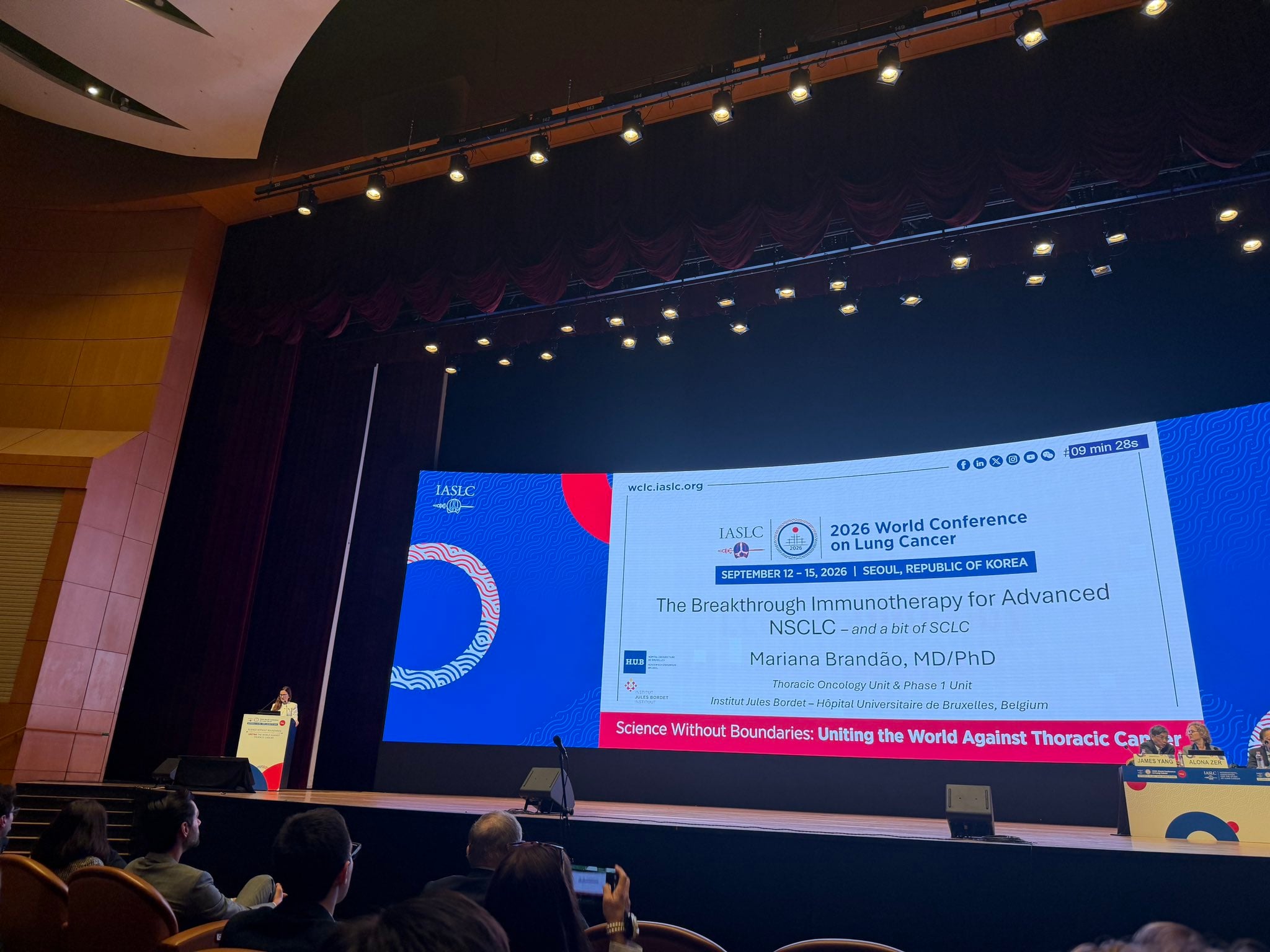
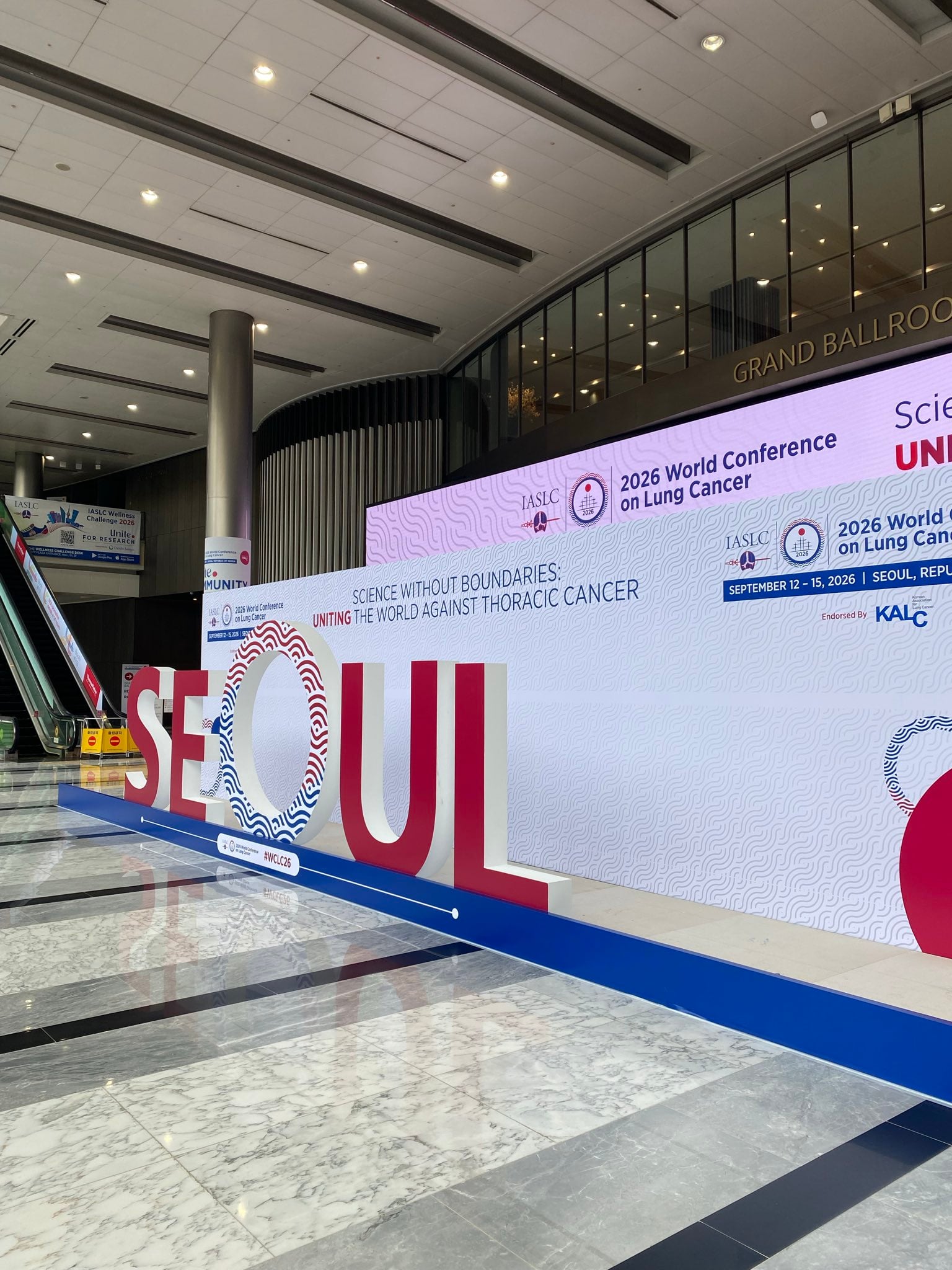
IASLC 2026 World Conference on Lung Cancer · Seoul, Republic of Korea · September 12–15, 2026. Chairs: Myung-Ju Ahn (Samsung Medical Center, Seoul) · Wentao Fang (Shanghai).

“Science Without Boundaries: Uniting the World Against Thoracic Cancer”

MEETING CONCLUDED · SEOUL
49Trials in play
2968.6KImpressions
490Accounts
2438Posts tracked
Daily summary · 2026-09-16 · post-conference wrap

Today at WCLC 2026

Live from Seoul — what the meeting is talking about

Trending Topics

Today’s most-discussed themes, each with a swipeable strip of the posts behind it — scan the meeting without leaving the page. Arrows to browse; swipe on mobile.

SCLC542.3K impressions · top posts of the conference
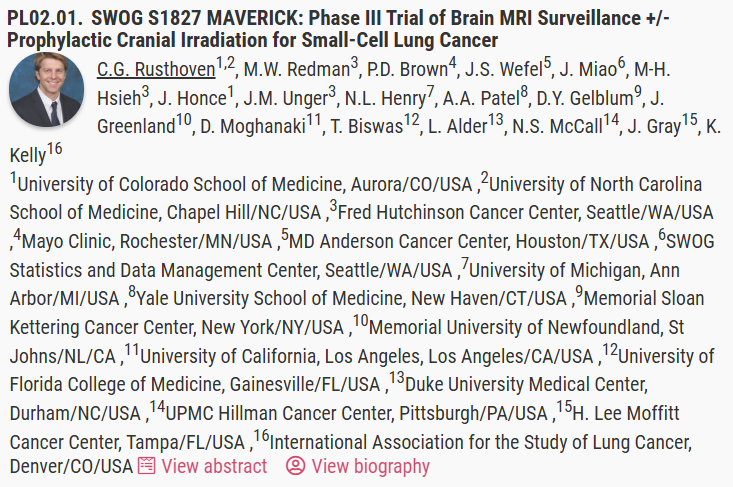
PPDBrown@PDBrownOnc

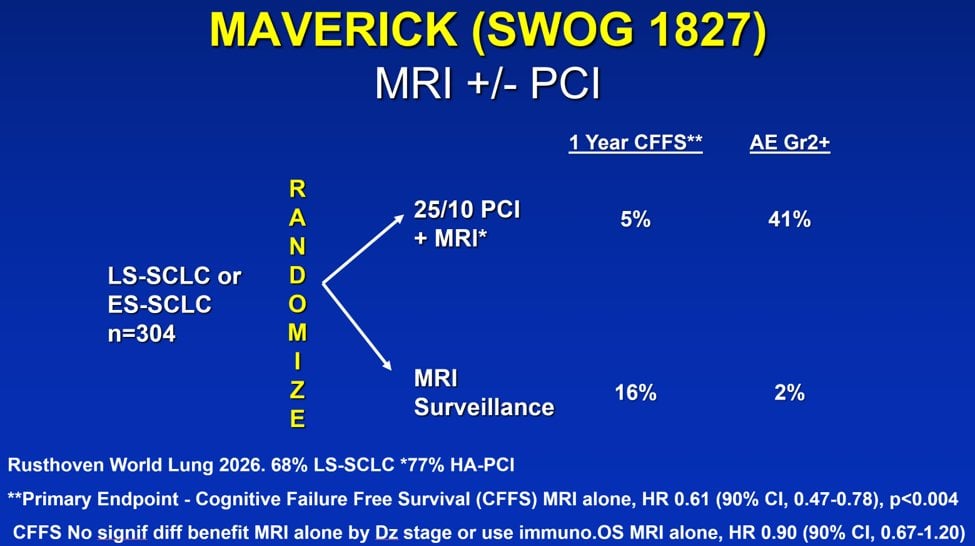
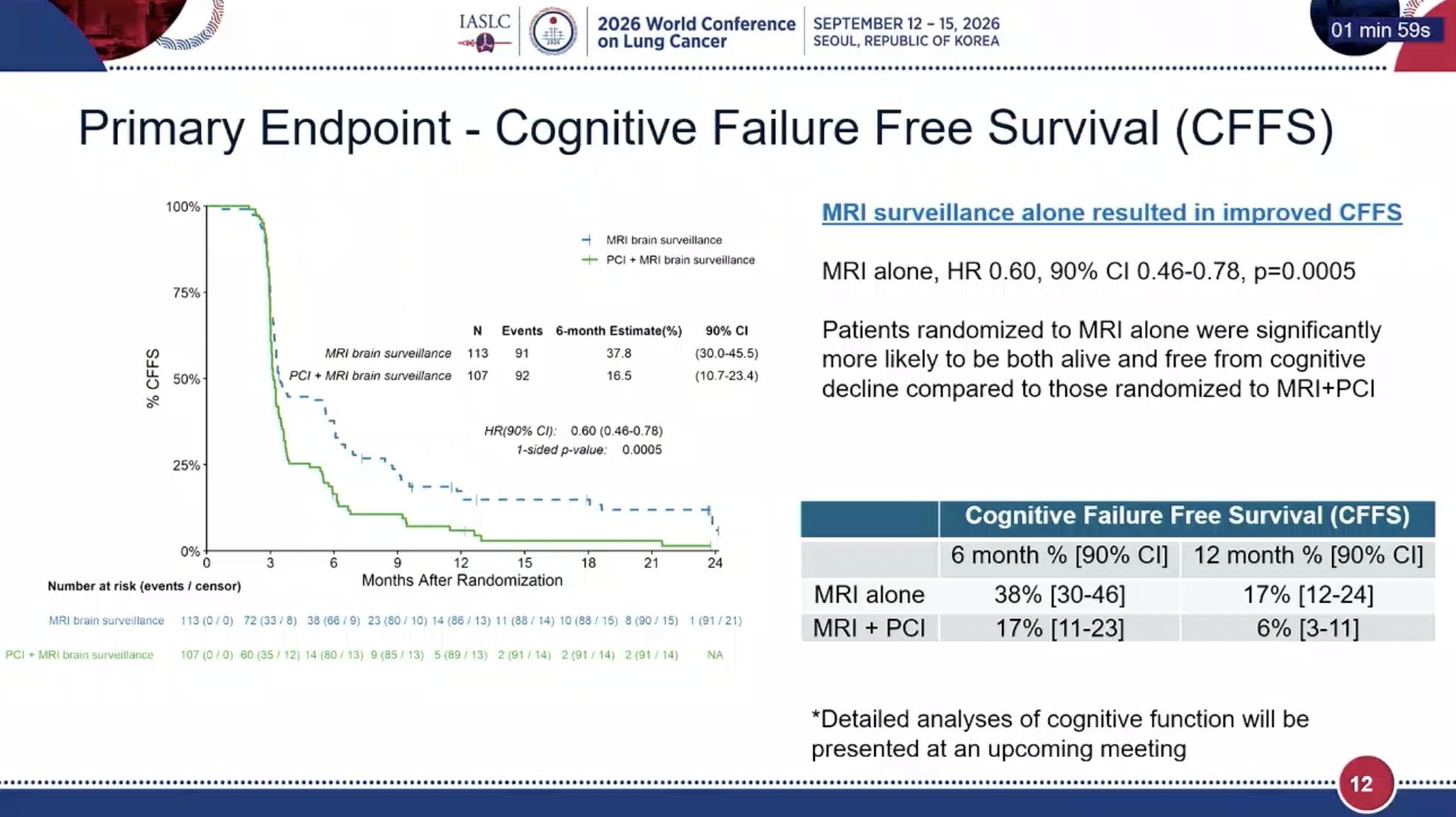
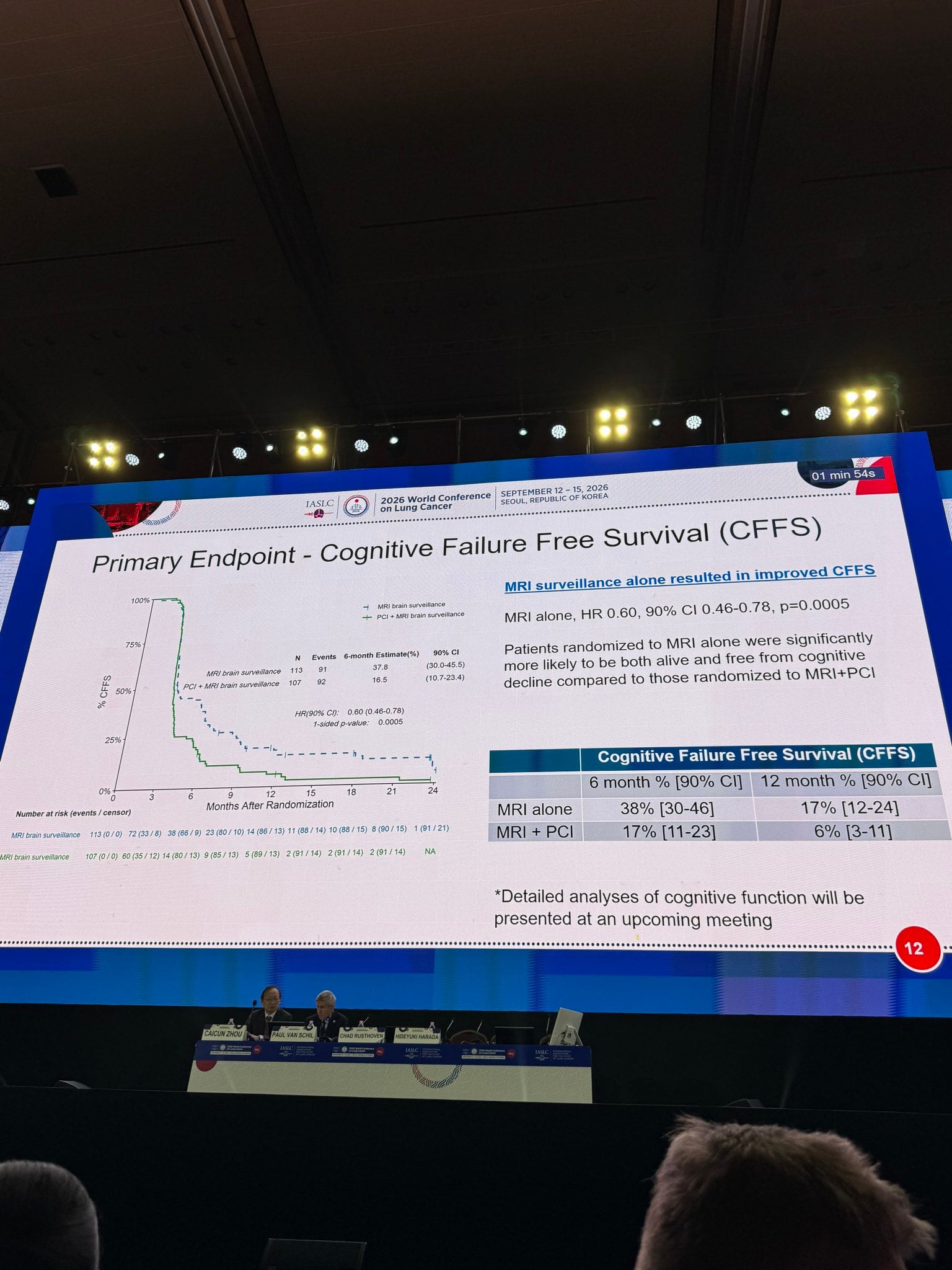
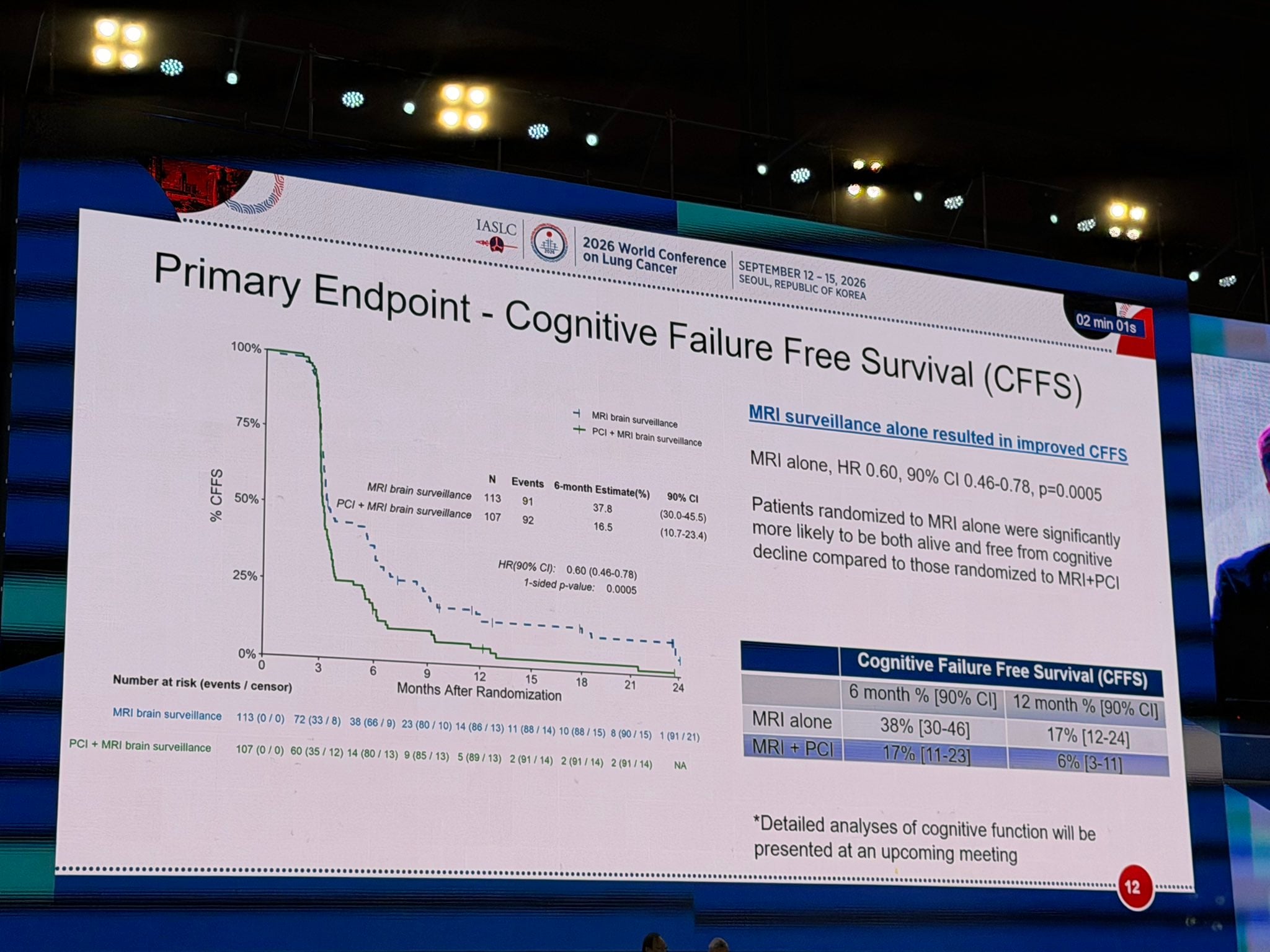
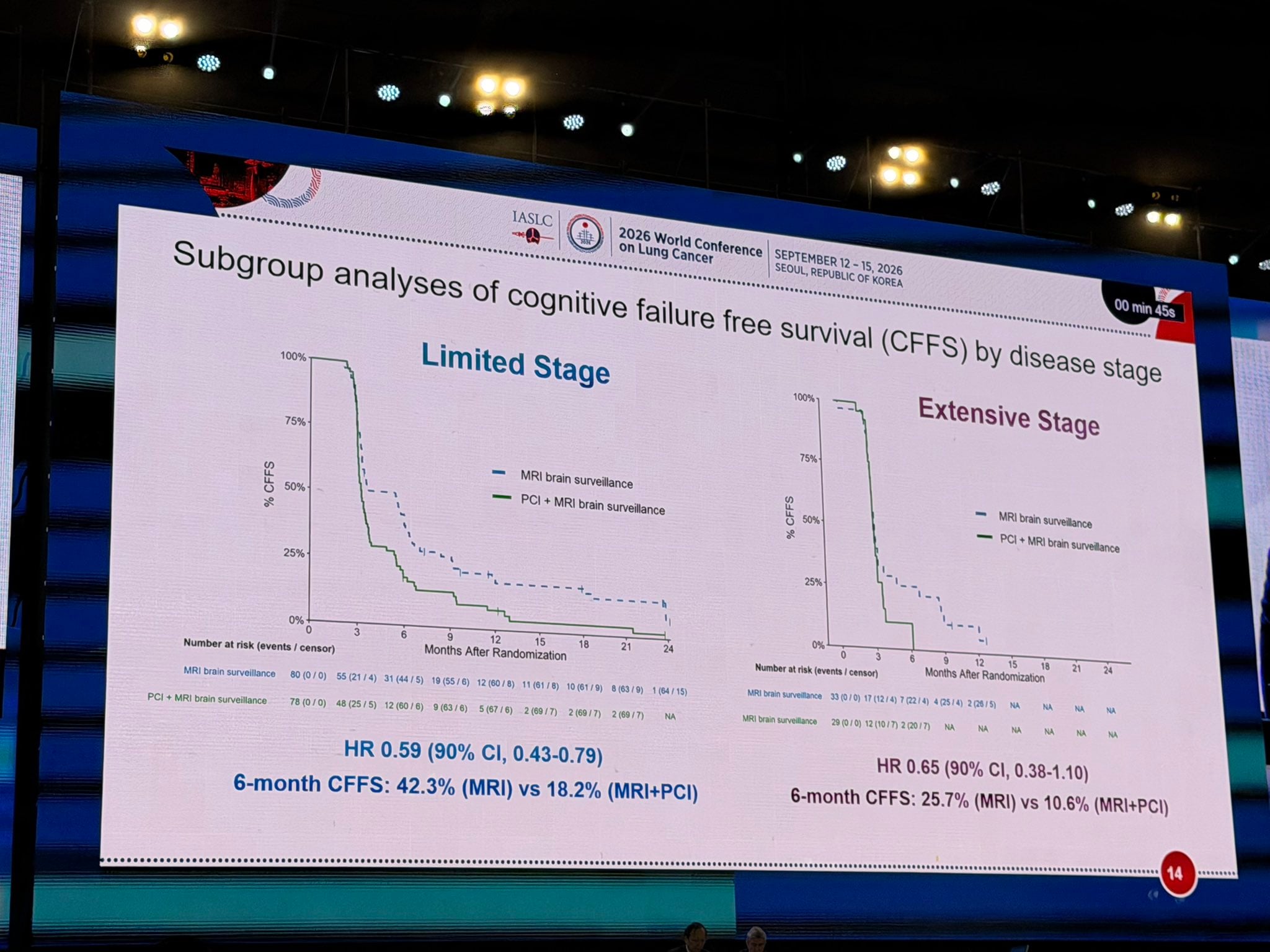
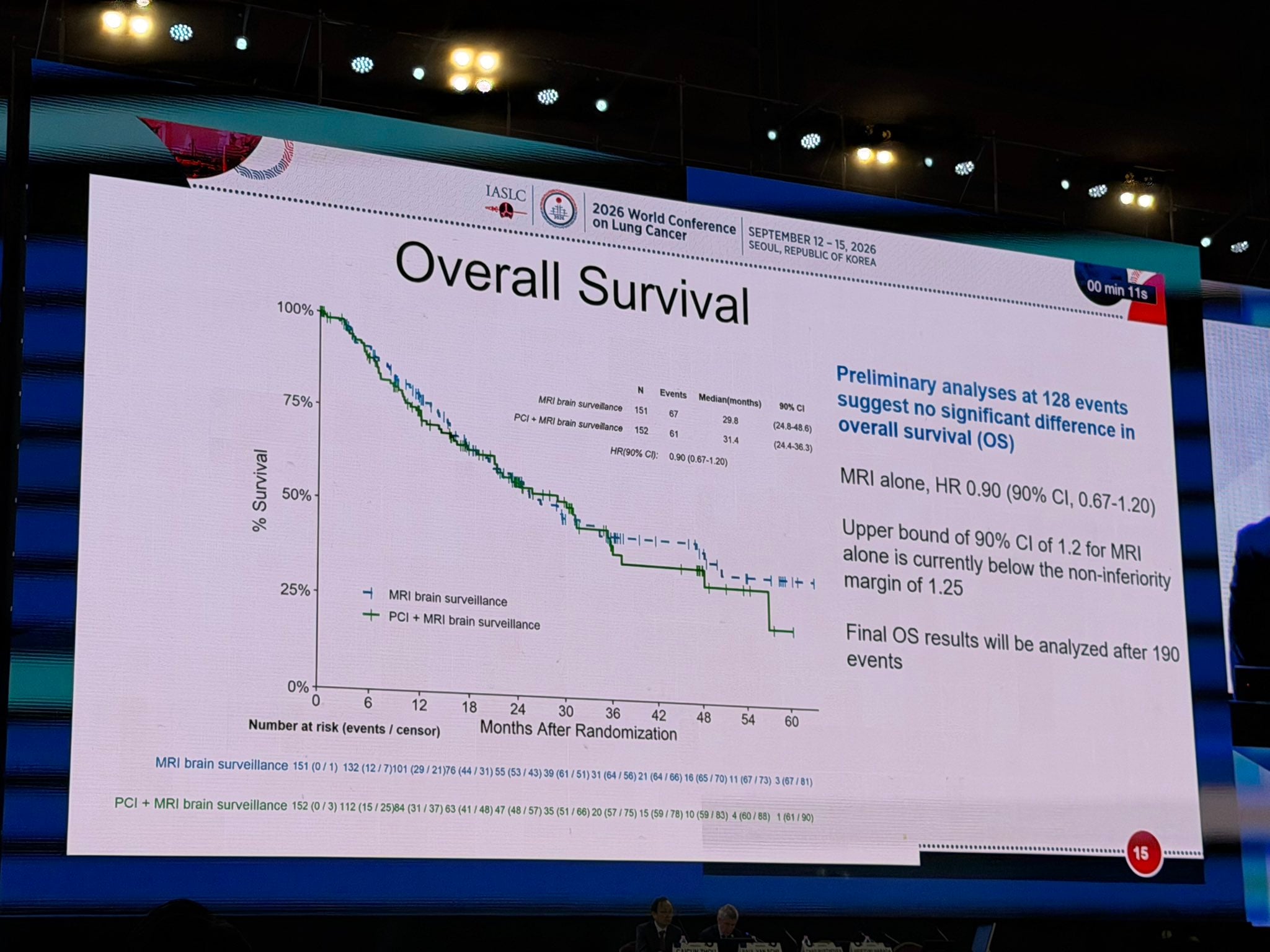
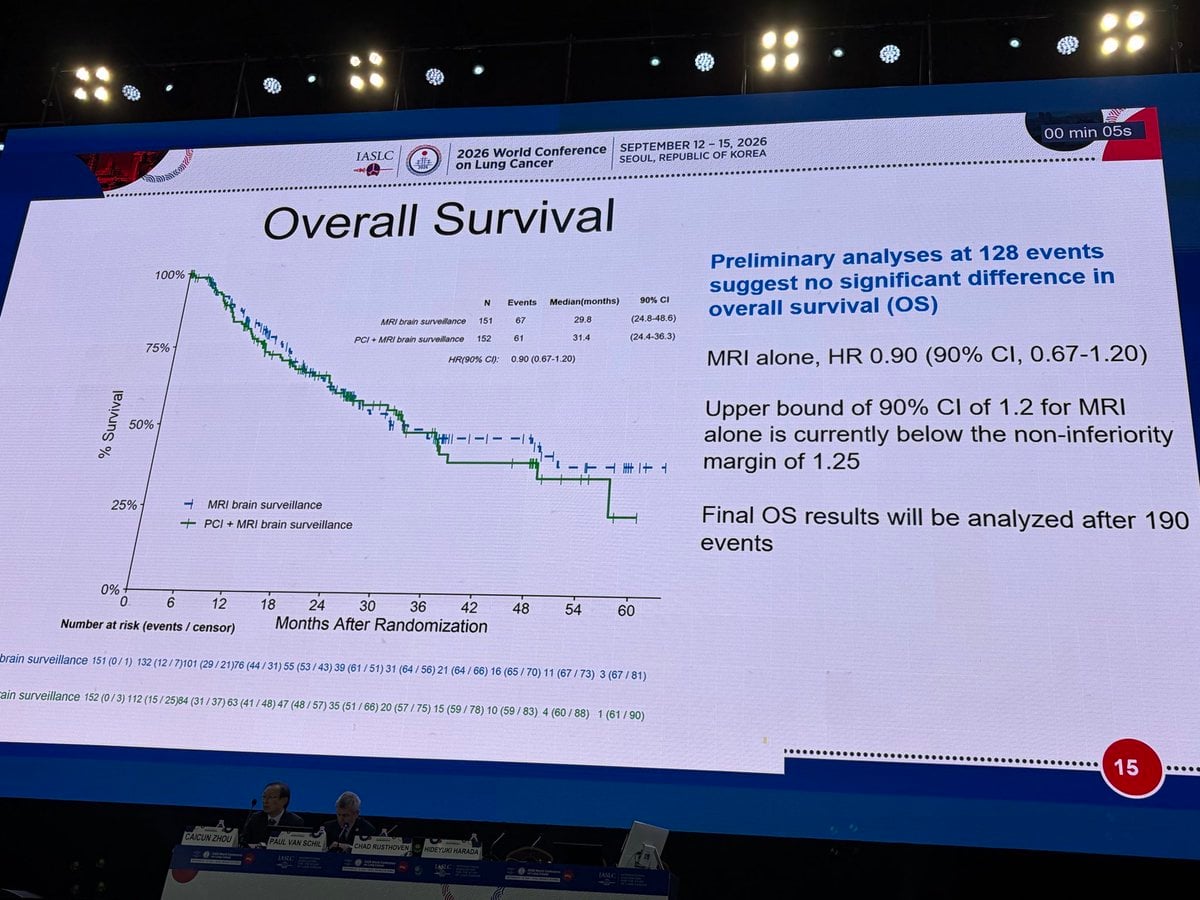
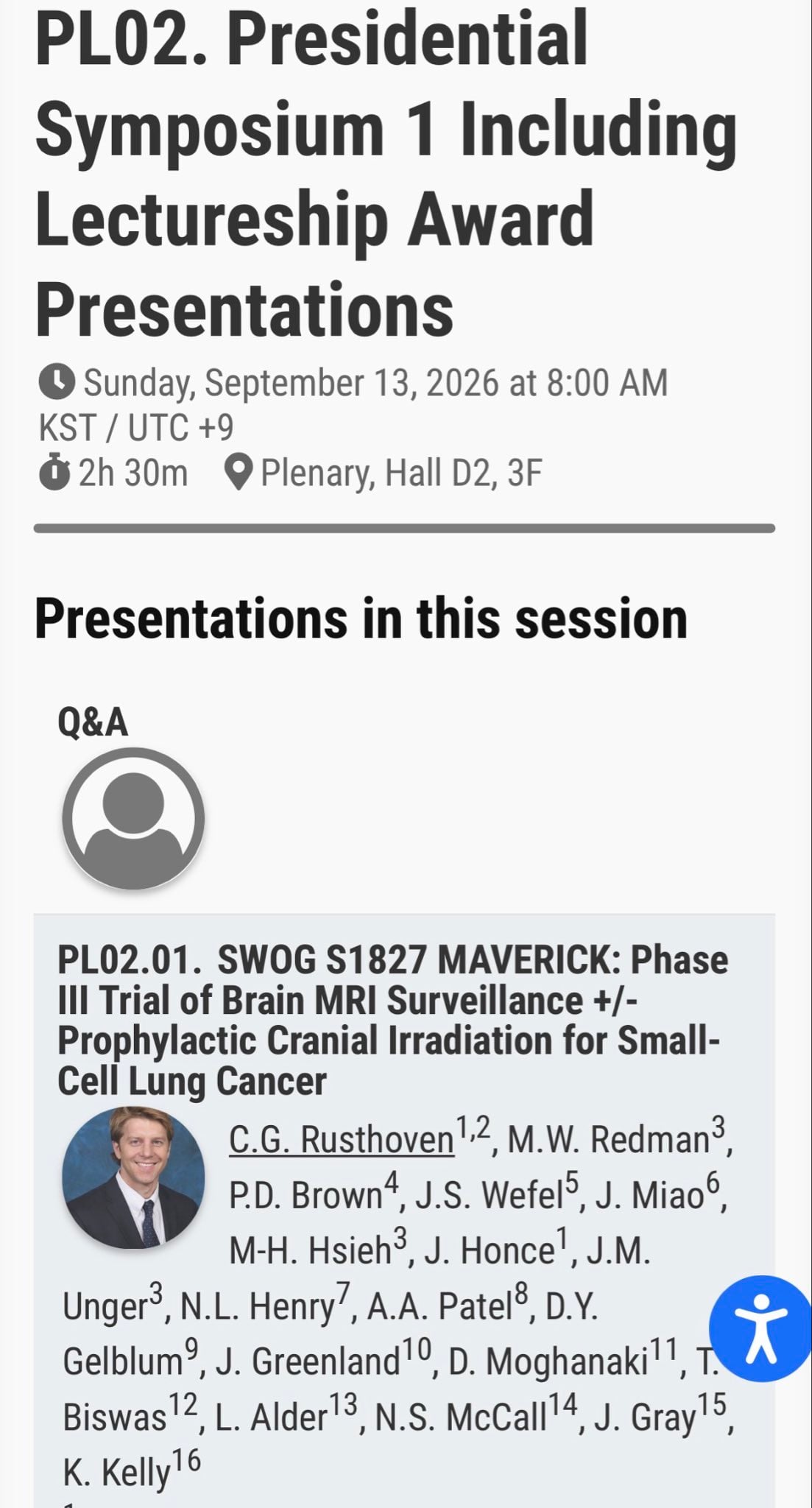
🚨🚨 Randomized Trial #WCLC26 Small Cell Lung Cancer MRI +/-PCI 🚨
• MRI alone superior cognitive outcome
• CFFS benefit of MRI alone similar in LS and ES-SCLC
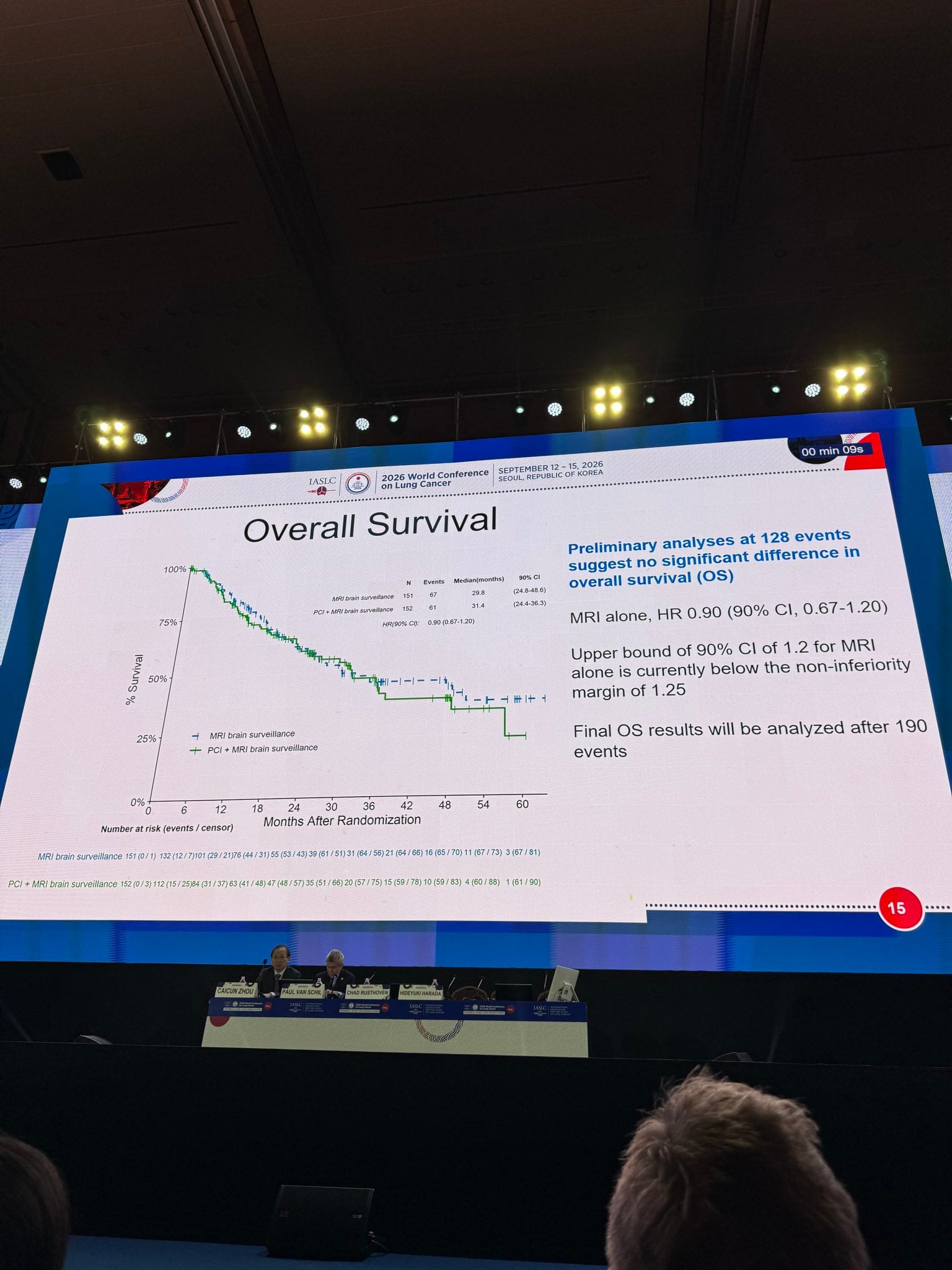
• No diff OS
• MRI surveillance standard of care for SCLC https://t.co/4YM3QAzBeQ

🚨🚨 Randomized Trial #WCLC26 Small Cell Lung Cancer MRI +/-PCI 🚨
• MRI alone supe
15.9K impressions54 likes27 reposts2026-09-12
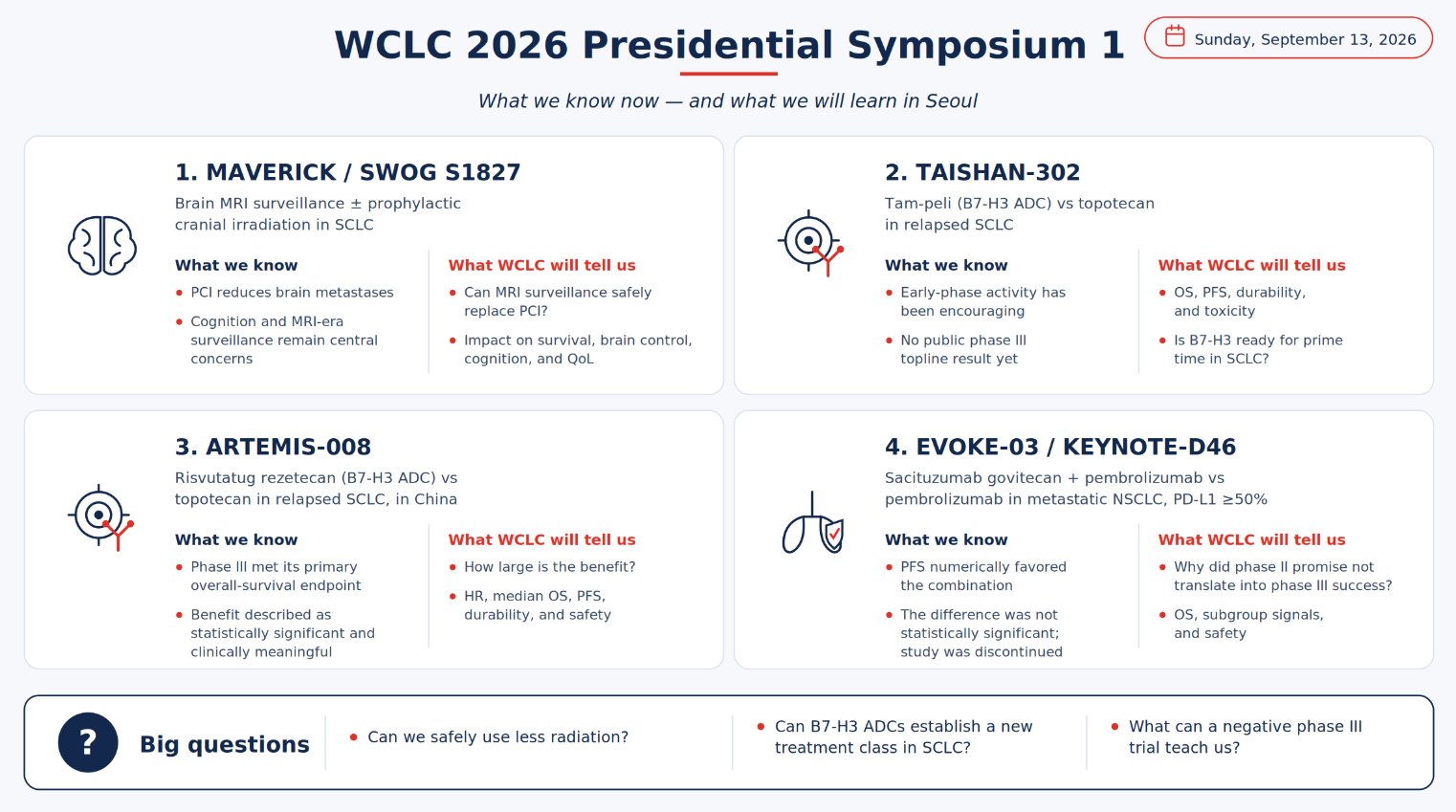
[Slide 1] MAVERICK (SWOG 1827) MRI +/- PCI 1 Year CFFS** AE Gr2+ 25/10 PCI 5% 41% LS-SCLC or ES-SCLC M A O N Z D R E I + MRI* n=304 MRI 16% 2% Surveillance Rusthoven World Lung 2026. 68% LS-SCLC *77% HA-PCI **Primary Endpoint - Cognitive Failure Free Survival (CFFS) MRI alone, HR 0.61 (90% CI, 0.47-0.78), p<0.004 CFFS No signif diff benefit MRI alone by Dz stage or use immuno.OS MRI alone, HR 0.90 (90% CI, 0.67-1.20)
SStephen V Liu, MD@StephenVLiu

Landmark, practice changing study at #WCLC26. The phase III MAVERICK study shows no improvement in OS with PCI for SCLC, across limited and extensive stages, with worse cognitive failure free survival and increased toxicity in PCI arm.

The end of the PCI era. https://t.co/SWOPM7iKux

Landmark, practice changing study at #WCLC26. The phase III MAVERICK study shows
13.9K impressions22 likes10 reposts2026-09-12
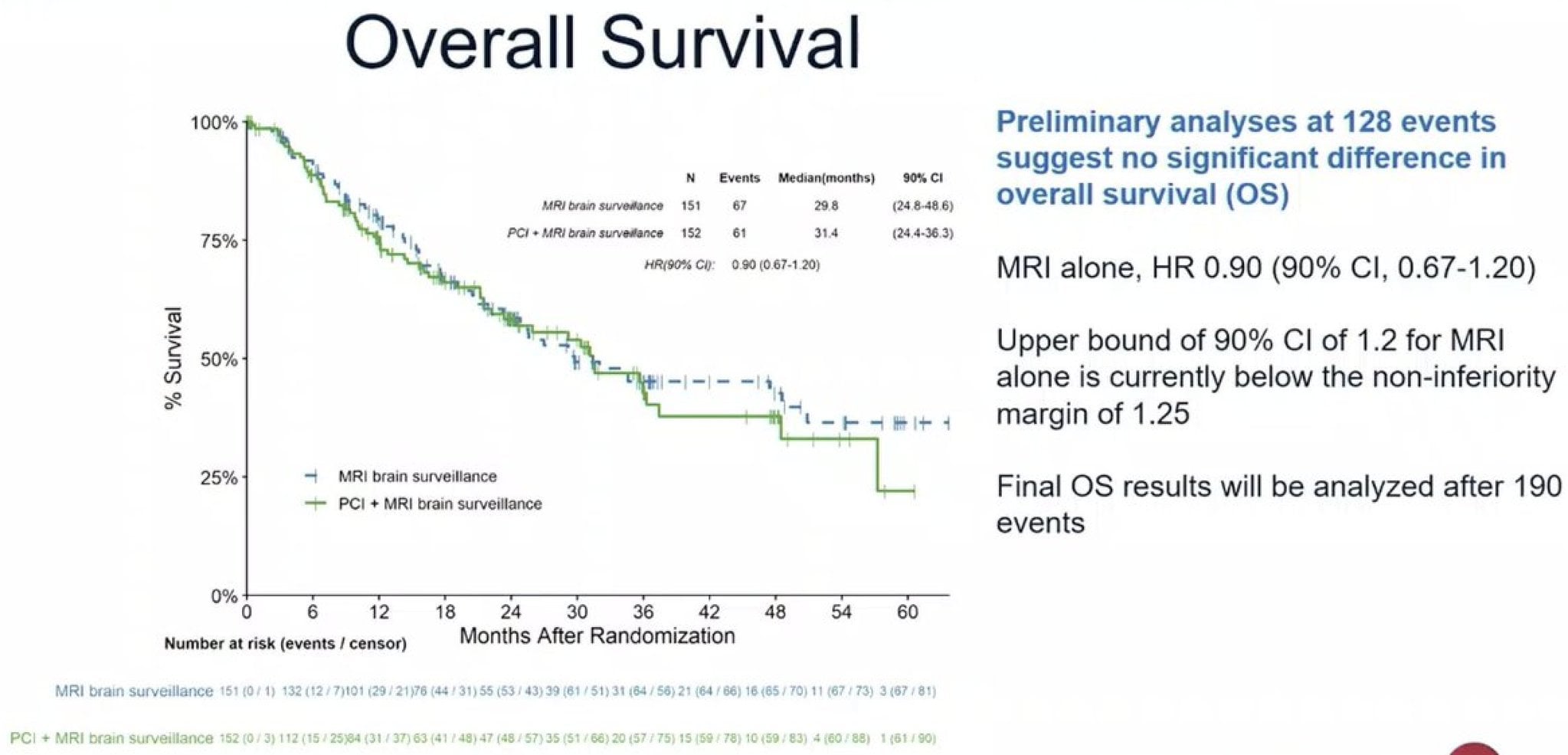
[Slide 1] Overall Survival 100% Preliminary analyses at 128 events suggest no significant difference in N Events Median(months) 90% CI MRI brain surveilance 151 67 29.8 (24.8-48.6) overall survival (OS) PCI * MRI brain surveilance 152 61 31.4 75% (24.4-36.3) HR(90% Ci): 0.90 (0.67-1.20) MRI alone, HR 0.90 (90% CI, 0.67-1.20) % Survival Upper bound of 90% CI of 1.2 for MRI 50% alone is currently below the non-inferiority margin of 1.25 25% MRI brain surveillance Final OS results will be analyzed after 190 PCI + MRI brain surveillance events 0% 0 6 12 18 24 30 36 42 48 54 60 Number at risk (events / censor) Months After Randomization MRI brain surveillance 151 (0/1) 132 (12/7)101 (29/21)76 (44/31) 55 (53/43): 39 (61/51) 31 (64/56): 21 (64/66) 16 (65/70) 11 (67/73) 3 (67 / 81) PCI + MRI brain surveillance 152 (0/3) 112 (15/25)84 (31/37) 63 (41/48) 47 (48/57) 35 (51/66) 20 (57/75) 15 (59/78) 10 (59/83) 4 (60/88) 1 (61 / 90)
SStephen V Liu, MD@StephenVLiu

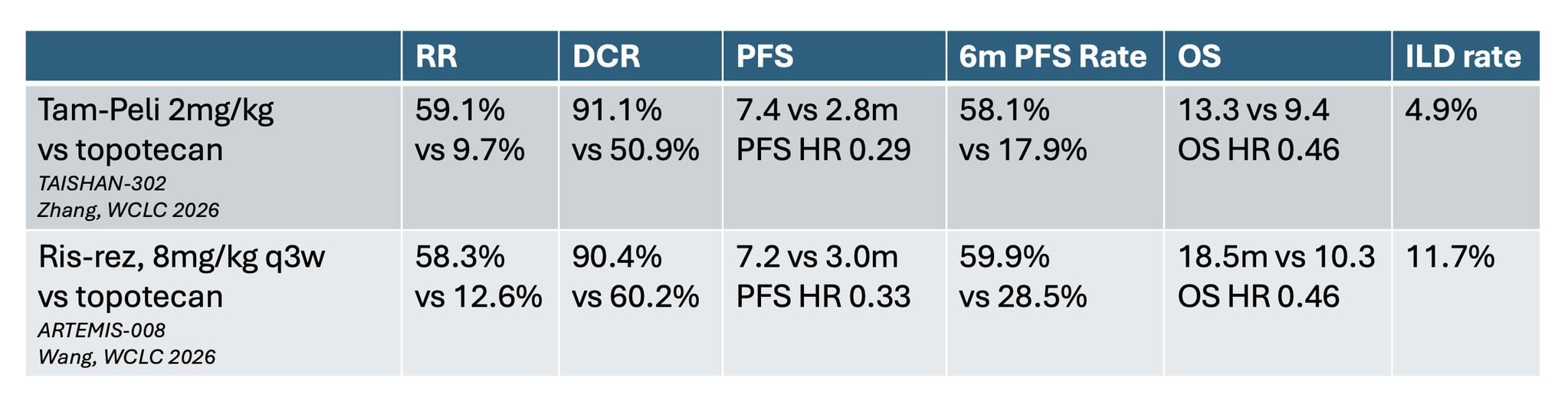
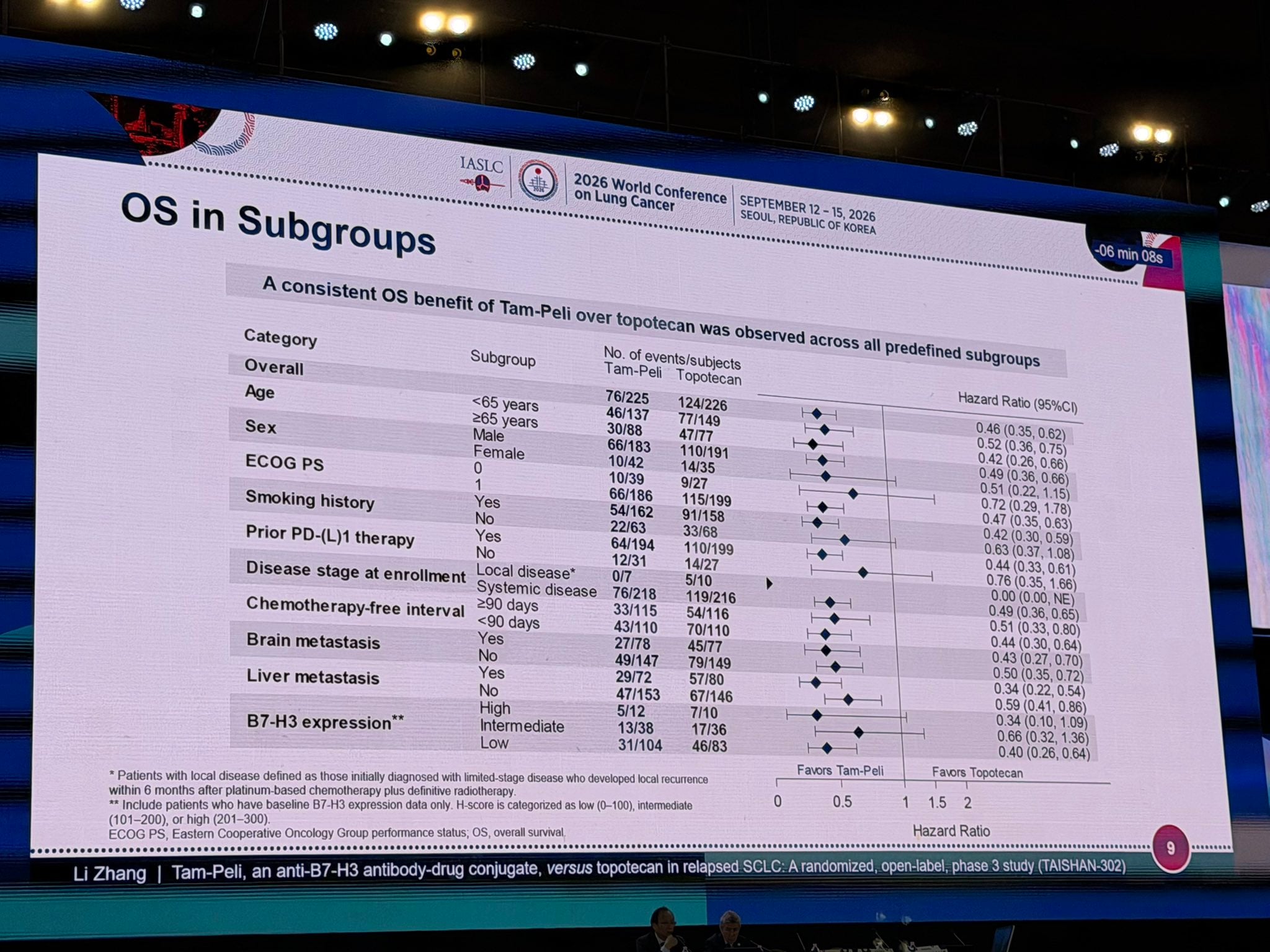
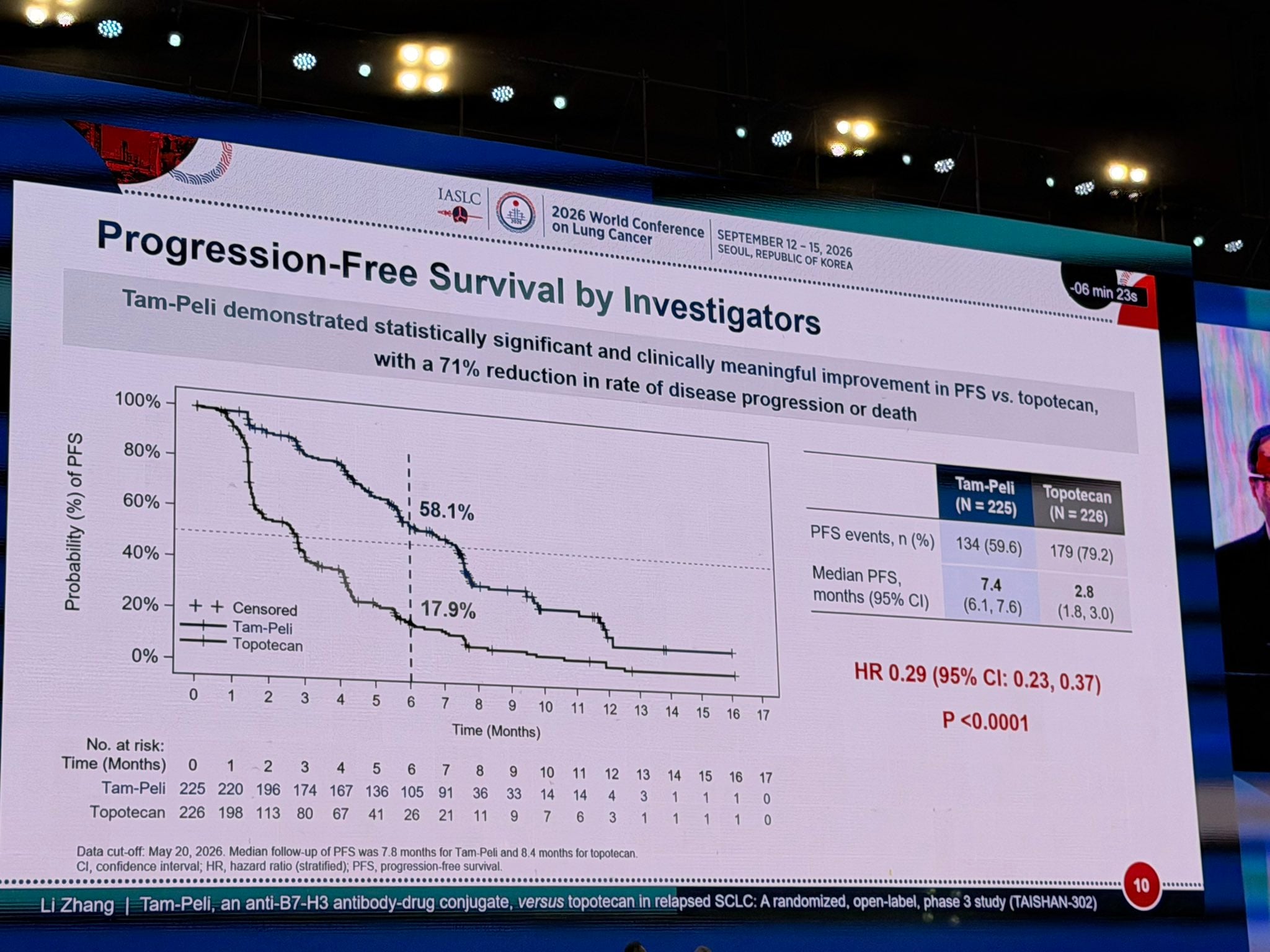
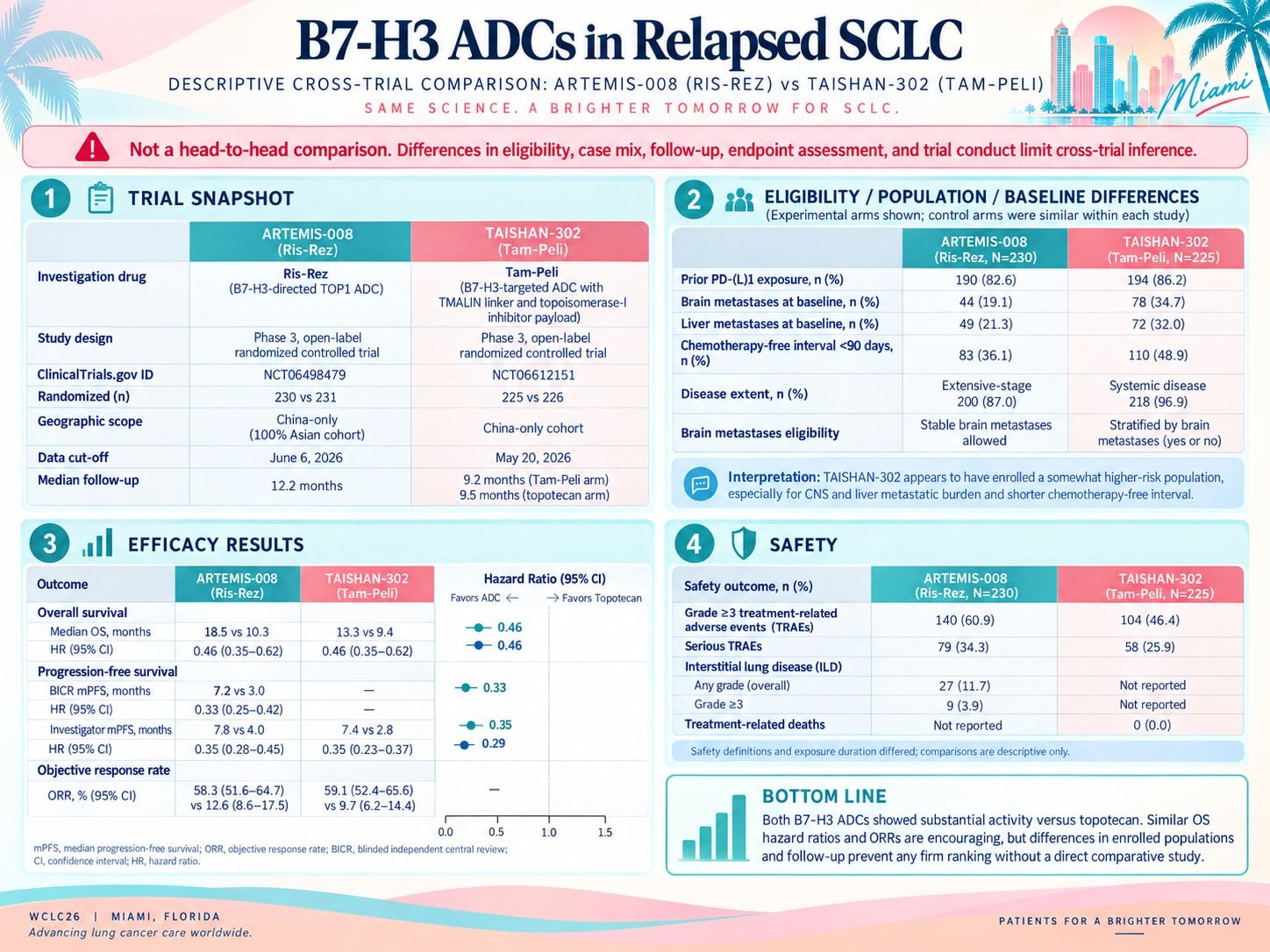
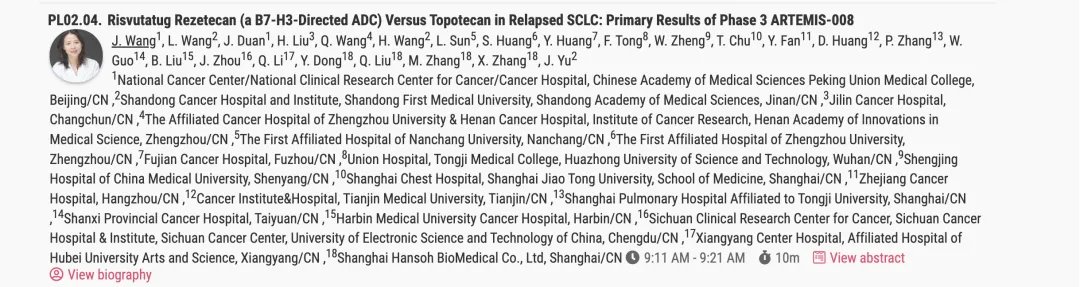
We now have TWO studies showing B7-H3 ADCs vastly superior to standard topotecan for relapsed SCLC: tam-peli and ris-rez. These studies were different - different agents, different baseline demographics of pts, etc - but the outcomes were similar, control arms performed similarly. These trials reinforce each other. Looking forward to global studies and to first-line studies. The ADC era soundly he

We now have TWO studies showing B7-H3 ADCs vastly superior to standard topotecan
11K impressions5 likes0 reposts2026-09-13
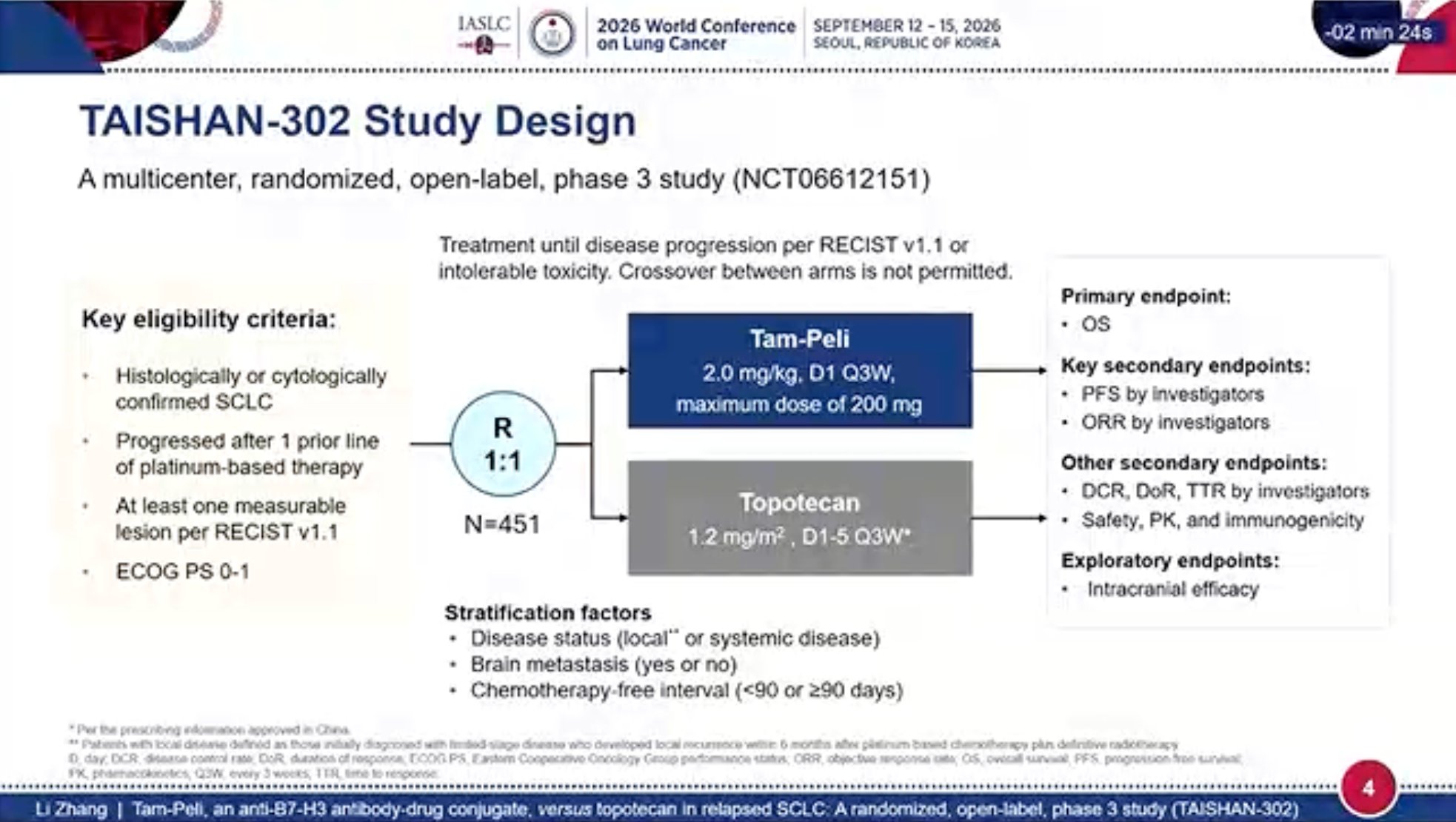
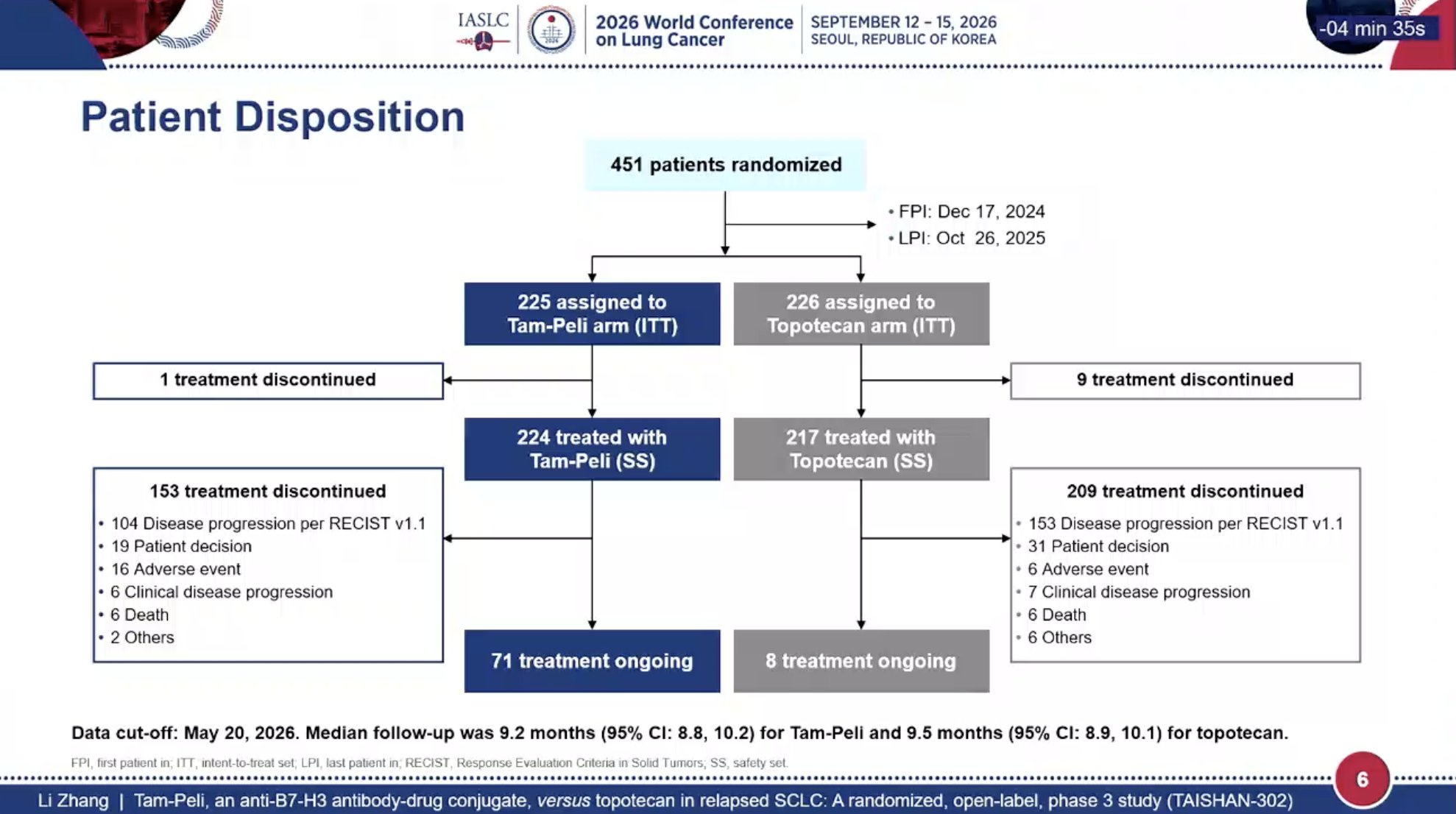
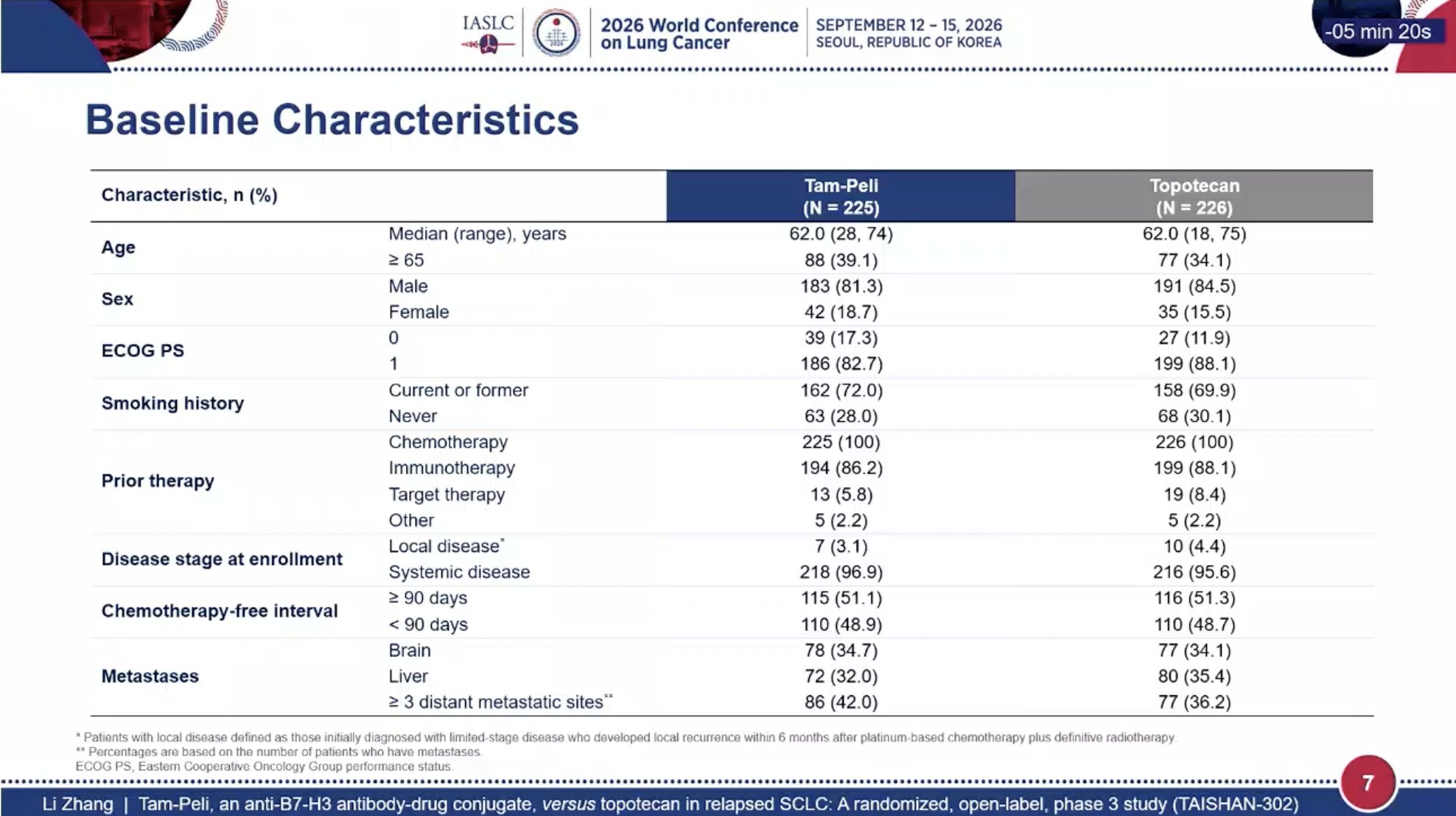
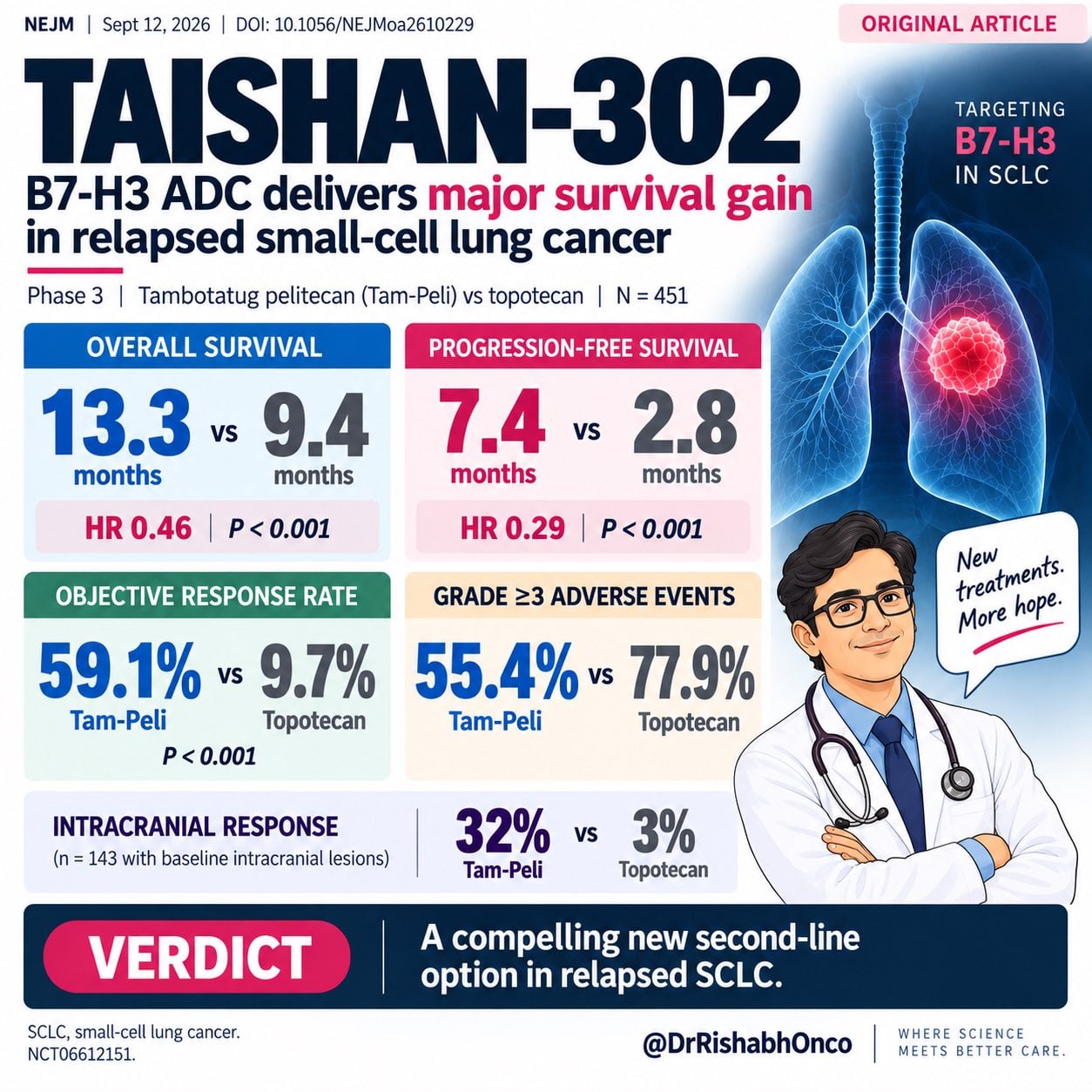
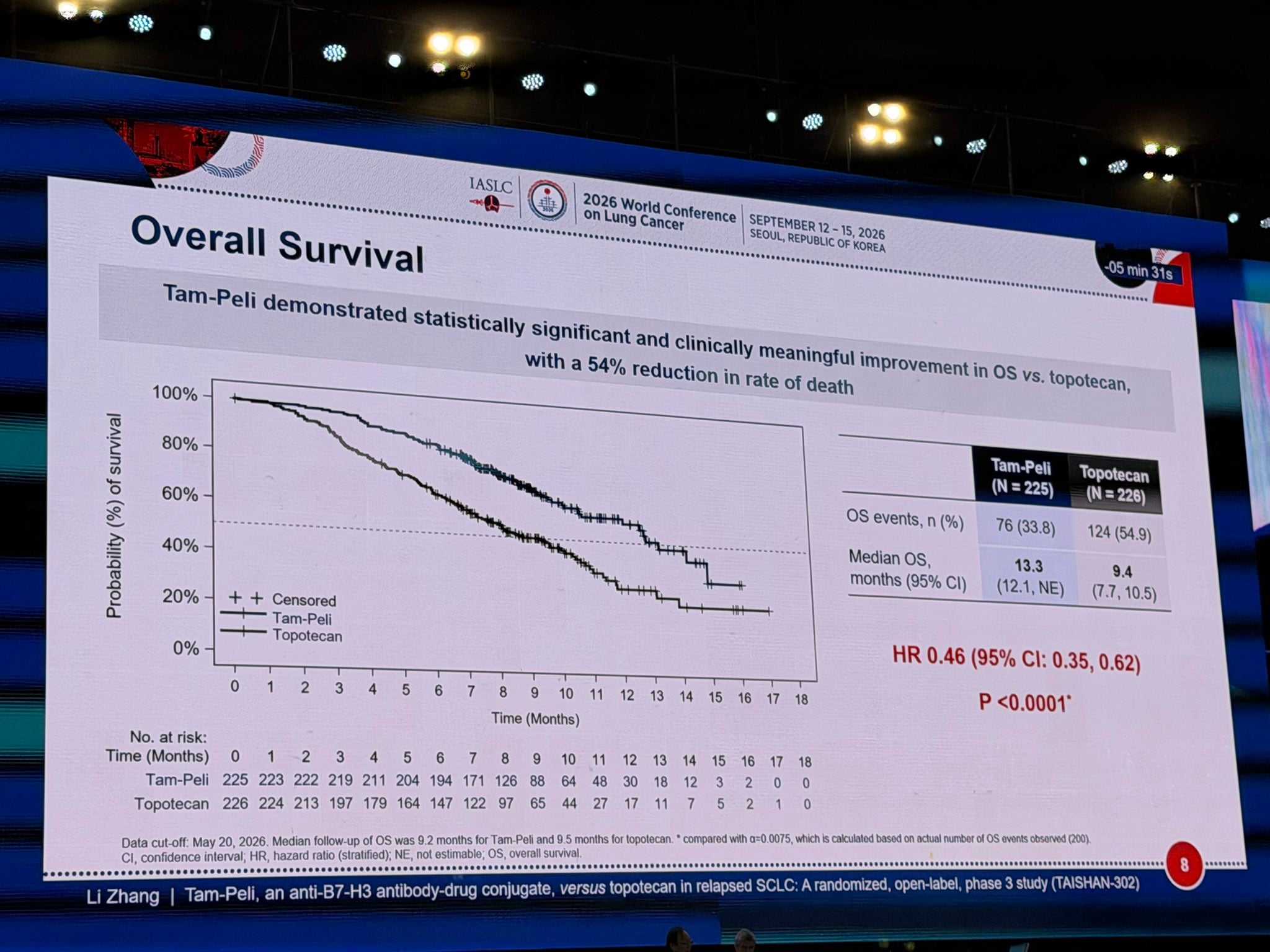
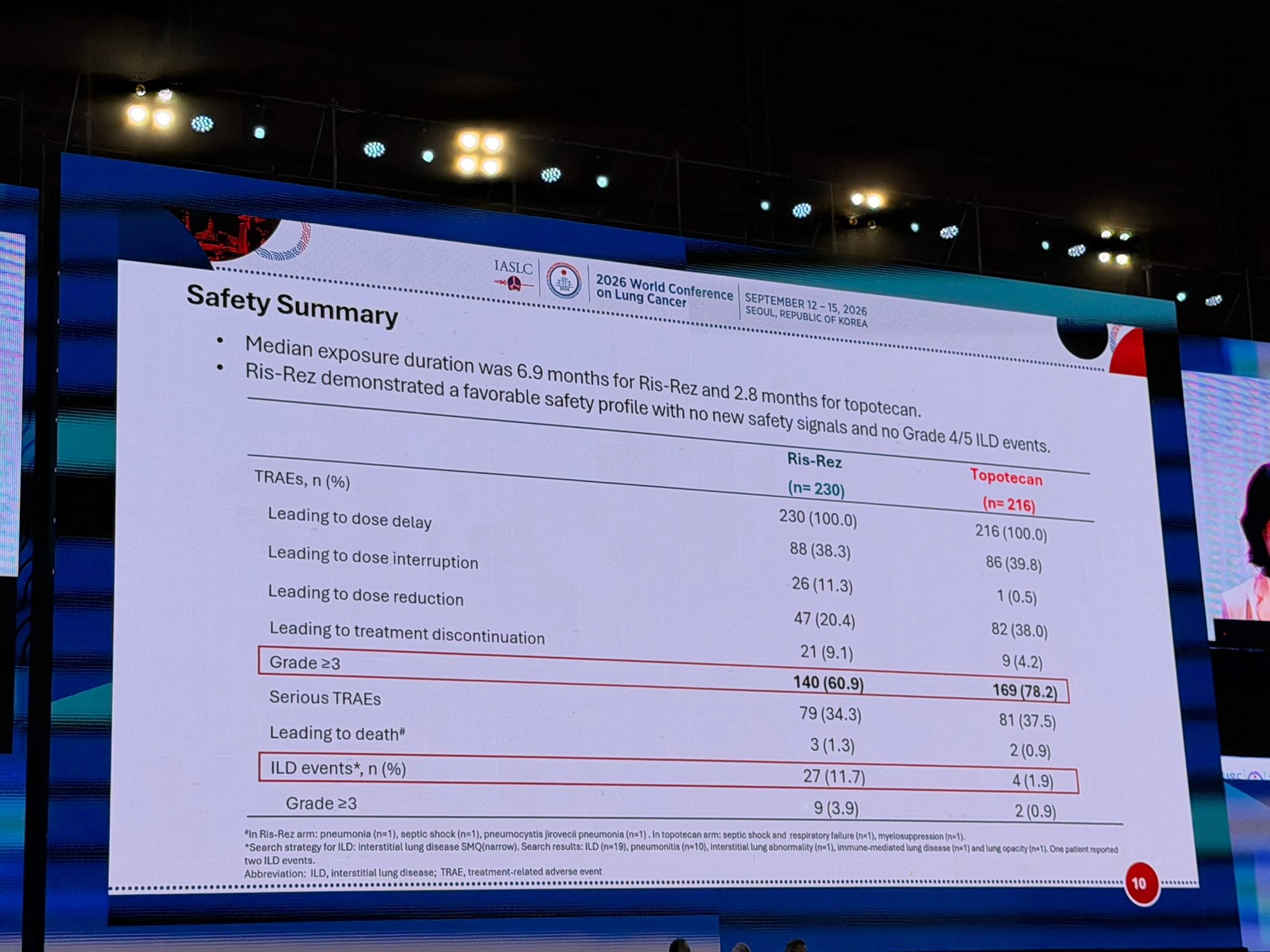
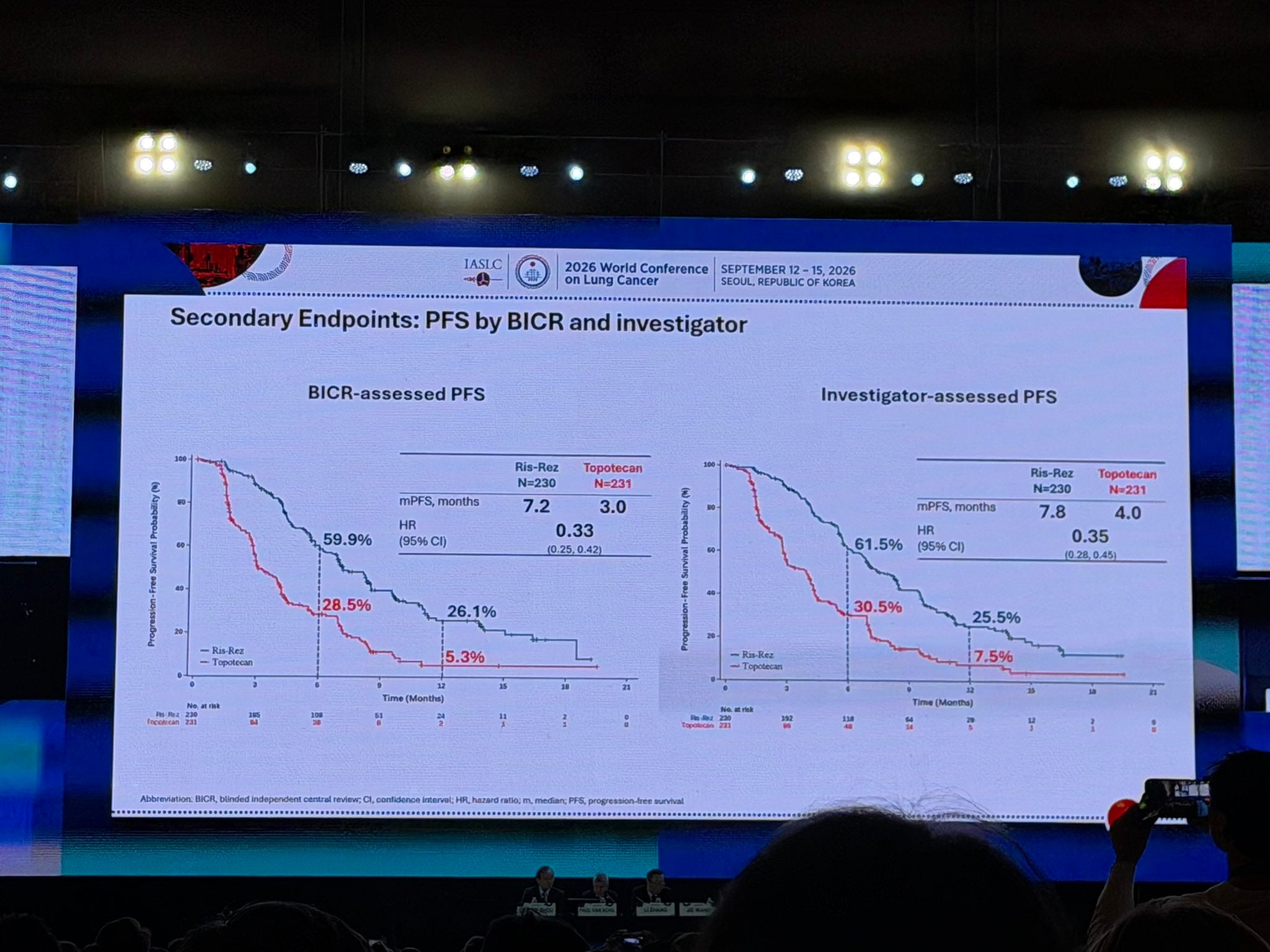
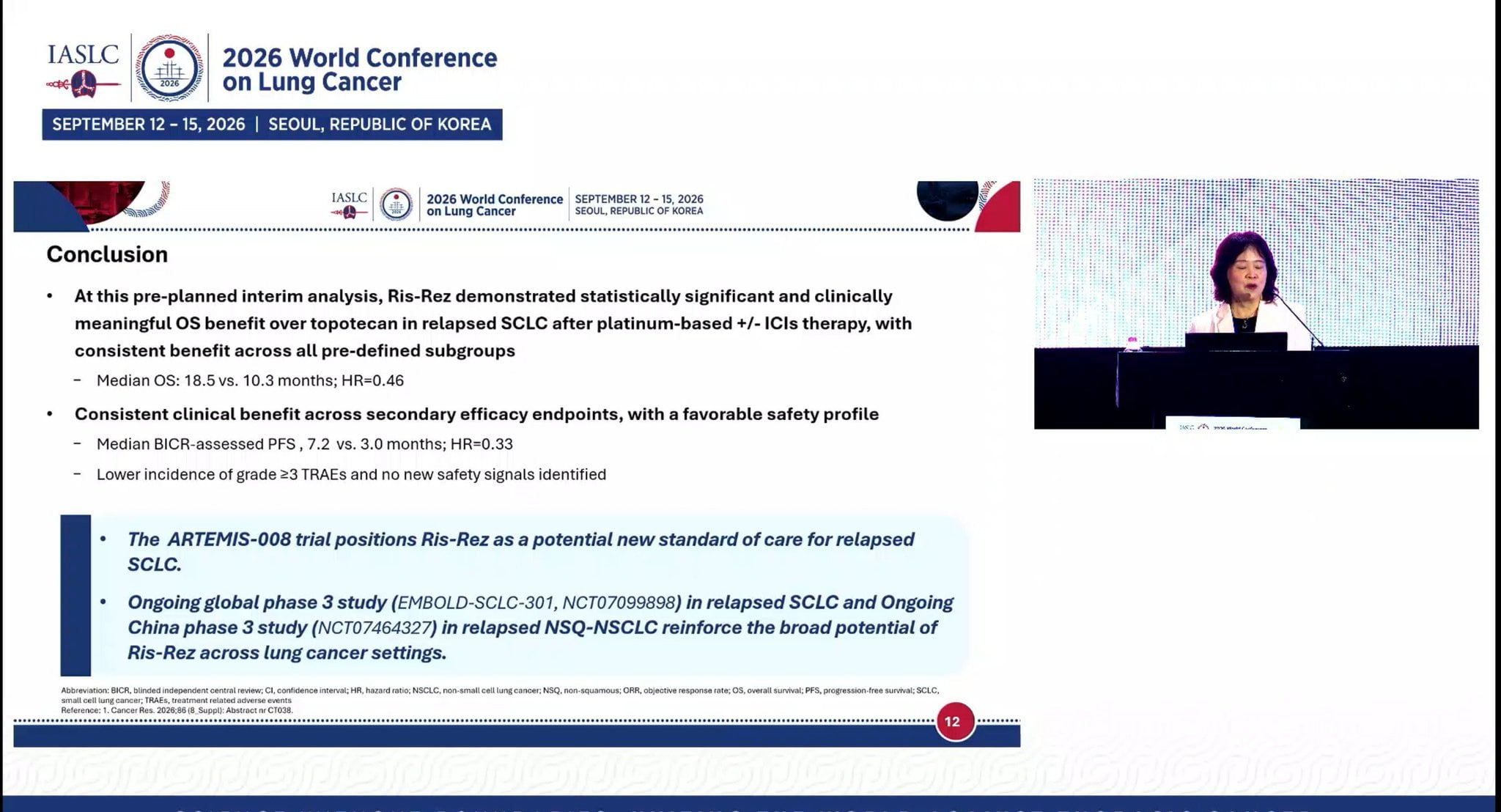
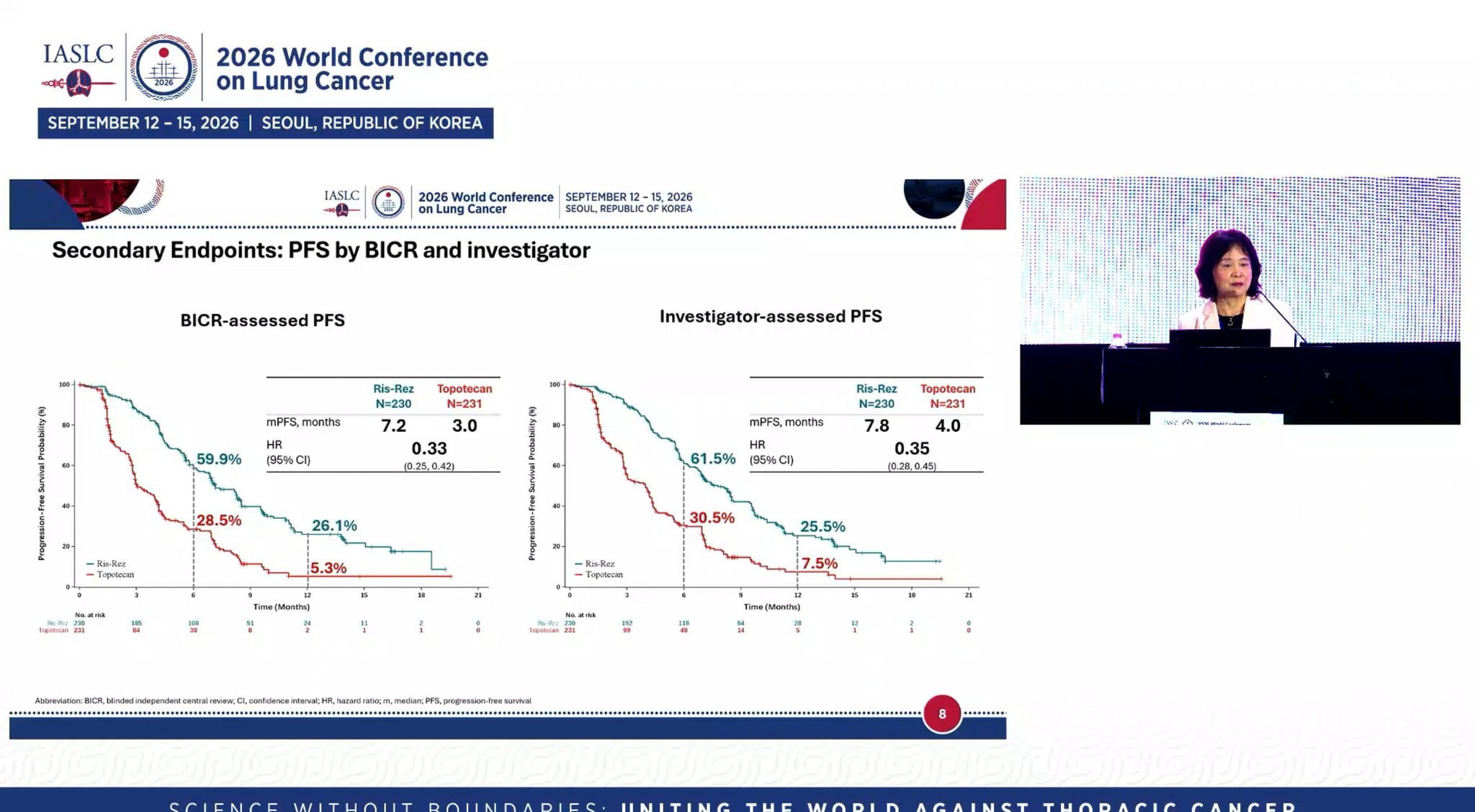
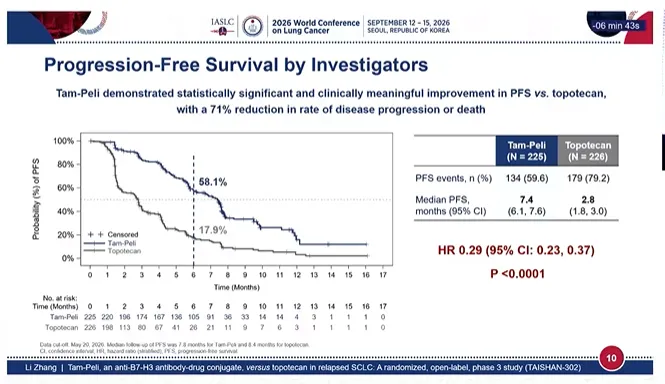
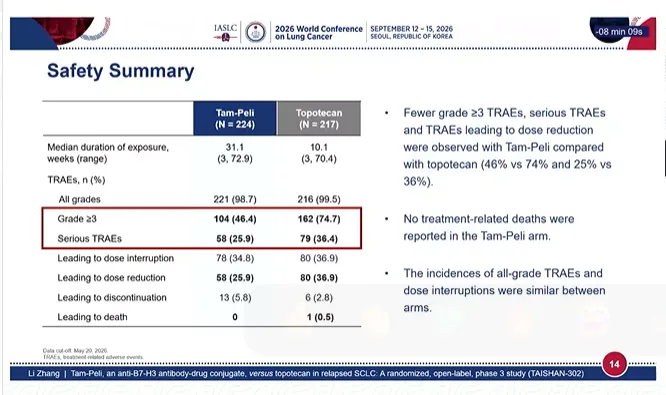
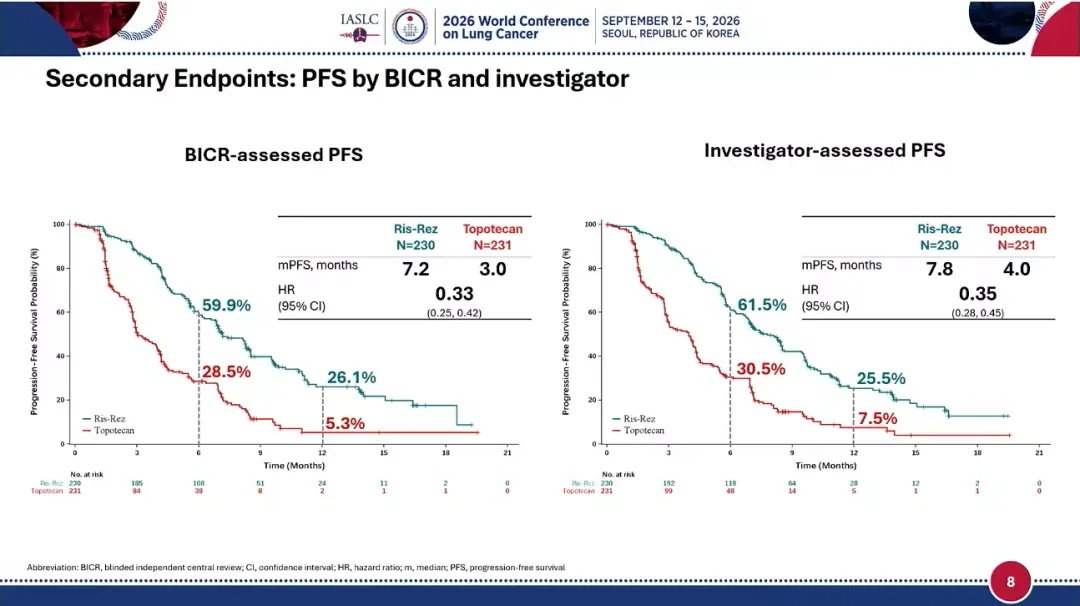
[Slide 1] RR DCR PFS 6m PFS Rate OS ILD rate Tam-Peli 2mg/kg 59.1% 91.1% 7.4 VS 2.8m 58.1% 13.3 vs 9.4 4.9% VS topotecan VS 9.7% VS 50.9% PFS HR 0.29 VS 17.9% OS HR 0.46 TAISHAN-302 Zhang, WCLC 2026 Ris-rez, 8mg/kg q3w 58.3% 90.4% 7.2 VS 3.0m 59.9% 18.5m VS 10.3 11.7% VS topotecan VS 12.6% VS 60.2% PFS HR 0.33 vs 28.5% OS HR 0.46 ARTEMIS-008 Wang, WCLC 2026
SStephen V Liu, MD@StephenVLiu

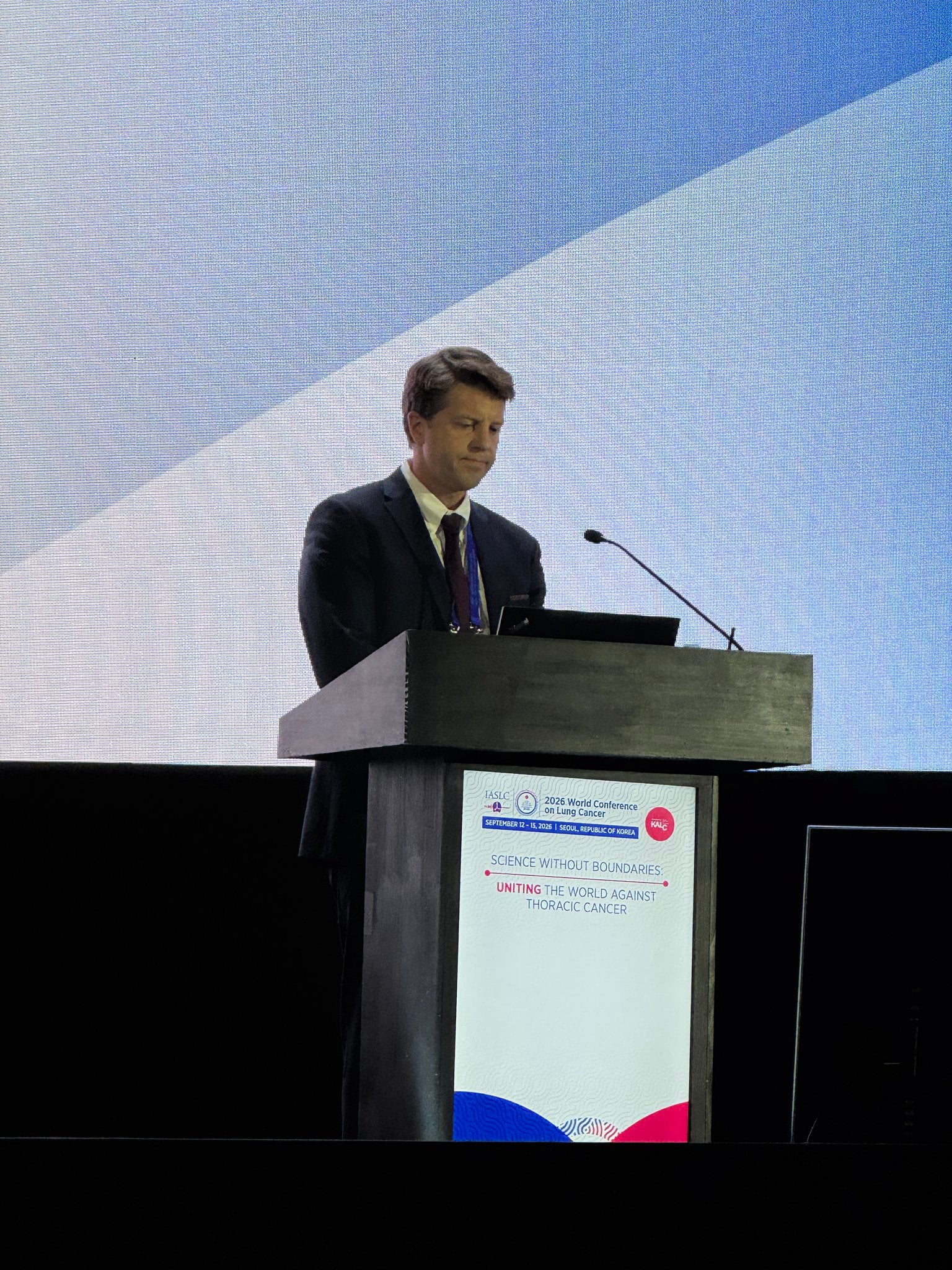
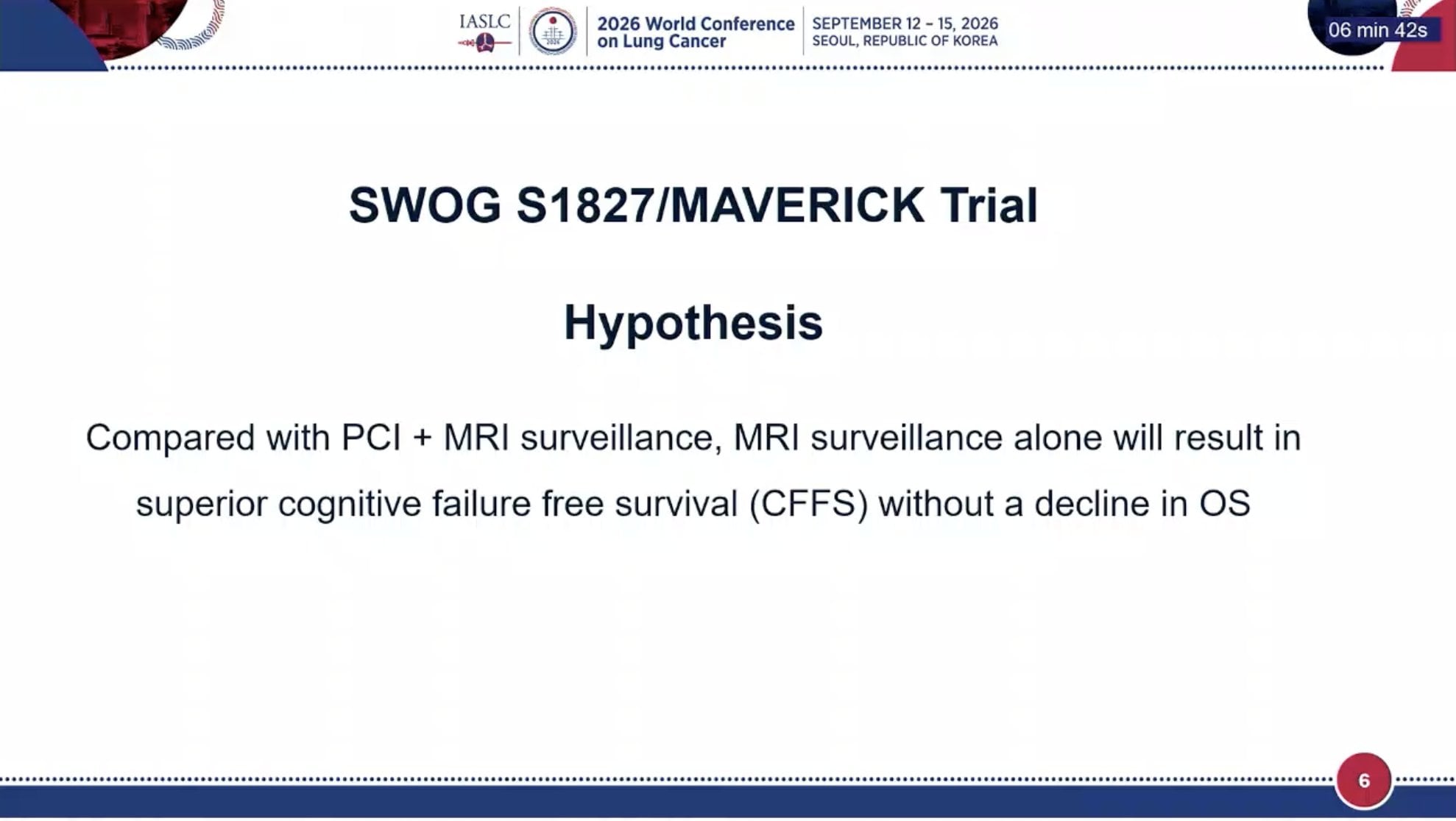
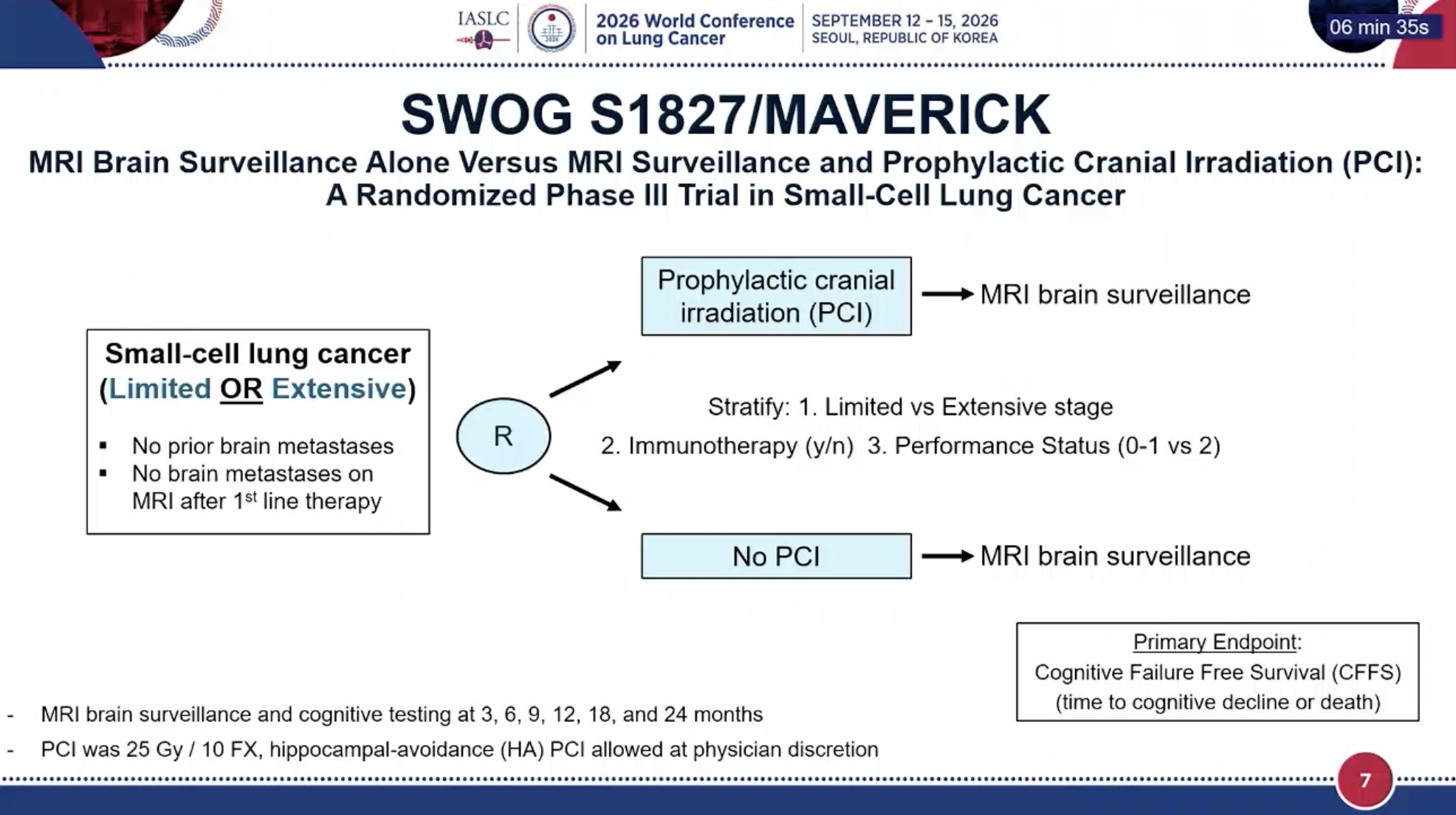
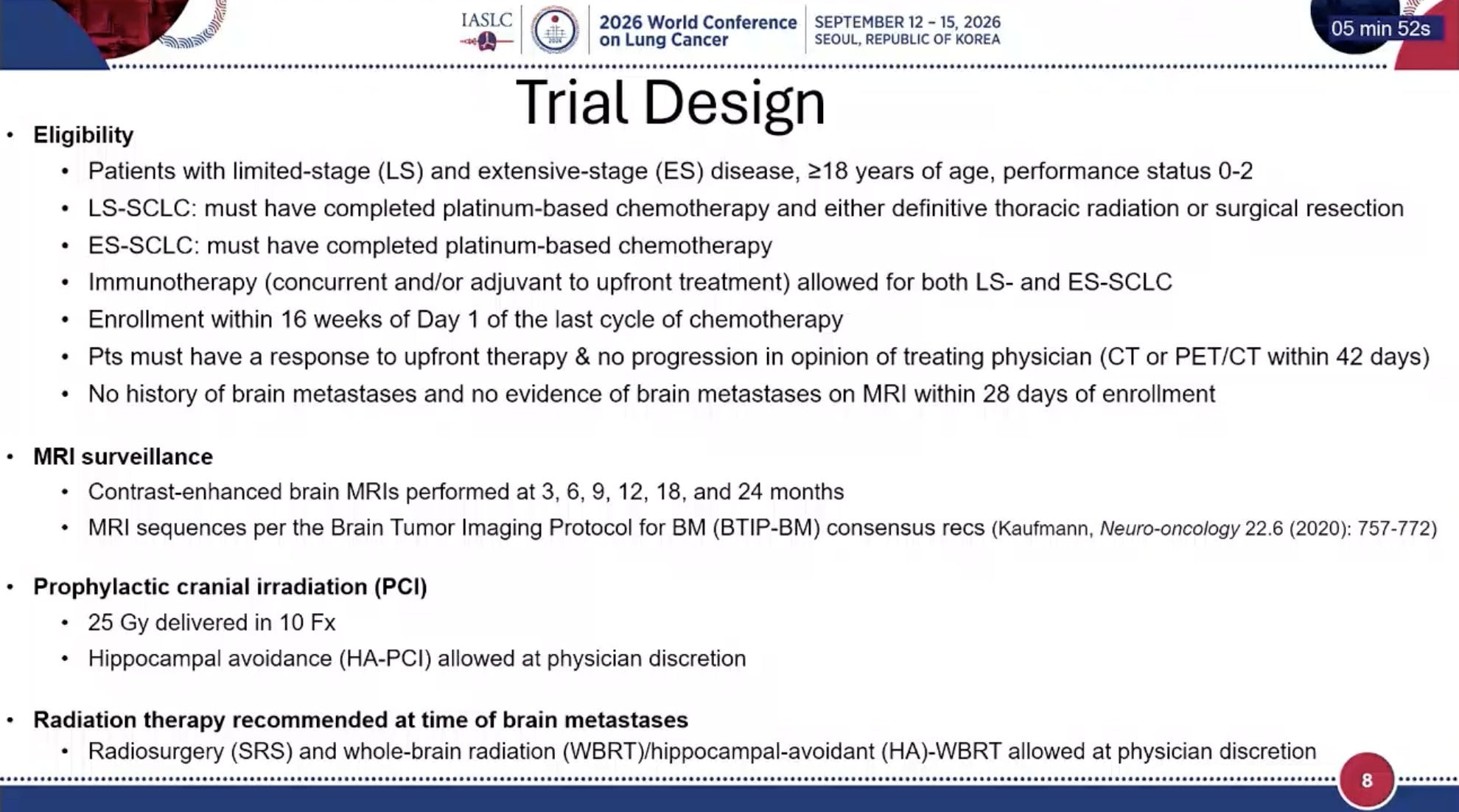
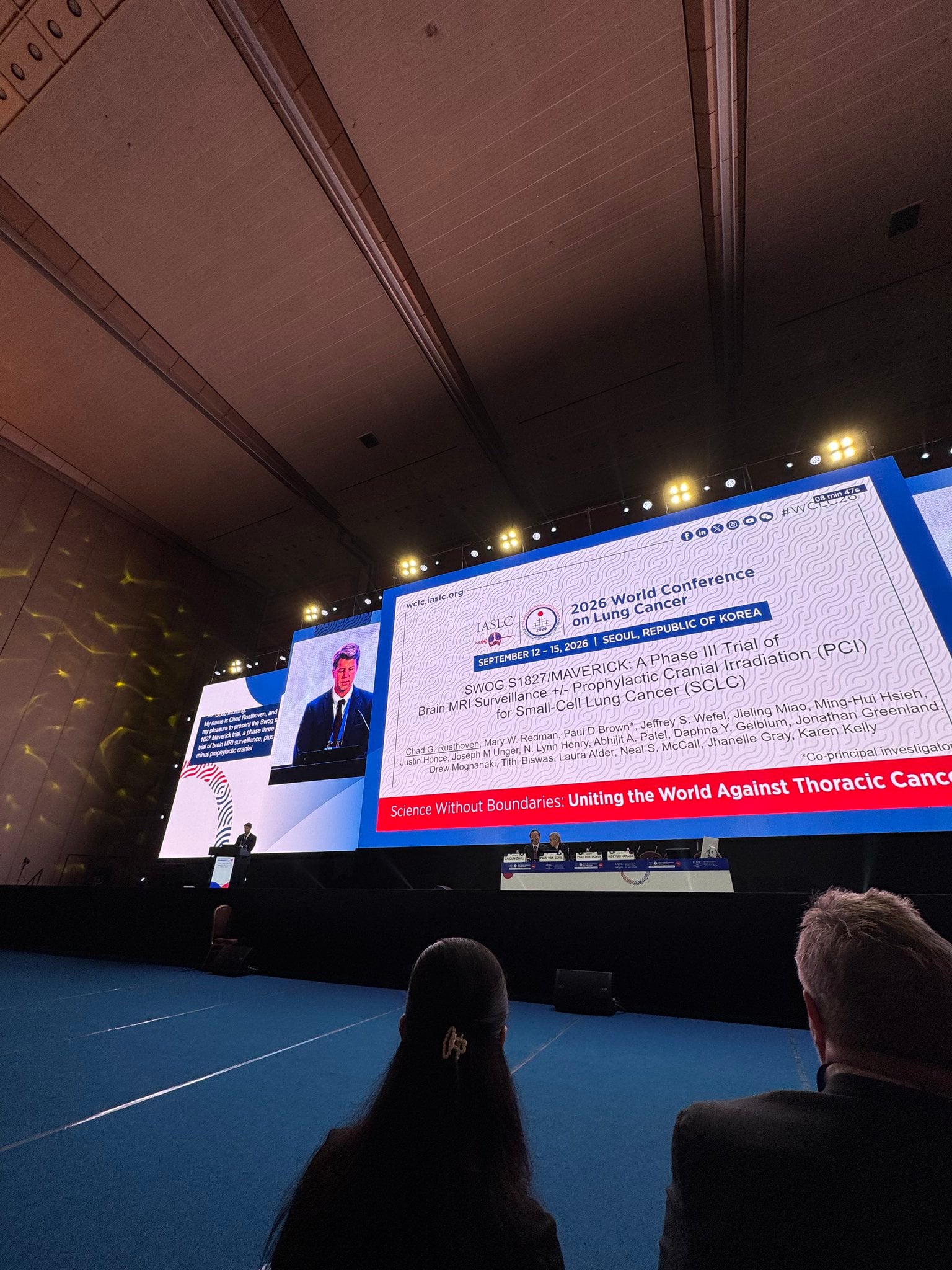
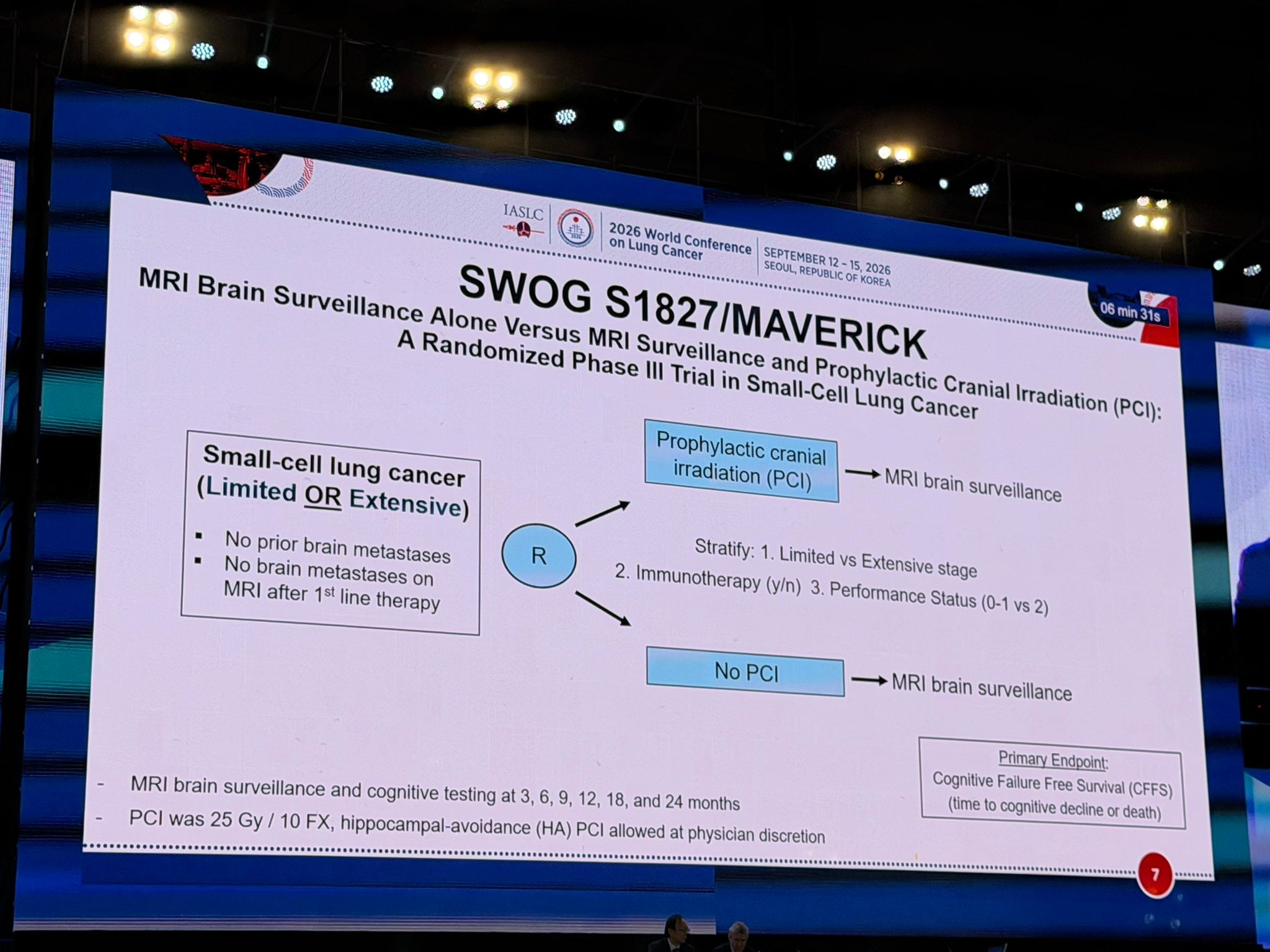
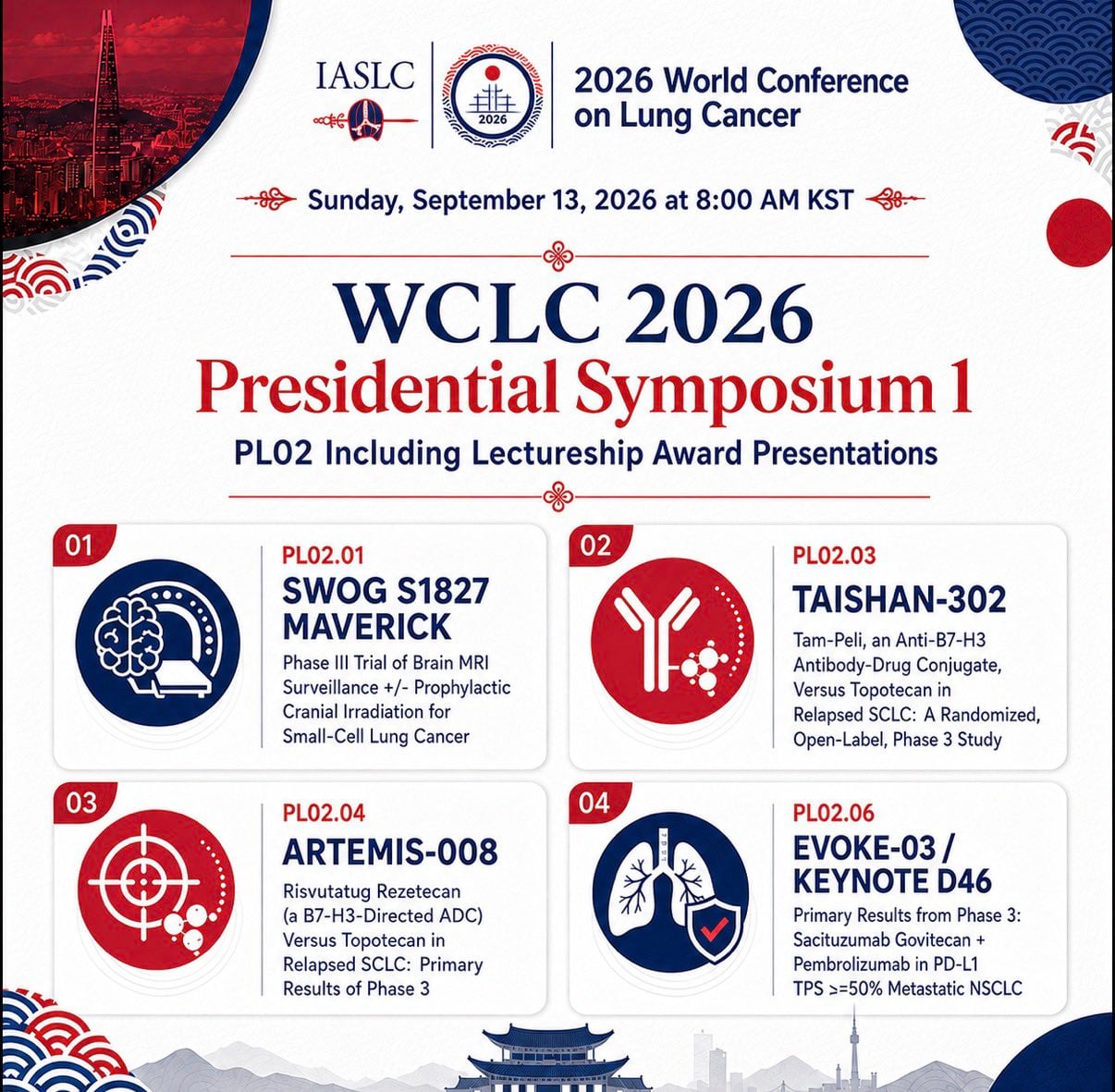
Dr. Chad Rusthoven at #WCLC26 presents results from SWOG S1827, the phase III MAVERICK study exploring the benefit of PCI in pts with SCLC. Historic studies before the era of MRI surveillance showed a decrease in brain metastases with PCI and an improvement in OS but recent ES-SCLC studies called the OS improvement into question. MAVERICK looks at both LS and ES disease - note primary endpoint her

Dr. Chad Rusthoven at #WCLC26 presents results from SWOG S1827, the phase III MADr. Chad Rusthoven at #WCLC26 presents results from SWOG S1827, the phase III MADr. Chad Rusthoven at #WCLC26 presents results from SWOG S1827, the phase III MADr. Chad Rusthoven at #WCLC26 presents results from SWOG S1827, the phase III MA
10.2K impressions23 likes10 reposts2026-09-12
[Slide 1] ASLC 2026 World Conference on Lung Cancer SEPTEMBER 12- 15, 2026 I SEOUL, REPUBLIC OF KOREA KALC SCIENCE WITHOUT BOUNDARIES: UNITING THE WORLD AGAINST THORACIC CANCER [Slide 2] IASLC 2026 World Conference SEPTEMBER 12 - 15, 2026 06 min 42s on Lung Cancer SEOUL, REPUBLIC OF KOREA SWOG S1827/MAVERICK Trial Hypothesis Compared with PCI + MRI surveillance, MRI surveillance alone will result in superior cognitive failure free survival (CFFS) without a decline in OS 6 [Slide 3] IASLC 2026 World Conference SEPTEMBER 12 - 15, 2026 06 min 35s on Lung Cancer SEOUL, REPUBLIC OF KOREA SWOG S1827/MAVERICK MRI Brain Surveillance Alone Versus MRI Surveillance and Prophylactic Cranial Irradiation (PCI): A Randomized Phase III Trial in Small-Cell Lung Cancer Prophylactic cranial MRI brain surveillance irradiation (PCI) Small-cell lung cancer (Limited OR Extensive) Stratify: 1. Limited vs Extensive stage No prior brain metastases R 2. Immunotherapy (y/n) 3. Performance Status (0-1 vs 2) No brain metastases on MRI after 1st line therapy No PCI MRI brain surveillance Primary Endpoint: Cognitive Failure Free Survival (CFFS) MRI brain surveillance and cognitive testing at 3, 6, 9, 12, 18, and 24 months (time to cognitive decline or death) - - PCI was 25 Gy / 10 FX, hippocampal-avoidance (HA) PCI allowed at physician discretion 7 [Slide 4] IASLC 2026 World Conference SEPTEMBER 12 - 15, 2026 05 min 52s on Lung Cancer SEOUL, REPUBLIC OF KOREA Trial Design Eligibility Patients with limited-stage (LS) and extensive-stage (ES) disease, ≥18 years of age, performance status 0-2 LS-SCLC: must have completed platinum-based chemotherapy and either definitive thoracic radiation or surgical resection ES-SCLC: must have completed platinum-based chemotherapy Immunotherapy (concurrent and/or adjuvant to upfront treatment) allowed for both LS- and ES-SCLC Enrollment within 16 weeks of Day 1 of the last cycle of chemotherapy Pts must have a response to upfront therapy & no progression in opinion of treating physician (CT or PET/CT within 42 days) No history of brain metastases and no evidence of brain metastases on MRI within 28 days of enrollment MRI surveillance Contrast-enhanced brain MRIs performed at 3, 6, 9, 12, 18, and 24 months MRI sequences per the Brain Tumor Imaging Protocol for BM (BTIP-BM) consensus recs (Kaufmann, Neuro-oncology 22.6 (2020): 757-772) Prophylactic cranial irradiation (PCI) 25 Gy delivered in 10 Fx Hippocampal avoidance (HA-PCI) allowed at physician discretion Radiation therapy recommended at time of brain metastases Radiosurgery (SRS) and whole-brain radiation (WBRT)/hippocampal-avoidant (HA)-WBRT allowed at physician discretion 8
BBalazs Halmos@BalazsHalmosMD

Slide of #WCLC26 so far from terrific discussant Anne Chiang.

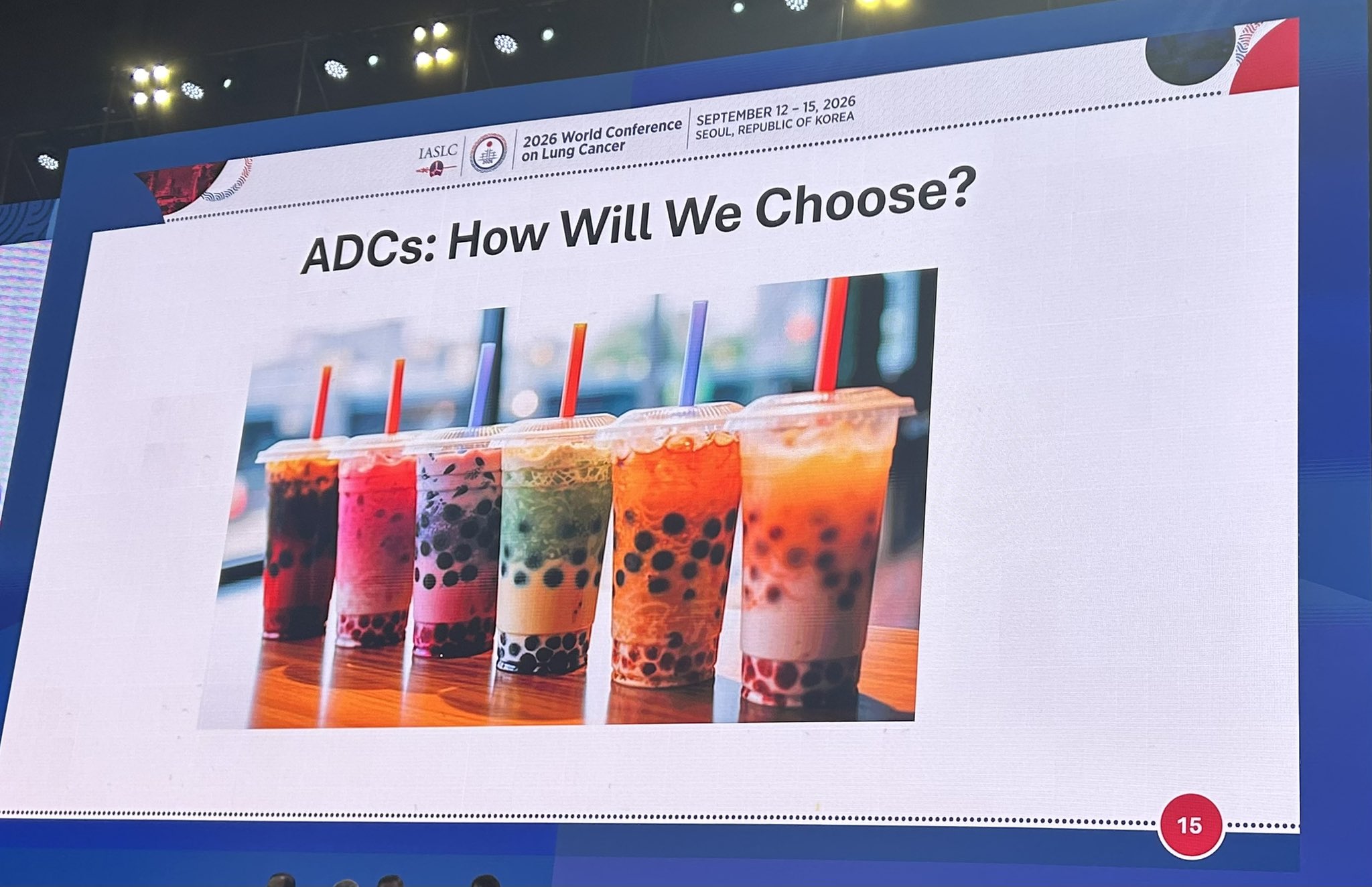
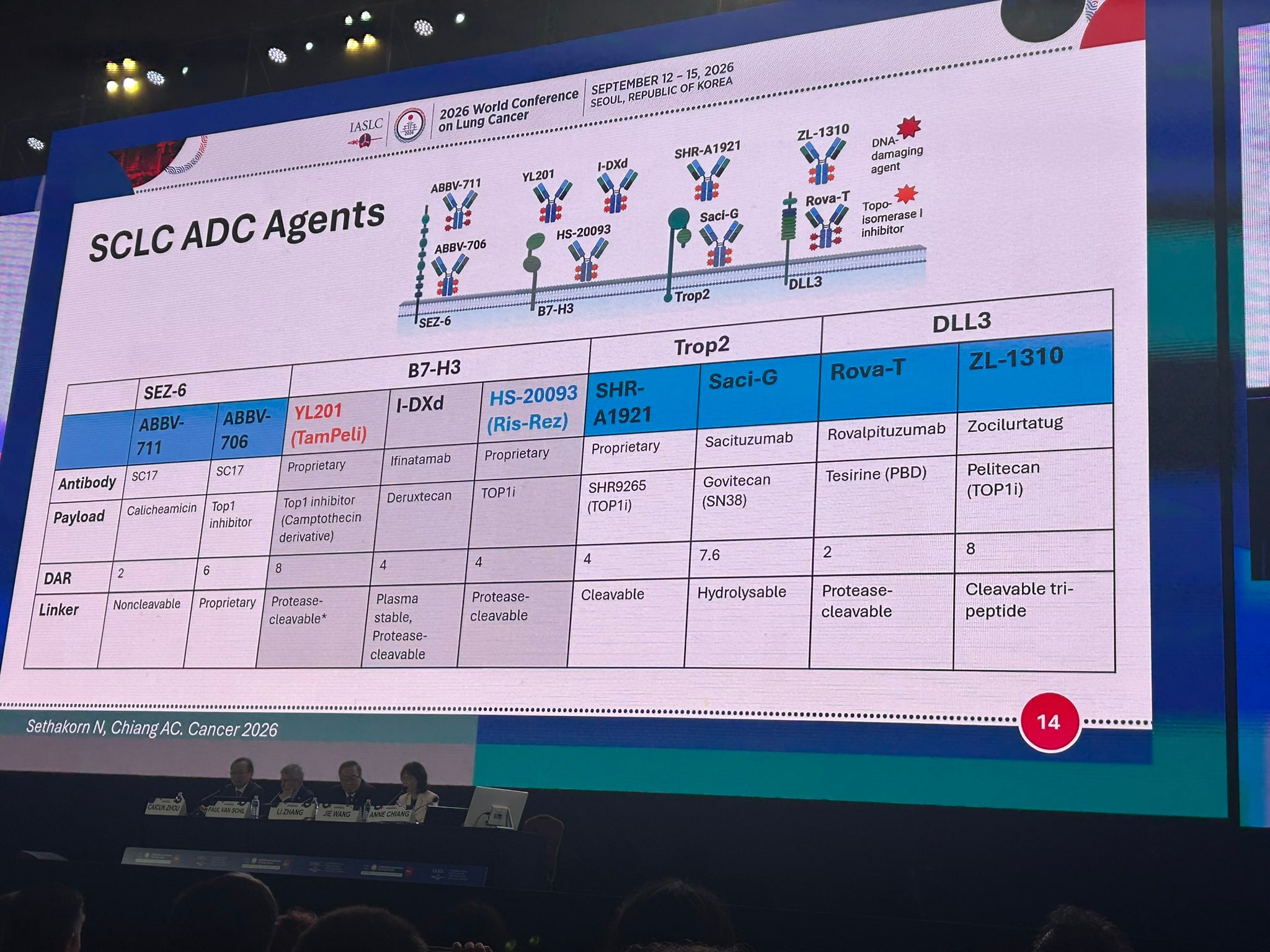
Which bubble tea flavor to choose when it comes to the many tasty emerging ADC options for SCLC???

Hopefully note investment into science/biomarkers will help!
@Annechiangmd https://t.co/rVCSEnLxiC

Slide of #WCLC26 so far from terrific discussant Anne Chiang.

Which bubble tea Slide of #WCLC26 so far from terrific discussant Anne Chiang.

Which bubble tea
8.7K impressions4 likes1 reposts2026-09-13
[Slide 1] A IASLC 2026 World Conference SEPTEMBER 12 - 15, 2026 on Lung Cancer SEOUL, REPUBLIC OF KOREA ADCs: How Will We Choose? [Slide 2] IASLC 2026 World Conference SEPTEMBER 12 - 15, 2026 NW# on Lung Cancer SEOUL, REPUBLIC OF KOREA SCLC ADC Agents ABBV-711 YL201 I-DXd SHR-A1921 ZL-1310 DNA- damaging agent ABBV-706 HS-20093 Saci-G Rova-T Topo- isomerase I inhibitor SEZ-6 B7-H3 Trop2 DLL3 SEZ-6 B7-H3 Trop2 DLL3 ABBV- ABBV- YL201 I-DXd HS-20093 SHR- Saci-G Rova-T ZL-1310 711 706 (TamPeli) (Ris-Rez) A1921 Antibody SC17 SC17 Proprietary Ifinatamab Proprietary Proprietary Sacituzumab Rovalpituzumab Zocilurtatug Payload Calicheamicin Top1 Top1 inhibitor Deruxtecan TOP1i SHR9265 Govitecan Tesirine (PBD) Pelitecan inhibitor (Camptothecin (TOP1i) (SN38) (TOP1i) derivative) DAR 2 6 8 4 4 4 7.6 2 8 Linker Noncleavable Proprietary Protease- Plasma Protease- Cleavable Hydrolysable Protease- Cleavable tri- cleavable* stable, cleavable cleavable peptide Protease- cleavable 14 Sethakorn N, Chiang AC. Cancer 2026
YYakup Ergün@dr_yakupergun

Highlighted Studies at #WCLC26

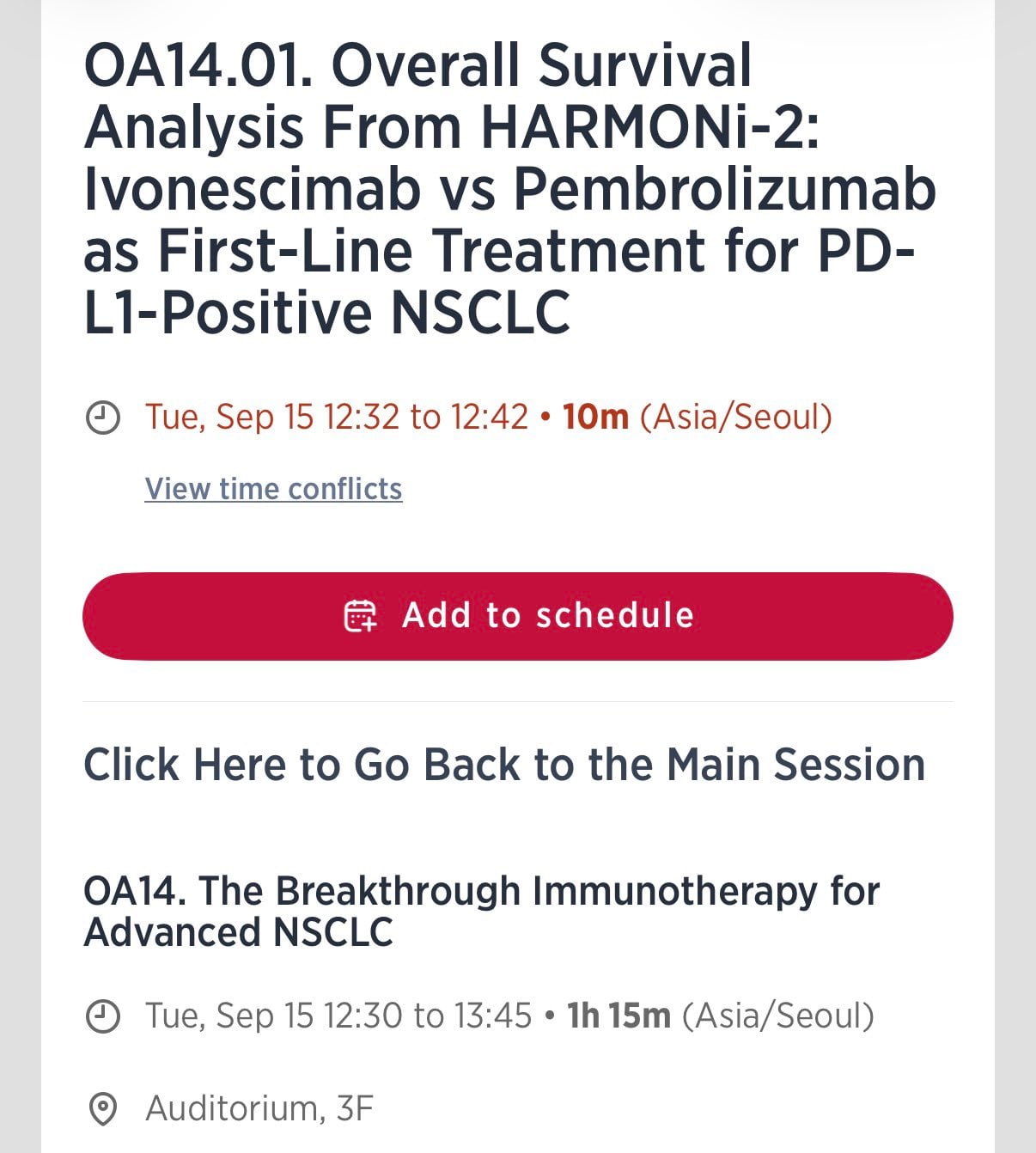
1️⃣ HARMONi-2
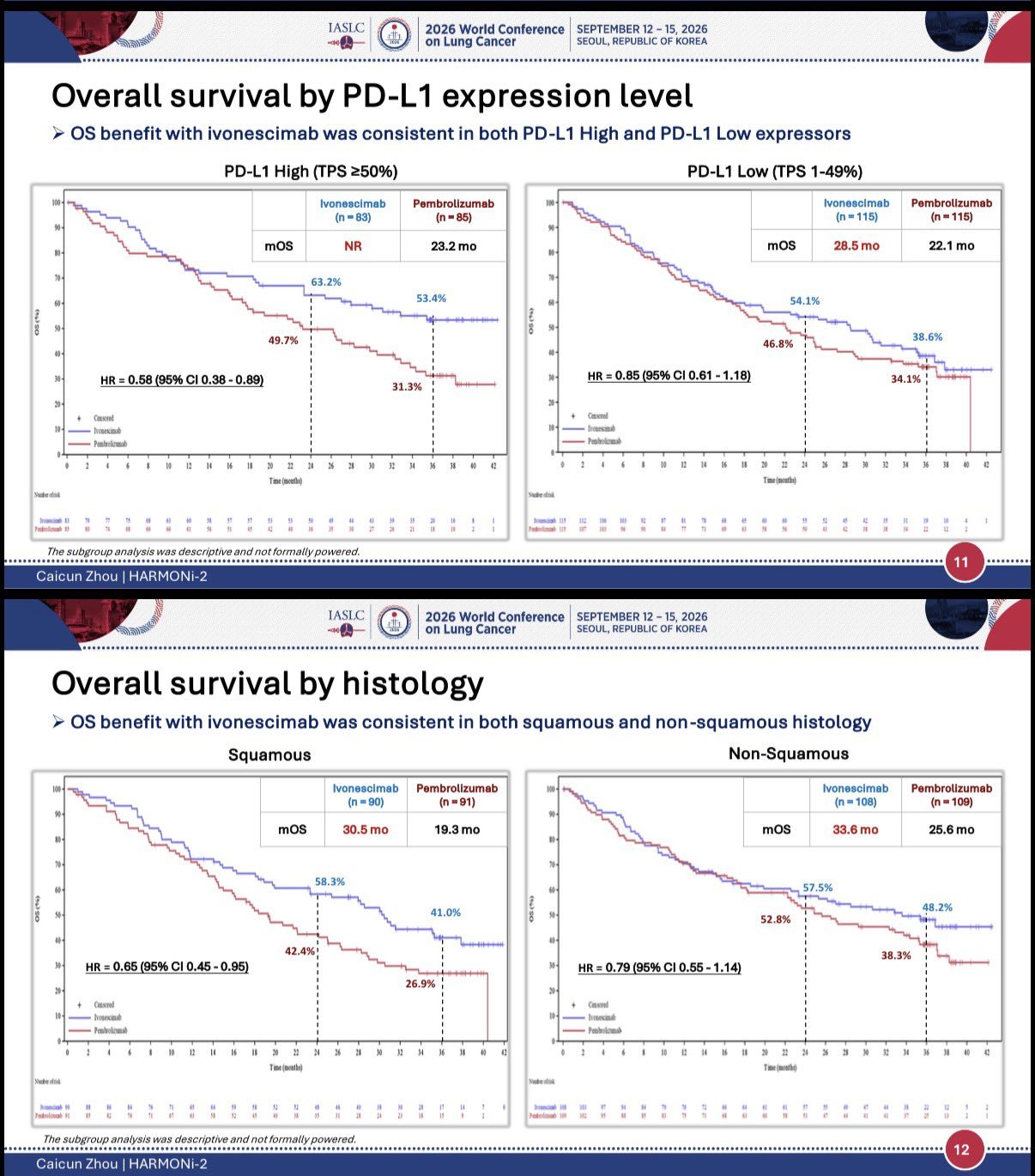
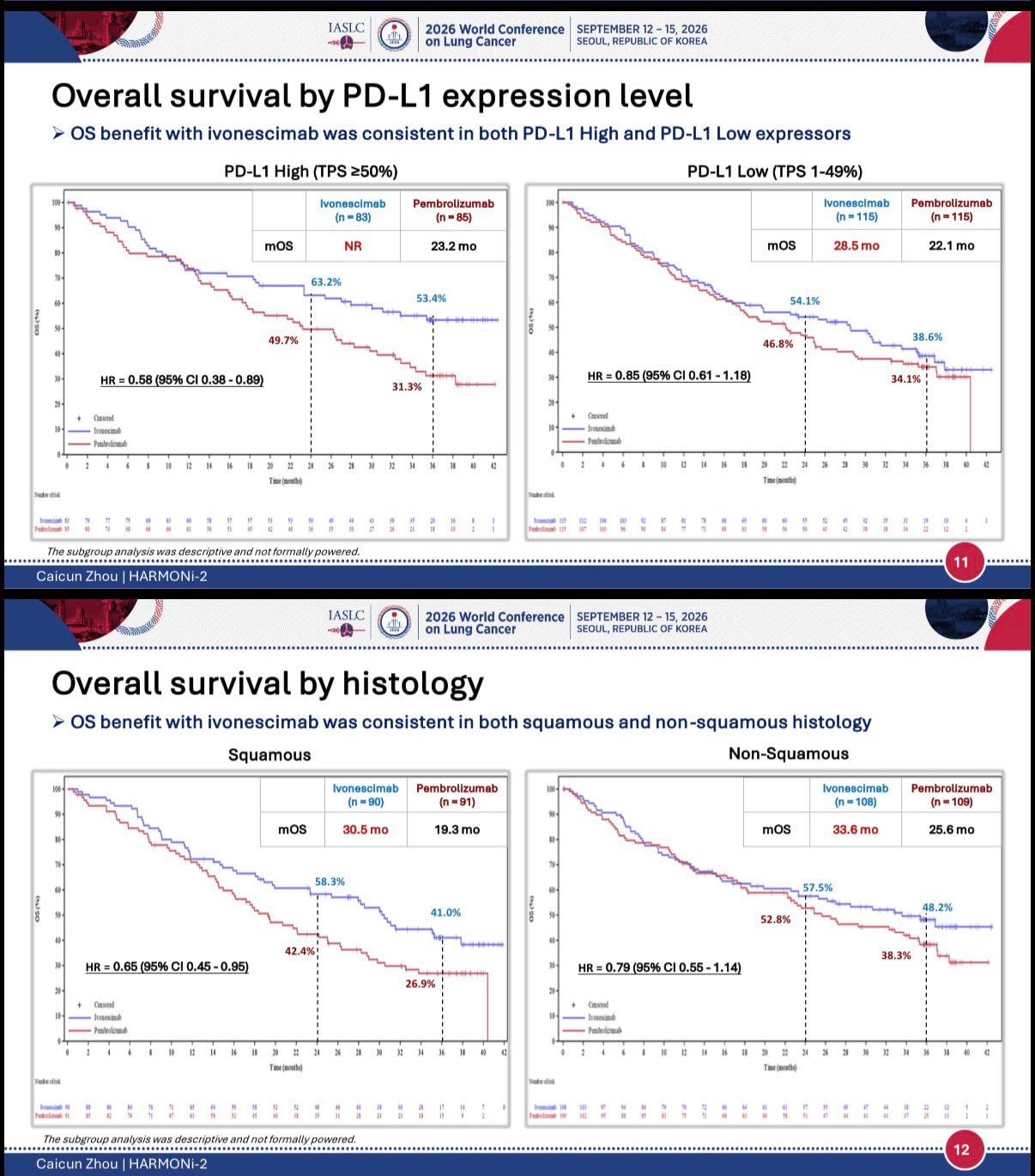
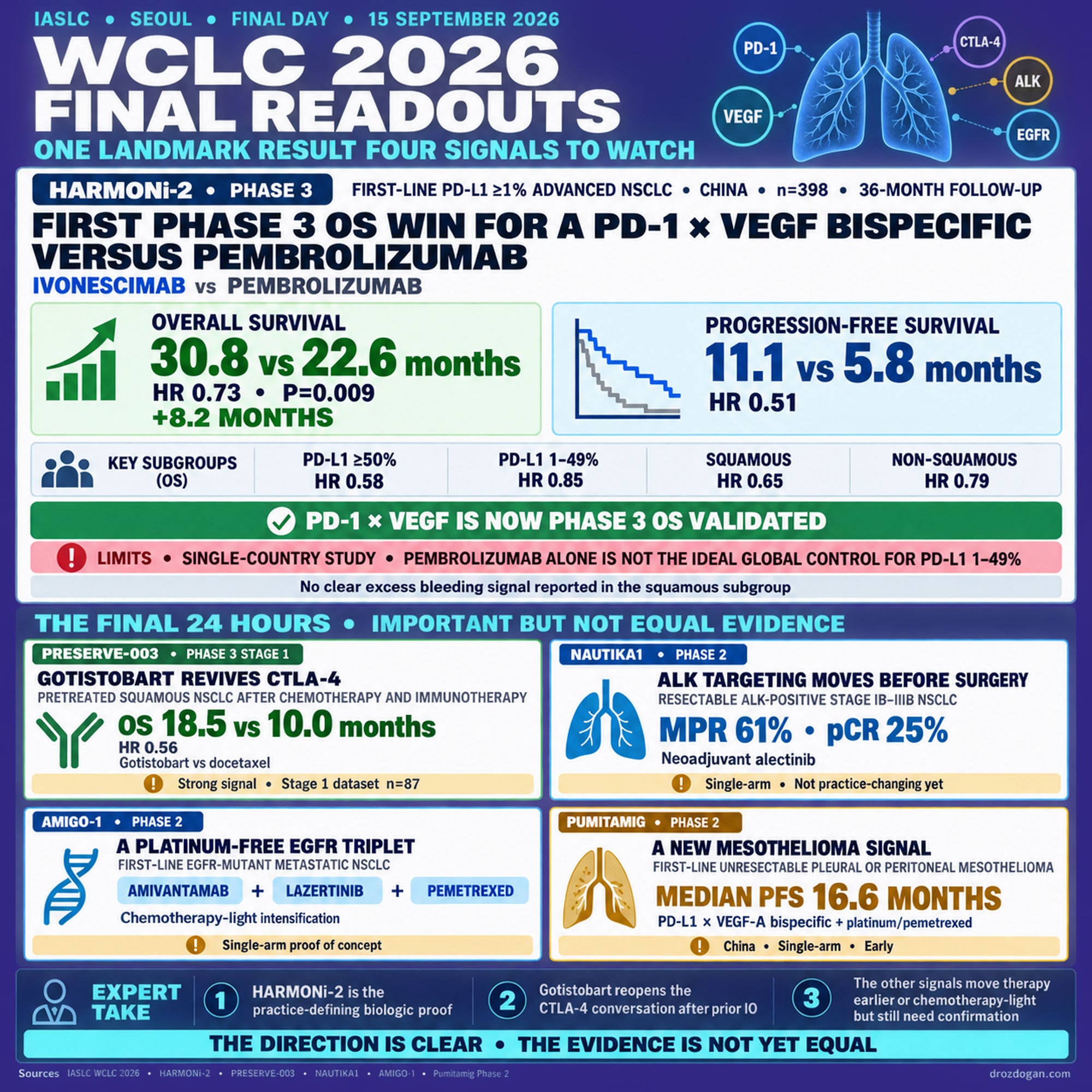
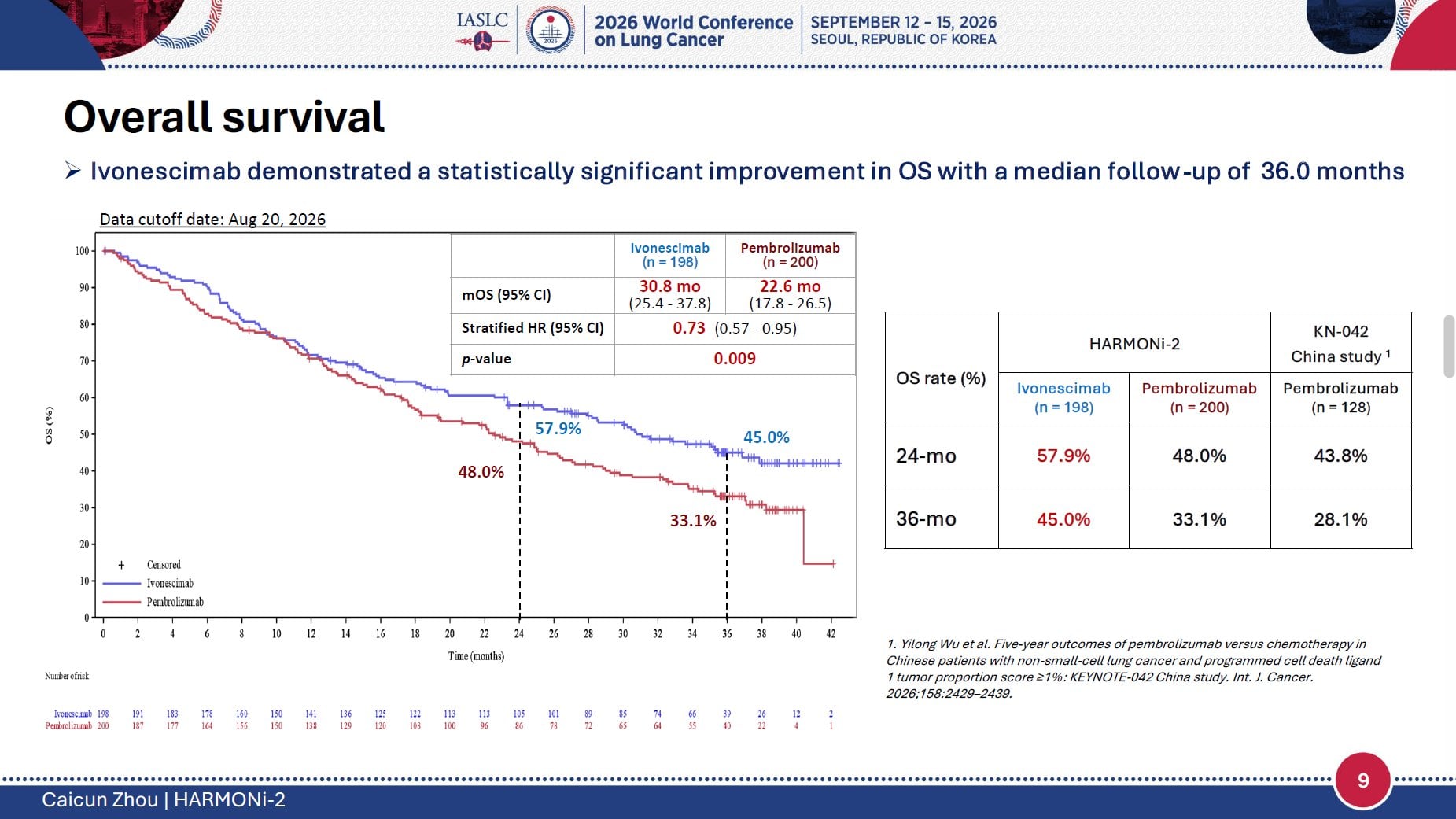
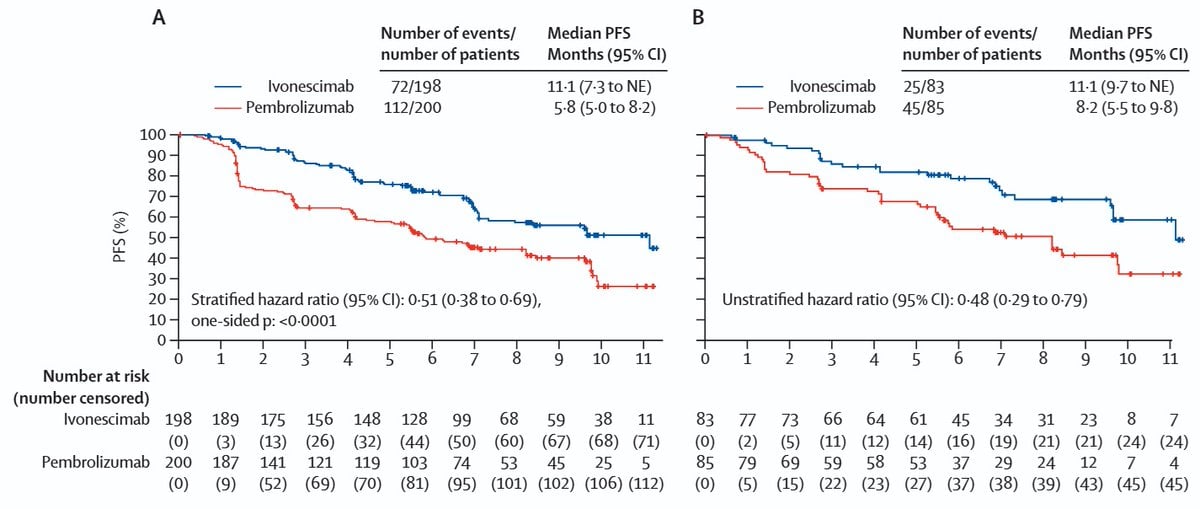
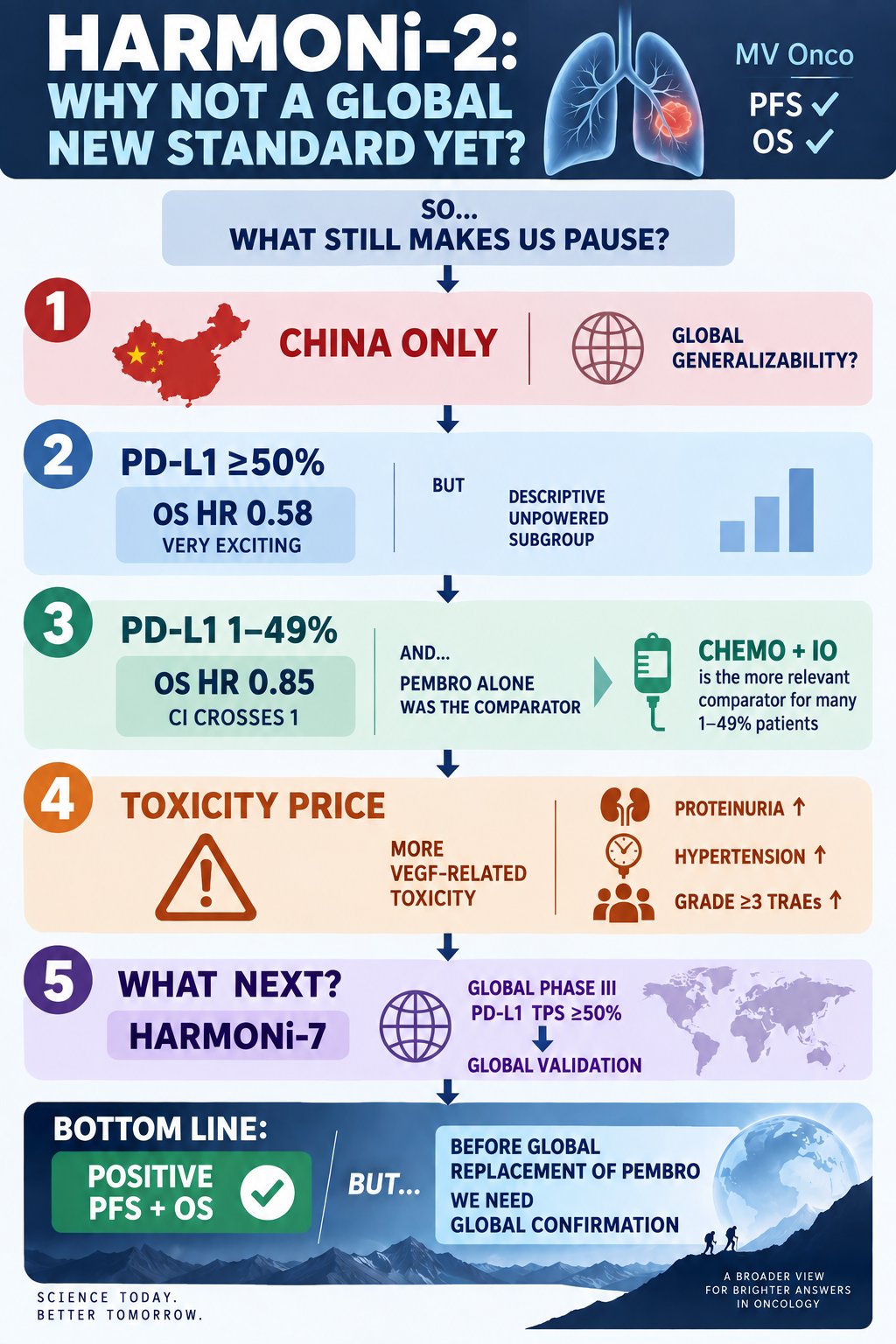
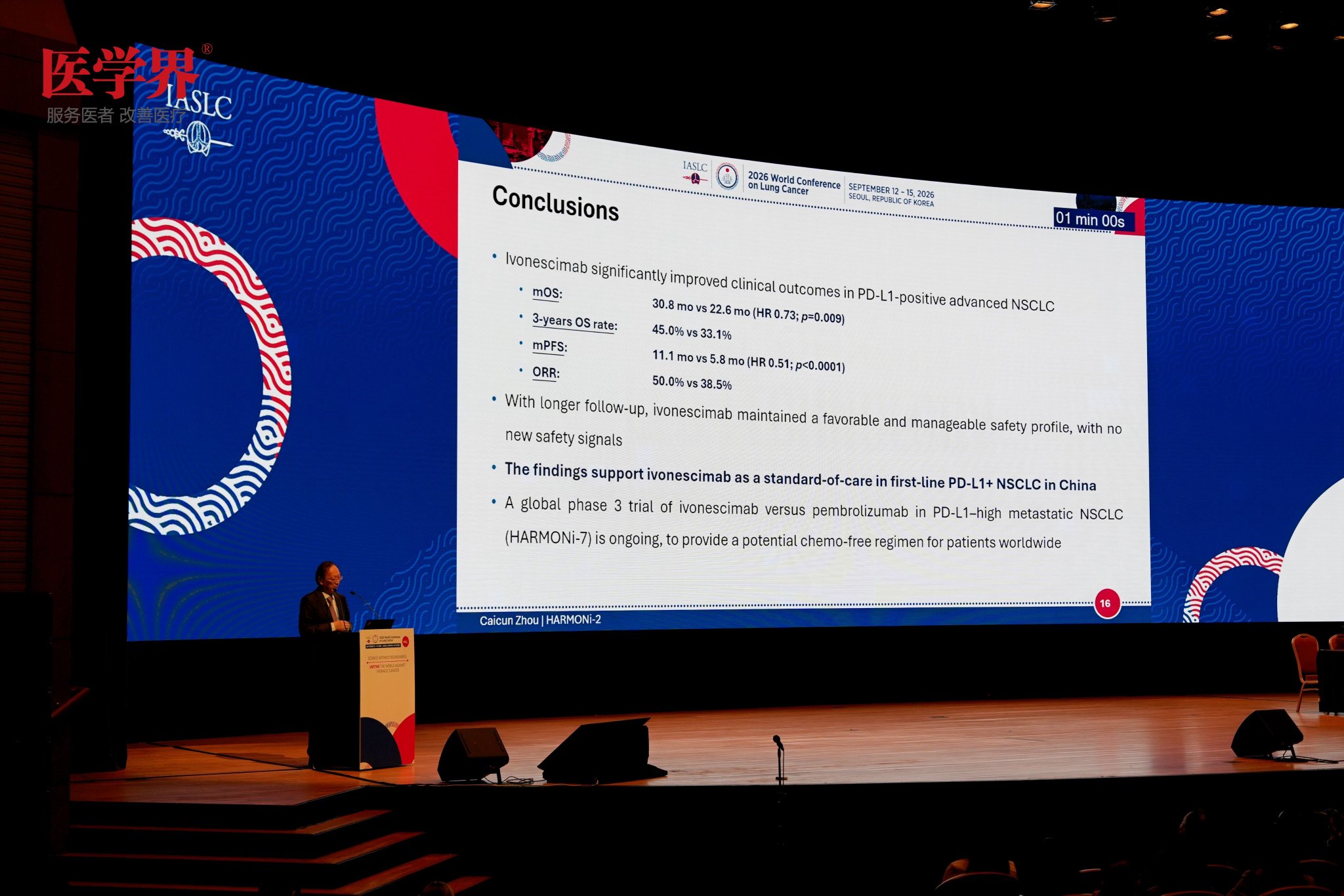
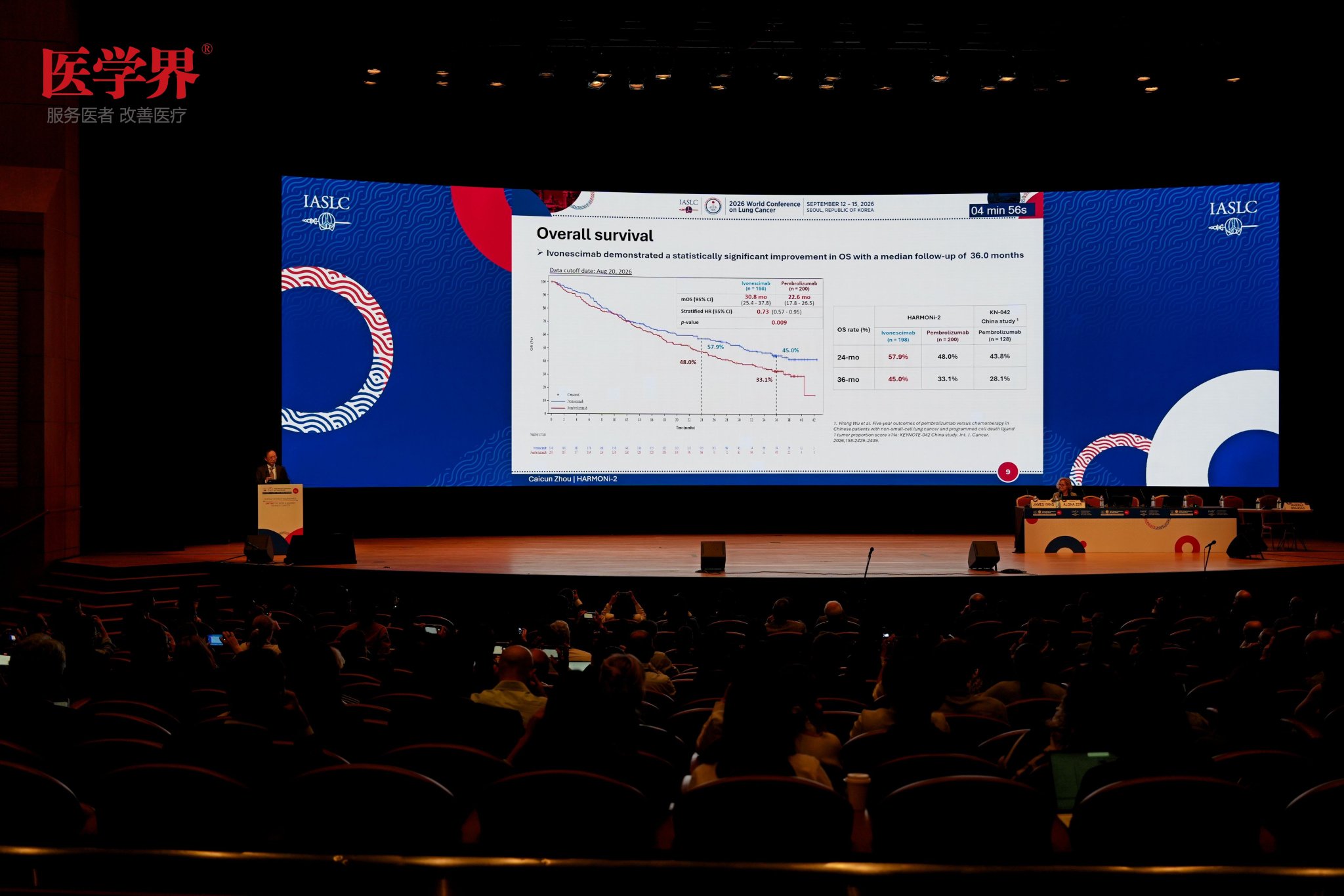
In treatment-naïve, advanced NSCLC with PD-L1 ≥1%, ivonescimab improved PFS (11.1 vs 5.8 months; HR 0.51) and OS (30.8 vs 22.6 months; HR 0.73) compared with pembrolizumab.
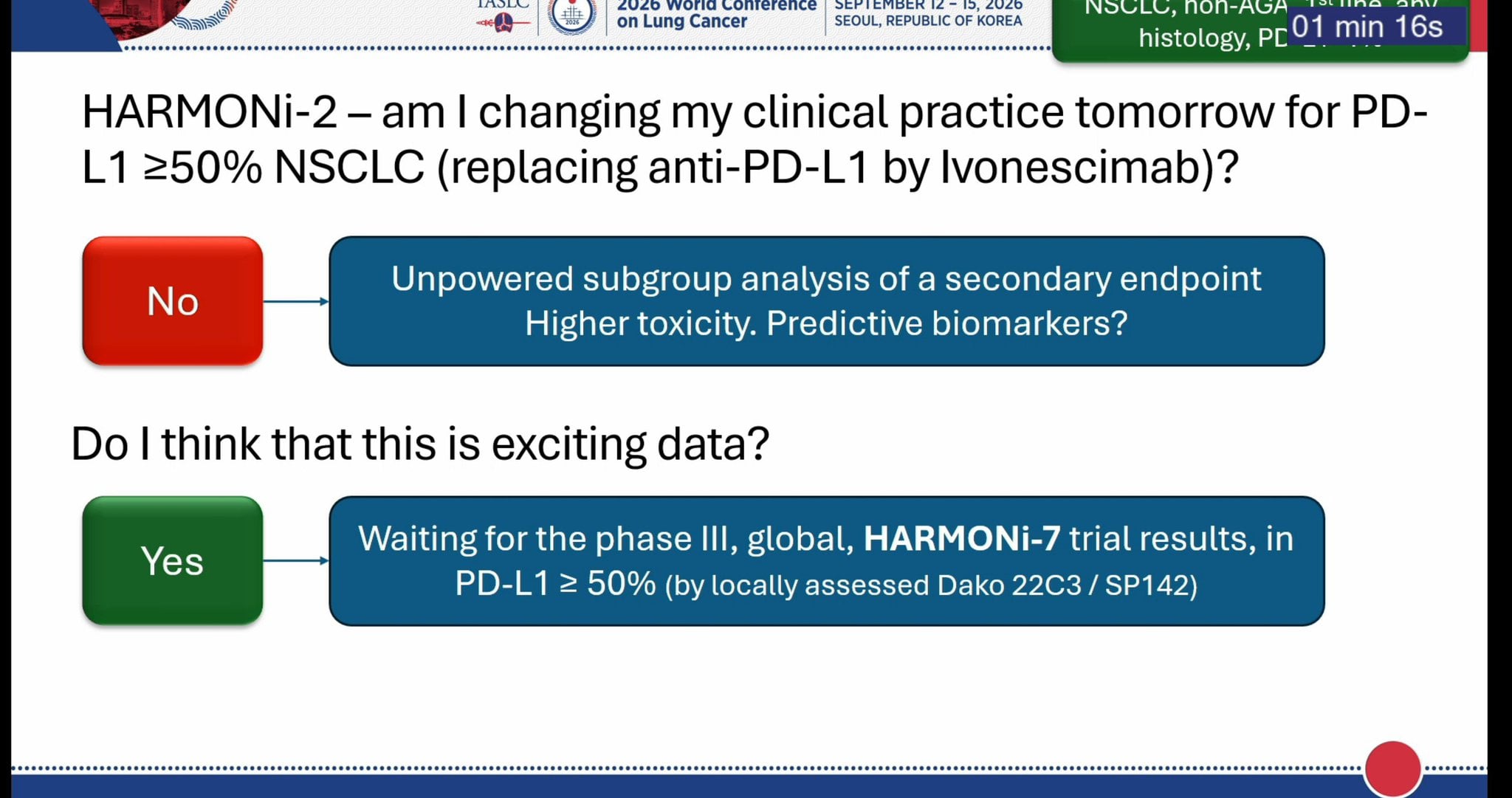
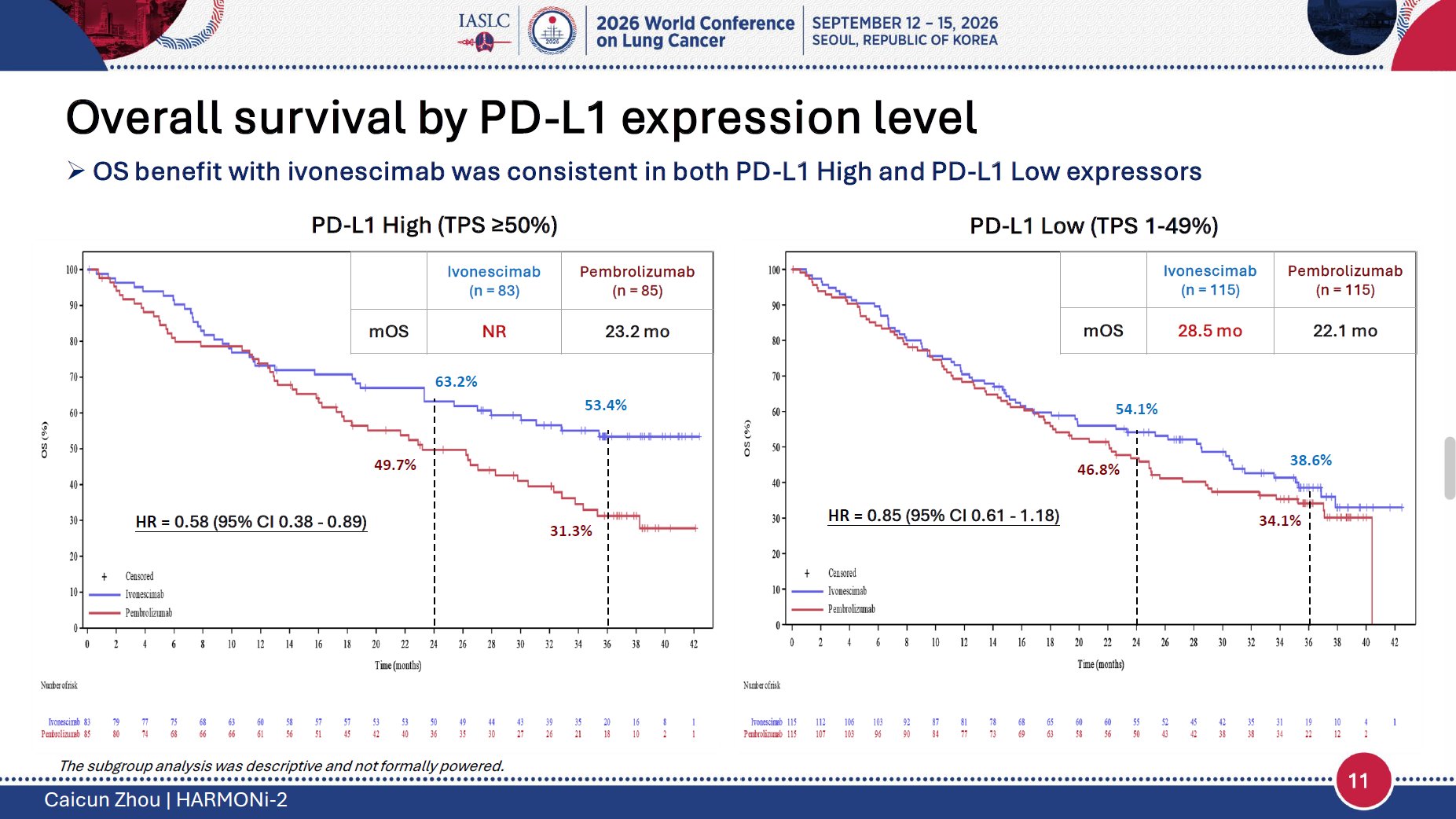
This is a genuinely positive trial, but it does not tell the same story for all PD-L1-positive patients. The OS benefit was clear in the ≥50% subgroup, whereas the HR was 0.85 with

Highlighted Studies at #WCLC26

1️⃣ HARMONi-2
In treatment-naïve, advanced NSCLC
8.6K impressions24 likes8 reposts2026-09-13
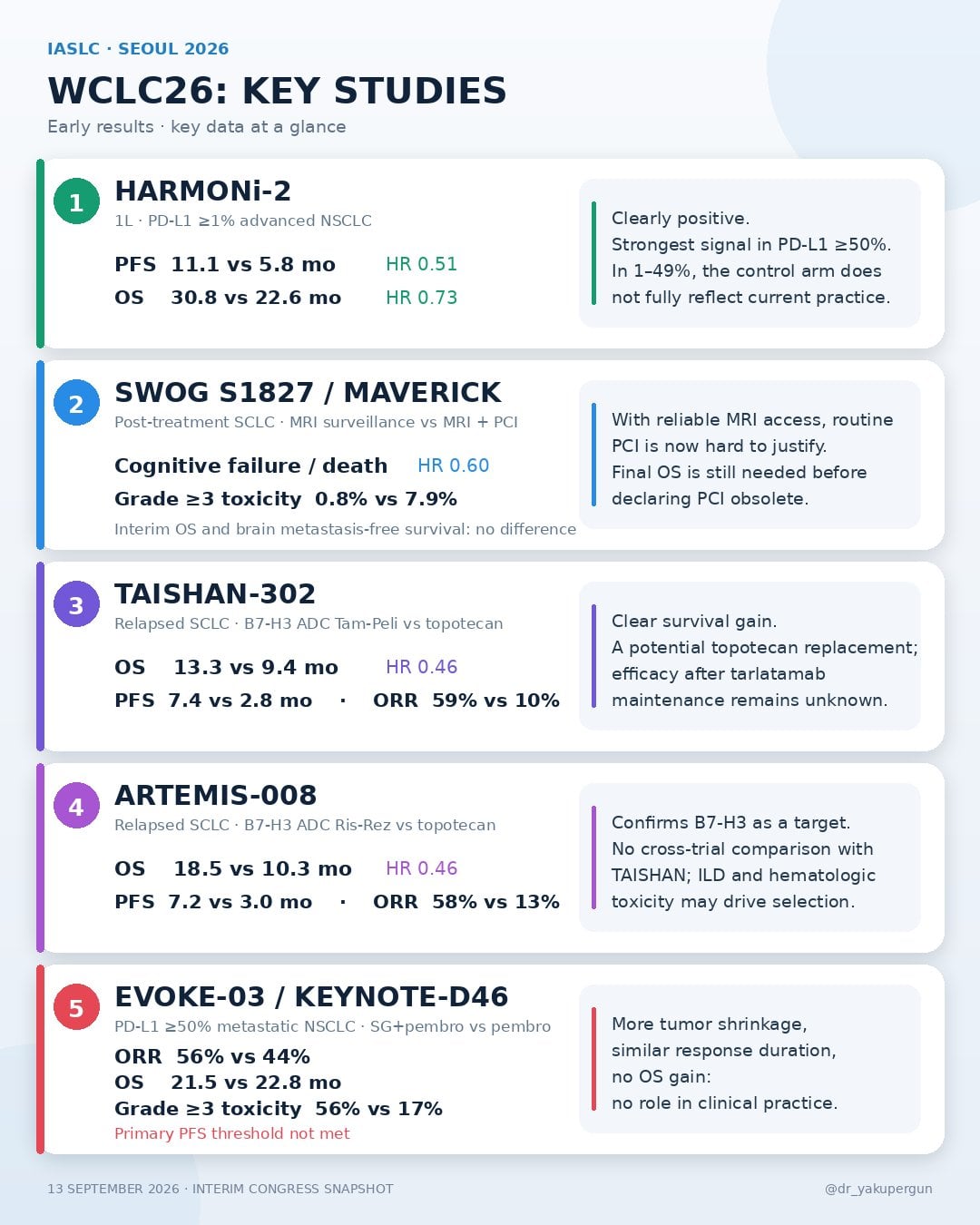
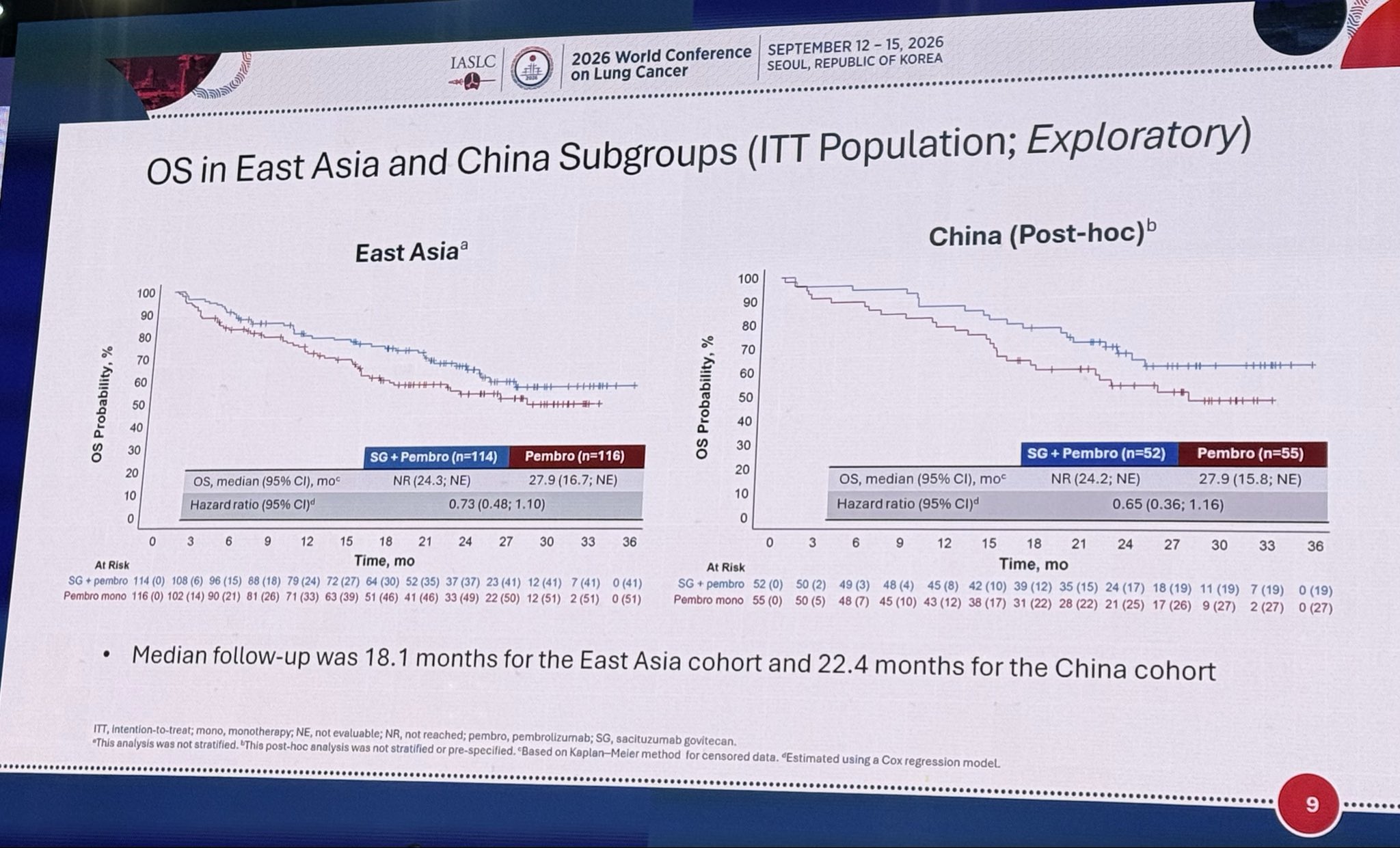
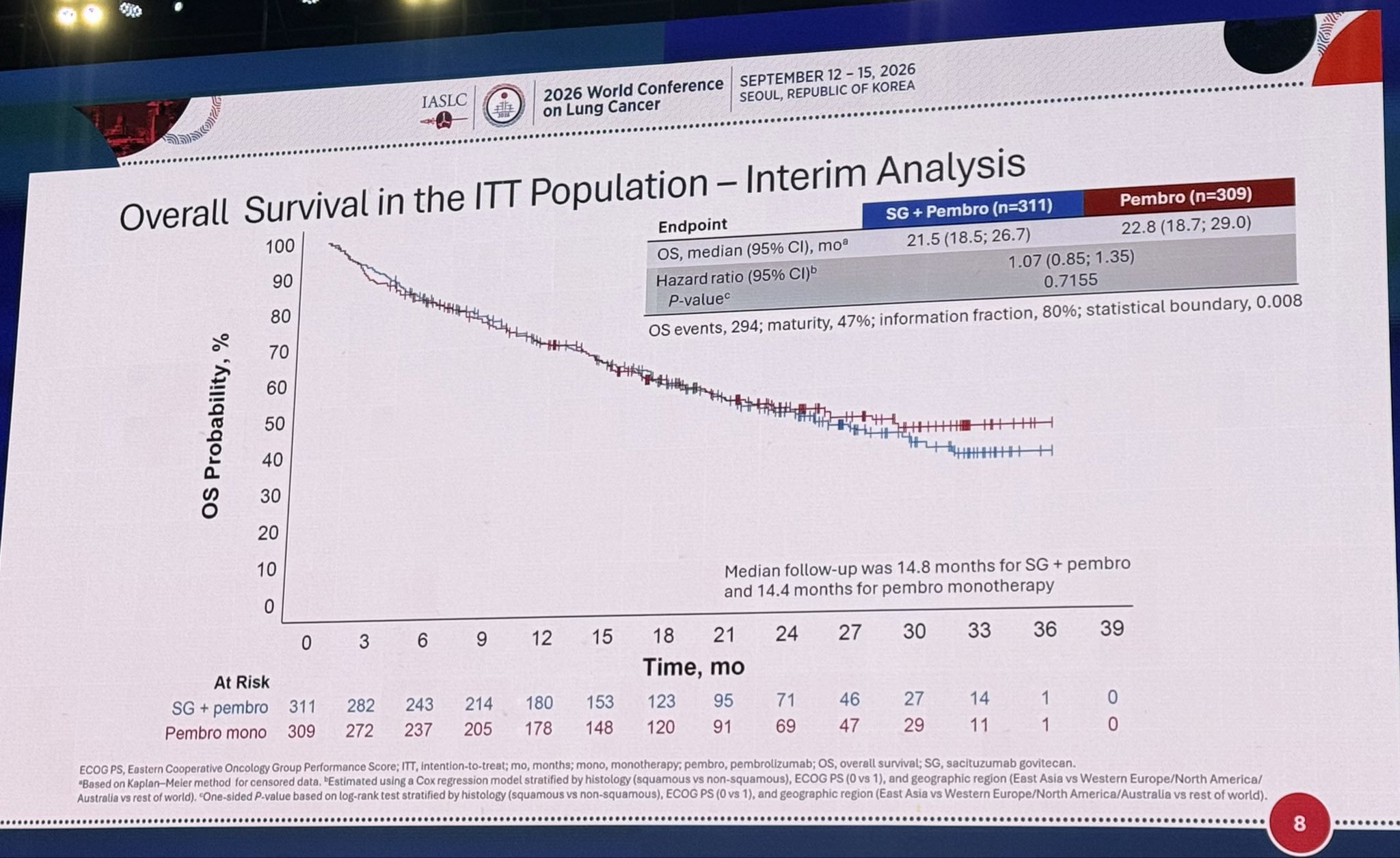
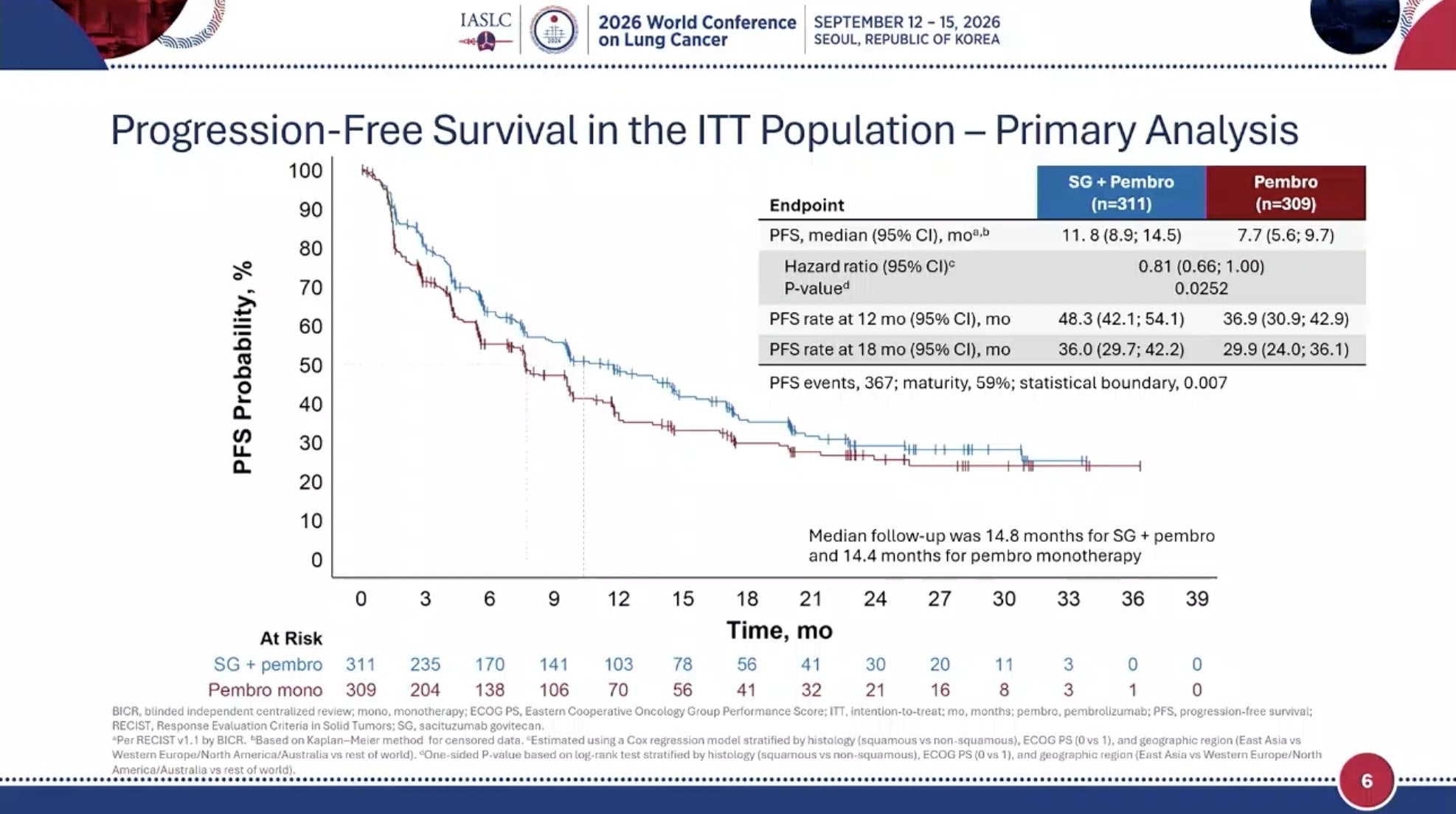
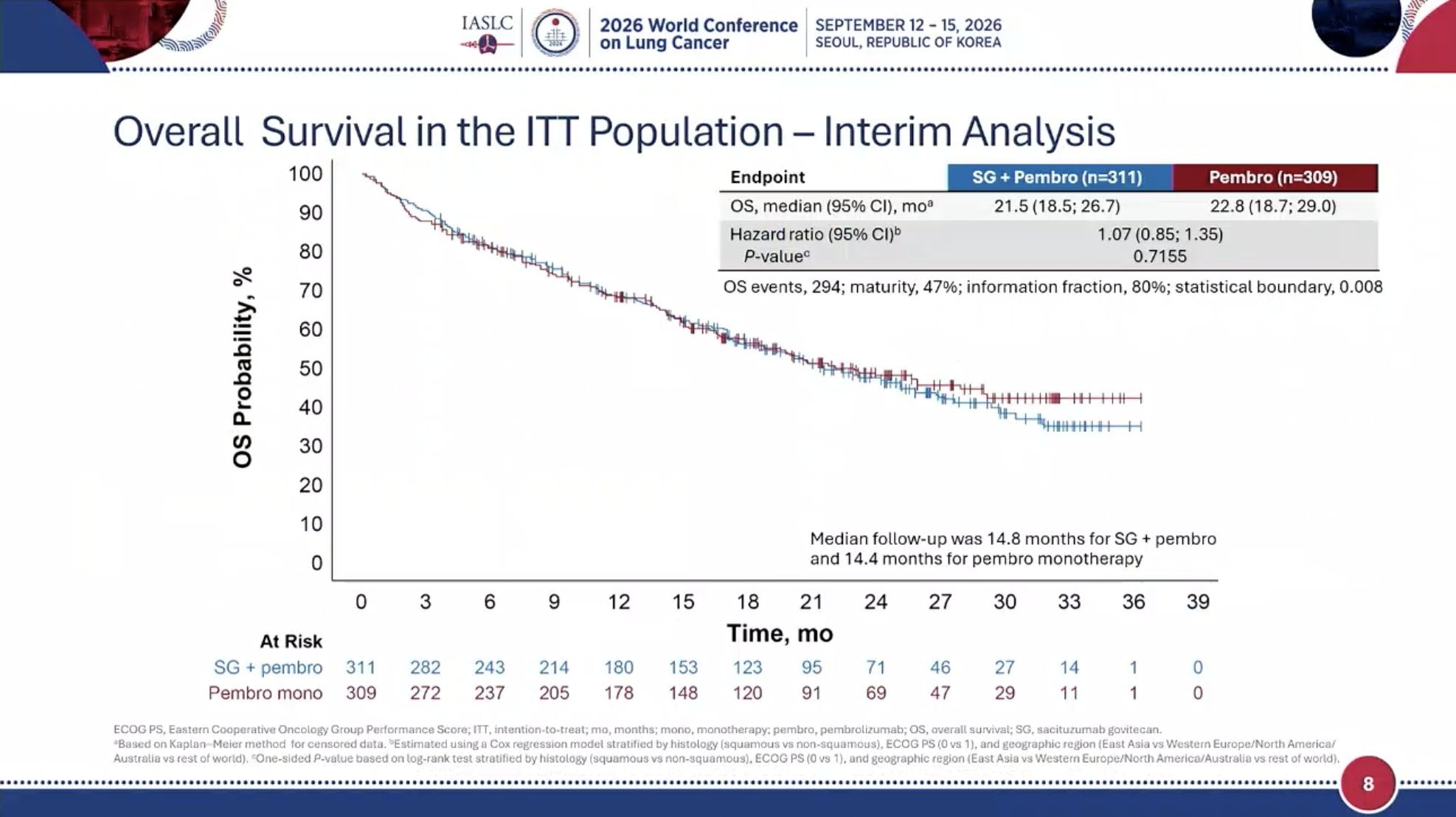
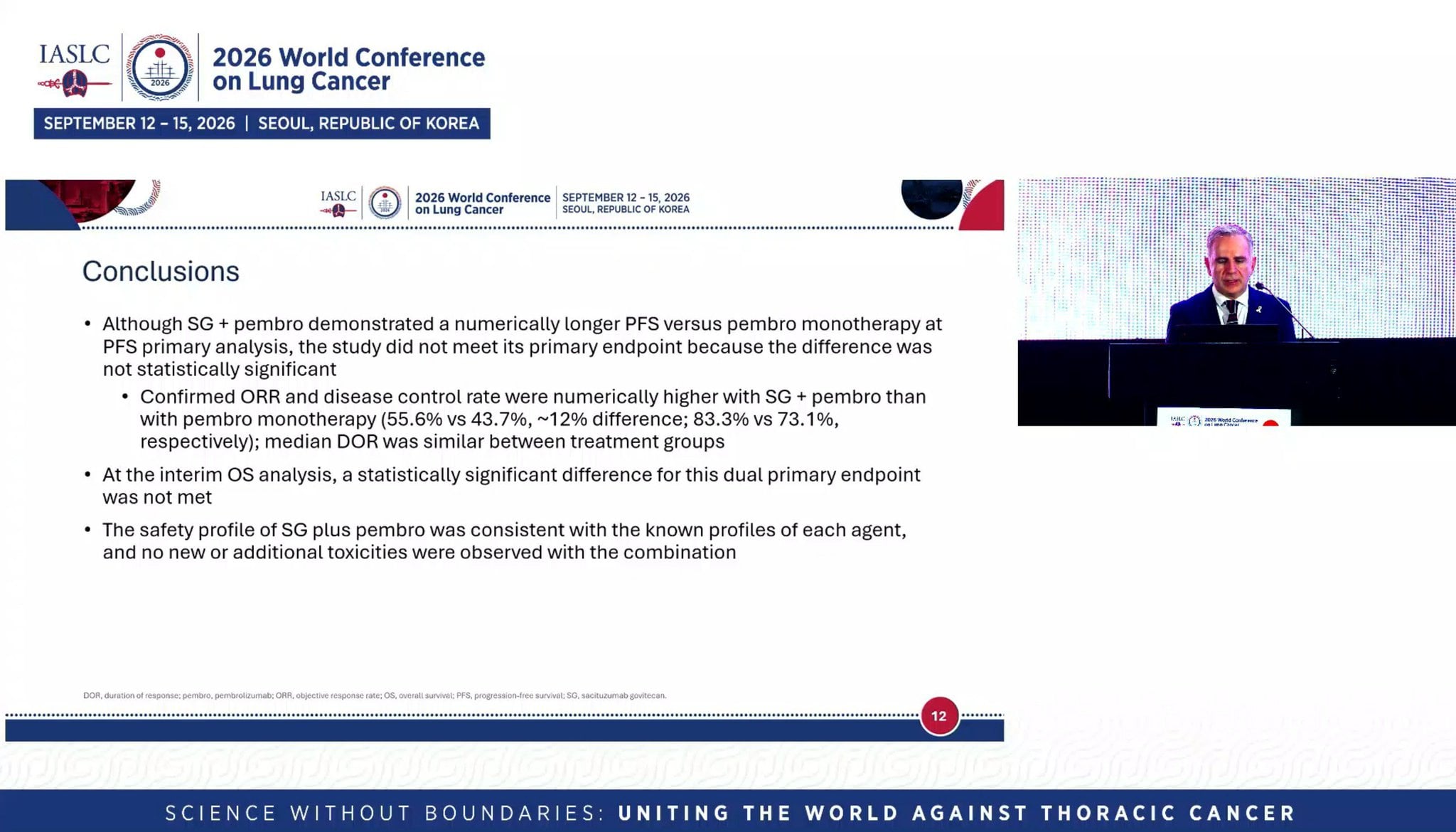
[Slide 1] IASLC SEOUL 2026 WCLC26: KEY STUDIES Early results key data at a glance HARMONi-2 1 1L PD-L1 >1% advanced NSCLC Clearly positive. Strongest signal in PD-L1 >50%. PFS 11.1 vs 5.8 mo HR 0.51 In 1-49%, the control arm does os 30.8 vs 22.6 mo HR 0.73 not fully reflect current practice. 2 SWOG S1827 / MAVERICK Post-treatment SCLC MRI surveillance vs MRI + PCI With reliable MRI access, routine PCI is now hard to justify. Cognitive failure / death HR 0.60 Final os is still needed before Grade ≥3 toxicity 0.8% vs 7.9% declaring PCI obsolete. Interim OS and brain metastasis-free survival: no difference TAISHAN-302 3 Relapsed SCLC B7-H3 ADC Tam-Peli vs topotecan Clear survival gain. A potential topotecan replacement; os 13.3 vs 9.4 mo HR 0.46 efficacy after tarlatamab PFS 7.4 vs 2.8 mo ORR 59% vs 10% maintenance remains unknown. ARTEMIS-008 4 Relapsed SCLC . B7-H3 ADC Ris-Rez VS topotecan Confirms B7-H3 as a target. No cross-trial comparison with os 18.5 vs 10.3 mo HR 0.46 TAISHAN; ILD and hematologic PFS 7.2 vs 3.0 mo ORR 58% vs 13% toxicity may drive selection. 5 EVOKE-03 / KEYNOTE-D46 PD-L1 >50% metastatic NSCLC SG+pembro VS pembro More tumor shrinkage, ORR 56% vs 44% similar response duration, os 21.5 vs 22.8 mo no OS gain: Grade ≥3 toxicity 56% vs 17% no role in clinical practice. Primary PFS threshold not met 13 SEPTEMBER 2026 INTERIM CONGRESS SNAPSHOT @dr_yakupergun
NNoemi Reguart@NReguart

What a day for #SCLC!
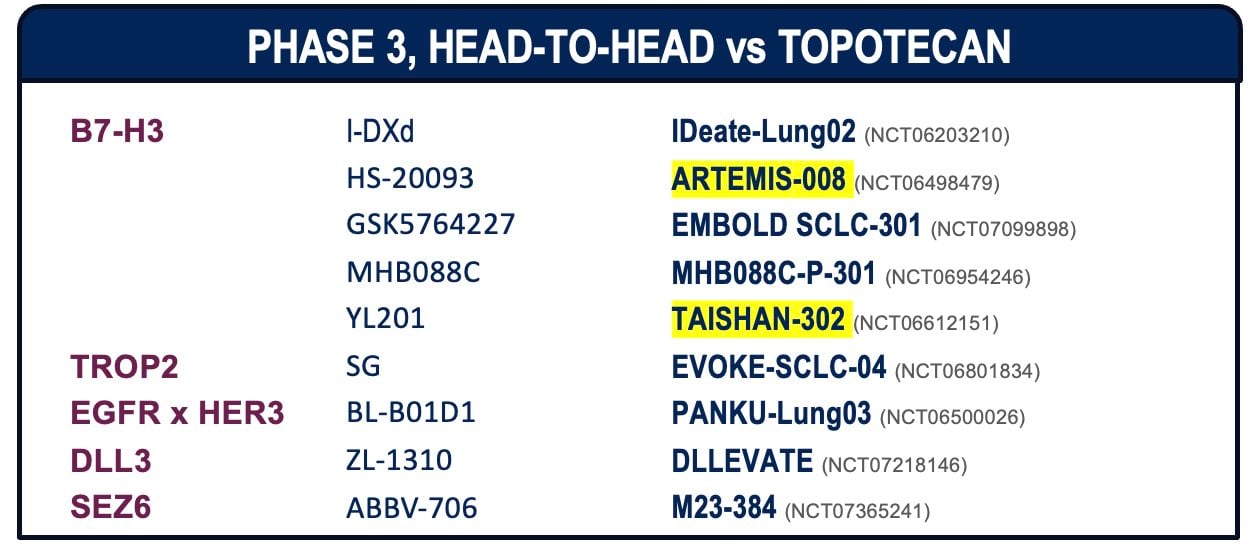
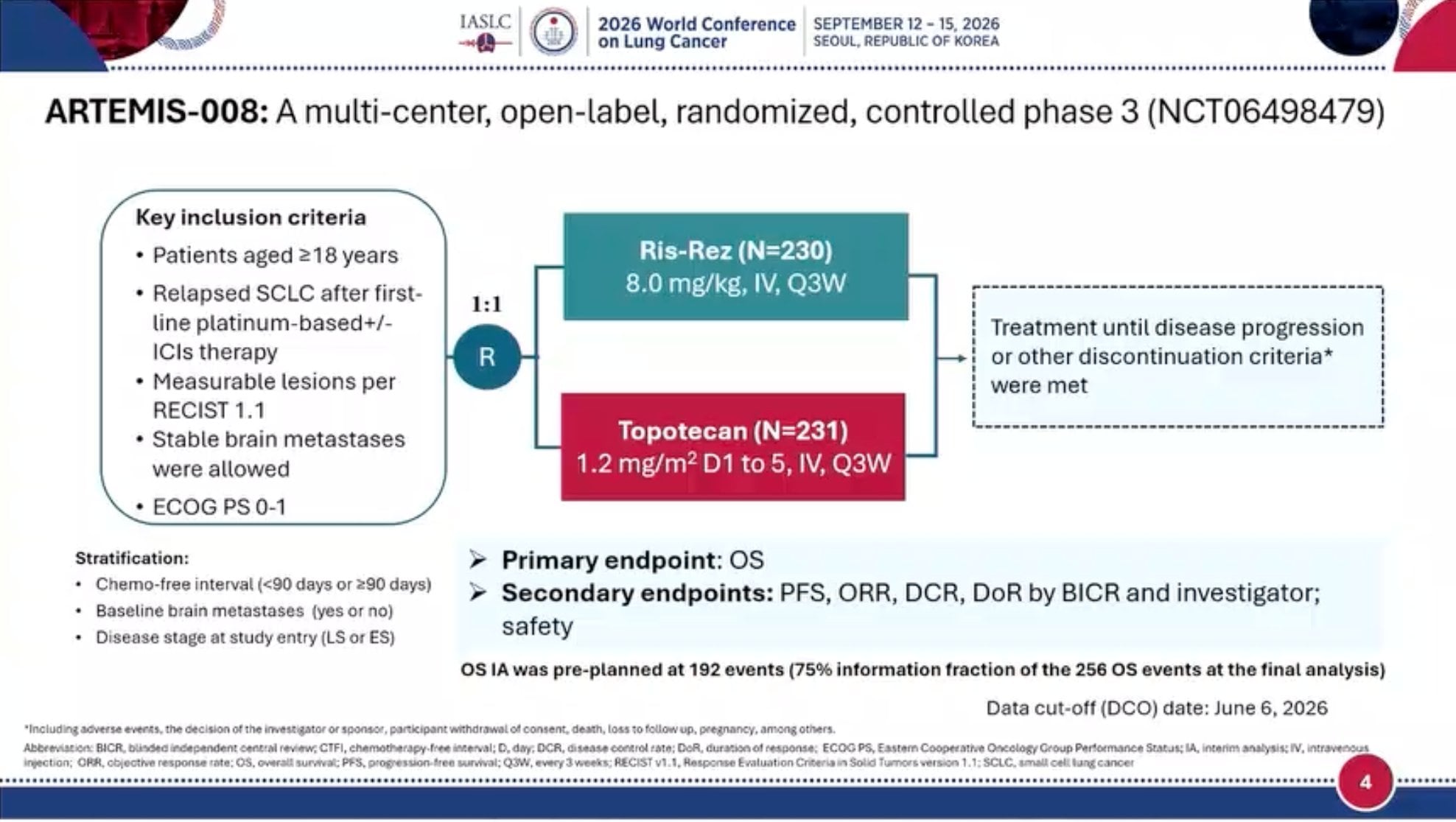
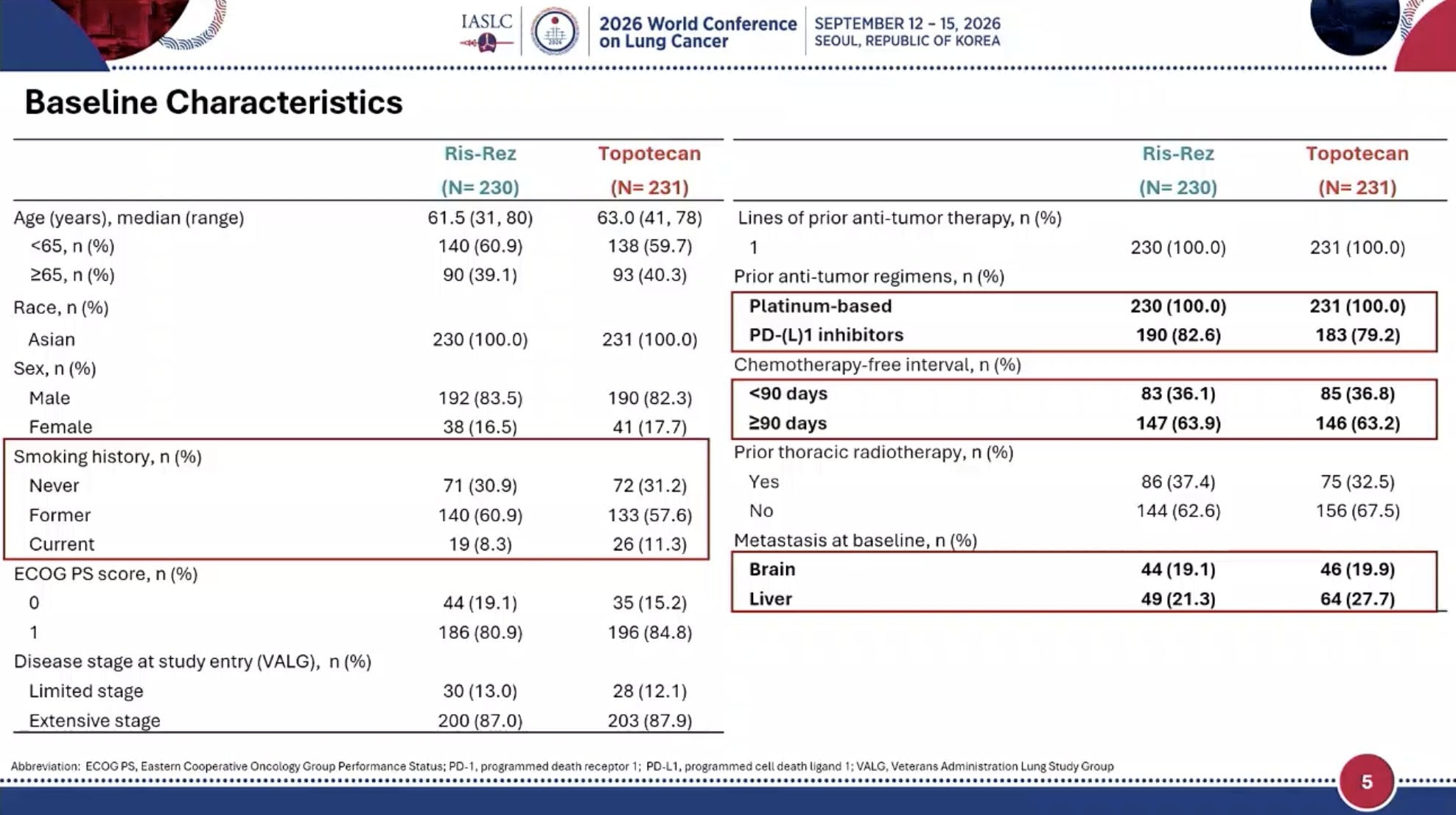
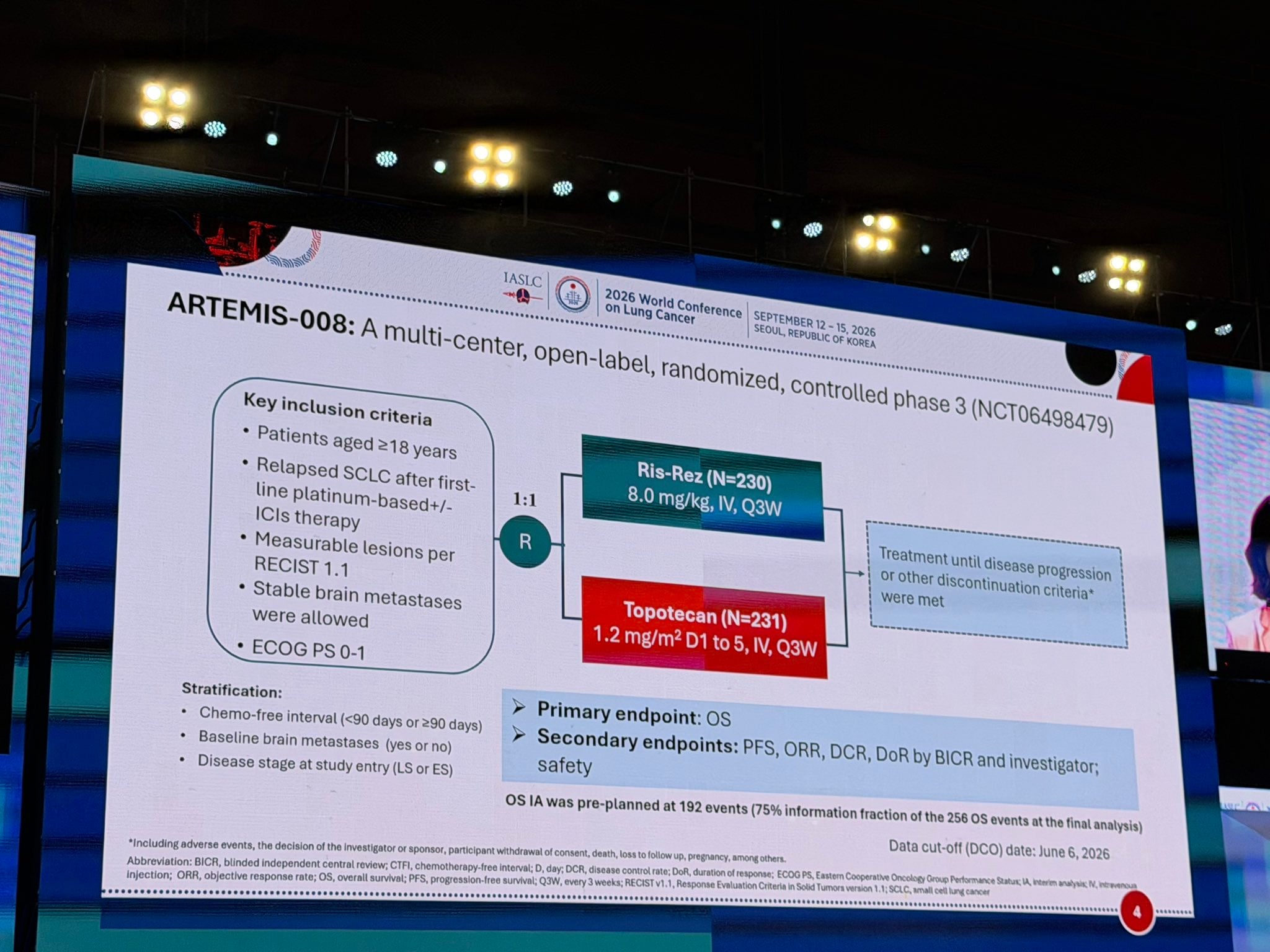
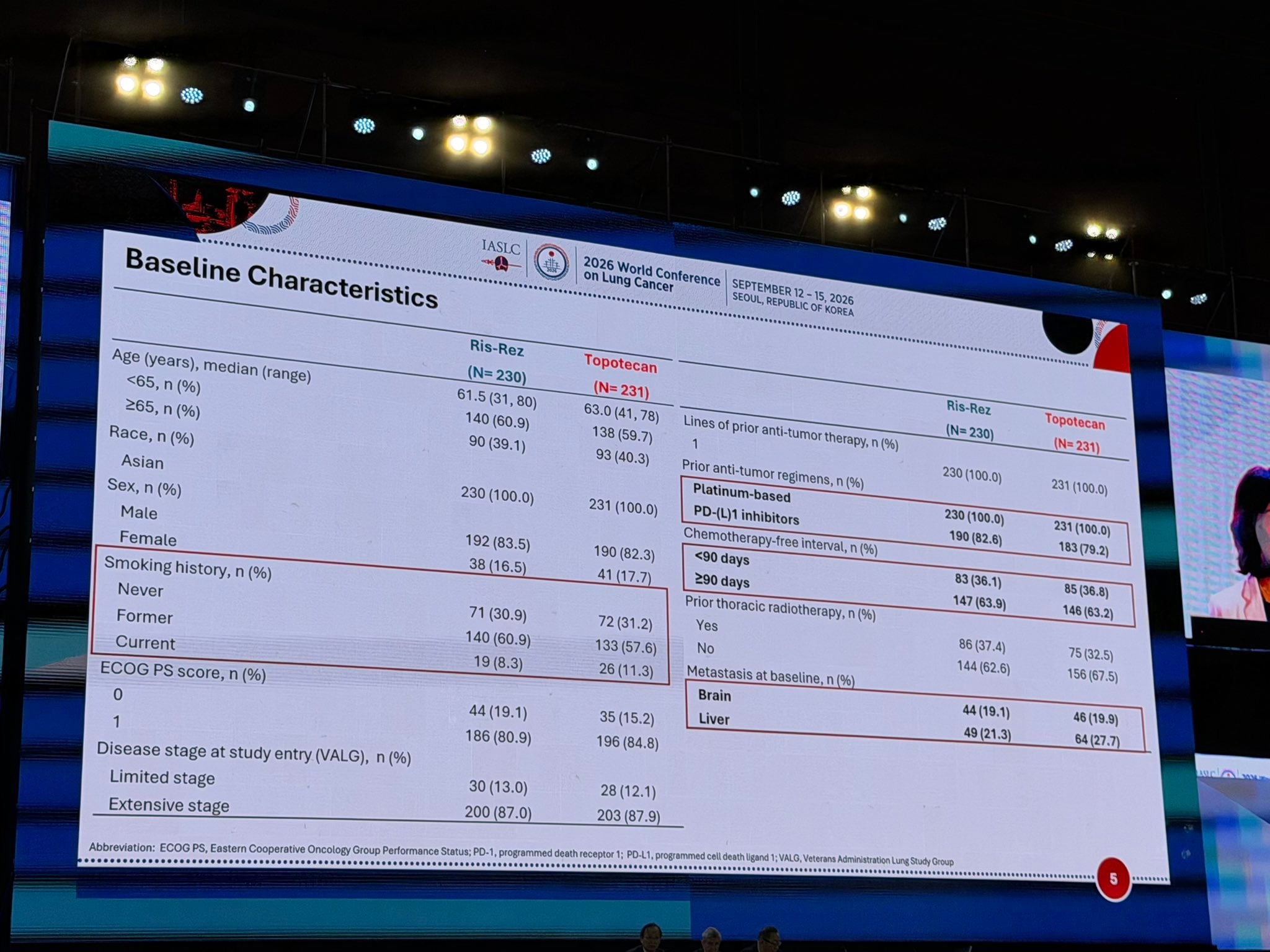
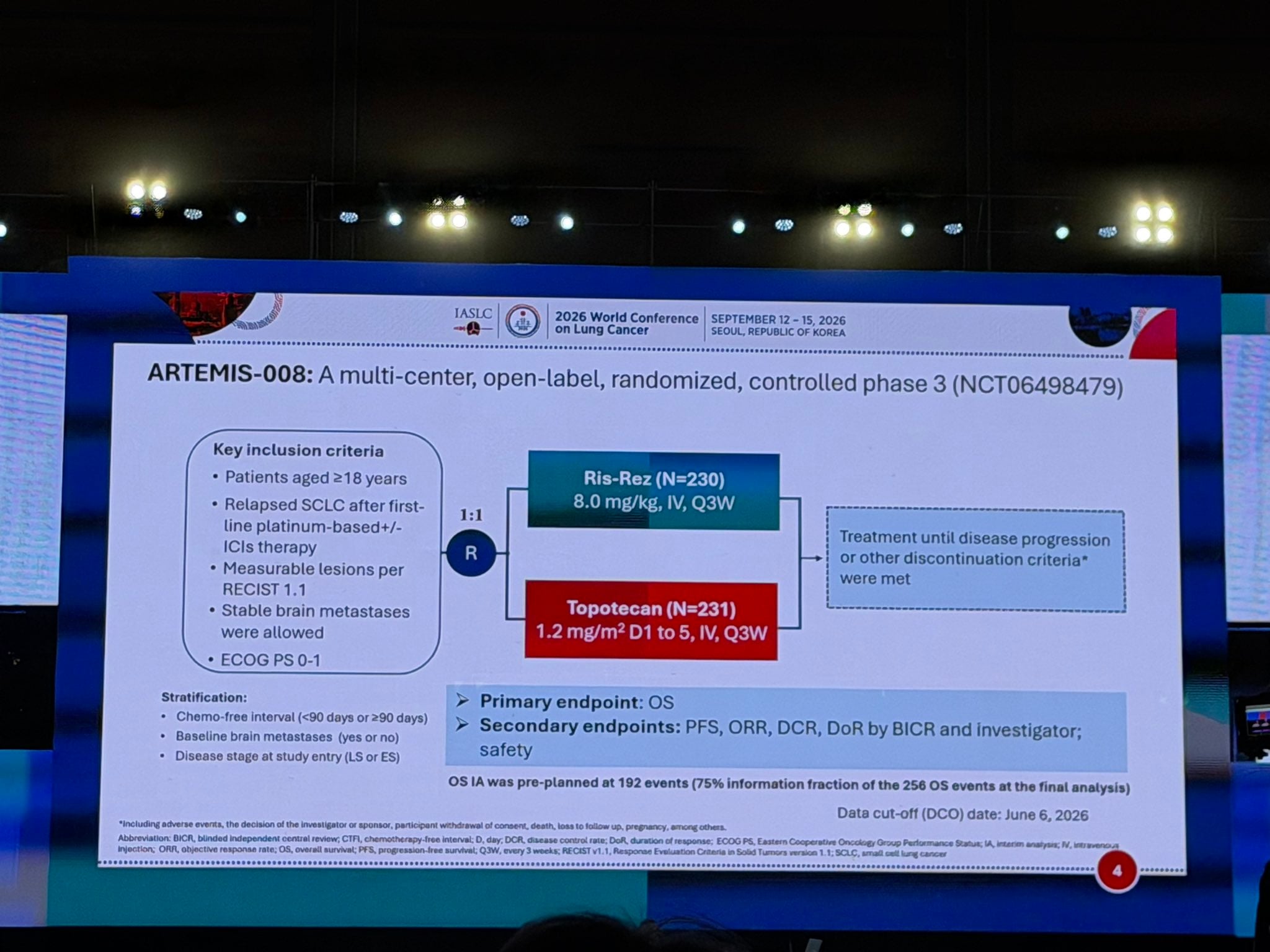
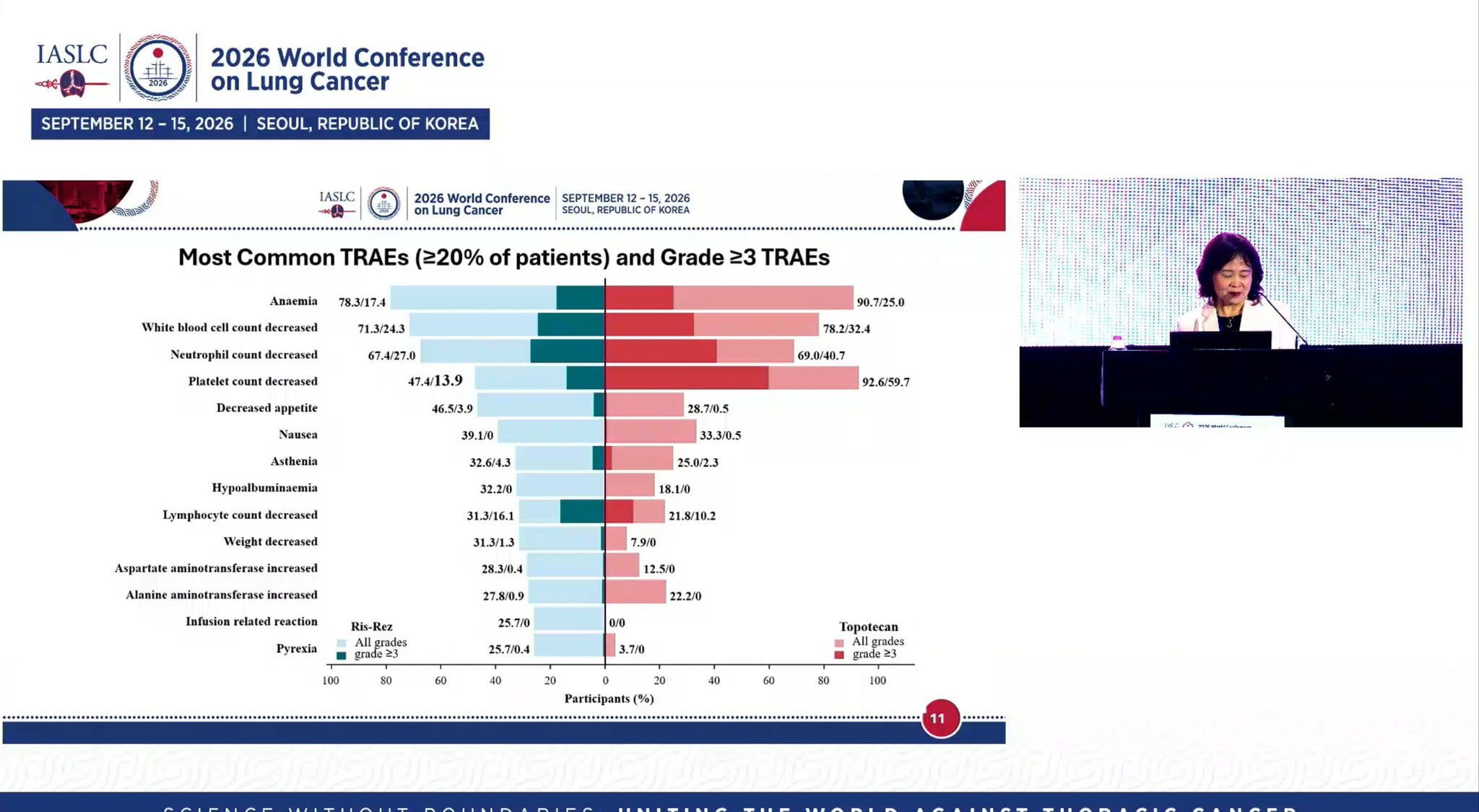
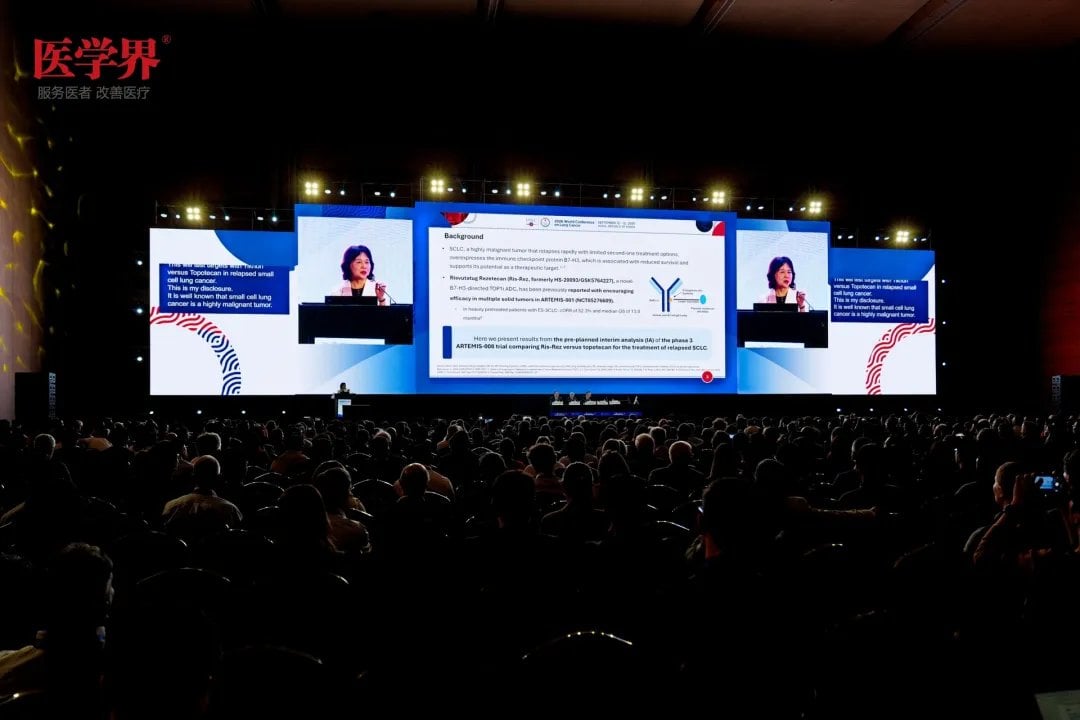
Two positive phase III ADC trials today at #WCLC26 ARTEMIS-008 and TAISHAN-302— and this may be just the beginning. Look at the pipeline 👇 The ADC era has finally arrived in SCLC. Bye bye, topotecan! 🚀 https://t.co/fjXfmHC7KL

What a day for #SCLC!
Two positive phase III ADC trials today at #WCLC26 ARTEMIS
6.9K impressions44 likes18 reposts2026-09-13
[Slide 1] PHASE 3, HEAD-TO-HEAD VS TOPOTECAN B7-H3 I-DXd IDeate-Lung02 (NCT06203210) HS-20093 ARTEMIS-008 (NCT06498479) GSK5764227 EMBOLD SCLC-301 (NCT07099898) MHB088C MHB088C-P-301 (NCT06954246) YL201 TAISHAN-302 (NCT06612151) TROP2 SG EVOKE-SCLC-04 (NCT06801834) EGFR X HER3 BL-B01D1 PANKU-Lung03 (NCT06500026) DLL3 ZL-1310 DLLEVATE (NCT07218146) SEZ6 ABBV-706 M23-384 (NCT07365241)
ADCs254.7K impressions · top posts of the conference
PProf Tom John@TommyJohn00

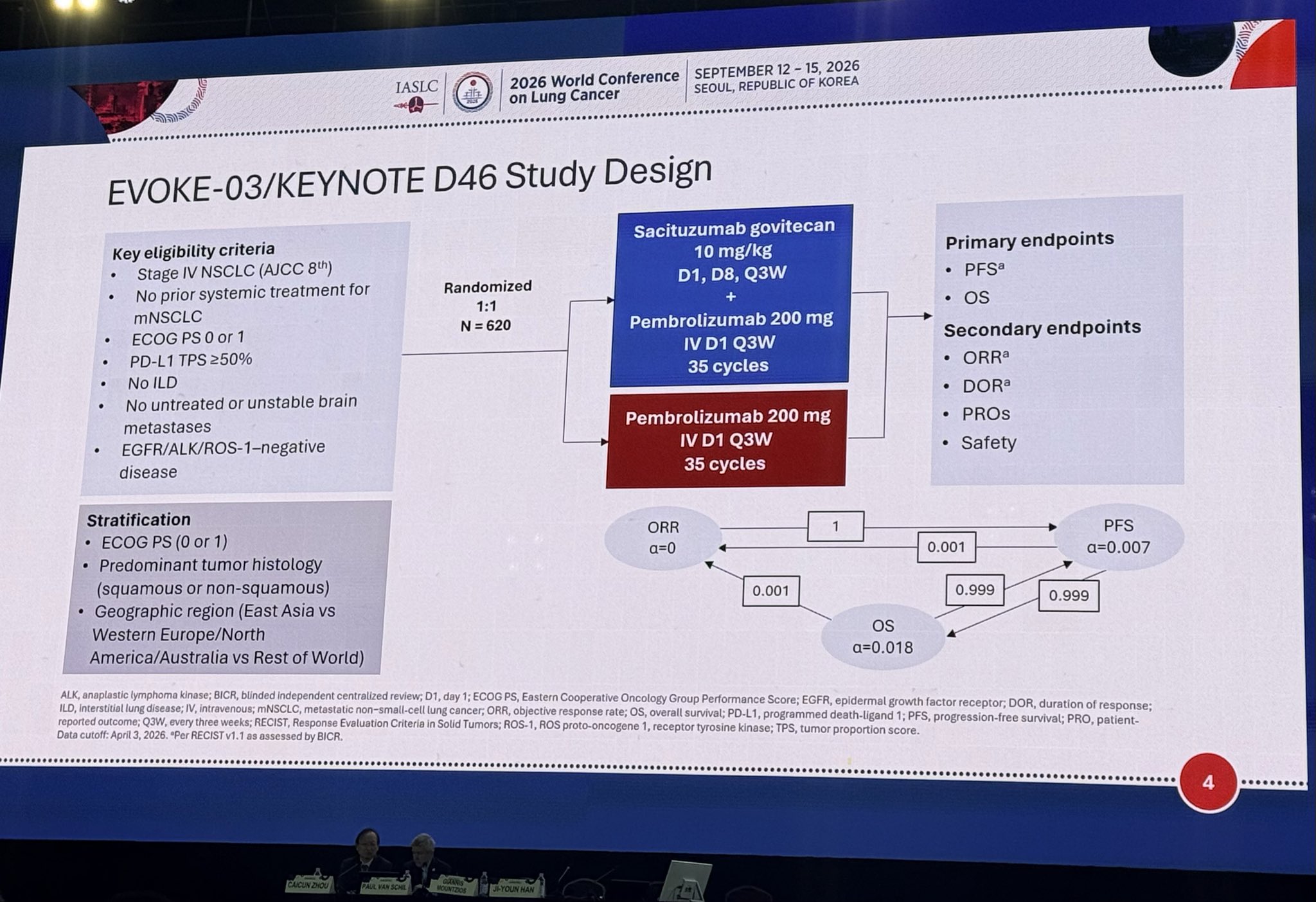
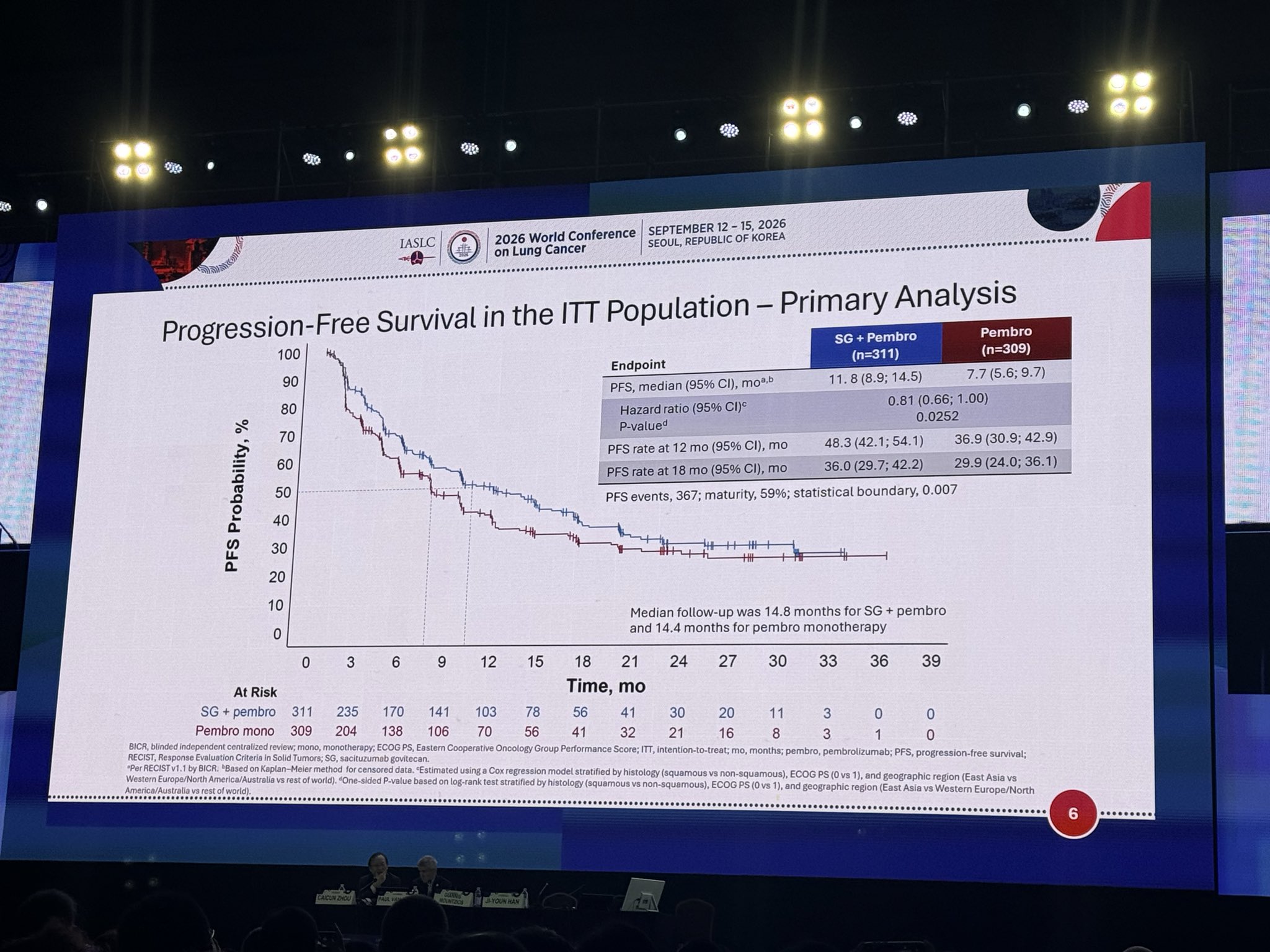
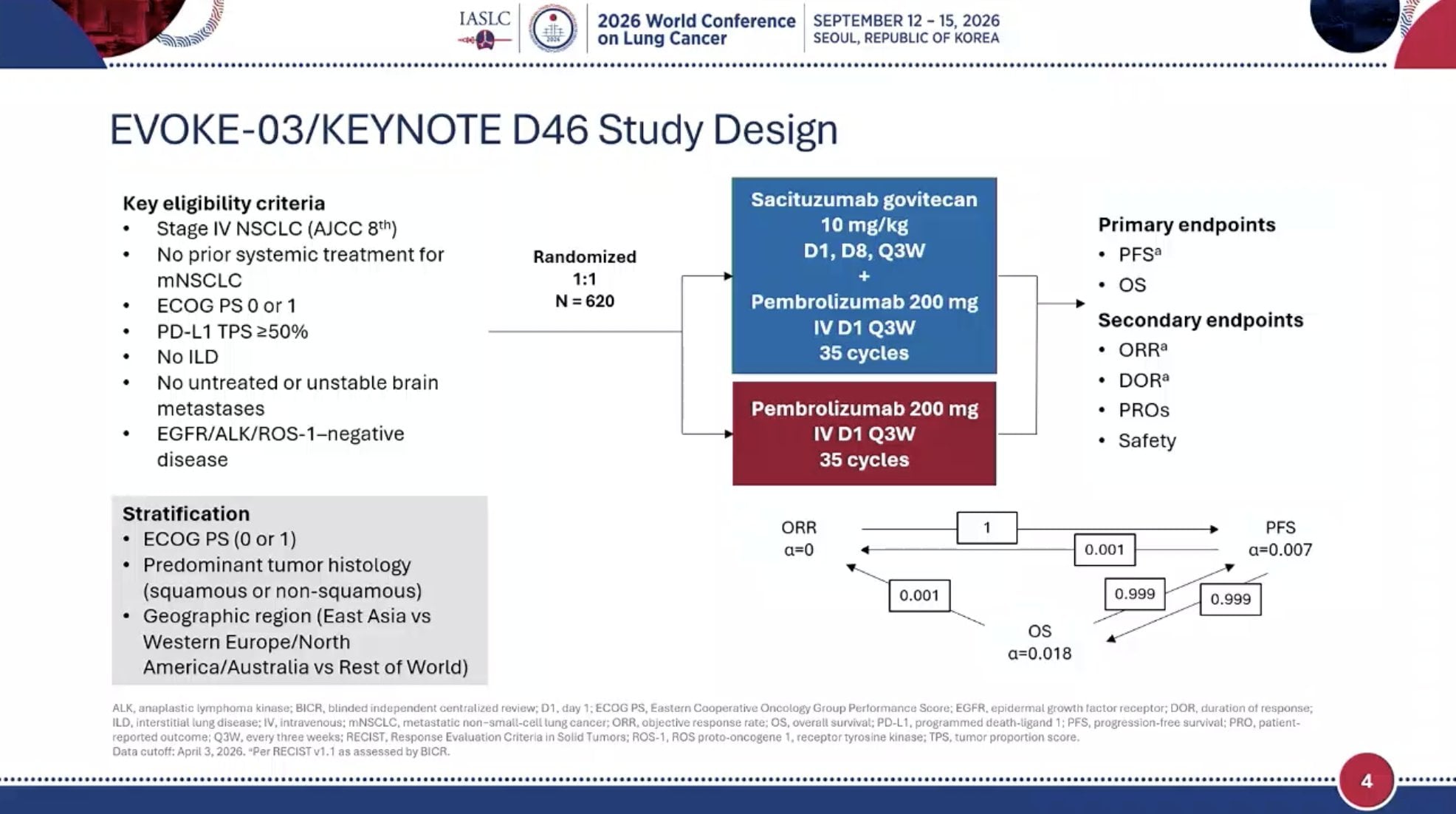
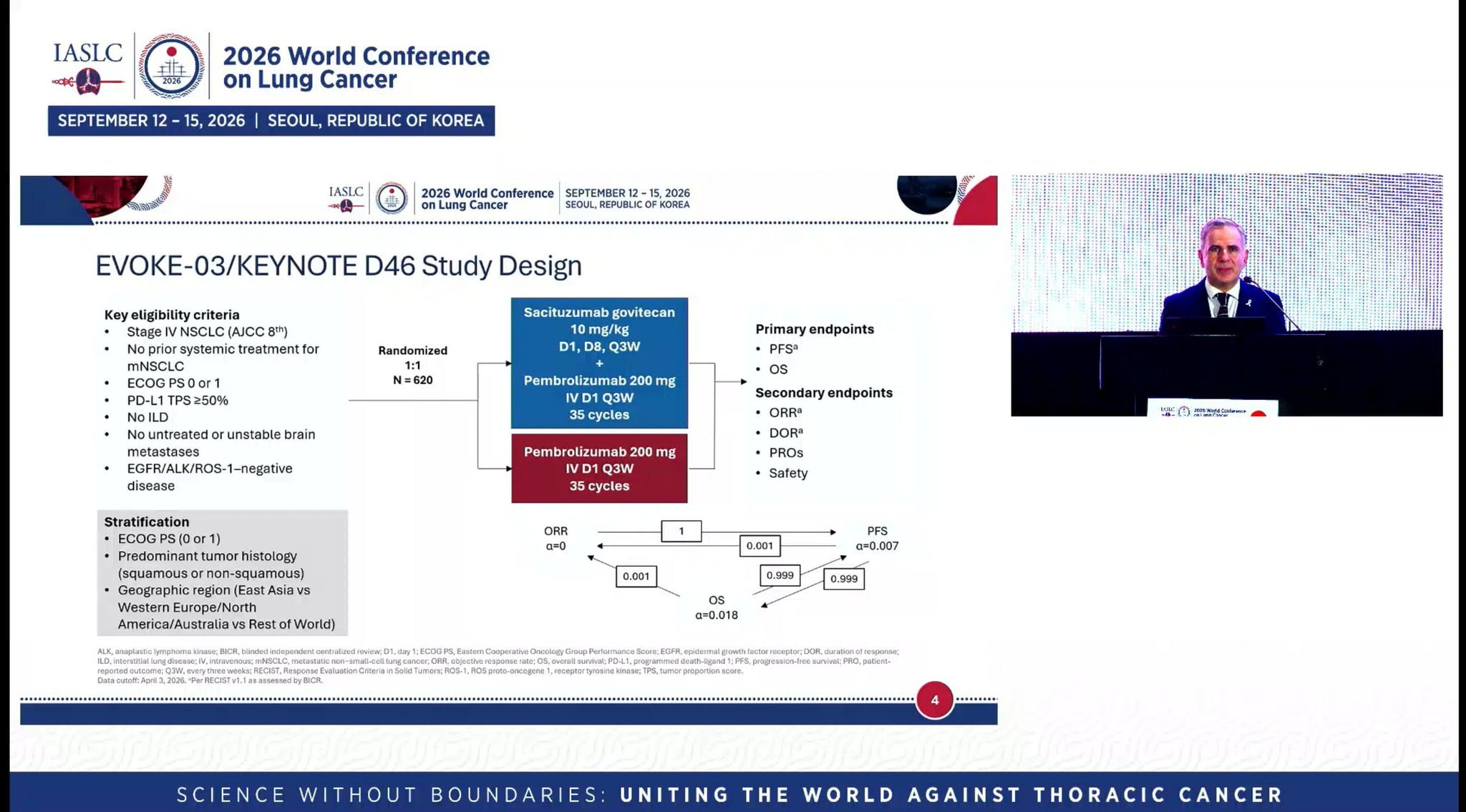
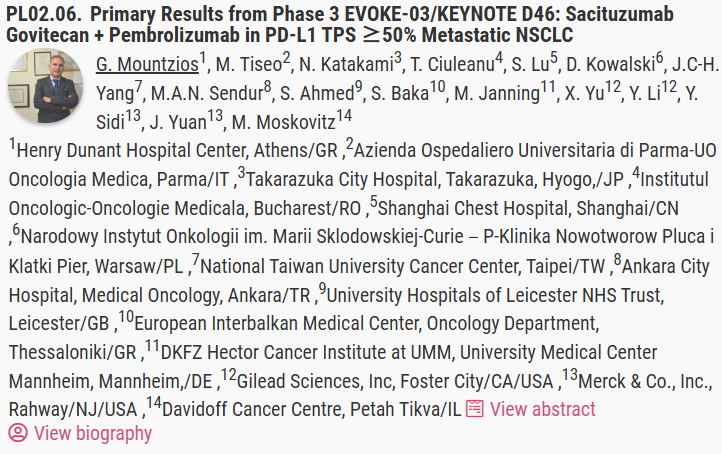
@g_mountzios presenting EVOKE-03. A negative study with another ADC+Pembro as first line treatment. More tox with ADC. The most interesting slide for me is the result based on region. Asian patients do better. Will this be the same for other studies too? #WCLC26 #LCSM https://t.co/wNtaXlRTBB

@g_mountzios presenting EVOKE-03. A negative study with another ADC+Pembro as fi@g_mountzios presenting EVOKE-03. A negative study with another ADC+Pembro as fi@g_mountzios presenting EVOKE-03. A negative study with another ADC+Pembro as fi@g_mountzios presenting EVOKE-03. A negative study with another ADC+Pembro as fi
13.4K impressions14 likes8 reposts2026-09-13
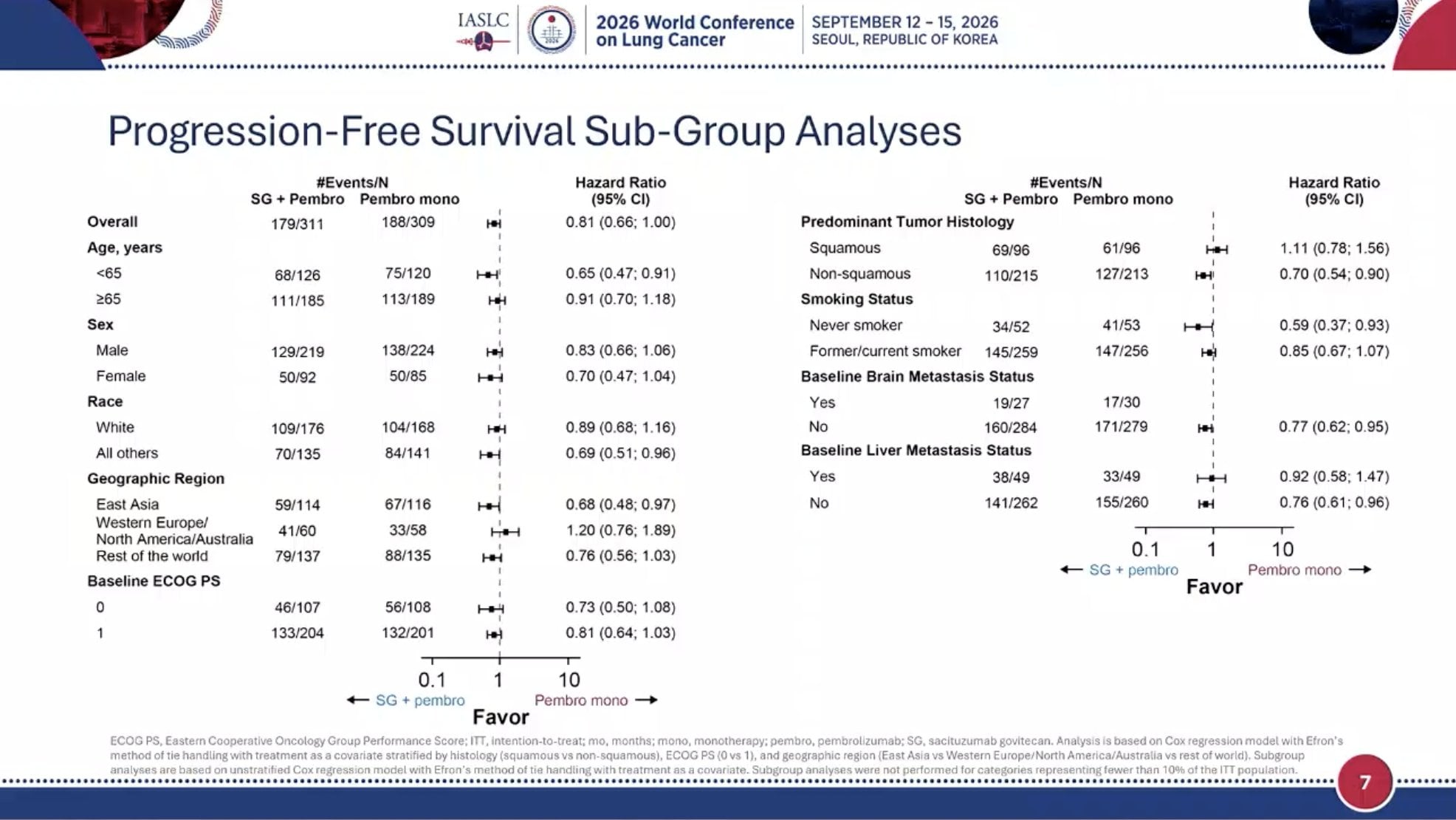
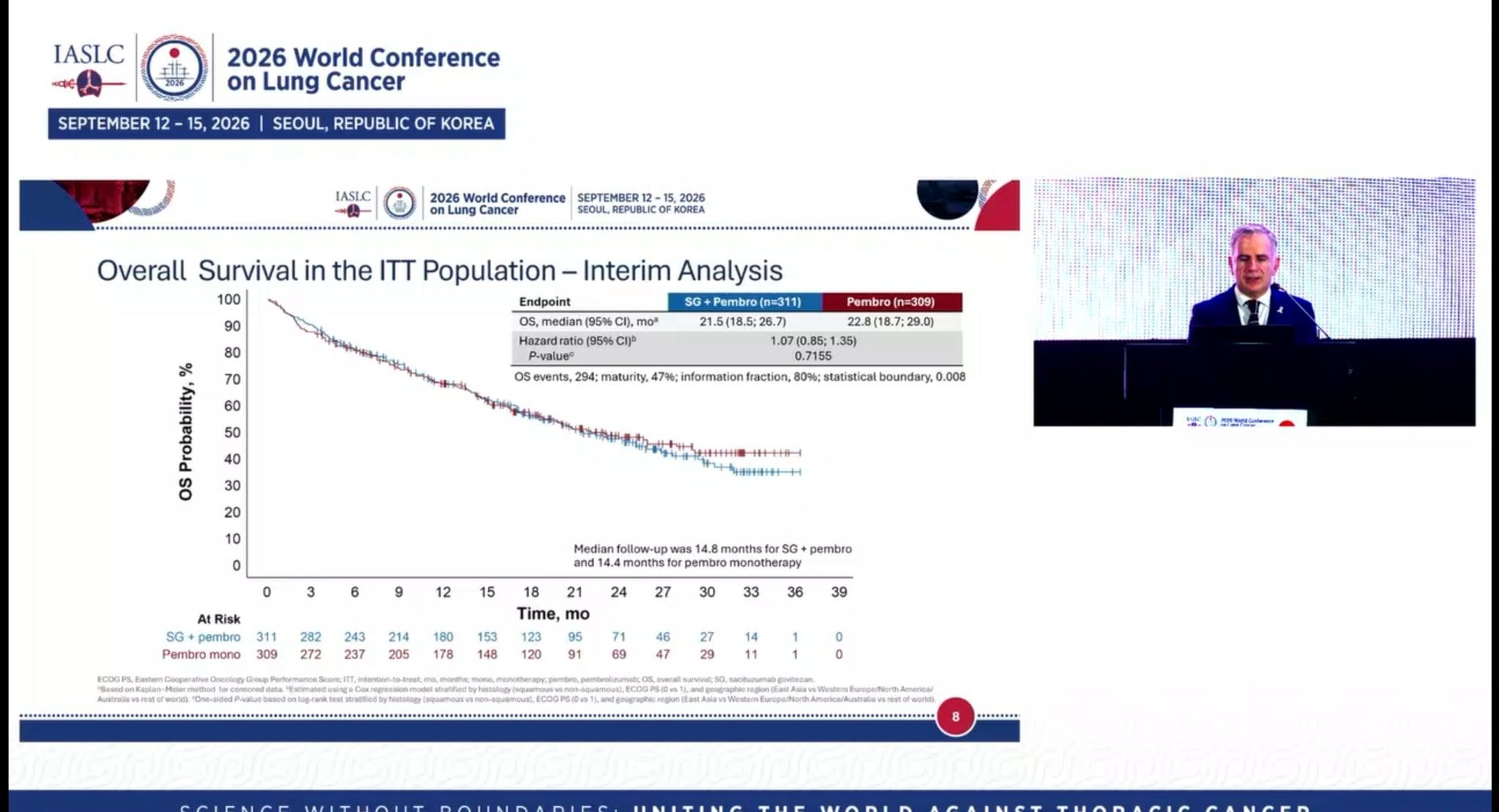
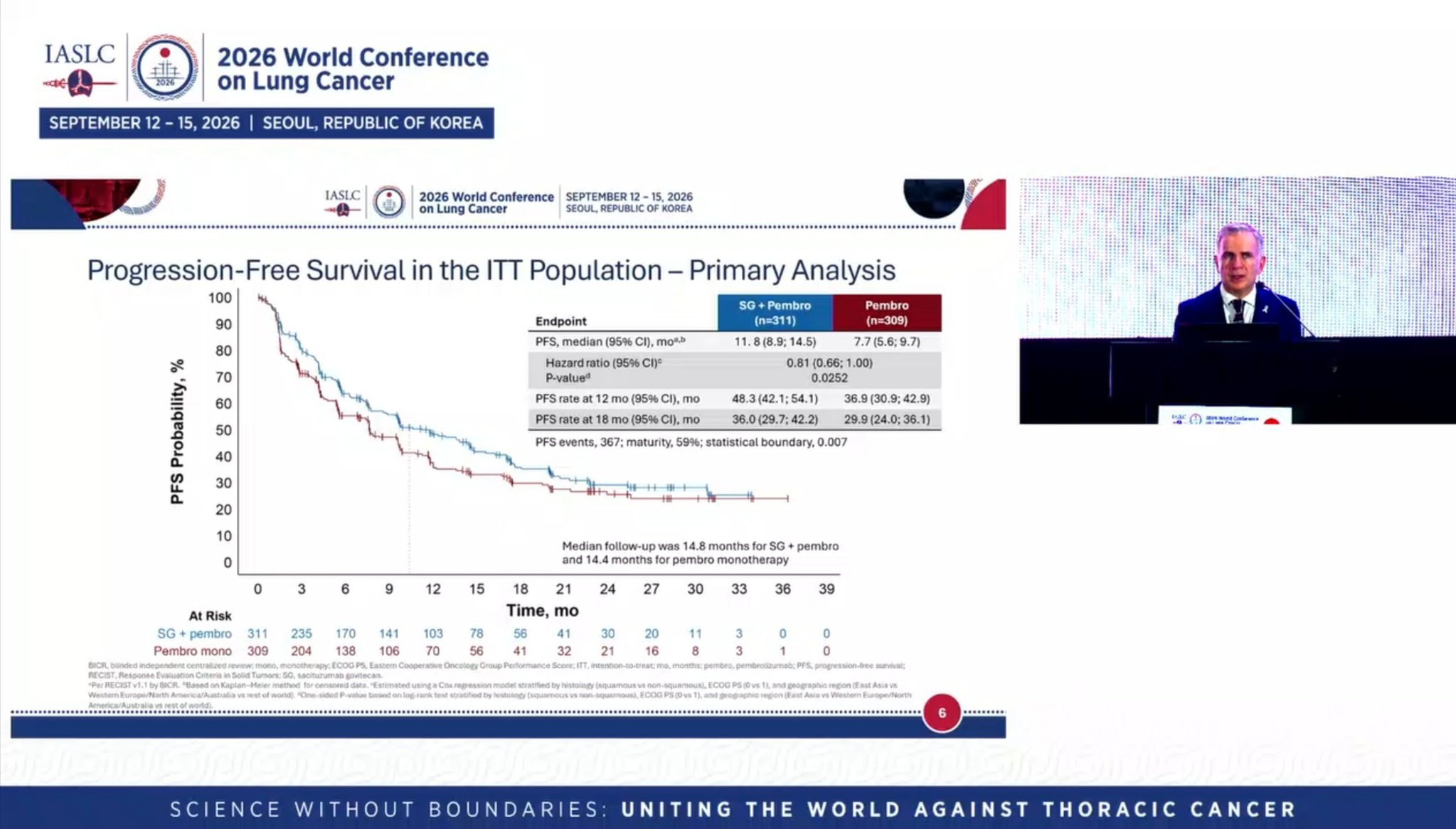
[Slide 1] and IASLC 2026 World Conference SEPTEMBER 12 - 15, 2026 E on Lung Cancer SEOUL, REPUBLIC OF KOREA EVOKE-03/KEYNOTE D46 Study Design Key eligibility criteria Sacituzumab govitecan Stage IV NSCLC (AJCC 8th) 10 mg/kg Primary endpoints No prior systemic treatment for Randomized D1, D8, Q3W PFSᵃ mNSCLC 1:1 + OS ECOG PS 0 or 1 N = 620 Pembrolizumab 200 mg PD-L1 TPS ≥50% IV D1 Q3W Secondary endpoints No ILD 35 cycles ORRᵃ No untreated or unstable brain DORᵃ metastases Pembrolizumab 200 mg PROs EGFR/ALK/ROS-1-negative IV D1 Q3W Safety disease 35 cycles Stratification ORR 1 PFS ECOG PS (0 or 1) a=0 0.001 a=0.007 Predominant tumor histology (squamous or non-squamous) 0.001 0.999 0.999 Geographic region (East Asia VS OS Western Europe/North a=0.018 America/Australia VS Rest of World) ALK, anaplastic lymphoma kinase; BICR, blinded independent centralized review; D1, day 1; ECOG PS, Eastern Cooperative Oncology Group Performance Score; EGFR, epidermal growth factor receptor; DOR, duration of response; ILD, interstitial lung disease; IV, intravenous; mNSCLC, metastatic non-small-cell lung cancer; ORR, objective response rate; OS, overall survival; PD-L1, programmed death-ligand 1; PFS, progression-free survival; PRO, patient- reported outcome; Q3W, every three weeks; RECIST, Response Evaluation Criteria in Solid Tumors; ROS-1, ROS proto-oncogene 1, receptor tyrosine kinase; TPS, tumor proportion score. Data cutoff: April 3, 2026. *Per RECIST v1.1 as assessed by BICR. 4 [Slide 2] IASLC 2026 World Conference SEPTEMBER 12 - 15, 2026 on Lung Cancer SEOUL, REPUBLIC OF KOREA Progression-Free Survival in the ITT Population - Primary Analysis 100 SG + Pembro Pembro 90 Endpoint (n=311) (n=309) 80 PFS, median (95% CI), moa,b 11. 8 (8.9; 14.5) 7.7 (5.6; 9.7) Hazard ratio (95% CI)c 0.81 (0.66; 1.00) 70 P-valued 0.0252 PFS Probability, % 60 PFS rate at 12 mo (95% CI), mo 48.3 (42.1; 54.1) 36.9 (30.9; 42.9) PFS rate at 18 mo (95% CI), mo 36.0 (29.7; 42.2) 50 29.9 (24.0; 36.1) PFS events, 367; maturity, 59%; statistical boundary, 0.007 40 30 20 10 Median follow-up was 14.8 months for SG + pembro 0 and 14.4 months for pembro monotherapy 0 3 6 9 12 15 18 21 24 27 30 33 36 39 At Risk Time, mo SG + pembro 311 235 170 141 103 78 56 41 30 20 11 3 0 0 Pembro mono 309 204 138 106 70 56 41 32 21 16 8 3 1 0 BICR, blinded independent centralized review; mono, monotherapy; ECOG PS, Eastern Cooperative Oncology Group Performance Score; ITT, intention-to-treat; mo, months; pembro, pembrolizumab; PFS, progression-free survival; RECIST, Response Evaluation Criteria in Solid Tumors; SG, sacituzumab govitecan. "Per RECIST v1.1 by BICR. Based on Kaplan-Meier method for censored data. Estimated using a Cox regression model stratified by histology (squamous VS non-squamous), ECOG PS (0 VS 1), and geographic region (East Asia VS Western Europe/North America/Australia VS rest of world). "One-sided P-value based on log-rank test stratified by histology (squamous vs non-squamous), ECOG PS (0 VS 1), and geographic region (East Asia VS Western Europe/North America/Australia vs rest of world). 6 [Slide 3] and IASLC 2026 World Conference SEPTEMBER 12 - 15, 2026 on Lung Cancer SEOUL, REPUBLIC OF KOREA OS in East Asia and China Subgroups (ITT Population; Exploratory) East Asiaᵃ China (Post-hoc)b 100 100 90 90 80 80 70 70 OS Probability, % 60 os Probability, % 60 50 50 40 40 30 30 SG + Pembro (n=114) Pembro (n=116) SG + Pembro (n=52) Pembro (n=55) 20 20 OS, median (95% CI), moᶜ NR (24.3; NE) 27.9 (16.7; NE) OS, median (95% CI), moc NR (24.2; NE) 27.9 (15.8; NE) 10 10 Hazard ratio (95% CI) 0.73 (0.48; 1.10) Hazard ratio (95% CI)ᵈ 0.65 (0.36; 1.16) 0 0 0 3 6 9 12 15 18 21 24 27 30 33 36 0 3 6 9 12 15 18 21 24 27 30 33 36 At Risk Time, mo At Risk Time, mo SG + pembro 114 (0) 108 (6) 96 (15) 88 (18) 79 (24) 72 (27) 64 (30) 52 (35) 37 (37) 23 (41) 12 (41) 7 (41) 0 (41) SG + pembro 52 (0) 50 (2) 49 (3) 48 (4) 45 (8) 42 (10) 39 (12) 35 (15) 24 (17) 18 (19) 11 (19) 7 (19) 0 (19) Pembro mono 116 (0) 102 (14) 90 (21) 81 (26) 71 (33) 63 (39) 51 (46) 41 (46) 33 (49) 22 (50) 12 (51) 2 (51) 0 (51) Pembro mono 55 (0) 50 (5) 48 (7) 45 (10) 43 (12) 38 (17) 31 (22) 28 (22) 21 (25) 17 (26) 9 (27) 2 (27) 0 (27) Median follow-up was 18.1 months for the East Asia cohort and 22.4 months for the China cohort ITT, intention-to-treat; mono, monotherapy; NE, not evaluable; NR, not reached; pembro, pembrolizumab; SG, sacituzumab govitecan. "This analysis was not stratified. "This post-hoc analysis was not stratified or pre-specified. "Based on Kaplan-Meier method for censored data. "Estimated using a Cox regression model. o [Slide 4] 2020 and IASLC 2026 World Conference SEPTEMBER 12 - - 15, 2026 on Lung Cancer SEOUL, REPUBLIC OF KOREA Overall Survival in the ITT Population - Interim Analysis 100 Endpoint SG + Pembro (n=311) Pembro (n=309) OS, median (95% CI), moᵃ 21.5 (18.5; 26.7) 22.8 (18.7; 29.0) 90 Hazard ratio (95% CI)ᵇ 1.07 (0.85; 1.35) 80 P-valueᶜ 0.7155 OS events, 294; maturity, 47%; information fraction, 80%; statistical boundary, 0.008 70 os Probability, % 60 50 40 30 20 10 Median follow-up was 14.8 months for SG + pembro 0 and 14.4 months for pembro monotherapy 0 3 6 9 12 15 18 21 24 27 30 33 36 39 At Risk Time, mo SG + pembro 311 282 243 214 180 153 123 95 71 46 27 14 1 0 Pembro mono 309 272 237 205 178 148 120 91 69 47 29 11 1 0 ECOG PS, Eastern Cooperative Oncology Group Performance Score; ITT, intention-to-treat; mo, months; mono, monotherapy; pembro, pembrolizumab; OS, overall survival; SG, sacituzumab govitecan. "Based on Kaplan-Meier method for censored data. Estimated using a Cox regression model stratified by histology (squamous vs non-squamous), ECOG PS (0 VS 1), and geographic region (East Asia VS Western Europe/North America/ Australia VS rest of world). "One-sided P-value based on log-rank test stratified by histology (squamous VS non-squamous), ECOG PS (0 VS 1), and geographic region (East Asia vs Western Europe/North America/Australia vs rest of world). 8
SStephen V Liu, MD@StephenVLiu

We now have TWO studies showing B7-H3 ADCs vastly superior to standard topotecan for relapsed SCLC: tam-peli and ris-rez. These studies were different - different agents, different baseline demographics of pts, etc - but the outcomes were similar, control arms performed similarly. These trials reinforce each other. Looking forward to global studies and to first-line studies. The ADC era soundly he

We now have TWO studies showing B7-H3 ADCs vastly superior to standard topotecan
11K impressions5 likes0 reposts2026-09-13
[Slide 1] RR DCR PFS 6m PFS Rate OS ILD rate Tam-Peli 2mg/kg 59.1% 91.1% 7.4 VS 2.8m 58.1% 13.3 vs 9.4 4.9% VS topotecan VS 9.7% VS 50.9% PFS HR 0.29 VS 17.9% OS HR 0.46 TAISHAN-302 Zhang, WCLC 2026 Ris-rez, 8mg/kg q3w 58.3% 90.4% 7.2 VS 3.0m 59.9% 18.5m VS 10.3 11.7% VS topotecan VS 12.6% VS 60.2% PFS HR 0.33 vs 28.5% OS HR 0.46 ARTEMIS-008 Wang, WCLC 2026
BBalazs Halmos@BalazsHalmosMD

Slide of #WCLC26 so far from terrific discussant Anne Chiang.

Which bubble tea flavor to choose when it comes to the many tasty emerging ADC options for SCLC???

Hopefully note investment into science/biomarkers will help!
@Annechiangmd https://t.co/rVCSEnLxiC

Slide of #WCLC26 so far from terrific discussant Anne Chiang.

Which bubble tea Slide of #WCLC26 so far from terrific discussant Anne Chiang.

Which bubble tea
8.7K impressions4 likes1 reposts2026-09-13
[Slide 1] A IASLC 2026 World Conference SEPTEMBER 12 - 15, 2026 on Lung Cancer SEOUL, REPUBLIC OF KOREA ADCs: How Will We Choose? [Slide 2] IASLC 2026 World Conference SEPTEMBER 12 - 15, 2026 NW# on Lung Cancer SEOUL, REPUBLIC OF KOREA SCLC ADC Agents ABBV-711 YL201 I-DXd SHR-A1921 ZL-1310 DNA- damaging agent ABBV-706 HS-20093 Saci-G Rova-T Topo- isomerase I inhibitor SEZ-6 B7-H3 Trop2 DLL3 SEZ-6 B7-H3 Trop2 DLL3 ABBV- ABBV- YL201 I-DXd HS-20093 SHR- Saci-G Rova-T ZL-1310 711 706 (TamPeli) (Ris-Rez) A1921 Antibody SC17 SC17 Proprietary Ifinatamab Proprietary Proprietary Sacituzumab Rovalpituzumab Zocilurtatug Payload Calicheamicin Top1 Top1 inhibitor Deruxtecan TOP1i SHR9265 Govitecan Tesirine (PBD) Pelitecan inhibitor (Camptothecin (TOP1i) (SN38) (TOP1i) derivative) DAR 2 6 8 4 4 4 7.6 2 8 Linker Noncleavable Proprietary Protease- Plasma Protease- Cleavable Hydrolysable Protease- Cleavable tri- cleavable* stable, cleavable cleavable peptide Protease- cleavable 14 Sethakorn N, Chiang AC. Cancer 2026
YYakup Ergün@dr_yakupergun

Highlighted Studies at #WCLC26

1️⃣ HARMONi-2
In treatment-naïve, advanced NSCLC with PD-L1 ≥1%, ivonescimab improved PFS (11.1 vs 5.8 months; HR 0.51) and OS (30.8 vs 22.6 months; HR 0.73) compared with pembrolizumab.
This is a genuinely positive trial, but it does not tell the same story for all PD-L1-positive patients. The OS benefit was clear in the ≥50% subgroup, whereas the HR was 0.85 with

Highlighted Studies at #WCLC26

1️⃣ HARMONi-2
In treatment-naïve, advanced NSCLC
8.6K impressions24 likes8 reposts2026-09-13
[Slide 1] IASLC SEOUL 2026 WCLC26: KEY STUDIES Early results key data at a glance HARMONi-2 1 1L PD-L1 >1% advanced NSCLC Clearly positive. Strongest signal in PD-L1 >50%. PFS 11.1 vs 5.8 mo HR 0.51 In 1-49%, the control arm does os 30.8 vs 22.6 mo HR 0.73 not fully reflect current practice. 2 SWOG S1827 / MAVERICK Post-treatment SCLC MRI surveillance vs MRI + PCI With reliable MRI access, routine PCI is now hard to justify. Cognitive failure / death HR 0.60 Final os is still needed before Grade ≥3 toxicity 0.8% vs 7.9% declaring PCI obsolete. Interim OS and brain metastasis-free survival: no difference TAISHAN-302 3 Relapsed SCLC B7-H3 ADC Tam-Peli vs topotecan Clear survival gain. A potential topotecan replacement; os 13.3 vs 9.4 mo HR 0.46 efficacy after tarlatamab PFS 7.4 vs 2.8 mo ORR 59% vs 10% maintenance remains unknown. ARTEMIS-008 4 Relapsed SCLC . B7-H3 ADC Ris-Rez VS topotecan Confirms B7-H3 as a target. No cross-trial comparison with os 18.5 vs 10.3 mo HR 0.46 TAISHAN; ILD and hematologic PFS 7.2 vs 3.0 mo ORR 58% vs 13% toxicity may drive selection. 5 EVOKE-03 / KEYNOTE-D46 PD-L1 >50% metastatic NSCLC SG+pembro VS pembro More tumor shrinkage, ORR 56% vs 44% similar response duration, os 21.5 vs 22.8 mo no OS gain: Grade ≥3 toxicity 56% vs 17% no role in clinical practice. Primary PFS threshold not met 13 SEPTEMBER 2026 INTERIM CONGRESS SNAPSHOT @dr_yakupergun
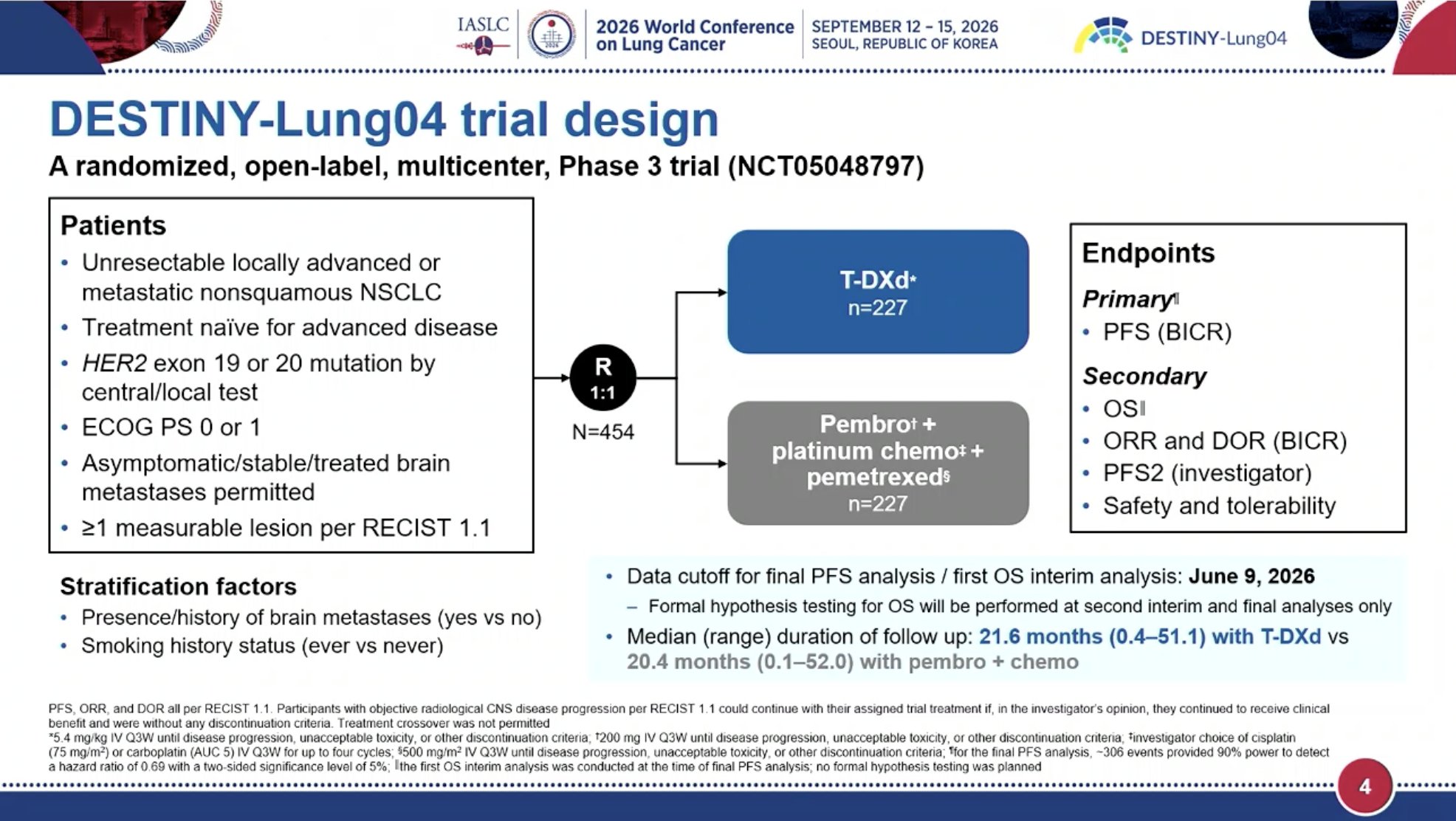
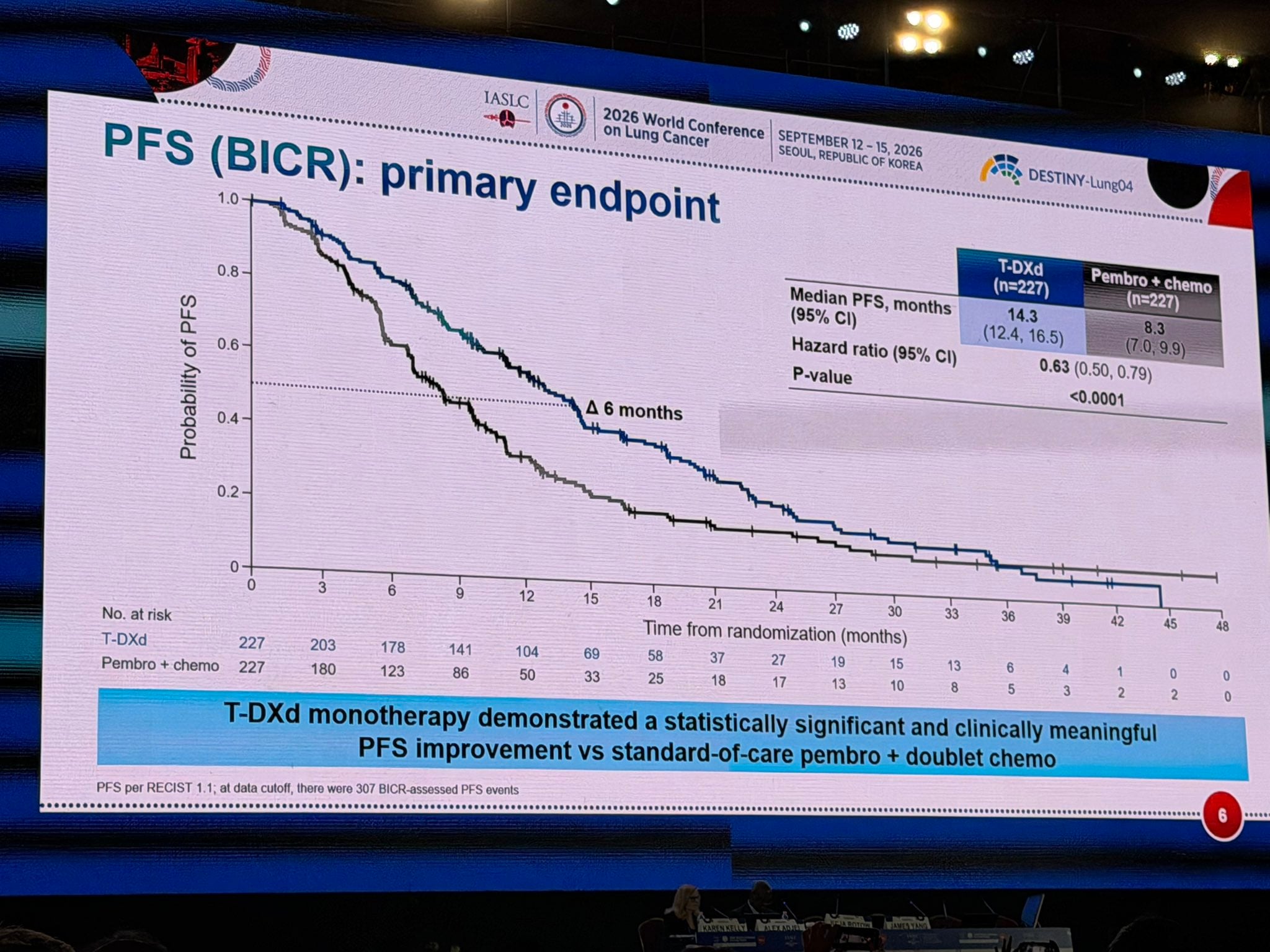
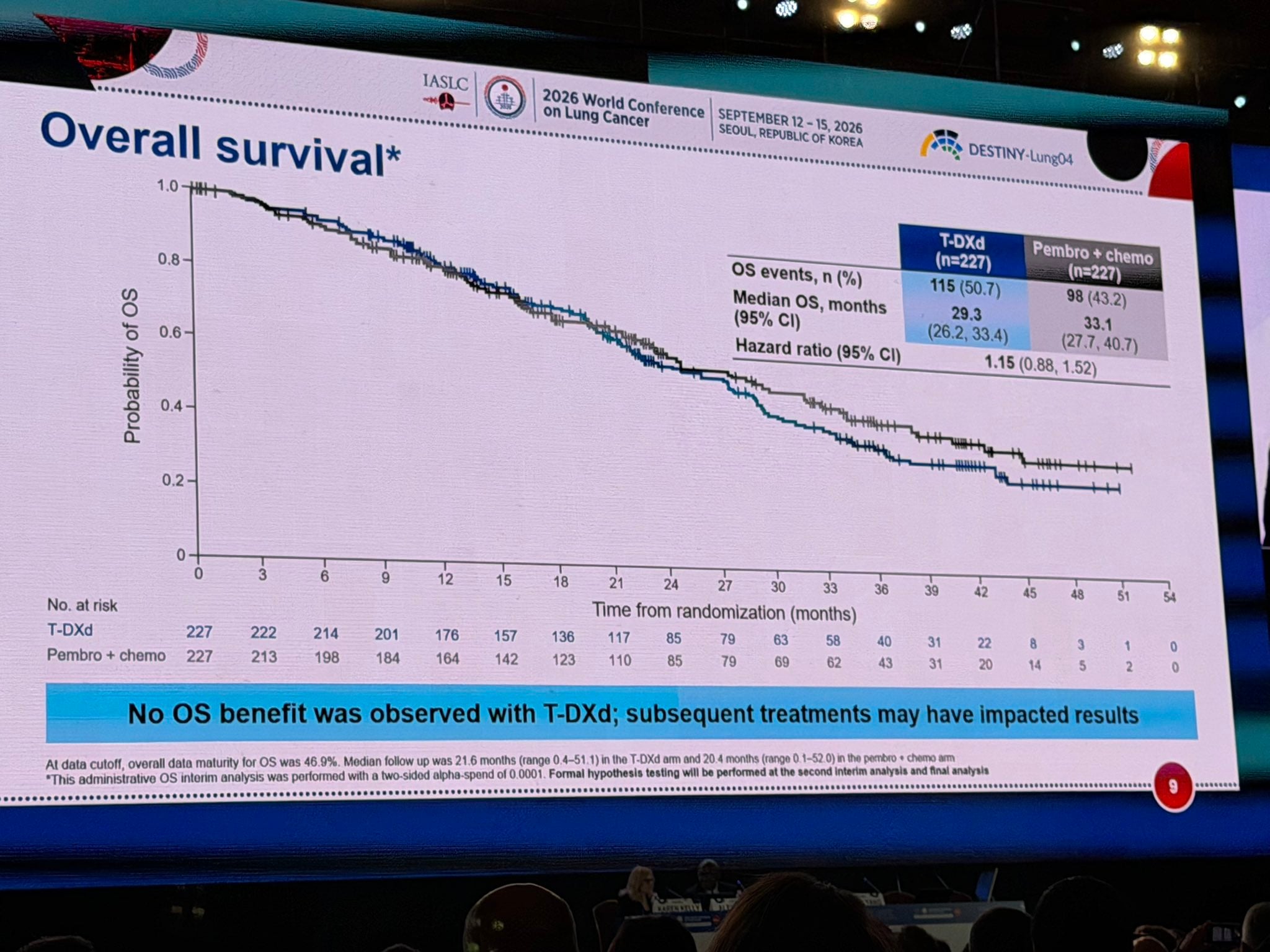
EEric K. Singhi, MD@lungoncdoc

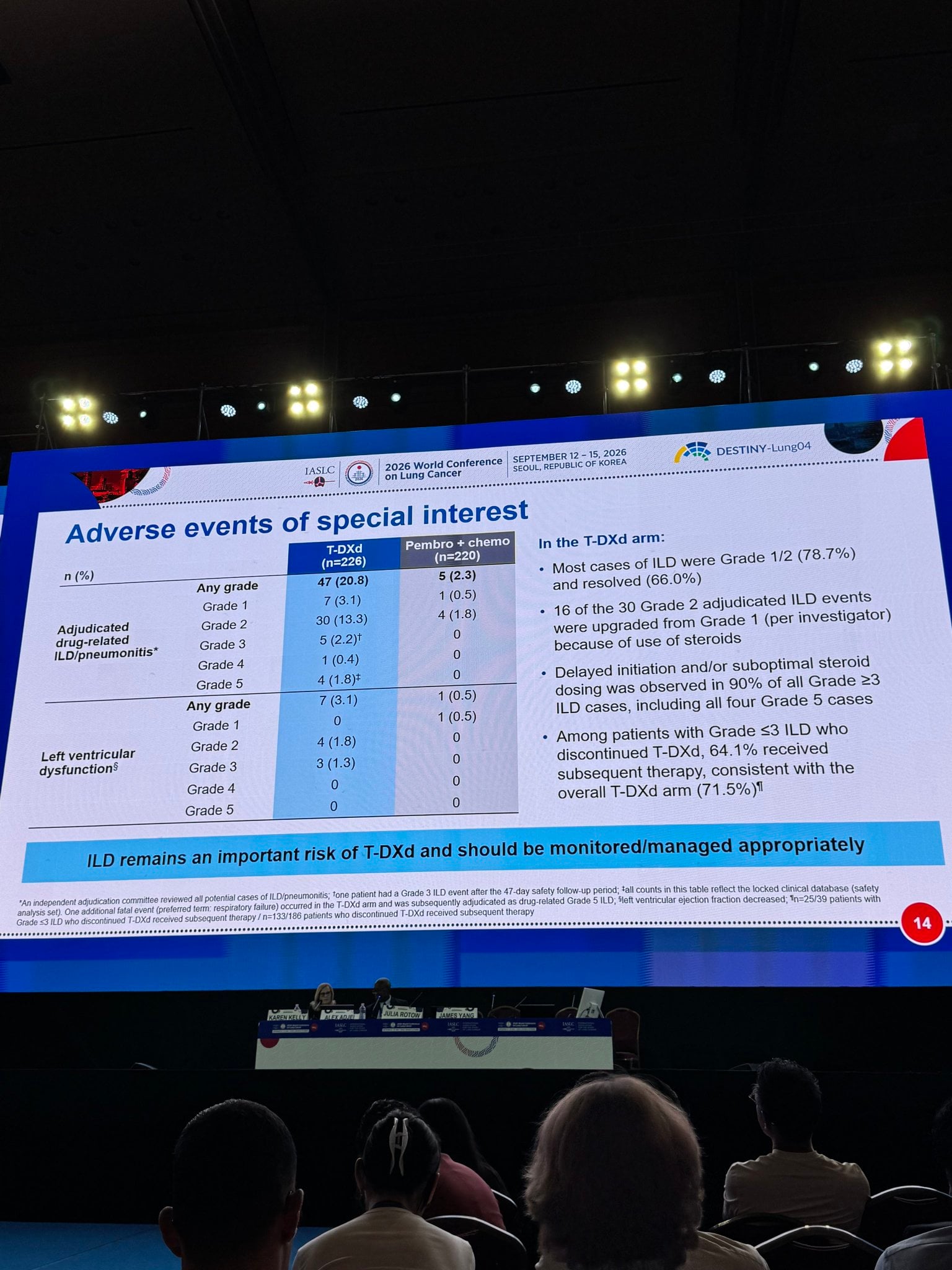
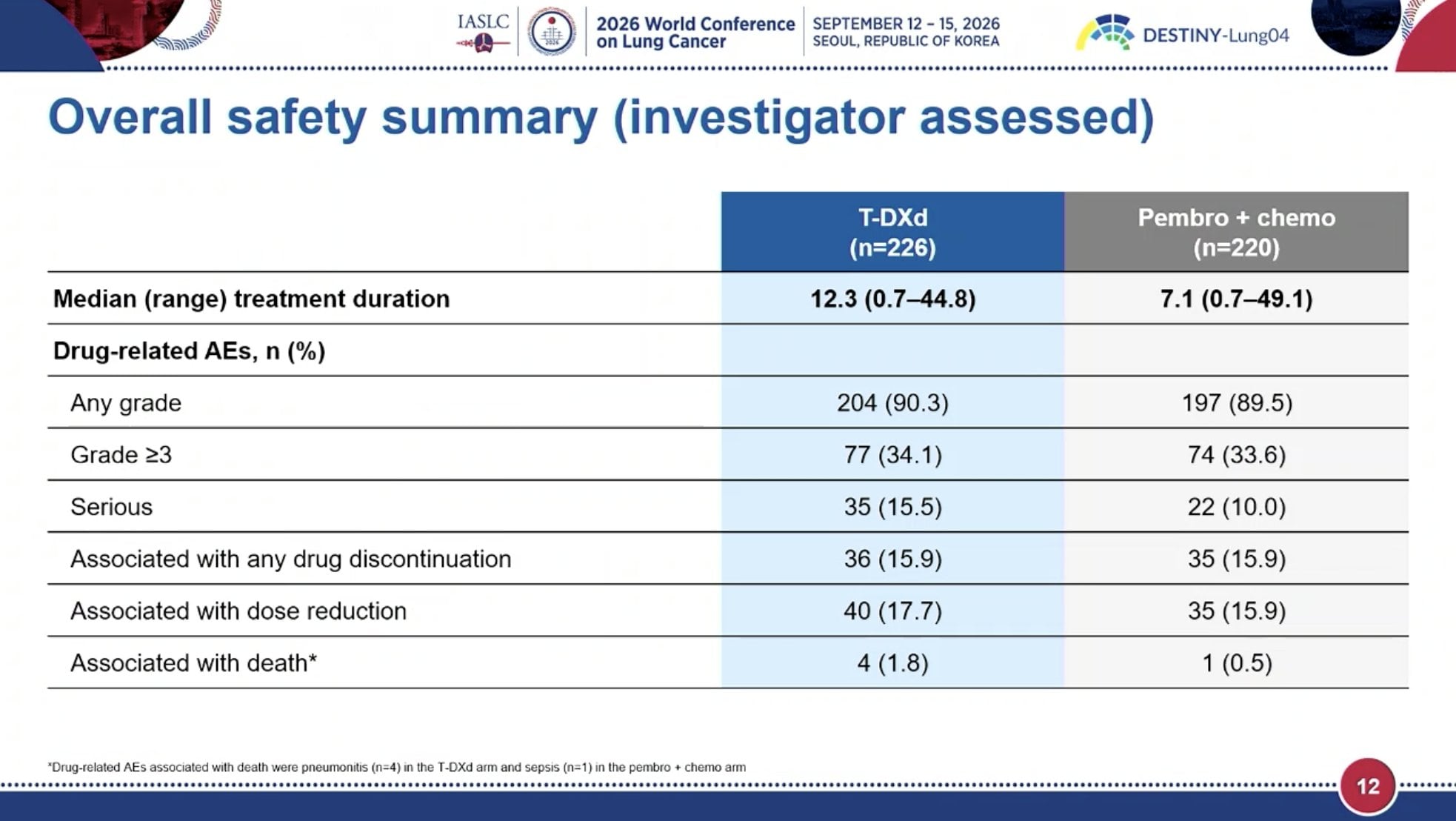
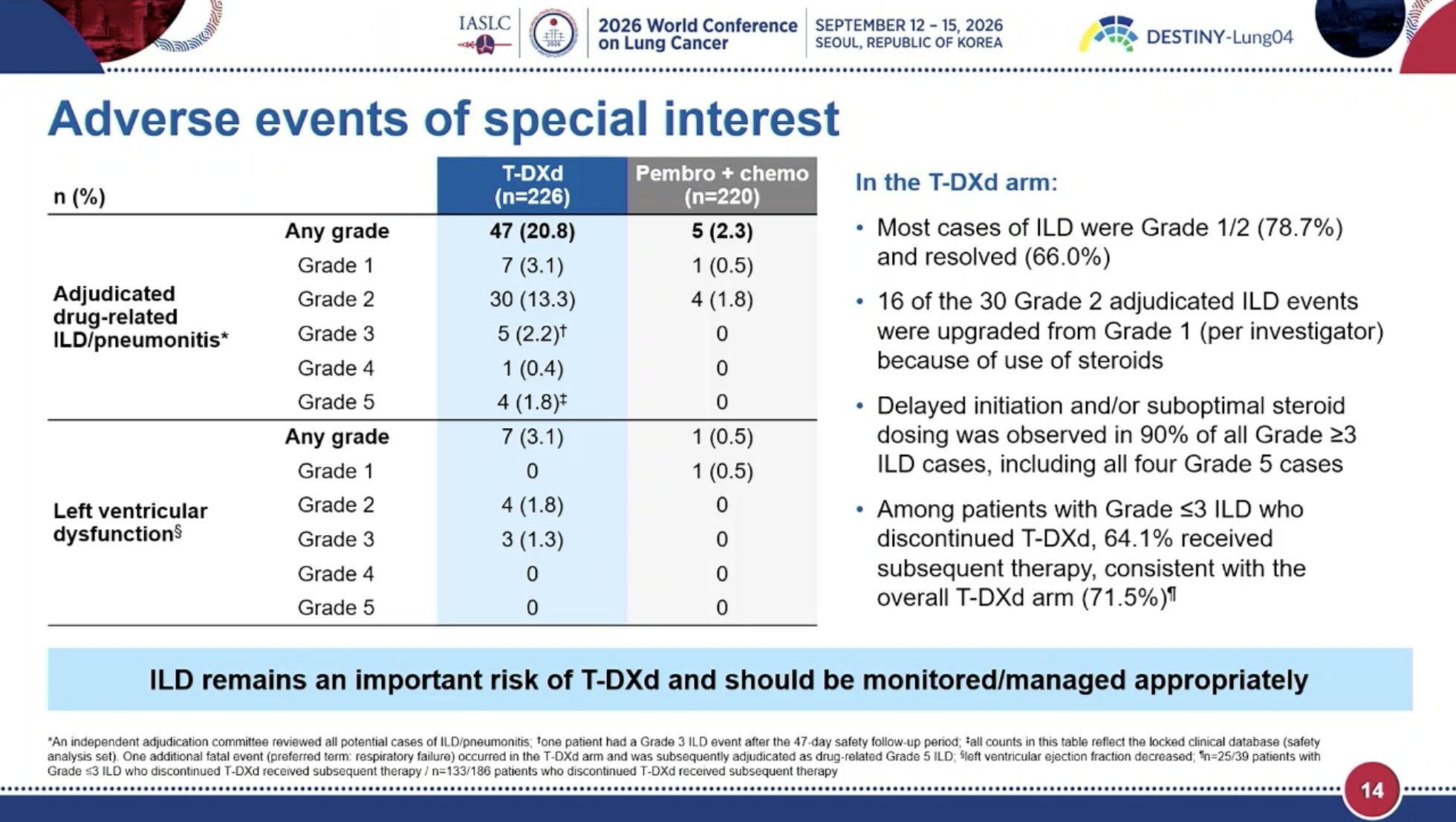
My biggest concern: ILD/pneumonitis.

With T-DXd:
‼️Any grade: 20.8%
• Grade ≥3: 4.4%
• Grade 5: 1.8% (4 deaths)

~1 in 5 developing drug-related ILD is really hard to overlook in the frontline setting, especially with other effective HER2-targeted options emerging.

#WCLC26 https://t.co/DhesBCJ4qS https://t.co/LTFqgWyERR

My biggest concern: ILD/pneumonitis.

With T-DXd:
‼️Any grade: 20.8%
• Grade ≥3:
7.7K impressions18 likes2 reposts2026-09-14
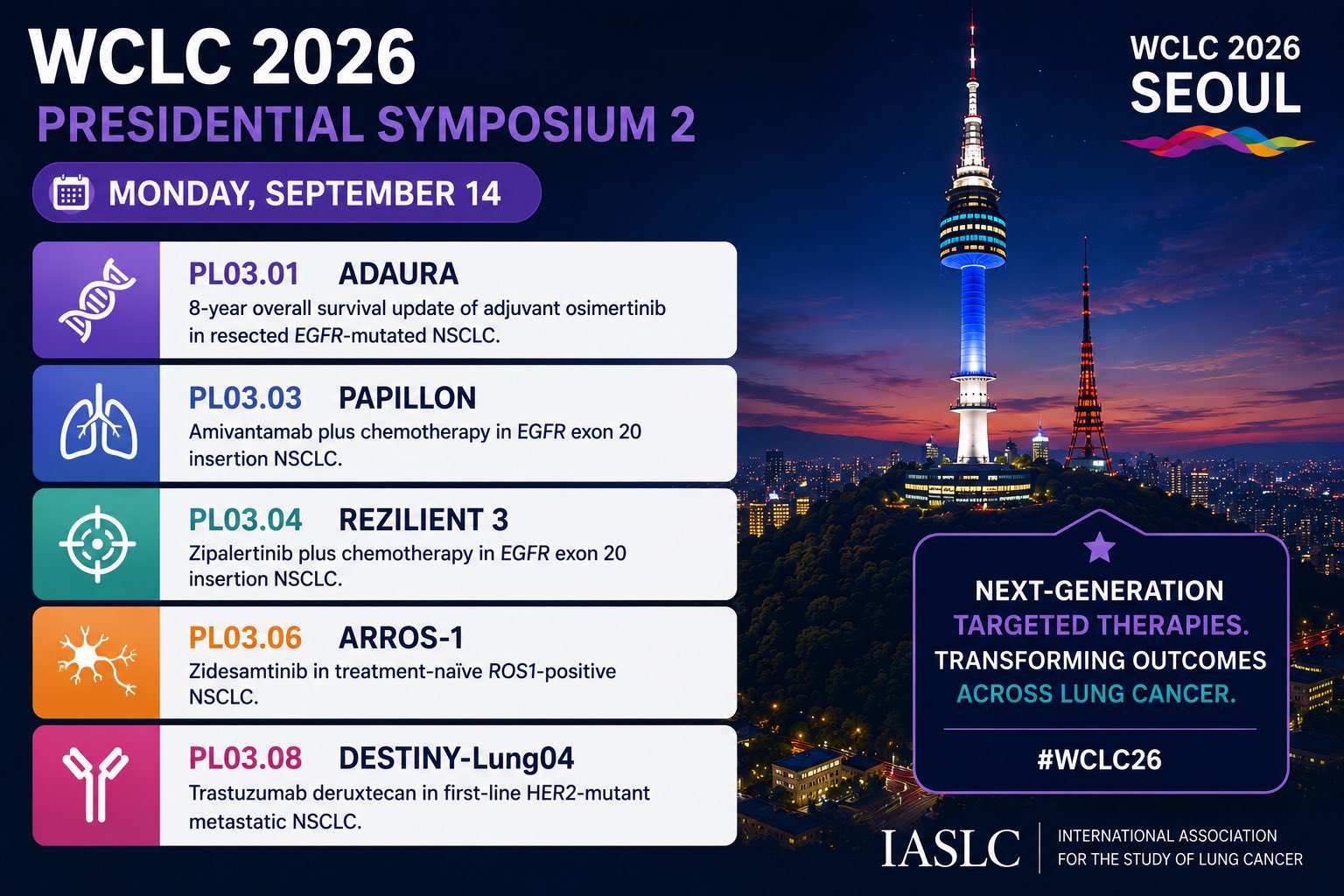
[Slide 1] IASLC 2026 World Conference SEPTEMBER 12 - 15, 2026 on Lung Cancer SEOUL, REPUBLIC OF KOREA DESTINY-Lung04 Adverse events of special interest T-DXd Pembro + chemo In the T-DXd arm: n (%) (n=226) (n=220) Any grade 47 (20.8) 5 (2.3) Most cases of ILD were Grade 1/2 (78.7%) Grade 1 7 (3.1) 1 (0.5) and resolved (66.0%) Adjudicated Grade 2 30 (13.3) 4 (1.8) 16 of the 30 Grade 2 adjudicated ILD events drug-related ILD/pneumonitis* Grade 3 5 (2.2)+ 0 were upgraded from Grade 1 (per investigator) Grade 4 1 (0.4) 0 because of use of steroids Grade 5 4 (1.8) 0 Delayed initiation and/or suboptimal steroid Any grade 7 (3.1) 1 (0.5) dosing was observed in 90% of all Grade ≥3 Grade 1 0 1 (0.5) ILD cases, including all four Grade 5 cases Left ventricular Grade 2 4 (1.8) 0 Among patients with Grade ≤3 ILD who dysfunction$ Grade 3 3 (1.3) 0 discontinued T-DXd, 64.1% received Grade 4 0 0 subsequent therapy, consistent with the Grade 5 0 0 overall T-DXd arm (71.5%) ILD remains an important risk of T-DXd and should be monitored/managed appropriately *An independent adjudication committee reviewed all potential cases of ILD/pneumonitis; Tone patient had a Grade 3 ILD event after the 47-day safety follow-up period; *all counts in this table reflect the locked clinical database (safety analysis set). One additional fatal event (preferred term: respiratory failure) occurred in the T-DXd arm and was subsequently adjudicated as drug-related Grade 5 ILD; Sleft ventricular ejection fraction decreased; n=25/39 patients with Grade <3 ILD who discontinued T-DXd received subsequent therapy / n=133/186 patients who discontinued T-DXd received subsequent therapy 14 KAREN KELLY JULIA ROTOW
NNoemi Reguart@NReguart

What a day for #SCLC!
Two positive phase III ADC trials today at #WCLC26 ARTEMIS-008 and TAISHAN-302— and this may be just the beginning. Look at the pipeline 👇 The ADC era has finally arrived in SCLC. Bye bye, topotecan! 🚀 https://t.co/fjXfmHC7KL

What a day for #SCLC!
Two positive phase III ADC trials today at #WCLC26 ARTEMIS
6.9K impressions44 likes18 reposts2026-09-13
[Slide 1] PHASE 3, HEAD-TO-HEAD VS TOPOTECAN B7-H3 I-DXd IDeate-Lung02 (NCT06203210) HS-20093 ARTEMIS-008 (NCT06498479) GSK5764227 EMBOLD SCLC-301 (NCT07099898) MHB088C MHB088C-P-301 (NCT06954246) YL201 TAISHAN-302 (NCT06612151) TROP2 SG EVOKE-SCLC-04 (NCT06801834) EGFR X HER3 BL-B01D1 PANKU-Lung03 (NCT06500026) DLL3 ZL-1310 DLLEVATE (NCT07218146) SEZ6 ABBV-706 M23-384 (NCT07365241)
SStephen V Liu, MD@StephenVLiu

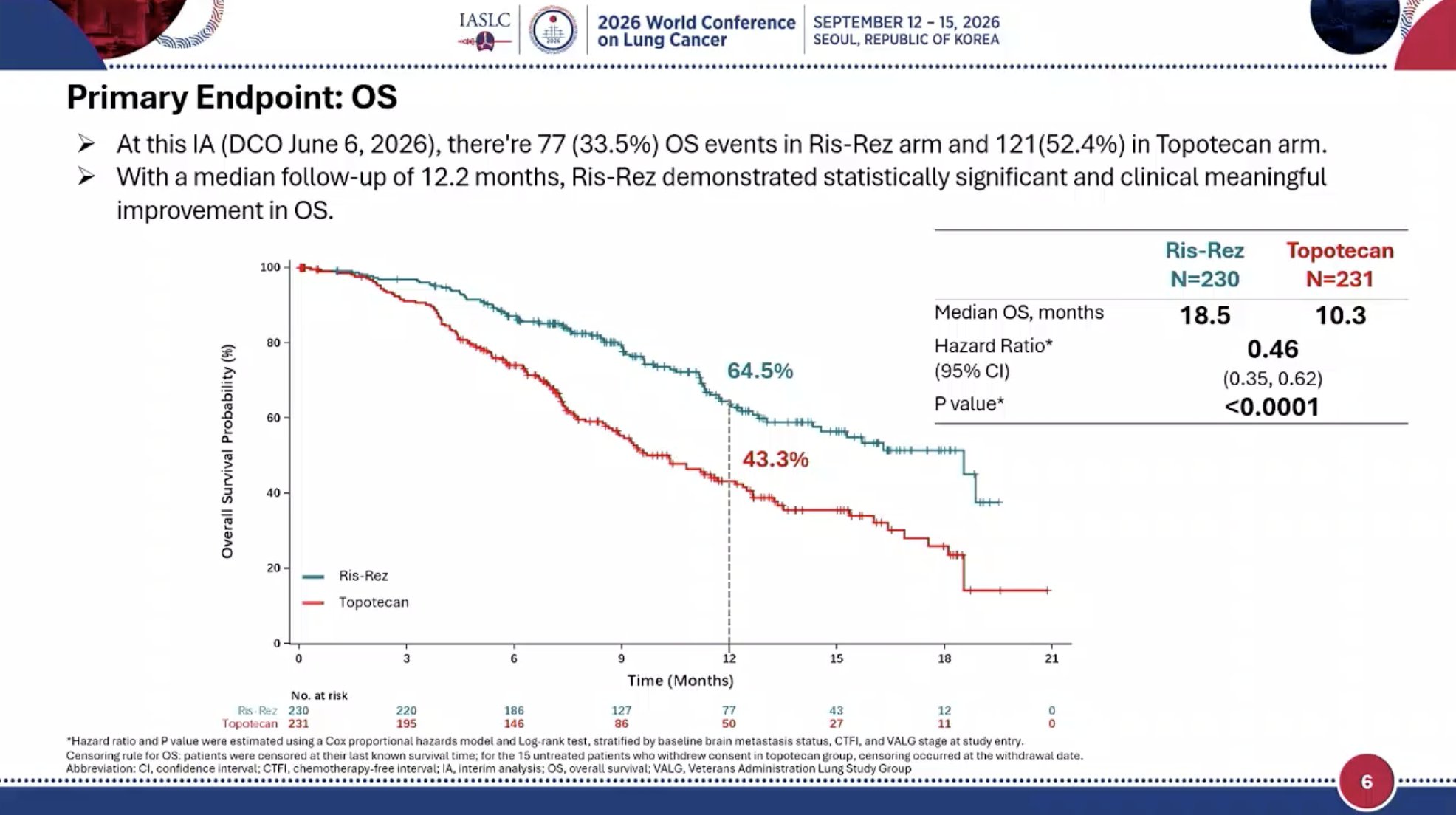
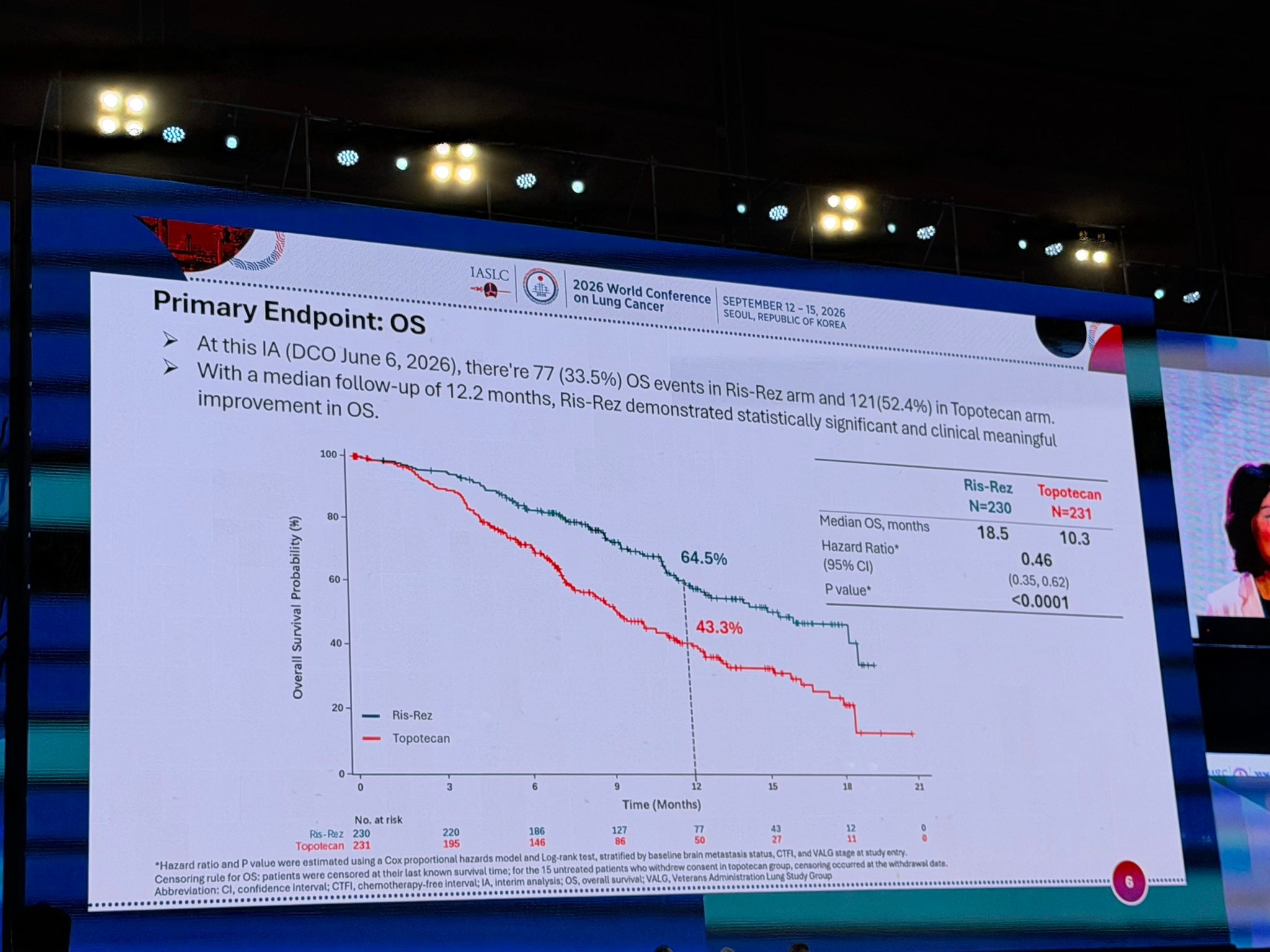
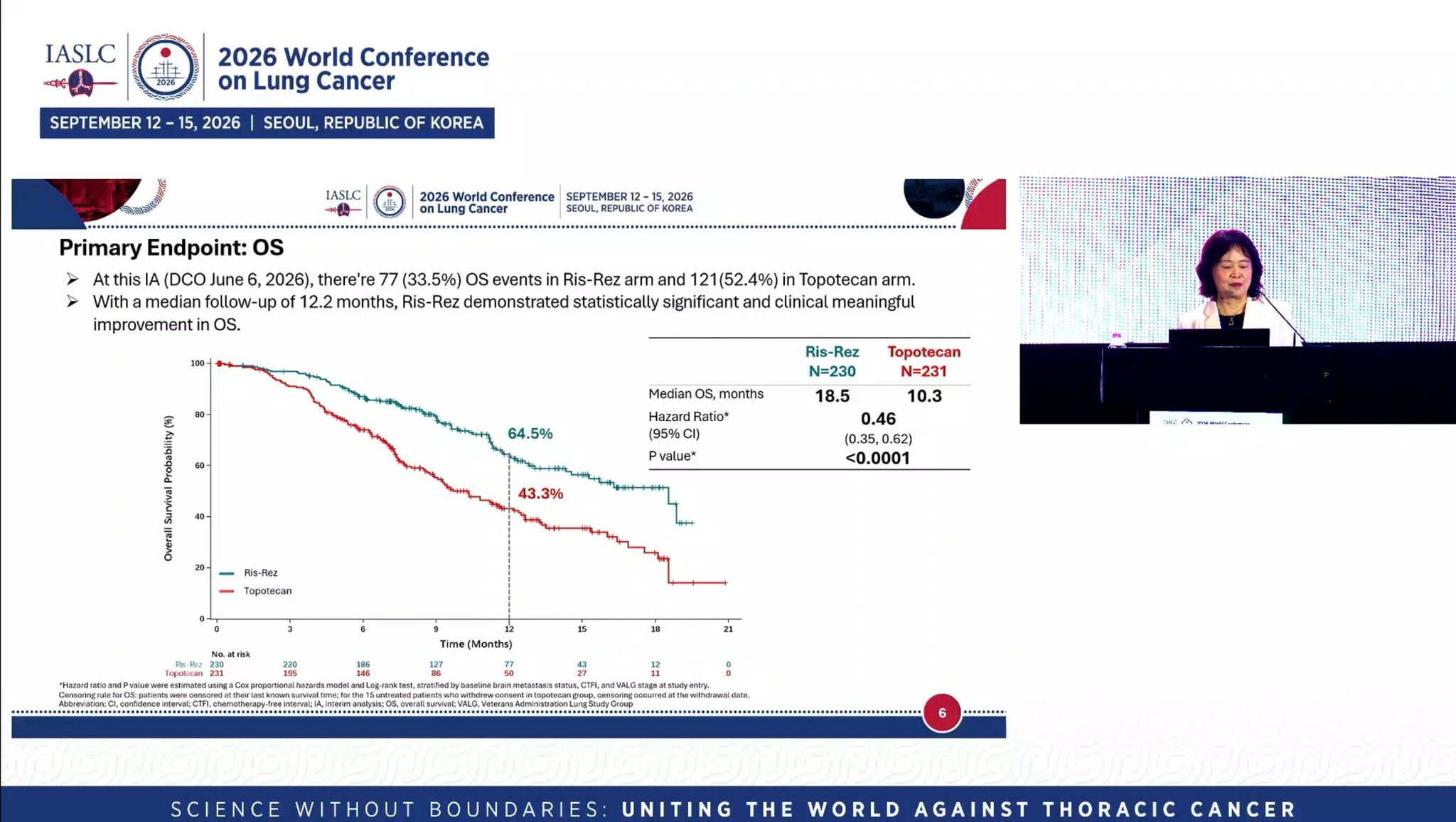
Another wow curve.

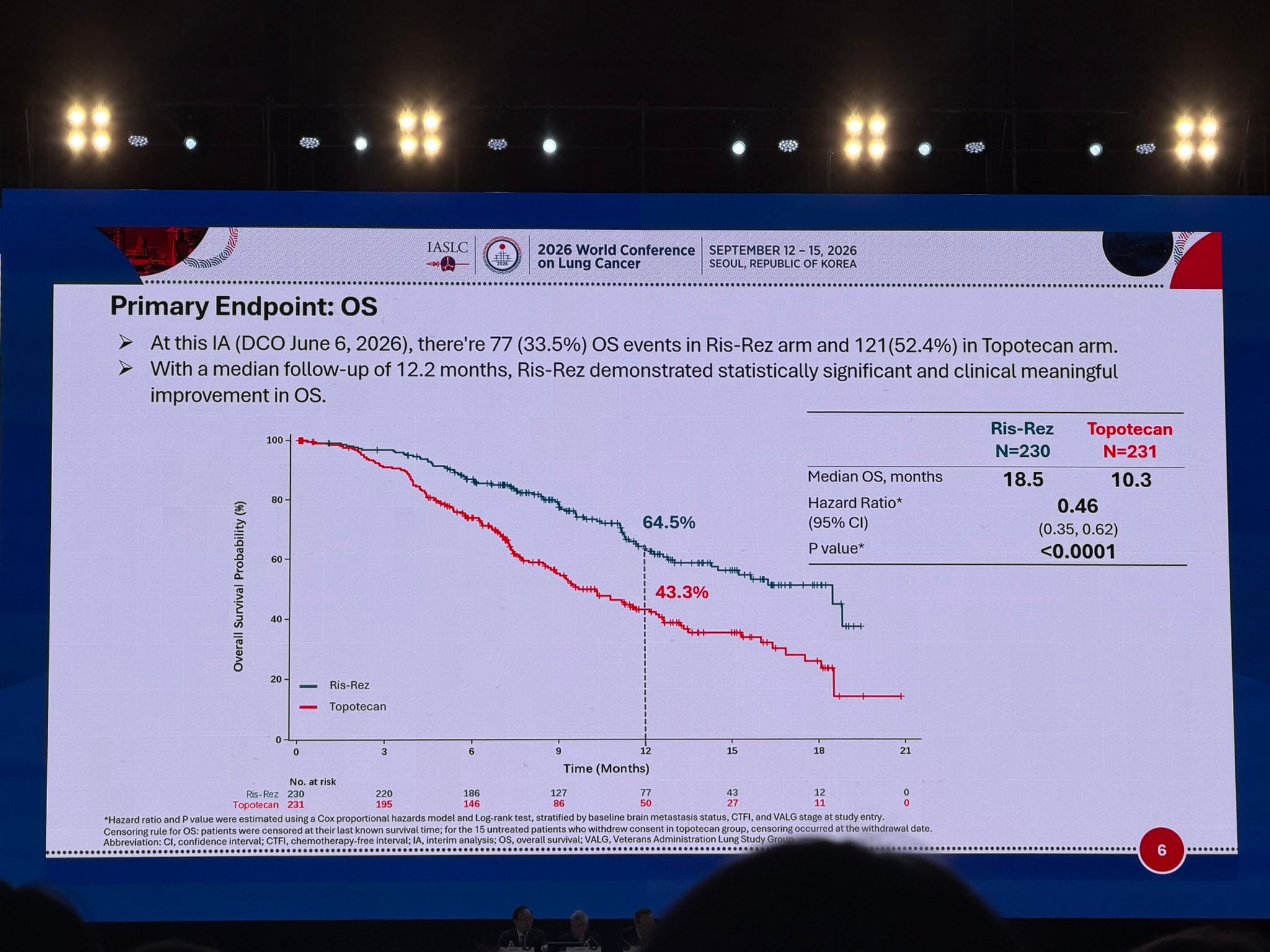
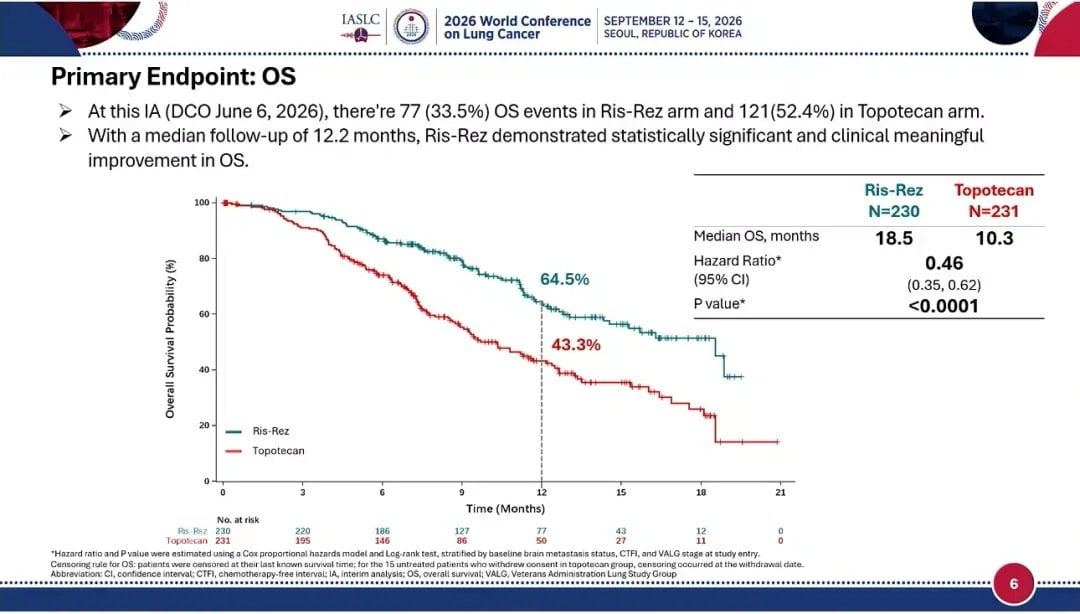
Ris-rez improves OS over topotecan, mOS 18.5m (!) vs 10.3m, OS HR 0.46, 1y OS rate 65% vs 43%. Good control arm OS and curves that split early and widen. The ADC era clearly here. #WCLC26 https://t.co/QMat6K2JS7

Another wow curve.

Ris-rez improves OS over topotecan, mOS 18.5m (!) vs 10.3m,
6.4K impressions2 likes0 reposts2026-09-13
[Slide 1] IASLC 2026 World Conference SEPTEMBER 12 - 15, 2026 on Lung Cancer SEOUL, REPUBLIC OF KOREA Primary Endpoint: os At this IA (DCO June 6, 2026), there're 77 (33.5%) OS events in Ris-Rez arm and 121(52.4%) in Topotecan arm. With a median follow-up of 12.2 months, Ris-Rez demonstrated statistically significant and clinical meaningful improvement in OS. Ris-Rez Topotecan 100 N=230 N=231 Median OS, months 18.5 10.3 80 Hazard Ratio* 0.46 64.5% (95% CI) (0.35, 0.62) Overall Survival Probability (%) P value* <0.0001 60 43.3% 40 20 Ris-Rez Topotecan 0 0 3 6 9 12 15 18 21 Time (Months) No. at risk Ris Rez 230 220 186 127 77 43 12 0 Topotecan 231 195 146 86 50 27 11 0 *Hazard ratio and P value were estimated using a Cox proportional hazards model and Log-rank test, stratified by baseline brain metastasis status, CTFI, and VALG stage at study entry. Censoring rule for OS: patients were censored at their last known survival time; for the 15 untreated patients who withdrew consent in topotecan group, censoring occurred at the withdrawal date. Abbreviation: CI, confidence interval; CTFI, chemotherapy-free interval; IA, interim analysis; OS, overall survival; VALG, Veterans Administration Lung Study Group 6
SStephen V Liu, MD@StephenVLiu

Dr. @g_mountzios at #WCLC26 presents results of EVOKE-03 / KEYNOTE D46: phase III study of sacituzumab govitecan (Trop2 ADC) with pembro vs pembro alone in NSCLC with PD-L1 ≥50%. Median f/u 14.7m. https://t.co/U1jhvkkDXB

Dr. @g_mountzios at #WCLC26 presents results of EVOKE-03 / KEYNOTE D46: phase IIDr. @g_mountzios at #WCLC26 presents results of EVOKE-03 / KEYNOTE D46: phase IIDr. @g_mountzios at #WCLC26 presents results of EVOKE-03 / KEYNOTE D46: phase II
5.9K impressions1 likes0 reposts2026-09-13
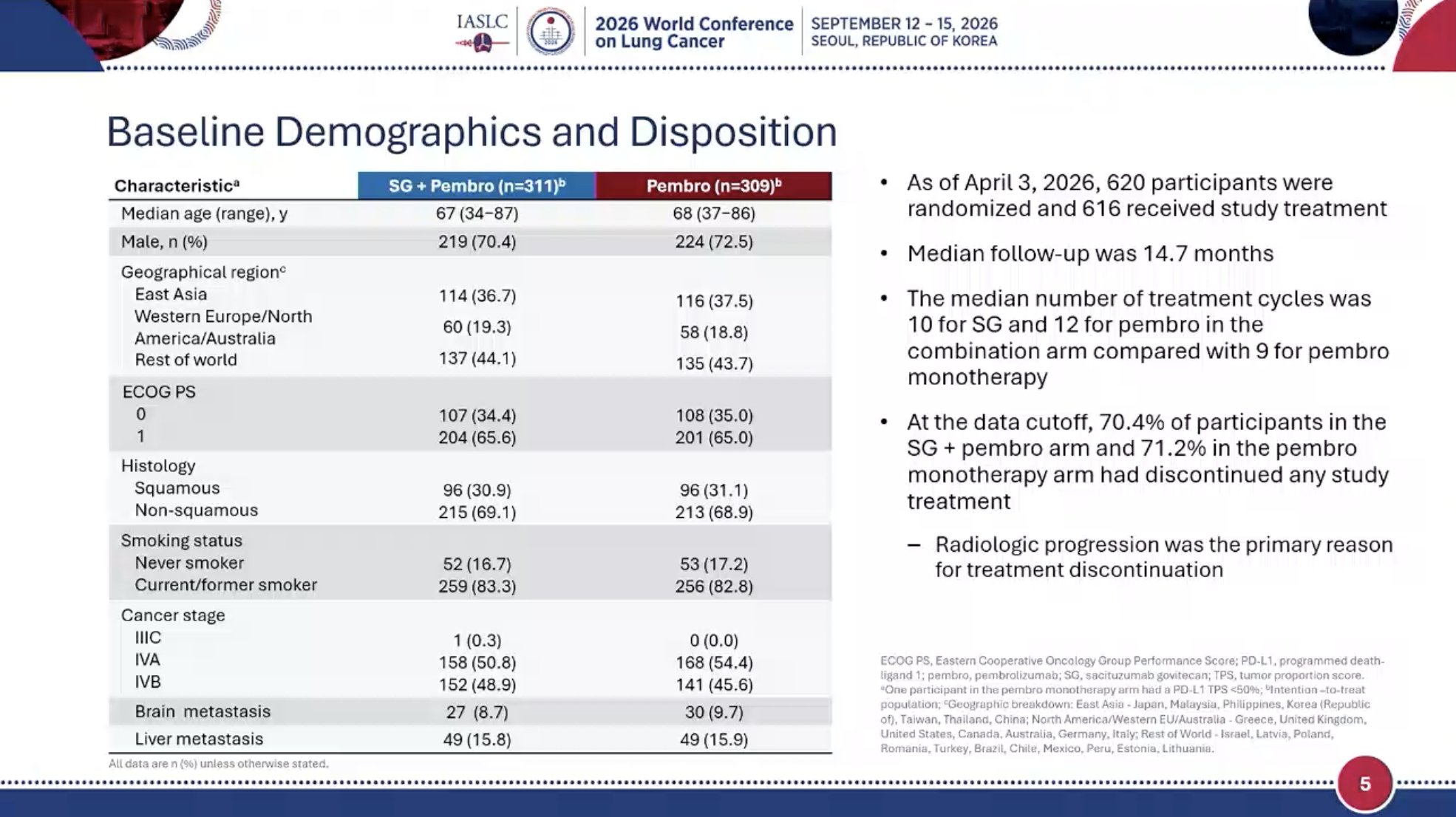
[Slide 1] ASLG 2026 World Conference on Lung Cancer i SEPTEMBER 12 - 15, 2026 I SEOUL, REPUBLIC OF KOREA KALC SCIENCE WITHOUT BOUNDARIES: UNITING THE WORLD AGAINST THORACIC CANCER [Slide 2] IASLC 2026 World Conference SEPTEMBER 12 - 15, 2026 2026 on Lung Cancer SEOUL, REPUBLIC OF KOREA EVOKE-03/KEYNOTE D46 Study Design Key eligibility criteria Sacituzumab govitecan Stage IV NSCLC (AJCC 8th) 10 mg/kg Primary endpoints No prior systemic treatment for Randomized D1, D8, Q3W PFSᵃ mNSCLC 1:1 + OS ECOG PS 0 or 1 N = 620 Pembrolizumab 200 mg PD-L1 TPS ≥50% IV D1 Q3W Secondary endpoints No ILD 35 cycles ORRᵃ No untreated or unstable brain DORᵃ metastases Pembrolizumab 200 mg PROs EGFR/ALK/ROS-1-negative IV D1 Q3W Safety disease 35 cycles Stratification ORR 1 PFS ECOG PS (0 or 1) a=0 0.001 a=0.007 Predominant tumor histology (squamous or non-squamous) 0.001 0.999 0.999 Geographic region (East Asia VS OS Western Europe/North a=0.018 America/Australia VS Rest of World) ALK, anaplastic lymphoma kinase; BICR, blinded independent centralized review; D1, day 1; ECOG PS, Eastern Cooperative Oncology Group Performance Score: EGFR. epidermal growth factor receptor; DOR, duration of response; ILD, interstitial lung disease; IV, intravenous; mNSCLC, metastatic non-small-cell lung cancer; ORR, objective response rate: OS, overall survival; PD-L1, programmed death-ligand 1; PFS, progression-free survival; PRO, patient- reported outcome; Q3W, every three weeks; RECIST, Response Evaluation Criteria in Solid Tumors; ROS-1, ROS proto-oncogene 1, receptor tyrosine kinase; TPS, tumor proportion score. Data cutoff: April 3, 2026. "Per RECIST v1.1 as assessed by BICR. 4 [Slide 3] IASLC 2026 World Conference SEPTEMBER 12 - 15, 2026 on Lung Cancer SEOUL, REPUBLIC OF KOREA Baseline Demographics and Disposition Characteristicᵃ SG + Pembro (n=311)b Pembro (n=309)b As of April 3, 2026, 620 participants were Median age (range), y 67 (34-87) 68 (37-86) randomized and 616 received study treatment Male, n (%) 219 (70.4) 224 (72.5) Median follow-up was 14.7 months Geographical regionᶜ East Asia 114 (36.7) 116 (37.5) The median number of treatment cycles was Western Europe/North 60 (19.3) 58 (18.8) 10 for SG and 12 for pembro in the America/Australia Rest of world 137 (44.1) combination arm compared with 9 for pembro 135 (43.7) monotherapy ECOG PS 0 107 (34.4) 108 (35.0) At the data cutoff, 70.4% of participants in the 1 204 (65.6) 201 (65.0) SG + pembro arm and 71.2% in the pembro Histology monotherapy arm had discontinued any study Squamous 96 (30.9) 96 (31.1) treatment Non-squamous 215 (69.1) 213 (68.9) Smoking status - Radiologic progression was the primary reason Never smoker 52 (16.7) 53 (17.2) for treatment discontinuation Current/former smoker 259 (83.3) 256 (82.8) Cancer stage IIIC 1 (0.3) 0 (0.0) IVA 158 (50.8) 168 (54.4) ECOG PS, Eastern Cooperative Oncology Group Performance Score: PD-L1, programmed death- IVB ligand 1; pembro, pembrolizumab; SG, sacituzumab govitecan; TPS, tumor proportion score. 152 (48.9) 141 (45.6) "One participant in the pembro monotherapy arm had a PD-L1 TPS <50%; "Intention -to-treat Brain metastasis population; "Geographic breakdown: East Asia Japan, Malaysia, Philippines, Korea (Republic 27 (8.7) 30 (9.7) of), Taiwan, Thailand, China; North America/Western EU/Australia Greece, United Kingdom, Liver metastasis 49 (15.8) 49 (15.9) United States, Canada, Australia, Germany, Italy; Rest of World - Israel, Latvia, Poland, Romania, Turkey, Brazil, Chile, Mexico, Peru, Estonia, Lithuania. All data are n (%) unless otherwise stated. 5
SStephen V Liu, MD@StephenVLiu

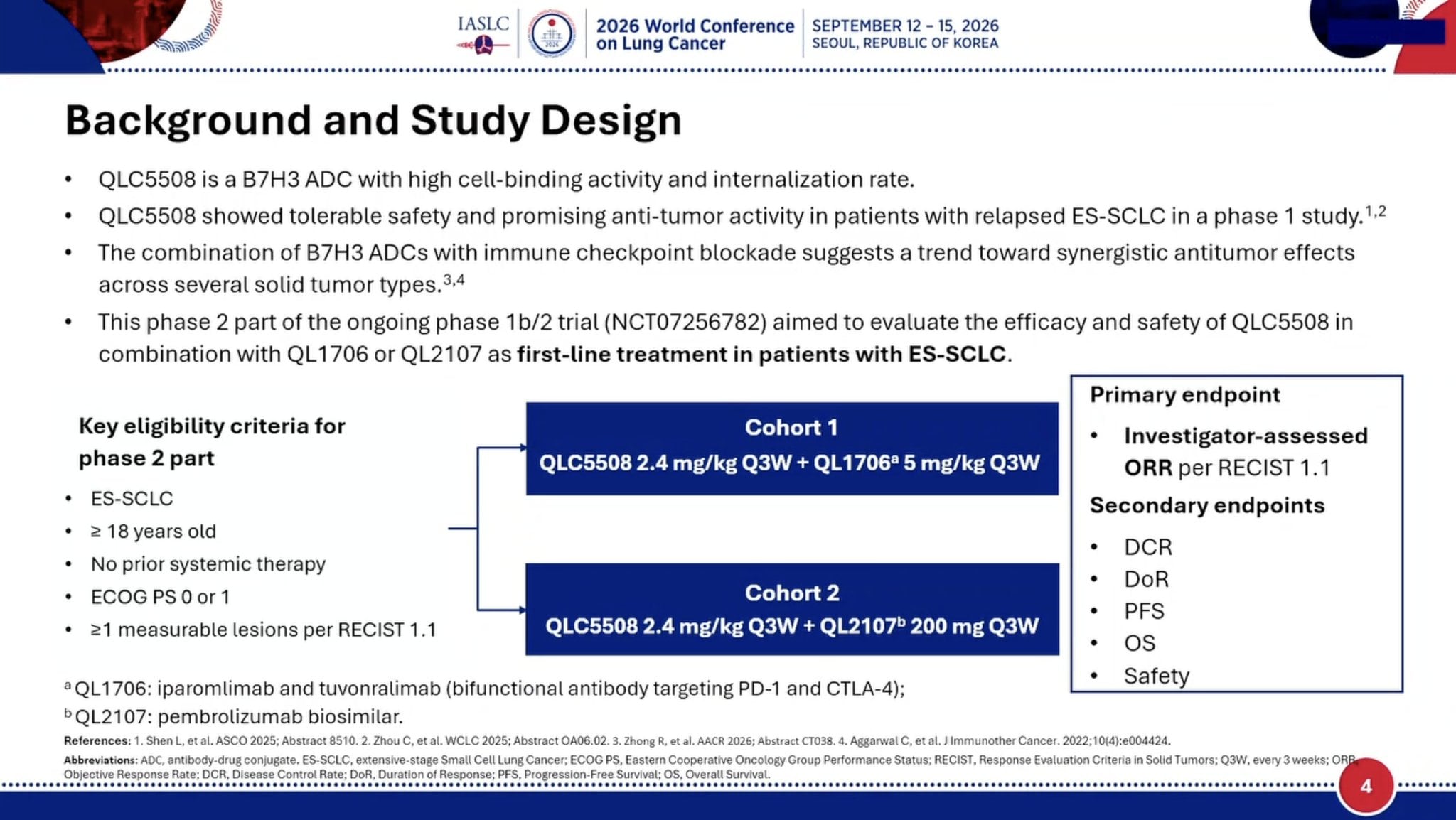
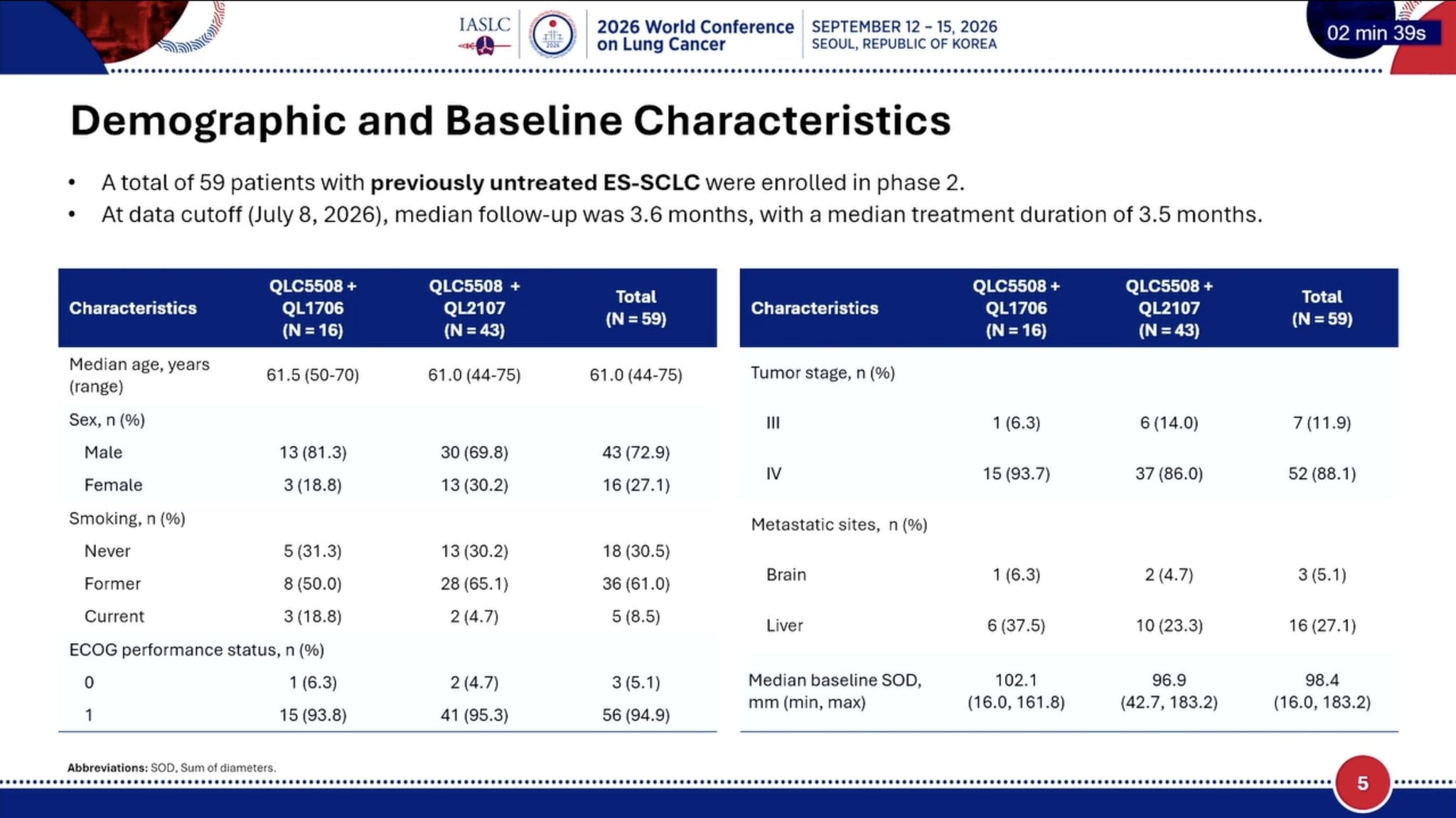
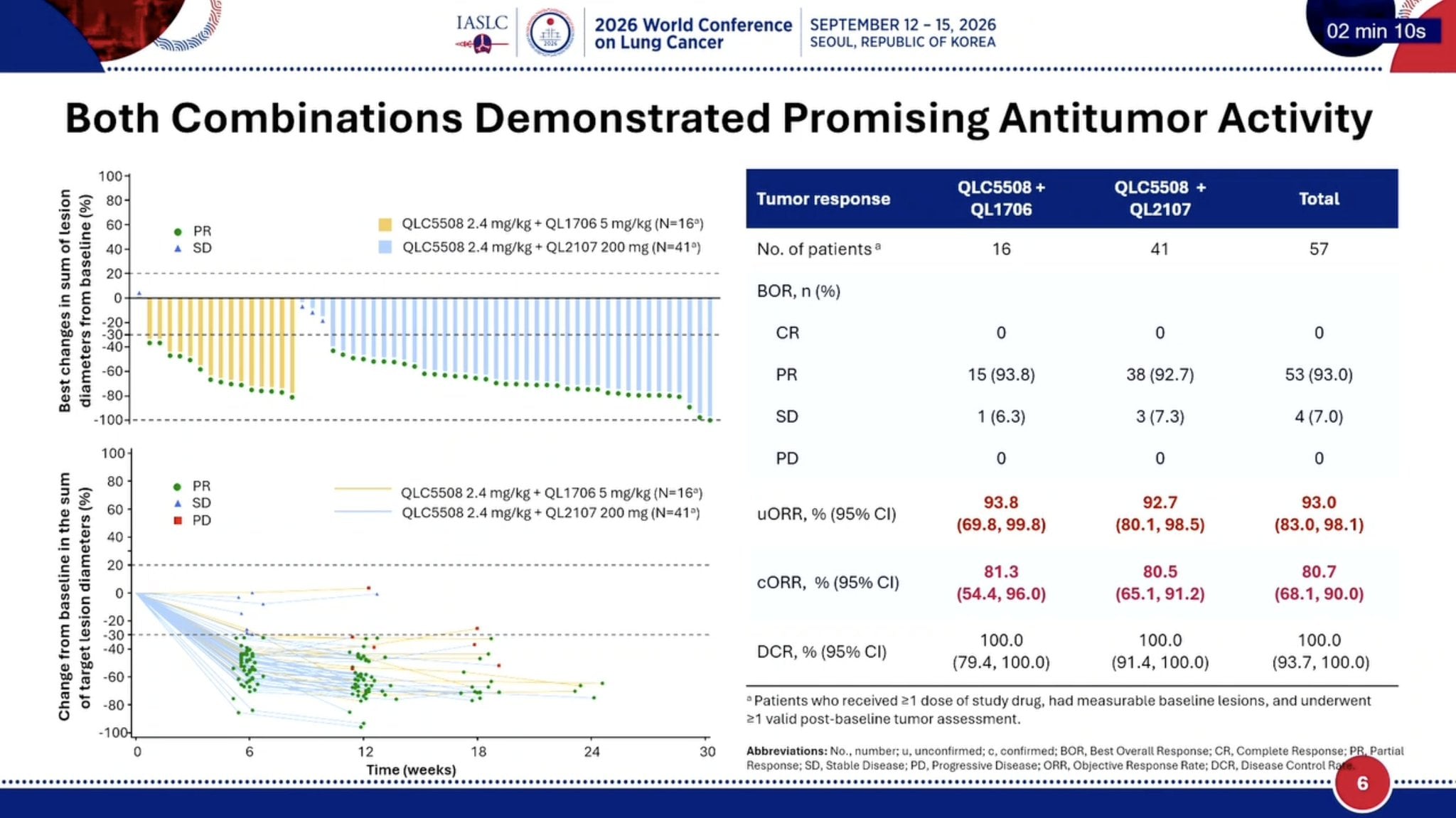
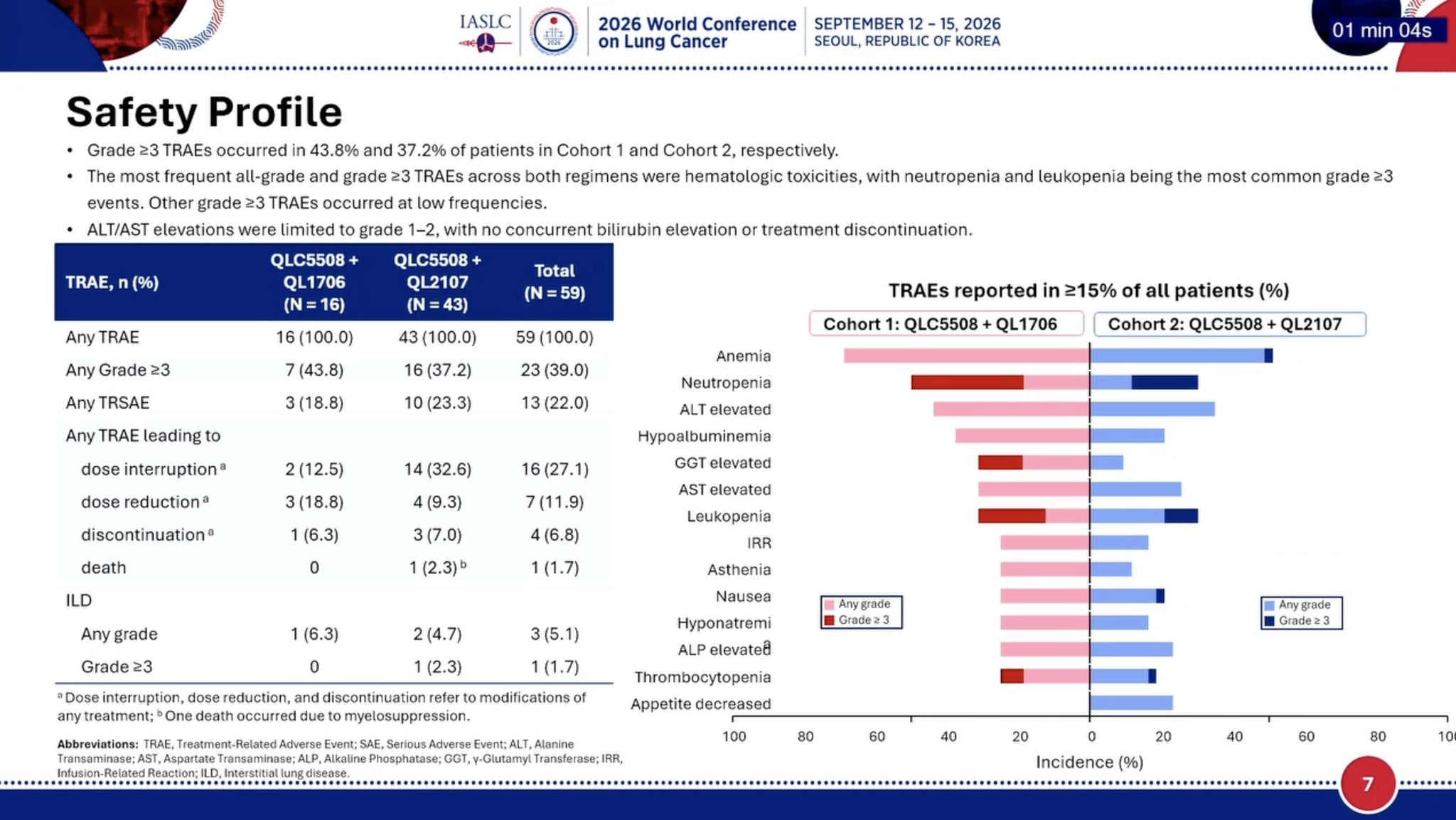
Phase II study of first-line QLC5508 (MHB088C, a B7-H3 ADC) with either QL1706 (PD1/CTLA4 bispecific) or QL2107 (pembro biosimilar) in ES-SCLC from #WCLC26. As with other recent studies, note ~30% of pts with no smoking history. RR for both regimens > 80% with DCR 100%. Toxicity primarily hematologic with <10% discontinuation. Encouraging - need data on durability, CNS efficacy, but another

Phase II study of first-line QLC5508 (MHB088C, a B7-H3 ADC) with either QL1706 (Phase II study of first-line QLC5508 (MHB088C, a B7-H3 ADC) with either QL1706 (Phase II study of first-line QLC5508 (MHB088C, a B7-H3 ADC) with either QL1706 (Phase II study of first-line QLC5508 (MHB088C, a B7-H3 ADC) with either QL1706 (
5.3K impressions15 likes9 reposts2026-09-15
[Slide 1] IASLC 2026 World Conference SEPTEMBER 12 - 15, 2026 2026 on Lung Cancer SEOUL, REPUBLIC OF KOREA Background and Study Design QLC5508 is a B7H3 ADC with high cell-binding activity and internalization rate. QLC5508 showed tolerable safety and promising anti-tumor activity in patients with relapsed ES-SCLC in a phase 1 study. 1,2 The combination of B7H3 ADCs with immune checkpoint blockade suggests a trend toward synergistic antitumor effects across several solid tumor types. 3,4 This phase 2 part of the ongoing phase 1b/2 trial (NCT07256782) aimed to evaluate the efficacy and safety of QLC5508 in combination with QL1706 or QL2107 as first-line treatment in patients with ES-SCLC. Primary endpoint Key eligibility criteria for Cohort 1 Investigator-assessed phase 2 part QLC5508 2.4 mg/kg Q3W + QL1706ª 5 mg/kg Q3W ORR per RECIST 1.1 ES-SCLC Secondary endpoints ≥ 18 years old DCR No prior systemic therapy DoR ECOG PS 0 or 1 Cohort 2 PFS ≥1 measurable lesions per RECIST 1.1 QLC5508 2.4 mg/kg Q3W + QL2107b 200 mg Q3W OS a QL1706: iparomlimab and tuvonralimab (bifunctional antibody targeting PD-1 and CTLA-4); Safety b QL2107: pembrolizumab biosimilar. References: 1. Shen L, et al. ASCO 2025; Abstract 8510. 2. Zhou C, et al. WCLC 2025; Abstract OA06.02. 3. Zhong R, et al. AACR 2026; Abstract CT038. 4. Aggarwal C, et al. J Immunother Cancer. 2022;10(4):e004424. Abbreviations: ADC, antibody-drug conjugate. ES-SCLC, extensive-stage Small Cell Lung Cancer; ECOG PS, Eastern Cooperative Oncology Group Performance Status; RECIST, Response Evaluation Criteria in Solid Tumors; Q3W, every 3 weeks; ORB Objective Response Rate: DCR, Disease Control Rate; DoR, Duration of Response; PFS, Progression-Free Survival; OS, Overall Survival. 4 [Slide 2] IASLC 2026 World Conference SEPTEMBER 12 - 15, 2026 02 min 39s 2026 on Lung Cancer SEOUL, REPUBLIC OF KOREA Demographic and Baseline Characteristics A total of 59 patients with previously untreated ES-SCLC were enrolled in phase 2. At data cutoff (July 8, 2026), median follow-up was 3.6 months, with a median treatment duration of 3.5 months. QLC5508 + QLC5508 + QLC5508 + QLC5508 + Total Total Characteristics QL1706 QL2107 Characteristics QL1706 QL2107 (N=59) (N = 59) (N = 16) (N = 43) (N = 16) (N=43) Median age, years 61.5 (50-70) 61.0 (44-75) 61.0 (44-75) Tumor stage, n (%) (range) Sex, n (%) III 1 (6.3) 6 (14.0) 7 (11.9) Male 13 (81.3) 30 (69.8) 43 (72.9) IV 15 (93.7) 37 (86.0) 52 (88.1) Female 3 (18.8) 13 (30.2) 16 (27.1) Smoking, n (%) Metastatic sites, n (%) Never 5 (31.3) 13 (30.2) 18 (30.5) Brain Former 8 (50.0) 28 (65.1) 36 (61.0) 1 (6.3) 2 (4.7) 3 (5.1) Current 3 (18.8) 2 (4.7) 5 (8.5) Liver 6 (37.5) 10 (23.3) 16 (27.1) ECOG performance status, n (%) 0 1 (6.3) 2 (4.7) 3 (5.1) Median baseline SOD, 102.1 96.9 98.4 mm (min, max) (16.0, 161.8) (42.7, 183.2) (16.0, 183.2) 1 15 (93.8) 41 (95.3) 56 (94.9) Abbreviations: SOD, Sum of diameters. 5 [Slide 3] IASLC 2026 World Conference SEPTEMBER 12 - 15, 2026 02 min 10s 2026 on Lung Cancer SEOUL, REPUBLIC OF KOREA Both Combinations Demonstrated Promising Antitumor Activity 100 QLC5508 + QLC5508 + 80 Tumor response Total QL1706 QL2107 60 PR QLC5508 2.4 mg/kg + QL1706 5 mg/kg (N=16°) Best changes in sum of lesion diameters from baseline (%) 40 SD QLC5508 2.4 mg/kg + QL2107 200 mg (N=41°) No. of patients a 16 41 57 20 0 BOR, n (%) 20 -30 CR 0 0 0 -40 -60 PR 15 (93.8) 38 (92.7) 53 (93.0) -80 -100 SD 1 (6.3) 3 (7.3) 4 (7.0) 100 PD 0 0 0 80 PR QLC5508 2.4 mg/kg + QL1706 5 mg/kg (N=16°) 60 SD 93.8 92.7 93.0 PD QLC5508 2.4 mg/kg + QL2107 200 mg (N=41°) uORR, % (95% CI) Change from baseline in the sum (69.8, 99.8) (80.1, 98.5) (83.0, 98.1) of target lesion diameters (%) 40 20 81.3 80.5 80.7 cORR, % (95% CI) 0 (54.4, 96.0) (65.1, 91.2) (68.1, 90.0) -20 -30 100.0 100.0 100.0 -40 DCR, % (95% CI) (79.4, 100.0) (91.4, 100.0) (93.7, 100.0) -60 -80 a Patients who received ≥1 dose of study drug, had measurable baseline lesions, and underwent ≥1 valid post-baseline tumor assessment. -100- 0 6 12 18 24 30 Abbreviations: No., number; u, unconfirmed; C, confirmed; BOR, Best Overall Response; CR, Complete Response; PR. Partial Time (weeks) Response; SD, Stable Disease; PD, Progressive Disease; ORR, Objective Response Rate; DCR, Disease Control Ra 6 [Slide 4] IASLC 2026 World Conference SEPTEMBER 12 - 15, 2026 01 min 04s 2026 on Lung Cancer SEOUL, REPUBLIC OF KOREA Safety Profile Grade ≥3 TRAEs occurred in 43.8% and 37.2% of patients in Cohort 1 and Cohort 2, respectively. The most frequent all-grade and grade ≥3 TRAEs across both regimens were hematologic toxicities, with neutropenia and leukopenia being the most common grade ≥3 events. Other grade ≥3 TRAEs occurred at low frequencies. ALT/AST elevations were limited to grade 1-2, with no concurrent bilirubin elevation or treatment discontinuation. QLC5508 + QLC5508 + Total TRAE, n (%) QL1706 QL2107 (N = 59) TRAEs reported in ≥15% of all patients (%) (N = 16) (N = 43) Cohort 1: QLC5508 + QL1706 Cohort 2: QLC5508 + QL2107 Any TRAE 16 (100.0) 43 (100.0) 59 (100.0) Anemia Any Grade ≥3 7 (43.8) 16 (37.2) 23 (39.0) Neutropenia Any TRSAE 3 (18.8) 10 (23.3) 13 (22.0) ALT elevated Any TRAE leading to Hypoalbuminemia dose interruption a 2 (12.5) 14 (32.6) 16 (27.1) GGT elevated AST elevated dose reduction a 3 (18.8) 4 (9.3) 7 (11.9) Leukopenia discontinuation a 1 (6.3) 3 (7.0) 4 (6.8) IRR death 0 1 (2.3)b 1 (1.7) Asthenia ILD Nausea Any grade Any grade Hyponatremi Grade 2 3 Grade 2 3 Any grade 1 (6.3) 2 (4.7) 3 (5.1) ALP elevated Grade ≥3 0 1 (2.3) 1 (1.7) Thrombocytopenia a Dose interruption, dose reduction, and discontinuation refer to modifications of Appetite decreased any treatment; b One death occurred due to myelosuppression. 100 80 60 40 20 0 20 40 60 80 10 Abbreviations: TRAE, Treatment-Related Adverse Event; SAE, Serious Adverse Event; ALT, Alanine Transaminase; AST, Aspartate Transaminase; ALP, Alkaline Phosphatase; GGT, y-Glutamyl Transferase; IRR, Incidence (%) Infusion-Related Reaction; ILD, Interstitial lung disease. 7
EGFR223.4K impressions · top posts of the conference
UUğur Özkerim@UOzkerim

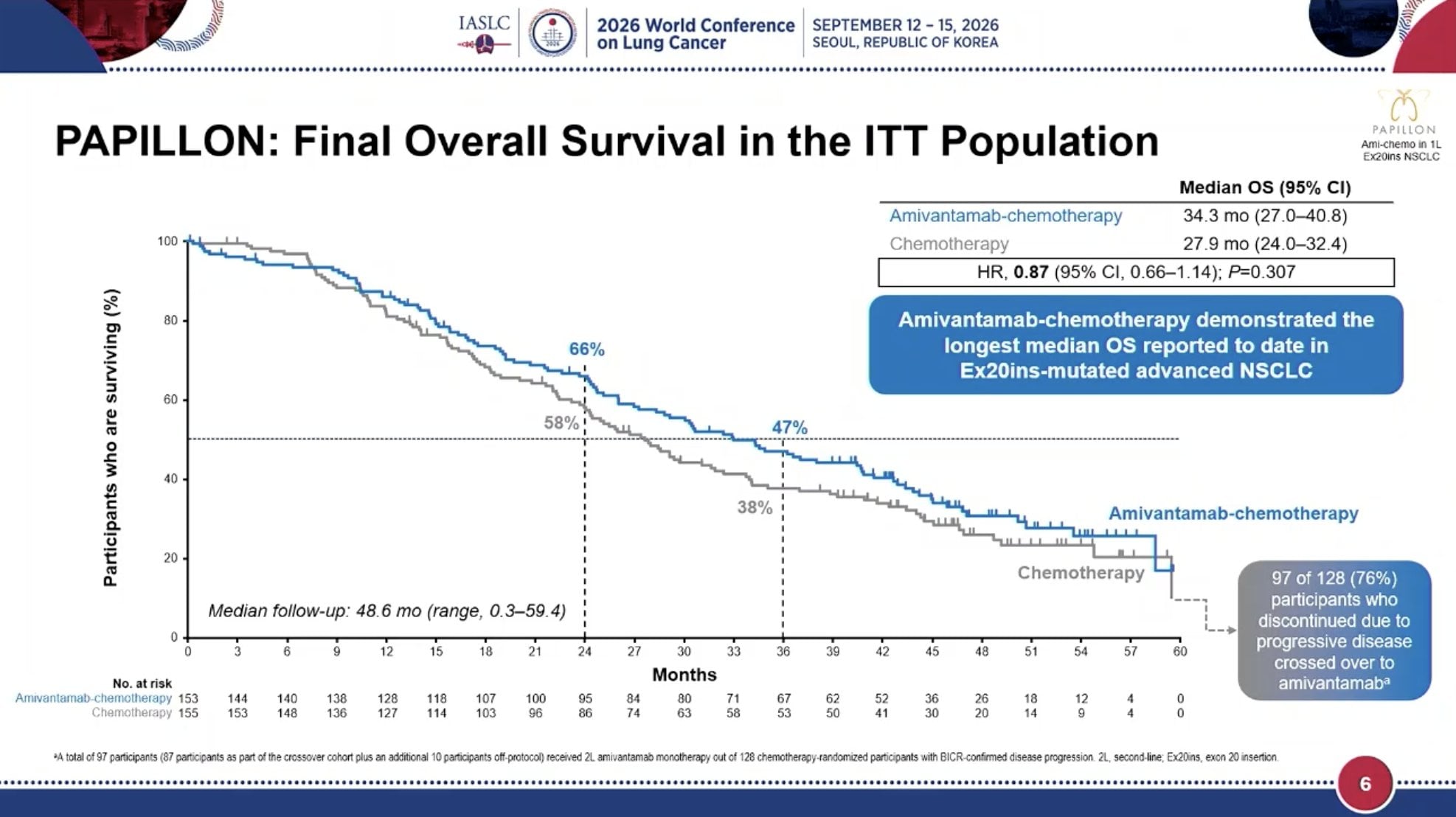
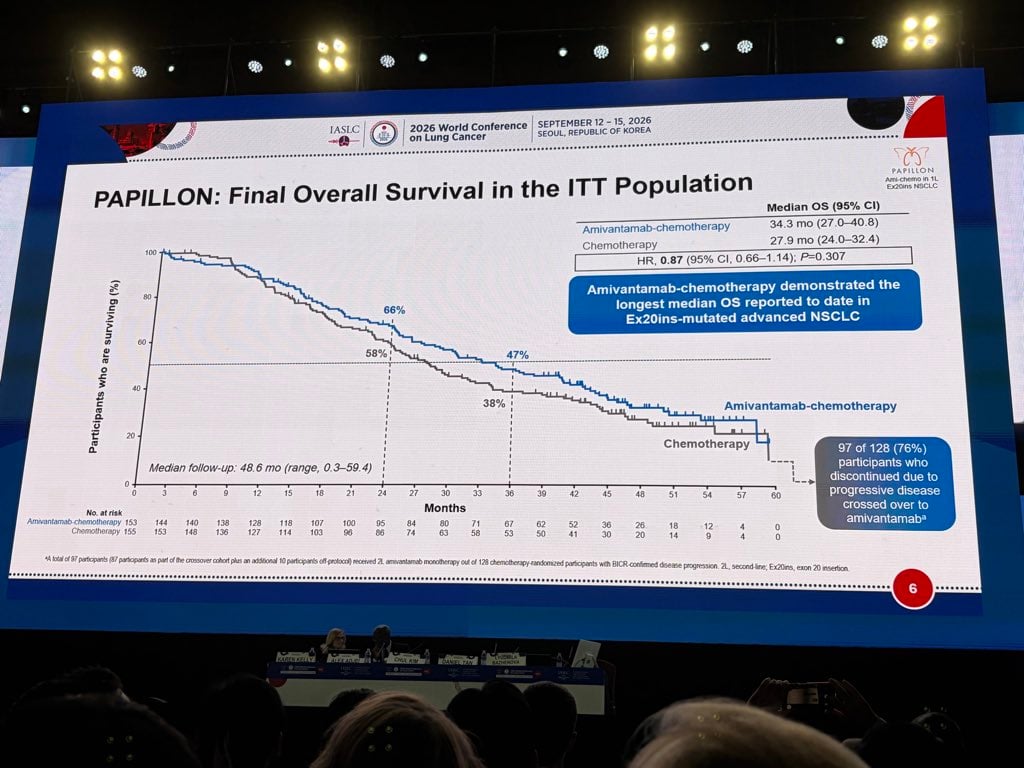
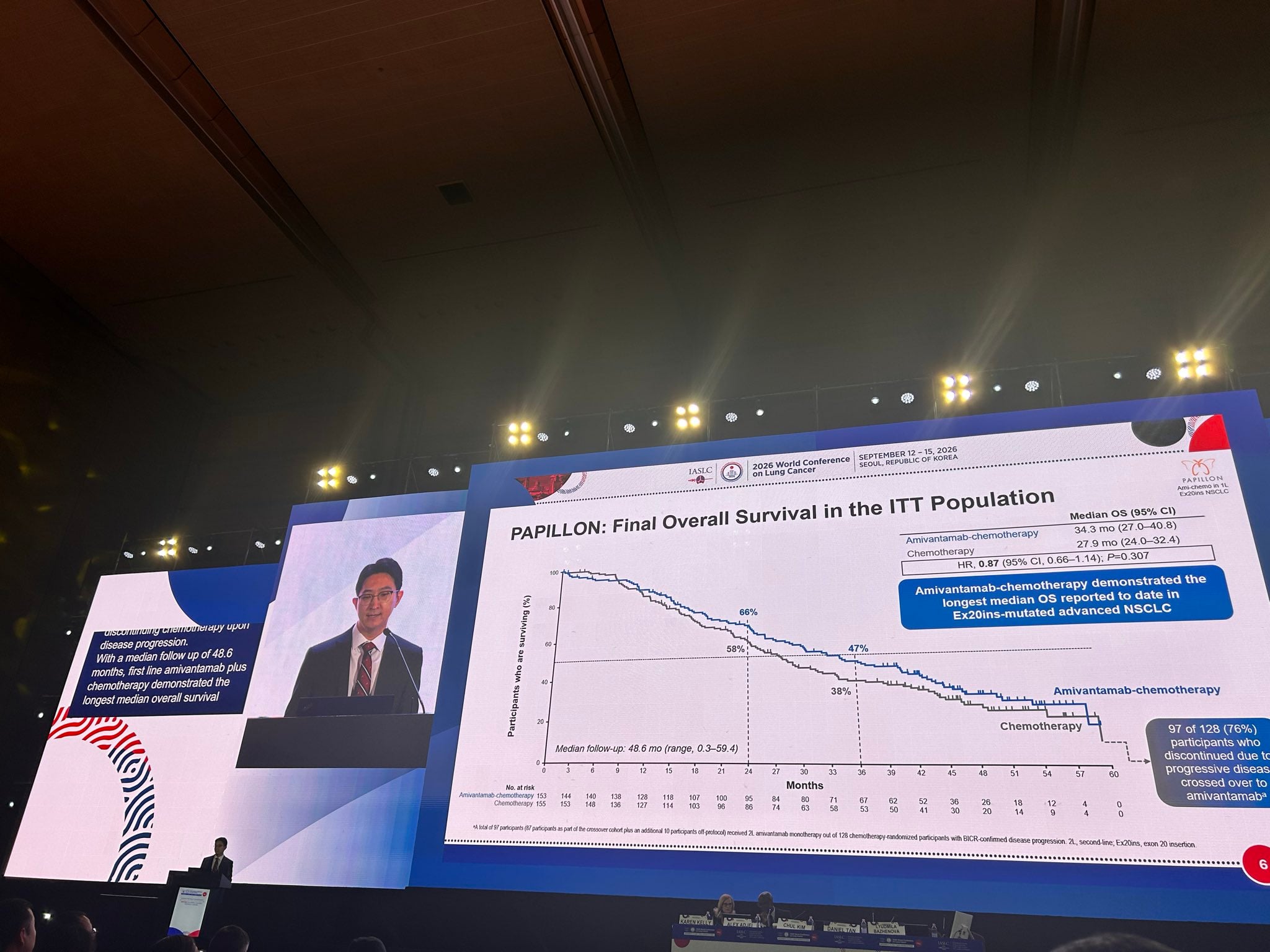
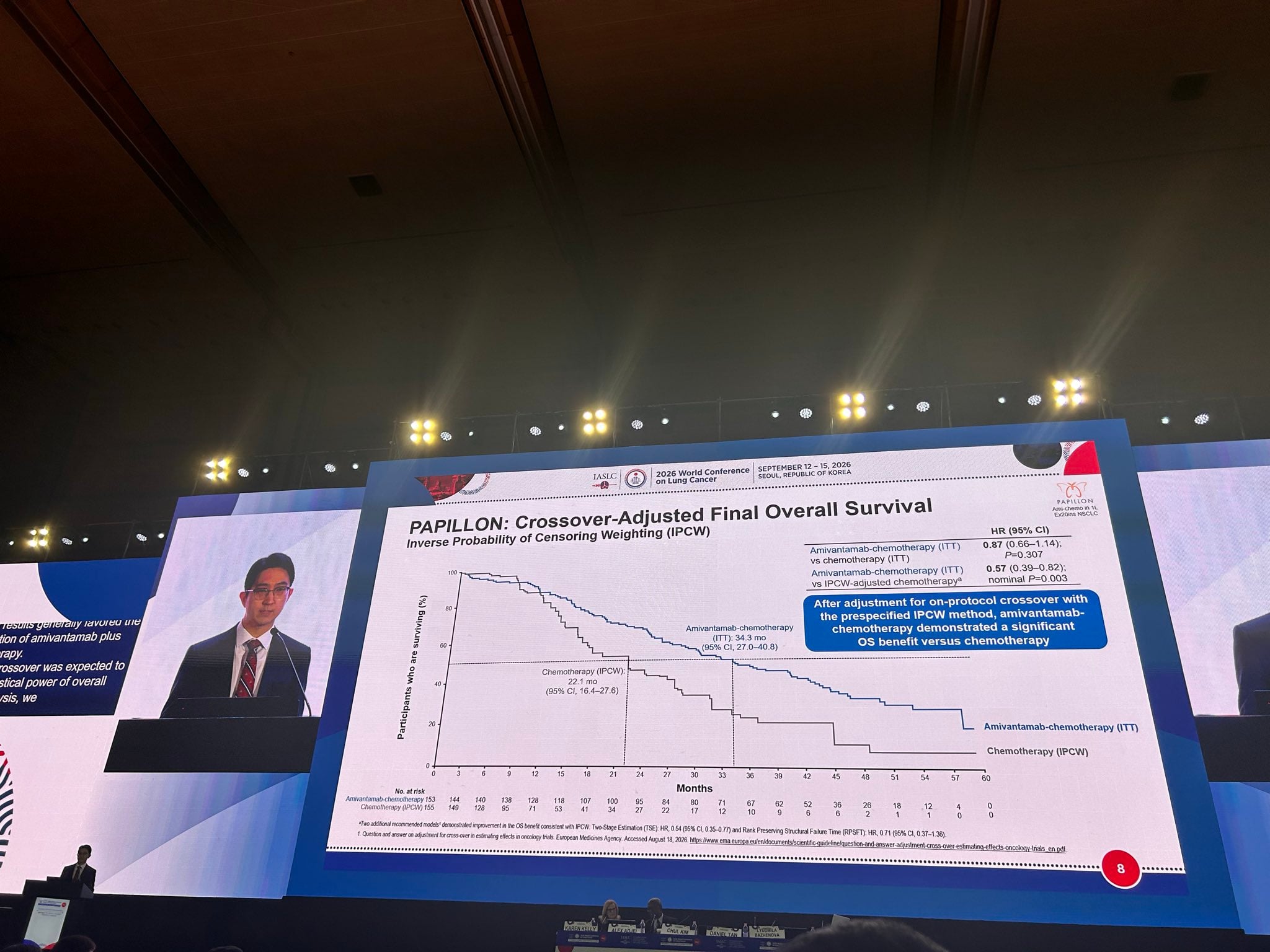
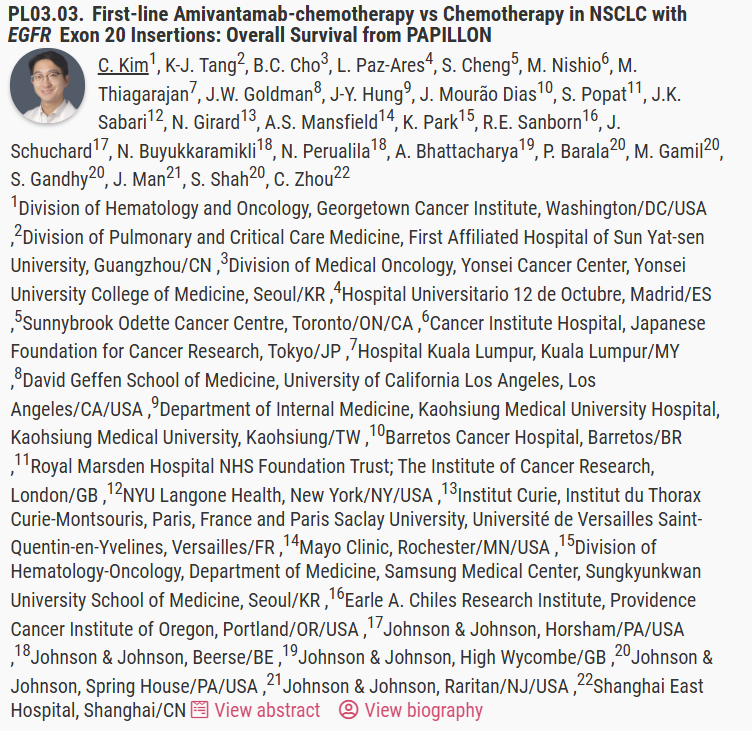
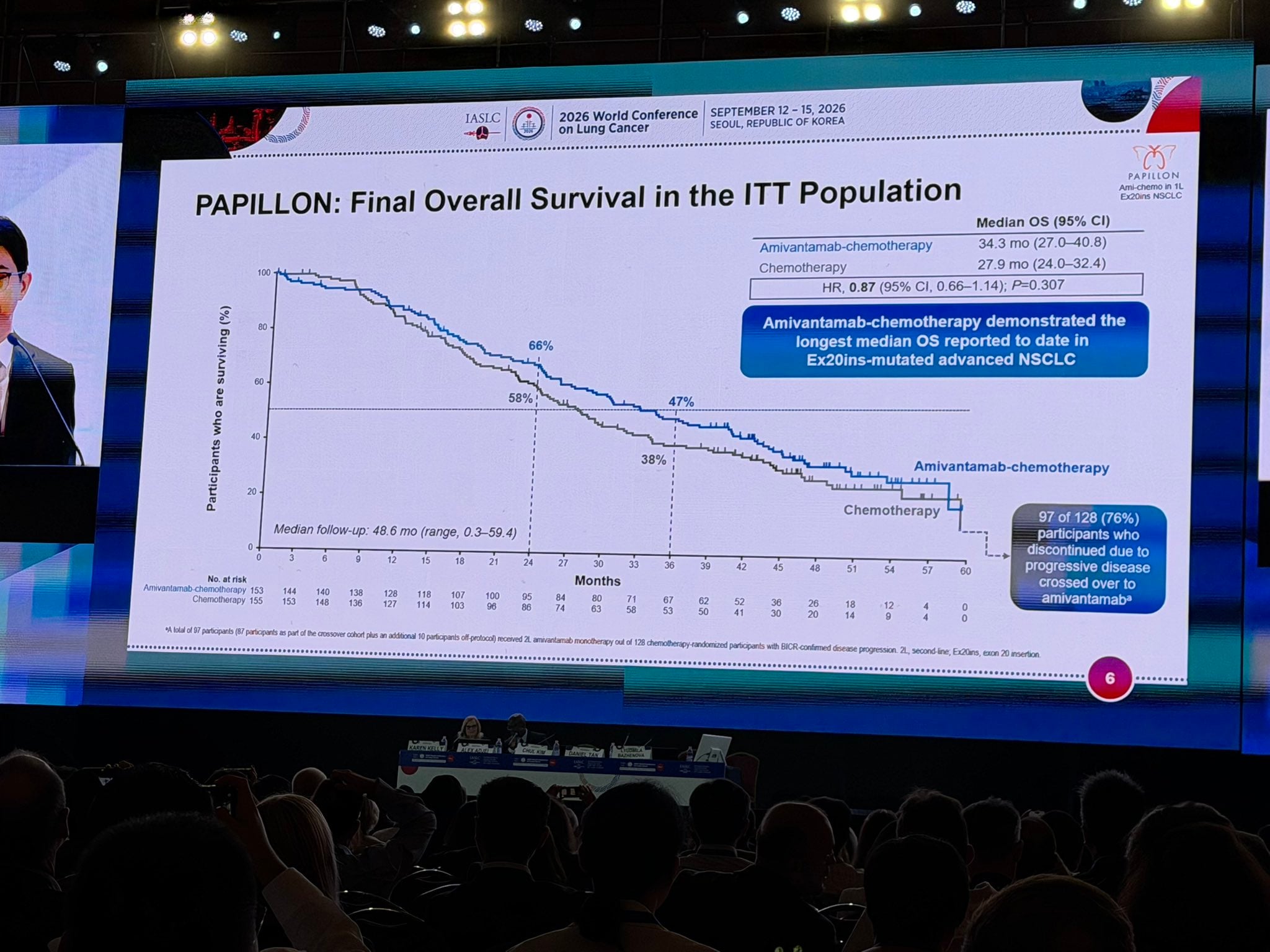
Final OS results from PAPILLON at #WCLC26

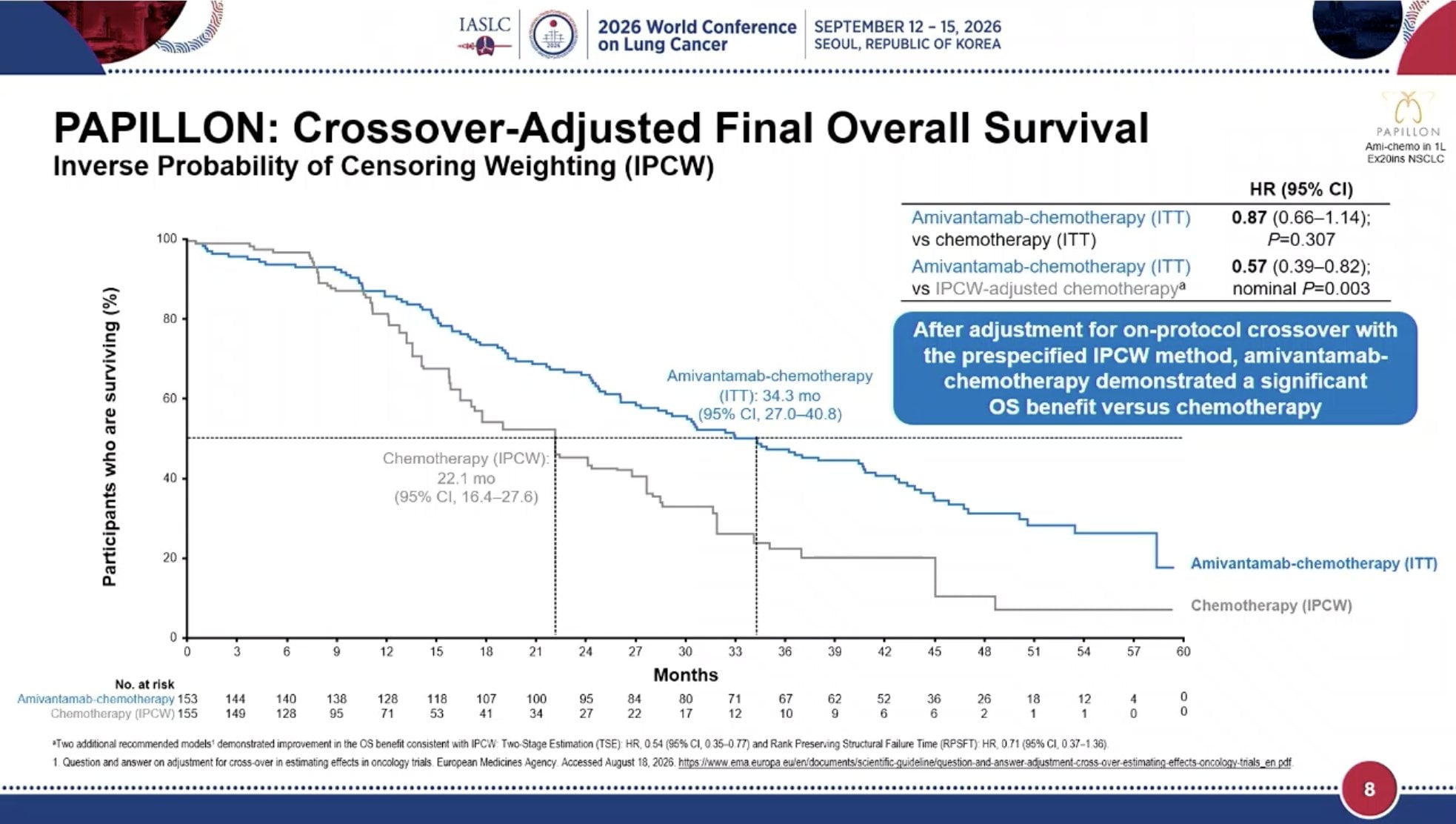
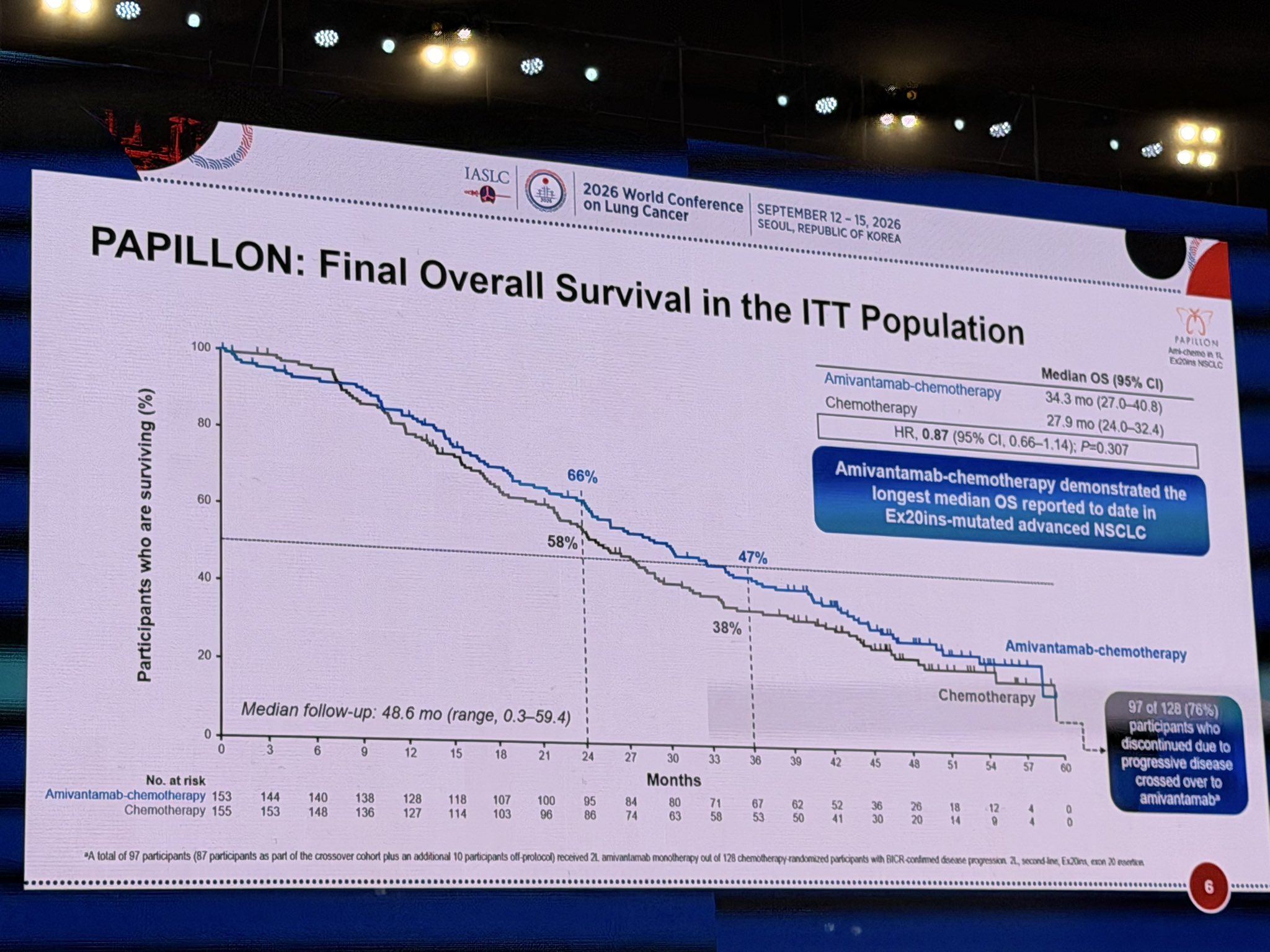
In 1L EGFR exon20ins advanced NSCLC, amivantamab + chemotherapy achieved a median OS of 34.3 vs 27.9 months with chemotherapy (HR 0.87).

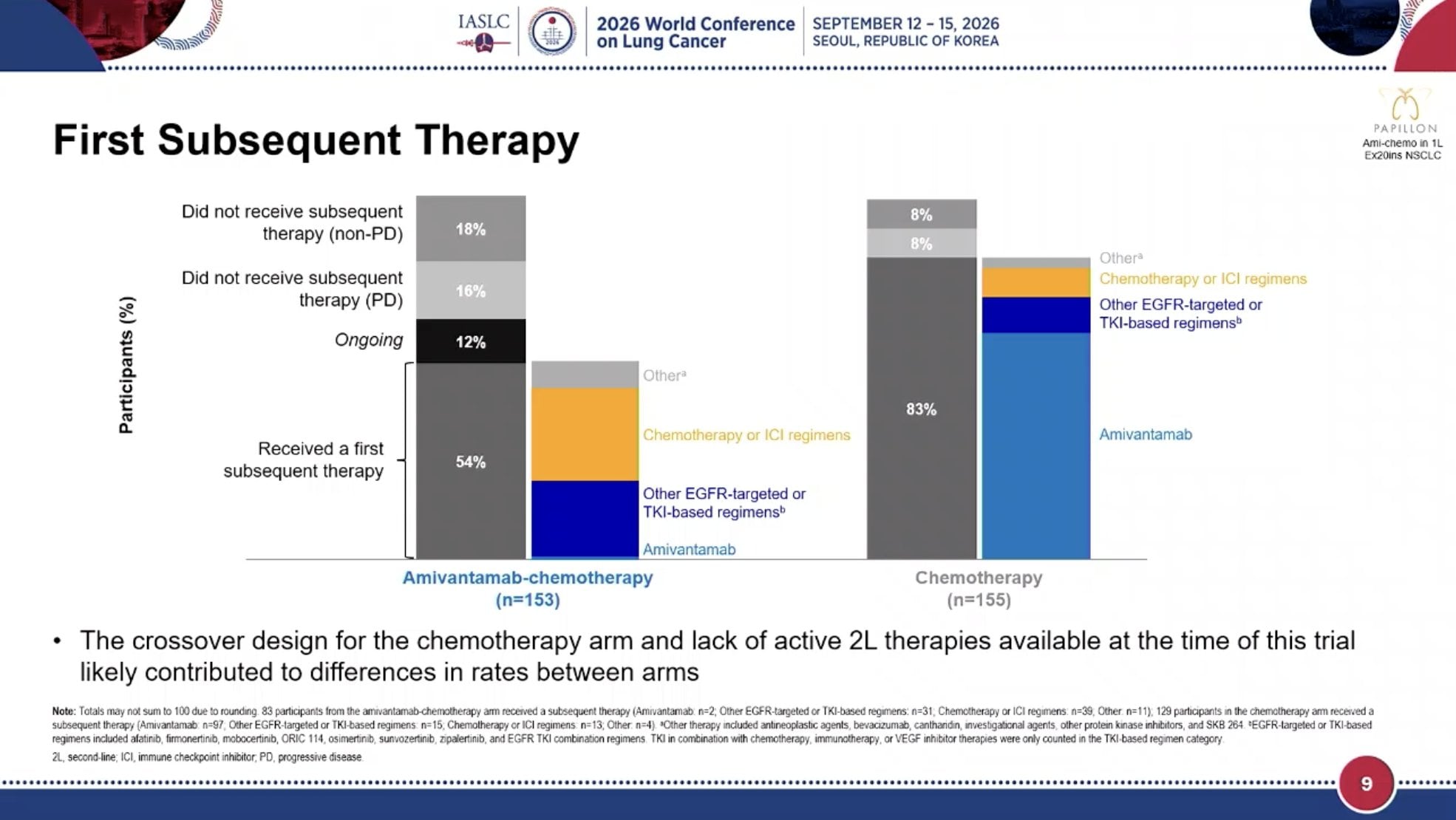
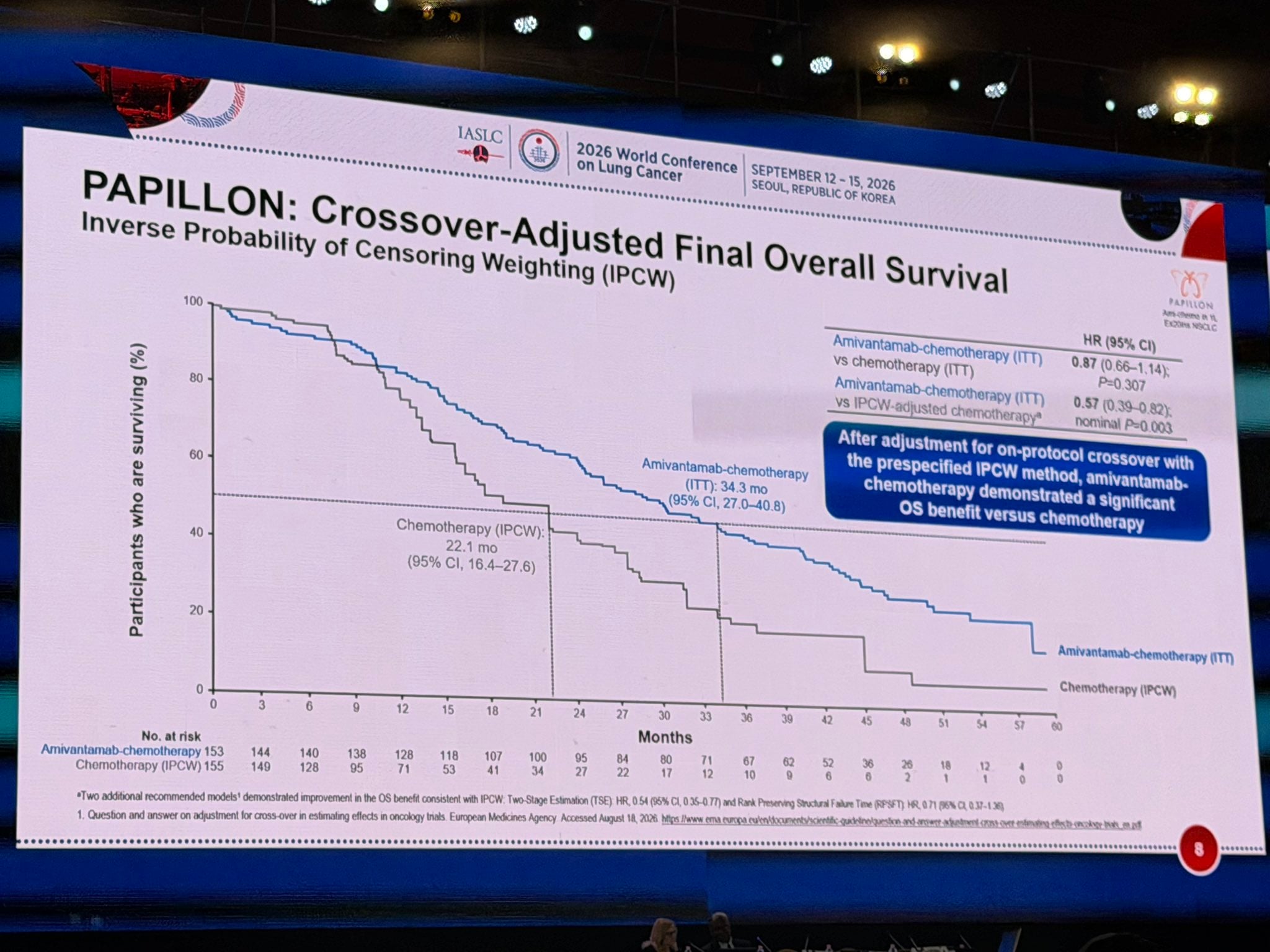
With substantial crossover to amivantamab after progression (97/128; 76%), the crossover-adjusted analysis showed an OS benefit: HR 0.57

@OncoAlert @GlopesMd @ManuelDomine @StephenVLiu @weoncologists @OpenMedKate @Lung
Final OS results from PAPILLON at #WCLC26

In 1L EGFR exon20ins advanced NSCLC, Final OS results from PAPILLON at #WCLC26

In 1L EGFR exon20ins advanced NSCLC,
6.9K impressions6 likes5 reposts2026-09-13
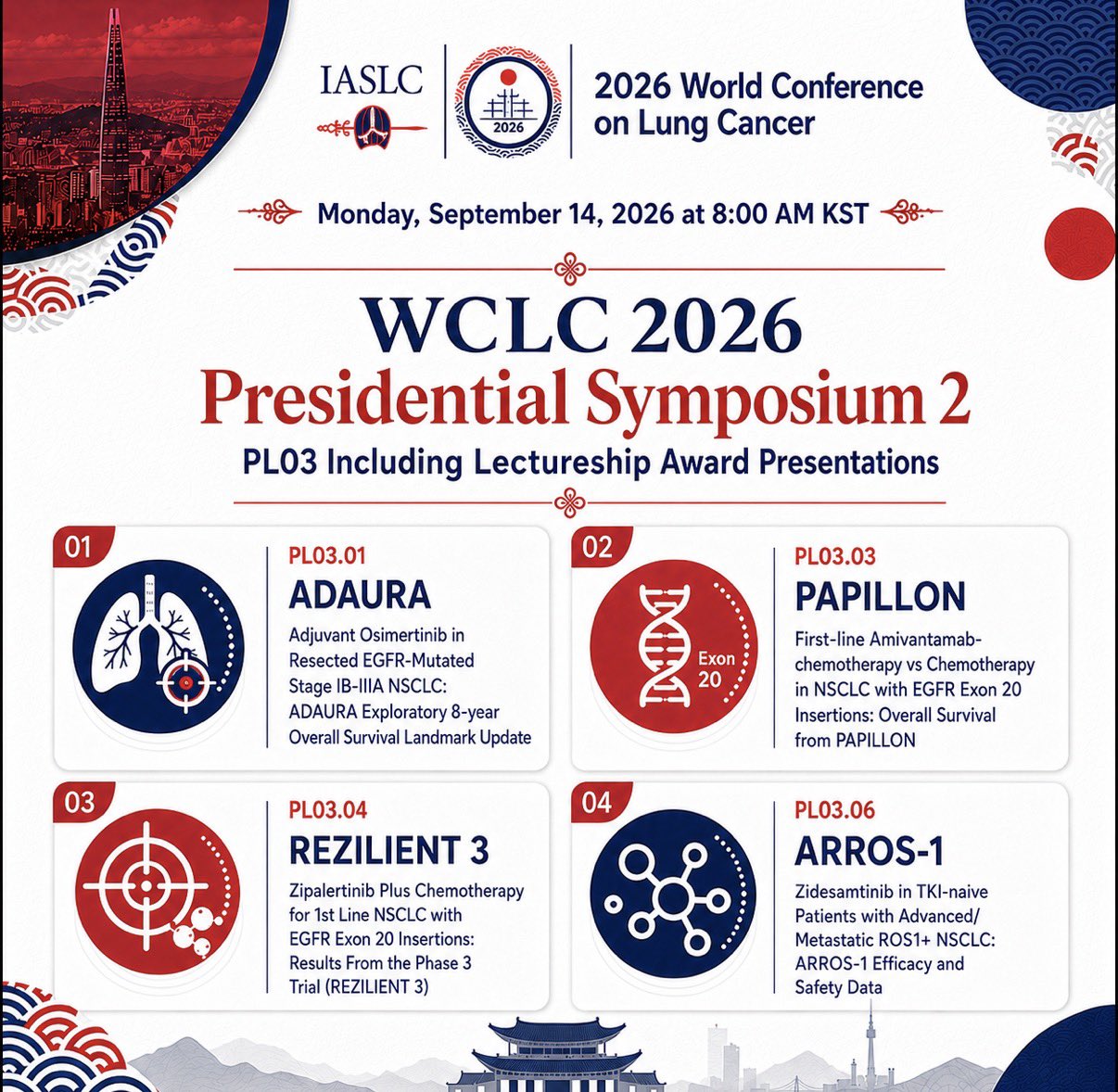
[Slide 2] IASLC 2026 World Conference SEPTEMBER 12 - 15, 2026 on Lung Cancer SEOUL, REPUBLIC OF KOREA G PAPILLON PAPILLON: Final Overall Survival in the ITT Population Ami-chemo in 1L Ex20ins NSCLC Median os (95% CI) Amivantamab-chemotherapy 34.3 mo (27.0-40.8) 100 Chemotherapy 27.9 mo (24.0-32.4) HR, 0.87 (95% CI, 0.66-1.14); P=0.307 80 Amivantamab-chemotherapy demonstrated the Participants who are surviving (%) 66% longest median OS reported to date in Ex20ins-mutated advanced NSCLC 60 58% 47% 40 38% Amivantamab-chemotherapy 20 Chemotherapy 97 of 128 (76%) Median follow-up: 48.6 mo (range, 0.3-59.4) participants who discontinued due to 0 0 3 6 9 12 15 18 21 24 27 30 33 36 39 42 45 48 51 54 57 60 progressive disease crossed over to Months No. at risk amivantamaba Amivantamab-chemotherapy 153 144 140 138 128 118 107 100 95 84 80 71 67 62 52 36 26 18 12 4 0 Chemotherapy 155 153 148 136 127 114 103 96 86 74 63 58 53 50 41 30 20 14 9 4 0 A total of 97 participants (87 participants as part of the crossover cohort plus an additional 10 participants off protocol) received 2L amivantamab monotherapy out of 128 chemotherapy-randomized participants with BICR -confirmed disease progression. 2L, second line, Ex20ins, exon 20 insertion 6 KAREN KELLY ALEX ADVEL & [Slide 3] IASLC 2026 World Conference SEPTEMBER 12 15, 2026 12 on Lung Cancer SEOUL, REPUBLIC OF KOREA PAPILLON: Crossover-Adjusted Final Overall Survival PAPILLO Ami-chemo Ex20ins NS Inverse Probability of Censoring Weighting (IPCW) HR (95% CI) Amivantamab-chemotherapy (ITT) 0.87 (0.66-1.14); 100 vs chemotherapy (ITT) P=0.307 Amivantamab-chemotherapy (ITT) 0.57 (0.39-0.82); vs IPCW-adjusted chemotherapy® nominal P=0.003 80 After adjustment for on-protocol crossover with Participants who are surviving (%) the prespecified IPCW method, amivantamab- Amivantamab-chemotherapy chemotherapy demonstrated a significant 60 (ITT): 34.3 mo (95% CI, 27.0-40.8) OS benefit versus chemotherapy Chemotherapy (IPCW): 40 22.1 mo (95% CI, 16.4-27.6) 20 Amivantamab-chemotherapy (ITT) Chemotherapy (IPCW) 0 0 3 6 9 12 15 18 21 24 27 30 33 36 39 42 45 48 51 54 57 60 No. at risk Months Amivantamab-chemotherapy 153 144 140 138 128 118 107 100 95 84 80 71 67 62 52 36 26 18 12 4 0 Chemotherapy (IPCW) 155 149 128 95 71 53 41 34 27 22 17 12 10 9 6 6 2 1 1 0 0 *Two additional recommended models' demonstrated improvement in the OS benefit consistent with IPCW: Two-Stage Estimation (TSE): HR, 0.54 (95% CI, 0.35-0 77) and Rank Preserving Structural Failure Time (RPSFT): HR, 0.71 (95% CI, 0.37-1.36). 1. Question and answer on adjustment for cross-over in estimating effects in oncology trials. European Medicines Agency. Accessed August 18, 2026. https I/www 8 KAREN KELLY CHUL KIM RATHENOVA
DDr Amol Akhade@SuyogCancer

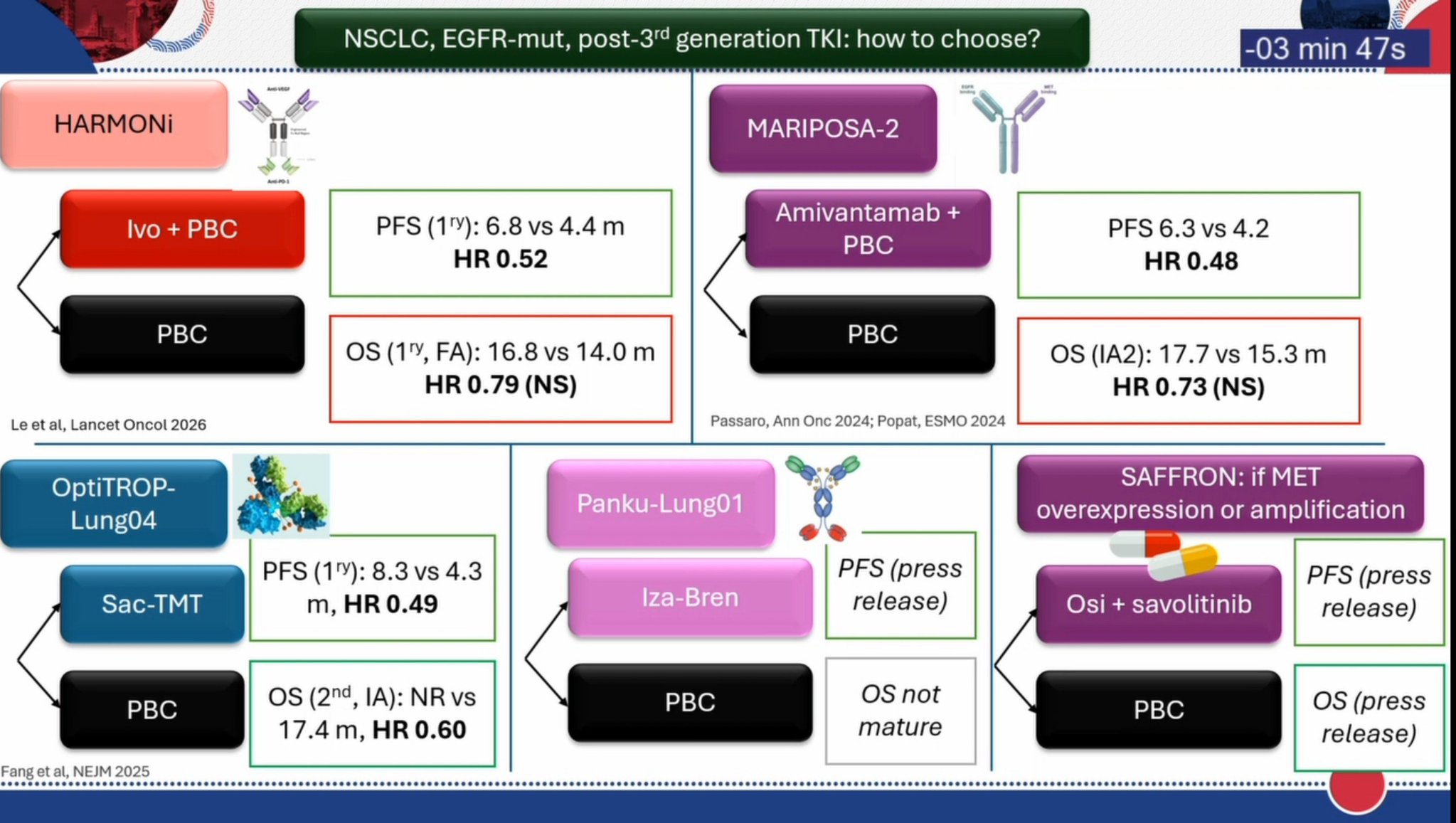
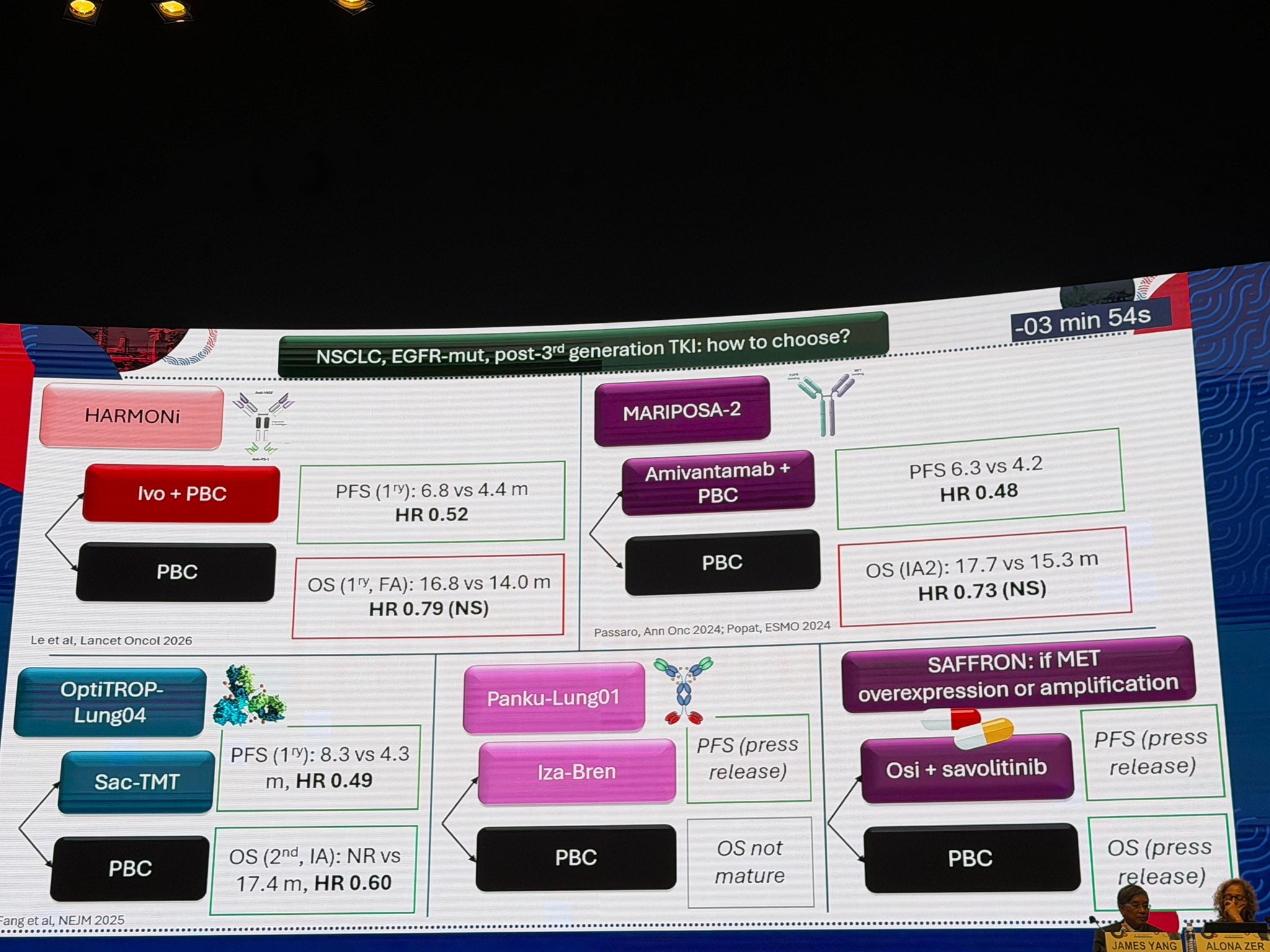
Post 3rd generation EGFR TKI progression treatment options . Another good summary slide @IASLC #WCLC26 https://t.co/32BfVbpcei

Post 3rd generation  EGFR TKI  progression treatment options . Another good summ
6K impressions34 likes7 reposts2026-09-15
[Slide 1] NSCLC, EGFR-mut, post-3rd generation TKI: how to choose? -03 min 47s HARMONi MARIPOSA-2 Amivantamab + Ivo + PBC PFS (1ʳУ): 6.8 vs 4.4 m PFS 6.3 vs 4.2 PBC HR 0.52 HR 0.48 PBC PBC OS (1ʳᵈ, FA): 16.8 vs 14.0 m OS (IA2): 17.7 vs 15.3 m HR 0.79 (NS) HR 0.73 (NS) Le et al, Lancet Oncol 2026 Passaro, Ann Onc 2024; Popat, ESMO 2024 OptiTROP- SAFFRON: if MET Panku-Lung01 Lung04 overexpression or amplification PFS (1ʳᵈ): 8.3 vs 4.3 PFS (press PFS (press Sac-TMT m, HR 0.49 Iza-Bren release) Osi + savolitinib release) PBC OS (2ⁿᵈ, IA): NR vs PBC OS not PBC OS (press 17.4 m, HR 0.60 mature release) Fang et al, NEJM 2025
UUğur Özkerim@UOzkerim

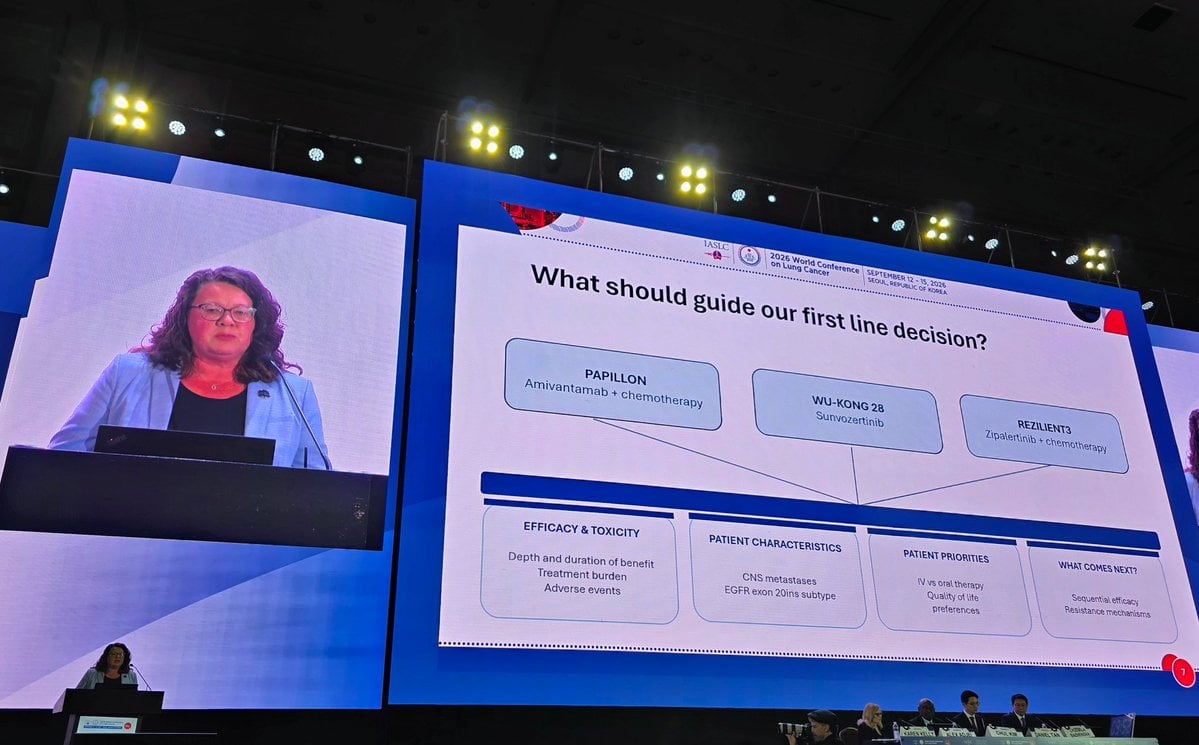
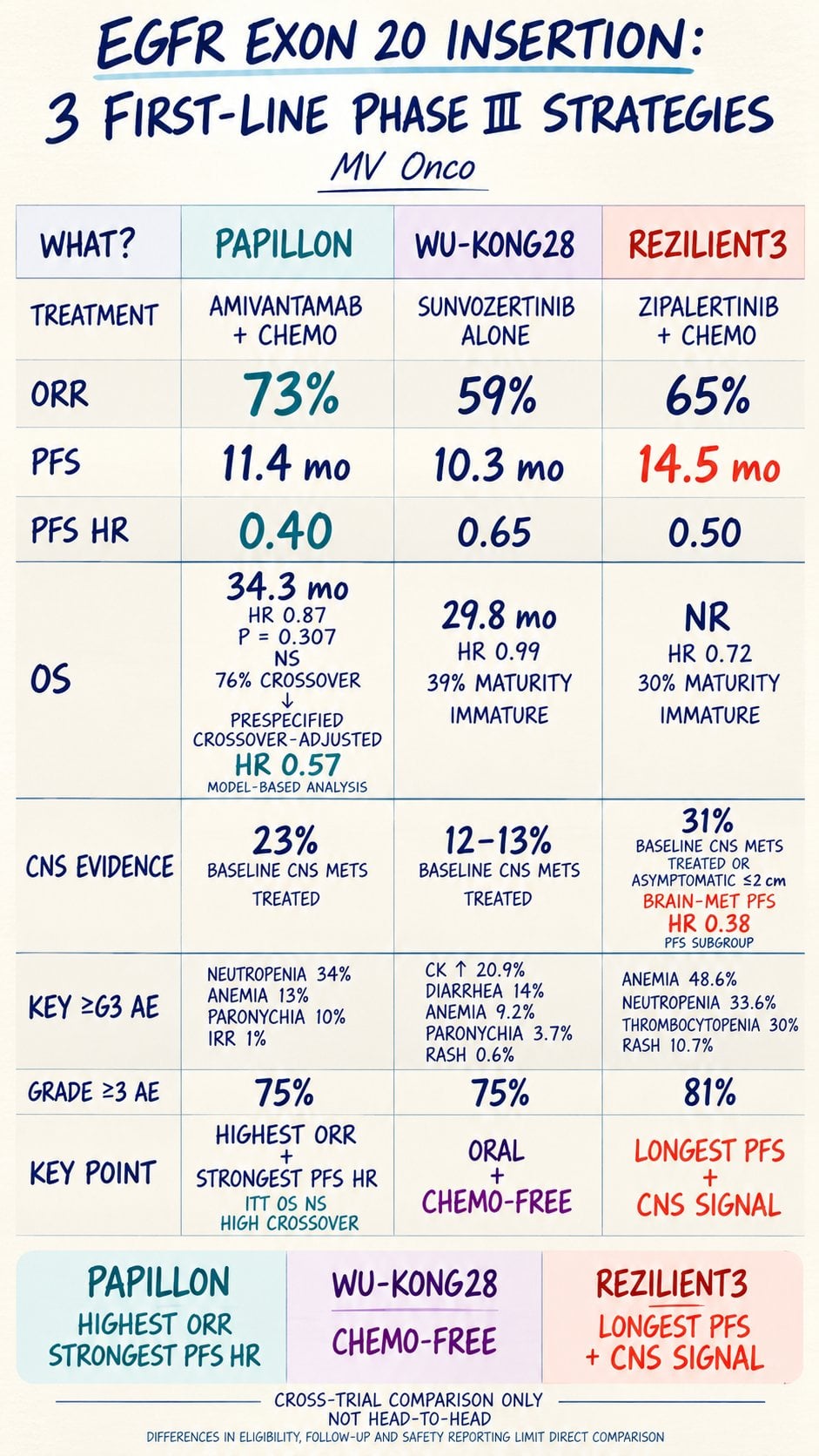
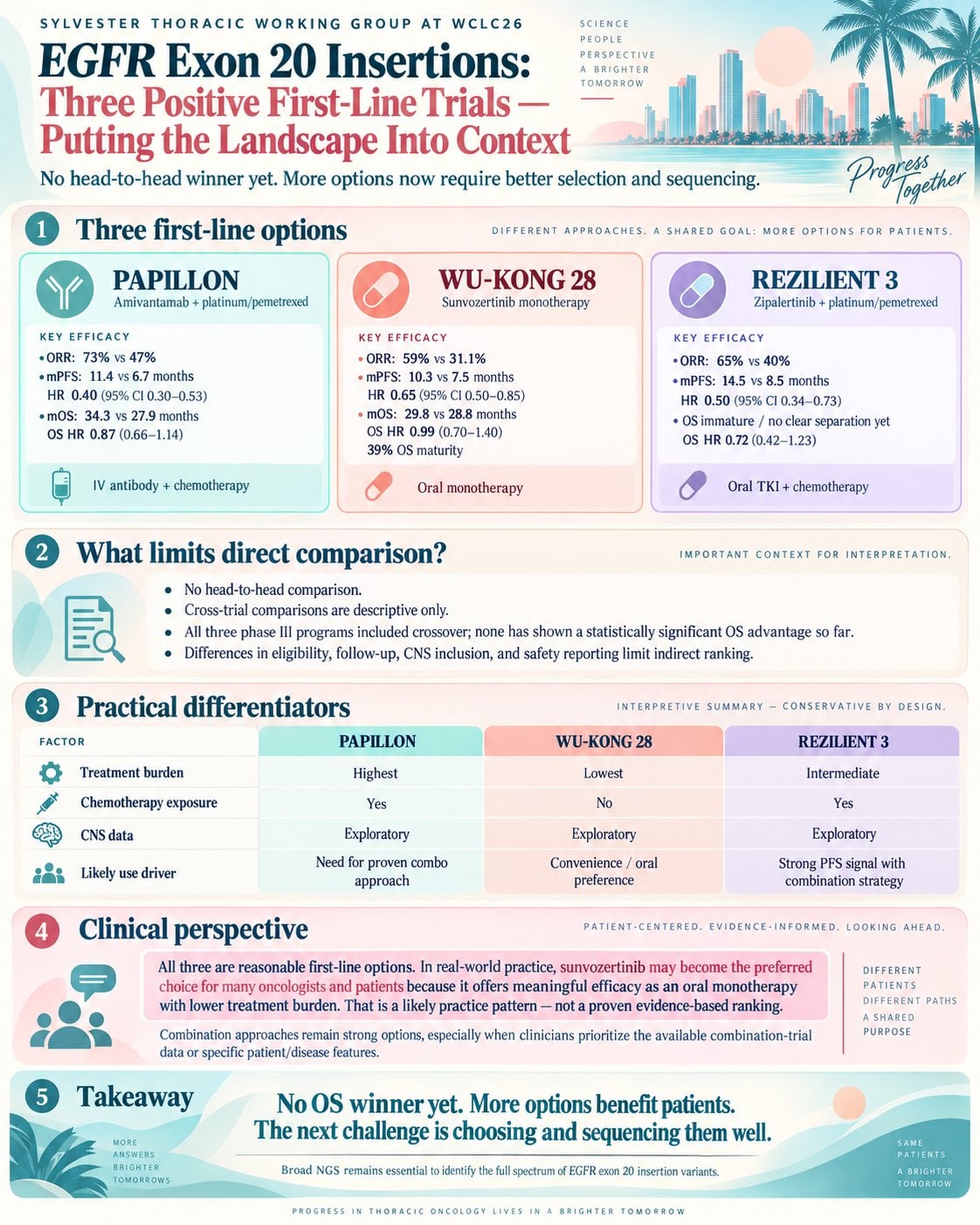
Excellent discussion of the evolving 1L landscape for EGFR exon20ins NSCLC at #WCLC26. @LudaBazhenovaMD

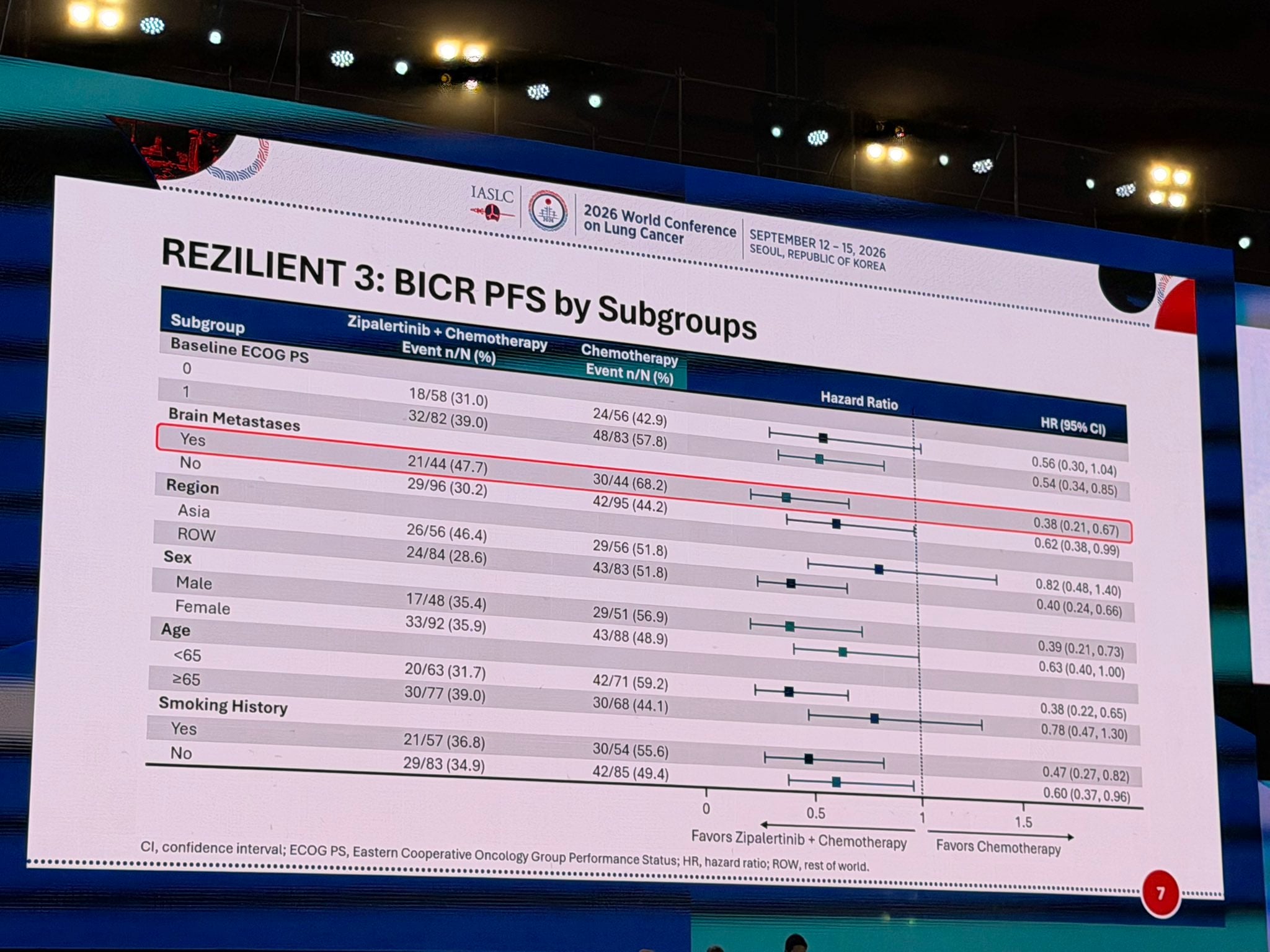
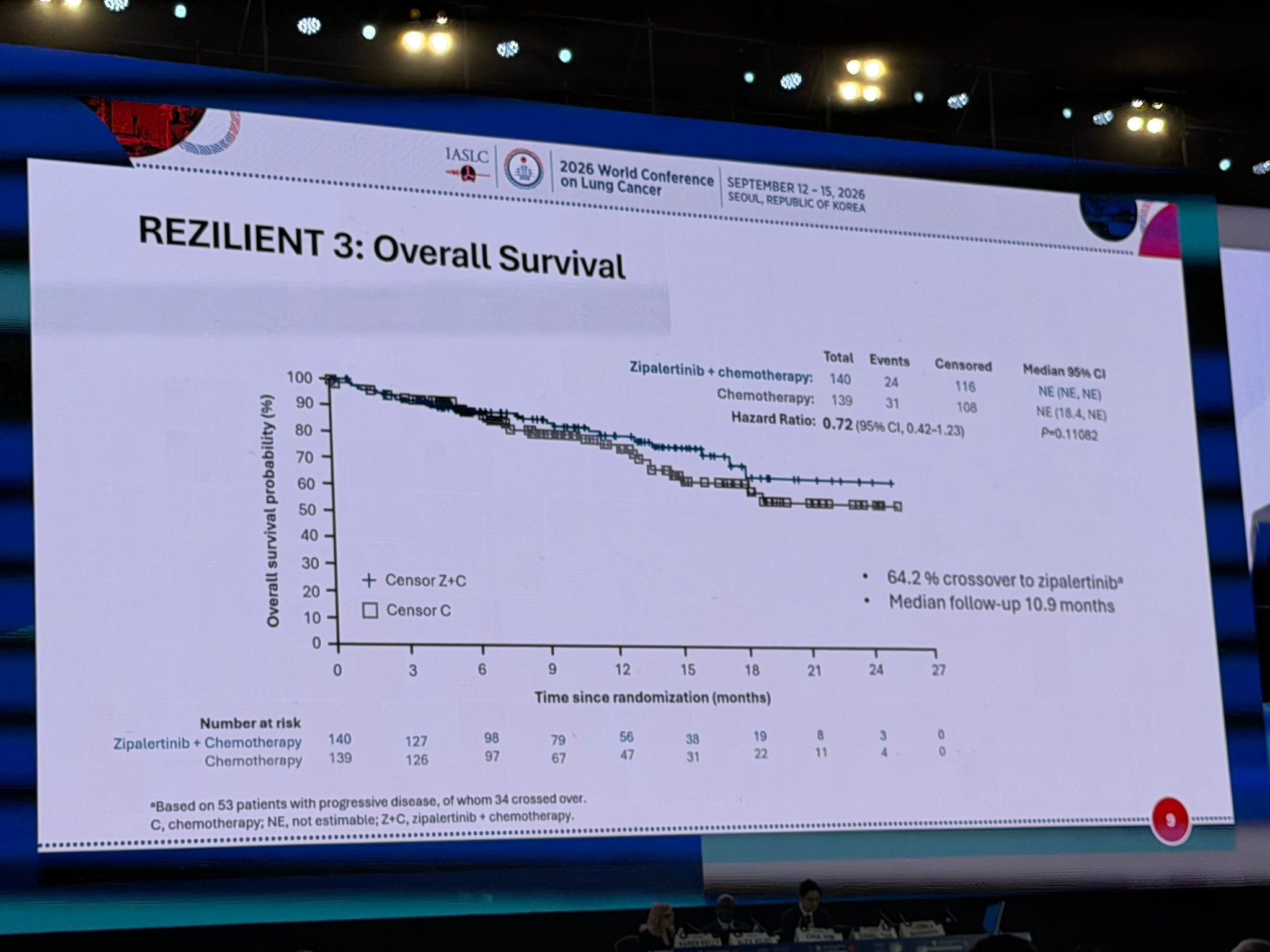
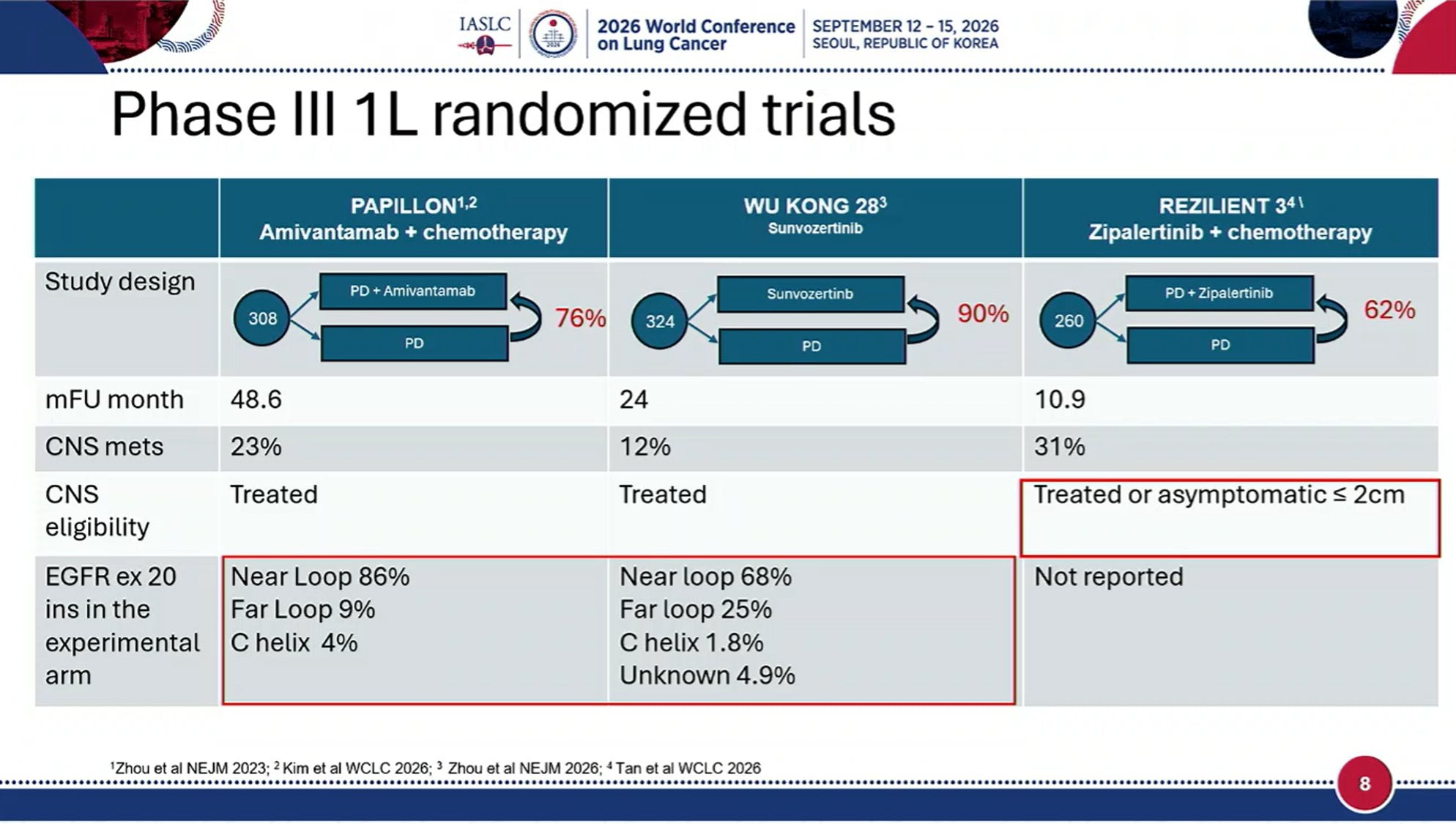
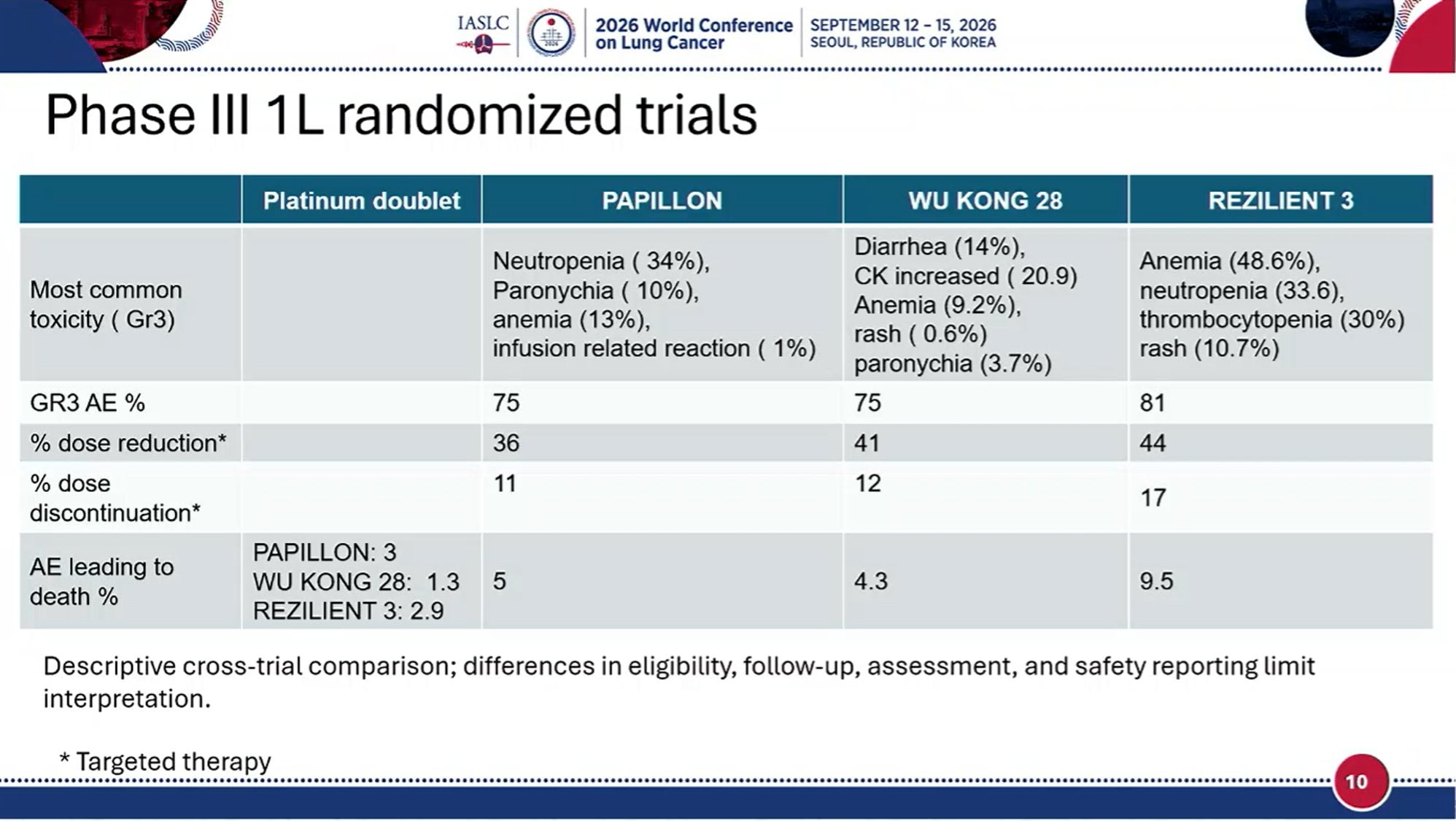
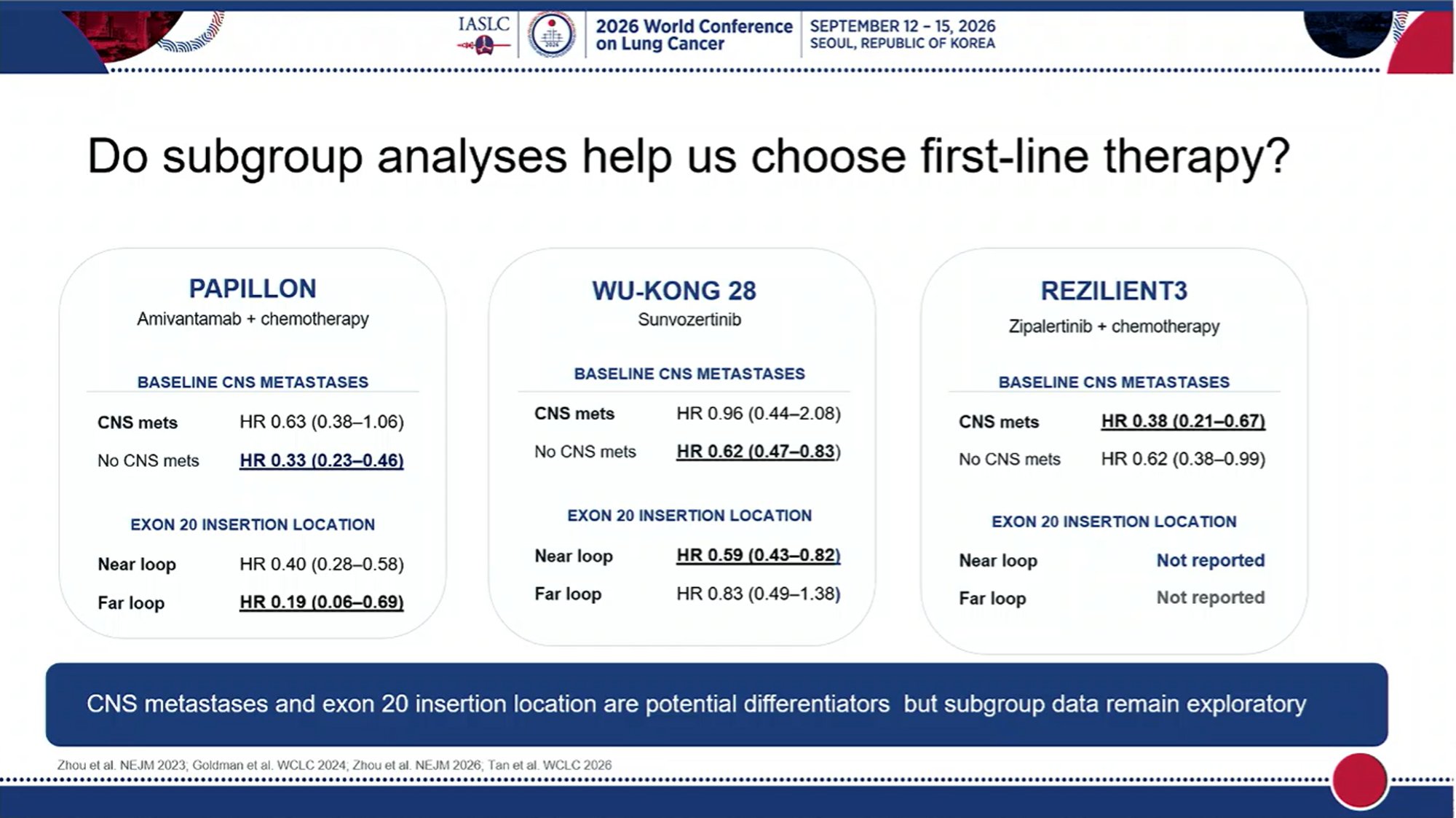
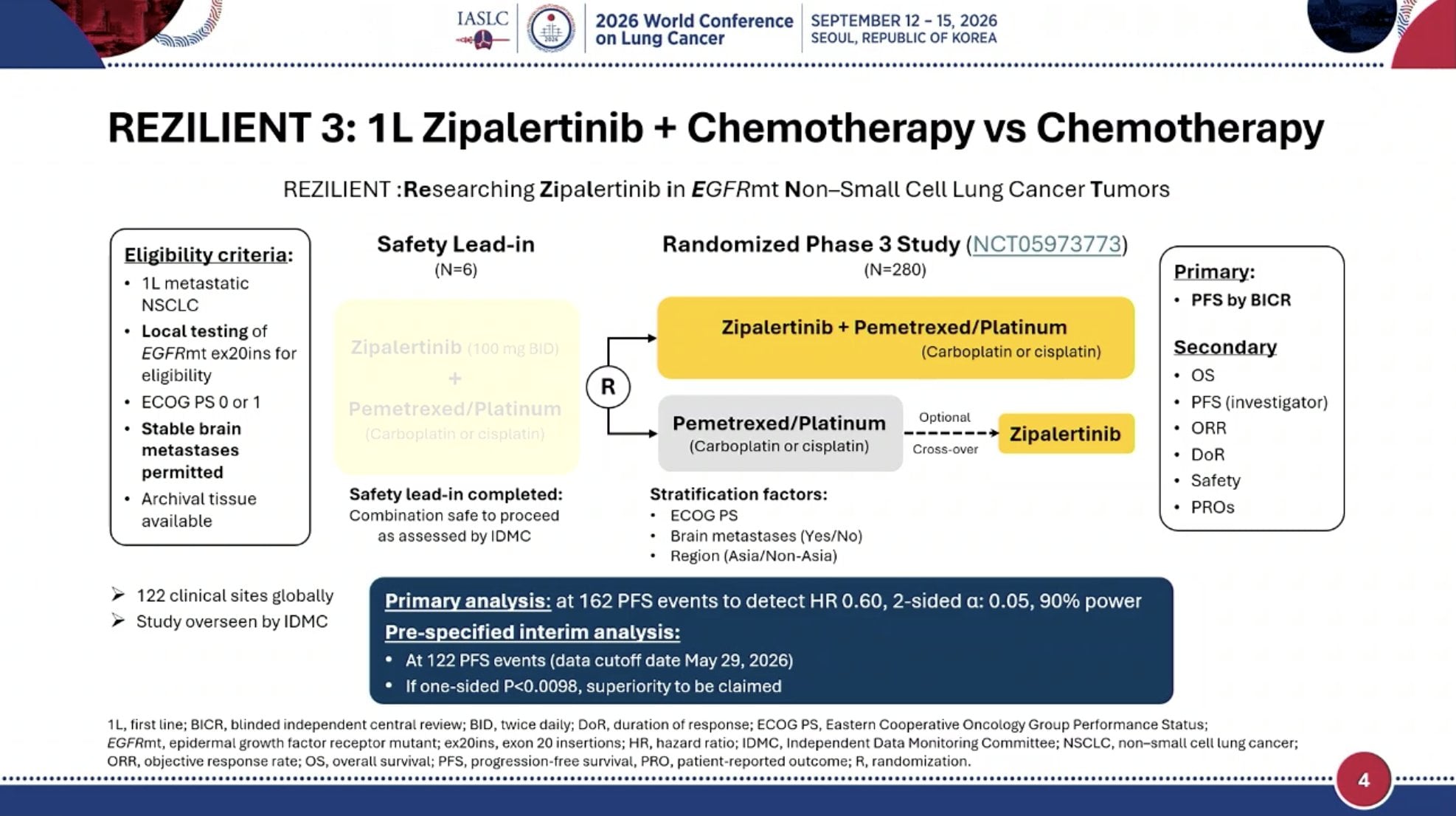
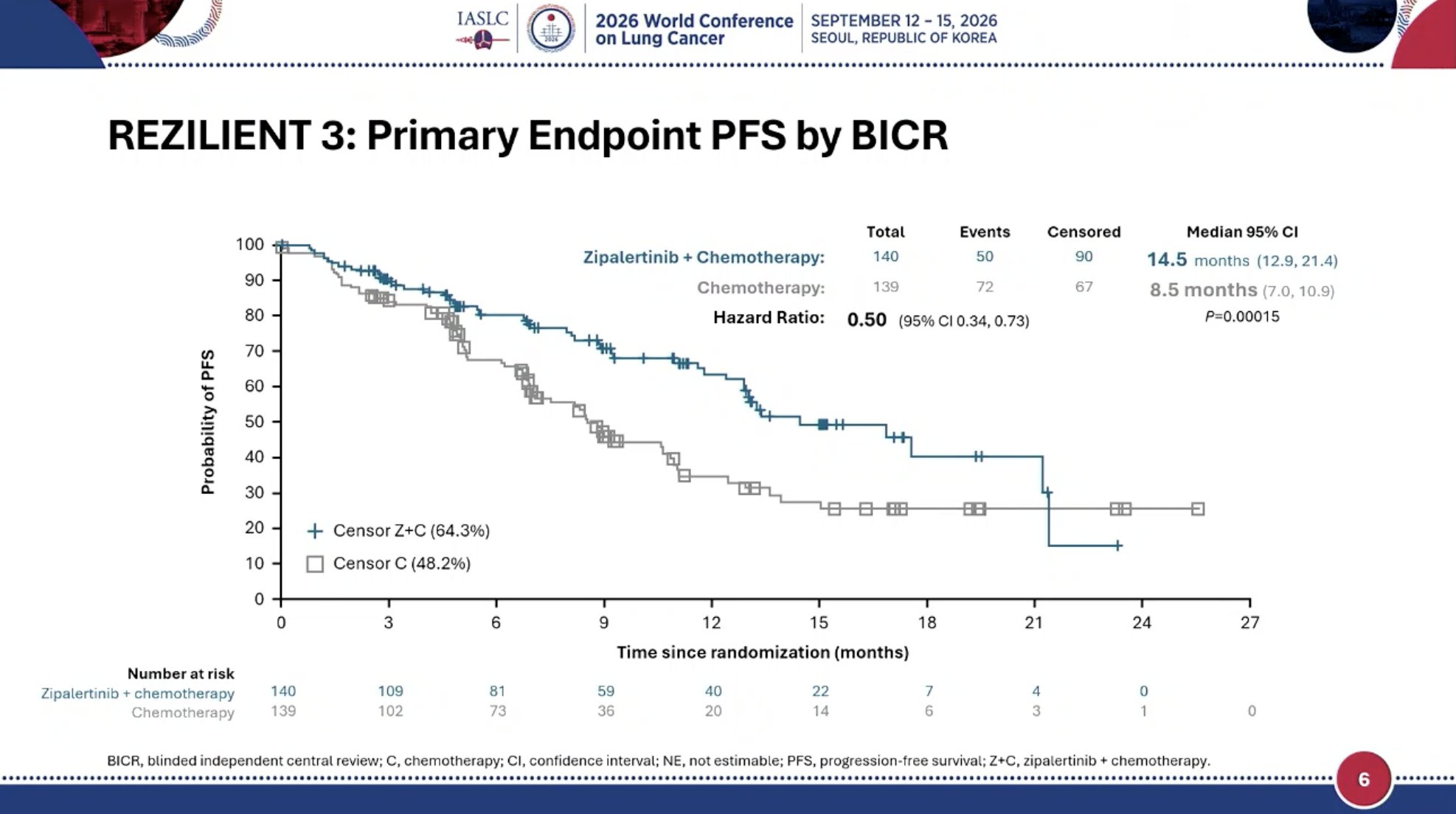
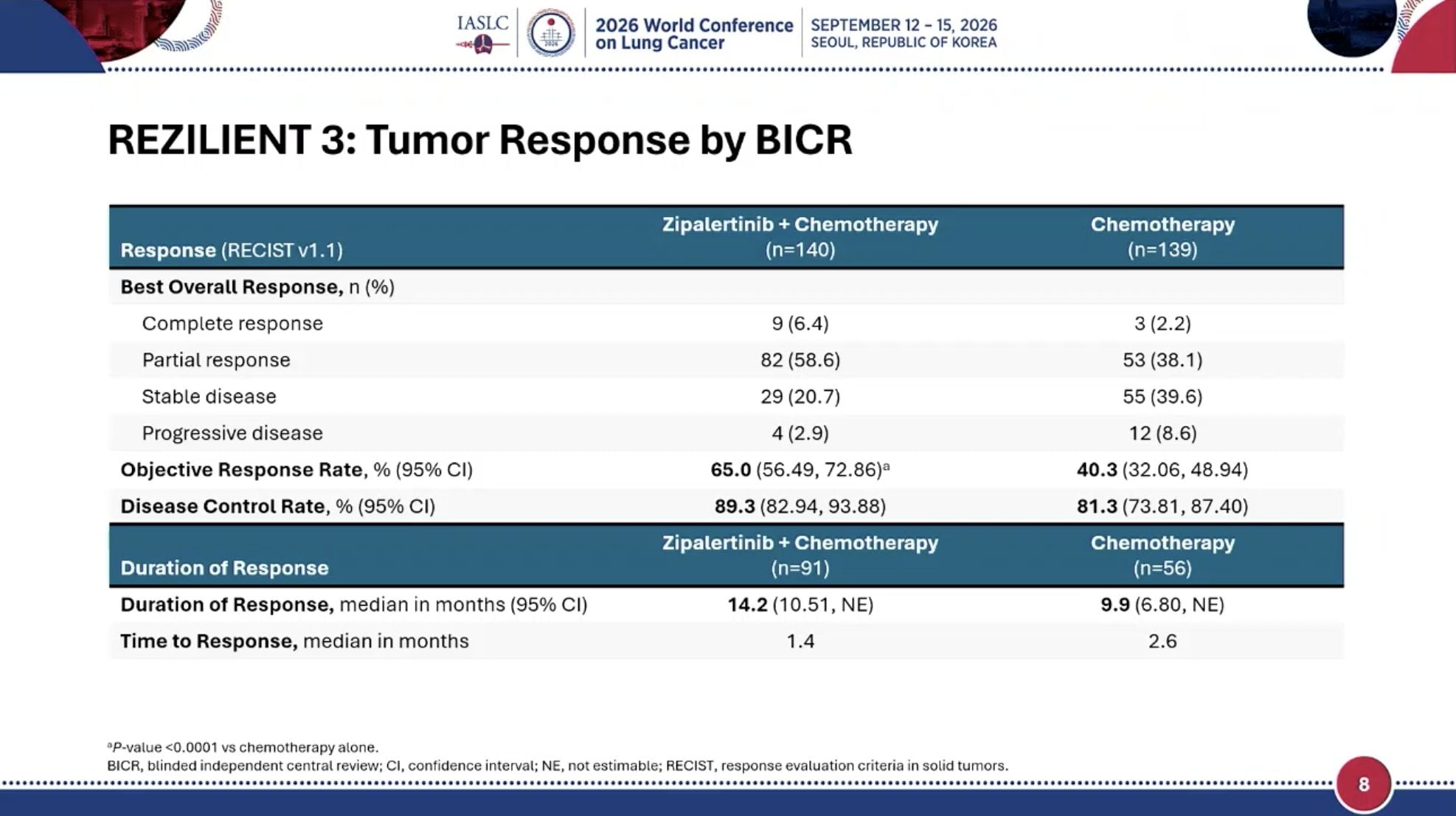
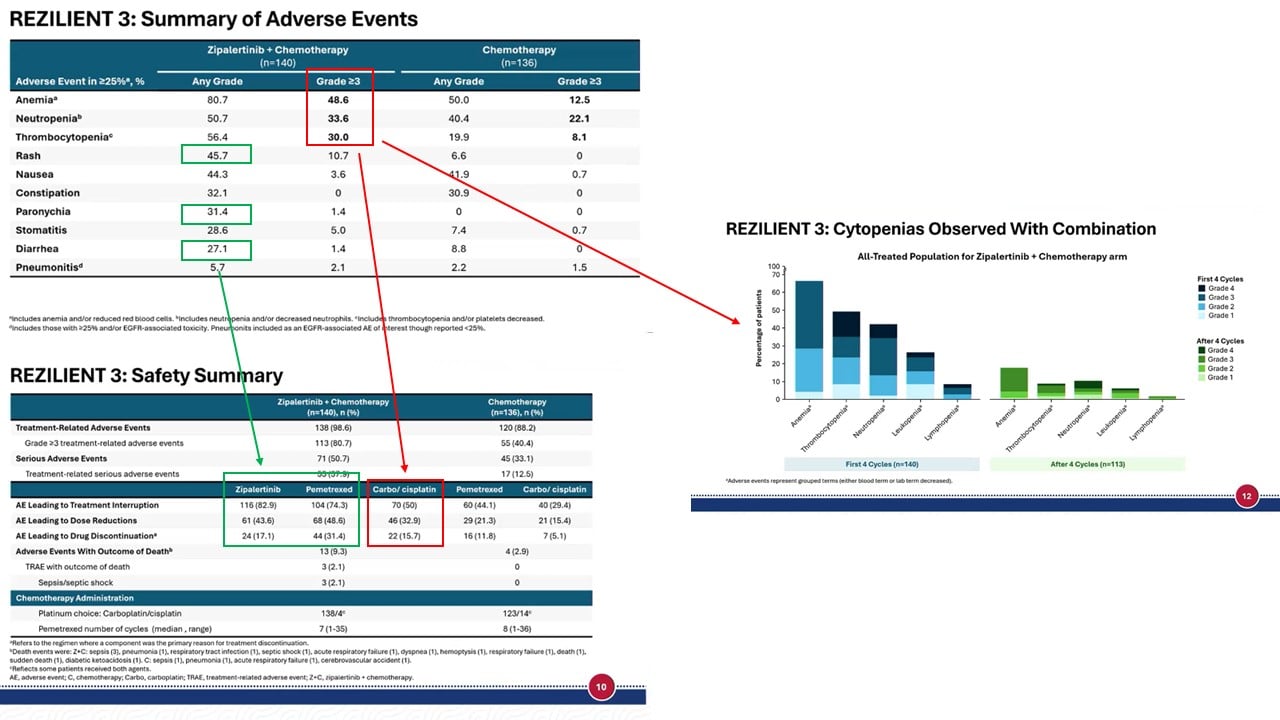
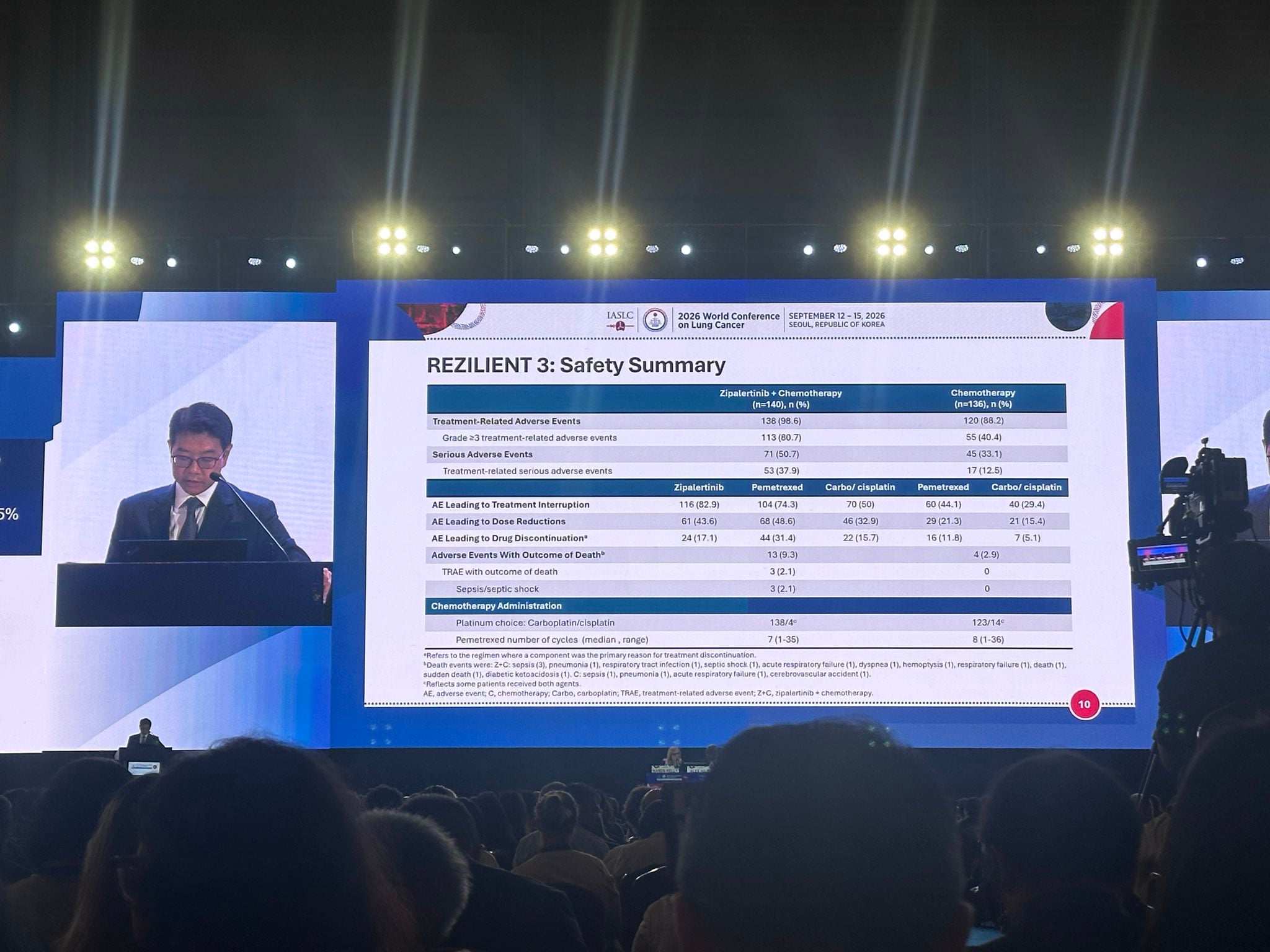
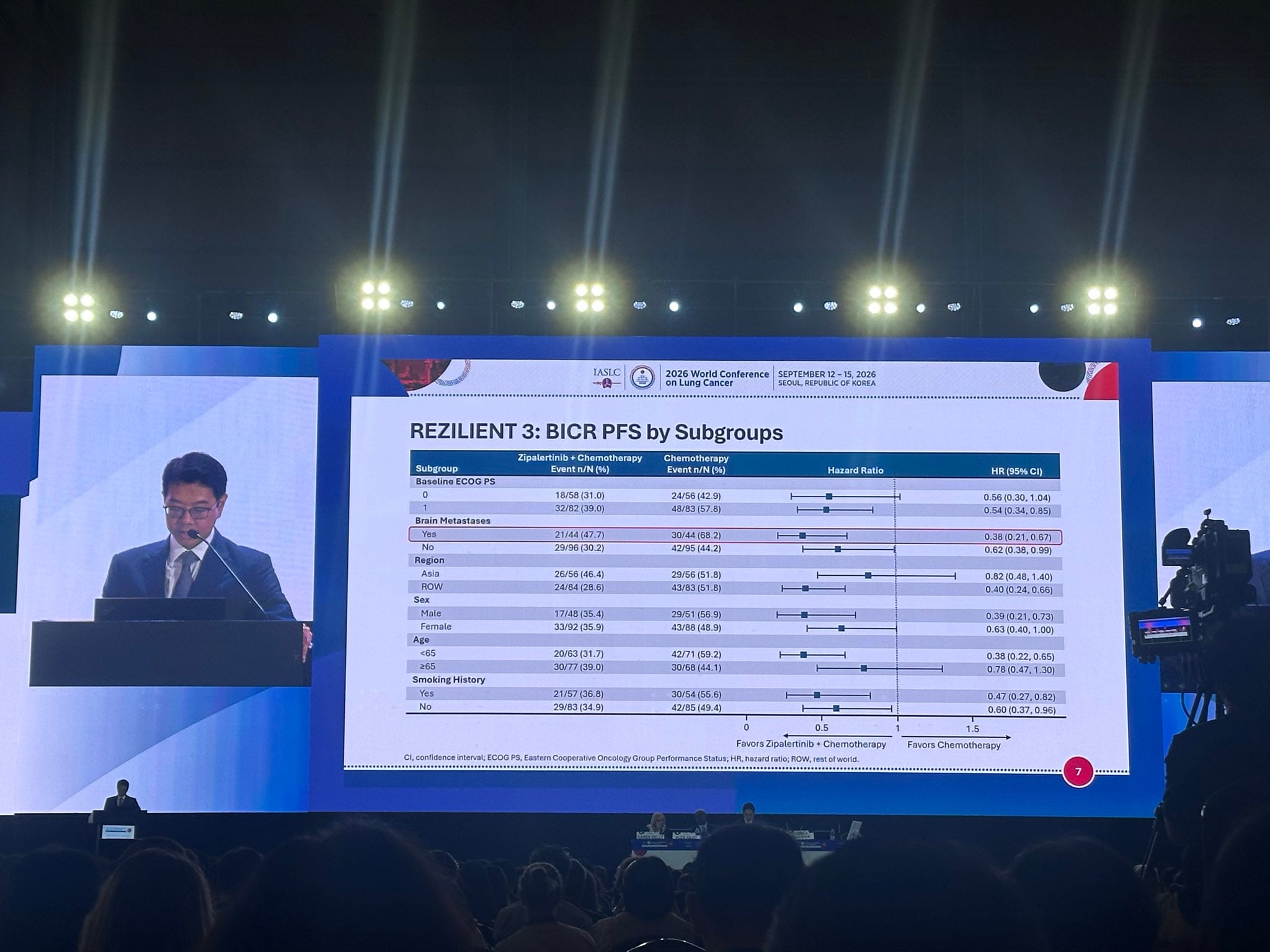
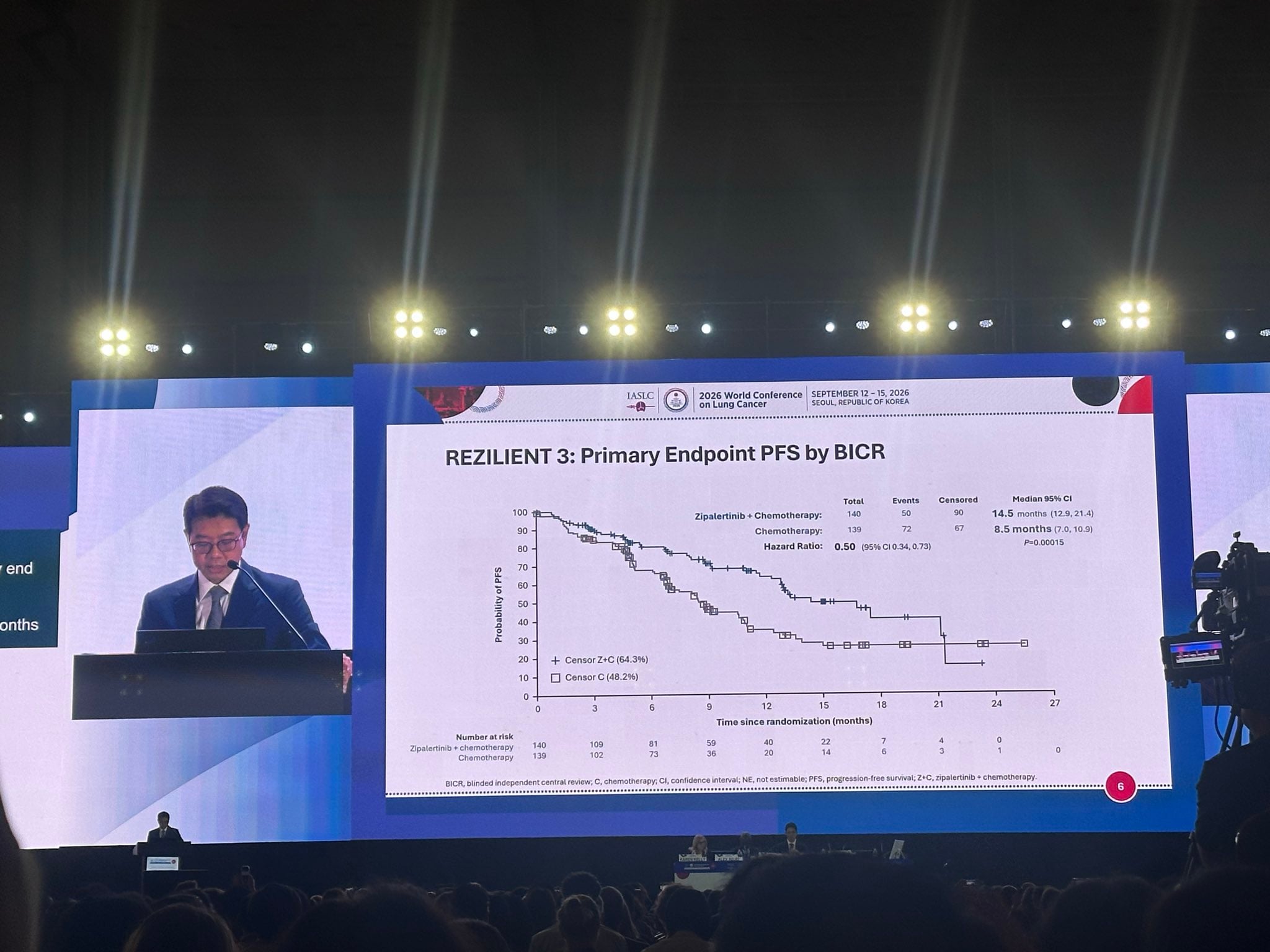
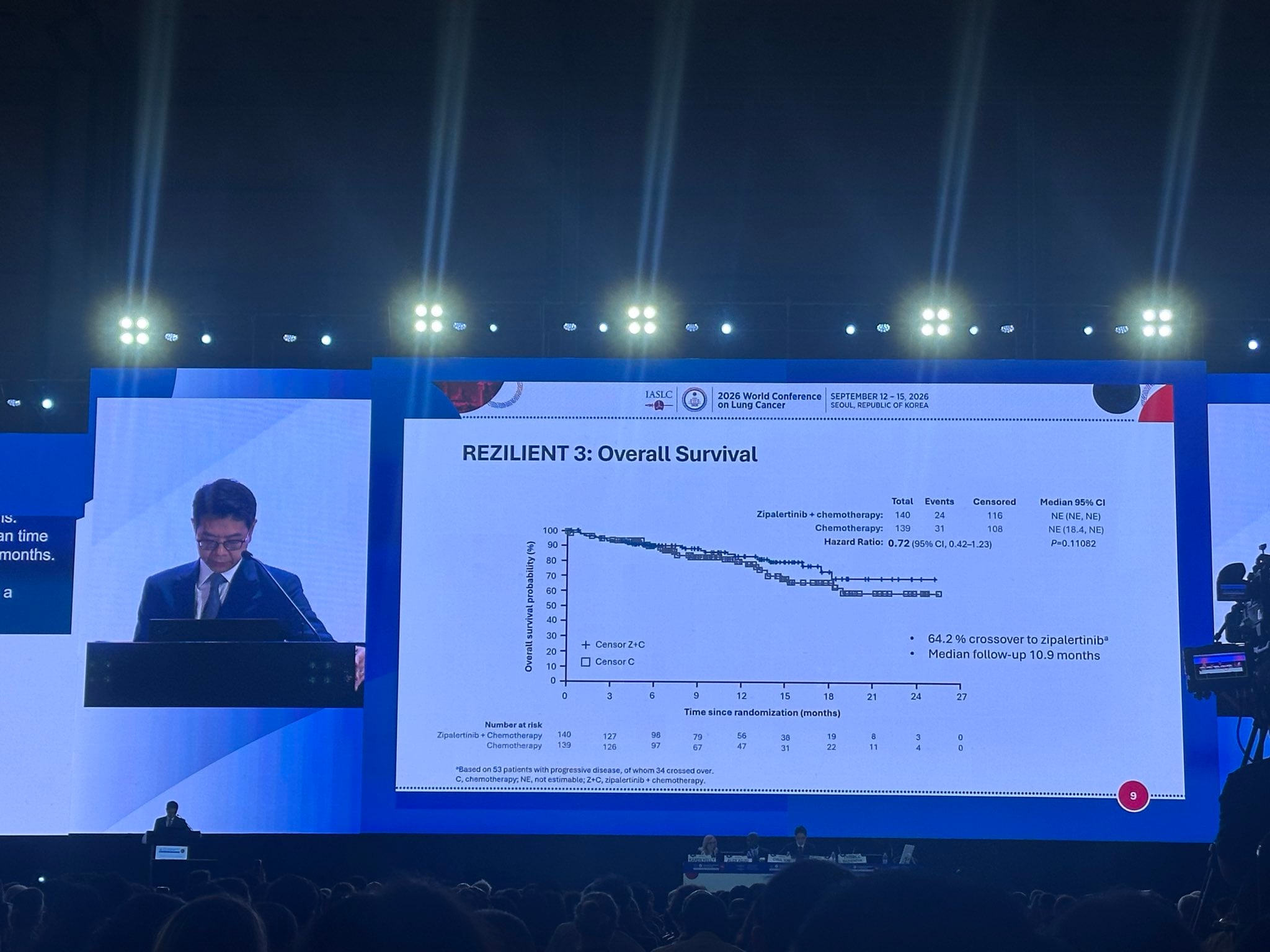
A thoughtful comparison of PAPILLON, WU-KONG 28 and REZILIENT3, highlighting that treatment choice goes beyond efficacy alone—CNS disease, exon20ins subtype, toxicity, treatment burden, patient preference and subsequent therapy all matter.

Importantly, cross-trial comparisons and subgroup ana

Excellent discussion of the evolving 1L landscape for EGFR exon20ins NSCLC at #WExcellent discussion of the evolving 1L landscape for EGFR exon20ins NSCLC at #WExcellent discussion of the evolving 1L landscape for EGFR exon20ins NSCLC at #WExcellent discussion of the evolving 1L landscape for EGFR exon20ins NSCLC at #W
5.9K impressions3 likes2 reposts2026-09-14
[Slide 1] What should guide our first line decision? PAPILLON Amivantamab + chemotherapy WU-KONG 28 Sunvozertinib REZILIENT3 Zipalertinib + chemotherapy EFFICACY & TOXICITY PATIENT CHARACTERISTICS PATIENT PRIORITIES WHAT COMES NEXT? Depth and duration of benefit CNS metastases IV VS oral therapy Treatment burden EGFR exon 20ins subtype Quality of life Sequential efficacy Adverse events preferences Resistance mechanisms [Slide 2] along IASLC 2026 World Conference SEPTEMBER 12 - 15, 2026 on Lung Cancer SEOUL, REPUBLIC OF KOREA Do subgroup analyses help us choose first-line therapy? PAPILLON WU-KONG 28 REZILIENT3 Amivantamab + chemotherapy Sunvozertinib Zipalertinib + chemotherapy BASELINE CNS METASTASES BASELINE CNS METASTASES BASELINE CNS METASTASES CNS mets CNS mets HR 0.63 (0.38-1.06) HR 0.96 (0.44-2.08) CNS mets HR 0.38 (0.21-0.67) No CNS mets HR 0.33 (0.23-0.46) HR 0.62 (0.47-0.83) No CNS mets No CNS mets HR 0.62 (0.38-0.99) EXON 20 INSERTION LOCATION EXON 20 INSERTION LOCATION EXON 20 INSERTION LOCATION Near loop HR 0.40 (0.28-0.58) Near loop HR 0.59 (0.43-0.82) Near loop Not reported Far loop HR 0.19 (0.06-0.69) Far loop HR 0.83 (0.49-1.38) Far loop Not reported CNS metastases and exon 20 insertion location are potential differentiators but subgroup data remain exploratory [Slide 3] IASLC 2026 World Conference SEPTEMBER 12 - 15, 2026 on Lung Cancer SEOUL, REPUBLIC OF KOREA Phase III randomized 1L trials PAPILLON Platinum doublet Amivantamab WU KONG 28 REZILIENT 3 + sunvozertinib Zipalertinib + chemotherapy chemotherapy PAPILLON: 47 ORR% WU KONG 28: 31.1 73 (BIRC) 59 65 REZILIENT 3: 40 PAPILLON: 6.7 11.4 mPFS m 10.3 14.5 WU KONG 28: 7.5 0.40; 0.30 -0.53; P<0.001 HR (CI, p) 0.65; 0.50 -0.85; <0.001 0.5; 0.34-0.73; p=0.00015 REZILIENT 38.5 mOS, m PAPILLON: 27.9 (24.0-32.4) 34.3 (27.0-40.8) 29.8 (21.8-NE) NR HR (Cl,p) WU KONG 28: 28.8 (27.0-NE) HR, 0.87 (0.66-1.14); 0.99 (0.7-1.40) 0.72 (0.42-1.23) REZILIENT 3: NR P=0.307 p 0.49 39% maturity P=0.11082 PAPILLON: 68 18m-OS WU KONG 28: 67 74 65.5 Not reported REZILIENT 3: NR PAPILLON: 54 24m-OS WU KONG 28: 56.2 64 57.4 Not reported REZILIENT 3: NR Descriptive cross-trial comparison; differences in eligibility, follow-up, assessment, and safety reporting limit interpretation. 9 [Slide 4] IASLC 2026 World Conference SEPTEMBER 12 - 15, 2026 on Lung Cancer SEOUL, REPUBLIC OF KOREA Phase III 1L randomized trials Platinum doublet PAPILLON WU KONG 28 REZILIENT 3 Neutropenia (34%), Diarrhea (14%), Anemia (48.6%), Most common Paronychia (10%), CK increased (20.9) toxicity (Gr3) anemia (13%), Anemia (9.2%), neutropenia (33.6), infusion related reaction (1%) rash (0.6%) thrombocytopenia (30%) rash (10.7%) paronychia (3.7%) GR3 AE % 75 75 81 % dose reduction* 36 41 44 % dose 11 12 17 discontinuation* PAPILLON: 3 AE leading to WU KONG 28: 1.3 5 4.3 9.5 death % REZILIENT 3: 2.9 Descriptive cross-trial comparison; differences in eligibility, follow-up, assessment, and safety reporting limit interpretation. * Targeted therapy 10
MMisty Dawn Shields@drshieldsmd

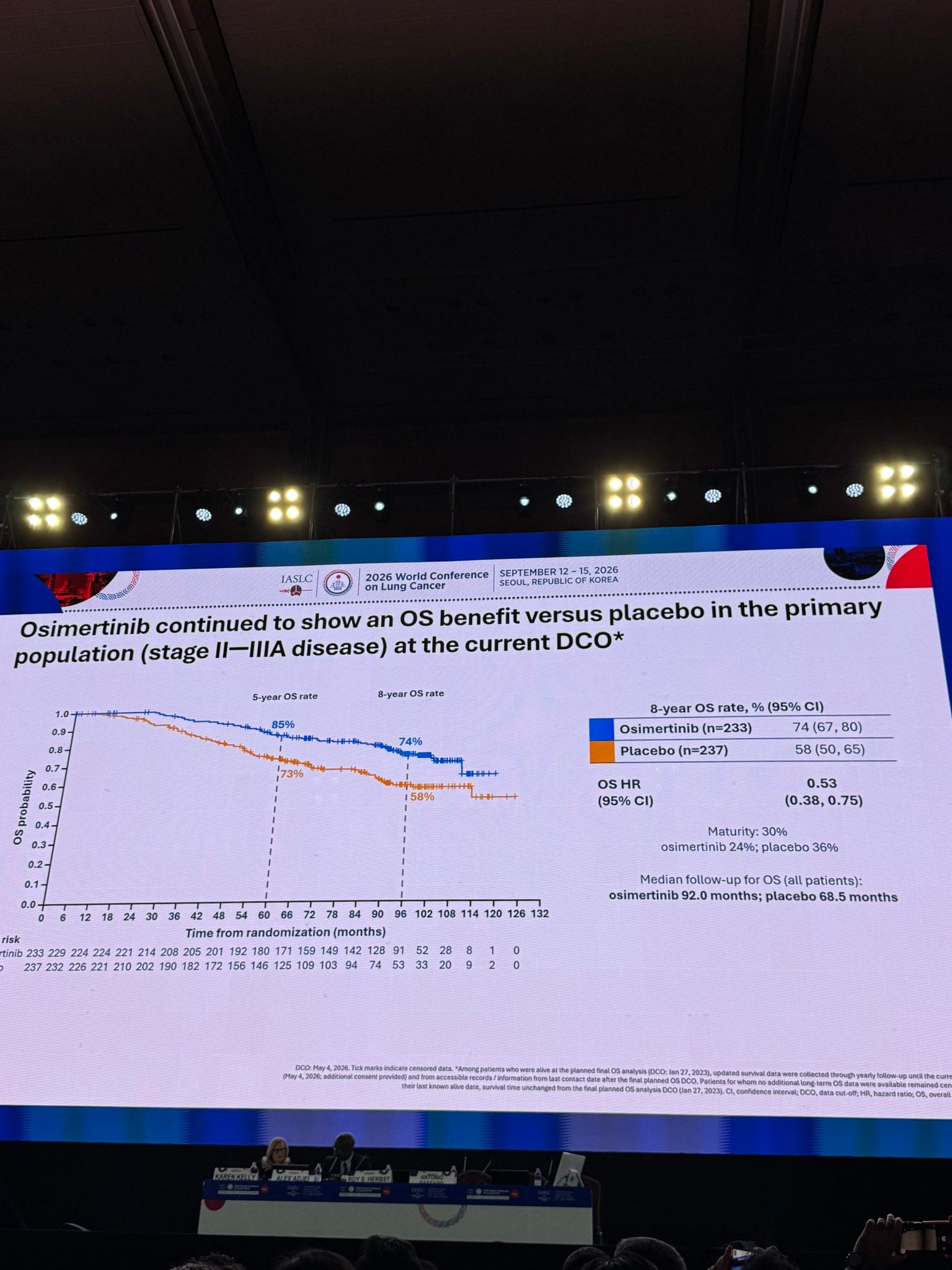
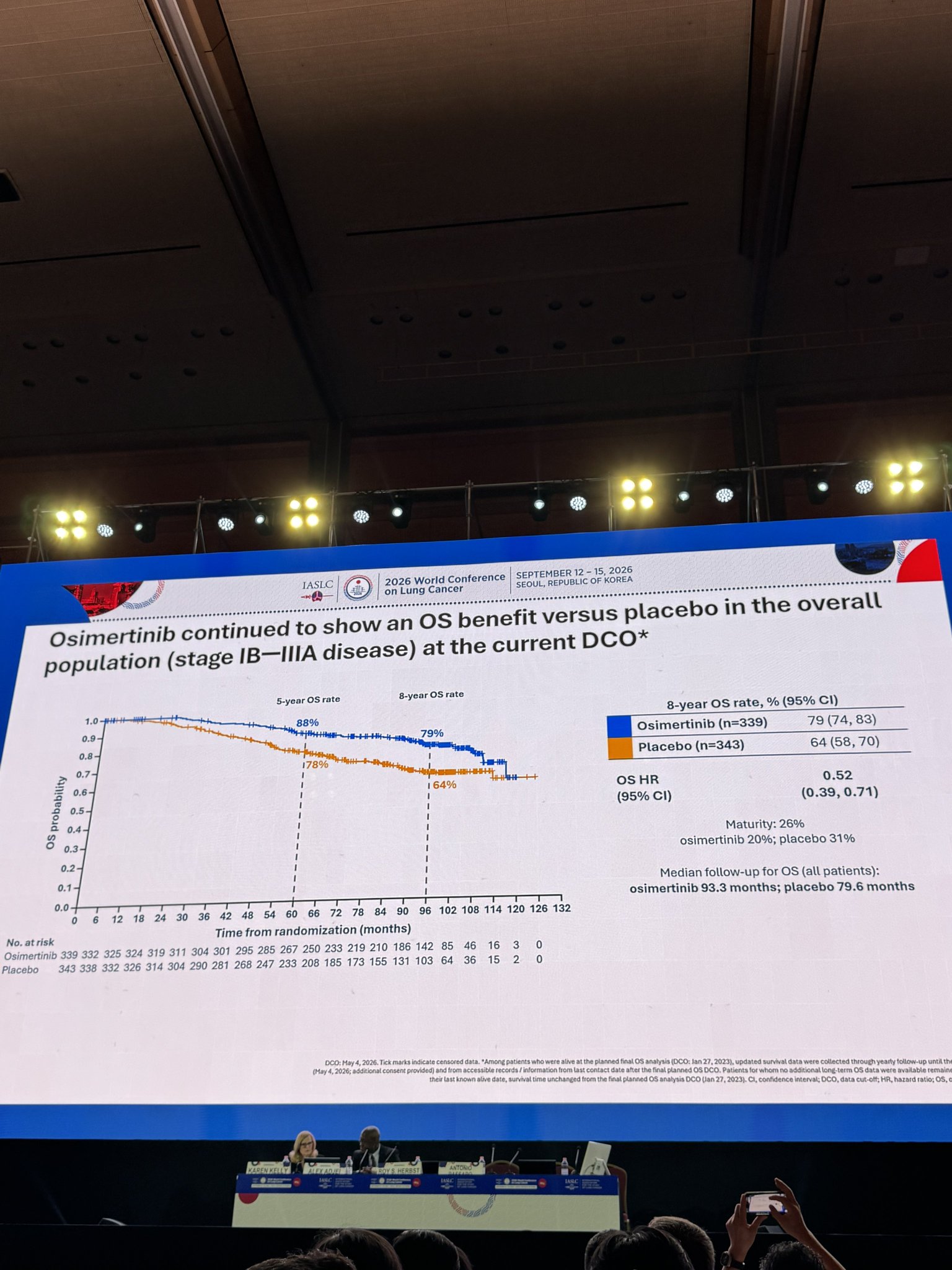
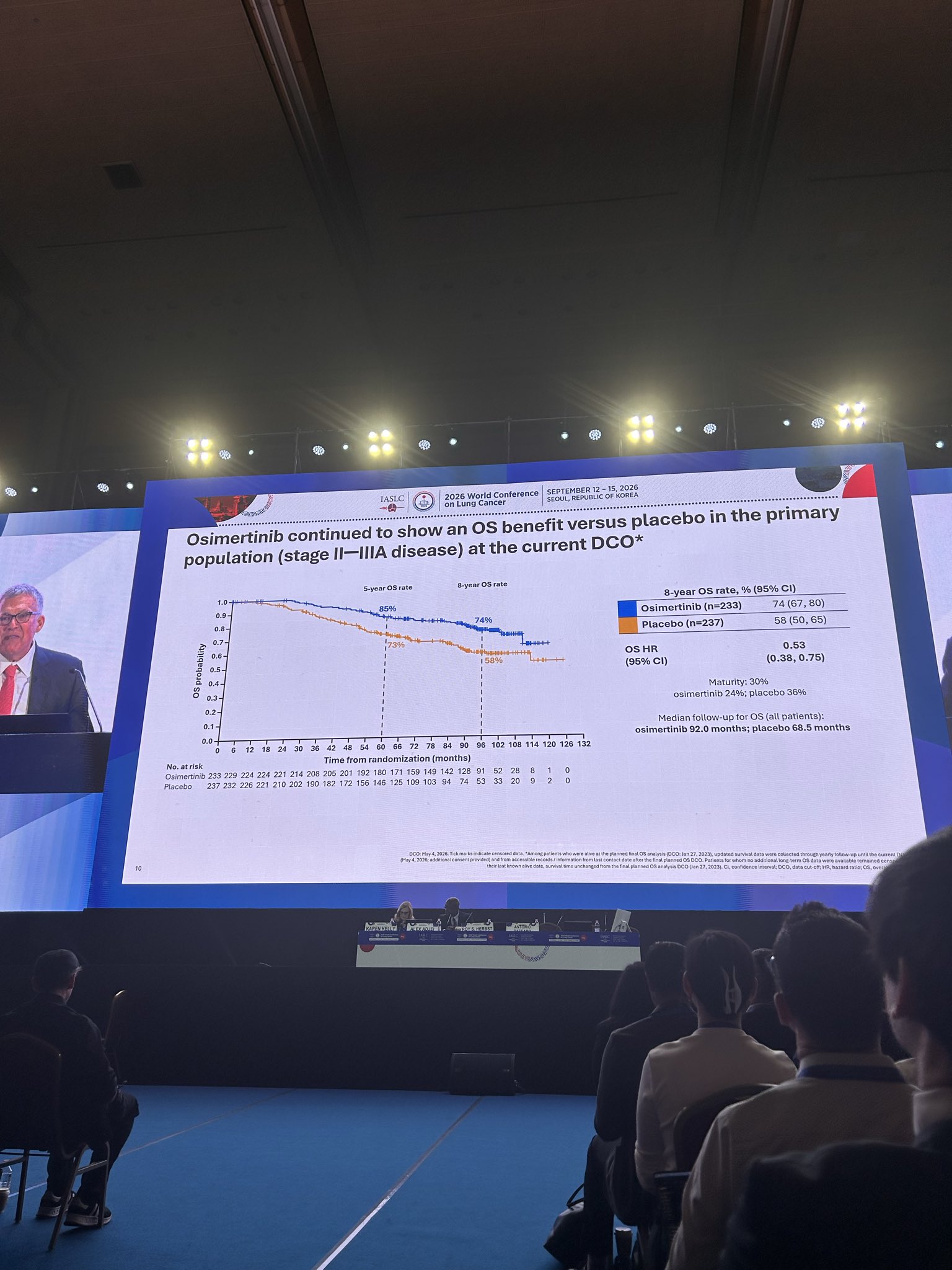
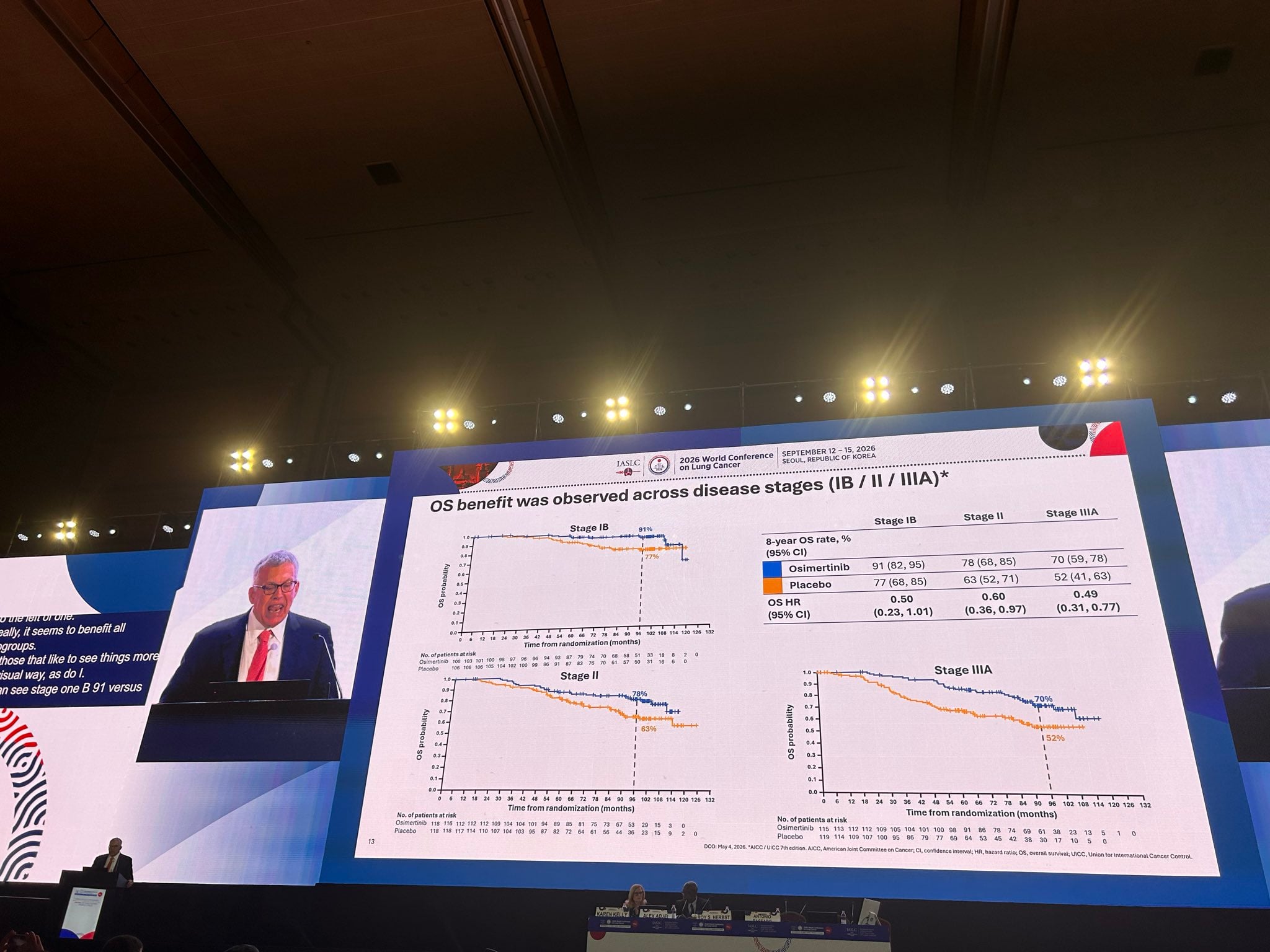
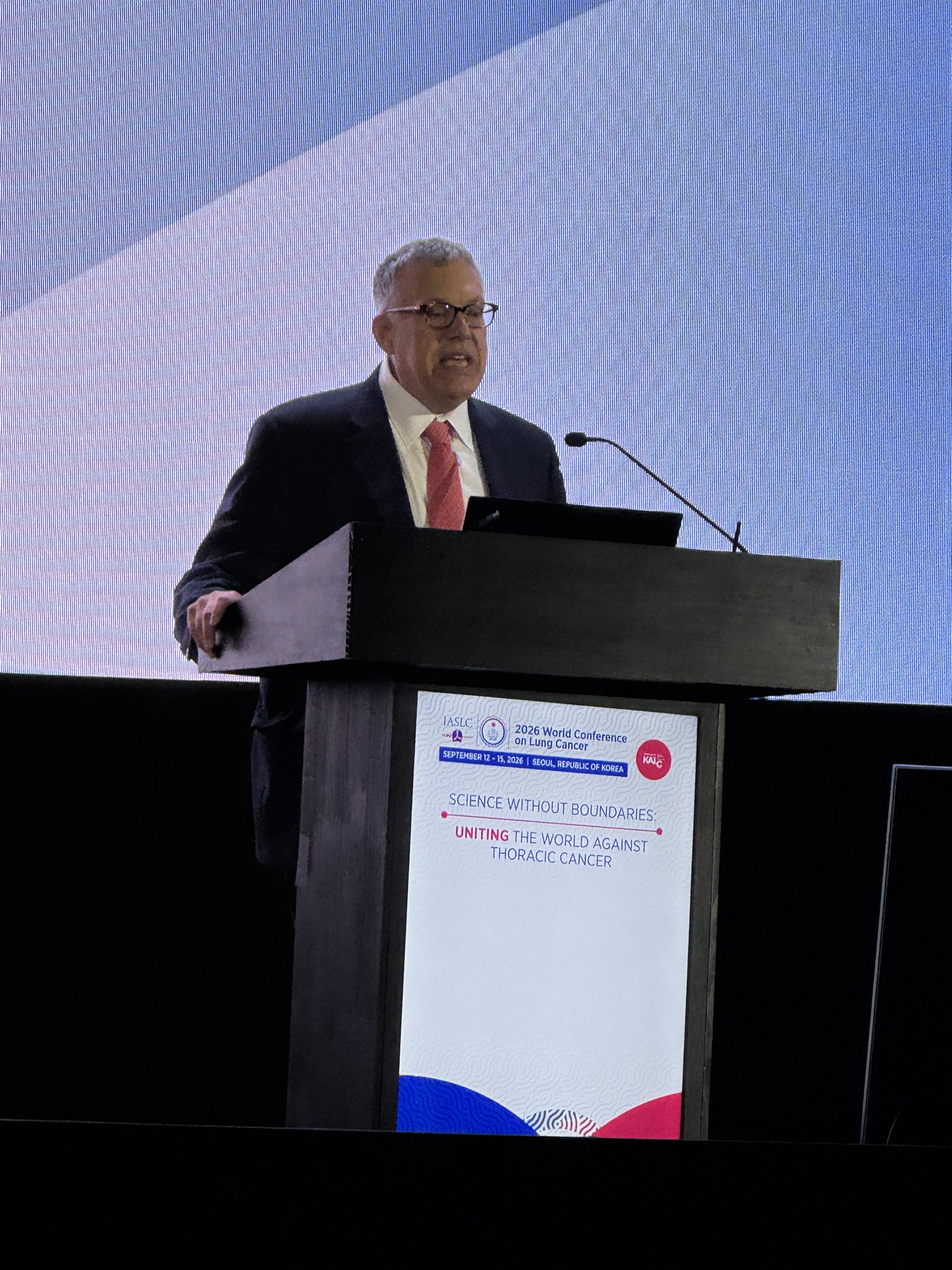
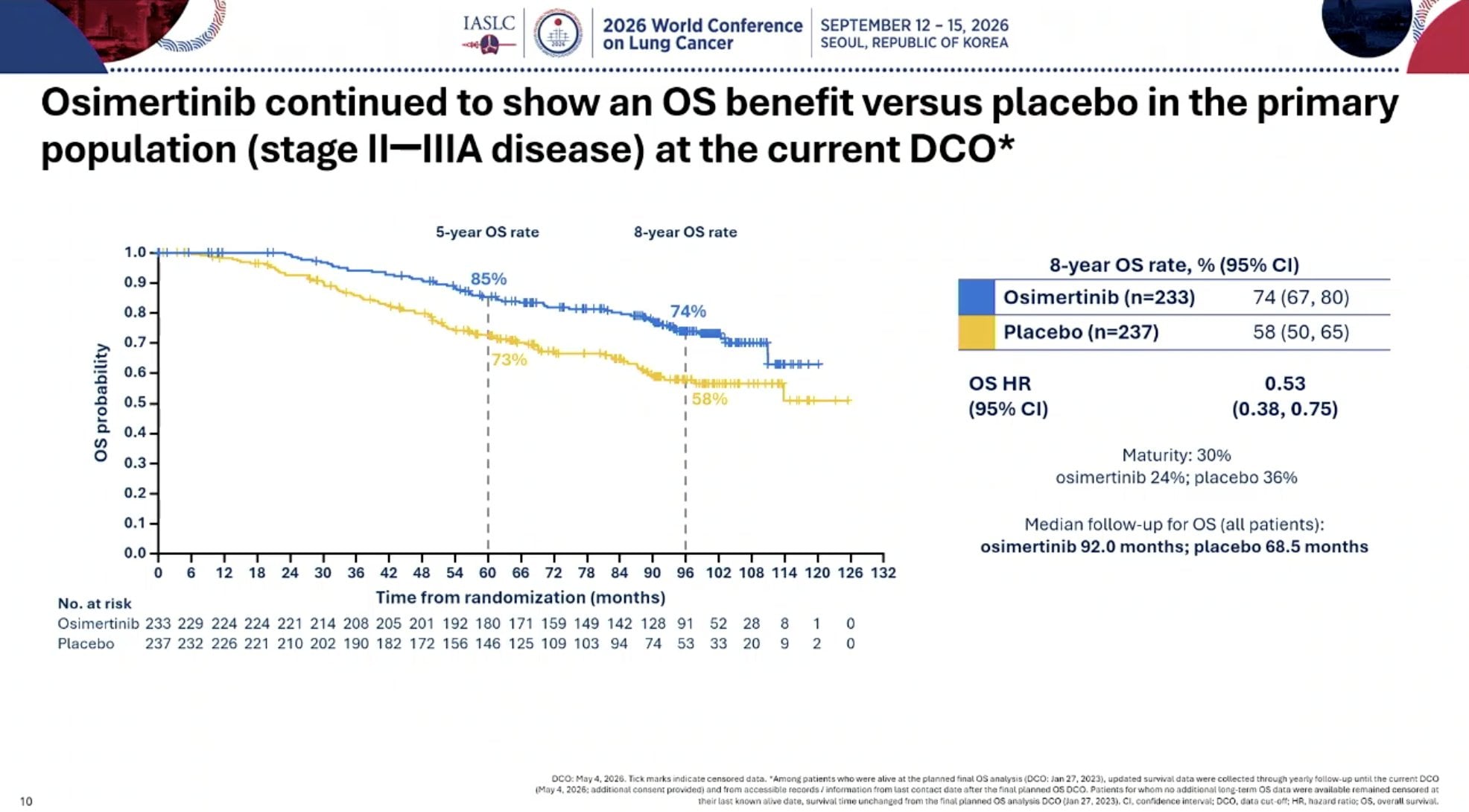
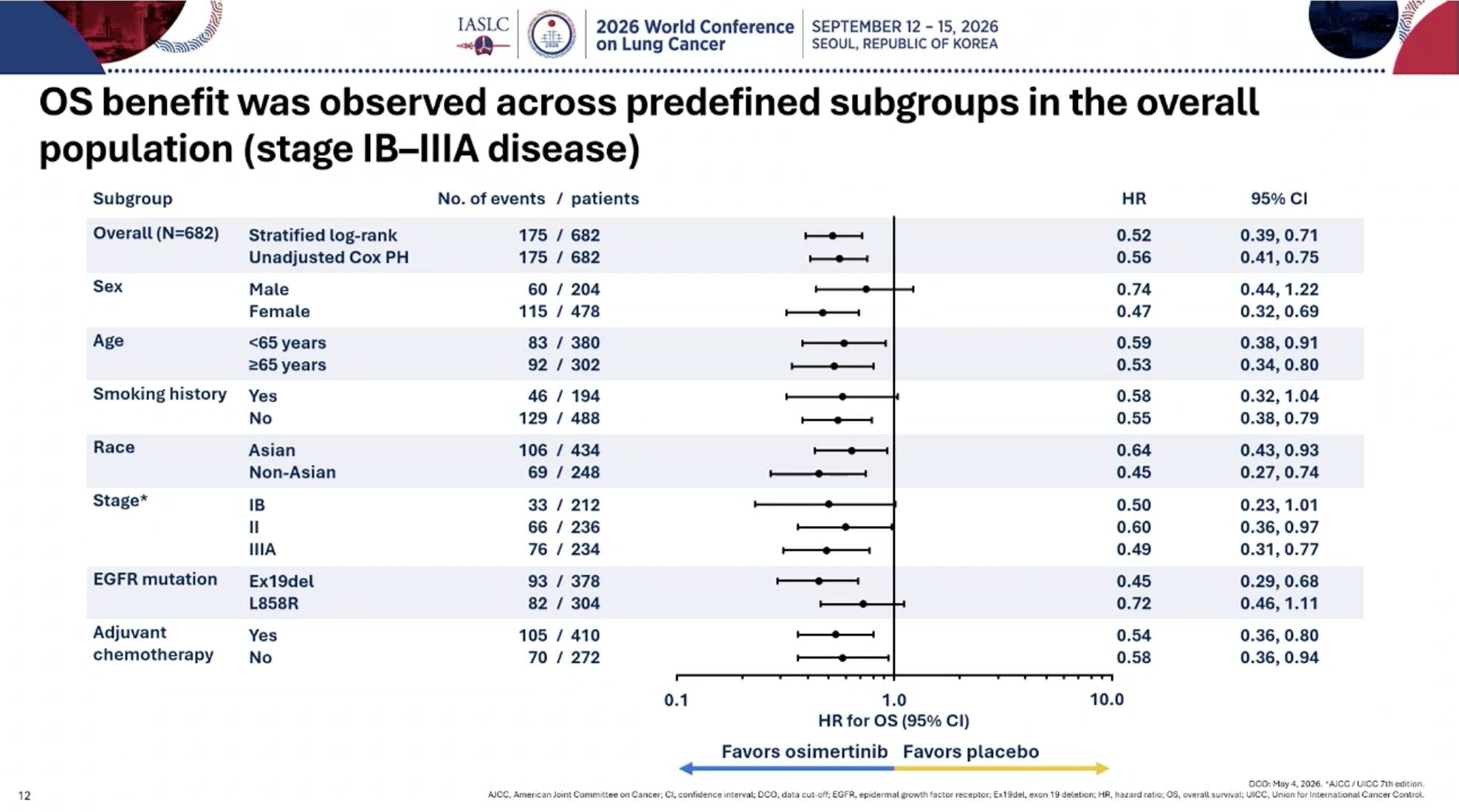
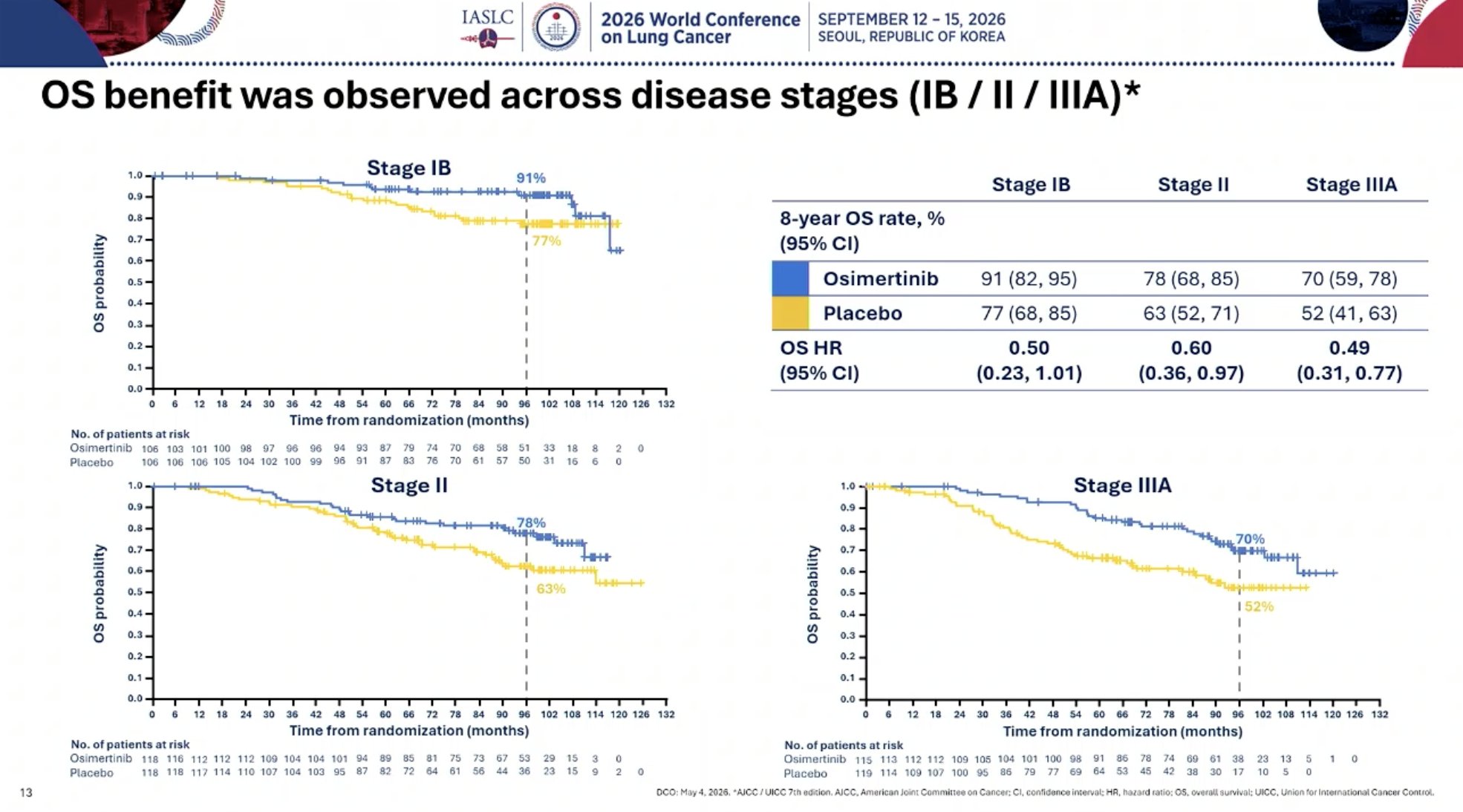
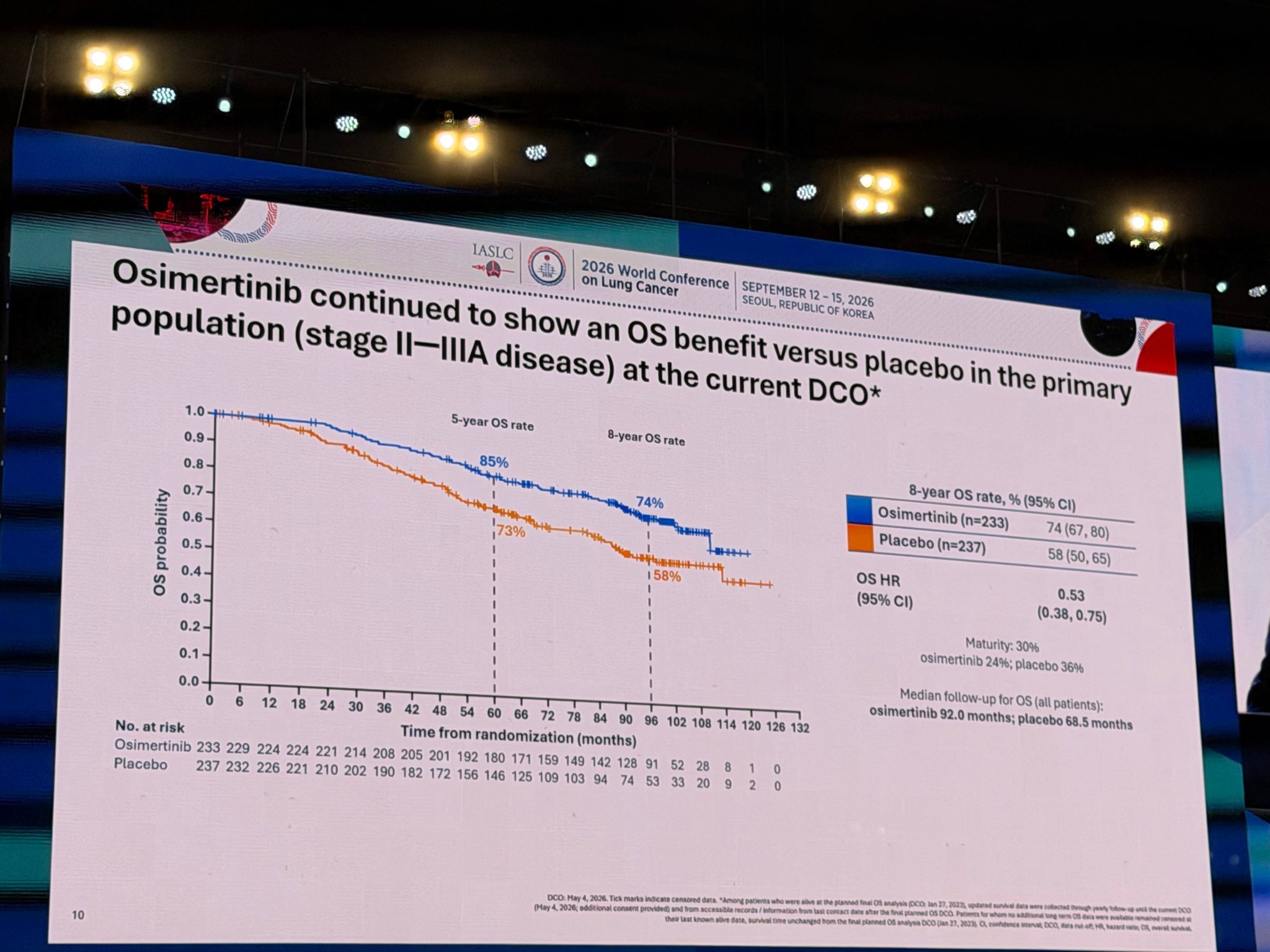
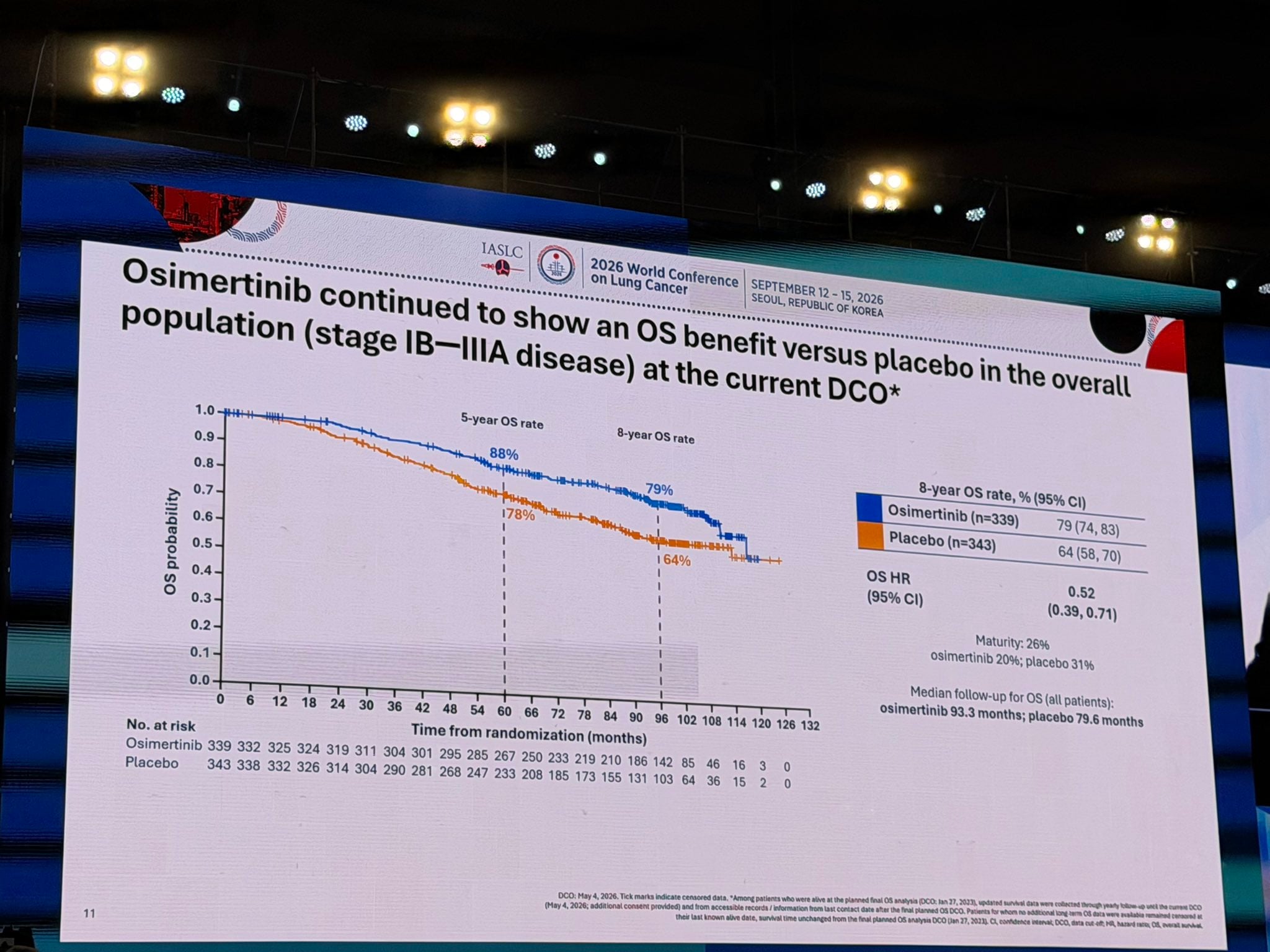
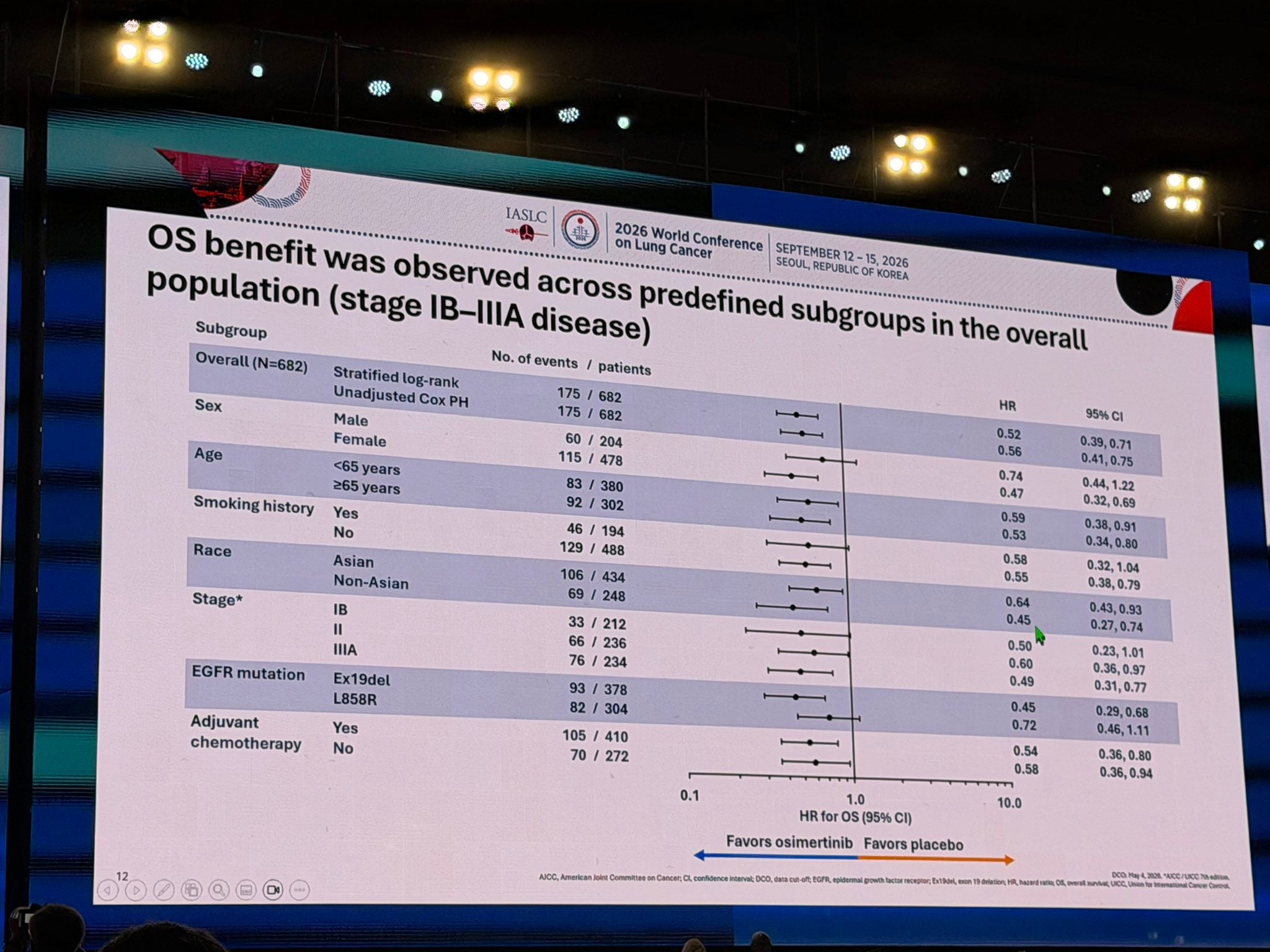
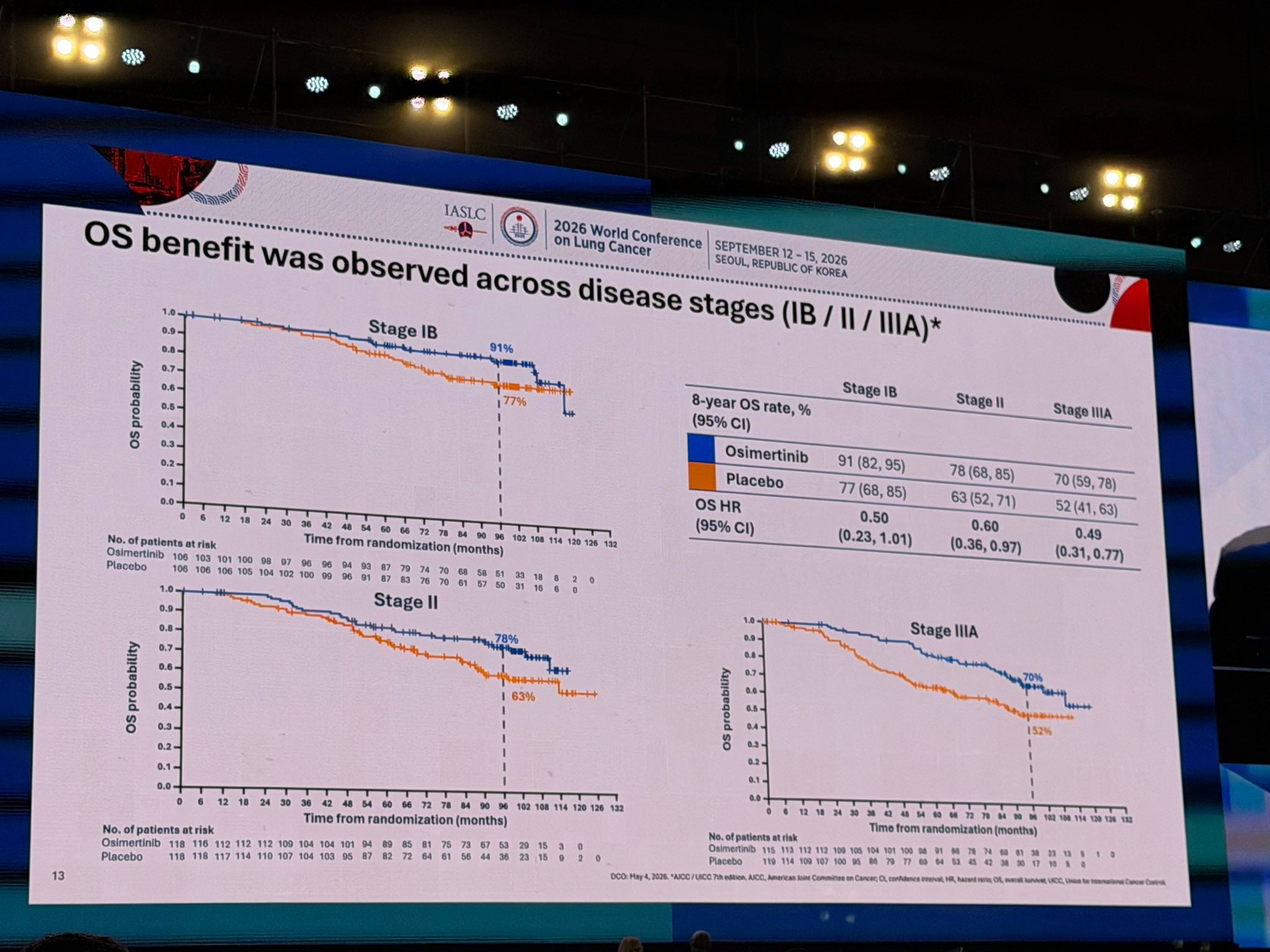
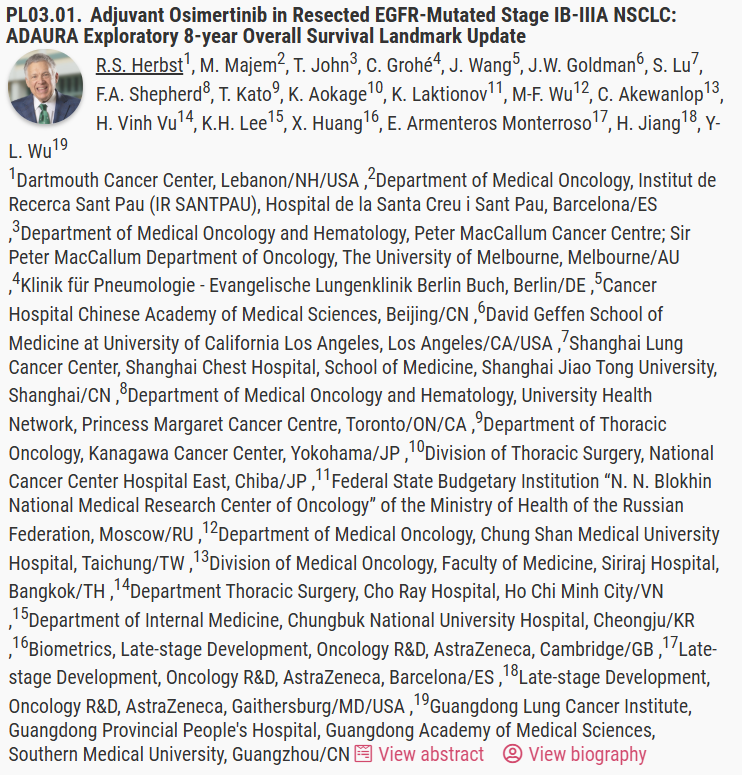
Dr. Roy Herbst @DrRoyHerbst @dartmouth presents the updated 8Y OS follow up analysis of ADAURA for 3Y of adjuvant osimertinib in EGFR mutant NSCLC. Benefit in OS across all stages investigated IB-IIIA. Supportive management of toxicities and quality of life are key factors to ensuring patients can stay on therapy for 3Y.

@EGFRResisters @EgfrUk @jillfeldman4 @lungoncdoc @LUNGevity @RManochakian @

Dr. Roy Herbst @DrRoyHerbst @dartmouth presents the updated 8Y OS follow up analDr. Roy Herbst @DrRoyHerbst @dartmouth presents the updated 8Y OS follow up anal
5.7K impressions8 likes4 reposts2026-09-13
[Slide 2] IASLC 2026 World Conference SEPTEMBER 12 15, 2026 on Lung Cancer SEOUL, REPUBLIC OF KOREA Osimertinib continued to show an os benefit versus placebo in the primary population (stage II-IIIA disease) at the current DCO* 5-year os rate 8-year os rate 1.0 0.9 85% 8-year os rate, % (95% CI) 0.8 74% Osimertinib (n=233) 74 (67, 80) 0.7 Placebo (n=237) 58 (50, 65) 73% os probability 0.6 os HR 0.5 0.53 58% (95% CI) (0.38, 0.75) 0.4 0.3 Maturity: 30% 0.2 osimertinib 24%; placebo 36% 0.1 Median follow-up for OS (all patients): 0.0 osimertinib 92.0 months; placebo 68.5 months 0 6 12 18 24 30 36 42 48 54 60 66 72 78 84 90 96 102 108 114 120 126 132 No. at risk Time from randomization (months) Osimertinib 233 229 224 224 221 214 208 205 201 192 180 171 159 149 142 128 91 52 28 8 1 0 Placebo 237 232 226 221 210 202 190 182 172 156 146 125 109 103 94 74 53 33 20 9 2 0 DCO: May 4, 2026. Tick marks indicate censored data. *Among patients who were alive at the planned final os analysis (DCO: Jan 27, 2023), updated survival data were collected through yearly follow-up until the current (May 4, 2026; additional consent provided) and from accessible records information from last contact date after the final planned os DCO. Patients for whom no additional long-term os data were available remained censes 10 their last known alive date, survival time unchanged from the final planned os analysis DCO Dan 27, 2023). CI, confidence interval; OCO, data cut- off; HR, hazard ratio; os, over [Slide 3] SEPTEMBER 12 - 15, 2026 alamy IASLC 2026 World Conference on Lung Cancer SEOUL, REPUBLIC OF KOREA os benefit was observed across disease stages (IB / II / IIIA)* Stage IB 91% Stage IB Stage II Stage IIIA 1.0 0.9 8-year os rate, % 0.8 77% (95% CI) 0.7 os probability 0.6 Osimertinib 91 (82, 95) 78 (68, 85) 70 (59, 78) 0.5 Placebo 77 (68, 85) 63 (52, 71) 52 (41, 63) 0.4 0.3 os HR 0.50 0.60 0.49 0.2 (95% CI) (0.23, 1.01) (0.36, 0.97) (0.31, 0.77) 0.1 0.0 120 126 132 0 6 12 18 24 30 36 42 48 54 60 66 72 78 84 90 96 102 108 114 Time from randomization (months) No. of patients at risk 94 93 87 79 74 70 68 58 51 33 18 8 2 0 Osimertinib 106 103 101 100 98 97 96 96 31 6 0 99 96 91 87 83 76 70 61 57 50 16 Placebo 106 106 106 105 104 102 100 1.0 Stage IIIA 1.0 Stage II 0.9 0.9 78% 0.8 70% 0.8 I 0.7 1010-14 +++ 0.7 0.6 os probability 0.6 63% os probability 0.5 52% 0.5 0.4 0.4 0.3 0.3 0.2 0.2 0.1 0.1 0.0 0.0 0 6 12 18 24 30 36 42 48 54 60 66 72 78 84 90 96 102 108 114 120 126 132 12 18 24 30 36 42 48 54 60 66 72 78 84 90 96 102 108 114 120 126 132 0 6 Time from randomization (months) Time from randomization (months) Osimertinib 118 116 112 112 112 109 104 104 101 94 89 85 81 75 73 67 53 29 15 3 2 0 No. of patients at risk Osimertinib 115 113 112 112 109 105 104 101 100 98 91 86 78 74 69 61 38 23 13 5 1 0 No. of patients at risk Placebo 119 114 109 107 100 95 86 79 77 69 64 53 45 42 38 30 17 10 5 0 Placebo 118 118 117 114 110 107 104 103 95 87 82 72 64 61 56 44 36 23 15 9 0 DCO: May 4, 2026. *AJCC UICC 7th edition. AJCC, American Joint Committee on Cancer; CI, confidence interval; HR, hazard ratio; OS, overall survival; UICC, Union for International Cancer Control 13
EEric K. Singhi, MD@lungoncdoc

8 YEARS later, and the ADAURA curves are still speaking.

In resected EGFR+ NSCLC, adjuvant osimertinib continues to show a durable OS benefit:
▫️Stage II–IIIA: 74% v 58% 8-year OS (HR 0.53)
▫️Stage IB–IIIA: 79% vs 64% (HR 0.52)

Long-term follow-up matters.
#WCLC26 @IASLC https://t.co/phPwzmwkBg https://t.co/lwhi3nLitK

8 YEARS later, and the ADAURA curves are still speaking.

In resected EGFR+ NSCL8 YEARS later, and the ADAURA curves are still speaking.

In resected EGFR+ NSCL
5.5K impressions9 likes4 reposts2026-09-13
[Slide 1] IASLC 2026 World Conference SEPTEMBER 12 - 15, 2026 on Lung Cancer SEOUL, REPUBLIC OF KOREA Osimertinib continued to show an OS benefit versus placebo in the primary population (stage II-IIIA disease) at the current DCO* 5-year OS rate 8-year os rate 1.0 8-year os rate, % (95% CI) 85% 0.9 Osimertinib (n=233) 74 (67, 80) 74% 0.8 Placebo (n=237) 58 (50, 65) 0.7 73% 0.3 OS probability 0.6 os HR 0.53 58% 0.5 (95% CI) (0.38, 0.75) 0.4 Maturity: 30% osimertinib 24%; placebo 36% 0.2 0.1 Median follow-up for OS (all patients): osimertinib 92.0 months; placebo 68.5 months 0.0 0 6 12 18 24 30 36 42 48 54 60 66 72 78 84 90 96 102 108 114 120 126 132 Time from randomization (months) risk rtinib 233 229 224 224 221 214 208 205 201 192 180 171 159 149 142 128 91 52 28 8 1 0 237 232 226 221 210 202 190 182 172 156 146 125 109 103 94 74 53 33 20 9 2 0 DCO: May 4, 2026. Tick marks indicate censored data. *Among patients who were alive at the planned final OS analysis (DCO: Jan 27, 2023), updated survival data were collected through yearly follow-up until the curre (May 4, 2026; additional consent provided) and from accessible records / information from last contact date after the final planned os DCO. Patients for whom no additional long-term os data were available remained cen their last known alive date, survival time unchanged from the final planned OS analysis DCO (Jan 27, 2023). CI, confidence interval; DCO, data cut-off; HR, hazard ratio; os, overall [Slide 2] IASLC 2026 World Conference SEPTEMBER 12 15, 2026 on Lung Cancer SEOUL, REPUBLIC OF KOREA Osimertinib continued to show an os benefit versus placebo in the overall population (stage IB-IIIA disease) at the current DCO* 5-year os rate 8-year os rate 8-year os rate, % (95% CI) 1.0 88% Osimertinib (n=339) 79 (74, 83) 0.9 79% 0.8 Placebo (n=343) 64 (58, 70) 178% 0.7 64% os HR 0.52 OS probability 0.6 (95% CI) (0.39, 0.71) 0.5 0.4 Maturity: 26% 0.3 osimertinib 20%; placebo 31% 0.2 Median follow-up for OS (all patients): 0.1 osimertinib 93.3 months; placebo 79.6 months 0.0 0 6 12 18 24 30 36 42 48 54 60 66 72 78 84 90 96 102 108 114 120 126 132 Time from randomization (months) No. at risk Osimertinib 339 332 325 324 319 311 304 301 295 285 267 250 233 219 210 186 142 85 46 16 3 0 Placebo 343 338 332 326 314 304 290 281 268 247 233 208 185 173 155 131 103 64 36 15 2 0 DCO: May 4, 2026. Tick marks indicate censored data. *Among patients who were alive at the planned final OS analysis (DCO: Jan 27, 2023), updated survival data were collected through yearly follow-up until the (May 4, 2026; additional consent provided) and from accessible records / information from last contact date after the final planned OS DCO. Patients for whom no additional long-term OS data were available remaine their Last known alive date, survival time unchanged from the final planned OS analysis DCO (Jan 27, 2023). CI, confidence interval; DCO, data cut-off; HR, hazard ratio; os,
EEric K. Singhi, MD@lungoncdoc

‼️ SAVE THIS TWEET if you see patients with EGFR exon 20 NSCLC ‼️

Beautiful discussion by @LudaBazhenovaMD here at #WCLC26

As new options emerge for our patients, how do we choose? https://t.co/wyKLeftpkz

‼️ SAVE THIS TWEET if you see patients with EGFR exon 20 NSCLC ‼️

Beautiful dis‼️ SAVE THIS TWEET if you see patients with EGFR exon 20 NSCLC ‼️

Beautiful dis‼️ SAVE THIS TWEET if you see patients with EGFR exon 20 NSCLC ‼️

Beautiful dis
4.1K impressions2 likes1 reposts2026-09-14
[Slide 1] IASLC 2026 World Conference SEPTEMBER 12 - 15, 2026 on Lung Cancer SEOUL, REPUBLIC OF KOREA What should guide our first line decision? REZILIENT3 WU-KONG 28 PAPILLON Sunvozertinib Zipalertinib + chemotherapy Amivantamab + chemotherapy PATIENT PRIORITIES WHAT COMES NEXT? PATIENT CHARACTERISTICS EFFICACY & TOXICITY IV VS oral therapy Sequential efficacy Depth and duration of benefit CNS metastases Quality of life Resistance mechanisms Treatment burden EGFR exon 20ins subtype preferences Adverse events 7 [Slide 2] IASLC 2026 World Conference SEPTEMBER 12 - 15, 2026 on Lung Cancer SEOUL, REPUBLIC OF KOREA Phase III randomized 1L trials PAPILLON REZILIENT 3 WU KONG 28 Amivantamab + Zipalertinib + Platinum doublet sunvozertinib chemotherapy chemotherapy PAPILLON: 47 ORR% WU KONG 28: 31.1 73 59 65 (BIRC) REZILIENT 3: 40 PAPILLON: 6.7 11.4 10.3 14.5 mPFS m 0.40; 0.30 -0.53; P<0.001 0.65; 0.50 -0.85; <0.001 0.5; 0.34-0.73; p=0.00015 WU KONG 28: 7.5 HR (CI, p) REZILIENT 3 8.5 PAPILLON: 27.9 (24.0-32.4) 34.3 (27.0-40.8) 29.8 (21.8-NE) NR mOS, m WU KONG 28: 28.8 (27.0-NE) HR, 0.87 (0.66-1.14); 0.99 (0.7-1.40) 0.72 (0.42-1.23) HR (Cl,p) p 0.49 39% maturity P=0.11082 P=0.307 REZILIENT 3: NR PAPILLON: 68 74 65.5 Not reported 18m-OS WU KONG 28: 67 REZILIENT 3: NR PAPILLON: 54 57.4 Not reported WU KONG 28: 56.2 64 24m-OS REZILIENT 3: NR Descriptive cross-trial comparison; differences in eligibility, follow-up, assessment, and safety reporting limit interpretation. 9 [Slide 3] IASLC 2026 World Conference SEPTEMBER 12 - 15, 2026 on Lung Cancer SEOUL, REPUBLIC OF KOREA Phase III 1L randomized trials Platinum doublet PAPILLON WU KONG 28 REZILIENT 3 Neutropenia ( 34%), Diarrhea (14%), CK increased (20.9) Anemia (48.6%), Most common Paronychia (10%), Anemia (9.2%), neutropenia (33.6), toxicity ( Gr3) anemia (13%), rash (0.6%) thrombocytopenia (30%) infusion related reaction (1%) paronychia (3.7%) rash (10.7%) GR3 AE % 75 75 81 % dose reduction* 36 41 44 % dose 11 12 17 discontinuation* PAPILLON: 3 AE leading to WU KONG 28: 1.3 5 4.3 9.5 death % REZILIENT 3: 2.9 Descriptive cross-trial comparison; differences in eligibility, follow-up, assessment, and safety reporting limit interpretation. * Targeted therapy 10
OOncology Brothers@OncBrothers

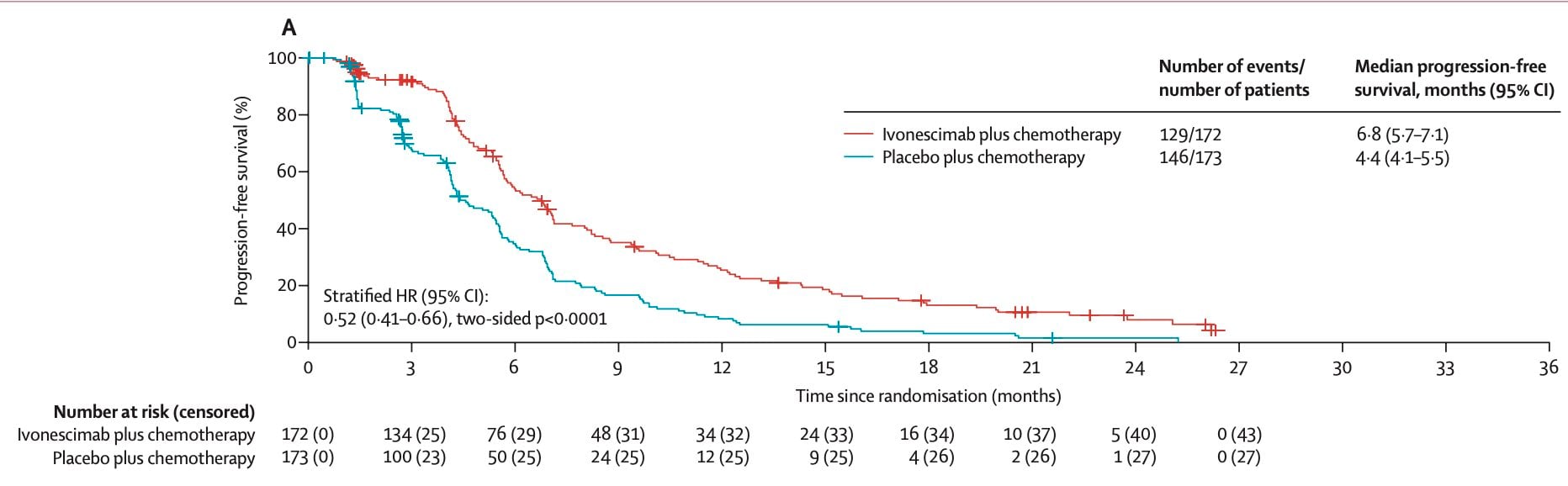
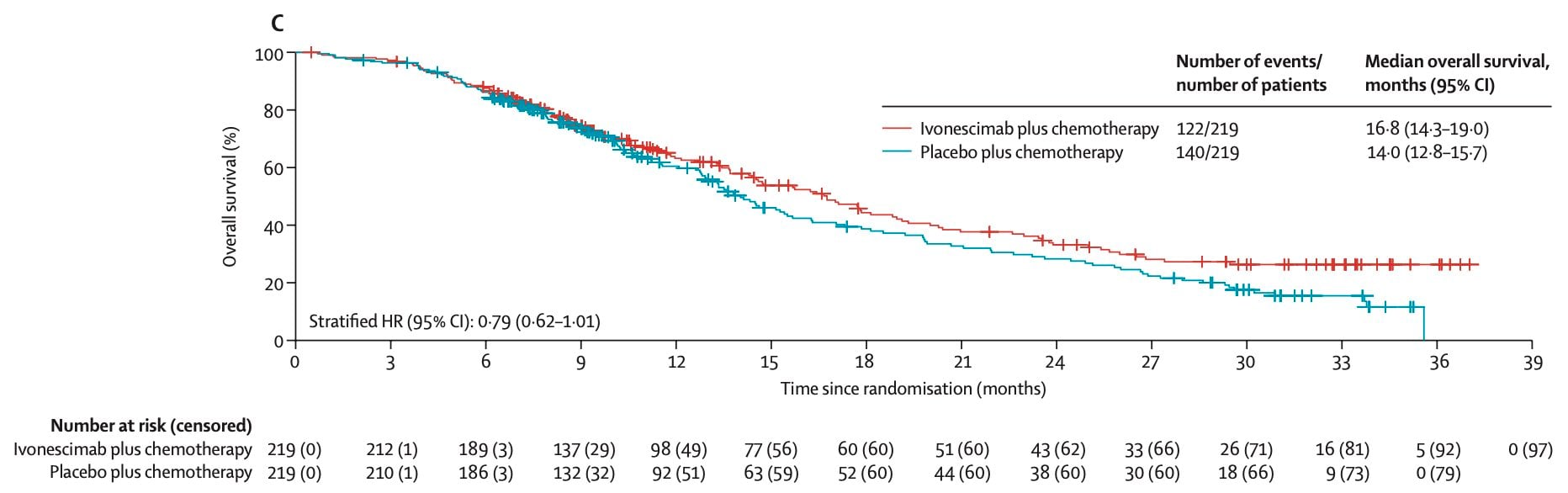
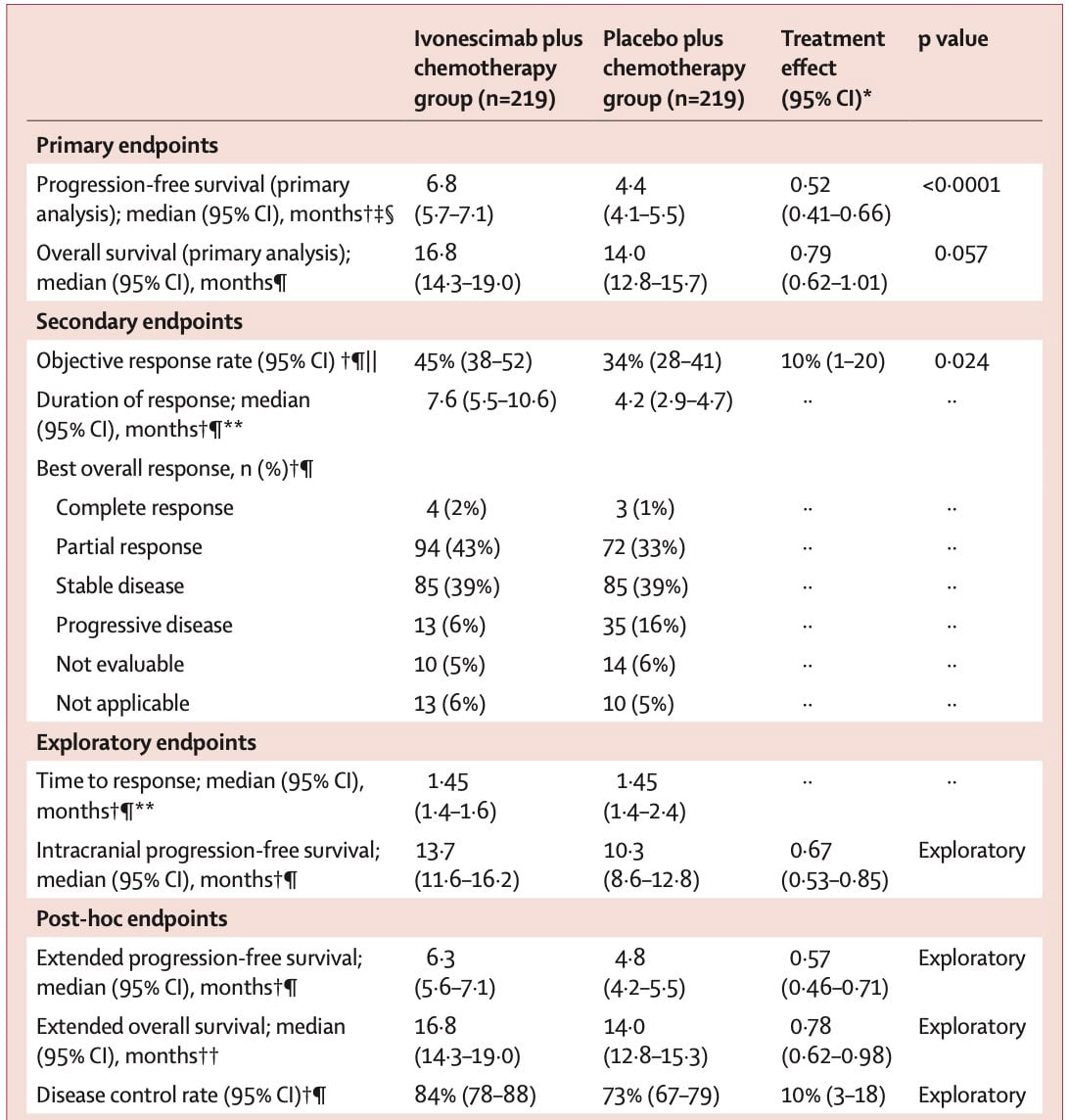
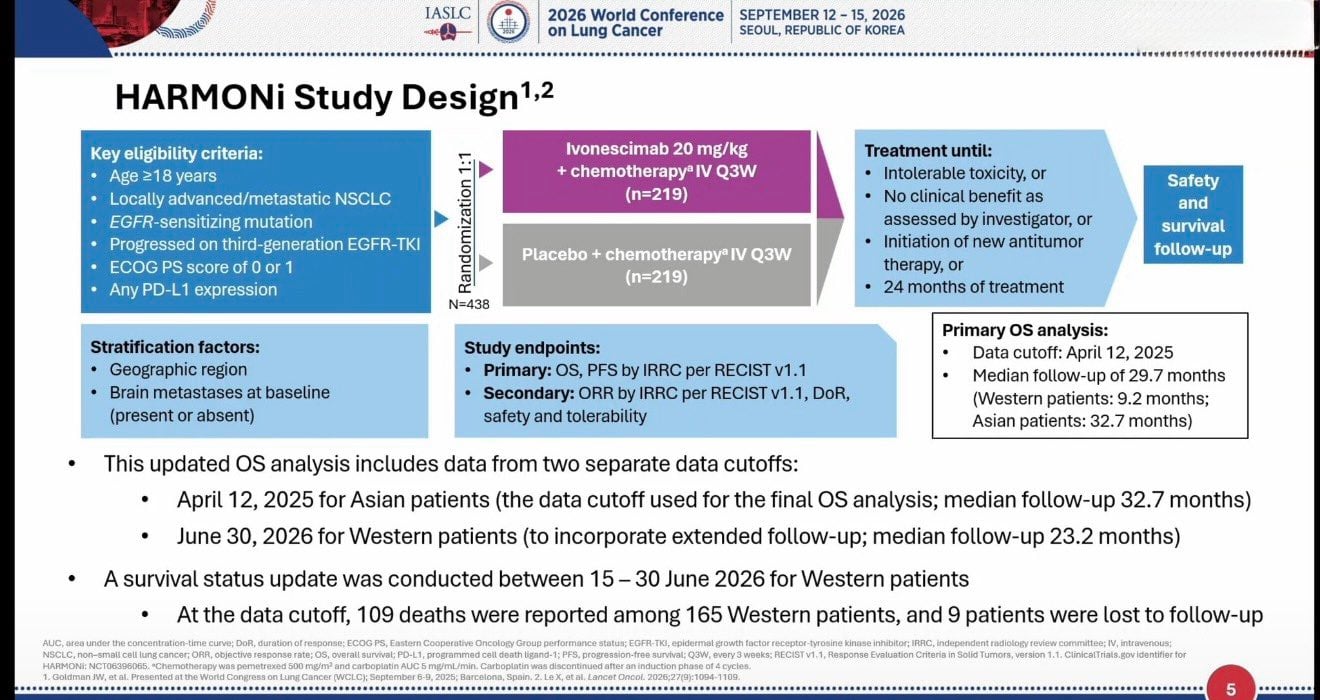
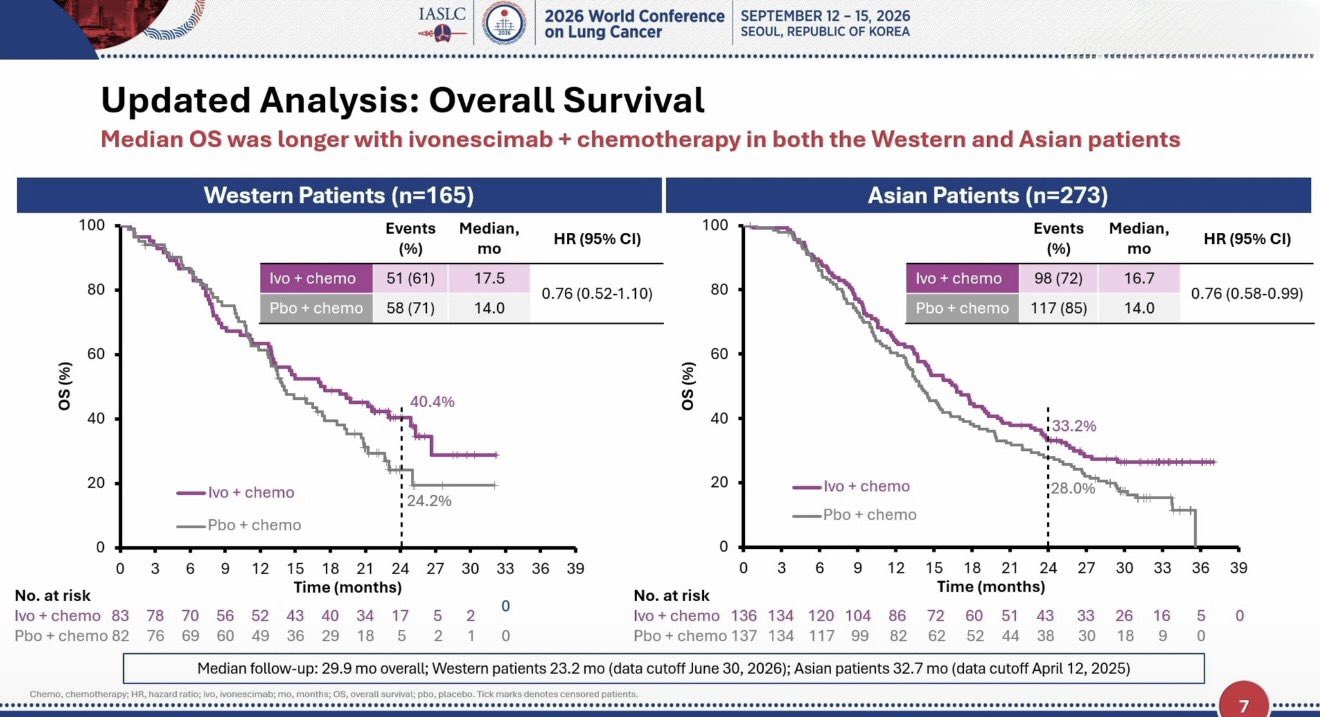
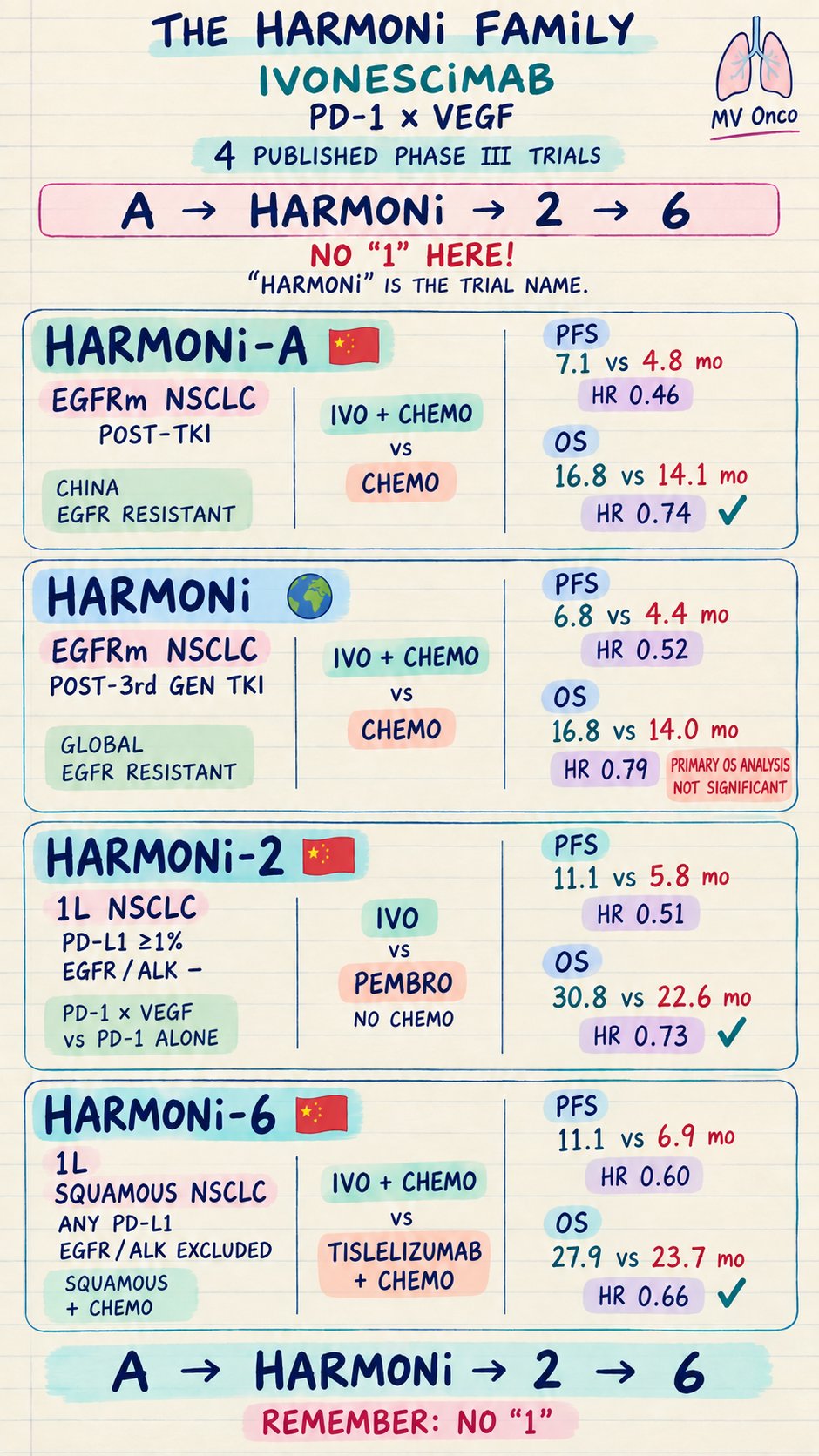
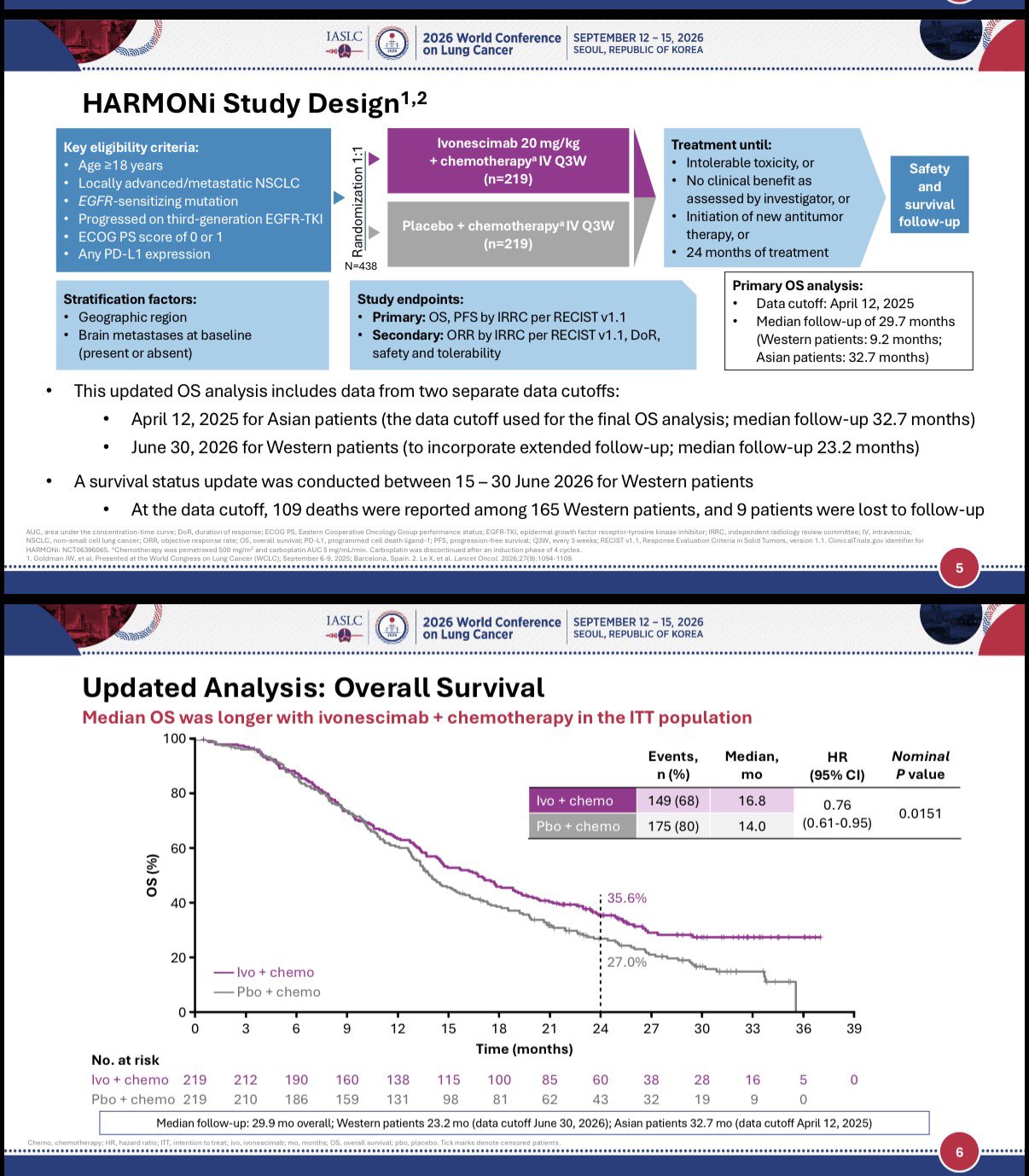
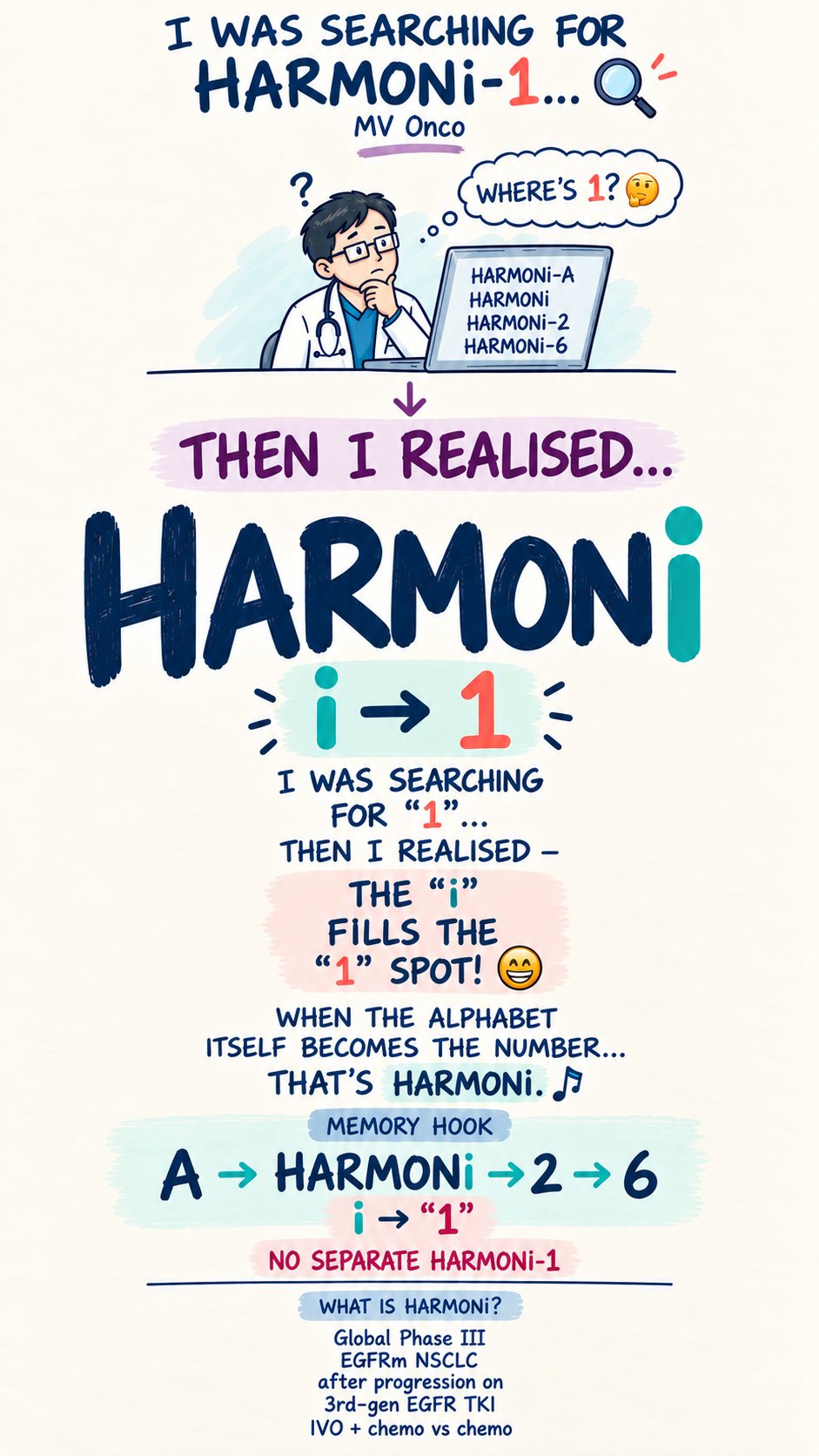
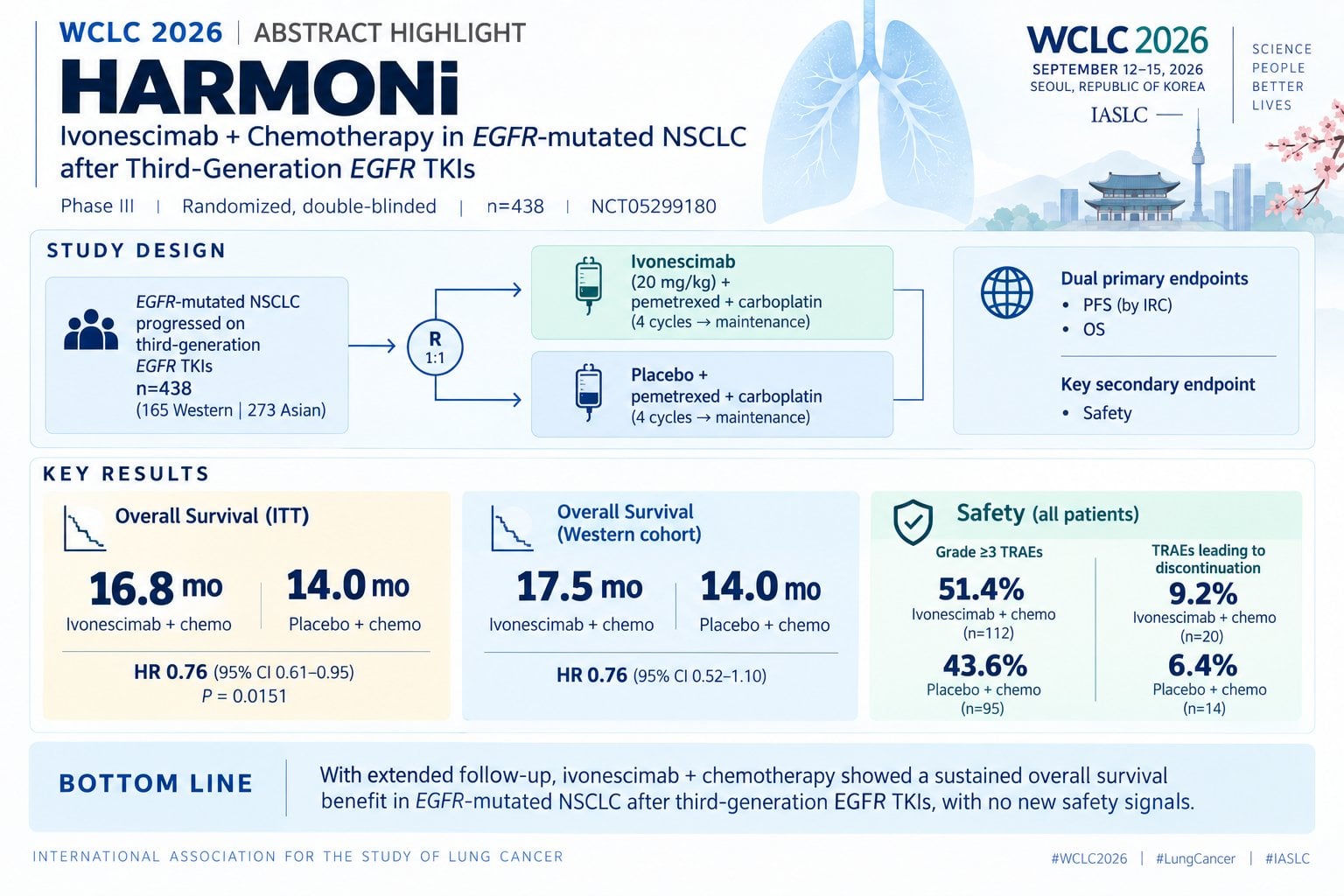
5. #HARMONi: 2L (after 3rd gen EGFRi), Ivonescimab (PD1/VEGF BsAb) + Chemo vs Chemo in EGFR+ mNSCLC:

- mOS 16.8mos vs 14.0mos (HR: 0.79, p value: 0.057)
- Ivonescimab starting to show positive data in more and more global studies.
- Refractory mEGFR is a crowded space

6/8 https://t.co/SL4VhgGU15 https://t.co/MiGqmqMJ7u

5. #HARMONi: 2L (after 3rd gen EGFRi), Ivonescimab (PD1/VEGF BsAb) + Chemo vs Ch5. #HARMONi: 2L (after 3rd gen EGFRi), Ivonescimab (PD1/VEGF BsAb) + Chemo vs Ch
4K impressions2 likes0 reposts2026-09-15
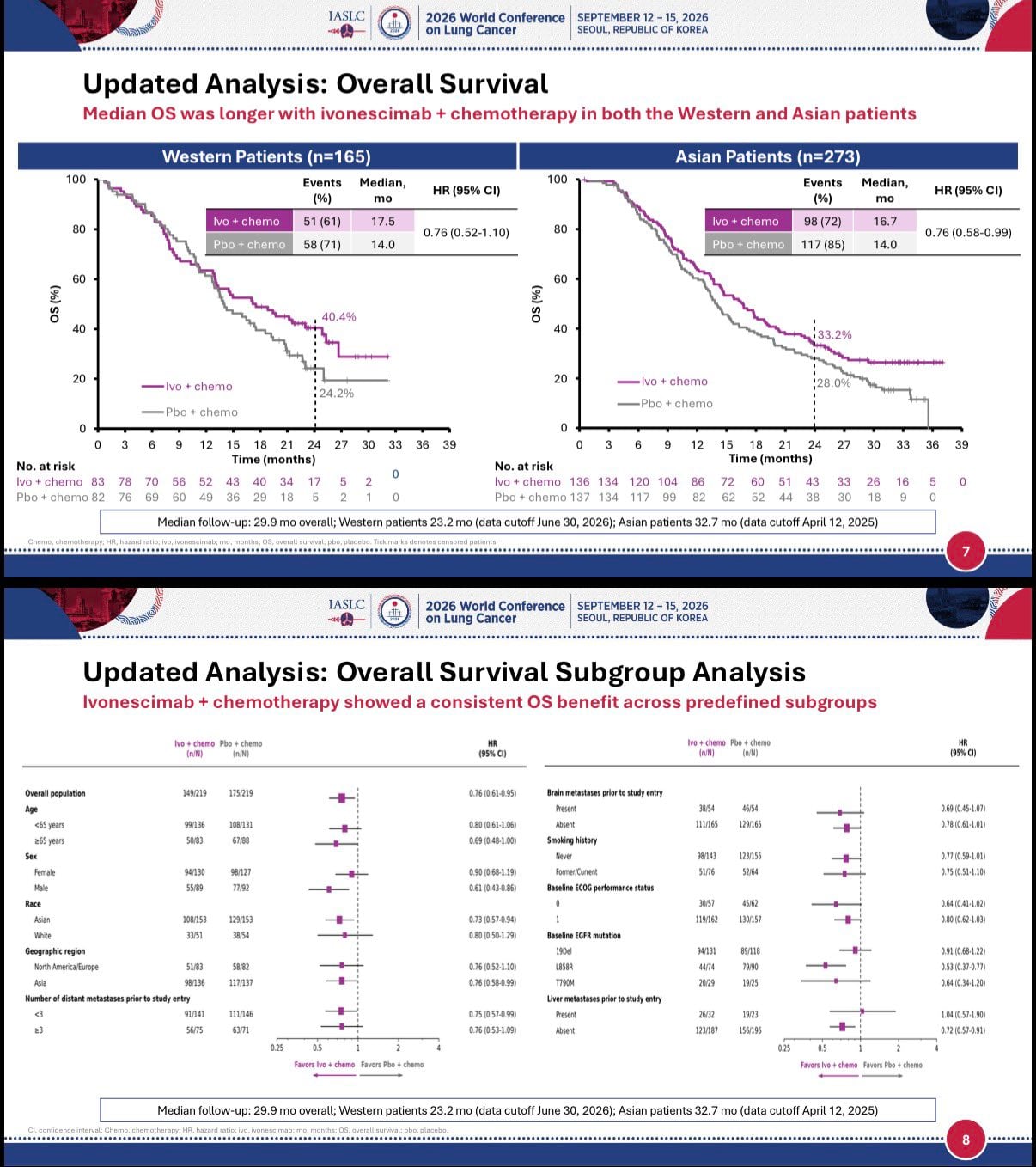
[Slide 1] IASLC 2026 World Conference SEPTEMBER 12 - 15, 2026 on Lung Cancer SEOUL, REPUBLIC OF KOREA HARMONi Study Design1,2 Key eligibility criteria: Ivonescimab 20 mg/kg Treatment until: Age ≥18 years + chemotherapy®IV Q3W Intolerable toxicity, or Locally advanced/metastatic NSCLC ECOG PS score of 0 or 1 Randomization 1:1 Safety (n=219) No clinical benefit as and EGFR-sensitizing mutation assessed by investigator, or survival Progressed on third-generation EGFR-TKI Initiation of new antitumor Placebo + chemotherapy® IV Q3W follow-up therapy, or (n=219) Any PD-L1 expression 24 months of treatment N=438 Primary os analysis: Stratification factors: Study endpoints: Data cutoff: April 12, 2025 Geographic region Primary: OS, PFS by IRRC per RECIST v1.1 Median follow-up of 29.7 months Brain metastases at baseline Secondary: ORR by IRRC per RECIST v1.1, DoR, (Western patients: 9.2 months; (present or absent) safety and tolerability Asian patients: 32.7 months) This updated OS analysis includes data from two separate data cutoffs: April 12, 2025 for Asian patients (the data cutoff used for the final OS analysis; median follow-up 32.7 months) June 30, 2026 for Western patients (to incorporate extended follow-up; median follow-up 23.2 months) A survival status update was conducted between 15 — 30 June 2026 for Western patients At the data cutoff, 109 deaths were reported among 165 Western patients, and 9 patients were lost to follow-up AUC, area under the concentration-time curve; DoR, duration of response; ECOG PS, Eastern Cooperative Oncology Group performance status; EGFR-TKI epidermal growth factor receptor tyrosine kinase inhibitor; IRRC, independent radiology review committee; IV, intravenous; NSCLC, non-small cell lung cancer; ORR, objective response rate; OS, overall survival; PD-L1, programmed cell death ligand-1; PFS, progression-free survival; Q3W, every 3 weeks; RECIST v1.1, Response Evaluation Criteria in Solid Tumors, version 1.1. Clinical Trials.gov identifier for HARMONI: NCT06396065. "Chemotherapy was pemetrexed 500 mg/m2 and carboplatin AUC 5 mg/mL/min. Carboplatin was discontinued after an induction phase of 4 cycles. 1. Goldman JW, et al. Presented at the World Congress on Lung Cancer (WCLC); September 6-9, 2025; Barcelona, Spain. LeX, et al. Lancet Oncol. 2026;27(9):1094-1109. 5 [Slide 2] IASLC 2026 World Conference SEPTEMBER 12 - 15, 2026 on Lung Cancer SEOUL, REPUBLIC OF KOREA Updated Analysis: Overall Survival Median os was longer with ivonescimab + chemotherapy in both the Western and Asian patients Western Patients (n=165) Asian Patients (n=273) 100 Events Median, 100 Events Median, HR (95% CI) HR (95% CI) (%) mo (%) mo Ivo + chemo 51 (61) 17.5 Ivo + chemo 98 (72) 16.7 80 0.76 (0.52-1.10) 80 0.76 (0.58-0.99) Pbo + chemo 58 (71) 14.0 Pbo + chemo 117 (85) 14.0 60 60 os (%) 40.4% os (%) 40 40 33.2% 20 20 Ivo + chemo Ivo + chemo 28.0% 24.2% Pbo + chemo Pbo + chemo 0 0 0 3 6 9 12 15 18 21 24 27 30 33 36 39 0 3 6 9 12 15 18 21 24 27 30 33 36 39 No. at risk Time (months) No. at risk Time (months) 0 Ivo + chemo 83 78 70 56 52 43 40 34 17 5 2 Ivo + chemo 136 134 120 104 86 72 60 51 43 33 26 16 5 0 Pbo + chemo 82 76 69 60 49 36 29 18 5 2 1 0 Pbo + chemo 137 134 117 99 82 62 52 44 38 30 18 9 0 Median follow-up: 29.9 mo overall; Western patients 23.2 mo (data cutoff June 30, 2026); Asian patients 32.7 mo (data cutoff April 12, 2025) Chemo, chemotherapy; HR, hazard ratio; vo, ivonescimab; mo, months; OS, overall survival; pbo, placebo. Tick marks denotes censored patients. 7
Bispecifics / PD-1xVEGF173.5K impressions · top posts of the conference
YYakup Ergün@dr_yakupergun

Highlighted Studies at #WCLC26

1️⃣ HARMONi-2
In treatment-naïve, advanced NSCLC with PD-L1 ≥1%, ivonescimab improved PFS (11.1 vs 5.8 months; HR 0.51) and OS (30.8 vs 22.6 months; HR 0.73) compared with pembrolizumab.
This is a genuinely positive trial, but it does not tell the same story for all PD-L1-positive patients. The OS benefit was clear in the ≥50% subgroup, whereas the HR was 0.85 with

Highlighted Studies at #WCLC26

1️⃣ HARMONi-2
In treatment-naïve, advanced NSCLC
8.6K impressions24 likes8 reposts2026-09-13
[Slide 1] IASLC SEOUL 2026 WCLC26: KEY STUDIES Early results key data at a glance HARMONi-2 1 1L PD-L1 >1% advanced NSCLC Clearly positive. Strongest signal in PD-L1 >50%. PFS 11.1 vs 5.8 mo HR 0.51 In 1-49%, the control arm does os 30.8 vs 22.6 mo HR 0.73 not fully reflect current practice. 2 SWOG S1827 / MAVERICK Post-treatment SCLC MRI surveillance vs MRI + PCI With reliable MRI access, routine PCI is now hard to justify. Cognitive failure / death HR 0.60 Final os is still needed before Grade ≥3 toxicity 0.8% vs 7.9% declaring PCI obsolete. Interim OS and brain metastasis-free survival: no difference TAISHAN-302 3 Relapsed SCLC B7-H3 ADC Tam-Peli vs topotecan Clear survival gain. A potential topotecan replacement; os 13.3 vs 9.4 mo HR 0.46 efficacy after tarlatamab PFS 7.4 vs 2.8 mo ORR 59% vs 10% maintenance remains unknown. ARTEMIS-008 4 Relapsed SCLC . B7-H3 ADC Ris-Rez VS topotecan Confirms B7-H3 as a target. No cross-trial comparison with os 18.5 vs 10.3 mo HR 0.46 TAISHAN; ILD and hematologic PFS 7.2 vs 3.0 mo ORR 58% vs 13% toxicity may drive selection. 5 EVOKE-03 / KEYNOTE-D46 PD-L1 >50% metastatic NSCLC SG+pembro VS pembro More tumor shrinkage, ORR 56% vs 44% similar response duration, os 21.5 vs 22.8 mo no OS gain: Grade ≥3 toxicity 56% vs 17% no role in clinical practice. Primary PFS threshold not met 13 SEPTEMBER 2026 INTERIM CONGRESS SNAPSHOT @dr_yakupergun
SStephen V Liu, MD@StephenVLiu

Phase II study of first-line QLC5508 (MHB088C, a B7-H3 ADC) with either QL1706 (PD1/CTLA4 bispecific) or QL2107 (pembro biosimilar) in ES-SCLC from #WCLC26. As with other recent studies, note ~30% of pts with no smoking history. RR for both regimens > 80% with DCR 100%. Toxicity primarily hematologic with <10% discontinuation. Encouraging - need data on durability, CNS efficacy, but another

Phase II study of first-line QLC5508 (MHB088C, a B7-H3 ADC) with either QL1706 (Phase II study of first-line QLC5508 (MHB088C, a B7-H3 ADC) with either QL1706 (Phase II study of first-line QLC5508 (MHB088C, a B7-H3 ADC) with either QL1706 (Phase II study of first-line QLC5508 (MHB088C, a B7-H3 ADC) with either QL1706 (
5.3K impressions15 likes9 reposts2026-09-15
[Slide 1] IASLC 2026 World Conference SEPTEMBER 12 - 15, 2026 2026 on Lung Cancer SEOUL, REPUBLIC OF KOREA Background and Study Design QLC5508 is a B7H3 ADC with high cell-binding activity and internalization rate. QLC5508 showed tolerable safety and promising anti-tumor activity in patients with relapsed ES-SCLC in a phase 1 study. 1,2 The combination of B7H3 ADCs with immune checkpoint blockade suggests a trend toward synergistic antitumor effects across several solid tumor types. 3,4 This phase 2 part of the ongoing phase 1b/2 trial (NCT07256782) aimed to evaluate the efficacy and safety of QLC5508 in combination with QL1706 or QL2107 as first-line treatment in patients with ES-SCLC. Primary endpoint Key eligibility criteria for Cohort 1 Investigator-assessed phase 2 part QLC5508 2.4 mg/kg Q3W + QL1706ª 5 mg/kg Q3W ORR per RECIST 1.1 ES-SCLC Secondary endpoints ≥ 18 years old DCR No prior systemic therapy DoR ECOG PS 0 or 1 Cohort 2 PFS ≥1 measurable lesions per RECIST 1.1 QLC5508 2.4 mg/kg Q3W + QL2107b 200 mg Q3W OS a QL1706: iparomlimab and tuvonralimab (bifunctional antibody targeting PD-1 and CTLA-4); Safety b QL2107: pembrolizumab biosimilar. References: 1. Shen L, et al. ASCO 2025; Abstract 8510. 2. Zhou C, et al. WCLC 2025; Abstract OA06.02. 3. Zhong R, et al. AACR 2026; Abstract CT038. 4. Aggarwal C, et al. J Immunother Cancer. 2022;10(4):e004424. Abbreviations: ADC, antibody-drug conjugate. ES-SCLC, extensive-stage Small Cell Lung Cancer; ECOG PS, Eastern Cooperative Oncology Group Performance Status; RECIST, Response Evaluation Criteria in Solid Tumors; Q3W, every 3 weeks; ORB Objective Response Rate: DCR, Disease Control Rate; DoR, Duration of Response; PFS, Progression-Free Survival; OS, Overall Survival. 4 [Slide 2] IASLC 2026 World Conference SEPTEMBER 12 - 15, 2026 02 min 39s 2026 on Lung Cancer SEOUL, REPUBLIC OF KOREA Demographic and Baseline Characteristics A total of 59 patients with previously untreated ES-SCLC were enrolled in phase 2. At data cutoff (July 8, 2026), median follow-up was 3.6 months, with a median treatment duration of 3.5 months. QLC5508 + QLC5508 + QLC5508 + QLC5508 + Total Total Characteristics QL1706 QL2107 Characteristics QL1706 QL2107 (N=59) (N = 59) (N = 16) (N = 43) (N = 16) (N=43) Median age, years 61.5 (50-70) 61.0 (44-75) 61.0 (44-75) Tumor stage, n (%) (range) Sex, n (%) III 1 (6.3) 6 (14.0) 7 (11.9) Male 13 (81.3) 30 (69.8) 43 (72.9) IV 15 (93.7) 37 (86.0) 52 (88.1) Female 3 (18.8) 13 (30.2) 16 (27.1) Smoking, n (%) Metastatic sites, n (%) Never 5 (31.3) 13 (30.2) 18 (30.5) Brain Former 8 (50.0) 28 (65.1) 36 (61.0) 1 (6.3) 2 (4.7) 3 (5.1) Current 3 (18.8) 2 (4.7) 5 (8.5) Liver 6 (37.5) 10 (23.3) 16 (27.1) ECOG performance status, n (%) 0 1 (6.3) 2 (4.7) 3 (5.1) Median baseline SOD, 102.1 96.9 98.4 mm (min, max) (16.0, 161.8) (42.7, 183.2) (16.0, 183.2) 1 15 (93.8) 41 (95.3) 56 (94.9) Abbreviations: SOD, Sum of diameters. 5 [Slide 3] IASLC 2026 World Conference SEPTEMBER 12 - 15, 2026 02 min 10s 2026 on Lung Cancer SEOUL, REPUBLIC OF KOREA Both Combinations Demonstrated Promising Antitumor Activity 100 QLC5508 + QLC5508 + 80 Tumor response Total QL1706 QL2107 60 PR QLC5508 2.4 mg/kg + QL1706 5 mg/kg (N=16°) Best changes in sum of lesion diameters from baseline (%) 40 SD QLC5508 2.4 mg/kg + QL2107 200 mg (N=41°) No. of patients a 16 41 57 20 0 BOR, n (%) 20 -30 CR 0 0 0 -40 -60 PR 15 (93.8) 38 (92.7) 53 (93.0) -80 -100 SD 1 (6.3) 3 (7.3) 4 (7.0) 100 PD 0 0 0 80 PR QLC5508 2.4 mg/kg + QL1706 5 mg/kg (N=16°) 60 SD 93.8 92.7 93.0 PD QLC5508 2.4 mg/kg + QL2107 200 mg (N=41°) uORR, % (95% CI) Change from baseline in the sum (69.8, 99.8) (80.1, 98.5) (83.0, 98.1) of target lesion diameters (%) 40 20 81.3 80.5 80.7 cORR, % (95% CI) 0 (54.4, 96.0) (65.1, 91.2) (68.1, 90.0) -20 -30 100.0 100.0 100.0 -40 DCR, % (95% CI) (79.4, 100.0) (91.4, 100.0) (93.7, 100.0) -60 -80 a Patients who received ≥1 dose of study drug, had measurable baseline lesions, and underwent ≥1 valid post-baseline tumor assessment. -100- 0 6 12 18 24 30 Abbreviations: No., number; u, unconfirmed; C, confirmed; BOR, Best Overall Response; CR, Complete Response; PR. Partial Time (weeks) Response; SD, Stable Disease; PD, Progressive Disease; ORR, Objective Response Rate; DCR, Disease Control Ra 6 [Slide 4] IASLC 2026 World Conference SEPTEMBER 12 - 15, 2026 01 min 04s 2026 on Lung Cancer SEOUL, REPUBLIC OF KOREA Safety Profile Grade ≥3 TRAEs occurred in 43.8% and 37.2% of patients in Cohort 1 and Cohort 2, respectively. The most frequent all-grade and grade ≥3 TRAEs across both regimens were hematologic toxicities, with neutropenia and leukopenia being the most common grade ≥3 events. Other grade ≥3 TRAEs occurred at low frequencies. ALT/AST elevations were limited to grade 1-2, with no concurrent bilirubin elevation or treatment discontinuation. QLC5508 + QLC5508 + Total TRAE, n (%) QL1706 QL2107 (N = 59) TRAEs reported in ≥15% of all patients (%) (N = 16) (N = 43) Cohort 1: QLC5508 + QL1706 Cohort 2: QLC5508 + QL2107 Any TRAE 16 (100.0) 43 (100.0) 59 (100.0) Anemia Any Grade ≥3 7 (43.8) 16 (37.2) 23 (39.0) Neutropenia Any TRSAE 3 (18.8) 10 (23.3) 13 (22.0) ALT elevated Any TRAE leading to Hypoalbuminemia dose interruption a 2 (12.5) 14 (32.6) 16 (27.1) GGT elevated AST elevated dose reduction a 3 (18.8) 4 (9.3) 7 (11.9) Leukopenia discontinuation a 1 (6.3) 3 (7.0) 4 (6.8) IRR death 0 1 (2.3)b 1 (1.7) Asthenia ILD Nausea Any grade Any grade Hyponatremi Grade 2 3 Grade 2 3 Any grade 1 (6.3) 2 (4.7) 3 (5.1) ALP elevated Grade ≥3 0 1 (2.3) 1 (1.7) Thrombocytopenia a Dose interruption, dose reduction, and discontinuation refer to modifications of Appetite decreased any treatment; b One death occurred due to myelosuppression. 100 80 60 40 20 0 20 40 60 80 10 Abbreviations: TRAE, Treatment-Related Adverse Event; SAE, Serious Adverse Event; ALT, Alanine Transaminase; AST, Aspartate Transaminase; ALP, Alkaline Phosphatase; GGT, y-Glutamyl Transferase; IRR, Incidence (%) Infusion-Related Reaction; ILD, Interstitial lung disease. 7
OOncology Brothers@OncBrothers

5. #HARMONi: 2L (after 3rd gen EGFRi), Ivonescimab (PD1/VEGF BsAb) + Chemo vs Chemo in EGFR+ mNSCLC:

- mOS 16.8mos vs 14.0mos (HR: 0.79, p value: 0.057)
- Ivonescimab starting to show positive data in more and more global studies.
- Refractory mEGFR is a crowded space

6/8 https://t.co/SL4VhgGU15 https://t.co/MiGqmqMJ7u

5. #HARMONi: 2L (after 3rd gen EGFRi), Ivonescimab (PD1/VEGF BsAb) + Chemo vs Ch5. #HARMONi: 2L (after 3rd gen EGFRi), Ivonescimab (PD1/VEGF BsAb) + Chemo vs Ch
4K impressions2 likes0 reposts2026-09-15
[Slide 1] IASLC 2026 World Conference SEPTEMBER 12 - 15, 2026 on Lung Cancer SEOUL, REPUBLIC OF KOREA HARMONi Study Design1,2 Key eligibility criteria: Ivonescimab 20 mg/kg Treatment until: Age ≥18 years + chemotherapy®IV Q3W Intolerable toxicity, or Locally advanced/metastatic NSCLC ECOG PS score of 0 or 1 Randomization 1:1 Safety (n=219) No clinical benefit as and EGFR-sensitizing mutation assessed by investigator, or survival Progressed on third-generation EGFR-TKI Initiation of new antitumor Placebo + chemotherapy® IV Q3W follow-up therapy, or (n=219) Any PD-L1 expression 24 months of treatment N=438 Primary os analysis: Stratification factors: Study endpoints: Data cutoff: April 12, 2025 Geographic region Primary: OS, PFS by IRRC per RECIST v1.1 Median follow-up of 29.7 months Brain metastases at baseline Secondary: ORR by IRRC per RECIST v1.1, DoR, (Western patients: 9.2 months; (present or absent) safety and tolerability Asian patients: 32.7 months) This updated OS analysis includes data from two separate data cutoffs: April 12, 2025 for Asian patients (the data cutoff used for the final OS analysis; median follow-up 32.7 months) June 30, 2026 for Western patients (to incorporate extended follow-up; median follow-up 23.2 months) A survival status update was conducted between 15 — 30 June 2026 for Western patients At the data cutoff, 109 deaths were reported among 165 Western patients, and 9 patients were lost to follow-up AUC, area under the concentration-time curve; DoR, duration of response; ECOG PS, Eastern Cooperative Oncology Group performance status; EGFR-TKI epidermal growth factor receptor tyrosine kinase inhibitor; IRRC, independent radiology review committee; IV, intravenous; NSCLC, non-small cell lung cancer; ORR, objective response rate; OS, overall survival; PD-L1, programmed cell death ligand-1; PFS, progression-free survival; Q3W, every 3 weeks; RECIST v1.1, Response Evaluation Criteria in Solid Tumors, version 1.1. Clinical Trials.gov identifier for HARMONI: NCT06396065. "Chemotherapy was pemetrexed 500 mg/m2 and carboplatin AUC 5 mg/mL/min. Carboplatin was discontinued after an induction phase of 4 cycles. 1. Goldman JW, et al. Presented at the World Congress on Lung Cancer (WCLC); September 6-9, 2025; Barcelona, Spain. LeX, et al. Lancet Oncol. 2026;27(9):1094-1109. 5 [Slide 2] IASLC 2026 World Conference SEPTEMBER 12 - 15, 2026 on Lung Cancer SEOUL, REPUBLIC OF KOREA Updated Analysis: Overall Survival Median os was longer with ivonescimab + chemotherapy in both the Western and Asian patients Western Patients (n=165) Asian Patients (n=273) 100 Events Median, 100 Events Median, HR (95% CI) HR (95% CI) (%) mo (%) mo Ivo + chemo 51 (61) 17.5 Ivo + chemo 98 (72) 16.7 80 0.76 (0.52-1.10) 80 0.76 (0.58-0.99) Pbo + chemo 58 (71) 14.0 Pbo + chemo 117 (85) 14.0 60 60 os (%) 40.4% os (%) 40 40 33.2% 20 20 Ivo + chemo Ivo + chemo 28.0% 24.2% Pbo + chemo Pbo + chemo 0 0 0 3 6 9 12 15 18 21 24 27 30 33 36 39 0 3 6 9 12 15 18 21 24 27 30 33 36 39 No. at risk Time (months) No. at risk Time (months) 0 Ivo + chemo 83 78 70 56 52 43 40 34 17 5 2 Ivo + chemo 136 134 120 104 86 72 60 51 43 33 26 16 5 0 Pbo + chemo 82 76 69 60 49 36 29 18 5 2 1 0 Pbo + chemo 137 134 117 99 82 62 52 44 38 30 18 9 0 Median follow-up: 29.9 mo overall; Western patients 23.2 mo (data cutoff June 30, 2026); Asian patients 32.7 mo (data cutoff April 12, 2025) Chemo, chemotherapy; HR, hazard ratio; vo, ivonescimab; mo, months; OS, overall survival; pbo, placebo. Tick marks denotes censored patients. 7
MMasahiro TORASAWA, MD. PhD.@M_Torasawa

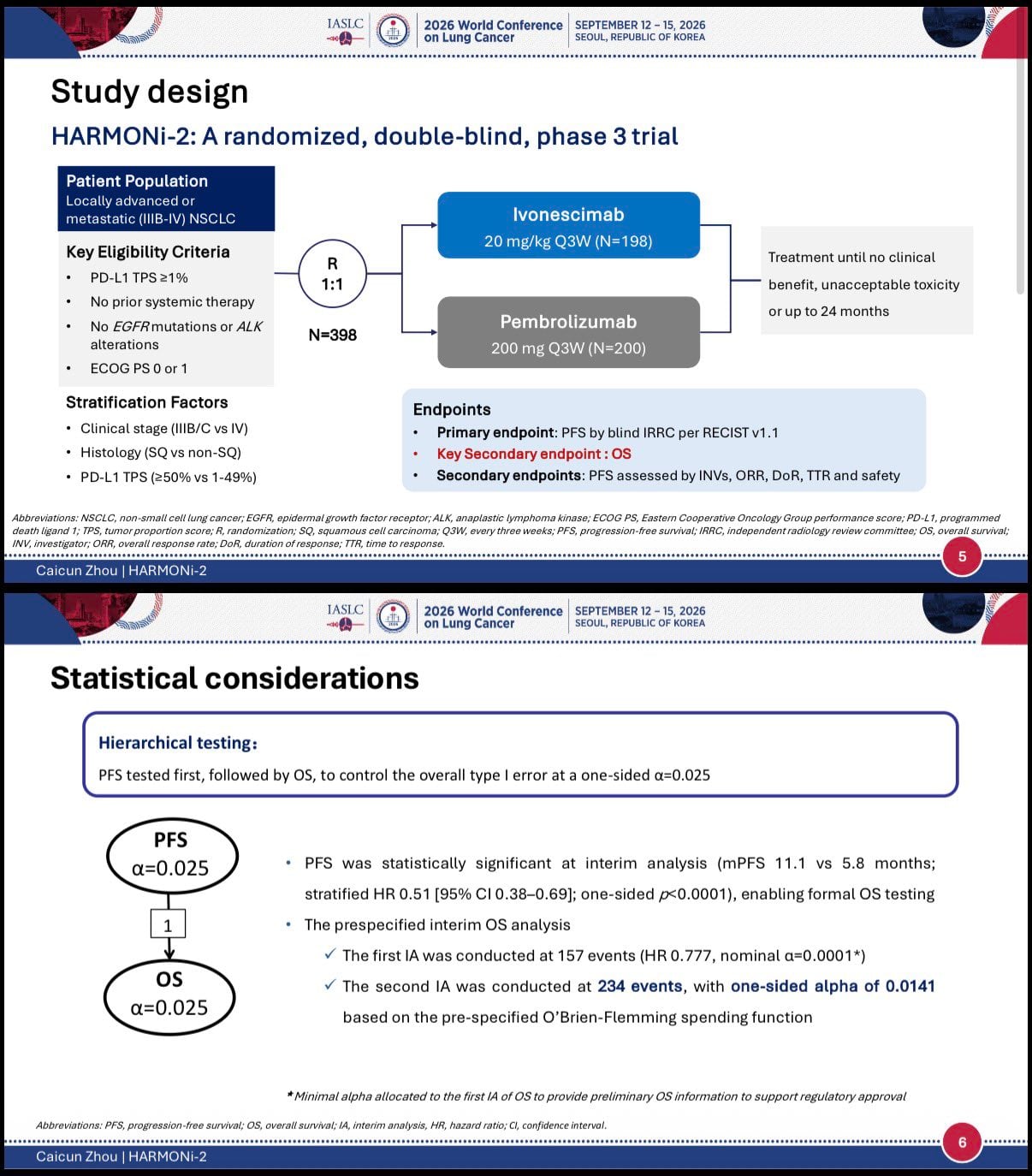
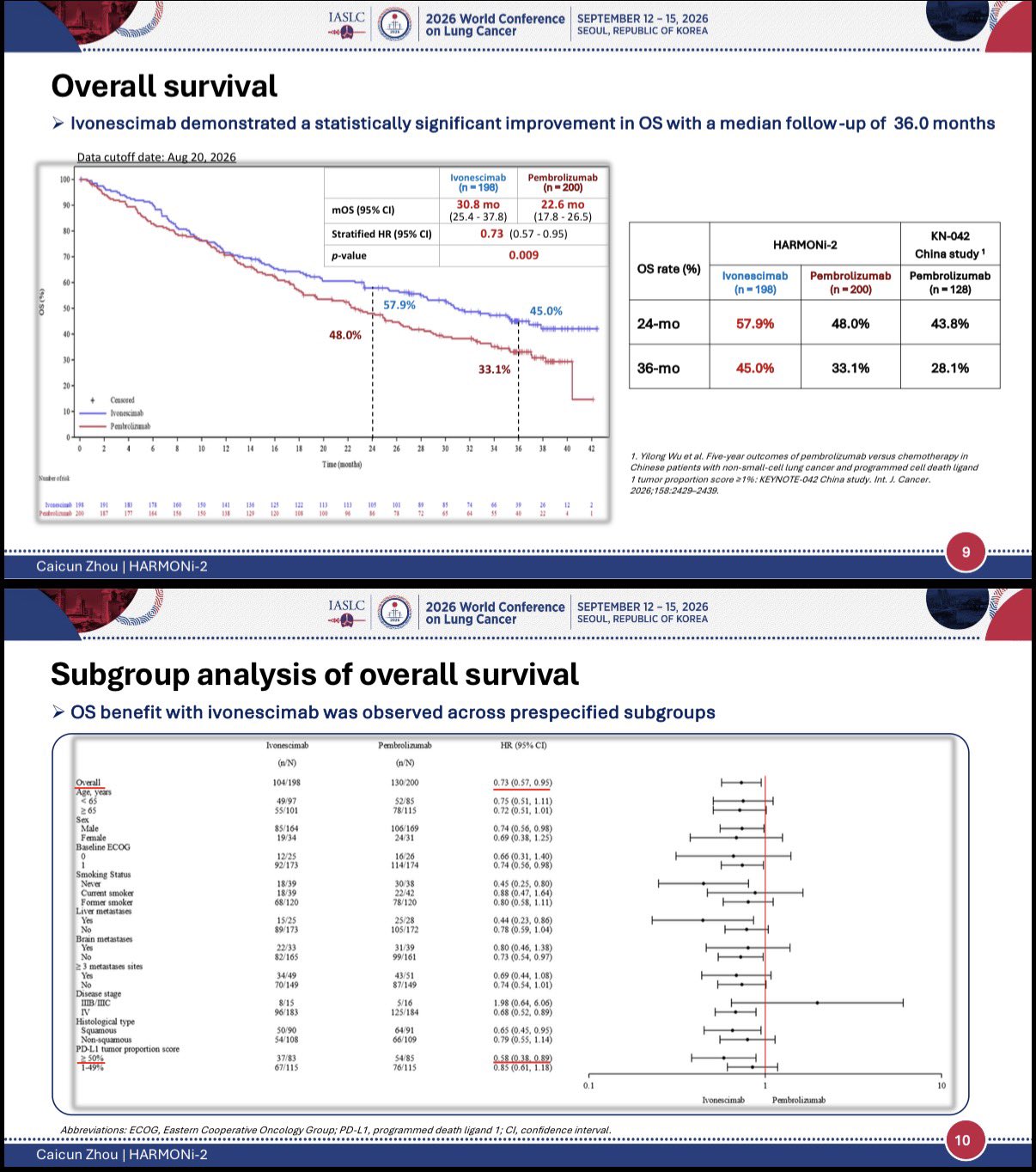
#WCLC26 | HARMONi-2

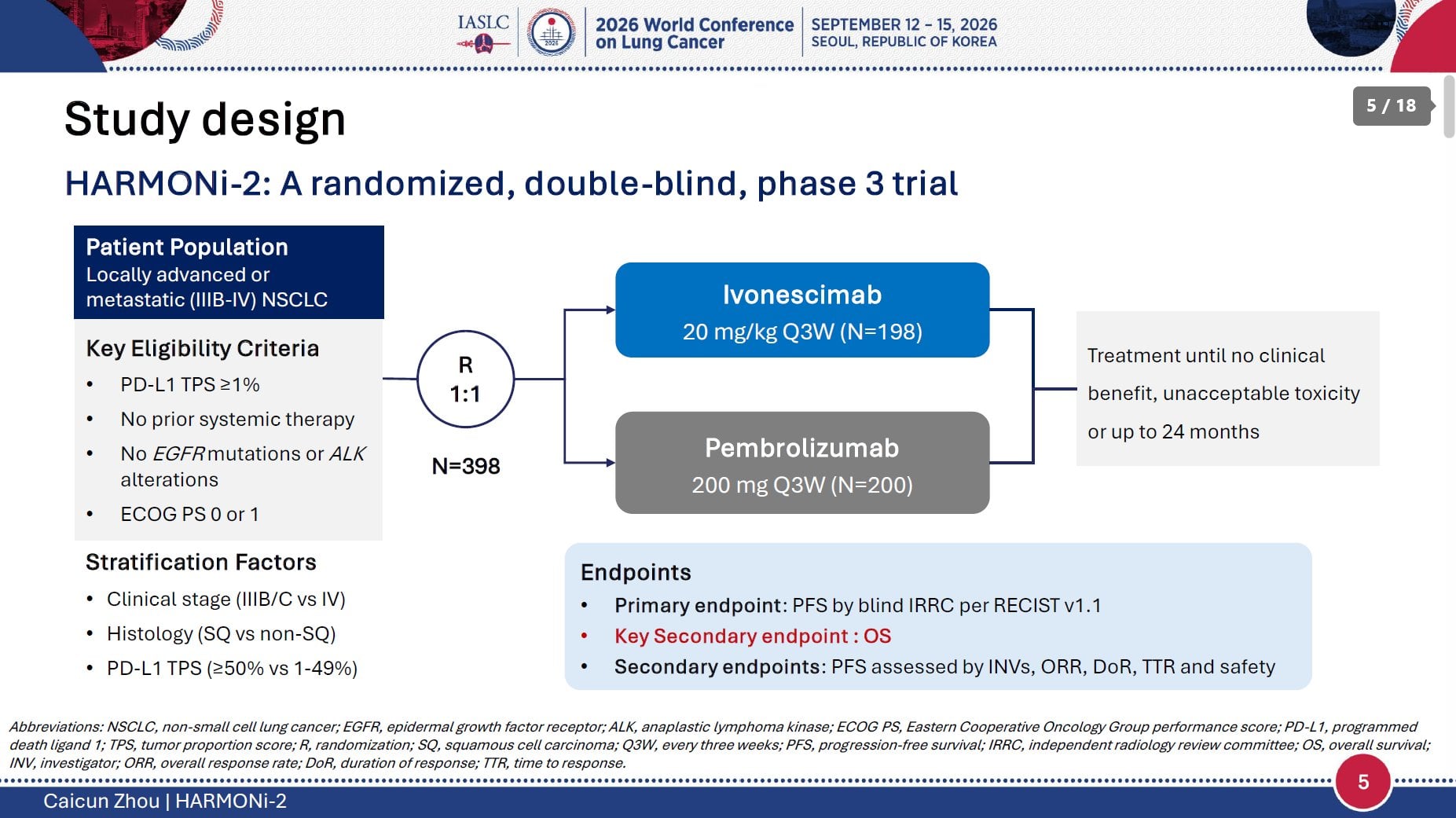
🧬 Ph3: 1L ivonescimab vs pembro in PD-L1+ advanced NSCLC (TPS ≥1%; n=398)

🏆 OS: 30.8 vs 22.6 mo; HR 0.73 (95% CI 0.57–0.95; p=0.009)
📈 3-y OS: 45.0% vs 33.1%

📊 Previously reported PFS: 11.1 vs 5.8 mo; HR 0.51
🎯 ORR: 50.0% vs 38.5%

🔎 Descriptive OS by PD-L1:
• TPS ≥50%: HR 0.58
• TPS 1–49%: HR 0.85

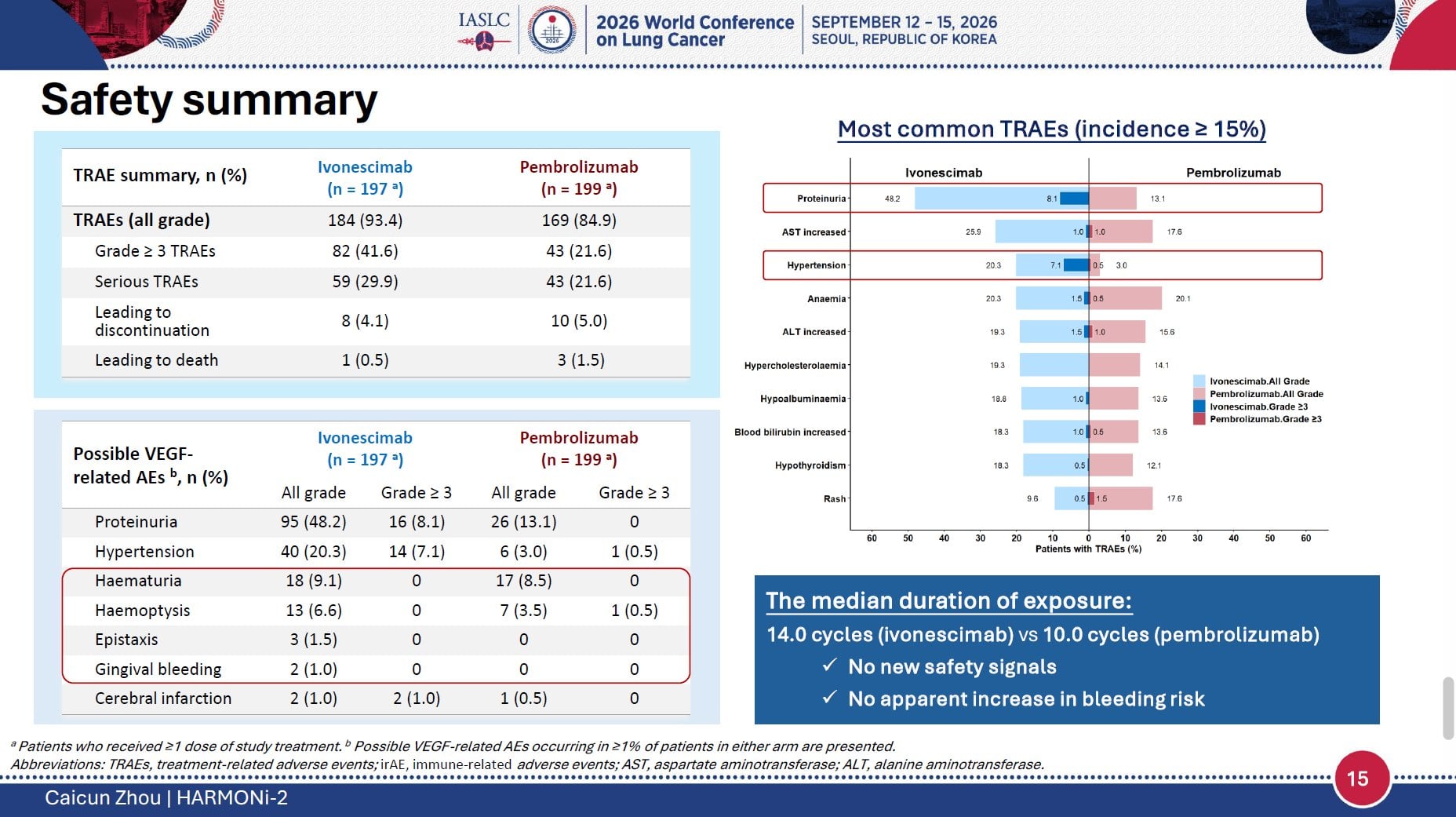
⚠️ G≥3 TRAEs: 41.6% vs 21.6%, with expected VEGF-related AEs including prote

#WCLC26 | HARMONi-2

🧬 Ph3: 1L ivonescimab vs pembro in PD-L1+ advanced NSCLC (T#WCLC26 | HARMONi-2

🧬 Ph3: 1L ivonescimab vs pembro in PD-L1+ advanced NSCLC (T#WCLC26 | HARMONi-2

🧬 Ph3: 1L ivonescimab vs pembro in PD-L1+ advanced NSCLC (T
3.5K impressions1 likes0 reposts2026-09-15
[Slide 1] IASLC 2026 World Conference SEPTEMBER 12 15, 2026 on Lung Cancer SEOUL, REPUBLIC OF KOREA Study design HARMONi-2: A randomized, double-blind, phase 3 trial Patient Population Locally advanced or metastatic (IIIB-IV) NSCLC Ivonescimab 20 mg/kg Q3W (N=198) Key Eligibility Criteria R Treatment until no clinical PD-L1 TPS ≥1% 1:1 benefit, unacceptable toxicity No prior systemic therapy or up to 24 months No EGFRmutations or ALK Pembrolizumab N=398 alterations 200 mg Q3W (N=200) ECOG PS 0 or 1 Stratification Factors Endpoints Clinical stage (IIIB/C VS IV) Primary endpoint: PFS by blind IRRC per RECIST v1.1 Histology (SQ VS non-SQ) Key Secondary endpoint : OS PD-L1 TPS (≥50% VS 1-49%) Secondary endpoints: PFS assessed by INVs, ORR, DoR, TTR and safety Abbreviations: NSCLC, non-small cell lung cancer; EGFR, epidermal growth factor receptor; ALK, anaplastic lymphoma kinase; ECOG PS, Eastern Cooperative Oncology Group performance score; PD-L1, programmed death ligand 1; TPS, tumor proportion score; R, randomization; SQ, squamous cell carcinoma; Q3W, every three weeks; PFS, progression-free survival; IRRC, independent radiology review committee; OS, overall survival; INV, investigator; ORR, overall response rate; DoR, duration of response; TTR, time to response. 5 Caicun Zhou I HARMONi-2 IASLC 2026 World Conference SEPTEMBER 12 15, 2026 on Lung Cancer SEOUL, REPUBLIC OF KOREA Statistical considerations Hierarchical testing: PFS tested first, followed by OS, to control the overall type I error at a one-sided α=0.025 PFS α=0.025 PFS was statistically significant at interim analysis (mPFS 11.1 VS 5.8 months; stratified HR 0.51 [95% CI 0.38-0.69]; one-sided p<0.0001), enabling formal OS testing 1 The prespecified interim OS analysis The first IA was conducted at 157 events (HR 0.777, nominal a=0.0001*) os The second IA was conducted at 234 events, with one-sided alpha of 0.0141 α=0.025 based on the pre-specified O'Brien-Flemming spending function *Minimal alpha allocated to the first IA of OS to provide preliminary OS information to support regulatory approval Abbreviations: PFS, progression-free survival; OS, overall survival; IA, interim analysis, HR, hazard ratio; CI, confidence interval. 6 Caicun Zhou HARMONi-2 [Slide 2] IASLC 2026 World Conference SEPTEMBER 12 15, 2026 on Lung Cancer SEOUL, REPUBLIC OF KOREA Overall survival Ivonescimab demonstrated a statistically significant improvement in OS with a median follow-up of 36.0 months Data cutoff date: Aug 20, 2026 100 Ivonescimab Pembrolizumab (n 198) (n 200) 90 30.8 mo 22.6 mo mos (95% CI) (25.4 37.8) (17.8 26.5) 80 Stratified HR (95% CI) 0.73 (0.57 0.95) KN-042 HARMONi-2 70 p-value 0.009 China study' OS rate (%) vonescimab Pembrolizumab Pembrolizumab 60 (n - 198) (n 200) (n 128) os 50 57.9% 45.0% 24-mo 57.9% 48.0% 43.8% 40 48.0% 30 33.1% 36-mo 45.0% 33.1% 28.1% 20 + Censered 10 Ivonescimab Pembrolizamab 0 0 2 4 6 8 10 12 14 16 18 20 22 24 26 28 30 32 34 36 38 40 42 1. Yilong Wu et at. Five-year outcomes of pembrolizumab versus chemotherapy in Time (months) Chinese patients with non-small-cell lung cancer and programmed cell death ligand Number ofrisk 1 tumor proportion score '%: KEYNOTE-042 China study. Int. J. Cancer. 2026;158:2429-2439. treatment 198 291 18) 178 160 150 141 136 125 122 113 113 105 101 " $5 74 66 " 26 12 2 200 187 177 164 150 150 138 129 120 108 100 * $6 78 72 65 64 55 40 22 4 9 Caicun Zhou | HARMONi-2 IASLC 2026 World Conference SEPTEMBER 12 15, 2026 on Lung Cancer SEOUL, REPUBLIC OF KOREA Subgroup analysis of overall survival OS benefit with ivonescimab was observed across prespecified subgroups Ivonescimab Pembrolizumab HR (95% CI) (n/N) (n/N) Overall 104/198 130/200 0.73 (0.57, 0.95) Age, years < <65 49/97 52/85 0.75 (0.51, 1.11) 265 55/101 78/115 0.72 (0.51, 1.01) Sex Male 85/164 106/169 0.74 (0.56, 0.98) Female 19/34 24/31 0.69 (0.38, 1.25) Baseline ECOG 0 12/25 16/26 0.66 (0.31, 1.40) 1 92/173 114/174 0.74 (0.56, 0.98) Smoking Status Never 18/39 30/38 0.45 (0.25, 0.80) Current smoker 18/39 22/42 0.88 (0.47, 1.64) Former smoker 68/120 78/120 0.80 (0.58, 1.11) Liver metastases Yes 15/25 25/28 0.44 (0.23, 0.86) No 89/173 105/172 0.78 (0.59, 1.04) Brain metastases Yes 22/33 31/39 0.80 (0.46, 1.38) No 82/165 99/161 0.73 (0.54, 0.97) 23 metastases sites Yes 34/49 43/51 0.69 (0.44, 1.08) No 70/149 87/149 0.74 (0.54, 1.01) Disease stage IIIB/IIIC 8/15 5/16 1.98 (0.64, 6.06) IV 96/183 125/184 0.68 (0.52, 0.89) Histological type Squamous 50/90 64/91 0.65 (0.45, 0.95) Non-squamous 54/108 66/109 0.79 (0.55, 1.14) PD-L1 tumor proportion score >50% 37/83 54/85 0.58 38. 0.89) 1-49% 67/115 76/115 0.85 (0.61, 1.18) 0.1 10 Ivonescimab Pembrolizumab Abbreviations: ECOG, Eastern Cooperative Oncology Group; PD-L1, programmed death ligand 1; CI, confidence interval. 10 Caicun Zhou I HARMONi-2 [Slide 3] IASLC 2026 World Conference SEPTEMBER 12 15, 2026 on Lung Cancer SEOUL, REPUBLIC OF KOREA Overall survival by PD-L1 expression level OS benefit with ivonescimab was consistent in both PD-L1 High and PD-L1 Low expressors PD-L1 High (TPS >50%) PD-L1 Low (TPS 1-49%) 100 Ivonescimab Pembrolizumab 100 Ivonescimab Pembrolizumab (n=83) (n 85) (n=115) (n 115) 90 90 mOS NR 23.2 mo mos 28.5 mo 22.1 mo 10 # 70 63.2% 10 53.4% 60 50 54.1% OS(%) 50 8 I 50 49.7% 38.6% 46.8% 40 # 30 HR = 0.58 (95% CI 0.38 0.89) 30 HR = 0.85 (95% CI 0.61 - 1.18) 34.1% 31.3% 20 20 + Censered + Centred 10 Ivenescimab 10 Presecinab Pembrolizamab Pentrolizations 0 0 0 2 4 6 $ 10 12 14 16 18 20 22 24 26 28 30 32 34 36 38 40 12 0 1 I 6 I 10 14 16 18 20 22 24 26 28 30 32 34 36 $ 40 12 Time(months) Time(nesth) Number (isk Nutedink I 1) " " " " 83 " 11 5) . " " " . 1 N 42 " # 13 II 74 " 16 56 61 56 11 if 42 # * 15 . 27 26 21 11 11 Petritional in 103 - . " 11 7) . 51 18 % . 4) 0 11 18 14 22 12 The subgroup analysis was descriptive and not formally powered. 11 Caicun Zhou I HARMONi-2 IASLC 2026 World Conference SEPTEMBER 12 15, 2026 on Lung Cancer SEOUL, REPUBLIC OF KOREA Overall survival by histology OS benefit with ivonescimab was consistent in both squamous and non-squamous histology Squamous Non-Squamous 100 Ivonescimab Pembrolizumab 100 Ivonescimab Pembrolizumab (n 90) (n=91) (n 108) (n 109) 99 90 mOS 30.5 mo 19.3 mo mos 33.6 mo 25.6 mo # # 70 70- 58.3% 60 60 57.5% OS(%) 50 41.0% 48.2% 50 52.8% - 40 40- 42.4% 38.3% 30 HR = 0.65 (95% CI 0.45 - 0.95) 30 HR = 0.79 (95% CI 0.55 - 1.14) 26.9% 20 20 + Censored Censed 10 Presescinab 10- Pentrolment Pentrolemal 0 0 0 6 10 12 14 16 = 20 22 24 26 28 30 32 34 36 38 40 0 0 : 6 $ 10 14 16 18 20 22 24 26 28 30 32 34 36 31 40 42 Time(months) Time (months) Numbership Nutritisk Inconclusive 90 " " " % " 41 H " 11 N N " # # 11 N a 14 . I - N 1) " # " Internal #1 15 12 % 11 17 4) 11 12 45 # is 15 11 a 24 2 a " , - 102 15 1) 15 11 a # N 16 11 et " a " " 2 11 The subgroup analysis was descriptive and not formally powered. 12 Caicun Zhou | HARMONi-2
MMustafa Özdoğan, MD@ozdogan_md

#WCLC26 closes with a landmark result: #ivonescimab became the first PD-1 × VEGF bispecific to beat pembrolizumab on overall survival in Phase 3.

Gotistobart, NAUTIKA1, AMIGO-1 and early mesothelioma data offer four more signals to watch.

#LungCancer #NSCLC https://t.co/rIaGuOGGBQ

#WCLC26 closes with a landmark result: #ivonescimab became the first PD-1 × VEGF
3.3K impressions13 likes6 reposts2026-09-15
[Slide 1] IASLC SEOUL FINAL DAY 15 SEPTEMBER 2026 CTLA-4 WCLC 2026 PD-1 ALK FINAL READOUTS VEGF EGFR ONE LANDMARK RESULT FOUR SIGNALS TO WATCH HARMONi-2 PHASE 3 FIRST-LINE PD-L1 ≥1% ADVANCED NSCLC CHINA n=398 36-MONTH FOLLOW-UP FIRST PHASE 3 os WIN FOR A PD-1 X VEGF BISPECIFIC VERSUS PEMBROLIZUMAB IVONESCIMAB vs PEMBROLIZUMAB OVERALL SURVIVAL PROGRESSION-FREE SURVIVAL 30.8 VS 22.6 months 11.1 VS 5.8 months HR 0.73 P=0.009 HR 0.51 +8.2 MONTHS KEY SUBGROUPS PD-L1 ≥50% PD-L1 1-49% SQUAMOUS NON-SQUAMOUS (OS) HR 0.58 HR 0.85 HR 0.65 HR 0.79 PD-1 x VEGF IS NOW PHASE 3 os VALIDATED ! LIMITS SINGLE-COUNTRY STUDY PEMBROLIZUMAB ALONE IS NOT THE IDEAL GLOBAL CONTROL FOR PD-L1 1-49% No clear excess bleeding signal reported in the squamous subgroup THE FINAL 24 HOURS IMPORTANT BUT NOT EQUAL EVIDENCE PRESERVE-003 PHASE 3 STAGE 1 NAUTIKA1 PHASE 2 GOTISTOBART REVIVES CTLA-4 ALK TARGETING MOVES BEFORE SURGERY PRETREATED SQUAMOUS NSCLC AFTER CHEMOTHERAPY AND IMMUNOTHERAPY RESECTABLE ALK-POSITIVE STAGE IB-IIIB NSCLC os 18.5 VS 10.0 months MPR 61% pCR 25% HR 0.56 Gotistobart vs docetaxel Neoadjuvant alectinib ! Strong signal Stage 1 dataset n=87 ! Single-arm Not practice-changing yet AMIGO-1 PHASE 2 PUMITAMIG PHASE 2 A PLATINUM-FREE EGFR TRIPLET A NEW MESOTHELIOMA SIGNAL FIRST-LINE EGFR-MUTANT METASTATIC NSCLC FIRST-LINE UNRESECTABLE PLEURAL OR PERITONEAL MESOTHELIOMA AMIVANTAMAB + LAZERTINIB + PEMETREXED MEDIAN PFS 16.6 MONTHS Chemotherapy-light intensification PD-L1 x VEGF-A bispecific + platinum/pemetrexed ! Single-arm proof of concept ! China Single-arm Early EXPERT 1 HARMONi-2 is the Gotistobart reopens the The other signals move therapy 2 3 TAKE practice-defining biologic proof CTLA-4 conversation after prior IO earlier or chemotherapy-light but still need confirmation THE DIRECTION IS CLEAR THE EVIDENCE IS NOT YET EQUAL Sources IASLC WCLC 2026 HARMONi-2 PRESERVE-003 NAUTIKA1 AMIGO-1 Pumitamig Phase 2 drozdogan.com
Immunotherapy162.4K impressions · top posts of the conference
SStephen V Liu, MD@StephenVLiu

Dr. @MartinReck2 presents MDT-Bridge at #WCLC26: pts with resectable or borderline resectable NSCLC received 1-2 cycles of durvalumab + chemotherapy then surgery if resectable or CRT if not, followed by adjuvant/consolidation durvalumab. Of those with borderline resectable NSCLC, 62% underwent resection (97% R0). Overall resection rate 75% and 27% pCR rate.

Dr. @MartinReck2 presents MDT-Bridge at #WCLC26: pts with resectable or borderliDr. @MartinReck2 presents MDT-Bridge at #WCLC26: pts with resectable or borderliDr. @MartinReck2 presents MDT-Bridge at #WCLC26: pts with resectable or borderliDr. @MartinReck2 presents MDT-Bridge at #WCLC26: pts with resectable or borderli
7.4K impressions26 likes18 reposts2026-09-13
[Slide 1] IASLC 2026 World Conference on Lung Cancer I F SEPTEMBER 12 - 15, 2026 I SEOUL, REPUBLIC OF KOREA KALC SCIENCE WITHOUT BOUNDARIES: UNITING THE WORLD AGAINST THORACIC CANCER [Slide 2] IASLC 2026 World Conference SEPTEMBER 12 - 15, 2026 07 min 29s on Lung Cancer SEOUL, REPUBLIC OF KOREA MDT-BRIDGE study design Global, non-randomized, phase 2 study Adjuvant/ Neoadjuvant period A Neoadjuvant period B consolidation period Durvalumab + MDT Surgery Baseline MDT Resectable⁺ investigator's choice Durvalumab + reassessment Durvalumab resectability of platinum-based CT investigator's choice Restaging/ monotherapy assessment* Q3W for 1-2 cycles of platinum-based CT optional Q4W for 12 cycles (resectable or Q3W for 2 cycles pathologic borderline resectable) confirmation CRT Unresectable Key inclusion criteria and study requirements Primary endpoint Aged ≥18 years Resection rate, defined as proportion of all patients (FAS) who underwent definitive surgery Previously untreated Secondary endpoints Pathologically confirmed, resectable or borderline Resection rate in patients deemed resectable/borderline resectable at baseline resectable stage IIB-IIIB NSCLC (AJCC 8th edition¹) Surgical outcomes in patients who underwent surgery EGFR/ALK wild type (per local test) ORR in patients deemed resectable/unresectable at MDT reassessment WHO/ECOG PS 0-1 pCR and EFS in all patients (FAS) and patients deemed resectable at MDT reassessment At least 1 target lesion not previously irradiated PFS in patients deemed unresectable at MDT reassessment Pre-operative RT not allowed Safety *MDT comprised a medical/pulmonary oncologist, thoracic surgeon, radiation oncologist, and pathologist at a minimum; resectable/borderline resectable status determined per MDT decision based on baseline available assessments. Patients who were deemed eligible for surgery at MDT evaluation but then deemed unresectable/progressed locally at the pre-surgery assessments entered the unresectable cohort. Five fractions/week for ~6 weeks (± 3 days) (total 60 Gy + 10%). Efficacy outcomes are reported, unless otherwise indicated, according to prespecified analysis populations except for pCR (assessed per local pathology review), which was not prespecified for analysis in all patients. AJCC, American Joint Committee on Cancer; ECOG, Eastern Cooperative Oncology Group; FAS, full analysis set (i.e., all patients who received at least one dose of study intervention); Gy, gray; ORR, objective response rate; PS, performance status; QXW, once every X weeks; RT, radiotherapy; WHO, World Health Organization. 1. Amin MB, et al. AJCC Cancer Staging Manual. 8th ed. New York, NY: Springer; 2017. [Slide 3] IASLC 2026 World Conference SEPTEMBER 12 - 15, 2026 05 min 25s 2026 on Lung Cancer SEOUL, REPUBLIC OF KOREA Resection rates and outcomes (FAS) The overall resection rate was 74.6% and most patients had R0 resection 100 Resection rate, 80 % (95% CI)*,⁺ 60 40 20 74.6% 81.5% 62.0% (66.7-81.6) (72.1-88.9) (47.2-75.3) 0 All patients Resectable Borderline resectable (N=142) at baseline (n=92) at baseline (n=50) 2.8% 0.9% 4.0% 3.2% (0.6-8.0) (0.0-5.1) (0.8-11.2) 0% (0.1-16.7) (0.0-4.8) 0% Resection (0.0-11.2) outcomes, % (95% CI)* 96.2% 96.0% 96.8% (90.6-99.0) (88.8-99.2) (83.3-99.9) R0 R1 R2 R0 R1 R2 R0 R1 R2 Resected cohort: all patients Resected cohort: resectable at Resected cohort: borderline (n=106) baseline (n=75) resectable at baseline (n=31) DCO, 12 January 2026. *Defined as the proportion of patients who started resection. Cls calculated by Clopper-Pearson exact method. Percentages based on the number of patients who started resection surgery as the denominator. CI, confidence interval. 9 [Slide 4] IASLC 2026 World Conference SEPTEMBER 12 - 15, 2026 03 min 37s on Lung Cancer SEOUL, REPUBLIC OF KOREA pCR EFS by pCR 27.3% of all patients resectable at MDT 12-month EFS was higher in patients with vs reassessment had pCR, including 31.3% without pCR (100% VS 89.8%) who were resectable at baseline Resectable at pCR No pCR MDT reassessment No. events / no. patients (%) 0/33 (0) 9/73 (12.3) 12-month EFS, % (95% CI)* 100.0 (100.0-100.0) 89.8 (79.6-95.0) 30 1.00 FAS 0.75 pCR rate, % (95% CI)* 20 Probability of EFS 0.50 10 0.25 23.2% 31.3% 18.4% 27.3% 0.00 (16.6-31.1) (21.6-42.4) (7.7-34.3) (19.6-36.1) 0 3 6 9 12 15 18 21 0 All patients Resectable Borderline Resectable No. at risk: Time from first dose (months) (N=142) at baseline resectable at cohort pCR 33 33 30 19 10 0 0 0 (n=83) baseline (n=121) No pCR 73 73 64 50 30 5 3 0 (n=38) DCO, 12 January 2026. *95% Cls calculated by Clopper-Pearson exact method. Median follow-up (range) in censored patients with VS without pCR: 10.4 (5.3-14.1) VS 11.4 (4.6-20.2) months. 13 ***
HHidehito HORINOUCHI@HHorinouchi

🆙#WCLC26 #LCSM OA04.03
🔥Final Analysis of the Phase 3 IMpower030 Study: Perioperative Atezolizumab + Chemotherapy in Resectable Stage II-IIIB NSCLC
🎙️@bensolomon1
🎯EFS HR 0.77 (95%CI 0.58-1.02)
🎯OS HR 0.77 (95%CI 0.57-1.07)
🎯pCR Atezo 30.6% vs. Placebo 8.6%
🔢OA04.03
☑️NCT03456063
🔗 https://t.co/rN1vqVmvgD
@OncoAlert @Larvol @IASLC

🆙#WCLC26 #LCSM OA04.03
🔥Final Analysis of the Phase 3 IMpower030 Study: Perioper🆙#WCLC26 #LCSM OA04.03
🔥Final Analysis of the Phase 3 IMpower030 Study: Perioper
6.5K impressions12 likes5 reposts2026-09-13
[Slide 1] IASLC 2026 World Conference SEPTEMBER 12 - - 15, 2026 08 min 25s on Lung Cancer SEOUL, REPUBLIC OF KOREA Study Design Double-blind period Open-label period Key eligibility criteria: Atezolizumab 1,200 mg + Surgical Resectable Stage II, IIIA or platinum-based chemotherapy* resection (pCR, MPR PORT Atezolizumab 1,200 mg select IIIB (T3N2) NSCLC (16 cycles) Q3W (8th edition) (4 cycles) Q3W assessment) Eligible for R0 resection with curative intent R 1:1 Adequate pulmonary and cardiac function to Survival follow-up Placebo + Surgical undergo resection resection ALK WT/EGFR WT platinum-based chemotherapy* (pCR, MPR PORT Best supportive care (4 cycles) Q3W ECOG PS 0-1 assessment) Stratification factors: Primary endpoint: Key secondary endpoints: Tumor Stage (II VS IIIA N2- VS IIIA/B N2+) IRF-EFS IRF-pCR INV-EFS Histology (non-squamous vs squamous) IRF-MPR INV-DFS OS Safety *Chemotherapy options: cisplatin + pemetrexed, carboplatin + pemetrexed, or carboplatin + nab-paclitaxel for patients with non-squamous NSCLC; cisplatin + gemcitabine or carboplatin + nab-paclitaxel for patients with squamous NSCLC. Chemotherapy was administered as (per 21-day cycle): cisplatin (75 mg/m² IV) on Day 1; pemetrexed (500 mg/m2 IV) on Day 1; carboplatin (IV, initial target AUC of 6 mg/mL/min) on Day 1; nab-paclitaxel (100 mg/m2 IV) on Days 1, 8, and 15; gemcitabine (1,250 mg/m² IV) on Days 1 and 8. PORT required for patients with positive margins prior to initiating post-operative atezolizumab or best supportive care. PORT mandatory for N2+ disease in V1-6 and optional for patient with N2+ disease at resection after version 7. ALK, anaplastic lymphoma kinase; AUC, area under the curve; DFS, disease-free survival; ECOG PS, Eastern Cooperative Oncology Group performance status; EFS, event-free survival; EGFR, epidermal growth factor receptor; INV, investigator-assessed; IRF, independent review facility-assessed; IV, intravenous; MPR, major pathological response; OS, overall survival; pCR, pathological complete response; PORT, post-operative radiation therapy; Q3W, every 3 weeks; R, randomized; R0, complete resection; WT, wild-type. 4 [Slide 2] IASLC 2026 World Conference SEPTEMBER 12 - 15, 2026 05 min 21s 2026 on Lung Cancer SEOUL, REPUBLIC OF KOREA IRF-Assessed EFS Stage IIB-IIIB-WT population (primary endpoint)* ITT-WT population$ 100 100 Atezolizumab arm Placebo arm Atezolizumab arm Placebo arm Median, months (95% CI) 62.8 (41.4, NE) 34.9 (24.6, 63.8) Median, months (95% CI) 67.2 (49.1, NE) 43.9 (28.0, 63.8) 80 Stratified HR (95% CI); p value+ 0.77 (0.58, 1.02); p=0.07 80 Stratified HR (95% CI) 0.75 (0.57, 0.98) Median survival follow-up in all patients: 69.3 months Median survival follow-up in all patients: 69.3 months 60 60 52.6% IRF-EFS (%) 50.5% IRF-EFS (%) 40 40 44.3% 46.0% 20 20 0 0 0 6 12 18 24 30 36 42 48 54 60 66 72 78 84 88 0 6 12 18 24 30 36 42 48 54 60 66 72 78 84 88 Months Months Patients remaining at risk Patients remaining at risk 196 180 147 119 111 105 100 95 89 78 65 33 29 1 1 219 201 166 137 129 123 117 111 104 92 78 37 32 1 1 201 174 129 118 102 90 82 78 70 60 54 25 23 2 NE 221 193 144 133 117 105 96 92 84 73 64 29 26 2 NE Statistical significance was not met in the Stage IIB-IIIB-WT population Data cut-off: 01 October 2025. *A total of 92 (46.9%) patients in the atezolizumab arm (n=196) and 104 (51.7%) patients in the placebo arm (n=201) had an event; +Stratified Log-rank 2-sided p value; Versus stopping boundary of 0.04; $A total of 99 (45.2%) patients in the atezolizumab arm (n=219) and 114 (51.6%) patients in the placebo arm (n=221) had an event. EFS was defined as time from randomization to the first documented disease progression per RECIST v1.1 that precluded surgery, local or distant disease recurrence (including occurrence of new primary NSCLC) or death from any cause, whichever occurred first. NE, not estimable. 8 [Slide 3] IASLC 2026 World Conference SEPTEMBER 12 - 15, 2026 04 min 13s on Lung Cancer SEOUL, REPUBLIC OF KOREA Key Secondary Endpoints Stage IIB-IIIB-WT ITT-WT Atezolizumab arm Placebo arm Atezolizumab arm Placebo arm (n=196) (n=201) (n=219) (n=221) IRF-pCR, n (%) 58 (29.6) 17 (8.5) 67 (30.6) 19 (8.6) IRF-MPR, n (%) 105 (53.6) 49 (24.4) 119 (54.3) 55 (24.9) Median INV-EFS, months 62.8 34.6 65.0 36.5 HR (95% CI) 0.70 (0.53, 0.93) 0.71 (0.55, 0.93) Outcomes of pCR, MPR and EFS favored atezolizumab VS placebo Data cut-off: 01 October 2025. Key secondary endpoints were not formally tested. pCR, absence of any viable primary tumor cells at the time of surgical resection in the primary tumor and all sampled lymph nodes as assessed by central pathology laboratory; MPR, <10% residual viable tumor cells at the time of surgical resection in the primary tumor as assessed by central pathology laboratory. 10 [Slide 4] IASLC 2026 World Conference SEPTEMBER 12 - 15, 2026 03 min 46s on Lung Cancer SEOUL, REPUBLIC OF KOREA Key Secondary Endpoints Overall survival (ITT-WT population)* Disease-free survival (ITT-WT population)+ 100 100 80 80 66.0% 60 60 57.4% OS (%) 59.9% DFS (%) 40 40 45.9% Atezolizumab arm Placebo arm Atezolizumab arm Placebo arm 20 Median, months (95% CI) NE (NE) 81.7 (63.8, NE) 20 Median, months (95% CI) 82.7 (54.3, NE) 54.4 (30.2, 66.0) Stratified HR (95% CI) 0.77 (0.57, 1.05) Stratified HR (95% CI) 0.67 (0.49, 0.90) Median survival follow-up in all patients: 69.3 months 0 0 0 6 12 18 24 30 36 42 48 54 60 66 72 78 84 90 0 6 12 18 24 30 36 42 48 54 60 66 72 78 84 86 Months Months Patients remaining at risk Patients remaining at risk 219 207 197 182 174 166 159 151 139 125 112 96 57 32 6 188 170 142 131 126 119 113 104 94 85 59 34 16 1 221 206 188 173 160 152 137 127 123 109 94 74 46 21 3 181 137 122 112 100 95 89 84 75 67 48 26 14 2 Outcomes of OS and DFS favored atezolizumab VS placebo Data cut-off: 01 October 2025. Key secondary endpoints were not formally tested. *A total of 75 (34.2%) patients in the atezolizumab arm (n=219) and 89 (40.3%) patients in the placebo arm (n=221) had an event. The HR (95% CI) of median os between the atezolizumab (n=196) and placebo arms (n=201) in the Stage IIB-IIIB-WT population was 0.79 (0.57-1.09); Patients with R0 margins after surgical resection. A total of 79 (42.0%) patients in the atezolizumab arm (n=188) and 95 (52.5%) patients in the placebo arm (n=181) had an event. The HR (95% CI) of median DFS between the atezolizumab (n=167) and placebo arms (n=164) in the Stage IIB-IIIB-WT population was 0.66 (0.48-0.91).OS, time from randomization to death from any cause; DFS, time from the first date of no disease (date of surgery) to local or distant recurrence (including occurrence of new primary NSCLC), or death due to any cause, whichever occurs first. 11
DDrew Moghanaki@DrewMoghanaki

I thoroughly enjoyed reading this recently published article led by @TroyKleberMD. It pulls back the curtain on how the largest cancer center in the US selects and manages patients with stage III NSCLC with induction chemoimmunotherapy. The framing is excellent, the results are unbiased, and the discussion is full of excellent pearls. The results also include a nice analysis of different RT strate

I thoroughly enjoyed reading this recently published article led by @TroyKleberMI thoroughly enjoyed reading this recently published article led by @TroyKleberM
5.4K impressions24 likes12 reposts2026-09-11
[Slide 1] Original Study Using Induction Chemoimmunotherapy as a Bridge to Definitive Local Therapy for Non-Metastatic NSCLC: Real-World Outcomes From a Comprehensive Cancer Center Troy J. Kleber¹, Sage A. Copling², Andrew D. Kjim², César P. Márquez¹, Wenli Dong³, Waree Rinsurongkawong³, Vadeerat Rinsurongkawong³, J. Jack Lee³, Yuliya Kitsel⁴, Xiaoyu Han⁴, Sherif M. Ismail⁵, Hui Xu⁴, Ivan Coronado⁴, Zhongxing Liao⁶, Joe Y. Chang⁶, Aileen Chen⁶, Saumil Gandhi⁶, Matthew S. Ning⁶, Quynh-Nhu Nguyen⁶, Michael S. O'Reilly⁶, David Qian⁶, James W. Welsh6, Stephen G. Chun⁶, Tina Cascone⁷, Jianjun J. Zhang⁷, Don L. Gibbons⁷, Mehmet Altan⁷, Ara A. Vaporciyan⁸, David C. Rice⁸, Ravi Rajaram⁸, Reza J. Mehran⁸, Mara B. Antonoff8, Kyle G. Mitchell⁸, Annikka Weissferdt⁹, John V. Heymach⁷, Jia Wu⁴, Steven H. Lin⁶,#, Julianna K. Bronk 1 Department of Radiation Oncology, Division of Radiation Oncology, The University of Texas MD Anderson Cancer Center, Houston, TX 2 McGovern Medical School at UTHealth Houston., Houston, TX 3 Department of Biostatistics, The University of Texas MD Anderson Cancer Center, Houston, TX 4 Department of Imaging Physics, Division of Diagnostic Imaging, The University of Texas MD Anderson Cancer Center, Houston, TX 5 Institute for Data Science in Oncology, The University of Texas MD Anderson Cancer Center, Houston, TX 6 Department of Thoracic Radiation Oncology, Division of Radiation Oncology, The University of Texas MD Anderson Cancer Center, Houston, TX 7 Department of Thoracic-Head & Neck Medical Oncology, Division of Cancer Medicine, The University of Texas MD Anderson Cancer Center, Houston, TX 8 Department of Thoracic and Cardiovascular Surgery, Division of Surgery, The University of Texas MD Anderson Cancer Center, Houston, TX 9 Department of Anatomical Pathology, Division of Pathology and Laboratory Medicine, The University of Texas MD Anderson Cancer Center, Houston, TX [Slide 2] Before Induction Therapy After Surgical Surgery Candidate n = 115 (68%) n = 144 (86%) n = 29 FRT (20% of surgical candidates) n = 44 (26%) Non-Surgical Candidate n = 24 (14%) SBRT n = 4 (2%) None n = 5 (3%) Figure 2. Alluvial plot describing practice patterns of definitive therapy following induction chemoimmunotherapy based on baseline surgical candidacy for stage I-III NSCLC. Percentages for definitive therapy do not total 100% due to rounding. Five patients did not proceed with definitive surgery or radiotherapy after induction chemoimmunotherapy because of either death from comorbidities (n = 3), transition to maintenance immunotherapy (n = 1), or loss to follow-up (n = 1). Abbreviations: FRT = fractionated radiotherapy; SBRT = stereotactic body radiotherapy.
SStephen V Liu, MD@StephenVLiu

Dr. @bensolomon1 presents IMpower 030: perioperative atezolizumab + chemo in resectable NSCLC at #WCLC26. Unfortunately, EFS did not meet significance. Trends present for EFS and OS but not significant. High rates of surgery in both arms ~90% and placebo arm performed better than expected. Disappointing negative results.

Dr. @bensolomon1 presents IMpower 030: perioperative atezolizumab + chemo in resDr. @bensolomon1 presents IMpower 030: perioperative atezolizumab + chemo in resDr. @bensolomon1 presents IMpower 030: perioperative atezolizumab + chemo in resDr. @bensolomon1 presents IMpower 030: perioperative atezolizumab + chemo in res
3.9K impressions27 likes11 reposts2026-09-13
[Slide 1] IASLC 2026 World Conference at 2276 on Lung Cancer - KALC SEPTEMBER 12 - 15, 2026 I SEOUL, REPUBLIC OF KOREA SCIENCE WITHOUT BOUNDARIES: UNITING THE WORLD AGAINST THORACIC CANCER [Slide 2] IASLC 2026 World Conference SEPTEMBER 12 - 15, 2026 08 min 11s 2026 on Lung Cancer SEOUL, REPUBLIC OF KOREA Study Design Double-blind period Open-label period Key eligibility criteria: Atezolizumab 1,200 mg + Surgical Resectable Stage II, IIIA or platinum-based chemotherapy* resection (pCR, MPR PORT Atezolizumab 1,200 mg select IIIB (T3N2) NSCLC (8th edition) (4 cycles) Q3W (16 cycles) Q3W assessment) Eligible for R0 resection with curative intent R 1:1 Adequate pulmonary and cardiac function to Survival follow-up Placebo + Surgical undergo resection resection ALK WT/EGFR WT platinum-based chemotherapy* (pCR, MPR PORT Best supportive care ECOG PS 0-1 (4 cycles) Q3W assessment) Stratification factors: Primary endpoint: Key secondary endpoints: Tumor Stage (II VS IIIA N2- VS IIIA/B N2+) IRF-EFS IRF-pCR INV-EFS Histology (non-squamous vs squamous) IRF-MPR INV-DFS OS Safety *Chemotherapy options: cisplatin + pemetrexed, carboplatin + pemetrexed, or carboplatin + nab-paclitaxel for patients with non-squamous NSCLC; cisplatin + gemcitabine or carboplatin + nab-paclitaxel for patients with squamous NSCLC. Chemotherapy was administered as (per 21-day cycle): cisplatin (75 mg/m² IV) on Day 1; pemetrexed (500 mg/m² IV) on Day 1; carboplatin (IV, initial target AUC of 6 mg/mL/min) on Day 1; nab-paclitaxel (100 mg/m² IV) on Days 1, 8, and 15; gemcitabine (1,250 mg/m² IV) on Days 1 and 8. PORT required for patients with positive margins prior to initiating post-operative atezolizumab or best supportive care. PORT mandatory for N2+ disease in V1-6 and optional for patient with N2+ disease at resection after version 7. ALK, anaplastic lymphoma kinase; AUC, area under the curve; DFS, disease-free survival; ECOG PS, Eastern Cooperative Oncology Group performance status; EFS, event-free survival; EGFR, epidermal growth factor receptor; INV, investigator-assessed; IRF, independent review facility-assessed; IV, intravenous; MPR, major pathological response; OS, overall survival; pCR, pathological complete response; PORT, post-operative radiation therapy; Q3W, every 3 weeks; R, randomized; R0, complete resection; WT, wild-type. 4 [Slide 3] IASLC 2026 World Conference SEPTEMBER 12 - 15, 2026 05 min 14s 2026 on Lung Cancer SEOUL, REPUBLIC OF KOREA IRF-Assessed EFS Stage IIB-IIIB-WT population (primary endpoint)* ITT-WT population$ 100 100 Atezolizumab arm Placebo arm Atezolizumab arm Placebo arm Median, months (95% CI) 62.8 (41.4, NE) 34.9 (24.6, 63.8) Median, months (95% CI) 67.2 (49.1, NE) 43.9 (28.0, 63.8) 80 Stratified HR (95% CI); p value+ 0.77 (0.58, 1.02); p=0.07 80 Stratified HR (95% CI) 0.75 (0.57, 0.98) Median survival follow-up in all patients: 69.3 months Median survival follow-up in all patients: 69.3 months 60 60 52.6% IRF-EFS (%) 50.5% IRF-EFS (%) 40 40 44.3% 46.0% 20 20 0 0 0 6 12 18 24 30 36 42 48 54 60 66 72 78 84 88 0 6 12 18 24 30 36 42 48 54 60 66 72 78 84 88 Months Months Patients remaining at risk Patients remaining at risk 196 180 147 119 111 105 100 95 89 78 65 33 29 1 1 219 201 166 137 129 123 117 111 104 92 78 37 32 1 1 201 174 129 118 102 90 82 78 70 60 54 25 23 2 NE 221 193 144 133 117 105 96 92 84 73 64 29 26 2 NE Statistical significance was not met in the Stage IIB-IIIB-WT population Data cut-off: 01 October 2025. *A total of 92 (46.9%) patients in the atezolizumab arm (n=196) and 104 (51.7%) patients in the placebo arm (n=201) had an event; TStratified Log-rank 2-sided p value; Versus stopping boundary of 0.04; $A total of 99 (45.2%) patients in the atezolizumab arm (n=219) and 114 (51.6%) patients in the placebo arm (n=221) had an event. EFS was defined as time from randomization to the first documented disease progression per RECIST v1.1 that precluded surgery, local or distant disease recurrence (including occurrence of new primary NSCLC) or death from any cause, whichever occurred first. NE, not estimable. 8 [Slide 4] IASLC 2026 World Conference SEPTEMBER 12 - 15, 2026 03 min 48s on Lung Cancer SEOUL, REPUBLIC OF KOREA Key Secondary Endpoints Overall survival (ITT-WT population)* Disease-free survival (ITT-WT population)+ 100 100 80 80 66.0% 60 60 57.4% OS (%) 59.9% DFS (%) 40 40 45.9% Atezolizumab arm Placebo arm Atezolizumab arm Placebo arm 20 Median, months (95% CI) NE (NE) 81.7 (63.8, NE) 20 Median, months (95% CI) 82.7 (54.3, NE) 54.4 (30.2, 66.0) Stratified HR (95% CI) 0.77 (0.57, 1.05) Stratified HR (95% CI) 0.67 (0.49, 0.90) Median survival follow-up in all patients: 69.3 months 0 0 0 6 12 18 24 30 36 42 48 54 60 66 72 78 84 90 0 6 12 18 24 30 36 42 48 54 60 66 72 78 84 86 Months Months Patients remaining at risk Patients remaining at risk 219 207 197 182 174 166 159 151 139 125 112 96 57 32 6 188 170 142 131 126 119 113 104 94 85 59 34 16 1 221 206 188 173 160 152 137 127 123 109 94 74 46 21 3 181 137 122 112 100 95 89 84 75 67 48 26 14 2 Outcomes of OS and DFS favored atezolizumab vs placebo Data cut-off: 01 October 2025. Key secondary endpoints were not formally tested. *A total of 75 (34.2%) patients in the atezolizumab arm (n=219) and 89 (40.3%) patients in the placebo arm (n=221) had an event. The HR (95% CI) of median OS between the atezolizumab (n=196) and placebo arms (n=201) in the Stage IIB-IIIB-WT population was 0.79 (0.57-1.09); Patients with R0 margins after surgical resection. A total of 79 (42.0%) patients in the atezolizumab arm (n=188) and 95 (52.5%) patients in the placebo arm (n=181) had an event. The HR (95% CI) of median DFS between the atezolizumab (n=167) and placebo arms (n=164) in the Stage IIB-IIIB-WT population was 0.66 (0.48-0.91).OS, time from randomization to death from any cause; DFS, time from the first date of no disease (date of surgery) to local or distant recurrence (including occurrence of new primary NSCLC), or death due to any cause, whichever occurs first. 11
MMustafa Özdoğan, MD@ozdogan_md

Two negative Phase 3 atezolizumab trials—but two very different messages.

IMpower030 missed its statistical threshold despite a strong efficacy signal. S1914 showed no survival gain and greater toxicity.

In early-stage NSCLC, context matters.

#WCLC26 #LungCancer #NSCLC #Immunotherapy

Two negative Phase 3 atezolizumab trials—but two very different messages.

IMpow
3.8K impressions9 likes5 reposts2026-09-12
[Slide 1] WCLC 2026 AND THE LANCET BETTER TWO NEGATIVE ATEZOLIZUMAB TRIALS SCIENCE A BRIGHTER TOMORROW FOR PATIENTS IN EARLY STAGE NSCLC PEOPLE Same label Different clinical meaning EVIDENCE IMPACT IMpower030 WCLC 2026 PHASE 3 SWOG NRG S1914 THE LANCET 2026 PHASE 3 Resectable stage II to IIIB High risk T1 to T3 NO MO NSCLC NSCLC medically inoperable or declined surgery N 453 Perioperative atezolizumab plus chemotherapy vs chemotherapy alone N 417 SBRT plus atezolizumab VS SBRT alone Median EFS 2 year OS 62.8 mo VS 34.9 mo 82% VS 82% OS HR 1.04 95% CI 0.69 to 1.58 pCR 29.6% VS 8.5% Grade 3 or higher AEs 12% VS 3% PRESPECIFIED STATISTICAL 2 grade 5 respiratory events with atezolizumab THRESHOLD NOT MET NO SURVIVAL BENEFIT Statistically negative clinically suggestive MORE TOXICITY EXPERT INTERPRETATION SAME DRUG DIFFERENT PATIENTS 1 A negative trial is not always a biologic failure DIFFERENT QUESTIONS DIFFERENT ANSWERS 2 Benefit depends on setting timing and patient selection CONTEXT TURNS 3 Do not add atezolizumab to SBRT outside a clinical trial DATA INTO CARE THE LESSON IS CONTEXT NOT A CLASS EFFECT Sources IMpower030 NCT03456063 WCLC 2026 SWOG NRG S1914 Lancet 2026 drozdogan.com
SStephen V Liu, MD@StephenVLiu

BRAF V600E NSCLC is a unique subset of NSCLC that can respond well to targeted therapy but can also respond to immunotherapy, outlined by Dr. @Sokim_33 at #BTGLung2026 ahead of #WCLC26. Is there debate as to optimal first-line management? https://t.co/RI6fNWQykF

BRAF V600E NSCLC is a unique subset of NSCLC that can respond well to targeted t
3K impressions8 likes2 reposts2026-09-10
[Slide 1] Challenging questions in BRAF-mutant NSCLC 1L Sequencing for BRAF-V600E CNS Targeted therapy vs. Chemo +/- 10? Extrapolated from melanoma data FRONT-BRAF (IO+/-chemo vs. No prospective CNS data in NSCLC BRAF/MEKi) Timing of SRS Retrospective, 284 pts/17-centers OS: 40.9 vs. 25.1 mo (HR 0.69) IO Benefit: Smokers, PD-L1 > 1%, age ≥ 70, no CNS mets, TP-53 mutant Acquired resistance Class II, III BRAF-mutations Heterogenous No approved targeted therapy MAPK activation - NRAS, KRAS, MEK Pan-RAF, ERK1/2 inhibitors under Bypass signaling - e.g. EGFR, MET, investigation HER2, PI3K activation Cell cycle escape Onc Live BRIDGING Histologic transformation T in Lung Cancer Di Federico, A et al. The Lancet 2025.
SShankar Siva@_ShankarSiva

Stage III #lungcancer receives the STARLORD treatment at #WCLC26.
〰️SABR to nodes up to 40Gy
〰️SABR to primary up to 50Gy
〰️adjuvant immunotherapy
Preliminary follow up, n=26, but appears to be a feasible approach. 8% acute G3 Adverse events
🤔I am curious about this - - but
More follow up required… certainly patient friendly short schedule #lcsm

Stage III #lungcancer receives the STARLORD treatment at #WCLC26. 
〰️SABR to nodStage III #lungcancer receives the STARLORD treatment at #WCLC26. 
〰️SABR to nod
3K impressions28 likes14 reposts2026-09-14
[Slide 1] #WCLCZ6 in wclc.iaslc.org IASLC 2026 World Conference 2026 on Lung Cancer SEPTEMBER 12 - 15, 2026 | SEOUL, REPUBLIC OF KOREA Stereotactic Radiotherapy in Locally Advanced Non-Small Cell Lung Cancer Unfit for Concurrent Chemoradiation: The STARLORD study ДБВ Order C% Crisitine - Francesco Cuccia, MD, MSc Radiation Oncology - ARNAS Civico Hospital, Palermo, Italy Science Without Boundaries: Uniting the World Against Thoracic Cancer [Slide 2] IASLC 2026 World Conference SEPTEMBER 12 - 15, 2026 06 min 58s on Lung Cancer SEOUL, REPUBLIC OF KOREA Characteristics N or percentage Number of patients 26 May Median age 75.5 years (range, 68-83 years) 2024 Smoking status Current=23%; Former=76% Gender M=76%;F=23% TNM 8° edition staging stagellIB=84.6%; stagellIC=15.4% ECOG Performance Status PS1=30.7%; PS2=57.7%;PS3=11.6% Primary histology Adenocarcinoma=42.3%; squamous cell=42.3%; large cell neuroendocrine=15.4% PD-L1 status PD-L1 negative=23%; PD-L1>50%=27%; PD- L1<50%=50% Median T size 4.55 cm (range, 3.6-7 cm) Median SBRT dose for T 45 Gy/5 fx (range, 45-50 Gy/5 fx) Median SBRT dose for N 35 Gy/5 fx (range, 30-40 Gy/5 fx) ФВ Order 6
DDrew Moghanaki@DrewMoghanaki

Lots of chatter about the phase III PRIME-Lung study at #WCLC26 which tests the hypothesis that killing the primary tumor BEFORE starting immunotherapy can help pts with metastatic disease live longer. @_ShankarSiva https://t.co/nUflAyEniB

Lots of chatter about the phase III PRIME-Lung study at #WCLC26 which tests the Lots of chatter about the phase III PRIME-Lung study at #WCLC26 which tests the Lots of chatter about the phase III PRIME-Lung study at #WCLC26 which tests the Lots of chatter about the phase III PRIME-Lung study at #WCLC26 which tests the
2.8K impressions36 likes16 reposts2026-09-12
[Slide 1] NOVO 20-005 / TROG TD21.10 min 04s Stage IV NSCLC N=420 Standard of care 1st line systemic C therapy F/U Any T stage, any N schedule stage, ≤3 organs M1 O disease NS Randomly E assigned Follow-up CT as Standard of care STRATIFICATION 1:1 per SoC- eg. PD-L1 <50% N 1st line systemic C/A/P 3-4 therapy Squamous versus T monthly for year non-squamous + 1, then 4-6 histology Radiotherapy to monthly Presence of brain primary metastases (before cycle 1-3) Primary endpoint - Overall survival,, 2-sided alpha=0.05, power 0.80 Powered for an improvement in OS with HR of 0.70. Estimates of controls are based on; non-squamous NSCLC of 2-yr OS from 45.5% and median OS of 22 mo (Keynote-189, pembrolizumab), or in Courtesy of Prof. Shankar Siva, Peter Mac, Melbourne, AUS squamous NSCLC of 12-month OS of 65.2% and median os of 15.9 mo (Keynote-407, pembrolizumab) Accrual 3 years, F/U 2 year, 10% drop out rate FLORENCE KATIE KEANE GERARD WALLS 2026 World Conference on Lung Cancer IASLC INTERNATIONAL KALC ASSOCIATION 12-15,2026 SEOUL REPUBLIC OF KOREA FOR THE STUDY OF LUNG CANCER [Slide 2] IASLC 2026 World Conference on Lung Cancer SEPTEMBER 12 - 15, 2026 SEOUL, REPUBLIC OF KOREA 19 min 11s Why focus on the lung primary? Evolutionary reservoir Primary-tumour RT Local morbidity Bleeding Haemoptysis Airway obstruction Atelectasis Post-obstructive infection Lung primary Potential source of further dissemination Local invasion Pain Biological hypothesis Al Bakir et al. Nature 2023 3 Mahon et al. TO 202 FLORENCE GERARD WALLS ATIE KEANE LASIC INTERNATIONAL [Slide 3] 2026 2026 World Conference on Lung Cancer SEPTEMBER 12 - 15, 2026 SEOUL, REPUBLIC OF KOREA 05 min 12s Trials addressing primary and thoracic control Primary-directed studies from IASLC Table 2 Trial and design Thoracic RT strategy Primary endpoint Public status PRIME-LUNG Early RT to the primary III RCT, n = 420 Overall With first-line systemic therapy survival Not yet recruiting TOURIST-PRINCE 36 Gy/12 or 39 Gy/13 III RCT, n = 472 Health utility Early RT to primary + nodes QLU-C10D Recruiting MARS 36 Gy/12 to primary + nodes III RCT, n = 162 Quality of life After induction systemic therapy LCSS Recruiting DRO2301 Prophylactic palliative RT Freedom from II, single arm, n = 48 High-risk thoracic disease symptomatic Recruiting progression Adapted from McMahon et al. JTO 2026, Table 2. Registries checked 9 Sep 2026; n = planned enrolment. 18 ORENCE E KEANE GERARD WALLS 026 World Conference IASLC INTERNATIONAL Lung Cancer KALC ASSOCIATION FOR THE STUDY KOREA OF LUNG CANCER [Slide 4] IASLC 2025 2026 World Conference on Lung Cancer SEPTEMBER 12 - 15, 2026 SEOUL, REPUBLIC OF KOREA Primary Radiotherapy In MEtastatic Lung Cancer 04 min 25s Dose/Fractionation Tumour Location 36Gy/12# or 40Gy/15# Ultracentral Central Tumour 35Gy/5# Central K 40Gy/5# Large Tumours >5cm (non-central) 50Gy/5# Peripheral Tumours ≤5cm Peripheral Tumour Pragmatic design Standard of care chemo/IO (no bev, ipi/nivo) RT before cycle 3 NCT05222087 - Siva et al. Primary endpoint OS 20 NO RENCE KEANE GERARD WALLS World Conference IASLC INTERNATIONAL ASSOCIATION
GGiannis Mountzios@g_mountzios

@MarianaBrandao0 did the impossible 🙅 in #WCLC26:
She managed to discuss 5 high-impact abstracts in diverse areas of immunotherapy in advanced #NSCLC in 15 minutes in a scientifically comprehensive , critical and exquisitely elegant way, placing results in a total perspective for the clinician .
Proud to work such an excellent colleague in @EORTC and in academic collaborations 👏👏👏👏🌟

@MarianaBrandao0 did the impossible 🙅 in #WCLC26: 
She managed to discuss 5 high@MarianaBrandao0 did the impossible 🙅 in #WCLC26: 
She managed to discuss 5 high
2.8K impressions17 likes4 reposts2026-09-15
[Slide 1] 09 min 28s B f in wclc.iaslc.org IASLC 2026 World Conference <<00 2026 on Lung Cancer SEPTEMBER 12 - 15, 2026 I SEOUL, REPUBLIC OF KOREA The Breakthrough Immunotherapy for Advanced NSCLC - and a bit of SCLC I AND Mariana Brandão, MD/PhD H.U.B Thoracic Oncology Unit & Phase 1 Unit NATITUT JULES BORDET Institut Jules Bordet - - Hôpital Universitaire de Bruxelles, Belgium INSTITUUT Science Without Boundaries: Uniting the World Against Thoracic Can JAMES YANG ALONA ZER IASLC [Slide 2] SEPTEMBER 12 15, 2026 -00 min 13s IASLC 2026 World Conference SEOUL, REPUBLIC OF KOREA on Lung Cancer T-cell Who will "beat" single-agent anti-PD- (L)1 in PD-L1 ≥50% NSCLC? Vaccines and Recognition MHC-I Immune Tumor evasion cell -Mutation -Deletion Regulatory Tumor-Induced cells Immune engagers immune Cytokines Single-agent anti-PD-(L)1 Downregulation of MHC Molecules Immune cells -Secretion of Immune Suppression Antigen -Alterations in APM -Immune Editing suppressive Molecules Recruitment of -Impairment of Co-Stimulatory Signals Regulatory Immune Cells -T-cell Exhaustion Mechanisms of -Tumor-derived Metabolites -Immune Cell Recruitment Immune Evasion -PD-L1/PD-1 -CTLA-4 -Hypoxia -LAG3 -Cytokine and Chemokine Tumor -TIM-3 ECM Remodeling -Immune Checkpoint Expression T cell -TIGIT PD-1 X PD-L1 Chemokines @ Tumor cell -OX40 cytokines or Addemenment TAMs T cell Immune- Cytokines VEGF, MMPs etc. CTLA-4-III-CD28 -CD86 -CD86 All the other agents / -CD80 CD80 -VISTA -BTLA -CD47 -CD137 Checkpoint -KIRs Regulation Immune suppression APC combinations anti-PD-1/anti- VEGF Modulation Immune Bispecific ibodies Brandão, ESMO-IO 2024; Tufail et al, Signal Transd and Targeted Therapy 2025 JAMES YANG [Slide 3] NSCLC, EGFR-mut, post-3rd generation TKI: how to choose? -03 min 54s HARMONi MARIPOSA-2 Ivo + PBC PFS (1ʳ): 6.8 VS 4.4 m Amivantamab + PFS 6.3 vs 4.2 HR 0.52 PBC HR 0.48 PBC PBC OS (1ʳу, FA): 16.8 VS 14.0 m OS (IA2): 17.7 vs 15.3 m HR 0.79 (NS) HR 0.73 (NS) Le et al, Lancet Oncol 2026 Passaro, Ann Onc 2024; Popat, ESMO 2024 OptiTROP- SAFFRON: if MET Lung04 Panku-Lung01 overexpression or amplification PFS (1%): 8.3 VS 4.3 PFS (press PFS (press Sac-TMT m, HR 0.49 Iza-Bren release) Osi + savolitinib release) PBC OS (2ⁿᵈ, IA): NR vs PBC OS not PBC OS (press 17.4m, HR 0.60 mature release) Fang et al, NEJM 2025 AMES VANG ALONA.7 [Slide 4] IASLC 2026 World Conference SEPTEMBER 12 15, 2026 -07 min 45s on Lung Cancer SEOUL, REPUBLIC OF KOREA My mental map EGFR+ post-osi SCLC, any line NSCLC, non-AGA, 1st line treatment BNT324-01 HARMONi-2 RC148-C001 HARMONi LONESTAR Encouraging ORR Updated analysis Pumitamig + Elfe- Don't give local Improved OS in PD- D: high activity in consolidation L1 ≥1% (vs Pembro) confirms the (>70%) in SCLC, including in therapy "blindly" to Squamous & Non- numerically Squamous. longer OS with the post- IO-treated patients OS in PD-L1 tarlatamab setting Well-tolerated chemo+lvo VS ≥50%: promising, 2nd negative trial in chemo, but not (n=8 pts) but underpowered this setting stat. significant subgroup analysis Differences VS Added value of Treat the LN and of a 2ry endpoint other PD-(L)1 X combo VS ADC the thymus as wait for global VEGF bsAb? Biomarkers? alone? data "organs at risk"
MMustafa Özdoğan, MD@ozdogan_md

#WCLC26 Presidential 1 redrew the map

Two B7-H3 ADCs reduced the risk of death by 54% versus topotecan in relapsed SCLC

MRI surveillance challenged routine PCI while SG plus pembrolizumab missed in PD-L1-high NSCLC

#SCLC #NSCLC #LungCancer https://t.co/o9ZMJN2yeF

#WCLC26 Presidential 1 redrew the map

Two B7-H3 ADCs reduced the risk of death
2.3K impressions11 likes6 reposts2026-09-13
[Slide 1] WCLC 2026 PRESIDENTIAL 1 SCIENCE THREE RESULTS THAT MAY RESET NEW TODAY DATA BETTER LUNG CANCER PRACTICE BRIGHTER CARE TOMORROWS TOMORROW FOR PATIENTS B7-H3 ADCs rise PCI retreats TROP2 combination falls short do RELAPSED SCLC TOPOTECAN OUTPERFORMED TWICE TAISHAN-302 B7-H3 ARTEMIS-008 B7-H3 Second-line SCLC China N 451 ADC Relapsed SCLC China N 461 ADC Tambotatug pelitecan vs topotecan Risvutatug rezetecan vs topotecan Median OS 13.3 VS 9.4 months Median OS 18.5 VS 10.3 months HR 0.46 54% lower risk of death HR 0.46 54% lower risk of death PFS 7.4 VS 2.8 months HR 0.29 PFS 7.2 VS 3.0 months HR 0.33 ORR 59.1% VS 9.7% ORR 58.3% VS 12.6% Grade 3 or higher TRAEs 46.4% VS 74.7% Grade 3 or higher TRAEs 60.9% VS 78.2% TWO PHASE 3 WINS B7-H3 ADCs MAY DISPLACE TOPOTECAN No head-to-head comparison between the ADCs MAVERICK SWOG S1827 EVOKE-03 KEYNOTE-D46 Limited or extensive-stage SCLC N 304 Untreated metastatic NSCLC PD-L1 TPS 50% or higher N 620 MRI surveillance alone vs MRI plus PCI Sacituzumab govitecan plus pembrolizumab vs pembrolizumab Cognitive failure or death HR 0.60 PFS 11.8 VS 7.7 months Favors MRI surveillance alone HR 0.81 prespecified threshold not met Preliminary OS HR 0.90 no difference OS 21.5 VS 22.8 months HR 1.07 Grade 3 to 5 AEs 0.8% VS 7.9% Grade 3 or higher TRAEs 55.7% VS 16.5% PCI IS NO LONGER AN AUTOMATIC DEFAULT Requires reliable serial brain MRI and salvage access MORE TREATMENT NO PROVEN SURVIVAL GAIN EXPERT INTERPRETATION 1 Relapsed SCLC is moving 2 MRI access now determines 3 Adding an ADC to effective beyond topotecan whether PCI can be safely omitted PD-1 therapy is not automatically better POSITIVE DATA CHANGE OPTIONS NEGATIVE DATA CHANGE HABITS Sources WCLC 2026 SWOG S1827 TAISHAN-302 ARTEMIS-008 EVOKE-03 drozdogan.com
Radiation / SBRT149.2K impressions · top posts of the conference
PPDBrown@PDBrownOnc

🚨🚨 Randomized Trial #WCLC26 Small Cell Lung Cancer MRI +/-PCI 🚨
• MRI alone superior cognitive outcome
• CFFS benefit of MRI alone similar in LS and ES-SCLC
• No diff OS
• MRI surveillance standard of care for SCLC https://t.co/4YM3QAzBeQ

🚨🚨 Randomized Trial #WCLC26 Small Cell Lung Cancer MRI +/-PCI 🚨
• MRI alone supe
15.9K impressions54 likes27 reposts2026-09-12
[Slide 1] MAVERICK (SWOG 1827) MRI +/- PCI 1 Year CFFS** AE Gr2+ 25/10 PCI 5% 41% LS-SCLC or ES-SCLC M A O N Z D R E I + MRI* n=304 MRI 16% 2% Surveillance Rusthoven World Lung 2026. 68% LS-SCLC *77% HA-PCI **Primary Endpoint - Cognitive Failure Free Survival (CFFS) MRI alone, HR 0.61 (90% CI, 0.47-0.78), p<0.004 CFFS No signif diff benefit MRI alone by Dz stage or use immuno.OS MRI alone, HR 0.90 (90% CI, 0.67-1.20)
SStephen V Liu, MD@StephenVLiu

Landmark, practice changing study at #WCLC26. The phase III MAVERICK study shows no improvement in OS with PCI for SCLC, across limited and extensive stages, with worse cognitive failure free survival and increased toxicity in PCI arm.

The end of the PCI era. https://t.co/SWOPM7iKux

Landmark, practice changing study at #WCLC26. The phase III MAVERICK study shows
13.9K impressions22 likes10 reposts2026-09-12
[Slide 1] Overall Survival 100% Preliminary analyses at 128 events suggest no significant difference in N Events Median(months) 90% CI MRI brain surveilance 151 67 29.8 (24.8-48.6) overall survival (OS) PCI * MRI brain surveilance 152 61 31.4 75% (24.4-36.3) HR(90% Ci): 0.90 (0.67-1.20) MRI alone, HR 0.90 (90% CI, 0.67-1.20) % Survival Upper bound of 90% CI of 1.2 for MRI 50% alone is currently below the non-inferiority margin of 1.25 25% MRI brain surveillance Final OS results will be analyzed after 190 PCI + MRI brain surveillance events 0% 0 6 12 18 24 30 36 42 48 54 60 Number at risk (events / censor) Months After Randomization MRI brain surveillance 151 (0/1) 132 (12/7)101 (29/21)76 (44/31) 55 (53/43): 39 (61/51) 31 (64/56): 21 (64/66) 16 (65/70) 11 (67/73) 3 (67 / 81) PCI + MRI brain surveillance 152 (0/3) 112 (15/25)84 (31/37) 63 (41/48) 47 (48/57) 35 (51/66) 20 (57/75) 15 (59/78) 10 (59/83) 4 (60/88) 1 (61 / 90)
SStephen V Liu, MD@StephenVLiu

Dr. Chad Rusthoven at #WCLC26 presents results from SWOG S1827, the phase III MAVERICK study exploring the benefit of PCI in pts with SCLC. Historic studies before the era of MRI surveillance showed a decrease in brain metastases with PCI and an improvement in OS but recent ES-SCLC studies called the OS improvement into question. MAVERICK looks at both LS and ES disease - note primary endpoint her

Dr. Chad Rusthoven at #WCLC26 presents results from SWOG S1827, the phase III MADr. Chad Rusthoven at #WCLC26 presents results from SWOG S1827, the phase III MADr. Chad Rusthoven at #WCLC26 presents results from SWOG S1827, the phase III MADr. Chad Rusthoven at #WCLC26 presents results from SWOG S1827, the phase III MA
10.2K impressions23 likes10 reposts2026-09-12
[Slide 1] ASLC 2026 World Conference on Lung Cancer SEPTEMBER 12- 15, 2026 I SEOUL, REPUBLIC OF KOREA KALC SCIENCE WITHOUT BOUNDARIES: UNITING THE WORLD AGAINST THORACIC CANCER [Slide 2] IASLC 2026 World Conference SEPTEMBER 12 - 15, 2026 06 min 42s on Lung Cancer SEOUL, REPUBLIC OF KOREA SWOG S1827/MAVERICK Trial Hypothesis Compared with PCI + MRI surveillance, MRI surveillance alone will result in superior cognitive failure free survival (CFFS) without a decline in OS 6 [Slide 3] IASLC 2026 World Conference SEPTEMBER 12 - 15, 2026 06 min 35s on Lung Cancer SEOUL, REPUBLIC OF KOREA SWOG S1827/MAVERICK MRI Brain Surveillance Alone Versus MRI Surveillance and Prophylactic Cranial Irradiation (PCI): A Randomized Phase III Trial in Small-Cell Lung Cancer Prophylactic cranial MRI brain surveillance irradiation (PCI) Small-cell lung cancer (Limited OR Extensive) Stratify: 1. Limited vs Extensive stage No prior brain metastases R 2. Immunotherapy (y/n) 3. Performance Status (0-1 vs 2) No brain metastases on MRI after 1st line therapy No PCI MRI brain surveillance Primary Endpoint: Cognitive Failure Free Survival (CFFS) MRI brain surveillance and cognitive testing at 3, 6, 9, 12, 18, and 24 months (time to cognitive decline or death) - - PCI was 25 Gy / 10 FX, hippocampal-avoidance (HA) PCI allowed at physician discretion 7 [Slide 4] IASLC 2026 World Conference SEPTEMBER 12 - 15, 2026 05 min 52s on Lung Cancer SEOUL, REPUBLIC OF KOREA Trial Design Eligibility Patients with limited-stage (LS) and extensive-stage (ES) disease, ≥18 years of age, performance status 0-2 LS-SCLC: must have completed platinum-based chemotherapy and either definitive thoracic radiation or surgical resection ES-SCLC: must have completed platinum-based chemotherapy Immunotherapy (concurrent and/or adjuvant to upfront treatment) allowed for both LS- and ES-SCLC Enrollment within 16 weeks of Day 1 of the last cycle of chemotherapy Pts must have a response to upfront therapy & no progression in opinion of treating physician (CT or PET/CT within 42 days) No history of brain metastases and no evidence of brain metastases on MRI within 28 days of enrollment MRI surveillance Contrast-enhanced brain MRIs performed at 3, 6, 9, 12, 18, and 24 months MRI sequences per the Brain Tumor Imaging Protocol for BM (BTIP-BM) consensus recs (Kaufmann, Neuro-oncology 22.6 (2020): 757-772) Prophylactic cranial irradiation (PCI) 25 Gy delivered in 10 Fx Hippocampal avoidance (HA-PCI) allowed at physician discretion Radiation therapy recommended at time of brain metastases Radiosurgery (SRS) and whole-brain radiation (WBRT)/hippocampal-avoidant (HA)-WBRT allowed at physician discretion 8
YYakup Ergün@dr_yakupergun

Highlighted Studies at #WCLC26

1️⃣ HARMONi-2
In treatment-naïve, advanced NSCLC with PD-L1 ≥1%, ivonescimab improved PFS (11.1 vs 5.8 months; HR 0.51) and OS (30.8 vs 22.6 months; HR 0.73) compared with pembrolizumab.
This is a genuinely positive trial, but it does not tell the same story for all PD-L1-positive patients. The OS benefit was clear in the ≥50% subgroup, whereas the HR was 0.85 with

Highlighted Studies at #WCLC26

1️⃣ HARMONi-2
In treatment-naïve, advanced NSCLC
8.6K impressions24 likes8 reposts2026-09-13
[Slide 1] IASLC SEOUL 2026 WCLC26: KEY STUDIES Early results key data at a glance HARMONi-2 1 1L PD-L1 >1% advanced NSCLC Clearly positive. Strongest signal in PD-L1 >50%. PFS 11.1 vs 5.8 mo HR 0.51 In 1-49%, the control arm does os 30.8 vs 22.6 mo HR 0.73 not fully reflect current practice. 2 SWOG S1827 / MAVERICK Post-treatment SCLC MRI surveillance vs MRI + PCI With reliable MRI access, routine PCI is now hard to justify. Cognitive failure / death HR 0.60 Final os is still needed before Grade ≥3 toxicity 0.8% vs 7.9% declaring PCI obsolete. Interim OS and brain metastasis-free survival: no difference TAISHAN-302 3 Relapsed SCLC B7-H3 ADC Tam-Peli vs topotecan Clear survival gain. A potential topotecan replacement; os 13.3 vs 9.4 mo HR 0.46 efficacy after tarlatamab PFS 7.4 vs 2.8 mo ORR 59% vs 10% maintenance remains unknown. ARTEMIS-008 4 Relapsed SCLC . B7-H3 ADC Ris-Rez VS topotecan Confirms B7-H3 as a target. No cross-trial comparison with os 18.5 vs 10.3 mo HR 0.46 TAISHAN; ILD and hematologic PFS 7.2 vs 3.0 mo ORR 58% vs 13% toxicity may drive selection. 5 EVOKE-03 / KEYNOTE-D46 PD-L1 >50% metastatic NSCLC SG+pembro VS pembro More tumor shrinkage, ORR 56% vs 44% similar response duration, os 21.5 vs 22.8 mo no OS gain: Grade ≥3 toxicity 56% vs 17% no role in clinical practice. Primary PFS threshold not met 13 SEPTEMBER 2026 INTERIM CONGRESS SNAPSHOT @dr_yakupergun
SStephen V Liu, MD@StephenVLiu

MRI alone, without PCI, showed a significant improvement in cognitive failure free survival with a median of 37.8m vs 16.5m, HR 0.60 with cognitive failure free survival rate at 12m of 17% vs 6%. #WCLC26 https://t.co/OnbRI74f4G

MRI alone, without PCI, showed a significant improvement in cognitive failure fr
7.1K impressions13 likes5 reposts2026-09-12
[Slide 1] IASLC 2026 World Conference SEPTEMBER 12 - - 15, 2026 01 min 59s on Lung Cancer SEOUL, REPUBLIC OF KOREA Primary Endpoint - Cognitive Failure Free Survival (CFFS) 100% MRI surveillance alone resulted in improved CFFS MRI brain surveillance PCI + MRI brain surveillance MRI alone, HR 0.60, 90% CI 0.46-0.78, p=0.0005 75% N Events 6-month Estimate(%) 90% CI Patients randomized to MRI alone were significantly MRI brain surveillance 113 91 37.8 (30.0-45.5) % CFFS more likely to be both alive and free from cognitive 50% PCI + MRI brain surveillance 107 92 16.5 (10.7-23.4) decline compared to those randomized to MRI+PCI HR(90% CI): 0.60 (0.46-0.78) 1-sided p-value: 0.0005 25% Cognitive Failure Free Survival (CFFS) 0% 0 3 6 9 12 15 18 21 24 6 month % [90% CI] 12 month % [90% CI] Number at risk (events / censor) Months After Randomization MRI alone 38% [30-46] 17% [12-24] MRI brain surveillance 113 (0/0) 72 (33/8) 38 (66/9) 23 (80/10) 14 (86/13) 11 (88/14) 10 (88/15) 8 (90 / 15) 1 (91/21) MRI + PCI 17% [11-23] 6% [3-11] PCI + MRI brain surveillance 107 (0/0) 60 (35/12) 14 (80/13) 9 (85/13) 5 (89 / 13) 2 (91/14) 2 (91 / 14) 2 (91 / 14) NA *Detailed analyses of cognitive function will be presented at an upcoming meeting 12
EEric K. Singhi, MD@lungoncdoc

The slides we have been waiting for:

PCI is officially dead in small cell lung cancer. 🫳🏽🎤

#wclc26 @IASLC https://t.co/ci5WQkIhVQ https://t.co/HleeAeQhBY

The slides we have been waiting for:

PCI is officially dead in small cell lung The slides we have been waiting for:

PCI is officially dead in small cell lung
5.5K impressions8 likes2 reposts2026-09-12
[Slide 1] IASLC 2026 World Conference SEPTEMBER 12 - 15, 2026 01 min 54s on Lung Cancer SEOUL, REPUBLIC OF KOREA Primary Endpoint - Cognitive Failure Free Survival (CFFS) 100% MRI surveillance alone resulted in improved CFFS T MRI brain surveillance PCI + MRI brain surveillance MRI alone, HR 0.60, 90% CI 0.46-0.78, p=0.0005 75% N Events 6-month Estimate(%) 90% CI Patients randomized to MRI alone were significantly MRI brain surveillance 113 91 37.8 (30.0-45.5) % CFFS more likely to be both alive and free from cognitive 50% PCI + MRI brain surveillance 107 92 16.5 (10.7-23.4) decline compared to those randomized to MRI+PCI HR(90% CI): 0.60 (0.46-0.78) 1-sided p-value: 0.0005 25% Cognitive Failure Free Survival (CFFS) 1 0% 0 3 6 9 12 15 18 21 24 6 month % [90% CI] 12 month % [90% CI] Months After Randomization Number at risk (events / censor) MRI alone 38% [30-46] 17% [12-24] MRI brain surveillance 113 (0/0) 72 (33/8) 38 (66/9) 23 (80/10) 14 (86 / 13) 11 (88/14) 10 (88/15) 8 (90/15) 1 (91/21) MRI + PCI 17% [11-23] 6% [3-11] MRI brain surveillance 107 (0/0) 60 (35/12) 14 (80/13) 9 (85/13) 5 (89/13) 2 (91/14) 2 (91/14) 2 (91/14) NA *Detailed analyses of cognitive function will be presented at an upcoming meeting 12 [Slide 2] IASLC 2026 World Conference SEPTEMBER 12 - 15, 2026 00 min 09s on Lung Cancer SEOUL, REPUBLIC OF KOREA Overall Survival 100% Preliminary analyses at 128 events suggest no significant difference in N Events Median(months) 90% CI MRI brain surveillance 151 67 29.8 (24.8-48.6) overall survival (OS) 75% PCI + MRI brain surveillance 152 61 31.4 (24.4-36.3) HR(90% CI): 0.90 (0.67-1.20) MRI alone, HR 0.90 (90% CI, 0.67-1.20) % Survival 50% Upper bound of 90% CI of 1.2 for MRI alone is currently below the non-inferiority margin of 1.25 25% MRI brain surveillance + PCI + MRI brain surveillance Final OS results will be analyzed after 19 events 0% 0 6 12 18 24 30 36 42 48 54 60 Number at risk (events / censor) Months After Randomization MRI brain surveillance 151 (0/1) 132 (12/7)101 (29 / 21)76 (44/31) 55 (53/43) 39 (61/51) 31 (64/56) 21 (64/66) 16 (65/70) 11 (67/73) 3 (67/81) PCI + MRI brain surveillance 152 (0/3) 112 15/25)84 (31/37) 63 (41/48) 47 (48/57) 35 (51/66) 20 (57/75) 15 (59/78) 10 (59/83) 4 (60/88) 1 (61/90) 15
SShankar Siva@_ShankarSiva

Great to kick off #WCLC2026 with the joint @IASLC - @ESTRO_RT forum “Reimagining #radiotherapy in Metastatic Lung Cancer” … many concepts now a clinical reality in routine practice - SABR, local consolidation, metastasis directed therapy, oligoprogression + more #lcsm #radonc https://t.co/sE45epy31i

Great to kick off #WCLC2026 with the joint @IASLC - @ESTRO_RT forum “ReimaginingGreat to kick off #WCLC2026 with the joint @IASLC - @ESTRO_RT forum “ReimaginingGreat to kick off #WCLC2026 with the joint @IASLC - @ESTRO_RT forum “ReimaginingGreat to kick off #WCLC2026 with the joint @IASLC - @ESTRO_RT forum “Reimagining
3.4K impressions23 likes8 reposts2026-09-12
[Slide 1] III IASLC 2026 World Conference on Lung Cancer KALC ASLC 2026 World Conference on Lung Cancer KALC SEPTEMBER SEPTEMBER 2026 JIRAPORN SETAKORNNUKUL DIVYA KHOSLA WS10 WS10 12.30 Room 104 Grand Room 104 Grand Baltroom, IASLC 2026 World Conference on Lung Cancer IASLC INTERN Endorsed By 2026 KALC ASSOCI FOR THE SEPTEMBER 12 - 15, 2026 | SEOUL, REPUBLIC OF KOREA OF LUN [Slide 2] M FOR THE STUDY OF LUNG ASSOCIATION CANCER LUNG CANCER THE STUDY TONAL IASIC INTERNATIONAL OF ASSOCIATION LUNG CANCER ASSOCIATION NOU ASLC INTERNATIONAL FOR HE STUDY OF LUNG CANCE ASSOCIAT LUNG CANCER UNA TYNOU . NOTE IASLC FREE 9. I / I UNITED GERARD C - O - C MUNOZ PABLO SCHUFFENEGGER OF ASIC Committee Member FACULTY PONTIFICIA CHILE UNIVERSIDAD CATELICA of CHILE FACULT Authority Invite [Slide 3] IASLC 2026 World Conference on Lung Cancer SEPTEMBER 12 - 15, 2026 SEOUL, REPUBLIC OF KOREA 18 min 44s The Primary in Stage IV Lung Cancer >50% the site of first progression is A. the lung C. Significant symptomatic burden on patients (E.g. Pain, cough, hemoptysis, SOB, dysphagia) B. D. Lung RT is a standard of care to alleviate symptoms, but is not used routinely in all patients 3 FLORENCE GERARD WALLS ATIE KEANE IASLC INTERNATIONAL 2026 World Conference ASSOCIATION on Lung Cancer KALC FOR THE STUDY OF LUNG CANCER 15,2008 SEOUL, REPUBLIC OF KOREA NEW [Slide 4] I IASLC 2026 World Conference SEPTEMBER 12 - 15, 2026 2026 on Lung Cancer SEOUL, REPUBLIC OF KOREA 19 min 00s Why focus on the lung primary? Evolutionary reservoir Primary-tumour RT Local morbidity Bleeding Haemoptysis Airway obstruction Atelectasis Post-obstructive infection Lung primary Potential source of further dissemination Local invasion Pain Biological hypothesis Mcl hon et at. JTO 2026; Al Bakir et al. Nature 2023 3
MMasahiro TORASAWA, MD. PhD.@M_Torasawa

#WCLC26 | SWOG S1827/MAVERICK

🧠 Ph3: MRI surveillance vs PCI + MRI after 1L therapy in LS/ES-SCLC (n=303)
📌 Primary endpoint amended from OS → cognitive failure-free survival (CFFS) due to accrual

📉 CFFS favored MRI alone: HR 0.60 (90% CI 0.46–0.78)
• 6-mo: 38% vs 17%
• 12-mo: 17% vs 6%

🧠 PCI ↓ brain mets: 12-mo 15% vs 30% (sHR 2.19)
📊 No PFS difference: HR 0.96
⏳ Preliminary OS similar: HR 0.9

#WCLC26 | SWOG S1827/MAVERICK

🧠 Ph3: MRI surveillance vs PCI + MRI after 1L the#WCLC26 | SWOG S1827/MAVERICK

🧠 Ph3: MRI surveillance vs PCI + MRI after 1L the#WCLC26 | SWOG S1827/MAVERICK

🧠 Ph3: MRI surveillance vs PCI + MRI after 1L the#WCLC26 | SWOG S1827/MAVERICK

🧠 Ph3: MRI surveillance vs PCI + MRI after 1L the
3.3K impressions3 likes2 reposts2026-09-13
[Slide 1] IASLC 2026 World Conference SEPTEMBER 12 - 15, 2026 on Lung Cancer SEOUL, REPUBLIC OF KOREA 06 min 31s SWOG S1827/MAVERICK MRI Brain Surveillance Alone Versus MRI Surveillance and Prophylactic Cranial Irradiation (PCI): A Randomized Phase III Trial in Small-Cell Lung Cancer Prophylactic cranial MRI brain surveillance irradiation (PCI) Small-cell lung cancer (Limited OR Extensive) Stratify: 1. Limited VS Extensive stage No prior brain metastases R 2. Immunotherapy (y/n) 3. Performance Status (0-1 VS 2) No brain metastases on MRI after 1st line therapy No PCI MRI brain surveillance Primary Endpoint: Cognitive Failure Free Survival (CFFS) - MRI brain surveillance and cognitive testing at 3, 6, 9, 12, 18, and 24 months (time to cognitive decline or death) - PCI was 25 Gy / 10 FX, hippocampal-avoidance (HA) PCI allowed at physician discretion 7 [Slide 2] IASLC 2026 World Conference SEPTEMBER 12 - 15, 2026 on Lung Cancer SEOUL, REPUBLIC OF KOREA 02 min 01s Primary Endpoint - Cognitive Failure Free Survival (CFFS) 100% MRI surveillance alone resulted in improved CFFS T MRI brain surveillance + PCI + MRI brain surveillance MRI alone, HR 0.60, 90% CI 0.46-0.78, p=0.0005 75% N Events 6-month Estimate(%) 90% CI Patients randomized to MRI alone were significantly MRI brain surveillance 113 91 37.8 (30.0-45.5) % CFFS more likely to be both alive and free from cognitive 50% PCI + MRI brain surveillance 107 92 16.5 (10.7-23.4) decline compared to those randomized to MRI+PCI HR(90% CI): 0.60 (0.46-0.78) 1-sided p-value: 0.0005 25% Cognitive Failure Free Survival (CFFS) 1 0% 0 3 6 9 12 15 18 21 24 6 month % [90% CI] 12 month % [90% CI] Months After Randomization Number at risk (events / censor) MRI alone 38% [30-46] 17% [12-24] MRI brain surveillance 113 (0/0) 72 (33/8) 38 (66/9) 23 (80 10) 14 (86/13) 11 (88/14) 10 (88/15) 8 (90/15) 1 (91/21) MRI + PCI 17% [11-23] 6% [3-11] PCI + MRI brain surveillance 107 (0/0) 60 (35/12) 14 (80/13) 9 (85/13) 5 (89 / 13) 2 (91/14) 2 (91/14) 2 (91/14) NA *Detailed analyses of cognitive function will be presented at an upcoming meeting 12 [Slide 3] IASLC 2026 World Conference SEPTEMBER 12 - 15, 2026 on Lung Cancer 00 min 45s SEOUL, REPUBLIC OF KOREA Subgroup analyses of cognitive failure free survival (CFFS) by disease stage Limited Stage 100% Extensive Stage 100% 75% 75% - MRI brain surveillance - MRI brain surveillance % CFFS - PCI + MRI brain surveillance % CFFS 50% - 50% PCI + MRI brain surveillance 25% 25% 0% 0% 3 9 12 15 18 21 24 0 3 6 9 12 15 18 21 24 0 6 Months After Randomization Number at risk (events 1 censor) Months After Randomization Number at risk (events / censor) MRI brain surveillance 80 (0/0) 55 (21 / 4) 31(44/5) 19 (55/6) 12 (60/8) 11(61/8) 10 (61/9) 8 (63/9) 1 (64 / 15) MRI brain surveillance 33 (0/0) 17 (12/4) 7(22/4) 4 (25/4) 2 (26/5) NA NA NA NA PCI + MRI brain surveillance 78(0/0) 48(25/5) 12(60/6) 9 (63/6) 5(67/6) 2 (69 / 7) 2 (69 / 7) 2 (69 / 7) NA MRI brain surveillance 29 (0/0) 12 (10/7) 2 (20/7) NA NA NA NA NA NA HR 0.59 (90% CI, 0.43-0.79) HR 0.65 (90% CI, 0.38-1.10) 6-month CFFS: 42.3% (MRI) vs 18.2% (MRI+PCI) 6-month CFFS: 25.7% (MRI) vs 10.6% (MRI+PCI) 14 [Slide 4] IASLC 2026 World Conference SEPTEMBER 12 - 15, 2026 on Lung Cancer 00 min 11s SEOUL, REPUBLIC OF KOREA Overall Survival 100% Preliminary analyses at 128 events suggest no significant difference in N Events Median(months) 90% CI MRI brain surveillance 151 67 29.8 (24.8-48.6) overall survival (OS) 75% PCI + MRI brain surveillance 152 61 31.4 (24.4-36.3) HR(90% CI): 0.90 (0.67-1.20) MRI alone, HR 0.90 (90% CI, 0.67-1.20) % Survival Upper bound of 90% CI of 1.2 for MRI 50% alone is currently below the non-inferiority margin of 1.25 25% MRI brain surveillance Final OS results will be analyzed after 190 + PCI + MRI brain surveillance events 0% 0 6 12 18 24 30 36 42 48 54 60 Number at risk (events / censor) Months After Randomization MRI brain surveillance 151 (0/1) 132 (12/7)101 (29/21)76 (44/31) 55 (53/43) 39 (61/51) 31 (64/56) 21 (64/66) 16 (65/70) 11 (67/73) 3 (67/81) PCI + MRI brain surveillance 152 (0/3) 112 (15 25)84 (31/37) 63 (41/48) 47 (48/57) 35 (51/66) 20 (57/75) 15 (59/78) 10 (59/83) 4 (60/88) 1 (61/90) 15
NNonsparseOncologist@5_utr

MAVERICK: MRI surveillance +/- PCI for SCLC; SRS/WBRT if development of brain mets

Primary endpoint, OS with a whopping NI margin of 25% greater hazard of death ❗️ and OS results premature https://t.co/lpKoASZHq8

MAVERICK: MRI surveillance +/- PCI for SCLC; SRS/WBRT if development of brain me
3.1K impressions21 likes2 reposts2026-09-13
[Slide 1] IASLC 2026 World Conference SEPTEMBER 12 - - 15, 2026 00 min 05s on Lung Cancer SEOUL, REPUBLIC OF KOREA Overall Survival 100% Preliminary analyses at 128 events suggest no significant difference in N Events Median(months) 90% CI MRI brain surveillance 151 67 29.8 overall survival (OS) (24.8-48.6) 75% PCI + MRI brain surveillance 152 61 31.4 (24.4-36.3) HR(90% CI): 0.90 (0.67-1.20) MRI alone, HR 0.90 (90% CI, 0.67-1.20) % Survival Upper bound of 90% CI of 1.2 for MRI 50% alone is currently below the non-inferiority HH - margin of 1.25 25% MRI brain surveillance + PCI + MRI brain surveillance Final OS results will be analyzed after 190 events 0% 0 6 12 18 24 30 36 42 48 54 60 Number at risk (events / censor) Months After Randomization brain surveillance 151 (0/1) 132 (12/7)101 (29/21)76 (44/31) 55 (53/43) 39 (61/51) 31 (64/56) 21 (64/66) 16 (65/70) 11 (67/73) 3 (67/81) ain surveillance 152 (0/3) 112 (15/25)84 (31/37) 63 (41/48) 47 (48/57) 35 (51/66) 20 (57/75) 15 (59/78) 10 (59/83) 4 (60/88) 1 (61/90) 15
Perioperative / Neoadjuvant148.9K impressions · top posts of the conference
SStephen V Liu, MD@StephenVLiu

Dr. @MartinReck2 presents MDT-Bridge at #WCLC26: pts with resectable or borderline resectable NSCLC received 1-2 cycles of durvalumab + chemotherapy then surgery if resectable or CRT if not, followed by adjuvant/consolidation durvalumab. Of those with borderline resectable NSCLC, 62% underwent resection (97% R0). Overall resection rate 75% and 27% pCR rate.

Dr. @MartinReck2 presents MDT-Bridge at #WCLC26: pts with resectable or borderliDr. @MartinReck2 presents MDT-Bridge at #WCLC26: pts with resectable or borderliDr. @MartinReck2 presents MDT-Bridge at #WCLC26: pts with resectable or borderliDr. @MartinReck2 presents MDT-Bridge at #WCLC26: pts with resectable or borderli
7.4K impressions26 likes18 reposts2026-09-13
[Slide 1] IASLC 2026 World Conference on Lung Cancer I F SEPTEMBER 12 - 15, 2026 I SEOUL, REPUBLIC OF KOREA KALC SCIENCE WITHOUT BOUNDARIES: UNITING THE WORLD AGAINST THORACIC CANCER [Slide 2] IASLC 2026 World Conference SEPTEMBER 12 - 15, 2026 07 min 29s on Lung Cancer SEOUL, REPUBLIC OF KOREA MDT-BRIDGE study design Global, non-randomized, phase 2 study Adjuvant/ Neoadjuvant period A Neoadjuvant period B consolidation period Durvalumab + MDT Surgery Baseline MDT Resectable⁺ investigator's choice Durvalumab + reassessment Durvalumab resectability of platinum-based CT investigator's choice Restaging/ monotherapy assessment* Q3W for 1-2 cycles of platinum-based CT optional Q4W for 12 cycles (resectable or Q3W for 2 cycles pathologic borderline resectable) confirmation CRT Unresectable Key inclusion criteria and study requirements Primary endpoint Aged ≥18 years Resection rate, defined as proportion of all patients (FAS) who underwent definitive surgery Previously untreated Secondary endpoints Pathologically confirmed, resectable or borderline Resection rate in patients deemed resectable/borderline resectable at baseline resectable stage IIB-IIIB NSCLC (AJCC 8th edition¹) Surgical outcomes in patients who underwent surgery EGFR/ALK wild type (per local test) ORR in patients deemed resectable/unresectable at MDT reassessment WHO/ECOG PS 0-1 pCR and EFS in all patients (FAS) and patients deemed resectable at MDT reassessment At least 1 target lesion not previously irradiated PFS in patients deemed unresectable at MDT reassessment Pre-operative RT not allowed Safety *MDT comprised a medical/pulmonary oncologist, thoracic surgeon, radiation oncologist, and pathologist at a minimum; resectable/borderline resectable status determined per MDT decision based on baseline available assessments. Patients who were deemed eligible for surgery at MDT evaluation but then deemed unresectable/progressed locally at the pre-surgery assessments entered the unresectable cohort. Five fractions/week for ~6 weeks (± 3 days) (total 60 Gy + 10%). Efficacy outcomes are reported, unless otherwise indicated, according to prespecified analysis populations except for pCR (assessed per local pathology review), which was not prespecified for analysis in all patients. AJCC, American Joint Committee on Cancer; ECOG, Eastern Cooperative Oncology Group; FAS, full analysis set (i.e., all patients who received at least one dose of study intervention); Gy, gray; ORR, objective response rate; PS, performance status; QXW, once every X weeks; RT, radiotherapy; WHO, World Health Organization. 1. Amin MB, et al. AJCC Cancer Staging Manual. 8th ed. New York, NY: Springer; 2017. [Slide 3] IASLC 2026 World Conference SEPTEMBER 12 - 15, 2026 05 min 25s 2026 on Lung Cancer SEOUL, REPUBLIC OF KOREA Resection rates and outcomes (FAS) The overall resection rate was 74.6% and most patients had R0 resection 100 Resection rate, 80 % (95% CI)*,⁺ 60 40 20 74.6% 81.5% 62.0% (66.7-81.6) (72.1-88.9) (47.2-75.3) 0 All patients Resectable Borderline resectable (N=142) at baseline (n=92) at baseline (n=50) 2.8% 0.9% 4.0% 3.2% (0.6-8.0) (0.0-5.1) (0.8-11.2) 0% (0.1-16.7) (0.0-4.8) 0% Resection (0.0-11.2) outcomes, % (95% CI)* 96.2% 96.0% 96.8% (90.6-99.0) (88.8-99.2) (83.3-99.9) R0 R1 R2 R0 R1 R2 R0 R1 R2 Resected cohort: all patients Resected cohort: resectable at Resected cohort: borderline (n=106) baseline (n=75) resectable at baseline (n=31) DCO, 12 January 2026. *Defined as the proportion of patients who started resection. Cls calculated by Clopper-Pearson exact method. Percentages based on the number of patients who started resection surgery as the denominator. CI, confidence interval. 9 [Slide 4] IASLC 2026 World Conference SEPTEMBER 12 - 15, 2026 03 min 37s on Lung Cancer SEOUL, REPUBLIC OF KOREA pCR EFS by pCR 27.3% of all patients resectable at MDT 12-month EFS was higher in patients with vs reassessment had pCR, including 31.3% without pCR (100% VS 89.8%) who were resectable at baseline Resectable at pCR No pCR MDT reassessment No. events / no. patients (%) 0/33 (0) 9/73 (12.3) 12-month EFS, % (95% CI)* 100.0 (100.0-100.0) 89.8 (79.6-95.0) 30 1.00 FAS 0.75 pCR rate, % (95% CI)* 20 Probability of EFS 0.50 10 0.25 23.2% 31.3% 18.4% 27.3% 0.00 (16.6-31.1) (21.6-42.4) (7.7-34.3) (19.6-36.1) 0 3 6 9 12 15 18 21 0 All patients Resectable Borderline Resectable No. at risk: Time from first dose (months) (N=142) at baseline resectable at cohort pCR 33 33 30 19 10 0 0 0 (n=83) baseline (n=121) No pCR 73 73 64 50 30 5 3 0 (n=38) DCO, 12 January 2026. *95% Cls calculated by Clopper-Pearson exact method. Median follow-up (range) in censored patients with VS without pCR: 10.4 (5.3-14.1) VS 11.4 (4.6-20.2) months. 13 ***
HHidehito HORINOUCHI@HHorinouchi

🆙#WCLC26 #LCSM OA04.03
🔥Final Analysis of the Phase 3 IMpower030 Study: Perioperative Atezolizumab + Chemotherapy in Resectable Stage II-IIIB NSCLC
🎙️@bensolomon1
🎯EFS HR 0.77 (95%CI 0.58-1.02)
🎯OS HR 0.77 (95%CI 0.57-1.07)
🎯pCR Atezo 30.6% vs. Placebo 8.6%
🔢OA04.03
☑️NCT03456063
🔗 https://t.co/rN1vqVmvgD
@OncoAlert @Larvol @IASLC

🆙#WCLC26 #LCSM OA04.03
🔥Final Analysis of the Phase 3 IMpower030 Study: Perioper🆙#WCLC26 #LCSM OA04.03
🔥Final Analysis of the Phase 3 IMpower030 Study: Perioper
6.5K impressions12 likes5 reposts2026-09-13
[Slide 1] IASLC 2026 World Conference SEPTEMBER 12 - - 15, 2026 08 min 25s on Lung Cancer SEOUL, REPUBLIC OF KOREA Study Design Double-blind period Open-label period Key eligibility criteria: Atezolizumab 1,200 mg + Surgical Resectable Stage II, IIIA or platinum-based chemotherapy* resection (pCR, MPR PORT Atezolizumab 1,200 mg select IIIB (T3N2) NSCLC (16 cycles) Q3W (8th edition) (4 cycles) Q3W assessment) Eligible for R0 resection with curative intent R 1:1 Adequate pulmonary and cardiac function to Survival follow-up Placebo + Surgical undergo resection resection ALK WT/EGFR WT platinum-based chemotherapy* (pCR, MPR PORT Best supportive care (4 cycles) Q3W ECOG PS 0-1 assessment) Stratification factors: Primary endpoint: Key secondary endpoints: Tumor Stage (II VS IIIA N2- VS IIIA/B N2+) IRF-EFS IRF-pCR INV-EFS Histology (non-squamous vs squamous) IRF-MPR INV-DFS OS Safety *Chemotherapy options: cisplatin + pemetrexed, carboplatin + pemetrexed, or carboplatin + nab-paclitaxel for patients with non-squamous NSCLC; cisplatin + gemcitabine or carboplatin + nab-paclitaxel for patients with squamous NSCLC. Chemotherapy was administered as (per 21-day cycle): cisplatin (75 mg/m² IV) on Day 1; pemetrexed (500 mg/m2 IV) on Day 1; carboplatin (IV, initial target AUC of 6 mg/mL/min) on Day 1; nab-paclitaxel (100 mg/m2 IV) on Days 1, 8, and 15; gemcitabine (1,250 mg/m² IV) on Days 1 and 8. PORT required for patients with positive margins prior to initiating post-operative atezolizumab or best supportive care. PORT mandatory for N2+ disease in V1-6 and optional for patient with N2+ disease at resection after version 7. ALK, anaplastic lymphoma kinase; AUC, area under the curve; DFS, disease-free survival; ECOG PS, Eastern Cooperative Oncology Group performance status; EFS, event-free survival; EGFR, epidermal growth factor receptor; INV, investigator-assessed; IRF, independent review facility-assessed; IV, intravenous; MPR, major pathological response; OS, overall survival; pCR, pathological complete response; PORT, post-operative radiation therapy; Q3W, every 3 weeks; R, randomized; R0, complete resection; WT, wild-type. 4 [Slide 2] IASLC 2026 World Conference SEPTEMBER 12 - 15, 2026 05 min 21s 2026 on Lung Cancer SEOUL, REPUBLIC OF KOREA IRF-Assessed EFS Stage IIB-IIIB-WT population (primary endpoint)* ITT-WT population$ 100 100 Atezolizumab arm Placebo arm Atezolizumab arm Placebo arm Median, months (95% CI) 62.8 (41.4, NE) 34.9 (24.6, 63.8) Median, months (95% CI) 67.2 (49.1, NE) 43.9 (28.0, 63.8) 80 Stratified HR (95% CI); p value+ 0.77 (0.58, 1.02); p=0.07 80 Stratified HR (95% CI) 0.75 (0.57, 0.98) Median survival follow-up in all patients: 69.3 months Median survival follow-up in all patients: 69.3 months 60 60 52.6% IRF-EFS (%) 50.5% IRF-EFS (%) 40 40 44.3% 46.0% 20 20 0 0 0 6 12 18 24 30 36 42 48 54 60 66 72 78 84 88 0 6 12 18 24 30 36 42 48 54 60 66 72 78 84 88 Months Months Patients remaining at risk Patients remaining at risk 196 180 147 119 111 105 100 95 89 78 65 33 29 1 1 219 201 166 137 129 123 117 111 104 92 78 37 32 1 1 201 174 129 118 102 90 82 78 70 60 54 25 23 2 NE 221 193 144 133 117 105 96 92 84 73 64 29 26 2 NE Statistical significance was not met in the Stage IIB-IIIB-WT population Data cut-off: 01 October 2025. *A total of 92 (46.9%) patients in the atezolizumab arm (n=196) and 104 (51.7%) patients in the placebo arm (n=201) had an event; +Stratified Log-rank 2-sided p value; Versus stopping boundary of 0.04; $A total of 99 (45.2%) patients in the atezolizumab arm (n=219) and 114 (51.6%) patients in the placebo arm (n=221) had an event. EFS was defined as time from randomization to the first documented disease progression per RECIST v1.1 that precluded surgery, local or distant disease recurrence (including occurrence of new primary NSCLC) or death from any cause, whichever occurred first. NE, not estimable. 8 [Slide 3] IASLC 2026 World Conference SEPTEMBER 12 - 15, 2026 04 min 13s on Lung Cancer SEOUL, REPUBLIC OF KOREA Key Secondary Endpoints Stage IIB-IIIB-WT ITT-WT Atezolizumab arm Placebo arm Atezolizumab arm Placebo arm (n=196) (n=201) (n=219) (n=221) IRF-pCR, n (%) 58 (29.6) 17 (8.5) 67 (30.6) 19 (8.6) IRF-MPR, n (%) 105 (53.6) 49 (24.4) 119 (54.3) 55 (24.9) Median INV-EFS, months 62.8 34.6 65.0 36.5 HR (95% CI) 0.70 (0.53, 0.93) 0.71 (0.55, 0.93) Outcomes of pCR, MPR and EFS favored atezolizumab VS placebo Data cut-off: 01 October 2025. Key secondary endpoints were not formally tested. pCR, absence of any viable primary tumor cells at the time of surgical resection in the primary tumor and all sampled lymph nodes as assessed by central pathology laboratory; MPR, <10% residual viable tumor cells at the time of surgical resection in the primary tumor as assessed by central pathology laboratory. 10 [Slide 4] IASLC 2026 World Conference SEPTEMBER 12 - 15, 2026 03 min 46s on Lung Cancer SEOUL, REPUBLIC OF KOREA Key Secondary Endpoints Overall survival (ITT-WT population)* Disease-free survival (ITT-WT population)+ 100 100 80 80 66.0% 60 60 57.4% OS (%) 59.9% DFS (%) 40 40 45.9% Atezolizumab arm Placebo arm Atezolizumab arm Placebo arm 20 Median, months (95% CI) NE (NE) 81.7 (63.8, NE) 20 Median, months (95% CI) 82.7 (54.3, NE) 54.4 (30.2, 66.0) Stratified HR (95% CI) 0.77 (0.57, 1.05) Stratified HR (95% CI) 0.67 (0.49, 0.90) Median survival follow-up in all patients: 69.3 months 0 0 0 6 12 18 24 30 36 42 48 54 60 66 72 78 84 90 0 6 12 18 24 30 36 42 48 54 60 66 72 78 84 86 Months Months Patients remaining at risk Patients remaining at risk 219 207 197 182 174 166 159 151 139 125 112 96 57 32 6 188 170 142 131 126 119 113 104 94 85 59 34 16 1 221 206 188 173 160 152 137 127 123 109 94 74 46 21 3 181 137 122 112 100 95 89 84 75 67 48 26 14 2 Outcomes of OS and DFS favored atezolizumab VS placebo Data cut-off: 01 October 2025. Key secondary endpoints were not formally tested. *A total of 75 (34.2%) patients in the atezolizumab arm (n=219) and 89 (40.3%) patients in the placebo arm (n=221) had an event. The HR (95% CI) of median os between the atezolizumab (n=196) and placebo arms (n=201) in the Stage IIB-IIIB-WT population was 0.79 (0.57-1.09); Patients with R0 margins after surgical resection. A total of 79 (42.0%) patients in the atezolizumab arm (n=188) and 95 (52.5%) patients in the placebo arm (n=181) had an event. The HR (95% CI) of median DFS between the atezolizumab (n=167) and placebo arms (n=164) in the Stage IIB-IIIB-WT population was 0.66 (0.48-0.91).OS, time from randomization to death from any cause; DFS, time from the first date of no disease (date of surgery) to local or distant recurrence (including occurrence of new primary NSCLC), or death due to any cause, whichever occurs first. 11
MMisty Dawn Shields@drshieldsmd

Dr. Roy Herbst @DrRoyHerbst @dartmouth presents the updated 8Y OS follow up analysis of ADAURA for 3Y of adjuvant osimertinib in EGFR mutant NSCLC. Benefit in OS across all stages investigated IB-IIIA. Supportive management of toxicities and quality of life are key factors to ensuring patients can stay on therapy for 3Y.

@EGFRResisters @EgfrUk @jillfeldman4 @lungoncdoc @LUNGevity @RManochakian @

Dr. Roy Herbst @DrRoyHerbst @dartmouth presents the updated 8Y OS follow up analDr. Roy Herbst @DrRoyHerbst @dartmouth presents the updated 8Y OS follow up anal
5.7K impressions8 likes4 reposts2026-09-13
[Slide 2] IASLC 2026 World Conference SEPTEMBER 12 15, 2026 on Lung Cancer SEOUL, REPUBLIC OF KOREA Osimertinib continued to show an os benefit versus placebo in the primary population (stage II-IIIA disease) at the current DCO* 5-year os rate 8-year os rate 1.0 0.9 85% 8-year os rate, % (95% CI) 0.8 74% Osimertinib (n=233) 74 (67, 80) 0.7 Placebo (n=237) 58 (50, 65) 73% os probability 0.6 os HR 0.5 0.53 58% (95% CI) (0.38, 0.75) 0.4 0.3 Maturity: 30% 0.2 osimertinib 24%; placebo 36% 0.1 Median follow-up for OS (all patients): 0.0 osimertinib 92.0 months; placebo 68.5 months 0 6 12 18 24 30 36 42 48 54 60 66 72 78 84 90 96 102 108 114 120 126 132 No. at risk Time from randomization (months) Osimertinib 233 229 224 224 221 214 208 205 201 192 180 171 159 149 142 128 91 52 28 8 1 0 Placebo 237 232 226 221 210 202 190 182 172 156 146 125 109 103 94 74 53 33 20 9 2 0 DCO: May 4, 2026. Tick marks indicate censored data. *Among patients who were alive at the planned final os analysis (DCO: Jan 27, 2023), updated survival data were collected through yearly follow-up until the current (May 4, 2026; additional consent provided) and from accessible records information from last contact date after the final planned os DCO. Patients for whom no additional long-term os data were available remained censes 10 their last known alive date, survival time unchanged from the final planned os analysis DCO Dan 27, 2023). CI, confidence interval; OCO, data cut- off; HR, hazard ratio; os, over [Slide 3] SEPTEMBER 12 - 15, 2026 alamy IASLC 2026 World Conference on Lung Cancer SEOUL, REPUBLIC OF KOREA os benefit was observed across disease stages (IB / II / IIIA)* Stage IB 91% Stage IB Stage II Stage IIIA 1.0 0.9 8-year os rate, % 0.8 77% (95% CI) 0.7 os probability 0.6 Osimertinib 91 (82, 95) 78 (68, 85) 70 (59, 78) 0.5 Placebo 77 (68, 85) 63 (52, 71) 52 (41, 63) 0.4 0.3 os HR 0.50 0.60 0.49 0.2 (95% CI) (0.23, 1.01) (0.36, 0.97) (0.31, 0.77) 0.1 0.0 120 126 132 0 6 12 18 24 30 36 42 48 54 60 66 72 78 84 90 96 102 108 114 Time from randomization (months) No. of patients at risk 94 93 87 79 74 70 68 58 51 33 18 8 2 0 Osimertinib 106 103 101 100 98 97 96 96 31 6 0 99 96 91 87 83 76 70 61 57 50 16 Placebo 106 106 106 105 104 102 100 1.0 Stage IIIA 1.0 Stage II 0.9 0.9 78% 0.8 70% 0.8 I 0.7 1010-14 +++ 0.7 0.6 os probability 0.6 63% os probability 0.5 52% 0.5 0.4 0.4 0.3 0.3 0.2 0.2 0.1 0.1 0.0 0.0 0 6 12 18 24 30 36 42 48 54 60 66 72 78 84 90 96 102 108 114 120 126 132 12 18 24 30 36 42 48 54 60 66 72 78 84 90 96 102 108 114 120 126 132 0 6 Time from randomization (months) Time from randomization (months) Osimertinib 118 116 112 112 112 109 104 104 101 94 89 85 81 75 73 67 53 29 15 3 2 0 No. of patients at risk Osimertinib 115 113 112 112 109 105 104 101 100 98 91 86 78 74 69 61 38 23 13 5 1 0 No. of patients at risk Placebo 119 114 109 107 100 95 86 79 77 69 64 53 45 42 38 30 17 10 5 0 Placebo 118 118 117 114 110 107 104 103 95 87 82 72 64 61 56 44 36 23 15 9 0 DCO: May 4, 2026. *AJCC UICC 7th edition. AJCC, American Joint Committee on Cancer; CI, confidence interval; HR, hazard ratio; OS, overall survival; UICC, Union for International Cancer Control 13
EEric K. Singhi, MD@lungoncdoc

8 YEARS later, and the ADAURA curves are still speaking.

In resected EGFR+ NSCLC, adjuvant osimertinib continues to show a durable OS benefit:
▫️Stage II–IIIA: 74% v 58% 8-year OS (HR 0.53)
▫️Stage IB–IIIA: 79% vs 64% (HR 0.52)

Long-term follow-up matters.
#WCLC26 @IASLC https://t.co/phPwzmwkBg https://t.co/lwhi3nLitK

8 YEARS later, and the ADAURA curves are still speaking.

In resected EGFR+ NSCL8 YEARS later, and the ADAURA curves are still speaking.

In resected EGFR+ NSCL
5.5K impressions9 likes4 reposts2026-09-13
[Slide 1] IASLC 2026 World Conference SEPTEMBER 12 - 15, 2026 on Lung Cancer SEOUL, REPUBLIC OF KOREA Osimertinib continued to show an OS benefit versus placebo in the primary population (stage II-IIIA disease) at the current DCO* 5-year OS rate 8-year os rate 1.0 8-year os rate, % (95% CI) 85% 0.9 Osimertinib (n=233) 74 (67, 80) 74% 0.8 Placebo (n=237) 58 (50, 65) 0.7 73% 0.3 OS probability 0.6 os HR 0.53 58% 0.5 (95% CI) (0.38, 0.75) 0.4 Maturity: 30% osimertinib 24%; placebo 36% 0.2 0.1 Median follow-up for OS (all patients): osimertinib 92.0 months; placebo 68.5 months 0.0 0 6 12 18 24 30 36 42 48 54 60 66 72 78 84 90 96 102 108 114 120 126 132 Time from randomization (months) risk rtinib 233 229 224 224 221 214 208 205 201 192 180 171 159 149 142 128 91 52 28 8 1 0 237 232 226 221 210 202 190 182 172 156 146 125 109 103 94 74 53 33 20 9 2 0 DCO: May 4, 2026. Tick marks indicate censored data. *Among patients who were alive at the planned final OS analysis (DCO: Jan 27, 2023), updated survival data were collected through yearly follow-up until the curre (May 4, 2026; additional consent provided) and from accessible records / information from last contact date after the final planned os DCO. Patients for whom no additional long-term os data were available remained cen their last known alive date, survival time unchanged from the final planned OS analysis DCO (Jan 27, 2023). CI, confidence interval; DCO, data cut-off; HR, hazard ratio; os, overall [Slide 2] IASLC 2026 World Conference SEPTEMBER 12 15, 2026 on Lung Cancer SEOUL, REPUBLIC OF KOREA Osimertinib continued to show an os benefit versus placebo in the overall population (stage IB-IIIA disease) at the current DCO* 5-year os rate 8-year os rate 8-year os rate, % (95% CI) 1.0 88% Osimertinib (n=339) 79 (74, 83) 0.9 79% 0.8 Placebo (n=343) 64 (58, 70) 178% 0.7 64% os HR 0.52 OS probability 0.6 (95% CI) (0.39, 0.71) 0.5 0.4 Maturity: 26% 0.3 osimertinib 20%; placebo 31% 0.2 Median follow-up for OS (all patients): 0.1 osimertinib 93.3 months; placebo 79.6 months 0.0 0 6 12 18 24 30 36 42 48 54 60 66 72 78 84 90 96 102 108 114 120 126 132 Time from randomization (months) No. at risk Osimertinib 339 332 325 324 319 311 304 301 295 285 267 250 233 219 210 186 142 85 46 16 3 0 Placebo 343 338 332 326 314 304 290 281 268 247 233 208 185 173 155 131 103 64 36 15 2 0 DCO: May 4, 2026. Tick marks indicate censored data. *Among patients who were alive at the planned final OS analysis (DCO: Jan 27, 2023), updated survival data were collected through yearly follow-up until the (May 4, 2026; additional consent provided) and from accessible records / information from last contact date after the final planned OS DCO. Patients for whom no additional long-term OS data were available remaine their Last known alive date, survival time unchanged from the final planned OS analysis DCO (Jan 27, 2023). CI, confidence interval; DCO, data cut-off; HR, hazard ratio; os,
SStephen V Liu, MD@StephenVLiu

Dr. @bensolomon1 presents IMpower 030: perioperative atezolizumab + chemo in resectable NSCLC at #WCLC26. Unfortunately, EFS did not meet significance. Trends present for EFS and OS but not significant. High rates of surgery in both arms ~90% and placebo arm performed better than expected. Disappointing negative results.

Dr. @bensolomon1 presents IMpower 030: perioperative atezolizumab + chemo in resDr. @bensolomon1 presents IMpower 030: perioperative atezolizumab + chemo in resDr. @bensolomon1 presents IMpower 030: perioperative atezolizumab + chemo in resDr. @bensolomon1 presents IMpower 030: perioperative atezolizumab + chemo in res
3.9K impressions27 likes11 reposts2026-09-13
[Slide 1] IASLC 2026 World Conference at 2276 on Lung Cancer - KALC SEPTEMBER 12 - 15, 2026 I SEOUL, REPUBLIC OF KOREA SCIENCE WITHOUT BOUNDARIES: UNITING THE WORLD AGAINST THORACIC CANCER [Slide 2] IASLC 2026 World Conference SEPTEMBER 12 - 15, 2026 08 min 11s 2026 on Lung Cancer SEOUL, REPUBLIC OF KOREA Study Design Double-blind period Open-label period Key eligibility criteria: Atezolizumab 1,200 mg + Surgical Resectable Stage II, IIIA or platinum-based chemotherapy* resection (pCR, MPR PORT Atezolizumab 1,200 mg select IIIB (T3N2) NSCLC (8th edition) (4 cycles) Q3W (16 cycles) Q3W assessment) Eligible for R0 resection with curative intent R 1:1 Adequate pulmonary and cardiac function to Survival follow-up Placebo + Surgical undergo resection resection ALK WT/EGFR WT platinum-based chemotherapy* (pCR, MPR PORT Best supportive care ECOG PS 0-1 (4 cycles) Q3W assessment) Stratification factors: Primary endpoint: Key secondary endpoints: Tumor Stage (II VS IIIA N2- VS IIIA/B N2+) IRF-EFS IRF-pCR INV-EFS Histology (non-squamous vs squamous) IRF-MPR INV-DFS OS Safety *Chemotherapy options: cisplatin + pemetrexed, carboplatin + pemetrexed, or carboplatin + nab-paclitaxel for patients with non-squamous NSCLC; cisplatin + gemcitabine or carboplatin + nab-paclitaxel for patients with squamous NSCLC. Chemotherapy was administered as (per 21-day cycle): cisplatin (75 mg/m² IV) on Day 1; pemetrexed (500 mg/m² IV) on Day 1; carboplatin (IV, initial target AUC of 6 mg/mL/min) on Day 1; nab-paclitaxel (100 mg/m² IV) on Days 1, 8, and 15; gemcitabine (1,250 mg/m² IV) on Days 1 and 8. PORT required for patients with positive margins prior to initiating post-operative atezolizumab or best supportive care. PORT mandatory for N2+ disease in V1-6 and optional for patient with N2+ disease at resection after version 7. ALK, anaplastic lymphoma kinase; AUC, area under the curve; DFS, disease-free survival; ECOG PS, Eastern Cooperative Oncology Group performance status; EFS, event-free survival; EGFR, epidermal growth factor receptor; INV, investigator-assessed; IRF, independent review facility-assessed; IV, intravenous; MPR, major pathological response; OS, overall survival; pCR, pathological complete response; PORT, post-operative radiation therapy; Q3W, every 3 weeks; R, randomized; R0, complete resection; WT, wild-type. 4 [Slide 3] IASLC 2026 World Conference SEPTEMBER 12 - 15, 2026 05 min 14s 2026 on Lung Cancer SEOUL, REPUBLIC OF KOREA IRF-Assessed EFS Stage IIB-IIIB-WT population (primary endpoint)* ITT-WT population$ 100 100 Atezolizumab arm Placebo arm Atezolizumab arm Placebo arm Median, months (95% CI) 62.8 (41.4, NE) 34.9 (24.6, 63.8) Median, months (95% CI) 67.2 (49.1, NE) 43.9 (28.0, 63.8) 80 Stratified HR (95% CI); p value+ 0.77 (0.58, 1.02); p=0.07 80 Stratified HR (95% CI) 0.75 (0.57, 0.98) Median survival follow-up in all patients: 69.3 months Median survival follow-up in all patients: 69.3 months 60 60 52.6% IRF-EFS (%) 50.5% IRF-EFS (%) 40 40 44.3% 46.0% 20 20 0 0 0 6 12 18 24 30 36 42 48 54 60 66 72 78 84 88 0 6 12 18 24 30 36 42 48 54 60 66 72 78 84 88 Months Months Patients remaining at risk Patients remaining at risk 196 180 147 119 111 105 100 95 89 78 65 33 29 1 1 219 201 166 137 129 123 117 111 104 92 78 37 32 1 1 201 174 129 118 102 90 82 78 70 60 54 25 23 2 NE 221 193 144 133 117 105 96 92 84 73 64 29 26 2 NE Statistical significance was not met in the Stage IIB-IIIB-WT population Data cut-off: 01 October 2025. *A total of 92 (46.9%) patients in the atezolizumab arm (n=196) and 104 (51.7%) patients in the placebo arm (n=201) had an event; TStratified Log-rank 2-sided p value; Versus stopping boundary of 0.04; $A total of 99 (45.2%) patients in the atezolizumab arm (n=219) and 114 (51.6%) patients in the placebo arm (n=221) had an event. EFS was defined as time from randomization to the first documented disease progression per RECIST v1.1 that precluded surgery, local or distant disease recurrence (including occurrence of new primary NSCLC) or death from any cause, whichever occurred first. NE, not estimable. 8 [Slide 4] IASLC 2026 World Conference SEPTEMBER 12 - 15, 2026 03 min 48s on Lung Cancer SEOUL, REPUBLIC OF KOREA Key Secondary Endpoints Overall survival (ITT-WT population)* Disease-free survival (ITT-WT population)+ 100 100 80 80 66.0% 60 60 57.4% OS (%) 59.9% DFS (%) 40 40 45.9% Atezolizumab arm Placebo arm Atezolizumab arm Placebo arm 20 Median, months (95% CI) NE (NE) 81.7 (63.8, NE) 20 Median, months (95% CI) 82.7 (54.3, NE) 54.4 (30.2, 66.0) Stratified HR (95% CI) 0.77 (0.57, 1.05) Stratified HR (95% CI) 0.67 (0.49, 0.90) Median survival follow-up in all patients: 69.3 months 0 0 0 6 12 18 24 30 36 42 48 54 60 66 72 78 84 90 0 6 12 18 24 30 36 42 48 54 60 66 72 78 84 86 Months Months Patients remaining at risk Patients remaining at risk 219 207 197 182 174 166 159 151 139 125 112 96 57 32 6 188 170 142 131 126 119 113 104 94 85 59 34 16 1 221 206 188 173 160 152 137 127 123 109 94 74 46 21 3 181 137 122 112 100 95 89 84 75 67 48 26 14 2 Outcomes of OS and DFS favored atezolizumab vs placebo Data cut-off: 01 October 2025. Key secondary endpoints were not formally tested. *A total of 75 (34.2%) patients in the atezolizumab arm (n=219) and 89 (40.3%) patients in the placebo arm (n=221) had an event. The HR (95% CI) of median OS between the atezolizumab (n=196) and placebo arms (n=201) in the Stage IIB-IIIB-WT population was 0.79 (0.57-1.09); Patients with R0 margins after surgical resection. A total of 79 (42.0%) patients in the atezolizumab arm (n=188) and 95 (52.5%) patients in the placebo arm (n=181) had an event. The HR (95% CI) of median DFS between the atezolizumab (n=167) and placebo arms (n=164) in the Stage IIB-IIIB-WT population was 0.66 (0.48-0.91).OS, time from randomization to death from any cause; DFS, time from the first date of no disease (date of surgery) to local or distant recurrence (including occurrence of new primary NSCLC), or death due to any cause, whichever occurs first. 11
SStephen V Liu, MD@StephenVLiu

8 year update of ADAURA at #WCLC26 from @DrRoyHerbst - with 3y of adjuvant osimertinib in EGFR mutant NSCLC, 8y OS rate 74% vs 58% with OS HR 0.53 and benefit seen across stages: stage IB HR 0.50, stage II HR 0.60, stage IIIA HR 0.49 - reaffirms standard of care. https://t.co/RsglSiUsuX

8 year update of ADAURA at #WCLC26 from @DrRoyHerbst - with 3y of adjuvant osime8 year update of ADAURA at #WCLC26 from @DrRoyHerbst - with 3y of adjuvant osime8 year update of ADAURA at #WCLC26 from @DrRoyHerbst - with 3y of adjuvant osime8 year update of ADAURA at #WCLC26 from @DrRoyHerbst - with 3y of adjuvant osime
3.8K impressions44 likes20 reposts2026-09-13
[Slide 1] ASLC 2026 World Conference on Lung Cancer SEPTEMBER 12 d 15, 2026 I SEOUL, REPUBLIC OF KOREA KALC SCIENCE WITHOUT BOUNDARIES: UNITING THE WORLD AGAINST THORACIC CANCER [Slide 2] IASLC 2026 World Conference SEPTEMBER 12 - 15, 2026 2026 on Lung Cancer SEOUL, REPUBLIC OF KOREA Osimertinib continued to show an OS benefit versus placebo in the primary population (stage II-IIIA disease) at the current DCO* 5-year os rate 8-year os rate 1.0 8-year os rate, % (95% CI) 0.9 85% Osimertinib (n=233) 74 (67, 80) 0.8 74% 0.7 Placebo (n=237) 58 (50, 65) 73% os probability 0.6 os HR 0.53 0.5 58% (95% CI) (0.38, 0.75) 0.4 0.3 Maturity: 30% osimertinib 24%; placebo 36% 0.2 0.1 Median follow-up for OS (all patients): 0.0 osimertinib 92.0 months; placebo 68.5 months 0 6 12 18 24 30 36 42 48 54 60 66 72 78 84 90 96 102 108 114 120 126 132 No. at risk Time from randomization (months) Osimertinib 233 229 224 224 221 214 208 205 201 192 180 171 159 149 142 128 91 52 28 8 1 0 Placebo 237 232 226 221 210 202 190 182 172 156 146 125 109 103 94 74 53 33 20 9 2 0 DCO: May 4, 2026. Tick marks indicate censored data. "Among patients who were alive at the planned final OS analysis (DCO: Jan 27, 2023). updated survival data were collected through yearly follow-up until the current DCO (May 4. 2026: additional consent provided) and from accessible records / information from last contact date after the final planned OS DCO. Patients for whom no additional long-term OS data were available remained censored at 10 their last known alive date. survival time unchanged from the final planned OS analysis DCO (Jan 27. 2023). CI. confidence interval: DCO. data cut-off: HR. hazard ratio: OS. overall survival. [Slide 3] IASLC 2026 World Conference SEPTEMBER 12 15, 2026 2026 on Lung Cancer SEOUL, REPUBLIC OF KOREA os benefit was observed across predefined subgroups in the overall population (stage IB-IIIA disease) Subgroup No. of events / patients HR 95% CI Overall (N=682) Stratified log-rank 175 / 682 0.52 0.39, 0.71 Unadjusted Cox PH 175 / 682 0.56 0.41, 0.75 Sex Male 60 / 204 0.74 0.44, 1.22 Female 115 / 478 0.47 0.32, 0.69 Age <65 years 83 / 380 0.59 0.38, 0.91 ≥65 years 92 / 302 0.53 0.34, 0.80 Smoking history Yes 46 / 194 0.58 0.32, 1.04 No 129 / 488 0.55 0.38, 0.79 Race Asian 106 / 434 0.64 0.43, 0.93 Non-Asian 69 / 248 0.45 0.27, 0.74 Stage* IB 33 / 212 0.50 0.23, 1.01 II 66 / 236 0.60 0.36, 0.97 IIIA 76 / 234 0.49 0.31, 0.77 EGFR mutation Ex19del 93 / 378 0.45 0.29, 0.68 L858R 82 / 304 0.72 0.46, 1.11 Adjuvant Yes 105 / 410 0.54 0.36, 0.80 chemotherapy No 70 / 272 0.58 0.36, 0.94 0.1 1.0 10.0 HR for OS (95% CI) Favors osimertinib Favors placebo DCO: May 4, 2026. *AJCC UICC 7th edition. 12 AJCC, American Joint Committee on Cancer; CI, confidence interval; DCO, data cut off: EGFR, epidermal growth factor receptor; Ex19del, exon 19 detetion; HR, hazard ratio; OS, overall survival; UICC, Union for International Cancer Control [Slide 4] IASLC 2026 World Conference SEPTEMBER 12 - 15, 2026 2026 on Lung Cancer SEOUL, REPUBLIC OF KOREA os benefit was observed across disease stages (IB / II / IIIA)* 1.0 Stage IB 91% Stage IB Stage II Stage IIIA 0.9 0.8 8-year os rate, % 0.7 77% (95% CI) os probability 0.6 0.5 Osimertinib 91 (82, 95) 78 (68, 85) 70 (59, 78) 0.4 Placebo 77 (68, 85) 63 (52, 71) 52 (41, 63) 0.3 0.2 os HR 0.50 0.60 0.49 0.1 (95% CI) (0.23, 1.01) (0.36, 0.97) (0.31, 0.77) 0.0 0 6 12 18 24 30 36 42 48 54 60 66 72 78 84 90 96 102 108 114 120 126 132 Time from randomization (months) No. of patients at risk Osimertinib 106 103 101 100 98 97 96 96 94 93 87 79 74 70 68 58 51 33 18 8 2 0 Placebo 106 106 106 105 104 102 100 99 96 91 87 83 76 70 61 57 50 31 16 6 0 1.0 Stage II 1.0 Stage IIIA 0.9 0.9 0.8 78% 0.8 70% 0.7 0.7 os probability 0.6 os probability 0.6 0.5 63% 0.5 152% 0.4 0.4 0.3 0.3 0.2 0.2 0.1 0.1 0.0 0.0 0 6 12 18 24 30 36 42 48 54 60 66 72 78 84 90 96 102 108 114 120 126 132 0 6 12 18 24 30 36 42 48 54 60 66 72 78 84 90 96 102 108 114 120 126 132 Time from randomization (months) Time from randomization (months) No. of patients at risk No. of patients at risk Osimertinib 118 116 112 112 112 109 104 104 101 94 89 85 81 75 73 67 53 29 15 3 0 Osimertinib 115 113 112 112 109 105 104 101 100 98 91 86 78 74 69 61 38 23 13 5 1 0 Placebo 118 118 117 114 110 107 104 103 95 87 82 72 64 61 56 44 36 23 15 9 2 0 Placebo 119 114 109 107 100 95 86 79 77 69 64 53 45 42 38 30 17 10 5 0 13 DCO: May 4. 2026. *AICC UICC 7th edition AICC. American Joint Committee on Cancer: CI, confidence interval: HR. hazard ratio: OS. overall survival: UICC. Union for International Cancer Control.
MMasahiro TORASAWA, MD. PhD.@M_Torasawa

#WCLC26 | ADAURA 8-year OS update

📚 JTO full text: https://t.co/NPr2K3lxYi

🧬 Exploratory long-term follow-up of adjuvant osimertinib ×3 years after complete resection of EGFR-mutated stage IB–IIIA NSCLC (n=682)

🏆 Stage IB–IIIA:
• 8-y OS: 79% vs 64%
• HR 0.52 (95% CI 0.39–0.71)
→ 15% absolute OS gain

📊 Stage II–IIIA:
• 8-y OS: 74% vs 58%
• HR 0.53 (95% CI 0.38–0.75)
→ 16% absolute gain

🔎 Benef

#WCLC26 | ADAURA 8-year OS update

📚 JTO full text: https://t.co/NPr2K3lxYi

🧬 E#WCLC26 | ADAURA 8-year OS update

📚 JTO full text: https://t.co/NPr2K3lxYi

🧬 E#WCLC26 | ADAURA 8-year OS update

📚 JTO full text: https://t.co/NPr2K3lxYi

🧬 E#WCLC26 | ADAURA 8-year OS update

📚 JTO full text: https://t.co/NPr2K3lxYi

🧬 E
3.7K impressions12 likes5 reposts2026-09-14
[Slide 1] IASLC 2026 World Conference SEPTEMBER 12 15, 2026 on Lung Cancer SEOUL, REPUBLIC OF KOREA Osimertinib continued to show an os benefit versus placebo in the primary population (stage II-IIIA disease) at the current DCO* 5-year os rate 8-year os rate 1.0 0.9 85% 8-year OS rate, % (95% CI) 0.8 74% Osimertinib (n=233) 74 (67, 80) 0.7 Placebo (n=237) 58 (50, 65) 73% os probability 0.6 os HR 0.5 0.53 58% (95% CI) (0.38, 0.75) 0.4 0.3 Maturity: 30% 0.2 osimertinib 24%; placebo 36% 0.1 Median follow-up for OS (all patients): 0.0 osimertinib 92.0 months; placebo 68.5 months 0 6 12 18 24 30 36 42 48 54 60 66 72 78 84 90 96 102 108 114 120 126 132 No. at risk Time from randomization (months) Osimertinib 233 229 224 224 221 214 208 205 201 192 180 171 159 149 142 128 91 52 28 8 1 0 Placebo 237 232 226 221 210 202 190 182 172 156 146 125 109 103 94 74 53 33 20 9 2 0 DCO: May 4, 2026. Tick marks indicate censored data. *Among patients who were alive at the planned final os analysis (DCO: lan 27, JULY updated survival data ware relected through postly bire 40 INCI the - DOD (May 4, 2020; additional consent provided) and from accessible records / information from tast contact date after the first planned os DCO. Patients for when NO additional une NPS as data - Instable I - # 10 their Last known alive date. survival time unchanged hom the final planned os analysis DCO (lan 27, 20231 a confidence interved, DCO, Bata - 4P. 16, have - or moral I [Slide 2] IASLC 2026 World Conference SEPTEMBER 12 - 15, 2026 on Lung Cancer SEOUL, REPUBLIC OF KOREA I Osimertinib continued to show an os benefit versus placebo in the overall population (stage IB-IIIA disease) at the current DCO* 5-year os rate 8-year os rate 1.0 0.9 88% 8-year os rate, % (95% CI) 79% 0.8 Osimertinib (n=339) 79 (74, 83) 0.7 178% Placebo (n=343) 64 (58, 70) os probability 0.6 64% os HR 0.52 0.5 (95% CI) (0.39, 0.71) 0.4 0.3 Maturity: 26% 0.2 osimertinib 20%; placebo 31% 0.1 Median follow-up for OS (all patients): 0.0 osimertinib 93.3 months; placebo 79.6 months 0 6 12 18 24 30 36 42 48 54 60 66 72 78 84 90 96 102 108 114 120 126 132 No. at risk Time from randomization (months) Osimertinib 339 332 325 324 319 311 304 301 295 285 267 250 233 219 210 186 142 85 46 16 3 0 Placebo 343 338 332 326 314 304 290 281 268 247 233 208 185 173 155 131 103 64 36 15 2 0 DCO: May 4, 2026. Tick marks indicate censored data. *Among patients who were alive at the planned final os analysis (DCO: tan 27, 2023), updated survival data were collected through yearly blow 9 unce the current DCO (May 4, 2026; additional consent provided) and from accessible records / information from last contact date after the final planned os DCO. Patients for whom no additional long term os data were evalable remained censored at 11 their last known alive date, survival time unchanged from the final planned 05 analysis DCO (Jan 27, 2023). CL confidence interval, DCO, data cut-off, off, NA hazard races os, Iverall know [Slide 3] IASLC 2026 World Conference SEPTEMBER 12 15, 2026 on Lung Cancer SEOUL, REPUBLIC OF KOREA os benefit was observed across predefined subgroups in the overall population (stage IB-IIIA disease) Subgroup No. of events / patients HR 95% CI Overall (N=682) Stratified log-rank 175 / 682 0.52 0.39, 0.71 Unadjusted Cox PH 175 / 682 0.56 0.41, 0.75 Sex Male 60 / 204 0.74 0.44, 1.22 Female 115 / 478 0.47 0.32, 0.69 Age <65 years 83 / 380 0.59 0.38, 0.91 ≥65 years 92 / 302 0.53 0.34, 0.80 Smoking history Yes 46 / 194 0.58 0.32, 1.04 No 129 / 488 0.55 0.38, 0.79 Race Asian 106 / 434 0.64 0.43, 0.93 Non-Asian 69 / 248 0.45 0.27, 0.74 Stage* IB 33 / 212 0.50 0.23, 1.01 II 66 / 236 0.60 0.36, 0.97 IIIA 76 / 234 0.49 0.31, 0.77 EGFR mutation Ex19del 93 / 378 0.45 0.29, 0.68 L858R 82 / 304 0.72 0.46, 1.11 Adjuvant Yes 105 / 410 0.54 0.36,0.80 chemotherapy No 70 / 272 0.58 0.36, 0.94 0.1 1.0 10.0 HR for os (95% CI) Favors osimertinib Favors placebo DCO May & MM *A/CC LICC M admin 12 AJCC, American Joint Committee on Cancer: CL, confidence interval: DCO, data cut-off; EGFR. epidermal growth factor receptor; Extited exan 19 delation MR hazard ration Dd, overall survival UCC, Union to International Cancer Control < D [Slide 4] IASLC 2026 World Conference SEPTEMBER 12 - 15, 2026 on Lung Cancer SEOUL, REPUBLIC OF KOREA os benefit was observed across disease stages (IB / II / IIIA)* 1.0 Stage IB 91% 0.9 Stage IB Stage II Stage IIIA 0.8 8-year os rate, % 0.7 77% os probability (95% CI) 0.6 0.5 Osimertinib 91 (82, 95) 78 (68, 85) 70 (59, 78) 0.4 Placebo 0.3 77 (68, 85) 63 (52, 71) 52 (41, 63) 0.2 os HR 0.50 0.60 0.49 0.1 (95% CI) (0.23, 1.01) (0.36,0.97) (0.31,0.77) 0.0 0 6 12 18 24 30 36 42 48 54 60 66 72 78 84 90 96 102 108 114 120 126 132 Time from randomization (months) No. of patients at risk Osimertinib 106 103 101 100 98 97 96 96 94 93 87 79 74 70 68 58 51 33 18 8 2 0 Placebo 106 106 106 105 104 102 100 99 96 91 87 83 76 70 61 57 50 31 16 6 0 1.0 Stage II 1.0 Stage IIIA 0.9 0.9 0.8 78% 0.8 70% 0.7 0.7 os probability 0.6 63% 0.4 os probability 0.6 0.5 0.5 152% 0.4 0.3 0.3 0.2 0.2 0.1 0.1 0.0 0.0 0 6 12 18 24 30 36 42 48 54 60 66 72 78 84 90 96 102 108 114 120 126 132 0 6 12 18 24 30 35 42 48 54 60 $6 72 78 54 DO Dd 182 100 114 133 128 123 Time from randomization (months) Time from randomization (months) No. of patients at risk No. of patients at risk Osimertinib 118 116 112 112 112 109 104 104 101 94 89 85 81 75 73 67 53 29 15 3 0 Osimertinib 115 113 112 112 109 105 104 101 100 DO 91 B6 78 74 - 61 30 22 13 5 1 a Placebo 118 118 117 114 110 107 104 103 95 87 82 72 64 61 56 44 36 23 15 9 2 0 Placebo 119 114 109 107 100 95 as 79 77 00 64 53 45 42 38 33 17 10 & @ 13 DCO: May 4, 2026. *AICC UICC 7th edition AICC, American limit Committee on Cancer, a confidence I HR, Of, in I uce, - be transfered Cancel CHECK
RRami Manochakian MD, FASCO@RManochakian

🚨🔥@OncoAlert Hot off the press.
Just published @JTOonline in conjunction with presentation @IASLC #WCLC26.

⭐️8-Year #OverallSurvival #Update of:

❇️#ADAURA phase 3 trial of
#Adjuvant #Osimertinib vs #Placebo for Resected #EGFR mutant Stage IB-IIIA Non-Small Cell #LungCancer.

✅8-y #OS:
Stage II-IIIA: 74% vs 58% (HR 0.53)
Stage IB-IIIA: 79% vs 64% (HR 0.52)

👇🏻
https://t.co/yYufxv2zhH

🚨🔥@OncoAlert Hot off the press.
Just published @JTOonline in conjunction with pr
3.4K impressions4 likes3 reposts2026-09-14
[Slide 1] Journal of IASLC INTERNATIONAL ASSOCIATION Thoracic FOR THE STUDY OF LUNG CANCER Oncology Conquering Thoracic Cancers Worldwide BRIEF REPORT Articles in Press, 104179, September 13, 2026 Open Access Adjuvant Osimertinib in Resected EGFR-Mutated Stage IB-IIIA Non-Small Cell Lung Cancer: Exploratory 8-year Overall Survival Landmark Update from the ADAURA Trial
Live from Seoul — who is leading the conversation

Conference Social Leaderboard

Also live in Seoul: OncLive’s Bridging the Gaps in Lung Cancer (#BTGLung2026) — the WCLC 2026 curtain-raiser, with faculty session coverage from Dr. Liu, Dr. Planchard, Dr. Felip and more.

Accounts ranked by the reach they are generating during the meeting, split by who they are. Finance and crypto accounts are excluded entirely.

365 accounts · 1,453,463 impressions · top 20 shown
1Stephen V Liu, MD
Stephen V Liu, MD@stephenvliu
ADAURA, AEGEAN, ARROS-1, ARTEMIS-008, Beamion LUNG-1 +14
ADCs · ALK / ROS1 · ctDNA & Biomarkers · Bispecifics / PD-1xVEGF
204.5Kimpressions
1183engagements
62posts
2Eric K. Singhi, MD
ADAURA, ADRIATIC, ARROS-1, ARTEMIS-008, CROWN +7
ADCs · ALK / ROS1 · ctDNA & Biomarkers · EGFR
106.8Kimpressions
594engagements
49posts
3Hidehito HORINOUCHI
ADAURA, ARROS-1, GFH375 (KRAS G12D), HARMONi-2, IMpower030 +4
ADCs · AI in Oncology · ALK / ROS1 · ctDNA & Biomarkers
73.9Kimpressions
413engagements
39posts
4Drew Moghanaki
Drew Moghanaki@drewmoghanaki
MAVERICK, MDT-BRIDGE, PACIFIC
Immunotherapy · Radiation / SBRT · SCLC
51.8Kimpressions
325engagements
26posts
5gilberto lopes
ARROS-1, ARTEMIS-008, DESTINY-Lung04, FLAURA2, HARMONi-2 +10
ADCs · AI in Oncology · ALK / ROS1 · Bispecifics / PD-1xVEGF
50.8Kimpressions
449engagements
62posts
6Dr Amol Akhade
Dr Amol Akhade@suyogcancer
ADAURA, ADRIATIC, ARROS-1, ARTEMIS-008, EVOKE-03 / KEYNOTE-D46 +10
ADCs · ctDNA & Biomarkers · EGFR · Immunotherapy
37.5Kimpressions
290engagements
12posts
7Misty Dawn Shields
Misty Dawn Shields@drshieldsmd
ADAURA, ADRIATIC, ARROS-1, ARTEMIS-008, DESTINY-Lung04 +7
ADCs · ALK / ROS1 · ctDNA & Biomarkers · EGFR
36.4Kimpressions
323engagements
28posts
8Narjust Florez, MD, FASCO
34.8Kimpressions
396engagements
31posts
9Dr. Estela Rodriguez
ADAURA, ARROS-1, ARTEMIS-008, BNT327 (pumitamig), DeLLphi-309 +13
ADCs · ALK / ROS1 · Bispecifics / PD-1xVEGF · EGFR
34.8Kimpressions
495engagements
59posts
10Masahiro TORASAWA, MD. PhD.
ADAURA, ARROS-1, ARTEMIS-008, DeLLphi-304, DeLLphi-308 +7
ADCs · ALK / ROS1 · Bispecifics / PD-1xVEGF · EGFR
29.1Kimpressions
136engagements
11posts
11MV Chandrakanth
MV Chandrakanth@chandrakanthmv
ADAURA, ADRIATIC, ARROS-1, ARTEMIS-008, DeLLphi-308 +12
ADCs · ALK / ROS1 · Bispecifics / PD-1xVEGF · EGFR
26.6Kimpressions
172engagements
29posts
12Balazs Halmos
Balazs Halmos@balazshalmosmd
ADAURA, ARROS-1, HARMONi-2, MAVERICK
ADCs · Bispecifics / PD-1xVEGF · Perioperative / Neoadjuvant · Radiation / SBRT
25.9Kimpressions
204engagements
8posts
13James Wu | 吴简凡 MD
AI in Oncology
25.9Kimpressions
244engagements
26posts
14Prof Tom John
Prof Tom John@tommyjohn00
ADAURA, ARROS-1, ARTEMIS-008, DESTINY-Lung04, EVOKE-03 / KEYNOTE-D46 +5
ADCs · AI in Oncology · EGFR · Radiation / SBRT
22.4Kimpressions
190engagements
16posts
15Uğur Özkerim
ADAURA, ARROS-1, ARTEMIS-008, DESTINY-Lung04, EVOKE-03 / KEYNOTE-D46 +7
ADCs · ALK / ROS1 · EGFR · Immunotherapy
22.3Kimpressions
124engagements
11posts
16Jill Feldman
Jill Feldman@jillfeldman4
ADAURA, MAVERICK
EGFR
21.9Kimpressions
219engagements
13posts
17Mustafa Özdoğan, MD
ABBV-1480, ADAURA, ARROS-1, ARTEMIS-008, BNT324-01 +17
ADCs · ALK / ROS1 · Bispecifics / PD-1xVEGF · EGFR
18.4Kimpressions
136engagements
9posts
18Dr. Antonio Calles 🫁🚭
ADAURA, ARROS-1, ARTEMIS-008, EVOKE-03 / KEYNOTE-D46, MAVERICK +4
ADCs · ALK / ROS1 · EGFR · Immunotherapy
18.2Kimpressions
175engagements
18posts
19Tejas Patil
Tejas Patil@tejaspatilmd
ARROS-1, FLAURA2, HARMONi, HARMONi-2, HARMONi-6 +5
ADCs · AI in Oncology · ALK / ROS1 · Bispecifics / PD-1xVEGF
17.8Kimpressions
64engagements
15posts
20Dr Riyaz Shah
Dr Riyaz Shah@drriyazshah
ADAURA, AEGEAN, ARROS-1, ARTEMIS-008, CheckMate-77T +14
ADCs · ALK / ROS1 · EGFR · KRAS
17.1Kimpressions
172engagements
25posts
21Oncology Brothers
Oncology Brothers@oncbrothers
ADAURA, ARROS-1, DESTINY-Lung04, HARMONi, MAVERICK +1
ALK / ROS1 · Bispecifics / PD-1xVEGF · EGFR · Radiation / SBRT
17Kimpressions
47engagements
6posts
22PDBrown
PDBrown@pdbrownonc
MAVERICK
Radiation / SBRT · SCLC
16.9Kimpressions
147engagements
4posts
23Dr Rishabh Jain
Dr Rishabh Jain@drrishabhonco
ADAURA, DESTINY-Lung04, PAPILLON, REZILIENT3, TAISHAN-302
ADCs · EGFR · Immunotherapy · Perioperative / Neoadjuvant
16.1Kimpressions
65engagements
5posts
24Shankar Siva
Shankar Siva@_shankarsiva
STARLORD
Immunotherapy · Perioperative / Neoadjuvant · Radiation / SBRT
15.6Kimpressions
186engagements
7posts
25Laura Alder, MD
Laura Alder, MD@lauraaldermd
ADAURA, ARROS-1, ARTEMIS-008, DeLLphi-309, DESTINY-Lung04 +6
ADCs · ALK / ROS1 · ctDNA & Biomarkers · EGFR
15.4Kimpressions
210engagements
14posts
26Miguel Gonzalez Velez, MD
ADAURA, ARROS-1, ARTEMIS-008, CROWN, DeLLphi-309 +6
ADCs · ALK / ROS1 · ctDNA & Biomarkers · EGFR
15.3Kimpressions
98engagements
12posts
27Noemi Reguart
Noemi Reguart@nreguart
ARTEMIS-008, DESTINY-Lung04, Iza-Bren (OA10.01), PAPILLON, REZILIENT3 +2
ADCs · EGFR · SCLC
12.9Kimpressions
165engagements
9posts
28Diego A. Díaz-García
ABBV-1480, ADAURA, ARROS-1, ARTEMIS-008, BNT327 (pumitamig) +15
ADCs · ALK / ROS1 · EGFR · Immunotherapy
12.7Kimpressions
142engagements
15posts
29Kenn Samala
Kenn Samala@ksamalamd
ABBV-1480, ADAURA, ADRIATIC, AEGEAN, ARROS-1 +18
ADCs · ALK / ROS1 · ctDNA & Biomarkers · Bispecifics / PD-1xVEGF
12Kimpressions
139engagements
71posts
30Tom Newsom-Davis
Tom Newsom-Davis@tnewsomdavis
ADAURA, AEGEAN, ARROS-1, ARTEMIS-008, CheckMate-77T +12
ADCs · ALK / ROS1 · ctDNA & Biomarkers · EGFR
11.9Kimpressions
88engagements
17posts
31Urs Weber MD
Urs Weber MD@urswebermd
ADAURA, AEGEAN, ARROS-1, ARTEMIS-008, CheckMate-77T +10
ADCs · ALK / ROS1 · ctDNA & Biomarkers · EGFR
11.6Kimpressions
137engagements
18posts
32Jennifer A. Marks, MD
Jennifer A. Marks, MD@jennifermarksmd
ADAURA, ADRIATIC, ARROS-1, ARTEMIS-008, DESTINY-Lung04 +5
ADCs · ALK / ROS1 · ctDNA & Biomarkers · Bispecifics / PD-1xVEGF
10.8Kimpressions
94engagements
21posts
33Herbert Loong, MBBS, FASCO
EVOKE-03 / KEYNOTE-D46
ADCs · Social Media & SciComm
10.7Kimpressions
94engagements
10posts
34Mara Antonoff, MD, FACS
Social Media & SciComm
10.5Kimpressions
107engagements
9posts
35Fionnuala Crowley
Fionnuala Crowley@fionnualacrowle
AI in Oncology
10.2Kimpressions
120engagements
13posts
36Dr. Nagla Abdel Karim
Dr. Nagla Abdel Karim@naglaakarimmd
LAURA, MAVERICK
Bispecifics / PD-1xVEGF · SCLC · Screening & Early Detection
10.1Kimpressions
109engagements
12posts
37Yakup Ergün
Yakup Ergün@dr_yakupergun
ARTEMIS-008, EVOKE-03 / KEYNOTE-D46, HARMONi-2, MAVERICK, TAISHAN-302
ADCs · Bispecifics / PD-1xVEGF · Radiation / SBRT · SCLC
10.1Kimpressions
44engagements
2posts
38Adu
Adu@plainyogurt21
HARMONi-2, HARMONi-6
9Kimpressions
2engagements
1posts
39Rami Manochakian MD, FASCO
ADAURA, MAVERICK, TAISHAN-302
ADCs · EGFR · Perioperative / Neoadjuvant · Radiation / SBRT
8.8Kimpressions
33engagements
4posts
40Giannis Mountzios
Giannis Mountzios@g_mountzios
BNT324-01, BNT327 (pumitamig), HARMONi, HARMONi-2, Iza-Bren (OA10.01) +5
ADCs · ALK / ROS1 · Bispecifics / PD-1xVEGF · Immunotherapy
8.7Kimpressions
99engagements
5posts
41日経メディカル
8.6Kimpressions
0engagements
6posts
42CORGI Lab
CORGI Lab@thecorgilab
8.5Kimpressions
19engagements
1posts
43Roberto Borea, MD
Roberto Borea, MD@robertoboreamd
ARTEMIS-008, EMPOWER-Lung 1, MAVERICK, TAISHAN-302
ADCs · ALK / ROS1 · ctDNA & Biomarkers · EGFR
8.5Kimpressions
197engagements
16posts
44Chul Kim
Chul Kim@chulkimmd
7.7Kimpressions
134engagements
6posts
45Manuel Dómine, MD, PhD
ADAURA, PACIFIC, REZILIENT3
EGFR · Immunotherapy · Perioperative / Neoadjuvant · SCLC
7.6Kimpressions
80engagements
13posts
46Aadel Chaudhuri, MD PhD
Aadel Chaudhuri, MD PhD@aadel_chaudhuri
7.4Kimpressions
39engagements
3posts
47Elvina Almuradova
ADAURA, ARTEMIS-008, DESTINY-Lung04, HARMONi-2, MAVERICK +6
ADCs · ALK / ROS1 · Bispecifics / PD-1xVEGF · EGFR
7.1Kimpressions
85engagements
10posts
48Ana I. Velázquez Mañana, MD, MSc, FASCO
Social Media & SciComm
6.1Kimpressions
77engagements
6posts
49LudaBazhenovaMD
LudaBazhenovaMD@ludabazhenovamd
6Kimpressions
59engagements
2posts
50OsmanKostekMD
OsmanKostekMD@oncologymarward
ADAURA, ARROS-1, ARTEMIS-008, BNT324-01, BNT327 (pumitamig) +7
ADCs · ALK / ROS1 · EGFR · Perioperative / Neoadjuvant
5.9Kimpressions
44engagements
12posts
51Manel Esteller
Manel Esteller@manelesteller
SCLC
5.6Kimpressions
34engagements
6posts
52ilyas sahin, MD
ilyas sahin, MD@ilyassahinmd
ARTEMIS-008, HARMONi-2, MAVERICK, TAISHAN-302
Bispecifics / PD-1xVEGF · SCLC
5.6Kimpressions
71engagements
2posts
53Jose Fernando Moura, PhD
ADAURA, ADRIATIC, ARROS-1, DeLLphi-309, DESTINY-Lung04 +7
ADCs · ALK / ROS1 · Bispecifics / PD-1xVEGF · EGFR
5.1Kimpressions
34engagements
13posts
54Biotech2k
Biotech2k@biotech2k1
Bispecifics / PD-1xVEGF
4.9Kimpressions
34engagements
1posts
55d.planchard
d.planchard@dplanchard
ADAURA, Beamion LUNG-1
ADCs · EGFR · Perioperative / Neoadjuvant
4.9Kimpressions
40engagements
4posts
56Christian Rolfo
Christian Rolfo@christianrolfo
EMPOWER-Lung 1
ctDNA & Biomarkers · Perioperative / Neoadjuvant
4.8Kimpressions
117engagements
4posts
57Daniel Przybysz M.D.
MAVERICK
Radiation / SBRT · SCLC
4.5Kimpressions
49engagements
12posts
58Bruna Pellini, MD
Bruna Pellini, MD@brunapellini
4.4Kimpressions
32engagements
3posts
59Annie Wong 黃毅敏
MAVERICK, PACIFIC
AI in Oncology · Immunotherapy · Radiation / SBRT · SCLC
4.2Kimpressions
55engagements
9posts
60The ASCO Post
The ASCO Post@ascopost
DeLLphi-308, DeLLphi-309, IMpower030
Immunotherapy · Perioperative / Neoadjuvant · SCLC
4Kimpressions
9engagements
3posts
61Dr. Fabio Moraes
Dr. Fabio Moraes@fabiomoraesmd
AI in Oncology
3.8Kimpressions
42engagements
2posts
62Yüksel Ürün
Yüksel Ürün@dryukselurun
HARMONi, HARMONi-2
Bispecifics / PD-1xVEGF
3.8Kimpressions
17engagements
1posts
63ESMO - Eur. Oncology
3.8Kimpressions
9engagements
1posts
64Yvonne Diaz
Yvonne Diaz@yvonne_diaz_
ARROS-1, REZILIENT3
ALK / ROS1 · EGFR
3.7Kimpressions
56engagements
3posts
65Dan Morgenstern, MD, MSc
AI in Oncology · EGFR · Health Equity & Access
3.7Kimpressions
49engagements
5posts
66Dr. Luis E. Raez
Dr. Luis E. Raez@luisraezmd
3.7Kimpressions
0engagements
1posts
67Joshua Reuss
Joshua Reuss@joshua_reuss
ADAURA, ARROS-1, DESTINY-Lung04, PAPILLON, REZILIENT3 +1
ADCs · EGFR
3.6Kimpressions
36engagements
6posts
68Sai-Hong Ignatius Ou
3.5Kimpressions
4engagements
1posts
69Young Kwang Chae, MD, MPH, MBA
ARTEMIS-008, MAVERICK, TAISHAN-302
ADCs · Radiation / SBRT · Social Media & SciComm · SCLC
3.4Kimpressions
24engagements
4posts
70Katie Keane
Katie Keane@katiekeanemd
MAVERICK
Radiation / SBRT · SCLC
3.3Kimpressions
40engagements
4posts
71David Gandara
David Gandara@drgandara
ADAURA, MAVERICK
EGFR · Perioperative / Neoadjuvant · Radiation / SBRT · SCLC
3.2Kimpressions
65engagements
2posts
72NonsparseOncologist
MAVERICK
Radiation / SBRT · SCLC
3.1Kimpressions
28engagements
1posts
73avidresearch
avidresearch@avidresearch
Bispecifics / PD-1xVEGF
3.1Kimpressions
18engagements
1posts
74Patrick Forde
Patrick Forde@fordepatrick
Bispecifics / PD-1xVEGF
3.1Kimpressions
23engagements
1posts
75Joe Y Chang
Joe Y Chang@joechangmd
Radiation / SBRT
3Kimpressions
34engagements
3posts
76Clive Peedell
Clive Peedell@cpeedell
Radiation / SBRT
2.9Kimpressions
0engagements
1posts
77Roberto Ferrara
Roberto Ferrara@robertoferrara_
BNT324-01, BNT327 (pumitamig), EVOKE-03 / KEYNOTE-D46, HARMONi, HARMONi-2 +3
ADCs · Bispecifics / PD-1xVEGF · Immunotherapy · SCLC
2.8Kimpressions
44engagements
4posts
78Nicholas Hornstein
HARMONi-2
Bispecifics / PD-1xVEGF
2.8Kimpressions
38engagements
1posts
79Hari B. Keshava
Hari B. Keshava@hari_keshava
Screening & Early Detection
2.7Kimpressions
17engagements
5posts
80Abdulaziz AlJassim
ADAURA, ARTEMIS-008, TAISHAN-302
ctDNA & Biomarkers · EGFR · Perioperative / Neoadjuvant · SCLC
2.6Kimpressions
9engagements
5posts
81Elio Adib
Elio Adib@adib_elio
MAVERICK
Radiation / SBRT · SCLC
2.5Kimpressions
22engagements
1posts
82Project Kai
Project Kai@kainvests
EVOKE-03 / KEYNOTE-D46
2.4Kimpressions
8engagements
1posts
83Chunxia Su(Susu)
Chunxia Su(Susu)@susu_mail0513
2.4Kimpressions
10engagements
2posts
84Blockchain Daily News
Blockchain Daily News@blckchaindaily
HARMONi, REZILIENT3
Bispecifics / PD-1xVEGF · EGFR · SCLC
2.4Kimpressions
2engagements
3posts
85Deborah Doroshow
2.4Kimpressions
14engagements
2posts
86Yago Garitaonaindía
Yago Garitaonaindía@ygaritaonaindia
MDT-BRIDGE, TAISHAN-302
ADCs · Perioperative / Neoadjuvant · Radiation / SBRT · SCLC
2.3Kimpressions
2engagements
3posts
87Urvashi Prasad
Urvashi Prasad@urvashi01
Screening & Early Detection
2.2Kimpressions
15engagements
4posts
88Salma Jabbour
Salma Jabbour@salmajabbour1
2.2Kimpressions
1engagements
1posts
89Aɴᴛᴏɴɪᴏ Pᴀssᴀʀᴏ
2.2Kimpressions
1engagements
1posts
90Dr Martin Barr
Dr Martin Barr@martinbarr10
2.2Kimpressions
53engagements
6posts
91Michael
Michael@tradermichael_1
Immunotherapy
2.1Kimpressions
12engagements
2posts
92Elizabeth McKenna
Elizabeth McKenna@elizsmckenna
2.1Kimpressions
13engagements
1posts
93Jia (Jenny) Liu MD PhD
2.1Kimpressions
6engagements
1posts
94Biagio Ricciuti, MD, PhD
2Kimpressions
26engagements
1posts
95Pharmacy Times
Pharmacy Times@pharmacy_times
SOHO-01
2Kimpressions
0engagements
1posts
96Helena Linardou
Helena Linardou@elinardouhelena
EVOKE-03 / KEYNOTE-D46
2Kimpressions
34engagements
4posts
97Dr. Amy C. Moore
Dr. Amy C. Moore@acmoorephd
2Kimpressions
19engagements
3posts
98Clarissa Baldotto
1.9Kimpressions
18engagements
2posts
99Castalia Fernández, MD.
MAVERICK
Radiation / SBRT · SCLC
1.8Kimpressions
14engagements
2posts
100OncOtaku
OncOtaku@oncotaku
ADAURA, DESTINY-Lung04, EVOKE-03 / KEYNOTE-D46, HARMONi-2, MAVERICK +3
Radiation / SBRT
1.8Kimpressions
7engagements
6posts
16 accounts · 87,382 impressions · top 20 shown
1IASLC
IASLC@iaslc
ADAURA, ARROS-1, DESTINY-Lung04, EVOKE-03 / KEYNOTE-D46, MAVERICK +2
ALK / ROS1 · EGFR · Health Equity & Access · Immunotherapy
42.7Kimpressions
363engagements
43posts
2Lung Cancer Europe
Lung Cancer Europe@lungcancereu
IMpower030, LONESTAR, MAVERICK, TAISHAN-302
Immunotherapy · Perioperative / Neoadjuvant · Radiation / SBRT · SCLC
11.7Kimpressions
77engagements
9posts
3Grupo Español de Cáncer de Pulmón
PACIFIC
ctDNA & Biomarkers · Immunotherapy · Perioperative / Neoadjuvant · SCLC
10.4Kimpressions
116engagements
39posts
4LUNGevity Foundation
ARTEMIS-008, TAISHAN-302
ADCs · SCLC · Screening & Early Detection
5Kimpressions
53engagements
12posts
5Lung Cancer Research Foundation
ADAURA, ARROS-1, ARTEMIS-008, DESTINY-Lung04, EVOKE-03 / KEYNOTE-D46 +5
ADCs · AI in Oncology · ALK / ROS1 · EGFR
4.3Kimpressions
27engagements
11posts
6International Lung Cancer Summit
ADAURA, ARROS-1, ARTEMIS-008, BNT327 (pumitamig), DeLLphi-308 +11
ADCs · ALK / ROS1 · Bispecifics / PD-1xVEGF · EGFR
4Kimpressions
44engagements
12posts
7Bravo-Cordero Lab
Bravo-Cordero Lab@bravocorderolab
2.2Kimpressions
14engagements
3posts
8Cancer Discovery
1.9Kimpressions
1engagements
2posts
9Vandana Mahajan
Vandana Mahajan@oceanblue11oct
1.3Kimpressions
19engagements
4posts
10Vivek Tomar #RiseToSurviveCancer
Health Equity & Access
1.2Kimpressions
16engagements
6posts
11EGFR Positive Lung Cancer UK
ADAURA, PAPILLON, REZILIENT3
EGFR · Perioperative / Neoadjuvant
965impressions
7engagements
3posts
12Yale Cancer Center
ARTEMIS-008
SCLC
873impressions
1engagements
1posts
13Dana-Farber News
Dana-Farber News@danafarbernews
DESTINY-Lung04
Immunotherapy
502impressions
2engagements
1posts
14KORINA PATELI-BELL
KORINA PATELI-BELL@korinapateli
210impressions
0engagements
2posts
15Lung Cancer Policy Network
135impressions
3engagements
1posts
16Singapore Society of Oncology
102impressions
1engagements
1posts
38 accounts · 482,075 impressions · top 20 shown
1MedJ
MedJ@medj0401
ADAURA, ARROS-1, ARTEMIS-008, DESTINY-Lung04, EVOKE-03 / KEYNOTE-D46 +3
ADCs · AI in Oncology · ALK / ROS1 · Bispecifics / PD-1xVEGF
135.1Kimpressions
33engagements
16posts
2NEJM
NEJM@nejm
TAISHAN-302
SCLC
79.8Kimpressions
27engagements
2posts
3OncLive.com
OncLive.com@onclive
ADAURA, ADRIATIC, ARROS-1, BNT327 (pumitamig), DeLLphi-308 +12
ADCs · ALK / ROS1 · Bispecifics / PD-1xVEGF · EGFR
53.9Kimpressions
198engagements
42posts
4Jacob Plieth
Jacob Plieth@jacobplieth
ARROS-1, BNT327 (pumitamig), HARMONi-2, HARMONi-7, IMpower030 +3
Bispecifics / PD-1xVEGF · Perioperative / Neoadjuvant
43.5Kimpressions
87engagements
12posts
5Samuel Hume
Samuel Hume@drsamuelbhume
ADCs · Bispecifics / PD-1xVEGF · SCLC
27.2Kimpressions
330engagements
1posts
6OncoAlert
OncoAlert@oncoalert
ADAURA, ARROS-1, ARTEMIS-008, BNT327 (pumitamig), DeLLphi-309 +14
ADCs · ctDNA & Biomarkers · EGFR · Immunotherapy
21.6Kimpressions
186engagements
10posts
7がんナビ通信
がんナビ通信@cancer_navi
ADCs · Bispecifics / PD-1xVEGF · EGFR · Radiation / SBRT
21Kimpressions
123engagements
12posts
8Minhua Chu
Minhua Chu@chuminhua432
ABBV-1480, ARTEMIS-008, BNT324-01, BNT327 (pumitamig), HARMONi-2 +3
ADCs · ctDNA & Biomarkers · Bispecifics / PD-1xVEGF · EGFR
13.1Kimpressions
29engagements
8posts
9FirstWord Pharma
ADCs · Bispecifics / PD-1xVEGF · SCLC
10.4Kimpressions
5engagements
8posts
10Sally Church
Sally Church@maverickny
ADCs · Bispecifics / PD-1xVEGF · SCLC
8.8Kimpressions
25engagements
3posts
11PeerView
PeerView@peerview
Bispecifics / PD-1xVEGF · SCLC
6.9Kimpressions
67engagements
5posts
12Lung Cancers Today
Lung Cancers Today@lung_cancers
ADAURA, ARROS-1, DESTINY-Lung04, MAVERICK, PAPILLON +1
EGFR · Social Media & SciComm · SCLC · Screening & Early Detection
6.8Kimpressions
65engagements
30posts
13OncoDaily
OncoDaily@oncodaily
ADAURA, ARROS-1, BNT327 (pumitamig), DESTINY-Lung04, HARMONi-2 +2
ADCs · ALK / ROS1 · EGFR · Immunotherapy
6.6Kimpressions
32engagements
29posts
14Medthority
Medthority@medthority
ARTEMIS-008, DeLLphi-308, DeLLphi-309, EVOKE-03 / KEYNOTE-D46, MAVERICK +1
ADCs · Immunotherapy · Radiation / SBRT · Social Media & SciComm
5.2Kimpressions
8engagements
31posts
15MedPage Today
MedPage Today@medpagetoday
MAVERICK
ADCs · ALK / ROS1 · Bispecifics / PD-1xVEGF · Immunotherapy
4.9Kimpressions
9engagements
7posts
16JTO & JTO CRR
JTO & JTO CRR@jtoonline
ADAURA
EGFR · Perioperative / Neoadjuvant
4.3Kimpressions
34engagements
4posts
17VJ Oncology
VJ Oncology@vjoncology
Iza-Bren (OA10.01)
AI in Oncology · EGFR · SCLC · Screening & Early Detection
3.6Kimpressions
7engagements
10posts
18UnveiledChina
UnveiledChina@unveiled_chinax
Bispecifics / PD-1xVEGF
3.4Kimpressions
18engagements
1posts
19Targeted Oncology
Targeted Oncology@targetedonc
ARROS-1, ARTEMIS-008, DESTINY-Lung04, EVOKE-03 / KEYNOTE-D46, PAPILLON
ADCs · ALK / ROS1 · EGFR · Immunotherapy
3.4Kimpressions
19engagements
8posts
20BioWorld
BioWorld@bioworld
EVOKE-03 / KEYNOTE-D46
ADCs · ALK / ROS1 · SCLC
2.6Kimpressions
2engagements
3posts
21OncUpdates
OncUpdates@oncupdates
ADAURA, ARROS-1, DESTINY-Lung04, HARMONi, MAVERICK +1
Perioperative / Neoadjuvant · Radiation / SBRT · Social Media & SciComm · SCLC
2.5Kimpressions
5engagements
3posts
22Vun-Sin Lim, PhD
2.5Kimpressions
23engagements
3posts
23OncoDaily Lung
OncoDaily Lung@oncodailylung
DESTINY-Lung04, TAISHAN-302
Bispecifics / PD-1xVEGF · SCLC
2.5Kimpressions
43engagements
13posts
24The Lancet Oncology
The Lancet Oncology@thelancetoncol
2.1Kimpressions
0engagements
1posts
25CancerTherapyAdvisor
CancerTherapyAdvisor@cancertheradvsr
ADAURA, ARTEMIS-008, IMpower030, MDT-BRIDGE, REZILIENT3 +1
EGFR · Immunotherapy · Perioperative / Neoadjuvant · SCLC
1.9Kimpressions
0engagements
10posts
26CancerNetwork®
CancerNetwork®@cancernetwrk
DESTINY-Lung04, HARMONi-2, REZILIENT3
Immunotherapy · SCLC
1.8Kimpressions
3engagements
3posts
27eChinaHealth
eChinaHealth@echinahealth
ADAURA, ARROS-1, BNT324-01, BNT327 (pumitamig), DESTINY-Lung04 +3
1.5Kimpressions
5engagements
8posts
28OncoNexus
OncoNexus@onco_nexus
ADAURA, ARTEMIS-008, Beamion LUNG-1, EVOKE-03 / KEYNOTE-D46, NAUTIKA1 +1
ADCs · EGFR · Immunotherapy · KRAS
1.2Kimpressions
8engagements
10posts
29The Pharma Letter
The Pharma Letter@thepharmaletter
HARMONi-2
Bispecifics / PD-1xVEGF · Immunotherapy · SCLC
874impressions
8engagements
2posts
30TU_Crypto_News
TU_Crypto_News@tu_crypto_news
REZILIENT3
647impressions
0engagements
2posts
31Business-News-Today.com
HARMONi-7
ADCs · Bispecifics / PD-1xVEGF · SCLC
636impressions
0engagements
7posts
32Kate Sears
Kate Sears@openmedkate
ARROS-1, DESTINY-Lung04
ADCs · ALK / ROS1
405impressions
16engagements
4posts
33Bagholder Unlimited
Bagholder Unlimited@but_the_comps
EVOKE-03 / KEYNOTE-D46, HARMONi-2
ADCs
328impressions
1engagements
2posts
34Pharma Jonpi . / 1.1 / .
ARTEMIS-008, TAISHAN-302
SCLC
272impressions
0engagements
2posts
35Oncology Central
Oncology Central@oncologycentral
ADAURA, ARROS-1
ALK / ROS1 · EGFR · Perioperative / Neoadjuvant
169impressions
0engagements
2posts
36PeerVoice
PeerVoice@peervoice
143impressions
0engagements
2posts
37BioPharmChina
BioPharmChina@biopharm_china
Iza-Bren (OA10.01)
EGFR · SCLC
130impressions
2engagements
2posts
38Indian Pharma Post
Indian Pharma Post@indpharmapost
ADAURA, FLAURA2
EGFR
93impressions
0engagements
1posts
16 accounts · 44,373 impressions · top 20 shown
1Dr. Pat Soon-Shiong
Immunotherapy
12.7Kimpressions
653engagements
1posts
2GSK
GSK@gsk
ADCs · ALK / ROS1 · SCLC
10.3Kimpressions
4engagements
2posts
3Summit Therapeutics
HARMONi, HARMONi-2
Bispecifics / PD-1xVEGF
6.4Kimpressions
16engagements
2posts
4BioNTech SE
BioNTech SE@biontech_group
Immunotherapy · SCLC
4.1Kimpressions
12engagements
2posts
5Roche
Roche@roche
SCLC
3.7Kimpressions
24engagements
1posts
6Amgen 🧪🔬🧬
SCLC
2Kimpressions
13engagements
1posts
7Caris Life Sciences
1.2Kimpressions
4engagements
2posts
8Pfizer Oncology Medical
ALK / ROS1
1Kimpressions
0engagements
2posts
9Foundation Medicine
Foundation Medicine@foundationatcg
920impressions
5engagements
2posts
10Cullinan Therapeutics
REZILIENT3
910impressions
10engagements
3posts
11Lilly Oncology Medical
LIBRETTO-432
Immunotherapy · KRAS · Perioperative / Neoadjuvant
667impressions
0engagements
2posts
12Daiichi Sankyo US
Daiichi Sankyo US@daiichisankyous
DESTINY-Lung04
286impressions
4engagements
1posts
13Pedro Salgueiro
Pedro Salgueiro@salgueiromp
BNT324-01
134impressions
0engagements
1posts
14Prognyx
Prognyx@prognyx
REZILIENT3
EGFR
38impressions
1engagements
1posts
15InsiLens
InsiLens@insilensco
REZILIENT3
EGFR
8impressions
0engagements
1posts
16KIRIA Advisory Partners
SOHO-01
6impressions
0engagements
1posts
Readouts & reactions

Trials — Live from WCLC 2026

The trials being presented and discussed during the meeting, ranked by conference-week reach. Click a trial to read the posts behind it.

1TAISHAN-302View full trial page →172.6K impressions146.1K primary · 26.4K preview430 engagements63 posts · 42 voices
NNoemi Reguart@NReguart

What a day for #SCLC!
Two positive phase III ADC trials today at #WCLC26 ARTEMIS-008 and TAISHAN-302— and this may be just the beginning. Look at the pipeline 👇 The ADC era has finally arrived in SCLC. Bye bye, topotecan! 🚀 https://t.co/fjXfmHC7KL

What a day for #SCLC!
Two positive phase III ADC trials today at #WCLC26 ARTEMIS
6.9K impressions44 likes18 reposts2026-09-13
[Slide 1] PHASE 3, HEAD-TO-HEAD VS TOPOTECAN B7-H3 I-DXd IDeate-Lung02 (NCT06203210) HS-20093 ARTEMIS-008 (NCT06498479) GSK5764227 EMBOLD SCLC-301 (NCT07099898) MHB088C MHB088C-P-301 (NCT06954246) YL201 TAISHAN-302 (NCT06612151) TROP2 SG EVOKE-SCLC-04 (NCT06801834) EGFR X HER3 BL-B01D1 PANKU-Lung03 (NCT06500026) DLL3 ZL-1310 DLLEVATE (NCT07218146) SEZ6 ABBV-706 M23-384 (NCT07365241)
SStephen V Liu, MD@StephenVLiu

Dr. Li Zhang presents results from TAISHAN-302: phase III study of tambotatug pelitecan (tam-peli, YL201), a B7-H3 antibody drug conjugate (topo-1 payload, DAR 8) vs topotecan in relapsed SCLC at #WCLC26. Included pts with SCLC progressed after 1 line of platinum-based chemotherapy with a 1:1 randomization to tam-peli 2mg/kg q3w vs standard topotecan. Median f/u ~9m and 71 pts in tam-peli arm stil

Dr. Li Zhang presents results from TAISHAN-302: phase III study of tambotatug peDr. Li Zhang presents results from TAISHAN-302: phase III study of tambotatug peDr. Li Zhang presents results from TAISHAN-302: phase III study of tambotatug peDr. Li Zhang presents results from TAISHAN-302: phase III study of tambotatug pe
4.1K impressions10 likes6 reposts2026-09-13
[Slide 1] ASLC 2026 World Conference on Lung Cancer I SEPTEMBER 12 - 15, 2026 I SEOUL, REPUBLIC OF KOREA KALC SCIENCE WITHOUT BOUNDARIES: UNITING THE WORLD AGAINST THORACIC CANCER [Slide 2] IASLC 2026 World Conference SEPTEMBER 12 - 15, 2026 -02 min 24s on Lung Cancer SEOUL, REPUBLIC OF KOREA TAISHAN-302 Study Design A multicenter, randomized, open-label, phase 3 study (NCT06612151) Treatment until disease progression per RECIST v1.1 or intolerable toxicity. Crossover between arms is not permitted. Primary endpoint: Key eligibility criteria: OS Tam-Peli Histologically or cytologically 2.0 mg/kg, D1 Q3W, Key secondary endpoints: confirmed SCLC maximum dose of 200 mg PFS by investigators R ORR by investigators Progressed after 1 prior line of platinum-based therapy 1:1 Other secondary endpoints: Topotecan DCR, DoR, TTR by investigators At least one measurable lesion per RECIST v1.1 N=451 Safety, PK, and immunogenicity 1.2 mg/m², D1-5 Q3W* ECOG PS 0-1 Exploratory endpoints: Intracranial efficacy Stratification factors Disease status (local" or systemic disease) Brain metastasis (yes or no) Chemotherapy-free interval (<90 or >90 days) Per the prescribing enformation approved in China " Patients with local driend defined as those initially diagnosed with Inded viage disease who developed local recumence within 6 months after pârlinum based pkm definitive radiotherapy D. day. DCR disease control rate DoR duration of response COOG PS. Eastom Cooperative Oncology Group performance status, ORR, objective response - OS, overall united PFS progression from united PK, phamacokinetics, Q3W every 3 WORKS, TTR time to response 4 Li Zhang I Tam-Peli, an anti-B7-H3 antibody-drug conjugate, versus topotecan in relapsed SCLC: A randomized, open-label, phase 3 study (TAISHAN-302) [Slide 3] IASLC 2026 World Conference SEPTEMBER 12 - 15, 2026 -04 min 35s on Lung Cancer SEOUL, REPUBLIC OF KOREA Patient Disposition 451 patients randomized FPI: Dec 17, 2024 LPI: Oct 26, 2025 225 assigned to 226 assigned to Tam-Peli arm (ITT) Topotecan arm (ITT) 1 treatment discontinued 9 treatment discontinued 224 treated with 217 treated with Tam-Peli (SS) Topotecan (SS) 153 treatment discontinued 209 treatment discontinued 104 Disease progression per RECIST v1.1 153 Disease progression per RECIST v1.1 19 Patient decision 31 Patient decision 16 Adverse event 6 Adverse event 6 Clinical disease progression 7 Clinical disease progression 6 Death 6 Death 2 Others 6 Others 71 treatment ongoing 8 treatment ongoing Data cut-off: May 20, 2026. Median follow-up was 9.2 months (95% Cl: 8.8, 10.2) for Tam-Peli and 9.5 months (95% Cl: 8.9, 10.1) for topotecan. FPI, first patient in; ITT, intent-to-treat set; LPI, last patient in, RECIST, Response Evaluation Criteria in Solid Tumors; SS, safety set. 6 Li Zhang Tam-Peli, an anti-B7-H3 antibody-drug conjugate, versus topotecan in relapsed SCLC: A randomized, open-label, phase 3 study (TAISHAN-302) [Slide 4] IASLC 2026 World Conference SEPTEMBER 12 - 15, 2026 -05 min 20s on Lung Cancer SEOUL, REPUBLIC OF KOREA Baseline Characteristics Tam-Peli Characteristic, n (%) Topotecan (N = 225) (N = 226) Median (range), years 62.0 (28, 74) 62.0 (18, 75) Age ≥ 65 88 (39.1) 77 (34.1) Male 183 (81.3) 191 (84.5) Sex Female 42 (18.7) 35 (15.5) 0 39 (17.3) 27 (11.9) ECOG PS 1 186 (82.7) 199 (88.1) Current or former 162 (72.0) 158 (69.9) Smoking history Never 63 (28.0) 68 (30.1) Chemotherapy 225 (100) 226 (100) Immunotherapy 194 (86.2) 199 (88.1) Prior therapy Target therapy 13 (5.8) 19 (8.4) Other 5 (2.2) 5 (2.2) Local disease* 7 (3.1) 10 (4.4) Disease stage at enrollment Systemic disease 218 (96.9) 216 (95.6) ≥ 90 days 115 (51.1) 116 (51.3) Chemotherapy-free interval < 90 days 110 (48.9) 110 (48.7) Brain 78 (34.7) 77 (34.1) Metastases Liver 72 (32.0) 80 (35.4) ≥ 3 distant metastatic sites" 86 (42.0) 77 (36.2) * Patients with local disease defined as those initially diagnosed with limited-stage disease who developed local recurrence within 6 months after platinum-based chemotherapy plus definitive radiotherapy ** Percentages are based on the number of patients who have metastases. ECOG PS, Eastern Cooperative Oncology Group performance status. 7 Li Zhang I Tam-Peli, an anti-B7-H3 antibody-drug conjugate, versus topotecan in relapsed SCLC: A randomized, open-label, phase 3 study (TAISHAN-302)
iilyas sahin, MD@ilyassahinMD

Small-cell lung cancer is an aggressive cancer that often comes back after initial treatment.

In phase 3 TAISHAN-302, tambotatug pelitecan (Tam-Peli) beat the standard chemotherapy topotecan:

• Survival: 13.3 vs 9.4 months
• PFS: 7.4 vs 2.8 months
• Response: 59% vs 10%
• Grade ≥3 side effects: 55% vs 78%

Longer survival, much higher response, and less severe toxicity ; a striking result in rel

Small-cell lung cancer is an aggressive cancer that often comes back after initi
3.6K impressions53 likes4 reposts2026-09-13
[Slide 1] a account now. Already nave an ORIGINAL ARTICLE f X in " Tambotatug Pelitecan in Small-Cell Lung Cancer after Platinum-Based Therapy Authors: Yuanyuan Zhao, M.D., Hongxu Liu, M.D., iD Xiangjiao Meng, M.D. , Zhihua Liu, M.D., Yan Yu, Ph.D., Yulong Zheng, Ph.D., Longhua Sun, M.D., +25 , for the TAISHAN-302 Investigators* Author Info & Affiliations Published September 12, 2026 DOI: 10.1056/NEJMoa2610229 NEW Copyright © 2026
DDr Rishabh Jain@DrRishabhOnco

🚨 TAISHAN-302 | A major new option in relapsed SCLC

Phase 3 data in NEJM: Tambotatug pelitecan (Tam-Peli), a B7-H3–targeted ADC, significantly outperformed topotecan after platinum-based therapy.

451 patients randomized 1:1

📌 Overall survival
13.3 vs 9.4 months
HR 0.46 | P<0.001

📌 PFS
7.4 vs 2.8 months
HR 0.29 | P<0.001

📌 ORR
59.1% vs 9.7%

📌 Grade ≥3 AEs
55.4% vs 77.9%

Notably, intrac

🚨 TAISHAN-302 | A major new option in relapsed SCLC

Phase 3 data in NEJM: Tambo
3K impressions9 likes1 reposts2026-09-13
[Slide 1] NEJM Sept 12, 2026 DOI: 10.1056/NEJMoa2610229 ORIGINAL ARTICLE TAISHAN-302 TARGETING B7-H3 IN SCLC B7-H3 ADC delivers major survival gain in relapsed small-cell lung cancer Phase 3 Tambotatug pelitecan (Tam-Peli) VS topotecan N = 451 OVERALL SURVIVAL PROGRESSION-FREE SURVIVAL 13.3 vs 9.4 7.4 vs 2.8 months months months months HR 0.46 P < 0.001 HR 0.29 P<0.001 OBJECTIVE RESPONSE RATE GRADE ≥3 ADVERSE EVENTS Newtments. More hope. 59.1% vs 9.7% 55.4% VS 77.9% Tam-Peli Topotecan Tam-Peli Topotecan P < 0.001 INTRACRANIAL RESPONSE 32% vs 3% (n = = 143 with baseline intracranial lesions) Tam-Peli Topotecan VERDICT A compelling new second-line option in relapsed SCLC. SCLC, small-cell lung cancer. NCT06612151. @DrRishabhOnco WHERE SCIENCE MEETS BETTER CARE.
MMasahiro TORASAWA, MD. PhD.@M_Torasawa

#WCLC26 | TAISHAN-302 (1st interim)
📚 Simultaneously published in NEJM
https://t.co/iyQXEIkVmA

🧬 Ph3: Tam-Peli (YL201), a B7-H3 ADC, vs topotecan in relapsed SCLC after 1 prior platinum line (n=451; ~87% prior IO)

🏆 OS: 13.3 vs 9.4 mo; HR 0.46 (95% CI 0.35–0.62, p<0.0001)
📉 PFS: 7.4 vs 2.8 mo; HR 0.29
🎯 cORR: 59.1% vs 9.7%

🧠 Intracranial activity:
• PFS: 6.1 vs 4.2 mo; HR 0.43
• cORR: 32.4%

#WCLC26 | TAISHAN-302 (1st interim)
📚 Simultaneously published in NEJM
https://t#WCLC26 | TAISHAN-302 (1st interim)
📚 Simultaneously published in NEJM
https://t#WCLC26 | TAISHAN-302 (1st interim)
📚 Simultaneously published in NEJM
https://t#WCLC26 | TAISHAN-302 (1st interim)
📚 Simultaneously published in NEJM
https://t
3K impressions16 likes5 reposts2026-09-13
[Slide 1] IASLC 2026 World Conference SEPTEMBER 12 - 15, 2026 on Lung Cancer SEOUL, REPUBLIC OF KOREA -02 min 24s TAISHAN-302 Study Design A multicenter, randomized, open-label, phase 3 study (NCT06612151) Treatment until disease progression per RECIST v1.1 or intolerable toxicity. Crossover between arms is not permitted. Primary endpoint: Key eligibility criteria: OS Tam-Peli Histologically or cytologically 2.0 mg/kg, D1 Q3W, Key secondary endpoints: confirmed SCLC maximum dose of 200 mg PFS by investigators R ORR by investigators Progressed after 1 prior line of platinum-based therapy 1:1 Other secondary endpoints: Topotecan DCR, DoR, TTR by investigators At least one measurable lesion per RECIST v1.1 N=451 Safety, PK, and immunogenicity 1.2 mg/m2, D1-5 Q3W* ECOG PS 0-1 Exploratory endpoints: Intracranial efficacy Stratification factors Disease status (local** or systemic disease) Brain metastasis (yes or no) Chemotherapy-free interval (<90 or >90 days) * Per the prescribing information approved in China. ** Patients with local disease defined as those initially diagnosed with limited-stage disease who developed local recurrence within 6 months after platinum-based chemotherapy plus definitive radiotherapy. D, day, DCR, disease control rate; DoR, duration of response; ECOG PS, Eastern Cooperative Oncology Group performance status; ORR, objective response rate; OS, overall survival; PFS, progression-free survival, PK, pharmacokinetics; Q3W, every 3 weeks; TTR, time to response. 4 Zhana Tam. an anti-B7-H3 antibodv-drug coniugate. versus topotecan in relapsed SCLC: A randomized, open-label, phase 3 study (TAISHAN-302) [Slide 2] IASLC 2026 World Conference SEPTEMBER 12 - 15, 2026 on Lung Cancer SEOUL, REPUBLIC OF KOREA -05 min 31s Overall Survival Tam-Peli demonstrated statistically significant and clinically meaningful improvement in os vs. topotecan, with a 54% reduction in rate of death 100% Tam-Peli Topotecan 80% (N = 225) (N = 226) Probability (%) of survival OS events, n (%) 76 (33.8) 60% 124 (54.9) Median OS, 13.3 9.4 40% months (95% CI) (12.1, NE) (7.7, 10.5) 20% + + Censored Tam-Peli Topotecan HR 0.46 (95% Cl: 0.35, 0.62) 0% 0 1 2 3 4 5 6 7 8 9 10 11 12 13 14 15 16 17 18 P <0.0001* Time (Months) No. at risk: Time (Months) 0 1 2 3 4 5 6 7 8 9 10 11 12 13 14 15 16 17 18 Tam-Peli 225 223 222 219 211 204 194 171 126 88 64 48 30 18 12 3 2 0 0 Topotecan 226 224 213 197 179 164 147 122 97 65 44 27 17 11 7 5 2 1 0 Data cut-off: May 20, 2026. Median follow-up of OS was 9.2 months for Tam-Peli and 9.5 months for topotecan. compared with a=0.0075, which is calculated based on actual number of OS events observed (200). CI, confidence interval; HR, hazard ratio (stratified); NE, not estimable; OS, overall survival. 8 Li Zhang I Tam-Peli, an anti-B7-H3 antibody-drug conjugate, versus topotecan in relapsed SCLC: A randomized, open-label, phase 3 study (TAISHAN-302) [Slide 3] IASLC 2026 World Conference SEPTEMBER 12 - 15, 2026 on Lung Cancer SEOUL, REPUBLIC OF KOREA -06 min 08s OS in Subgroups A consistent os benefit of Tam-Peli over topotecan was observed across all predefined subgroups No. of events/subjects Category Subgroup Tam-Peli Topotecan Hazard Ratio (95%CI) Overall 76/225 124/226 0.46 (0.35, 0.62) <65 years 46/137 77/149 Age 0.52 (0.36, 0.75) ≥65 years 30/88 47/77 0.42 (0.26, 0.66) Male 66/183 110/191 Sex 0.49 (0.36, 0.66) Female 10/42 14/35 0.51 (0.22, 1.15) 0 10/39 9/27 ECOG PS 0.72 (0.29, 1.78) 1 66/186 115/199 0.47 (0.35, 0.63) Yes 54/162 91/158 Smoking history 0.42 (0.30, 0.59) No 22/63 33/68 0.63 (0.37, 1.08) Yes 64/194 110/199 Prior PD-(L)1 therapy 0.44 (0.33, 0.61) No 12/31 14/27 0.76 (0.35, 1.66) Local disease* 0/7 5/10 0.00 (0.00, NE) Disease stage at enrollment Systemic disease 76/218 119/216 0.49 (0.36, 0.65) >90 days 33/115 54/116 0.51 (0.33, 0.80) Chemotherapy-free interval <90 days 43/110 70/110 0.44 (0.30, 0.64) Yes 27/78 45/77 0.43 (0.27, 0.70) Brain metastasis No 49/147 79/149 0.50 (0.35, 0.72) Yes 29/72 57/80 0.34 (0.22, 0.54) Liver metastasis No 47/153 67/146 0.59 (0.41, 0.86) High 5/12 7/10 0.34 (0.10, 1.09) B7-H3 expression** Intermediate 13/38 17/36 0.66 (0.32, 1.36) Low 31/104 46/83 0.40 (0.26, 0.64) Favors Tam-Peli Favors Topotecan * Patients with local disease defined as those initially diagnosed with limited-stage disease who developed local recurrence within 6 months after platinum-based chemotherapy plus definitive radiotherapy. 0 0.5 1 1.5 2 ** Include patients who have baseline B7-H3 expression data only. H-score is categorized as low (0-100), intermediate (101-200), or high (201-300). Hazard Ratio ECOG PS, Eastern Cooperative Oncology Group performance status; OS, overall survival, 9 Li Zhang I Tam-Peli, an anti-B7-H3 antibody-drug conjugate, versus topotecan in relapsed SCLC: A randomized, open-label, phase 3 study (TAISHAN-302) [Slide 4] IASLC 2026 World Conference SEPTEMBER 12 - 15, 2026 2026 on Lung Cancer SEOUL, REPUBLIC OF KOREA -06 min 23s Progression-Free Survival by Investigators Tam-Peli demonstrated statistically significant and clinically meaningful improvement in PFS vs. topotecan, with a 71% reduction in rate of disease progression or death 100% Tam-Peli Topotecan (N = 225) (N = 226) 80% Probability (%) of PFS 58.1% PFS events, n (%) 134 (59.6) 179 (79.2) 60% Median PFS, 7.4 2.8 40% months (95% CI) (6.1, 7.6) (1.8,3.0) 17.9% 20% + + Censored Tam-Peli Topotecan HR 0.29 (95% Cl: 0.23, 0.37) 0% 0 1 2 3 4 5 6 7 8 9 10 11 12 13 14 15 16 17 P <0.0001 Time (Months) No. at risk: Time (Months) 0 1 2 3 4 5 6 7 8 9 10 11 12 13 14 15 16 17 Tam-Peli 225 220 196 174 167 136 105 91 36 33 14 14 4 3 1 1 1 0 Topotecan 226 198 113 80 67 41 26 21 11 9 7 6 3 1 1 1 1 0 Data cut-off: May 20, 2026. Median follow-up of PFS was 7.8 months for Tam-Peli and 8.4 months for topotecan. CI, confidence interval; HR, hazard ratio (stratified); PFS, progression-free survival. 10 Li Zhang I Tam-Peli, an anti-B7-H3 antibody-drug conjugate, versus topotecan in relapsed SCLC: A randomized, open-label, phase 3 study (TAISHAN-302)
RRami Manochakian MD, FASCO@RManochakian

🚨🔥@OncoAlert Hot off the press.
Just published @NEJM in conjunction with presentation @IASLC #WCLC26.

⭐️Results of #TAISHAN302 phase 3 trial of:

#Tambotatug pelitecan (B7-H3 #ADC) vs #Topotecan in patients with #SmallCell #LungCancer after progression on 1st line platinum-based therapy.

#Impressive results for #Tambotatug pelitecan:

✅⬆️ #mOS: 13.3 vs 9.4 months (#HR: 0.46)
✅⬆️ #mPFS: 7.4 vs

🚨🔥@OncoAlert Hot off the press.
Just published @NEJM in conjunction with present
2.6K impressions2 likes2 reposts2026-09-13
[Slide 1] MEDICINE OF NEW 1812 ENGLAND The NEW ENGLAND JOURANT JOURNAL of MEDICINE Q 100 80 Percentage of Patients 60 40 Tambotatug pelitecan Topotecan 20 0 0 1 2 3 4 5 6 7 8 9 10 11 12 13 14 15 16 17 18 Months ORIGINAL ARTICLE WORLD CONFERENCE ON LUNG CANCER Tambotatug Pelitecan in Small-Cell Lung Cancer Y. Zhao and Others
YYakup Ergün@dr_yakupergun

Highlighted Studies at #WCLC26

1️⃣ HARMONi-2
In treatment-naïve, advanced NSCLC with PD-L1 ≥1%, ivonescimab improved PFS (11.1 vs 5.8 months; HR 0.51) and OS (30.8 vs 22.6 months; HR 0.73) compared with pembrolizumab.
This is a genuinely positive trial, but it does not tell the same story for all PD-L1-positive patients. The OS benefit was clear in the ≥50% subgroup, whereas the HR was 0.85 with

Highlighted Studies at #WCLC26

1️⃣ HARMONi-2
In treatment-naïve, advanced NSCLC
8.6K impressions24 likes8 reposts2026-09-13
[Slide 1] IASLC SEOUL 2026 WCLC26: KEY STUDIES Early results key data at a glance HARMONi-2 1 1L PD-L1 >1% advanced NSCLC Clearly positive. Strongest signal in PD-L1 >50%. PFS 11.1 vs 5.8 mo HR 0.51 In 1-49%, the control arm does os 30.8 vs 22.6 mo HR 0.73 not fully reflect current practice. 2 SWOG S1827 / MAVERICK Post-treatment SCLC MRI surveillance vs MRI + PCI With reliable MRI access, routine PCI is now hard to justify. Cognitive failure / death HR 0.60 Final os is still needed before Grade ≥3 toxicity 0.8% vs 7.9% declaring PCI obsolete. Interim OS and brain metastasis-free survival: no difference TAISHAN-302 3 Relapsed SCLC B7-H3 ADC Tam-Peli vs topotecan Clear survival gain. A potential topotecan replacement; os 13.3 vs 9.4 mo HR 0.46 efficacy after tarlatamab PFS 7.4 vs 2.8 mo ORR 59% vs 10% maintenance remains unknown. ARTEMIS-008 4 Relapsed SCLC . B7-H3 ADC Ris-Rez VS topotecan Confirms B7-H3 as a target. No cross-trial comparison with os 18.5 vs 10.3 mo HR 0.46 TAISHAN; ILD and hematologic PFS 7.2 vs 3.0 mo ORR 58% vs 13% toxicity may drive selection. 5 EVOKE-03 / KEYNOTE-D46 PD-L1 >50% metastatic NSCLC SG+pembro VS pembro More tumor shrinkage, ORR 56% vs 44% similar response duration, os 21.5 vs 22.8 mo no OS gain: Grade ≥3 toxicity 56% vs 17% no role in clinical practice. Primary PFS threshold not met 13 SEPTEMBER 2026 INTERIM CONGRESS SNAPSHOT @dr_yakupergun
MMedJ@MedJ0401

Two Chinese phase 3 trials take B7-H3 ADCs to the WCLC 2026 Presidential Symposium: TAISHAN-302 and ARTEMIS-008 compare them with topotecan in relapsed SCLC. The focus: overall survival and safety, beyond early response rates. Full article below. https://t.co/rnhCfTAJho

Two Chinese phase 3 trials take B7-H3 ADCs to the WCLC 2026 Presidential SymposiTwo Chinese phase 3 trials take B7-H3 ADCs to the WCLC 2026 Presidential Symposi
8.5K impressions0 likes0 reposts2026-09-11
[Slide 2] PL02.03. Tam-Peli, an Anti-B7-H3 Antibody-Drug Conjugate, Versus Topotecan in Relapsed SCLC: A Randomized, Open-Label, Phase 3 Study L. Zhang¹, Y. Zhao¹, H. Liu², X. Meng³, Z. Liu⁴, Y. Yu5, Y. Zheng⁶, L. Sun7, R. Yang⁸, J. Liu6, Y. Zhao⁹, L. Wu¹⁰, L. Yang¹¹, Z. Zhang¹², M. Li¹³, P. Zhang¹⁴, Y. Zhang¹⁵, H. Zhong¹⁶, J. Cui¹⁷, Z. Huang¹ Y. Yin¹⁹, M. Li20, F. Tong²¹, D. Xue²², D. Lv²³, X. Li24, X. Zhang²⁴, S. Chin²⁴, J. Cai24, T. Xue24, Y. Huang¹, H. Zhao¹ Sun Yat-sen University Cancer Center, State Key Laboratory of Oncology in South China, Guangdong Provincial Clinical Research Center for Cancer, Guangzhou/CN 2Cancer Hospital of Dalian University of Technology, Liaoning Cancer Hospital & Institute, Shenyang/CN ³Shandong Cancer Hospital and Institute, Shandong First Medical University, Jinan/CN, Jiangxi Cancer Hospital, Nanchang/CN, ⁵Harbin Medical University Cancer Hospital, Harbin/CN ⁶The First Affiliated Hospital, Zhejiang Provincial Key Laboratory for Drug Evaluation and Clinical Research, Zhejiang University School of Medicine, Hangzhou/CN, The First Affiliated Hospital of Nanchang University, Nanchang/CN The Third Affiliated Hospital of Kunming Medical University, Yunnan Tumor Hospital, Kunming/CN 9The Affiliated Cancer Hospital of Zhengzhou University & Henan Cancer Hospital, Zhengzhou/CN, ¹⁰Hunan Cancer Hospital/The Affiliated Cancer Hospital of Xiangya School of Medicine, Central South University, Changsha/CN, 11 Gansu Provincial Cancer Hospital, Lanzhou/CN, ¹²The First Affiliated Hospital, and College of Clinical Medicine of Henan University of Science and Technology, Luoyang/CN, ¹³The First Affiliated Hospital of Zhengzhou University, Zhengzhou/CN, 4Shanghai Pulmonary Hospital Affiliated to Tongji University, Shanghai/CN 5West China Hospital, Sichuan University, Chengdu/CN ¹⁶Shanghai Chest Hospital, Shanghai Jiao Tong University School of Medicine, Shanghai/CN 17 The First Hospital of Jilin University, Changchun/CN, Clinical Oncology School of Fujian Medical University, Fujian Cancer Hospital, Fuzhou/CN, 19 Linyi People's Hospital, Linyi/CN 20The First Affiliated Hospital of Xi'an Jiaotong University, Xi'an/CN Union Hospital, Tongji Medical College, Huazhong University of Science and Technology, Wuhan/CN 22Fujian Medical University Union Hospital, Fuzhou/CN ²³Taizhou Hospital of Zhejiang Province Affiliated to Wenzhou Medical University, Taizhou/CN ²⁴MediLink Therapeutics (Suzhou) Co., Ltd., Suzhou/CN 1 8:59 AM- 9:09 AM 10m View abstract @ Jo View biography [Slide 3] PL02.04. Risvutatug Rezetecan (a B7-H3-Directed ADC) Versus Topotecan in Relapsed SCLC: Primary Results of Phase 3 ARTEMIS-008 J. Wang1, L. Wang2, J. Duan¹, H. Liu³, Q. Wang4, H. Wang2, L. Sun5, S. Huang⁶, Y. Huang⁷, F. Tong⁸, W. Zheng9, T. Chu¹⁰, Y. Fan¹¹, D. Huang¹², P. Zhang¹³, W. Guo¹⁴, B. Liu¹⁵, J. Zhou¹⁶, Q. Li17, Y. Dong¹⁸, Q. Liu¹⁸, M. Zhang¹⁸ X. Zhang¹⁸, J. Yu2 National Cancer Center/National Clinical Research Center for Cancer/Cancer Hospital, Chinese Academy of Medical Sciences Peking Union Medical College, Beijing/CN, Shandong Cancer Hospital and Institute, Shandong First Medical University, Shandong Academy of Medical Sciences, Jinan/CN 3 Jilin Cancer Hospital, Changchun/CN 4The Affiliated Cancer Hospital of Zhengzhou University & Henan Cancer Hospital, Institute of Cancer Research, Henan Academy of Innovations in Medical Science, Zhengzhou/CN ⁵The First Affiliated Hospital of Nanchang University, Nanchang/CN, The First Affiliated Hospital of Zhengzhou University, Zhengzhou/CN Fujian Cancer Hospital, Fuzhou/CN Union Hospital, Tongji Medical College, Huazhong University of Science and Technology, Wuhan/CN, 9Shengjing Hospital of China Medical University, Shenyang/CN, Shanghai Chest Hospital, Shanghai Jiao Tong University, School of Medicine, Shanghai/CN, Zhejiang Cancer Hospital, Hangzhou/CN 12 Cancer Institute&Hospital, Tianjin Medical University, Tianjin/CN ¹³Shanghai Pulmonary Hospital Affiliated to Tongji University, Shanghai/CN / 14Shanxi Provincial Cancer Hospital, Taiyuan/CN 15 Harbin Medical University Cancer Hospital, Harbin/CN, 16Sichuan Clinical Research Center for Cancer, Sichuan Cancer Hospital & Institute, Sichuan Cancer Center, University of Electronic Science and Technology of China, Chengdu/CN 17Xiangyang Center Hospital, Affiliated Hospital of Hubei University Arts and Science, Xiangyang/CN, Shanghai Hansoh BioMedical Co., Ltd, Shanghai/CN - 9:11 AM- 9:21 AM 10m T View abstract o View biography
MMustafa Özdoğan, MD@ozdogan_md

#WCLC26 — The Studies to Watch
Seoul, 12–15 September

A clinical map of the key questions at @IASLC WCLC 2026: early/locally advanced NSCLC, oncogenic drivers, IO combinations, SCLC (including CNS), limited-stage multimodal therapy, and local control.

Presidential symposium highlights include ADAURA OS update, PAPILLON, REZILIENT 3, ARROS-1, DESTINY-Lung04, EVOKE-03 / KEYNOTE-D46, TAISHAN-302, A

#WCLC26 — The Studies to Watch
Seoul, 12–15 September

A clinical map of the key
5K impressions5 likes4 reposts2026-09-11
[Slide 1] WCLC 2026: THE STUDIES TO WATCH Seoul 12-15 September 2026 Presidential symposium 01 EARLY / LOCALLY ADVANCED NSCLC 02 ADVANCED NSCLC: DRIVERS ADAURA PL03.01 PAPILLON PL03.03 Osimertinib exploratory 8-year OS EGFR exon 20 amivantamab + chemo os IMpower030 OA04.03 REZILIENT 3 PL03.04 Perioperative atezolizumab + chemo EGFR exon 20 zipalertinib + chemo MDT-BRIDGE ARROS-1 PL03.06 OA04.02 ROS1 zidesamtinib TKI-naive Neoadjuvant durvalumab + chemo DESTINY-Lung04 PL03.08 Adjuvant gefitinib + chemo OA04.01 HER2-mutant first-line T-DXd EGFR-mutant phase III HARMONi 0A14.05 NAUTIKA1 M006.01/ OA04.04 Post-EGFR TKI ivonescimab + chemo os Neoadjuvant alectinib / divarasib AMIGO-1 0A12.04 Amivantamab + lazertinib + pemetrexed 03 ADVANCED NSCLC: NO DRIVER 04 SCLC: SYSTEMIC THERAPY & CNS HARMONi-2 OA14.01 TAISHAN-302 PL02.03 Ivonescimab vs pembrolizumab OS Tam-Peli vs topotecan relapsed ARTEMIS-008 PL02.04 EVOKE-03 / KEYNOTE D46 PL02.06 Risvutatug rezetecan vs topotecan Sacituzumab govitecan + pembrolizumab PD-L1 ≥50% SWOG S1827 MAVERICK PL02.01 Pumitamig + BNT324 0A14.02 Brain MRI surveillance ± cranial irradiation PD-L1/VEGF-A + B7-H3 NSCLC/SCLC DeLLphi-309 OA05.01 Tarlatamab extended-interval dosing RC148 / ABBV-1480 OA14.04 PD-1/VEGF bispecific + chemo DeLLphi-308 M015.07 Tarlatamab subcutaneous delivery MAVERICK: cross-stage brain prevention. 05 LIMITED-STAGE SCLC 06 SURGERY, RADIOTHERAPY & LOCAL CONTROL Neoadjuvant serplulimab + chemo M015.03 Wedge vs segmentectomy OA08.01 pathological response / MRD GGO-dominant early NSCLC GREAT OA08.02 Serplulimab + concurrent CRT P3.288 Segmentectomy VS lobectomy followed by serplulimab phase II STARLORD OA09.04 CXCL9+ DCs / CXCR3+ Tregs M015.01 Stereotactic RT when concurrent CRT is unsuitable treatment resistance LONESTAR 0A14.03 Early clinical and translational signals Local consolidation after nivolumab + ipilimumab EMERGING SCIENCE KRAS G12D: GFH375 / QLC1101 DLL3 CAR-T: LB2102 mRNA vaccine: BNT116 OA12.01-02 OA05.02 M006.03 Pre-congress watchlist Not a results summary 11 Sep 2026 Source: IASLC WCLC 2026 program wclc.iaslc.org
2ADAURAView full trial page →119.5K impressions92.9K primary · 26.6K preview687 engagements92 posts · 62 voices
MMisty Dawn Shields@drshieldsmd

Dr. Roy Herbst @DrRoyHerbst @dartmouth presents the updated 8Y OS follow up analysis of ADAURA for 3Y of adjuvant osimertinib in EGFR mutant NSCLC. Benefit in OS across all stages investigated IB-IIIA. Supportive management of toxicities and quality of life are key factors to ensuring patients can stay on therapy for 3Y.

@EGFRResisters @EgfrUk @jillfeldman4 @lungoncdoc @LUNGevity @RManochakian @

Dr. Roy Herbst @DrRoyHerbst @dartmouth presents the updated 8Y OS follow up analDr. Roy Herbst @DrRoyHerbst @dartmouth presents the updated 8Y OS follow up anal
5.7K impressions8 likes4 reposts2026-09-13
[Slide 2] IASLC 2026 World Conference SEPTEMBER 12 15, 2026 on Lung Cancer SEOUL, REPUBLIC OF KOREA Osimertinib continued to show an os benefit versus placebo in the primary population (stage II-IIIA disease) at the current DCO* 5-year os rate 8-year os rate 1.0 0.9 85% 8-year os rate, % (95% CI) 0.8 74% Osimertinib (n=233) 74 (67, 80) 0.7 Placebo (n=237) 58 (50, 65) 73% os probability 0.6 os HR 0.5 0.53 58% (95% CI) (0.38, 0.75) 0.4 0.3 Maturity: 30% 0.2 osimertinib 24%; placebo 36% 0.1 Median follow-up for OS (all patients): 0.0 osimertinib 92.0 months; placebo 68.5 months 0 6 12 18 24 30 36 42 48 54 60 66 72 78 84 90 96 102 108 114 120 126 132 No. at risk Time from randomization (months) Osimertinib 233 229 224 224 221 214 208 205 201 192 180 171 159 149 142 128 91 52 28 8 1 0 Placebo 237 232 226 221 210 202 190 182 172 156 146 125 109 103 94 74 53 33 20 9 2 0 DCO: May 4, 2026. Tick marks indicate censored data. *Among patients who were alive at the planned final os analysis (DCO: Jan 27, 2023), updated survival data were collected through yearly follow-up until the current (May 4, 2026; additional consent provided) and from accessible records information from last contact date after the final planned os DCO. Patients for whom no additional long-term os data were available remained censes 10 their last known alive date, survival time unchanged from the final planned os analysis DCO Dan 27, 2023). CI, confidence interval; OCO, data cut- off; HR, hazard ratio; os, over [Slide 3] SEPTEMBER 12 - 15, 2026 alamy IASLC 2026 World Conference on Lung Cancer SEOUL, REPUBLIC OF KOREA os benefit was observed across disease stages (IB / II / IIIA)* Stage IB 91% Stage IB Stage II Stage IIIA 1.0 0.9 8-year os rate, % 0.8 77% (95% CI) 0.7 os probability 0.6 Osimertinib 91 (82, 95) 78 (68, 85) 70 (59, 78) 0.5 Placebo 77 (68, 85) 63 (52, 71) 52 (41, 63) 0.4 0.3 os HR 0.50 0.60 0.49 0.2 (95% CI) (0.23, 1.01) (0.36, 0.97) (0.31, 0.77) 0.1 0.0 120 126 132 0 6 12 18 24 30 36 42 48 54 60 66 72 78 84 90 96 102 108 114 Time from randomization (months) No. of patients at risk 94 93 87 79 74 70 68 58 51 33 18 8 2 0 Osimertinib 106 103 101 100 98 97 96 96 31 6 0 99 96 91 87 83 76 70 61 57 50 16 Placebo 106 106 106 105 104 102 100 1.0 Stage IIIA 1.0 Stage II 0.9 0.9 78% 0.8 70% 0.8 I 0.7 1010-14 +++ 0.7 0.6 os probability 0.6 63% os probability 0.5 52% 0.5 0.4 0.4 0.3 0.3 0.2 0.2 0.1 0.1 0.0 0.0 0 6 12 18 24 30 36 42 48 54 60 66 72 78 84 90 96 102 108 114 120 126 132 12 18 24 30 36 42 48 54 60 66 72 78 84 90 96 102 108 114 120 126 132 0 6 Time from randomization (months) Time from randomization (months) Osimertinib 118 116 112 112 112 109 104 104 101 94 89 85 81 75 73 67 53 29 15 3 2 0 No. of patients at risk Osimertinib 115 113 112 112 109 105 104 101 100 98 91 86 78 74 69 61 38 23 13 5 1 0 No. of patients at risk Placebo 119 114 109 107 100 95 86 79 77 69 64 53 45 42 38 30 17 10 5 0 Placebo 118 118 117 114 110 107 104 103 95 87 82 72 64 61 56 44 36 23 15 9 0 DCO: May 4, 2026. *AJCC UICC 7th edition. AJCC, American Joint Committee on Cancer; CI, confidence interval; HR, hazard ratio; OS, overall survival; UICC, Union for International Cancer Control 13
EEric K. Singhi, MD@lungoncdoc

8 YEARS later, and the ADAURA curves are still speaking.

In resected EGFR+ NSCLC, adjuvant osimertinib continues to show a durable OS benefit:
▫️Stage II–IIIA: 74% v 58% 8-year OS (HR 0.53)
▫️Stage IB–IIIA: 79% vs 64% (HR 0.52)

Long-term follow-up matters.
#WCLC26 @IASLC https://t.co/phPwzmwkBg https://t.co/lwhi3nLitK

8 YEARS later, and the ADAURA curves are still speaking.

In resected EGFR+ NSCL8 YEARS later, and the ADAURA curves are still speaking.

In resected EGFR+ NSCL
5.5K impressions9 likes4 reposts2026-09-13
[Slide 1] IASLC 2026 World Conference SEPTEMBER 12 - 15, 2026 on Lung Cancer SEOUL, REPUBLIC OF KOREA Osimertinib continued to show an OS benefit versus placebo in the primary population (stage II-IIIA disease) at the current DCO* 5-year OS rate 8-year os rate 1.0 8-year os rate, % (95% CI) 85% 0.9 Osimertinib (n=233) 74 (67, 80) 74% 0.8 Placebo (n=237) 58 (50, 65) 0.7 73% 0.3 OS probability 0.6 os HR 0.53 58% 0.5 (95% CI) (0.38, 0.75) 0.4 Maturity: 30% osimertinib 24%; placebo 36% 0.2 0.1 Median follow-up for OS (all patients): osimertinib 92.0 months; placebo 68.5 months 0.0 0 6 12 18 24 30 36 42 48 54 60 66 72 78 84 90 96 102 108 114 120 126 132 Time from randomization (months) risk rtinib 233 229 224 224 221 214 208 205 201 192 180 171 159 149 142 128 91 52 28 8 1 0 237 232 226 221 210 202 190 182 172 156 146 125 109 103 94 74 53 33 20 9 2 0 DCO: May 4, 2026. Tick marks indicate censored data. *Among patients who were alive at the planned final OS analysis (DCO: Jan 27, 2023), updated survival data were collected through yearly follow-up until the curre (May 4, 2026; additional consent provided) and from accessible records / information from last contact date after the final planned os DCO. Patients for whom no additional long-term os data were available remained cen their last known alive date, survival time unchanged from the final planned OS analysis DCO (Jan 27, 2023). CI, confidence interval; DCO, data cut-off; HR, hazard ratio; os, overall [Slide 2] IASLC 2026 World Conference SEPTEMBER 12 15, 2026 on Lung Cancer SEOUL, REPUBLIC OF KOREA Osimertinib continued to show an os benefit versus placebo in the overall population (stage IB-IIIA disease) at the current DCO* 5-year os rate 8-year os rate 8-year os rate, % (95% CI) 1.0 88% Osimertinib (n=339) 79 (74, 83) 0.9 79% 0.8 Placebo (n=343) 64 (58, 70) 178% 0.7 64% os HR 0.52 OS probability 0.6 (95% CI) (0.39, 0.71) 0.5 0.4 Maturity: 26% 0.3 osimertinib 20%; placebo 31% 0.2 Median follow-up for OS (all patients): 0.1 osimertinib 93.3 months; placebo 79.6 months 0.0 0 6 12 18 24 30 36 42 48 54 60 66 72 78 84 90 96 102 108 114 120 126 132 Time from randomization (months) No. at risk Osimertinib 339 332 325 324 319 311 304 301 295 285 267 250 233 219 210 186 142 85 46 16 3 0 Placebo 343 338 332 326 314 304 290 281 268 247 233 208 185 173 155 131 103 64 36 15 2 0 DCO: May 4, 2026. Tick marks indicate censored data. *Among patients who were alive at the planned final OS analysis (DCO: Jan 27, 2023), updated survival data were collected through yearly follow-up until the (May 4, 2026; additional consent provided) and from accessible records / information from last contact date after the final planned OS DCO. Patients for whom no additional long-term OS data were available remaine their Last known alive date, survival time unchanged from the final planned OS analysis DCO (Jan 27, 2023). CI, confidence interval; DCO, data cut-off; HR, hazard ratio; os,
SStephen V Liu, MD@StephenVLiu

8 year update of ADAURA at #WCLC26 from @DrRoyHerbst - with 3y of adjuvant osimertinib in EGFR mutant NSCLC, 8y OS rate 74% vs 58% with OS HR 0.53 and benefit seen across stages: stage IB HR 0.50, stage II HR 0.60, stage IIIA HR 0.49 - reaffirms standard of care. https://t.co/RsglSiUsuX

8 year update of ADAURA at #WCLC26 from @DrRoyHerbst - with 3y of adjuvant osime8 year update of ADAURA at #WCLC26 from @DrRoyHerbst - with 3y of adjuvant osime8 year update of ADAURA at #WCLC26 from @DrRoyHerbst - with 3y of adjuvant osime8 year update of ADAURA at #WCLC26 from @DrRoyHerbst - with 3y of adjuvant osime
3.8K impressions44 likes20 reposts2026-09-13
[Slide 1] ASLC 2026 World Conference on Lung Cancer SEPTEMBER 12 d 15, 2026 I SEOUL, REPUBLIC OF KOREA KALC SCIENCE WITHOUT BOUNDARIES: UNITING THE WORLD AGAINST THORACIC CANCER [Slide 2] IASLC 2026 World Conference SEPTEMBER 12 - 15, 2026 2026 on Lung Cancer SEOUL, REPUBLIC OF KOREA Osimertinib continued to show an OS benefit versus placebo in the primary population (stage II-IIIA disease) at the current DCO* 5-year os rate 8-year os rate 1.0 8-year os rate, % (95% CI) 0.9 85% Osimertinib (n=233) 74 (67, 80) 0.8 74% 0.7 Placebo (n=237) 58 (50, 65) 73% os probability 0.6 os HR 0.53 0.5 58% (95% CI) (0.38, 0.75) 0.4 0.3 Maturity: 30% osimertinib 24%; placebo 36% 0.2 0.1 Median follow-up for OS (all patients): 0.0 osimertinib 92.0 months; placebo 68.5 months 0 6 12 18 24 30 36 42 48 54 60 66 72 78 84 90 96 102 108 114 120 126 132 No. at risk Time from randomization (months) Osimertinib 233 229 224 224 221 214 208 205 201 192 180 171 159 149 142 128 91 52 28 8 1 0 Placebo 237 232 226 221 210 202 190 182 172 156 146 125 109 103 94 74 53 33 20 9 2 0 DCO: May 4, 2026. Tick marks indicate censored data. "Among patients who were alive at the planned final OS analysis (DCO: Jan 27, 2023). updated survival data were collected through yearly follow-up until the current DCO (May 4. 2026: additional consent provided) and from accessible records / information from last contact date after the final planned OS DCO. Patients for whom no additional long-term OS data were available remained censored at 10 their last known alive date. survival time unchanged from the final planned OS analysis DCO (Jan 27. 2023). CI. confidence interval: DCO. data cut-off: HR. hazard ratio: OS. overall survival. [Slide 3] IASLC 2026 World Conference SEPTEMBER 12 15, 2026 2026 on Lung Cancer SEOUL, REPUBLIC OF KOREA os benefit was observed across predefined subgroups in the overall population (stage IB-IIIA disease) Subgroup No. of events / patients HR 95% CI Overall (N=682) Stratified log-rank 175 / 682 0.52 0.39, 0.71 Unadjusted Cox PH 175 / 682 0.56 0.41, 0.75 Sex Male 60 / 204 0.74 0.44, 1.22 Female 115 / 478 0.47 0.32, 0.69 Age <65 years 83 / 380 0.59 0.38, 0.91 ≥65 years 92 / 302 0.53 0.34, 0.80 Smoking history Yes 46 / 194 0.58 0.32, 1.04 No 129 / 488 0.55 0.38, 0.79 Race Asian 106 / 434 0.64 0.43, 0.93 Non-Asian 69 / 248 0.45 0.27, 0.74 Stage* IB 33 / 212 0.50 0.23, 1.01 II 66 / 236 0.60 0.36, 0.97 IIIA 76 / 234 0.49 0.31, 0.77 EGFR mutation Ex19del 93 / 378 0.45 0.29, 0.68 L858R 82 / 304 0.72 0.46, 1.11 Adjuvant Yes 105 / 410 0.54 0.36, 0.80 chemotherapy No 70 / 272 0.58 0.36, 0.94 0.1 1.0 10.0 HR for OS (95% CI) Favors osimertinib Favors placebo DCO: May 4, 2026. *AJCC UICC 7th edition. 12 AJCC, American Joint Committee on Cancer; CI, confidence interval; DCO, data cut off: EGFR, epidermal growth factor receptor; Ex19del, exon 19 detetion; HR, hazard ratio; OS, overall survival; UICC, Union for International Cancer Control [Slide 4] IASLC 2026 World Conference SEPTEMBER 12 - 15, 2026 2026 on Lung Cancer SEOUL, REPUBLIC OF KOREA os benefit was observed across disease stages (IB / II / IIIA)* 1.0 Stage IB 91% Stage IB Stage II Stage IIIA 0.9 0.8 8-year os rate, % 0.7 77% (95% CI) os probability 0.6 0.5 Osimertinib 91 (82, 95) 78 (68, 85) 70 (59, 78) 0.4 Placebo 77 (68, 85) 63 (52, 71) 52 (41, 63) 0.3 0.2 os HR 0.50 0.60 0.49 0.1 (95% CI) (0.23, 1.01) (0.36, 0.97) (0.31, 0.77) 0.0 0 6 12 18 24 30 36 42 48 54 60 66 72 78 84 90 96 102 108 114 120 126 132 Time from randomization (months) No. of patients at risk Osimertinib 106 103 101 100 98 97 96 96 94 93 87 79 74 70 68 58 51 33 18 8 2 0 Placebo 106 106 106 105 104 102 100 99 96 91 87 83 76 70 61 57 50 31 16 6 0 1.0 Stage II 1.0 Stage IIIA 0.9 0.9 0.8 78% 0.8 70% 0.7 0.7 os probability 0.6 os probability 0.6 0.5 63% 0.5 152% 0.4 0.4 0.3 0.3 0.2 0.2 0.1 0.1 0.0 0.0 0 6 12 18 24 30 36 42 48 54 60 66 72 78 84 90 96 102 108 114 120 126 132 0 6 12 18 24 30 36 42 48 54 60 66 72 78 84 90 96 102 108 114 120 126 132 Time from randomization (months) Time from randomization (months) No. of patients at risk No. of patients at risk Osimertinib 118 116 112 112 112 109 104 104 101 94 89 85 81 75 73 67 53 29 15 3 0 Osimertinib 115 113 112 112 109 105 104 101 100 98 91 86 78 74 69 61 38 23 13 5 1 0 Placebo 118 118 117 114 110 107 104 103 95 87 82 72 64 61 56 44 36 23 15 9 2 0 Placebo 119 114 109 107 100 95 86 79 77 69 64 53 45 42 38 30 17 10 5 0 13 DCO: May 4. 2026. *AICC UICC 7th edition AICC. American Joint Committee on Cancer: CI, confidence interval: HR. hazard ratio: OS. overall survival: UICC. Union for International Cancer Control.
MMustafa Özdoğan, MD@ozdogan_md

#WCLC26 — The Studies to Watch
Seoul, 12–15 September

A clinical map of the key questions at @IASLC WCLC 2026: early/locally advanced NSCLC, oncogenic drivers, IO combinations, SCLC (including CNS), limited-stage multimodal therapy, and local control.

Presidential symposium highlights include ADAURA OS update, PAPILLON, REZILIENT 3, ARROS-1, DESTINY-Lung04, EVOKE-03 / KEYNOTE-D46, TAISHAN-302, A

#WCLC26 — The Studies to Watch
Seoul, 12–15 September

A clinical map of the key
5K impressions5 likes4 reposts2026-09-11
[Slide 1] WCLC 2026: THE STUDIES TO WATCH Seoul 12-15 September 2026 Presidential symposium 01 EARLY / LOCALLY ADVANCED NSCLC 02 ADVANCED NSCLC: DRIVERS ADAURA PL03.01 PAPILLON PL03.03 Osimertinib exploratory 8-year OS EGFR exon 20 amivantamab + chemo os IMpower030 OA04.03 REZILIENT 3 PL03.04 Perioperative atezolizumab + chemo EGFR exon 20 zipalertinib + chemo MDT-BRIDGE ARROS-1 PL03.06 OA04.02 ROS1 zidesamtinib TKI-naive Neoadjuvant durvalumab + chemo DESTINY-Lung04 PL03.08 Adjuvant gefitinib + chemo OA04.01 HER2-mutant first-line T-DXd EGFR-mutant phase III HARMONi 0A14.05 NAUTIKA1 M006.01/ OA04.04 Post-EGFR TKI ivonescimab + chemo os Neoadjuvant alectinib / divarasib AMIGO-1 0A12.04 Amivantamab + lazertinib + pemetrexed 03 ADVANCED NSCLC: NO DRIVER 04 SCLC: SYSTEMIC THERAPY & CNS HARMONi-2 OA14.01 TAISHAN-302 PL02.03 Ivonescimab vs pembrolizumab OS Tam-Peli vs topotecan relapsed ARTEMIS-008 PL02.04 EVOKE-03 / KEYNOTE D46 PL02.06 Risvutatug rezetecan vs topotecan Sacituzumab govitecan + pembrolizumab PD-L1 ≥50% SWOG S1827 MAVERICK PL02.01 Pumitamig + BNT324 0A14.02 Brain MRI surveillance ± cranial irradiation PD-L1/VEGF-A + B7-H3 NSCLC/SCLC DeLLphi-309 OA05.01 Tarlatamab extended-interval dosing RC148 / ABBV-1480 OA14.04 PD-1/VEGF bispecific + chemo DeLLphi-308 M015.07 Tarlatamab subcutaneous delivery MAVERICK: cross-stage brain prevention. 05 LIMITED-STAGE SCLC 06 SURGERY, RADIOTHERAPY & LOCAL CONTROL Neoadjuvant serplulimab + chemo M015.03 Wedge vs segmentectomy OA08.01 pathological response / MRD GGO-dominant early NSCLC GREAT OA08.02 Serplulimab + concurrent CRT P3.288 Segmentectomy VS lobectomy followed by serplulimab phase II STARLORD OA09.04 CXCL9+ DCs / CXCR3+ Tregs M015.01 Stereotactic RT when concurrent CRT is unsuitable treatment resistance LONESTAR 0A14.03 Early clinical and translational signals Local consolidation after nivolumab + ipilimumab EMERGING SCIENCE KRAS G12D: GFH375 / QLC1101 DLL3 CAR-T: LB2102 mRNA vaccine: BNT116 OA12.01-02 OA05.02 M006.03 Pre-congress watchlist Not a results summary 11 Sep 2026 Source: IASLC WCLC 2026 program wclc.iaslc.org
3MAVERICKView full trial page →116.6K impressions85.9K primary · 30.7K preview676 engagements88 posts · 63 voices
SStephen V Liu, MD@StephenVLiu

Landmark, practice changing study at #WCLC26. The phase III MAVERICK study shows no improvement in OS with PCI for SCLC, across limited and extensive stages, with worse cognitive failure free survival and increased toxicity in PCI arm.

The end of the PCI era. https://t.co/SWOPM7iKux

Landmark, practice changing study at #WCLC26. The phase III MAVERICK study shows
13.9K impressions22 likes10 reposts2026-09-12
[Slide 1] Overall Survival 100% Preliminary analyses at 128 events suggest no significant difference in N Events Median(months) 90% CI MRI brain surveilance 151 67 29.8 (24.8-48.6) overall survival (OS) PCI * MRI brain surveilance 152 61 31.4 75% (24.4-36.3) HR(90% Ci): 0.90 (0.67-1.20) MRI alone, HR 0.90 (90% CI, 0.67-1.20) % Survival Upper bound of 90% CI of 1.2 for MRI 50% alone is currently below the non-inferiority margin of 1.25 25% MRI brain surveillance Final OS results will be analyzed after 190 PCI + MRI brain surveillance events 0% 0 6 12 18 24 30 36 42 48 54 60 Number at risk (events / censor) Months After Randomization MRI brain surveillance 151 (0/1) 132 (12/7)101 (29/21)76 (44/31) 55 (53/43): 39 (61/51) 31 (64/56): 21 (64/66) 16 (65/70) 11 (67/73) 3 (67 / 81) PCI + MRI brain surveillance 152 (0/3) 112 (15/25)84 (31/37) 63 (41/48) 47 (48/57) 35 (51/66) 20 (57/75) 15 (59/78) 10 (59/83) 4 (60/88) 1 (61 / 90)
SStephen V Liu, MD@StephenVLiu

Dr. Chad Rusthoven at #WCLC26 presents results from SWOG S1827, the phase III MAVERICK study exploring the benefit of PCI in pts with SCLC. Historic studies before the era of MRI surveillance showed a decrease in brain metastases with PCI and an improvement in OS but recent ES-SCLC studies called the OS improvement into question. MAVERICK looks at both LS and ES disease - note primary endpoint her

Dr. Chad Rusthoven at #WCLC26 presents results from SWOG S1827, the phase III MADr. Chad Rusthoven at #WCLC26 presents results from SWOG S1827, the phase III MADr. Chad Rusthoven at #WCLC26 presents results from SWOG S1827, the phase III MADr. Chad Rusthoven at #WCLC26 presents results from SWOG S1827, the phase III MA
10.2K impressions23 likes10 reposts2026-09-12
[Slide 1] ASLC 2026 World Conference on Lung Cancer SEPTEMBER 12- 15, 2026 I SEOUL, REPUBLIC OF KOREA KALC SCIENCE WITHOUT BOUNDARIES: UNITING THE WORLD AGAINST THORACIC CANCER [Slide 2] IASLC 2026 World Conference SEPTEMBER 12 - 15, 2026 06 min 42s on Lung Cancer SEOUL, REPUBLIC OF KOREA SWOG S1827/MAVERICK Trial Hypothesis Compared with PCI + MRI surveillance, MRI surveillance alone will result in superior cognitive failure free survival (CFFS) without a decline in OS 6 [Slide 3] IASLC 2026 World Conference SEPTEMBER 12 - 15, 2026 06 min 35s on Lung Cancer SEOUL, REPUBLIC OF KOREA SWOG S1827/MAVERICK MRI Brain Surveillance Alone Versus MRI Surveillance and Prophylactic Cranial Irradiation (PCI): A Randomized Phase III Trial in Small-Cell Lung Cancer Prophylactic cranial MRI brain surveillance irradiation (PCI) Small-cell lung cancer (Limited OR Extensive) Stratify: 1. Limited vs Extensive stage No prior brain metastases R 2. Immunotherapy (y/n) 3. Performance Status (0-1 vs 2) No brain metastases on MRI after 1st line therapy No PCI MRI brain surveillance Primary Endpoint: Cognitive Failure Free Survival (CFFS) MRI brain surveillance and cognitive testing at 3, 6, 9, 12, 18, and 24 months (time to cognitive decline or death) - - PCI was 25 Gy / 10 FX, hippocampal-avoidance (HA) PCI allowed at physician discretion 7 [Slide 4] IASLC 2026 World Conference SEPTEMBER 12 - 15, 2026 05 min 52s on Lung Cancer SEOUL, REPUBLIC OF KOREA Trial Design Eligibility Patients with limited-stage (LS) and extensive-stage (ES) disease, ≥18 years of age, performance status 0-2 LS-SCLC: must have completed platinum-based chemotherapy and either definitive thoracic radiation or surgical resection ES-SCLC: must have completed platinum-based chemotherapy Immunotherapy (concurrent and/or adjuvant to upfront treatment) allowed for both LS- and ES-SCLC Enrollment within 16 weeks of Day 1 of the last cycle of chemotherapy Pts must have a response to upfront therapy & no progression in opinion of treating physician (CT or PET/CT within 42 days) No history of brain metastases and no evidence of brain metastases on MRI within 28 days of enrollment MRI surveillance Contrast-enhanced brain MRIs performed at 3, 6, 9, 12, 18, and 24 months MRI sequences per the Brain Tumor Imaging Protocol for BM (BTIP-BM) consensus recs (Kaufmann, Neuro-oncology 22.6 (2020): 757-772) Prophylactic cranial irradiation (PCI) 25 Gy delivered in 10 Fx Hippocampal avoidance (HA-PCI) allowed at physician discretion Radiation therapy recommended at time of brain metastases Radiosurgery (SRS) and whole-brain radiation (WBRT)/hippocampal-avoidant (HA)-WBRT allowed at physician discretion 8
MMasahiro TORASAWA, MD. PhD.@M_Torasawa

#WCLC26 | SWOG S1827/MAVERICK

🧠 Ph3: MRI surveillance vs PCI + MRI after 1L therapy in LS/ES-SCLC (n=303)
📌 Primary endpoint amended from OS → cognitive failure-free survival (CFFS) due to accrual

📉 CFFS favored MRI alone: HR 0.60 (90% CI 0.46–0.78)
• 6-mo: 38% vs 17%
• 12-mo: 17% vs 6%

🧠 PCI ↓ brain mets: 12-mo 15% vs 30% (sHR 2.19)
📊 No PFS difference: HR 0.96
⏳ Preliminary OS similar: HR 0.9

#WCLC26 | SWOG S1827/MAVERICK

🧠 Ph3: MRI surveillance vs PCI + MRI after 1L the#WCLC26 | SWOG S1827/MAVERICK

🧠 Ph3: MRI surveillance vs PCI + MRI after 1L the#WCLC26 | SWOG S1827/MAVERICK

🧠 Ph3: MRI surveillance vs PCI + MRI after 1L the#WCLC26 | SWOG S1827/MAVERICK

🧠 Ph3: MRI surveillance vs PCI + MRI after 1L the
3.3K impressions3 likes2 reposts2026-09-13
[Slide 1] IASLC 2026 World Conference SEPTEMBER 12 - 15, 2026 on Lung Cancer SEOUL, REPUBLIC OF KOREA 06 min 31s SWOG S1827/MAVERICK MRI Brain Surveillance Alone Versus MRI Surveillance and Prophylactic Cranial Irradiation (PCI): A Randomized Phase III Trial in Small-Cell Lung Cancer Prophylactic cranial MRI brain surveillance irradiation (PCI) Small-cell lung cancer (Limited OR Extensive) Stratify: 1. Limited VS Extensive stage No prior brain metastases R 2. Immunotherapy (y/n) 3. Performance Status (0-1 VS 2) No brain metastases on MRI after 1st line therapy No PCI MRI brain surveillance Primary Endpoint: Cognitive Failure Free Survival (CFFS) - MRI brain surveillance and cognitive testing at 3, 6, 9, 12, 18, and 24 months (time to cognitive decline or death) - PCI was 25 Gy / 10 FX, hippocampal-avoidance (HA) PCI allowed at physician discretion 7 [Slide 2] IASLC 2026 World Conference SEPTEMBER 12 - 15, 2026 on Lung Cancer SEOUL, REPUBLIC OF KOREA 02 min 01s Primary Endpoint - Cognitive Failure Free Survival (CFFS) 100% MRI surveillance alone resulted in improved CFFS T MRI brain surveillance + PCI + MRI brain surveillance MRI alone, HR 0.60, 90% CI 0.46-0.78, p=0.0005 75% N Events 6-month Estimate(%) 90% CI Patients randomized to MRI alone were significantly MRI brain surveillance 113 91 37.8 (30.0-45.5) % CFFS more likely to be both alive and free from cognitive 50% PCI + MRI brain surveillance 107 92 16.5 (10.7-23.4) decline compared to those randomized to MRI+PCI HR(90% CI): 0.60 (0.46-0.78) 1-sided p-value: 0.0005 25% Cognitive Failure Free Survival (CFFS) 1 0% 0 3 6 9 12 15 18 21 24 6 month % [90% CI] 12 month % [90% CI] Months After Randomization Number at risk (events / censor) MRI alone 38% [30-46] 17% [12-24] MRI brain surveillance 113 (0/0) 72 (33/8) 38 (66/9) 23 (80 10) 14 (86/13) 11 (88/14) 10 (88/15) 8 (90/15) 1 (91/21) MRI + PCI 17% [11-23] 6% [3-11] PCI + MRI brain surveillance 107 (0/0) 60 (35/12) 14 (80/13) 9 (85/13) 5 (89 / 13) 2 (91/14) 2 (91/14) 2 (91/14) NA *Detailed analyses of cognitive function will be presented at an upcoming meeting 12 [Slide 3] IASLC 2026 World Conference SEPTEMBER 12 - 15, 2026 on Lung Cancer 00 min 45s SEOUL, REPUBLIC OF KOREA Subgroup analyses of cognitive failure free survival (CFFS) by disease stage Limited Stage 100% Extensive Stage 100% 75% 75% - MRI brain surveillance - MRI brain surveillance % CFFS - PCI + MRI brain surveillance % CFFS 50% - 50% PCI + MRI brain surveillance 25% 25% 0% 0% 3 9 12 15 18 21 24 0 3 6 9 12 15 18 21 24 0 6 Months After Randomization Number at risk (events 1 censor) Months After Randomization Number at risk (events / censor) MRI brain surveillance 80 (0/0) 55 (21 / 4) 31(44/5) 19 (55/6) 12 (60/8) 11(61/8) 10 (61/9) 8 (63/9) 1 (64 / 15) MRI brain surveillance 33 (0/0) 17 (12/4) 7(22/4) 4 (25/4) 2 (26/5) NA NA NA NA PCI + MRI brain surveillance 78(0/0) 48(25/5) 12(60/6) 9 (63/6) 5(67/6) 2 (69 / 7) 2 (69 / 7) 2 (69 / 7) NA MRI brain surveillance 29 (0/0) 12 (10/7) 2 (20/7) NA NA NA NA NA NA HR 0.59 (90% CI, 0.43-0.79) HR 0.65 (90% CI, 0.38-1.10) 6-month CFFS: 42.3% (MRI) vs 18.2% (MRI+PCI) 6-month CFFS: 25.7% (MRI) vs 10.6% (MRI+PCI) 14 [Slide 4] IASLC 2026 World Conference SEPTEMBER 12 - 15, 2026 on Lung Cancer 00 min 11s SEOUL, REPUBLIC OF KOREA Overall Survival 100% Preliminary analyses at 128 events suggest no significant difference in N Events Median(months) 90% CI MRI brain surveillance 151 67 29.8 (24.8-48.6) overall survival (OS) 75% PCI + MRI brain surveillance 152 61 31.4 (24.4-36.3) HR(90% CI): 0.90 (0.67-1.20) MRI alone, HR 0.90 (90% CI, 0.67-1.20) % Survival Upper bound of 90% CI of 1.2 for MRI 50% alone is currently below the non-inferiority margin of 1.25 25% MRI brain surveillance Final OS results will be analyzed after 190 + PCI + MRI brain surveillance events 0% 0 6 12 18 24 30 36 42 48 54 60 Number at risk (events / censor) Months After Randomization MRI brain surveillance 151 (0/1) 132 (12/7)101 (29/21)76 (44/31) 55 (53/43) 39 (61/51) 31 (64/56) 21 (64/66) 16 (65/70) 11 (67/73) 3 (67/81) PCI + MRI brain surveillance 152 (0/3) 112 (15 25)84 (31/37) 63 (41/48) 47 (48/57) 35 (51/66) 20 (57/75) 15 (59/78) 10 (59/83) 4 (60/88) 1 (61/90) 15
NNonsparseOncologist@5_utr

MAVERICK: MRI surveillance +/- PCI for SCLC; SRS/WBRT if development of brain mets

Primary endpoint, OS with a whopping NI margin of 25% greater hazard of death ❗️ and OS results premature https://t.co/lpKoASZHq8

MAVERICK: MRI surveillance +/- PCI for SCLC; SRS/WBRT if development of brain me
3.1K impressions21 likes2 reposts2026-09-13
[Slide 1] IASLC 2026 World Conference SEPTEMBER 12 - - 15, 2026 00 min 05s on Lung Cancer SEOUL, REPUBLIC OF KOREA Overall Survival 100% Preliminary analyses at 128 events suggest no significant difference in N Events Median(months) 90% CI MRI brain surveillance 151 67 29.8 overall survival (OS) (24.8-48.6) 75% PCI + MRI brain surveillance 152 61 31.4 (24.4-36.3) HR(90% CI): 0.90 (0.67-1.20) MRI alone, HR 0.90 (90% CI, 0.67-1.20) % Survival Upper bound of 90% CI of 1.2 for MRI 50% alone is currently below the non-inferiority HH - margin of 1.25 25% MRI brain surveillance + PCI + MRI brain surveillance Final OS results will be analyzed after 190 events 0% 0 6 12 18 24 30 36 42 48 54 60 Number at risk (events / censor) Months After Randomization brain surveillance 151 (0/1) 132 (12/7)101 (29/21)76 (44/31) 55 (53/43) 39 (61/51) 31 (64/56) 21 (64/66) 16 (65/70) 11 (67/73) 3 (67/81) ain surveillance 152 (0/3) 112 (15/25)84 (31/37) 63 (41/48) 47 (48/57) 35 (51/66) 20 (57/75) 15 (59/78) 10 (59/83) 4 (60/88) 1 (61/90) 15
JJill Feldman@jillfeldman4

Important findings from the MAVERICK study. Cognitive toxicity is not an abstract endpoint! Memory, concentration, independence, work, driving, child care and simply feeling like yourself significantly impacts #QOL.

But surveillance isn’t burden free for patients & families. It’s regular brain MRIs, living with scan-xiety, time off work, transportation, access to timely imaging AND treatmen

Important findings from the MAVERICK study. Cognitive toxicity is not an abstracImportant findings from the MAVERICK study. Cognitive toxicity is not an abstrac
3K impressions12 likes4 reposts2026-09-13
[Slide 1] IASLC 2026 World Conference SEPTEMBER 12 15, 2026 06 min 35s on Lung Cancer SEOUL, REPUBLIC OF KOREA SWOG S1827/MAVERICK MRI Brain Surveillance Alone Versus MRI Surveillance and Prophylactic Cranial Irradiation (PCI): A Randomized Phase III Trial in Small-Cell Lung Cancer Prophylactic cranial MRI brain surveillance irradiation (PCI) Small-cell lung cancer (Limited OR Extensive) Stratify: 1. Limited VS Extensive stage No prior brain metastases R 2. Immunotherapy (y/n) 3. Performance Status (0-1 vs 2) No brain metastases on MRI after 1st line therapy No PCI MRI brain surveillance Primary Endpoint: Cognitive Failure Free Survival (CFFS) MRI brain surveillance and cognitive testing at 3, 6, 9, 12. 18, and 24 months (time to cognitive decline or death) - - PCI was 25 Gy / 10 FX, hippocampal-avoidance (HA) PCI allowed at physician discretion 7 [Slide 2] TASLC 2026 World Conference SEPTEMBER 12 15, 2026 on Lung Cancer SEOUL, REPUBLIC OF KOREA 02 min 00s Primary Endpoint - Cognitive Failure Free Survival (CFFS) 100% MRI surveillance alone resulted in improved CFFS MR: brain surveillance PCI MR) train surveillance MRI alone, HR 0.60, 90% CI 0.46-0.78, p=0.0005 75% N Events 6-month Estimate(%) 90% CI Patients randomized to MRI alone were significantly MRI brain surveillance 113 91 37.8 (30.0-45.5) CFFS $ X more likely to be both alive and free from cognitive 50% PCI MRI brain surveillance 107 92 16.5 (107-23.4) decline compared to those randomized to MRI+PCI HR/90% C/) 0.00 10 46-0 78) 1-bided p-value 0.0005 25% Cognitive Failure Free Survival (CFFS) 0% 0 3 6 9 12 15 18 21 24 6 month % [90% CI] 12 month % [90% CI] Months After Randomization Number at risk (events / censor) MRI alone 38% [30-46] 17% [12-24] MR: Drain surveilance 113(0/0) 72(33/8) 36 (60 / 9) 23 (80 / 10) 14/80/13) 11 (58 ( 14) 10/08/15) 190/15) 191/21) MRI + PCI 17% [11-23] 6% [3-11] PCI MR) train surveillance 107 (0/0) 00 (35 / 12) 14 (60 / 13) 9 (85 / 13) 5 (89 / 13) 2 (91 / 14) 2 (91/14) 2(91/14) NA *Detailed analyses of cognitive function will be presented at an upcoming meeting 12
YYakup Ergün@dr_yakupergun

Highlighted Studies at #WCLC26

1️⃣ HARMONi-2
In treatment-naïve, advanced NSCLC with PD-L1 ≥1%, ivonescimab improved PFS (11.1 vs 5.8 months; HR 0.51) and OS (30.8 vs 22.6 months; HR 0.73) compared with pembrolizumab.
This is a genuinely positive trial, but it does not tell the same story for all PD-L1-positive patients. The OS benefit was clear in the ≥50% subgroup, whereas the HR was 0.85 with

Highlighted Studies at #WCLC26

1️⃣ HARMONi-2
In treatment-naïve, advanced NSCLC
8.6K impressions24 likes8 reposts2026-09-13
[Slide 1] IASLC SEOUL 2026 WCLC26: KEY STUDIES Early results key data at a glance HARMONi-2 1 1L PD-L1 >1% advanced NSCLC Clearly positive. Strongest signal in PD-L1 >50%. PFS 11.1 vs 5.8 mo HR 0.51 In 1-49%, the control arm does os 30.8 vs 22.6 mo HR 0.73 not fully reflect current practice. 2 SWOG S1827 / MAVERICK Post-treatment SCLC MRI surveillance vs MRI + PCI With reliable MRI access, routine PCI is now hard to justify. Cognitive failure / death HR 0.60 Final os is still needed before Grade ≥3 toxicity 0.8% vs 7.9% declaring PCI obsolete. Interim OS and brain metastasis-free survival: no difference TAISHAN-302 3 Relapsed SCLC B7-H3 ADC Tam-Peli vs topotecan Clear survival gain. A potential topotecan replacement; os 13.3 vs 9.4 mo HR 0.46 efficacy after tarlatamab PFS 7.4 vs 2.8 mo ORR 59% vs 10% maintenance remains unknown. ARTEMIS-008 4 Relapsed SCLC . B7-H3 ADC Ris-Rez VS topotecan Confirms B7-H3 as a target. No cross-trial comparison with os 18.5 vs 10.3 mo HR 0.46 TAISHAN; ILD and hematologic PFS 7.2 vs 3.0 mo ORR 58% vs 13% toxicity may drive selection. 5 EVOKE-03 / KEYNOTE-D46 PD-L1 >50% metastatic NSCLC SG+pembro VS pembro More tumor shrinkage, ORR 56% vs 44% similar response duration, os 21.5 vs 22.8 mo no OS gain: Grade ≥3 toxicity 56% vs 17% no role in clinical practice. Primary PFS threshold not met 13 SEPTEMBER 2026 INTERIM CONGRESS SNAPSHOT @dr_yakupergun
MMustafa Özdoğan, MD@ozdogan_md

#WCLC26 — The Studies to Watch
Seoul, 12–15 September

A clinical map of the key questions at @IASLC WCLC 2026: early/locally advanced NSCLC, oncogenic drivers, IO combinations, SCLC (including CNS), limited-stage multimodal therapy, and local control.

Presidential symposium highlights include ADAURA OS update, PAPILLON, REZILIENT 3, ARROS-1, DESTINY-Lung04, EVOKE-03 / KEYNOTE-D46, TAISHAN-302, A

#WCLC26 — The Studies to Watch
Seoul, 12–15 September

A clinical map of the key
5K impressions5 likes4 reposts2026-09-11
[Slide 1] WCLC 2026: THE STUDIES TO WATCH Seoul 12-15 September 2026 Presidential symposium 01 EARLY / LOCALLY ADVANCED NSCLC 02 ADVANCED NSCLC: DRIVERS ADAURA PL03.01 PAPILLON PL03.03 Osimertinib exploratory 8-year OS EGFR exon 20 amivantamab + chemo os IMpower030 OA04.03 REZILIENT 3 PL03.04 Perioperative atezolizumab + chemo EGFR exon 20 zipalertinib + chemo MDT-BRIDGE ARROS-1 PL03.06 OA04.02 ROS1 zidesamtinib TKI-naive Neoadjuvant durvalumab + chemo DESTINY-Lung04 PL03.08 Adjuvant gefitinib + chemo OA04.01 HER2-mutant first-line T-DXd EGFR-mutant phase III HARMONi 0A14.05 NAUTIKA1 M006.01/ OA04.04 Post-EGFR TKI ivonescimab + chemo os Neoadjuvant alectinib / divarasib AMIGO-1 0A12.04 Amivantamab + lazertinib + pemetrexed 03 ADVANCED NSCLC: NO DRIVER 04 SCLC: SYSTEMIC THERAPY & CNS HARMONi-2 OA14.01 TAISHAN-302 PL02.03 Ivonescimab vs pembrolizumab OS Tam-Peli vs topotecan relapsed ARTEMIS-008 PL02.04 EVOKE-03 / KEYNOTE D46 PL02.06 Risvutatug rezetecan vs topotecan Sacituzumab govitecan + pembrolizumab PD-L1 ≥50% SWOG S1827 MAVERICK PL02.01 Pumitamig + BNT324 0A14.02 Brain MRI surveillance ± cranial irradiation PD-L1/VEGF-A + B7-H3 NSCLC/SCLC DeLLphi-309 OA05.01 Tarlatamab extended-interval dosing RC148 / ABBV-1480 OA14.04 PD-1/VEGF bispecific + chemo DeLLphi-308 M015.07 Tarlatamab subcutaneous delivery MAVERICK: cross-stage brain prevention. 05 LIMITED-STAGE SCLC 06 SURGERY, RADIOTHERAPY & LOCAL CONTROL Neoadjuvant serplulimab + chemo M015.03 Wedge vs segmentectomy OA08.01 pathological response / MRD GGO-dominant early NSCLC GREAT OA08.02 Serplulimab + concurrent CRT P3.288 Segmentectomy VS lobectomy followed by serplulimab phase II STARLORD OA09.04 CXCL9+ DCs / CXCR3+ Tregs M015.01 Stereotactic RT when concurrent CRT is unsuitable treatment resistance LONESTAR 0A14.03 Early clinical and translational signals Local consolidation after nivolumab + ipilimumab EMERGING SCIENCE KRAS G12D: GFH375 / QLC1101 DLL3 CAR-T: LB2102 mRNA vaccine: BNT116 OA12.01-02 OA05.02 M006.03 Pre-congress watchlist Not a results summary 11 Sep 2026 Source: IASLC WCLC 2026 program wclc.iaslc.org
4HARMONi-2View full trial page →107K impressions94.4K primary · 12.6K preview261 engagements42 posts · 33 voices
AAdu@plainyogurt21

what is the bar $SMMT final PFS analysis.

Interesting Harmoni-2 results but Harmoni-3 diff game, Subgroup on NonSq and Low PD1.....

Harmoni 3 missed one interim, even with the most minimal alpha spend, probably needed HR < .65. What is the bar for the PFS to hit? (Harmoni 6 was PFS .6 -> OS .66)

Putting aside completely whatever science on the PD1 dependency, the competition from ADCs a

what is the bar $SMMT final PFS analysis. 

Interesting Harmoni-2 results but Hawhat is the bar $SMMT final PFS analysis. 

Interesting Harmoni-2 results but Hawhat is the bar $SMMT final PFS analysis. 

Interesting Harmoni-2 results but Hawhat is the bar $SMMT final PFS analysis. 

Interesting Harmoni-2 results but Ha
9K impressions2 likes0 reposts2026-09-15
[Slide 1] IASLC 2026 World Conference SEPTEMBER 12 15, 2026 on Lung Cancer SEOUL, REPUBLIC OF KOREA Overall survival by PD-L1 expression level OS benefit with ivonescimab was consistent in both PD-L1 High and PD-L1 Low expressors PD-L1 High (TPS >50%) PD-L1 Low (TPS 1-49%) 100 Ivonescimab Pembrolizumab 100 Ivonescimab Pembrolizumab (n=83) (n 85) (n=115) (n =115) 90 90 mOS NR 23.2 mo mos 28.5 mo 22.1 mo 10 # 70 63.2% 10 53.4% 60 60 54.1% (%)50 50 os (74) OS(%) 50 49.7% 38.6% 46.8% 40 # 30 HR = 0.58 (95% CI 0.38 0.89) 30 HR = 0.85 (95% CI 0.61 - 1.18) 34.1% 31.3% 20 20 + Censered + Centred 10 Ivenescimab 10 Pembrolizanab Pentrolemal 0 I 0 2 I 6 $ 10 12 14 16 18 20 22 24 26 28 30 32 34 36 38 40 12 0 1 - 6 $ 10 14 16 18 20 22 24 26 28 30 32 34 36 38 40 12 Time (months) Time(neaths) Number disk Subsidisk I tronescient 1) " " " " 53 " 11 5) . " 43 19 " 20 113 106 1 19 # 13 II 74 M 16 56 61 56 11 if 42 # * 15 N 27 26 21 11 11 Personal in 103 * . " 77 7) # 51 " % . 4) 0 # 18 14 22 12 The subgroup analysis was descriptive and not formally powered. 11 Caicun Zhou I HARMONi-2 IASLC 2026 World Conference SEPTEMBER 12 15, 2026 on Lung Cancer SEOUL, REPUBLIC OF KOREA Overall survival by histology OS benefit with ivonescimab was consistent in both squamous and non-squamous histology Squamous Non-Squamous 100 Ivonescimab Pembrolizumab 100 Ivonescimab Pembrolizumab (n=90) (n=91) (n 108) (n 109) 99 90 mOS 30.5 mo 19.3 mo mos 33.6 mo 25.6 mo # # 70 70- 58.3% 60 60 57.5% OS(%) I 50 41.0% 48.2% 50 52.8% - 40 40- 42.4% 38.3% 30 HR = 0.65 (95% CI 0.45 - 0.95) 30- HR = 0.79 (95% CI 0.55 - 1.14) 26.9% 20 20 + Censered Censed 10 Presescinab 10- Ironescinab Pentrolization 0 0 0 2 6 10 12 14 16 = 20 22 24 26 28 30 32 34 36 38 #) 0 0 : 6 I 10 14 16 18 20 22 24 26 28 30 32 34 36 31 40 42 Time(months) Time (nonths) Numbership Nutritisk Insured 90 " " # % " 41 " " 11 N N " # # 18 N a 14 . I - N 1 " # " Internal #1 15 12 % 11 17 43 51 12 45 40 is 15 11 a 24 2) # " , - 102 15 1) 3 " a 1) N 16 11 et " a 41 " 2 11 The subgroup analysis was descriptive and not formally powered. 12 Caicun Zhou | HARMONi-2 [Slide 2] 100 78.9% Ivonescimab Tislelizumab 90 + chemo + chemo 80 64.7% (N=266) (N=266) 70 72.2% mOS, months 27.89 23.69 Overall Survival (%) 60 (95% CI) (27.89, NE) (20.11, NE) 50 48.6% Stratified HR 0.66 40 (95% CI) (0.50, 0.87) 30 p-value 0.0017 20 OS significance boundary: 0.0049 10 0 The median OS in the ivonescimab group would 0 3 6 9 12 15 18 21 24 27 30 have not been reached without the last single event Months No. at risk (censored) Ivonescimab 266(0) 252(0) 238(0) 224(0) 202(8) 152(46) 119(73) 85(100) 49(135) 15(168) 0(182) +Chemo Tislelizumab 266(0) 257(0) 238(0) 211(0) 186(6) 142(36) 113(55) 80(77) 43(107) 12(136) 0(146) +Chemo Data cutoff date: Feb 27, 2026 Abbreviation: mOS, median overall survival; NE, not estimable; HR, Median Follow-up: 21.36 months ASCO 2026 Plenary Session hazard ratio; CI, confidence interval [Slide 3] 2026 2027 2H26 HARMONi-3 Final PFS data readout in 1L Final PFS data readout in Final os data readout in 1L Timeline squamous NSCLC (2H26) 1L non-squamous NSCLC squamous NSCLC (2027) (1H27) Text Physician's sq PFS HR ≤ 0.70 Non-sq PFS HR ≤ 0.70 os HR ≤ 0.75 Expectation Early trend of OS benefits Early trend of os benefits [Slide 4] An interim analysis of progression-free survival was planned when approximately 208 (70%) progression-free survival events as assessed by the IRRC were observed. To strictly control the overall type 1 error at a one-sided alpha level of 0.025, we used a hierarchical testing procedure for the primary endpoint (progression-free survival) and the key secondary endpoint (overall survival). Overall survival would only be tested if progression-free survival was found to be significant. The Lan-DeMets spending function with O'Brien-Fleming boundary was used to control the type 1 error for both endpoints at the interim and final analyses. In April, 2024, the protocol was amended to adjust the sample size from 396 to 528 participants, taking into account the consideration of overall survival in the sample size estimation. Correspondingly, the number of events needed for the interim analysis on the primary endpoint increased from 186 to 208.
DDr Amol Akhade@SuyogCancer

This probably is the best summary slide for Harmoni 2 trial data @IASLC @StephenVLiu @RManochakian @PatelOncology #wclc26 https://t.co/LdbUYEUJWp

This probably is the best summary slide for Harmoni 2 trial data @IASLC @Stephen
3.7K impressions22 likes9 reposts2026-09-15
[Slide 1] 2026 world Conference SEPTEMBER - 15, 2026 NSCLC, non-AGA on Lung Cancer SEOUL, REPUBLIC OF KOREA histology, PD 01 min 16s HARMONi-2 - am I changing my clinical practice tomorrow for PD- L1 ≥50% NSCLC (replacing anti-PD-L1 by Ivonescimab)? Unpowered subgroup analysis of a secondary endpoint No Higher toxicity. Predictive biomarkers? Do I think that this is exciting data? Waiting for the phase III, global, HARMONi-7 trial results, in Yes PD-L1 ≥ 50% (by locally assessed Dako 22C3 / SP142)
MMasahiro TORASAWA, MD. PhD.@M_Torasawa

#WCLC26 | HARMONi-2

🧬 Ph3: 1L ivonescimab vs pembro in PD-L1+ advanced NSCLC (TPS ≥1%; n=398)

🏆 OS: 30.8 vs 22.6 mo; HR 0.73 (95% CI 0.57–0.95; p=0.009)
📈 3-y OS: 45.0% vs 33.1%

📊 Previously reported PFS: 11.1 vs 5.8 mo; HR 0.51
🎯 ORR: 50.0% vs 38.5%

🔎 Descriptive OS by PD-L1:
• TPS ≥50%: HR 0.58
• TPS 1–49%: HR 0.85

⚠️ G≥3 TRAEs: 41.6% vs 21.6%, with expected VEGF-related AEs including prote

#WCLC26 | HARMONi-2

🧬 Ph3: 1L ivonescimab vs pembro in PD-L1+ advanced NSCLC (T#WCLC26 | HARMONi-2

🧬 Ph3: 1L ivonescimab vs pembro in PD-L1+ advanced NSCLC (T#WCLC26 | HARMONi-2

🧬 Ph3: 1L ivonescimab vs pembro in PD-L1+ advanced NSCLC (T
3.5K impressions1 likes0 reposts2026-09-15
[Slide 1] IASLC 2026 World Conference SEPTEMBER 12 15, 2026 on Lung Cancer SEOUL, REPUBLIC OF KOREA Study design HARMONi-2: A randomized, double-blind, phase 3 trial Patient Population Locally advanced or metastatic (IIIB-IV) NSCLC Ivonescimab 20 mg/kg Q3W (N=198) Key Eligibility Criteria R Treatment until no clinical PD-L1 TPS ≥1% 1:1 benefit, unacceptable toxicity No prior systemic therapy or up to 24 months No EGFRmutations or ALK Pembrolizumab N=398 alterations 200 mg Q3W (N=200) ECOG PS 0 or 1 Stratification Factors Endpoints Clinical stage (IIIB/C VS IV) Primary endpoint: PFS by blind IRRC per RECIST v1.1 Histology (SQ VS non-SQ) Key Secondary endpoint : OS PD-L1 TPS (≥50% VS 1-49%) Secondary endpoints: PFS assessed by INVs, ORR, DoR, TTR and safety Abbreviations: NSCLC, non-small cell lung cancer; EGFR, epidermal growth factor receptor; ALK, anaplastic lymphoma kinase; ECOG PS, Eastern Cooperative Oncology Group performance score; PD-L1, programmed death ligand 1; TPS, tumor proportion score; R, randomization; SQ, squamous cell carcinoma; Q3W, every three weeks; PFS, progression-free survival; IRRC, independent radiology review committee; OS, overall survival; INV, investigator; ORR, overall response rate; DoR, duration of response; TTR, time to response. 5 Caicun Zhou I HARMONi-2 IASLC 2026 World Conference SEPTEMBER 12 15, 2026 on Lung Cancer SEOUL, REPUBLIC OF KOREA Statistical considerations Hierarchical testing: PFS tested first, followed by OS, to control the overall type I error at a one-sided α=0.025 PFS α=0.025 PFS was statistically significant at interim analysis (mPFS 11.1 VS 5.8 months; stratified HR 0.51 [95% CI 0.38-0.69]; one-sided p<0.0001), enabling formal OS testing 1 The prespecified interim OS analysis The first IA was conducted at 157 events (HR 0.777, nominal a=0.0001*) os The second IA was conducted at 234 events, with one-sided alpha of 0.0141 α=0.025 based on the pre-specified O'Brien-Flemming spending function *Minimal alpha allocated to the first IA of OS to provide preliminary OS information to support regulatory approval Abbreviations: PFS, progression-free survival; OS, overall survival; IA, interim analysis, HR, hazard ratio; CI, confidence interval. 6 Caicun Zhou HARMONi-2 [Slide 2] IASLC 2026 World Conference SEPTEMBER 12 15, 2026 on Lung Cancer SEOUL, REPUBLIC OF KOREA Overall survival Ivonescimab demonstrated a statistically significant improvement in OS with a median follow-up of 36.0 months Data cutoff date: Aug 20, 2026 100 Ivonescimab Pembrolizumab (n 198) (n 200) 90 30.8 mo 22.6 mo mos (95% CI) (25.4 37.8) (17.8 26.5) 80 Stratified HR (95% CI) 0.73 (0.57 0.95) KN-042 HARMONi-2 70 p-value 0.009 China study' OS rate (%) vonescimab Pembrolizumab Pembrolizumab 60 (n - 198) (n 200) (n 128) os 50 57.9% 45.0% 24-mo 57.9% 48.0% 43.8% 40 48.0% 30 33.1% 36-mo 45.0% 33.1% 28.1% 20 + Censered 10 Ivonescimab Pembrolizamab 0 0 2 4 6 8 10 12 14 16 18 20 22 24 26 28 30 32 34 36 38 40 42 1. Yilong Wu et at. Five-year outcomes of pembrolizumab versus chemotherapy in Time (months) Chinese patients with non-small-cell lung cancer and programmed cell death ligand Number ofrisk 1 tumor proportion score '%: KEYNOTE-042 China study. Int. J. Cancer. 2026;158:2429-2439. treatment 198 291 18) 178 160 150 141 136 125 122 113 113 105 101 " $5 74 66 " 26 12 2 200 187 177 164 150 150 138 129 120 108 100 * $6 78 72 65 64 55 40 22 4 9 Caicun Zhou | HARMONi-2 IASLC 2026 World Conference SEPTEMBER 12 15, 2026 on Lung Cancer SEOUL, REPUBLIC OF KOREA Subgroup analysis of overall survival OS benefit with ivonescimab was observed across prespecified subgroups Ivonescimab Pembrolizumab HR (95% CI) (n/N) (n/N) Overall 104/198 130/200 0.73 (0.57, 0.95) Age, years < <65 49/97 52/85 0.75 (0.51, 1.11) 265 55/101 78/115 0.72 (0.51, 1.01) Sex Male 85/164 106/169 0.74 (0.56, 0.98) Female 19/34 24/31 0.69 (0.38, 1.25) Baseline ECOG 0 12/25 16/26 0.66 (0.31, 1.40) 1 92/173 114/174 0.74 (0.56, 0.98) Smoking Status Never 18/39 30/38 0.45 (0.25, 0.80) Current smoker 18/39 22/42 0.88 (0.47, 1.64) Former smoker 68/120 78/120 0.80 (0.58, 1.11) Liver metastases Yes 15/25 25/28 0.44 (0.23, 0.86) No 89/173 105/172 0.78 (0.59, 1.04) Brain metastases Yes 22/33 31/39 0.80 (0.46, 1.38) No 82/165 99/161 0.73 (0.54, 0.97) 23 metastases sites Yes 34/49 43/51 0.69 (0.44, 1.08) No 70/149 87/149 0.74 (0.54, 1.01) Disease stage IIIB/IIIC 8/15 5/16 1.98 (0.64, 6.06) IV 96/183 125/184 0.68 (0.52, 0.89) Histological type Squamous 50/90 64/91 0.65 (0.45, 0.95) Non-squamous 54/108 66/109 0.79 (0.55, 1.14) PD-L1 tumor proportion score >50% 37/83 54/85 0.58 38. 0.89) 1-49% 67/115 76/115 0.85 (0.61, 1.18) 0.1 10 Ivonescimab Pembrolizumab Abbreviations: ECOG, Eastern Cooperative Oncology Group; PD-L1, programmed death ligand 1; CI, confidence interval. 10 Caicun Zhou I HARMONi-2 [Slide 3] IASLC 2026 World Conference SEPTEMBER 12 15, 2026 on Lung Cancer SEOUL, REPUBLIC OF KOREA Overall survival by PD-L1 expression level OS benefit with ivonescimab was consistent in both PD-L1 High and PD-L1 Low expressors PD-L1 High (TPS >50%) PD-L1 Low (TPS 1-49%) 100 Ivonescimab Pembrolizumab 100 Ivonescimab Pembrolizumab (n=83) (n 85) (n=115) (n 115) 90 90 mOS NR 23.2 mo mos 28.5 mo 22.1 mo 10 # 70 63.2% 10 53.4% 60 50 54.1% OS(%) 50 8 I 50 49.7% 38.6% 46.8% 40 # 30 HR = 0.58 (95% CI 0.38 0.89) 30 HR = 0.85 (95% CI 0.61 - 1.18) 34.1% 31.3% 20 20 + Censered + Centred 10 Ivenescimab 10 Presecinab Pembrolizamab Pentrolizations 0 0 0 2 4 6 $ 10 12 14 16 18 20 22 24 26 28 30 32 34 36 38 40 12 0 1 I 6 I 10 14 16 18 20 22 24 26 28 30 32 34 36 $ 40 12 Time(months) Time(nesth) Number (isk Nutedink I 1) " " " " 83 " 11 5) . " " " . 1 N 42 " # 13 II 74 " 16 56 61 56 11 if 42 # * 15 . 27 26 21 11 11 Petritional in 103 - . " 11 7) . 51 18 % . 4) 0 11 18 14 22 12 The subgroup analysis was descriptive and not formally powered. 11 Caicun Zhou I HARMONi-2 IASLC 2026 World Conference SEPTEMBER 12 15, 2026 on Lung Cancer SEOUL, REPUBLIC OF KOREA Overall survival by histology OS benefit with ivonescimab was consistent in both squamous and non-squamous histology Squamous Non-Squamous 100 Ivonescimab Pembrolizumab 100 Ivonescimab Pembrolizumab (n 90) (n=91) (n 108) (n 109) 99 90 mOS 30.5 mo 19.3 mo mos 33.6 mo 25.6 mo # # 70 70- 58.3% 60 60 57.5% OS(%) 50 41.0% 48.2% 50 52.8% - 40 40- 42.4% 38.3% 30 HR = 0.65 (95% CI 0.45 - 0.95) 30 HR = 0.79 (95% CI 0.55 - 1.14) 26.9% 20 20 + Censored Censed 10 Presescinab 10- Pentrolment Pentrolemal 0 0 0 6 10 12 14 16 = 20 22 24 26 28 30 32 34 36 38 40 0 0 : 6 $ 10 14 16 18 20 22 24 26 28 30 32 34 36 31 40 42 Time(months) Time (months) Numbership Nutritisk Inconclusive 90 " " " % " 41 H " 11 N N " # # 11 N a 14 . I - N 1) " # " Internal #1 15 12 % 11 17 4) 11 12 45 # is 15 11 a 24 2 a " , - 102 15 1) 15 11 a # N 16 11 et " a " " 2 11 The subgroup analysis was descriptive and not formally powered. 12 Caicun Zhou | HARMONi-2
MMustafa Özdoğan, MD@ozdogan_md

#WCLC26 closes with a landmark result: #ivonescimab became the first PD-1 × VEGF bispecific to beat pembrolizumab on overall survival in Phase 3.

Gotistobart, NAUTIKA1, AMIGO-1 and early mesothelioma data offer four more signals to watch.

#LungCancer #NSCLC https://t.co/rIaGuOGGBQ

#WCLC26 closes with a landmark result: #ivonescimab became the first PD-1 × VEGF
3.3K impressions13 likes6 reposts2026-09-15
[Slide 1] IASLC SEOUL FINAL DAY 15 SEPTEMBER 2026 CTLA-4 WCLC 2026 PD-1 ALK FINAL READOUTS VEGF EGFR ONE LANDMARK RESULT FOUR SIGNALS TO WATCH HARMONi-2 PHASE 3 FIRST-LINE PD-L1 ≥1% ADVANCED NSCLC CHINA n=398 36-MONTH FOLLOW-UP FIRST PHASE 3 os WIN FOR A PD-1 X VEGF BISPECIFIC VERSUS PEMBROLIZUMAB IVONESCIMAB vs PEMBROLIZUMAB OVERALL SURVIVAL PROGRESSION-FREE SURVIVAL 30.8 VS 22.6 months 11.1 VS 5.8 months HR 0.73 P=0.009 HR 0.51 +8.2 MONTHS KEY SUBGROUPS PD-L1 ≥50% PD-L1 1-49% SQUAMOUS NON-SQUAMOUS (OS) HR 0.58 HR 0.85 HR 0.65 HR 0.79 PD-1 x VEGF IS NOW PHASE 3 os VALIDATED ! LIMITS SINGLE-COUNTRY STUDY PEMBROLIZUMAB ALONE IS NOT THE IDEAL GLOBAL CONTROL FOR PD-L1 1-49% No clear excess bleeding signal reported in the squamous subgroup THE FINAL 24 HOURS IMPORTANT BUT NOT EQUAL EVIDENCE PRESERVE-003 PHASE 3 STAGE 1 NAUTIKA1 PHASE 2 GOTISTOBART REVIVES CTLA-4 ALK TARGETING MOVES BEFORE SURGERY PRETREATED SQUAMOUS NSCLC AFTER CHEMOTHERAPY AND IMMUNOTHERAPY RESECTABLE ALK-POSITIVE STAGE IB-IIIB NSCLC os 18.5 VS 10.0 months MPR 61% pCR 25% HR 0.56 Gotistobart vs docetaxel Neoadjuvant alectinib ! Strong signal Stage 1 dataset n=87 ! Single-arm Not practice-changing yet AMIGO-1 PHASE 2 PUMITAMIG PHASE 2 A PLATINUM-FREE EGFR TRIPLET A NEW MESOTHELIOMA SIGNAL FIRST-LINE EGFR-MUTANT METASTATIC NSCLC FIRST-LINE UNRESECTABLE PLEURAL OR PERITONEAL MESOTHELIOMA AMIVANTAMAB + LAZERTINIB + PEMETREXED MEDIAN PFS 16.6 MONTHS Chemotherapy-light intensification PD-L1 x VEGF-A bispecific + platinum/pemetrexed ! Single-arm proof of concept ! China Single-arm Early EXPERT 1 HARMONi-2 is the Gotistobart reopens the The other signals move therapy 2 3 TAKE practice-defining biologic proof CTLA-4 conversation after prior IO earlier or chemotherapy-light but still need confirmation THE DIRECTION IS CLEAR THE EVIDENCE IS NOT YET EQUAL Sources IASLC WCLC 2026 HARMONi-2 PRESERVE-003 NAUTIKA1 AMIGO-1 Pumitamig Phase 2 drozdogan.com
YYakup Ergün@dr_yakupergun

Highlighted Studies at #WCLC26

1️⃣ HARMONi-2
In treatment-naïve, advanced NSCLC with PD-L1 ≥1%, ivonescimab improved PFS (11.1 vs 5.8 months; HR 0.51) and OS (30.8 vs 22.6 months; HR 0.73) compared with pembrolizumab.
This is a genuinely positive trial, but it does not tell the same story for all PD-L1-positive patients. The OS benefit was clear in the ≥50% subgroup, whereas the HR was 0.85 with

Highlighted Studies at #WCLC26

1️⃣ HARMONi-2
In treatment-naïve, advanced NSCLC
8.6K impressions24 likes8 reposts2026-09-13
[Slide 1] IASLC SEOUL 2026 WCLC26: KEY STUDIES Early results key data at a glance HARMONi-2 1 1L PD-L1 >1% advanced NSCLC Clearly positive. Strongest signal in PD-L1 >50%. PFS 11.1 vs 5.8 mo HR 0.51 In 1-49%, the control arm does os 30.8 vs 22.6 mo HR 0.73 not fully reflect current practice. 2 SWOG S1827 / MAVERICK Post-treatment SCLC MRI surveillance vs MRI + PCI With reliable MRI access, routine PCI is now hard to justify. Cognitive failure / death HR 0.60 Final os is still needed before Grade ≥3 toxicity 0.8% vs 7.9% declaring PCI obsolete. Interim OS and brain metastasis-free survival: no difference TAISHAN-302 3 Relapsed SCLC B7-H3 ADC Tam-Peli vs topotecan Clear survival gain. A potential topotecan replacement; os 13.3 vs 9.4 mo HR 0.46 efficacy after tarlatamab PFS 7.4 vs 2.8 mo ORR 59% vs 10% maintenance remains unknown. ARTEMIS-008 4 Relapsed SCLC . B7-H3 ADC Ris-Rez VS topotecan Confirms B7-H3 as a target. No cross-trial comparison with os 18.5 vs 10.3 mo HR 0.46 TAISHAN; ILD and hematologic PFS 7.2 vs 3.0 mo ORR 58% vs 13% toxicity may drive selection. 5 EVOKE-03 / KEYNOTE-D46 PD-L1 >50% metastatic NSCLC SG+pembro VS pembro More tumor shrinkage, ORR 56% vs 44% similar response duration, os 21.5 vs 22.8 mo no OS gain: Grade ≥3 toxicity 56% vs 17% no role in clinical practice. Primary PFS threshold not met 13 SEPTEMBER 2026 INTERIM CONGRESS SNAPSHOT @dr_yakupergun
HHidehito HORINOUCHI@HHorinouchi

🆙 #WCLC26 #LCSM Oral Session
🔥 Overall Survival Analysis From HARMONi-2: Ivonescimab vs Pembrolizumab as First-Line Treatment for PD-L1-Positive NSCLC
🎯OS HR 0.73 (95%CI 0.57-0.95)
🎯Sq HR 0.65 (95%CI 0.45-0.95)
🎯Non-Sq HR 0.79 (95%CI 0.55-1.14)
🎯OS HR by PD-L1: 1-49% HR 0.85, ≥50% HR 0.58
🎙️ Dr. Caicun Zhou
🔢 OA14.01
🔗 https://t.co/6rnqfa9Nsn
@OncoAlert @Larvol @IASLC

🆙 #WCLC26 #LCSM Oral Session
🔥 Overall Survival Analysis From HARMONi-2: Ivonesc🆙 #WCLC26 #LCSM Oral Session
🔥 Overall Survival Analysis From HARMONi-2: Ivonesc
2K impressions0 likes0 reposts2026-09-15
[Slide 1] IASLC 2026 World Conference SEPTEMBER 12 - 15, 2026 on Lung Cancer SEOUL, REPUBLIC OF KOREA Study design 5 / 18 HARMONi-2: A randomized, double-blind, phase 3 trial Patient Population Locally advanced or metastatic (IIIB-IV) NSCLC Ivonescimab 20 mg/kg Q3W (N=198) Key Eligibility Criteria R Treatment until no clinical PD-L1 TPS ≥1% 1:1 benefit, unacceptable toxicity No prior systemic therapy or up to 24 months No EGFRmutations or ALK Pembrolizumab N=398 alterations 200 mg Q3W (N=200) ECOG PS 0 or 1 Stratification Factors Endpoints Clinical stage (IIIB/C VS IV) Primary endpoint: PFS by blind IRRC per RECIST v1.1 Histology (SQ VS non-SQ) Key Secondary endpoint : OS PD-L1 TPS (≥50% VS 1-49%) Secondary endpoints: PFS assessed by INVs, ORR, DoR, TTR and safety Abbreviations: NSCLC, non-small cell lung cancer; EGFR, epidermal growth factor receptor; ALK, anaplastic lymphoma kinase; ECOG PS, Eastern Cooperative Oncology Group performance score; PD-L1, programmed death ligand 1; TPS, tumor proportion score; R, randomization; SQ, squamous cell carcinoma; Q3W, every three weeks; PFS, progression-free survival; IRRC, independent radiology review committee; OS, overall survival; INV, investigator; ORR, overall response rate; DoR, duration of response; TTR, time to response. 5 Caicun Zhou I HARMONi-2 [Slide 2] IASLC 2026 World Conference SEPTEMBER 12 - 15, 2026 2026 on Lung Cancer SEOUL, REPUBLIC OF KOREA Overall survival Ivonescimab demonstrated a statistically significant improvement in OS with a median follow-up of 36.0 months Data cutoff date: Aug 20, 2026 100 Ivonescimab Pembrolizumab (n = 198) (n = 200) 90 30.8 mo 22.6 mo mOS (95% CI) (25.4 37.8) (17.8 26.5) 80 Stratified HR (95% CI) 0.73 (0.57 0.95) KN-042 HARMONi-2 70 p-value 0.009 China study¹ OS rate (%) Ivonescimab Pembrolizumab Pembrolizumab 60 (n = 198) (n = 200) (n = 128) OS (%) 50 57.9% 45.0% 24-mo 57.9% 48.0% 43.8% 40 48.0% 30 33.1% 36-mo 45.0% 33.1% 28.1% 20 + Censored 10 Ivonescimab Pembrolizumab 0 0 2 4 6 8 10 12 14 16 18 20 22 24 26 28 30 32 34 36 38 40 42 1. Yilong Wu et al. Five-year outcomes of pembrolizumab versus chemotherapy in Time (months) Chinese patients with non-small-cell lung cancer and programmed cell death ligand Number ofrisk 1 tumor proportion score >1%: KEYNOTE-042 China study. Int. J. Cancer. 2026;158:2429-2439. Ivonescimb 198 191 183 178 160 150 141 136 125 122 113 113 105 101 89 85 74 66 39 26 12 2 Pembrolizumnb 200 187 177 164 156 150 138 129 120 108 100 96 86 78 72 65 64 55 40 22 4 1 9 Caicun Zhou I HARMONi-2 [Slide 3] IASLC 2026 World Conference SEPTEMBER 12 - 15, 2026 2026 on Lung Cancer SEOUL, REPUBLIC OF KOREA Overall survival by PD-L1 expression level OS benefit with ivonescimab was consistent in both PD-L1 High and PD-L1 Low expressors PD-L1 High (TPS >50%) PD-L1 Low (TPS 1-49%) 100 Ivonescimab Pembrolizumab 100 Ivonescimab Pembrolizumab (n = 83) (n = 85) (n = 115) (n = 115) 90 90 mOS NR 23.2 mo mos 28.5 mo 22.1 mo 80 80 70 63.2% 70 53.4% 60 60 54.1% OS (%) 50 so (%) 50 49.7% 38.6% 46.8% 40 40 30 HR = 0.58 (95% CI 0.38 - 0.89) 30 HR = 0.85 (95% CI 0.61 - 1.18) 34.1% 31.3% 20 20 + Censored + Censored 10 Ivonescimab 10 Ivonescimab Pembrolizumab Pembrolizumab 0 0 0 2 4 6 8 10 12 14 16 18 20 22 24 26 28 30 32 34 36 38 40 42 0 2 4 6 8 10 12 14 16 18 20 22 24 26 28 30 32 34 36 38 40 42 Time(months) Time(months) Number ofrisk Number ofrisk Ivonescimeb 83 79 77 75 68 63 60 58 57 57 53 53 50 49 44 43 39 35 20 16 $ Ivonescimeb 115 112 106 103 92 87 81 78 68 65 60 60 55 52 45 42 35 31 19 10 4 Penbrolizumeb 85 80 74 68 66 66 61 56 51 45 42 40 36 35 30 27 26 21 18 10 2 1 Penbrolizumab 115 107 103 96 90 84 77 73 69 63 58 56 50 43 42 38 38 34 22 12 2 The subgroup analysis was descriptive and not formally powered. 11 Caicun Zhou I HARMONi-2 [Slide 4] IASLC 2026 World Conference SEPTEMBER 12 15, 2026 on Lung Cancer SEOUL, REPUBLIC OF KOREA Safety summary Most common TRAEs (incidence ≥ 15%) Ivonescimab Pembrolizumab TRAE summary, n (%) Ivonescimab Pembrolizumab (n = 197 ᵃ) (n = 199 ᵃ) Proteinuria 48.2 8.1 13.1 TRAEs (all grade) 184 (93.4) 169 (84.9) AST increased 25.9 1.0 1.0 17.6 Grade ≥ 3 TRAEs 82 (41.6) 43 (21.6) Hypertension 20.3 7.1 0.5 3.0 Serious TRAEs 59 (29.9) 43 (21.6) Anaemia 20.3 1.5 0.5 20.1 Leading to discontinuation 8 (4.1) 10 (5.0) ALT increased 19.3 1.5 1.0 15.6 Leading to death 1 (0.5) 3 (1.5) Hypercholesterolaemia 19.3 14.1 Ivonescimab.All Grade Pembrolizumab.All Grade Hypoalbuminaemia 18.8 1.0 13.6 vonescimab.Grade ≥3 Pembrolizumab.Grade 23 Ivonescimab Pembrolizumab Blood bilirubin increased 18.3 1.0 0.5 13.6 Possible VEGF- (n = 197 ᵃ) (n = 199 ᵃ) Hypothyroidism 18.3 0.5 12.1 related AEs b, n (%) All grade Grade ≥ 3 All grade Grade ≥ 3 Rash 9.6 0.5 1.5 17.6 Proteinuria 95 (48.2) 16 (8.1) 26 (13.1) 0 60 50 40 30 20 10 0 10 20 30 40 50 60 Hypertension 40 (20.3) 14 (7.1) 6 (3.0) 1 (0.5) Patients with TRAEs (%) Haematuria 18 (9.1) 0 17 (8.5) 0 Haemoptysis 13 (6.6) 0 7 (3.5) 1 (0.5) The median duration of exposure: Epistaxis 3 (1.5) 0 0 0 14.0 cycles (ivonescimab) vs 10.0 cycles (pembrolizumab) Gingival bleeding 2 (1.0) 0 0 0 No new safety signals Cerebral infarction 2 (1.0) 2 (1.0) 1 (0.5) 0 No apparent increase in bleeding risk a Patients who received ≥1 dose of study treatment. b Possible VEGF-related AEs occurring in 1% of patients in either arm are presented. Abbreviations: TRAEs, treatment-related adverse events;irAE, immune-related adverse events; AST, aspartate aminotransferase; ALT, alanine aminotransferase. 15 Caicun Zhou HARMONi-2
5EVOKE-03 / KEYNOTE-D46View full trial page →89.1K impressions74.2K primary · 14.9K preview175 engagements35 posts · 29 voices
SStephen V Liu, MD@StephenVLiu

EVOKE-03 did not meet the primary endpoint.

PFS 11.8 vs 7.7m, HR 0.81 but did not meet threshold for statistical significance. Consistent across subgroups. No difference in OS: 21.5 vs 22.8m, HR 1.07. #WCLC26 https://t.co/j3v6jr8N7H

EVOKE-03 did not meet the primary endpoint.

PFS 11.8 vs 7.7m, HR 0.81 but did nEVOKE-03 did not meet the primary endpoint.

PFS 11.8 vs 7.7m, HR 0.81 but did nEVOKE-03 did not meet the primary endpoint.

PFS 11.8 vs 7.7m, HR 0.81 but did n
32.1K impressions1 likes0 reposts2026-09-13
[Slide 1] IASLC 2026 World Conference SEPTEMBER 12 - 15, 2026 on Lung Cancer SEOUL, REPUBLIC OF KOREA Progression-Free Survival in the ITT Population - Primary Analysis 100 SG + Pembro Pembro 90 Endpoint (n=311) (n=309) PFS, median (95% CI), moᵃ.ᵇ 11. 8 (8.9; 14.5) 7.7 (5.6; 9.7) 80 Hazard ratio (95% CI)c 0.81 (0.66; 1.00) 70 P-valued 0.0252 PFS Probability, % 60 PFS rate at 12 mo (95% CI), mo 48.3 (42.1; 54.1) 36.9 (30.9; 42.9) PFS rate at 18 mo (95% CI), mo 36.0 (29.7; 42.2) 29.9 (24.0; 36.1) 50 PFS events, 367; maturity, 59%; statistical boundary, 0.007 40 30 20 10 Median follow-up was 14.8 months for SG + pembro 0 and 14.4 months for pembro monotherapy 0 3 6 9 12 15 18 21 24 27 30 33 36 39 At Risk Time, mo SG + pembro 311 235 170 141 103 78 56 41 30 20 11 3 0 0 Pembro mono 309 204 138 106 70 56 41 32 21 16 8 3 1 0 BICR, blinded independent centralized review; mono, monotherapy; ECOG PS, Eastern Cooperative Oncology Group Performance Score: ITT. intention-to-treat; mo, months; pembro, pembrolizumab; PFS, progression-free survival; RECIST, Response Evaluation Criteria in Solid Tumors; SG, sacituzumab govitecan. "Per RECIST v1.1 by BICR. Based on Kaplan-Meier method for censored data. Estimated using a Cox regression model stratified by histology (squamous VS non-squamous), ECOG PS (0 VS 1), and geographic region (East Asia VS Western Europe/North America/Australia vs rest of world). "One-sided P-value based on log-rank test stratified by histology (squamous VS non-squamous), ECOG PS (0 VS 1), and geographic region (East Asia VS Western Europe/North America/Australla VS rest of world). 6 [Slide 2] IASLC 2026 World Conference SEPTEMBER 12 - 15, 2026 on Lung Cancer SEOUL, REPUBLIC OF KOREA Progression-Free Survival Sub-Group Analyses #Events/N Hazard Ratio #Events/N Hazard Ratio SG + Pembro Pembro mono (95% CI) SG + Pembro Pembro mono (95% CI) Overall 179/311 188/309 0.81 (0.66; 1.00) Predominant Tumor Histology Age, years Squamous 69/96 61/96 1.11 (0.78; 1.56) <65 68/126 75/120 0.65 (0.47; 0.91) Non-squamous 110/215 127/213 0.70 (0.54; 0.90) ≥65 111/185 113/189 0.91 (0.70; 1.18) Smoking Status Sex Never smoker 34/52 41/53 0.59 (0.37; 0.93) Male 129/219 138/224 0.83 (0.66; 1.06) Former/current smoker 145/259 147/256 0.85 (0.67; 1.07) Female 50/92 50/85 0.70 (0.47; 1.04) Baseline Brain Metastasis Status Race Yes 19/27 17/30 White 109/176 104/168 0.89 (0.68; 1.16) No 160/284 171/279 0.77 (0.62; 0.95) All others 70/135 84/141 0.69 (0.51; 0.96) Baseline Liver Metastasis Status Geographic Region Yes 38/49 33/49 0.92 (0.58; 1.47) East Asia 59/114 67/116 0.68 (0.48; 0.97) No 141/262 155/260 0.76 (0.61; 0.96) Western Europe/ 41/60 33/58 North America/Australia 1.20 (0.76; 1.89) Rest of the world 79/137 88/135 0.76 (0.56; 1.03) 0.1 1 10 SG + pembro Pembro mono Baseline ECOG PS Favor 0 46/107 56/108 0.73 (0.50; 1.08) 1 133/204 132/201 0.81 (0.64; 1.03) 0.1 1 10 SG + pembro Pembro mono Favor ECOG PS, Eastern Cooperative Oncology Group Performance Score; ITT, intention-to-treat; mo, months; mono, monotherapy; pembro, pembrolizumab; SG, sacituzumab govitecan. Analysis is based on Cox regression model with Efron's method of tie handling with treatment as a covariate stratified by histology (squamous VS non-squamous), ECOG PS (0 VS 1), and geographic region (East Asia VS Western Europe/North America/Australia vs rest of world). Subgroup analyses are based on unstratified Cox regression model with Efron's method of tie handling with treatment as a covariate. Subgroup analyses were not performed for categories representing fewer than 10% of the ITT population. 7 [Slide 3] IASLC 2026 World Conference SEPTEMBER 12 - 15, 2026 on Lung Cancer SEOUL, REPUBLIC OF KOREA Overall Survival in the ITT Population - Interim Analysis 100 Endpoint SG + Pembro (n=311) Pembro (n=309) 90 OS, median (95% CI), moᵃ 21.5 (18.5; 26.7) 22.8 (18.7; 29.0) Hazard ratio (95% CI)ᵇ 1.07 (0.85; 1.35) 80 P-valueᶜ 0.7155 70 OS events, 294; maturity, 47%; information fraction, 80%; statistical boundary, 0.008 OS Probability, % 60 50 40 30 20 10 Median follow-up was 14.8 months for SG + pembro 0 and 14.4 months for pembro monotherapy 0 3 6 9 12 15 18 21 24 27 30 33 36 39 At Risk Time, mo SG + pembro 311 282 243 214 180 153 123 95 71 46 27 14 1 0 Pembro mono 309 272 237 205 178 148 120 91 69 47 29 11 1 0 ECOG PS, Eastern Cooperative Oncology Group Performance Score; ITT, intention-to-treat; mo, months; mono, monotherapy; pembro, pembrolizumab; OS, overall survival; SG, sacituzumab govitecan. Based on Kaplan-Meier method for censored data. Estimated using a Cox regression model stratified by histology (squamous VS non-squamous), ECOG PS (0 VS 1), and geographic region (East Asia VS Western Europe/North America/ Australia VS rest of world). One-sided P-value based on log-rank test stratified by histology (squamous VS non-squamous). ECOG PS (0 VS 1). and geographic region (East Asia VS Western Europe/North America/Australia vs rest of world). 8
PProf Tom John@TommyJohn00

@g_mountzios presenting EVOKE-03. A negative study with another ADC+Pembro as first line treatment. More tox with ADC. The most interesting slide for me is the result based on region. Asian patients do better. Will this be the same for other studies too? #WCLC26 #LCSM https://t.co/wNtaXlRTBB

@g_mountzios presenting EVOKE-03. A negative study with another ADC+Pembro as fi@g_mountzios presenting EVOKE-03. A negative study with another ADC+Pembro as fi@g_mountzios presenting EVOKE-03. A negative study with another ADC+Pembro as fi@g_mountzios presenting EVOKE-03. A negative study with another ADC+Pembro as fi
13.4K impressions14 likes8 reposts2026-09-13
[Slide 1] and IASLC 2026 World Conference SEPTEMBER 12 - 15, 2026 E on Lung Cancer SEOUL, REPUBLIC OF KOREA EVOKE-03/KEYNOTE D46 Study Design Key eligibility criteria Sacituzumab govitecan Stage IV NSCLC (AJCC 8th) 10 mg/kg Primary endpoints No prior systemic treatment for Randomized D1, D8, Q3W PFSᵃ mNSCLC 1:1 + OS ECOG PS 0 or 1 N = 620 Pembrolizumab 200 mg PD-L1 TPS ≥50% IV D1 Q3W Secondary endpoints No ILD 35 cycles ORRᵃ No untreated or unstable brain DORᵃ metastases Pembrolizumab 200 mg PROs EGFR/ALK/ROS-1-negative IV D1 Q3W Safety disease 35 cycles Stratification ORR 1 PFS ECOG PS (0 or 1) a=0 0.001 a=0.007 Predominant tumor histology (squamous or non-squamous) 0.001 0.999 0.999 Geographic region (East Asia VS OS Western Europe/North a=0.018 America/Australia VS Rest of World) ALK, anaplastic lymphoma kinase; BICR, blinded independent centralized review; D1, day 1; ECOG PS, Eastern Cooperative Oncology Group Performance Score; EGFR, epidermal growth factor receptor; DOR, duration of response; ILD, interstitial lung disease; IV, intravenous; mNSCLC, metastatic non-small-cell lung cancer; ORR, objective response rate; OS, overall survival; PD-L1, programmed death-ligand 1; PFS, progression-free survival; PRO, patient- reported outcome; Q3W, every three weeks; RECIST, Response Evaluation Criteria in Solid Tumors; ROS-1, ROS proto-oncogene 1, receptor tyrosine kinase; TPS, tumor proportion score. Data cutoff: April 3, 2026. *Per RECIST v1.1 as assessed by BICR. 4 [Slide 2] IASLC 2026 World Conference SEPTEMBER 12 - 15, 2026 on Lung Cancer SEOUL, REPUBLIC OF KOREA Progression-Free Survival in the ITT Population - Primary Analysis 100 SG + Pembro Pembro 90 Endpoint (n=311) (n=309) 80 PFS, median (95% CI), moa,b 11. 8 (8.9; 14.5) 7.7 (5.6; 9.7) Hazard ratio (95% CI)c 0.81 (0.66; 1.00) 70 P-valued 0.0252 PFS Probability, % 60 PFS rate at 12 mo (95% CI), mo 48.3 (42.1; 54.1) 36.9 (30.9; 42.9) PFS rate at 18 mo (95% CI), mo 36.0 (29.7; 42.2) 50 29.9 (24.0; 36.1) PFS events, 367; maturity, 59%; statistical boundary, 0.007 40 30 20 10 Median follow-up was 14.8 months for SG + pembro 0 and 14.4 months for pembro monotherapy 0 3 6 9 12 15 18 21 24 27 30 33 36 39 At Risk Time, mo SG + pembro 311 235 170 141 103 78 56 41 30 20 11 3 0 0 Pembro mono 309 204 138 106 70 56 41 32 21 16 8 3 1 0 BICR, blinded independent centralized review; mono, monotherapy; ECOG PS, Eastern Cooperative Oncology Group Performance Score; ITT, intention-to-treat; mo, months; pembro, pembrolizumab; PFS, progression-free survival; RECIST, Response Evaluation Criteria in Solid Tumors; SG, sacituzumab govitecan. "Per RECIST v1.1 by BICR. Based on Kaplan-Meier method for censored data. Estimated using a Cox regression model stratified by histology (squamous VS non-squamous), ECOG PS (0 VS 1), and geographic region (East Asia VS Western Europe/North America/Australia VS rest of world). "One-sided P-value based on log-rank test stratified by histology (squamous vs non-squamous), ECOG PS (0 VS 1), and geographic region (East Asia VS Western Europe/North America/Australia vs rest of world). 6 [Slide 3] and IASLC 2026 World Conference SEPTEMBER 12 - 15, 2026 on Lung Cancer SEOUL, REPUBLIC OF KOREA OS in East Asia and China Subgroups (ITT Population; Exploratory) East Asiaᵃ China (Post-hoc)b 100 100 90 90 80 80 70 70 OS Probability, % 60 os Probability, % 60 50 50 40 40 30 30 SG + Pembro (n=114) Pembro (n=116) SG + Pembro (n=52) Pembro (n=55) 20 20 OS, median (95% CI), moᶜ NR (24.3; NE) 27.9 (16.7; NE) OS, median (95% CI), moc NR (24.2; NE) 27.9 (15.8; NE) 10 10 Hazard ratio (95% CI) 0.73 (0.48; 1.10) Hazard ratio (95% CI)ᵈ 0.65 (0.36; 1.16) 0 0 0 3 6 9 12 15 18 21 24 27 30 33 36 0 3 6 9 12 15 18 21 24 27 30 33 36 At Risk Time, mo At Risk Time, mo SG + pembro 114 (0) 108 (6) 96 (15) 88 (18) 79 (24) 72 (27) 64 (30) 52 (35) 37 (37) 23 (41) 12 (41) 7 (41) 0 (41) SG + pembro 52 (0) 50 (2) 49 (3) 48 (4) 45 (8) 42 (10) 39 (12) 35 (15) 24 (17) 18 (19) 11 (19) 7 (19) 0 (19) Pembro mono 116 (0) 102 (14) 90 (21) 81 (26) 71 (33) 63 (39) 51 (46) 41 (46) 33 (49) 22 (50) 12 (51) 2 (51) 0 (51) Pembro mono 55 (0) 50 (5) 48 (7) 45 (10) 43 (12) 38 (17) 31 (22) 28 (22) 21 (25) 17 (26) 9 (27) 2 (27) 0 (27) Median follow-up was 18.1 months for the East Asia cohort and 22.4 months for the China cohort ITT, intention-to-treat; mono, monotherapy; NE, not evaluable; NR, not reached; pembro, pembrolizumab; SG, sacituzumab govitecan. "This analysis was not stratified. "This post-hoc analysis was not stratified or pre-specified. "Based on Kaplan-Meier method for censored data. "Estimated using a Cox regression model. o [Slide 4] 2020 and IASLC 2026 World Conference SEPTEMBER 12 - - 15, 2026 on Lung Cancer SEOUL, REPUBLIC OF KOREA Overall Survival in the ITT Population - Interim Analysis 100 Endpoint SG + Pembro (n=311) Pembro (n=309) OS, median (95% CI), moᵃ 21.5 (18.5; 26.7) 22.8 (18.7; 29.0) 90 Hazard ratio (95% CI)ᵇ 1.07 (0.85; 1.35) 80 P-valueᶜ 0.7155 OS events, 294; maturity, 47%; information fraction, 80%; statistical boundary, 0.008 70 os Probability, % 60 50 40 30 20 10 Median follow-up was 14.8 months for SG + pembro 0 and 14.4 months for pembro monotherapy 0 3 6 9 12 15 18 21 24 27 30 33 36 39 At Risk Time, mo SG + pembro 311 282 243 214 180 153 123 95 71 46 27 14 1 0 Pembro mono 309 272 237 205 178 148 120 91 69 47 29 11 1 0 ECOG PS, Eastern Cooperative Oncology Group Performance Score; ITT, intention-to-treat; mo, months; mono, monotherapy; pembro, pembrolizumab; OS, overall survival; SG, sacituzumab govitecan. "Based on Kaplan-Meier method for censored data. Estimated using a Cox regression model stratified by histology (squamous vs non-squamous), ECOG PS (0 VS 1), and geographic region (East Asia VS Western Europe/North America/ Australia VS rest of world). "One-sided P-value based on log-rank test stratified by histology (squamous VS non-squamous), ECOG PS (0 VS 1), and geographic region (East Asia vs Western Europe/North America/Australia vs rest of world). 8
SStephen V Liu, MD@StephenVLiu

Dr. @g_mountzios at #WCLC26 presents results of EVOKE-03 / KEYNOTE D46: phase III study of sacituzumab govitecan (Trop2 ADC) with pembro vs pembro alone in NSCLC with PD-L1 ≥50%. Median f/u 14.7m. https://t.co/U1jhvkkDXB

Dr. @g_mountzios at #WCLC26 presents results of EVOKE-03 / KEYNOTE D46: phase IIDr. @g_mountzios at #WCLC26 presents results of EVOKE-03 / KEYNOTE D46: phase IIDr. @g_mountzios at #WCLC26 presents results of EVOKE-03 / KEYNOTE D46: phase II
5.9K impressions1 likes0 reposts2026-09-13
[Slide 1] ASLG 2026 World Conference on Lung Cancer i SEPTEMBER 12 - 15, 2026 I SEOUL, REPUBLIC OF KOREA KALC SCIENCE WITHOUT BOUNDARIES: UNITING THE WORLD AGAINST THORACIC CANCER [Slide 2] IASLC 2026 World Conference SEPTEMBER 12 - 15, 2026 2026 on Lung Cancer SEOUL, REPUBLIC OF KOREA EVOKE-03/KEYNOTE D46 Study Design Key eligibility criteria Sacituzumab govitecan Stage IV NSCLC (AJCC 8th) 10 mg/kg Primary endpoints No prior systemic treatment for Randomized D1, D8, Q3W PFSᵃ mNSCLC 1:1 + OS ECOG PS 0 or 1 N = 620 Pembrolizumab 200 mg PD-L1 TPS ≥50% IV D1 Q3W Secondary endpoints No ILD 35 cycles ORRᵃ No untreated or unstable brain DORᵃ metastases Pembrolizumab 200 mg PROs EGFR/ALK/ROS-1-negative IV D1 Q3W Safety disease 35 cycles Stratification ORR 1 PFS ECOG PS (0 or 1) a=0 0.001 a=0.007 Predominant tumor histology (squamous or non-squamous) 0.001 0.999 0.999 Geographic region (East Asia VS OS Western Europe/North a=0.018 America/Australia VS Rest of World) ALK, anaplastic lymphoma kinase; BICR, blinded independent centralized review; D1, day 1; ECOG PS, Eastern Cooperative Oncology Group Performance Score: EGFR. epidermal growth factor receptor; DOR, duration of response; ILD, interstitial lung disease; IV, intravenous; mNSCLC, metastatic non-small-cell lung cancer; ORR, objective response rate: OS, overall survival; PD-L1, programmed death-ligand 1; PFS, progression-free survival; PRO, patient- reported outcome; Q3W, every three weeks; RECIST, Response Evaluation Criteria in Solid Tumors; ROS-1, ROS proto-oncogene 1, receptor tyrosine kinase; TPS, tumor proportion score. Data cutoff: April 3, 2026. "Per RECIST v1.1 as assessed by BICR. 4 [Slide 3] IASLC 2026 World Conference SEPTEMBER 12 - 15, 2026 on Lung Cancer SEOUL, REPUBLIC OF KOREA Baseline Demographics and Disposition Characteristicᵃ SG + Pembro (n=311)b Pembro (n=309)b As of April 3, 2026, 620 participants were Median age (range), y 67 (34-87) 68 (37-86) randomized and 616 received study treatment Male, n (%) 219 (70.4) 224 (72.5) Median follow-up was 14.7 months Geographical regionᶜ East Asia 114 (36.7) 116 (37.5) The median number of treatment cycles was Western Europe/North 60 (19.3) 58 (18.8) 10 for SG and 12 for pembro in the America/Australia Rest of world 137 (44.1) combination arm compared with 9 for pembro 135 (43.7) monotherapy ECOG PS 0 107 (34.4) 108 (35.0) At the data cutoff, 70.4% of participants in the 1 204 (65.6) 201 (65.0) SG + pembro arm and 71.2% in the pembro Histology monotherapy arm had discontinued any study Squamous 96 (30.9) 96 (31.1) treatment Non-squamous 215 (69.1) 213 (68.9) Smoking status - Radiologic progression was the primary reason Never smoker 52 (16.7) 53 (17.2) for treatment discontinuation Current/former smoker 259 (83.3) 256 (82.8) Cancer stage IIIC 1 (0.3) 0 (0.0) IVA 158 (50.8) 168 (54.4) ECOG PS, Eastern Cooperative Oncology Group Performance Score: PD-L1, programmed death- IVB ligand 1; pembro, pembrolizumab; SG, sacituzumab govitecan; TPS, tumor proportion score. 152 (48.9) 141 (45.6) "One participant in the pembro monotherapy arm had a PD-L1 TPS <50%; "Intention -to-treat Brain metastasis population; "Geographic breakdown: East Asia Japan, Malaysia, Philippines, Korea (Republic 27 (8.7) 30 (9.7) of), Taiwan, Thailand, China; North America/Western EU/Australia Greece, United Kingdom, Liver metastasis 49 (15.8) 49 (15.9) United States, Canada, Australia, Germany, Italy; Rest of World - Israel, Latvia, Poland, Romania, Turkey, Brazil, Chile, Mexico, Peru, Estonia, Lithuania. All data are n (%) unless otherwise stated. 5
DDr Amol Akhade@SuyogCancer

Evoke 03 . Important negative study. SG plus Pembrolizumab in 1st line NSCLC with PDL1 above 50 % @IASLC @StephenVLiu @DrRiyazShah @RManochakian @FordePatrick @PatelOncology https://t.co/PDuPiGhxX3

Evoke 03 . Important negative study.  SG plus Pembrolizumab in 1st line NSCLC wiEvoke 03 . Important negative study.  SG plus Pembrolizumab in 1st line NSCLC wiEvoke 03 . Important negative study.  SG plus Pembrolizumab in 1st line NSCLC wiEvoke 03 . Important negative study.  SG plus Pembrolizumab in 1st line NSCLC wi
2.2K impressions17 likes4 reposts2026-09-13
[Slide 1] IASLC 2026 World Conference 2026 on Lung Cancer SEPTEMBER 12 - 15, 2026 | SEOUL, REPUBLIC OF KOREA IASLC 2026 World Conference SEPTEMBER 12 15, 2026 on Lung Cancer SEOUL, REPUBLIC OF KOREA Conclusions Although SG + pembro demonstrated a numerically longer PFS versus pembro monotherapy at PFS primary analysis, the study did not meet its primary endpoint because the difference was not statistically significant Confirmed ORR and disease control rate were numerically higher with SG + pembro than with pembro monotherapy (55.6% vs 43.7%, ~12% difference; 83.3% vs 73.1%, MARC 0 Conference respectively); median DOR was similar between treatment groups At the interim OS analysis, a statistically significant difference for this dual primary endpoint was not met The safety profile of SG plus pembro was consistent with the known profiles of each agent, and no new or additional toxicities were observed with the combination DOR, duration of response: pembro, pembrolizumab; ORR, objective response rate; OS, overall survival; PFS, progression-free survival; SG, sacituzumab govitecan. 12 SCIENCE WITHOUT BOUNDARIES: UNITING THE WORLD AGAINST THORACIC CANCER [Slide 2] IASLC 2026 World Conference 2026 on Lung Cancer SEPTEMBER 12 - 15, 2026 I SEOUL, REPUBLIC OF KOREA IASLC 2026 World Conference SEPTEMBER 12 15, 2026 on Lung Cancer SEOUL, REPUBLIC OF KOREA Overall Survival in the ITT Population - Interim Analysis 100 Endpoint SG + Pembro (n=311) Pembro (n=309) 90 OS, median (95% CI), mo® 21.5 (18.5; 26.7) 22.8 (18.7; 29.0) Hazard ratio (95% CI)ᵇ 1.07 (0.85; 1.35) 80 P-value 0.7155 70 OS events, 294; maturity, 47%; information fraction, 80%; statistical boundary, 0.008 OS Probability, % 60 (1) 50 40 30 20 10 Median follow-up was 14.8 months for SG + pembro 0 and 14.4 months for pembro monotherapy 0 3 6 9 12 15 18 21 24 27 30 33 36 39 At Risk Time, mo SG + pembro 311 282 243 214 180 153 123 95 71 46 27 14 1 0 Pembro mono 309 272 237 205 178 148 120 91 69 47 29 11 1 0 ECOG PS, Eastern Cooperative Oncology Group Performance Score: ITT. intention to treat, mo, months; mono, monotherapy, pembro, pembrolizumab; OS, overall survival; SO, sacituzumab govitecan. "Based on Kaplan Meter method for censored data Estimated using a Cox regression model stratified by histology (squamous vs squamous). ECOG PS vs 1). and geographic region (East Asia vs Western Europe/North America Australia vs rest of world). "One-sided P-value based on log-rank test stratilied by histology (squamous vs on-squamous), ECOG PS v3 11. and geographic region (East Asia V3 Western Europe/North America/Australia va rest of world). 8 SCIENCE WITHOUT POUNDADIES UNITING TUE WODLD AGAINST THODACIC CANCED [Slide 3] IASLC 2026 World Conference 2026 on Lung Cancer SEPTEMBER 12 - 15, 2026 I SEOUL, REPUBLIC OF KOREA IASLC 2026 World Conference SEPTEMBER 12 15, 2026 on Lung Cancer SEOUL, REPUBLIC OF KOREA Progression-Free Survival in the ITT Population - Primary Analysis 100 SG + Pembro Pembro 90 Endpoint (n=311) (n=309) PFS, median (95% CI), moᵃ.ᵇ 11. 8 (8.9; 14.5) 7.7 (5.6; 9.7) 80 Hazard ratio (95% CI)° 0.81 (0.66; 1.00) 70 P-valued 0.0252 PFS Probability, % 60 PFS rate at 12 mo (95% CI), mo 48.3 (42.1; 54.1) 36.9 (30.9; 42.9) PFS rate at 18 mo (95% CI), mo 36.0 (29.7; 42.2) 29.9 (24.0; 36.1) = 50 PFS events, 367; maturity, 59%; statistical boundary, 0.007 40 30 20 10 Median follow-up was 14.8 months for SG + pembro 0 and 14.4 months for pembro monotherapy 0 3 6 9 12 15 18 21 24 27 30 33 36 39 At Risk Time, mo SG + pembro 311 235 170 141 103 78 56 41 30 20 11 3 0 0 Pembro mono 309 204 138 106 70 56 41 32 21 16 8 3 1 0 BICR. bunded independent centralized review mono, monotherapy; ECOG PS, Eastern Cooperative Oncology Group Performance Score: ITT, intention to treat: mo, months: pembro, pembrolizumab; PFS, progression free survival; RECIST, Response Evaluation Criteria in Solid Turnors: SG, sacituzumab govitecan. *Per RECIST vi.1 by BICR. 'Based on Kaplan-Meier method for censored date. Estimated using a Cox regression model stratified by histology (squamous vs non- squamous), ECOG PS vs 1), and geographic region (East Asia VIS Western Europe/North America/Australia VS rest of world) One sided P-value based on log rank test stratified by histology (squamous vs non squamous). ECOG PS (Ovs 1), and (eographic region (East Asia VIII Western Europe/North vs rest of world). 6 SCIENCE WITHOUT BOUNDARIES: UNITING THE WORLD AGAINST THORACIC CANCER [Slide 4] IASLC 2026 World Conference 2026 on Lung Cancer SEPTEMBER 12 - 15, 2026 SEOUL, REPUBLIC OF KOREA IASLC 2026 World Conference SEPTEMBER 12 15, 2026 on Lung Cancer SEOUL, REPUBLIC OF KOREA EVOKE-03/KEYNOTE D46 Study Design Key eligibility criteria Sacituzumab govitecan Stage IV NSCLC (AJCC 8th) 10 mg/kg Primary endpoints No prior systemic treatment for Randomized D1, D8, Q3W PFSᵃ mNSCLC 1:1 OS ECOG PS 0 or 1 N 620 Pembrolizumab 200 mg PD-L1 TPS ≥50% IV D1 Q3W Secondary endpoints No ILD 35 cycles ORRᵃ IAHC No untreated or unstable brain DORᵃ metastases Pembrolizumab 200 mg PROs EGFR/ALK/ROS-1-negative IV D1 Q3W Safety disease 35 cycles Stratification ORR 1 PFS ECOG PS (0 or 1) a=0 0.001 a=0.007 Predominant tumor histology (squamous or non-squamous) 0.001 0.999 0.999 Geographic region (East Asia VS OS Western Europe/North a=0.018 America/Australia VS Rest of World) ALK, anaplastic lymphoma kinase; BICR, blinded independent centratized review; D1, day 1: ECOG PS, Eastern Cooperative Oncology Group Performance Score: EGFR, epidermal growth factor receptor; DOR, duration of response; ILD, interstitial lung disease; IV, intravenous; mNSCLC metastatic non-small-cell lung cancer; ORR, objective response rate: OS, overall survival; PD-L1, programmed death-ligand 1: PFS, progression-free survival: PRO, patient- reported outcome; Q3W, every three weeks; RECIST, Response Evaluation Criteria in Solid Tumors: ROS-1, ROS proto-oncogene 1, receptor tyrosine kinase; TPS, tumor proportion score. Data cutoff: April 3, 2026. "Per RECIST v1.1 as assessed by BICR. 4 SCIENCE WITHOUT BOUNDARIES: UNITING THE WORLD AGAINST THORACIC CANCER
DDr Amol Akhade@SuyogCancer

We learn from every trial
Be it positive or not .

Excellent discussion on Evoke 03.
@IASLC @GlopesMd @StephenVLiu @RManochakian @OncBrothers #wclc2026 https://t.co/dUnY6Qdtet

We learn from every trial 
Be it positive or not . 

Excellent discussion on EvoWe learn from every trial 
Be it positive or not . 

Excellent discussion on EvoWe learn from every trial 
Be it positive or not . 

Excellent discussion on EvoWe learn from every trial 
Be it positive or not . 

Excellent discussion on Evo
1.6K impressions8 likes1 reposts2026-09-13
[Slide 1] IASLC 2026 World Conference 2026 on Lung Cancer SEPTEMBER 12 - 15, 2026 SEOUL, REPUBLIC OF KOREA IASLC 2026 World Conference SEPTEMBER 12 - 15, 2026 on Lung Cancer SEOUL, REPUBLIC OF KOREA Strengths and Limitations Strengths Limitations and open questions Design — large, well-powered global phase 3; dual Open-label - discontinuation and subsequent- primary endpoints, BICR-assessed PFS therapy decisions may differ by arm Validity - balanced arms; control arm faithful to No deliverable-TROP2 biomarker - total expression KEYNOTE-024 may be insufficient Statistics - OS-weighted a allocation with a pre- Not shown - subsequent therapy, PFS2, patient- specified interim analysis; rigorous and ethically sound reported outcomes; OS only 47% mature Transparency - negative result reported promptly, with Not reported - dose intensity, UGT1A1 status; no full safety detail subgroup interaction testing Impact - closes the door on SG + pembrolizumab; Histology - squamous (31%) appear not to benefit, calibrates other TROP2 ADCs but the subgroup is not powered; mechanism unresolved 11 SCIENCE WITHOUT BOUNDARIES: UNITING THE WORLD AGAINST THORACIC CANCER [Slide 2] IASLC 2026 World Conference 2026 on Lung Cancer SEPTEMBER 12 - 15, 2026 SEOUL, REPUBLIC OF KOREA IASLC 2026 World Conference SEPTEMBER 12 - 15, 2026 on Lung Cancer SEOUL, REPUBLIC OF KOREA New Challenges in PD-L1-High NSCLC DRUGS vs docetaxel, pretreated + PD-1 first-line vs pembrolizumab Comment EVOKE-01: OS HR 0.84 (NS); EVOKE-03 (TPS ≥50%, global, n=620): Modest activity; Sacituzumab govitecan median 11.1 vs 9.8 mo; PFS HR 0.81 (NS), os HR 1.07; no survival win; no clear histology interaction PFS gain mainly non-squamous SQ benefit unproven TROPION-Lung08 (TPS >50%, global): pending Non-squamous-only signal; Datopotamab deruxtecan TROPION-Lung01: PFS positive, TROPION-Lung10: + rilvegostomig (biomarker TROP2 delivery, not expression, os NS; benefit confined to non-squamous strategy to be confirmed) may matter OptiTROP-Lung05 (TPS ≥1%, China, n=413): Large PFS gain, but interim, Sacituzumab tirumotecan PFS HR 0.35; TPS >50% HR 0.47 (0.29-0.77); OptiTROP-Lung program (China) single-country; reported details to f/u 10.5 mo be confirmed TroFuse-007 (TPS >50%, global): os primary HARMONi-2 (TPS >1%, China): PFS HR 0.51; Non-ADC comparator: ivonescimab Large PFS gain, but interim, single- TPS >50% HR 0.46 PD-1 X VEGF bispecific country, OS pending HARMONi-7 (TPS >50%, global): ongoing Paz-Ares L, et al. JCO 2024;42:2860-2872 (EVOKE-01) Ahn MJ, et al. JCO 2025;43:260-272 (TROPION-Lung01). Xiong et al. Lancet 2026 (OptiTROP-Lung05). Zhou C, et al. Lancet 2025 (HARMONi-2) 10 SCIENCE WITHOUT BOUNDARIES: UNITING THE WORLD AGAINST THORACIC CANCER [Slide 3] IASLC 2026 World Conference 2026 on Lung Cancer SEPTEMBER 12 - 15, 2026 I SEOUL, REPUBLIC OF KOREA IASLC 2026 World Conference SEPTEMBER 12 - 15, 2026 on Lung Cancer SEOUL, REPUBLIC OF KOREA Take-Home Messages For the clinic Pembrolizumab monotherapy remains the standard for PD-L1 >50% without drivers. SG + pembrolizumab should not be pursued in this setting outside clinical trials. TROP2 ADC + PD-1 gives an early, chemotherapy-like effect without a survival tail. For the science Future trials need OS primary, deliverable-TROP2 selection, and pre-specified histology/geography stratification. For the field EVOKE-03 raises the bar for TROPION-Lung08, TroFuse-007 and HARMONi-7. Credit where due A rigorous trial, promptly and transparently reported. Negative phase 3 trials protect patients from toxic treatments that do not extend survival. 12 SCIENCE WITHOUT BOUNDARIES: UNITING THE WORLD AGAINST THORACIC CANCER [Slide 4] IASLC 2026 World Conference 2026 on Lung Cancer SEPTEMBER 12 - 15, 2026 | SEOUL, REPUBLIC OF KOREA IASLC 2026 World Conference SEPTEMBER 12 15, 2026 on Lung Cancer SEOUL, REPUBLIC OF KOREA Heterogeneity Signals: Histology and Geography Pre-specified subgroups but unstratified Cox, no interaction testing; East Asia/China OS post-hoc - hypothesis-generating, not practice-changing PFS hazard ratio, SG + pembro VS pembro 0 0,2 0,4 0,6 0,8 1 1,2 1,4 What might be real, and what needs testing Overall 0,81 Non-squamous 0,70 Histology- non-squamous HR 0.70 vs squamous 1.11, with no interaction test; closer to Dato-DXd Squamous 1,11 than to EVOKE-01/-02 East Asia 0,68 TROP2- expression alone is not enough; deliverable W Europe / N America / Australia 1,20 TROP2 phenotype- the ability to internalize, Rest of world process, and release the payload effectively. 0,76 Never smoker 0,59 Geography- East Asia 0.68-0.73 vs Western 1.20, but only 19% of patients are from Western sites; Race: all others 0,69 therapy access, UGT1A1 and control-arm Race: white 0,89 performance may contribute These signals belong in the next trial's stratification Subgroup hazard ratios transcribed from the presented forest plot Histology ECOG PS and geographic region were randomisation stratification factors, but the subgroup analyses are unstratified Cox without interaction testing East Asia China OS analyses were post hoc and not re-specified 9 SCIENCE WITHOUT BOUNDARIES: UNITING THE WORLD AGAINST THORACIC CANCER
YYakup Ergün@dr_yakupergun

Highlighted Studies at #WCLC26

1️⃣ HARMONi-2
In treatment-naïve, advanced NSCLC with PD-L1 ≥1%, ivonescimab improved PFS (11.1 vs 5.8 months; HR 0.51) and OS (30.8 vs 22.6 months; HR 0.73) compared with pembrolizumab.
This is a genuinely positive trial, but it does not tell the same story for all PD-L1-positive patients. The OS benefit was clear in the ≥50% subgroup, whereas the HR was 0.85 with

Highlighted Studies at #WCLC26

1️⃣ HARMONi-2
In treatment-naïve, advanced NSCLC
8.6K impressions24 likes8 reposts2026-09-13
[Slide 1] IASLC SEOUL 2026 WCLC26: KEY STUDIES Early results key data at a glance HARMONi-2 1 1L PD-L1 >1% advanced NSCLC Clearly positive. Strongest signal in PD-L1 >50%. PFS 11.1 vs 5.8 mo HR 0.51 In 1-49%, the control arm does os 30.8 vs 22.6 mo HR 0.73 not fully reflect current practice. 2 SWOG S1827 / MAVERICK Post-treatment SCLC MRI surveillance vs MRI + PCI With reliable MRI access, routine PCI is now hard to justify. Cognitive failure / death HR 0.60 Final os is still needed before Grade ≥3 toxicity 0.8% vs 7.9% declaring PCI obsolete. Interim OS and brain metastasis-free survival: no difference TAISHAN-302 3 Relapsed SCLC B7-H3 ADC Tam-Peli vs topotecan Clear survival gain. A potential topotecan replacement; os 13.3 vs 9.4 mo HR 0.46 efficacy after tarlatamab PFS 7.4 vs 2.8 mo ORR 59% vs 10% maintenance remains unknown. ARTEMIS-008 4 Relapsed SCLC . B7-H3 ADC Ris-Rez VS topotecan Confirms B7-H3 as a target. No cross-trial comparison with os 18.5 vs 10.3 mo HR 0.46 TAISHAN; ILD and hematologic PFS 7.2 vs 3.0 mo ORR 58% vs 13% toxicity may drive selection. 5 EVOKE-03 / KEYNOTE-D46 PD-L1 >50% metastatic NSCLC SG+pembro VS pembro More tumor shrinkage, ORR 56% vs 44% similar response duration, os 21.5 vs 22.8 mo no OS gain: Grade ≥3 toxicity 56% vs 17% no role in clinical practice. Primary PFS threshold not met 13 SEPTEMBER 2026 INTERIM CONGRESS SNAPSHOT @dr_yakupergun
MMustafa Özdoğan, MD@ozdogan_md

#WCLC26 — The Studies to Watch
Seoul, 12–15 September

A clinical map of the key questions at @IASLC WCLC 2026: early/locally advanced NSCLC, oncogenic drivers, IO combinations, SCLC (including CNS), limited-stage multimodal therapy, and local control.

Presidential symposium highlights include ADAURA OS update, PAPILLON, REZILIENT 3, ARROS-1, DESTINY-Lung04, EVOKE-03 / KEYNOTE-D46, TAISHAN-302, A

#WCLC26 — The Studies to Watch
Seoul, 12–15 September

A clinical map of the key
5K impressions5 likes4 reposts2026-09-11
[Slide 1] WCLC 2026: THE STUDIES TO WATCH Seoul 12-15 September 2026 Presidential symposium 01 EARLY / LOCALLY ADVANCED NSCLC 02 ADVANCED NSCLC: DRIVERS ADAURA PL03.01 PAPILLON PL03.03 Osimertinib exploratory 8-year OS EGFR exon 20 amivantamab + chemo os IMpower030 OA04.03 REZILIENT 3 PL03.04 Perioperative atezolizumab + chemo EGFR exon 20 zipalertinib + chemo MDT-BRIDGE ARROS-1 PL03.06 OA04.02 ROS1 zidesamtinib TKI-naive Neoadjuvant durvalumab + chemo DESTINY-Lung04 PL03.08 Adjuvant gefitinib + chemo OA04.01 HER2-mutant first-line T-DXd EGFR-mutant phase III HARMONi 0A14.05 NAUTIKA1 M006.01/ OA04.04 Post-EGFR TKI ivonescimab + chemo os Neoadjuvant alectinib / divarasib AMIGO-1 0A12.04 Amivantamab + lazertinib + pemetrexed 03 ADVANCED NSCLC: NO DRIVER 04 SCLC: SYSTEMIC THERAPY & CNS HARMONi-2 OA14.01 TAISHAN-302 PL02.03 Ivonescimab vs pembrolizumab OS Tam-Peli vs topotecan relapsed ARTEMIS-008 PL02.04 EVOKE-03 / KEYNOTE D46 PL02.06 Risvutatug rezetecan vs topotecan Sacituzumab govitecan + pembrolizumab PD-L1 ≥50% SWOG S1827 MAVERICK PL02.01 Pumitamig + BNT324 0A14.02 Brain MRI surveillance ± cranial irradiation PD-L1/VEGF-A + B7-H3 NSCLC/SCLC DeLLphi-309 OA05.01 Tarlatamab extended-interval dosing RC148 / ABBV-1480 OA14.04 PD-1/VEGF bispecific + chemo DeLLphi-308 M015.07 Tarlatamab subcutaneous delivery MAVERICK: cross-stage brain prevention. 05 LIMITED-STAGE SCLC 06 SURGERY, RADIOTHERAPY & LOCAL CONTROL Neoadjuvant serplulimab + chemo M015.03 Wedge vs segmentectomy OA08.01 pathological response / MRD GGO-dominant early NSCLC GREAT OA08.02 Serplulimab + concurrent CRT P3.288 Segmentectomy VS lobectomy followed by serplulimab phase II STARLORD OA09.04 CXCL9+ DCs / CXCR3+ Tregs M015.01 Stereotactic RT when concurrent CRT is unsuitable treatment resistance LONESTAR 0A14.03 Early clinical and translational signals Local consolidation after nivolumab + ipilimumab EMERGING SCIENCE KRAS G12D: GFH375 / QLC1101 DLL3 CAR-T: LB2102 mRNA vaccine: BNT116 OA12.01-02 OA05.02 M006.03 Pre-congress watchlist Not a results summary 11 Sep 2026 Source: IASLC WCLC 2026 program wclc.iaslc.org
LLung Cancer Research Foundation@lcrf_org

#WCLC26 Day 2, Sept. 13: The first Presidential Symposium includes four abstracts on Phase 3 study results that could be practice changing.

PL02.01 MAVERICK: evaluates the use of prophylactic cradial irradiation (PCI) with or without MRI in SCLC.

PL02.03 TAISHAN-302: Tam-Peli, an anti-B7-H3 Antibody Drug Conjugate (ADC), vs. topotecan in relapsed SCLC.

PL02.04 ARTEMIS-008: risvutatug rezetecan

#WCLC26 Day 2, Sept. 13: The first Presidential Symposium includes four abstract
348 impressions1 likes1 reposts2026-09-12
[Slide 1] IASLC INFORMATION 2026 2026 World Conference on Lung Cancer SESSIONS NO ONE CAN MISS! Presidential Symposium 1 Sunday, September 13 Abstracts PL02.01: MAVERICK PL02.03: TAISHAN-302 impacting SCLC PL02.04: ARTEMIS-008 PL02.06: EVOKE-03 impacting certain types of NSCLC LUNG CANCER RESEARCH FOUNDATION
6ARTEMIS-008View full trial page →74.4K impressions46.1K primary · 28.3K preview240 engagements51 posts · 38 voices
NNoemi Reguart@NReguart

What a day for #SCLC!
Two positive phase III ADC trials today at #WCLC26 ARTEMIS-008 and TAISHAN-302— and this may be just the beginning. Look at the pipeline 👇 The ADC era has finally arrived in SCLC. Bye bye, topotecan! 🚀 https://t.co/fjXfmHC7KL

What a day for #SCLC!
Two positive phase III ADC trials today at #WCLC26 ARTEMIS
6.9K impressions44 likes18 reposts2026-09-13
[Slide 1] PHASE 3, HEAD-TO-HEAD VS TOPOTECAN B7-H3 I-DXd IDeate-Lung02 (NCT06203210) HS-20093 ARTEMIS-008 (NCT06498479) GSK5764227 EMBOLD SCLC-301 (NCT07099898) MHB088C MHB088C-P-301 (NCT06954246) YL201 TAISHAN-302 (NCT06612151) TROP2 SG EVOKE-SCLC-04 (NCT06801834) EGFR X HER3 BL-B01D1 PANKU-Lung03 (NCT06500026) DLL3 ZL-1310 DLLEVATE (NCT07218146) SEZ6 ABBV-706 M23-384 (NCT07365241)
SStephen V Liu, MD@StephenVLiu

Dr. Jie Wang presents results from phase III ARTEMIS-008 trial of risvutatug rezetecan (ris-rez), a B7-H3 antibody drug conjugate (topo-1 payload) vs topotecan in relapsed SCLC at #WCLC26. Included pts with SCLC progressed after 1 line of platinum-based chemotherapy with a 1:1 randomization to ris-rez 8mg/kg q3w vs standard topotecan. Again - 30% of pts had no smoking history - different biology a

Dr. Jie Wang presents results from phase III ARTEMIS-008 trial of risvutatug rezDr. Jie Wang presents results from phase III ARTEMIS-008 trial of risvutatug rezDr. Jie Wang presents results from phase III ARTEMIS-008 trial of risvutatug rez
3.3K impressions6 likes5 reposts2026-09-13
[Slide 1] ASLC 2026 World Conference on Lung Cancer SEPTEMBER 12 - 15, 2026 I SEOUL, REPUBLIC OF KOREA KALC SCIENCE WITHOUT BOUNDARIES: UNITING THE WORLD AGAINST THORACIC CANCER [Slide 2] IASLC 2026 World Conference SEPTEMBER 12 - 15, 2026 on Lung Cancer SEOUL, REPUBLIC OF KOREA ARTEMIS-008: A multi-center, open-label, randomized, controlled phase 3 (NCT06498479) Key inclusion criteria Patients aged ≥18 years Ris-Rez (N=230) Relapsed SCLC after first- 8.0 mg/kg, IV, Q3W 1:1 line platinum-based+/- Treatment until disease progression ICIs therapy R or other discontinuation criteria* Measurable lesions per were met RECIST 1.1 Stable brain metastases Topotecan (N=231) were allowed 1.2 mg/m2 D1 to 5, IV, Q3W ECOG PS 0-1 Stratification: Primary endpoint: OS Chemo-free interval (<90 days or >90 days) Secondary endpoints: PFS, ORR, DCR, DoR by BICR and investigator; Baseline brain metastases (yes or no) Disease stage at study entry (LS or ES) safety os IA was pre-planned at 192 events (75% information fraction of the 256 os events at the final analysis) Data cut-off (DCO) date: June 6, 2026 *Including adverse events, the decision of the investigator or sponsor, participant withdrawal of consent, death, loss to follow up, pregnancy, among others. Abbreviation: BICR, blinded independent central review; CTFI, chemotherapy-free interval; D, day: DCR, disease control rate: DoR, duration of response; ECOG PS, Eastern Cooperative Oncology Group Performance Status: IA, interim analysis: IV, intravenous injection; ORR, objective response rate: OS, overall survival; PFS, progression-free survival; Q3W, every 3 weeks; RECIST v1.1, Response Evaluation Criteria in Solid Tumors version 1.1: SCLC. small cell lung cancer 4 [Slide 3] IASLC 2026 World Conference SEPTEMBER 12 - 15, 2026 on Lung Cancer SEOUL, REPUBLIC OF KOREA Baseline Characteristics Ris-Rez Topotecan Ris-Rez Topotecan (N= 230) (N= 231) (N= 230) (N= 231) Age (years), median (range) 61.5 (31, 80) 63.0 (41,78) Lines of prior anti-tumor therapy, n (%) <65, n (%) 140 (60.9) 138 (59.7) 1 230 (100.0) 231 (100.0) ≥65, n (%) 90 (39.1) 93 (40.3) Prior anti-tumor regimens, n (%) Race, n (%) Platinum-based 230 (100.0) 231 (100.0) Asian 230 (100.0) 231 (100.0) PD-(L)1 inhibitors 190 (82.6) 183 (79.2) Sex, n (%) Chemotherapy-free interval, n (%) Male 192 (83.5) 190 (82.3) <90 days 83 (36.1) 85 (36.8) Female 38 (16.5) 41 (17.7) â90 days 147 (63.9) 146 (63.2) Smoking history, n (%) Prior thoracic radiotherapy, n (%) Never 71 (30.9) 72 (31.2) Yes 86 (37.4) 75 (32.5) Former 140 (60.9) 133 (57.6) No 144 (62.6) 156 (67.5) Current 19 (8.3) 26 (11.3) Metastasis at baseline, n (%) ECOG PS score, n (%) Brain 44 (19.1) 46 (19.9) 0 44 (19.1) 35 (15.2) Liver 49 (21.3) 64 (27.7) 1 186 (80.9) 196 (84.8) Disease stage at study entry (VALG), n (%) Limited stage 30 (13.0) 28 (12.1) Extensive stage 200 (87.0) 203 (87.9) Abbreviation: ECOG PS, Eastern Cooperative Oncology Group Performance Status; PD-1, programmed death receptor 1; PD-L1, programmed cell death ligand 1; VALG, Veterans Administration Lung Study Group 5
MMasahiro TORASAWA, MD. PhD.@M_Torasawa

#WCLC26 | ARTEMIS-008 (pre-planned interim)

🧬 Ph3: Risvutatug Rezetecan (Ris-Rez), a B7-H3–directed TOP1 ADC, vs topotecan in relapsed SCLC after 1L platinum ± IO (n=461; ~81% prior PD-(L)1)

🏆 OS: 18.5 vs 10.3 mo; HR 0.46 (95% CI 0.35–0.62, p<0.0001)
📉 PFS: 7.2 vs 3.0 mo; HR 0.33 (BICR)
🎯 ORR: 58.3% vs 12.6% | DCR: 90.4% vs 60.2%

🔎 OS benefit was consistent across predefined subgroups, inclu

#WCLC26 | ARTEMIS-008 (pre-planned interim)

🧬 Ph3: Risvutatug Rezetecan (Ris-Re#WCLC26 | ARTEMIS-008 (pre-planned interim)

🧬 Ph3: Risvutatug Rezetecan (Ris-Re#WCLC26 | ARTEMIS-008 (pre-planned interim)

🧬 Ph3: Risvutatug Rezetecan (Ris-Re#WCLC26 | ARTEMIS-008 (pre-planned interim)

🧬 Ph3: Risvutatug Rezetecan (Ris-Re
3K impressions14 likes5 reposts2026-09-13
[Slide 1] ILLINOIS IASLC 2026 World Conference SEPTEMBER 12 - 15, 2026 on Lung Cancer SEOUL, REPUBLIC OF KOREA ARTEMIS-008: A multi-center, open-label, randomized, controlled phase 3 (NCT06498479) Key inclusion criteria Patients aged ≥18 years Ris-Rez (N=230) Relapsed SCLC after first- 8.0 mg/kg, IV, Q3W 1:1 line platinum-based+/- Treatment until disease progression ICIs therapy R or other discontinuation criteria* Measurable lesions per were met RECIST 1.1 Stable brain metastases Topotecan (N=231) were allowed 1.2 mg/m2 D1 to 5, IV, Q3W ECOG PS 0-1 Stratification: Primary endpoint: OS Chemo-free interval (<90 days or ≥90 days) Baseline brain metastases (yes or no) Secondary endpoints: PFS, ORR, DCR, DoR by BICR and investigator; Disease stage at study entry (LS or ES) safety os IA was pre-planned at 192 events (75% information fraction of the 256 os events at the final analysis) Data cut-off (DCO) date: June 6, 2026 *Including adverse events, the decision of the Investigator or sponsor, participant withdrawal of consent, death, loss to follow up, pregnancy, among others. Abbreviation: BICR, blinded independent central review; CTFI, chemotherapy-free interval; D, day; DCR, disease control rate; DoR, duration of response; ECOG PS, Eastern Cooperative Oncology Group Performance Status: IA, interim analysis: IV, intravenous injection; ORR, objective response rate; OS, overall survival; PFS, progression-free survival; Q3W, every 3 weeks; RECIST v1.1, Response Evaluation Criteria in Solid Tumors version 1.1; SCLC, small cell lung cancer 4 [Slide 2] IASLC 2026 World Conference SEPTEMBER 12 - 15, 2026 on Lung Cancer SEOUL, REPUBLIC OF KOREA I Baseline Characteristics Ris-Rez Topotecan Ris-Rez Topotecan (N= 230) (N= 231) (N=230) (N=231) Age (years), median (range) 61.5 (31, 80) 63.0 (41,78) Lines of prior anti-tumor therapy, n (%) <65, n (%) 140 (60.9) 138 (59.7) 1 230 (100.0) 231 (100.0) ≥65, n (%) 90 (39.1) 93 (40.3) Prior anti-tumor regimens, n (%) Race, n (%) Platinum-based 230 (100.0) 231 (100.0) Asian 230 (100.0) 231 (100.0) PD-(L)1 inhibitors 190 (82.6) 183 (79.2) Sex, n (%) Chemotherapy-free interval, n (%) Male 192 (83.5) 190 (82.3) <90 days 83 (36.1) 85 (36.8) Female 38 (16.5) 41 (17.7) â90 days 147 (63.9) 146 (63.2) Smoking history, n (%) Prior thoracic radiotherapy, n (%) Never 71 (30.9) 72 (31.2) Yes 86 (37.4) 75 (32.5) Former 140 (60.9) 133 (57.6) No 144 (62.6) 156 (67.5) Current 19 (8.3) 26 (11.3) Metastasis at baseline, n (%) ECOG PS score, n (%) Brain 44 (19.1) 46 (19.9) 0 44 (19.1) 35 (15.2) Liver 49 (21.3) 64 (27.7) 1 186 (80.9) 196 (84.8) Disease stage at study entry (VALG), n (%) Limited stage 30 (13.0) 28 (12.1) Extensive stage 200 (87.0) 203 (87.9) Abbreviation: ECOG PS, Eastern Cooperative Oncology Group Performance Status; PD-1, programmed death receptor 1; PD-L1, programmed cell death ligand 1; VALG, Veterans Administration Lung Study Group 5 [Slide 3] IASLC 2026 World Conference SEPTEMBER 12 - 15, 2026 on Lung Cancer SEOUL, REPUBLIC OF KOREA Primary Endpoint: os At this IA (DCO June 6, 2026), there're 77 (33.5%) OS events in Ris-Rez arm and 121(52.4%) in Topotecan arm. With a median follow-up of 12.2 months, Ris-Rez demonstrated statistically significant and clinical meaningful improvement in OS. 100 Ris-Rez Topotecan N=230 N=231 Median OS, months 18.5 10.3 80 Hazard Ratio* 0.46 64.5% (95% CI) Overall Survival Probability (%) (0.35,0.62) P value* 60 <0.0001 43.3% 40 20 Ris-Rez Topotecan 0 0 3 6 9 12 15 18 21 Time (Months) No. at risk Ris-Rez 230 220 186 127 77 43 12 0 Topotecan 231 195 146 86 50 27 11 0 *Hazard ratio and P value were estimated using a Cox proportional hazards model and Log-rank test, stratified by baseline brain metastasis status, CTFI, and VALG stage at study entry. Censoring rule for OS: patients were censored at their lost known survival time; for the 15 untreated patients who withdrew consent in topotecan group, censoring occurred at the withdrawal date. Abbreviation: CI, confidence Interval; CTFI, chemotherapy-free interval; IA, interim analysis; OS, overall survival; VALG, Veterans Administration Lung Study Group 6 [Slide 4] and IASLC 2026 World Conference SEPTEMBER 12 - 15, 2026 2026 on Lung Cancer SEOUL, REPUBLIC OF KOREA Safety Summary Median exposure duration was 6.9 months for Ris-Rez and 2.8 months for topotecan. Ris-Rez demonstrated a favorable safety profile with no new safety signals and no Grade 4/5 ILD events. Ris-Rez Topotecan (n= 230) (n= 216) TRAEs, n (%) 230 (100.0) 216 (100.0) Leading to dose delay 88 (38.3) 86 (39.8) Leading to dose interruption 26 (11.3) 1 (0.5) Leading to dose reduction 47 (20.4) 82 (38.0) Leading to treatment discontinuation 21 (9.1) 9 (4.2) Grade ≥3 140 (60.9) 169 (78.2) Serious TRAEs 79 (34.3) 81 (37.5) Leading to death# 3 (1.3) 2 (0.9) ILD events*, n (%) 27 (11.7) 4 (1.9) Grade ≥3 9 (3.9) 2 (0.9) "In Ris-Rez arm: pneumonia (n=1), septic shock (n=1), pneumocystis jirovecii pneumonia (n=1). In topotecan arm: septic shock and respiratory failure (n=1), myelosuppression (n=1). *Search strategy for ILD: interstitial lung disease SMQ(narrow). Search results: ILD (n=19), pneumonitis (n=10), interstitial lung abnormality (n=1), immune-mediated lung disease (n=1) and lung opacity (n=1). One patient reported two ILD events. Abbreviation: ILD, interstitial lung disease; TRAE, treatment-related adverse event 10
ggilberto lopes@GlopesMd

Two B7-H3 ADCs presented at #WCLC26 produced very encouraging results in relapsed SCLC: ARTEMIS-008 (Ris-Rez) and TAISHAN-302 (Tam-Peli).

We put them side by side in a descriptive cross-trial comparison. https://t.co/yjHAxmq7S1

Two B7-H3 ADCs presented at #WCLC26 produced very encouraging results in relapse
2.4K impressions1 likes1 reposts2026-09-13
[Slide 1] B7-H3 ADCs in Relapsed SCLC DESCRIPTIVE CROSS-TRIAL COMPARISON: ARTEMIS-008 (RIS-REZ) VS TAISHAN-302 (TAM-PELI) SAME SCIENCE. A BRIGHTER TOMORROW FOR SCLC. Miami ! Not a head-to-head comparison. Differences in eligibility, case mix, follow-up, endpoint assessment, and trial conduct limit cross-trial inference. 1 TRIAL SNAPSHOT 2 ELIGIBILITY / POPULATION / BASELINE DIFFERENCES (Experimental arms shown; control arms were similar within each study) ARTEMIS-008 TAISHAN-302 ARTEMIS-008 TAISHAN-302 (Ris-Rez) (Tam-Peli) (Ris-Rez, N=230) (Tam-Peli, N=225) Investigation drug Ris-Rez Tam-Peli Prior PD-(L)1 exposure, n (%) 190 (82.6) 194 (86.2) (B7-H3-directed TOP1 ADC) (B7-H3-targeted ADC with TMALIN linker and topoisomerase-l Brain metastases at baseline, n (%) 44 (19.1) 78 (34.7) inhibitor payload) Liver metastases at baseline, n (%) 49 (21.3) 72 (32.0) Study design Phase 3, open-label Phase 3, open-label randomized controlled trial randomized controlled trial Chemotherapy-free interval <90 days, n (%) 83 (36.1) 110 (48.9) ClinicalTrials.gov ID NCT06498479 NCT06612151 Randomized (n) 230 vs 231 225 VS 226 Disease extent, n (%) Extensive-stage Systemic disease 200 (87.0) 218 (96.9) Geographic scope China-only China-only cohort Stable brain metastases (100% Asian cohort) Brain metastases eligibility Stratified by brain allowed metastases (yes or no) Data cut-off June 6, 2026 May 20, 2026 Median follow-up 12.2 months 9.2 months (Tam-Peli arm) Interpretation: TAISHAN-302 appears to have enrolled a somewhat higher-risk population, 9.5 months (topotecan arm) especially for CNS and liver metastatic burden and shorter chemotherapy-free interval. 3 EFFICACY RESULTS 4 SAFETY Outcome ARTEMIS-008 TAISHAN-302 Hazard Ratio (95% CI) ARTEMIS-008 TAISHAN-302 (Ris-Rez) (Tam-Peli) Safety outcome, n (%) Favors ADC Favors Topotecan (Ris-Rez, N=230) (Tam-Peli, N=225) Overall survival Grade ≥3 treatment-related Median OS, months 13.3 vs 9.4 0.46 adverse events (TRAEs) 140 (60.9) 104 (46.4) 18.5 VS 10.3 HR (95% CI) 0.46 (0.35-0.62) 0.46 (0.35-0.62) 0.46 Serious TRAEs 79 (34.3) 58 (25.9) Progression-free survival Interstitial lung disease (ILD) BICR mPFS, months 7.2 VS 3.0 - 0.33 Any grade (overall) 27 (11.7) Not reported HR (95% CI) 0.33 (0.25-0.42) Grade >3 - 9 (3.9) Not reported Investigator mPFS, months 7.8 VS 4.0 7.4 VS 2.8 0.35 Treatment-related deaths Not reported 0 (0.0) HR (95% CI) 0.35 (0.28-0.45) 0.35 (0.23-0.37) 0.29 Safety definitions and exposure duration differed; comparisons are descriptive only. Objective response rate 58.3 (51.6-64.7) 59.1 (52.4-65.6) - ORR, % (95% CI) BOTTOM LINE VS 12.6 (8.6-17.5) VS 9.7 (6.2-14.4) Both B7-H3 ADCs showed substantial activity versus topotecan. Similar OS 0.0 0.5 1.0 1.5 hazard ratios and ORRs are encouraging, but differences in enrolled populations mPFS, median progression-free survival; ORR, objective response rate; BICR, blinded independent central review; CI, confidence interval; HR, hazard ratio. and follow-up prevent any firm ranking without a direct comparative study. WCLC26 MIAMI, FLORIDA PATIENTS FOR A BRIGHTER TOMORROW Advancing lung cancer care worldwide.
UUğur Özkerim@UOzkerim

ARTEMIS-008 at #WCLC26

In relapsed SCLC, the B7-H3 ADC risvutatug rezetecan (Ris-Rez) significantly improved OS versus topotecan in the phase III ARTEMIS-008 trial.

Median OS: 18.5 vs 10.3 months
HR 0.46 (95% CI 0.35–0.62), P<0.0001

PFS and response outcomes also consistently favored Ris-Rez
@OncoAlert @ManuelDomine @OpenMedKate

ARTEMIS-008 at #WCLC26

In relapsed SCLC, the B7-H3 ADC risvutatug rezetecan (RiARTEMIS-008 at #WCLC26

In relapsed SCLC, the B7-H3 ADC risvutatug rezetecan (RiARTEMIS-008 at #WCLC26

In relapsed SCLC, the B7-H3 ADC risvutatug rezetecan (Ri
1.9K impressions3 likes2 reposts2026-09-13
[Slide 2] IASLC 2026 World Conference SEPTEMBER 12 15, 2026 on Lung Cancer SEOUL, REPUBLIC OF KOREA ARTEMIS-008: A multi-center, open-label, randomized, controlled phase 3 (NCT06498479) Key inclusion criteria Patients aged â¥18 years Ris-Rez (N=230) Relapsed SCLC after first- 8.0 mg/kg, IV, Q3W 1:1 line platinum-based+/- Treatment until disease progression ICIs therapy R or other discontinuation criteria* Measurable lesions per were met RECIST 1.1 Stable brain metastases Topotecan (N=231) were allowed 1.2 mg/m2 D1 to 5, IV, Q3W ECOG PS 0-1 Stratification: Primary endpoint: OS Chemo-free interval (<90 days or ≥90 days) Secondary endpoints: PFS, ORR, DCR, DoR by BICR and investigator; Baseline brain metastases (yes or no) Disease stage at study entry (LS or ES) safety os IA was pre-planned at 192 events (75% information fraction of the 256 os events at the final analysis) Data cut-off (DCO) date: June 6, 2026 *Including adverse events, the decision of the Investigator or sponsor, participant withdrawal of consent, death, loss to follow up, pregnancy, among others. Abbreviation: BICR, blinded Independent central review; CTFI, chemotherapy-free interval; D, day; DCR, disease control rate; DoR, duration of response; ECOG PS, Eastern Cooperative Oncology Group Performance Status; IA, interim analysis; IV, intravenous Injection: ORR, objective response rate; OS, overall survival; PFS, progression-free survival; Q3W, every 3 weeks; RECIST V1.1, Response Evaluation Criteria in Solid Tumors version 1.1; SCLC, small cell lung cancer 4 [Slide 3] IASLC 2026 World Conference SEPTEMBER 12 - 15, 2026 on Lung Cancer SEOUL, REPUBLIC OF KOREA Primary Endpoint: OS At this IA (DCO June 6, 2026), there're 77 (33.5%) OS events in Ris-Rez arm and 121 (52.4%) in Topotecan arm. With a median follow-up of 12.2 months, Ris-Rez demonstrated statistically significant and clinical meaningful improvement in OS. Ris-Rez Topotecan 100 N=230 N=231 Median OS, months 18.5 10.3 80 Hazard Ratio* 0.46 64.5% (95% CI) (0.35, 0.62) Overall Survival Probability (%) P value* <0.0001 60 43.3% 40 20 Ris-Rez Topotecan 0 0 3 6 9 12 15 18 21 Time (Months) No. at risk Ris-Rez 230 220 186 127 77 43 12 0 Topotecan 231 195 146 86 50 27 11 0 *Hazard ratio and P value were estimated using a Cox proportional hazards model and Log-rank test, stratified by baseline brain metastasis status, CTFI, and VALG stage at study entry. Censoring rule for OS: patients were censored at their last known survival time; for the 15 untreated patients who withdrew consent in topotecan group, censoring occurred at the withdrawal date. Abbreviation: CI, confidence interval; CTFI, chemotherapy-free interval; IA, interim analysis; OS, overall survival; VALG, Veterans Administration Lung Study Group 6 [Slide 4] IASLC 2026 World Conference SEPTEMBER 12 - - 15, 2026 on Lung Cancer SEOUL, REPUBLIC OF KOREA Secondary Endpoints: PFS by BICR and investigator BICR-assessed PFS Investigator-assessed PFS 100 Ris-Rez 100 Topotecan Ris-Rez Topotecan N=230 N=231 N=230 №231 80 mPFS, months 7.2 3.0 NO mPFS, months 7.8 4.0 Progression-Free Survival Probability (b) HR 0.33 59.9% Progression-Free Survival Probability (4) HR 0.35 (95% CI) 61.5% (95% CI) 60 (0.25,0.42) 60 (0.28,0,45) 40 40 28.5% 30.5% 26.1% 25.5% 20 20 — Ris-Rez 5.3% Ris-Rez 7.5% - Topotecan Topotecan 0 0 0 3 6 9 12 15 18 21 0 3 6 . 12 23 13 21 Time (Months) Time (Months) No. at risk No. at risk Pas Rez 230 165 108 51 24 11 2 D in Rez 230 192 118 3 28 и 2 0 Topotecan 231 as as # 2 & 1 0 Topotocári 231 is 48 14 . 3 an B Abbreviation: BICR, blinded independent central review; CI, confidence interval; HR, hazard ratio, m, median; PFS, progression-free survival
DDr Amol Akhade@SuyogCancer

And now we have 2nd ADC in second line SCLC . ARTEMIS 008. Ris-Rez ( B7-H3 targeted ADC ) . Question will be how to choose from this ? Suddenly too many options in second line SCLC @IASLC @StephenVLiu @RManochakian @OncoAlert https://t.co/VyDbRIlBb2

And now we have 2nd ADC in second line SCLC . ARTEMIS 008. Ris-Rez ( B7-H3 targeAnd now we have 2nd ADC in second line SCLC . ARTEMIS 008. Ris-Rez ( B7-H3 targeAnd now we have 2nd ADC in second line SCLC . ARTEMIS 008. Ris-Rez ( B7-H3 targeAnd now we have 2nd ADC in second line SCLC . ARTEMIS 008. Ris-Rez ( B7-H3 targe
1.7K impressions10 likes7 reposts2026-09-13
[Slide 1] IASLC 2026 World Conference 2026 on Lung Cancer SEPTEMBER 12 - 15, 2026 I SEOUL, REPUBLIC OF KOREA IASLC 2026 World Conference SEPTEMBER 12 - 15, 2026 on Lung Cancer SEOUL, REPUBLIC OF KOREA Conclusion At this pre-planned interim analysis, Ris-Rez demonstrated statistically significant and clinically meaningful os benefit over topotecan in relapsed SCLC after platinum-based +/- ICIs therapy, with consistent benefit across all pre-defined subgroups - Median OS: 18.5 VS. 10.3 months; HR=0.46 Consistent clinical benefit across secondary efficacy endpoints, with a favorable safety profile INSC - Median BICR-assessed PFS, 7.2 VS. 3.0 months; HR=0.33 - Lower incidence of grade ≥3 TRAEs and no new safety signals identified The ARTEMIS-008 trial positions Ris-Rez as a potential new standard of care for relapsed SCLC. Ongoing global phase 3 study (EMBOLD-SCLC-301, NCT07099898) in relapsed SCLC and Ongoing China phase 3 study (NCT07464327) in relapsed NSQ-NSCLC reinforce the broad potential of Ris-Rez across lung cancer settings. Abbreviation: BICR, blinded independent central review; CI, confidence interval; HR, hazard ratio; NSCLC, non-small cell lung cancer; NSQ. non-squamous; ORR, objective response rate; OS, overall survival; PFS, progression free survival; SCLC, small cell lung cancer; TRAEs, treatment related adverse events Reference: 1. Cancer Res. 2026;86 (8 Suppl): Abstract nr CT038. 12 [Slide 2] IASLC 2026 World Conference 2026 on Lung Cancer SEPTEMBER 12 - 15, 2026 | SEOUL, REPUBLIC OF KOREA A IASLC 2026 World Conference SEPTEMBER 12 - 15, 2026 on Lung Cancer SEOUL, REPUBLIC OF KOREA Most Common TRAEs (≥20% of patients) and Grade ≥3 TRAEs Anaemia 78.3/17.4 90.7/25.0 White blood cell count decreased 71.3/24.3 78.2/32.4 Neutrophil count decreased 67.4/27.0 69.0/40.7 Platelet count decreased 47.4/13.9 92.6/59.7 Decreased appetite 46.5/3.9 28.7/0.5 INSC Nausea 39.1/0 33.3/0.5 Asthenia 32.6/4.3 25.0/2.3 Hypoalbuminaemia 32.2/0 18.1/0 Lymphocyte count decreased 31.3/16.1 21.8/10.2 Weight decreased 31.3/1.3 7.9/0 Aspartate aminotransferase increased 28.3/0.4 12.5/0 Alanine aminotransferase increased 27.8/0.9 22.2/0 Infusion related reaction Ris-Rez 25.7/0 0/0 Topotecan Pyrexia All grades All grades grade ≥3 25.7/0.4 3.7/0 grade ≥3 100 80 60 40 20 0 20 40 60 80 100 Participants (%) 11 SCLENCE MUTUOUT DOUNDADIES UAUTIA TUE TUARICIS SAED [Slide 3] IASLC 2026 World Conference 2026 on Lung Cancer SEPTEMBER 12 - 15, 2026 I SEOUL, REPUBLIC OF KOREA IASLC 2026 World Conference SEPTEMBER 12 15, 2026 on Lung Cancer SEOUL, REPUBLIC OF KOREA Primary Endpoint: os At this IA (DCO June 6, 2026), there're 77 (33.5%) OS events in Ris-Rez arm and 121(52.4%) in Topotecan arm. With a median follow-up of 12.2 months, Ris-Rez demonstrated statistically significant and clinical meaningful improvement in OS. 3 Ris-Rez Topotecan 100 N=230 N=231 Median OS, months 18.5 10.3 80 Hazard Ratio* 0.46 INC 64.5% (95% CI) (0.35, 0.62) Overall Survival Probability (%) P value* <0.0001 60 43.3% 40 20 Ris-Rez Topotecan 0 0 3 6 9 12 15 18 21 Time (Months) No. at risk Ris Rez 230 220 186 127 77 43 12 0 Topotecan 231 195 146 86 50 27 11 0 "Hazard ratio and Pvalue were estimated using a Cox proportional hazards model and Log-rank test, stratified by baseline brain metastasis status, CTFI, and VALG stage at study entry. Censoring rule for OS: patients were censored at their last known survival time; for the 15 untreated patients who withdrew consent in topotecan group, censoring occurred at the withdrawal date. Abbreviation: CI, confidence interval; CTFI, chemotherapy-free interval; IA, interim analysis; OS, overall survival; VALG, Veterans Administration Lung Study Group 6 SCIENCE WITHOUT BOUNDARIES: UNITING THE WORLD AGAINST THORACIC CANCER [Slide 4] IASLC 2026 World Conference 2026 on Lung Cancer SEPTEMBER 12 - 15, 2026 | SEOUL, REPUBLIC OF KOREA IASLC 2026 World Conference SEPTEMBER 12 15, 2026 on Lung Cancer SEOUL, REPUBLIC OF KOREA Secondary Endpoints: PFS by BICR and investigator BICR-assessed PFS Investigator-assessed PFS 3 ni F 100 Ris-Rez Topotecan 100 Ris-Rez Topotecan N=230 N=231 N=230 N=231 80 mPFS, months 7.2 3.0 80 mPFS, months 7.8 4.0 TASIC in Progression-Fre Survival Probability (%) HR 0.33 (95% CI) 28.5% 26.1% Progression-Free Survival Probability (%) HR 0.35 59.9% 61.5% 60 (0.25,0.42) 60 (95% CI) (0.28,0.45) 40 40 30.5% 25.5% 20 20 - Ris-Rez 5.3% - Ris-Rez 7.5% - Topotecan Topotecan 0 0 0 3 6 9 12 15 18 21 0 3 6 9 12 15 18 21 Time (Months) Time (Months) No. at risk No. risk Rs Rez 230 185 108 51 24 11 2 0 Pas-Rez 230 192 118 64 28 12 2 0 Topotecan 231 84 38 8 2 1 1 0 Topotecan 231 $ 48 14 5 1 1 0 Abbreviation: BICR, blinded independent central review; CI, confidence interval; HR, hazard ratio; m, median; PFS, progression free survival 8 SCIENCE WITHOUT ROUNDARIES: UNITING THE WORLD AGAINST THORACIC CANCER
YYakup Ergün@dr_yakupergun

Highlighted Studies at #WCLC26

1️⃣ HARMONi-2
In treatment-naïve, advanced NSCLC with PD-L1 ≥1%, ivonescimab improved PFS (11.1 vs 5.8 months; HR 0.51) and OS (30.8 vs 22.6 months; HR 0.73) compared with pembrolizumab.
This is a genuinely positive trial, but it does not tell the same story for all PD-L1-positive patients. The OS benefit was clear in the ≥50% subgroup, whereas the HR was 0.85 with

Highlighted Studies at #WCLC26

1️⃣ HARMONi-2
In treatment-naïve, advanced NSCLC
8.6K impressions24 likes8 reposts2026-09-13
[Slide 1] IASLC SEOUL 2026 WCLC26: KEY STUDIES Early results key data at a glance HARMONi-2 1 1L PD-L1 >1% advanced NSCLC Clearly positive. Strongest signal in PD-L1 >50%. PFS 11.1 vs 5.8 mo HR 0.51 In 1-49%, the control arm does os 30.8 vs 22.6 mo HR 0.73 not fully reflect current practice. 2 SWOG S1827 / MAVERICK Post-treatment SCLC MRI surveillance vs MRI + PCI With reliable MRI access, routine PCI is now hard to justify. Cognitive failure / death HR 0.60 Final os is still needed before Grade ≥3 toxicity 0.8% vs 7.9% declaring PCI obsolete. Interim OS and brain metastasis-free survival: no difference TAISHAN-302 3 Relapsed SCLC B7-H3 ADC Tam-Peli vs topotecan Clear survival gain. A potential topotecan replacement; os 13.3 vs 9.4 mo HR 0.46 efficacy after tarlatamab PFS 7.4 vs 2.8 mo ORR 59% vs 10% maintenance remains unknown. ARTEMIS-008 4 Relapsed SCLC . B7-H3 ADC Ris-Rez VS topotecan Confirms B7-H3 as a target. No cross-trial comparison with os 18.5 vs 10.3 mo HR 0.46 TAISHAN; ILD and hematologic PFS 7.2 vs 3.0 mo ORR 58% vs 13% toxicity may drive selection. 5 EVOKE-03 / KEYNOTE-D46 PD-L1 >50% metastatic NSCLC SG+pembro VS pembro More tumor shrinkage, ORR 56% vs 44% similar response duration, os 21.5 vs 22.8 mo no OS gain: Grade ≥3 toxicity 56% vs 17% no role in clinical practice. Primary PFS threshold not met 13 SEPTEMBER 2026 INTERIM CONGRESS SNAPSHOT @dr_yakupergun
MMedJ@MedJ0401

Two Chinese phase 3 trials take B7-H3 ADCs to the WCLC 2026 Presidential Symposium: TAISHAN-302 and ARTEMIS-008 compare them with topotecan in relapsed SCLC. The focus: overall survival and safety, beyond early response rates. Full article below. https://t.co/rnhCfTAJho

Two Chinese phase 3 trials take B7-H3 ADCs to the WCLC 2026 Presidential SymposiTwo Chinese phase 3 trials take B7-H3 ADCs to the WCLC 2026 Presidential Symposi
8.5K impressions0 likes0 reposts2026-09-11
[Slide 2] PL02.03. Tam-Peli, an Anti-B7-H3 Antibody-Drug Conjugate, Versus Topotecan in Relapsed SCLC: A Randomized, Open-Label, Phase 3 Study L. Zhang¹, Y. Zhao¹, H. Liu², X. Meng³, Z. Liu⁴, Y. Yu5, Y. Zheng⁶, L. Sun7, R. Yang⁸, J. Liu6, Y. Zhao⁹, L. Wu¹⁰, L. Yang¹¹, Z. Zhang¹², M. Li¹³, P. Zhang¹⁴, Y. Zhang¹⁵, H. Zhong¹⁶, J. Cui¹⁷, Z. Huang¹ Y. Yin¹⁹, M. Li20, F. Tong²¹, D. Xue²², D. Lv²³, X. Li24, X. Zhang²⁴, S. Chin²⁴, J. Cai24, T. Xue24, Y. Huang¹, H. Zhao¹ Sun Yat-sen University Cancer Center, State Key Laboratory of Oncology in South China, Guangdong Provincial Clinical Research Center for Cancer, Guangzhou/CN 2Cancer Hospital of Dalian University of Technology, Liaoning Cancer Hospital & Institute, Shenyang/CN ³Shandong Cancer Hospital and Institute, Shandong First Medical University, Jinan/CN, Jiangxi Cancer Hospital, Nanchang/CN, ⁵Harbin Medical University Cancer Hospital, Harbin/CN ⁶The First Affiliated Hospital, Zhejiang Provincial Key Laboratory for Drug Evaluation and Clinical Research, Zhejiang University School of Medicine, Hangzhou/CN, The First Affiliated Hospital of Nanchang University, Nanchang/CN The Third Affiliated Hospital of Kunming Medical University, Yunnan Tumor Hospital, Kunming/CN 9The Affiliated Cancer Hospital of Zhengzhou University & Henan Cancer Hospital, Zhengzhou/CN, ¹⁰Hunan Cancer Hospital/The Affiliated Cancer Hospital of Xiangya School of Medicine, Central South University, Changsha/CN, 11 Gansu Provincial Cancer Hospital, Lanzhou/CN, ¹²The First Affiliated Hospital, and College of Clinical Medicine of Henan University of Science and Technology, Luoyang/CN, ¹³The First Affiliated Hospital of Zhengzhou University, Zhengzhou/CN, 4Shanghai Pulmonary Hospital Affiliated to Tongji University, Shanghai/CN 5West China Hospital, Sichuan University, Chengdu/CN ¹⁶Shanghai Chest Hospital, Shanghai Jiao Tong University School of Medicine, Shanghai/CN 17 The First Hospital of Jilin University, Changchun/CN, Clinical Oncology School of Fujian Medical University, Fujian Cancer Hospital, Fuzhou/CN, 19 Linyi People's Hospital, Linyi/CN 20The First Affiliated Hospital of Xi'an Jiaotong University, Xi'an/CN Union Hospital, Tongji Medical College, Huazhong University of Science and Technology, Wuhan/CN 22Fujian Medical University Union Hospital, Fuzhou/CN ²³Taizhou Hospital of Zhejiang Province Affiliated to Wenzhou Medical University, Taizhou/CN ²⁴MediLink Therapeutics (Suzhou) Co., Ltd., Suzhou/CN 1 8:59 AM- 9:09 AM 10m View abstract @ Jo View biography [Slide 3] PL02.04. Risvutatug Rezetecan (a B7-H3-Directed ADC) Versus Topotecan in Relapsed SCLC: Primary Results of Phase 3 ARTEMIS-008 J. Wang1, L. Wang2, J. Duan¹, H. Liu³, Q. Wang4, H. Wang2, L. Sun5, S. Huang⁶, Y. Huang⁷, F. Tong⁸, W. Zheng9, T. Chu¹⁰, Y. Fan¹¹, D. Huang¹², P. Zhang¹³, W. Guo¹⁴, B. Liu¹⁵, J. Zhou¹⁶, Q. Li17, Y. Dong¹⁸, Q. Liu¹⁸, M. Zhang¹⁸ X. Zhang¹⁸, J. Yu2 National Cancer Center/National Clinical Research Center for Cancer/Cancer Hospital, Chinese Academy of Medical Sciences Peking Union Medical College, Beijing/CN, Shandong Cancer Hospital and Institute, Shandong First Medical University, Shandong Academy of Medical Sciences, Jinan/CN 3 Jilin Cancer Hospital, Changchun/CN 4The Affiliated Cancer Hospital of Zhengzhou University & Henan Cancer Hospital, Institute of Cancer Research, Henan Academy of Innovations in Medical Science, Zhengzhou/CN ⁵The First Affiliated Hospital of Nanchang University, Nanchang/CN, The First Affiliated Hospital of Zhengzhou University, Zhengzhou/CN Fujian Cancer Hospital, Fuzhou/CN Union Hospital, Tongji Medical College, Huazhong University of Science and Technology, Wuhan/CN, 9Shengjing Hospital of China Medical University, Shenyang/CN, Shanghai Chest Hospital, Shanghai Jiao Tong University, School of Medicine, Shanghai/CN, Zhejiang Cancer Hospital, Hangzhou/CN 12 Cancer Institute&Hospital, Tianjin Medical University, Tianjin/CN ¹³Shanghai Pulmonary Hospital Affiliated to Tongji University, Shanghai/CN / 14Shanxi Provincial Cancer Hospital, Taiyuan/CN 15 Harbin Medical University Cancer Hospital, Harbin/CN, 16Sichuan Clinical Research Center for Cancer, Sichuan Cancer Hospital & Institute, Sichuan Cancer Center, University of Electronic Science and Technology of China, Chengdu/CN 17Xiangyang Center Hospital, Affiliated Hospital of Hubei University Arts and Science, Xiangyang/CN, Shanghai Hansoh BioMedical Co., Ltd, Shanghai/CN - 9:11 AM- 9:21 AM 10m T View abstract o View biography
MMustafa Özdoğan, MD@ozdogan_md

#WCLC26 — The Studies to Watch
Seoul, 12–15 September

A clinical map of the key questions at @IASLC WCLC 2026: early/locally advanced NSCLC, oncogenic drivers, IO combinations, SCLC (including CNS), limited-stage multimodal therapy, and local control.

Presidential symposium highlights include ADAURA OS update, PAPILLON, REZILIENT 3, ARROS-1, DESTINY-Lung04, EVOKE-03 / KEYNOTE-D46, TAISHAN-302, A

#WCLC26 — The Studies to Watch
Seoul, 12–15 September

A clinical map of the key
5K impressions5 likes4 reposts2026-09-11
[Slide 1] WCLC 2026: THE STUDIES TO WATCH Seoul 12-15 September 2026 Presidential symposium 01 EARLY / LOCALLY ADVANCED NSCLC 02 ADVANCED NSCLC: DRIVERS ADAURA PL03.01 PAPILLON PL03.03 Osimertinib exploratory 8-year OS EGFR exon 20 amivantamab + chemo os IMpower030 OA04.03 REZILIENT 3 PL03.04 Perioperative atezolizumab + chemo EGFR exon 20 zipalertinib + chemo MDT-BRIDGE ARROS-1 PL03.06 OA04.02 ROS1 zidesamtinib TKI-naive Neoadjuvant durvalumab + chemo DESTINY-Lung04 PL03.08 Adjuvant gefitinib + chemo OA04.01 HER2-mutant first-line T-DXd EGFR-mutant phase III HARMONi 0A14.05 NAUTIKA1 M006.01/ OA04.04 Post-EGFR TKI ivonescimab + chemo os Neoadjuvant alectinib / divarasib AMIGO-1 0A12.04 Amivantamab + lazertinib + pemetrexed 03 ADVANCED NSCLC: NO DRIVER 04 SCLC: SYSTEMIC THERAPY & CNS HARMONi-2 OA14.01 TAISHAN-302 PL02.03 Ivonescimab vs pembrolizumab OS Tam-Peli vs topotecan relapsed ARTEMIS-008 PL02.04 EVOKE-03 / KEYNOTE D46 PL02.06 Risvutatug rezetecan vs topotecan Sacituzumab govitecan + pembrolizumab PD-L1 ≥50% SWOG S1827 MAVERICK PL02.01 Pumitamig + BNT324 0A14.02 Brain MRI surveillance ± cranial irradiation PD-L1/VEGF-A + B7-H3 NSCLC/SCLC DeLLphi-309 OA05.01 Tarlatamab extended-interval dosing RC148 / ABBV-1480 OA14.04 PD-1/VEGF bispecific + chemo DeLLphi-308 M015.07 Tarlatamab subcutaneous delivery MAVERICK: cross-stage brain prevention. 05 LIMITED-STAGE SCLC 06 SURGERY, RADIOTHERAPY & LOCAL CONTROL Neoadjuvant serplulimab + chemo M015.03 Wedge vs segmentectomy OA08.01 pathological response / MRD GGO-dominant early NSCLC GREAT OA08.02 Serplulimab + concurrent CRT P3.288 Segmentectomy VS lobectomy followed by serplulimab phase II STARLORD OA09.04 CXCL9+ DCs / CXCR3+ Tregs M015.01 Stereotactic RT when concurrent CRT is unsuitable treatment resistance LONESTAR 0A14.03 Early clinical and translational signals Local consolidation after nivolumab + ipilimumab EMERGING SCIENCE KRAS G12D: GFH375 / QLC1101 DLL3 CAR-T: LB2102 mRNA vaccine: BNT116 OA12.01-02 OA05.02 M006.03 Pre-congress watchlist Not a results summary 11 Sep 2026 Source: IASLC WCLC 2026 program wclc.iaslc.org
7PAPILLONView full trial page →71.9K impressions32.6K primary · 39.3K preview213 engagements51 posts · 40 voices
UUğur Özkerim@UOzkerim

Final OS results from PAPILLON at #WCLC26

In 1L EGFR exon20ins advanced NSCLC, amivantamab + chemotherapy achieved a median OS of 34.3 vs 27.9 months with chemotherapy (HR 0.87).

With substantial crossover to amivantamab after progression (97/128; 76%), the crossover-adjusted analysis showed an OS benefit: HR 0.57

@OncoAlert @GlopesMd @ManuelDomine @StephenVLiu @weoncologists @OpenMedKate @Lung
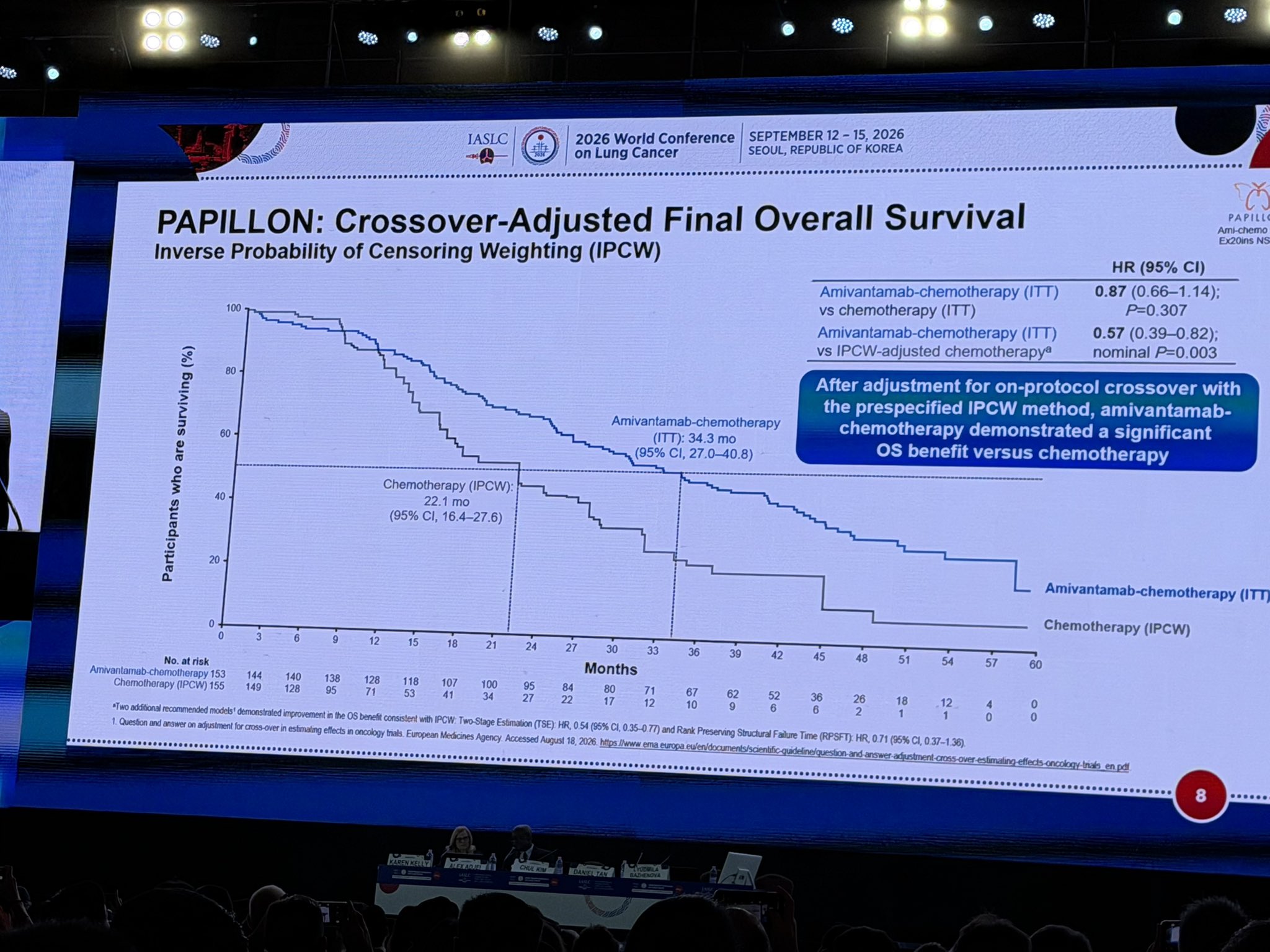
Final OS results from PAPILLON at #WCLC26

In 1L EGFR exon20ins advanced NSCLC, Final OS results from PAPILLON at #WCLC26

In 1L EGFR exon20ins advanced NSCLC,
6.9K impressions6 likes5 reposts2026-09-13
[Slide 2] IASLC 2026 World Conference SEPTEMBER 12 - 15, 2026 on Lung Cancer SEOUL, REPUBLIC OF KOREA G PAPILLON PAPILLON: Final Overall Survival in the ITT Population Ami-chemo in 1L Ex20ins NSCLC Median os (95% CI) Amivantamab-chemotherapy 34.3 mo (27.0-40.8) 100 Chemotherapy 27.9 mo (24.0-32.4) HR, 0.87 (95% CI, 0.66-1.14); P=0.307 80 Amivantamab-chemotherapy demonstrated the Participants who are surviving (%) 66% longest median OS reported to date in Ex20ins-mutated advanced NSCLC 60 58% 47% 40 38% Amivantamab-chemotherapy 20 Chemotherapy 97 of 128 (76%) Median follow-up: 48.6 mo (range, 0.3-59.4) participants who discontinued due to 0 0 3 6 9 12 15 18 21 24 27 30 33 36 39 42 45 48 51 54 57 60 progressive disease crossed over to Months No. at risk amivantamaba Amivantamab-chemotherapy 153 144 140 138 128 118 107 100 95 84 80 71 67 62 52 36 26 18 12 4 0 Chemotherapy 155 153 148 136 127 114 103 96 86 74 63 58 53 50 41 30 20 14 9 4 0 A total of 97 participants (87 participants as part of the crossover cohort plus an additional 10 participants off protocol) received 2L amivantamab monotherapy out of 128 chemotherapy-randomized participants with BICR -confirmed disease progression. 2L, second line, Ex20ins, exon 20 insertion 6 KAREN KELLY ALEX ADVEL & [Slide 3] IASLC 2026 World Conference SEPTEMBER 12 15, 2026 12 on Lung Cancer SEOUL, REPUBLIC OF KOREA PAPILLON: Crossover-Adjusted Final Overall Survival PAPILLO Ami-chemo Ex20ins NS Inverse Probability of Censoring Weighting (IPCW) HR (95% CI) Amivantamab-chemotherapy (ITT) 0.87 (0.66-1.14); 100 vs chemotherapy (ITT) P=0.307 Amivantamab-chemotherapy (ITT) 0.57 (0.39-0.82); vs IPCW-adjusted chemotherapy® nominal P=0.003 80 After adjustment for on-protocol crossover with Participants who are surviving (%) the prespecified IPCW method, amivantamab- Amivantamab-chemotherapy chemotherapy demonstrated a significant 60 (ITT): 34.3 mo (95% CI, 27.0-40.8) OS benefit versus chemotherapy Chemotherapy (IPCW): 40 22.1 mo (95% CI, 16.4-27.6) 20 Amivantamab-chemotherapy (ITT) Chemotherapy (IPCW) 0 0 3 6 9 12 15 18 21 24 27 30 33 36 39 42 45 48 51 54 57 60 No. at risk Months Amivantamab-chemotherapy 153 144 140 138 128 118 107 100 95 84 80 71 67 62 52 36 26 18 12 4 0 Chemotherapy (IPCW) 155 149 128 95 71 53 41 34 27 22 17 12 10 9 6 6 2 1 1 0 0 *Two additional recommended models' demonstrated improvement in the OS benefit consistent with IPCW: Two-Stage Estimation (TSE): HR, 0.54 (95% CI, 0.35-0 77) and Rank Preserving Structural Failure Time (RPSFT): HR, 0.71 (95% CI, 0.37-1.36). 1. Question and answer on adjustment for cross-over in estimating effects in oncology trials. European Medicines Agency. Accessed August 18, 2026. https I/www 8 KAREN KELLY CHUL KIM RATHENOVA
SStephen V Liu, MD@StephenVLiu

Dr. @chulkimMD from @LombardiCancer presents final OS analysis on phase III PAPILLON trial: 1L amivantamab + chemo vs chemo alone for EGFR exon 20 insertion NSCLC at #WCLC26. Importantly, this trial permitted crossover for patients randomized to chemotherapy alone and 76% who progressed did crossover to ami. This has a major impact on OS but really is the right thing to do. The OS here was the lon

Dr. @chulkimMD from @LombardiCancer presents final OS analysis on phase III PAPIDr. @chulkimMD from @LombardiCancer presents final OS analysis on phase III PAPIDr. @chulkimMD from @LombardiCancer presents final OS analysis on phase III PAPI
3.3K impressions17 likes10 reposts2026-09-14
[Slide 2] IASLC 2026 World Conference SEPTEMBER 12 - 15, 2026 2026 on Lung Cancer SEOUL, REPUBLIC OF KOREA PAPILLON: Final Overall Survival in the ITT Population PAPILLON Ami-chemo in 1L Ex20ins NSCLC Median OS (95% CI) Amivantamab-chemotherapy 34.3 mo (27.0-40.8) 100 Chemotherapy 27.9 mo (24.0-32.4) HR, 0.87 (95% CI, 0.66-1.14); P=0.307 80 Amivantamab-chemotherapy demonstrated the Participants who are surviving (%) 66% longest median OS reported to date in Ex20ins-mutated advanced NSCLC 60 58% 47% 40 38% Amivantamab-chemotherapy 20 Chemotherapy 97 of 128 (76%) participants who Median follow-up: 48.6 mo (range, 0.3-59.4) discontinued due to 0 0 3 6 9 12 15 18 21 24 27 30 33 36 39 42 45 48 51 54 57 60 progressive disease crossed over to Months No. at risk amivantamaba Amivantamab-chemotherapy 153 144 140 138 128 118 107 100 95 84 80 71 67 62 52 36 26 18 12 4 0 Chemotherapy 155 153 148 136 127 114 103 96 86 74 63 58 53 50 41 30 20 14 9 4 0 *A total of 97 participants (87 participants as part of the crossover cohort plus an additional 10 participants off-protocol) received 2L amivantamab monotherapy out of 128 chemotherapy-randomized participants with BICR-confirmed disease progression 2L, second-line; Ex20ins, exon 20 insertion 6 [Slide 3] IASLC 2026 World Conference SEPTEMBER 12 - 15, 2026 2026 on Lung Cancer SEOUL, REPUBLIC OF KOREA PAPILLON: Crossover-Adjusted Final Overall Survival PAPILLON Ami-chemo in 1L Inverse Probability of Censoring Weighting (IPCW) Ex20ins NSCLC HR (95% CI) Amivantamab-chemotherapy (ITT) 0.87 (0.66-1.14); 100 VS chemotherapy (ITT) P=0.307 Amivantamab-chemotherapy (ITT) 0.57 (0.39-0.82); VS IPCW-adjusted chemotherapy nominal P=0.003 80 After adjustment for on-protocol crossover with Participants who are surviving (%) the prespecified IPCW method, amivantamab- Amivantamab-chemotherapy chemotherapy demonstrated a significant 60 (ITT): 34.3 mo (95% CI, 27.0-40.8) OS benefit versus chemotherapy Chemotherapy (IPCW): 40 22.1 mo (95% CI, 16.4-27.6) 20 Amivantamab-chemotherapy (ITT) Chemotherapy (IPCW) 0 0 3 6 9 12 15 18 21 24 27 30 33 36 39 42 45 48 51 54 57 60 Months No. at risk Amivantamab-chemotherapy 153 144 140 138 128 118 107 100 95 84 80 71 67 62 52 36 26 18 12 4 0 Chemotherapy (IPCW) 155 149 128 95 71 53 41 34 27 22 17 12 10 9 6 6 2 1 1 0 0 *Two additional recommended models¹ demonstrated improvement in the OS benefit consistent with IPCW: Two-Stage Estimation (TSE) HR, 0.54 (95% CI, 0.35-0.77) and Rank Preserving Structural Failure Time (RPSFT) HR 0.71 (95% CI, 0.37-1.36) 1. Question and answer on adjustment for cross-over in estimating effects in oncology trials European Medicines Agency Accessed August 18, 8 [Slide 4] IASLC 2026 World Conference SEPTEMBER 12 - 15, 2026 on Lung Cancer SEOUL, REPUBLIC OF KOREA PAPILLON First Subsequent Therapy Ami-chemo in 1L Ex20ins NSCLC Did not receive subsequent 8% therapy (non-PD) 18% 8% Other Did not receive subsequent Chemotherapy or ICI regimens 16% therapy (PD) Other EGFR-targeted or Participants (%) TKI-based regimensᵇ Ongoing 12% Other 83% Chemotherapy or ICI regimens Amivantamab Received a first 54% subsequent therapy Other EGFR-targeted or TKI-based regimensᵇ Amivantamab Amivantamab-chemotherapy Chemotherapy (n=153) (n=155) The crossover design for the chemotherapy arm and lack of active 2L therapies available at the time of this trial likely contributed to differences in rates between arms Note: Totals may not sum to 100 due to rounding 83 participants from the amivantamab-chemotherapy arm received a subsequent therapy (Amivantamab n=2; Other EGFR-targeted or TKI-based regimens: n=31; Chemotherapy or ICI regimens n=39 Other n=11); 129 participants in the chemotherapy am received a subsequent therapy (Amivantamab: n=97; Other EGFR-targeted or TKI-based regimens n=15; Chemotherapy or ICI regimens n=13; Other n=4) *Other therapy included antineoplastic agents, bevacizumab, cantharidin, investigational agents, other protein kinase inhibitors, and SKB 264 EGFR-targeted or TKI-based regimens included afatinib, firmonertinib, mobocertinib, ORIC 114, osimertinib, sunvozertinib zipalertinib, and EGFR TKI combination regimens TKI in combination with chemotherapy, immunotherapy or VEGF inhibitor therapies were only counted in the TKI-based regimen category 2L, second-line; ICI, immune checkpoint inhibitor; PD, progressive disease 9
MMasahiro TORASAWA, MD. PhD.@M_Torasawa

#WCLC26 | PAPILLON final OS update

🧬 Ph3: 1L amivantamab + chemo vs chemo in advanced EGFR exon20ins NSCLC (n=308)

📊 Final OS (ITT):
• 34.3 vs 27.9 mo
• HR 0.87 (95% CI 0.66–1.14; p=0.307)
→ not statistically significant

🔄 Major caveat: 76% (97/128) of patients progressing on chemotherapy crossed over to 2L amivantamab

📈 Crossover-adjusted OS (IPCW):
• 34.3 vs 22.1 mo
• HR 0.57 (95% CI 0.39–0.

#WCLC26 | PAPILLON final OS update

🧬 Ph3: 1L amivantamab + chemo vs chemo in ad#WCLC26 | PAPILLON final OS update

🧬 Ph3: 1L amivantamab + chemo vs chemo in ad#WCLC26 | PAPILLON final OS update

🧬 Ph3: 1L amivantamab + chemo vs chemo in ad#WCLC26 | PAPILLON final OS update

🧬 Ph3: 1L amivantamab + chemo vs chemo in ad
2.7K impressions8 likes1 reposts2026-09-14
[Slide 1] IASLC 2026 World Conference SEPTEMBER 12 - 15, 2026 on Lung Cancer SEOUL, REPUBLIC OF KOREA PAPILLON: Final Overall Survival in the ITT Population PAPILION Ami-chemo is R Extitins NSCLC Median os (95% CI) Amivantamab-chemotherapy 100 34.3 mo (27.0-40.8) Chemotherapy 27.9 mo (24.0-32.4) HR, 0.87 (95% CI, 0.66-1.14); P=0.307 80 Amivantamab-chemotherapy demonstrated the Participants who are surviving (%) 66% longest median OS reported to date in Ex20ins-mutated advanced NSCLC 60 58% 47% 40 38% Amivantamab-chemotherapy 20 Chemotherapy 97 of 128 (76%) participants who Median follow-up: 48.6 mo (range, 0.3-59.4) discontinued due to 0 12 15 18 21 24 27 30 33 36 39 42 45 48 51 54 57 60 progressive disease 0 3 6 9 crossed over to Months No. at risk amivantamab* Amivantamab-chemotherapy 153 144 140 138 128 118 107 100 95 84 80 71 67 62 52 36 26 18 12 4 0 Chemotherapy 155 153 148 136 127 114 103 96 86 74 63 58 53 50 41 30 20 14 9 4 0 "A total of 97 participants (87 participants as part of the crossover cohort plus an additional 10 participants off protocol) received 2L amivantamab monotherapy out of 128 chemotherapy randomized participants with BICR confirmed disease progression a, second Inc, Ex20m exan 20 6 [Slide 2] IASLC 2026 World Conference SEPTEMBER 12 - 15, 2026 on Lung Cancer SEOUL, REPUBLIC OF KOREA PAPILLON: Crossover-Adjusted Final Overall Survival PAPILLON Am-dema a n Inverse Probability of Censoring Weighting (IPCW) EXCORE NSCLC HR (95% CI) Amivantamab-chemotherapy (ITT) 0.87 (0.66-1,14); 100 VS chemotherapy (ITT) P=0.307 Amivantamab-chemotherapy (ITT) 0.57 (0.39-0.82): vs IPCW-adjusted chemotherapy® nominal P=0.003 80 After adjustment for on-protocol crossover with Participants who are surviving (%) the prespecified IPCW method, amivantamab- Amivantamab-chemotherapy chemotherapy demonstrated a significant 60 (ITT): 34.3 mo (95% CI, 27.0-40.8) OS benefit versus chemotherapy Chemotherapy (IPCW): 40 22.1 mo (95% CI, 16.4-27.6) 20 Amivantamab-chemotherapy (ITT) Chemotherapy (IPCW) 0 0 3 6 9 12 15 18 21 24 27 30 33 36 39 42 45 48 51 54 57 60 Months No. at risk Amivantamab-chemotherapy 153 144 140 138 128 118 107 100 95 84 80 71 67 62 52 36 26 18 12 4 0 Chemotherapy (IPCW) 155 149 128 95 71 53 41 34 27 22 17 12 10 9 6 6 2 1 1 0 0 *Two additional recommended models' demonstrated improvement in the OS benefit consistent with IPCW: Two-Stage Estimation (TSE) HR, 0.54 (95% CI, 0.35-0.77) and Rank Preserving Structural Failure Time (RPSFT) HR, 071 (95% a 0.37-1.36) 1. Question and answer on adjustment for cross-over in estimating effects in oncology trials. European Medicines Agency Accessed August 18, 2026 https Hwww ema europa advatment cross over entimated deb May 8 [Slide 3] and IASLC 2026 World Conference SEPTEMBER 12 - 15, 2026 on Lung Cancer SEOUL, REPUBLIC OF KOREA First Subsequent Therapy CS PAPILLON Ami-cheme a 11 Ex20m NSCLC Did not receive subsequent 18% 8% therapy (non-PD) 8% Other* Did not receive subsequent therapy (PD) 16% Chemotherapy or ICI regimens Other EGFR-targeted or Participants (%) Ongoing TKI-based regimens 12% Other* 83% Chemotherapy or ICI regimens Amivantamab Received a first 54% subsequent therapy Other EGFR-targeted or TKI-based regimensᵇ Amivantamab Amivantamab-chemotherapy Chemotherapy (n=153) (n=155) The crossover design for the chemotherapy arm and lack of active 2L therapies available at the time of this trial likely contributed to differences in rates between arms Note: Totals may not sum to 100 due to rounding 83 participants from the amivantamab-chemotherapy arm received a subsequent therapy (Amivantamab: n°2, Other EGFR targeted or TKI based regiment mJt, Chemotherapy or ICI regiments Other - mill 129 participants a be deme/berrary - received 1 subsequent therapy (Amivantamab: n=97; Other EGFR targeted or TKI based regimens: n=15; Chemotherapy or ICI regimens: nº 13, Other n=4). "Other therapy included antineoplastic agents, bevacinmed cantharide, investigational agents, other line which and SAB 254 10 carpted # regimens included afatinib, firmonertinib, mobocertinib, ORIC 114, osimertinib, sunvozertinib, zipalertinih, and EGFR TKI combination regimens. TKI in combination with chemotherapy, inmuncify, or VEGF rhbir therapies were only counted " be TX) hand regiment category 2L, second line; ICI, immune checkpoint inhibitor, PD, progressive disease. 9 [Slide 4] IASLC 2026 World Conference SEPTEMBER 12 - - 15, 2026 on Lung Cancer SEOUL, REPUBLIC OF KOREA PFS2: PFS From Randomization to Second Progression Eventᵃ PAPILLON Ami-chema in 11. Ex20ms NSCLC Median PFS2 (95% CI) Amivantamab-chemotherapy 28.3 mo (21.8-36.2) 100 Chemotherapy 17.5 mo (15.2-21.0) HR, 0.59 (95% CI, 0.45-0.77); nominal P<0.0001 80 Participants who are progression-free (%) PFS2 was extended by >10 months with amivantamab-chemotherapy 56% 60 42% 40 36% 20 19% Amivantamab-chemotherapy Median follow-up: 48.6 mo (range, 0.3-59.4) Chemotherapy 0 0 3 6 9 12 15 18 21 24 27 30 33 36 39 42 45 48 51 54 57 60 Time from randomization No. at risk Amivantamab-chemotherapy 153 144 140 137 125 109 93 81 74 67 61 56 54 47 35 25 17 11 5 3 0 Chemotherapy 155 152 146 127 103 86 70 60 52 42 33 26 22 18 15 13 9 5 4 1 0 *Consistent with PFS2, time to treatment discontinuation and time to subsequent therapy were extended with amivantamab-chemolherapy versus chemotherapy (14 1 vs 76 mo, HR, 0.36; 95% CL 028-0 46, P<0.0001 and 16.9 vs 99 mo, MR 037, 95% a 029-0 48, Pcg 0001, respectively) 10
LLaura Alder, MD@LauraAlderMD

Phenomenal presentation by @chulkimMD on PAPILLON OS @ #WCLC26!
⭐️OS impressive improvement, 34.3 mo, (notable 76% crossover), toxicities remain challenging. Thankfully a growing field, offering this and additional options to our patients. https://t.co/eJ4eELxBR7

Phenomenal presentation by @chulkimMD on PAPILLON OS @ #WCLC26! 
⭐️OS impressive
1.8K impressions7 likes3 reposts2026-09-13
[Slide 2] IASLC 2026 World Conference SEPTEMBER 12 15, 2026 on Lung Cancer SEOUL, REPUBLIC OF KOREA PAPILLON: Final Overall Survival in the ITT Population PAPILLON Ami-chemo in 1L Ex20ins NSCLC Median OS (95% CI) Amivantamab-chemotherapy 34.3 mo (27.0-40.8) 100 Chemotherapy 27.9 mo (24.0-32.4) HR, 0.87 (95% CI, 0.66-1.14); P=0.307 80 Amivantamab-chemotherapy demonstrated the Participants who are surviving (%) 66% longest median OS reported to date in Ex20ins-mutated advanced NSCLC 60 58% 47% 40 38% Amivantamab-chemotherapy LEEL 20 Chemotherapy 97 of 128 (76%) Median follow-up: 48.6 mo (range, 0.3-59.4) participants who discontinued due to 0 0 3 6 9 12 15 18 21 24 27 30 33 36 39 42 45 48 51 54 57 60 progressive disease Months crossed over to No. at risk amivantamab Amivantamab chemotherapy 153 144 140 138 128 118 107 100 95 84 80 71 67 62 52 36 26 18 12 4 0 Chemotherapy 155 153 148 136 127 114 103 96 86 74 63 58 53 50 41 30 20 14 9 4 0 A total of 37 participants (87 participants as part of the crossover cohort plus an additional 10 participants off protocol) received 2 anivantamab monotherapy out of 128 chemotherapy randomized participants with BICR confirmed disease progression 2L, second line Ex20ms, eaon 20 insertion 6
MMisty Dawn Shields@drshieldsmd

Dr. Chul Kim @chulkimMD expertly presenting the final OS results of PAPILLON investigating the role of amivantamab+chemo vs chemo in 1L EGFR exon 20 insertion positive NSCLC at @IASLC #WCLC26.

Not significant difference in OS due to 76% crossover, but additional IPCW-adjusted analysis with HR 0.57 (P = 0.003). Longest survival data for exon20ins EGFR to date!

@EGFRResisters @EgfrUk @jillfeldman

Dr. Chul Kim @chulkimMD expertly presenting the final OS results of PAPILLON invDr. Chul Kim @chulkimMD expertly presenting the final OS results of PAPILLON invDr. Chul Kim @chulkimMD expertly presenting the final OS results of PAPILLON inv
1.4K impressions1 likes1 reposts2026-09-13
[Slide 2] and IASLC 2026 World Conference SEPTEMBER 12 15, 2026 on Lung Cancer SEOUL, REPUBLIC OF KOREA PAPILLON Ami-chemo in 1L PAPILLON: Phase 3 Study Design Ex20ins NSCLC Primary endpoint: PFS by BICR according to RECIST v1.1° Amivantamab-chemotherapy Key eligibility criteria (n=153) Key secondary endpoint: Treatment-naïve,ᵃ locally NSCLC 1:1 Randomization Protocol-specified final overall survival (OS)c advanced or metastatic (N=308) Estimated to provide ~56% power to detect a statistically significant difference in OS, with statistical Documented EGFR Ex20ins Chemotherapy power further attenuated due to crossover (n=155) ECOG PS 0 or 1 Other prespecified endpoints reported in this presentation: IPCW crossover-adjusted OSᵈ Stratification factors PFS from randomization to second progression ECOG PS event (PFS2) History of brain metastasesᵇ Crossover to 2L amivantamab monotherapy Safety Prior EGFR TKI useᵃ Crossover permitted only after BICR-confirmed Patient-reported outcomes (PROs) disease progression Amivantamab monotherapy given Q3W Dosing (in 21-day cycles) Intravenous amivantamab: 1400 mg (1750 mg if >80 kg) for the first 4 weeks, then 1750 mg (2100 mg if >80 kg) Q3W starting at Week 7 (first day of Cycle 3) Chemotherapy on the first day of each cycle: Carboplatin: AUC5 for the first 4 cycles Pemetrexed: 500 mg/m2 until disease progression PAPILLON (ClinicalTrials gov identifier since 4 had pnor EGFR TKI use (brief monotherapy with common EGFR TKIs was allowed if lack of response was documented). Participants with 5 brain metastases ORR, were and eligible then OS if they were received included definitive in hierarchical treatment testing. and IPCW were asymptomatic, was a prespecified clinically model stable, for the and off NCT04538664) enrollment period December 2020 to November 2022; clinical cut off: March 20, 2026. Removed as treatment stratification for factor >2 weeks prior only to randomization participants Key statistical assumption: 300 participants with 200 events needed for 90% power to detect an HR of 0.625 Evaluation (estimated Criteria PFS in Solid of 8 VS Tumors months). PFS, crossover- corticosteroid adjusted OS analysis. 2L, second line; AUC, area under the curve, Ex20ins, exon 20 insertion; IPCW, inverse probability of censoring weighting; RECIST, Response 4 [Slide 3] IASLC 2026 World Conference SEPTEMBER 12 15, 2026 on Lung Cancer SEOUL, REPUBLIC OF KOREA PAPILLON PAPILLON: Final Overall Survival in the ITT Population Ami-chemo in 1L Ex20ins NSCLC Median os (95% CI) Amivantamab-chemotherapy 34.3 mo (27.0-40.8) Chemotherapy 27.9 mo (24.0-32.4) 100 HR, 0.87 (95% CI, 0.66-1.14); P=0.307 Amivantamab-chemotherapy demonstrated the 80 nerapy upon 66% longest median OS reported to date in strated the survival Participants who are surviving (%) Ex20ins-mutated advanced NSCLC up of 48.6 60 58% 47% antamab plus 40 38% Amivantamab-chemotherapy 20 Chemotherapy 97 of 128 (76% participants w Median follow-up: 48.6 mo (range, 0.3-59.4) discontinued du 0 12 15 18 21 24 27 30 33 36 39 42 45 48 51 54 57 60 progressive dis 0 3 6 9 crossed over Months No. at risk amivantama Amivantamab-chemotherapy 153 144 140 138 128 118 107 100 95 84 80 71 67 62 52 36 26 18 12 4 0 Chemotherapy 155 153 148 136 127 114 103 96 86 74 63 58 53 50 41 30 20 14 9 4 0 A total of 97 participants (87 participants as part of the crossover cohort plus an additional 10 participants off protocol) received 2L amivantamab monotherapy out of 128 chemotherapy randomized participants with BICR confirmed disease progression. 2L, second-line; Ex20ins, exon 20 insertion A i LYOBMILA KAREN KELLY ALEXADJEL CHUL KIM DANIEL TAN BAZHENOVA [Slide 4] IASLC 2026 World Conference SEPTEMBER 12 - 15, 2026 on Lung Cancer SEOUL, REPUBLIC OF KOREA PAPILLON: Crossover-Adjusted Final Overall Survival PAPILLON Ami-chemo in 1 Ex20ins NSCLC Inverse Probability of Censoring Weighting (IPCW) HR (95% CI) Amivantamab-chemotherapy (ITT) 0.87 (0.66-1.14); vs chemotherapy (ITT) P=0.307 100 Amivantamab-chemotherapy (ITT) 0.57 (0.39-0.82); vs IPCW-adjusted chemotherapy® nominal P=0.003 80 After adjustment for on-protocol crossover with the prespecified IPCW method, amivantamab- Participants who are surviving (%) Amivantamab-chemotherapy chemotherapy demonstrated a significant (ITT): 34.3 mo 60 (95% CI, 27.0-40.8) OS benefit versus chemotherapy Chemotherapy (IPCW): 40 22.1 mo (95% CI, 16.4-27.6) 20 Amivantamab-chemotherapy (ITT Chemotherapy (IPCW) 0 15 18 21 24 27 30 33 36 39 42 45 48 51 54 57 60 0 3 6 9 12 Months No. at risk Amivantamab-chemotherapy 153 144 140 138 128 118 107 100 95 84 80 71 67 62 52 36 26 18 12 4 0 149 128 95 71 53 41 34 27 22 17 12 10 9 6 6 2 1 1 0 0 Chemotherapy (IPCW) 155 *Two additional recommended models' demonstrated improvement in the OS benefit consistent with IPCW: Two Stage Estimation (TSE): HR, 0.54 (95% CI, 0.35-0.77) and Rank Preserving Structural Failure Time (RPSFT): HR, 0.71 (95% CI, 0.37-1.36). 1 Question and answer on adjustment for cross-over in estimating effects in oncology trials European Medicines Agency. Accessed August 18, 2026 https //www 8 KAREN KELLY
UUğur Özkerim@UOzkerim

Excellent discussion of the evolving 1L landscape for EGFR exon20ins NSCLC at #WCLC26. @LudaBazhenovaMD

A thoughtful comparison of PAPILLON, WU-KONG 28 and REZILIENT3, highlighting that treatment choice goes beyond efficacy alone—CNS disease, exon20ins subtype, toxicity, treatment burden, patient preference and subsequent therapy all matter.

Importantly, cross-trial comparisons and subgroup ana
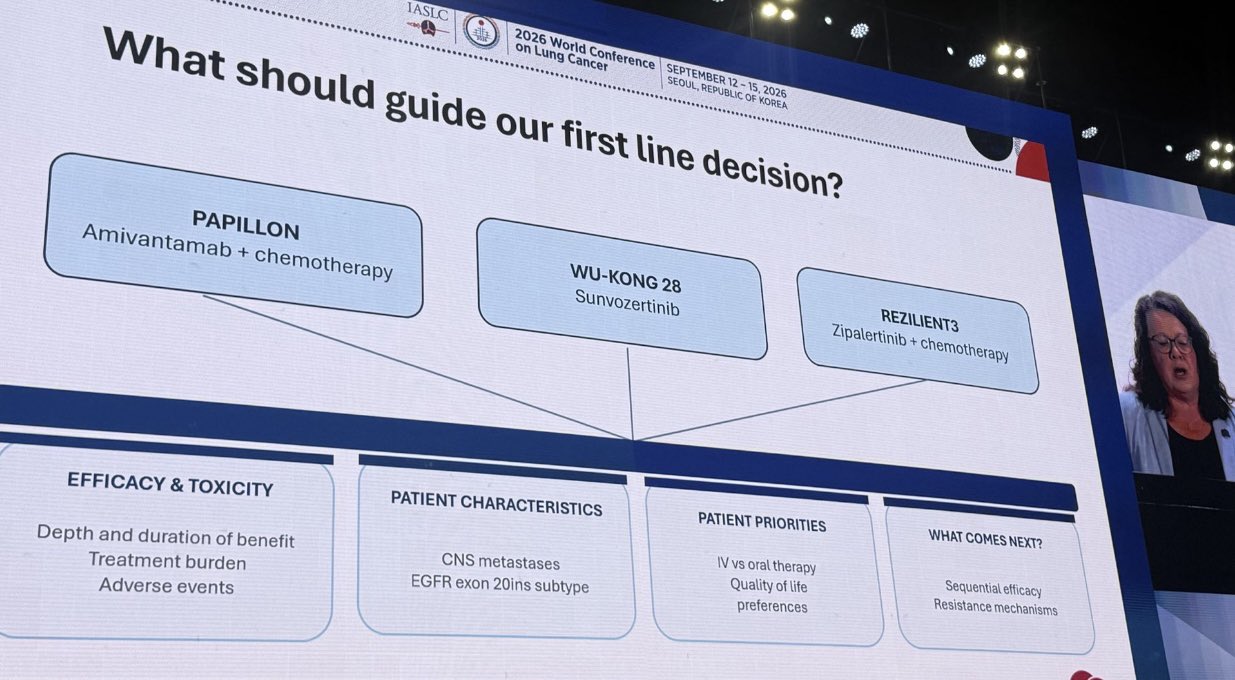
Excellent discussion of the evolving 1L landscape for EGFR exon20ins NSCLC at #WExcellent discussion of the evolving 1L landscape for EGFR exon20ins NSCLC at #WExcellent discussion of the evolving 1L landscape for EGFR exon20ins NSCLC at #WExcellent discussion of the evolving 1L landscape for EGFR exon20ins NSCLC at #W
5.9K impressions3 likes2 reposts2026-09-14
[Slide 1] What should guide our first line decision? PAPILLON Amivantamab + chemotherapy WU-KONG 28 Sunvozertinib REZILIENT3 Zipalertinib + chemotherapy EFFICACY & TOXICITY PATIENT CHARACTERISTICS PATIENT PRIORITIES WHAT COMES NEXT? Depth and duration of benefit CNS metastases IV VS oral therapy Treatment burden EGFR exon 20ins subtype Quality of life Sequential efficacy Adverse events preferences Resistance mechanisms [Slide 2] along IASLC 2026 World Conference SEPTEMBER 12 - 15, 2026 on Lung Cancer SEOUL, REPUBLIC OF KOREA Do subgroup analyses help us choose first-line therapy? PAPILLON WU-KONG 28 REZILIENT3 Amivantamab + chemotherapy Sunvozertinib Zipalertinib + chemotherapy BASELINE CNS METASTASES BASELINE CNS METASTASES BASELINE CNS METASTASES CNS mets CNS mets HR 0.63 (0.38-1.06) HR 0.96 (0.44-2.08) CNS mets HR 0.38 (0.21-0.67) No CNS mets HR 0.33 (0.23-0.46) HR 0.62 (0.47-0.83) No CNS mets No CNS mets HR 0.62 (0.38-0.99) EXON 20 INSERTION LOCATION EXON 20 INSERTION LOCATION EXON 20 INSERTION LOCATION Near loop HR 0.40 (0.28-0.58) Near loop HR 0.59 (0.43-0.82) Near loop Not reported Far loop HR 0.19 (0.06-0.69) Far loop HR 0.83 (0.49-1.38) Far loop Not reported CNS metastases and exon 20 insertion location are potential differentiators but subgroup data remain exploratory [Slide 3] IASLC 2026 World Conference SEPTEMBER 12 - 15, 2026 on Lung Cancer SEOUL, REPUBLIC OF KOREA Phase III randomized 1L trials PAPILLON Platinum doublet Amivantamab WU KONG 28 REZILIENT 3 + sunvozertinib Zipalertinib + chemotherapy chemotherapy PAPILLON: 47 ORR% WU KONG 28: 31.1 73 (BIRC) 59 65 REZILIENT 3: 40 PAPILLON: 6.7 11.4 mPFS m 10.3 14.5 WU KONG 28: 7.5 0.40; 0.30 -0.53; P<0.001 HR (CI, p) 0.65; 0.50 -0.85; <0.001 0.5; 0.34-0.73; p=0.00015 REZILIENT 38.5 mOS, m PAPILLON: 27.9 (24.0-32.4) 34.3 (27.0-40.8) 29.8 (21.8-NE) NR HR (Cl,p) WU KONG 28: 28.8 (27.0-NE) HR, 0.87 (0.66-1.14); 0.99 (0.7-1.40) 0.72 (0.42-1.23) REZILIENT 3: NR P=0.307 p 0.49 39% maturity P=0.11082 PAPILLON: 68 18m-OS WU KONG 28: 67 74 65.5 Not reported REZILIENT 3: NR PAPILLON: 54 24m-OS WU KONG 28: 56.2 64 57.4 Not reported REZILIENT 3: NR Descriptive cross-trial comparison; differences in eligibility, follow-up, assessment, and safety reporting limit interpretation. 9 [Slide 4] IASLC 2026 World Conference SEPTEMBER 12 - 15, 2026 on Lung Cancer SEOUL, REPUBLIC OF KOREA Phase III 1L randomized trials Platinum doublet PAPILLON WU KONG 28 REZILIENT 3 Neutropenia (34%), Diarrhea (14%), Anemia (48.6%), Most common Paronychia (10%), CK increased (20.9) toxicity (Gr3) anemia (13%), Anemia (9.2%), neutropenia (33.6), infusion related reaction (1%) rash (0.6%) thrombocytopenia (30%) rash (10.7%) paronychia (3.7%) GR3 AE % 75 75 81 % dose reduction* 36 41 44 % dose 11 12 17 discontinuation* PAPILLON: 3 AE leading to WU KONG 28: 1.3 5 4.3 9.5 death % REZILIENT 3: 2.9 Descriptive cross-trial comparison; differences in eligibility, follow-up, assessment, and safety reporting limit interpretation. * Targeted therapy 10
8ARROS-1View full trial page →59.8K impressions42.6K primary · 17.2K preview238 engagements53 posts · 40 voices
SStephen V Liu, MD@StephenVLiu

Dr. @alexdrilon at #WCLC26 presents 1L cohort of ARROS-1 trial of zidesamtinib in pts with ROS1 NSCLC. What a waterfall plot. RR 94% with 15% CR. mPFS not reached, PFS at 6m was 96% and at 12m was 90%. Intracranial RR 100%. In 78 pts who did not have brain metastases at baseline, no CNS events occurred to date. These are fantastic outcomes.

Dr. @alexdrilon at #WCLC26 presents 1L cohort of ARROS-1 trial of zidesamtinib iDr. @alexdrilon at #WCLC26 presents 1L cohort of ARROS-1 trial of zidesamtinib iDr. @alexdrilon at #WCLC26 presents 1L cohort of ARROS-1 trial of zidesamtinib i
9.6K impressions7 likes4 reposts2026-09-14
[Slide 2] IASLC 2026 World Conference SEPTEMBER 12 - 15, 2026 2026 on Lung Cancer SEOUL, REPUBLIC OF KOREA ARROS-1: Objective Response in ROS1 TKI-Naive Patients with NSCLC ROS1 TKI-Naive Advanced ROS1+ NSCLC ± Prior Chemotherapy RECIST v1.1 by BICR (n = 94) ORR, % (n/N) a 94% (88/94) [95% CI] [87, 98] CR, % (n/N) b 15% (14/94) Includes 1 single-timepoint PR pending confirmation in ongoing patient. Includes 1 single-timepoint CR pending confirmation in ongoing patient with prior confirmed PR. 60 ROS1 TKI-Naive + Chemotherapy 40 + PD SD uPR PR uCR CR + Prior chemotherapy Best % change in target lesions 20 + + + + + + + + + + + + + + + +++++ ++++ 0 -20 -40 -60 -80 C c -100 ( CR with <100% shrinkage due to residual non-pathologic lymph node. BICR, blinded independent central review; CR, complete response; NSCLC, non-small cell lung cancer; ORR, objective response rate; PD, progressive disease; PR, partial response; RECIST, Response Evaluation Criteria in Solid Tumor; ROS1, c-ros oncogene 1; SD, stable disease; TKI, tyrosine kinase inhibitor; uCR, unconfirmed CR (single-timepoint CR pending confirmation in ongoing patient with prior confirmed PR); uPR, unconfirmed PR (single-timepoint PR pending confirmation in ongoing patient). 6 [Slide 3] IASLC 2026 World Conference SEPTEMBER 12 - 15, 2026 on Lung Cancer SEOUL, REPUBLIC OF KOREA ARROS-1: Progression-Free Survival in ROS1 TKI-Naive Patients with NSCLC Kaplan-Meier Plot of PFS ROS1 TKI-Naive + Chemotherapy ROS1 TKI-Naive Advanced ROS1+ NSCLC ± Prior Chemotherapy 100 95% 95% Kaplan-Meier Estimate n = 94 90% % PFS ≥ 6 months 95% 75 [95% CI] [87, 98] % PFS ≥ 9 months 95% [95% CI] [87, 98] 90% Event-free probability (%) 50 % PFS ≥ 12 months [95% CI] [81, 95] 25 Median PFS, months NR [95% CI] [NE, NE] 0 0 3 6 9 12 15 18 21 24 27 30 Months No. at risk: 94 92 86 85 63 36 28 14 5 1 0 NE, not estimable; NR, not reached; NSCLC, non-small cell lung cancer; PFS, progression-free survival; ROS1, c-ros oncogene 1; TKI, tyrosine kinase inhibitor. 8 [Slide 4] IASLC 2026 World Conference SEPTEMBER 12 - 15, 2026 2036 on Lung Cancer SEOUL, REPUBLIC OF KOREA ARROS-1: CNS Activity in ROS1 TKI-Naive Patients with NSCLC CNS Response-Evaluable ROS1 TKI-Naive ROS1 TKI-Naive CNS Response-Evaluable Population a ± Prior Chemotherapy 50 IC-PR IC-CR + Prior chemotherapy RECIST v1.1 by BICR n = 10 25 + + + IC-ORR, % (n/N) 100% (10/10) [95% CI] [69, 100] Best % change in IC-CR, % (n/N) 70% (7/10) CNS target lesions 0 -25 -50 -75 %IC-DOR6 months b 100% -100 [95% CI] [100, 100] % IC-DOR ≥ 9 months 100% Kaplan-Meier Plot of IC-DOR ROS1 TKI-Naive CNS Response-Evaluable [95% CI] [100, 100] 100% 100% % IC-DOR ≥ 12 months b 78% 100 [95% CI] [36, 94] 78% Median IC-DOR, months b NR [95% CI] [9, NE] a Includes patients without brain radiation within 2 months of the first dose of zidesamtinib with measurable (>5 mm) CNS lesions at baseline by BICR. Patients in response (%) 75 50 25 D Analyses of DOR based on Kaplan-Meier estimates. No CNS progression events observed among the 78 ROS1 TKI- 0 0 3 6 9 12 15 18 21 24 27 naive patients who entered the study without brain metastases Months at baseline per BICR No. at risk: 10 10 10 9 6 5 3 1 1 0 BICR, blinded independent central review; CNS, central nervous system; IC-CR, intracranial complete response; IC-DOR, intracranial duration of response; IC-ORR, intracranial objective response rate; IC-PR, intracranial partial response; NE, not estimable; NR, not reached; NSCLC, non-small cell lung cancer; RECIST, Response Evaluation Criteria in Solid Tumor; ROS1, c-ros oncogene 1; TKI, tyrosine kinase inhibitor. 9
EEric K. Singhi, MD@lungoncdoc

For a single-arm study w/ still-maturing follow-up… 94% ORR + 90% 1-y PFS + strong CNS control is a compelling signal from ARROS-1.

However, IMO taletrectinib is still the benchmark for frontline management.

But ABSOLUTELY great to have more options for our patients. #WCLC26 https://t.co/wjHbATbyTC https://t.co/wnAGOqgoUj

For a single-arm study w/ still-maturing follow-up… 94% ORR + 90% 1-y PFS + stroFor a single-arm study w/ still-maturing follow-up… 94% ORR + 90% 1-y PFS + stro
3K impressions9 likes3 reposts2026-09-14
[Slide 1] IASLC 2026 World Conference SEPTEMBER 12 15, 2026 on Lung Cancer SEOUL, REPUBLIC OF KOREA ROS1 Inhibitor Sequencing: Cross-Trial Progression-Free Survival Crizotinib PFS ends - 19.3 mo TREATMENT-NAİVE / FIRST-LINE MEDIAN PFS Crizotinib 19.3 mo¹ GEN 1 95% CI 15.2-39.1 Entrectinib 15.7 mo² GEN 1 95% CI 11.0-21.1 Lorlatinib* 21 mo³ OFF-LABEL TKI-naïve, n=21 Repotrectinib 31.1 mo⁴ BENCHMARK GEN 2 95% CI 21.9-NE, n=71 Taletrectinib 46.1 mo5 GEN 2 95% CI 31.8-NR, pooled n=157 Zidesamtinib ? GEN 3 90% PFS 12mo SEQUENTIAL MEDIAN PFS AFTER A PRIOR ROS1 TKI (mainly post-crizotinib) +8.5 mo 27.8 mo total³ Lorlatinib* OFF-LABEL post-crizotinib only, n=40 +8.6 mo 27.9 mo total4 Repotrectinib 1 prior TKI (mainly crizotinib), n=56 GEN 2 +9.7 mo 29 mo total6 Taletrectinib TKI-pretreated, all early-gen, n=113 GEN 2 +23.8 mo 43.1 mo total⁷ Zidesamtinib 1 prior TKI (crizotinib, or entrectinib +/- chemotherapy) GEN 3 Cross trial medians are not additive 10 15 20 25 30 35 40 45 50 5 55 60 months 0 7 haw AT et al. Ann Oncol 2019 2Dziadziuszko R et al. J Clin Oncol 2021 Shaw AT et al. Lancet Oncol 2019 Cho BC et al. J Thorac Oncol. 2025 MA02.03; Bazhenova L et al. AACR 2026 CT300 Liu G et al. AACR 2026 CT244 Drilon AF et al. WCLC 2025 PL02. [Slide 2] and IASLC 2026 World Conference SEPTEMBER 12 - 15, 2026 on Lung Cancer SEOUL, REPUBLIC OF KOREA The end point that matters most. The human. Connection. The lives changed. The ROS1jders Left: Janet Freeman-Daily, patient and CO- founder of the world's largest ROS1+ community - The ROS1ders Uniting for a ROS1 future Mission - to improve outcomes for all with ROS1+ cancers through community, education and research Pictured with patient advocate Lillian Leigh. Lillian has been living with advanced ROS1+ NSCLC 12 years The future is brighter for those living with, caring for, researching and treating ROS1+ NSCLC 15 Consent given to share photo
MMiguel Gonzalez Velez, MD@mgonzalezvelMD

ARROS-1 update zidesamtinib in ROS1 TKI-naive NSCLC by @alexdrilon at #WCLC26

Take: ORR 94% is possible!!! in TKI-naive patients, with 86% still in response and 90% still progression-free at 12 months.

DOR and PFS both not reached. The CNS data answers the open question from July: IC-ORR 100%, IC-CR rate 70%, median IC-DOR not reached, and no CNS progression events among patients without baselin

ARROS-1 update zidesamtinib in ROS1 TKI-naive NSCLC by @alexdrilon at #WCLC26

TARROS-1 update zidesamtinib in ROS1 TKI-naive NSCLC by @alexdrilon at #WCLC26

TARROS-1 update zidesamtinib in ROS1 TKI-naive NSCLC by @alexdrilon at #WCLC26

T
2.4K impressions7 likes4 reposts2026-09-14
[Slide 1] IASLC 2026 World Conference on Lung Cancer SEPTEMBER 12 - 15, 2026 SEOUL, REPUBLIC OF KOREA ARROS-1: Objective Response in ROS1 TKI-Naive Patients with NSCLC Advanced ROS1+ NSCLC ROS1 TKI-Naive RECIST v1.1 by BICR ± Prior Chemotherapy (n = 94) ORR, % (n/N) 94% (88/94) [95% CI] [87,98] CR, % (n/N) 15% (14/94) Includes 1 single-timepoint PR pending confirmation in ongoing patient. Includes 1 single-timepoint CR pending confirmation in ongoing patient with prior confirmed PR. 60 ROS1 TKI-Naive + Chemotherapy 40 + PD SD uPR PR uCR CR + Prior chemotherapy Best % change in target lesions 20 + + + +++ + + + +++ + ++ 0 +++++ ++++ -20 -40 -60 -80 c c -100 CR with <100% central review; CR, complete response; NSCLC, non-small cell lung cancer; ORR, objective response rate; PD, progressive disease; PR, confirmation partial response; in ongoing RECIST, patient Response with prior shrinkage due to residual non-pathologic lymph node. Evaluation BICR, blinded Criteria independent in Solid Tumor; ROS1, c-ros oncogene 1; SD, stable disease; TKI, tyrosine kinase inhibitor; uCR, unconfirmed CR (single-timepoint CR pending confirmed PR); uPR, unconfirmed PR (single-timepoint PR pending confirmation in ongoing patient). 6 [Slide 2] IASLC 2026 2026 World Conference on Lung Cancer SEPTEMBER 12 - 15, 2026 SEOUL, REPUBLIC OF KOREA ARROS-1: Progression-Free Survival in ROS1 TKI-Naive Patients with NSCLC Advanced ROS1+ NSCLC Kaplan-Meier Plot of PFS ROS1 TKI-Naive ROS1 TKI-Naive + Chemotherapy Kaplan-Meier Estimate ± Prior Chemotherapy 100 n = 94 95% 95% 90% % PFS ≥ 6 months 95% [95% CI] 75 [87, 98] % PFS ≥ 9 months 95% [95% CI] [87, 98] 90% Event-free probability (%) 50 % PFS ≥ 12 months [95% CI] [81, 95] 25 Median PFS, months NR [95% CI] [NE, NE] 0 0 3 6 9 12 15 18 21 24 27 30 Months No. at risk: 94 92 86 85 63 36 28 14 5 1 0 NE, not estimable; NR, not reached; NSCLC, non-small cell lung cancer; PFS, progression-free survival; ROS1, c-ros oncogene 1; TKI, tyrosine kinase inhibitor. 8 [Slide 3] IASLC 2026 World Conference on Lung Cancer SEPTEMBER 12 15, 2026 SEOUL, REPUBLIC OF KOREA ROS1 Inhibitor Sequencing: Cross-Trial Progression-Free Survival Crizotinib PFS ends 19.3 mo TREATMENT-NAÏVE Crizotinib / FIRST-LINE - MEDIAN PFS 19.3 mo¹ GEN 1 Entrectinib 95% CI 15.2-39.1 15.7 m(o2 GEN 1 Lorlatinib* 95% CI 11,0-21.1 21 mo³ OFF-LABEL Repotrectinib TKI-naïve, n=21 GEN 2 31.1 mo4 Taletrectinib BENCHMARK 95% CI 21.9-NE, n=71 GEN 2 46.1 mo⁵ Zidesamtinib 95% CI 31.8-NR, pooled n=157 GEN 3 90% PFS 12mo ? SEQUENTIAL - MEDIAN PFS AFTER A PRIOR ROS1 TKI (mainly post-crizotinib) ? Lorlatinib* OFF-LABEL +8.5 mo 27.8 mo total³ Repotrectinib post-crizotinib only, n=40 GEN 2 +8.6 mo 27.9 mo total4 Taletrectinib 1 prior TKI (mainly crizotinib), n=56 GEN 2 +9.7 mo 29 mo total⁶ Zidesamtinib TKI-pretreated, all early-gen, n=113 GEN 3 +23.8 mo 43.1 mo total⁷ Cross trial medians are not additive 1 prior TKI (crizotinib, or entrectinib +/- chemotherapy) 0 5 10 15 20 25 30 35 40 45 50 55 60 months 'Shaw AT et al. Ann Oncol 2019 2Dziadziuszko R et al. J Clin Oncol 2021 Shaw AT et al. Lancet Oncol 2019 Cho BC et al. J Thorac Oncol. 2025 MA02.03; Bazhenova L et al. AACR 2026 CT300 *Liu G et al. AACR 2026 CT244 Drilon AE et al. WCLC 2025 PL02. 7
MMasahiro TORASAWA, MD. PhD.@M_Torasawa

#WCLC26 | ARROS-1

🧬 Zidesamtinib 100 mg QD in advanced ROS1+ NSCLC, focusing on ROS1 TKI-naïve patients (efficacy n=94; 27% had prior platinum ± IO)

🎯 ORR: 94% (95% CI 87–98)
• CR: 15%
• Median DoR: NR
• 86% of responses ongoing ≥12 mo

📉 Median PFS: NR
• 12-mo PFS: 90%

🧠 CNS activity:
• IC-ORR: 100% (10/10)
• IC-CR: 70%
• 12-mo IC-DoR: 78%
• No CNS progression among patients without baseline b

#WCLC26 | ARROS-1

🧬 Zidesamtinib 100 mg QD in advanced ROS1+ NSCLC, focusing on#WCLC26 | ARROS-1

🧬 Zidesamtinib 100 mg QD in advanced ROS1+ NSCLC, focusing on#WCLC26 | ARROS-1

🧬 Zidesamtinib 100 mg QD in advanced ROS1+ NSCLC, focusing on#WCLC26 | ARROS-1

🧬 Zidesamtinib 100 mg QD in advanced ROS1+ NSCLC, focusing on
1.2K impressions0 likes2 reposts2026-09-14
[Slide 1] IASLC 2026 World Conference SEPTEMBER 12 - 15, 2026 on Lung Cancer SEOUL, REPUBLIC OF KOREA ARROS-1: Patient Population ROS1 TKI-Naive Patient Characteristic Data cut-off: 16 April 2026 Efficacy Population All data shown as n (%) unless otherwise specified n = 94 Total Enrolled: N = 629 Age, median (range), years 59 (26, 87) Any ROS1+ solid tumor, any dose Female 55 (59%) Phase 1+ Phase 2 pooled Never smoker 55 (59%) Safety Population: N = 532 Geographic region Advanced ROS1+ NSCLC Asia Pacific 29 (31%) Zidesamtinib 100 mg QD (any line of therapy) Europe 27 (29%) North America 38 (40%) ROS1 TKI-Naive ECOG PS n = 183 0 56 (60%) 1 38 (40%) ROS1 TKI-Naive Efficacy Population: Baseline CNS metastases 16 (17%) n = 94 Tumor stage at study entry with measurable disease by BICR III 7 (7%) Treated by 15 June 2025 (2 9 months DOR follow up) IV 87 (93%) Treatment History Median duration follow-up: Prior platinum-based chemotherapy ± 15.2 months (range 1.1 - 30.5) d 25 (27%) immunotherapy Includes TKI-naive patients enrolled across any cohort. b Includes patients with <1 prior line of chemotherapy with or without immunotherapy from the registrational intent ROS1 TKI-naive cohort. c Measurable or non-measurable lesions by BICR. d 16/25 patients with prior chemotherapy also received prior immunotherapy. BICR, blinded independent central review; CNS, central nervous system; DOR, duration of response; ECOG PS, Eastern Cooperative Oncology Group Performance Status; QD, once daily; NSCLC, non-small cell lung cancer; ROS1, c-ros oncogene 1; TKI, tyrosine kinase inhibitor. 5 [Slide 2] IASLC 2026 World Conference SEPTEMBER 12 - 15, 2026 on Lung Cancer SEOUL, REPUBLIC OF KOREA ARROS-1: Objective Response in ROS1 TKI-Naive Patients with NSCLC ROS1 TKI-Naive Advanced ROS1+ NSCLC ± Prior Chemotherapy RECIST v1.1 by BICR (n = 94) ORR, % (n/N) a 94% (88/94) [95% CI] [87, 98] CR, % (n/N) b 15% (14/94) Includes 1 single-timepoint PR pending confirmation in ongoing patient. b Includes 1 single-timepoint CR pending confirmation in ongoing patient with prior confirmed PR. 60 ROS1 TKI-Naive + Chemotherapy 40 + PD SD uPR PR / uCR CR Prior chemotherapy Best % change in target lesions 20 + + + + + + + + + +++ + ++ +++++ **** 0 -20 -40 -60 -80 c a -100 CR with <100% shrinkage due to residual non-pathologic lymph node. BICR, blinded independent central review; CR, complete response; NSCLC, non-small cell lung cancer; ORR, objective response rate; PD, progressive disease; PR, partial response; RECIST, Response Evaluation Criteria in Solid Tumor; ROS1, c-ros oncogene 1; SD, stable disease; TKI, tyrosine kinase inhibitor; uCR, unconfirmed CR (single-timepoint CR pending confirmation in orgoing patient with prior confirmed PR); uPR, unconfirmed PR (single-timepoint PR pending confirmation in ongoing patient). [Slide 3] IASLC 2026 World Conference SEPTEMBER 12 - 15, 2026 on Lung Cancer SEOUL, REPUBLIC OF KOREA ARROS-1: Duration of Response in ROS1 TKI-Naive Patients with NSCLC Kaplan-Meier Plot of DOR ROS1 TKI-Naive + Chemotherapy Advanced ROS1+ NSCLC ROS1 TKI-Naive ± Prior Chemotherapy 100 96% Kaplan-Meier Estimate 94% n = 87 86% % DOR ≥ 6 months 96% 75 [95% CI] [89, 99] % DOR ≥ 9 months 94% [95% CI] [86, 97] 86% Patients in response (%) 50 % DOR ⥠12 months [95% CI] [75, 92] 25 Median DOR, months NR [95% CI] [20, NE] 0 0 3 6 9 12 15 18 21 24 27 Months No. at risk: 87 85 82 72 41 31 20 7 4 0 DOR, duration of response; NE, not estimable; NR, not reached; NSCLC, non-small cell lung cancer; ROS1, c-ros oncogene 1; TKI, tyrosine kinase inhibitor. 7 [Slide 4] IASLC 2026 World Conference SEPTEMBER 12 - - 15, 2026 on Lung Cancer I SEOUL, REPUBLIC OF KOREA ARROS-1: CNS Activity in ROS1 TKI-Naive Patients with NSCLC CNS Response-Evaluable ROS1 TKI-Naive ROS1 TKI-Naive CNS Response-Evaluable Population ± Prior Chemotherapy 50 IC-PR IC-CR + Prior chemotherapy RECIST v1.1 by BICR n = 10 25 + + IC-ORR, % (n/N) 100% (10/10) [95% CI] 70% (7/10) Best % change in CNS target lesions + 0 [69, 100] -25 IC-CR, % (n/N) -50 -75 % IC-DOR ⥠6 months 100% -100 [95% CI] [100, 100] % IC-DOR ⥠9 months 100% Kaplan-Meier Plot of IC-DOR ROS1 TKI-Naive CNS Response-Evaluable [95% CI] [100, 100] 100% 100% % IC-DOR ⥠12 months 78% 100 [95% CI] [36, 94] 78% Median IC-DOR, months NR [95% CI] [9, NE] Includes patients without brain radiation within 2 months of the first dose of zidesamtinib with measurable (>5 mm) CNS lesions at baseline by BICR. Patients in response (%) 75 50 25 Analyses of DOR based on Kaplan-Meier estimates. No CNS progression events observed among the 78 ROS1 TKI- 0 0 3 6 9 12 15 18 21 24 27 naive patients who entered the study without brain metastases Months at baseline per BICR No. at risk: 10 10 10 9 6 5 3 1 1 0 BICR, blinded independent central review; CNS, central nervous system; IC-CR, intracranial complete response; IC-DOR, intracranial duration of response; IC-ORR, intracranial objective response rate; IC-PR, intracranial partial response; NE, not estimable; NR, not reached; NSCLC, non-small cell lung cancer; RECIST, Response Evaluation Criteria in Solid Tumor; ROS1, c-ros oncogene 1; TKI, tyrosine kinase inhibitor. 9
TTom Newsom-Davis@tnewsomdavis

ARROS-1: 1L Zidesamtinib in ROS1+
Ph1/2, n=94

✅ORR 94%, CR 15%
✅mPFS NR, 90% 1yr PFS
✅ icRR 100%
✅ Low Gr3+ AE

🤔
Impressive efficacy, better than Repo / Tale
But need longer F/U & Ph3
Better tolerated than most other TKIs
CNS activity ++ 👍
❓sequencing

#WCLC26 https://t.co/Gh029jLe4T

ARROS-1: 1L Zidesamtinib in ROS1+
Ph1/2, n=94

✅ORR 94%, CR 15%
✅mPFS NR, 90% 1yARROS-1: 1L Zidesamtinib in ROS1+
Ph1/2, n=94

✅ORR 94%, CR 15%
✅mPFS NR, 90% 1yARROS-1: 1L Zidesamtinib in ROS1+
Ph1/2, n=94

✅ORR 94%, CR 15%
✅mPFS NR, 90% 1yARROS-1: 1L Zidesamtinib in ROS1+
Ph1/2, n=94

✅ORR 94%, CR 15%
✅mPFS NR, 90% 1y
1.1K impressions6 likes5 reposts2026-09-14
[Slide 1] IASLC 2026 World Conference SEPTEMBER 12 - 15, 2026 on Lung Cancer SEOUL, REPUBLIC OF KOREA ARROS-1: A Global First-in-Human Phase 1/2 Clinical Trial of Zidesamtinib in Advanced ROS1-Positive NSCLC and Other Solid Tumors (NCT05118789) PHASE 1 PHASE 2: Zidesamtinib 100 mg QD (RP2D) PATIENT POPULATION PRIOR ROS1 TKI PRIOR LINES CHEMO/I-0 Zidesamtinib ROS1 TKI-naive ≤1 dose escalation None (25 - 150 mg QD) in ROS1+ NSCLC Cohorts 1 prior ROS1 TKI b 1 ROS1 TKI-pretreated ≥ 2 Prior ROS1 TKIs ≤1 patients with advanced ROS1+ Any ROS1+ Solid Tumor Cohort d Any Any solid tumors PHASE 2 ENDPOINTS Primary: ORR by BICR Secondary: Additional efficacy measures (DOR, TTR, PFS, OS), intracranial activity, overall safety and tolerability, confirmation of PK profile, PROs Platinum-based chemotherapy with or without immunotherapy. Either crizotinib or entrectinib. With initial TKI of either crizotinib or entrectinib. Exploratory cohort, currently enrolling; includes patients with NSCLC who do not qualify for any of the other cohorts. BICR, blinded independent central review; chemo, chemotherapy; DOR, duration of response; I-O, immunotherapy; NSCLC, non-small cell lung cancer; ORR, objective response rate; OS, overall survival; PFS, progression-free survival; PK, pharmacokinetics; PRO, patient reported outcome; QD, once daily; ROS1, c-ros oncogene 1; RP2D, recommended phase 2 dose; TKI, tyrosine kinase inhibitor; TTR, time to response. 4 [Slide 2] IASLC 2026 World Conference SEPTEMBER 12 - 15, 2026 on Lung Cancer SEOUL, REPUBLIC OF KOREA ARROS-1: Objective Response in ROS1 TKI-Naive Patients with NSCLC ROS1 TKI-Naive Advanced ROS1+ NSCLC ± Prior Chemotherapy RECIST v1.1 by BICR (n=94) ORR, % (n/N) 94% (88/94) [95% CI] [87, 98] CR, % (n/N) b 15% (14/94) Includes 1 single-timepoint PR pending confirmation in ongoing patient. Includes 1 single-timepoint CR pending confirmation in ongoing patient with prior confirmed PR. ROS1 TKI-Naive + Chemotherapy 60 40 + PD SD uPR PR uCR CR + Prior chemotherapy Best % change in target lesions 20 + + + + + + + + + + + + ++++ + + + + + + 0 -20 -40 -60 -80 c c -100 BICR, blinded independent central review; CR, complete response; NSCLC, non-small cell lung cancer; ORR, objective response rate; PD, progressive disease; PR, partial response; RECIST, Response CR with <100% shrinkage due to residual non-pathologic lymph node. Evaluation Criteria in Solid Tumor; ROS1, c-ros oncogene 1; SD, stable disease; TKI, tyrosine kinase inhibitor; uCR, unconfirmed CR (single-timepoint CR pending confirmation in ongoing patient with prior confirmed PR); uPR, unconfirmed PR (single-timepoint PR pending confirmation in ongoing patient). 6 [Slide 3] IASLC 2026 World Conference SEPTEMBER 12 - - 15, 2026 on Lung Cancer SEOUL, REPUBLIC OF KOREA ARROS-1: Duration of Response in ROS1 TKI-Naive Patients with NSCLC Kaplan-Meier Plot of DOR ROS1 TKI-Naive + Chemotherapy ROS1 TKI-Naive Advanced ROS1+ NSCLC 100 96% ± Prior Chemotherapy 94% Kaplan-Meier Estimate n = 87 86% % DOR ≥ 6 months 96% 75 [95% CI] [89, 99] % DOR ⥠9 months 94% [95% CI] [86, 97] % DOR ≥ 12 months Patients in response (%) 50 86% [95% CI] [75, 92] 25 Median DOR, months NR [95% CI] [20, NE] 0 0 3 6 9 12 15 18 21 24 27 Months No. at risk: 87 85 82 72 41 31 20 7 4 0 DOR, duration of response; NE, not estimable; NR, not reached; NSCLC, non-small cell lung cancer; ROS1, c-ros oncogene 1; TKI, tyrosine kinase inhibitor. 7 [Slide 4] IASLC 2026 World Conference SEPTEMBER 12 - 15, 2026 on Lung Cancer SEOUL, REPUBLIC OF KOREA ARROS-1: Safety in Advanced ROS1+ NSCLC TEAEs in ⥠15% of TKI-Naive or TKI-Pretreated Patients with Advanced ROS1+ NSCLC Receiving Zidesamtinib 100 mg QD (N = 532) Treatment-related AEs in ≥15% of patients (any grade; grade â3): Preferred Term Any Grade Grade â3 - Peripheral edema (34%; 0.6%) Peripheral edema 42% 1% - Weight increased (18%; 4%) Blood CPK increased 23% 5% - Blood CPK increased (18%; 3%) Constipation 23% <1% - Dysgeusia (17%; 0%) Weight increased 22% 7% - AST increased (15%; 1%) AST increased 19% 1% Dose reduction due to TEAE: 12%; TRAE: 11% ALT increased 18% 2% - TEAEs leading to dose reduction in ≥1% of patients: Dysgeusia 18% peripheral edema (2.4%), peripheral sensory 0 neuropathy (1.5%), blood CPK increased (1.1%), Dyspnea 17% 4% weight increased (1.1%) Arthralgia 17% 1% Discontinuation due to TEAE: 4%; TRAE: 1% Peripheral sensory neuropathy 17% 1% - TEAEs leading to discontinuation in ≥2 patients: Hypertriglyceridemia 16% 3% pneumonia (n=3), pneumonitis (n=3), weight increased (n=2) Headache 15% <1% ALT, alanine aminotransferase; AST, aspartate aminotransferase; CPK, creatine phosphokinase; NSCLC, non-small cell lung cancer; QD, once-daily; ROS1, c-ros oncogene 1; TEAE, treatment emergent adverse event; TKI, tyrosine kinase inhibitor. 11
MMustafa Özdoğan, MD@ozdogan_md

#WCLC26 — The Studies to Watch
Seoul, 12–15 September

A clinical map of the key questions at @IASLC WCLC 2026: early/locally advanced NSCLC, oncogenic drivers, IO combinations, SCLC (including CNS), limited-stage multimodal therapy, and local control.

Presidential symposium highlights include ADAURA OS update, PAPILLON, REZILIENT 3, ARROS-1, DESTINY-Lung04, EVOKE-03 / KEYNOTE-D46, TAISHAN-302, A

#WCLC26 — The Studies to Watch
Seoul, 12–15 September

A clinical map of the key
5K impressions5 likes4 reposts2026-09-11
[Slide 1] WCLC 2026: THE STUDIES TO WATCH Seoul 12-15 September 2026 Presidential symposium 01 EARLY / LOCALLY ADVANCED NSCLC 02 ADVANCED NSCLC: DRIVERS ADAURA PL03.01 PAPILLON PL03.03 Osimertinib exploratory 8-year OS EGFR exon 20 amivantamab + chemo os IMpower030 OA04.03 REZILIENT 3 PL03.04 Perioperative atezolizumab + chemo EGFR exon 20 zipalertinib + chemo MDT-BRIDGE ARROS-1 PL03.06 OA04.02 ROS1 zidesamtinib TKI-naive Neoadjuvant durvalumab + chemo DESTINY-Lung04 PL03.08 Adjuvant gefitinib + chemo OA04.01 HER2-mutant first-line T-DXd EGFR-mutant phase III HARMONi 0A14.05 NAUTIKA1 M006.01/ OA04.04 Post-EGFR TKI ivonescimab + chemo os Neoadjuvant alectinib / divarasib AMIGO-1 0A12.04 Amivantamab + lazertinib + pemetrexed 03 ADVANCED NSCLC: NO DRIVER 04 SCLC: SYSTEMIC THERAPY & CNS HARMONi-2 OA14.01 TAISHAN-302 PL02.03 Ivonescimab vs pembrolizumab OS Tam-Peli vs topotecan relapsed ARTEMIS-008 PL02.04 EVOKE-03 / KEYNOTE D46 PL02.06 Risvutatug rezetecan vs topotecan Sacituzumab govitecan + pembrolizumab PD-L1 ≥50% SWOG S1827 MAVERICK PL02.01 Pumitamig + BNT324 0A14.02 Brain MRI surveillance ± cranial irradiation PD-L1/VEGF-A + B7-H3 NSCLC/SCLC DeLLphi-309 OA05.01 Tarlatamab extended-interval dosing RC148 / ABBV-1480 OA14.04 PD-1/VEGF bispecific + chemo DeLLphi-308 M015.07 Tarlatamab subcutaneous delivery MAVERICK: cross-stage brain prevention. 05 LIMITED-STAGE SCLC 06 SURGERY, RADIOTHERAPY & LOCAL CONTROL Neoadjuvant serplulimab + chemo M015.03 Wedge vs segmentectomy OA08.01 pathological response / MRD GGO-dominant early NSCLC GREAT OA08.02 Serplulimab + concurrent CRT P3.288 Segmentectomy VS lobectomy followed by serplulimab phase II STARLORD OA09.04 CXCL9+ DCs / CXCR3+ Tregs M015.01 Stereotactic RT when concurrent CRT is unsuitable treatment resistance LONESTAR 0A14.03 Early clinical and translational signals Local consolidation after nivolumab + ipilimumab EMERGING SCIENCE KRAS G12D: GFH375 / QLC1101 DLL3 CAR-T: LB2102 mRNA vaccine: BNT116 OA12.01-02 OA05.02 M006.03 Pre-congress watchlist Not a results summary 11 Sep 2026 Source: IASLC WCLC 2026 program wclc.iaslc.org
9DESTINY-Lung04View full trial page →56.3K impressions36.7K primary · 19.6K preview350 engagements52 posts · 42 voices
SStephen V Liu, MD@StephenVLiu

Dr. @JuliaRotow at #WCLC26 with primary results from DESTINY-Lung04: first-line trastuzumab deruxtecan vs platinum + pemetrexed + pembro in advanced HER2 mutant NSCLC. Primary endpoint of PFS favors T-DXd at 14.3 vs 8.3m, HR 0.63 and RR 70% vs 44.5%, DOR 13.7 vs 9.7m, PFS2 22.7 vs 17.3m.

Dr. @JuliaRotow at #WCLC26 with primary results from DESTINY-Lung04: first-line Dr. @JuliaRotow at #WCLC26 with primary results from DESTINY-Lung04: first-line Dr. @JuliaRotow at #WCLC26 with primary results from DESTINY-Lung04: first-line Dr. @JuliaRotow at #WCLC26 with primary results from DESTINY-Lung04: first-line
4.7K impressions34 likes17 reposts2026-09-14
[Slide 1] ASLC 2026 World Conference on Lung Cancer SEPTEMBER 12 - 15, 2026 I SEOUL, REPUBLIC OF KOREA KALC SCIENCE WITHOUT BOUNDARIES: UNITING THE WORLD AGAINST THORACIC CANCER [Slide 2] IASLC 2026 World Conference SEPTEMBER 12 - 15, 2026 on Lung Cancer SEOUL, REPUBLIC OF KOREA DESTINY-Lung04 DESTINY-Lung04 trial design A randomized, open-label, multicenter, Phase 3 trial (NCT05048797) Patients Unresectable locally advanced or Endpoints T-DXd* metastatic nonsquamous NSCLC n=227 Primary Treatment naïve for advanced disease PFS (BICR) HER2 exon 19 or 20 mutation by R Secondary central/local test 1:1 OSI ECOG PS 0 or 1 N=454 Pembro+ + platinum chemo + ORR and DOR (BICR) Asymptomatic/stable/treated brain pemetrexed$ PFS2 (investigator) metastases permitted n=227 Safety and tolerability ≥1 measurable lesion per RECIST 1.1 Stratification factors Data cutoff for final PFS analysis / first OS interim analysis: June 9, 2026 Presence/history of brain metastases (yes VS no) - Formal hypothesis testing for OS will be performed at second interim and final analyses only Smoking history status (ever VS never) Median (range) duration of follow up: 21.6 months (0.4-51.1) with T-DXd vs 20.4 months (0.1-52.0) with pembro + chemo PFS, ORR, and DOR all per RECIST 1.1. Participants with objective radiological CNS disease progression per RECIST 1.1 could continue with their assigned trial treatment if, in the investigator's opinion, they continued to receive clinical benefit and were without any discontinuation criteria. Treatment crossover was not permitted *5.4 mg/kg IV Q3W until disease progression, unacceptable toxicity, or other discontinuation criteria; +200 mg IV Q3W until disease progression, unacceptable toxicity, or other discontinuation criteria; investigator choice of cisplatin (75 mg/m²) or carboplatin (AUC 5) IV Q3W for up to four cycles; $500 mg/m² IV Q3W until disease progression, unacceptable toxicity, or other discontinuation criteria; for the final PFS analysis, -306 events provided 90% power to detect a hazard ratio of 0.69 with a two-sided significance level of 5%; the first OS interim analysis was conducted at the time of final PFS analysis; no formal hypothesis testing was planned 4 [Slide 3] IASLC 2026 World Conference SEPTEMBER 12 - 15, 2026 on Lung Cancer SEOUL, REPUBLIC OF KOREA DESTINY-Lung04 PFS (BICR): primary endpoint T-DXd Pembro + chemo 1.0 (n=227) (n=227) Median PFS, months 14.3 8.3 0.8 (95% CI) (12.4, 16.5) (7.0, 9.9) Hazard ratio (95% CI) 0.63 (0.50, 0.79) P-value <0.0001 Probability of PFS 0.6 A 6 months 0.4 0.2 0 0 3 6 9 12 15 18 21 24 27 30 33 36 39 42 45 48 No. at risk Time from randomization (months) T-DXd 227 203 178 141 104 69 58 37 27 19 15 13 6 4 1 0 0 Pembro + chemo 227 180 123 86 50 33 25 18 17 13 10 8 5 3 2 2 0 T-DXd monotherapy demonstrated a statistically significant and clinically meaningful PFS improvement vs standard-of-care pembro + doublet chemo PFS per RECIST 1.1; at data cutoff, there were 307 BICR-assessed PFS events 6 [Slide 4] IASLC 2026 World Conference SEPTEMBER 12 - 15, 2026 on Lung Cancer SEOUL, REPUBLIC OF KOREA DESTINY-Lung04 Secondary efficacy endpoints ORR T-DXd Pembro + chemo 100 (n=227) (n=227) 90 Odds ratio (95% CI): 2.93 (2.00, 4.34) Best overall response,*¹ n (%) 80 70 Complete response 4 (1.8) 4 (1.8) ORR* (%) 60 70.0% Partial response 155 (68.3) 97 (42.7) (95% CI 63.6, 75.9) 50 Stable disease 61 (26.9) 98 (43.2) 40 44.5% 30 Progressive disease 4 (1.8) 15 (6.6) (95% CI 37.9, 51.2) 20 Non-evaluable 3 (1.3) 13 (5.7) 10 n=159/227 Median DOR,* months (95% CI) 13.4 (10.4, 17.2) 9.7 (7.0, 11.1) n=101/227 0 T-DXd Pembro + chemo Median PFS2,$ months (95% CI) 22.7 (20.3, 26.3) 17.3 (15.6, 21.8) CR PR CR PR Hazard ratio (95% CI) 0.80 (0.62, 1.02) *By BICR per RECIST 1.1; includes unconfirmed responses; *for patients who died with no evaluable RECIST assessments, best overall response was assigned as either progressive disease (if the death occurred <13 weeks after randomization) or non-evaluable (if the death occurred >13 weeks after randomization); PFS2 was determined by investigator per RECIST 1.1 according to local standard clinical practice as the time from randomization to second progression (earliest progression event following first subsequent therapy) or death 8
SStephen V Liu, MD@StephenVLiu

#WCLC26 In DESTINY-Lung04, no OS signal yet. Toxicities led to discontinuation in 16% of both arms. Biggest concern here is the ILD at 20.8% - while most were grade 1/2 and resolved, these are still high rates. This will impact delivery and possibly subsequent therapies... https://t.co/ZUQSd7yaFX

#WCLC26 In DESTINY-Lung04, no OS signal yet. Toxicities led to discontinuation i#WCLC26 In DESTINY-Lung04, no OS signal yet. Toxicities led to discontinuation i#WCLC26 In DESTINY-Lung04, no OS signal yet. Toxicities led to discontinuation i#WCLC26 In DESTINY-Lung04, no OS signal yet. Toxicities led to discontinuation i
3.7K impressions20 likes7 reposts2026-09-14
[Slide 1] IASLC 2026 World Conference SEPTEMBER 12 - 15, 2026 on Lung Cancer SEOUL, REPUBLIC OF KOREA DESTINY-Lung04 Overall survival T-DXd Pembro + chemo 1.0 (n=227) (n=227) OS events, n (%) 115 (50.7) 98 (43.2) 0.8 Median OS, months 29.3 33.1 (95% CI) (26.2, 33.4) (27.7, 40.7) Hazard ratio (95% CI) 1.15 (0.88, 1.52) Probability of OS 0.6 0.4 0.2 0 0 3 6 9 12 15 18 21 24 27 30 33 36 39 42 45 48 51 54 No. at risk Time from randomization (months) T-DXd 227 222 214 201 176 157 136 117 85 79 63 58 40 31 22 8 3 1 0 Pembro + chemo 227 213 198 184 164 142 123 110 85 79 69 62 43 31 20 14 5 2 0 No OS benefit was observed with T-DXd; subsequent treatments may have impacted results At data cutoff, overall data maturity for os was 46.9% Median follow up was 21.6 months (range 0.4-51.1) in the T-DXd arm and 20.4 months (range 0.1-52.0) in the pembro + chemo arm *This administrative OS interim analysis was performed with a two-sided alpha-spend of 0.0001. Formal hypothesis testing will be performed at the second interim analysis and final analysis 9 [Slide 2] IASLC 2026 World Conference SEPTEMBER 12 - 15, 2026 on Lung Cancer SEOUL, REPUBLIC OF KOREA DESTINY-Lung04 Overall safety summary (investigator assessed) T-DXd Pembro + chemo (n=226) (n=220) Median (range) treatment duration 12.3 (0.7-44.8) 7.1 (0.7-49.1) Drug-related AEs, n (%) Any grade 204 (90.3) 197 (89.5) Grade ≥3 77 (34.1) 74 (33.6) Serious 35 (15.5) 22 (10.0) Associated with any drug discontinuation 36 (15.9) 35 (15.9) Associated with dose reduction 40 (17.7) 35 (15.9) Associated with death* 4 (1.8) 1 (0.5) "Drug-related AEs associated with death were pneumonitis (n=4) in the T-DXd arm and sepsis (n=1) in the pembro chemo arm 12 [Slide 3] IASLC 2026 World Conference SEPTEMBER 12 - 15, 2026 on Lung Cancer SEOUL, REPUBLIC OF KOREA DESTINY-Lung04 Most common (≥15%)* drug-related AEs (investigator assessed) T-DXd (n=226) Pembro + chemo (n=220) Nausea 50.0 1.8 0.9 38.2 Fatigue¹ 38.5 4.4 3.2 34.1 Neutropenia 35.0 11.1 14.1 35.0 Alopecia 32.7 0.9 6.8 Decreased appetite 29.6 0.4 0.5 21.8 Anemia 27.9 2.7 11.4 44.1 Constipation 24,8 17.3 Diarrhea 23.5 2.2 1.4 12.7 Transaminases increased 23.0 1.8 3.2 29.1 Leukopeniall 19.5 3.5 5.9 22.7 Vomiting 19.0 1.3 0.9 14.1 Thrombocytopenia** 18.1 4.4 5.5 21.4 Any grade Stomatitist 15.0 7.7 Grade ≥3 Rash 5.8 0.4 0.9 15.5 60 40 20 0 20 40 60 Patients experiencing drug-related AEs (%) *In either arm; fatigue (grouped term): fatigue, asthenia, malaise, and lethargy; neutropenia (grouped term): neutropenia and neutrophil count decreased; $anemia (grouped term): anemia, hemoglobin decreased, hematocrit decreased, and red blood cell count decreased; transaminases increased (grouped term): transaminases increased, aspartate aminotransferase increased, alanine aminotransferase increased, gamma-glutamyltransferase increased, liver function test abnormal, hepatic function abnormal, hypertransaminasemia, and liver function test increased; leukopenia (grouped term): leukopenia and white blood cell count decreased; **thrombocytopenia (grouped term): platelet count decreased and thrombocytopenia; Tistomatitis (grouped term): aphthous ulcer, mouth ulceration, oral mucosa erosion, oral mucosal blistering, oral mucosal eruption, and stomatitis; #rash (grouped term): rash, rash macular, rash maculo-papular, rash papular, rash pruritic, and rash pustular 13 [Slide 4] IASLC 2026 World Conference SEPTEMBER 12 - 15, 2026 2026 on Lung Cancer SEOUL, REPUBLIC OF KOREA DESTINY-Lung04 Adverse events of special interest T-DXd Pembro + chemo In the T-DXd arm: n (%) (n=226) (n=220) Any grade 47 (20.8) 5 (2.3) Most cases of ILD were Grade 1/2 (78.7%) Grade 1 7 (3.1) 1 (0.5) and resolved (66.0%) Adjudicated Grade 2 30 (13.3) 4 (1.8) 16 of the 30 Grade 2 adjudicated ILD events drug-related ILD/pneumonitis* Grade 3 5 (2.2)+ 0 were upgraded from Grade 1 (per investigator) Grade 4 1 (0.4) 0 because of use of steroids Grade 5 4 (1.8)* 0 Delayed initiation and/or suboptimal steroid Any grade 7 (3.1) 1 (0.5) dosing was observed in 90% of all Grade ≥3 Grade 1 0 1 (0.5) ILD cases, including all four Grade 5 cases Left ventricular Grade 2 4 (1.8) 0 Among patients with Grade ≤3 ILD who dysfunction$ Grade 3 3 (1.3) 0 discontinued T-DXd, 64.1% received Grade 4 0 0 subsequent therapy, consistent with the Grade 5 0 0 overall T-DXd arm (71.5%) ILD remains an important risk of T-DXd and should be monitored/managed appropriately *An independent adjudication committee reviewed all potential cases of ILD/pneumonitis; tone patient had a Grade 3 ILD event after the 47-day safety follow-up period; Fall counts in this table reflect the locked clinical database (safety analysis set). One additional fatal event (preferred term: respiratory failure) occurred in the T-DXd arm and was subsequently adjudicated as drug-related Grade 5 ILD; sleft ventricular ejection fraction decreased; n=25/39 patients with Grade <3 ILD who discontinued T-DXd received subsequent therapy / n=133/186 patients who discontinued T-DXd received subsequent therapy 14
DDr Rishabh Jain@DrRishabhOnco

DESTINY-Lung04: impressive PFS with first-line T-DXd, but the OS curve tells a very different story.

T-DXd vs pembrolizumab + platinum/pemetrexed:

• mPFS: 14.3 vs 8.3 months
• HR 0.63 | P<0.0001
• 37% lower risk of progression/death

But OS did not favor T-DXd:

• mOS: 29.3 vs 33.1 months
• HR 1.15 (95% CI 0.88–1.52)
• OS remains immature

Clinical verdict: A clear first-line PFS win in HER2-

DESTINY-Lung04: impressive PFS with first-line T-DXd, but the OS curve tells a vDESTINY-Lung04: impressive PFS with first-line T-DXd, but the OS curve tells a vDESTINY-Lung04: impressive PFS with first-line T-DXd, but the OS curve tells a v
2K impressions4 likes1 reposts2026-09-14
[Slide 1] IASLC 2026 World Conference SEPTEMBER 12 - 15, 2026 on Lung Cancer SEOUL, REPUBLIC OF KOREA DESTINY-Lung04 DESTINY-Lung04 trial design A randomized, open-label, multicenter, Phase 3 trial (NCT05048797) Patients Unresectable locally advanced or Endpoints T-DXd* metastatic nonsquamous NSCLC n=227 Primary Treatment naïve for advanced disease PFS (BICR) HER2 exon 19 or 20 mutation by R Secondary central/local test 1:1 OSI ECOG PS 0 or 1 N=454 Pembrot + platinum chemo + ORR and DOR (BICR) Asymptomatic/stable/treated brain pemetrexed5 PFS2 (investigator) metastases permitted n=227 Safety and tolerability ≥1 measurable lesion per RECIST 1.1 Stratification factors Data cutoff for final PFS analysis / first OS interim analysis: June 9, 2026 Presence/history of brain metastases (yes VS no) - Formal hypothesis testing for OS will be performed at second interim and final analyses only Smoking history status (ever VS never) Median (range) duration of follow up: 21.6 months (0.4-51.1) with T-DXd VS 20.4 months (0.1-52.0) with pembro + chemo PFS, ORR, and DOR all per RECIST 1.1. Participants with objective radiological CNS disease progression per RECIST 1.1 could continue with their assigned trial treatment if, in the investigator's opinion, they continued to receive clinical benefit and were without any discontinuation criteria. Treatment crossover was not permitted *5.4 mg/kg IV Q3W until disease progression, unacceptable toxicity, or other discontinuation criteria, 1200 mg IV Q3W until disease progression, unacceptable toxicity, or other discontinuation criteria; investigator choice of cisplatin (75 mg/m2) or carboplatin (AUC 5) IV Q3W for up to four cycles; $500 mg/m2 IV Q3W until disease progression, unacceptable toxicity, or other discontinuation criteria; for the final PFS analysis, -306 events provided 90% power to detect a hazard ratio of 0.69 with a two-sided significance level of 5%; the first OS interim analysis was conducted at the time of final PFS analysis; no formal hypothesis testing was planned [Slide 2] IASLC 2026 World Conference SEPTEMBER 12 15, 2026 on Lung Cancer SEOUL, REPUBLIC OF KOREA DESTINY-Lung04 PFS (BICR): primary endpoint T-DXd Pembro + chemo 1.0 (n=227) (n=227) Median PFS, months 14.3 8.3 0.8 (95% CI) (12.4, 16.5) (7.0, 9.9) Hazard ratio (95% CI) 0.63 (0.50, 0.79) P-value <0.0001 Probability of PFS 0.6 A 6 months # 0.4 0.2 0 0 3 6 9 12 15 18 21 24 27 30 33 36 39 42 45 48 No. at risk Time from randomization (months) T-DXd 227 203 178 141 104 69 58 37 27 19 15 13 6 4 1 0 0 Pembro + chemo 227 180 123 86 50 33 25 18 17 13 10 8 5 3 2 2 0 T-DXd monotherapy demonstrated a statistically significant and clinically meaningful PFS improvement vs standard-of-care pembro + doublet chemo PFS per RECIST 1.1; at data cutoff, there were 307 BICR-assessed PFS events [Slide 3] IASLC 2026 World Conference SEPTEMBER 12 - 15, 2026 on Lung Cancer SEOUL, REPUBLIC OF KOREA DESTINY-Lung04 Overall survival* T-DXd Pembro + chemo 1.0 (n=227) (n=227) OS events, n (%) 115 (50.7) 98 (43.2) 0.8 Median os, months 29.3 33.1 (95% CI) (26.2, 33.4) (27.7, 40.7) Hazard ratio (95% CI) 1.15 (0.88, 1.52) Probability of OS 0.6 0.4 0.2 0 0 3 6 9 12 15 18 21 24 27 30 33 36 39 42 45 48 51 54 No. at risk Time from randomization (months) T-DXd 227 222 214 201 176 157 136 117 85 79 63 58 40 31 22 8 3 1 0 Pembro + chemo 227 213 198 184 164 142 123 110 85 79 69 62 43 31 20 14 5 2 0 No OS benefit was observed with T-DXd; subsequent treatments may have impacted results At data cutoff, overall data maturity for OS was 46.9% Median follow up was 21.6 months (range 0 4-51.1) in the T-DXd arm and 20 4 months (range 0 1-52.0) in the pembro + chemo arm "This administrative OS interim analysis was performed with a two-sided alpha-spend of 0.0001 Formal hypothesis testing will be performed at the second interim analysis and final analysis
MMasahiro TORASAWA, MD. PhD.@M_Torasawa

#WCLC26 | DESTINY-Lung04

🧬 Ph3: 1L T-DXd vs pembrolizumab + chemo in advanced HER2m NSCLC (n=454; ~94% HER2 exon20)

📉 PFS: 14.3 vs 8.3 mo; HR 0.63 (95% CI 0.50–0.79; p<0.0001)
→ ~6-month improvement

🎯 ORR: 70.0% vs 44.5%
⏳ DoR: 13.4 vs 9.7 mo

🧠 Benefit maintained in patients with brain mets: PFS HR 0.62

📊 Interim OS showed no benefit:
• 29.3 vs 33.1 mo
• HR 1.15 (95% CI 0.88–1.52)

⚠️ Inte

#WCLC26 | DESTINY-Lung04

🧬 Ph3: 1L T-DXd vs pembrolizumab + chemo in advanced H#WCLC26 | DESTINY-Lung04

🧬 Ph3: 1L T-DXd vs pembrolizumab + chemo in advanced H#WCLC26 | DESTINY-Lung04

🧬 Ph3: 1L T-DXd vs pembrolizumab + chemo in advanced H#WCLC26 | DESTINY-Lung04

🧬 Ph3: 1L T-DXd vs pembrolizumab + chemo in advanced H
1.8K impressions5 likes2 reposts2026-09-14
[Slide 1] IASLC 2026 World Conference 2026 on Lung Cancer SEPTEMBER 12 - 15, 2026 SEOUL, REPUBLIC OF KOREA DESTINY-Lung04 DESTINY-Lung04 trial design A randomized, open-label, multicenter, Phase 3 trial (NCT05048797) Patients Unresectable locally advanced or Endpoints metastatic nonsquamous NSCLC T-DXd* Treatment naïve for advanced disease n=227 Primary PFS (BICR) HER2 exon 19 or 20 mutation by R central/local test 1:1 Secondary ECOG PS 0 or 1 OSI N=454 Pembrot + Asymptomatic/stable/treated brain platinum chemot + ORR and DOR (BICR) metastases permitted pemetrexeds PFS2 (investigator) n=227 Safety and tolerability ≥1 measurable lesion per RECIST 1.1 Stratification factors Data cutoff for final PFS analysis / first OS interim analysis: June 9, 2026 Presence/history of brain metastases (yes VS no) - Formal hypothesis testing for OS will be performed at second interim and final analyses only Smoking history status (ever VS never) Median (range) duration of follow up: 21.6 months (0.4-51.1) with T-DXd VS 20.4 months (0.1-52.0) with pembro + chemo PFS, ORR, and DOR all per RECIST 1.1. Participants with objective radiological CNS disease progression per RECIST 1.1 could continue with their assigned trial treatment if, in the investigator's opinion, they continued to receive clinical benefit and were without any discontinuation criteria. Treatment crossover was not permitted *5.4 mg/kg IV Q3W until disease progression, unacceptable toxicity, or other discontinuation criteria; 1200 mg IV Q3W until disease progression, unacceptable toxicity, or other discontinuation criteria, investigator choice of cisplatin (75 mg/m²) or carboplatin (AUC 5) IV Q3W for up to four cycles; $500 mg/m2 IV Q3W until disease progression, unacceptable toxicity, or other discontinuation criteria; for the final PFS analysis, -306 events provided 90% power to detect a hazard ratio of 0.69 with a two-sided significance level of 5%; The first OS interim analysis was conducted at the time of final PFS analysis; no formal hypothesis testing was planned 4 [Slide 2] IASLC 2026 World Conference SEPTEMBER 12 - 15, 2026 on Lung Cancer SEOUL, REPUBLIC OF KOREA DESTINY-Lung04 Demographics and baseline characteristics T-DXd Pembro + (n=227) T-DXd chemo (n=227) Pembro + (n=227) chemo (n=227) Median age, years (range) 62 (26-85) 62 (31-85) Liver metastases, n (%) 45 (19.8) 31 (13.7) Age group, n (%) <65 years 123 (54.2) 133 (58.6) Brain metastases, n (%)* 52 (22.9) 55 (24.2) â65 years 104 (45.8) 94 (41.4) Prior radiotherapy 83 (36.6) 73 (32.2) Prior therapy for Female sex, n (%) Cytotoxic chemo 34 (15.0) 133 (58.6) 28 (12.3) 131 (57.7) early-stage disease, n (%) Immunotherapy 5 (2.2) 2 (0.9) Asia 105 (46.3) 120 (52.9) Targeted therapy 1 (0.4) 3 (1.3) Europe 87 (38.3) 69 (30.4) Exon 20 Region, n (%) 214 (94.3) HER2 mutation, n (%)+ 211 (93.0) North America 26 (11.5) 30 (13.2) Exon 19 10 (4.4) 15 (6.6) Rest of World 9 (4.0) <1% 8 (3.5) 95 (41.9) 81 (35.7) 1-49% 0 34 (15.0) 107 (47.1) 108 (47.6) PD-L1 status, n (%)* 38 (16.7) ≥50% 11 (4.8) 8 (3.5) ECOG PS, n (%) 1 120 (52.9) 118 (52.0) Missing$ 87 (38.3) 100 (44.1) Missing - 1 (0.4) Recurrence/relapse 41 (18.1) 42 (18.5) Ever 86 (37.9) 86 (37.9) Disease status, n (%) De novo metastatic 172 (75.8) 177 (78.0) Smoking status, n (%) Never Unresectable, 141 (62.1) 141 (62.1) locally advanced 14 (6.2) 8 (3.5) *All patients with brain metastases at baseline had received prior local therapy; Tper local or central test. Three patients in the T-DXd arm and one patient in the pembro chemo arm had NSCLC with a positive HER2 activating mutation that was not exon 19 or 20; +per central test; ⁵prospective testing was not mandated; central retrospective testing was completed when tissue was available 5 [Slide 3] IASLC 2026 World Conference SEPTEMBER 12 - 15, 2026 2026 on Lung Cancer SEOUL, REPUBLIC OF KOREA DESTINY-Lung04 PFS (BICR): primary endpoint 1.0 T-DXd Pembro + chemo (n=227) (n=227) Median PFS, months 14.3 8.3 0.8 (95% CI) (12.4, 16.5) (7.0,9.9) Hazard ratio (95% CI) 0.63 (0.50, 0.79) Probability of PFS P-value <0.0001 0.6 A 6 months 0.4 0.2 0 0 3 6 9 12 15 18 21 24 27 30 33 36 39 42 45 48 No. at risk Time from randomization (months) T-DXd 227 203 178 141 104 69 58 37 27 19 15 13 6 4 1 0 0 Pembro + chemo 227 180 123 86 50 33 25 18 17 13 10 8 5 3 2 2 0 T-DXd monotherapy demonstrated a statistically significant and clinically meaningful PFS improvement VS standard-of-care pembro + doublet chemo PFS per RECIST 1.1; at data, cutoff, there were 307 BICR-assessed PFS events 6 [Slide 4] IASLC 2026 World Conference on Lung Cancer SEPTEMBER 12 - 15, 2026 SEOUL, REPUBLIC OF KOREA DESTINY-Lung04 Overall survival 1.0 T-DXd Pembro + chemo (n=227) (n=227) OS events, n (%) 115 (50.7) 98 (43.2) 0.8 Median os, months 29.3 33.1 (95% CI) (26.2, 33.4) (27.7, 40.7) Probability of OS Hazard ratio (95% CI) 0.6 1.15 (0.88, 1.52) 0.4 0.2 0 0 3 6 9 12 15 18 21 24 27 30 33 36 39 42 45 48 51 54 No. at risk Time from randomization (months) T-DXd 227 222 214 201 176 157 136 117 85 79 63 58 40 31 22 8 3 1 0 Pembro + chemo 227 213 198 184 164 142 123 110 85 79 69 62 43 31 20 14 5 2 0 No OS benefit was observed with T-DXd; subsequent treatments may have impacted results At data cutoff, overall data maturity for os was 46.9%. Median follow up was 21.6 months (range 0.4-51.1) in the T-DXd arm and 20.4 months (range 0.1-52.0) in the pembro chemo arm "This administrative OS interim analysis was performed with a two-sided alpha-spend of 0.0001. Formal hypothesis testing will be performed at the second Interim analysis and final analysis 9
LLaura Alder, MD@LauraAlderMD

Dr @JuliaRotow with terrific presentation of DESTINY-Lung04 #WCLC26. ORR 70% vs 44.5%, improved PFS.
‼️No significant OS benefit ; notably, 48% of chemo arm did receive subsequent HER2 directed treatment
🚨ILD any grade 20.8% (78.7% G 1/2)
⭐️Zongertinib my choice for 1L treatment in HER2 TKD alterations

Dr @JuliaRotow with terrific presentation of DESTINY-Lung04 #WCLC26. ORR 70% vs Dr @JuliaRotow with terrific presentation of DESTINY-Lung04 #WCLC26. ORR 70% vs
1.4K impressions13 likes3 reposts2026-09-14
[Slide 2] IASLC 2026 World Conference SEPTEMBER 12 - 15, 2026 on Lung Cancer SEOUL, REPUBLIC OF KOREA DESTINY-Lung04 PFS (BICR): primary endpoint T-DXd Pembro + chemo 1.0 (n=227) (n=227) Median PFS, months 14.3 8.3 0.8 (95% CI) (12.4, 16.5) (7.0, 9.9) Hazard ratio (95% CI) 0.63 (0.50, 0.79) P-value <0.0001 Probability of PFS 0.6 A 6 months H 0.4 0.2 0 0 3 6 9 12 15 18 21 24 27 30 33 36 39 42 45 48 No. at risk Time from randomization (months) T-DXd 227 203 178 141 104 69 58 37 27 19 15 13 6 4 1 0 0 Pembro + chemo 227 180 123 86 50 33 25 18 17 13 10 8 5 3 2 2 0 T-DXd monotherapy demonstrated a statistically significant and clinically meaningful PFS improvement vs standard-of-care pembro + doublet chemo PFS per RECIST 1.1; at data cutoff, there were 307 BICR-assessed PFS events 6 [Slide 3] IASLC 2026 World Conference SEPTEMBER 12 - - 15, 2026 on Lung Cancer SEOUL, REPUBLIC OF KOREA DESTINY-Lung04 Overall survival T-DXd Pembro + chemo 1.0 (n=227) (n=227) OS events, n (%) 115 (50.7) 98 (43.2) 0.8 Median os, months 29.3 33.1 (95% CI) (26.2, 33.4) (27.7, 40.7) Hazard ratio (95% CI) 1.15 (0.88, 1.52) Probability of OS 0.6 0.4 0.2 0 0 3 6 9 12 15 18 21 24 27 30 33 36 39 42 45 48 51 54 No. at risk Time from randomization (months) T-DXd 227 222 214 201 176 157 136 117 85 79 63 58 40 31 22 8 3 1 0 Pembro + chemo 227 213 198 184 164 142 123 110 85 79 69 62 43 31 20 14 5 2 0 No OS benefit was observed with T-DXd; subsequent treatments may have impacted results At data cutoff, overall data maturity for OS was 46.9%. Median follow up was 21.6 months (range 0.4-51.1) in the T-DXd arm and 20.4 months (range 0.1-52.0) in the pembro + chemo arm *This administrative OS interim analysis was performed with a two-sided alpha-spend of 0.0001. Formal hypothesis testing will be performed at the second interim analysis and final analysis 9
MMustafa Özdoğan, MD@ozdogan_md

#WCLC26 — The Studies to Watch
Seoul, 12–15 September

A clinical map of the key questions at @IASLC WCLC 2026: early/locally advanced NSCLC, oncogenic drivers, IO combinations, SCLC (including CNS), limited-stage multimodal therapy, and local control.

Presidential symposium highlights include ADAURA OS update, PAPILLON, REZILIENT 3, ARROS-1, DESTINY-Lung04, EVOKE-03 / KEYNOTE-D46, TAISHAN-302, A

#WCLC26 — The Studies to Watch
Seoul, 12–15 September

A clinical map of the key
5K impressions5 likes4 reposts2026-09-11
[Slide 1] WCLC 2026: THE STUDIES TO WATCH Seoul 12-15 September 2026 Presidential symposium 01 EARLY / LOCALLY ADVANCED NSCLC 02 ADVANCED NSCLC: DRIVERS ADAURA PL03.01 PAPILLON PL03.03 Osimertinib exploratory 8-year OS EGFR exon 20 amivantamab + chemo os IMpower030 OA04.03 REZILIENT 3 PL03.04 Perioperative atezolizumab + chemo EGFR exon 20 zipalertinib + chemo MDT-BRIDGE ARROS-1 PL03.06 OA04.02 ROS1 zidesamtinib TKI-naive Neoadjuvant durvalumab + chemo DESTINY-Lung04 PL03.08 Adjuvant gefitinib + chemo OA04.01 HER2-mutant first-line T-DXd EGFR-mutant phase III HARMONi 0A14.05 NAUTIKA1 M006.01/ OA04.04 Post-EGFR TKI ivonescimab + chemo os Neoadjuvant alectinib / divarasib AMIGO-1 0A12.04 Amivantamab + lazertinib + pemetrexed 03 ADVANCED NSCLC: NO DRIVER 04 SCLC: SYSTEMIC THERAPY & CNS HARMONi-2 OA14.01 TAISHAN-302 PL02.03 Ivonescimab vs pembrolizumab OS Tam-Peli vs topotecan relapsed ARTEMIS-008 PL02.04 EVOKE-03 / KEYNOTE D46 PL02.06 Risvutatug rezetecan vs topotecan Sacituzumab govitecan + pembrolizumab PD-L1 ≥50% SWOG S1827 MAVERICK PL02.01 Pumitamig + BNT324 0A14.02 Brain MRI surveillance ± cranial irradiation PD-L1/VEGF-A + B7-H3 NSCLC/SCLC DeLLphi-309 OA05.01 Tarlatamab extended-interval dosing RC148 / ABBV-1480 OA14.04 PD-1/VEGF bispecific + chemo DeLLphi-308 M015.07 Tarlatamab subcutaneous delivery MAVERICK: cross-stage brain prevention. 05 LIMITED-STAGE SCLC 06 SURGERY, RADIOTHERAPY & LOCAL CONTROL Neoadjuvant serplulimab + chemo M015.03 Wedge vs segmentectomy OA08.01 pathological response / MRD GGO-dominant early NSCLC GREAT OA08.02 Serplulimab + concurrent CRT P3.288 Segmentectomy VS lobectomy followed by serplulimab phase II STARLORD OA09.04 CXCL9+ DCs / CXCR3+ Tregs M015.01 Stereotactic RT when concurrent CRT is unsuitable treatment resistance LONESTAR 0A14.03 Early clinical and translational signals Local consolidation after nivolumab + ipilimumab EMERGING SCIENCE KRAS G12D: GFH375 / QLC1101 DLL3 CAR-T: LB2102 mRNA vaccine: BNT116 OA12.01-02 OA05.02 M006.03 Pre-congress watchlist Not a results summary 11 Sep 2026 Source: IASLC WCLC 2026 program wclc.iaslc.org
ggilberto lopes@GlopesMd

#WCLC26 Presidential Symposium: DESTINY-Lung04

1L T-DXd vs pembrolizumab + platinum/pemetrexed in metastatic HER2-mutant NSCLC:
• PFS 14.3 vs 8.3 mo
• HR 0.63 (95% CI 0.50–0.79), P<0.0001
• ORR 70.0% vs 44.5%
• DoR 13.4 vs 9.7 mo https://t.co/f2lIDEBgH7

#WCLC26 Presidential Symposium: DESTINY-Lung04

1L T-DXd vs pembrolizumab + plat
1.1K impressions1 likes0 reposts2026-09-14
[Slide 1] DESTINY-Lung04 DESTINY-Lung04 Treatment of HER2 altered lung cancer First-line trastuzumab deruxtecan (T-DXd) in metastatic A step forward, but unfinished story HER2-mutant NSCLC: Primary Results James Chih-Hsin Yang, MD, PhD First global randomized Phase 3 trial of a HER2-directed therapy National Taiwan University Taiwan in the first-line setting Co-investigator of DESTINY-Lung04 Study Design Primary Endpoint: PFS (BICR) The HER2 Altered NSCLC Landscape Randomized, open-label, multicenter, T-DXd Pembro Phase 3 trial (NCT05048797) chemo HER2 Overexpression HER2 Gene Amplification HER2 Mutations (n 227) (n 227) Patients T-DXd 1.0 Median PFS, 14.3 8.3 Unresectable locally 5.4 mg/kg Q3W months (n 227) 0.8 (95% CI) (12.4, 16.5) (7.0, 9.9) advanced or metastatic nonsquamous NSCLC R 1:1 Probability of PFS 0.6 HR 0.63 (0.50, 0.79) Detected in ~2-4% of Treatment naive for P < 0.0001 advanced disease Pembrolizumab + 0.4 nonsquamous NSCLC platinum chemo + HER2 exon 19 or 20 Protein overexpression Increased HER2 copy Non-TKD VS TKD pemetrexed 0.2 (IHC) number (Tyrosine Kinase Domain) mutation (central/local test) (n = 227) ECOG PS 0 or 1 0 Distinct biology and Less common in NSCLC Passenger VS driver mutations 0 6 12 18 24 30 36 42 48 therapeutic implications Associated with aggressive Stratification factors Time from randomization (months) disease and poor prognosis Brain metastases (yes VS no) No. at risk Smoking history (ever vs never) T-DXd 227 178 104 58 27 15 6 1 0 Pembro chemo 227 123 50 25 17 10 5 2 0 Efficacy Endpoints: Dr. Yang's Interpretation Key Efficacy Outcomes (BICR) Overall Survival (Interim Analysis) Unprecedented activity Control arm context Pembro + al 70% response rate, 13.4-month KN189 regimen has no prior T-DXd Pembro + chemo T-DXd Outcome chemo DOR, and 14.3-month PFS with baseline data specifically in (n 227) (n= 227) (n= 227) (n 227) T-DXd in the first-line setting - HER2 TKD mutant patients. Median OS, months 29.3 33.1 as monotherapy. The PFS for the control arm in Objective response rate (ORR), % 70% 30% 1.0 (95% CI) (26.2, 33.4) (27.7, 40.7) DESTINY-Lung04 was slightly inferior to KN189 (HR 0.63). 0.8 HR 1.15 (0.88, 1.52) Complete response rate, % 7% 2% 13.4 8.2 Probability of OS 0.6 OS interpretation Role of IO + chemo Median duration of response The OS control arm outperformed The ~10% PFS tail with the 0.4 (DOR), months No formal hypothesis historical KN189, likely due to KN189 regimen suggests that 0.2 testing at this interim analysis effective subsequent-line HER2 IO + chemo may still play a role 0 inhibitors (e.g., zongertinib, in HER2 TKD mutant NSCLC. Disease control rate, % 93% 70% 0 6 12 18 24 30 36 42 48 sebevartinib), resulting in HR 1.15. Time from randomization (months) No. at risk Where Do We Go From Here? T-DXd 227 201 157 117 79 58 31 8 0 Pembro + chemo 227 184 142 110 79 62 31 14 0 Key Takeaways More data needed Unprecedented Significantly longer PFS OS data immature, Establishes T-DXd as a Broader HER2 landscape A step forward 70% response rate with T-DXd VS no formal testing new first-line option for Optimal sequencing and Need to better define treatment DESTINY-Lung04 represents with T-DXd in the pembro + chemo (HR 1.15) HER2-mutant metastatic combination strategies approaches across HER2 mutations, major progress, but the story first-line setting (HR 0.63, P < 0.0001) nonsquamous NSCLC remain open questions. amplification, and overexpression. is not finished. IASLC 2026 World Conference SEPTEMBER 12 15, 2026 A Brighter Tomorrow ! on Lung Cancer SEOUL, REPUBLIC OF KOREA #WCLC26 for Lung Cancer SCIENCE. PEOPLE. IMPACT.
10REZILIENT3View full trial page →56.3K impressions27.2K primary · 29.1K preview158 engagements62 posts · 48 voices
MMasahiro TORASAWA, MD. PhD.@M_Torasawa

#WCLC26 | REZILIENT-3

🧬 Ph3: 1L zipalertinib + platinum/pemetrexed vs chemo in metastatic NSCLC with EGFR exon20ins (n=279)

📉 PFS: 14.5 vs 8.5 mo; HR 0.50 (95% CI 0.34–0.73; p=0.00015)
🎯 ORR: 65.0% vs 40.3% (p<0.0001)
⏳ DoR: 14.2 vs 9.9 mo

🧠 Strong benefit in baseline brain mets: PFS HR 0.38 (95% CI 0.21–0.67)

📊 OS remains immature: HR 0.72 (95% CI 0.42–1.23)
↪️ 64% of eligible patients pro

#WCLC26 | REZILIENT-3

🧬 Ph3: 1L zipalertinib + platinum/pemetrexed vs chemo in #WCLC26 | REZILIENT-3

🧬 Ph3: 1L zipalertinib + platinum/pemetrexed vs chemo in #WCLC26 | REZILIENT-3

🧬 Ph3: 1L zipalertinib + platinum/pemetrexed vs chemo in #WCLC26 | REZILIENT-3

🧬 Ph3: 1L zipalertinib + platinum/pemetrexed vs chemo in
1.8K impressions8 likes2 reposts2026-09-14
[Slide 1] IASLC 2026 World Conference SEPTEMBER 12 - 15, 2026 2026 on Lung Cancer SEOUL, REPUBLIC OF KOREA REZILIENT 3: 1L Zipalertinib + Chemotherapy VS Chemotherapy REZILIENT Researching Zipalertinib in EGFRmt Non-Small Cell Lung Cancer Tumors Eligibility criteria: Safety Lead-in Randomized Phase 3 Study (NCT05973773) (N=6) (N=280) Primary: 1L metastatic NSCLC PFS by BICR Local testing of Zipalertinib + Pemetrexed/Platinum EGFRmt ex20ins for Zipalertinib (100 mg BID) (Carboplatin or cisplatin) Secondary eligibility + OS R ECOG PS 0 or 1 Pemetrexed/Platinum PFS (investigator) Pemetrexed/Platinum Optional Stable brain (Carboplatin or cisplatin) Zipalertinib ORR metastases (Carboplatin or cisplatin) Cross-over DoR permitted Safety Archival tissue Safety lead-in completed: Stratification factors: PROs Combination safe to proceed ECOG PS available as assessed by IDMC Brain metastases (Yes/No) Region (Asia/Non-Asia) 122 clinical sites globally Primary analysis: at 162 PFS events to detect HR 0.60, 2-sided a: 0.05, 90% power Study overseen by IDMC Pre-specified interim analysis: At 122 PFS events (data cutoff date May 29, 2026) If one-sided P<0.0098, superiority to be claimed 1L, first line; BICR, blinded independent central review; BID, twice daily; DoR, duration of response; ECOG PS, Eastern Cooperative Oncology Group Performance Status; EGFRmt, epidermal growth factor receptor mutant; ex20ins, exon 20 insertions; HR, hazard ratio; IDMC, Independent Data Monitoring Committee; NSCLC, non-small cell lung cancer; ORR, objective response rate; OS, overall survival; PFS, progression-free survival, PRO, patient-reported outcome; R, randomization. 4 [Slide 2] and IASLC 2026 World Conference SEPTEMBER 12 - 15, 2026 2026 on Lung Cancer SEOUL, REPUBLIC OF KOREA REZILIENT 3: Primary Endpoint PFS by BICR Total Events Censored Median 95% CI 100 Zipalertinib + Chemotherapy: 140 50 90 14.5 months (12.9, 21.4) 90 Chemotherapy: 139 72 67 8.5 months (7.0, 10.9) 80 Hazard Ratio: 0.50 (95% CI 0.34, 0.73) P=0.00015 70 Probability of PFS 60 50 I 40 30 20 + Censor Z+C (64.3%) 10 Censor C (48.2%) 0 0 3 6 9 12 15 18 21 24 27 Time since randomization (months) Number at risk 140 109 81 59 40 22 7 4 0 Zipalertinib + chemotherapy Chemotherapy 139 102 73 36 20 14 6 3 1 0 BICR, blinded independent central review; C, chemotherapy; CI, confidence interval; NE, not estimable; PFS, progression-free survival; Z+C, zipalertinib + chemotherapy. 6 [Slide 3] and IASLC 2026 World Conference SEPTEMBER 12 - 15, 2026 on Lung Cancer SEOUL, REPUBLIC OF KOREA REZILIENT 3: BICR PFS by Subgroups Zipalertinib + Chemotherapy Chemotherapy Subgroup Event n/N (%) Event n/N (%) Hazard Ratio HR (95% CI) Baseline ECOG PS 0 18/58 (31.0) 24/56 (42.9) 0.56 (0.30, 1.04) 1 32/82 (39.0) 48/83 (57.8) 0.54 (0.34, 0.85) Brain Metastases Yes 21/44 (47.7) 30/44 (68.2) 0.38 (0.21, 0.67) No 29/96 (30.2) 42/95 (44.2) 0.62 (0.38, 0.99) Region Asia 26/56 (46.4) 29/56 (51.8) 0.82 (0.48, 1.40) ROW 24/84 (28.6) 43/83 (51.8) 0.40 (0.24, 0.66) Sex Male 17/48 (35.4) 29/51 (56.9) 0.39 (0.21, 0.73) Female 33/92 (35.9) 43/88 (48.9) 0.63 (0.40, 1.00) Age <65 20/63 (31.7) 42/71 (59.2) 0.38 (0.22, 0.65) ≥65 30/77 (39.0) 30/68 (44.1) 0.78 (0.47, 1.30) Smoking History Yes 21/57 (36.8) 30/54 (55.6) 0.47 (0.27, 0.82) No 29/83 (34.9) 42/85 (49.4) 0.60 (0.37, 0.96) 0 0.5 1 1.5 Favors Zipalertinib + Chemotherapy Favors Chemotherapy CI, confidence interval; ECOG PS, Eastern Cooperative Oncology Group Performance Status; HR, hazard ratio; ROW, rest of world. 7 [Slide 4] IASLC 2026 World Conference SEPTEMBER 12 - 15, 2026 on Lung Cancer SEOUL, REPUBLIC OF KOREA REZILIENT 3: Overall Survival Total Events Censored Median 95% CI Zipalertinib + chemotherapy: 140 24 116 NE (NE, NE) 100 Chemotherapy: 139 31 108 NE (18.4, NE) 90 Hazard Ratio: 0.72 (95% CI, 0.42-1.23) P=0.11082 80 Overall survival probability (%) 70 60 50 40 30 64.2 96 crossover to zipalertinib* + Censor Z+C 20 Median follow-up 10.9 months Censor C 10 0 0 3 6 9 12 15 18 21 24 27 Time since randomization (months) Number at risk Zipalertinib + Chemotherapy 140 127 98 79 56 38 19 8 3 0 Chemotherapy 139 126 97 67 47 31 22 11 4 0 *Based on 53 patients with progressive disease, of whom 34 crossed over. c, chemotherapy; NE, not estimable; Z+C, zipatertinib + chemotherapy.
HHidehito HORINOUCHI@HHorinouchi

🔥Greatt Summary and Discussion on EGFR Ex20ins
⁉️PAPILON vs. WU KONG 28 vs. REZILIENT 3
🎙️Dr. Lyudmila Bazhenova
#WCLC26 @IASLC @OncoAlert @Exon20Group https://t.co/AikLXBxSFp

🔥Greatt Summary and Discussion on EGFR Ex20ins
⁉️PAPILON vs. WU KONG 28 vs. REZI🔥Greatt Summary and Discussion on EGFR Ex20ins
⁉️PAPILON vs. WU KONG 28 vs. REZI
1.8K impressions8 likes4 reposts2026-09-14
[Slide 1] ASLC 2026 World Conference on Lung Cancer SEPTEMBER 12 15, 2026 SEOUL, REPUBLIC OF KOREA What should guide our first line decision? PAPILLON WU-KONG 28 REZILIENT3 Amivantamab + chemotherapy Sunvozertinib Zipalertinib + chemotherapy EFFICACY & TOXICITY PATIENT CHARACTERISTICS PATIENT PRIORITIES WHAT COMES NEXT? Depth and duration of benefit IV vs oral therapy CNS metastases Sequential efficacy Treatment burden Quality of life EGFR exon 20ins subtype Resistance mechanisms Adverse events preferences 7 [Slide 2] IASLC 2026 World Conference SEPTEMBER 12 - 15, 2026 2026 on Lung Cancer SEOUL, REPUBLIC OF KOREA Phase III 1L randomized trials PAPILLON1,2 WU KONG 28³ REZILIENT 34\ Amivantamab + chemotherapy Sunvozertinib Zipalertinib + chemotherapy Study design PD + Amivantamab Sunvozertinb PD + Zipalertinib 308 76% 90% 62% 324 260 PD PD PD mFU month 48.6 24 10.9 CNS mets 23% 12% 31% CNS Treated Treated Treated or asymptomatic ≤ 2cm eligibility EGFR ex 20 Near Loop 86% Near loop 68% Not reported ins in the Far Loop 9% Far loop 25% experimental c helix 4% c helix 1.8% arm Unknown 4.9% 'Zhou et al NEJM 2023; 2 Kim et al WCLC 2026; 3 Zhou et al NEJM 2026; 4 Tan et al WCLC 2026 8 [Slide 3] IASLC 2026 World Conference SEPTEMBER 12 - 15, 2026 on Lung Cancer SEOUL, REPUBLIC OF KOREA Phase III 1L randomized trials Platinum doublet PAPILLON WU KONG 28 REZILIENT 3 Diarrhea (14%), Neutropenia ( 34%), Anemia (48.6%), Most common CK increased (20.9) Paronychia ( 10%), neutropenia (33.6), Anemia (9.2%), toxicity ( Gr3) anemia (13%), thrombocytopenia (30%) rash ( 0.6%) infusion related reaction ( 1%) rash (10.7%) paronychia (3.7%) GR3 AE % 75 75 81 % dose reduction* 36 41 44 % dose 11 12 17 discontinuation* PAPILLON: 3 AE leading to WU KONG 28: 1.3 5 4.3 9.5 death % REZILIENT 3: 2.9 Descriptive cross-trial comparison; differences in eligibility, follow-up, assessment, and safety reporting limit interpretation. * Targeted therapy 10 [Slide 4] ALL IASLC 2026 World Conference SEPTEMBER 12 15, 2026 on Lung Cancer SEOUL, REPUBLIC OF KOREA Do subgroup analyses help us choose first-line therapy? PAPILLON WU-KONG 28 REZILIENT3 Amivantamab + chemotherapy Sunvozertinib Zipalertinib + chemotherapy BASELINE CNS METASTASES BASELINE CNS METASTASES BASELINE CNS METASTASES CNS mets CNS mets HR 0.63 (0.38-1.06) HR 0.96 (0.44-2.08) CNS mets HR 0.38 (0.21-0.67) No CNS mets No CNS mets HR 0.33 (0.23-0.46) HR 0.62 (0.47-0.83) No CNS mets HR 0.62 (0.38-0.99) EXON 20 INSERTION LOCATION EXON 20 INSERTION LOCATION EXON 20 INSERTION LOCATION Near loop HR 0.40 (0.28-0.58) Near loop HR 0.59 (0.43-0.82) Near loop Not reported Far loop HR 0.19 (0.06-0.69) Far loop HR 0.83 (0.49-1.38) Far loop Not reported CNS metastases and exon 20 insertion location are potential differentiators but subgroup data remain exploratory Zhou et al. NEJM 2023; Goldman et al. WCLC 2024; Zhou et al. NEJM 2026, Tan et al. WCLC 2026
SStephen V Liu, MD@StephenVLiu

Dr. @danieltanmd presents REZILIENT 3 at #WCLC26: 1L zipalertinib + chemo vs chemo in EGFR exon 20 insertion NSCLC. Superior PFS 14.5 vs 8.5m (HR 0.50) with RR 65% vs 40%. https://t.co/s3yfHfyZF8

Dr. @danieltanmd presents REZILIENT 3 at #WCLC26: 1L zipalertinib + chemo vs cheDr. @danieltanmd presents REZILIENT 3 at #WCLC26: 1L zipalertinib + chemo vs cheDr. @danieltanmd presents REZILIENT 3 at #WCLC26: 1L zipalertinib + chemo vs che
1.6K impressions2 likes1 reposts2026-09-14
[Slide 2] IASLC 2026 World Conference SEPTEMBER 12 - 15, 2026 on Lung Cancer SEOUL, REPUBLIC OF KOREA REZILIENT 3: 1L Zipalertinib + Chemotherapy VS Chemotherapy REZILIENT Researching Zipalertinib in EGFRmt Non-Small Cell Lung Cancer Tumors Eligibility criteria: Safety Lead-in Randomized Phase 3 Study (NCT05973773) (N=6) (N=280) Primary: 1L metastatic NSCLC PFS by BICR Local testing of Zipalertinib + Pemetrexed/Platinum EGFRmt ex20ins for Zipalertinib (100mg BID) (Carboplatin or cisplatin) Secondary eligibility + OS R ECOG PS 0 or 1 Pemetrexed/Platinum PFS (investigator) Pemetrexed/Platinum Optional Stable brain (Carboplatin or cisplatin) Zipalertinib ORR metastases (Carboplatin or cisplatin) Cross-over DoR permitted Safety Archival tissue Safety lead-in completed: Stratification factors: PROs available Combination safe to proceed ECOG PS as assessed by IDMC Brain metastases (Yes/No) Region (Asia/Non-Asia) 122 clinical sites globally Primary analysis: at 162 PFS events to detect HR 0.60, 2-sided a: 0.05, 90% power Study overseen by IDMC Pre-specified interim analysis: At 122 PFS events (data cutoff date May 29, 2026) If one-sided P<0.0098, superiority to be claimed 1L, first line; BICR, blinded independent central review; BID, twice daily; DoR, duration of response; ECOG PS, Eastern Cooperative Oncology Group Performance Status; EGFRmt, epidermal growth factor receptor mutant; ex20ins, exon 20 insertions; HR, hazard ratio; IDMC, Independent Data Monitoring Committee; NSCLC, non-small cell lung cancer; ORR, objective response rate; OS, overall survival; PFS, progression-free survival, PRO, patient-reported outcome; R, randomization. 4 [Slide 3] IASLC 2026 World Conference SEPTEMBER 12 - 15, 2026 2026 on Lung Cancer SEOUL, REPUBLIC OF KOREA REZILIENT 3: Primary Endpoint PFS by BICR Total Events Censored Median 95% CI 100 Zipalertinib + Chemotherapy: 140 50 90 14.5 months (12.9, 21.4) 90 Chemotherapy: 139 72 67 8.5 months (7.0, 10.9) 80 Hazard Ratio: 0.50 (95% CI 0.34, 0.73) P=0.00015 70 Probability of PFS 60 50 40 30 20 + Censor Z+C (64.3%) 10 Censor C (48.2%) 0 0 3 6 9 12 15 18 21 24 27 Time since randomization (months) Number at risk Zipalertinib + chemotherapy 140 109 81 59 40 22 7 4 0 Chemotherapy 139 102 73 36 20 14 6 3 1 0 BICR, blinded independent central review; C, chemotherapy; CI, confidence interval; NE, not estimable; PFS, progression-free survival; Z+C, zipalertinib + chemotherapy. 6 [Slide 4] IASLC 2026 World Conference SEPTEMBER 12 - 15, 2026 on Lung Cancer SEOUL, REPUBLIC OF KOREA REZILIENT 3: Tumor Response by BICR Zipalertinib + Chemotherapy Chemotherapy Response (RECIST v1.1) (n=140) (n=139) Best Overall Response, n (%) Complete response 9 (6.4) 3 (2.2) Partial response 82 (58.6) 53 (38.1) Stable disease 29 (20.7) 55 (39.6) Progressive disease 4 (2.9) 12 (8.6) Objective Response Rate, % (95% CI) 65.0 (56.49, 72.86)a 40.3 (32.06, 48.94) Disease Control Rate, % (95% CI) 89.3 (82.94, 93.88) 81.3 (73.81, 87.40) Zipalertinib + Chemotherapy Chemotherapy Duration of Response (n=91) (n=56) Duration of Response, median in months (95% CI) 14.2 (10.51, NE) 9.9 (6.80, NE) Time to Response, median in months 1.4 2.6 P-value <0.0001 VS chemotherapy alone. BICR, blinded independent central review; CI, confidence interval; NE, not estimable; RECIST, response evaluation criteria in solid tumors. 8
TTejas Patil@TejasPatilMD

🤔The myelosuppression in REZILIENT3 is strange. This is the same platinum pemetrexed chemotherapy used in PAPILLION and FLAURA-2, but with way higher adverse event profile.
1⃣ There is a high rate of Gr≥3 cytopenias in first 4 cycles within the experimental arm. This is unusual and not what I would have predicted about the zipalertinib + platinum combo. I still don't have a great theory for

🤔The myelosuppression in REZILIENT3 is strange. This is the same platinum pemetr
1.5K impressions0 likes1 reposts2026-09-14
[Slide 1] REZILIENT 3: Summary of Adverse Events Zipalertinib Chemotherapy Chemotherapy (n=140) (n=136) Adverse Event in ≥25%*, % Any Grade Grade ≥3 Any Grade Grade ≥3 Anemia 80.7 48.6 50.0 12.5 Neutropeniab 50.7 33.6 40.4 22.1 Thrombocytopenia 56.4 30.0 19.9 8.1 Rash 45.7 10.7 6.6 0 Nausea 44.3 3.6 1.9 0.7 Constipation 32.1 0 30.9 0 Paronychia 31.4 1.4 0 0 Stomatitis 28.6 5.0 7.4 0.7 REZILIENT 3: Cytopenias Observed With Combination Diarrhea 27.1 1.4 8.8 0 All-Treated Population for Zipalertinib Chemotherapy arm Pneumonitis 5.7 2.1 2.2 1.5 100 70 First Cycles Grade 4 60 Grade 3 "includes anemia and/or reduced red blood cells *includes neutropenia and/or decreased neutrophits includes hrombocytopenia and/or platelets decreased "includes those with >25% and/or EGFR-associated toxicity. Pneumonits included as an EGFR-associated AE of terest though reported <25% Percentage instients of 50 Grade 2 Grade 1 40 30 After Cycles Grade 4 Grade 3 20 Grade 2 REZILIENT 3: Safety Summary Grade 1 10 Zipalertinib Chemotherapy Chemotherapy 0 (n=140), (%) (n=136), (%) Treatment-Related Adverse Events 138 (98.6) 120(88.2) / Grade 23 treatment-related adverse events 113(80.7) 55(40.4) Serious Adverse Events 71 (50.7) 45 (33.1) First Cycles (n=140) After Cycles (n=113) Treatment-related serious adverse events 55(57.9) 17(12.5) Adverse events represent grouped terms (ether blood term or lab term decreased). Zipalertinib Pemetrexed Carbo/ cisplatin Pemetrexed Carbo/ cisplatin 12 AE Leading to Treatment Interruption 116(82.9) 104 (74.3) 70 (50) 60 (44.1) 40(29.4) AE Leading to Dose Reductions (43.6) 68(48.6) 46 (32.9) 29(21.3) (15.4) AE Leading to Drug Discontinuation* 24(17.1) 44(31.4) 22(15.7) 16(11.8) 7(5.1) Adverse Events With Outcome of Death 13(9.3) 4(2.9) TRAE with outcome of death 3(2.1) 0 Sepsis/septic shock 3(2.1) 0 Chemotherapy Administration Platinum choice: Carboplatin/cisplatin 138/4 123/14 Pemetrexed number of cycles (median range) 7(1-35) 8(1-36) *Refers to the regimen where component was the primary reason for treatment discontinuation "Death events were: Z+C: sepsis (3), pneumonia (1), respiratory tract infection (1), septic shock (1), acute respiratory failure (1), dyspnea (1), hemoptysis (1), respiratory failure (1), death (1), sudden death (1), diabetic ketoacidosis (1). C: sepsis (1), pneumonia (1). acute respiratory failure (1). cerebrovascular accident (1). "Reflects some patients received both agents. AE, adverse event; C, chemotherapy; Carbo, carboplatin; TRAE, treatment-related adverse event; Z+C. zipalertinib chemotherapy. 10
UUğur Özkerim@UOzkerim

Excellent discussion of the evolving 1L landscape for EGFR exon20ins NSCLC at #WCLC26. @LudaBazhenovaMD

A thoughtful comparison of PAPILLON, WU-KONG 28 and REZILIENT3, highlighting that treatment choice goes beyond efficacy alone—CNS disease, exon20ins subtype, toxicity, treatment burden, patient preference and subsequent therapy all matter.

Importantly, cross-trial comparisons and subgroup ana
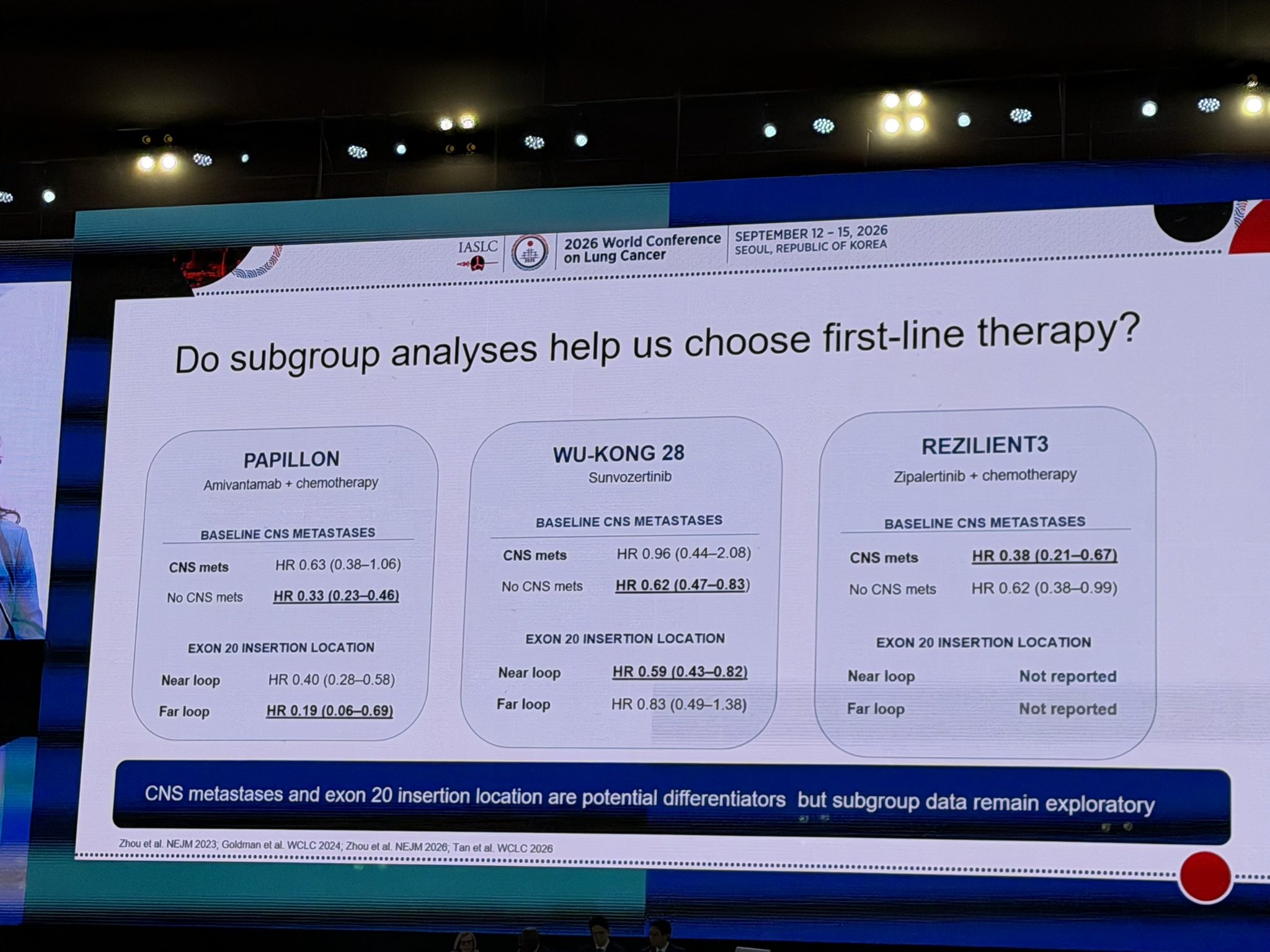
Excellent discussion of the evolving 1L landscape for EGFR exon20ins NSCLC at #WExcellent discussion of the evolving 1L landscape for EGFR exon20ins NSCLC at #WExcellent discussion of the evolving 1L landscape for EGFR exon20ins NSCLC at #WExcellent discussion of the evolving 1L landscape for EGFR exon20ins NSCLC at #W
5.9K impressions3 likes2 reposts2026-09-14
[Slide 1] What should guide our first line decision? PAPILLON Amivantamab + chemotherapy WU-KONG 28 Sunvozertinib REZILIENT3 Zipalertinib + chemotherapy EFFICACY & TOXICITY PATIENT CHARACTERISTICS PATIENT PRIORITIES WHAT COMES NEXT? Depth and duration of benefit CNS metastases IV VS oral therapy Treatment burden EGFR exon 20ins subtype Quality of life Sequential efficacy Adverse events preferences Resistance mechanisms [Slide 2] along IASLC 2026 World Conference SEPTEMBER 12 - 15, 2026 on Lung Cancer SEOUL, REPUBLIC OF KOREA Do subgroup analyses help us choose first-line therapy? PAPILLON WU-KONG 28 REZILIENT3 Amivantamab + chemotherapy Sunvozertinib Zipalertinib + chemotherapy BASELINE CNS METASTASES BASELINE CNS METASTASES BASELINE CNS METASTASES CNS mets CNS mets HR 0.63 (0.38-1.06) HR 0.96 (0.44-2.08) CNS mets HR 0.38 (0.21-0.67) No CNS mets HR 0.33 (0.23-0.46) HR 0.62 (0.47-0.83) No CNS mets No CNS mets HR 0.62 (0.38-0.99) EXON 20 INSERTION LOCATION EXON 20 INSERTION LOCATION EXON 20 INSERTION LOCATION Near loop HR 0.40 (0.28-0.58) Near loop HR 0.59 (0.43-0.82) Near loop Not reported Far loop HR 0.19 (0.06-0.69) Far loop HR 0.83 (0.49-1.38) Far loop Not reported CNS metastases and exon 20 insertion location are potential differentiators but subgroup data remain exploratory [Slide 3] IASLC 2026 World Conference SEPTEMBER 12 - 15, 2026 on Lung Cancer SEOUL, REPUBLIC OF KOREA Phase III randomized 1L trials PAPILLON Platinum doublet Amivantamab WU KONG 28 REZILIENT 3 + sunvozertinib Zipalertinib + chemotherapy chemotherapy PAPILLON: 47 ORR% WU KONG 28: 31.1 73 (BIRC) 59 65 REZILIENT 3: 40 PAPILLON: 6.7 11.4 mPFS m 10.3 14.5 WU KONG 28: 7.5 0.40; 0.30 -0.53; P<0.001 HR (CI, p) 0.65; 0.50 -0.85; <0.001 0.5; 0.34-0.73; p=0.00015 REZILIENT 38.5 mOS, m PAPILLON: 27.9 (24.0-32.4) 34.3 (27.0-40.8) 29.8 (21.8-NE) NR HR (Cl,p) WU KONG 28: 28.8 (27.0-NE) HR, 0.87 (0.66-1.14); 0.99 (0.7-1.40) 0.72 (0.42-1.23) REZILIENT 3: NR P=0.307 p 0.49 39% maturity P=0.11082 PAPILLON: 68 18m-OS WU KONG 28: 67 74 65.5 Not reported REZILIENT 3: NR PAPILLON: 54 24m-OS WU KONG 28: 56.2 64 57.4 Not reported REZILIENT 3: NR Descriptive cross-trial comparison; differences in eligibility, follow-up, assessment, and safety reporting limit interpretation. 9 [Slide 4] IASLC 2026 World Conference SEPTEMBER 12 - 15, 2026 on Lung Cancer SEOUL, REPUBLIC OF KOREA Phase III 1L randomized trials Platinum doublet PAPILLON WU KONG 28 REZILIENT 3 Neutropenia (34%), Diarrhea (14%), Anemia (48.6%), Most common Paronychia (10%), CK increased (20.9) toxicity (Gr3) anemia (13%), Anemia (9.2%), neutropenia (33.6), infusion related reaction (1%) rash (0.6%) thrombocytopenia (30%) rash (10.7%) paronychia (3.7%) GR3 AE % 75 75 81 % dose reduction* 36 41 44 % dose 11 12 17 discontinuation* PAPILLON: 3 AE leading to WU KONG 28: 1.3 5 4.3 9.5 death % REZILIENT 3: 2.9 Descriptive cross-trial comparison; differences in eligibility, follow-up, assessment, and safety reporting limit interpretation. * Targeted therapy 10
MMustafa Özdoğan, MD@ozdogan_md

#WCLC26 — The Studies to Watch
Seoul, 12–15 September

A clinical map of the key questions at @IASLC WCLC 2026: early/locally advanced NSCLC, oncogenic drivers, IO combinations, SCLC (including CNS), limited-stage multimodal therapy, and local control.

Presidential symposium highlights include ADAURA OS update, PAPILLON, REZILIENT 3, ARROS-1, DESTINY-Lung04, EVOKE-03 / KEYNOTE-D46, TAISHAN-302, A

#WCLC26 — The Studies to Watch
Seoul, 12–15 September

A clinical map of the key
5K impressions5 likes4 reposts2026-09-11
[Slide 1] WCLC 2026: THE STUDIES TO WATCH Seoul 12-15 September 2026 Presidential symposium 01 EARLY / LOCALLY ADVANCED NSCLC 02 ADVANCED NSCLC: DRIVERS ADAURA PL03.01 PAPILLON PL03.03 Osimertinib exploratory 8-year OS EGFR exon 20 amivantamab + chemo os IMpower030 OA04.03 REZILIENT 3 PL03.04 Perioperative atezolizumab + chemo EGFR exon 20 zipalertinib + chemo MDT-BRIDGE ARROS-1 PL03.06 OA04.02 ROS1 zidesamtinib TKI-naive Neoadjuvant durvalumab + chemo DESTINY-Lung04 PL03.08 Adjuvant gefitinib + chemo OA04.01 HER2-mutant first-line T-DXd EGFR-mutant phase III HARMONi 0A14.05 NAUTIKA1 M006.01/ OA04.04 Post-EGFR TKI ivonescimab + chemo os Neoadjuvant alectinib / divarasib AMIGO-1 0A12.04 Amivantamab + lazertinib + pemetrexed 03 ADVANCED NSCLC: NO DRIVER 04 SCLC: SYSTEMIC THERAPY & CNS HARMONi-2 OA14.01 TAISHAN-302 PL02.03 Ivonescimab vs pembrolizumab OS Tam-Peli vs topotecan relapsed ARTEMIS-008 PL02.04 EVOKE-03 / KEYNOTE D46 PL02.06 Risvutatug rezetecan vs topotecan Sacituzumab govitecan + pembrolizumab PD-L1 ≥50% SWOG S1827 MAVERICK PL02.01 Pumitamig + BNT324 0A14.02 Brain MRI surveillance ± cranial irradiation PD-L1/VEGF-A + B7-H3 NSCLC/SCLC DeLLphi-309 OA05.01 Tarlatamab extended-interval dosing RC148 / ABBV-1480 OA14.04 PD-1/VEGF bispecific + chemo DeLLphi-308 M015.07 Tarlatamab subcutaneous delivery MAVERICK: cross-stage brain prevention. 05 LIMITED-STAGE SCLC 06 SURGERY, RADIOTHERAPY & LOCAL CONTROL Neoadjuvant serplulimab + chemo M015.03 Wedge vs segmentectomy OA08.01 pathological response / MRD GGO-dominant early NSCLC GREAT OA08.02 Serplulimab + concurrent CRT P3.288 Segmentectomy VS lobectomy followed by serplulimab phase II STARLORD OA09.04 CXCL9+ DCs / CXCR3+ Tregs M015.01 Stereotactic RT when concurrent CRT is unsuitable treatment resistance LONESTAR 0A14.03 Early clinical and translational signals Local consolidation after nivolumab + ipilimumab EMERGING SCIENCE KRAS G12D: GFH375 / QLC1101 DLL3 CAR-T: LB2102 mRNA vaccine: BNT116 OA12.01-02 OA05.02 M006.03 Pre-congress watchlist Not a results summary 11 Sep 2026 Source: IASLC WCLC 2026 program wclc.iaslc.org
11IMpower030View full trial page →23.9K impressions22.8K primary · 1.1K preview149 engagements15 posts · 14 voices
HHidehito HORINOUCHI@HHorinouchi

🆙#WCLC26 #LCSM OA04.03
🔥Final Analysis of the Phase 3 IMpower030 Study: Perioperative Atezolizumab + Chemotherapy in Resectable Stage II-IIIB NSCLC
🎙️@bensolomon1
🎯EFS HR 0.77 (95%CI 0.58-1.02)
🎯OS HR 0.77 (95%CI 0.57-1.07)
🎯pCR Atezo 30.6% vs. Placebo 8.6%
🔢OA04.03
☑️NCT03456063
🔗 https://t.co/rN1vqVmvgD
@OncoAlert @Larvol @IASLC

🆙#WCLC26 #LCSM OA04.03
🔥Final Analysis of the Phase 3 IMpower030 Study: Perioper🆙#WCLC26 #LCSM OA04.03
🔥Final Analysis of the Phase 3 IMpower030 Study: Perioper
6.5K impressions12 likes5 reposts2026-09-13
[Slide 1] IASLC 2026 World Conference SEPTEMBER 12 - - 15, 2026 08 min 25s on Lung Cancer SEOUL, REPUBLIC OF KOREA Study Design Double-blind period Open-label period Key eligibility criteria: Atezolizumab 1,200 mg + Surgical Resectable Stage II, IIIA or platinum-based chemotherapy* resection (pCR, MPR PORT Atezolizumab 1,200 mg select IIIB (T3N2) NSCLC (16 cycles) Q3W (8th edition) (4 cycles) Q3W assessment) Eligible for R0 resection with curative intent R 1:1 Adequate pulmonary and cardiac function to Survival follow-up Placebo + Surgical undergo resection resection ALK WT/EGFR WT platinum-based chemotherapy* (pCR, MPR PORT Best supportive care (4 cycles) Q3W ECOG PS 0-1 assessment) Stratification factors: Primary endpoint: Key secondary endpoints: Tumor Stage (II VS IIIA N2- VS IIIA/B N2+) IRF-EFS IRF-pCR INV-EFS Histology (non-squamous vs squamous) IRF-MPR INV-DFS OS Safety *Chemotherapy options: cisplatin + pemetrexed, carboplatin + pemetrexed, or carboplatin + nab-paclitaxel for patients with non-squamous NSCLC; cisplatin + gemcitabine or carboplatin + nab-paclitaxel for patients with squamous NSCLC. Chemotherapy was administered as (per 21-day cycle): cisplatin (75 mg/m² IV) on Day 1; pemetrexed (500 mg/m2 IV) on Day 1; carboplatin (IV, initial target AUC of 6 mg/mL/min) on Day 1; nab-paclitaxel (100 mg/m2 IV) on Days 1, 8, and 15; gemcitabine (1,250 mg/m² IV) on Days 1 and 8. PORT required for patients with positive margins prior to initiating post-operative atezolizumab or best supportive care. PORT mandatory for N2+ disease in V1-6 and optional for patient with N2+ disease at resection after version 7. ALK, anaplastic lymphoma kinase; AUC, area under the curve; DFS, disease-free survival; ECOG PS, Eastern Cooperative Oncology Group performance status; EFS, event-free survival; EGFR, epidermal growth factor receptor; INV, investigator-assessed; IRF, independent review facility-assessed; IV, intravenous; MPR, major pathological response; OS, overall survival; pCR, pathological complete response; PORT, post-operative radiation therapy; Q3W, every 3 weeks; R, randomized; R0, complete resection; WT, wild-type. 4 [Slide 2] IASLC 2026 World Conference SEPTEMBER 12 - 15, 2026 05 min 21s 2026 on Lung Cancer SEOUL, REPUBLIC OF KOREA IRF-Assessed EFS Stage IIB-IIIB-WT population (primary endpoint)* ITT-WT population$ 100 100 Atezolizumab arm Placebo arm Atezolizumab arm Placebo arm Median, months (95% CI) 62.8 (41.4, NE) 34.9 (24.6, 63.8) Median, months (95% CI) 67.2 (49.1, NE) 43.9 (28.0, 63.8) 80 Stratified HR (95% CI); p value+ 0.77 (0.58, 1.02); p=0.07 80 Stratified HR (95% CI) 0.75 (0.57, 0.98) Median survival follow-up in all patients: 69.3 months Median survival follow-up in all patients: 69.3 months 60 60 52.6% IRF-EFS (%) 50.5% IRF-EFS (%) 40 40 44.3% 46.0% 20 20 0 0 0 6 12 18 24 30 36 42 48 54 60 66 72 78 84 88 0 6 12 18 24 30 36 42 48 54 60 66 72 78 84 88 Months Months Patients remaining at risk Patients remaining at risk 196 180 147 119 111 105 100 95 89 78 65 33 29 1 1 219 201 166 137 129 123 117 111 104 92 78 37 32 1 1 201 174 129 118 102 90 82 78 70 60 54 25 23 2 NE 221 193 144 133 117 105 96 92 84 73 64 29 26 2 NE Statistical significance was not met in the Stage IIB-IIIB-WT population Data cut-off: 01 October 2025. *A total of 92 (46.9%) patients in the atezolizumab arm (n=196) and 104 (51.7%) patients in the placebo arm (n=201) had an event; +Stratified Log-rank 2-sided p value; Versus stopping boundary of 0.04; $A total of 99 (45.2%) patients in the atezolizumab arm (n=219) and 114 (51.6%) patients in the placebo arm (n=221) had an event. EFS was defined as time from randomization to the first documented disease progression per RECIST v1.1 that precluded surgery, local or distant disease recurrence (including occurrence of new primary NSCLC) or death from any cause, whichever occurred first. NE, not estimable. 8 [Slide 3] IASLC 2026 World Conference SEPTEMBER 12 - 15, 2026 04 min 13s on Lung Cancer SEOUL, REPUBLIC OF KOREA Key Secondary Endpoints Stage IIB-IIIB-WT ITT-WT Atezolizumab arm Placebo arm Atezolizumab arm Placebo arm (n=196) (n=201) (n=219) (n=221) IRF-pCR, n (%) 58 (29.6) 17 (8.5) 67 (30.6) 19 (8.6) IRF-MPR, n (%) 105 (53.6) 49 (24.4) 119 (54.3) 55 (24.9) Median INV-EFS, months 62.8 34.6 65.0 36.5 HR (95% CI) 0.70 (0.53, 0.93) 0.71 (0.55, 0.93) Outcomes of pCR, MPR and EFS favored atezolizumab VS placebo Data cut-off: 01 October 2025. Key secondary endpoints were not formally tested. pCR, absence of any viable primary tumor cells at the time of surgical resection in the primary tumor and all sampled lymph nodes as assessed by central pathology laboratory; MPR, <10% residual viable tumor cells at the time of surgical resection in the primary tumor as assessed by central pathology laboratory. 10 [Slide 4] IASLC 2026 World Conference SEPTEMBER 12 - 15, 2026 03 min 46s on Lung Cancer SEOUL, REPUBLIC OF KOREA Key Secondary Endpoints Overall survival (ITT-WT population)* Disease-free survival (ITT-WT population)+ 100 100 80 80 66.0% 60 60 57.4% OS (%) 59.9% DFS (%) 40 40 45.9% Atezolizumab arm Placebo arm Atezolizumab arm Placebo arm 20 Median, months (95% CI) NE (NE) 81.7 (63.8, NE) 20 Median, months (95% CI) 82.7 (54.3, NE) 54.4 (30.2, 66.0) Stratified HR (95% CI) 0.77 (0.57, 1.05) Stratified HR (95% CI) 0.67 (0.49, 0.90) Median survival follow-up in all patients: 69.3 months 0 0 0 6 12 18 24 30 36 42 48 54 60 66 72 78 84 90 0 6 12 18 24 30 36 42 48 54 60 66 72 78 84 86 Months Months Patients remaining at risk Patients remaining at risk 219 207 197 182 174 166 159 151 139 125 112 96 57 32 6 188 170 142 131 126 119 113 104 94 85 59 34 16 1 221 206 188 173 160 152 137 127 123 109 94 74 46 21 3 181 137 122 112 100 95 89 84 75 67 48 26 14 2 Outcomes of OS and DFS favored atezolizumab VS placebo Data cut-off: 01 October 2025. Key secondary endpoints were not formally tested. *A total of 75 (34.2%) patients in the atezolizumab arm (n=219) and 89 (40.3%) patients in the placebo arm (n=221) had an event. The HR (95% CI) of median os between the atezolizumab (n=196) and placebo arms (n=201) in the Stage IIB-IIIB-WT population was 0.79 (0.57-1.09); Patients with R0 margins after surgical resection. A total of 79 (42.0%) patients in the atezolizumab arm (n=188) and 95 (52.5%) patients in the placebo arm (n=181) had an event. The HR (95% CI) of median DFS between the atezolizumab (n=167) and placebo arms (n=164) in the Stage IIB-IIIB-WT population was 0.66 (0.48-0.91).OS, time from randomization to death from any cause; DFS, time from the first date of no disease (date of surgery) to local or distant recurrence (including occurrence of new primary NSCLC), or death due to any cause, whichever occurs first. 11
SStephen V Liu, MD@StephenVLiu

Dr. @bensolomon1 presents IMpower 030: perioperative atezolizumab + chemo in resectable NSCLC at #WCLC26. Unfortunately, EFS did not meet significance. Trends present for EFS and OS but not significant. High rates of surgery in both arms ~90% and placebo arm performed better than expected. Disappointing negative results.

Dr. @bensolomon1 presents IMpower 030: perioperative atezolizumab + chemo in resDr. @bensolomon1 presents IMpower 030: perioperative atezolizumab + chemo in resDr. @bensolomon1 presents IMpower 030: perioperative atezolizumab + chemo in resDr. @bensolomon1 presents IMpower 030: perioperative atezolizumab + chemo in res
3.9K impressions27 likes11 reposts2026-09-13
[Slide 1] IASLC 2026 World Conference at 2276 on Lung Cancer - KALC SEPTEMBER 12 - 15, 2026 I SEOUL, REPUBLIC OF KOREA SCIENCE WITHOUT BOUNDARIES: UNITING THE WORLD AGAINST THORACIC CANCER [Slide 2] IASLC 2026 World Conference SEPTEMBER 12 - 15, 2026 08 min 11s 2026 on Lung Cancer SEOUL, REPUBLIC OF KOREA Study Design Double-blind period Open-label period Key eligibility criteria: Atezolizumab 1,200 mg + Surgical Resectable Stage II, IIIA or platinum-based chemotherapy* resection (pCR, MPR PORT Atezolizumab 1,200 mg select IIIB (T3N2) NSCLC (8th edition) (4 cycles) Q3W (16 cycles) Q3W assessment) Eligible for R0 resection with curative intent R 1:1 Adequate pulmonary and cardiac function to Survival follow-up Placebo + Surgical undergo resection resection ALK WT/EGFR WT platinum-based chemotherapy* (pCR, MPR PORT Best supportive care ECOG PS 0-1 (4 cycles) Q3W assessment) Stratification factors: Primary endpoint: Key secondary endpoints: Tumor Stage (II VS IIIA N2- VS IIIA/B N2+) IRF-EFS IRF-pCR INV-EFS Histology (non-squamous vs squamous) IRF-MPR INV-DFS OS Safety *Chemotherapy options: cisplatin + pemetrexed, carboplatin + pemetrexed, or carboplatin + nab-paclitaxel for patients with non-squamous NSCLC; cisplatin + gemcitabine or carboplatin + nab-paclitaxel for patients with squamous NSCLC. Chemotherapy was administered as (per 21-day cycle): cisplatin (75 mg/m² IV) on Day 1; pemetrexed (500 mg/m² IV) on Day 1; carboplatin (IV, initial target AUC of 6 mg/mL/min) on Day 1; nab-paclitaxel (100 mg/m² IV) on Days 1, 8, and 15; gemcitabine (1,250 mg/m² IV) on Days 1 and 8. PORT required for patients with positive margins prior to initiating post-operative atezolizumab or best supportive care. PORT mandatory for N2+ disease in V1-6 and optional for patient with N2+ disease at resection after version 7. ALK, anaplastic lymphoma kinase; AUC, area under the curve; DFS, disease-free survival; ECOG PS, Eastern Cooperative Oncology Group performance status; EFS, event-free survival; EGFR, epidermal growth factor receptor; INV, investigator-assessed; IRF, independent review facility-assessed; IV, intravenous; MPR, major pathological response; OS, overall survival; pCR, pathological complete response; PORT, post-operative radiation therapy; Q3W, every 3 weeks; R, randomized; R0, complete resection; WT, wild-type. 4 [Slide 3] IASLC 2026 World Conference SEPTEMBER 12 - 15, 2026 05 min 14s 2026 on Lung Cancer SEOUL, REPUBLIC OF KOREA IRF-Assessed EFS Stage IIB-IIIB-WT population (primary endpoint)* ITT-WT population$ 100 100 Atezolizumab arm Placebo arm Atezolizumab arm Placebo arm Median, months (95% CI) 62.8 (41.4, NE) 34.9 (24.6, 63.8) Median, months (95% CI) 67.2 (49.1, NE) 43.9 (28.0, 63.8) 80 Stratified HR (95% CI); p value+ 0.77 (0.58, 1.02); p=0.07 80 Stratified HR (95% CI) 0.75 (0.57, 0.98) Median survival follow-up in all patients: 69.3 months Median survival follow-up in all patients: 69.3 months 60 60 52.6% IRF-EFS (%) 50.5% IRF-EFS (%) 40 40 44.3% 46.0% 20 20 0 0 0 6 12 18 24 30 36 42 48 54 60 66 72 78 84 88 0 6 12 18 24 30 36 42 48 54 60 66 72 78 84 88 Months Months Patients remaining at risk Patients remaining at risk 196 180 147 119 111 105 100 95 89 78 65 33 29 1 1 219 201 166 137 129 123 117 111 104 92 78 37 32 1 1 201 174 129 118 102 90 82 78 70 60 54 25 23 2 NE 221 193 144 133 117 105 96 92 84 73 64 29 26 2 NE Statistical significance was not met in the Stage IIB-IIIB-WT population Data cut-off: 01 October 2025. *A total of 92 (46.9%) patients in the atezolizumab arm (n=196) and 104 (51.7%) patients in the placebo arm (n=201) had an event; TStratified Log-rank 2-sided p value; Versus stopping boundary of 0.04; $A total of 99 (45.2%) patients in the atezolizumab arm (n=219) and 114 (51.6%) patients in the placebo arm (n=221) had an event. EFS was defined as time from randomization to the first documented disease progression per RECIST v1.1 that precluded surgery, local or distant disease recurrence (including occurrence of new primary NSCLC) or death from any cause, whichever occurred first. NE, not estimable. 8 [Slide 4] IASLC 2026 World Conference SEPTEMBER 12 - 15, 2026 03 min 48s on Lung Cancer SEOUL, REPUBLIC OF KOREA Key Secondary Endpoints Overall survival (ITT-WT population)* Disease-free survival (ITT-WT population)+ 100 100 80 80 66.0% 60 60 57.4% OS (%) 59.9% DFS (%) 40 40 45.9% Atezolizumab arm Placebo arm Atezolizumab arm Placebo arm 20 Median, months (95% CI) NE (NE) 81.7 (63.8, NE) 20 Median, months (95% CI) 82.7 (54.3, NE) 54.4 (30.2, 66.0) Stratified HR (95% CI) 0.77 (0.57, 1.05) Stratified HR (95% CI) 0.67 (0.49, 0.90) Median survival follow-up in all patients: 69.3 months 0 0 0 6 12 18 24 30 36 42 48 54 60 66 72 78 84 90 0 6 12 18 24 30 36 42 48 54 60 66 72 78 84 86 Months Months Patients remaining at risk Patients remaining at risk 219 207 197 182 174 166 159 151 139 125 112 96 57 32 6 188 170 142 131 126 119 113 104 94 85 59 34 16 1 221 206 188 173 160 152 137 127 123 109 94 74 46 21 3 181 137 122 112 100 95 89 84 75 67 48 26 14 2 Outcomes of OS and DFS favored atezolizumab vs placebo Data cut-off: 01 October 2025. Key secondary endpoints were not formally tested. *A total of 75 (34.2%) patients in the atezolizumab arm (n=219) and 89 (40.3%) patients in the placebo arm (n=221) had an event. The HR (95% CI) of median OS between the atezolizumab (n=196) and placebo arms (n=201) in the Stage IIB-IIIB-WT population was 0.79 (0.57-1.09); Patients with R0 margins after surgical resection. A total of 79 (42.0%) patients in the atezolizumab arm (n=188) and 95 (52.5%) patients in the placebo arm (n=181) had an event. The HR (95% CI) of median DFS between the atezolizumab (n=167) and placebo arms (n=164) in the Stage IIB-IIIB-WT population was 0.66 (0.48-0.91).OS, time from randomization to death from any cause; DFS, time from the first date of no disease (date of surgery) to local or distant recurrence (including occurrence of new primary NSCLC), or death due to any cause, whichever occurs first. 11
MMustafa Özdoğan, MD@ozdogan_md

Two negative Phase 3 atezolizumab trials—but two very different messages.

IMpower030 missed its statistical threshold despite a strong efficacy signal. S1914 showed no survival gain and greater toxicity.

In early-stage NSCLC, context matters.

#WCLC26 #LungCancer #NSCLC #Immunotherapy

Two negative Phase 3 atezolizumab trials—but two very different messages.

IMpow
3.8K impressions9 likes5 reposts2026-09-12
[Slide 1] WCLC 2026 AND THE LANCET BETTER TWO NEGATIVE ATEZOLIZUMAB TRIALS SCIENCE A BRIGHTER TOMORROW FOR PATIENTS IN EARLY STAGE NSCLC PEOPLE Same label Different clinical meaning EVIDENCE IMPACT IMpower030 WCLC 2026 PHASE 3 SWOG NRG S1914 THE LANCET 2026 PHASE 3 Resectable stage II to IIIB High risk T1 to T3 NO MO NSCLC NSCLC medically inoperable or declined surgery N 453 Perioperative atezolizumab plus chemotherapy vs chemotherapy alone N 417 SBRT plus atezolizumab VS SBRT alone Median EFS 2 year OS 62.8 mo VS 34.9 mo 82% VS 82% OS HR 1.04 95% CI 0.69 to 1.58 pCR 29.6% VS 8.5% Grade 3 or higher AEs 12% VS 3% PRESPECIFIED STATISTICAL 2 grade 5 respiratory events with atezolizumab THRESHOLD NOT MET NO SURVIVAL BENEFIT Statistically negative clinically suggestive MORE TOXICITY EXPERT INTERPRETATION SAME DRUG DIFFERENT PATIENTS 1 A negative trial is not always a biologic failure DIFFERENT QUESTIONS DIFFERENT ANSWERS 2 Benefit depends on setting timing and patient selection CONTEXT TURNS 3 Do not add atezolizumab to SBRT outside a clinical trial DATA INTO CARE THE LESSON IS CONTEXT NOT A CLASS EFFECT Sources IMpower030 NCT03456063 WCLC 2026 SWOG NRG S1914 Lancet 2026 drozdogan.com
DDiego A. Díaz-García@diegoadiazg

🫁 IMpower030: perioperative atezolizumab did not meet its primary endpoint in resectable NSCLC. @bensolomon1

Despite numerical improvements with atezolizumab + chemotherapy:
• EFS: 62.8 vs 34.9 months
• pCR: 29.6% vs 8.5%
• MPR: 53.6% vs 24.4%

The study did not demonstrate a statistically significant EFS benefit, although other efficacy endpoints numerically favored the experimental arm.

#CánC

🫁 IMpower030: perioperative atezolizumab did not meet its primary endpoint in re🫁 IMpower030: perioperative atezolizumab did not meet its primary endpoint in re🫁 IMpower030: perioperative atezolizumab did not meet its primary endpoint in re🫁 IMpower030: perioperative atezolizumab did not meet its primary endpoint in re
1.4K impressions18 likes6 reposts2026-09-13
[Slide 1] IASLC 2026 World Conference SEPTEMBER 12- 15, 2026 08 min 25 on Lung Cancer SEOUL, REPUBLIC OF KOREA Study Design Double-blind period Open-label period Key eligibility criteria: Atezolizumab 1,200 mg + Surgical Resectable Stage II, IIIA or platinum-based chemotherapy* resection (pCR, MPR PORT Atezolizumab 1,200 mg select IIIB (T3N2) NSCLC (4 cycles) Q3W (16 cycles) Q3W (8th edition) assessment) Eligible for R0 resection with curative intent R 1:1 Adequate pulmonary and cardiac function to Survival follow-up Placebo + Surgical undergo resection ALK WT/EGFR WT platinum-based chemotherapy* resection (pCR, MPR PORT Best supportive care ECOG PS 0-1 (4 cycles) Q3W assessment) Stratification factors: Primary endpoint: Key secondary endpoints: Tumor Stage (II vs IIIA N2- vs IIIA/B N2+) IRF-EFS IRF-pCR INV-EFS Histology (non-squamous vs squamous) IRF-MPR INV-DFS OS Safety "Chemotherapy options cisplate . pemetrexed, carboplatin pernetrexed, or carboplatin . nab-pacitaxel for patients with non-squamous NSCLC. cisplatin . gemcitabine or carboplatin nab-paclitaxel for patients with squamous NSCLC Chemotherapy was administered as (per 21-day cycle) cisplatin (75 mg/m2 IV) on Day 1; permetrexed (500 mg/m² IV) on Day 1; carboplatin (IV, initial target AUC of 6 mg/ml/min) on Day 1; nab-packtaxel (100 mg/m2 IV) on Days 1,8, and 15; gemcitabine (1,250 mg/m2 IV) on Days 1 and 8. PORT required for patients with positive margins prior to initiating post-operative atezolizumab or best supportive care PORT mandatory for N2+ disease in V1-6 and optional for patient with N2+ disease at resection after version 7. ALK anaplastic lymphoma knase, AUC, area under the curve, DFS, disease froe survival, ECOG PS, Eastern Cooperative Oncology Group performance status; EFS, event free survival, EGFR, epidermal growth factor receptor; INV, investigator assessed, IRF, independent review facility-assessed; IV, intravenous; MPR, major pathological response; 0S, overall survival; pCR, pathological complete response; PORT, post-operative radiation therapy, Q3W, every 3 weeks, R, randomized; R0, complete resection, WT, wild-type [Slide 2] IASLC 2026 World Conference SEPTEMBER 12- 15, 2026 05 min 17 on Lung Cancer SEOUL, REPUBLIC OF KOREA IRF-Assessed EFS Stage IIB-IIIB-WT population (primary endpoint)* ITT-WT population$ 100 100 Atezolizumab arm Placebo arm Atezolizumab arm Placebo arm Median, months (95% CI) 52.8(41.4,NE) 349(24.638) Median, months (95% CI) 67.2(49.1,NE) 439(28,63.8) 80 Stratified HR (95% CI). P value 0.77 58 1.02) p=0 07* 80 Stratified HR (95% CI) 0.75(0.57,0.98) Median survival follow up in all patients 60 3 months Median survival follow up in at patients 69.3 months 60 60 52.6% IRF-EFS (%) 50.5% IRF-EFS (%) 40 40 44.3% 46.0% 20 20 0 0 0 6 12 18 24 30 36 42 48 54 60 66 72 78 84 88 0 6 12 18 24 30 36 42 48 54 60 66 72 78 84 88 Months Months Patients remaining at risk Patients remaining at risk 195 180 147 119 111 105 100 95 89 78 65 33 29 1 1 219 201 166 137 129 123 117 111 104 92 78 37 32 1 1 201 174 129 118 102 90 82 78 70 60 54 25 23 2 NE 221 193 144 133 117 105 96 a 84 73 64 29 26 2 NE Statistical significance was not met in the Stage IIB-IIIB-WT population Data cut-off 01 October 2025 "A total of 92 (46 9%) patients in the etezolizumab arm (n=196) and 104 (51 7%) patients in the placebo arm (n=201) had an event *Stratified Log rank 2. -sided P value Versus stopping boundary of 0 04; IA total of 99 (45 2%) patients in the atezolizumab arm (n=219) and 114 (51 6%) patients in the placebo arm (n=221) had an event EFS was defined as time from randomization to the first documented disease progression per RECIST v1 1 that precluded surgery, local or distant disease recurrence (including occurrence of new primary NSCLC) or death from any cause, whichever occurred first NE, not estimable R [Slide 3] IASLC 2026 World Conference SEPTEMBER 12 15, 2026 04 min OT on Lung Cancer SEOUL, REPUBLIC OF KOREA Key Secondary Endpoints Stage IIB-IIIB-WT ITT-WT Atezolizumab arm Placebo arm Atezolizumab arm Placebo arm (n=196) (n=201) (n=219) (n=221) IRF-pCR, n (%) 58 (29.6) 17 (8.5) 67 (30.6) 19 (8.6) IRF-MPR, n (%) 105 (53.6) 49 (24.4) 119 (54.3) 55 (24.9) Median INV-EFS, months 62.8 34.6 65.0 36.5 HR (95% CI) 0.70 (0.53, 0.93) 0.71 (0.55, 0.93) Outcomes of pCR, MPR and EFS favored atezolizumab vs placebo Data cut-off 01 October 2025 Key secondary endpoints were not formally tested pCR, absence of any viable primary tumor cells at the time of surgical resection in the primary tumor and all sampled lymph nodes as assessed by central pathology laboratory MPR, $10% residual viable tumor cells at the time of surgical resection in the primary tumor as assessed by central pathology laboratory 10 [Slide 4] IASLC 2026 World Conference SEPTEMBER 12- 15, 2026 03 min 46 on Lung Cancer SEOUL, REPUBLIC OF KOREA Key Secondary Endpoints Overall survival (ITT-WT population)* Disease-free survival (ITT-WT population)+ 100 100 80 80 66.0% 60 60 57.4% OS (%) 59,9% DFS (%) 40 40 45.9% Atezolizumab arm Placebo arm Atezolizumab arm Placebo arm 20 Median, months (95% CI) NE (NE) 81.7(63.8,NE) 20 Median months (95% CI) 82 (54 NE) 54.4(302.66) Stratified HR (95% CI) 0.77 57, 1.05) Stratified HR (95% CI) 0.67 49. 0.90) Median survival follow- in all patients: 69 3 months 0 0 0 6 12 18 24 30 36 42 48 54 60 66 72 78 84 90 0 6 12 18 24 30 36 42 48 54 60 66 72 78 84 86 Months Months Patients remaining at risk Patients remaining at risk 219 207 197 182 174 166 159 151 139 125 112 96 57 32 6 188 170 142 131 126 119 113 104 94 8. 59 34 16 1 221 200 188 173 160 152 137 127 123 109 94 74 46 21 3 181 137 122 112 100 95 89 44 75 67 48 26 14 2 Outcomes of OS and DFS favored atezolizumab vs placebo Data cut-off 01 October 2025 Key secondary endpoints were not formally tested "A total of 75 (34 2%) patients in the atezokzumab am (n=219) and 89 (40.3%) patients in the placebo arm (n=221) had an event The HR (95% CI) of median os between the atezolizumab (n= 196) and placebo arms (n=201) in the Stage IIB-IIIB-WT population was 0. 79 0.57-1.09) Patients with R0 margins after surgical resection A total of 79 (42 0%) patients in the atezolizumab arm (n=188) and 95 (52 5%) patients in the placebo am (n=181) had an event The HR (95% CI) of median DFS between the atozokzumab (n= 167) and placebo arms (no 164) in the Stage IIB IIIB WT population was 0.66 (0. 48-0.91). OS, time from randomization to death from any cause, DFS, time from the first date of no disease (date of surgery) to local or distant recurrence (including occurrence of new primary NSCLC). or death due to any cause, whichever occurs first 11
DDr Riyaz Shah@DrRiyazShah

IMpower030: final analysis; hierarchical stats testing (grrrrr); #WCLC26 https://t.co/y2AfHQblIW

IMpower030: final analysis; hierarchical stats testing (grrrrr); #WCLC26 https:/IMpower030: final analysis; hierarchical stats testing (grrrrr); #WCLC26 https:/IMpower030: final analysis; hierarchical stats testing (grrrrr); #WCLC26 https:/IMpower030: final analysis; hierarchical stats testing (grrrrr); #WCLC26 https:/
970 impressions6 likes0 reposts2026-09-13
[Slide 1] 08 min 21s IASLC 2026 World Conference SEPTEMBER 12 15, 2026 on Lung Cancer SEOUL, REPUBLIC OF KOREA Study Design Double-blind period Open-label period Key eligibility criteria: Atezolizumab 1,200 mg + Surgical Resectable Stage II, IIIA or PORT Atezolizumab 1,200 mg resection select IIIB (T3N2) NSCLC platinum-based chemotherapy* (pCR, MPR (16 cycles) Q3W (8ᵗʰ edition) (4 cycles) Q3W assessment) Eligible for R0 resection with curative intent R Adequate pulmonary and 1:1 Survival follow-up cardiac function to undergo resection Placebo + Surgical resection ALK WT/EGFR WT platinum-based chemotherapy* Best supportive care (pCR, MPR PORT ECOG PS 0-1 (4 cycles) Q3W assessment) Stratification factors: Primary endpoint: Key secondary endpoints: Tumor Stage (II vs IIIA N2- vs IIIA/B N2+) IRF-EFS IRF-pCR INV-EFS Histology (non-squamous vs squamous) IRF-MPR INV-DFS OS Safety "Chemotherapy options: cisplatin + pemetrexed, carboplatin + pemetrexed, or carboplatin + nab-paclitaxel for patients with non-squamous NSCLC; cisplatin + gemcitabine or carboplatin + nab-paclitaxel for patients with squamous NSCLC. Chemotherapy was administered as (per 21-day cycle): cisplatin (75 mg/m2 IV) on Day 1; pemetrexed (500 mg/m² IV) on Day 1; carboplatin (IV, initial target AUC of 6 mg/mL/min) on Day 1: nab-paclitaxel (100 mg/m² IV) on Days 1, 8, and 15; gemcitabine (1,250 mg/m² IV) on Days 1 and 8. PORT required for patients with positive margins prior to initiating post-operative atezolizumab or best supportive care. PORT mandatory for N2+ disease in V1-6 and optional for patient with N2+ disease at resection after version 7. ALK, anaplastic lymphoma kinase; AUC, area under the curve; DFS, disease-free survival; ECOG PS, Eastern Cooperative Oncology Group performance status; EFS, event-free survival; EGFR, epidermal growth factor receptor, INV, investigator-assessed; IRF, independent review facility-assessed; IV, intravenous; MPR, major pathological response; OS, overall survival; pCR, pathological complete response; PORT, post-operative radiation therapy; Q3W, every 3 weeks; R, randomized; RO, complete resection; WT, wild-type. 4 VANESSA COSTA ANNE-MARI PEI-JYE VOON MENEZES DINGEMAN IASLC [Slide 2] IASLC 06 min 20s 2026 World Conference SEPTEMBER 12 - 15, 2026 2526 on Lung Cancer SEOUL, REPUBLIC OF KOREA Patient Demographics and Baseline Characteristics Demographic and Stage IIB-IIIB-WT ITT-WT* characteristic, n (%) All patients Atezolizumab arm Placebo arm All patients Atezolizumab arm Placebo arm (N=397) Age <65 years (n=196) (n=201) (N=440) (n=219) (n=221) 195 (49.1) Sex, male 105 (52.2) 215 (48.9) 101 (46.1) 114 (51.6) 90 (45.9) 280 (70.5) 157 (71.7) 152 (68.8) Race, White / Asian 141 (71.9) 139 (69.2) 309 (70.2) 295 (74.3) / 60 (15.1) Tobacco use, never 141 (71.9) / 33 (16.8) 154 (76.6) / 27 (13.4) 325 (73.9) / 67 (15.2) 157 (71.7) / 38 (17.4) 168 (76.0) / 29 (13.1) 27 (6.8) Histology, non-squamous 17 (8.7) 10 (5.0) 31 (7.0) 19 (8.7) 12 (5.4) 215 (54.2) Nodal stage 103 (52.6) 112 (55.7) 240 (54.5) 119 (54.3) 121 (54.8) NO 98 (24.7) 52 (26.5) N1 46 (22.9) 141 (32.0) 75 (34.2) 66 (29.9) 144 (36.3) 66 (33.7) 78 (38.8) 144 (32.7) 66 (30.1) 78 (35.3) N2 155 (39.0) 78 (39.8) 77 (38.3) 155 (35.2) 78 (35.6) 77 (34.8) Disease staget IIA NA NA NA 42 (9.5) 23 (10.5) 19 (8.6) IIB 138 (34.8) 70 (35.7) 68 (33.8) 138 (31.4) 70 (32.0) 68 (30.8) IIIA 205 (51.6) 92 (46.9) 113 (56.2) 205 (46.6) 92 (42.0) 113 (51.1) IIIB 54 (13.6) 34 (17.3) 20 (10.0) 54 (12.3) 34 (15.5) 20 (9.0) ECOG PS, 0 279 (70.3) 141 (71.9) 138 (68.7) 311 (70.7) 159 (72.6) 152 (68.8) PD-L1 status by SP263 TC >50% / 1-49% 73 (18.4) / 101 (25.4) 37 (18.9) / 55 (28.1) 36 (17.9) / 46 (22.9) 91 (20.7) / 106 (24.1) 49 (22.4) / 57 (26.0) 42 (19.0) / 49 (22.2) <1% / unknown 129 (32.5) / 94 (23.7) 66 (33.7) / 38 (19.4) 63 (31.3) / 56 (27.9) 146 (33.2) / 97 (22.0) 74 (33.8) / 39 (17.8) 72 (32.6) / 58 (26.2) Data cut-off: 01 October 2025. "A total of 7 patients in the atezolizumab arm and 4 patients in the placebo arm within the ITT population had EGFR or ALK alterations and were excluded from the ITT-WT population; 1One patient (0.2%) in the placebo arm had disease Stage I in the ITT-WT population. NA, not applicable. PEI-JYE VOON VANES IASLC [Slide 3] 05 min 13s IASLC 2026 World Conference SEPTEMBER 12 - 15, 2026 on Lung Cancer SEOUL, REPUBLIC OF KOREA IRF-Assessed EFS Stage IIB-IIIB-WT population (primary endpoint)* ITT-WT population$ 100 100 Atezolizumab arm Placebo arm Atezolizumab arm Placebo arm Median, months (95% CI) 62.8 (41.4, NE) Median, months (95% CI) 67.2 (49.1, NE) 43.9 (28.0, 63.8) 34.9 (24.6, 63.8) 80 Stratified HR (95% CI); p value 80 Stratified HR (95% CI) 0.75 (0.57, 0.98) 0.77 (0.58, 1.02); p=0.07* Median survival follow-up in all patients: 69.3 months Median survival follow-up in all patients: 69.3 months 60 IRF-EFS (%) 60 52.6% 50.5% 40 IRF-EFS (%) 40 44.3% 46.0% 20 + 20 0 0 0 6 12 18 24 30 36 42 48 54 60 66 72 78 84 88 0 6 12 18 24 30 36 42 48 54 60 66 72 78 84 88 Months Months Patients remaining at risk 196 180 147 119 Patients remaining at risk 111 105 100 95 89 78 65 33 29 1 1 219 201 166 137 129 123 117 111 104 92 78 37 32 1 1 201 174 129 118 102 90 82 78 70 60 54 25 23 2 NE 221 193 144 133 117 105 96 92 84 73 64 29 26 2 NE Statistical significance was not met in the Stage IIB-IIIB-WT population Data cut-off: 01 October 2025. *A total of 92 (46.9%) patients in the atezolizumab arm (n=196) and 104 (51.7%) patients in the placebo arm (n=201) had an event; *Stratified Log-rank 2-sided p value; Versus stopping boundary of 0.04; SA total of 99 (45.2%) patients in the atezolizumab arm (n=219) and 114 (51.6%) patients in the placebo arm (n=221) had an event. EFS was defined as time from randomization to the first documented disease progression per RECIST v1.1 that precluded surgery, local or distant disease recurrence (including occurrence of new primary NSCLC) or death from any cause, whichever occurred first. NE, not estimable. PEI-JYE VOON VANES [Slide 4] IASLC 02 min 49s 2026 World Conference SEPTEMBER 12 - 15, 2026 2326 on Lung Cancer SEOUL, REPUBLIC OF KOREA Conclusions IMpower030 did not meet its primary endpoint of improved IRF-EFS in the Stage IIB-IIIB-WT population (median EFS: 62.8 VS 34.9 months; HR 0.77, p=0.07) Although not formally tested, IRF-EFS and OS outcomes in the ITT-WT population also favored the atezolizumab arm VS the placebo arm High rates of on-study curative surgery were reported in both arms (atezolizumab: 88.9%; placebo: 89.7%) The placebo arm performed better than historic controls from perioperative immunotherapy studies, suggesting differences in patient population¹⁻⁸ IMpower030 VS historical controls: - Surgery cancellation rates (10% VS 19-22%) - pCR rate (8.6% VS 2.2-4.7%) and MPR rate (24.9% vs 8.9-12.3%) - Median OS (81.7 VS 53.2-73.7 months) and median EFS* (43.9 VS 16.9-30.0 months) The safety profile was consistent with the established profile of atezolizumab, with no new or unexpected safety signals "IRF-assessed for IMpower030; blinded independent central review-assessed for CheckMate 816, AEGEAN and CheckMate 77T; investigator-assessed for KEYNOTE-671. 1. Forde et al. N Engl J Med 2022, 2. Forde et al. N Engl J Med 2025, 3. Wakelee et al. N Engli J Med 2023; 4. Wakelee et al. ESMO 2025 (Abs LBA67); 5. Heymach et al. N Engl J Med 2023; 6. Heymach et al. WCLC 2024 (Abs OA13.03), 7. Cascone et al. N Engl J Med 2024; 8. Provencio et al. ASCO 2025 (Abs LBA8010). PEI-JYE VOON VANE IASLC
12HARMONiView full trial page →21.9K impressions21K primary · 844 preview43 engagements10 posts · 10 voices
OOncology Brothers@OncBrothers

5. #HARMONi: 2L (after 3rd gen EGFRi), Ivonescimab (PD1/VEGF BsAb) + Chemo vs Chemo in EGFR+ mNSCLC:

- mOS 16.8mos vs 14.0mos (HR: 0.79, p value: 0.057)
- Ivonescimab starting to show positive data in more and more global studies.
- Refractory mEGFR is a crowded space

6/8 https://t.co/SL4VhgGU15 https://t.co/MiGqmqMJ7u

5. #HARMONi: 2L (after 3rd gen EGFRi), Ivonescimab (PD1/VEGF BsAb) + Chemo vs Ch5. #HARMONi: 2L (after 3rd gen EGFRi), Ivonescimab (PD1/VEGF BsAb) + Chemo vs Ch
4K impressions2 likes0 reposts2026-09-15
[Slide 1] IASLC 2026 World Conference SEPTEMBER 12 - 15, 2026 on Lung Cancer SEOUL, REPUBLIC OF KOREA HARMONi Study Design1,2 Key eligibility criteria: Ivonescimab 20 mg/kg Treatment until: Age ≥18 years + chemotherapy®IV Q3W Intolerable toxicity, or Locally advanced/metastatic NSCLC ECOG PS score of 0 or 1 Randomization 1:1 Safety (n=219) No clinical benefit as and EGFR-sensitizing mutation assessed by investigator, or survival Progressed on third-generation EGFR-TKI Initiation of new antitumor Placebo + chemotherapy® IV Q3W follow-up therapy, or (n=219) Any PD-L1 expression 24 months of treatment N=438 Primary os analysis: Stratification factors: Study endpoints: Data cutoff: April 12, 2025 Geographic region Primary: OS, PFS by IRRC per RECIST v1.1 Median follow-up of 29.7 months Brain metastases at baseline Secondary: ORR by IRRC per RECIST v1.1, DoR, (Western patients: 9.2 months; (present or absent) safety and tolerability Asian patients: 32.7 months) This updated OS analysis includes data from two separate data cutoffs: April 12, 2025 for Asian patients (the data cutoff used for the final OS analysis; median follow-up 32.7 months) June 30, 2026 for Western patients (to incorporate extended follow-up; median follow-up 23.2 months) A survival status update was conducted between 15 — 30 June 2026 for Western patients At the data cutoff, 109 deaths were reported among 165 Western patients, and 9 patients were lost to follow-up AUC, area under the concentration-time curve; DoR, duration of response; ECOG PS, Eastern Cooperative Oncology Group performance status; EGFR-TKI epidermal growth factor receptor tyrosine kinase inhibitor; IRRC, independent radiology review committee; IV, intravenous; NSCLC, non-small cell lung cancer; ORR, objective response rate; OS, overall survival; PD-L1, programmed cell death ligand-1; PFS, progression-free survival; Q3W, every 3 weeks; RECIST v1.1, Response Evaluation Criteria in Solid Tumors, version 1.1. Clinical Trials.gov identifier for HARMONI: NCT06396065. "Chemotherapy was pemetrexed 500 mg/m2 and carboplatin AUC 5 mg/mL/min. Carboplatin was discontinued after an induction phase of 4 cycles. 1. Goldman JW, et al. Presented at the World Congress on Lung Cancer (WCLC); September 6-9, 2025; Barcelona, Spain. LeX, et al. Lancet Oncol. 2026;27(9):1094-1109. 5 [Slide 2] IASLC 2026 World Conference SEPTEMBER 12 - 15, 2026 on Lung Cancer SEOUL, REPUBLIC OF KOREA Updated Analysis: Overall Survival Median os was longer with ivonescimab + chemotherapy in both the Western and Asian patients Western Patients (n=165) Asian Patients (n=273) 100 Events Median, 100 Events Median, HR (95% CI) HR (95% CI) (%) mo (%) mo Ivo + chemo 51 (61) 17.5 Ivo + chemo 98 (72) 16.7 80 0.76 (0.52-1.10) 80 0.76 (0.58-0.99) Pbo + chemo 58 (71) 14.0 Pbo + chemo 117 (85) 14.0 60 60 os (%) 40.4% os (%) 40 40 33.2% 20 20 Ivo + chemo Ivo + chemo 28.0% 24.2% Pbo + chemo Pbo + chemo 0 0 0 3 6 9 12 15 18 21 24 27 30 33 36 39 0 3 6 9 12 15 18 21 24 27 30 33 36 39 No. at risk Time (months) No. at risk Time (months) 0 Ivo + chemo 83 78 70 56 52 43 40 34 17 5 2 Ivo + chemo 136 134 120 104 86 72 60 51 43 33 26 16 5 0 Pbo + chemo 82 76 69 60 49 36 29 18 5 2 1 0 Pbo + chemo 137 134 117 99 82 62 52 44 38 30 18 9 0 Median follow-up: 29.9 mo overall; Western patients 23.2 mo (data cutoff June 30, 2026); Asian patients 32.7 mo (data cutoff April 12, 2025) Chemo, chemotherapy; HR, hazard ratio; vo, ivonescimab; mo, months; OS, overall survival; pbo, placebo. Tick marks denotes censored patients. 7
MMasahiro TORASAWA, MD. PhD.@M_Torasawa

#WCLC26 | HARMONi updated OS

🧬 Global Ph3: ivonescimab + chemo vs placebo + chemo after progression on 3rd-gen EGFR TKI in EGFR-mutated NSCLC (n=438)

📊 Updated OS: 16.8 vs 14.0 mo; HR 0.76
(95% CI 0.61–0.95; nominal p=0.0151)

🌍 Benefit was consistent by region:
• Western pts: 17.5 vs 14.0 mo; HR 0.76
• Asian pts: 16.7 vs 14.0 mo; HR 0.76

📉 Previously reported PFS: HR 0.52

🛡️ G≥3 TRAEs: 51.4%

#WCLC26 | HARMONi updated OS

🧬 Global Ph3: ivonescimab + chemo vs placebo + che#WCLC26 | HARMONi updated OS

🧬 Global Ph3: ivonescimab + chemo vs placebo + che
2.6K impressions2 likes2 reposts2026-09-15
[Slide 1] IASLC 2026 World Conference SEPTEMBER 12 15, 2026 on Lung Cancer SEOUL, REPUBLIC OF KOREA HARMONi Study Design¹ Key eligibility criteria: Ivonescimab 20 mg/kg Treatment until: Age ≥18 years + chemotherapya IV Q3W Intolerable toxicity, or Locally advanced/metastatic NSCLC Randomization 1:1 Safety (n=219) No clinical benefit as and EGFR-sensitizing mutation assessed by investigator, or survival Progressed on third-generation EGFR-TKI Initiation of new antitumor Placebo + chemotherapy Q3W follow-up ECOG PS score of 0 or 1 therapy, or (n=219) Any PD-L1 expression 24 months of treatment N=438 Primary os analysis: Stratification factors: Study endpoints: Data cutoff: April 12, 2025 Geographic region Primary: OS, PFS by IRRC per RECIST v1.1 Median follow-up of 29.7 months Brain metastases at baseline Secondary: ORR by IRRC per RECIST v1.1, DoR, (Western patients: 9.2 months; (present or absent) safety and tolerability Asian patients: 32.7 months) This updated OS analysis includes data from two separate data cutoffs: April 12, 2025 for Asian patients (the data cutoff used for the final OS analysis; median follow-up 32.7 months) June 30, 2026 for Western patients (to incorporate extended follow-up; median follow-up 23.2 months) A survival status update was conducted between 15 30 June 2026 for Western patients At the data cutoff, 109 deaths were reported among 165 Western patients, and 9 patients were lost to follow-up AUC, area under the concentration curve; DoR, duration of response; ECOG PS, Eastern Cooperative Oncology Group performance status; EGFR TKI, epidermal growth factor receptor tyrosine kinase inhibitor; IRRC. independent radiology review committee; IV. intravenous; NSCLC. non-small cell lung cancer; ORR, objective response rate: OS, overall survival; PD-L1, programmed cell death ligand PFS. progression free survival; Q3W, every weeks; RECIST v1 Response Evaluation Criteria in Solid Turnors, version 1.1. ClinicalTrials gov identifier for HARMONE: NCT06396065 "Chemotherapy was pemetrexed 500 mg/m2 and carboplatin AUC mg/mL/min. Carboplatin was discontinued after an induction phase of 4 cycles 1. Goldman IW, et al. Presented at the World Congress on Lung Cancer (WCLC); September 6-9, 2025; Barcelona, Spain. 2. Le of at Lancet Oncol 2026;27(9): 1094-1109. 5 IASLC 2026 World Conference SEPTEMBER 12 15, 2026 on Lung Cancer SEOUL, REPUBLIC OF KOREA Updated Analysis: Overall Survival Median os was longer with ivonescimab + chemotherapy in the ITT population 100 Events, Median, HR Nominal n (%) mo (95% CI) P value 80 Ivo + chemo 149 (68) 16.8 0.76 0.0151 Pbo + chemo 175 (80) 14.0 (0.61-0.95) 60 os (%) 40 35.6% 20 27.0% Ivo + chemo Pbo + chemo 0 0 3 6 9 12 15 18 21 24 27 30 33 36 39 Time (months) No. at risk Ivo + chemo 219 212 190 160 138 115 100 85 60 38 28 16 5 0 Pbo + chemo 219 210 186 159 131 98 81 62 43 32 19 9 0 Median follow-up: 29.9 mo overall; Western patients 23.2 mo (data cutoff June 30, 2026); Asian patients 32.7 mo (data cutoff April 12, 2025) Chemo, chemotherapy; HR, hazard ratio; ITT, intention to treat; IVD, ivonescimab; mo, months; OS, overall survival; pbo, placebo. Tick marks denote censored patients 6 [Slide 2] IASLC 2026 World Conference SEPTEMBER 12 15, 2026 on Lung Cancer SEOUL, REPUBLIC OF KOREA Updated Analysis: Overall Survival Median os was longer with ivonescimab + chemotherapy in both the Western and Asian patients Western Patients (n=165) Asian Patients (n=273) 100 Events Median, 100 Events Median, HR (95% CI) HR (95% CI) (%) mo (%) mo Ivo + chemo 51 (61) 17.5 Ivo + chemo 98 (72) 16.7 80 0.76 (0.52-1.10) 80 0.76 (0.58-0.99) Pbo chemo 58 (71) 14.0 Pbo chemo 117 (85) 14.0 60 60 os (%) 40.4% os (%) 40 40 33.2% 20 20 Ivo + chemo Ivo + chemo 28.0% 24.2% Pbo + chemo Pbo + chemo 0 0 0 3 6 9 12 15 18 21 24 27 30 33 36 39 0 3 6 9 12 15 18 21 24 27 30 33 36 39 No. at risk Time (months) Time (months) No. at risk 0 Ivo + chemo 83 78 70 56 52 43 40 34 17 5 2 Ivo + chemo 136 134 120 104 86 72 60 51 43 33 26 16 5 0 Pbo + chemo 82 76 69 60 49 36 29 18 5 2 1 0 Pbo + chemo 137 134 117 99 82 62 52 44 38 30 18 9 0 Median follow-up: 29.9 mo overall; Western patients 23.2 mo (data cutoff June 30, 2026); Asian patients 32.7 mo (data cutoff April 12, 2025) Chemo, chemotherapy; HR, hazard ratio; ivo, ivonescimab; mo. months; OS, overall survival; pbo, placebo. Tick marks denotes censored patients. 7 IASLC 2026 World Conference SEPTEMBER 12 15, 2026 on Lung Cancer SEOUL, REPUBLIC OF KOREA Updated Analysis: Overall Survival Subgroup Analysis Ivonescimab + chemotherapy showed a consistent os benefit across predefined subgroups Ivo chemo Pbo chemo HR Ivo chemo Pbo chemo HR (n/N) (n/N) (95% CI) [n/N] (n/N) (95% CI) Overall population 149/219 175/219 0.76(0.61-0.95) Brain metastases prior to study entry Age Present 38/54 46/54 0.69 (0.45-1.07) <65 years 99/136 108/131 0.80 (0.61-1.06) Absent 111/165 129/165 0.78 (0.61-1.01) a65 years 50/83 67/88 0.69 (0.48-1.00) Smoking history Sex Never 98/143 123/155 0.77 (0.59-1.01) Female 94/130 98/127 0.90(0.68-1.19) Former/Current 51/76 52/64 0.75(0.51-1.10) Male 55/89 77/92 0.61 (0.43-0.86) Baseline ECOG performance status Race 0 30/57 45/62 0.64(0.41-1.02) Asian 108/153 129/153 0.73(0.57-0.94) 1 119/162 130/157 0.80(0.62-1.03) White 33/51 38/54 0.80(0.50-1.29) Baseline EGFR mutation Geographic region 19Del 94/131 89/118 0.91 (0.68-1.22) North America/Europe 51/83 58/82 0.76 (0.52-1.10) L858R 44/74 79/90 0.53(0.37-0.77) Asia 98/136 117/137 0.76 (0.58-0.99) 1790M 20/29 19/25 0.64 (0.34-1.20) Number of distant metastases prior to study entry Liver metastases prior to study entry <3 91/141 111/146 0.75 (0.57-0.99) Present 26/32 19/23 1.04 (0.57-1.90) a3 56/75 63/71 0.76 (0.53-1.09) Absent 123/187 156/196 0.72 (0.57-0.91) 0.25 0.5 1 2 4 0.25 0.5 2 1 Favors tvo + chemo Favors Pbo + chemo Favors Ivo chemo Favors Pbo chemo Median follow-up: 29.9 mo overall; Western patients 23.2 mo (data cutoff June 30, 2026); Asian patients 32.7 mo (data cutoff April 12, 2025) CI, confidence interval; Chemo, chemotherapy; HR, hazard ratio; IVO, ivonescimab; mo, months; OS, overall survival: pbo, placebo. 8
13MDT-BRIDGEView full trial page →19.8K impressions19.6K primary · 222 preview127 engagements14 posts · 14 voices
SStephen V Liu, MD@StephenVLiu

Dr. @MartinReck2 presents MDT-Bridge at #WCLC26: pts with resectable or borderline resectable NSCLC received 1-2 cycles of durvalumab + chemotherapy then surgery if resectable or CRT if not, followed by adjuvant/consolidation durvalumab. Of those with borderline resectable NSCLC, 62% underwent resection (97% R0). Overall resection rate 75% and 27% pCR rate.

Dr. @MartinReck2 presents MDT-Bridge at #WCLC26: pts with resectable or borderliDr. @MartinReck2 presents MDT-Bridge at #WCLC26: pts with resectable or borderliDr. @MartinReck2 presents MDT-Bridge at #WCLC26: pts with resectable or borderliDr. @MartinReck2 presents MDT-Bridge at #WCLC26: pts with resectable or borderli
7.4K impressions26 likes18 reposts2026-09-13
[Slide 1] IASLC 2026 World Conference on Lung Cancer I F SEPTEMBER 12 - 15, 2026 I SEOUL, REPUBLIC OF KOREA KALC SCIENCE WITHOUT BOUNDARIES: UNITING THE WORLD AGAINST THORACIC CANCER [Slide 2] IASLC 2026 World Conference SEPTEMBER 12 - 15, 2026 07 min 29s on Lung Cancer SEOUL, REPUBLIC OF KOREA MDT-BRIDGE study design Global, non-randomized, phase 2 study Adjuvant/ Neoadjuvant period A Neoadjuvant period B consolidation period Durvalumab + MDT Surgery Baseline MDT Resectable⁺ investigator's choice Durvalumab + reassessment Durvalumab resectability of platinum-based CT investigator's choice Restaging/ monotherapy assessment* Q3W for 1-2 cycles of platinum-based CT optional Q4W for 12 cycles (resectable or Q3W for 2 cycles pathologic borderline resectable) confirmation CRT Unresectable Key inclusion criteria and study requirements Primary endpoint Aged ≥18 years Resection rate, defined as proportion of all patients (FAS) who underwent definitive surgery Previously untreated Secondary endpoints Pathologically confirmed, resectable or borderline Resection rate in patients deemed resectable/borderline resectable at baseline resectable stage IIB-IIIB NSCLC (AJCC 8th edition¹) Surgical outcomes in patients who underwent surgery EGFR/ALK wild type (per local test) ORR in patients deemed resectable/unresectable at MDT reassessment WHO/ECOG PS 0-1 pCR and EFS in all patients (FAS) and patients deemed resectable at MDT reassessment At least 1 target lesion not previously irradiated PFS in patients deemed unresectable at MDT reassessment Pre-operative RT not allowed Safety *MDT comprised a medical/pulmonary oncologist, thoracic surgeon, radiation oncologist, and pathologist at a minimum; resectable/borderline resectable status determined per MDT decision based on baseline available assessments. Patients who were deemed eligible for surgery at MDT evaluation but then deemed unresectable/progressed locally at the pre-surgery assessments entered the unresectable cohort. Five fractions/week for ~6 weeks (± 3 days) (total 60 Gy + 10%). Efficacy outcomes are reported, unless otherwise indicated, according to prespecified analysis populations except for pCR (assessed per local pathology review), which was not prespecified for analysis in all patients. AJCC, American Joint Committee on Cancer; ECOG, Eastern Cooperative Oncology Group; FAS, full analysis set (i.e., all patients who received at least one dose of study intervention); Gy, gray; ORR, objective response rate; PS, performance status; QXW, once every X weeks; RT, radiotherapy; WHO, World Health Organization. 1. Amin MB, et al. AJCC Cancer Staging Manual. 8th ed. New York, NY: Springer; 2017. [Slide 3] IASLC 2026 World Conference SEPTEMBER 12 - 15, 2026 05 min 25s 2026 on Lung Cancer SEOUL, REPUBLIC OF KOREA Resection rates and outcomes (FAS) The overall resection rate was 74.6% and most patients had R0 resection 100 Resection rate, 80 % (95% CI)*,⁺ 60 40 20 74.6% 81.5% 62.0% (66.7-81.6) (72.1-88.9) (47.2-75.3) 0 All patients Resectable Borderline resectable (N=142) at baseline (n=92) at baseline (n=50) 2.8% 0.9% 4.0% 3.2% (0.6-8.0) (0.0-5.1) (0.8-11.2) 0% (0.1-16.7) (0.0-4.8) 0% Resection (0.0-11.2) outcomes, % (95% CI)* 96.2% 96.0% 96.8% (90.6-99.0) (88.8-99.2) (83.3-99.9) R0 R1 R2 R0 R1 R2 R0 R1 R2 Resected cohort: all patients Resected cohort: resectable at Resected cohort: borderline (n=106) baseline (n=75) resectable at baseline (n=31) DCO, 12 January 2026. *Defined as the proportion of patients who started resection. Cls calculated by Clopper-Pearson exact method. Percentages based on the number of patients who started resection surgery as the denominator. CI, confidence interval. 9 [Slide 4] IASLC 2026 World Conference SEPTEMBER 12 - 15, 2026 03 min 37s on Lung Cancer SEOUL, REPUBLIC OF KOREA pCR EFS by pCR 27.3% of all patients resectable at MDT 12-month EFS was higher in patients with vs reassessment had pCR, including 31.3% without pCR (100% VS 89.8%) who were resectable at baseline Resectable at pCR No pCR MDT reassessment No. events / no. patients (%) 0/33 (0) 9/73 (12.3) 12-month EFS, % (95% CI)* 100.0 (100.0-100.0) 89.8 (79.6-95.0) 30 1.00 FAS 0.75 pCR rate, % (95% CI)* 20 Probability of EFS 0.50 10 0.25 23.2% 31.3% 18.4% 27.3% 0.00 (16.6-31.1) (21.6-42.4) (7.7-34.3) (19.6-36.1) 0 3 6 9 12 15 18 21 0 All patients Resectable Borderline Resectable No. at risk: Time from first dose (months) (N=142) at baseline resectable at cohort pCR 33 33 30 19 10 0 0 0 (n=83) baseline (n=121) No pCR 73 73 64 50 30 5 3 0 (n=38) DCO, 12 January 2026. *95% Cls calculated by Clopper-Pearson exact method. Median follow-up (range) in censored patients with VS without pCR: 10.4 (5.3-14.1) VS 11.4 (4.6-20.2) months. 13 ***
DDrew Moghanaki@DrewMoghanaki

Does anyone know what happened to the 11 patients who were candidates for a PACIFIC treatment regimen, recruited to participate in the MDT-BRIDGE study, and never got any local therapy?

Did 22% (11/50) of the borderline resectable cohort really get derailed by chemoIO?

@DoctorJSpicer @StephenVLiu #WCLC26

Does anyone know what happened to the 11 patients who were candidates for a PACI
3.7K impressions0 likes0 reposts2026-09-15
[Slide 1] Changes in resectability assessments and local treatment (FAS) After 2 cycles of neoadjuvant durvalumab + CT, most patients, including those who were borderline resectable at baseline, were deemed resectable at MDT reassessment MDT reassessment, Adjuvant or consolidation Baseline MDT Local Tx durvalumab post cycle 2* assessment Resected 94 Adjuvant Tx 82 Resectable 92 120 106 Yi 106+ 12 38 12 No adjuvant Tx 7 Borderline CRT 50 23 23 Consolidation Tx resectable 25 7 9 2 2 No consolidation Tx 18 11 No local Tx Unresectable 1 20 2 11 cCRT: 21 sCRT: 4 1 2 Not reassessed 2
UUğur Özkerim@UOzkerim

#WCLC26 | MDT-BRIDGE

Neoadjuvant durvalumab + platinum-based chemotherapy in resectable/borderline resectable stage IIB–IIIB NSCLC:

• Resection rate: 74.6%
• pCR: 27.3%
• 12-month EFS: 90.1% in the resectable cohort
• 92.3% of patients underwent either surgery or CRT after neoadjuvant treatment.

An interesting MDT-based approach integrating surgery and CRT according to reassessment
@OncoAlert @

#WCLC26 | MDT-BRIDGE

Neoadjuvant durvalumab + platinum-based chemotherapy in re#WCLC26 | MDT-BRIDGE

Neoadjuvant durvalumab + platinum-based chemotherapy in re
2K impressions7 likes4 reposts2026-09-13
[Slide 1] MDT-BRIDGE study design Global, non-randomized, phase 2 study Adjuvant/ Neoadjuvant period A Neoadjuvant period B consolidation period Durvalumab + MDT Surgery Baseline MDT Durvalumab + reassessment Resectable investigator's choice Durvalumab resectability of platinum-based CT investigator's choice Restaging/ monotherapy assessment* Q3W for 1-2 cycles of platinum-based CT optional Q4W for 12 cycles (resectable or Q3W for 2 cycles pathologic borderline resectable) confirmation CRT Unresectable Key inclusion criteria and study requirements Primary endpoint Aged 2 18 years Resection rate, defined as proportion of all patients (FAS) who underwent definitive surgery Previously untreated Secondary endpoints Pathologically confirmed, resectable or borderline Resection rate in patients deemed resectable/borderline resectable at baseline resectable stage IIB-IIIB NSCLC (AJCC 8th edition1) Surgical outcomes in patients who underwent surgery EGFRIALK wild type (per local test) ORR in patients deemed resectable/unresectable at MDT reassessment WHO/ECOG PS 0-1 pCR and EFS in all patients (FAS) and patients deemed resectable at MDT reassessment At least 1 target lesion not previously irradiated PFS in patients deemed unresectable at MDT reassessment Pre-operative RT not allowed Safety *MDT comprised a medical/pulmonary oncologist, thoracic surgeon, radiation oncologist, and pathologist at a minimum; resectable/borderline resectable status determined per MDT decision based on baseline available assessments. Patients who were deemed eligible for surgery at MDT evaluation but then deemed unresectable/progressed locally at the pre-surgery assessments entered the unresectable cohort. Five fractions/week for ~6 weeks (* 3 days) (total 60 Gy * 10%). Efficacy outcomes are reported, unless otherwise indicated, according to prespecified analysis populations except for pCR (assessed per local pathology review), which was not prespecified for analysis in all patients. AJCC, American Joint Committee on Cancer; ECOG, Eastern Cooperative Oncology Group; FAS, full analysis set (i.e., all patients who received at least one dose of study intervention); Gy, gray; ORR, objective response rate; PS, performance status; QXW, once every X weeks; RT, radiotherapy; WHO, World Health Organization. 1. Amin MB, et al. AJCC Cancer Staging Manual. 8th ed. New York, NY: Springer; 2017. [Slide 2] EFS and PFS in subgroups of interest EFS in patients resectable at MDT PFS in patients unresectable at MDT reassessment and in resected patients reassessment and in CRT-treated patients Resectable Resected Unresectable CRT-treated No. events / no. patients (%) 15/121 (12.4) 9/106 (8.5) No. events / no. patients (%) 5/21 (23.8) 6/25 (24.0) 12-month EFS, % (95% CI)* 90.1 (82.8-94.4) 92.9 (85.5-96.6) 12-month PFS, % (95% CI)** 75.1 (45.2-90.2) 85.0 (59.8-95.0) 1.00 1.00 Probability of EFS 0.75 0.75 0.50 0.25 Probability of PFS 0.50 0.25 0.00 0.00 0 3 6 9 12 15 18 21 0 3 6 9 12 15 18 No. at risk: Time from first dose (months) No. at risk: Time from first dose (months) Resectable 121 117 101 75 43 5 3 0 Unresectable 21 18 12 8 5 1 0 Resected 106 106 94 69 40 5 3 0 CRT-treated 25 22 17 12 8 1 0
MMV Chandrakanth@ChandrakanthMv

MDT-BRIDGE: Treat First. Decide Surgery Later?

A simple but interesting concept in locally advanced NSCLC:

• Start with chemo-immunotherapy rather than locking in the local treatment upfront.
• Then reassess in the MDT.
• If resectable → surgery.
• If not resectable → definitive chemoradiotherapy.
• Continue durvalumab after either pathway.

The idea:
Treat → Reassess → Choose the best curative-

MDT-BRIDGE: Treat First. Decide Surgery Later?

A simple but interesting conceptMDT-BRIDGE: Treat First. Decide Surgery Later?

A simple but interesting concept
1.6K impressions5 likes5 reposts2026-09-12
[Slide 1] MDT-BRIDGE TREAT FIRST. DECIDE SURGERY LATER? MV Onco 142 PATIENTS STAGE IIB-IIIB NSCLC EGFR / ALK WT 92 resectable 50 borderline resectable Phase II I non-randomized 2 CYCLES DURVALUMAB + CHEMOTHERAPY MDT REASSESSMENT 121 21 RESECTABLE UNRESECTABLE 1-2 MORE CYCLES DURVALUMAB + CHEMO DEFINITIVE SURGERY CRT ADJUVANT CONSOLIDATION DURVALUMAB DURVALUMAB TREAT FIRST MDT DECIDES SURGERY OR CRT MDT-BRIDGE I WCLC 2026 I OA04.02 I Reck M et al. [Slide 2] MDT-BRIDGE DID THE STRATEGY WORK? MV Onco 1 DID PATIENTS REACH DEFINITIVE TREATMENT? 92.3% received SURGERY OR CRT 106 74.6% 96.2% underwent surgery of all patients RO RESECTION among those starting resection 2 WHAT HAPPENED AFTER MDT? RESECTABLE AT MDT UNRESECTABLE AT MDT n = 121 n = 21 27.3% pCR 75.1% 90.1% 12-MONTH PFS 12-MONTH EFS 3 WHAT ABOUT THE 50 BORDERLINE PATIENTS? 38/50 31/50 BECAME RESECTABLE UNDERWENT RESECTION AT MDT TAKE-HOME LOCAL TREATMENT DIDN'T HAVE TO BE LOCKED IN UPFRONT. Induction chemo-10 MDT reassessment surgery or definitive CRT Promising Phase II strategy - not a randomized surgery-VS-CRT comparison. MDT-BRIDGE I WCLC 2026 I OA04.02 I Reck M et al.
DDiego A. Díaz-García@diegoadiazg

🫁 MDT-BRIDGE: a perioperative-to-definitive strategy for stage IIB-IIIB NSCLC. @MartinReck2

Neoadjuvant durvalumab + chemotherapy followed by surgery or CRT achieved:
• Resection rate: 74.6%
• R0 resection: 96.2%
• pCR: 27.3%
• 12-month EFS: 90.1% in resectable patients
• 12-month PFS: 75.1% in patients becoming unresectable

Overall, 92.3% received surgery or CRT, supporting multidisciplinary r

🫁 MDT-BRIDGE: a perioperative-to-definitive strategy for stage IIB-IIIB NSCLC. @🫁 MDT-BRIDGE: a perioperative-to-definitive strategy for stage IIB-IIIB NSCLC. @🫁 MDT-BRIDGE: a perioperative-to-definitive strategy for stage IIB-IIIB NSCLC. @🫁 MDT-BRIDGE: a perioperative-to-definitive strategy for stage IIB-IIIB NSCLC. @
844 impressions3 likes2 reposts2026-09-13
[Slide 1] IASLC 2026 World Conference SEPTEMBER 12 15, 2026 on Lung Cancer SEOUL, REPUBLIC OF KOREA MDT-BRIDGE study design Global, non-randomized, phase 2 study Adjuvant/ Neoadjuvant period A Neoadjuvant period B consolidation period Durvalumab + MDT Surgery Baseline MDT Resectable investigator's choice Durvalumab + reassessment Durvalumab resectability of platinum-based CT investigator's choice Restaging/ monotherapy assessment* of platinum-based CT optional Q3W for 1-2 cycles Q4W for 12 cycles (resectable or borderline resectable) Q3W for 2 cycles pathologic confirmation CRT+ Unresectable Key inclusion criteria and study requirements Primary endpoint Aged >18 years Resection rate, defined as proportion of all patients (FAS) who underwent definitive surgery Previously untreated Secondary endpoints Pathologically confirmed, resectable or borderline Resection rate in patients deemed resectable/borderline resectable at baseline resectable stage IIB-IIIB NSCLC (AJCC 8th edition1) Surgical outcomes in patients who underwent surgery EGFRIALK wild type (per local test) ORR in patients deemed resectable/unresectable at MDT reassessment WHO/ECOG PS 0-1 pCR and EFS in all patients (FAS) and patients deemed resectable at MDT reassessment At least 1 target lesion not previously irradiated PFS in patients deemed unresectable at MDT reassessment Pre-operative RT not allowed Safety *MDT comprised a medical/pulmonary oncologist, thoracic surgeon, radiation oncologist, and pathologist at a minimum; resectable/borderline resectable status determined per MDT decision based on baseline available assessments, Patients who were deemed eligible for surgery at MDT evaluation but then deemed unresectable/progressed locally at the pre-surgery assessments entered the unresectable cohort. Five fractions/week for weeks (* 3 days) (total 60 Gy 1 10%). Efficacy outcomes are reported, unless otherwise indicated, according to prespecified analysis populations except for pCR (assessed per local pathology review), which was not prespecified for analysis in all patients. AJCC, American Joint Committee on Cancer; ECOG, Eastern Cooperative Oncology Group; FAS, full analysis set (i.e., all patients who received at least one dose of study intervention): Gy, gray; ORR, objective response rate: PS, performance status: QXW, once every X weeks: RT, radiotherapy: WHO, World Health Organization. Amin MB, et al. AJCC Cancer Staging Manual. 8th ed. New York, NY: Springer; 2017. [Slide 2] IASLC 2026 World Conference SEPTEMBER 12 15, 2026 06 min 05 on Lung Cancer SEOUL, REPUBLIC OF KOREA Changes in resectability assessments and local treatment (FAS) After 2 cycles of neoadjuvant durvalumab + CT, most patients, including those who were borderline resectable at baseline, were deemed resectable at MDT reassessment MDT reassessment, Adjuvant or consolidation Baseline MDT Local Tx durvalumab post cycle 2* assessment Resected 94 Adjuvant Tx 92 82 Resectable 120 106 Y 106' 12 38 12 No adjuvant Tx 7 Borderline CRT 50 23 23 Consolidation Tx resectable 7 00 25 9 2 2 No consolidation Tx 18 11 No local Tx Unresectable 1 20 2 11 cCRT: 21 sCRT: 4 1 2 Not reassessed 2 92.3% had either surgery or CRT after neoadjuvant durvalumab + CT DCO, 12 January 2026. "Two patients discontinued and were not reassessed: one deemed resectable and one deemed borderline resectable at baseline. The patient who was resectable at baseline was included in the 'Resectable' cohort and the patient who was borderline resectable at baseline was included in the Unresectable cohort, as prespecified in the statistical analysis plan. Two patients did not complete surgical resection as intended due to the absence of primary tumor in the lung parenchyma; only lymph nodes were removed. c/sCRT, concurrent/sequential CRT; Tx, treatment. ummaries of MDT cohorts and local treatment available via OR code, [Slide 3] IASLC 2026 World Conference SEPTEMBER 12- 15, 2026 05 min 31 on Lung Cancer SEOUL, REPUBLIC OF KOREA Resection rates and outcomes (FAS) The overall resection rate was 74.6% and most patients had R0 resection 100 Resection rate, % (95% CI)** 80 60 40 20 74.6% 81.5% 62.0% (66.7-81.6) (72.1-88.9) (47.2-75.3) 0 All patients Resectable Borderline resectable (N=142) at baseline (n=92) at baseline (n=50) 2.8% 0.9% 4.0% 3.2% (0.6-8.0) (0.0-5.1) (0.8-11.2) 0% (0.1-16.7) (0.0-4.8) 0% Resection (0.0-11.2) outcomes, % (95% CI)* 96.2% 96.0% 96.8% (90.6-99.0) (88.8-99.2) (83.3-99.9) . R0 . R1 # R2 R0 . R1 . R2 . RO . R1 . R2 Resected cohort: all patients Resected cohort: resectable at Resected cohort: borderline (n=106) baseline (n=75) resectable at baseline (n=31) DCO, 12 January 2026. *Defined as the proportion of patients who started resection. Cis calculated by Clopper-Pearson exact method. Percentages based on the number of patients who started resection surgery as the denominator. CI, confidence interval. 9 **** [Slide 4] IASLC 2026 World Conference SEPTEMBER 12- 15, 2026 03 min 20 on Lung Cancer SEOUL, REPUBLIC OF KOREA pCR EFS by pCR 27.3% of all patients resectable at MDT 12-month EFS was higher in patients with VS reassessment had pCR, including 31.3% without pCR (100% VS 89.8%) who were resectable at baseline Resectable at pCR No pCR MDT reassessment No. events / no. patients (%) 0/33 (0) 9/73 (12.3) 12-month EFS, % (95% CI)* 100.0 (100.0-100.0) 89.8 (79.6-95.0) 30 1.00- FAS 0.75. pCR rate, % (95% CI)* 20 Probability of EFS 0.50 10 0.25- 23.2% 31.3% 18.4% 27.3% 0.00 (16.6-31.1) (21.6-42.4) (7.7-34.3) (19.6-36.1) 0 3 6 9 12 15 18 21 0 All patients Resectable Borderline Resectable No. at risk: Time from first dose (months) (N=142) at baseline resectable at cohort pCR 33 33 30 19 10 0 0 0 (n=83) baseline (n=121) No pCR 73 73 64 50 30 5 3 0 (n=38) DCO, 12 January 2026. *95% Cls calculated by Clopper-Pearson exact method. Median follow-up (range) in censored patients with vs without pCR: 10.4 (5.3-14.1 vs 11.4 (4.6-20.2) months. 13
14BNT327 (pumitamig)18.7K impressions17.9K primary · 886 preview90 engagements15 posts · 15 voices
GGiannis Mountzios@g_mountzios

#WCLC26 🌟First report of a combination of a #bispecific targeting PDL1 x VEGF (pumitamig) plus a B7-H3.l ( Elfie-D) #ADC in ES-SCLC, producing excellent responses in all lines of treatment and especially 1L with tolerable toxicity profile. Requires longer follow up to evaluate long-term tolerability of ADCs and the contribution of the bispecific component. Challenging to see how this combo will f

#WCLC26 🌟First report of a combination of a #bispecific targeting PDL1 x VEGF (p#WCLC26 🌟First report of a combination of a #bispecific targeting PDL1 x VEGF (p#WCLC26 🌟First report of a combination of a #bispecific targeting PDL1 x VEGF (p#WCLC26 🌟First report of a combination of a #bispecific targeting PDL1 x VEGF (p
3K impressions21 likes12 reposts2026-09-15
[Slide 1] wclc.iaslc.org # 09 min 33s f in IASLC 2026 World Conference 2026 on Lung Cancer SEPTEMBER 12 - 15, 2026 I SEOUL, REPUBLIC OF KOREA Pumitamig (PD-L1 X VEGF-A bsAb) + Elfetabart Drozuntecan (Elfe-D, B7H3 ADC) in Patients With Advanced/Metastatic Lung Cancer (NSCLC or SCLC) A.J. Schoenfeld (Memorial Sloan Kettering Cancer Center, New York/NY/USA) L. Sun, J. Bennouna, T. Clay, T. Cil, J. Zhou, J. Shi, O. Ates, B.B. Oven, A. Liu, M. Altan, A. Spira, C. Oakman, K. Parikh, A. Lisberg, G. Ayre, E. Schenk, M. Kotlarski, C. Lazzari, M. Forster, K. Franks, T-Y. Yang, H. Liu, O. Juan-Vidal, R. Dziadziuszko, T. Marron, E. Felip, H. Mu, W. Wu, I. Celik, C. Dalle Fratte, J. David, J. Furlanetto, C-N. Gann, S. Helian, Q. Kang-Fortner, C. Key, Z. Mukhtar, A. O'Brate, M. Soland, M. Wenger, O. Türeci, U. Sahin, R. Tibes, L. Paz-Ares Science Without Boundaries: Uniting the World Again Thoracic Can [Slide 2] IASLC 2026 World Conference SEPTEMBER 12 - 15, 2026 07 min 24s on Lung Cancer SEOUL, REPUBLIC OF KOREA BNT324-01 (NCT06892548) study design A global Phase 1b/2 study of pumitamig + elfe-D in advanced lung cancer¹² Part 1 Part 2 KEY INCLUSION CRITERIA Dose optimization and signal-seeking cohorts Dose escalation (Bayesian optimal interval (ongoing) to support optimal dose selection Histologically or cytologically design; complete) and backfill (ongoing) confirmed unresectable DO1: 1L nsqNSCLC AGA- Dose Elfe-D (mg/kg Q3W) 4.5 6 9 advanced/metastatic lung cancer optimization Pumitamig (mg/kg Q3W) 30 30 30 DO2: 2L+ SCLC (post-chemo + IO) (SCLC or NSCLC) Measurable disease (RECIST v1.1) Elfe-D (mg/kg Q3W) 4.5 6 9 3: 2L+ nsqNSCLC AGA- (post-chemo ± IO) ECOG PS 0-1 Pumitamig (mg/kg Q3W) 20 20 20 4: 1L sqNSCLC AGA- Signal Eligible regardless of PD-L1 status Patients continue to receive treatment until disease 5: 2L+ sqNSCLC AGA- (post-chemo ± IO) seeking progression or a maximum duration of 24 months (elfe-D) or 36 months (pumitamig) 6: 2L+ nsqNSCLC AGA+ (post-TKI) KEY EXCLUSION CRITERIA Patients meeting eligibility criteria for Part 2 enrolled as 7: 1L ES-SCLC backfill after a dose level was determined to be safe Prior treatment with B7H3 targeted therapy History of significant hematologic Primary endpoint: Secondary endpoints: toxicity to prior lines of therapy Safety, including DLTs, and ORR DCR, PFS, DOR, OS, PFS rate, TTR, and safety We report the first data from this study with a focus on SCLC; efficacy in NSCLC will be reported separately Safety presented in patients who received at least one dose of either drug. Efficacy presented in patients with SCLC with >1 post-baseline scan or early discontinuation. Unconfirmed ORR reported. Tumor response was assessed according to RECIST v1.1. 5 JAMES YANG A [Slide 3] IASLC 2026 World Conference SEPTEMBER 12 - 15, 2026 03 min 38s on Lung Cancer SEOUL, REPUBLIC OF KOREA Efficacy in SCLC (all treatment lines) Overall Elfe-D 4.5 mg/kg + pumitamig 20 mg/kg 60 Elfe-D 6 mg/kg + pumitamig 20 mg/kg (N=71) Elfe-D 4.5 mg/kg + pumitamig 30 mg/kg CR 1 (1.4) 40 Elfe-D 6 mg/kg + pumitamig 30 mg/kg PR 49 (69.0) BOR, n (%) SD 20 16 (22.5) PD 3 (4.2) 2 (2.8) ORR, % (95% CI) 70.4 (58.4-80.7) DCR, % (95% CI) 93.0 (84.3-97.7) Percentage change from baseline (%) 0 NE/NA -20 -40 ORR (95% CI) by smoking history: Current/former (n=56): 73.2 (59.7-84.2) -60 Never (n=15): 60.0 (32.3-83.7) ORR (95% CI) by brain metastases: -80 Patients with brain metastases (n=31): 71.0 (52.0-85.8) Patients without brain metastases (n=40): 70.0 (53.5-3.4) -100- Encouraging early signs of efficacy in patients with SCLC ORR (unconfirmed) is reported in the SCLC efficacy-evaluable population (≥1 post-baseline scan or early discontinuation). Median PFS was not yet reached. One patient previously treated with 10 is not included on the waterfall plot as they had no post-baseline target-lesion sum of diameters reported as of the data cut-off due to a data-entry delay; their current best change from baseline is -78%. Data cut-off: July 7, 2026. 10 JAMES YANG [Slide 4] IASLC 2026 World Conference SEPTEMBER 12 - 15, 2026 06 min 40s on Lung Cancer SEOUL, REPUBLIC OF KOREA Baseline demographics and disease characteristics (n=279) Patients with NSCLC (n=201) or SCLC (n=78) Elfe-D (mg/kg) 4.5 6 4.5 6 Overall Pumitamig (mg/kg) 20 20 30 30 (n=54) (n=75) (n=35) (n=115) (N=279) Age, years Median (range) 67.0 (42-87) 65.0 (36-86) 63.0 (39-79) 64.0 (29-87) 68.0 (29-79) Sex, n (%) Male 70 (60.9) 184 (65.9) 28 (51.9) 60 (80.0) 26 (74.3) Female 26 (48.1) 15 (20.0) 9 (25.7) 45 (39.1) 95 (34.1) Race,* n (%) White 28 (51.9) 31 (41.3) 19 (54.3) 63 (54.8) 141 (50.5) Asian 22 (40.7) 40 (53.3) 13 (37.1) 38 (33.0) 113 (40.5) Asia 19 (35.2) 41 (54.7) 12 (34.3) 38 (33.0) 110 (39.4) Region, n (%) Europe 19 (35.2) 20 (26.7) 11 (31.4) 51 (44.3) 101 (36.2) North America 15 (27.8) 7 (9.3) 7 (20.0) 19 (16.5) 48 (17.2) Australia 1 (1.9) 7 (9.3) 5 (14.3) 7 (6.1) 20 (7.2) 0 ECOG PS, n (%) 12 (22.2) 16 (21.3) 6 (17.1) 37 (32.2) 71 (25.4) 1 42 (77.8) 59 (78.7) 29 (82.9) 78 (67.8) 208 (74.6) Metastases at baseline, Brain 4 (7.4) 26 (34.7) 12 (34.3) 29 (25.2) 71 (25.4) n (%) Liver 14 (25.9) 21 (28.0) 9 (25.7) 22 (19.1) 66 (23.7) Never 18 (33.3) 14 (18.7) 6 (17.1) 26 (22.6) 64 (22.9) Smoking history, Former n (%) 33 (61.1) 48 (64.0) 23 (65.7) 74 (64.3) 178 (63.8) Current Smoker 3 (5.6) 13 (17.3) 5 (14.3) 15 (13.0) 36 (12.9) *25 patients (9.0%) had Other race (Other, Black or African American, Unknown/missing, and Mixed race). One patient with an unknown smoking history is not shown. Data cut-off: July 7, 2026. 6 JAMES YANG ALONA ZE
MMustafa Özdoğan, MD@ozdogan_md

A striking early signal from #WCLC26

Pumitamig plus elfetabart drozuntecan achieved a 70.4% response rate and 93.0% disease control in advanced SCLC

Promising but based on small cohorts and only 3.2 months of follow up

#SCLC #LungCancer #ADC #Immunotherapy https://t.co/aCuutr2E9A

A striking early signal from #WCLC26

Pumitamig plus elfetabart drozuntecan achi
1.3K impressions2 likes2 reposts2026-09-12
[Slide 1] WCLC 2026 PHASE 1b/2 SMALL A NEW DUAL ATTACK CELL LUNG CANCER IN SMALL CELL LUNG CANCER BIGGER POSSIBILITIES Pumitamig plus elfetabart drozuntecan AHEAD FIRST PD-L1 X VEGF-A BISPECIFIC PLUS ADC DATA IN LUNG CANCER PATIENT GROUP MECHANISM OF ACTION PUMITAMIG ELFETABART DROZUNTECAN PD-L1 x VEGF-A bispecific B7-H3 directed ADC Delivers Binds Binds Unresectable advanced PD-L1 + cytotoxic VEGF-A Binds or metastatic SCLC payload B7H3 ECOG 0 to 1 Across treatment lines X T cell Inhibits Regardless of PD L1 reactivation tumor angiogenesis Tumor cell death N 71 efficacy evaluable Immune reactivation plus targeted payload delivery MAIN RESULTS RESPONSE BY TREATMENT LINE OBJECTIVE RESPONSE RATE DISEASE CONTROL RATE First line 92.3% N 13 70.4% 93.0% Second line 76.2% N 21 Third line 95% CI 84.3 to 97.7 52.4% N 21 95% CI 58.4 to 80.7 or later ! SAFETY Grade 3 or higher treatment related AEs ILD or pneumonitis 2 possibly treatment Safety population N 279 3.2% related deaths 26.5% EXPERT INTERPRETATION High activity Response does not yet Small cohorts no randomized across treatment lines prove durability or survival control median follow up 3.2 months STRONG EARLY SIGNAL NOT YET A STANDARD SCIENCE FOR A BRIGHTER Source WCLC 2026 BNT324-01 NCT06892548 Abstract OA14.02 drozdogan.com TOMORROW
OOsmanKostekMD@OncologyMarwarD

WCLC 2026 | SCLC

Pumitamig + B7-H3 ADC elfe-D shows a striking early signal:

• ORR 70.4% overall
• 92.3% in 1L
• 71% with brain mets
• 87.5% after prior DLL3-TCE

Very early data with small subgroups—durability will be key.

#WCLC26 #SCLC #B7H3 @OncoAlert @BioNTech_Group https://t.co/kYiVPNa2fv

WCLC 2026 | SCLC

Pumitamig + B7-H3 ADC elfe-D shows a striking early signal:

•WCLC 2026 | SCLC

Pumitamig + B7-H3 ADC elfe-D shows a striking early signal:

•WCLC 2026 | SCLC

Pumitamig + B7-H3 ADC elfe-D shows a striking early signal:

•WCLC 2026 | SCLC

Pumitamig + B7-H3 ADC elfe-D shows a striking early signal:

•
1.2K impressions3 likes3 reposts2026-09-15
[Slide 1] IASLC 2026 World Conference SEPTEMBER 12- 15, 2026 $ on Lung Cancer SEOUL, REPUBLIC OF KOREA 07 min 56s BNT324-01 (NCT06892548) study design A global Phase 1b/2 study of pumitamig + elfe-D in advanced lung cancer¹² Part 1 Part 2 KEY INCLUSION CRITERIA Dose optimization and signal-seeking cohorts Dose escalation (Bayesian optimal interval (ongoing) to support optimal dose selection Histologically or cytologically design; complete) and backfill (ongoing) D01: 1L nsqNSCLC AGA- confirmed unresectable Dose Elfe-D (mg/kg Q3W) 4.5 6 9 Pumitamig (mg/kg Q3W) 30 30 30 DO2: 2L+ SCLC (post-chemo : IO) optimization advanced/metastatic lung cancer (SCLC or NSCLC) Elfe-D (mg/kg Q3W) 4.5 6 9 3: 2L+ nsqNSCLC AGA- (post-chemo * 10) Measurable disease (RECIST v1.1) Pumitamig (mg/kg Q3W) 20 20 20 ECOG PS 0-1 4: 1L sqNSCLC AGA- Signal Patients continue to receive treatment until disease 5: 2L+ sqNSCLC AGA- (post-chemo * IO) Eligible regardless of PD-L1 status seeking progression or a maximum duration of 24 months (elfe-D) or 36 months (pumitamig) 6: 2L+ nsqNSCLC AGA+ (post-TKI) KEY EXCLUSION CRITERIA Patients meeting eligibility criteria for Part 2 enrolled as 7: 1L ES-SCLC backfill after a dose level was determined to be safe Prior treatment with B7H3 targeted therapy Primary endpoint: Secondary endpoints: History of significant hematologic Safety, including DLTs, and ORR DCR, PFS, DOR, OS, PFS rate, TTR, and safety toxicity to prior lines of therapy We report the first data from this study with a focus on SCLC; efficacy in NSCLC will be reported separately Safety presented in patients who received at least one dose of either drug. Data cut off: July 7,2026 4 [Slide 2] IASLC 2026 World Conference SEPTEMBER 12 15, 2026 on Lung Cancer SEOUL, REPUBLIC OF KOREA 03 min 40s Efficacy in SCLC (all treatment lines) Overall Elte-D 4.5 mg/kg + pumitamig 20 mg/kg 60 (N=71) Elte-D 6 mg/kg + pumitamig 20 mg/kg 40 Elte-D 4.5 mg/kg + pumitamig 30 mg/kg CR 1 (1.4) Elte-D 6 mg/kg + pumitamig 30 mg/kg PR 49 (69.0) 20 BOR, n (%) SD 16 (22.5) PD 3 (4.2) NE/NA Percentage change from baseline (%) 0 2 (2.8) -20 ORR, % (95% CI) 70.4 (58.4-80.7) DCR, % (95% CI) 93.0 (84.3-97.7) -40 ORR (95% CI) by smoking history: -60 Current/former (n=56): 73.2 (59.7-84.2) Never (n=15): 60.0 (32.3-83.7) -80 ORR (95% CI) by brain metastases: Patients with brain metastases (n=31): 71.0 (52.0-85.8) -100 Patients without brain metastases (n=40): 70.0 (53.5-3.4) Encouraging early signs of efficacy in patients with SCLC ORR (unconfirmed) is reported in the SCLC efficacy-evaluable population (≥1 post-baseline scan or early discontinuation). Median PFS was not yet reached. One patient previously treated with IO is not included on the waterfall plot as they had no post-baseline target-lesion sum of diameters reported as of the data cut-off due to a data-entry delay. Data cut-off: July 1, 2026. [Slide 3] IASLC 2026 World Conference SEPTEMBER 12 15, 2026 on Lung Cancer SEOUL, REPUBLIC OF KOREA 03 min 01s Efficacy in SCLC by line of therapy ORR (95% CI) by line of therapy*: - 1L (n=13): 92.3% (64.0-99.8) 2L+ SCLC - 2L (n=21): 76.2% (52.8-91.8) 60 - 3L+ (n=21): 52.4% (29.8-74.3) 40 2L+ SCLC (n=58)* 4.5 6 4.5 Elfe-D (mg/kg) 20 20 30 30 Percentage change from 20 6 Pumitamig (mg/kg) baseline (%) 0 -20 (n=15) (n=15) (n=14) (n=14) -40 CR 0 0 0 1 (7.1) -60 PR 8 (53.3) 12 (80.0) 9 (64.3) 8(57.1) -80 BOR, n (%) SD 6 (40.0) 3 (20.0) 4 (28.6) 3 (21.4) -100 PD 1 (6.7) 0 1 (7.1) 0 Prior 10 NE/NA 0 0 0 2 (14.3) Prior DLL3-TCE 53.3 80.0 64.3 64.3 ORR, % (95% CI) (26.6-78.7) (51.9-95.7) (35.1-87.2) (35.1-87.2) ORR (95% CI) prior IO (n=48): 60.4% (45.3-74.2) 93.3 100 92.9 85.7 DCR, % (95% CI) (68.1-99.8) (78.2-100) (66.1-99.8) (57.2-98.2) ORR (95% CI) prior DLL3-TCE (n=8): 87.5% (47.4-99.7) Encouraging ORR across lines of therapy including patients treated with the emerging standard of care "Verification of information on specific line of therapy is ongoing in 16 patients (patients are included in the 2L+ subgroup but not yet assigned to 2L or 3L+). One patient had a dose group misassignment. Upon recategorization, ORR for elfe-D 4.5 mg/kg pumitamig 20 mg/kg was 58.5% (n=16) and for elfe-D 6 mg/kg pumitamig 20 mg/kg was 73.6% (n=14). All patients with 1L SCLC received 6 mg/kg elfe-D and 20 mg/kg pumitamig. One patient previously treated with 10 is not included on the waterfall plot as they had no post-baseline target-lesion sum of diameters reported as of the data-cut-off due to a data-entry delay prior to baseline 76w. Data cut-off: July 1, 2026. [Slide 4] IASLC 2026 World Conference SEPTEMBER 12 - 15, 2026 on Lung Cancer SEOUL, REPUBLIC OF KOREA 05 min 57s Safety summary and TRAEs in the overall population (n=279) No DLTs occurred during dose escalation TRAEs occurring in >10% of patients Overall (Values in parentheses indicate the rate of Grade >3 events) (N=279) Nausea 40.9 (1.8) Any 249 (89.2) TEAEs, n (%) Decreased appetite 22.9 (3.6) Grade >3 90 (32.3) Anemia 21.5 (1.4) Any 230 (82.4) Fatigue 19.4 (2.9) TRAEs, n (%) Grade >3 74 (26.5) WBC decreased 18.6 (2.2) Both drugs 11 (3.9) Neutrophil count decreased 17.9 (3.9) TRAEs leading to Elte-D 13 (4.7) discontinuation, n (%) Vomiting 17.6 (1.1) Grade 1/2 Pumitamig 17 (6.1) Platelet count decreased 10.8 (1.4) Grade >3 TRAEs leading to dose reduction of elte-D, n (%) 24 (8.6) Hypertension 10.0 (3.2) 239 (85.7%) patients remain on treatment 0 20 40 60 80 100 Treatment-related proteinuria occurred in 17 (6.1%) patients Patients (%) ILD/pneumonitis was reported by the investigator in 8 (2.9%) patients ILD was adjudicated as treatment-related in 5 patients; adjudication is ongoing in 3 patients Deaths assessed by the investigator as possibly related to treatment were reported in 2 (0.7%) patients (cardiac failure and pulmonary hemorrhage) Pumitamig + elte-D showed a manageable safety profile; TRAEs were mostly Grade 1-2 gastrointestinal or hematological events Median duration of follow-up 2.4 months TRAEs are related to either eite and/or purnitamig. Neither death was considered treatment-related by the sponsor after comprehensive review; contributory factors included infection/ARDS in one patient (cardiac failure, SCLC) and invasive vascular tumor progression/centrally cavitating tumor due to evolution of the disease in the other (pulmonary hemorrhage; squamous NSCLC who received 7 treatment cycles without hemoptysis). Data July 2026. 7
KKenn Samala@KSamalaMD

#ElfeD with #Pumitamig #BNT32401 for mNSCLC #WCLC26
(SCLC focus) https://t.co/kbQO9LBzGR

#ElfeD with #Pumitamig #BNT32401 for mNSCLC #WCLC26
(SCLC focus) https://t.co/kb
261 impressions0 likes0 reposts2026-09-15
[Slide 1] wclc.iaslc.org f in 09 min 52s IASLC 2026 ) 2026 World Conference on Lung Cancer SEPTEMBER 12 - 15, 2026 | SEOUL, REPUBLIC OF KOREA Pumitamig (PD-L1 X VEGF-A bsAb) + Elfetabart Drozuntecan (Elfe-D, B7H3 ADC) in Patients With Advanced/Metastatic Lung Cancer (NSCLC or SCLC) A.J. Schoenfeld (Memorial Sloan Kettering Cancer Center, New York/NY/USA) L. Sun, J. Bennouna, T. Clay, T. Cil, J. Zhou, J. Shi, O. Ates, B.B. Oven, A. Liu, M. Altan, A. Spira, C. Oakman, K. Parikh, A. Lisberg, G. Ayre, E. Schenk, M. Kotlarski, C. Lazzari, M. Forster, K. Franks, T-Y. Yang, H. Liu, O. Juan-Vidal, R. Dziadziuszko, T. Marron, E. Felip, H. Mu, W. Wu, I. Celik, C. Dalle Fratte, J. David, J. Furlanetto, C-N. Gann, S. Helian, Q. Kang-Fortner, C. Key, Z. Mukhtar, A. O'Brate, M. Soland, M. Wenger, O. Türeci, U. Sahin, R. Tibes, L. Paz-Ares Science Without Boundaries: Uniting the World Against Thoracic Cancer
15WU-KONG28View full trial page →15.5K impressions2.7K primary · 12.9K preview17 engagements9 posts · 9 voices
HHidehito HORINOUCHI@HHorinouchi

🔥Greatt Summary and Discussion on EGFR Ex20ins
⁉️PAPILON vs. WU KONG 28 vs. REZILIENT 3
🎙️Dr. Lyudmila Bazhenova
#WCLC26 @IASLC @OncoAlert @Exon20Group https://t.co/AikLXBxSFp

🔥Greatt Summary and Discussion on EGFR Ex20ins
⁉️PAPILON vs. WU KONG 28 vs. REZI🔥Greatt Summary and Discussion on EGFR Ex20ins
⁉️PAPILON vs. WU KONG 28 vs. REZI
1.8K impressions8 likes4 reposts2026-09-14
[Slide 1] ASLC 2026 World Conference on Lung Cancer SEPTEMBER 12 15, 2026 SEOUL, REPUBLIC OF KOREA What should guide our first line decision? PAPILLON WU-KONG 28 REZILIENT3 Amivantamab + chemotherapy Sunvozertinib Zipalertinib + chemotherapy EFFICACY & TOXICITY PATIENT CHARACTERISTICS PATIENT PRIORITIES WHAT COMES NEXT? Depth and duration of benefit IV vs oral therapy CNS metastases Sequential efficacy Treatment burden Quality of life EGFR exon 20ins subtype Resistance mechanisms Adverse events preferences 7 [Slide 2] IASLC 2026 World Conference SEPTEMBER 12 - 15, 2026 2026 on Lung Cancer SEOUL, REPUBLIC OF KOREA Phase III 1L randomized trials PAPILLON1,2 WU KONG 28³ REZILIENT 34\ Amivantamab + chemotherapy Sunvozertinib Zipalertinib + chemotherapy Study design PD + Amivantamab Sunvozertinb PD + Zipalertinib 308 76% 90% 62% 324 260 PD PD PD mFU month 48.6 24 10.9 CNS mets 23% 12% 31% CNS Treated Treated Treated or asymptomatic ≤ 2cm eligibility EGFR ex 20 Near Loop 86% Near loop 68% Not reported ins in the Far Loop 9% Far loop 25% experimental c helix 4% c helix 1.8% arm Unknown 4.9% 'Zhou et al NEJM 2023; 2 Kim et al WCLC 2026; 3 Zhou et al NEJM 2026; 4 Tan et al WCLC 2026 8 [Slide 3] IASLC 2026 World Conference SEPTEMBER 12 - 15, 2026 on Lung Cancer SEOUL, REPUBLIC OF KOREA Phase III 1L randomized trials Platinum doublet PAPILLON WU KONG 28 REZILIENT 3 Diarrhea (14%), Neutropenia ( 34%), Anemia (48.6%), Most common CK increased (20.9) Paronychia ( 10%), neutropenia (33.6), Anemia (9.2%), toxicity ( Gr3) anemia (13%), thrombocytopenia (30%) rash ( 0.6%) infusion related reaction ( 1%) rash (10.7%) paronychia (3.7%) GR3 AE % 75 75 81 % dose reduction* 36 41 44 % dose 11 12 17 discontinuation* PAPILLON: 3 AE leading to WU KONG 28: 1.3 5 4.3 9.5 death % REZILIENT 3: 2.9 Descriptive cross-trial comparison; differences in eligibility, follow-up, assessment, and safety reporting limit interpretation. * Targeted therapy 10 [Slide 4] ALL IASLC 2026 World Conference SEPTEMBER 12 15, 2026 on Lung Cancer SEOUL, REPUBLIC OF KOREA Do subgroup analyses help us choose first-line therapy? PAPILLON WU-KONG 28 REZILIENT3 Amivantamab + chemotherapy Sunvozertinib Zipalertinib + chemotherapy BASELINE CNS METASTASES BASELINE CNS METASTASES BASELINE CNS METASTASES CNS mets CNS mets HR 0.63 (0.38-1.06) HR 0.96 (0.44-2.08) CNS mets HR 0.38 (0.21-0.67) No CNS mets No CNS mets HR 0.33 (0.23-0.46) HR 0.62 (0.47-0.83) No CNS mets HR 0.62 (0.38-0.99) EXON 20 INSERTION LOCATION EXON 20 INSERTION LOCATION EXON 20 INSERTION LOCATION Near loop HR 0.40 (0.28-0.58) Near loop HR 0.59 (0.43-0.82) Near loop Not reported Far loop HR 0.19 (0.06-0.69) Far loop HR 0.83 (0.49-1.38) Far loop Not reported CNS metastases and exon 20 insertion location are potential differentiators but subgroup data remain exploratory Zhou et al. NEJM 2023; Goldman et al. WCLC 2024; Zhou et al. NEJM 2026, Tan et al. WCLC 2026
OOncLive.com@OncLive

📢 A new contender in first line setting for mEGFR exon 20 insertions- Zipalertinib plus chemotherapy 📢. 31% with brain mets. Improvement in PFS over chemotherapy but significant cytopenias, more deaths(almost double rate of death seen in PAPILLON, WU-KONG28). GCSF likely needs to be included in this regimen. Presented by @danieltanmd . #WCLC26 @FionnualaCrowle

📢 A new contender in first line setting for mEGFR exon 20 insertions- Zipalertin📢 A new contender in first line setting for mEGFR exon 20 insertions- Zipalertin📢 A new contender in first line setting for mEGFR exon 20 insertions- Zipalertin📢 A new contender in first line setting for mEGFR exon 20 insertions- Zipalertin
855 impressions1 likes0 reposts2026-09-14
[Slide 1] IASLC 2026 World Conference SEPTEMBER 12 - 15, 2026 on Lung Cancer SEOUL, REPUBLIC OF KOREA REZILIENT 3: Safety Summary Zipalertinib + Chemotherapy Chemotherapy (n=140), n (%) (n=136), n (%) Treatment-Related Adverse Events 138 (98.6) 120 (88.2) Grade >3 treatment-related adverse events 113 (80.7) 55 (40.4) Serious Adverse Events 71 (50.7) 45 (33.1) Treatment-related serious adverse events 53 (37.9) 17 (12.5) Zipalertinib Pemetrexed Carbo/ cisplatin Pemetrexed Carbo/ cisplatin AE Leading to Treatment Interruption 116 (82.9) 104 (74.3) 70 (50) 60 (44.1) 40 (29.4) AE Leading to Dose Reductions 61 (43.6) 68 (48.6) 46 (32.9) 29 (21.3) 21 (15.4) AE Leading to Drug Discontinuation* 24 (17.1) 44 (31.4) 22 (15.7) 16 (11.8) 7 (5.1) Adverse Events With Outcome of Death 13 (9.3) 4(2.9) TRAE with outcome of death 3 (2.1) 0 Sepsis/septic shock 3 (2.1) 0 Chemotherapy Administration Platinum choice: Carboplatin/cisplatin 138/4° 123/14° Pemetrexed number of cycles (median, range) 7 (1-35) 8 (1-36) "Refers to the regimen where a component was the primary reason for treatment discontinuation. Death events were: Z+C: sepsis (3), pneumonia (1), respiratory tract infection (1), septic shock (1), acute respiratory failure (1), dyspnea (1), hemoptysis (1), respiratory failure (1), death (1). sudden death (1), diabetic ketoacidosis (1). C: sepsis (1), pneumonia (1), acute respiratory failure (1), cerebrovascular accident (1). Reflects some patients received both agents. AE, adverse event; C, chemotherapy; Carbo, carboplatin; TRAE, treatment-related adverse event; Z+C, zipalertinib chemotherapy. 10 [Slide 2] IASLC 2026 World Conference SEPTEMBER 12 - 15, 2026 on Lung Cancer SEOUL, REPUBLIC OF KOREA REZILIENT 3: BICR PFS by Subgroups Zipalertinib + Chemotherapy Chemotherapy Subgroup Event n/N (%) Event n/N (%) Hazard Ratio HR (95% CI) Baseline ECOG PS 0 18/58 (31.0) 24/56 (42.9) 0.56 (0.30, 1.04) 1 32/82 (39.0) 48/83 (57.8) 0.54 (0.34, 0.85) Brain Metastases Yes 21/44 (47.7) 30/44 (68.2) 0.38 (0.21, 0.67) No 29/96 (30.2) 42/95 (44.2) 0.62 (0.38, 0.99) Region Asia 26/56 (46.4) 29/56 (51.8) 0.82 (0.48, 1.40) ROW 24/84 (28.6) 43/83 (51.8) 0.40 (0.24, 0.66) Sex Male 17/48 (35.4) 29/51 (56.9) 0.39 (0.21, 0.73) Female 33/92 (35.9) 43/88 (48.9) 0.63 (0.40, 1.00) Age <65 20/63 (31.7) 42/71 (59.2) 0.38 (0.22, 0.65) >65 30/77 (39.0) 30/68 (44.1) 0.78 (0.47, 1.30) Smoking History Yes 21/57 (36.8) 30/54 (55.6) 0.47 (0.27, 0.82) No 29/83 (34.9) 42/85 (49.4) 0.60 (0.37, 0.96) 0 0.5 1 1.5 Favors Zipalertinib + Chemotherapy Favors Chemotherapy CI, confidence interval; ECOG PS, Eastern Cooperative Oncology Group Performance Status; HR, hazard ratio; ROW, rest of world. 7 [Slide 3] IASLC 2026 World Conference SEPTEMBER 12 - 15, 2026 on Lung Cancer SEOUL, REPUBLIC OF KOREA REZILIENT 3: Primary Endpoint PFS by BICR Total Events Censored Median 95% CI 100 Zipalertinib + Chemotherapy: 140 50 90 14.5 months (12.9, 21.4) 90 Chemotherapy: 139 72 67 8.5 months (7.0, 10.9) 80 Hazard Ratio: 0.50 (95% CI 0.34, 0.73) P=0.00015 70 Probability of PFS 60 50 40 30 20 + Censor Z+C (64.3%) 10 Censor C (48.2%) 0 0 3 6 9 12 15 18 21 24 27 Time since randomization (months) Number at risk Zipalertinib + chemotherapy 140 109 81 59 40 22 7 4 0 Chemotherapy 139 102 73 36 20 14 6 3 1 0 BICR, blinded independent central review; C, chemotherapy; CI, confidence interval; NE, not estimable; PFS, progression-free survival; Z+C, zipalertinib + chemotherapy. 6 [Slide 4] IASLC 2026 World Conference SEPTEMBER 12 15, 2026 on Lung Cancer SEOUL, REPUBLIC OF KOREA REZILIENT 3: Overall Survival Total Events Censored Median 95% CI Zipalertinib + chemotherapy: 140 24 116 NE (NE, NE) 100 Chemotherapy: 139 31 108 NE (18.4, NE) 90 Hazard Ratio: 0.72 (95% CI, 0.42-1.23) P=0.11082 80 Overall survival probability (%) 70 60 50 40 30 64.2 % crossover to zipalertinib® + Censor Z+C 20 Median follow-up 10.9 months Censor C 10 0 0 3 6 9 12 15 18 21 24 27 Time since randomization (months) Number at risk Zipalertinib + Chemotherapy 140 127 98 79 56 38 19 8 3 0 Chemotherapy 139 126 97 67 47 31 22 11 4 0 Based on 53 patients with progressive disease, of whom 34 crossed over. c, chemotherapy; NE, not estimable; Z+C, zipalertinib + chemotherapy. 9
UUğur Özkerim@UOzkerim

Excellent discussion of the evolving 1L landscape for EGFR exon20ins NSCLC at #WCLC26. @LudaBazhenovaMD

A thoughtful comparison of PAPILLON, WU-KONG 28 and REZILIENT3, highlighting that treatment choice goes beyond efficacy alone—CNS disease, exon20ins subtype, toxicity, treatment burden, patient preference and subsequent therapy all matter.

Importantly, cross-trial comparisons and subgroup ana
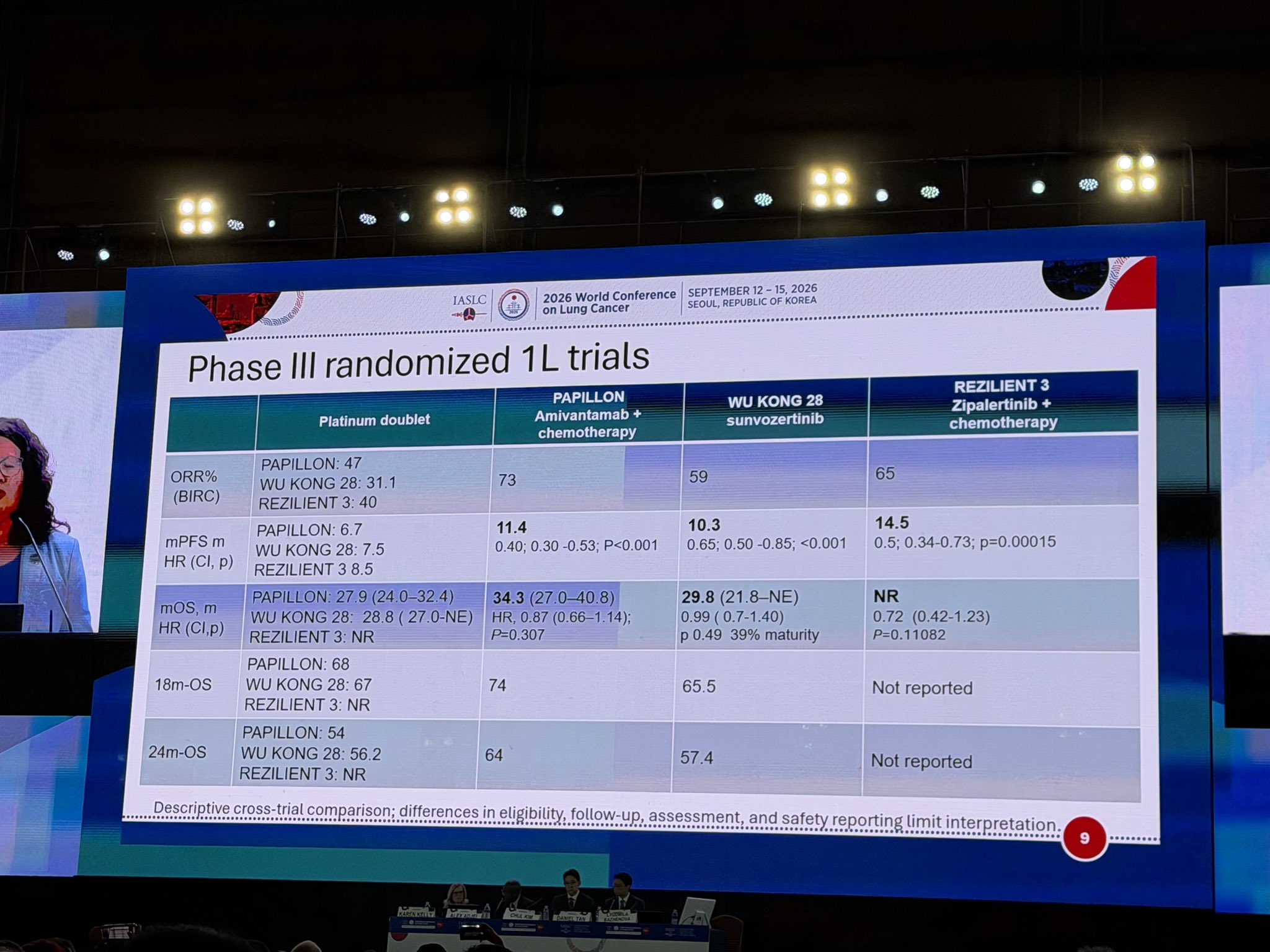
Excellent discussion of the evolving 1L landscape for EGFR exon20ins NSCLC at #WExcellent discussion of the evolving 1L landscape for EGFR exon20ins NSCLC at #WExcellent discussion of the evolving 1L landscape for EGFR exon20ins NSCLC at #WExcellent discussion of the evolving 1L landscape for EGFR exon20ins NSCLC at #W
5.9K impressions3 likes2 reposts2026-09-14
[Slide 1] What should guide our first line decision? PAPILLON Amivantamab + chemotherapy WU-KONG 28 Sunvozertinib REZILIENT3 Zipalertinib + chemotherapy EFFICACY & TOXICITY PATIENT CHARACTERISTICS PATIENT PRIORITIES WHAT COMES NEXT? Depth and duration of benefit CNS metastases IV VS oral therapy Treatment burden EGFR exon 20ins subtype Quality of life Sequential efficacy Adverse events preferences Resistance mechanisms [Slide 2] along IASLC 2026 World Conference SEPTEMBER 12 - 15, 2026 on Lung Cancer SEOUL, REPUBLIC OF KOREA Do subgroup analyses help us choose first-line therapy? PAPILLON WU-KONG 28 REZILIENT3 Amivantamab + chemotherapy Sunvozertinib Zipalertinib + chemotherapy BASELINE CNS METASTASES BASELINE CNS METASTASES BASELINE CNS METASTASES CNS mets CNS mets HR 0.63 (0.38-1.06) HR 0.96 (0.44-2.08) CNS mets HR 0.38 (0.21-0.67) No CNS mets HR 0.33 (0.23-0.46) HR 0.62 (0.47-0.83) No CNS mets No CNS mets HR 0.62 (0.38-0.99) EXON 20 INSERTION LOCATION EXON 20 INSERTION LOCATION EXON 20 INSERTION LOCATION Near loop HR 0.40 (0.28-0.58) Near loop HR 0.59 (0.43-0.82) Near loop Not reported Far loop HR 0.19 (0.06-0.69) Far loop HR 0.83 (0.49-1.38) Far loop Not reported CNS metastases and exon 20 insertion location are potential differentiators but subgroup data remain exploratory [Slide 3] IASLC 2026 World Conference SEPTEMBER 12 - 15, 2026 on Lung Cancer SEOUL, REPUBLIC OF KOREA Phase III randomized 1L trials PAPILLON Platinum doublet Amivantamab WU KONG 28 REZILIENT 3 + sunvozertinib Zipalertinib + chemotherapy chemotherapy PAPILLON: 47 ORR% WU KONG 28: 31.1 73 (BIRC) 59 65 REZILIENT 3: 40 PAPILLON: 6.7 11.4 mPFS m 10.3 14.5 WU KONG 28: 7.5 0.40; 0.30 -0.53; P<0.001 HR (CI, p) 0.65; 0.50 -0.85; <0.001 0.5; 0.34-0.73; p=0.00015 REZILIENT 38.5 mOS, m PAPILLON: 27.9 (24.0-32.4) 34.3 (27.0-40.8) 29.8 (21.8-NE) NR HR (Cl,p) WU KONG 28: 28.8 (27.0-NE) HR, 0.87 (0.66-1.14); 0.99 (0.7-1.40) 0.72 (0.42-1.23) REZILIENT 3: NR P=0.307 p 0.49 39% maturity P=0.11082 PAPILLON: 68 18m-OS WU KONG 28: 67 74 65.5 Not reported REZILIENT 3: NR PAPILLON: 54 24m-OS WU KONG 28: 56.2 64 57.4 Not reported REZILIENT 3: NR Descriptive cross-trial comparison; differences in eligibility, follow-up, assessment, and safety reporting limit interpretation. 9 [Slide 4] IASLC 2026 World Conference SEPTEMBER 12 - 15, 2026 on Lung Cancer SEOUL, REPUBLIC OF KOREA Phase III 1L randomized trials Platinum doublet PAPILLON WU KONG 28 REZILIENT 3 Neutropenia (34%), Diarrhea (14%), Anemia (48.6%), Most common Paronychia (10%), CK increased (20.9) toxicity (Gr3) anemia (13%), Anemia (9.2%), neutropenia (33.6), infusion related reaction (1%) rash (0.6%) thrombocytopenia (30%) rash (10.7%) paronychia (3.7%) GR3 AE % 75 75 81 % dose reduction* 36 41 44 % dose 11 12 17 discontinuation* PAPILLON: 3 AE leading to WU KONG 28: 1.3 5 4.3 9.5 death % REZILIENT 3: 2.9 Descriptive cross-trial comparison; differences in eligibility, follow-up, assessment, and safety reporting limit interpretation. * Targeted therapy 10
MMV Chandrakanth@ChandrakanthMv

EGFR exon 20 insertion: the 1L landscape is getting crowded.

Three Phase III strategies, three different stories:

PAPILLON → highest ORR + strongest PFS HR; OS interpretation complicated by high crossover
WU-KONG28 → oral, chemo-free strategy
REZILIENT3 → longest median PFS + encouraging CNS subgroup signal

⚠️ Cross-trial comparison only — not head-to-head.

#MVOnco #WCLC2026 #LungCancer

EGFR exon 20 insertion: the 1L landscape is getting crowded.

Three Phase III st
2.3K impressions2 likes1 reposts2026-09-14
[Slide 1] EGFR EXON 20 INSERTION: 3 FIRST-LINE PHASE III STRATEGIES MV Onco WHAT? PAPILLON WU-KONG28 REZILIENT3 TREATMENT AMIVANTAMAB SUNVOZERTINIB ZIPALERTINIB + CHEMO ALONE + CHEMO ORR 73% 59% 65% PFS 11.4 To 10.3 To 14.5 To PFS HR 0.40 0.65 0.50 34.3 To HR 0.87 29.8 To NR P = 0.307 NS HR 0.99 HR 0.72 OS 76% CROSSOVER 39% MATURITY 30% MATURITY PRESPECIFIED IMMATURE IMMATURE CROSSOVER-ADJUSTED HR 0.57 MODEL-BASED ANALYSIS 31% 23% 12-13% BASELINE CNS METS CNS EVIDENCE BASELINE CNS METS BASELINE CNS METS TREATED OR ASYMPTOMATIC ≤2 cm TREATED TREATED BRAIN-MET PFS HR 0.38 PFS SUBGROUP NEUTROPENIA 34% CK 20.9% ANEMIA 48.6% ANEMIA 13% DIARRHEA 14% KEY >G3 AE PARONYCHIA 10% ANEMIA 9.2% NEUTROPENIA 33.6% IRR 1% PARONYCHIA 3.7% THROMBOCYTOPENIA 30% RASH 10.7% RASH 0.6% GRADE ≥3 AE 75% 75% 81% HIGHEST ORR + ORAL LONGEST PFS KEY POINT STRONGEST PFS HR + + ITT OS NS CHEMO-FREE CNS SIGNAL HIGH CROSSOVER PAPILLON WU-KONG28 REZILIENT3 HIGHEST ORR STRONGEST PFS HR CHEMO-FREE LONGEST PFS + CNS SIGNAL CROSS-TRIAL COMPARISON ONLY NOT HEAD-TO-HEAD DIFFERENCES IN ELIGIBILITY, FOLLOW-UP AND SAFETY REPORTING LIMIT DIRECT COMPARISON
ggilberto lopes@GlopesMd

Three positive first-line phase III trials now shape EGFR exon 20 insertion NSCLC:
PAPILLON: amivantamab + chemo
WU-KONG 28: sunvozertinib
REZILIENT 3: zipalertinib + chemo

No head-to-head winner. No clear OS winner yet. https://t.co/0jo6u0aVJa

Three positive first-line phase III trials now shape EGFR exon 20 insertion NSCL
2K impressions5 likes4 reposts2026-09-14
[Slide 1] SYLVESTER THORACIC WORKING GROUP AT WCLC26 SCIENCE PEOPLE EGFR Exon 20 Insertions: PERSPECTIVE A BRIGHTER TOMORROW Three Positive First-Line Trials - Putting the Landscape Into Context No head-to-head winner yet. More options now require better selection and sequencing. Progress Together 1 Three first-line options DIFFERENT APPROACHES. A SHARED GOAL: MORE OPTIONS FOR PATIENTS. PAPILLON WU-KONG 28 REZILIENT 3 Amivantamab + platinum/pemetrexed Sunvozertinib monotherapy Zipalertinib + platinum/pemetrexed KEY EFFICACY KEY EFFICACY KEY EFFICACY ORR: 73% VS 47% ORR: 59% VS 31.1% ORR: 65% VS 40% mPFS: 11.4 VS 6.7 months mPFS: 10.3 VS 7.5 months mPFS: 14.5 VS 8.5 months HR 0.40 (95% CI 0.30-0.53) HR 0.65 (95% CI 0.50-0.85) HR 0.50 (95% CI 0.34-0.73) mOS: 34.3 VS 27.9 months mOS: 29.8 vs 28.8 months OS immature / no clear separation yet OS HR 0.87 (0.66-1.14) OS HR 0.99 (0.70-1.40) OS HR 0.72 (0.42-1.23) 39% OS maturity IV antibody + chemotherapy Oral monotherapy Oral TKI + chemotherapy 2 What limits direct comparison? IMPORTANT CONTEXT FOR INTERPRETATION. No head-to-head comparison. Cross-trial comparisons are descriptive only. All three phase III programs included crossover; none has shown a statistically significant OS advantage so far. Differences in eligibility, follow-up, CNS inclusion, and safety reporting limit indirect ranking. 3 Practical differentiators INTERPRETIVE SUMMARY - CONSERVATIVE BY DESIGN. FACTOR PAPILLON WU-KONG 28 REZILIENT 3 Treatment burden Highest Lowest Intermediate Chemotherapy exposure Yes No Yes CNS data Exploratory Exploratory Exploratory Need for proven combo Convenience / oral Strong PFS signal with Likely use driver approach preference combination strategy 4 Clinical perspective PATIENT-CENTERED. EVIDENCE-INFORMED. LOOKING AHEAD. All three are reasonable first-line options. In real-world practice, sunvozertinib may become the preferred DIFFERENT choice for many oncologists and patients because it offers meaningful efficacy as an oral monotherapy PATIENTS with lower treatment burden. That is a likely practice pattern - not a proven evidence-based ranking. DIFFERENT PATHS A SHARED Combination approaches remain strong options, especially when clinicians prioritize the available combination-trial PURPOSE data or specific patient/disease features. 5 Takeaway No OS winner yet. More options benefit patients. MORE The next challenge is choosing and sequencing them well. SAME ANSWERS PATIENTS BRIGHTER Broad NGS remains essential to identify the full spectrum of EGFR exon 20 insertion variants. A BRIGHTER TOMORROWS TOMORROW PROGRESS IN THORACIC ONCOLOGY LIVES IN A BRIGHTER TOMORROW
16HARMONi-6View full trial page →12.2K impressionsall primary12 engagements3 posts · 3 voices
AAdu@plainyogurt21

what is the bar $SMMT final PFS analysis.

Interesting Harmoni-2 results but Harmoni-3 diff game, Subgroup on NonSq and Low PD1.....

Harmoni 3 missed one interim, even with the most minimal alpha spend, probably needed HR < .65. What is the bar for the PFS to hit? (Harmoni 6 was PFS .6 -> OS .66)

Putting aside completely whatever science on the PD1 dependency, the competition from ADCs a

what is the bar $SMMT final PFS analysis. 

Interesting Harmoni-2 results but Hawhat is the bar $SMMT final PFS analysis. 

Interesting Harmoni-2 results but Hawhat is the bar $SMMT final PFS analysis. 

Interesting Harmoni-2 results but Hawhat is the bar $SMMT final PFS analysis. 

Interesting Harmoni-2 results but Ha
9K impressions2 likes0 reposts2026-09-15
[Slide 1] IASLC 2026 World Conference SEPTEMBER 12 15, 2026 on Lung Cancer SEOUL, REPUBLIC OF KOREA Overall survival by PD-L1 expression level OS benefit with ivonescimab was consistent in both PD-L1 High and PD-L1 Low expressors PD-L1 High (TPS >50%) PD-L1 Low (TPS 1-49%) 100 Ivonescimab Pembrolizumab 100 Ivonescimab Pembrolizumab (n=83) (n 85) (n=115) (n =115) 90 90 mOS NR 23.2 mo mos 28.5 mo 22.1 mo 10 # 70 63.2% 10 53.4% 60 60 54.1% (%)50 50 os (74) OS(%) 50 49.7% 38.6% 46.8% 40 # 30 HR = 0.58 (95% CI 0.38 0.89) 30 HR = 0.85 (95% CI 0.61 - 1.18) 34.1% 31.3% 20 20 + Censered + Centred 10 Ivenescimab 10 Pembrolizanab Pentrolemal 0 I 0 2 I 6 $ 10 12 14 16 18 20 22 24 26 28 30 32 34 36 38 40 12 0 1 - 6 $ 10 14 16 18 20 22 24 26 28 30 32 34 36 38 40 12 Time (months) Time(neaths) Number disk Subsidisk I tronescient 1) " " " " 53 " 11 5) . " 43 19 " 20 113 106 1 19 # 13 II 74 M 16 56 61 56 11 if 42 # * 15 N 27 26 21 11 11 Personal in 103 * . " 77 7) # 51 " % . 4) 0 # 18 14 22 12 The subgroup analysis was descriptive and not formally powered. 11 Caicun Zhou I HARMONi-2 IASLC 2026 World Conference SEPTEMBER 12 15, 2026 on Lung Cancer SEOUL, REPUBLIC OF KOREA Overall survival by histology OS benefit with ivonescimab was consistent in both squamous and non-squamous histology Squamous Non-Squamous 100 Ivonescimab Pembrolizumab 100 Ivonescimab Pembrolizumab (n=90) (n=91) (n 108) (n 109) 99 90 mOS 30.5 mo 19.3 mo mos 33.6 mo 25.6 mo # # 70 70- 58.3% 60 60 57.5% OS(%) I 50 41.0% 48.2% 50 52.8% - 40 40- 42.4% 38.3% 30 HR = 0.65 (95% CI 0.45 - 0.95) 30- HR = 0.79 (95% CI 0.55 - 1.14) 26.9% 20 20 + Censered Censed 10 Presescinab 10- Ironescinab Pentrolization 0 0 0 2 6 10 12 14 16 = 20 22 24 26 28 30 32 34 36 38 #) 0 0 : 6 I 10 14 16 18 20 22 24 26 28 30 32 34 36 31 40 42 Time(months) Time (nonths) Numbership Nutritisk Insured 90 " " # % " 41 " " 11 N N " # # 18 N a 14 . I - N 1 " # " Internal #1 15 12 % 11 17 43 51 12 45 40 is 15 11 a 24 2) # " , - 102 15 1) 3 " a 1) N 16 11 et " a 41 " 2 11 The subgroup analysis was descriptive and not formally powered. 12 Caicun Zhou | HARMONi-2 [Slide 2] 100 78.9% Ivonescimab Tislelizumab 90 + chemo + chemo 80 64.7% (N=266) (N=266) 70 72.2% mOS, months 27.89 23.69 Overall Survival (%) 60 (95% CI) (27.89, NE) (20.11, NE) 50 48.6% Stratified HR 0.66 40 (95% CI) (0.50, 0.87) 30 p-value 0.0017 20 OS significance boundary: 0.0049 10 0 The median OS in the ivonescimab group would 0 3 6 9 12 15 18 21 24 27 30 have not been reached without the last single event Months No. at risk (censored) Ivonescimab 266(0) 252(0) 238(0) 224(0) 202(8) 152(46) 119(73) 85(100) 49(135) 15(168) 0(182) +Chemo Tislelizumab 266(0) 257(0) 238(0) 211(0) 186(6) 142(36) 113(55) 80(77) 43(107) 12(136) 0(146) +Chemo Data cutoff date: Feb 27, 2026 Abbreviation: mOS, median overall survival; NE, not estimable; HR, Median Follow-up: 21.36 months ASCO 2026 Plenary Session hazard ratio; CI, confidence interval [Slide 3] 2026 2027 2H26 HARMONi-3 Final PFS data readout in 1L Final PFS data readout in Final os data readout in 1L Timeline squamous NSCLC (2H26) 1L non-squamous NSCLC squamous NSCLC (2027) (1H27) Text Physician's sq PFS HR ≤ 0.70 Non-sq PFS HR ≤ 0.70 os HR ≤ 0.75 Expectation Early trend of OS benefits Early trend of os benefits [Slide 4] An interim analysis of progression-free survival was planned when approximately 208 (70%) progression-free survival events as assessed by the IRRC were observed. To strictly control the overall type 1 error at a one-sided alpha level of 0.025, we used a hierarchical testing procedure for the primary endpoint (progression-free survival) and the key secondary endpoint (overall survival). Overall survival would only be tested if progression-free survival was found to be significant. The Lan-DeMets spending function with O'Brien-Fleming boundary was used to control the type 1 error for both endpoints at the interim and final analyses. In April, 2024, the protocol was amended to adjust the sample size from 396 to 528 participants, taking into account the consideration of overall survival in the sample size estimation. Correspondingly, the number of events needed for the interim analysis on the primary endpoint increased from 186 to 208.
TTejas Patil@TejasPatilMD

2. HARMONi-2
⭐️HARMONi-6, presented @ASCO earlier this year showed an OS benefit favoring ivonesicimab, a PD1+VEGF bispecific, relative to pembrolizumab in squamous NSCLC
📖Previously published data showed a PFS advantage (11.1 vs 5.8 months; HR 0.51) favoring ivonesicimab. Though even in this study, there were some peculiar findings, like the remarkably poor PFS seen in the pembrolizumab arm for P

2. HARMONi-2
⭐️HARMONi-6, presented @ASCO earlier this year showed an OS benefit
1.1K impressions4 likes1 reposts2026-09-11
[Slide 1] A B Number of events/ Median PFS Number of events/ Median PFS number of patients Months (95% CI) number of patients Months (95% CI) Ivonescimab 72/198 11-1 (7-3 to NE) Ivonescimab 25/83 11-1 (9.7 to NE) Pembrolizumab 112/200 5.8 (5.0 to 8.2) Pembrolizumab 45/85 8.2 (5-5 to 9.8) 100 90 80 70 60 PFS (%) 50 40 30 20 Stratified hazard ratio (95% CI): 0.51 (0.38 to 0.69), Unstratified hazard ratio (95% CI): 0.48 (0.29 to 0.79) 10 one-sided p: <0.0001 0 0 1 2 3 4 5 6 7 8 9 10 11 0 1 2 3 4 5 6 7 8 9 10 11 Number at risk (number censored) Ivonescimab 198 189 175 156 148 128 99 68 59 38 11 83 77 73 66 64 61 45 34 31 23 8 7 (0) (3) (13) (26) (32) (44) (50) (60) (67) (68) (71) (0) (2) (5) (11) (12) (14) (16) (19) (21) (21) (24) (24) Pembrolizumab 200 187 141 121 119 103 74 53 45 25 5 85 79 69 59 58 53 37 29 24 12 7 4 (0) (9) (52) (69) (70) (81) (95) (101) (102) (106) (112) (0) (5) (15) (22) (23) (27) (37) (38) (39) (43) (45) (45)
MMinhua Chu@chuminhua432

🇨🇳RemeGen & $ABBV 's PD-1/VEGF bispecific antibody RC148 (ABBV-1480) delivered an oral presentation at #WCLC2026 with first-line combo data in NSCLC (RC148-C002, NCT06883630).

RemeGen also presented a poster on the Phase 3 trial design for RC148 in first-line squamous NSCLC (RC148-C301, NCT07416474) on Sept 14.

📊 Phase II results (data cutoff March 22, 2026; 61 sq-NSCLC + 60 nsq-NSCLC

🇨🇳RemeGen &  $ABBV 's PD-1/VEGF bispecific antibody RC148 (ABBV-1480) delivered
2K impressions3 likes0 reposts2026-09-15
[Slide 1] Table 1. Clinical Efficacy Data. Cohort 1 (sq-NSCLC) Cohort 2 (nsq-NSCLC) RC148 (10 mg/kg) + RC148 (20 mg/kg) + RC148 (10 mg/kg) + RC148 (20 mg/kg) + Carboplatin + Paclitaxel Carboplatin + Paclitaxel Carboplatin + Pemetrexed Carboplatin + Pemetrexed (N=30) (N=31) (N=30) (N=30) Median follow-up, months 8.7 9.1 27/30 22/28 22/29 11/28 ORR*, n/N (%; 95% CI) (90.0; 73.5-97.9) (78.6; 59.0-91.7) (75.9; 56.5-89.7) (39.3; 21.5-59.4) DoR Median (95% CI), NR 7.2 (4.1-NR) NR NR months 6-month DoR rate, % 66.5 (41.9-82.6) /8 64.6 (37.4-82.4) /9 80.2 (55.4, 92.1) /8 90.0 (47.3, 98.5) /8 (95% CI)/number at risk 9-month DoR rate, % NR 46.0 (18.2, 70.1) /2 80.2 (55.4, 92.1) /3 90.0 (47.3, 98.5) /4 (95% CI)/number at risk PFS Median (95% CI), 10.8 (6.9-NR) 8.5 (5.4-NR) NR 10.4 (6.7-NR) months 6-month PFS rate, % 80.0 (58.4-91.1) /20 60.5 (38.7-76.6) /14 82.8 (63.4-92.4) /24 73.2 (51.8-86.2) /18 (95% CI)/number at risk 9-month PFS rate, % 67.8 (45.7-82.4) /6 42.5 (20.2-63.3) /4 68.0 (47.3-82.0) /7 57.4 (34.4-74.9) /5 (95% CI)/number at risk OS Median (95% CI), NR NR NR NR months 9-month OS rate, % 87.0 (64.1-95.7) /12 79.0 (58.8-90.1) /10 90.0 (72.1-96.7) /15 85.4 (65.4-94.3) /15 (95% CI)/number at risk Subgroup Analysis PD-L1 TPS <1% 14/15 7/9 10/14 4/16 (ORR*, n/N (%; 95% (93.3; 68.1-99.8) (77.8; 40.0-97.2) (71.4; 41.9-91.6) (25.0; 7.3-52.4) CI)) PD-L1 TPS ≥1% 12/14 13/16 10/13 7/11 (ORR*, n/N (%; 95% (85.7; 57.2-98.2) (81.3; 54.4-96.0) (76.9; 46.2-95.0) (63.6; 30.8-89.1) CI)) *Analyzed in patients with ≥1 post-baseline tumor assessment. NR=not reached.
17DeLLphi-30911K impressions9.9K primary · 1.1K preview56 engagements18 posts · 13 voices
MMiguel Gonzalez Velez, MD@mgonzalezvelMD

DeLLphi-309 (Ph2) extended-interval tarlatamab dosing in SCLC, presented by Jonathan Goldman at #WCLC2026.

Take: Take: ORR declined across arms: 40% (10mg Q2W) vs 31% (20mg Q3W) vs 27% (30mg Q4W).

Median PFS followed the same gradient: 4.2 vs 4.1 vs 2.7 months.
OS not yet mature (~9mo follow-up). CRS trended higher with extended intervals but overall similar.

Side effects and logistics are

DeLLphi-309 (Ph2) extended-interval tarlatamab dosing in SCLC, presented by JonaDeLLphi-309 (Ph2) extended-interval tarlatamab dosing in SCLC, presented by Jona
1.9K impressions3 likes2 reposts2026-09-13
[Slide 1] f in #WCLC26 wclc.iaslc.org IASLC 2026 DI 2026 World Conference on Lung Cancer SEPTEMBER 12 - 15, 2026 I SEOUL, REPUBLIC OF KOREA Tarlatamab Extended-Interval Dosing Regimens in Patients With SCLC: The Randomized Phase 2 DeLLphi-309 Study Jonathan Goldman, MD University of California Los Angeles, Los Angeles, CA, USA September 13, 2026 cience Without Boundaries: Uniting the World Against Thoracic Cancer [Slide 2] IASLC 2026 World Conference SEPTEMBER 12 - 15, 2026 07 min 54s on Lung Cancer SEOUL, REPUBLIC OF KOREA DeLLphi-309: Randomized, Phase 2 Study Evaluating Tarlatamab Extended-Interval Dosing Regimens in SCLC (NCT06745323) Screening Open-Label Treatment Period Tarlatamab 10 mg IV Q2W (n = 83) Adults (Z 18 years) with SCLC whose (1 mg on C1D1, 10 mg on C1D8 and C1D15, and Q2W thereafter in 28-day cycles) disease progressed on or recurred after 1L platinum-based chemotherapy® 1:1:1 Tarlatamab 20 mg IV Q3W (n = 84) ECOG PS 0 or 1 (N = 252) (1 mg on C1D1, 20 mg on C1D8 and C2D1, and Q3W thereafter in 21-day cycles) Asymptomatic, treated or untreated brain metastases permitted Stratification: Tarlatamab 30 mg IV Q4W (n = 85) 1L Platinum sensitivity (1 mg on C1D1, 30 mg on C1D8 and C2D1, and Q4W thereafter in 28-day cycles) (2 90 days VS < 90 days) Primary Endpoint: ORR based on BICR per RECIST 1.1 Statistical Considerations: Analyses were descriptive; no hypotheses were formally tested Secondary Endpoints: - Efficacy: ORR (investigator); DOR, DCR, DODC, PFS (BICR and investigator); OS - Pharmacokinetics Monitoring: - Safety: TEAEs and TRAEs 10 mg Q2W: 1-2-hour monitoring first 2 doses 20 mg Q3W & 30 mg Q4W: 6-8 hours monitoring first 3 doses Primary analysis: 240 patients enrolled with the opportunity for ⥠24 weeks of follow-up from the first post-baseline tumor assessment. ountries st-line; BICR, where blinded SOC 1L systemic treatment for SCLC consists of a platinum-based chemotherapy plus a PD-(L)1 inhibitor, the subjects must have either experienced treatment failure or deemed ineligible for PD-(L)1 inhibitor therapy. independent central fligand) review; DEC C, cycle; D, Day: DOR, duration of response; DCR, disease control rate; DODC, duration of disease control; ECOG PS, Eastern Cooperative Oncology Group performance status;
DDr. Estela Rodriguez@Latinamd

Say not more. Being able to give a #tarlatamab for #SCLC without requiring an overnight admission will be a game changer for patients and increase access treatment .

(There is still a lot of time toxicity w 6-8 hrs observations- #DeLLphi309 data presented at #WCLC26 on extended treatment intervals is welcomed)

Say not more. Being able to give a #tarlatamab for #SCLC without requiring an ov
1.4K impressions7 likes2 reposts2026-09-15
[Slide 1] AMGEN FDA APPROVES REDUCED MONITORING TIME FOR FIRST TWO DOSES OF IMDELLTRA ® Update Supports Broader Access to IMDELLTRA in Community Settings for People Living with Extensive- Stage Small Cell Lung Cancer THOUSAND OAKS, Calif., Sept. 14 2026 /PRNewswire/
LLaura Alder, MD@LauraAlderMD

Dr Goldman #WCLC26 presenting DeLLphi-309 interval dosing of Tarlatamab: q2 vs q3 vs q4 week. Minor imbalances of patient characteristics.
⭐️Overall similar PFS, OS, and tox. Provides promising early data to support more flexible dosing!
@IASLC @BZhangMD @SclcSMASHERS @drshieldsmd

Dr Goldman #WCLC26 presenting DeLLphi-309 interval dosing of Tarlatamab: q2 vs qDr Goldman #WCLC26 presenting DeLLphi-309 interval dosing of Tarlatamab: q2 vs qDr Goldman #WCLC26 presenting DeLLphi-309 interval dosing of Tarlatamab: q2 vs q
954 impressions11 likes4 reposts2026-09-13
[Slide 1] IASLC 2026 World Conference SEPTEMBER 12 - 15, 2026 05 min 30s on Lung Cancer SEOUL, REPUBLIC OF KOREA Progression-Free Survival by Blinded Independent Central Review Tarlatamab Tarlatamab Tarlatamab 1.0 10 mg Q2W 20 mg Q3W 30 mg Q4W 0.9 (N = 83) (N 84) (N = 85) Median PFS, months (95% CI) 4.2 (2.6-5.6) 4.1 (2.8-4.7) 2.7 (1.6-4.2) 0.8 Progression-Free Survival Probability HR (95% CI) VS 10 mg Q2W - 1.03 (0.73-1.47) 1.23 (0.87-1.75) 0.7 Median FU, months 8.3 8.5 9.5 0.6 0.5 34% 0.4 31% 0.3 0.2 10 mg Q2W 24% 0.1 20 mg Q3W 0.0 30 mg Q4W 0 3 6 9 12 15 Months Number of participants at risk: 10 mg Q2W 83 43 26 6 1 0 84 43 24 6 0 20 mg Q3W 30 mg Q4W 85 33 17 11 0 cutoff: 7 May 2026. "Analysis was descriptive. Kaplan-Meier method was used to estimate the median PFS and percentiles with 95% Cls calculated using the Brookmeyer and Crowley method. For milestone PFS estimates, 95% CI values onfidence interval; using FU, follow-up; HR, hazard ratio; PFS, progression-free survival; Q2W, every 2 weeks; Q3W, every 3 weeks; Q4W, every 4 weeks. calculated Kalbfleisch and Prentice method. an Goldman, MD I Tarlatamab Extended-Interval Dosing Regimens in Patients With SCLC: The Randomized Phase 2 DeLLphi-309 Study [Slide 2] IASLC 2026 World Conference SEPTEMBER 12 - 15, 2026 2026 on Lung Cancer SEOUL, REPUBLIC OF KOREA 04 min 59s Overall Survival Was Favorable Across Dosing Regimens Tarlatamab Tarlatamab Tarlatamab 10 mg Q2W 20 mg Q3W 30 mg Q4W (N 83) (N 84) (N = 85) Median os, months (95% CI) 11.2 (9.4-NE) NE NE HR (95% CI) vs - 10 mg Q2W 0.59 (0.34-1.03) 1.03 (0.62-1.69) 1.0 85% 0.9 Median FU, months 9.1 9.0 9.1 72% 0.8 0.7 Survival Probability 0.6 69% 0.5 0.4 0.3 10 mg Q2W 0.2 20 mg Q3W 0.1 0.0 30 mg Q4W 0 3 6 9 12 15 Number of participants at risk: Months 10 mg Q2W 83 68 59 29 3 0 84 75 66 35 2 0 20 mg Q3W 85 64 55 31 3 0 30 mg Q4W off: 7 May 2026. Analysis was descriptive. Kaplan-Meier method was used to estimate the median OS and percentiles with 95% CI calculated using the Brookmeyer and Crowley method. For milestone OS estimates, 95% CI values were ed using Kalbfleisch and Prentice method. dence interval; FU, follow-up; HR, hazard ratio; NE, not estimable; OS, overall survival; Q2W, every 2 weeks; Q3W, every 3 weeks; Q4W, every 4 weeks. Celdman MD Tarlatamah Extended-Interval Dosing Regimens in Patients With SCLC: The Randomized Phase 2 DeLLphi-309 Study [Slide 3] IASLC 2026 World Conference on Lung Cancer SEPTEMBER 12 - 15, 2026 SEOUL, REPUBLIC OF KOREA Treatment-Related CRS and ICANS 03 min 41s Tarlatamab Tarlatamab 10 mg Q2W Tarlatamab 20 mg Q3W (n = 83) 30 mg Q4W Tarlatamab (n = 84) Tarlatamab (n = 85) 10 mg Q2W Tarlatamab CRS, n (%) 20 mg Q3W (n = 83) 30 mg Q4W 50 (60.2) 59 (70.2) (n = 84) = 55 (64.7) (n=85) Grade ≥ 3 ICANS, n (%) 5(6.0) 2 (2.4) 5(6.0) 1 (1.2) 10(11.8) 2 (2.4) Grade ≥ 3 Fatal 1(1.2) 3(3.6) 0 1(1.2) 0 0 Fatal 0 0 Serious 1(1.2)a 15 (18.1) 23 (27.4) 21 (24.7) Serious 3(3.6) 4(4.8) 8(9.4) Leading to interruption 2 (2.4) 2 (2.4) 0 Leading to interruption 2(2.4) 1(1.2) 3(3.5) Leading to discontinuation 0 2 (2.4) 1 (1.2) Leading to discontinuation 0 2(2.4) 1(1.2) Treatment-related CRS was higher in the extended-interval dosing regimens; majority of events were Grade 1 or 2 Treatment-related ICANS was higher with 30 mg Q4W One Grade 3 ICANS event was associated with a fatal outcome in the 30 mg Q4W group; the investigator determined that the cause of death was likely due to cardiac arrhythmia 3 7 ICANS May 2026. event CRS was and documented ICANS, ICANS immune events with are fatal effector-cell graded outcome; according associated the investigator to Lee neurotoxicity DW, determined et al. Biol syndrome; Blood the cause Marrow Q2W, of death Transplant. every to 2 weeks; be likely 2019;25:625-638. Q3W, due to every cardiac 3 weeks; arrhythmia Q4W, in every the setting 4 weeks. of metabolic and Study electrolyte abnormalities. Goldman, release syndrome; MD / Tarlatamab Extended-Interval Dosing Regimens in Patients With SCLC: The Randomized Phase 2 DeLLphi-309
DDr Riyaz Shah@DrRiyazShah

DeLLphi-309; RP2; testing q3 and q4; n252; PK similar; efficacy similar; more low grade ICANS at q4 but generally not much in it. #WCLC26 https://t.co/ZLEahkYITR

DeLLphi-309; RP2; testing q3 and q4; n252; PK similar; efficacy similar; more loDeLLphi-309; RP2; testing q3 and q4; n252; PK similar; efficacy similar; more loDeLLphi-309; RP2; testing q3 and q4; n252; PK similar; efficacy similar; more loDeLLphi-309; RP2; testing q3 and q4; n252; PK similar; efficacy similar; more lo
766 impressions5 likes3 reposts2026-09-13
[Slide 1] IASLC 2026 World Conference SEPTEMBER 12 - 15, 2026 08 min 36s on Lung Cancer SEOUL, REPUBLIC OF KOREA DeLLphi-309: Randomized, Phase 2 Study Evaluating Tarlatamab Extended-Interval Dosing Regimens in SCLC (NCT06745323) Screening Open-Label Treatment Period Tarlatamab 10 mg IV Q2W (n = 83) Adults (2 18 years) with SCLC whose (1 mg on C1D1, 10 mg on C1D8 and C1D15, and Q2W thereafter in 28-day cycles) disease progressed on or recurred after 1L platinum-based chemotherapy® 1:1:1 Tarlatamab 20 mg IV Q3W (n = 84) ECOG PS 0 or 1 (N = 252) (1 mg on C1D1, 20 mg on C1D8 and C2D1, and Q3W thereafter in 21-day cycles) Asymptomatic, treated or untreated brain metastases permitted Stratification: Tarlatamab 30 mg IV Q4W (п = 85) 1L Platinum sensitivity (1 mg on C1D1, 30 mg on C1D8 and C2D1, and Q4W thereafter in 28-day cycles) (2 90 days VS < 90 days) Primary Endpoint: ORR based on BICR per RECIST 1.1 Statistical Considerations: Analyses were descriptive; no hypotheses were formally tested Secondary Endpoints: - Efficacy: ORR (investigator); DOR, DCR, DODC, PFS (BICR and investigator); OS - Pharmacokinetics Monitoring: - Safety: TEAEs and TRAEs 10 mg Q2W: 1-2-hour monitoring first 2 doses 20 mg Q3W & 30 mg Q4W: 6-8 hours monitoring first 3 doses Primary analysis: 240 patients enrolled with the opportunity for ≥ 24 weeks of follow-up from the first post-baseline tumor assessment. *In countries where SOC 1L systemic treatment for SCLC consists of a platinum-based chemotherapy plus a PD-(L)1 inhibitor, the subjects must have either experienced treatment failure or deemed ineligible for PD-(L)1 inhibitor therapy. 1L, first-line; BICR, blinded independent central review; C, cycle; D, Day: DOR, duration of response; DCR, disease control rate; DODC, duration of disease control; ECOG PS, Eastern Cooperative Oncology Group performance status; V. intravenous; PD-(L)1, programmed death (ligand) 1; PFS, progression-free survival; ORR, objective response rate; OS, overall survival; Q2W, every 2 weeks; Q3W, every 3 weeks; Q4W, every 4 weeks; RECIST, Response Evaluation Criteria in olid Tumors: SCLC, small cell lung cancer; SOC, standard of care; TEAE, treatment-emergent adverse event; TRAE, treatment-related adverse event. 4 an Goldman, MD I Tarlatamab Extended-Interval Dosing Regimens in Patients With SCLC: The Randomized Phase 2 DeLLphi-309 Study [Slide 2] 26 0 IASLC 2026 World Conference SEPTEMBER 12 - 15, 2026 06 min 46s on Lung Cancer SEOUL, REPUBLIC OF KOREA Geometric Mean Steady-State Exposures Were Comparable Across the Tarlatamab Dosing Regimens 100 10 mg Q2W 20 mg Q3W 30 mg Q4W Tarlatamab Tarlatamab Tarlatamab PK parameter Tarlatamab Serum Concentration 10 10 mg Q2W 20 mg Q3W 30 mg Q4W (µg/mL) 0.425 (54%) 0.406 (41%) 0.383 (44%) Ctrough µg/mL (% CV)ᵃ n = 47 n = 53 n = 45 1 Cavg, µg/mL (% CV)ᵇ 1.37 (42%) 1.78 (31%) 1.84 (42%) n=9 n = 12 n = 19 Comparable trough concentrations 0.1 0 7 14 21 28 Time Post Steady State Dose (days) *Data gimen, are Cycle presented 3 Day for 1 interval Cycle 4 for Day 20 1 mg pre-dose Q3W and across 30 mg tarlatamab Q4W regimens. dosing regimens; "Cavg is calculated by dividing the AUC by the respective dosing interval duration in hours; Cavg is calculated from Cycle 2 Day 15 interval for 10 mg Q2W to pharmacokinetics; represents geometric Q2W, mean every (% 2 CV). weeks; AUC, Q3W, area every under 3 weeks; the concentration-time Q4W, every 4 weeks. curve; Cevg average steady-state drug concentration over a dosing interval; Ctrough serum drug concentration prior to dosing: CV, coefficient of variation; an Goldman, MD | Tarlatamab Extended-Interval Dosing Regimens in Patients With SCLC: The Randomized Phase 2 DeLLphi-309 Study 6 [Slide 3] IASLC 2026 World Conference SEPTEMBER 12- 15, 2026 3002 on Lung Cancer 06 min 22s SEOUL, REPUBLIC OF KOREA Extended-Interval Responses Dosing Regimens Demonstrated Durable Objective Tarlatamab Duration of Response by BICR Tarlatamab Tarlatamab 10 mg Q2W 20 mg Q3W 30 mg Q4W Tarlatamab Tarlatamab Tarlatamab (n = 83) (n = 84) (n = 85) 10 mg Q2W 20 mg Q3W 30 mg Q4W 100 Best Overall Response by BICR, n (%) 91% Median DOR 8.3 5.6 NE 90 (95% CI)c, months (5.6-NE) (4.1-NE) (4.2-NE) 89% Complete response 80 Median FU, months 7.0 7.0 8.3 4 (4.8) 4(4.8) 0 86% 29 (34.9) 22 (26.2) 23 (27.1) 17 (20.5) 33 (39.3) 25(29.4) Responders Without Progression 70 Partial response 60 Stable disease Progressive disease or Death (%) 50 40 25 (30.1) 21 (25.0) 25(29.4) 30 Not evaluable 20 2 (2.4) 0 1 (1.2) 10 10 mg Q2W No post-baseline scan 6 (7.2) 4(4.8) 0 20 mg Q3W 11 (12.9) 30 mg Q4W ORR by BICR, % (95% CI)ᵃ 39.8 (29.2-51.1) 31.0 (21.3-42.0) 27.1 (18.0-37.8) 0 3 6 9 Odds Ratio (95% CI)ᵇ 12 15 - 0.68 (0.36-1.29) 0.56 (0.30-1.08) Number of Participants at Risk: Time From Initial Response (months) DCR by BICR, % (95% CI)ᵃ 60.2 (48.9-70.8) 70.2 (59.3-79.7) 56.5 (45.3-67.2) 10 mg Q2W 33 30 14 2 1 0 ORR by Investigator, % (95% CI)ᵃ 36.1 (25.9-47.4) 20 mg Q3W 26 36.9 (26.6-48.1) 23 30.6 (21.0-41.5) 8 0 30 mg Q4W 23 18 10 4 0 Data aplan-Meier sponse cutoff: 7 survival May 2026. estimate *95% Cls by for Brookmeyer ORR and and DCR Crowley are estimated method. using BICR, Clopper blinded Pearson independent method. central Analysis review; was CI, descriptive. confidence cmDOR interval; was DCR, estimated disease using control Kaplan-Meier rate; DOR, method duration and of response; 95% Cls of FU, median follow-up; are estimated NE, using log-log transformation of rate; Q2W, every 2 weeks; Q3W, every 3 weeks; Q4W, every 4 weeks. not estimable; ORR, objective an Goldman, MD I Tarlatamab Extended-Interval Dosing Regimens in Patients With SCLC: The Randomized Phase 2 DeLLphi-309 Study 7 [Slide 4] IASLC 2026 World Conference SEPTEMBER 12 - 15, 2026 05 min 27s 2026 on Lung Cancer SEOUL, REPUBLIC OF KOREA Progression-Free Survival by Blinded Independent Central Review Tarlatamab Tarlatamab Tarlatamab 1.0 10 mg Q2W 20 mg Q3W 30 mg Q4W (N = 83) (N = 84) (N = 85) 0.9 Median PFS, months (95% CI) 4.2 (2.6-5.6) 4.1 (2.8-4.7) 2.7 (1.6-4.2) 0.8 Progression-Free Survival Probability HR (95% CI) vs 10 mg Q2W - 1.03 (0.73-1.47) 1.23 (0.87-1.75) 0.7 Median FU, months 8.3 8.5 9.5 0.6 0.5 34% 0.4 31% 0.3 0.2 10 mg Q2W 24% 0.1 20 mg Q3W 0.0 30 mg Q4W 0 3 6 9 12 15 Number of participants at risk: Months 10 mg Q2W 83 43 26 6 1 0 20 mg Q3W 84 43 24 6 0 30 mg Q4W 85 33 17 11 0 ata cutoff: 7 May 2026. "Analysis was descriptive. Kaplan-Meier method was used to estimate the median PFS and percentiles with 95% Cls calculated using the Brookmeyer and Crowley method. For milestone PFS estimates, 95% CI values ere calculated using Kalbfleisch and Prentice method. confidence interval; FU, follow-up: HR, hazard ratio; PFS, progression-free survival; Q2W, every 2 weeks; Q3W, every 3 weeks; Q4W, every 4 weeks. 8 an Goldman, MD | Tarlatamab Extended-Interval Dosing Regimens in Patients With SCLC: The Randomized Phase 2 DeLLphi-309 Study
JJose Fernando Moura, PhD@FernandoOnco

#WCLC26 DeLLphi-309
Can we extend #tarlatamab dosing intervals in relapsed #SCLC?
ORR:
10 mg Q2W: 39.8%
20 mg Q3W: 31.0%
30 mg Q4W: 27.1%

mPFS: 4.2 | 4.1 | 2.7 mo

Convenience matters.
Efficacy matters more.

@IASLC @OncoAlert @oncodaily @Larvol https://t.co/5aZOBcSCkc

#WCLC26 DeLLphi-309
Can we extend #tarlatamab dosing intervals in relapsed #SCLC#WCLC26 DeLLphi-309
Can we extend #tarlatamab dosing intervals in relapsed #SCLC
378 impressions0 likes2 reposts2026-09-13
[Slide 1] IASLC 2026 World Conference SEPTEMBER 12 - 15, 2026 on Lung Cancer SEOUL, REPUBLIC OF KOREA DeLLphi-309: Randomized, Phase 2 Study Evaluating Tarlatamab Extended-Interval Dosing Regimens in SCLC (NCT06745323) Screening Open-Label Treatment Period Tarlatamab 10 mg IV Q2W (n = 83) Adults (≥ 18 years) with SCLC whose (1 mg on C1D1, 10 mg on C1D8 and C1D15, and Q2W thereafter in 28-day cycles) disease progressed on or recurred after 1L platinum-based chemotherapy 1:1:1 Tarlatamab 20 mg IV Q3W (n = 84) ECOG PS 0 or 1 (N = 252) (1 mg on C1D1, 20 mg on C1D8 and C2D1, and Q3W thereafter in 21-day cycles) Asymptomatic, treated or untreated brain metastases permitted Stratification: Tarlatamab 30 mg IV Q4W (n = 85) 1L Platinum sensitivity (1 mg on C1D1, 30 mg on C1D8 and C2D1, and Q4W thereafter in 28-day cycles) (2 90 days VS < 90 days) Primary Endpoint: ORR based on BICR per RECIST 1.1 Statistical Considerations: Analyses were descriptive; no hypotheses were formally tested Secondary Endpoints: - Efficacy: ORR (investigator); DOR, DCR, DODC, PFS (BICR and investigator); OS - Pharmacokinetics Monitoring: 10 mg Q2W: 1-2-hour monitoring first 2 doses - Safety: TEAEs and TRAEs 20 mg Q3W & 30 mg Q4W: 6-8 hours monitoring first 3 doses Primary analysis: 240 patients enrolled with the opportunity for ≥ 24 weeks of follow-up from the first post-baseline tumor assessment. *In countries where SOC 1L systemic treatment for SCLC consists of a platinum-based chemotherapy plus a PD-(L)1 inhibitor, the subjects must have either experienced treatment failure or deemed ineligible for PD-(L)1 inhibitor therapy. 1L, first-line; BICR, blinded independent central review; C, cycle; D, Day; DOR, duration of response; DCR, disease control rate; DODC, duration of disease control; ECOG PS, Eastern Cooperative Oncology Group performance status; IV, intravenous; PD-(L)1, programmed death (ligand) 1; PFS, progression-free survival; ORR, objective response rate; OS, overall survival; Q2W, every 2 weeks; Q3W, every 3 weeks; Q4W, every 4 weeks; RECIST, Response Evaluation Criteria in Solid Tumors; SCLC, small cell lung cancer; SOC, standard of care; TEAE, treatment-emergent adverse event; TRAE, treatment-related adverse event. 4 Jonathan Goldman, MD I Tarlatamab Extended-Interval Dosing Regimens in Patients With SCLC: The Randomized Phase 2 DeLLphi-309 Study [Slide 2] IASLC 2026 World Conference SEPTEMBER 12 - 15, 2026 2026 on Lung Cancer SEOUL, REPUBLIC OF KOREA Extended-Interval Dosing Regimens Demonstrated Durable Objective Responses Duration of Response by BICR Tarlatamab Tarlatamab Tarlatamab 10 mg Q2W 20 mg Q3W 30 mg Q4W Tarlatamab Tarlatamab Tarlatamab 10 mg Q2W 20 mg Q3W 30 mg Q4W (n = 83) (n = 84) (n = 85) 100 91% Median DOR 8.3 5.6 NE (95% CI)ᶜ, months (5.6-NE) (4.1-NE) (4.2-NE) Best Overall Response by BICR, n (%) 90 89% Median FU, months 7.0 7.0 8.3 80 86% Complete response 4 (4.8) 4 (4.8) 0 Partial response 22 (26.2) Stable disease 17 (20.5) 33 (39.3) 25 (29.4) Responders Without Progression 70 29 (34.9) 23 (27.1) 60 or Death (%) 50 40 Progressive disease 25 (30.1) 21 (25.0) 25 (29.4) 30 20 Not evaluable 2 (2.4) 0 1 (1.2) 10 10 mg Q2W 20 mg Q3W 6 (7.2) 0 No post-baseline scan 4 (4.8) 11 (12.9) 30 mg Q4W ORR by BICR, % (95% CI)ᵃ 39.8 (29.2-51.1) 31.0 (21.3-42.0) 27.1 (18.0-37.8) 0 3 6 9 12 15 Odds Ratio (95% CI)ᵇ - 0.68 (0.36-1.29) 0.56 (0.30-1.08) Time From Initial Response (months) Number of Participants at Risk: DCR by BICR, % (95% CI)ᵃ 60.2 (48.9-70.8) 70.2 (59.3-79.7) 56.5 (45.3-67.2) 10 mg Q2W 33 30 14 2 1 0 20 mg Q3W 26 23 8 0 ORR by Investigator, % (95% CI)ᵃ 36.1 (25.9-47.4) 36.9 (26.6-48.1) 30.6 (21.0-41.5) 30 mg Q4W 23 18 10 4 0 Data cutoff: 7 May 2026. a95% Cls for ORR and DCR are estimated using Clopper Pearson method. Analysis was descriptive. cmDOR was estimated using Kaplan-Meier method and 95% Cls of median are estimated using log-log transformation of Kaplan-Meier survival estimate by Brookmeyer and Crowley method. BICR, blinded independent central review; CI, confidence interval; DCR, disease control rate; DOR, duration of response; FU, follow-up; NE, not estimable; ORR, objective response rate; Q2W, every 2 weeks; Q3W, every 3 weeks; Q4W, every 4 weeks. 7 Jonathan Goldman, MD I Tarlatamab Extended-Interval Dosing Regimens in Patients With SCLC: The Randomized Phase 2 DeLLphi-309 Study [Slide 3] IASLC 2026 World Conference SEPTEMBER 12 - 15, 2026 2026 on Lung Cancer SEOUL, REPUBLIC OF KOREA Progression-Free Survival by Blinded Independent Central Review Tarlatamab Tarlatamab Tarlatamab 1.0 10 mg Q2W 20 mg Q3W 30 mg Q4W (N = 83) (N = 84) (N = 85) 0.9 Median PFS, months (95% CI) 4.2 (2.6-5.6) 4.1 (2.8-4.7) 2.7 (1.6-4.2) 0.8 Progression-Free Survival Probability HR (95% CI) VS 10 mg Q2Wª - 1.03 (0.73-1.47) 1.23 (0.87-1.75) 0.7 Median FU, months 8.3 8.5 9.5 0.6 0.5 34% 0.4 31% 0.3 0.2 10 mg Q2W 24% 0.1 20 mg Q3W 0.0 30 mg Q4W 0 3 6 9 12 15 Number of participants at risk: Months 10 mg Q2W 83 43 26 6 1 0 20 mg Q3W 84 43 24 6 0 30 mg Q4W 85 33 17 11 0 Data cutoff: 7 May 2026. ᵃAnalysis was descriptive. Kaplan-Meier method was used to estimate the median PFS and percentiles with 95% Cls calculated using the Brookmeyer and Crowley method. For milestone PFS estimates, 95% CI values were calculated using Kalbfleisch and Prentice method. CI, confidence interval; FU, follow-up; HR, hazard ratio; PFS, progression-free survival; Q2W, every 2 weeks; Q3W, every 3 weeks; Q4W, every 4 weeks. 8 Jonathan Goldman, MD | Tarlatamab Extended-Interval Dosing Regimens in Patients With SCLC: The Randomized Phase 2 DeLLphi-309 Study
18NAUTIKA1View full trial page →7.7K impressions7.4K primary · 222 preview61 engagements11 posts · 11 voices
MMustafa Özdoğan, MD@ozdogan_md

#WCLC26 closes with a landmark result: #ivonescimab became the first PD-1 × VEGF bispecific to beat pembrolizumab on overall survival in Phase 3.

Gotistobart, NAUTIKA1, AMIGO-1 and early mesothelioma data offer four more signals to watch.

#LungCancer #NSCLC https://t.co/rIaGuOGGBQ

#WCLC26 closes with a landmark result: #ivonescimab became the first PD-1 × VEGF
3.3K impressions13 likes6 reposts2026-09-15
[Slide 1] IASLC SEOUL FINAL DAY 15 SEPTEMBER 2026 CTLA-4 WCLC 2026 PD-1 ALK FINAL READOUTS VEGF EGFR ONE LANDMARK RESULT FOUR SIGNALS TO WATCH HARMONi-2 PHASE 3 FIRST-LINE PD-L1 ≥1% ADVANCED NSCLC CHINA n=398 36-MONTH FOLLOW-UP FIRST PHASE 3 os WIN FOR A PD-1 X VEGF BISPECIFIC VERSUS PEMBROLIZUMAB IVONESCIMAB vs PEMBROLIZUMAB OVERALL SURVIVAL PROGRESSION-FREE SURVIVAL 30.8 VS 22.6 months 11.1 VS 5.8 months HR 0.73 P=0.009 HR 0.51 +8.2 MONTHS KEY SUBGROUPS PD-L1 ≥50% PD-L1 1-49% SQUAMOUS NON-SQUAMOUS (OS) HR 0.58 HR 0.85 HR 0.65 HR 0.79 PD-1 x VEGF IS NOW PHASE 3 os VALIDATED ! LIMITS SINGLE-COUNTRY STUDY PEMBROLIZUMAB ALONE IS NOT THE IDEAL GLOBAL CONTROL FOR PD-L1 1-49% No clear excess bleeding signal reported in the squamous subgroup THE FINAL 24 HOURS IMPORTANT BUT NOT EQUAL EVIDENCE PRESERVE-003 PHASE 3 STAGE 1 NAUTIKA1 PHASE 2 GOTISTOBART REVIVES CTLA-4 ALK TARGETING MOVES BEFORE SURGERY PRETREATED SQUAMOUS NSCLC AFTER CHEMOTHERAPY AND IMMUNOTHERAPY RESECTABLE ALK-POSITIVE STAGE IB-IIIB NSCLC os 18.5 VS 10.0 months MPR 61% pCR 25% HR 0.56 Gotistobart vs docetaxel Neoadjuvant alectinib ! Strong signal Stage 1 dataset n=87 ! Single-arm Not practice-changing yet AMIGO-1 PHASE 2 PUMITAMIG PHASE 2 A PLATINUM-FREE EGFR TRIPLET A NEW MESOTHELIOMA SIGNAL FIRST-LINE EGFR-MUTANT METASTATIC NSCLC FIRST-LINE UNRESECTABLE PLEURAL OR PERITONEAL MESOTHELIOMA AMIVANTAMAB + LAZERTINIB + PEMETREXED MEDIAN PFS 16.6 MONTHS Chemotherapy-light intensification PD-L1 x VEGF-A bispecific + platinum/pemetrexed ! Single-arm proof of concept ! China Single-arm Early EXPERT 1 HARMONi-2 is the Gotistobart reopens the The other signals move therapy 2 3 TAKE practice-defining biologic proof CTLA-4 conversation after prior IO earlier or chemotherapy-light but still need confirmation THE DIRECTION IS CLEAR THE EVIDENCE IS NOT YET EQUAL Sources IASLC WCLC 2026 HARMONi-2 PRESERVE-003 NAUTIKA1 AMIGO-1 Pumitamig Phase 2 drozdogan.com
UUrs Weber MD@UrsWeberMD

Primary analysis of periop alectinib in resectable stage IB-IIIB NSCLC (NAUTIKA1) at @IASLC #WCLC26. pCR rate of 19%. 31% down-staging to ypN0. High rates of ctDNA clearance, which correlated with pathologic response. 2-year EFS 90%. Periop TKI might be the way to go. https://t.co/fNmk2VvkBb

Primary analysis of periop alectinib in resectable stage IB-IIIB NSCLC (NAUTIKA1Primary analysis of periop alectinib in resectable stage IB-IIIB NSCLC (NAUTIKA1Primary analysis of periop alectinib in resectable stage IB-IIIB NSCLC (NAUTIKA1Primary analysis of periop alectinib in resectable stage IB-IIIB NSCLC (NAUTIKA1
676 impressions7 likes2 reposts2026-09-14
[Slide 1] 04 min 21s 2026 World Conference SEPTEMBER 12 - 15, 2026 IASLC SEOUL, REPUBLIC OF KOREA on Lung Cancer NAUTIKA1: study schema and baseline characteristics Phase II umbrella study of targeted neoadjuvant tx in patients with early-stage NSCLC harbouring study-eligible oncogenic drivers¹ We present the primary analysis of the ALK+ cohortᵃ Key eligibility criteria Surgery and Adjuvant tx ALK+ cohort Stage IB-IIIA/select IIIBᵇ Neoadjuvant pathologic $4 cycles SOC (T3N2 only) NSCLC alectinib response platinum-based ALK+ assessment (600 mg BID; chemotherapy,ᵃ Eligible for R0 resection 8 weeks) by local then ≤2 years Local molecular testing review alectinib Key Endpoints Primary: MPR Secondary: MPR, pCR, pathologic regression," ORR, DFS, EFS, OS, nodal downstaging, ctDNA clearance rate' Exploratory: ctDNA status over time, correlation with outcomes NCT04302025. *Fully enrolled ALK+ cohort Centrally treatment due assessed to adverse by lab consensus event via fluorescence AI committee. the cutoff, <<<<<<<<<<<<<<<<<<<<<<<<< <<<<<<<<<<<<<<<<<<<<<<<<< <<<<<<<<<<<<<<<<<<<<<<<<< chemotherapy then cells; alectinib Prior to while surgery *American patients Joint - point. ALK, anaplastic One patient as lymphoma lessing Canical Laborgion <<<<<<<<<<<<<<<<<<<<<<<<< <<<<<<<<<<<<<<<<<<<<<<<<< [Slide 2] 02 min 56s SEPTEMBER 12 15, 2026 2026 World Conference SEOUL, REPUBLIC OF KOREA IASLC on Lung Cancer Pathologic and radiographica responses and 2-year time-to-event outcomesᵇ Weighted percentage pathologic regression (n=40)h - 1 an 5 Response endpoint MR % 43ᵈ & % an BA Pathological response, n° BL disease stage M % PR 80 09 MPR, n (%) [95% CI] 24 (56) [40, 71] BL nodal stage & % 8 (19) [8, 33] Histology FR E PR PR FR PR pCR, n (%) [95% CI] Neoadjuvant BOR' 45° PD Radiographic response, n 0 ORR, n (%) [95% CI] 27 (60) [44, 74] 27 (60) [44, 74] -20 PR 16 (36) [22, 51] SD PD, n (%) [95% CI] Percentage value -40 1 (2) [<1, 12] 1 (2) -60 pCR NE,¹ n (%) MPR -80 Non-MPR 2-year event rates, % (95% CI) 90 (81, 99) -100 EFS (n=45) Patients DFS (n=39)⁹ 97 (91, 100) TP63 - - - - - - ALKVP OS rate (n=45) 98 (93, 100) Not reported/not done Median follow-up: 23.0 months Robust pathologic regression and radiographic responses were observed with neoadjuvant alectinib Data resection without AE. in 3 patients adverse snapshot: R0 and resection (7%). were 30 Locally June deemed set 2026. to non-MPR. assessed. disease-free. Among variant Included Assessed all Nn treated, the baseline: all pathologic in eligible treated, eligible BOR patients. eligible efficacy-evaluable response best patients overall From analysis neoadjuvant who patients; population; either NE. underwent unconfirmed. alectinib weighted evaluable: initiation post-neoadjuvant % One viable NSQ. through patient tumour non-souamous: surgery, with surgery regression BOR then of (with NE PR adjuvant values or had partial without SD were treatment response: at resection) cycle set to with 2 "missing" day so. or chemotherapy discontinued 1 but for no patients pre-surgery and due who alectinib to AE did scan. or not in PD #Efficacy-evaluable have 33 with patients primary pathologic (73%) tumour response population and RO chemotherapy resection for who patients had only RO stable S TP53 [Slide 3] 01 min SEPTEMBER 12 - 15, 2026 2026 World Conference SEOUL, REPUBLIC OF KOREA LASLC on Lung Cancer Surgical outcomes, safety and nodal downstaging Pathologic nodal downstaging post surgery (n=45) Post-surgical N staging n=42 Clinical staging at BL 1 ypN3 Surgical outcomes Median time (range). days 1 (1-49) Last neoadjuvant tx to surgery 10 Surgical delays, n (%)ᵃ 2 (5)ᵇ I 3 (7) 10 ypN2 AEs Scheduling cN2 26 3 224 (60-659) Surgery duration, median (range), min 9 3 (0-13) Days in hospital, median (range) (n=41) Resection, n (%) 40 (95) I 2° (5) 9 ypN1 R0 No resection 1 (2)ᵈ Intraoperative complications, n (%) 5 Upstaged Peri-hilar/lobar adhesions, n (%) 6 (14) cN1 11 5 Stable Alectinib safety, n (%) Neoadjuvant (N=48) Adjuvant (n=33) Downstaged Any-grade TRAE 43 (90) 30 (91) 20 ypN0 Grade 3/4 3 (6) 3 (9) cN0 8 6 SAE 1 (2) 1 (3) Dose reduction/Interruption 15 (31) 14 (42) Treatment discontinuation 3 (6)° 4 (12) 14/45 pts (31%) downstaged to ypNO R0 resection rates were high and ethanol-induced *Surgery after Day 67 from start of neoadjuvant treatment was considered delayed. "Pneumonitis (n=1); neoadjuvant alectinib was well tolerated surgery (n=1). Other pancreatitis (n=1). Required pneumonectomy (n=1), pleural disease found at time ypN0, pathologically negative nodes. clinically negative lymph injury, nodes; *Included SAE, serious pneumonitis AE; TRAE, after completion treatment-related of necadjuvant AE; alectinib (n=1). CNO, of [Slide 4] 2026 World Conference SEPTEMBER 12 - 15, 2026 IASLC SEOUL, REPUBLIC OF KOREA on Lung Cancer ctDNA clearance status post neoadjuvant tx and pathologic/clinical outcomes Neoadjuvant ctDNA status and outcomesb.c Plasma-only/tumour-agnost ctDNA was analysed by PredicineWES+ (BL) and PredicineBEACON (MRD) with ctDNA- at BL ctDNA cleared ctDNA persistent Event whole blood germline control subtraction CIDNA+ (n=4) (n=4) - BEPᵃ included 39/45 patients (87% of eligible and Non-MPR efficacy-evaluable patients) (n=18) Censored - 77% of BEP (30/39) was ctDNA+ at BL Number of patients CIDNA+ (n=17)* (n=28) - ALK fusions detected in 26% of BEP (10/39) CIDNA- (n=33) ctDNA clearance prior to surgery was observed in 86% of patients (24/28) who were ctDNA+ at BL MPR (n=13) All patients who had MPR (n=13) or pCR (n=6) were either No event ctDNA- at BL or cleared ctDNA prior to surgeryᵇ CIDNA- (n=16) All patients who were event free at 2 years (n=16) were either (n=9) pCR (n=6) ctDNA- at BL or cleared ctDNA prior to surgery BL Last sample Pathologic EFS at pre-surgery* response 2 years These data suggest that ctDNA MRD clearance after neoadjuvant alectinib may be associated with favourable outcomes *Includes patients who had BL ctDNA data. " patient was excluded not BEP, been biomarker-evaluable 2 years since first population; treatment date, MRD, but molecular they were residual event-free disease. from at the outcomes time of the analysis snapshot. due "Last to missing sample MPR/pCR. collected Includes post-BL, during patients neoadjuvant who had BL phase and longitudinal before surgery, clDNA 2 patients data. Patients' only had last Cycle disease 2 Day assessment 1 sample. date has 6
DDiego A. Díaz-García@diegoadiazg

🫁 NAUTIKA1: neoadjuvant divarasib shows activity in KRAS G12C+ NSCLC. @ChaftJamie

In this phase II cohort:
• MPR: 42%
• pCR: 16%
• ORR: 55%
• Pathologic nodal downstaging: 37%
• R0 resection: 100%

Divarasib was feasible without surgical delays or treatment discontinuations due to AEs. Most toxicities were grade 1-2.

These results support further evaluation of KRAS G12C inhibition in resectable

🫁 NAUTIKA1: neoadjuvant divarasib shows activity in KRAS G12C+ NSCLC. @ChaftJami🫁 NAUTIKA1: neoadjuvant divarasib shows activity in KRAS G12C+ NSCLC. @ChaftJami🫁 NAUTIKA1: neoadjuvant divarasib shows activity in KRAS G12C+ NSCLC. @ChaftJami🫁 NAUTIKA1: neoadjuvant divarasib shows activity in KRAS G12C+ NSCLC. @ChaftJami
617 impressions5 likes3 reposts2026-09-13
[Slide 1] IASLC 2026 World Conference SEPTEMBER 12- 15, 2026 08 min 03 on Lung Cancer SEOUL, REPUBLIC OF KOREA Study design Neoadjuvant treatment Adjuvant treatment PD-L1 TC <1%: Key eligibility Chemotherapy followed by ≤3 years Stage IB, IIA, IIB, IIIA, or of divarasib 400 mg, QD select IIIB (T3N2 only) Divarasib OR ≤3 years of divarasib 400 mg, QD only Surgery and pathological NSCLC per AJCC 8th edition OR SoC* (400 mg, QD; response assessment Eligible for R0 resection 8 weeks) (by local review) ECOG PS 0/1 PD-L1 TC ≥1%: KRAS G12C+ Chemotherapy followed by atezolizumab OR SoC* Primary endpoints: safety and feasibility of neoadjuvant divarasib Secondary endpoints: MPR, pCR, ORR, and nodal downstaging Exploratory endpoints: pharmacokinetics KRAS G12C mutation and PD-L1 expression determined by any DA-approved assay performed in a CLIA certified laboratory "As per investigator's choice CLIA clinical laboratory improvement amendments ECOG PS Eastern Cooperative Oncology Group performance status, FDA food and drug administration MPR major pathological response, ORR, overall response rate, pCR, pathological complete response, QD: once daily, R0, complete resection with negative margins; SoC. standard of care, TC, tumor cell 1. Amin, et al. Springer 2017 4 [Slide 2] IASLC 2026 World Conference SEPTEMBER 12 15, 2026 05 min 52 on Lung Cancer SEOUL, REPUBLIC OF KOREA Antitumor activity with neoadjuvant divarasib Pathological response, n (%) [95% CI] n=19* MPR 8 (42) [20-67] pCR 3 (16) [3-40] Radiographic response, n (%) n=20t ORR (by investigator), n (%) [95% CI] 11 (55) [32-77] Complete response 1 (5) Partial response 10 (50) Stable disease 9 (45) Progressive disease 0 Neoadjuvant divarasib demonstrated promising antitumor activity Data snapshot: June 30, 2026. "Pathological response was assessed locally The pathological response analysis population was defined as all eligible and treated patients who other underwent post necadjuvant surgery (with or without resection) or discontinued due to an adverse event or disease progression with pathological response for patients without R0 resection set to non-MPR; Assessed in efficacy evaluable patients; unconfirmed response CI, confidence interval 6 [Slide 3] IASLC 2026 World Conference SEPTEMBER 12 15, 2026 04 min 27 on Lung Cancer SEOUL, REPUBLIC OF KOREA Clinical and nodal downstaging with neoadjuvant divarasib Clinical downstaging Nodal downstaging* Baseline Post-neoadjuvant divarasib Baseline Surgery Stage IIIB 2 1 Stage IIIB 2 N2 9 2 N2 5 6 Stage IIIA 9 6 Stage IIIA 2 N1 1 2 N1 Stage IIB 4 3 Stage IIB Stage IIA 2 3 Stage IIA 1 Stage IB 3 3 Stage IB NO 10 9 15 NO 2 Stage IA3 2 Stage 1A2 Downstaging status Stable Downstaged = Upstaged Clinical downstaging was observed in Pathological nodal downstaging occurred in 35% (7/20) of 45% (9/20) of patients patients, with downstaging to NO in 30% (6/20) of patients Data snapshot: June 30. 2026. "One patient with baseline stage N2 did not have surgery pathological staging evaluated 8 [Slide 4] IASLC 2026 World Conference SEPTEMBER 12 15, 2026 01 min 55 on Lung Cancer SEOUL, REPUBLIC OF KOREA Krascendo 3: phase III study of adjuvant divarasib VS pembrolizumab or nivolumab in resected early-stage KRAS G12C+ NSCLC (NCT07541170) Key eligibility criteria Enrollment after surgery Divarasib 400 mg QD for 3 years KRAS G12C+ NSCLC Resected (R0) stage IIA, IIB, IIIA, and IIIB NSCLC 3-4 (AJCC 9th edition) cycles Non- Surgery 1:1 Follow-up Received neoadjuvant chemo- pCR (DFS and OS) pembrolizumab or nivolumab immunotherapy with platinum-based Pembrolizumab Q3W chemotherapy without pCR n=400 OR nivolumab Q4W for PD-L1 all-comers up to 13 cycles ECOG PS 0/1 OR observation* Stratification factors Primary endpoint PD-L1 status DFS Disease stage SoC option Enrollment for the Krascendo 3 trial is ongoing "Patients who receive necadjuvant nivolumab may receive either adjuvant nivolumab or observation DFS, disease- free survival, Q3W, three times a week Q4W, four times week 13
TTom Newsom-Davis@tnewsomdavis

NAUTIKA1: neo-adj divarasib KRAS G12C
👉 Ph2 ☂️
👉 Adj chemo/diva (PDL1-) or atezo (PDL1+)
👉 n=19

🔺16% pCR, 42% MPR
✅35% nodal downstaging
✅100% R0 rate, proves feasibility
✅TRAEs good

🤔
?best pathology marker: MPR pCR?
Neo-adj chemoIO + adj Diva likely better

#WCLC26 https://t.co/YuknqVv5HD

NAUTIKA1: neo-adj divarasib KRAS G12C
👉 Ph2 ☂️
👉 Adj chemo/diva (PDL1-) or atezoNAUTIKA1: neo-adj divarasib KRAS G12C
👉 Ph2 ☂️
👉 Adj chemo/diva (PDL1-) or atezoNAUTIKA1: neo-adj divarasib KRAS G12C
👉 Ph2 ☂️
👉 Adj chemo/diva (PDL1-) or atezoNAUTIKA1: neo-adj divarasib KRAS G12C
👉 Ph2 ☂️
👉 Adj chemo/diva (PDL1-) or atezo
616 impressions0 likes0 reposts2026-09-13
[Slide 1] 2026 World Conference SEPTEMBER 12 - 15, 2026 07 min on Lung Cancer SEOUL, REPUBLIC OF KOREA Study design Neoadjuvant treatment Adjuvant treatment PD-L1 TC <1%: Key eligibility Chemotherapy followed by ≤3 years Stage IB, IIA, IIB, IIIA, or of divarasib 400 mg, QD select IIIB (T3N2 only) Divarasib OR ≤3 years of divarasib 400 mg, QD only NSCLC per AJCC 8th edition Surgery and pathological OR SoC* Eligible for R0 resection (400 mg, QD; response assessment 8 weeks) (by local review) ECOG PS 0/1 PD-L1 TC ≥1%: KRAS G12C+ Chemotherapy followed by atezolizumab OR SoC* Primary endpoints: safety and feasibility of neoadjuvant divarasib Secondary endpoints: MPR, pCR, ORR, and nodal downstaging Exploratory endpoints: pharmacokinetics KRAS G12C mutation and PD-L1 expression determined by any FDA-approved assay performed in a CLIA-certified laboratory. "As per investigator's choice CLIA, QD, clinical laboratory improvement amendments; ECOG PS, Eastern Cooperative Oncology Group performance status, FDA, food and drug administration, MPR, major pathological response; ORR, overall response rate; pCR, pathological complete response; once daily, RO, complete resection with negative margins; SoC, standard of care, TC, turnor cell 1. Amin, et al. Springer 2017. [Slide 2] IASLC 06 min 02S 2026 World Conference SEPTEMBER 12 15, 2026 on Lung Cancer SEOUL, REPUBLIC OF KOREA Antitumor activity with neoadjuvant divarasib Pathological response, n (%) [95% CI] n=19* MPR 8 (42) [20-67] pCR 3 (16) [3-40] Radiographic response, n (%) n=20+ ORR (by investigator), n (%) [95% CI] 11 (55) [32-77] Complete response 1 (5) Partial response 10 (50) Stable disease 9 (45) Progressive disease 0 Neoadjuvant divarasib demonstrated promising antitumor activity Data snapshot: June 30, 2026. "Pathological response was assessed locally The pathological response analysis population was defined as all eligible and treated patients who either underwent post-neoadjuvant surgery (with or without resection), or discontinued due to an adverse event or disease progression with pathological response for patients without RO resection set to non-MPR Assessed in efficacy-evaluable patients, unconfirmed response CI, confidence interval [Slide 3] IASLC 04 2026 World Conference SEPTEMBER 12 15, 2026 on Lung Cancer SEOUL, REPUBLIC OF KOREA Best percent change in SLD from baseline with neoadjuvant divarasib Stage IB IIA IIB IB ILA IIB DB IIIA IIIA IIA IB IIIA 118 IIIB IIIA IIA IIA IIB IIIA IIIA Nodal stage NO N2 NO NO NO NO NO N2 N2 N2 N2 N2 NO N2 NO N1 N2 NO NO N2 Histology SQ NSQ NSQ NSQ NSQ NSQ NSQ NSQ NSQ NSQ NSQ SQ NSQ SQ NSQ NSQ NSQ NSQ NSQ NSQ 10 Best overall response* 0 SD SD -20 SD Best improvement from baseline in SLD % SD SD SD SD SQ -40 SD PR PR PR PR PR PR PR CR PR PR -60 PR -80 -100 Pathological response: pCR MPR non-MPR NE Patients PD-L1 expression <1 21 <1 <1 1 >50 <1 <1 ≥1 1 1 1 <1 >50 >50 <1 >50 <1 >50 1 TP53 mutation detected Y N N N N INNYMNYNNNNNYNNN STK11 mutation detected N Y Y Y N N Y Y N n/a N n/a N N N Y n/a N N N KEAP1 mutation detected N N N N N N N N N n/a N n/a N Y N n/a n/a N N N Tumor regression was observed across PD-L1, TP53, and STK11 status Data snapshot: June 30, 2026. "Per investigator CR, complete response, N. no, NE, not evaluable, NSQ, non-squamous PR, partial response, SD, stable disease, SLD, sum of longest diameters, SQ, squamous, Y, yes. [Slide 4] 2026 World Conference SEPTEMBER 12 - 15, 2026 on Lung Cancer SEOUL, REPUBLIC OF KOREA Safety and feasibility of neoadjuvant and adjuvant divarasib n (%) Neoadjuvant divarasib Adjuvant divarasib Any grade AE (n=20) (n=6) 20 (100) 6 (100) Grade 3/4 Serious AE 3 (15.0) 1 (16.7) 2 (10.0) 1 (16.7) Any grade TRAE 20 (100) 5 (83.3) Grade 3/4 1 (5.0) 0 Serious AE 1 (5.0) 0 AE leading to interruption 2 (10.0)* 2 (33.3)+ AE leading to dose reduction 1 (5.0) 0 AE leading to treatment discontinuation 0 0 Most AEs were Grade 1-2 and manageable; no patients discontinued treatment due to an AE No surgical delays occurred due to AEs Median duration of adjuvant divarasib was 80 weeks (range: 12-117) The most common AE was diarrhea (mostly Grade 1-2 events) in both the neoadjuvant and adjuvant settings Data snapshot: June 30, 2026. "Drug-related Grade 3 nausea (n=1) and non-drug-related Grade 3 pneumonia (n=1) in the same patient, and non-drug-related Grade 4 hyponatremia (n=1), Drug-related Grade 2 diarrhea (n=1) and non-drug-related Grade 3 abdominal pain and Grade 2 COVID-19 (n=1), Drug-related Grade 3 nausea (n=1) AE, adverse event, TRAE, treatment-related adverse event
DDr Riyaz Shah@DrRiyazShah

NAUTIKA1; KRAS G12C Divarasib neoadjuvant for 8w: n=20; pCR 16% MPR 42%; ORR 55%. Nodal downstaging seems significant: does not look good enough for SOC> reflected in KRASCENDO3 adjuvant P3 #WCLC26 https://t.co/Xklb91rdsC

NAUTIKA1; KRAS G12C Divarasib neoadjuvant for 8w: n=20; pCR 16% MPR 42%; ORR 55%NAUTIKA1; KRAS G12C Divarasib neoadjuvant for 8w: n=20; pCR 16% MPR 42%; ORR 55%NAUTIKA1; KRAS G12C Divarasib neoadjuvant for 8w: n=20; pCR 16% MPR 42%; ORR 55%NAUTIKA1; KRAS G12C Divarasib neoadjuvant for 8w: n=20; pCR 16% MPR 42%; ORR 55%
529 impressions7 likes1 reposts2026-09-13
[Slide 1] 07 min 48s IASLC 2026 World Conference SEPTEMBER 12 - 15, 2026 on Lung Cancer SEOUL, REPUBLIC OF KOREA Study design Neoadjuvant treatment Adjuvant treatment PD-L1 TC <1%: Key eligibility Chemotherapy followed by ≤3 years Stage IB, IIA, IIB, IIIA, or of divarasib 400 mg, QD select IIIB (T3N2 only) OR ≤3 years of divarasib 400 mg, QD only Divarasib Surgery and pathological OR SoC* NSCLC per AJCC 8th edition (400 mg, QD; response assessment Eligible for R0 resection 8 weeks) (by local review) ECOG PS 0/1 PD-L1 TC ≥1%: KRAS G12C+ Chemotherapy followed by atezolizumab OR SoC* Primary endpoints: safety and feasibility of neoadjuvant divarasib Secondary endpoints: MPR, pCR, ORR, and nodal downstaging Exploratory endpoints: pharmacokinetics KRAS G12C mutation and PD-L1 expression determined by any FDA-approved assay performed in a CLIA-certified laboratory. "As per investigator's choice. CLIA, clinical laboratory improvement amendments; ECOG PS, Eastern Cooperative Oncology Group performance status; FDA, food and drug administration; MPR, major pathological response; ORR, overall response rate; pCR, pathological complete respons QD, once daily; RO, complete resection with negative margins; SoC, standard of care; TC, turnor cell. 1. Amin, el al. Springer 2017. PEI-JYE VOON IASLC [Slide 2] 06 min 24s IASLC 2026 World Conference SEPTEMBER 12 - 15, 2026 on Lung Cancer SEOUL, REPUBLIC OF KOREA Patient disposition and baseline characteristics Enrolled as of N=20 Characteristic, n (%) unless specified September 24, 2025 (N=20) 70 (53-84) Median age, years (range) Completed 8 weeks Sex: female / male 8 (40) / 12 (60) of neoadjuvant therapy (n=20) Tobacco use: current / former / never 2 (10) / 17 (85) / 1 (5) Underwent surgery Patient opted not ECOG PS at baseline: 0/1 10 (50.0) / 10 (50.0) (n=19) to undergo surgery (n=1) Histology: Non-squamous / squamous 17 (85) /3 (15) Received adjuvant therapy Patient opted Clinical staging (AJCC 8ᵗʰ edition): (n=15) for no adjuvant IB / IIA / IIB / 3 (15) / 2 (10) / 4 (20) / n=4 divarasib only therapy (n=4) IIIA / IIIB* 9 (45) / 2 (10) n=2 chemotherapy - divarasib n=2 atezolizumab n=5 chemotherapy - atezolizumab Lymph node stage: NO / N1 / N2 10 (50) / 1(5)/9(45) n=1 chemotherapy - immunotherapy n=1 chemotherapy Primary tumor: TO / T1b / T1c / 1 (5) / 1 ( / 3 (15) / T2a / T2b / T3 / T4 3 (15) /4(20)/5(25)/3(15) Data snapshot: June 30, 2026; median follow-up: 14.8 months "Select IIIB (T3N2 only). PEIJYE VOON VANES [Slide 3] 05 min 57s IASLC 2026 World Conference SEPTEMBER 12 - 15, 2026 NM on Lung Cancer SEOUL, REPUBLIC OF KOREA Antitumor activity with neoadjuvant divarasib Pathological response, n (%) [95% CI] n=19* MPR 8 (42) [20-67] pCR 3 (16) [3-40] Radiographic response, n (%) n=20+ ORR (by investigator), n (%) [95% CI] 11 (55) [32-77] Complete response 1 (5) Partial response 10 (50) Stable disease 9 (45) Progressive disease 0 Neoadjuvant divarasib demonstrated promising antitumor activity Data snapshot: June 30, 2026. "Pathological response was assessed locally. The pathological response analysis population was defined as all eligible and treated patients who either underwent post-neoadjuvant surgery (with or without resection), or discontinued due to an adverse event ease progression with pathological response for patients without R0 resection set to non-MPR; Assessed in efficacy-evaluable patients; unconfirmed response. CI, confidence interval. PEI-JYE VOON VANES ME IASLC [Slide 4] IASLC 04 min 19s 2026 World Conference SEPTEMBER 12 15, 2026 MN on Lung Cancer SEOUL, REPUBLIC OF KOREA Clinical and nodal downstaging with neoadjuvant divarasib Clinical downstaging Nodal downstaging* Baseline Post-neoadjuvant divarasib Baseline Surgery Stage IIIB 2 1 Stage IIIB 2 F 2 N2 N2 9 5 6 Stage IIIA 9 6 Stage IIIA 2 N1 2 N1 Stage IIB 4 1 F 2 3 Stage IIB Stage IIA 2 B 1 3 Stage IIA 11 Stage IB 3 1 2 3 Stage IB NO 10 15 NO 9 2 Stage IA3 2 Stage IA2 Downstaging status Stable Downstaged Upstaged Clinical downstaging was observed in Pathological nodal downstaging occurred in 35% (7/20) of 45% (9/20) of patients patients, with downstaging to NO in 30% (6/20) of patients Data snapshot: June 30, 2026. "One patient with baseline stage N2 did not have surgery pathological staging evaluated. PEI-JYE VOON VANE IASLC
19DeLLphi-3085.9K impressions5K primary · 886 preview28 engagements7 posts · 5 voices
MMasahiro TORASAWA, MD. PhD.@M_Torasawa

#WCLC26 | DeLLphi-308

💉 Ph1b: subcutaneous tarlatamab in previously treated ES-SCLC (N=60); 15 mg SC Q2W selected for expansion.

📈 15 mg SC achieved exposure comparable to 10 mg IV Q2W

💡 CRS: 38%, all G1–2
• G≥3 CRS: 0%
• ICANS: 0%
↪️ historical IV CRS: 56%

🎯 Antitumor activity maintained:
• ORR: 30%
• DCR: 55%
• median DoR: NR
• mPFS: 3.7 mo
• mOS: 11.7 mo

🛡️ Overall ≧Gr3 TRAEs: 13%
Treatmen

#WCLC26 | DeLLphi-308

💉 Ph1b: subcutaneous tarlatamab in previously treated ES-#WCLC26 | DeLLphi-308

💉 Ph1b: subcutaneous tarlatamab in previously treated ES-
2.4K impressions8 likes1 reposts2026-09-15
[Slide 1] IASLC 2026 World Conference SEPTEMBER 12 - 15, 2026 on Lung Cancer SEOUL, REPUBLIC OF KOREA DeLLphi-308: Subcutaneous Tarlatamab in Previously Treated ES-SCLC Phase 1b dose-exploration and expansion study; first clinical evaluation of subcutaneous tarlatamab (NCT06598306) Eligibility Part 1: Dose Exploration Part 2: Dose Expansion Previously treated ES-SCLC after (24h post-dose monitoring on (1-2h no post-dose monitoring on platinum-based chemotherapy C1D1 and C1D8) C1D1 and C1D8) ECOG PS 0-1 Treated, asymptomatic Cohort 1-2 Cohort 2 Dose brain metastases permitted 1 mg step dose 15 mg SC Q2W selected 1 mg step dose 15 mg SC Q2W (n = 20) (n = 20) Primary objective: Safety and Tolerability Secondary objectives: Cohort 1-1 Part 3: Alternative dosing PK, Antitumor Activity, 1 mg step dose 10 mg SC Q2W (Evaluation of Q3W and Q4W schedules) Immunogenicity (n = 20) Not included in this presentation Building on the established clinical activity of IV tarlatamab, DeLLphi-308 evaluates whether subcutaneous administration can lower C max to potentially reduce CRS and enable shorter post-dose monitoring C1D1, cycle 1 day 1; C1D8, cycle 1 day 8; Cmast peak serum concentration; CRS, cytokine release syndrome; ECOG PS. Eastern Cooperative Oncology Group performance status; ES-SCLC, extensive-stage small cell lung cancer; IV, intravenous; PK, pharmacokinetics; Q2W, every 2 weeks; Q3W, every 3 weeks; Q4W. every 4 weeks; SC. subcutaneous. 3 Pedro Rocha, MD, PhD I Subcutaneous Tarlatamab in Patients With ES-SCLC: DeLLphi-308 Phase 1b Study [Slide 2] IASLC 2026 World Conference SEPTEMBER 12 15, 2026 on Lung Cancer SEOUL, REPUBLIC OF KOREA Subcutaneous Administration at 15 mg Q2W Achieved Exposure Comparable to 10 mg IV Q2W With Low Rates of CRS Steady-State Exposure Over Time Key Treatment-Related Adverse Events by Grade 5 15 mg Q2W SC-treated patients (n = 40) 4 Historical 10 mg IV Q2W Tarlatamab Serum Concentration 10 mg SC Q2W 15 mg SC Q2W TRAE, n (%) G1 G2 ≥ G3 Overall 3 (µg/mL) CRS 11 (28) 4 (10) 0 15 (38) 2 ICANS 0 0 0 0 1 0 Injection site 18 (45) 2 (5) 0 20 (50) reactions -1 0 1 2 3 4 5 6 7 8 9 10 11 12 13 14 Dysgeusia 14 (35) 5 (13) 0 19 (48) Time After Dose (Days) Parameter, Neutropenia 2 (5) 2 (5) 0 4 (10) 10 mg IV Q2W 10 mg SC Q2W 15 mg SC Q2W Geometric mean (% CV) 289 (44%) 228 (42%) 336 (42%) CRS- IV, historical AUCtau hr*ug/mL 107 (42) 32 (13) 3 (1) 142 (56) n 41 n 14 n 27 DeLLphi-304 (n = 252) Data cutoff: 10 June 2026. For the PK analysis, the bioavailability of SC tarlatamab was assessed and compared with historical PK data following IV administration from the DeLLphi-300 study (18 Oct 2024); data cutoff for the PK analysis from DeLLphi-308 was 6 May 2026. AUC area under the concentration-time curve over the dosing interval; CRS, cytokine release syndrome; CV, coefficient of variation; G, grade; ICANS, immune effector cell-associated neurotoxicity syndrome; IV, intravenous; PK, pharmacokinetics; Q2W. every 2 weeks; SC, subcutaneous; TRAE, treatment-related adverse event. 1. Mountzios G, et al. N Engl Med. 2025;393:349-361. 5 Pedro Rocha, MD, PhD I Subcutaneous Tarlatamab in Patients With ES-SCLC: DeLLphi-308 Phase 1b Study IASLC 2026 World Conference SEPTEMBER 12 15, 2026 on Lung Cancer SEOUL, REPUBLIC OF KOREA Tarlatamab 15 mg SC Q2W Demonstrated Antitumor Activity With Ongoing Responses in Previously Treated ES-SCLC Treatment Response at 15 mg Q2W (n = 40) ORR, n (%) 12 (30) CR 0 PR 12 (30) SD, n (%) 10 (25) PD, n (%) 13 (33) Partial Response Stable Disease Not evaluable, n (%) 3 (8) Progressive Disease No post-baseline assessment, n (%) 2 (5) Not Evaluable First PD DCR, n (%) 22 (55) Ongoing Treatment Mean TTR, months 1.8 Median DOR, months (95% CI)ᵃ NE (4.1, NE) 0 10 20 30 40 50 60 70 Median FU for DOR, months (95% CI)ᵃ 9.4 (5.6, 11.1) Duration of Treatment (Weeks) and Best Overall Response Tarlatamab 15 mg SC Q2W showed promising anticancer activity with ORR of 30% in previously treated ES-SCLC The median PFS was 3.7 months (95% CI: 1.9, 7.0; median follow-up 7.7 months), and median os was 11.7 months (95% Cl: 5.4, NE; median follow-up 9.5 months) "Median values are estimated using Kaplan-Meier method and their 95% CI are estimated by Brookmeyer and Crowley method. Data cutoff: 10 June 2026. Treatment response was assessed using RECIST 1.1 guidelines. CI, confidence interval; CR, complete response; DCR, disease control rate; DOR, duration of response; ES-SCLC, extensive-stage small cell lung cancer; FU, follow-up; NE, not estimable; ORR, objective response rate; OS, overall survival; PD. progressive disease; PFS, progression-fr survival; PR, partial response; Q2W. every 2 weeks; RECIST, Response Evaluation Criteria in Solid Tumors; SC, subcutaneous; SD, stable disease; TTR. time to response. 6 Pedro Rocha, MD, PhD I Subcutaneous Tarlatamab in Patients With ES-SCLC: DeLLphi-308 Phase 1b Study
20SOHO-01View full trial page →5.4K impressions5.2K primary · 264 preview45 engagements16 posts · 14 voices
ggilberto lopes@GlopesMd

FDA expands sevabertinib in HER2-mutant NSCLC.

Accelerated approval now includes 1L advanced non-squamous NSCLC with HER2 (ERBB2) TKD activating mutations.

SOHO-01: ORR 75% in 69 untreated patients.

#LungCancer #NSCLC #HER2 https://t.co/s3F5WQAmj1

FDA expands sevabertinib in HER2-mutant NSCLC.

Accelerated approval now include
678 impressions7 likes4 reposts2026-09-10
[Slide 1] FDA expands sevabertinib in HER2-mutant NSCLC Accelerated approval now includes first-line advanced non-squamous disease MXI HER2 (ERBB2) ORR 75% 20 mg twice TKD activating in untreated daily with food mutations cohort FDA action: September 9, 2026 Source: FDA
MMustafa Özdoğan, MD@ozdogan_md

@Bayer 's sevabertinib is a new first-line oral option for advanced HER2-mutant non-squamous NSCLC.

#FDA accelerated approval is based on a 75% response rate among 69 patients in single-arm SOHO-01—not yet proof of survival benefit or superiority.

#LungCancer #HER2 https://t.co/OlUhDZaK4s

@Bayer 's sevabertinib is a new first-line oral option for advanced HER2-mutant
480 impressions11 likes4 reposts2026-09-10
[Slide 1] FDA FDA ACCELERATED APPROVAL 9 SEPTEMBER 2026 HER2 MUTANT LUNG CANCER A NEW FIRST LINE ORAL THERAPY Sevabertinib (Hyrnuo) Bayer APPROVED PATIENT GROUP Adults Locally advanced or metastatic Non-squamous NSCLC No prior systemic therapy for advanced disease HER2 (ERBB2) tyrosine kinase domain activating mutation NGS AN NGS DETECTED MUTATION IS REQUIRED HER2 mutation # HER2 amplification # HER2 IHC 3+ SOHO-01 Single-arm study 69 patients 75% Response ≥6 months Response ≥12 months OBJECTIVE RESPONSE RATE 73% 38% 95% CI 64-85 20 mg twice daily With food LIMITS OF THE EVIDENCE ! No control group Overall survival benefit not yet demonstrated Continued approval may depend on a confirmatory randomized phase 3 trial A new option Not proof of superiority Source: FDA SOHO-01 drozdogan.com
21FLAURA2View full trial page →5.2K impressionsall primary7 engagements4 posts · 3 voices
TTejas Patil@TejasPatilMD

🤔The myelosuppression in REZILIENT3 is strange. This is the same platinum pemetrexed chemotherapy used in PAPILLION and FLAURA-2, but with way higher adverse event profile.
1⃣ There is a high rate of Gr≥3 cytopenias in first 4 cycles within the experimental arm. This is unusual and not what I would have predicted about the zipalertinib + platinum combo. I still don't have a great theory for

🤔The myelosuppression in REZILIENT3 is strange. This is the same platinum pemetr
1.5K impressions0 likes1 reposts2026-09-14
[Slide 1] REZILIENT 3: Summary of Adverse Events Zipalertinib Chemotherapy Chemotherapy (n=140) (n=136) Adverse Event in ≥25%*, % Any Grade Grade ≥3 Any Grade Grade ≥3 Anemia 80.7 48.6 50.0 12.5 Neutropeniab 50.7 33.6 40.4 22.1 Thrombocytopenia 56.4 30.0 19.9 8.1 Rash 45.7 10.7 6.6 0 Nausea 44.3 3.6 1.9 0.7 Constipation 32.1 0 30.9 0 Paronychia 31.4 1.4 0 0 Stomatitis 28.6 5.0 7.4 0.7 REZILIENT 3: Cytopenias Observed With Combination Diarrhea 27.1 1.4 8.8 0 All-Treated Population for Zipalertinib Chemotherapy arm Pneumonitis 5.7 2.1 2.2 1.5 100 70 First Cycles Grade 4 60 Grade 3 "includes anemia and/or reduced red blood cells *includes neutropenia and/or decreased neutrophits includes hrombocytopenia and/or platelets decreased "includes those with >25% and/or EGFR-associated toxicity. Pneumonits included as an EGFR-associated AE of terest though reported <25% Percentage instients of 50 Grade 2 Grade 1 40 30 After Cycles Grade 4 Grade 3 20 Grade 2 REZILIENT 3: Safety Summary Grade 1 10 Zipalertinib Chemotherapy Chemotherapy 0 (n=140), (%) (n=136), (%) Treatment-Related Adverse Events 138 (98.6) 120(88.2) / Grade 23 treatment-related adverse events 113(80.7) 55(40.4) Serious Adverse Events 71 (50.7) 45 (33.1) First Cycles (n=140) After Cycles (n=113) Treatment-related serious adverse events 55(57.9) 17(12.5) Adverse events represent grouped terms (ether blood term or lab term decreased). Zipalertinib Pemetrexed Carbo/ cisplatin Pemetrexed Carbo/ cisplatin 12 AE Leading to Treatment Interruption 116(82.9) 104 (74.3) 70 (50) 60 (44.1) 40(29.4) AE Leading to Dose Reductions (43.6) 68(48.6) 46 (32.9) 29(21.3) (15.4) AE Leading to Drug Discontinuation* 24(17.1) 44(31.4) 22(15.7) 16(11.8) 7(5.1) Adverse Events With Outcome of Death 13(9.3) 4(2.9) TRAE with outcome of death 3(2.1) 0 Sepsis/septic shock 3(2.1) 0 Chemotherapy Administration Platinum choice: Carboplatin/cisplatin 138/4 123/14 Pemetrexed number of cycles (median range) 7(1-35) 8(1-36) *Refers to the regimen where component was the primary reason for treatment discontinuation "Death events were: Z+C: sepsis (3), pneumonia (1), respiratory tract infection (1), septic shock (1), acute respiratory failure (1), dyspnea (1), hemoptysis (1), respiratory failure (1), death (1), sudden death (1), diabetic ketoacidosis (1). C: sepsis (1), pneumonia (1). acute respiratory failure (1). cerebrovascular accident (1). "Reflects some patients received both agents. AE, adverse event; C, chemotherapy; Carbo, carboplatin; TRAE, treatment-related adverse event; Z+C. zipalertinib chemotherapy. 10
22Iza-Bren (OA10.01)5.1K impressions4.2K primary · 886 preview4 engagements6 posts · 5 voices
MMinhua Chu@chuminhua432

#WCLC2026 🇨🇳Biokin (SystImmun) updates global Phase 1 data for EGFR/HER3 bispecific ADC iza-bren (izalontamab brenitecan, BL-B01D1).

Iza-bren pairs an EGFR×HER3 bsAb with a novel TOP1i payload (Ed-04) via a stable cleavable tetrapeptide linker.

OA10.01 Phase 1 Global Study of Iza-Bren in Patients With Metastatic EGFR-mutated NSCLC: Results of the Randomized Dose Expansion Cohort

Dose-randomiza

#WCLC2026 🇨🇳Biokin (SystImmun) updates global Phase 1 data for EGFR/HER3 bispeci
872 impressions0 likes1 reposts2026-09-14
[Slide 1] Total D1D8 Q3W 1.5 D1D8 Q3W 2.0 D1D8 Q3W 2.5 Table 1 (N = 80) mg/kg mg/kg mg/kg (N = 26) (N = 27) (N = 27) BOR, n PR 23 6 8 9 cPR 19 5 6 8 PR pending confirmation 2 1 0 1 SD 35 13 10 12 PD 20 6 9 5 NE 2 1 0 1 ORR, % 28.8 23.1 29.6 33.3 cORR, % 23.8 19.2 22.2 29.6 DCR, % 72.5 73.1 66.7 77.8 mDOR, mo (95% CI) 5.7 (3.0, NR) 5.7 (4.0, NR) 3.0 (2.8, NR) NR (4.1, NR) mPFS, mo (95% CI) 5.4 (2.9, 7.8) 5.4 (2.0, NR) 2.9 (1.4, 7.8) 6.9 (4.0, NR) Median follow up, mo (95% CI) 5.5 (5.3, 7.0) 6.7 (5.1, 8.5) 5.5 (3.5, NR) 5.4 (2.9, 8.1) BOR: best overall response; PR: partial response; cPR: confirmed partial response; PD: progressive disease; SD: stable disease; NE: not evaluable; DCR: disease control rate; DOR: duration of response; PFS: progression-free survival.
23PACIFIC4.1K impressionsall primary7 engagements3 posts · 3 voices
DDrew Moghanaki@DrewMoghanaki

Does anyone know what happened to the 11 patients who were candidates for a PACIFIC treatment regimen, recruited to participate in the MDT-BRIDGE study, and never got any local therapy?

Did 22% (11/50) of the borderline resectable cohort really get derailed by chemoIO?

@DoctorJSpicer @StephenVLiu #WCLC26

Does anyone know what happened to the 11 patients who were candidates for a PACI
3.7K impressions0 likes0 reposts2026-09-15
[Slide 1] Changes in resectability assessments and local treatment (FAS) After 2 cycles of neoadjuvant durvalumab + CT, most patients, including those who were borderline resectable at baseline, were deemed resectable at MDT reassessment MDT reassessment, Adjuvant or consolidation Baseline MDT Local Tx durvalumab post cycle 2* assessment Resected 94 Adjuvant Tx 82 Resectable 92 120 106 Yi 106+ 12 38 12 No adjuvant Tx 7 Borderline CRT 50 23 23 Consolidation Tx resectable 25 7 9 2 2 No consolidation Tx 18 11 No local Tx Unresectable 1 20 2 11 cCRT: 21 sCRT: 4 1 2 Not reassessed 2
24GFH375 (KRAS G12D)4.1K impressions1.5K primary · 2.7K preview2 engagements3 posts · 2 voices
HHidehito HORINOUCHI@HHorinouchi

🆙#WCLC26 #LCSM Oral Session
🔥Efficacy and Safety of GFH375 in Advanced KRASG12D Mutant NSCLC Patients
🎙️Dr. Ziming Li
🔢OA12.01
🎯At RP2D 600mg QD, Confirmed ORR 49.1%, DCR 90.6%
🎯Median PFS 8.1m, OS 15.4m
🎯Grade≥3 TRAEs in 33.3%
☑️NCT06500676
🔗 https://t.co/tHSHNAWldb
@OncoAlert @Larvol @IASLC @KRASKickers

🆙#WCLC26 #LCSM Oral Session
🔥Efficacy and Safety of GFH375 in Advanced KRASG12D 🆙#WCLC26 #LCSM Oral Session
🔥Efficacy and Safety of GFH375 in Advanced KRASG12D
2.4K impressions1 likes1 reposts2026-09-15
[Slide 1] IASLC 2026 World Conference SEPTEMBER 12 - 15, 2026 2026 on Lung Cancer SEOUL, REPUBLIC OF KOREA Background GFH375 is a potent, highly selective, orally administrated KRASG¹²D inhibitor that targets both the "ON" (GTP-bound) and "OFF" (GDP-bound) states. Preliminary clinical data of GFH375 had shown encouraging anti-tumor activity and good tolerability in NSCLC1, PDAC², CRC and cholangiocarcinoma³ in the first-in-human study conducted in China (NCT06500676). Here we present the updated data of GFH375 monotherapy in KRASG¹²D mutant NSCLC. Phase I: Dose escalation and expansion Phase II: Indication expansion Key eligibility criteria Advanced solid tumors 900mg QD Cohort 1: NSCLC with KRASG12D mutation 750mg QD Previously treated with 600mg QD 300mg BID Cohort 2: PDAC standard therapies 400mg QD RP2D NSCLC previously treated Cohort 3: CRC 200mg QD with ICI and/or platinum- Treatment until disease progression, intolerable toxicity or other reasons based chemo therapies 100mg QD Cohort 4: Other solid tumors ECOG PS 0 1 Escalate with accelerated titration and BOIN design + backfilling Abbreviations: BID, twice daily; BOIN, Bayesian optimal interval; CRC, colorectal cancer; ECOG PS, eastern cooperative oncology group performance status; ICI, immune checkpoint inhibitor; NSCLC, non-small cell lung cancer; PDAC, pancreatic ductal adenocarcinoma; QD, once daily; RP2D, recommended phase 2 dose. Lu S, et al. MA02.07. Journal of Thoracic Oncology, 20, S59-S60. 2Zhou A, et al. LBA84. Annals of Oncology, 36S1626. 3Zhu L, et al. J Clin Oncol 44, 3008-3008(2026). 3 [Slide 2] IASLC 2026 World Conference SEPTEMBER 12 - 15, 2026 2026 on Lung Cancer SEOUL, REPUBLIC OF KOREA Objective Response Among the 71 patients with at least one post-treatment efficacy Median (range) time to response: 1.4 months (1.4-8.3 months) evaluation, ORR was 59.2% (42/71), confirmed ORR was 52.1% (37/71). Median duration of response: 8.3 months (95% Cl: 6.3, NA) Among the 9 patients with brain metastases and at least one post- treatment evaluation, ORR was 55.6% (5/9). 100 NSCLC at 600 mg (n=71)* Confirmed ORR (95% CI) 52.1% (39.9%, 64.1%) 50 Unconfirmed ORR (95% CI) 59.2% (46.8%, 70.7%)# BM Best percentage change from baseline (%) DCR (95% CI) 93.0% (84.3%, 97.7%) 0 Prior lines of therapy PR SD PD NE Death 1 Ongoing die de -50 PR UP de -100 3 3 2 2 2 4 10 12 14 16 18 20 Prior lines of therapy Duration of treatment (months) Data cut-off date: 04 Sep 2026. * Four patient dropped out early without post-baseline tumor assessment (2 due to death, 1 due to patient's global deterioration of health, and 1 due to physician's decision), 3 among whom had baseline brain metastases. # One was ongoing and pending for confirmed PR. Four patients achieved PR but discontinued before response confirmation: 1 dropped out due to AE (G4 hepatic function abnormal and recovered after discontinuation), 2 had disease progression at the second assessment, and 1 had stable disease at the later assessments. & No cerebral metastatic lesions were chosen as target lesions among the patients. Abbreviation: BM, brain metastases; CI, confidence interval; cPR, confirmed partial response; DCR, disease control rate; NE, not evaluable; ORR, objective response rate; PD, progressive disease; PR, partial response; SD, stable disease. 5 [Slide 3] IASLC 2026 World Conference SEPTEMBER 12 - 15, 2026 2026 on Lung Cancer SEOUL, REPUBLIC OF KOREA PFS and OS Median PFS was 8.3 months (95% Cl: 6.8, NA) with median follow-up time 11.0 months. Among taxane-naive patients, median PFS was 9.6 months (95% Cl: 6.7, NA) Among taxane-pretreated patients, median PFS was 8.1 months (95% Cl: 5.5, NA) Median OS was not reached (95% Cl: 15.4 m, NA) with median follow-up time 11.2 months. 12-months OS rate was 77.0% (95% Cl: 66.9%, 88.7%). Taxane-naive Taxane-pretreated 600mg QD (N=75) 1.00 Event, n(%) 40 (53.3) 1.00 Disease Progression 35 (46.7) Death 5 (6.7) 0.75 Censor, n(%) 35 (46.7) 0.75 On study, no event 30 (40.0) PFS probability Off study, no event 5 (6.7) 0.50 PFS probability 0.50 0.25 0.25 0.00 0.00 0 1 2 3 4 5 6 7 8 9 10 11 12 13 14 15 16 0 1 2 3 4 5 6 7 8 9 10 11 12 13 14 15 16 Follow up time (months) Follow up time (months) Number at risk Number at risk 75 74 62 55 52 48 38 30 30 22 17 16 11 9 5 5 3 Taxane-naive 46 45 40 34 32 29 24 19 19 15 11 10 7 6 2 2 2 Taxane-pretreated 29 29 22 21 20 19 14 11 11 7 6 6 4 3 3 3 1 Data cut-off date: 04 Sep 2026. 6 [Slide 4] IASLC 2026 World Conference SEPTEMBER 12 - 15, 2026 on Lung Cancer SEOUL, REPUBLIC OF KOREA Safety in Patients with NSCLC Treatment-Emergent AE Treatment-Related AE GFH375 presented a manageable safety profile in pretreated NSCLC patients. Diarrhoea The safety profile was consistent with prior reports¹⁻³, without new safety signals. Vomiting Nausea Common TRAEs were gastrointestinal, hematological AEs and transaminitis; Aspartateaminotransferase increased most were grade 1 or 2 and recovered with supportive treatment. Anaemia Hypertriglyceridaemia Adverse events, n(%) 600 mg QD (N=75) Alanineaminotransferase increased TEAEs Neutrophilcount decreased Decreased appetite All grades 75 (100) Amylase increased Grade ≥3 42 (56.0) Proteinuria Leading to discontinuation 6 (8.0) Hyponatraemia Whitebloodcellcount decreased Leading to reduction 19 (25.3) Hypoalbuminaemia Leading to interruption 33 (44.0) Asthenia SAE 27 (36.0) Weight decreased Leading to death 5 (6.7) Hyperglycaemia Gamma-glutamy/transferase increased TRAEs Bloodcreatinine increased All grades 75 (100) Lymphocytecount decreased Grade ≥3 31 (41.3) 80 60 40 20 0 20 40 60 80 Leading to discontinuation 3 (4.0) Grade 1/2 Grade x Grade 1/2 Grade > Leading to reduction 19 (25.3) Leading to interruption 28 (37.3) TEAEs and TRAEs occurred in >15% of patients SAE 16 (21.3) The median exposure time to GFH375 in all NSCLC patients at 600 mg was 5.3 months (range: 0.5-16.1) by the cut-off date. The mean relative dose intensity was 89.8%. Leading to death 0 Abbreviations: SAE, serious adverse event; TEAE, treatment emergent adverse event; TRAE, treatment related adverse event. Lu S, et al. MA02.07. Journal of Thoracic Oncology, 20, S59-S60. Zhou A, et al. LBA84. Annals of Oncology, 36S1626.³Zhu L, et al. Data cut-off date: 17 June 2026. J Clin Oncol 44, 3008-3008(2026). 7
25STARLORD3.7K impressionsall primary68 engagements2 posts · 2 voices
SShankar Siva@_ShankarSiva

Stage III #lungcancer receives the STARLORD treatment at #WCLC26.
〰️SABR to nodes up to 40Gy
〰️SABR to primary up to 50Gy
〰️adjuvant immunotherapy
Preliminary follow up, n=26, but appears to be a feasible approach. 8% acute G3 Adverse events
🤔I am curious about this - - but
More follow up required… certainly patient friendly short schedule #lcsm

Stage III #lungcancer receives the STARLORD treatment at #WCLC26. 
〰️SABR to nodStage III #lungcancer receives the STARLORD treatment at #WCLC26. 
〰️SABR to nod
3K impressions28 likes14 reposts2026-09-14
[Slide 1] #WCLCZ6 in wclc.iaslc.org IASLC 2026 World Conference 2026 on Lung Cancer SEPTEMBER 12 - 15, 2026 | SEOUL, REPUBLIC OF KOREA Stereotactic Radiotherapy in Locally Advanced Non-Small Cell Lung Cancer Unfit for Concurrent Chemoradiation: The STARLORD study ДБВ Order C% Crisitine - Francesco Cuccia, MD, MSc Radiation Oncology - ARNAS Civico Hospital, Palermo, Italy Science Without Boundaries: Uniting the World Against Thoracic Cancer [Slide 2] IASLC 2026 World Conference SEPTEMBER 12 - 15, 2026 06 min 58s on Lung Cancer SEOUL, REPUBLIC OF KOREA Characteristics N or percentage Number of patients 26 May Median age 75.5 years (range, 68-83 years) 2024 Smoking status Current=23%; Former=76% Gender M=76%;F=23% TNM 8° edition staging stagellIB=84.6%; stagellIC=15.4% ECOG Performance Status PS1=30.7%; PS2=57.7%;PS3=11.6% Primary histology Adenocarcinoma=42.3%; squamous cell=42.3%; large cell neuroendocrine=15.4% PD-L1 status PD-L1 negative=23%; PD-L1>50%=27%; PD- L1<50%=50% Median T size 4.55 cm (range, 3.6-7 cm) Median SBRT dose for T 45 Gy/5 fx (range, 45-50 Gy/5 fx) Median SBRT dose for N 35 Gy/5 fx (range, 30-40 Gy/5 fx) ФВ Order 6
VVivian Tan MD@drviviantan

🚀 STARLORD presented at #WCLC2026 adds to growing phase II literature that SABR may be a safe and feasible treatment option for frail locally advanced NSCLC unfit for chemoRT

26 patients, up to 50 Gy to primary and 40 Gy to nodes

17 months of follow-up to date https://t.co/E276HKa8Ce

🚀 STARLORD presented at #WCLC2026 adds to growing phase II literature that SABR
708 impressions5 likes3 reposts2026-09-14
[Slide 1] IASLC 2026 World Conference SEPTEMBER 12- - 15, 2026 -02 min 43s on Lung Cancer SEOUL, REPUBLIC OF KOREA Stereotactic Radiotherapy in Locally Advanced Non-Small Cell Lung Cancer Unfit for Concurrent Chemoradiation: The STARLORD study DB Similar Studies Confirming Safety Francesco Cuccia, MD, MSc CN 2019, Cong et al (N=51) PMID 31187604 Radiation Oncology-ARNAS Civico Hospital, Palermo, Italy CN 2023, Jie et al (N=213) PMID 37620952 IT 2026, Arcidiacono et al (N=50) PMID 40992670 Chemotherapy SBRT for T & N Safety with immunotherapy US 2018, Luke et al (N=79) PMID 29437535 N=26 US 2022, Bestvina et al (N=37) PMID 34500113 Median follow-up = 17 months Acute G3 AE = 8% Late G3 AE = 0% 2026 World Conference on Lung Cancer HOU. REPUBLIC MCNULA
26LONESTAR3.5K impressions2.6K primary · 886 preview16 engagements4 posts · 4 voices
KKenn Samala@KSamalaMD

#LONESTAR study #WCLC26 https://t.co/xCKKUnVZEG

#LONESTAR study #WCLC26 https://t.co/xCKKUnVZEG#LONESTAR study #WCLC26 https://t.co/xCKKUnVZEG
276 impressions2 likes2 reposts2026-09-15
[Slide 1] wclc.iaslc.org f in 09 min 43s IASLC 2026 D 2026 World Conference on Lung Cancer SEPTEMBER 12 - 15, 2026 | SEOUL, REPUBLIC OF KOREA Clinical Outcomes of the Randomized Phase III Lonestar Trial: Local Consolidation Therapy After Nivolumab Plus Ipilimumab in NSCLC Mehmet Altan, S. Gandhi, M.B. Antonoff, N. Vokes, S.G. Swisher, H.T. Tran, J. Tu, J.V. Pozadzides, J.J. Zhang, G. Blumenschein, T. Cascone, Y. Elamin, C.M. Gay, D.L. Gibbons, L.A. Byers, F.V. Fossella, X. Le, M.V. Negrao, A. Tsao, F. Skoulidis, B. Zhang, C. Bueno Hume, E.K. Singhi, M. Hernandez, J.J. Lee, B. Carter, J. Welsh, Z. Liao, M. O'Reilly, M.S. Ning, A. Chen, S.G. Chun, Q-N. Nguyen, J.Y. Chang, S.H. Lin, J.V. Heymach MD Anderson Cancer Center, Houston/TX/USA Cancer UT MD Anderson Science Without Boundaries: Uniting the World Against Thoracic Cancer [Slide 2] IASLC 2026 World Conference SEPTEMBER 12 - 15, 2026 on Lung Cancer SEOUL, REPUBLIC OF KOREA 06 min 59s LONESTAR study, single-center, open-label, randomized controlled study (NCT03391869) Main inclusion criteria Ipi+Nivo -Immunotherapy naïve (up to 2 years) Stage IV NSCLC (N=108) -EGFR/ALK wild type -With adequate end Ipilimumab 1mg/kg q 6 wk Non-progressive disease Nivolumab 3mg/kg q 2 wk* (RECIST v1.1) organ function For 12 weeks RANDOMIZATION LCT (Radiation Ipi+Nivo to at least 1 site +/- surgery) (up to 2 years) Co-Primary Endpoints: Stratification: (N=108) 1) OS in the overall population - Sq VS Non-Sq 2) OS in the oligometastatic (≤3 metastatic lesions) - Number of mets: oligo VS poly subgroup (if no significant difference in the full study - Prior therapy: naïve VS prior chemo population) Secondary Endpoints: * Protocol was updated for Nivolumab 360mg q3wk 1) PFS in the overall group and in oligometastatic group 2) PFS and OS in Sq and non-Squamous histology 3) Safety and tolerability ipi nivo W and wo LCT 6 Altan M. et al. 2026 WCLC
LLung Cancer Europe@LungCancerEu

🆕 More treatment does not always mean better outcomes.

New Phase 3 LONESTAR trial results presented at #WCLC2026 found that adding local consolidative therapy, using radiotherapy or surgery, after nivolumab + ipilimumab did not improve overall survival or progression-free survival in people with metastatic NSCLC, including those with oligometastatic disease.

Negative trial results can be useful

🆕 More treatment does not always mean better outcomes.

New Phase 3 LONESTAR tri
1K impressions7 likes0 reposts2026-09-12
[Slide 1] EurekAlert! NEWS RELEASE 12-SEP-2026 Local consolidative therapy does not improve survival after dual immunotherapy in metastatic NSCLC Phase III LONESTAR trial finds adding radiation or surgery after nivolumab plus ipilimumab did not improve overall or progression-free survival (SEOUL, Republic of Korea - - Saturday, September 12th, 6:15 p.m. Korea Standard Time) - Adding local consolidative therapy (LCT) after induction treatment with nivolumab plus ipilimumab did not improve overall survival or progression-free survival in patients with metastatic non-small cell lung cancer (NSCLC), including those with oligometastatic disease, according to results presented at the International Association for the Study of Lung Cancer (IASLC) 2026 World Conference on Lung Cancer (WCLC).
27RAPHAEL2.5K impressionsall primary17 engagements5 posts · 4 voices
SStephen V Liu, MD@StephenVLiu

Dr. Beung Chul Ahn at #WCLC26 presents results from RAPHAEL trial (KM-07, LU15-12): a phase III study of adjuvant gefitinib intercalated with chemotherapy vs chemotherapy alone for resected EGFR+ NSCLC. Improved DFS (59m vs 42m) with greatest signal in stage III and del19. Will not impact SOC with ADAURA in place, but interesting strategy and will yield important correlative results in the future.

Dr. Beung Chul Ahn at #WCLC26 presents results from RAPHAEL trial (KM-07, LU15-1Dr. Beung Chul Ahn at #WCLC26 presents results from RAPHAEL trial (KM-07, LU15-1Dr. Beung Chul Ahn at #WCLC26 presents results from RAPHAEL trial (KM-07, LU15-1
1.9K impressions9 likes3 reposts2026-09-13
[Slide 2] IASLC 2026 World Conference SEPTEMBER 12 - 15, 2026 08 min 13s 2026 on Lung Cancer SEOUL, REPUBLIC OF KOREA Method Multicenter, Randomized, Phase III trial Arm A: Intercalating arm Pemetrexed (D1) + Cisplatin (D1) Gefitinib (D5-18), q3wks X 4 cycles Eligibility: Completely Resected pStage II-IIIB Intercalating phase Gefitinib maintenance Treatment continues until: (excluding N3) 1:1 (3week * 4 cycle) 1 year Disease recurrence R Treatment completed Non-squamous NSCLC Two-sided a = 0.05 and 80% power, N=102 in each arm Discontinuation criterion met EGFR mutation: E19del or L858R Vinorelbine (D1,8) + Cisplatin (D1) q3wks X 4 cycles Stratified by Arm B: Chemotherapy arm -pStage (II or III) -exon 19del vs. L858R Exploratory Analysis Chemotherapy Gefitinib Exploration of biomarkers predictive of recurrence using next-generation sequencing (NGS) of surgical tumor specimens Primary endpoint : Disease-free survival Longitudinal assessment of changes in EGFR mutation patterns in cell-free DNA Secondary endpoints : Overall survival, safety & tolerability Blood-based analysis of inflammatory biomarkers Optional acquisition of tumor tissue at recurrence to investigate mechanisms of resistance using NGS 4 [Slide 3] IASLC 2026 World Conference SEPTEMBER 12 - 15, 2026 04 min 33s 2026 on Lung Cancer SEOUL, REPUBLIC OF KOREA Results Disease-Free Survival Median DFS, months Treatment Arm 100 (95% CI) Intercalation 58.8 (41.9-NR) Chemo alone 41.9 (21.9-NR) 75 p-value = 0.0359 DFS Probability (%) 50 25 Arm A Intercalation Median Follow-up duration : 41.8 months Arm B Chemotherapy alone 0 0 12 24 36 48 60 72 Time (Months) Arm A Intercalation 100 87 59 33 17 2 0 Arm B Chemotherapy alone 88 61 38 26 12 2 0 7 [Slide 4] IASLC 2026 World Conference SEPTEMBER 12 - 15, 2026 02 min 42s 2026 on Lung Cancer SEOUL, REPUBLIC OF KOREA Safety Intercalating Chemotherapy (N = 102) (N = 91) Any Grade Grade ≥ 3 Any Grade Grade ≥ 3 Nausea 72 (70.59) [146] 6 (5.88) [10] 58 (63.74) [103] 8 (8.79) [10] Constipation 38 (37.25) [45] - 30 (32.97) [32] - Decreased appetite 36 (35.29) [47] - 24 (26.37) [35] 1 (1.10) [1] Dermatitis acneiform 44 (43.14) [83] 4 (3.92) [5] - - Alanine aminotransferase increased 28 (27.45) [39] 2 (1.96) [2] 10 (10.99) [13] - Diarrhoea 24 (23.53) [39] 1 (0.98) [1] 11 (12.09) [13] 1 (1.10) [1] Stomatitis 28 (27.45) [36] - 7 (7.69) [8] - Aspartate aminotransferase increased 28 (27.45) [36] 1 (0.98) [1] 5 (5.49) [8] - Neutropenia 18 (17.65) [26] 7 (6.86) [12] 44 (48.35) [84] 33 (36.26) [49] Dyspepsia 18 (17.65) [24] - 15 (16.48) [17] - Anaemia 11 (10.78) [18] 2 (1.96) [2] 21 (23.08) [33] 2 (2.20) [2] Fatigue 14 (13.73) [20] 3 (2.94) [3] 16 (17.58) [20] 1 (1.10) [1] Vomiting 15 (14.71) [24] 4 (3.92) [5] 14 (15.38) [19] 4 (4.40) [6] Alopecia 10 (9.80) [10] - 13 (14.29) [15] - Paresthesia 15 (14.71) [16] - 8 (8.79) [11] - Any-grade and grade ≥3 AEs are presented as n (%) [number of events] 9
DDr Riyaz Shah@DrRiyazShah

RAPHAEL trial: IIT RP2 adjuvant gefitinib + chemo vs chemo in resected II-IIIB EGFR(common); n202; 60%del19 where most benefit sits (also stage 3): no unexpected toxicities. Looking at curves benefit seems maintained post the 1y of TKI. #WCLC26 https://t.co/427bA8QXOg

RAPHAEL trial: IIT RP2 adjuvant gefitinib + chemo vs chemo in resected II-IIIB ERAPHAEL trial: IIT RP2 adjuvant gefitinib + chemo vs chemo in resected II-IIIB ERAPHAEL trial: IIT RP2 adjuvant gefitinib + chemo vs chemo in resected II-IIIB ERAPHAEL trial: IIT RP2 adjuvant gefitinib + chemo vs chemo in resected II-IIIB E
225 impressions0 likes0 reposts2026-09-13
[Slide 1] 08 min 18s IASLC 2026 World Conference SEPTEMBER 12 - 15, 2026 on Lung Cancer SEOUL, REPUBLIC OF KOREA Method Multicenter, Randomized, Phase III trial Arm A: Intercalating arm Pemetrexed (D1) + Cisplatin (D1) Eligibility: Gefitinib (D5-18), q3wks X 4 cycles Completely Resected pStage II-IIIB Intercalating phase Gefitinib maintenance Treatment continues until: (excluding N3) 1:1 (3week * 4 cycle) 1 year Disease recurrence Non-squamous NSCLC R Treatment completed Two-sided a = 0.05 and 80% power, N=102 in each arm Discontinuation criterion met EGFR mutation: E19del or L858R Vinorelbine (D1,8) + Cisplatin (D1) q3wks X 4 cycles Stratified by Arm B: Chemotherapy arm -pStage (II or III) -exon 19del vs. L858R Exploratory Analysis Chemotherapy Gefitinib Exploration of biomarkers predictive of recurrence using next-generation sequencing (NGS) of surgical tumor specimens Primary endpoint : Disease-free survival Longitudinal assessment of changes in EGFR mutation patterns in cell-free DNA Secondary endpoints : Overall survival, safety & tolerability Blood-based analysis of inflammatory biomarkers Optional acquisition of tumor tissue at recurrence to investigate mechanisms of resistance using NGS [Slide 2] 04 min 47s IASLC 2026 World Conference SEPTEMBER 12 - 15, 2026 on Lung Cancer SEOUL, REPUBLIC OF KOREA Results Baseline Characteristics Intercalating Chemotherapy (N = 102) (N = 91) Age Median 62 62 Sex, n(%) Male 33 (32.4) 27 (29.7) Female 69 (67.6) 64 (70.3) ECOG, n(%) 0 56 (54.9) 53 (58.2) 1 46 (45.1) 38 (41.8) EGFR, n(%) Exon 19 del 62 (60.8) 53 (58.2) L858R 40 (39.2) 38 (41.8) Stage, AJCC 8ᵗʰ, n(%) IIA 7 (6.9) 8 (8.8) IIB 40 (39.2) 33 (36.3) IIIA 47 (46.1) 45 (49.4) IIIB 8 (7.8) 5 (5.5) [Slide 3] IASLC 2026 World Conference 04 min 24s SEPTEMBER 12 - 15, 2026 HR on Lung Cancer SEOUL, REPUBLIC OF KOREA Results Disease-Free Survival Median DFS, months 100 Treatment Arm (95% CI) Intercalation 58.8 (41.9-NR) Chemo alone 41.9 (21.9-NR) 75 p-value = 0.0359 DFS Probability (%) 50 25 Arm A Intercalation Median Follow-up duration : 41.8 months Arm B Chemotherapy alone 0 0 12 24 36 48 60 72 Time (Months) Arm A Intercalation 100 87 59 33 17 2 0 Arm B Chemotherapy alone 88 61 38 26 12 2 0 [Slide 4] 04 min 00s IASLC 2026 World Conference SEPTEMBER 12 - 15, 2026 2026 on Lung Cancer SEOUL, REPUBLIC OF KOREA Results Stage II Median DFS, months Treatment Arm Median DFS, months 930 Stage III Treatment Arm (95% CI) (95% CI) 100 Intercalation NR (41.9-NR) Intercalation 42.0 (25.0-NR) NR (41.9-NR) Chemo alone 21.2 (13.6-42.7) I Chemo alone 75 Probabler 5% (s) 50 p-value = 0.4547 Probably 0F3 E p-value = 0.0211 50 25 25 0 0 12 24 36 c 60 12 48 no 72 0 12 24 36 41 Time (Months) Time (Months) Am 45 41 32 18 Are B alone 2 0 Are Internation 55 as 27 15 9 0 o B 41 31 22 95 9 2 47 30 >s 10 ) 0 0 o Exon19del L858R Median DFS, months Median DFS, months Treatment Arm 100 Treatment Arm 930 (95% CI) (95% CI) Intercalation NR (41.9-NR) Intercalation 42.0 (28.4-NR) TO x Chemo alone 21.2 (14.4-NR) Chemo alone 42.7 (24.2-NR) 5/3 2 Probablery 2 0*3 50 50 p-value = 0.9036 p-value = 0.0096 25 25 Am Инсавы Am Chemotherapy alone 0 0 0 12 24 x 48 00 72 0 12 N 30 48 60 72 Time (Months) Time (Months) Am Internation 40 31 22 12 4 1 0 Arn 00 50 32 21 to 1 D Am B alone 37 30 20 13 5 0 o An D Cherretter LANE 51 31 18 13 7 2 D PEI-JYE VOON VANES
TTom Newsom-Davis@tnewsomdavis

RAPHAEL: Adjuvant gefitinib
St II-IIIB, EGFRmut
Korean IIS

👉Vin/Cis vs Pem/Cis/Gefitinib
✅🔼 DFS 58 v 41m
❌Not significant in stage II or L858R

❌DFS benefit < osimertinib
❓details pre-op staging
❗️1yr TKI seems too little
🔸Interesting, not clinically relevant now

#WCLC26 https://t.co/JmUslk2SBt

RAPHAEL: Adjuvant gefitinib
St II-IIIB, EGFRmut
Korean IIS

👉Vin/Cis vs Pem/Cis/RAPHAEL: Adjuvant gefitinib
St II-IIIB, EGFRmut
Korean IIS

👉Vin/Cis vs Pem/Cis/RAPHAEL: Adjuvant gefitinib
St II-IIIB, EGFRmut
Korean IIS

👉Vin/Cis vs Pem/Cis/RAPHAEL: Adjuvant gefitinib
St II-IIIB, EGFRmut
Korean IIS

👉Vin/Cis vs Pem/Cis/
216 impressions0 likes0 reposts2026-09-13
[Slide 1] TASLC 2026 World Conference SEPTEMBER - IS, on Lung Cancer SEOUL, REPUBLIC OF KOREA Method Multicenter, Randomized, Phase III trial Arm A: Intercalating arm Pemetrexed (D1) + Cisplatin (D1) Eligibility: Gefitinib (D5-18), q3wks X 4 cycles Completely Resected pStage II-IIIB Intercalating phase Gefitinib maintenance (excluding N3) Treatment continues until: 1:1 (3week * 4 cycle) 1 year Disease recurrence Non-squamous NSCLC R Treatment completed Two-sided a = 0.05 and 80% power, N=102 in each arm Discontinuation criterion met EGFR mutation: E19del or L858R Vinorelbine (D1,8) + Cisplatin (D1) q3wks X 4 cycles Stratified by Arm B: Chemotherapy arm -pStage (II or III) -exon 19del vs. L858R Exploratory Analysis Chemotherapy Gefitinib Exploration of biomarkers predictive of recurrence using next-generation sequencing (NGS) of surgical tumor specimens Primary endpoint : Disease-free survival Longitudinal assessment of changes in EGFR mutation patterns in cell-free DNA Secondary endpoints : Overall survival, safety & tolerability Blood-based analysis of inflammatory biomarkers Optional acquisition of tumor tissue at recurrence to investigate mechanisms of resistance using NGS [Slide 2] 04 min IASLC 2026 World Conference SEPTEMBER 12 - 15, 2026 on Lung Cancer SEOUL, REPUBLIC OF KOREA Results Disease-Free Survival Median DFS, months 100 Treatment Arm (95% CI) Intercalation 58.8 (41.9-NR) Chemo alone 41.9 (21.9-NR) 75 p-value = 0.0359 DFS Probability (%) 50 25 Arm A Intercalation Median Follow-up duration : 41.8 months Arm B Chemotherapy alone 0 0 12 24 36 48 60 72 Time (Months) Arm A Intercalation 100 87 59 33 17 2 0 Arm B Chemotherapy alone 88 61 38 26 12 2 0 [Slide 3] 2026 World Conference on Lung Cancer SEPTEMBER 12 15, 2026 SEOUL, REPUBLIC OF KOREA 03 min 04s Results Stage II Treatment Arm Median DFS, months (95% CI) Stage III Median OF & months Treatment Arm Intercalation (95% CI) NR (41.9-NR) Intercation 42.0 (25 0-NR) Chemo alone NR (41.9-NR) Chemo alone 21.2(13.6-42.7) - p-value = 0.4547 & I . - p-value = 0.0211 - - - i . . - Exon19del L858R Treatment Ann Median DFS, months Median DFS, months (95% CI) Treatment Arm (95% CI) Intercation NR (41.9-NR) Intercalation 42.0 (28.4-NR) Chemo alone 21.2 (14.4-NR) Chemo alone 42.7(24.2-NR) - $ . - $ p-value = 0.9036 p-value = 0.0096 . . : - - . . - - [Slide 4] 2026 World Conference SEPTEMBER 12 - 15, 2026 on Lung Cancer SEOUL, REPUBLIC OF KOREA Safety Intercalating Chemotherapy (N = 102) (N = 91) Any Grade Grade ≥ 3 Any Grade Grade ≥ 3 Nausea Constipation 72 (70.59) [146] 6 (5.88) [10] 58 (63.74) [103] 8 (8.79) [10] 38 (37.25) [45] - 30 (32.97) [32] - Decreased appetite 36 (35.29) [47] - 24 (26.37) [35] 1 (1.10) [1] Dermatitis acneiform 44 (43.14) [83] 4 (3.92) [5] - - Alanine aminotransferase increased 28 (27.45) [39] 2 (1.96) [2] 10 (10.99) [13] - Diarrhoea 24 (23.53) [39] 1 (0.98) [1] 11 (12.09) [13] 1 (1.10) [1] Stomatitis 28 (27.45) [36] 7 (7.69) [8] - - Aspartate aminotransferase increased 28 (27.45) [36] 1 (0.98) [1] 5 (5.49) [8] - Neutropenia 18 (17.65) [26] 7 (6.86) [12] 44 (48.35) [84] 33 (36.26) [49] Dyspepsia 18 (17.65) [24] - 15 (16.48) [17] - Anaemia 11 (10.78) [18] 2 (1.96) [2] 21 (23.08) [33] 2 (2.20) [2] Fatigue 14 (13.73) [20] 3 (2.94) [3] 16 (17.58) [20] 1 (1.10) [1] Vomiting 15 (14.71) [24] 4 (3.92) [5] 14 (15.38) [19] 4 (4.40) [6] Alopecia 10 (9.80) [10] - 13 (14.29) [15] I Paresthesia 15 (14.71) [16] - 8 (8.79) [11] - Any-grade and grade ≥3 AEs are presented as n (%) [number of events]
KKenn Samala@KSamalaMD

#RAPHAEL trial -role of Gefitinib + chemo in resected NSCLC #WCLC26 https://t.co/qmoKuMOqRn

#RAPHAEL trial -role of Gefitinib + chemo in resected NSCLC  #WCLC26 https://t.c
92 impressions0 likes0 reposts2026-09-13
[Slide 1] 09 mi wclc.iaslc.org f in #WCLC IASLC 2026 World Conference 2026 on Lung Cancer SEPTEMBER 12 - 15, 2026 I SEOUL, REPUBLIC OF KOREA A Randomized Phase III Multicenter Trial of Adjuvant Gefitinib Plus Chemotherapy Versus Chemotherapy in EGFR-Mutant NSCLC: RAPHAEL Trial (KM-07, LU15-12) Beung Chul Ahn, Jii Bum Lee, Youngjoo Lee, Min Hee Hong, Joo-Hwan Park, Seoyoung Lee, Yoon-Gyu Lee, Eun Joo Kang, Joo Hang Kim, Byoung Yong Shim, Tae Hwan Kim, Young Joo Min, Yoon Ho Ko, Ki Hyeong Lee, Joo Young Jung, So Yeon Oh, Sung Sook Lee, Seung Taek Lim, Byoung Chul Cho, Ji-Youn Han, Sun Min Lim Republic of Korea Science Without Boundaries: Uniting the World Against Thoracic Canc PEI-J
KKenn Samala@KSamalaMD

#RAPHAEL trial baseline characteristics
#WCLC26 https://t.co/Jmqg0P1Pvs

#RAPHAEL trial baseline characteristics
#WCLC26 https://t.co/Jmqg0P1Pvs
47 impressions0 likes0 reposts2026-09-13
[Slide 1] IASLC 2026 World Conference SEPTEMBER 12 - 15, 2026 05 min 07s on Lung Cancer SEOUL, REPUBLIC OF KOREA Results Baseline Characteristics Intercalating Chemotherapy (N = 102) (N = 91) Age Median 62 62 Sex, n(%) Male 33 (32.4) 27 (29.7) Female 69 (67.6) 64 (70.3) ECOG, n(%) 0 56 (54.9) 53 (58.2) 1 46 (45.1) 38 (41.8) EGFR, n(%) Exon 19 del 62 (60.8) 53 (58.2) L858R 40 (39.2) 38 (41.8) Stage, AJCC 8th, n(%) IIA 7 (6.9) 8 (8.8) IIB 40 (39.2) 33 (36.3) IIIA 47 (46.1) 45 (49.4) IIIB 8 (7.8) 5 (5.5) 6
28BNT324-012.4K impressionsall primary5 engagements2 posts · 2 voices
KKenn Samala@KSamalaMD

#ElfeD with #Pumitamig #BNT32401 for mNSCLC #WCLC26
(SCLC focus) https://t.co/kbQO9LBzGR

#ElfeD with #Pumitamig #BNT32401 for mNSCLC #WCLC26
(SCLC focus) https://t.co/kb
261 impressions0 likes0 reposts2026-09-15
[Slide 1] wclc.iaslc.org f in 09 min 52s IASLC 2026 ) 2026 World Conference on Lung Cancer SEPTEMBER 12 - 15, 2026 | SEOUL, REPUBLIC OF KOREA Pumitamig (PD-L1 X VEGF-A bsAb) + Elfetabart Drozuntecan (Elfe-D, B7H3 ADC) in Patients With Advanced/Metastatic Lung Cancer (NSCLC or SCLC) A.J. Schoenfeld (Memorial Sloan Kettering Cancer Center, New York/NY/USA) L. Sun, J. Bennouna, T. Clay, T. Cil, J. Zhou, J. Shi, O. Ates, B.B. Oven, A. Liu, M. Altan, A. Spira, C. Oakman, K. Parikh, A. Lisberg, G. Ayre, E. Schenk, M. Kotlarski, C. Lazzari, M. Forster, K. Franks, T-Y. Yang, H. Liu, O. Juan-Vidal, R. Dziadziuszko, T. Marron, E. Felip, H. Mu, W. Wu, I. Celik, C. Dalle Fratte, J. David, J. Furlanetto, C-N. Gann, S. Helian, Q. Kang-Fortner, C. Key, Z. Mukhtar, A. O'Brate, M. Soland, M. Wenger, O. Türeci, U. Sahin, R. Tibes, L. Paz-Ares Science Without Boundaries: Uniting the World Against Thoracic Cancer
MMinhua Chu@chuminhua432

#WCLC2026
Late-Breaking Oral (Sept 15):
🇨🇳DualityBio & $BNTX will unveil clinical data on B7-H3 ADC elfetabart drozuntecan (Elfe-D; BNT324/DB-1311) + pumitamig in advanced lung cancer.

Abstract: OA14.02 Pumitamig (PD-L1×VEGF-A bsAb) + Elfe-D (B7-H3 ADC) in Advanced/Metastatic Lung Cancer (NSCLC/SCLC)

BNT324-01 is an ongoing global Phase 1b/2 trial (NCT06892548) evaluating pumitamig+Elfe-D

#WCLC2026 
Late-Breaking Oral (Sept 15): 
🇨🇳DualityBio & $BNTX  will unveil clin#WCLC2026 
Late-Breaking Oral (Sept 15): 
🇨🇳DualityBio & $BNTX  will unveil clin
2.2K impressions1 likes1 reposts2026-09-14
[Slide 1] Table. Treatment-related AEs (TRAEs) occurring ≥10% patients (DCO 02-Jun-2026) Elfe-D dose (mg/kg Q3W) 4.5 6 4.5 6 Pumitamig dose (mg/kg Q3W) 20 20 30 30 N=42 N=58 N=27 N=66 TRAE Grade Any ≥3 Any ≥3 Any ≥3 Any ≥3 37 15 47 17 17 5 45 8 TRAEs, n (%) (88.1) (35.7) (81.0) (29.3) (63.0) (18.5) (68.2) (12.1) 18 1 33 3 4 22 1 Nausea 0 (42.9) (2.4) (56.9) (5.2) (14.8) (33.3) (1.5) 9 3 14 4 13 1 Anemia 0 0 (21.4) (7.1) (24.1) (14.8) (19.7) (1.5) 8 19 4 7 10 1 Decreased appetite 0 0 (19.0) (32.8) (6.9) (25.9) (15.2) (1.5) 10 2 11 1 7 1 8 1 WBC count decreased (23.8) (4.8) (19.0) (1.7) (25.9) (3.7) (12.1) (1.5) 9 2 12 4 4 1 8 1 Neutrophil count decreased (21.4) (4.8) (20.7) (6.9) (14.8) (3.7) (12.1) (1.5) 10 1 10 2 4 3 8 Fatigue 0 (23.8) (2.4) (17.2) (3.4) (14.8) (11.1) (12.1) 9 13 1 1 8 1 Vomiting 0 0 (21.4) (22.4) (1.7) (3.7) (12.1) (1.5) 7 10 2 3 1 6 Platelet count decreased 0 0 (16.7) (17.2) (3.4) (11.1) (3.7) (9.1) [Slide 2] Introduction: Here we report the first data of pumitamig, an investigational PD-L1*VEGF-A bispecific antibody (bsAb), combined with elfetabart drozuntecan (elfe-D; BNT324/DB-1311), an investigational B7H3 ADC, with a focus in SCLC. Methods: BNT324-01 is an ongoing global phase 1b/2 trial evaluating the efficacy and safety of pumitamig+elfe-D in advanced/metastatic lung cancer (SCLC/NSCLC) with Part 1 dose escalation/backfill and Part 2 dose expansion to support optimal dose selection (NCT06892548; Schoenfeld WCLC 2025). Dose-limiting toxicities (DLTs) are evaluated during cycle 1 of dose escalation. Primary endpoints are objective response rate (ORR) and safety. ORR (unconfirmed) is reported in the SCLC efficacy-evaluable population (≥1 post-baseline scan or early discontinuation). NSCLC data are still immature and will be reported separately. ctDNA analyses used FoundationOne® Liquid CDx. Here we present efficacy and ctDNA analyses in SCLC that together with safety from the overall population provide guidance for pivotal study development. Results: 193 patients with SCLC or NSCLC had received pumitamig+elfe-D by the 02-Jun-2026 data cut-off. Median age was 64 years (range 29-87); 122 (63.2%) patients were male, 97 (50.3%) were Asian, 148 (76.7%) had ECOG PS 1, and 141 (73.1%) had a smoking history. No DLTs occurred during dose escalation. Treatment-emergent adverse events were reported in 163 (84.5%) patients, that were related (TRAEs) to either drug in 146 (75.6%) patients and were Grade ≥3 TRAEs in 45 (23.3%). TRAEs led to a dose reduction of elfe-D in 16 (8.3%) patients and to discontinuation in 10 (5.2% [elfe-D: n=7/3.6%, pumitamig: n=10/5.2%]). The most common TRAEs were gastrointestinal or hematological, mostly Grade 1-2. Safety was comparable across doses (Table). Updated data will be presented. Table. Treatment-related AEs (TRAEs) occurring ≥10% patients (DCO 02-Jun-2026) Elfe-D dose (mg/kg Q3W) 4.5 6 4.5 6 Pumitamig dose (mg/kg Q3W) 20 20 30 30 N=42 N=58 N=27 N=66 TRAE Grade Any >3 Any ≥3 Any ≥3 Any ≥3 37 15 47 17 17 5 45 8 TRAEs, n (%) (88.1) (35.7) (81.0) (29.3) (63.0) (18.5) (68.2) (12.1) 18 1 33 3 4 22 1 Nausea 0 (42.9) (2.4) (56.9) (5.2) (14.8) (33.3) (1.5) 9 3 14 4 13 1 Anemia 0 0 (21.4) (7.1) (24.1) (14.8) (19.7) (1.5) 8 19 4 7 10 1 Decreased appetite 0 0 (19.0) (32.8) (6.9) (25.9) (15.2) (1.5) 10 2 11 1 7 1 8 1 WBC count decreased (23.8) (4.8) (19.0) (1.7) (25.9) (3.7) (12.1) (1.5) 9 2 12 4 4 1 8 1 Neutrophil count decreased (21.4) (4.8) (20.7) (6.9) (14.8) (3.7) (12.1) (1.5) 10 1 10 2 4 3 8 Fatigue 0 (23.8) (2.4) (17.2) (3.4) (14.8) (11.1) (12.1) 9 13 1 1 8 1 Vomiting 0 0 (21.4) (22.4) (1.7) (3.7) (12.1) (1.5) 7 10 2 3 1 6 Platelet count decreased 0 0 (16.7) (17.2) (3.4) (11.1) (3.7) (9.1) There were 71 efficacy-evaluable patients with SCLC at the efficacy data cut-off of 07-Jul-2026. Best objective response was CR (n=1), PR (n=49), SD (n=16), PD (n=3), NE/NA (n=2) for an overall ORR of 70.4% (95%CI 58.4-80.7) and DCR of 93.0% (95%CI 84.3-97.7) across all doses. By treatment line, ORR was 92.3% (95%CI 64.0-99.8) in 1L SCLC, 77.3% (95%CI 54.6-92.2) in 2L SCLC, 52.4% (95%CI 29.8-74.3) in 3L+ SCLC, and 70.0% (95%CI 34.8-93.3) post-DLL3-targeting agents. Baseline ctDNA detection rate was 93% (26/28 patients with available ctDNA data). At C3D1, 96% (22/23) evaluable patients had confirmed ctDNA reduction vs baseline, with a ctDNA clearance rate of 39% (9/23). Conclusions: In these first data reporting on a PD(L)1xVEGF bsAb + ADC in lung cancer, pumitamig+elfe-D showed a manageable safety profile with encouraging early efficacy in SCLC, supporting further clinical development.
29IMpower1332.1K impressions1.9K primary · 222 preview2 engagements2 posts · 2 voices
OOncoAlert@OncoAlert

The OncoAlert #WCLC26 🇰🇷 Top 10 Deep Dive! Abstract to be presented

MO15.05 Expression and Prognostic Impact of B7-H3 in Patients With Extensive-Stage Small-Cell Lung Cancer

🫁 Biomarker analysis of 462 pretreatment ES-SCLC samples from IMpower133 and SKYSCRAPER-02, characterising B7-H3 expression and its prognostic impact.
➡️ B7-H3 prevalent by IHC (>80%) and consistent across all four SCLC m

The OncoAlert #WCLC26 🇰🇷 Top 10 Deep Dive! Abstract to be presented

MO15.05 ExpThe OncoAlert #WCLC26 🇰🇷 Top 10 Deep Dive! Abstract to be presented

MO15.05 ExpThe OncoAlert #WCLC26 🇰🇷 Top 10 Deep Dive! Abstract to be presented

MO15.05 Exp
1.9K impressions2 likes0 reposts2026-09-10
[Slide 2] ONCOALERT TOP 10 ABSTRACTS #WCLC26 12-15 SEP 2026 METHODS ASSAYS SOURCE Chromogenic IHC on 5-micron paraffin Tumour samples from patients with ES-SCLC sections and bulk RNA sequencing; enrolled in IMpower133 (NCT02763579) and molecular subsets defined per Nabet et al, SKYSCRAPER-02 (NCT04256421). Cancer Cell 2024. TREATMENT ANALYSIS Patients received carboplatin/etoposide (CE) or Samples dichotomised to high or low B7- atezolizumab plus CE (ACE). H3 by median gene expression; studies combined using batch correction. Based on publicly released #WCLC26 abstract — preliminary data, not peer-reviewed. Not medical advice. © original authors/IASLC. OncoAlert 360 Oncology For Colleagues By Colleagues To be presented by: Dr. Stephen Liu Georgetown University [Slide 3] ONCOALERT TOP 10 ABSTRACTS OF #WCLC26 12-15 SEP 2026 RESULTS EXPRESSION 462 pretreatment samples formed the RNA- CORRELATIONS seq biomarker-evaluable population. B7-H3 No correlation with transcription factors or cell expression was prevalent by IHC (>80%), with surface targets at the RNA level, and no RNA expression consistent across all four correlation between B7-H3 RNA expression SCLC molecular subtypes. and PD-L1 by IHC. ACE ARMS IMpower133 (n=132): mPFS 5.5 VS 4.4 months CE ARM (HR 0.76, 95% CI 0.53-1.09); IMpower133 (n=139): mPFS 4.4 VS 4.3 months mOS 12.6 VS 9.6 (HR 0.72, 0.48-1.06). (HR 1.0, 0.71-1.41); mOS 9.7 VS 10.1 (HR 1.12, SKYSCRAPER-02 (n=110): mPFS 5.7 VS 4.4 (HR 0.77-1.62). 0.98, 0.65-1.49); mOS 12.9 VS 11.5 (HR 0.79, 0.51-1.22). Based on publicly released #WCLC26 abstract - preliminary data, not peer-reviewed. Not medical advice. © original authors/IASLC. OncoAlert 360 To be presented by: Dr. Stephen Liu Oncology For Colleagues By Colleagues Georgetown University [Slide 4] ONCOALERT TOP 10 ABSTRACTS #WCLC26 12-15 SEP 2026 CONCLUSION B7-H3 Is Widely Expressed but /// Not Prognostic in SCLC B7-H3 is highly expressed in SCLC, with similar expression across all four SCLC molecular subtypes. B7-H3 expression is not strongly correlated with SCLC transcription factors or canonical surface antigens, suggesting broad expression across disease subsets. B7-H3 expression is also not a % prognostic factor for PFS or os in patients from the IMpower133 and SKYSCRAPER-02 studies. SA Based on publicly released #WCLC26 abstract — preliminary data, not peer-reviewed. Not medical advice. © original authors/IASLC. OncoAlert 360 To be presented by: Dr. Stephen Liu Oncology For Colleagues By Colleagues Georgetown University
30SKYSCRAPER-022.1K impressions1.9K primary · 222 preview2 engagements2 posts · 2 voices
OOncoAlert@OncoAlert

The OncoAlert #WCLC26 🇰🇷 Top 10 Deep Dive! Abstract to be presented

MO15.05 Expression and Prognostic Impact of B7-H3 in Patients With Extensive-Stage Small-Cell Lung Cancer

🫁 Biomarker analysis of 462 pretreatment ES-SCLC samples from IMpower133 and SKYSCRAPER-02, characterising B7-H3 expression and its prognostic impact.
➡️ B7-H3 prevalent by IHC (>80%) and consistent across all four SCLC m

The OncoAlert #WCLC26 🇰🇷 Top 10 Deep Dive! Abstract to be presented

MO15.05 ExpThe OncoAlert #WCLC26 🇰🇷 Top 10 Deep Dive! Abstract to be presented

MO15.05 ExpThe OncoAlert #WCLC26 🇰🇷 Top 10 Deep Dive! Abstract to be presented

MO15.05 Exp
1.9K impressions2 likes0 reposts2026-09-10
[Slide 2] ONCOALERT TOP 10 ABSTRACTS #WCLC26 12-15 SEP 2026 METHODS ASSAYS SOURCE Chromogenic IHC on 5-micron paraffin Tumour samples from patients with ES-SCLC sections and bulk RNA sequencing; enrolled in IMpower133 (NCT02763579) and molecular subsets defined per Nabet et al, SKYSCRAPER-02 (NCT04256421). Cancer Cell 2024. TREATMENT ANALYSIS Patients received carboplatin/etoposide (CE) or Samples dichotomised to high or low B7- atezolizumab plus CE (ACE). H3 by median gene expression; studies combined using batch correction. Based on publicly released #WCLC26 abstract — preliminary data, not peer-reviewed. Not medical advice. © original authors/IASLC. OncoAlert 360 Oncology For Colleagues By Colleagues To be presented by: Dr. Stephen Liu Georgetown University [Slide 3] ONCOALERT TOP 10 ABSTRACTS OF #WCLC26 12-15 SEP 2026 RESULTS EXPRESSION 462 pretreatment samples formed the RNA- CORRELATIONS seq biomarker-evaluable population. B7-H3 No correlation with transcription factors or cell expression was prevalent by IHC (>80%), with surface targets at the RNA level, and no RNA expression consistent across all four correlation between B7-H3 RNA expression SCLC molecular subtypes. and PD-L1 by IHC. ACE ARMS IMpower133 (n=132): mPFS 5.5 VS 4.4 months CE ARM (HR 0.76, 95% CI 0.53-1.09); IMpower133 (n=139): mPFS 4.4 VS 4.3 months mOS 12.6 VS 9.6 (HR 0.72, 0.48-1.06). (HR 1.0, 0.71-1.41); mOS 9.7 VS 10.1 (HR 1.12, SKYSCRAPER-02 (n=110): mPFS 5.7 VS 4.4 (HR 0.77-1.62). 0.98, 0.65-1.49); mOS 12.9 VS 11.5 (HR 0.79, 0.51-1.22). Based on publicly released #WCLC26 abstract - preliminary data, not peer-reviewed. Not medical advice. © original authors/IASLC. OncoAlert 360 To be presented by: Dr. Stephen Liu Oncology For Colleagues By Colleagues Georgetown University [Slide 4] ONCOALERT TOP 10 ABSTRACTS #WCLC26 12-15 SEP 2026 CONCLUSION B7-H3 Is Widely Expressed but /// Not Prognostic in SCLC B7-H3 is highly expressed in SCLC, with similar expression across all four SCLC molecular subtypes. B7-H3 expression is not strongly correlated with SCLC transcription factors or canonical surface antigens, suggesting broad expression across disease subsets. B7-H3 expression is also not a % prognostic factor for PFS or os in patients from the IMpower133 and SKYSCRAPER-02 studies. SA Based on publicly released #WCLC26 abstract — preliminary data, not peer-reviewed. Not medical advice. © original authors/IASLC. OncoAlert 360 To be presented by: Dr. Stephen Liu Oncology For Colleagues By Colleagues Georgetown University
31ABBV-14802K impressionsall primary3 engagements1 posts · 1 voices
MMinhua Chu@chuminhua432

🇨🇳RemeGen & $ABBV 's PD-1/VEGF bispecific antibody RC148 (ABBV-1480) delivered an oral presentation at #WCLC2026 with first-line combo data in NSCLC (RC148-C002, NCT06883630).

RemeGen also presented a poster on the Phase 3 trial design for RC148 in first-line squamous NSCLC (RC148-C301, NCT07416474) on Sept 14.

📊 Phase II results (data cutoff March 22, 2026; 61 sq-NSCLC + 60 nsq-NSCLC

🇨🇳RemeGen &  $ABBV 's PD-1/VEGF bispecific antibody RC148 (ABBV-1480) delivered
2K impressions3 likes0 reposts2026-09-15
[Slide 1] Table 1. Clinical Efficacy Data. Cohort 1 (sq-NSCLC) Cohort 2 (nsq-NSCLC) RC148 (10 mg/kg) + RC148 (20 mg/kg) + RC148 (10 mg/kg) + RC148 (20 mg/kg) + Carboplatin + Paclitaxel Carboplatin + Paclitaxel Carboplatin + Pemetrexed Carboplatin + Pemetrexed (N=30) (N=31) (N=30) (N=30) Median follow-up, months 8.7 9.1 27/30 22/28 22/29 11/28 ORR*, n/N (%; 95% CI) (90.0; 73.5-97.9) (78.6; 59.0-91.7) (75.9; 56.5-89.7) (39.3; 21.5-59.4) DoR Median (95% CI), NR 7.2 (4.1-NR) NR NR months 6-month DoR rate, % 66.5 (41.9-82.6) /8 64.6 (37.4-82.4) /9 80.2 (55.4, 92.1) /8 90.0 (47.3, 98.5) /8 (95% CI)/number at risk 9-month DoR rate, % NR 46.0 (18.2, 70.1) /2 80.2 (55.4, 92.1) /3 90.0 (47.3, 98.5) /4 (95% CI)/number at risk PFS Median (95% CI), 10.8 (6.9-NR) 8.5 (5.4-NR) NR 10.4 (6.7-NR) months 6-month PFS rate, % 80.0 (58.4-91.1) /20 60.5 (38.7-76.6) /14 82.8 (63.4-92.4) /24 73.2 (51.8-86.2) /18 (95% CI)/number at risk 9-month PFS rate, % 67.8 (45.7-82.4) /6 42.5 (20.2-63.3) /4 68.0 (47.3-82.0) /7 57.4 (34.4-74.9) /5 (95% CI)/number at risk OS Median (95% CI), NR NR NR NR months 9-month OS rate, % 87.0 (64.1-95.7) /12 79.0 (58.8-90.1) /10 90.0 (72.1-96.7) /15 85.4 (65.4-94.3) /15 (95% CI)/number at risk Subgroup Analysis PD-L1 TPS <1% 14/15 7/9 10/14 4/16 (ORR*, n/N (%; 95% (93.3; 68.1-99.8) (77.8; 40.0-97.2) (71.4; 41.9-91.6) (25.0; 7.3-52.4) CI)) PD-L1 TPS ≥1% 12/14 13/16 10/13 7/11 (ORR*, n/N (%; 95% (85.7; 57.2-98.2) (81.3; 54.4-96.0) (76.9; 46.2-95.0) (63.6; 30.8-89.1) CI)) *Analyzed in patients with ≥1 post-baseline tumor assessment. NR=not reached.
32EMPOWER-Lung 11.8K impressionsall primary8 engagements2 posts · 1 voices
OOncLive.com@OncLive

Day 1 of #WCLC2026 is here and we’re ready to kick things into high gear! Starting the day off strong with @drgandara on EMPOWER-Lung 1 #lcsm @UCDavisHealth @UCD_Cancer https://t.co/MtKoNTKpo3

Day 1 of #WCLC2026 is here and we’re ready to kick things into high gear! StartiDay 1 of #WCLC2026 is here and we’re ready to kick things into high gear! StartiDay 1 of #WCLC2026 is here and we’re ready to kick things into high gear! StartiDay 1 of #WCLC2026 is here and we’re ready to kick things into high gear! Starti
1.6K impressions6 likes1 reposts2026-09-12
[Slide 1] S I ma HII North SAFETY If 7 I DUI SECURITY & SAFETY Y& SAFETY FETY cier WTC Seoul SECURITY & SAFETY NIT nora a [Slide 2] Si - O I i I I Room 105, Grand Ballroom, IF I as [Slide 3] C2 C2 Hall Welcome to the 2026 IASLC World Conference on Lung Cancer DISCOVER EXHIBITS & POSTERS 2026 1 + who [Slide 4] GRAND BALLRO Sci 2026 World Conference UN IASLC on Lung Cancer 2026 Cancer e. IASLC 2026 World MUNITY 2026 on Lung Can SCIENCE WITHOUT BOUNDARIES: LASIC 2026 World Conference $ on Lung Cancer UNITING THE WORLD AGAINST THORACIC CANCER SEPTEMBER 12 - 15, 2026 | SEOUL, REPU Association SEPTEMBER 12- 15,2026 Endorsed By KALC Lung Cancer 1 ANC , 2026 #WCLC26
OOncLive.com@OncLive

Day 1 of #WCLC26 is here and we’re ready to kick things into high gear! Starting the day off strong with @drgandara on EMPOWER-Lung 1 #lcsm @UCDavisHealth @UCD_Cancer https://t.co/tgLTwVUxYd

Day 1 of #WCLC26 is here and we’re ready to kick things into high gear! StartingDay 1 of #WCLC26 is here and we’re ready to kick things into high gear! StartingDay 1 of #WCLC26 is here and we’re ready to kick things into high gear! StartingDay 1 of #WCLC26 is here and we’re ready to kick things into high gear! Starting
157 impressions0 likes0 reposts2026-09-12
[Slide 1] S I ma HII North SAFETY If 7 I DUI SECURITY & SAFETY Y& SAFETY FETY cier WTC Seoul SECURITY & SAFETY NIT nora a [Slide 2] Si - O I i I I Room 105, Grand Ballroom, IF I as [Slide 3] C2 C2 Hall Welcome to the 2026 IASLC World Conference on Lung Cancer DISCOVER EXHIBITS & POSTERS 2026 1 + who [Slide 4] GRAND BALLRO Sci 2026 World Conference UN IASLC on Lung Cancer 2026 Cancer e. IASLC 2026 World MUNITY 2026 on Lung Can SCIENCE WITHOUT BOUNDARIES: LASIC 2026 World Conference $ on Lung Cancer UNITING THE WORLD AGAINST THORACIC CANCER SEPTEMBER 12 - 15, 2026 | SEOUL, REPU Association SEPTEMBER 12- 15,2026 Endorsed By KALC Lung Cancer 1 ANC , 2026 #WCLC26
34sac-TMT1.5K impressionsall primary15 engagements2 posts · 2 voices
EElvina Almuradova@Dr_ElvinaA

#WCLC26: Sac-TMT showed promising activity in previously treated NSCLC with actionable alterations beyond classic EGFR.

ORR 34.4% | mDOR 12.7 mo
Activity across EGFR uncommon/Ex20ins, ALK, KRAS, ROS1/RET.
No treatment-related deaths.

#LCSM #NSCLC @Larvol @OncoAlert https://t.co/4bwstqcMMA

#WCLC26: Sac-TMT showed promising activity in previously treated NSCLC with acti#WCLC26: Sac-TMT showed promising activity in previously treated NSCLC with acti
916 impressions7 likes4 reposts2026-09-14
[Slide 1] IASLC 2026 World Conference SEPTEMBER 12 - 15, 2026 07 min 31s 2026 on Lung Cancer SEOUL, REPUBLIC OF KOREA OptiTROP-Lung03 Study Design Phase 2, open-label, multicohort study (NCT05631262) Key Eligibility for Cohort 5 Advanced NSCLC harboring other Primary Endpointa AGAs, including: ORR - non-classic EGFR mutations, such as EGFR 18exonG719X, 20exonS7681, Safety 21exonL861Q mutations; Treatment until no clinical - EGFR 20 exon insertion mutation; Sac-TMT benefit, intolerable toxicity, Secondary endpointsᵃ - ALK fusion; 5 mg/kg IV, Q2W patient withdrawal or any other DCR, DOR, TTR - KRAS mutation; reason for discontinuation PFS - ROS1/RET fusion, MET ex14 skipping OS mutation, BRAF V600E mutation, ect. Tumor assessment Progression after standard treatment Every 8 weeks for the first 48 weeks, and every 12 weeks thereafter ECOG score 0 or 1 a Tumor response was assessed using RECIST version 1.1. ALK, anaplastic lymphoma kinase; KRAS, kirsten rat sarcoma viral oncogene homolog; ROS1, ROS proto-oncogene 1 receptor tyrosine kinase; RET, proto-oncogene tyrosine-protein kinase receptor Ret; MET, mesenchymal-epithelial transition factor; BRAF, v-raf murine sarcoma viral oncogene homolog B; ECOG, Eastern Cooperative Oncology Group; IV, intravenous; ORR, objective response rate; DCR, disease control rate; DOR, duration of response; TTR, time to response; PFS, progression-free survival; OS, overall survival; RECIST, Response Evaluation Criteria in Solid Tumors. 5 [Slide 2] IASLC 2026 World Conference SEPTEMBER 12 - 15, 2026 05 min 48s 2026 on Lung Cancer SEOUL, REPUBLIC OF KOREA Efficacy Summary EGFR EGFR ALK KRAS ROS1/RET fusion, MET Overall non-classic ex20ins fusion mutation ex14 skipping, or (n=90) (n=23) (n=20) (n=20) (n=16) BRAF V600E (n=11) 21.5 21.8 22.7 19.2 22.4 21.2 Median follow-up (95% CI), mo (19.9, 22.8) (17.3, 22.6) (18.9, 24.4) (14.9, 21.2) (20.0, NE) (20.1, 22.2) 39.1 35.0 40.0 25.0 27.3 34.4 ORR (95% CI), % (19.7, 61.5) (15.4, 59.2) (19.1, 63.9) (7.3, 52.4) (6.0, 61.0) (24.7, 45.2) 91.3 75.0 95.0 75.0 90.9 85.6 DCR (95% CI), % (72.0, 98.9) (50.9, 91.3) (75.1, 99.9) (47.6, 92.7) (58.7, 99.8) (76.6, 92.1) 12.7 12.8 7.6 NR 14.7 12.7 Median DOR (95% CI), mo (7.4, NE) (3.9, NE) (0.6, NE) (3.9, NE) (2.4, NE) (7.6, 14.9) 10.9 9.0 9.4 9.6 7.1 9.4 Median PFS (95% CI), mo (5.6, 19.3) (1.9, 13.7) (3.7, NE) (1.7, 16.6) (1.7, 19.1) (5.7, 11.5) 45.5 37.9 43.0 28.1 33.8 38.9 12-mo PFS rate (95% CI), % (24.4, 64.3) (17.3, 58.5) (19.8, 64.4) (6.8, 55.0) (8.0, 62.7) (28.0, 49.5) NR 21.3 23.3 12.3 NR NR Median OS (95% CI), mo (19.7, NE) (15.7, NE) (8.0, NE) (7.6, NE) (8.6, NE) (19.1, NE) 78.3 74.3 60.0 47.1 54.5 64.7 18-mo OS rate (95% CI), % (55.4, 90.3) (48.7, 88.4) (35.7, 77.6) (21.6,69.1) (22.9, 78.0) (53.7, 73.7) mo, month; NR, not reached; NE, evaluable. 8
36TRIDENT-3882 impressionsall primary7 engagements1 posts · 1 voices
DDr Riyaz Shah@DrRiyazShah

ARROS-1 update in TKI NAÏVE: Zidesamtinib P1/2; n629 enrolled, 183 TKI naïve; ORR 94%; CR 15%; mDOR NR, mPFS NR; ic-ORR 100%; tox data looks ok; Looks like the drug to give but trident 3 might make regulators push repo. #WCLC26 https://t.co/mMizXdTBEZ

ARROS-1 update in TKI NAÏVE: Zidesamtinib P1/2; n629 enrolled, 183 TKI naïve; ORARROS-1 update in TKI NAÏVE: Zidesamtinib P1/2; n629 enrolled, 183 TKI naïve; ORARROS-1 update in TKI NAÏVE: Zidesamtinib P1/2; n629 enrolled, 183 TKI naïve; ORARROS-1 update in TKI NAÏVE: Zidesamtinib P1/2; n629 enrolled, 183 TKI naïve; OR
882 impressions2 likes2 reposts2026-09-14
[Slide 1] IASLC 2026 World Conference SEPTEMBER 12 15, 2026 on Lung Cancer SEOUL, REPUBLIC OF KOREA ARROS-1: Patient Population ROS1 TKI-Naive Patient Characteristic Efficacy Population Data cut-off: 16 April 2026 All data shown as n (%) unless otherwise specified n = 94 Total Enrolled: N = 629 Age, median (range), years 59 (26, 87) Any ROS1+ solid tumor, any dose Female 55 (59%) Phase 1 + Phase 2 pooled Never smoker 55 (59%) Safety Population: N = 532 Geographic region Advanced ROS1+ NSCLC Asia Pacific 29 (31%) Zidesamtinib 100 mg QD (any line of therapy) Europe 27 (29%) North America 38 (40%) ROS1 TKI-Naive a ECOG PS n = 183 0 56 (60%) 1 38 (40%) ROS1 TKI-Naive Efficacy Population: b Baseline CNS metastases 16 (17%) n = 94 Tumor stage at study entry with measurable disease by BICR III 7 (7%) Treated by 15 June 2025 (2 9 months DOR follow up) IV 87 (93%) Treatment History Median duration follow-up: 15.2 months (range 1.1 30.5) Prior platinum-based chemotherapy ± immunotherapy 25 (27%) Includes TKI-naive patients enrolled across any cohort. b Includes patients with s1 prior line of chemotherapy with or without immunotherapy from the registrational intent ROS1 TKI-naive cohort. c Measurable or non-measurable lesions by BICR. d 16/25 patients with prior chemotherapy also received prior immunotherapy. BICR, blinded independent central review; CNS, central nervous system; DOR, duration of response; ECOG PS, Eastern Cooperative Oncology Group Performance Status; QD, once daily; NSCLC, non-small cell lung cancer; ROS1, c-ros oncogene 1; TKI, tyrosine kinase inhibitor. 5 KAREN KELLY [Slide 2] IASLC 2026 World Conference SEPTEMBER 12 - 15, 2026 on Lung Cancer SEOUL, REPUBLIC OF KOREA ARROS-1: Duration of Response in ROS1 TKI-Naive Patients with NSCLC Kaplan-Meier Plot of DOR ROS1 TKI-Naive + Chemotherapy Advanced ROS1+ NSCLC ROS1 TKI-Naive ± Prior Chemotherapy 100 96% Kaplan-Meier Estimate 94% n = 87 86% % DOR ≥ 6 months 96% 75 [95% CI] [89, 99] % DOR ≥ 9 months 94% [95% CI] [86, 97] 86% Patients in response (%) 50 % DOR ⥠12 months [95% CI] [75, 92] 25 Median DOR, months NR [95% CI] [20, NE] 0 0 3 6 9 12 15 18 21 24 27 Months No. at risk: 87 85 82 72 41 31 20 7 4 0 DOR, duration of response; NE, not estimable; NR, not reached; NSCLC, non-small cell lung cancer; ROS1, c-ros oncogene 1; TKI, tyrosine kinase inhibitor. 7 [Slide 3] IASLC 2026 World Conference SEPTEMBER 12 15, 2026 I on Lung Cancer SEOUL, REPUBLIC OF KOREA ARROS-1: Objective Response in ROS1 TKI-Naive Patients with NSCLC Advanced ROS1+ NSCLC ROS1 TKI-Naive ± Prior Chemotherapy RECIST v1.1 by BICR (n = 94) ORR, % (n/N) a 94% (88/94) [95% CI] [87, 98] CR, % (n/N) b 15% (14/94) Includes 1 single-timepoint PR pending confirmation in ongoing patient. Includes 1 single-timepoint CR pending confirmation in ongoing patient with prior confirmed PR. 60 ROS1 TKI-Naive + Chemotherapy 40 + PD SD uPR PR uCR CR + Prior chemotherapy Best % change in target lesions 20 + + + + + + + + +++ + ++ +++++ 0 ++++ -20 -40 -60 -80 c c -100 CR with <100% shrinkage due to residual non-pathologic lymph node. BICR, blinded independent central review; CR, complete response; NSCLC, non-small cell lung cancer; ORR, objective response rate; PD, progressive disease; PR, partial response; RECIST, Response Evaluation Criteria in Solid Tumor; ROS1, c-ros oncogene 1; SD, stable disease; TKI, tyrosine kinase inhibitor; uCR, unconfirmed CR (single-timepoint CR pending confirmation in ongoing patient with prior confirmed PR); uPR, unconfirmed PR (single-timepoint PR pending confirmation in ongoing patient). 6 [Slide 4] IASLC 2026 World Conference SEPTEMBER 12 - 15, 2026 on Lung Cancer SEOUL, REPUBLIC OF KOREA ARROS-1: CNS Activity in ROS1 TKI-Naive Patients with NSCLC CNS Response-Evaluable ROS1 TKI-Naive Population ROS1 TKI-Naive CNS Response-Evaluable ± Prior Chemotherapy 50 RECIST v1.1 by BICR IC-PR IC-CR + n = 10 Prior chemotherapy 25 IC-ORR, % (n/N) + 100% (10/10) + [95% CI] [69, 100] Best % change in CNS target lesions + 0 -25 IC-CR, % (n/N) 70% (7/10) -50 % IC-DOR ≥ 6 months b -75 100% [95% CI] -100 [100, 100] % IC-DOR ≥ 9 months b 100% Kaplan-Meier Plot of IC-DOR [95% CI] [100, 100] ROS1 TKI-Naive CNS Response-Evaluable % IC-DOR ⥠12 months 100% 100% 78% 100 [95% CI] [36, 94] 78% Median IC-DOR, months NR [95% CI] Patients in response (%) 75 [9, NE] 50 Includes patients without brain radiation within 2 months of the first dose of zidesamtinib with measurable (25 mm) CNS lesions at baseline by BICR. 25 Analyses of DOR based on Kaplan-Meier estimates. No CNS progression events observed among the 78 ROS1 TKI- 0 naive patients who entered the study without brain metastases 0 3 6 9 12 15 18 21 24 27 at baseline per BICR Months No. at risk: 10 10 10 9 6 5 3 1 1 0 BICR, blinded independent central review; CNS, central nervous system; IC-CR, intracranial complete response; IC-DOR, intracranial duration of response; IC-ORR, intracranial objective response rate; IC-PR, intracranial partial response; NE, not estimable; NR, not reached; NSCLC, non-small cell lung cancer; RECIST, Response Evaluation Criteria in Solid Tumor; ROS1, C-ros oncogene 1; TKI, tyrosine kinase inhibitor. 9
37Beamion LUNG-1View full trial page →488 impressions224 primary · 264 preview0 engagements6 posts · 4 voices
41LIBRETTO-432View full trial page →406 impressionsall primary0 engagements1 posts · 1 voices
LLilly Oncology Medical@LillyOncMed

We're presenting at #WCLC26 on the efficacy & safety of adjuvant RET kinase inhibitor in patients with RET+ NSCLC, featuring China subpopulation results from LIBRETTO-432.

Poster P1.386 | Sept. 13 | 10:30 AM-12 PM. Program: https://t.co/5MeraVCyVu

#LCSM #NSCLC #RETKinaseInhibitor

We're presenting at #WCLC26 on the efficacy & safety of adjuvant RET kinase inhi
406 impressions0 likes0 reposts2026-09-12
[Slide 1] WCLC 2026 Lilly PRESENTATIONS A MEDICINE COMPANY Poster P1.386 Efficacy and Safety of Adjuvant Selpercatinib in 0 Exhibits and Posters, Patients with RET + NSCLC: Hall C, 3F China Subpopulation Sunday, September 13 Results from L 10:30 AM - 12:00PM LIBRETTO-432 Resectable NSCLC (Stages I-III) For US Healthcare Professionals Only
Deep dives from the meeting

Key Discussions

Multi-part threads and discussions from global KOLs during conference week, captured as complete conversation trees — the substance sits in the middle parts, which carry no hashtag.

D
Drew Moghanaki@DrewMoghanaki · 2026-09-12
7-part thread · 15K impressions
MAVERICK aftermath — Drew Moghanaki's slide walk-through, co-PI Paul Brown answering
MRI surveillance vs PCI · rad-onc debate: Siva, Palmer, Willers, Felefly, Kasibhatla · primary + cognition slides in-thread
1

In my opinion, this presentation at #WCLC26 immortalizes Dr. Chad Rusthoven in the radiation oncology archives and elevates him to the status of hero among SCLC patient advocates. https://t.co/ZKRaUnuPN4

8.3K impressions · view on X ↗
2

https://t.co/P1sASmmddC

819 impressions · view on X ↗
3

Key slide (primary outcome) https://t.co/sxzo9UCTLo

445 impressions · view on X ↗
4

Reassuring slide (secondary outcome) https://t.co/AZgnR515cj

434 impressions · view on X ↗
5

Great discussion followed clarifying that despite an adjusted sample size, the study is appropriately powered to compare OS once the pre-specified number of events occur. @PDBrownOnc https://t.co/7Unsgr0L8X

473 impressions · view on X ↗
6

@_ShankarSiva Here’s the best person on X to answer that: @PDBrownOnc

659 impressions · view on X ↗
7

@TonyFelefly @_ShankarSiva This cumulative incidence curve confirms pts harbor invisible disease in the brain that needs to be monitored carefully. Which of course enables early SRS for those brain mets that eventually appear and are quite small at the time of MRI detection. @rickysavjani

214 impressions · view on X ↗
17 replies in the thread
S
Shankar Siva @_ShankarSiva

@DrewMoghanaki Great study, great work. I’m curious that the brain met free survival was not much different between arms… any discussion/explanation about this?

P
PDBrown @PDBrownOnc

Good question & complicated. IMO looking at Cumulative incidence of brain metastases S1827 PCI did NOT move the needle as much as prior trials (Slotman for example) likely due to improving systemic therapy. Next there is no PFS diff on S1827 due to "squeezing the ballo

R
Ralph Weichselbaum @rweichselbaum

@DrewMoghanaki Great guy we had a great time in 2014 in Las Vegas with Chris Rose and Les Botnick. He’s a star.

H
HardenedBeam @HardenedBeam

@DrewMoghanaki PCI DIES TODAY. GOODNIGHT.

P
PDBrown @PDBrownOnc

@TonyFelefly @DrewMoghanaki @StephenVLiu We are still early on OS. Median OS is 30 mos. We will certainly conduct an interaction analysis for OS Tony. Saying that no indication of OS difference to date https://t.co/aFDSMFc49J

T
Tony Felefly @TonyFelefly

@DrewMoghanaki Thanks for sharing!!! Did they report an interaction analysis for OS x disease stage, or subgroup analysis for OS for limited vs extensive? We already know MRI is good for Extensive. I was hoping we will get more granular results for Limited stage. @StephenVLiu @

J
JFC @jfcdrr

@DrewMoghanaki Great! So, AS with MRI can be considered as the new SoC ?. Thanks

J
Joshua D. Palmer, MD @joshuapalmermd

@_ShankarSiva @DrewMoghanaki Seems to support that the old theory that there were subclinical brain Mets and pci was treating may be false.

T
Tony Felefly @TonyFelefly

@_ShankarSiva @DrewMoghanaki The cumulative incidence of BM was higher with MRI-only. My guess is BMFS was overwhelmed by deaths events rather than brain mets events. One of the reasons why it would be interesting to know the data for limited-stage (less deaths than ES) as a subg

M
Mohit Kasibhatla @MohitKasibhatla

@DrewMoghanaki Treatment of brain metastases only improves OS in 1 scenario - single brain met. PCI goal is prevention of brain metastases and 18% to 5% is 2/3 reduction in likelihood of mets. Mitigate the toxicity using pharmacologic interventions but PCI works.

M
Mark Storey @ProtonStorey

@PDBrownOnc @DrewMoghanaki @_ShankarSiva I had prior OS at ~0.38 2 yr - here looks closer to .55 (right at top end of 95 CI prior). I think that alter in base outcome is a primary takehome of the trial (along with the likely end of WB/PCI). Only going to move higher faster moving

M
Mark Storey @ProtonStorey

@PDBrownOnc @TonyFelefly @DrewMoghanaki @StephenVLiu Thanks. Obviously I missed on the power calc prediction side of things due to this massive discrepancy - crazy (and sad) that clinicaltrials would be that wrong. Might be good for co-op groups to periodically help verify. Again

M
Mark Storey @ProtonStorey

@PDBrownOnc @TonyFelefly @DrewMoghanaki @StephenVLiu I know that the below is "estimated" - but the clin gov page updated in June - Just looking at my predictions vs. reality - events - percents great but absolute differ as this is less than 1/2 of clin gov site? Is tot

T
Tony Felefly @TonyFelefly

@PDBrownOnc @DrewMoghanaki @StephenVLiu Thank you!!! Looking forward to it!! Congrats for the huge work!!

P
PDBrown @PDBrownOnc

The Clin Gov must be outdated. 300 is the planned total accrual. Background: S1827 accrual was initially slower than expected noting the trial opened to accrual January 2020 right at the start of COVID. With the slower accrual the trial was amended to make CFFS the primary en

M
Mark Storey @ProtonStorey

@PDBrownOnc @TonyFelefly @DrewMoghanaki @StephenVLiu And regardless, both curves have moved up quite a bit - more in line with ADRIATIC even for the pooled. Great results showing real improvement over the decades.

H
Henning Willers, MD, FASTRO @HenningWillers

Ok, but let's be fair here!! No surprise that PCI is worse for neurocognition than no RT! 23% had no hippocampal sparing and age of median 67yo and up to 90yo is not great for any kind of whole brain approach!! The real question is whether the increase in brain mets you a

T
Tejas Patil@TejasPatilMD · 2026-09-11
11-part thread · 8.6K impressions
Tejas Patil's abstracts mega-thread — his top 10 for WCLC26
MAVERICK · HARMONi-2 · B7-H3 ADCs · REZILIENT3 · ARROS-1 · DLL3 CAR-T · MDT-BRIDGE · NAUTIKA-1 + honorable mentions
1

1. SWOG S1827 MAVERICK
⭐️Perhaps my TOP pick for most important study that will be presented at #WCLC26
🧠PCI reduces brain metastases in SCLC by about 50%, based on older studies that did not mandate MRI surveillance. In the Takahasi et al study, the OS benefit was less clear whe modern MRI surveillance + SRS techniques were used. Add to that the integration of immunotherapy (both PD1 and DLL3 TCE), and the role of PCI will be put to the test.
🧑‍⚖️MAVERICK will finally adjudicate the decades old question around the role of PCI among patients with #SCLC.

SOURCES
👉🏽https://t.co/0jTayyrCXp
👉🏽https://t.co/PuLS2Gdg4R
👉🏽https://t.co/mfZh0P4FFj
👉🏽https://t.co/CNQCIy0Zps [FANTASTIC REVIEW]

@SclcSMASHERS @lcsmchat @OncoAlert @OncLive @Onco_Nexus @MedwatchHQ

2.3K impressions · view on X ↗
2

2. HARMONi-2
⭐️HARMONi-6, presented @ASCO earlier this year showed an OS benefit favoring ivonesicimab, a PD1+VEGF bispecific, relative to pembrolizumab in squamous NSCLC
📖Previously published data showed a PFS advantage (11.1 vs 5.8 months; HR 0.51) favoring ivonesicimab. Though even in this study, there were some peculiar findings, like the remarkably poor PFS seen in the pembrolizumab arm for PDL1≥50% (which was nearly half of what was seen in KEYNOTE-24)
🤔But the real question was always OS and dissecting the data here will be key. Like HARMONi-6, I will also want to see these studies replicated on a global scale.

SOURCES
👉🏽https://t.co/RO52xemiP6
👉🏽https://t.co/8XI8aKCfq9

@lcsmchat @OncoAlert @OncLive @Onco_Nexus @LungCancerEu @Lung_Cancers @MedwatchHQ

1.1K impressions · view on X ↗
3

3. B7H3 ADCs in SCLC
⭐️Perhaps the first cytotoxic agent to displace topotecan for relapsed refractory #SCLC.
❗️There has NOT been a single study where topotecan demonstrated an OS benefit when compared to another chemotherapy agent. The only study that showed an OS benefit was the O'Brien 2006 study where it was compared to best supportive care (ie, doing nothing)
‼️The truth is that NO chemotherapy (CAV, ambirubicin, topotecan, irinotecan, lurbinectidin, paclitaxel, temozolomide) has show OS superiority when compared to another cytotoxic in the relapsed / refractory #SCLC.
⚡️The B7H3 ADCs stand to be potentially disruptive in this rapidly evolving space!

SOURCES:
👉🏽https://t.co/bd7wKTW83V
👉🏽https://t.co/L1R1RiyOIK [FANTASTIC review]

@SclcSMASHERS @lcsmchat @OncoAlert @OncLive @LungCancerEu @Lung_Cancers

567 impressions · view on X ↗
4

4. REZILIENT 3
🤓 Permit me to nerd out for a bit. Why are #EGFR Exon 20 insertions so hard to target? On a high level, there are TWO reasons.
1⃣Steric hinderance: #EGFR Exon 20 insertions disrupt the drug-binding pocket, with a shift ofthe αC-helix into the pocket owing to the C-terminal insertions.
2⃣Preserved ATP affinity (main reason): In contrast to sensitizing #EGFR mutations (exon 19 del, L858R, L861Q), ex20ins can INCREASE ATP affinity. This creates a pharmacologic problem because the TKI must compete with abundant intracellular ATP.
📋 The PAPILLION trial showed a PFS advantage with ami+chemo vs chemo alone (HR 0.40). REZILIENT-3 may build on this and potentially show that a zipalertinib+chemo > chemo alone.
❓Questions (if trial is positive): When should we use ami+chemo over zipalertinib+chemo? What is CNS efficacy? How does the HR benefit here stack up against sunvozertinib?

SOURCES
👉🏽https://t.co/o2ArNSPS68
👉🏽https://t.co/dUCJIPglGY
👉🏽https://t.co/3cIkbcceIV [GREAT review article on EGFR and HER2 biology]

@EGFRResisters @EgfrUk @Exon20Group @EGFRSummit @lcsmchat @OncoAlert @OncLive @Onco_Nexus @OncogeneCancer @Lung_Cancers @LungCancerEu @YoungLungCancer

900 impressions · view on X ↗
5

5. ARROS-1
⭐️ The #ROS1 #lungcancer space is getting very competitive! @nuvalent will present data on zidesamtinib in TKI-NAIVE patients with metastatic #ROS1 #NSCLC.
1⃣The main published datasets are from TRIDENT-1 (repotrectinib) and the TRUST studies (taletrectinib) with an ORR of 79% and 89% respectively
2⃣The main benchmarks here will be ORR, CNS-ORR, acquired resistance coverage, and AE (which will be main differentiator for zidesamtinib, given minimal TRK binding)

SOURCES
👉🏽https://t.co/q3EWgaDdMw
👉🏽https://t.co/PyebcLDjyn
👉🏽https://t.co/9KpMEtimar

@ros1cancer @lcsmchat @OncoAlert @OncLive @OncogeneCancer @YoungLungCancer

538 impressions · view on X ↗
6

6. DLL3 CAR-T in SCLC
⭐️ Very early data, but extremely intriguing. LB2102, a DLL3-targeted CAR-T armored with dnTGFBR2, showed 20% ORR / 70% DCR in R/R SCLC/LCNEC.
1⃣CAR-T expansion was consistent, with higher exposure associated with response.
2⃣CRS (n=6, 30%) and ICANS (n=2, 15%), w/ majority being Gr 1-2 and not leading to discontinuation of drug
3⃣Lower pre-infusion lymphocyte count (p=0.04) and higher levels of IL15 on Day 1 was associated with better clinical response (p=0.02).
4⃣Most pts ( 76%, 13/17) had DLL3 expression >90%. How does this change post DLL3 TCE exposure?

SOURCES
👉🏽https://t.co/2KADkSTpcy - EXCELLENT overview of CAR T cell therapies in solid tumors and drug development space

@SclcSMASHERS @lcsmchat @OncoAlert @OncLive @MedwatchHQ

480 impressions · view on X ↗
7

7. Small cell transformation in EGFR NSCLC
⭐️OA05.03 is a fascinating translational presentation describing the "neuroendocrine plastic (NEP)" stage
1⃣Through elegant methods of lineage tracing and multiomic analyses, the authors identified an NEP state
2⃣KEY TAKEAWAY is that over-expression of E2F1 via epigenetic remodeling (↑H3K27ac, ↓H3K27me3) at NE loci redirects E2F1 away from cell-cycle programs toward ASCL1/NE lineage programming and this is a crucial step in driving SCLC transformation.
3⃣Identification of an NEP state allows for a window of opportunity to re-direct cells before irreversible lineage commitment!

SOURCES
👉🏽https://t.co/naIxUmgu1i

@EGFRResisters @EgfrUk @EGFRSummit @SclcSMASHERS @lcsmchat @OncoAlert @OncogeneCancer @YoungLungCancer

797 impressions · view on X ↗
8

8. MDT-BRIDGE
⭐️Neoadjuvant durvalumab + chemo --> followed by serial MDT reassessment allowed 92.3% of patients to receive to curative-intent surgery or CRT, even with nearly a third of pts having borderline resectable disease
🗝️ KEY INSIGHTS:
- 74.6% overall resection rate (n = 142)
- 96.2% R0 resection
- 27.3% pCR among patients remaining resectable
- 90.1% 12-mo EFS in the resectable cohort
- 75.1% 12-mo PFS in those converted to CRT
⚡️The interesting concept here isn't prior neoadjuvant exposure. Rather it’s the dynamic treatment strategy, allowing patients to transition from surgery to definitive CRT rather than abandoning curative intent when resectability changes. This will be a heavily debated study.

@lcsmchat @OncoAlert @OncLive @LungCancerEu @Lung_Cancers @MedwatchHQ

807 impressions · view on X ↗
9

9. NAUTIKA-1: divarasib cohort
⭐️ This is a very interesting dataset looking at neoadjuvant divarasib for stage IB-IIIB (T3N2 only; per KRAS G12C+ NSCLC
🗝️ KEY INSIGHTS: Among 20 patients enrolled, there was 42% MPR, 16% pCR, 55% ORR, and 100% R0 resection
🤔 The data are small, but provocative. For whom should we prioritize the KRAS G12Ci approach in the neoadjuvant setting, since many of these patients do respond quite well to neoadjuvant chemoIO? Should we consider KRAS G12Ci for PDL1 < 1%? Those with KEAP1 alterations? Those who are chemotherapy ineligible? Should there be a perioperative component? Should we combine with KRAS G12Ci with IO (or chemoIO)? This is hypothesis generating data!

@KRASKickers @lcsmchat @YoungLungCancer @OncoAlert @MedwatchHQ

459 impressions · view on X ↗
10

10. IRAE prediction using machine learning
⭐️ The ENTIRE OA11 session is filled with incredible presentations, but this one really caught my eye. Can we predict who will develop severe toxicity from neoadjuvant chemoimmunotherapy in NSCLC?
1⃣In a multicenter cohort of 947 patients, grade ≥3 TRAEs occurred in 46%.
2⃣An explainable ML framework identified CatBoost as the top-performing model (AUC 0.824 in model)
3⃣Patients with Gr ≥3 TRAEs had higher MPR rates in both discovery (p=0.005) and validation (p=0.030), suggesting a potential association between TRAE severity and response!
🎯These kind of analyses are very useful for pretreatment risk stratification and adverse event monitoring! This will be need prospective validation, but is really provocative!

@lcsmchat @OncoAlert @Lung_Cancers @LungCancerEu @Onco_Nexus @MedwatchHQ @LungCancerRx

118 impressions · view on X ↗
11

HONORABLE MENTIONS
1⃣PL03.08 - Ran out of time, but this is obviously a MAJOR study looking at front line T-Dxd in #HER2 #NSCLC. Big question will be positioning given approval of zongertinib in 1L setting.

2⃣OA07.02 - Ambient air pollution exposure and lung cancer prognosis. Builds on prior studies showing a concerning relationship between air quality and lung cancer prognosis.

3⃣OA13.01 - Intracranial Responders in Cerebrospinal Fluid and Peripheral-Intracranial Immune Linkage During ICI Therapy in NSCLC Brain Metastases. First, it is amazing that the authors were able to generate this dataset given complexity of acquisition and analyses involved. Will be very interesting to see the details!

4⃣OA14.05 - Ivonescimab-Chemo vs Placebo-Chemo in EGFR-TKI-Resistant, EGFR-Mutated NSCLC (HARMONi): Updated Overall Survival Analysis. Interesting study and devil will be in details given that prior IO studies (KEYNOTE-789) were negative.

5⃣OA10.03 - Sac-TMT in patients with previously treated NSCLC with alterations other than EGFR. Will be an interesting dataset to compare with TROPION-Lung05.

While I won't be in lovely Seoul 🇰🇷 - I'll be appreciating the hard work of all the @IASLC organizers and presenters from afar!!

@lcsmchat @OncoAlert @OncLive @Onco_Nexus @LungCancerEu @Lung_Cancers @OncogeneCancer @ALKPositiveinc @ros1cancer @EGFRResisters @KRASKickers @SclcSMASHERS @YoungLungCancer @LungCancerRx @MedwatchHQ

589 impressions · view on X ↗
g
gilberto lopes@GlopesMd · 2026-09-14
4-part thread · 5.4K impressions
Lopes' 1L exon 20 insertion verdict — three trials, no head-to-head
PAPILLON · WU-KONG 28 · REZILIENT3 · “all 3 are reasonable 1L options” · sunvozertinib may be preferred for treatment burden
1

Three positive first-line phase III trials now shape EGFR exon 20 insertion NSCLC:
• PAPILLON: amivantamab + chemo
• WU-KONG 28: sunvozertinib
• REZILIENT 3: zipalertinib + chemo

No head-to-head winner. No clear OS winner yet. https://t.co/0jo6u0aVJa

2K impressions · view on X ↗
2

My read: all 3 are reasonable 1L options.

In practice, sunvozertinib may become preferred for many oncologists and patients because it offers meaningful efficacy as oral monotherapy with lower treatment burden.

2.8K impressions · view on X ↗
3

That is a likely practice pattern—not a proven evidence-based ranking.

Combination strategies remain strong options, especially when clinicians prioritize combination-trial data or particular patient/disease features.

375 impressions · view on X ↗
4

@IASLC @OncoAlert @oncodaily @Larvol @TribeMDUS @SylvesterCancer @OncBrothers @chinmay @Jani_Chinmay @Latinamd @COlazagasti @openmedicineHQ @asco @myesmo @openmedkate @openmedben @chadinabhan @YoungLungCancer @lungoncdoc @OncodailyLung @ClinicalLung #LCSM @LungPolicy @dan_morgen

288 impressions · view on X ↗
T
Tejas Patil@TejasPatilMD · 2026-09-14
2-part thread · 2.8K impressions
The intensification debate — Patil's devil's advocate vs Marks on toxicity
quote-tweet of Lopes' verdict · FLAURA2/PAPILLON/REZILIENT3 as the upfront-intensification signal · “I'd rather use ami + chemo”
1

😈To play devils advocate, I think FLAURA2 (for sensitizing EGFR mutations), PAPILLION, and REZILIENT3 all point towards the importance of upfront chemotherapy with EGFR inhibition.
💭My thought is that #EGFR lung cancers (esp Exon 20) really do need intensification upfront.

@EGFRResisters @EgfrUk

2.1K impressions · view on X ↗
2

@jennifermarksmd 1️⃣ You are still offering EGFR inhibition + chemo with Ami/chemo, which is the larger principle.
2️⃣I do think pts with EGFR NSCLC specifically benefit from intensification upfront. Chemo is one way. I’m agnostic to whether it is the ONLY way (ami/laz) but combos needed IMO

212 impressions · view on X ↗
E
Eric K. Singhi, MD@lungoncdoc · 2026-09-15
4-part thread · 1.4K impressions
Singhi's lorlatinib clinic pearls — 7-year CROWN, applied
toxicity plateaus after year 2 · manage don't abandon (6% TRAE discontinuation) · ask what patients don't volunteer · plus a patient's alectinib→lorlatinib experience in the replies
1

1. Toxicity doesn’t necessarily keep accumulating with time.

Most selected TRAEs emerged in the first 2 years, with relatively few new events thereafter. https://t.co/ZRzPZg47JE

372 impressions · view on X ↗
2

2. Manage toxicity rather than reflexively abandoning therapy.

Only 6% discontinued for TRAEs.

Dose reductions occurred in ~26%.

Exploratory analyses found no apparent PFS or brain-progression disadvantage across dose levels. https://t.co/nxSWCrI6Lg

303 impressions · view on X ↗
3

3. Ask about what patients may not volunteer.

Cognition, mood, weight, edema and lipids all deserve proactive monitoring. https://t.co/T3MUnrqCew

385 impressions · view on X ↗
4

Oh and one bonus signal for thought: hypercholesterolemia was associated with improved PFS (HR 0.50), raising the hypothesis that it could be an on-target pharmacodynamic marker.

Interesting, but exploratory. https://t.co/pvgLD0gZvu

196 impressions · view on X ↗
Every slide, tagged & searchable

Conference Slides & Data

Slides and data graphics shared by global KOLs during the meeting, mirrored to our own CDN and tagged by the trials and themes their post names. Expand the library, then filter by tag or search by trial, drug or author. High-volume roundup accounts (e.g. OncoAlert) are grouped together at the end. Conference branding and ticker charts are excluded.

Browse the full slide library →
2614 conference-week slides + 408 pre-meeting slides — tagged, searchable, with OCR
Highest reach this week

Top Posts — Conference Week

Primary content from conference week — results, releases and commentary on a specific readout.

NNEJM@NEJM

Presented at #WCLC26:

Among patients with relapsed small-cell lung cancer after chemotherapy, treatment with tambotatug pelitecan led to longer survival than treatment with topotecan, with fewer adverse events of grade 3 or higher. Full phase 3 TAISHAN-302 trial results: https://t.co/KruIub2Zgv

@IASLC

Presented at #WCLC26:

Among patients with relapsed small-cell lung cancer after
46.6K impressions11 likes2 reposts2026-09-13
[Slide 1] 100 80 Percentage of Patients 60 40 Tambotatug pelitecan Topotecan 20 0 0 1 2 3 4 5 6 7 8 9 10 11 12 13 14 15 16 17 18 Months No. at Risk Tambotatug pelitecan 225 223 222 219 211 204 194 171 126 88 64 48 30 18 12 3 2 0 0 Topotecan 226 224 213 197 179 164 147 122 97 65 44 27 17 11 7 5 2 1 0
NNEJM@NEJM

Original Article: Tambotatug Pelitecan in Small-Cell Lung Cancer after Platinum-Based Therapy (phase 3 TAISHAN-302 trial) https://t.co/Zz9xRN6JdP

#WCLC26 | @IASLC https://t.co/UGI9A6ThzP

Original Article: Tambotatug Pelitecan in Small-Cell Lung Cancer after Platinum-Original Article: Tambotatug Pelitecan in Small-Cell Lung Cancer after Platinum-
33.2K impressions6 likes2 reposts2026-09-14
[Slide 1] 100 80 Percentage of Patients 60 40 Tambotatug pelitecan Topotecan 20 0 0 1 2 3 4 5 6 7 8 9 10 11 12 13 14 15 16 17 18 Months No. at Risk Tambotatug pelitecan 225 223 222 219 211 204 194 171 126 88 64 48 30 18 12 3 2 0 0 Topotecan 226 224 213 197 179 164 147 122 97 65 44 27 17 11 7 5 2 1 0 [Slide 2] 100 80 Percentage of Patients 60 40 20 Tambotatug pelitecan Topotecan 0 0 1 2 3 4 5 6 7 8 9 10 11 12 13 14 15 16 17 Months No. at Risk Tambotatug pelitecan 225 220 196 174 167 136 105 91 36 33 14 14 4 3 1 1 1 0 Topotecan 226 198 113 80 67 41 26 21 11 9 7 6 3 1 1 1 1 0
SStephen V Liu, MD@StephenVLiu

EVOKE-03 did not meet the primary endpoint.

PFS 11.8 vs 7.7m, HR 0.81 but did not meet threshold for statistical significance. Consistent across subgroups. No difference in OS: 21.5 vs 22.8m, HR 1.07. #WCLC26 https://t.co/j3v6jr8N7H

EVOKE-03 did not meet the primary endpoint.

PFS 11.8 vs 7.7m, HR 0.81 but did nEVOKE-03 did not meet the primary endpoint.

PFS 11.8 vs 7.7m, HR 0.81 but did nEVOKE-03 did not meet the primary endpoint.

PFS 11.8 vs 7.7m, HR 0.81 but did n
32.1K impressions1 likes0 reposts2026-09-13
[Slide 1] IASLC 2026 World Conference SEPTEMBER 12 - 15, 2026 on Lung Cancer SEOUL, REPUBLIC OF KOREA Progression-Free Survival in the ITT Population - Primary Analysis 100 SG + Pembro Pembro 90 Endpoint (n=311) (n=309) PFS, median (95% CI), moᵃ.ᵇ 11. 8 (8.9; 14.5) 7.7 (5.6; 9.7) 80 Hazard ratio (95% CI)c 0.81 (0.66; 1.00) 70 P-valued 0.0252 PFS Probability, % 60 PFS rate at 12 mo (95% CI), mo 48.3 (42.1; 54.1) 36.9 (30.9; 42.9) PFS rate at 18 mo (95% CI), mo 36.0 (29.7; 42.2) 29.9 (24.0; 36.1) 50 PFS events, 367; maturity, 59%; statistical boundary, 0.007 40 30 20 10 Median follow-up was 14.8 months for SG + pembro 0 and 14.4 months for pembro monotherapy 0 3 6 9 12 15 18 21 24 27 30 33 36 39 At Risk Time, mo SG + pembro 311 235 170 141 103 78 56 41 30 20 11 3 0 0 Pembro mono 309 204 138 106 70 56 41 32 21 16 8 3 1 0 BICR, blinded independent centralized review; mono, monotherapy; ECOG PS, Eastern Cooperative Oncology Group Performance Score: ITT. intention-to-treat; mo, months; pembro, pembrolizumab; PFS, progression-free survival; RECIST, Response Evaluation Criteria in Solid Tumors; SG, sacituzumab govitecan. "Per RECIST v1.1 by BICR. Based on Kaplan-Meier method for censored data. Estimated using a Cox regression model stratified by histology (squamous VS non-squamous), ECOG PS (0 VS 1), and geographic region (East Asia VS Western Europe/North America/Australia vs rest of world). "One-sided P-value based on log-rank test stratified by histology (squamous VS non-squamous), ECOG PS (0 VS 1), and geographic region (East Asia VS Western Europe/North America/Australla VS rest of world). 6 [Slide 2] IASLC 2026 World Conference SEPTEMBER 12 - 15, 2026 on Lung Cancer SEOUL, REPUBLIC OF KOREA Progression-Free Survival Sub-Group Analyses #Events/N Hazard Ratio #Events/N Hazard Ratio SG + Pembro Pembro mono (95% CI) SG + Pembro Pembro mono (95% CI) Overall 179/311 188/309 0.81 (0.66; 1.00) Predominant Tumor Histology Age, years Squamous 69/96 61/96 1.11 (0.78; 1.56) <65 68/126 75/120 0.65 (0.47; 0.91) Non-squamous 110/215 127/213 0.70 (0.54; 0.90) ≥65 111/185 113/189 0.91 (0.70; 1.18) Smoking Status Sex Never smoker 34/52 41/53 0.59 (0.37; 0.93) Male 129/219 138/224 0.83 (0.66; 1.06) Former/current smoker 145/259 147/256 0.85 (0.67; 1.07) Female 50/92 50/85 0.70 (0.47; 1.04) Baseline Brain Metastasis Status Race Yes 19/27 17/30 White 109/176 104/168 0.89 (0.68; 1.16) No 160/284 171/279 0.77 (0.62; 0.95) All others 70/135 84/141 0.69 (0.51; 0.96) Baseline Liver Metastasis Status Geographic Region Yes 38/49 33/49 0.92 (0.58; 1.47) East Asia 59/114 67/116 0.68 (0.48; 0.97) No 141/262 155/260 0.76 (0.61; 0.96) Western Europe/ 41/60 33/58 North America/Australia 1.20 (0.76; 1.89) Rest of the world 79/137 88/135 0.76 (0.56; 1.03) 0.1 1 10 SG + pembro Pembro mono Baseline ECOG PS Favor 0 46/107 56/108 0.73 (0.50; 1.08) 1 133/204 132/201 0.81 (0.64; 1.03) 0.1 1 10 SG + pembro Pembro mono Favor ECOG PS, Eastern Cooperative Oncology Group Performance Score; ITT, intention-to-treat; mo, months; mono, monotherapy; pembro, pembrolizumab; SG, sacituzumab govitecan. Analysis is based on Cox regression model with Efron's method of tie handling with treatment as a covariate stratified by histology (squamous VS non-squamous), ECOG PS (0 VS 1), and geographic region (East Asia VS Western Europe/North America/Australia vs rest of world). Subgroup analyses are based on unstratified Cox regression model with Efron's method of tie handling with treatment as a covariate. Subgroup analyses were not performed for categories representing fewer than 10% of the ITT population. 7 [Slide 3] IASLC 2026 World Conference SEPTEMBER 12 - 15, 2026 on Lung Cancer SEOUL, REPUBLIC OF KOREA Overall Survival in the ITT Population - Interim Analysis 100 Endpoint SG + Pembro (n=311) Pembro (n=309) 90 OS, median (95% CI), moᵃ 21.5 (18.5; 26.7) 22.8 (18.7; 29.0) Hazard ratio (95% CI)ᵇ 1.07 (0.85; 1.35) 80 P-valueᶜ 0.7155 70 OS events, 294; maturity, 47%; information fraction, 80%; statistical boundary, 0.008 OS Probability, % 60 50 40 30 20 10 Median follow-up was 14.8 months for SG + pembro 0 and 14.4 months for pembro monotherapy 0 3 6 9 12 15 18 21 24 27 30 33 36 39 At Risk Time, mo SG + pembro 311 282 243 214 180 153 123 95 71 46 27 14 1 0 Pembro mono 309 272 237 205 178 148 120 91 69 47 29 11 1 0 ECOG PS, Eastern Cooperative Oncology Group Performance Score; ITT, intention-to-treat; mo, months; mono, monotherapy; pembro, pembrolizumab; OS, overall survival; SG, sacituzumab govitecan. Based on Kaplan-Meier method for censored data. Estimated using a Cox regression model stratified by histology (squamous VS non-squamous), ECOG PS (0 VS 1), and geographic region (East Asia VS Western Europe/North America/ Australia VS rest of world). One-sided P-value based on log-rank test stratified by histology (squamous VS non-squamous). ECOG PS (0 VS 1). and geographic region (East Asia VS Western Europe/North America/Australia vs rest of world). 8
MMedJ@MedJ0401

At WCLC 2026, Prof. Yilong Wu of Guangdong Provincial People's Hospital reported phase 2 JS207 + chemo data: 25/42 patients with unresectable stage III NSCLC were deemed resectable; 22 underwent surgery. Early findings; long-term benefit remains unclear.

At WCLC 2026, Prof. Yilong Wu of Guangdong Provincial People's Hospital reportedAt WCLC 2026, Prof. Yilong Wu of Guangdong Provincial People's Hospital reportedAt WCLC 2026, Prof. Yilong Wu of Guangdong Provincial People's Hospital reportedAt WCLC 2026, Prof. Yilong Wu of Guangdong Provincial People's Hospital reported
20.1K impressions2 likes0 reposts2026-09-14
[Slide 1] IASLC 2026 World Conference on Lung Cancer KALC SEPTEMBER 12 - 15, 2026 I SEOUL, REPUBLIC OF KOREA [Slide 2] IASLC 2026 World Conference SEPTEMBER 12 - 15, 2026 06 min 05s 2026 on Lung Cancer SEOUL, REPUBLIC OF KOREA Primary and Secondary Outcomes ITT population: surgical conversion rate 59.5% (25/42), pCR rate 50.0% (11/22*) N3 disease: surgical conversion rate 55.0% (11/20), pCR rate 50.0% (5/10*) Tumor assessemt Surgical conversion/ Pathological response 100,0% resection rate rate 92,9% 84,0% (25/25) 82,4% 100% 100% 77,3% 100% (39/42) 66,7% (21/25) (14/17) 59,5% (17/22) 80% 52,4% 80% 80% (28/42) (25/42) 50,0% 41,2% 60% (22/42) 60% 60% (11/22) ITT Overall population (7/17) 40% 40% 40% 20% 20% Resectable (assessed by MDT) 20% 0% 0% 0% ORR DCR Conversion rate Resection rate pCR rate MPR rate Resected 100,0% 100% Unresectable (assessed by MDT) 81,8% 85,0% (11/11) 80,0% 100% (9/11) (17/20) 66,7% 80% 55,0% 50,0% 100% 60,0% (8/10) 80% (12/20) (6/9) (11/20) 60% (10/20) 80% 50,0% 60% 33,3% 60% (5/10) N3 (3/9) 40% 40% 40% 20% 20% 20% 0% 0% 0% ORR DCR Conversion rate Resection rate pCR rate MPR rate ITT: Intend to treat, ITT population include all enrolled patients * Three patients in ITT population deemed resectable declined surgical resection, and one was with N3 disease. Data cutoff date: June 4, 2026 6 OA09.03 Presenter: Yi-Long Wu, Guangdong Lung Cancer Institute, China. [Slide 3] IASLC 2026 World Conference SEPTEMBER 12 15, 2026 04 min 27s on Lung Cancer SEOUL, REPUBLIC OF KOREA EFS 100 90 80.5% 80 Event-Free Survival Rate (%) 70 60 50 ITT (N=42) 40 Event 10 Median EFS,mo NE (9.8-NE) 30 Survival Estimates 6 months: ITT (95% CI) 80.5 (68.4-94.7%) 20 10 0 0 2 4 6 8 10 12 Patients-at-Risk Months ITT 42 40 30 23 8 4 0 The median follow-up time was 7.4 months Shaded area represents the 95% confidence interval for the Kaplan-Meier estimate. Data cutoff date: June 4, 2026 8 OA09.03 Presenter: Yi-Long Wu, Guangdong Lung Cancer Institute, China. [Slide 4] IASLC 2026 World Conference SEPTEMBER 12 15, 2026 04 min 10s on Lung Cancer SEOUL, REPUBLIC OF KOREA EFS by local treatment 100 95.2% 90 80 Surgery CRT Event-Free Survival Rate (%) 70 77.8% Without local treatment 60 Surgery CRT Without local 50 (N=22) (N-10) treatment (N-10) 40 Event I 5 4 30 Median NE (NE-NE) NE (7.1-NE) 3.1 (3.1-NE) EFS,mo 20 Survival 6 months: 6 months: 6 months: Estimates 95.2(86.6- 77.8 (54.9- 0.0 (NE-NE%) (95% CT) 100.0%) 100.0%) 10 0 0 2 4 6 8 10 12 Patients-at-Risk Months Surgery 22 22 21 17 6 4 0 CRT 10 10 9 6 2 0 Without local 10 8 0 treatment The median follow-up time was 7.4 months Data cutoff date: June 4, 2026 9 OA09.03 Presenter: Yi-Long Wu, Guangdong Lung Cancer Institute, China.
MMedJ@MedJ0401

Just in from WCLC 2026 @IASLC 🔥 HARMONi-2 has delivered its OS readout—and it’s a striking one. Ivonescimab reached 30.8 vs 22.6 months with pembrolizumab in 1L PD-L1+ advanced NSCLC (HR 0.73; P=0.009). Presented by Prof. Caicun Zhou.

Just in from WCLC 2026 @IASLC  🔥 HARMONi-2 has delivered its OS readout—and it’sJust in from WCLC 2026 @IASLC  🔥 HARMONi-2 has delivered its OS readout—and it’sJust in from WCLC 2026 @IASLC  🔥 HARMONi-2 has delivered its OS readout—and it’s
19.4K impressions3 likes0 reposts2026-09-15
[Slide 1] IASLC 2026 World Conference on Lung Cancer I KALC SEPTEMBER 12 - 15, 2026 | SEOUL, REPUBLIC OF KOREA SCIENCE WITHOUT BOUNDARIES: UNITING THE WORLD AGAINST THORACIC CANCER [Slide 2] IASLC 2026 World Conference SEPTEMBER 12 15, 2026 on Lung Cancer SEOUL, REPUBLIC OF KOREA 01 min 00s Conclusions Ivonescimab significantly improved clinical outcomes in PD-L1-positive advanced NSCLC mOS: 30.8 mo VS 22.6 mo (HR 0.73; p=0.009) 3-years OS rate: 45.0% VS 33.1% mPFS: 11.1 mo VS 5.8 mo (HR 0.51; p<0.0001) ORR: 50.0% VS 38.5% With longer follow-up, ivonescimab maintained a favorable and manageable safety profile, with no new safety signals The findings support ivonescimab as a standard-of-care in first-line PD-L1+ NSCLC in China A global phase 3 trial of ivonescimab versus pembrolizumab in PD-L1-high metastatic NSCLC (HARMONi-7) is ongoing, to provide a potential chemo-free regimen for patients worldwide 16 Caicun Zhou I HARMONi-2 [Slide 3] IASLC ASLC 2026 World Conference SEPTEMBER 12 15, 2026 on Lung Cancer SEOUL, REPUBLIC OF KOREA 04 min 56s Overall survival Ivonescimab demonstrated a statistically significant improvement in os with a median follow-up of 36.0 months Data cutoff date: Aug 20, 2026 130 vonescimab Pembrolizumab 198) (n 200) 90 30.8 mo mos (95% ci) 22.6 mo (25.4 37.8) (17.8-26.5) % Stratified HR (95% Ci) 0.73 (0.57 0.95) KN-042 HARMONI-2 e p-value 0.009 China study os rate (%) 60 vonescimab Pembrolizumab Pembrolizumab / (n - 198) (n=200) 128) 8 R 57.9% 45.0% 24-mo 57.9% 48.0% 43.8% a 48.0% a 33.1% 36-mo 45.0% 33.1% 28.1% a 15. Promitment I : I $ $ If e 14 . a a 11 of S a . N a * a 80 e 1. Yitong WU If If Five year outcomes of pembrolizumab versus chemotherapy in Chinese patients with non-smalf-cell lung cancer and programmed cell death ligand numer proportion score a KEYNOTE-042 China study. Int. 1. Cancer. 2026 158.2429-2439 mick a . - - A - 5 - 31 88 - - IN BE - y ES RU - - R11 . : : : : : : : 9 Caicun Zhou HARMONi-2 TANG
PPDBrown@PDBrownOnc

🚨🚨 Randomized Trial #WCLC26 Small Cell Lung Cancer MRI +/-PCI 🚨
• MRI alone superior cognitive outcome
• CFFS benefit of MRI alone similar in LS and ES-SCLC
• No diff OS
• MRI surveillance standard of care for SCLC https://t.co/4YM3QAzBeQ

🚨🚨 Randomized Trial #WCLC26 Small Cell Lung Cancer MRI +/-PCI 🚨
• MRI alone supe
15.9K impressions54 likes27 reposts2026-09-12
[Slide 1] MAVERICK (SWOG 1827) MRI +/- PCI 1 Year CFFS** AE Gr2+ 25/10 PCI 5% 41% LS-SCLC or ES-SCLC M A O N Z D R E I + MRI* n=304 MRI 16% 2% Surveillance Rusthoven World Lung 2026. 68% LS-SCLC *77% HA-PCI **Primary Endpoint - Cognitive Failure Free Survival (CFFS) MRI alone, HR 0.61 (90% CI, 0.47-0.78), p<0.004 CFFS No signif diff benefit MRI alone by Dz stage or use immuno.OS MRI alone, HR 0.90 (90% CI, 0.67-1.20)
SStephen V Liu, MD@StephenVLiu

Landmark, practice changing study at #WCLC26. The phase III MAVERICK study shows no improvement in OS with PCI for SCLC, across limited and extensive stages, with worse cognitive failure free survival and increased toxicity in PCI arm.

The end of the PCI era. https://t.co/SWOPM7iKux

Landmark, practice changing study at #WCLC26. The phase III MAVERICK study shows
13.9K impressions22 likes10 reposts2026-09-12
[Slide 1] Overall Survival 100% Preliminary analyses at 128 events suggest no significant difference in N Events Median(months) 90% CI MRI brain surveilance 151 67 29.8 (24.8-48.6) overall survival (OS) PCI * MRI brain surveilance 152 61 31.4 75% (24.4-36.3) HR(90% Ci): 0.90 (0.67-1.20) MRI alone, HR 0.90 (90% CI, 0.67-1.20) % Survival Upper bound of 90% CI of 1.2 for MRI 50% alone is currently below the non-inferiority margin of 1.25 25% MRI brain surveillance Final OS results will be analyzed after 190 PCI + MRI brain surveillance events 0% 0 6 12 18 24 30 36 42 48 54 60 Number at risk (events / censor) Months After Randomization MRI brain surveillance 151 (0/1) 132 (12/7)101 (29/21)76 (44/31) 55 (53/43): 39 (61/51) 31 (64/56): 21 (64/66) 16 (65/70) 11 (67/73) 3 (67 / 81) PCI + MRI brain surveillance 152 (0/3) 112 (15/25)84 (31/37) 63 (41/48) 47 (48/57) 35 (51/66) 20 (57/75) 15 (59/78) 10 (59/83) 4 (60/88) 1 (61 / 90)
DDr Amol Akhade@SuyogCancer

King Keytruda survived? I think so . @StephenVLiu @JacobPlieth @RManochakian @IASLC #wclc26 @OncBrothers https://t.co/iMTFsWlhIn

King Keytruda survived? I think so . @StephenVLiu @JacobPlieth @RManochakian @IAKing Keytruda survived? I think so . @StephenVLiu @JacobPlieth @RManochakian @IAKing Keytruda survived? I think so . @StephenVLiu @JacobPlieth @RManochakian @IAKing Keytruda survived? I think so . @StephenVLiu @JacobPlieth @RManochakian @IA
13.7K impressions28 likes7 reposts2026-09-15
[Slide 1] IASLC 2026 World Conference SEPTEMBER 12 - - 15, 2026 on Lung Cancer SEOUL, REPUBLIC OF KOREA 04 min 33s Overall survival Ivonescimab demonstrated a statistically significant improvement in os with a median follow-up of 36.0 months Data cutoff date: Aug 20, 2026 100 Ivonescimab Pembrolizumab (n = 198) (n = 200) 90 30.8 mo 22.6 mo mos (95% CI) (25.4 - 37.8) (17.8- 26.5) 80 Stratified HR (95% CI) 0.73 (0.57 0.95) KN-042 HARMONi-2 70 p-value 0.009 China study¹ os rate (%) Ivonescimab Pembrolizumab Pembrolizumab 60 (n = 198) (n = 200) (n = 128) % 05 50 57.9% 45.0% 24-mo 57.9% 48.0% 43.8% 40 48.0% 30 33.1% 36-mo 45.0% 33.1% 28.1% 20 + Ceascred 10 Ivenescimab Pembrolizamab 0 0 2 4 6 8 10 12 14 16 18 20 22 24 26 28 30 32 34 36 38 40 42 1. Yilong Wu et al. Five-year outcomes of pembrolizumab versus chemotherapy in Time (months) Chinese patients with non-small-cell lung cancer and programmed cell death ligand Number of nok 1 tumor proportion score 2196: KEYNOTE-042 China study. Int. J. Cancer. 2026;158:2429-2439. Ivonescimab 198 M 183 178 160 150 141 136 125 113 III 105 B 85 74 » 26 12 2 200 177 164 156 150 138 129 120 108 100 95 $ 78 72 15 N 55 40 1 9 Caicun Zhou I HARMONi-2 [Slide 2] IASLC 2026 World Conference SEPTEMBER 12 - 15, 2026 on Lung Cancer SEOUL, REPUBLIC OF KOREA 03 min 57s Overall survival by PD-L1 expression level os benefit with ivonescimab was consistent in both PD-L1 High and PD-L1 Low expressors PD-L1 High (TPS ≥50%) PD-L1 Low (TPS 1-49%) 100 Ivonescimab Pembrolizumab 100 Ivonescimab Pembrolizumab (n = 83) (n = 85) (n = 115) (n = 115) 90 90 mOS NR 23.2 mo mos 28.5 mo 22.1 mo # 80 70 63.2% 70 53.4% 60 60 54.1% os % 50 O5 € 50 49.7% 38.6% 46.8% 40 40 30 HR = 0.58 (95% CI 0.38 - 0.89) 30 HR = 0.85 (95% CI 0.61 - 1.18) 34.1% 31.3% 20 20 + Censored + Censored 10 10 Pentrolement 0 0 0 2 4 6 10 12 14 16 20 22 N 26 If 30 32 M y 38 # 0 0 2 4 6 I 10 12 14 16 IS 20 22 24 26 20 30 32 34 36 38 40 0 Time (months) Tax (months) Name date Name desk , 3 broncinab 15 % fl 56 SIL 0 35 30 27 26 20 : $4 » 3 @ Я y 50 0 0 34 The subgroup analysis was descriptive and not formally powered. 11 Caicun Zhou | HARMONi-2 [Slide 3] IASLC 2026 World Conference SEPTEMBER 12 - 15, 2026 on Lung Cancer SEOUL, REPUBLIC OF KOREA 03 min 10s Overall survival by histology os benefit with ivonescimab was consistent in both squamous and non-squamous histology Squamous Non-Squamous 100 Ivonescimab Pembrolizumab 100 Ivonescimab Pembrolizumab (n = 90) (n = 91) (n = 108) (n = 109) 90 90 mOS 30.5 mo 19.3 mo mos 33.6 mo 25.6 mo $0 80 70 70 58.3% 60 60 57.5% 8 OS 41.0% ( os 48.2% 50 50 52.8% 40 40 42.4% 38.3% 30 HR = 0.65 (95% CI 0.45 - 0.95) 30 HR = 0.79 (95% CI 0.55 - 1.14) 26.9% 20 20 + Censored + Censored 10 Ivonescimab 10 Ivonescimab Pemboolizumab Pembrolizumab 0 0 0 2 4 6 $ 10 12 14 16 18 20 22 24 26 28 30 32 34 36 38 40 42 0 2 4 6 8 10 12 14 16 18 20 22 24 26 28 30 32 34 36 38 40 42 Time (months) Time (months) Number of risk Number of risk Inconescimab 90 $4 76 71 65 64 9 $ # 45 40 38 30 28 1 0 Inconcimab 97 $4 as 76 72 66 64 fl 57 # 0 44 5 91 76 71 67 6 $ 52 45 40 35 II 28 24 23 15 9 : 95 $5 83 e 71 # 6 60 $ 51 47 44 41 41 25 2 The subgroup analysis was descriptive and not formally powered. 12 Caicun Zhou I HARMONi-2 [Slide 4] IASLC 2026 World Conference SEPTEMBER 12 - 15, 2026 on Lung Cancer SEOUL, REPUBLIC OF KOREA 02 min 50s Overall survival by age subgroups os benefit with ivonescimab was consistent in both age subgroups K 65 years vs ≥ 65 years) < 65 years ≥ 65 years 100 Ivonescimab Pembrolizumab 100 Ivonescimab Pembrolizumab (n = 97) (n = 85) (n = 101) (n = 115) 90 90 mos 32.8 mo 25.0 mo mos 30.2 mo 22.1 mo 80 80 70 70 60.0% 56.0% 60 60 8 Os 46.5% 50 53.0% OS C 50 43.7% 40 40 44.4% 33.7% 30 HR = 0.75 (95% CI 0.51 - 1.11) 30 HR = 0.72 (95% CI 0.51 - 1.01) 32.5% 20 20 + Censored + Censored 10 Ivonescimab 10 Ivonescimab Persbrolizumab 0 0 0 2 4 6 8 10 12 14 16 18 20 22 24 26 28 30 32 34 36 38 40 42 0 2 4 6 $ 10 12 14 16 18 20 22 24 26 28 30 32 34 36 38 40 42 Time (months) Time (months) Number of risk Number of risk Pronescimab 97 94 90 77 73 71 59 59 9 44 42 37 33 19 1 1 Inonescimab " R 67 60 58 54 54 45 43 37 20 15 1 Pentrolimanah $5 79 77 70 67 66 e 56 51 47 45 43 39 34 34 29 28 24 15 9 2 1 93 14 % 79 6 61 55 53 47 # 38 36 36 25 13 2 The subgroup analysis was descriptive and not formally powered. 13 Caicun Zhou | HARMONi-2
PProf Tom John@TommyJohn00

@g_mountzios presenting EVOKE-03. A negative study with another ADC+Pembro as first line treatment. More tox with ADC. The most interesting slide for me is the result based on region. Asian patients do better. Will this be the same for other studies too? #WCLC26 #LCSM https://t.co/wNtaXlRTBB

@g_mountzios presenting EVOKE-03. A negative study with another ADC+Pembro as fi@g_mountzios presenting EVOKE-03. A negative study with another ADC+Pembro as fi@g_mountzios presenting EVOKE-03. A negative study with another ADC+Pembro as fi@g_mountzios presenting EVOKE-03. A negative study with another ADC+Pembro as fi
13.4K impressions14 likes8 reposts2026-09-13
[Slide 1] and IASLC 2026 World Conference SEPTEMBER 12 - 15, 2026 E on Lung Cancer SEOUL, REPUBLIC OF KOREA EVOKE-03/KEYNOTE D46 Study Design Key eligibility criteria Sacituzumab govitecan Stage IV NSCLC (AJCC 8th) 10 mg/kg Primary endpoints No prior systemic treatment for Randomized D1, D8, Q3W PFSᵃ mNSCLC 1:1 + OS ECOG PS 0 or 1 N = 620 Pembrolizumab 200 mg PD-L1 TPS ≥50% IV D1 Q3W Secondary endpoints No ILD 35 cycles ORRᵃ No untreated or unstable brain DORᵃ metastases Pembrolizumab 200 mg PROs EGFR/ALK/ROS-1-negative IV D1 Q3W Safety disease 35 cycles Stratification ORR 1 PFS ECOG PS (0 or 1) a=0 0.001 a=0.007 Predominant tumor histology (squamous or non-squamous) 0.001 0.999 0.999 Geographic region (East Asia VS OS Western Europe/North a=0.018 America/Australia VS Rest of World) ALK, anaplastic lymphoma kinase; BICR, blinded independent centralized review; D1, day 1; ECOG PS, Eastern Cooperative Oncology Group Performance Score; EGFR, epidermal growth factor receptor; DOR, duration of response; ILD, interstitial lung disease; IV, intravenous; mNSCLC, metastatic non-small-cell lung cancer; ORR, objective response rate; OS, overall survival; PD-L1, programmed death-ligand 1; PFS, progression-free survival; PRO, patient- reported outcome; Q3W, every three weeks; RECIST, Response Evaluation Criteria in Solid Tumors; ROS-1, ROS proto-oncogene 1, receptor tyrosine kinase; TPS, tumor proportion score. Data cutoff: April 3, 2026. *Per RECIST v1.1 as assessed by BICR. 4 [Slide 2] IASLC 2026 World Conference SEPTEMBER 12 - 15, 2026 on Lung Cancer SEOUL, REPUBLIC OF KOREA Progression-Free Survival in the ITT Population - Primary Analysis 100 SG + Pembro Pembro 90 Endpoint (n=311) (n=309) 80 PFS, median (95% CI), moa,b 11. 8 (8.9; 14.5) 7.7 (5.6; 9.7) Hazard ratio (95% CI)c 0.81 (0.66; 1.00) 70 P-valued 0.0252 PFS Probability, % 60 PFS rate at 12 mo (95% CI), mo 48.3 (42.1; 54.1) 36.9 (30.9; 42.9) PFS rate at 18 mo (95% CI), mo 36.0 (29.7; 42.2) 50 29.9 (24.0; 36.1) PFS events, 367; maturity, 59%; statistical boundary, 0.007 40 30 20 10 Median follow-up was 14.8 months for SG + pembro 0 and 14.4 months for pembro monotherapy 0 3 6 9 12 15 18 21 24 27 30 33 36 39 At Risk Time, mo SG + pembro 311 235 170 141 103 78 56 41 30 20 11 3 0 0 Pembro mono 309 204 138 106 70 56 41 32 21 16 8 3 1 0 BICR, blinded independent centralized review; mono, monotherapy; ECOG PS, Eastern Cooperative Oncology Group Performance Score; ITT, intention-to-treat; mo, months; pembro, pembrolizumab; PFS, progression-free survival; RECIST, Response Evaluation Criteria in Solid Tumors; SG, sacituzumab govitecan. "Per RECIST v1.1 by BICR. Based on Kaplan-Meier method for censored data. Estimated using a Cox regression model stratified by histology (squamous VS non-squamous), ECOG PS (0 VS 1), and geographic region (East Asia VS Western Europe/North America/Australia VS rest of world). "One-sided P-value based on log-rank test stratified by histology (squamous vs non-squamous), ECOG PS (0 VS 1), and geographic region (East Asia VS Western Europe/North America/Australia vs rest of world). 6 [Slide 3] and IASLC 2026 World Conference SEPTEMBER 12 - 15, 2026 on Lung Cancer SEOUL, REPUBLIC OF KOREA OS in East Asia and China Subgroups (ITT Population; Exploratory) East Asiaᵃ China (Post-hoc)b 100 100 90 90 80 80 70 70 OS Probability, % 60 os Probability, % 60 50 50 40 40 30 30 SG + Pembro (n=114) Pembro (n=116) SG + Pembro (n=52) Pembro (n=55) 20 20 OS, median (95% CI), moᶜ NR (24.3; NE) 27.9 (16.7; NE) OS, median (95% CI), moc NR (24.2; NE) 27.9 (15.8; NE) 10 10 Hazard ratio (95% CI) 0.73 (0.48; 1.10) Hazard ratio (95% CI)ᵈ 0.65 (0.36; 1.16) 0 0 0 3 6 9 12 15 18 21 24 27 30 33 36 0 3 6 9 12 15 18 21 24 27 30 33 36 At Risk Time, mo At Risk Time, mo SG + pembro 114 (0) 108 (6) 96 (15) 88 (18) 79 (24) 72 (27) 64 (30) 52 (35) 37 (37) 23 (41) 12 (41) 7 (41) 0 (41) SG + pembro 52 (0) 50 (2) 49 (3) 48 (4) 45 (8) 42 (10) 39 (12) 35 (15) 24 (17) 18 (19) 11 (19) 7 (19) 0 (19) Pembro mono 116 (0) 102 (14) 90 (21) 81 (26) 71 (33) 63 (39) 51 (46) 41 (46) 33 (49) 22 (50) 12 (51) 2 (51) 0 (51) Pembro mono 55 (0) 50 (5) 48 (7) 45 (10) 43 (12) 38 (17) 31 (22) 28 (22) 21 (25) 17 (26) 9 (27) 2 (27) 0 (27) Median follow-up was 18.1 months for the East Asia cohort and 22.4 months for the China cohort ITT, intention-to-treat; mono, monotherapy; NE, not evaluable; NR, not reached; pembro, pembrolizumab; SG, sacituzumab govitecan. "This analysis was not stratified. "This post-hoc analysis was not stratified or pre-specified. "Based on Kaplan-Meier method for censored data. "Estimated using a Cox regression model. o [Slide 4] 2020 and IASLC 2026 World Conference SEPTEMBER 12 - - 15, 2026 on Lung Cancer SEOUL, REPUBLIC OF KOREA Overall Survival in the ITT Population - Interim Analysis 100 Endpoint SG + Pembro (n=311) Pembro (n=309) OS, median (95% CI), moᵃ 21.5 (18.5; 26.7) 22.8 (18.7; 29.0) 90 Hazard ratio (95% CI)ᵇ 1.07 (0.85; 1.35) 80 P-valueᶜ 0.7155 OS events, 294; maturity, 47%; information fraction, 80%; statistical boundary, 0.008 70 os Probability, % 60 50 40 30 20 10 Median follow-up was 14.8 months for SG + pembro 0 and 14.4 months for pembro monotherapy 0 3 6 9 12 15 18 21 24 27 30 33 36 39 At Risk Time, mo SG + pembro 311 282 243 214 180 153 123 95 71 46 27 14 1 0 Pembro mono 309 272 237 205 178 148 120 91 69 47 29 11 1 0 ECOG PS, Eastern Cooperative Oncology Group Performance Score; ITT, intention-to-treat; mo, months; mono, monotherapy; pembro, pembrolizumab; OS, overall survival; SG, sacituzumab govitecan. "Based on Kaplan-Meier method for censored data. Estimated using a Cox regression model stratified by histology (squamous vs non-squamous), ECOG PS (0 VS 1), and geographic region (East Asia VS Western Europe/North America/ Australia VS rest of world). "One-sided P-value based on log-rank test stratified by histology (squamous VS non-squamous), ECOG PS (0 VS 1), and geographic region (East Asia vs Western Europe/North America/Australia vs rest of world). 8
Session previews posted during the meeting
SStephen V Liu, MD@StephenVLiu

We now have TWO studies showing B7-H3 ADCs vastly superior to standard topotecan for relapsed SCLC: tam-peli and ris-rez. These studies were different - different agents, different baseline demographics of pts, etc - but the outcomes were similar, control arms performed similarly. These trials reinforce each other. Looking forward to global studies and to first-line studies. The ADC era soundly he

We now have TWO studies showing B7-H3 ADCs vastly superior to standard topotecan
11K impressions5 likes0 reposts2026-09-13
[Slide 1] RR DCR PFS 6m PFS Rate OS ILD rate Tam-Peli 2mg/kg 59.1% 91.1% 7.4 VS 2.8m 58.1% 13.3 vs 9.4 4.9% VS topotecan VS 9.7% VS 50.9% PFS HR 0.29 VS 17.9% OS HR 0.46 TAISHAN-302 Zhang, WCLC 2026 Ris-rez, 8mg/kg q3w 58.3% 90.4% 7.2 VS 3.0m 59.9% 18.5m VS 10.3 11.7% VS topotecan VS 12.6% VS 60.2% PFS HR 0.33 vs 28.5% OS HR 0.46 ARTEMIS-008 Wang, WCLC 2026
YYakup Ergün@dr_yakupergun

Highlighted Studies at #WCLC26

1️⃣ HARMONi-2
In treatment-naïve, advanced NSCLC with PD-L1 ≥1%, ivonescimab improved PFS (11.1 vs 5.8 months; HR 0.51) and OS (30.8 vs 22.6 months; HR 0.73) compared with pembrolizumab.
This is a genuinely positive trial, but it does not tell the same story for all PD-L1-positive patients. The OS benefit was clear in the ≥50% subgroup, whereas the HR was 0.85 with

Highlighted Studies at #WCLC26

1️⃣ HARMONi-2
In treatment-naïve, advanced NSCLC
8.6K impressions24 likes8 reposts2026-09-13
[Slide 1] IASLC SEOUL 2026 WCLC26: KEY STUDIES Early results key data at a glance HARMONi-2 1 1L PD-L1 >1% advanced NSCLC Clearly positive. Strongest signal in PD-L1 >50%. PFS 11.1 vs 5.8 mo HR 0.51 In 1-49%, the control arm does os 30.8 vs 22.6 mo HR 0.73 not fully reflect current practice. 2 SWOG S1827 / MAVERICK Post-treatment SCLC MRI surveillance vs MRI + PCI With reliable MRI access, routine PCI is now hard to justify. Cognitive failure / death HR 0.60 Final os is still needed before Grade ≥3 toxicity 0.8% vs 7.9% declaring PCI obsolete. Interim OS and brain metastasis-free survival: no difference TAISHAN-302 3 Relapsed SCLC B7-H3 ADC Tam-Peli vs topotecan Clear survival gain. A potential topotecan replacement; os 13.3 vs 9.4 mo HR 0.46 efficacy after tarlatamab PFS 7.4 vs 2.8 mo ORR 59% vs 10% maintenance remains unknown. ARTEMIS-008 4 Relapsed SCLC . B7-H3 ADC Ris-Rez VS topotecan Confirms B7-H3 as a target. No cross-trial comparison with os 18.5 vs 10.3 mo HR 0.46 TAISHAN; ILD and hematologic PFS 7.2 vs 3.0 mo ORR 58% vs 13% toxicity may drive selection. 5 EVOKE-03 / KEYNOTE-D46 PD-L1 >50% metastatic NSCLC SG+pembro VS pembro More tumor shrinkage, ORR 56% vs 44% similar response duration, os 21.5 vs 22.8 mo no OS gain: Grade ≥3 toxicity 56% vs 17% no role in clinical practice. Primary PFS threshold not met 13 SEPTEMBER 2026 INTERIM CONGRESS SNAPSHOT @dr_yakupergun
MMedJ@MedJ0401

Two Chinese phase 3 trials take B7-H3 ADCs to the WCLC 2026 Presidential Symposium: TAISHAN-302 and ARTEMIS-008 compare them with topotecan in relapsed SCLC. The focus: overall survival and safety, beyond early response rates. Full article below. https://t.co/rnhCfTAJho

Two Chinese phase 3 trials take B7-H3 ADCs to the WCLC 2026 Presidential SymposiTwo Chinese phase 3 trials take B7-H3 ADCs to the WCLC 2026 Presidential Symposi
8.5K impressions0 likes0 reposts2026-09-11
[Slide 2] PL02.03. Tam-Peli, an Anti-B7-H3 Antibody-Drug Conjugate, Versus Topotecan in Relapsed SCLC: A Randomized, Open-Label, Phase 3 Study L. Zhang¹, Y. Zhao¹, H. Liu², X. Meng³, Z. Liu⁴, Y. Yu5, Y. Zheng⁶, L. Sun7, R. Yang⁸, J. Liu6, Y. Zhao⁹, L. Wu¹⁰, L. Yang¹¹, Z. Zhang¹², M. Li¹³, P. Zhang¹⁴, Y. Zhang¹⁵, H. Zhong¹⁶, J. Cui¹⁷, Z. Huang¹ Y. Yin¹⁹, M. Li20, F. Tong²¹, D. Xue²², D. Lv²³, X. Li24, X. Zhang²⁴, S. Chin²⁴, J. Cai24, T. Xue24, Y. Huang¹, H. Zhao¹ Sun Yat-sen University Cancer Center, State Key Laboratory of Oncology in South China, Guangdong Provincial Clinical Research Center for Cancer, Guangzhou/CN 2Cancer Hospital of Dalian University of Technology, Liaoning Cancer Hospital & Institute, Shenyang/CN ³Shandong Cancer Hospital and Institute, Shandong First Medical University, Jinan/CN, Jiangxi Cancer Hospital, Nanchang/CN, ⁵Harbin Medical University Cancer Hospital, Harbin/CN ⁶The First Affiliated Hospital, Zhejiang Provincial Key Laboratory for Drug Evaluation and Clinical Research, Zhejiang University School of Medicine, Hangzhou/CN, The First Affiliated Hospital of Nanchang University, Nanchang/CN The Third Affiliated Hospital of Kunming Medical University, Yunnan Tumor Hospital, Kunming/CN 9The Affiliated Cancer Hospital of Zhengzhou University & Henan Cancer Hospital, Zhengzhou/CN, ¹⁰Hunan Cancer Hospital/The Affiliated Cancer Hospital of Xiangya School of Medicine, Central South University, Changsha/CN, 11 Gansu Provincial Cancer Hospital, Lanzhou/CN, ¹²The First Affiliated Hospital, and College of Clinical Medicine of Henan University of Science and Technology, Luoyang/CN, ¹³The First Affiliated Hospital of Zhengzhou University, Zhengzhou/CN, 4Shanghai Pulmonary Hospital Affiliated to Tongji University, Shanghai/CN 5West China Hospital, Sichuan University, Chengdu/CN ¹⁶Shanghai Chest Hospital, Shanghai Jiao Tong University School of Medicine, Shanghai/CN 17 The First Hospital of Jilin University, Changchun/CN, Clinical Oncology School of Fujian Medical University, Fujian Cancer Hospital, Fuzhou/CN, 19 Linyi People's Hospital, Linyi/CN 20The First Affiliated Hospital of Xi'an Jiaotong University, Xi'an/CN Union Hospital, Tongji Medical College, Huazhong University of Science and Technology, Wuhan/CN 22Fujian Medical University Union Hospital, Fuzhou/CN ²³Taizhou Hospital of Zhejiang Province Affiliated to Wenzhou Medical University, Taizhou/CN ²⁴MediLink Therapeutics (Suzhou) Co., Ltd., Suzhou/CN 1 8:59 AM- 9:09 AM 10m View abstract @ Jo View biography [Slide 3] PL02.04. Risvutatug Rezetecan (a B7-H3-Directed ADC) Versus Topotecan in Relapsed SCLC: Primary Results of Phase 3 ARTEMIS-008 J. Wang1, L. Wang2, J. Duan¹, H. Liu³, Q. Wang4, H. Wang2, L. Sun5, S. Huang⁶, Y. Huang⁷, F. Tong⁸, W. Zheng9, T. Chu¹⁰, Y. Fan¹¹, D. Huang¹², P. Zhang¹³, W. Guo¹⁴, B. Liu¹⁵, J. Zhou¹⁶, Q. Li17, Y. Dong¹⁸, Q. Liu¹⁸, M. Zhang¹⁸ X. Zhang¹⁸, J. Yu2 National Cancer Center/National Clinical Research Center for Cancer/Cancer Hospital, Chinese Academy of Medical Sciences Peking Union Medical College, Beijing/CN, Shandong Cancer Hospital and Institute, Shandong First Medical University, Shandong Academy of Medical Sciences, Jinan/CN 3 Jilin Cancer Hospital, Changchun/CN 4The Affiliated Cancer Hospital of Zhengzhou University & Henan Cancer Hospital, Institute of Cancer Research, Henan Academy of Innovations in Medical Science, Zhengzhou/CN ⁵The First Affiliated Hospital of Nanchang University, Nanchang/CN, The First Affiliated Hospital of Zhengzhou University, Zhengzhou/CN Fujian Cancer Hospital, Fuzhou/CN Union Hospital, Tongji Medical College, Huazhong University of Science and Technology, Wuhan/CN, 9Shengjing Hospital of China Medical University, Shenyang/CN, Shanghai Chest Hospital, Shanghai Jiao Tong University, School of Medicine, Shanghai/CN, Zhejiang Cancer Hospital, Hangzhou/CN 12 Cancer Institute&Hospital, Tianjin Medical University, Tianjin/CN ¹³Shanghai Pulmonary Hospital Affiliated to Tongji University, Shanghai/CN / 14Shanxi Provincial Cancer Hospital, Taiyuan/CN 15 Harbin Medical University Cancer Hospital, Harbin/CN, 16Sichuan Clinical Research Center for Cancer, Sichuan Cancer Hospital & Institute, Sichuan Cancer Center, University of Electronic Science and Technology of China, Chengdu/CN 17Xiangyang Center Hospital, Affiliated Hospital of Hubei University Arts and Science, Xiangyang/CN, Shanghai Hansoh BioMedical Co., Ltd, Shanghai/CN - 9:11 AM- 9:21 AM 10m T View abstract o View biography
UUğur Özkerim@UOzkerim

Excellent discussion of the evolving 1L landscape for EGFR exon20ins NSCLC at #WCLC26. @LudaBazhenovaMD

A thoughtful comparison of PAPILLON, WU-KONG 28 and REZILIENT3, highlighting that treatment choice goes beyond efficacy alone—CNS disease, exon20ins subtype, toxicity, treatment burden, patient preference and subsequent therapy all matter.

Importantly, cross-trial comparisons and subgroup ana
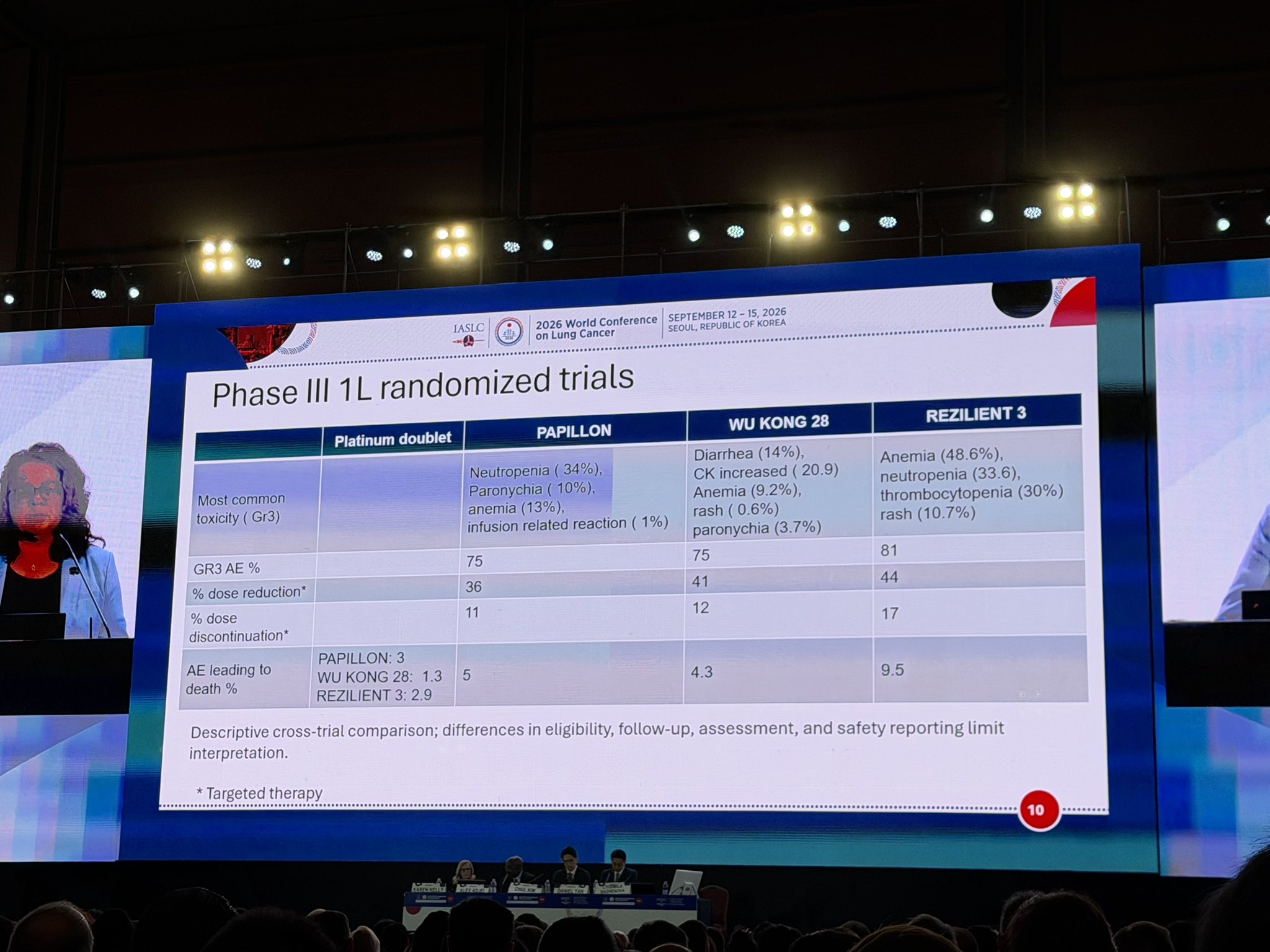
Excellent discussion of the evolving 1L landscape for EGFR exon20ins NSCLC at #WExcellent discussion of the evolving 1L landscape for EGFR exon20ins NSCLC at #WExcellent discussion of the evolving 1L landscape for EGFR exon20ins NSCLC at #WExcellent discussion of the evolving 1L landscape for EGFR exon20ins NSCLC at #W
5.9K impressions3 likes2 reposts2026-09-14
[Slide 1] What should guide our first line decision? PAPILLON Amivantamab + chemotherapy WU-KONG 28 Sunvozertinib REZILIENT3 Zipalertinib + chemotherapy EFFICACY & TOXICITY PATIENT CHARACTERISTICS PATIENT PRIORITIES WHAT COMES NEXT? Depth and duration of benefit CNS metastases IV VS oral therapy Treatment burden EGFR exon 20ins subtype Quality of life Sequential efficacy Adverse events preferences Resistance mechanisms [Slide 2] along IASLC 2026 World Conference SEPTEMBER 12 - 15, 2026 on Lung Cancer SEOUL, REPUBLIC OF KOREA Do subgroup analyses help us choose first-line therapy? PAPILLON WU-KONG 28 REZILIENT3 Amivantamab + chemotherapy Sunvozertinib Zipalertinib + chemotherapy BASELINE CNS METASTASES BASELINE CNS METASTASES BASELINE CNS METASTASES CNS mets CNS mets HR 0.63 (0.38-1.06) HR 0.96 (0.44-2.08) CNS mets HR 0.38 (0.21-0.67) No CNS mets HR 0.33 (0.23-0.46) HR 0.62 (0.47-0.83) No CNS mets No CNS mets HR 0.62 (0.38-0.99) EXON 20 INSERTION LOCATION EXON 20 INSERTION LOCATION EXON 20 INSERTION LOCATION Near loop HR 0.40 (0.28-0.58) Near loop HR 0.59 (0.43-0.82) Near loop Not reported Far loop HR 0.19 (0.06-0.69) Far loop HR 0.83 (0.49-1.38) Far loop Not reported CNS metastases and exon 20 insertion location are potential differentiators but subgroup data remain exploratory [Slide 3] IASLC 2026 World Conference SEPTEMBER 12 - 15, 2026 on Lung Cancer SEOUL, REPUBLIC OF KOREA Phase III randomized 1L trials PAPILLON Platinum doublet Amivantamab WU KONG 28 REZILIENT 3 + sunvozertinib Zipalertinib + chemotherapy chemotherapy PAPILLON: 47 ORR% WU KONG 28: 31.1 73 (BIRC) 59 65 REZILIENT 3: 40 PAPILLON: 6.7 11.4 mPFS m 10.3 14.5 WU KONG 28: 7.5 0.40; 0.30 -0.53; P<0.001 HR (CI, p) 0.65; 0.50 -0.85; <0.001 0.5; 0.34-0.73; p=0.00015 REZILIENT 38.5 mOS, m PAPILLON: 27.9 (24.0-32.4) 34.3 (27.0-40.8) 29.8 (21.8-NE) NR HR (Cl,p) WU KONG 28: 28.8 (27.0-NE) HR, 0.87 (0.66-1.14); 0.99 (0.7-1.40) 0.72 (0.42-1.23) REZILIENT 3: NR P=0.307 p 0.49 39% maturity P=0.11082 PAPILLON: 68 18m-OS WU KONG 28: 67 74 65.5 Not reported REZILIENT 3: NR PAPILLON: 54 24m-OS WU KONG 28: 56.2 64 57.4 Not reported REZILIENT 3: NR Descriptive cross-trial comparison; differences in eligibility, follow-up, assessment, and safety reporting limit interpretation. 9 [Slide 4] IASLC 2026 World Conference SEPTEMBER 12 - 15, 2026 on Lung Cancer SEOUL, REPUBLIC OF KOREA Phase III 1L randomized trials Platinum doublet PAPILLON WU KONG 28 REZILIENT 3 Neutropenia (34%), Diarrhea (14%), Anemia (48.6%), Most common Paronychia (10%), CK increased (20.9) toxicity (Gr3) anemia (13%), Anemia (9.2%), neutropenia (33.6), infusion related reaction (1%) rash (0.6%) thrombocytopenia (30%) rash (10.7%) paronychia (3.7%) GR3 AE % 75 75 81 % dose reduction* 36 41 44 % dose 11 12 17 discontinuation* PAPILLON: 3 AE leading to WU KONG 28: 1.3 5 4.3 9.5 death % REZILIENT 3: 2.9 Descriptive cross-trial comparison; differences in eligibility, follow-up, assessment, and safety reporting limit interpretation. * Targeted therapy 10
MMustafa Özdoğan, MD@ozdogan_md

#WCLC26 — The Studies to Watch
Seoul, 12–15 September

A clinical map of the key questions at @IASLC WCLC 2026: early/locally advanced NSCLC, oncogenic drivers, IO combinations, SCLC (including CNS), limited-stage multimodal therapy, and local control.

Presidential symposium highlights include ADAURA OS update, PAPILLON, REZILIENT 3, ARROS-1, DESTINY-Lung04, EVOKE-03 / KEYNOTE-D46, TAISHAN-302, A

#WCLC26 — The Studies to Watch
Seoul, 12–15 September

A clinical map of the key
5K impressions5 likes4 reposts2026-09-11
[Slide 1] WCLC 2026: THE STUDIES TO WATCH Seoul 12-15 September 2026 Presidential symposium 01 EARLY / LOCALLY ADVANCED NSCLC 02 ADVANCED NSCLC: DRIVERS ADAURA PL03.01 PAPILLON PL03.03 Osimertinib exploratory 8-year OS EGFR exon 20 amivantamab + chemo os IMpower030 OA04.03 REZILIENT 3 PL03.04 Perioperative atezolizumab + chemo EGFR exon 20 zipalertinib + chemo MDT-BRIDGE ARROS-1 PL03.06 OA04.02 ROS1 zidesamtinib TKI-naive Neoadjuvant durvalumab + chemo DESTINY-Lung04 PL03.08 Adjuvant gefitinib + chemo OA04.01 HER2-mutant first-line T-DXd EGFR-mutant phase III HARMONi 0A14.05 NAUTIKA1 M006.01/ OA04.04 Post-EGFR TKI ivonescimab + chemo os Neoadjuvant alectinib / divarasib AMIGO-1 0A12.04 Amivantamab + lazertinib + pemetrexed 03 ADVANCED NSCLC: NO DRIVER 04 SCLC: SYSTEMIC THERAPY & CNS HARMONi-2 OA14.01 TAISHAN-302 PL02.03 Ivonescimab vs pembrolizumab OS Tam-Peli vs topotecan relapsed ARTEMIS-008 PL02.04 EVOKE-03 / KEYNOTE D46 PL02.06 Risvutatug rezetecan vs topotecan Sacituzumab govitecan + pembrolizumab PD-L1 ≥50% SWOG S1827 MAVERICK PL02.01 Pumitamig + BNT324 0A14.02 Brain MRI surveillance ± cranial irradiation PD-L1/VEGF-A + B7-H3 NSCLC/SCLC DeLLphi-309 OA05.01 Tarlatamab extended-interval dosing RC148 / ABBV-1480 OA14.04 PD-1/VEGF bispecific + chemo DeLLphi-308 M015.07 Tarlatamab subcutaneous delivery MAVERICK: cross-stage brain prevention. 05 LIMITED-STAGE SCLC 06 SURGERY, RADIOTHERAPY & LOCAL CONTROL Neoadjuvant serplulimab + chemo M015.03 Wedge vs segmentectomy OA08.01 pathological response / MRD GGO-dominant early NSCLC GREAT OA08.02 Serplulimab + concurrent CRT P3.288 Segmentectomy VS lobectomy followed by serplulimab phase II STARLORD OA09.04 CXCL9+ DCs / CXCR3+ Tregs M015.01 Stereotactic RT when concurrent CRT is unsuitable treatment resistance LONESTAR 0A14.03 Early clinical and translational signals Local consolidation after nivolumab + ipilimumab EMERGING SCIENCE KRAS G12D: GFH375 / QLC1101 DLL3 CAR-T: LB2102 mRNA vaccine: BNT116 OA12.01-02 OA05.02 M006.03 Pre-congress watchlist Not a results summary 11 Sep 2026 Source: IASLC WCLC 2026 program wclc.iaslc.org
Free Access · KOL Pulse Intelligence

Track oncology’s top KOLs in your specialty

Create a free account, pick the tumor types you cover, and go beyond the tweet — the intelligence pharma teams use to map influence and prepare for engagement:

  • Enhanced KOL profiles
  • Pharma influence & potential advisory-board patterns
  • 2025 Open Payments financial analysis
  • Social-media sentiment & trend signals
Get free access — pick your specialty
Choose the tumor types you follow. No cost, unsubscribe anytime.
Before the meeting

Pre-Conference Coverage — Archive

Three weeks of pre-meeting tracking: the pre-conference leaderboard, session previews and watchlists, most-discussed trials, key threads, themes, image library and top posts. Collapsed to make room for live coverage — everything is preserved below.

Open the pre-conference archive 479 posts · 901.3K impressions · 7 sections
Who is setting the agenda

Pre-Conference Social Leaderboard

Go deeper: the interactive WCLC 2026 influencer network map (438 accounts, retweet/quote edges across 27 countries) and the virtual attendee network (484 classified accounts, 170 physicians).

Accounts ranked by the reach they are generating ahead of the meeting, split by who they are. Finance and crypto accounts are excluded entirely — ticker traffic measures share price, not clinical voice.

97 accounts · 655,122 impressions · top 20 shown
1Hidehito HORINOUCHI
ABBV-1480, ADAURA, AEGEAN, ARROS-1, ARTEMIS-008 +25
ADCs · AI in Oncology · ALK / ROS1 · ctDNA & Biomarkers
248.9Kimpressions
2118engagements
79posts
2Masahiro TORASAWA, MD. PhD.
ADAURA, ARROS-1, ARTEMIS-008, EVOKE-03 / KEYNOTE-D46, HARMONi-2 +5
ADCs · ALK / ROS1 · Bispecifics / PD-1xVEGF · EGFR
60.3Kimpressions
346engagements
7posts
3gilberto lopes
ADAURA, ARROS-1, ARTEMIS-008, DESTINY-Lung04, EVOKE-03 / KEYNOTE-D46 +7
ADCs · ALK / ROS1 · ctDNA & Biomarkers · Bispecifics / PD-1xVEGF
59Kimpressions
1020engagements
45posts
4Stephen V Liu, MD
Stephen V Liu, MD@stephenvliu
SOHO-01
ADCs · ctDNA & Biomarkers · Bispecifics / PD-1xVEGF · EGFR
34.9Kimpressions
434engagements
13posts
5Drew Moghanaki
Drew Moghanaki@drewmoghanaki
HALT, MAVERICK, NORTHSTAR
Radiation / SBRT · SCLC
22.6Kimpressions
298engagements
5posts
6Eric K. Singhi, MD
BNT324-01, DeLLphi-308, DeLLphi-309, FURVENT, Iza-Bren (OA10.01) +2
Immunotherapy
21.9Kimpressions
95engagements
3posts
7Dr Amol Akhade
Dr Amol Akhade@suyogcancer
HARMONi-2, HARMONi-7
Immunotherapy · SCLC
18.9Kimpressions
189engagements
2posts
8Dr Rishabh Jain
Dr Rishabh Jain@drrishabhonco
ADAURA, ARROS-1, ARTEMIS-008, DeLLphi-309, DESTINY-Lung04 +4
ADCs · ALK / ROS1 · Bispecifics / PD-1xVEGF · EGFR
18.2Kimpressions
93engagements
2posts
9Dr. Estela Rodriguez
ADAURA, ARROS-1, ARTEMIS-008, DeLLphi-309, DESTINY-Lung04 +10
ADCs · ALK / ROS1 · EGFR · Immunotherapy
11.5Kimpressions
145engagements
8posts
10Uğur Özkerim
ADAURA, ARROS-1, ARTEMIS-008, EVOKE-03 / KEYNOTE-D46, HARMONi +5
Bispecifics / PD-1xVEGF · EGFR · Immunotherapy · KRAS
10.8Kimpressions
154engagements
5posts
11Toni Choueiri, MD
Immunotherapy · SCLC
9.6Kimpressions
185engagements
1posts
12Giannis Mountzios
Giannis Mountzios@g_mountzios
EVOKE-03 / KEYNOTE-D46, Iza-Bren (OA10.01)
ADCs · Immunotherapy · SCLC
9.2Kimpressions
176engagements
3posts
13Narjust Florez, MD, FASCO
8.6Kimpressions
134engagements
6posts
14Balazs Halmos
Balazs Halmos@balazshalmosmd
7.2Kimpressions
99engagements
3posts
15Brendon Stiles
Brendon Stiles@brendonstilesmd
6.7Kimpressions
48engagements
2posts
16Dr. Antonio Calles 🫁🚭
HARMONi
Bispecifics / PD-1xVEGF · Immunotherapy · SCLC
6.5Kimpressions
80engagements
2posts
17James Wu | 吴简凡 MD
5.6Kimpressions
52engagements
1posts
18Roberto Borea, MD
Roberto Borea, MD@robertoboreamd
5Kimpressions
49engagements
2posts
19Oncology Brothers
Oncology Brothers@oncbrothers
SOHO-01
Social Media & SciComm
5Kimpressions
45engagements
1posts
20Laura Alder, MD
Laura Alder, MD@lauraaldermd
ADAURA, ARROS-1, ARTEMIS-008, DeLLphi-309, EVOKE-03 / KEYNOTE-D46 +4
ALK / ROS1 · EGFR · SCLC
4.8Kimpressions
132engagements
2posts
21MV Chandrakanth
MV Chandrakanth@chandrakanthmv
Immunotherapy · SCLC
4.7Kimpressions
113engagements
2posts
22Sabita Jiwnani
4.4Kimpressions
40engagements
3posts
23Rami Manochakian MD, FASCO
SOHO-01
SCLC
4.4Kimpressions
145engagements
2posts
24Jose Fernando Moura, PhD
ABBV-1480, ASTRUM-005, BNT327 (pumitamig), DeLLphi-308, GFH375 (KRAS G12D) +3
4.3Kimpressions
82engagements
2posts
25Misty Dawn Shields
Misty Dawn Shields@drshieldsmd
Bispecifics / PD-1xVEGF · SCLC
3.7Kimpressions
86engagements
1posts
26Dr Riyaz Shah
Dr Riyaz Shah@drriyazshah
ADAURA, ARROS-1, ARTEMIS-008, DESTINY-Lung04, PAPILLON +2
ADCs · ALK / ROS1 · EGFR · SCLC
3.2Kimpressions
56engagements
4posts
27Dr. Nagla Abdel Karim
Dr. Nagla Abdel Karim@naglaakarimmd
MAVERICK
Radiation / SBRT · SCLC · Screening & Early Detection
3.1Kimpressions
51engagements
2posts
28Tom Newsom-Davis
Tom Newsom-Davis@tnewsomdavis
PAPILLON, REZILIENT3, WU-KONG28
Immunotherapy · SCLC
3.1Kimpressions
40engagements
4posts
29Tejas Patil
Tejas Patil@tejaspatilmd
2.7Kimpressions
26engagements
1posts
30ilyas sahin, MD
ilyas sahin, MD@ilyassahinmd
Immunotherapy · SCLC
2.3Kimpressions
53engagements
1posts
31Noemi Reguart
Noemi Reguart@nreguart
SCLC
2.3Kimpressions
41engagements
1posts
32Chinmay Jani
Chinmay Jani@jani_chinmay
2.3Kimpressions
35engagements
2posts
33Madeleine Armstrong
Madeleine Armstrong@bymadeleinea
SCLC
2.3Kimpressions
8engagements
1posts
34Urs Weber MD
Urs Weber MD@urswebermd
2Kimpressions
15engagements
2posts
35Pramesh CS
Pramesh CS@cspramesh
2Kimpressions
21engagements
1posts
36Dr. Fabio Moraes
Dr. Fabio Moraes@fabiomoraesmd
AI in Oncology
1.8Kimpressions
44engagements
2posts
37avidresearch
avidresearch@avidresearch
Bispecifics / PD-1xVEGF
1.8Kimpressions
3engagements
1posts
38Oriol Mirallas MD
1.7Kimpressions
10engagements
2posts
39The ASCO Post
The ASCO Post@ascopost
SOHO-01
1.7Kimpressions
13engagements
1posts
40Dr. Luis E. Raez
Dr. Luis E. Raez@luisraezmd
1.6Kimpressions
71engagements
3posts
41Bhavneesh Sharma: MD, MBA in Finance - NYU Stern
HARMONi, HARMONi-2, HARMONi-7, MARIPOSA-2
EGFR
1.5Kimpressions
2engagements
1posts
42Aakash Desai, MD, MPH, FASCO
ARROS-1, ARTEMIS-008, DESTINY-Lung04, EVOKE-03 / KEYNOTE-D46, MAVERICK +3
ALK / ROS1 · Radiation / SBRT · SCLC
1.4Kimpressions
10engagements
1posts
43Jennifer A. Marks, MD
Jennifer A. Marks, MD@jennifermarksmd
1.2Kimpressions
7engagements
1posts
44Dra. María Natalia Gandur Quiroga
1.2Kimpressions
7engagements
2posts
45Mario Balsa
Mario Balsa@mariobalsamd
1.2Kimpressions
17engagements
1posts
46Lei Deng, MD (He/Him)
ADCs
1.2Kimpressions
31engagements
2posts
47CHItrader
CHItrader@chitrader
SCLC
1.1Kimpressions
0engagements
2posts
48Herbert Loong, MBBS, FASCO
PACIFIC
1.1Kimpressions
18engagements
1posts
49Patrick Forde
Patrick Forde@fordepatrick
EMPOWER-Lung 1
KRAS
1.1Kimpressions
27engagements
1posts
50Mara Antonoff, MD, FACS
945impressions
5engagements
1posts
51Alessandro Di Federico
943impressions
40engagements
1posts
52BioSignal
BioSignal@biosignal
HARMONi-2
ADCs · Bispecifics / PD-1xVEGF · EGFR
935impressions
5engagements
2posts
53RolfoLab
RolfoLab@rolfolab
643impressions
19engagements
1posts
54Trial & Thesis
Trial & Thesis@trialandthesis
HARMONi
Bispecifics / PD-1xVEGF
634impressions
2engagements
2posts
55Aadel Chaudhuri, MD PhD
Aadel Chaudhuri, MD PhD@aadel_chaudhuri
ctDNA & Biomarkers · Immunotherapy
618impressions
19engagements
1posts
56Benedict Schuyler
ctDNA & Biomarkers
605impressions
1engagements
1posts
57Jorge Alatorre Alexander
Jorge Alatorre Alexander@jorgealatorrea1
558impressions
3engagements
1posts
58Evan Garrad
Evan Garrad@garradevan
AI in Oncology · Screening & Early Detection
518impressions
10engagements
2posts
59Annie Wong 黃毅敏
503impressions
13engagements
1posts
60The Compounding Cule
ALK / ROS1
474impressions
4engagements
2posts
61Dipesh Uprety MD FACP
Dipesh Uprety MD FACP@dipeshupretymd
Immunotherapy · SCLC
431impressions
6engagements
1posts
62Diego A. Díaz-García
419impressions
3engagements
1posts
63Devika Das, MD, MSHQS, FASCO
376impressions
6engagements
1posts
64Elvina Almuradova
SOHO-01
359impressions
9engagements
1posts
65Jianjiao Ni
Jianjiao Ni@nijianjiao77941
326impressions
1engagements
1posts
66Guardant Health
Guardant Health@guardanthealth
ctDNA & Biomarkers
325impressions
1engagements
1posts
67Kenn Samala
Kenn Samala@ksamalamd
286impressions
6engagements
2posts
68InsiderWatch
InsiderWatch@insiderwatchai
Bispecifics / PD-1xVEGF
276impressions
5engagements
2posts
69OncoDaily Biotech
OncoDaily Biotech@oncodailybio
Bispecifics / PD-1xVEGF
269impressions
7engagements
1posts
70Cassio Murilo T. Hidalgo Filho
LIBRETTO-431
KRAS
263impressions
18engagements
1posts
71David Heredia.
David Heredia.@herediaoncologo
SOHO-01
Immunotherapy · SCLC
245impressions
3engagements
2posts
72Martin Reck
Martin Reck@martinreck2
229impressions
1engagements
1posts
73LUNG CONNECT powered by COR2ED
EGFR
227impressions
4engagements
1posts
74AnnabelleGurwitch
219impressions
0engagements
1posts
75Patrick Saari
Patrick Saari@saaripatrick
HARMONi, HARMONi-6
Bispecifics / PD-1xVEGF
164impressions
1engagements
1posts
76ALK Positive India
ALK / ROS1
148impressions
3engagements
1posts
77老林学KOPI AI AGENT
Bispecifics / PD-1xVEGF
130impressions
1engagements
1posts
78Shop Floor Investor
Shop Floor Investor@thesfinvestor
Immunotherapy · SCLC
129impressions
1engagements
1posts
79AMCP
AMCP@amcporg
Immunotherapy · SCLC
128impressions
0engagements
1posts
80Oncarta
Oncarta@oncarta_org
BNT327 (pumitamig)
Bispecifics / PD-1xVEGF
124impressions
0engagements
1posts
81JobRx.com
JobRx.com@jobrx
Immunotherapy · SCLC
113impressions
0engagements
1posts
82Max Unfried
Max Unfried@maxunfried
Bispecifics / PD-1xVEGF
113impressions
2engagements
1posts
83NuvationBio
NuvationBio@nuvationbioinc
ALK / ROS1 · SCLC
109impressions
1engagements
1posts
84Lucky
Lucky@lucky_m_x
Immunotherapy · SCLC
107impressions
0engagements
1posts
85Aniruth Ananthanarayanan
Aniruth Ananthanarayanan@thecunningviper
HARMONi
Bispecifics / PD-1xVEGF · EGFR
102impressions
1engagements
1posts
86synapse
synapse@synapse800
HARMONi-2
Bispecifics / PD-1xVEGF · SCLC
99impressions
1engagements
1posts
87Thoracic Oncology Frontier
74impressions
0engagements
1posts
88製薬×PV×AIニュース
73impressions
1engagements
1posts
89Nazım Demircan
Nazım Demircan@nazimdmrcn
Immunotherapy
72impressions
1engagements
1posts
90Jose Rosell
Jose Rosell@arturillo955
Immunotherapy · SCLC
71impressions
0engagements
1posts
91Neil Newman
58impressions
3engagements
1posts
92Lucinda Burke
Lucinda Burke@lucindaburke
54impressions
0engagements
1posts
93rod almighty
rod almighty@rodalmighty
SOHO-01
47impressions
0engagements
1posts
94Silas Inman
Silas Inman@silasinman
Bispecifics / PD-1xVEGF · SCLC
42impressions
1engagements
1posts
95Dr. Asem Almaghrebi
Immunotherapy · SCLC
36impressions
0engagements
1posts
96Arc Nouvel
Arc Nouvel@arcnouvel
ARROS-1
ALK / ROS1
30impressions
1engagements
1posts
97EDM Biotech
EDM Biotech@edm_biotech
20impressions
0engagements
1posts
14 accounts · 67,816 impressions · top 20 shown
1IASLC
IASLC@iaslc
AI in Oncology · ctDNA & Biomarkers · EGFR · Immunotherapy
57.5Kimpressions
819engagements
29posts
2Lung Cancer Europe
Lung Cancer Europe@lungcancereu
3Kimpressions
45engagements
2posts
3International Lung Cancer Summit
ADAURA, ARROS-1, ARTEMIS-008, DeLLphi-309, DESTINY-Lung04 +5
2.6Kimpressions
51engagements
1posts
4Dr Alexey Kulikov
Dr Alexey Kulikov@kulikovuniatf
1.2Kimpressions
20engagements
1posts
5Grupo Español de Cáncer de Pulmón
Immunotherapy · Perioperative / Neoadjuvant
838impressions
12engagements
3posts
6Lung Cancer Research Foundation
712impressions
18engagements
1posts
7Vivek Tomar #RiseToSurviveCancer
Health Equity & Access
693impressions
9engagements
3posts
8Janet Freeman-Daily
Janet Freeman-Daily@jfreemandaily
309impressions
1engagements
1posts
9EGFR Positive Lung Cancer UK
HARMONi
Bispecifics / PD-1xVEGF · EGFR
279impressions
14engagements
1posts
10KORINA PATELI-BELL
KORINA PATELI-BELL@korinapateli
162impressions
3engagements
2posts
11Vandana Mahajan
Vandana Mahajan@oceanblue11oct
157impressions
7engagements
1posts
12Thoracic Oncology Group of Australasia
146impressions
3engagements
2posts
13Lung Cancer Policy Network
58impressions
0engagements
1posts
14Singapore Society of Oncology
25impressions
0engagements
1posts
30 accounts · 167,738 impressions · top 20 shown
1OncoAlert
OncoAlert@oncoalert
ADAURA, AEGEAN, ARROS-1, ARTEMIS-008, BNT327 (pumitamig) +15
ADCs · ALK / ROS1 · ctDNA & Biomarkers · Bispecifics / PD-1xVEGF
55.2Kimpressions
597engagements
19posts
2Samuel Hume
Samuel Hume@drsamuelbhume
HARMONi-2
Bispecifics / PD-1xVEGF · SCLC
37.4Kimpressions
531engagements
1posts
3Jacob Plieth
Jacob Plieth@jacobplieth
ABBV-1480, HARMONi, HARMONi-2, HARMONi-6
Bispecifics / PD-1xVEGF
33.6Kimpressions
214engagements
8posts
4Minhua Chu
Minhua Chu@chuminhua432
ABBV-1480, HARMONi-6, sac-TMT
ADCs · ALK / ROS1 · Bispecifics / PD-1xVEGF · EGFR
9.6Kimpressions
105engagements
5posts
5OncoDaily Lung
OncoDaily Lung@oncodailylung
SCLC
4.2Kimpressions
127engagements
13posts
6OncLive.com
OncLive.com@onclive
Immunotherapy · Social Media & SciComm · SCLC
4.1Kimpressions
12engagements
4posts
7がんナビ通信
がんナビ通信@cancer_navi
Bispecifics / PD-1xVEGF
3.5Kimpressions
55engagements
1posts
8OncoDaily
OncoDaily@oncodaily
SOHO-01
Immunotherapy · SCLC
2.8Kimpressions
30engagements
12posts
9VJ Oncology
VJ Oncology@vjoncology
SCLC
2.8Kimpressions
12engagements
7posts
10Pharma Jonpi . / 1.1 / .
ARTEMIS-008, ASTRUM-005, DeLLphi-304
ADCs · Immunotherapy · SCLC
2.4Kimpressions
3engagements
10posts
11Kate Sears
Kate Sears@openmedkate
HARMONi-2
Bispecifics / PD-1xVEGF
1.6Kimpressions
36engagements
3posts
12Sally Church
Sally Church@maverickny
1.6Kimpressions
16engagements
1posts
13AcuVox
AcuVox@oncoreporte
1.5Kimpressions
8engagements
1posts
14OncUpdates
OncUpdates@oncupdates
HARMONi-2, SOHO-01
Bispecifics / PD-1xVEGF · Social Media & SciComm · SCLC
1.4Kimpressions
18engagements
3posts
15JTO & JTO CRR
JTO & JTO CRR@jtoonline
1.2Kimpressions
18engagements
2posts
16Lung Cancers Today
Lung Cancers Today@lung_cancers
LIBRETTO-432
ALK / ROS1
934impressions
25engagements
4posts
17Targeted Oncology
Targeted Oncology@targetedonc
Immunotherapy · SCLC
863impressions
17engagements
1posts
18BioWorld
BioWorld@bioworld
732impressions
12engagements
1posts
19Vun-Sin Lim, PhD
533impressions
9engagements
3posts
20PER
PER@gotoper
Bispecifics / PD-1xVEGF
475impressions
12engagements
1posts
21PeerView
PeerView@peerview
302impressions
24engagements
1posts
22ReachMD
ReachMD@reachmd
Immunotherapy
165impressions
2engagements
1posts
23Business-News-Today.com
REZILIENT3
EGFR
121impressions
1engagements
1posts
24OncoNexus
OncoNexus@onco_nexus
HARMONi-2
Bispecifics / PD-1xVEGF · Social Media & SciComm
118impressions
2engagements
1posts
25PeerVoice
PeerVoice@peervoice
105impressions
9engagements
1posts
26Guideline Central
Guideline Central@guidelinecent
101impressions
0engagements
1posts
27eChinaHealth
eChinaHealth@echinahealth
95impressions
0engagements
1posts
28cGxP Wire
cGxP Wire@cgxpwire
79impressions
0engagements
2posts
29Surgical Techniques Development MDPI
46impressions
1engagements
1posts
30Conference Agendas
Conference Agendas@confagendas
ALK / ROS1 · ctDNA & Biomarkers · EGFR · KRAS
31impressions
0engagements
2posts
15 accounts · 10,662 impressions · top 20 shown
1BioNTech SE
BioNTech SE@biontech_group
ADCs · Bispecifics / PD-1xVEGF
4.2Kimpressions
65engagements
1posts
2AbbVie
AbbVie@abbvie
SCLC
2.4Kimpressions
13engagements
1posts
3Flatiron Health
Flatiron Health@flatironhealth
759impressions
1engagements
2posts
4Foundation Medicine
Foundation Medicine@foundationatcg
661impressions
6engagements
2posts
5Caris Life Sciences
637impressions
17engagements
1posts
6Pfizer Oncology Medical
532impressions
3engagements
1posts
7Dr. Hemalatha Ramachandran
ADCs · ctDNA & Biomarkers · Bispecifics / PD-1xVEGF · EGFR
380impressions
3engagements
2posts
8Cullinan Therapeutics
REZILIENT3
356impressions
9engagements
1posts
9Lilly Oncology Medical
265impressions
0engagements
1posts
10Pedro Salgueiro
Pedro Salgueiro@salgueiromp
100impressions
4engagements
1posts
11Henlius
Henlius@henliusbiotech
ASTRUM-005
ADCs · SCLC
87impressions
0engagements
1posts
12Prognyx
Prognyx@prognyx
GFH375 (KRAS G12D), HARMONi-2
Bispecifics / PD-1xVEGF · EGFR · Immunotherapy · KRAS
75impressions
2engagements
4posts
13L2P Research Labs
L2P Research Labs@l2presearch
63impressions
0engagements
1posts
14MphaR - Medical Pharma Services
58impressions
0engagements
1posts
15Oncology Resource Group (ONCrg)
SCLC
35impressions
1engagements
1posts
What’s coming

Top 10s, Watchlists & Session Previews

Agenda cards, symposium roundups and multi-trial watchlists — posts about what is about to be presented rather than what has been shown. They are the bulk of pre-conference reach, and they are counted separately from primary content throughout this page: a roundup naming four trials would otherwise hand its full audience to all four, letting a trial with no data out-rank one with a published readout.

Hidehito HORINOUCHI @hhorinouchi · 76 posts in this series · 235.8K impressions
HHidehito HORINOUCHI@HHorinouchi

🆙#WCLC26 #LCSM Plenary Session
🔥DESTINY-Lung04: First-Line Trastuzumab Deruxtecan (T-DXd) in Patients With Metastatic HER2-Mutant NSCLC: Primary Results
🎙️ @JuliaRotow
🔢PL03.08
🎯T-DXd Showed Statistically Significant and Clinically Meaningful PFS Improvement vs SOC (Chemo+Pembrolizumab) as First-Line Therapy
☑️NCT05048797
🔗 https://t.co/gAahGHJGeA
@OncoAlert @Larvol @IASLC

🆙#WCLC26 #LCSM Plenary Session
🔥DESTINY-Lung04: First-Line Trastuzumab Deruxteca
13.3K impressions50 likes22 reposts2026-08-21
[Slide 1] PL03.08. First-Line Trastuzumab Deruxtecan (T-DXd) in Patients With Metastatic HER2 -Mutant NSCLC: DESTINY-Lung04 Primary Results J. Rotow¹, I. Okamoto², K. Goto³, M-J. Ahn⁴, P. Cheema⁵, J. Mazieres⁶, S. Novello⁷, D. Lv⁸, Y. Zhang⁹, A. Passaro¹⁰, E. Nadal¹¹, H-W. Ko¹², H-Y. Tu¹³, N. Menon E. Bria¹⁵, J. Chaft¹⁶, M. Hochmair¹⁷, M. Chaudhari¹⁸, A. van der Wekken¹⁹, P. Tomasini²⁰, S.K. Padda²¹, W.N. William Jr²², A. Vishweswaramurthy23, Y-T. Chang²⁴, E. Schreffler²⁴, B. Li²⁴, Y-L. Wu¹³ Dana-Farber Cancer Institute, Boston/MA/USA, Kyushu University Hospital, Fukuoka/JP 3 National Cancer Center Hospital East, Kashiwa/JP, 4Samsung Medical Center, Sungkyunkwan University, Seoul/KR 5University of Toronto, William Osler Health System, Brampton/ON/CA, 6 CHU de Toulouse, Université de Toulouse, Toulouse/FR, Azienda Ospedaliero-Universitaria San Luigi Gonzaga, Orbassano, University of Turin, Turin/IT ,⁸Taizhou Hospital of Zhejiang Province, Taizhou/CN, ⁹Lung Cancer and Gastrointestinal Unit, Hunan Cancer Hospital, Changsha, Hunan/CN, ¹⁰European Institute of Oncology IRCCS, Milan/IT 11 Institut Català d'Oncologia (ICO), L'Hospitalet de Llobregat, Barcelona/ES, 12 Linkou Chang Gung Memorial Hospital, College of Medicine, Chang Gung University, Taoyuan City/TW, 13 Guangdong Lung Cancer Institute, Guangdong Provincial People's Hospital, Guangdong Academy of Medical Sciences, Southern Medical University, Guangzhou/CN, 14 Tata Memorial Hospital, Mumbai, Maharashtra/IN, Fondazione Policlinico Universitario A Gemelli IRCCS, Rome/IT, Memorial Sloan Kettering Cancer Center, New York City/NY/USA, 17 Klinik Floridsdorf, Karl Landsteiner Institute for Lung Research and Pulmonary Oncology, Vienna/AT, ¹⁸HCG Manavata Cancer Centre, Mumbai Naka, Nashik/IN 19 University of Groningen, University Medical Center Groningen, Groningen/NL ²⁰Aix-Marseille University, CRCM, INSERM, CNRS, Assistance Publique- Hôpitaux de Marseille (APHM), Marseille/FR, 21 Fox Chase Cancer Center, Temple Health, Philadelphia/PA/USA, 22 Groupo Oncoclínicas, São Paulo/BR, 23 AstraZeneca, Bangalore/IN 24 AstraZeneca, Gaithersburg/MD/USA View abstract @1 Jo View biography
HHidehito HORINOUCHI@HHorinouchi

🆙 #WCLC26 #LCSM Mini Oral Session
🔥 Neoadjuvant Chemo-Immunotherapy vs EGFR-TKI in EGFR-Mutant NSCLC: TP53 as the Predictive Biomarker
🎯Chemo-ICI vs. EGFR-TKI
🎯Overall: pCR (19.6% vs 3.0%), MPR (41.2% vs 20.2%)
🎯TP53-mutant pts: MPR (48.6% vs 9.6%)
🎯TP53-WT pts: MPR (23.1% vs 38.7%)
🎙️ Dr. F. Wang
🔢 MO06.04
🔗 https://t.co/6rnqfaalhV
@OncoAlert @Larvol @IASLC @EGFRResisters

🆙 #WCLC26 #LCSM Mini Oral Session
🔥 Neoadjuvant Chemo-Immunotherapy vs EGFR-TKI
12.7K impressions51 likes22 reposts2026-08-27
[Slide 1] Comparison of PCR Rates Comparison of MPR Rates M006.04. Neoadjuvant Chemo-Immunotherapy VS EGFR-TKI in EGFR-Mutant NSCLC: Between Treatment Groups Between Treatment Groups TP53 as the Predictive Biomarker for Treatment Selection 50 25 P 0.011* F. Wang, W-Z. Zhong 41.2% P 0.002* (21/51) Guangdong Provincial People's Hospital, Guangzhou/CN , 3:55 PM 4:00 PM 19.6% (10/51) 40 20 5m View abstract Introduction: Neoadjuvant therapy for resectable EGFR-mutant NSCLC remains undefined. 30 While ADAURA established adjuvant osimertinib, the optimal neoadjuvant approach is PCR Rate (%) 15 MPR Rate (%) 20.2% unclear. Current guidelines recommend platinum-based chemotherapy + immunotherapy (20/99) 10 20 regardless of EGFR status, but emerging studies explore EGFR-TKI preoperatively. No validated biomarker guides selection between EGFR-TKI and chemo-immunotherapy 3.0% 10 (Chemo-IO). We hypothesized that genomic alterations may interact with treatment modality 5 (3/99) to predict major pathological response (MPR). Methods: Retrospective analysis of 150 EGFR-mutant stage IIA-IIIB NSCLC patients (2020- 0 0 Targeted Therapy Chemo-immunotherapy Targeted Therapy Chemo-immunotherapy 2025) receiving neoadjuvant therapy. Cohort: EGFR-TKI monotherapy (n=99) versus Chemo- (n=99) (n=51) (n=99) (n=51) IO n=51,upfront or sequence). Interaction logistic regression models: logit(P(MPR)) = ßo + Comprehensive Analysis of Gene-Treatment Interactions in EGFR-Mutant NSCLC (TP53 as the Only Significant Predictive Biomarker) A. Interaction Effects Between High-Frequency Mutations and Treatment (Forest Plot sorted by P-value) 31-Treatment + ß2-Gene +B3-(TreatmentxGene), followed by Bonferroni correction and Bootstrap validation (n=1000). Gene Forest Plot Statistics Results: Among 318 genes analyzed, only TP53 demonstrated significant interaction with OR 95% CI P-value TP53 0.002 treatment modality (interaction term P=0.002, OR=0.054, 95%CI: 0.008-0.345), remaining MDM2 5.020 3.040 0.351 significant after Bonferroni correction (P=0.023). In the overall population, Chemo-IO SMAD4 4.001 0.390 CDK4 1068 0.493 achieved significantly higher PCR rates than EGFR-TKI (19.6% VS 3.0%, P=0.002) and higher MYC 2.073 PIKICA 2.176 3.524 MPR rates (41.2% VS 20.2%, P=0.011). However, TP53 stratification revealed a complete 1.569 0.522 therapeutic effect reversal: TP53 wild-type patients (n=44) showed superior MPR with EGFR- 1.431 ARM10 1.044 TKI (38.7% VS 23.1% with Chemo-IO), whereas TP53 mutant patients (n=87) demonstrated 17" " Deds Ratio 10R, leg scale) dramatically higher MPR with Chemo-IO (48.6% VS 9.6% with EGFR-TKI)-representing a 5.1- 0. Predicted MPR Probability MPR Rate in wild type Patients MPR Rate in Mutant Patients (Heatmap) fold advantage for Chemo-IO in this subgroup. The absolute risk reduction for selecting Demo 10 Chemo-IO over EGFR-TKI in TP53 mutant patients was 39.0% (NNT=2.6). Bootstrap 2 TP53 Wild-type validation confirmed model stability (AUC=0.708, 95%CI: 0.659-0.724). Multigene models 23.1% 38.7% (note) : incorporating MDM2 or RB1 did not improve predictive performance compared to TP53 2 2 ! I I Kale alone (P>0.3). Conclusions: While EGFR-TKI remains the de facto standard for neoadjuvant therapy in : ress Nature 48.6% 9.6% EGFR-mutant NSCLC, our findings challenge this paradigm: TP53 wild-type patients benefit (n-87) to $ from EGFR-TKI (MPR 38.7%), whereas TP53 mutant patients achieve substantially superior responses with Chemo-IO (48.6% VS 9.6%). As TP53 mutations represent the predominant , / / / / / / Chema-10 Targeted Therapy Gene molecular subtype in this population, routine TP53 testing should guide treatment selection Pathological between these two modalities. interaction 0.002
HHidehito HORINOUCHI@HHorinouchi

🆙#WCLC26 #LCSM Plenary Session
🔥PAPILLON: First-Line Amivantamab-Chemotherapy vs Chemotherapy in NSCLC With EGFR Exon 20 Insertions: Overall Survival
🎙️ @chulkimMD
🔢PL03.03
☑️NCT04538664
🔗 https://t.co/mYsNwaWQUZ
@OncoAlert @Larvol @IASLC @EGFRResisters @Exon20Group https://t.co/1Q6iRvY46I https://t.co/poufzTii55

🆙#WCLC26 #LCSM Plenary Session
🔥PAPILLON: First-Line Amivantamab-Chemotherapy vs
11.8K impressions58 likes19 reposts2026-08-20
[Slide 1] PL03.03. First-line Amivantamab-chemotherapy VS Chemotherapy in NSCLC with EGFR Exon 20 Insertions: Overall Survival from PAPILLON C. Kim¹, K-J. Tang², B.C. Cho³, L. Paz-Ares⁴, S. Cheng⁵, M. Nishio⁶, M. Thiagarajan⁷, J.W. Goldman⁸, J-Y. Hung⁹, J. Mourão Dias¹⁰, S. Popat¹¹, J.K. Sabari¹², N. Girard¹³, A.S. Mansfield¹⁴, K. Park¹⁵, R.E. Sanborn¹⁶, J. Schuchard N. Buyukkaramikli¹⁸, N. Perualila¹⁸, A. Bhattacharya¹⁹ P. Barala²⁰, M. Gamil²⁰, S. Gandhy²⁰, J. Man²¹, S. Shah20, C. Zhou²² 1 Division of Hematology and Oncology, Georgetown Cancer Institute, Washington/DC/USA Division of Pulmonary and Critical Care Medicine, First Affiliated Hospital of Sun Yat-sen University, Guangzhou/CN ³Division of Medical Oncology, Yonsei Cancer Center, Yonsei University College of Medicine, Seoul/KR 4Hospital Universitario 12 de Octubre, Madrid/ES ⁵Sunnybrook Odette Cancer Centre, Toronto/ON/CA ⁶Cancer Institute Hospital, Japanese Foundation for Cancer Research, Tokyo/JP, ,7 Hospital Kuala Lumpur, Kuala Lumpur/MY ⁸David Geffen School of Medicine, University of California Los Angeles, Los Angeles/CA/USA ⁹Department of Internal Medicine, Kaohsiung Medical University Hospital, Kaohsiung Medical University, Kaohsiung/TW, 10 Barretos Cancer Hospital, Barretos/BR 11 Royal Marsden Hospital NHS Foundation Trust; The Institute of Cancer Research, London/GB, ¹²NYU Langone Health, New York/NY/USA, 13 Institut Curie, Institut du Thorax Curie-Montsouris, Paris, France and Paris Saclay University, Université de Versailles Saint- Quentin-en-Yvelines, Versailles/FR, 14 Mayo Clinic, Rochester/MN/USA, Division of Hematology-Oncology, Department of Medicine, Samsung Medical Center, Sungkyunkwan University School of Medicine, Seoul/KR, 16 Earle A. Chiles Research Institute, Providence Cancer Institute of Oregon, Portland/OR/USA, 17 Johnson & Johnson, Horsham/PA/USA 18 Johnson & Johnson, Beerse/BE, 19 Johnson & Johnson, High Wycombe/GB, 20 Johnson & Johnson, Spring House/PA/USA 21 Johnson & Johnson, Raritan/NJ/USA, Shanghai East Hospital, Shanghai/CN View abstract @ of View biography
HHidehito HORINOUCHI@HHorinouchi

🆙 #WCLC26 #LCSM Mini Oral Session
🔥SOLARA: Anti-Tumor Activity of BH-30643, a Novel Macrocyclic EGFR TKI, in Patients With Secondary EGFR Resistance Mutations
🎯65 pts with 86 secondary EGFR resistance mutations (47 C797S, 24 T790M)
🎯C797S: RECIST responses 43%; tumor shrinkage in 86%
🎯ctDNA clearance: C797S 76%, T790M 62%
🎙️ @HHorinouchi
🔢 MO12.02
☑️ NCT06706076
🔗 https://t.co/8SXWyqrxiE
@OncoAler

🆙 #WCLC26 #LCSM Mini Oral Session
🔥SOLARA: Anti-Tumor Activity of BH-30643, a No
9.6K impressions33 likes11 reposts2026-08-31
[Slide 1] MO12.02. Anti-Tumor Activity of BH-30643, a Novel Macrocyclic EGFR TKI, in Introduction: Secondary EGFR mutations driving resistance to 3rd-generation EGFR Patients With Secondary EGFR Resistance Mutations tyrosine kinase inhibitors (TKIs) remain an unresolved therapeutic challenge in advanced EGFR-mutant NSCLC. Although some non-covalent TKIs are reported to overcome EGFR H. Horinouchi¹, M. Li², D.M. Gupta³, H. Izumi⁴, M. Nagasaka⁵, A.I. Spira⁶, J.W. C797S, the clinical outcomes have been modest many rely on chemical scaffolds vulnerable to other resistance mutations like T790M. BH-30643, an oral brain-active OMNI- Riess⁷, K. Parikh⁸, P.J. Voon⁹, J.K. Rotow¹⁰, C. H. Hayashi L. EGFR inhibitor, was designed using a novel macrocyclic scaffold giving it super-potency against diverse EGFR driver and resistance mutations including C797S +/- T790M, while Bazhenova J.C.H. Yang¹⁴, D.W-T. Lim R. Soo¹⁶, S. Puri¹⁷, T. John¹⁸, N. maintaining selectivity over wildtype EGFR. Here we study patients with secondary EGFR Myall M.L. Johnson²⁰ V. Ernani²¹, S. Parakh G. Liu²³, D. Costa²⁴, S. Gadgeel² Y. resistance mutations enrolled to SOLARA (NCT06706076), the first-in-human trial of BH- 30643 in advanced NSCLC, to characterize anti-tumor activity in this population without Lou²⁶, J.J. Cui²⁷, D. Wang²⁷, J. Liu²⁷, S. Garza²⁷, J. Zhou²⁷, J. Palma²⁷, G. Oxnard²⁷, A. available targeted therapies. Methods: Eligible adults with advanced EGFR and/or HER2-mutant NSCLC, PS 0-1, received Zalutskaya² X. Le28 BH-30643 monotherapy at doses ranging from 10mg-80mg BID or 80mg QD. Enrollment was based on local molecular testing. Distribution of secondary EGFR resistance ¹National Cancer Center Hospital, Tokyo/JP, Prince of Wales Hospital, Hong Hong/HK mutations (C797X, L718X, G724X, T790M) was additionally analyzed based on central retrospective NGS testing of plasma ctDNA at baseline and on treatment. Radiographic ³Northwestern Medicine, Chicago/IL/USA National Cancer Center Hospital East, response was assessed per RECIST 1.1, excluding patients who had already received Kashiwa/JP University of California Irvine, Irvine/CA/USA, ⁶NEXT Oncology, treatment specifically targeting a known C797S resistance mutation. Results: As of 3/2/2026, 65 patients with 86 secondary EGFR resistance mutations Fairfax/VA/USA University of California Davis, Sacramento/CA/USA Mayo Clinic, detected at baseline (47 C797S, 24 T790M, 15 other) were treated across escalation and expansion cohorts; 40 patients remain on therapy with a median follow-up of 3 months. Rochester/MN/USA ⁹Universiti Malaysia Sarawak, Kuching Sarawak/MY, 10 Dana Farber Median age was 62 (range 31-82), 57% Asian, median prior therapies was 2 (range 1-12), 55% with history of brain metastases. Most patients (59) had classical EGFR drivers but 6 Cancer Institute, Boston/MA/USA, 11 Georgetown University, Washington/DC/USA, 12 Kindai had uncommon EGFR mutations including exon 20 insertion with T790M (3 patients) and atypical mutations with C797S (2 patients; G719S and E709K). 21 patients had multiple University, Osaka/JP 13 University of California of San Diego, La Jolla/CA/USA, 14 National concurrent secondary EGFR resistance mutations detected in ctDNA, with 6 having Taiwan University Hospital, Tapei/TW 15 National Cancer Centre Singapore, Singapore/SG multiple variants at C797; 9 had concurrent MET amplification or KRAS mutations in ctDNA. BH-30643 was generally well-tolerated with most treatment-related adverse events 16 National University Hospital, Singapore/SG 17 Moffitt Cancer Center, Tampa/FL/USA being grade 1. Of 28 patients with C797S response-evaluable through 3/30/2026, excluding those with concurrent MET or KRAS, RECIST responses were observed in 12 18 Peter MacCallum Cancer Centre, Peter MacCallum Cancer Centre/AU, 19 Stanford Cancer patients (43%; 11 confirmed, 1 unconfirmed and ongoing), including with prior chemotherapy (6/17, 35%) or without prior chemotherapy (6/11, 55%); tumor shrinkage Center, Stanford/CA/USA 20 Sarah Cannon Research Institute, Nashville/TN/USA 21 Mayo occurred in 24 patients (86%). Responses were observed across different C797S co- mutations (e.g., exon 19 del, L858R, G719S, T790M) and following different targeted Clinic, Scottsdale/AZ/USA 22 Austin Health, Heidelberg/AU, 23 Princess Margaret Cancer therapies (e.g., osimertinib, afatinib, amivantamab). The longest responder has been on Centre, Toronto/ON/CA, 24 Beth Israel Deaconess Medical Center, Boston/MA/USA 25 Henry therapy for 10 months with follow-up ongoing; updated data will be presented. Serial plasma NGS results were available for a subset of 45 patients, and showed consistent on- Ford Hospital, Detroit/MI/USA 26 Mayo Clinic, Jacksonville/FL/USA 27 BlossomHill treatment clearance of C797S (16 of 21, 76% clearance), T790M (8 of 13, 62% clearance), and others (2 of 6, 33% clearance). Therapeutics, San Diego/CA/USA, 28 University of Texas MD Anderson Cancer Center, Conclusions: BH-30643 can achieve clinical and molecular responses in heavily pretreated NSCLC patients with secondary EGFR resistance mutations across diverse molecular Houston/TX/USA 11:07 AM 11:12 AM 5m View abstract contexts, supporting its potential as monotherapy in the treatment of resistance to 3rd- View biography generation EGFR TKIs. Expansion cohort enrollment is ongoing with a focus on C797S- positive resistance.
HHidehito HORINOUCHI@HHorinouchi

🆙 #WCLC26 #LCSM Mini Oral Session
🔥 COPERNICUS: Subcutaneous Amivantamab+Lazertinib With Supportive Care in EGFRm NSCLC
🎯With enhanced dermatologic/VTE prophylaxis: rash 28%, ARRs 12%, VTE 12% (all numerically lower vs MARIPOSA)
🎯Amivantamab discontinuation due to AEs only 7% (vs 34% in MARIPOSA)
🎙️ @BalazsHalmosMD
🔢 MO12.09
☑️ NCT06667076
🔗 https://t.co/8SXWyqrxiE
@OncoAlert @Larvol @IASLC @EGFRR

🆙 #WCLC26 #LCSM Mini Oral Session
🔥 COPERNICUS: Subcutaneous Amivantamab+Lazerti
8.8K impressions18 likes8 reposts2026-08-31
[Slide 1] MO12.09. Subcutaneous Amivantamab+Lazertinib With Supportive Care in EGFRm NSCLC: Longer Follow-Up From the Pragmatic COPERNICUS Study B. Halmos¹, J. Tu², S.B. Goldberg³, X. Le², N. Florez⁴, W. lams⁵, K. Konduri⁶, E. Massarelli⁷, C. Lovly⁸, L. Raez⁹, J. Riess¹⁰, J. Sabari¹¹, D. Bjork¹ T. Leal¹³, S. Patel¹⁴, A. Hultén Y. Xia¹⁶, P. Cifuentes¹ F. Shanoon¹ I. Leipoldt M. Gumbleton Montefiore Medical Center/Albert Einstein College of Medicine, Bronx/NY/USA ²MD Anderson Cancer Center, The University of Texas, Houston/TX/USA Yale School of Medicine, New Haven/CT/USA ⁴Dana-Farber Cancer Institute, Harvard Medical School, Boston/MA/USA ⁵Greco-Hainsworth Centers for Research, Tennessee Oncology, Nashville/TN/USA ⁶SCRI at Texas Oncology, Dallas/TX/USA, University of Texas at Tyler School of Medicine, Tyler/TX/USA, City of Hope Comprehensive Cancer Center, Duarte/CA/USA Memorial Cancer Institute, Pembroke Pines/FL/USA, ¹⁰uc Davis Comprehensive Cancer Center, Sacramento/CA/USA NYU Langone Health, New York/NY/USA, 12 The Research Evangelist Podcast, Georgetown/MA/USA, ¹³Winship Cancer Institute, Emory University, Atlanta/GA/USA, Huntsman Cancer Institute, University of Utah, Salt Lake City/UT/USA, 15 Johnson & Johnson, Espoo/FI, Johnson & Johnson, Wayne/PA/USA, 17 Johnson & Johnson, Horsham/PA/USA, 18 Johnson & Johnson, Durban North/ZA 4 12:00 PM - 12:05 PM 5m View abstract Jo View biography Introduction: Intravenous amivantamab plus lazertinib significantly prolonged overall survival versus osimertinib (HR, 0.75; P =0.005) in first-line common EGFR-mutant (EGFR m) advanced NSCLC in MARIPOSA. Subsequently, development of subcutaneous amivantamab (co-formulated with hyaluronidase) and enhanced prophylactic treatment protocols have substantially reduced administration time and rates/severity of key adverse events (AEs) seen in MARIPOSA. These were most common within the first 4 months of treatment and included administration-related reactions (ARRs; 63%), rash (62%), and venous thromboembolism (VTE; 37%). Furthermore, 34% of participants in MARIPOSA discontinued treatment due to AEs (5% due to ARRs, 3% due to VTE). Cohort 1 of COPERNICUS (NCT06667076) evaluates subcutaneous amivantamab every-4-weeks (Q4W) plus lazertinib with VTE and enhanced dermatologic prophylaxis in first-line EGFR m NSCLC. Early results among US participants (median follow-up, 3.9 months; to be presented at ASCO 2026) demonstrated low rates of ARRs, dermatologic AEs, VTE, and AE- associated amivantamab discontinuations. Here we present safety data from 124 participants in Cohort 1 who received ≥4 months of treatment or discontinued treatment prematurely, to characterize the AE profile with longer follow-up. Methods: COPERNICUS, one of the largest trials conducted in US for patients with EGFR m NSCLC (target enrollment: 300 first-line participants), combines subcutaneous amivantamab with supportive care and uses a pragmatic design to broaden the participant population and closely align with real-world usage. In Cohort 1, participants received subcutaneous amivantamab plus lazertinib in first-line EGFR m NSCLC. Participant diversity was enhanced by partnering with academic/community sites, allowing 1 cycle of first-line chemotherapy, streamlining radiology requirements, and reducing visit frequency by using subcutaneous amivantamab Q4W. Participants received prophylactic anticoagulation during the first 4 months of treatment and enhanced dermatologic prophylaxis aligned with COCOON. Safety was a key secondary endpoint and included incidence/severity of VTE, dermatologic AEs, and ARRs. All comparisons to MARIPOSA are descriptive Results: As of data cutoff (17-Jan-2026), Cohort 1 had enrolled 198 participants in the US. Among those, 124 (63%) received treatment for ≥4 months or discontinued treatment prematurely (median follow-up, 5.8 months [range, 0.3-11.9]). Median age was 66 years; 54% and 18% were ≥65 and ≥75 years, respectively (45% and 12% in MARIPOSA). 26% were Asian, 9% African American, and 8% Hispanic/Latino, reflecting ethnic diversity. The majority of AEs among these 124 participants were grade 1-2 with no new safety signals. Discontinuation of amivantamab due to AEs occurred in only 7%. With enhanced dermatologic prophylaxis, rash was numerically lower (28%). Similarly, ARRs and VTE (both grouped terms) were numerically reduced (12% each), with no discontinuations of amivantamab due to ARRs and 1 (1%) due to VTE. Conclusions: Among participants in COPERNICUS who received ≥4 months of amivantamab plus lazertinib or discontinued treatment prematurely while receiving enhanced dermatologic and VTE prophylaxis, the safety profile was improved VS MARIPOSA, albeit with different follow-up durations. Reductions were observed in ARRs, rash, VTE, and AE-associated amivantamab discontinuations, despite an older population than MARIPOSA. These results demonstrate that early supportive care and subcutaneous administration Q4W can improve patient experience of amivantamab plus lazertinib in a clinical practice setting, supporting its broad use as first-line therapy.
HHidehito HORINOUCHI@HHorinouchi

🆙#WCLC26 #LCSM Oral Session
🔥MDT-BRIDGE: Neoadjuvant Durvalumab + Chemotherapy for Resectable/Borderline Resectable Stage IIB-IIIB NSCLC
🎙️ @MartinReck2
🔢OA04.02
🎯Resection Rate 74.6%; pCR 27.3% and 12-Mo EFS 90.1% in Resectable Cohort
☑️NCT05925530
🔗 https://t.co/rN1vqVmvgD
@OncoAlert @Larvol @IASLC
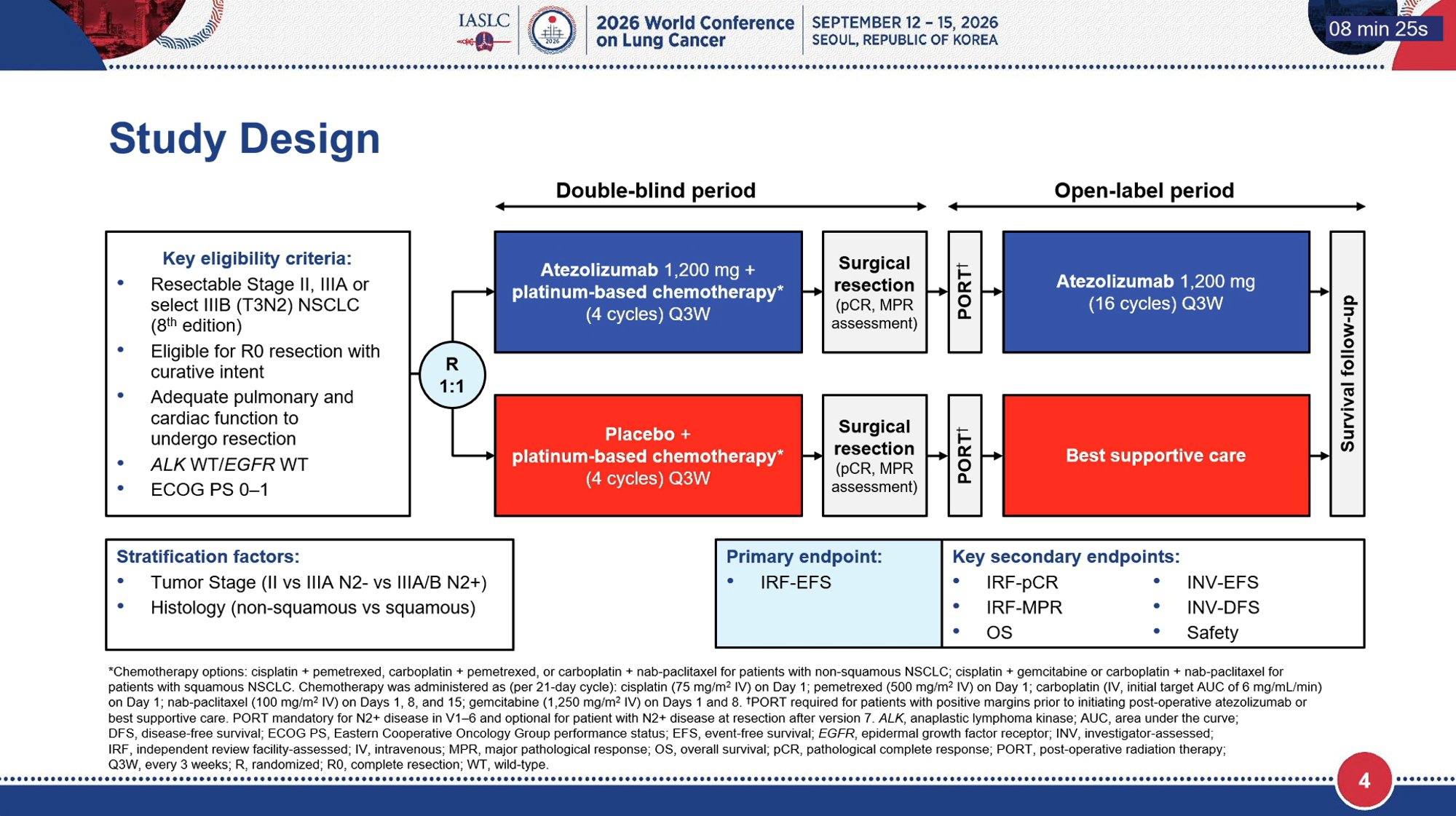
🆙#WCLC26 #LCSM Oral Session
🔥MDT-BRIDGE: Neoadjuvant Durvalumab + Chemotherapy f
8.5K impressions42 likes16 reposts2026-08-21
[Slide 1] OA04.02. Neoadjuvant Durvalumab + Chemotherapy for Resectable/Borderline Resectable Stage IIB-IIIB NSCLC: MDT-BRIDGE Primary Analysis Resectable Borderline resectable All patients at baseline at baseline M. Reck¹, E. Nadal², C.M. Gay³, N. Girard⁴, A.R. Filippi⁵, L. Martin⁶, C. Petersen⁷, (N=142) (n=92) (n=50) D.A. Cairns⁸, M. Majem Tarruella⁹, A. Ardizzoni¹⁰, R. Alvarez Alvarez¹¹, A. Robinson B. Roch¹ A. Boyer¹⁴, I. Attili¹⁵, L. Li¹⁶, I. Diaz Perez¹⁷, M. Giaj MDT reassessment, n Resectable 121 83 38 Levra¹⁸, N. Georgoulia¹ J. Spicer¹⁹ Unresectable 21 9 12 Lung Clinic Großhansdorf, Airway Research Center North, German Center for Lung Resection rate, n (%; 95% CI) 106 (74.6; 66.7-81.6) 75 (81.5; 72.1-88.9) 31 (62.0; 47.2-75.3) Research, Grosshansdorf/DE 2Institut Català d'Oncologia - ICO Hospitalet, IDIBELL, Barcelona/ES 3University of Texas MD Anderson Cancer Center, Houston/TX/USA, 4Institut Completed surgery, n (%) 104 (98.1) 74 (98.7) 30 (96.8) du Thorax Curie Montsouris, Institut Curie/UVSQ, Paris/FR, Radiation Oncology Received CRT, n (%) 25 (17.6) 13 (14.1) 12 (24.0) Fondazione IRCCS Istituto Nazionale dei Tumori, University of Milan, Milan/IT University of Virginia, Charlottesville/VA/USA University Medical Center Hamburg-Eppendorf, No local treatment, n (%) 11 (7.7) 4 (4.3) 7 (14.0) Hamburg/DE Leeds Cancer Research UK Clinical Trials Unit, Leeds Institute of Clinical RO resection outcomes, n (%; 95% CI) 102 (96.2; 90.6-99.0) 72 (96.0; 88.8-99.2) 30 (96.8; 83.3-99.9) Trials Research, University of Leeds, Leeds/GB Hospital de La Santa Creu I Sant Pau, Resectable at MDT Unresectable at MDT Barcelona/ES, ¹⁰IRCCS Azienda Ospedaliero-Universitaria di Bologna and University of All patients reassessment reassessment Bologna, Bologna/IT 11 Hospital Universitario Gregorio Marañón, Madrid/ES Cancer (N=142) (n=121) (n=21) Centre of Southeastern Ontario at Kingston General Hospital, Kingston/ON/CA, Arnaud de ORR at pre-Sx/pre-CRT, n (%; 95% CI)b.d. - Villeneuve University Hospital of Montpellier, Montpellier/FR, 14 Hôpital Saint Joseph, 76 (62.8; 53.6-71.4) 4 (19.0; 5.4-41.9) Marseille/FR, ⁵European Institute of Oncology, IRCCS, Milan/IT AstraZeneca, pCR, n (%; 95% CI) 33 (23.2; 16.6-31.1) 33 (27.3; 19.6-36.1) - Mississauga/ON/CA, AstraZeneca, Gaithersburg/MD/USA, AstraZeneca, - Wilmington/DE/USA McGill University, Montreal/QC/CA 3:27 PM - 3:37 PM 12-month EFS rate, % (95% CI)d 88.5 (81.5-92.9) 90.1 (82.8-94.4) 10m View abstract @ View biography 12-month PFS rate, % (95% - - 75.1 (45.2-90.2) Introduction: In AEGEAN (NCT03800134), perioperative durvalumab + neoadjuvant CT significantly improved pCR and EFS in patients with resectable NSCLC versus neoadjuvant Adjuvant/consolidation durvalumab period CT alone. In PACIFIC (NCT02125461), consolidation durvalumab significantly improved PFS Received adjuvant Received consolidation and OS in patients with unresectable stage III NSCLC after CRT. The phase 2 MDT-BRIDGE Overall study period durvalumab after durvalumab after study is investigating perioperative durvalumab plus neoadjuvant CT in patients with (N=142) surgery (n=94) CRT (n=23) resectable/borderline resectable NSCLC and evaluating if CRT followed by consolidation durvalumab is effective and tolerable in patients who become unresectable during Any-grade, all-cause AEs, n (%) 140 (98.6) 83 (88.3) 19 (82.6) neoadjuvant treatment. Here, we report efficacy and safety data from the primary analysis. Maximum grade 3 or 4 67 (47.2) 7(7.4) 4 (17.4) Methods: MDT-BRIDGE (NCT05925530) is a global non-randomized study in treatment- naive patients with EGFR /ALK wild-type, stage IIB-IIIB NSCLC. Following initial Serious AEs 41 (28.9) 10 (10.6) 4 (17.4) multidisciplinary team (MDT) resectability assessment, patients received 2 cycles of neoadjuvant durvalumab + CT Q3W IV followed by MDT reassessment. Patients deemed Outcome of death 3 (2.1) 0 1 (4.3) resectable at reassessment received 1-2 more cycles of neoadjuvant durvalumab + CT, Leading to discontinuation of durvalumab 19 (13.4) 8 (8.5) 3 (13.0) followed by surgery; patients deemed unresectable received standard-of-care CRT for ~6 weeks. After surgery/CRT, all patients received durvalumab Q4W IV for up to 1 year. Primary Any-grade immune-mediated AEs, n (%) 27 (19.0) 14 (14.9) 3 (13.0) endpoint: resection rate in all patients. Secondary endpoints included resection rate by baseline resectability, EFS, PFS, ORR, OS, pCR, resection outcomes (R0/R1/R2), and safety. Maximum grade 3 or 4 4 (2.8) 1 (1.1) 0 Results: As of January 12, 2026 (data cutoff), 142 patients had received neoadjuvant Any-grade pneumonitis, n (96) 13 (9.2) 6 (6.4) 2 (8.7) treatment of whom 64.8% and 35.2% were deemed resectable and borderline resectable at baseline, respectively (Table). Overall, 131 patients (92.3%) had either surgery (n=106) or Maximum grade 3 or 4 1 (0.7) 0 0 CRT (n=25) after neoadjuvant durvalumab + CT, and 117 patients (82.4%) subsequently received adjuvant (n=94) or consolidation (n=23) durvalumab, respectively. The resection "Defined as the proportion of patients who started resection. "Cis calculated by Clopper-Pearson exact method. Percentages based on the number of patients who started resection. "Efficacy outcomes reported for prespecified analysis populations except pCR (by local pathology review), which was not prespecified for rate in all patients was 74.6% with an R0 resection rate of 96.2%. In patients deemed analysis in all patients. "Unconfirmed complete or partial response as assessed by the investigator per RECIST version 1.1, with baseline defined by the screening resectable at MDT reassessment (n=121), the pCR rate was 27.3% and the 12-month EFS scan. Calculated by Kaplan-Meier method, with Cis calculated by Brookmeyer-Crowley method. 'Based on 14.1% maturity and median EFS follow-up of 10.9 rate was 90.1%. In patients deemed unresectable at MDT reassessment (n=21), the 12- months in all (censored) patients, with EFS defined as the time from the first dose of any study treatment to the earliest of: (A) PD that precluded surgery (or, month PFS rate was 75.1%. During adjuvant/consolidation durvalumab, maximum all-cause for patients who did not have surgery for a reason other than progression, PD, per RECIST version 1.1, after MDT reassessment); (B) PD discovered and reported by the investigator upon attempting surgery that prevented completion of surgery (or, for patients who did not complete surgery for a reason other than grade 3/4 AEs occurred in 7.4% (resected cohort) and 17.4% (CRT-treated cohort), progression, PD, per RECIST version 1.1, after surgery); (C) local/distant recurrence as assessed by the investigator per RECIST version 1.1; or (D) death from any respectively, and 8.5% and 13.0% had AEs leading to discontinuation of durvalumab. cause. "Based on 23.8% maturity and median PFS follow-up of 7.3 months in all (censored) patients deemed unresectable at reassessment, with PFS defined as Conclusions: In MDT-BRIDGE, the overall resection rate was 74.6% in a population that the time from the first dose of any study treatment until PD, assessed by the investigator per RECIST version 1.1, or death (by any cause in the absence of included more than one-third of patients with borderline resectable disease. Close MDT progression) regardless of whether the patient withdrew from therapy or received another anticancer therapy prior to PD. Included one patient each with follow-up allowed most patients to receive curative-intent treatment (92.3% had cardiac failure (during consolidation durvalumab), interstitial lung disease, and death (not otherwise specified). No patients had grade 5 immune-mediated AEs. A grouped term that includes immune-mediated lung disease, interstitial lung disease, and pneumonitis. One patient had grade 5 pneumonitis (grouped term), surgery/CRT) and post-definitive therapy (82.4% had adjuvant/consolidation durvalumab). post-surgery. AE, adverse event; CI, confidence interval; CRT, chemoradiotherapy; EFS, event-free survival; MDT, multidisciplinary team; ORR, objective Finally, preliminary efficacy outcomes were encouraging, and the adjuvant and response rate; pCR, pathological complete response; PD, progressive disease; PFS, progression-free survival; RECIST, Response Evaluation Criteria in Solid consolidation safety profiles were consistent with prior studies. Tumors; Sx, surgery.
HHidehito HORINOUCHI@HHorinouchi

🆙#WCLC26 #LCSM Plenary Session
🔥SWOG S1827 MAVERICK: Phase III Trial of Brain MRI Surveillance +/- Prophylactic Cranial Irradiation for Small-Cell Lung Cancer
🎙️Dr. Chad G. Rusthoven
🔢PL02.01
☑️NCT04155034
🔗 https://t.co/icbDk1Zjnh
@OncoAlert @Larvol @IASLC https://t.co/ZOmILs19Ds

🆙#WCLC26 #LCSM Plenary Session
🔥SWOG S1827 MAVERICK: Phase III Trial of Brain MR
8.1K impressions13 likes5 reposts2026-08-20
[Slide 1] PL02.01. SWOG S1827 MAVERICK: Phase III Trial of Brain MRI Surveillance +/- Prophylactic Cranial Irradiation for Small-Cell Lung Cancer C.G. Rusthoven M.W. Redman³, P.D. Brown⁴, J.S. Wefel⁵, J. Miao⁶, M-H. Hsieh³, J. Honce¹, J.M. Unger³, N.L. Henry⁷, A.A. Patel⁸, D.Y. Gelblum⁹, J. Greenland¹⁰, D. Moghanaki¹¹, T. Biswas L. Alder¹³, N.S. McCall¹⁴, J. Gray¹⁵, K. Kelly¹⁶ University of Colorado School of Medicine, Aurora/CO/USA, University of North Carolina School of Medicine, Chapel Hill/NC/USA, ³Fred Hutchinson Cancer Center, Seattle/WA/USA Mayo Clinic, Rochester/MN/USA, 5MD Anderson Cancer Center, Houston/TX/USA, ⁶SWOG Statistics and Data Management Center, Seattle/WA/USA, University of Michigan, Ann Arbor/MI/USA, 8 Yale University School of Medicine, New Haven/CT/USA, Memorial Sloan Kettering Cancer Center, New York/NY/USA, 10Memorial University of Newfoundland, St Johns/NL/CA, University of California, Los Angeles, Los Angeles/CA/USA, 12 University of Florida College of Medicine, Gainesville/FL/USA, 13 Duke University Medical Center, Durham/NC/USA, 14 UPMC Hillman Cancer Center, Pittsburgh/PA/USA, 1⁵H. Lee Moffitt Cancer Center, Tampa/FL/USA, ¹⁶International Association for the Study of Lung Cancer, Denver/CO/USA View abstract @ of View biography
HHidehito HORINOUCHI@HHorinouchi

🆙#WCLC26 #LCSM Plenary Session
🔥ADAURA: Adjuvant Osimertinib in Resected EGFR-Mutated Stage IB-IIIA NSCLC: Exploratory 8-Year Overall Survival Landmark Update
🎙️ @DrRoyHerbst
🔢PL03.01
☑️NCT02511106
🔗 https://t.co/mYsNwaWQUZ
@OncoAlert @Larvol @IASLC @EGFRResisters https://t.co/qu6lBMcccp https://t.co/oAUtRXpr9u

🆙#WCLC26 #LCSM Plenary Session
🔥ADAURA: Adjuvant Osimertinib in Resected EGFR-Mu
8K impressions36 likes14 reposts2026-08-20
[Slide 1] PL03.01. Adjuvant Osimertinib in Resected EGFR-Mutated Stage IB-IIIA NSCLC: ADAURA Exploratory 8-year Overall Survival Landmark Update R.S. Herbst¹, M. Majem², T. John³, C. Grohé⁴, J. Wang⁵, J.W. Goldman⁶, S. Lu7, F.A. Shepherd⁸, T. Kato⁹, K. Aokage¹⁰, K. Laktionov¹¹, M-F. Wu¹², C. Akewanlop¹³, H. Vinh Vu¹⁴, K.H. Lee¹⁵, X. Huang¹⁶, E. Armenteros Monterroso¹⁷, H. Jiang¹⁸, Y- L. Wu19 1 Dartmouth Cancer Center, Lebanon/NH/USA 2Department of Medical Oncology, Institut de Recerca Sant Pau (IR SANTPAU), Hospital de la Santa Creu i Sant Pau, Barcelona/ES ³Department of Medical Oncology and Hematology, Peter MacCallum Cancer Centre; Sir Peter MacCallum Department of Oncology, The University of Melbourne, Melbourne/AU 4Klinik für Pneumologie - Evangelische Lungenklinik Berlin Buch, Berlin/DE ⁵Cancer Hospital Chinese Academy of Medical Sciences, Beijing/CN, 6 David Geffen School of Medicine at University of California Los Angeles, Los Angeles/CA/USA Shanghai Lung Cancer Center, Shanghai Chest Hospital, School of Medicine, Shanghai Jiao Tong University, Shanghai/CN ⁸Department of Medical Oncology and Hematology, University Health Network, Princess Margaret Cancer Centre, Toronto/ON/CA, Department of Thoracic Oncology, Kanagawa Cancer Center, Yokohama/JP, ¹⁰Division of Thoracic Surgery, National Cancer Center Hospital East, Chiba/JP, Federal State Budgetary Institution "N.N. Blokhin National Medical Research Center of Oncology" of the Ministry of Health of the Russian Federation, Moscow/RU, 2Department of Medical Oncology, Chung Shan Medical University Hospital, Taichung/TW, Division of Medical Oncology, Faculty of Medicine, Siriraj Hospital, Bangkok/TH 14 Department Thoracic Surgery, Cho Ray Hospital, Ho Chi Minh City/VN Department of Internal Medicine, Chungbuk National University Hospital, Cheongju/KR 16 Biometrics, Late-stage Development, Oncology R&D, AstraZeneca, Cambridge/GB 17 Late- stage Development, Oncology R&D, AstraZeneca, Barcelona/ES, 18 Late-stage Development, Oncology R&D, AstraZeneca, Gaithersburg/MD/USA, ¹⁹Guangdong Lung Cancer Institute, Guangdong Provincial People's Hospital, Guangdong Academy of Medical Sciences, Southern Medical University, Guangzhou/CN View abstract JO View biography
HHidehito HORINOUCHI@HHorinouchi

🆙#WCLC26 #LCSM Plenary Session
🔥EVOKE-03/KEYNOTE D46: Primary Results from Phase 3: Sacituzumab Govitecan + Pembrolizumab in PD-L1 TPS ≥50% Metastatic NSCLC
🎙️ @g_mountzios
🔢PL02.06
☑️NCT05609968
🔗 https://t.co/icbDk1Zjnh
@OncoAlert @Larvol @IASLC https://t.co/pMAIqOHdqF https://t.co/4ShK6WS6fB

🆙#WCLC26 #LCSM Plenary Session
🔥EVOKE-03/KEYNOTE D46: Primary Results from Phase
7.9K impressions6 likes3 reposts2026-08-20
[Slide 1] PL02.06. Primary Results from Phase 3 EVOKE-03/KEYNOTE D46: Sacituzumab Govitecan + Pembrolizumab in PD-L1 TPS ≥50% ≥ Metastatic NSCLC G. Mountzios¹, M. Tiseo², N. Katakami³, T. Ciuleanu⁴, S. Lu⁵, D. Kowalski6, J.C-H. Yang⁷, M.A.N. Sendur⁸, S. Ahmed⁹, S. Baka¹⁰, M. Janning¹¹, X. Yu¹2, Y. Li¹², Y. Sidi¹³, J. Yuan¹³, M. Moskovitz¹⁴ ¹Henry Dunant Hospital Center, Athens/GR, Azienda Ospedaliero Universitaria di Parma-UO Oncologia Medica, Parma/IT ³Takarazuka City Hospital, Takarazuka, Hyogo,/JP, 4Institutul Oncologic-Oncologie Medicala, Bucharest/RO ⁵Shanghai Chest Hospital, Shanghai/CN ⁶Narodowy Instytut Onkologii im. Marii Sklodowskiej-Curie - P-Klinika Nowotworow Pluca i Klatki Pier, Warsaw/PL National Taiwan University Cancer Center, Taipei/TW, 8 Ankara City Hospital, Medical Oncology, Ankara/TR, 9University Hospitals of Leicester NHS Trust, Leicester/GB, ¹⁰European Interbalkan Medical Center, Oncology Department, Thessaloniki/GR, DKFZ Hector Cancer Institute at UMM, University Medical Center Mannheim, Mannheim,/DE, 12, Gilead Sciences, Inc, Foster City/CA/USA, 13 Merck & Co., Inc., Rahway/NJ/USA, 14 Davidoff Cancer Centre, Petah Tikva/IL View abstract of View biography
Masahiro TORASAWA, MD. PhD. @m_torasawa · 4 posts in this series · 27.4K impressions
MMasahiro TORASAWA, MD. PhD.@M_Torasawa

🔥 #WCLC26 Presidential Symposium 1
🇰🇷 Sunday, September 13, 2026

A major session spanning SCLC and non-driver NSCLC, with several practice-changing Phase 3 readouts:
🧠 SWOG S1827 MAVERICK
Brain MRI surveillance ± PCI in SCLC

🧩 TAISHAN-302
Tam-Peli, a B7-H3 ADC, vs topotecan in relapsed SCLC

🎯 ARTEMIS-008
Risvutatug Rezetecan vs topotecan in relapsed SCLC

🫁 EVOKE-03 / KEYNOTE D46
Sacituzumab Go

🔥 #WCLC26 Presidential Symposium 1
🇰🇷 Sunday, September 13, 2026

A major sessio
7.7K impressions29 likes11 reposts2026-08-19
[Slide 1] IASLC 2026 World Conference 2026 ) on Lung Cancer Sunday, September 13, 2026 at 8:00 AM KST WCLC 2026 Presidential Symposium 1 PL02 Including Lectureship Award Presentations 01 PL02.01 02 PL02.03 SWOG S1827 TAISHAN-302 MAVERICK Phase III Trial of Brain MRI Y. Tam-Peli, an Anti-B7-H3 Antibody-Drug Conjugate, Surveillance +/- Prophylactic Versus Topotecan in Cranial Irradiation for Relapsed SCLC: A Randomized, Small-Cell Lung Cancer Open-Label, Phase 3 Study 03 PL02.04 04 PL02.06 ARTEMIS-008 EVOKE-03 / Risvutatug Rezetecan KEYNOTE D46 (a B7-H3-Directed ADC) Primary Results from Phase 3: Versus Topotecan in Sacituzumab Govitecan + Relapsed SCLC: Primary Pembrolizumab in PD-L1 Results of Phase 3 TPS >=50% Metastatic NSCLC
MMasahiro TORASAWA, MD. PhD.@M_Torasawa

🧬 #WCLC26 Presidential Symposium 2
🇰🇷 Monday, September 14, 2026

This one is all about oncogene-driven NSCLC, with important updates across EGFR and ROS1:
🔹 ADAURA
8-year OS landmark update for adjuvant osimertinib in resected EGFR-mutant NSCLC

🔹 PAPILLON
OS with 1L amivantamab + chemotherapy in EGFR exon 20 insertion NSCLC

🔹 REZILIENT 3
Phase 3 results of 1L zipalertinib + chemotherapy in EGF

🧬 #WCLC26 Presidential Symposium 2 
🇰🇷 Monday, September 14, 2026

This one is a
5K impressions36 likes10 reposts2026-08-19
[Slide 1] IASLC Januy 2026 World Conference 2026 ) on Lung Cancer Monday, September 14, 2026 at 8:00 AM KST WCLC 2026 Presidential Symposium 2 PL03 Including Lectureship Award Presentations 01 PL03.01 02 PL03.03 ADAURA PAPILLON Adjuvant Osimertinib in First-line Amivantamab- Resected EGFR-Mutated Exon chemotherapy vs Chemotherapy Stage IB-IIIA NSCLC: 20 in NSCLC with EGFR Exon 20 ADAURA Exploratory 8-year Insertions: Overall Survival Overall Survival Landmark Update from PAPILLON 03 PL03.04 04 PL03.06 REZILIENT 3 ARROS-1 Zipalertinib Plus Chemotherapy Zidesamtinib in TKI-naive for 1st Line NSCLC with Patients with Advanced/ EGFR Exon 20 Insertions: Metastatic ROS1+ NSCLC: Results From the Phase 3 ARROS-1 Efficacy and Trial (REZILIENT 3) Safety Data a
gilberto lopes @glopesmd · 14 posts in this series · 24.1K impressions
ggilberto lopes@GlopesMd

WCLC 2026 Presidential Symposium 1 looks like a fascinating Sunday morning in Seoul.

Four phase III trials. One could change a decades-old approach to brain radiation, two test a potentially important new drug class in small-cell lung cancer, and one may help explain why promising phase II data did not translate into a positive phase III study.

Here is what we already know — and what I will be w

WCLC 2026 Presidential Symposium 1 looks like a fascinating Sunday morning in Se
2.7K impressions22 likes9 reposts2026-08-24
[Slide 1] WCLC 2026 Presidential Symposium 1 Sunday, September 13, 2026 What we know now - and what we will learn in Seoul 1. MAVERICK / SWOG S1827 2. TAISHAN-302 Brain MRI surveillance + prophylactic Tam-peli (B7-H3 ADC) VS topotecan cranial irradiation in SCLC in relapsed SCLC What we know What WCLC will tell us What we know What WCLC will tell us PCI reduces brain metastases Can MRI surveillance safely Early-phase activity has OS, PFS, durability, replace PCI? been encouraging and toxicity Cognition and MRI-era surveillance remain central Impact on survival, brain control, No public phase III Is B7-H3 ready for prime concerns cognition, and QoL topline result yet time in SCLC? 3. ARTEMIS-008 4. EVOKE-03 / KEYNOTE-D46 Risvutatug rezetecan (B7-H3 ADC) VS Sacituzumab govitecan + pembrolizumab vs topotecan in relapsed SCLC, in China pembrolizumab in metastatic NSCLC, PD-L1 >50% What we know What WCLC will tell us What we know What WCLC will tell us Phase III met its primary How large is the benefit? PFS numerically favored Why did phase II promise not overall-survival endpoint the combination translate into phase III success? HR, median OS, PFS, Benefit described as durability, and safety The difference was not OS, subgroup signals, statistically significant and statistically significant; and safety clinically meaningful study was discontinued Can B7-H3 ADCs establish a new What can a negative phase III ? Big questions Can we safely use less radiation? treatment class in SCLC? trial teach us?
ggilberto lopes@GlopesMd

#WCLC26 @iaslc
Looking forward to meeting you in Seoul
On behalf of @Jani_Chinmay I will be presenting our study showing that ctRNA added to liquid biopsy increased the detection of actionable alterations by 38%!

@OncoAlert @OncBrothers @oncodaily
@LucenceHealth https://t.co/vPN44lDxnb

#WCLC26 @iaslc
Looking forward to meeting you in Seoul
On behalf of @Jani_Chinma#WCLC26 @iaslc
Looking forward to meeting you in Seoul
On behalf of @Jani_Chinma#WCLC26 @iaslc
Looking forward to meeting you in Seoul
On behalf of @Jani_Chinma#WCLC26 @iaslc
Looking forward to meeting you in Seoul
On behalf of @Jani_Chinma
2.5K impressions45 likes14 reposts2026-08-22
[Slide 1] MO11.05. Enhanced Detection of Actionable Fusions in NSCLC Using Combined ctDNA and ctRNA Analysis C.T. Jani¹, L. Negret², S. Dormady³, 0. Gligich⁴, D. Bryson⁵, S. Singhal³, J. Poh⁶, H. Kittur⁶, M-H. Tan⁶, G. Lopes² 1 University of Miami, Sylvester Comprehensive Cancer Center, Miami/FL/USA, ²Sylvester Comprehensive Cancer Center, MIAMI/FL/USA, ³El Camino Health, Mountain View/CA/USA, Mount Sinai Medical Center, Miami/FL/USA ,⁵Bryson Cancer Care Center, Visalia/CA/USA ⁶Lucence, Palo Alto/CA/USA 1 11:20 AM - 11:25 AM I 5m View abstract View biography [Slide 2] Enhanced Detection of Actionable Fusions in NSCLC Using Combined ctDNA and ctRNA Analysis Introduction: Comprehensive genomic profiling is critical in non-small cell lung cancer (NSCLC) to identify actionable alterations, particularly gene fusions that inform targeted therapy selection. While circulating tumor DNA (ctDNA) assays are widely used, fusion detection in liquid biopsy remains challenging due to structural complexity and low analyte abundance. Circulating tumor RNA (ctRNA) may enhance detection by capturing expressed fusion transcripts, but real-world evidence of its added value is limited. Therefore, our study aimed to evaluate whether combined ctDNA and ctRNA analysis improves detection of actionable alterations in NSCLC. Methods: We performed a retrospective analysis of plasma samples from NSCLC patients who underwent real-world clinical testing using the LiquidHALLMARK ctDNA and ctRNA liquid biopsy assay. Samples were collected between September 2021 and February 2026. The primary endpoint was detection of actionable alterations, defined as pathogenic variants associated with guideline- recommended or FDA-approved therapies in NSCLC. Detectable alterations in ctRNA included fusions and MET exon 14 skipping alterations. Fusion detection was compared between ctDNA alone and combined ctDNA+ctRNA. [Slide 3] Results: A total of 602 patients from 625 samples were included; 52.4% were female, 75.9% were aged ≥60 while 7.0% were aged <50 years. Patients were from the United States (58.5%) and Asia (41.5%). Overall, 38.5% (232/602) of patients harbored ≥1 actionable alteration (VAF range: 0.02%-94.54%), including 3.3% (20 patients) aged <50 years. There was a notable regional difference in patients who harbored an actionable alteration (58.0% in Asia vs 24.7% in the United States). The most frequent alterations were EGFR L858R/exon 19 deletions (23.1%), EGFR resistance mutations (4.3%), KRAS G12C (4.0%), and MET exon 14 skipping (2.2%). An actionable fusion or MET exon 14 skipping alteration was detected in 7.1% (43/602) of patients. Notably, 12 rearrangements were uniquely identified by ctRNA, enabling a 38.7% (12/31) relative increase in rearrangement detection compared to ctDNA alone. These included additional ALK (n=2), ROS1 (n=3), RET (n=5), MET exon 14 skipping (n=1), FGFR (n=1), and NRG1 (n=1) alterations. Conclusions: Integrating ctDNA and ctRNA analysis enhances detection of actionable alterations in NSCLC, with a 38.7% increase in gene fusion or MET exon 14 skipping detection over ctDNA alone. Incorporation of ctRNA expands identification of patients eligible for targeted therapies and meaningfully enhances the clinical utility of liquid biopsy. [Slide 4] Table 1. Percentage or number of samples (of 625) with actionable mutations by gene Mutation: N (%) ctDNA analysis ctRNA analysis ctDNA + ctRNA * EGFR L858R and exon 19 147 (23.5%) Not tested 147 (23.5%) deletions EGFR exon 20 insertions 9 (1.4%) Not tested 9 (1.4%) EGFR G719/S768/L861 15 (2.4%) Not tested 15 (2.4%) EGFR resistance mutations 26 (4.2%) Not tested 26 (4.2%) ALK rearrangements 10 (1.6%) 7 (1.1%) 12 (1.9%) ROS1 rearrangements 3 (0.5%) 5 (0.8%) 6 (1%) RET rearrangements 7 (1.1%) 9 (1.4%) 12 (1.9%) BRAF V600E 2 (0.3%) Not tested 2 (0.3%) MET exon 14 skipping 13 (2.1%) 7 (1.1%) 14 (2.2%) MET amplification 3 (0.5%) Not tested 3 (0.5%) ERBB2 (HER2) 9 (1.4%) Not tested 9 (1.4%) KRAS G12C 24 (3.8%) Not tested 24 (3.8%) FGFR mutations 3 (0.5%) Not tested 3 (0.5%) FGFR rearrangements 0 (0) 1 (0.2%) 1 (0.2%) NTRK rearrangements 1 (0.2%) 0 (0%) 1 (0.2%) NRG1 rearrangements 0 (0) 1 (0.2%) 1 (0.2%) * "ctDNA + ctRNA combined testing" does not double-count a sample with a finding in both ctDNA and ctRNA.
ggilberto lopes@GlopesMd

Here we go with our second tweet on @iaslc #wclc26 prep!

1/6 If Presidential Symposium 1 at #WCLC26 is eclectic, Symposium 2 has a remarkably clear theme:

Targeted therapy moving earlier — and getting better.

ADAURAPAPILLONREZILIENT3ARROS-1.

Here’s what we already know — and what Monday morning in Seoul should tell us

@OncoAlert @OncBrothers @oncodaily @Jani_Chinmay @Latinamd @COlaza

Here we go with our second tweet on @iaslc #wclc26 prep!

1/6 If Presidential Sy
2.1K impressions26 likes14 reposts2026-08-22
[Slide 1] See you 111 Seoul see You in Seoul, Republic of horea I 2026 IASLC 2026 World WCLC 2026 I SEPTEMBER 12 - 15, 2026 Conference on Lung Cancer SEPTEMBER 12 15, 2026 wclc.iaslc.org f in D SEOUL, REPUBLIC OF KOREA FULL SESSION INFORMATION > View session PL03. Presidential Symposium 2 Including Lectureship Award Presentations 1 Monday, September 14, 2026 at 8:00 AM KST / UTC +9 I 2h 30m Plenary, Hall D2, 3F
ggilberto lopes@GlopesMd

Looking forward to @IASLC #WCLC26
Pleased to be a co-author of OA10.01, led by Alex Spira:

Phase 1 Global Study of Iza-Bren in Metastatic EGFR-mutated NSCLC: Results of the Randomized Dose Expansion Cohort

Iza-bren is a first-in-class EGFR×HER3 bispecific ADC that has already shown encouraging activity in EGFR-mutant NSCLC after EGFR TKIs.

At WCLC, we’ll see results from the global randomized d

Looking forward to @IASLC #WCLC26
Pleased to be a co-author of OA10.01, led by A
1.6K impressions30 likes7 reposts2026-08-24
[Slide 1] Izalontamab brengitecan (Iza-bren; BL-B01D1) EGFR X HER3 bispecific ADC EGFR-binding arm HER3-binding arm 1 binds EGFR and HER3 EGFR HER3 2 internalization cleavable linker Ed-04 topoisomerase I inhibitor payload 3 payload release IgG1 approx. DAR 8 (Drug-to-antibody ratio ≈ 8)
ggilberto lopes@GlopesMd

Seoul in a week. Nine trials in two Presidential Symposia will answer questions we have been arguing about for a decade: whether PCI survives the MRI era in SCLC, whether topotecan is finished as a comparator once two B7-H3 ADCs report side by side, and whether exon 20 gets one standard or two. Bring your skepticism. #WCLC26 @IASLC

@oncoalert @oncodaily @larvol @tribeMDUS @sylvestercancer @oncbro

Seoul in a week. Nine trials in two Presidential Symposia will answer questions
1.5K impressions25 likes10 reposts2026-09-06
[Slide 1] Does PCI survive the MRI era in SCLC? What Seoul MAVERICK will settle. Is topotecan finished as a comparator? TAISHAN-302 ARTEMIS-008 Nine trials, two Presidential Symposia, three questions. Exon 20: one first-line standard, or two? PAPILLON REZILIENT3 Also: EVOKE-03, ADAURA 8-yr OS, ARROS-1, DESTINY-Lung04 #WCLC26 Seoul September 12-15, 2026 ID
OncoAlert @oncoalert · 3 posts in this series · 12.6K impressions
OOncoAlert@OncoAlert

The 🚨 OncoAlert TOP 10 — #WCLC26 🌐 #NSCLC 🇰🇷
We’re kicking off our OncoAlert TOP 10 for #WCLC26 with a focus on Early Non-Small Cell #LungCancer ( #NSCLC )🫁

Leads:
Dr. Hidehito Horinouchi 🇯🇵 @HHorinouchi
Dr. Uğur Özkerim🇹🇷 @UOzkerim
Dr. Oriol Mirallas🇺🇸 @DrMirallas
Dr. Gil Morgan 🇺🇸 @WeOncologists

Senior Faculty:
Dr. Charu Agarwal🇺🇸 @CharuAggarwalMD
Dr. Stephen Liu🇺🇸 @StephenVLiu
Dr. Gilber

The 🚨 OncoAlert TOP 10 — #WCLC26 🌐  #NSCLC 🇰🇷 
We’re kicking off our OncoAlert T
5.2K impressions25 likes17 reposts2026-08-31
[Slide 1] WCLC26 EARLY NSCLC OncoAlert 360° TOP TEN BY ONCOALERT Oncology For Colleagues By Colleagues PL03.01 ADJUVANT OSIMERTINIB IN RESECTED EGFR-MUTATED STAGE IB-IIIA NSCLC: ADAURA EXPLORATORY 8-YEAR OVERALL SURVIVAL LANDMARK UPDATE 0A04.02 NEOADJUVANT DURVALUMAB + CHEMOTHERAPY FOR RESECTABLE/BORDERLINE RESECTABLE STAGE IIB-IIIB NSCLC: MDT-BRIDGE PRIMARY ANALYSIS 0A04.03 FINAL ANALYSIS OF THE PHASE 3 IMPOWER030 STUDY: PERIOPERATIVE ATEZOLIZUMAB + CHEMOTHERAPY IN RESECTABLE STAGE II-IIIB NSCLC 0A04.04 NEOADJUVANT DIVARASIB SHOWS MANAGEABLE SAFETY AND PROMISING ACTIVITY IN WWW.ONCOALERT360.COM RESECTABLE KRAS G12C+ NSCLC: UPDATED NAUTIKA1 DATA M006.01 NAUTIKA1: PRIMARY ANALYSIS OF NEOADJUVANT ALECTINIB IN RESECTABLE STAGE IB-IIIB ALK+ NSCLC 0A09.03 A PHASE 2 STUDY OF JS207, A PD-1/VEGF BISPECIFIC ANTIBODY, PLUS CHEMOTHERAPY IN PATIENTS WITH UNRESECTABLE STAGE III NSCLC 0A08.01 WEDGE RESECTION vs. SEGMENTECTOMY FOR GGO-DOMINANT CT1A-BNOM0 NSCLC: INITIAL RESULTS OF A RANDOMIZED TRIAL 0A09.02 ASTRES: A PHASE 2, SINGLE-ARM STUDY OF ATEZOLIZUMAB IN LOCALLY ADVANCED, UNRESECTABLE, STAGE III, NON-SMALL CELL LUNG CANCER M006.07 THE DUMAS TRIAL, NEO-ADJUVANT IMMUNOTHERAPY FOR PANCOAST TUMORS 0A04.01 A PHASE III RANDOMIZED MULTICENTER TRIAL OF ADJUVANT GEFITINIB PLUS CHEMOTHERAPY VERSUS CHEMOTHERAPY IN EGFR-MUTANT NSCLC Leads Senior Faculty Dr Horinouchi Dr. özkerim Dr. Mirallas Dr Morgan Dr. Liu Dr Peters Dr Popat Dr. Lopes Dr. Aggarwal Dr. Lovly Med Onc Med Onc Med Onc Clin Onc Med Onc Med Onc Med Onc Med Onc Med Onc Med Onc
OOncoAlert@OncoAlert

The 🚨 OncoAlert TOP 10 — #WCLC26 🌐 Advanced #NSCLC 🇰🇷
We’re kicking off our OncoAlert TOP 10 for #WCLC26 with a focus on Advanced Non-Small Cell #LungCancer ( #NSCLC )🫁

Leads:
Dr. Hidehito Horinouchi 🇯🇵 @HHorinouchi
Dr. Uğur Özkerim🇹🇷 @UOzkerim
Dr. Oriol Mirallas🇺🇸 @DrMirallas
Dr. Gil Morgan 🇺🇸 @WeOncologists

Senior Faculty:
Dr. Charu Agarwal🇺🇸 @CharuAggarwalMD
Dr. Stephen Liu🇺🇸 @StephenVLi

The 🚨 OncoAlert TOP 10 — #WCLC26 🌐  Advanced #NSCLC 🇰🇷 
We’re kicking off our On
4.6K impressions19 likes14 reposts2026-09-01
[Slide 1] WCLC26 ADV. NSCLC OncoAlert 360° TOP TEN BY ONCOALERT Oncology For Colleagues By Colleagues PL03.08 FIRST-LINE TRASTUZUMAB DERUXTECAN (T-DXD) IN PATIENTS WITH METASTATIC HER2- MUTANT NSCLC: DESTINY-LUNG04 PRIMARY RESULTS PL03.04 ZIPALERTINIB PLUS CHEMOTHERAPY FOR 1ST LINE NSCLC WITH EGFR EXON 20 INSERTIONS: RESULTS FROM THE PHASE 3 TRIAL (REZILIENT 3) PL03.03 FIRST-LINE AMIVANTAMAB-CHEMOTHERAPY vs CHEMOTHERAPY IN NSCLC WITH EGFR EXON 20 INSERTIONS: OVERALL SURVIVAL FROM PAPILLON PL03.06 ZIDESAMTINIB IN TKI-NAIVE PATIENTS WITH ADVANCED/METASTATIC ROS1+ NSCLC: ARROS-1 EFFICACY AND SAFETY DATA WWW.ONCOALERT360.COM 0A14.05 IVONESCIMAB-CHEMO vs PLACEBO-CHEMO IN EGFR-TKI-RESISTANT, EGFR-MUTATED NSCLC (HARMONI): UPDATED OVERALL SURVIVAL ANALYSIS PL02.06 PRIMARY RESULTS FROM PHASE 3 EVOKE-03/KEYNOTE D46: SACITUZUMAB GOVITECAN + PEMBROLIZUMAB IN PD-L1 TPS >50% METASTATIC NSCLC 0A10.01 PHASE 1 GLOBAL STUDY OF IZA-BREN IN PATIENTS WITH METASTATIC EGFR-MUTATED NSCLC: RESULTS OF THE RANDOMIZED DOSE EXPANSION COHORT M012.02 ANTI-TUMOR ACTIVITY OF BH-30643, A NOVEL MACROCYCLIC EGFR TKI, IN PATIENTS WITH SECONDARY EGFR RESISTANCE MUTATIONS 0A12.04 A SINGLE-ARM PHASE 2 STUDY OF FIRST-LINE AMIVANTAMAB, LAZERTINIB, PEMETREXED IN EGFR- MUTANT NSCLC: AMIGO-1 (LACOG 0821) 0A12.01 EFFICACY AND SAFETY OF GFH375 IN ADVANCED KRASG12D MUTANT NON-SMALL CELL LUNG CANCER (NSCLC) PATIENTS Leads Senior Faculty Dr Horinouchi Dr. özkerim Dr. Mirallas Dr Morgan Dr. Liu Dr Peters Dr Popat Dr. Lopes Dr. Aggarwal Dr. Lovly Med Onc Med Onc Med Onc Clin Onc Med Onc Med Onc Med Onc Med Onc Med Onc Med Onc
OOncoAlert@OncoAlert

The 🚨 OncoAlert TOP 10 — #WCLC26 🌐 Adv #SCLC 🇰🇷
We’re kicking off our OncoAlert TOP 10 for #WCLC26 with a focus on Advanced Small Cell #LungCancer ( #SCLC )🫁

Leads:
Dr. Hidehito Horinouchi 🇯🇵 @HHorinouchi
Dr. Uğur Özkerim🇹🇷 @UOzkerim
Dr. Oriol Mirallas🇺🇸 @DrMirallas
Dr. Gil Morgan 🇺🇸 @WeOncologists

Senior Faculty:
Dr. Charu Agarwal🇺🇸 @CharuAggarwalMD
Dr. Stephen Liu🇺🇸 @StephenVLiu
Dr. Gilbe

The 🚨 OncoAlert TOP 10 — #WCLC26 🌐  Adv #SCLC 🇰🇷 
We’re kicking off our OncoAler
2.8K impressions22 likes13 reposts2026-09-02
[Slide 1] WCLC26 ADV. SCLC OncoAlert 360° TOP TEN BY ONCOALERT Oncology For Colleagues By Colleagues PL02.03 TAM-PELI, AN ANTI-B7-H3 ANTIBODY-DRUG CONJUGATE, VERSUS TOPOTECAN IN RELAPSED SCLC: A RANDOMIZED, OPEN-LABEL, PHASE 3 STUDY (TAISHAN-302) PL02.04 RISVUTATUG REZETECAN (A B7-H3-DIRECTED ADC) VERSUS TOPOTECAN IN RELAPSED SCLC: PRIMARY RESULTS OF PHASE 3 ARTEMIS-008 0A05.01 TARLATAMAB EXTENDED-INTERVAL DOSING REGIMENS IN PATIENTS WITH SCLC: THE RANDOMIZED PHASE 2 DELLPHI-309 STUDY 0A14.02 PUMITAMIG (PD-L1 X VEGF-A BSAB) + ELFETABART DROZUNTECAN (ELFE-D, B7H3 ADC) IN WWW.ONCOALERT360.COM PATIENTS WITH ADVANCED/METASTATIC LUNG CANCER (NSCLC OR SCLC) M015.07 SUBCUTANEOUS (SC) TARLATAMAB IN PATIENTS W/ EXTENSIVE-STAGE SMALL CELL LUNG CANCER (ES-SCLC): DELLPHI-308 PH 1B STUDY 0A05.02 PHASE 1 STUDY OF LB2102, A DNTGFBR2-ARMORED DLL3-TARGETED AUTOLOGOUS CAR-T CELL THERAPY, IN SUBJECTS WITH RELAPSED OR REFRACTORY SCLC OR LCNEC M015.04 FIRST-LINE YL201 PLUS SERPLULIMAB IN ES-SCLC AND ADVANCED NSCLC: PHASE 1 RESULTS OF A B7-H3-DIRECTED COMBINATION STRATEGY M015.02 A PHASE 2 TRIAL OF QLC5508 (MHB088C) PLUS QL1706 OR QL2107 AS FIRST-LINE TREATMENT FOR EXTENSIVE-STAGE SMALL CELL LUNG CANCER EXPRESSION AND PROGNOSTIC IMPACT OF B7-H3 IN PATIENTS WITH EXTENSIVE-STAGE SMALL-CELL M015.05 LUNG CANCER Leads Senior Faculty Dr Horinouchi Dr. özkerim Dr. Mirallas Dr Morgan Dr. Liu Dr Peters Dr Popat Dr. Lopes Dr. Aggarwal Dr. Lovly Med Onc Med Onc Med Onc Clin Onc Med Onc Med Onc Med Onc Med Onc Med Onc Med Onc
IASLC @iaslc · 4 posts in this series · 7.9K impressions
Dr. Estela Rodriguez @latinamd · 3 posts in this series · 4.1K impressions
DDr. Estela Rodriguez@Latinamd

#WCLC26 @IASLC Presidential Symposium 1 Abstracts are out and here is why they matter:

▶️PL02.01: MAVERICK: Could fundamentally change the role of PCI in SCLC, particularly in the MRI-surveillance era.

▶️ PL02.03: TAISHAN-302 Tam-Peli, a B7-H3 ADC, vs topotecan in relapsed SCLC
Major test of B7-H3 ADCs in SCLC; potentially another option

▶️ PL02.04: ARTEMIS-008 — Risvutatug rezetecan vs topote

#WCLC26 @IASLC Presidential Symposium 1 Abstracts are out and here is why they m
2.1K impressions33 likes13 reposts2026-08-27
[Slide 1] WCLC 2026 WCLC 2026 SEOUL PRESIDENTIAL SYMPOSIUM 1 SUNDAY, SEPTEMBER 13 Four practice-changing abstracts. PL02.01 SWOG S1827 / MAVERICK Randomized phase III trial of MRI brain surveillance ± PCI in extensive-stage SCLC responders. PL02.03 TAISHAN-302 Phase III study of Tam-Peli (B7-H3 ADC) vs topotecan in relapsed SCLC after ≥1 prior line. PL02.04 ARTEMIS-008 NEW TARGETS. Phase III trial of risvutatug rezetecan (B7-H3 ADC) VS topotecan NEW COMBINATIONS. in relapsed SCLC after prior platinum-based chemotherapy. NEW POSSIBILITIES. PL02.06 EVOKE-03 / KEYNOTE-D46 #WCLC26 Phase III study of sacituzumab govitecan + pembrolizumab vs pembrolizumab alone as first-line therapy in PD-L1 ≥50% NSCLC. IASLC INTERNATIONAL ASSOCIATION FOR THE STUDY OF LUNG CANCER
DDr. Estela Rodriguez@Latinamd

✈️ 18 hours from MIA to Korea means plenty of time to read!

So many @iaslc #WCLC26 abstracts beyond the plenary sessions worth exploring. 🫁📚

Here’s what I’ll be reading on the journey—because the science doesn’t stop at the plenaries! Oral Abstracts-Part I🔬

#WCLC26 #LungCancer #ThoracicOncology

✈️ 18 hours from MIA to Korea means plenty of time to read! 

So many @iaslc #WC
1.7K impressions6 likes3 reposts2026-09-08
[Slide 1] IASLC 2026 World Conference FRESTIER on Lung Cancer WCLC26 See You A GLOBAL COMMUNITY in Seoul FOR A BRIGHTER TOMORROW SEPTEMBER 12 - 15, 2026 SEOUL, REPUBLIC OF KOREA TOP ORAL ABSTRACTS SCIENCE WITHOUT BOUNDARIES SEOUL COEX 12-15 SEP 2026 ALL TIMES KST SUNDAY, SEPTEMBER 13, 2026 MONDAY, SEPTEMBER 14, 2026 TOP ORAL ABSTRACTS TOP ORAL ABSTRACTS OA04.02 OA08.04 3:15 PM MDT-BRIDGE 12:00 PM Non-Invasive Prediction of Spread Through KST Neoadjuvant durvalumab + chemo KST Air Spaces in Stage I Lung Adenocarcinoma in stage IIB-IIIB NSCLC Using CT-based Virtual PET (CPT-STAS): A Multicenter Study Martin Reck Room 101, Grand Ballroom, 1F Auditorium, 3F OA10.01 OA04.04 12:00 PM 3:15 PM Phase 1 Global Study of Iza-Bren in Patients Divarasib (NAUTIKA1) KST With Metastatic EGFR-mutated NSCLC: KST Neoadjuvant divarasib in resectable Results of the Randomized Dose Expansion Cohort KRAS G12C+ NSCLC A. Spira Jamie E. Chaft Room E5, Conference Room E, 3F Auditorium, 3F OA10.03 OA05.01 12:00 PM 4:45 PM Tarlatamab (DeLLphi-309) Sac-TMT in Pts With Previously Treated Advanced KST NSCLC With Actionable Genomic Alterations Other KST Extended-interval dosing in SCLC Than Classic EGFR Mutations Jonathan Goldman W. Fang Room 103, Grand Ballroom, 1F Room E5, Conference Room E, 3F OA05.02 4:45 PM OA12.01 LB2102: DLL3-targeted CAR-T 5:00 PM KST Phase 1 study in relapsed/refractory Efficacy and Safety of GFH375 in Advanced KST SCLC or LCNEC KRASG12D Mutant Non-Small Cell Lung Cancer (NSCLC) Patients A. Chiappori Room 103, Grand Ballroom, 1F Room 101, Grand Ballroom, 1F OA03.02 OA12.04 4:45 PM 5:00 PM Breathomics-based Screening A Single-Arm Phase 2 Study of First-Line KST Risk stratification for pre-imaging KST Amivantamab, Lazertinib, Pemetrexed in triage of lung cancer EGFR-mutant NSCLC: AMIGO-1 (LACOG 0821) Jianqi Zheng OA03 Session Room E5, Conference Room E, 3F #WCLC26 #ScienceWithoutBoundaries wclc.iaslc.org X Selected by @LatinaMD #LungCancer
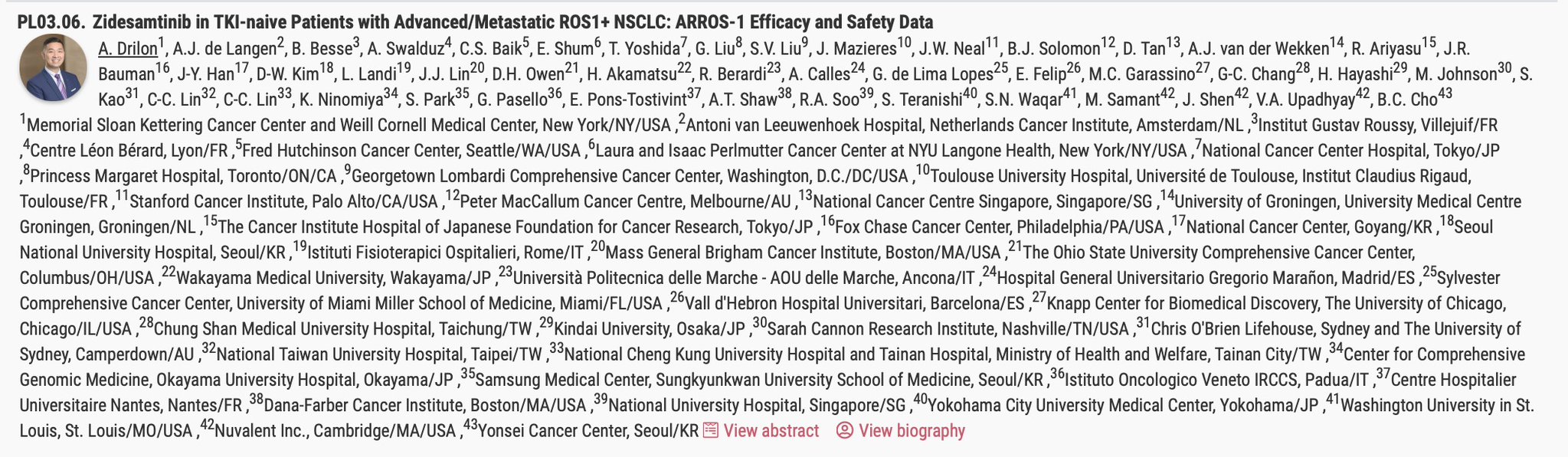

DDr. Estela Rodriguez@Latinamd

#WCLC26 When there is so much to cover that you have to add a 2nd Presidential Symposium. Here is my take on why these abstracts matter:

▶️ PL03.01: ADAURA 8-year OS landmark update of adjuvant #osimertinib
Looking at durability of benefit years after completing osimertinib and who could potentially benefit from continuation of therapy.

▶️ PL03.03: PAPILLON — More data on benefit of #amivantama

#WCLC26 When there is so much to cover that you have to add a 2nd Presidential S
375 impressions3 likes0 reposts2026-08-27
[Slide 1] WCLC 2026 WCLC 2026 SEOUL PRESIDENTIAL SYMPOSIUM 2 MONDAY, SEPTEMBER 14 PL03.01 ADAURA 8-year overall survival update of adjuvant osimertinib in resected EGFR-mutated NSCLC. PL03.03 PAPILLON Amivantamab plus chemotherapy in EGFR exon 20 insertion NSCLC. PL03.04 REZILIENT 3 Zipalertinib plus chemotherapy in EGFR exon 20 insertion NSCLC. NEXT-GENERATION PL03.06 ARROS-1 TARGETED THERAPIES. TRANSFORMING OUTCOMES Zidesamtinib in treatment-naive ROS1-positive NSCLC. ACROSS LUNG CANCER. PL03.08 DESTINY-Lung04 #WCLC26 Trastuzumab deruxtecan in first-line HER2-mutant metastatic NSCLC. IASLC INTERNATIONAL ASSOCIATION FOR THE STUDY OF LUNG CANCER
Dr Riyaz Shah @drriyazshah · 4 posts in this series · 3.2K impressions
DDr Riyaz Shah@DrRiyazShah

Looking forward to updated EGFR datasets selected for plenaries at #WCLC26. 8yOS from ADAURA; OS in PAPILLON and REZILIENT 3; The EGFR ex20ins trials will be fascinating.....TKI+chemo vs bi-sp+MAb chemo https://t.co/xIa3Jaeuin

Looking forward to updated EGFR datasets selected for plenaries at #WCLC26. 8yOS
1.4K impressions19 likes5 reposts2026-08-20
[Slide 1] PL03.01. Adjuvant Osimertinib in Resected EGFR-Mutated Stage IB-IIIA NSCLC: ADAURA Exploratory 8-year Overall Survival Landmark Update R.S. Herbst¹, M. Majem², T. John³, C. Grohé⁴, J. Wang⁵, J.W. Goldman⁶, S. Lu⁷, F.A. Shepherd⁸, T. Kato⁹, K. Aokage¹⁰, K. Laktionov¹¹, M-F. Wu¹², C. Akewanlop¹³, H. Vinh Vu¹⁴, K.H. Lee¹⁵, X. Huang¹⁶, E. Armenteros Monterroso¹⁷, H. Jiang¹⁸, Y-L. Wu¹⁹ Dartmouth Cancer Center, Lebanon/NH/USA, ²Department of Medical Oncology, Institut de Recerca Sant Pau (IR SANTPAU), Hospital de la Santa Creu i Sant Pau, Barcelona/ES ³Department of Medical Oncology and Hematology, Peter MacCallum Cancer Centre; Sir Peter MacCallum Department of Oncology, The University of Melbourne, Melbourne/AU 4Klinik für Pneumologie - Evangelische Lungenklinik Berlin Buch, Berlin/DE ⁵Cancer Hospital Chinese Academy of Medical Sciences, Beijing/CN ⁶David Geffen School of Medicine at University of California Los Angeles, Los Angeles/CA/USA, Shanghai Lung Cancer Center, Shanghai Chest Hospital, School of Medicine, Shanghai Jiao Tong University, Shanghai/CN ⁸Department of Medical Oncology and Hematology, University Health Network, Princess Margaret Cancer Centre, Toronto/ON/CA ⁹Department of Thoracic Oncology, Kanagawa Cancer Center, Yokohama/JP ¹⁰Division of Thoracic Surgery, National Cancer Center Hospital East, Chiba/JP Federal State Budgetary Institution "N. N. Blokhin National Medical Research Center of Oncology" of the Ministry of Health of the Russian Federation, Moscow/RU, 12 Department of Medical Oncology, Chung Shan Medical University Hospital, Taichung/TW 13 Division of Medical Oncology, Faculty of Medicine, Siriraj Hospital, Bangkok/TH, 14 Department Thoracic Surgery, Cho Ray Hospital, Ho Chi Minh City/VN Department of Internal Medicine, Chungbuk National University Hospital, Cheongju/KR, ⁶Biometrics, Late-stage Development, Oncology R&D, AstraZeneca, Cambridge/GB Late-stage Development, Oncology R&D, AstraZeneca, Barcelona/ES, 18 Late-stage Development, Oncology R&D, AstraZeneca, Gaithersburg/MD/USA, 19 Guangdong Lung Cancer Institute, Guangdong Provincial People's Hospital, Guangdong Academy of Medical Sciences, Southern Medical University, Guangzhou/CN View abstract o View biography PL03.03. First-line Amivantamab-chemotherapy vs Chemotherapy in NSCLC with EGFR Exon 20 Insertions: Overall Survival from PAPILLON C. Kim¹, K-J. Tang², B.C. Cho³, L. Paz-Ares⁴, S. Cheng⁵, M. Nishio⁶, M. Thiagarajan⁷, J.W. Goldman⁸, J-Y. Hung⁹, J. Mourão Dias¹⁰, S. Popat¹¹, J.K. Sabari¹², N. Girard¹³, A.S. Mansfield¹⁴, K. Park¹⁵, R.E. Sanborn¹⁶, J. Schuchard¹ N. Buyukkaramikli¹⁸, N. Perualila¹ A. Bhattacharya¹⁹ P. Barala²⁰, M. Gamil²⁰, S. Gandhy²⁰, J. Man²¹, S. Shah²⁰, C. Zhou²² ¹Division of Hematology and Oncology, Georgetown Cancer Institute, Washington/DC/USA, ²Division of Pulmonary and Critical Care Medicine, First Affiliated Hospital of Sun Yat-sen University, Guangzhou/CN ,³Division of Medical Oncology, Yonsei Cancer Center, Yonsei University College of Medicine, Seoul/KR, 4Hospital Universitario 12 de Octubre, Madrid/ES Sunnybrook Odette Cancer Centre, Toronto/ON/CA ⁶Cancer Institute Hospital, Japanese Foundation for Cancer Research, Tokyo/JP, Hospital Kuala Lumpur, Kuala Lumpur/MY ⁸David Geffen School of Medicine, University of California Los Angeles, Los Angeles/CA/USA ⁹Department of Internal Medicine, Kaohsiung Medical University Hospital, Kaohsiung Medical University, Kaohsiung/TW, 10 Barretos Cancer Hospital, Barretos/BR, Royal Marsden Hospital NHS Foundation Trust; The Institute of Cancer Research, London/GB ¹²NYU Langone Health, New York/NY/USA, 13 Institut Curie, Institut du Thorax Curie-Montsouris, Paris, France and Paris Saclay University, Université de Versailles Saint-Quentin- en-Yvelines, Versailles/FR, 14 Mayo Clinic, Rochester/MN/USA Division of Hematology-Oncology, Department of Medicine, Samsung Medical Center, Sungkyunkwan University School of Medicine, Seoul/KR, 16 Earle A. Chiles Research Institute, Providence Cancer Institute of Oregon, Portland/OR/USA 17 Johnson & Johnson, Horsham/PA/USA, 18 Johnson & Johnson, Beerse/BE, 19 Johnson & Johnson, High Wycombe/GB 20 Johnson & Johnson, Spring House/PA/USA 21 Johnson & Johnson, Raritan/NJ/USA, Shanghai East Hospital, Shanghai/CN View abstract o View biography PL03.04. Zipalertinib Plus Chemotherapy for 1st Line NSCLC with EGFR Exon 20 Insertions: Results From the Phase 3 Trial (REZILIENT 3) D.S. Tan¹, P. Danchaivijitr², Y. Shinno³, C. Ho⁴,⁵, J. Zugazagoitia⁶, T. Inoue⁷, G-W. Lee⁸, A.J.d. Langen⁹, A. Sezer¹⁰, A. Pender¹¹, C. Dooms¹², F. Cappuzzo¹³, Y. Fujiwara¹ Y. Runglodvatana A.C. Gelatti¹⁶,¹⁷,¹⁸ S. Novello K. Stencel²⁰,²¹, N. Reguart²², J. Alatorre-Alexander²³, G.G-Y. Lai²⁴, N. Girard²⁵, C. Schulz²⁶, Y. Elamin²⁷, M. Nishio²⁸, H. Yu²⁹, B. Besse³⁰, Y. He³¹, R. Sopariwala³¹ M. Liu³¹, V. Wacheck³¹, F. Benedetti³¹, J. Heymach²⁷ ¹Duke-NUS Medical School, Singapore/SG, Division of Medical Oncology, Department of Medicine, Faculty of Medicine, Siriraj Hospital, Mahidol University, Bangkok/TH, Department of Thoracic Oncology, National Cancer Center Hospital, Tokyo/JP 4University of British Columbia, Vancouver/BC/CA, ⁵BC Cancer, Vancouver/BC/CA, ⁶¹² de Octubre Comprehensive Cancer Center, Madrid/ES Department of Thoracic Oncology, Osaka International Cancer Institute, Osaka/JP, ⁸Division of Hematology-Oncology, Department of Internal Medicine, Gyeongsang National University Hospital, Gyeongsang National University College of Medicine, Jinju/KR ⁹Department of Thoracic Oncology, Netherlands Cancer Institute-Antoni van Leeuwenhoek Hospital, Amsterdam/NL ¹⁰Department of Medical Oncology, Başkent University, Adana/TR, 11 Royal Free London NHS Foundation Trust, London/GB Department of Respiratory Diseases University Hospitals KU Leuven, Leuven/BE, 13 Department of Medical Oncology 2, IRCCS, Regina Elena National Cancer Institute, Rome/IT ⁴Department of Thoracic Oncology Aichi Cancer Center, Nagoya/JP Faculty of Medicine, Vajira Hospital, Navamindradhiraj University, Bangkok/TH, ¹⁶Department of Medical Oncology, Brazilian Group of Thoracic Oncology, Porto Alegre/BR, 17 Department of Medical Oncology, Oncoclínicas Institute, São Paulo/BR, 18 Department of Medical Oncology, São Lucas Hospital, Porto Alegre/BR, 19 Department of oncology, AOU san luigi, University of Turin, Orbassano/IT 20 Polish Mother's Memorial Hospital - Research Institute, Lodz/PL 21 Eugenia and Janusz Zeyland Greater Poland Centre of Pulmonology and Thoracic Surgery, Poznan/PL Medical Oncology Department, Hospital Clínic Barcelona, Barcelona/ES, 23 Clínica de Oncología Torácica, Health Pharma Professional Research, Mexico City/MX Division of Medical Oncology, National Cancer Centre Singapore, Singapore/SG 25 Institut Curie, Paris/FR, 26 Lung Cancer Center, University Hospital Regensburg, Regensburg/DE 27 The University of Texas MD Anderson Cancer Center, Houston/TX/USA 28 Department of Thoracic Medical Oncology, The Cancer Institute Hospital of JFCR, Tokyo/JP Memorial Sloan Kettering Cancer Center, New York/NY/USA, 30 Paris Saclay University, Gustave Roussy, Villejuif/FR, 31 Taiho Oncology, Inc, Princeton/NJ/USA View abstract
DDr Riyaz Shah@DrRiyazShah

2 RCT Plenaries at #WCLC26 using B7-H3 ADC in relapsed SCLC. Looking forward to this https://t.co/Gs0Divc27k

2 RCT Plenaries at #WCLC26 using B7-H3 ADC in relapsed SCLC. Looking forward to 2 RCT Plenaries at #WCLC26 using B7-H3 ADC in relapsed SCLC. Looking forward to
718 impressions4 likes1 reposts2026-08-20
[Slide 1] PL02.03. Tam-Peli, an Anti-B7-H3 Antibody-Drug Conjugate, Versus Topotecan in Relapsed SCLC: A Randomized, Open-Label, Phase 3 Study (TAISHAN-302) D L. Zhang¹, Y. Zhao¹, H. Liu², X. Meng³, Z. Liu⁴, Y. Yu⁵, Y. Zheng⁶, L. Sun⁷, R. Yang⁸, J. Liu⁶, Y. Zhao⁹, L. Wu¹⁰, L. Yang¹¹, Z. Zhang¹², M. Li¹³, P. Zhang¹⁴, Y. Zhang¹⁵, H. Zhong¹⁶, J. Cui¹⁷, Z. Huang¹⁸, Y. Yin¹⁹, M. Li²⁰, F. Tong²¹, D. Xue²², D. Lv²³, X. Li²⁴, X. Zhang²⁴, S. Chin²⁴, J. Cai²⁴, T. Xue²⁴, Y. Huang¹, H. Zhao¹ [Slide 2] PL02.04. Risvutatug Rezetecan (a B7-H3-Directed ADC) Versus Topotecan in Relapsed SCLC: Primary Results of Phase 3 ARTEMIS-008 J. Wang¹, L. Wang², J. Duan¹, H. Liu³, Q. Wang⁴, H. Wang², L. Sun⁵, S. Huang⁶, Y. Huang⁷, F. Tong⁸, W. Zheng⁹, T. Chu¹⁰, Y. Fan¹¹, D. Huang¹², P. Zhang¹³, W. Guo¹⁴, B. Liu¹⁵, J. Zhou¹⁶, Q. Li¹⁷, Y. Dong¹⁸, Q. Liu¹⁸, M. Zhang¹⁸, X. Zhang¹⁸, J. Yu²
DDr Riyaz Shah@DrRiyazShah

Really excited to see first line randomised data in Her-2 mutant lung cancer with presentation of DESTINY long04 at #WCLC26. Pharma press release was 17Aug and presentation within a month https://t.co/As9UIsAhfZ @BTOGORG https://t.co/Rpz8AHH1Ax

Really excited to see first line randomised data in Her-2 mutant lung cancer witReally excited to see first line randomised data in Her-2 mutant lung cancer wit
678 impressions6 likes2 reposts2026-08-21
[Slide 1] PL03.08. First-Line Trastuzumab Deruxtecan (T-DXd) in Patients With Metastatic HER2 -Mutant NSCLC: DESTINY-Lung04 Primary Results J. Rotow¹, I. Okamoto², K. Goto³, M-J. Ahn⁴, P. Cheema⁵, J. Mazieres⁶, S. Novello⁷, D. Lv8, Y. Zhang⁹, A. Passaro¹⁰, E. Nadal¹¹, H-W. Ko¹², H-Y. Tu¹³, N. Menon¹⁴, E. Bria¹⁵, J. Chaft¹⁶, M. Hochmair¹⁷, M. Chaudhari¹⁸, A. van der Wekken¹⁹, P. Tomasini²⁰, S.K. Padda²¹, W.N. William Jr²², A. Vishweswaramurthy²³, Y-T. Chang²⁴, E. Schreffler²⁴, B. Li²⁴, Y-L. Wu¹³ 1D /MA/LIOA 2u [Slide 2] DESTINY-Lung04 DESTINY-Lung04 is a global, randomised, open-label, Phase III trial evaluating the efficacy and safety of Enhertu (5.4mg/kg) compared to standard of care (platinum-pemetrexed doublet chemotherapy in combination with pembrolizumab) in patients with unresectable, locally advanced or metastatic, non- squamous NSCLC harbouring a HER2 exon 19 or 20 mutation. Patients were randomised 1:1 to receive either Enhertu or standard of care. Randomisation was stratified by smoking history and presence or history of brain metastasis. The primary endpoint of DESTINY-Lung04 is PFS as assessed by blinded independent central review (BICR). Secondary endpoints include OS, investigator-assessed PFS, overall response rate and duration of response as assessed by BICR and investigator, pharmacokinetics and safety. DESTINY-Lung04 enrolled 454 patients across multiple sites in Asia, Europe and North America. For more information about the trial, visit ClinicalTrials.gov.
DDr Riyaz Shah@DrRiyazShah

Updated ARROS-1 at #WCLC26 will be welcome data...... reimbursement in ROS1 definitely lagging behind in UK (crizo/entrectinib). Looking forward to access to the next gen of ROS1 TKI @BTOGORG https://t.co/voeuqmppiA

Updated ARROS-1 at #WCLC26 will be welcome data...... reimbursement in ROS1 defi
470 impressions3 likes2 reposts2026-08-20
[Slide 1] PL03.06. Zidesamtinib in TKI-naive Patients with Advanced/Metastatic ROS1+ NSCLC: ARROS-1 Efficacy and Safety Data A. Drilon¹, A.J. de Langen², B. Besse³, A. Swalduz⁴, C.S. Baik⁵, E. Shum⁶, T. Yoshida⁷, G. Liu⁸, S.V. Liu⁹, J. Mazieres¹ J.W. Neal¹, B.J. Solomon¹² D. Tan¹³, A.J. van der Wekken R. Ariyasu¹⁵ J.R. Bauman¹⁶, J-Y. Han¹⁷, D-W. Kim¹⁸, L. Landi¹⁹, J.J. Lin²⁰, D.H. Owen²¹, H. Akamatsu²² R. Berardi²³, A. Calles²⁴, G. de Lima Lopes²⁵, E. Felip²⁶, M.C. Garassino²⁷, G-C. Chang²⁸, H. Hayashi²⁹, M. Johnson³⁰, S. Kao³¹, C-C. Lin³², C-C. Lin³³, K. Ninomiya³⁴, S. Park³⁵, G. Pasello³⁶, E. Pons-Tostivint³⁷, A.T. Shaw³⁸, R.A. Soo³⁹, S. Teranishi⁴⁰, S.N. Waqar⁴¹, M. Samant⁴², J. Shen⁴², V.A. Upadhyay⁴², B.C. Cho⁴³ ¹Memorial Sloan Kettering Cancer Center and Weill Cornell Medical Center, New York/NY/USA, 2 Antoni van Leeuwenhoek Hospital, Netherlands Cancer Institute, Amsterdam/NL 3nstitut Gustav Roussy, Villejuif/FR Centre Léon Bérard, Lyon/FR Fred Hutchinson Cancer Center, Seattle/WA/USA, Laura and Isaac Perlmutter Cancer Center at NYU Langone Health, New York/NY/USA, National Cancer Center Hospital, Tokyo/JP ⁸Princess Margaret Hospital, Toronto/ON/CA, 9 Georgetown Lombardi Comprehensive Cancer Center, Washington, D.C./DC/USA, 10 Toulouse University Hospital, Université de Toulouse, Institut Claudius Rigaud, Toulouse/FR, 11 Stanford Cancer Institute, Palo Alto/CA/USA, 12 Peter MacCallum Cancer Centre, Melbourne/AU, 13 National Cancer Centre Singapore, Singapore/SG 14 University of Groningen, University Medical Centre Groningen, Groningen/NL ¹⁵The Cancer Institute Hospital of Japanese Foundation for Cancer Research, Tokyo/JP, 16 Fox Chase Cancer Center, Philadelphia/PA/USA, 17 National Cancer Center, Goyang/KR, 18 Seoul National University Hospital, Seoul/KR, 19 Istituti Fisioterapici Ospitalieri, Rome/IT 20 Mass General Brigham Cancer Institute, Boston/MA/USA, 21 The Ohio State University Comprehensive Cancer Center, Columbus/OH/USA, 22 Wakayama Medical University, Wakayama/JP 23 Università Politecnica delle Marche AOU delle Marche, Ancona/IT 24 Hospital General Universitario Gregorio Marañon, Madrid/ES 2⁵Sylvester Comprehensive Cancer Center, University of Miami Miller School of Medicine, Miami/FL/USA ²⁶Vall d'Hebron Hospital Universitari, Barcelona/ES Knapp Center for Biomedical Discovery, The University of Chicago, Chicago/IL/USA 28 Chung Shan Medical University Hospital, Taichung/TW, 29 Kindai University, Osaka/JP, 30 Sarah Cannon Research Institute, Nashville/TN/USA, 31 Chris O'Brien Lifehouse, Sydney and The University of Sydney, Camperdown/AU 32 National Taiwan University Hospital, Taipei/TW 33 National Cheng Kung University Hospital and Tainan Hospital, Ministry of Health and Welfare, Tainan City/TW 34 Center for Comprehensive Genomic Medicine, Okayama University Hospital, Okayama/JP, 35 Samsung Medical Center, Sungkyunkwan University School of Medicine, Seoul/KR, 36 Istituto Oncologico Veneto IRCCS, Padua/IT 37 Centre Hospitalier Universitaire Nantes, Nantes/FR 38 Dana-Farber Cancer Institute, Boston/MA/USA 39 National University Hospital, Singapore/SG, ⁴Yokohama City University Medical Center, Yokohama/JP 41 Washington University in St. Louis, St. Louis/MO/USA, Nuvalent Inc., Cambridge/MA/USA, 43 Yonsei Cancer Center, Seoul/KR View abstract 30 View biography
VJ Oncology @vjoncology · 4 posts in this series · 1.5K impressions
DDr Amol Akhade@SuyogCancer

🚨 Landmark development in ES-SCLC!

Phase 3 DeLLphi-305 has shown a statistically significant and clinically meaningful OS benefit with tarlatamab (IMDELLTRA) + durvalumab versus durvalumab alone as 1L maintenance after platinum–etoposide + durvalumab.

PFS and ORR also improved.

A potentially important new chapter in ES-SCLC maintenance therapy.

Looking forward to full data @StephenVLiu @Tejas

🚨 Landmark development in ES-SCLC!

Phase 3 DeLLphi-305 has shown a statisticall🚨 Landmark development in ES-SCLC!

Phase 3 DeLLphi-305 has shown a statisticall
11.6K impressions88 likes22 reposts2026-09-08
[Slide 1] AMGEN IMDELLTRA® IN COMBINATION WITH IMFINZI ® DEMONSTRATED LANDMARK IMPROVEMENT IN OVERALL SURVIVAL IN FIRST-LINE EXTENSIVE STAGE SMALL CELL LUNG CANCER Phase 3 DeLLphi-305 Study Delivered Highly Significant and Clinically Meaningful Overall Survival Benefit Versus Durvalumab Alone Study Also Met Secondary Progression- Free Survival and Objective Response Rate Endpoints [Slide 2] DeLLphi-305: Durvalumab ± Tarlatamab 1L Maintenance International, open-label, randomized phase III study Adults with ES-SCLC who Tarlatamab IV Q2W + completed 3-4 cycles of Durvalumab IV Q4W platinum/etoposide with concurrent (n = 275) durvalumab as first-line tx without disease progression no symptomatic CNS mets Durvalumab IV Q4W ECOG PS 0-1 (n = 275) Primary endpoint: Overall Survival Secondary endpoints: PFS, ORR, DCR, DoR, TTP, safety, QoL
UUğur Özkerim@UOzkerim

WCLC 2026 is getting closer! 🇰🇷🫁

Eight studies from the Presidential Symposia that I’ll be watching closely in Seoul.

Which one are you most excited about?

#WCLC2026 @IASLC
@OncoAlert @GlopesMd @weoncologists @MedwatchKate @StephenVLiu @ManuelDomine @MedwatchKate @RManochakian

WCLC 2026 is getting closer! 🇰🇷🫁

Eight studies from the Presidential Symposia t
7.3K impressions53 likes19 reposts2026-08-20
[Slide 1] IASLC 2026 World Conference 2026 on Lung Cancer WCLC 2026 Uniting Asia, Inspiring the World September 12-15, 2026 Seoul, Korea PRESIDENTIAL SYMPOSIUM 1 SUNDAY, SEPTEMBER 13, 2026 8:00 AM KST 01 PL02.01 SWOG S1827 MAVERICK Phase III Trial of Brain MRI Surveillance +/- Prophylactic Cranial Irradiation for Small-Cell Lung Cancer 02 PL02.03 TAISHAN-302 Tam-Peli, an Anti-B7-H3 Antibody-Drug Conjugate, Versus Topotecan in Relapsed SCLC: A Randomized, Open-Label, Phase 3 Study 03 PL02.04 ARTEMIS-008 Risvutattug Rezetecan (a B7-H3-Directed ADC) Versus Topotecan in Relapsed SCLC: BRS Primary Results of Phase 3 04 PL02.06 EVOKE-03 / KEYNOTE D46 Primary Results from Phase 3: Sacituzumab Govitecan + Pembrolizumab in PD-L1 TPS >50% Metastatic NSCLC PRESIDENTIAL SYMPOSIUM 2 MONDAY, SEPTEMBER 14, 2026 8:00 AM KST 01 PL03.01 ADAURA Adjuvant Osimertinib in Resected EGFR-Mutated Stage IB-IIIA NSCLC: ADAURA Exploratory 8-Year Overall Survival Landmark Update 02 PL03.03 DOI PAPILLON Exon First-line Amivantamab-Chemotherapy vs Chemotherapy 20 in NSCLC with EGFR Exon 20 Insertions: Overall Survival Results from PAPILLON 03 PL03.04 REZILIENT 3 Zipalertinib Plus Chemotherapy for 1st Line NSCLC with EGFR Exon 20 Insertions: Results from the Phase 3 Trial (REZILIENT 3) 04 PL03.06 ARROS-1 Zidesamtinib in TKI-naïve Patients with Advanced/Metastatic ROS1+ NSCLC: ARROS-1 Efficacy and Safety Data See you in Seoul! wclc2026.org @IASLC in IASLC #WCLC2026
DDr Amol Akhade@SuyogCancer

And now it shows OS benefit too .
Harmoni 2 OS Press release.

King Keytruda is having serious challenger ( with all the caveats of the trial - control arm , censoring)

Looking forward to full data #WCLC26 @IASLC https://t.co/tjvrfX4hZn https://t.co/AKI2zIwy5r

And now it shows OS benefit too .
Harmoni 2 OS Press release.  

King Keytruda iAnd now it shows OS benefit too .
Harmoni 2 OS Press release.  

King Keytruda i
7.3K impressions28 likes9 reposts2026-09-03
[Slide 1] Sep 2, 2026 5:41 PM Eastern Daylight Time Ivonescimab Monotherapy Demonstrates Statistically Significant Overall Survival Benefit Compared to Pembrolizumab Monotherapy in PD-L1- Positive Advanced NSCLC in HARMONi-2 Study Conducted by Akeso in China [Slide 2] Summit is Conducting HARMONi-7 in Patients with PD-L1 High-Expressing NSCLC MIAMI--(BUSINESS WIRE)--Summit Therapeutics Inc. (NASDAQ: SMMT) today noted that its partner Akeso Inc. announced positive overall survival (OS) results from the randomized, double-blind Phase III HARMONi-2 study evaluating ivonescimab monotherapy against pembrolizumab monotherapy in patients with locally advanced or metastatic non- small cell lung cancer (NSCLC) whose tumors have positive PD-L1 expression. HARMONi-2 (AK112-303) is a single-region, multi-center Phase III study conducted in China and sponsored by Akeso, with all relevant data exclusively generated, managed, and analyzed by Akeso. In this preplanned analysis of OS, a secondary endpoint in the HARMONi-2 study, Akeso reported that ivonescimab monotherapy demonstrated a statistically significant improvement compared to pembrolizumab monotherapy. Results from this HARMONi-2 analysis are scheduled to be presented at an upcoming medical conference.
JJose Fernando Moura, PhD@FernandoOnco

WCLC 2026: os 40 estudos de câncer de pulmão que estou de olho 👀 @GBOT_Alerta @IASLC #wclc26 https://t.co/avHjddTWok

WCLC 2026: os 40 estudos de câncer de pulmão que estou de olho 👀 @GBOT_Alerta  @WCLC 2026: os 40 estudos de câncer de pulmão que estou de olho 👀 @GBOT_Alerta  @WCLC 2026: os 40 estudos de câncer de pulmão que estou de olho 👀 @GBOT_Alerta  @WCLC 2026: os 40 estudos de câncer de pulmão que estou de olho 👀 @GBOT_Alerta  @
3.9K impressions49 likes13 reposts2026-08-22
[Slide 1] WCLC 2026 TOP 10 01 NSCLC EARLY ESTUDOS Doença ressecável e estágio III com intenção curativa 1 OA04.02 IMpower030 Final Analysis Atezolizumab + quimioterapia perioperatória em NSCLC estágio II-IIIB. 2 Fase III em NSCLC EGFR-mutado: OA04.01 Adjuvant Gefitinib + Chemotherapy gefitinib + QT VS QT. 3 M006.01 NAUTIKA1 - Neoadjuvant Alectinib Alectinib neoadjuvante em ALK+ ressecável (IB-IIIB). 4 OA04.03 NAUTIKA1 Divarasib KRAS G12C como alvo no cenário neoadjuvante. 5 OA09.03 JS207 + Chemotherapy Bispecifico PD-1/VEGF em estágio III irressecável. 6 M006.03 BNT116 mRNA Vaccine Vacina mRNA + cemiplimab + carbo/paclitaxel neoadjuvante. 7 M006.04 Chemo-IO vs EGFR-TKI Estratégias neoadjuvantes no EGFRm com TP53 como potencial biomarcador. 8 M006.08 SBRT + Chemoimmunotherapy Resultados de longo prazo da estratégia neoadjuvante multimodal. 9 PT1.08.04 ctDNA + TCR Diversity Seleção molecular/imunológica para consolidação no estágio III. MAIOR POTENCIAL 10 M006.02 Firmonertinib EGFR-TKI em estágio I EGFRm e DE IMPACTO múltiplos primários. Estudos selecionados pré-congresso com base nos abstracts disponíveis ate 22/08/2026. [Slide 2] WCLC 2026 TOP 10 02 NSCLC ADVANCED ESTUDOS Doença avançada/metastática - novas drogas e combinações 1 Inibidor de KRAS G12D em OA02.01 GFH375 / VS-7375 NSCLC avançado. 2 QA12.01 QLC1101 Segundo programa de KRAS G12D com dados de eficácia e segurança. 3 OA14 Pumitamig + Elfetabart Drozuntecan PD-L1/VEGF bispecifico + B7-H3 ADC. 4 OA14 RC148 / ABBV-1480 + Chemotherapy PD-1/VEGF bispecífico na primeira linha. 5 OA10.01 Expansão global de dose em Iza-Bren NSCLC metastático EGFR-mutado. 6 OA12.02 HS-10370 + Adebrelimab + QT Inibição de KRAS G12C já na primeira linha. 7 Amivantamab + lazertinib + OA12.03 AMIGO-1 pemetrexed sem platina. 8 M007.04 PRESERVE-003 Gotistobart Gotistobart VS docetaxel após PD-(L)1 no NSCLC escamoso. 9 OA10.02 SYS6010 + Enlonstobart Nova combinação em NSCLC sem alteração genômica acionável. MAIOR POTENCIAL 10 M007.06 Opamtistomig + Chemotherapy Bispecifico PD-L1 X 4-1BB DE IMPACTO em primeira linha. [Slide 3] WCLC 2026 TOP 10 03 SCLC LIMITED ESTUDOS Doença limitada (estádio I-III) 1 Estágio IIB-IIIB N2, com cirurgia M015.03 Neoadjuvant Serplulimab + EP após tratamento sistêmico. 2 P3.288 Serplulimab + Concurrent CRT Quimiorradioterapia concomitante seguida de manutenção. 3 - Adebrelimab + QT + Individualized RT Integração de imunoterapia e radioterapia individualizada. 4 Neoadjuvant Adebrelimab + EP Estratégia neoadjuvante - seguida de cirurgia. 5 M015.01 CXCL9+ DC / CXCR3+ Tregs Mecanismos imunológicos associados à resistencia à neoadjuváncia. 6 - MRD Dynamics Dinâmica de doença residual minima no SCLC neoadjuvante. 7 - Surgery After Immunologic Downstaging Papel da cirurgia após downstaging induzido por terapia sistêmica. 8 - Individualized RT + IO Novas estratégias para integração de radioterapia e imunoterapia. 9 Biomarker Selection for 10 + CRT Busca por seleção biológica no - tratamento multimodal. MAIOR POTENCIAL DE IMPACTO 10 ASTRUM-020 Programa pivotal a acompanhar no desenvolvimento do LS-SCLC. [Slide 4] WCLC 2026 TOP 10 04 SCLC EXTENSIVE ESTUDOS Doença extensa (estágio IV) 1 Administração subcutânea do M015.07 DeLLphi-308 SC Tarlatamab DLL3 T-cell engager. 2 ABBV-706 ADC dirigido a SEZ6, novo alvo de grande interesse no SCLC. 3 M015.02 QLC5508 + QL1706 / QL2107 ADC + imunoterapia em primeira linha. B7-H3 ADC + PD-1 4 M015.04 YL201 + Serplulimab na primeira linha. 5 Analise de manutenção P3.317 ASTRUM-005 Maintenance com serplulimab. 6 CAR-T autólogo dirigido a DLL3 OA05.01 LB2102 - DLL3 CAR-T e armado com dnTGFBR2. 7 Combinação racional baseada em M015.06 ADC + ATR Inhibition / SLFN11 dano ao DNA e biomarcador. 8 M015.05 B7-H3 Expression Expressão e valor prognóstico de B7-H3 no SCLC. 9 M015.08 cfDNA Methylation Biomarcador de imunoterapia, incluindo pacientes com metástases hepáticas. MAIOR POTENCIAL 10 M015.09 CT Biomarkers for Tarlatamab Toxicity Predição de CRS/ICANS por DE IMPACTO biomarcadores de imagem.
IInternational Lung Cancer Summit@LungSummit

Our Top 10 #LungCancer abstracts for #WCLC26 in Seoul.
Hand-picked, with times, rooms and presenters. Eight sit in the two Presidential Symposia, on Sun 13 and Mon 14 Sep.

Import them all to your calendar with one click: https://t.co/zxTqpRv1EB

Presenting: @g_mountzios @DrRoyHerbst @chulkimMD @alexdrilon @JuliaRotow @MartinReck2 @danieltanmd with colleagues in Beijing, Guangzhou and Los Angeles

Our Top 10 #LungCancer abstracts for #WCLC26 in Seoul.
Hand-picked, with times,
2.6K impressions22 likes13 reposts2026-09-04
[Slide 1] IASLC 2026 WORLD CONFERENCE ON LUNG CANCER WCLC 2026 TOP 10 ABSTRACTS SEOUL COEX 12-15 SEP 2026 ALL TIMES KST SUN 13 SEP 2026 PL02.03 TAISHAN-302: TAM-PELI vs TOPOTECAN IN RELAPSED SCLC LI ZHANG 08:59-09:09 PLENARY, HALL D2, 3F PL02.04 ARTEMIS-008: RISVUTATUG REZETECAN vs TOPOTECAN, RELAPSED SCLC JIE WANG 09:11-09:21 PLENARY, HALL D2, 3F PL02.06 EVOKE-03 / KEYNOTE-D46: SACITUZUMAB GOVITECAN + PEMBRO, PD-L1 ≥50% GIANNIS MOUNTZIOS 09:53-10:03 PLENARY, HALL D2, 3F OA04.02 MDT-BRIDGE: NEOADJUVANT DURVALUMAB + CHEMO, STAGE IIB-IIIB NSCLC MARTIN RECK 15:27-15:37 AUDITORIUM, 3F OA05.01 DeLLphi-309: TARLATAMAB EXTENDED-INTERVAL DOSING IN SCLC JONATHAN GOLDMAN 16:47-16:57 ROOM 103, GRAND BALLROOM, 1F MON 14 SEP 2026 PL03.01 ADAURA: ADJUVANT OSIMERTINIB, 8-YEAR os LANDMARK UPDATE ROY HERBST 08:17-08:27 PLENARY, HALL D2, 3F PL03.03 PAPILLON: AMIVANTAMAB-CHEMO os IN EGFR EXON 20 INSERTIONS CHUL KIM 08:49-08:59 PLENARY, HALL D2, 3F PL03.04 REZILIENT 3: ZIPALERTINIB + CHEMO, 1L EGFR EXON 20 DANIEL TAN 09:01-09:11 PLENARY, HALL D2, 3F PL03.06 ARROS-1: ZIDESAMTINIB IN TKI-NAIVE ROS1+ NSCLC ALEXANDER DRILON 09:38-09:48 PLENARY, HALL D2, 3F PL03.08 DESTINY-Lung04: FIRST-LINE T-DXd IN HER2-MUTANT NSCLC JULIA ROTOW 10:10-10:20 PLENARY, HALL D2, 3F SELECTED & PROVIDED BY DR. MEHRPOUYA MOBIN All ten in one calendar file - link in the post. LUNGSUMMIT.ORG
Ranked by reach

Most-Discussed Trials

The trials global KOLs are talking about most ahead of WCLC 2026, ranked by the reach of the posts naming each one. Click a trial to read the posts behind it.

1HARMONi-2View full trial page →67.2K impressions58.4K primary · 8.8K preview680 engagements14 posts · 11 voices
MMasahiro TORASAWA, MD. PhD.@M_Torasawa

🔥 The detailed OS results from HARMONi-2, comparing ivonescimab with pembrolizumab in first-line PD-L1-positive advanced NSCLC, will be presented at #WCLC26.

📍 OA14.01
🗓 Sep 15, 12:32–12:42 (KST)

Definitely one to watch 👀 https://t.co/gKZHEXfFcB https://t.co/8EbSbL1LpU

🔥 The detailed OS results from HARMONi-2, comparing ivonescimab with pembrolizum
4.9K impressions25 likes7 reposts2026-09-03
[Slide 1] OA14.01. Overall Survival Analysis From HARMONi-2: Ivonescimab VS Pembrolizumab as First-Line Treatment for PD- L1-Positive NSCLC J Tue, Sep 15 12:32 to 12:42 10m (Asia/Seoul) View time conflicts Add to schedule Click Here to Go Back to the Main Session OA14. The Breakthrough Immunotherapy for Advanced NSCLC J Tue, Sep 15 12:30 to 13:45 1h 15m (Asia/Seoul) Auditorium, 3F
JJacob Plieth@JacobPlieth

So here's how I see $SMMT Harmoni-2, in expectation of the #WCLC26 reveal of "stat sig" OS numbers on 15 Sep https://t.co/iWtQiSE5nv

So here's how I see $SMMT Harmoni-2, in expectation of the #WCLC26 reveal of "st
4.7K impressions12 likes1 reposts2026-09-03
[Slide 1] Date Reason for disclosure OS hazard ratio P value May 2024 ASCO, positive hit on PFS None disclosed NA Apr 2025 NMPA request, at 39% maturity 0.777 Not stat sig, failed to clear 0.0001 threshold Sep 2026 World Lung, interim analysis Abstract under embargo Statistically significant (threshold not disclosed) TBC Final analysis 0.774 expected 0.0207 threshold
Also named in 2 session previews — see the Top 10s & Previews section
6MAVERICKView full trial page →46.4K impressions15.8K primary · 30.6K preview217 engagements10 posts · 9 voices
DDrew Moghanaki@DrewMoghanaki

The PCI question has been answered in a contemporary phase III RCT. Final results remain embargoed until 9/13. #WCLC26 @PDBrownOnc @bslotman https://t.co/ABMuPK4xCV

The PCI question has been answered in a contemporary phase III RCT. Final result
11.3K impressions104 likes28 reposts2026-08-20
[Slide 1] PL02. Presidential Symposium 1 Including Lectureship Award Presentations 4 Sunday, September 13, 2026 at 8:00 AM KST / UTC +9 - 2h 30m Plenary, Hall D2, 3F Presentations in this session Q&A PL02.01. SWOG S1827 MAVERICK: Phase III Trial of Brain MRI Surveillance +/- Prophylactic Cranial Irradiation for Small- Cell Lung Cancer C.G. Rusthoven¹,², M.W. Redman³, P.D. Brown⁴, J.S. Wefel⁵, J. Miao⁶, M-H. Hsieh³, J. Honce¹, J.M. Unger³, N.L. Henry⁷, A.A. Patel⁸, D.Y. Gelblum⁹, J. Greenland¹⁰ D. Moghanaki¹¹, T. À Biswas¹², L. Alder¹³, N.S. McCall¹⁴, J. Gray¹⁵, K. Kelly¹⁶
Also named in 7 session previews — see the Top 10s & Previews section
8DeLLphi-30940.8K impressions3.4K primary · 37.4K preview94 engagements6 posts · 5 voices
LLaura Alder, MD@LauraAlderMD

🚨 Who's ready for SCLC updates at #WCLC26?! 🫁
1️⃣ Dr J͟o͟n͟a͟t͟h͟a͟n͟ ͟G͟o͟l͟d͟m͟a͟n͟ presents DeLLphi-309: randomized Phase 2 of tarlatamab extended-interval dosing in SCLC. 💉 Less-frequent dosing could ease treatment burden and "time toxicity," keeping efficacy while giving patients back more days off therapy.
2️⃣ Dr A͟l͟b͟e͟r͟t͟o͟ ͟C͟h͟i͟a͟p͟p͟o͟r͟i͟ on LB2102: a dnTGFBR2-armored

🚨 Who's ready for SCLC updates at #WCLC26?! 🫁
1️⃣ Dr J͟o͟n͟a͟t͟h͟a͟n͟ ͟G͟o͟l͟d͟m
3.4K impressions52 likes20 reposts2026-08-24
[Slide 1] OA05. From Discovery to Practice in SCLC: Redefining Standards of Care and the Next Generation of Targeted Therapies - Sunday, September 13, 2026 at 4:45 PM KST / UTC +9 1h 15m Room 103, Grand Ballroom, 1F Description: This oral session presents the highest-rated abstracts in small cell lung cancer and neuroendocrine tumors, with a focus on practice-changing Phase 3 trials and novel targeted therapies including DLL3-directed bispecifics and CAR-T cell therapy, and B7-H3-targeted antibody-drug conjugates. Presentations in this session Chair Sofia Baka, Medical Oncologist MD, MSc, PhD, MEDICAL ONCOLOGY/CLINICAL TRIAL DEPARTMENT, INTERBALKAN MEDICAL CENTER, THESSALONIKI, Greece 4:45 PM- 4:46 PM 1m View biography Chair Rosalyn Juergens, MD PhD, Oncology, McMaster University, Hamilton, ON, Canada 4:46 PM 4:47 PM 1m jo View biography OA05.01. Tarlatamab Extended-Interval Dosing Regimens in Patients With SCLC: The Randomized Phase 2 DeLLphi-309 Study J. Goldman¹, S.I. Rothschild²,³, I. Korantzis⁴, B.C. Cho⁵, S. Arulananda⁶, 0. Yazici7, M. Besiroglu8, A. Lugini9, S.Y. Lee¹⁰, L. Paz-Ares¹¹, M. Wang¹², D. Huang¹³, G. Mountzios¹⁴, H. Yokouchi¹⁵, T. Larson¹⁶, E. Selfridge¹ M. Minocha¹⁷, E. Benjamin¹⁷, S. Huang¹⁷, P. Rocha¹⁸ University of California Los Angeles, Los Angeles/CA/USA 2Kantonsspital Baden, Baden/CH 3University of Basel, Basel/CH ⁴European Interbalkan Medical Center, Thessaloniki/GR, ⁵Severance Hospital Yonsei University Health System, Seoul/KR, Monash Health, Clayton/AU Gazi Universitesi Saglik Arastirma ve Uygulama Merkezi Gazi Hastanesi, Ankara/TR, ⁸Goztepe Prof. Dr. Suleyman Yalcin Sehir Hastanesi, Istanbul/TR Azienda Ospedaliera San Giovanni Addolorata, Rome/IT, 10Kyungpook National University Chilgok Hospital, Daegu/KR, Hospital Universitario 12 de Octubre, Madrid/ES, Peking Union Medical College Hospital, Beijing/CN, 13 Tianjin Medical University Cancer Institute and Hospital, Tianjin/CN, Henry Dunant Hospital Center, Athens/GR, National Hospital Organization Hokkaido Cancer Center, Hokkaido/JP, 6Health Partners Cancer Center at Regions Hospital, St. Paul/MN/USA 17 Amgen Inc., Thousand Oaks/CA/USA, 18 University Hospital Vall Hebron, Barcelona/ES 4:47 PM- 4:57 PM 10m View abstract Jo View biography OA05.02. Phase 1 Study of LB2102, a dnTGFBR2-armored DLL3-targeted Autologous CAR-T Cell Therapy, in Subjects With Relapsed or Refractory SCLC or LCNEC A. Chiappori¹, Z. Hao2, B. Creelan¹, R. Munker2, P. Schwarzenberger³, N. Patel³, S. Vahora3, C. Davis3, C. Wang3, J. Zhang3, L. Xin3, J. Zhu³, Y. He³, A. Schoenfeld⁴, J. Sands5 Moffitt Cancer Center, Tampa/FL/USA 2Markey Cancer Center, University of Kentucky, Lexington/KY/USA Legend Biotech USA Inc, Somerset/NJ/USA 4Memorial Sloan Kettering Cancer Center, New York City/NY/USA 5Dana Farber Cancer Institute, Boston/MA/USA 4:57 PM- 5:07 PM 10m View abstract of View biography OA05.03. Epigenetic Dysregulation Permits E2F1 Activation-Mediated Neuroendocrine Transformation inEGFR-Mutant Lung Adenocarcinoma Z. Xia¹, J. Li¹, Q. Sun¹, R. Yin1,2,3 1 Jiangsu Key Laboratory of Innovative Cancer Diagnosis & Therapeutics, Jiangsu Cancer Hospital & Nanjing Medical University Affiliated Cancer Hospital & Jiangsu Institute of Cancer Research, Nanjing/CN 2Department of Thoracic Surgery, Jiangsu Cancer Hospital & Nanjing Medical University Affiliated Cancer Hospital & Jiangsu Institute of Cancer Research, Nanjing/CN 3Collaborative Innovation Center for Cancer Personalized Medicine, Jiangsu Key Lab of Cancer Biomarkers, Prevention and Treatment, Nanjing Medical University, Nanjing/CN 5:07 PM- 5:17 PM 10m View abstract JO View biography OA05.04. Discussant H. Akamatsu; Nagoya City University, Nagoya, JAPAN. L 5:17 PM- 5:27 PM 10m of View biography
Also named in 5 session previews — see the Top 10s & Previews section
10ARROS-1View full trial page →36.3K impressions30 primary · 36.3K preview1 engagements10 posts · 9 voices
11DESTINY-Lung04preview onlyView full trial page →30.5K impressionsno primary data posted yet4 posts · 4 voices
Also named in 4 session previews — see the Top 10s & Previews section
12SOHO-01View full trial page →22.9K impressions17.8K primary · 5.1K preview240 engagements12 posts · 11 voices
OOncology Brothers@OncBrothers

Sevabirtinib is now @FDA ✅ in 1L HER2/ERBB2 TKD mutated mNSCLC based off SOHO-01:

- ORR: 75%
- 73% of responding pts had DOR ≥ 6 months and 38% had ≥ 12 months
- AEs: Diarrhea, LFTs, and Pneumonitis

#Lcsm #WCLC26 #OncTwitter @OncUpdates https://t.co/Uj9jlKnE20

Sevabirtinib is now @FDA ✅ in 1L HER2/ERBB2 TKD mutated mNSCLC based off SOHO-01
5K impressions17 likes12 reposts2026-09-09
[Slide 1] SOHO-01 study design (NCT05099172) + EXPANSION AND EXTENSION DOSE Cohorts of patients with HER2 mutationsᵇ ESCALATION To evaluate the safety, tolerability, and efficacy, and to characterize AND BACKFILL the pharmacokinetics, of sevabertinib at the RDE PRIMARY ENDPOINT Patients with advanced NSCLC with HER2 or (extension phase) EGFR mutations D Previously treated, naïve to HER2-targeted therapies ORR per RECIST v1.1 by BICR Patients were treated with 20 mg E Previously treated with HER2-targeted ADCs SECONDARY increasing oral doses of BID ENDPOINTS sevabertinib to identify the RDE (5 QD dose levels and F Naïve to systemic therapy for advanced disease DoR, DCR, and PFS 3 BID dose levels, from (per RECIST v1.1) by 10 mg QD to 40 mg BID) BICR and investigator assessment Safety and tolerability Patients from dose escalation / backfill treated with 20 mg BID and who met the same eligibility criteria were combined for statistical analysis, Cohorts of patients with EGFR mutations are not shown Presented by: Xiuning Le, MD, PhD MD Anderson Cancer Center BIRLN Content of this presentation is copyright and responsibility of the author. Permission is required for re-use 2025 ESMO congress
EElvina Almuradova@Dr_ElvinaA

FDA approval expanded for sevabertinib in HER2 (ERBB2) TKD–mutant advanced NSCLC — now including first-line treatment.

SOHO-01: ORR 75%
• 73% of responders: DOR ≥6 mo
• 38%: DOR ≥12 mo

A new targeted 1L option for HER2-mutant NSCLC. @Larvol @OncoAlert https://t.co/5sMHe6HKGc

FDA approval expanded for sevabertinib in HER2 (ERBB2) TKD–mutant advanced NSCLC
359 impressions7 likes1 reposts2026-09-09
[Slide 1] FDA grants accelerated Feedback approval to sevabertinib foi locally advanced or metastatic non-squamous non-small cell lung cancer On September 9, 2026, the Food and Drug Administration granted accelerated approval to sevabertinib (Hyrnuo, Bayer Healthcare Pharmaceuticals Inc.), a kinase inhibitor, for adult patients with locally advanced or metastatic non-squamous non-small cell lung cancer (NSCLC) whose tumors have HER2 (ERBB2) tyrosine kinase domain (TKD)
Also named in 1 session preview — see the Top 10s & Previews section
13NAUTIKA1View full trial page →20.5K impressions4K primary · 16.5K preview51 engagements6 posts · 3 voices
UUğur Özkerim@UOzkerim

@OncoAlert @weoncologists @GlopesMd @OpenMedKate WCLC 2026 | NAUTIKA1 🇰🇷
Neoadjuvant KRAS G12C targeting is moving into early-stage NSCLC.

Divarasib showed promising pathological activity without compromising the feasibility of surgery.
@OncoAlert @weoncologists @GlopesMd @ManuelDomine @OpenMedKate https://t.co/epVqf6tpsf

@OncoAlert @weoncologists @GlopesMd @OpenMedKate WCLC 2026 | NAUTIKA1 🇰🇷
Neoadju
769 impressions7 likes3 reposts2026-09-06
[Slide 1] WCLC 2026 ABSTRACT HIGHLIGHT WCLC 2026 SCIENCE PEOPLE NAUTIKA1 SEPTEMBER 12-15, 2026 SEOUL, REPUBLIC OF KOREA BETTER LIVES IASLC Neoadjuvant Divarasib in Resectable KRAS G12C+ NSCLC Phase II Single-arm n=20 NCT04302025 STUDY DESIGN Adjuvant chemotherapy PD-L1 <1% divarasib or divarasib monotherapy Stage IB-IIIB Neoadjuvant Surgery (up to 3 years) or standard of care (KRAS G12C+) divarasib (n=19) NSCLC 400 mg daily 1 patient withdrew Adjuvant chemotherapy n=20 (8 weeks) from surgery PD-L1 ≥1% atezolizumab or standard of care KEY RESULTS Clinical Pathological MPR pOR Radiographic ORR downstaging nodal downstaging RO resection rate 37% 42% 16% 55% 40% 100% (7/19) (in operated patients) (8/20) Downstaging to NO No intraoperative 32% (6/19) complications SAFETY BOTTOM LINE Neoadjuvant divarasib (n=20) Adjuvant divarasib (n=5) Neoadjuvant divarasib demonstrated Most common AEs (all grades) Most common AE (all grades) feasibility, manageable safety, and Diarrhea 80% Mostly Grade 1-2 Diarrhea 80% (4/5) promising antitumor activity in resectable Nausea 75% KRAS G12C+ NSCLC, with further No discontinuations No discontinuations Constipation 35% due to AEs due to AEs evaluation planned in the phase III Krascendo 3 study. INTERNATIONAL ASSOCIATION FOR THE STUDY OF LUNG CANCER #WCLC2026 #LungCancer #IASLC
OOncoAlert@OncoAlert

The OncoAlert #WCLC26 Top 10 Deep Dive! Abstract to be presented Next week

MO06.01 — NAUTIKA1: Primary Analysis of Neoadjuvant Alectinib in Resectable Stage IB-IIIB ALK+ NSCLC

NAUTIKA1: Primary Analysis of Neoadjuvant Alectinib in Resectable Stage IB-IIIB ALK+ NSCLC

🫁 Phase II study: 48 patients with resectable stage IB–IIIB ALK+ NSCLC received neoadjuvant alectinib 600 mg BID for 8 weeks, t

The OncoAlert #WCLC26 Top 10 Deep Dive! Abstract to be presented Next week

MO06The OncoAlert #WCLC26 Top 10 Deep Dive! Abstract to be presented Next week

MO06The OncoAlert #WCLC26 Top 10 Deep Dive! Abstract to be presented Next week

MO06The OncoAlert #WCLC26 Top 10 Deep Dive! Abstract to be presented Next week

MO06
1.8K impressions10 likes5 reposts2026-09-03
[Slide 1] ONCOALERT TOP 10 ABSTRACTS #WCLC26 12-15 SEP 2026 NAUTIKA1: Primary Analysis of Neoadjuvant Alectinib in Resectable Stage IB-IIIB ALK+ NSCLC J.M. Lee, A. Cummings, N. Florez, N. Mohindra, D. Wigle, J. Lin, C.A. Shu, A. Saltos, E. Shum, M.V. Negrao, T. Patil, L. Sholl, A. Saqi, E. Kadel, B. Ding, C. 8 Ngiam, I. Bara, J. Chaft /// BACKGROUND: Alectinib is a globally approved adjuvant treatment for patients with resected, stage IB-IIIB ALK+ NSCLC, but limited data exist for neoadjuvant alectinib in this population. NAUTIKA1 is a phase II umbrella study of multiple therapies in biomarker-selected patients with resectable NSCLC; preliminary ALK+ cohort data (n=33) were previously presented. This is the primary analysis of the full cohort (N=48). Based on publicly released #WCLC26 abstract - preliminary data, not peer-reviewed. Not medical advice. © original authors/IASLC. OncoAlert 360 Oncology For Colleagues By Colleagues To be presented by: Dr. Jay Lee UCLA HEALTH [Slide 2] ONCOALERT TOP 10 ABSTRACTS #WCLC26 12-15 SEP 2026 METHODS POPULATION NEOADJUVANT Patients ≥18 years with stage IB-IIIB (T3N2 Alectinib 600 mg twice daily for 8 weeks, 8 followed by surgery. /// only) ALK+ NSCLC and ECOG PS 0/1. ENDPOINTS POST-SURGERY Primary: major pathologic response (≤10% Optional platinum-based chemotherapy (≤4 residual viable tumour). cycles), then adjuvant alectinib 600 mg twice Secondary: pCR, radiographic response, daily for 2 years. downstaging, EFS, DFS, OS, ctDNA clearance, safety. Based on publicly released #WCLC26 abstract - preliminary data, not peer-reviewed. Not medical advice. © original authors/IASLC. OncoAlert360 Oncology For Colleagues By Colleagues To be presented by: Dr. Jay Lee UCLA HEALTH [Slide 3] ONCOALERT TOP 10 ABSTRACTS #WCLC26 12-15 SEP 2026 RESULTS PATHOLOGICAL RESPONSE RADIOGRAPHIC & DOWNSTAGING MPR in 55.8% (24/43) and pCR in 18.6% Objective response 60.0% (27/45). Clinical (8/43). downstaging 37.8% (17/45), with 31.1% (14/45) downstaged to ypN0. SURGERY & SAFETY SURVIVAL R0 resection in 95% (40/42). Neoadjuvant At median follow-up 20.8 months: 2-year EFS alectinib was well tolerated with no new safety 94%, 2-year DFS 96%, 2-year OS 97%. signals Based on publicly released #WCLC26 abstract - preliminary data, not peer-reviewed. Not medical advice. © original authors/IASLC. OncoAlert 360 Oncology For Colleagues By Colleagues To be presented by: Dr. Jay Lee UCLA HEALTH [Slide 4] ONCOALERT TOP 10 ABSTRACTS #WCLC26 12-15 SEP 2026 CONCLUSION Neoadjuvant alectinib is 8 /// ili promising as a perioperative approach in ALK+ NSCLC This primary analysis demonstrated clinically meaningful MPR, pCR and objective response rates with no new safety signals. Neoadjuvant alectinib can be added as a perioperative approach for resectable, stage IB-IIIB ALK+ NSCLC. Based on publicly released #WCLC26 abstract - preliminary data, not peer-reviewed. Not medical advice. © original authors/IASLC. OncoAlert 360 To be presented by: Dr. Jay Lee Oncology For Colleagues By Colleagues UCLA HEALTH
OOncoAlert@OncoAlert

The OncoAlert #WCLC26 Top 10 Deep Dive! Abstract to be presented Next week

OA04.04 — Neoadjuvant Divarasib Shows Manageable Safety and Promising Activity in Resectable KRAS G12C+ NSCLC: Updated NAUTIKA1 Data
OncoAlert #WCLC26 Top 10 Deep Dive!
Neoadjuvant Divarasib Shows Manageable Safety and Promising Activity in Resectable KRAS G12C+ NSCLC: Updated NAUTIKA1 Data
🫁 Phase II NAUTIKA1: 20 patien

The OncoAlert #WCLC26 Top 10 Deep Dive! Abstract to be presented Next week

OA04The OncoAlert #WCLC26 Top 10 Deep Dive! Abstract to be presented Next week

OA04The OncoAlert #WCLC26 Top 10 Deep Dive! Abstract to be presented Next week

OA04
1.4K impressions9 likes4 reposts2026-09-03
[Slide 2] ONCOALERT TOP 10 ABSTRACTS #WCLC26 12-15 SEP 2026 METHODS ADJUVANT DESIGN PD-L1 TC <1%: chemotherapy then divarasib up Neoadjuvant divarasib 400 mg daily for 8 to 3 years, divarasib monotherapy, or SOC. weeks, followed by surgery. PD-L1 TC ≥1%: chemotherapy then atezolizumab, or SOC. ENDPOINTS POPULATION Primary: safety and feasibility of neoadjuvant Patients ≥18 years with stage IB-IIIB (T3N2 divarasib. only; AJCC v8) KRAS G12C+ NSCLC. Secondary: MPR, pCR, ORR, nodal downstaging, adjuvant divarasib safety. OK Based on publicly released #WCLC26 abstract — preliminary data, not peer-reviewed. Not medical advice. c original authors/IASLC. OncoAlert 360 Oncology For Colleagues By Colleagues To be presented by: Dr. Jamie Chaft Memorial Sloan Kettering Center [Slide 3] ONCOALERT TOP 10 ABSTRACTS #WCLC26 12-15 SEP 2026 RESULTS SURGERY PATHOLOGICAL RESPONSE 20 patients received neoadjuvant divarasib; 19 were resected (one withdrew). R0 achieved in MPR 42%, pCR 16%. Radiographic ORR 55%. /// all, with no intraoperative complications. SAFETY DOWNSTAGING Most common AEs diarrhoea 80%, nausea 75%, Clinical downstaging 40% (8/20); pathological constipation 35%; mostly grade 1-2, nodal downstaging 37% (7/19), to NO in 32% no discontinuations, no surgical delays. (6/19). Based on publicly released #WCLC26 abstract - preliminary data, not peer-reviewed. Not medical advice. © original authors/IASLC. OncoAlert 360 Oncology For Colleagues By Colleagues To be presented by: Dr. Jamie Chaft Memorial Sloan Kettering Center [Slide 4] ONCOALERT TOP 10 ABSTRACTS #WCLC26 12-15 SEP 2026 CONCLUSION Neoadjuvant divarasib is /// ili feasible with manageable safety and promising activity Divarasib also demonstrated manageable safety in the adjuvant setting. It will be investigated further in early-stage, resectable NSCLC in the phase III Krascendo 3 trial. Based on publicly released #WCLC26 abstract - preliminary data, not peer-reviewed. Not medical advice. © original authors/IASLC. OncoAlert 360 To be presented by: Dr. Jamie Chaft Oncology For Colleagues By Colleagues Memorial Sloan Kettering Center
Also named in 3 session previews — see the Top 10s & Previews section
14HARMONiView full trial page →19.2K impressions13K primary · 6.2K preview106 engagements11 posts · 10 voices
PPatrick Saari@SaariPatrick

One of my old $SMMT writeups (2/2)

The science still holds—ivonescimab safely delivers VEGF in squamous NSCLC (HARMONi-6, Lancet). But HARMONi OS missed significance. The Real test (HARMONi-3 squamous data) still pending 2H26. Watching closely. https://t.co/2RRA5SZWpu https://t.co/KFZNBDOdvY

One of my old $SMMT writeups (2/2)

The science still holds—ivonescimab safely dOne of my old $SMMT writeups (2/2)

The science still holds—ivonescimab safely dOne of my old $SMMT writeups (2/2)

The science still holds—ivonescimab safely dOne of my old $SMMT writeups (2/2)

The science still holds—ivonescimab safely d
164 impressions1 likes0 reposts2026-09-06
[Slide 1] Patrick Saari 12/28/25 Valuation & Financial Analysis FINANCIAL ANALYSIS HISTORICAL PERFORMANCE Metric ($M) 2022A 2023A 2024A 9M 2025 Revenue 0.7 0 0 0 R&D Expense 52 59 151 390 Acquired IPR&D (Akeso) 0 521 15 0 Net Loss (79) (615) (221) (860) Cash + Investments 649 186 412 239 Accumulated Deficit (336) (951) (1,215) (2,075) LIQUIDITY AND GOING CONCERN CRITICAL: To restate, Q3 2025 10-Q contains a going concern disclosure: "Our cash and cash equivalents are not sufficient to fund our planned operations for a period of at least one year." This is a risk that requires immediate action either through (1) equity raise, (2) Partnership, or (3) BOTH. Metric Value Cash and cash equivalents (9/30/25) $238.6M 9M 2025 operating cash burn $221.0M Quarterly burn rate (implied) ~$73.7M Runway end date (estimated) Q2 2026 VALUATION I used a combination of two valuation approaches to triangulate fair value: (1) Discounted Cash Flow providing intrinsic floor value, and (2) Risk-Adjusted Peak Sales Multiple capturing market-based pricing and option value. My $31 target represents a 70/30 weighted blend of these methodologies. [Slide 2] Patrick Saari 12/28/25 DISCOUNTED CASH FLOW Component Value PV of Cash Flows (2027-2035) $4,057M PV of Terminal Value (2% growth, 12% WACC) $4,977M Enterprise Value (Unrisked) $9,034M Plus: 2026E Net Cash $615M Less: Debt ($230M) Equity Value (Unrisked) $9,419M Fully Diluted Shares (assuming 2026 equity financing 764M +20M) Probability of Success 65% DCF Fair Value per Share (risk-adjusted) $8.01 DCF Limitations: DCF undervalues pre-commercial biotech due to terminal value assumptions, heavy far-dated discounting (2033-2035 at 0.36-0.45x), failure to capture option value (CRC & combinations), and no M&A liquidity premium. For these reasons, / weighted DCF at only 30% in my target. RISK-ADJUSTED PEAK SALES MULTIPLE Company Mkt Cap EV EV/Peak Stage Type Rev Med (RVMD) $10.0B $9.0B 5.0x III Ras+ NSCLC Insmed (INSM) $10.0B $9.5B 6.0x III Her2+ cancers argenx (ARGX) $30.0B $28.0B 8.0x III Commercial Auto Bicycle Therapeutics $2.9B $2.7B 1.3x III NRG1+ solid (BCYC) tumors Peer Median $10.0B $9.25B 5.5x N/A Summit (current) $13.2B $12.8B 1.4x NSCLC Summit (at $31 $23.0B $22.8B 2.6x NSCLC target) At $31, Summit would still trade below peers at 2.6x EV/peak sales VS. 5.5x median, indicating a 52% discount to peers. [Slide 3] Patrick Saari 12/28/25 BLENDED TARGET PRICE Methodology Value DCF (Risk-Adjusted at 65% PoS) $8.01 Weight 30% Weighted DCF Contribution $2.40 Peak Sales Multiple (2.6x at $8.7B) $41.00 Weight 70% Weighted Multiple Contribution $28.70 Rounded Price Target $31.00 Catalyst Calendar Timing Event Significance 1H 2026 Financing/partnership High - Required for operations announcement 1H 2026 HARMONi-3 squamous enrollment Medium - Triggers data timeline complete 1H 2026 Potential FDA BLA filing (if Very High - De-risks approval accelerated) 2H 2026 HARMONi-3 squamous PFS + interim CRITICAL - Binary catalyst OS 2H 2026 HARMONi-3 non-squamous Medium - Expands TAM potential enrollment complete 1H 2027 HARMONi-3 non-squamous PFS data High - Validates non-sq indication Key Takeaway: The 2H 2026 HARMONi-3 squamous data represents the single most important event. Positive results (HR <0.75) could drive the stock into the $40-50 range, while negative results (HR >0.90) would likely compress valuation toward a 0.8-1.2x EV/peak sales framework, consistent with late-stage oncology assets that fail to differentiate versus standard PD-1 combinations, implying downside to ~$8-12 per share. [Slide 4] Patrick Saari 12/28/25 FINAL THOUGHTS Summit Therapeutics represents a high-conviction, high-volatility investment where outcomes are overwhelmingly driven by a single, well-defined clinical inflection. Ivonescimab is no longer a speculative early- stage asset, it has produced robust, peer-reviewed Phase III efficacy in China, including a statistically and clinically meaningful benefit in squamous NSCLC, a population long excluded from VEGF-based strategies. If these results translate in the global HARMONi-3 trial, ivonescimab would address a genuine therapeutic gap rather than compete purely on marginal differentiation within an already crowded PD-1 landscape. At current levels (and even at my $31 target) Summit Therapeutics trades at a material discount to late-stage oncology peers, reflecting investor skepticism around China-origin data, financing overhang, and execution risk. Importantly, those risks are real and explicitly acknowledged: the going-concern disclosure necessitates near-term capital action, and HARMONi-3 remains a binary catalyst with asymmetric downside if efficacy converges toward standard PD-1 combinations. However, the risk/reward skew remains favorable. The market is currently pricing ivonescimab closer to a "best-in-China only" outcome than a globally competitive oncology franchise. Positive HARMONi-3 squamous data would meaningfully de-risk regulatory pathways, support premium positioning in a $5-6B whitespace, and likely force a rapid repricing toward peer-consistent multiples, potentially beyond my conservative 2.6x EV/peak assumption. Incremental upside exists from label expansion, combinations, and strategic partnerships, none of which are fully reflected in today's valuation. In short, Summit is a stock that demands active monitoring, clear risk management, and tolerance for binary outcomes. For investors willing to underwrite clinical and financing risk ahead of a pivotal data readout, the current setup offers compelling upside optionality relative to downside. My BUY rating reflects the view that, at present prices, the market is over-discounting known risks while under-appreciating the magnitude of the opportunity should ivonescimab deliver globally.
UUğur Özkerim@UOzkerim

WCLC 2026 | HARMONi 🇰🇷
With longer follow-up, ivonescimab + chemotherapy continues to show an OS benefit after third-generation EGFR TKI progression.

The global data make this one particularly interesting to follow.
@OncoAlert @weoncologists @GlopesMd @StephenVLiu @ManuelDomine @OpenMedKate

WCLC 2026 | HARMONi 🇰🇷
With longer follow-up, ivonescimab + chemotherapy continu
34 impressions1 likes0 reposts2026-09-06
[Slide 1] WCLC 2026 ABSTRACT HIGHLIGHT WCLC 2026 SCIENCE PEOPLE HARMONi SEPTEMBER 12-15, 2026 SEOUL, REPUBLIC OF KOREA BETTER LIVES IASLC Ivonescimab + Chemotherapy in EGFR-mutated NSCLC after Third-Generation EGFR TKIs Phase III Randomized, double-blinded n=438 NCT05299180 STUDY DESIGN Ivonescimab (20 mg/kg) + Dual primary endpoints EGFR-mutated NSCLC pemetrexed + carboplatin PFS (by IRC) progressed on (4 cycles maintenance) os third-generation R 1:1 EGFR TKIs Placebo + n=438 Key secondary endpoint pemetrexed + carboplatin (165 Western 273 Asian) (4 cycles maintenance) Safety KEY RESULTS Overall Survival (ITT) Overall Survival Safety (all patients) (Western cohort) Grade ≥3 TRAEs TRAEs leading to discontinuation 16.8 mo 14.0 mo 17.5 mo 14.0 mo 51.4% 9.2% Ivonescimab + chemo Ivonescimab + chemo Placebo + chemo Ivonescimab + chemo Placebo + chemo Ivonescimab + chemo (n=112) (n=20) HR 0.76 (95% CI 0.61-0.95) HR 0.76 (95% CI 0.52-1.10) 43.6% 6.4% P = 0.0151 Placebo + chemo Placebo + chemo (n=95) (n=14) BOTTOM LINE With extended follow-up, ivonescimab + chemotherapy showed a sustained overall survival benefit in EGFR-mutated NSCLC after third-generation EGFR TKIs, with no new safety signals. INTERNATIONAL ASSOCIATION FOR THE STUDY OF LUNG CANCER #WCLC2026 #LungCancer #IASLC
Also named in 2 session previews — see the Top 10s & Previews section
15MDT-BRIDGEView full trial page →15.9K impressions2.1K primary · 13.7K preview50 engagements3 posts · 2 voices
OOncoAlert@OncoAlert

The OncoAlert #WCLC26 Top 10 Deep Dive! Abstract to be presented Next week

OA04.02Neoadjuvant Durvalumab + Chemotherapy for Resectable/Borderline Resectable Stage IIB-IIIB NSCLC: MDT-BRIDGE Primary Analysis

Neoadjuvant Durvalumab + Chemotherapy for Resectable/Borderline Resectable Stage IIB–IIIB NSCLC: MDT-BRIDGE Primary Analysis

🫁 Phase II global trial: 2 cycles neoadjuvant durvalumab + che

The OncoAlert #WCLC26 Top 10 Deep Dive! Abstract to be presented Next week 

OA0The OncoAlert #WCLC26 Top 10 Deep Dive! Abstract to be presented Next week 

OA0The OncoAlert #WCLC26 Top 10 Deep Dive! Abstract to be presented Next week 

OA0
2.1K impressions18 likes14 reposts2026-09-03
[Slide 2] ONCOALERT TOP 10 ABSTRACTS #WCLC26 12-15 SEP 2026 METHODS DESIGN PATHWAYS Global, non-randomized phase II. Two cycles Resectable at reassessment 1-2 more cycles 8 of neoadjuvant durvalumab + CT then surgery. neoadjuvant durvalumab + chemotherapy Unresectable standard-of-care CRT. All then Q3W IV, then MDT reassessment. received durvalumab Q4W IV up to 1 year. POPULATION ENDPOINTS Treatment-naive, EGFR/ALK wild-type stage Primary: resection rate in all patients. IIB-IIIB NSCLC, resectable or borderline Secondary: resection rate by baseline resectable at baseline MDT. resectability, EFS, PFS, ORR, OS, pCR, resection outcomes, safety. Based on publicly released #WCLC26 abstract - preliminary data, not peer-reviewed. Not medical advice. © original authors/IASLC. OncoAlert Oncology For Colleagues By Colleagues To be presented by: Dr. Martin Reck Lungenclinic Grosshansdorf [Slide 3] ONCOALERT TOP 10 ABSTRACTS #WCLC26 12-15 SEP 2026 RESULTS AAA RESECTION RATE TREATMENT DELIVERY 106 of 142 patients were resected (74.6%), 92.3% received surgery (n=106) or CRT with an R0 resection rate of 96.2%. (n=25); 82.4% went on to adjuvant (n=94) or consolidation (n=23) durvalumab. EFFICACY SAFETY Resectable at reassessment (n=121): pCR During adjuvant/consolidation, grade 3/4 27.3%, 12-month EFS 90.1%. AEs 7.4% (resected) VS 17.4% (CRT); Unresectable (n=21): 12-month PFS 75.1%. discontinuation 8.5% VS 13.0%. Based on publicly released #WCLC26 abstract - preliminary data, not peer-reviewed. Not medical advice. c original authors/IASLC. OncoAlert Oncology For Colleagues By Colleagues To be presented by: Dr. Martin Reck Lungenclinic Grosshansdorf [Slide 4] ONCOALERT TOP 10 ABSTRACTS #WCLC26 12-15 SEP 2026 CONCLUSION MDT reassessment let most /// patients reach curative-intent 1111 treatment A 74.6% resection rate was achieved in a population where more than one-third had borderline resectable disease at baseline. Preliminary efficacy was encouraging, and the adjuvant and consolidation safety profiles were consistent with prior studies. Based on publicly released #WCLC26 abstract - preliminary data, not peer-reviewed. Not medical advice. © original authors/IASLC. OncoAlert 360 To be presented by: Dr. Martin Reck Oncology For Colleagues By Colleagues Lungenclinic Grosshansdorf
Also named in 2 session previews — see the Top 10s & Previews section
16ABBV-148015.7K impressions13.9K primary · 1.7K preview139 engagements3 posts · 3 voices
JJacob Plieth@JacobPlieth

$ABBV RC148 (ABBV-1480) + chemo in 1st-line NSCLC.
Squam: ORR 90%, PD-L1<1% ORR 93%, "exceeding $SMMT ivonescimab's 71% in Harmoni-6".
Non-squam: ORR 76%, PD-L1<1% ORR 71%.
#WCLC26 https://t.co/96rJLLH2Mi

$ABBV RC148 (ABBV-1480) + chemo in 1st-line NSCLC.
Squam: ORR 90%, PD-L1<1% ORR
11.1K impressions57 likes15 reposts2026-09-03
[Slide 1] Table 1. Clinical Efficacy Data. Cohort 1 (sq-NSCLC) Cohort 2 (nsq-NSCLC) RC148 (10 mg/kg) + RC148 (20 mg/kg) + RC148 (10 mg/kg) + RC148 (20 mg/kg) + Carboplatin + Paclitaxel Carboplatin + Paclitaxel Carboplatin + Pemetrexed Carboplatin + Pemetrexed (N=30) (N=31) (N=30) (N=30) Median follow-up, months 8.7 9.1 27/30 22/28 22/29 11/28 ORR*, n/N (%; 95% CI) (90.0; 73.5-97.9) (78.6; 59.0-91.7) (75.9; 56.5-89.7) (39.3; 21.5-59.4) DoR Median (95% CI), NR 7.2 (4.1-NR) NR NR months 6-month DoR rate, % 66.5 (41.9-82.6) /8 64.6 (37.4-82.4) /9 80.2 (55.4, 92.1) /8 90.0 (47.3, 98.5) /8 (95% CI)/number at risk 9-month DoR rate, % NR 46.0 (18.2, 70.1) /2 80.2 (55.4, 92.1) /3 90.0 (47.3, 98.5) /4 (95% CI)/number at risk PFS Median (95% CI), 10.8 (6.9-NR) 8.5 (5.4-NR) NR 10.4 (6.7-NR) months 6-month PFS rate, % 80.0 (58.4-91.1) /20 60.5 (38.7-76.6) /14 82.8 (63.4-92.4) /24 73.2 (51.8-86.2) /18 (95% CI)/number at risk 9-month PFS rate, % 67.8 (45.7-82.4) /6 42.5 (20.2-63.3) /4 68.0 (47.3-82.0) /7 57.4 (34.4-74.9) /5 (95% CI)/number at risk OS Median (95% CI), NR NR NR NR months 9-month OS rate, % 87.0 (64.1-95.7) /12 79.0 (58.8-90.1) /10 90.0 (72.1-96.7) /15 85.4 (65.4-94.3) /15 (95% CI)/number at risk Subgroup Analysis PD-L1 TPS <1% 14/15 7/9 10/14 4/16 (ORR*, n/N (%; 95% (93.3; 68.1-99.8) (77.8; 40.0-97.2) (71.4; 41.9-91.6) (25.0; 7.3-52.4) CI)) PD-L1 TPS ≥1% 12/14 13/16 10/13 7/11 (ORR*, n/N (%; 95% (85.7; 57.2-98.2) (81.3; 54.4-96.0) (76.9; 46.2-95.0) (63.6; 30.8-89.1) CI)) *Analyzed in patients with ≥1 post-baseline tumor assessment. NR=not reached.
MMinhua Chu@chuminhua432

#WCLC2026 China Biopharma data

RemeGen — Updated Ph2 data for PD-1/VEGF bispecific RC148 (ABBV-1480, partnered w/ $ABBV ) + chemo in 1L NSCLC (OA14.04)

NCT06883630, AGA-negative, treatment-naive stage IIIB/C-IV NSCLC:
- Cohort 1 (squamous): RC148 + carbo/paclitaxel
- Cohort 2 (non-squamous): RC148 + carbo/pemetrexed Both randomized 10 vs 20 mg/kg, with maintenance

As of Mar 22, 2026 (n=61 sq

#WCLC2026 China Biopharma data

RemeGen — Updated Ph2 data for PD-1/VEGF bispeci
2.8K impressions20 likes5 reposts2026-08-21
[Slide 1] Table 1. Clinical Efficacy Data. Cohort 1 (sq-NSCLC) Cohort 2 (nsq-NSCLC) RC148 (10 mg/kg) + RC148 (20 mg/kg) + RC148 (10 mg/kg) + RC148 (20 mg/kg) + Carboplatin + Paclitaxel Carboplatin + Paclitaxel Carboplatin + Pemetrexed Carboplatin + Pemetrexed (N=30) (N=31) (N=30) (N=30) Median follow-up, months 8.7 9.1 27/30 22/28 22/29 11/28 ORR*, n/N (%; 95% CI) (90.0; 73.5-97.9) (78.6; 59.0-91.7) (75.9; 56.5-89.7) (39.3; 21.5-59.4) DoR Median (95% CI), NR 7.2 (4.1-NR) NR NR months 6-month DoR rate, % 66.5 (41.9-82.6) /8 64.6 (37.4-82.4) /9 80.2 (55.4,92.1) /8 90.0 (47.3, 98.5) /8 (95% CI)/number at risk 9-month DoR rate, % NR 46.0 (18.2, 70.1) /2 80.2 (55.4, 92.1) /3 90.0 (47.3, 98.5) /4 (95% CI)/number at risk PFS Median (95% CI), 10.8 (6.9-NR) 8.5 (5.4-NR) NR 10.4 (6.7-NR) months 6-month PFS rate, % 80.0 (58.4-91.1) /20 60.5 (38.7-76.6) /14 82.8 (63.4-92.4) /24 73.2 (51.8-86.2) /18 (95% CI)/number at risk 9-month PFS rate, % 67.8 (45.7-82.4) /6 42.5 (20.2-63.3) /4 68.0 (47.3-82.0) /7 57.4 (34.4-74.9) /5 (95% CI)/number at risk OS Median (95% CI), NR NR NR NR months 9-month OS rate, % 87.0 (64.1-95.7) /12 79.0 (58.8-90.1) /10 90.0 (72.1-96.7) /15 85.4 (65.4-94.3) /15 (95% CI)/number at risk Subgroup Analysis PD-L1 TPS <1% 14/15 7/9 10/14 4/16 (ORR*, n/N (%; 95% (93.3; 68.1-99.8) (77.8; 40.0-97.2) (71.4; 41.9-91.6) (25.0; 7.3-52.4) CI)) PD-L1 TPS >1% 12/14 13/16 10/13 7/11 (ORR*, n/N (%; 95% (85.7; 57.2-98.2) (81.3; 54.4-96.0) (76.9; 46.2-95.0) (63.6; 30.8-89.1) CI)) *Analyzed in patients with ≥1 post-baseline tumor assessment. NR=not reached.
Also named in 1 session preview — see the Top 10s & Previews section
17DeLLphi-308preview only14.6K impressionsno primary data posted yet3 posts · 2 voices
Also named in 3 session previews — see the Top 10s & Previews section
18HARMONi-6View full trial page →14.1K impressionsall primary140 engagements3 posts · 3 voices
PPatrick Saari@SaariPatrick

One of my old $SMMT writeups (2/2)

The science still holds—ivonescimab safely delivers VEGF in squamous NSCLC (HARMONi-6, Lancet). But HARMONi OS missed significance. The Real test (HARMONi-3 squamous data) still pending 2H26. Watching closely. https://t.co/2RRA5SZWpu https://t.co/KFZNBDOdvY

One of my old $SMMT writeups (2/2)

The science still holds—ivonescimab safely dOne of my old $SMMT writeups (2/2)

The science still holds—ivonescimab safely dOne of my old $SMMT writeups (2/2)

The science still holds—ivonescimab safely dOne of my old $SMMT writeups (2/2)

The science still holds—ivonescimab safely d
164 impressions1 likes0 reposts2026-09-06
[Slide 1] Patrick Saari 12/28/25 Valuation & Financial Analysis FINANCIAL ANALYSIS HISTORICAL PERFORMANCE Metric ($M) 2022A 2023A 2024A 9M 2025 Revenue 0.7 0 0 0 R&D Expense 52 59 151 390 Acquired IPR&D (Akeso) 0 521 15 0 Net Loss (79) (615) (221) (860) Cash + Investments 649 186 412 239 Accumulated Deficit (336) (951) (1,215) (2,075) LIQUIDITY AND GOING CONCERN CRITICAL: To restate, Q3 2025 10-Q contains a going concern disclosure: "Our cash and cash equivalents are not sufficient to fund our planned operations for a period of at least one year." This is a risk that requires immediate action either through (1) equity raise, (2) Partnership, or (3) BOTH. Metric Value Cash and cash equivalents (9/30/25) $238.6M 9M 2025 operating cash burn $221.0M Quarterly burn rate (implied) ~$73.7M Runway end date (estimated) Q2 2026 VALUATION I used a combination of two valuation approaches to triangulate fair value: (1) Discounted Cash Flow providing intrinsic floor value, and (2) Risk-Adjusted Peak Sales Multiple capturing market-based pricing and option value. My $31 target represents a 70/30 weighted blend of these methodologies. [Slide 2] Patrick Saari 12/28/25 DISCOUNTED CASH FLOW Component Value PV of Cash Flows (2027-2035) $4,057M PV of Terminal Value (2% growth, 12% WACC) $4,977M Enterprise Value (Unrisked) $9,034M Plus: 2026E Net Cash $615M Less: Debt ($230M) Equity Value (Unrisked) $9,419M Fully Diluted Shares (assuming 2026 equity financing 764M +20M) Probability of Success 65% DCF Fair Value per Share (risk-adjusted) $8.01 DCF Limitations: DCF undervalues pre-commercial biotech due to terminal value assumptions, heavy far-dated discounting (2033-2035 at 0.36-0.45x), failure to capture option value (CRC & combinations), and no M&A liquidity premium. For these reasons, / weighted DCF at only 30% in my target. RISK-ADJUSTED PEAK SALES MULTIPLE Company Mkt Cap EV EV/Peak Stage Type Rev Med (RVMD) $10.0B $9.0B 5.0x III Ras+ NSCLC Insmed (INSM) $10.0B $9.5B 6.0x III Her2+ cancers argenx (ARGX) $30.0B $28.0B 8.0x III Commercial Auto Bicycle Therapeutics $2.9B $2.7B 1.3x III NRG1+ solid (BCYC) tumors Peer Median $10.0B $9.25B 5.5x N/A Summit (current) $13.2B $12.8B 1.4x NSCLC Summit (at $31 $23.0B $22.8B 2.6x NSCLC target) At $31, Summit would still trade below peers at 2.6x EV/peak sales VS. 5.5x median, indicating a 52% discount to peers. [Slide 3] Patrick Saari 12/28/25 BLENDED TARGET PRICE Methodology Value DCF (Risk-Adjusted at 65% PoS) $8.01 Weight 30% Weighted DCF Contribution $2.40 Peak Sales Multiple (2.6x at $8.7B) $41.00 Weight 70% Weighted Multiple Contribution $28.70 Rounded Price Target $31.00 Catalyst Calendar Timing Event Significance 1H 2026 Financing/partnership High - Required for operations announcement 1H 2026 HARMONi-3 squamous enrollment Medium - Triggers data timeline complete 1H 2026 Potential FDA BLA filing (if Very High - De-risks approval accelerated) 2H 2026 HARMONi-3 squamous PFS + interim CRITICAL - Binary catalyst OS 2H 2026 HARMONi-3 non-squamous Medium - Expands TAM potential enrollment complete 1H 2027 HARMONi-3 non-squamous PFS data High - Validates non-sq indication Key Takeaway: The 2H 2026 HARMONi-3 squamous data represents the single most important event. Positive results (HR <0.75) could drive the stock into the $40-50 range, while negative results (HR >0.90) would likely compress valuation toward a 0.8-1.2x EV/peak sales framework, consistent with late-stage oncology assets that fail to differentiate versus standard PD-1 combinations, implying downside to ~$8-12 per share. [Slide 4] Patrick Saari 12/28/25 FINAL THOUGHTS Summit Therapeutics represents a high-conviction, high-volatility investment where outcomes are overwhelmingly driven by a single, well-defined clinical inflection. Ivonescimab is no longer a speculative early- stage asset, it has produced robust, peer-reviewed Phase III efficacy in China, including a statistically and clinically meaningful benefit in squamous NSCLC, a population long excluded from VEGF-based strategies. If these results translate in the global HARMONi-3 trial, ivonescimab would address a genuine therapeutic gap rather than compete purely on marginal differentiation within an already crowded PD-1 landscape. At current levels (and even at my $31 target) Summit Therapeutics trades at a material discount to late-stage oncology peers, reflecting investor skepticism around China-origin data, financing overhang, and execution risk. Importantly, those risks are real and explicitly acknowledged: the going-concern disclosure necessitates near-term capital action, and HARMONi-3 remains a binary catalyst with asymmetric downside if efficacy converges toward standard PD-1 combinations. However, the risk/reward skew remains favorable. The market is currently pricing ivonescimab closer to a "best-in-China only" outcome than a globally competitive oncology franchise. Positive HARMONi-3 squamous data would meaningfully de-risk regulatory pathways, support premium positioning in a $5-6B whitespace, and likely force a rapid repricing toward peer-consistent multiples, potentially beyond my conservative 2.6x EV/peak assumption. Incremental upside exists from label expansion, combinations, and strategic partnerships, none of which are fully reflected in today's valuation. In short, Summit is a stock that demands active monitoring, clear risk management, and tolerance for binary outcomes. For investors willing to underwrite clinical and financing risk ahead of a pivotal data readout, the current setup offers compelling upside optionality relative to downside. My BUY rating reflects the view that, at present prices, the market is over-discounting known risks while under-appreciating the magnitude of the opportunity should ivonescimab deliver globally.
JJacob Plieth@JacobPlieth

$ABBV RC148 (ABBV-1480) + chemo in 1st-line NSCLC.
Squam: ORR 90%, PD-L1<1% ORR 93%, "exceeding $SMMT ivonescimab's 71% in Harmoni-6".
Non-squam: ORR 76%, PD-L1<1% ORR 71%.
#WCLC26 https://t.co/96rJLLH2Mi

$ABBV RC148 (ABBV-1480) + chemo in 1st-line NSCLC.
Squam: ORR 90%, PD-L1<1% ORR
11.1K impressions57 likes15 reposts2026-09-03
[Slide 1] Table 1. Clinical Efficacy Data. Cohort 1 (sq-NSCLC) Cohort 2 (nsq-NSCLC) RC148 (10 mg/kg) + RC148 (20 mg/kg) + RC148 (10 mg/kg) + RC148 (20 mg/kg) + Carboplatin + Paclitaxel Carboplatin + Paclitaxel Carboplatin + Pemetrexed Carboplatin + Pemetrexed (N=30) (N=31) (N=30) (N=30) Median follow-up, months 8.7 9.1 27/30 22/28 22/29 11/28 ORR*, n/N (%; 95% CI) (90.0; 73.5-97.9) (78.6; 59.0-91.7) (75.9; 56.5-89.7) (39.3; 21.5-59.4) DoR Median (95% CI), NR 7.2 (4.1-NR) NR NR months 6-month DoR rate, % 66.5 (41.9-82.6) /8 64.6 (37.4-82.4) /9 80.2 (55.4, 92.1) /8 90.0 (47.3, 98.5) /8 (95% CI)/number at risk 9-month DoR rate, % NR 46.0 (18.2, 70.1) /2 80.2 (55.4, 92.1) /3 90.0 (47.3, 98.5) /4 (95% CI)/number at risk PFS Median (95% CI), 10.8 (6.9-NR) 8.5 (5.4-NR) NR 10.4 (6.7-NR) months 6-month PFS rate, % 80.0 (58.4-91.1) /20 60.5 (38.7-76.6) /14 82.8 (63.4-92.4) /24 73.2 (51.8-86.2) /18 (95% CI)/number at risk 9-month PFS rate, % 67.8 (45.7-82.4) /6 42.5 (20.2-63.3) /4 68.0 (47.3-82.0) /7 57.4 (34.4-74.9) /5 (95% CI)/number at risk OS Median (95% CI), NR NR NR NR months 9-month OS rate, % 87.0 (64.1-95.7) /12 79.0 (58.8-90.1) /10 90.0 (72.1-96.7) /15 85.4 (65.4-94.3) /15 (95% CI)/number at risk Subgroup Analysis PD-L1 TPS <1% 14/15 7/9 10/14 4/16 (ORR*, n/N (%; 95% (93.3; 68.1-99.8) (77.8; 40.0-97.2) (71.4; 41.9-91.6) (25.0; 7.3-52.4) CI)) PD-L1 TPS ≥1% 12/14 13/16 10/13 7/11 (ORR*, n/N (%; 95% (85.7; 57.2-98.2) (81.3; 54.4-96.0) (76.9; 46.2-95.0) (63.6; 30.8-89.1) CI)) *Analyzed in patients with ≥1 post-baseline tumor assessment. NR=not reached.
MMinhua Chu@chuminhua432

#WCLC2026 China Biopharma data

RemeGen — Updated Ph2 data for PD-1/VEGF bispecific RC148 (ABBV-1480, partnered w/ $ABBV ) + chemo in 1L NSCLC (OA14.04)

NCT06883630, AGA-negative, treatment-naive stage IIIB/C-IV NSCLC:
- Cohort 1 (squamous): RC148 + carbo/paclitaxel
- Cohort 2 (non-squamous): RC148 + carbo/pemetrexed Both randomized 10 vs 20 mg/kg, with maintenance

As of Mar 22, 2026 (n=61 sq

#WCLC2026 China Biopharma data

RemeGen — Updated Ph2 data for PD-1/VEGF bispeci
2.8K impressions20 likes5 reposts2026-08-21
[Slide 1] Table 1. Clinical Efficacy Data. Cohort 1 (sq-NSCLC) Cohort 2 (nsq-NSCLC) RC148 (10 mg/kg) + RC148 (20 mg/kg) + RC148 (10 mg/kg) + RC148 (20 mg/kg) + Carboplatin + Paclitaxel Carboplatin + Paclitaxel Carboplatin + Pemetrexed Carboplatin + Pemetrexed (N=30) (N=31) (N=30) (N=30) Median follow-up, months 8.7 9.1 27/30 22/28 22/29 11/28 ORR*, n/N (%; 95% CI) (90.0; 73.5-97.9) (78.6; 59.0-91.7) (75.9; 56.5-89.7) (39.3; 21.5-59.4) DoR Median (95% CI), NR 7.2 (4.1-NR) NR NR months 6-month DoR rate, % 66.5 (41.9-82.6) /8 64.6 (37.4-82.4) /9 80.2 (55.4,92.1) /8 90.0 (47.3, 98.5) /8 (95% CI)/number at risk 9-month DoR rate, % NR 46.0 (18.2, 70.1) /2 80.2 (55.4, 92.1) /3 90.0 (47.3, 98.5) /4 (95% CI)/number at risk PFS Median (95% CI), 10.8 (6.9-NR) 8.5 (5.4-NR) NR 10.4 (6.7-NR) months 6-month PFS rate, % 80.0 (58.4-91.1) /20 60.5 (38.7-76.6) /14 82.8 (63.4-92.4) /24 73.2 (51.8-86.2) /18 (95% CI)/number at risk 9-month PFS rate, % 67.8 (45.7-82.4) /6 42.5 (20.2-63.3) /4 68.0 (47.3-82.0) /7 57.4 (34.4-74.9) /5 (95% CI)/number at risk OS Median (95% CI), NR NR NR NR months 9-month OS rate, % 87.0 (64.1-95.7) /12 79.0 (58.8-90.1) /10 90.0 (72.1-96.7) /15 85.4 (65.4-94.3) /15 (95% CI)/number at risk Subgroup Analysis PD-L1 TPS <1% 14/15 7/9 10/14 4/16 (ORR*, n/N (%; 95% (93.3; 68.1-99.8) (77.8; 40.0-97.2) (71.4; 41.9-91.6) (25.0; 7.3-52.4) CI)) PD-L1 TPS >1% 12/14 13/16 10/13 7/11 (ORR*, n/N (%; 95% (85.7; 57.2-98.2) (81.3; 54.4-96.0) (76.9; 46.2-95.0) (63.6; 30.8-89.1) CI)) *Analyzed in patients with ≥1 post-baseline tumor assessment. NR=not reached.
19Iza-Bren (OA10.01)13.2K impressions479 primary · 12.7K preview4 engagements4 posts · 3 voices
20sac-TMT9.2K impressions2.2K primary · 7.1K preview26 engagements2 posts · 2 voices
MMinhua Chu@chuminhua432

🇨🇳Kelun-Biotech reported new data for TROP2 ADC sac-TMT at #WCLC2026 for pretreated NSCLC with actionable genomic alterations beyond classic EGFR mutations.

Ph2 multicohort study (NCT05631262), n=90, incl. EGFR G719X/S768I/L861Q, EGFR ex20ins, ALK fusion, KRAS mutation, ROS1 fusion/other. Median 2 prior lines; 68.9% prior platinum chemo.

At 21.2mo median follow-up:
- ORR 34.4% (31/90)
- Median D

🇨🇳Kelun-Biotech reported new data for TROP2 ADC sac-TMT at #WCLC2026 for pretrea🇨🇳Kelun-Biotech reported new data for TROP2 ADC sac-TMT at #WCLC2026 for pretrea
2.2K impressions14 likes6 reposts2026-08-20
[Slide 1] Proprietary ROS1/RET fusion, MET ex14 Total EGFR non-classic EGFR ex20ins ALK fusion KRAS mutation (N=90) skipping, or BRAF V600E (n=23) (n=20) (n=20) (n=16) (n=11) ORR, % 34.4 39.1 35.0 40.0 25.0 27.3 (95% CI) (24.7, 45.2) (19.7, 61.5) (15.4, 59.2) (19.1, 63.9) (7.3, 52.4) (6.0, 61.0) DCR, % 85.6 91.3 75.0 95.0 75.0 90.9 (95% CI) (76.6, 92.1) (72.0, 98.9) (50.9, 91.3) (75.1, 99.9) (47.6, 92.7) (58.7, 99.8) Median DOR, mo 12.7 12.7 12.8 7.6 NR 14.7 (95% CI) (7.6, 14.9) (7.4, NE) (3.9, NE) (0.6, NE) (3.9, NE) (2.4, NE) Median PFS, mo 9.4 10.9 9.0 9.4 9.6 7.1 (95% CI) (5.7, 11.5) (5.6, 19.3) (1.9, 13.7) (3.7, NE) (1.7, 16.6) (1.7, 19.1) 12-mo PFS rate, % 38.9 45.5 37.9 43.0 28.1 33.8 (95% CI) (28.0, 49.5) (24.4, 64.3) (17.3, 58.5) (19.8, 64.4) (6.8, 55.0) (8.0, 62.7) Median os, mo NR NR 21.3 23.3 12.3 NR (95% CI) (19.1, NE) (19.7, NE) (15.7, NE) (8.0, NE) (7.6, NE) (8.6, NE) 18-mo OS rate, % 64.7 78.3 74.3 60.0 47.1 54.5 (95% CI) (53.7, 73.7) (55.4, 90.3) (48.7, 88.4) (35.7, 77.6) (21.6, 69.1) (22.9, 78.0) Note: EGFR, epidermal growth factor receptor; ALK, anaplastic lymphoma kinase; KRAS, kirsten rat sarcoma viral oncogene homolog; ROS1, ROS proto-oncogene 1 receptor tyrosine kinase; RET, proto-oncogene tyrosine-protein kinase receptor Ret; MET, mesenchymal-epithelial transition factor; BRAF, v-raf murine sarcoma viral oncogene homolog B; ORR, objective response rate; DCR, disease control rate; DOR, duration of response; PFS, progression-free survival; OS, overall survival. [Slide 2] Abstract details Introduction: Sacituzumab tirumotecan (sac-TMT) is a TROP2 ADC developed with a unique bifunctional linker to conjugate a belotecan- derivative topoisomerase I inhibitor. Sac-TMT has shown encouraging antitumor activity in NSCLC patients (pts) with classic EGFR mutations (Fang et al., BMJ 2025; Fang et al., NEJM 2025). These findings led to the marketing approval of sac-TMT for EGFR-mutant NSCLC in China. Here we present the preliminary efficacy and safety of sac-TMT in previously treated pts with advanced NSCLC harboring other actionable genomic alterations (AGAs) from the phase 2, open-label, multicohort study in China (NCT05631262). Methods: Pts with advanced NSCLC harboring various genomic alterations who had progressed on or after standard therapy were enrolled in this study. Pts received sac-TMT 5 mg/kg Q2W until disease progression or unacceptable toxicity. Tumor response was assessed per RECIST v1.1 by investigator every 8 weeks for the first 48 weeks, and every 12 weeks thereafter. Sac-TMT in Pts With Previously Results: As of 11 Dec 2025, 90 pts (median age 59 years; 43.3% male) were enrolled, including 23 pts with EGFR G719X in exon 18, S768I in Treated Advanced NSCLC With exon 20, or L861Q in exon 21, 20 pts with EGFR ex20ins, 20 pts with ALK fusion, 16 pts with KRAS mutation and 11 pts with ROS1 fusion or other gene abnormalities. The median number of prior treatment regimens for advanced disease was 2 and 68.9% of pts had received Actionable Genomic platinum-based chemotherapy. After a median follow-up of 21.2 months (mo), sac-TMT monotherapy showed promising and durable anti- Alterations Other Than Classic tumor activity across AGA subgroups with an ORR of 34.4% (31/90) and a median DOR of 12.7 mo (Table). Grade ≥ 3 treatment-related EGFR Mutations adverse events (TRAEs) occurred in 56.7% of pts and treatment-related serious adverse events (TRSAEs) in 18.9% of pts. The most frequent grade ≥3 TRAEs (≥5%) were neutrophil count decreased (42.2%), WBC count decreased (24.4%), anemia (17.8%) and stomatitis (7.8%). No TRAE led to treatment discontinuation or death. Conclusions: Sac-TMT monotherapy demonstrated promising clinical activity with a manageable safety profile in previously treated advanced NSCLC pts with advanced NSCLC harboring AGAs other than classic EGFR mutations. These findings warrant further investigation of sac-TMT Proprietary ROSURET fusion, METex14 Total EGFR non-classic EGFR ex20ins ALK fusion KRAS mutation (N-90) skipping, BRAF V600E (n=23) (n=20) (m=20) (a=16) (n-11) ORR.% % 34.4 39.1 35.0 40.0 25.0 27.3 (95%CI) (24.7,45.2) (19.7.61.5) (15.4,59.2) (19.1,63.9) (0.52.) (6.0,61.0) DCR,% 85.6 91.3 75.0 95.0 75.0 90.9 (95%CI) (76.6,92.1) (72.0,98.9) (50.9,91.3) (75.1,99.9) (47.6,92.7) (58.7,99.8) Median DOR. mo 12.7 12.7 12.8 7.6 NR 14.7 (95%CI) (7.6,14.9) (7.4,NE) (3.9,NE) (0.6,NE) (3.9,NE) (2.4,NE)
Also named in 1 session preview — see the Top 10s & Previews section
21BNT327 (pumitamig)preview only9.1K impressionsno primary data posted yet3 posts · 2 voices
Also named in 3 session previews — see the Top 10s & Previews section
22MARIPOSApreview onlyView full trial page →8.8K impressionsno primary data posted yet1 posts · 1 voices
Also named in 1 session preview — see the Top 10s & Previews section
24BNT324-01preview only7.2K impressionsno primary data posted yet1 posts · 1 voices
Also named in 1 session preview — see the Top 10s & Previews section
25FURVENTpreview only7.2K impressionsno primary data posted yet1 posts · 1 voices
Also named in 1 session preview — see the Top 10s & Previews section
26LONESTARpreview only7.2K impressionsno primary data posted yet1 posts · 1 voices
Also named in 1 session preview — see the Top 10s & Previews section
27TRIDENT-3preview only7.2K impressionsno primary data posted yet1 posts · 1 voices
Also named in 1 session preview — see the Top 10s & Previews section
28IMpower030preview onlyView full trial page →5.2K impressionsno primary data posted yet1 posts · 1 voices
Also named in 1 session preview — see the Top 10s & Previews section
29STARLORDpreview only4.7K impressionsno primary data posted yet1 posts · 1 voices
Also named in 1 session preview — see the Top 10s & Previews section
30GFH375 (KRAS G12D)4.5K impressions2.3K primary · 2.2K preview42 engagements4 posts · 4 voices
ggilberto lopes@GlopesMd

3. OA12.01 — GFH375 (VS-7375) in KRAS G12D NSCLC. First-in-class oral drugging of a non-cysteine KRAS allele. G12D is ~4% of lung, but the chemistry precedent runs well past G12D. @VerastemOncolog @IASLC #WCLC26 #LCSM https://t.co/ctRSqg5V7G

3. OA12.01 — GFH375 (VS-7375) in KRAS G12D NSCLC. First-in-class oral drugging o
403 impressions3 likes1 reposts2026-08-27
[Slide 1] GFH375 targets both active and inactive KRAS G12D IC₅₀ to active, GppNHp-bound KRAS G12D: 2 nM (KRAS-RAF1 binding assay) Laser Laser FRET No FRET D D A A GFH375 Tag Tag Tag Tag 2 1 2 GPPNP 1 KRAS KRAS GPPNP RAF1 RAF1 IC₅₀ to inactive, GDP-bound KRAS G12D: 6 nM (nucleotide exchange assay) Laser Laser Laser D FRET FRET No FRET GFH375 GDP A Tag A A SOS1 Tag Tag GDP GDP GTP SOS1 GTP KRAS KRAS GTP KRAS GTP
OOncoAlert@OncoAlert

The OncoAlert #WCLC26 🇰🇷 Top 10 Deep Dive! Abstract to be presented Next week

OA12.01 — Efficacy and Safety of GFH375 in Advanced KRASG12D Mutant Non-Small Cell Lung Cancer (NSCLC) Patients

🫁 Phase I/II China study of oral KRAS G12D (ON/OFF) inhibitor GFH375 600 mg daily in advanced KRAS G12D-mutant NSCLC after prior anti-PD-1/PD-L1 and platinum. Primary endpoint ORR.

➡️ ORR 54.7%; confirme

The OncoAlert #WCLC26 🇰🇷 Top 10 Deep Dive! Abstract to be presented Next week 

The OncoAlert #WCLC26 🇰🇷 Top 10 Deep Dive! Abstract to be presented Next week 

The OncoAlert #WCLC26 🇰🇷 Top 10 Deep Dive! Abstract to be presented Next week
1.9K impressions16 likes9 reposts2026-09-04
[Slide 2] ONCOALERT TOP 10 ABSTRACTS #WCLC26 12-15 SEP 2026 METHODS DESIGN POPULATION Advanced KRAS G12D-mutant NSCLC Phase I/II study; patients enrolled in the phase I backfilling and phase II parts failing prior therapy; all had prior anti-PD- (NCT06500676) 1/PD-L1 and platinum chemotherapy TREATMENT ENDPOINTS GFH375 600 mg orally once daily, the Primary: ORR per RECIST v1.1. recommended phase II dose Secondary: DoR, DCR, PFS, OS and safety Based on publicly released #WCLC26 abstract - preliminary data, not peer-reviewed. Not medical advice. © original authors/IASLC. OncoAlert 360 Oncology For Colleagues By Colleagues To be presented by: Dr. Li Ziming Shanghai Chest Hospital [Slide 3] ONCOALERT TOP 10 ABSTRACTS #WCLC26 12-15 SEP 2026 RESULTS RESPONSE DURABILITY 57 enrolled, 53 evaluable. ORR 54.7% (95%CI 42.6-66.5); Median DoR 11.0 months (95%CI 5.6-NA); 8 confirmed ORR 49.1% (95%CI 37.1-61.1); median PFS 8.1 months; median OS 15.4 DCR 90.6% (95%CI 81.2-96.2) months; minimum follow-up 5.0 months SAFETY BIOMARKERS Grade >3 TRAEs 33.3%; serious AEs 17.5%; Baseline ctDNA KRAS G12D detectable in 32/55 discontinuation 1.8%; dose reduction 21.1%; (58.2%). interruption 31.6%. Co-alterations: TP53 41.8%, BCL2L11 20.0%, Most TRAEs grade 1-2 STK11 16.4%, KEAP1 10.9%, CDKN2A 10.9% Based on publicly released #WCLC26 abstract - preliminary data, not peer-reviewed. Not medical advice. © original authors/IASLC. OncoAlert 360 Oncology For Colleagues By Colleagues To be presented by: Dr. Li Ziming Shanghai Chest Hospital [Slide 4] ONCOALERT TOP 10 ABSTRACTS #WCLC26 12-15 SEP 2026 CONCLUSION 8 Oral KRAS G12D Inhibition /// Active in Pretreated NSCLC GFH375 exhibits compelling clinical efficacy with a tolerable safety profile, warranting further development. Updated data from ~75 patients, plus NGS of baseline tumour tissue and paired baseline/end-of-treatment ctDNA co-alteration analyses, will be presented at the conference. Based on publicly released #WCLC26 abstract — preliminary data, not peer-reviewed. Not medical advice. © original authors/IASLC. OncoAlert 360 To be presented by: Dr. Li Ziming Oncology For Colleagues By Colleagues Shanghai Chest Hospital
Also named in 1 session preview — see the Top 10s & Previews section
31Beamion LUNG-1preview onlyView full trial page →4K impressionsno primary data posted yet1 posts · 1 voices
Also named in 1 session preview — see the Top 10s & Previews section
32CROWNpreview onlyView full trial page →3.9K impressionsno primary data posted yet1 posts · 1 voices
Also named in 1 session preview — see the Top 10s & Previews section
35SKYSCRAPER-02preview only2.3K impressionsno primary data posted yet1 posts · 1 voices
Also named in 1 session preview — see the Top 10s & Previews section
36HARMONi-7preview only1.5K impressionsno primary data posted yet1 posts · 1 voices
Also named in 1 session preview — see the Top 10s & Previews section
37MARIPOSA-2preview onlyView full trial page →1.5K impressionsno primary data posted yet1 posts · 1 voices
Also named in 1 session preview — see the Top 10s & Previews section
38WU-KONG28preview onlyView full trial page →1.2K impressionsno primary data posted yet1 posts · 1 voices
Also named in 1 session preview — see the Top 10s & Previews section
39EMPOWER-Lung 1preview only1.2K impressionsno primary data posted yet1 posts · 1 voices
Also named in 1 session preview — see the Top 10s & Previews section
41SACTION01preview only581 impressionsno primary data posted yet1 posts · 1 voices
Also named in 1 session preview — see the Top 10s & Previews section
Deep dives

Key Threads

Full multi-part previews from global KOLs, captured as complete conversation trees. Hashtag search alone only finds the first and last post of a thread — the substance sits in the middle parts, which carry no hashtag.

g
gilberto lopes@GlopesMd · 2026-08-21
6-part thread · 11.9K impressions
Presidential Symposium 1 — four phase III questions
MAVERICK/SWOG S1827 · TAISHAN-302 · ARTEMIS-008 · EVOKE-03
1

1/6 Alright! Three weeks to go @iaslc #WCLC26
Presidential Symposium 1 looks like a fascinating Sunday morning in Seoul.

Four phase III trials. One could change a decades-old approach to brain radiation, two test a new drug class in SCLC, and one may explain why promising phase II data didn’t survive phase III.

Here’s what we know — and what we’ll learn.

@OncoAlert @OncBrothers @Latinamd @COlazagasti @Jani_Chinmay #LCSM

5K impressions · view on X ↗
2

2/6 MAVERICK / SWOG S1827
The question: in the MRI era, do patients with SCLC still need prophylactic cranial irradiation?
(both limited and extensive stage)

We know: PCI reduces brain metastases, but cognition and the role of modern MRI surveillance remain major concerns.

At WCLC: Can MRI surveillance safely replace PCI without compromising survival — and what happens to brain control, cognition and QoL?

This one could directly change practice.

2.7K impressions · view on X ↗
3

3/6 TAISHAN-302

Tam-peli is a B7-H3 antibody-drug conjugate being compared with topotecan in relapsed SCLC.

We know: Early-phase activity has been very encouraging.

We don’t yet know publicly: whether the phase III trial is positive.

At WCLC: OS, PFS, response durability and toxicity — and whether B7-H3 is truly ready for prime time in SCLC.

640 impressions · view on X ↗
4

4/6 ARTEMIS-008

Another B7-H3 ADC, risvutatug rezetecan, versus topotecan.

Here we already know something important:

✅ The phase III trial met its primary overall-survival endpoint, with a statistically significant and clinically meaningful benefit.

At WCLC the question isn’t “did it work?”

It’s how much did it work?

HR, median OS, absolute benefit, PFS, durability and safety will matter.

845 impressions · view on X ↗
5

5/6 EVOKE-03 / KEYNOTE-D46

Sacituzumab govitecan + pembrolizumab vs pembrolizumab alone in untreated metastatic NSCLC with PD-L1 ≥50%.

The early data looked promising.

But phase III tells a different story:

❌ PFS numerically favored the combination but did not reach statistical significance, and the study was discontinued.

At WCLC I want to understand why — and what the OS, subgroup and safety data teach us.

980 impressions · view on X ↗
6

6/6 So Presidential Symposium 1 gives us four very different questions:

1. Can we safely use less radiation?

2. Can B7-H3 ADCs establish a new treatment class in SCLC?

3. Why did a promising ADC + IO strategy fail in phase III?

Sometimes the most important trials tell us what to stop doing — not just what to add.

See you Sunday morning in Seoul. 🇰🇷 #WCLC26

1.3K impressions · view on X ↗
g
gilberto lopes@GlopesMd · 2026-08-22
6-part thread · 7.1K impressions
Presidential Symposium 2 — targeted therapy moving earlier
ADAURA 8-year · PAPILLON · REZILIENT3 · ARROS-1
1

Here we go with our second tweet on @iaslc #wclc26 prep!

1/6 If Presidential Symposium 1 at #WCLC26 is eclectic, Symposium 2 has a remarkably clear theme:

Targeted therapy moving earlier — and getting better.

ADAURA → PAPILLON → REZILIENT3 → ARROS-1.

Here’s what we already know — and what Monday morning in Seoul should tell us

@OncoAlert @OncBrothers @oncodaily @Jani_Chinmay @Latinamd @COlazagasti

2.1K impressions · view on X ↗
2

2/6 ADAURA — 8-year update

We already know that 3 years of adjuvant osimertinib improves DFS and OS after resection of EGFR-mutant NSCLC.

Now comes the fascinating long-term question:

Does that benefit remain durable years after osimertinib has stopped?

At WCLC: the 8-year OS landmark and the shape of those survival curves.

This is less about establishing the standard — and more about understanding how durable that standard really is.

1.4K impressions · view on X ↗
3

3/6 PAPILLON

1L amivantamab + chemotherapy changed treatment for EGFR exon20ins NSCLC.

What we know:

PFS: 11.4 vs 6.7 months
HR 0.40

ORR: 73% vs 47%

The initial OS analysis showed a favorable but immature trend.

At WCLC: mature overall survival.

That is the missing piece.

1.1K impressions · view on X ↗
4

4/6 ⚡ REZILIENT3

And immediately after PAPILLON comes a potential challenger:

zipalertinib + chemotherapy in first-line EGFR exon20ins NSCLC.

We already know from the public topline announcement:

✅ REZILIENT3 met its primary PFS endpoint.

But we don’t know the numbers.

At WCLC: the HR, median PFS, response, CNS activity, safety and OS maturity.

Back-to-back with PAPILLON, this should be fascinating.

822 impressions · view on X ↗
5

5/6 ARROS-1

One I’m particularly looking forward to — and I’m pleased to be a co-author.

Zidesamtinib is a next-generation ROS1 inhibitor designed for potent CNS activity and resistance coverage.

Preliminary TKI-naïve ARROS-1 data were striking:

ORR 89%
Intracranial ORR 83% in a small evaluable CNS cohort.

Now WCLC brings updated efficacy and safety in the TKI-naïve population.

The big question: could zidesamtinib ultimately move into first-line ROS1+ NSCLC?

968 impressions · view on X ↗
6

6/6 Presidential Symposium 2 tells a larger story about where precision oncology is going:

➡️ targeted therapy after surgery
➡️ targeted therapy + chemotherapy upfront
➡️ competing strategies for the same genomic subgroup
➡️ next-generation drugs designed for the brain and resistance

We’re no longer asking simply “Can we target this alteration?”

We’re asking:

Which drug? When? In what sequence? And how early can we use it?

That’s a good sign of how far lung cancer has come. #WCLC26

702 impressions · view on X ↗
Where the attention sits

Themes

Mechanism and setting themes across the same corpus. A post can carry more than one.

SCLC
288.2K impressions · 102 posts
Immunotherapy
207.3K impressions · 68 posts
EGFR
148.1K impressions · 56 posts
Bispecifics / PD-1xVEGF
131.3K impressions · 48 posts
Perioperative / Neoadjuvant
99.5K impressions · 32 posts
ADCs
83.8K impressions · 28 posts
ALK / ROS1
52.7K impressions · 22 posts
Radiation / SBRT
49.7K impressions · 15 posts
KRAS
35.4K impressions · 17 posts
ctDNA & Biomarkers
28.7K impressions · 17 posts
Social Media & SciComm
9K impressions · 7 posts
AI in Oncology
6.7K impressions · 6 posts
Screening & Early Detection
1.9K impressions · 2 posts
Health Equity & Access
570 impressions · 2 posts
Every slide, tagged

Image Library

All slides and graphics shared by global KOLs, mirrored to our own CDN and grouped by the trials and themes their post names. A slide naming several trials appears under each, so the tag counts sum to more than the slide total. Click a tag to filter, or any image to expand. Conference branding and ticker charts are excluded.

Browse the pre-conference image library →
408 slides & graphics, tagged by trial and theme
Highest reach

Top Posts

Primary content only — results, releases and commentary on a specific readout. Session previews and watchlists have their own section above.

OOncoAlert@OncoAlert

NEWS from Industry: DeLLphi-305 Update in Small Cell Lung Cancer
Source: Amgen

The Phase 3 DeLLphi-305 study showed a statistically significant and clinically meaningful overall survival benefit for tarlatamab-dlle plus Imfinzi durvalumab 🆚 durvalumab alone as first-line maintenance therapy in extensive-stage small cell lung cancer🫁 .

➡️ The combination also significantly improved progression

NEWS from Industry: DeLLphi-305 Update in Small Cell Lung Cancer 
Source: Amgen
15.3K impressions16 likes9 reposts2026-09-08
[Slide 1] TM OncoAlert 360 o Oncology For Colleagues By Colleagues NEWS FROM INDUSTRY DeLLphi-305 Update Amgen's Phase 3 DeLLphi-305 study showed a statistically significant and clinically meaningful overall survival benefit for tarlatamab-dlle plus (durvalumab) versus durvalumab alone as first-line maintenance therapy in extensive-stage small cell lung cancer. The combination also significantly improved progression-free survival and objective response rate. No new safety signals emerged. Source: Amgen
DDrew Moghanaki@DrewMoghanaki

The PCI question has been answered in a contemporary phase III RCT. Final results remain embargoed until 9/13. #WCLC26 @PDBrownOnc @bslotman https://t.co/ABMuPK4xCV

The PCI question has been answered in a contemporary phase III RCT. Final result
11.3K impressions104 likes28 reposts2026-08-20
[Slide 1] PL02. Presidential Symposium 1 Including Lectureship Award Presentations 4 Sunday, September 13, 2026 at 8:00 AM KST / UTC +9 - 2h 30m Plenary, Hall D2, 3F Presentations in this session Q&A PL02.01. SWOG S1827 MAVERICK: Phase III Trial of Brain MRI Surveillance +/- Prophylactic Cranial Irradiation for Small- Cell Lung Cancer C.G. Rusthoven¹,², M.W. Redman³, P.D. Brown⁴, J.S. Wefel⁵, J. Miao⁶, M-H. Hsieh³, J. Honce¹, J.M. Unger³, N.L. Henry⁷, A.A. Patel⁸, D.Y. Gelblum⁹, J. Greenland¹⁰ D. Moghanaki¹¹, T. À Biswas¹², L. Alder¹³, N.S. McCall¹⁴, J. Gray¹⁵, K. Kelly¹⁶
MMasahiro TORASAWA, MD. PhD.@M_Torasawa

🚨 DeLLphi-305 is positive!
Tarlatamab + durvalumab as 1L maintenance in ES-SCLC significantly improved:

🫁 OS (primary endpoint)
📈 PFS
🎯 ORR

vs durvalumab alone, with no new safety signals.

🔥 First Phase 3 BiTE study to show an OS benefit in 1L maintenance ES-SCLC.

🔗 https://t.co/y9NRAeMirT

🚨 DeLLphi-305 is positive!
Tarlatamab + durvalumab as 1L maintenance in ES-SCLC 🚨 DeLLphi-305 is positive!
Tarlatamab + durvalumab as 1L maintenance in ES-SCLC
22.8K impressions70 likes20 reposts2026-09-08
[Slide 1] DeLLphi-305: Tarlatamab plus durvalumab as first-line maintenance in ES-SCLC DeLLphi-305: Study Design Patients with ES-SCLC who Tarlatamab 10 mg+ Primary Endpoint have completed 4 cycles of platinum-etoposide Q2W + durvalumab Overall survival chemotherapy with Q4W concurrent durvalumab (28-day cycles) Key Secondary Endpoints without disease progression n = 275 per RECIST 1.1 Progression-free survival R 1:1 Overall response Stratified by Disease control rate Brain and/or liver N ~ 550 Duration of response metastasis (Yes/No) Durvalumab Q4W Safety Response to 1L chemo-immunotherapy (28-day cycles) Quality of life assessments (PR/CR vs SD) n = 275 Type of platinum received (cisplatin vs carboplatin) [Slide 2] IMDELLTRA® IN COMBINATION WITH IMFINZI® DEMONSTRATED LANDMARK IMPROVEMENT IN OVERALL SURVIVAL IN FIRST-LINE EXTENSIVE STAGE SMALL CELL LUNG CANCER Phase 3 DeLLphi-305 Study Delivered Highly Significant and Clinically Meaningful Overall Survival Benefit Versus Durvalumab Alone Study Also Met Secondary Progression-Free Survival and Objective Response Rate Endpoints
JJacob Plieth@JacobPlieth

$ABBV RC148 (ABBV-1480) + chemo in 1st-line NSCLC.
Squam: ORR 90%, PD-L1<1% ORR 93%, "exceeding $SMMT ivonescimab's 71% in Harmoni-6".
Non-squam: ORR 76%, PD-L1<1% ORR 71%.
#WCLC26 https://t.co/96rJLLH2Mi

$ABBV RC148 (ABBV-1480) + chemo in 1st-line NSCLC.
Squam: ORR 90%, PD-L1<1% ORR
11.1K impressions57 likes15 reposts2026-09-03
[Slide 1] Table 1. Clinical Efficacy Data. Cohort 1 (sq-NSCLC) Cohort 2 (nsq-NSCLC) RC148 (10 mg/kg) + RC148 (20 mg/kg) + RC148 (10 mg/kg) + RC148 (20 mg/kg) + Carboplatin + Paclitaxel Carboplatin + Paclitaxel Carboplatin + Pemetrexed Carboplatin + Pemetrexed (N=30) (N=31) (N=30) (N=30) Median follow-up, months 8.7 9.1 27/30 22/28 22/29 11/28 ORR*, n/N (%; 95% CI) (90.0; 73.5-97.9) (78.6; 59.0-91.7) (75.9; 56.5-89.7) (39.3; 21.5-59.4) DoR Median (95% CI), NR 7.2 (4.1-NR) NR NR months 6-month DoR rate, % 66.5 (41.9-82.6) /8 64.6 (37.4-82.4) /9 80.2 (55.4, 92.1) /8 90.0 (47.3, 98.5) /8 (95% CI)/number at risk 9-month DoR rate, % NR 46.0 (18.2, 70.1) /2 80.2 (55.4, 92.1) /3 90.0 (47.3, 98.5) /4 (95% CI)/number at risk PFS Median (95% CI), 10.8 (6.9-NR) 8.5 (5.4-NR) NR 10.4 (6.7-NR) months 6-month PFS rate, % 80.0 (58.4-91.1) /20 60.5 (38.7-76.6) /14 82.8 (63.4-92.4) /24 73.2 (51.8-86.2) /18 (95% CI)/number at risk 9-month PFS rate, % 67.8 (45.7-82.4) /6 42.5 (20.2-63.3) /4 68.0 (47.3-82.0) /7 57.4 (34.4-74.9) /5 (95% CI)/number at risk OS Median (95% CI), NR NR NR NR months 9-month OS rate, % 87.0 (64.1-95.7) /12 79.0 (58.8-90.1) /10 90.0 (72.1-96.7) /15 85.4 (65.4-94.3) /15 (95% CI)/number at risk Subgroup Analysis PD-L1 TPS <1% 14/15 7/9 10/14 4/16 (ORR*, n/N (%; 95% (93.3; 68.1-99.8) (77.8; 40.0-97.2) (71.4; 41.9-91.6) (25.0; 7.3-52.4) CI)) PD-L1 TPS ≥1% 12/14 13/16 10/13 7/11 (ORR*, n/N (%; 95% (85.7; 57.2-98.2) (81.3; 54.4-96.0) (76.9; 46.2-95.0) (63.6; 30.8-89.1) CI)) *Analyzed in patients with ≥1 post-baseline tumor assessment. NR=not reached.
TToni Choueiri, MD@DrChoueiri

JUST IN: DeLLphi-305 study met its primary endpoint of overall survival combining tarlatamab (DLL3 BiTE) with PDL1 inhibitor Durvalumab as maintenance after 1L chemotherapy for extensive-stage small cell lung cancer !

Also RR/PFS significant

Trial led by @DanaFarber @sands_jacob !

Via @PRNews

https://t.co/mbVxkzeAmz

JUST IN:  DeLLphi-305 study met its primary endpoint of overall survival combiniJUST IN:  DeLLphi-305 study met its primary endpoint of overall survival combini
9.6K impressions105 likes36 reposts2026-09-08
[Slide 1] DeLLphi-305: Durvalumab ± Tarlatamab 1L Maintenance International, open-label, randomized phase III study Adults with ES-SCLC who Tarlatamab IV Q2W + completed 3-4 cycles of Durvalumab IV Q4W platinum/etoposide with concurrent (n = 275) durvalumab as first-line tx without disease progression no symptomatic CNS mets Durvalumab IV Q4W ECOG PS 0-1 (n = 275) Primary endpoint: Overall Survival Secondary endpoints: PFS, ORR, DCR, DoR, TTP, safety, QoL [Slide 2] IMDELLTRA® IN COMBINATION WITH IMFINZI® DEMONSTRATED LANDMARK IMPROVEMENT IN OVERALL SURVIVAL IN FIRST-LINE EXTENSIVE STAGE SMALL CELL LUNG CANCER Phase 3 DeLLphi-305 Study Delivered Highly Significant and Clinically Meaningful Overall Survival Benefit Versus Durvalumab Alone Study Also Met Secondary Progression- Free Survival and Objective Response Rate Endpoints

Corpus: 2438 posts from 490 accounts carrying #WCLC26, #WCLC2026 or “World Conference on Lung Cancer”, captured 2026-09-07–2026-09-17. Impressions and engagement are as reported by X at capture time and will move. X recent-search reaches back seven days, so this page is refreshed on a cadence through the meeting rather than built once. Trial attribution is by number-exact name match on post text.

Expanded slide