KOL Pulse · ESMO 2026 · Madrid · Pre-congress archive
ESMO 2026 Pre-Congress Slide Archive
The pre-congress record for ESMO 2026 (Madrid, October 23–27): 225 preview infographics, watchlists, top-10 lists and programme slides from 82 accounts, posted before the October 22 embargo lift, organized by tumor type with multi-tumor watchlists first. Physician posts first; every slide carries a verbatim OCR transcription. Updated October 25, 2026. ← Back to the full ESMO 2026 coverage
This is the pre-congress archive: posts from before the ESMO 2026 embargo lift on October 22. For presented data, KM curves and abstract results, go to the ESMO 2026 results slide library →
Create a free account, pick the tumor types you cover, and go beyond the tweet — the intelligence pharma teams use to map influence and prepare for engagement:
Choose the tumor types you follow. No cost, unsubscribe anytime.
Lung 32
Built by+15 more
Yakup Ergün@dr_yakupergun
Slide: 2805eP - First-line BRAF/MEK inhibition versus immune checkpoint inhibitor-based therapy in BRAF
#ESMO26 Abstracts Are Out!
In our meta-analysis with the @OncBrothers (Rohit and Rahul), we compared first-line BRAF/MEK inhibitors with ICI-based regimens in BRAF V600E-mutant aNSCLC.
Among 589 patients, BRAF/MEKis achieved higher response rates (61% vs 48%), with no differences in PFS or OS👇
[Slide 1]
NSCLC, metastatic
2805eP - First-line BRAF/MEK inhibition versus immune checkpoint inhibitor-based therapy in BRAF V600E-mutant metastatic NSCLC: A meta-analysis
Presentation Number 2805eP
Speakers Yakup Ergün (Diyarbakır, Türkiye)
Authors Yakup Ergün (Diyarbakır, Türkiye), Rohit Gosain (Buffalo, United States of America), Rahul Gosain (Rochester, United States of America)
Abstract
Background
The optimal first-line treatment for patients with BRAF V600E-mutant metastatic NSCLC remains unclear. While current ESMO and NCCN guidelines prioritize BRAF/MEK inhibition, no randomized trials have directly compared targeted therapy with immune checkpoint inhibitor (ICI)-based regimens. We performed a meta-analysis of retrospective studies to compare efficacy outcomes between these strategies.
Methods
A systematic literature search was conducted in PubMed, Embase, and the Cochrane Library. Retrospective studies comparing first-line BRAF/MEK inhibitor combinations versus ICI-based therapies (monotherapy or chemoimmunotherapy) were included. The primary endpoints were progression-free survival (PFS) and overall survival (OS), while objective response rate (ORR) was evaluated as a secondary endpoint. Effect sizes were pooled as hazard ratios (HRs) for survival outcomes and odds ratios (ORs) for ORR with 95% confidence intervals (CIs) using fixed- or random-effects models based on heterogeneity. Heterogeneity was assessed using the I² statistic.
Results
Four retrospective studies including 589 patients (BRAF/MEK: n=384; ICI-based: n=205) were analyzed. No statistically significant difference in PFS was observed between the two strategies (HR 1.22; 95% CI 0.89-1.68; p=0.22; I²=0%); however, a numerical trend favored BRAF/MEK inhibition. Similarly, OS did not differ significantly (HR 1.01; 95% CI 0.59-1.73; p=0.97), although substantial heterogeneity was present (I²=69%). In contrast, ORR was significantly higher with BRAF/MEK inhibition compared to ICI-based therapy (61% vs 48%, OR 0.60; 95% CI 0.37-0.97; p=0.04; I²=0%).
Conclusions
In this meta-analysis of retrospective data, BRAF/MEK inhibition was associated with significantly higher response rates, while no statistically significant differences were observed in survival outcomes. A consistent numerical trend in PFS favoring targeted therapy suggests a potential efficacy signal that may not reach statistical significance due to the limited number of studies and patients. The substantial heterogeneity observed in OS further limits definitive interpretation.
Aya Mohamed | MSc, MD 🎗@Dr_Oncologista
1) Biomarker data: Sacituzumab tirumotecan plus pembrolizumab versus pembrolizumab · 2) Kaplan-Meier survival data: OptiTROP-Lung05 PFS: overall (A) and TPS 1-49% subgroup · 3) Kaplan-Meier survival data: OptiTROP-Lung05 PFS by histology: non-squamous (C) · 4) Kaplan-Meier survival data: OptiTROP-Lung05 PFS: TPS 50% or greater (B)
OptiTROP-Lung05: 🫁
A strong phase 3 signal for ADC + immunotherapy in 1L PD-L1+ advanced NSCLC.
Sac-TMT + pembrolizumab vs pembrolizumab:
• PFS: NR vs 5.7 months; HR 0.35
• ORR: 70.2% vs 42.0%
https://t.co/XDvBtfRXXA
@OncoAlert #lcsm #LungCancer https://t.co/heBozvKuxF
[Slide 1]
THE LANCET
Search for...
ARTICLES · Volume 407, Issue 10548, P2607-2619, June 27, 2026
Download Full Issue
Sacituzumab tirumotecan plus pembrolizumab versus pembrolizumab in PD-L1-positive advanced non-small-cell lung cancer (OptiTROP-Lung05): interim analysis of a randomised, open-label, phase 3 trial
[Slide 2]
A Progression-free survival
Legend: Sac-TMT plus pembrolizumab | Pembrolizumab
[Inset table] Number of events/patients (%) | Median progression-free survival (95% CI)
Sac-TMT plus pembrolizumab 66/208 (32%) NR (13·6–NE)
Pembrolizumab 128/205 (62%) 5·7 (4·3–7·0)
Hazard ratio for disease progression or death, 0·35 (95% CI, 0·26–0·47) p<0·0001
[12-month landmark labels on curves] 62 (54–70) ; 29 (22–37)
Number at risk (censored)
Sac-TMT plus pembrolizumab: 208 (0), 208 (0), 195 (2), 187 (2), 182 (3), 164 (9), 144 (23), 126 (36), 120 (38), 90 (59), 62 (82), 47 (97), 20 (123), 18 (125), 1 (141), 0 (142)
Pembrolizumab: 205 (0), 195 (5), 149 (6), 129 (7), 127 (8), 108 (11), 84 (21), 67 (26), 61 (28), 46 (39), 28 (51), 24 (55), 9 (69), 8 (70), 1 (76), 0 (77)
A Tumour proportion score of 1 to 49%
[Inset table] Number of events/patients (%) | Median progression-free survival (95% CI)
Sac-TMT plus pembrolizumab 40/125 (32%) NR (11·1–NE)
Pembrolizumab 84/123 (68%) 4·3 (2·9–5·5)
Hazard ratio for disease progression or death, 0·28 (95% CI, 0·19–0·41)
Number at risk (censored)
Sac-TMT plus pembrolizumab: 125 (0), 125 (0), 117 (2), 113 (2), 108 (3), 97 (8), 84 (17), 73 (26), 69 (27), 48 (42), 34 (53), 25 (62), 11 (75), 10 (76), 1 (84), 0 (85)
Pembrolizumab: 123 (0), 117 (3), 81 (4), 67 (4), 66 (5), 53 (7), 38 (12), 27 (17), 24 (19), 16 (24), 11 (29), 10 (30), 2 (37), 1 (38), 0 (39), ·· (··)
[Survival data captured as a table — no point estimates read from the curve]
Endpoint: Progression-free survival (ITT; and TPS 1-49% subgroup)
Sac-TMT plus pembrolizumab (overall) | 208 | NR | 13·6–NE
Pembrolizumab (overall) | 205 | 5·7 | 4·3–7·0
Sac-TMT plus pembrolizumab (TPS 1-49%) | 125 | NR | 11·1–NE
Pembrolizumab (TPS 1-49%) | 123 | 4·3 | 2·9–5·5
HR: 0·35 (overall); 0·28 (TPS 1-49%)
HR CI: 0·26–0·47 (overall); 0·19–0·41 (TPS 1-49%)
P: p<0·0001 (overall); not printed for TPS 1-49%
Overall, at 12-month dashed line: 62 (54–70) Sac-TMT+pembro vs 29 (22–37) pembrolizumab
Note: Values exactly as printed on the Lancet figure; unit for landmarks (%) inferred from the y-axis label 'Progression-free survival (%)'.
[Slide 3]
C Non-squamous NSCLC
Legend: Sac-TMT plus pembrolizumab | Pembrolizumab
[Inset table] Number of events/patients (%) | Median progression-free survival (95% CI)
Sac-TMT plus pembrolizumab 29/123 (24%) NR (13·6–NE)
Pembrolizumab 70/124 (56%) 6·6 (4·3–8·7)
Hazard ratio for disease progression or death, 0·28 (95% CI, 0·18–0·43)
Number at risk (censored)
Sac-TMT plus pembrolizumab: 123 (0), 123 (0), 118 (0), 114 (0), 110 (1), 104 (4), 88 (17), 73 (30), 69 (32), 51 (47), 35 (60), 26 (69), 11 (84), 11 (84), 0 (94), ·· (··)
Pembrolizumab: 124 (0), 116 (5), 89 (6), 76 (7), 75 (8), 66 (8), 51 (18), 38 (23), 34 (25), 25 (33), 15 (39), 12 (42), 4 (50), 4 (50), 1 (53), 0 (54)
D Squamous NSCLC
[Inset table] Number of events/patients (%) | Median progression-free survival (95% CI)
Sac-TMT plus pembrolizumab 37/85 (44%) NR (8·3–NE)
Pembrolizumab 58/80 (73%) 5·5 (4·1–7·0)
Hazard ratio for disease progression or death, 0·44 (95% CI, 0·29–0·66)
Number at risk (censored)
Sac-TMT plus pembrolizumab: 85 (0), 85 (0), 77 (2), 73 (2), 72 (2), 60 (5), 56 (6), 53 (6), 51 (6), 39 (12), 27 (22), 21 (28), 9 (39), 7 (41), 1 (47), 0 (48)
Pembrolizumab: 80 (0), 78 (0), 59 (0), 52 (0), 51 (0), 42 (2), 33 (2), 29 (2), 27 (2), 21 (5), 13 (11), 12 (12), 5 (18), 4 (19), 0 (22), ·· (··)
Time (months)
[Survival data captured as a table — no point estimates read from the curve]
Endpoint: Progression-free survival by histology
Sac-TMT plus pembrolizumab (non-squamous) | 123 | NR | 13·6–NE
Pembrolizumab (non-squamous) | 124 | 6·6 | 4·3–8·7
Sac-TMT plus pembrolizumab (squamous) | 85 | NR | 8·3–NE
Pembrolizumab (squamous) | 80 | 5·5 | 4·1–7·0
HR: 0·28 (non-squamous); 0·44 (squamous)
HR CI: 0·18–0·43 (non-squamous); 0·29–0·66 (squamous)
P: not printed
Note: Values exactly as printed.
[Slide 4]
B Tumour proportion score of 50% or greater
[Inset table] Number of events/patients (%) | Median progression-free survival (95% CI)
Sac-TMT plus pembrolizumab 26/83 (31%) NR (NE–NE)
Pembrolizumab 44/82 (54%) 9·5 (6·9–13·8)
Hazard ratio for disease progression or death, 0·47 (95% CI, 0·29–0·77)
Time (months)
Number at risk (censored)
Sac-TMT plus pembrolizumab: 83 (0), 83 (0), 78 (0), 74 (0), 74 (0), 67 (1), 60 (6), 53 (10), 51 (11), 42 (17), 28 (29), 22 (35), 9 (48), 8 (49), 0 (57), ·· (··)
Pembrolizumab: 82 (0), 78 (2), 68 (2), 62 (3), 61 (3), 55 (4), 46 (9), 40 (9), 37 (9), 30 (15), 17 (22), 14 (25), 7 (32), 7 (32), 1 (37), 0 (38)
[Survival data captured as a table — no point estimates read from the curve]
Endpoint: Progression-free survival, TPS >=50% subgroup
Sac-TMT plus pembrolizumab | 83 | NR | NE–NE
Pembrolizumab | 82 | 9·5 | 6·9–13·8
HR: 0·47
HR CI: 0·29–0·77
P: not printed
Note: Values exactly as printed.
Oncology Brothers@OncBrothers
Slide: Photo of ES-SCLC treatment slide at talk
At #EOS26 setting the stage of what to come at #ESMO26 in small cell lung cancer @StephenVLiu
#lcsm #OncTwitter @SocietyEmirates @alshamsi2000 @DrRafii_OncDoc https://t.co/R2P1ah58is
[Slide 1 - photo of conference stage/screen]
7th EOS 2026 Annual Conference
EOS - Emirates Oncology Society
Where We Are Today
Standard of care for ES-SCLC is evolving
Row 1: Chemotherapy + Immunotherapy -> Maintenance Lurbinectedin -> Tarlatamab -> ADC
Row 2: Chemotherapy + Immunotherapy -> Maintenance Tarlatamab -> ADCs -> ?
Row 3: ADC + Immunotherapy -> Maintenance Tarlatamab -> ? -> ?
Georgetown | Lombardi
Next: Dr. Fureder Thorsten - Targeting Rare and Atypical Driver Alterations: ROS1, HER2, NTRK
Yakup Ergün@dr_yakupergun
PERSEE (GFPC 01-2020)
Trial design schema: 2614O - Pembrolizumab with or without platinum-based
#ESMO26 | PERSEE – Phase III
In advanced NSCLC with PD-L1 ≥50%, adding chemotherapy to pembrolizumab improved median PFS from 6.9 to 16.1 months (HR 0.56). The numerical OS difference was notable (50.2 vs 29.9 months; HR 0.77), but not statistically significant. However, we should remember that OS was not the primary endpoint!
Grade ≥3 toxicity: 53.8% vs 19.3%.
I think adding chemotherapy provides benefit, but at the cost of increased toxicity. We need to better identify the patients for whom this toxicity is worth it.
[Slide 1]
Proffered Paper session
2614O - Pembrolizumab with or without platinum-based chemotherapy as first-line treatment in advanced NSCLC with PD-L1 ≥50%: PERSEE phase 3 trial (GFPC 01-2020)
Speakers Chantal Decroisette (Lyon, France, CEDEX)
Lecture Time 10:25 - 10:35
Abstract
Background
Pembrolizumab (pembro) monotherapy or in combination with chemotherapy are standard first-line options in advanced PD-L1 ≥50% NSCLC. We evaluated whether adding platinum-based chemotherapy improves outcomes versus pembro monotherapy.
Methods
This multicentre open-label phase 3 trial enrolled patients (pts) with untreated stage IV or not amenable to radiotherapy stage III PD-L1 ≥50% NSCLC, PS 0-1 and no EGFR/ALK alterations. Pts, stratified by histology and presence of brain metastases, were randomised (1:1) to pembro plus platinum-based chemotherapy (pembro-CT) (paclitaxel for squamous, pemetrexed for non-squamous histology) for four cycles followed by maintenance pembro + pemetrexed, or pembro alone. Primary endpoint was progression free survival (PFS) by blinded central review (BCR) per RECIST v1.1. Key secondary endpoints included investigators assessed PFS, overall survival (OS), objective response rate (ORR), duration of response (DoR) and safety. The study was powered to test the superiority for PFS of pembro-CT over pembro (HR 0.70), with 80% power and a two-sided alpha of 5%.
Results
Between December 2020 and December 2023, 321 pts were randomised across 28 French centres. Median age was 64 years (59-69), 32.4% of pts were female, 2.2% were non-smokers, 23.4% had brain metastases, and 19.6% had squamous histology. At the cut-off date of 7 April 2026, the median follow-up was 38.7 (35.3-41.6) months. By BCR, pembro-CT significantly improved PFS compared with pembro: HR 0.56; 95% CI 0.43-0.74; p <0.001; median 16.1 (11.0-34.1) vs 6.9 (5.5-9.3) months. Median PFS by investigators was 13.7 (9.3-25.4) vs 6.9 (4.7-9.2) months (HR 0.60; 95% CI 0.46-0.78). Median OS was 50.2 (32.6-NR) vs 29.9 (23.4-47.9) months (HR 0.77; 95% CI 0.57-1.05), ORR 77.5% vs 50.3%, DoR 30 (13.1-NR) vs 15.6 (9.8-32.8) months (HR 0.86; 95% CI 0.59-1.24) for pembro-CT and pembro, respectively. Grade ≥ 3 TRAEs occurred in 53.8% and 19.3% of pts in the pembro-CT and pembro arms, respectively.
Conclusions
In first line treatment of advanced PD-L1 ≥50% NSCLC, PERSEE demonstrates a significant improvement of PFS with pembro-CT compared to pembro monotherapy and may help refine treatment selection.
Clinical trial identification [cut off]
Yakup Ergün@dr_yakupergun
Trial design schema: 2618RO - Analysis of the phase 2 part of IFCT-2103 DIAL phase 2-3 randomized trial
#ESMO26 | DIAL – Phase II
In metastatic NSCLC, stopping pembrolizumab after 6 months of chemoimmunotherapy was compared with continuing it for up to 2 years in patients without disease progression.
Of 197 patients, only 93 were randomized, and 84 were evaluated in the phase II analysis.
18-month OS: 88.1% vs 83.3%. Immune-related toxicity: 47.8% vs 85.1%.
DIAL is interesting, but the number of randomized patients is quite limited, and PFS data have not yet been reported. Similar OS rates (18 months) do not yet establish that stopping at 6 months is safe or equivalent.
The optimal duration of immunotherapy, particularly in patients achieving CR/PR, remains an important question. However, I also don't think continuing treatment for 2 years is necessary for every patient.
[Slide 1]
Rapid Oral session
2618RO - Analysis of the phase 2 part of IFCT-2103 DIAL phase 2-3 randomized trial, comparing continuation pembrolizumab (± pemetrexed) up to 2 years versus observation (± pemetrexed), in patients with metastatic non-small cell lung cancer (mNSCLC) with disease control (DC) at 6 months
Speakers Anne Claire Toffart (La Tronche, France)
Lecture Time 09:14 - 09:19
Abstract
Background
Optimal duration of 1L immunotherapy (io) in mNSCLC patients, with DC remains debatable. We aimed to study de-escalation by stopping pembrolizumab in patients with 6-months DC after chemo-io induction, as compared to 24 months.
Methods
This randomized open-label trial included treatment-naïve 18-75 yrs. mNSCLC patients (pts), ECOG PS 0-1, w/o actionable tumor molecular alteration, stratified according to PS, histology (SCC. vs. non-SCC), PD-L1 tumor level, sex and quality of response (stable vs. objective response). They received 4 cycles of 1L platinum-based chemo doublet+pembro, either paclitaxel-carboplatin, followed by maintenance pembro, for SCC patients or pemetrexed-platinum, followed by pembro + pemetrexed continuation for non-SCC patients. At 6 months, patients with DC were randomized 1:1 either to pembrolizumab (± pemetrexed in non-SCC patients) continuation until 2 years, or to observation (± pemetrexed). Primary outcome was 18-mo. overall survival (OS) from inclusion. Secondary outcomes included safety from randomization.
Results
From May 2022 to March 2024, 197 patients (68.0% male, 63.3y median age, 66% stage IVB, 70.6% adenocarcinoma), were accrued. 93 (47.2%) patients were randomized: to the continuation control arm (n=47) or the de-escalation arm (n=46). In Dec. 2025, the phase II analysis involved 84 first eligible patients (42 in each arm). Both arms were well balanced according to clinical and biological characteristics. Median follow-up was 27.9 months 95%CI [25.0 - 31.1]. At 18 months, 83.3%, 95%CI [72.1 - 94.6] were alive in the continuation arm vs. 88.1%, 95%CI [78.3 - 97.9] in the de-escalation arm. In the 93 randomized patients, grade 3-4 rates from randomization were 14.9% and 6.5%, while all-grade irAEs were 85.1% and 47.8%, in the continuation arms and the de-escalation arms, respectively.
Conclusions
In patients with 6-mo DC, similar rates of 18-mo OS were observed in both arms, while leading to lower frequency of irAEs in the de-escalation arm. Accrual in the trial phase 3 part is continuing.
Daisuke Kotani, MD, Ph.D 小谷 大輔@DaisukeKotani
Slide: 789RO - TRIDENTE: A phase II study of rechallenge with encorafenib, binimetinib
#ESMO26 | 789RO
TRIDENTE: Ph2 rechallenge with EC + binimetinib in BRAF V600E mCRC
👉I'll be presenting!
@myESMO @OncoAlert https://t.co/6xYyBYokWF
[Slide 1]
Rapid Oral session
789RO - TRIDENTE: A phase II study of rechallenge with encorafenib (ENCO), binimetinib (BINI), and cetuximab (CET) in BRAF V600E-mutant metastatic colorectal cancer (mCRC)
Speakers Daisuke Kotani (Kashiwa, Japan)
Lecture Time 14:55 - 15:00
Abstract
Background
The BEACON CRC and BREAKWATER trials established ENCO + CET-based therapy as a standard-of-care for BRAF V600-mutant mCRC. Based on the efficacy of BRAF/MEK inhibitor rechallenge in BRAF V600-mutant melanoma, TRIDENTE trial evaluated the clinical utility of rechallenge with ENCO + BINI + CET in patients with BRAF V600E mutant mCRC who previously responded and then progressed on ENCO + CET-based therapy.
Methods
TRIDENTE (jRCTs031210511) is a multicenter, single-arm, phase II study. Key eligibility criteria included: RAS WT/BRAF V600E-mutant mCRC; ECOG PS 0-1; refractory or intolerant to fluoropyrimidine-based regimens and anti-PD-1 therapy (if MSI-H); and history of prior ENCO + CET-based therapy with at least a partial response (PR) followed by disease progression. A ENCO-free interval of ≥ 4 months after the last ENCO dose was required. The primary endpoint was investigator-assessed objective response rate (ORR). With a threshold ORR of 3% and an expected ORR of 20%, 21 patients were required (one-sided alpha = 0.05, power 80%). In exploratory analysis using circulating tumor DNA (ctDNA), resistance genomic alterations were defined as mutations in KRAS, NRAS, MAP2K1, EGFR or amplifications in MET, BRAF, KRAS.
Results
Between Jan 2022 and Apr 2025, 21 patients were enrolled across 12 institutions. Median age was 58 years; 17 patients (81%) had ECOG PS 0. The median number of prior lines was 3. Previous ENCO + CET-based regimens were ENCO + CET (62%) and ENCO + CET + BINI (38%). The primary endpoint was met; ORR was 19.0% (90%CI, 6.8-38.4%), including 4 PRs. Stable disease was observed in 12 patients, and tumor shrinkage occurred in 11 patients (52.4%). Median PFS and OS were 2.8 and 9.6 months, respectively. No unexpected adverse events were observed. Among 20 patients with baseline ctDNA results, the ORR was 25.0% (3/12) in those without genomic alterations versus 12.5% (1/8) in those with alterations.
Conclusions
Rechallenge with ENCO + BINI + CET demonstrated clinical activity and manageable safety profile in patients with BRAF V600E-mutant mCRC who were initially sensitive but subsequently progressed on ENCO + CET-based therapy.
[Slide 1]
2719RO - FLAURA2: Analysis of on-treatment plasma EGFRm dynamics and associated clinical outcomes in patients (pts) with EGFRm advanced NSCLC treated with first-line (1L) osimertinib (osi) ± platinum–pemetrexed (plat–pem)
Speakers David Planchard (Villejuif, France)
Lecture Time 08:35 - 08:40
Abstract
Background
In the phase III FLAURA2 trial (NCT04035486), 1L osi + plat–pem led to significantly improved PFS and OS vs osi mono in pts with EGFRm advanced NSCLC. In our previous analysis, EGFRm clearance at Week (Wk) 3 and 6 was prognostic, but not predictive of a PFS benefit with osi + plat–pem vs osi mono. We report exploratory analyses of PFS and OS by plasma EGFRm clearance at Wks 1, 2, 3 and 6 to understand if EGFRm clearance rates differ between treatment arms, and to evaluate the use of early EGFRm circulating tumour DNA (ctDNA) dynamics for identifying pts most likely to benefit from osi + plat–pem.
Methods
Pts with untreated EGFRm (Ex19del or L858R) advanced NSCLC were randomised 1:1 to receive either osi (80 mg QD) + plat–pem (Q3W; 4 cycles) followed by osi (QD) + pem (Q3W), or osi (QD) mono, until PD or discontinuation. BL and Wks 1, 2, 3 and 6 plasma EGFRm were analysed by ddPCR (Biodesix). Clearance was defined as undetected EGFRm ctDNA post-treatment start, where it was detected at BL. Association between clearance and PFS (by investigator assessment; DCO: 03 April 2023) and OS (DCO: 12 June 2025) was examined.
Results
Among pts with evaluable BL and Wk 1, 2, 3 and 6 plasma ddPCR results, the rate of clearance was 38%, 64%, 81%, and 88%, in the osi + plat–pem arm, respectively, and 42%, 64%, 71%, and 89%, in the osi mono arm, respectively. A consistent PFS and OS benefit was seen with osi + plat–pem vs osi mono, irrespective of clearance status (Table).
Conclusions
On-treatment EGFRm clearance was prognostic, but not predictive of PFS or OS benefit with osi + plat–pem at all timepoints; efficacy of osi + plat–pem was superior to osi mono regardless of clearance status. Clearance rates were comparable across treatment arms and timepoints. Studies using ultra-sensitive multi-marker ctDNA assays are planned to investigate early ctDNA dynamics as a predictive biomarker. Table: 2719RO
[columns: Timepoint, Week | EGFRm clearance (Y/N) | Osi + plat–pem, n (%) | Osi mono, n (%) | Osi + plat–pem vs osi mono PFS HR (95% CI) | Osi + plat–pem vs osi mono OS HR (95% CI)]
1 | Y | 39 (38) | 55 (42) | 0.56 (0.31, 1.03) | 0.79 (0.45, 1.37)
| N | 65 (63) | 76 (58) | 0.52 (0.34, 0.81) | 0.69 (0.47, 1.02)
2 | Y | 72 (64) | 85 (64) | 0.52 (0.34, 0.81) | 0.69 (0.46, 1.03)
| N | 41 (36) | 48 (36) | 0.56 (0.33, 0.96) | 0.78 (0.48, 1.26)
3 | Y | 88 (81) | 100 (71) | 0.50 (0.34, 0.75) | 0.84 (0.58, 1.21)
| N | 21 (19) | 40 (29) | 0.59 (0.30, 1.16) | 0.65 (0.36, 1.20)
6 | Y | 92 (88) | 122 (89) | 0.52 (0.36, 0.76) | 0.73 (0.52, 1.04)
| N | 13 (12) | 15 (11) | 0.40 (0.16, 0.97) | 0.50 (0.22, 1.13)
CI, confidence interval; HR, hazard ratio; N, no; Y, yes.
Dr Riyaz Shah@DrRiyazShah
PERSEE (GFPC 01-2020)
Biomarker data: Abstract results text: pembro-chemo vs pembro, PD-L1 high NSCLC
PERSEE abstract is a stunner with a clear signal favouring chemoIO combo over single agent IO in PDL1 high; strong PFS, trend OS: really looking forward to the presentation. Will be looking at subgroups with mag glass. Sunday morning @BTOGORG #ESMO26 https://t.co/Lxmk8V3ac2
[Slide 1]
Results
Between December 2020 and December 2023,
321 pts were randomised across 28 French
centres. Median age was 64 years (59-69),
32.4% of pts were female, 2.2% were non-
smokers, 23.4% had brain metastases, and
19.6% had squamous histology. At the cut-off
date of 7 April 2026, the median follow-up was
38.7 (35.3-41.6) months. By BCR, pembro-CT
significantly improved PFS compared with
pembro: HR 0.56; 95% CI 0.43-0.74; p <0.001;
median 16.1 (11.0-34.1) vs 6.9 (5.5-9.3) months.
Median PFS by investigators was 13.7 (9.3-25.4)
vs 6.9 (4.7-9.2) months (HR 0.60; 95% CI 0.46-
0.78). Median OS was 50.2 (32.6-NR) vs 29.9
(23.4-47.9) months (HR 0.77; 95% CI 0.57-
1.05), ORR 77.5% vs 50.3%, DoR 30 (13.1-NR)
vs 15.6 (9.8-32.8) months (HR 0.86; 95% CI
0.59-1.24) for pembro-CT and pembro,
respectively. Grade ≥ 3 TRAEs occurred in
53.8% and 19.3% of pts in the pembro-CT and
pembro arms, respectively.
[Slide 1]
2700RO - Improving prevention of moderate to severe dermatologic adverse events in EGFR-mutant advanced NSCLC treated with first-line (1L) subcutaneous (SC) amivantamab + lazertinib: First results from a new COCOON cohort
Speakers Byoung Chul Cho (Seoul, Republic of Korea)
Lecture Time 08:40 - 08:45
Abstract
Background
Dermatologic AEs are associated with EGFR-targeted therapies such as amivantamab (ami) + lazertinib (laz). EGFR inhibitor-associated secondary zinc deficiency is linked to increased risk of severe skin AEs. In the phase 2 COCOON study (NCT06120140), enhanced dermatologic management (DM; tetracycline for 12 wks, ceramide-based moisturizer, topical clindamycin, chlorhexidine) led to significantly reduced grade ≥2 dermatologic AEs of interest (DAEIs) by Wk 12 vs standard of care DM (42% vs 75%; P<0.0001) in pts receiving 1L intravenous (IV) ami + laz; scalp DAEIs were also meaningfully reduced (10% vs 26%; P=0.005). With COCOON DM, dose interruptions, reductions and discontinuations due to AEs were 55%, 27% and 12% (Cho JTO 2025). SC ami has shown shorter administration time (<5 min) and higher pt convenience vs IV (Leighl JCO 2024). Here are first results from a new COCOON cohort using an optimized DM regimen with zinc supplementation in pts receiving SC ami + laz.
Methods
70 pts receiving SC ami on standard Q4W dosing + oral laz were enrolled. Pts also received optimized COCOON DM (oral tetracycline for 24 wks; ceramide-based moisturizer + oral zinc gluconate throughout the study; chlorhexidine for nails and clindamycin for scalp were omitted). Primary endpoint was incidence of grade ≥2 DAEIs by Wk 12.
Results
As of 24-Apr-26, 70 pts (median age, 63 y; 66% female) received ≥1 dose of SC ami + laz plus optimized COCOON DM (median follow-up, 3.8 mo). Among 65 pts with ≥12 wks of follow-up, overall incidence of grade ≥2 DAEIs by Wk 12 was 34%; 1 pt had grade 3 DAEIs; no grade 4–5 DAEIs were reported. Incidence of grade ≥2 DAEIs by Wk 12 was 5% for scalp and 18% for paronychia. Few pts had dose reductions (11%) or discontinuations (3%) due to AEs; 29% had interruptions. Updated results will be presented at the meeting.
Conclusions
These results suggest that SC ami + laz with an optimized COCOON DM regimen led to numerical reductions in grade ≥2 DAEIs vs IV ami + laz with standard COCOON DM. Few AE-related dose modifications/discontinuations were observed, supporting the benefit of proactive DM in pts receiving SC ami + laz.
Hidehito HORINOUCHI@HHorinouchi
Slide: 2511O PEARLS/KEYNOTE-091 final analysis: adjuvant pembrolizumab, resected NSCLC
🆙#ESMO26 Proffered Paper: #LCSM Non-Mets
🔥PEARLS/KEYNOTE-091: Final Analysis of Adjuvant Pembrolizumab (Pembro) in Resected Early-Stage Non–Small-Cell Lung Cancer (NSCLC): Phase 3 Study
🎙️ @drMaryOBr
🔢2511O
🎯Consistent DFS Benefit (HR 0.85, 58.7 vs 43.3mo; n=1177)
🎯6-Yr OS 68.5% vs 66.4% (HR 0.98, NS)
🎯Favorable LCSS Trend (HR 0.81)
☑️NCT02504372
🔗 https://t.co/grEfaUchKN
@OncoAlert @Larvol @myESMO @IASLC
[Slide 1]
2511O - Final analysis of adjuvant pembrolizumab (pembro) in resected early-stage non–small-cell lung cancer (NSCLC): Phase 3 PEARLS/KEYNOTE-091 study
Speakers Mary E. O'Brien (London, United Kingdom)
Lecture Time 15:43 - 15:53
Abstract
Background
At the second interim analysis (IA2) of PEARLS/KEYNOTE-091 of participants (pts) with resected, stage IB–IIIA NSCLC, adjuvant pembro improved DFS vs placebo in the ITT population (HR, 0.76; 95% CI, 0.63–0.91; P = 0.0014) and in the subgroup that received chemotherapy (chemo; HR, 0.73; 95% CI, 0.60–0.89). We report results, including OS, from the final analysis (FA) of PEARLS/KEYNOTE-091 (NCT02504372).
Methods
Eligible pts aged ≥18 y with completely resected, pathologically confirmed stage IB (T ≥4 cm), II, or IIIA NSCLC per AJCC v7 received ≤4 cycles of adjuvant chemo per local guidelines and were randomized 1:1 to 18 cycles (~1 y) of adjuvant pembro 200 mg or placebo Q3W. Primary endpoints were DFS per RECIST v1.1 by investigator assessment in the ITT and PD-L1 TPS ≥50% populations. Secondary endpoints included OS, lung cancer–specific survival (LCSS), and safety.
Results
1177 pts were included in the ITT population (pembro, n = 590; placebo, n = 587). Median follow-up from randomization to data cutoff (Jan 21, 2026) was 87.7 (range, 68.6–120.1) mo. 6-y OS (95% CI) was 68.5% (64.5%–72.1%) for pembro and 66.4% (62.4%–70.1%) for placebo (HR, 0.98; 95% CI, 0.81–1.18; P = 0.41826) in the ITT population and 68.9% (64.6%–72.8%) and 65.4% (61.0%–69.4%), respectively, in pts who received chemo (HR, 0.91; 95% CI, 0.74–1.12). DFS and LCSS results are in the table. Grade ≥3 AEs occurred in 197/580 pts (34.0%) with pembro and 149/581 (25.6%) with placebo. Grade ≥3 immune-mediated AEs and infusion reactions occurred in 46 (7.9%) and 11 pts (1.9%), respectively.
Conclusions
At the final analysis of PEARLS/KEYNOTE-091, adjuvant pembrolizumab continued to demonstrate a consistent DFS benefit versus placebo in resected early-stage NSCLC, with a favorable trend in LCSS. Safety remained manageable. While OS did not show a statistically significant improvement, it was a secondary endpoint and the study was not powered to detect an OS benefit.
Table: 2511O
[columns: ITT Population — Pembro (n = 590) | Placebo (n = 587) ; Pts Who Received Chemo — Pembro (n = 506) | Placebo (n = 504)]
DFS
Median (95% CI), mo | 58.7 (47.0–70.4) | 43.3 (35.0–55.6) | 58.7 (47.0–70.5) | 39.1 (31.3–51.7)
6-y DFS (95% CI), % | 44.0 (39.7–48.2) | 39.2 (35.0–43.2) | 43.6 (38.9–48.1) | 38.1 (33.7–42.5)
HR (95% CI) | 0.85 (0.73–0.98) [ITT] | 0.80 (0.68–0.94) [received chemo]
LCSS
Median (95% CI), mo | NR (NR–NR) | NR (NR–NR) | NR (NR–NR) | NR (NR–NR)
6-y LCSS (95% CI), % | 81.3 (77.7–84.4) | 76.9 (73.1–80.2) | 81.6 (77.7–84.9) | 75.0 (70.8–78.7)
HR (95% CI) | 0.81 (0.63–1.03) [ITT] | 0.69 (0.53–0.91) [received chemo]
NR, not reached.
Hidehito HORINOUCHI@HHorinouchi
ASTRIDE
Slide: 3809O abstract: serplulimab vs atezolizumab + chemo, USA ES-SCLC bridging
🆙#ESMO26 Proffered Paper: #LCSM Non-Mets
🔥ASTRIDE: Randomized Trial of Serplulimab or Atezolizumab Plus Chemotherapy in USA Patients With Extensive-Stage Small Cell Lung Cancer
🎙️ @drgandara
🔢3809O
🎯Serplulimab Numerically Longer OS vs Atezolizumab
🎯mOS 12.4 vs 10.2m, HR 0.82; 24-Mo OS 32.2% vs 17.6%
☑️NCT05468489
🔗 https://t.co/grEfaUbJVf
@OncoAlert @Larvol @myESMO @IASLC
[Slide 1]
3809O - Randomized trial of serplulimab or atezolizumab plus chemotherapy in USA patients with extensive-stage small cell lung cancer (ASTRIDE)
Speakers David R. Gandara (Sacramento, United States of America)
Lecture Time 14:55 - 15:05
Abstract
Background
Serplulimab (serplu), a programmed death 1 inhibitor, demonstrated significant survival benefits in the international, randomized phase 3 ASTRUM-005 study. ASTRIDE aims to evaluate the efficacy and safety of serplu vs atezolizumab (atezo), in USA patients (pts) with extensive-stage small cell lung cancer (ES-SCLC), per FDA request.
Methods
Pts with histologically or cytologically confirmed ES-SCLC and ≤1 prior cycle of chemotherapy (chemo) for ES-SCLC were randomized 1:1 to receive up to 4 cycles of serplu (300 mg) or atezo, each in combination with carboplatin and etoposide, followed by maintenance serplu or atezo, respectively. Allowing 1 prior cycle of chemo reflected real-world practice. Treatments were administered intravenously every 3 weeks. The primary endpoint was overall survival (OS). As a bridging study, the statistical design was descriptive only.
Results
From July 2022 to October 2025, 201 USA pts were enrolled at 63 centers and randomized to the serplu (n=101) or atezo (n=100) group. As of February 18, 2026, median follow-up was 14.1 months (mo, 95% CI, 11.4–18.5). The proportion of pts with liver metastasis was higher in the serplu group (49.5% vs 40.0%). Other baseline characteristics were balanced. In the ITT, median OS was 12.4 mo with serplu and 10.2 mo with atezo; 24-mo OS rates were 32.2% and 17.6%, respectively. Detailed efficacy results are shown below (Table). Outcomes also appeared more favorable with serplu in pts without prior 1-cycle chemo (Table). The incidence and severity of adverse events were comparable between groups, with no new safety signals identified. Table: 3809O
Summary of efficacy
[columns: ITT — Serplulimab (n=101) | Atezolizumab (n=100) ; Without 1-cycle chemo — Serplulimab (n=82) | Atezolizumab (n=76)]
IRRC assessed ORR, % | 64.4 | 67.0 | 68.3 | 64.5
IRRC assessed DOR, months | 4.2 | 4.0 | 4.4 | 4.1
IRRC assessed median PFS, months | 5.4 | 4.9 | 5.5 | 5.2
HR (95% CI) | 0.95 (0.67, 1.35) [ITT] | 0.97 (0.65, 1.45) [without 1-cycle chemo]
Median OS, months | 12.4 | 10.2 | 13.4 | 10.8
HR (95% CI) | 0.82 (0.56, 1.20) [ITT] | 0.77 (0.50, 1.17) [without 1-cycle chemo]
OS rate at 24 months, % | 32.2 | 17.6 | 34.8 | 17.2
Median OS in pts without liver metastasis, months | 18.9 | 13.2 | 18.9 | 13.2
HR (95% CI) | 0.60 (0.33, 1.09) [ITT] | 0.63 (0.33, 1.19) [without 1-cycle chemo]
Median OS in pts with liver metastasis, months | 8.6 | 8.2 | 9.0 | 8.4
HR (95% CI) | 0.85 (0.51, 1.42) [ITT] | 0.77 (0.43, 1.37) [without 1-cycle chemo]
Conclusions
Serplu plus chemo compared favorably with the comparator in this bridging trial, showing numerically longer OS and higher 24-mo OS rates vs atezo plus chemo in USA pts with ES-SCLC. These results support the benefit of serplu and the applicability of ASTRUM-005 findings to the USA population.
Jarushka Naidoo@DrJNaidoo
TAISHAN-302DeLLphi-304
1) Slide: Subcutaneous tarlatamab formulation · 2) Slide: Tambotatug Pelitecan (Tam-Peli, YL201) · 3) Slide: Where We Are Today
Superb talk at #AILCC26 from @StephenVLiu on the latest in SCLC:
- BiTEs: Tarla now a SOC in 2L (awaiting Irish approval) and new data due to come out at #ESMO26
- ADCs: B7H3 ADCs showing survival benefit in ph III trials (e.g: Tam-Peli), more to come
#LCSM https://t.co/qloEdMyZXL
[Slide 1]
DeLLphi-308
• Subcutaneous tarlatamab formulation
• Will lowering the Cmax to reduce CRS
• 15mg SC had similar exposure to 10mg IV
Key Treatment-Related Adverse Events by Grade
15 mg Q2W SC-treated patients (n = 40)
TRAE, n (%) | G1 | G2 | ≥ G3 | Overall
CRS | 11 (28) | 4 (10) | 0 | 15 (38)
ICANS | 0 | 0 | 0 | 0
Injection site reactions | 18 (45) | 2 (5) | 0 | 20 (50)
Dysgeusia | 14 (35) | 5 (13) | 0 | 19 (48)
Neutropenia | 2 (5) | 2 (5) | 0 | 4 (10)
CRS – IV, historical DeLLphi-304 (n = 252)[1] | 107 (42) | 32 (13) | 3 (1) | 142 (56)
[Figure: swimmer plot, x-axis Duration of Treatment (Weeks) and Best Overall Response, 0–70; legend: Partial Response (green), Stable Disease (blue), Progressive Disease (red), Not Evaluable (grey), • First PD, ▶ Ongoing Treatment. Longest bars ~55–60 weeks ongoing.]
Rocha, WCLC 2026
Georgetown | Lombardi
[Podium placard: 12TH ALL IRELAND LUNG CANCER CONFERENCE, Johnstown House Hotel, Enfield, Co. Meath, Friday 16th / Saturday 17th October 2026 — LUNG CANCER RAPID FIRE]
[Slide 2]
Tambotatug Pelitecan (Tam-Peli, YL201)
• TAISHAN-302
– Phase III trial, 2L SCLC, China only, tam-peli vs topotecan
Key eligibility criteria:
• Histologically or cytologically confirmed SCLC
• Progressed after 1 prior line of platinum-based therapy
• At least one measurable lesion per RECIST v1.1
• ECOG PS 0-1
R 1:1
N=451
Treatment until disease progression per RECIST v1.1 or intolerable toxicity. Crossover between arms is not permitted.
Tam-Peli: 2.0 mg/kg, D1 Q3W, maximum dose of 200 mg
Topotecan: 1.2 mg/m2, D1-5 Q3W*
Stratification factors
• Disease status (local** or systemic disease)
• Brain metastasis (yes or no)
• Chemotherapy-free interval (<90 or ≥90 days)
Primary endpoint:
• OS
Key secondary endpoints:
• PFS by investigators
• ORR by investigators
Other secondary endpoints:
• DCR, DoR, TTR by investigators
• Safety, PK, and immunogenicity
Exploratory endpoints:
• Intracranial efficacy
Zhang, WCLC 2026; Zhao, NEJM 2026
Georgetown | Lombardi
[Figure: trial schema with randomisation circle and two arm boxes.]
[Podium placard: 12TH ALL IRELAND LUNG CANCER CONFERENCE — LUNG CANCER RAPID FIRE]
[Slide 3]
Where We Are Today
• Standard of care for ES-SCLC is evolving
[Row 1 (blue):] Chemotherapy + Immunotherapy → Maintenance Lurbinectedin → Tarlatamab → ADC
[Row 2 (blue/teal):] Chemotherapy + Immunotherapy → Maintenance Tarlatamab → ADCs → ?
[Row 3 (green):] ADC + Bispecifics + Tarlatamab → ? → ? → ?
Georgetown | Lombardi
[Figure: three chevron sequence rows; speaker at podium, two panellists seated at right.]
[Podium placard: 12TH ALL IRELAND LUNG CANCER CONFERENCE — LUNG CANCER RAPID FIRE]
Hidehito HORINOUCHI@HHorinouchi
Slide: 3816RO — SKB500 B7-H3 ADC in ES-SCLC, phase I (Liu)
🆙#ESMO26 Rapid Oral: #LCSM Non-Mets
🔥SKB500 (a Novel B7-H3–Targeted Antibody-Drug Conjugate) in Patients With Extensive-Stage Small Cell Lung Cancer (ES-SCLC): Results From a Phase I Study
🎙️Dr. Haifeng Liu
🔢3816RO
🎯ORR 67.2%, Median DoR 5.8mo, Median PFS 7.2mo (n=61)
🎯12mg/kg Q3W Better Tolerated (Grade≥3 TRAEs 47.5% vs 61.9%) With Better Activity Than 16mg/kg
☑️NCT06736327
🔗 https://t.co/a1n3LKVbtq
@OncoAlert @Larvol @myESMO @IASLC
[Slide 1]
3816RO - SKB500 (a novel B7-H3–targeted antibody-drug conjugate) in patients with extensive-stage small cell lung cancer (ES-SCLC): Results from a phase I study
Speakers Haifeng Liu (Changchun, China)
Lecture Time 10:20 - 10:25
Abstract
Background
SKB500 is an antibody-drug conjugate (ADC) targeting B7 homolog 3 (B7-H3), an antigen overexpressed in many solid tumors, comprising an antibody conjugated to a topoisomerase I inhibitor payload via a cleavable pyrimidine-tripeptide linker. Here we present updated safety and antitumor activity of SKB500 in small cell lung cancer (SCLC) from the multicenter, open-label phase I study (NCT06736327).
Methods
In this phase I study, heavily pretreated patients (pts) with unresectable SCLC were enrolled in expansion cohorts and received SKB500 at 12 mg/kg or 16 mg/kg every three weeks (Q3W) until disease progression or unacceptable toxicity. The primary efficacy endpoint was investigator-assessed objective response rate (ORR) per RECIST v1.1.
Results
As of April 20, 2026, 61 pts were treated and followed up for ≥6 weeks at 12 mg/kg (n=40) and 16 mg/kg (n=21), with a median follow-up of 4.6 months. All pts had received platinum-based therapy, with 85.2% having previously received PD-(L)1 inhibitor therapy. The ORR was 67.2% (70.0% for 12 mg/kg vs 61.9% for 16 mg/kg), with a median DoR of 5.8 months and a median PFS of 7.2 months (Table). Biomarker analysis indicated that B7-H3 expression showed no significant predictive value for treatment outcomes, while preliminary data suggested a correlation between SLFN11 levels and clinical activity. A lower frequency of Grade ≥3 treatment-related adverse events (TRAEs) was observed in the 12 mg/kg than in the 16 mg/kg cohort (Table). The most common Grade ≥3 TRAEs were white blood cell count decreased (12 mg/kg: 15.0% vs 16 mg/kg: 28.6%), lymphocyte count decreased (10.0% vs 28.6%), platelet count decreased (10.0% vs 9.5%), and anemia (7.5% vs 19.0%).
Table: 3816RO
| 12 mg/kg Q3W (N=40) | 16 mg/kg Q3W (N=21)
ORR, % (95% CI) | 70.0 (53.5, 83.4) | 61.9 (38.4, 81.9)
cORR, % (95% CI) | 55.0 (38.5, 70.7) | 47.6 (25.7, 70.2)
DCR, % (95% CI) | 95.0 (83.1, 99.4) | 81.0 (58.1, 94.6)
mDoR, mo (95% CI) | 5.8 (3.1, NE) | 5.8 (2.6, NE)
mPFS, mo (95% CI) | 7.2 (4.3, NE) | 5.6 (3.9, NE)
6-mo PFS rate, % (95% CI) | 57.6 (34.6, 75.0) | 41.8 (14.9, 67.1)
mOS, mo (95% CI) | NR (NE, NE) | NR (4.4, NE)
6-mo OS rate, % (95% CI) | 84.2 (65.3, 93.3) | 60.2 (26.8, 82.2)
Grade ≥3 TRAEs, n (%) | 19 (47.5) | 13 (61.9)
TRAEs leading to dose discontinuation, n (%) | 1 (2.5) | 0
DCR, disease control rate; DoR, duration of response; PFS, progression-free survival; OS, overall survival.
Conclusions
SKB500 demonstrated a more favorable safety profile and better clinical activity at 12 mg/kg than at 16 mg/kg in pts with SCLC, supporting further clinical development.
Hidehito HORINOUCHI@HHorinouchi
DeLLphi-304
Slide: 3808O abstract: tarlatamab extended OS follow-up in previously treated SCLC
🆙#ESMO26 Proffered Paper: #LCSM Non-Mets
🔥DeLLphi-304: Tarlatamab in Previously Treated SCLC: Extended Follow-Up of Overall Survival From the Phase 3 Trial
🎙️ @charlesrudin
🔢3808O
🎯Durable OS Benefit at 23-Mo Median Follow-Up
🎯mOS 13.6 vs 8.4mo (HR 0.62); 18-Mo OS 42% vs 24%
🎯Grade≥3 TRAEs 28% vs 63%
☑️NCT05740566
🔗 https://t.co/grEfaUbJVf
@OncoAlert @Larvol @myESMO @IASLC
[Slide 1]
3808O - Tarlatamab in previously treated SCLC: Extended follow-up of overall survival from the phase 3 DeLLphi-304 trial
Speakers Charles M. Rudin (New York, United States of America)
Lecture Time 14:45 - 14:55
Abstract
Background
Tarlatamab, a DLL3-targeting bispecific T-cell engager (BiTE®) immunotherapy, demonstrated a 40% reduced risk of death and a favorable safety profile vs chemotherapy (CTx) in patients (pts) with small cell lung cancer (SCLC) after first-line (1L) platinum-based CTx. The initial publication was based on a median follow-up of only 11.2 months (mo). We now report long-term efficacy and safety data from DeLLphi-304.
Methods
Pts were randomized 1:1 to tarlatamab or CTx (topotecan, lurbinectedin or amrubicin). The primary endpoint was overall survival (OS); secondary endpoints included progression-free survival (PFS), disease control (DC), duration of response (DOR), and safety.
Results
With extended follow-up (median 23 mo), tarlatamab continued to show lower risk of death vs CTx (HR 0.62; 95% CI, 0.51–0.76), with longer OS (median 13.6 vs 8.4 mo). The reduced mortality risk was maintained across high-risk subgroups, including pts with baseline platinum-resistant disease and those with brain metastases (Table). Tarlatamab showed consistent benefit in PFS vs CTx (HR 0.69; 95% CI, 0.57–0.84; median 4.2 vs 3.2 mo). OS at 18 mo was higher with tarlatamab (42% vs 24%), as was 12-mo PFS (21% vs 6%), indicating sustained benefit. DOR was longer with tarlatamab vs CTx (Table), with more ongoing responses at 12 mo (42% vs 10% of responders), and a higher proportion with sustained (≥ 52 week) DC (24% vs 4%).
Grade ≥ 3 treatment-related adverse events (TRAEs; 28% vs 63%) and discontinuations due to TRAEs (3% vs 7%) were less frequent with tarlatamab vs CTx. Tarlatamab showed long-term tolerability with TRAEs decreasing over time and no new safety signals. Table: 3808O
Long-term Efficacy Outcomes | Tarlatamab n = 254 | CTx n = 255
OS
Median, mo | 13.6 (11.9–15.8) | 8.4 (7.2–10.2)
HR overall | 0.62 (0.51–0.76)
HR (subgroup): platinum-resistant disease† | 0.65 (0.48–0.86)
HR (subgroup): baseline brain metastases | 0.52 (0.38–0.70)
12-mo OS, % | 56 (50–62) | 39 (33–45)
18-mo OS, % | 42 (36–48) | 24 (19–29)
PFS*
Median, mo | 4.2 (3.0–4.4) | 3.2 (2.9–4.2)
HR overall | 0.69 (0.57–0.84)
12-mo PFS, % | 21 (16–26) | 6 (3–10)
DOR,* median, mo | 7.1 (4.5–12.4) | 5.5 (4.2–5.7)
DC Rate,* % | 68 (62–74) | 64 (58–70)
Sustained DC* (≥ 52 weeks), n (%) | 62 (24) | 11 (4)
*Per Response Evaluation Criteria in Solid Tumors (RECIST) 1.1 †Platinum-resistant: chemotherapy-free interval < 90 days Parentheses show 95% CI unless noted
Conclusions
With extended follow-up, tarlatamab demonstrated a durable survival benefit with a manageable safety profile vs CTx, with no new safety signals, reinforcing its role as the standard of care treatment in pts with SCLC after 1L platinum-based CTx, including those with high-risk disease.
[Slide 1]
4156RO - Ivonescimab plus chemotherapy as first-line treatment in recurrent/metastatic thymic carcinoma: Results from the iTHYM phase II study
Speakers Xue Hou (Guangzhou, China)
Lecture Time 11:07 - 11:12
Abstract
Background
Recurrent or metastatic thymic carcinoma is a rare and aggressive malignancy with limited prospective evidence for systemic treatment. Platinum-based chemotherapy remains a standard first-line option, but durable disease control remains suboptimal. This study aimed to evaluate ivonescimab, a PD-1/VEGF bispecific antibody, combined with chemotherapy as first-line treatment for this population.
Methods
iTHYM is a prospective, multi-center, single-arm phase II study of ivonescimab plus carboplatin and paclitaxel or nab-paclitaxel as first-line treatment for recurrent/metastatic thymic carcinoma, followed by ivonescimab maintenance until progression or unacceptable toxicity. The primary endpoint was 6-month progression-free survival rate (PFS6m); secondary endpoints included ORR, DCR, DoR, PFS, OS, and safety. Simon's two-stage design defined success as no more than 10 progression events at 6 months among 24 treated patients (NCT06750952).
Results
As of July 31, 2026, 24 patients were enrolled and treated. Among 24 evaluable for response, 20 achieved partial response and 4 had stable disease, yielding an ORR of 83.3% and a DCR of 100.0%. Nineteen patients were evaluable for the primary endpoint, and all 19 remained progression-free at 6 months. After a median follow-up of 10.2 months, four patients experienced progression at 7.0, 8.1, 10.8, and 18.2 months. Based on the pre-specified Simon decision rule, the study met its primary endpoint of PFS6m. Median PFS and OS were not reached. Safety was manageable and consisted mainly of chemotherapy-related hematologic toxicities; ivonescimab-related adverse events were mostly low-grade, including hemorrhage (oral hemorrhage and epistaxis) (9/24, 37.5%), rash/pruritus (8/24, 33.3%), and proteinuria (3/24, 12.5%). Grade 3 proteinuria occurred in 2/24 (8.3%); Grade 3 acute coronary syndrome occurred in 1/24 (4.2%), leading to permanent discontinuation of ivonescimab.
Conclusions
Ivonescimab plus taxanes and carboplatin showed encouraging antitumor activity and manageable safety as first-line treatment for recurrent/metastatic thymic carcinoma. The iTHYM study met its pre-specified primary endpoint of 6-month PFS rate. Longer follow-up is ongoing to define the final PFS6m estimate, durability of benefit, and long-term outcomes.
Hidehito HORINOUCHI@HHorinouchi
KEYNOTE-671
Biomarker data: 2519O biomarker abstract: TcellinfGEP, TMB, KRAS vs EFS/OS
🆙#ESMO26 Proffered Paper: #LCSM Non-Mets
🔥Association of Biomarkers With Efficacy in the Phase 3 KEYNOTE-671 Study of Perioperative Pembrolizumab (Pembro) Plus Neoadjuvant Chemotherapy (Chemo) in Early-Stage Non–Small-Cell Lung Cancer (NSCLC)
🎙️ @marinagarassino
🔢2519O
🎯Higher TMB Associated With Better EFS (p=0.000164) and OS (p=0.005) With Pembro
🎯Pembro Benefit Over Chemo Consistent Regardless of T-cell-inflamed GEP, TMB, or KRAS Status
☑️NCT03425643
🔗 https://t.co/grEfaUbJVf
@OncoAlert @Larvol @myESMO @IASLC
[Slide 1]
2519O - Association of biomarkers with efficacy in the phase 3 KEYNOTE-671 study of perioperative pembrolizumab (Pembro) plus neoadjuvant chemotherapy (Chemo) in early-stage non–small-cell lung cancer (NSCLC)
Speakers Marina C. Garassino (Chicago, United States of America)
Lecture Time 15:33 - 15:43
Abstract
Background
In KEYNOTE-671, perioperative pembro plus neoadjuvant chemo improved EFS, OS, major pathological response (MPR), and pathological complete response (pCR) vs neoadjuvant chemo and surgery in resectable stage II–IIIB (N2) NSCLC. We report associations of 18-gene T-cell–inflamed gene expression profile (TcellinfGEP) and tumor mutational burden (TMB) with efficacy in KEYNOTE-671, and present EFS and OS by TcellinfGEP, TMB, and KRAS mutation status.
Methods
Participants (pts) in this post hoc analysis had an evaluable baseline tumor sample, which was used for RNA sequencing (RNAseq) to assess TcellinfGEP and whole exome sequencing (WES) for TMB and KRAS mutation status (also with matched-normal sample). Associations of TcellinfGEP and TMB with EFS and OS were analyzed by an adjusted Cox proportional hazards model and with MPR and pCR by a logistic regression model; 1-sided (pembro) and 2-sided (placebo) P values were calculated (prespecified α = 0.05). Analyses of EFS and OS in biomarker-based subgroups were performed.
Results
Of 797 pts, 387 had RNAseq data (pembro, n = 198; placebo, n = 189) and 459 had WES data (pembro, n = 230; placebo, n = 229). TcellinfGEP was positively associated with EFS (P = 0.021) and MPR (P = 0.019) for pembro, with OS for placebo (P = 0.002). TMB was positively associated with EFS (P = 0.000164) and OS (P = 0.005) for pembro and with MPR (pembro, P = 0.001; placebo, P = 0.014) and pCR (pembro, P = 0.000695; placebo, P = 0.044) for both arms. EFS and OS HRs were generally comparable across subgroups by TcellinfGEP, TMB, and KRAS mutation status (Table). Table: 2519O
Associations of biomarkers with EFS and OS in the pembro vs placebo arm
[columns: N | EFS^a HR (95% CI) | OS HR (95% CI)]
TcellinfGEP low (<1st tertile) | 129 | 0.71 (0.46–1.11) | 0.59 (0.36–0.97)
TcellinfGEP high (≥1st tertile) | 258 | 0.53 (0.38–0.75) | 0.82 (0.55–1.22)
TMB low (<175 mutation/exome) | 266 | 0.63 (0.47–0.86) | 0.70 (0.49–1.01)
TMB high (≥175 mutation/exome) | 193 | 0.49 (0.32–0.73) | 0.67 (0.40–1.12)
KRAS mutation^b | 86 | 0.73 (0.42–1.28) | 0.88 (0.45–1.75)
KRAS wild-type^b | 169 | 0.75 (0.50–1.12) | 0.85 (0.49–1.47)
^aPer RECIST version 1.1 by investigator. ^bMatched normal nonsquamous only.
Conclusions
Positive associations of baseline TcellinfGEP and TMB with efficacy were observed for both treatment arms. The benefits of perioperative pembro vs neoadjuvant chemo were observed regardless of TcellinfGEP, TMB, and KRAS mutation status, supporting its use for early-stage NSCLC.
Hidehito HORINOUCHI@HHorinouchi
Slide: 2617RO — Phase I TIL + chemoimmunotherapy, ≥2L NSCLC (Steinbusch)
🆙#ESMO26 Rapid Oral II: #LCSM Mets
🔥Phase I Study of TIL Therapy in Combination With Chemoimmunotherapy in ≥2nd Line Advanced NSCLC Patients
🎙️Dr. Laurie Steinbusch
🔢2617RO
🎯Manageable Safety, No TIL Infusion Toxicity or Grade 5 Events (n=13)
🎯ORR 23%, DCR 69%, Median PFS 3.4mo, OS 8mo
🎯TIL Product Successfully Made in 85%
🔗 https://t.co/p4tFUd6fHn
@OncoAlert @Larvol @myESMO @IASLC
[Slide 1]
2617RO - Phase I study of TIL therapy in combination with chemoimmunotherapy in ≥2nd line advanced NSCLC patients
Speakers Laurie Steinbusch (Leiden, Netherlands)
Lecture Time 08:57 - 09:02
Abstract
Background
Based on (pre)clinical studies Tumor-Infiltrating Lymphocytes (TIL) treatment may be a potent therapeutic option in non-small cell lung cancer (NSCLC). However toxicities associated with preconditioning treatment is a limiting factor for elderly patients (pts) with comorbid conditions such as NSCLC pts. Our group has shown that carboplatin and paclitaxel is a less toxic option while preserving optimal conditions for the infused TIL. We assessed safety of TIL therapy preceded by chemotherapy with or without (w/wo) immunotherapy.
Methods
This is a single-arm, single-center, phase 1 study, evaluating TIL therapy in adult pts with advanced NSCLC with progressive disease on first-line treatment of (chemo)immunotherapy and at least one lesion suitable for resection or biopsy for TIL retrieval. Pts received 3 cycles of IV Carboplatin AUC 5 plus Paclitaxel 175mg/m2 (cohort 1) and pembrolizumab every 3 weeks 100-200mg based on weight (cohort 2). On day 7 after the second and after the third course of chemotherapy patients received 2,5-10 x 10^8 TIL as an IV infusion. The primary endpoint was safety of TIL therapy. Anti-tumor activity and feasibility of study procedure were key secondary objectives.
Results
Between Dec 20, 2023 and Nov 26, 2025, 13 pts were included (median age 68 years [IQR 61- 71]). Treatment-related grade 3 or 4 adverse events included anemia, thrombocytopenia (both in 2 patients [15%]), febrile neutropenia and nausea (both in 1 patient [8%]), all chemotherapy related. Immunotherapy related toxicity hepatitis grade 3 and renal tubular acidosis grade 1 occurred in 1 pt. No toxicity of the TIL infusion and no grade 5 toxicity was observed. At data cutoff (May 12, 2026), 3 of 13 patients (23%) had an objective response per RECIST v1.1 and a disease control rate of 69%. Median progression free survival is 3.4 months (IQR 2.1-6.2) and overall survival 8 months (IQR 4.1-19.7). In 85% (17/20 patients, 11 biopsies, 6 resections) TIL product was successfully produced.
Conclusions
This phase 1 study of TIL therapy preceded by Carboplatin and Paclitaxel w/wo Pembrolizumab in patients with NSCLC in ≥2nd line demonstrated manageable safety and encouraging anti-tumor activity and supports further investigation of this combination.
[Slide 1]
2616RO - A phase 2 study of CS2009, a first-in-class PD-1/VEGF/CTLA-4 trispecific antibody, in patients with advanced non-small cell lung cancer (NSCLC)
Speakers Anwen Xiong (Shanghai, China)
Lecture Time 08:35 - 08:40
Abstract
Background
CS2009 is a novel PD-1/VEGF/CTLA-4 trispecific antibody. Preclinical and clinical studies demonstrated promising anti-tumor activity in solid tumors. Here, we report the safety and efficacy data from a phase 2 study of CS2009 in advanced NSCLC.
Methods
Patients (pts) with advanced NSCLC were enrolled across different lines of therapy. In the first-line (1L) setting, pts without actionable genomic alterations received either CS2009 monotherapy (mono) or CS2009 + chemotherapy (chemo) (pemetrexed + carboplatin for non-squamous [NSQ] pts; paclitaxel + carboplatin for squamous [SQ] pts.) In the second- or third-line (2/3L) setting, pts who had received prior platinum-based chemo and anti-PD-(L)1 therapy were treated with CS2009 + docetaxel. CS2009 was dosed at 20 or 30 mg/kg Q3W. The primary endpoint was investigator-assessed ORR per RECIST v1.1.
Results
As of April 19, 2026, 86 pts were treated (median age 65.6 [range 38-82]; 77.9% male; 82.6% with ECOG PS 1; 40.7% NSQ; 76.7% PD-L1 TPS≥1%). In pts receiving CS2009 mono (n=46), any-grade and grade ≥3 TRAEs occurred in 67.4% and 6.5% of pts, respectively. The most common TRAEs were AST increased (17.4%), ALT increased (15.2%), hyperthyroidism (13.0%) and rash (13.0%); all grade ≥3 TRAEs were single-case events. In pts receiving CS2009 + chemo (n=40), any-grade and grade ≥3 TRAEs occurred in 65.0% and 30.0% of pts, respectively. The most common TRAEs were neutrophil count decreased (35.0%), WBC count decreased (30.0%) and anaemia (30.0%). CS2009 did not appear to increase chemo-associated toxicity. No unexpected safety signals were observed. In preliminary efficacy assessment among evaluable pts, ORR/DCR in 1L mono (PD-L1 TPS ≥50%) and 1L SQ combination (PD-L1 TPS <50%) cohorts were 81.3%/100% (n=16) and 75.0%/100% (n=8), respectively. Encouraging responses have been observed in other cohorts. Updated data from the 1L mono (n ~ 60, PD-L1 TPS ≥1%) and combination (n ~ 60, SQ & NSQ) cohorts will be presented at the congress.
Conclusions
CS2009 mono and CS2009 + chemo were both well tolerated and demonstrated promising anti-tumor activity in NSCLC. Phase 3 studies of CS2009 + chemo in advanced NSCLC are planned.
[Slide 1]
4155RO - Rivoceranib in patients with pretreated metastatic thymic epithelial tumors: Phase II multi-center KCSG LU23-09 (THRIVE) trial
Speakers Sehhoon Park (Seoul, Republic of Korea)
Lecture Time 11:02 - 11:07
Abstract
Background
Metastatic thymic epithelial tumors (TETs) are rare malignancies with limited options beyond cytotoxic chemotherapy and immunotherapy. Prior studies have shown that anti-angiogenic tyrosine kinase inhibitors produce meaningful clinical activity . Rivoceranib is a highly selective oral VEGFR-2 inhibitor. We report the updated efficacy and safety analysis in pretreated metastatic TET.
Methods
THRIVE (KCSG LU23-09) is an open-label, single-arm, phase II trial at 11 Korean sites. Patients with metastatic thymoma (WHO A, B1, B2, B3) or thymic carcinoma, who had received ≥1 prior systemic therapy, received rivoceranib 700 mg orally once daily until progression or unacceptable toxicity. The primary endpoint was investigator-assessed objective response rate (ORR); secondary endpoints were disease control rate (DCR), progression-free survival (PFS), duration of response (DoR), overall survival (OS) and safety.
Results
From Sep 2024 to Feb 2025, 43 patients were screened, and 40 patients received rivoceranib. Median age was 60 years (29–82), 62.5% were male, and either ECOG of 0 or 1 (32.5%, 67.5%). Thymic carcinoma 24 (60.0%), thymoma 16 (40.0%), including thymoma A, B1, B2, B3 (2.5%, 7.5%, 20.0%, 10.0%, respectively). Confirmed ORR was 35.0% (14/40; 95% CI 22.1–50.5; all PRs) and DCR 85.0%. At data cutoff (Apr 2026), median follow-up duration was 13.6 months (95% CI 12.8-13.8). Median PFS was 11.8 months (95% CI 7.2-NR) overall, not reached (95% CI 5.5-NR) in thymoma and 10.0 months (95% CI 5.9-NR) in carcinoma. OS was NR (95% CI 12.6-NR). Treatment-related adverse events (TRAEs) occurred in 97.5%, grade ≥3 in 55.0% patients. Common grade ≥3 were hypertension (22.5%), proteinuria (17.5%), and stomatitis/anemia (10.0% each), all manageable with appropriate treatment. No grade-5 events occurred. TRAEs led to dose reduction, interruption, and discontinuation in 67.5%, 55.0%, and 7.5%, respectively.
Conclusions
Rivoceranib showed durable antitumor activity in pretreated metastatic TET, with similar response rates across histologies but longer disease control in thymoma. Toxicity was consistent with the VEGFR-2 inhibitor class and manageable, supporting rivoceranib as a treatment option for metastatic TET.
Hidehito HORINOUCHI@HHorinouchi
Slide: 2615O abstract: dalmelitinib + aumolertinib vs platinum chemo, MET-amp NSCLC post EGFR TKI
🆙#ESMO26 Proffered Paper II: #LCSM Mets
🔥Dalmelitinib Plus Aumolertinib Versus Platinum-Based Chemotherapy in Advanced NSCLC Patients With MET Amplification Post EGFR TKI: A Randomized, Phase 3 Study
🎙️Dr. Ziming Li
🔢2615O
🎯Met Primary Endpoint: IRC-PFS 6.2 vs 4.4mo (HR 0.601, p<0.001; n=314); ORR 59.6% vs 38.6%; OS HR 0.840 (Immature, 46.8% Crossover); Grade≥3 TEAEs 50.0% vs 51.0%
☑️NCT06110663
🔗 https://t.co/M4ccE0ikXo
@OncoAlert @Larvol @myESMO @IASLC @EGFRResisters
[Slide 1]
2615O - Dalmelitinib plus aumolertinib versus platinum-based chemotherapy in advanced NSCLC patients with MET amplification post EGFR TKI: A randomized, phase 3 study
Speakers Ziming Li (Shanghai, China)
Lecture Time 08:40 - 08:50
Abstract
Background
MET amplification (MET-amp) is a key resistance mechanism to EGFR TKIs. Dalmelitinib (HS-10241), a novel oral MET TKI, demonstrated promising efficacy when combined with Aumolertinib in MET-amplified advanced NSCLC post EGFR TKIs in a phase 1b study (NCT05430386). Here, we reported the phase 3 results of this combination.
Methods
This randomized, open-label, multicenter, phase 3 study (NCT06110663) enrolled advanced NSCLC patients (pts) with EGFR mutation-positive and MET-amp (GCN ≥5 or MET/CEP7 ≥2) post EGFR TKIs. Eligible pts were randomized 1:1 to receive either Dalmelitinib plus Aumolertinib (TKI-combo) or platinum-based chemotherapy (Chemo). The primary endpoint was PFS assessed by IRC and analyzed in all randomized pts.
Results
As of Dec 10, 2025, 314 pts were randomized (156/158 in TKI-combo/Chemo group). Baseline characteristics between two groups were balanced, with 296 pts (94.3%) having received prior 3rd-generation EGFR TKI. Primary analysis demonstrated superior efficacy of TKI-combo over chemo with significant improvement in PFS (mPFS-IRC 6.2 vs. 4.4 months, HR 0.601, P<0.001; mPFS-Investigator 6.9 vs. 4.6 months), and clinical benefit was observed across all efficacy endpoints (Table), including a trend toward survival benefit based on preliminary OS results. No obvious difference was observed in overall severity (grade ≥3: 50.0% vs. 51.0%) of treatment-emergent adverse events (TEAEs) between two groups with different safety profiles. In TKI-combo group, most TEAEs were low grade, reversible and manageable without new safety signal; most common grade ≥3 TEAEs were liver enzyme elevations. Table: 2615O
Efficacy accessed by IRC
[columns: TKI-combo group (N=156) | Chemo group (N=158)]
Primary endpoint
mPFS, months (95% CI) | 6.2 (5.6, 9.7) | 4.4 (4.2, 5.5)
HR (95% CI) | 0.601 (0.448, 0.805)
Secondary endpoints
ORR, % (95% CI) | 59.6 (51.5, 67.4) | 38.6 (31.0, 46.7)
mDoR, months (95% CI) | 9.7 (7.0, 14.0) | 4.4 (3.0, 8.4)
DCR, % (95% CI) | 84.6 (78.0, 89.9) | 74.1 (66.5, 80.7)
mOS&, months (95% CI) | NR (17.5, NE) | 19.6 (14.6, NE)
HR (95% CI) | 0.840 (0.524, 1.346)
&46.8% pts in Chemo group were crossed over to TKI-combo. HR, hazard rate; IRC, independent review committee; m, median; NE, not estimable; NR, not reached.
Conclusions
Dalmelitinib plus Aumolertinib showed superior clinical benefit in advanced NSCLC pts with EGFR mutation-positive and MET-amp (GCN ≥5), majority of whom failed 3rd-generation EGFR TKIs. This suggested a new treatment option for this population.
🆙#ESMO26 Rapid Oral: #LCSM Non-Mets
🔥LungMate-014: Neoadjuvant Toripalimab Plus Chemotherapy With or Without Tifcemalimab (Anti-BTLA Antibody) in Potentially Resectable Stage III Non-Small Cell Lung Cancer: A Randomized, Phase II Trial
🎙️Dr. Peng Zhang
🔢2574RO
🎯pCR 32.2% vs 25.4% (n=118); 24-Mo EFS 71.1% vs 66.0%, 24-Mo OS 83.0% vs 76.1%
🎯Greater Benefit in Non-Squamous and PD-L1 TPS<1%
☑️NCT05891080
🔗 https://t.co/a1n3LKUDDS
@OncoAlert @Larvol @myESMO @IASLC
[Slide 1]
2574RO - Neoadjuvant toripalimab plus chemotherapy with or without tifcemalimab (anti-BTLA antibody) in potentially resectable stage III non-small cell lung cancer (LungMate-014): A randomized, phase II trial
Speakers Peng Zhang (Shanghai, China)
Lecture Time 10:45 - 10:50
Abstract
Background
Perioperative toripalimab plus chemotherapy has improved outcomes in resectable stage III non-small cell lung cancer (NSCLC), and tifcemalimab combined with toripalimab has shown promising activity in advanced disease. Here, we first evaluated the addition of tifcemalimab to neoadjuvant toripalimab plus chemotherapy in patients with potentially resectable stage III NSCLC.
Methods
In this open-label, single-center, phase II trial, patients with potentially resectable disease were randomized 1:1 to receive toripalimab plus chemotherapy with tifcemalimab (TCT) or without tifcemalimab (TC) for 4 cycles. Surgical resectability was reassessed by multidisciplinary discussion. The primary endpoint was pathological complete response (pCR). Secondary endpoints included major pathological response (MPR), objective response rate (ORR), R0 resection, safety, event-free survival (EFS) and overall survival (OS).
Results
As of August 29, 2024, 118 patients were randomized in two arms. Patient characteristics were well balanced between the arms. pCR rates were 32.2% vs. 25.4% in the TCT and TC arms, respectively. Subgroup analyses showed higher pCR rates in patients with non-squamous histology (31.6% vs. 15.0%) and those with PD-L1 TPS <1% (35.7% vs. 25.9%). Surgery was performed in 67.8% and 59.3% of patients in the TCT and TC arms, with all achieving R0 resection. Grade ≥3 TRAEs occurred in 77.6% and 75.4% of patients, with no new safety signals. At a median follow-up of 26.6 months, 24-month EFS rates were 71.1% vs. 66.0%, and 24-month OS rates were 83.0% vs. 76.1% in the TCT and TC arms. Subgroup analyses suggested a trend toward improved survival in patients with non-squamous histology (24-month OS: 89.5% vs. 79.4%) and those with PD-L1 TPS <1% (24-month OS: 88.1% vs. 69.6%).
Conclusions
The addition of tifcemalimab to neoadjuvant toripalimab plus chemotherapy showed encouraging efficacy and manageable safety in potentially resectable stage III NSCLC. Notably, this strategy revealed enhanced benefit in patients with non-squamous histology and those with PD-L1 TPS <1%, supporting further evaluation in larger randomized trials.
Hidehito HORINOUCHI@HHorinouchi
SARON
Slide: 2613O abstract: consolidation RT for synchronous oligometastatic NSCLC
🆙 #ESMO26 Proffered Paper I: #LCSM Mets
🔥SARON: Primary Results of a Randomised-Controlled Trial of Consolidation Radiotherapy for Synchronous Oligometastatic Non-Small Cell Lung Cancer
🎙️Dr. Fiona McDonald
🔢2613O
🎯SACT+RT Improved PFS (13.9 vs 8.9m, HR 0.64, p=0.03) and 12-Mo Local Failure (13.0% vs 39.5%)
🎯No OS Benefit (31.0 vs 28.0mo, HR 0.99)
☑️NCT02417662
🔗 https://t.co/uGHKJfiJGo
@OncoAlert @Larvol @myESMO @IASLC
[Slide 1]
2613O - Primary results of SARON: A randomised-controlled trial of consolidation radiotherapy for synchronous oligometastatic non-small cell lung cancer
Speakers Fiona McDonald (London, United Kingdom)
Lecture Time 10:15 - 10:25
Abstract
Background
Standard first-line systemic anti-cancer therapy (SACT) for advanced non-small cell lung cancer (NSCLC) without actionable genomic alteration (AGA-negative) is chemotherapy and/or immunotherapy. We investigated whether patients with synchronous oligometastatic (OM) AGA-negative NSCLC benefit from the addition of consolidation radiotherapy (RT).
Methods
SARON, a multicentre phase II trial, randomised (1:1) patients with NSCLC, 1–5 metastases in ≤3 organs, to SACT with or without radical RT. The control arm changed to include immunotherapy in January 2020. The experimental arm received radical RT to the lung primary ± locoregional lymph nodes, and stereotactic ablative RT (SABR) to OM sites. Stratification included SACT, histology, N-stage, number of metastases, brain metastases and recruiting site. Primary and major secondary endpoints were overall (OS) and progression-free survival (PFS).
Results
140 patients were randomised across 22 UK centres (October 2016 to July 2023). Median age was 68 years (range 45–85), 59.3% male, 58.6% adenocarcinoma, 52.9% N-stage 2/3, 62.9% 1x OM site (23.6% 2x, 9.3% 3x, 3.6% 4x, 0.7% 5x OM sites), and 6.4% brain metastases. SACT was 40.0% chemotherapy, 15.0% immunotherapy and 45.0% combination. Median SACT cycles received in both arms was 4, and 62/70 (88.6%) received RT (51 conventional and 11 SABR to primary, 54 SABR to ≥1 OM site). After 37.4 months median follow-up, median OS was 31.0 versus 28.0 months (HR=0.99, 95%CI 0.63–1.55, p=0.95) and median PFS 13.9 versus 8.9 months (HR=0.64, 95%CI 0.43–0.95, p=0.03) in the SACT+RT and SACT arms, respectively. The cumulative incidence of local failure within 12 months was 13.0% versus 39.5% (p<0.01), compared to 36.2% versus 32.3% (p=0.28) for new distant metastasis, respectively. The grade ≥3 adverse event rate was 28.6% in both arms; 6 patients had a grade 3 event possibly related to RT. EORTC QLQ-C30 and LC13 quality of life measures were similar in both arms.
Conclusions
Patients with synchronous OM AGA-negative NSCLC receiving first-line SACT+RT achieved better local disease control and longer PFS than SACT alone with acceptable side-effects, however, this did not translate into survival benefit.
🆙#ESMO26 Rapid Oral: #LCSM Non-Mets
🔥Clinicopathological and Transcriptomic Characteristics of Mesotheliomas With MTAP Loss: From the NETMESO MESOPATH and RENAPE Networks’ Experience in 1433 Pleural and Peritoneal Mesothelioma
🎙️Dr. Sylvie Lantuejoul
🔢4158RO
🎯MTAP Loss in 48% Pleural vs 16% Peritoneal Mesothelioma
🎯Most Frequent in Biphasic/Sarcomatoid (70-73%)
🎯MTAP IHC 80% Concordant With CDKN2A/B Deletion
🎯No Overall Survival Correlation
🔗 https://t.co/a1n3LKVbtq
@OncoAlert @Larvol @myESMO @IASLC
[Slide 1]
4158RO - Clinicopathological and transcriptomic characteristics of mesotheliomas with MTAP loss: From the NETMESO MESOPATH and RENAPE networks' experience in 1433 pleural and peritoneal mesothelioma
Speakers Sylvie Lantuejoul (Lyon, France)
Lecture Time 11:12 - 11:17
Abstract
Background
The loss of 5 methylthioadenosine phosphorylase (MTAP) is a CDKN2A/B homozygous deletion (HD) surrogate marker in mesothelioma. It has been suggested as a predictive biomarker for PRMT5/MAT2A inhibitors, and as a poor prognostic factor in small series of mesothelioma. We describe here the clinicopathological and transcriptomic characteristics of mesotheliomas with MTAP loss in the largest real-world cohort.
Methods
A total of 1433 mesotheliomas, including 1232 pleural (PM), 201 peritoneal (PeM) mesothelioma and 41 fibroses, were retrieved from the MESOBANK database between 2024 and 2026. All diagnoses were certified by NETMESO-MESOPATH and RENAPE pathologists. MTAP immunohistochemistry was carried out with the RBT-MTAP mAb (BioSB) for all cases, and CDKN2A FISH for 99 cases. Exome RNA sequencing was performed for 203 cases, including 104 with MTAP loss and 99 with MTAP retained.
Results
MTAP cytoplasmic and nuclear staining was lost in 48% PM and 16% of PeM cases, and in 42% Epithelioid (E-PM), 70% Biphasic (B-PM), and 73% Sarcomatoid (S-PM) subtypes (p<0,0001). Nearly 10% of the cases showed heterogeneous MTAP expression. Concordance between MTAP IHC and CDKN2A/B FISH was 80%. In multivariable analyses, MTAP loss was more frequent in males (p=0,001) and older patients (p<0,001). There was no correlation with asbestose exposure, grade or pattern in EM, nor with BAP1 or NF2 alterations. There was no correlation either with survival, except for S-PM with MTAP loss with a better ovserall survival (p=0,0001). Mesothelioma with MTAP under-expressed exhibited low CDKN2A/B, innate and adaptative immunity and fibroblast differentiation gene expressions, and SATB2, WNT and TGFbeta pathways' overexpression.
Conclusions
MTAP IHC is an easy interpretable and reliable marker with a concordance of 80% with CDKN2A/B HD. MTAP loss predominates in the pleural M, and in BM and SM subtypes. It does not correlate with survival, except in S-PM where MTAP loss is associated with a better survival.
🆙#ESMO26 Rapid Oral I: #LCSM Mets
🔥CROWN: Characterizing Resistance Mechanisms and Predictors of Early Progression and Long-Term Response to Lorlatinib: Circulating Tumor DNA (ctDNA) Analyses From the CROWN Study
🎙️ @bensolomon1
🔢2636RO
🎯No New On-Target ALK Resistance Mutations
🎯Bypass (RTK/RAS/MAPK) Pathways Drive Resistance; Baseline Genomic Complexity Higher in Early Progressors
🎯On-Treatment TF Drop Predicts Longer PFS
☑️NCT03052608
🔗 https://t.co/E2MIRGnkpb
@OncoAlert @Larvol @myESMO @IASLC @ALKpositiveINT
[Slide 1]
2636RO - Characterizing resistance mechanisms and predictors of early progression and long-term response to lorlatinib: Circulating tumor DNA (ctDNA) analyses from the CROWN study
Speakers Ben J. Solomon (Melbourne, Australia)
Lecture Time 09:05 - 09:10
Abstract
Background
In the phase 3 CROWN study (NCT03052608), lorlatinib showed unprecedented progression-free survival (PFS) benefit in patients (pts) with previously untreated advanced ALK+ NSCLC, with median PFS not reached after 7 y of follow-up. Despite durable outcomes, a minority of pts (≈20%) experienced disease progression or death within 1 y of treatment. We analyzed ctDNA from pts in CROWN to identify potential resistance mechanisms and predictors of early progression and long-term response to lorlatinib.
Methods
296 pts were randomized 1:1 to lorlatinib 100 mg QD or crizotinib 250 mg BID. In the lorlatinib arm (n=149), blood samples collected at baseline (BL; n=120) and end of treatment from pts with progression (EOT; n=18) were used for ctDNA analyses (Guardant Infinity). Early progressors (EPs) are pts with PFS events at ≤1 y; long-term responders (LTRs) are pts without PFS events at 7 y. Analyses included characterization of resistance mechanisms at EOT; comparisons of BL genomic alterations in EPs and LTRs, and between pts with and without intracranial (IC) progression; and efficacy analyses by longitudinal assessment of methylation-based tumor fraction (TF).
Results
Analyses of paired BL and EOT ctDNA samples (n=17) revealed no new ALK resistance mutations and showed that bypass (RTK/RAS/MAPK) and other cancer-related pathways, eg, inflammatory response and angiogenesis pathway, may lead to resistance to lorlatinib. BL ctDNA analyses showed more genomic alterations in EPs than LTRs (median 10 vs 6). FGFR4, DICER1, and ARAF genomic alterations were more frequent in pts with vs without IC progression (25-38% vs ≤3%). BL TF level was prognostic for PFS. On-treatment decrease in TF at wk 4 and wk 24 was associated with longer PFS. Additional pathway analyses in EPs will be presented.
Conclusions
ctDNA analyses from CROWN suggest lorlatinib resistance is primarily mediated through bypass pathway and other potential tumorigenic inflammatory and angiogenic mechanisms rather than on-target ALK mutations. BL genomic complexity and on-treatment changes in methylation-based TF may help identify pts at risk of early progression.
[Slide 1]
2652RO - First-line (1L) olomorasib + chemoimmunotherapy (chemo-IO) in KRAS G12C-mutant NSCLC: Updated results from the LOXO-RAS-20001 and SUNRAY-01 trials
Speakers Marcelo V. Negrao (Houston, United States of America, SP)
Lecture Time 09:19 - 09:24
Abstract
Background
Olomorasib, a potent, selective next-generation KRAS G12C inhibitor with CNS activity, has demonstrated promising efficacy and durability in patients (pts) with advanced KRAS G12C-mutant NSCLC in combination with chemo-IO, the current 1L standard of care (SOC) for pts with NSCLC and PD-L1 expression 0-100%. Here, with an additional 9 mo of follow-up, we report updated results in 1L pts from LOXO-RAS-20001 and the SUNRAY-01 safety lead-in.
Methods
Pts with advanced KRAS G12C-mutant NSCLC, PD-L1 0-100%, and ECOG PS 0-1 received olomorasib 50 or 100 mg orally BID with pembrolizumab + chemotherapy (per label). Pts who received one cycle of SOC prior to enrollment were eligible. Safety was the primary endpoint. Key secondary endpoints were ORR per RECIST v1.1, DOR, and PFS.
Results
As of 5 March 2026, 77 pts received olomorasib + chemo-IO; 25 pts (32%) received 1 prior cycle of SOC; PD-L1 expression: 34% were <1%, 40% were 1-49%, and 23% were ≥50%, (3% unknown). Median follow-up was 18.7 mo (IQR, 16.8-20.3). ORR was 61% (47/77), with a median DOR of 14.5 mo and median PFS of 11.8 mo (Table). Efficacy by PD-L1 expression is shown in the Table. No new safety signals were identified. Any grade TRAEs (≥20% of pts) were nausea (44%), anemia (39%), fatigue (39%), diarrhea (32%), and AST/ALT increased (31%/27%). The most common grade ≥3 TRAEs were anemia (16%), neutrophil count decreased (12%), and ALT/AST increased (12%/10%). TRAEs were manageable with supportive care, dose adjustments, and/or corticosteroids. TRAEs led to olomorasib dose reduction in 21% of pts; and discontinuation of all study treatment in 8% of pts. Table: 2652RO
Response and time-to-event endpoints (efficacy evaluable pts)
Endpoint | Olomorasib (50 or 100 mg BID) + Chemo-IO All pts* PD-L1 0-100% N = 77 | Pts with PD-L1 <1% n = 26 | Pts with PD-L1 1-49% n = 31 | Pts with PD-L1 ≥50% n = 18
ORR**,†, % (n/N) | 61 (47/77) | 50 (13/26) | 68 (21/31) | 67 (12/18)
BOR, n (%)
PR† | 47 (61) | 13 (50) | 21 (68) | 12 (67)
SD | 19 (25) | 8 (31) | 7 (23) | 4 (22)
PD | 3 (4) | 2 (8) | 0 (0) | 0 (0)
NE | 6 (8) | 3 (12) | 2 (6) | 1 (6)
DCR, % (n/N) | 88 (68/77) | 81 (21/26) | 94 (29/31) | 94 (17/18)
mDOR**, mo (95% CI) | 14.5 (10.3 - NE) | 14.4 (5.6 - NE) | NE (8.5 - NE) | NE (6.1 - NE)
mPFS**, mo (95% CI) | 11.8 (9.6 - 21.5) | 9.7 (5.9 - 15.9) | 12.1 (5.9 - NE) | NE (7.7 - NE)
*PD-L1 status unknown for 2 pts **ORR per RECIST v1.1, DOR, and PFS were investigator assessed †Confirmed responses.
Conclusions
Olomorasib + chemo-IO continues to demonstrate durable efficacy and a manageable safety profile across PD-L1 levels, including in higher-risk pts with PD-L1 0-49%. These updated findings support the ongoing phase 3 SUNRAY-01 trial comparing 1L chemo-IO + olomorasib or placebo in pts with KRAS G12C-mutant NSCLC and PD-L1 0-100%.
Hidehito HORINOUCHI@HHorinouchi
Slide: 2658RO abstract: telisotuzumab adizutecan (Temab-A) OS in NSQ NSCLC, phase 1
🆙#ESMO26 Rapid Oral I: #LCSM Mets
🔥Overall Survival (OS) Analysis of Telisotuzumab Adizutecan in Patients (Pts) With Nonsquamous Non-Small Cell Lung Cancer (NSQ NSCLC): Phase 1 First-in-Human Study
🎙️Dr. David Sommerhalder
🔢2658RO
🎯Median OS 13.8mo (EGFR WT, n=48) and 16.2mo (EGFR MUT, n=41) in Heavily Pretreated Pts
🎯Longer OS in High c-Met Expressers (25.2mo, EGFR WT ≥3+/≥10%)
☑️NCT05029882
🔗 https://t.co/E2MIRGnkpb
@OncoAlert @Larvol @myESMO @IASLC
[Slide 1]
2658RO - Overall survival (OS) analysis of telisotuzumab adizutecan in patients (pts) with nonsquamous non-small cell lung cancer (NSQ NSCLC): Phase 1 first-in-human study
Speakers David Sommerhalder (San Antonio, United States of America)
Lecture Time 09:27 - 09:32
Abstract
Background
c-Met (or MET) protein is highly expressed in NSCLC and has a poor prognosis. Telisotuzumab adizutecan (ABBV-400; Temab-A) is an antibody drug conjugate (ADC) consisting of an anti c-Met antibody conjugated to a Top1i payload. In an ongoing phase 1 study (NCT05029882), Temab-A showed promising efficacy and manageable safety in pts with NSQ NSCLC. Herein, we present OS for pts with NSQ NSCLC.
Methods
Enrolled pts with advanced EGFR wildtype (WT) or mutant (MUT) NSQ NSCLC that progressed after platinum-based chemotherapy and immune checkpoint or targeted therapy received Temab-A once every 21 days. Primary endpoint was confirmed investigator-assessed objective response rate (ORR) per RECIST v1.1. Secondary endpoints included duration of response (DOR), progression-free survival (PFS) and OS. Tumor tissue c-Met protein expression was retrospectively assessed by IHC via central laboratory.
Results
The EGFR WT cohort enrolled 48 pts (median follow-up: 27 months [mo]; median prior lines of therapy [LoT] 2 [range, 1–9]) and the EGFR MUT cohort enrolled 41 pts (median follow-up: 26 mo; median prior LoT: 3 [1–8]). Most pts received 2.4 mg/kg dose (EGFR WT: 81%, 39/48; EGFR MUT: 88%, 36/41); the remaining received 3.0 mg/kg. Median duration of treatment was 5.6 and 10 mo in the EGFR WT and EGFR MUT cohorts, respectively. Median OS for EGFR WT and EGFR MUT was 13.8 mo and 16.2 mo (Table). Among EGFR WT patients, the prevalence of c-MET expression ≥3+ staining intensity in ≥10% and ≥25% tumor cells was 43% (20/46) and 33% (15/46), respectively. Among EGFR MUT patients, it was 56% (19/34) and 41% (14/34), respectively. Median OS was longer in EGFR WT pts with c-MET above these thresholds (≥3+, ≥10%: 25.2 mo; ≥3+, ≥25%: 19.2 mo). No new safety signals were observed. Table: 2658RO
[columns: EGFR WT — Total N=48^a | ≥3+, ≥10% n=20^b | ≥3+, ≥25% n=15^b ; EGFR MUT — Total N=41^c | ≥3+, ≥10% n=24^b | ≥3+, ≥25% n=19^b]
ORR, n (%) | 24 (50) | 12 (60) | 9 (60) | 26 (63) | 17 (71) | 13 (68)
Median DOR, mo (95% CI) | 5.6 (4.2–12.3) | 5.6 (3.8–12.4) | 6.3 (2.8–21.8) | 9.7 (8.3–12.4) | 9.9 (6.9–13.5) | 10.9 (8.3–14.3)
Median PFS, mo (95% CI) | 6.8 (5.4–7.3) | 7.2 (5.5–9.0) | 8.0 (5.3–9.8) | 10.9 (8.3–12.3) | 11.0 (9.4–12.6) | 12.2 (9.6–14.7)
Median OS, mo (95% CI) | 13.8 (9.0–25.2) | 25.2 (7.5–NE) | 19.2 (7.1–NE) | 16.2 (11.6–19.9) | 15.6 (10.6–19.6) | 16.2 (10.6–21.0)
^a3.0 mg/kg (n=9). ^bAvailable IHC. ^c3.0 mg/kg (n=5). DOR, duration of response; IHC, immunohistochemistry; mo, months; NE, not estimable; ORR, objective response rate.
Conclusions
Temab-A exhibited promising OS in a heavily pretreated NSCLC population. OS rates compared favorably to those reported in the same indications with chemotherapy or other ADCs.
[Slide 1]
3837RO - ABBV-706: A first-in-class SEZ6-targeted topoisomerase 1 inhibitor (Top1i)-antibody-drug conjugate (ADC) with robust antitumour activity in relapsed/refractory small cell lung cancer (R/R SCLC)
Speakers Anne C. Chiang (New Heaven, United States of America)
Lecture Time 10:15 - 10:20
Abstract
Background
SEZ6 exhibits higher expression on SCLC cells than other SCLC therapeutic targets. ABBV-706 is a SEZ6-targeted ADC that selectively delivers a potent, cytotoxic Top1i payload (adizutecan) to SEZ6-expressing tumour cells. Phase (Ph) 1 results of ABBV-706 monotherapy in R/R SCLC (NCT05599984), including biomarker-response associations and ABBV-706 preclinical activity, are presented.
Methods
Archival tumour tissue was collected at baseline for immunohistochemistry (IHC) and RNA-Seq. Serum neuroendocrine proGRP and circulating tumour DNA (ctDNA) were assessed longitudinally. Binding and trafficking of SEZ6 on normal lung alveolar and SCLC cell lines were determined by flow cytometry and high content imaging. Adizutecan potency and activity was assessed in vitro; RNA-Seq was performed on SCLC cells.
Results
As of Sept 27, 2025, 124 patients (pts) with R/R SCLC received ABBV-706. Among pts with second-line plus (2L+) R/R SCLC who received the recommended Ph 3 dose of 1.8 mg/kg Q3W in Part 2a dose optimization (n=41), an objective response rate (ORR) of 56% and median overall survival (mOS) of 12.4 months (mo) was observed. In a subset with 2L R/R SCLC (n=17), ORR was 82% and mOS was 14.3 mo. Among 2L+ R/R SCLC, safety was comparable with prior data. ABBV-706 drove rapid declines in ctDNA and proGRP as early as cycle (C) 2 day (D) 1. At C3D1, 100% ctDNA clearance was associated with improved progression-free survival and OS. SEZ6 IHC expression was highly prevalent (93% above a 1% [1+ cutoff]), stable across therapy lines, and similar in responders and non-responders. SEZ6 was absent on human normal alveolar lung cells. Preclinically, SEZ6 antibody showed minimal binding and lysosomal trafficking in normal human pulmonary alveolar epithelial cells; significant trafficking in SEZ6-expressing SCLC cells was observed. Adizutecan potently reduced viability and increased expression of MHC-I, PD-L1, and key immune pathways in SCLC cell lines.
Conclusions
ABBV-706 monotherapy shows promising clinical benefit in heavily pretreated R/R SCLC with biomarker and preclinical data reinforcing its selective, differentiated, and potent antitumour profile.
🆙#ESMO26 Rapid Oral II: #LCSM Mets
🔥Combi-TED: Results of a Multicenter, Phase II, Open-Label, Randomized Trial Evaluating OSE2101 Plus Docetaxel or OSE2101 Plus Nivolumab as Second-Line Therapy in Metastatic Non-Small Cell Lung Cancer (NSCLC) Progressing After First-Line Chemo-Immunotherapy
🎙️ @FedericoCappuz1
🔢2661RO
🎯1-Yr OS 44% (OSE2101+Docetaxel, p=0.001) and 44% (OSE2101+Nivolumab, p=0.002) vs 26% (Docetaxel Alone, NS) (n=106)
☑️NCT04884282
🔗 https://t.co/p4tFUd6fHn
@OncoAlert @Larvol @myESMO @IASLC
[Slide 1]
2661RO - Results of a multicenter, phase II, open-label, randomized trial evaluating OSE2101 plus docetaxel or OSE2101 plus nivolumab as second-line therapy in metastatic non-small cell lung cancer (NSCLC) progressing after first-line chemo-immunotherapy
Speakers Federico Cappuzzo (Rome, Italy)
Lecture Time 08:52 - 08:57
Abstract
Background
OSE2101 is a neo-epitope vaccine designed to induce antigen-specific cytotoxic T lymphocyte responses in HLA-A2 positive patients. Prognosis after progression following first-line chemo-immunotherapy for metastatic NSCLC remains poor. Combi-TED evaluated OSE2101 combined with docetaxel or nivolumab in this setting.
Methods
Adults with metastatic/unresectable HLA-A2 positive NSCLC, without actionable EGFR mutations or ALK/ROS1 rearrangements, progressing after at least 4 cycles of chemo- immunotherapy or 2 cycles of chemo-immunotherapy followed by 2 cycles of immunotherapy, were randomized (1:1:1) to OSE2101+docetaxel (O+D), OSE2101+nivolumab (O+N), or docetaxel alone (D). Primary endpoint was 1-year overall survival (OS). Secondary endpoints included OS, progression-free survival (PFS), and safety. A one-sided exact binomial test evaluated whether 1-year OS exceeded the predefined 20% threshold. Bayesian analyses assessed the probability of improved 1-year OS versus D. Final results will be available in SEP2026.
Results
At the cut-off date (30MAR2026), 106 patients were randomized (35 in T+D, 34 in T+N, and 29 in D) and 93 reached 1-year of follow-up. 1-year, OS rates are 15/34: 44% (90% confidence interval [CI], 30–60) for O+D, 14/32: 44% (CI, 29–60) for O+N, and 7/27: 26% (CI, 13–43) for D. The statistical significance is confirmed for O+D (p=0.001), O+N (p=0.002), but not for D (p=0.287). Bayesian analyses suggested posterior probability >90% of improved 1-year survival versus docetaxel alone for both OSE2101-based combinations. Treatment-related adverse events occurred in 89%, 82%, and 79% of patients. Drug-related serious adverse events were reported in 17%, 24%, and 17% of patients. No unexpected safety signals were observed.
Conclusions
OSE2101-based combinations showed improved 1-year overall survival compared with docetaxel alone in metastatic NSCLC progressing after first-line chemo-immunotherapy, without increasing toxicity, supporting further evaluation of vaccine-based immunotherapy strategies in this setting.
[Slide 1]
2631RO - First-line BAT8008 (TROP2-ADC) plus BAT1308 (anti-PD-1) for advanced NSCLC: Results from a multicenter phase 2 study
Speakers Shao Dong Hong (Guangzhou, China)
Lecture Time 09:22 - 09:27
Abstract
Background
TROP2 ADC–immunotherapy combinations are being actively explored as first-line (1L) therapy for patients (pts) with advanced NSCLC, but payload-related myelosuppression and target-associated stomatitis remain key tolerability concerns that may compromise clinical benefit. BAT8008 is a novel exatecan-based TROP2 ADC with a stable cleavable PEG8 linker and DAR of ~6, engineered to widen the therapeutic window. We report preliminary efficacy and safety of BAT8008 plus BAT1308, an anti-PD-1 antibody, as 1L therapy in NSCLC.
Methods
This multicenter, open-label, single-arm phase 2 trial enrolled treatment-naïve pts with advanced NSCLC. Pts received BAT8008 (2.4 mg/kg) and BAT1308 (200 mg) intravenously once every 2 weeks. Primary endpoints included safety and objective response rate (ORR).
Results
As of April 28, 2026, 97 patients were enrolled (median age 64 years; 53.6% with squamous histology; 89% with ECOG PS 1). Treatment-related adverse events (TRAEs) occurred in 87.6%, with grade (G) ≥3 TRAEs in 38.1% of pts. Despite the high DAR, severe (≥G3) stomatitis and hematological toxicities were relatively uncommon: anemia (7.2%), stomatitis (7.2%), leucocytopenia (14.4%) and neutropenia (15.5%). No new immune-related safety signals were observed. Among 76 efficacy-evaluable pts, ORR was 57.9%, disease control rate (DCR) was 89.5%, and 6-mo progression-free survival (PFS) rate was 64.8%. Antitumor activity was observed across PD-L1 subgroups and histologies (Table). Updated results, including PFS and safety data will be presented at the conference. Table: 2631RO
Anti-tumor activity stratified by PD-L1 expression and histology
Variables | TPS unknown | TPS <1% | TPS 1-49% | TPS ≥50% | Squamous | Nonsquamous
n | 3 | 36 | 19 | 18 | 39 | 37
ORR (%) | 67 | 47 | 53 | 83 | 56 | 59
DCR (%) | 100 | 86 | 89 | 94 | 92 | 86
6-mo PFS (95% CI), % | 100.0 (100.0-100.0) | 46.7 (31.5-69.4) | 76.9 (59.1-100.0) | 80.4 (62.4-100.0) | 61.9 (47.1-81.3) | 68.0 (53.6-86.1)
Conclusions
BAT8008 plus BAT1308 showed clinically meaningful activity with manageable toxicity in advanced NSCLC. The findings support the planned randomized evaluation of this regimen and suggest a potentially favorable activity–toxicity balance for prolonged IL combination therapy.
FJ ⭐️⭐️+⭐️@pistoto2017
DeLLphi-304
Slide: Journal text excerpt, tarlatamab conclusions section
https://t.co/b461rZXdZ5 Caution and prudence... Unfortunately, #tarlatamab is not for all patients. #ESMO26 https://t.co/kq6Hhk0DQn
[Slide 1]
5. Conclusions — In conclusion, our real-world experience provides supportive evidence that tarlatamab is an active and tolerable therapeutic agent for heavily pretreated patients with advanced SCLC. The findings are consistent with the utility of tarlatamab in SCLC. However, our study suggests that caution is warranted when considering the off-label extrapolation of SCLC therapies to EPSCC based solely on shared histology. The absence of responses in this small, biologically heterogeneous series without DLL3 testing raises a hypothesis that requires prospective biomarker-correlated evaluation and does not permit definitive conclusions regarding efficacy in EPSCC.
No agreed treatment once small cell #lungcancer comes back.
Finding from RESONANCE, to be presented at #ESMO26 by @nicogirardcurie .
623 people with ext-stage #SCLC in France, Germany, Italy, Spain & UK.
Once cancer returned, treatment varied widely. Authors point to a likely reason: there are too few effective options.
This is Western Europe, with some of the best-resourced health systems on the continent. We know far less about what happens to people with SCLC across Central & Eastern Europe. #LCSM
[Slide 1]
[ESMO Congress Madrid 2026 logo]
3836P - Real-world treatment patterns among
European patients with extensive-stage small cell
lung cancer (ES-SCLC): Insights from the
RESONANCE study
Presentation Number 3836P
Speakers Nicolas Girard (Paris, France)
Results
Overall, 623 pts were identified. At diagnosis, the median (IQR)
age was 67 (61–73) years, 57.8% were male and 23.1% had brain
metastases; median (IQR) follow-up was 8.3 (4.1–14.6) months. At
1L (N=551), most pts received platinum-based CT + IO (62.8%);
tx patterns in the 2L+ setting were more variable (Table). For pts
who were platinum-sensitive post-1L, the most common 2L and
third-line (3L) tx were platinum-based CT without IO (47.5%,
58/122) and topotecan monotherapy (22%, 13/59), respectively;
for pts who were platinum-resistant/refractory, topotecan
monotherapy was the most common tx at 2L (41%, 43/105) and
3L (22.2%, 8/36).
Conclusions
The RESONANCE study suggests no tx consensus exists in the
2L+ setting for ES-SCLC, potentially due to few effective options.
Recent approvals of tarlatamab and lurbinectedin, along with
ongoing evaluations of novel therapies, may reshape tx patterns.
Therapeutic Advances in Medical Oncology@TAMedOncol
Get ready for #ESMO26 by revisiting the evolving treatment landscape of #SCLC with this review published on #TAMO in 2025.
From current standards to DLL3-targeted therapies, #ADCs and emerging biomarkers.
#Lungcancer
🔗 https://t.co/CNyYwlbWYj
@Roya_Behrouzi @fblackhall https://t.co/P0pkkIGGCa
Mechanism of action: 4RO - Target switching with conserved-payload novel ADCs in patients
#ESMO26 | SWITCH – Phase II
In mBC progressing after ADC therapy, switching the target antigen while continuing with the same TOP1 inhibitor payload class resulted in ORRs of only 0–8.3%.
Although the sample size was small and the patient population heterogeneous, changing the target antigen alone does not appear sufficient to overcome resistance.
[Slide 1]
Rapid Oral session
4RO - Target switching with conserved-payload novel ADCs in patients with metastatic breast cancer following prior ADC therapy (SWITCH): A prospective, open-label, phase 2 platform trial
Speakers Lei Fan (Shanghai, China)
Lecture Time 10:20 - 10:25
Abstract
Background
Resistance to antibody-drug conjugates (ADCs) is an inevitable challenge in metastatic breast cancer (MBC), but the optimal post-progression sequencing strategy remains unclear. The SWITCH trial evaluated the efficacy and safety of a "target/payload switching" strategy using novel ADCs in patients with ADC-refractory MBC.
Methods
SWITCH is a prospective, open-label, phase 2 platform trial. Patients with human epidermal growth factor receptor 2-negative (HER2-negative) MBC who progressed on at least one prior ADC were enrolled. Based on prior treatment history, participants were randomly assigned to four novel ADC cohorts: SHR-A1811 (Cohort A), SHR-A1921 (Cohort B), SHR-A2009 (Cohort C), or SHR-A2102 (Cohort D), all carrying a topoisomerase I inhibitor (TOP1i) payload. The primary endpoint was investigator-assessed objective response rate (ORR).
Results
Between Oct 21, 2024, and Dec 30, 2025, 58 HER2-negative patients were screened, 54 of whom were randomly assigned (Cohort A: n=10; B: n=12; C: n=12; D: n=20). The population was heavily pretreated, with the majority (94.4%) having prior exposure to TOP1i-based ADCs. Confirmed ORRs were limited across all cohorts: 0% in Cohort A, 8.3% in Cohort B, 0% in Cohort C, and 5% in Cohort D. Responses were observed only in patients switching from the microtubule inhibitor-based ADC disitamab vedotin (RC48) to a TOP1 inhibitor-based ADC, whereas no responses occurred after switching between ADCs with the same payload class despite antigen switching. Treatment-related adverse events were consistent with known profiles of each ADC and manageable.
Conclusions
Rechallenging ADC-refractory MBC with novel agents targeting alternative antigens yielded limited responses, which suggested that payload cross-resistance was a primary driver of resistance. Diversified payload mechanisms in subsequent ADC sequencing were important to restore therapeutic sensitivity.
Yakup Ergün@dr_yakupergun
Response data: 4640RO - Bulumtatug fuvedotin (BFv, 9MW2821) in la/mTNBC previously treated with TopI-based
#ESMO26 | Bulumtatug Fuvedotin – Phase II
In metastatic TNBC previously treated with TOP1 inhibitor-based ADCs, the Nectin-4-targeted, MMAE-based ADC bulumtatug fuvedotin achieved an ORR of 30%, with a median PFS of 3.7 months.
Changing both the target antigen and payload appears promising, although the relatively short PFS raises questions about the durability of benefit.
[Slide 1]
Rapid Oral session
4640RO - Bulumtatug fuvedotin (BFv, 9MW2821), a nectin-4-directed antibody-drug conjugate (ADC), in patients with locally advanced or metastatic triple negative breast cancer (la/mTNBC) previously treated with topoisomerase I inhibitor (TopI)-based ADCs: Results from a phase 2 study
Speakers Yanchun Meng (Shanghai, China)
Lecture Time 10:30 - 10:35
Abstract
Background
BFv is an ADC delivering monomethyl auristatin E (MMAE) to Nectin-4-expressing cells, a target highly expressed in TNBC. For patients with prior exposure to TopI-based ADCs, switching to a Nectin-4-targeted ADC with a distinct payload (MMAE) represents a rational therapeutic strategy. We report efficacy and safety data from the cohort of la/mTNBC patients previously treated with TopI-based ADCs in the phase 2 study of BFv (NCT06492005).
Methods
Cohort A enrolled la/mTNBC patients with prior TopI-based ADC therapy. BFv was given intravenously at 1.25 mg/kg on days 1 and 8 every 21 days. Primary endpoint was objective response rate (ORR). Secondary endpoints included duration of response (DOR), disease control rate (DCR), progression-free survival (PFS), overall survival (OS), and safety.
Results
As of April 10, 2026, 62 patients were enrolled, of whom 60 were evaluable for response. Median age was 50.5 years (range 32-73). Liver metastases were present in 33% of patients, and 42% had received ≥3 prior lines of therapy. All patients (100%) had received prior TopI-based ADCs: 48% received TROP-2-targeted ADCs, and 33% received HER2-targeted ADCs. All patients had prior taxane-based chemotherapy; 35% also received immune checkpoint inhibitors. The ORR was 30.0% (95% CI 18.85%-43.21%) and DCR was 80.0% (95% CI 67.67%-89.22%). Median PFS was 3.7 months (95% CI 2.96-4.34), and median DOR was 8.7 months (95% CI 2.79-NR). OS data were not mature. Common TRAEs (≥20%) included increased AST/ALT, neutropenia, leukopenia, hypertriglyceridemia, rash, hypercholesterolemia, hyperglycemia, anemia, thrombocytopenia, asthenia, and increased GGT. Grade ≥3 TRAEs (≥5%) included neutropenia, leukopenia, and increased AST.
Conclusions
BFv demonstrated promising antitumor activity with a manageable safety profile in heavily pretreated patients with la/mTNBC who had all received prior TopI-based ADCs. The first pivotal trial for this indication worldwide is underway.
Paolo Tarantino@PTarantinoMD
Slide: 4449RO - Paired-biopsy multi-omic analysis reveals target-independent mechanisms of ADC resistance in MBC
What makes tumors resistant to ADCs? We teamed up with @ScaltritiLab & AZ Translational to move beyond the “target downregulation” framework, via multi-omic profiling of pre/post-ADC biopsies. We learned a lot, and are excited to present the results at #ESMO26. See you in Madrid! https://t.co/lAo7NJID0q
[Slide 1]
MADRID 2026 ESMO congress | MADRID SPAIN 23-27 OCTOBER 2026 | ESMO
Rapid Oral session
4449RO - Paired-biopsy multi-omic analysis reveals target-independent mechanisms of antibody-drug conjugate (ADC) resistance in metastatic breast cancer (MBC)
Speakers Paolo Tarantino (Boston, United States of America)
Lecture Time 11:27 - 11:47
Abstract
Background
Resistance mechanisms to ADCs remain poorly characterized. We sought to define molecular adaptations associated with ADC resistance through integrated multi-omic profiling of paired tumor samples collected from patients treated with ADCs.
Yakup Ergün@dr_yakupergun
DESTINY-Breast11
Response data: 543RO - MRI-assessed objective responses during neoadjuvant T-DXd-THP
#ESMO26 | DESTINY-Breast11 MRI Analysis
At cycle 4, ORR was 77.3% in the T-DXd→THP arm vs 50.8% in the ddAC→THP arm.
Among patients who achieved CR, PR, or no objective response on MRI after 4 cycles of T-DXd, pCR was achieved in 90%, 67%, and 54%, respectively, after completion of THP.
These data show that early MRI response does not reliably predict pCR.
Serial MRI response data from the T-DXd monotherapy arm are not included in the abstract. I hope they will be presented during the session. These data will be important for individualizing the duration of neoadjuvant treatment based on response.
[Slide 1]
Rapid Oral session
543RO - DESTINY-Breast11: MRI-assessed objective responses during neoadjuvant treatment (NAT) with trastuzumab deruxtecan (T-DXd) followed by paclitaxel + trastuzumab + pertuzumab (THP) vs dose-dense doxorubicin + cyclophosphamide followed by THP (ddAC-THP) in HER2+ early breast cancer (eBC)
Speakers Jean-Francois Boileau (Montreal, Canada, QC)
Lecture Time 17:09 - 17:14
Abstract
Background
In the Phase 3 DESTINY-Breast11 study (NCT05113251), NAT with T-DXd-THP showed a statistically significant, clinically meaningful improvement in pathologic complete response (pCR) rate and improved safety profile vs ddAC-THP in high-risk, HER2+ eBC. We report analyses of radiological assessments conducted by breast MRI and association with pCR.
Methods
Patients (pts) were randomized to one of three arms, including T-DXd-THP (4+4 cycles) and ddAC-THP (4+4 cycles). Breast MRI scans were taken at screening, mid-NAT (after Cycle 4), and end of treatment (EOT). Objective response rate (ORR; per RECIST 1.1 per investigator; prespecified exploratory endpoint) was analyzed in pts with baseline scans, and association of response with pCR (ypT0/Tis ypN0) was assessed post hoc.
Results
Mid-NAT ORR and complete response [CR] rate were higher with T-DXd-THP (N=309) vs ddAC-THP (N=313) overall (ΔORR: 26.5%; ΔCR: 10.7%; Table), and across hormone receptor (HR) status (ORR: HR-, 80.0% [64/80] vs 57.3% [47/82]; HR+, 76.2% [173/227] vs 48.5% [112/231]). At EOT, ORRs were higher vs mid-NAT. Median best % change in target lesion size was greater with T-DXd-THP vs ddAC-THP at mid-NAT (-59% vs -35%) and further increased through EOT (-81% vs -74%). The positive predictive value of mid-NAT CR for pCR was 90.2% (T-DXd-THP) and 87.5% (ddAC-THP), but negative predictive value was lower at 36.6% and 43.6%, respectively. Table: 543RO
[Table - column alignment is collapsed in the screenshot; raw text as rendered:]
T-DXd-THP N=309 | Overall n % | pCR n %* | Non-pCR n %*
Mid-NAT objective response 239 77.3 13.3169 70.7 90.270 29.3
CR 41 64.1 22.737 66.7 54.34 9.8
PR 198 132 66 33.3 45.7
NR 70 38 32
EOT objective response 287 92.9 27.8202 70.4 83.785 29.6 16.3
CR 86 65.0 72 64.7 22.714 35.3 77.3
PR 201 7.1 130 71
NR 22 5 17
ddAC-THP N=313 | Overall n % | pCR n %* | Non-pCR n %*
Mid-NAT objective response 159 50.8 115 72.3 87.544 27.7 12.5
CR 8 2.6 7 71.5 41.61 28.5 58.4
PR 151 48.2 49.2108 43
NR 154 64 90
EOT objective response 273 87.2 24.6172 63.0 75.310137.0 24.7
CR 77 62.6 12.858 58.2 17.519 41.8 82.5
PR 196 114 82
NR 40 7 33
*Percentages based on the overall number of pts in the response category. NR, non-response; PR, partial response
Yakup Ergün@dr_yakupergun
postMONARCH
Slide: 1RO - Overall survival from the phase 3 trial of abemaciclib + fulvestrant vs placebo +
#ESMO26 | postMONARCH – Final OS
After prior CDK4/6i, abemaciclib + fulvestrant showed a numerically notable OS difference (32.1 vs 24.6 months; HR 0.80; p=0.1), although not statistically significant.
The median PFS gain was modest (6.0 vs 5.3 months, HR:0.78) https://t.co/LhhDmtDjFf
[Slide 1]
1RO - Overall survival from the phase 3 postMONARCH trial of abemaciclib + fulvestrant vs placebo + fulvestrant for HR+, HER2- advanced breast cancer following progression on a prior CDK4/6 inhibitor + endocrine therapy
Speakers Kevin Kalinsky (Atlanta, United States of America)
Lecture Time 10:59 - 11:04
Abstract
Background
The phase 3 postMONARCH trial demonstrated a statistically significant improvement in progression-free survival (PFS) with abemaciclib + fulvestrant vs placebo + fulvestrant in HR+, HER2- advanced breast cancer (ABC) following progression on a prior CDK4/6i + endocrine therapy (ET). Here we report the final overall survival (OS) analysis.
Methods
postMONARCH was a global, double-blind, placebo-controlled study. Eligible patients had disease progression on a CDK4/6i + aromatase inhibitor as initial therapy for ABC or recurrence on/after adjuvant CDK4/6i + ET; no other prior therapy for ABC was permitted. Patients were randomized 1:1 to receive abemaciclib + fulvestrant or placebo + fulvestrant. The final OS analysis was pre-specified at 200 OS events (one-sided p-value boundary p = 0.023). Time-to-event analyses used Kaplan-Meier methods and stratified Cox models to estimate the HR and 95% confidence intervals (CI).
Results
368 patients were randomized 1:1 (abemaciclib + fulvestrant, n = 182; placebo + fulvestrant, n = 186). At data cutoff (06 Mar 2026), median follow-up was approximately 36 months with 200 events observed (90 [49.5%] vs 110 [59.1%]). Median OS was numerically longer with abemaciclib + fulvestrant vs placebo + fulvestrant: 32.1 months (95% CI 27.2-38.1) vs 24.6 months (95% CI 22.5-28.8); however, statistical significance was not reached (HR: 0.80, 95% CI 0.60-1.06; p=0.1145). Consistent OS differences were observed across subgroups. Updated PFS was consistent with the primary analysis (HR: 0.78, 95% CI 0.62-0.99; nominal p = 0.0390). PFS by blinded independent central review, time to second progression, and chemotherapy-free survival also favored abemaciclib. Safety was consistent with the established abemaciclib profile; no new signals were identified.
Conclusions
Abemaciclib + fulvestrant resulted in numerically longer median OS vs placebo + fulvestrant, however statistical significance was not reached. While absolute PFS benefit was modest, the overall evidence supports consideration of abemaciclib-based treatment for patients with HR+, HER2- ABC after disease progression on prior CDK4/6i + ET.
Yakup Ergün@dr_yakupergun
OptiTROP-Breast01
Trial design schema: 4639RO - Final OS analysis of sacituzumab tirumotecan
#ESMO26 | OptiTROP-Breast01 – Final OS
In metastatic TNBC, sacituzumab tirumotecan improved median OS from 9.9 to 14.7 months vs chemotherapy (HR 0.60).
30-month OS: 26.8% vs 13.2%.
The survival benefit was maintained with longer follow-up. However, the lack of direct comparisons with existing ADCs leaves its place in treatment sequencing uncertain.
[Slide 1]
Rapid Oral session
4639RO - Final OS analysis of sacituzumab tirumotecan versus chemotherapy in previously treated locally recurrent or metastatic triple-negative breast cancer: Phase III OptiTROP-Breast01
Speakers Man Li (Dalian, China)
Lecture Time 10:15 - 10:20
Abstract
Background
Sacituzumab tirumotecan (sac-TMT) is a TROP2-directed ADC with a unique bifunctional linker and a belotecan-derivative topoisomerase I inhibitor payload. In phase III OptiTROP-Breast01, sac-TMT significantly improved PFS and demonstrated a statistically significant OS benefit vs physician's choice chemotherapy at the prespecified interim OS analysis (HR, 0.53; 95% CI, 0.36-0.78; one-sided p=0.0005) in previously treated locally recurrent/metastatic TNBC. Here, we report final OS with extended follow-up.
Methods
Pts with mTNBC who had received ≥ 2 prior systemic therapies, including ≥ 1 in the metastatic setting, were randomized 1:1 to sac-TMT or physician's choice chemotherapy. OS was a key secondary endpoint. OS was adjusted for subsequent ADC therapy using RPSFT model; censoring at subsequent ADC initiation was performed as a sensitivity analysis.
Results
A total of 263 pts were randomized to sac-TMT (n=130) or chemotherapy (n=133). As of Sep 17, 2025, the median follow-up was 29.4 mo. The statistically significant OS benefit observed at interim analysis was sustained in the final analysis. Median OS was 14.7 mo (95% CI, 12.1-20.1) with sac-TMT vs 9.9 mo (95% CI, 8.6-11.8) with chemotherapy (HR, 0.60; 95% CI, 0.45-0.80). The survival benefit was durable, with 24-mo OS rates of 33.8% vs 21.4% and 30-mo OS rates of 26.8% vs 13.2%. OS benefit was generally consistent across prespecified subgroups, including prior PD-1/PD-L1 inhibitor exposure and HER2-low disease. Subsequent ADC therapy was received by 27.8% of pts in the chemotherapy arm. After adjustment for subsequent ADC therapy, median OS was 14.7 vs 9.4 mo, with an adjusted HR of 0.55 (95% CI, 0.39-0.73); sensitivity analysis censoring pts at subsequent ADC initiation was consistent. No new safety signals were observed.
Conclusions
With nearly 30 mo of follow-up, sac-TMT sustained the statistically significant OS benefit previously observed at interim analysis. Sac-TMT provided durable survival benefit vs chemotherapy, including across clinically relevant subgroups and after adjustment for subsequent ADC therapy, supporting the use of sac-TMT in previously treated mTNBC.
Yakup Ergün@dr_yakupergun
Slide: 681eP - Effect of adding carboplatin to taxane plus dual HER2 blockade on pCR in neoadjuvant HER2-positive
In another meta-analysis of ours, to be presented at #ESMO26 , we evaluated whether adding carboplatin to taxane plus dual HER2 blockade improves pCR rates in neoadjuvant HER2+ breast cancer.
Across 8 studies involving 2,529 patients, carboplatin did not significantly improve pCR rates (62.2% vs 61.7%), including across the evaluated clinical subgroups.
[Slide 1]
681eP - Effect of adding carboplatin to taxane plus dual HER2 blockade on pathologic complete response in Neoadjuvant HER2-positive breast cancer: A meta-analysis
Presentation Number 681eP
Speakers Yakup Ergün (Diyarbakır, Türkiye)
Authors Yakup Ergün (Diyarbakır, Türkiye), Hayati Arvas (Mardin, Türkiye)
Abstract
Background
To evaluate whether the addition of carboplatin to taxane plus trastuzumab and pertuzumab (THP) in the neoadjuvant treatment of HER2-positive early breast cancer provides an incremental benefit in terms of pathologic complete response (pCR).
Methods
A systematic literature search was conducted from inception in PubMed, Embase, and the Cochrane Library. Studies comparing neoadjuvant TCHP versus THP were included. The primary endpoint was pCR in the intention-to-treat (ITT) population. Prespecified subgroup analyses were performed according to hormone receptor (HR) status, lymph node status, clinical stage, and tumor grade. Effect sizes were calculated as odds ratios (ORs) with 95% confidence intervals (CIs) using a random-effects model. Heterogeneity was assessed using the I² statistic.
Results
A total of 8 studies (2 prospective and 6 retrospective), comprising 2,529 patients, were included. In the ITT population, pCR rates were 62.2% in the TCHP arm and 61.7% in the THP arm. The addition of carboplatin did not result in a statistically significant improvement in pCR (OR 1.15; 95% CI 0.82-1.60; p=0.42; I²=68%). In the HR-negative subgroup, pCR rates were 74.5% versus 78.6% (OR 0.98; 95% CI 0.35-2.76), while in the HR-positive subgroup they were 54.4% versus 54.2% (OR 1.01; 95% CI 0.78-1.30), with no significant differences observed. Among node-negative patients, pCR rates were 67.8% and 67.3% (OR 1.09; 95% CI 0.60-1.98), and among node-positive patients 59.9% and 63.4% (OR 0.87; 95% CI 0.64-1.19). In clinical stage II disease, pCR rates were 63.0% and 65.7% (OR 0.88; 95% CI 0.60-1.29), and in stage III disease 59.8% and 63.6% (OR 0.87; 95% CI 0.48-1.55).
Conclusions
In neoadjuvant HER2-positive breast cancer, the addition of carboplatin to taxane plus dual HER2 blockade does not significantly improve pCR rates in the overall population or in any of the evaluated clinical subgroups. Based on the available evidence, a patient-tailored, selective approach appears more rational than the routine use of carboplatin.
Yakup Ergün@dr_yakupergun
GIM3 FATA
Slide: 544RO - Final analysis of the trial: Treatment schedule and three aromatase inhibitors comparison
#ESMO26 | GIM3 FATA final analysis abstract released.
🔹️No significant DFS/OS difference was observed between upfront AI and switching to AI after 2 years of TAM
10y DFS: anastrozole 79.1%, letrozole 76.6%, exemestane 74.2%.
Exemestane showed worse DFS vs anastrozole (HR 1.23), but no OS difference
[Slide 1]
Rapid Oral session
544RO - Final analysis of the GIM3 FATA trial: Treatment schedule and three aromatase inhibitors (AIs) comparison in postmenopausal HR-positive (HR+) early breast cancer (eBC)
Speakers Pietro De Placido (Napoli, Italy)
Lecture Time 16:15 - 16:20
Abstract
Background
Adjuvant AI therapy is standard for postmenopausal women with HR+ eBC. The optimal schedule [upfront vs sequential AI use after tamoxifen (T)] and the relative efficacy of the three third-generation AIs: anastrozole (A), exemestane (E), letrozole (L) remain unresolved. GIM3 FATA is the only randomized trial prospectively powered to address both questions in parallel, fully investigator-initiated and academically funded.
Methods
Postmenopausal women with HR+ eBC were randomly assigned 1:1:1:1:1:1 to 5 years of A, E, or L, given upfront or after 2 years of T. Co-primary endpoints were disease-free survival (DFS) for upfront vs switch and DFS across the three AIs. Secondary endpoints included overall survival (OS), distant DFS, distant relapse-free survival, relapse-free survival, and breast cancer-free interval, analyzed under updated STEEP 2.0 criteria.
Results
Between March 2007 and July 2012, 3697 patients were enrolled at 76 Italian centers; median age was 64 years. At a median follow-up of 88.9 months, 796 DFS (792 required) events and 491 deaths had occurred. For upfront vs switch there was no statistically significant difference for DFS (HR 0.95, 95% CI 0.82-1.09) and OS (HR 0.88, 95% CI 0.74-1.06). The 10-year DFS was 79.1% (95% CI 76.1-81.7) with A, 74.2% (95% CI 70.9-77.2) with E, and 76.6% (95% CI 73.3-79.5) with L (global log-rank p=0.028; pairwise comparison: E vs A statistically significant p=0.010, E vs L p=0.06, L vs A p=0.51). In the adjusted Cox model stratified by treatment schedule, the HR for DFS for E vs A was 1.23 (95% CI 1.04-1.46). 10-year OS was not different among A, E and L (global log-rank p=0.25). Toxicity differed by schedule (more musculoskeletal events with upfront; more T-related events with switch) and by AI (more hypercholesterolemia with non-steroidal AIs).
Conclusions
No schedule was superior, but E was associated with worse DFS. Schedule and AI choice should be individualized by tolerability and comorbidities. Pharmaco-economic considerations are advised since both E and L are nearly twice as expensive as A in most countries.
Clinical trial identification
This trial is registered with the European Clinical Trials Database, number 2006-004018-42, NCT00541086.
GI 9
Built by+6 more
Dr Rishabh Jain@DrRishabhOnco
Slide: Figure 1. Management of local and locoregional OSCC and GOAC
🚨 ESMO 2026: A new treatment algorithm for localized gastric & oesophageal cancer!
🔹 Oesophageal SCC: CROSS → Surgery → Adjuvant nivolumab (if residual disease)
🔹 Gastric/GEJ adenocarcinoma: Perioperative D-FLOT + durvalumab maintenance is now preferred.
🔹 Early-stage disease: Endoscopic or surgical resection.
🔹 Unresectable/unfit: Definitive chemoradiotherapy.
The key shift: Immunotherapy is now integrated into curative-intent treatment for selected patients.
#ESMO2026 #GastricCancer #EsophagealCancer @ASCO @oncoalert
[Slide 1]
Rapid Oral session
2878RO - FOLFIRI plus ramucirumab versus paclitaxel plus ramucirumab as second-line therapy for taxane-pretreated patients with advanced or metastatic gastroesophageal adenocarcinoma-Final results of the phase III IKFs602/AIO RAMIRIS Study
Speakers Sylvie Lorenzen (Munich, Germany)
Lecture Time 16:47 - 16:52
Abstract
Background
Ramucirumab (Ram) as monotherapy or plus paclitaxel is approved as 2nd-line treatment for advanced gastroesophageal adenocarcinoma (GEA). Many patients (pts) are pretreated with a taxane in previous lines, these may benefit from a non-cross resistant chemotherapy backbone regimen which was indicated by results from the phase II part of this trial.
Methods
This is an international, randomized, investigator initiated, phase II/III trial. Taxane-pretreated pts with GEA who have progressed after a fluoropyrimidine/platinum-containing regimen were randomized 1:1 to either FOLFIRI plus Ram q2w (Arm A) or paclitaxel (d 1, 8, 15 q28d) plus Ram q2w (Arm B). Co-primary endpoints were overall survival (OS) and objective overall response rate (ORR), further endpoints included DCR, PFS, quality of life and safety. Efficacy was assessed in the intention-to-treat (ITT) population.
Results
319 pts were enrolled between 2019 and 2024 and 317 analyzed within ITT (Arm A, 158; Arm B, 159; median age 60 years, 76% male). There was no significant difference in median OS (A, 8.7 vs. B, 7.5 mo, HR 0.95, p=.33, median FU A, 52, B, 31 mo) and ORR (A, 25.3% vs. B, 22.6%, p=.29 ). Median PFS was longer in Arm A with 5.5 vs. B, 3.7 mo (HR 0.7, p=.003) and DCR was A, 64% and B, 61%. Combination of Ram and FOLFIRI was not associated with more grade 3-5 adverse events in Arm A vs. B (70% vs. 68% of safety population N=304). Most common grade 3/4 adverse events included neutropenia (A, 17%, B, 12%), hypertension (A, 10%, B, 8%), anemia (A, B, 6%), and lung infection (A, 3%, B, 6%). 47% of the pts in Arm A and 55% in Arm B had at least one serious adverse event.
Conclusions
The RAMIRIS trial demonstrated feasibility of the combination of FOLFIRI and Ram. The co-primary endpoints were not met, however, PFS was clearly improved and trends towards a benefit of Ram/FOLFIRI regarding all other efficacy endpoints were seen. These findings support the personalization of treatment decisions in pts with taxane-pretreated advanced GEA after failure of standard therapy. More data will be presented at the meeting.
Yakup Ergün@dr_yakupergun
DEWI (GERCOR-GONO)
Biomarker data: 2877RO - Watch-and-wait strategy for dostarlimab in localized dMMR/MSI-H
#ESMO26 | DEWI – Phase II
Organ preservation without surgery after dostarlimab in localized dMMR/MSI-H gastric/GEJ cancer.
In the first interim analysis, the 1-year cCR rate was 62.5% (15/24).
Although the evidence is not yet as strong as in rectal cancer, organ preservation is now emerging as a potential strategy in gastric/GEJ cancer as well.
I can't wait to see the updated results from all patients!
[Slide 1]
2877RO - Watch-and-wait (W&W) strategy for dostarlimab in localized deficient dMMR/MSI-H gastroesophageal adenocarcinoma (GEA): Results from the first interim analysis of the GERCOR-GONO DEWI phase II study
Speakers Thierry André (Paris, France, CEDEX 12)
Lecture Time 16:42 - 16:47
Abstract
Background
Patients (Pts) with dMMR/MSI-H localized GEA have better survival after surgery and scant/no benefit from chemotherapy. Preoperative immune checkpoint inhibitors demonstrated high rates of pathologic complete response (CR), supporting chemotherapy/surgery-free strategies. DEWI trial evaluates whether surgery can be omitted in Pts achieving clinical CR (cCR), defined as CR on endoscopy with tumor-free biopsies and normal CT imaging after dostarlimab, using a W&W strategy.
Methods
Pts with localized dMMR/MSI-H GEA, PS 0-1, and clinical stage T2-T4 NxM0 were included and received dostarlimab 500 mg q3w for 4 cycles. An adaptive treatment strategy was defined based on assessment at 12 and 24 weeks (w) according to cCR to decide to continue dostarlimab for 24w with a W&W strategy or to operate. The primary endpoint is the rate of cCR at 1 year (1y-cCR) without GEA surgery, with the objective of demonstrating a 1y-cCR rate >25% (50% expected). Secondary endpoints include survival outcomes and safety.
Results
Between Jan 2024 and Dec 2025, 60 Pts were included; one was excluded prior to treatment. A planned first interim analysis of the primary endpoint was conducted in the first 24 evaluable Pts for 1y-cCR. The median age was 65 years; 18/6 Pts were male/female, oesogastric junction/stomach in 9/15 Pts. The 1y-cCR rate was 62.5% (15/24), and continuation of enrollment was recommended by the Independent Data Monitoring Committee. No events (relapse or death) occurred in Pts with 1y-cCR with a median follow-up of 16.20 months (95%CI 12.22-17.22). Two events were observed in Pts without 1y-cCR: one metastatic progression and one postoperative death. Overall grade 3-4 dostarlimab-related adverse events occurred in 5 Pts (21%). Nine/24 Pts underwent surgery, all achieving R0 with TNM: yT1N0 (n=2), yT1N1 (n=1), yT3-N1-2 (n=4), and yT4N0 (n=2); TRG (Becker): TRG2 (n=3), TRG 3 (n=6). Three Pts had anastomotic fistula.
Conclusions
Dostarlimab in Pts with localized dMMR/MSI-H GEA led to a 62.5% 1y-cCR at the first interim analysis, enabling organ preservation. An update on the 60 included Pts is planned for the meeting.
Daisuke Kotani, MD, Ph.D 小谷 大輔@DaisukeKotani
KEYNOTE-975
Trial design schema: 2875O - Pembrolizumab or placebo plus concurrent
#ESMO26 | 2875O
KEYNOTE-975
Pembro or placebo + dCRT in esophageal cancer
- EFS: HR 0.97 (CPS ≥10)
- OS: HR 1.00 (CPS ≥10)
@myESMO @OncoAlert https://t.co/APlJnQ7Fnh
[Slide 1]
Proffered Paper session
2875O - Pembrolizumab or placebo plus concurrent definitive chemoradiotherapy in esophageal and gastroesophageal junction (GEJ) cancer: The phase 3 randomized KEYNOTE-975 study
Speakers Manish A. Shah (New York, United States of America)
Lecture Time 13:50 - 14:00
Abstract
Background
The role of immunotherapy in participants (pts) with locally advanced, esophageal cancer (EC) treated with definitive chemoradiotherapy (dCRT) is not established. KEYNOTE-975 (NCT04210115) is an international phase 3, randomized, double-blind, placebo (pbo) controlled multicenter study that examines dCRT ± pembro in pts with previously untreated locally advanced unresectable esophageal and GEJ cancer. We report results from the second interim analysis (IA2).
Methods
Eligible pts with histologically confirmed cTX N+ M0 or cT2-T4a NX M0 esophageal squamous cell cancer (ESCC) or adenocarcinoma (EAC) or GEJ cancer, or cTX N+ M1 cervical or upper thoracic EC with supraclavicular lymph node metastases only, ECOG PS 0-1, and who were ineligible for curative surgery but suitable for dCRT, were randomized 1:1 to 200 mg pembro or pbo Q3W for 8 cycles then 400 mg pembro or pbo Q6W for 5 cycles + site choice of dCRT (5-fluorouracil + cisplatin [FP] with radiotherapy [RT] 50 Gy or 60 Gy, or FOLFOX with RT 50 Gy). Dual-primary endpoints were event-free survival (EFS) by investigator and OS in pts with PD-L1 combined positive score (CPS) ≥10, CPS ≥1, and all pts. Data cut-off was Jan 21, 2026.
Results
A total of 703 pts were randomized (349 pembro + dCRT; 354 pbo + dCRT). Median follow-up was 47.1 mo (range, 21.7-70.2) in all pts. At IA2, in pts with PD-L1 CPS ≥10, EFS was not improved with pembro + dCRT vs pbo + dCRT (median 15.2 vs 14.7 mo; HR 0.97; 95% CI, 0.77-1.23 [P=0.3994; P-value boundary for significance 0.0193]). In pts with PD-L1 CPS ≥10, median OS was 32.2 mo vs 35.0 mo (HR 1.00; 95% CI, 0.77-1.30 [nominal P-value 0.5003]). As EFS was not positive in PD-L1 CPS ≥10, EFS in PD-L1 CPS ≥1 and all pts, and OS were not tested for statistical significance, and the study was stopped. Grade ≥3 AEs occurred in 100% of pts in each arm, with grade 5 AEs in 44 (13%) vs 37 (10%) pts. Discontinuation due to any AE occurred in 117 (34%) vs 97 (27%) pts.
Conclusions
Pembrolizumab + dCRT vs pbo + dCRT did not significantly improve EFS in untreated unresectable esophageal or GEJ cancer with PD-L1 CPS ≥10. No new safety signals were observed.
Daisuke Kotani, MD, Ph.D 小谷 大輔@DaisukeKotani
Slide: 3530O - Neoadjuvant short-course radiotherapy followed by camrelizumab and chemotherapy
#ESMO26 | 3530O
UNION: Ph3 neoadjuvant SCRT followed by camrelizumab + chemo in locally advanced rectal cancer
- 3y-EFS: 91.3% vs 77.4%, HR 0.33, p=0.0029
👉UNION is the first Ph3 to show EFS benefit with ICI in rectal cancer. Please note that the arms differed in both ICI use and radiotherapy (SCRT vs LCRT).
@myESMO @OncoAlert
[Slide 1]
Proffered Paper session
3530O - Neoadjuvant short-course radiotherapy followed by camrelizumab and chemotherapy in locally advanced rectal cancer (LARC): The phase 3 UNION trial
Speakers Zhen Yu Lin (Wuhan, China)
Lecture Time 11:10 - 11:20
Abstract
Background
Despite the use of neoadjuvant chemoradiotherapy, recurrence and distant metastasis remain common in LARC. Effective immunotherapy-based strategies for the predominantly proficient mismatch repair/microsatellite-stable population remain limited. UNION is the first phase 3 trial to evaluate a neoadjuvant strategy incorporating radiotherapy, immunotherapy, and chemotherapy in LARC. Here we present the prespecified event-free survival (EFS) analysis.
Methods
Patients with cT3-4 or N+ rectal adenocarcinoma (tumor located ≤10 cm from the anal verge) were randomly assigned (1:1) to receive short-course radiotherapy (SCRT; 25 Gy/5f; experimental group) or long-course chemoradiotherapy (50.4 Gy/28f with concurrent capecitabine 825 mg/m² twice daily; standard of care group) followed by 2 neoadjuvant cycles and 6 adjuvant cycles of capecitabine and oxaliplatin (CAPOX). The experimental group additionally received neoadjuvant and adjuvant camrelizumab (200 mg, day 1) since CAPOX treatment for up to 17 cycles. The primary endpoint was blinded independent review committee (BIRC)-assessed pathological complete response rate. Key secondary endpoints with prespecified α allocation were investigator-assessed EFS and overall survival.
Results
Between July 2021 and March 2023, 231 patients were randomized to the experimental group (n=113) and standard of care group (n=118). As of October 1, 2025, the median follow-up duration was 36.8 months (95% CI, 34.8-37.8) and 35.6 months (95% CI, 34.3-36.9), respectively. The 3-year EFS rate was significantly higher in the experimental group compared with standard of care (91.3% [95% CI, 83.9-95.4] vs 77.4% [95% CI, 67.9-84.4], hazard ratio=0.33 [95% CI, 0.15-0.71], P=0.0029). BIRC-assessed EFS consistently favored the experimental group. During the whole treatment period, the incidence of grade ≥3 treatment-related adverse events was 51.3% (59/115) and 48.2% (54/112), respectively.
Conclusions
UNION is the first phase 3 trial to demonstrate a significant improvement in EFS with an immunotherapy-based regimen in LARC. This neoadjuvant strategy represents a new standard of care.
Sawyer Bawek, DO@sawyer_bawek
Slide: KRAS Therapeutics in Pancreatic Cancer - 2026 Landscape
⭐️ Excellent Taussig Grand Rounds presentation by @GIcancerDoc!
💜 Major advancements in #pancreaticcancer treatment over the last year, with more to come!
🤩 Excited to see more updates upcoming at #ESMO26
#OncTwitter #HemOnc #MedTwitter #GIOnc #MedX @letswinpc @PanCAN https://t.co/jeJdF9UB5x
[Slide 1]
Rapid Oral session
788RO - Encorafenib plus cetuximab (EC) beyond progression in combination with FOLFIRI in BRAF V600E metastatic colorectal cancer (mCRC) patients (pts) progressing on EC: Results from the ECLYPse phase II trial
Speakers Maria Alessandra Calegari (Rome, Italy)
Lecture Time 14:50 - 14:55
Abstract
Background
There is an unmet need for effective treatments in pts with BRAF V600E mCRC progressing on targeted therapy. ECLYPse was designed to address this issue based on two key premises: first, the hypothesis that due to intratumoral heterogeneity at progression, a disease subset may remain sensitive to EC; and second, the evidence of a synergistic activity of targeted agents in combination with chemotherapy (Cht) in first-line setting.
Methods
ECLYPse (NCT06640166) is a multicenter, single-arm, phase II study evaluating EC continuation beyond progression (E 300 mg daily, C 500mg/m2 i.v. every 2 weeks) in combination with FOLFIRI in pts with BRAF V600E mCRC progressing on second-line EC. The primary endpoint was investigator-assessed 6-month PFS rate in the ITT population. The study design (single-stage, α=0.05, 80% power) required enrolling 25 patients and observing ≥7 patients alive without progression at 6 months to reject the null hypothesis (H0: 6-month PFS ≤10%). Secondary endpoints included OS and safety.
Results
Between June 12, 2024 and April 15, 2026, 25 patients were enrolled. Main pts' characteristics were: men 68%, median age 65 yrs (range 37–84 yrs), ECOG PS 0 68%, right-sided primary tumor 64%, synchronous metastases 72%, peritoneal metastases 64%, liver metastases 64%, pMMR tumor 92%. As of May 8, 2026, with a median follow-up of 7.6 months, 14 disease progression events were observed. The investigator-assessed 6-month PFS rate was 69.5% (95% CI, 51.7–93.6%), and the mPFS was 7.1 months (95% CI, 6.2–NE months). Median OS was not reached; 6- and 12-month OS rates were 94.1% (95% CI, 83.6–100%) and 83.7% (95% CI, 64.5–100%), respectively. No new safety signal were observed, with adverse events occurring with the expected frequency and grade.
Conclusions
ECLYPse met its primary endpoint, with about two-thirds of the pts progression-free at 6 months. Continuing EC beyond progression on second-line plus Cht appears to extend disease control in this poor-prognosis population. These findings may serve as a pathfinder to guide future research in the post-BREAKWATER era and help identify the optimal therapeutic strategy.
Daisuke Kotani, MD, Ph.D 小谷 大輔@DaisukeKotani
BRICKET
Biomarker data: 787RO - ctDNA-guided re-treatment with encorafenib and cetuximab
#ESMO26 | 787RO
BRICKET: Ph2 re-treatment with EC in BRAF V600E mCRC
@myESMO @OncoAlert https://t.co/yZbBiPWhPE
[Slide 1]
Rapid Oral session
787RO - Circulating tumor DNA (ctDNA)-guided re-treatment (re-tx) with encorafenib and cetuximab (EC) in patients (pts) with chemorefractory BRAFV600E mutated metastatic colorectal cancer (mCRC): The proof-of-concept single arm phase II BRICKET trial by GONO
Speakers Marco Maria Germani (Pisa, Italy)
Lecture Time 14:45 - 14:50
Abstract
Background
Current therapies for BRAFV600E-mutant mCRC after progression (PD) to EC are modestly effective. Resistance is largely driven by genomic alterations that can potentially decay after EC withdrawal, providing a rationale for ctDNA-guided EC re-tx.
Methods
BRICKET (NCT06578559) is a proof-of-concept single arm phase II trial where BRAFV600E mut mCRC pts who achieved disease control for ≥ 6 months (mos) with previous EC and then experienced PD underwent centralized ctDNA analysis (GUARDANT360 CDx, Guardant Health) after failure of one intervening EC-free line of therapy. Only pts with BRAFV600E mutation (mut), and no KRAS, NRAS, MAP2K1 mut and MET amplification (ampl) in their ctDNA were eligible. The primary endpoint was objective response rate (ORR). With an ORR of 0.05 for p0 (null hypothesis) and 0.25 for p1 (alternative hypothesis), and 2-sided-α and β errors of 0.05 and 0.20, 16 pts were required and p0 could be rejected if ≥ 3 had an objective response.
Results
Between August 2024 and December 2025, 30 pts underwent molecular screening and ctDNA was successfully detected in 29 cases (96.7%). One or more resistance alterations were found in 11 (37.9%) of them, being KRAS mut (N=17), NRAS mut (N=3) and MET ampl (N=2) the most frequent. In other 2 pts (6.9%), BRAFV600E mut was not detectable. 14 (87.5%) out of 16 enrolled pts had received previous EC without concomitant chemotherapy and 13 (81.3%) were re-treated after the 3rd line. No objective responses were reported. 6 pts (37.5%) had disease stabilization, lasting a median of 2.9 mos (95% CI: 1.0 – not assessable). All pts experienced PD and 11 (68.8%) died, resulting in median PFS and OS of 2.9 (95% CI: 2.0 – 3.4) and 9.1 mos (95% CI: 4.0 – 13.0), respectively. No new safety signals were observed.
Conclusions
EC re-tx did not show signals of activity in BRAFV600E-mutant mCRC pts without common genomic drivers of resistance to EC in their ctDNA. Whether pts treated upfront with chemotherapy plus EC as per current guidelines, potentially less likely to develop genomic resistance, may benefit from ctDNA-guided EC re-tx, could be object of future studies.
$chrs qilu showing some interesting data as esmo 2026 for ccr8. They showed limited monotherapy but higher tox than tagmo. BUT LOOK AT CCR8 POP FOR CRC AND SQCC. 🤔 Makes sense that Coherus wanted Qilu to release first. Then $bmy ccr8 data Nov https://t.co/Oq1VXJ7DlT
[Slide 1]
ESMO 2026 - Conference Cal...
cslide.ctimeetingtech.com
Proffered Paper session
Results
As of April 2, 2026, 149 pts were enrolled (40 colorectal cancer [CRC], 40 gastric cancer [GC], 27 lung squamous cell carcinoma [SQCC], 23 lung adenocarcinoma [LUAD], and 19 other solid tumors). No dose limiting toxicity occurred. Maximum tolerated dose was not reached. Treatment-related adverse events (TRAEs) occurred in 137 (91.9%) pts, of whom 76 (51.0%) were grade ≥3. TRAEs with incidence >20% were anemia (33.6%), and aspartate aminotransferase increased (21.5%). Twenty-five (16.8%) pts discontinued any of the study treatment due to TRAEs. TRAEs leading to death occurred in 5 (3.4%) pts. Efficacy for these cohorts in the efficacy-evaluable set was shown in the table. CCR8-positive was defined as tumor-associated positive immune cell count proportion ≥1. Table: 1949O
Efficacy in advanced solid tumors
| | Total | GC | CRC | SQCC | LUAD |
| ORR across all dose level, % | 23.0% (N=135) | 18.4% (N=38) | 23.5% (N=34) | 24.0% (N=25, all received prior immunotherapy) | 23.8% (N=21) |
| ORR at 500 mg, % | 27.1% (N=70) | 19.0% (N=21) | 36.4% (N=11) | 41.7% (N=12) | 15.4% (N=13) |
| ORR at 500 mg who had positive CCR8 expression, % | 37.8% (N=45) | 23.5% (N=17) | 50.0% (N=8) | 83.3% (N=6) | 16.7% (N=6) |
[Red hand-drawn arrow pointing at the SQCC column and a red box around the CRC 50.0% (N=8) and SQCC 83.3% (N=6) cells]
GU 17
Built by+20 more
Toni Choueiri, MD@DrChoueiri
VOLGA
Trial design schema: trial schema screenshot
JUST IN: VOLGA Phase III is (+)=>Neoadjuvant Durva+EV and adjuvant Durva alone showed EFS & OS benefit. The shorter period of EV is a very attractive option!
@DanaFarber_GU @OncoAlert @OncBrothers @AstraZeneca @tompowles1 @AUC3_Official https://t.co/2fST9O16Qb
VOLGA Methods and Study Design
VOLGA (NCT04960709) is an actively enrolling phase 3, randomized, open-label, multicenter, international trial in patients with MIBC who are ineligible for cisplatin [text partially obscured by screenshot UI icons]
[Same trial schema diagram as above]
Patients -> Safety run-in -> Randomization 1:1:1, N = ~810
Arm 1: D 1500 mg + T 75 mg (cycles 1 and 2) only + EV 1.25 mg/kg Q3W for 3 cycles -> Radical cystectomy -> T 75 mg (cycle 1 only) + D 1500 mg Q4W for 9 cycles
Arm 2: D 1500 mg + EV 1.25 mg/kg Q3W for 3 cycles -> Radical cystectomy -> D 1500 mg Q4W for 9 cycles
Arm 3: No neoadjuvant treatment (SoC) -> Radical cystectomy -> No adjuvant treatment (observation only)
Tom Powles@tompowles1
TroFuse-055
Trial design schema: study schema (Sac-TMT + MK-3475A, bladder preservation)
TROFUSE-055 is a randomized phase 3 non-muscle invasive bladder cancer trial. It’s another trial exploring bladder surgery sparing approaches. This study tests the combination of SAC-TMT with Pembro (68% RR in advanced disease) followed by chemoradiation. The control is ChemoRT (+/- NAC). This study is distinct from EV309 where no chemoRT is given in the study arm. We will need many trials to identify the optimal approach. The role of chemoRT in ADC driven cCR is unknown. @OncoAlert
[Slide 1]
Key Eligibility Criteria:
• MIBC clinical stage cT2-T4aN0-N1
• Participants who have elected bladder preservation
• Eligible for CRT
• ECOG PS 0-2
→ Randomize 2:1 N ~400
Arm A → Sac-TMT 4 mg/kg q2w x 6 + MK-3475A 790 mg q6w x 2 [Induction Therapy] → RT + Radiosensitizing Chemotherapy [Local Therapy] → MK-3475A q6w x 7 [Consolidation Therapy] →
Arm B → RT + Radiosensitizing Chemotherapy [Local Therapy] →
Efficacy Assessments
• CT Scan (*)
• Cystoscopy (+/-biopsy)
Primary Endpoint: EFS
Secondary Endpoint: OS, DMFS, BI-EFS, Time of NMIBC, DSS, Cystectomy rate, Safety and Tolerability
Enrique Grande@drenriquegrande
VOLGA
Trial design schema: design slide photo
What great news!!!!! 👏👏👏👏👏👏👏
Perioperative Durvalumab plus EV showed statistically significant and clinically meaningful improvements in event-free survival and overall survival in muscle-invasive bladder cancer in the Phase III VOLGA trial.
@OncoAlert @seom @CANVES_ES @GUOncologyNow @OncBrothers @myESMO
https://t.co/uOS52u6l7V
VOLGA trial schema
Patients with cisplatin-ineligible MIBC -> Safety run-in -> Randomization 1:1:1, N = ~810
Arm 1 - Neoadjuvant Treatment: D 1500 mg + T 75 mg (cycles 1 and 2) only + EV 1.25 mg/kg Q3W for 3 cycles -> Radical cystectomy -> Adjuvant Treatment: T 75 mg (cycle 1 only) + D 1500 mg Q4W for 9 cycles
Arm 2 - Neoadjuvant Treatment: D 1500 mg + EV 1.25 mg/kg Q3W for 3 cycles -> Radical cystectomy -> Adjuvant Treatment: D 1500 mg Q4W for 9 cycles
Arm 3 - Neoadjuvant Treatment: No neoadjuvant treatment (SoC) -> Radical cystectomy -> Adjuvant Treatment: No adjuvant treatment (observation only)
Trial design schema: Perioperative MIBC phase III landscape
3 randomised trials #ESMO26 in muscle invasive bladder cancer. VOLGA = Neoadjuvant EV plus perioperative durvalumab. How will it compare to perioperative EVP (B15/905) where longer periods of EV were given (OS HR = 0.5-0.6). Also, 2 trials (ENERGIZE/KN866) of cisplatin based neoadjuvant chemotherapy with or without PD-1 inhibition (nivolumab or pembrolizumab) . Will they reproduce NIAGARA with OS HR of 0.75 or will we see antagonism with platinum chemo as in metastatic disease . @OncoAlert
[Slide 1]
[Photo: speaker at a lectern (badge reads 'URO-ONKO FORUM 2026' — partly legible) presenting a slide; four panellists seated]
Cisplatin eligible
[blue, top — trial name not printed]: GC x 4 | Radical Cystectomy and PLND | Observation ; GC + Durva x 4 | Radical Cystectomy and PLND | Durva x 8 [red check mark]
KN-866 NCT03924856: GC x 4 | Radical Cystectomy and PLND | Observation ; GC + Pembro x 4 | Radical Cystectomy and PLND | Pembro x 13
ENERGIZE NCT03661320: GC x 4 | Radical Cystectomy and PLND | Observation ; GC + Nivo x 4 | Radical Cystectomy and PLND | Nivo x [number clipped]
[red box around KN-866 and ENERGIZE rows]
[orange, bottom — trial name not printed]: EV + Pembro x 4 | Radical Cystectomy and PLND | EV x 5 + Pembro x 13 ; GC x 4 | Radical Cystectomy and PLND | Observation [red check mark]
Cisplatin ineligible
KN-905/EV-303 NCT03924895 [red check mark]: EV + Pembro x 3 | Radical Cystectomy and PLND | EV x 6 + Pembro x 14 ; No preop therapy | Radical Cystectomy and PLND | Observation
Volga NCT04960709 [red box]: Durva + EV x 3 | Radical Cystectomy and PLND | Durva x 9 ; Durva/Treme + EV x 3 | Radical Cystectomy and PLND | Treme x 1 + Durva x 9 ; No preop therapy | Radical Cystectomy and PLND | Per physician choice
Modified from Rosenberg [J.] Presented at ESMO 2025
[... c]ombination with pembro is not registered by EMA f[or the] treatment of cis[platin-eligible] MIBC patients. [bottom line partly obscured by panellists]
⚡️ On @EurUrolOncol - Gemcitabine-cisplatin chemotherapy induces Nectin-4 downregulation and enfortumab vedotin resistance in bladder cancer.
GC-resistant cells show EMT-like reprogramming and loss of membranous Nectin-4 — validated in matched human cohorts.
Assessing Nectin-4 expression prior to EV therapy may be particularly relevant in postplatinum settings.
https://t.co/AduaFEPeiz
#BladderCancer
Slide: Figure 1 - NECTIN4 Status in Phase 3 EV-301 Study (Klumper et al., Clin Cancer Res)
Happy to share our new paper in Clinical Cancer Research on NECTIN4 as a biomarker for enfortumab vedotin in urothelial cancer! @CCR_AACR @AACR
An important clue was already present in EV-301: patients with higher NECTIN4 IHC (H-score >150) had an ORR of 45.8% vs 20.0% with lower expression.
We now take this one step further and show that localization matters:
🎯 Membranous NECTIN4 correlates with EV response — cytoplasmic NECTIN4 does not.
This makes biological sense for an ADC: EV needs to bind its target on the tumor-cell surface to internalize and deliver its payload.
We further integrate NECTIN4 amplification + membranous protein expression, moving toward a more precise biomarker framework for EV.
For ADC biomarkers, it is not simply whether a target is expressed — but how much, where, and in which tumor lesion.
Hopefully another step toward precision ADC therapy in urothelial cancer.
Thanks to a great team and my collaborators! @Markuseckstein3 @KuppeChristoph @braegelmannlab @JoshMeeks @HolzelMichael
https://t.co/e1IhJTy2ij
@OncoAlert @weoncologists @DrChoueiri
@Uroweb @AmerUrological @ASCO @PathSoc @OncoAlert @Histo_Journal @andreanecchi @emanuele_crupi @danieleraggi83 @raffcolo @Dr_Aggen @DrRosenbergMSK @h_alahmadie @PGrivasMDPhD @shilpaonc @drenriquegrande @amerseburger @brookmans76 @DrYukselUrun @onkowissen @imedverse @UroDocAsh @urotoday @EUplatinum @JCO_ASCO @CCR_AACR @niklas_kluemper @DrRosenbergMSK @Dr_Aggen @Uromigos @tompowles1 @shilpaonc @PGrivasMDPhD
[Slide 1]
Figure 1
A
NECTIN4 Status in Phase 3 EV-301 Study
IHC > 150: 45.8% n = 214
IHC < 150: 20% n = 45
Fisher's exact p = 0.00141
ORR (%) [x-axis 0-60; horizontal bars with error bars]
B membranous H-Score 0 / cytoplasmatic H-Score 0 [50um scale bar; IHC micrograph, no staining]
C membranous H-Score 40 / cytoplasmatic H-Score 120 [IHC micrograph, faint staining]
D membranous H-Score 200 / cytoplasmatic H-Score 200 [IHC micrograph, moderate staining]
E membranous H-Score 300 / cytoplasmatic H-Score 240 [IHC micrograph, strong staining]
F [box/dot plot of H-Score, x-axis 0-300, rows:]
membranous expression
cytoplasmatic expression
combined expression
H.Score
G group: <=150 (dark) / >150 (light)
Distribution (%) [stacked bars]
combined: 140 (78.2%) >150 / 39 (21.8%) <=150
cytoplasmic: 106 (59.2%) >150 / 73 (40.8%) <=150
membranous: 90 (50.3%) >150 / 89 (49.7%) <=150
Chi-square p = 0.303
our cohort: 140 (78.2%) >150 / 39 (21.8%) <=150
EV-301: 214 (82.6%) >150 / 45 (17.4%) <=150
H cohort: EV-301 (red) / our cohort (teal)
ORR by nectin-4 H-score
combined nectin-4 H-score
>150: our cohort 66/130 (50.8%); EV-301 98/214 (45.8%); p = 0.433
<150: our cohort 11/35 (31.4%); EV-301 9/45 (20%); p = 0.362
Cohort / p.value table: our cohort 0.065; EV-301 0.002
overall response rate (%) [x-axis 0-80, forest-style points with CIs]
Markus Eckstein@Markuseckstein3
Slide: Membranous NECTIN4 expression and NECTIN4 amplification predict response to enfortumab vedotin
Our NECTIN4 scoring system for predicting enfortumab vedotin response in urothelial carcinoma is just published in @CCR_AACR 🔬
The short version: NECTIN4 is not a failed biomarker. It has been measured in the wrong compartment.
📊 179 EV-treated mUC patients, multicenter, FISH plus IHC, benchmarked against EV-301 EPAR data.
Why NECTIN4 looked ubiquitous 🧠
EV-301: median H-score 250, 82.6% ≥150. Our cohort: membranous 160, cytoplasmic 200, combined 260 with 78.2% ≥150. The trial numbers most likely reflect membranous plus cytoplasmic staining.
Only the membrane predicts 🎯
✅ Membranous 2+/3+ vs 0/1+: ORR 55.1% vs 25.5% (p<0.001), mPFS 7.1 vs 2.9 mo (HR 0.45), mOS 12.3 vs 6.9 mo (HR 0.57)
❌ Cytoplasmic: ORR 49.6% vs 39.5% (p=0.4), no PFS or OS signal
❌ Bulk NECTIN4 mRNA: no association
Adding cytoplasm drops negativity from 12% to 3.4%. More positives, less information. 📉
The score 🔬
Four tiers (0, 1+, 2+, 3+) adapted from the ASCO/CAP HER2 gastric algorithm, which accounts for incomplete membranous staining. Blinded testing, 44 cases, 3 raters: Fleiss' κ 0.749 across four tiers, 0.874 for 0/1+ vs 2+/3+.
Genomics on top 🧬
NECTIN4 amplification in 25.1%: ORR 76.2% vs 36.6%, mPFS 12.2 vs 3.9 mo (HR 0.40), mOS 30.1 vs 8.5 mo (HR 0.33). Restricting FISH to 2+/3+ captures 97.8% of amplified cases and spares 29.1% of patients any molecular testing. ⚡
Integrated three-tier model
1️⃣ Amplified: ORR 76.2%, mOS 30.1 mo
2️⃣ Non-amplified, membranous high: ORR 42.9%, mOS 8.8 mo
3️⃣ Non-amplified, membranous low: ORR 26.1%, mOS 6.9 mo
Both markers independent in multivariable models. OS C-index rises from 0.557 to 0.621 when combined.
Where this lands 🎯
Not (!) an argument for testing every patient today. With EV+P as first-line standard and few alternatives, a negative result rarely changes management. But with HER2, TROP2 and HER3/EGFR ADCs, NECTIN4 radioligands and T-cell engagers coming, the question shifts from "does the target matter" to "which target first." Unlike HER2-low, EV-301 showed an attenuated effect in NECTIN4-low disease (PFS HR ~0.9, CI crossing 1).
⚠️ Prospective validation running: EVOKE (DRKS00034745)
Immense thanks to @niklas_kluemper and Jonas Saal, to Thomas Büttner, Sebastian Rauch and Fabienne Lange, and to every centre and biobank within the GUARDIANS and BRIDGE Consortium 🙏
🔗 https://t.co/CuQR9LJe6k
[Slide 1]
Membranous NECTIN4 expression and NECTIN4 amplification predict response to enfortumab vedotin in metastatic urothelial carcinoma
Klümper, Büttner, Rauch et al. Clin Cancer Res doi:10.1158/1078-0432.CCR-26-0093
n = 179 patients with mUC, EV monotherapy, retrospective multicenter cohort
FISH NECTIN4/CEN1 ratio ≥ 2.0: 45/179 amplified (25.1%)
IHC 4-tier score (0, 1+, 2+, 3+) adapted from the ASCO/CAP HER2 gastric cancer algorithm
Only membranous staining predicts
[Cell diagram] Membranous - target for EV binding | Cytoplasmic - no predictive value
Membranous score (2+/3+ vs 0/1+)
ORR 55.1% vs 25.5% p < 0.001
mPFS 7.1 vs 2.9 mo HR 0.45 (0.32-0.65)
mOS 12.3 vs 6.9 mo HR 0.57 (0.38-0.86)
Cytoplasmic score (2+/3+ vs 0/1+)
ORR 49.6% vs 39.5% p = 0.4
mPFS 5.8 vs 4.1 mo HR 0.72 (0.50-1.04)
mOS 9.7 vs 10.9 mo HR 0.71 (0.47-1.07)
Adding cytoplasmic signal inflates positivity: combined median H-score 260 (EV-301: 250), score 0 in 3.4% vs 12% with membranous scoring. Bulk NECTIN4 mRNA was not predictive.
Integrated three-tier NECTIN4 model
FISH amplification status combined with the membranous IHC score
Legend: Amplified | Non-amplified, 2+/3+ | Non-amplified, 0/1+
ORR (%): 76.2 | 42.9 | 26.1 — p = 0.0004
Median PFS (months): 12.2 | 5.2 | 2.9 — p < 0.0001
Median OS (months): 30.1 | 8.8 | 6.9 — p < 0.0001
Amplified vs non-amplified: mOS 30.1 vs 8.5 mo, HR 0.33 (0.19-0.55); 24-month landmark: 58.8% vs 19.0% alive
Amplification and membranous score remained independent predictors of PFS and OS in multivariable Cox models
Proposed two-step workflow
1 Membranous NECTIN4 IHC - 4-tier score, all patients
0/1+ ORR 25.5% - 29.1% of cohort, <5% amplified. Low likelihood of response: consider alternative strategies
2+/3+ Reflex testing
2 NECTIN4 FISH - Only in 2+/3+ tumors
Amplified ORR 76.2% - High probability of long-term response
Non-amplified ORR 42.9% - mPFS 5.2 mo, mOS 8.8 mo
IHC pre-screening captures 44/45 amplified tumors (97.8%) and spares 29.1% of patients from FISH
Interobserver agreement (3 raters, 44 cases): Fleiss κ 0.749 for 4 tiers, 0.874 for 0/1+ vs 2+/3+
ORR, objective response rate; mPFS/mOS, median progression-free/overall survival; HR, hazard ratio (95% CI); EV, enfortumab vedotin
Prospective validation: EVOKE (DRKS00034745)
Andrea Necchi, MD, FASCO@AndreaNecchi
KEYNOTE-905 / EV-303
Kaplan-Meier survival data: Event-free survival: EV + pembrolizumab
What is the performance of neoadjuvant pembro in #PURE01 vs periop EVP #KEYNOTE905 in pts with MIBC? Are this data replicable in a multicentric setting? Waiting for a post-hoc analysis of KN905 to be presented at #ESMO26 @myESMO Indirect comparison of reconstructed individual patient data from KEYNOTE905 and PURE01 @SanRaffaeleMI @MyUniSR @ESMO_Open https://t.co/93iF56d6pO
[Slide 1]
Event-free survival probability
HR 1.33 (95% CI 0.87–2.03)
Log-rank p=0.181
Time (months)
Legend: EV + pembrolizumab | Pembrolizumab
Number at risk
P: 155, 135, 126, 120, 115, 110, 104, 102
EVP: 170, 140, 116, 56, 56, 42, 35, 3
Time (months) [0, 6, 12, 18, 24, 30, 36, 42]
[Survival data captured as a table — no point estimates read from the curve]
Endpoint: Event-free survival (reconstructed IPD indirect comparison)
EV + pembrolizumab (EVP) | 170 | not printed
Pembrolizumab (P) | 155 | not printed
HR: 1.33
HR CI: 0.87–2.03
P: Log-rank p=0.181
Note: n taken from the number-at-risk row at time 0. Reference arm for the HR is not stated on the figure.
Wish Dhillon, MD@drwishdhillon
KEYNOTE-B15 / EV-304PROTEUS
Trial design schema: Enfortumab Vedotin and Pembrolizumab
Grateful for the chance to chair the Genitourinary Cancer session at Binaytara’s 2026 Tucson Annual Conference on Advances in Hematology & Oncology.
Thank you to Dr. Neda Hashemi (Prostate Cancer), Dr. Irbaz Riaz (Bladder Cancer), and Dr. Alejandro Recio-Boiles (Kidney cancer) for excellent presentations.
A few takeaways and ongoing conversations with colleagues:
Bladder — already changing practice. KEYNOTE-B15 / EV-304 showed that perioperative enfortumab vedotin plus pembrolizumab improved event-free survival versus neoadjuvant gemcitabine-cisplatin (HR 0.53; median not reached versus 48.5 months), improved overall survival (HR 0.65), and raised pathologic complete response from 32.5% to 55.8% in cisplatin-eligible MIBC. This trial was clearly the highlight of the session!
Prostate — TALAPRO-3 and the case for universal NGS. TALAPRO-3 supported early talazoparib plus enzalutamide in HRR-altered metastatic castration-sensitive disease (rPFS HR ~0.48; clearer benefit in BRCA). The practical implication is bigger than one regimen: if biomarker-directed intensification starts at diagnosis of metastatic disease, all patients with metastatic prostate cancer should get next-generation sequencing then — germline and tumor/ctDNA — not late in the course.
Prostate Cancer— two debates, not settled algorithms.
PSMA-based triplet. PSMAddition added Lu-PSMA-617 to ADT + ARPI in PSMA-positive mCSPC and improved radiographic PFS (HR 0.72), with overall survival still maturing. How that sits next to chemotherapy triplets such as ARASENS (mature OS HR 0.68) is an open question. No head-to-head comparison so far.
Perioperative therapy. PROTEUS showed perioperative apalutamide + ADT with radical prostatectomy can deepen pathologic response and improve metastasis-free survival. Whether this becomes routine perioperative care — for whom, for how long, and how it translates to radiation-managed high-risk disease — is still being worked out in real practice and guidelines.
Kidney Cancer— intensifying adjuvant care carefully. LITESPARK-022 found adjuvant belzutifan plus pembrolizumab improved DFS versus pembrolizumab alone (HR 0.72; 24-month DFS 80.7% versus 73.7%), with higher grade ≥3 toxicity and immature OS. Another place where careful clinical judgment will help us choose the best regimen for individual patients.
@binaytara @IrbazRiaz
[Slide 1]
ORIGINAL ARTICLE | JUL 23, 2026
Enfortumab Vedotin and Pembrolizumab in Cisplatin-Eligible Bladder Cancer (KEYNOTE-B15/EV-304)
Figure 1. Event-free Survival.
Event-free Survival (%) vs Months
[Two KM curves: EV-pembro (blue) above Cis-gem (grey); dashed landmark lines at 12 and 24 months]
EV-pembro: 86.0 at 12 months; 79.4 at 24 months
Cis-gem: 75.4 at 12 months; 66.2 at 24 months
The NEW ENGLAND JOURNAL of MEDICINE
[Survival data captured as a table — no point estimates read from the curve]
Endpoint: Event-free survival
EV-pembro
Cis-gem
12-month EFS: EV-pembro 86.0% vs Cis-gem 75.4%
24-month EFS: EV-pembro 79.4% vs Cis-gem 66.2%
Note: NEJM Figure 1 (Jul 23, 2026). Only the four landmark percentages are printed on the slide; no HR, CI, p-value, median or number-at-risk row shown. Curves extend to ~50 months.
Bijoy Telivala@BijoyTelivala
VOLGAKEYNOTE-905 / EV-303
Slide: vs EV + pembrolizumab (KEYNOTE-905/EV-303) dosing schedules
Volga vs EV 303 in bladder cancer
Good to see trials reducing EV exposure
Both for Cisplatin ineligible
If both of their HR etc look same Will people be ok not using post op EV ?
Interesting time for Bladder ca
@RenoHemonc - using your pic
@OncBrothers
@SuyogCancer https://t.co/SRxqXStcfu
[Slide 1]
VOLGA (Imfinzi + neoadjuvant EV only)
• Neoadjuvant: 3 cycles (21 days each) of durvalumab 1500 mg Day 1 + EV 1.25 mg/kg Days 1 and 8.
• Adjuvant: 9 cycles (28 days each) of durvalumab 1500 mg Day 1 only. No EV after surgery. cancernetwork.com
EV + pembrolizumab (KEYNOTE-905/EV-303)
• Neoadjuvant: 3 cycles (21 days each) of pembrolizumab 200 mg Day 1 + EV 1.25 mg/kg Days 1 and 8.
• Adjuvant: 6 more cycles of EV + pembrolizumab, then pembrolizumab monotherapy to complete 17 total pembrolizumab cycles (~1 year). Total EV = 9 cycles. nejm.org
[clipped last line:] The practical difference is that VOLGA stops EV after[...]
Dra. María Natalia Gandur Quiroga@nataliagandur
1) Slide: UNITE shows what is used, not what works best · 2) Slide: The therapeutic bottleneck has moved to second line · 3) Slide: EAU 2026 addresses the post-EV setting explicitly · 4) Slide: The Flatiron "other" group reflects selection, not superiority
🚨 DAY 3 | #GUARDSymposium2026 🇪🇸 — PART 1
🟣 After EV + pembrolizumab, the therapeutic bottleneck has moved to second line
🎙️ Dr. Urbano Anido 🇪🇸
📡 @OncoAlert × @GuardConsortium
A very practical shift in advanced #UrothelialCancer:
the question is no longer simply what follows platinum.
With EV + pembrolizumab now occupying first line, the challenge has moved downstream:
👉 How should we sequence platinum, biomarker-directed therapy and newer ADCs after EV + P?
And here the evidence becomes much less comfortable.
🔹 There is no prospective randomized trial designed specifically for the post-EV + P setting.
🔹 Much of what we know today comes from retrospective and real-world datasets.
🔹 Attrition matters: many patients never reach later lines, so therapies “kept in reserve” may never actually be delivered.
The 2026 EAU framework reflects this new landscape:
➡️ platinum doublet remains an option after EV + checkpoint inhibition
➡️ erdafitinib is particularly relevant for susceptible FGFR3-altered disease
➡️ trastuzumab deruxtecan may enter the discussion in selected HER2-expressing tumors
But the real-world data need careful interpretation.
UNITE tells us what clinicians are using — not which sequence is superior.
And the same applies to Flatiron analyses:
apparent advantages in selected “other therapy” groups may reflect patient selection and biomarker enrichment, rather than true comparative superiority.
One biomarker-driven message is more actionable:
🧬 Erdafitinib retains activity after enfortumab vedotin in FGFR3-altered disease.
That makes early FGFR3 testing essential — ideally before the patient reaches second line, not after rapid progression has already narrowed the therapeutic window.
🎯 My takeaway: first-line progress has not solved sequencing — it has simply moved the uncertainty to second line.
The practical priorities now are:
test biomarkers early, preserve future options, and avoid interpreting retrospective sequencing data as if they were randomized evidence.
@OncoAlert @GuardConsortium @cdanicas @urbano_anido @tompowles1 @DrRosenbergMSK @AndreaNecchi @mjuanfi81 @drenriquegrande @tonivilaseca @MarioHArroyo @DrJaVallejo @dralvaropinto @Ecastromarcos @OncBrothers
#BladderCancer #UrothelialCancer #FGFR3 #GUOncology
La charla corresponde a “Therapeutic Sequencing in Advanced Bladder Cancer”, presentada por Urbano Anido en la mesa final de vejiga avanzada.
[Slide 1]
[stream timer 11:03]
02 · REAL-WORLD EVIDENCE
UNITE shows what is used, not what works best
[Bar chart, y-axis 0–40%, share of second-line treatments]
Platinum 39% · mPFS 4.1 mo
Sacituzumab 21% · mPFS 2.8 mo
Erdafitinib 10% · mPFS 1.6 mo · n=7
T-DXd 9% · mPFS 5.8 mo · n=6
Share of second-line treatments in the cohort, with median PFS below each bar. Group sizes are minute: this figure describes practice, not comparative efficacy.
Jiang CY, et al. J Clin Oncol. 2026;44(suppl 7):705.
#guardsymposium2026 X @GuardConsortium · GUARD CONSORTIUM
[Slide 2]
[stream timer 13:37]
01 · THE FIRST LINE HAS MOVED THE PROBLEM
The therapeutic bottleneck has moved to second line
The question
The question is no longer which treatment follows platinum, but how to sequence platinum, targeted agents and new ADCs after EV and pembrolizumab.
The evidence
No prospective trial has been designed in this setting; the evidence available today is almost entirely retrospective.
The constraint
Attrition is the constraint: across real-world sequences only a minority of patients ever start a third line, so agents kept in reserve are frequently never used.
Moinard-Butot F, et al. STATES-Bladder. Urol Oncol. 2026;44:11[1036].
#guardsymposium2026 X @GuardConsortium · GUARD CONSORTIUM
[Slide 3]
[stream timer 12:36]
01 · THE FIRST LINE HAS MOVED THE PROBLEM
EAU 2026 addresses the post-EV setting explicitly
Platinum doublet
Cisplatin or carboplatin with gemcitabine after EV plus a checkpoint inhibitor — weak recommendation, in the absence of prospective trials.
Erdafitinib
Strong recommendation in tumours with susceptible FGFR3 alterations, on the strength of the THOR trial.
Trastuzumab deruxtecan
After exposure to EV, immunotherapy and platinum in HER2 IHC 3+; may be considered in IHC 2+.
EAU Guidelines on Muscle-invasive and Metastatic Bladder Cancer, 2026 — metastatic disease.
#guardsymposium2026 X @GuardConsortium · GUARD CONSORTIUM
[Slide 4]
[stream timer 10:06]
02 · REAL-WORLD EVIDENCE
The Flatiron "other" group reflects selection, not superiority
[Bar chart, y-axis 0–40%, share of second-line treatments; "Other" bar highlighted orange and labelled "selection bias"]
Carboplatin 35% · n=42 · rwOS 7.1 mo
Cisplatin 13% · n=16 · rwOS 8.3 mo
EV re-challenge 13% · n=16 · rwOS 8.5 mo
Other 39% · n=46 · rwOS 14.0 mo [selection bias]
Share of second-line treatments in the cohort, with median real-world OS below each bar. The "other" group pools biomarker-selected patients — erdafitinib 11, T-DXd 11, sacituzumab 10 — and cannot be compared causally with the platinum arms. Gebrael G, et al. Bladder Cancer. 2026.
#guardsymposium2026 X @GuardConsortium · GUARD CONSORTIUM
Dra. María Natalia Gandur Quiroga@nataliagandur
1) Slide: The NCI trial re-challenges with pembrolizumab, in a highly selected cohort · 2) Slide: AVESEC revisits maintenance immunotherapy after pembrolizumab · 3) Slide: Zanzalintinib is the only non-ADC, oral strategy on the list · 4) Slide: Messages to take home (Anido Herranz, livestream capture)
🚨 DAY 3 | #GUARDSymposium2026 🇪🇸 — PART 2
🟣 After EV + pembrolizumab, sequencing becomes biomarker-driven
🎙️ Dr. Urbano Anido 🇪🇸
📡 @OncoAlert × @GuardConsortium
A very practical continuation of the discussion on what comes after EV + pembrolizumab in advanced #UrothelialCancer.
The key message for me:
FGFR3 and HER2 status should already be known before progression occurs.
Because once first-line therapy fails, the therapeutic window can narrow quickly.
🧬 FGFR3-altered disease
Erdafitinib remains an important targeted option and retains activity after prior enfortumab vedotin.
🎯 HER2 is also becoming increasingly relevant.
In the bladder cohort of DESTINY-PanTumor02, trastuzumab deruxtecan showed meaningful activity, with the strongest signal in HER2 IHC 3+ disease.
This makes HER2 testing something to consider up front as part of the molecular profile, rather than waiting until later lines.
At the same time, the landscape is also telling us what may be moving out.
⬇️ Sacituzumab govitecan after EV has shown modest activity in retrospective series, and after the negative TROPiCS-04 study its role in this setting has become much more limited.
So a pragmatic 2026 sequence presented today looks something like:
1️⃣ EV + pembrolizumab first line
2️⃣ At progression:
• FGFR3 WT → platinum-based chemotherapy, according to fitness
• FGFR3 altered → erdafitinib or platinum, individualized by disease tempo and clinical context
3️⃣ Later lines:
• erdafitinib if not previously used
• T-DXd in appropriately selected HER2-positive disease
• clinical trial whenever possible
And importantly, several randomized trials are now being designed specifically to address this post-EV/P space.
🎯 My takeaway: sequencing can no longer be organized simply as “first line, second line, third line.”
It increasingly needs to be organized around biomarkers that are available before we need them.
Test early. Preserve options. And do not mistake retrospective treatment patterns for comparative evidence.
@OncoAlert @GuardConsortium @cdanicas @urbano_anido @tompowles1 @DrRosenbergMSK @AndreaNecchi @mjuanfi81 @drenriquegrande @tonivilaseca @MarioHArroyo @DrJaVallejo @dralvaropinto @Ecastromarcos @OncBrothers
#BladderCancer #UrothelialCancer #FGFR3 #HER2
[Slide 1]
[stream timer 03:37]
04 · SEQUENCING IN PRACTICE
The NCI trial re-challenges with pembrolizumab, in a highly selected cohort
SPONSOR National Cancer Institute | PHASE · N Phase 3 · 320 | DESIGN Randomised 1:1, open-label | OPENS — READS OUT Dec 2025 — Dec 2030 | SITES United States only
[Schema]
POPULATION Conventional UC with at least [1] % urothelial histology, ECOG 0–2
→ KEY SELECTION Anti-PD-(L)1-resistant but not primary-resistant. Prior EV or other MMAE regimen mandatory. Bellmunt 0–2
→ R 1:1
→ ARM B Sacituzumab govitecan d1, d8 + pembrolizumab d1, q21d. Pembrolizumab up to 35 cycles; SG to progression
→ ARM A Physician's choice: platinum + gemcitabine ×6, docetaxel or paclitaxel
→ FOLLOW-UP SG to progression; pembrolizumab capped at 35 cycles or two years
PRIMARY — OVERALL SURVIVAL
Excludes progression within 12 weeks of the first anti-PD-(L)1, prior grade ≥ 3 immune toxicity and prior anti-TROP2 ADC. A susceptible FGFR3 alteration obliges a prior FGFR inhibitor: the trial orders the sequence rather than randomising it.
#guardsymposium2026 X @GuardConsortium · GUARD CONSORTIUM
[Slide 2]
[stream timer 03:15]
04 · SEQUENCING IN PRACTICE
AVESEC revisits maintenance immunotherapy after pembrolizumab
SPONSOR GOIRC, Italy | PHASE · N Phase 2 · 144 | DESIGN Randomised, open-label | OPENS — READS OUT Jun 2026 — not started | SITES 19, all in Italy
[Schema]
POPULATION First line EV+P, then 3–6 cycles of platinum + gemcitabine in second line
→ KEY SELECTION No progression on that chemotherapy: SD, PR or CR, ECOG 0–1, measurable disease
→ R open-label
→ MAINTENANCE Avelumab 800 mg flat dose · Until progression
→ CONTROL Best supportive care
→ FOLLOW-UP Maintenance until progression, with blinded central imaging review
PRIMARY — 12-MONTH PFS BY BLINDED CENTRAL REVIEW
Excludes progression on second-line chemotherapy and prior grade ≥ 3 checkpoint-inhibitor toxicity. The only trial carrying the JAVELIN Bladder 100 paradigm into the post-EV-P setting.
#guardsymposium2026 X @GuardConsortium · GUARD CONSORTIUM
[Slide 3]
[stream timer 02:36]
04 · SEQUENCING IN PRACTICE
Zanzalintinib is the only non-ADC, oral strategy on the list
SPONSOR Investigator-initiated, with Exelixis | PHASE · N Phase 2 · 44 | DESIGN Single-arm, open-label | OPENS — READS OUT Oct 2026 — not stated | SITES United States only
[Schema]
POPULATION Predominant UC after 1–3 prior lines that must include EV and anti-PD-(L)1
→ KEY SELECTION No prior VEGF inhibitor, ECOG 0–2. Prior platinum permitted but not required
→ SINGLE ARM Zanzalintinib 60 mg once daily, oral, to progression · VEGFR / MET / AXL inhibitor
→ IMAGING Every 8 weeks for three assessments, then every 12 weeks
→ ANALYSIS · N = 44 Full accrual, with PFS, duration of response and OS as secondary
PRIMARY — OBJECTIVE RESPONSE RATE
Excludes any prior VEGF inhibitor, more than three prior lines, LVEF below 50 % and QTcF above 480 ms. The option for the patient who has exhausted the ADCs or cannot take another intravenous schedule.
#guardsymposium2026 X @GuardConsortium · GUARD CONSORTIUM
[Slide 4]
[stream timer 02:19]
04 · SEQUENCING IN PRACTICE
Messages to take home
01 EV + pembrolizumab has moved the bottleneck to second line.
02 Platinum dominates real-world second line: ORR 49%, mPFS 5.0 mo, mOS 12 mo. [bold]
03 No evidence that cisplatin beats carboplatin here; choose on fitness.
04 Sequencing is no longer only "by line" — test FGFR3 and HER2 early.
05 Third line is biomarker-directed: erdafitinib, T-DXd, and trials for the rest.
#guardsymposium2026 X @GuardConsortium · GUARD CONSORTIUM
European Urology Oncology@EurUrolOncol
Slide: Gemcitabine-Cisplatin Chemotherapy Induces Nectin-4 Downregulation and Enfortumab Vedotin
🌄 Monday Morning Mention!
✍ BRIEF REPORT: Gemcitabine-Cisplatin Chemotherapy Induces Nectin-4 Downregulation and Enfortumab Vedotin Resistance in Bladder Cancer by Christoph Nössing...Bernhard Englinger et al
💡 Link to full article: https://t.co/FsSsPVIoaM
👏 Thank you to the authors for trusting EUO to publish your work!
@uroweb
@mroupret
@GPloussard
@jteoh_hk
@Ric_Campi
@CaPsurvivorship
@LauraMarandino
@DaveDandrea
@RenuEapen
@Ecastromarcos
@OncoAlert
@Sciencedirect
[Slide 1]
ARTICLE IN PRESS
EUROPEAN UROLOGY ONCOLOGY xxx (xxxx) xxx-xxx
available at www.sciencedirect.com
journal homepage: euoncology.europeanurology.com
eau European Association of Urology
Brief Report
Gemcitabine-Cisplatin Chemotherapy Induces Nectin-4 Downregulation and Enfortumab Vedotin Resistance in Bladder Cancer
Christoph Nössing a, Isabella Prantl a,b, Reinhard Grausenburger a,b, Iris E. Ertl a, Ursula Lemberger a, Paula Herek a,b, Luis Rupp a,b, Agata Suleja a, Oliver Baumfried a,b, Jule Schrimpf a, Christine Pirker b, Anna Koren c, Stefan Kubicek c, Eva Compérat d, Markus Eckstein e, Walter Berger b, Shahrokh F. Shariat a,f,g,h,i,j,k, Bernhard Englinger a,b,*
a Department of Urology, Comprehensive Cancer Center, Medical University of Vienna, Vienna, Austria; b Center for Cancer Research, Comprehensive Cancer Center, Medical University of Vienna, Vienna, Austria; c CeMM Research Center for Molecular Medicine of the Austrian Academy of Sciences, Vienna, Austria; d Department of Pathology, Medical University of Vienna, Vienna, Austria; e Institute of Pathology, University Hospital Erlangen, Friedrich-Alexander-Universität Erlangen-Nürnberg (FAU), Erlangen, Germany; f Department of Urology, Weill Cornell Medical College, New York, NY, USA; g Department of Urology, University of Texas Southwestern, Dallas, TX, USA; h Department of Urology, Second Faculty of Medicine, Charles University, Prague, Czech Republic; i Hourani Center for Applied Scientific Research, Al-Ahliyya Amman University, Amman, Jordan; j Research Center for Evidence Medicine, Urology Department, Tabriz University of Medical Sciences, Tabriz, Iran; k Karl Landsteiner Institute of Urology and Andrology, Vienna, Austria
Article info
Article history:
Received 9 March 2026
Received in revised form 3 July 2026
Accepted August 11, 2026
Associate Editor: Jeremy Y.C. Teoh
Statistical Editor: Sebastiaan Remmers
Keywords:
Urothelial carcinoma
Bladder cancer
Enfortumab vedotin
MMAE
Antibody-drug conjugate
Abstract
Antibody-drug conjugates (ADCs), particularly enfortumab vedotin (EV) in combination with pembrolizumab, have emerged as transformative treatments for advanced bladder cancer (BC). However, platinum-based chemotherapy, especially gemcitabine-cisplatin (GC), remains a widely used, first-line standard globally.
This study investigated the impact of GC-therapy on subsequent ADC responsiveness. Using novel, patient-derived BC models, in vitro selection for acquired GC-resistance consistently resulted in downregulation of the EV target, Nectin-4, and corresponding EV cross-resistance in GC-resistant (GC/R) cells. This decrease in membranous Nectin-4 expression was validated in two independent human BC cohorts: (1) matched transurethral resections and radical cystectomy/lymph node specimens during neoadjuvant therapy and (2) primary tumors and distant metastases during adjuvant GC chemotherapy. Transcriptomic profiling indicated that GC-resistance and Nectin-4 downregulation were linked to a transcriptional shift toward an epithelial-to-mesenchymal transition (EMT)-like phenotype. Large-scale drug screening and transcriptomic data highlighted potential vulnerabilities in GC/R cells, notably associated with the transforming growth factor beta (TGF-beta) signaling pathway.
These findings suggest that platinum-based chemotherapy may promote EMT-like transcriptional reprogramming in BC, associated with Nectin-4 loss and EV resistance. As such, assessing membranous Nectin-4 expression prior to EV therapy might be
OncoAlert@OncoAlert
Slide: Integrating NECTIN4 Amplification With Membranous Nectin-4 Expression to Develop a Scoring System
Could NECTIN4 localization—and not just expression—help us identify which patients are most likely to benefit from enfortumab vedotin?
Article 📰
https://t.co/YGqmkg0mic
Integrating NECTIN4 Amplification With Membranous Nectin-4 Expression to Develop a Scoring System for Predicting Enfortumab Vedotin Response in Urothelial Carcinoma
In this retrospective analysis of 179 EV-treated patients with metastatic urothelial carcinoma, high membranous NECTIN4 🧬 expression predicted response, PFS, and OS, whereas cytoplasmic expression did not. NECTIN4 amplification identified a particularly favorable subgroup.
➡️ An integrated model combining amplification and membranous expression further stratified response and survival, suggesting a potential biomarker framework for optimizing EV selection. #BladderCancer
@niklas_kluemper, @piapiacere, @Richard_Weiten, @susanne_fussel, @jcasusce, @KuppeChristoph, @JoshMeeks, @bonnie_choy, @braegelmannlab, @HolzelMichael, @ViktorGruenwald, @Markuseckstein3
@DrChoueiri, @tompowles1, @apolo_andrea, @neerajaiims, @montypal, @Silke_Gillessen, @AOmlin, @brian_rini, @PGrivasMDPhD, @TiansterZhang, @AlbigesL, @cdanicas, @amerseburger, @sonpavde, @DrDanielHeng, @declangmurphy, @seanmmcbride, @HHammersMD, @shilpaonc, @DrRanaMcKay, @scserendipity1, @DrYukselUrun, @scocmem, @AmandaNizamMD, @drenriquegrande, @BraunMDPhD, @EfstathiouEleni, @nataliagandur, @realbowtiedoc, @FernandoOnco, @ElisaAgostinett, @to_be_elizabeth, @MarioBalsaMD
[Slide 1]
CLINICAL CANCER RESEARCH
ARTICLE NAVIGATION
RESEARCH ARTICLE | SEPTEMBER 09 2026
Integrating NECTIN4 Amplification With Membranous Nectin-4 Expression to Develop a Scoring System for Predicting Enfortumab Vedotin Response in Urothelial Carcinoma [open access icon]
Niklas Klümper; Thomas Büttner; Sebastian Rauch; Stefanie Zschäbitz; Florian Roghmann; Christian Bolenz; Fabienne Lange; Patricia Rausch; Friedemann Zengerling; Nadine Gaisa; Oliver Hahn; Constantin Schwab; Anna Scherping; Marieta Toma; Hendrik Heers; Phillipp Ivanyi; Guenter Niegisch; Camilla Marisa Grunewald; Christopher Darr; Pia Paffenholz; Richard Weiten; Susanne Füssel; Christian Thomas; Marcus Sondermann; Ulrich Sommer; Kerstin Junker; Katrin Schlack; Jozefina Casuscelli; Can Aydogdu; Dora Niedersüß-Beke; Steffen Rausch; Christoph Kuppe; Joshua Meeks; Bonnie Choy; Sarmad Sadeghi; Parkash Gill; Manuel Ritter; Johannes Brägelmann; Michael Hölzel; Arndt Hartmann; Viktor Grünwald; Jonas Saal; Markus Eckstein
Check for updates
+ Author & Article Information
Clin Cancer Res (2026)
https://doi.org/10.1158/1078-0432.CCR-26-0093
Article history
OncoAlert@OncoAlert
1) Slide: Basic principles guiding a modern approach to patients with MIBC · 2) Slide: Unmet Needs Across the Disease Spectrum · 3) Slide: Conclusions (Necchi, perioperative MIBC)
DAY THREE | OncoAlert at #GUARDSymposium2026 🇪🇸
🧬 Can we safely de-escalate perioperative therapy in muscle-invasive bladder cancer?
Dr. Andrea Necchi 🇮🇹 from IRCCS San Raffaele Hospital, Milan, reviews the evolving standard of care for #MIBC — from sandwich (neoadjuvant + adjuvant) immunotherapy to next-generation bladder-sparing strategies 🔬
Perioperative durvalumab-GC and EVP are now EMA-approved, and pCR remains the strongest surrogate of outcome, achieved in ~35–60% of patients on neoadjuvant therapy. But current data don't yet support safe de-escalation once EVP or Durva-GC is started — trials like VOLGA and the ctDNA-guided IMvigor011 are only beginning to test who could receive less treatment.
🎯 A carefully selected cohort achieving complete response may be able to forgo radical cystectomy under strict surveillance — but this stays investigational, not standard practice.
Sandwich therapy still wins on level 1 evidence — the next frontier is knowing who can safely go without part of it.
@DrFelixGuerrero
@cdanicas
@dralvaropinto
@drenriquegrande
@fcounago
@docjavip
@BerUrologia
@DrJaVallejo
@Maroto5Pablo
@nachoduranm
@RodriguezAntona
@AnaPlatabello1
@Uro_Oncologist
@Ecastromarcos
@abraocantoMD
@AlvarezMa89031
@scocmem
@OncBrothers
@Helena_de_Palma
@F_lopez_campo
@DrIacovelli
@tompowles1
@mjuanfi81
@AndreaNecchi
@Martin_AngelMD
@cinthiavgauna
@NicosiaMd
@GiuliaMarvaso84
@ArkaitzLab
@Dolmos77
@alvarojuarezs
@Prof_Nick_James
@Dav_Lorente
@charlesryanmd
@Uro_Dominguez
@JaviMolinaC
@g_develasco
@tonivilaseca
@MarioHArroyo
@urbano_anido
@DrRosenbergMSK
@GuardConsortium
[Slide 2]
OncoAlert 360 · GUARD INTERNATIONAL SYMPOSIUM 2026 · #GUARDSymposium2026 16-18 SEP
Basic principles guiding a modern approach to patients with MIBC
▪ MIBC: ~25% de novo + ~20% progressing from NMIBC (implications for therapeutic attrition (impact of prior IO/ADCs exposure on subsequent strategies)1,2
▪ The (old) pardigm of cisplatin eligibility: 50% of pts with MIBC slated to start neoadjuvant chemotherapy
▪ Expanding eligibility of neoadjuvant therapies due to IO/ADC use
▪ The growing % of chemotherapy refusals due to alternative options
▪ The evolving paradigm from exclusive neoadjuvant/adjuvant approach to a sandwich strategy (with future implications for surgery)
#guardsymposium2026 X @GuardConsortium · GUARD CONSORTIUM
1. Roviello G, et al. Nat Rev Urol. 2024 Oct;21(10):580-592; 2. https://uroweb.org/guidelines/non-muscle-invasive-bladder-cancer
Presented by: [Italian flag] Dr. Andrea Necchi · IRCCS San Raffaele Hospital
[Slide 3]
OncoAlert 360 · GUARD INTERNATIONAL SYMPOSIUM 2026 · #GUARDSymposium2026 16-18 SEP
Unmet Needs Across the Disease Spectrum
[Three columns]
▪ Only one-third of patients with NMIBC receive IVS BCG according to guidelines[1]
▪ Many of those with NMIBC who are unresponsive to BCG experience recurrence or progression[2]
[highlighted box] ▪ Close to half of patients with MIBC worldwide may not receive curative-intent therapy[3]
▪ Patients who have undergone RC for MIBC often have impaired HRQoL and a high risk of recurrence[4,5]
▪ More than half of patients with mUC may not receive 1L systemic treatment[6,7]
▪ Many patients with mUC who progress on 1L or 2L therapy do not receive subsequent treatment[6,7]
[Bottom box]
▪ Development of effective, safe, and durable IVS treatment remains a critical unmet clinical need for patients who want to avoid RC
▪ Effective approaches post-RC are key to lowering the risk of recurrence
▪ Strategies for treatment sequencing after metastatic progression are needed
▪ Clinical trial enrollment allows for modern advances to reach patients
1L, first line; 2L, second line; BCG, bacille Calmette-Guérin; HRQoL, health-related quality of life; IVS, intravesical; MIBC, muscle-invasive bladder cancer; mUC, metastatic urothelial carcinoma; NMIBC, non–muscle-invasive bladder cancer; RC, radical cystectomy.
1. Tyson M, et al. J Clin Oncol. 2019;37(suppl 15):e16012; 2. Shore ND, et al. Urol Oncol. 2021;39:642-663; 3. Westergren DO, et al. J Urol. 2019;202:905-912; 4. Choi H, et al. Transl Androl Urol. 2020;9:2997-3006; 5. Rouprêt M, et al. Eur Urol. 2021;79:62-79; 6. Morgans AK. Ann Oncol. 2021;32(suppl 5):704P; 7. Bilen M. Ann Oncol. 2021;32(suppl 5):701P.
#guardsymposium2026 X @GuardConsortium · GUARD CONSORTIUM
Presented by: [Italian flag] Dr. Andrea Necchi · IRCCS San Raffaele Hospital
[Slide 4]
OncoAlert 360 · GUARD INTERNATIONAL SYMPOSIUM 2026 · #GUARDSymposium2026 16-18 SEP
Conclusions
▪ Sandwich (perioperative) therapy remains the standard of care for patients with muscle-invasive bladder cancer (MIBC), supported by level 1 evidence
▪ Current data do not yet support safe de-escalation of perioperative systemic therapy whenever EVP or Durva-GC is initiated
▪ Since pCR is achieved in ~35-60% of patients treated with neoadjuvant therapy, a selected cohort of patients may forgo radical cystectomy and remain on stringent surveillance
▪ Several attemps have been/are being undertaken with the aim of removing the adjuvant or surgical component in selected patients
▪ Future strategies may focus on building from neoadjuvant EVP backbone
#guardsymposium2026 X @GuardConsortium · GUARD CONSORTIUM
Presented by: [Italian flag] Dr. Andrea Necchi · IRCCS San Raffaele Hospital
Mirrors of Medicine@mirrorsmed
Slide: Pretreatment Tumor NECTIN4 RNA Expression Is Associated with First-line Enfortumab Vedotin Plus
🔬 Could NECTIN4 help us identify which patients with metastatic urothelial carcinoma are most likely to benefit from enfortumab vedotin + pembrolizumab?
https://t.co/37tYU4DUGe
Pretreatment Tumor NECTIN4 RNA Expression Is Associated with First-line Enfortumab Vedotin Plus Pembrolizumab Efficacy in Metastatic Urothelial Cancer
In a real-world cohort of 322 patients with metastatic urothelial carcinoma treated with first-line enfortumab vedotin🧪 plus pembrolizumab
➡️ higher pretreatment tumor NECTIN4 RNA expression and tumor mutational burden were associated with improved overall survival and response.
➡️NECTIN4 remained independently associated with outcomes after adjustment.
➡️Patients with both low NECTIN4 and low TMB had the least favorable outcomes, while NECTIN4 was not associated with pembrolizumab monotherapy outcomes. #BladderCancer
@sonpavde, @alantanmd, @DanielPetrylak, @MattGalsky , @pfields8
[Slide 1]
EUROPEAN UROLOGY | LeapSpace
[search bar: Search for...]
BRIEF REPORT · Articles in Press, September 24, 2026
Pretreatment Tumor NECTIN4 RNA Expression Is Associated with First-line Enfortumab Vedotin Plus Pembrolizumab Efficacy in Metastatic Urothelial Cancer
Byuri Angela Cho a · Curtis J. Perry b · Seong-Keun Yoo c · Jacob Mercer d · Christina Thai d · Guru Sonpavde e · Paul A. Fields d · Alan Tan d · Daniel P. Petrylak f · Matthew D. Galsky g Show less
Affiliations & Notes | Article Info
Mirrors of Medicine@mirrorsmed
Slide: Prostate cancer case poll: 67-year-old man, high-risk localized PCa, treatment options before ESMO
A patient with newly diagnosed PCa and high-risk features: which treatment option would you recommend?
Vote now: https://t.co/TA8D0GPad1
🔜 How might upcoming ESMO data change the treatment landscape? Stay tuned for Dr. Tamim Niazi’s case discussion!
@OncoAlert #ESMO26 https://t.co/pto8yiRaXN
[Slide 1]
Man, 67 years old
What would you recommend before ESMO 2026?
A 67-year-old man was recently diagnosed with PCa.
> Medical history: no relevant comorbidities or medication
> ECOG PS: 0
> PSA: 28.6 ng/ml
> Other lab values: normal
> Clinical stage: cT3a
> mpMRI: PI-RADS 5 lesion in the left peripheral zone with evidence of extracapsular extension; no seminal vesicle invasion
> Prostate biopsy: ISUP grade group 5 (Gleason score 4+5)
> Bone scan and CT scan:
• No pelvic lymph node involvement
• No distant metastases
Options:
Primary RT (prostate ± pelvic LNs) + long-term ADT (18-36 months)
Primary RT (prostate ± pelvic LNs) + long-term ADT + abiraterone/prednisone
Primary RT (prostate ± pelvic LNs) + long-term ADT + enzalutamide
Melanoma 3
Built by
Ahmad Tarhini@ATarhiniMDPhD
Slide: Abstract 2080P — Host inherited genetic variation and the risk of hepatitis following ICI of melanoma
#ESMO26 Abstracts Released - Among ours | Host #InheritedGeneticVariation & the risk of #Hepatitis following #ImmuneCheckpoint #Immunotherapy (ICI) of #Melanoma | Presenting this week #Madrid #Spain | Proud of this team at @MoffittNews @eaonc & @theNCI
https://t.co/BD6sPyU8uG https://t.co/FJTjmPwSt5
[Slide 1]
[ESMO Congress Madrid 2026 banner: MADRID SPAIN 23-27 OCTOBER 2026]
2080P - Host inherited genetic variation and the risk of hepatitis following immune checkpoint immunotherapy (ICI) of melanoma
Presentation Number 2080P
Speakers Ahmad Tarhini (Tampa, United States of America)
Authors Ahmad Tarhini (Tampa, United States of America), Zhihua Chen (Tampa, United States of America), Mohammad Ali Khaksar (Tampa, United States of America), Sandra Lee (Boston, United States of America), Frank Stephen Hodi (Boston, United States of America), Tingyi Li (Tampa, United States of America), Howard Streicher (Bethesda, United States of America), Vernon Sondak (Tampa, United States of America), John M. Kirkwood (Pittsburgh, United States of America), Xuefeng Wang (Tampa, United States of America), Peter Kanetsky (Tampa, United States of America)
Date Sat, 24.10.2026
Time 12:00 - 12:45
Background
Immune-mediated hepatitis (IMH) is a common toxicity following ICI and can be life-threatening. Predicting the risk of IMH may inform a more personalized approach to ICI treatment and patient (pt) follow up.
Methods
We conducted genome-wide genotyping on samples from 744 pts with melanoma enrolled in ECOG-ACRIN E1609 trial that tested ipilimumab. We used Illumina Infinium Global Screening Array v.3.0 + Multi-Disease BeadChip with 730059 designed loci. Genotypes called using Illumina Genome Studio 2.0 and IAAP CLI v1.1.0 and harmonized with the 1000 Genomes phase 3 references. We generated a cohort-derived polygenic risk score (cd-PRS) and separately investigated 17 published PRSs for inflammatory liver disease from patients not previously exposed to immunotherapy (PGS Catalog v20240318). Here, we report on the distribution of the PRSs and the occurrence of IMH, treating IMH grades as categorical (Kruskal-Wallis) and as dichotomous (Wilcoxon rank-sum) variables.
Results
IMH occurred in 207 (28%) pts (146 Gr1, 18 Gr2, 29 Gr3, 14 Gr4). There were no significant differences in the distribution of any of the PGS-derived PRSs across IMH grades, including after dichotomization. From our GWAS, we identified 10 independent SNPs associated with IMH and constructed a cd-PRS which was associated with IMH risk and severity both across grades (Kruskal-Wallis p < 2.2 × 10^-16) and after dichotomization (any grade vs. none; Wilcoxon p < 2.2 × 10^-16); in ROC analysis, the cd-PRS achieved an AUC of 0.81. Most of the SNPs identified mapped to intronic regions of genes with reported association to inflammation and autoimmunity. In survival analyses, occurrence of any-grade IMH was associated with improved overall survival (OS, p = 0.04), adjusting for primary tumor status and sex. Further analysis showed a dose-response relationship between the cd-PRS and survival, with higher PRS values associated with longer OS (HR 0.36, 95% CI 0.04 - 3.65, p = 0.39).
Conclusions
Our analysis supports an association between inherited genetic variation and the risk of IMH following ICI. These findings may have implications to better inform pt risk and follow-up in the clinic and warrant further investigation.
Ahmad Tarhini@ATarhiniMDPhD
Slide: Abstract 2121P — Real-world outcomes, resectable stage III melanoma, neoadjuvant N+R or N+I in the US
#ESMO26 Abstracts – Among ours | #Realworld stage III #melanoma outcomes following #neoadjuvant #nivolumab + #relatlimab or #nivolumab + #ipilimumab | To be presented by Mike Postow on behalf of this outstanding team in #Madrid #Spain | @MoffittNews
https://t.co/s9wp2gDJRD https://t.co/S9w9gnGiQo
[Slide 1]
[ESMO Congress Madrid 2026 banner: MADRID SPAIN 23-27 OCTOBER 2026]
2121P - Real-world outcomes among patients (pts) with resectable stage III melanoma treated with neoadjuvant nivolumab + relatlimab (N+R) or nivolumab + ipilimumab (N+I) in the US
Presentation Number 2121P
Speakers Michael Postow (New York, United States of America)
Authors Michael Postow (New York, United States of America), Sekwon Jang (Fairfax, United States of America), Vincent T. Ma (Madison, United States of America), Masoom Priyadarshini (Princeton, United States of America), Oluwabunmi Emidio (Dublin, United States of America), Lisa C. Rosenblatt (Cambridge, United States of America), Leon Sakkal (Lawrenceville, United States of America), Cara Trulli (Princeton, United States of America), Emily Levine (Dublin, United States of America), Angele Kotomale (Hialeah, United States of America), Talia Miller (Dublin, United States of America), Jalyna Laney (Dublin, United States of America), Bruce A. Feinberg (Dublin, United States of America), Christopher D. Lao (Ann Arbor, United States of America), Jennell Palaia (Cambridge, United States of America), Ahmad Tarhini (Tampa, United States of America)
Date Sat, 24.10.2026
Time 12:00 - 12:45
Background: Dual checkpoint blockade with N+R or N+I has demonstrated efficacy in trials, but real-world evidence remains limited. This study assessed demographics, clinical characteristics, treatment (tx) patterns and outcomes among pts with melanoma receiving neoadjuvant immunotherapy (NIT) with N+R or N+I.
Methods: This retrospective chart review used de-identified physician-abstracted data from the Cardinal Health Oncology Provider Extended Network. Adults with systemic tx-naive, stage III resectable melanoma initiating NIT with N+R or N+I on/after March 18, 2022 were selected in order of tx initiation date. Follow-up of 6 mo was required, but deaths <6 mo were included as events. Descriptive statistics and Kaplan–Meier methods assessed event-free survival (EFS), distant-metastasis free survival (DMFS), and overall survival (OS). Inverse probability of tx weighting (IPTW) analysis was conducted as sensitivity analysis.
Results: The study included 100 pts (N+R, n=50; N+I, n=50) with median age 60 (N+R) and 57 (N+I) years. N+R vs N+I had more pts with ECOG PS ≥ 2 (30% vs 8%), higher NCI comorbidity burden (median, 0.47 vs 0.0), and higher LDH levels (median, 296 vs 193 IU/L). Overall, 92% of pts in N+R and N+I cohorts underwent surgical resection followed by systemic adjuvant therapy in most (N+R, 67%; N+I, 54%). Among resected pts, major pathologic response (MPR; <10% viable tumor) was observed in 78% of N+R and 70% of N+I pts. Pathologic complete response (pCR; 0% viable tumor), a subset of MPR, occurred in 33% and 30%, respectively. With median follow-up of 8.8 mo in N+R and 8.7 mo in N+I, 9-mo survival rates for N+R/N+I cohorts were: EFS, 92/91%; DMFS, 93/95%; OS, 93/98%. Post IPTW analysis, pCR occurred in 40% N+R pts and 26% N+I pts; 9-mo survival rates (N+R/N+I) were: EFS, 93/83%; DMFS, 96/86%; OS, 96/88%.
Conclusions: Acknowledging the limited follow-up, NIT with N+R and N+I results were comparable, with IPTW-adjusted analyses showing a trend toward improved pCR and survival with N+R. Findings support the utility of dual NIT in stage III resectable melanoma. Study limitations included short-term follow-up, unmeasured confounders, and pt selection bias.
Ahmad Tarhini@ATarhiniMDPhD
Slide: Abstract 2202eP — Clinical outcomes and treatment patterns in non-metastatic melanoma: SEER-Medicare
#ESMO26 Abstracts – Among ours | A surveillance, epidemiology & end results (#SEER) #Medicare analysis of outcomes & treatment patterns in #nonmetastatic #melanoma | Presenting this week in #Madrid #Spain on behalf of this outstanding team @MoffittNews
https://t.co/vVuZsm9YUt https://t.co/SxcZsW7Inh
[Slide 1]
[ESMO Congress Madrid 2026 banner: MADRID SPAIN 23-27 OCTOBER 2026]
2202eP - Clinical outcomes and treatment patterns in non-metastatic melanoma: A surveillance, epidemiology, and end results (SEER)-medicare analysis
Presentation Number 2202eP
Speakers Ahmad Tarhini (Tampa, United States of America)
Authors Ahmad Tarhini (Tampa, United States of America), Marianne Cunnington (London, United Kingdom), Angela Lax (Boston, United States of America), Adina Zhang (San Francisco, United States of America), Mei Sheng S. Duh (Menlo Park, United States of America), Maral DerSarkissian (Menlo Park, United States of America), Vanja Sikirica (Cambridge, United States of America), Yidan Ma (Boston, United States of America), Alexandra Barry (Boston, United States of America), Leah B. Sansbury (Cambridge, United States of America)
Background: Melanoma remains the most serious form of skin cancer. Understanding treatment patterns and clinical outcomes across stages of non-metastatic melanoma is critical to optimize outcomes.
Methods: Patients (pts) ≥66 years with Stage I–III melanoma were identified in SEER-Medicare linked claims (01/2019–12/2021) and stratified by stage at diagnosis. Baseline characteristics were assessed during the 12 months pre-diagnosis. Treatment patterns, recurrence-free survival (RFS; defined using a validated claims-based algorithm [Tarhini 2018]), and overall survival (OS) were evaluated post-diagnosis through end of 2022. Treatment patterns were summarized descriptively. Kaplan-Meier methods were used for OS and RFS, with censoring at end of continuous Medicare eligibility or data availability. Outcomes were reported overall, by stage, and for Stage II/III sub-stages.
Results: A total of 3,978 Stage I, 1,021 Stage II, and 484 Stage III pts were included; mean ages were 75.7, 79.1, and 76.4 years, respectively. The most common primary tumor sites were arm (Stage I, 30.8%), head/neck (Stage II, 34.5%), and trunk (Stage III, 25.8%). Over a median 2-year follow-up, 47.3% of Stage III pts received surgery with adjuvant therapy, most commonly immunotherapy (88.4%), vs 6.8% of Stage IIB/C pts. Neoadjuvant therapy was rare (3.9% in Stage III). Median RFS and OS by stage and sub-stage are shown in the table. RFS decreased with increasing stage at diagnosis. Median OS was not reached; 3-year OS rates were lowest for Stage IIC and IIIC/D. Table: 2202eP
RFS and OS
| | Stage I Overall N=3,978 | Stage II Overall N=1,021 | Stage IIA N=438 | Stage IIB N=341 | Stage IIC N=218 | Stage III Overall N=484 | Stage IIIA N=55 | Stage IIIB N=81 | Stage IIIC/D N=250 |
RFS
Median (95% CI), months | 31.5 (29.3, 33.7) | 17.6 (15.4, 20.1) | 20.1 (15.9, 23.3) | 19.0 (15.8, 21.9) | 13.8 (11.5, 16.0) | 6.5 (5.9, 7.1) | 11.7 (8.0, 15.2) | 8.3 (6.2, 13.4) | 5.7 (5.2, 6.2)
Rate at 3 years, % | 46.0 | 29.2 | 33.0 | 29.2 | 20.1 | 11.6 | 17.6 | 20.1 | 7.7
OS
Rate at 3 years, % | 90.5 | 71.7 | 81.2 | 71.2 | 51.5 | 69.0 | 89.9 | 88.2 | 57.0
Conclusions: Pts with non-metastatic melanoma, particularly with advanced Stage II and III disease, show variation in outcomes by sub-stage with poorer outcomes in Stage IIC and IIIC/D. Neoadjuvant therapies were rare in our cohort, and adjuvant therapy was uncommon in Stage IIB/C pts. These findings highlight the importance of early detection and the unmet need and recurrence burden in advanced Stage II and III disease.
Heme & Myeloma 1
Built by
Ahmed Kotb@AhmedKo45911157
Slide: Consensus-driven recommendations: 1L MCL
🩸ESMO 2026: First-Line #MCL
🧬Test TP53
🔹Young/Fit: Ibrutinib+ chemo→ maintenance; ASCT remains an alternative
🔹Older/Unfit: BR +BTK inhibitor or rituximab +BTK inhibitor
🔹Asymptomatic, indolent MCL: Observation
🎯BTK inhibitors are reshaping frontline therapy
#lymphoma https://t.co/33ufDs2bxS
[Slide 1]
Consensus-driven recommendations: 1L MCL
ESMO | ANNALS OF ONCOLOGY
SPECIAL ARTICLE
Lymphomas: ESMO Clinical Practice Guideline for diagnosis, treatment and follow-up
[author list illegible: T. A. Eyre, ... M. Dreyling, D. A. Eichenauer, ... on behalf of the ESMO Guidelines Committee]
Test for TP53 mutations pre-treatment and consider for experimental clinical trials
Symptomatic MCL*
Fit, younger patients[a]
R-CHOP-ibrutinib/R-DHAP[b] → 2 years ibrutinib plus 3 years R maintenance
R and cytarabine-containing induction[c] → ASCT[h] → 3 years R maintenance
Older or unfit patients
ICT induction[d] → R maintenance[e]
BR-acalabrutinib[f] or BR-ibrutinib induction → 2 years R maintenance plus acalabrutinib to progression or toxicity
R-cBTKi[g] → 2 years R maintenance plus cBTKi to progression or toxicity
* Limited stage MCL is not well defined and observation, ISRT and/or systemic treatment could be considered.
* Consider active observation for asymptomatic MCL with indolent clinical and biological features[i]
[Figure: treatment algorithm flowchart; screen capture with video-player controls bottom-left.]
Gyn 1
Built by
Lilly Oncology Medical@LillyOncMed
Slide: Lilly ESMO 2026 ePoster 1448eTiP: FRAmework-01 phase 3 of sofetabart mipitecan in PROC and Sofe-M
Learn more about FRAmework-01, a Phase 3 study of sofetabart mipitecan (Sofe-M) in PROC and Sofe-M + Bevacizumab (Bev) in platinum sensitive ovarian cancer.
ePoster 1448eTiP at #ESMO2026.
See congress program details: https://t.co/lJvrvDTCFD
#GynOnc https://t.co/aNUvmrLezU
[Slide 1]
Intended for HCPs only
ESMO 2026
OVARIAN CANCER
FPN: 1448eTiP
FRAmework-01: A Three-Part Phase 3 Study of Sofetabart Mipitecan (Sofe-M) in Platinum-Resistant Ovarian Cancer (PROC), and Sofe-M plus Bevacizumab (Bev) in Platinum-Sensitive Ovarian Cancer (PSOC)
ePoster
Lilly A MEDICINE COMPANY
ADC drug development is accelerating. But is biomarker science keeping pace?
Nearly 50% of ADC trials require no biomarker, while most that do still rely on conventional IHC.
In our new @NatRevClinOncol review published just in time pre-#ESMO26, we propose a modular framework to bridge this gap - moving beyond target expression to the multiple biological determinants of ADC efficacy and toxicity.
Proud to lead this international effort with @BarbaraPistill2 @nedmcnamee @rreddel @VivekSubbiah and colleagues.
🔗: https://t.co/afCu0r9vP1
[Slide 1]
nature reviews clinical oncology
https://doi.org/10.1038/s41571-026-01213-3
Review article
A modular framework for antibody–drug conjugate biomarkers
Jia Liu 1,2,3,4, Dan-Yun Ruan 5,6, Nicholas McNamee 4, Roger R. Reddel 4, Hao-Xiang Wu 5,6, Qi Meng 5,6, Rui-Hua Xu 6,7, Vivek Subbiah 8, David L. Rimm 9 & Barbara Pistilli 10,11,12
Abstract
The availability of approved antibody–drug conjugates (ADCs) has rapidly expanded across oncology indications, yet biomarker development remains dominated by semi-quantitative immunohistochemistry. Robust biomarkers are needed to improve patient selection, guide therapeutic sequencing and identify resistance mechanisms that inform rational combinations. ADC activity depends on target antigen expression, linker chemistry and payload characteristics all within the context of the tumour microenvironment. Consequently, treatment response cannot be predicted solely by target expression. A more comprehensive biomarker framework is required that accounts for antigen abundance and accessibility, intracellular trafficking and linker cleavage, and tumour susceptibility to the payload. Furthermore, biomarkers of toxicity have been largely overlooked, even though toxicity can be equally determinant of clinical utility. In this Review, we outline a modular framework for ADC biomarker development organized around these components. We distinguish established evidence from emerging strategies and discuss technologies that could enable assessment of these determinants. We consider how modular biomarkers might inform patient selection, therapeutic sequencing, rational combinations, dose optimization and regulatory strategy while highlighting the various challenges that must be addressed before broad clinical adoption. Harmonized development across trials, tumour types and geographical regions will be essential to move biomarker development beyond empirical target-expression thresholds.
Sections
Introduction
Determinants of ADC efficacy and safety
Technologies supporting modular ADC biomarker development
Multiregional validation of ADC biomarker frameworks
Clinical and patient implications of modular ADC biomarker frameworks
Drug development implications
Biomarker thresholds and regulatory science
Conclusions
A full list of affiliations appears at the end of the paper. e-mail: jia.liu@svha.org.au
Nature Reviews Clinical Oncology
[Slide 2]
a [Stacked bar chart: Number of trials (y-axis, 0-100+) by Year of first registration 2018-2026; Biomarker category legend: No biomarker required, IHC only, IHC + genomic, Genomic only, Other/mixed. Bars rise from ~20 in 2018 to peaks of ~130 in 2024 and ~125 in 2025, ~45 in 2026 (partial year)]
b Percentage of total ADC trials
No biomarker required 49.6%
IHC only 23.9%
IHC + genomic 13.7%
Genomic only 11.5%
Other/mixed 1.3%
c Percentage of trials requiring biomarkers
IHC 74.7%
FISH/ISH 32.5%
NGS 24.0%
ctDNA 6.8%
d [Heatmap, % within target; columns: No biomarker required | IHC only | IHC + genomic | Genomic only | Other/mixed]
HER2 (n = 233): 21% | 42% | 27% | 10% | –
TROP2 (n = 162): 67% | 9% | 7% | 15% | 2%
Nectin 4 (n = 45): 84% | – | 2% | 9% | 4%
FRα (n = 18): 22% | 67% | 6% | 6% | –
B7-H3 (n = 18): 94% | – | 6% | – | –
C-MET (n = 16): 50% | – | – | 44% | 6%
HER3 (n = 15): 60% | – | 13% | 27% | –
EGFR (n = 14): 86% | 14% | – | – | –
CLDN18.2 (n = 11): 45% | 45% | 9% | – | –
B7-H4 (n = 10): 90% | – | – | 10% | –
CEACAM5 (n = 4): – | 75% | 25% | – | –
MSLN (n = 2): – | 100% | – | – | –
Colour scale: % within target 0-100
#ESMO26 starts tomorrow.
Once again, I'm sharing the table I share before every major congress.
ESMO Magnitude of Clinical Benefit Scale (ESMO-MCBS)
💥 Recommended thresholds for clinically meaningful benefit.
👇 https://t.co/UbVA7P1zWA
[Slide 1]
Table 2. Maximal preliminary scores
Treatments with curative intent (form 1)
>5% improvement of survival at ≥3-year follow-up
Improvements in DFS alone HR <0.60 (primary end point) in studies without mature survival data
Treatments with non-curative intent (form 2)
Primary outcome OS (form 2a)
Control ≤12 months
HR ≤0.65 AND gain ≥3 months OR
Increase in 2-year survival alone ≥10%
Control >12 months
HR ≤0.70 AND gain ≥5 months OR
Increase in 3-year survival alone ≥10%
Primary outcome PFS (form 2b)
Control ≤6 months
HR ≤0.65 AND gain ≥1.5 months
Control >6 months
HR ≤0.65 AND gain ≥3 months
Vivek Subbiah, MD@VivekSubbiah
Trial design schema: JCO Comments and Controversies: Time-of-Day Immunotherapy: Why the Field Still
🚨⭐️⭐️⭐️Just Published 👉Right in Time for @myESMO #ESMO26👉 Pleased to share our new paper in JCO @JCO_ASCO @ASCO
👉⭐️ “Time-of-Day Immunotherapy: Why the Field Still Needs Randomized Evidence.”
⭐️⭐️⭐️OPEN ACESS+ FREE for all to read & comment
⭐️👉@Timothee_MD , @Alfdoc2 & I set out to compare our views on RCTs. We AGREED on one point immediately 👉 THAT this question deserves a definitive answer
👉Retrospective data suggested that the time of day an immunotherapy infusion is given may affect outcomes. The first randomized phase III trial that appeared to confirm this has since been retracted, and the question is open again.
👉Our view: the optimal timing of immunotherapy remains unsettled, and robust randomized evidence is the only responsible way forward @OncoAlert @oncodaily https://t.co/HNiATx1Icd
Slide: Annals of Oncology original article header: ESCAT v2 (El Helali ... Mateo & Westphalen)
Finding a target is only the start.
Ahead of #ESMO26, 🧬🎯 ESCAT v2 grades the evidence for benefit and resistance.
What does this result change for the person sitting in front of us?
@Annals_Oncology @myESMO @BenWestphalen @GPentheroudakis @quimmateo @OncoAlert @OpenMedicineHQ @Larvol @tompowles1
[Slide 1]
ESMO GOOD SCIENCE BETTER MEDICINE BEST PRACTICE
ANNALS OF ONCOLOGY DRIVING INNOVATION IN ONCOLOGY
ORIGINAL ARTICLE
The ESMO Scale for Clinical Actionability of Molecular Targets, version 2 (ESCAT v2): an evidence-based framework for ranking alterations as actionability and resistance biomarkers in precision oncology
A. El Helali1,2,3*†, C. Cardone4, N. Coleman5,6,7, J. R. Beal8, M. V. Cruz-Ordinario9, E. Kocakavuk10, M. K-l. Chiu11, D. Thomas12, C. Turnbull13, F. Meric-Bernstam14, M. F. Mosele15,16, D. Chakravarty17, R. Dienstmann18,19, D. Tamborero20, H. E. G. Russnes21,22,23, M. Kordes24,25, H. H. F. Loong26, A. Stenzinger27, J. Rueter28, D. Martins-Branco29, G. Pentheroudakis29, J. Mateo30*‡ & C. B. Westphalen31,32,33*‡
Yago Garitaonaindía@YGaritaonaindia
1) Slide: ESCAT v2 Figure 1: decision tree for actionability scale · 2) Slide: ESCAT v2 Figure 2: decision tree for resistance scale
🔥 ESCAT v2 is out in @Annals_Oncology, just in time to warm up for #ESMO26
➡️ Very informative decision trees, for actionability and for the new resistance scale
➡️ High-quality RWE formally graded in tier II
🖊️@quimmateo @BenWestphalen @niamhjcoleman @JulianaRBeal @rdienstmann @herbloong
@myESMO @_SEOM
#PrecisionOncology
[Slide 1]
I-P ← Yes ← Clinical BENEFIT (EFS/DFS/PFS/OS) in tumour-specific randomised controlled trials with biomarker-based selection or stratification? → No
I-I ← Yes ← Clinical BENEFIT in tumour-specific non-randomised trials with pre-specified endpoint exceeding best available benchmark? → No
I-E ← Yes ← Clinical ACTIVITY (ORR/DOR) in multiple tumours investigated in non-tumour-specific trials, meeting ETAC-S criteria? → No
II-A ← Yes ← Clinical ACTIVITY in prospective interventional clinical trials, missing/insufficient survival data for Tier I? → No
II-B ← Yes ← Clinical ACTIVITY/BENEFIT in replicated high-quality RWE or post-hoc analyses of clinical trials? → No
II-C ← Yes ← Clinical ACTIVITY in replicated case-level evidence for rare/ultra-rare molecular subtypes? → No
III-A ← Yes ← Clinical BENEFIT/ACTIVITY in other tumour type(s), not meeting ETAC-S criteria? → No
III-B ← Yes ← Clinical BENEFIT based on functional analogy to established tier I/II biomarker? → No
IV-A ← Yes ← Biological rational of actionability based on in vitro/in vivo preclinical data? → No
IV-B ← Yes ← Biological rational of actionability based on in silico/computational data? → No
X-A ← Yes ← Clinical BENEFIT/ACTIVITY not predicted by biomarker positivity? → No
X-B ← Yes ← No clinical BENEFIT/ACTIVITY in biomarker-defined population?
Figure 1. Decision tree for actionability scale.
[Slide 2]
I-A-R ← Yes ← Absent/substantially reduced clinical BENEFIT/ACTIVITY in pre-planned/post-hoc biomarker analysis of randomised controlled trials? → No
I-B-R ← Yes ← Evidence of acquired resistance arising under therapeutic pressure in replicated retrospective evidence with mechanistic support? → No
II-R ← Yes ← Reduced BENEFIT/ACTIVITY in replicated non-randomised controlled trials/high-quality RWE with mechanistic support? → No
III-R ← Yes ← Preliminary/limited evidence of resistance which is insufficient, unreplicated, or inconsistent? → No
IV-A-R ← Yes ← Resistance supported primarily by in vitro/in vivo preclinical data? → No
IV-B-R ← Yes ← Resistance supported primarily by computational data?
Figure 2. Decision tree for resistance scale.
Secondary commentary
KOL infographics 149
Summary graphics that physicians, media and companies designed themselves (branded cards, redraws, watchlists and top-10 lists). They are commentary, not the presented data, so they sit here in compact form. Click a thumbnail to enlarge it on this page.
Multi-tumor watchlists & top-10 lists 21
KOL infographic: 15 Trials That Could Change Practice
🚨 ESMO 2026: 15 Trials That Could Change Oncology Practice!
From personalized cancer vaccines and bispecific antibodies to next-generation ADCs, major results are coming.
🔥 My Top 15 to Watch:
1. INTerpath-001 | Melanoma
2. SAFFRON | EGFR+ NSCLC
3. Krascendo 1 | KRAS G12C NSCLC
4. DeLLphi-305 | ES-SCLC
5. HARMONi-GI1 | Biliary
6. VOLGA | Bladder
7. DASL-HiCaP | Prostate
8. NATALEE | Breast
9. TRIO-US B-12 TALENT | Breast
10. ENERGIZE | Bladder
11. CLARITY-Gastric 01 | Gastric
12. KEYNOTE-C93 | Endometrial
13. KEYNOTE-B49 | Breast
14. LITESPARK-011 | RCC
15. SigVie-002 | NSCLC
📊 The big question: Which trials will deliver meaningful survival benefits and redefine standards of care?
Not every positive trial is practice-changing.
👨⚕️ Oncologists, which trial are you watching most closely?
#ESMO26 #Oncology #CancerResearch
@ASCO @oncoalert @myesmo @esmo_open
[Slide 1]
#ESMO2026
OCT 23 – 27, 2026
MADRID, SPAIN
15 TRIALS THAT COULD CHANGE PRACTICE
@DrRishabhOnco
NEW FRONTIERS IN IMMUNOTHERAPY & TARGETED THERAPY
1 INTerpath-001
Personalized mRNA vaccine + Pembrolizumab in high-risk melanoma
Can personalized mRNA vaccination reduce melanoma recurrence?
2 SAFFRON
EGFR-mutant, MET amplified/overexpressed NSCLC after osimertinib: osimertinib + savolitinib vs platinum-pemetrexed
Can MET inhibition overcome resistance to osimertinib?
3 Krascendo 1
Divarasib vs sotorasib or adagrasib in previously treated KRAS G12C advanced NSCLC
Does a next-generation KRAS G12C inhibitor improve outcomes?
4 DeLLphi-305
Tarlatamab + durvalumab vs durvalumab maintenance after first-line durvalumab + platinum-etoposide in ES-SCLC
Can a DLL3 bispecific improve survival in extensive-stage SCLC?
5 HARMONi-GI1
Ivonescimab + chemotherapy vs durvalumab + chemotherapy in first-line advanced biliary cancer
Can adding a PD-1/VEGF bispecific improve outcomes in advanced biliary cancer?
PERIOPERATIVE, EARLY-STAGE & ADJUVANT SETTINGS
6 VOLGA
Perioperative durvalumab ± tremelimumab with neoadjuvant enfortumab vedotin in cisplatin-ineligible MIBC
Can perioperative immunotherapy improve outcomes in cisplatin-ineligible MIBC?
7 DASL-HicaP
Darolutamide + ADT + definitive or salvage RT in very high-risk localized prostate cancer
Does intensifying ADT with darolutamide improve long-term survival?
8 NATALEE
Six-year follow-up of adjuvant ribociclib in HR+/HER2– early breast cancer
Do long-term data confirm the benefit of adjuvant CDK4/6 inhibition?
9 TRIO-US B-12 TALENT
Neoadjuvant T-DXd–based therapy in HR+/HER2-low breast cancer
Can T-DXd improve pathologic response in HER2-low early breast cancer?
10 ENERGIZE
Perioperative chemotherapy plus immunotherapy strategies in muscle-invasive bladder cancer
Can perioperative immunotherapy improve outcomes in MIBC?
ADCs, NOVEL AGENTS & DISEASE-SPECIFIC ADVANCES
11 CLARITY-Gastric 01
Sonesitatug vedotin (CLDN18.2 ADC) vs investigator choice in previously treated CLDN18.2+ gastroesophageal adenocarcinoma
Can a CLDN18.2-targeted ADC improve survival in gastric/GEJ cancer?
12 KEYNOTE-C93
Pembrolizumab vs chemotherapy in first-line advanced/recurrent dMMR endometrial cancer
Can chemotherapy be avoided in dMMR endometrial cancer?
13 KEYNOTE-B49
Pembrolizumab + chemotherapy in HR+/HER2– advanced breast cancer
Does adding immunotherapy improve outcomes in HR+ metastatic breast cancer?
14 LITESPARK-011
Belzutifan + lenvatinib vs cabozantinib in previously treated advanced clear-cell RCC
Can a HIF-2α-based combination outperform cabozantinib in advanced RCC?
15 SigVie-002
Integrin β6-directed ADC sigvotatug vedotin vs docetaxel in previously treated NSCLC
Can an integrin β6 ADC improve outcomes in previously treated NSCLC?
[Figure: AI-style illustrated cards with organ icons (lungs, bladder, prostate, breast, stomach, uterus, kidney, liver), Madrid skyline at top right.]
KOL infographic: Designed presidential LBA summary graphic
What are LBAs at Presidential symposium at #esmo26 @myESMO
Do check this out @StephenVLiu @LauraAlderMD @YJanjigianMD @NiuSanford @sonpavde @Alfdoc2 @RManochakian @DrChoueiri https://t.co/doCia7WEVY
[Slide 1]
Top 10 Anticipated Practice Changing/Informing Abstracts for ESMO 2026
from Community Oncology's (@OncBrothers) perspective
1 #INTerpath001: Ph III, Intismeran autogene (individualized mRNA neoantigen therapy) + Pembro vs. Pembro in adjuvant resected stage IIB–IV Melanoma.
2 #VOLGA: Ph III, NeoAdj Durva + EV +/- Treme → Surgery → Durva +/- Treme in cisplatin ineligible muscle invasive Bladder Cancer.
3 #ANZUP1801: Ph III, Darolutamide + ADT + XRT vs. ADT + XRT for very high risk localized Prostate Cancer.
4 #LITESPARK011: Ph III (Update), Belzutifan + Lenvatinib (FDA approved on Sept 24, 2026) vs. Cabozantinib in 2L (after IO) in advanced/metastatic Renal Cell Carcinoma.
5 #DeLLphi305: Ph III, Durvalumab + Tarlatamab vs. Durvalumab as maintenance (after chemo + IO as induction) in extensive stage Small Cell Lung Cancer.
6 #SAFFRON: Ph III, Osimertinib + Savolitinib vs. Chemo (platinum + Pemetrexed) in MET overexpressed or amplified after Osi in mEGFR Non-Small Cell Lung Cancer.
7 #CLARITYGastric01: Ph III, Sonesitatug Vedotin (sone-ve, CLDN18.2 targeting ADC) vs. physician's choice chemotherapy in 2L+ CLDN18.2+ advanced/metastatic GE Junction or Gastric Adenocarcinoma.
8 Updates in Breast Cancer:
• #TALENT: Ph II, NeoAdj T-DXd +/- ET for early stage HER2-low, HR+
• #NATALEE: Ph III, Adj Ribo + ET in resected HR+, 6yr update
• #postMONARCH: Ph III, Abema + Fulvestrant after 1L CDK4/6i + ET in metastatic HR+, OS update
• #VIKTORIA1: Ph III, Gedatolisib + Fulv +/- Palbo after 1L CDK4/6i + ET
9 #MOIO: Ph III, non-inferiority trial, Standard Immunotherapy dosing vs. Reduced frequency (once every 3 months) after 6 months of standard dosing and achieving Partial or Complete response in Metastatic Cancer (multiple primary cancers included).
10 #TroFuse005: Ph III, Sacituzumab Tirumotecan (Sac-TMT, Trop-2 targeting ADC) vs. physician's choice chemotherapy in 2L+ (after chemo + IO) in recurrent/metastatic Endometrial Cancer.
www.oncbrothers.com @Oncbrothers (YouTube) @Oncbrothers (Instagram) @Oncbrothers (X)
1) KOL infographic: Top ESMO 2026 Abstracts to Watch (Dr Rohit Malde) · 2) KOL infographic: Top ESMO 2026 Abstracts to Watch – Detailed Overview · 3) KOL infographic: Top ESMO 2026 Abstracts to Watch – Detailed Overview · 4) KOL infographic: Top ESMO 2026 Abstracts to Watch – Detailed Overview
ESMO 2026 @Madrid, Spain
What abstract to look for ?
Trial Synopsis of a few Top ESMO abstracts to keen an eye on
Site wise classified https://t.co/aUowHAqWNd
[Slide 1]
ESMO 2026 MADRID SPAIN ESMO CONGRESS
SCIENCE · BETTER MEDICINE · BRIGHTER LIVES
23 – 27 October 2026
IFEMA MADRID Madrid, Spain
ESMO CONGRESS 2026 MADRID
Top ESMO 2026 Abstracts to Watch
1 Melanoma
INTerpath-001 (Ph III)
• Resected stage IIB–IV melanoma
• Intismeran autogene (individualized mRNA neoantigen therapy) + pembrolizumab vs. pembrolizumab
2 Bladder Cancer
VOLGA (Ph III)
• Cisplatin-ineligible muscle-invasive bladder cancer
• NeoAdj Durva + EV +/- Treme → Surgery → Durva +/- Treme
3 Prostate Cancer
ANZUP1801 (Ph III)
• Very high risk localized prostate cancer
• Darolutamide + ADT + XRT vs. ADT + XRT
4 Renal Cell Carcinoma
LITESPARK-011 (Ph III, Update) (FDA approved on Sept 24, 2026)
• 2L (after IO) advanced/metastatic RCC
• Belzutifan + Lenvatinib vs. Cabozantinib
5 Small Cell Lung Cancer
DeLLphi-305 (Ph III)
• Extensive stage SCLC (after chemo + IO induction)
• Durvalumab + Tarlatamab vs. Durvalumab maintenance
6 Non-Small Cell Lung Cancer
SAFFRON (Ph III)
• MET overexpressed or amplified after Osi in mEGFR NSCLC
• Osimertinib + Savolitinib vs. Chemo (platinum + Pemetrexed)
7 Gastric / GE Junction Cancer
CLARITYGastric01 (Ph III)
• CLDN18.2+ advanced/metastatic GEJ or gastric adenocarcinoma
• Sonesitatug Vedotin (CLND18.2+ targeting ADC) vs. physician's choice chemotherapy
8 Breast Cancer (Updates)
• TALENT (Ph II) NeoAdj T-DXd +/- ET for early stage HER2-low, HR+
• NATALEE (Ph III) Adj Ribo + ET in resected HR+, 6yr update
• postMONARCH (Ph III, OS update) Abema + Fulvestrant after 1L CDK4/6i + ET in metastatic HR+, OS update
• VIKTORIA1 (Ph III) Gedatolisib + Fulv +/- Palbo after 1L CDK4/6i + ET
9 Endometrial Cancer
TroFuse-005 (Ph III)
• Recurrent/metastatic endometrial cancer (after chemo + IO)
• Sacituzumab Tirumotecan (Sac-TMT, Trop-2 ADC) vs. physician's choice chemotherapy in 2L+
10 Multiple Cancers (Tumour-Agnostic)
MOIO (Ph III, Non-inferiority)
• Metastatic cancer (multiple primary cancers) with partial/complete response after 6 months of standard IO
• Standard immunotherapy dosing vs. reduced frequency (once every 3 months) after 6 months
ESMO 2026 – Congress Details [photo: IFEMA MADRID building]
23 – 27 October 2026
IFEMA MADRID Madrid, Spain
SCIENCE · BETTER MEDICINE · BRIGHTER LIVES
Dr Rohit Malde MD DNB FRCR (UK)
Consultant Clinical Oncologist
[Slide 2]
ESMO 2026 MADRID SPAIN ESMO CONGRESS · SCIENCE · BETTER MEDICINE · BRIGHTER LIVES · 23 – 27 October 2026 · IFEMA MADRID Madrid, Spain · ESMO CONGRESS 2026 MADRID
Top ESMO 2026 Abstracts to Watch – Detailed Overview (Top 3)
1 INTerpath-001 (Phase III) — LBA1 24 Oct 2026
Intismeran autogene (individualized mRNA neoantigen therapy) + Pembrolizumab vs. Pembrolizumab in resected stage IIB–IV Melanoma
CANCER SITE & DISEASE SETTING: Cutaneous Melanoma • Resected stage IIB, IIC, III or IV • Adjuvant setting after complete surgical resection
WHY IMPORTANT?: High risk of recurrence despite anti-PD-1 • Personalized mRNA vaccine aims to boost tumour-specific immune response • Potential new standard in adjuvant melanoma
TRIAL DESIGN: Phase III 1,137 patients | Randomized 2:1 | Primary endpoint Recurrence-free survival (RFS) | Key secondary Distant metastasis-free survival (DMFS)
TREATMENT ARMS: Experimental Arm: Intismeran autogene (V940/mRNA-4157) 1 mg IM every 3 weeks (up to 9 doses) + Pembrolizumab 400 mg IV every 6 weeks (up to 9 cycles) | Control Arm: Placebo (vaccine) + Pembrolizumab 400 mg IV every 6 weeks (up to 9 cycles)
KNOWN RESULTS (Pre-Congress Topline): Recurrence-free survival (RFS) — Primary endpoint met, Significant improvement vs. pembrolizumab alone | Distant metastasis-free survival (DMFS) — Key secondary endpoint met, Significant improvement | Overall survival (OS) — Still immature, Full numerical data awaited
KEY QUESTIONS AT ESMO: Magnitude of benefit (HR, absolute rates) | Benefit across stages IIB/III/IV | Toxicity and feasibility | OS data and durability
2 VOLGA (Phase III) — LBA2 24 Oct 2026
Neoadjuvant Durvalumab + Enfortumab Vedotin ± Tremelimumab → Surgery → Adjuvant Durvalumab ± Tremelimumab in cisplatin-ineligible muscle invasive Bladder Cancer
CANCER SITE & DISEASE SETTING: Muscle-Invasive Bladder Cancer (MIBC) • Cisplatin-ineligible or cisplatin-declining • Planned radical cystectomy • Curative-intent perioperative setting
WHY IMPORTANT?: Large proportion of MIBC patients cannot receive cisplatin chemotherapy • Potential cisplatin-free perioperative strategy • May improve cure rates and expand options
TRIAL DESIGN: Phase III 695 patients | Multinational 182 centres 25 countries | Primary endpoint Event-free survival (EFS) | Key secondary Overall survival (OS)
TREATMENT ARMS (Three-arm study): Arm 1 – Triplet: Durvalumab + EV + Tremelimumab (2 cycles) → Radical cystectomy → Adjuvant: Durvalumab + Tremelimumab (1 cycle) → Durvalumab (9 cycles) | Arm 2 – Doublet: Durvalumab + EV (3 cycles) → Radical cystectomy → Adjuvant: Durvalumab (9 cycles) | Arm 3 – Control: Radical cystectomy with or without approved adjuvant treatment (standard of care)
KNOWN RESULTS (Pre-Congress Topline): Event-free survival (EFS) — Significant improvement in both experimental arms vs. control | Overall survival (OS) — Significant improvement for doublet arm; Favourable trend for triplet arm (not statistically significant at interim analysis) | Safety — No new safety signals reported
KEY QUESTIONS AT ESMO: Magnitude of EFS & OS (HR, absolute benefit) | Pathological response & downstaging | Added value of tremelimumab | Toxicity and treatment completion
3 ANZUP1801 / DASL-HiCaP (Phase III) — LBA4 25 Oct 2026
Darolutamide + ADT + Radiotherapy vs. ADT + Radiotherapy for very high risk localized Prostate Cancer
CANCER SITE & DISEASE SETTING: Prostate Cancer • Very high risk localized disease • Includes selected post-prostatectomy salvage RT patients • Non-metastatic, curative-intent
WHY IMPORTANT?: High risk of metastatic relapse despite ADT + RT • Tests benefit of adding darolutamide (potent AR inhibitor) in non-metastatic setting • Could change standard in very high risk prostate cancer
TRIAL DESIGN: Phase III 1,106 patients | International, randomized, double-blind | Primary endpoint To be confirmed (e.g. metastasis-free survival) | Key endpoints Metastasis-free survival, Biochemical progression, Overall survival
TREATMENT ARMS: Experimental Arm: Darolutamide + ADT + Radiotherapy | Control Arm: Placebo + ADT + Radiotherapy
PATIENT POPULATION (Key features): Definitive RT cohort: Very high risk (Grade Group 4–5, selected GG4, node-positive) | Post-prostatectomy cohort: Persistent/rising PSA with very high risk pathological features | Excludes distant metastatic disease
KNOWN RESULTS (Pre-Congress): Interim analysis results to be presented at ESMO 2026. Full numerical data (MFS, OS, toxicity) not yet available.
KEY QUESTIONS AT ESMO: Magnitude of MFS/OS and absolute benefit | Subgroup analysis (definitive vs. salvage, GG, nodal) | Toxicity and treatment duration | Long-term outcomes and change in practice
[Slide 3]
ESMO 2026 MADRID SPAIN ESMO CONGRESS · 23 – 27 October 2026 · IFEMA MADRID Madrid, Spain · SCIENCE BETTER MEDICINE BRIGHTER LIVES · ESMO CONGRESS 2026 MADRID
Top ESMO 2026 Abstracts to Watch – Detailed Overview (Abstracts 4 to 7)
4 LITESPARK-011 (Phase III)
Belzutifan + Lenvatinib vs. Cabozantinib in Advanced/Metastatic Renal Cell Carcinoma
RATIONALE: • After prior PD-1/PD-L1 immunotherapy, RCC remains challenging. • Combination of HIF-2α inhibition (belzutifan) and VEGF inhibition (lenvatinib) may be more effective than cabotantinib.
MECHANISM OF ACTION: Belzutifan (HIF-2α inhibitor) — VHL loss → HIF-2α ↑ Tumour growth, angiogenesis, metabolism | Lenvatinib (multikinase inhibitor) — Inhibits VEGFR and other kinases → reduces angiogenesis
TRIAL DESIGN: 747 patients | Phase III Randomized Open-label | Population: Advanced ccRCC after anti-PD-1/PD-L1 therapy
ARMS: Belzutifan + Lenvatinib — Belzutifan 120 mg OD + Lenvatinib 20 mg OD (1:1 randomization) | Cabozantinib — 60 mg OD
KEY RESULTS (Published): Progression-free survival (PFS) 14.8 months vs. 10.7 months, HR 0.70 (95% CI 0.59–0.84), p < 0.0001 | Overall survival (OS) 34.9 months vs. 27.6 months, HR 0.85 (95% CI 0.88–1.05), Not statistically significant (at interim analysis)
SAFETY (Grade ≥3 AEs): • 84% vs. 83% (experimental vs. control) • Hypertension: 31% vs. 29% • Monitor: hypertension, anemia, hypoxia, proteinuria, renal function
KEY TAKEAWAY: Significant PFS benefit; final OS results awaited at ESMO 2026.
5 DeLLphi-305 (Phase III)
Tarlatamab + Durvalumab vs. Durvalumab in Extensive-Stage Small Cell Lung Cancer
RATIONALE: • Extensive-stage SCLC displays high relapse rates after initial chemo + I/O. • DLL3-targeted T-cell engager may enhance immune response during maintenance.
MECHANISM OF ACTION: Tarlatamab (DLL3 × CD3 bispecific T-cell engager) — Brings T cells to DLL3-expressing tumour cells → T-cell mediated killing | Durvalumab (anti-PD-L1 antibody) — Blocks PD-L1 mediated immune inhibition
TRIAL DESIGN: 563 patients | Phase III Randomized Global study | Population: ES-SCLC without progression after platinum + etoposide + durvalumab induction
ARMS: Tarlatamab + Durvalumab — Maintenance until progression VS Durvalumab alone — Maintenance until progression
KEY RESULTS (Topline): Overall survival (OS) – primary endpoint met, Statistically significant improvement | Progression-free survival (PFS) – significant improvement | Objective response rate (ORR) – improved | Full numerical data awaited at ESMO 2026
SAFETY: • Consistent with known profiles • Key risks: cytokine-release syndrome (CRS), neurological toxicity (ICANS), infusion reactions
KEY TAKEAWAY: First-line maintenance with DLL3-targeted T-cell engager shows significant OS benefit (topline).
6 SAFFRON (Phase III)
Osimertinib + Savolitinib vs. Chemotherapy in EGFR-Mutated NSCLC with MET Overexpression/Amplification
RATIONALE: • MET overexpression or amplification is a key resistance mechanism after osimertinib. • Dual EGFR/MET inhibition may overcome resistance and delay chemotherapy.
MECHANISM OF ACTION: Osimertinib (EGFR TKI) — Continues inhibition of mutant EGFR signalling | Savolitinib (selective MET inhibitor) — Inhibits MET signalling bypass pathway
TRIAL DESIGN: (Number not publicly specified, large Phase III study) | Phase III Randomized Global study | Population: EGFR-mutated NSCLC with MET overexpression or amplification after osimertinib
ARMS: Osimertinib + Savolitinib (oral combination) VS Platinum + Pemetrexed (chemotherapy)
KEY RESULTS (Topline): Progression-free survival (PFS) – significant improvement | Overall survival (OS) – significant improvement | Consistent benefit across key subgroups (as per topline) | Full numerical data awaited at ESMO 2026
SAFETY: • Consistent with known profiles of osimertinib and savolitinib • Monitor: interstitial lung disease, hepatotoxicity, edema and other class-specific AEs
KEY TAKEAWAY: Potential new standard for EGFR-mutated NSCLC with MET-driven resistance after osimertinib, if OS benefit confirmed in full data.
7 CLARITY-Gastric01 (Phase III)
Sonesitatug Vedotin (CLDN18.2 ADC) vs. Physician's Choice in Advanced/Metastatic Gastric/GEJ Adenocarcinoma
RATIONALE: • Poor outcomes after first-line therapy in advanced gastric/GEJ cancer. • CLDN18.2 is a validated target. • Antibody–drug conjugate delivers cytotoxic payload directly to CLDN18.2-expressing tumour cells.
MECHANISM OF ACTION: 1 Target binding — Anti-CLDN18.2 antibody binds tumour cells | 2 Internalization — ADC internalized into tumour cell | 3 Cytotoxic effect — Release of MMAE payload → cell death
TRIAL DESIGN: ~600 patients | Phase III Randomized Global study | Population: CLDN18.2 positive (≥25% tumour cells) 2L+ advanced gastric/GEJ or oesophageal adenocarcinoma
ARMS: Sonesitatug Vedotin — 2.2 mg/kg IV Q3W VS Investigator's Choice — (Ramucirumab + paclitaxel, paclitaxel, docetaxel, irinotecan, TAS-102, or apatinib depending on line and region)
KEY RESULTS (Topline): Overall survival (OS) in 3L+ population – primary endpoint met | Overall survival (OS) in 2L+ population – significant improvement | Progression-free survival (PFS) – favourable trend, not statistically significant | Full numerical data to be presented at ESMO 2026
SAFETY: • No new safety signals reported • Main AEs: peripheral neuropathy, neutropenia, gastrointestinal toxicity (MMAE-related)
KEY TAKEAWAY: CLDN18.2-targeted ADC shows OS benefit in previously treated advanced gastric/GEJ cancer; full data needed to define magnitude, PFS and safety profile.
[Slide 4]
ESMO 2026 MADRID SPAIN ESMO CONGRESS · SCIENCE · BETTER MEDICINE · BRIGHTER LIVES · 23 – 27 October 2026 · IFEMA MADRID Madrid, Spain · ESMO CONGRESS 2026 MADRID
Top ESMO 2026 Abstracts to Watch – Detailed Overview (Abstracts 8 to 10)
8 BREAST CANCER – 4 KEY TRIALS From early stage to metastatic disease
8A TALENT (Phase II) Neoadjuvant T-DXd in HER2-low, HR+ early breast cancer
STUDY DESIGN: HER2-low, HR+ early breast cancer | Phase II (Neoadjuvant) | Arms: T-DXd alone, T-DXd + anastrozole, T-DXd → chemotherapy | Primary endpoint: pCR
MECHANISM: T-DXd — Anti-HER2 antibody; Topoisomerase-I payload; Bystander effect on neighbouring tumour cells
KEY QUESTIONS AT ESMO: Pathological complete response (pCR) rates | Residual cancer burden | Benefit of adding anastrozole | Can chemotherapy be reduced? | Safety (ILD, nausea, cytopenias)
8B NATALEE (Phase III) 6-year follow up of adjuvant ribociclib in HR+/HER2– early breast cancer
STUDY DESIGN: Stage II–III (incl. selected node-negative) HR+/HER2– | ~5,100 patients | Ribociclib 400 mg daily (3 weeks on/1 week off) × 3 years + endocrine therapy | Endpoint: iDFS (primary), OS
KEY RESULTS (5-year, published): Invasive disease-free survival (iDFS) 85.5% Ribociclib + ET vs 81.0% ET alone; Absolute difference: 4.5%; HR 0.716 (95% CI 0.618–0.829) | Overall survival (5-year) HR 0.800 (95% CI 0.637–1.003) Favourable trend, not statistically significant
KEY QUESTIONS AT ESMO (6-year update): Does OS become statistically significant? | Persistence of iDFS benefit after stopping ribociclib | Subgroup analysis (node-negative vs positive) | Long-term safety (QT prolongation, LFT, neutropenia)
8C postMONARCH (Phase III) Abemaciclib + fulvestrant after progression on prior CDK4/6 inhibitor
STUDY DESIGN: HR+/HER2– metastatic breast cancer after CDK4/6 inhibitor + endocrine therapy | 368 patients | Abemaciclib + fulvestrant vs placebo + fulvestrant | Primary endpoint: PFS; Key secondary endpoint: OS
KEY RESULTS (published): Median PFS 6.0 mo vs 5.3 mo; HR 0.73 (Investigator-assessed) | [header reads 'Coxicty (durvica)' — garbled] HR 0.55 (Blinded independent central review); HR 0.55 (Blinded independen[t])
KEY QUESTIONS AT ESMO (OS update): Overall survival benefit? | Consistency across subgroups | Toxicity (diarrhoea, neutropenia, VTE) | Positioning vs other post-CDK4/6 options (oral SERDs, ADCs)
8D VIKTORIA-1 (Phase III) Gedatolisib + fulvestrant ± palbociclib in HR+/HER2– advanced breast cancer
STUDY DESIGN: After endocrine therapy + CDK4/6 inhibitor | Gedatolisib + fulvestrant ± palbociclib vs fulvestrant (control) | Includes PIK3CA wild-type cohort
PREVIOUS KEY RESULTS [header partly garbled]: table — Median PFS | HR (vs fulvestrant): Gedatolisib + Fulv + Palbo 9.3 mo | 0.24; Gedatolisib + Fulv – | 0.33; Fulvestrant alone 2.0 mo | –
KEY QUESTIONS AT ESMO (Update): Updated PFS and OS | Incremental value of palbociclib | Toxicity (stomatitis, rash, [garbled]) | Role in PIK3CA WT disease
9 MOIO (Phase III) Reduced-frequency immunotherapy in multiple metastatic cancers
CLINICAL QUESTION: In patients with metastatic cancers who have achieved a partial or complete response after 6 months of standard immunotherapy, can treatment frequency be reduced to once every 3 months without compromising efficacy?
STUDY DESIGN: Phase III, randomized non-inferiority trial | Multiple solid tumours | Patients with CR or PR after 6 months of standard checkpoint inhibitor therapy | Reduced-frequency dosing (every 3 months, same dose) vs standard dosing frequency | Primary endpoint: Non-inferiority for efficacy
RATIONALE: Maintain durable response with lower treatment burden — Reduce hospital visits | Less treatment burden & cost | Potential for fewer immune-related AEs | Maintain long-term disease control
PATIENT POPULATION: Metastatic cancers (multiple primary sites) with partial or complete response after 6 months of standard immunotherapy
KEY EXCLUSIONS: • Selected melanoma CR • Selected favourable-risk RCC on TKI + IO • Other protocol-specified exclusions
KEY POINTS AT ESMO: Non-inferiority outcome (hazard ratio, confidence intervals) | Consistency across tumour types | Duration of follow-up and durability | Immune-related adverse events | Impact on real-world practice and cost
POTENTIAL IMPACT: If non-inferiority is shown: • Less frequent infusions • Reduced cost and logistical burden • May maintain efficacy • Could improve patient quality of life
IMPORTANT CONSIDERATIONS: • Non-inferiority trial (not superiority) • Predefined non-inferiority margin is critical • Results may not apply to all tumour types • Long-term outcomes and safety are key
10 TroFuse-005 (Phase III) Sacituzumab tirumotecan (Sac-TMT) in advanced/recurrent endometrial cancer
CLINICAL QUESTION: Can a TROP-2 targeted antibody–drug conjugate improve overall survival and progression-free survival in advanced or recurrent endometrial cancer after platinum-based chemotherapy and immunotherapy?
STUDY DESIGN: Phase III, randomized, global study | Advanced/recurrent endometrial cancer | Prior platinum-based chemotherapy and anti-PD-1/PD-L1 immunotherapy (together or sequentially) | Sacituzumab tirumotecan vs physician's-choice chemotherapy (doxorubicin or paclitaxel) | Primary endpoints: OS and PFS
MECHANISM OF ACTION: Sacituzumab tirumotecan (TROP-2 ADC) — Anti-TROP-2 antibody; Linker; Cytotoxic payload (TOP1 Inhibitor); TROP-2. Binds TROP-2 → internalization → release of payload → tumour cell death
KEY RESULTS (Pre-Congress Topline): Overall survival (OS) – primary endpoint met (statistically significant and clinically meaningful improvement) | Progression-free survival (PFS) – primary endpoint met | Full numerical data (median OS, PFS, HRs) to be presented at ESMO 2026
PATIENT POPULATION: ~600 patients Advanced/recurrent endometrial cancer after platinum chemotherapy and immunotherapy
CONTROL ARM: Physician's choice: Doxorubicin or paclitaxel (as per protocol and region)
KEY QUESTIONS AT ESMO: Magnitude of OS and PFS benefit (HR, medians, landmark rates) | Efficacy across histological subtypes and molecular subgroups | Safety (neutropenia, diarrhoea, nausea, neuropathy) | Positioning vs other therapies in this setting
POTENTIAL IMPACT: First positive Phase III ADC in this setting | Addresses unmet need after chemo + immunotherapy | Could establish new standard of care if benefit is confirmed
1) KOL infographic: Abstracts to Watch - Part 01/04 - Presidential · 2) KOL infographic: Abstracts to Watch - Part 02/04 - Lung & GI · 3) KOL infographic: Abstracts to Watch - Part 03/04 - Breast cancer · 4) KOL infographic: Abstracts to Watch - Part 04/04 - New ADCs
[Slide 1]
ESMO 2026 — ABSTRACTS TO WATCH
MV Onco
PART 01/04 — PRESIDENTIAL SPOTLIGHT
LBA1 — INTerpath-001
MELANOMA | PERSONALIZED mRNA VACCINE
WHO? Resected stage IIB–IV melanoma.
WHAT? Intismeran autogene (V940) + pembrolizumab versus pembrolizumab alone.
WHY WATCH? Can personalized vaccination further reduce melanoma recurrence after surgery?
LBA2 — VOLGA
MUSCLE-INVASIVE BLADDER CANCER
WHO? Cisplatin-ineligible or cisplatin-declining MIBC.
WHAT? Neoadjuvant enfortumab vedotin + perioperative durvalumab, with or without tremelimumab, versus surgery-based control.
WHY WATCH? Does adding CTLA-4 blockade provide enough extra benefit to justify toxicity?
LBA3 — DeLLphi-305
EXTENSIVE-STAGE SCLC
WHO? Patients without progression after first-line durvalumab + platinum–etoposide.
WHAT? Tarlatamab (DLL3 × CD3 T-cell engager) + durvalumab versus durvalumab maintenance alone.
WHY WATCH? Can DLL3-directed T-cell engagement improve survival in first-line maintenance?
LBA4 — DASL-HiCaP
VERY-HIGH-RISK PROSTATE CANCER
WHO? Localized or locoregional very-high-risk prostate cancer receiving definitive or salvage RT.
WHAT? Darolutamide versus placebo, added to ADT + radiotherapy.
WHY WATCH? Does intensified androgen-receptor blockade improve outcomes beyond ADT + RT?
FINAL TAKE-HOME
FOUR PHASE III TRIALS. FOUR CLINICAL QUESTIONS.
Cancer vaccines • Perioperative ADCs • T-cell engagers • AR blockade
THE DATA WILL DECIDE.
[Slide 2]
ESMO 2026 — ABSTRACTS TO WATCH
PART 02/04 — LUNG & GI BREAKTHROUGHS
MV Onco
LBA5 — KRAScendo 1
KRAS G12C-MUTATED NSCLC
WHO? Previously treated advanced KRAS G12C-mutated NSCLC.
WHAT? Divarasib versus sotorasib or adagrasib.
WHY WATCH? Can a newer KRAS G12C inhibitor outperform existing drugs targeting the same mutation?
LBA6 — SAFFRON
EGFR-MUTATED NSCLC | MET RESISTANCE
WHO? Advanced EGFR-mutated NSCLC progressing after osimertinib, with MET overexpression and/or amplification.
WHAT? Osimertinib + savolitinib versus platinum–pemetrexed.
WHY WATCH? Can targeting both EGFR and MET overcome resistance better than chemotherapy?
LBA7 — CLARITY-Gastric 01
CLDN18.2-POSITIVE GASTROESOPHAGEAL CANCER
WHO? Advanced/metastatic CLDN18.2-positive gastroesophageal cancer after prior treatment (second line or later).
WHAT? Phase III evaluation of sonesitatug vedotin, a CLDN18.2-directed ADC.
WHY WATCH? Can an ADC targeting CLDN18.2 offer another treatment option after first-line therapy?
LBA8 — HARMONi-Gi1
ADVANCED BILIARY TRACT CANCER
WHO? Previously untreated advanced biliary tract cancer.
WHAT? Ivonescimab + chemotherapy versus durvalumab + chemotherapy.
WHY WATCH? Can dual PD-1/VEGF targeting improve outcomes beyond current immunochemotherapy?
FINAL TAKE-HOME
FOUR TRIALS. FOUR PRECISION-ONCOLOGY QUESTIONS.
KRAS G12C • EGFR/MET • CLDN18.2 ADC • PD-1/VEGF
THE DATA WILL DECIDE.
[Slide 3]
ESMO 2026 — ABSTRACTS TO WATCH
PART 03/04 — BREAST CANCER: THE NEXT QUESTIONS
MV Onco
LBA14 — FINER
HR+/HER2– METASTATIC BREAST CANCER
WHO? ER-positive/HER2-negative metastatic breast cancer.
WHAT? Fulvestrant + ipatasertib (AKT inhibitor) versus fulvestrant + placebo.
WHY WATCH? Can adding AKT inhibition improve overall survival with endocrine therapy?
LBA16 — VIKTORIA-1
ENDOCRINE-RESISTANT BREAST CANCER
WHO? HR+/HER2– advanced breast cancer after prior endocrine-based treatment.
WHAT? Gedatolisib (PI3K/mTOR inhibitor) + fulvestrant, with or without palbociclib, versus standard care.
WHY WATCH? Can targeting the PI3K/mTOR pathway improve outcomes after endocrine resistance?
LBA23 — TALENT
EARLY HER2-LOW BREAST CANCER
WHO? HR-positive/HER2-low early breast cancer before surgery.
WHAT? Neoadjuvant trastuzumab deruxtecan (T-DXd), with or without anastrozole, or sequenced with chemotherapy.
WHY WATCH? Could an ADC become part of curative-intent treatment before surgery?
LBA25 — NATALEE
HR+/HER2– EARLY BREAST CANCER
WHO? Stage II–III HR+/HER2– early breast cancer.
WHAT? Six-year follow-up of adjuvant ribociclib + aromatase inhibitor versus aromatase inhibitor alone.
WHY WATCH? Does the recurrence benefit translate into improved overall survival?
FINAL TAKE-HOME
FOUR TRIALS. FOUR QUESTIONS THAT MATTER.
AKT inhibition • PI3K/mTOR targeting • HER2-low ADCs • Adjuvant CDK4/6 inhibition
THE DATA WILL DECIDE.
[Slide 4]
ESMO 2026 — ABSTRACTS TO WATCH
PART 04/04 — NEW ADCs & IMMUNOTHERAPY
MV Onco
LBA50 — PANKU-Breast01
HR+/HER2– METASTATIC BREAST CANCER
WHO? Previously treated unresectable locally advanced or metastatic HR+/HER2– breast cancer.
WHAT? Izalontamab brengitecan (iza-bren), an EGFR×HER3 bispecific ADC, evaluated against chemotherapy in a randomized Phase III study.
WHY WATCH? Can a bispecific ADC improve outcomes after endocrine and targeted therapies?
LBA51 — KEYNOTE-B49
HR+/HER2– ADVANCED BREAST CANCER
WHO? Endocrine-resistant, advanced HR+/HER2– breast cancer.
WHAT? Pembrolizumab + chemotherapy versus placebo + chemotherapy.
WHY WATCH? Can immunotherapy finally establish a meaningful role in HR-positive metastatic breast cancer?
LBA67 — OptiTROP-Lung04
EGFR-MUTATED ADVANCED NSCLC
WHO? Advanced EGFR-mutated NSCLC after progression on EGFR-TKI therapy.
WHAT? Sacituzumab tirumotecan (sac-TMT), a TROP2-directed ADC, versus platinum-based chemotherapy.
WHY WATCH? Does the final overall survival analysis establish an advantage for sac-TMT after EGFR-TKI failure?
LBA68 — SigVie-002
PREVIOUSLY TREATED NONSQUAMOUS NSCLC
WHO? Advanced nonsquamous NSCLC after prior systemic therapy.
WHAT? Sigvotatug vedotin, an integrin β6-directed ADC, versus docetaxel.
WHY WATCH? Can a new integrin-targeting ADC outperform conventional second-line chemotherapy?
FINAL TAKE-HOME
FOUR TRIALS. FOUR QUESTIONS THAT MATTER.
Bispecific ADCs • Immunotherapy • TROP2 ADCs • Integrin β6 ADCs
THE DATA WILL DECIDE.
KOL infographic: Liquid Biopsy oral presentations selection at (ISLB)
Liquid biopsy abstracts I would not miss at #ESMO26 in Madrid 🩸
17 abstracts: ctDNA dynamics on targeted therapy, ctDNA clearance with perioperative IO, ultrasensitive MRD, early detection, MCED, and much more
@isliquidbiopsy @UmbertoMalapel1 @ChristianRolfo @myESMO @OncoAlert https://t.co/VLRUWTHe0H
[Slide 1]
MADRID 2026 ESMO
Liquid Biopsy oral presentations selection at #ESMO26
[X] @isliquidbiopsy @RobertoBoreaMD [LinkedIn] InternationalSocietyOfLiquidBiopsy
ISLB INTERNATIONAL SOCIETY OF LIQUID BIOPSY
Abstract | Tumor Type | Title | Presenter | Location | Day&Time
2219RO | mCSPC | Utility of ctDNA tumor fraction (TF) as a prognostic biomarker in TALAPRO-3: phase 3 study of talazoparib (TALA) + enzalutamide (ENZA) vs placebo (PBO) + ENZA in patients (pts) with homologous recombination repair (HRR) gene-mutated metastatic castration-sensitive prostate cancer (mCSPC) | Arun Azad (Australia) | Bilbao Auditorium Hall 3 | Fri, 23.10.26 14:02 - 14:07
4734O | Bladder Cancer | ctDNA analysis of the Phase 3 KEYNOTE-B15 trial: neoadjuvant and adjuvant (neoadj-adj) enfortumab vedotin (EV) + pembrolizumab (pembro) for participants (pts) with muscle-invasive bladder cancer (MIBC) who are eligible for cisplatin | Jonathan Chatzkel (USA) | Barcelona Auditorium Hall 9 | Fri, 23.10.26 14:32 - 14:42
540RO | TNBC | Ultrasensitive monitoring of early ctDNA dynamics during neoadjuvant treatment in early-stage triple-negative breast cancer: Pre-interim results from the B-STRONGER-I study | Carlos Barcenas (USA) | Alicante Auditorium Hall 6 | Fri, 23.10.26 16:47 - 16:52
LBA73 | NSCLC | PACE-LUNG: A multicenter, single-arm, phase II clinical trial evaluating the efficacy of additional chemotherapy for patients with EGFRm NSCLC with the continued presence of plasma ctDNA EGFRm at week 3 after start of osimertinib first-line treatment (AIO-TRK-0422/ass) | Martin Sebastian (Germany) | Almeria Auditorium Hall 9 | Sat, 24.10.26 08:30 - 08:35
2719RO | NSCLC | FLAURA2: Analysis of on-treatment plasma EGFRm dynamics and associated clinical outcomes in patients (pts) with EGFRm advanced NSCLC treated with first-line (1L) osimertinib (osi) ± platinum-pemetrexed (plat-pem) | David Planchard (France) | Almeria Auditorium Hall 9 | Sat, 24.10.26 08:35 - 08:40
2636RO | NSCLC | Characterizing resistance mechanisms and predictors of early progression and long-term response to lorlatinib: Circulating tumor DNA (ctDNA) analyses from the CROWN study | Ben Solomon (Australia) | Almeria Auditorium Hall 9 | Sat, 24.10.26 09:05 - 09:10
787RO | mCRC | Circulating tumor DNA (ctDNA)-guided re-treatment (re-tx) with encorafenib and cetuximab (EC) in patients (pts) with chemorefractory BRAFV600E mutated metastatic colorectal cancer (mCRC): The proof-of-concept single arm phase II BRICKET trial by GONO | Marco Maria Germani (Italy) | Alicante Auditorium Hall 6 | Sat, 24.10.26 14:45 - 14:50
LBA36 | Endometrial Cancer | Clinical utility of circulating tumor DNA (ctDNA) for participants with resected, high-risk dMMR endometrial cancer (EC) receiving adjuvant treatment: Results from the ENGOT-en11/GOG-3053/KEYNOTE-B21 study | Lubomir Bodnar (Poland) | Barcelona Auditorium Hall 9 | Sat, 24.10.26 14:55 - 15:05
4244RO | NSCLC | NeoCOAST-2: Association of ctDNA clearance with clinical outcomes in a global platform phase 2 perioperative trial | Tina Cascone (USA) | Leon Auditorium Hall 4 | Sun, 25.10.26 08:30 - 08:35
LBA59 | CSCC | C-POST phase 3 trial of adjuvant (adj) cemiplimab (cemi) vs placebo (pbo) for high-risk cutaneous squamous cell carcinoma (CSCC): Updated overall survival (OS) and outcomes from circulating tumour DNA (ctDNA) analyses | Danny Rischin (Australia) | Granada Auditorium Hall 4 | Sun, 25.10.26 10:42 - 10:47
LBA94 | NSCLC | Error-corrected plasma whole-genome sequencing for personalised and tumour-agnostic minimal residual disease detection in TRACERx | Jonathan Wan (UK) | Cordoba Auditorium Hall 4 | Sun, 25.10.26 14:45 - 14:55
LBA35 | Lung Cancer | Tumor intrinsic and extrinsic origins of circulating genomic and proteomic biomarkers for early detection of lung cancer | Victor Velculescu (USA) | Granada Auditorium Hall 4 | Sun, 25.10.26 14:45 - 14:55
1536RO | HNSCC | ctDNA analysis of the phase 3 KEYNOTE-412 trial: Pembrolizumab (pembro) or placebo (pbo) + concurrent chemoradiotherapy (CRT) for locally advanced head and neck squamous cell carcinoma (LA HNSCC) | Jean-Pascal Machiels (Belgium) | Madrid Auditorium Hall 4 | Sun, 25.10.26 14:50 - 14:55
4236O | CRC | Clinical significance of ultrasensitive ctDNA detection for molecular residual disease assessment in resectable colorectal cancer in MONSTAR-SCREEN-3 | Yuichiro Tsukada (Japan) | Cordoba Auditorium Hall 4 | Sun, 25.10.26 14:55 - 15:05
LBA62 | NSCLC | ctDNA clearance (CL) during neoadjuvant treatment (neoadj Tx) and its association with outcomes in patients (pts) with resectable/borderline resectable stage IIB-IIIB NSCLC from MDT-BRIDGE | Jonathan Spicer (Canada) | Burgos Auditorium Hall 3 | Mon, 26.10.26 10:35 - 10:40
1769RO | Breast Cancer | CTC characterization with the DETECT CTC score predicts therapy response in triple-positive aBC: Translational results of the phase III DETECT V study | Kerstin Pfister (Germany) | Alicante Auditorium Hall 6 | Mon, 26.10.26 11:17 - 11:22
1151RO | Multi-cancer | Efficiency and safety of cancer signal origin (CSO)-guided diagnostic workups following multi-cancer early detection (MCED) testing: Results from PATHFINDER 2 (PF2) | Dax Kurbegov (USA) | Salamanca Auditorium Hall 10 | Mon, 26.10.26 15:17 - 15:22
KOL infographic: 5 LBAs to Watch Out for on Day 1 (ESMO26, Fri 23 Oct 2026): TALENT, SANO
[Slide 1]
5 LBAs to Watch Out for on Day 1
Friday, 23 October 2026
1 [pink ribbon] Early Breast Cancer
LBA23 – TALENT
Final results of TALENT: A neoadjuvant trial of T-DXd with or without anastrozole, or in sequence with chemotherapy for HER2-low, HR+ early-stage breast cancer
• Can ADCs move into the curative setting?
• Role of endocrine therapy with T-DXd
• Implications for treatment sequencing in HER2-low, HR+ disease
13:30 – 13:40
Alicante Auditorium (Hall 6)
Sara A. Hurvitz (Seattle, USA)
2 [pink ribbon] Early Breast Cancer
LBA25 – NATALEE
Adjuvant ribociclib (RIB) + nonsteroidal aromatase inhibitor (NSAI) in patients with HR+/HER2– early breast cancer: 6-year overall survival and efficacy outcomes
• Mature 6-year overall survival data
• Durability of benefit with adjuvant CDK4/6 inhibition
• Impact on high-risk subgroups and long-term safety
14:25 – 14:35
Alicante Auditorium (Hall 6)
Dennis J. Slamon (Los Angeles, USA)
3 [stomach icon] Oesophageal Cancer
LBA78 – SANO
Active surveillance versus standard surgery after neoadjuvant chemoradiotherapy for oesophageal cancer: Long-term results of a cluster-randomised controlled trial
• Can we safely avoid surgery in complete responders?
• Long-term survival and salvage outcomes
• Potential to change standard of care and preserve quality of life
13:40 – 13:50
Almeria Auditorium (Hall 9)
Sanjiv S. Gangaram-Panday (Rotterdam, Netherlands)
4 [pancreas icon] Pancreatic Cancer
LBA82 – RASolute 302
Daraxonrasib, a RAS(ON) multi-selective inhibitor vs chemotherapy in previously treated metastatic pancreatic adenocarcinoma: Additional subgroup analyses from the phase 3 RASolute 302 study
• Efficacy of a RAS(ON) inhibitor in mPDAC
• Key subgroup analyses and biomarker-defined populations
• Safety profile and potential new treatment avenue in a high unmet need setting
14:22 – 14:32
Almeria Auditorium (Hall 9)
Zev A. Wainberg (Los Angeles, USA)
5 [stomach icon] Gastric / GEJ Cancer
LBA77 – G-HOPE-001
Arcotatug tavatecan (IBI343/TAK-921) versus treatment of physician's choice in previously treated, advanced gastric or gastroesophageal junction adenocarcinoma: First interim analysis of the randomized, open-label, phase 3, G-HOPE-001 study
• Phase 3 data for a new ADC in advanced G/GEJ cancer
• Survival benefit and biomarker selection
• Positioning in the treatment landscape
13:30 – 13:40
Almeria Auditorium (Hall 9)
Kohei Shitara (Kashiwa, Japan)
KOL infographic: Ten trials to watch (Dr Mario Balsa)
🚨 Excited to join the #ESMO26 @OncoAlert PULSE Faculty for melanoma & early drug development!
💥 My 10 trials to watch (pic 👇🏼)
INTerpath-001 || MOIO || DeLLphi-305 || HARMONi-GI1 || KRASCENDO-1 || CLARITY-Gastric 01 || HERIZON-GEA-01 || NATALEE || SAFFRON/SANOVO || KEYNOTE-B49
And yes, the melanoma trial is #1. Entirely objective ranking, of course 😉
Madrid has a PULSE (an @OncoAlert one 🖤)
@myESMO @_SEOM @OncoReporte @GrupoMelanoma
[Slide 2]
ESMO CONGRESS 2026 - MADRID - 23-27 OCTOBER
Ten trials to watch
A personal shortlist of the studies most likely to change practice in Madrid.
[Headshot] Dr Mario Balsa
Skin Cancer Unit
Clínic Comprehensive Cancer Center Barcelona
[Table columns: NO. | TRIAL | SETTING | WHY IT MATTERS]
01 | INTerpath-001 - LBA1 - Presidential I - 24 Oct | Resected melanoma, stage IIB-IV (adjuvant) - Intismeran autogene (mRNA) + pembrolizumab vs pembrolizumab | First phase III readout for an individualised neoantigen therapy. A positive result opens an entirely new class of treatment.
02 | MOIO - LBA10 - Presidential III - 26 Oct | Responders to immunotherapy, any solid tumour - Same dose every 3 months vs standard schedule | Tumour-agnostic de-escalation, with direct consequences for toxicity, cost and day-unit capacity.
03 | DeLLphi-305 - LBA3 - Presidential | Extensive-stage SCLC, maintenance - Tarlatamab + durvalumab vs durvalumab | OS benefit at interim analysis. Brings a DLL3-directed BiTE into first line, where survival has barely moved.
04 | HARMONi-GI1 - LBA8 - Presidential II - 25 Oct | First-line biliary tract cancer - Ivonescimab + chemo vs durvalumab + chemo | OS benefit over the TOPAZ-1 standard in a Chinese phase III: a PD-1 × VEGF bispecific beating active immunotherapy outside lung.
05 | KRASCENDO-1 - LBA5 - Presidential | Pretreated KRAS G12C NSCLC - Divarasib vs sotorasib or adagrasib | A true head-to-head within the G12C class: divarasib reported superior PFS over the first-generation inhibitors.
06 | CLARITY-Gastric 01 - LBA7 | CLDN18.2-positive gastric/GEJ, second line and beyond - Sonesitatug vedotin vs investigator's choice | OS benefit in third line and beyond, and across the wider pretreated population. Establishes CLDN18.2-directed ADCs as a class.
07 | HERIZON-GEA-01 - LBA79 - Second interim analysis | First-line HER2-positive GEA - Zanidatamab + chemo ± tislelizumab vs trastuzumab + chemo | Updated data for a regimen already approved by the FDA. Longer follow-up should firm up its place over trastuzumab.
08 | NATALEE - LBA25 - 6-year OS | Adjuvant HR-positive early breast cancer - Ribociclib | A survival signal would close the long-running debate on adjuvant CDK4/6 inhibition.
09 | SAFFRON / SANOVO - LBA6 - Presidential II / LBA69 | MET-overexpressed EGFR-mutant NSCLC - Savolitinib + osimertinib, after osimertinib / first line | A chemotherapy-free strategy for MET-driven disease, both at resistance and upfront.
10 | KEYNOTE-B49 - LBA51 | HR+/HER2- advanced breast, PD-L1 CPS ≥1 - Pembrolizumab vs placebo + chemotherapy | Would be the first immunotherapy win in luminal disease.
[OncoAlert360 logo]
KOL infographic: / MADRID
Mustafa Özdoğan, MD@ozdogan_md
DeLLphi-305KRASCENDO-1INTerpath-001SAFFRONVOLGA
Post text
Five Phase 3 Trials to Watch at ESMO 2026
Positive toplines are in for INTerpath-001, VOLGA, DeLLphi-305, KRAScendo 1 and SAFFRON. Madrid must now show the effect sizes: HRs, absolute survival gains and toxicity. That is where practice changing claims will be tested.
#ESMO26 #Oncology
[Slide 1]
ESMO 2026 / MADRID
EVIDENCE NOTES
[ESMO Congress Madrid 2026 logo]
PRESIDENTIAL SYMPOSIA / 1
WHICH DATA WILL ACTUALLY CHANGE CARE?
Five positive Phase 3 toplines • Effect sizes still await Madrid
01 INTerpath-001 | LBA1 · OCT 24
Resected stage IIB–IV melanoma · adjuvant · n=1,137
ARMS Intismeran + pembrolizumab ↔ pembrolizumab
KNOWN RFS + DMFS met
READOUT Phase 2b RFS HR 0.51; Phase 3 HR and absolute gain?
02 VOLGA | LBA2 · OCT 24
Cisplatin-ineligible MIBC · cystectomy · n=695
ARMS Durvalumab + enfortumab vedotin ↔ surgery ± adjuvant care
KNOWN EFS + OS met
READOUT Absolute OS, surgery completion and toxicity
03 DeLLphi-305 | LBA3 · OCT 24
Extensive-stage SCLC · first-line maintenance · n=563
ARMS Tarlatamab + durvalumab ↔ durvalumab
KNOWN OS + PFS met
READOUT Survival gain, CRS and monitoring burden
04 KRAScendo 1 | LBA5 · OCT 25
KRAS G12C NSCLC · head-to-head · n=338
ARMS Divarasib ↔ sotorasib / adagrasib
KNOWN PFS + OS met
READOUT Absolute gain over sotorasib/adagrasib
05 SAFFRON | LBA6 · OCT 25
EGFR-mutant NSCLC · MET resistance after osimertinib
ARMS Savolitinib + osimertinib ↔ platinum + pemetrexed
KNOWN PFS + OS met
READOUT MET threshold, OS magnitude and toxicity
Positive company toplines. Full HRs, confidence intervals and event counts are still needed.
19 OCT 2026 • ESMO programme + sponsor toplines
drozdogan.com
Five Clinical Questions Behind the ESMO 2026 Headlines
CLARITY reports an OS benefit, but its broader PFS endpoint was not significant. KEYNOTE-C93 has a positive PFS readout with immature OS. MOIO asks whether responders need less frequent immunotherapy. The details will matter more than the headlines.
#ESMO26
[Slide 1]
ESMO 2026 / MADRID
EVIDENCE NOTES
[ESMO Congress Madrid 2026 logo]
PRESIDENTIAL SYMPOSIA / 2
FIVE QUESTIONS BEHIND THE HEADLINES
Active comparators • Discordant endpoints • Less treatment
01 HARMONi-GI1 | LBA8 · OCT 25
Biliary tract cancer · first line
ARMS Ivonescimab + chemo ↔ durvalumab + chemo
KNOWN OS met
READOUT Absolute OS, bleeding and transfer beyond China
02 CLARITY-Gastric01 | LBA7 · OCT 25
CLDN18.2+ gastric cancer · antibody–drug conjugate
ARMS Sonesitatug vedotin ↔ investigator's choice
KNOWN OS positive · PFS not significant
READOUT Third-line OS vs PFS in the broader population
03 TroFuse-005 | LBA11 · OCT 26
Endometrial cancer after platinum + immunotherapy
ARMS Sacituzumab tirumotecan ↔ doxorubicin / paclitaxel
KNOWN OS + PFS met
READOUT Magnitude of TROP2 ADC benefit and toxicity
04 KEYNOTE-C93 | LBA12 · OCT 26
Advanced / recurrent dMMR endometrial cancer
ARMS Pembrolizumab ↔ carboplatin + paclitaxel
KNOWN PFS met · OS immature
READOUT Place alongside current chemo + IO practice
05 MOIO | LBA10 · OCT 26
ICI responders after 6 months
ARMS Standard schedule ↔ same ICI every 3 months
KNOWN RESULTS PENDING
READOUT Noninferiority margin, quality of life and cost
A positive press release is not a clinical verdict. Read the comparator, absolute benefit and harms.
19 OCT 2026 • ESMO programme + sponsor toplines
drozdogan.com
1) KOL infographic: HemOnc Simplified ESMO26 Presidential topics · 2) KOL infographic: HemOnc Simplified ESMO26 Presidential topics
[Slide 2]
TOPICS TO WATCH · 1 OF 2
[cartoon of skin/melanoma lesion]
INTerpath-001
Personalized mRNA vaccine +
pembrolizumab, adjuvant melanoma
Why it matters:
First Phase 3 test of a
personalized cancer vaccine
[cartoon of uterus]
TroFuse-005
Sacituzumab tirumotecan
(TROP2 ADC), endometrial cancer
Why it matters:
First TROP2 ADC to improve
overall survival here
[cartoon of uterus]
KEYNOTE-C93
Pembrolizumab alone,
first-line dMMR endometrial
Why it matters:
Could make chemo-free
first-line the new standard
@hemoncsimplified
[Slide 3]
TOPICS TO WATCH · 2 OF 2
[cartoon of lungs]
Krascendo 1
Divarasib vs sotorasib / adagrasib,
KRAS G12C lung cancer
Why it matters:
First head-to-head of KRAS
G12C inhibitors
[cartoon of a bladder]
VOLGA
Enfortumab vedotin + perioperative
durvalumab, bladder cancer
Why it matters:
Perioperative EV moves into
muscle-invasive disease
[cartoon of lungs]
DeLLphi-305
Tarlatamab (DLL3) + durva,
small-cell lung cancer
Why it matters:
DLL3 targeting moves earlier
[cartoon of lungs]
SAFFRON
Osimertinib + savolitinib,
EGFR/MET lung cancer
Why it matters:
MET resistance gets an answer
@hemoncsimplified
#ESMO26 is nearly here, and I'm hyped. Ten of 12 Presidential abstracts are expected to show primary endpoints met. Seven have declared a survival win, including the VOLGA trial now under priority review.
#oncology #onctwitter #MedEd https://t.co/uznyLGzNK5
Here the 50+ ADCs that will be discussed at #ESMO26 next week, divided by payload class and target.
B7-H3 TOPO1i leads, with 7 different ADCs!
(Note: TiP and ePoster not included) https://t.co/WmBGLX42IY https://t.co/8yUysXxoub
KOL infographic: 14 ADCs presented for the first time at ESMO 2026
Raffaele Colombo@raffcolo
Post text
Only 2 weeks until the @myESMO 2026 Congress in Madrid!
For ADCs:
▪️ 210+ regular abstracts and 23 Late-Breaking Abstracts (LBAs) accepted
▪️ 50+ talks, 120+ posters, and 60+ ePosters
👇👇 Here the list of the 14 ADCs being presented for the first time at #ESMO26! https://t.co/swpO4vnfjR
[Slide 1]
ADC | Target | Payload | Session | Title
MRG007 (ARR-217) | CDH17 | Topo1i | Rapid oral (LBA): Developmental therapeutic | LBA34 - First-in-human study of MRG007 (ARR-217), a CDH17-directed exatecan ADC, in patients with locally advanced or metastatic solid tumors
HS-20122 | EGFR x cMET | Topo1i | Proffered paper: Developmental therapeutics | 1000O - HS-20122, a Novel EGFR/cMET Bispecific Antibody Drug Conjugate, in Advanced Solid Tumors
IBI3001 | EGFR x B7H3 | Topo1i | Proffered paper: Developmental therapeutics | 1001O - Safety and efficacy of IBI3001, an anti-EGFR/B7H3 bispecific ADC, in patients (pts) with advanced solid tumors: Results of a multi-regional phase 1 study
CM518D1 | CDH17 | Topo1i | Poster: Developmental therapeutics | 1015P - First-in-human study of CM518D1: a novel CDH17 ADC in advanced solid tumors
YL211 | cMET | Topo1i | Poster: Developmental therapeutics | 1017P - Phase 1 First-in-Human (FIH) Results of YL211, a c-Met targeting Antibody-Drug Conjugate (ADC), in patients (pts) with Advanced Solid Tumors
OBI-992 | TROP2 | Topo1i | Poster: Developmental therapeutics | 1018P - Phase 1 dose-escalation trial of novel TROP2-targeted antibody-drug conjugate OBI-992 in patients with advanced solid tumors
BHV-1530 | FGFR3 | Topo1i | Poster: Developmental therapeutics | 1019P - Phase 1 study of BHV-1530, a first-in-class FGFR3 ADC in Advanced Tumors
MGC026 | B7H3 | Topo1i | Poster: Developmental therapeutics | 1020P - Phase 1, first-in-human study of MGC026, a B7-H3–targeted antibody-drug conjugate (ADC) in advanced solid tumors
TJ101 | EGFR x B7H3 | Topo1i | Poster: Developmental therapeutics | 1021P - Preliminary safety and pharmacokinetics of TJ101, an EGFR × B7-H3 bispecific antibody-drug conjugate, in patients with advanced solid tumors: results from an ongoing global Phase I study
SYS6023 | HER3 | Topo1i | Poster: Developmental therapeutics | 1028P - First-in-human study of SYS6023 in patients (pts) with malignant solid tumors
SHR-4394 | PSMA | Topo1i | Poster: Metastatic prostate cancer | 2228P - A Phase 1 Study of SHR-4394, a PSMA-targeted Antibody-drug Conjugate, in Patients with Prostate Cancer.
BG-C477 | CEACAM5 | Topo1i | Poster: NSCLC, locally advanced | 2567P - First-in-human study of BG-C477, a novel CEA-targeting ADC, in advanced solid tumors: initial results in NSCLC
HS-20108 | SEZ6 | Topo1i | Poster: SCLC | 3814P - Phase 1 Study of HS-20108, a SEZ6 Targeting Antibody-Drug Conjugate, in Patients with Advanced Solid Tumors
HDM2020 | FGFR2b | Topo1i | Poster: Miscellaneous | 4864P - A Phase I Clinical Study of HDM2020 (FGFR2b-ADC) in Patients with Advanced FGFR2b Positive Solid Tumors: Results from Dose Escalation
1) KOL infographic: Sleuth-style ESMO 2026 abstract analysis · 2) KOL infographic: EV + pembro moved from metastatic to MIBC in 23 · 3) KOL infographic: PD-(L)1 × VEGF bispecifics go head-to-head · 4) KOL infographic: China-originated ADCs supply 12 of the 14 phase
ESMO 2026 kicks off later this week - we analyzed thousands of abstracts and pulled out 8 themes that stood out to us heading into the conference.
• Something fundamental about oncology is that every time a drug moves earlier in treatment, it changes the downstream patient population (and the competitive landscape), creating new opportunities for differentiation.
We see that theme coming up in a few areas this year, with EV + pembro in bladder cancer and HER2-directed ADCs in breast cancer moving earlier. Frontline treatments tend to be more durable in holding their position in the treatment sequence, so being able to anticipate these shifts as pivotal data emerges is a huge advantage.
Send me a message if you'd like this analysis done for a space you're tracking closely.
• One of the best parts of ESMO is getting to peer into the future - there's often a big disconnect between current late-stage trials and where early-stage efforts are accumulating. For example in KRAS, ~76% of clinical KRAS abstracts involve combinations, versus just 1 in 4 ongoing Ph3 programs.
Development competition is split between two approaches: selectively target the dominant mutant (G12D) vs. inhibit a broader set of RAS-driven tumors (daraxonrasib). All things equal, the latter is a better opportunity, so the debate is where precision might beat breadth.
• China is dominating ADC innovation, with ~86% of Ph3 readouts at ESMO coming from China-originated assets. Some are quite novel too, such as bispecific architectures (i.e. EGFR x HER3)
Broadly, as ADCs have moved into earlier treatment settings, they've been benchmarked against non-ADC standards. As some settle in as frontline treatment, it's creating a resistance problem for next-gen assets: if payload resistance cuts across targets, then the Topo I concentration may 'poison the well' for ADCs still competing in later-line settings.
The 12-page preview below gets into the details behind these and other themes, including key programs, data and references. Hope it's helpful for everyone heading to Madrid or following along remotely.
Let us know in the comments what trends you're watching and if you'd like us to send the full PDF + some bonus data to you directly.
[Slide 1]
ESMO 2026 KEY TRIALS
DAY 1 PREVIEW | 23 OCT
[Location/time | Tumor | Trial / regimen / abstract | Title | Presenter | institution logo]
Alicante Auditorium - Hall 6 13:30-13:40 | Breast Cancer | TALENT
T-DXd ± Anastrozole
LBA23 | Final results of TALENT: A neoadjuvant trial of T-DXd with or without anastrozole, or in sequence with chemotherapy for HER2-low, HR+ early-stage breast cancer | Sara A. Hurvitz | [UCLA Health Jonsson Comprehensive Cancer Center logo]
Alicante Auditorium - Hall 6 14:25-14:35 | Breast Cancer | NATALEE
Ribo + NSAI
LBA25 | Adjuvant ribociclib (RIB) + nonsteroidal aromatase inhibitor (NSAI) in patients (pts) with HR+/HER2- early breast cancer (EBC): NATALEE 6-y overall survival (OS) and efficacy outcomes | Dennis J. Slamon | [logo]
Alicante Auditorium - Hall 6 14:35-14:45 | Breast Cancer | PANKU-Breast01
Iza-bren
LBA50 | PANKU-Breast01: Randomized phase III study of izalontamab brengitecan (iza-bren) in previously treated unresectable locally advanced or metastatic (LA/M) hormone receptor-positive/HER2- negative (HR+/HER2-) breast cancer (BC) | Bo Lan | [logo]
Almeria Auditorium - Hall 9 13:30-13:40 | GI Cancer | G-HOPE-001
Arcotatug tavatecan vs TPC
LBA77 | Arcotatug tavatecan (IBI343/TAK-921) versus treatment of physician's choice (TPC) in previously treated, advanced gastric or gastroesophageal junction adenocarcinoma (G/GEJA): First interim analysis of the randomized, open-label, phase 3, G-HOPE-001 study | Kohei Shitara | [logo]
Almeria Auditorium - Hall 9 13:40-13:50 | GI Cancer | SANO
Active surveillance vs standard surgery (after neoadj CRT)
LBA78 | Active surveillance versus standard surgery after neoadjuvant chemoradiotherapy for oesophageal cancer: Long-term results of a cluster-randomised controlled trial (SANO) | Sanjiv S. Gangaram-Panday | [Erasmus MC logo]
Almeria Auditorium - Hall 9 13:50-14:00 | GI Cancer | KEYNOTE-975
Pembro + CRT
2875O | Pembrolizumab or placebo plus concurrent definitive chemoradiotherapy in esophageal and gastroesophageal junction (GEJ) cancer: The phase 3 randomized KEYNOTE-975 study | Manish A. Shah | [MSD logo]
Almeria Auditorium - Hall 9 14:22-14:32 | GI Cancer | RASolute 302
Daraxon vs Chemo
LBA82 | Daraxonrasib, a RAS(ON) multi-selective inhibitor vs chemotherapy in previously treated metastatic pancreatic adenocarcinoma (mPDAC): Additional subgroup analyses from the ph3 RASolute 302 study | Zev A. Wainberg | [logo]
Barcelona Auditorium - Hall 9 13:30-13:40 | GU Cancer | KEYNOTE-866
Pembro + Gem + Cis
4735O | Perioperative pembrolizumab (pembro) or placebo (pbo) + neoadjuvant cisplatin (cis) and gemcitabine (gem) in participants (pts) with muscle-invasive bladder cancer (MIBC): the double-blind, phase 3 KEYNOTE-866 study | Jens Bedke | [MSD logo]
Barcelona Auditorium - Hall 9 13:40-13:50 | GU Cancer | ENERGIZE
Nivo + Chemo -> Nivo
4736O | Results from a phase 3 trial of neoadjuvant (neoadj) chemotherapy alone vs in combination with nivolumab followed by postsurgical adjuvant nivolumab in patients (pts) with muscle-invasive bladder cancer (MIBC) | Andrea Necchi | [logo]
Barcelona Auditorium - Hall 9 14:22-14:32 | GU Cancer | KEYNOTE-905
Pembro or EV + Pembro
4733O | Perioperative pembrolizumab (pembro) or enfortumab vedotin (EV) plus pembro in pts with muscle-invasive bladder cancer (MIBC) who are cisplatin-ineligible: ad hoc analysis from KEYNOTE-905 | Anders Ullén | [MSD logo]
Barcelona Auditorium - Hall 9 14:32-14:42 | GU Cancer | KEYNOTE-B15
EV + Pembro
4734O | ctDNA analysis of the Phase 3 KEYNOTE-B15 trial: neoadjuvant and adjuvant (neoadj-adj) enfortumab vedotin (EV) + pembrolizumab (pembro) for participants (pts) with muscle-invasive bladder cancer (MIBC) who are eligible for cisplatin | Jonathan A. Chatzkel | [MSD logo]
Bilbao Auditorium - Hall 3 14:34-14:39 | GU Cancer | CAPItello-281
Capi + Abi vs Pbo +Abi
LBA56 | Capivasertib (capi) + abiraterone (abi) vs placebo (pbo) + abi in patients (pts) with PTEN-deficient metastatic hormone-sensitive prostate cancer (mHSPC): Updated overall survival (OS) from CAPItello-281 | Karim Fizazi | [AstraZeneca logo]
Almeria Auditorium - Hall 9 16:15-16:20 | GI Cancer | HERIZON-GEA-01
Zani + Chemo ± Tisle
LBA79 | Zanidatamab (zani) + chemotherapy (CT) ± tislelizumab (TIS) for first-line (1L) HER2-positive (HER2+) advanced/metastatic gastroesophageal adenocarcinoma (mGEA): Second interim analysis (IA) from HERIZON-GEA-01 | Kohei Shitara | [logo]
Almeria Auditorium - Hall 9 16:42-16:47 | GI Cancer | DEWI
Dosta (Watch-and-wait)
2877RO | Watch-and-wait (W&W) strategy for dostarlimab in localized deficient dMMR/MSI-H gastroesophageal adenocarcinoma (GEA): Results from the first interim analysis of the GERCOR-GONO DEWI phase II study | Thierry André | [GERCOR logo]
Almeria Auditorium - Hall 9 16:47-16:52 | GI Cancer | RAMIRIS
Ram + FOLFIRI vs Ram + Pacli
2878RO | FOLFIRI plus ramucirumab versus paclitaxel plus ramucirumab as second-line therapy for taxane-pretreated patients with advanced or metastatic gastroesophageal adenocarcinoma–Final results of the phase III IKFs602/AIO RAMIRIS Study | Sylvie Lorenzen | [IKF logo]
LARVOL
VIDEO: ESMO Oct 23–27 Madrid — which Top 10 LBAs for US clinics? 🇸
https://t.co/4zqOT4u04I
✅ #1 INTerpath-001 melanoma RFS+DMFS met (LBA1)
#2 VOLGA MIBC — EFS+OS improved; FDA Priority Review
✅ HRs/medians embargoed
Countdown #10→#1.
#ESMO2026 #LBA #Oncology https://t.co/GZ2npxHn0t
[Slide 1]
MedShr
ESMO 2026
Top 10 Trial Predictions
The studies most likely to shape practice in Madrid
23–27 October 2026
Madrid, Spain
The full late-breaking abstract (LBA) list isn't public yet. ESMO keeps LBAs under embargo until presentation, so this ranking is based on company announcemen[ts] and preview coverage.
[ESMO 2026 MADRID logo; Madrid skyline photo]
# | Trial (abstract) | Setting | Why it matters
1 | INTerpath-001 (Presidential, 24 Oct) | Adjuvant stage IIB–IV melanoma — intismeran (mRNA neoantigen therapy) + pembrolizumab | First phase III of a personalised mRNA neoantigen therapy. If positive, this is the headline of the congress and opens a new kind of treatment.
2 | MOIO (LBA10, Presidential III, 26 Oct) | Immunotherapy given every 3 months vs standard schedule in responders — any solid tumour | Treatment de-escalation that applies to every tumour type. Large implications for cost, chair capacity and toxicity; directly relevant to the NHS.
3 | DeLLphi-305 (LBA3) | Extensive-stage SCLC maintenance — tarlatamab + durvalumab vs durvalumab | Moves a BiTE into first-line SCLC. An area where survival has barely moved.
4 | HARMONi-GI1 (LBA8, Presidential II, 25 Oct) | First-line biliary — ivonescimab + chemotherapy vs durvalumab + chemotherapy | Reported OS-positive. A PD-1 × VEGF bispecific beating the TOPAZ-1 standard; first proof against an active immunotherapy comparator outside lung.
5 | KRASCENDO 1 (LBA5) | Pretreated KRAS G12C NSCLC — divarasib vs sotorasib/adagrasib | Head-to-head between G12C inhibitors; could settle which one to use.
6 | CLARITY-Gastric 01 (LBA7) | CLDN18.2+ gastric, 3L+ — sonesitatug vedotin | OS-positive. Establishes a CLDN18.2 ADC as a new drug class.
7 | HERIZON-GEA-01 (LBA79) | First-line HER2+ GEA — zanidatamab ± tislelizumab + chemotherapy | Median OS 26.4 vs 19.2 months. Likely to displace trastuzumab.
8 | NATALEE 6-yr OS (LBA25) | Adjuvant HR+ early breast — ribociclib | An OS signal would settle debate over adjuvant CDK4/6 use; large audience.
9 | SAFFRON (LBA6) / SANOVO (LBA69) | MET-overexpressed EGFR+ NSCLC, after osimertinib / treatment-naïve | Chemo-free option for MET-driven resistance.
10 | KEYNOTE-B49 (LBA51) | HR+/HER2− advanced breast — pembrolizumab + chemotherapy | Would be the first immunotherapy win in luminal disease.
Please note:
This is a provisional ranking based on company announcements and preview coverage. The full LBA list and several Presidential slots are unconfirmed, and coverage of GU, gynae and colorectal is thin.
[Slide 1]
ESMO 2026
PRESIDENTIAL SYMPOSIUM LBAs
NEW DATA. BIGGER INSIGHTS. BETTER CARE.
MADRID, SPAIN 23 – 27 OCT 2026
New horizons for a brighter tomorrow
[5 heart icons] 12 STUDIES | 3 DAYS | BRIGHTER TOMORROWS
DAY 1 23 OCT 2026
1 INTERpath-001 Melanoma
2 VOLGA Bladder cancer
3 DeLLphi-305 Small cell lung cancer
4 DASL-HiCaP (ANZUP1801) Prostate cancer
FROM SCIENCE TO REAL-WORLD IMPACT
DAY 2 24 OCT 2026
5 KRAScendo 1 NSCLC (KRAS G12C)
6 SAFFRON NSCLC (EGFR, MET)
7 CLARITY-Gastric 01 (CG-01) Gastroesophageal cancer
8 HARMONi-GI1 Biliary tract cancer
PROGRESS ACROSS CANCER TYPES
DAY 3 25 OCT 2026
9 ARTEMIS-011 Osteosarcoma
10 MIOIO Multiple solid tumours
11 TroFuse-005 / ENGOT-en123 / GOG-3095 Endometrial cancer
12 KEYNOTE-C93 / GOG-3064 / ENGOT-en15 Endometrial cancer
EXPANDING WHAT'S POSSIBLE
SCIENCE PEOPLE HOPE A HEALTHIER TOMORROW
[signpost] NEW DATA TO INFORM PRACTICE | BROAD IMPACT ACROSS TUMOUR TYPES | GLOBAL COLLABORATION FOR BETTER CARE | MORE HOPE FOR PATIENTS
See you in Madrid!
ESMO GOOD SCIENCE BETTER MEDICINE BEST PRACTICE
DIFFERENT PATHS. A BRIGHTER TOMORROW.
ESMO CONGRESS 2026
MADRID, SPAIN | 23 – 27 OCTOBER 2026
@drjosefernandomoura
[Zelda-themed artwork: Link-style character overlooking Madrid skyline, Metropolis building]
KOL infographic: The 10 Abstracts Everyone Keeps Talking About (ESMO 2026 Top 10)
Pre-#ESMO26 coverage is live on my LinkedIn.
I'll leave clinical practice debates to clinicians here on X.
My angle? What would I do if I were the company behind the data?
Some uncomfortable answers ahead.
#ESMOMeetings #Oncology #ESMO https://t.co/suM4MEVUMt
[Slide 1]
#ESMO26 | #Oncology | #MedicalAffairs | #ClinicalTrials | #Pharma
10 DAYS UNTIL ESMO
THE 10 ABSTRACTS EVERYONE KEEPS TALKING ABOUT.
[Illustration of a printed booklet: ESMO 2026 CONGRESS PROGRAMME; tab labelled TOP 10]
Top 10 Abstracts
1 INTerpath-001 [circled]
2 VOLGA
3 DeLLphi-305
4 DASL-HiCaP
5 KRAScendo 1
6 SAFFRON
7 CLARITY-Gastric 01
8 HARMONi-GI1
9 TroFuse-005
10 OptiTROP-Lung06
Most talked about is not always most useful for patients.
KOL infographic: 38 Abstracts Accepted for ESMO Congress 2026 (GoBroad Healthcare Group)
GoBroad Healthcare Group@GoBroadGHG
Post text
📘 38 Abstracts Accepted for ESMO Congress 2026
A total of 38 research abstracts from GoBroad Healthcare Group (GHG) and associated expert teams have been accepted for ESMO Congress 2026 in Madrid, including 3 Late-Breaking Abstracts (LBAs), 6 Oral Presentations, 24 Posters, and 5 E-Posters.
🔬 The studies span a wide range of oncology research, including CAR-T and other cellular therapies, novel targeted and immunotherapies, and advances in the treatment of hematologic malignancies and solid tumors.
By sharing clinical experience and emerging research findings with the global oncology community, GHG and associated expert teams continue to explore more precise and effective treatment options, with the ultimate goal of improving patient outcomes. 🌍
[Slide 1]
MADRID 2026 ESMO congress
GHG GoBroad Healthcare Group 高博医疗集团
38
Abstracts Accepted for ESMO Congress 2026
Research Highlights from GHG and Associated Expert Teams
[four stat tiles with icons]
3 LBA
6 Oral
24 Poster
5 E-Poster
[Madrid skyline silhouette graphic]
ESMO Congress 2026 | Madrid, Spain | 23–27 October 2026
Lung 26
KOL infographic: AI-made presidential lung highlights graphic
Masahiro TORASAWA, MD. PhD.@M_Torasawa
DeLLphi-305KRASCENDO-1SAFFRON
Post text
1/4
🔥 #ESMO26
Lung Cancer Presidential Highlights
🇪🇸 Madrid | October 24–25, 2026
Three major Phase 3 lung cancer LBAs, each with potential to reshape treatment paradigms:
🎙️ LBA3 | DeLLphi-305
🎙️ LBA5 | KRASCENDO 1
🎙️ LBA6 | SAFFRON
Three Phase 3 readouts to watch closely at #ESMO26 👀
@myESMO @OncoAlert @Larvol
[Slide 1]
MY TOP 10 LUNG CANCER ABSTRACTS
#ESMO26
01 LBA3 DeLLphi-305
Phase III primary analysis: Tarlatamab + durvalumab vs durvalumab as 1L maintenance after durvalumab + platinum/etoposide in ES-SCLC
Jacob Sands
02 2614O PERSEE
Phase III pembrolizumab with or without platinum-based chemotherapy as 1L treatment in advanced NSCLC with PD-L1 ≥50%
Chantal Decroisette
03 LBA66 OptiTROP-Lung06
Phase III sacituzumab tirumotecan + pembrolizumab vs chemotherapy + pembrolizumab in 1L PD-L1-negative advanced non-squamous NSCLC
Caicun Zhou
04 LBA6 SAFFRON
Phase III primary results: Osimertinib + savolitinib vs platinum–pemetrexed in EGFR-mutant, MET-overexpressed/amplified advanced NSCLC after osimertinib
Shun Lu
05 LBA5 KRAScendo 1
Phase III divarasib vs sotorasib or adagrasib in previously treated advanced KRAS G12C-mutated NSCLC
Ferdinandos Skoulidis
06 LBA67 OptiTROP-Lung04
Final OS analysis: Sacituzumab tirumotecan vs platinum-based chemotherapy in EGFR-mutated NSCLC after EGFR-TKI progression
Wen Feng Fang
07 2613O SARON
Primary results: Randomized trial of consolidation radiotherapy for synchronous oligometastatic NSCLC
Fiona McDonald
08 LBA69 SANOVO
Phase III savolitinib or placebo + osimertinib in treatment-naïve advanced NSCLC with EGFR mutation and MET overexpression
Yi-Long Wu
09 LBA71 PANKU-Lung01
Phase III izalontamab brengitecan in EGFR-mutant non-squamous NSCLC after progression on a third-generation EGFR TKI
Li Zhang
10 LBA73 PACE-LUNG
Single-arm phase II: Adding chemotherapy for EGFR-mutant NSCLC with persistent plasma EGFR-mutant ctDNA at week 3 of 1L osimertinib
Martin Sebastian
@dr_yakupergun
KOL infographic: Top 10 Lung Cancer Trials to Watch
ESMO 2026 | TOP 10 LUNG CANCER TRIALS TO WATCH!
From DLL3 bispecifics and next-generation KRAS inhibitors to novel ADCs, major lung cancer data are coming at #ESMO26.
🔥 My Top 10 Trials
1.DeLLphi-305 | Tarlatamab + durvalumab | ES-SCLC
2.SAFFRON | Osimertinib + savolitinib | MET-altered EGFR+ NSCLC
3.Krascendo 1 | Divarasib vs approved KRAS G12C inhibitors
4.OptiTROP-Lung06 | Sacituzumab tirumotecan + pembrolizumab | 1L NSCLC
5.OptiTROP-Lung04 | TROP2 ADC after EGFR-TKI progression
6.SigVie-002 | Integrin αvβ6 ADC vs docetaxel
7.SARON | Consolidation RT in oligometastatic NSCLC
8.PERSEE | Pembrolizumab ± chemotherapy | PD-L1 ≥50%
9.DeLLphi-304 | Long-term survival with tarlatamab
10.ASTRIDE | Serplulimab vs atezolizumab + chemotherapy | ES-SCLC
Three Presidential presentations deserve special attention: DeLLphi-305, SAFFRON and Krascendo 1.
Which trial could have the biggest impact on lung cancer treatment?
@myesmo @ESMO_open @ASCO @oncoalert
#ESMO26 #LungCancer #Oncology
[Slide 1]
ESMO 2026
Top 10 Lung Cancer Trials to Watch
23 - 27 October 2026 | Madrid, Spain
@DrRishabhOnco
[illustrations: lungs, Madrid Cibeles palace]
1 TARGETED THERAPY & MOLECULARLY DEFINED NSCLC — NEXT-GENERATION TARGETED STRATEGIES
1 DeLLphi-305 LBA3
Tarlatamab + durvalumab vs durvalumab maintenance in ES-SCLC
Can adding tarlatamab improve survival in ES-SCLC?
2 SAFFRON LBA6
Osimertinib + savolitinib vs platinum-pemetrexed after osimertinib in MET-altered EGFR+ NSCLC
Can MET inhibition overcome resistance to osimertinib?
3 ANTIBODY-DRUG CONJUGATES (ADCs) — NEW ADCs EXPANDING TREATMENT OPTIONS
3 Krascendo 1 LBA5
Divarasib vs sotorasib or adagrasib in previously treated KRAS G12C NSCLC
Can a next-generation KRAS G12C inhibitor improve outcomes?
4 OptiTROP-Lung06 LBA66
Sacituzumab tirumotecan + pembrolizumab vs chemotherapy + pembrolizumab in 1L PD-L1-negative nonsquamous NSCLC
Can an ADC improve outcomes in PD-L1-negative NSCLC?
5 OptiTROP-Lung04 LBA67
Sacituzumab tirumotecan vs chemotherapy after EGFR-TKI progression in NSCLC (final OS)
Does sacituzumab tirumotecan improve overall survival?
5 IMMUNOTHERAPY & OTHER STRATEGIES — NEW COMBINATIONS, NEW SETTINGS
6 SigVie-002 LBA68
Sigvotatug vedotin vs docetaxel in previously treated nonsquamous NSCLC
Does an integrin αvβ6 ADC improve outcomes?
7 SARON 26130
Consolidation radiotherapy in synchronous oligometastatic NSCLC
Does consolidation RT improve survival?
8 PERSEE 26140
Pembrolizumab alone vs pembrolizumab + chemotherapy in 1L NSCLC with PD-L1 ≥50%
Is chemotherapy needed with pembrolizumab in high PD-L1 NSCLC?
9 DeLLphi-304 38080
Extended OS follow-up of tarlatamab in previously treated SCLC
Long-term survival with tarlatamab in SCLC?
10 ASTRIDE 38090
Serplulimab vs atezolizumab + chemo in 1L ES-SCLC
Does serplulimab improve survival in ES-SCLC?
KOL infographic: Five lung cancer trials - premeeting evidence snapshot (Gilberto Lopes)
Five lung cancer trials to watch at #ESMO26:
DeLLphi-305
KRAScendo 1
SAFFRON
OptiTROP-Lung04
OptiTROP-Lung06
Encouraging signals. Full data matter: survival, CNS activity, toxicity and quality of life.
Figure separates published evidence from sponsor toplines. #LCSM https://t.co/3dtKr4eQ5q
[Slide 1]
ESMO 2026 / THORACIC ONCOLOGY
Five lung cancer trials
PREMEETING EVIDENCE SNAPSHOT • 21 OCTOBER 2026
Topline announcements ≠ full results. New LBA effect sizes not verified.
LBA3 DeLLphi-305
ES-SCLC • Maintenance after durvalumab-platinum-etoposide
Tarlatamab + durvalumab vs durvalumab
SPONSOR TOPLINE: OS, PFS and ORR improved significantly.
Watch: absolute OS gain, subsequent therapy, CRS and neurologic toxicity.
LBA5 KRAScendo 1
Previously treated advanced KRAS G12C-mutated NSCLC
Divarasib vs sotorasib or adagrasib
SPONSOR TOPLINE: PFS and OS improved significantly.
Watch: CNS efficacy, control-drug subgroups and hepatotoxicity.
LBA6 SAFFRON
EGFR-mutated NSCLC • MET overexpression/amplification post-osimertinib
Osimertinib + savolitinib vs platinum doublet
SPONSOR TOPLINE: PFS and OS improved significantly.
Watch: MET assay thresholds, biomarker subgroups and tolerability.
LBA67 OptiTROP-Lung04
EGFR-mutated NSCLC after EGFR-TKI progression • Final OS update
Sacituzumab tirumotecan (sac-TMT) vs platinum chemotherapy
PUBLISHED: PFS 8.3 vs 4.3 mo; HR 0.49 (95% CI 0.39-0.62).
Prior interim OS HR 0.60 (95% CI 0.44-0.82). Final OS pending review.
LBA66 OptiTROP-Lung06
First-line PD-L1-negative (TPS <1%) advanced nonsquamous NSCLC
Sac-TMT + pembrolizumab vs chemotherapy + pembrolizumab
SPONSOR TOPLINE: PFS improved; positive OS trend only.
Watch: OS maturity, benefit magnitude, toxicity and quality of life.
EVIDENCE KEY
Sponsor topline = company-reported findings; numerical new LBA results not verified.
Sources: Amgen, 08 Sep 2026; Roche, 02 Jul 2026; AstraZeneca, 17 Aug 2026; Kelun-Biotech, 14-15 Jul / 22 Sep 2026; Fang et al., NEJM, doi:10.1056/NEJMoa2512071.
OS: overall survival • PFS: progression-free survival • ORR: objective response rate
Gilberto Lopes | Evidence first. Clinical context matters.
KOL infographic: BioNTech - Late-breaking oral presentation: First global Phase 2 clinical data from ROSETTA
BioNTech SE@BioNTech_Group
Post text
At #ESMO26, #BioNTech shares 16 abstracts across 10 tumor types. Highlights: late-breaking oral presentation of first data from ROSETTA Lung-107 for an investigational PD-L1×VEGF bispecific+chemotherapy in 2L mNSCLC, and novel IO+ADC combination data.
🔗 https://t.co/xB3vRY84rQ https://t.co/dGbHqL9SRh
[Slide 2]
[Photo: two women talking in an office]
LATE-BREAKING ORAL PRESENTATION
First global Phase 2 clinical data
from ROSETTA Lung-107 evaluating an investigational PD-L1xVEGF-A bispecific immunomodulator plus chemotherapy in metastatic non-small cell lung cancer following prior immunotherapy
BIONTECH
KOL infographic: KRASCENDO 1 - Divarasib at ESMO 2026 (conference preview infographic)
gilberto lopes@GlopesMd
KRASCENDO-1
Post text
One of my most anticipated #ESMO26 presentations:
Krascendo 1 (LBA5) — phase III divarasib vs sotorasib/adagrasib in previously treated KRAS G12C+ NSCLC.
Roche reports positive PFS and interim OS results.
But the effect sizes and full safety data are still pending. https://t.co/9UNJGb7NmH
[Slide 1]
KRASCENDO 1
Divarasib at ESMO 2026
Head-to-head phase III • KRAS G12C-mutated NSCLC
Conference preview • Full numerical data pending
[Lung / KRAS icon] A direct randomized comparison of next-generation divarasib versus first-generation KRAS G12C inhibitors in previously treated advanced NSCLC.
STUDY DESIGN
• Population: previously treated advanced KRAS G12C-mutated NSCLC
• Experimental arm: divarasib
• Comparator: sotorasib or adagrasib
• Trial: randomized phase III (KRASCENDO 1)
WHAT ROCHE HAS REPORTED
• Progression-free survival: clinically meaningful, statistically significant improvement
• Overall survival: statistical significance achieved at interim analysis
• Safety: consistent with prior data; no new safety signals reported
WHAT IS STILL NEEDED
• Effect sizes and hazard ratios
• Absolute PFS and OS outcomes
• Detailed toxicity and discontinuation data
• Subgroup analyses and follow-up context
ESMO 2026
Madrid, Spain
Late-breaking abstract: LBA5
Presentation date: October 25, 2026
WHY IT MATTERS
If the full results are convincing, divarasib could reshape treatment selection after progression in KRAS G12C-positive NSCLC. Until the full presentation, this remains a promising company-reported readout rather than a fully appraised practice-changing result.
Sources: Roche press release, July 2, 2026; Roche ESMO 2026 update, October 19, 2026.
[Tropical/Madrid skyline illustration]
1) KOL infographic: The MET Escape - Can Dual Blockade Beat Chemotherapy? (MV Onco) · 2) KOL infographic: Phase III - Why MET? Who Qualifies? How Was the Trial Designed? (MV Onco) · 3) KOL infographic: Phase III - From SAVANNAH Signal to Survival Benefit (MV Onco)
MV Chandrakanth@ChandrakanthMv
SAFFRON
Post text
SAFFRON | THE MET ESCAPE 🫁
Can dual EGFR–MET blockade beat chemotherapy after osimertinib progression?
🔹 Why MET? Approximately 34% may develop high MET overexpression/amplification after third-generation EGFR-TKI progression.
🔹 Who qualifies? MET-high disease: IHC 3+ in ≥90% of tumour cells OR FISH MET copy number ≥10.
🔹 SAVANNAH | Phase II: ORR 56% and median PFS 7.4 months in the primary efficacy population.
🔹 SAFFRON | Phase III: 338 patients randomized to osimertinib + savolitinib versus platinum–pemetrexed.
🔹 The breakthrough: Sponsor-reported statistically significant improvements in both PFS and OS.
🔹 ESMO 2026 | LBA6 | 25 October: Detailed survival outcomes, hazard ratios and toxicity data awaited.
🎯 Take-home: SAVANNAH identified the signal. SAFFRON reported the survival advantage. ESMO will reveal its magnitude.
The key question: How much survival benefit, and at what toxicity cost?
#ESMO2026 #SAFFRON #SAVANNAH #NSCLC #EGFR #MET #Osimertinib #Savolitinib #PrecisionOncology #MVOnco
[Slide 1]
SAFFRON | THE MET ESCAPE
Can Dual Blockade Beat Chemotherapy?
MV Onco
[Diagram: lung tumour between EGFR and MET receptor schematics]
EGFR-mutated NSCLC → Osimertinib → EGFR [blocked] → EGFR signalling blocked ✓
Acquired MET-mediated resistance → MET amplification / overexpression → MET bypass signalling → MET → Tumour growth continues
Osimertinib + Savolitinib → OSIMERTINIB + SAVOLITINIB → DUAL EGFR + MET INHIBITION
① HOW COMMON IS MET-HIGH?
Approximately 34%
High MET overexpression and/or amplification after third-generation EGFR-TKI progression.
② HOW IS MET-HIGH DETECTED?
• IHC: MET 3+ in ≥90% tumour cells
OR
• FISH: MET gene copy number ≥10
MET amplification ≠ MET exon 14 skipping.
③ SAVANNAH | PHASE II
Osimertinib + savolitinib
• ORR 56%
• Median PFS 7.4 months
④ SAFFRON | PHASE III
• 338 patients | Randomized
• Osimertinib + savolitinib
VS
• Platinum + pemetrexed
• PFS and OS superiority reported. Sponsor-reported topline findings.
⑤ ESMO 2026
• LBA6 | 25 OCTOBER
• Presidential Symposium II
• Prof. Shun Lu
HOW LARGE IS THE SURVIVAL BENEFIT?
Detailed numerical results awaited.
FINAL TAKE-HOME
SAVANNAH FOUND THE SIGNAL.
SAFFRON REPORTED THE SURVIVAL BENEFIT.
ESMO WILL REVEAL THE MAGNITUDE.
[Slide 2]
SAFFRON | PHASE III
Why MET? Who Qualifies? How Was the Trial Designed?
ESMO 2026 • LBA6
MV Onco
01 - WHY DOES OSIMERTINIB FAIL?
EGFR-mutated advanced NSCLC
↓
Osimertinib blocks EGFR signalling
↓
Tumour activates MET bypass signalling
↓
MET-driven acquired resistance
Approximately 34% may develop high MET overexpression and/or amplification after third-generation EGFR-TKI progression. Prevalence depends on biomarker thresholds.
02 - WHAT EXACTLY IS MET-HIGH?
MET AMPLIFICATION
• Increased MET gene copy number.
• Detected by FISH.
MET OVEREXPRESSION
• Increased MET protein expression.
• Detected by IHC.
SAFFRON MET-HIGH CRITERIA
• IHC: 3+ staining in ≥90% of tumour cells
OR
• FISH: MET gene copy number ≥10
Either criterion can qualify.
MET exon 14 skipping ≠ MET amplification. MET exon 14 skipping was NOT the selection biomarker.
03 - WHO ENTERED SAFFRON?
• 338 patients | Global Phase III
• Advanced EGFR-mutated NSCLC
• Common sensitizing EGFR mutations: Exon 19 deletion / L858R
• Progression after first- or second-line osimertinib
• High MET overexpression and/or amplification
↓
RANDOMIZATION 1:1
04 - WHAT WERE THE TWO ARMS?
ARM A - DUAL TARGETED THERAPY: Osimertinib 80 mg OD + Savolitinib 300 mg BD
VERSUS
ARM B - CHEMOTHERAPY: Platinum + pemetrexed
05 - WHAT WAS THE TRIAL TESTING?
• Primary endpoint: Progression-free survival (PFS)
• Key secondary endpoint: Overall survival (OS)
• Additional efficacy and safety assessments.
THE CENTRAL QUESTION
Can blocking EGFR + MET outperform chemotherapy after osimertinib resistance?
BOTTOM TAKE-HOME
EGFR remains the driver.
MET becomes the escape route.
SAFFRON targets both.
PART 2 → SAVANNAH SIGNAL TO SAFFRON SURVIVAL RESULTS
[Slide 3]
SAFFRON | PHASE III
From SAVANNAH Signal to Survival Benefit
ESMO 2026 • LBA6
MV Onco
01 - WHAT DID SAVANNAH SHOW?
Phase II | MET-high EGFR-mutated NSCLC
After progression on first-line osimertinib.
Osimertinib + savolitinib
Primary efficacy population:
• ORR 56%
• Median PFS 7.4 months
High MET defined by:
• IHC 3+ in ≥90% tumour cells
OR
• FISH MET copy number ≥10
The biological signal was encouraging.
02 - DID RANDOMIZED PHASE II DATA SUPPORT IT?
SAVANNAH randomized subset | n = 73
• Savolitinib + osimertinib (n = 48)
vs
• Savolitinib + placebo (n = 25)
ORR: 58% vs 16%
Median PFS: 8.3 vs 3.6 months
Blinded independent central review.
Exploratory randomized evidence supporting continued EGFR blockade alongside MET inhibition.
03 - WHAT HAS SAFFRON REPORTED?
Global Phase III | 338 patients
• Osimertinib + savolitinib
vs
• Platinum-pemetrexed
August 2026 sponsor announcement:
✔ Statistically significant PFS improvement
✔ Statistically significant OS improvement
✔ Clinically meaningful benefit reported
Important: Sponsor-reported topline results. Exact survival medians and HRs awaited.
04 - WHAT MUST ESMO REVEAL?
Five questions that matter
1. How much longer is median PFS?
2. What is the PFS hazard ratio?
3. How large is the OS benefit?
4. What are the grade ≥3 toxicities?
5. Does benefit differ by MET IHC vs FISH status?
Additional clinical question:
Will dual EGFR/MET blockade become a preferred option after osimertinib progression?
05 - WATCH AT ESMO 2026
LBA6 | PRESIDENTIAL SYMPOSIUM II
• 25 October 2026
• 16:30-18:15 CEST
• Madrid, Spain
• Presenter: Prof. Shun Lu
• SAFFRON Phase III primary results.
FINAL TAKE-HOME
SAVANNAH identified the signal.
SAFFRON reported a survival advantage.
ESMO will tell us how much it matters.
Positive topline ≠ complete clinical evidence.
KOL infographic: Branded Top 10 breast abstracts card with handle watermark
Dr Riyaz Shah@DrRiyazShah
DeLLphi-305KRASCENDO-1SAFFRON
Post text
#ESMO26 Presidential lung presentations look very interesting https://t.co/6xB2nLB4GN
[Slide 2]
LBA5 - Krascendo 1: efficacy and safety of divarasib (diva) vs sotorasib (soto) or adagrasib (ada) in previously treated locally advanced or metastatic KRAS G12C-mutated NSCLC. Speakers: Ferdinandos Skoulidis (Houston, United States of America, TX). Duration: 12 Minutes.
KOL infographic: Tarlatamab in SCLC - Five Phase III DeLLphi Trials (MV Onco)
MV Chandrakanth@ChandrakanthMv
DeLLphi-305DeLLphi-304
Post text
Tarlatamab in SCLC: Decoding the Phase III DeLLphi Programme
🔹 304: Second line—vs chemotherapy
🔹 305: First-line maintenance—adding tarlatamab to durvalumab
🔹 306: Limited stage—after concurrent chemoradiotherapy
🔹 312: First line—adding tarlatamab during induction and maintenance
🔹 315: Subcutaneous vs intravenous delivery
📌 Different trials, different questions—not all have reported results.
#MVOnco #SCLC #Tarlatamab #DeLLphi #DLL3 #LungCancer #ThoracicOncology #ClinicalTrials
[Slide 1]
DeLLphi-305
CAN WE DELAY THE NEXT RELAPSE?
Final results awaited at ESMO 2026
MV Onco
WHO ENTERED?
EXTENSIVE-STAGE SCLC
[Illustration: patient receiving infusion]
After 3-4 cycles: Platinum + etoposide + durvalumab
Disease controlled • ECOG 0-1
↓
563 patients → Randomized 1:1
TARLATAMAB + DURVALUMAB | DURVALUMAB ALONE
[Mechanism diagram: T cell (CD3) - Tarlatamab - SCLC cell (DLL3, PD-L1) - Durvalumab] Recruit T cells + release the brake
[Mechanism diagram: SCLC cell (PD-L1) - Durvalumab] Release the PD-L1 brake
01 THE QUESTION
Does adding tarlatamab during maintenance help patients live longer?
02 WHAT IS ANNOUNCED?
Sponsor reports improved: Overall survival • PFS • Response
03 WHAT DO WE STILL NEED?
• Exact benefit
• CRS / neurological toxicity
• Quality of life
• Treatment after progression
Bring tarlatamab in before relapse?
Positive topline announcement. Full numerical results awaited at ESMO 2026.
KOL infographic: EVIDENCE NOTES
Mustafa Özdoğan, MD@ozdogan_md
SAFFRON
Post text
After osimertinib, can we target resistance rather than move straight to chemo?
SAFFRON: osimertinib + savolitinib vs platinum–pemetrexed in EGFRm/MET-OE/AMP NSCLC. PFS/OS toplines are positive; magnitude + safety await LBA6.
Prof. Shun Lu
@myESMO @IASLC
#ESMO26 #LCSM https://t.co/Zyt7CbatSz
[Slide 1]
ESMO 2026 | MADRID
EVIDENCE NOTES
MADRID 2026 ESMO congress [logo]
PRESIDENTIAL SYMPOSIA / 2
SAFFRON
Targeting MET-driven resistance after osimertinib in EGFR-mutated NSCLC
MET overexpression/amplification • Targeted combination • OS and PFS positive
[lung illustration with inset: MET overexpression / amplification]
01 DISEASE & PATIENT POPULATION
• EGFR-mutated advanced NSCLC
• Progressed after osimertinib
• MET overexpression and/or gene amplification
• Second-line setting
Why it matters?
• MET activation is a key resistance mechanism after osimertinib.
• A targeted strategy in a biomarker-selected population addresses an important unmet need.
02 STUDY DESIGN
Phase 3 Randomized open-label
n = 345 MET overexpression and/or amplification
International multicenter
Second-line after osimertinib
03 TREATMENT ARMS
Osimertinib + savolitinib (MET inhibitor)
VS
Platinum + pemetrexed (investigator's choice)
04 KEY RESULTS (Company topline, presented at ESMO 2026)
Progression-free survival (PFS)
POSITIVE
HR, median values and 95% CI not yet disclosed
Overall survival (OS)
POSITIVE
HR, median values and 95% CI not yet disclosed
05 TAKE-HOME POINTS
Addresses a key resistance mechanism
Targets MET overexpression/amplification after osimertinib in EGFR-mutated NSCLC.
Both PFS and OS met primary endpoints
First randomized data showing improvement in both PFS and OS in this biomarker-selected setting.
Key questions remain
• Magnitude of benefit (HR, medians)
• Safety profile and grade ≥3 AEs
• Access and regulatory strategy
• Generalizability beyond the study population
! A positive press release is not a clinical verdict.
Read the full data, absolute benefit, toxicity and patient selection when results are presented.
19 OCT 2026 • ESMO program + company press release
drozdogan.com
KOL infographic: / MADRID
Mustafa Özdoğan, MD@ozdogan_md
DeLLphi-305
Post text
DeLLphi-305 moves tarlatamab earlier into first-line maintenance for ES-SCLC.
Tarlatamab + durvalumab has met OS, PFS and ORR versus durvalumab alone. The key question now: how large is the benefit, and does it justify the added CRS/ICANS monitoring burden?
Presented by @sands_jacob @myESMO
#ESMO26 #SCLC
[Slide 1]
ESMO 2026 / MADRID
EVIDENCE NOTES
23–27 OCT 2026 MADRID, SPAIN
PRESIDENTIAL SYMPOSIUM I / LBA3 · 24 OCT
DeLLphi-305
TARLATAMAB + DURVALUMAB MAINTENANCE MET THE OS ENDPOINT
Post-induction ES-SCLC • first-line maintenance
24 OCT 2026, Saturday 16:30 Madrid | 17:30 TSİ
Presenter Jacob Sands
OS met · PFS met · ORR met · effect size pending
01 PATIENTS
• Extensive-stage small-cell lung cancer (ES-SCLC)
• No progression after 3–4 cycles of platinum + etoposide + durvalumab
• ECOG PS 0–1
02 ARMS
Tarlatamab + durvalumab (maintenance)
• Tarlatamab (DLL3-directed T-cell engager) + Durvalumab (PD-L1 inhibitor)
→ R 1:1 → n = 563
Durvalumab alone (maintenance)
• Durvalumab (PD-L1 inhibitor)
PHASE 3 | RANDOMIZED | OPEN-LABEL | MULTICENTER | n = 563
03 KNOWN NOW
✓ Prespecified interim analysis met the primary endpoint: overall survival (OS)
✓ Progression-free survival (PFS) also met its endpoint
✓ Objective response rate (ORR) also improved significantly
04 NOT YET DISCLOSED
? Hazard ratio and 95% CI
? Median OS and median PFS
? Absolute survival differences
? Detailed CRS/ICANS rates
? Grade 3+ toxicity and treatment discontinuation
05 CLINICAL READOUT
Key question: How much OS is gained by moving a DLL3-directed T-cell engager into maintenance before relapse, and is that gain large enough to justify CRS/ICANS monitoring and added treatment burden?
Data status: company topline + ESMO 2026 programme; full LBA3 presentation pending.
Sources: Amgen/AstraZeneca topline, 8 Sep 2026; DeLLphi-305 / NCT06211036; ESMO 2026 programme.
drozdogan.com
Congress news · Scientific summaries · Clinical perspective
1) KOL infographic: LA FDA RETIRA LA APROBACIÓN DE LURBINECTEDIN (ZEPZELCA) PARA EL CÁNCER DE · 2) KOL infographic: FDA Withdraws Zepzelca Approval for Previously Treated Small Cell Lung · 3) KOL infographic: # LA FDA RETIRA LA APROBACIÓN DE LURBINECTEDIN (ZEPZELCA) - efectos · 4) KOL infographic: LA FDA RETIRA LA APROBACIÓN DE LURBINECTEDIN (ZEPZELCA) - resumen
Pharma Jonpi . / 1.1 / .@pharma_jonpi
Post text
FDA WITHDRAWS LURBINECTEDIN ( ZEPZELCA ) APPROVAL FOR PREVIOUSLY TREATED SMALL CELL LUNG CANCER.
@cure_today Octubre 2026
#pharmamar #amgen @JazzPharma @nasdaq @FinancialTimes @expansioncom @EMA_News @FDA #lagoon #tarlatamab #esmo26 #lungcancer @HAS_sante
https://t.co/L9MkArIbHz https://t.co/gnKfa8IQQ8
[Slide 1]
LA FDA RETIRA LA APROBACIÓN DE LURBINECTEDIN ( ZEPZELCA ) PARA EL CÁNCER DE PULMÓN DE CÉLULAS PEQUEÑAS PREVIAMENTE TRATADO .
CURE TODAY : 9 DE SEPTIEMBRE 2026 .
[Embedded small version of the wide summary infographic - same graphic as image _s4; too small to read here]
Su estudio confirmatorio fue el ensayo LAGOON de FASE III , que no alcanzó su objetivo principal .
En sus resultados financieros del segundo trimestre, publicados el 3 de agosto de 2026, Jazz Pharmaceuticals anunció que, basándose en los resultados de LAGOON y en consonancia con la FDA, planeaba solicitar a la agencia que eliminara la indicación de segunda línea de la ficha técnica .
Ninguno de los grupos tratados con Zepzelca vivió más tiempo que el grupo tratado con quimioterapia .
[Embedded dark graphic with FDA logo - same graphic as image _s3]
LA MEDIANA DE SUPERVIVENCIA GLOBAL, EL PUNTO EN EL QUE LA MITAD DE LAS PERSONAS DE UN GRUPO SEGUÍAN VIVAS , FUE :
· 8,7 MESES SOLO CON LURBINECTEDIN ( ZEPZELCA ) .
· 10,9 MESES CON LURBINECTEDIN ( ZEPZELCA ) MÁS IRINOTECÁN .
· 10,7 MESES CON TOPOTECAN O IRINOTECÁN .
ENTRE LAS PERSONAS CUYO CÁNCER SE HABÍA EXTENDIDO al CEREBRO O la MÉDULA ESPINAL, UN GRUPO MÁS PEQUEÑO , LA MEDIANA DE SUPERVIVENCIA FUE DE 7,1 MESES CON ZEPZELCA SOLO ( 58 PERSONAS ) EN COMPARACIÓN CON 10,3 MESES CON QUIMIOTERAPIA ( 56 PERSONAS ) .
EFECTOS SECUNDARIOS :
JAZZPHARMA NO INFORMÓ DE NUEVOS PROBLEMAS DE SEGURIDAD .
Se observaron efectos secundarios graves (de grado 3 o superior) relacionados con el tratamiento en el 35 % de las personas que recibieron Zepzelca sola, en el 62,6 % de las que recibieron Zepzelca más irinotecán y en el 64,4 % de las que recibieron quimioterapia .
[Slide 2]
ESTÁ RETIRADA DE MERCADO COMO TRATAMIENTO DE SEGUNDA LÍNEA DE SMALL CELL LUNG CANCER EXTENSIVE-STAGE.
NO AFECTA AL TRATAMIENTO DE MANTENIMIENTO DE PRIMERA LÍNEA ... QUE SIGUE EN PIE.
A TENER MUY EN CUENTA : ESTA RETIRADA NO AFECTA NI MODIFICA PARA NADA A LA APROBACIÓN DEL TRATAMIENTO IMFORTE ( LURBINECTEDIN MAS ATEZOLIZUMAB ) PARA MANTENIMIENTO EN PRIMERA LINEA SMALL CELL LUNG CANCER .
[Left screenshot - cure]
cure | News | Articles | October 9, 2026
FDA Withdraws Zepzelca Approval for Previously Treated Small Cell Lung Cancer
Author(s) Quincy Attobrah
The FDA withdrew Zepzelca's accelerated approval for small cell lung cancer after the LAGOON trial failed to show longer survival. Its maintenance use with Tecentriq is unaffected.
Neither Zepzelca group lived longer than the chemotherapy group. Median overall survival, the point at which half the people in a group were alive, was:
• 8.7 months with Zepzelca alone
• 10.9 months with Zepzelca plus irinoteca[n]
• 10.7 months with topotecan or irinotecan
[Right screenshot - MedPath]
MedPath
FDA Pulls Zepzelca Approval in Previously Treated Small Cell Lung Cancer
KEY INSIGHTS
• The FDA withdrew the accelerated approval of Zepzelca (lurbinectedin) for metastatic small cell lung cancer that progressed during or after platinum-based chemotherapy, effective Sept. 30, 2026.
• The confirmatory phase 3 LAGOON trial did not meet its primary overall survival endpoint, with median survival of 8.7 months for Zepzelca alone versus 10.7 months for chemotherapy.
• The withdrawal does not affect Zepzelca plus Tecentriq (atezolizumab) as maintenance treatment for extensive-stage small cell lung cancer, an approval based on the separate IMforte trial.
[Slide 3]
FDA U.S. FOOD & DRUG ADMINISTRATION
# LA FDA RETIRA LA APROBACIÓN DE LURBINECTEDIN ( ZEPZELCA ) PARA EL CÁNCER DE PULMÓN DE CÉLULAS PEQUEÑAS PREVIAMENTE TRATADO .
CURE : 9 DE SEPTIEMBRE 2026 .
En sus resultados financieros del segundo trimestre, publicados el 3 de agosto de 2026, Jazz Pharmaceuticals anunció que, basándose en los resultados de LAGOON y en consonancia con la FDA, planeaba solicitar a la agencia que eliminara la indicación de segunda línea de la ficha técnica .
EFECTOS SECUNDARIOS :
JAZZPHARMA No informó de nuevos problemas de seguridad .
Se observaron efectos secundarios graves (de grado 3 o superior) relacionados con el tratamiento en el 35 % de las personas que recibieron Zepzelca sola,
en el 62,6 % de las que recibieron Zepzelca más irinotecán y en el 64,4 % de las que recibieron quimioterapia .
[Red warning triangle; red stamp: SIN BENEFICIO EN SUPERVIVENCIA]
[Slide 4]
LA FDA RETIRA LA APROBACIÓN DE LURBINECTEDIN ( ZEPZELCA ) PARA EL CÁNCER DE PULMÓN DE CÉLULAS PEQUEÑAS PREVIAMENTE TRATADO .
CURE : 9 DE SEPTIEMBRE 2026 .
SU ESTUDIO CONFIRMATORIO FUE EL ENSAYO LAGOON DE FASE III , QUE NO ALCANZÓ SU OBJETIVO PRINCIPAL .
En sus resultados financieros del segundo trimestre, publicados el 3 de agosto de 2026, Jazz Pharmaceuticals anunció que, basándose en los resultados de LAGOON y en consonancia con la FDA, planeaba solicitar a la agencia que eliminara la indicación de segunda línea de la ficha técnica .
SUPERVIVENCIA GLOBAL (MEDIANA)
Ninguno de los grupos tratados con Zepzelca vivió más tiempo que el grupo tratado con quimioterapia .
8,7 MESES SOLO CON LURBINECTEDIN ( Zepzelca )
10,9 MESES CON LURBINECTEDIN ( ZEPZELCA ) + IRINOTECAN
10,7 MESES CON TOPOTECAN O IRINOTECAN
ENTRE LAS PERSONAS CUYO CÁNCER SE HABÍA EXTENDIDO AL CEREBRO O A LA MÉDULA ESPINAL , LA MEDIANA DE SUPERVIVENCIA FUE DE :
7,1 MESES CON Zepzelca SOLO ( 58 personas )
10,3 MESES CON QUIMIOTERAPIA ( 56 personas )
EFECTOS SECUNDARIOS :
JAZZPHARMA No informó de nuevos problemas de seguridad .
Se observaron efectos secundarios graves (de grado 3 o superior) relacionados con el tratamiento en el 35 % de las personas que recibieron Zepzelca sola, en el 62,6 % de las que recibieron Zepzelca más irinotecán y en el 64,4 % de las que recibieron quimioterapia .
[Three red circles] 35% ZEPZELCA SOLA · 62,6% ZEPZELCA + IRINOTECAN · 64,4% QUIMIOTERAPIA
LO IMPORTANTE A RECORDAR :
LA RETIRADA DE LURBINECTEDIN ( ZEPZELCA ) NO AFECTA AL TRATAMIENTO DE MANTENIMIENTO DE PRIMERA LÍNEA ... QUE SIGUE EN PIE.
[Green check] EL TRATAMIENTO DE MANTENIMIENTO DE PRIMERA LÍNEA CONTINÚA VIGENTE.
1) KOL infographic: ESMO 2026 - The Biomarker Detective Story (MV Onco infographic, cover) · 2) KOL infographic: ESMO 2026 - What Did the Biomarkers Reveal? (MV Onco infographic, Part 1) · 3) KOL infographic: ESMO 2026 - Can Biomarkers Predict Pembrolizumab Benefit?
MV Chandrakanth@ChandrakanthMv
KEYNOTE-671
Post text
🫁 KEYNOTE-671 | ESMO 2026
🔬 Can biomarkers predict perioperative pembrolizumab benefit in NSCLC?
🔹 TcellinfGEP: Higher inflammation associated with better outcomes.
🔹 TMB: Higher TMB associated with favorable outcomes, including pathological responses in both arms.
🔹 KRAS: Similar EFS benefit regardless of mutation status.
🎯 TAKE-HOME: Prognostic ≠ Predictive.
None of these biomarkers reliably identifies who should receive or omit perioperative pembrolizumab.
📚 Reference: ESMO 2026, Abstract 2519O | KEYNOTE-671.
#ESMO2026 #KEYNOTE671 #NSCLC #Biomarkers #Immunotherapy #MVOnco
[Slide 1]
KEYNOTE-671 | ESMO 2026
The Biomarker Detective Story
MV Onco
T-CELL INFLAMMATION — HIGH TcellinfGEP
"Better outcomes!"
[Cartoon T cell with magnifying glass over a tumor]
EFS HR: High 0.53 / Low 0.71
TMB — HIGH TMB
"Better outcomes in BOTH arms!"
[Cartoon tumor with mutation flags]
EFS HR: High 0.49 / Low 0.63
KRAS
"KRAS didn't distinguish benefit!"
[Cartoon: KRAS MUTATED (PEMBRO BENEFIT) and KRAS WILD-TYPE (PEMBRO BENEFIT)]
EFS HR: 0.73 / 0.75
[Cartoon: doctor in detective hat in front of a locked door "WHO REALLY NEEDS PEMBROLIZUMAB?" with sign "PREDICTIVE BIOMARKER NOT FOUND"; thought bubble TcellinfGEP? TMB? KRAS?]
TAKE-HOME
PROGNOSTIC ≠ PREDICTIVE
• Biomarkers were associated with outcomes.
• None was validated to select or exclude patients from perioperative pembrolizumab.
[Slide 2]
KEYNOTE-671 | ESMO 2026
What Did the Biomarkers Reveal?
MV Onco
01 WHY THIS ANALYSIS?
KEYNOTE-671 established:
• Perioperative pembrolizumab + chemotherapy improves EFS and OS in resectable NSCLC.
THE QUESTION:
• Can biomarkers identify who benefits most?
02 WHICH BIOMARKERS?
• TcellinfGEP – 18-gene T-cell inflammation signature.
• TMB – Tumor mutational burden.
• KRAS – Mutated versus wild-type.
• 797 randomized patients.
• Exploratory biomarker analysis.
03 WHAT DID T-CELL INFLAMMATION REVEAL?
Higher TcellinfGEP was associated with:
• Pembrolizumab arm : Better EFS and MPR.
• Placebo arm : Better OS.
INSIGHT
→ Immune inflammation may reflect favorable tumor biology, not necessarily greater pembrolizumab benefit.
04 WHAT DID TMB REVEAL?
Higher TMB was associated with:
• Pembrolizumab arm : Better EFS, OS, MPR and pCR.
• Placebo arm : Better MPR and pCR.
INSIGHT → Higher TMB was associated with better pathological responses in BOTH arms.
PART 2 → Can biomarkers predict pembrolizumab benefit?
[Slide 3]
KEYNOTE-671 | ESMO 2026
Can Biomarkers Predict Pembrolizumab Benefit?
MV Onco
01 DID T-CELL INFLAMMATION CHANGE BENEFIT?
EFS HR: Pembrolizumab vs placebo
• TcellinfGEP HIGH → 0.53
• TcellinfGEP LOW → 0.71
• Both estimates favored pembrolizumab.
• Higher inflammation showed numerically greater EFS benefit.
• But predictive value was NOT established.
02 DID HIGH TMB CHANGE BENEFIT?
EFS HR: Pembrolizumab vs placebo
• TMB HIGH → 0.49
• TMB LOW → 0.63
• Both estimates favored pembrolizumab.
• Low TMB did NOT eliminate treatment benefit.
• No proven predictive TMB cutoff.
03 DID KRAS STATUS MATTER?
EFS HR: Pembrolizumab vs placebo
• KRAS MUTATED → 0.73
• KRAS WILD-TYPE → 0.75
• Nearly identical hazard ratios.
• KRAS mutation did NOT demonstrate differential pembrolizumab benefit.
• Subgroup numbers were small.
04 CAN BIOMARKERS GUIDE TREATMENT?
PROGNOSTIC ≠ PREDICTIVE
• Prognostic → Indicates likely outcomes.
• Predictive → Identifies differential treatment benefit.
• No biomarker demonstrated validated predictive utility in this exploratory analysis.
TAKE-HOME
• TcellinfGEP, TMB and KRAS cannot currently select who should receive or omit perioperative pembrolizumab.
1) KOL infographic: MV Onco PERSEE infographic: PD-L1 ≥50% NSCLC, is adding chemo · 2) KOL infographic: MV Onco PERSEE Part 1/3: rationale, trial design, population · 3) KOL infographic: MV Onco PERSEE Part 2/3: PFS, OS, ORR/DoR, grade ≥3 TRAEs · 4) KOL infographic: MV Onco PERSEE Part 3/3: who really needs chemotherapy?
MV Chandrakanth@ChandrakanthMv
PERSEE (GFPC 01-2020)
Post text
PERSEE | ESMO 2026
PD-L1 ≥50% NSCLC: Is Adding Chemotherapy Worth It?
Phase III | 321 patients | Pembrolizumab ± chemotherapy
🔹 PFS: 16.1 vs 6.9 months (HR 0.56; p<0.001)
🔹 ORR: 77.5% vs 50.3%
🔹 OS: 50.2 vs 29.9 months (HR 0.77; not statistically significant)
🔹 Grade ≥3 toxicity: 53.8% vs 19.3%
TAKE-HOME: Adding chemotherapy substantially improves disease control but increases severe toxicity, without a statistically proven OS benefit.
Better PFS ≠ Proven Longer Survival.
Patient selection remains crucial.
📖 Reference: Decroisette C et al. PERSEE (GFPC 01-2020), Phase III trial. ESMO Congress 2026, Proffered Paper — Metastatic NSCLC.
#ESMO2026 #PERSEE #NSCLC #LungCancer #Immunotherapy #MVOnco
[Slide 1]
PERSEE | ESMO 2026
PD-L1 ≥50% NSCLC:
Is Adding Chemo Worth It?
MV Onco
Pembrolizumab
Alone
[illustration of lungs with large tumour]
PFS: 6.9 months
Response: 50%
Severe toxicity: 19%
Pembrolizumab
+ Chemotherapy
[illustration of lungs with smaller tumour]
PFS: 16.1 months
Response: 78%
Severe toxicity: 54% [warning icon]
DID PATIENTS LIVE LONGER?
OS: 50.2 vs 29.9 months
Not statistically significant
TAKE-HOME
✓ MORE CHEMO = BETTER DISEASE CONTROL
✓ BUT MORE TOXICITY
✓ OS BENEFIT NOT PROVEN
[Slide 2]
PERSEE | ESMO 2026
PART 1/3 — PD-L1 ≥50% NSCLC:
Is Pembrolizumab Alone Enough?
MV Onco
01 WHY PERSEE?
Advanced NSCLC | PD-L1 ≥50%
Two established first-line options:
• Pembrolizumab alone
• Pembrolizumab + platinum chemotherapy
THE BIG QUESTION
Does adding chemotherapy improve outcomes enough to justify its toxicity?
No previous definitive head-to-head phase III comparison in this population.
02 TRIAL DESIGN
PERSEE (GFPC 01-2020)
Phase III | Randomized | Open-label
• 321 patients | 28 French centres
• Randomization 1:1
• Median follow-up: 38.7 months
Primary endpoint:
PFS by blinded central review
Secondary endpoints:
OS, ORR, DoR and safety.
03 WHO WERE THE PATIENTS?
Previously untreated advanced NSCLC
• PD-L1 TPS ≥50%
• Stage IV or stage III unsuitable for radiotherapy
• ECOG PS 0–1
• No EGFR/ALK alterations
• Brain metastases: 23.4%
• Squamous histology: 19.6%
• Median age: 64 years.
04 WHAT WAS COMPARED?
ARM A — PEMBRO + CHEMO
Pembrolizumab + platinum doublet × 4 cycles
• Squamous: paclitaxel-based
• Nonsquamous: pemetrexed-based
↓
Maintenance pembrolizumab ± pemetrexed
ARM B — PEMBRO ALONE
Pembrolizumab monotherapy
No upfront chemotherapy.
TAKE-HOME
• PD-L1 ≥50% does not automatically mean chemotherapy is unnecessary.
• PERSEE directly tested whether adding chemotherapy improves outcomes.
• NEXT: Better PFS – But Better Survival?
[Slide 3]
PERSEE | ESMO 2026
PART 2/3 — PD-L1 ≥50% NSCLC:
Does Adding Chemotherapy Improve Survival?
MV Onco
01 DID CHEMOTHERAPY IMPROVE PFS?
Median PFS | Blinded Central Review
Pembro + chemo 16.1 months
Pembro alone 6.9 months
HR 0.56
(95% CI 0.43–0.74)
P < .001
✓ 44% relative reduction in progression/death hazard.
✓ Primary endpoint MET.
02 DID OVERALL SURVIVAL IMPROVE?
Median OS
Pembro + chemo 50.2 months
Pembro alone 29.9 months
HR 0.77
(95% CI 0.57–1.05)
Numerical OS difference: +20.3 months.
[warning icon] No statistically significant OS advantage demonstrated.
03 DID MORE PATIENTS RESPOND?
Objective Response Rate (ORR)
Pembro + chemo 77.5%
Pembro alone 50.3%
Absolute improvement: +27.2 percentage points
Median Duration of Response (DoR)
Pembro + chemo 30 months
Pembro alone 15.6 months
HR 0.86
(95% CI 0.59–1.24)
[warning icon] DoR difference not statistically established.
04 WHAT WAS THE TOXICITY COST?
Grade ≥3 Treatment-Related Adverse Events
Pembro + chemo 53.8%
Pembro alone 19.3%
+34.5 percentage points
[warning icon] Severe treatment-related toxicity was substantially higher with chemotherapy.
TAKE-HOME
Better PFS. Higher Response. More Toxicity.
• Adding chemotherapy significantly improved PFS and ORR.
• An OS advantage remains unproven.
• The decision requires balancing disease control against toxicity.
[Slide 4]
PERSEE | ESMO 2026
PART 3/3 — PD-L1 ≥50% NSCLC:
Who Really Needs Chemotherapy?
MV Onco
01 SHOULD EVERY PATIENT RECEIVE CHEMO?
NO — NOT AUTOMATICALLY.
PERSEE demonstrated:
• Significantly better PFS
• Higher response rate
• No statistically established OS benefit
• Substantially greater severe toxicity
} Better disease control ≠ Proven survival benefit.
02 WHO MAY BENEFIT FROM UPFRONT CHEMO?
Consider Pembro + Chemotherapy
• High tumour burden
• Rapidly progressive disease
• Symptomatic visceral metastases
• Need for rapid tumour shrinkage
• ECOG 0–1 and chemotherapy-fit
} Clinical considerations — not validated predictive subgroups.
03 WHO MAY RECEIVE PEMBRO ALONE?
Consider Pembrolizumab Momotherapy
• Low-volume disease
• Relatively indolent progression
• Minimal cancer-related symptoms
• Higher concern about chemotherapy toxicity
• Strong preference to avoid chemotherapy
} Patient selection remains essential.
04 WHAT QUESTIONS REMAIN?
Important Limitations
• Open-label trial
• OS benefit not statistically demonstrated
• Subsequent treatment may influence OS
• Limited information on predictive subgroups
• ECOG 0–1 population limits generalizability
} Can we identify patients who truly need chemotherapy upfront?
TAKE-HOME
✓ PD-L1 ≥50% Is Not a Chemo-Free Guarantee.
✓ PERSEE supports better disease control with chemoimmunotherapy.
✓ But more treatment ≠ better survival for everyone.
✓ Individualize treatment based on disease aggressiveness, fitness and toxicity.
KOL infographic: / MADRID
Mustafa Özdoğan, MD@ozdogan_md
KRASCENDO-1
Post text
KRAS G12C now has a true head-to-head test: divarasib beat sotorasib/adagrasib on PFS and achieved statistical significance for interim OS in previously treated NSCLC. https://t.co/N6ZD0d8wjq
The key question now is magnitude: are the HRs, absolute gains and tolerability differences large enough to reset the standard?
Presented by @FSkoulidis · @myESMO
#ESMO26 #NSCLC
[Slide 1]
ESMO 2026 / MADRID
EVIDENCE NOTES
23–27 OCT 2026 MADRID, SPAIN
PRESIDENTIAL SYMPOSIUM II / LBA5
KRAScendo 1
DIVARASIB BEATS SOTORASIB/ADAGRASIB ON PFS AND INTERIM OS
Previously treated KRAS G12C-mutant advanced/metastatic NSCLC
25 OCT 2026, Sunday 16:30 Madrid | 18:30 TSİ
Presenter To be confirmed
✓ PFS superior ✓ Interim OS significant ✓ Effect size pending
01 PATIENTS
• Previously treated locally advanced or metastatic non-small cell lung cancer (NSCLC)
• KRAS G12C mutation positive
02 ARMS
Divarasib — Orally once daily (KRAS G12C inhibitor)
↔
Active comparator — Sotorasib Orally once daily OR Adagrasib Orally twice daily
Phase 3 | Randomized | Open-label | Global multicenter | n = 338 1:1
03 KNOWN NOW
• Primary endpoint of BICR-assessed PFS favored divarasib.
• Prespecified interim OS analysis was statistically significant.
• No new safety signals reported in the topline release.
04 NOT YET DISCLOSED
• Hazard ratios and 95% CIs
• Median PFS and median OS
• Absolute survival differences
• ORR and duration of response
• Detailed grade 3+ toxicity and discontinuation rates
• Distribution of sotorasib vs adagrasib in the active-control arm
05 CLINICAL READOUT
The key question is magnitude, not positivity: against a strong active-control arm, how large are the PFS/OS gains, and do they justify toxicity and daily treatment burden?
This is a direct within-class randomized comparison; do not compare earlier phase 1 medians head-to-head.
Data status: Company topline + ESMO 2026 programme; full LBA5 presentation pending.
Sources: drozdogan.com; Genentech/Roche topline, 1 Jul 2026; KRAScendo 1 / NCT06497556; ESMO 2026 programme.
drozdogan.com
KOL infographic: Henlius — Serplulimab ESMO Proffered Paper, U.S. Bridging Study
Henlius@HenliusBiotech
ASTRIDE
Post text
🔬 10 #serplulimab studies at #ESMO26, including ASTRIDE (Oral, Oct 26, 14:55–15:05 CET) & an EP-NEC study (Rapid Oral, October 23)!
Stay tuned for more updates!
🔗:https://t.co/p1yi8CeaJr https://t.co/zpjDtlIIwY
[Slide 1]
[Henlius logo] Henlius
ESMO 2026
Serplulimab
ESMO Proffered Paper
U.S. Bridging Study: ASTRIDE
[3D antibody molecule illustration]
● Head-to-head comparison in 1L ES-SCLC, with numerically longer OS
● Supports the applicability of ASTRUM-005 findings to the U.S. population
First report on ASTRIDE Study Results
(Serplulimab + Chemo vs. Atezolizumab + Chemo in 1L ES-SCLC)
Largest U.S. Enrollment in an ES-SCLC Bridging Study
201 ES-SCLC Pts Enrolled in the U.S.
63 U.S. Enrollment Sites
Longer Survival
Median OS:
12.4 months vs. 10.2 months
24-month OS rate:
32.2% vs. 17.6%
Median PFS per IRRC assessment:
5.4 months vs. 4.9 months
Comparable Safety Profile
Comparable incidence and severity of adverse events
No new safety signals identified
[Badge: ESMO 2026 BREAKTHROUGH ★★★]
[calendar icon] Presentation Time: Local time 14:55–15:05, October 26, 2026
[person icon] Leading PI: Dr. David R. Gandara, UC Davis Comprehensive Cancer Center
A Differentiated PD-1 Inhibitor
Approved indications: sqNSCLC, ES-SCLC, ESCC, nsqNSCLC and GC
A Distinct Mechanism Advancing Treatment in Lung and Gastrointestinal Cancers
Approved in 50+ countries and regions, covering nearly half of the world's population
Included in reimbursement or public healthcare coverage systems in 10+ European countries
Serplulimab is not approved in the U.S.
1) KOL infographic: PEARLS / KEYNOTE-091 — Recurrence Delayed. Survival Unchanged. · 2) KOL infographic: PEARLS / KEYNOTE-091 — Did Adjuvant Pembrolizumab Prevent Recurrence? · 3) KOL infographic: PEARLS / KEYNOTE-091 — Better DFS – But Are Patients Living Longer? · 4) KOL infographic: PEARLS / KEYNOTE-091 — DFS Benefit Without OS Benefit – Is It Worth It?
MV Chandrakanth@ChandrakanthMv
Post text
🫁 PEARLS / KEYNOTE-091 | ESMO 2026
Recurrence Delayed. Survival Unchanged?
After 7.3 years of follow-up, does adjuvant pembrolizumab truly change outcomes in resected NSCLC?
🟢 DFS benefit persists: HR 0.85
🔴 No significant OS benefit: HR 0.98 (P = 0.418)
🟢 Lung cancer-specific survival: Favorable trend (HR 0.81)
⚠️ Grade ≥3 toxicity: 34% vs 25.6%
The paradox: We can delay recurrence without demonstrating longer overall survival.
The question is no longer just whether recurrence is delayed, but whether the magnitude of benefit justifies a year of treatment and its toxicity.
Reference: O'Brien ME et al. PEARLS/KEYNOTE-091 final analysis. ESMO Congress 2026, Abstract 2511O.
#ESMO2026 #KEYNOTE091 #NSCLC #Pembrolizumab #LungCancer #MVOnco
[Slide 1]
PEARLS / KEYNOTE-091 ESMO 2026
Recurrence Delayed. Survival Unchanged.
MV Onco
[Hand-drawn illustration: IV bag labelled PEMBROLIZUMAB dripping into a pair of lungs with a tumour; two alarm clocks labelled RECURRENCE CLOCK (teal) and SURVIVAL CLOCK (red)]
DFS HR 0.85
Recurrence delayed ✓
OS HR 0.98
No proven survival gain
WE DELAYED THE RECURRENCE CLOCK...
BUT DID WE EXTEND THE SURVIVAL CLOCK?
[IV bag labelled 1 YEAR OF PEMBROLIZUMAB]
Grade ≥3 AEs:
34% vs 25.6%
[Slide 2]
PEARLS / KEYNOTE-091 | ESMO 2026
Did Adjuvant Pembrolizumab Prevent Recurrence?
MV Onco
① WHY KEYNOTE-091?
• Completely resected early-stage NSCLC
• Recurrence remains common after surgery.
• Can ONE YEAR of adjuvant pembrolizumab reduce recurrence?
② WHO ENTERED?
• Stage IB (≥4 cm), II or IIIA — AJCC v7
• Completely resected NSCLC
• Any PD-L1 expression
• Adjuvant chemotherapy permitted
• N = 1,177 patients
③ RANDOMIZATION
N = 1,177 | 1:1
PEMBROLIZUMAB 200 mg IV Q3W × 18 cycles, n = 590
VS
PLACEBO Q3W × 18 cycles, n = 587
Duration ≈ 1 year
④ WHAT DID EARLIER ANALYSIS SHOW?
SIGNIFICANT DFS BENEFIT
ITT population:
• HR 0.76 (95% CI 0.63–0.91)
• P = 0.0014
Prior chemotherapy subgroup:
• HR 0.73 (95% CI 0.60–0.89)
→ Early recurrence benefit established.
⑤ DID DFS BENEFIT PERSIST?
Median follow-up: 87.7 months
6-YEAR DFS
• Pembrolizumab → 44.0%
• Placebo → 39.2%
HR 0.85 (95% CI 0.73–0.98)
Median DFS: 58.7 vs 43.3 months
TAKE-HOME
• DFS benefit persists after 7 years.
• But HR shifts 0.76 → 0.85.
• Does this translate into LONGER SURVIVAL?
Continued in Part 2 →
[Slide 3]
PEARLS / KEYNOTE-091 | ESMO 2026
PART 2/3
Better DFS – But Are Patients Living Longer?
MV Onco
① DID OVERALL SURVIVAL IMPROVE?
NO SIGNIFICANT OS BENEFIT
6-year OS:
• Pembrolizumab → 68.5%
• Placebo → 66.4%
• HR 0.98 (95% CI 0.81–1.18)
• P = 0.418
→ Only 2.1% absolute difference.
② WHAT ABOUT PRIOR CHEMOTHERAPY?
6-year OS:
• Pembrolizumab → 68.9%
• Placebo → 65.4%
• HR 0.91 (95% CI 0.74–1.12)
→ Numerical advantage.
→ Still NO demonstrated OS benefit.
③ DID LUNG CANCER DEATHS DECREASE?
6-year lung cancer-specific survival:
• Pembrolizumab → 81.3%
• Placebo → 76.9%
• HR 0.81 (95% CI 0.63–1.03)
→ Favorable trend.
→ NOT statistically significant.
④ WHAT ABOUT LCSS AFTER CHEMO?
6-year lung cancer-specific survival:
• Pembrolizumab → 81.6%
• Placebo → 75.0%
• HR 0.69 (95% CI 0.53–0.91)
→ 6.6% absolute difference.
→ Encouraging subgroup finding.
But secondary endpoint – interpret cautiously.
⑤ WHY IS THIS IMPORTANT?
Median follow-up: 87.7 months
DFS benefit persists:
• HR 0.85
But overall survival:
• HR 0.98
TAKE-HOME
Better DFS ≠ Proven OS Benefit
After 7.3 years, pembrolizumab delays recurrence.
But patients have NOT been shown to live longer overall.
Continued in Part 3 →
Toxicity & Practice Implications
[Slide 4]
PEARLS / KEYNOTE-091 | ESMO 2026
DFS Benefit Without OS Benefit — Is It Worth It?
MV Onco
1. WHAT WAS THE PRICE OF BENEFIT?
• Grade ≥3 adverse events:
– Pembrolizumab → 34.0%
– Placebo → 25.6%
• Grade ≥3 immune-mediated AEs / infusion reactions:
– 7.9% vs 1.9%
→ More severe toxicity with pembrolizumab.
2. WHY DID DFS NOT TRANSLATE INTO OS?
• Possible explanations:
• Effective treatment after recurrence
• Competing non-cancer deaths
• Delayed recurrence ≠ prevented death
• Trial not powered for OS
These explanations remain unproven.
3. IS KEYNOTE-091 STILL POSITIVE?
• YES — FOR DFS
• Final DFS: HR 0.85 (95% CI 0.73–0.98)
→ Persistent recurrence benefit.
• But final OS: HR 0.98 (95% CI 0.81–1.18)
→ NO demonstrated survival advantage.
DFS-positive ≠ OS-positive.
4. SHOULD THIS CHANGE PRACTICE?
• Adjuvant pembrolizumab remains an option for eligible patients.
• But consider:
• Absolute DFS benefit
• Stage and recurrence risk
• PD-L1 and driver mutation status
• Prior platinum chemotherapy
• Immune toxicity and patient preference
Do NOT compare trials indirectly.
5. WHAT IS THE REAL LESSON?
• After 7.3 YEARS:
• 6-year DFS → 44.0% vs 39.2%
• 6-year OS → 68.5% vs 66.4%
• Severe AEs → 34.0% vs 25.6%
TAKE-HOME
PEMBROLIZUMAB DELAYS RECURRENCE.
LONGER OVERALL SURVIVAL REMAINS UNPROVEN.
The question is no longer simply: "Does it improve DFS?"
But: "How much benefit justifies one year of immunotherapy?"
KOL infographic: Upcoming FDA Decision — Ivonescimab PD-1/VEGF Bispecific
Dr. Nicole M. Batty MD, MBA, MSF, FACP, FASCP,@Echelonmednyc
Post text
🧬 NEXT MAJOR FDA DECISION: A DUAL-ACTION IMMUNOTHERAPY CUTS THE HAZARD OF LUNG CANCER PROGRESSION OR DEATH BY 48%! COULD THIS CHANGE THE STANDARD OF CARE?
On November 14, 2026, the FDA is scheduled to decide whether to approve ivonescimab + chemotherapy for advanced EGFR-mutated non-small cell lung cancer (NSCLC) following progression on a third-generation EGFR tyrosine kinase inhibitor (TKI), such as osimertinib.
✨ THE HEADLINE: A single investigational antibody targets TWO cancer pathways simultaneously: PD-1 and VEGF. In the global phase III HARMONi trial, median progression-free survival (PFS) improved from 4.4 to 6.8 months.
🔬 THE STUDY: HARMONi randomized 438 patients with advanced EGFR-mutated nonsquamous NSCLC after third-generation EGFR-TKI therapy to ivonescimab + carboplatin/pemetrexed or placebo + chemotherapy.
📊 KEY RESULTS: ✨ Median PFS: 6.8 vs 4.4 months. ✨ Hazard ratio: 0.52 (95% CI 0.41–0.66; P<0.0001). ✨ Relative hazard reduction: 48%. ✨ Median overall survival: 16.8 vs 14.0 months (HR 0.79; 95% CI 0.62–1.01). The primary OS analysis did NOT reach statistical significance.
🧬 WHY THIS MATTERS: EGFR-mutated lung cancer often responds initially to targeted therapy, but acquired resistance remains a major challenge. Ivonescimab is a bispecific antibody designed to block PD-1-mediated immune suppression and VEGF-driven angiogenesis simultaneously. This could offer a new approach after EGFR-TKI resistance.
👩⚕️ MY PERSPECTIVE AS A MEDICAL ONCOLOGIST: The concept is exciting: combine immune checkpoint blockade and antiangiogenic activity in ONE antibody. The PFS signal is statistically robust, but the absolute median improvement was 2.4 months, not 48% more time without progression.
An updated exploratory OS analysis reported an HR of 0.76, but it does not erase the limitations of the prespecified primary OS analysis. Longer survival remains a critical question.
⚠️ LIMITATIONS: Serious treatment-related adverse events occurred in 28% vs 15% of patients. Potential concerns include cytopenias, bleeding, hypertension, and immune-mediated toxicity. HARMONi did not compare ivonescimab with every modern post-osimertinib treatment option.
🧬 AT ECHELON MEDICAL & AESTHETICS: We emphasize precision diagnostics, molecular biology, and individualized evidence-based medicine. This FDA decision could help define the future of bispecific immunotherapy in solid tumors.
💡 THE BIG QUESTION: Will combining PD-1 + VEGF blockade become a new therapeutic platform across multiple cancers?
FDA APPROVAL IS NOT YET GRANTED. November 14 is a target decision date, not a guaranteed approval.
📖 REFERENCES: HARMONi, Lancet Oncology, 2026; FDA PDUFA target: November 14, 2026; NCT06396065.
👩⚕️ Nicole M. Batty, MD, MBA, MSF, FACP, FASCP
Board-certified in Internal Medicine, Pathology, Medical Oncology & Hematology
📍 Echelon Medical & Aesthetics, Manhattan, NYC | https://t.co/Mp4PbEgvn4
#FDA #PDUFA #Ivonescimab #LungCancer #EGFR #BispecificAntibody #Immunotherapy #PrecisionOncology #MedicalOncology #EchelonMedicalAesthetics
[Slide 1]
UPCOMING FDA DECISION
PDUFA: NOVEMBER 14, 2026
Ivonescimab
PD-1/VEGF Bispecific Antibody
FOR ADVANCED
EGFR-MUTATED
LUNG CANCER
AFTER PROGRESSION ON
THIRD-GENERATION EGFR-TKI
(e.g., osimertinib)
HARMONi PHASE III TRIAL
438 patients with advanced EGFR-mutated NSCLC
6.8 months
Ivonescimab + chemotherapy
4.4 months
Placebo + chemotherapy
Median Progression-Free Survival (PFS)
48% lower risk of progression or death
(HR 0.52)
P < 0.0001
16.8 vs 14.0 months
Median Overall Survival
(not statistically significant; HR 0.79)
28% vs 15%
Serious treatment-related adverse events
Dual action: PD-1 blockade + VEGF inhibition in a single antibody
ECHELON MEDICAL & AESTHETICS
www.echelonmedicalnyc.com
DR. NICOLE M. BATTY
MEDICAL ONCOLOGIST & HEMATOLOGIST
ECHELON MEDICAL & AESTHETICS
[lung illustration; portrait of a woman in glasses and white coat]
KOL infographic: Thoracic oncology sessions on my list
Our Top 10 #LungCancer abstracts for #ESMO26 in Madrid.
All ten are late-breakers, all in Alicante Auditorium, Hall 6, Sat 24 to Mon 26 Oct.
Import them all to your calendar: https://t.co/T7PqGHFhac
Presenting: @sands_jacob @peters_solange @FSkoulidis, with colleagues in Shanghai and Guangzhou.
Which are on your list? #LCSM @myESMO
[Slide 1]
ESMO26
TOP TEN BY ONCOALERT
LUNG CANCER
OncoAlert 360 [logo] Oncology For Colleagues By Colleagues
WWW.ONCOALERT360.COM
LBA3 DELLPHI-305: TARLATAMAB PLUS DURVALUMAB VS DURVALUMAB AS FIRST-LINE MAINTENANCE FOLLOWING DURVALUMAB, PLATINUM AND ETOPOSIDE IN EXTENSIVE-STAGE SCLC: PRIMARY ANALYSIS OF THE PHASE 3 TRIAL
LBA5 KRASCENDO 1: EFFICACY AND SAFETY OF DIVARASIB VS SOTORASIB OR ADAGRASIB IN PREVIOUSLY TREATED LOCALLY ADVANCED OR METASTATIC KRAS G12C-MUTATED NSCLC
LBA6 SAFFRON: OSIMERTINIB + SAVOLITINIB VS PLATINUM-PEMETREXED IN EGFRM MET-OVEREXPRESSED AND/OR -AMPLIFIED ADVANCED NSCLC POST-OSIMERTINIB: PHASE 3 PRIMARY RESULTS
LBA67 OPTITROP-LUNG04: FINAL OS ANALYSIS OF SACITUZUMAB TIRUMOTECAN VERSUS PLATINUM-BASED CHEMOTHERAPY IN EGFR-MUTATED NSCLC AFTER PROGRESSION ON EGFR-TKI: PHASE III STUDY
LBA66 OPTITROP-LUNG06: SACITUZUMAB TIRUMOTECAN PLUS PEMBROLIZUMAB VERSUS CHEMOTHERAPY PLUS PEMBROLIZUMAB AS FIRST-LINE TREATMENT FOR PD-L1-NEGATIVE ADVANCED NON-SQUAMOUS NSCLC: RANDOMIZED PHASE 3 STUDY
2614O PERSEE: PEMBROLIZUMAB WITH OR WITHOUT PLATINUM-BASED CHEMOTHERAPY AS FIRST-LINE TREATMENT IN ADVANCED NSCLC WITH PD-L1 ≥50%: PHASE 3 TRIAL
LBA69 SANOVO: SAVOLITINIB OR PLACEBO COMBINED WITH OSIMERTINIB IN TREATMENT-NAÏVE ADVANCED NSCLC WITH EGFR MUTATION AND MET OVEREXPRESSION: PHASE 3 RESULTS
2618RO IFCT-2103 DIAL: CONTINUATION PEMBROLIZUMAB (± PEMETREXED) UP TO 2 YEARS VERSUS OBSERVATION IN METASTATIC NSCLC WITH DISEASE CONTROL AT 6 MONTHS: PHASE 2 ANALYSIS
LBA71 PANKU-LUNG01: RANDOMIZED PHASE III STUDY OF IZALONTAMAB BRENGITECAN IN EGFR-MUTANT NON-SQUAMOUS NSCLC AFTER PROGRESSION ON A THIRD-GENERATION EGFR TKI
2613O SARON: PRIMARY RESULTS OF A RANDOMISED-CONTROLLED TRIAL OF CONSOLIDATION RADIOTHERAPY FOR SYNCHRONOUS OLIGOMETASTATIC NON-SMALL CELL LUNG CANCER
Senior Faculty
[headshots]
Dr Morgan Clin Onc
Dr Liu Med Onc
Dr Popat Med Onc
Dr Lovly Med Onc
Dr Lopes Med Onc
Dr Aggarwal Med Onc
Dr Reck Med Onc
Dr Massuti Med Onc
Dr Malapelle Pathologist
Ms Feldman Patient Advocate
Associate Faculty
Dr Mirallas Med Onc
Dr Özkerim Med Onc
1) KOL infographic: OncoAlert360 Oncology For Colleagues By Colleagues · 2) KOL infographic: OncoAlert 4Sight Methods · 3) KOL infographic: OncoAlert 4Sight Results: OS 13.6 vs 8.4 mo HR 0.62 · 4) KOL infographic: OncoAlert 4Sight Conclusion
OncoAlert@OncoAlert
DeLLphi-304
Post text
OncoAlert 4Sight Abstracts to be Presented at #ESMO26
Tarlatamab in Previously Treated SCLC: Extended Follow-Up of Overall Survival From the Phase 3 DeLLphi-304 Trial
@charlesrudin
@g_mountzios
@cbcbc1971
@JulienMazieres
@teekayowo
@LuisPaz_Ares
🫁 Phase 3 (n=509): tarlatamab vs chemotherapy (topotecan, lurbinectedin or amrubicin) in SCLC after first-line platinum-based chemotherapy. Primary endpoint: OS; median follow-up 23 mo.
➡️ Median OS 13.6 vs 8.4 mo; HR 0.62 (0.51–0.76); 18-mo OS 42% vs 24%
➡️ Baseline brain metastases subgroup: OS HR 0.52 (0.38–0.70)
➡️ Grade ≥3 TRAEs 28% vs 63%
✅ Durable survival benefit with a manageable safety profile and no new safety signals, reinforcing tarlatamab as standard of care after first-line platinum-based chemotherapy. #LungCancer #SCLC
🎙️ Charles Rudin
👥 Giannis Mountzios · Longhua Sun · Byoung Chul Cho · Umut Demirci · Sofia Baka · Mahmut Gümüş · Antonio Lugini · Bo Zhu · Yan Yu · Ippokratis Korantzis · Ji-Youn Han · Tudor-Eliade Ciuleanu · Myung-Ju Ahn · Pedro Rocha · Julien Mazières · Sally Lau · Martin Schuler · Fiona Blackhall · Tatsuya Yoshida · Taofeek Owonikoko · Luis Paz-Ares · Tony Jiang · Ali Hamidi · Diana Gauto · Gonzalo Recondo
(4Sight Made from Abstracts publicly available at the ESMO website)
Pinging our faculty
@christine_lovly, @GlopesMd, @DrSanjayPopat, @StephenVLiu, @jillfeldman4, @UOzkerim, @DrMirallas, @MartinReck2 , @bmassutis @UmbertoMalapel1 , @CharuAggarwalMD
@peters_solange, @HenningWillers, @HHorinouchi, @BRicciutiMD, @PercyLeeMD, @bensolomon1, @Latinamd, @DrJNaidoo, @barlesi, @VanitaNoronha, @ChristianRolfo @Tony_Calles @s_couraud @marinagarassino @g_mountzios @BairdAM @barlesi @JFreemanDaily @Piuchagarrido @PercyLeeMD @bensolomon1 @VanitaNoronha @alexdrilon @JordiRemon @JulienMazieres @TerriConneran @HenningWillers
1) KOL infographic: OncoAlert 4Sight ESMO 2026 cover: trial · 2) KOL infographic: methods: design, population, treatment, endpoints · 3) KOL infographic: results: OS 31.0 vs 28.0 mo HR 0.99; PFS 13.9 vs 8.9 mo HR 0.64; failure patterns · 4) KOL infographic: conclusion: better local control and longer PFS with SACT + RT, no survival benefit
OncoAlert@OncoAlert
SARON
Post text
OncoAlert 4Sight Abstracts to be Presented at #ESMO26
Primary Results of SARON: A Randomised-Controlled Trial of Consolidation Radiotherapy for Synchronous Oligometastatic Non-Small Cell Lung Cancer
@fifimcdrmh
🫁 Randomized phase II (n=140): first-line SACT ± consolidation radiotherapy in synchronous oligometastatic AGA-negative NSCLC. Endpoints: OS and PFS.
➡️ Median OS 31.0 vs 28.0 mo; HR 0.99 (0.63–1.55); p=0.95
➡️ Median PFS 13.9 vs 8.9 mo; HR 0.64 (0.43–0.95); p=0.03
➡️ 12-month local failure 13.0% vs 39.5% (p<0.01); grade ≥3 AEs 28.6% in both arms
✅ SACT + RT achieved better local disease control and longer PFS with acceptable side effects, but this did not translate into survival benefit.
🎙️ Fiona McDonald
(4Sight Made from Abstracts publicly available at the ESMO website)
Pinging our OncoAlert Lung Cancer Faculty
@christine_lovly, @GlopesMd, @DrSanjayPopat, @StephenVLiu, @jillfeldman4, @UOzkerim, @DrMirallas, @MartinReck2 , @bmassutis @UmbertoMalapel1 , @CharuAggarwalMD
@peters_solange, @HenningWillers, @HHorinouchi, @BRicciutiMD, @PercyLeeMD, @bensolomon1, @Latinamd, @DrJNaidoo, @barlesi, @VanitaNoronha, @ChristianRolfo @Tony_Calles @s_couraud @marinagarassino @g_mountzios @BairdAM @barlesi @JFreemanDaily @Piuchagarrido @PercyLeeMD @bensolomon1 @VanitaNoronha @alexdrilon @JordiRemon @JulienMazieres @TerriConneran @HenningWillers
With @myESMO 2026 upon us, oncologists are weighing in, sharing, discussing, and debating the most anticipated Lung Cancer abstracts ahead of the conference.
We're tracking these conversations in real-time, analyzing what’s gaining traction across the global oncology community. Here are the Top Trending Lung Cancer Abstracts on 𝕏 ahead of ESMO 2026.
Which abstract are you watching at ESMO 2026?
Explore #ESMO26 insights here: https://t.co/JBaV2QEuxu
#LARVOL #ESMO2026 #CancerResearch #CancerData #Oncology #OncologyInsights #MedicalOncology #ClinicalTrials #LungCancer #SCLC #esSCLC #NSCLC #LCSM #ClinicalOncology
Discussion threads:
🔷 Dr. Riyaz Shah (@DrRiyazShah): https://t.co/rCHDNuGzaI
🔷 Dr. Amol Akhade (@SuyogCancer): https://t.co/rBkj3aqtgb
🔷 Dr. Masahiro Torasawa (@M_Torasawa): https://t.co/d7eCwepeCz
🔷 Dr. Patrick Forde (@FordePatrick): https://t.co/nGQE6xjodE
🔷 Dr. Jose Fernando Moura (@FernandoOnco): https://t.co/7obF2eD0zp
🔷 Dr. Bijoy Telivala (@BijoyTelivala): https://t.co/dP4NwUei4f
🔷 Dr. Yakup Ergün (@dr_yakupergun): https://t.co/buBg4QXfZT
🔷 Dr. Rohit Malde (@roxboxfix): https://t.co/yRnaJOTHqK
🔷 Dr. Chandrakanth MV (@ChandrakanthMv): https://t.co/5gajVlp1jL
🔷 Dr. Mario Balsa (@MarioBalsaMD): https://t.co/ykaW9i18CE
🔷 Dr. Rishabh Jain (@DrRishabhOnco): https://t.co/DrJagXfrX8
[Slide 1]
Lung Cancer: Top Trending Abstracts on X Ahead of ESMO 2026
[colour key:]
ADC
BsAb
IO
KRAS G12C, EGFR TKI, MET TKI
Radiotherapy
[column headers (voices):] Amol Akhade | Bijoy Telivala | Chandrakanth MV | Jose Fernando Moura | Mario Balsa | Masahiro Torasawa | Patrick Forde | Rishabh Jain | Riyaz Shah | Rohit Malde | Yakup Ergün | ChatGPT 5.6 Sol | Gemini 3.8 Flash | Claude Opus 5.5 | Grok 4.7
Date | Abstract ID | Presenter | Phase | Abstract Title
Oct 24 | LBA3 | Sands | P3 | DeLLphi-305: Tarlatamab + durva vs durva as 1LM therapy following durva + EP in ES-SCLC - Primary analysis | X X X X X X X X X X X X X X X
Oct 25 | LBA6 | Shun Lu | P3 | SAFFRON: Osi + savo vs plat-pem in EGFRm MET-OE and/or -amplified (AMP) adv NSCLC post-osi - Primary results | X X X X X X X X X X X X X X X
Oct 25 | LBA5 | Skoulidis | P3 | Krascendo 1: Diva vs Soto or Ada in previously treated LA/m KRAS G12C-mut NSCLC - Efficacy and safety results | X X X X X X X X X (Amol Akhade through Riyaz Shah) X X X X X (Yakup Ergün, ChatGPT 5.6 Sol, Gemini 3.8 Flash, Claude Opus 5.5, Grok 4.7)
Oct 25 | LBA67 | Feng Fang | P3 | OptiTROP-Lung04: Sac-TMT vs platinum-based CT in EGFRm NSCLC after progression on EGFR-TKI - Final OS analysis | X (Chandrakanth MV) X X X X X (Yakup Ergün, ChatGPT 5.6 Sol, Gemini 3.8 Flash, Claude Opus 5.5, Grok 4.7)
Oct 26 | LBA69 | Yi-Long Wu | P3 | SANOVO: Savo / pbo + osi in tx-naïve adv NSCLC with EGFRm and MET overexpression | X (Mario Balsa) X X X X X (Yakup Ergün, ChatGPT 5.6 Sol, Gemini 3.8 Flash, Claude Opus 5.5, Grok 4.7)
Oct 25 | LBA68 | Peters | P3 | SigVie-002: SV vs DTX in previously treated non-sqNSCLC | X (Chandrakanth MV) X (Rishabh Jain) X X X (ChatGPT 5.6 Sol, Gemini 3.8 Flash, Claude Opus 5.5)
Oct 25 | LBA66 | Caicun Zhou | P3 | OptiTROP-Lung06: Sac-TMT + pembro vs CT + pembro as 1L tx for PD-L1-neg adv non-sq NSCLC | X X X X X (Yakup Ergün, ChatGPT 5.6 Sol, Gemini 3.8 Flash, Claude Opus 5.5, Grok 4.7)
Oct 26 | LBA71 | Li Zhang | P3 | PANKU-Lung01: Iza-bren in EGFRm non-sq NSCLC after progression on a third-generation EGFR TKI | X X X X X (Yakup Ergün, ChatGPT 5.6 Sol, Gemini 3.8 Flash, Claude Opus 5.5, Grok 4.7)
Oct 25 | 2614O | Decroisette | P3 | PERSEE: Pembro ± platinum-based CT as 1L tx in adv NSCLC with PD-L1 ≥50% | X (Yakup Ergün) X (Grok 4.7)
Oct 24 | LBA73 | Sebastian | P2 | PACE-LUNG: Efficacy of additional CT for pts with EGFRm NSCLC with the continued presence of plasma ctDNA EGFRm at week 3 after start of osi 1L tx | X (Yakup Ergün)
Oct 25 | 2613O | McDonald | P2 | SARON: Consolidation radiotherapy for synchronous oligometastatic NSCLC - Primary Results | X (Yakup Ergün)
Format and methodology credit: Dr. Mike Thompson
LARVOL
Breast 21
KOL infographic: Branded top-10 breast abstracts list graphic
As per tradition, here are my hand picked top 10 breast cancer abstracts to keep an eye on at #ESMO26. Key words: ADCs, CDK4, IO, and impactful updates of practice-changing phase 3 trials. See you in Madrid! 🇪🇸 #ESMOAmbassadors https://t.co/ik7DY3WXva
ESMO 2026
Top 10 (ish) Breast Cancer Abstracts
@PTarantinoMD
1. FOURLIGHT-1 (A. Giordano et al.) -> Announced to be positive, this randomized phase 2 trial evaluated the benefit of selective CDK4 inhibition with atirmociclib (+fulvestrant) in 2L HR+ MBC. Highly awaited.
2. BRIDGET (S. Sammons et al.) -> Could the addition of tucatinib to HP (or T-DM1) lead to favorable outcomes among pts with isolated PD from HER2+ MBC? Important data on an understudied setting.
3. TALENT (S. Hurvitz et al.) -> Preliminary results from TALENT were quite disappointing, with neoadjuvant T-DXd/AI showing low pCR rate in HR+/HER2- breast cancer. At ESMO, we will see updated results, including the first data with T-DXd used in sequence with chemo in this setting.
4. SWITCH (L. Fan et al.) -> Could keeping the payload (TOPO1i) but switching the target enable for continued efficacy with ADCs? SATEEN suggested limited benefit for this strategy in HER2+ disease. The SWITCH phase 2 trial tests this strategy with 4 novel TOPO1 ADCs in HR+/HER2- disease.
5. KEYNOTE-B49 (H. Rugo et al.) -> Immunotherapy has struggled to find its place in HR+ disease. This phase 3 trial tested whether using pembro early (added to 1L chemo) and in a selected population (PD-L1+) could prove beneficial for patients with HR+ MBC.
6. POP-DURVA (J. Ribeiro et al.) -> Standard treatment for stage I TNBC remains undefined. POP-DURVA tests 2 infusions of neoadjuvant durva in stage I TNBC with sTIL of >= 5%, with primary endpoint pCR
7. NSABP B42 (E. Mamounas et al.) -> The prior 10-year analysis of NSABP B42 demonstrated a significant DFS (but not OS) advantage with 10 vs 5 years of adjuvant AI in postmenopausal patients. This final analysis will clarify the long-term impact of extended AI therapy, which is increasingly utilized in practice.
8. MRD studies -> Interesting studies evaluating the prognostic role of MRD in HER2+ MBC with exceptional response (Nozawa et al.), neoadjuvant TNBC (Barcenas et al') and in the surveillance setting (Ozaki et al.)
9. Exotic TOPO 1 ADC phase 3 trials -> At ESMO, we will see primary results of multiple phase 3 trials of TOP1 ADCs vs chemo conducted in China, including HORIZON-Breast06 (SHR-A1811 for HER2-low MBC), APEX-Breast01 (TQB2102 for HER2-low MBC) and PANKU-Breast01 (Iza-Bren for HR+/HER2- MBC)
10. Updates from NATALEE (6y), FINER (OS), TROPION-Breast02 (brain mets), DESTINY-Breast09 (brain mets), GIM3 FATA (AI comparison), lidERA (PROs), DESTINY-Breast05 (PROs), OptiTROP-Breast01 (OS)
Bonus: CHARISMA (P. Tarantino et al.) -> How does breast cancer escape ADC treatment? We conducted multiomic profiling of biopsies collected pre/post-ADCs, with identification of novel mechanisms of resistance.
KOL infographic: Branded top-10 breast abstracts graphic
[Slide 1]
MY TOP 10 BREAST CANCER ABSTRACTS #ESMO26 (@dr_yakupergun):
01 · LBA23 TALENT — Final results: Neoadjuvant T-DXd with or without anastrozole, or in sequence with chemotherapy, in HER2-low, HR+ early breast cancer. Sara A. Hurvitz.
02 · LBA25 NATALEE — Adjuvant ribociclib + NSAI in HR+/HER2− early breast cancer: 6-year overall survival and efficacy outcomes. Dennis J. Slamon.
03 · LBA50 PANKU-Breast01 — Phase III izalontamab brengitecan in previously treated unresectable locally advanced or metastatic HR+/HER2− breast cancer. Bo Lan.
04 · LBA51 KEYNOTE-B49 — Phase III pembrolizumab vs placebo plus chemotherapy in HR+/HER2− advanced breast cancer. Hope S. Rugo.
05 · LBA14 FINER — Overall survival with fulvestrant + ipatasertib in ER+/HER2− metastatic breast cancer. Andrew D. Redfern.
06 · LBA16 VIKTORIA-1 — Updated phase III results: Gedatolisib + fulvestrant ± palbociclib vs standard of care in HR+/HER2− advanced breast cancer. Barbara Pistilli.
07 · 1RO postMONARCH — Overall survival: Abemaciclib + fulvestrant vs placebo + fulvestrant after progression on prior CDK4/6 inhibitor + endocrine therapy. Kevin Kalinsky.
08 · 2RO evERA Breast Cancer — Retrospective exploratory biomarker analyses from phase III evERA: Giredestrant + everolimus in ER+/HER2− advanced breast cancer after CDK4/6 inhibitor. Sara M. Tolaney.
09 · 3RO OptiTROP-Breast01 — Final OS analysis: Sacituzumab tirumotecan vs chemotherapy in previously treated locally recurrent or metastatic TNBC. Man Li.
10 · 4RO SWITCH — Phase II target switching with conserved-payload novel ADCs after prior ADC therapy. Lei Fan.
KOL infographic: Designed top-10 oral presentations picks graphic
My Top 10 List for #ESMO26 in #bcsm... sorted by day, session, and a "why it matters" context for our field!
@myESMO
#ESMOAmbassadors
@SarahCannonDocs
*disclaimer: not official, just my two cents* https://t.co/naP4JvXSg7
ESMO CONGRESS 2026 - MADRID - 23-27 OCTOBER
BREAST CANCER
My Top 10 Oral Presentations to Watch
Personal picks from Erika P. Hamilton, MD - Chief Development Officer, Late Phase & Director, Breast Cancer Research Program
Proffered Paper & Rapid Oral sessions - All in Alicante Auditorium - Hall 6 - Times in Madrid local time
Sarah Cannon Research Institute
Clocks change from CEST to CET overnight 24-25 Oct
FRIDAY - 23 OCTOBER 2026
LBA23 (Abstract) - Final results of TALENT: A neoadjuvant trial of T-DXd with or without anastrozole, or in sequence with chemotherapy for HER2-low, HR+ early-stage breast cancer. Sara A. Hurvitz - Seattle, USA. Proffered Paper 1: Breast cancer, early and advanced stage. Why it matters: Can an ADC move into the curative HR+ setting? 13:30 to 13:40 CEST est. slot
LBA24 (Abstract) - Final Analysis of NRG Oncology/NSABP B-42, a Randomized, Double-blinded, Placebo-controlled Trial of Extended Letrozole in Postmenopausal Women with Hormone-receptor Positive Breast Cancer Who Have Completed Previous Adjuvant Therapy with an Aromatase Inhibitor. Eleftherios P. Mamounas - Orlando, USA. Proffered Paper 1: Breast cancer, early and advanced stage. Why it matters: The final long-term answer on extended letrozole. 14:15 to 14:25 CEST est. slot
LBA25 (Abstract) - Adjuvant ribociclib (RIB) + nonsteroidal aromatase inhibitor (NSAI) in patients (pts) with HR+/HER2- early breast cancer (EBC): NATALEE 6-y overall survival (OS) and efficacy outcomes. Dennis J. Slamon - Los Angeles, USA. Proffered Paper 1: Breast cancer, early and advanced stage. Why it matters: Our first look at OS for ribociclib; an OS benefit has already been seen with abemaciclib. 14:25 to 14:35 CEST est. slot
538RO (Abstract) - Patient (pt)-reported outcomes (PROs) from the Phase III lidERA Breast Cancer (BC) trial of giredestrant (GIRE) in pts with oestrogen receptor-positive, HER2-negative early BC (ER+, HER2- eBC). Gustavo Werutsky - Porto Alegre, Brazil. Rapid Oral: Breast cancer, early stage. Why it matters: Tolerability of the first adjuvant oral SERD: key to 5+ years of adherence. 16:20 to 16:25 CEST est. slot
542RO (Abstract) - Prognostic impact of postoperative ctDNA surveillance on relapse-free survival and molecular lead time in high-risk breast cancer: JCOG1204A1. Yukinori Ozaki - Koto-ku, Japan. Rapid Oral: Breast cancer, early stage. Why it matters: How much lead time does ctDNA surveillance buy after surgery? 16:42 to 16:47 CEST est. slot
SATURDAY - 24 OCTOBER 2026
LBA51 (Abstract) - Results From KEYNOTE-B49: A Phase 3, Randomized, Double-Blind Study of Pembrolizumab (Pembro) vs Placebo (Pbo) Plus Chemotherapy (CT) in Participants (Pts) With HR+/HER2- Advanced Breast Cancer (ABC). Hope S. Rugo - Duarte, USA. Proffered Paper 2: Breast cancer, early and advanced stage. Why it matters: Does immunotherapy have a place in metastatic HR+ disease? 08:30 to 08:40 CEST est. slot
1842O (Abstract) - Efficacy and safety of atirmociclib (ATI) + fulvestrant (FUL) in patients (pts) with HR+/HER2- advanced/metastatic breast cancer (mBC) who progressed on prior CDK4/6 inhibitor (CDK4/6i) in a randomized phase 2 study (FOURLIGHT-1). Antonio Giordano - Boston, USA. Proffered Paper 2: Breast cancer, early and advanced stage. Why it matters: Randomized data for a CDK4-selective inhibitor after CDK4/6. 08:50 to 09:00 CEST est. slot
LBA96 (Abstract) - First-line (1L) datopotamab deruxtecan (Dato-DXd) vs chemotherapy in patients (pts) with locally recurrent inoperable or metastatic triple-negative breast cancer (mTNBC) for whom immunotherapy was not an option: Exploratory analysis of pts with brain metastases in TROPION-Breast02. Rebecca A. Dent - Singapore. Proffered Paper 2: Breast cancer, early and advanced stage. Why it matters: CNS activity of first-line Dato-DXd in TNBC. 09:25 to 09:35 CEST est. slot
MONDAY - 26 OCTOBER 2026
4RO (Abstract) - Target switching with conserved-payload novel ADCs in patients with metastatic breast cancer following prior ADC therapy (SWITCH): a prospective, open-label, phase 2 platform trial. Lei Fan - Shanghai, China. Rapid Oral 2: Breast cancer, advanced stage. Why it matters: Prospective data on ADC sequencing: switch the target, keep the payload. 10:20 to 10:25 CET est. slot
LBA49 (Abstract) - A DESTINY-Breast09 (DB-09) analysis of trastuzumab deruxtecan (T-DXd) + pertuzumab (P) vs taxane + trastuzumab + pertuzumab (THP) for patients (pts) with HER2+ advanced/metastatic breast cancer (a/mBC) and baseline (BL) brain metastases (BMs). Cristina Saura Manich - Barcelona, Spain. Rapid Oral 2: Breast cancer, advanced stage. Why it matters: First-line T-DXd + pertuzumab in patients with brain metastases. 11:00 to 11:05 CET est. slot
Source: ESMO Congress 2026 online programme. Session times are official; individual slots are estimated from presentation order and durations.
My personal selection and opinions; not an official ESMO or Sarah Cannon Research Institute list or endorsement.
KOL infographic: Top 15 Breast Cancer Trials to Watch
🚨 ESMO 2026 | TOP 15 BREAST CANCER TRIALS TO WATCH! 🎗️
Breast cancer takes center stage at #ESMO26!
From selective CDK4 inhibition and next-generation ADCs to immunotherapy, treatment sequencing, and long-term survival updates, these are the 15 studies I’m watching most closely. 👇
🔴 HR+/HER2− BREAST CANCER
1️⃣ FOURLIGHT-1: Can selective CDK4 inhibition with atirmociclib + fulvestrant improve outcomes in second-line metastatic disease?
2️⃣ PANKU-Breast01: Can the EGFR×HER3 bispecific ADC izalontamab brengitecan outperform standard chemotherapy?
3️⃣ KEYNOTE-B49: Could pembrolizumab + chemotherapy establish a role for immunotherapy in PD-L1+ HR+/HER2− metastatic breast cancer?
4️⃣ NATALEE: Will the 6-year follow-up strengthen the case for adjuvant ribociclib in early breast cancer?
5️⃣ FINER / MA.40: Does ipatasertib + fulvestrant deliver an overall survival benefit after CDK4/6 inhibitor exposure?
6️⃣ NSABP B-42: What do the final long-term results tell us about extended adjuvant aromatase inhibitor therapy?
7️⃣ TALENT: Can neoadjuvant T-DXd sequencing with chemotherapy improve outcomes in HR+/HER2-low early breast cancer?
8️⃣ SWITCH: Can switching ADC targets while retaining a TOP1 inhibitor payload overcome resistance to prior ADC treatment?
🔵 HER2-POSITIVE / HER2-LOW BREAST CANCER
9️⃣ BRIDGET: Can tucatinib-based treatment improve disease control after isolated progression in HER2+ metastatic breast cancer?
🔟 DESTINY-Breast09: What do the CNS analyses reveal about first-line T-DXd + pertuzumab in HER2+ metastatic disease?
1️⃣1️⃣ HORIZON-Breast06: Can trastuzumab rezetecan establish a new treatment option in HER2-low metastatic breast cancer?
1️⃣2️⃣ APEX-Breast01: Could another novel TOP1 ADC challenge standard chemotherapy in HER2-low disease?
🟢 TRIPLE-NEGATIVE BREAST CANCER
1️⃣3️⃣ TROPION-Breast02: What do the CNS outcomes reveal about datopotamab deruxtecan in metastatic TNBC?
1️⃣4️⃣ POP-DURVA: Can short-course neoadjuvant durvalumab produce meaningful pathological responses in selected stage I TNBC?
1️⃣5️⃣ OptiTROP-Breast01: Will the final overall survival analysis strengthen the evidence for sacituzumab tirumotecan in metastatic TNBC?
🔬 ALSO ON MY RADAR
VIKTORIA-1, postMONARCH, lidERA, DESTINY-Breast05, GIM3 FATA, MRD studies and CHARISMA.
🔥 THREE BIG QUESTIONS FOR ESMO 2026
🔹 Will next-generation ADCs redefine treatment sequencing?
🔹 Can immunotherapy and selective CDK4 inhibition expand therapeutic options in HR-positive disease?
🔹 Will mature survival and CNS outcomes change clinical practice?
📌 This is a pre-congress watchlist ranked and grouped for clinical relevance, not a summary of established positive results.
Which breast cancer trial are you most excited about, and which has the greatest potential to change your practice? 👇
@myesmo @ESMO_open @ASCO @oncoalert
#ESMO26 #BreastCancer #Oncology #ClinicalTrials
[Slide 1]
ESMO 2026
TOP 15 BREAST CANCER TRIALS TO WATCH
Pre-congress watchlist | Grouped by breast cancer subtype
23 - 27 OCTOBER 2026 | MADRID, SPAIN
[Photo of Madrid Metropolis building]
HR+ / HER2- BREAST CANCER
Endocrine therapy, targeted combinations and immunotherapy
1 FOURLIGHT-1 - Atirmociclib + fulvestrant in 2L HR+/HER2- MBC [CDK4 icon]
2 PANKU-Breast01 - EGFRxHER3 bispecific ADC in HR+/HER2- MBC
3 KEYNOTE-B49 - Pembrolizumab + chemotherapy in PD-L1+ HR+/HER2- MBC
4 NATALEE - 6-year outcomes of adjuvant ribociclib in HR+/HER2- early breast cancer [KM curve icon, "6 YEARS" calendar icon]
5 FINER / MA.40 - Overall survival with ipatasertib + fulvestrant after CDK4/6i [AKT icon]
6 NSABP B-42 - Long-term outcomes of extended adjuvant aromatase inhibition
7 TALENT - Neoadjuvant T-DXd-based sequencing in HR+/HER2-low early breast cancer
8 SWITCH - ADC sequencing after prior ADC exposure in HR+/HER2- MBC
HER2-POSITIVE / HER2-LOW BREAST CANCER
Next-generation ADCs and targeted approaches
9 BRIDGET - Tucatinib-based treatment for isolated progression in HER2+ MBC [HER2 icon]
10 DESTINY-Breast09 - CNS outcomes update with first-line T-DXd + pertuzumab in HER2+ MBC [brain icon]
11 HORIZON-Breast06 - Trastuzumab rezetecan in HER2-low MBC
12 APEX-Breast01 - Novel TOP1 ADC in HER2-low MBC
TRIPLE-NEGATIVE BREAST CANCER
Immunotherapy and next-generation ADCs
13 TROPION-Breast02 - CNS outcomes update with datopotamab deruxtecan in TNBC [brain icon]
14 POP-DURVA - Neoadjuvant durvalumab in stage I TNBC
15 OptiTROP-Breast01 - Final overall survival with sacituzumab tirumotecan in TNBC
OTHER IMPORTANT ABSTRACTS TO WATCH
VIKTORIA-1 - After CDK4/6i | postMONARCH - After CDK4/6i | lidERA - Patient-reported outcomes | DESTINY-Breast05 - Patient-reported outcomes | GIM3 FATA - AI comparison | MRD studies - Prognostic role across settings | CHARISMA - Mechanisms of ADC resistance
[ESMO logo] GOOD SCIENCE BETTER MEDICINE BEST PRACTICE
@DrRishabhOnco DM - Medical Oncology (AIIMS, New Delhi) [X logo]
1) KOL infographic: ESMO 2026 - Are All AIs Equal? (MV Onco cover card) · 2) KOL infographic: Part 1/2 - Upfront AI vs Tamoxifen Sequencing (MV Onco) · 3) KOL infographic: Part 2/2 - Three Aromatase Inhibitors Compared (MV Onco)
MV Chandrakanth@ChandrakanthMv
GIM3 FATA
Post text
GIM3 FATA | ESMO 2026
Are All Aromatase Inhibitors Equal — Or Is One Better?
Phase III | 3,697 patients | Median follow-up 7.4 years
🔹 Sequencing: Upfront AI vs tamoxifen → AI showed no significant DFS or OS difference.
🔹 10-year DFS:
- Anastrozole: 79.1%
- Letrozole: 76.6%
- Exemestane: 74.2%
🔹 Exemestane vs anastrozole: DFS HR 1.23 (95% CI 1.04–1.46).
🔹 Overall survival: No significant difference among the three AIs (p=0.25).
Take-home: Same class, but not necessarily identical DFS. No proven OS winner.
📖 Ref: De Placido et al. GIM3 FATA final analysis, ESMO 2026.
#MVOnco #ESMO2026 #BreastCancer #EndocrineTherapy
[Slide 1]
GIM3 FATA | ESMO 2026
Are All AIs Equal - Or Is One Better?
MV Onco
[large question mark illustration]
[three pill bottles labelled:]
ANASTROZOLE
LETROZOLE
EXEMESTANE
10 YEARS LATER...
Did the choice of AI really matter?
The Results May Surprise You.
[Slide 2]
GIM3 FATA | ESMO 2026
PART 1/2
Upfront AI or Tamoxifen First - Does Sequencing Matter?
MV Onco
01 WHY GIM3 FATA?
• Postmenopausal HR+ early breast cancer.
• Adjuvant aromatase inhibitors (AIs) are standard.
• But TWO questions remained:
• Upfront AI or tamoxifen → AI?
• Are all three AIs equally effective?
• GIM3 FATA tested BOTH questions.
[illustration of woman at a signpost: "Upfront AI (5 years)" OR "Tamoxifen (2 years) → AI (3 years)"]
02 TRIAL DESIGN
• Phase III | Randomized | 3,697 patients
• 76 Italian centres | Median age 64 years
• SIX ARMS - 1:1:1:1:1:1
UPFRONT: 5 years of AI
SWITCH: Tamoxifen 2 years → AI 3 years
• Three AIs evaluated:
• Anastrozole
• Letrozole
• Exemestane
• Co-primary endpoints: DFS by schedule and DFS by AI.
[boxes:]
Upfront AI
5 years
• Anastrozole
• Letrozole
• Exemestane
Tamoxifen → AI
Tamoxifen 2 years → AI 3 years
• Anastrozole
• Letrozole
• Exemestane
03 DID UPFRONT AI IMPROVE DFS?
NO SIGNIFICANT DIFFERENCE
• Upfront AI vs tamoxifen → AI
• DFS HR 0.95
• 95% CI 0.82 - 1.09
• Neither schedule demonstrated superiority.
[calendar graphic:]
Disease-Free Survival (DFS)
HR 0.95
95% CI 0.82 - 1.09
04 DID OVERALL SURVIVAL IMPROVE?
NO SIGNIFICANT OS BENEFIT
• OS HR 0.88
• 95% CI 0.74 - 1.06
• Median follow-up: 88.9 months
• 796 DFS events
• 491 deaths
• No demonstrated survival advantage with upfront AI.
[calendar graphic:]
Overall Survival (OS)
HR 0.88
95% CI 0.74 - 1.06
Median follow-up 88.9 months
05 TAKE-HOME
Upfront AI ≠ Proven Superior Survival
• Starting with an AI did not significantly improve DFS or OS compared with tamoxifen followed by AI.
• Both schedules remain reasonable options.
• Individualize sequencing by recurrence risk, tolerability and comorbidities.
NEXT: Are all three aromatase inhibitors equally effective?
[Slide 3]
GIM3 FATA | ESMO 2026
PART 2/2
Three Aromatase Inhibitors - Are They Really Equal?
MV Onco
01 WHICH AI PERFORMED BEST?
10-YEAR DISEASE-FREE SURVIVAL
• Anastrozole - 79.1%
• Letrozole - 76.6%
• Exemestane - 74.2%
Global log-rank p = 0.028
Anastrozole showed the highest DFS.
[three pill bottles: Anastrozole, Letrozole, Exemestane]
02 WERE DIFFERENCES SIGNIFICANT?
Exemestane vs Anastrozole
• DFS HR 1.23 (95% CI 1.04 - 1.46)
• 23% higher relative hazard of a DFS event with exemestane.
Pairwise comparisons:
• Exemestane vs Anastrozole: p = 0.010
• Exemestane vs Letrozole: p = 0.060
• Letrozole vs Anastrozole: p = 0.510
Only E vs A was statistically significant.
[balance scale graphic: A vs E] Exemestane had worse DFS than Anastrozole
03 DID BETTER DFS TRANSLATE INTO OS?
NO SIGNIFICANT OS DIFFERENCE
• 10-year OS across the three AIs:
Global log-rank p = 0.25
Better DFS with anastrozole vs exemestane did NOT establish longer survival.
[hourglass graphic] DFS benefit ≠ Proven OS benefit
04 WHAT ABOUT TOXICITY?
UPFRONT AI
• More musculoskeletal adverse events.
TAMOXIFEN → AI
• More tamoxifen-related adverse events.
NONSTEROIDAL AIs
• Anastrozole and letrozole:
- More hypercholesterolemia.
AI choice should consider toxicity, comorbidities and adherence.
05 TAKE-HOME
Are All Aromatase Inhibitors Equal?
Not necessarily.
• Anastrozole showed significantly better DFS than exemestane.
• Letrozole was not significantly different from either AI.
• No demonstrated OS advantage among the three.
• DFS differences require interpretation alongside distant-recurrence outcomes and other trials.
• Choose the AI thoughtfully - not solely by class.
[dartboard graphic with labels Anastrozole, Letrozole, Exemestane]
KOL infographic: MV Onco infographic: (atirmociclib + fulvestrant) — PFS 9.4 vs 6.6 mo
MV Chandrakanth@ChandrakanthMv
FOURLIGHT-1
Post text
FOURLIGHT-1 | ESMO 2026
Can CDK4 inhibition work after CDK4/6 progression?
1. Population: 263 patients with HR+/HER2− advanced breast cancer after prior CDK4/6 inhibitor.
2. Arms: Atirmociclib + fulvestrant vs investigator’s choice (fulvestrant or everolimus + exemestane).
3. Median PFS: 9.4 vs 6.6 months (HR 0.60).
4. ORR: 19.3% vs 11.3%.
5. Clinical benefit ≥24 weeks: 61.9% vs 46.0%.
6. Safety: Neutropenia 46.4%; leukopenia 32.8%; treatment-related discontinuation 4%.
7. Take-home: Promising phase II PFS benefit. OS immature; phase III confirmation needed.
Ref: Giordano A, et al. FOURLIGHT-1. ESMO 2026; Abstract 1842O.
#ESMO26 #BreastCancer #MVOnco
[Slide 1]
FOURLIGHT-1 | ESMO 2026
After CDK4/6 Progression...
Can CDK4 Still Be Targeted?
MV Onco
HR+/HER2− advanced breast cancer
Progression on prior adjuvant or first-line CDK4/6 inhibitor
Randomized phase II • Open-label • 263 patients
Atirmociclib 300 mg twice daily
+ fulvestrant
n = 126
versus
Investigator's choice
Fulvestrant OR
everolimus + exemestane
n = 137
[illustration: cell-cycle wheel (G1, S, G2, M, "Cancer cell cycle") with a broken brake labeled "Prior CDK4/6 inhibitor" / "Disease progressed" and a new brake labeled "Atirmociclib Selective CDK4 inhibitor" plus a lever "+ Fulvestrant Endocrine suppression"]
MEDIAN PFS
Atirmociclib +
fulvestrant
9.4
months
vs
6.6
months
Investigator's
choice
HR 0.60 | 95% CI 0.440 – 0.825
40% lower hazard of progression or death
OTHER EFFICACY OUTCOMES
Numerically higher ORR
19.3% vs 11.3%
Median response duration
14.8 vs 9.3 months
Clinical benefit ≥24 weeks
61.9% vs 46.0%
SAFETY
[blood cell illustration]
Treatment-related:
• Neutropenia 46.4%
• Leukopenia 32.8%
4.0% discontinued atirmociclib
because of treatment-related
adverse events
Cytopenia grades not specified in abstract
TAKE-HOME
✓ CDK4 can remain a therapeutic target after CDK4/6 inhibitor progression.
✓ Promising phase II PFS benefit.
✓ Overall survival immature.
Six years into NATALEE, the key question is no longer whether adjuvant ribociclib improves iDFS.
Does the benefit remain durable-and is an OS signal emerging?
LBA25 at #ESMO26, led by Dennis J. Slamon, with investigators @KalinskyKevin @LoiSher.
What would change your practice most: absolute iDFS gain, OS maturity, or long-term treatment burden?
#bcsm
[Slide 1]
ESMO 2026 / BREAST CANCER
24 OCT 2026 / PRE-CONGRESS WATCH
RIBOCICLIB + NSAI • NATALEE • PHASE 3
DOES ADJUVANT BENEFIT LAST?
6-year follow-up in HR-positive / HER2-negative early breast cancer
[illustration of tumor cells and antibody]
WHO IS THIS ABOUT?
Stage II–III HR+/HER2– early breast cancer
Adjuvant ribociclib + nonsteroidal aromatase inhibitor vs NSAI alone
Ribociclib 400 mg (3 weeks on / 1 week off) + endocrine therapy
Question now: does earlier iDFS benefit remain durable at 6 years?
LBA25 • 6-YEAR FOLLOW-UP • PRESENTATION PENDING
KEY READOUT
OS maturity • absolute iDFS difference • late recurrences
Grade 3+ toxicity • treatment discontinuation • clinical relevance
WHAT WE NEED TO SEE IN MADRID
DURABILITY: Is the early iDFS gain sustained over time?
SURVIVAL: Is there an emerging OS signal, or is follow-up still immature?
TRADE-OFF: How should efficacy be weighed against toxicity and treatment burden?
Presented data pending • Do not infer OS benefit before the full readout
Source: ESMO 2026 programme listing • NATALEE study context • drozdogan.com
KOL infographic: Pre-congress watch infographic: TALENT LBA23 neoadjuvant T-DXd
Mustafa Özdoğan, MD@ozdogan_md
TRIO-US B-12 TALENT
Post text
Can an ADC move from metastatic benefit into curative-intent early breast cancer?
At #ESMO26, TALENT (LBA23) will test neoadjuvant trastuzumab deruxtecan in HER2-low / HR+ early breast cancer-with or without anastrozole, or sequenced with chemotherapy.
The real question: activity is not enough.
How should we weigh efficacy, ILD risk, and treatment positioning in early disease?
Presenter: Sara Hurvitz
#bcsm
[Slide 1]
ESMO 2026 / BREAST CANCER
23 OCT 2026 / PRE-CONGRESS WATCH
TRASTUZUMAB DERUXTECAN • TALENT • LBA23
ARE ADCs MOVING INTO CURATIVE CARE?
A neoadjuvant strategy in HER2-low / HR-positive early breast cancer
[illustration: ADC binding HER2-low tumor cell; labels "ADC", "HER2-low tumor cell"]
WHO IS THIS FOR?
HER2-low / HR+ early breast cancer
TALENT: neoadjuvant trastuzumab deruxtecan ± anastrozole or sequenced with chemotherapy
Core question: Can T-DXd move from metastatic disease into the preoperative curative setting?
And where should it sit relative to endocrine therapy or chemotherapy?
LBA23 • PRESENTATION PENDING • FULL DATA NOT YET DISCLOSED
KEY READOUT
• pathologic response / residual disease
• chemotherapy-free activity
• endocrine contribution
• ILD / pneumonitis and toxicity
• future treatment architecture
WHAT SHOULD WE LOOK FOR IN MADRID?
ACTIVITY: Will we see meaningful preoperative tumor response?
POSITIONING: What is the best sequence among the ADC, anastrozole and chemotherapy?
BALANCE: How should efficacy, toxicity and treatment burden be weighed in early disease?
No full presentation yet • pCR, survival or practice change should not be assumed before the full readout
Source: ESMO 2026 programme listing • TALENT study context • drozdogan.com
PRE-CONGRESS WATCH
1) KOL infographic: SWITCH | ESMO 2026 - New Target, Same Payload (MV Onco summary card) · 2) KOL infographic: SWITCH Part 1/2 - Trial Design and Cohort ORR (MV Onco) · 3) KOL infographic: SWITCH Part 2/2 - Change the Target or the Payload? (MV Onco)
MV Chandrakanth@ChandrakanthMv
Post text
SWITCH | ESMO 2026
New Target. Same Payload. Same Resistance?
Can switching the ADC target overcome resistance in metastatic breast cancer?
🔹 Phase II | 54 patients | HER2-negative mBC
🔹 94.4% previously exposed to TOP1i-based ADCs
🔹 Only 2/54 responded (3.7%)
🔹 Both responses followed a switch from an MMAE-based ADC to a TOP1i-based ADC.
🔹 No responses after switching between ADCs within the same TOP1i payload class.
Key lesson: Different target ≠ Different killing mechanism.
Payload cross-resistance may be a major obstacle to ADC sequencing.
Change the weapon, not just the address?
⚠️ Small, hypothesis-generating study. Not practice-changing.
#MVOnco #ESMO2026 #BreastCancer #ADC #Oncology
[Slide 1]
SWITCH | ESMO 2026
New Target. Same Payload. Same Resistance?
MV Onco
[illustration: ADC-resistant cancer cell with HER2 and TROP2 receptors]
HER2-targeted ADC
TOP1i
Different targets.
Same payload class.
TROP2-targeted ADC
TOP1i
ADC-resistant cancer cell
Different payload class may overcome resistance
Microtubule inhibitor (MMAE)
Microtubule inhibitor → TOP1i
TOP1i
Response observed (2/54)
54 patients | Phase II | 94.4% previously exposed to TOP1i ADCs
ONLY 2/54 RESPONDED
A: 0% | B: 8.3% | C: 0% | D: 5%
TAKE-HOME
• Changing the target alone produced limited responses.
• Payload cross-resistance may matter more than antigen switching.
• Change the weapon - not just the address?
• Small phase II trial. Hypothesis-generating.
[Slide 2]
SWITCH | ESMO 2026
PART 1/2
New Target. Same Payload. Does It Work?
MV Onco
01 WHY SWITCH?
• HER2-negative metastatic breast cancer
• Resistance to antibody-drug conjugates (ADCs) is an emerging challenge.
• After progression on an ADC, what should we change?
○ The antigen target?
○ The cytotoxic payload?
• Can changing the target alone overcome resistance?
[illustration: Before ADC response / After ADC progression (resistance)]
02 TRIAL DESIGN
• Phase II | Prospective | Open-label
• 54 patients | HER2-negative metastatic breast cancer
• Progression after ≥1 prior ADC
• Four investigational ADC cohorts assigned according to prior treatment history.
• Primary endpoint: Investigator-assessed ORR
[four bottles:]
SHR-A1811 Cohort A (n=10)
SHR-A1921 Cohort B (n=12)
SHR-A2009 Cohort C (n=12)
SHR-A2102 Cohort D (n=20)
All FOUR ADCs carried a TOP1 inhibitor payload
03 WHICH ADCs WERE TESTED?
• Four investigational ADCs with different targets and constructs.
• All used the SAME TOP1 inhibitor payload.
• Cohort A - SHR-A1811 (n=10)
• Cohort B - SHR-A1921 (n=12)
• Cohort C - SHR-A2009 (n=12)
• Cohort D - SHR-A2102 (n=20)
[ADC illustration] Different antigen targets and ADC constructs / Same cytotoxic payload (TOP1 inhibitor)
04 HOW HEAVILY PRETREATED?
• 94.4% had prior TOP1i-based ADC exposure.
• Most patients had already received an ADC with the same payload class.
• Could another TOP1i-based ADC restore sensitivity?
[pictogram] 94.4% had prior TOP1i-based ADC exposure
05 WHAT WERE THE RESULTS?
CONFIRMED OBJECTIVE RESPONSE RATE
• Cohort A - 0%
• Cohort B - 8.3%
• Cohort C - 0%
• Cohort D - 5%
Only 2 of 54 patients responded (3.7%).
TAKE-HOME
• Changing the ADC construct while retaining a TOP1i payload produced very limited responses.
• NEXT: Is payload cross-resistance the missing explanation?
[Slide 3]
SWITCH | ESMO 2026
Change the Target - Or Change the Payload?
PART 2/2
MV Onco
01 WHERE DID RESPONSES OCCUR?
ONLY AFTER SWITCHING PAYLOAD CLASS
Both responders had previously received:
Disitamab vedotin (RC48)
• Microtubule inhibitor payload (MMAE)
[ADC illustration] RC48 (Disitamab vedotin) Target: HER2 Payload: MMAE (microtubule inhibitor)
Then switched to: TOP1i-based ADC - Different target, Payload: TOP1 inhibitor
2 responses among 54 patients
→ No responses were observed after switching between ADCs with the same TOP1i payload class.
02 WHY DID TARGET SWITCHING FAIL?
POSSIBLE PAYLOAD CROSS-RESISTANCE
ADC resistance may involve:
• Antigen loss or downregulation
• Impaired internalization
• Drug efflux mechanisms
• Altered TOP1 activity
• Enhanced DNA damage repair
[cell illustration labelled: Antigen loss downregulation, Impaired internalization, Drug efflux, Altered TOP1 activity, Enhanced DNA damage repair]
Changing the antigen may not overcome resistance to the cytotoxic payload.
Different target ≠ Different killing mechanism
03 WHAT DOES THIS MEAN FOR ADC SEQUENCING?
Consider progression after T-DXd.
T-DXd (HER2) Payload: DXd (TOP1 inhibitor) → Sacituzumab govitecan (TROP2) Payload: SN-38 (TOP1 inhibitor)
• HER2 → TROP2: Different targets
• DXd → SN-38: Different molecules
• Both: TOP1 inhibitor payload class
• Potential for cross-resistance despite antigen switching.
Important: SWITCH does NOT establish that sacituzumab govitecan is ineffective after T-DXd.
04 WHAT ARE THE LIMITATIONS?
Small, hypothesis-generating phase II trial
• Only 54 patients
• Only 2 confirmed responses
• Small, treatment-history-selected cohorts
• No direct randomized comparison of payload-switching strategies
• No definitive mechanistic proof of cross-resistance
• Safety was described as manageable, without detailed toxicity rates in the abstract.
Association ≠ Proof of mechanism
05 WHAT SHOULD FUTURE TRIALS TEST?
Three sequencing strategies:
A Different target + Same payload class
B Same target + Different payload class
C Different target + Different payload class
• Integrate antigen expression and molecular resistance biomarkers.
• Which strategy can truly restore ADC sensitivity?
TAKE-HOME
New Target. Same Payload. Limited Responses.
• SWITCH suggests that payload-class cross-resistance may contribute substantially to ADC failure.
• Changing the antigen alone may be insufficient.
• The next frontier in ADC sequencing may be changing the weapon - not merely its address.
• Hypothesis-generating, not practice-changing.
[dartboard with arrows illustration]
KOL infographic: vs SATEEN - ADC Sequencing comparison table (MV Onco)
MV Chandrakanth@ChandrakanthMv
SWITCH
Post text
SWITCH vs SATEEN | ADC Sequencing: Is the Payload the Problem?
Different populations. Different strategies. Same ORR: 3.7%.
🔹 SWITCH: HER2-negative MBC — 2/54 responses. No responses after TOP1i → TOP1i switching.
🔹 SATEEN: HER2-positive MBC after T-DXd — SG + trastuzumab. ORR 3.7%; median PFS 2.3 months.
Key question: Are we changing the ADC target while retaining the same resistance problem?
TAKE-HOME: Target switching alone may be insufficient. Payload-class cross-resistance is plausible, but unproven. Diversifying the cytotoxic mechanism deserves investigation.
Different Targets. Same Payload Class. Limited Responses.
📚 References: SWITCH (ESMO 2026); SATEEN (published phase II study).
#MVOnco #ESMO2026 #BreastCancer #ADC #Oncology
[Slide 1]
SWITCH vs SATEEN | ESMO 2026
ADC Sequencing: Is the Payload the Problem?
MV Onco
PARAMETER | SWITCH | SATEEN
Population | HER2-negative MBC | HER2-positive MBC
Design | Phase II platform | Phase II single-arm
Patients | 54 | 27
Prior ADC | ≥1 ADC | T-DXd
Strategy | Change ADC target/construct | Sacituzumab govitecan + trastuzumab
Payload | TOP1i → TOP1i in previously TOP1i-exposed patients | DXd → SN-38 (both TOP1i)
ORR | 3.7% (2/54) | 3.7% (1/27)
Key finding | No responses after same-class TOP1i switching. | Primary endpoint not met.
Additional result | Both responses after MMAE → TOP1i. | Median PFS: 2.3 months.
Conclusion | Possible payload cross-resistance. | Limited activity after T-DXd.
BOTH STUDIES → ORR 3.7%
Different populations. Similar concern about sequential TOP1i-based ADCs.
TAKE-HOME
1 TARGET SWITCHING MAY NOT BE ENOUGH.
Changing the antigen does not necessarily overcome resistance.
2 SAME PAYLOAD CLASS MAY MEAN CROSS-RESISTANCE.
Different TOP1 inhibitors may share resistance mechanisms.
3 PAYLOAD DIVERSIFICATION DESERVES STUDY.
Changing the cytotoxic mechanism may be more useful than changing the target alone.
4 NOT YET PRACTICE-CHANGING.
Small phase II studies; mechanistic cross-resistance remains unproven.
Different Targets. Same Payload Class. Limited Responses.
KOL infographic: 10 breast cancer abstracts I will not miss
#ESMO26 breast cancer: my ten to watch
OS from NATALEE, postMONARCH and FINER. CDK4 with FOURLIGHT-1. Pembro in HR+ with KEYNOTE-B49. T-DXd moves neoadjuvant in TALENT. ADC after ADC in SWITCH.
See you there!
#BreastCancer #bcsm @myESMO
@RoyalMarsden_AR
@royalmarsdenNHS
@ICR_London
[Slide 1]
ESMO CONGRESS 2026 · MADRID · 23-27 OCTOBER
10 breast cancer abstracts
I will not miss
Late-breaking phase III data, mature survival analyses and the next ADC questions
1 NATALEE LBA25
6-year OS with adjuvant ribociclib in HR+/HER2- early BC
Fri 23 Oct · 13:30 · Hall 6
2 TALENT LBA23
Neoadjuvant T-DXd ± anastrozole in HR+/HER2-low early BC: final results
Fri 23 Oct · 13:30 · Hall 6
3 PANKU-Breast01 LBA50
Iza-bren, an EGFR x HER3 bispecific ADC, phase III in pretreated HR+/HER2- MBC
Fri 23 Oct · 13:30 · Hall 6
4 KEYNOTE-B49 LBA51
Pembrolizumab + chemotherapy, phase III in HR+/HER2- advanced BC
Sat 24 Oct · 08:30 · Hall 6
5 FINER / MA.40 LBA14
Overall survival with ipatasertib + fulvestrant after CDK4/6i
Sat 24 Oct · 08:30 · Hall 6
6 FOURLIGHT-1 1842O
Selective CDK4 inhibition: atirmociclib + fulvestrant post CDK4/6i
Sat 24 Oct · 08:30 · Hall 6
7 postMONARCH 1RO
Overall survival with abemaciclib + fulvestrant after a prior CDK4/6i
Sat 24 Oct · 10:15 · Hall 9
8 VIKTORIA-1 LBA16
Gedatolisib + fulvestrant ± palbociclib: updated phase III results
Sat 24 Oct · 10:15 · Hall 9
9 DESTINY-Breast09 LBA49
T-DXd + pertuzumab vs THP in patients with baseline brain metastases
Mon 26 Oct · 10:15 · Hall 6
10 OptiTROP-Breast01 4639RO
Final OS: sacituzumab tirumotecan vs chemotherapy in pretreated mTNBC
Mon 26 Oct · 10:15 · Hall 6
Also on my list: HORIZON-Breast06 (LBA13) · TROPION-Breast02 brain mets (LBA96) · SWITCH (4RO) · lidERA PROs (538RO) · TOP-1 (545RO)
Madrid local time. No breast trial in the Presidential Symposia this year.
Halls: check the ESMO app on the day.
@nicolobattisti
KOL infographic: MedJ research update card: ADC sequencing in breast cancer at ESMO 2026 (key points)
MedJ@MedJ0401
OptiTROP-Breast01
Post text
🔬 Four China-linked ADC studies will be presented at European Society for Medical Oncology @myESMO 2026. Three involve Fudan University Shanghai Cancer Center, an affiliated hospital of Fudan University @FudanUniversity.
· OptiTROP-Breast01: median OS 14.7 vs 9.9 months with sac-TMT vs chemotherapy in 263 pretreated mTNBC patients (HR 0.60).
· SWITCH: no responses followed same-payload ADC sequencing in the 54-patient trial.
· SYS6043: preliminary ORRs of 45.7%–71.4% across three breast cancer subtypes; grade ≥3 TRAEs in 24.1%.
· BFv after prior TopI ADCs: 30% ORR and 3.7-month median PFS; OS immature.
Full article below.
#MedJ #ESMO26 #BreastCancer #TNBC #ADC #Oncology #ClinicalTrials
[Slide 1]
[photo of Madrid Metropolis building]
ESMO 2026 · RESEARCH UPDATE
ADC Sequencing in Breast Cancer at ESMO 2026
Key Points
• Sac-TMT sustained an OS benefit.
• Same-payload ADCs showed cross-resistance.
• SYS6043 showed early activity.
• BFv remained active after TopI ADCs.
• Payload switching may guide sequencing.
[MedJ logo] [ESMO logo]
KOL infographic: Breast Cancer - Top Ten by OncoAlert
[Slide 1]
ESMO26
TOP TEN BY ONCOALERT
BREAST CANCER
OncoAlert 360° Oncology For Colleagues By Colleagues
WWW.ONCOALERT360.COM
LBA50 | PANKU-BREAST01: RANDOMIZED PHASE III STUDY OF IZALONTAMAB BRENGITECAN (IZA-BREN) IN PREVIOUSLY TREATED UNRESECTABLE LOCALLY ADVANCED OR METASTATIC (LA/M) HORMONE RECEPTOR-POSITIVE/HER2-NEGATIVE (HR+/HER2-) BREAST CANCER (BC)
1842O | FOURLIGHT-1: EFFICACY AND SAFETY OF ATIRMOCICLIB (ATI) + FULVESTRANT (FUL) IN PATIENTS (PTS) WITH HR+/HER2– ADVANCED/METASTATIC BREAST CANCER (MBC) WHO PROGRESSED ON PRIOR CDK4/6 INHIBITOR (CDK4/6I) IN A RANDOMIZED PHASE 2 STUDY (FOURLIGHT-1)
LBA25 | NATALEE: ADJUVANT RIBOCICLIB (RIB) + NONSTEROIDAL AROMATASE INHIBITOR (NSAI) IN PATIENTS (PTS) WITH HR+/HER2– EARLY BREAST CANCER (EBC): NATALEE 6-Y OVERALL SURVIVAL (OS) AND EFFICACY OUTCOMES
LBA27 | APEX-BREAST01: TQB2102 VERSUS CHEMOTHERAPY IN HER2-LOW RECURRENT OR METASTATIC BREAST CANCER (R/M BC) - RESULTS FROM A RANDOMIZED PHASE 3 STUDY
LBA51 | KEYNOTE-B49: RESULTS FROM KEYNOTE-B49: A PHASE 3, RANDOMIZED, DOUBLE-BLIND STUDY OF PEMBROLIZUMAB (PEMBRO) VS PLACEBO (PBO) PLUS CHEMOTHERAPY (CT) IN PARTICIPANTS (PTS) WITH HR+/HER2– ADVANCED BREAST CANCER (ABC)
LBA13 | HORIZON-BREAST06: TRASTUZUMAB REZETECAN (SHR-A1811) IN HER2-LOW ADVANCED BREAST CANCER (BC): A RANDOMIZED, PHASE 3 STUDY (HORIZON-BREAST06)
LBA26 | POP-DURVA: SHORT-TERM PREOPERATIVE DURVALUMAB FOR STAGE I TNBC: FIRST RESULTS FROM THE PHASE II UNLOCK 14 - POP-DURVA TRIAL
4RO | SWITCH: TARGET SWITCHING WITH CONSERVED-PAYLOAD NOVEL ADCS IN PATIENTS WITH METASTATIC BREAST CANCER FOLLOWING PRIOR ADC THERAPY (SWITCH): A PROSPECTIVE, OPEN-LABEL, PHASE 2 PLATFORM TRIAL
1RO | POSTMONARCH: OVERALL SURVIVAL FROM THE PHASE 3 POSTMONARCH TRIAL OF ABEMACICLIB + FULVESTRANT VS PLACEBO + FULVESTRANT FOR HR+, HER2- ADVANCED BREAST CANCER FOLLOWING PROGRESSION ON A PRIOR CDK4/6 INHIBITOR + ENDOCRINE THERAPY
LBA49 | DESTINY-BREAST09: A DESTINY-BREAST09 (DB-09) ANALYSIS OF TRASTUZUMAB DERUXTECAN (T-DXD) + PERTUZUMAB (P) VS TAXANE + TRASTUZUMAB + PERTUZUMAB (THP) FOR PATIENTS (PTS) WITH HER2+ ADVANCED/METASTATIC BREAST CANCER (A/MBC) AND BASELINE (BL) BRAIN METASTASES (BMS)
Senior Faculty
[Headshots] Dr Morgan Clin Onc · Dr Rugo Med Onc · Dr Lambertini Med Onc · Dr Loibl Med Onc · Dr Tolaney Med Onc · Dr Bianchini MedOnc · Dr Bartsch Med Onc · Dr. Hamilton Med Onc · Dr Graff Med Onc · Dr de Azambuja Med Onc · Dr Aftimos Med Onc · Dr Punie Med Onc
Faculty
[Headshots] Dr Agostinetto Med Onc · Dr Bonzano Rad Onc · Dr Griguolo Med Onc · Dr Jankovic Med Onc
1) KOL infographic: OncoAlert 4Sight ESMO 2026: title card (Sarah Sammons, University of Maryland) · 2) KOL infographic: Methods: design, population, endpoint, patients · 3) KOL infographic: Results: iPFS, landmarks, extracranial progression, safety · 4) KOL infographic: Conclusion: tucatinib + HP after radiation met primary iPFS endpoint
OncoAlert@OncoAlert
BRIDGET
Post text
OncoAlert 4Sight Abstracts to be Presented at #ESMO26
BRIDGET: A Phase II Trial of Tucatinib Added to Trastuzumab/Pertuzumab or Ado-Trastuzumab Emtansine After Isolated Intracranial Progression in Patients With Advanced HER2-Positive Breast Cancer
@drsarahsam
@DrVanSwearingen
@rashmikmurthy
@CareyAnders1
🔬 Single-arm phase II (47 evaluable): tucatinib added to ongoing HP or T-DM1 after SRS for isolated intracranial progression in HER2+ MBC. Primary endpoint: iPFS (RANO-BM).
➡️ Median iPFS not reached; p<0.0001 vs historical median of 5 mo
➡️ iPFS 91% at 6 mo, 64% at 12 mo, 59% at 18 mo
➡️ Grade ≥3 AEs 15%; extracranial progression 4.3%
✅ Adding tucatinib to HP after radiation met the primary endpoint, with more than half of patients free of intracranial progression at 18 months. #BreastCancer
🎙️ Sarah Sammons
👥 Amanda Van Swearingen · Laura Noteware · Nusayba Bagegni · Kelly Moulton · Stevie Threatt · Denise Jaggers · Shannon Shea · Eric Lipp · Erin Riley · Sin-Ho Jung · Gloria Broadwater · Masey Ross · Kimberly Strickland · Sasha Beyer · Alison Conlin · Aki Morikawa · Rashmi Murthy · Carey Anders
(4Sight Made from Abstracts publicly available at the ESMO website)
Pinging OncoAlert Breast Cancer Faculty
@matteolambe @aftimosp @E_de_Azambuja @DrSGraff @ErikaHamilton9 @hoperugo @stolaney1 @BianchiniGP @aftimosp @kevinpunie @ElisaAgostinett @to_be_elizabeth @GaiaGriguolo @JankovicK @raalbany @JavierCortesMD @JaniceTNBCmets @Prof_Nadia_H @LoiSher @jamecancerdoc
@Lucarecco @Dr_Oncologista @guiandri76
1) KOL infographic: OncoAlert 4Sight - OS title card (Kevin Kalinsky) · 2) KOL infographic: OncoAlert 4Sight - Methods · 3) KOL infographic: OncoAlert 4Sight - Results (final OS) · 4) KOL infographic: OncoAlert 4Sight - Conclusion
OncoAlert@OncoAlert
postMONARCH
Post text
OncoAlert 4Sight Abstracts to be Presented at #ESMO26
1RO: Final Overall Survival Analysis of postMONARCH: Abemaciclib Plus Fulvestrant After Progression on Prior CDK4/6 Inhibitor in HR+, HER2– Advanced Breast Cancer
@KalinskyKevin
@BianchiniGP
@ErikaHamilton9
@DrSGraff
@drsarahsam
@MuozMateu
🔬 Phase 3, double-blind trial (n=368): abemaciclib or placebo plus fulvestrant in HR+, HER2– ABC after progression on prior CDK4/6i + ET. Final OS analysis.
➡️ Median OS 32.1 vs 24.6 mo; HR 0.80 (0.60–1.06); p=0.1145, statistical significance not reached
➡️ Updated PFS HR 0.78 (0.62–0.99); nominal p=0.0390
➡️ Safety consistent with the established abemaciclib profile; no new signals
✅ Numerically longer median OS, not statistically significant. While absolute PFS benefit was modest, overall evidence supports considering abemaciclib-based treatment after disease progression on prior CDK4/6i + ET. #BreastCancer
🎙️ Kevin Kalinsky
👥 Giampaolo Bianchini · Erika Hamilton · Stephanie Graff · Kyong Hwa Park · Rinath Jeselsohn · Umut Demirci · Miguel Martin · Rachel Layman · Sara Hurvitz · Sarah Sammons · Peter Kaufman · Montserrat Muñoz · Jiun-I Lai · Holly Knoderer · Cynthia Sandoval · Aarti Chawla · Bastien Nguyen · Yanhong Zhou · Elizabeth Ravenberg · Lacey Litchfield · Lillian Smyth · Seth Wander
(4Sight Made from Abstracts publicly available at the ESMO website)
Pinging OncoAlert Breast Cancer Faculty
@matteolambe @aftimosp @E_de_Azambuja @DrSGraff @ErikaHamilton9 @hoperugo @stolaney1 @BianchiniGP @aftimosp @kevinpunie @ElisaAgostinett @to_be_elizabeth @GaiaGriguolo @JankovicK @raalbany @JavierCortesMD @JaniceTNBCmets @Prof_Nadia_H @LoiSher @jamecancerdoc
@Lucarecco @Dr_Oncologista
1) KOL infographic: OncoAlert 4Sight ESMO 2026 cover: phase III giredestrant + everolimus, ER+/HER2- aBC · 2) KOL infographic: OncoAlert biomarker analysis: Methods · 3) KOL infographic: OncoAlert biomarker analysis: Results (PFS HRs by cTF, alteration, ESR1 variant) · 4) KOL infographic: OncoAlert biomarker analysis: Conclusion
OncoAlert@OncoAlert
evERA
Post text
OncoAlert 4Sight Abstracts to be Presented at #ESMO26
Retrospective Exploratory Biomarker Analyses From evERA Breast Cancer: A Phase III Trial of Giredestrant + Everolimus in Patients With Oestrogen Receptor-Positive, HER2-Negative Advanced Breast Cancer in the Post-CDK4/6 Inhibitor Setting
🎙️ Sara Tolaney @stolaney1
🔬 Exploratory biomarker analysis of phase III evERA (365 ctDNA-evaluable): giredestrant + everolimus vs SOC endocrine therapy + everolimus in post-CDK4/6i ER+, HER2– aBC.
➡️ PFS HR 0.52 (0.39–0.70) with cTF ≥1%; 0.61 (0.40–0.94) with cTF <1%
➡️ ESR1m: PFS HR 0.58 (D538) and 0.35 (Y537)
➡️ TP53m PFS HR 0.65 (0.45–0.93); PIK3CAm 0.55 (0.36–0.83)
✅ Giredestrant + everolimus maintained greater PFS benefit regardless of cTF status, with benefit across all ESR1 variants and poor prognostic subgroups. #BreastCancer
(4Sight Made from Abstracts publicly available at the ESMO website)
Pinging OncoAlert Breast Cancer Faculty
@matteolambe @aftimosp @E_de_Azambuja @DrSGraff @ErikaHamilton9 @hoperugo @stolaney1 @BianchiniGP @aftimosp @kevinpunie @ElisaAgostinett @to_be_elizabeth @GaiaGriguolo @JankovicK @raalbany @JavierCortesMD @JaniceTNBCmets @Prof_Nadia_H @LoiSher @jamecancerdoc
@Lucarecco @Dr_Oncologista @guiandri76
1) KOL infographic: OncoAlert 4Sight ESMO 2026: title card — Pietro De Placido, Naples Federico II · 2) KOL infographic: OncoAlert 4Sight Methods (design, population, endpoints) · 3) KOL infographic: OncoAlert 4Sight Results (schedule, DFS by AI, E vs A, toxicity) · 4) KOL infographic: OncoAlert 4Sight Conclusion — no schedule wins, exemestane trails on DFS
OncoAlert@OncoAlert
GIM3 FATA
Post text
OncoAlert 4Sight Abstracts to be Presented at #ESMO26
Final Analysis of the GIM3 FATA Trial: Treatment Schedule and Three Aromatase Inhibitors in Postmenopausal HR+ Early Breast Cancer
@PietroDePlacido
@antoniorusso_pa
@delmastro_lucia
@MicheleDelauren
@fperrone62
🔬 Randomized trial (n=3697): 5 years of anastrozole, exemestane or letrozole, upfront or after 2 years of tamoxifen. Co-primary: DFS by schedule and by AI.
➡️ Upfront vs switch: DFS HR 0.95 (0.82–1.09); OS HR 0.88 (0.74–1.06)
➡️ 10-year DFS 79.1% anastrozole, 76.6% letrozole, 74.2% exemestane (global p=0.028)
➡️ Exemestane vs anastrozole: adjusted DFS HR 1.23 (1.04–1.46). 10-year OS across AIs: no statistically significant difference (p=0.25)
✅ No schedule superior; exemestane associated with worse DFS. Choice should be individualized by tolerability, comorbidities and cost. #BreastCancer
🎙️ Pietro De Placido
👥 Laura Arenare · Erica Pietroluongo · Giancarlo Bisagni · Maria Sarobba · Antonio Russo · Ferdinando Riccardi · Lucia Del Mastro · Antonio Pazzola · Francesco Cognetti · Jennifer Foglietta · Stefania Gori · Francesco Nuzzo · Adriano Gravina · Michelino De Laurentiis · Roberto Bianco · Grazia Arpino · Sabino De Placido · Ciro Gallo · Francesco Perrone
(4Sight Made from Abstracts publicly available at the ESMO website)
Pinging OncoAlert Breast Cancer Faculty
@matteolambe @aftimosp @E_de_Azambuja @DrSGraff @ErikaHamilton9 @hoperugo @stolaney1 @BianchiniGP @aftimosp @kevinpunie @ElisaAgostinett @to_be_elizabeth @GaiaGriguolo @JankovicK @raalbany @JavierCortesMD @JaniceTNBCmets @Prof_Nadia_H @LoiSher @jamecancerdoc
@Lucarecco @Dr_Oncologista
With @myESMO 2026 upon us, oncologists are weighing in, sharing, discussing, and debating the most anticipated Breast Cancer abstracts ahead of the conference.
We're tracking these conversations in real-time, analyzing what’s gaining traction across the global oncology community. Here are the Top Trending Breast Cancer Abstracts on 𝕏 ahead of ESMO 2026.
Which abstract are you watching at ESMO 2026?
Explore #ESMO26 insights here: https://t.co/JBaV2QEuxu
#LARVOL #ESMO2026 #CancerResearch #CancerData #Oncology #OncologyInsights #MedicalOncology #ClinicalTrials #BreastCancer #TNBC #BCSM #ClinicalOncology
Discussion threads:
🔷 Dr. Erika Hamilton (@ErikaHamilton9): https://t.co/7RTSsWQqD5
🔷 Dr. Mitsuo Terada (@MamMa_mimumemo): https://t.co/qtjQATbiUJ
🔷 Dr. Paolo Tarantino (@PTarantinoMD): https://t.co/noPZ16vw4U
🔷 Dr. Yakup Ergün (@dr_yakupergun): https://t.co/QE7i64wiGd
[Slide 1]
Breast Cancer: Top Trending Abstracts on X Ahead of ESMO 2026
[legend, color-coded] ADC | IO | CDK4/6i, SERD | HER2 TKI, Aromatase inhibitor | ctDNA surveillance, Ultrasensitive monitoring, Dx Radiopharmaceutical
[columns: Date | Abstract ID | Presenter | Phase | Abstract Title | Erika Hamilton | Mitsuo Terada | Paolo Tarantino | Yakup Ergün | ChatGPT 5.6 Sol | Gemini 3.8 Flash | Claude Opus 5.5 | Grok 4.7]
Oct 23 | LBA25 | Slamon | P3 | NATALEE: Adj RIB + NSAI in HR+/HER2 eBC - 6 yrs OS and efficacy outcomes | X | X | X | X | X | X | X | X
Oct 24 | LBA51 | Rugo | P3 | KEYNOTE-B49: Pembro vs Pbo + CT in HR+/HER2- AdvBC | X | X | X | X | X | X | X | X
Oct 23 | LBA50 | Bo Lan | P3 | PANKU-Breast01: Iza-bren in previously treated unresec LA/m HR+/HER2- BC | | | X | X | X | X | X | X
Oct 24 | LBA14 | Redfern | P3 | FINER: Fulv + Ipatasertib as tx for HER2- and ER+ mBC: OS Results | | | X | X | X | X | X | X
Oct 24 | LBA16 | Pistilli | P3 | VIKTORIA-1: Geda + fulv ± palbo vs SOC in HR+/HER2- AdvBC - Updated results | | | | X | X | X | X | X
Oct 24 | 1RO | Kalinsky | P3 | postMONARCH: Abema + fulv vs placebo + fulv for HR+ HER2- AdvBC following progression on a prior CDK4/6i + EC therapy - OS results | | | | X | X | X | X | X
Oct 26 | 4639RO | Man Li | P3 | OptiTROP-Breast01: Sacituzumab tirumotecan vs CT in previously treated loc recurr/mTNBC - Final OS analysis | | | X | | X | X | X | X
Oct 23 | LBA23 | Hurvitz | P2 | TRIO-US B-12 TALENT: Neoadj T-DXd ± anastrozole, or in seq with CT for HER2-low, HR+ eBC - Final results | X | X | X | X | | | |
Oct 23 | 538RO | Werutsky | P3 | lidERA BC: PROs trial of GIRE in pts with ER+ HER2- eBC | X | | X | | | | X | X
Oct 24 | 1842O | Giordano | P2 | FOURLIGHT-1: ATI + FULV in HR+/HER2- Adv/mBC who progressed on prior CDK4/6i - Efficacy and safety | X | | X | | | | X | X
Oct 23 | LBA24 | Mamounas | P3 | NSABP B-42: Ext letro in postmeno women with HR+ BC who have completed previous adj therapy with an AI - Final Analysis | X | X | X | | | | |
Oct 23 | 542RO | Ozaki | P3 | INSPIRE: Prognostic impact of postope ctDNA surveillance on RFS and molecular lead time in H-risk BC | X | X | X | | | | |
Oct 24 | 2RO | Tolaney | P3 | evERA BC: GIRE + E in ER+ HER2- AdvBC in the post-CDK4/6i setting - Retrospective exploratory biomarker analyses | | | | X | X | X | |
Oct 24 | LBA96 | Dent | P3 | TROPION-Breast02: 1L Dato-DXd vs CT in loc recurr inoperable or mTNBC for whom IO was not an option: Exploratory analysis of pts with brain met | X | | X | | | | |
Oct 24 | LBA26 | Ribeiro | P2 | POP-DURVA: Short-term preope durva for stage I TNBC - First results | | X | X | | | | |
Oct 26 | LBA49 | Saura Manich | P3 | DESTINY-Breast09: T-DXd + P vs THP in HER2+ Adv/mBC and BL BMs | X | | X | | | | |
Oct 26 | 1767RO | Sammons | P2 | BRIDGET: Tucatinib added to trastuzumab/pertuzumab/ado-trastuzumab emtansine after isolated intracranial progression in Adv HER2+ BC | | X | X | | | | |
Oct 23 | 544RO | De Placido | P3 | GIM3 FATA: Tx schedule and three AIs comparison in postmeno HR+ eBC - Final analysis | | | X | | | | |
Oct 23 | 539RO | Barrios | P3 | DESTINY-Breast05: HRQoL + T-DXd vs T-DM1 in H-Risk HER2+ eBC | | | X | | | | |
Oct 23 | 540RO | Barcenas | – | B-STRONGER-I: Ultrasensitive monitoring of early ctDNA dynamics during neoadj tx in eTNBC - Pre-Interim Results | | | X | | | | |
Oct 24 | 3RO | Gennari | P2 | 2013-000287-29: 18F-FES PET-defined whole-body ER heterogeneity identifies EC responsiveness and predicts survival in ER+/HER2- mBC | | | | X | | | |
Format and methodology credit: Dr. Mike Thompson
LARVOL
1) KOL infographic: OncoAlert 4Sight title card (Antonio Giordano, DFCI) · 2) KOL infographic: OncoAlert 4Sight Methods card · 3) KOL infographic: OncoAlert 4Sight Results card (PFS HR 0.60) · 4) KOL infographic: OncoAlert 4Sight Conclusion card
OncoAlert@OncoAlert
FOURLIGHT-1
Post text
OncoAlert 4Sight Abstracts to be Presented at #ESMO26
Efficacy and Safety of Atirmociclib + Fulvestrant in Patients With HR+/HER2– Advanced/Metastatic Breast Cancer Who Progressed on Prior CDK4/6 Inhibitor in a Randomized Phase 2 Study (FOURLIGHT-1)
@antgiorda
🔬 Randomized phase 2 (n=263): atirmociclib + fulvestrant vs investigator’s choice (fulvestrant or everolimus + exemestane) in HR+/HER2– mBC after prior CDK4/6i. Primary: investigator-assessed PFS.
➡️ Median PFS 9.4 vs 6.6 mo; HR 0.60 (0.440–0.825); 1-sided p=0.0007
➡️ ORR in patients with measurable disease: 19.3% vs 11.3%; CBR: 61.9% vs 46.0%
➡️ Atirmociclib discontinuation due to TRAEs: 4.0%; most common TRAE neutropenia (46.4%)
✅ First next-generation CDKi to show significant and clinically meaningful PFS improvement after prior CDK4/6i, with a manageable safety profile. #BreastCancer
🎙️ Antonio Giordano
(4Sight Made from Abstracts publicly available at the ESMO website)
@matteolambe @aftimosp @E_de_Azambuja @DrSGraff @ErikaHamilton9 @hoperugo @stolaney1 @BianchiniGP @aftimosp @kevinpunie @ElisaAgostinett @to_be_elizabeth @GaiaGriguolo @JankovicK @raalbany @JavierCortesMD @JaniceTNBCmets @Prof_Nadia_H @LoiSher @jamecancerdoc
@Lucarecco @Dr_Oncologista @guiandri76
KOL infographic: MedChemExpress: ESMO 2026 breast abstracts (PANKU-Breast01, FOURLIGHT-1)
MedChemExpress@MedChemExpress
NATALEElidERAPANKU-Breast01FOURLIGHT-1
Post text
🎗️ESMO26 Breast Cancer Abstract Highlights | What new insights will ESMO 2026 bring to breast cancer research?
These 4 selected abstracts explore long-term survival outcomes, emerging therapies, patient-reported outcomes and strategies to address treatment resistance in HR+/HER2− breast cancer.
🔹LBA25 | NATALEE: 6-year efficacy and overall survival outcomes with adjuvant ribociclib + a nonsteroidal aromatase inhibitor in early breast cancer.
🔹LBA50 | PANKU-Breast01: Phase III evaluation of izalontamab brengitecan, a bispecific antibody–drug conjugate, in previously treated advanced HR+/HER2− breast cancer.
🔹538RO | lidERA: Patient-reported outcomes with giredestrant versus standard endocrine therapy in ER+/HER2− early breast cancer, including quality of life and treatment tolerability.
🔹1842O | FOURLIGHT-1: Atirmociclib + fulvestrant explores selective CDK4 inhibition after prior CDK4/6 inhibitor treatment. Previously reported topline results showed median PFS of 9.4 vs 6.6 months (HR 0.60).
🧬Together, these studies highlight ongoing efforts to improve long-term outcomes, expand treatment options and better understand the patient experience across the breast cancer care continuum.
Which findings are you most looking forward to seeing at #ESMO26?
Read more: https://t.co/xdzGmiknmo
#ESMO #BreastCancer #Oncology
[Slide 1]
ESMO 2026
Breast Cancer Abstracts
[pink ribbon]
LBA25
NATALEE
Ribociclib + a nonsteroidal
aromatase inhibitor.
HR-positive, HER2-negative
early breast cancer.
[capsule and pill icons + breast icon labeled AI]
Focus:
Six-year efficacy and overall
survival outcomes following
adjuvant treatment.
LBA50
PANKU-Breast01
Izalontamab brengitecan.
Previously treated unresectable
locally advanced or metastatic
HR-positive, HER2-negative
breast cancer.
[antibody-drug conjugate icon]
Focus:
Randomized phase III evaluation
of treatment efficacy and safety.
538RO
PROs from lidERA
Giredestrant, an oral SERD.
ER-positive, HER2-negative
early breast cancer.
[capsule icon + patient icon]
Focus:
Patient-reported outcomes (PROs),
including quality of life, symptoms
and treatment tolerability versus
standard endocrine therapy.
1842O
FOURLIGHT-1
Atirmociclib (selective CDK4 inhibitor)
+ fulvestrant.
HR-positive, HER2-negative
advanced breast cancer after
CDK4/6 inhibitor treatment.
[capsule icon + antibody icon]
Key result:
Median PFS was 9.4 vs 6.6 months
(HR 0.60), according to previously
reported topline results.
KOL infographic: 6 year data in patients with early breast cancer
Novartis Pro@NovartisPro
NATALEE
Post text
The NATALEE trial story continues. What could 6 years of follow-up show us?
Join Prof Dennis J. Slamon at #ESMO26 for the latest early breast cancer outcomes.
Explore more https://t.co/b5tyQwM7DA
Created and funded by Novartis Pharma AG, for HCPs only. Not intended for a UK audience.
[Slide 2]
11790975 09/2026
NOVARTIS
NATALEE: 6 year data in patients with early breast cancer.
13:00–15:00 CET
23rd October 2026
Alicante Auditorium
GI 26
1) KOL infographic: Self-compiled upper GI abstract list, handle watermark · 2) KOL infographic: Self-compiled biliary/HCC abstract list · 3) KOL infographic: Self-compiled NET/NEC abstract list · 4) KOL infographic: Self-compiled pancreatic abstract list
[Slide 1 — Gastroesophageal]
Upper GI oral abstracts #ESMO26 (@Erman_Akkus):
• LBA7 - CLARITY-Gastric 01 (CG-01): a Phase 3 study of sonesitatug vedotin (Sone-Ve) in second or later-line (2L+) advanced or metastatic Claudin 18.2 (CLDN18.2) positive gastroesophageal carcinoma (GEC)
• LBA77 - Arcotatug tavatecan (IBI343/TAK-921) versus treatment of physician's choice (TPC) in previously treated, advanced gastric or gastroesophageal junction adenocarcinoma (G/GEJA): First interim analysis of the randomized, open-label, phase 3, G-HOPE-001 study
• LBA78 - Active surveillance versus standard surgery after neoadjuvant chemoradiotherapy for oesophageal cancer: long-term results of a cluster-randomised controlled trial (SANO)
• 2875O - Pembrolizumab or placebo plus concurrent definitive chemoradiotherapy in esophageal and gastroesophageal junction (GEJ) cancer: the Phase 3 randomized KEYNOTE-975 study
• LBA80 - Anbenitamab plus chemotherapy for previously treated HER2-positive gastric or gastroesophageal carcinomas (GC/GEJC): Updated overall survival (OS) analysis of KC-WISE
• 2876RO - TQB2102, a Novel HER2 Bispecific Antibody-Drug Conjugate, Combined with Bemotrizumab with or without Capecitabine as First-Line Therapy for HER2-Positive Advanced Gastric/Gastroesophageal Junction Cancer: A Phase II Study
• 2877RO - Watch-and-wait (W&W) strategy for dostarlimab in localized deficient dMMR/MSI-H gastroesophageal adenocarcinoma (GEA): Results from the first interim analysis of the GERCOR-GONO DEWI phase II study
• 2878RO - FOLFIRI plus ramucirumab versus paclitaxel plus ramucirumab as second-line therapy for taxane-pretreated patients with advanced or metastatic gastroesophageal adenocarcinoma–Final results of the phase III IKFs602/AIO RAMIRIS Study
• LBA81 - Four Months of Adjuvant XELOX versus Six Months in Stage II–IIIB Gastric Cancer — The LOMAC Randomized Trial
• 2879RO - Durvalumab plus definitive chemoradiotherapy versus definitive chemoradiotherapy in patients with locally advanced esophagus carcinoma: ARION PRODIGE 67 randomized phase 2 trial
• 2883RO - Efficacy Of Bemarituzumab In Patients With Advanced Gastric and Gastroesophageal Junction Cancer (GC/GEJ) by FGFR2 Amplification Status: Exploratory Biomarker Analysis from FORTITUDE-101 (F101) and FORTITUDE-102 (F102)
• 1008RO - IBI363 (TAK-928) plus XELOX as the first line (1L) treatment for advanced gastric or gastroesophageal junction adenocarcinoma (G/GEJA)
• 4252RO - GDF-15–Associated Adipose CD8+ T-Cell Exhaustion Links Subcutaneous Fat Wasting to Poor Outcomes During PD-1 Inhibitor-Based Chemotherapy in Gastric Cancer
[Slide 2 — Biliary-HCC]
• LBA8 - Ivonescimab plus chemotherapy versus durvalumab plus chemotherapy as first-line treatment for advanced biliary tract cancer: a randomized, controlled, double-blinded, phase 3 trial (HARMONi-GI1)
• 459O - A randomized trial of paclitaxel ± tovecimig in previously treated patients with advanced biliary tract cancer
• LBA21 - Adjuvant chemotherapy with gemcitabine and cisplatin compared to standard of care after curative intent resection of cholangiocarcinoma and gallbladder carcinoma (ACTICCA-1 trial)
• LBA22 - OPTIMUM: A randomized phase 2 study of maintenance olaparib (Ola) with or without durvalumab (Durva) in DDR gene-mutated advanced biliary tract cancer (aBTC)
• 473RO - Subcutaneous anti-PD-L1 monoclonal antibody Envafolimab plus gemcitabine and oxaliplatin (GEMOX) versus GEMOX alone as first-line treatment for advanced biliary tract cancer in Chinese patients: A randomized, open-label, multicenter, registrational phase III trial
• LBA48 - Liver function trajectory and post-progression outcomes in the Phase 3 EMERALD-3 study of tremelimumab (T) + durvalumab (D) ± lenvatinib (L) + transarterial chemoembolisation (TACE) in participants (pts) with embolisation-eligible hepatocellular carcinoma (eeHCC)
• 1679O - Phase 1 study of BGB-B2033 (GPC3 x 4-1BB bispecific antibody) Monotherapy: First Disclosure of Dose Optimization (DO) and Dose Escalation (DE) Update in Advanced Hepatocellular Carcinoma (HCC)
• 1678RO - Phase 3 LEAP-012 Study of Lenvatinib + Pembrolizumab vs Dual Placebo With Transarterial Chemoembolization (TACE) for Unresectable Non-metastatic Hepatocellular Carcinoma: Long-term OS Results
• 1680RO - Phase I study of C-CAR031, a GPC3-targeted TGFβRIIDN armored autologous CAR-T, in advanced hepatocellular carcinoma (aHCC): Updated Results
[Slide 3 — NET/NEC]
• 2395RO - Concomitant Somatostatin Analog Use In Second-Line Therapy Of Gastroenteropancreatic Neuroendocrine Tumors: Survival Results From The Retrospective RetroSAUNA Study
• 2396RO - Cohort level safety and efficacy results for [212Pb]VMT-a-NET in advanced somatostatin receptor subtype 2 (SSTR2+)-expressing neuroendocrine tumors (NETs): Cohorts 1–3
• 2394RO - Latest efficacy and safety analysis of surufatinib combined with EP regimen and serplulimab as first-line treatment for extrapulmonary neuroendocrine carcinoma
• 2397RO - Subgroup analysis of the ongoing Phase Ib DAREON®-7 study: Outcomes with first-line (1L) obrixtamig plus standard of care (SoC) in neuroendocrine carcinomas (NECs) by DLL3 expression status
• LBA57 - Opamtistomig (LBL-024) monotherapy in advanced extra-pulmonary neuroendocrine carcinoma (EP-NEC) after ≥2 prior lines of therapies: results from a pivotal, registrational phase IIb study of a novel PD-L1×4-1BB bispecific antibody
• 2392O - Opamtistomig (LBL-024), a novel PD-L1×4-1BB bispecific antibody, combined with chemotherapy as first-line treatment for advanced extrapulmonary neuroendocrine carcinoma: results from a phase Ib/II trial
• 2393O - First results from a phase 2 trial of second-line pumitamig (PD-L1 × VEGF-A bsAb) plus chemotherapy in unresectable neuroendocrine neoplasms
[Slide 4 — Pancreatic]
• LBA82 - Daraxonrasib, a RAS(ON) multi-selective inhibitor vs chemotherapy in previously treated metastatic pancreatic adenocarcinoma (mPDAC): Additional subgroup analyses from the Ph3 RASolute 302 study.
• LBA83 - Seven-Valent mKRAS-specific Lymph Node Targeted Amphiphile Immunotherapy Versus Observation in Resected Pancreatic Ductal Adenocarcinoma (PDAC): the AMPLIFY-7P randomized Phase 2 study
• 3136RO - Randomised Phase II study of mFOLFIRINOX±SBRT in patients with high risk, borderline resectable or locally advanced pancreatic cancer: Results of the AGITG MASTERPLAN trial
• LBA84 - A randomized, multicenter, open-label, double-arm, phase III study of doublet vs. monotherapy in advanced pancreatic cancer patients who have failed first-line therapy. (Panc-SELECT - Gemcitabine arms).
• LBA85 - HRS-4642 Plus Chemotherapy ± Adebrelimab as Perioperative Therapy in KRAS G12D-Mutant Pancreatic Cancer: Preliminary Results of a Phase 2 Study
• 3137RO - Safety and Efficacy of INCB161734, a Novel Oral KRAS G12D Inhibitor, in Combination with Chemotherapy in Patients (pts) with Advanced/Metastatic Pancreatic Ductal Adenocarcinoma (PDAC)
KOL infographic: GI Abstracts I'm Watching — ESMO 2026 Madrid
ESMO 2026: GI abstracts I’m watching
ESMO is a week away so time to post thoughts on studies that will either change practice, move the field forward or are thought provoking!
Gut Onc Lab video next week once text is released.
BELOW THE BELT
AZUR-1: Dostarlimab for dMMR/MSI-H locally advanced rectal cancer (LBA87)
When: Sun Oct 25, 11:00 CET. Lower GI Proffered Paper session.
What: Stage II/III MSI-H rectal cancer (n=154) treated with dostarlimab alone.
My take: This will be positive. Incredibly positive. This is already what I’m doing in clinical practice and is a massive step forward for the 5–10% of rectal cancer patients that are MSI-H. Yay.
IROCAS: Adjuvant mFOLFIRINOX vs mFOLFOX6 in high-risk stage III colon cancer (LBA29)
When: Sun Oct 25, 10:15 CET. Lower GI Proffered Paper session.
What: Phase 3 of adjuvant mFOLFIRINOX vs mFOLFOX6 in T4 and/or N2 stage III colon cancer.
My take: Important study, and honestly, it is going to predict if US-CIRCULATE will be positive. If this is negative, CIRCULATE will be a nail-biter.
Encorafenib + cetuximab + FOLFIRI beyond progression in BRAF V600E mCRC (788RO)
When: Sat Oct 24, 14:50 CEST. Lower GI Rapid Oral session.
What: Continuing EC past progression, adding FOLFIRI, in BRAF V600E mCRC.
My take: Already doing this in clinical practice with patients who have BRAF+ disease w/o resistance mechanism on ctDNA at progression. Data for its use is HUGELY welcome.
CheckMate 8HW: Final overall survival (LBA32)
When: Sat Oct 24, 15:42 CEST. Lower GI Rapid Oral session.
What: Final OS for nivo/ipi vs nivo vs chemo in MSI-H metastatic CRC.
My take: What happens when you do a trial with an agent that essentially cures a disease against another that cures most people? It is a really long damn trial. Excited for the final OS data. Will it be positive? TBD, but I certainly think the magnitude of benefit of dual IO makes it better than single agent, and this data could reinforce that practice.
UNION: Short-course RT → camrelizumab + CAPOX in locally advanced rectal cancer (3530O)
When: Sun Oct 25, 11:10 CET. Lower GI Proffered Paper session.
What: Phase 3 of SCRT → camrelizumab + CAPOX vs long-course CRT → CAPOX in locally advanced rectal cancer.
My take: pCR reported at ~40% in 2024, let’s see if more people were cured. Some criticism in changing radiation schedule and adding IO compared to standard, but will set the stage for future studies.
EMT2: Omega-3 EPA after resection of colorectal liver metastases (LBA30)
When: Sun Oct 25, 10:25 CET. Lower GI Proffered Paper session.
What: Phase 3, double-blind, EPA vs placebo after CRLM resection.
My take: It’s like fish oil but better. File this in the ALASCCA category of “costs nothing, helps people” if positive. ALASCCA + CHALLENGE ❤️
QTX3034 + cetuximab ± mFOLFOX6 in KRAS G12D CRC (790RO)
When: Sat Oct 24, 15:15 CEST. Lower GI Rapid Oral session.
What: Early data on an oral G12D-preferring KRAS inhibitor + cetuximab ± mFOLFOX6 in KRAS G12D mCRC.
My take: Sick study. Moving us to molecularly driven treatments in earlier line settings for CRC. Where the field MUST move. If this isn’t positive I will eat a hat (a small one, preferably organic).
BOT/BAL in the real world: refractory MSS mCRC and advanced sarcoma (905eP, 3771P)
When: 905eP is an ePoster available throughout the meeting. 3771P is Mon Oct 26, 12:00 CET, sarcoma poster session.
What: Real-world botensilimab + balstilimab in refractory MSS mCRC (AGEO, France) and advanced sarcoma (Spanish expanded access).
My take: Gives us a look at Bot Bal in real world. Important data, multiple attempts to use CPI in advanced disease have provided mixed results, what happens when we use stronger agents?
Runner-up: Biweekly vs conventional TAS-102 + bevacizumab in refractory mCRC (LBA31)
When: Sat Oct 24, 15:37 CEST. Lower GI Rapid Oral session.
What: Randomized comparison of biweekly vs standard-schedule TAS-102 + bev in refractory mCRC.
My take: Runner up only because @cathyengmd already convincingly showed this is the dosing schedule we should be using. I already use this in clinical practice. Great to randomize but should be positive.
UPPER GI
CLARITY-Gastric01 + G-HOPE-001: CLDN18.2 ADCs in pretreated gastric/GEJ cancer (LBA7, LBA77)
When: CLARITY-Gastric01 is Sun Oct 25, 17:18 CET, Presidential Symposium II. G-HOPE-001 is Fri Oct 23, 13:30 CEST, Upper GI Proffered Paper session.
What: Two phase 3s of CLDN18.2 ADCs vs physician’s choice. Sone-Ve (CLARITY) was positive for OS, and arcotatug tavatecan (G-HOPE) was positive for PFS.
My take: The next generation of CLDN18.2 is here. Expect less explosive emesis and improved outcomes.
KEYNOTE-975: Pembrolizumab + definitive chemoradiotherapy in esophageal/GEJ cancer (2875O)
When: Fri Oct 23, 13:50 CEST. Upper GI Proffered Paper session.
What: Phase 3 of pembro vs placebo with definitive chemoradiation in esophageal/GEJ cancer.
My take: Merck joins the D-FLOT era for patients still receiving definitive chemoRT. After the CROSS/FLOT study the impact of this is going to be less, but still important for patients receiving definitive chemoRT.
HERIZON-GEA-01: Zanidatamab + chemo ± tislelizumab in 1L HER2+ GEA, second interim (LBA79)
When: Fri Oct 23, 16:15 CEST. Upper GI Rapid Oral session.
What: Second interim of zanidatamab + chemo ± tislelizumab vs trastuzumab + chemo in 1L HER2+ GEA.
My take: My practice in HER2+ upper GI/GEA has moved to Zani, will be helpful to see the longer-term outcomes here.
SANO: Active surveillance vs surgery after neoadjuvant chemoradiotherapy for esophageal cancer, long-term results (LBA78)
When: Fri Oct 23, 13:40 CEST. Upper GI Proffered Paper session.
What: Long-term outcomes of active surveillance vs esophagectomy after nCRT in esophageal cancer.
My take: People deserve to keep their organs. Our ability to offer this only improves when we layer in tools like ctDNA. Interested in what we can extrapolate to other organ systems (especially for MSI-H).
PANCREAS
RASolute 302: Daraxonrasib vs chemotherapy in previously treated mPDAC, subgroup analyses (LBA82)
When: Fri Oct 23, 14:22 CEST. Upper GI Proffered Paper session.
What: Additional subgroup analyses from the phase 3 of daraxonrasib vs chemo in 2L+ metastatic PDAC.
My take: Everyone benefited. G12V more than others. Maybe there will be another standing ovation? Come for the science, stay for the clapping.
AMPLIFY-7P: mKRAS vaccine ELI-002 7P vs observation in resected PDAC (LBA83)
When: Fri Oct 23, 14:32 CEST. Upper GI Proffered Paper session.
What: Randomized phase 2 of an off-the-shelf mKRAS vaccine vs observation after PDAC resection. It missed its DFS endpoint.
My take: Vaccine therapies are the next frontier. Merck has pushed them forward in Melanoma where they are an amazing success, very interested in the randomized data here. Even if negative it will be critical data to learn from.
HCC / BILIARY
HARMONi-GI1: Ivonescimab vs durvalumab + GemCis in 1L biliary tract cancer (LBA8)
When: Sun Oct 25, 17:42 CET. Presidential Symposium II.
What: China-only phase 3 of a PD-1/VEGF bispecific vs durvalumab, both with GemCis. It was positive for OS.
My take: PD-1/VEGF emerges in GI. Let’s see the benefit. China only.
ACTICCA-1: Adjuvant gemcitabine + cisplatin after resected biliary tract cancer (LBA21)
When: Sat Oct 24, 10:25 CEST. Upper GI Proffered Paper session.
What: Phase 3 of adjuvant GemCis vs standard of care (capecitabine) after resection of cholangiocarcinoma or gallbladder cancer.
My take: Might immediately change the standard of care for resected BTC. Worth tuning in for.
@TheGutOncLab @Onco_Nexus @OncoAlert @oncodaily
[Slide 1]
ESMO GOOD SCIENCE BETTER MEDICINE BEST PRACTICE
ESMO 2026 · MADRID
GUT ONC LAB
GI ABSTRACTS I'M WATCHING
Oct 23–27 · Times are Madrid local (CEST through Oct 24, CET from Oct 25)
BELOW THE BELT
AZUR-1 LBA87 Sun 25 11:00
Dostarlimab alone in stage II/III MSI-H rectal cancer
This will be positive. Incredibly positive. This is already what I'm doing in clinical practice and is a massive step forward for the 5–10% of rectal cancer patients that are MSI-H. Yay.
IROCAS LBA29 Sun 25 10:15
Adjuvant mFOLFIRINOX vs mFOLFOX6, T4/N2 colon
Important study, and honestly, it is going to predict if US-CIRCULATE will be positive. If this is negative, CIRCULATE will be a nail-biter.
CheckMate 8HW LBA32 Sat 24 15:42
Final OS: nivo/ipi vs nivo vs chemo, MSI-H mCRC
What happens when you do a trial with an agent that essentially cures a disease against another that cures most people? It is a really long damn trial. Excited for the final OS data. Will it be positive? TBD, but I certainly think the magnitude of benefit of dual IO makes it better than single agent, and this data could reinforce that practice.
UNION 3530O Sun 25 11:10
SCRT → camrelizumab + CAPOX, locally advanced rectal
pCR reported at ~40% in 2024, let's see if more people were cured. Some criticism in changing radiation schedule and adding IO compared to standard, but will set the stage for future studies.
EMT2 LBA30 Sun 25 10:25
EPA vs placebo after CRC liver metastasis resection
It's like fish oil but better. File this in the ALASCCA category of "costs nothing, helps people" if positive. ALASCCA + CHALLENGE <3
QTX3034 790RO Sat 24 15:15
KRAS G12D inhibitor + cetuximab ± mFOLFOX6, mCRC
Sick study. Moving us to molecularly driven treatments in earlier line settings for CRC. Where the field MUST move. If this isn't positive I will eat a hat (a small one, preferably organic).
EC + FOLFIRI beyond PD 788RO Sat 24 14:50
Continuing encorafenib + cetuximab past progression, BRAF V600E mCRC
Already doing this in clinical practice with patients who have BRAF+ disease w/o resistance mechanism on ctDNA at progression. Data for its use is HUGELY welcome.
BOT/BAL in the real world
905eP ePoster · 3771P Mon 26 12:00
Botensilimab + balstilimab: refractory MSS mCRC (AGEO) and advanced sarcoma (Spanish EAP)
Gives us a look at Bot Bal in real world. Important data, multiple attempts to use CPI in advanced disease have provided mixed results, what happens when we use stronger agents?
RUNNER-UP
Biweekly TAS-102 + bev LBA31 Sat 24 15:37
Biweekly vs standard schedule, refractory mCRC
Runner up only because Cathy Eng already convincingly showed this is the dosing schedule we should be using. I already use this in clinical practice. Great to randomize but should be positive.
UPPER GI
CLARITY-Gastric01 + G-HOPE-001
LBA7 Sun 25 17:18 · LBA77 Fri 23 13:30
CLDN18.2 ADCs, pretreated gastric/GEJ
The next generation of CLDN18.2 is here. Expect less explosive emesis and improved outcomes.
KEYNOTE-975 2875O Fri 23 13:50
Pembro + definitive chemoRT, esophageal/GEJ
Merck joins the D-FLOT era for patients still receiving definitive chemoRT. After the CROSS/FLOT study the impact of this is going to be less, but still important for patients receiving definitive chemoRT.
HERIZON-GEA-01 LBA79 Fri 23 16:15
Zanidatamab ± tislelizumab, 1L HER2+ GEA
My practice in HER2+ upper GI/GEA has moved to Zani, will be helpful to see the longer-term outcomes here.
SANO LBA78 Fri 23 13:40
Active surveillance vs surgery after nCRT, long-term
People deserve to keep their organs. Our ability to offer this only improves when we layer in tools like ctDNA. Interested in what we can extrapolate to other organ systems (especially for MSI-H).
PANCREAS
RASolute 302 LBA82 Fri 23 14:22
Daraxonrasib subgroups, 2L+ metastatic PDAC
Every subgroup likely benefited. G12V more than others. Maybe there will be another standing ovation? Come for the science, stay for the clapping.
AMPLIFY-7P LBA83 Fri 23 14:32
mKRAS vaccine vs observation, resected PDAC
Vaccine therapies are the next frontier. Merck has pushed them forward in Melanoma where they are an amazing success, very interested in the randomized data here. Even if negative it will be critical data to learn from.
HCC / BILIARY
HARMONi-GI1 LBA8 Sun 25 17:42
Ivonescimab vs durvalumab + GemCis, 1L BTC
PD-1/VEGF emerges in GI. Let's see the benefit. China only.
ACTICCA-1 LBA21 Sat 24 10:25
Adjuvant GemCis vs capecitabine, resected BTC
Might immediately change the standard of care for resected BTC. Worth tuning in for.
Nicholas J. Hornstein, MD, PhD
Full abstracts online Oct 19 · LBAs at presentation
KOL infographic: Metastatic Gastric / GEJ Adenocarcinoma — First-Line Treatment | ESMO 2026 (MV Onco)
MV Chandrakanth@ChandrakanthMv
Post text
First-Line Metastatic Gastric/GEJ Adenocarcinoma — ESMO 2026 Simplified!
One disease. Four biomarkers. Multiple treatment options.
🔹 HER2+ → Zanidatamab + tislelizumab + chemotherapy; trastuzumab-based alternative.
🔹 MSI-H/dMMR → Immunotherapy + chemotherapy.
🔹 PD-L1+ → Nivolumab (CPS ≥5), pembrolizumab (CPS ≥1) or tislelizumab (TAP ≥5%).
🔹 CLDN18.2+ → Zolbetuximab + chemotherapy (≥75% tumour cells, IHC 2+/3+).
🔹 Biomarker-negative → Platinum–fluoropyrimidine; TFOX in selected patients.
The message: Test first. Treat precisely.
Biomarkers may overlap; treatment selection must be individualised.
📖 Reference: Al-Batran SE et al. ESMO Clinical Practice Guideline: Gastric and Oesophageal Cancer. Ann Oncol. 2026.
DOI: 10.1016/j.annonc.2026.09.015
#ESMO2026 #GastricCancer #GEJCancer #PrecisionOncology
🚨 ESMO 2026 | TOP 10 GI CANCER TRIALS TO WATCH!
From CLDN18.2 ADCs and PD-1/VEGF bispecifics to chemotherapy-free strategies, major GI oncology data are coming at #ESMO26!
🔥 My Top 10 Trials
🔴 GASTRIC / GEJ CANCER
CLARITY-Gastric 01 (LBA7) | CLDN18.2 ADC vs investigator’s choice
G-HOPE-001 (LBA77) | Novel CLDN18.2 ADC
HERIZON-GEA-01 (LBA79) | Zanidatamab + chemotherapy ± tislelizumab
GERCOR-GONO DEWI | Dostarlimab and nonoperative management in dMMR disease
LOMAC (LBA81) | 4 vs 6 months of adjuvant CAPOX
KC-WISE (LBA80) | Anbenitamab + chemotherapy
RAMIRIS | FOLFIRI + ramucirumab vs paclitaxel + ramucirumab
FORTITUDE-101/102 | FGFR2-targeted therapy and biomarker analysis
🟠 BILIARY TRACT CANCER
HARMONi-GI1 (LBA8) | Ivonescimab + chemotherapy vs durvalumab + chemotherapy
🟣 ESOPHAGEAL / GEJ CANCER
KEYNOTE-975 (2875O) | Pembrolizumab + definitive chemoradiotherapy
⭐ Two Presidential trials to watch closely: CLARITY-Gastric 01 and HARMONi-GI1.
Which GI trial will have the greatest clinical impact?
@myesmo @ESMO_open @ASCO @oncoalert
#ESMO26 #GICancer #Oncology
[Slide 1]
ESMO 2026
Top 10 GI Cancer Trials to Watch
23 - 27 October 2026 | Madrid, Spain
@DrRishabhOnco
1 CLARITY-Gastric 01 — LBA7 — Presidential Symposium — Sonesitatug vedotin vs investigator's choice — Gastric/GEJ cancer (CLDN18.2+, previously treated)
2 HARMONi-GI1 — LBA8 — Presidential Symposium — Ivonescimab + chemo vs durvalumab + chemo — Biliary tract cancer (1L advanced)
3 KEYNOTE-975 — 2875O — Pembrolizumab + chemoRT vs chemoRT — Esophageal/GEJ cancer (locally advanced)
4 G-HOPE-001 — LBA77 — Arcotatug tavatecan vs physician's choice — Gastric/GEJ cancer (CLDN18.2+, previously treated)
5 HERIZON-GEA-01 — LBA79 — Zanidatamab + chemo ± tislelizumab — HER2+ gastric/GEJ cancer (1L, updated outcomes)
6 GERCOR-GONO DEWI — 2877RO — Dostarlimab (nonoperative approach) — Localized dMMR/MSI-H gastric/GEJ cancer
7 LOMAC — LBA81 — 4 months vs 6 months adjuvant CAPOX — Gastric cancer (post D2 gastrectomy)
8 KC-WISE — LBA80 — Anbenitamab + chemo after trastuzumab — HER2+ gastric/GEJ cancer (post trastuzumab)
9 RAMIRIS — 2878RO — FOLFIRI + ramucirumab vs paclitaxel + ramucirumab — Gastric/GEJ cancer (after taxane therapy)
10 FORTITUDE-101/102 — 2883RO — Bemaritzumab-based therapy in FGFR2-amplified gastric/GEJ cancer — Gastric/GEJ cancer (FGFR2 amplification)
[cartoon organ and antibody illustrations; Madrid building]
1) KOL infographic: Self-compiled GI abstract spotlight · 2) KOL infographic: Self-compiled GI abstract list · 3) KOL infographic: Self-compiled GI abstract list
Here we are again, less than 4 weeks to #ESMO26 - if feels like this year is flying! @myESMO
Had a chance to go through the #GI program and LBA titles just released - abstracts to be released on October 19th 👀
➡️lots to watch for - especially busy in the Upper GI space.
👇my top abstracts picks below - I'm still old school so without the benefit of ChatGPT...pls let me know what I missed!
See you in #Madrid 👋
#ESMO26 - SPOTLIGHT ON KEY GI ABSTRACTS
(Abstracts to be released Oct 19th)
@GillSharlene
GI Upper Digestive
Presidential Symposium (Oct 25)
LBA7 - CLARITY-Gastric 01 (CG-01): a Phase 3 study of sonesitatug vedotin (Sone-Ve) in second or later-line (2L+) advanced or metastatic Claudin 18.2 (CLDN18.2) positive gastroesophageal carcinoma (GEC). Dr. Rui-Hua Xu (China)
LBA8 - HARMONi-GI1 - Ivonescimab plus chemotherapy versus durvalumab plus chemotherapy as first-line treatment for advanced biliary tract cancer: A randomized, controlled, double-blinded phase 3 trial. Dr. Jian Zhou (China)
Proffered Paper Session 1 (Oct 23)
LBA77 - G-HOPE-001 - Arcotatug tavatecan (IBI343/TAK-921) versus treatment of physician's choice in previously treated advanced gastric or gastroesophageal junction adenocarcinoma: First interim analysis of the randomized phase 3 G-HOPE-001 study. Dr. Kohei Shitara (Japan)
LBA78 - SANO - Active surveillance versus standard surgery after neoadjuvant chemoradiotherapy for oesophageal cancer: Long-term results of a cluster-randomised controlled trial. Dr. Sanjiv S. Gangaram-Panday (Netherlands)
2875O - KEYNOTE-975 - Pembrolizumab or placebo plus concurrent definitive chemoradiotherapy in esophageal and gastroesophageal junction cancer: The phase 3 randomized KEYNOTE-975 study. Dr. Manish Shah (USA)
LBA82 - Daraxonrasib, a RAS(ON) multi-selective inhibitor vs chemotherapy in previously treated metastatic pancreatic adenocarcinoma (mPDAC): Additional subgroup analyses from the Ph3 RASolute 302 study. Dr. Zev Wainberg (USA)
Proffered Paper Session 2 (Oct 24)
LBA21 - ACTICCA-1 - Adjuvant chemotherapy with gemcitabine and cisplatin compared with standard of care after curative-intent resection of cholangiocarcinoma and gallbladder carcinoma. Dr. Henning Wege (Germany)
459O - A randomized trial of paclitaxel +/- tovecimig in previously treated patients with advanced biliary tract cancer. Dr. Nilofer Azad (USA)
LBA48 - Liver function trajectory and post-progression outcomes in the Phase 3 EMERALD-3 study of tremelimumab (T) + durvalumab (D) +/- lenvatinib (L) + transarterial chemoembolisation (TACE) in participants (pts) with embolisation-eligible hepatocellular carcinoma (eeHCC). Dr. Masatoshi Kudo (Japan)
1679O - Phase 1 study of BGB-B2033 (GPC3 x 4-1BB bispecific antibody) Monotherapy: First Disclosure of Dose Optimization (DO) and Dose Escalation (DE) Update in Advanced Hepatocellular Carcinoma (HCC)
[remainder of list obscured by chat-app UI overlay in the screenshot]
KOL infographic: GEJ Cancer CROSS vs FLOT — ESMO 2026 | MV Onco
MV Chandrakanth@ChandrakanthMv
ESOPEC
Post text
CROSS vs FLOT in Resectable GEJ Adenocarcinoma — What Does ESMO 2026 Say?
The treatment landscape is changing.
🔹 ESOPEC: FLOT demonstrated superior median OS compared with CROSS — 66 vs 37 months (HR 0.70).
🔹 MATTERHORN: Adding durvalumab to perioperative FLOT improved survival, establishing D-FLOT as the preferred option for eligible gastric/GEJ patients where available.
🔹 CROSS: Remains relevant when patients are unsuitable for FLOT.
🔹 Important: No direct randomised comparison of D-FLOT versus CROSS.
The takeaway: FLOT changed the choice. Durvalumab has taken the FLOT-based strategy further.
📖 Reference: Al-Batran SE et al. ESMO Clinical Practice Guideline: Gastric and Oesophageal Cancer. Ann Oncol. 2026. DOI: 10.1016/j.annonc.2026.09.015
#ESMO2026 #GEJCancer #ESOPEC #MATTERHORN #FLOT #Oncology
[Slide 1]
GEJ CANCER
CROSS vs FLOT
ESMO 2026 | MV Onco
1. THE QUESTION
Resectable esophageal / GEJ adenocarcinoma.
CROSS or FLOT?
2. ESOPEC – THE ANSWER
Median overall survival
66 months FLOT | 37 months CROSS
HR 0.70
FLOT wins.
3. MATTERHORN – THE NEXT STEP
Durvalumab + FLOT improves survival in gastric/GEJ cancer.
D-FLOT → Preferred where eligible
FLOT → Standard alternative
No direct D-FLOT vs CROSS trial.
4. THE TAKE-HOME
Fit, eligible GEJ patient → D-FLOT / FLOT
FLOT unsuitable → Consider CROSS if appropriate
Siewert type | Fitness | MDT decision
KOL infographic: Hepatobiliopancreatic - Selected Abstracts (ESMO 2026)
⏳ 1 week to #ESMO26 🇪🇸
📍 Madrid | 23–27 October
🧬 Hepatobiliopancreatic cancers
📚 Some of the studies I’ll be following closely at #ESMO26
@OncoAlert https://t.co/X8z3EJyocY
[Slide 1]
MADRID 2026 ESMO congress
MADRID SPAIN 23-27 OCTOBER 2026
Hepatobiliopancreatic SELECTED ABSTRACTS
Presidential Symposium II | 25 October 2026 | 17:42-18:15
LBA8 - Ivonescimab plus chemotherapy versus durvalumab plus chemotherapy as first-line treatment for advanced biliary tract cancer: a randomized, controlled, double- blinded, phase 3 trial (HARMONi-GI1)
Proffered paper 1: Gastrointestinal tumour, upper digestive | 23 October 2026 | 13:30-15:00
LBA82 - Daraxonrasib, a RAS(ON) multi-selective inhibitor vs chemotherapy in previously treated metastatic pancreatic adenocarcinoma (mPDAC): Additional subgroup analyses from the Ph3 RASolute 302 study.
LBA83 - Seven-Valent mKRAS-specific Lymph Node Targeted Amphiphile Immunotherapy Versus Observation in Resected Pancreatic Ductal Adenocarcinoma (PDAC): the AMPLIFY-7P randomized Phase 2 study
Proffered paper 2: Gastrointestinal tumours, upper digestive | 24 October 2026 | 10:15-11:45
459O - A randomized trial of paclitaxel ± tovecimig in previously treated patients with advanced biliary tract cancer
LBA21 - Adjuvant chemotherapy with gemcitabine and cisplatin compared to standard of care after curative intent resection of cholangiocarcinoma and gallbladder carcinoma (ACTICCA-1 trial)
LBA48 - Liver function trajectory and post-progression outcomes in the Phase 3 EMERALD-3 study of tremelimumab (T) + durvalumab (D) ± lenvatinib (L) + transarterial chemoembolisation (TACE) in participants (pts) with embolisation-eligible hepatocellular carcinoma (eeHCC)
1679O - Phase I study of BGB-B2033 (GPC3 x 4-1BB bispecific antibody) monotherapy: First disclosure of dose optimization (DO) and dose escalation (DE) update in advanced hepatocellular carcinoma (HCC)
Rapid oral 1: Gastrointestinal tumour, upper digestive | 23 October 2026 | 16:45-18:15
3136RO - Randomised phase II study of mFOLFIRINOX ± SBRT in patients with high risk, borderline resectable or locally advanced pancreatic cancer: Results of the AGITG MASTERPLAN trial
Rapid oral 2: Gastrointestinal tumour, upper digestive | 26 October 2026 | 14:45-16:15
LBA85 - HRS-4642 Plus Chemotherapy ± Adebrelimab as Perioperative Therapy in KRAS G12D-Mutant Pancreatic Cancer: Preliminary Results of a Phase 2 Study
3137RO - Safety and efficacy of INCB161734, a novel oral KRAS G12D inhibitor, in combination with chemotherapy in patients (pts) with advanced/metastatic pancreatic ductal adenocarcinoma (PDAC)
1678RO - Phase 3 LEAP-012 study of lenvatinib + pembrolizumab vs dual placebo with transarterial chemoembolization (TACE) for unresectable non-metastatic hepatocellular carcinoma: Long-term OS results
LBA22 - OPTIMUM: A randomized phase 2 study of maintenance olaparib (Ola) with or without durvalumab (Durva) in DDR gene-mutated advanced biliary tract cancer (aBTC)
473RO - Subcutaneous anti-PD-L1 monoclonal antibody envafolimab plus gemcitabine and oxaliplatin (GEMOX) versus GEMOX alone as first-line treatment for advanced biliary tract cancer in Chinese patients: A randomized, open-label, multicenter, registrational phase III trial
Nieves Martínez Lago · @DraMartinezLago | #ESMO26
KOL infographic: Neuroendocrine - Selected Abstracts (ESMO 2026)
Nieves Martinez Lago MD PhD@DraMartinezLago
Post text
⏳ 1 week to #ESMO26 🇪🇸
📍 Madrid | 23–27 October
🧬 Neuroendocrine & endocrine tumors
📚 Some of the studies I’ll be following closely at #ESMO26 https://t.co/gGEpcNUasT
[Slide 1]
MADRID 2026 ESMO congress
MADRID SPAIN 23-27 OCTOBER 2026
Neuroendocrine SELECTED ABSTRACTS
Proffered paper: NETs and endocrine tumours | 26 October 2026 · 10:15-11:45
LBA57 - Opamtistomig (LBL-024) monotherapy in advanced extra-pulmonary neuroendocrine carcinoma (EP-NEC) after ≥2 prior lines of therapies: results from a pivotal, registrational phase IIb study of a novel PD-L1×4-1BB bispecific antibody
2392O - Opamtistomig (LBL-024), a novel PD-L1×4-1BB bispecific antibody, combined with chemotherapy as first-line treatment for advanced extrapulmonary neuroendocrine carcinoma: Results from a phase Ib/II trial
2393O - First results from a phase 2 trial of second-line pumitamig (PD-L1 × VEGF-A bsAb) plus chemotherapy in unresectable neuroendocrine neoplasms
4208O - Updated results of randomized phase 3 study of selpercatinib vs cabozantinib or vandetanib (C/V) in advanced, kinase inhibitor-naïve, RET-mutant medullary thyroid cancer (MTC)
4209O - Primary results from the SETHY trial: Sacituzumab govitecan (SG) in advanced/metastatic differentiated thyroid carcinoma (DTC) and anaplastic thyroid carcinoma (ATC)
Rapid oral: NETs and endocrine tumours | 23 October 2026 · 16:15-17:45
2394RO - Latest efficacy and safety analysis of surufatinib combined with EP regimen and serplulimab as first-line treatment for extrapulmonary neuroendocrine carcinoma
2395RO - Concomitant somatostatin analog use in second-line therapy of gastroenteropancreatic neuroendocrine tumors: Survival results from the retrospective RetroSAUNA study
2396RO - Cohort level safety and efficacy results for [212Pb]VMT-a-NET in advanced somatostatin receptor subtype 2 (SSTR2+)-expressing neuroendocrine tumors (NETs): Cohorts 1-3
2397RO - Subgroup analysis of the ongoing phase Ib DAREON-7 study: Outcomes with first-line (1L) obrixtamig plus standard of care (SoC) in neuroendocrine carcinomas (NECs) by DLL3 expression status
1202RO - Pembrolizumab plus lenvatinib in advanced adrenocortical carcinoma after failure of mitotane- and platinum-based chemotherapy: Phase II ACCOMPLISH trial (KCSG GU21-14)
4210RO - I-124 PET-guided risk-adapted versus broad adjuvant radioiodine therapy in differentiated thyroid carcinoma: Results from the randomized CLERAD-PROBE trial
4211RO - The efficacy and safety of becotatug vedotin and pucotenlimab in EGFR-positive unresectable anaplastic/poorly differentiated thyroid cancer: Preliminary results from a phase II clinical trial
4212RO - Molecular determinants of cabozantinib efficacy in advanced radioiodine-refractory (RAIR) differentiated thyroid cancer (DTC): The GETNE-CABOTHYROID trial
4213RO - BRAF V600E-mutant anaplastic thyroid carcinoma: Real-world outcomes of BRAF/MEK inhibition - A multicentre retrospective study from the French ENDOCAN-TUTHYREF network
Nieves Martínez Lago · @DraMartinezLago | #ESMO26
KOL infographic: Metastatic ESCC - Choosing the Treatment (Based on ESMO 2026 Clinical Practice Guideline) - MV
MV Chandrakanth@ChandrakanthMv
Post text
Metastatic ESCC: Choosing the Treatment
📌 Based on the ESMO 2026 Clinical Practice Guideline
• First line: chemotherapy + anti-PD-1 when the relevant drug-specific PD-L1 cut-off is met; platinum doublet chemotherapy below that threshold.
• At progression: prior immunotherapy guides the next step—taxane/irinotecan after ICI; nivolumab/tislelizumab for eligible ICI-naïve patients after platinum chemotherapy.
• Selected TPS ≥1% patients: nivolumab–ipilimumab is an alternative, with caution about early progression.
🔴 CPS ≠ TPS ≠ TAP. Match the score and cut-off to the drug. Toripalimab’s European approval is PD-L1-independent, although the guideline algorithm uses CPS ≥1.
Take-home: The right biomarker interpretation—and prior treatment—determines the pathway.
Ref: Al-Batran et al. Ann Oncol. 2026. doi:10.1016/j.annonc.2026.09.015
#ESCC #EsophagealCancer #ESMO2026 #Immunotherapy #PDL1 #PrecisionOncology #MVOnco
[Slide 1]
METASTATIC ESCC
Choosing the Treatment
Based on ESMO 2026 Clinical Practice Guideline
MV Onco
↓
Fitness • Nutrition • PD-L1
↓
FIRST LINE
PD-L1 POSITIVE → Chemotherapy + ONE:
• Nivolumab - TPS ≥1%
• Pembrolizumab - CPS ≥10
• Tislelizumab - TAP ≥5%
• Toripalimab - CPS ≥1*
PD-L1 NEGATIVE / LOW → Platinum-based doublet chemotherapy (platinum + fluoropyrimidine or taxane)
↓
PROGRESSION
↓
Prior immunotherapy?
YES → Taxane OR irinotecan
NO → Nivolumab OR tislelizumab - Regardless of PD-L1
① Selected patients with TPS ≥1%: Nivolumab + ipilimumab is an alternative. Caution: higher early-progression risk.
② CPS ≠ TPS ≠ TAP. Use the drug-specific cut-off.
③ *Toripalimab + cisplatin-paclitaxel: European approval is PD-L1-independent; the guideline algorithm uses CPS ≥1.
KOL infographic: MV Onco infographic: (pembro + dCRT, esophageal/GEJ) — no EFS/OS benefit
MV Chandrakanth@ChandrakanthMv
KEYNOTE-975
Post text
KEYNOTE-975 | ESMO 2026
More Immunotherapy. No Better Survival.
Can adding pembrolizumab to definitive chemoradiotherapy improve outcomes in unresectable esophageal/GEJ cancer?
In this phase III trial involving 703 patients, the answer was disappointing.
🔹 EFS (PD-L1 CPS ≥10): 15.2 vs 14.7 months (HR 0.97; P = 0.3994)
🔹 OS (PD-L1 CPS ≥10): 32.2 vs 35.0 months (HR 1.00)
🔹 Grade 5 AEs: 13% vs 10%
🔹 Treatment discontinuation: 34% vs 27%
The key message: Adding pembrolizumab did not improve EFS or demonstrate an OS benefit. Even PD-L1 CPS ≥10 failed to identify a benefiting population.
More treatment does not necessarily mean better outcomes.
KEYNOTE-975 | Phase III | ESMO 2026
#KEYNOTE975 #ESMO2026 #EsophagealCancer #Pembrolizumab #Immunotherapy #RadiationOncology #MVOnco
⏳ 1 week to #ESMO26 🇪🇸
📍 Madrid | 23–27 October
🧬 Gastroesophageal cancer
📚 Some of the studies I’ll be following closely at #ESMO26
@OncoAlert https://t.co/2pZzF0Ealm
[Slide 1]
MADRID 2026 ESMO congress
MADRID SPAIN 23-27 OCTOBER 2026
Gastroesophageal | SELECTED ABSTRACTS
Presidential Symposium II | 25 October 2026 · 17:18-17:42
LBA7 - CLARITY-Gastric 01 (CG-01): a Phase 3 study of sonesitatug vedotin (Sone-Ve) in second or later-line (2L+) advanced or metastatic Claudin 18.2 (CLDN18.2) positive gastroesophageal carcinoma (GEC)
Proffered paper 1: Gastrointestinal tumour, upper digestive | 23 October 2026 · 13:30-15:00
LBA77 - Arcotatug tavatecan (IBI343/TAK-921) versus treatment of physician's choice (TPC) in previously treated, advanced gastric or gastroesophageal junction adenocarcinoma (G/GEJA): First interim analysis of the randomized, open-label, phase 3, G-HOPE-001 study
LBA78 - Active surveillance versus standard surgery after neoadjuvant chemoradiotherapy for oesophageal cancer: long-term results of a cluster-randomised controlled trial (SANO)
2875O - Pembrolizumab or placebo plus concurrent definitive chemoradiotherapy in esophageal and gastroesophageal junction (GEJ) cancer: The phase 3 randomized KEYNOTE-975 study
Rapid oral 1: Gastrointestinal tumour, upper digestive | 23 October 2026 · 16:45-18:15
LBA79 - Zanidatamab (zani) + chemotherapy (CT) ± tislelizumab (TIS) for first-line (1L) HER2-positive (HER2+) advanced/metastatic gastroesophageal adenocarcinoma (mGEA): second interim analysis (IA) from HERIZON-GEA-01
LBA80 - Anbenitamab plus chemotherapy for previously treated HER2-positive gastric or gastroesophageal carcinomas (GC/GEJC): Updated overall survival (OS) analysis of KC-WISE
2876RO - TQB2102, a novel HER2 bispecific antibody-drug conjugate, combined with bemotrizumab with or without capecitabine as first-line therapy for HER2-positive advanced gastric/gastroesophageal junction cancer: A phase II study
2877RO - Watch-and-wait (W&W) strategy for dostarlimab in localized deficient dMMR/MSI-H gastroesophageal adenocarcinoma (GEA): Results from the first interim analysis of the GERCOR-GONO DEWI phase II study
2878RO - FOLFIRI plus ramucirumab versus paclitaxel plus ramucirumab as second-line therapy for taxane-pretreated patients with advanced or metastatic gastroesophageal adenocarcinoma-Final results of the phase III IKFs602/AIO RAMIRIS Study
LBA81 - Four Months of Adjuvant XELOX versus Six Months in Stage II-IIIB Gastric Cancer - The LOMAC Randomized Trial
2879RO - Durvalumab plus definitive chemoradiotherapy versus definitive chemoradiotherapy in patients with locally advanced esophagus carcinoma: ARION PRODIGE 67 randomized phase 2 trial
2883RO - Efficacy of bemarituzumab in patients with advanced gastric and gastroesophageal junction cancer (GC/GEJ) by FGFR2 amplification status: Exploratory biomarker analysis from FORTITUDE-101 (F101) and FORTITUDE-102 (F102)
Nieves Martínez Lago · @DraMartinezLago | #ESMO26
1) KOL infographic: Can SBRT Improve Pancreatic Cancer Outcomes? - design (MV Onco) · 2) KOL infographic: Did SBRT Really Improve Local Control? - primary endpoint (MV Onco) · 3) KOL infographic: Did SBRT Improve Survival? - OS/PFS (MV Onco) · 4) KOL infographic: Is SBRT Ready to Change Practice? - interpretation (MV Onco)
MV Chandrakanth@ChandrakanthMv
MASTERPLAN
Post text
MASTERPLAN | Can SBRT Improve Survival in Pancreatic Cancer?
ESMO 2026 | Randomized Phase II | n=74
Adding SBRT (40 Gy/5 fractions) to chemotherapy showed:
🔹 12-month local recurrence: 20.2% vs 52% (p=0.022)
🔹 Median PFS: 11.9 vs 6.3 months (p=0.002)
🔹 Median OS: 22 vs 14 months (p=0.006)
📖 Our 4-Part MV Onco Series
Part 1: Trial design and patient selection
Part 2: Local control — primary endpoint
Part 3: Survival, surgery and toxicity
Part 4: MASTERPLAN vs Alliance A021501 — clinical implications
🎯 Take-home: Significant improvement in local control with a promising survival signal. Phase III confirmation is needed before changing practice.
📚 Reference: Oar A, et al. AGITG MASTERPLAN: Randomized Phase II Trial. ESMO Congress 2026; Abstract 3136RO. ACTRN12619000409178.
#ESMO2026 #MASTERPLAN #PancreaticCancer #SBRT #GIOncology #MVOnco
[Slide 1]
Can SBRT Improve Pancreatic Cancer Outcomes?
MV Onco
01 - THE CLINICAL QUESTION
Chemotherapy treats systemic disease. But local recurrence remains common. Can adding SBRT improve outcomes?
02 - WHO WAS STUDIED?
74 eligible patients | 14 centres
• High-risk operable pancreatic cancer
• Borderline-resectable disease
• Locally advanced / inoperable disease
03 - RANDOMISED 2:1
SBRT ARM - 49 patients: 3 months chemotherapy → SBRT: 40 Gy / 5 fractions
CONTROL - 25 patients: 3 months chemotherapy → No planned SBRT
04 - WHICH CHEMOTHERAPY?
• Predominantly mFOLFIRINOX (~90%)
• Alternative: Gemcitabine + nab-paclitaxel
05 - WHAT WAS MEASURED?
Primary endpoint: Locoregional recurrence at 12 months
Secondary endpoints: PFS • OS • Surgery • Toxicity
BOTTOM TAKE-HOME
MASTERPLAN tested whether adding just 5 fractions of SBRT could improve outcomes beyond chemotherapy alone.
[Slide 2]
Did SBRT Really Improve Local Control?
MV Onco
01 - PRIMARY ENDPOINT
Locoregional recurrence at 12 months (lower is better)
SBRT + chemotherapy: 20.2%
Chemotherapy alone: 52.0%
p = 0.022
Absolute reduction: 31.8 percentage points
02 - POTENTIALLY OPERABLE
High-risk operable + borderline-resectable (lower is better)
SBRT: 19.7%
Control: 52.9%
p = 0.031
Significant improvement in local control.
03 - INOPERABLE DISEASE
Locally advanced / medically inoperable (lower is better)
SBRT: 21.4%
Control: 50.0%
p = 0.16
Numerically better, but not statistically significant.
04 - WHAT DOES THIS MEAN?
• Adding SBRT reduced locoregional recurrence.
• The overall primary endpoint was met.
• Subgroup results need cautious interpretation.
BOTTOM TAKE-HOME
SBRT significantly improved 12-month locoregional control - but does better local control translate into longer survival?
[Slide 3]
Did SBRT Improve Survival?
MV Onco
01 - OVERALL SURVIVAL
Median OS
SBRT: 22 months
Control: 14 months
P = 0.006
8-month longer median survival.
02 - PROGRESSION-FREE SURVIVAL
Median PFS
SBRT: 11.9 months
Control: 6.3 months
P = 0.002
5.6-month improvement.
03 - DID MORE PATIENTS UNDERGO SURGERY?
Among potentially operable patients:
Resection: 68% vs 59%
R0 among resected: 62% vs 40%
Neither difference was stattistically significant.
04 - WHAT ABOUT TOXICITY?
Grade ≥3 adverse events:
SBRT: 70.2%
Control: 64.0%
P = 0.27
No stattistically significant difference.
BOTTOM TAKE-HOME
SBRT improved PFS and showed an encouraging OS signal.
But this was a small phase II trial.
[Slide 4]
Is SBRT Ready to Change Practice?
MV Onco
01 - WHY IS MASTERPLAN IMPORTANT?
• Randomized phase II trial.
• Better local control.
• Encouraging PFS and OS signals.
• But only 74 eligible patients.
02 - WHAT ABOUT ALLIANCE A021501?
• Alliance A021501: Adding hypofractionated radiation after mFOLFIRINOX did not improve outcomes.
• MASTERPLAN: SBRT improved local control, with encouraging survival results.
• Different trials. Different populations.
• Direct comparison is inappropriate.
03 - WHAT ARE THE LIMITATIONS?
• Small phase II study.
• Mixed resectability groups.
• Only 80% started assigned SBRT.
• OS was a secondary endpoint.
• Phase III confirmation is needed.
04 - SHOULD PRACTICE CHANGE TODAY?
• Not routinely.
• Consider SBRT selectively after MDT discussion.
• Patient selection remains crucial.
• Await mature data and larger trials.
BOTTOM TAKE-HOME
• MASTERPLAN strengthens the case for SBRT in selected pancreatic cancer patients.
• Promising evidence ≠ New standard of care.
KOL infographic: Is Durvalumab's Throne Under Threat? (MV Onco)
MV Chandrakanth@ChandrakanthMv
HARMONi-GI1
Post text
👑 HARMONi-GI1 | Is Durvalumab’s Throne Under Threat?
Phase III trial in advanced biliary tract cancer:
Ivonescimab (PD-1 × VEGF) + chemo vs Durvalumab + chemo
✅ OS superiority met — sponsor-reported
✅ PFS and response-rate endpoints met
⚠️ Detailed efficacy and safety data awaited.
📍 ESMO 2026 | October 25 | LBA8
Presidential Symposium II | Jian Zhou
❓ How many extra months of survival?
❓ Will gallbladder cancer benefit too?
🎯 A new first-line standard? The numbers will decide.
#ESMO2026 #HARMONiGI1 #Ivonescimab #BiliaryTractCancer #GallbladderCancer #MVOnco
[Slide 1]
HARMONi-GI1
IS DURVALUMAB'S THRONE UNDER THREAT?
MV Onco
[Cartoon: antibody on a throne labelled DURVALUMAB + CHEMO saying "I'm the established standard!"; bispecific antibody labelled PD-1 / VEGF, IVONESCIMAB + CHEMO saying "I may improve survival!"; frightened tumour labelled Biliary tract cancer]
PHASE III | ADVANCED BILIARY TRACT CANCER
Ivonescimab + chemotherapy vs Durvalumab + chemotherapy
WHAT WE KNOW
☑ OS superiority met - sponsos-reported
☑ PFS endpoint met
☑ Response-rate endpoint met
⚠ Sponsor-reported topline results. Actual survival numbers and detailed safety data awaited.
WATCH OUT AT ESMO 2026!
OCTOBER 25, 2026
PRESIDENTIAL SYMPOSIUM II
LATE-BREAKING ABSTRACT: LBA8
Presenter: Jian Zhou | Madrid | 4:30-6:15 PM CEST
? HOW MANY EXTRA MONTHS OF SURVIVAL? | ? WILL GALLBLADDER CANCER BENEFIT TOO?
Could BTC get a new first-line standard? The numbers will decide.
KOL infographic: Colorectal - Selected Abstracts (ESMO 2026)
⏳ 1 week to #ESMO26 🇪🇸
📍 Madrid | 23–27 October
🧬 Colorectal cancer
📚 Some of the studies I’ll be following closely at #ESMO26
@OncoAlert https://t.co/FwkSiviRnR
[Slide 1]
MADRID 2026 ESMO congress
MADRID SPAIN 23-27 OCTOBER 2026
Colorectal SELECTED ABSTRACTS
Proffered paper: Gastrointestinal tumours, lower digestive | 25 October 2026 · 10:15-11:45
LBA29 | IROCAS: A randomized phase III trial of adjuvant treatment intensification with mFOLFIRINOX versus mFOLFOX6 in high-risk stage III (T4 and/or N2) colon cancer.
LBA30 | Omega-3 polyunsaturated fatty acid eicosapentaenoic acid (EPA) versus placebo after resection of colorectal cancer liver metastases (EMT2): A multicentre, double-blind, randomised phase 3 trial
LBA87 | Clinical Complete Response With Dostarlimab Monotherapy in dMMR/MSI-H Locally Advanced Rectal Cancer (LARC): First Results From the Global Registrational AZUR-1 Trial
3530O | Neoadjuvant short-course radiotherapy followed by camrelizumab and chemotherapy in locally advanced rectal cancer (LARC): The phase 3 UNION trial
Rapid oral: Gastrointestinal tumours, lower digestive | 24 October 2026 · 14:45-16:15
787RO | Circulating tumor DNA (ctDNA)-guided re-treatment (re-tx) with encorafenib and cetuximab (EC) in patients (pts) with chemorefractory BRAFV600E mutated metastatic colorectal cancer (mCRC): The proof-of-concept single arm phase II BRICKET trial by GONO
788RO | Encorafenib plus cetuximab (EC) beyond progression in combination with FOLFIRI in BRAF V600E metastatic colorectal cancer (mCRC) patients (pts) progressing on EC: Results from the ECLYPse phase II trial
789RO | TRIDENTE: A phase II study of rechallenge with encorafenib (ENCO), binimetinib (BINI), and cetuximab (CET) in BRAF V600E-mutant metastatic colorectal cancer (mCRC)
790RO | Preliminary clinical results of QTX3034, an oral G12D-preferring KRAS inhibitor, in combination with cetuximab ± mFOLFOX6 in patients with KRASG12D-mutated colorectal cancer (CRC)
791RO | Long-term follow-up of telisotuzumab adizutecan (ABBV-400, Temab-A) in combination with bevacizumab (Bev) vs standard of care (SOC) in patients (pts) with 3L+ colorectal cancer (CRC): Updated results of a phase 1 study
LBA31 | Biweekly versus conventional trifluridine/tipiracil plus bevacizumab for refractory metastatic colorectal cancer: the pragmatic phase 3 PRABITAS trial
LBA32 | Final overall survival results from CheckMate 8HW: nivolumab plus ipilimumab versus nivolumab or chemotherapy in MSI-H/dMMR metastatic colorectal cancer
Nieves Martínez Lago · @DraMartinezLago | #ESMO26
KOL infographic: Can 5 Fractions of SBRT Improve Survival? (MV Onco infographic)
MV Chandrakanth@ChandrakanthMv
MASTERPLAN
Post text
MASTERPLAN | Can 5 Fractions of SBRT Improve Survival in Pancreatic Cancer?
ESMO 2026 | Randomized Phase II | n=74
Adding SBRT (40 Gy/5 fractions) to chemotherapy showed:
🔹 12-month locoregional recurrence: 20.2% vs 52% (p=0.022)
🔹 Median OS: 22 vs 14 months (p=0.006)
🔹 Median PFS: 11.9 vs 6.3 months (p=0.002)
🔹 No statistically significant difference in severe toxicity.
🎯 Take-home: Better local control and an encouraging 8-month median OS difference. But is this enough to change practice?
Promising Phase II evidence — Phase III confirmation needed.
📚 Reference: Oar A, et al. AGITG MASTERPLAN randomized Phase II trial. ESMO Congress 2026; Abstract 3136RO. ACTRN12619000409178.
#ESMO2026 #MASTERPLAN #PancreaticCancer #SBRT #FOLFIRINOX #GIOncology #RadiationOncology #MVOnco
[Slide 1]
MASTERPLAN
Can 5 Fractions of SBRT Improve Survival?
MV Onco
THE TRIAL
74 patients | Randomized 2:1 | Phase II
High-risk operable, borderline-resectable or inoperable pancreatic cancer.
Chemotherapy + SBRT (n=49) versus Chemotherapy alone (n=25)
Predominantly mFOLFIRINOX. SBRT: 40 Gy in 5 fractions.
[Illustration: chemotherapy IV bag connected to a pancreas with a tumor, and a linear accelerator head delivering beams labeled "SBRT – 5 fractions"]
THE RESULTS
LOCAL RECURRENCE AT 12 MONTHS
SBRT: 20.2%
Control: 52.0%
p = 0.022
MEDIAN OVERALL SURVIVAL
SBRT: 22 months
Control: 14 months
p = 0.006
MEDIAN PFS
SBRT: 11.9 months
Control: 6.3 months
p = 0.002
SURGERY & SAFETY
Resection: 68% vs 59%
R0 among resected: 62% vs 40%
Neither difference statistically significant.
Grade ≥3 adverse events: 70.2% vs 64.0%
No statistically significant difference.
THE CLINICAL QUESTION
Better local control. Promising survival.
But only 74 patients in a Phase II trial.
Practice-changing? Not yet.
Phase III confirmation needed.
Oar A, et al. AGITG MASTERPLAN. ESMO 2026; Abstract 3136RO.
KOL infographic: Sarcoma - Selected Abstracts (ESMO 2026)
Nieves Martinez Lago MD PhD@DraMartinezLago
Post text
⏳ 1 week to #ESMO26 🇪🇸
📍 Madrid | 23–27 October
🧬 Sarcoma
📚 Some of the studies I’ll be following closely at #ESMO26 https://t.co/FmwTagYgFB
[Slide 1]
MADRID 2026 ESMO congress
MADRID SPAIN 23-27 OCTOBER 2026
Sarcoma SELECTED ABSTRACTS
Presidential Symposium III | 26 October 2026 · 16:30-16:54
LBA9 - Risvutatug Rezetecan (Ris-Rez) versus Gemcitabine and Docetaxel (GD) in Heavily Pretreated Patients (pts) with Relapsed or Refractory (R/R) Osteosarcoma: Primary Results from the Phase 3 ARTEMIS-011 Study
Proffered paper: Sarcoma | 24 October 2026 · 14:45-16:15
LBA89 - Primary Analysis of TANGENT: A Phase 3 Randomised Trial Evaluating the Safety and Efficacy of Emactuzumab in Patients With Tenosynovial Giant Cell Tumours
3715O - A phase 1/2 trial of zolucatetide, a first-in-class direct β-catenin:TCF inhibitor: Updated safety and efficacy in patients with desmoid tumors
3714O - HH2853, an EZH1/2 inhibitor, in patients with epithelioid sarcoma: Promising anti-tumor activity results from the pivotal phase II (HH2853-G101 cohort 2) study
3716O - SELNET 7.2: A phase II trial exploring cirtuvivint in certain translocation-related soft-tissue sarcomas
Rapid oral: Sarcoma | 08:30-10:00
3717RO - Phase 3 peak crossover: Bezuclastinib + sunitinib combination following sunitinib monotherapy in patients with GIST
3718RO - Molecular response (MR) in KIT circulating tumor DNA (ctDNA) from StrateGIST 1: A phase 1/1b study of velzatinib (IDRX-42) in patients (pts) with advanced gastrointestinal stromal tumors (GIST)
3719RO - Final results from the first-in-human phase I trial of NB003, a potent and selective KIT inhibitor, in patients (pts) with advanced gastrointestinal stromal tumors (GIST)
3720RO - Nab-paclitaxel plus pegylated liposomal doxorubicin in advanced or unresectable malignant vascular tumors: Results from a phase II study
3721RO - Quantitative PARP1 H-score as a predictive biomarker for trabectedin plus olaparib combination in advanced soft tissue sarcoma: Exploratory analysis of the TOMAS2 study
3722RO - Trastuzumab deruxtecan in patients with desmoplastic small round cell tumors (DSRCT): A retrospective analysis from the French Sarcoma Group
3723RO - Desmoid tumors (DTs) from the NETSARC+ registry: Tumor characteristics, management strategies, and outcomes in 3457 patients
3724RO - Patient reported outcomes (PROs) with varegacestat versus placebo (PBO) in progressing desmoid tumors: Results from RINGSIDE Part B
3725RO - Lifileucel in patients with undifferentiated pleomorphic sarcoma (UPS) or dedifferentiated liposarcoma (DDLS)
Nieves Martínez Lago · @DraMartinezLago | #ESMO26
KOL infographic: / GUIDELINE
Mustafa Özdoğan, MD@ozdogan_md
HERIZON-GEA-01ESOPEC
Post text
The 2026 @myESMO gastric and oesophageal guideline brings biology to the front of treatment selection: D-FLOT, FLOT vs CROSS, and a new HER2 triplet.
Details: https://t.co/qfvrqfuajJ
#ESMO26 #GIOncology https://t.co/tbaCz3SdGI
KEYNOTE-975: adding pembrolizumab to definitive CRT did not improve EFS or OS in unresectable oesophageal/GEJ cancer.
A clean negative, at a cost.
Presented by @MDmanishshah #ESMO26 https://t.co/ydvYkQYPBv
[Slide 1]
ESMO 2026 | Negative Phase 3
KEYNOTE-975
Unresectable oesophagual / GEJ cancer • Definitive chemoradiotherapy ± pembrolizumab • n=703 • 17:30 • Abstract 2875O
Study question
[illustration of oesophagus and stomach with tumour at GEJ]
Does adding pembrolizumab to definitive chemoradiotherapy improve outcomes in unresectable oesophageal/GEJ cancer?
Key results / Efficacy
PD-L1 CPS ≥10
EFS: HR 0,97 (0.77–1.23)
OS: HR 1.00
No meaningful benefit
A clear negative phase 3 result
Safety profile
[skull icon] Grade 5 AEs:
13% vs 10%
[IV bag icon] Discontinued any study drug due to AEs:
34% vs 27%
Higher toxicity with pembrolizumab
Take-home message
Adding pembrolizumab to definitive chemoradiotherapy did not improve EFS or OS, with higher rates of fatal toxicity and treatment discontinuation.
A clean negative, at a cost.
[lightbulb icon] Why does this matter?
Even in phase 3 studies, more therapy is not always better.
The balance between treatment intensification and real clinical benefit must be cafefully considered.
Source: #ESMO26 • Abstract 2875O • KEYNOTE-975 • Presenter: Manish A. Shah
KOL infographic: evidence-notes infographic (LBA8): ivonescimab vs durvalumab + chemo, 1L BTC
Mustafa Özdoğan, MD@ozdogan_md
HARMONi-GI1
Post text
Raising the Bar in Advanced Biliary Tract Cancer: OS Superiority Against an Active Standard
In advanced BTC, the bar is an active standard—not placebo. HARMONi-GI1: ivonescimab + chemotherapy showed OS superiority vs durvalumab + chemotherapy; PFS and ORR were also positive. Now we need magnitude, toxicity and generalisability beyond China.
@myESMO #ESMO26
[Slide 1]
ESMO 2026 / MADRID
EVIDENCE NOTES
[Madrid skyline silhouette] [ESMO congress Madrid 2026 logo]
PRESIDENTIAL SYMPOSIUM II / LBA8
25 OCT 2026, SUNDAY
16:30 Madrid | 18:30 Istanbul
HARMONi-GI1
CAN A PD-1/VEGF BISPECIFIC BEAT AN ACTIVE STANDARD IN ADVANCED BILIARY TRACT CANCER?
1L advanced BTC • ivonescimab + chemotherapy vs durvalumab + chemotherapy
[illustration of liver/biliary tract with bispecific antibody icon] PD-1 / VEGF bispecific
01 DISEASE & PATIENT POPULATION
[liver illustration]
• Unresectable locally advanced or metastatic biliary tract cancer
• First-line systemic treatment
• Randomized study in advanced BTC
• BTC population including gallbladder cancer and intra/extrahepatic cholangiocarcinoma subtypes
02 STUDY DESIGN
Phase 3
Randomized / double-blind
n = 682
China / multicentre
Primary endpoint: OS
03 TREATMENT ARMS
Experimental arm
Ivonescimab + chemotherapy
PD-1 / VEGF bispecific
VS
Control arm
Durvalumab + chemotherapy
active immunotherapy standard
04 WHAT WE KNOW NOW
[bar chart icon with rising arrow]
• Primary OS endpoint met at a pre-specified interim analysis
• Clinically meaningful and statistically significant superiority reported
• Key secondary endpoints PFS and ORR were also positive
• Data source: company topline announcement + ESMO programme
✓ OS superiority signal against an active standard.
NOT YET DISCLOSED
[document with question mark icon]
• OS HR and 95% CI
• Median OS / PFS and absolute differences
• Magnitude of ORR and duration of response
• Grade ≥3 toxicity and discontinuation
• Generalisability beyond China
Awaiting full LBA8 presentation.
05 CLINICAL READING
[magnifying glass icon]
Key question: not just whether it is positive, but how large the gain is against an active control — and how far a single-region dataset can be generalised.
Positive PFS/OS signals matter; absolute benefit, toxicity balance and external validity will determine practice impact.
Data status: company topline announcement + ESMO 2026 programme; full presentation and detailed outcomes awaited.
Sources: drozdogan.com • Akeso/Summit topline, 25 Aug 2026 • HARMONi-GI1 (AK112-309) • ESMO 2026 programme
drozdogan.com
KOL infographic: My picks - CRC and PDAC - (Dr Jose Tapia)
My picks for #CRC and #PDAC sessions at #ESMO26 Madrid. Some interesting posters as well. Full abstracts will be released soon. Looking forward to meeting with colleagues and discussing these data.
@myESMO #colorectal #pancreas #colon #rectum @OncoAlert https://t.co/5LiMCi7L3c
[Slide 1]
My picks - CRC and PDAC - #ESMO26
Dr Jose Tapia · Barts Cancer Centre- X: @TapiajC1
MADRID 2026 ESMO congress · MADRID SPAIN 23-27 OCTOBER 2026
COLORECTAL CANCER
LBA32 | CheckMate 8HW | Mature OS data
Mature OS results from Nivolumab plus Ipilimumab vs Nivolumab vs Chemotherapy in MSI-H/dMMR mCRC. Relevant to inform patients. Keen to see updated data on subsequent therapies.
LBA87 | AZUR-1 | Organ preservation
Clinical CR with Dostarlimab monotherapy in dMMR/MSI-H locally advanced rectal cancer (LARC). First results from the global registrational trial. Potential to establish an organ-preserving treatment approach for selected patients.
LBA29 | IROCAS | Adjuvant intensification
RCT Ph3 of adjuvant intensification with mFOLFIRINOX vs mFOLFOX6 in high-risk stage III (T4 and/or N2) colon cancer. Does benefit justify additional toxicity?
788RO | ECLYPse | Beyond progression
Ph2 Encorafenib + Cetuximab (EC) + FOLFIRI beyond PD to EC in BRAF V600E mCRC. Particularly interested in pts who previously had IO. 787RO and 789RO are other interesting strategies in this setting.
790RO | QTX3034 | KRAS G12D in CRC
Preliminary clinical results. An oral G12D-preferring KRAS inhibitor + Cetuximab ± mFOLFOX6 in patients with KRAS G12D-mutated CRC. Data could inform development of targeted strategies.
PANCREATIC CANCER
LBA82 | RASolute 302 | RAS(ON) inhibition
Additional subgroup analyses from the Ph3 RASolute 302 study. Keen to see data on G12 variant subpopulation (G12D, G12V, and G12R), non-colon 12 mut (G14 and Q61) and RAS wild-type.
3137RO | INCB161734 | G12D plus chemo
Ph1 = Safety and efficacy. A novel oral KRAS G12D inhibitor + chemo advanced/metastatic PDAC. Will be interesting to see data on AE grades, interruptions and discontinuations. Are all the KRAS inh the same?
LBA85 | HRS-4642 | Perioperative G12D
Ph2. Perioperative strategy in KRAS-G12Dm PDAC. Non-covalent KRAS G12D inh + chemo ± adebrelimab (anti-PD-L1). Keen on seeing data on downstaging, % surgery/SBAR, and eradication of micrometastatic disease.
LBA83 | AMPLIFY-7P | Adjuvant vaccine
Ph2 RCT. Seven-valent mKRAS-specific lymph node targeted amphiphile immunotherapy vs AS in resected PDAC. Innovative immunotherapy. Does treatment intensification in selected population translate into clinical benefit?
Abstract titles as listed in the ESMO 2026 programme. Selection reflects titles only; data not yet reviewed.
KOL infographic: OncoAlert ESMO26 GI Cancer Top Ten abstract list with faculty
🚨 #ESMO26 GI Cancer: Top Ten by @OncoAlert 🧬
From organ preservation in dMMR rectal and gastric cancer to RAS(ON) inhibition in pancreatic cancer and bispecifics in biliary tract cancer, our faculty picked the must-know GI abstracts from Madrid 👇
#GICancer #CRCSM
@CathyEngMD, @BenWestphalen, @graokane, @NiuSanford, @GillSharlene, @pashtoonkasi, @DrVilmaPBarcia, @Erman_Akkus, @GIMedOnc, @UOzkerim, @MarioBalsaMD, @p_ciracimd, @DraMartinezLago, @DaisukeKotani, @Aiims1742, @ARosen380, @realbowtiedoc, @KoheiShitara , @pashtoonkasi
, @GillSharlene
[Slide 1]
ESMO26 TOP TEN BY ONCOALERT
GI CANCER
OncoAlert360 Oncology For Colleagues By Colleagues
LBA87 AZUR-1: CLINICAL COMPLETE RESPONSE WITH DOSTARLIMAB MONOTHERAPY IN DMMR/MSI-H LOCALLY ADVANCED RECTAL CANCER: FIRST RESULTS FROM THE GLOBAL REGISTRATIONAL TRIAL
LBA32 CHECKMATE 8HW: FINAL OVERALL SURVIVAL RESULTS: NIVOLUMAB PLUS IPILIMUMAB VERSUS NIVOLUMAB OR CHEMOTHERAPY IN MSI-H/DMMR METASTATIC COLORECTAL CANCER
789RO TRIDENTE: RECHALLENGE WITH ENCORAFENIB, BINIMETINIB AND CETUXIMAB IN BRAF V600E-MUTANT METASTATIC COLORECTAL CANCER: PHASE II STUDY
LBA79 HERIZON-GEA-01: ZANIDATAMAB + CHEMOTHERAPY ± TISLELIZUMAB FOR FIRST-LINE HER2-POSITIVE ADVANCED/METASTATIC GASTROESOPHAGEAL ADENOCARCINOMA: SECOND INTERIM ANALYSIS
2875O KEYNOTE-975: PEMBROLIZUMAB OR PLACEBO PLUS CONCURRENT DEFINITIVE CHEMORADIOTHERAPY IN ESOPHAGEAL AND GASTROESOPHAGEAL JUNCTION CANCER: PHASE 3 RANDOMIZED STUDY
2877RO GERCOR-GONO DEWI: WATCH-AND-WAIT STRATEGY FOR DOSTARLIMAB IN LOCALIZED DMMR/MSI-H GASTROESOPHAGEAL ADENOCARCINOMA: FIRST INTERIM ANALYSIS OF THE PHASE II STUDY
LBA77 G-HOPE-001: ARCOTATUG TAVATECAN (IBI343/TAK-921) VERSUS TREATMENT OF PHYSICIAN'S CHOICE IN PREVIOUSLY TREATED ADVANCED GASTRIC OR GEJ ADENOCARCINOMA: FIRST INTERIM ANALYSIS OF THE RANDOMIZED PHASE 3 STUDY
LBA8 HARMONI-GI1: IVONESCIMAB PLUS CHEMOTHERAPY VERSUS DURVALUMAB PLUS CHEMOTHERAPY AS FIRST-LINE TREATMENT FOR ADVANCED BILIARY TRACT CANCER: RANDOMIZED, DOUBLE-BLIND, PHASE 3 TRIAL
LBA21 ACTICCA-1: ADJUVANT GEMCITABINE PLUS CISPLATIN VERSUS CAPECITABINE IN RESECTED BILIARY TRACT CANCER: PHASE 3 TRIAL
LBA22 OPTIMUM: MAINTENANCE OLAPARIB WITH OR WITHOUT DURVALUMAB IN DDR GENE-MUTATED ADVANCED BILIARY TRACT CANCER: RANDOMIZED PHASE 2 STUDY
LBA82 RASOLUTE 302: DARAXONRASIB, A RAS(ON) MULTI-SELECTIVE INHIBITOR, VS CHEMOTHERAPY IN PREVIOUSLY TREATED METASTATIC PANCREATIC ADENOCARCINOMA: ADDITIONAL SUBGROUP ANALYSES FROM THE PHASE 3 STUDY
LBA83 AMPLIFY-7P: SEVEN-VALENT MKRAS-SPECIFIC LYMPH NODE TARGETED AMPHIPHILE IMMUNOTHERAPY VERSUS OBSERVATION IN RESECTED PANCREATIC DUCTAL ADENOCARCINOMA: RANDOMIZED PHASE 2 STUDY
Senior Faculty
Dr Morgan Clin Onc | Dr. Eng Med Onc | Dr Westphalen Med Onc | Dr O'Kane Med Onc
Faculty
Dr Akkus Med Onc | Dr Hornstein Med Onc | Dr Pacheco Med Onc
[faculty headshots]
WWW.ONCOALERT360.COM
1) KOL infographic: OncoAlert 4Sight ESMO 2026: title card — Manish A. Shah, Weill Cornell · 2) KOL infographic: OncoAlert 4Sight Methods (design, population, treatment, endpoints) · 3) KOL infographic: OncoAlert 4Sight Results (EFS/OS CPS ≥10, testing, safety) · 4) KOL infographic: OncoAlert 4Sight Conclusion — no significant EFS improvement in CPS ≥10
OncoAlert@OncoAlert
KEYNOTE-975
Post text
OncoAlert 4Sight Abstracts to be Presented at #ESMO26
2875O: Pembrolizumab or Placebo Plus Concurrent Definitive Chemoradiotherapy in Esophageal and Gastroesophageal Junction (GEJ) Cancer: The Phase 3 Randomized KEYNOTE-975 Study
@MDmanishshah
@BennounaJaafar
@cbcbc1971
🔬 Phase 3, double-blind trial (n=703): pembrolizumab or placebo plus definitive chemoradiotherapy in untreated, unresectable esophageal/GEJ cancer. Dual primary endpoints: EFS and OS.
➡️ CPS ≥10 EFS: median 15.2 vs 14.7 mo; HR 0.97 (0.77–1.23); P=0.3994
➡️ CPS ≥10 OS: median 32.2 vs 35.0 mo; HR 1.00 (0.77–1.30); nominal P=0.5003
➡️ Grade 5 AEs 13% vs 10%; discontinuation due to AEs 34% vs 27%
✅ Pembrolizumab + dCRT did not significantly improve EFS in PD-L1 CPS ≥10; no new safety signals observed.
🎙️ Manish Shah
👥 Jaafar Bennouna · Toshihiko Doi · Lin Shen · Ken Kato · Antoine Adenis · Harvey Mamon · Markus Moehler · Xiaolong Fu · Byoung Chul Cho · Sonal Bordia · Pooja Bhagia · Chie-Schin Shih · Anjali Desai · Peter Enzinger
(4Sight Made from Abstracts publicly available at the ESMO website)
Pinging OncoAlert Faculty
@CathyEngMD, @BenWestphalen, @graokane, @NiuSanford,
, @GillSharlene, @pashtoonkasi, @DrVilmaPBarcia, @Erman_Akkus, @GIMedOnc, @UOzkerim, @MarioBalsaMD, @p_ciracimd, @DraMartinezLago, @DaisukeKotani, @Aiims1742, @ARosen380, @realbowtiedoc, @KoheiShitara,
1) KOL infographic: OncoAlert 4Sight ESMO 2026 cover: DEWI Trial · 2) KOL infographic: DEWI trial methods: population, treatment, cCR definition, endpoints · 3) KOL infographic: DEWI trial results: 1-year cCR 62.5% (15/24), outcomes, surgery, safety · 4) KOL infographic: DEWI trial conclusion: 62.5% 1-year cCR with dostarlimab at first
OncoAlert@OncoAlert
DEWI (GERCOR-GONO)
Post text
OncoAlert 4Sight Abstracts to be Presented at #ESMO26
Watch-and-Wait Strategy for Dostarlimab in Localized dMMR/MSI-H Gastroesophageal Adenocarcinoma: Results From the First Interim Analysis of the GERCOR-GONO DEWI Phase II Study
🔬 Phase II, first interim analysis (24 evaluable patients): dostarlimab with a watch-and-wait strategy in localized dMMR/MSI-H gastroesophageal adenocarcinoma. Primary endpoint: 1-year cCR without surgery.
➡️ 1-year cCR: 62.5% (15/24)
➡️ No relapse or death in patients with 1-year cCR (median follow-up 16.20 mo)
➡️ Grade 3–4 dostarlimab-related AEs: 21%; 9/24 underwent surgery, all R0
✅ dostarlimab led to a 62.5% 1-year cCR at the first interim analysis, enabling organ preservation.
🎙️ Thierry André
👥 Christelle de la Fouchardière
(4Sight Made from Abstracts publicly available at the ESMO website)
@CathyEngMD, @BenWestphalen, @graokane, @NiuSanford,
, @GillSharlene, @pashtoonkasi, @DrVilmaPBarcia, @Erman_Akkus, @GIMedOnc, @UOzkerim, @MarioBalsaMD, @p_ciracimd, @DraMartinezLago, @DaisukeKotani, @Aiims1742, @ARosen380, @realbowtiedoc, @KoheiShitara,
1) KOL infographic: OncoAlert 4Sight ESMO 2026: LEAP-012 title card (Josep M. Llovet) · 2) KOL infographic: LEAP-012 Methods: design, population, endpoints, follow-up · 3) KOL infographic: LEAP-012 Results (IA3): OS, PFS, response/TTP, safety · 4) KOL infographic: LEAP-012 Conclusion: met PFS endpoint but no OS benefit
OncoAlert@OncoAlert
Post text
OncoAlert 4Sight Abstracts to be Presented at #ESMO26
Phase 3 LEAP-012 Study of Lenvatinib + Pembrolizumab vs Dual Placebo With Transarterial Chemoembolization (TACE) for Unresectable Non-Metastatic Hepatocellular Carcinoma: Long-Term OS Results
@DrElkhoueiry
@ArndtVogel
🔬 Phase 3 (n=480): lenvatinib + pembrolizumab + TACE vs dual placebo + TACE in unresectable, non-metastatic HCC. Dual primary endpoints: PFS and OS. Long-term OS (IA3).
➡️ Median OS 40.4 vs 40.8 mo; HR 0.98 (0.76–1.26)
➡️ Median PFS 14.6 vs 10.2 mo; HR 0.70 (0.56–0.89)
➡️ Grade ≥3 TRAEs 72.2% vs 32.0%
✅ LEAP-012 met its primary endpoint for PFS but did not show OS benefit; a median OS of ~40 mo sets a new benchmark for trial design. #HCC
🎙️ Josep Llovet
👥 Masatoshi Kudo · Zhenggang Ren · Yabing Guo · Guohong Han · Hailan Lin · Jinfang Zheng · Sadahisa Ogasawara · Ji Hoon Kim · Haitao Zhao · Chuan Li · David Madoff · Mark Ghobrial · Tomokazu Kawaoka · René Gerolami · Masafumi Ikeda · Hiromitsu Kumada · Anthony El-Khoueiry · Arndt Vogel · Xiang Peng · Kalgi Mody · Corina Dutcus · Leonid Dubrovsky · Abby Siegel · Richard Finn
(4Sight Made from Abstracts publicly available at the ESMO website)
Pinging OncoAlert Faculty
@CathyEngMD, @BenWestphalen, @graokane, @NiuSanford,
, @GillSharlene, @pashtoonkasi, @DrVilmaPBarcia, @Erman_Akkus, @GIMedOnc, @UOzkerim, @MarioBalsaMD, @p_ciracimd, @DraMartinezLago, @DaisukeKotani, @Aiims1742, @ARosen380, @realbowtiedoc, @KoheiShitara,
1) KOL infographic: OncoAlert 4Sight ESMO26 title card: RAMIRIS, presenter Magdalena Scheck · 2) KOL infographic: RAMIRIS Phase III: Background · 3) KOL infographic: RAMIRIS Phase III: Methods · 4) KOL infographic: RAMIRIS Phase III: Results (OS, ORR/DCR, PFS, safety)
OncoAlert@OncoAlert
Post text
OncoAlert 4Sight Abstracts to be Presented at #ESMO26
FOLFIRI Plus Ramucirumab Versus Paclitaxel Plus Ramucirumab as Second-Line Therapy for Taxane-Pretreated Patients With Advanced or Metastatic Gastroesophageal Adenocarcinoma: Final Results of the Phase III IKFs602/AIO RAMIRIS Study
🔬 Phase III (n=317): FOLFIRI + ramucirumab vs paclitaxel + ramucirumab, second-line, in taxane-pretreated advanced GEA. Co-primary endpoints: OS and ORR.
➡️ Median OS 8.7 vs 7.5 mo; HR 0.95; p=.33
➡️ ORR 25.3% vs 22.6% (p=.29); median PFS 5.5 vs 3.7 mo, HR 0.7 (p=.003)
➡️ Grade 3–5 AEs 70% vs 68%
✅ Co-primary endpoints were not met; PFS was clearly improved, supporting personalized treatment decisions in taxane-pretreated advanced GEA.
🎙️ Magdalena Scheck
(4Sight Made from Abstracts publicly available at the ESMO website)
Pinging OncoAlert Faculty
@CathyEngMD, @BenWestphalen, @graokane, @NiuSanford,
, @GillSharlene, @pashtoonkasi, @DrVilmaPBarcia, @Erman_Akkus, @GIMedOnc, @UOzkerim, @MarioBalsaMD, @p_ciracimd, @DraMartinezLago, @DaisukeKotani, @Aiims1742, @ARosen380, @realbowtiedoc, @KoheiShitara,
With @myESMO 2026 upon us, oncologists are weighing in, sharing, discussing, and debating the most anticipated GI Cancer abstracts ahead of the conference.
We're tracking these conversations in real-time, analyzing what’s gaining traction across the global oncology community. Here are the Top Trending GI Cancer Abstracts on 𝕏 ahead of ESMO 2026.
Which abstract are you watching at ESMO 2026?
Explore #ESMO26 insights here: https://t.co/JBaV2QEuxu
#LARVOL #ESMO2026 #CancerResearch #CancerData #Oncology #OncologyInsights #MedicalOncology #ClinicalTrials #GICancer #GastrointestinalCancer #GICSM #ColorectalCancer #GastricCancer #LiverCancer #PancreaticCancer #ClinicalOncology
Discussion threads:
🔷 Dr. Daisuke Kotani (@DaisukeKotani): https://t.co/0zbyjGaMBn
🔷 Dr. Erman Akkus (@Erman_Akkus): https://t.co/Prjk82ydEd
🔷 Dr. Sharlene Gill (@GillSharlene): https://t.co/IUoPpg7UM8
ESMO 2026: 10 GU Clinical Trials I'm Watching
Presidential + selected oral / proffered presentations
Clinical trials only - translational work excluded.
PRESIDENTIAL (2 PRESENTATIONS)
1. VOLGA - Perioperative durvalumab with or without tremelimumab plus neoadjuvant enfortumab vedotin in muscle-invasive bladder cancer | Bladder | Presenter: Thomas B. Powles
2. DASL-HiCaP (ANZUP1801) - Darolutamide with ADT and definitive or salvage locoregional radiation therapy for localized, very high-risk prostate cancer | Prostate | Presenter: Tamim Niazi
SELECTED ORAL / PROFFERED (8 PRESENTATIONS)
3. LITESPARK-012 - First-line pembrolizumab + lenvatinib + belzutifan or MK-1308A + lenvatinib in advanced RCC | Kidney | Presenter: Toni K. Choueiri
4. LITESPARK-011 - Final analysis: belzutifan + lenvatinib versus cabozantinib after anti-PD-(L)1 therapy in advanced RCC | Kidney | Presenter: Daniel Y. Heng
5. KEYNOTE-564 - Final protocol-prespecified analysis of adjuvant pembrolizumab versus placebo in clear-cell RCC | Kidney | Presenter: Toni K. Choueiri
6. SWOG S2200 - Cabozantinib with or without atezolizumab in metastatic papillary RCC | Kidney | Presenter: Benjamin L. Maughan
7. KEYNOTE-866 - Perioperative pembrolizumab or placebo plus neoadjuvant cisplatin/gemcitabine in muscle-invasive bladder cancer | Bladder | Presenter: Jens Bedke
8. Phase 3 perioperative nivolumab study - Neoadjuvant chemotherapy alone versus chemotherapy + nivolumab followed by adjuvant nivolumab in muscle-invasive bladder cancer | Bladder | Presenter: Andrea Necchi
9. PEACE-1 - Long-term overall survival with abiraterone acetate + prednisone in de novo metastatic castration-sensitive prostate cancer | Prostate | Presenter: Karim Fizazi
10. POTOMAC - Durvalumab in combination with BCG induction and maintenance for BCG-naive, high-risk non-muscle-invasive bladder cancer | Bladder | Presenter: Maria De Santis
Curated from ESMO 2026 presidential, oral and proffered GU sessions.
ESMO 2026, Madrid, 23-27 October 2026
@DrChoueiri
KOL infographic: Small cell carcinoma of the bladder - Two IHC phenotypes. Distinct biomarker profiles.
Markus Eckstein@Markuseckstein3
Post text
Small cell carcinoma of the bladder: why ADC targets from conventional UC do not simply carry over, and what may work instead 🧵
New in @Histo_Journal: 88 SmCCB from Milan and Erlangen, 79 fully profiled by IHC for ASCL1, NEUROD1, POU2F3, YAP1, HNF4α, NE and tuft cell markers, plus 7 therapeutic targets and NECTIN4 FISH.
🔬 Two phenotypes
🟢 High-NE (57/79): ASCL1-driven, NEUROD1-driven or mixed, diffuse synaptophysin, chromogranin and CD56
🟠 Low-NE (22/79): POU2F3-driven, YAP1-driven or TF-negative, weak or absent NE markers, significantly associated with admixed urothelial, glandular or squamous histology
🎯 ADC and BiTE targets, one by one
Nectin-4 (membranous)
• Completely negative in 75% (60/80) • Median H-score 0, mean 11.6, max 220
• Higher in Low-NE than High-NE (median 1.5 vs 0, P<0.001), consistent with retained urothelial differentiation
NECTIN4 amplification (FISH) • 16/73 (21.9%), a frequency comparable to conventional UC
• No difference between High-NE and Low-NE (P=0.835)
• No association with membranous protein (P=0.099)
TROP2
• Completely negative across the cohort
HER2, FOLR1, Claudin 18.2
• Rare and weak expression only
DLL3
• Positive in 35/43 evaluable High-NE cases (81%)
• Nearly absent in Low-NE (P<0.001) • Relevant for DLL3-directed BiTEs such as tarlatamab and for DLL3 ADCs in development
SLFN11
• Median H-score 125, significantly higher in High-NE (P=0.006) • Supports testing DNA-damaging strategies in this group
💡 Key takeaways
1️⃣ High-NE SmCCB is largely Nectin-4 protein negative, yet carries NECTIN4 amplifications at rates similar to conventional UC. The amplification is present, the protein is not.
2️⃣ Our hypothesis: this points to NE transdifferentiation from a urothelial precursor that already harboured the amplification. The gene status is retained, while the urothelial protein program, including Nectin-4, is switched off during lineage change. The equal amplification rate in both phenotypes fits this model. It needs confirmation in paired and clonal analyses.
3️⃣ Practical consequence: NECTIN4 FISH alone should not be read as a surrogate for target presence in SmCCB. Gene status and membranous protein both need to be assessed.
4️⃣ Enfortumab vedotin benefit cannot be assumed in High-NE SmCCB. Low-NE tumours with residual urothelial features remain the more plausible candidates for UC-type ADCs.
5️⃣ High-NE SmCCB behaves biologically like SCLC: DLL3-high, SLFN11-high. This makes it a rational population for SCLC-directed strategies.
6️⃣ A tuft cell-like subset exists: POU2F3-driven tumours co-express POU2AF2 (11/16) and ChAT (13/16), with preclinical mSWI/SNF vulnerabilities.
7️⃣ A simple workflow (NE markers ± TF panel) can stratify SmCCB in routine diagnostics today.
⚠️ Limits: retrospective, TMA-based, no treatment or outcome annotation. Treatment-annotated and paired pre/post-therapy cohorts are the next step.
Big shout out to Nazario Tenace from San Raffaele he drove this work as fellow. Bright future for this talented pathologist. Shout out also at great collaborators from Sann Raffaele @AndreaNecchi @Albert0Briganti @F_Montorsi and @mauriziocollechia
@maurilioponzoni @claudiodoglioni and @UroMoschini
Great collaboration between San Raffaele Milan and UK Erlangen, led by Nazario Tenace, with @andreanecchi
🔗 https://t.co/JEgkOU7a24
My GU watchlist for ESMO 2026!
Which trial are you watching?
@myESMO #esmo26 @OncoAlert @OpenMedicineHQ @Uromigos @FAndreMD @curijoey https://t.co/PutatJxBzl
[Slide 1]
ESMO 2026 GU Trials to Watch
Presidential + selected oral / proffered presentations
ESMO 2026 MADRID 23–27 OCTOBER 2026
17 trials | Prostate 5 | Bladder 6 | Kidney 6
PROSTATE | 5 trials
1 DASL-HiCaP (ANZUP1801) — Darolutamide + ADT with definitive or salvage locoregional radiotherapy in localized, very high-risk prostate cancer.
2 PROTEUS substudy (LBA 53) — Perioperative apalutamide + ADT around radical prostatectomy in high-risk localized prostate cancer.
3 PEACE-1 — Long-term overall survival with abiraterone + prednisone in de novo metastatic castration-sensitive prostate cancer.
4 CAPItello-281 (LBA56) — Capivasertib + abiraterone vs placebo + abiraterone in PTEN-deficient metastatic hormone-sensitive prostate cancer: updated OS.
5 2045O — Transcriptome classifier risk stratification and ARPI intensification for clinically very high-risk prostate cancer.
BLADDER | 6 trials
6 VOLGA — Perioperative durvalumab ± tremelimumab + neoadjuvant enfortumab vedotin in muscle-invasive bladder cancer.
7 KEYNOTE-866 — Perioperative pembrolizumab or placebo + neoadjuvant cisplatin/gemcitabine in muscle-invasive bladder cancer.
8 Phase 3 perioperative nivolumab study — Neoadjuvant chemotherapy ± nivolumab, followed by adjuvant nivolumab, in muscle-invasive bladder cancer.
9 POTOMAC — Durvalumab + BCG induction and maintenance in BCG-naive, high-risk non-muscle-invasive bladder cancer.
10 KEYNOTE-905 (4733O) — Perioperative pembrolizumab or enfortumab vedotin + pembrolizumab in cisplatin-ineligible muscle-invasive bladder cancer: ad hoc analysis.
11 KEYNOTE-B15 ctDNA (4734O) — ctDNA analysis of neoadjuvant/adjuvant enfortumab vedotin + pembrolizumab in cisplatin-eligible muscle-invasive bladder cancer.
KIDNEY | 6 trials
12 LITESPARK-012 — First-line pembrolizumab + lenvatinib + belzutifan or MK-1308A + lenvatinib in advanced RCC.
13 LITESPARK-011 — Final analysis of belzutifan + lenvatinib versus cabozantinib after anti-PD-(L)1 therapy in advanced RCC.
14 KEYNOTE-564 — Final protocol-prespecified analysis of adjuvant pembrolizumab versus placebo in clear-cell RCC.
15 SWOG S2200 — Cabozantinib ± atezolizumab in metastatic papillary RCC.
16 PE-PE (LBA88) — Perioperative pembrolizumab plus metastasis-directed therapy versus MDT alone in oligometastatic renal cell carcinoma.
17 AK112 / Ivonescimab (3592O) — First-line PD-1/VEGF bispecific antibody in IMDC favorable-risk advanced RCC: phase Ib/II results.
CLINICAL TRIALS SHAPING THE NEXT ERA IN GENITOURINARY CANCERS
X @dryukselurun
[watercolour Madrid skyline illustration]
KOL infographic: Cross-trial table: CREST vs POTOMAC vs ALBAN (BCG + ICB in BCG-naive high-risk NMIBC)
Eugene Pietzak@eugene_pietzak
Post text
It has been nearly 5 months since the FDA approved durvalumab + BCG for “BCG-naïve” high-risk #NMIBC based on the POTOMAC trial.
There has been considerable discussion about the discordant results of the recent phase III trials evaluating BCG + immune checkpoint blockade.
But I think we're overlooking a potentially important difference between these trials, one that could have major implications for how we interpret the results and counsel our patients.
POTOMAC and CREST were positive trials, but unlike the negative ALBAN trial, both permitted enrollment of patients previously treated with BCG.
To my knowledge, neither has reported how many patients had prior BCG exposure or whether the benefit of adding checkpoint blockade differs between previously treated and truly BCG-naïve patients.
Given the additional toxicity, treatment burden, and cost of systemic checkpoint blockade, how can we adequately counsel patients receiving BCG for the first time without knowing the magnitude of benefit specifically in patients like them?
I think we need to see these subgroup data from @AstraZeneca and @pfizer .
1/n
@BladderCancerUS ; @BCAN_Research ; @SUO_YUO ; @UroOnc ; @FDA ; @chana_weinstock ; @AmerUrological
Awaiting the full VOLGA data at ESMO 2026.
This study explores perioperative immunotherapy-based strategies in cisplatin-ineligible MIBC. Will the results change how we treat these patients?
@OncoAlert @myESMO @OpenMedicineHQ @Uromigos @urotoday #esmo26 https://t.co/A4S4VVdNtD
[Slide 1]
Perioperative MIBC Trials: Chemo/IO and ADC/IO Approaches
Cis-Eligible
Niagara (reported 2024) FDA approval March 2025 EU approval July 2025
GC x 4 | Radical Cystectomy and PLND | Observation
GC + Durva x 4 | Radical Cystectomy and PLND | Durva x 8
KN-866
GC x 4 | Radical Cystectomy and PLND | Observation
GC + Pembro x 4 | Radical Cystectomy and PLND | Pembro x 13
ENERGIZE
GC x 4 | Radical Cystectomy and PLND | Observation
GC + Nivo x 4 | Radical Cystectomy and PLND | Nivo x 9
EV-304/KN-B15 (reported: Feb 2026)
EV + Pembro x 4 | Radical Cystectomy and PLND | EV x 5 + Pembro x 13
GC x 4 | Radical Cystectomy and PLND | Observation
Cis-Ineligible
EV-303/KN-905 (reported 2025; FDA approval Nov 2025)
EV + Pembro x 3 | Radical Cystectomy and PLND | EV x 6 + Pembro x 14
No preop therapy | Radical Cystectomy and PLND | Observation
VOLGA
Durva + EV x 3 | Radical Cystectomy and PLND | Durva x 9
Durva/Treme + EV x 3 | Radical Cystectomy and PLND | Treme x 1 + Durva x 9
No preop therapy | Radical Cystectomy and PLND | Per physician choice
KOL infographic: EV-303 vs How much EV do we actually need?
Niklas Klümper@niklas_kluemper
VOLGAKEYNOTE-905 / EV-303
Post text
Really looking forward to the Presidential presentation of Phase 3 VOLGA @myESMO #ESMO26
Congrats to Tom @tompowles1 on another major UC presentation: Tom´s presidential sequence itself reflects how rapidly the field has evolved since 2023: EV-302 → NIAGARA → IMvigor011 → now VOLGA — from metastatic disease toward perioperative treatment and biomarker-guided strategies!
EV-303 vs VOLGA raises one of the most important questions in perioperative MIBC: how much EV do we actually need?
EV-303 established perioperative EV+pembrolizumab as a highly effective regimen, with EFS HR 0.40 and OS HR 0.50 versus radical cystectomy alone.
VOLGA takes a different approach: 3 cycles of neoadjuvant EV + durvalumab ± tremelimumab, followed by surgery and adjuvant immunotherapy — without further EV. The positive topline results already show significant EFS benefit for both experimental strategies and significant OS benefit for EV+durvalumab
So a key question for me will be: If the efficacy benchmarks are similar, do all patients really need adjuvant EV?
This matters because EV toxicity is cumulative. The exposure–neuropathy relationship is striking, with higher EV exposure associated with earlier grade ≥2 peripheral neuropathy.
Interestingly, even in EV-303, only 67% of patients undergoing cystectomy started adjuvant therapy, already raising questions about the relative contributions of the pre- and postoperative components.
Perhaps the next evolution is not simply more perioperative therapy, but response-adapted therapy:
Who needs adjuvant EV — and who has already received enough before surgery?
pCR, ctDNA/MRD and molecular biomarkers may ultimately help us answer this.
Looking forward to VOLGA and seeing you in Madrid! 🎯
@OncoAlert @weoncologists @Uromigos @DrChoueiri @drenriquegrande @DrYukselUrun @UroDocAsh @urotoday @Markuseckstein3 @PTarantinoMD @raffcolo @amerseburger @Dr_Aggen @apolo_andrea @apolo_andrea
[Slide 1]
EV-303 vs VOLGA: How much EV do we actually need?
Different perioperative strategies in cisplatin-ineligible / cisplatin-declining MIBC — a key question for response-adapted therapy.
The field is moving toward perioperative and biomarker-guided strategies.
[Timeline, 4 boxes with arrows]
2023 | EV-302 | Metastatic | 1L EV + pembrolizumab
2024 | NIAGARA | Perioperative | neoadjuvant chemo + durvalumab
2025 | IMvigor011 | Adjuvant (ctDNA-guided) | atezolizumab
2026 | VOLGA | Perioperative | neoadjuvant EV + durvalumab (± tremelimumab)
[Left panel, blue header]
KEYNOTE-905 / EV-303 | FDA-approved perioperative regimen
Perioperative enfortumab vedotin + pembrolizumab in cisplatin-ineligible MIBC
Study design
Randomized, open-label phase 3 (N = 344)
cT2–T4a N0–N1 MIBC
Predominantly cisplatin-ineligible (ineligible for or declining cisplatin)
R 1:1
EV + Pembrolizumab (n = 170)
• 3 cycles neoadjuvant EV + Pembro
• Radical cystectomy
• 6 additional cycles EV
• 14 additional cycles Pembro
(9 total EV cycles; 17 total Pembro cycles)
Radical cystectomy alone (n = 174)
Key outcomes (EV + Pembro vs RC alone)
EFS HR 0.40 (95% CI 0.28–0.57)
OS HR 0.50 (95% CI 0.33–0.74)
pCR 57.1% vs 8.6% (97/170 vs 15/174)
67% of patients who underwent RC started adjuvant therapy (100/149).
[Right panel, purple header]
VOLGA (Phase 3) | Topline press-release results (May 2026) Full Presidential data awaited.
Perioperative durvalumab with or without tremelimumab + neoadjuvant enfortumab vedotin in cisplatin-ineligible or cisplatin-declining MIBC
Study design (phase 3)
cT2–T4a N0–N1 MIBC
Cisplatin-ineligible or declined cisplatin
R (unknown ratio)
Neoadjuvant EV + Durvalumab
• 3 cycles neoadjuvant EV + durvalumab
• Radical cystectomy
• Adjuvant immunotherapy (no adjuvant EV)
Neoadjuvant EV + Durvalumab + Tremelimumab
• 3 cycles neoadjuvant EV + durvalumab + tremelimumab
• Radical cystectomy
• Adjuvant immunotherapy (no adjuvant EV)
Standard of care comparator (RC with or without perioperative chemotherapy per local standard)
Topline press-release results (May 2026)
Both experimental strategies showed a significant EFS benefit vs standard of care.
Neoadjuvant EV + durvalumab showed a significant OS benefit vs comporator.
Neoadjuvant EV + durvalumab + tremelimumab showed a favorable OS trend, but OS was not statistically significant at the planned interim analysis and will be reassessed.
Key question: If efficacy benchmarks are similar, do all patients need adjuvant EV?
1 Cumulative EV exposure → peripheral neuropathy risk
Lower exposure — Higher exposure [gradient bar]
Increasing risk of peripheral neuropathy (grade ≥2)
[neuron illustration]
2 EV-303: adjuvant therapy not started in all patients
[10 person icons, ~7 teal 3 grey] 67% of patients who underwent RC started adjuvant therapy (100/149).
3 Toward response-adapted perioperative therapy?
pCR (pathology) | ctDNA / MRD | Molecular biomarkers
→ De-escalate / no further EV?
→ Continue / intensify for high-risk disease
Cross-trial comparisons are hypothesis-generating and not proof of the contribution of adjuvant EV.
Vulsteke et al. N Engl J Med 2026;394:1257–1269; VOLGA Phase III topline results, AstraZeneca, May 2026.
X @niklas_kluemper
KOL infographic: GU Oncology: 11 Trials I'm Watching
[Slide 1]
ESMO CONGRESS 2026 · MADRID · 23–27 OCTOBER | #ESMO2026
GU Oncology: 11 Trials I'm Watching
Presidential, late-breaking and proffered papers — sorted by tumour entity
PROSTATE 3 trials
1 DASL-HiCaP (ANZUP1801) [PRESIDENTIAL] — Darolutamide + ADT with definitive or salvage locoregional RT in localised, very high-risk prostate cancer. Presenter: Tamim Niazi
2 PROTEUS substudy [LBA 53] — Perioperative apalutamide + ADT around radical prostatectomy in high-risk localised disease. Presenter: Alberto Briganti · Sat 10:15, Proffered Paper
3 PEACE-1 — Long-term overall survival with abiraterone + prednisone in de novo metastatic castration-sensitive prostate cancer. Presenter: Karim Fizazi
"PROTEUS substudy (LBA 53) also a potential practice changer." — Prof. Boris Hadaschik, comment on the GU picks
BLADDER 4 trials
4 VOLGA [PRESIDENTIAL] — Perioperative durvalumab ± tremelimumab + neoadjuvant enfortumab vedotin in muscle-invasive bladder cancer. Presenter: Thomas B. Powles
5 KEYNOTE-866 — Perioperative pembrolizumab or placebo + neoadjuvant cisplatin/gemcitabine in MIBC. Presenter: Jens Bedke
6 Perioperative nivolumab (Ph 3) — Neoadjuvant chemotherapy alone vs chemo + nivolumab, followed by adjuvant nivolumab, in MIBC. Presenter: Andrea Necchi
7 POTOMAC — Durvalumab + BCG induction and maintenance in BCG-naïve, high-risk NMIBC. Presenter: Maria De Santis
KIDNEY 4 trials
8 LITESPARK-012 — First-line pembrolizumab + lenvatinib + belzutifan or MK-1308A + lenvatinib in advanced RCC. Presenter: Toni K. Choueiri
9 LITESPARK-011 — Final analysis: belzutifan + lenvatinib vs cabozantinib after anti-PD-(L)1 in advanced RCC. Presenter: Daniel Y. Heng
10 KEYNOTE-564 — Final protocol-prespecified analysis of adjuvant pembrolizumab vs placebo in clear-cell RCC. Presenter: Toni K. Choueiri
11 SWOG S2200 — Cabozantinib ± atezolizumab in metastatic papillary RCC. Presenter: Benjamin L. Maughan
Prof. Dr. Axel S. Merseburger
Department of Urology · UKSH Campus Lübeck
Selection builds on Toni Choueiri's GU picks + PROTEUS added · clinical trials only
KOL infographic: Prostate cancer picks for ESMO26 - session timetable
Kenrick Ng@Kenrickng1
DASL-HiCaPPEACE-1
Post text
1/ 🧵 My prostate cancer picks for #ESMO26 - a thread
Presidential session: DASL-HiCaP (LBA4, Sun 25 Oct, 16:30): intensified AR-targeted therapy with RT in very high-risk localised & post-prostatectomy disease
PEACE-1 long-term OS (2215O, Sat 24 Oct, 10:15) 1/4 https://t.co/HjNkLD8IjB
[Slide 1]
Fri 23 Oct | Sat 24 Oct | Sun 25 Oct
[Fri 23 Oct]
13:30 · Rapid oral - ctDNA and PROs - 2219RO to 2222RO
15:15 · Posters - Imaging and PSA - 2046P 2048P 2272P 2287P
16:15 · Symposium - Emerging therapies - AR, IO, RLT, new targets
[Sat 24 Oct]
10:15 · Proffered paper - PEACE-1 long-term OS - 2215O · mHSPC
[Sun 25 Oct]
16:30 · Presidential - DASL-HiCaP - LBA4 · very high-risk
Legend: [red] Headline orals | [green] Rapid oral, posters and symposium
KOL infographic: Perioperative immunotherapy in MIBC: cross-trial comparison of NIAGARA
Dr Amol Akhade@SuyogCancer
KEYNOTE-866ENERGIZE
Post text
Infographic to show the cross trial comparisons of 3 phase III perioperative IO trials in MIBC
Only one is positive.
Why ? I don't know. Looking forward towards full data of 2 negative trials on day 1 #esmo26 @myESMO https://t.co/HyFj0LdAYy
[Slide 1]
PERIOPERATIVE IMMUNOTHERAPY IN MIBC
Cross-trial comparison | Phase III
Study populations were not identical; cross-trial comparisons are descriptive, not head-to-head.
NIAGARA (Durvalumab)
N = 1,063
Durvalumab arm: 533 | Control arm: 530
INCLUSION CRITERIA
• Adults; resectable MIBC cT2–T4a, N0/1, M0
• Urothelial or mixed transitional histology
• Candidate for radical cystectomy
• ECOG 0–1
• CrCl ≥40 mL/min
• No prior systemic chemotherapy/immunotherapy for MIBC
TREATMENT ARMS
ARM A (n = 533): Durvalumab + gemcitabine/cisplatin × 4 cycles → radical cystectomy → adjuvant durvalumab × 8 cycles
ARM B (n = 530): Gemcitabine/cisplatin × 4 cycles → radical cystectomy; no adjuvant treatment
KEY RESULTS
Pathological complete response (pCR)
33.8% vs 25.8%
(formal analysis; not statistically significant)
Exploratory later reanalysis: 37.3% vs 27.5%
Event-free survival (EFS)
HR 0.68
(95% CI 0.56–0.82); P < 0.001
24-month EFS: 67.8% vs 59.8%
Overall survival (OS)
HR 0.75
(95% CI 0.59–0.93); P = 0.0106
24-month OS: 82.2% vs 75.2%
KEYNOTE-866 (Pembrolizumab)
N = 907
Pembrolizumab arm: 453 | Control arm: 454
INCLUSION CRITERIA
• Adults; MIBC T2–T4aN0M0 or T1–T4aN1M0
• ≥50% urothelial histology
• Clinically non-metastatic
• Eligible for radical cystectomy + pelvic lymph-node dissection
• ECOG 0–1
• Adequate organ function
• Cisplatin eligible
• No prior systemic therapy for MIBC
TREATMENT ARMS
ARM A (n = 453): Pembrolizumab + gemcitabine/cisplatin × 4 cycles → surgery → adjuvant pembrolizumab × 13 cycles
ARM B (n = 454): Placebo + gemcitabine/cisplatin × 4 cycles → surgery → adjuvant placebo × 13 cycles
KEY RESULTS
Pathological complete response (pCR)
44.4% vs 35.8%
(estimated difference 8.9 points; 95% CI 2.5–15.1)
Event-free survival (EFS)
HR 0.88
(95% CI 0.71–1.10); P = 0.1366
Median EFS: 74.1 mo vs not reached (NR)
Overall survival (OS)
HR 1.00
(95% CI 0.79–1.27)
Not formally tested in this analysis
CA017-078 (Nivolumab)
N = 653
Nivolumab arm: 325 | Control arm: 328
INCLUSION CRITERIA
• Adults with previously untreated resectable MIBC
• Eligible for radical cystectomy and agreed to surgery
• ECOG 0–1
• No clinically significant node-positive or metastatic disease
• No prior systemic therapy or radiotherapy for bladder cancer
• Note: trial protocol included multiple arms overall, but the displayed abstract compares the nivolumab + GC arm with GC control.
TREATMENT ARMS
ARM A (n = 325): Nivolumab + gemcitabine/cisplatin × 4 cycles → surgery → adjuvant nivolumab × 9 cycles
ARM B (n = 328): Gemcitabine/cisplatin × 4 cycles → surgery; no adjuvant nivolumab in control arm
KEY RESULTS
Pathological complete response (pCR)
39.1% vs 29.6%
Event-free survival (EFS)
HR 0.94
(95.74% CI 0.71–1.25); P = 0.67
Median EFS: not reached (NR) vs 67.6 mo
Overall survival (OS)
HR 0.88
(95% CI 0.64–1.21)
Immature
Primary endpoints not statistically significant
KEY TAKEAWAY
Similar ~9–10 percentage-point pCR gains; only NIAGARA demonstrated statistically significant EFS and OS benefit in the reported analysis.
GC = gemcitabine/cisplatin. Eligibility criteria are concise summaries, not full protocols. Arm order is experimental vs control. [footer partially cut off]
KOL infographic: For an ADC, where the target is expressed matters. Membranous NECTIN4 - not cytoplasmic NECTIN4
Niklas Klümper@niklas_kluemper
Post text
For an ADC, where the target is expressed matters.
Happy to share our new @CCR_AACR paper on NECTIN4 biomarkers for enfortumab vedotin (EV) in metastatic urothelial cancer.
Our key finding:
🎯 Membranous NECTIN4 predicts EV response and survival — cytoplasmic NECTIN4 does not.
High membranous expression (2+/3+) was associated with
ORR 59% vs 21%
mPFS 8.8 vs 2.6 months
mOS 13.0 vs 8.3 months.
Interestingly, the biomarker signal was already visible in EV-301: ORR was 45.8% vs 20.0% for higher vs lower NECTIN4 H-score.
Our comparison suggests that previous scoring in the EV development pipeline likely captured combined membranous + cytoplasmic expression, potentially diluting the biologically relevant signal from cell-surface NECTIN4.
This concept is now independently supported by very nice data from Michal Sternschuss, David Aggen, Jonathan Rosenberg and the MSKCC team at ASCO GU 2026: with EV+pembrolizumab, high membranous NECTIN4 was associated with longer PFS (10 vs 6.1 mo; HR 0.55) and OS (27 vs 19 mo; HR 0.50), while higher cytoplasmic expression was not associated with better outcomes @DrRosenbergMSK @Dr_Aggen @MichalSternsch
The biology makes sense: an ADC needs an accessible target on the cell membrane to bind, internalize and deliver its payload.
Together with NECTIN4 amplification, these findings strengthen the case for moving EV from a biomarker-unselected ADC toward precision ADC therapy. 🔬
Read our paper in @CCR_AACR @Markuseckstein3
https://t.co/e1IhJTy2ij
@urotoday @Uromigos @weoncologists @OncoAlert @DrChoueiri @tompowles1 @PTarantinoMD @raffcolo @DrYukselUrun @drenriquegrande @PGrivasMDPhD @montypal
[Slide 1]
For an ADC, where the target is expressed matters.
Membranous NECTIN4 - not cytoplasmic NECTIN4 - predicts response and survival to enfortumab vedotin.
1 NECTIN4 IHC SCORING - Adapted from HER2
Focus on the cell membrane - the biologically relevant target for EV
0: No membranous staining | 1+: Faint, incomplete membranous staining | 2+: Moderate, complete or basolateral membranous staining | 3+: Strong, complete membranous staining [four IHC micrographs, 50 µm scale bars]
Only membranous staining is scored. Cytoplasmic staining is not used for the predictive assessment.
2 Our cohort: Membranous vs. cytoplasmic NECTIN4
Metastatic urothelial carcinoma treated with enfortumab vedotin (n = 179, retrospective multicenter cohort)
Objective Response Rate (ORR): Membranous 2+/3+ 59% vs 0/1+ 21%, p < 0.001
Progression-Free Survival (mPFS): 8.8 vs 2.6 months, HR 0.45 (0.32-0.65), p < 0.001
Overall Survival (mOS): 13.0 vs 8.3 months, HR 0.57 (0.38-0.86), p = 0.007
Cytoplasmic NECTIN4 does not predict outcome
ORR (%): Cytoplasmic 2+/3+ 50% vs 0/1+ 40%, p = 0.40
mPFS (months): 5.8 vs 4.1, HR 0.72 (0.50-1.04), p = 0.07
mOS (months): 9.7 vs 10.9, HR 0.71 (0.47-1.07), p = 0.11
Legend: High expression (2+/3+) | Low expression (0/1+)
3 EV-301: Signal already there
Higher NECTIN4 expression (likely combined membranous + cytoplasmic) associated with higher ORR
ORR (%): IHC > 150 (n = 214) 45.8% vs IHC ≤ 150 (n = 45) 20.0%; Fisher's exact p = 0.00141
The EV development program likely assessed overall NECTIN4 expression (membranous + cytoplasmic), which may have diluted the predictive signal of membranous NECTIN4.
4 Independent confirmation - MSKCC (ASCO GU 2026)
Michal Sternschuss, David Aggen, Jonathan Rosenberg et al.
Progression-Free Survival: Membranous high 10.0 vs low 6.1 months, HR 0.55, p < 0.001
Overall Survival: Membranous high 27.0 vs low 19.0 months, HR 0.50, p < 0.001
Higher membranous NECTIN4 was associated with longer PFS and OS with EV + pembrolizumab, while cytoplasmic expression did not predict outcome.
NECTIN4 AMPLIFICATION + MEMBRANOUS NECTIN4 EXPRESSION → HIGHER RESPONSE RATES / LONGER SURVIVAL / TRUE PRECISION ONCOLOGY
Toward a tumor-agnostic future?
As with HER2, standardized membranous target assessment can enable biomarker-driven, tumor-agnostic therapy with ADCs.
[NECTIN4 ADC icon ringed by organ icons: lung, stomach, breast, colon, bladder, cervix]
From expression to precision - because it's not just whether a target is expressed, but where.
Külmper et al. Clin Cancer Res. 2026; 10.1158/1078-0432.CCR-26-0093
#PrecisionOncology #EnfortumabVedotin #NECTIN4
🚨 ESMO 2026 | TOP 10 GU CANCER TRIALS TO WATCH!
From perioperative immunotherapy and AR pathway intensification to HIF-2α inhibition and long-term survival updates, GU oncology is set for some major presentations at #ESMO26.
Here are my Top 10, grouped by subspecialty. 👇
🔵 PROSTATE CANCER
1️⃣ DASL-HiCaP (LBA4)
Can adding darolutamide to ADT + radiotherapy improve outcomes in very high-risk localized prostate cancer?
2️⃣ PROTEUS (LBA53)
Perioperative apalutamide + ADT in high-risk localized prostate cancer. Important additional data from the PROTEUS programme.
3️⃣ CAPItello-281 (LBA56)
Updated overall survival with capivasertib + abiraterone in PTEN-deficient mHSPC. Could AKT inhibition redefine biomarker-driven treatment?
4️⃣ PEACE-1 (2215O)
Long-term survival outcomes with abiraterone-based treatment intensification in de novo metastatic castration-sensitive prostate cancer.
🟢 BLADDER / UROTHELIAL CANCER
5️⃣ VOLGA (LBA2)
One of the biggest presentations at ESMO 2026!
Can perioperative durvalumab ± tremelimumab with neoadjuvant enfortumab vedotin improve outcomes in cisplatin-ineligible muscle-invasive bladder cancer?
6️⃣ KEYNOTE-866 (4735O)
Perioperative pembrolizumab + gemcitabine/cisplatin in cisplatin-eligible MIBC.
Will the detailed results clarify the role of adding immunotherapy to conventional perioperative chemotherapy?
7️⃣ ENERGIZE / CA017-078 (4736O)
Does adding perioperative nivolumab to cisplatin-based chemotherapy improve outcomes in MIBC?
🟠 RENAL CELL CARCINOMA
8️⃣ LITESPARK-011 (3587O)
Belzutifan + lenvatinib versus cabozantinib following prior PD-(L)1 therapy in advanced RCC.
Can a HIF-2α inhibitor combination improve treatment outcomes?
9️⃣ LITESPARK-012 (3586O)
Belzutifan- or quavonlimab-containing regimens with pembrolizumab + lenvatinib in first-line advanced RCC.
Important efficacy and safety data for next-generation combinations.
🔟 KEYNOTE-564 (3589RO)
Final prespecified analysis of adjuvant pembrolizumab in clear-cell RCC.
How durable is the benefit with extended follow-up?
🔬 ALSO ON MY RADAR
• PE-PE: Perioperative immunotherapy in oligometastatic RCC
• KEYNOTE-B15: ctDNA analysis in MIBC
• TALAPRO-3: Molecular and patient-reported outcomes
• NIAGARA: Molecular subtype analysis
• SWOG S2200: Papillary RCC
🔥 THREE BIG QUESTIONS FOR ESMO 2026
🔹 Will perioperative treatment strategies redefine management of MIBC?
🔹 Can treatment intensification and biomarker selection improve prostate cancer outcomes?
🔹 Will HIF-2α combinations reshape advanced RCC treatment sequencing?
📌 Pre-congress watchlist. Not all trials are expected to report positive results.
Which GU trial has the greatest potential to change your clinical practice? 👇
@myesmo @ESMO_open @ASCO @oncoalert
#ESMO26 #GUOncology #ClinicalTrials #Oncology
[Slide 1]
ESMO 2026
TOP 10 GU CANCER TRIALS TO WATCH
Pre-congress watchlist | Grouped by GU subspecialty
23-27 October 2026 | Madrid, Spain
PROSTATE CANCER
1 DASL-HiCaP - Darolutamide + ADT + RT in very high-risk localized prostate cancer
2 PROTEUS - Perioperative apalutamide + ADT in high-risk localized prostate cancer
3 CAPItello-281 - Updated OS with capivasertib + abiraterone in PTEN-deficient mHSPC
4 PEACE-1 - Long-term OS benefit with abiraterone in de novo mCSPC
BLADDER / UROTHELIAL CANCER
5 VOLGA - Perioperative durvalumab ± tremelimumab with neoadjuvant enfortumab vedotin in cisplatin-ineligible MIBC
6 KEYNOTE-866 - Perioperative pembrolizumab + gem/cis in cisplatin-eligible MIBC
7 ENERGIZE / CA017-078 - Perioperative nivolumab + cisplatin-based chemotherapy in MIBC
KIDNEY CANCER (RCC)
8 LITESPARK-011 - Belzutifan + lenvatinib vs cabozantinib after prior PD-(L)1 in advanced RCC
9 LITESPARK-012 - Belzutifan- or quavonlimab-containing first-line regimens with pembrolizumab + lenvatinib in advanced RCC
10 KEYNOTE-564 - Final prespecified analysis of adjuvant pembrolizumab in clear-cell RCC
@DrRishabhOnco
OTHER GU ABSTRACTS TO WATCH: PE-PE | KEYNOTE-B15 | TALAPRO-3 | NIAGARA | SWOG S2200
[Madrid skyline line-art illustrations]
KOL infographic: KEYNOTE-905/EV-303: first approved perioperative regimen
Niklas Klümper@niklas_kluemper
KEYNOTE-905 / EV-303
Post text
KEYNOTE-905/EV-303: a major step forward for cisplatin-ineligible MIBC.
Perioperative enfortumab vedotin + pembrolizumab (EVP) significantly improved EFS, OS and pCR versus radical cystectomy alone.
At 2 years:
🎯 EFS 74.7% vs 39.4% — an absolute difference of 35.3 percentage points.
➡️ Roughly 1 in 3 more patients event-free with perioperative EVP!!!
And 57.1% achieved pCR, compared with only 8.6% with surgery (complete TURBT..) alone.
Importantly, benefit was broadly consistent across key subgroups in this older, comorbid population, including patients with ECOG PS 2.
From my perspective as both a urologist and GU oncologist: if a cisplatin-ineligible patient is considered fit enough for radical cystectomy, the patient can (mostly) also receive at least 3 cycles of neoadjuvant EVP!
We finally have the first approved perioperative regimen for cisplatin-ineligible MIBC — and an effective regimen that we should integrate into clinical practice!
@Markuseckstein3 @ViktorGruenwald @JoshMeeks @UniklinikBonn @OncoAlert @urotoday @PTarantinoMD @Uroweb @drenriquegrande @PGrivasMDPhD @amerseburger
@DrYukselUrun @tompowles1 @Uromigos @OncoBellmunt @montypal @DrChoueiri @neerajaiims
@shilpaonc @DrRosenbergMSK @Dr_Aggen
[Slide 1]
KEYNOTE-905/EV-303: first approved perioperative regimen for cisplatin-ineligible MIBC
Perioperative enfortumab vedotin + pembrolizumab (EVP) improves EFS, OS and pCR versus radical cystectomy alone in MIBC
X @niklas_kluemper · #EV303 #KEYNOTE905 #BladderCancer #GUOncology
1 Study design
Randomized, open-label phase 3 (N = 344)
cT2–T4aN0M0 or cT1–T4aN1M0 MIBC · Cisplatin-ineligible or declined
R 1:1
EVP (n = 170): 3 cycles EV + P neoadjuvant → RC + PLND → 6 cycles EV + 14 cycles P
Control (n = 174): RC + PLND alone
Primary endpoint: EFS by blinded central review
Key secondary: OS, pCR · median follow-up 25.6 months
Median age 74 vs 72.5 years; ECOG 2 in 12–15%
2 Event-free survival (primary endpoint)
EVP — RC alone — estimated EFS at reported landmarks
[Line chart, EFS (%) vs months 0/12/24] EVP: 77.8% at 12 months, 74.7% at 24 months · RC alone: 55.1% at 12 months, 39.4% at 24 months · +35.3 pts
HR 0.40 · 95% CI 0.28–0.57; p < 0.0001
NR vs 15.7 mo · median EFS, EVP vs RC alone
3 Overall survival and pCR
2-year OS · HR 0.50 (0.33–0.74): 79.7% vs 63.1% · +16.6 pct. points
Median OS · EVP vs RC alone: Not reached vs 41.7 mo
pCR · pT0N0, ITT: 57.1% vs 8.6% · +48.3 pct. points
Broad and consistent benefit — EFS benefit generally consistent across key subgroups in an older, comorbid population.
Manageable safety — Consistent with the known EV + P profile. Did not compromise the ability to undergo cystectomy.
A regimen we should use — From a urologist and GU oncologist perspective: if a patient is fit for radical cystectomy, 3 cycles of EVP are very likely tolerable.
~1 in 3 more patients event-free at 2 years · 74.7% vs 39.4% with perioperative EVP versus radical cystectomy alone
57% pathological complete response · More than half of patients tumor-free (pT0N0) at cystectomy. First phase 3 OS benefit in this population.
KEYNOTE-905/EV-303 · Perioperative enfortumab vedotin + pembrolizumab in cisplatin-ineligible MIBC · A new standard of care.
Vulsteke C et al. N Engl J Med 2026;394:1257–69
FDA approval 11/2025 · EC approval 06/2026
X @niklas_kluemper
[Survival data captured as a table — no point estimates read from the curve]
Endpoint: EFS (primary, blinded central review); 2-year OS
EVP (perioperative enfortumab vedotin + pembrolizumab) | 170 | EFS NR; OS not reached
RC alone (radical cystectomy + PLND) | 174 | EFS 15.7 mo; OS 41.7 mo
HR: EFS HR 0.40
HR CI: 95% CI 0.28–0.57
P: p < 0.0001
EFS 12 mo: 77.8% vs 55.1%
EFS 24 mo: 74.7% vs 39.4% (+35.3 pts)
2-year OS: 79.7% vs 63.1% (HR 0.50, 0.33–0.74)
Note: Values are those printed on the KOL-made infographic (author @niklas_kluemper), which labels the EFS curve as 'estimated EFS at reported landmarks' — a schematic, not the NEJM KM figure. pCR (pT0N0, ITT) 57.1% vs 8.6%. Median follow-up 25.6 months. Source cited: Vulsteke C et al. N Engl J Med 2026;394:1257–69.
1) KOL infographic: NIAGARA vs Same Cancer. Different Trial Outcomes. (MV Onco) · 2) KOL infographic: ESMO 2026 - Does Adding Pembrolizumab Improve Outcomes in Bladder Cancer? · 3) KOL infographic: ESMO 2026 - Better Tumour Response. But Better Survival? (MV Onco)
MV Chandrakanth@ChandrakanthMv
KEYNOTE-866
Post text
NIAGARA vs KEYNOTE-866 | ESMO 2026
Same Cancer. Different Trial Outcomes.
KEYNOTE-866 | Phase III | 907 patients
• Perioperative pembrolizumab + gemcitabine/cisplatin vs chemotherapy + placebo.
• pCR: 44.4% vs 35.8% ↑
• EFS: HR 0.88; P = 0.1366 ❌
• OS: HR 1.00 — no demonstrated benefit.
• Grade 3–5 AEs: 80.2% vs 75.1%.
NIAGARA vs KEYNOTE-866
🏆 Durvalumab (NIAGARA): Significant EFS and OS benefit.
Pembrolizumab (KEYNOTE-866): Higher pCR, but primary EFS endpoint not met.
TAKE-HOME
Better pCR ≠ Proven Survival Benefit.
Similar perioperative strategies. Different outcomes. Not a head-to-head comparison.
References:
1. Powles T et al. NIAGARA. NEJM, 2024.
2. Bedke J et al. KEYNOTE-866. ESMO 2026, Abstract 4736O.
#ESMO2026 #KEYNOTE866 #NIAGARA #BladderCancer #Immunotherapy #MVOnco
[Slide 1]
NIAGARA vs KEYNOTE-866
Same Cancer. Different Trial Outcomes.
MV Onco
[Cartoon: bladder illustration; left stage - physician in 'DURVA' lab coat holding a trophy; right stage - physician in 'PEMBRO' lab coat holding a sheet reading 'Higher pCR ✓' with a histology image]
NIAGARA
EFS improved ✓
OS improved ✓
POSITIVE TRIAL
KEYNOTE-866
EFS endpoint not met ✗
NEGATIVE PRIMARY ENDPOINT
Better pCR ≠ Proven Survival Benefit
Separate trials. Not a head-to-head comparison.
[Slide 2]
KEYNOTE-866 | ESMO 2026
Does Adding Pembrolizumab Improve Outcomes in Bladder Cancer?
MV Onco
01 - WHAT WAS THE QUESTION?
In muscle-invasive bladder cancer (MIBC):
Does adding pembrolizumab to chemotherapy before surgery and continuing it after surgery improve outcomes?
02 - WHO WERE THE PATIENTS?
• 907 patients
• Cisplatin-eligible MIBC
• ECOG 0-1
• Randomized Phase III trial.
03 - WHAT WAS COMPARED?
Standard treatment:
Gemcitabine + cisplatin x 4 cycles
→ Radical cystectomy
→ Placebo
Experimental treatment:
Same chemotherapy + pembrolizumab
→ Radical cystectomy
→ Pembrolizumab x 13 cycles
04 - WHAT DID WE WANT TO IMPROVE?
Primary endpoint:
• Event-free survival (EFS)
Other important outcomes:
• Pathological complete response (pCR)
• Overall survival (OS)
TAKE-HOME
Can adding immunotherapy before and after surgery improve long-term outcomes?
That was the KEYNOTE-866 question.
[Slide 3]
KEYNOTE-866 | ESMO 2026
Better Tumour Response. But Better Survival?
MV Onco
01 DID MORE TUMOURS DISAPPEAR?
Pathological complete response (pCR)
• Pembrolizumab: 44.4%
• Placebo: 35.8%
→ Yes - higher pCR with pembrolizumab.
→ But pCR was not formally tested.
02 DID PATIENTS REMAIN EVENT-FREE LONGER?
Event-free survival
• HR 0.88
• P = 0.1366
→ No statistically significant benefit.
→ This was the primary endpoint.
03 DID PATIENTS LIVE LONGER?
Overall survival
• HR 1.00
• Median OS not reached in either arm.
→ No demonstrated survival advantage.
→ OS was not formally tested.
04 WHAT ABOUT TOXICITY?
Grade 3-5 adverse events:
• Pembrolizumab: 80.2%
• Placebo: 75.1%
→ Numerically more severe toxicity with pembrolizumab.
TAKE-HOME
Better pCR ≠ Proven Survival Benefit
• KEYNOTE-866 failed to meet its primary EFS endpoint.
• No demonstrated EFS or OS advantage with perioperative pembrolizumab.
• Higher pCR alone is insufficient to change practice.
KOL infographic: ESMO 2026 - Does Triplet Therapy Improve Survival? The Long-Term Update (MV Onco)
MV Chandrakanth@ChandrakanthMv
PEACE-1
Post text
PEACE-1 | ESMO 2026: The Long-Term Survival Update
With median follow-up extending from 4.4 to 7.7 years, triplet therapy (ADT + docetaxel + abiraterone) demonstrates sustained survival benefit in de novo mCSPC.
• Median OS: 4.4 → 6.2 years
• Survival gain: Nearly 22 months
• 8-year OS: 27% → 40%
The survival advantage persists with longer follow-up.
Reference: PEACE-1, ESMO 2026 update; Fizazi K et al. Lancet. 2022.
#ESMO2026 #PEACE1 #ProstateCancer #mCSPC #TripletTherapy #MVOnco
[Slide 1]
PEACE-1 | ESMO 2026
Does Triplet Therapy Improve Survival? The Long-Term Update
MV Onco
01 - WHAT CHANGED?
Same PEACE-1 trial. Longer follow-up.
2022 → 4.4 years follow-up
ESMO 2026 → 7.7 years follow-up
Now we have more mature survival data.
02 - WHAT WAS COMPARED?
710 patients in the docetaxel-based group.
Doublet: ADT + Docetaxel
versus
Triplet: ADT + Docetaxel + Abiraterone
03 - DID PATIENTS LIVE LONGER?
Updated median overall survival:
Doublet → 4.4 YEARS
Triplet → 6.2 YEARS
NEARLY 22 MONTHS LONGER with triplet therapy.
04 - DOES THE BENEFIT LAST?
At 8 years:
Doublet → 27% ALIVE
Triplet → 40% ALIVE
Approximately 13 more patients alive per 100 treated.
TAKE-HOME
→ Adding abiraterone improves survival.
→ The benefit persists with long-term follow-up.
1) KOL infographic: KEYNOTE-B15 | ESMO 2026 - The ctDNA Detective Story (MV Onco) · 2) KOL infographic: KEYNOTE-B15 | ESMO 2026 - Does EV + Pembrolizumab Clear ctDNA · 3) KOL infographic: KEYNOTE-B15 | ESMO 2026 - Does ctDNA Status Predict Better · 4) KOL infographic: KEYNOTE-B15 | ESMO 2026 - Part 3: Can ctDNA Guide Treatment
MV Chandrakanth@ChandrakanthMv
KEYNOTE-B15 / EV-304
Post text
KEYNOTE-B15 | ESMO 2026
ctDNA: Molecular Clearance vs Clinical Utility
Part 1 — Molecular Response
- ctDNA clearance: 82.1% vs 66.7% (EV + pembrolizumab vs chemotherapy).
- Postsurgical ctDNA positivity: 4.8% vs 13.5%.
Part 2 — Prognostic Value
- ctDNA positivity → Poorer EFS and pCR.
- EV + pembrolizumab showed favourable EFS estimates across ctDNA subgroups.
Part 3 — Clinical Implications
- Prognostic ✓ | Predictive: Not established
- ctDNA cannot yet guide treatment escalation or de-escalation.
Part 4 — The Big Picture
- Greater molecular clearance does not establish cure or justify ctDNA-guided treatment changes.
Take-home: ctDNA helps predict risk, but does not yet determine treatment.
Reference: KEYNOTE-B15/EV-304, ESMO 2026 exploratory ctDNA analysis. NCT04700124.
#ESMO2026 #KEYNOTEB15 #ctDNA #BladderCancer #MVOnco
[Slide 1]
KEYNOTE-B15 | ESMO 2026
The ctDNA Detective Story
MV Onco
[Cartoon: detective physician with magnifying glass over two blood tubes; speech bubble: "I can predict RISK... not prescribe the NEXT MOVE!"; characters labelled EV, PEMBRO, CHEMOTHERAPY]
EV + PEMBRO: 82.1% CLEARED ✓
CHEMOTHERAPY: 66.7% CLEARED
ctDNA: PROGNOSTIC ✓ | PREDICTIVE ?
[Slide 2]
KEYNOTE-B15 | ESMO 2026
Does EV + Pembrolizumab Clear ctDNA Better?
MV Onco
01 - WHAT WAS STUDIED?
• KEYNOTE-B15 / EV-304
• 808 patients with cisplatin-eligible muscle-invasive bladder cancer.
• 405 → EV + pembrolizumab
• 403 → Cisplatin + gemcitabine
• Perioperative treatment with radical cystectomy.
02 - WHAT WAS THE QUESTION?
• Can EV + pembrolizumab eliminate circulating tumour DNA (ctDNA) more effectively than chemotherapy?
• ctDNA measured using the Signatera assay.
03 - WHAT HAPPENED TO ctDNA?
Patients remaining ctDNA-positive:
• Before treatment: EV + Pembro: 52.4% | Chemotherapy: 56.8%
• Before surgery: EV + Pembro: 13.0% | Chemotherapy: 19.7%
• After surgery: EV + Pembro: 4.8% | Chemotherapy: 13.5%
[Illustration: bladder with two blood tubes labelled EV + PEMBRO and CHEMOTHERAPY] Less detectable ctDNA with EV + Pembro (symbolic depiction, not individual patient samples)
04 - THE MOST IMPORTANT RESULT
ctDNA CLEARANCE
• 82.1% - EV + Pembrolizumab
• 66.7% - Chemotherapy
• 15.4 percentage points higher with EV + pembrolizumab.
TAKE-HOME
• EV + pembrolizumab achieves greater ctDNA clearance and lower postsurgical ctDNA positivity than cisplatin-gemcitabine.
Exploratory biomarker analysis. ctDNA negativity does not necessarily mean cure.
[Slide 3]
KEYNOTE-B15 | ESMO 2026
Does ctDNA Status Predict Better Outcomes?
MV Onco
01 - DOES ctDNA STATUS MATTER?
YES.
Patients with detectable ctDNA had poorer outcomes.
ctDNA-negative patients had:
• Better event-free survival (EFS).
• Higher pathological complete response (pCR).
Observed in both treatment arms.
[Illustration: ctDNA negative → Lower recurrence risk; ctDNA positive → Higher recurrence risk]
02 - WHAT IF ctDNA WAS POSITIVE BEFORE TREATMENT?
EV + Pembrolizumab vs Chemotherapy
EFS HR: 0.54
95% CI: 0.37-0.80
Approximately 46% lower hazard of an EFS event with EV + pembrolizumab.
03 - WHAT IF ctDNA WAS NEGATIVE BEFORE TREATMENT?
EV + Pembrolizumab vs Chemotherapy
EFS HR: 0.68
95% CI: 0.37-1.26
Favourable point estimate. But confidence interval crosses 1.
04 - WHAT ABOUT ctDNA AFTER SURGERY?
EV + Pembrolizumab vs Chemotherapy
ctDNA-positive: EFS HR: 0.63, 95% CI: 0.30-1.35
ctDNA-negative: EFS HR: 0.48, 95% CI: 0.29-0.81
Treatment effect estimates favour EV + pembrolizumab in both groups.
TAKE-HOME
• ctDNA status is prognostic.
• Detectable ctDNA identifies patients with poorer outcomes.
• EV + pembrolizumab shows favourable EFS estimates across ctDNA subgroups.
Small scientific caution:
• Exploratory subgroup analysis. Some confidence intervals cross 1; differential treatment benefit by ctDNA status is not established.
[Slide 4]
KEYNOTE-B15 | ESMO 2026
PART 3 - Can ctDNA Guide Treatment Decisions?
MV Onco
01 IS ctDNA PROGNOSTIC? YES ✓
• ctDNA-positive → Poorer outcomes.
• ctDNA-negative → Better outcomes.
• ctDNA clearance → Associated with improved EFS and pCR.
• ctDNA helps estimate recurrence risk.
02 IS ctDNA PREDICTIVE? NOT ESTABLISHED
• Does ctDNA identify who benefits MORE from EV + pembrolizumab? Not proven.
• EV + pembrolizumab showed favourable EFS estimates across ctDNA subgroups.
• Prognostic ≠ Predictive.
03 CAN WE CHANGE TREATMENT BASED ON ctDNA? NOT YET
• ctDNA-negative after surgery? → Cannot safely omit adjuvant treatment based on this result alone.
• ctDNA-positive after surgery? → No validated ctDNA-guided escalation strategy from this analysis.
• ctDNA negativity ≠ Cure.
[Illustration: physician holding a ctDNA report; signpost RISK ESTIMATION ✓ / TREATMENT SELECTION ?] A useful compass, not yet a treatment roadmap.
04 WHAT ARE THE LIMITATIONS?
• Exploratory biomarker analysis.
• Not all patients had evaluable ctDNA.
• Small postsurgical ctDNA-positive subgroups.
• No randomized ctDNA-guided treatment decisions.
↳ Clinical utility requires prospective validation.
TAKE-HOME
☑ ctDNA is a promising prognostic biomarker in MIBC.
☑ But it is NOT yet validated to select, escalate or omit perioperative treatment.
☑ Better molecular clearance ≠ Proof that ctDNA-guided treatment improves survival.
1) KOL infographic: ESMO 2026 - Why Did Two Triplets Fail in Advanced RCC? · 2) KOL infographic: ESMO 2026 - Why Did Two Triplets Fail in Advanced RCC? · 3) KOL infographic: ESMO 2026 - Why Did Two Triplets Fail in Advanced RCC?
MV Chandrakanth@ChandrakanthMv
LITESPARK-012
Post text
🧬 LITESPARK-012 | ESMO 2026
More Drugs ≠ Better Outcomes!
Two triplets failed to outperform pembrolizumab + lenvatinib in first-line advanced ccRCC.
❌ PFS HR: Belzutifan triplet 1.08 | CTLA-4 triplet 1.07
❌ No OS benefit with either triplet.
📉 ORR: 69.1% | 69.0% vs 76.3% (control)
⚠️ Treatment discontinuation: ~51% vs 36% — could reduced drug exposure partly explain the failure?
💡 Take-home: Treatment intensification is not always better. Pembrolizumab + lenvatinib remains an established first-line standard.
📚 Reference: Choueiri TK et al. LITESPARK-012. ESMO 2026; Abstract 3586O.
#ESMO2026 #LITESPARK012 #RCC #KidneyCancer #MVOnco
[Slide 1]
LITESPARK-012 | ESMO 2026
Why Did Two Triplets Fail in Advanced RCC?
MV Onco
The Idea
Pembrolizumab + lenvatinib works well in advanced ccRCC. Can adding another mechanism do better?
[Signpost] PFS / OS / Tumor response
[Cartoon: three teams of drug characters crossing a crumbling bridge toward a boulder labeled "Advanced ccRCC"]
Arm A Triplet: Pembro + Lenvatinib + Belzutifan (HIF-2α)
Arm B Triplet: Pembro + Lenvatinib + Quavonlimab (CTLA-4)
Control Standard doublet: Pembro + Lenvatinib
Pembrolizumab + Lenvatinib + Belzutifan
PFS 20.8 mo
HR 1.08
P = 0.84
No improvement ✗
MK-1308A (Pembrolizumab + Quavonlimab) + Lenvatinib
PFS 20.7 mo
HR 1.07
P = 0.82
No improvement ✗
Pembrolizumab + Lenvatinib
PFS 23.7 mo
New standard remains strong ✓
OS 52.0 mo
HR 1.04
No improvement ✗
OS Not reached
HR 1.12
No improvement ✗
OS Not reached
Continues to do well
ORR 69.1%
ORR 69.0%
ORR 76.3%
Highest response rate!
TAKE-HOME
More drugs ≠ Better outcomes
Neither adding belzutifan nor CTLA-4 blockade improved PFS or OS.
Pembrolizumab + lenvatinib remains an established first-line standard in advanced ccRCC.
LITESPARK-012 | NCT04736706 | ESMO 2026
[Slide 2]
LITESPARK-012 | ESMO 2026
Why Did Two Triplets Fail in Advanced RCC?
MV Onco
01 WHY THIS TRIAL?
• Pembrolizumab + lenvatinib is an established first-line regimen in advanced ccRCC.
• Can adding another mechanism improve outcomes?
• Belzutifan → HIF-2α inhibition
• Quavonlimab → CTLA-4 blockade
[Cartoon: kidney labeled RCC with Pembro, Lenvatinib, Belzutifan (HIF-2α inhibition), Quavonlimab (CTLA-4 blockade) characters]
02 HOW WAS THE TRIAL DESIGNED?
• Phase III | Open-label | 1,688 patients
• Previously untreated advanced ccRCC.
• Randomization 1:1:1
• Dual primary endpoints: PFS and OS.
• Median follow-up: 43.6 months.
ARM A (n = 560): Pembrolizumab + Lenvatinib + Belzutifan
ARM B (n = 562): MK-1308A (Pembrolizumab + Quavonlimab) + Lenvatinib
CONTROL (n = 566): Pembrolizumab + Lenvatinib
03 DID ADDING BELZUTIFAN IMPROVE PFS?
• Median PFS:
• Triplet: 20.8 months
• Control: 23.7 months
HR 1.08 (95% CI 0.93–1.26)
P = 0.84
NO PFS BENEFIT ✗
04 DID CTLA-4 BLOCKADE IMPROVE PFS?
• Median PFS:
• Triplet: 20.7 months
• Control: 23.7 months
HR 1.07 (95% CI 0.92–1.25)
P = 0.82
NO PFS BENEFIT ✗
05 DID PATIENTS LIVE LONGER?
• Median OS:
• Belzutifan triplet: 52.0 months
• CTLA-4 triplet: Not reached
• Control: Not reached
OS HR:
• Belzutifan triplet: 1.04
• CTLA-4 triplet: 1.12
NEITHER TRIPLET IMPROVED OS.
TAKE-HOME
Adding HIF-2α or CTLA-4 inhibition failed to improve efficacy over pembrolizumab + lenvatinib.
LITESPARK-012 | NCT04736706 | ESMO 2026
[Slide 3]
LITESPARK-012 | ESMO 2026
Why Did Two Triplets Fail in Advanced RCC?
MV Onco
01 DID MORE DRUGS SHRINK MORE TUMORS?
Objective response rate (ORR):
• Belzutifan triplet → 69.1%
• CTLA-4 triplet → 69.0%
• Standard doublet → 76.3%
Surprisingly, the standard doublet had the highest numerical response rate!
[Cartoon: three tumor characters holding signs 69.1%, 69.0%, 76.3%]
02 DID CTLA-4 HELP INTERMEDIATE/POOR-RISK PATIENTS?
IMDC intermediate/poor risk:
Median PFS:
• CTLA-4 triplet: 20.5 months
• Control: 23.5 months
HR 1.12
Median OS:
• CTLA-4 triplet: 39.1 months
• Control: 46.2 months
HR 1.17
No demonstrated benefit even in this higher-risk population.
03 WAS TREATMENT DISCONTINUATION HIGHER?
Patients discontinuing any study drug due to adverse events:
• Belzutifan triplet → 51.6%
• CTLA-4 triplet → 51.4%
• Standard doublet → 36.2%
Both triplets caused substantially more treatment discontinuation.
Grade ≥3 adverse events:
• Belzutifan triplet → 87.2%
• CTLA-4 triplet → 88.7%
• Standard doublet → 84.8%
(Same treatment order)
04 WHY MIGHT BOTH TRIPLETS HAVE FAILED?
Reason 1 — Strong control arm
Pembrolizumab + lenvatinib already achieved:
• PFS 23.7 months
• ORR 76.3%
Reason 2 — Reduced drug exposure
Median pembrolizumab/MK-1308A duration:
• Belzutifan triplet → 14.1 months
• CTLA-4 triplet → 11.8 months
• Control → 21.2 months
Higher discontinuation may have reduced effective treatment exposure.
Reason 3 — More mechanisms ≠ More efficacy
Adding HIF-2α or CTLA-4 inhibition did not translate into improved outcomes.
These are plausible explanations, not proven causes.
05 DOES THIS INVALIDATE BELZUTIFAN?
NO.
• This trial tested belzutifan in a specific first-line triplet.
• It does not negate its benefit in other established RCC settings.
• Treatment line, combination partners and tolerability matter.
[Cartoon kidney holding sign: Belzutifan still has a role in other RCC settings]
TAKE-HOME
MORE DRUGS ≠ BETTER OUTCOMES
• Neither triplet improved PFS or OS.
• Both increased treatment discontinuation.
• Pembrolizumab + lenvatinib remains an established first-line standard.
LITESPARK-012 | NCT04736706 | ESMO 2026
1) KOL infographic: NIAGARA vs CA017-078 - Same Cancer. Different Outcomes. · 2) KOL infographic: CA017-078 | ESMO 2026 - Nivolumab + Chemotherapy in MIBC · 3) KOL infographic: Why Did Nivolumab Fail? (MV Onco infographic, Part 2/2) - CA017-078
MV Chandrakanth@ChandrakanthMv
ENERGIZE
Post text
NIAGARA vs CA017-078 | ESMO 2026
Same cancer. Different trial outcomes.
🔹 CA017-078 | Nivolumab
- EFS: HR 0.94 (P = 0.67) ❌
- pCR: 39.1% vs 29.6% (NS)
- OS immature; no proven benefit.
🔹 NIAGARA | Durvalumab
- Significant EFS and OS benefit ✅
🔹 CheckMate 274: Adjuvant nivolumab retains its role in selected high-risk patients.
Key lesson: Higher pCR ≠ Proven survival benefit.
Different trials do not establish superiority of one antibody over another.
#ESMO2026 #BladderCancer #NIAGARA #CA017078
[Slide 1]
NIAGARA vs CA017-078
SAME CANCER. DIFFERENT OUTCOMES.
MV Onco
[Cartoon: bladder illustration; a doctor labeled "DURVA" holding a trophy "EFS + OS ✓" standing on a podium labeled NIAGARA in front of a waterfall; a doctor labeled "NIVO" holding a ribbon "pCR ↑" next to an empty trophy pedestal reading "NO EFS WIN", on a podium labeled CA017-078]
NIAGARA — POSITIVE TRIAL
CA017-078 — NEGATIVE TRIAL
HIGHER pCR ≠ PROVEN SURVIVAL BENEFIT
Different trials. No head-to-head comparison.
[Slide 2]
CA017-078 | ESMO 2026
NIVOLUMAB + CHEMOTHERAPY IN MIBC
MV Onco
PART 1/2
1 WHY THIS TRIAL?
Cisplatin-based chemotherapy → Surgery
Standard treatment for eligible MIBC.
THE QUESTION
Can adding NIVOLUMAB before and after surgery improve outcomes?
2 WHO ENTERED?
• Phase III randomized trial
• N = 653
• Previously untreated MIBC
• cT2–T4a N0 M0
• Resectable disease
• Cisplatin eligible
3 RANDOMIZATION
N = 653 | 1:1
ARM A — n = 325
GC + NIVOLUMAB × 4 cycles
↓
SURGERY
↓
Adjuvant NIVOLUMAB × 9 cycles
VS
ARM B — n = 328
GC × 4 cycles
↓
SURGERY
GC = Gemcitabine + Cisplatin
4 DID NIVOLUMAB IMPROVE EFS?
NO SIGNIFICANT BENEFIT
EFS HR = 0.94
95.74% CI 0.71–1.25
P = 0.67
Median EFS:
NIVO arm → Not reached
GC arm → 67.6 months
Median follow-up: 54.5 months
5 DID NIVOLUMAB IMPROVE pCR?
NIVO + GC → 39.1%
GC alone → 29.6%
Absolute difference = 9.5 percentage points
NOT STATISTICALLY SIGNIFICANT
TAKE-HOME
Higher numerical pCR ≠ Proven EFS benefit.
CA017-078 failed to meet its primary endpoints.
[Slide 3]
WHY DID NIVOLUMAB FAIL?
MV Onco | PART 2/2
1 DID PATIENTS LIVE LONGER?
Overall survival (OS)
• HR = 0.88
• 95% CI 0.64 – 1.21
• OS data immature.
• NO PROVEN SURVIVAL BENEFIT.
2 WAS TOXICITY HIGHER?
Grade ≥3 treatment-related adverse events:
• NIVO + GC → 45.9%
• GC alone → 49.5%
• No numerical increase in severe treatment-related toxicity.
3 WHY IS THIS SURPRISING?
NIAGARA
Durvalumab + GC → Surgery → Durvalumab
• EFS improved ✓
• OS improved ✓
CA017-078
Nivolumab + GC → Surgery → Nivolumab
• EFS not significantly improved ✗
• pCR not significantly improved ✗
Different trials. No head-to-head comparison.
4 DOES THIS CONTRADICT CHECKMATE 274?
NO.
• CheckMate 274:
Adjuvant nivolumab after surgery in high-risk urothelial carcinoma.
→ Disease-free survival improved.
• CA017-078:
Perioperative nivolumab in resectable MIBC.
→ Primary endpoints not met.
Different populations. Different strategies.
5 WHAT SHOULD CHANGE IN PRACTICE?
• Do not routinely adopt this perioperative nivolumab regimen based on CA017-078.
• NIAGARA supports perioperative durvalumab in eligible patients.
• Adjuvant nivolumab retains its evidence in the appropriate high-risk postoperative setting.
• ctDNA-guided treatment selection remains unvalidated.
TAKE-HOME
NOT ALL PERIOPERATIVE IMMUNOTHERAPY TRIALS ARE POSITIVE.
• NIAGARA → Positive EFS and OS results.
• CA017-078 → No significant EFS or pCR benefit.
• Cross-trial differences do not prove one antibody is superior.
1) KOL infographic: SWOG S2200 | ESMO 2026 - A PFS Win. But Is It Enough? (MV Onco infographic, cover) · 2) KOL infographic: SWOG S2200 | ESMO 2026 - Does Adding Atezolizumab Improve Outcomes in Papillary RCC? · 3) KOL infographic: SWOG S2200 | ESMO 2026 - Is This a Practice-Changing Trial?
MV Chandrakanth@ChandrakanthMv
Post text
SWOG S2200 | ESMO 2026
A PFS Win. But Is It Enough?
Can adding atezolizumab to cabozantinib improve outcomes in metastatic papillary RCC?
🔹 Randomized Phase II: 33 eligible patients (16 cabo alone; 17 cabo + atezo).
🔹 PFS: HR 0.46 (90% CI 0.22–0.97; one-sided p = 0.043) — nominally significant improvement.
🔹 OS: HR 1.67 (90% CI 0.59–4.70) — no demonstrated survival benefit.
🔹 Grade 3–4 AEs: 65% vs 75% (combination vs monotherapy).
🔹 Major limitation: Only 33 eligible patients against 180 planned; trial terminated early due to poor accrual.
The clinical question: Is a positive PFS signal from such a small trial sufficient to change practice?
Promising, but not practice-changing yet. Stronger confirmatory evidence is needed before routine adoption.
Reference: SWOG S2200, ESMO Congress 2026, first-results abstract. NCT05411081.
#ESMO2026 #SWOGS2200 #PapillaryRCC #KidneyCancer #Oncology
[Slide 1]
SWOG S2200 | ESMO 2026
A PFS Win. But Is It Enough?
MV Onco
OS BENEFIT? NOT PROVEN
[Cartoon: superhero doctor labeled CABO with a shield; a pair labeled CABO and ATEZO holding a trophy "PFS ✓"]
HR 0.46
[Cartoon: doctor with magnifying glass reading a sheet "ONLY 33 PATIENTS!"]
Promising... but we need more evidence!
PFS WIN ✓
OS NOT PROVEN
NOT PRACTICE-CHANGING YET
[Slide 2]
SWOG S2200 | ESMO 2026
Does Adding Atezolizumab Improve Outcomes in Papillary RCC?
MV Onco
01 — WHY THIS TRIAL?
PAPMET established cabozantinib as an effective treatment for metastatic papillary RCC.
The unanswered question:
Does adding immunotherapy improve outcomes further?
02 — WHAT WAS COMPARED?
Randomized Phase II | SWOG S2200
33 eligible patients with metastatic papillary RCC.
• Arm A (n = 16)
Cabozantinib 60 mg daily.
• Arm B (n = 17)
Cabozantinib 60 mg daily + atezolizumab 1200 mg IV every 3 weeks.
Median follow-up: 24 months.
[Cartoon: capsule characters "Cabozantinib alone" and "Cabozantinib + atezolizumab" with flag PFS ✓ and signpost "OS ?"]
03 — DID ADDING ATEZOLIZUMAB IMPROVE PFS?
YES — Nominally significant
PFS HR 0.46
90% CI: 0.22–0.97
One-sided p = 0.043
54% lower hazard of progression or death.
04 — DID PATIENTS LIVE LONGER?
NO OS BENEFIT DEMONSTRATED
OS HR 1.67
90% CI: 0.59–4.70
One-sided p = 0.79
Survival advantage not established.
TAKE-HOME
• PFS improved, but OS benefit was not demonstrated.
• A promising signal from a very small randomized trial.
[Slide 3]
SWOG S2200 | ESMO 2026
Is This a Practice-Changing Trial?
MV Onco
01 — WAS TOXICITY HIGHER?
Grade 3–4 adverse events:
• Cabozantinib + Atezolizumab: 65% (11/17)
• Cabozantinib alone: 75% (12/16)
• No obvious increase in severe toxicity.
• Small numbers limit interpretation.
02 — WHAT WAS THE BIGGEST PROBLEM?
SEVERE UNDER-ACCRUAL
• Planned: 180 patients
• Enrolled: 36 patients
• Eligible: 33 patients
• Trial terminated in January 2026 due to poor recruitment.
• The study was substantially underpowered.
03 — HOW STRONG IS THE EVIDENCE?
• PFS met the prespecified nominal significance threshold.
• BUT:
– Only 33 eligible patients.
– One-sided statistical testing.
– Wide confidence intervals.
– No demonstrated OS benefit.
• Statistically positive ≠ Definitively practice-changing.
04 — SHOULD WE ADD ATEZOLIZUMAB ROUTINELY?
• NOT YET.
• Cabozantinib remains an evidence-supported treatment option.
• Adding atezolizumab showed a promising PFS signal.
• However, routine adoption requires stronger confirmatory evidence.
TAKE-HOME
• Promising PFS signal.
• No proven survival advantage.
• Too few patients for definitive conclusions.
• SWOG S2200 is hypothesis-generating, not practice-changing.
[Cartoon: doctor with magnifying glass over "33 PATIENTS" sheet; flag PFS ✓; warning sign MORE EVIDENCE NEEDED]
1) KOL infographic: ESMO 2026 - Better Tumor Control. But Longer Survival? · 2) KOL infographic: ESMO 2026 - Did Belzutifan + Lenvatinib Improve Disease Control? · 3) KOL infographic: ESMO 2026 - Better Tumor Control - But Longer Survival? · 4) KOL infographic: ESMO 2026 - Is Belzutifan + Lenvatinib Practice-Changing?
MV Chandrakanth@ChandrakanthMv
LITESPARK-011
Post text
🧬 LITESPARK-011 | ESMO 2026
Better Tumor Control — But No Proven Survival Benefit!
Phase III | 747 patients | Advanced ccRCC after immunotherapy
💊 Belzutifan + Lenvatinib vs Cabozantinib
✅ PFS: 14.8 vs 10.8 months (HR 0.74)
✅ ORR: 53.1% vs 40.2%
✅ DOR: 22.0 vs 11.9 months
⚠️ OS: 33.7 vs 28.6 months (HR 0.85)
Despite a numerical 5.1-month advantage, OS did not meet the prespecified significance boundary (P=0.04689; required P≤0.0223).
⚠️ Grade ≥3 adverse events: 85.4% vs 83.0%
🎯 TAKE-HOME: Stronger disease control does not necessarily translate into proven longer survival. LITESPARK-011 supports the combination as a post-IO option, but OS superiority remains unproven.
📚 Reference: Heng DYC, McDermott RS, Park SH, et al. Final analysis of phase III LITESPARK-011. ESMO Congress 2026. NCT04586231.
#ESMO2026 #LITESPARK011 #RenalCellCarcinoma #KidneyCancer #GUOncology #Oncology #MVOnco
[Slide 1]
LITESPARK-011 | ESMO 2026
Better Tumor Control. But Longer Survival?
MV Onco
BELZUTIFAN + LENVATINIB
Belzutifan inhibits HIF-2α
Lenvatinib inhibits VEGFR angiogenic signalling
[Illustration: kidney with tumor shrinking] Smaller tumor Better control
PFS: 14.8 months
ORR: 53.1%
DOR: 22.0 months
CABOZANTINIB
Inhibits multiple TK receptors (eg, VEGFR, MET, AXL)
[Illustration: kidney with tumor] Residual disease persists
PFS: 10.8 months
ORR: 40.2%
DOR: 11.9 months
OVERALL SURVIVAL
33.7 vs 28.6 months
HR 0.85 (95% CI 0.70–1.03)
OS NOT STATISTICALLY SIGNIFICANT
[Cartoon: doctor with magnifying glass comparing sheets "Belzutifan + Lenvatinib 33.7 mo" and "Cabozantinib 28.6 mo"]
One-sided P = 0.04689
Required P ≤ 0.0223
Grade ≥3 adverse events: 85.4% (Belzutifan + Lenvatinib) | 83.0% (Cabozantinib) — High in both arms
TAKE-HOME
Better PFS. More Responses. Longer DOR.
But No Proven OS Benefit.
[Slide 2]
LITESPARK-011 | ESMO 2026
Did Belzutifan + Lenvatinib Improve Disease Control?
MV Onco
01 WHY THIS TRIAL?
• Advanced clear-cell RCC frequently progresses after immunotherapy.
• Cabozantinib is an established post-IO option.
QUESTION:
Can adding HIF-2α inhibition to VEGFR blockade improve outcomes?
[Illustration: kidney "Post Immunotherapy progression" → HIF-2α inhibition + VEGFR blockade]
02 WHO WERE THE PATIENTS?
• Phase III | N = 747
• Advanced ccRCC after anti-PD-(L)1 therapy.
• Progression after first- or second-line immunotherapy, or within 6 months of adjuvant immunotherapy.
03 WHAT WERE THE TREATMENTS?
Randomisation 1:1
Belzutifan + Lenvatinib (n = 371)
120 mg + 20 mg orally daily
VERSUS
Cabozantinib (n = 376)
60 mg orally daily
Belzutifan → HIF-2α inhibitor
Lenvatinib → Multikinase inhibitor targeting VEGFR
04 WHAT WAS THE TRIAL TESTING?
• Dual primary endpoints:
– PFS – blinded independent central review
– Overall survival (OS)
• Key secondary endpoint: ORR
• Other endpoints: DOR and safety.
• Median follow-up: 38.8 months
• Data cutoff: 2 February 2026
[Clipboard: Endpoints ☑ PFS (BICR) ☑ OS ☑ ORR ☑ DOR ☑ Safety]
05 DID PFS IMPROVE? YES – PFS BENEFIT MAINTAINED!
Median PFS:
• Belzutifan + Lenvatinib → 14.8 months
• Cabozantinib → 10.8 months
HR 0.74 (95% CI 0.62–0.88)
26% relative reduction in progression/death hazard.
36-month PFS:
20.5% vs 12.6%
PFS significance was established at an earlier analysis; not formally retested at final analysis.
BOTTOM TAKE-HOME
Belzutifan + Lenvatinib delivers superior disease control compared with cabozantinib after immunotherapy.
But does better PFS translate into longer survival?
Continued in Part 2 →
[Slide 3]
LITESPARK-011 | ESMO 2026
Better Tumor Control – But Longer Survival?
MV Onco
01 DID PATIENTS LIVE LONGER?
Median overall survival (OS):
• Belzutifan + Lenvatinib → 33.7 months
• Cabozantinib → 28.6 months
• Numerical difference → +5.1 months
• HR 0.85 (95% CI 0.70 – 1.03)
• OS favored the combination numerically.
• But OS superiority was NOT statistically demonstrated.
[Illustration: balance scale 33.7 months (Belzutifan + Lenvatinib) vs 28.6 months (Cabozantinib), labeled OS]
02 WHY WAS P = 0.04689 NOT SIGNIFICANT?
• Observed one-sided P = 0.04689
• Prespecified significance boundary = 0.0223
• 0.04689 > 0.0223
• The required statistical threshold was NOT crossed.
• Also, the 95% CI included 1.
• OS primary endpoint NOT MET.
03 WHAT HAPPENED AT 3 YEARS?
Estimated 36-month overall survival:
• Belzutifan + Lenvatinib → 48.9%
• Cabozantinib → 40.6%
• Absolute numerical difference → +8.3 percentage points
• More patients were estimated to be alive at 3 years with the combination.
• However, this does not establish statistically significant OS superiority.
04 DID MORE TUMORS RESPOND?
Objective response rate (ORR):
• Belzutifan + Lenvatinib → 53.1%
• Cabozantinib → 40.2%
• Absolute improvement → +12.9 percentage points
• More than half of patients responded with the combination.
• ORR benefit was established at an earlier analysis and maintained at final analysis.
05 WERE RESPONSES MORE DURABLE?
Median duration of response (DOR):
• Belzutifan + Lenvatinib → 22.0 months
• Cabozantinib → 11.9 months
• Numerical difference → +10.1 months
• Median response duration was nearly doubled.
• Better response durability – but no proven OS advantage.
TAKE-HOME
Better PFS + Higher ORR + Longer DOR ≠ Proven Overall Survival Benefit
• LITESPARK-011 improved tumor control but missed its prespecified OS significance boundary.
• Next: Toxicity, subsequent therapy and clinical implications.
Continued in Part 3 →
[Slide 4]
LITESPARK-011 | ESMO 2026
Is Belzutifan + Lenvatinib Practice-Changing?
MV Onco
01 WAS TOXICITY HIGHER?
Grade ≥3 treatment-emergent adverse events:
• Belzutifan + Lenvatinib → 85.4%
• Cabozantinib → 83.0%
Severe adverse-event rates were broadly similar, but high in both arms.
Different toxicity profiles:
• Belzutifan → Anemia, hypoxia
• Lenvatinib → Hypertension, diarrhea, fatigue
Similar severe-event rates ≠ Identical tolerability.
02 COULD SUBSEQUENT THERAPY AFFECT OS?
Among patients who discontinued treatment, subsequent therapy was received by:
• Belzutifan + Lenvatinib → 63.4% (173/273)
• Cabozantinib → 62.7% (203/324)
Rates were similar.
But subsequent treatment regimens were not detailed.
Could later HIF-2α inhibitor exposure dilute OS differences?
Possible — but unproven.
03 WHY DID PFS BENEFIT NOT TRANSLATE INTO PROVEN OS BENEFIT?
Three possible explanations:
1 Subsequent treatments
Effective later-line therapy may reduce OS differences.
2 Modest OS effect
HR 0.85 did not cross the prespecified statistical boundary.
3 PFS ≠ OS
Delaying progression does not guarantee longer survival.
These are hypotheses, not proven explanations.
04 WHAT QUESTIONS REMAIN?
• Which subsequent treatments were received?
• Did OS differ by IMDC risk or prior therapy?
• What were the quality-of-life outcomes?
• How often were doses reduced or interrupted?
• Is upfront combination better than sequential treatment?
Optimal treatment sequencing remains uncertain.
05 IS THIS PRACTICE-CHANGING?
YES — stronger evidence for disease control.
• PFS benefit → Established
• ORR benefit → Established
• DOR → Numerically longer
BUT:
• OS superiority → NOT demonstrated
• Grade ≥3 toxicity → High in both arms
Belzutifan + lenvatinib is an effective post-IO treatment option, but selection requires balancing efficacy, toxicity and patient factors.
TAKE-HOME
Better Tumor Control ≠ Proven Longer Survival
• LITESPARK-011 supports belzutifan + lenvatinib after immunotherapy in advanced ccRCC.
• The strongest evidence is for PFS and response benefit — NOT overall survival superiority.
KOL infographic: Three Trials. Three Different Outcomes. NIAGARA vs vs CA017-078
MV Chandrakanth@ChandrakanthMv
KEYNOTE-866ENERGIZE
Post text
NIAGARA vs KEYNOTE-866 vs CA017-078 | ESMO 2026
Three phase III trials. Three antibodies. Different outcomes.
🟢 NIAGARA (Durvalumab)
EFS HR 0.68 | OS HR 0.75 ✅
🔴 KEYNOTE-866 (Pembrolizumab)
EFS HR 0.88 | P = 0.1366 ❌
🔴 CA017-078 (Nivolumab)
EFS HR 0.94 | P = 0.67 ❌
Why did only NIAGARA succeed?
Differences in patient selection, disease stage and trial design may matter—but the explanation remains uncertain.
TAKE-HOME: Higher pCR ≠ Proven survival benefit. Cross-trial results do not establish PD-L1 superiority over PD-1.
📖 Reference: Powles et al., NEJM 2024 (NIAGARA); KEYNOTE-866 and CA017-078, ESMO 2026 abstracts.
#ESMO2026 #BladderCancer #NIAGARA #KEYNOTE866 #Immunotherapy #MVOnco
Does adding periop pembrolizumab to neoadjuvant gemcitabine–cisplatin, followed by radical cystectomy and adjuvant pembrolizumab, improve outcomes in cisplatin-eligible muscle-invasive bladder cancer (MIBC)?
KEYNOTE-866 trial @ ESMO 2026
N=907
Median FU 5y
EFS HR 0.88 p=0.13 https://t.co/YaVmGMbn0z
[Slide 1]
ESMO 2026
MADRID, SPAIN
KEYNOTE-866
Perioperative Pembrolizumab or Placebo
+ Neoadjuvant Cisplatin and Gemcitabine
in Muscle-Invasive Bladder Cancer
[ESMO 2026 MADRID stamp; Madrid Metropolis building photo]
Study Design
Phase III, randomized, double-blind, placebo-controlled
907 patients randomized (453 vs 454)
Data cutoff: January 26, 2026
Median follow-up: 60.9 months
Patient Population
• Muscle-invasive bladder cancer (MIBC)
• cT2–T4aN0M0 or cT1–T4aN1M0
• ≥50% urothelial histology (centrally assessed)
• ECOG PS 0–1
• No prior systemic therapy
• Cisplatin-eligible
• Suitable for radical cystectomy and pelvic lymph node dissection
[illustration of a bladder with tumor]
Randomization (n = 907)
Pembrolizumab + Gemcitabine + Cisplatin n = 453 ← 1:1 → Placebo + Gemcitabine + Cisplatin n = 454
Treatment Regimen
Experimental Arm – Pembrolizumab (n = 453)
Neoadjuvant (4 cycles, Q3W)
• Pembrolizumab 200 mg IV (day 1)
• Gemcitabine 1000 mg/m² (day 1, 8)
• Cisplatin 70 mg/m² (day 1)
→ Radical cystectomy + PLND → Adjuvant: Pembrolizumab 200 mg IV Q3W × 13 cycles
Control Arm – Placebo (n = 454)
Neoadjuvant (4 cycles, Q3W)
• Placebo (day 1)
• Gemcitabine 1000 mg/m² (day 1, 8)
• Cisplatin 70 mg/m² (day 1)
→ Radical cystectomy + PLND → Adjuvant: Placebo Q3W × 13 cycles
Endpoints
Primary endpoint
Investigator-assessed Event-Free Survival (EFS)
Key secondary endpoints
• Pathological complete response (pCR) (by central review)
• Overall survival (OS)
Secondary endpoint
• Safety
Results
Event-Free Survival (Primary Endpoint)
[Kaplan-Meier curves, two arms: Pembrolizumab, Placebo; x-axis Months 0–84; y-axis Event-free survival (%)]
Median EFS
74.1 mo
vs NR
HR 0.88
(95% CI 0.71–1.10)
P = 0.1366
Pathological Complete Response (pCR)
[bar chart: pCR rate (%)]
44.4% Pembrolizumab (n = 453)
35.8% Placebo (n = 454)
Absolute difference 8.9%
(95% CI 2.5–15.1)
Overall Survival (OS)
[Kaplan-Meier curves, two arms: Pembrolizumab, Placebo; x-axis Months 0–84; y-axis Overall survival (%)]
Median OS
NR in both arms
HR 1.00
(95% CI 0.79–1.27)
Not formally tested due to statistical design
Surgery Rate
Underwent surgery (pembrolizumab vs placebo)
[bar chart] 91.6% Pembrolizumab | 87.9% Placebo
Safety
| | Pembrolizumab (n = 453) | Placebo (n = 454) |
Any treatment-emergent AE | 99.8% | 98.7%
Grade 3–5 AE | 80.2% | 75.1%
Grade 5 AE | 3.8% | 4.5%
Hypothyroidism (any grade) | 10.4% | –
Grade 3–5 hypothyroidism | 0% | –
Most frequent immune-mediated AE with pembrolizumab: hypothyroidism 10.4% (grade 3–5: 0%)
Key Take Home Messages
Perioperative pembrolizumab did NOT significantly improve event-free survival in cisplatin-eligible MIBC.
Pathological complete response rate was higher with pembrolizumab (44.4% vs 35.8%), but not formally tested.
No overall survival benefit at this analysis (HR 1.00).
Safety profile was manageable but with higher grade 3–5 toxicity in the pembrolizumab arm.
These results do not establish a new standard of care. Await full publication and guideline updates.
Conclusion
• Perioperative pembrolizumab did not significantly improve EFS in cisplatin-eligible MIBC.
• Higher pCR rate observed, but secondary and not formally tested.
• No OS benefit demonstrated at current follow-up.
• Safety consistent with known pembrolizumab profile and manageable.
Dr Rohit Malde MD DNB FRCR (UK)
Consultant Clinical Oncologist
[Survival data captured as a table — no point estimates read from the curve]
Endpoint: Event-Free Survival (EFS), investigator-assessed, primary endpoint
Pembrolizumab + gemcitabine + cisplatin | 453 | 74.1 mo
Placebo + gemcitabine + cisplatin | 454 | NR
HR: 0.88
HR CI: 95% CI 0.71–1.10
P: 0.1366
Note: Second KM panel on the same image: Overall Survival — median NR in both arms; HR 1.00 (95% CI 0.79–1.27); not formally tested due to statistical design. No landmark percentages printed. Data cutoff January 26, 2026; median follow-up 60.9 months. KOL-made infographic (Rohit Malde), not a conference slide.
KOL infographic: / MADRID
Mustafa Özdoğan, MD@ozdogan_md
DASL-HiCaP
Post text
DASL-HiCaP tests darolutamide + ADT + RT in very-high-risk localised prostate cancer, with MFS as the primary endpoint. The result magnitude is still pending.
Key question: will the benefit justify 96 weeks of added therapy and toxicity?
@niazi_Dr7 @ChrisSweens1 @myESMO
#ESMO26 #ProstateCancer
[Slide 1]
ESMO 2026 / MADRID
EVIDENCE NOTES
23–27 OCTOBER 2026 MADRID, SPAIN
PRESIDENTIAL SYMPOSIUM I / LBA4
DASL-HiCaP
DAROLUTAMIDE + ADT + RT: THE MFS QUESTION IN VERY-HIGH-RISK LOCALISED PROSTATE CANCER
Definitive or salvage radiotherapy population • International phase 3 trial
24 OCTOBER 2026, Saturday 16:30 Madrid | 17:30 Istanbul
Presenter Tamim Niazi
01 PATIENTS
• Localised or locoregionally advanced very-high-risk prostate cancer
• Primary definitive radiotherapy OR post-prostatectomy salvage radiotherapy population
• No distant metastases on conventional imaging
• Pelvic nodal involvement allowed
02 STUDY DESIGN
PHASE 3 | RANDOMISED DOUBLE-BLIND | INTERNATIONAL | PLACEBO-CONTROLLED | 1:1
n = 1,107 randomized
2024 ASCO/JCO baseline report: n=1,107 randomized; ANZUP Aug 2026 update reported 1,106 enrolled (minor source discrepancy).
03 TREATMENT ARMS
Darolutamide arm: Darolutamide 600 mg twice daily for 96 weeks + ADT (LHRH analogue) + Definitive or salvage radiotherapy
Control: Placebo for 96 weeks + ADT (LHRH analogue) + Definitive or salvage radiotherapy
04 ENDPOINTS
Primary endpoint: Metastasis-free survival (MFS) — metastasis on conventional imaging or death
Key secondary endpoints
• Overall survival (OS)
• Prostate cancer-specific survival
• PSA progression-free survival
• Time to subsequent hormonal therapy
• Time to castration resistance
• Adverse events
• Health-related quality of life
RESULTS NOT YET DISCLOSED
• LBA4 will present the interim analysis
• No public HR, 95% CI, median MFS/OS, p values, absolute benefit or detailed toxicity rates yet
• Interpret after the congress presentation.
05 CLINICAL READOUT
Key question: Does adding darolutamide to ADT + RT produce a clinically meaningful MFS gain in very-high-risk localised prostate cancer, large enough to justify added toxicity and 96 weeks of treatment?
Comparison with abiraterone evidence is indirect; DASL-HiCaP is not a head-to-head darolutamide-vs-abiraterone trial.
Data status: ESMO programme + trial registry + prior baseline report; LBA4 interim results pending presentation.
Sources: NCT04136353; J Clin Oncol 2024 ASCO GU baseline; ANZUP 2026; ESMO 2026 programme.
drozdogan.com
1) KOL infographic: ESMO 2026 - Cisplatin-Free. Adjuvant EV-Free. (MV Onco infographic, cover) · 2) KOL infographic: ESMO 2026 - Can We Treat MIBC Without Cisplatin? (MV Onco infographic, Part 1/3) · 3) KOL infographic: ESMO 2026 - Did Patients Live Longer? (MV Onco infographic, Part 2/3) · 4) KOL infographic: ESMO 2026 - Is This a New Standard of Care? (MV Onco infographic, Part 3/3)
MV Chandrakanth@ChandrakanthMv
VOLGA
Post text
🌊 VOLGA | ESMO 2026
A River by Name. A New Course in Bladder Cancer Treatment?
Named after the Volga River — Europe's longest river, flowing through Russia into the Caspian Sea.
Cisplatin-Free. Adjuvant EV-Free.
The Phase III VOLGA trial (N = 695) evaluated perioperative durvalumab ± tremelimumab with neoadjuvant enfortumab vedotin in cisplatin-ineligible or cisplatin-declining MIBC.
🔹 EV + durvalumab: Significant EFS and OS benefit versus surgery-based control.
🔹 Adding tremelimumab: EFS benefit reported; OS not statistically significant at interim analysis.
🔹 Key distinction: EV is given ONLY before surgery — no adjuvant EV!
🔹 FDA: Priority Review granted; decision expected Q4 2026.
The big question: Can shorter EV exposure deliver durable survival benefit with less treatment burden?
Full results awaited at ESMO on 24 October 2026.
📚 Reference: Powles TB et al. VOLGA Phase III trial. ESMO 2026; LBA2. NCT04960709. AstraZeneca, September 2026.
#ESMO26 #VOLGA #BladderCancer #MIBC #EnfortumabVedotin #Durvalumab #UroOncology #MVOnco
[Slide 1]
VOLGA | ESMO 2026
Cisplatin-Free. Adjuvant EV-Free.
MV Onco
VOLGA IS A RIVER!
Europe's longest river — flowing through Russia to the Caspian Sea.
[Map sketch: Volga River, RUSSIA, Caspian Sea]
[Illustration: bladder with tumor; crossed-out CISPLATIN vial labeled "CISPLATIN-FREE!"; boat carrying EV and DURVALUMAB vials "EV before surgery" toward a bridge labeled CYSTECTOMY; "Durvalumab after surgery"; crossed-out EV vial "ADJUVANT EV-FREE!"; sunrise labeled "LONGER SURVIVAL"]
A NEW COURSE FOR BLADDER CANCER?
EV before surgery. Durvalumab after surgery.
VOLGA | ESMO 2026 | MV Onco
[Slide 2]
VOLGA | ESMO 2026
PART 1/3
Can We Treat MIBC Without Cisplatin?
MV Onco
1. WHY VOLGA?
Muscle-invasive bladder cancer (MIBC)
• Up to 50% cannot receive cisplatin
• ~50% recur after cystectomy
• NIAGARA → cisplatin-eligible patients
THE GAP: CISPLATIN-INELIGIBLE MIBC
2. THE QUESTION
Can neoadjuvant ENFORTUMAB VEDOTIN + DURVALUMAB ± TREMELIMUMAB followed by surgery and immunotherapy IMPROVE SURVIVAL?
3. WHO ENTERED?
• MIBC planned for radical cystectomy
• Cisplatin-ineligible OR declined cisplatin
• Curative-intent treatment
4. RANDOMIZATION
N = 695 | 1 : 1 : 1
ARM 1 — TRIPLET
Neoadjuvant: EV + Durvalumab × 3 cycles, Tremelimumab × 2 cycles
↓ CYSTECTOMY ↓
Adjuvant: Durvalumab × 9 cycles, Tremelimumab × 1 cycle
ARM 2 — DOUBLET
Neoadjuvant: EV + Durvalumab × 3 cycles
↓ CYSTECTOMY ↓
Adjuvant: Durvalumab × 9 cycles
ARM 3 — CONTROL
Radical cystectomy ± Approved adjuvant therapy
5. WHAT WERE WE MEASURING?
DUAL PRIMARY
• EFS — Arm 1 vs Control
• EFS — Arm 2 vs Control
KEY SECONDARY
OS • pCR • DFS • Downstaging
EFS EVENTS:
• Recurrence after surgery
• Progression without surgery
• Failure of surgery with residual disease
• Death
VOLGA | Phase III • Open-label • 182 centres • 25 countries | NCT04960709 | PART 1/3
[Slide 3]
VOLGA | ESMO 2026
Did Patients Live Longer?
MV Onco
PART 2/3
1 DID EVENT-FREE SURVIVAL IMPROVE?
YES — BOTH EXPERIMENTAL ARMS
• EV + Durvalumab → Significant EFS improvement
• EV + Durvalumab + Tremelimumab → Significant EFS improvement
} Both compared with surgery-based control.
2 DID PATIENTS LIVE LONGER?
• EV + DURVALUMAB
→ Significant OS benefit
→ Clinically meaningful improvement
• EV + DURVA + TREME
→ Favorable OS trend
→ NOT statistically significant at interim
3 DID TREMELIMUMAB ADD BENEFIT?
• Triplet → EFS positive
• Triplet → OS not yet significant
MORE IMMUNOTHERAPY ≠ MORE SURVIVAL
Incremental benefit remains uncertain.
4 WHAT ABOUT SAFETY?
• EV + Durvalumab: No new safety signals reported.
• Known toxicities:
• EV → Rash • Neuropathy • Hyperglycemia
• Durvalumab → Immune-related adverse events
• Tremelimumab → Additional immune toxicity risk
5 WHAT NUMBERS ARE STILL AWAITED?
• Full ESMO presentation pending:
• EFS and OS hazard ratios
• Absolute survival benefit
• pCR and downstaging rates
• Grade ≥3 adverse events
• Treatment discontinuations
POSITIVE TOPLINE ≠ COMPLETE DATA
VOLGA | ESMO 2026 • Powles et al. • LBA2
Full presentation: 24 October 2026
PART 2/3
[Slide 4]
VOLGA | ESMO 2026
PART 3/3
Is This a New Standard of Care?
MV Onco
1 WHAT MAKES VOLGA UNIQUE?
• ENFORTUMAB VEDOTIN → Given ONLY before surgery
• After cystectomy: → Durvalumab maintenance
• NO ADJUVANT EV
• Potentially less cumulative toxicity.
2 HOW IS IT DIFFERENT FROM NIAGARA?
NIAGARA
• Cisplatin-ELIGIBLE MIBC
• Gemcitabine + Cisplatin + Durvalumab
VOLGA
• Cisplatin-INELIGIBLE / DECLINING MIBC
• EV + Durvalumab
• DIFFERENT PATIENT POPULATIONS.
• No direct cross-trial comparison.
3 WHAT ABOUT EV + PEMBROLIZUMAB?
EV + PEMBROLIZUMAB
• EV before AND after surgery
VOLGA
• EV ONLY before surgery
• Can postoperative EV be avoided?
• NOT PROVEN BY CROSS-TRIAL COMPARISON.
4 WHAT IS THE FDA STATUS?
• 25 SEPTEMBER 2026
• FDA granted PRIORITY REVIEW EV + Durvalumab
• For cisplatin-ineligible / declining MIBC
• Decision expected: Q4 2026
• PRIORITY REVIEW ≠ APPROVAL.
5 TAKE-HOME
• CISPLATIN-FREE PERIOPERATIVE THERAPY
• EV + Durvalumab → Significant EFS benefit → Significant OS benefit
• EV restricted to neoadjuvant phase.
• POTENTIAL NEW STANDARD OF CARE.
• Await full efficacy and safety data.
VOLGA | Powles et al. | ESMO 2026 • LBA2 | NCT04960709 | PART 3/3
[Slide 1]
ESMO 2026 –GU topics–
My TOP3: ① VOLGA, ② LITESPARK-011&012, ③ ANZUP1801
[Column headers] NMIBC | MIUC (Perioperative) | Metastatic UC
VOLGA (phase 3)
Neoadjuvant EV + Perioperative Durva ± Treme
KEYNOTE-866 (phase 3)
Neoadjuvant GC ± Perioperative Pembro
GC + Nivolumab (phase 3)
Neoadjuvant GC ± Perioperative Nivo
Exploratory/ad hoc analysis of major Phase 3
KEYNOTE-B15 (phase 3) CDDP-eligible
Perioperative EVP, ctDNA analysis
KEYNOTE-905 (phase 3) CDDP-ineligible
Perioperative EVP
NIAGARA (phase 3)
Neoadjuvant GC+Durva
TROPHY-U-01 C7 (phase 1b)
SG + EV + Zimberelimab for treatment naïve mUC interim analysis
SKB264-II-06 (phase 2)
sacTMT + Pembrolizumab
EV103 cohorts DE/A&K (phase 1)
1st line EV ± Pembro, long term outcomes
PE-PE (phase 2)
MDT ± Perioperative Pembro Oligometa RCC
KEYNOTE-564 (phase 3)
Final analysis of adjuvant Pembro
LITESPARK-012 (phase 3)
1st line Lenva/Pembro/Belzutifan or MK-1308A/Lenva vs Lenva/Pembro
LITESPARK-011 (phase 3)
Post-PD-(L)1 Lenva/Belzutifan vs Cabo, final analysis
XmAb819 (phase 1)
XmAb819 (novel ENPP3/CD3 BsAb)
AK112 (phase 1b/2)
Ivonescimab (PD-1/VEGF BsAb) 1st line for IMDC favor cohort
SWOG S2200 (phase 2)
Cabo ± Atezo for papirally RCC
KIM-1 dynamics study
KIM-1 analysis during 1st line ICI ± Cabo
[Column headers] RCC (Perioperative) | Metastatic RCC
DASL-HiCaP/ANZUP1801 (phase 3)
Darolutamide with ADT and definitive/salvage RT for localized, very high-risk PC
PROTEUS substudy (phase 3)
Perioperative Apalutamide + ADT with RP/PLND vs RP/PLND alone
[Column headers] Local PC / BCR | mHSPC
m0CRPC | mCRPC
JNJ-6143 (phase 1)
First-in-class oral AR-targeted RIPTAC
CAPitello-281 (phase 3)
Capiva + Abi for PTEN-loss mHSPC Updated OS analysis
PEACE-1 (phase 3)
Long-term OS analysis
@KohjiToncol
KOL infographic: UrologyWatch: Follow ESMO 2026 - 10 GU trials to watch
UrologyWatch.com@UrologyWatchHQ
LITESPARK-011DASL-HiCaP
Post text
ESMO 2026 opens tomorrow in Madrid. Follow the GU coverage on UrologyWatch: 10 trials to watch, including VOLGA, DASL-HiCaP, LITESPARK-011 and -012, KEYNOTE-564 and PEACE-1, with study summaries and top takeaways for urologists as results come out.
https://t.co/6dI4JnCoUM https://t.co/8ydVeYvGL3
[Slide 1]
UrologyWatch.com
ESMO 2026
Oct 23 to 27, Madrid
10 GU trials to watch | Live coverage
Follow ESMO 2026 on
UrologyWatch
▶ VOLGA, DASL-HiCaP, LITESPARK, KEYNOTE-564, PEACE-1
▶ Study summaries and takeaways for urologists
Built by urologists, for urologists
urologywatch.com
KOL infographic: Why Did Only NIAGARA Succeed? NIAGARA vs vs CA017-078 - Four Questions
MV Chandrakanth@ChandrakanthMv
KEYNOTE-866ENERGIZE
Post text
🧬 WHY DID ONLY NIAGARA SUCCEED?
NIAGARA vs KEYNOTE-866 vs CA017-078 | ESMO 2026
Three perioperative immunotherapy trials in MIBC. Similar pCR gains, different EFS outcomes.
🔹 Patient selection: Did higher-risk enrichment favour NIAGARA?
🔹 EFS definition: Endpoint differences matter, but NIAGARA also improved OS (HR 0.75).
🔹 PD-L1 vs PD-1: Biological differences? Clinically unproven.
🔹 pCR–EFS paradox:
- NIAGARA: +8.0 pp | HR 0.68
- KEYNOTE-866: +8.6 pp | HR 0.88
- CA017-078: +9.5 pp | HR 0.94
🎯 Take-home: NIAGARA demonstrated EFS and OS benefit, but why the trials differed remains uncertain. Similar pCR gains do not guarantee survival benefit. Cross-trial comparisons cannot prove antibody superiority.
📚 References: NIAGARA (NCT03732677), KEYNOTE-866 (NCT03924856), CA017-078 (NCT03661320).
#ESMO2026 #BladderCancer #MIBC #NIAGARA #Immunotherapy #MVOnco
[Slide 1]
IVONESCIMAB (AK112) | ESMO 2026
Can One Bispecific Antibody Replace an IO-TKI Combination?
MV Onco
01 WHY THIS STUDY?
• IMDC favorable-risk advanced ccRCC
• Can dual PD-1 + VEGF-A blockade work WITHOUT a separate TKI?
02 WHAT IS IVONESCIMAB?
AK112 – Tetravalent bispecific antibody
• PD-1 → Enhances antitumor immunity
• VEGF-A → Blocks angiogenesis
One antibody. Two targets.
[Antibody schematic labeled PD-1 / VEGF-A]
03 STUDY DESIGN
• Phase Ib/II | Single-arm | First-line
• 26 patients enrolled
• 21 response evaluable
• Ivonescimab every 3 weeks
• RP2D → 30 mg/kg
• Median follow-up → 9.1 months
04 DID TUMORS RESPOND?
ORR → 57.1% (12/21)
• All partial responses.
DCR → 95.2% (20/21)
• Only ONE patient had RECIST progression.
05 SURVIVAL & SAFETY
• Median PFS → Not reached
• 12-month PFS → 87.9%
• 18-month PFS → 87.9%
• Grade ≥3 TRAEs → 26.9%
• Proteinuria → 42.3%
• Hypertension → 26.9%
• No treatment-related deaths.
06 TAKE-HOME
Promising activity with TKI-free ivonescimab monotherapy.
BUT:
• Small, single-arm study.
• Short follow-up. Immature survival data.
• Promising ORR ≠ Proven survival benefit.
• Not yet practice-changing.
KOL infographic: / MADRID
Mustafa Özdoğan, MD@ozdogan_md
VOLGA
Post text
VOLGA tests a key perioperative strategy in cisplatin-ineligible or cisplatin-declining MIBC.
EV + durvalumab improved EFS and OS; adding tremelimumab met EFS, but OS was not significant at interim analysis.
Now the key question: magnitude of benefit vs toxicity.
Presented by @tompowles1 @myESMO
#ESMO26 #BladderCancer
[Slide 1]
ESMO 2026 / MADRID
EVIDENCE NOTES
[ESMO Congress Madrid 2026 logo]
PRESIDENTIAL SYMPOSIUM I / LBA2
VOLGA
Perioperative durvalumab with neoadjuvant enfortumab vedotin is topline-positive for EFS and OS in cisplatin-ineligible or cisplatin-declining muscle-invasive bladder cancer.
Presentation 24 October 2026 16:30 Madrid | 17:30 Istanbul
Presenter Thomas Powles
01 PATIENTS
• Muscle-invasive bladder cancer (MIBC)
• Ineligible for or declined cisplatin-based chemotherapy
• Planned for curative-intent radical cystectomy
02 STUDY DESIGN
• Phase 3, randomized, open-label
• Global
• n = 695 (three arms)
• Randomization 1:1:1
03 TREATMENT ARMS
Arm 1 EV + durvalumab + tremelimumab
• Neoadjuvant enfortumab vedotin + durvalumab + tremelimumab
• Radical cystectomy
• Adjuvant durvalumab + tremelimumab
Arm 2 EV + durvalumab
• Neoadjuvant enfortumab vedotin + durvalumab
• Radical cystectomy
• Adjuvant durvalumab
Control Surgery ± approved adjuvant therapy
• Radical cystectomy
• With or without approved adjuvant therapy (according to current standards)
04 WHAT IS KNOWN
• Planned interim analysis / company topline.
• Arm 2 (EV + durvalumab) vs control: met EFS and showed a statistically significant and clinically meaningful OS benefit.
• Arm 1 (EV + durvalumab + tremelimumab) vs control: met EFS, but OS showed only a favourable trend and was not statistically significant at this interim analysis.
NOT YET DISCLOSED
• Hazard ratios, 95% confidence intervals and p values
• Absolute EFS and OS differences
• Pathologic complete response (pCR) and downstaging rates
• Detailed grade 3+ toxicity and discontinuation rates
05 CLINICAL READOUT
The key issue is not only that the study is positive.
How large is the absolute EFS/OS gain when enfortumab vedotin is given only neoadjuvantly, and does the added treatment burden and toxicity justify the regimen?
Does adding tremelimumab provide meaningful additional value?
Data status: company topline + ESMO 2026 programme. Full LBA2 presentation pending.
Source: AstraZeneca topline (14 May & 25 Sep 2026) | ESMO 2026 programme | VOLGA (NCT04960709)
drozdogan.com
Congress news · Scientific summaries · Clinical perspective
1) KOL infographic: KEYNOTE-564 | ESMO 2026 - Seven Years Later... Are Patients Living Longer? · 2) KOL infographic: KEYNOTE-564 | ESMO 2026 - Seven Years Later - Are Patients Living Longer? · 3) KOL infographic: KEYNOTE-564 | ESMO 2026 - Who Benefits Most - And Is Practice Changing?
MV Chandrakanth@ChandrakanthMv
Post text
KEYNOTE-564 | ESMO 2026
Seven Years Later… Are Patients Living Longer?
One year of adjuvant pembrolizumab. Seven years of follow-up. A survival benefit that endures.
🔹 7-year DFS: 57.2% vs 44.6%
HR 0.68 — 32% lower DFS-event hazard.
🔹 7-year OS: 82.3% vs 76.6%
HR 0.70 — 30% lower hazard of death.
Median follow-up: 85.9 months.
But does every risk subgroup benefit equally? DFS benefit is consistent, while subgroup OS results require cautious interpretation.
Take-home: KEYNOTE-564 reinforces adjuvant pembrolizumab as a standard option for appropriately selected high-risk ccRCC.
Less recurrence. More patients alive.
📖 Reference: Choueiri TK et al. KEYNOTE-564 final protocol-prespecified analysis. ESMO 2026; Abstract 3589RO. NCT03142334.
#KEYNOTE564 #ESMO2026 #KidneyCancer #Pembrolizumab #RCC #MVOnco
[Slide 1]
KEYNOTE-564
ESMO 2026
Seven Years Later... Are Patients Living Longer?
MV Onco
[Illustration: sutured kidney, vial labeled "ONE YEAR OF PEMBROLIZUMAB", a path with milestone stones 1 YEAR, 2, 3, 5, 6, 7 YEARS leading to a figure walking toward a sunrise]
7-YEAR DISEASE-FREE SURVIVAL
57.2% vs 44.6%
7-YEAR OVERALL SURVIVAL
82.3% vs 76.6%
Pembrolizumab vs Placebo
LESS RECURRENCE. MORE PATIENTS ALIVE.
KEYNOTE-564 — The survival benefit endures.
[Slide 2]
KEYNOTE-564 | ESMO 2026
PART 1/2
Seven Years Later — Are Patients Living Longer?
MV Onco
1. WHY KEYNOTE-564?
• Clear-cell renal cell carcinoma (ccRCC).
• Recurrence remains a concern after nephrectomy.
• Adjuvant pembrolizumab improved DFS and OS in earlier analyses.
THE QUESTION: DOES THE BENEFIT LAST?
2. WHAT WAS THE STUDY?
Phase III | Randomized | N = 994
PEMBROLIZUMAB (n = 496) 200 mg IV every 3 weeks
versus
PLACEBO (n = 498)
Up to 17 cycles (~1 year).
• Primary endpoint → DFS
• Key secondary endpoint → OS
3. WHY IS THIS UPDATE IMPORTANT?
• Earlier analyses established DFS and OS benefit.
• ESMO 2026 — FINAL ANALYSIS
• Median follow-up: 85.9 months
Approximately 7.2 years.
• Data cutoff: February 4, 2026.
DO THE BENEFITS REMAIN DURABLE?
4. DID RECURRENCE DECREASE?
YES — DFS BENEFIT MAINTAINED
• 7-year DFS: 57.2% vs 44.6%
Pembrolizumab vs Placebo
• HR 0.68 (95% CI 0.56–0.82)
→ 32% lower DFS-event hazard.
→ 12.6 percentage-point absolute difference.
• Median DFS: NR vs 68.3 months.
5. DID PATIENTS LIVE LONGER?
YES — OS BENEFIT MAINTAINED
• 7-year OS: 82.3% vs 76.6%
Pembrolizumab vs Placebo
• HR 0.70 (95% CI 0.53–0.92)
→ 30% lower death hazard.
→ 5.7 percentage-point absolute difference.
• Median OS: NR in both arms.
TAKE-HOME
One year of adjuvant pembrolizumab delivers durable DFS and OS benefit in appropriately selected high-risk ccRCC.
KEYNOTE-564 | Phase III | NCT03142334 | ESMO 2026 | PART 1/2
[Slide 3]
KEYNOTE-564 | ESMO 2026
PART 2/2
Who Benefits Most — And Is Practice Changing?
MV Onco
1. WHO BENEFITED FROM PEMBROLIZUMAB?
DFS BENEFIT ACROSS RISK GROUPS
Intermediate-high risk → HR 0.71 (95% CI 0.58–0.87)
High risk → HR 0.54 (95% CI 0.31–0.94)
M1 NED → HR 0.50 (95% CI 0.26–0.96)
All three DFS estimates favor pembrolizumab.
2. DID EVERY SUBGROUP LIVE LONGER?
OVERALL SURVIVAL — IMPORTANT DIFFERENCE
Intermediate-high risk → HR 0.66 (95% CI 0.48–0.91)
High risk → HR 0.92 (95% CI 0.44–1.90)
M1 NED → HR 0.54 (95% CI 0.19–1.53)
CAUTION: OS benefit is established overall, but NOT statistically demonstrated in every subgroup.
3. WHAT ABOUT M1 NED?
M1 NED = METASTATIC, NO EVIDENCE OF DISEASE
Metastases completely resected.
DFS HR → 0.50
OS HR → 0.54
→ Encouraging recurrence reduction.
→ OS estimate remains uncertain.
DFS BENEFIT ≠ PROVEN SUBGROUP OS BENEFIT
4. ANY NEW SAFETY CONCERNS?
Median follow-up: 85.9 months
No new serious treatment-related adverse events reported.
However:
• Immune-related toxicity remains relevant.
• Some endocrine toxicities may be permanent.
Adjuvant treatment requires careful patient selection.
5. TAKE-HOME
KEYNOTE-564 REINFORCES THE STANDARD OF CARE
At approximately 7 years:
DFS HR → 0.68 OS HR → 0.70
One year of pembrolizumab provides durable DFS and OS benefit.
Subgroup OS estimates require cautious interpretation.
THE MESSAGE:
Adjuvant pembrolizumab remains a standard option for appropriately selected high-risk ccRCC after surgery.
KEYNOTE-564 | Phase III | NCT03142334 | ESMO 2026 | PART 2/2
KOL infographic: The drug's own target predicts who it works for.
Wenchang Yue@WenchangYue
Post text
Enfortumab vedotin works by carrying a chemotherapy payload to a surface protein called nectin-4. Almost nobody has been measuring how much nectin-4 the tumour actually has.
322 people with metastatic bladder cancer on first-line enfortumab vedotin plus pembrolizumab. High tumour NECTIN4 RNA: median survival 21.5 months. Low: 14.2 months. Response rate 67.4% against 41.9%.
Then the control. In 232 people given pembrolizumab alone, NECTIN4 told you nothing. That points at the drug's own target rather than a general marker of gentler disease.
Retrospective, and RNA is a step removed from protein sitting on the cell surface.
Ref: Cho et al., Eur Urol 2026, doi:10.1016/j.eururo.2026.08.005
#BladderCancer #Biomarkers #Oncology
[Slide 1]
The drug's own target predicts who it works for.
322 people with metastatic urothelial cancer treated in routine care. Median survival 21.5 months with high tumour NECTIN4 RNA versus 14.2 months with low. NECTIN4 did not track outcomes in 232 people given pembrolizumab alone.
[Forest plot, x-axis log scale 0.3 / 0.5 / 0.7 / 1.0, dashed line at 1.0 labelled "no difference"]
NECTIN4 high vs low unadjusted | 0.67 (0.46 to 0.98)
NECTIN4 high vs low adjusted | 0.62 (0.41 to 0.93)
Mutation burden high vs low | 0.57 (0.33 to 0.96)
Either marker high vs both low | 0.61 (0.42 to 0.88)
Hazard ratio for death, first-line enfortumab vedotin + pembrolizumab
Source: Cho et al., Eur Urol 2026, doi 10.1016/j.eururo.2026.08.005. Retrospective, not a randomised comparison.
KOL infographic: HemeOncBuddy Twitorials - Later-Line & Pearls (urothelial carcinoma)
Veli Bakalov, MD@HemeOncBuddy
Post text
6️⃣ Later-line and pearls.
👉 Erdafitinib for FGFR3-altered UC after IO (THOR)
👉 Enfortumab vedotin (EV-301) ➡️ watch neuropathy
👉 Upper-tract UC ➡️ surveillance cystoscopy; ~20-50% develop bladder ca https://t.co/w3RHVO40fj
[Slide 1]
ESMO26
TOP TEN BY ONCOALERT
GU ONCOLOGY
[OncoAlert 360 logo - Oncology / For Colleagues / By Colleagues]
WWW.ONCOALERT360.COM
LBA2 | VOLGA: PERIOPERATIVE DURVALUMAB WITH OR WITHOUT TREMELIMUMAB PLUS NEOADJUVANT ENFORTUMAB VEDOTIN IN MUSCLE-INVASIVE BLADDER CANCER: RESULTS FROM THE PHASE 3 VOLGA TRIAL
LBA4 | DASL-HICAP: DAROLUTAMIDE WITH ADT AND DEFINITIVE OR SALVAGE LOCOREGIONAL RADIATION THERAPY FOR LOCALISED, VERY HIGH-RISK PROSTATE CANCER: INTERIM ANALYSIS OF THE PHASE 3 DASL-HICAP TRIAL (ANZUP1801)
3586O | LITESPARK-012: FIRST-LINE PEMBROLIZUMAB + LENVATINIB + BELZUTIFAN OR MK-1308A + LENVATINIB IN ADVANCED RCC: RANDOMIZED OPEN-LABEL PHASE 3 LITESPARK-012 STUDY
3587O | LITESPARK-011: FINAL ANALYSIS OF THE PHASE 3 LITESPARK-011 STUDY: BELZUTIFAN PLUS LENVATINIB VERSUS CABOZANTINIB FOR ADVANCED RCC AFTER ANTI-PD-(L)1 THERAPY
LBA56 | CAPITELLO-281: CAPIVASERTIB + ABIRATERONE VS PLACEBO + ABIRATERONE IN PATIENTS WITH PTEN-DEFICIENT METASTATIC HORMONE-SENSITIVE PROSTATE CANCER: UPDATED OVERALL SURVIVAL FROM CAPITELLO-281
3592O | AK112: EFFICACY AND SAFETY OF AK112 (IVONESCIMAB), A PD-1/VEGF BISPECIFIC ANTIBODY, AS FIRST-LINE TREATMENT FOR IMDC FAVORABLE-RISK ADVANCED RCC: RESULTS FROM A PHASE IB/II STUDY
LBA53 | PROTEUS: PERIOPERATIVE APALUTAMIDE PLUS ADT WITH RADICAL PROSTATECTOMY AND PELVIC LYMPH NODE DISSECTION VS RP + PLND ALONE IN HIGH-RISK LOCALIZED OR LOCALLY ADVANCED PROSTATE CANCER: PROTEUS SUBSTUDY
LBA88 | PE-PE: PERIOPERATIVE PEMBROLIZUMAB PLUS METASTASIS-DIRECTED THERAPY VERSUS MDT ALONE IN OLIGOMETASTATIC RENAL CELL CARCINOMA: THE RANDOMIZED PHASE II PE-PE TRIAL
4734O | KEYNOTE-B15: CTDNA ANALYSIS OF THE PHASE 3 KEYNOTE-B15 TRIAL: NEOADJUVANT AND ADJUVANT ENFORTUMAB VEDOTIN + PEMBROLIZUMAB FOR CISPLATIN-ELIGIBLE MUSCLE-INVASIVE BLADDER CANCER
3591RO | SWOG S2200: FIRST RESULTS OF SWOG S2200, A RANDOMIZED PHASE II STUDY COMPARING CABOZANTINIB WITH OR WITHOUT ATEZOLIZUMAB IN METASTATIC PAPILLARY RENAL CELL CARCINOMA
3588O | XMAB819: PHASE 1 RESULTS OF XMAB819, A NOVEL ENPP3 X CD3 BISPECIFIC, IN ADVANCED CLEAR CELL RENAL CELL CARCINOMA
4736O | ENERGIZE: RESULTS FROM A PHASE 3 TRIAL OF NEOADJUVANT CHEMOTHERAPY ALONE VS IN COMBINATION WITH NIVOLUMAB FOLLOWED BY POSTSURGICAL ADJUVANT NIVOLUMAB IN MUSCLE-INVASIVE BLADDER CANCER
4735O | KEYNOTE-866: PERIOPERATIVE PEMBROLIZUMAB OR PLACEBO + NEOADJUVANT CISPLATIN AND GEMCITABINE IN PATIENTS WITH MUSCLE-INVASIVE BLADDER CANCER: THE DOUBLE-BLIND, PHASE 3 KEYNOTE-866 STUDY
Senior Faculty
[headshots] Dr Morgan Clin Onc | Dr Choueiri Med Onc | Dr Gillessen Med Onc | Dr Agarwal Med Onc | Dr Zhang Med Onc | Dr Powles Med Onc | Dr Rini Med Onc | Dr Grivas Med Onc | Dr Merseburger Urologist | Dr Omlin Med Onc | Dr Apolo Med Onc | Dr Necchi Med Onc | Dr Heng Med Onc | Dr Pal Med Onc | Dr Grande Med Onc | Dr Hammers Med Onc
Faculty
[headshots] Dr Gandur Med Onc | Dr Membribes Med Onc | Dr Nizam Med Onc
1) KOL infographic: 49% — Objective response to platinum after EV and pembrolizumab (MSKCC cohort) · 2) KOL infographic: Four randomised trials will answer this
OncoAlert@OncoAlert
Post text
DAY THREE | OncoAlert at #GUARDSymposium2026 🇪🇸
🧬 With no randomised evidence in second line, how should clinicians sequence therapy after EV+pembrolizumab in advanced bladder cancer?
Dr. Urbano Anido 🇪🇸 from Complexo Hospitalario Universitario de Santiago reviews therapeutic sequencing in advanced #UrothelialCarcinoma, now that enfortumab vedotin plus pembrolizumab has pushed the hardest decisions into second line 🔬
Six converging real-world cohorts show platinum retains activity after progression — roughly half of patients respond, survival approaches twelve months, and there's no signal favouring cisplatin over carboplatin.
🎯 Sequencing can no longer be decided by line alone: testing for FGFR3 and HER2 early is essential, since attrition means reserved options are often never reached.
The old line-by-line playbook doesn't hold anymore — biomarker testing has to happen upfront, not when you get there.
@DrFelixGuerrero
@cdanicas
@dralvaropinto
@drenriquegrande
@fcounago
@docjavip
@BerUrologia
@DrJaVallejo
@Maroto5Pablo
@nachoduranm
@RodriguezAntona
@AnaPlatabello1
@Uro_Oncologist
@Ecastromarcos
@abraocantoMD
@AlvarezMa89031
@scocmem
@OncBrothers
@Helena_de_Palma
@F_lopez_campo
@DrIacovelli
@tompowles1
@mjuanfi81
@AndreaNecchi
@Martin_AngelMD
@cinthiavgauna
@NicosiaMd
@GiuliaMarvaso84
@ArkaitzLab
@Dolmos77
@alvarojuarezs
@Prof_Nick_James
@Dav_Lorente
@charlesryanmd
@Uro_Dominguez
@JaviMolinaC
@g_develasco
@tonivilaseca
@MarioHArroyo
@urbano_anido
@DrRosenbergMSK
@GuardConsortium
[Slide 2]
OncoAlert 360 · GUARD INTERNATIONAL SYMPOSIUM 2026 · #GUARDSymposium2026 16-18 SEP
02 · REAL-WORLD EVIDENCE
49%
Objective response to platinum after EV and pembrolizumab in the MSKCC cohort: 46 of 236 patients treated, median DOR 5.2 months, mPFS 5.0 months, mOS 12 months. No difference between cisplatin and carboplatin, on a sample far too small to claim equivalence.
Sternschuss M, et al. ESMO Open. 2026;11(8):108318.
#guardsymposium2026 X @GuardConsortium · GUARD CONSORTIUM
Presented by: [Spanish flag] Dr. Urbano Anido Herranz · University of Santiago de Compostela
[Slide 3]
OncoAlert 360 · GUARD INTERNATIONAL SYMPOSIUM 2026 · #GUARDSymposium2026 16-18 SEP
04 · SEQUENCING IN PRACTICE
Four randomised trials will answer this
[Table] TRIAL · NCT | PHASE · N | ENTRY AFTER EV+P | COMPARISON | PRIMARY | SPAIN
TROPION-Urothelial03 · NCT07129993 | 2/3 · 630 | Progression during/after 1L EV+P; platinum-eligible | Dato-DXd + carbo/cis vs gemcitabine + carbo/cis | PFS-BICR + OS | No sites
IZABRIGHT-Bladder01 · NCT07106762 | 2/3 · 470 | Progression on/after immunotherapy; platinum-eligible; ≤2 lines | Iza-bren, bispecific EGFR×HER3 ADC, vs platinum chemotherapy | PFS-BICR + OS | 11 sites
TroFuse-031 · NCT07419295 | 3 · 590 | Prior anti-PD-(L)1 and platinum and EV; ≤2 lines | Sac-TMT vs investigator's choice non-platinum chemotherapy | OS | 8 sites
SG + pembrolizumab, NCI · NCT06524544 | 3 · 320 | Anti-PD-(L)1-resistant, primary resistance excluded; prior EV mandatory | SG + pembrolizumab vs physician's choice chemotherapy | OS | US only
An anti-TROP2 ADC or any topoisomerase I payload used off-trial closes four of these protocols at once. Mature data 2029–2030.
#guardsymposium2026 X @GuardConsortium · GUARD CONSORTIUM
Presented by: [Spanish flag] Dr. Urbano Anido Herranz · University of Santiago de Compostela
1) KOL infographic: The next ADC wave in UC · 2) KOL infographic: NEXUS-01: LY4052301 — Nectin-4 TOPO1i antitumor activity in mUC post EV · 3) KOL infographic: The mUC treatment landscape is becoming a target × payload matrix · 4) KOL infographic: Conclusions (Rosenberg, ADC sequencing in UC)
OncoAlert@OncoAlert
Post text
DAY THREE | OncoAlert at #GUARDSymposium2026 🇪🇸
🧬 What comes after enfortumab vedotin in urothelial cancer?
Dr. Jonathan E. Rosenberg 🇺🇸 from Memorial Sloan Kettering Cancer Center, New York, looks ahead to the next wave of ADCs and the biomarkers that will guide their use in #UrothelialCarcinoma 🔬
Beyond EV, new Nectin-4 agents and alternative targets — HER2, EGFR, HER3, TROP2 — are poised to reshape the field. Emerging post-EV data show resistance isn't always driven by loss of the target, meaning cross-resistance patterns are more complex than a simple target-loss model.
🎯 Progress now depends on rational ADC sequencing and biomarker assessment to identify not just which patients to treat, but when.
ADCs got us here — figuring out what to give next, and to whom, is the next fight.
@DrFelixGuerrero
@cdanicas
@dralvaropinto
@drenriquegrande
@fcounago
@docjavip
@BerUrologia
@DrJaVallejo
@Maroto5Pablo
@nachoduranm
@RodriguezAntona
@AnaPlatabello1
@Uro_Oncologist
@Ecastromarcos
@abraocantoMD
@AlvarezMa89031
@scocmem
@OncBrothers
@Helena_de_Palma
@F_lopez_campo
@DrIacovelli
@tompowles1
@mjuanfi81
@AndreaNecchi
@Martin_AngelMD
@cinthiavgauna
@NicosiaMd
@GiuliaMarvaso84
@ArkaitzLab
@Dolmos77
@alvarojuarezs
@Prof_Nick_James
@Dav_Lorente
@charlesryanmd
@Uro_Dominguez
@JaviMolinaC
@g_develasco
@tonivilaseca
@MarioHArroyo
@urbano_anido
@DrRosenbergMSK
@GuardConsortium
[Slide 1]
OncoAlert 360 · GUARD INTERNATIONAL SYMPOSIUM 2026 · #GUARDSymposium2026 16-18 SEP
The next ADC wave in UC
Target diversification
HER2 and TROP2 now have meaningful clinical validation
EGFR×HER3 and new targets broaden the antigen landscape.
Payload diversification
Topo-I payloads increasingly dominate next-generation programs
New cytotoxics needed
Sequencing treatments
Can an ADC can work after EV? More important than ADC-naïve disease.
#guardsymposium2026 X @GuardConsortium · GUARD CONSORTIUM
Metastatic urothelial cancer ADC landscape · 2
Presented by: [US flag] Dr. Jonathan Rosenberg · Memorial Sloan Kettering Cancer Center [presenter headshot]
[Slide 2]
OncoAlert 360 · GUARD INTERNATIONAL SYMPOSIUM 2026 · #GUARDSymposium2026 16-18 SEP
NEXUS-01: LY4052301
Nectin-4 TOPO1i: Antitumor Activity in mUC Post EV validates Nectin-4 as a target in selected patients
Topo-I naïve, CYP2D6 AS ≥0.5
[Table] Efficacy Evaluable Participants(a) | Total (n=36)
ORR(b), % (n) | 33 (12)
CR, n (%) | 1 (3)
PR, n (%) | 11(c) (31)
SD, n (%) | 15 (42)
DCR, % (n) | 75 (27)
▪ LY4052031 demonstrated promising antitumor activity post EV
▪ ORR 47% (7/15) at 3.6 mg/kg
[Waterfall plot: Best % Change from Baseline, y-axis −100 to +60; ~36 bars colour-coded by dose level; dashed line at −30%; one bar marked # at top-left (~+60%), one bar marked * near −20%]
Dose Level (Q3W): 2.4 mg/kg · 3.6 mg/kg · 4.2 mg/kg · 4.8 mg/kg
BOR: PR · uPR · SD · PD
▼ Treatment Ongoing
* Discontinued prior EV due to toxicity
Iyer et al. J Clin Oncol. 2026;44(suppl 16):4508
#guardsymposium2026 X @GuardConsortium · GUARD CONSORTIUM
Presented by: [US flag] Dr. Jonathan Rosenberg · Memorial Sloan Kettering Cancer Center
[Slide 3]
OncoAlert 360 · GUARD INTERNATIONAL SYMPOSIUM 2026 · #GUARDSymposium2026 16-18 SEP
The mUC treatment landscape is becoming a target × payload matrix
[Matrix: rows = payload class; columns = Nectin-4 | HER2 | TROP2 | EGFR×HER3 | TA-MUC1 / B7-H3]
MMAE / auristatin: Nectin-4 — 9MW2821, SYS6002 | HER2 — Disitamab, MRG002
SN-38: TROP2 — Sacituzumab govitecan*
DXd / exatecan-like Topo-I: Nectin-4 — SHR-A2102, LY4052031, LY4101174 | HER2 — SHR-A1811 | TROP2 — Dato-DXd, OBI-992 | TA-MUC1 / B7-H3 — DS-3939a, BGB-C354
Belotecan-derived Topo-I: TROP2 — Sac-TMT
Novel Topo-I / other: Nectin-4 — ADRX-0706 | EGFR×HER3 — Iza-bren
*urothelial indication withdrawn after phase III OS failure.
6
Presented by: [US flag] Dr. Jonathan Rosenberg · Memorial Sloan Kettering Cancer Center
[Slide 4]
OncoAlert 360 · GUARD INTERNATIONAL SYMPOSIUM 2026 · #GUARDSymposium2026 16-18 SEP
Conclusions
ADC development in urothelial cancer needs to shift from individual drugs toward rational sequencing strategies
EV/P sets a high bar
• Post-EV activity is the clinically relevant question for new ADCs
• ADC-naïve response rates alone may be increasingly difficult to interpret
• Combination approaches are being investigated
Resistance mechanisms may be diverse
• EV resistance does not necessarily equal loss of Nectin-4
• Target biology, payload resistance and ADC engineering may each contribute
There may be >1 rational next ADC
• Retain Nectin-4 but change payload / engineering
• Or switch both target and payload — e.g., TROP2/DXd or HER2/DXd
Biomarker assessment may not be one-time event
• Expression, membrane localization and heterogeneity may all matter
• Archival tissue may not reflect current whole-body target availability
• Molecular imaging could ultimately help guide sequencing
Which ADC should come next, when, and for whom.
Presented by: [US flag] Dr. Jonathan Rosenberg · Memorial Sloan Kettering Cancer Center
1) KOL infographic: OncoAlert 4Sight title card: presenter Toni Choueiri · 2) KOL infographic: OncoAlert 4Sight Methods: design, arms, dual primary endpoints · 3) KOL infographic: OncoAlert 4Sight Results: PFS/OS/ORR by arm vs pembro + lenva, safety · 4) KOL infographic: OncoAlert 4Sight Conclusion: no efficacy gain from belzutifan or CTLA-4
OncoAlert@OncoAlert
LITESPARK-012
Post text
OncoAlert 4Sight Abstracts to be Presented at #ESMO26
First-Line Pembrolizumab + Lenvatinib + Belzutifan or MK-1308A + Lenvatinib in Advanced RCC: The Randomized Open-Label Phase 3 LITESPARK-012 Study
@DrChoueiri
@tompowles1
@MVossMD
@ERPlimackMD
@HowardGurney
@brian_rini
🔬 Phase 3 (n=1688), untreated advanced ccRCC: pembrolizumab + lenvatinib + belzutifan (Arm A) or MK-1308A + lenvatinib (Arm B) vs pembrolizumab + lenvatinib. Dual primary: PFS by BICR and OS.
➡️ Arm A: PFS HR 1.08 (0.93–1.26); OS HR 1.04 (0.87–1.25)
➡️ Arm B: PFS HR 1.07 (0.92–1.25); OS HR 1.12 (0.94–1.35)
➡️ Discontinuation due to AEs: 51.6% (A), 51.4% (B), 36.2% (control)
✅ Neither belzutifan nor CTLA-4 blockade added to pembrolizumab + lenvatinib improved efficacy; pembrolizumab + lenvatinib remains a 1L SOC. #KidneyCancer
🎙️ Toni Choueiri
👥 Thomas Powles · Martin Voss · Elizabeth Plimack · Howard Gurney · Yue Song · Rodolfo Perini · Karla Rodriguez-Lopez · Brian Rini
(4Sight Made solely from Abstracts publicly available at the ESMO website)
Pinging Our Faculty
@tompowles1, @apolo_andrea, @neerajaiims, @montypal, @Silke_Gillessen, @AOmlin, @PGrivasMDPhD, @TiansterZhang, @amerseburger, @DrDanielHeng, @HHammersMD, @scocmem, @AndreaNecchi, @AmandaNizamMD, @drenriquegrande, @nataliagandur, @AlbigesL, @cdanicas, @declangmurphy, @seanmmcbride, @shilpaonc, @DrRanaMcKay, @scserendipity1, @DrYukselUrun, @ravikanesvaran, @BraunMDPhD, @EfstathiouEleni, @mzugman, @crisbergerot, @niklas_kluemper
1) KOL infographic: OncoAlert 4Sight ESMO 2026: long-term OS title card · 2) KOL infographic: Methods: 2x2 factorial design, population, SOC, follow-up · 3) KOL infographic: Results: long-term OS with abiraterone, doublet vs triplet, by volume · 4) KOL infographic: Conclusion: abiraterone added to SOC, long-term OS benefit irrespective
OncoAlert@OncoAlert
PEACE-1
Post text
OncoAlert 4Sight Abstracts to be Presented at #ESMO26
Long-Term Overall Survival With Abiraterone Acetate Plus Prednisone in the PEACE-1 Phase 3 Trial for De Novo Metastatic Castration-Sensitive Prostate Cancer (mCSPC)
@RayMcDermott1
@BertrandTOMBAL
🔬 Phase 3, 2×2 factorial (n=1173): abiraterone and/or prostate RT added to SOC (ADT ± docetaxel) in de novo mCSPC. Median follow-up 7.7 y.
➡️ Abiraterone: OS HR 0.75 (0.65–0.87); p=0.0001
➡️ ADT + docetaxel ± abiraterone: median OS 4.4 vs 6.2 y; 8-year OS 27.1% vs 40.3%
➡️ High-volume: 8-year OS 20% vs 38%; interaction by metastatic extent p=0.56
✅ Major OS benefit of adding abiraterone to SOC, irrespective of metastatic extent; triplet associated with almost twice as many long-term survivors in some subgroups.
#ProstateCancer
🎙️ Karim Fizazi
👥 Stéphanie Foulon · Joan Carles · Guilhem Roubaud · Ray McDermott · Aude Fléchon · Bertrand Tombal · Stéphane Supiot · Dominik Berthold · Philippe Ronchin · Gabriel Kacso · Gwenaëlle Gravis · Fabio Calabro · Jean-François Berdah · Ali Hasbini · Marlon Silva · Antoine Thiery-Vuillemin · Igor Latorzeff · Loïc Mourey · Brigitte Laguerre · Sophie Abadie-Lacourtoisie · Etienne Martin · Claude El Kouri · Anne Escande · Alvar Rosello · Nicolas Magne · Friederike Schlurmann · Frank Priou · Marie-Eve Chand-Fouche · Salvador Villà Freixa · Muhammad Jamaluddin · Isabelle Rieger · Alberto Bossi
(4Sight Made from Abstracts publicly available at the ESMO website)
Pinging Our Faculty
@DrChoueiri, @tompowles1, @apolo_andrea, @neerajaiims, @montypal, @Silke_Gillessen, @AOmlin, @brian_rini, @PGrivasMDPhD, @TiansterZhang, @amerseburger, @DrDanielHeng, @HHammersMD, @scocmem, @AndreaNecchi, @AmandaNizamMD, @drenriquegrande, @nataliagandur, @AlbigesL, @cdanicas, @declangmurphy, @seanmmcbride, @shilpaonc, @DrRanaMcKay, @scserendipity1, @DrYukselUrun, @ravikanesvaran, @BraunMDPhD, @EfstathiouEleni, @mzugman, @crisbergerot, @niklas_kluemper
1) KOL infographic: Prostate Cancer. Who benefits from treatment intensification? · 2) KOL infographic: Kidney Cancer. Is there a future for triplet therapy? · 3) KOL infographic: Bladder Cancer. How much treatment is enough? (The Uromigos)
3 disease areas. 3 big clinical questions heading into ESMO 2026.
As new data emerge, the challenge isn't simply identifying which treatments work. It's understanding which patients benefit, how therapies should be sequenced, and where additional treatment may introduce unnecessary toxicity.
In Episode 520 of The Uromigos Podcast, Dr. Silke Gillessen joins Brian and Tom to preview these studies and explore the clinical questions surrounding ESMO 2026.
🎧 Full Discussion on Spotify: https://t.co/kIKYvxkDcE
🎧 Full Discussion on Apple Podcasts: https://t.co/X4nUpQLEO1
#Uromigos #ESMO2026 #GUOncology #ProstateCancer #KidneyCancer #BladderCancer
[Slide 2]
The Uromigos™
Prostate Cancer.
Who benefits from
treatment intensification?
High-risk prostate cancer isn't one uniform patient population. Identifying who needs additional systemic treatment remains a central question.
DASL-HiCaP
New evidence on adding darolutamide in very high-risk localized disease.
PROTEUS
A subgroup analysis comparing intensified treatment around surgery with prostatectomy alone.
PEACE-1
Long-term survival findings that may help clarify the role of prostate-directed radiotherapy in metastatic disease.
Key theme:
Patient selection may be just as important as the treatment being added.
[prostate anatomy illustration]
[Slide 3]
The Uromigos™
Kidney Cancer.
Is there a future for
triplet therapy?
Triplet therapy continues to evolve in advanced kidney cancer. New data at ESMO 2026 may help define which patients benefit most and how to manage associated toxicity.
LITESPARK-012
First-line belzutifan + pembrolizumab + lenvatinib in advanced clear cell RCC.
Treatment sequences
How emerging data may inform optimal sequencing and patient selection.
Toxicity management
Balancing efficacy with tolerability remains a key consideration.
Key theme:
Better patient selection and thoughtful toxicity management will be essential.
[kidney anatomy illustration]
[Slide 4]
The Uromigos™
Bladder Cancer.
How much treatment
is enough?
At ESMO 2026, new data will help inform how to optimize perioperative strategies in bladder cancer, including the right intensity and sequencing of treatment.
VOLGA
Perioperative durvalumab + chemotherapy in muscle-invasive bladder cancer.
KEYNOTE-905
Perioperative pembrolizumab + chemotherapy and long-term outcomes.
Treatment decisions
Emerging data may help refine who benefits from perioperative therapy and how to balance efficacy with toxicity.
Key theme:
Finding the right patients — and the right amount of treatment — remains critical.
[bladder anatomy illustration]
1) KOL infographic: OncoAlert 4Sight: title card, presenter Jens Bedke · 2) KOL infographic: OncoAlert 4Sight Methods (design, treatment, population, endpoints) · 3) KOL infographic: OncoAlert 4Sight Results (EFS, pCR, OS, surgery, safety) · 4) KOL infographic: OncoAlert 4Sight Conclusion
OncoAlert@OncoAlert
KEYNOTE-866
Post text
OncoAlert 4Sight Abstracts to be Presented at #ESMO26
Perioperative Pembrolizumab or Placebo + Neoadjuvant Cisplatin and Gemcitabine in Muscle-Invasive Bladder Cancer: The Double-Blind, Phase 3 KEYNOTE-866 Study
@garysteinbergmd
@DrChrisHoimes
🔬 Phase 3, double-blind (n=907): perioperative pembrolizumab or placebo + neoadjuvant gemcitabine-cisplatin and RC + PLND in cisplatin-eligible MIBC. Primary endpoint: EFS.
➡️ Median EFS 74.1 mo vs NR; HR 0.88 (0.71–1.10); P=.1366
➡️ pCR 44.4% vs 35.8%; OS HR 1.00 (0.79–1.27); neither formally tested
➡️ Grade 3–5 TEAEs 80.2% vs 75.1%
✅ Perioperative pembrolizumab did not confer a statistically significant EFS benefit; safety profile manageable and consistent with prior reports. #BladderCancer
🎙️ Jens Bedke
👥 Arlene Siefker-Radtke · Gary Steinberg · Hiroyuki Nishiyama · Xiao Fang · Ritesh Kataria · Blanca Homet Moreno · Christopher Hoimes
(4Sight Made from Abstracts publicly available at the ESMO website)
Pinging Our Faculty
@DrChoueiri, @tompowles1, @apolo_andrea, @neerajaiims, @montypal, @Silke_Gillessen, @AOmlin, @brian_rini, @PGrivasMDPhD, @TiansterZhang, @amerseburger, @DrDanielHeng, @HHammersMD, @scocmem, @AndreaNecchi, @AmandaNizamMD, @drenriquegrande, @nataliagandur, @AlbigesL, @cdanicas, @declangmurphy, @seanmmcbride, @shilpaonc, @DrRanaMcKay, @scserendipity1, @DrYukselUrun, @ravikanesvaran, @BraunMDPhD, @EfstathiouEleni, @mzugman, @crisbergerot, @niklas_kluemper
1) KOL infographic: OncoAlert 4Sight ESMO26 title card: KEYNOTE-564 final analysis, presenter Toni Choueiri · 2) KOL infographic: KEYNOTE-564 final analysis: Methods (design, population, endpoints, follow-up) · 3) KOL infographic: KEYNOTE-564 final analysis: Results (DFS, OS, risk subgroups, sarcomatoid, safety) · 4) KOL infographic: KEYNOTE-564 final analysis: Conclusion
OncoAlert@OncoAlert
Post text
OncoAlert 4Sight Abstracts to be Presented at #ESMO26
Final Protocol-Prespecified Analysis of the Phase 3 KEYNOTE-564 Trial of Adjuvant Pembrolizumab Versus Placebo in Clear Cell Renal Cell Carcinoma (ccRCC)
@DrChoueiri
@tompowles1
@HowardGurney
🔬 Phase 3 (n=994): adjuvant pembrolizumab vs placebo after nephrectomy in ccRCC at high risk of recurrence. Final prespecified analysis; median follow-up 85.9 mo.
➡️ DFS HR 0.68 (0.56–0.82); 7-yr DFS 57.2% vs 44.6%
➡️ OS HR 0.70 (0.53–0.92); 7-yr OS 82.3% vs 76.6%
➡️ No new serious treatment-related AEs
✅ DFS and OS benefits remained consistent with earlier reports, supporting adjuvant pembrolizumab as standard treatment for ccRCC at increased risk of recurrence. #KidneyCancer
🎙️ Toni Choueiri
👥 Naomi Haas · Thomas Powles · Piotr Tomczak · Se Hoon Park · Balaji Venugopal · Stefan Symeonides · Thomas Ferguson · Yen-Hwa Chang · Jae-Lyun Lee · Piotr Sawrycki · Naveed Sarwar · Howard Gurney · Marine Gross-Goupil · John Burke · Gurjyot Doshi · Jerry Cornell · Joseph Burgents · Rodolfo Perini
(4Sight Made from Abstracts publicly available at the ESMO website)
Pinging Our Faculty
@DrChoueiri, @tompowles1, @apolo_andrea, @neerajaiims, @montypal, @Silke_Gillessen, @AOmlin, @brian_rini, @PGrivasMDPhD, @TiansterZhang, @amerseburger, @DrDanielHeng, @HHammersMD, @scocmem, @AndreaNecchi, @AmandaNizamMD, @drenriquegrande, @nataliagandur, @AlbigesL, @cdanicas, @declangmurphy, @seanmmcbride, @shilpaonc, @DrRanaMcKay, @scserendipity1, @DrYukselUrun, @ravikanesvaran, @BraunMDPhD, @EfstathiouEleni, @mzugman, @crisbergerot, @niklas_kluemper
With @myESMO 2026 upon us, oncologists are weighing in, sharing, discussing, and debating the most anticipated GU Cancer abstracts ahead of the conference.
We're tracking these conversations in real-time, analyzing what’s gaining traction across the global oncology community. Here are the Top Trending GU Cancer Abstracts on 𝕏 ahead of ESMO 2026.
Which abstract are you watching at ESMO 2026?
Explore #ESMO26 insights here: https://t.co/JBaV2QDWHW
#LARVOL #ESMO2026 #CancerResearch #CancerData #Oncology #OncologyInsights #MedicalOncology #ClinicalTrials #GUCancer #GUCSM #GenitourinaryCancer #KidneyCancer #BladderCancer #ProstateCancer #ClinicalOncology
Discussion threads:
🔷 Dr. Andrea Necchi (@AndreaNecchi): https://t.co/6d3dTmC2uA
🔷 Dr. Axel Merseburger (@amerseburger): https://t.co/s9aws5JW4q
🔷 Dr. Kohji Takemura (@KohjiToncol): https://t.co/61Kji6JFZI
🔷 Dr. Niklas Klümper (@niklas_kluemper): https://t.co/zMS7M7zna3
🔷 Dr. Tom Powles (@tompowles1): https://t.co/WCoCxG7AJl
🔷 Dr. Toni Choueiri (@DrChoueiri): https://t.co/8Q5Wkpk5uC
🔷 Dr. Yuksel Urun (@DrYukselUrun): https://t.co/onUap9jruR
🔷 Dr. Karine Tawagi (@DrKarineTawagi): https://t.co/YdGIIkgr7j
[Slide 1]
GU Cancer: Top Trending Abstracts on X Ahead of ESMO 2026
[Legend] ADC / IO / PARP, TKI, AKT, MTI, CYP17 inhibitor / Plasma ctDNA genomic profiling
[Column headers (KOLs / AI models)] Andrea Necchi | Axel Merseburger | Karine Tawagi | Kohji Takemura | Niklas Klümper | Tom Powles | Toni Choueiri | Yuksel Urun | ChatGPT 5.6 Sol | Gemini 3.8 Flash | Claude Opus 5.5 | Grok 4.7
Date | Abstract ID | Presenter | Phase | Abstract Title | X marks
Oct 23 | 4736O | Necchi | P3 | ENERGIZE: Neoadj CT alone vs in combi with nivo f/d by postsurgical adj nivo in MIBC | X: Necchi, Merseburger, Klümper, Powles, Choueiri, Urun, ChatGPT, Claude, Grok
Oct 23 | 4735O | Bedke | P3 | KEYNOTE-866: Periope pembro or pbo + neoadj cis + gem in MIBC | X: Necchi, Merseburger, Klümper, Powles, Choueiri, Urun, ChatGPT, Claude, Grok
Oct 24 | LBA2 | Powles | P3 | VOLGA: Periop durva ± tremelimumab + neoadj EV in MIBC | X: Merseburger, Takemura, Klümper, Choueiri, Urun, ChatGPT, Gemini, Claude, Grok
Oct 23 | 4734O | Chatzkel | P3 | KEYNOTE-B15: Neoadj-adj EV + Pembro in MIBC who are eligible for cis - ctDNA analysis | X: Tawagi, Klümper, Powles, Urun, ChatGPT, Gemini, Claude, Grok
Oct 25 | 3587O | Heng | P3 | LITESPARK-011: Bel + len vs cabo for adv RCC after anti-PD-(L)1 therapy - Final analysis | X: Merseburger, Tawagi, Choueiri, Urun, ChatGPT, Gemini, Claude, Grok
Oct 23 | 4733O | Ullén | P3 | KEYNOTE-905: Periop Pembro or EV + pembro in pts with MIBC who are cis-ineligible - ad hoc analysis | X: Klümper, Powles, Urun, ChatGPT, Claude, Grok
Oct 24 | LBA4 | Niazi | P3 | DASL-HiCaP: Darolutamide + ADT and definitive or salvage locoregional RT for loc very H-risk PC - Interim analysis | X: Merseburger, Takemura, Choueiri, Urun, Claude
Oct 24 | 4737RO | De Santis | P3 | POTOMAC: Durva + BCG (I+M) for BCG-Naïve, H-Risk NMIBC: Early Recurr + CFS in pts with Papillary Only Tumours | X: Merseburger, Choueiri, Urun, Gemini, Grok
Oct 24 | 2215O | Fizazi | P3 | PEACE-1: Abiraterone acetate + prednisone for de novo mCSPC - Long-term OS | X: Merseburger, Choueiri, Urun, ChatGPT
Oct 25 | 3589RO | Choueiri | P3 | KEYNOTE-564: adj pembro vs pbo in ccRCC - Final protocol-prespecified analysis | X: Merseburger, Choueiri, Urun, Claude
Oct 24 | 4742O | Sweis | P1 | TROPHY-U-01: SG + EV + ZIM in tx-Naive mUC - Interim Results | X: Powles, Claude, Grok
Oct 23 | LBA56 | Fizazi | P3 | CAPItello-281: Capi + abi vs pbo + abi in PTEN-deficient mHSPC - Updated OS | X: Urun, ChatGPT, Gemini
Oct 23 | 2222RO | Azad | P3 | TALAPRO-3: PROs in men with mCSPC and HRR gene alterations receiving TALA + ENZA vs PBO + ENZA | X: Tawagi, ChatGPT, Claude
Oct 23 | 2219RO | Azad | P3 | TALAPRO-3: TALA + ENZA vs PBO + ENZA in HRR gene-mut mCSPC - Utility of ctDNA TF as a prognostic biomarker | X: Tawagi, ChatGPT, Claude
Oct 25 | 3586O | Choueiri | P3 | LITESPARK-012: 1L pembro + len + bel or MK-1308A + len in adv RCC | X: Merseburger, Choueiri, Urun
Oct 25 | 3591RO | Maughan | P2 | PAPMET2: Cabo ± atezo in mPRCC - First results | X: Merseburger, Choueiri, Urun
Oct 24 | LBA53 | Briganti | P3 | PROTEUS: Periope APA + ADT with RP + PLND vs RP + PLND alone in H-risk LPC/LAPC | X: Merseburger, Urun
Oct 24 | 4749O | Tiancheng Liu | P2 | WUTSUP-02: Neoadj Tislelizumab + Disitamab Vedotin for UTUC - Mid-term Results | X: Powles, Grok
Oct 23 | 1209RO | Hui Han | P2 | NCT06415318: Neoadj toripalimab + CT for LA penile squamous cell carcinoma | X: Tawagi
Oct 23 | 2221RO | Khalaf | P2 | PLUDO: Patient Reported QoL for Doc vs Lutetium177-617-PSMA (LuP) for mCRPC | X: Tawagi
Oct 23 | 2220RO | Mehra | – | PROMPT: Plasma ctDNA as standalone or adjunct to tumour tissue for HRR and PI3K/AKT genotyping in mCRPC | X: Tawagi
Oct 23 | 2217RO | Von Amsberg | P1/2 | KEYNOTE-365: Pembro + carbo + etoposide CT or CT alone for NEPC - Updated results from cohort I | X: Tawagi
Oct 24 | 4740RO | Maroto | P1/2 | KEYNOTE-869: EV ± Pembro as 1L tx for cis-ineligible LA/mUC - Long-Term Follow-up Analysis from Cohorts DE/A and K | X: Powles
Oct 24 | 4739RO | Bian | P2 | SKB264-II-06: Sac-TMT + Pembro for LA/mUC | X: Powles
Oct 24 | 4748RO | Yang | P2 | NCT05723991: Neoadj Disitamab Vedotin + Gem in MIBC pts with HER2 2 3+ Interim Prognostic Outcomes | X: Tawagi
Format and methodology credit: Dr. Mike Thompson
[LARVOL logo]
KOL infographic: Real-World Access to and Adoption of Novel mCRPC Therapies
ONCOassist® | The go-to oncology app@ONCOassist
Post text
🎉 Our research has been accepted as an e-Poster at #ESMO26!
🌍 1,886 HCPs
🌎 136 countries
👩⚕️ 404 attending physicians
Our global survey explores real-world access to & adoption of novel therapies in #mCRPC and the gap between innovation and implementation.
Come say hi to @ONCOassist at ESMO 2026, Booth No: 1091
See you in Madrid! 🇪🇸
#ProstateCancer #RWE #MedOnc #MedTwitter
[Slide 2]
ONCOASSIST®
02
Real-World
Access to and
Adoption of
Novel mCRPC
Therapies
@ONCOASSIST
ONCOASSIST.COM
Melanoma 5
1) KOL infographic: When Oncology Moves Wall Street - Part 01/04 - Why did · 2) KOL infographic: When Oncology Moves Wall Street - Part 02/04 - How does · 3) KOL infographic: When Oncology Moves Wall Street - Part 03/04 - Did · 4) KOL infographic: When Oncology Moves Wall Street - Part 04/04 - The Phase
MV Chandrakanth@ChandrakanthMv
INTerpath-001KEYNOTE-942
Post text
🚀 WHEN ONCOLOGY MOVES WALL STREET!
Can a personalized cancer vaccine transform cancer care—and move the stock market?
Moderna shares jumped 9.27% in a September 2026 snapshot amid excitement around intismeran autogene (V940) and ESMO 2026.
01 | The Stock-Market Surprise
Why did Moderna stock surge?
02 | The Science
How does a personalized mRNA vaccine activate tumor-specific T cells?
03 | The First Evidence
KEYNOTE-942 Phase IIb: RFS HR 0.51 | DMFS HR 0.41
04 | The Phase III Moment
INTerpath-001: RFS and DMFS endpoints met. Detailed results at ESMO 2026, October 24.
💡 The science moved Wall Street. Will the full data justify the excitement?
References: Moderna–Merck announcements (2026); KEYNOTE-942; ESMO 2026 programme; MarketChameleon.
#MVOnco #ESMO2026 #INTerpath001 #IntismeranAutogene #mRNAVaccine #CancerVaccine #Melanoma #Moderna #Merck #Immunotherapy #Oncology
[Slide 1]
WHEN ONCOLOGY MOVES WALL STREET
MV Onco
PART 01/04 — WHY DID MODERNA STOCK JUMP?
[Cartoon of a surprised man in a suit at a desk looking at a screen; speech bubble: "Why the sudden jump?"]
[Screen graphic:] moderna (MRNA) $168.32 ↑ 9.27% September 21, 2026 • Intraday snapshot [rising green line/bar chart]
1 WHAT TRIGGERED THE RISE?
• PERSONALIZED mRNA CANCER VACCINE
Intismeran autogene (V940)
• Moderna + Merck
• Phase III — Melanoma
• RFS + DMFS endpoints already met.
• Now selected for ESMO 2026 Presidential Symposium.
• October 24 — Detailed results expected.
3 WHAT HAPPENS NEXT?
OCTOBER 24, 2026
4:30 PM CEST — ESMO Presidential Symposium
7:00 PM CEST — Moderna investor webcast
Investors will watch:
• Magnitude of clinical benefit
• Safety and approval prospects
• Commercial potential
4 FINAL STORY HOOK
HOW CAN AN mRNA VACCINE FIGHT CANCER?
Part 02 — The Science
[Slide 2]
WHEN ONCOLOGY MOVES WALL STREET
MV Onco
PART 02/04 — HOW DOES THE mRNA CANCER VACCINE WORK?
1 THE BIG QUESTION
Tumors already have neoantigens. Why vaccinate?
Tumor mutations → abnormal proteins → neoantigen peptides → HLA-I presentation.
But antigen presence ≠ effective immunity. Why?
Weak T-cell priming • Few tumor-reactive T cells • Immune suppression.
Vaccine goal → strengthen tumor-specific T-cell immunity.
2 HOW IS THE VACCINE MADE?
INTISMERAN AUTOGENE (V940)
Moderna + Merck
Tumor tissue + normal blood
↓
Identify tumor-specific mutations
↓
Select up to 34 patient-specific neoantigen sequences.
↓
Encode selected antigens into synthetic mRNA
↓
Package mRNA inside lipid nanoparticles
LNP = lipid nanoparticle; protects and delivers mRNA.
One patient → one individualized vaccine design.
3 WHAT HAPPENS AFTER INJECTION?
Intramuscular mRNA-LNP injection
↓
Uptake by local cells and antigen-presenting cells
↓
mRNA released into cytoplasm
↓
Ribosomes produce encoded neoantigen proteins
↓
Proteins processed into peptides
↓
Dendritic cells present neoantigen peptides
HLA-I → CD8+ T-cell activation
HLA-II → CD4+ T-cell activation
Direct presentation or cross-presentation.
Important: mRNA does not alter DNA.
4 HOW DOES THE TUMOR GET KILLED?
Activated CD8+ T cells enter circulation
↓
Reach residual tumor cells
↓
Recognize matching neoantigen-HLA-I complexes on tumor cells
↓
Perforin + granzymes → induce tumor-cell apoptosis.
5 WHY COMBINE WITH PEMBROLIZUMAB?
Vaccine → primes tumor-specific T cells.
Pembrolizumab → blocks PD-1 signaling, helping restore T-cell activity.
Together → potentially stronger antitumor immunity.
After surgery, the goal is to eliminate microscopic residual disease and reduce recurrence.
Pembrolizumab cannot overcome every immune-escape mechanism.
The vaccine remains investigational.
FINAL TAKE-HOME
The vaccine does not create new tumor targets.
It strengthens T-cell recognition of neoantigens already present in the cancer.
NEXT: DID IT ACTUALLY WORK?
Part 03 — The Clinical Evidence.
[Slide 3]
WHEN ONCOLOGY MOVES WALL STREET
PART 03/04 — DID THE mRNA VACCINE ACTUALLY WORK?
MV Onco
1. THE FIRST RANDOMIZED TEST
KEYNOTE-942 / mRNA-4157-P201
Phase IIb • 157 patients
Completely resected high-risk melanoma.
INTISMERAN AUTOGENE + PEMBROLIZUMAB versus PEMBROLIZUMAB ALONE
The question:
Can personalized vaccination reduce recurrence beyond PD-1 blockade?
2. DID IT PREVENT RECURRENCE?
RECURRENCE-FREE SURVIVAL (RFS)
At approximately five-year follow-up:
HR 0.51
95% CI 0.294—0.887
49% relative reduction in hazard of recurrence or death.
3. DID IT REDUCE DISTANT METASTASES?
DISTANT METASTASIS-FREE SURVIVAL (DMFS)
HR 0.41
95% CI approximately 0.20—0.84
59% relative reduction in hazard of distant metastasis or death.
4. HOW DURABLE WAS THE BENEFIT?
Four-year recurrence-free survival:
72.4% vs 49.1%
Vaccine + pembrolizumab versus pembrolizumab.
A meaningful absolute separation in the reported estimate.
The favorable recurrence and distant-metastasis signals persisted with longer follow-up.
But overall survival benefit was not established.
5. WHY DID THIS MATTER?
A personalized mRNA vaccine demonstrated encouraging randomized clinical activity.
Not simply an immune response in the laboratory.
But Phase IIb was relatively small.
A larger Phase III confirmation was essential.
FINAL TAKE-HOME
RFS HR 0.51 DMFS HR 0.41
Encouraging durable Phase IIb evidence for personalized mRNA vaccination in melanoma.
NEXT — PHASE III, ESMO 2026 AND THE FUTURE
Part 04 — The Big Test.
[Slide 4]
WHEN ONCOLOGY MOVES WALL STREET
MV Onco
PART 04/04 — THE PHASE III MOMENT
1 FROM PHASE IIb TO PHASE III
INTerpath-001 – Phase III • 1,137 patients
• Completely resected stage IIB–IV melanoma.
• Intismeran autogene + pembrolizumab vs pembrolizumab alone.
• Randomized, double-blind trial.
• The question: Can Phase IIb benefit be confirmed?
2 THE BIG ANNOUNCEMENT
AUGUST 19, 2026 Phase III topline results announced.
• RFS endpoint MET • DMFS endpoint MET
• Statistically significant and clinically meaningful improvements reported.
• Detailed hazard ratios and absolute survival benefits not yet publicly presented.
• Positive topline ≠ complete clinical assessment.
3 WHY ESMO 2026 MATTERS
OCTOBER 24, 2026 Late-breaking Presidential Symposium.
INTerpath-001 — LBA1
What should oncologists examine?
• RFS HR + absolute benefit
• DMFS HR + absolute benefit
• Overall survival maturity
• Grade ≥3 toxicity and discontinuations
• Stage-specific outcomes
• The magnitude of benefit matters.
4 BEYOND MELANOMA
Personalized mRNA vaccination is also being investigated in other cancers.
• PANCREATIC CANCER – Phase I development.
Intismeran autogene + FOLFIRINOX.
• EARLY-STAGE NSCLC – INTerpath-014 • Phase III.
High-risk resected stage I NSCLC.
Vaccine-based adjuvant strategies under investigation.
• Success in melanoma does not guarantee success in other cancers.
5 FROM SCIENCE TO WALL STREET
MODERNA + MERCK
• Positive clinical findings create potential for:
– Regulatory submissions • New oncology treatments • Future commercial revenue
• Important questions remain:
– Can individualized manufacturing scale? • How long does production take?
– What will treatment cost? • Will the benefit justify widespread adoption?
• Moderna investor webcast — October 24, 7 PM CEST.
FINAL TAKE-HOME
PHASE IIb PROMISE
↓
PHASE III ENDPOINTS MET
↓
ESMO 2026 — DETAILED RESULTS AWAITED
↓
POTENTIAL NEW ERA OF PERSONALIZED IMMUNOTHERAPY
THE SCIENCE MOVED WALL STREET.
NOW THE DATA MUST JUSTIFY THE EXCITEMENT.
1) KOL infographic: LBA1 - A cancer vaccine takes centre stage! Part 01/02 · 2) KOL infographic: LBA1 - Will the vaccine change practice? Part 02/02
MV Chandrakanth@ChandrakanthMv
INTerpath-001KEYNOTE-942
Post text
🚀 ESMO 2026 | LBA1 — A CANCER VACCINE TAKES CENTRE STAGE!
INTerpath-001 opens Presidential Symposium I!
Can a personalized mRNA cancer vaccine change adjuvant melanoma treatment?
🔬 The science: Intismeran autogene (V940) uses patient-specific neoantigens to stimulate tumor-directed T-cell immunity.
📊 The evidence:
- KEYNOTE-942 (Phase IIb): RFS HR 0.51 | DMFS HR 0.41
- INTerpath-001 (Phase III): 1,137 patients with resected stage IIB–IV melanoma.
- RFS and DMFS endpoints met!
- October 24: Detailed results at ESMO 2026.
💡 The big question: How much benefit does personalized vaccination add to pembrolizumab—and will it change practice?
References: ESMO 2026 LBA1; KEYNOTE-942; Moderna–Merck Phase III announcements.
#ESMO2026 #LBA1 #INTerpath001 #IntismeranAutogene #CancerVaccine #mRNAVaccine #Melanoma #Immunotherapy #Pembrolizumab #Moderna #Merck #MVOnco
[Slide 1]
ESMO 2026 — LBA1
A CANCER VACCINE TAKES CENTRE STAGE!
— MV Onco —
PART 01/02 — THE PRESIDENTIAL OPENING
[AI-style illustration of a woman speaking at a podium in a conference hall; podium sign "ESMO 2026 SCIENCE BETTER MEDICINE BRIGHTER LIVES"; screen reads "ESMO 2026 PRESIDENTIAL SYMPOSIUM I LBA1 — INTerpath-001"; audience member thought bubble "A personalized CANCER vaccine?"]
1 WHY IS EVERYONE WATCHING?
• INTISMERAN AUTOGENE (V940)
• Moderna + Merck
• Personalized mRNA neoantigen vaccine.
• Phase III — Melanoma
• 1,137 patients.
• Resected stage IIB–IV.
• Vaccine + pembrolizumab versus pembrolizumab alone.
• Positive topline RFS + DMFS results reported.
2 THE BIG REVEAL
• OCTOBER 24, 2026
• Presidential Symposium I
• Persenter: Prof. Georgina V. Long
• Detailed Phase III results expected.
• Key questions:
• How large is the benefit?
• What about safety?
• Will practice change?
3 FINAL HOOK
CAN WE TRAIN THE IMMUNE SYSTEM TO PREVENT CANCER RECURRENCE?
Part 02 — The Evidence.
[Slide 2]
ESMO 2026 — LBA1
INTerpath-001: WILL THE VACCINE CHANGE PRACTICE?
PART 02/02 — THE EVIDENCE
MV Onco
1. THE BIOLOGICAL IDEA
Tumor mutations
↓
Patient-specific neoantigens
↓
Personalized mRNA vaccine
↓
Dendritic-cell antigen presentation
↓
Tumor-specific T-cell activation
Pembrolizumab → blocks PD-1 signalling, restoring T-cell activity.
2. THE FIRST RANDOMIZED SIGNAL
KEYNOTE-942 — Phase IIb
• 157 patients • Resected high-risk melanoma.
• Vaccine + pembrolizumab versus pembrolizumab.
• Approximately five-year follow-up:
– RFS HR 0.51
– DMFS HR 0.41
Phase IIb results — NOT Phase III estimates.
Encouraging durable reduction in recurrence and distant-metastasis hazards.
3. THE PHASE III TEST
INTerpath-001
• 1,137 patients.
• Resected stage IIB–IV melanoma.
• Randomized, double-blind.
• Vaccine + pembrolizumab versus pembrolizumab alone.
• Primary RFS endpoint MET.
• Key secondary DMFS endpoint MET.
Detailed Phase III efficacy and safety data awaited.
4. WHAT MUST ESMO REVEAL?
OCTOBER 24 — LBA1
Watch for:
• RFS + DMFS hazard ratios
• Absolute benefit and KM separation
• Grade ≥3 adverse events
• Treatment discontinuation
• Overall survival maturity
• Consistency across disease stages
Statistical significance alone does not establish practice change.
5. WHAT COMES NEXT?
• Regulatory evaluation.
• Manufacturing time + scalability.
• Cost + equitable access.
• Expansion beyond melanoma?
How much benefit does the vaccine add to pembrolizumab?
FINAL TAKE-HOME
PHASE IIb PROMISE
↓
PHASE III ENDPOINTS MET
↓
ESMO 2026 — FULL DATA AWAITED
↓
PERSONALIZED mRNA VACCINATION MAY BE APPROACHING A NEW CLINICAL MILESTONE.
KOL infographic: What to watch at ESMO 2026 - Melanoma & Skin Cancers
Andrea Boutros@boutrosand
INTerpath-001
Post text
What to watch at #ESMO26 in melanoma and skin cancers 👇
INTerpath-001 (LBA1), STARBOARD, HBI-8000-303, TIL, NADINA, C-POST, ADMEC-O, MATISSE 2.
Plus ADCs after anti-PD-1, HER3-DXd (2073RO) and enfortumab vedotin + pembrolizumab (2074RO).
@myESMO @OncoAlert @ImiItaliano https://t.co/Sy8j5ghW92
[Slide 1]
What to watch at ESMO 2026
Melanoma & Skin Cancers · Madrid, 23-27 October
Session | Trial | What to watch
LBA1 - Sat 24 Oct, 16:30 - Long et al. | INTerpath-001: intismeran + pembrolizumab, adjuvant stage IIB-IV | Presidential Symposium. Topline positive for RFS and DMFS (1,137 patients). First phase 3 of an individualised mRNA neoantigen therapy. Watch the HR, the stage II subgroup and how mature OS is.
2071O - Fri 23 Oct, 16:15 - Schadendorf et al. | STARBOARD: encorafenib + binimetinib + pembrolizumab vs pembrolizumab, 1L BRAF V600 | Phase 3 triplet, results still under embargo. Does targeted therapy plus anti-PD-1 upfront finally beat anti-PD-1 alone in BRAF-mutant disease? Toxicity will weigh as much as PFS.
LBA54 - Fri 23 Oct, 16:25 - Khushalani et al. | HBI-8000-303: oral HDAC inhibitor + nivolumab vs nivolumab, advanced melanoma | Topline: significant PFS improvement (404 patients). Epigenetic priming of anti-PD-1. Watch the size of the gain, OS and how it compares with LAG-3 and CTLA-4 combinations.
2072O + LBA55 - Fri 23 Oct, 17:00 - Furness; Si et al. | TIL earlier: lifileucel + pembrolizumab in ICI-naive (final) and GC101 TIL (randomised) | Cell therapy before anti-PD-1 failure. Can TIL earn a first-line role, and does the randomised signal hold with longer follow-up?
2076RO - Sun 25 Oct, 11:14 - Witteveen et al. | NADINA: neoadjuvant ipilimumab + nivolumab vs adjuvant nivolumab, stage III | Three-year distant metastasis-free survival. After the EFS win, does the neoadjuvant advantage become fewer distant relapses? The bridge to an OS benefit.
LBA59 - Sun 25 Oct, 10:42 - Rischin et al. | C-POST: adjuvant cemiplimab vs placebo, high-risk cutaneous SCC | Updated OS and ctDNA analyses. The DFS benefit is already published. Now survival, and whether ctDNA can tell us who really needs adjuvant therapy.
LBA60 - Sun 25 Oct, 10:47 - Becker et al. | ADMEC-O: adjuvant nivolumab in Merkel cell carcinoma, mature survival + biomarkers | After ADAM and STAMP missed their endpoint at ASCO26. Mature randomised data: is there a subgroup where adjuvant anti-PD-1 in Merkel still makes sense?
2486RO - Sun 25 Oct, 10:52 - Van Dijk et al. | MATISSE 2: neoadjuvant immunotherapy for organ preservation in cutaneous SCC | Cure without mutilating surgery? Patients otherwise facing extensive surgery and radiotherapy. Watch pathological response and how many avoid the operation.
Also on the radar: ADCs after anti-PD-1, HER3-DXd (2073RO) and enfortumab vedotin + pembrolizumab (2074RO).
Source: ESMO 2026 online programme and sponsor press releases. Data under embargo until presentation. Madrid local time.
@boutrosand
KOL infographic: / MADRID
Mustafa Özdoğan, MD@ozdogan_md
INTerpath-001
Post text
Personalised mRNA therapy reaches Phase 3 in melanoma: INTerpath-001 met RFS and DMFS with intismeran autogene + pembrolizumab. The key question now is magnitude-HRs, absolute benefit and detailed toxicity are still awaited.
Presented by @ProfGLongMIA at @myESMO.
Developed by @moderna_tx + @Merck.
#ESMO26 #Melanoma
[Slide 1]
ESMO 2026 / MADRID
PRESIDENTIAL SYMPOSIUM I / LBA1
OCT 24
INTerpath-001
PERSONALISED mRNA VACCINE CLEARS PHASE 3 RECURRENCE ENDPOINTS
Resected stage IIB–IV cutaneous melanoma · adjuvant setting
RFS met • DMFS met • Effect size pending
01 PATIENTS
Completely resected stage IIB–IV cutaneous melanoma; no prior systemic therapy for melanoma.
02 ARMS
Intismeran autogene + pembrolizumab ↔ placebo + pembrolizumab
Phase 3 · randomised · double-blind · global · n=1,137 · 2:1 randomisation
03 KNOWN NOW
Prespecified interim analysis met the primary endpoint: recurrence-free survival (RFS). Key secondary endpoint distant metastasis-free survival (DMFS) was also met.
04 NOT YET DISCLOSED
Hazard ratios, 95% CIs, absolute RFS/DMFS differences, detailed grade 3+ toxicity/discontinuation, and mature overall survival.
05 CLINICAL READOUT
The real question is not whether the study is positive, but whether the absolute benefit is large enough to justify a personalised manufacturing workflow and added treatment burden.
Data status: company topline + ESMO programme; full presentation pending.
Presenter: Georgina V. Long
drozdogan.com
KOL infographic: Designed melanoma abstracts watchlist graphic with KOL headshot
Omid Hamid, MD@OmidHamidMD
INTerpath-001
Post text
With ESMO - European Society for Medical Oncology 2026 fast approaching these are the #Melanoma presentations that I am looking forward to. See you there !
[Slide 1]
Melanoma ESMO 2026
SELECTED ABSTRACTS
LBA1
INTerpath-001: Phase 3 study of the mRNA-based individualized neoantigen therapy (INT) intismeran autogene (intismeran) plus pembrolizumab (pembro) vs pembro alone for adjuvant treatment of resected stage IIB-IV melanoma (MEL)
2072O
Efficacy and Safety of Lifileucel and Pembrolizumab in Patients with Immune Check Point Inhibitor-Naïve Advanced Melanoma - Final Results from IOV-COM-202 Study
2076RO
Three-year distant metastasis-free survival of the phase 3 NADINA trial comparing neoadjuvant nivolumab plus ipilimumab versus adjuvant nivolumab in resectable stage III melanoma
2126P
Adjuvant therapy in BRAF-mutated stage III melanoma patients after not achieving a major pathological response to neoadjuvant ipilimumab (IPI) plus nivolumab (NIVO)
2077P
Circulating Antibody Profiling Identifies Predictive Biomarkers of Outcome and irAEs in Melanoma
2109P
Neoadjuvant intradermal ipilimumab and nivolumab in high-risk stage II melanoma - MARIANE
2116P
Synergistic Efficacy of Intrathecal PD-1 Blockade Combined with Whole-Brain Radiotherapy for Melanoma Leptomeningeal Metastases: A Real-World Analysis
2128P
Response durability with anzutresgene autoleucel (anzu-cel), a PRAME-directed T-cell receptor (TCR) T-cell therapy, in advanced melanoma
2089P
IL-6 receptor blockade with immune checkpoint inhibitors in melanoma reveals immune signatures of toxicity and response: Final results from a phase II trial
2111P
Week 6 interferon-gamma signature identifies melanoma patients at high risk of recurrence to neoadjuvant immunotherapy
2132P
Impact on survival of early discontinuation of immune checkpoint inhibitors after objective response in melanoma
2086P
Darovasertib and Crizotinib for HLA-A*02-Positive Metastatic Uveal Melanoma: Results from the Phase 2 OptimUM-01 Study
2092P
Neoadjuvant Darovasertib in Primary Uveal Melanoma: Follow-Up Data from the Phase 2 OptimUM-09 Study
4514P
Tracking tumour and immune changes in cell-free DNA to predict response in patients with advanced melanoma treated with immune checkpoint inhibitors (ICI)
Omid Hamid, MD
Gyn 2
KOL infographic: Non-Metastatic ESCC - Choosing the Curative Path
MV Chandrakanth@ChandrakanthMv
Post text
Non-Metastatic ESCC: Choosing the Curative Path
📌 Based on the ESMO 2026 Clinical Practice Guideline
• Superficial, low-risk disease: endoscopic resection may be curative.
• Locally advanced, resectable and fit: CROSS → surgery.
• Residual disease after CRT + R0 surgery: nivolumab for 1 year.
• Unresectable, unfit or declines surgery: definitive CRT; often preferred for cervical ESCC.
🔴 Clinical complete response after CROSS: this guideline still recommends surgery. Routine immunotherapy after definitive CRT remains unestablished.
Take-home: Stage, location, fitness and MDT assessment determine the curative pathway.
Reference: Al-Batran et al. Annals of Oncology, 2026. doi:10.1016/j.annonc.2026.09.015
#ESCC #EsophagealCancer #ESMO2026 #CROSS #Chemoradiotherapy #Nivolumab #MultidisciplinaryCare #MVOnco
De-escalation and ADCs lead the gynecologic oncology data to watch at #ESMO26:
📊 KEYNOTE-C93: Pembro alone vs chemo in dMMR EC
📊 TroFuse-005: Sac-TMT in pretreated EC
📊 BEHOLD-1: Mo-Rez in PROC
📊 REJOICE-Ovarian01: R-DXd in PROC
📊 DUO-E: Carboplatin/paclitaxel plus durvalumab, followed by maintenance durvalumab and olaparib
🔗 https://t.co/lWJgdYohlj
#gyncsm #EndometrialCancer #OvarianCancer
[Slide 1]
[cancernetwork logo] cancernetwork
home of the journal ONCOLOGY
ESMO CONGRESS 2026 PREVIEW
GYNECOLOGIC ONCOLOGY
The Data to Watch at
ESMO 2026
De-Escalation and ADCs
1 KEYNOTE-C93 ENDOMETRIAL
First-line pembrolizumab vs chemotherapy in dMMR disease
2 TroFuse-005 ENDOMETRIAL
Sacituzumab tirumotecan after chemotherapy and immunotherapy
3 BEHOLD-1 OVARIAN
B7-H4–targeted mocertatug rezetecan in PROC
4 REJOICE-Ovarian01 OVARIAN
CDH6-directed raludotatug deruxtecan in PROC
5 DUO-E ENDOMETRIAL
Interim OS with durvalumab ± olaparib
Featuring insights from Eirwen M. Miller, MD, and Nujsaubnusi C. Vue, MD, of Allegheny Health Network
Read the full preview ›
CANCERNETWORK.COM
Other 7
KOL infographic: / Head & Neck Cancer — trial summary infographic
Fangdi Sun, MD@fangdisun
Post text
#ESMO26 starts in less than a week! My summary and comments on notable #HNcancer studies, with several that help contextualize ongoing Ph3 trials in 1L R/M setting. ‼️ None immediately practice-changing in the US, but hope to see more data in the next 1-2 years. @OncBrothers @OncoAlert @myESMO @OncLive
[Slide 1]
ESMO 2026 / HEAD & NECK CANCER
1L R/M HNSCC
HexAgon-HN [PRESS RELEASE]
LBA42 • NCT06295731 [registry]
DESIGN & TREATMENT
Phase 2/3 • randomized
Phase 2 primary analysis
Ordastobart (INBRX-106; OX40 agonist) + pembro vs pembro
POPULATION
68 randomized; 63 evaluable
1L R/M HNSCC
PD-L1 CPS ≥20
Evaluable: combo n=29; control n=34
ENDPOINTS & READOUT
Phase 2 primary: cORR
48.3% vs 26.5%
Combo vs pembro alone
Median PFS: 9.6 vs 4.9 mo
Cutoff: 19 Aug 2026; PFS maturing
CONTEXT
PD-L1 CPS ≥20 selects a narrower population than KEYNOTE-048 (all-comers; CPS subgroups) and other 1L trials using CPS ≥1.
OrigAMI-4 • Cohort 5 [ABSTRACT]
1539RO • NCT06385080
DESIGN & TREATMENT
Phase 1b/2 • cohort analysis
Subcutaneous amivantamab + pembro + carboplatin (carboplatin ≤6 cycles)
POPULATION
30 treated; 29 evaluable
1L R/M HNSCC
PD-L1 CPS ≥1
22 HPV-unrelated; 7 HPV+ oropharyngeal
ENDPOINTS & READOUT
Primary: investigator ORR
77% / 29%
HPV-unrelated (17/22) / HPV+ (2/7), respectively
RECIST v1.1; confirmed responses
CONTEXT
Ongoing randomized phase 3 OrigAMI-5 (NCT07276399) in HPV-unrelated disease compares against SOC platinum (carbo or cisplatin) + 5-FU + pembro.
Izalontamab brengitecan + pembro [ABSTRACT]
1542RO • NCT06437522
DESIGN & TREATMENT
Phase 2 • safety run-in + expansion
EGFR×HER3 ADC + pembro
Iza-bren 2.5 or 2.75 mg/kg, days 1 & 8 every 3 weeks
POPULATION
78 in stage II (China)
1L R/M HNSCC
2.5 mg/kg: n=38
2.75 mg/kg: n=40
ENDPOINTS & READOUT
Primary: ORR + RP2D
47.4% cORR
At selected RP2D: 2.5 mg/kg
ORR 55.3%; median PFS 8.2 mo
Median follow-up: 11.9 mo
CONTEXT
Response rates broadly in range of other novel agents + pembro (e.g., petosemtamab, ficerafusp alfa). Cross-trial comparison only.
LOCALLY ADVANCED HNSCC
SMART-KEY [ABSTRACT]
1537RO • LACOG 0720 • NCT04943445
DESIGN & TREATMENT
Phase 2 • single-arm
9 centers; cisplatin-free
Carboplatin + paclitaxel + pembro induction → IMRT + pembro → pembro consolidation
POPULATION
43 patients
Newly diagnosed stage III–IVB glottic / supraglottic squamous cell carcinoma
ENDPOINTS & READOUT
Primary: 2-year LFS
65.1%
80% CI 54.9–73.5
Laryngectomy-free survival
CONTEXT
Interesting strategy replacing concurrent cisplatin with induction chemo (3 cycles) and pembro, continued for ~1 year overall. Patient selection (PD-L1 IHC, tumor burden) is key to interpreting this hypothesis-generating study.
SUBSEQUENT-LINE R/M NPC
TAISHAN-301 [PUBLIC INFO]
LBA43 • NCT06629597 [registry]
DESIGN & TREATMENT
Phase 3 • randomized, open-label
Tam-peli (YL201; B7-H3 ADC) vs investigator-choice docetaxel, capecitabine or gemcitabine
POPULATION
Heavily pretreated R/M NPC
Prior PD-(L)1 inhibitor + ≥2 chemotherapy lines
Analyzed sample size not given in cited release
ENDPOINTS & READOUT
Co-primary: BICR ORR + OS
ORR endpoint met
Sponsor-reported interim result
OS immature; numerical efficacy not disclosed in cited release
CONTEXT
Similar randomized phase 3 NPC design supported China approval of EGFR×HER3 ADC iza-bren (ORR 54.6%). Both ADCs carry topoisomerase-I payloads.
KOL infographic: First Time at ESMO 2026? A quick guide to surviving Madrid
Nieves Martinez Lago MD PhD@DraMartinezLago
Post text
🇪🇸 First time at #ESMO26? 🧬
📍 Madrid | 23–27 October
🎒 8 tips to survive the congress!
🔬 Great science
🤝 Meaningful connections
❤️ Enjoy the experience!
See you in Madrid!
@OncoAlert https://t.co/01nQ65rN8K
[Slide 1]
MADRID 2026 ESMO congress
MADRID, SPAIN 23-27 OCTOBER 2026 | IFEMA MADRID
FIRST TIME AT ESMO 2026?
A quick guide to surviving Madrid
Great science. New perspectives. Amazing people. See you there!
1 IFEMA looks manageable on the map... Spoiler: it isn't. Hall-to-hall walks add up fast. Build in transfer time. Metro stop: Feria de Madrid (Line 8)
2 Choose your non-negotiables. Pick your Presidential / Plenary / late-breaking must-sees first. Then build the rest of your day around them. Trying to do everything = missing the important bits.
3 Do not stop at the headline. Check the control arm. Look at absolute benefit, not just the hazard ratio. Toxicity and patient selection matter.
4 The poster area is not a side quest. Some of the best practical discussions happen there. Ask about biomarkers, sequencing, and real-world applicability.
5 Save the discussion slides. The discussant's take and the Q&A often give more nuance than the main presentation.
6 Conference survival kit. Comfortable shoes · Light layer for freezing session rooms · Power bank · Reusable bottle
7 You can catch up later. If two great sessions overlap, choose one and let the other go. Congress resources and webcasts can help after the meeting.
8 Network on purpose. Set up 2–3 meaningful coffee chats. The real science also happens in hallways, lounges, and after sessions.
Important tip! Do NOT try to see everything. · the best sessions always overlap · you will improvise anyway · leave space for unexpected conversations
And remember: You won't see it all. But you can absolutely enjoy the experience.
ESMO is not only about positive trials. It is also about perspective, discussion, and the people you meet around the data.
See you in Madrid
@DraMartinezLago
[Figure: illustrated Madrid landmarks (Cibeles fountain, Metropolis building), icons per tip.]
KOL infographic: Pre-congress watch infographic: AI + real-world data as a prediction layer in oncology
Mustafa Özdoğan, MD@ozdogan_md
Post text
Can AI become a new biomarker layer in oncology?
At #ESMO26, Nikolaus Schultz, PhD, @MSKCancerCenter, will explore how genomics, pathology, imaging and longitudinal real-world data can be integrated to predict outcomes more precisely.
The promise is compelling-but prediction is not clinical utility.
External validation, bias control and reproducibility will determine whether these models truly improve decisions.
What matters most before AI enters routine oncology: accuracy, generalizability or clinical impact?
[Slide 1]
ESMO 2026 / AI & DIGITAL ONCOLOGY
PRE-CONGRESS SCIENTIFIC WATCH
Nikolaus Schultz, PhD • Memorial Sloan Kettering Cancer Center
AI + REAL-WORLD DATA: A NEW PREDICTION LAYER IN ONCOLOGY?
Can tumor biology, treatment history and longitudinal clinical data be read together?
[diagram: four data inputs feeding an AI brain icon → individualized outcome prediction]
GENOMICS: Mutations, signaling pathways, molecular subtypes
PATHOLOGY: Digital pathology, tumor microenvironment, IHC
IMAGING: CT / MRI / PET, radiomics
REAL-WORLD CLINICAL DATA: Demographics, comorbidity, treatment history, outcomes
AI — INTEGRATION & PATTERN RECOGNITION: Multi-modal data, machine learning, predictive modeling
INDIVIDUALIZED OUTCOME PREDICTION [illustrative survival curves]
Risk stratification
Treatment response prediction
More personalized clinical decision-making
WHAT DATA ARE BEING INTEGRATED?
GENOMICS: Mutations, signaling pathways, molecular subtypes
PATHOLOGY: Digital pathology, tumor microenvironment, IHC
IMAGING: CT / MRI / PET, radiomics
REAL-WORLD CLINICAL DATA: Demographics, comorbidity, treatment history, outcomes
KEY READOUT
• AI is moving beyond image classification toward multi-layer clinical integration.
• Goal: more individualized prediction of prognosis and treatment outcomes.
• Critical test: external validation, bias control and real clinical utility.
WHAT SHOULD WE DISCUSS IN MADRID?
VALIDATION: Does the model reproduce across centers and populations?
BIAS: How do missing or unbalanced datasets affect predictions?
CLINICAL VALUE: Does better prediction translate into better decisions and patient outcomes?
Scientific perspective • Not a routine clinical biomarker • Prospective and external validation required.
SCIENTIFIC PERSPECTIVE / PRE-CONGRESS WATCH
Source: ESMO 2026 scientific programme and congress previews • drozdogan.com
KOL infographic: EVIDENCE NOTES
Mustafa Özdoğan, MD@ozdogan_md
KEYNOTE-C93
Post text
Can dMMR Endometrial Cancer Go Chemo-Free in the First Line?
Can dMMR endometrial cancer go chemo-free in 1L?
KEYNOTE-C93: pembrolizumab monotherapy improved PFS vs carboplatin–paclitaxel; OS is still immature.
Magnitude of benefit & toxicity await LBA12.
@GynCancerMD @myESMO @GOG
#ESMO26 #GynOnc
[Slide 1]
ESMO 2026 | MADRID
EVIDENCE NOTES
MADRID 2026 ESMO congress [logo]
PRESIDENTIAL SYMPOSIUM III / LBA12
KEYNOTE-C93
26 OCT 2026, MONDAY
16:30 Madrid | 18:30 Istanbul
Presenter: Brian M. Slomovitz
CAN FIRST-LINE dMMR ENDOMETRIAL CANCER GO CHEMO-FREE?
Advanced / recurrent dMMR endometrial cancer • pembrolizumab monotherapy vs carboplatin + paclitaxel
[uterus illustration with inset: dMMR]
01 DISEASE & PATIENT POPULATION
• Advanced or recurrent endometrial carcinoma
• Centrally confirmed dMMR
• First-line systemic treatment
• No prior systemic chemotherapy; eligible patients recurring >6 months after prior adjuvant therapy included
02 STUDY DESIGN
Phase 3
Randomized open-label
n = 299
Dual primary endpoints: PFS + OS
PFS: BICR / RECIST 1.1
03 TREATMENT ARMS
Experimental arm
Pembrolizumab
400 mg IV
every 6 weeks • up to 18 cycles (~2 years)
VS
Control arm
Carboplatin + paclitaxel
every 3 weeks • 6 cycles
04 WHAT WE KNOW NOW
PFS primary endpoint met
Statistically significant and clinically meaningful PFS improvement reported with pembrolizumab.
OS trend favors pembrolizumab, but data are immature.
Clinically meaningful ORR / CRR / DoR signal reported; exact numbers not yet public.
A chemo-free first-line option is now a real possibility.
NOT YET DISCLOSED
PFS HR and 95% CI
Median PFS and absolute difference
OS HR / maturity
Exact ORR, CRR and DoR values
Grade ≥3 toxicity and discontinuation
Awaiting full LBA12 presentation.
05 CLINICAL READING
Key question: Is dMMR biology strong enough for immunotherapy alone to replace chemotherapy?
PFS is positive; magnitude of benefit, OS maturity and toxicity balance will determine practice impact.
Data status: company topline + ESMO 2026 programme; full LBA12 presentation awaited.
Sources: drozdogan.com • Merck topline, 15 Jul 2026 • NCT05173987 • ESMO 2026 programme
drozdogan.com
KOL infographic: / MADRID
Mustafa Özdoğan, MD@ozdogan_md
MOIO
Post text
Can Less Immunotherapy Be Enough?
MOIO Tests Treatment De-escalation
Can we give less immunotherapy without losing benefit?
MOIO tests the same ICI every 3 months vs standard frequency after 6 months of response. Phase III, n=646; PFS non-inferiority is key.
Presented by Gwenaëlle Gravis. @myESMO @GroupeUnicancer #ESMO26
[Slide 1]
ESMO 2026 / MADRID
EVIDENCE NOTES
MADRID 2026 ESMO congress [logo]
PRESIDENTIAL SYMPOSIUM III / LBA10
MOIO
26 OCT 2026, MONDAY
16:30 Madrid | 18:30 Istanbul
CAN LESS-FREQUENT IMMUNOTHERAPY PRESERVE BENEFIT IN RESPONDING METASTATIC CANCER?
CR/PR after 6 months of standard ICI • every 3 months vs standard frequency
01 DISEASE & PATIENT POPULATION
• Adults with metastatic cancer
• PR or CR after 6 months of standard ICI
• Multiple tumour types (lung, RCC, head & neck, urothelial, TNBC, HCC, MSI colorectal, etc.)
• Melanoma in complete response excluded
02 STUDY DESIGN
Phase 3
Randomized / open-label / non-inferiority
n = 646 planned
France / 36 centres
03 TREATMENT ARMS
Reduced-frequency arm
Same immunotherapy every 3 months after month 6
VS
Standard approach
Standard immunotherapy frequency
approved routine schedule
Same agent / same dose level
04 WHAT WE KNOW NOW
• Primary endpoint: PFS non-inferiority
• Secondary endpoints: OS, quality of life, toxicity, cost-effectiveness
• Selected as a Presidential LBA at ESMO 2026
The question is not just efficacy - can treatment burden be reduced?
NOT YET DISCLOSED
• PFS HR and 95% CI
• Absolute differences and medians
• Grade ≥3 toxicity and discontinuation
• Quality-of-life impact / patient burden
• Cost-effectiveness results
! Awaiting full LBA10 presentation.
05 CLINICAL READING
Key question: not whether it is positive, but whether it is sufficient - can less-frequent dosing preserve efficacy while meaningfully reducing toxicity, visits and cost?
Treatment optimisation may matter as much as new drug development.
Data status: protocol publication + ESMO 2026 programme; full LBA10 presentation awaited.
Sources: BMC Cancer 2023; MOIO protocol / NCT05078047; ESMO 2026 programme.
drozdogan.com
KOL infographic: Presentations by Stage (BioPharm Catalyst)
BioPharmCatalyst@BPharmCatalyst
Post text
ESMO 2026 runs October 23–27. BPC's ESMO dashboard gives you insights into everything you need to know, including schedule and presentation details.
Elite and Elite Plus subscribers can access the complete ESMO dashboard – Try it free for 7 days TODAY https://t.co/acbx7icD4f
[Slide 1]
ESMO 2026 Presentations by Stage
[legend, top to bottom]
Phase 3
Phase 2
Phase 1
Phase 1b
Phase 1b/2
Approved
Phase 2/3
Preclinical
Phase 2a
Others
[donut chart; labelled segments, clockwise from top]
38.8%
17.9%
13.4%
9.0%
4.5%
[remaining smaller segments unlabelled]
Phase 3 is the largest single block —
most of this year's data is
registrational, not exploratory.
Visit our ESMO dashboard for
more presentation details.
BioPharm CATALYST
KOL infographic: Simply Oncology ESMO 2026 Guest Bingo cards (two 4x4 grids of UK oncologist names)
Simply Oncology@simplyoncology
Post text
Getting excited to attend #ESMO26 . John and I will be ruthlessly competing to win this high stakes game of ESMO Bingo trying to connect with as many of the show’s guests! GAME ON @mcgranjo777 (list generated by AI and not final, with over 64 guests bonuses count!) https://t.co/mBYlIXhLck
What physicians said they were watching before ESMO 2026 opened: their pre-congress watchlist posts, grouped by tumor type, verbatim. Moved here from the ESMO 2026 conference page on October 24 to keep that page fast on mobile.
Physician posts about each trial from before the October 22 ESMO 2026 embargo lift, newest first, shown in full and verbatim. Congress-period discussion is on the ESMO 2026 trial results page.
INTerpath-001
Intismeran autogene (mRNA-4157) + pembrolizumab vs pembrolizumab alone · Adjuvant resected Stage IIB–IV melanoma (Phase 3 — topline RFS/DMFS met; first positive Phase 3 for an individualized neoantigen therapy; Presidential Symposium; investigational) · 10 pre-congress posts · congress discussion →
Ribociclib + endocrine therapy vs endocrine therapy · Adjuvant HR+/HER2- early breast cancer (Phase 3, NCT03701334, Novartis) · 5 pre-congress posts · congress discussion →
Atirmociclib (PF-07220060, CDK4-selective) + fulvestrant vs investigator's choice · HR+/HER2- advanced breast cancer after a CDK4/6 inhibitor (Phase 2, NCT06105632, Pfizer; investigational) · 5 pre-congress posts · congress discussion →
Neoadjuvant trastuzumab deruxtecan +/- anastrozole · Early-stage HER2-low, HR+ breast cancer (Phase 2, NCT04553770, UCLA Jonsson Comprehensive Cancer Center / TRIO-US; investigational in this setting) · 4 pre-congress posts · congress discussion →
Abemaciclib + fulvestrant vs placebo + fulvestrant after progression on a CDK4/6 inhibitor · HR+/HER2- advanced breast cancer (Phase 3, NCT05169567, Eli Lilly; ESMO26 final OS) · 5 pre-congress posts · congress discussion →
Active surveillance vs oesophagectomy after clinical complete response to neoadjuvant chemoradiotherapy · Oesophageal cancer (Phase 3, NTR6803 / NCT05953181, Erasmus MC) · 2 pre-congress posts · congress discussion →
Extended adjuvant letrozole vs placebo after 5 years of endocrine therapy · Postmenopausal HR+ early breast cancer (Phase 3, NCT00382070, NSABP Foundation) · 1 pre-congress post · congress discussion →
TQB2102 (HER2 bispecific ADC) vs chemotherapy · HER2-low recurrent/metastatic breast cancer (Phase 3, NCT06561607, Chia Tai Tianqing; investigational) · 1 pre-congress post · congress discussion →
Trastuzumab rezetecan (SHR-A1811) vs investigator's-choice chemotherapy · HER2-low recurrent/metastatic breast cancer (Phase 3, NCT05814354, Jiangsu HengRui; investigational) · 1 pre-congress post · congress discussion →
Daraxonrasib (RMC-6236) vs chemotherapy · Previously treated metastatic pancreatic cancer (Phase 3, NCT06625320, Revolution Medicines; FDA approved Aug 26 2026) · 1 pre-congress post · congress discussion →
Giredestrant + everolimus vs physician's-choice endocrine therapy + everolimus · ER+/HER2- advanced breast cancer after CDK4/6 inhibitor (Phase 3, NCT05306340, Genentech; investigational) · 1 pre-congress post · congress discussion →
Anastrozole vs letrozole vs exemestane, upfront or after 2 years of tamoxifen · Postmenopausal HR+ early breast cancer (Phase 3, NCT00541086, Gruppo Italiano Mammella; ESMO26 10-year final analysis) · 4 pre-congress posts · congress discussion →
Gedatolisib + fulvestrant ± palbociclib vs standard of care · HR+/HER2- advanced breast cancer after CDK4/6 (Phase 3, NCT05501886, Celcuity) · 2 pre-congress posts · congress discussion →
Short-course pre-operative durvalumab · Early small triple-negative breast cancer (Phase 2 window, NCT05215106, Gustave Roussy) · 1 pre-congress post · congress discussion →
Fulvestrant + ipatasertib vs fulvestrant + placebo · ER+/HER2- advanced breast cancer after CDK4/6 inhibitor + aromatase inhibitor (Phase 3, NCT04650581, Canadian Cancer Trials Group; ESMO26 OS) · 1 pre-congress post · congress discussion →
mFOLFIRINOX ± stereotactic body radiotherapy · High-risk and locally advanced pancreatic cancer (Phase 2, NCT04089150, AGITG) · 1 pre-congress post · congress discussion →
Adjuvant gemcitabine + cisplatin vs standard of care · Resected biliary tract cancer (Phase 3, NCT02170090, Universitätsklinikum Hamburg-Eppendorf) · 1 pre-congress post · congress discussion →
Adjuvant giredestrant vs physician's-choice endocrine therapy · ER+/HER2- early breast cancer (Phase 3, NCT04961996, Roche/Genentech; investigational) · 1 pre-congress post · congress discussion →
Post-neoadjuvant trastuzumab deruxtecan vs T-DM1 · High-risk HER2+ early breast cancer with residual invasive disease (Phase 3, NCT04622319, Daiichi Sankyo / AstraZeneca) · 1 pre-congress post · congress discussion →
Nivolumab + ipilimumab vs nivolumab vs investigator's-choice chemotherapy · MSI-H/dMMR metastatic colorectal cancer (Phase 3, NCT04008030, Bristol-Myers Squibb; ESMO26 OS update) · 1 pre-congress post · congress discussion →
T-DXd alone or followed by THP vs ddAC-THP · Neoadjuvant high-risk HER2+ early breast cancer (Phase 3, NCT05113251, AstraZeneca/Daiichi Sankyo) · 1 pre-congress post · congress discussion →
Tucatinib added to trastuzumab/pertuzumab or T-DM1 after isolated intracranial progression · HER2+ breast cancer with brain metastases (Phase 2, NCT05323955, investigator-initiated; investigational) · 2 pre-congress posts · congress discussion →
Savolitinib or placebo + osimertinib · Treatment-naive EGFR-mutated NSCLC with MET overexpression (Phase 3 — met primary PFS in high-MET and ITT populations; NCT05009836; LBA69; investigational) · 2 pre-congress posts · congress discussion →
Adjuvant low-dose aspirin vs placebo · PIK3CA/PI3K-pathway-altered colorectal cancer (Phase 3, NCT02647099, Karolinska / Anna Martling) · 1 pre-congress post · congress discussion →
mFOLFIRINOX vs mFOLFOX6 adjuvant · High-risk stage III colon cancer (Phase 3, NCT02967289, UNICANCER; ESMO26 LBA29) · 1 pre-congress post · congress discussion →
Eicosapentaenoic acid vs placebo · Colorectal cancer liver metastasis (EPA for Metastasis Trial 2, Phase 3, NCT03428477, University of Leeds; ESMO26 LBA30) · 1 pre-congress post · congress discussion →
The 225 preview infographics, watchlists, top-10 lists and programme slides that the oncology community posted on X before the ESMO 2026 embargo lift on October 22, compiled by KOL Pulse. Each card links to the original post and keeps the author's full text.
How is it organized?
Watchlists and top-10 lists that span several tumor types come first, then one section per tumor type (Lung, Breast, GI, GU, Melanoma, Heme & Myeloma, Gyn, Other). Physician posts come first in every section. Photographed slides, abstracts and journal figures come first; KOL-made infographics, previews and top-10 lists follow in a compact KOL infographics section. Session promos, venue photos and title cards are left out.
Where are the results slides?
Slides posted from the October 22 embargo lift onward, including presented data, KM curves and abstract screenshots, are in the ESMO 2026 results slide library, organized by tumor type and clinical trial: https://kolpulse.com/kol-pulse-esmo26-slides
What is the OCR text under each slide?
View OCR Text opens a verbatim transcription of the slide image, so the slide text is searchable, quotable and readable by AI assistants, which cannot see text inside images.
Can I use this page with my own AI assistant (NotebookLM, Perplexity, Claude, ChatGPT)?
Yes. Paste the page URL into your assistant and ask questions against it. Example prompt: "From the slide transcriptions on this page, list the trials most often named in pre-congress watchlists, with who named them."
Compiled and reviewed by the KOL Pulse research team, led by Brian Shields, Founder, KOL Pulse. Last updated October 25, 2026. Every card links to its original post; slide text is a verbatim transcription.
Free access — track oncology’s top KOLs in your specialty: profiles, pharma influence, ad-board patterns & 2025 Open Payments analysis.KOL Pulse Insider










 Dr Amol Akhade @SuyogCancer


 Rohit Malde @roxboxfix


 MV Chandrakanth @ChandrakanthMv

 Roberto Borea, MD @RobertoBoreaMD


 Mario Balsa @MarioBalsaMD

 Mustafa Özdoğan, MD @ozdogan_md


 Mamtha Balla, MD, MPH, FACP @MamthaB

 Yael Waknine @yaelwaknine

 Raffaele Colombo @raffcolo


 Andrew Pannu @andrewpannu

 LARVOL @Larvol

 Oncology Tube @oncologytube

 MedShr @medshronline

 Jose Fernando Moura, PhD @FernandoOnco

 Pedro Salgueiro @salgueiromp

 GoBroad Healthcare Group @GoBroadGHG

 Masahiro TORASAWA, MD. PhD. @M_Torasawa


 gilberto lopes @GlopesMd

 BioNTech SE @BioNTech_Group


 Pharma Jonpi . / 1.1 / . @pharma_jonpi


 Henlius @HenliusBiotech


 Dr. Nicole M. Batty MD, MBA, MSF, FACP, FASCP, @Echelonmednyc

 Wanpu_Yan @yanwanpu1527

 International Lung Cancer Summit @LungSummit


 Erika Hamilton, MD, FASCO @ErikaHamilton9


 Nicolò Battisti, MD @nicolobattisti

 MedJ @MedJ0401


 MedChemExpress @MedChemExpress

 Novartis Pro @NovartisPro


 Erman Akkus @Erman_Akkus

 Nicholas Hornstein @GIMedOnc


 Sharlene Gill, MD, MPH, MBA, FASCO @GillSharlene


 Nieves Martinez Lago MD PhD @DraMartinezLago


 Jose Tapia @TapiaJC1


 Eugene Pietzak @eugene_pietzak


 Axel S. Merseburger @amerseburger

 Kenrick Ng @Kenrickng1


 Kohji Takemura, MD @KohjiToncol

 UrologyWatch.com @UrologyWatchHQ


 Wenchang Yue @WenchangYue

 Veli Bakalov, MD @HemeOncBuddy


 Uromigos @Uromigos


 ONCOassist® | The go-to oncology app @ONCOassist


 Andrea Boutros @boutrosand

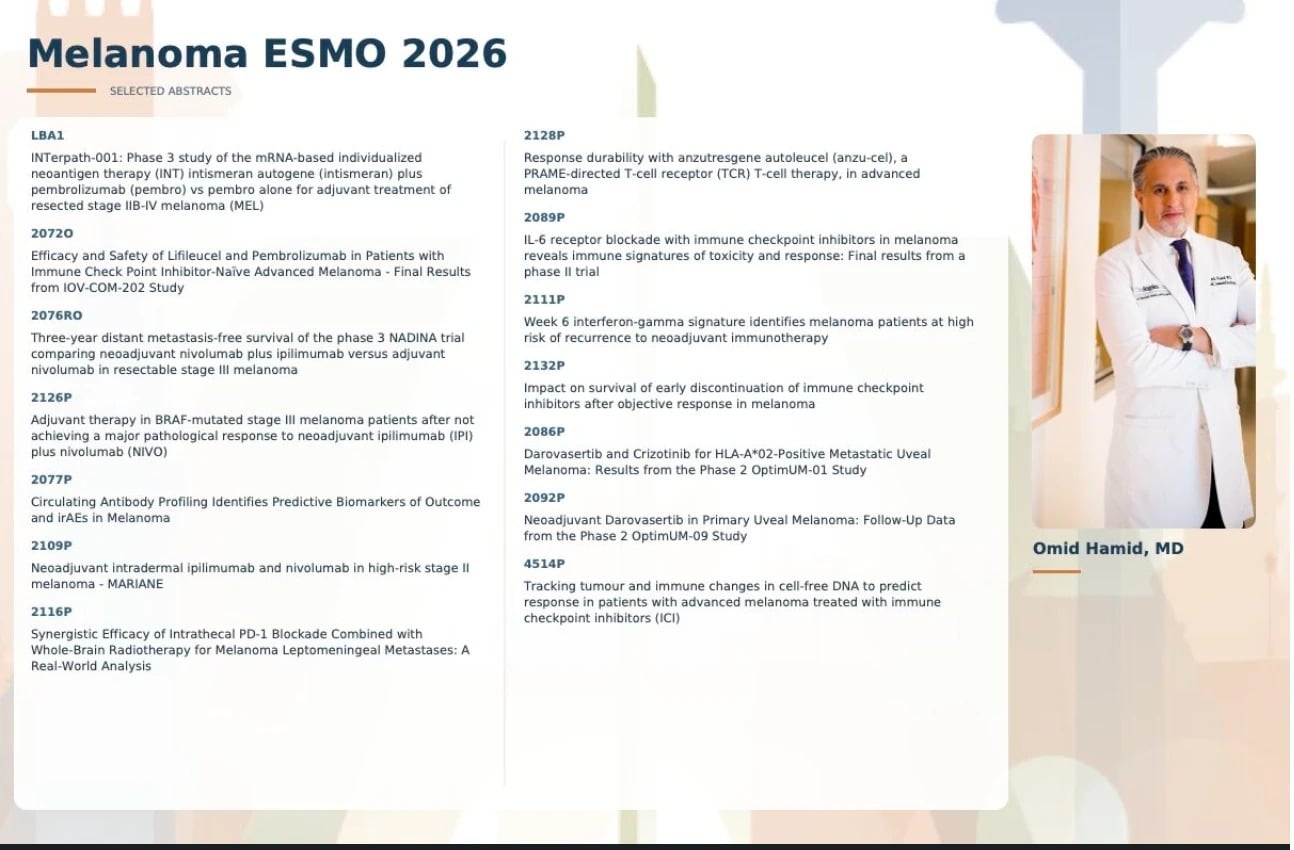
 Omid Hamid, MD @OmidHamidMD


 CancerNetwork® @CancerNetwrk

 Fangdi Sun, MD @fangdisun


 BioPharmCatalyst @BPharmCatalyst

 Simply Oncology @simplyoncology